
✨ New & Growing — We're continuing to add resources
KS1 Science Resources for Year 1 and Year 2
Curriculum Planning, Printable Activities, Displays & Ideas
Help children explore, question and discover with our Key Stage 1 science resources. Find practical investigation packs, printable activities, sorting cards and displays to support learning about plants, animals including humans, everyday materials, seasonal changes, and living things and their habitats.
Organised by year group and National Curriculum science topic for England, our growing collection supports practical learning, classroom discussion and outdoor exploration. Working Scientifically resources help children ask questions, observe closely, compare and record their discoveries. Explore our free samples and premium resources, with editable Word and ready-to-print PDF versions available.
Choose a year group or science area below to get started.
🔎 Find the science resources you need
Browse by year & science area
1️⃣ Year 1 Science Objectives & Resources
Additional
Free KS1 Science Resources
(Click on the images below to find out more.)
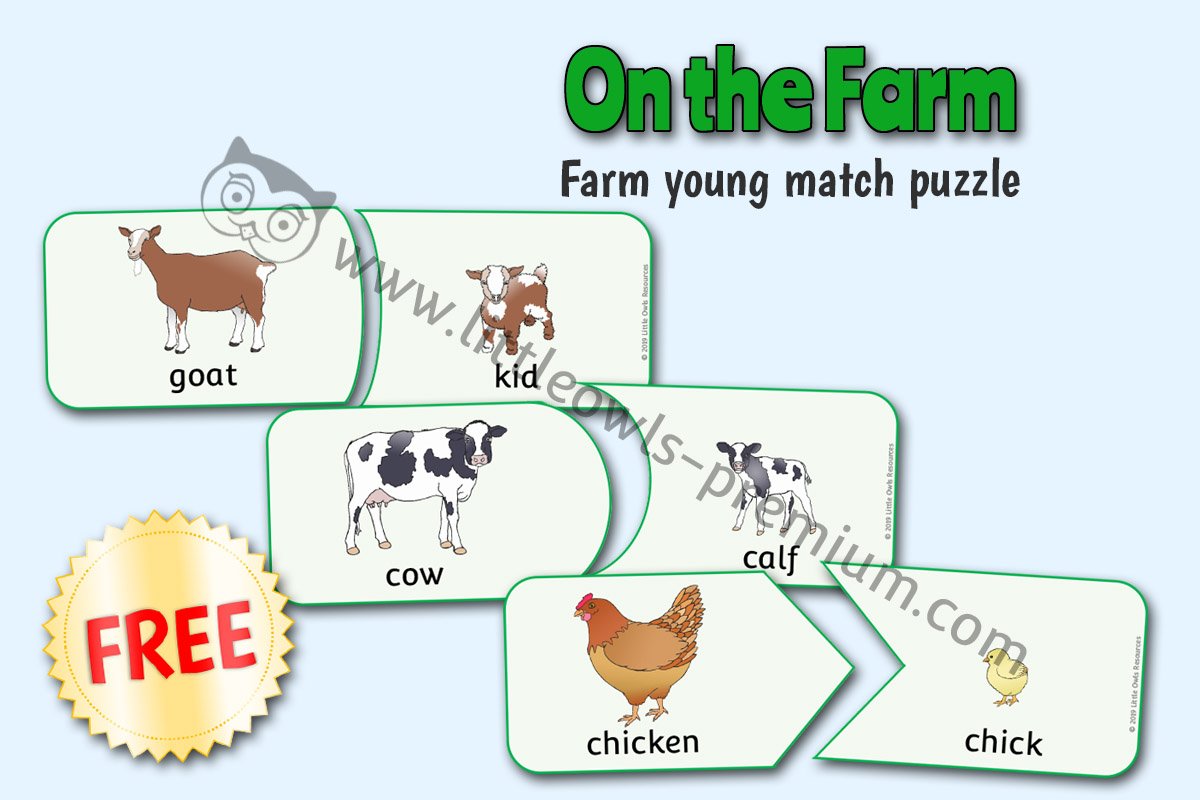
Why not use this fun farm animals and their young puzzle game to introduce your children to or consolidate their knowledge of farm animals? Cut each puzzle along the line in the middle and invite your children to match each farm animal with its offspring. Why not extend learning by discussing similarities and differences between the older and younger animals and also between the different types of animals? Extend children’s vocabulary by describing animal body parts such as tail, hooves, paws, fur, snout, etc. Ask questions such as ‘Which animal has the longest/shortest tail?’
Original artwork drawn by Sara Murphy and final digital resources created by Stuart Murphy. COPYRIGHT ON ALL OF THE RESOURCES HOUSED ON THIS WEBSITE IS HELD BY ‘LITTLE OWLS RESOURCES’. OUR RESOURCES (INCLUDING THE IMAGES WITHIN THEM), CANNOT BE SHARED OR SOLD COMMERCIALLY.
DOWNLOAD EDITABLE (DOCX)
DOWNLOAD NON-EDITABLE (PDF)
DOWNLOAD NON-EDITABLE (Zipped JPEGs)

These fact cards can be used as part of a display or as a stimulus for discussion, writing and drawing before or after time spent in a woodland setting.
10 cards included: Sycamore, Oak, Horse Chestnut, Beech, Ash, Scots Pine, Western Hemlock, London Plane, Black Poplar & Holly.
Original artwork drawn by Sara Murphy and final digital resources created by Stuart Murphy. COPYRIGHT ON ALL OF THE RESOURCES HOUSED ON THIS WEBSITE IS HELD BY ‘LITTLE OWLS RESOURCES’. OUR RESOURCES (INCLUDING THE IMAGES WITHIN THEM), CANNOT BE SHARED OR SOLD COMMERCIALLY.
DOWNLOAD EDITABLE (DOCX)
DOWNLOAD NON-EDITABLE (PDF)
DOWNLOAD NON-EDITABLE (Zipped JPEGs)
<<-BACK TO ‘FOREST SCHOOL’ MENU

This ‘Today’ Small A4 Weather Calendar is ideal for use in a compact space such as within a home setting. More themes and sizes AVAILABLE HERE.
Please note that if you wish to edit the text you can do so in the EDITABLE docx file version below. NON-EDITABLE pdf file also available below.
Original artwork drawn by Sara Murphy and final digital resources created by Stuart Murphy. COPYRIGHT ON ALL OF THE RESOURCES HOUSED ON THIS WEBSITE IS HELD BY ‘LITTLE OWLS RESOURCES’. OUR RESOURCES (INCLUDING THE IMAGES WITHIN THEM), CANNOT BE SHARED OR SOLD COMMERCIALLY.
DOWNLOAD EDITABLE (DOCX)
DOWNLOAD NON-EDITABLE (PDF)
I’d like to see MORE POSTERS & DISPLAYS please.
<<-BACK TO ‘GET ORGANISED’ SAMPLES MENU
<<-BACK TO ‘GOLDILOCKS AND THE THREE BEARS’ MENU

Minibeasts themed checklist (updated 2020 larger border version). Your children will love to use this as part of an out and about searching activity (for example finding real minibeasts in your outdoor area) or in conjunction with a 'Minibeasts' themed tuff spot or feely bag.
Original artwork drawn by Sara Murphy and final digital resources created by Stuart Murphy. COPYRIGHT ON ALL OF THE RESOURCES HOUSED ON THIS WEBSITE IS HELD BY ‘LITTLE OWLS RESOURCES’. OUR RESOURCES (INCLUDING THE IMAGES WITHIN THEM), CANNOT BE SHARED OR SOLD COMMERCIALLY.
DOWNLOAD EDITABLE (DOCX)
DOWNLOAD NON-EDITABLE (PDF)
DOWNLOAD NON-EDITABLE (Zipped JPEGs)
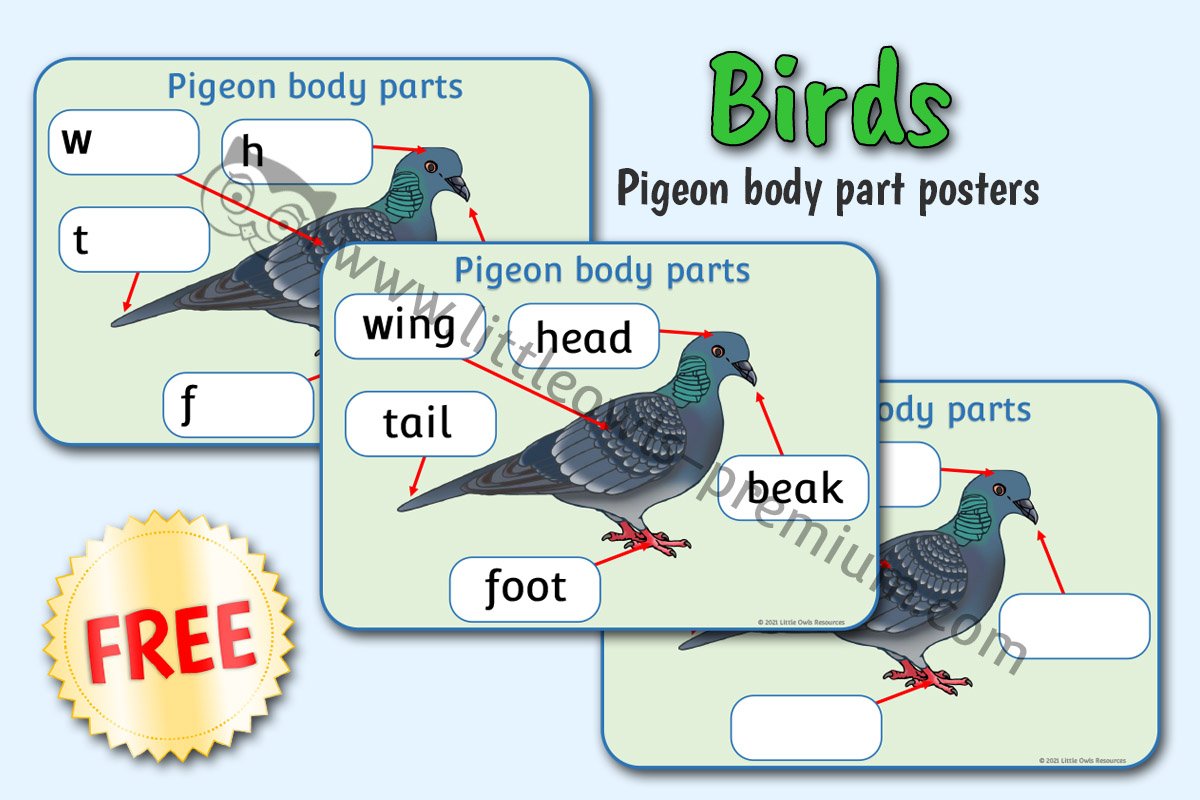
Pack includes 3 pages: poster for display and modelling, version with blank labels for writing, plus a writing template with initial sounds for labels.
Original artwork drawn by Sara Murphy and final digital resources created by Stuart Murphy. COPYRIGHT ON ALL OF THE RESOURCES HOUSED ON THIS WEBSITE IS HELD BY ‘LITTLE OWLS RESOURCES’. OUR RESOURCES (INCLUDING THE IMAGES WITHIN THEM), CANNOT BE SHARED OR SOLD COMMERCIALLY.
DOWNLOAD EDITABLE (DOCX)
DOWNLOAD NON-EDITABLE (PDF)
DOWNLOAD NON-EDITABLE (Zipped JPEGs)
<<-BACK TO ‘BIG GARDEN BIRDWATCH (UK)’ MENU
-
If you are not a member already, become a ‘Free Access’ member here. This will give you access to resources within the ‘Free Sample Resources’ sections at the top of most topic provision pages plus all ‘Special Dates Calendars’.
Find out more about all of our membership options here.
If you are already a member… thank-you!

Please note that both Editable (docx file) and non-editable (pdf file) versions are available for all ‘KS1 Science’ resources. (Editable files require Microsoft Word to work at optimum level and PDF files require a pdf viewer.)
1️⃣ Year 1 Science
Plants
Pupils should be taught to:
identify and name a variety of common wild and garden plants, including deciduous and evergreen trees
identify and describe the basic structure of a variety of common flowering plants, including trees
Core Year 1 ‘Plants’ Resources:
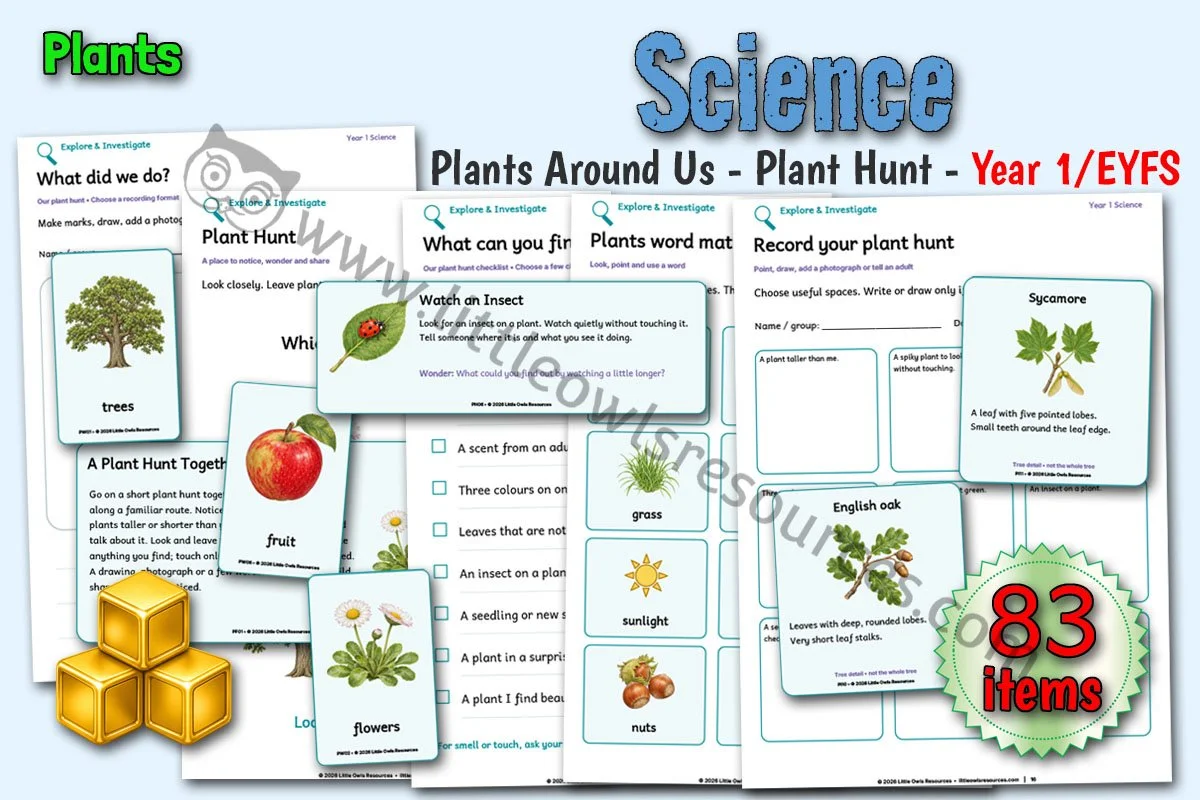
Identify & Compare - Year 1 Science with an accessible EYFS plant hunt
Go out, notice real plants and return to look more closely. This expanded Plant Hunt pack retains the family activity, display poster, vocabulary, sensory notes, nine hunt challenges and different ways to record an experience. It adds twelve plant-identification cards, local records and invitations to compare useful features before checking a name.
Choose a small local starting set
An adult should check the route and identify a few plants beforehand. Choose examples that are actually available in your setting and season. Take useful cards, a clipboard and paper; a magnifier or camera is optional. Children do not need to find every pictured plant or complete every sheet.
DOWNLOAD (DOCX) 📝
DOWNLOAD (PDF) 📄
DOWNLOAD (Zipped JPEGs) 📂
Plants Around Us — Plant Hunt, Identify & Compare
Year 1
Take science outdoors with plant hunts, identification prompts and comparison activities. Encourage children to look closely at familiar plants, notice similarities and differences, and record what they find.

This matching puzzle has a different connection for each set to allow the children to self-correct.
The intention of the resource is not necessarily for children to learn the different leaf types. It is more to think about the colour changes that a leaf undergoes as the seasons change.
7 puzzles included: sycamore, oak, horse chestnut, beech, ash, London plane & black poplar.
Puzzles, Games, Activities, Uses shapes, Colours, Observation, Problem Solving, Fine Motor, Trees, All Year Round - Wildlife, Discussion Prompts, Autumn page
Original artwork drawn by Sara Murphy and final digital resources created by Stuart Murphy. COPYRIGHT ON ALL OF THE RESOURCES HOUSED ON THIS WEBSITE IS HELD BY ‘LITTLE OWLS RESOURCES’. OUR RESOURCES (INCLUDING THE IMAGES WITHIN THEM), CANNOT BE SHARED OR SOLD COMMERCIALLY.
DOWNLOAD EDITABLE (DOCX)
DOWNLOAD NON-EDITABLE (PDF)
DOWNLOAD NON-EDITABLE (Zipped JPEGs)

These fact cards can be used as part of a display or as a stimulus for discussion, writing and drawing before or after time spent in a woodland setting.
10 cards included: Sycamore, Oak, Horse Chestnut, Beech, Ash, Scots Pine, Western Hemlock, London Plane, Black Poplar & Holly.
Observation, All Year Round - Wildlife, Fact Cards, Posters/Displays, Cards/Flashcards, Number Recognition, Measures - Length, Trees, Discussion Prompts, Autumn page, Winter page
Original artwork drawn by Sara Murphy and final digital resources created by Stuart Murphy. COPYRIGHT ON ALL OF THE RESOURCES HOUSED ON THIS WEBSITE IS HELD BY ‘LITTLE OWLS RESOURCES’. OUR RESOURCES (INCLUDING THE IMAGES WITHIN THEM), CANNOT BE SHARED OR SOLD COMMERCIALLY.
DOWNLOAD EDITABLE (DOCX)
DOWNLOAD NON-EDITABLE (PDF)
DOWNLOAD NON-EDITABLE (Zipped JPEGs)

These fact cards can be used as part of a display or as a stimulus for discussion, writing and drawing before or after time spent in a woodland setting.
8 cards included: Ivy, Bluebell, Bramble, Snowdrop, Daffodil, Daisy, Herb Robert & Wood Anemone.
Observation, All Year Round - Wildlife, Fact Cards, Posters/Displays, Cards/Flashcards, Number Recognition, Measures - Length, Plants/Flowers, Discussion Prompts, Autumn page, Winter page
Original artwork drawn by Sara Murphy and final digital resources created by Stuart Murphy. COPYRIGHT ON ALL OF THE RESOURCES HOUSED ON THIS WEBSITE IS HELD BY ‘LITTLE OWLS RESOURCES’. OUR RESOURCES (INCLUDING THE IMAGES WITHIN THEM), CANNOT BE SHARED OR SOLD COMMERCIALLY.
DOWNLOAD EDITABLE (DOCX)
DOWNLOAD NON-EDITABLE (PDF)
DOWNLOAD NON-EDITABLE (Zipped JPEGs)
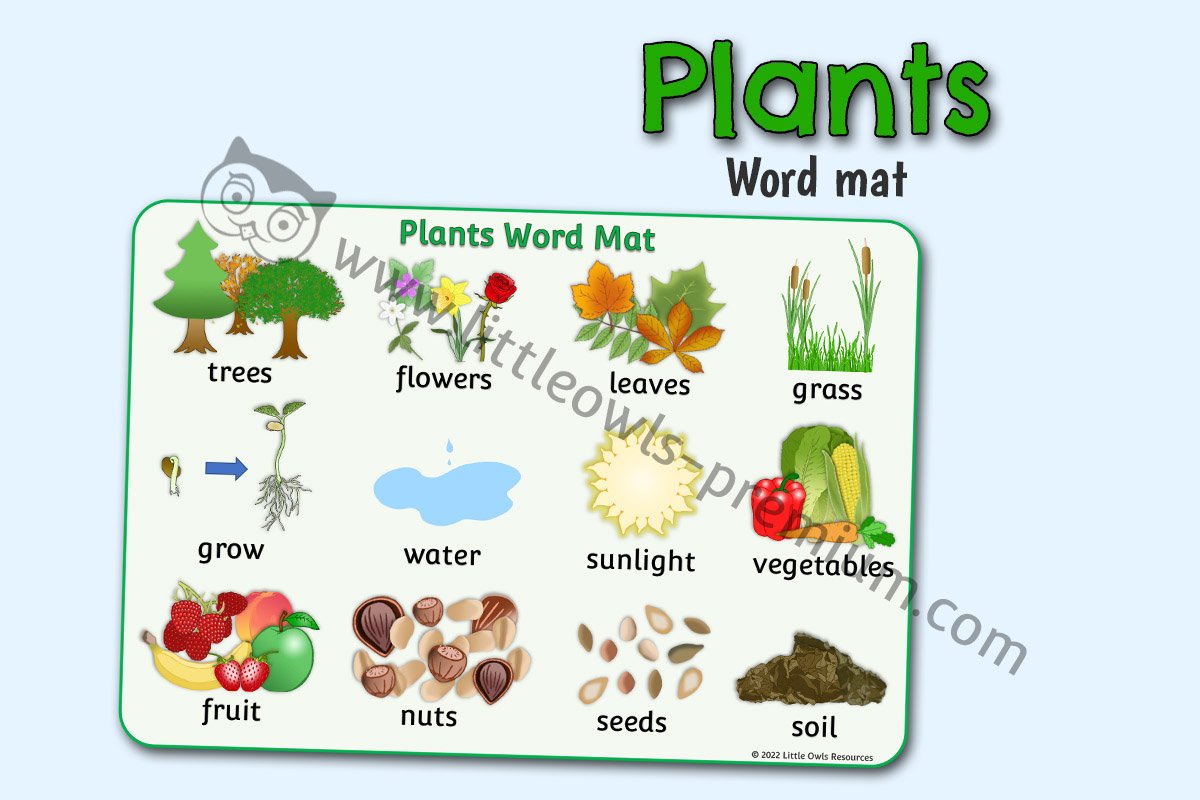
Original artwork drawn by Sara Murphy and final digital resources created by Stuart Murphy. COPYRIGHT ON ALL OF THE RESOURCES HOUSED ON THIS WEBSITE IS HELD BY ‘LITTLE OWLS RESOURCES’. OUR RESOURCES (INCLUDING THE IMAGES WITHIN THEM), CANNOT BE SHARED OR SOLD COMMERCIALLY.
DOWNLOAD EDITABLE (DOCX)
DOWNLOAD NON-EDITABLE (PDF)
DOWNLOAD NON-EDITABLE (Zipped JPEGs)
<<-BACK TO ‘HOUSEPLANT WEEK UK’ MENU
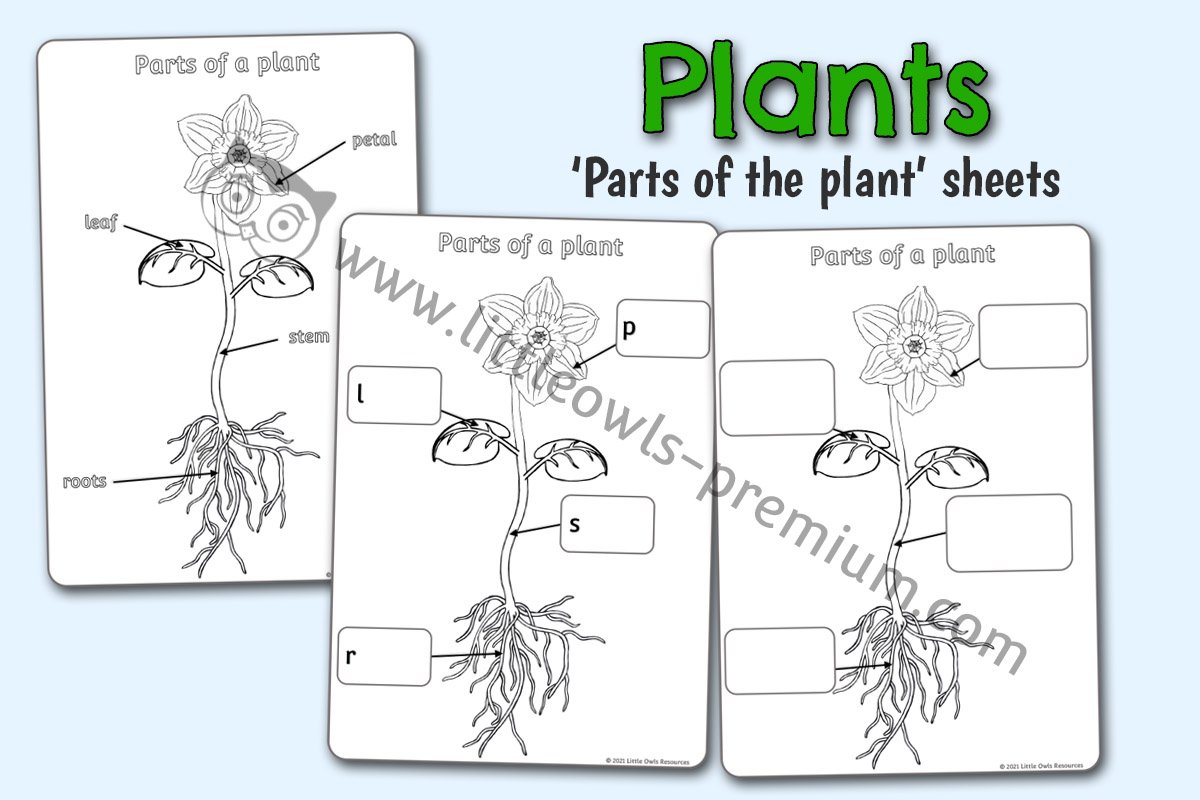
Original artwork drawn by Sara Murphy and final digital resources created by Stuart Murphy. COPYRIGHT ON ALL OF THE RESOURCES HOUSED ON THIS WEBSITE IS HELD BY ‘LITTLE OWLS RESOURCES’. OUR RESOURCES (INCLUDING THE IMAGES WITHIN THEM), CANNOT BE SHARED OR SOLD COMMERCIALLY.
DOWNLOAD EDITABLE (DOCX)
DOWNLOAD NON-EDITABLE (PDF)
DOWNLOAD NON-EDITABLE (Zipped JPEGs)
<<-BACK TO ‘HOUSEPLANT WEEK UK’ MENU
Additional resources to support learning about ‘Plants’ in year 1, can be found on the following pages:
(buttons below)

Animals, including humans
Pupils should be taught to:
identify and name a variety of common animals including fish, amphibians, reptiles, birds and mammals
identify and name a variety of common animals that are carnivores, herbivores and omnivores
describe and compare the structure of a variety of common animals (fish, amphibians, reptiles, birds and mammals, including pets)
identify, name, draw and label the basic parts of the human body and say which part of the body is associated with each sense
Core Year 1 ‘Animals, Including Humans’ Resources:
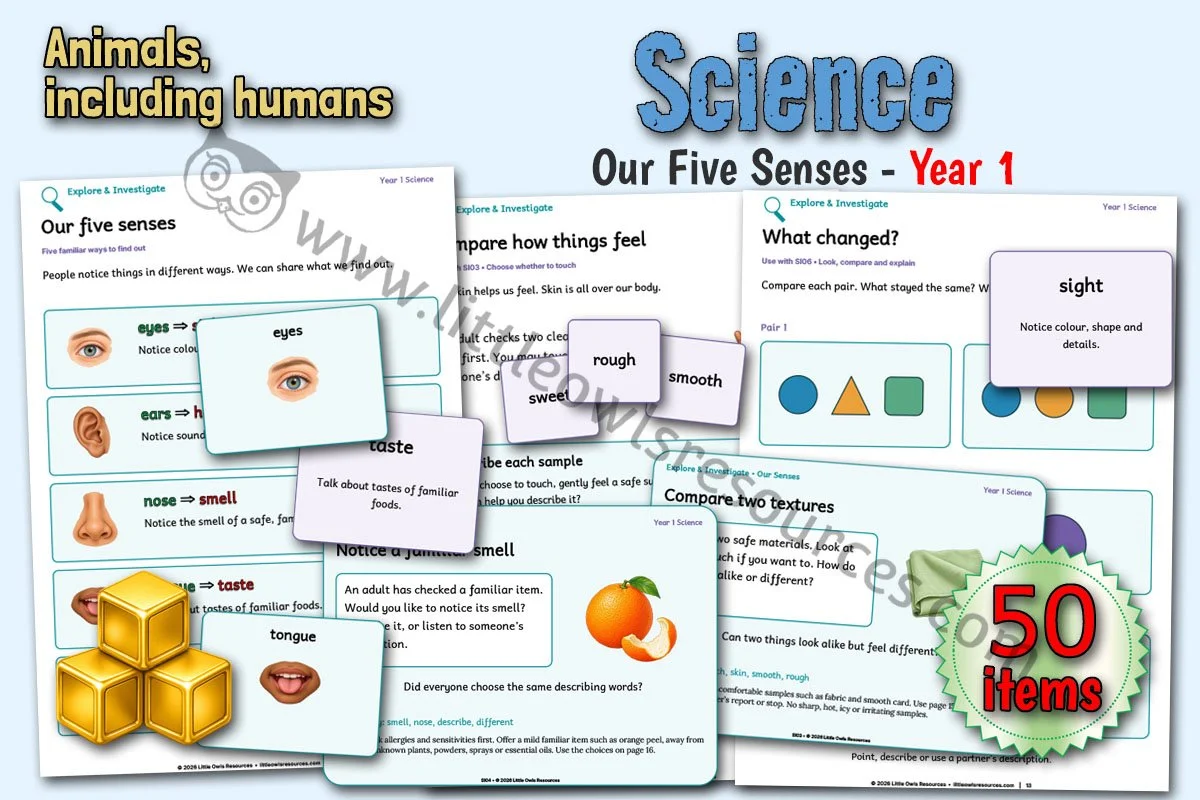
Help children connect senses with body parts, notice details and compare what they find out. Practical experiences, conversation and shared descriptions come first. The pack focuses on five familiar senses: sight, hearing, smell, taste and touch. It complements wider human-body naming and labelling resources.
Begin with a useful question
Choose a familiar object or experience: What can we notice about this cloth? How are these sounds different? Agree a safe, accessible way to find out. Children can describe one detail, compare two examples or explain which information helped them.
DOWNLOAD (DOCX) 📝
DOWNLOAD (PDF) 📄
DOWNLOAD (Zipped JPEGs) 📂
Our Five Senses — Notice, Compare & Explain
Year 1
Encourage children to notice more through sight, hearing, smell, taste and touch. Practical prompts support careful observation, comparison and conversation, helping children connect their senses with the body parts they use.

This poster outlines the basic process of ‘weeing’ (or how wee is created) for young children.
It illustrates the kidneys and bladder and where they are situated in the body and explains what happens within each with regard to the creation of ‘wee’ and where it gets stored.
Original artwork drawn by Sara Murphy and final digital resources created by Stuart Murphy. COPYRIGHT ON ALL OF THE RESOURCES HOUSED ON THIS WEBSITE IS HELD BY ‘LITTLE OWLS RESOURCES’. OUR RESOURCES (INCLUDING THE IMAGES WITHIN THEM), CANNOT BE SHARED OR SOLD COMMERCIALLY.
DOWNLOAD EDITABLE (DOCX)
DOWNLOAD NON-EDITABLE (PDF)
DOWNLOAD NON-EDITABLE (Zipped JPEGs)

Three different playdough mats showing the kidneys in the human body.
Each mat zooms in to a different degree so that you can choose how much context to give your child and how large you would like the resulting kidneys to be.
Original artwork drawn by Sara Murphy and final digital resources created by Stuart Murphy. COPYRIGHT ON ALL OF THE RESOURCES HOUSED ON THIS WEBSITE IS HELD BY ‘LITTLE OWLS RESOURCES’. OUR RESOURCES (INCLUDING THE IMAGES WITHIN THEM), CANNOT BE SHARED OR SOLD COMMERCIALLY.
DOWNLOAD EDITABLE (DOCX)
DOWNLOAD NON-EDITABLE (PDF)
DOWNLOAD NON-EDITABLE (Zipped JPEGs)

This resource enables children to physically place kidney shapes where they would be found on a human body template.
In addition children can also work on their fine motor skills concerning colouring, cutting using scissors and glue if appropriate.
Original artwork drawn by Sara Murphy and final digital resources created by Stuart Murphy. COPYRIGHT ON ALL OF THE RESOURCES HOUSED ON THIS WEBSITE IS HELD BY ‘LITTLE OWLS RESOURCES’. OUR RESOURCES (INCLUDING THE IMAGES WITHIN THEM), CANNOT BE SHARED OR SOLD COMMERCIALLY.
DOWNLOAD EDITABLE (DOCX)
DOWNLOAD NON-EDITABLE (PDF)
DOWNLOAD NON-EDITABLE (Zipped JPEGs)

This poster outlines the basic process of ‘breathing’ for young children.
It illustrates the mouth and nose, windpipe and lungs and where they are situated in the body and explains what happens within each with regard to the process of ‘breathing’.
Original artwork drawn by Sara Murphy and final digital resources created by Stuart Murphy. COPYRIGHT ON ALL OF THE RESOURCES HOUSED ON THIS WEBSITE IS HELD BY ‘LITTLE OWLS RESOURCES’. OUR RESOURCES (INCLUDING THE IMAGES WITHIN THEM), CANNOT BE SHARED OR SOLD COMMERCIALLY.
DOWNLOAD EDITABLE (DOCX)
DOWNLOAD NON-EDITABLE (PDF)
DOWNLOAD NON-EDITABLE (Zipped JPEGs)

Three different playdough mats showing the lungs in the human body.
Each mat zooms in to a different degree so that you can choose how much context to give your child and how large you would like the resulting lungs to be.
Original artwork drawn by Sara Murphy and final digital resources created by Stuart Murphy. COPYRIGHT ON ALL OF THE RESOURCES HOUSED ON THIS WEBSITE IS HELD BY ‘LITTLE OWLS RESOURCES’. OUR RESOURCES (INCLUDING THE IMAGES WITHIN THEM), CANNOT BE SHARED OR SOLD COMMERCIALLY.
DOWNLOAD EDITABLE (DOCX)
DOWNLOAD NON-EDITABLE (PDF)
DOWNLOAD NON-EDITABLE (Zipped JPEGs)

This resource enables children to physically place lung shapes where they would be found on a human body template.
In addition children can also work on their fine motor skills concerning colouring, cutting using scissors and glue if appropriate.
Original artwork drawn by Sara Murphy and final digital resources created by Stuart Murphy. COPYRIGHT ON ALL OF THE RESOURCES HOUSED ON THIS WEBSITE IS HELD BY ‘LITTLE OWLS RESOURCES’. OUR RESOURCES (INCLUDING THE IMAGES WITHIN THEM), CANNOT BE SHARED OR SOLD COMMERCIALLY.
DOWNLOAD EDITABLE (DOCX)
DOWNLOAD NON-EDITABLE (PDF)
DOWNLOAD NON-EDITABLE (Zipped JPEGs)

This poster outlines the basic process of ‘thinking and controlling’ for young children.
It illustrates the brain and nerves and where they are situated in the body and explains what happens within each.
Original artwork drawn by Sara Murphy and final digital resources created by Stuart Murphy. COPYRIGHT ON ALL OF THE RESOURCES HOUSED ON THIS WEBSITE IS HELD BY ‘LITTLE OWLS RESOURCES’. OUR RESOURCES (INCLUDING THE IMAGES WITHIN THEM), CANNOT BE SHARED OR SOLD COMMERCIALLY.
DOWNLOAD EDITABLE (DOCX)
DOWNLOAD NON-EDITABLE (PDF)
DOWNLOAD NON-EDITABLE (Zipped JPEGs)

Three different playdough mats showing the brain in the human body.
Each mat zooms in to a different degree so that you can choose how much context to give your child and how large you would like the resulting brain to be.
Original artwork drawn by Sara Murphy and final digital resources created by Stuart Murphy. COPYRIGHT ON ALL OF THE RESOURCES HOUSED ON THIS WEBSITE IS HELD BY ‘LITTLE OWLS RESOURCES’. OUR RESOURCES (INCLUDING THE IMAGES WITHIN THEM), CANNOT BE SHARED OR SOLD COMMERCIALLY.
DOWNLOAD EDITABLE (DOCX)
DOWNLOAD NON-EDITABLE (PDF)
DOWNLOAD NON-EDITABLE (Zipped JPEGs)

This resource enables children to physically place a brain shape where it would be found on a human body template.
In addition children can also work on their fine motor skills concerning colouring, cutting using scissors and glue if appropriate.
Original artwork drawn by Sara Murphy and final digital resources created by Stuart Murphy. COPYRIGHT ON ALL OF THE RESOURCES HOUSED ON THIS WEBSITE IS HELD BY ‘LITTLE OWLS RESOURCES’. OUR RESOURCES (INCLUDING THE IMAGES WITHIN THEM), CANNOT BE SHARED OR SOLD COMMERCIALLY.
DOWNLOAD EDITABLE (DOCX)
DOWNLOAD NON-EDITABLE (PDF)
DOWNLOAD NON-EDITABLE (Zipped JPEGs)

This poster outlines the basic ‘blood system’ (circulatory system) including heart for young children.
It illustrates the heart, arteries and veins and where they are situated in the body.
Original artwork drawn by Sara Murphy and final digital resources created by Stuart Murphy. COPYRIGHT ON ALL OF THE RESOURCES HOUSED ON THIS WEBSITE IS HELD BY ‘LITTLE OWLS RESOURCES’. OUR RESOURCES (INCLUDING THE IMAGES WITHIN THEM), CANNOT BE SHARED OR SOLD COMMERCIALLY.
DOWNLOAD EDITABLE (DOCX)
DOWNLOAD NON-EDITABLE (PDF)
DOWNLOAD NON-EDITABLE (Zipped JPEGs)

Three different playdough mats showing the heart in the human body.
Each mat zooms in to a different degree so that you can choose how much context to give your child and how large you would like the resulting heart to be.
Original artwork drawn by Sara Murphy and final digital resources created by Stuart Murphy. COPYRIGHT ON ALL OF THE RESOURCES HOUSED ON THIS WEBSITE IS HELD BY ‘LITTLE OWLS RESOURCES’. OUR RESOURCES (INCLUDING THE IMAGES WITHIN THEM), CANNOT BE SHARED OR SOLD COMMERCIALLY.
DOWNLOAD EDITABLE (DOCX)
DOWNLOAD NON-EDITABLE (PDF)
DOWNLOAD NON-EDITABLE (Zipped JPEGs)

This resource enables children to physically place a heart shape where it would be found on a human body template.
In addition children can also work on their fine motor skills concerning colouring, cutting using scissors and glue if appropriate.
Original artwork drawn by Sara Murphy and final digital resources created by Stuart Murphy. COPYRIGHT ON ALL OF THE RESOURCES HOUSED ON THIS WEBSITE IS HELD BY ‘LITTLE OWLS RESOURCES’. OUR RESOURCES (INCLUDING THE IMAGES WITHIN THEM), CANNOT BE SHARED OR SOLD COMMERCIALLY.
DOWNLOAD EDITABLE (DOCX)
DOWNLOAD NON-EDITABLE (PDF)
DOWNLOAD NON-EDITABLE (Zipped JPEGs)

This poster outlines the basic process of ‘Eating and Pooing’ (the digestive system) for young children.
It illustrates the mouth and teeth, liver, stomach, small intestine and large intestine and where they are situated in the body and explains what happens within each with regard to the process of ‘eating and pooing’.
Original artwork drawn by Sara Murphy and final digital resources created by Stuart Murphy. COPYRIGHT ON ALL OF THE RESOURCES HOUSED ON THIS WEBSITE IS HELD BY ‘LITTLE OWLS RESOURCES’. OUR RESOURCES (INCLUDING THE IMAGES WITHIN THEM), CANNOT BE SHARED OR SOLD COMMERCIALLY.
DOWNLOAD EDITABLE (DOCX)
DOWNLOAD NON-EDITABLE (PDF)
DOWNLOAD NON-EDITABLE (Zipped JPEGs)

Three different playdough mats showing the digestive system in the human body.
Each mat zooms in to a different degree so that you can choose how much context to give your child and how large you would like the resulting digestive system to be.
Original artwork drawn by Sara Murphy and final digital resources created by Stuart Murphy. COPYRIGHT ON ALL OF THE RESOURCES HOUSED ON THIS WEBSITE IS HELD BY ‘LITTLE OWLS RESOURCES’. OUR RESOURCES (INCLUDING THE IMAGES WITHIN THEM), CANNOT BE SHARED OR SOLD COMMERCIALLY.
DOWNLOAD EDITABLE (DOCX)
DOWNLOAD NON-EDITABLE (PDF)
DOWNLOAD NON-EDITABLE (Zipped JPEGs)
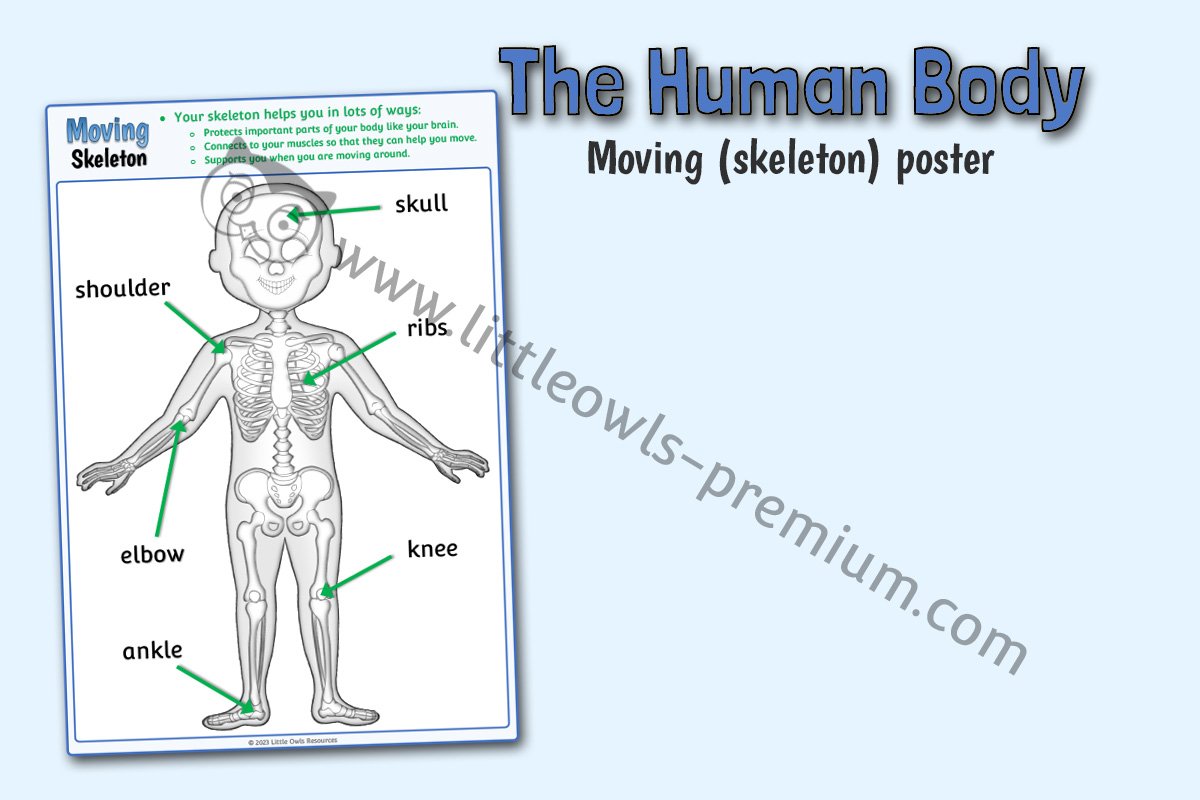
This poster outlines how our skeletons help us.
There are labels for the skull, shoulder, ribs, elbow, knee and ankle.
Original artwork drawn by Sara Murphy and final digital resources created by Stuart Murphy. COPYRIGHT ON ALL OF THE RESOURCES HOUSED ON THIS WEBSITE IS HELD BY ‘LITTLE OWLS RESOURCES’. OUR RESOURCES (INCLUDING THE IMAGES WITHIN THEM), CANNOT BE SHARED OR SOLD COMMERCIALLY.
DOWNLOAD EDITABLE (DOCX)
DOWNLOAD NON-EDITABLE (PDF)
DOWNLOAD NON-EDITABLE (Zipped JPEGs)

This poster outlines how our muscles help us.
An example of muscles tightening and relaxing in the arm is shown (biceps and triceps).
Original artwork drawn by Sara Murphy and final digital resources created by Stuart Murphy. COPYRIGHT ON ALL OF THE RESOURCES HOUSED ON THIS WEBSITE IS HELD BY ‘LITTLE OWLS RESOURCES’. OUR RESOURCES (INCLUDING THE IMAGES WITHIN THEM), CANNOT BE SHARED OR SOLD COMMERCIALLY.
DOWNLOAD EDITABLE (DOCX)
DOWNLOAD NON-EDITABLE (PDF)
DOWNLOAD NON-EDITABLE (Zipped JPEGs)
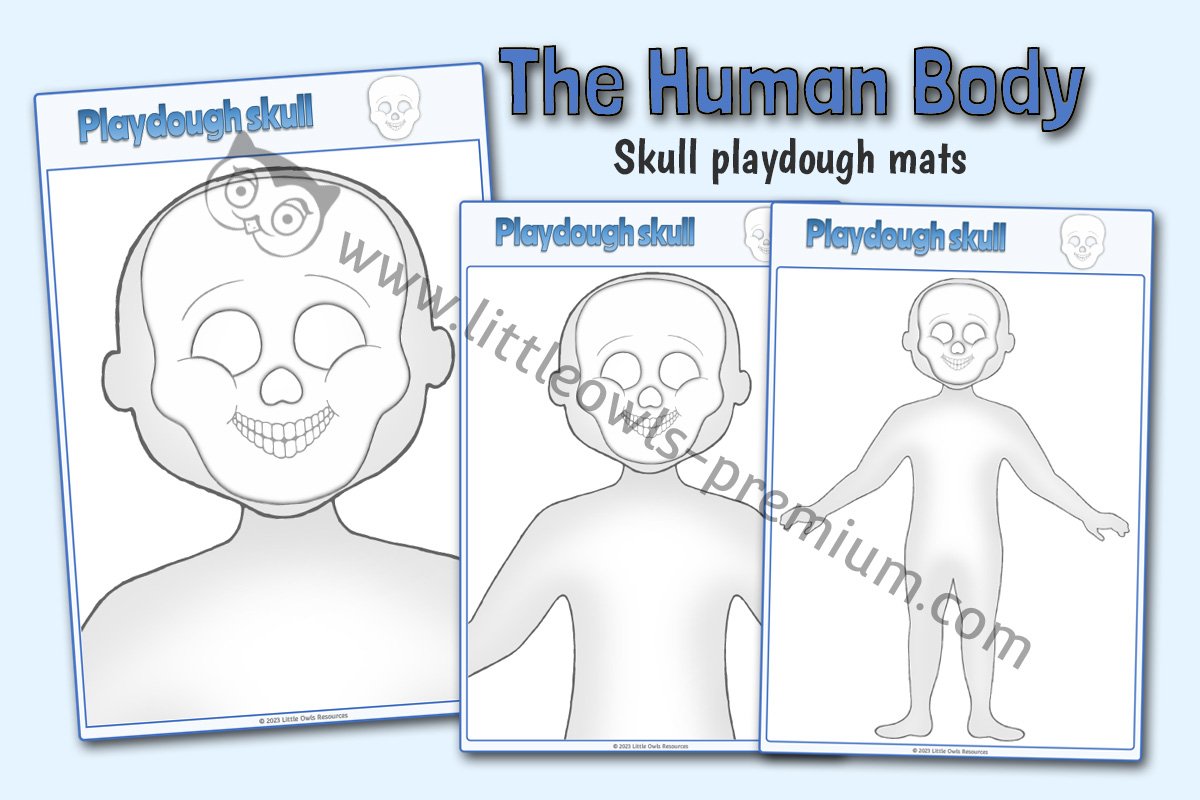
Three different playdough mats showing the skull in the human body.
Each mat zooms in to a different degree so that you can choose how much context to give your child and how large you would like the resulting skull to be.
Original artwork drawn by Sara Murphy and final digital resources created by Stuart Murphy. COPYRIGHT ON ALL OF THE RESOURCES HOUSED ON THIS WEBSITE IS HELD BY ‘LITTLE OWLS RESOURCES’. OUR RESOURCES (INCLUDING THE IMAGES WITHIN THEM), CANNOT BE SHARED OR SOLD COMMERCIALLY.
DOWNLOAD EDITABLE (DOCX)
DOWNLOAD NON-EDITABLE (PDF)
DOWNLOAD NON-EDITABLE (Zipped JPEGs)

This resource enables children to physically place a skull shape where it would be found on a human body template.
In addition children can also work on their fine motor skills concerning colouring, cutting using scissors and glue if appropriate.
Original artwork drawn by Sara Murphy and final digital resources created by Stuart Murphy. COPYRIGHT ON ALL OF THE RESOURCES HOUSED ON THIS WEBSITE IS HELD BY ‘LITTLE OWLS RESOURCES’. OUR RESOURCES (INCLUDING THE IMAGES WITHIN THEM), CANNOT BE SHARED OR SOLD COMMERCIALLY.
DOWNLOAD EDITABLE (DOCX)
DOWNLOAD NON-EDITABLE (PDF)
DOWNLOAD NON-EDITABLE (Zipped JPEGs)

Two different playdough mats showing the bicep and tricep muscles tightening and relaxing in the arm.
Original artwork drawn by Sara Murphy and final digital resources created by Stuart Murphy. COPYRIGHT ON ALL OF THE RESOURCES HOUSED ON THIS WEBSITE IS HELD BY ‘LITTLE OWLS RESOURCES’. OUR RESOURCES (INCLUDING THE IMAGES WITHIN THEM), CANNOT BE SHARED OR SOLD COMMERCIALLY.
DOWNLOAD EDITABLE (DOCX)
DOWNLOAD NON-EDITABLE (PDF)
DOWNLOAD NON-EDITABLE (Zipped JPEGs)

Pack includes 48 human body themed word cards.
Word cards for: kidneys, lungs, windpipe, bladder, brain, nerves, muscles, blood system, stomach, small intestine, large intestine, ear, thumb, nose, liver, skull, heart, skeleton, eye, eyebrow, mouth, teeth, lips, tongue, hand, fingernail, finger, hair, elbow, knee, leg, arm, head, shoulder, ankle, feet, bone, bones, cheek, chin, neck and chest.
Original artwork drawn by Sara Murphy and final digital resources created by Stuart Murphy. COPYRIGHT ON ALL OF THE RESOURCES HOUSED ON THIS WEBSITE IS HELD BY ‘LITTLE OWLS RESOURCES’. OUR RESOURCES (INCLUDING THE IMAGES WITHIN THEM), CANNOT BE SHARED OR SOLD COMMERCIALLY.
DOWNLOAD EDITABLE (DOCX)
DOWNLOAD NON-EDITABLE (PDF)
DOWNLOAD NON-EDITABLE (Zipped JPEGs)

Eight ‘Inside the Human Body - Silhouette Match Puzzles’ included.
A different connection for each set to allow the children to self-correct.
Puzzles for: kidneys, lungs, brain, stomach/intestines and liver, skull, heart, skeleton and muscles.
Original artwork drawn by Sara Murphy and final digital resources created by Stuart Murphy. COPYRIGHT ON ALL OF THE RESOURCES HOUSED ON THIS WEBSITE IS HELD BY ‘LITTLE OWLS RESOURCES’. OUR RESOURCES (INCLUDING THE IMAGES WITHIN THEM), CANNOT BE SHARED OR SOLD COMMERCIALLY.
DOWNLOAD EDITABLE (DOCX)
DOWNLOAD NON-EDITABLE (PDF)
DOWNLOAD NON-EDITABLE (Zipped JPEGs)

Pack includes 3 pages: poster for display and modelling, version with blank labels for writing, plus a writing template with initial sounds for labels.
Posters/Displays, Mark Making/Drawing/Writing, Fine Motor, Pencil Control, Observational Skills, Problem Solving, Activity, Take Home, Laminate to use with w/b pens, Animal body parts, Reptiles, Zoo, Iguana
Original artwork drawn by Sara Murphy and final digital resources created by Stuart Murphy. COPYRIGHT ON ALL OF THE RESOURCES HOUSED ON THIS WEBSITE IS HELD BY ‘LITTLE OWLS RESOURCES’. OUR RESOURCES (INCLUDING THE IMAGES WITHIN THEM), CANNOT BE SHARED OR SOLD COMMERCIALLY.
DOWNLOAD EDITABLE (DOCX)
DOWNLOAD NON-EDITABLE (PDF)
<<-BACK TO ANIMALS OF THE WORLD MENU
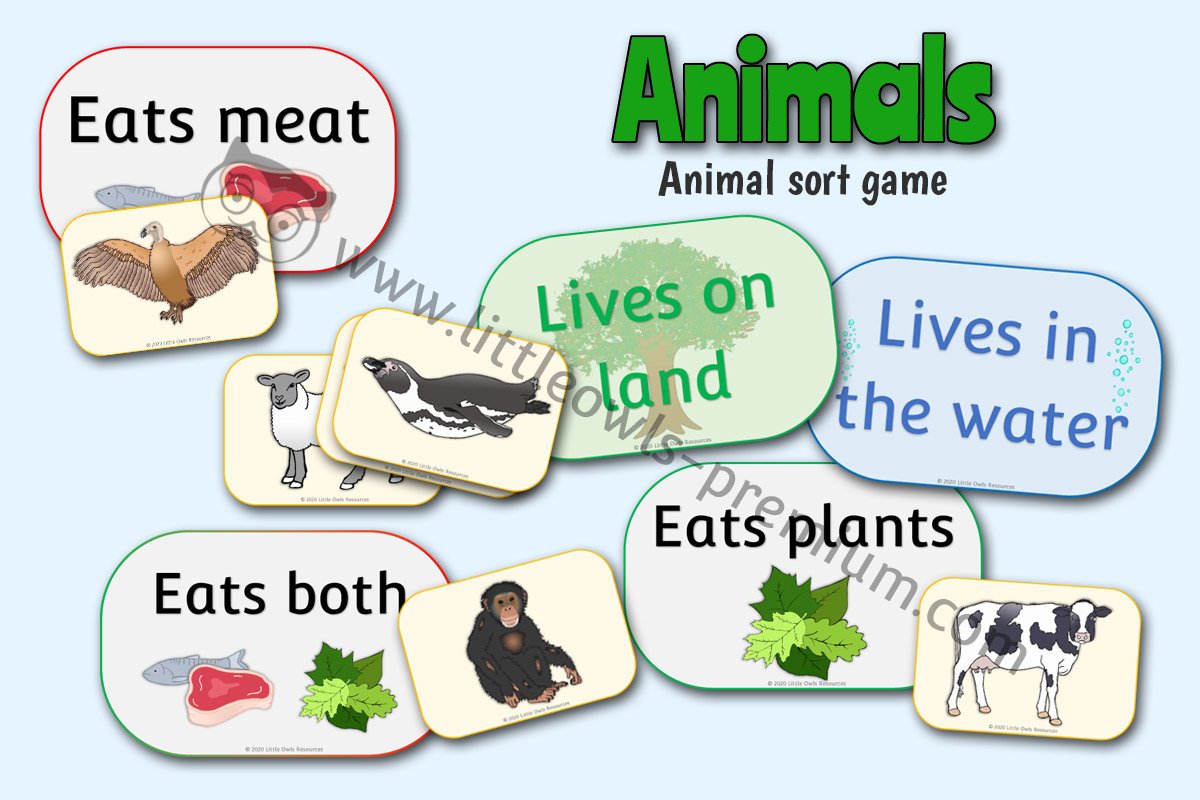
Pack of animal cards with sorting labels. Ideal for use as part of an interactive display or sorting activity or game. Differentiate for use with different ages of children by your selection of activity cards, the vocabulary you use and your use of questioning. You may like to select e.g. the headings ‘4 legs’, ‘2 legs’ and ‘0 legs’. Place them on the floor or a table and discuss with your child(ren) which animal cards should be placed under each of the headings. For some headings such as ‘Eats meat’, ‘Eats plants’ and ‘Eats both’ you may like to create your own venn diagram by using two hoops/looped skipping ropes on the floor or circles on paper which overlap in the middle. The 2 separate components go in each hoop e.g. ‘Eats meat’ and ‘Eats plants’ and the overlapping centre is where both characteristics are true. In this case ‘Eats both meat and plants’. If none of the characteristics mentioned are true for an animal, the animal card may be placed outside of the circles. This sorting activity is a great way to encourage children to observe animal characteristics closely. The active engagement with the subject matter means they are more likely to retain knowledge for example new vocabulary. Can you think of any other ways to sort these animals? Perhaps you could make your own heading cards?
Graphs/Charts, Sorting Activities, Games, Activity, Group Activity, Discussion Prompts, Posters/Displays, Observational Skills, Problem Solving, Print Carries Meaning, Cards/Flashcards, Vulture, Dolphin, Clownfish, Turtle, Cow, Chicken, Hen, Duck, Sheep, Banded Penguin, Penguin, Chimpanzee, Elephant, Flamingo, Giraffe, Sea Lion, Tiger, Birds, Mammals, Fish, Reptiles, Carnivores, Herbivores, Omnivores
Original artwork drawn by Sara Murphy and final digital resources created by Stuart Murphy. COPYRIGHT ON ALL OF THE RESOURCES HOUSED ON THIS WEBSITE IS HELD BY ‘LITTLE OWLS RESOURCES’. OUR RESOURCES (INCLUDING THE IMAGES WITHIN THEM), CANNOT BE SHARED OR SOLD COMMERCIALLY.
DOWNLOAD EDITABLE (DOCX)
DOWNLOAD NON-EDITABLE (PDF)
<<-BACK TO ANIMALS OF THE WORLD MENU

Pack includes 3 pages: poster for display and modelling, version with blank labels for writing, plus a writing template with initial sounds for labels.
Posters/Displays, Mark Making/Drawing/Writing, Fine Motor, Pencil Control, Observational Skills, Problem Solving, Activity, Take Home, Laminate to use with w/b pens, Animal body parts, Ocean, Dolphin, Mammals
Original artwork drawn by Sara Murphy and final digital resources created by Stuart Murphy. COPYRIGHT ON ALL OF THE RESOURCES HOUSED ON THIS WEBSITE IS HELD BY ‘LITTLE OWLS RESOURCES’. OUR RESOURCES (INCLUDING THE IMAGES WITHIN THEM), CANNOT BE SHARED OR SOLD COMMERCIALLY.
DOWNLOAD EDITABLE (DOCX)
DOWNLOAD NON-EDITABLE (PDF)
<<-BACK TO ANIMALS OF THE WORLD MENU

Pack includes 3 pages: poster for display and modelling, version with blank labels for writing, plus a writing template with initial sounds for labels.
Posters/Displays, Mark Making/Drawing/Writing, Fine Motor, Pencil Control, Observational Skills, Problem Solving, Activity, Take Home, Laminate to use with w/b pens, Animal body parts, Zoo, Ocean, Banded Penguin, Penguin, Birds
Original artwork drawn by Sara Murphy and final digital resources created by Stuart Murphy. COPYRIGHT ON ALL OF THE RESOURCES HOUSED ON THIS WEBSITE IS HELD BY ‘LITTLE OWLS RESOURCES’. OUR RESOURCES (INCLUDING THE IMAGES WITHIN THEM), CANNOT BE SHARED OR SOLD COMMERCIALLY.
DOWNLOAD EDITABLE (DOCX)
DOWNLOAD NON-EDITABLE (PDF)
<<-BACK TO ANIMALS OF THE WORLD MENU

Pack includes 3 pages: poster for display and modelling, version with blank labels for writing, plus a writing template with initial sounds for labels.
Posters/Displays, Mark Making/Drawing/Writing, Fine Motor, Pencil Control, Observational Skills, Problem Solving, Activity, Take Home, Laminate to use with w/b pens, Animal body parts, Reptiles, Zoo, Ocean, Endangered Animals, Turtle
Original artwork drawn by Sara Murphy and final digital resources created by Stuart Murphy. COPYRIGHT ON ALL OF THE RESOURCES HOUSED ON THIS WEBSITE IS HELD BY ‘LITTLE OWLS RESOURCES’. OUR RESOURCES (INCLUDING THE IMAGES WITHIN THEM), CANNOT BE SHARED OR SOLD COMMERCIALLY.
DOWNLOAD EDITABLE (DOCX)
DOWNLOAD NON-EDITABLE (PDF)
<<-BACK TO ANIMALS OF THE WORLD MENU

Pack includes 3 pages: poster for display and modelling, version with blank labels for writing, plus a writing template with initial sounds for labels.
Observation, Fine Motor, Activities, UK Birds, Mark Making/Drawing/Writing, Take Home, Laminate to use with w/b pens, Pigeon, Body Parts, Woodland
Original artwork drawn by Sara Murphy and final digital resources created by Stuart Murphy. COPYRIGHT ON ALL OF THE RESOURCES HOUSED ON THIS WEBSITE IS HELD BY ‘LITTLE OWLS RESOURCES’. OUR RESOURCES (INCLUDING THE IMAGES WITHIN THEM), CANNOT BE SHARED OR SOLD COMMERCIALLY.
DOWNLOAD EDITABLE (DOCX)
DOWNLOAD NON-EDITABLE (PDF)
DOWNLOAD NON-EDITABLE (Zipped JPEGs)
<<-BACK TO ‘BIG GARDEN BIRDWATCH (UK)’ MENU

Pack includes 3 pages: poster for display and modelling, version with blank labels for writing, plus a writing template with initial sounds for labels.
Observation, Fine Motor, Activities, UK Birds, Mark Making/Drawing/Writing, Take Home, Laminate to use with w/b pens, Magpie, Body Parts, Woodland
Original artwork drawn by Sara Murphy and final digital resources created by Stuart Murphy. COPYRIGHT ON ALL OF THE RESOURCES HOUSED ON THIS WEBSITE IS HELD BY ‘LITTLE OWLS RESOURCES’. OUR RESOURCES (INCLUDING THE IMAGES WITHIN THEM), CANNOT BE SHARED OR SOLD COMMERCIALLY.
DOWNLOAD EDITABLE (DOCX)
DOWNLOAD NON-EDITABLE (PDF)
DOWNLOAD NON-EDITABLE (Zipped JPEGs)
<<-BACK TO ‘BIG GARDEN BIRDWATCH (UK)’ MENU

Pack includes 3 pages: poster for display and modelling, version with blank labels for writing, plus a writing template with initial sounds for labels.
Observation, Fine Motor, Activities, UK Birds, Mark Making/Drawing/Writing, Take Home, Laminate to use with w/b pens, Body Parts, Sparrow, Woodland
Original artwork drawn by Sara Murphy and final digital resources created by Stuart Murphy. COPYRIGHT ON ALL OF THE RESOURCES HOUSED ON THIS WEBSITE IS HELD BY ‘LITTLE OWLS RESOURCES’. OUR RESOURCES (INCLUDING THE IMAGES WITHIN THEM), CANNOT BE SHARED OR SOLD COMMERCIALLY.
DOWNLOAD EDITABLE (DOCX)
DOWNLOAD NON-EDITABLE (PDF)
DOWNLOAD NON-EDITABLE (Zipped JPEGs)
<<-BACK TO ‘BIG GARDEN BIRDWATCH (UK)’ MENU

Pack includes 3 pages: poster for display and modelling, version with blank labels for writing, plus a writing template with initial sounds for labels.
Animals, Fine Motor, Mark Making/Drawing/Writing, Observational Skills, Take Home, Activity, Pencil Control, Laminate to use with w/b pens, Problem Solving, Print Carries Meaning, Discussion Prompts, Posters/Display, Group Activity, Chicken, Hen, Birds
Original artwork drawn by Sara Murphy and final digital resources created by Stuart Murphy. COPYRIGHT ON ALL OF THE RESOURCES HOUSED ON THIS WEBSITE IS HELD BY ‘LITTLE OWLS RESOURCES’. OUR RESOURCES (INCLUDING THE IMAGES WITHIN OUR RESOURCES), CANNOT BE SHARED OR SOLD COMMERCIALLY.
DOWNLOAD EDITABLE (DOCX)
DOWNLOAD NON-EDITABLE (PDF)
DOWNLOAD NON-EDITABLE (Zipped JPEGs)

Pack includes 3 pages: poster for display and modelling, version with blank labels for writing, plus a writing template with initial sounds for labels.
Animals, Fine Motor, Mark Making/Drawing/Writing, Observational Skills, Take Home, Activity, Pencil Control, Laminate to use with w/b pens, Problem Solving, Print Carries Meaning, Discussion Prompts, Posters/Display, Group Activity, Cow, Mammals
Original artwork drawn by Sara Murphy and final digital resources created by Stuart Murphy. COPYRIGHT ON ALL OF THE RESOURCES HOUSED ON THIS WEBSITE IS HELD BY ‘LITTLE OWLS RESOURCES’. OUR RESOURCES (INCLUDING THE IMAGES WITHIN OUR RESOURCES), CANNOT BE SHARED OR SOLD COMMERCIALLY.
DOWNLOAD EDITABLE (DOCX)
DOWNLOAD NON-EDITABLE (PDF)
DOWNLOAD NON-EDITABLE (Zipped JPEGs)

Pack includes 3 pages: poster for display and modelling, version with blank labels for writing, plus a writing template with initial sounds for labels.
Animals, Fine Motor, Mark Making/Drawing/Writing, Observational Skills, Take Home, Activity, Pencil Control, Laminate to use with w/b pens, Problem Solving, Print Carries Meaning, Discussion Prompts, Posters/Display, Group Activity, Pig, Mammals
Original artwork drawn by Sara Murphy and final digital resources created by Stuart Murphy. COPYRIGHT ON ALL OF THE RESOURCES HOUSED ON THIS WEBSITE IS HELD BY ‘LITTLE OWLS RESOURCES’. OUR RESOURCES (INCLUDING THE IMAGES WITHIN OUR RESOURCES), CANNOT BE SHARED OR SOLD COMMERCIALLY.
DOWNLOAD EDITABLE (DOCX)
DOWNLOAD NON-EDITABLE (PDF)
DOWNLOAD NON-EDITABLE (Zipped JPEGs)
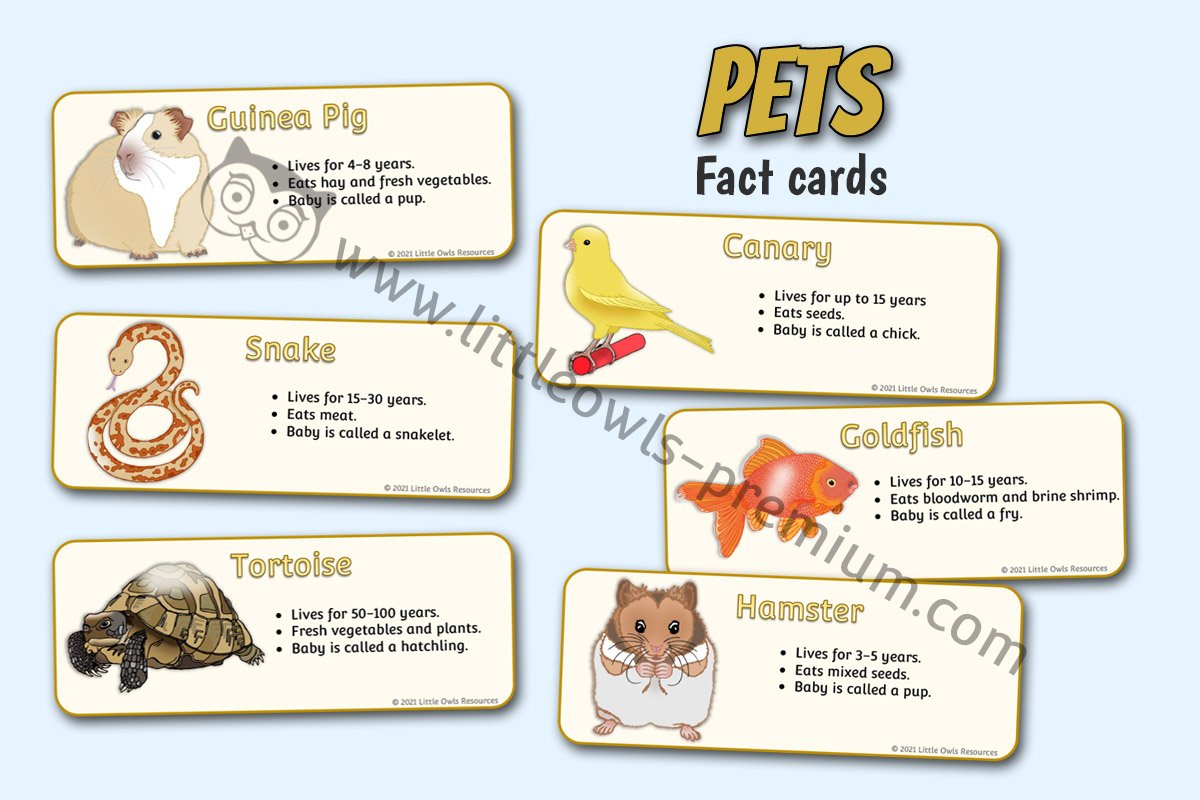
Pack of 10 Pet Fact Cards. Pets include cat, dog, hamster, guinea pig, goldfish, tortoise, rabbit, snake, canary and chicken.
Matching/Sorting Activities, Listening Skills, Fact Cards, Cards/Flashcards, Posters/Displays, Reading, Print carries meaning, Observation, Cat, Dog, Hamster, Guinea Pig, Goldfish, Tortoise, Rabbit, Snake, Canary, Chicken, Reptiles, Mammals, Birds, Fish
Original artwork drawn by Sara Murphy and final digital resources created by Stuart Murphy. COPYRIGHT ON ALL OF THE RESOURCES HOUSED ON THIS WEBSITE IS HELD BY ‘LITTLE OWLS RESOURCES’. OUR RESOURCES (INCLUDING THE IMAGES WITHIN THEM), CANNOT BE SHARED OR SOLD COMMERCIALLY.
DOWNLOAD EDITABLE (DOCX)
DOWNLOAD NON-EDITABLE (PDF)
DOWNLOAD NON-EDITABLE (Zipped JPEGs)
<<-BACK TO ‘PETS’ TOPIC MENU PAGE

Three versions of our parts of the face sheet included in pack: poster with labels, blank with no words and just initial sounds to prompt.
Original artwork drawn by Sara Murphy and final digital resources created by Stuart Murphy. COPYRIGHT ON ALL OF THE RESOURCES HOUSED ON THIS WEBSITE IS HELD BY ‘LITTLE OWLS RESOURCES’. OUR RESOURCES (INCLUDING THE IMAGES WITHIN THEM), CANNOT BE SHARED OR SOLD COMMERCIALLY.
DOWNLOAD EDITABLE(DOCX)
DOWNLOAD NON-EDITABLE (PDF)
DOWNLOAD NON-EDITABLE (Zipped JPEGs)

Three versions of our body parts sheet included in pack: poster with labels, blank with no words and just initial sounds to prompt.
Original artwork drawn by Sara Murphy and final digital resources created by Stuart Murphy. COPYRIGHT ON ALL OF THE RESOURCES HOUSED ON THIS WEBSITE IS HELD BY ‘LITTLE OWLS RESOURCES’. OUR RESOURCES (INCLUDING THE IMAGES WITHIN THEM), CANNOT BE SHARED OR SOLD COMMERCIALLY.
DOWNLOAD EDITABLE (DOCX)
DOWNLOAD NON-EDITABLE (PDF)
DOWNLOAD NON-EDITABLE (Zipped JPEGs)
Additional resources to support learning about ‘Animals, Including Humans’ in year 1, can be found on the following pages:
(buttons below)


Everyday materials
Pupils should be taught to:
distinguish between an object and the material from which it is made
identify and name a variety of everyday materials, including wood, plastic, glass, metal, water, and rock
describe the simple physical properties of a variety of everyday materials
compare and group together a variety of everyday materials on the basis of their simple physical properties
Core Year 1 ‘Everyday Materials’ Resources:
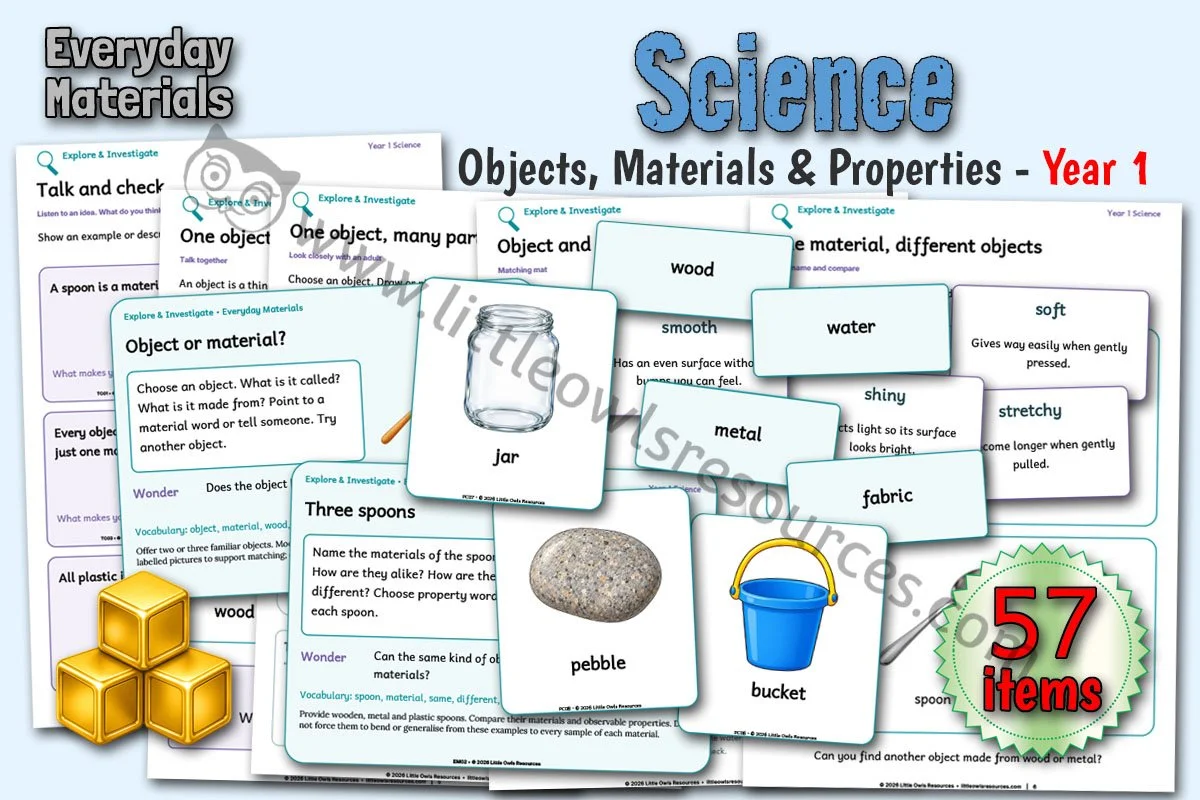
A practical pack for noticing what familiar objects are made from, describing samples and explaining how they can be grouped. Start with real objects and conversation; use the pictures when an example is unavailable or unsuitable to handle.
Learning focus
Children distinguish an object from its material, name common materials, describe simple physical properties and group samples by what they observe. The pack includes wood, plastic, glass, metal, water and rock, with paper and fabric as additional examples.
DOWNLOAD (DOCX) 📝
DOWNLOAD (PDF) 📄
DOWNLOAD (Zipped JPEGs) 📂
Everyday Materials — Objects, Materials & Properties
Year 1
What is it made from? Help children distinguish objects from materials, explore simple properties and explain their sorting choices through practical investigation of familiar objects and material samples.

These sheets have been designed as a stimulus to encourage children to explore their environment and learn about the different types of materials around them.
Within the pack there are 2 sheets to choose from. The first requires children to find and draw 4 different objects which contain fabric and the second only 1.
Possible extensions…
Write labels/annotate drawings.
Talk about how the materials look and feel. Perhaps explore the sounds they can make.
(Explore sounds that different materials make further with resources found HERE.)
Can we recycle this material?
(Recycling resources HERE.)
Original artwork drawn by Sara Murphy and final digital resources created by Stuart Murphy. COPYRIGHT ON ALL OF THE RESOURCES HOUSED ON THIS WEBSITE IS HELD BY ‘LITTLE OWLS RESOURCES’. OUR RESOURCES (INCLUDING THE IMAGES WITHIN OUR RESOURCES), CANNOT BE SHARED OR SOLD COMMERCIALLY.
DOWNLOAD EDITABLE (DOCX)
DOWNLOAD NON-EDITABLE (PDF)
DOWNLOAD NON-EDITABLE (Zipped JPEGs)
<<-BACK TO ‘GLOBAL RECYCLING DAY’ MENU
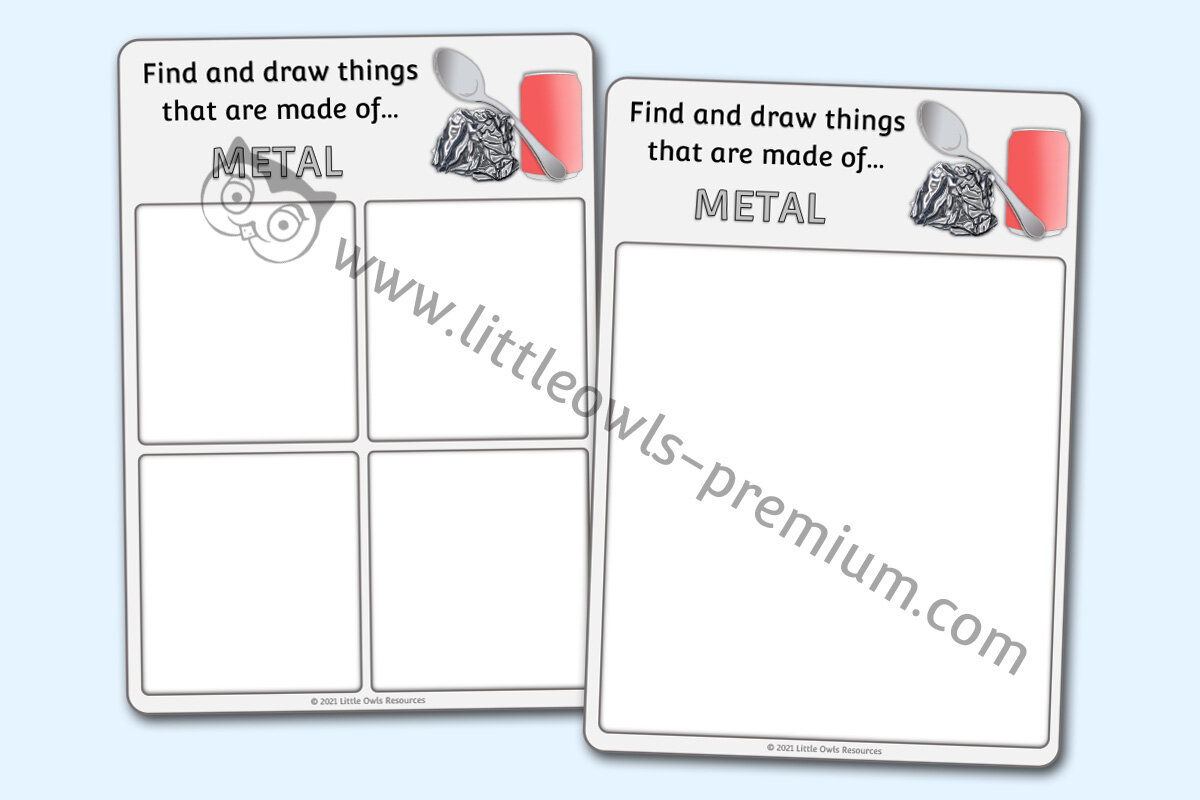
These sheets have been designed as a stimulus to encourage children to explore their environment and learn about the different types of materials around them.
Within the pack there are 2 sheets to choose from. The first requires children to find and draw 4 different objects which contain metal and the second only 1.
Possible extensions…
Write labels/annotate drawings.
Talk about how the materials look and feel. Perhaps explore the sounds they can make.
(Explore sounds that different materials make further with resources found HERE.)
Can we recycle this material?
(Recycling resources HERE.)
Original artwork drawn by Sara Murphy and final digital resources created by Stuart Murphy. COPYRIGHT ON ALL OF THE RESOURCES HOUSED ON THIS WEBSITE IS HELD BY ‘LITTLE OWLS RESOURCES’. OUR RESOURCES (INCLUDING THE IMAGES WITHIN OUR RESOURCES), CANNOT BE SHARED OR SOLD COMMERCIALLY.
DOWNLOAD EDITABLE (DOCX)
DOWNLOAD NON-EDITABLE (PDF)
DOWNLOAD NON-EDITABLE (Zipped JPEGs)
<<-BACK TO ‘GLOBAL RECYCLING DAY’ MENU

These sheets have been designed as a stimulus to encourage children to explore their environment and learn about the different types of materials around them.
Within the pack there are 2 sheets to choose from. The first requires children to find and draw 4 different objects which contain paper/card and the second only 1.
Possible extensions…
Write labels/annotate drawings.
Talk about how the materials look and feel. Perhaps explore the sounds they can make.
(Explore sounds that different materials make further with resources found HERE.)
Can we recycle this material?
(Recycling resources HERE.)
Original artwork drawn by Sara Murphy and final digital resources created by Stuart Murphy. COPYRIGHT ON ALL OF THE RESOURCES HOUSED ON THIS WEBSITE IS HELD BY ‘LITTLE OWLS RESOURCES’. OUR RESOURCES (INCLUDING THE IMAGES WITHIN OUR RESOURCES), CANNOT BE SHARED OR SOLD COMMERCIALLY.
DOWNLOAD EDITABLE (DOCX)
DOWNLOAD NON-EDITABLE (PDF)
DOWNLOAD NON-EDITABLE (Zipped JPEGs)
<<-BACK TO ‘GLOBAL RECYCLING DAY’ MENU

These sheets have been designed as a stimulus to encourage children to explore their environment and learn about the different types of materials around them.
Within the pack there are 2 sheets to choose from. The first requires children to find and draw 4 different objects which contain plastic and the second only 1.
Possible extensions…
Write labels/annotate drawings.
Talk about how the materials look and feel. Perhaps explore the sounds they can make.
(Explore sounds that different materials make further with resources found HERE.)
Can we recycle this material?
(Recycling resources HERE.)
Original artwork drawn by Sara Murphy and final digital resources created by Stuart Murphy. COPYRIGHT ON ALL OF THE RESOURCES HOUSED ON THIS WEBSITE IS HELD BY ‘LITTLE OWLS RESOURCES’. OUR RESOURCES (INCLUDING THE IMAGES WITHIN OUR RESOURCES), CANNOT BE SHARED OR SOLD COMMERCIALLY.
DOWNLOAD EDITABLE (DOCX)
DOWNLOAD NON-EDITABLE (PDF)
DOWNLOAD NON-EDITABLE (Zipped JPEGs)
<<-BACK TO ‘GLOBAL RECYCLING DAY’ MENU
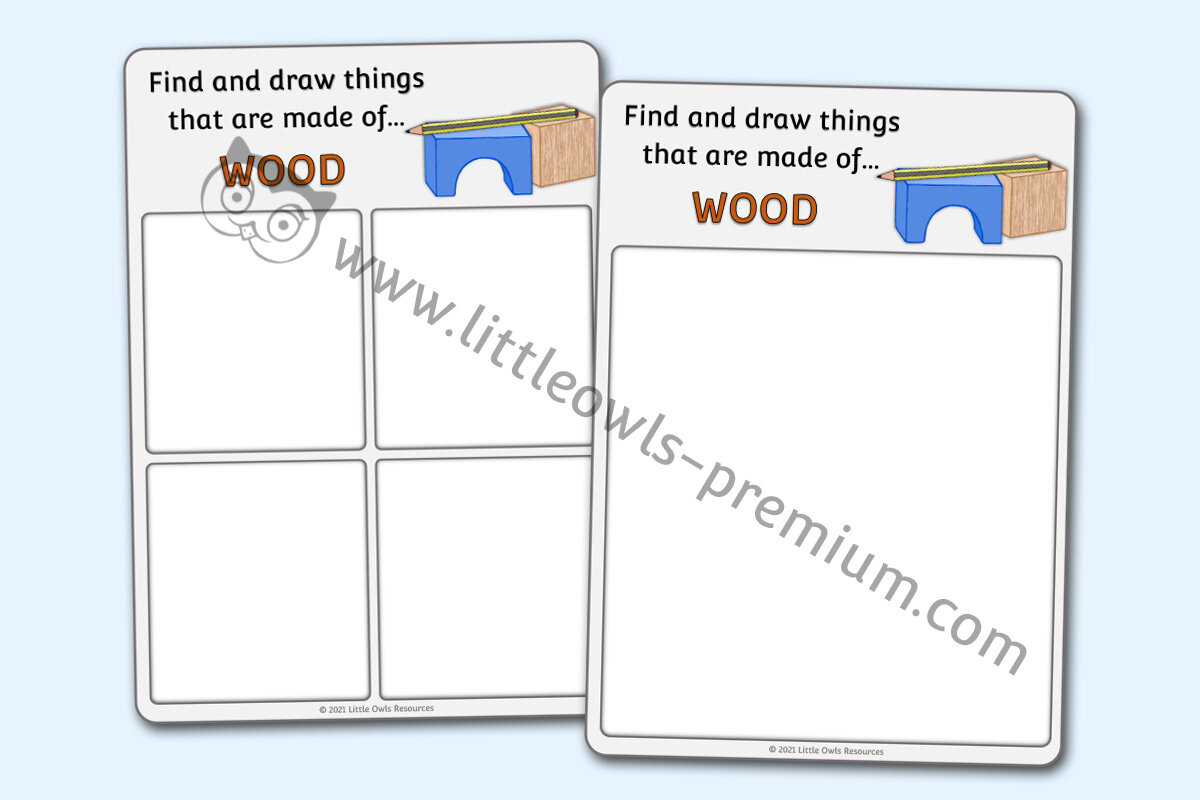
These sheets have been designed as a stimulus to encourage children to explore their environment and learn about the different types of materials around them.
Within the pack there are 2 sheets to choose from. The first requires children to find and draw 4 different objects which contain wood and the second only 1.
Possible extensions…
Write labels/annotate drawings.
Talk about how the materials look and feel. Perhaps explore the sounds they can make.
(Explore sounds that different materials make further with resources found HERE.)
Can we recycle this material?
(Recycling resources HERE.)
Original artwork drawn by Sara Murphy and final digital resources created by Stuart Murphy. COPYRIGHT ON ALL OF THE RESOURCES HOUSED ON THIS WEBSITE IS HELD BY ‘LITTLE OWLS RESOURCES’. OUR RESOURCES (INCLUDING THE IMAGES WITHIN OUR RESOURCES), CANNOT BE SHARED OR SOLD COMMERCIALLY.
DOWNLOAD EDITABLE (DOCX)
DOWNLOAD NON-EDITABLE (PDF)
DOWNLOAD NON-EDITABLE (Zipped JPEGs)
<<-BACK TO ‘GLOBAL RECYCLING DAY’ MENU
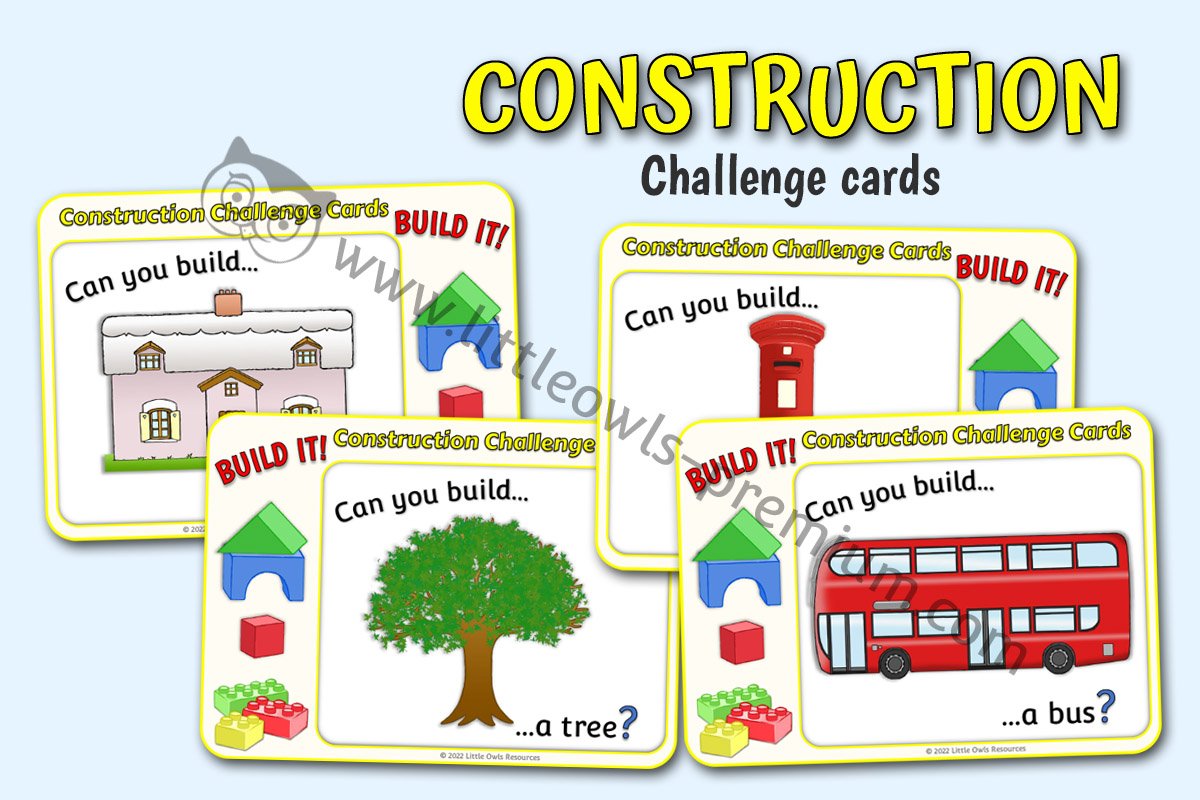
Set of 20 A5 sized ‘Can you build…?’ construction cards.
Original artwork drawn by Sara Murphy and final digital resources created by Stuart Murphy. COPYRIGHT ON ALL OF THE RESOURCES HOUSED ON THIS WEBSITE IS HELD BY ‘LITTLE OWLS RESOURCES’. OUR RESOURCES (INCLUDING THE IMAGES WITHIN THEM), CANNOT BE SHARED OR SOLD COMMERCIALLY.
DOWNLOAD EDITABLE (DOCX)
DOWNLOAD NON-EDITABLE (PDF)
DOWNLOAD NON-EDITABLE (Zipped JPEGs)
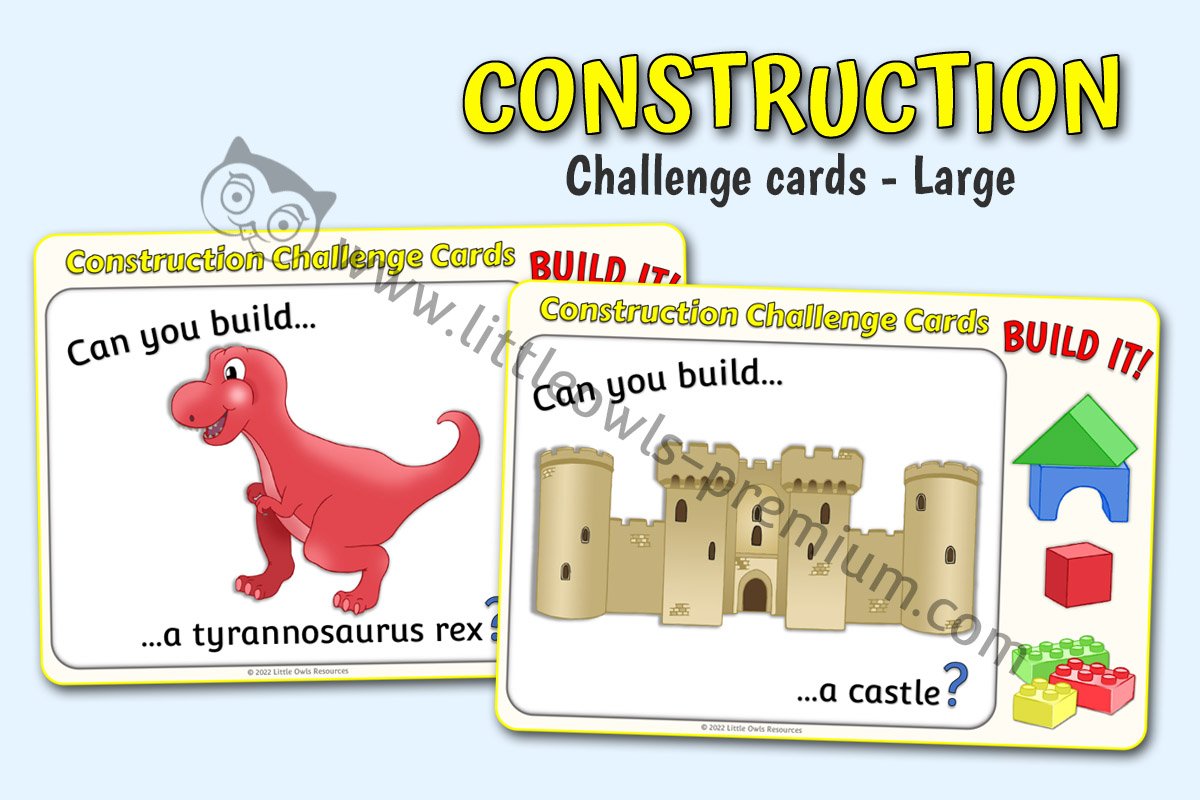
Set of 20 A4 sized ‘Can you build…?’ construction cards.
Original artwork drawn by Sara Murphy and final digital resources created by Stuart Murphy. COPYRIGHT ON ALL OF THE RESOURCES HOUSED ON THIS WEBSITE IS HELD BY ‘LITTLE OWLS RESOURCES’. OUR RESOURCES (INCLUDING THE IMAGES WITHIN THEM), CANNOT BE SHARED OR SOLD COMMERCIALLY.
DOWNLOAD EDITABLE (DOCX)
DOWNLOAD NON-EDITABLE (PDF)
DOWNLOAD NON-EDITABLE (Zipped JPEGs)
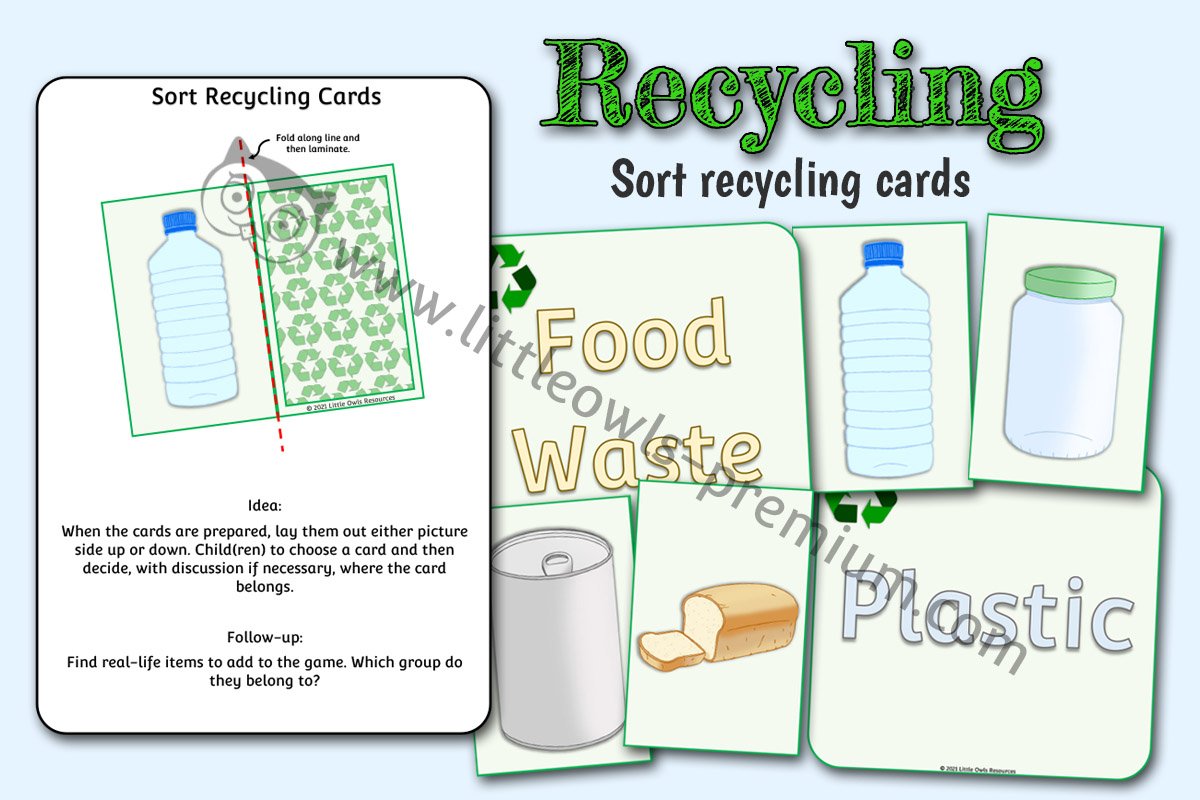
Idea:
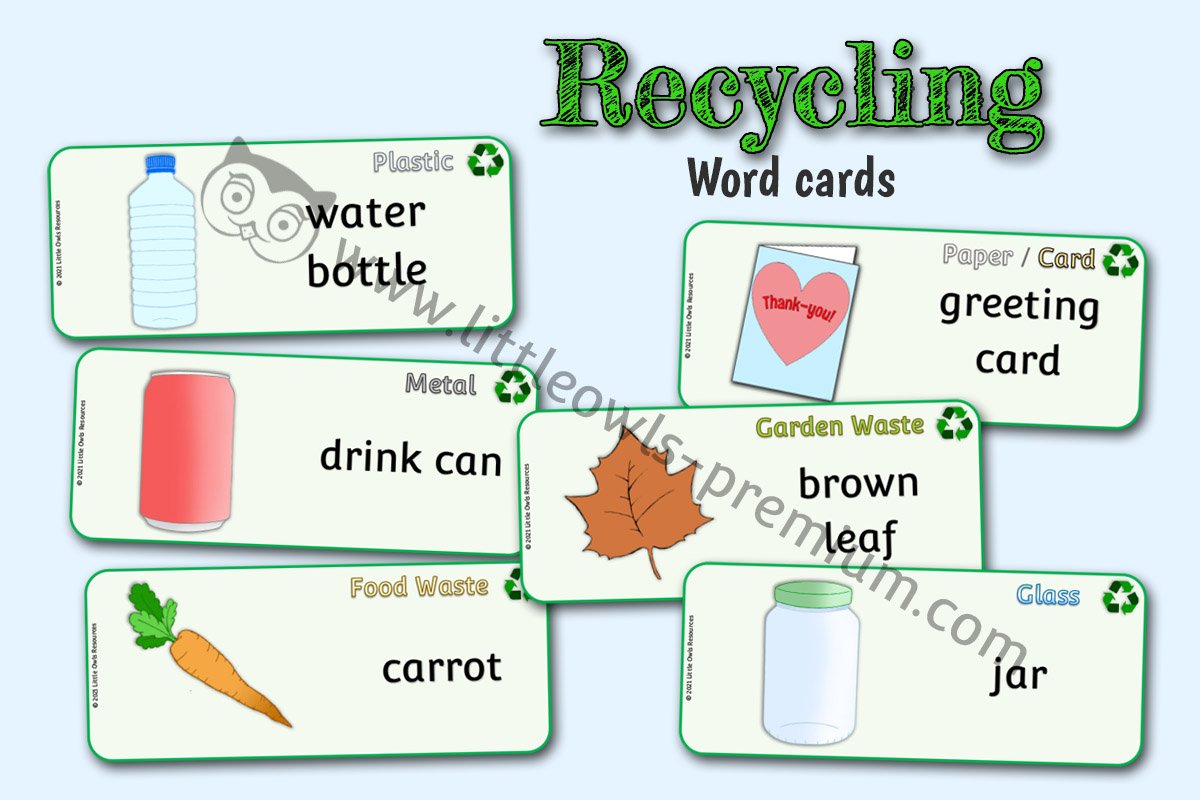
When the cards are prepared, lay them out either picture side up or down. Child(ren) to choose a card and then decide, with discussion if necessary, where the card belongs. Sorting groups include: Plastic, Paper or Card, Metal, Food Waste, Garden Waste and Glass.
Follow-up:
Find real-life items to add to the game. Which group do they belong to?
Original artwork drawn by Sara Murphy and final digital resources created by Stuart Murphy. COPYRIGHT ON ALL OF THE RESOURCES HOUSED ON THIS WEBSITE IS HELD BY ‘LITTLE OWLS RESOURCES’. OUR RESOURCES (INCLUDING THE IMAGES WITHIN OUR RESOURCES), CANNOT BE SHARED OR SOLD COMMERCIALLY.
DOWNLOAD EDITABLE (DOCX)
DOWNLOAD NON-EDITABLE (PDF)
DOWNLOAD NON-EDITABLE (Zipped JPEGs) #
Original artwork drawn by Sara Murphy and final digital resources created by Stuart Murphy. COPYRIGHT ON ALL OF THE RESOURCES HOUSED ON THIS WEBSITE IS HELD BY ‘LITTLE OWLS RESOURCES’. OUR RESOURCES (INCLUDING THE IMAGES WITHIN OUR RESOURCES), CANNOT BE SHARED OR SOLD COMMERCIALLY.
DOWNLOAD EDITABLE (DOCX)
DOWNLOAD NON-EDITABLE (PDF)
DOWNLOAD NON-EDITABLE (Zipped JPEGs)
Additional resources to support learning about ‘Everyday Materials’ in year 1, can be found on the following pages:
(buttons below)

Seasonal changes
Pupils should be taught to:
observe changes across the four seasons
observe and describe weather associated with the seasons and how day length varies
Core Year 1 ‘Seasonal Changes’ Resources:
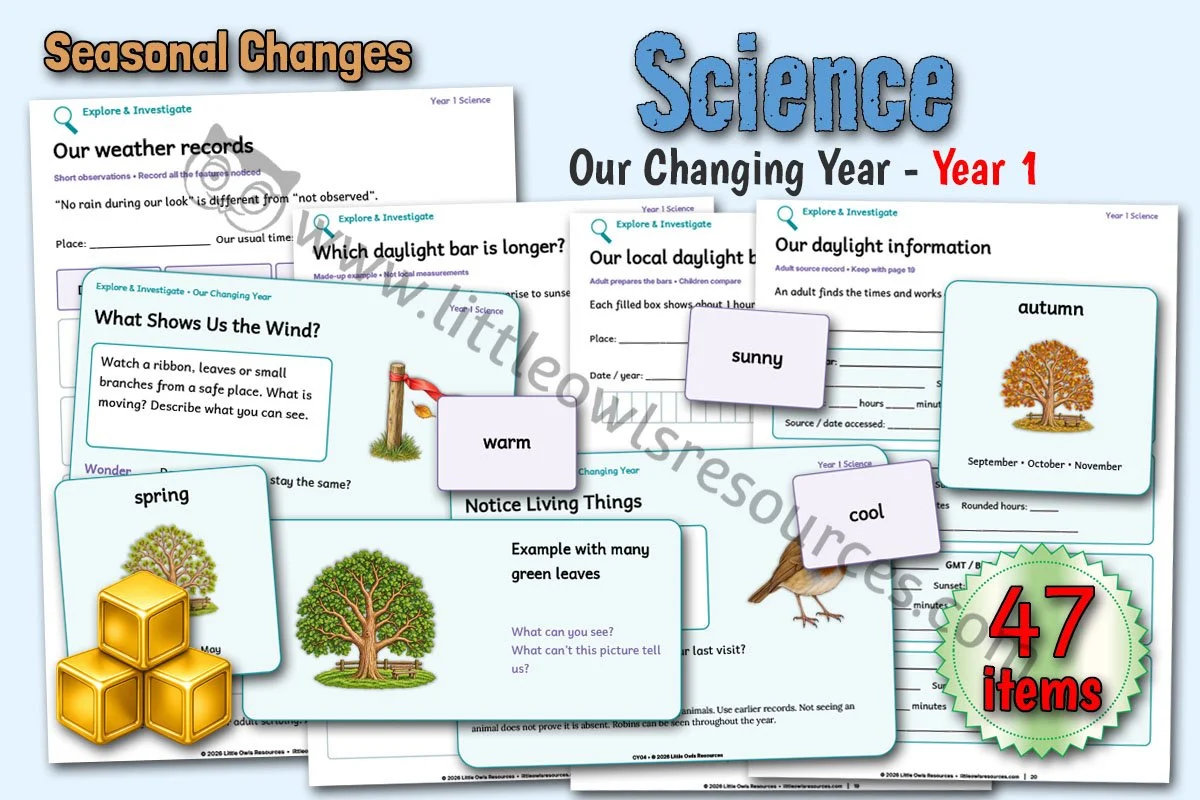
Build a record of a familiar place through the year. Children revisit, notice the weather and living things, keep dated drawings or photographs, and compare their evidence. Simple daylight bars help them explore how the time between sunrise and sunset varies.
Begin with one familiar place
Choose a safe, accessible viewpoint such as a garden corner, playground tree or window view. Mark the viewpoint on a simple plan or photograph. Revisit throughout all four seasons, with more than one observation within each season where possible. Short, regular visits are more useful than trying to fill every sheet at once.
DOWNLOAD (DOCX) 📝
DOWNLOAD (PDF) 📄
DOWNLOAD (Zipped JPEGs) 📂
Our Changing Year — Seasonal Observations & Day Length
Year 1
Revisit a familiar place through the seasons to notice changes in weather, plants and animals. Build a record of observations and explore how the amount of daylight changes across the year.

Display pack which encourages children to interact by observing the weather and recording it each day. 8 different weather cards included: sunny, rainy, cloudy, stormy, hail, windy, cloudy and sunny, hail.
Original artwork drawn by Sara Murphy and final digital resources created by Stuart Murphy. COPYRIGHT ON ALL OF THE RESOURCES HOUSED ON THIS WEBSITE IS HELD BY ‘LITTLE OWLS RESOURCES’. OUR RESOURCES (INCLUDING THE IMAGES WITHIN THEM), CANNOT BE SHARED OR SOLD COMMERCIALLY.
DOWNLOAD EDITABLE (DOCX)
DOWNLOAD NON-EDITABLE (PDF)
DOWNLOAD NON-EDITABLE (Zipped JPEGs)

🧐 Encourage deep observation and rich discussion with the 'DAY AND NIGHT - Compare and Discuss Prompts' resource pack.
This printable resource provides three distinct scenes shown side-by-side in their corresponding daytime and night-time versions. The visual contrasts are an excellent stimulus for exploring the differences in light, activities, and environments.
The pack includes a set of expertly crafted prompt questions that align with each image comparison, guiding educators and parents to:
Develop Vocabulary: Discuss concepts like light, shadow, stars, moon, and darkness.
Boost Critical Thinking: Encourage children to identify and articulate the changes they observe.
Support Early Science: Introduce basic concepts of Earth and space (EYFS Understanding the World).
Perfect for group time, circle time, or focused one-on-one learning!
COPYRIGHT ON ALL OF THE IMAGES, FILES & RESOURCES HOUSED ON THIS WEBSITE IS HELD BY ‘LITTLE OWLS RESOURCES’. IN DOWNLOADING ANY OF THESE RESOURCES YOU ARE ISSUED A SINGLE LICENCE FOR YOUR OWN USE AND THE RIGHT TO GRANT A LIMITED LICENCE TO YOUR STUDENTS TO USE THE LICENSED MATERIAL AS PART OF YOUR TEACHING AND THEIR OWN USE.
OUR RESOURCES (including the images within them), CANNOT BE SHARED OR SOLD COMMERCIALLY.
DOWNLOAD (DOCX) 📝
DOWNLOAD (PDF) 📄
DOWNLOAD (Zipped JPEGs) 📂

🌍 Spark your children's curiosity about the changing year with our wonderful Seasons: Sort & Match Activity Cards! This engaging printable resource is perfect for EYFS and KS1 children…

These checklists are intended to focus the children on looking for aspects of the natural world around them on a wildlife walk.
The descriptions of each item are broad rather than specific so that there is greater scope for being able to complete each one. For example, the bird section can be ticked off when ANY bird is seen rather than a specific species.
The second sheet has spaces for small drawings/marks when recording what is seen.
Activities, Wildlife, Mark Making/Drawing/Writing, Observation, Take Home, Pencil Control, Fine Motor, Mindfulness, Problem Solving, Discussion Prompts, Checklists/Tally Charts, Winter, Winter page, Birds, Robin, Squirrel, Diapause, Hibernation, Mammals, Fungus, Invertebrates, Ladybird
Original artwork drawn by Sara Murphy and final digital resources created by Stuart Murphy. COPYRIGHT ON ALL OF THE RESOURCES HOUSED ON THIS WEBSITE IS HELD BY ‘LITTLE OWLS RESOURCES’. OUR RESOURCES (INCLUDING THE IMAGES WITHIN THEM), CANNOT BE SHARED OR SOLD COMMERCIALLY.
DOWNLOAD EDITABLE (DOCX)
DOWNLOAD NON-EDITABLE (PDF)
DOWNLOAD NON-EDITABLE (Zipped JPEGs)

These sheets are intended to encourage children to record their expectations and/or observations of the winter season. They are differentiated by amounts of expected writing.
Activities, Wildlife, Mark Making/Drawing/Writing, Drawing, Observation, Take Home, Pencil Control, Fine Motor, Winter, Mindfulness, Winter page, Robin, Birds
Original artwork drawn by Sara Murphy and final digital resources created by Stuart Murphy. COPYRIGHT ON ALL OF THE RESOURCES HOUSED ON THIS WEBSITE IS HELD BY ‘LITTLE OWLS RESOURCES’. OUR RESOURCES (INCLUDING THE IMAGES WITHIN THEM), CANNOT BE SHARED OR SOLD COMMERCIALLY.
DOWNLOAD EDITABLE (DOCX)
DOWNLOAD NON-EDITABLE (PDF)
DOWNLOAD NON-EDITABLE (Zipped JPEGs)

These checklists are intended to focus the children on looking for aspects of the natural world around them on a wildlife walk.
The descriptions of each item are broad rather than specific so that there is greater scope for being able to complete each one. For example, the bird section can be ticked off when ANY bird is seen rather than a specific species.
The second sheet has spaces for small drawings/marks when recording what is seen.
Activities, Wildlife, Mark Making/Drawing/Writing, Observation, Take Home, Pencil Control, Fine Motor, Mindfulness, Problem Solving, Discussion Prompts, Autumn, Checklists/Tally Charts, Autumn page, Birds, Blackbird, Minibeasts, Earthworm, Invertebrates, Fungus, Mammals, Hedgehog, Spider, Animal Homes, Spider's Web
Original artwork drawn by Sara Murphy and final digital resources created by Stuart Murphy. COPYRIGHT ON ALL OF THE RESOURCES HOUSED ON THIS WEBSITE IS HELD BY ‘LITTLE OWLS RESOURCES’. OUR RESOURCES (INCLUDING THE IMAGES WITHIN THEM), CANNOT BE SHARED OR SOLD COMMERCIALLY.
DOWNLOAD EDITABLE (DOCX)
DOWNLOAD NON-EDITABLE (PDF)
DOWNLOAD NON-EDITABLE (Zipped JPEGs)

These sheets are intended to encourage children to record their expectations and/or observations of the autumn season. They are differentiated by amounts of expected writing.
Activities, Wildlife, Mark Making/Drawing/Writing, Drawing, Observation, Take Home, Pencil Control, Fine Motor, Autumn, Mindfulness, Autumn page, Squirrel
Original artwork drawn by Sara Murphy and final digital resources created by Stuart Murphy. COPYRIGHT ON ALL OF THE RESOURCES HOUSED ON THIS WEBSITE IS HELD BY ‘LITTLE OWLS RESOURCES’. OUR RESOURCES (INCLUDING THE IMAGES WITHIN THEM), CANNOT BE SHARED OR SOLD COMMERCIALLY.
DOWNLOAD EDITABLE (DOCX)
DOWNLOAD NON-EDITABLE (PDF)
DOWNLOAD NON-EDITABLE (Zipped JPEGs)

These checklists are intended to focus the children on looking for aspects of the natural world around them on a wildlife walk.
The descriptions of each item are broad rather than specific so that there is greater scope for being able to complete each one. For example, the bird section can be ticked off when ANY bird is seen rather than a specific species.
The second sheet has spaces for small drawings/marks when recording what is seen.
Activities, Wildlife, Mark Making/Drawing/Writing, Observation, Take Home, Pencil Control, Fine Motor, Mindfulness, Problem Solving, Discussion Prompts, Checklists/Tally Charts, Spring, Birds, Blue Tit, Minibeasts, Ladybird, Invertebrates, Frog, Amphibians, Fungus, Bird's Nest, Bird's Eggs, Animal Homes
Original artwork drawn by Sara Murphy and final digital resources created by Stuart Murphy. COPYRIGHT ON ALL OF THE RESOURCES HOUSED ON THIS WEBSITE IS HELD BY ‘LITTLE OWLS RESOURCES’. OUR RESOURCES (INCLUDING THE IMAGES WITHIN THEM), CANNOT BE SHARED OR SOLD COMMERCIALLY.
DOWNLOAD EDITABLE (DOCX)
DOWNLOAD NON-EDITABLE (PDF)
DOWNLOAD NON-EDITABLE (Zipped JPEGs)

These sheets are intended to encourage children to record their expectations and/or observations of the spring season. They are differentiated by amounts of expected writing.
Activities, Wildlife, Mark Making/Drawing/Writing, Drawing, Observation, Take Home, Pencil Control, Fine Motor, Spring, Mindfulness, Bumblebee, Ladybird, Minibeasts, Invertebrates
Original artwork drawn by Sara Murphy and final digital resources created by Stuart Murphy. COPYRIGHT ON ALL OF THE RESOURCES HOUSED ON THIS WEBSITE IS HELD BY ‘LITTLE OWLS RESOURCES’. OUR RESOURCES (INCLUDING THE IMAGES WITHIN THEM), CANNOT BE SHARED OR SOLD COMMERCIALLY.
DOWNLOAD EDITABLE (DOCX)
DOWNLOAD NON-EDITABLE (PDF)
DOWNLOAD NON-EDITABLE (Zipped JPEGs)

These sheets are intended to encourage children to record their expectations and/or observations of the summer season. They are differentiated by amounts of expected writing.
Activities, Wildlife, Mark Making/Drawing/Writing, Drawing, Observation, Take Home, Pencil Control, Fine Motor, Summer, Mindfulness, Swallow, Butterfly
Original artwork drawn by Sara Murphy and final digital resources created by Stuart Murphy. COPYRIGHT ON ALL OF THE RESOURCES HOUSED ON THIS WEBSITE IS HELD BY ‘LITTLE OWLS RESOURCES’. OUR RESOURCES (INCLUDING THE IMAGES WITHIN THEM), CANNOT BE SHARED OR SOLD COMMERCIALLY.
DOWNLOAD EDITABLE (DOCX)
DOWNLOAD NON-EDITABLE (PDF)
DOWNLOAD NON-EDITABLE (Zipped JPEGs)
Additional resources to support learning about ‘Seasonal Changes’ in year 1, can be found on the following pages:
(buttons below)


2️⃣ Year 2 Science
Living things and their habitats
Pupils should be taught to:
explore and compare the differences between things that are living, dead, and things that have never been alive
identify that most living things live in habitats to which they are suited and describe how different habitats provide for the basic needs of different kinds of animals and plants, and how they depend on each other
identify and name a variety of plants and animals in their habitats, including microhabitats
describe how animals obtain their food from plants and other animals, using the idea of a simple food chain, and identify and name different sources of food
Core Year 2 ‘Living Things and Their Habitats’ Resources:
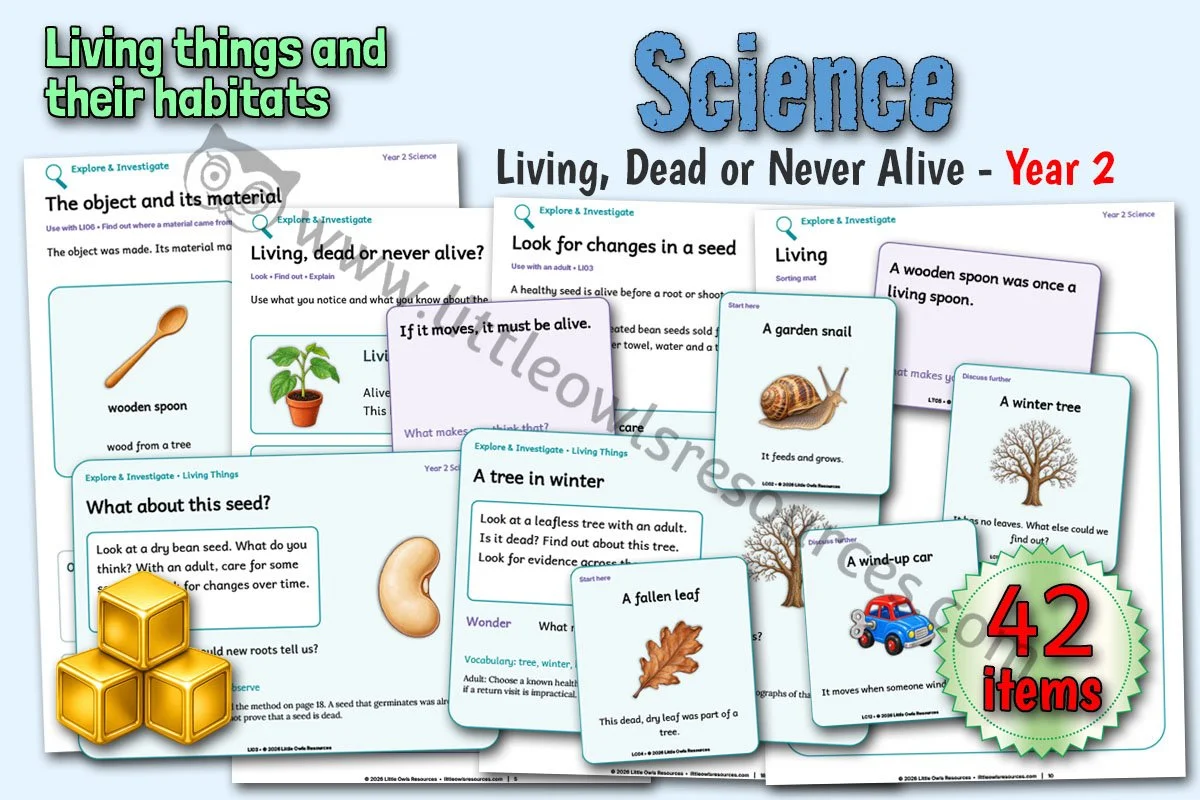
Sort, Explain and Investigate
Help children compare things that are living, dead or have never been alive. Begin with real examples and clear information, then ask children to explain their choices, gather evidence and reconsider uncertain cases. A picture alone cannot always settle a question.
A useful starting sequence
1. Look at a cared-for growing plant, a known dead fallen leaf and a clean rock. Name each thing and discuss its history.
2. Sort a few examples using the three group mats. Read the picture-card information together.
3. Place uncertain examples on “Not sure yet” and decide what would help.
4. Observe over time or find information, then explain whether the evidence supports or changes the choice.
DOWNLOAD (DOCX) 📝
DOWNLOAD (PDF) 📄
DOWNLOAD (Zipped JPEGs) 📂
Living, Dead or Never Alive? — Sort, Explain & Investigate
Year 2
Explore the differences between things that are living, dead or have never been alive. Sorting activities, discussion and real observations encourage children to explain their choices, investigate uncertain examples and reconsider their ideas.

Ten rockpool wildlife fact cards which include engaging images and interesting facts to inspire your rockpool investigations.
Keywords: rockpool, fact card, hermit crab, shell, animal, barnacle, limpet, protect, predator, water, sea slater, tide, seaweed, whelk, sea snail, starfish, mussel, clam, shellfish, edible crab, , common blenny, fish, beadlet anemone, tentacles, shrimps, bladder wrack seaweed
Original artwork drawn by Sara Murphy and final digital resources created by Stuart Murphy. COPYRIGHT ON ALL OF THE RESOURCES HOUSED ON THIS WEBSITE IS HELD BY ‘LITTLE OWLS RESOURCES’. OUR RESOURCES (INCLUDING THE IMAGES WITHIN THEM), CANNOT BE SHARED OR SOLD COMMERCIALLY.
DOWNLOAD EDITABLE (DOCX)
DOWNLOAD NON-EDITABLE (PDF)
DOWNLOAD NON-EDITABLE (Zipped JPEGs)
<<-BACK TO ‘BEACH SCHOOL’ MENU
<<-BACK TO ‘AT THE SEASIDE’ MENU

These checklists are to promote mindfulness and awareness of surroundings when in a beach setting. This activity is intended to help children engage their senses to better notice and appreciate the environment around them.
Keywords: mindfulness, awareness of surroundings, checklist, scavenger hunt, senses, environment, can you find, beach, rockpool, bird, seaweed, minibeast, stone, pebble, shell, sea animal, wave
Original artwork drawn by Sara Murphy and final digital resources created by Stuart Murphy. COPYRIGHT ON ALL OF THE RESOURCES HOUSED ON THIS WEBSITE IS HELD BY ‘LITTLE OWLS RESOURCES’. OUR RESOURCES (INCLUDING THE IMAGES WITHIN THEM), CANNOT BE SHARED OR SOLD COMMERCIALLY.
DOWNLOAD EDITABLE (DOCX)
DOWNLOAD NON-EDITABLE (PDF)
DOWNLOAD NON-EDITABLE (Zipped JPEGs)
<<-BACK TO ‘BEACH SCHOOL’ MENU
<<-BACK TO ‘AT THE SEASIDE’ MENU

Engaging poster which shows how we can tell the age a cockle was when it died by looking at the shell it left behind. How many lines are on each of the cockle shells you find?
Keywords: cockle shell, growth, poster, facts, sea, beach
Original artwork drawn by Sara Murphy and final digital resources created by Stuart Murphy. COPYRIGHT ON ALL OF THE RESOURCES HOUSED ON THIS WEBSITE IS HELD BY ‘LITTLE OWLS RESOURCES’. OUR RESOURCES (INCLUDING THE IMAGES WITHIN THEM), CANNOT BE SHARED OR SOLD COMMERCIALLY.
DOWNLOAD EDITABLE (DOCX)
DOWNLOAD NON-EDITABLE (PDF)
DOWNLOAD NON-EDITABLE (Zipped JPEGs)
<<-BACK TO ‘BEACH SCHOOL’ MENU
<<-BACK TO ‘AT THE SEASIDE’ MENU

These sheets are intended to encourage children to record their expectations and/or observations of their beach visit. They are differentiated by amounts of expected writing.
Keywords: beach, trip, mark making, make marks, writing, drawing, seaside, beach school
Original artwork drawn by Sara Murphy and final digital resources created by Stuart Murphy. COPYRIGHT ON ALL OF THE RESOURCES HOUSED ON THIS WEBSITE IS HELD BY ‘LITTLE OWLS RESOURCES’. OUR RESOURCES (INCLUDING THE IMAGES WITHIN THEM), CANNOT BE SHARED OR SOLD COMMERCIALLY.
DOWNLOAD EDITABLE (DOCX)
DOWNLOAD NON-EDITABLE (PDF)
DOWNLOAD NON-EDITABLE (Zipped JPEGs)
<<-BACK TO ‘BEACH SCHOOL’ MENU
<<-BACK TO ‘AT THE SEASIDE’ MENU

This STEM ‘Investigate Minibeasts - Support Pack’ includes a variety of resources to help inspire and engage adults and children alike.
Materials within the pack encourage open ended exploration of the challenge ‘Can you investigate minibeasts?’
STEM learning brings together Science, Technology, Engineering and Mathematics.
Skills such as critical thinking, creativity, teamwork, communication, initiative, inquiry and problem solving are all developed within STEM learning.
We hope you find this pack useful and you all have fun!
Original artwork drawn by Sara Murphy and final digital resources created by Stuart Murphy. COPYRIGHT ON ALL OF THE RESOURCES HOUSED ON THIS WEBSITE IS HELD BY ‘LITTLE OWLS RESOURCES’. OUR RESOURCES (INCLUDING THE IMAGES WITHIN THEM), CANNOT BE SHARED OR SOLD COMMERCIALLY.
DOWNLOAD EDITABLE (DOCX)
DOWNLOAD NON-EDITABLE (PDF)
DOWNLOAD NON-EDITABLE (Zipped JPEGs)

Minibeasts themed checklist (updated 2020 larger border version). Your children will love to use this as part of an out and about searching activity (for example finding real minibeasts in your outdoor area) or in conjunction with a 'Minibeasts' themed tuff spot or feely bag.
Checklists/Tally Charts, Fine Motor, Laminate to use with w/b pens, Mark Making/Drawing/Writing, Observational Skills, Problem Solving, Pencil Control, Activity, Discussion Prompts, Print Carries Meaning, Home Learning, Centipede, Woodlouse, Ant, Dragonfly, Bumblebee, Earthworm, Snail, Butterfly, Spider, Ladybird, Caterpillar, Fly
Original artwork drawn by Sara Murphy and final digital resources created by Stuart Murphy. COPYRIGHT ON ALL OF THE RESOURCES HOUSED ON THIS WEBSITE IS HELD BY ‘LITTLE OWLS RESOURCES’. OUR RESOURCES (INCLUDING THE IMAGES WITHIN THEM), CANNOT BE SHARED OR SOLD COMMERCIALLY.
DOWNLOAD EDITABLE (DOCX)
DOWNLOAD NON-EDITABLE (PDF)
DOWNLOAD NON-EDITABLE (Zipped JPEGs)
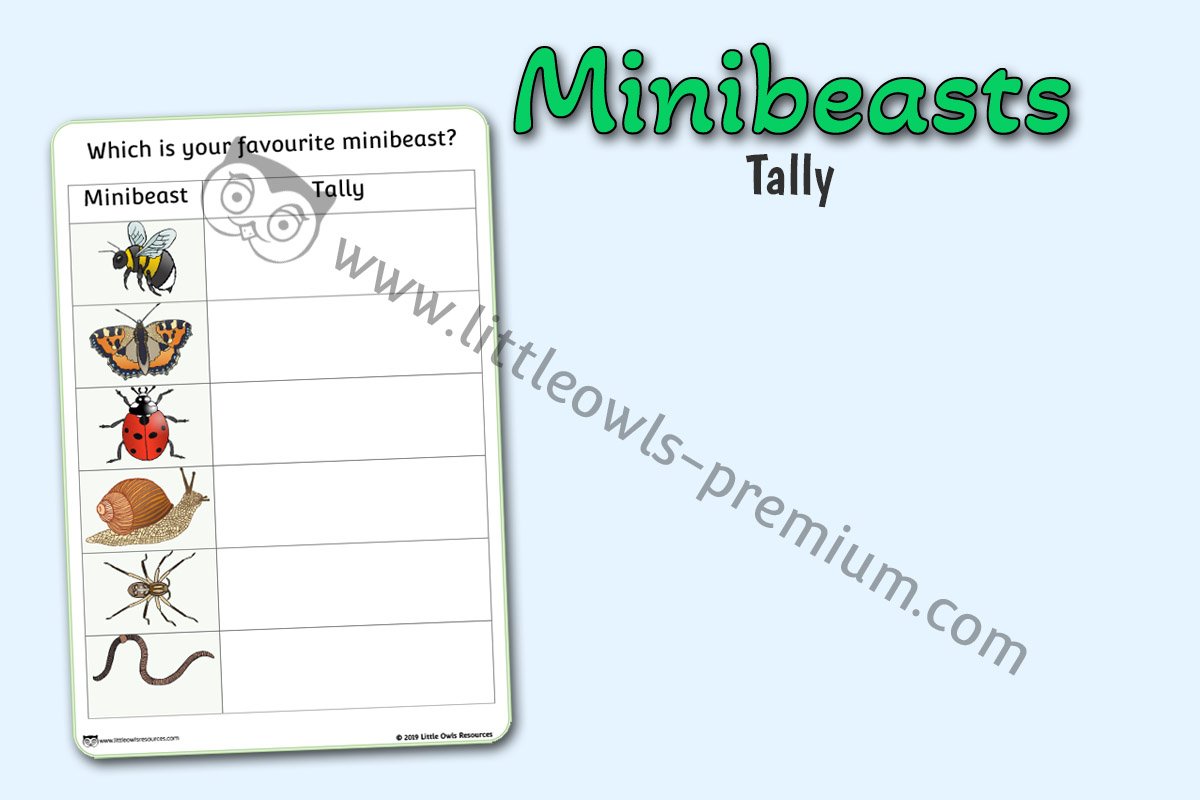
Minibeast themed tally chart. Your children will love to use this as part of an out and about hunt activity (for example searching for minibeasts in your outdoor area) or in conjunction with a 'Minibeasts' themed tuff spot or feely bag. Use as a Tally Chart or Check List. Differentiate expectations for individual children within your care. Some children may simply use it as a visual cue whilst others may begin to make marks resembling tally lines or even numbers. Alternatively ask your children ‘Which is your favourite minibeast?’ and collect the results as a group. Which minibeast has the most votes? Perhaps use in conjunction with our ‘Minibeast Pictogram Chart Activity’.
Graph/Charts, Numbers, Counting, Fine Motor, Observational Skills, Take Home, Personal Opinion/Feelings, Mark Making/Drawing/Writing, Laminate to use with w/b pens, Pencil Control, Group Activity, Discussion Prompts, Bumblebee, Butterfly, Ladybird, Snail, Spider, Earthworm
Original artwork drawn by Sara Murphy and final digital resources created by Stuart Murphy. COPYRIGHT ON ALL OF THE RESOURCES HOUSED ON THIS WEBSITE IS HELD BY ‘LITTLE OWLS RESOURCES’. OUR RESOURCES (INCLUDING THE IMAGES WITHIN THEM), CANNOT BE SHARED OR SOLD COMMERCIALLY.
DOWNLOAD EDITABLE (DOCX)
DOWNLOAD NON-EDITABLE (PDF)
DOWNLOAD NON-EDITABLE (Zipped JPEGs)

These fact cards can be used as part of a display or as a stimulus for discussion, writing and drawing before or after time spent in a woodland setting.
10 cards included: Fox, Squirrel, Frog, Badger, Deer, Rabbit, Bank Vole, Long-Eared Bat, Slow Worm & Hedgehog.
Observation, All Year Round - Wildlife, Fact Cards, Posters/Displays, Cards/Flashcards, Number Recognition, Measures - Length, Animals, Discussion Prompts, Autumn page, Winter page, Fox, Squirrel, Frog, Badger, Deer, Rabbit, Vole, Bat, Slow Worm, Hedgehog, Mammals, Amphibians
Original artwork drawn by Sara Murphy and final digital resources created by Stuart Murphy. COPYRIGHT ON ALL OF THE RESOURCES HOUSED ON THIS WEBSITE IS HELD BY ‘LITTLE OWLS RESOURCES’. OUR RESOURCES (INCLUDING THE IMAGES WITHIN THEM), CANNOT BE SHARED OR SOLD COMMERCIALLY.
DOWNLOAD EDITABLE (DOCX)
DOWNLOAD NON-EDITABLE (PDF)
DOWNLOAD NON-EDITABLE (Zipped JPEGs)

These fact cards can be used as part of a display or as a stimulus for discussion, writing and drawing before or after time spent in a woodland setting.
10 cards included: Fox, Squirrel, Frog, Badger, Deer, Rabbit, Bank Vole, Long-Eared Bat, Slow Worm & Hedgehog.
Observation, All Year Round - Wildlife, Fact Cards, Posters/Displays, Cards/Flashcards, Number Recognition, Measures - Length, Animals, Discussion Prompts, Autumn page, Winter page, Fox, Squirrel, Frog, Badger, Deer, Rabbit, Vole, Bat, Slow Worm, Hedgehog, Amphibians, Mammals
Original artwork drawn by Sara Murphy and final digital resources created by Stuart Murphy. COPYRIGHT ON ALL OF THE RESOURCES HOUSED ON THIS WEBSITE IS HELD BY ‘LITTLE OWLS RESOURCES’. OUR RESOURCES (INCLUDING THE IMAGES WITHIN THEM), CANNOT BE SHARED OR SOLD COMMERCIALLY.
DOWNLOAD EDITABLE (DOCX)
DOWNLOAD NON-EDITABLE (PDF)
DOWNLOAD NON-EDITABLE (Zipped JPEGs)
These fact cards can be used as part of a display or as a stimulus for discussion, writing and drawing before or after time spent in a woodland setting.
8 cards included: Ivy, Bluebell, Bramble, Snowdrop, Daffodil, Daisy, Herb Robert & Wood Anemone.
Observation, All Year Round - Wildlife, Fact Cards, Posters/Displays, Cards/Flashcards, Number Recognition, Measures - Length, Plants/Flowers, Discussion Prompts, Autumn page, Winter page
Original artwork drawn by Sara Murphy and final digital resources created by Stuart Murphy. COPYRIGHT ON ALL OF THE RESOURCES HOUSED ON THIS WEBSITE IS HELD BY ‘LITTLE OWLS RESOURCES’. OUR RESOURCES (INCLUDING THE IMAGES WITHIN THEM), CANNOT BE SHARED OR SOLD COMMERCIALLY.
DOWNLOAD EDITABLE (DOCX)
DOWNLOAD NON-EDITABLE (PDF)
DOWNLOAD NON-EDITABLE (Zipped JPEGs)

These fact cards can be used as part of a display or as a stimulus for discussion, writing and drawing before or after time spent in a woodland setting.
10 cards included: Earthworm, Garden Snail, Ladybird, Earwig, Ant, Bumblebee, Woodlouse, Centipede, Garden Spider & Common Blue Butterfly.
Observation, All Year Round - Wildlife, Fact Cards, Posters/Displays, Cards/Flashcards, Number Recognition, Measures - Length, Minibeasts, Animals, Discussion Prompts, Autumn page, Winter page, Earthworm, Snail, Ladybird, Earwig, Ant, Bumblebee, Woodlouse, Centipede, Spider, Butterfly, Invertebrates
Original artwork drawn by Sara Murphy and final digital resources created by Stuart Murphy. COPYRIGHT ON ALL OF THE RESOURCES HOUSED ON THIS WEBSITE IS HELD BY ‘LITTLE OWLS RESOURCES’. OUR RESOURCES (INCLUDING THE IMAGES WITHIN THEM), CANNOT BE SHARED OR SOLD COMMERCIALLY.
DOWNLOAD EDITABLE (DOCX)
DOWNLOAD NON-EDITABLE (PDF)
DOWNLOAD NON-EDITABLE (Zipped JPEGs)
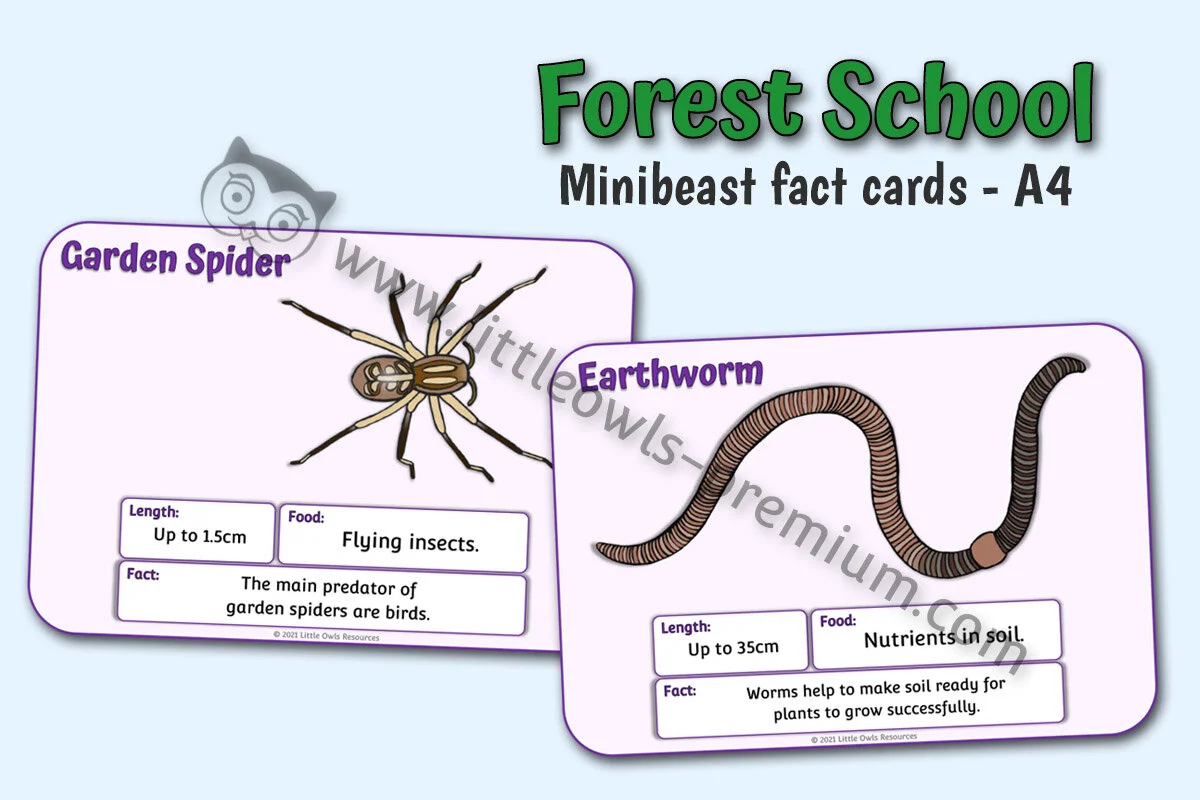
These fact cards can be used as part of a display or as a stimulus for discussion, writing and drawing before or after time spent in a woodland setting.
10 cards included: Earthworm, Garden Snail, Ladybird, Earwig, Ant, Bumblebee, Woodlouse, Centipede, Garden Spider & Common Blue Butterfly.
Observation, All Year Round - Wildlife, Fact Cards, Posters/Displays, Cards/Flashcards, Number Recognition, Measures - Length, Minibeasts, Animals, Discussion Prompts, Autumn page, Winter page, Earthworm, Snail, Ladybird, Earwig, Ant, Bumblebee, Woodlouse, Centipede, Spider, Butterfly, Invertebrates
Original artwork drawn by Sara Murphy and final digital resources created by Stuart Murphy. COPYRIGHT ON ALL OF THE RESOURCES HOUSED ON THIS WEBSITE IS HELD BY ‘LITTLE OWLS RESOURCES’. OUR RESOURCES (INCLUDING THE IMAGES WITHIN THEM), CANNOT BE SHARED OR SOLD COMMERCIALLY.
DOWNLOAD EDITABLE (DOCX)
DOWNLOAD NON-EDITABLE (PDF)
DOWNLOAD NON-EDITABLE (Zipped JPEGs)
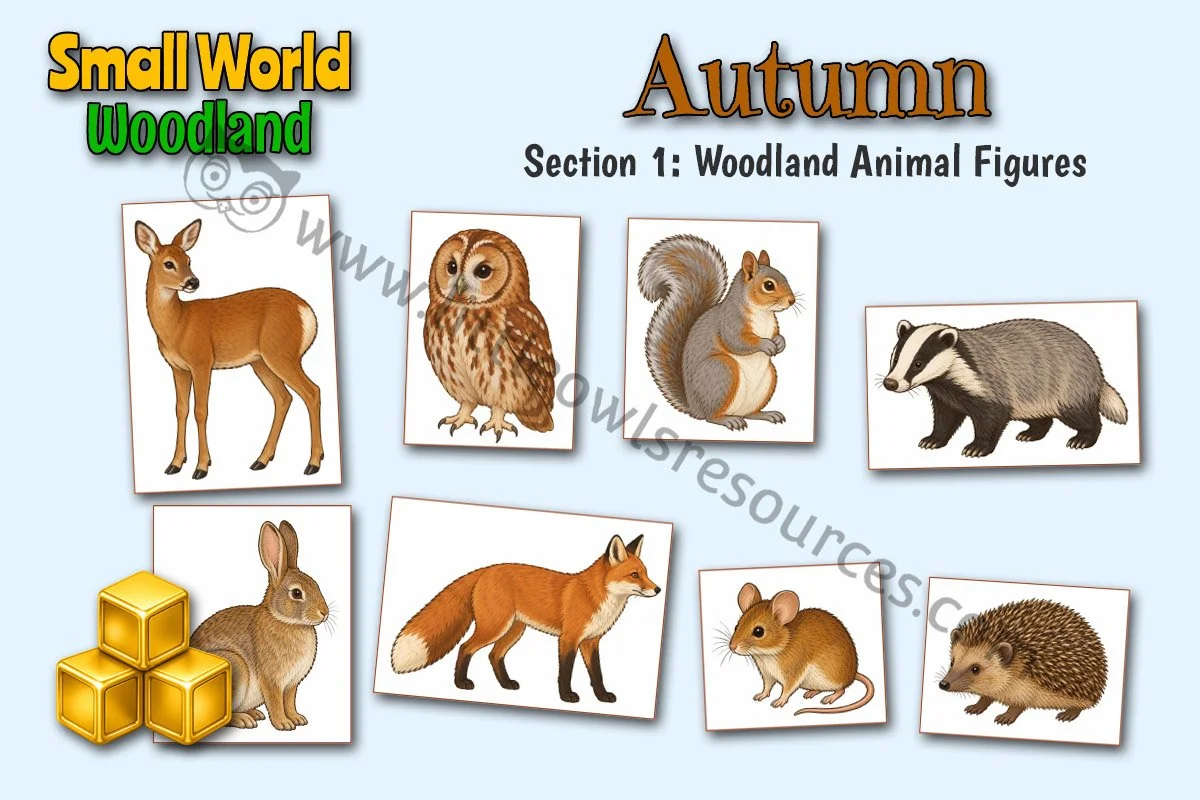
Eight movable woodland animals for small-world play, with optional name cards and folded supports. Use them alongside blocks, fabric, checked natural materials and animal figures you already have. Children can move, combine and reinterpret the pieces freely.
Approximate longest animal dimensions: hedgehog and mouse 6–7 cm; squirrel, owl and rabbit 8 cm; fox, badger and deer 9–10 cm. These are play sizes, not a true-to-life scale comparison. Illustrations show a grey squirrel, tawny owl and roe deer doe; names on the pieces remain simple.
Choose how to use them
Use flat on a tray or floor, place in suitable card holders, or secure to blocks. Keep any animal names separate so the figures stay open to imaginative use. Optional name cards are on page 4. Add only a few animals at first and follow the children’s stories.
Optional folded supports
Print page 5 on firm, foldable card, or use it as a template. Print it twice for eight identical supports. Make one first with your chosen card and check that it stands well before making the rest.
DOWNLOAD (DOCX) 📝
DOWNLOAD (PDF) 📄
DOWNLOAD (Zipped JPEGs) 📂
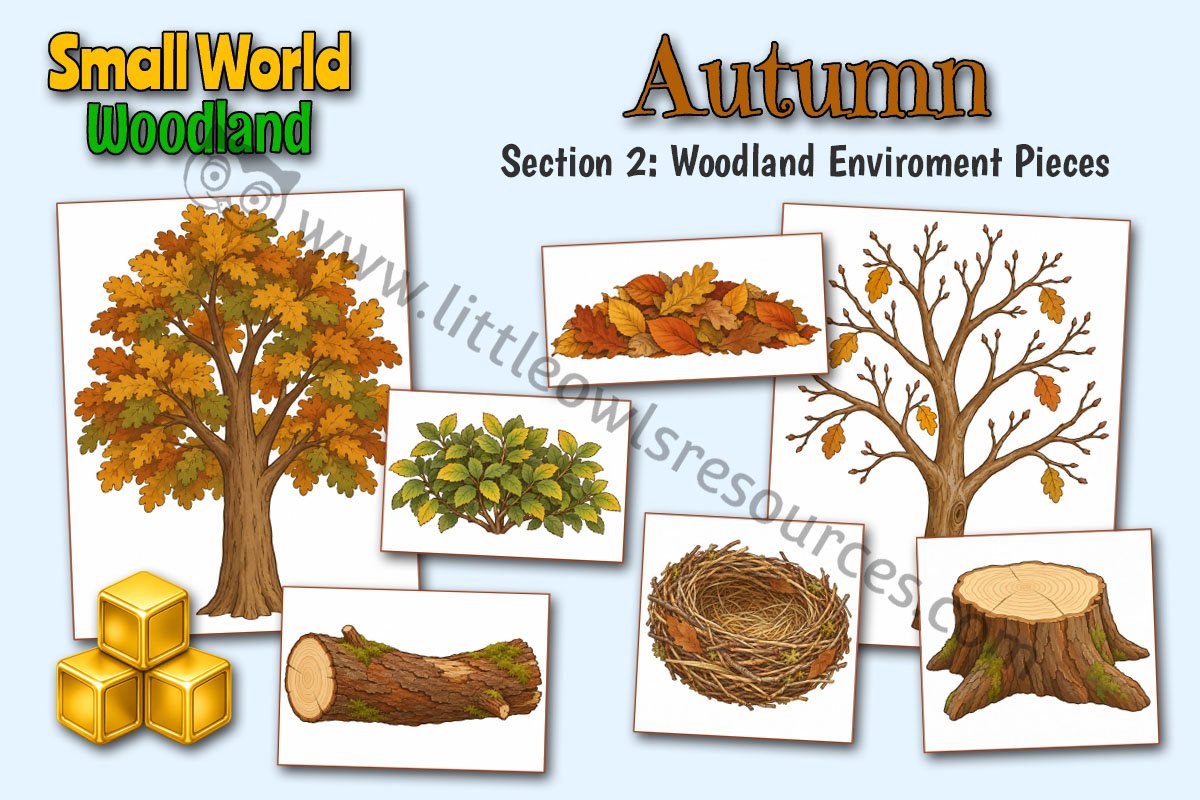
Fifteen movable pieces to enrich your small-world provision: four trees, a log, a stump, two bushes, fungi, a leaf pile, stones, an empty nest, a burrow entrance, a tree hollow and a fallen branch. Use a few at a time alongside blocks, fabric, bark, checked natural materials and your woodland animals.
Trees are approximately 15–16 cm tall; most other pieces are approximately 6–10 cm across their longest dimension. These are practical play sizes, not a true-to-life scale. Use the 5 cm check line on page 7 to check the print size.
DOWNLOAD (DOCX) 📝
DOWNLOAD (PDF) 📄
DOWNLOAD (Zipped JPEGs) 📂
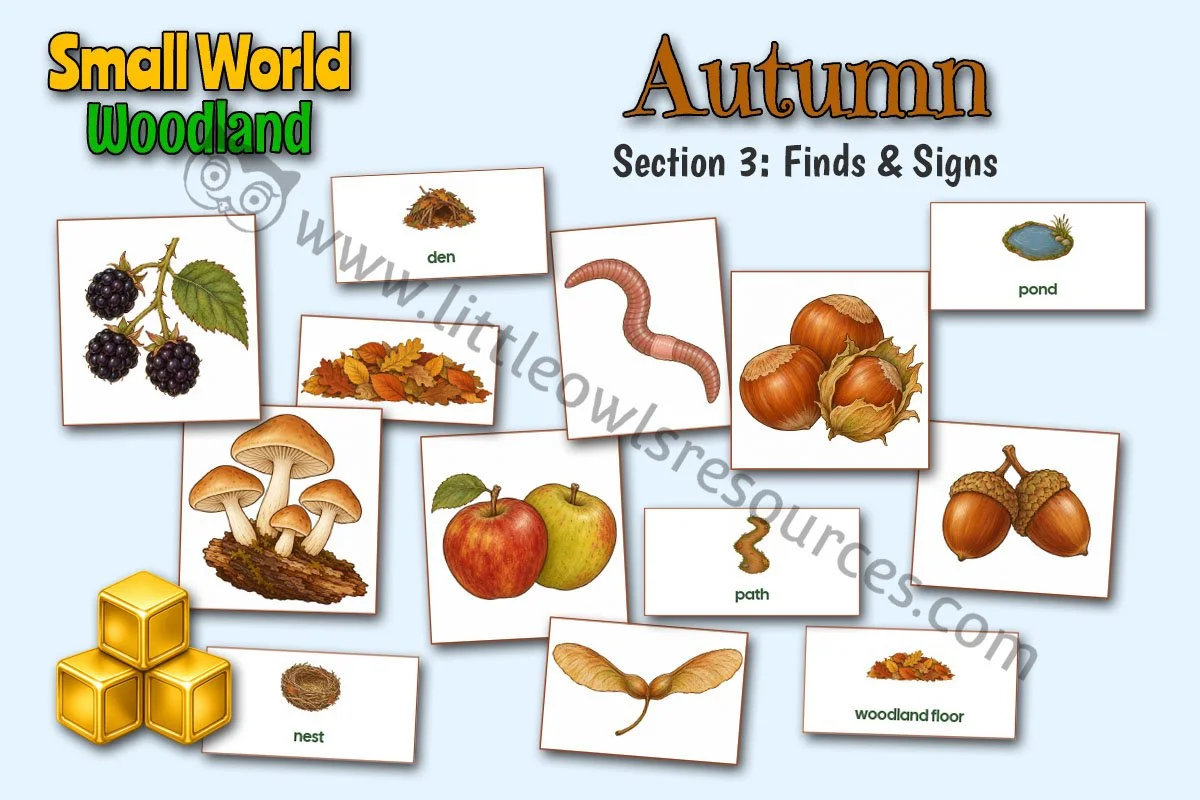
Eight woodland-find props and ten optional habitat signs to add to small-world play, with two blank signs for children’s own places. Use them with the animal figures and environment pieces, or with blocks, fabric and resources you already have. Offer a few pieces and follow the children’s stories.
The find props are approximately 6–7 cm across their longest dimension, including a little cutting margin. Signs measure 8 × 4 cm. These are useful play sizes rather than a true-to-life scale. The check line on page 5 should measure 5 cm.
DOWNLOAD (DOCX) 📝
DOWNLOAD (PDF) 📄
DOWNLOAD (Zipped JPEGs) 📂
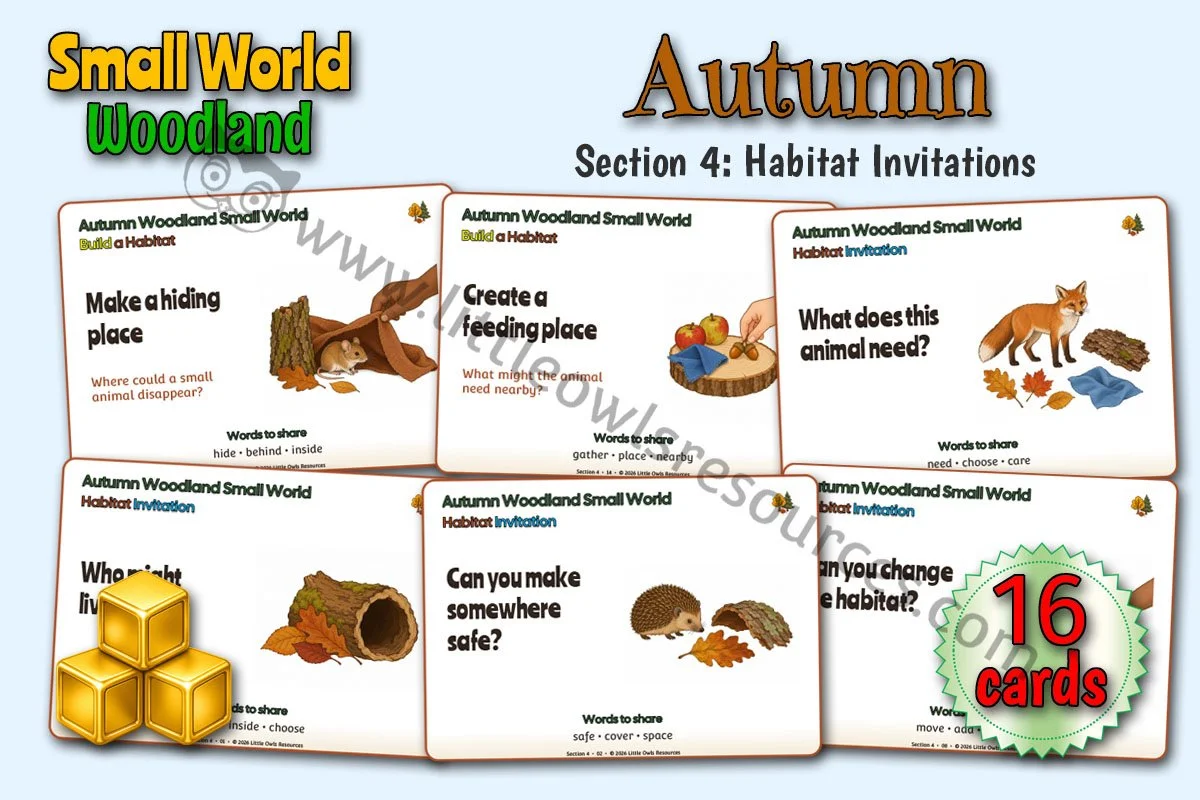
Eight habitat invitations and seven build-a-habitat cards to support children’s small-world ideas. Each has a new illustration and a few words to share. A blank invitation on the final sheet gives space for children’s own questions, drawings or dictated ideas.
Place one card beside a small choice of materials, or offer it when it connects with the children’s play. Read the prompt aloud if useful and allow time for children to notice, choose and try. The cards can be used in any order. Children can adapt the idea, choose another animal or follow a different story.
Offer materials that can change
Use blocks, short smooth logs, bark, suitable wood slices, fabric, trays and checked natural materials. Add your woodland animal figures or the printable pieces from Sections 1–3. Blue fabric can suggest water without needing a real water tray. Keep the space flexible so children can move, combine and add materials.
The pictures suggest possibilities, not models to reproduce. Animals in the illustrations can stand for the figures used in play. These invitations are for pretend small worlds, not instructions for housing or feeding real wildlife. Empty spaces can become homes for different characters; there is no fixed animal-to-habitat match.
DOWNLOAD (DOCX) 📝
DOWNLOAD (PDF) 📄
DOWNLOAD (Zipped JPEGs) 📂
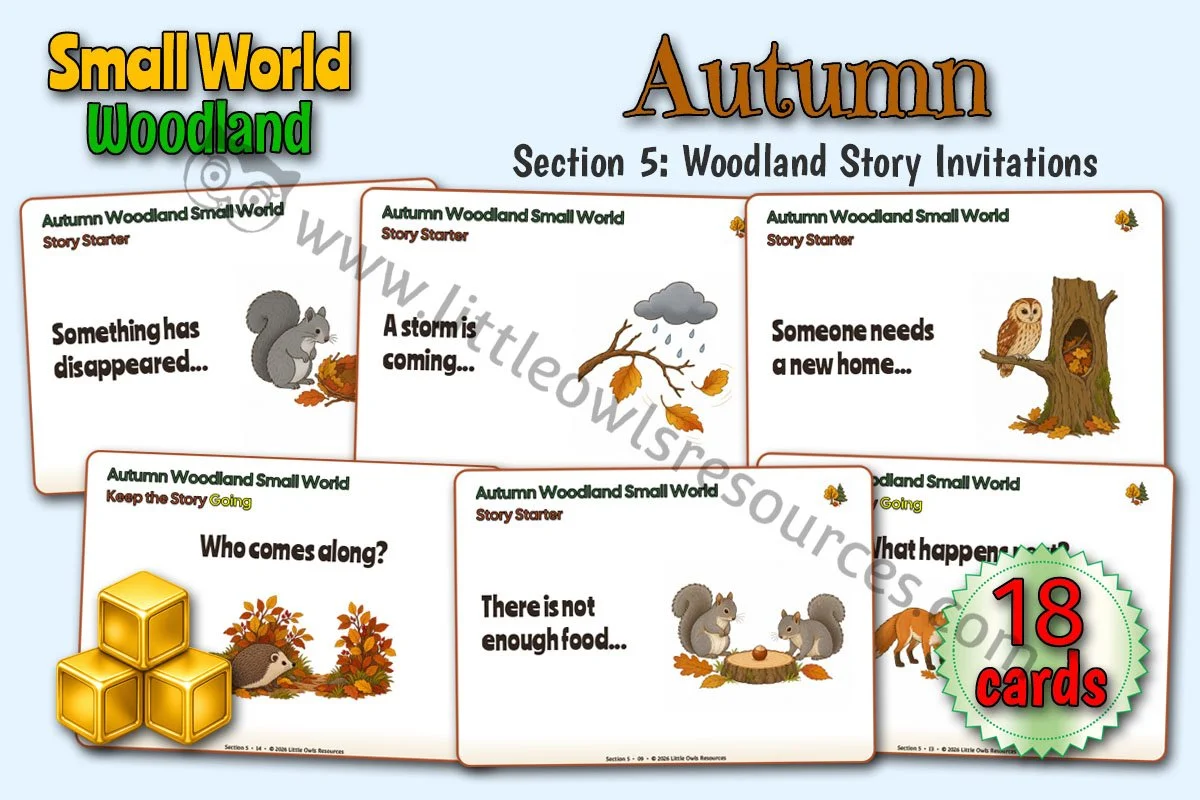
Twelve story starters and six reusable prompts for imaginative small-world play. Each offers a possible moment in a story. Children can choose the characters, decide what happened and take the play in their own direction. Use the cards with your woodland figures, loose parts and movable environment pieces.
The starters include a disappearance, a coming storm, someone lost, an animal needing help, approaching winter, an unusual find, a new arrival, a blocked path, too little food, a new home, an overnight change and a hidden sound. The reusable prompts ask what happens next, who comes along, where they will go, what has changed, who could help and what they might need.
Offer one idea and follow the play
Place a card near a small choice of figures and materials, or introduce it when it connects with a child’s story. Read the short line aloud if useful, then pause. Children might act, make sounds, move a figure, point or tell you an idea. They do not need to read the card, answer a question or complete a story.
The pictures are possible starting points. Children can choose different animals, invent another explanation or ignore the suggestion. For “Something has disappeared”, the missing thing is theirs to decide. For the hidden sound, leave its source open. These are pretend story situations; use animal figures and suitable props.
Keep the conversation responsive
Notice what the child has already introduced: “The mouse stopped at the path.” You could echo an idea or add a few words that help them express it. Offer one reusable prompt when helpful, then allow time. Avoid running through all six questions. A repeated action or a very short episode can be a worthwhile story in its own right.
Use the reusable cards with any starter, with a child’s existing story or on their own. They are choices, not a sequence. Follow children’s feelings and interests; choose a gentler starter or change the wording if loss, storms or needing a new home feels uncomfortable. Children can stop, change or return to a story whenever they wish.
Make room for different ways to join in
Offer fewer figures, larger lightweight pieces and a reachable play space where helpful. Children can select a character, use gesture or their usual communication supports, direct a partner or watch first. If a child wants a record, an adult can write down their words or help them photograph the play. Recording is optional.
DOWNLOAD (DOCX) 📝
DOWNLOAD (PDF) 📄
DOWNLOAD (Zipped JPEGs) 📂
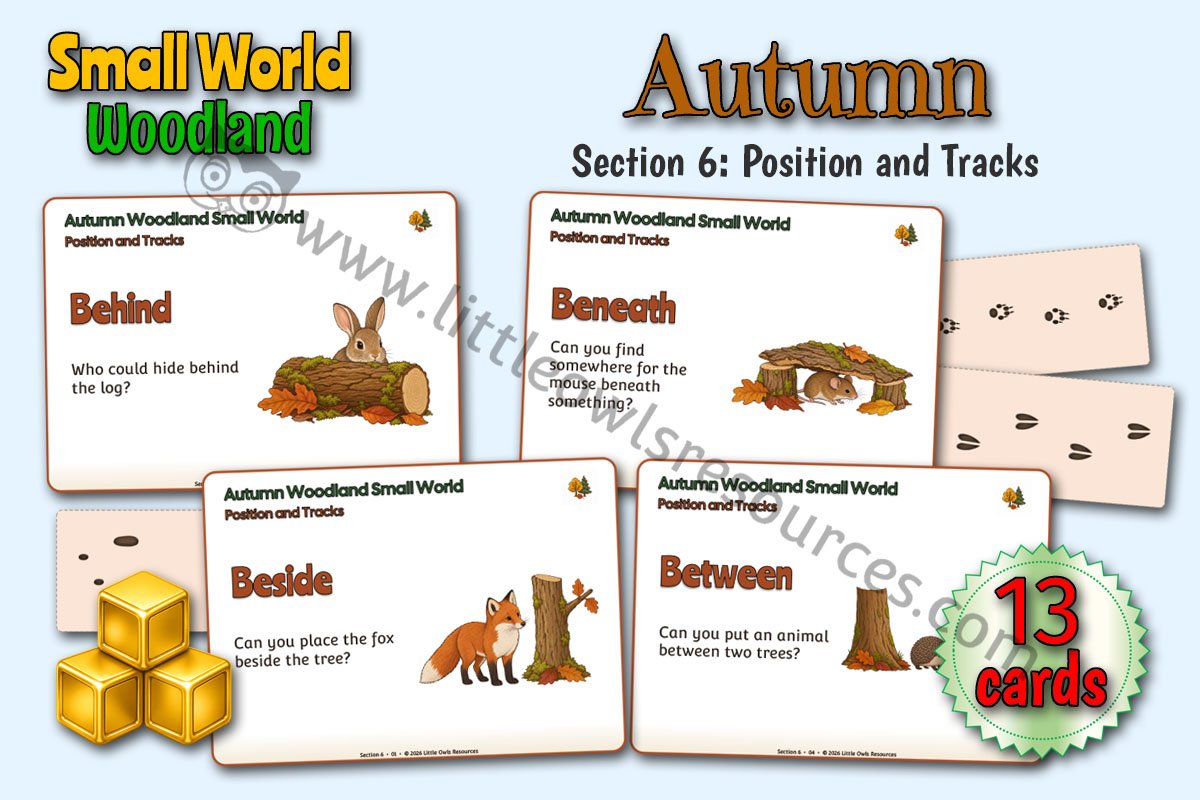
Seven illustrated invitations and six movable track strips support spatial language, investigation and storytelling in small-world play. Offer them with animal figures, blocks, logs, fabric and woodland pieces. Children can move, combine and reinterpret the materials freely.
Choose the pages you need
Pages 2–5 | Beside, beneath, behind, between, inside, above and through; plus one optional blank card.
Pages 6–7 | Fox, deer, rabbit, badger, squirrel and bird track strips.
Use position words within play
Offer one card when it connects with the play. Read the invitation if helpful, then give children time to move a figure, point, gesture or explain. The image shows one example; children can choose other animals, materials and arrangements. There is no need to copy the model or work through all seven cards.
Describe what is happening: “Your mouse is beneath the bark.” You can connect beneath with under and beside with next to. For between, show two reference objects. For behind, look from the child’s viewpoint and notice what is hidden. Above does not have to mean touching or resting on something.
Let children direct a partner or adult if moving the pieces is difficult. Use larger figures, fewer objects or a reachable play surface as needed. Children can respond with their usual communication supports. Change one position at a time if helpful; reading and spoken answers are not required.
Let tracks become part of the story
Lay one strip beside a log, lead it towards a tree or let children build a route with several strips. They might follow it with a figure, choose who made it or decide where it leads. Ask “Where might these go?” when it helps the play. The animal names are preparation labels outside the cut lines, so the strips can remain unlabelled.
DOWNLOAD (DOCX) 📝
DOWNLOAD (PDF) 📄
DOWNLOAD (Zipped JPEGs) 📂
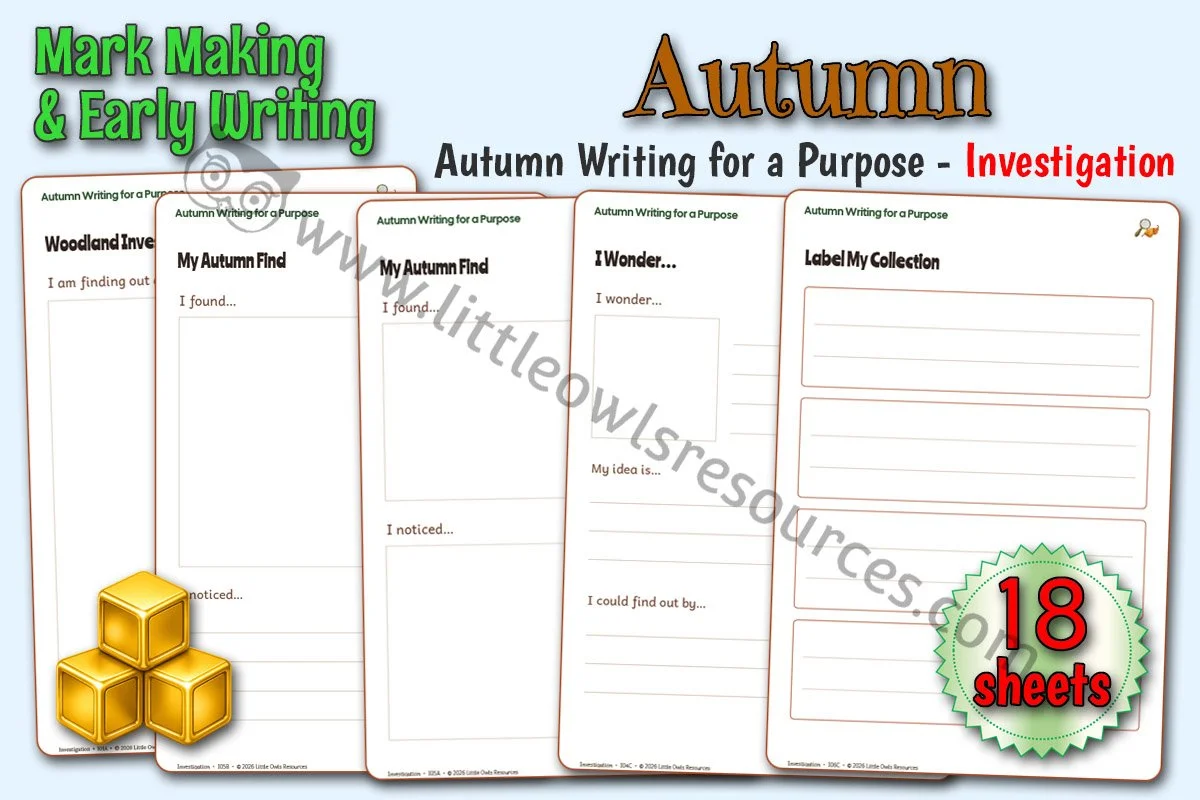
Keep these sheets beside a small-world woodland, an investigation tray or a clipboard. Children can record an observation to show a friend, save a question for later or label a collection so visitors know what it contains. Woodland Investigation is an extra open investigation record alongside the five more specific purposes.
Choose a layout together
A offers space for drawing and marks. B combines drawing with emergent writing. C offers more room for independent writing. These are choices of paper, not ability groups or a sequence to complete. Children can choose any version, switch between them, dictate to an adult or combine pictures, symbols, letters and words. The small footer code is only for finding a version.
DOWNLOAD (DOCX) 📝
DOWNLOAD (PDF) 📄
DOWNLOAD (Zipped JPEGs) 📂
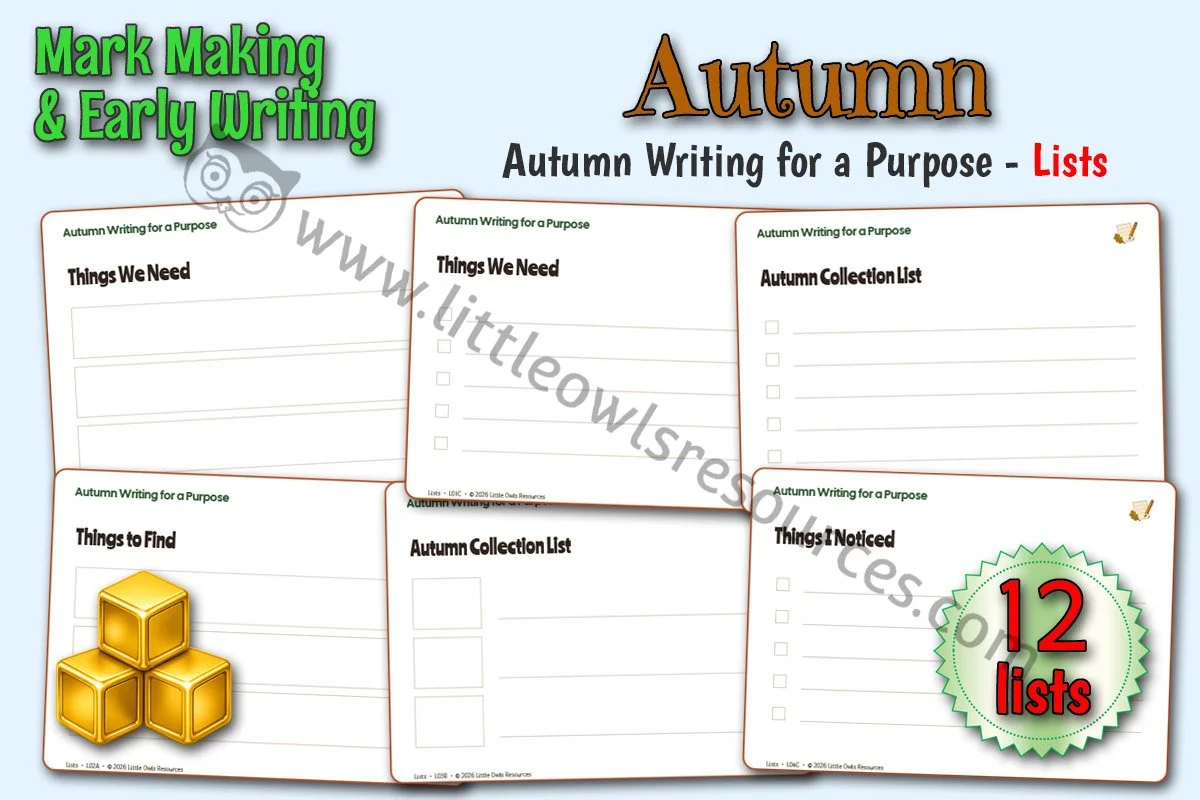
Place a list beside a construction plan, a collection basket or a woodland small world. Use Things We Need to gather materials, Things to Find for a shared search, Autumn Collection List as a record of a chosen collection and Things I Noticed to remember observations.
Choose a layout together
A offers space for drawing and marks. B combines drawing with emergent writing. C offers more room for independent writing. These are choices of paper, not ability groups or a sequence to complete. Children can choose any version, switch between them, dictate to an adult or combine pictures, symbols, letters and words. The small footer code is only for finding a version.
DOWNLOAD (DOCX) 📝
DOWNLOAD (PDF) 📄
DOWNLOAD (Zipped JPEGs) 📂
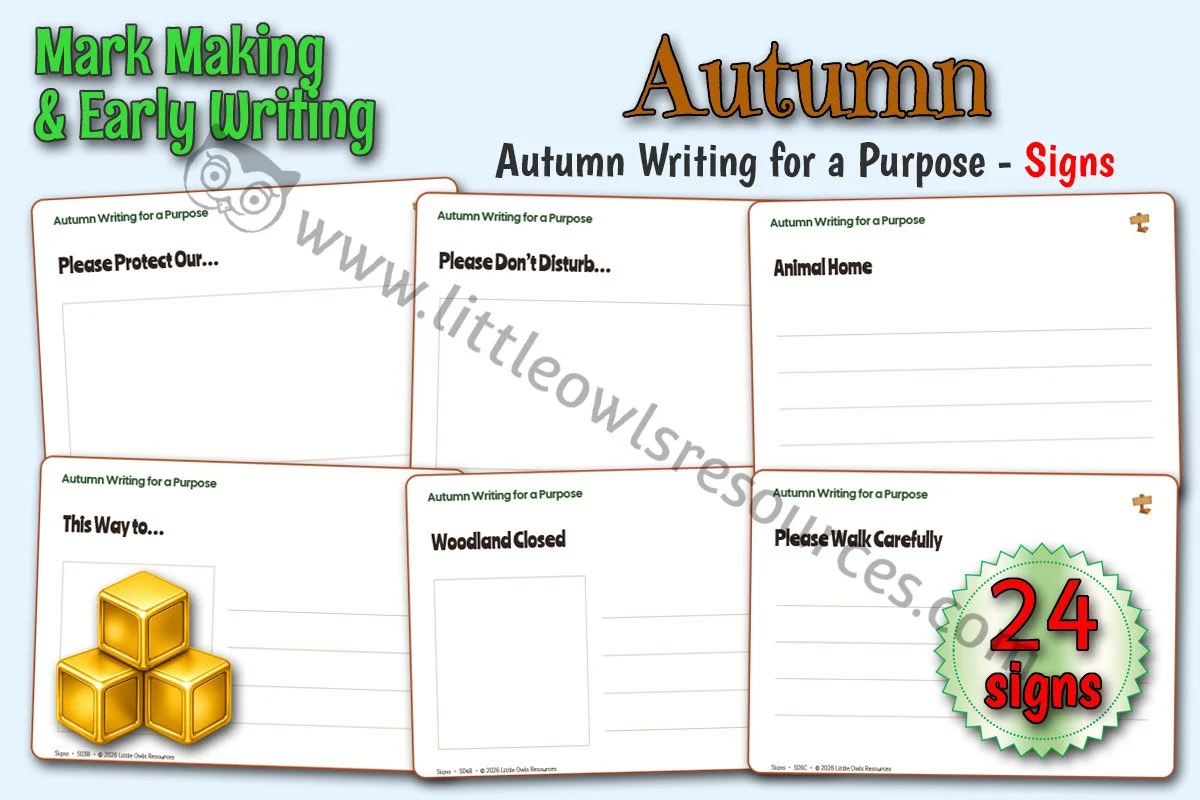
Offer a sign when there is a reason in the play: a model habitat needs protecting, visitors need directions or an entrance needs a welcome. Children decide the place, symbol and message. Display the finished sign where its reader will need it.
Choose a layout together
A offers space for drawing and marks. B combines drawing with emergent writing. C offers more room for independent writing. These are choices of paper, not ability groups or a sequence to complete. Children can choose any version, switch between them, dictate to an adult or combine pictures, symbols, letters and words. The small footer code is only for finding a version.
DOWNLOAD (DOCX) 📝
DOWNLOAD (PDF) 📄
DOWNLOAD (Zipped JPEGs) 📂
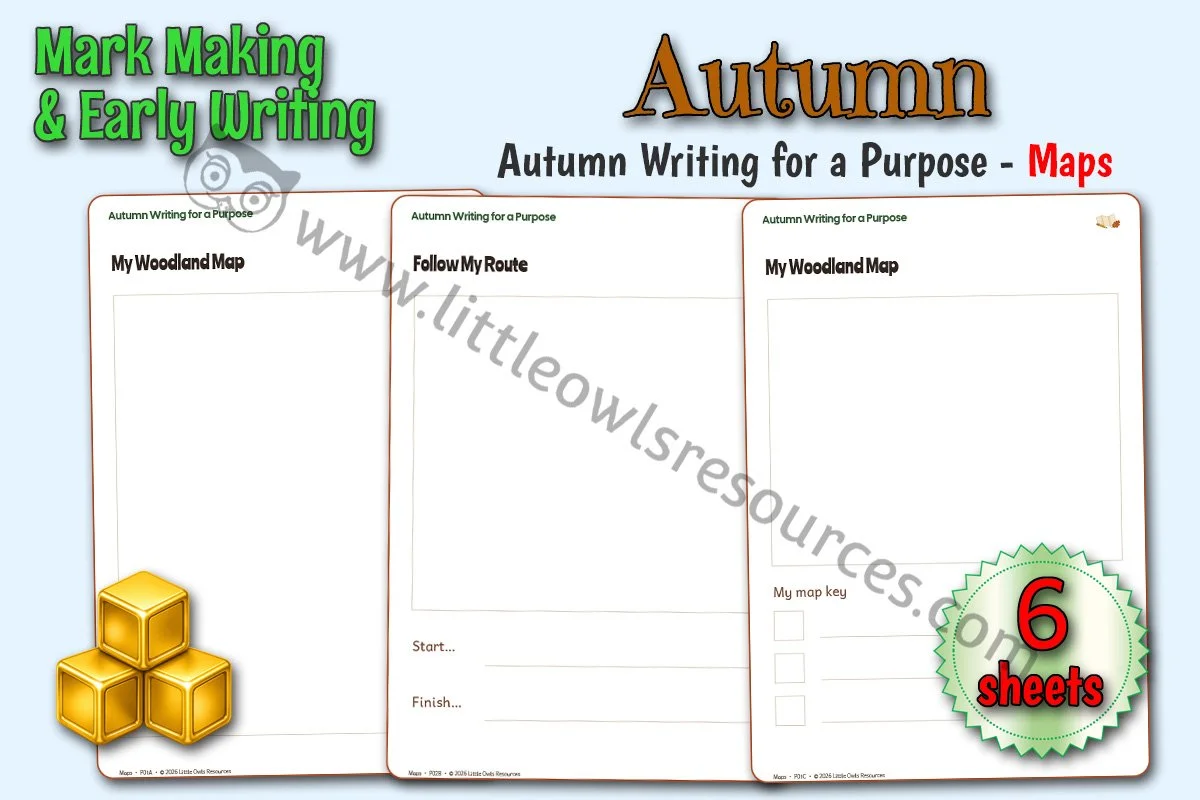
Use a map to help someone find a place in a small world, reach an imagined animal home or follow a route around an agreed play space. Keep the map area blank so children can invent the places, landmarks and connections that matter to them.
Choose a layout together
A offers space for drawing and marks. B combines drawing with emergent writing. C offers more room for independent writing. These are choices of paper, not ability groups or a sequence to complete. Children can choose any version, switch between them, dictate to an adult or combine pictures, symbols, letters and words. The small footer code is only for finding a version.
DOWNLOAD (DOCX) 📝
DOWNLOAD (PDF) 📄
DOWNLOAD (Zipped JPEGs) 📂
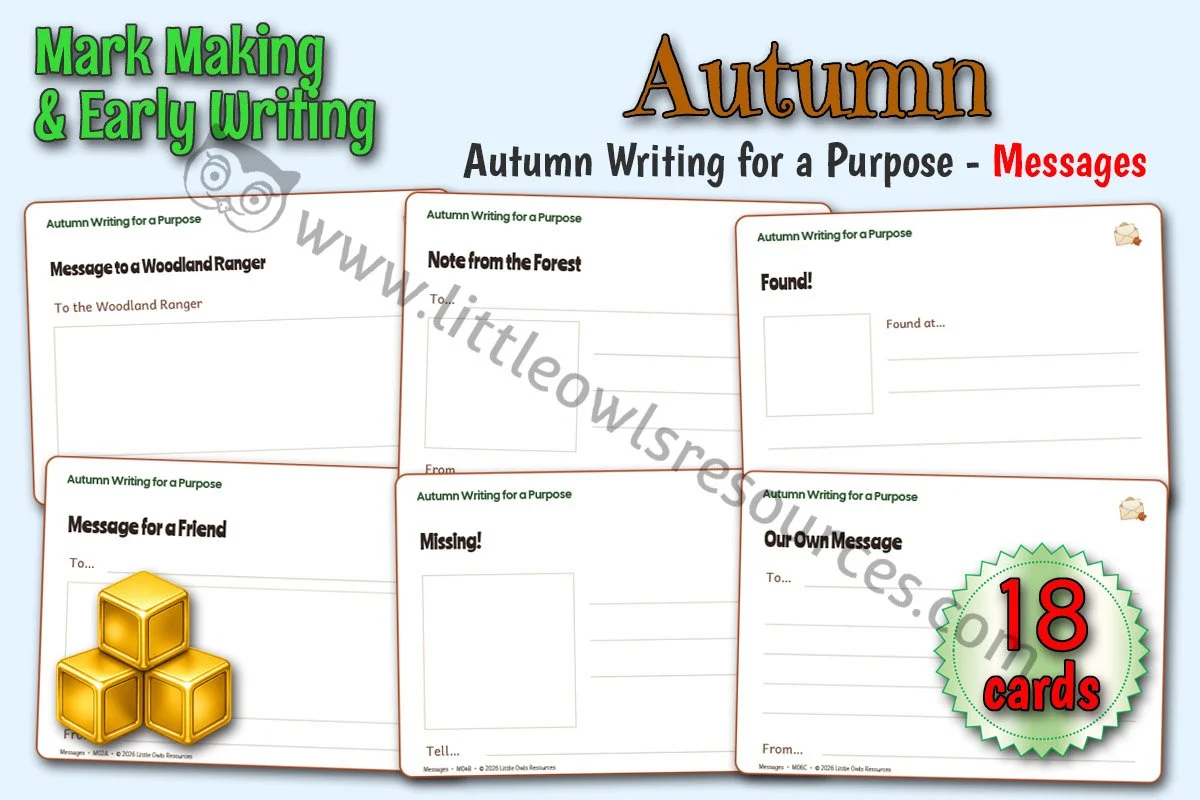
Offer paper where messages can be delivered: a pretend ranger station, a woodland postbox or a small-world home. Children can ask for help, share news, invite a friend or leave a note in a story. Missing and Found are notices about a play object or story character.
Choose a layout together
A offers space for drawing and marks. B combines drawing with emergent writing. C offers more room for independent writing. These are choices of paper, not ability groups or a sequence to complete. Children can choose any version, switch between them, dictate to an adult or combine pictures, symbols, letters and words. The small footer code is only for finding a version.
DOWNLOAD (DOCX) 📝
DOWNLOAD (PDF) 📄
DOWNLOAD (Zipped JPEGs) 📂
Additional resources to support learning about ‘Living Things and Their Habitats’ in year 2, can be found on the following pages:
(buttons below)


Plants
Pupils should be taught to:
observe and describe how seeds and bulbs grow into mature plants
find out and describe how plants need water, light and a suitable temperature to grow and stay healthy
Core Year 2 ‘Plants’ Resources:
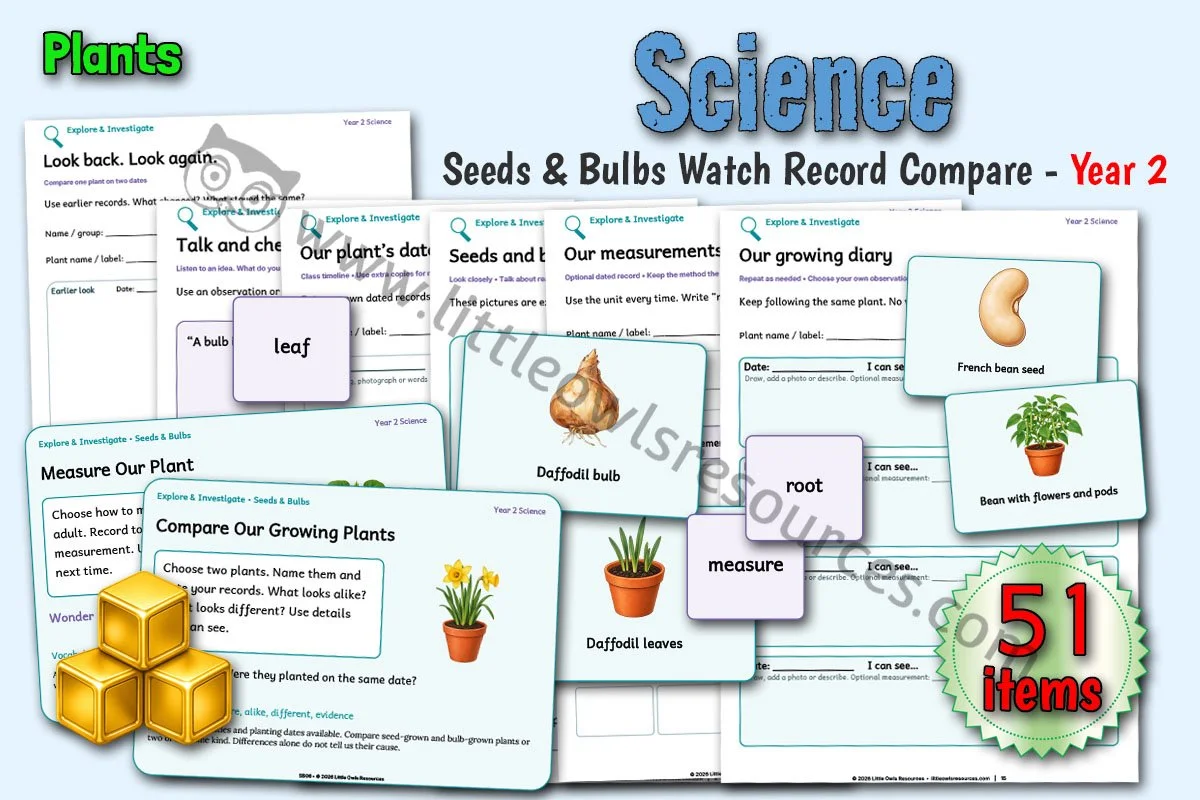
Follow real seeds and bulbs as they grow towards mature plants. Children look closely, return to the same plants, record dated observations and compare changes. Begin with practical planting and conversation; use only the pages that help the enquiry.
The question running through this pack
How is it growing? Give every plant suitable care. Children describe evidence of change rather than deliberately removing water, light or warmth.
DOWNLOAD (DOCX) 📝
DOWNLOAD (PDF) 📄
DOWNLOAD (Zipped JPEGs) 📂
Seeds & Bulbs — Watch, Record & Compare
Year 2
Follow seeds and bulbs as they grow through regular observations, dated records and comparisons. A practical companion to planting and growing, helping children notice changes and describe how plants develop over time.
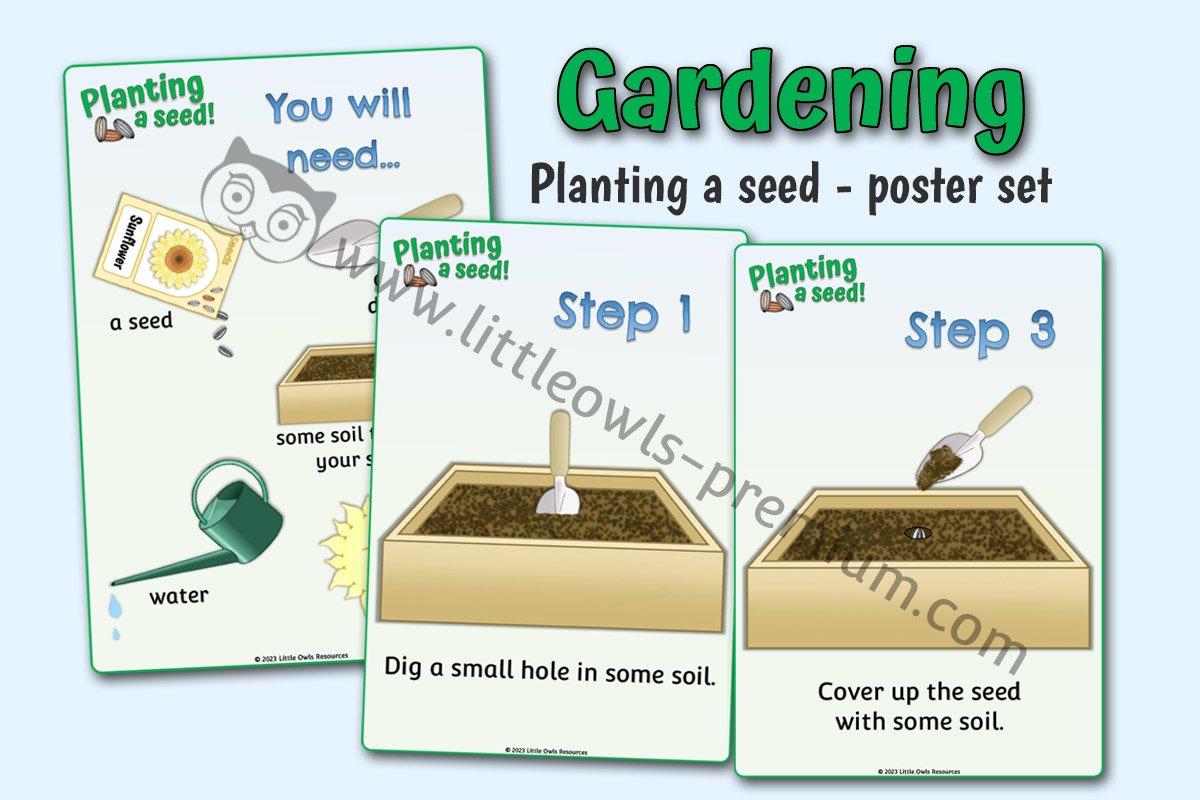
Poster set showing ‘How to plant a seed’. Includes ‘You will need’ poster and subsequent 5 steps. Six instruction posters in total ideal for a ‘Gardening’ activity display or outdoor area.
Original artwork drawn by Sara Murphy and final digital resources created by Stuart Murphy. COPYRIGHT ON ALL OF THE RESOURCES HOUSED ON THIS WEBSITE IS HELD BY ‘LITTLE OWLS RESOURCES’. OUR RESOURCES (INCLUDING THE IMAGES WITHIN THEM), CANNOT BE SHARED OR SOLD COMMERCIALLY.
DOWNLOAD EDITABLE (DOCX)
DOWNLOAD NON-EDITABLE (PDF)
DOWNLOAD NON-EDITABLE (Zipped JPEGs)
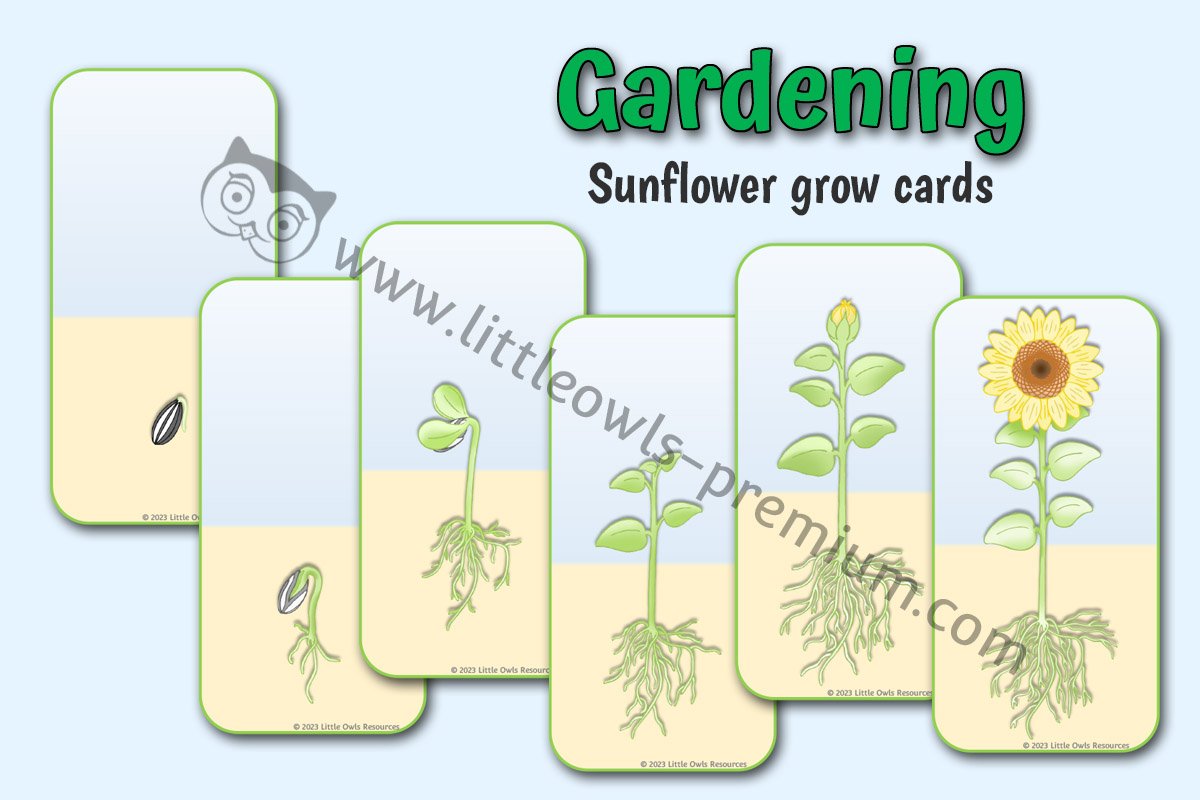
Use these ‘Growing Sunflower Cards’ as part of an interactive display or invitation to play activity. Children may enjoy moving the cards around to place them in the correct order to show how the sunflower seed grows into a plant. Shrunk down they could become part of an individual take home cut and stick activity with an extension that children could write the numbers 1-6 on each picture to further demonstrate their understanding of the order.
Original artwork drawn by Sara Murphy and final digital resources created by Stuart Murphy. COPYRIGHT ON ALL OF THE RESOURCES HOUSED ON THIS WEBSITE IS HELD BY ‘LITTLE OWLS RESOURCES’. OUR RESOURCES (INCLUDING THE IMAGES WITHIN THEM), CANNOT BE SHARED OR SOLD COMMERCIALLY.
DOWNLOAD EDITABLE (DOCX)
DOWNLOAD NON-EDITABLE (PDF)
DOWNLOAD NON-EDITABLE (Zipped JPEGs)
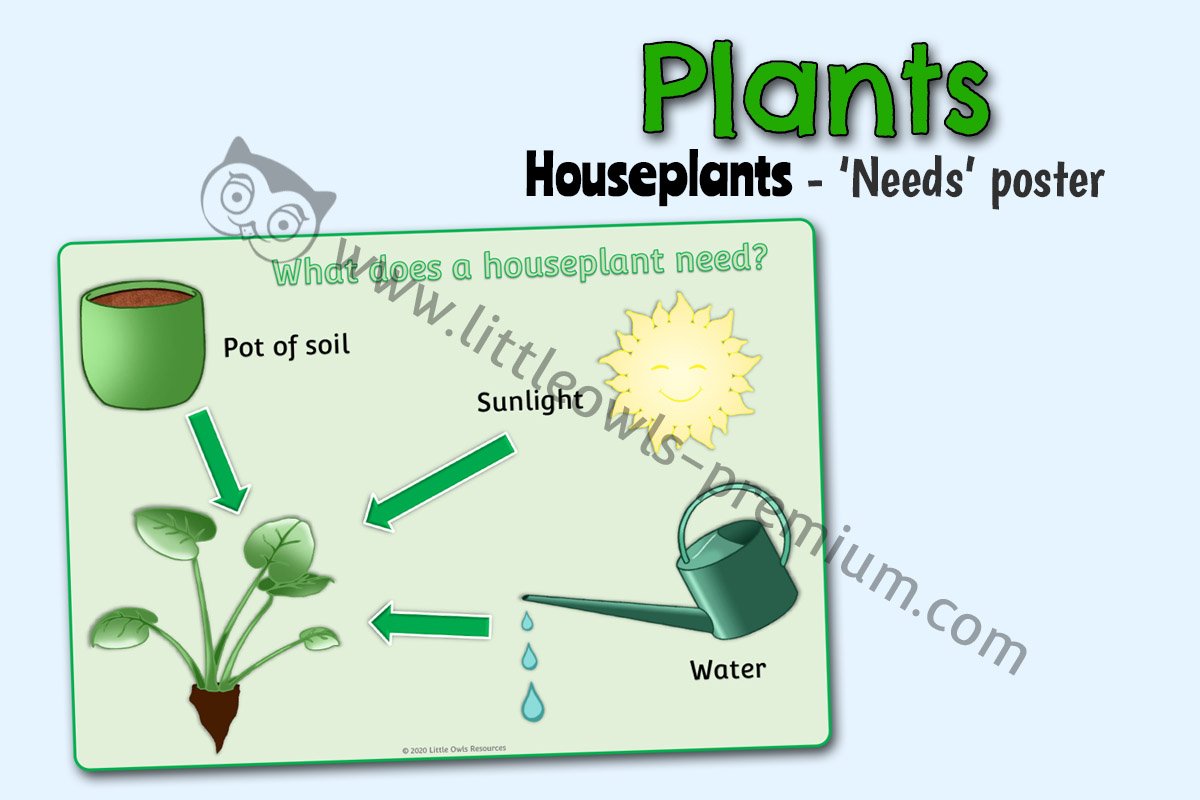
Original artwork drawn by Sara Murphy and final digital resources created by Stuart Murphy. COPYRIGHT ON ALL OF THE RESOURCES HOUSED ON THIS WEBSITE IS HELD BY ‘LITTLE OWLS RESOURCES’. OUR RESOURCES (INCLUDING THE IMAGES WITHIN THEM), CANNOT BE SHARED OR SOLD COMMERCIALLY.
DOWNLOAD EDITABLE (DOCX)
DOWNLOAD NON-EDITABLE (PDF)
DOWNLOAD NON-EDITABLE (Zipped JPEGs)
<<-BACK TO ‘HOUSEPLANT WEEK UK’ MENU
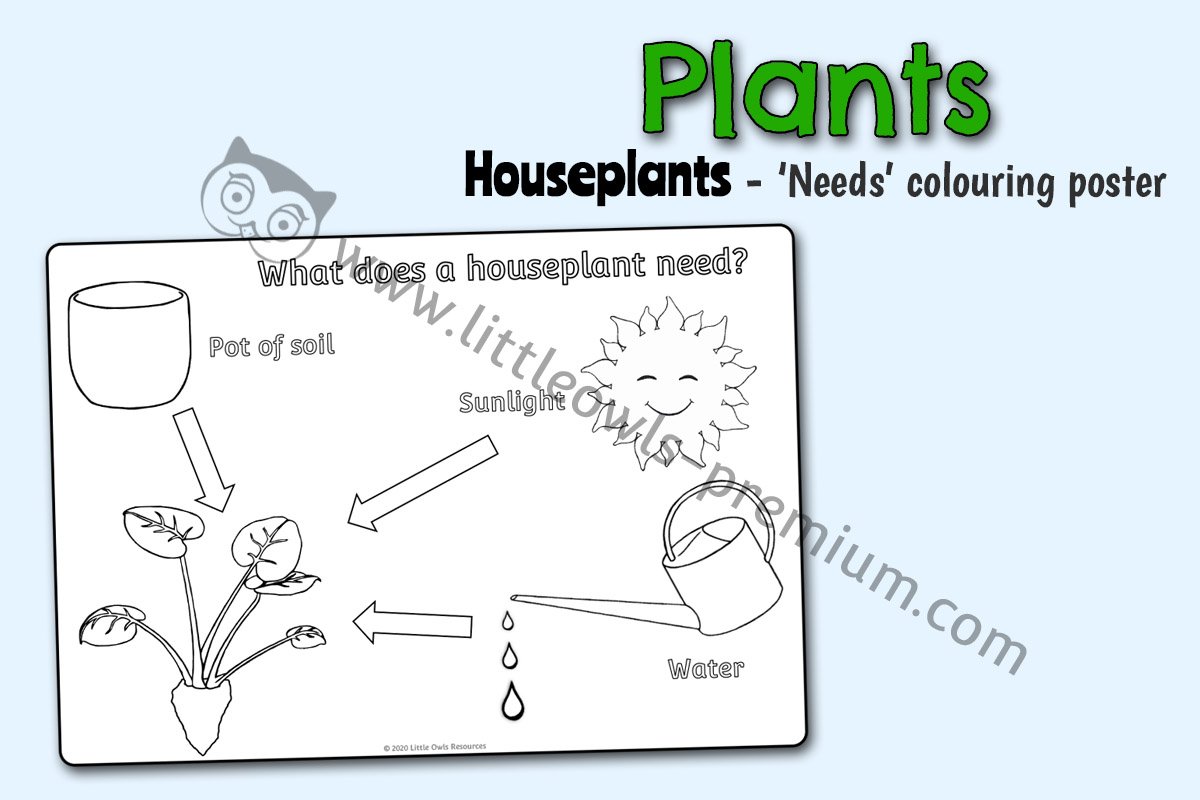
Original artwork drawn by Sara Murphy and final digital resources created by Stuart Murphy. COPYRIGHT ON ALL OF THE RESOURCES HOUSED ON THIS WEBSITE IS HELD BY ‘LITTLE OWLS RESOURCES’. OUR RESOURCES (INCLUDING THE IMAGES WITHIN THEM), CANNOT BE SHARED OR SOLD COMMERCIALLY.
DOWNLOAD EDITABLE (DOCX)
DOWNLOAD NON-EDITABLE (PDF)
DOWNLOAD NON-EDITABLE (Zipped JPEGs)
<<-BACK TO ‘HOUSEPLANT WEEK UK’ MENU
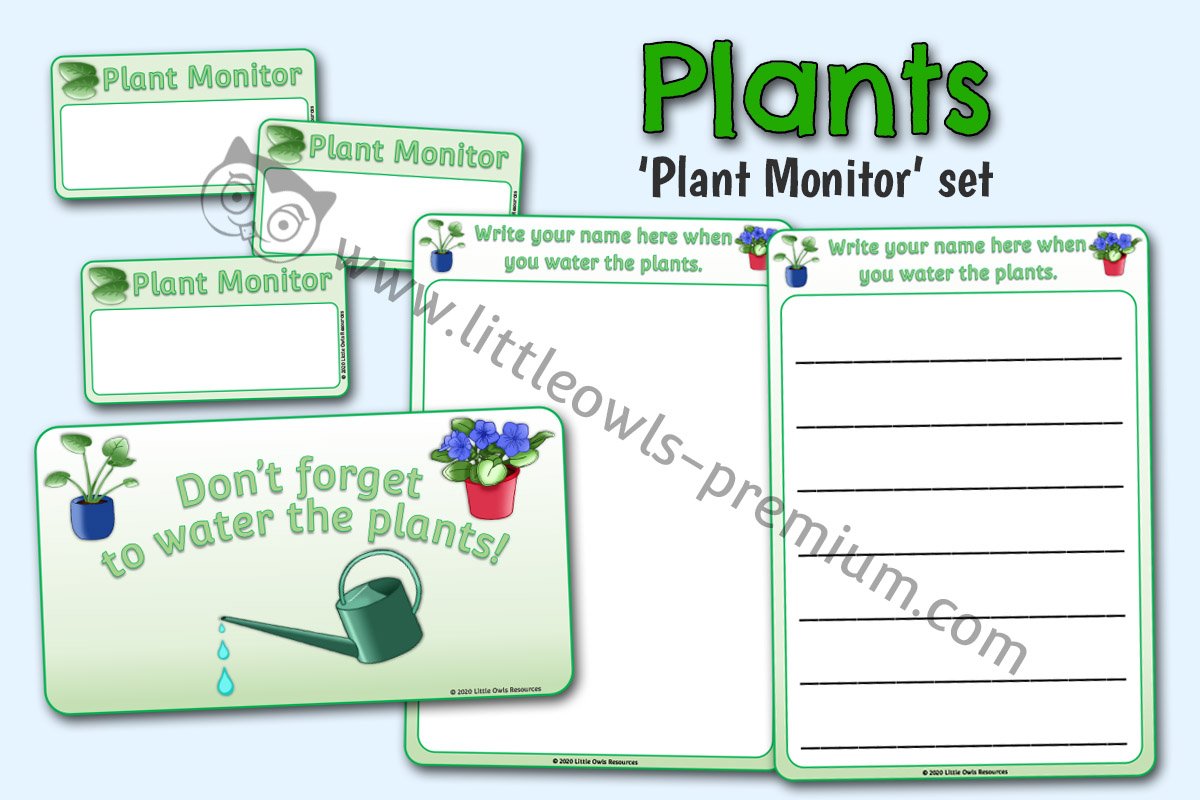
Original artwork drawn by Sara Murphy and final digital resources created by Stuart Murphy. COPYRIGHT ON ALL OF THE RESOURCES HOUSED ON THIS WEBSITE IS HELD BY ‘LITTLE OWLS RESOURCES’. OUR RESOURCES (INCLUDING THE IMAGES WITHIN THEM), CANNOT BE SHARED OR SOLD COMMERCIALLY.
DOWNLOAD EDITABLE (DOCX)
DOWNLOAD NON-EDITABLE (PDF)
DOWNLOAD NON-EDITABLE (Zipped JPEGs)
<<-BACK TO ‘HOUSEPLANT WEEK UK’ MENU
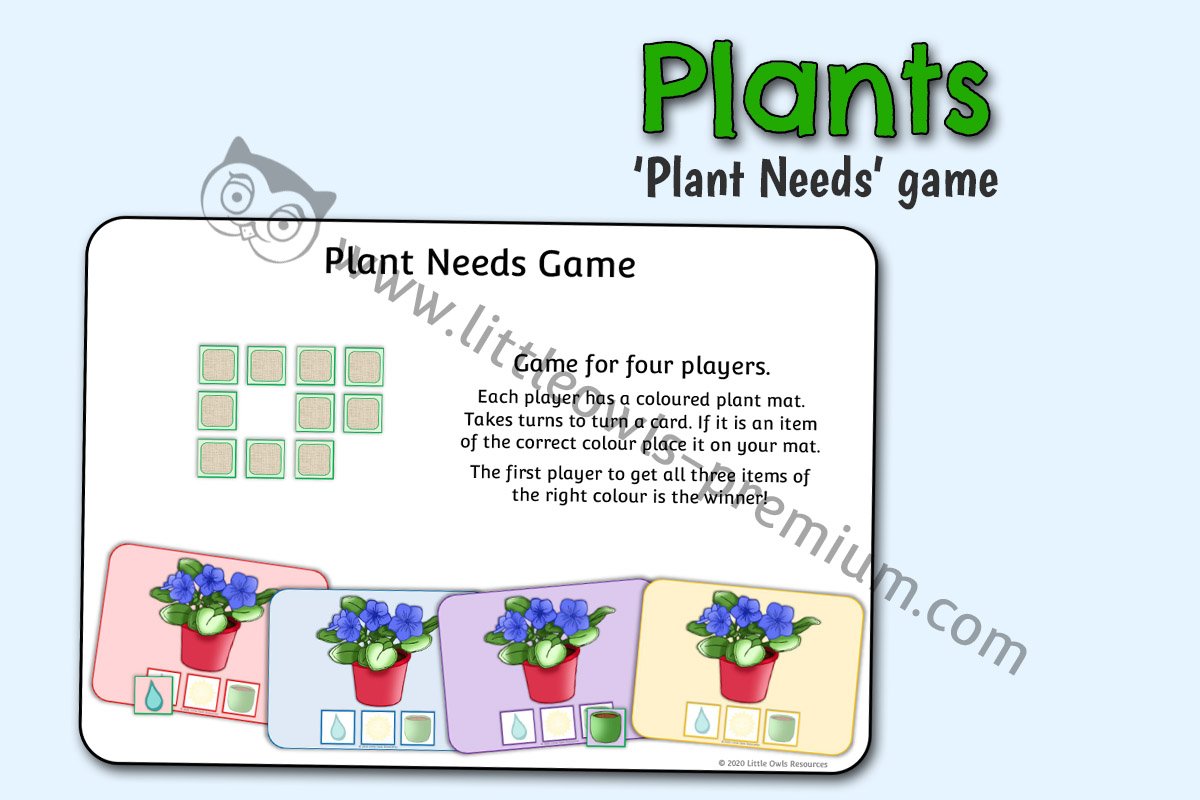
Original artwork drawn by Sara Murphy and final digital resources created by Stuart Murphy. COPYRIGHT ON ALL OF THE RESOURCES HOUSED ON THIS WEBSITE IS HELD BY ‘LITTLE OWLS RESOURCES’. OUR RESOURCES (INCLUDING THE IMAGES WITHIN THEM), CANNOT BE SHARED OR SOLD COMMERCIALLY.
DOWNLOAD EDITABLE (DOCX)
DOWNLOAD NON-EDITABLE (PDF)
DOWNLOAD NON-EDITABLE (Zipped JPEGs)
<<-BACK TO ‘HOUSEPLANT WEEK UK’ MENU
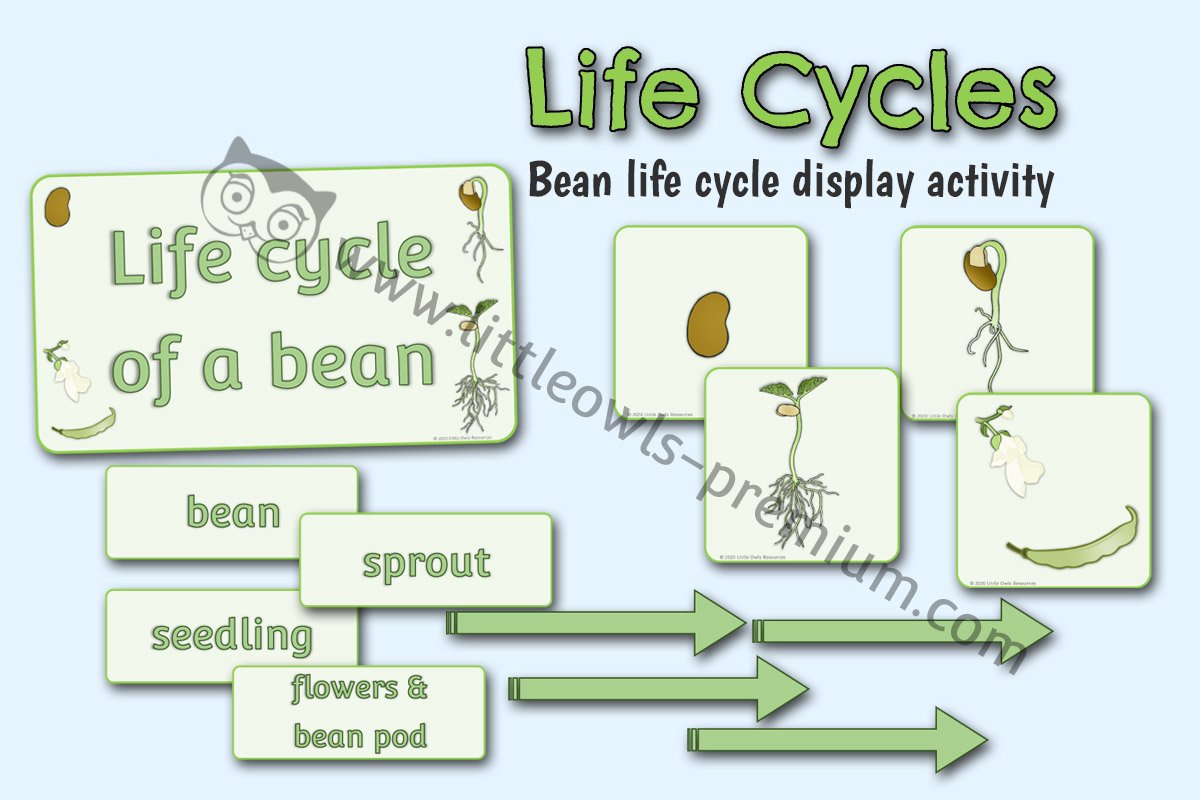
Bean life cycle display pack. Ideal for learning about growth at any time of the year, but particularly within the context of new life in ‘Spring’. Also ideal to be used as visuals for an activity, e.g. placing all of the life cycle elements in the correct positions relative to each other on a table or as a floor activity. Once in place, perhaps even use as a stimulus for art and craft or playdough.
Original artwork drawn by Sara Murphy and final digital resources created by Stuart Murphy. COPYRIGHT ON ALL OF THE RESOURCES HOUSED ON THIS WEBSITE IS HELD BY ‘LITTLE OWLS RESOURCES’. OUR RESOURCES (INCLUDING THE IMAGES WITHIN THEM), CANNOT BE SHARED OR SOLD COMMERCIALLY.
DOWNLOAD EDITABLE (DOCX)
DOWNLOAD NON-EDITABLE (PDF)
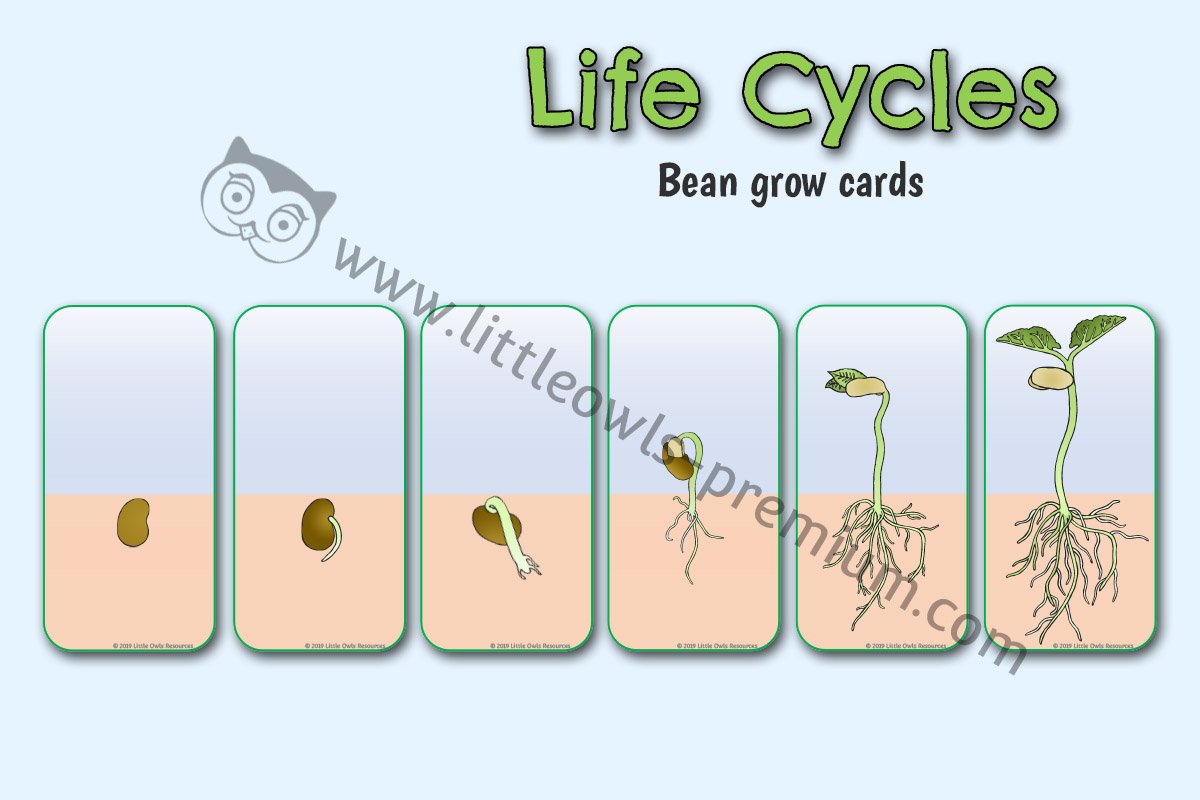
Use these ‘Growing Bean Cards’ as part of a display or invitation to play activity. Children may enjoy moving the cards around to place them in the correct order to show how the bean grows into a plant. Shrunk down they could become part of an individual take home cut and stick activity with an extension that children could write the numbers 1-6 on each picture to further demonstrate their understanding of the order. Look out for more resources on ‘Life Cycles’ and ‘Plants’ coming soon!
Original artwork drawn by Sara Murphy and final digital resources created by Stuart Murphy. COPYRIGHT ON ALL OF THE RESOURCES HOUSED ON THIS WEBSITE IS HELD BY ‘LITTLE OWLS RESOURCES’. OUR RESOURCES (INCLUDING THE IMAGES WITHIN THEM), CANNOT BE SHARED OR SOLD COMMERCIALLY.
DOWNLOAD EDITABLE (DOCX)
DOWNLOAD NON-EDITABLE (PDF)
DOWNLOAD NON-EDITABLE (Zipped JPEGs)
Colouring version of ‘Growing Bean Cards’. Use in the same ways as the full colour version with the added elements of colour choice, fine motor control and the possibility of ordering the pictures and sticking them to a separate sheet to enable the child to take the final product home. In sharing their learning experience with those at home, children will further consolidate their knowledge whilst explaining it to others.
Original artwork drawn by Sara Murphy and final digital resources created by Stuart Murphy. COPYRIGHT ON ALL OF THE RESOURCES HOUSED ON THIS WEBSITE IS HELD BY ‘LITTLE OWLS RESOURCES’. OUR RESOURCES (INCLUDING THE IMAGES WITHIN THEM), CANNOT BE SHARED OR SOLD COMMERCIALLY.
DOWNLOAD EDITABLE (DOCX)
DOWNLOAD NON-EDITABLE (PDF)
DOWNLOAD NON-EDITABLE (Zipped JPEGs)
Additional resources to support learning about ‘Plants’ in year 2, can be found on the following pages:
(buttons below)

Animals, including humans
Pupils should be taught to:
notice that animals, including humans, have offspring which grow into adults
find out about and describe the basic needs of animals, including humans, for survival (water, food and air)
describe the importance for humans of exercise, eating the right amounts of different types of food, and hygiene
Core Year 2 ‘Animals, Including Humans’ Resources:
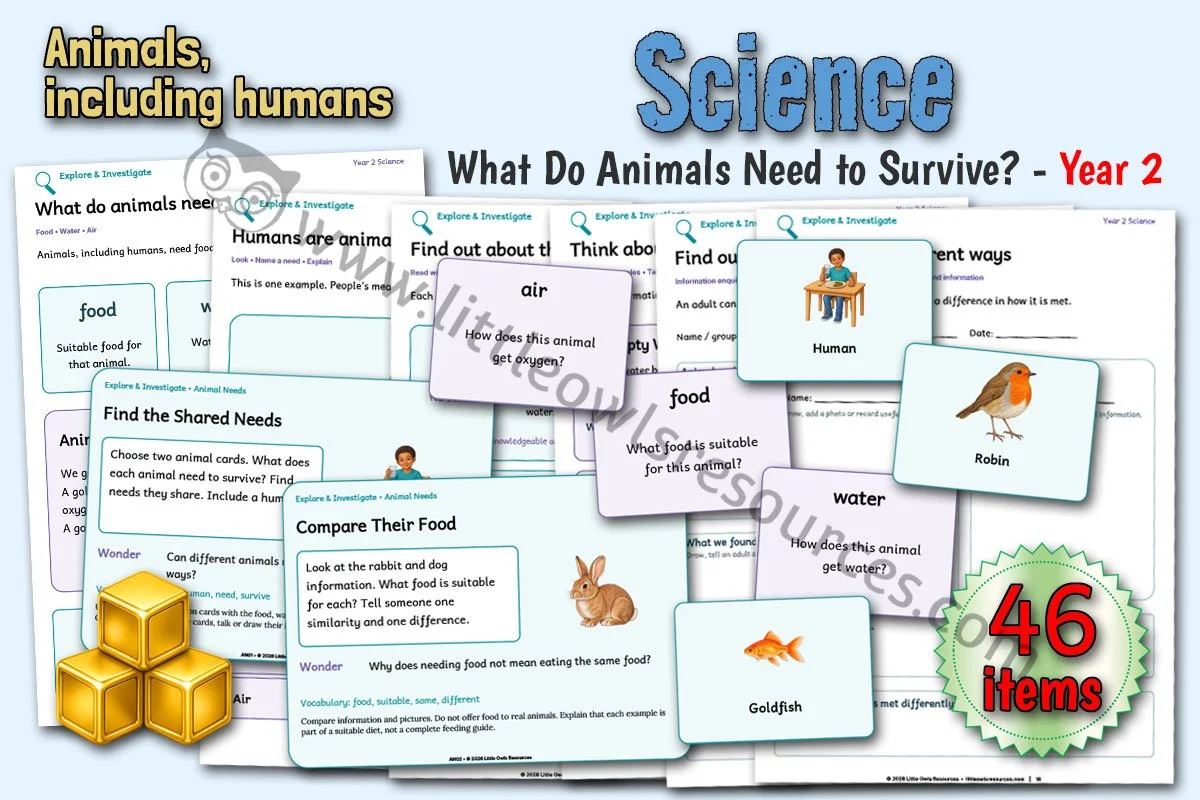
Explore the basic survival needs of animals, including humans: food, water and air. Children observe, use information, compare examples and explain care decisions. Begin with talk and close looking; choose only the cards and records that help.
The question running through this pack
How are the same basic needs met in different ways? Humans are animals too. Teach the shared needs, then use named examples to show differences in suitable food, water and breathing. Introduce oxygen simply: we get it from air; a goldfish gets it from water through its gills.
DOWNLOAD (DOCX) 📝
DOWNLOAD (PDF) 📄
DOWNLOAD (Zipped JPEGs) 📂
What Do Animals Need to Survive?
Year 2
Explore the basic survival needs of animals, including humans. Help children compare how different animals obtain food, water and the oxygen they need, then use what they learn to explain animal-care decisions.
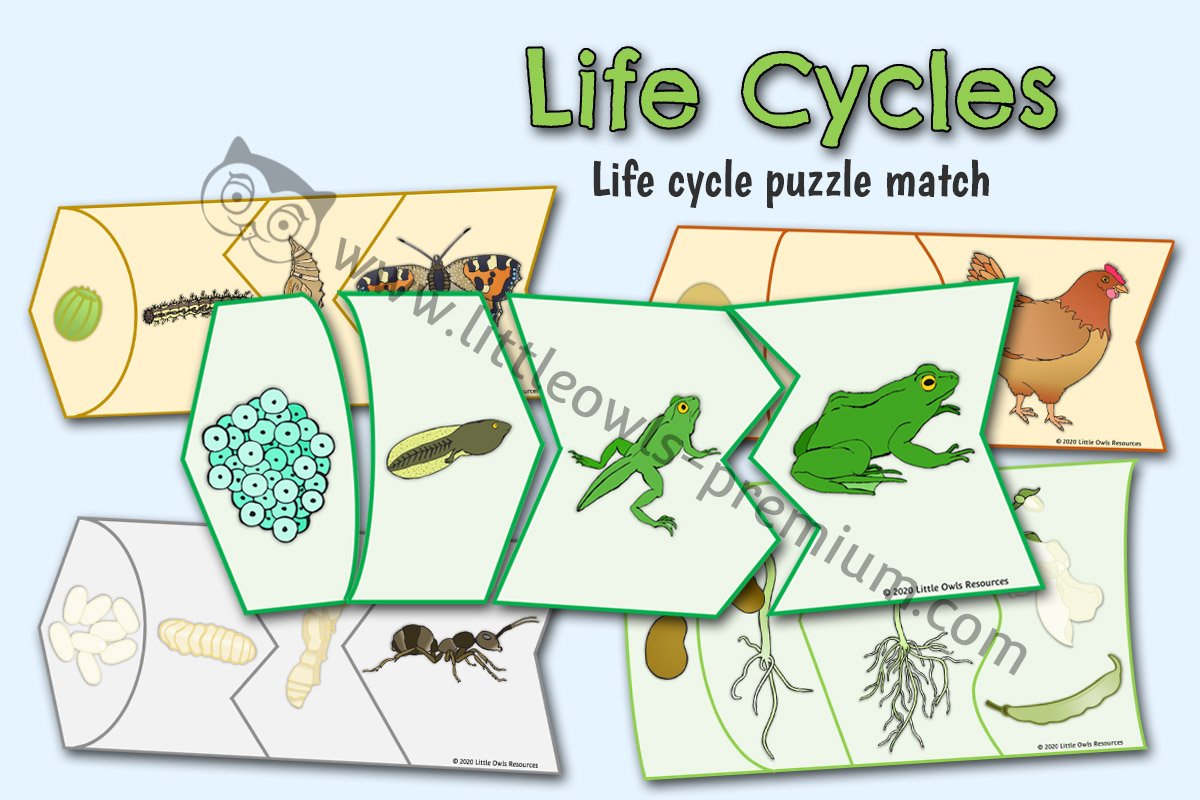
These endless puzzles are perfect to show the cyclic nature of life cycles. For example in the first instance the frog puzzle may be placed in the order ‘frogspawn’, ‘tadpole’, ‘froglet’ and then ‘frog’. To demonstrate to children that the frog then lays frogspawn, the ‘frogspawn’ piece may be brought to connect with the ‘frog’ piece at the end and thus continuing the cycle. This process can continue for as long as you like, bringing the ‘tadpole’ piece to then end and then the ‘froglet’ piece and so on!
Original artwork drawn by Sara Murphy and final digital resources created by Stuart Murphy. COPYRIGHT ON ALL OF THE RESOURCES HOUSED ON THIS WEBSITE IS HELD BY ‘LITTLE OWLS RESOURCES’. OUR RESOURCES (INCLUDING THE IMAGES WITHIN THEM), CANNOT BE SHARED OR SOLD COMMERCIALLY.
DOWNLOAD EDITABLE (DOCX)
DOWNLOAD NON-EDITABLE (PDF)
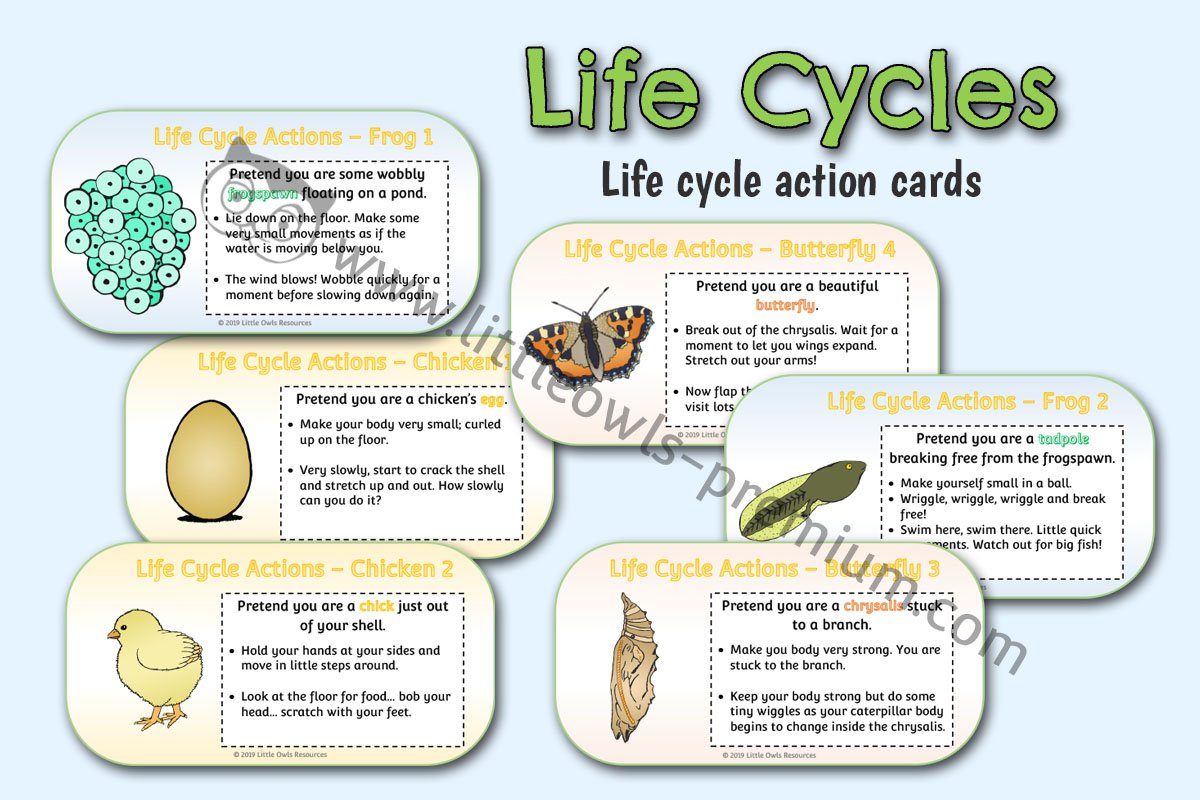
Explore movement with this set of ‘Life Cycle Action Cards’. Prompts for adults to use to describe to children and demonstrate how they may move. Pictures are also included on prompt cards to give visual representation for children to connect the actions with. Once the children get to know the cards they will be able to relate the action to the picture without necessarily needing the card read to them...For example an adult may be able to simply hold up a card and everyone will be able to do the activity together! For those children who are exceptionally engaged, these cards explored in sequence could even be set to music as a dance performance! Great for physical development, descriptive language and understanding the world.
Original artwork drawn by Sara Murphy and final digital resources created by Stuart Murphy. COPYRIGHT ON ALL OF THE RESOURCES HOUSED ON THIS WEBSITE IS HELD BY ‘LITTLE OWLS RESOURCES’. OUR RESOURCES (INCLUDING THE IMAGES WITHIN THEM), CANNOT BE SHARED OR SOLD COMMERCIALLY.
DOWNLOAD EDITABLE (DOCX)
DOWNLOAD NON-EDITABLE (PDF)
DOWNLOAD NON-EDITABLE (Zipped JPEGs)
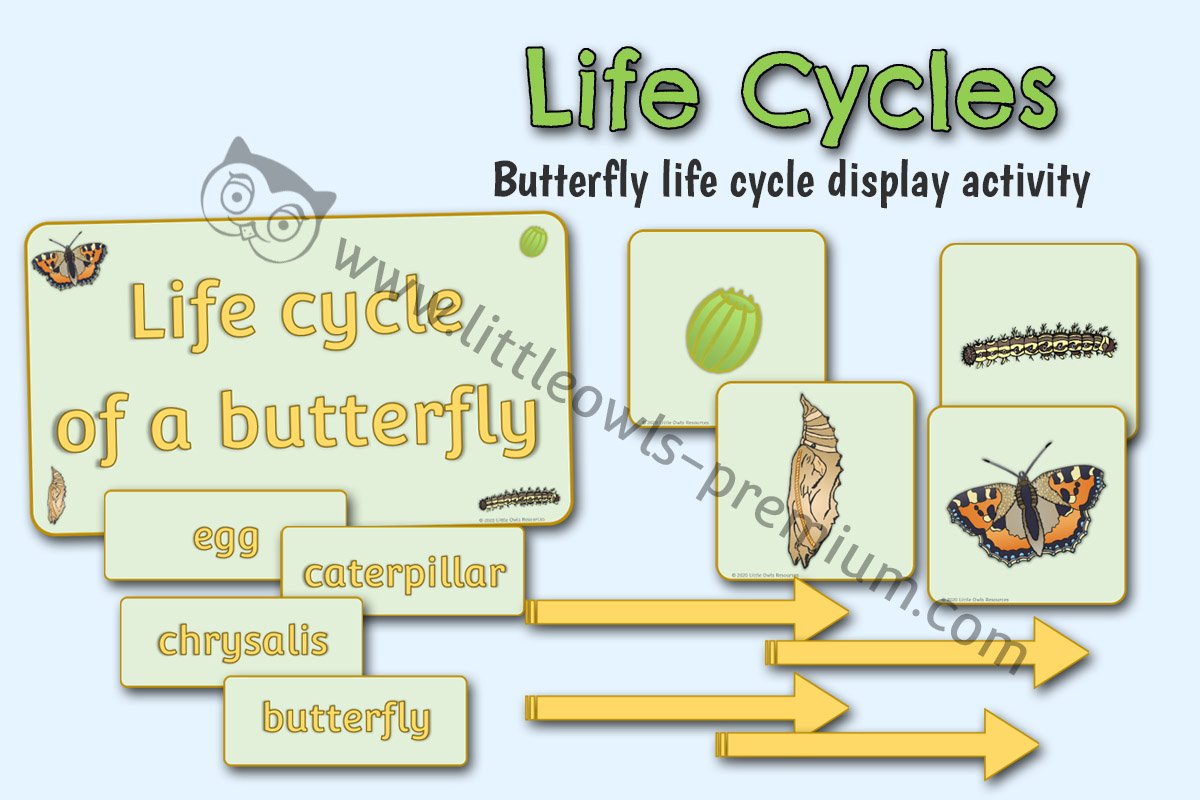
Butterfly life cycle display pack. Ideal for learning about growth at any time of the year, but particularly within the context of new life in ‘Spring’ or as part of a ‘Minibeasts’ topic. Also ideal to be used as visuals for an activity, e.g. placing all of the life cycle elements in the correct positions relative to each other on a table or as a floor activity. Once in place, perhaps even use as a stimulus for art and craft or playdough.
Original artwork drawn by Sara Murphy and final digital resources created by Stuart Murphy. COPYRIGHT ON ALL OF THE RESOURCES HOUSED ON THIS WEBSITE IS HELD BY ‘LITTLE OWLS RESOURCES’. OUR RESOURCES (INCLUDING THE IMAGES WITHIN THEM), CANNOT BE SHARED OR SOLD COMMERCIALLY.
DOWNLOAD EDITABLE (DOCX)
DOWNLOAD NON-EDITABLE (PDF)
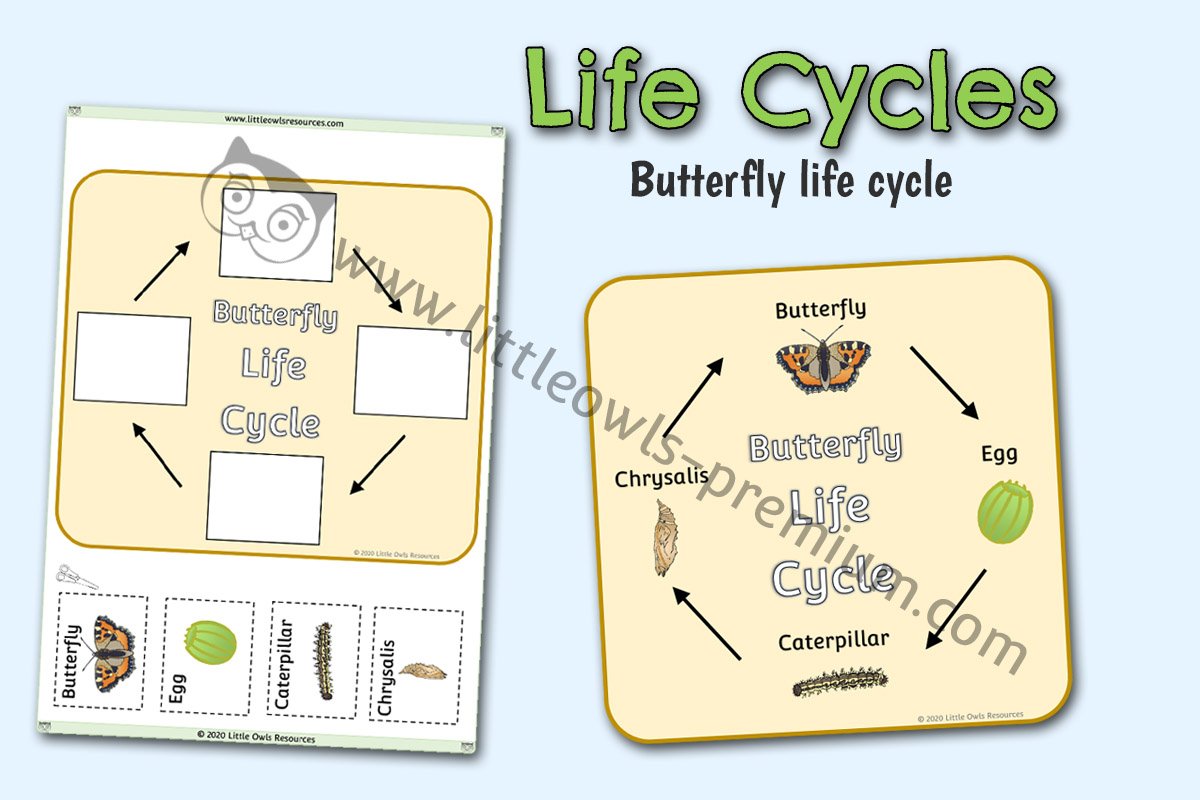
Butterfly life cycle poster and activity. Ideal for learning about growth at any time of the year, but particularly within the context of new life in ‘Spring’ or within a ‘Minibeasts’ topic. Cut and stick activity included.
Original artwork drawn by Sara Murphy and final digital resources created by Stuart Murphy. COPYRIGHT ON ALL OF THE RESOURCES HOUSED ON THIS WEBSITE IS HELD BY ‘LITTLE OWLS RESOURCES’. OUR RESOURCES (INCLUDING THE IMAGES WITHIN THEM), CANNOT BE SHARED OR SOLD COMMERCIALLY.
DOWNLOAD EDITABLE (DOCX)
DOWNLOAD NON-EDITABLE (PDF)
DOWNLOAD NON-EDITABLE (Zipped JPEGs)
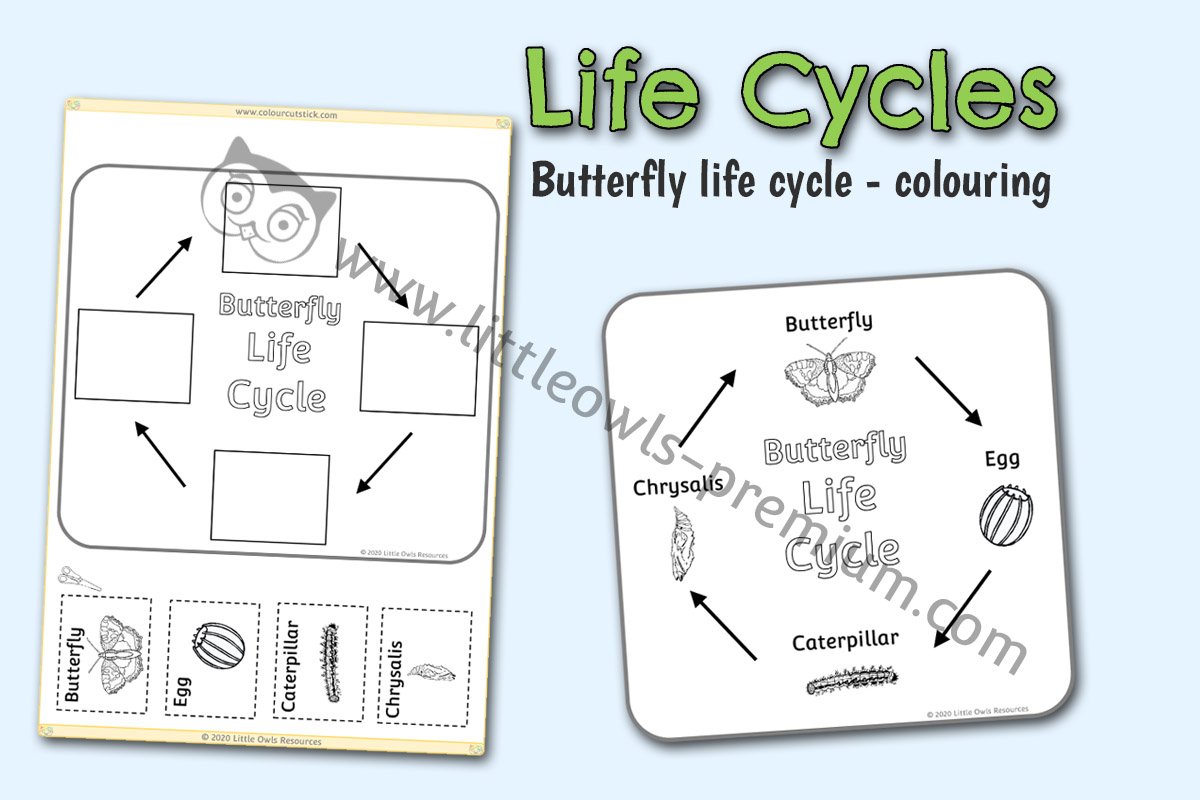
Original artwork drawn by Sara Murphy and final digital resources created by Stuart Murphy. COPYRIGHT ON ALL OF THE RESOURCES HOUSED ON THIS WEBSITE IS HELD BY ‘LITTLE OWLS RESOURCES’. OUR RESOURCES (INCLUDING THE IMAGES WITHIN THEM), CANNOT BE SHARED OR SOLD COMMERCIALLY.
DOWNLOAD EDITABLE (DOCX)
DOWNLOAD NON-EDITABLE (PDF)
DOWNLOAD NON-EDITABLE (Zipped JPEGs)
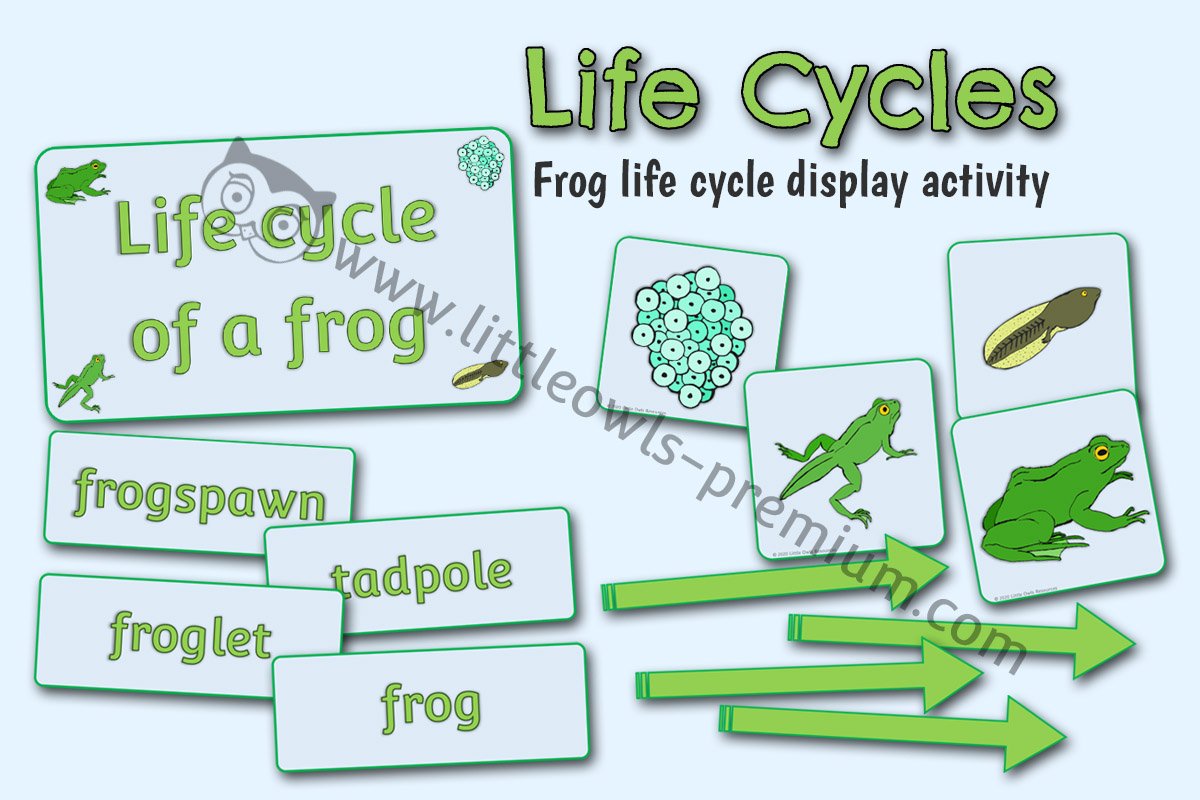
Frog life cycle display pack. Ideal for learning about growth at any time of the year, but particularly within the context of new life in ‘Spring’. Also ideal to be used as visuals for an activity, e.g. placing all of the life cycle elements in the correct positions relative to each other on a table or as a floor activity. Once in place, perhaps even use as a stimulus for art and craft or playdough.
Original artwork drawn by Sara Murphy and final digital resources created by Stuart Murphy. COPYRIGHT ON ALL OF THE RESOURCES HOUSED ON THIS WEBSITE IS HELD BY ‘LITTLE OWLS RESOURCES’. OUR RESOURCES (INCLUDING THE IMAGES WITHIN THEM), CANNOT BE SHARED OR SOLD COMMERCIALLY.
DOWNLOAD EDITABLE (DOCX)
DOWNLOAD NON-EDITABLE (PDF)
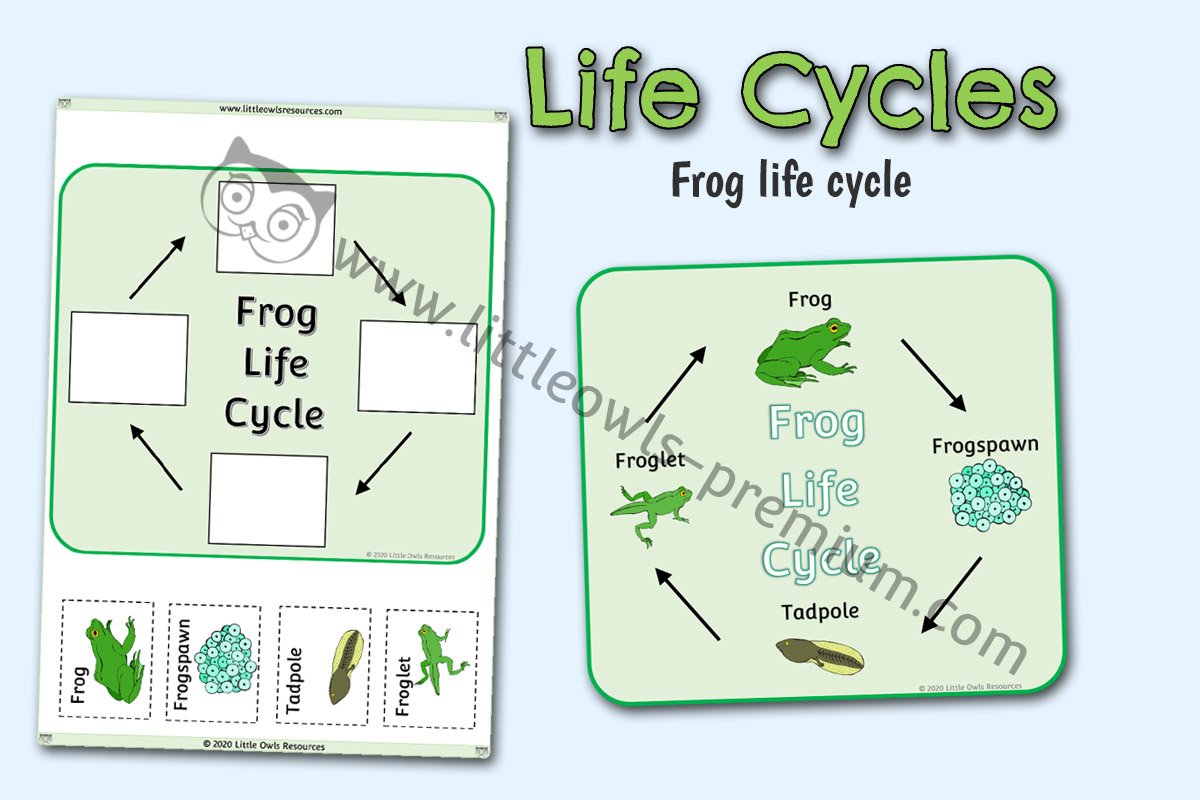
A frog life cycle poster together with a cut and stick activity on the same theme.
Original artwork drawn by Sara Murphy and final digital resources created by Stuart Murphy. COPYRIGHT ON ALL OF THE RESOURCES HOUSED ON THIS WEBSITE IS HELD BY ‘LITTLE OWLS RESOURCES’. OUR RESOURCES (INCLUDING THE IMAGES WITHIN THEM), CANNOT BE SHARED OR SOLD COMMERCIALLY.
DOWNLOAD EDITABLE (DOCX)
DOWNLOAD NON-EDITABLE (PDF)
DOWNLOAD NON-EDITABLE (Zipped JPEGs)
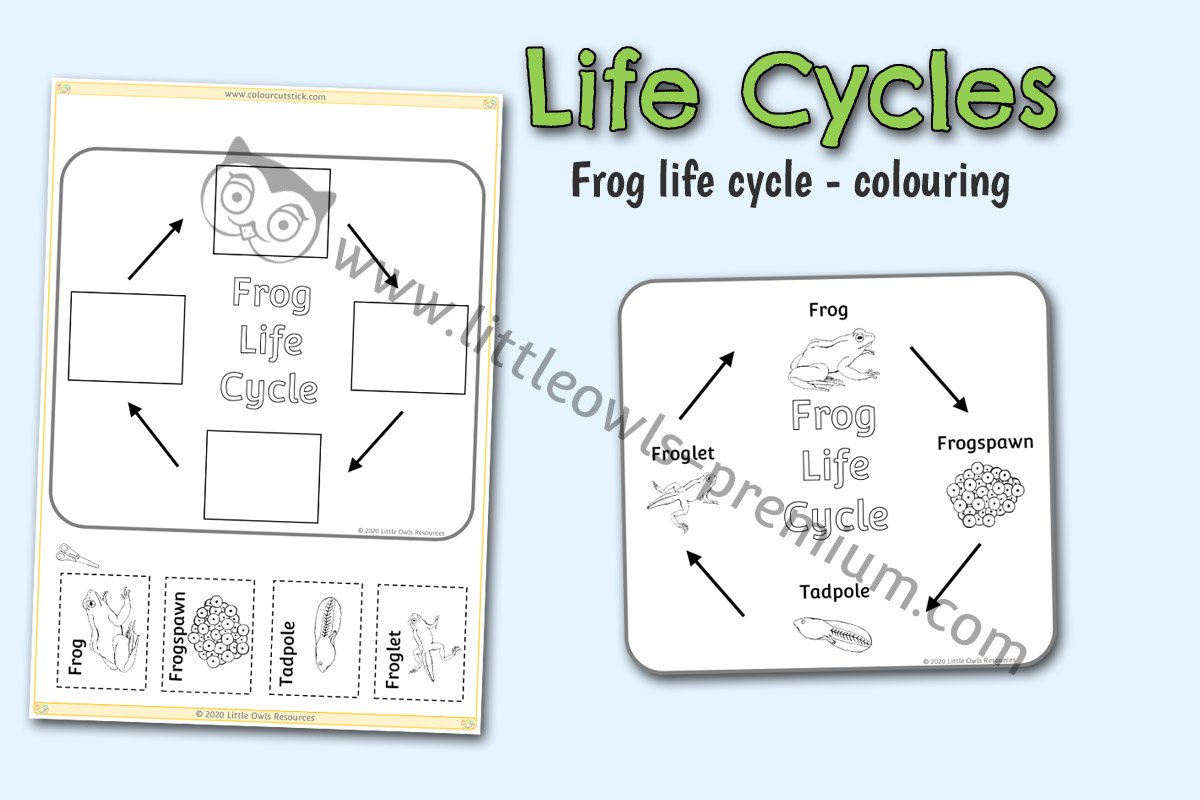
Original artwork drawn by Sara Murphy and final digital resources created by Stuart Murphy. COPYRIGHT ON ALL OF THE RESOURCES HOUSED ON THIS WEBSITE IS HELD BY ‘LITTLE OWLS RESOURCES’. OUR RESOURCES (INCLUDING THE IMAGES WITHIN THEM), CANNOT BE SHARED OR SOLD COMMERCIALLY.
DOWNLOAD EDITABLE (DOCX)
DOWNLOAD NON-EDITABLE (PDF)
DOWNLOAD NON-EDITABLE (Zipped JPEGs)

Chicken life cycle display pack. Ideal for learning about growth at any time of the year, but particularly within the context of new life in ‘Spring’ or as part of an ‘On The Farm’ topic. Also ideal to be used as visuals for an activity, e.g. placing all of the life cycle elements in the correct positions relative to each other on a table or as a floor activity. Once in place, perhaps even use as a stimulus for art and craft or playdough.
Original artwork drawn by Sara Murphy and final digital resources created by Stuart Murphy. COPYRIGHT ON ALL OF THE RESOURCES HOUSED ON THIS WEBSITE IS HELD BY ‘LITTLE OWLS RESOURCES’. OUR RESOURCES (INCLUDING THE IMAGES WITHIN THEM), CANNOT BE SHARED OR SOLD COMMERCIALLY.
DOWNLOAD EDITABLE (DOCX)
DOWNLOAD NON-EDITABLE (PDF)

Chicken life cycle poster and activity. Ideal for learning about growth at any time of the year, but particularly within the context of new life in ‘Spring’, as part of an ‘On The Farm’ topic or at Easter. Cut and stick activity included.
Original artwork drawn by Sara Murphy and final digital resources created by Stuart Murphy. COPYRIGHT ON ALL OF THE RESOURCES HOUSED ON THIS WEBSITE IS HELD BY ‘LITTLE OWLS RESOURCES’. OUR RESOURCES (INCLUDING THE IMAGES WITHIN THEM), CANNOT BE SHARED OR SOLD COMMERCIALLY.
DOWNLOAD EDITABLE (DOCX)
DOWNLOAD NON-EDITABLE (PDF)
DOWNLOAD NON-EDITABLE (Zipped JPEGs)
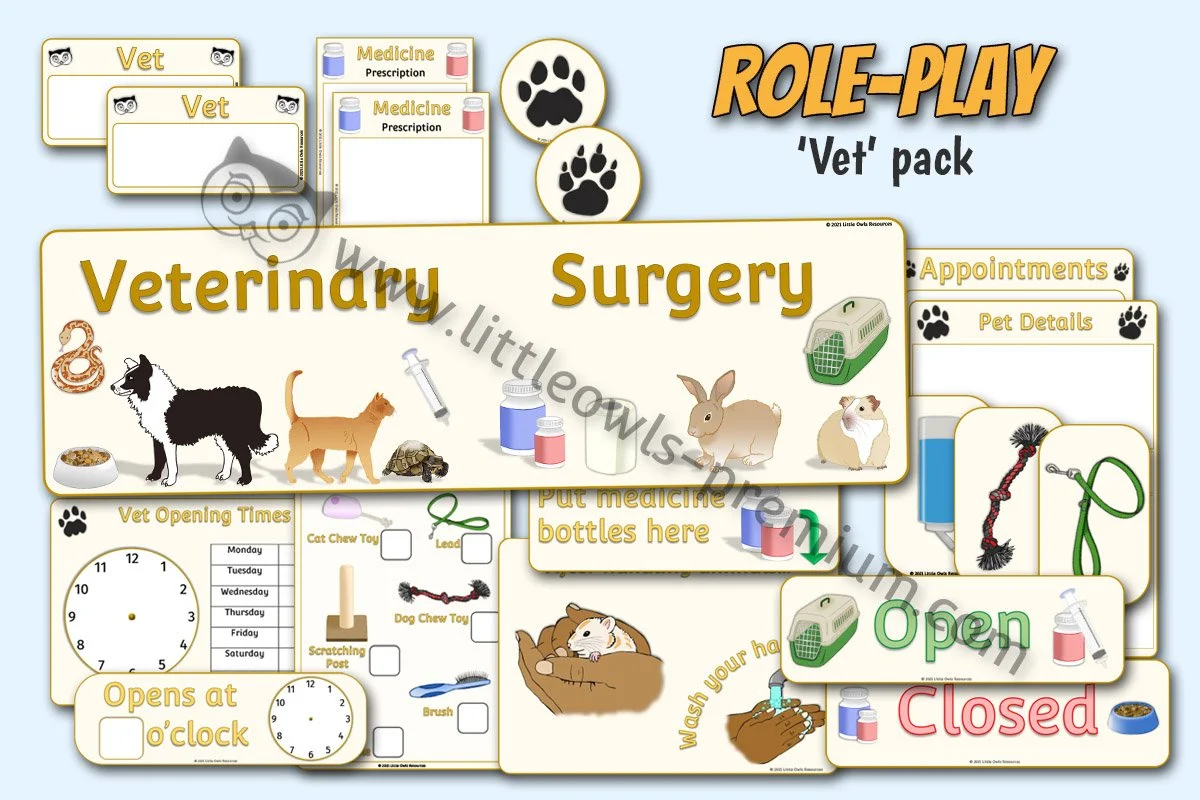
Everything you need to set up a veterinary surgery role-play area!
Pack includes:
(Please note that words, etc. can be altered within the editable docx file version.)
‘Veterinary Surgery’ banner
Paw print decorative signs
Vet identity cards
Posters ‘Thank-you for waiting’, ‘After handling animals…wash you hands’
Social distancing signs & floormats
‘Please wait’ footprint floormats
Animal word cards
‘Put medicine bottles here’ & ‘Put bandages here’ activity signs
‘Open’ & ‘Closed’ signs
‘Vet Opening Times’ Poster - Space to draw hands on clock and write times
‘Opens at…o’ clock’ and ‘Closes at…o’ clock’ signs - spaces for emergent writing
Templates for emergent writing (ideally laminated) - ‘Medicine Prescription’, ‘Appointments’ & ‘Pet Details’ forms
‘For Sale’ Menu sign - Space to write prices by items
Items for sale prop cards
Animal fact cards
Posters/Displays, Reading, Print carries meaning, Observation, Role-Play, Measures-Money, Measures-Time, Fact Cards, Mark Making/Drawing/Writing, Number Formation, Fine Motor, Turn Taking, Pencil Control, Laminate to use with w/b pens, Cards/Flashcards, Walk Your Dog Month, Dog, Cat, Rabbit, Chicken, Hamster, Tortoise, Goldfish, Guinea Pig, Snake, Canary, Birds, Mammals, Reptiles, Fish
Original artwork drawn by Sara Murphy and final digital resources created by Stuart Murphy. COPYRIGHT ON ALL OF THE RESOURCES HOUSED ON THIS WEBSITE IS HELD BY ‘LITTLE OWLS RESOURCES’. OUR RESOURCES (INCLUDING THE IMAGES WITHIN THEM), CANNOT BE SHARED OR SOLD COMMERCIALLY.
DOWNLOAD EDITABLE (DOCX)
DOWNLOAD NON-EDITABLE (PDF)
DOWNLOAD NON-EDITABLE (Zipped JPEGs)

'PET MONITOR' ORGANISATION SET
Posters/Displays, Reading, Print carries meaning, Observation, Mark Making/Drawing/Writing, Pencil Control, Laminate to use with w/b pens, Turn Taking
Original artwork drawn by Sara Murphy and final digital resources created by Stuart Murphy. COPYRIGHT ON ALL OF THE RESOURCES HOUSED ON THIS WEBSITE IS HELD BY ‘LITTLE OWLS RESOURCES’. OUR RESOURCES (INCLUDING THE IMAGES WITHIN THEM), CANNOT BE SHARED OR SOLD COMMERCIALLY.
DOWNLOAD EDITABLE (DOCX)
DOWNLOAD NON-EDITABLE (PDF)
DOWNLOAD NON-EDITABLE (Zipped JPEGs)
<<-BACK TO ‘PETS’ TOPIC MENU PAGE
Pack of 10 Pet Fact Cards. Pets include cat, dog, hamster, guinea pig, goldfish, tortoise, rabbit, snake, canary and chicken.
Matching/Sorting Activities, Listening Skills, Fact Cards, Cards/Flashcards, Posters/Displays, Reading, Print carries meaning, Observation, Cat, Dog, Hamster, Guinea Pig, Goldfish, Tortoise, Rabbit, Snake, Canary, Chicken, Reptiles, Mammals, Birds, Fish
Original artwork drawn by Sara Murphy and final digital resources created by Stuart Murphy. COPYRIGHT ON ALL OF THE RESOURCES HOUSED ON THIS WEBSITE IS HELD BY ‘LITTLE OWLS RESOURCES’. OUR RESOURCES (INCLUDING THE IMAGES WITHIN THEM), CANNOT BE SHARED OR SOLD COMMERCIALLY.
DOWNLOAD EDITABLE (DOCX)
DOWNLOAD NON-EDITABLE (PDF)
DOWNLOAD NON-EDITABLE (Zipped JPEGs)
<<-BACK TO ‘PETS’ TOPIC MENU PAGE

Why not use this fun farm animals and their young puzzle game to introduce your children to or consolidate their knowledge of farm animals? Cut each puzzle along the line in the middle and invite your children to match each farm animal with its offspring. Why not extend learning by discussing similarities and differences between the older and younger animals and also between the different types of animals? Extend children’s vocabulary by describing animal body parts such as tail, hooves, paws, fur, snout, etc. Ask questions such as ‘Which animal has the longest/shortest tail?’
Animals, Matching Activities, Observational Skills, Posters/Display, Problem Solving, Puzzles, Life Cycles, Activity, Group Activity, Discussion Prompts, Print Carries Meaning, Using Shapes for Task, Concepts, Games, Goat, Kid, Cow, Calf, Pig, Piglet, Horse, Foal, Foal (Horse), Dog, Puppy, Chicken, Chick, Donkey, Foal (Donkey), Goose, Gosling, Sheep, Lamb, Duck, Duckling, Birds, Mammals
Original artwork drawn by Sara Murphy and final digital resources created by Stuart Murphy. COPYRIGHT ON ALL OF THE RESOURCES HOUSED ON THIS WEBSITE IS HELD BY ‘LITTLE OWLS RESOURCES’. OUR RESOURCES (INCLUDING THE IMAGES WITHIN OUR RESOURCES), CANNOT BE SHARED OR SOLD COMMERCIALLY.
DOWNLOAD EDITABLE (DOCX)
DOWNLOAD NON-EDITABLE (PDF)
DOWNLOAD NON-EDITABLE (Zipped JPEGs)

This poster gives 20 fun activity ideas to get moving.
As well as being good for the body, movement and exercise are also an important part of a healthy mind!
We hope this helps!
Original artwork drawn by Sara Murphy and final digital resources created by Stuart Murphy. COPYRIGHT ON ALL OF THE RESOURCES HOUSED ON THIS WEBSITE IS HELD BY ‘LITTLE OWLS RESOURCES’. OUR RESOURCES (INCLUDING THE IMAGES WITHIN THEM), CANNOT BE SHARED OR SOLD COMMERCIALLY.
DOWNLOAD EDITABLE (DOCX)
DOWNLOAD NON-EDITABLE (PDF)
DOWNLOAD NON-EDITABLE (Zipped JPEGs)
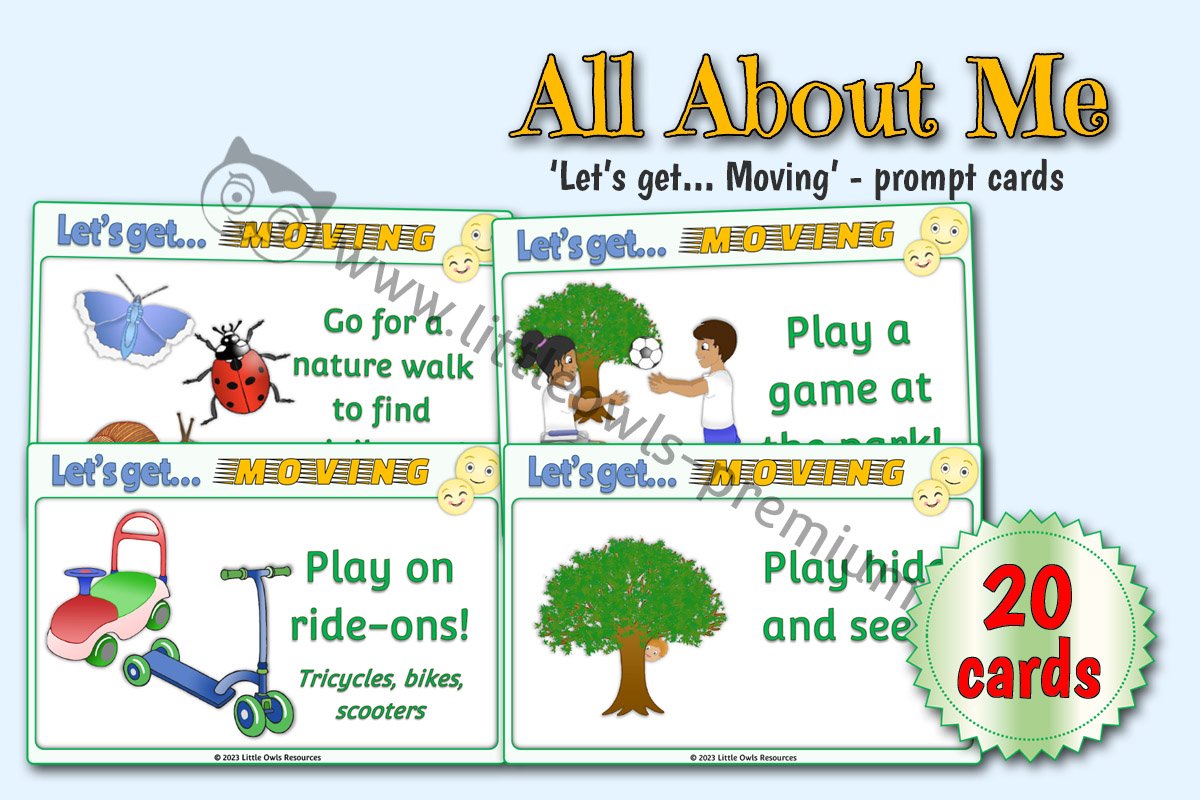
These prompt cards are ideas for movement activities.
As well as being good for the body, movement and exercise are also an important part of a healthy mind!
We hope this helps!
Original artwork drawn by Sara Murphy and final digital resources created by Stuart Murphy. COPYRIGHT ON ALL OF THE RESOURCES HOUSED ON THIS WEBSITE IS HELD BY ‘LITTLE OWLS RESOURCES’. OUR RESOURCES (INCLUDING THE IMAGES WITHIN THEM), CANNOT BE SHARED OR SOLD COMMERCIALLY.
DOWNLOAD EDITABLE (DOCX)
DOWNLOAD NON-EDITABLE (PDF)
DOWNLOAD NON-EDITABLE (Zipped JPEGs)
<<-BACK TO ‘ALL ABOUT ME’ MENU

As part of exploring Healthy foods with your children, why not ask them to draw a favourite healthy meal?...or even use some collage materials!
Original artwork drawn by Sara Murphy and final digital resources created by Stuart Murphy. COPYRIGHT ON ALL OF THE RESOURCES HOUSED ON THIS WEBSITE IS HELD BY ‘LITTLE OWLS RESOURCES’. OUR RESOURCES (INCLUDING THE IMAGES WITHIN THEM), CANNOT BE SHARED OR SOLD COMMERCIALLY.
DOWNLOAD EDITABLE (DOCX)
DOWNLOAD NON-EDITABLE (PDF)
DOWNLOAD NON-EDITABLE (Zipped JPEGs)

Healthy Eating Diary booklet/sheets. A mark making page included for each of the 7 days of the week for children to record what food/drink they have had. Front cover also included with space for child’s name in the event you would like to create a booklet.
Original artwork drawn by Sara Murphy and final digital resources created by Stuart Murphy. COPYRIGHT ON ALL OF THE RESOURCES HOUSED ON THIS WEBSITE IS HELD BY ‘LITTLE OWLS RESOURCES’. OUR RESOURCES (INCLUDING THE IMAGES WITHIN THEM), CANNOT BE SHARED OR SOLD COMMERCIALLY.
DOWNLOAD EDITABLE (DOCX)
DOWNLOAD NON-EDITABLE (PDF)
DOWNLOAD NON-EDITABLE (Zipped JPEGs)
<<-BACK TO ‘HOUSEPLANT WEEK UK’ MENU
Additional resources to support learning about ‘Animals, Including Humans’ in year 2, can be found on the following pages:
(buttons below)


CLICK HERE to visit ‘LIFE CYCLES’ PAGE.
Printable ‘Life Cycle’ teaching and learning resources include: cyclic puzzles, frog, chicken, caterpillar/butterfly, ant/bean life cycle display packs, posters, cut and stick activities, banners, cards, playdough mats and more!


Use of everyday materials
Pupils should be taught to:
identify and compare the suitability of a variety of everyday materials, including wood, metal, plastic, glass, brick, rock, paper and cardboard for particular uses
find out how the shapes of solid objects made from some materials can be changed by squashing, bending, twisting and stretching
Core Year 2 ‘Use of Everyday Materials’ Resources:
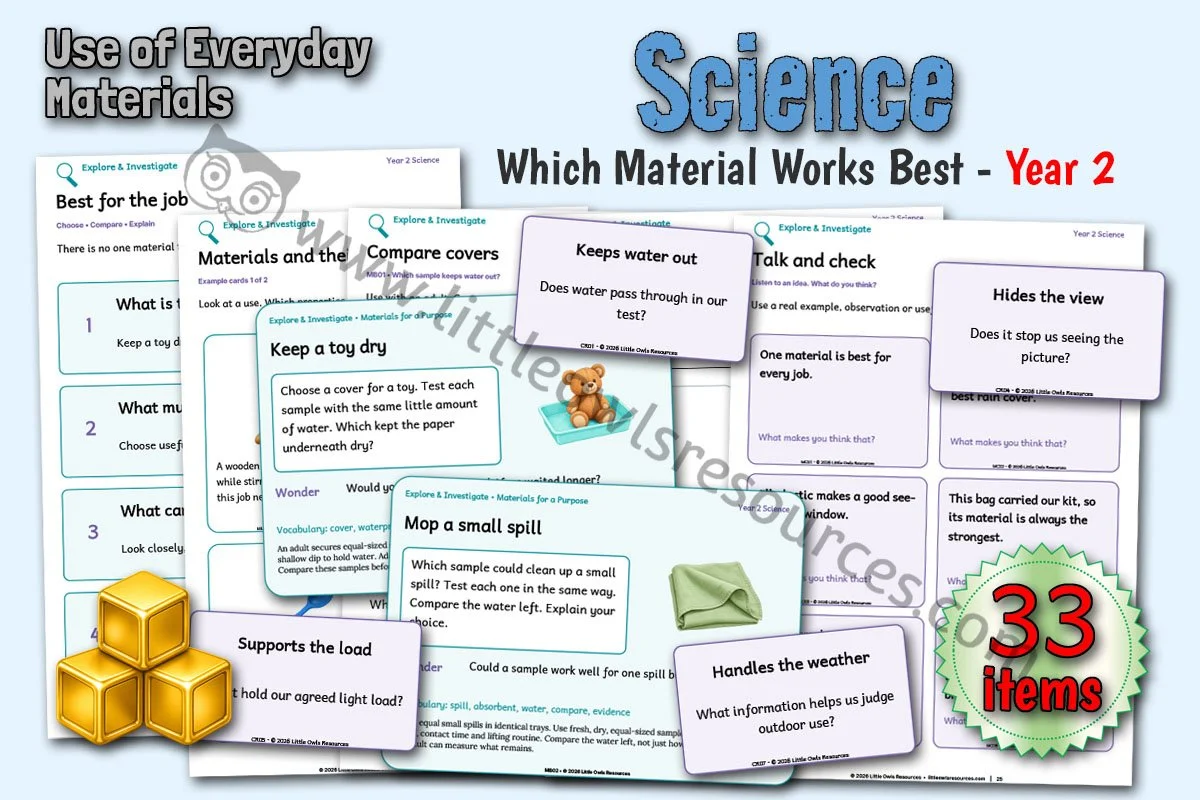
Help children choose materials for a particular job, compare suitable samples and explain their choices using observations or information. “Best” means best for the agreed purpose among the examples considered. More than one choice may work.
Begin with a real purpose
Choose one challenge: keep a toy dry, soak up a spill, make a model window, carry a light load, bridge a small gap, consider an outside wall, stir paint or hide a picture. Discuss what the material must do before deciding how to compare it.
DOWNLOAD (DOCX) 📝
DOWNLOAD (PDF) 📄
DOWNLOAD (Zipped JPEGs) 📂
Which Material Works Best? — Choose, Test & Explain
Year 2
Which material could keep a toy dry or soak up a spill? Invite children to choose, test and compare materials for a particular purpose, then explain their decisions using what they discover.
Set of 20 A5 sized ‘Can you build…?’ construction cards.
Original artwork drawn by Sara Murphy and final digital resources created by Stuart Murphy. COPYRIGHT ON ALL OF THE RESOURCES HOUSED ON THIS WEBSITE IS HELD BY ‘LITTLE OWLS RESOURCES’. OUR RESOURCES (INCLUDING THE IMAGES WITHIN THEM), CANNOT BE SHARED OR SOLD COMMERCIALLY.
DOWNLOAD EDITABLE (DOCX)
DOWNLOAD NON-EDITABLE (PDF)
DOWNLOAD NON-EDITABLE (Zipped JPEGs)
Set of 20 A4 sized ‘Can you build…?’ construction cards.
Original artwork drawn by Sara Murphy and final digital resources created by Stuart Murphy. COPYRIGHT ON ALL OF THE RESOURCES HOUSED ON THIS WEBSITE IS HELD BY ‘LITTLE OWLS RESOURCES’. OUR RESOURCES (INCLUDING THE IMAGES WITHIN THEM), CANNOT BE SHARED OR SOLD COMMERCIALLY.
DOWNLOAD EDITABLE (DOCX)
DOWNLOAD NON-EDITABLE (PDF)
DOWNLOAD NON-EDITABLE (Zipped JPEGs)
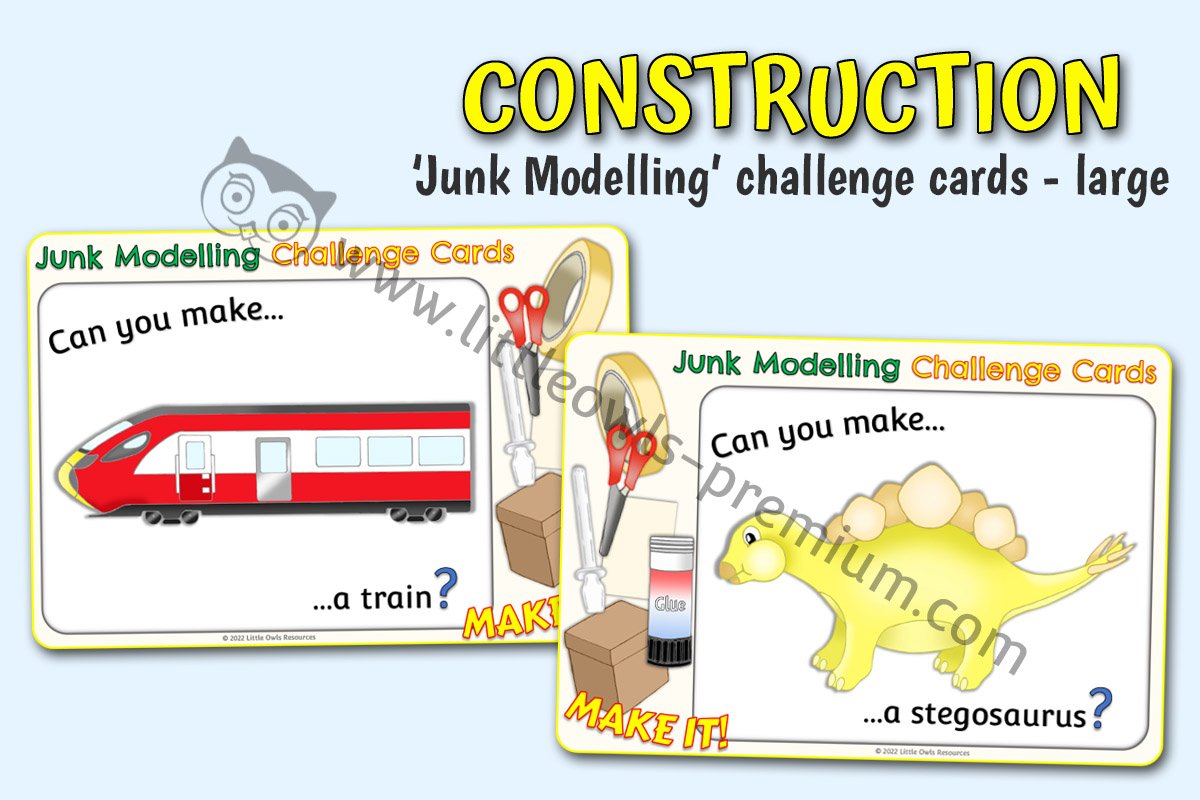
Set of 20 A4 sized ‘Can you make…?’ junk modelling construction cards.
Original artwork drawn by Sara Murphy and final digital resources created by Stuart Murphy. COPYRIGHT ON ALL OF THE RESOURCES HOUSED ON THIS WEBSITE IS HELD BY ‘LITTLE OWLS RESOURCES’. OUR RESOURCES (INCLUDING THE IMAGES WITHIN THEM), CANNOT BE SHARED OR SOLD COMMERCIALLY.
DOWNLOAD EDITABLE (DOCX)
DOWNLOAD NON-EDITABLE (PDF)
DOWNLOAD NON-EDITABLE (Zipped JPEGs)
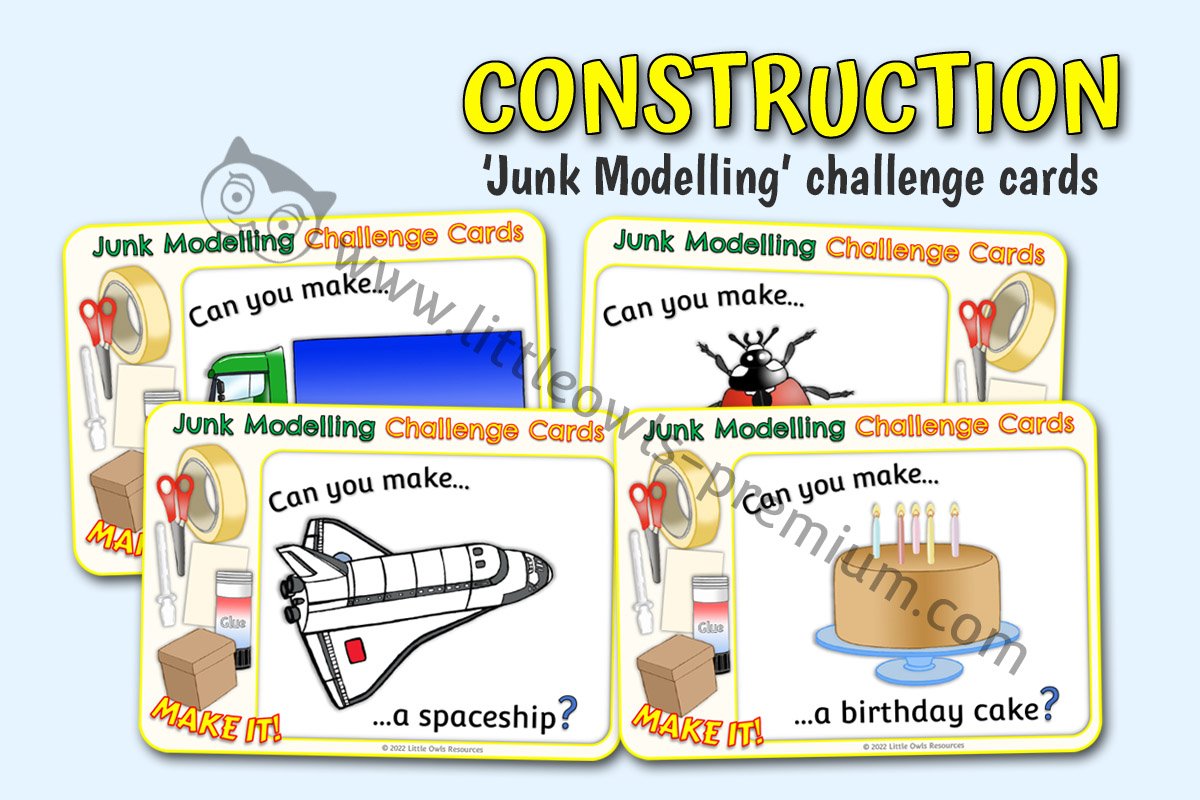
Set of 20 A5 sized ‘Can you make…?’ junk modelling construction cards.
Original artwork drawn by Sara Murphy and final digital resources created by Stuart Murphy. COPYRIGHT ON ALL OF THE RESOURCES HOUSED ON THIS WEBSITE IS HELD BY ‘LITTLE OWLS RESOURCES’. OUR RESOURCES (INCLUDING THE IMAGES WITHIN THEM), CANNOT BE SHARED OR SOLD COMMERCIALLY.
DOWNLOAD EDITABLE (DOCX)
DOWNLOAD NON-EDITABLE (PDF)
DOWNLOAD NON-EDITABLE (Zipped JPEGs)
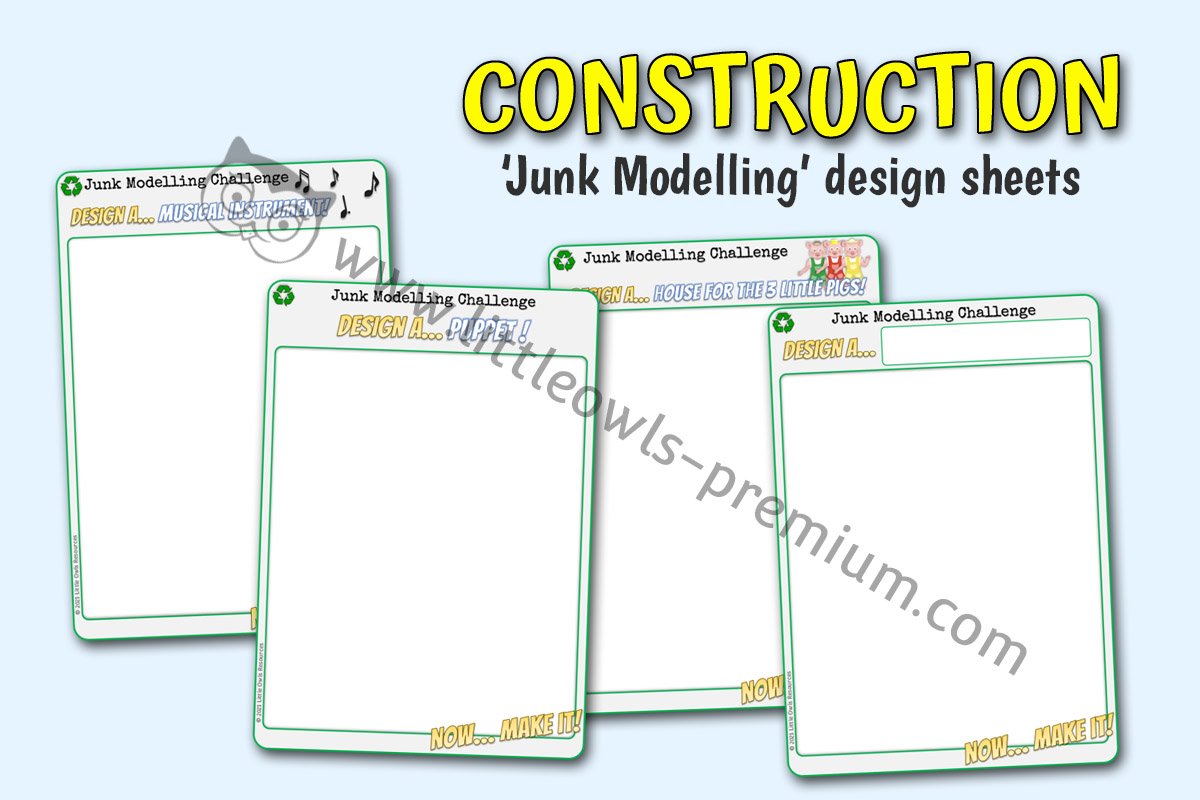
Challenge sheets encouraging children to think about how they could reuse cardboard boxes, plastic tubs, etc for a new purpose.
Challenge sheets include: Design a…House for the 3 little pigs, Puppet and Musical Instrument. Also included is a sheet with a space for your own ideas.
Sheets are designed to encourage children to pause and think through what they are about to make. The sheets are primarily intended for children to draw their design. To extend those children in need of a further challenge, you may like to suggest that they add labels.
Original artwork drawn by Sara Murphy and final digital resources created by Stuart Murphy. COPYRIGHT ON ALL OF THE RESOURCES HOUSED ON THIS WEBSITE IS HELD BY ‘LITTLE OWLS RESOURCES’. OUR RESOURCES (INCLUDING THE IMAGES WITHIN THEM), CANNOT BE SHARED OR SOLD COMMERCIALLY.
DOWNLOAD EDITABLE (DOCX)
DOWNLOAD NON-EDITABLE (PDF)
DOWNLOAD NON-EDITABLE (Zipped JPEGs)

This STEM ‘Make a Car Ramp - Support Pack’ includes a variety of resources to help inspire and engage adults and children alike.
Materials within the pack encourage open ended exploration of the challenge ‘Can you make a car ramp?’
STEM learning brings together Science, Technology, Engineering and Mathematics.
Skills such as critical thinking, creativity, teamwork, communication, initiative, inquiry and problem solving are all developed within STEM learning.
We hope you find this pack useful and you all have fun!
Original artwork drawn by Sara Murphy and final digital resources created by Stuart Murphy. COPYRIGHT ON ALL OF THE RESOURCES HOUSED ON THIS WEBSITE IS HELD BY ‘LITTLE OWLS RESOURCES’. OUR RESOURCES (INCLUDING THE IMAGES WITHIN THEM), CANNOT BE SHARED OR SOLD COMMERCIALLY.
DOWNLOAD EDITABLE (DOCX)
DOWNLOAD NON-EDITABLE (PDF)
DOWNLOAD NON-EDITABLE (Zipped JPEGs)
Versatile sheets for children to create their own bag for life designs.
Use with pencils/crayons or art and craft cut and stick/collage materials.
Original artwork drawn by Sara Murphy and final digital resources created by Stuart Murphy. COPYRIGHT ON ALL OF THE RESOURCES HOUSED ON THIS WEBSITE IS HELD BY ‘LITTLE OWLS RESOURCES’. OUR RESOURCES (INCLUDING THE IMAGES WITHIN OUR RESOURCES), CANNOT BE SHARED OR SOLD COMMERCIALLY.
DOWNLOAD EDITABLE (DOCX)
DOWNLOAD NON-EDITABLE (PDF)
DOWNLOAD NON-EDITABLE (Zipped JPEGs)
Additional resources to support learning about ‘Use of Everyday Materials’ in year 2, can be found on the following pages:
(buttons below)
🔬 Working Scientifically
In Year 1 and Year 2, children develop scientific skills through exploring plants, animals, materials, habitats and seasonal changes. Our KS1 Working Scientifically — Enquiry & Recording Companion provides reusable prompts and recording pages to support these enquiries, alongside practical experiences, observation and discussion.
Asking simple questions and recognising that they can be answered in different ways
Use Plants Around Us — Plant Hunt, Identify & Compare to spark questions about local plants, and What Do Animals Need to Survive? to explore questions about animal needs and care. Help children consider how to find answers through close observation, comparing examples, watching changes over time, carrying out an appropriate simple test or using a suitable information source.
Observing closely, using simple equipment
Use Our Five Senses — Notice, Compare & Explain to encourage careful noticing and description, and Seeds & Bulbs — Watch, Record & Compare to observe growing plants over time. Introduce simple equipment where useful, such as magnifying glasses to examine details or rulers to compare growth, and encourage children to describe or draw what they actually notice.
Performing simple tests
Use Which Material Works Best? — Choose, Test & Explain to investigate a practical question, such as which material could keep a toy dry or soak up a spill. Help children agree what the material needs to do, compare suitable samples, keep relevant conditions the same and use their results to explain which worked well for that purpose.
Identifying and classifying
Use Everyday Materials — Objects, Materials & Properties to group familiar objects by their materials or observable properties, and Living, Dead or Never Alive? — Sort, Explain & Investigate to compare examples using observations and information about their history. Encourage children to explain their choices, discuss uncertain examples and reconsider a group when new evidence becomes available.
Using their observations and ideas to suggest answers to questions
Return to the original question after an enquiry using Which Material Works Best? or Plants Around Us — Plant Hunt, Identify & Compare. Invite children to use their observations, drawings, photographs or test results to explain “We noticed… so we think…”, and discuss whether another observation, test or information source would help them check their answer.
Gathering and recording data to help in answering questions
Use Seeds & Bulbs — Watch, Record & Compare and Our Changing Year — Seasonal Observations & Day Length to gather dated observations through drawings, photographs, simple measurements and written notes. Help children choose records that answer a useful question, such as “How has our plant changed?” or “What is different about this place now?”, then compare their findings over time.
Core KS1 ‘Working Scientifically’ Resource Packs:
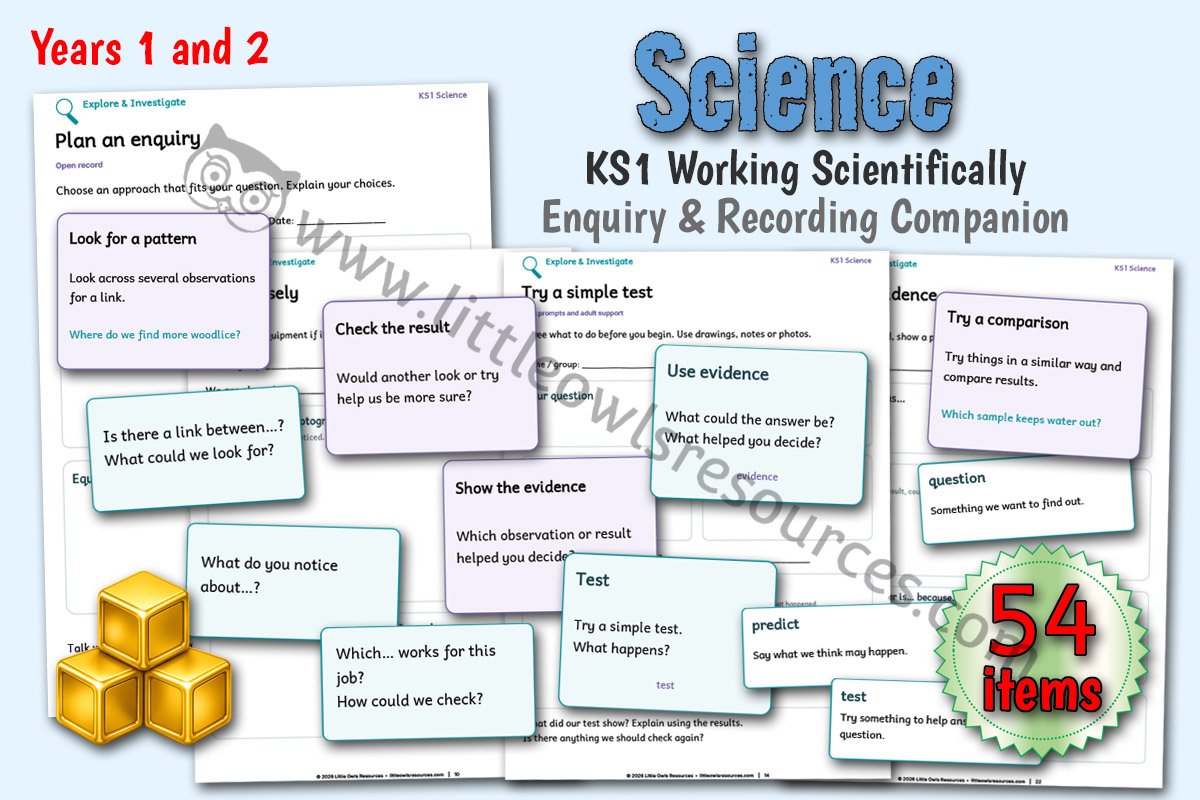
Use alongside practical science
Choose a prompt or recording page to help children answer a real science question. This companion supports teaching about plants, animals, habitats, materials and seasonal changes. It is a selection of reusable tools, not a workbook to complete in order. Use real objects, observations and discussion before choosing what is worth recording.
DOWNLOAD (DOCX) 📝
DOWNLOAD (PDF) 📄
DOWNLOAD (Zipped JPEGs) 📂
KS1 Working Scientifically — Enquiry & Recording Companion
Year 1 and Year 2
Support practical science with reusable enquiry prompts and recording pages. Help children ask questions, observe closely, compare findings and explain what their evidence shows, across a range of science topics.
Additional ‘Science’ Resources
(Click on the thumbnail images below for further details)
General ‘Science’ Display Packs

Posters which highlight the elements of STEM to be used as part of a STEM display or session.
(Science Technology Engineering and Mathematics)
Original artwork drawn by Sara Murphy and final digital resources created by Stuart Murphy. COPYRIGHT ON ALL OF THE RESOURCES HOUSED ON THIS WEBSITE IS HELD BY ‘LITTLE OWLS RESOURCES’. OUR RESOURCES (INCLUDING THE IMAGES WITHIN THEM), CANNOT BE SHARED OR SOLD COMMERCIALLY.
DOWNLOAD EDITABLE (DOCX)
DOWNLOAD NON-EDITABLE (PDF)
DOWNLOAD NON-EDITABLE (Zipped JPEGs)

STEM banner
(Science Technology Engineering and Mathematics)
Original artwork drawn by Sara Murphy and final digital resources created by Stuart Murphy. COPYRIGHT ON ALL OF THE RESOURCES HOUSED ON THIS WEBSITE IS HELD BY ‘LITTLE OWLS RESOURCES’. OUR RESOURCES (INCLUDING THE IMAGES WITHIN THEM), CANNOT BE SHARED OR SOLD COMMERCIALLY.
DOWNLOAD EDITABLE (DOCX)
DOWNLOAD NON-EDITABLE (PDF)
DOWNLOAD NON-EDITABLE (Zipped JPEGs)

‘We are curious’ display to be used as part of a STEM area.
(Science Technology Engineering and Mathematics)
Children are naturally curious; born predisposed to learning about their immediate surroundings. As babies we begin to sense and explore the world around us. We embark on scientific enquiry by noticing cause and effect, repeating experiences to confirm what we have found out and exploring when something different happens to what we expect. As we develop language we ask a multitude of ‘how?’ and ‘why?’ questions to make further sense of the world around us.
Early Years settings are the perfect environment for STE(A)M development because children naturally want to play in their immediate surroundings to investigate and learn more. As early years professionals and parents it is our job to nurture this natural desire and enthusiasm and provide children with an environment which enables exploration and scientific discovery.
Original artwork drawn by Sara Murphy and final digital resources created by Stuart Murphy. COPYRIGHT ON ALL OF THE RESOURCES HOUSED ON THIS WEBSITE IS HELD BY ‘LITTLE OWLS RESOURCES’. OUR RESOURCES (INCLUDING THE IMAGES WITHIN THEM), CANNOT BE SHARED OR SOLD COMMERCIALLY.
DOWNLOAD EDITABLE (DOCX)
DOWNLOAD NON-EDITABLE (PDF)
DOWNLOAD NON-EDITABLE (Zipped JPEGs)

Banner pack designed to be used in conjunction with our ‘Science Activity Packs’.
Why not create a ‘Science Investigation’, ‘Science Activity’ or ‘Science Experiment’ area/display? When you use our corresponding ‘Science Activity Packs’ you will find a different poster in each of them. The poster can be placed into the gap on these banners to show the Science Activity you are exploring.
Have fun investigating!
Original artwork drawn by Sara Murphy and final digital resources created by Stuart Murphy. COPYRIGHT ON ALL OF THE RESOURCES HOUSED ON THIS WEBSITE IS HELD BY ‘LITTLE OWLS RESOURCES’. OUR RESOURCES (INCLUDING THE IMAGES WITHIN THEM), CANNOT BE SHARED OR SOLD COMMERCIALLY.
DOWNLOAD EDITABLE (DOCX)
DOWNLOAD NON-EDITABLE (PDF)
DOWNLOAD NON-EDITABLE (Zipped JPEGs)

Why not create a ‘Science Investigation’, ‘Science Activity’ or ‘Science Experiment’ area/display? All three banners included within this pack.
Have fun investigating!
Original artwork drawn by Sara Murphy and final digital resources created by Stuart Murphy. COPYRIGHT ON ALL OF THE RESOURCES HOUSED ON THIS WEBSITE IS HELD BY ‘LITTLE OWLS RESOURCES’. OUR RESOURCES (INCLUDING THE IMAGES WITHIN THEM), CANNOT BE SHARED OR SOLD COMMERCIALLY.
DOWNLOAD EDITABLE (DOCX)
DOWNLOAD NON-EDITABLE (PDF)
DOWNLOAD NON-EDITABLE (Zipped JPEGs)
Display Lettering

This pack includes the lower-case letters of the alphabet with the last few pages including some common punctuation.
This pack is organised with one letter per page so that you can print only what you need.
When you print this PDF you should have the option to print more than one letter to a page which would allow you to make the letters smaller if desired.
p2-27: LOWER CASE letters
p28-33: Punctuation
Original artwork drawn by Sara Murphy and final digital resources created by Stuart Murphy. COPYRIGHT ON ALL OF THE RESOURCES HOUSED ON THIS WEBSITE IS HELD BY ‘LITTLE OWLS RESOURCES’. OUR RESOURCES (INCLUDING THE IMAGES WITHIN THEM), CANNOT BE SHARED OR SOLD COMMERCIALLY.
DOWNLOAD NON-EDITABLE (PDF)
DOWNLOAD NON-EDITABLE (Zipped JPEGs)
<<-BACK TO ‘DISPLAY LETTERING’ MENU
<<-BACK TO ‘BACK TO SCHOOL’ MENU
<<-BACK TO ‘POSTERS & DISPLAYS’ MENU

This pack includes the upper-case letters of the alphabet with the last few pages including some common punctuation.
This pack is organised with one letter per page so that you can print only what you need.
When you print this PDF you should have the option to print more than one letter to a page which would allow you to make the letters smaller if desired.
p2-27: UPPER CASE letters
p28-33: Punctuation
Original artwork drawn by Sara Murphy and final digital resources created by Stuart Murphy. COPYRIGHT ON ALL OF THE RESOURCES HOUSED ON THIS WEBSITE IS HELD BY ‘LITTLE OWLS RESOURCES’. OUR RESOURCES (INCLUDING THE IMAGES WITHIN THEM), CANNOT BE SHARED OR SOLD COMMERCIALLY.
DOWNLOAD NON-EDITABLE (PDF)
DOWNLOAD NON-EDITABLE (Zipped JPEGs)
<<-BACK TO ‘DISPLAY LETTERING’ MENU
<<-BACK TO ‘BACK TO SCHOOL’ MENU
<<-BACK TO ‘POSTERS & DISPLAYS’ MENU
This pack includes the numbers 0-9 with the last few pages including some mathematical symbols.
This pack is organised with one number per page so that you can print only what you need.
When you print this PDF you should have the option to print more than one number to a page which would allow you to make the numbers smaller if desired.
p2-11: Numbers
p12-13: Symbols
Original artwork drawn by Sara Murphy and final digital resources created by Stuart Murphy. COPYRIGHT ON ALL OF THE RESOURCES HOUSED ON THIS WEBSITE IS HELD BY ‘LITTLE OWLS RESOURCES’. OUR RESOURCES (INCLUDING THE IMAGES WITHIN THEM), CANNOT BE SHARED OR SOLD COMMERCIALLY.
DOWNLOAD NON-EDITABLE (PDF)
DOWNLOAD NON-EDITABLE (Zipped JPEGs)
<<-BACK TO ‘DISPLAY LETTERING’ MENU
<<-BACK TO ‘BACK TO SCHOOL’ MENU
<<-BACK TO ‘POSTERS & DISPLAYS’ MENU
‘Science’ Themed Resources Available in Our ‘Get Organised’ Sections:

EDITABLE (non-editable also available) ‘Planets’ themed Self Registration Display.
Includes:
Banner ‘Who is here today?’ - change this in the editable docx file version to say whatever works best for your setting
Days of the week signs (Monday-Sunday)
‘Here’ & ‘At home’ signs (2 different sizes to suit your display board/area
Name signs for all of your individual children to enable them to sign themselves in by moving their name from the ‘At home’ column to the ‘Here’ column. Faded images behind children’s names gives them an added way to recognise their particular name card allowing for greater independence.
This resource pack is easily adapted for any setting. For example the youngest children will get used to recognising their name & picture combination and moving it to the correct place with help. Children soon love the responsibility of doing this independently. Excellent tool for encouraging children to recognise their name before attending school and ideal for use in school to consolidate that knowledge and encourage independence.
(Non-Editable version has blank name cards for filling in manually after printing.)
Original artwork drawn by Sara Murphy and final digital resources created by Stuart Murphy. COPYRIGHT ON ALL OF THE RESOURCES HOUSED ON THIS WEBSITE IS HELD BY ‘LITTLE OWLS RESOURCES’. OUR RESOURCES (INCLUDING THE IMAGES WITHIN THEM), CANNOT BE SHARED OR SOLD COMMERCIALLY.
DOWNLOAD EDITABLE (DOCX)
DOWNLOAD NON-EDITABLE (PDF)
<<-BACK TO SELF REGISTRATION MENU

Pack includes 7 A4 sized ‘Space’ themed certificates.
The editable DOCX file version of this certificate can be adapted for any purpose as the text is fully editable (including font). This means that the child’s name, date and purpose of the certificate can all be changed. Any images may also be moved and resized.
Although not shown on the cover images, we have also created non-editable PDF files which are blank versions of each certificate for those of you who would prefer to write personalised text by hand.
Why not use in conjunction with our SPACE REWARD CHART?
Original artwork drawn by Sara Murphy and final digital resources created by Stuart Murphy. COPYRIGHT ON ALL OF THE RESOURCES HOUSED ON THIS WEBSITE IS HELD BY ‘LITTLE OWLS RESOURCES’. OUR RESOURCES (INCLUDING THE IMAGES WITHIN THEM), CANNOT BE SHARED OR SOLD COMMERCIALLY.
DOWNLOAD EDITABLE (DOCX)
DOWNLOAD NON-EDITABLE (PDF)

Pack includes 2 A4 sized ‘Space’ themed reward charts. The first chart has space for 10 stickers/stamps/ticks and the second has space for 5.
The editable DOCX file version of this reward chart has fully editable text (including font). This means that the child’s name/the reward chart title and target can all be changed. Any images may also be moved and resized.
Although not shown on the cover images, we have also created non-editable PDF files in which the boxes are blank for those of you who would prefer to write personalised text by hand.
Why not use in conjunction with our SPACE THEMED CERTIFICATES?
Original artwork drawn by Sara Murphy and final digital resources created by Stuart Murphy. COPYRIGHT ON ALL OF THE RESOURCES HOUSED ON THIS WEBSITE IS HELD BY ‘LITTLE OWLS RESOURCES’. OUR RESOURCES (INCLUDING THE IMAGES WITHIN THEM), CANNOT BE SHARED OR SOLD COMMERCIALLY.
DOWNLOAD EDITABLE (DOCX)
DOWNLOAD NON-EDITABLE (PDF)

EDITABLE (non-editable also available) ‘Planets’ themed Group Organisation Chart & Poster Display templates.
Includes:
A4 posters x 6 to organise/display the names of the children in each group
A4 Overview Chart sheet - displays all 6 groups at a glance
Smaller Posters x 6 ideal for placing on tables temporarily at the start of an activity as a visual cue to show children where their group is sitting
Use this pack to organise your class into any groups, e.g. for Guided Reading, General Topics, Maths, etc.
(In the Non-Editable version, the name boxes and Overview Chart title are left blank for you to fill in manually after printing.)
Original artwork drawn by Sara Murphy and final digital resources created by Stuart Murphy. COPYRIGHT ON ALL OF THE RESOURCES HOUSED ON THIS WEBSITE IS HELD BY ‘LITTLE OWLS RESOURCES’. OUR RESOURCES (INCLUDING THE IMAGES WITHIN THEM), CANNOT BE SHARED OR SOLD COMMERCIALLY.
DOWNLOAD EDITABLE (DOCX)
DOWNLOAD NON-EDITABLE (PDF)

EDITABLE (non-editable also available) ‘Planets’ themed Nursery/Preschool/Group Setting Room Organisation/Display templates.
Includes:
A4 posters x 6 to organise/display the names of the children in each group/room
Room name signs x 6
A4 Overview Chart sheet - displays all 6 groups/rooms at a glance
Smaller versions of the 1st set of Posters x 6
Use this pack to organise your Nursery, Preschool or Group Setting into named rooms or groups.
(In the Non-Editable version, the name boxes and Overview Chart title are left blank for you to fill in manually after printing.)
Original artwork drawn by Sara Murphy and final digital resources created by Stuart Murphy. COPYRIGHT ON ALL OF THE RESOURCES HOUSED ON THIS WEBSITE IS HELD BY ‘LITTLE OWLS RESOURCES’. OUR RESOURCES (INCLUDING THE IMAGES WITHIN THEM), CANNOT BE SHARED OR SOLD COMMERCIALLY.
DOWNLOAD EDITABLE (DOCX)
DOWNLOAD NON-EDITABLE (PDF)
Related Topics & Pages



CLICK HERE to visit the ‘BEACH SCHOOL’ PAGE.
Printable ‘Beach’ teaching and learning resources include: scavenger hunts/checklists, mindfulness activity cards, cockle shell age poster, senses booklets and prompts, colouring pages, drawing/writing/mark making sheets, shell multimats, playdough/ loose part mats, art and craft activities, templates, pattern cards, natural loose part art prompts/posters, shapes, pre-writing, rockpool fact cards, symmetry, activity/movement challenges, display lettering, sand play and more!



CLICK HERE to visit ‘LIFE CYCLES’ PAGE.
Printable ‘Life Cycle’ teaching and learning resources include: cyclic puzzles, frog, chicken, caterpillar/butterfly, ant/bean life cycle display packs, posters, cut and stick activities, banners, cards, playdough mats and more!


CLICK HERE to visit ‘ON THE FARM’ PAGE.
Printable ‘Farm’ related teaching and learning resources include: word mats/cards, banners, farm animals and the young/babies counting, puzzles, I spy activities, follow the lines pencil control, animal body part posters, multimats, playdough mats, loose part activities, art and craft, fine motor control, phase 1, 2 and 3 letters and sounds, animal colouring, number slice puzzles, pictogram, size ordering, matching and memory games, fact cards, picture snap, farm trip pack and more!


Search ‘Little Owls Resources’ using the following menu buttons…
Click here to visit our ‘Special Dates Calendar’ page for an entire year of key EYFS & KS1 events, festivals & celebrations.

🌞 Spark your children's curiosity about the changing year with our wonderful Seasonal Changes Display Posters! This engaging printable resource is perfect for EYFS and KS1 children…