

Hibernation · EYFS & KS1
How do animals
get through winter?
Hibernation activities, resources and provision ideas for exploring winter wildlife through talk, observation and play.
Discover hedgehogs, bats and dormice alongside animal pictures, sequencing, counting and creative printables. Find displays and flexible planning support for EYFS and Key Stage 1, with selected connections to habitats and the changing year.
Choose a few starting points and return to children’s questions. Hibernation is more than an ordinary long sleep: animals reduce their activity and body processes to save energy when food is harder to find.
Find your starting point
Search this Hibernation collection
Search the resources selected for this theme from across Little Owls, including winter wildlife, animal pictures, stories, maths, shelters and adult planning. Choose an age, then add an optional word. Select a result to find its card on this page.
Search becomes available when JavaScript is enabled. You can always browse using the section choices above.
01 / Notice, talk & explore
Start with a free resource
Try a free resource or sample for animal talk, counting or a winter wildlife connection. Each card shows the access for that particular resource; choose what supports the children’s interests.
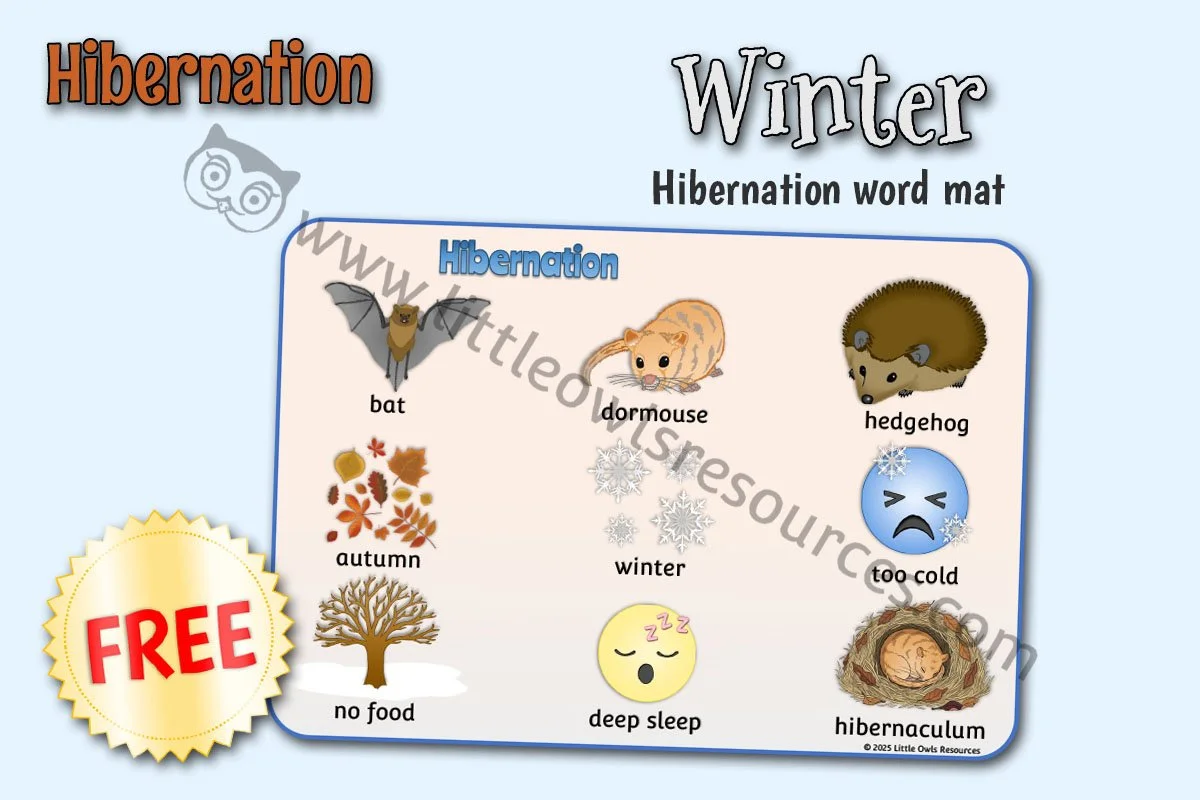
Hibernation Word Mat — Free Sample
Share the bat, dormouse and hedgehog pictures alongside useful words. Choose one animal or a small amount of vocabulary for conversation, drawing or recording rather than expecting children to learn every term.

Hedgehog Counting & Subitising 1–3 — Free Sample
Notice small quantities on the hedgehog pictures. Start with one, two or three and let children show how they know, checking by counting when useful.
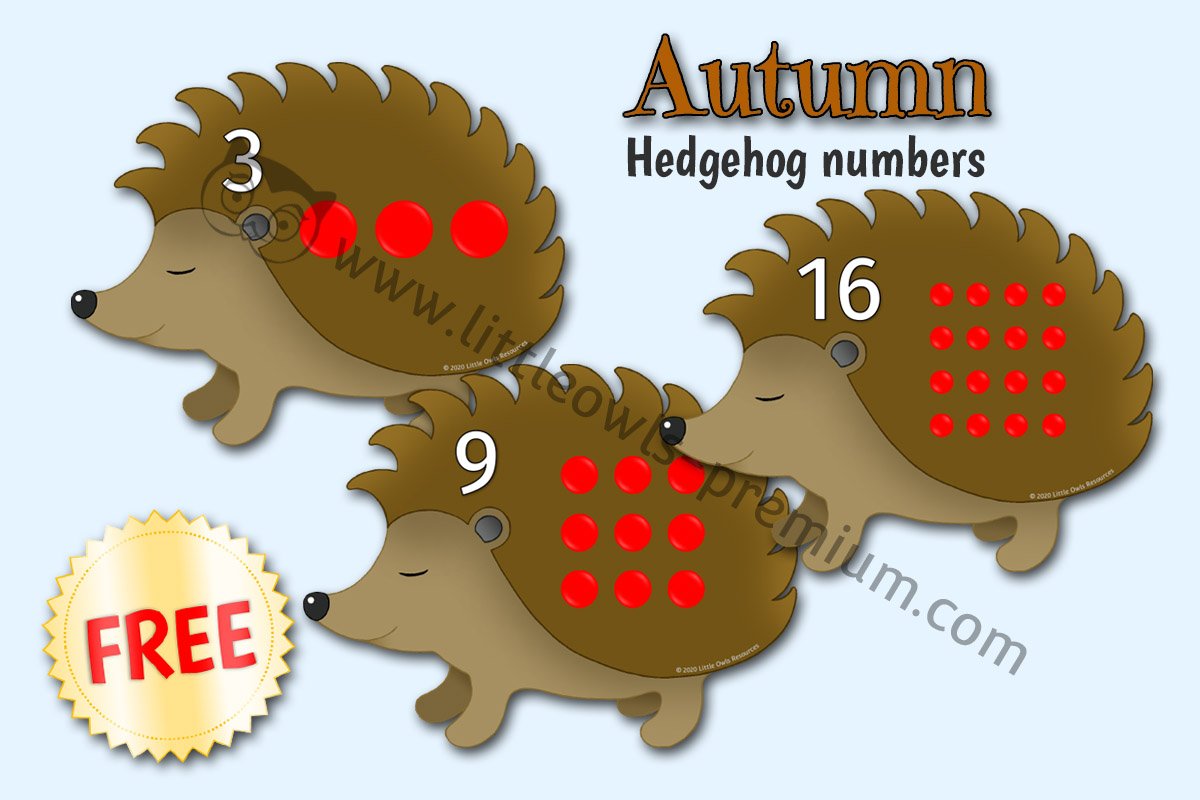
Hedgehog Numbers 0–20 — Free Sample
Choose a few numeral prompts for a game, display or practical counting activity. Match the range to the children and connect the symbols with real quantities.

Bat Colouring — Free Sample
Offer the bat outline for colouring or looking closely at features. Use it as an optional creative response alongside reliable information about a named bat, without expecting a single finished appearance.
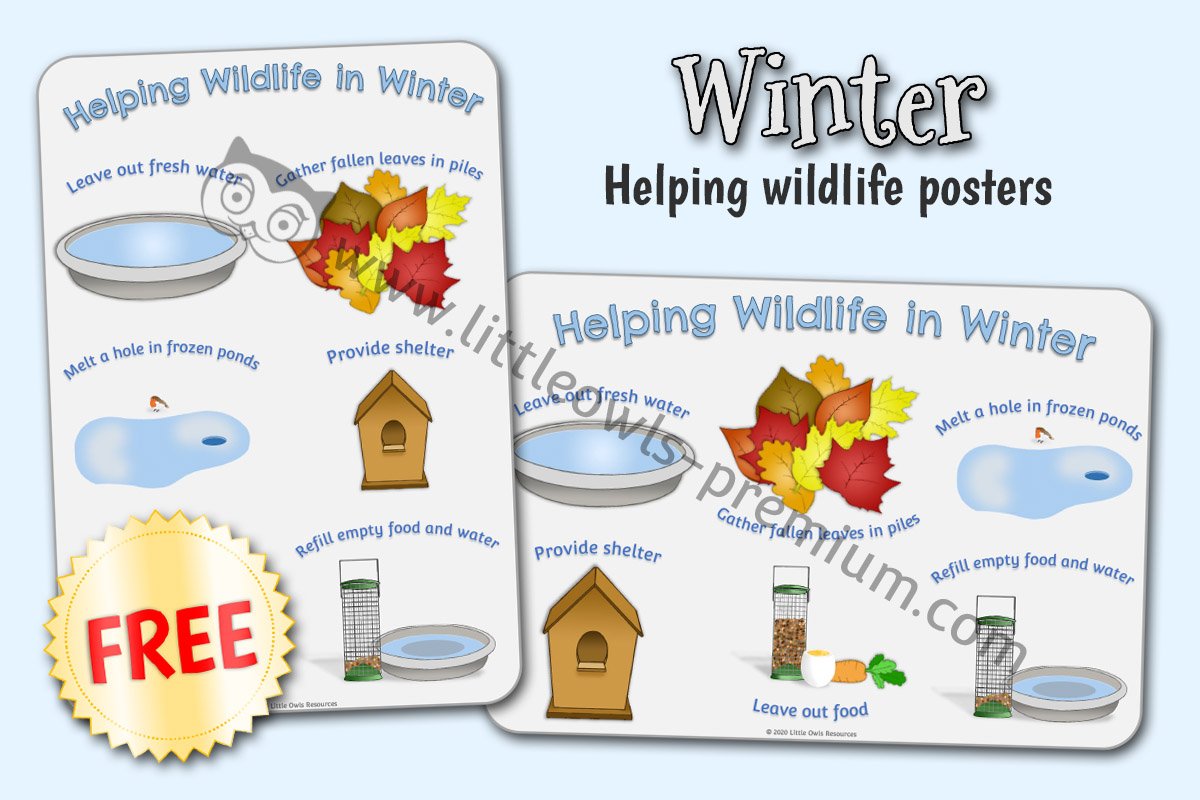
Helping Wildlife in Winter — Free Poster
Use the sample poster to begin a conversation about wildlife during colder months. Adults can select a locally relevant action and check current wildlife-care guidance before organising practical help.
02 / Look closely & ask questions
Discover hibernation & winter wildlife
Explore how different animals respond to winter. Hedgehogs, bats and dormice hibernate; other animals remain active or spend more time sheltering. Use a named animal and a reliable source rather than treating every woodland animal in the same way.
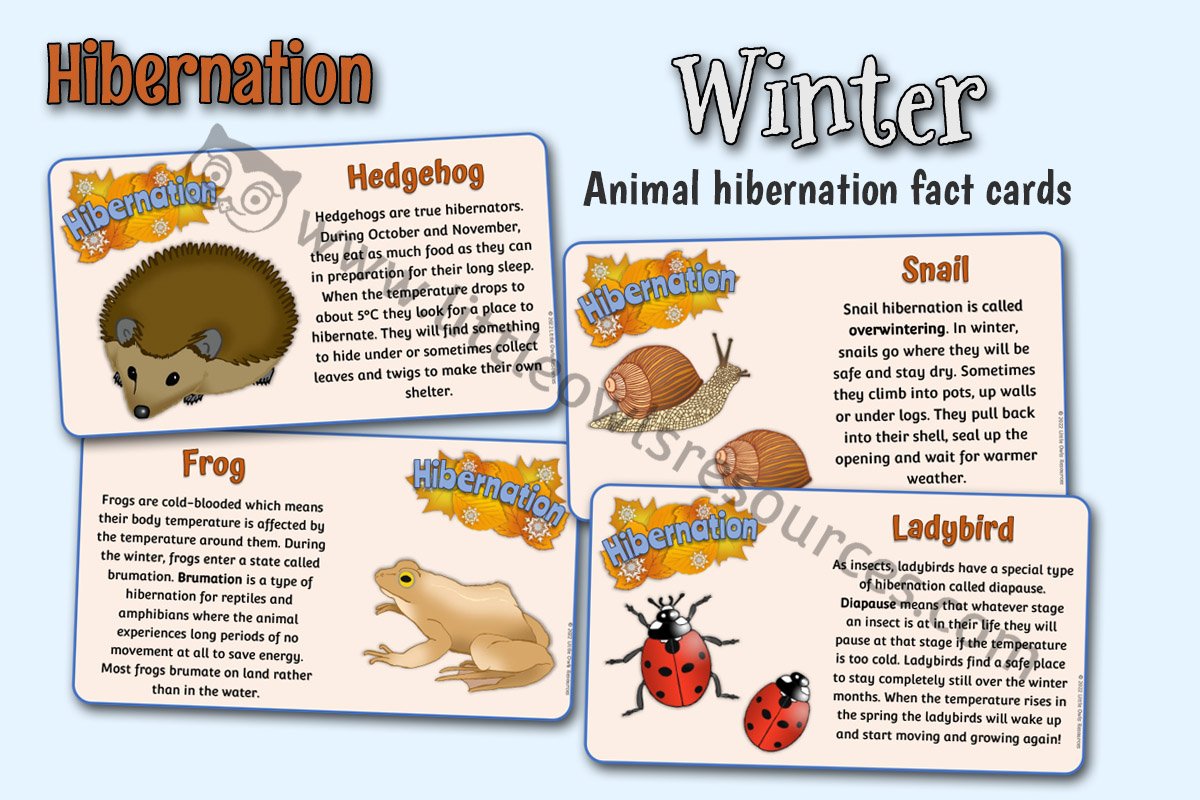
Hibernation Fact Cards — Compare Winter Responses
Explore selected information about named UK animals and the different ways they respond to winter. Not all the animals pictured are true hibernators; use the cards to clarify differences rather than put every animal in one group.
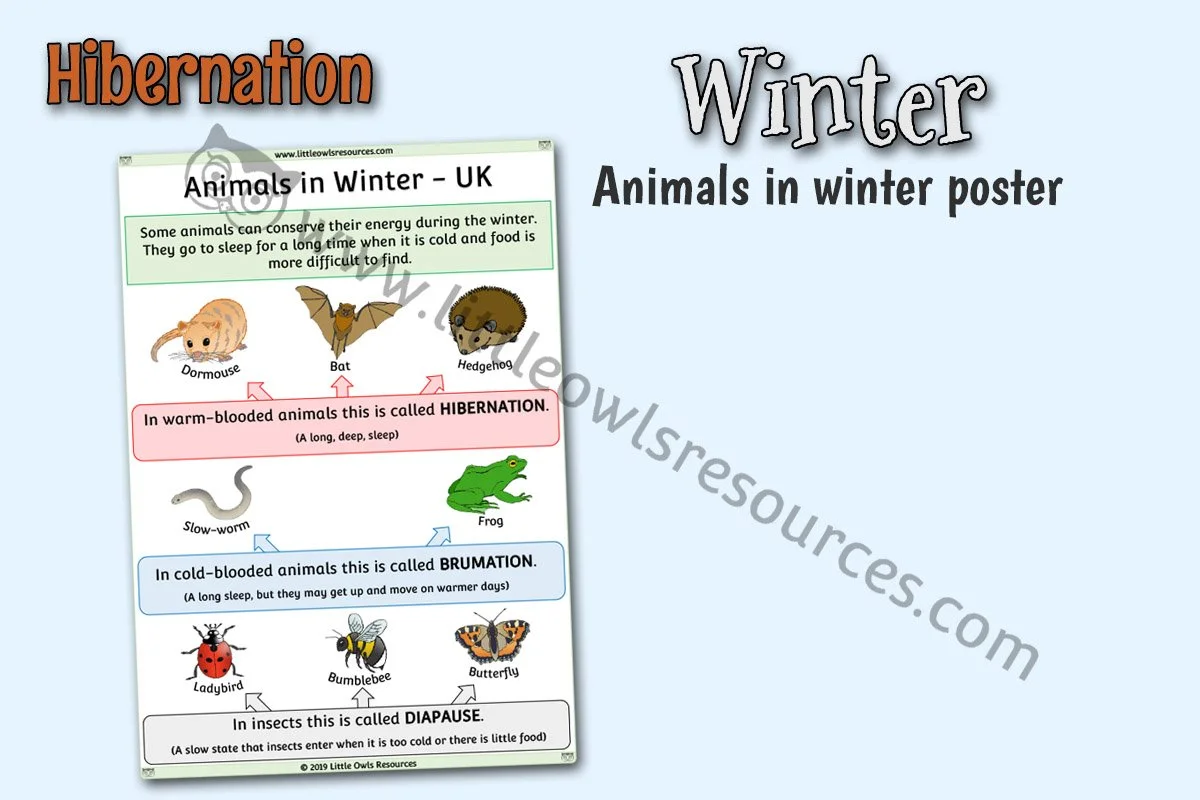
Animals in Winter — UK Hibernation Poster
Use the poster’s separate sections to compare hibernation with other forms of winter inactivity. Begin with a familiar animal and explain only the detail that is useful for the children’s question.
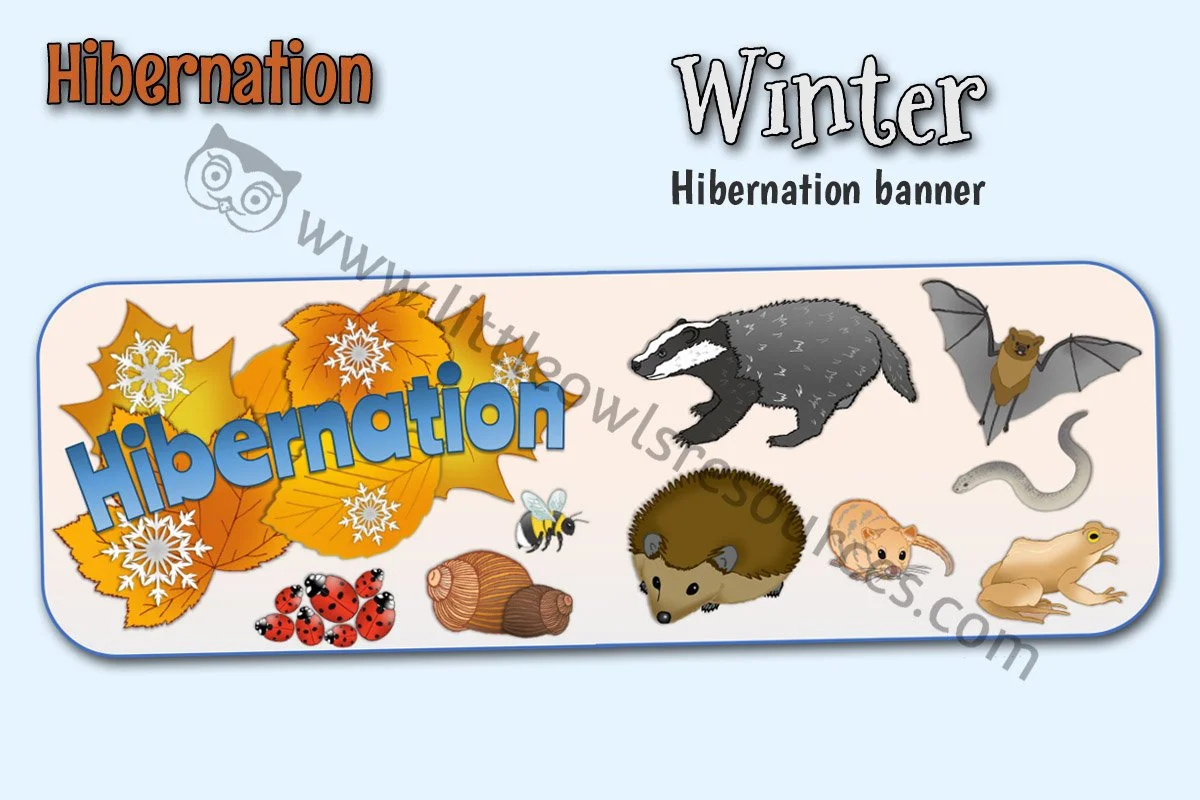
Hibernation Display Banner
Introduce a display with accurate examples, children’s questions and selected observations. The banner includes broader winter-animal artwork, including a badger; its pictures are not a checklist of animals that truly hibernate.

Bat Activity Pack
Explore the bat pictures and selected factual or recording pages. Connect a chosen UK species with the hibernation discussion, then use its information to answer a question rather than generalising about every bat worldwide.
03 / Sequence, describe & imagine
Pictures, stories & purposeful language
Share an animal picture, retell a sequence or build an imaginative story. Let talk, gesture, drawing and adult scribing support children’s ideas. Keep a pretend animal story distinct from factual information about real wildlife.
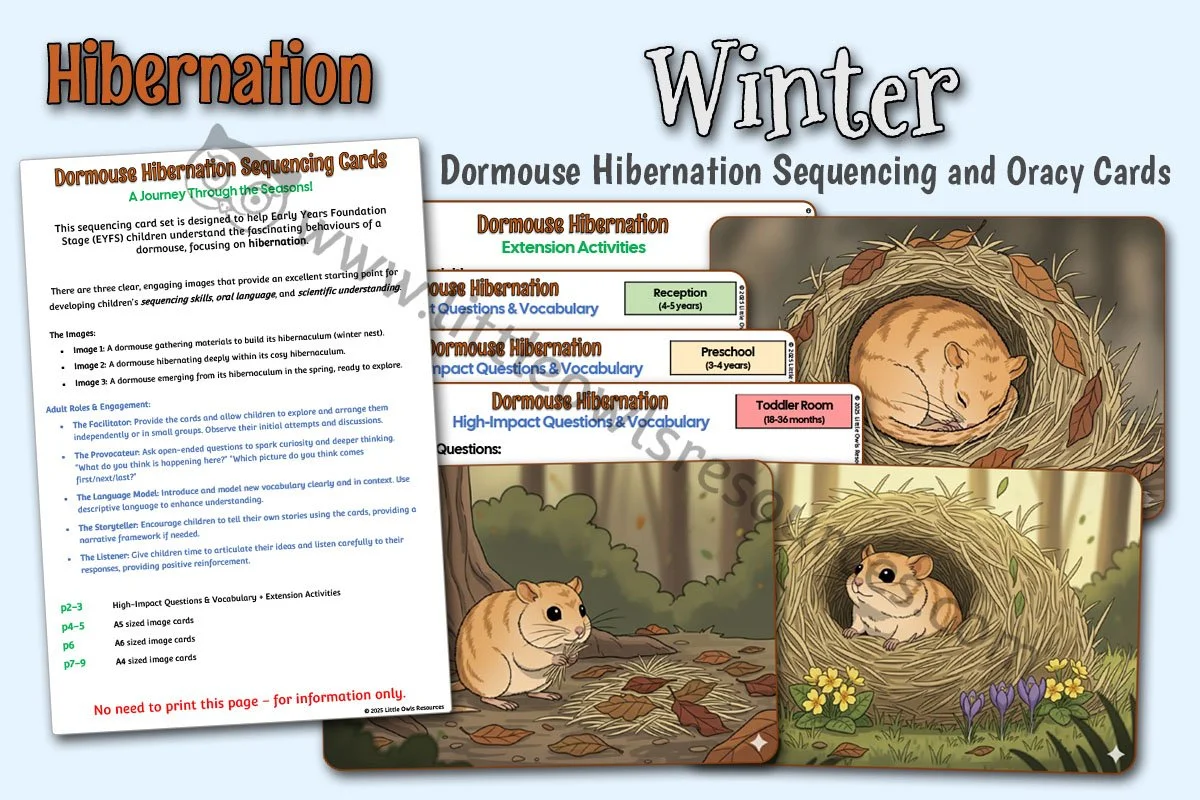
Dormouse Hibernation — Sequencing & Oracy Cards
Talk through the three pictures of nest preparation, hibernation and spring emergence. Children can arrange, point to or retell the sequence, with an adult adding a small amount of useful language.
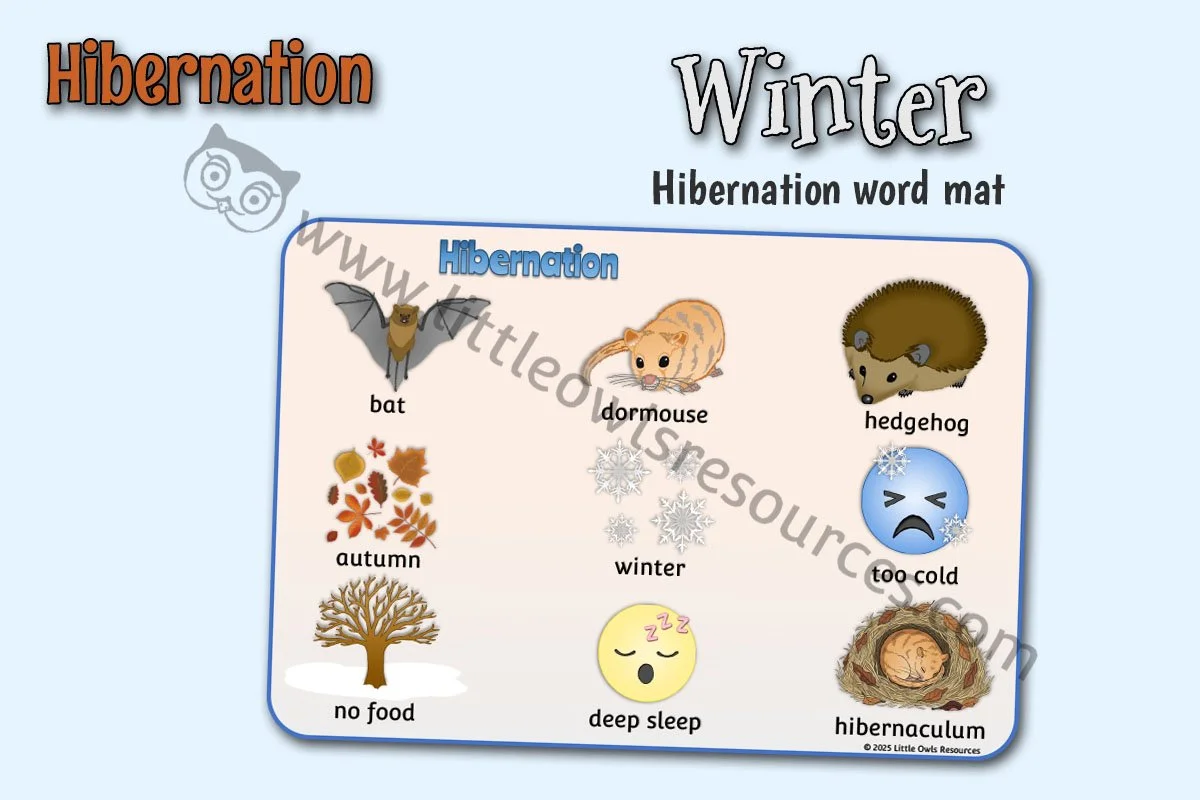
Hibernation Word Mat
Keep the bat, dormouse and hedgehog pictures and vocabulary nearby for shared discussion, drawing or writing. The broader “Winter Sleep” edition below includes animals with different winter responses, so it needs adult explanation.
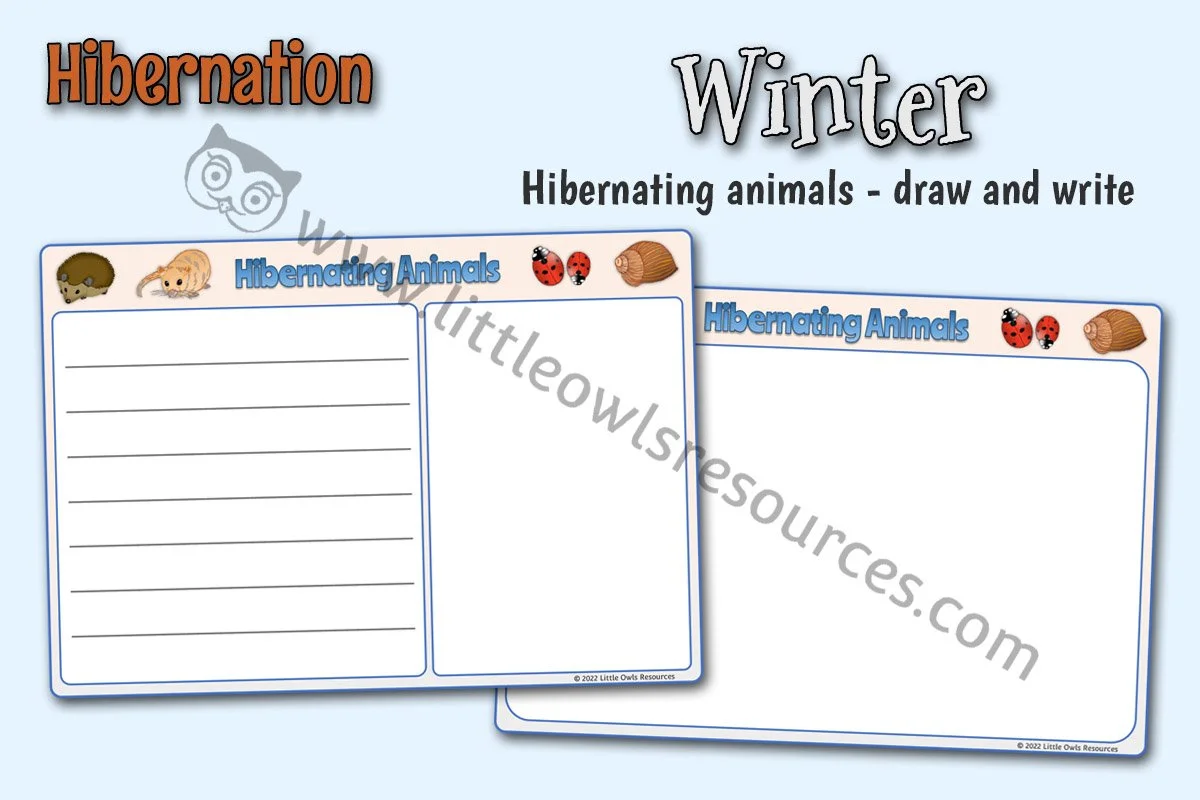
Hibernating Animals — Draw & Write
Invite children to record a question, a story or something they have found out about a selected animal. Accept drawings, marks, adult scribing or writing, and check factual statements against the animal being discussed.
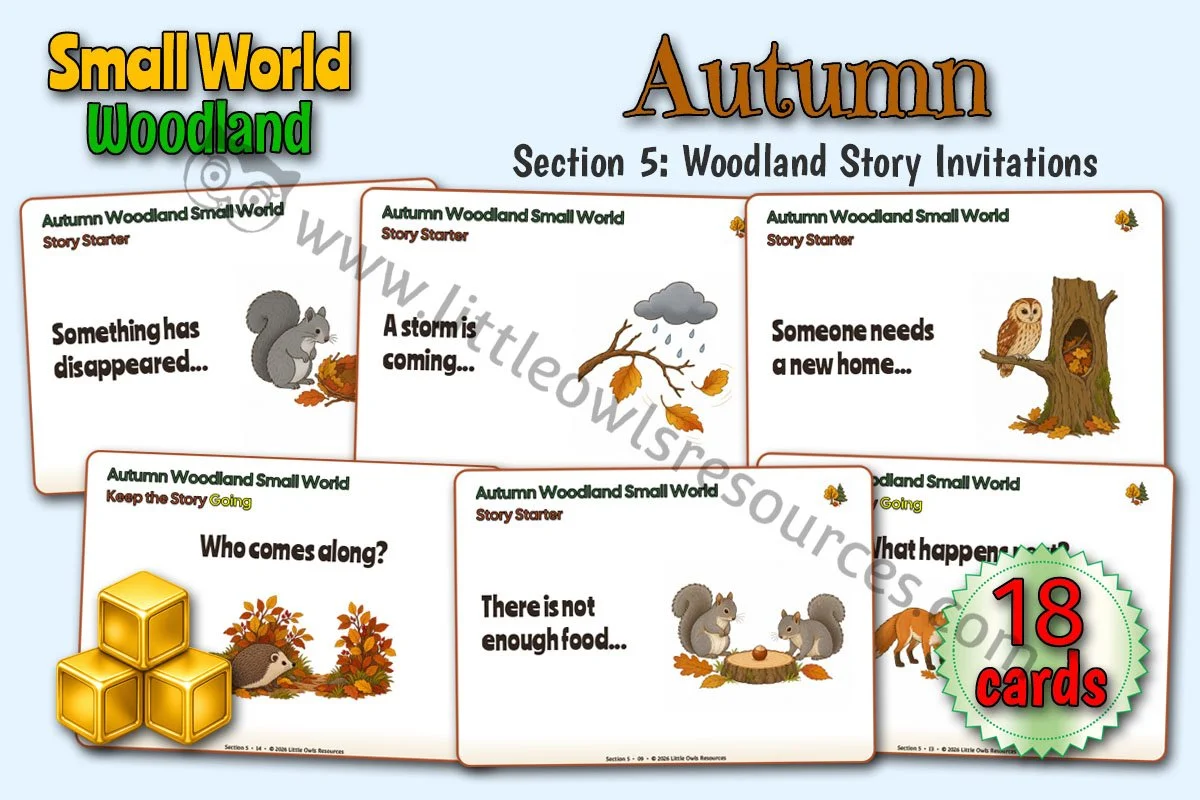
Autumn Woodland — Small World Story Invitations
Use a woodland prompt to begin an imagined animal story with familiar figures and materials. Children can create a shelter or a journey while adults distinguish story events from facts about hibernation.
04 / Animal maths with meaning
Count, compare & notice quantities
Use a few pictures, props or playdough pieces for practical counting and comparison. Match the number range to what children understand and leave time to rearrange, check and explain their thinking.

Hedgehog Subitising 1–5
Explore small quantities through noticing, grouping and checking. Invite children to explain how they see the amount, offering a larger range only when it is useful for the learner.

Hedgehog Playdough Counting Mats
Make playdough worms and match a chosen quantity to the mat. Count each one once, rearrange the group and check together, using a number range that fits the children.
05 / Creative ideas to revisit
Make, display & develop provision
Offer drawing, making and display resources where they have a purpose in children’s play. Children can create a model, share a question or add a useful label without needing everyone to produce the same finished piece.
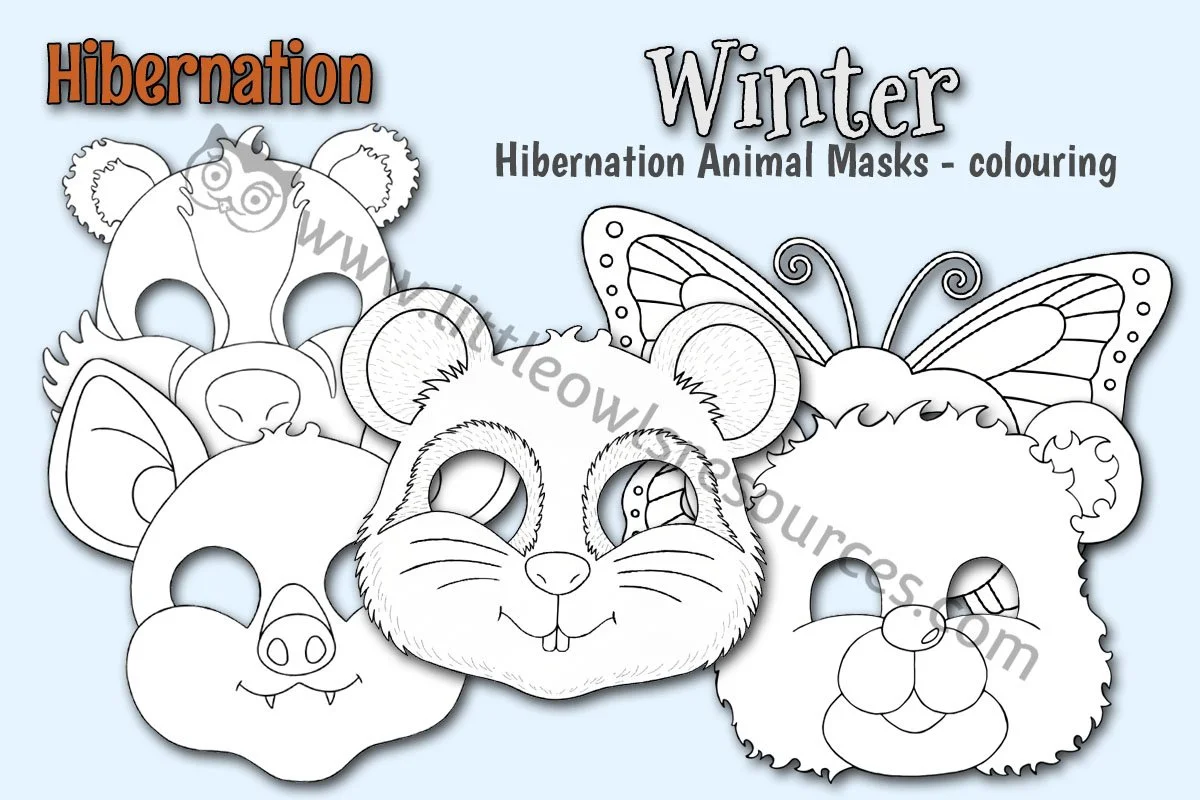
Hibernation & Winter-Animal Masks — Colour & Craft
Choose a mask for colouring, making or pretend play. The collection includes animals with different winter responses; pair imaginative play with accurate information about the chosen animal.

Hedgehog Leaf Collage
Explore shapes, textures and arrangements on the hedgehog template. Adults should choose suitable materials for each child, leaving room for their own creative response rather than requiring a matching finished picture.

Winter STEM Challenge Cards
Choose an open-ended winter challenge that connects with children’s current questions. Explore materials and possible solutions together, or use the blank card to record your own model-shelter idea.
06 / Follow a wildlife connection
Shelters, habitats & the changing year
Explore shelter, food, animal needs and seasonal change through models, pictures and familiar outdoor observations. Model nests are for imaginative play and investigation; leave real wildlife homes undisturbed.
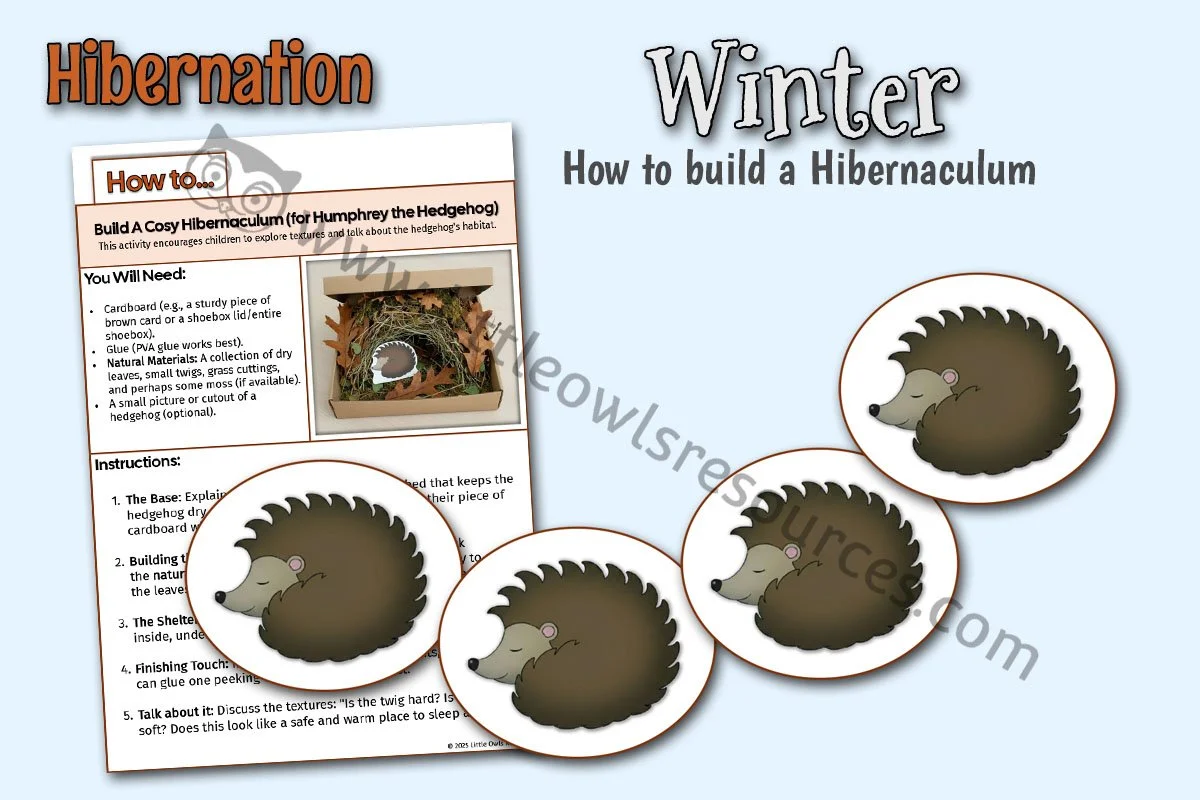
Build a Cosy Hibernaculum for Humphrey
Build and explain a model shelter for an imagined hedgehog using suitable materials. Keep this as small-world or construction play; children do not need to find, handle or disturb a real hibernating animal.
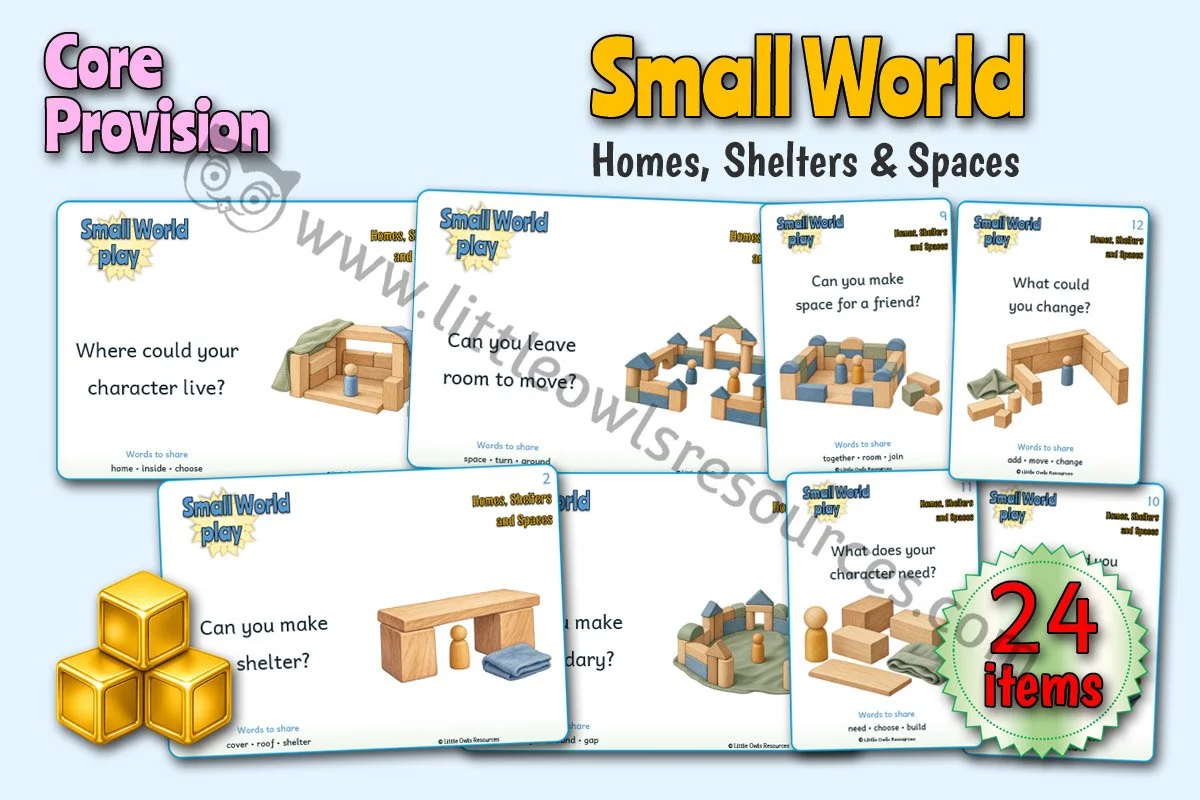
Homes, Shelters & Spaces — Small World
Make an animal home with blocks, fabric and familiar figures, then test and change the design during play. Talk about what the model represents and compare it with appropriate information about the chosen animal.
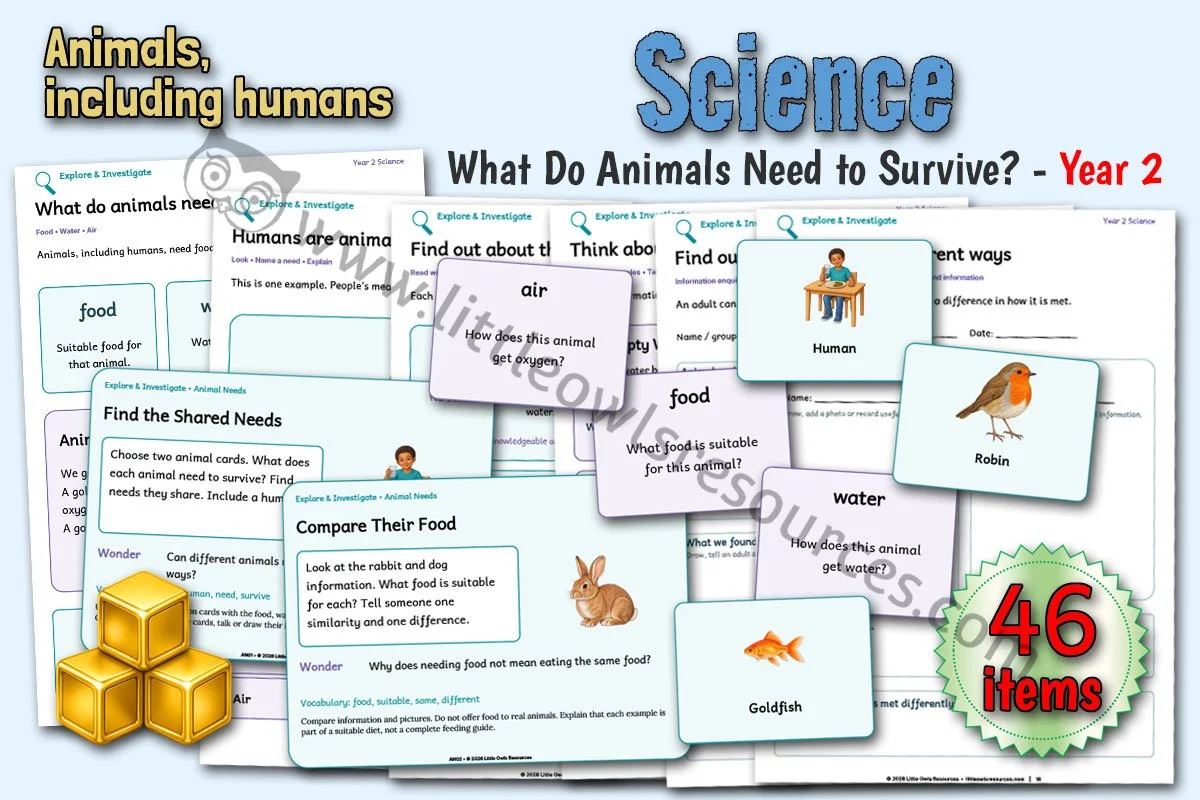
What Do Animals Need to Survive? — Year 2
Compare how named animals meet their needs for food, water and air. Use selected questions alongside the hibernation theme, checking the information for each animal rather than assuming all winter behaviour is the same.
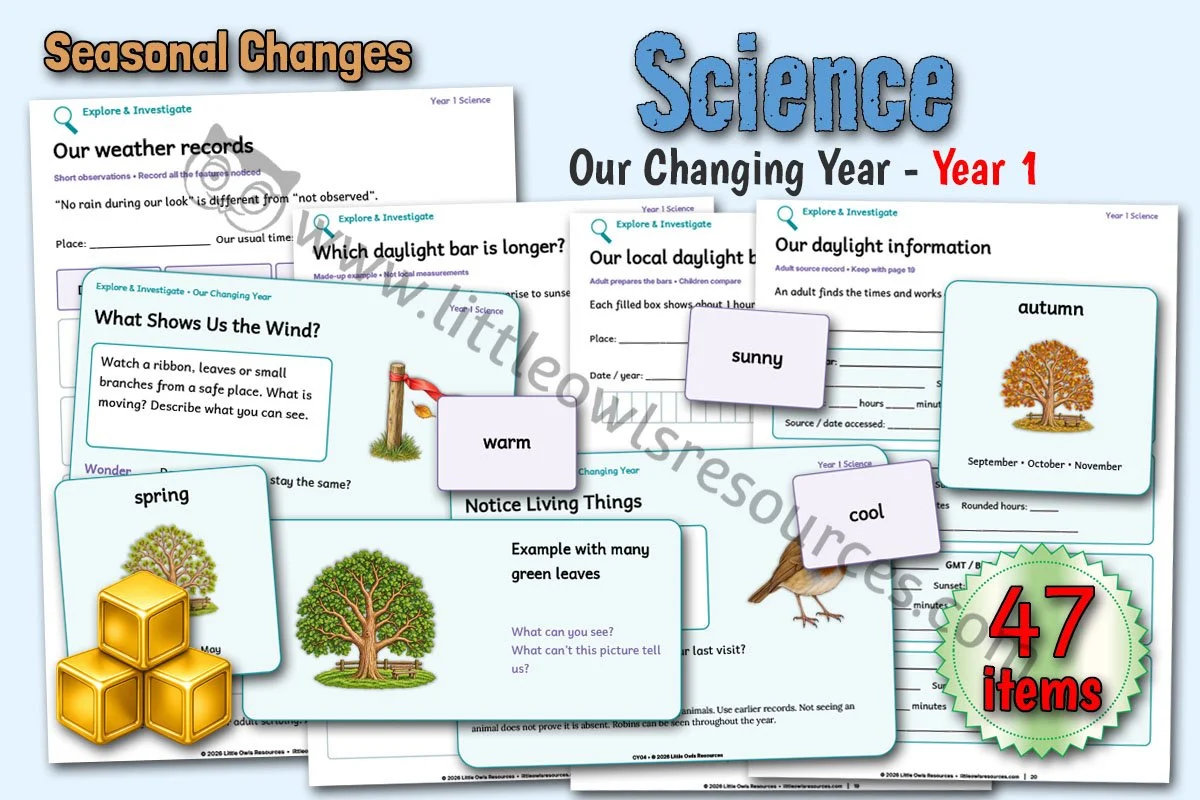
Our Changing Year — Seasonal Observations, Year 1
Return to a familiar place to notice weather, daylight and seasonal changes. Use dated observations to build a picture over time; a quiet habitat does not by itself show that an animal is hibernating.
07 / Flexible plans for your setting
Planning, questions & adult support
Use background information, planning resources and vocabulary prompts selectively. Adapt the plans to the children and setting, with familiar provision available alongside any optional theme additions.
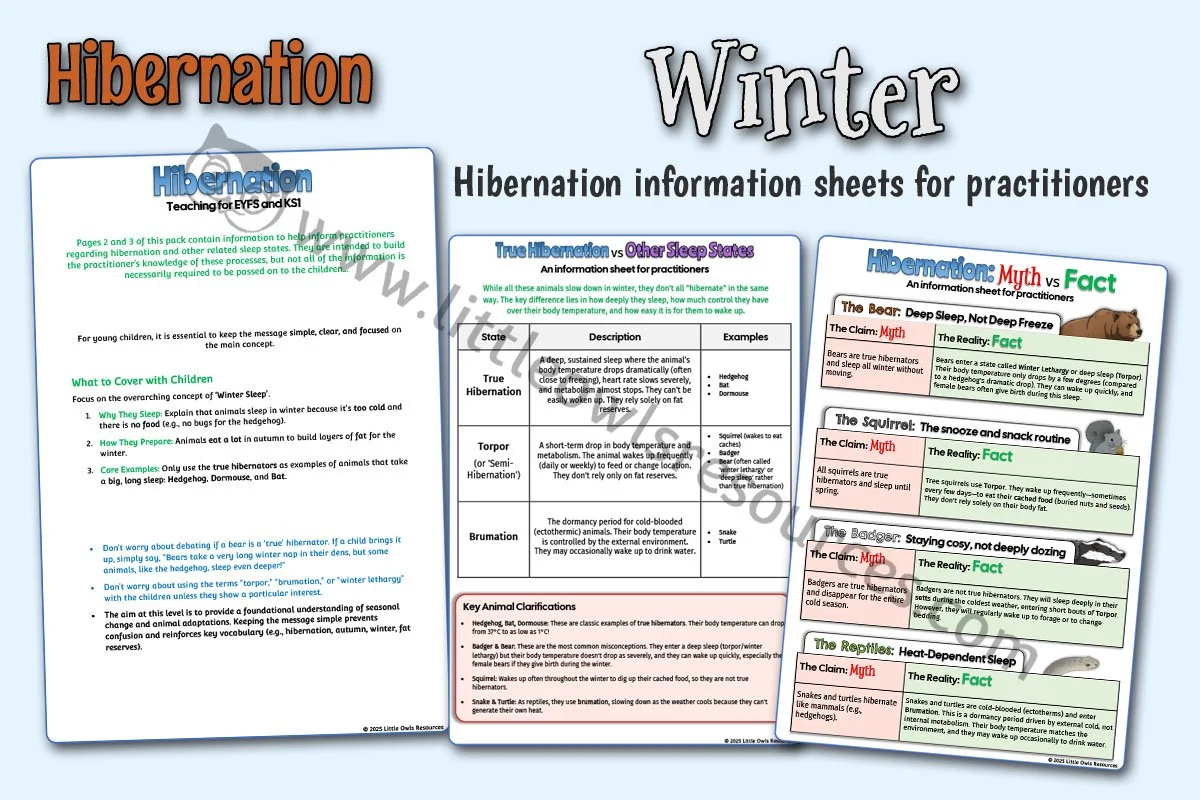
Hibernation — Practitioner Background Notes
Read the background information before selecting animal examples or answering children’s questions. Use the distinctions between hibernation and other winter responses to explain the broader pictures, word mats and masks in this collection.

Hibernation — Continuous Provision Enhancements
Select the relevant early-years phase section when considering a small addition to familiar provision. For babies, the adult guidance supports shared attention and responsive interaction; hibernation is not a task or concept a baby must learn.

Hibernation — Question & Vocabulary Banks
Choose a small amount of useful language and an interaction prompt that fits the children’s experience. Follow their responses and questions; babies’ sections support adult interaction rather than testing animal knowledge or vocabulary.

High-Contrast Hedgehog Pictures — Babies
Share a simple picture in a comfortable moment together. Notice the baby’s gaze, movement or sounds and pause for a response; animal naming, seasonal knowledge and independent picture use are not expected.
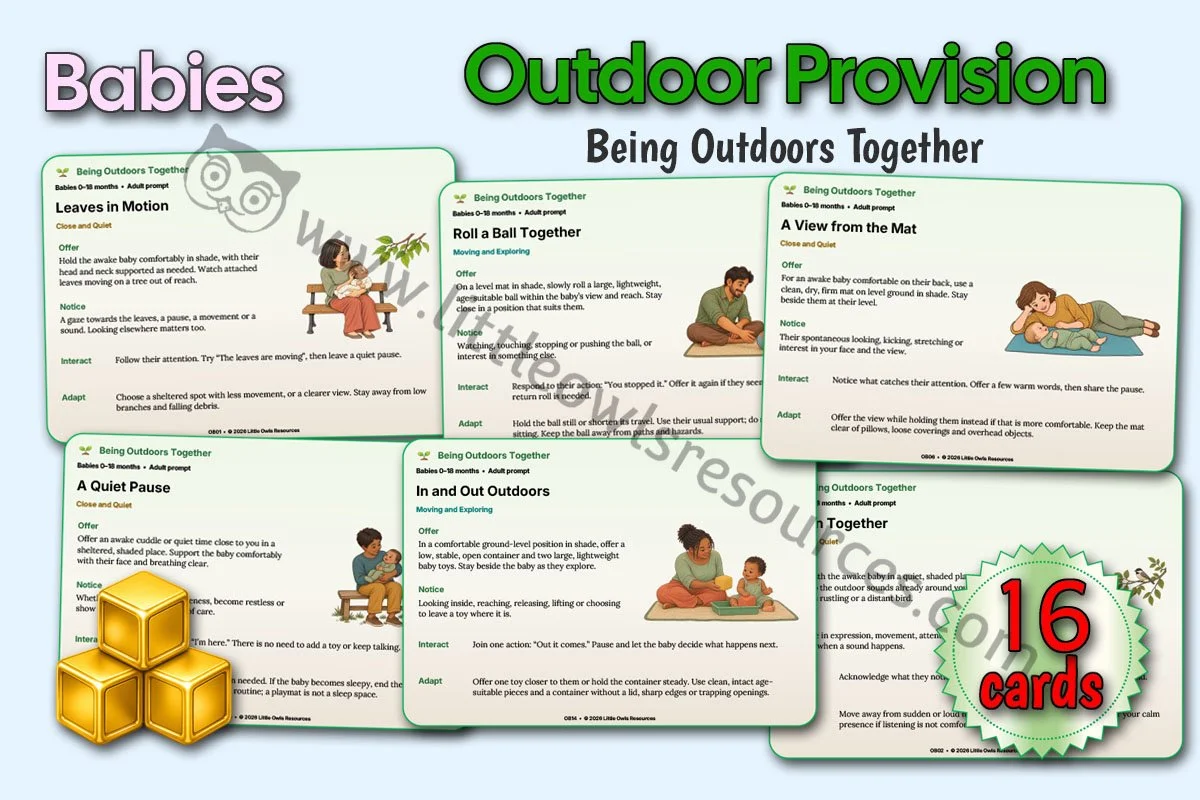
Being Outdoors Together — Babies, 0–18 Months
Use this adult companion for comfortable experiences in familiar outdoor surroundings. Follow the baby’s attention and cues, with no need to find animals, collect small natural objects or turn the experience into a themed task.

Winter: Weather, Warmth & Cosy Spaces — Toddler Planning
Choose relevant ideas for toddlers aged 18–36 months around weather, everyday comfort and familiar play. A pretend cosy space can connect with an animal story without suggesting that children or all animals hibernate.

Animals & Habitats — Preschool Planning
Use the preschool pack to connect observation, care, comparison and representation of living things. Its Spring 2 label is an organising option; choose a relevant animal or habitat whenever children’s questions arise.
08 / Where could this interest lead?
Explore a connected collection
Follow an interest in winter, autumn, nocturnal animals, woodland habitats or seasonal change. These links open wider collections beyond the resources selected for this Hibernation page.

Winter
Explore wider winter resources for weather, wildlife, clothing, creative activity and practical provision. Select ideas that connect with the conditions where you are.

Autumn
Find autumn resources for leaves, woodland observations and changes in familiar places, alongside creative and practical activities.

Changing Seasons
Follow weather, daylight, plants and animals across the year. Revisit a place and use real observations alongside pictures, displays and recording prompts.

Nocturnal Animals
Explore animals that are active at night through pictures, listening, stories and selected provision. Keep a daily activity pattern separate from seasonal hibernation.

Forest School & Woodland Activities
Find further woodland observation, animal, tree, creative and outdoor resources for following an interest in a familiar place.

Habitats
Explore places where animals live and features that help meet their needs. Connect pictures and model homes with real observations and appropriate factual information.
More animal and seasonal collections: Animals · Endangered Animals · Light and Dark · Pets · Polar · Weather · Wildlife.
Use the theme in your setting
Ideas for different ages
Choose the materials, language and adult support for the children you know. These are possibilities to adapt, rather than a timetable or a checklist.
Each age link returns to this page’s search with that age selected. Clearly age-labelled resources carry an adaptation note when shown for a different eligible age.
Babies & toddlers
For babies, begin with a comfortable shared look at a simple picture, a familiar voice and time to respond. Printed materials support the adult; babies do not need to learn about hibernation. Toddlers may enjoy an animal picture, a short story or making a home for a familiar toy with adult support.
Preschool
Talk about a named animal, build a model shelter or revisit a short picture sequence. Follow children’s descriptions and questions, introducing useful words in context. Drawing, making and shared stories can offer different ways to represent an idea.
Reception
Compare animal pictures, describe changes in a sequence and discuss what a model shelter needs. Encourage children to explain a choice through talk, gesture, drawing, labels or adult scribing. Revisit a question using a photograph, an information book or another reliable source.
Key Stage 1
Connect the theme with animal features, basic needs, habitats and seasonal observations. Compare how named animals respond to winter and distinguish information from a story idea. Use practical enquiry, reading and writing that fit the class’s curriculum and what children have been taught.
Explore without disturbing wildlife. Use pictures, books and model shelters, and notice changes in familiar outdoor places. Do not open occupied nests, move sleeping animals or disturb bat roosts to demonstrate the theme. Choose and supervise materials for the children using them.
Questions about hibernation activities and planning
What is hibernation?
Hibernation is an energy-saving state in which an animal’s body processes slow down greatly. It helps some animals through periods when food is harder to find. It is different from an ordinary night’s sleep, and hibernating animals can wake naturally during winter. For younger children, begin with a named animal and a simple explanation, then add detail as their questions develop.
Which UK animals hibernate?
Hedgehogs, bats and hazel dormice are familiar UK examples. Grey and red squirrels do not hibernate, and neither do badgers, although activity and time spent sheltering can change in winter. Use those animals for a comparison rather than labelling all woodland animals as hibernators.
Do all animals spend winter in the same way?
No. Some hibernate, some remain active, some migrate, and others become much less active or enter a different dormant state. Reptiles and insects have their own patterns, depending on the species. The practitioner background resources can help adults distinguish these responses without expecting young children to memorise technical labels. Avoid a blanket rule about all bears or all animals in a picture pack.
Is there a fixed month when hibernation starts and ends?
No single date applies to every animal. Timing depends on the species, weather, food and other conditions. Autumn and winter often provide a useful context for this collection, but follow local observations and reliable information rather than presenting a fixed calendar as a rule.
How does this theme connect with EYFS and KS1?
Hibernation is an optional theme context, not a required topic sequence. It can support communication, imaginative play and Understanding the World in EYFS. In KS1, useful connections include animals, basic needs, habitats and seasonal change. Select activities and resources for your curriculum and the children’s interests.
How could we use these ideas in continuous provision?
Add a few pictures, familiar animal figures, story prompts or making materials where children already play. Building a toy animal’s shelter may lead to construction, comparison, drawing or useful labels. Keep the additions manageable, retain familiar provision and let children revisit and change their ideas.
Which hibernation resources are free?
The free section identifies individual free resources and samples. Free Access includes selected downloads; All Access includes every resource on the site. Some free planning support appears in the adult-support section. Follow the access label on each card; a public collection or preview page may still lead to member downloads.
Where can I find help with downloading or printing?
Visit Help & Support or read our printing resources guide.
Membership
All Access membership unlocks every resource on the site. Free Access lets you explore and download a selection of free resources. Explore membership options.
Already a paying member? You have sitewide access. There’s no need to change plans or subscribe again. Read our FAQs.