

Nocturnal Animals · EYFS & KS1
Who is awake
after dark?
Nocturnal animal activities, resources and provision ideas for noticing, listening, talking and playing with a purpose.
Explore animal pictures, stories, counting games and creative printables, with displays and flexible planning support for EYFS and Key Stage 1. Choose a few resources that help children follow a question about the natural world.
Darker autumn and winter evenings can offer a familiar connection. The theme can also be revisited throughout the year, without taking children outside at night or making a room completely dark.
Find your starting point
Search this Nocturnal Animals collection
Search the resources selected for this theme from across Little Owls, including animal pictures, listening, stories, maths, habitats and adult planning. Choose an age, then add an optional word. Select a result to find its card on this page.
Search becomes available when JavaScript is enabled. You can always browse using the section choices above.
01 / Listen, notice & play
Start with a free resource
Try a free resource or sample for animal talk, listening, counting or a day-and-night connection. Each card identifies the access for that specific resource.

Nocturnal Animals — Free Listening & Sound Cards
Use the animal pictures for shared listening, playful sounds and conversation. Adults can offer a brief sound and follow a child’s response; pointing, watching or taking a turn can be as useful as naming an animal.

Hedgehog Counting & Subitising 1–3 — Free Sample
Notice small quantities on the hedgehog pictures. Start with one, two or three and let children show how they know, checking by counting when that is useful.
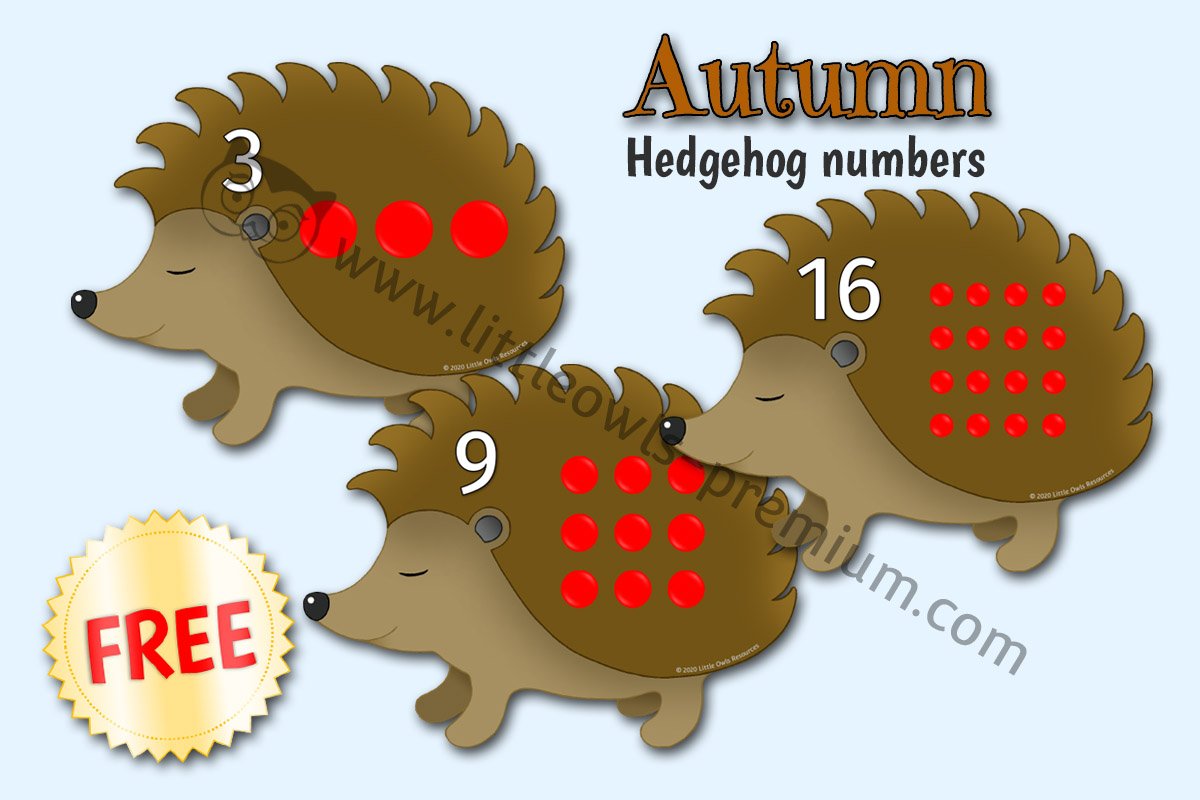
Hedgehog Numbers 0–20 — Free Sample
Choose a few numeral prompts for a game, display or practical counting activity. Match the number range to the children and connect the symbols with real quantities.

Bat Colouring — Free Sample
Offer the bat outline for colouring or a conversation about its features. Children can choose their colours and marks; this is an optional creative response, not a test of factual knowledge.

Day & Night — Free Oracy Cube
Use a picture on the cube to begin a conversation about daylight, night-time or familiar routines. Invite children’s own experiences and questions without assuming everyone follows the same daily routine.
02 / Look closely & compare
Meet the animals after dark
Explore animal pictures, matching games and observation prompts. Nocturnal animals are mostly active at night, but patterns vary between species and circumstances. Use the pictures to begin a conversation, then find out more about the animal being discussed.

Nocturnal Animals — Who Is Awake? Provision Pack
Choose a few pictures and prompts to explore animals that are active at night. Compare named examples, revisit children’s questions and use the pack alongside observations or reliable information.

Nocturnal Animals — Find the Friends
Match pairs of animal pictures and talk about the features that help you recognise them. Begin with a small set for shared play, then offer more cards when children want a challenge.

Nocturnal Animal Silhouette Cards
Compare the animal outlines with pictured features, noticing shape and detail. The printed silhouettes are pictures to sort and discuss; distinguish them from shadows made by blocking light.

Barn Owl Activity Pack
Share selected barn owl facts, pictures or puzzles, then invite drawing, talk or a chosen recording activity. Adults can read and scribe where that helps children explore the animal’s features and way of life.

Bat Activity Pack
Explore the bat pictures and selected factual or recording pages. Use children’s questions to choose what to investigate, keeping the different demands of puzzles, drawing and writing optional.

Lion Activity Pack
Use the lion information and selected activities to compare this animal with other examples in the collection. Check the species and context when discussing activity patterns, rather than assuming every animal is active only at night.

Tiger Activity Pack
Choose tiger facts, pictures, puzzles or a creative response to support an interest. Discuss what the pictures and information show, and distinguish observations about tigers from general claims about all nocturnal animals.

Black Rhino Activity Pack
Compare the black rhino with other named animals through pictures and selected factual prompts. Adults can support discussion and choose an appropriate puzzle, drawing or recording response from the pack.
03 / Sounds and stories to share
Listening, stories & language
Listen carefully, describe an animal or build a story together. Picture prompts, word resources and small-world invitations can support conversation and purposeful early reading and writing alongside familiar books and experiences.

Day & Night — Compare & Discuss
Talk about what changes between daytime and night-time using pictures and familiar experiences. Leave room for exceptions and individual routines, and connect the discussion with questions about animals.
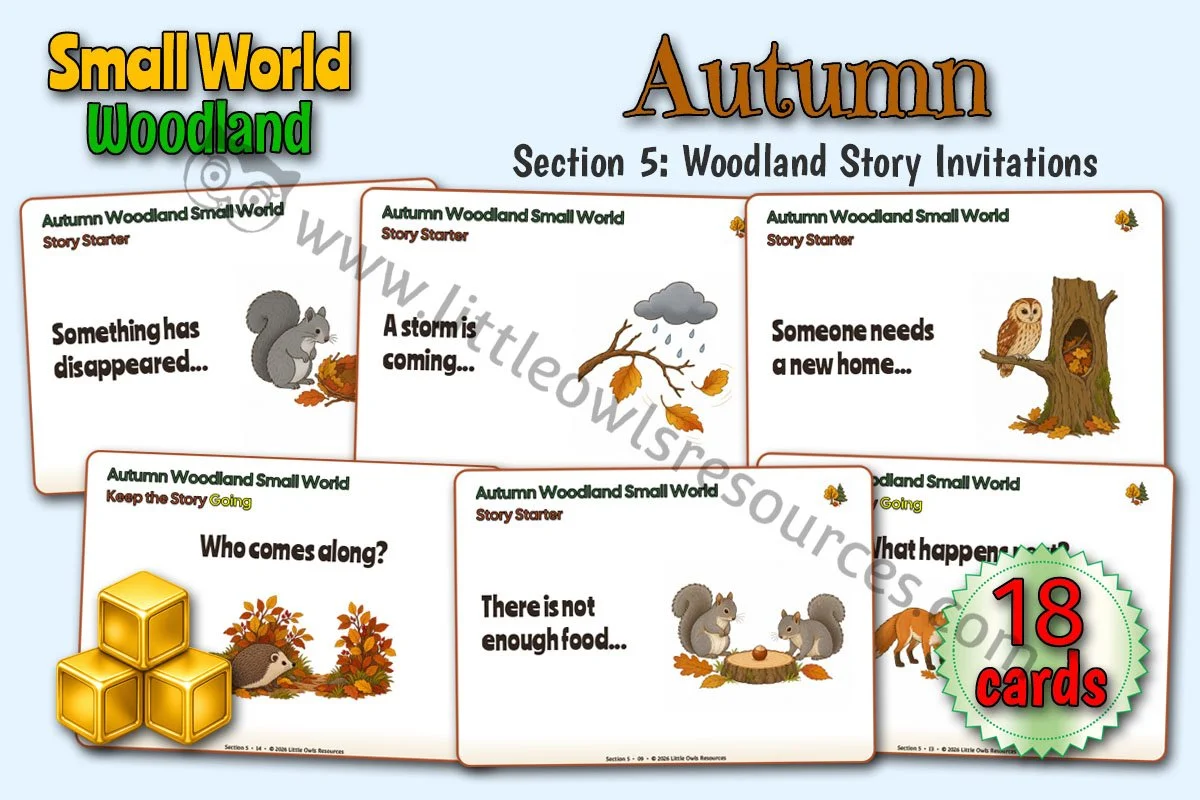
Autumn Woodland — Small World Story Invitations
Use a woodland picture or prompt to begin a story with familiar figures and materials. Children might imagine an animal looking for food or shelter, while adults help distinguish pretend events from factual information.
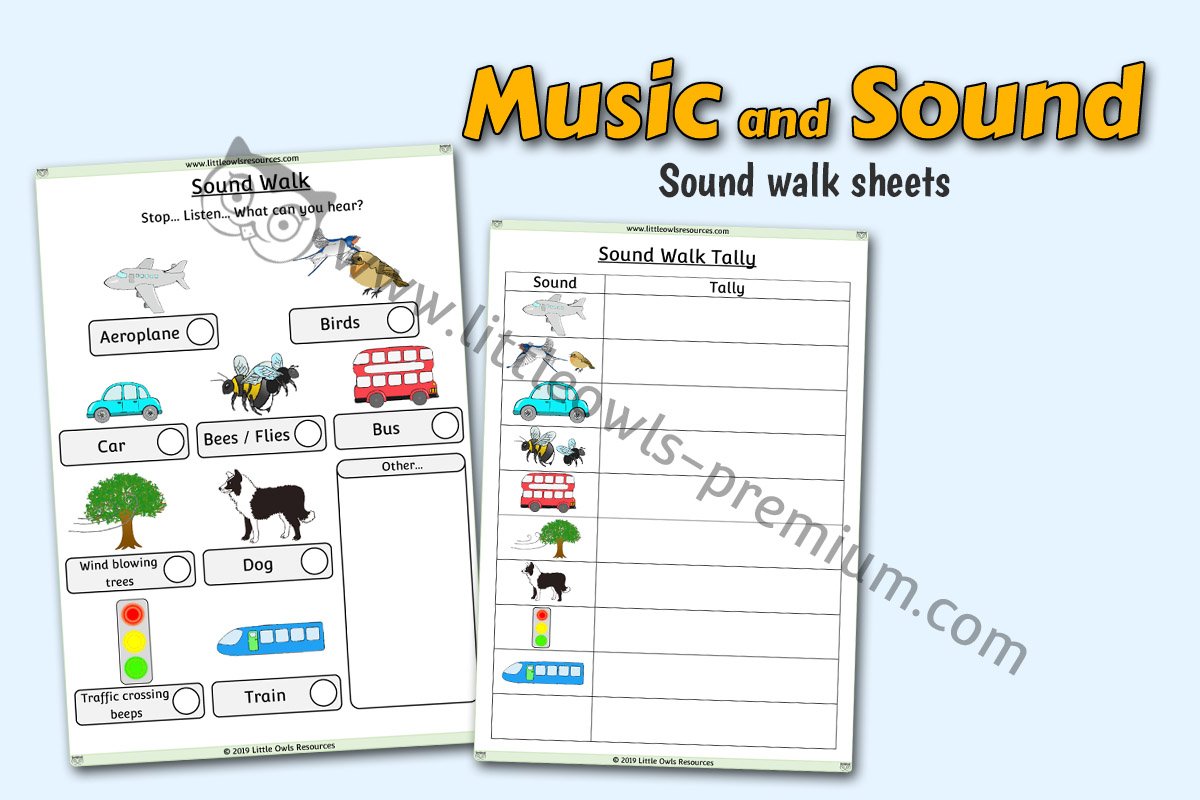
Listening Sound Walk — Checklists & Tallies
Pause in a familiar place to notice nearby sounds. Use a checklist or tally only when recording helps, and compare what was actually heard rather than expecting a particular animal to appear.

Mummy Owl & Owlets — Phonics Dice Game
Choose a board that matches the letter–sound correspondences children have already been taught in their phonics programme. Roll, move and practise those sounds as a short game; the older phase labels do not replace a school’s SSP sequence.

Mummy Owl & Owlets — Pencil Control Sheets
Offer the owl paths as an optional mark-making choice with suitable drawing tools. Follow the child’s interest and comfort, and keep these sheets alongside broader drawing and movement experiences.
04 / Animal pictures with a purpose
Count, compare & notice patterns
Choose a small number of pictures or objects for a meaningful maths game. Match counting and numeral work to what children understand, and use talk, movement or practical play before expecting a written record.

Nocturnal Animals — Tally Chart
Use animal pictures, a small-world scene or agreed information to collect a manageable set of data. Count and compare the results together, keeping a printed tally distinct from evidence of animals seen outdoors.

Hedgehog Subitising 1–5
Choose small quantities that children can explore through noticing, grouping and checking. Talk about different ways to see the same amount; offer a larger range only when it supports the learner.

Hedgehog Playdough Counting Mats
Make playdough worms and match a chosen quantity to the mat. Count each one once, rearrange the group and check together, using a number range that fits the children.

Badger & Worms — Number & Quantity Matching
Match the pictured quantities and numerals, then explain or check the match with an adult. Treat the animal context as a way into mathematical talk rather than an expectation to complete every puzzle.

Tiger Food Counting Puzzles
Use the tiger pictures to match quantities and numerals, with practical counters if helpful. Choose a small set and invite children to show how they checked their match.
05 / Creative ideas to revisit
Make, imagine & develop provision
Offer masks, drawing materials, animal props or open-ended construction where they support children’s interests. Leave room for children to change the story and use materials in their own way.

Nocturnal Animal Masks — Colour & Craft
Choose an animal mask for colouring, making or pretend play. Adults can prepare cutting and fastening; children can also hold a mask as a story prop and decide how the character moves.

Hedgehog Leaf Collage
Explore shapes, textures and arrangements on the hedgehog template. Adults should choose suitable materials for each child; a collage represents an animal and does not need to reproduce a single finished example.

Badger Multimats — Make & Explore
Offer a badger picture as a starting point for playdough, marks or carefully chosen collage materials. Invite children’s own arrangements and conversation rather than requiring a particular product.
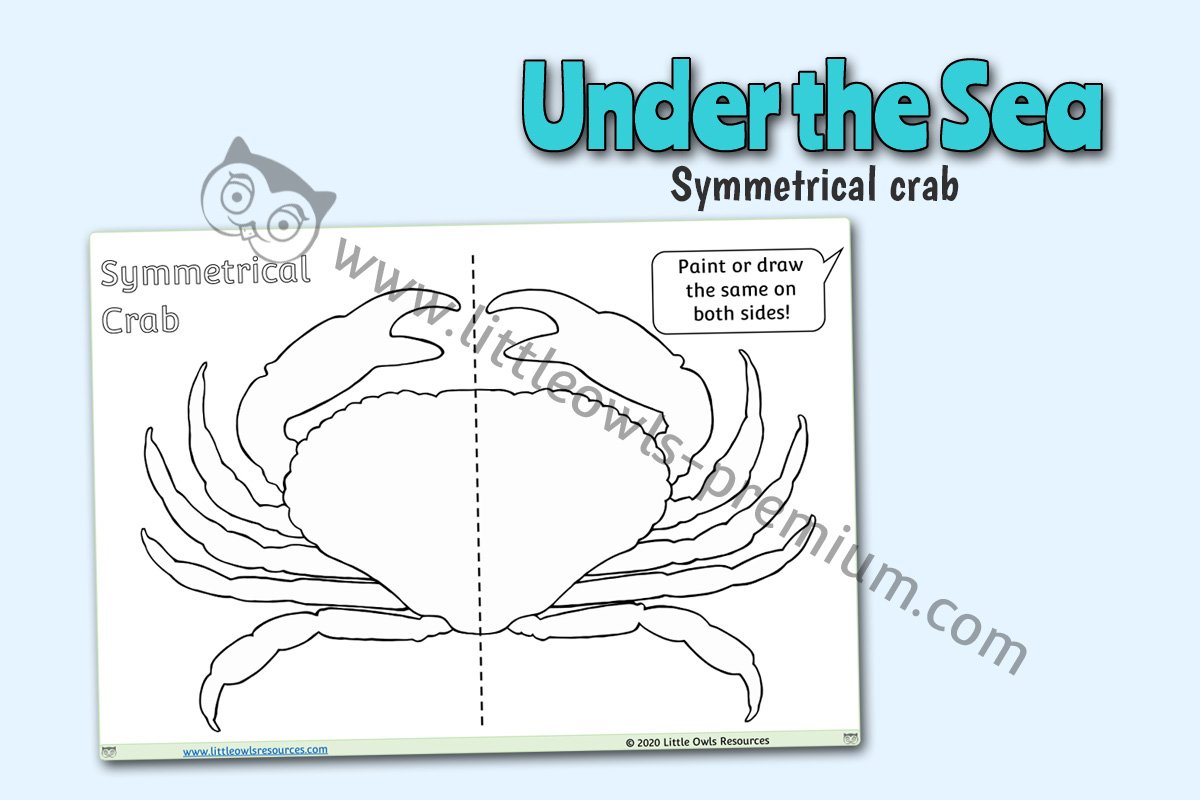
Symmetrical Crab Drawing Sheet
Use the crab picture for looking closely, drawing and exploring a matching pattern. If connecting it with night-time wildlife, check the particular species; the drawing task does not establish when all crabs are active.
06 / What does an animal need?
Habitats, shelters & seasonal connections
Connect animal interests with food, shelter, local habitats and changes through the year. Keep being active at night separate from hibernation: they describe different aspects of an animal’s life.
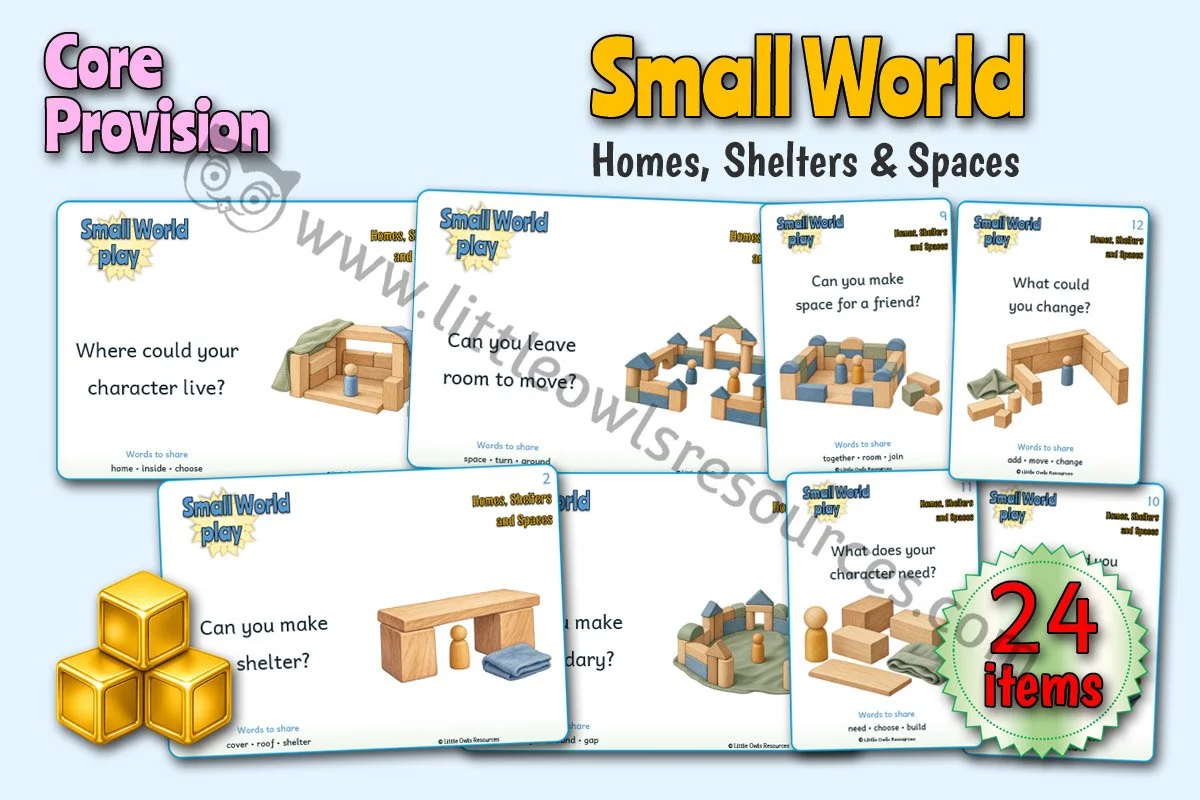
Homes, Shelters & Spaces — Small World
Build an animal shelter with blocks, fabric and familiar figures, then test and change the design during play. Talk about what the model represents and compare it with reliable information about the chosen animal.
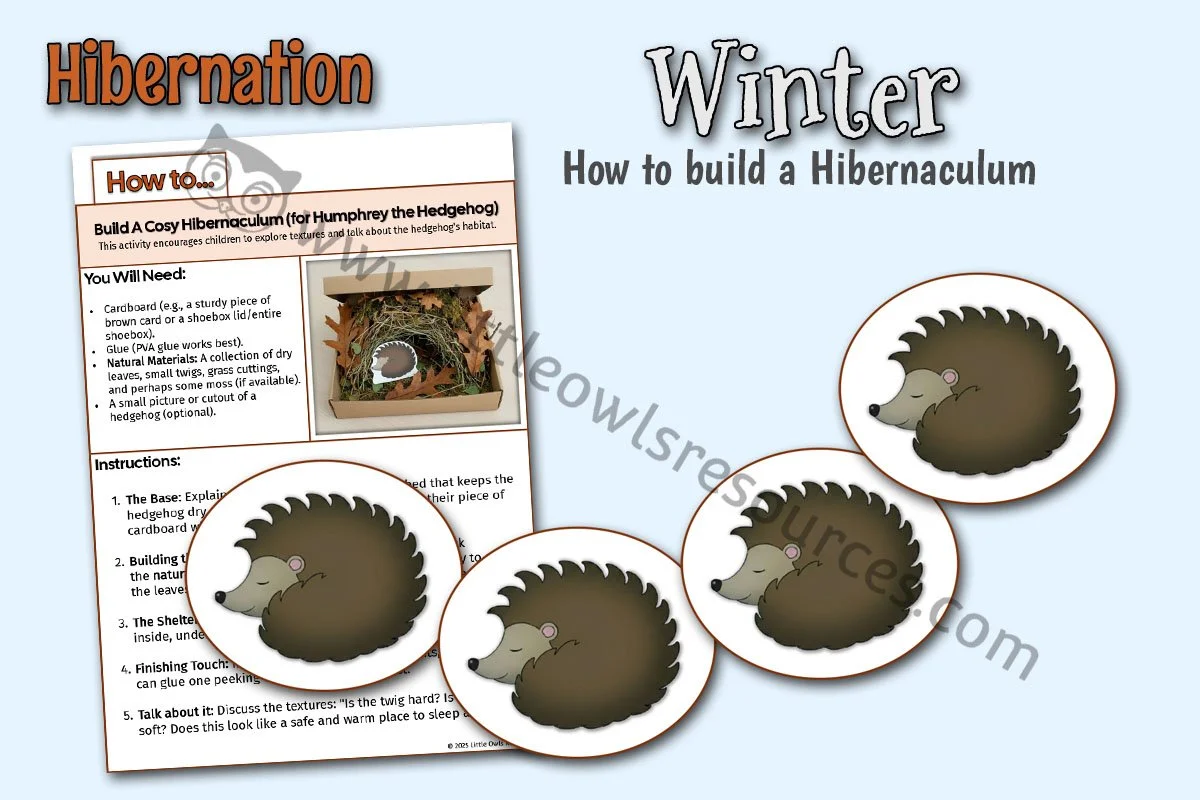
Build a Cosy Hibernaculum
Use the resource to explore a model winter shelter for a hedgehog character. Keep the ideas distinct: being active at night is different from hibernating, and not every nocturnal animal hibernates.
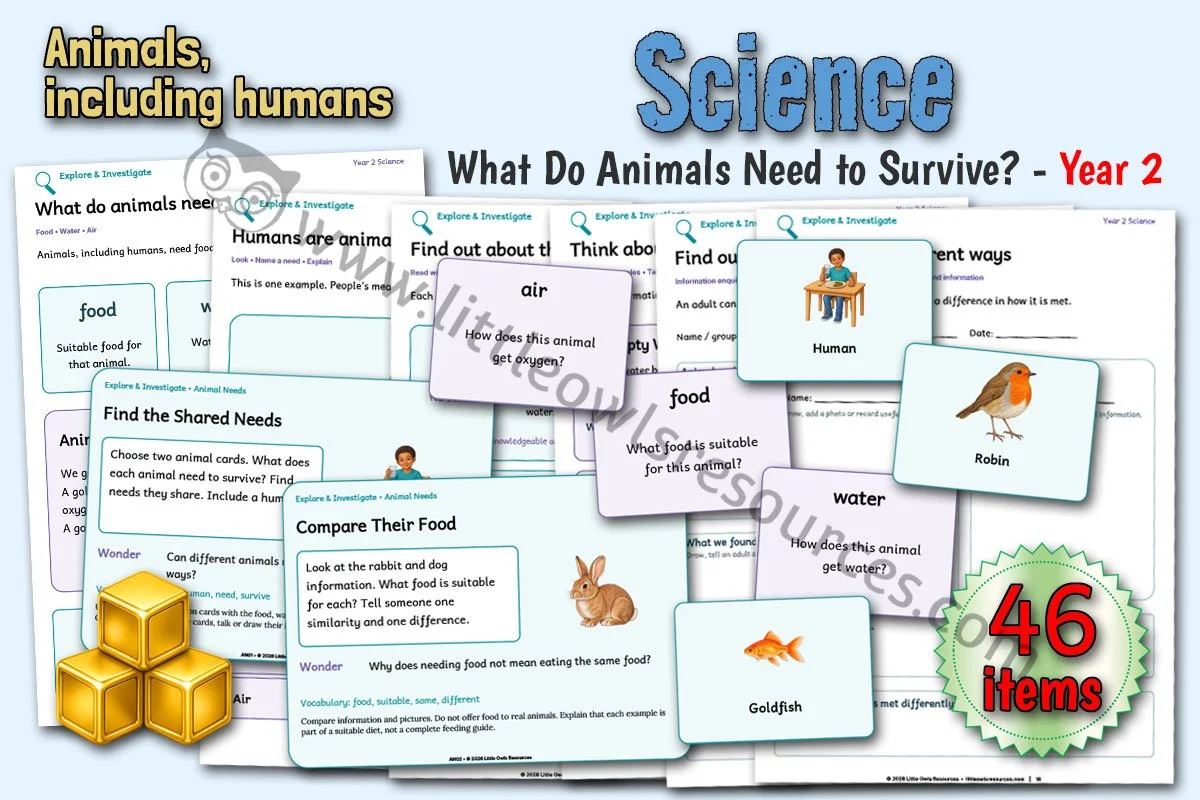
What Do Animals Need to Survive? — Year 2
Compare how named animals meet their needs for food, water and air. Apply selected questions to the animals in this collection, using information to explain similarities and differences.
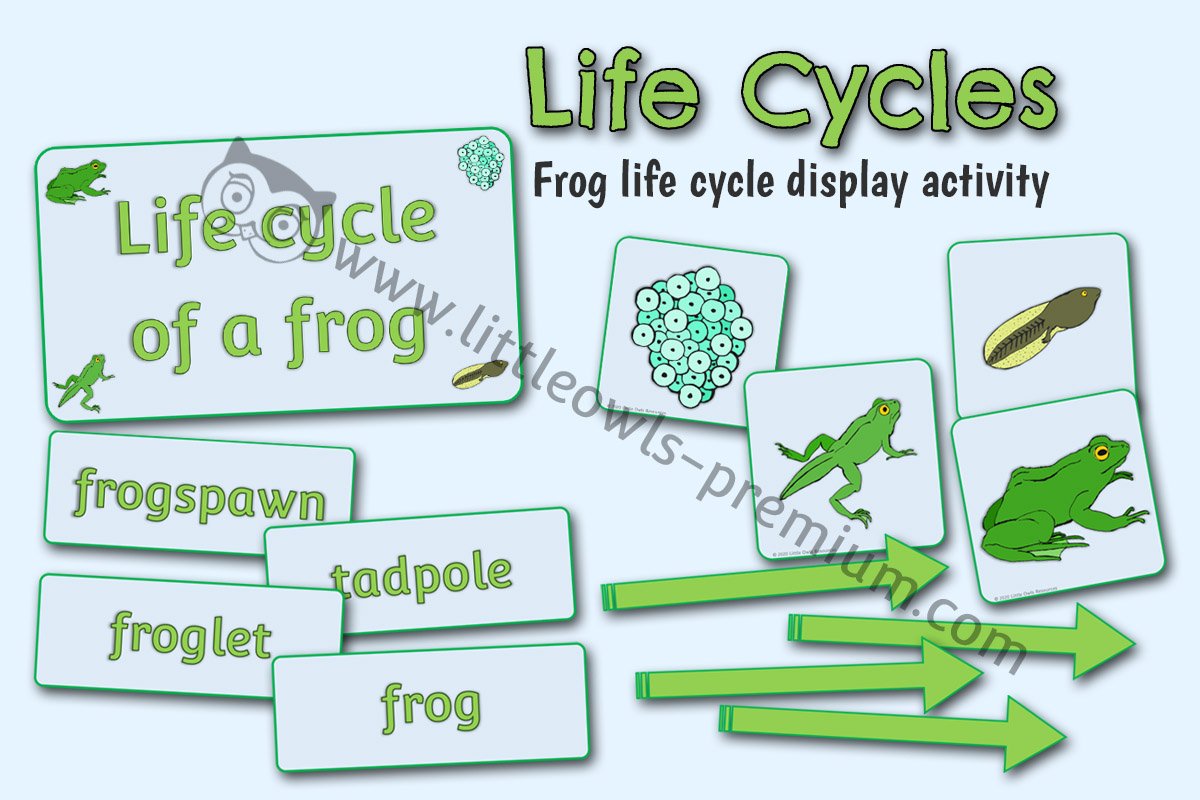
Frog Life Cycle — Display & Activity Visuals
Share the changing stages in a frog’s life using pictures and talk. Use the visuals as a connected animal-life investigation, while keeping life cycles separate from questions about day-and-night activity.
07 / Flexible plans for your setting
Planning, questions & adult support
Use these planning resources, provision ideas and question prompts selectively. Follow the children’s interests, match the language and experience to their stage, and adapt the plans to your setting rather than completing every suggestion.

Nocturnal Animals — Continuous Provision Enhancements
Select the relevant early-years phase section when considering an optional addition to familiar provision. For babies, use the adult guidance for shared attention and responsive interaction; the theme is not a task for a baby to complete.

Nocturnal Animals — Question & Vocabulary Banks
Choose a small amount of useful language and a prompt that fits the children’s experience. Follow their responses and return to their questions; babies’ sections guide adult interaction rather than testing words or animal knowledge.

High-Contrast Hedgehog Pictures — Babies
Share a simple hedgehog picture during a comfortable moment together. Notice a baby’s gaze, movement or sounds and pause for their response; animal naming, seasonal knowledge and independent picture use are not expected.
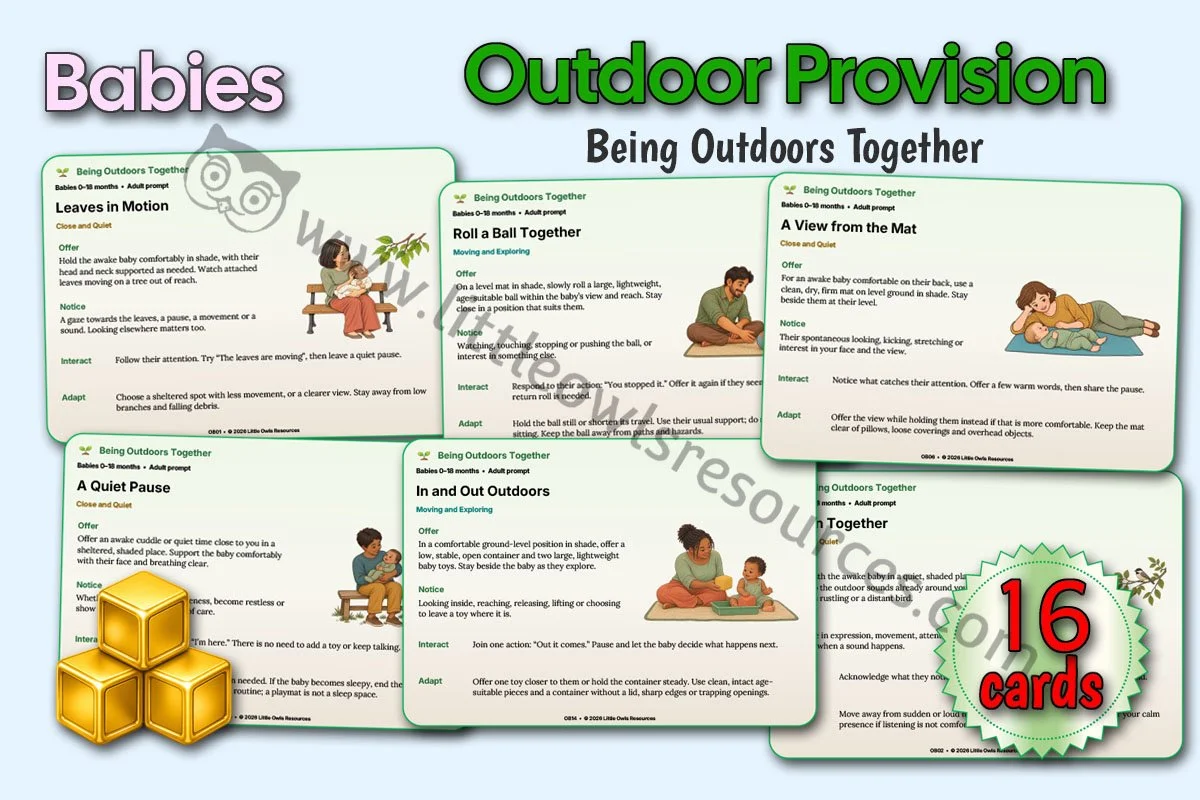
Being Outdoors Together — Babies, 0–18 Months
Use this adult companion for brief, comfortable experiences in familiar outdoor surroundings. Follow the baby’s attention and cues; there is no need for darkness or an animal-finding activity.

Animals & Their Homes — Toddler Planning
Choose a few ideas for toddlers aged 18–36 months around familiar animals, pictures and pretend homes. Adapt the context to children’s interests and leave room to revisit a simple experience.

Animals & Habitats — Preschool Planning
Use the preschool planning pack to connect observation, care, comparison and representation of animals. Its Spring 2 label is an organising option; choose a relevant context whenever children’s questions arise.
08 / Follow the next question
Explore a connected collection
Continue an interest in daylight, woodland animals, hibernation, seasonal change or imaginative play. These links open wider collections beyond the resources selected for this page.

Light & Dark
Explore daylight, shadows, materials and the world after dark through the connected collection of activities, printables and provision ideas.

Hibernation
Explore seasonal changes and hibernating animals in more depth. Keep hibernation distinct from the daily pattern of being active at night.

Changing Seasons
Follow changes in a familiar place across the year, including weather, daylight, plants and animals. Find resources for observation, displays and practical recording.

Forest School & Woodland Activities
Find more woodland observation, animal, tree, creative and outdoor resources for following an interest in a familiar place.

Animals of the World
Browse the wider animal collection to compare named species, habitats and features. Select information that fits the question children are exploring.

Habitats
Explore places where animals live and the features that help meet their needs. Connect pictures and models with real observations and appropriate factual information.
Use the theme in your setting
Ideas for different ages
Choose the materials, language and adult support for the children you know. These ideas are possibilities, rather than a timetable or a checklist.
Each age link returns to this page’s search with that age selected. Clearly age-labelled resources carry an adaptation note when shown for a different eligible age.
Babies & toddlers
For babies, begin with shared attention: a simple picture, a familiar voice and time to respond. Printed materials guide the adult; there is no expectation to name animals or understand night-time behaviour. Toddlers may enjoy finding two matching pictures, joining an animal story or using a few props in familiar play.
Preschool
Share a short listening game, explore a small selection of animal pictures or make a home for a toy animal. Follow children’s descriptions and questions, adding useful vocabulary through conversation. Draw, make marks or ask an adult to record an idea when there is a reason to do so.
Reception
Compare animal features, create a woodland story or discuss what a model shelter needs. Offer opportunities to explain a choice through talk, gesture, drawings, labels or adult scribing. Use information books and reliable sources to revisit a question that emerges.
Key Stage 1
Connect observations with animal features, basic needs and habitats. Compare examples, gather information and explain ideas using appropriate vocabulary. Use practical enquiry and purposeful reading or writing, with demands matched to what the class has been taught.
Keep the experience comfortable. Pictures, books, recordings and daytime observations are enough to explore the theme. Keep spaces familiar and well lit for movement, allow children to watch or opt out, and observe wildlife without disturbing animals or their shelters.
Questions about nocturnal animals activities and planning
What does nocturnal mean?
Nocturnal describes animals that are mostly active at night. It does not mean an animal is never active in daylight. Some animals are particularly active around dawn and dusk; this is called crepuscular. Check the species being discussed instead of assuming every owl or every woodland animal follows the same pattern.
Are bats blind, and do all owls hoot?
Bats can see. UK bats also use echolocation: they make calls and listen to returning echoes to help them navigate and find prey. Owl calls vary between species. A barn owl is known for its screech, rather than the familiar hooting call often associated with owls. Use a recording labelled with its species when sharing real animal sounds.
Is being nocturnal the same as hibernating?
No. Being nocturnal concerns when an animal is usually active across day and night. Hibernation is a seasonal state involving greatly reduced activity and changes in body processes. Some nocturnal animals hibernate and others do not. Keep the two ideas distinct when connecting this theme with autumn or winter.
How does the theme connect with EYFS and KS1?
Nocturnal Animals is an optional theme, not a required topic sequence. It can support EYFS communication, imaginative play and Understanding the World. In KS1, useful connections include identifying and comparing animals, their needs, habitats and practical enquiry. Select resources for your curriculum and the children’s interests.
How can we use the resources in continuous provision?
Add a small set of pictures, animal figures, story prompts or making materials where children already play. A question such as how to make a shelter may lead to construction, talk, comparison or useful labels. Keep familiar provision available and let children revisit and change their ideas.
How should we use listening and phonics resources?
Listening cards can support attention, turn taking and vocabulary. For games involving letters or words, use only the correspondences and word structures children have been taught through their phonics programme. A themed game supplements that teaching; it does not replace your school’s systematic synthetic phonics programme.
Which resources are free?
The free section identifies individual free resources and samples. Free Access includes selected downloads; All Access includes every resource on the site. Public collection pages and planning overviews may also lead to member downloads, and a sample may contain fewer pages than a full pack.
Where can I find help with downloading or printing?
Visit Help & Support or read our printing resources guide.
Membership
All Access membership unlocks every resource on the site. Free Access lets you explore and download a selection of free resources. Explore membership options.
Already a paying member? You have sitewide access. There’s no need to change plans or subscribe again. Read our FAQs.