
Light & Dark · EYFS & KS1
Notice the light.
Explore the change.
Light and dark activities, resources and provision ideas for noticing daylight, exploring shadows and talking about the world after dark.
Find free printables, day-and-night pictures, nocturnal animal resources and ideas for displays, alongside practical investigations, imaginative play and flexible planning support.
Shorter autumn and winter days can offer useful starting points. Follow what children notice, and revisit an interesting question at other times of the year.
Find your starting point
Search this Light and Dark collection
Search the resources selected for this theme from across Little Owls, including materials, science, seasonal change and adult planning. Choose an age, then add an optional word. Select a result to find its card on this page.
Search becomes available when JavaScript is enabled. You can always browse using the section choices above.
01 / Try a starting point
Start with a free resource
Choose a free printable for day-and-night talk, listening, matching or noticing colour. Each sample or resource is clearly labelled and opens its own free destination.

Day & Night Oracy Cube — Free
Roll or choose a picture to start a conversation about familiar day and night experiences. Children can respond through talk, gesture, action or imagination.

Nocturnal Animal Sounds — Free
Share a few animal pictures and represented sounds together. Pause for a look, gesture or playful sound in response; there is no need to name every animal.
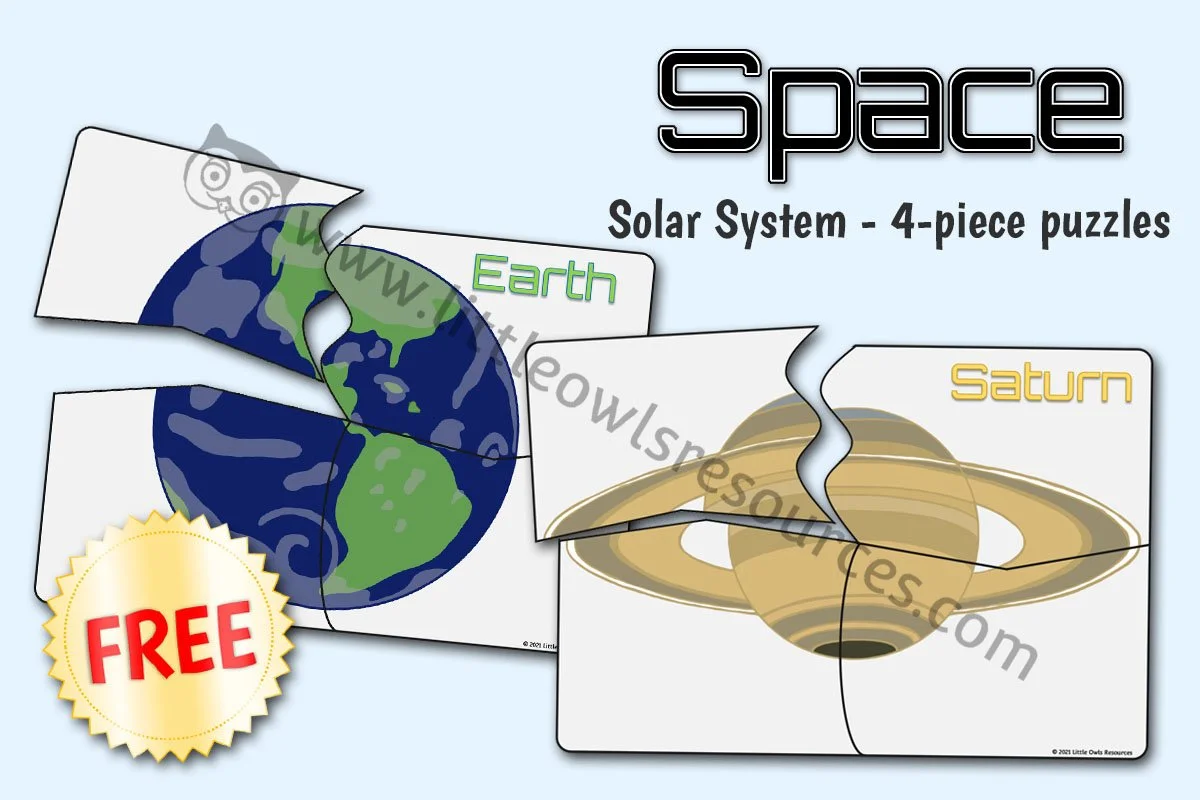
Solar System Four-Piece Puzzles — Free Sample
Choose a space picture to rebuild by turning and joining the pieces. Talk about the details children notice, naming the planet or object when useful.
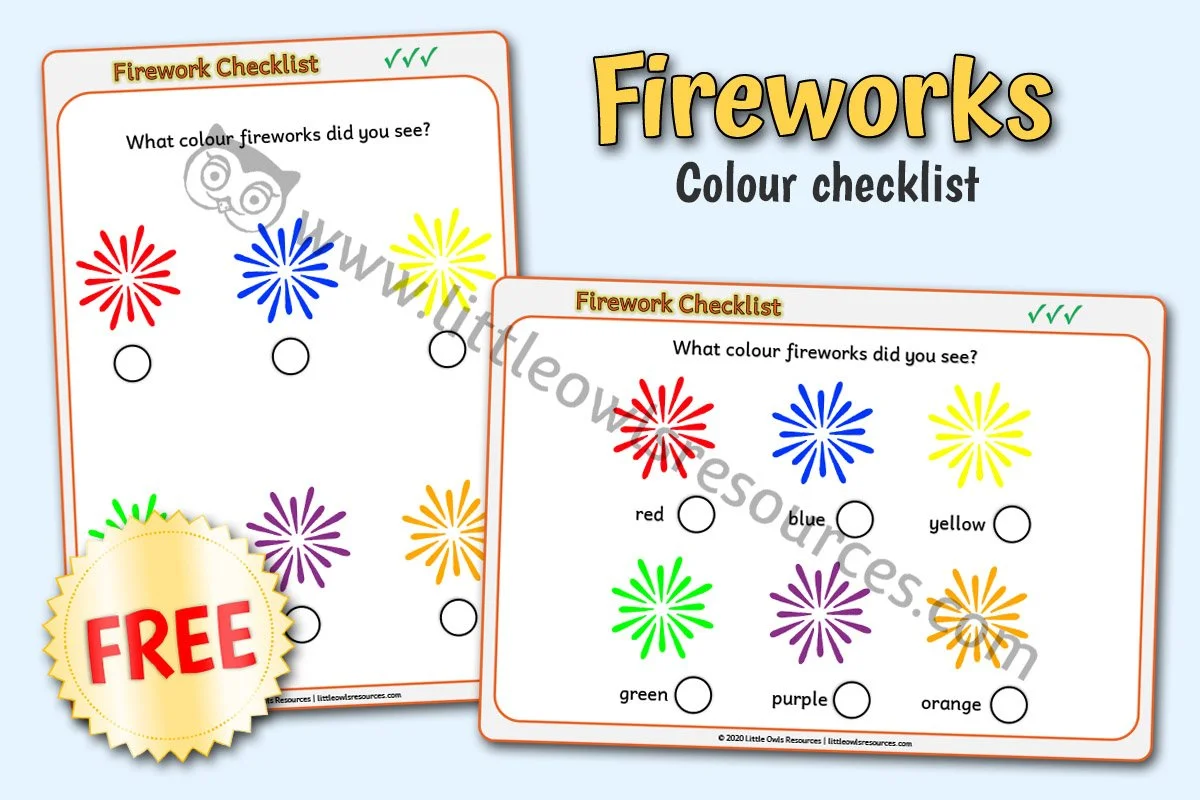
Fireworks Colour Checklist — Free
Notice and name colours in a firework picture or remembered experience. Children can point, talk or mark the checklist without attending a live display.
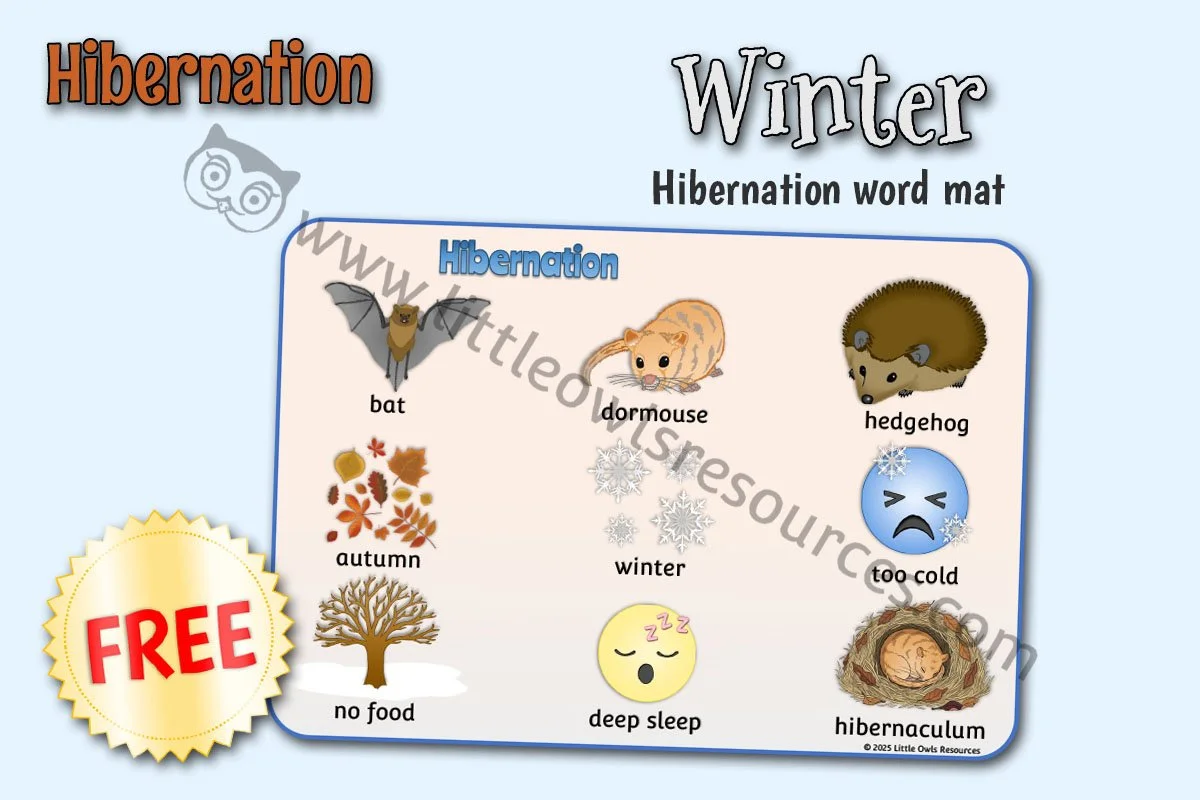
Hibernation Word Mat — Free Sample
Share pictures of a bat, dormouse and hedgehog with useful hibernation words. Offer the mat as a reference for conversation, drawing or writing.
02 / Notice what changes
Day, night & everyday routines
Begin with familiar experiences: daylight at breakfast, a lamp in a room or the sky on the way home. Use pictures to talk, sort and wonder without treating every routine as the same for every family.

Day & Night — High-Contrast Cards for Babies
Share one black-and-white sun, moon, star or cloud picture during a comfortable awake moment. Follow the baby’s gaze and response; the card stays with the adult.

Day & Night — Compare & Discuss
Compare three scenes shown in daylight and at night. Invite children to notice changes in light, details and activity, and connect the pictures with their own experiences.

Day & Night — Where Does It Belong?
Sort familiar pictures onto day and night mats and talk about the choices. Welcome explanations for things that could happen at either time.
03 / Try an idea and revisit it
Shadows, light & materials
Explore what happens when an object interrupts a beam of light, or compare materials for a model window or shelter. These selected resources offer practical support for observing, choosing materials and sharing findings.

Make a Shadow — STEM Support Pack
Start with the open-ended question “Can you make a shadow?” In an adult-prepared light setup, children can try positions, notice what changes and share their discoveries. Choose a manageable comparison rather than expecting a formal explanation of light.
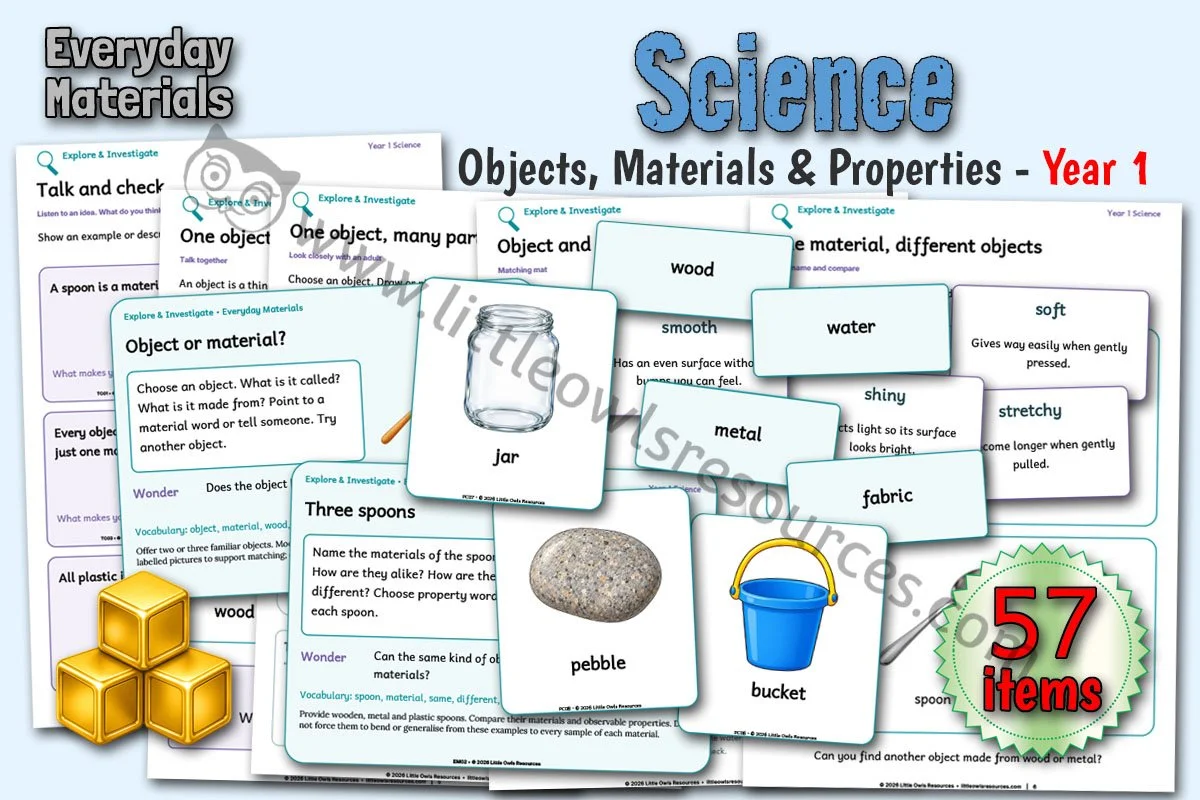
Objects, Materials & Properties — Year 1
Connect the pack’s materials-and-properties focus with real samples. For this theme, compare materials that let light through or block it, then describe what you notice using practical examples before choosing any recording.
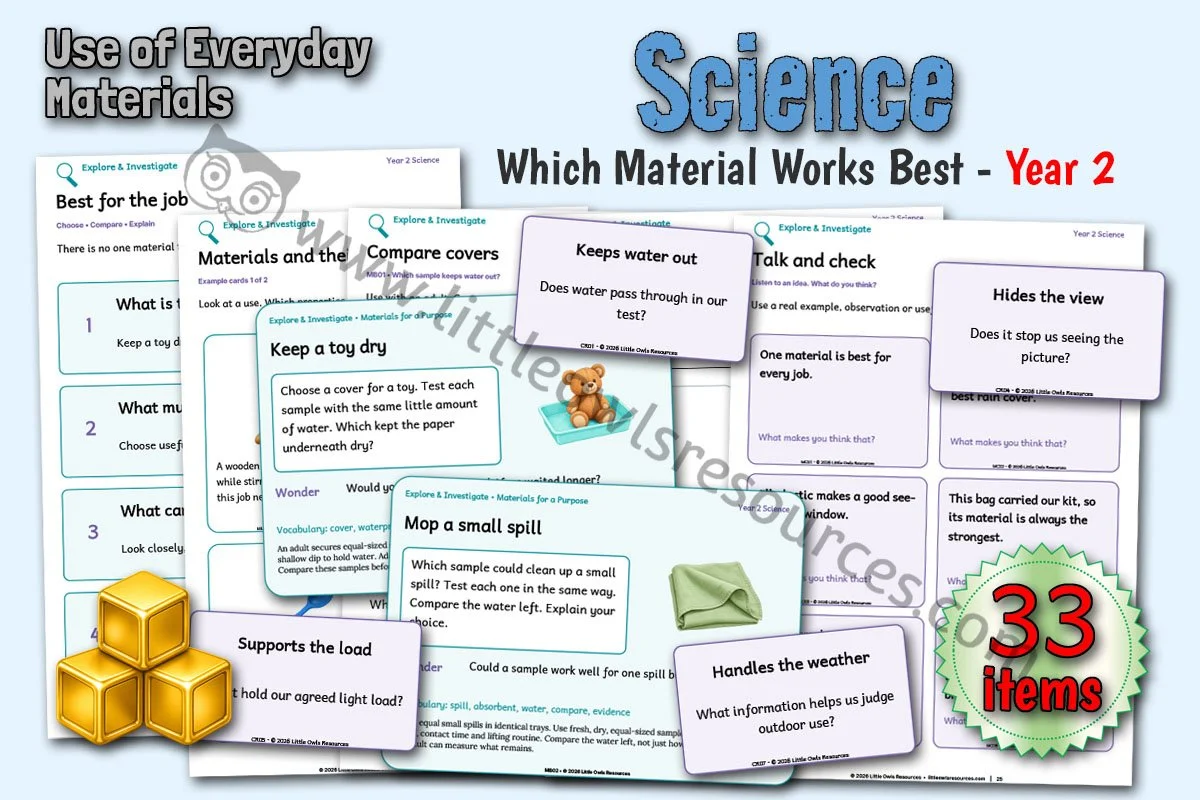
Which Material Works Best? — Year 2
Choose the pack’s model-window challenge as a reason to compare materials. Children can test which samples suit the job and explain their choices from what they observe; select the challenge and recording that fit the group.
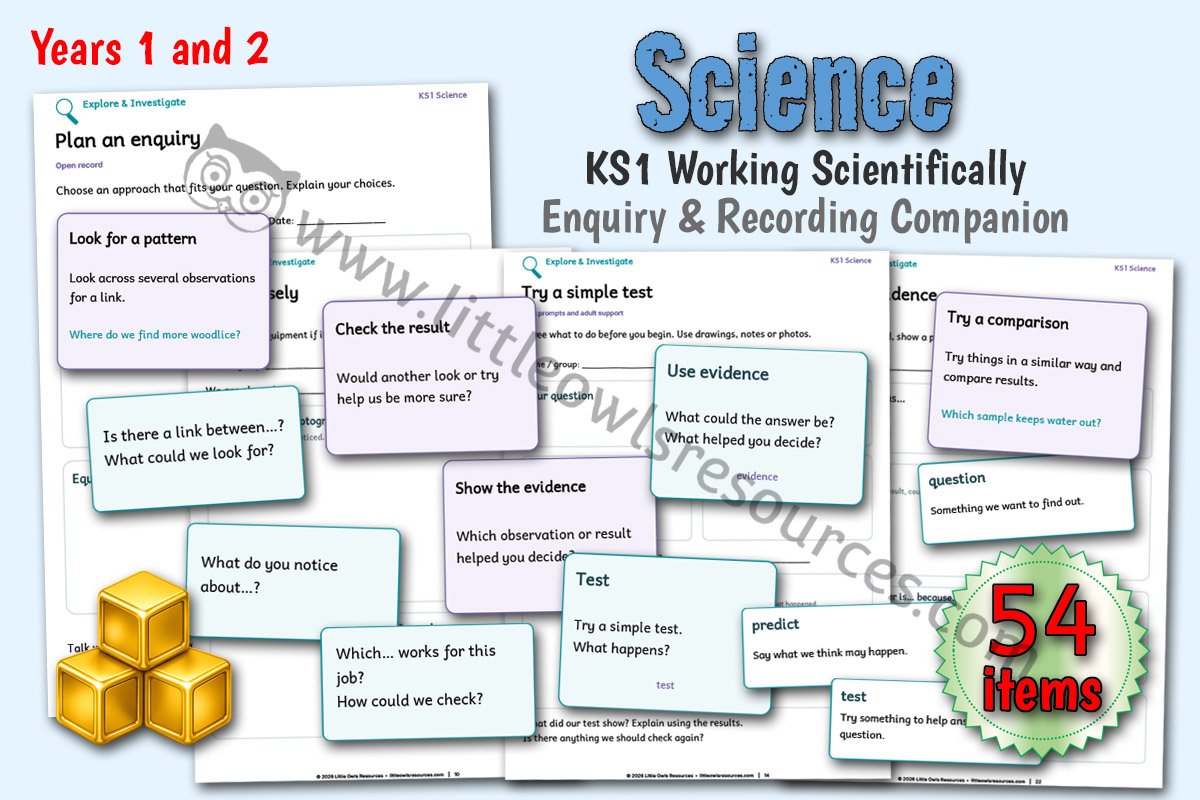
KS1 Working Scientifically — Enquiry & Recording Companion
Choose a useful enquiry prompt or recording page after children have explored a question about materials or seasonal change. Keep observations and discussion central; drawings, labels or a simple record should help communicate the finding.
04 / Look, listen and imagine
Animals after dark
Explore nocturnal animals through pictures, sounds, stories and small-world play. Different species have different activity patterns; use the resources as starting points for noticing and finding out more.

Nocturnal Animals — Find the Friends
Match pairs of animal pictures and notice their features. Use a small selection for shared play, then add more when children want a challenge.

Nocturnal Animal Masks — Colour & Craft
Choose an animal mask for drawing, colouring or pretend play. Adults can prepare the cutting and fastening; children can also hold a mask as a story prop.

Nocturnal Animal Silhouette Cards
Compare animal outlines with their pictured features. Use the cards for matching and observation, then distinguish the printed silhouette from a real shadow made with light.

Who Is Awake? — Day & Night Animals
Explore which pictured animals are often active by day or at night. Sort together, discuss the examples or use the mats as a setting for animal play.

Nocturnal Animals — Tally Chart
Count a selected set of animal pictures or toys and record what you find. Children can use their own marks, supported tallies or totals as appropriate.
05 / From observation to imagination
The sky, stars & space
A view of the sky can lead into questions, stories and imaginative space play. Select a small set of pictures, puzzles or prompts that fits the children’s interests, without expecting them to memorise the solar system.

Space — What Is…? Posters
Choose a poster about the Sun, Moon or another space object to support a child’s question. Share selected words and pictures rather than introducing every explanation at once.

What Is a Star? — Posters
Use the illustrated explanation to explore questions about stars, including alongside a familiar rhyme. A colouring version offers another way to revisit the picture and ideas.

Space Multimats
Offer a space-themed mat for drawing, playdough or suitable loose parts. Children can represent a planet or another object and talk about what they have made.

Space Picture Word Cards
Keep selected space words beside books, models or pretend play. Adults can introduce unfamiliar vocabulary while children use pictures and words for a purpose.

Planet Fact Cards
Use a selected planet card to support a question or compare pictured features. Adults can explain unfamiliar information and choose details suited to the children’s interests.
06 / Follow the world around you
Seasonal change & hibernation
Shorter autumn and winter days offer useful connections, while seasonal observation can continue throughout the year. Keep hibernation distinct from being nocturnal: sleeping through part of winter is different from being active at night.
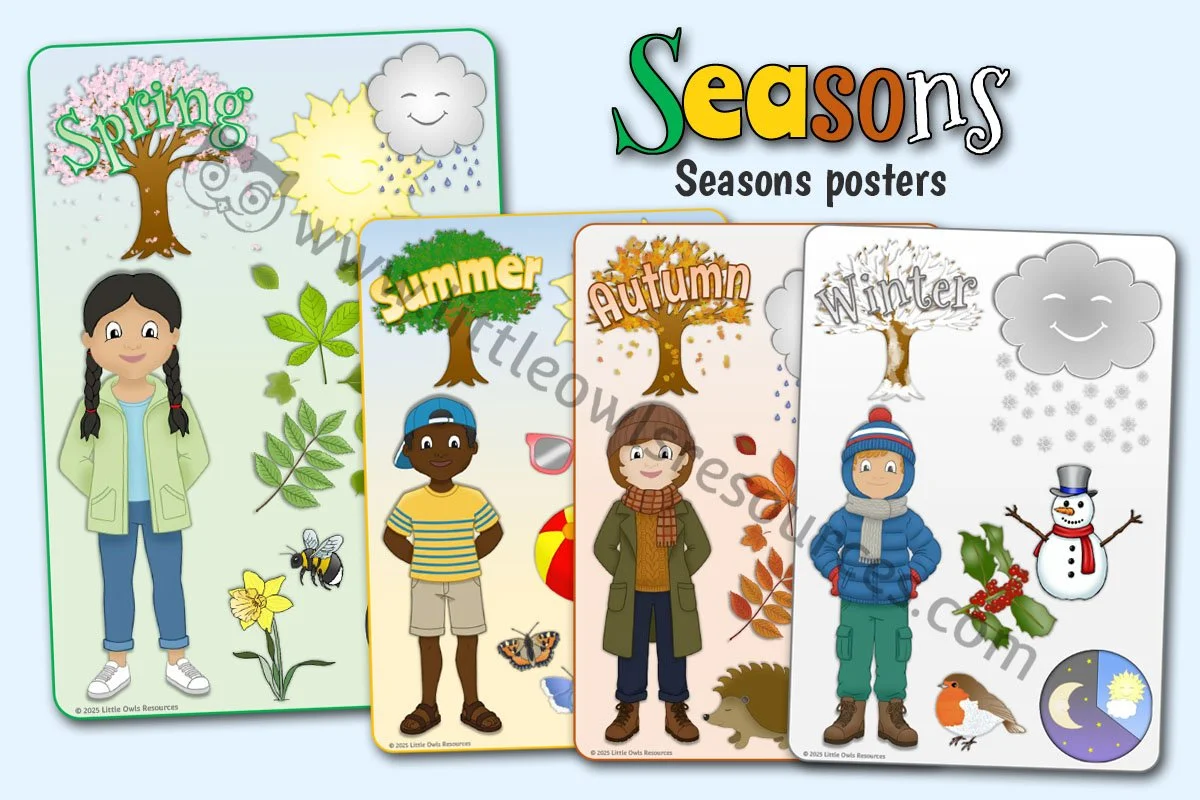
Seasonal Changes — Display Posters
Compare the pictured seasons with what children can observe locally. Talk about daylight, weather and living things, recognising that a picture cannot predict every day.

Seasons — Sort & Match Cards
Sort the pictures and discuss reasons for different choices. Connect them to local observations and leave room for weather, clothing or activities that span more than one season.
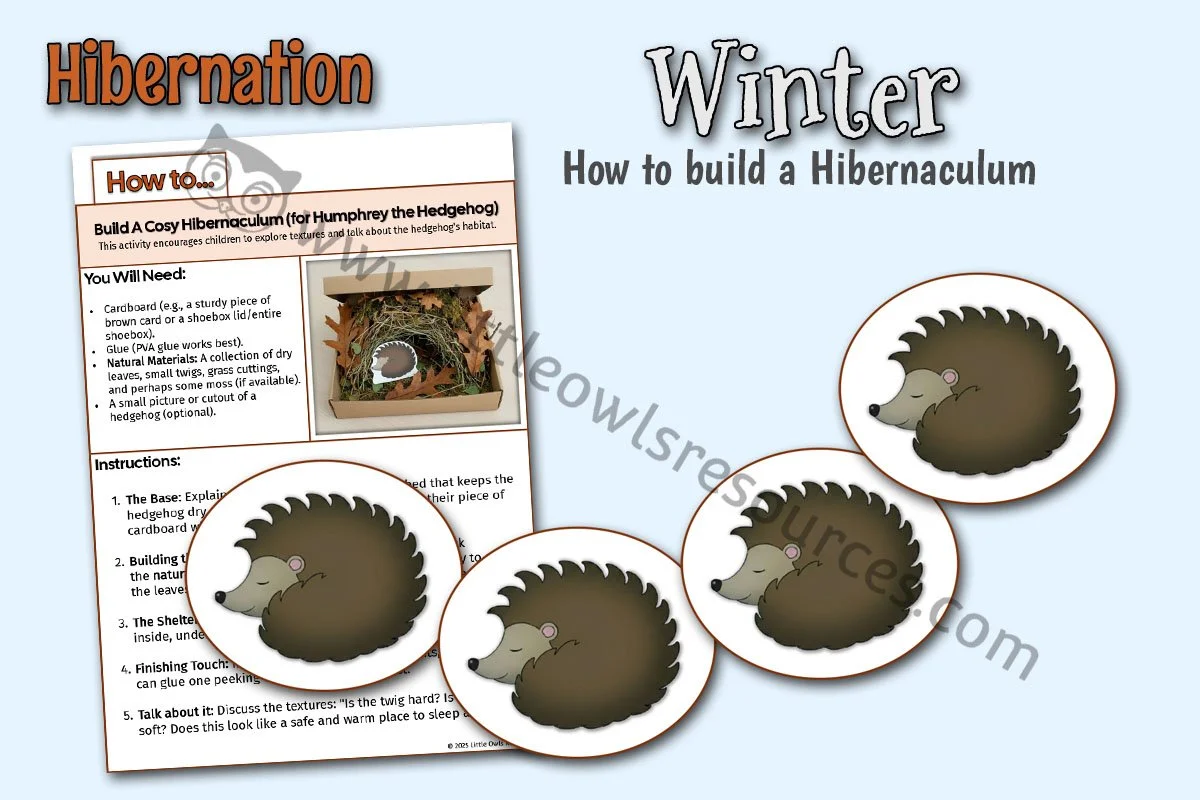
Build a Cosy Hibernaculum
Explore the idea of a winter nest by making a model shelter for a toy hedgehog. Talk about materials and shelter while leaving real animals and their resting places undisturbed.
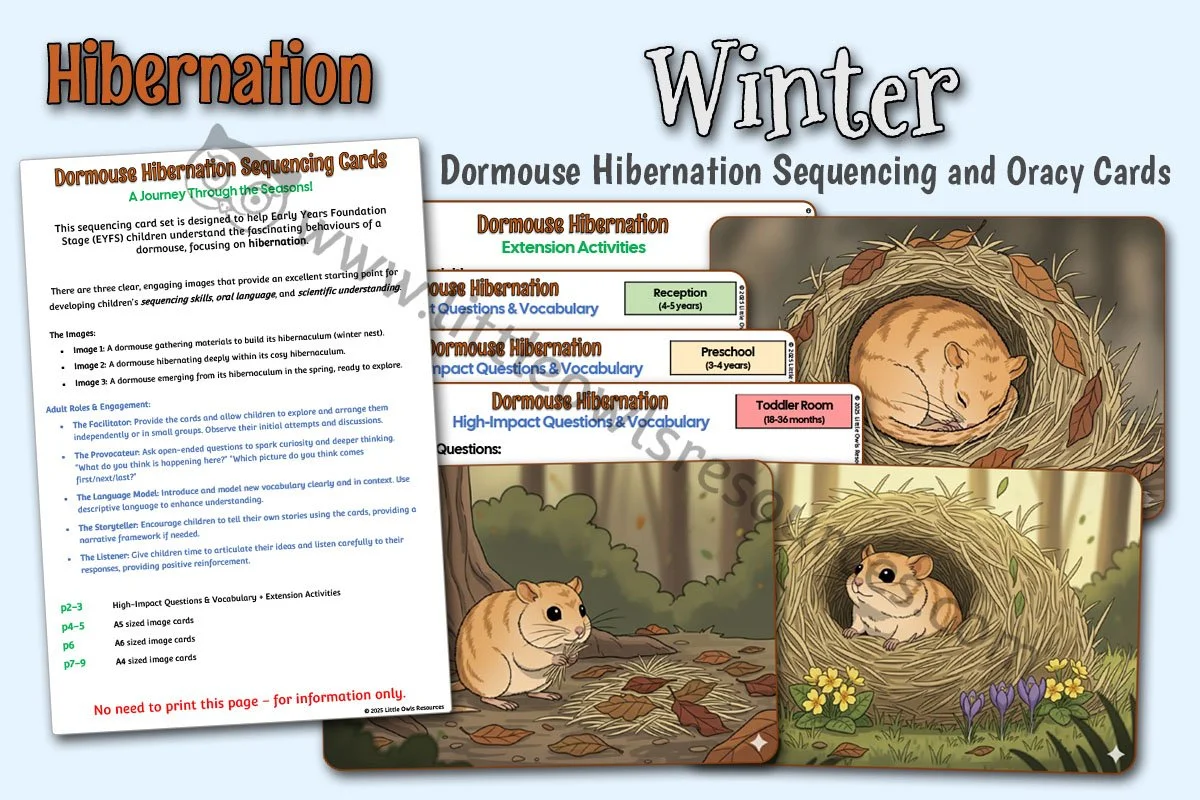
Dormouse Hibernation — Sequencing & Oracy
Explore three pictures of a dormouse preparing, hibernating and emerging. Choose the provided toddler, preschool or Reception prompts to suit the children’s communication and questions.
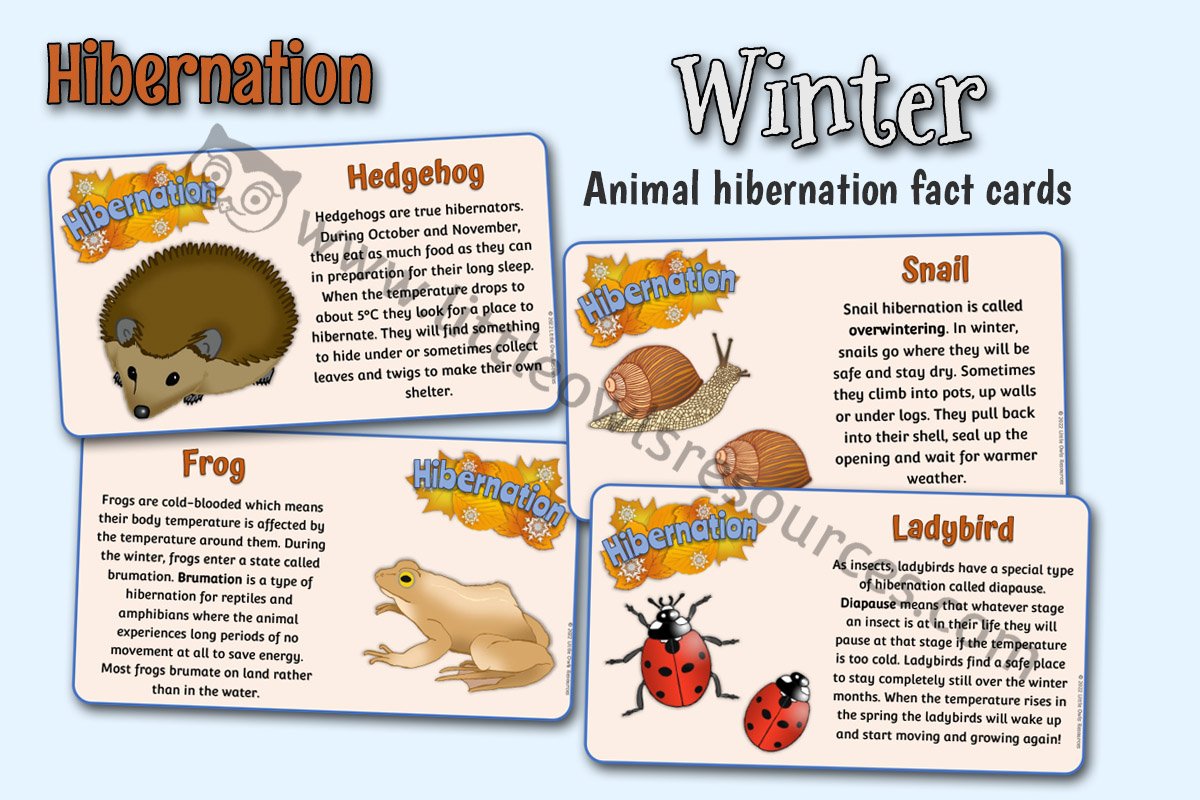
Animals in Winter — Fact Cards
Share selected facts about how UK animals respond to winter. Compare examples carefully: nocturnal activity and hibernation describe different things.
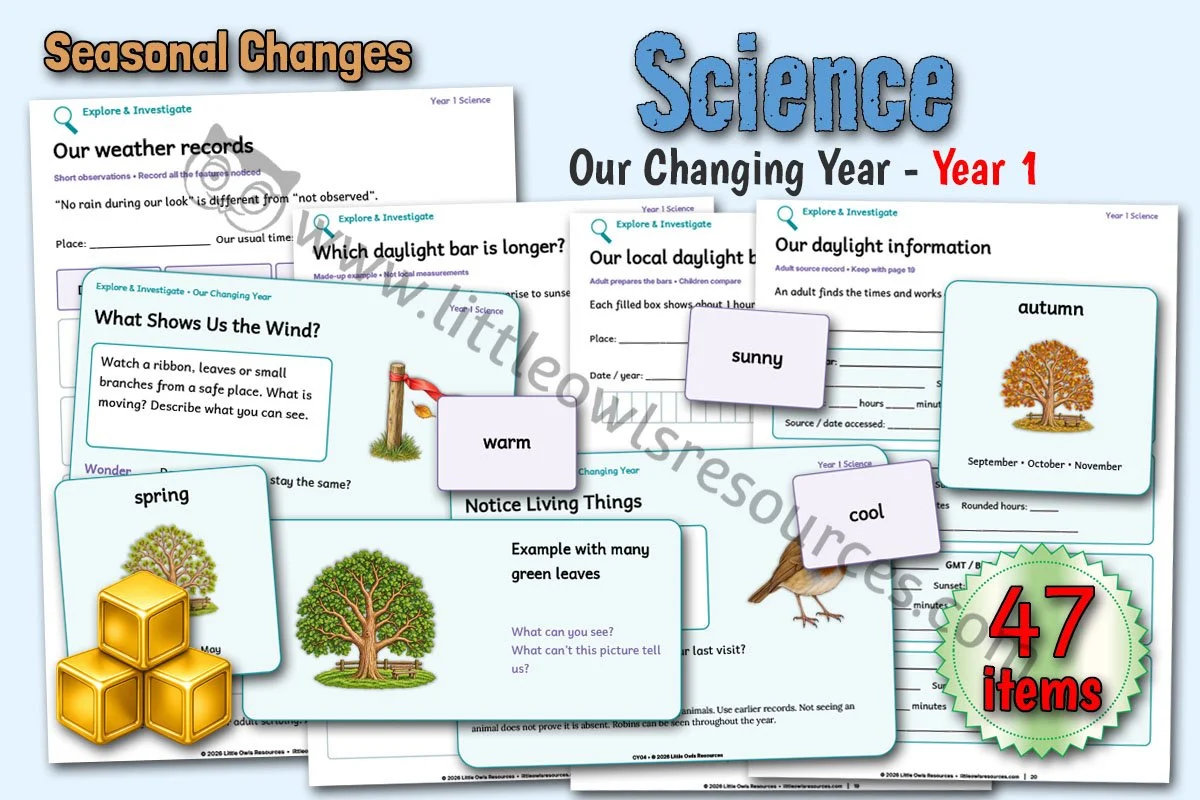
Our Changing Year — Seasonal Observations & Day Length, Year 1
Return to a familiar place to notice weather and seasonal change, and talk about daylight at familiar points in the daily routine. Use selected pictures or recording prompts to compare observations over time.
07 / Ideas worth sharing
Build, draw, write & display
Add a label to a model, gather materials for an investigation or draw a change that caught a child’s attention. Use these wider resources when recording, building or a useful display supports the play and enquiry.
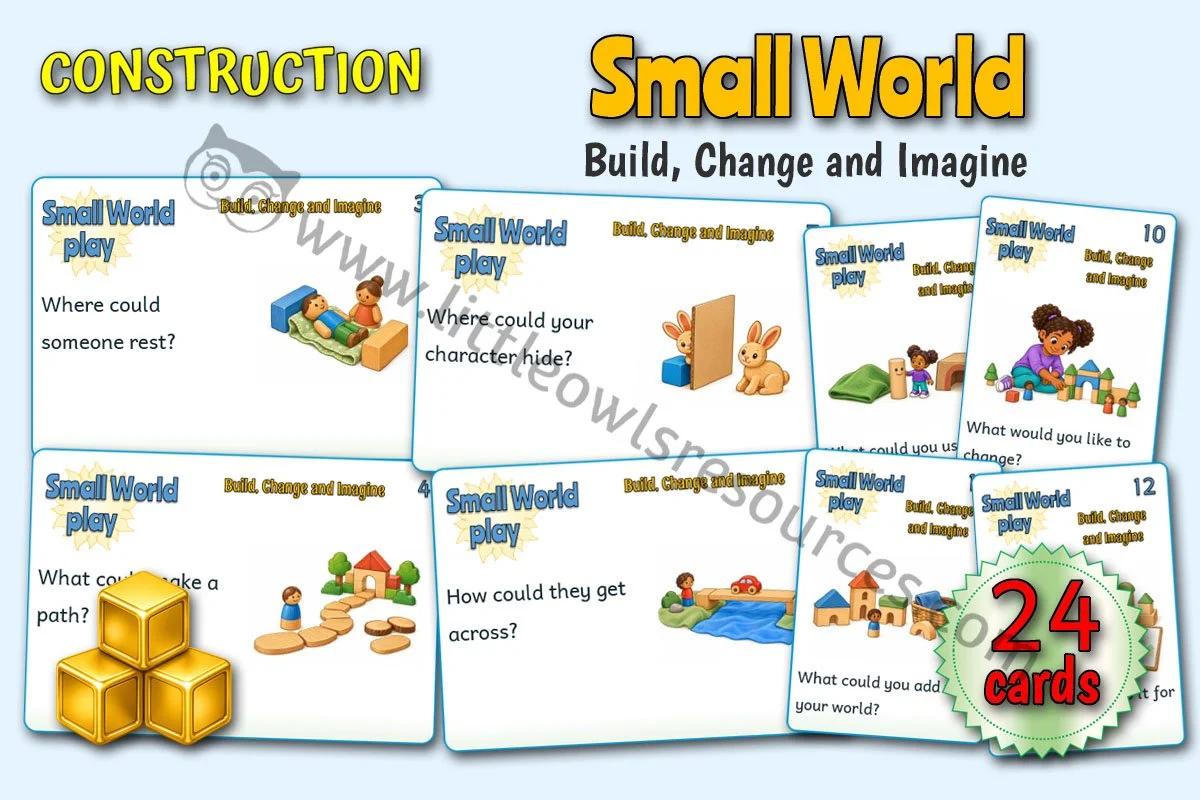
Build, Change & Imagine
Use the open-ended building invitations when children want to make a place for small-world characters. A light-and-dark connection might be a shady shelter or a screen: try different arrangements, notice what changes and keep the story child-led.
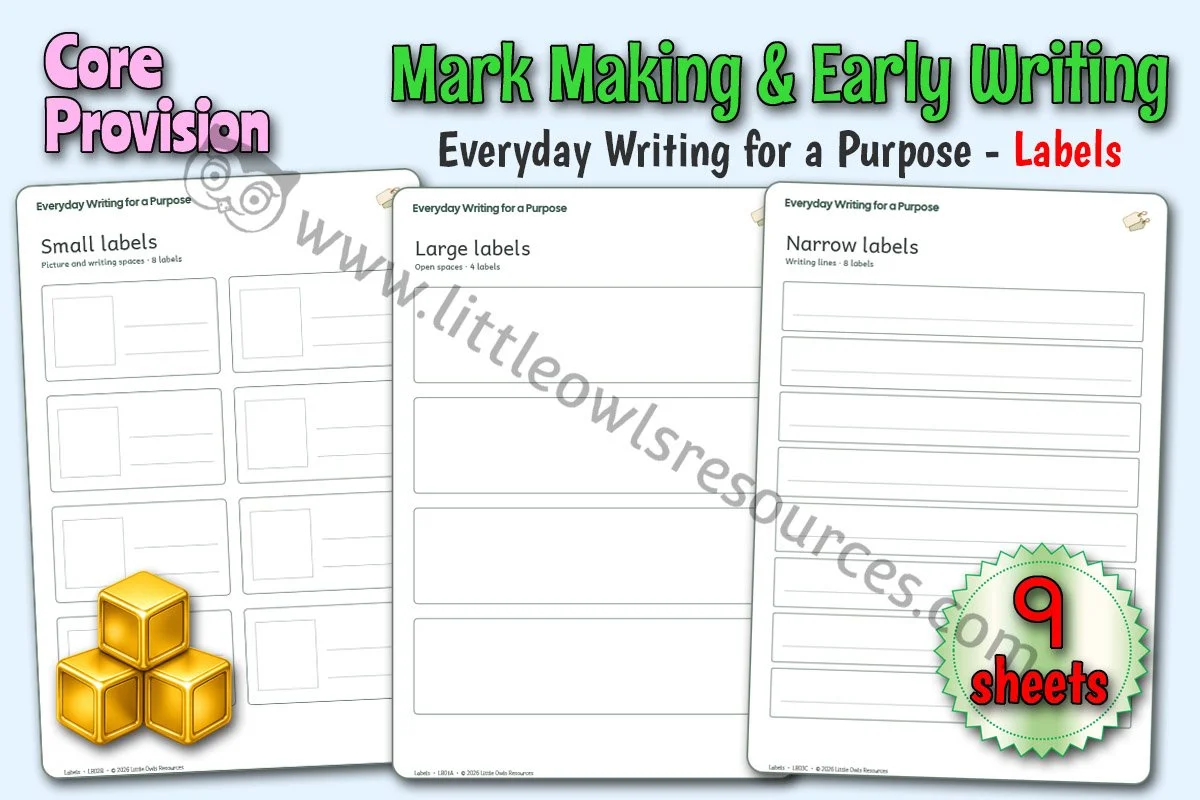
Everyday Writing for a Purpose — Labels
Offer labels when children want to name a material sample, identify a model or share an observation. They can draw, dictate or write the message; plain paper remains useful when a printed layout does not fit their idea.
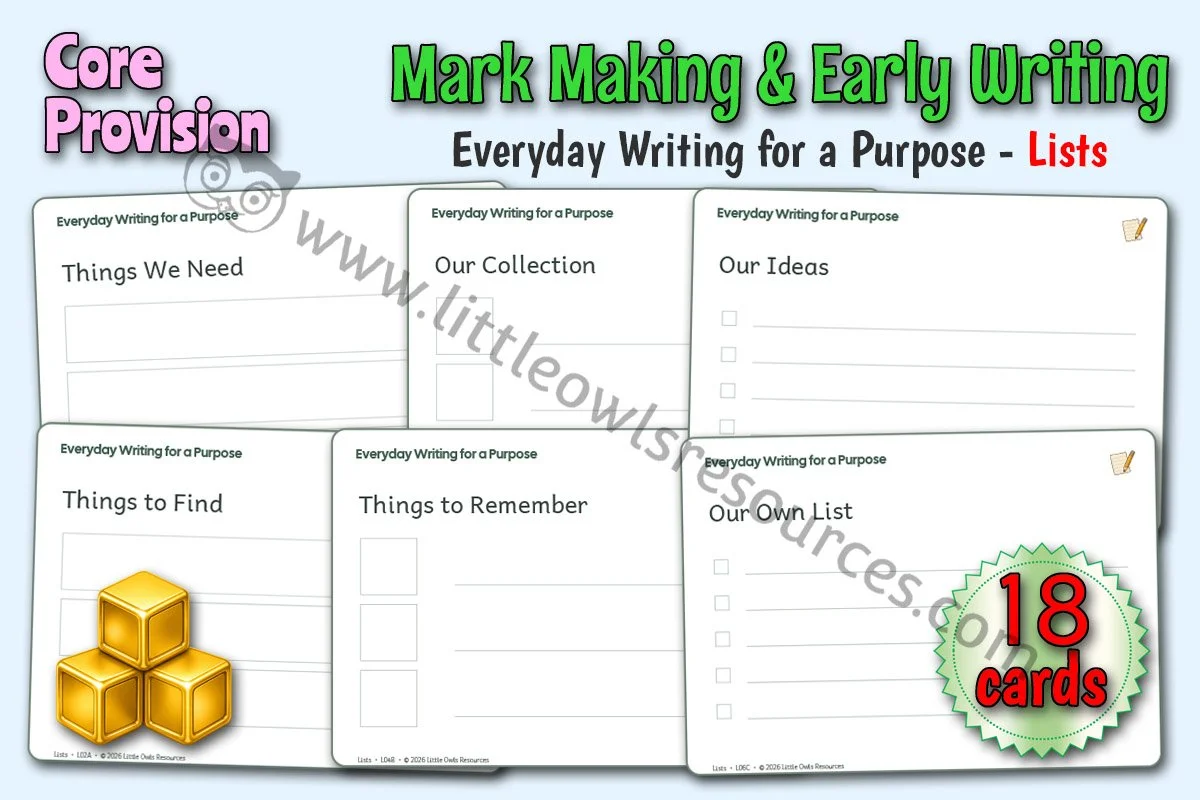
Everyday Writing for a Purpose — Lists
Make a list when a real investigation or construction needs one: materials to collect, equipment to remember or ideas to try. Children can use pictures, marks, adult-scribed words or their own writing.

We Are Curious — STEM Display
Use the display to gather questions, photographs and comments from practical light-and-dark exploration. Return to children’s own ideas as they test a material, change a construction or notice a different shadow.
08 / Optional connections
Lights in celebrations
Explore these collections when they are relevant to your children and community. Each celebration has its own meaning and traditions; lights can be a starting point for conversation, rather than a reason to treat festivals as interchangeable.
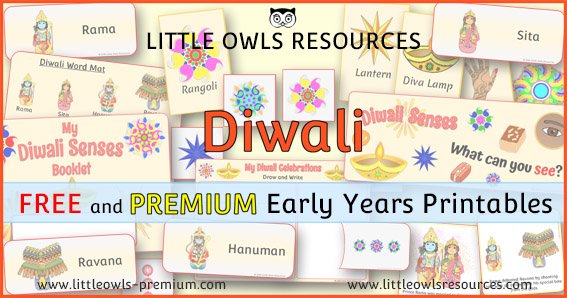
Diwali
Explore Diwali stories, lamps, pictures and creative resources when relevant to your community or learning. Connect light with its cultural context and recognise different family traditions.
Hanukkah
Browse Hanukkah stories, pictures and activities for meaningful exploration of this Jewish festival. Introduce the lights within the celebration’s context rather than as interchangeable decorations.
Fireworks
Choose firework pictures, language, art and observation resources. Shared images and stories can support the theme without requiring children to attend or enjoy a live display.
Christmas
Explore relevant Christmas lights, stories and creative resources alongside the experiences of your community. Allow children to contribute different celebrations and traditions.
09 / Responsive starting points
Planning & adult support
Use these planning resources and adult guidance to develop flexible light and dark plans. For babies, begin with comfortable light, a familiar adult and a brief shared look. Follow children’s responses and choose support that fits the individual; printed materials remain adult prompts.
Hibernation — Practitioner Information
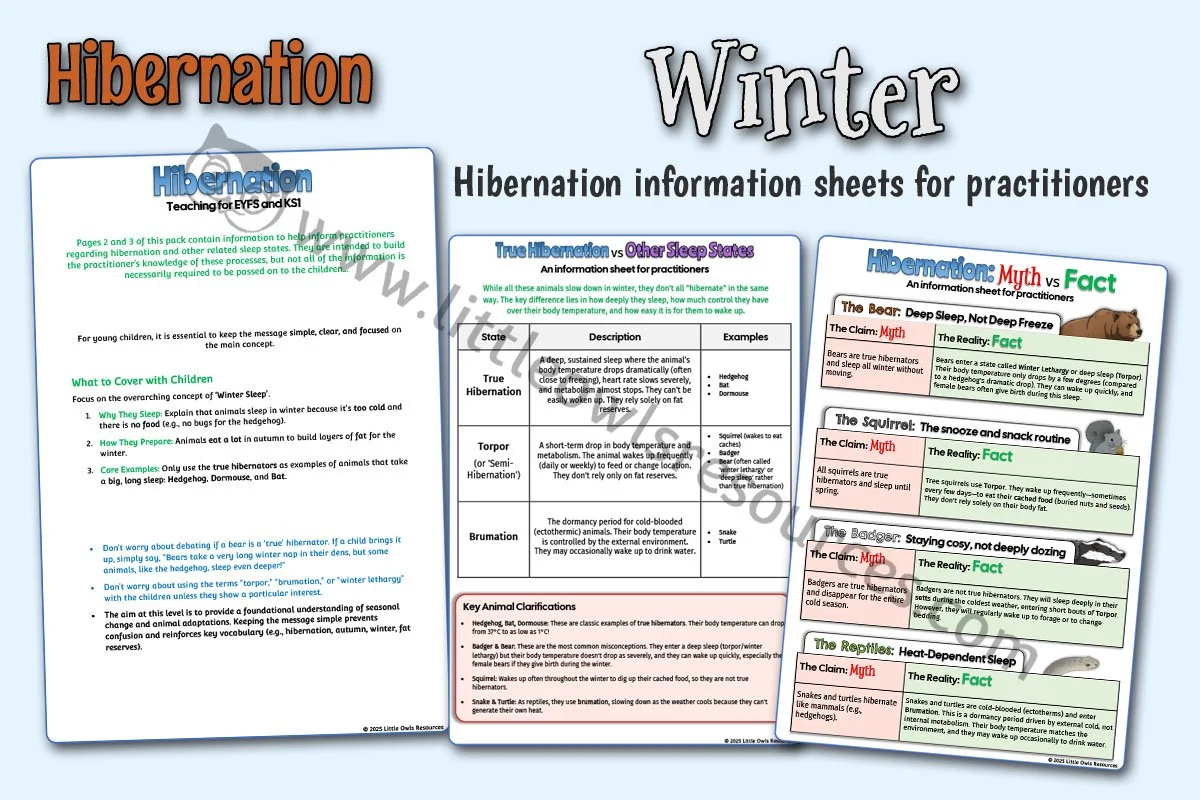
Background guidance for adults about hibernation and other ways animals respond to winter. Use it to select accurate language and distinguish different animal behaviours.

Light, Dark & Celebrations — Toddler Project Planner, 18–36 Months
Plan from toddlers’ interest in contrast, colour, cause and effect and familiar celebrations. Select comfortable sensory experiences and responsive language, leaving time to revisit what interests them rather than covering every idea.

Understanding the World — Toddler Experience Pack, 18–36 Months
Use the toddler pack’s focus on touching, watching, testing and noticing change to plan simple shared discoveries. For light-and-dark play, follow children’s responses to everyday contrast and materials instead of introducing a set of topic facts.
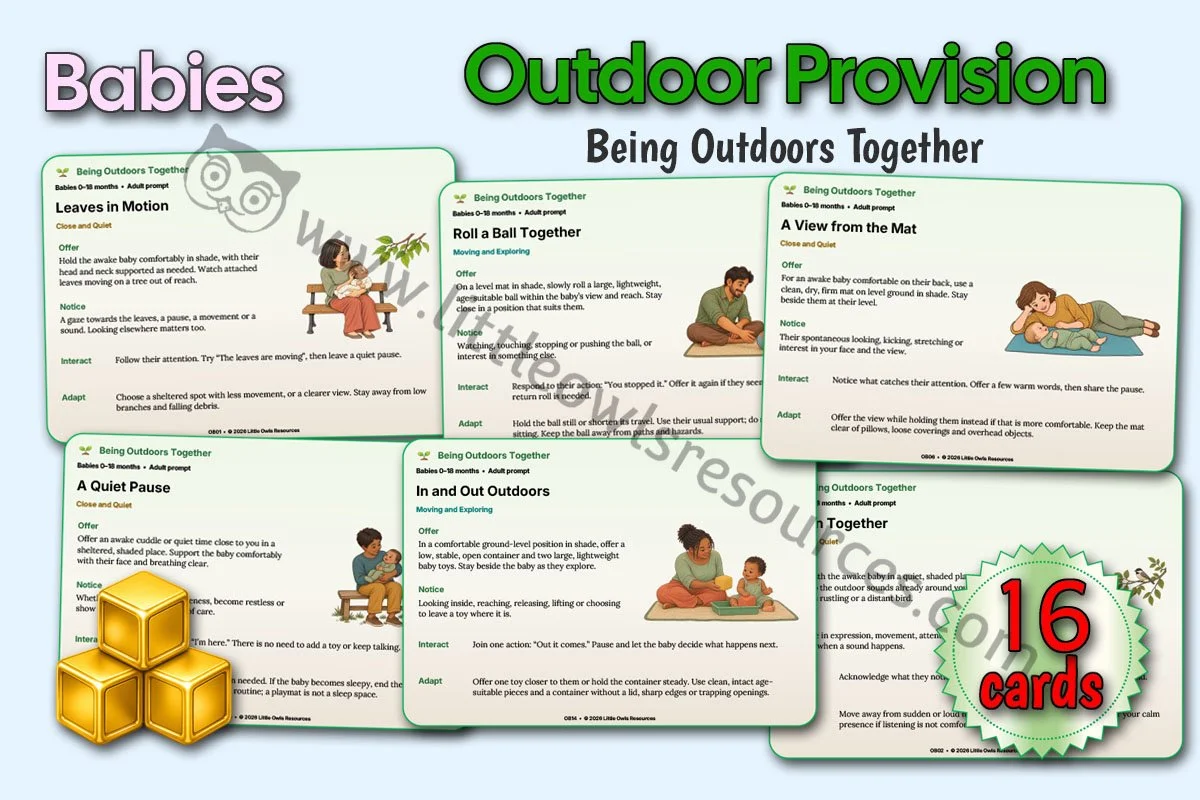
Being Outdoors Together — Babies, 0–18 Months
An adult companion for unhurried outdoor time. Follow a baby’s attention to familiar surroundings, including gentle changes in light and shade, while staying responsive to comfort, movement and the wish to pause.

Using Observation to Respond to Babies’ Needs — Birth–18 Months
Use the baby guidance to notice cues and adjust care, interaction and environment. This can help adults decide whether a shared picture or everyday light-and-shade experience is comfortable, interesting or ready to end.

Sensory Development — EYFS Adult Guidance
Read about exploration through movement and the senses. Use this background when choosing a calm, comfortable environment for light-and-dark experiences, adapting the materials and stimulation to the individual child.
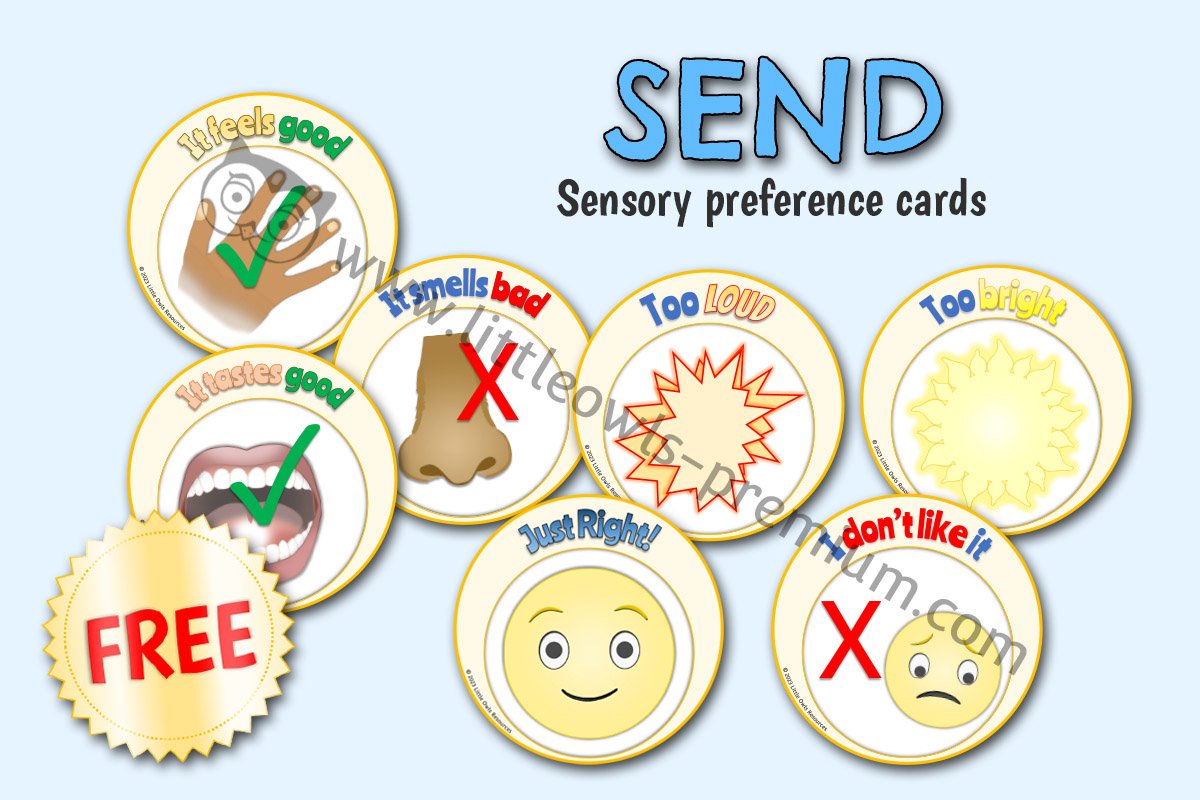
Sensory Preference Cards — Free Sample
Offer concrete choices when talking with a child about experiences they enjoy, avoid or find difficult. Use their responses to adapt the environment and participation; a light-and-dark activity does not need to feel the same for everyone.
10 / Follow an interest
Explore a connected collection
Find more resources in these related collections, including animals, space, seasons and science. Each opens a wider selection beyond the cards chosen for this Light and Dark page.

Nocturnal Animals
Explore more nocturnal-animal pictures, matching, story and provision resources. Choose individual materials that fit the children and the question being explored.

Space
Browse the wider space collection for role play, making, vocabulary and practical activities. Select a few resources that support children’s current questions about the sky.
The Changing Seasons
Explore seasonal observations, weather, clothing and living things throughout the year. Use the collection alongside changes children can notice where they live.
Hibernation
Find further hibernation pictures, stories, vocabulary and provision ideas. Keep the distinction between winter behaviour and day-or-night activity clear.

Science & Investigation — EYFS
Find further practical investigations and observation resources. Choose a focused question, invite children to notice and compare, and adapt the materials and adult help to their current play.

KS1 Science
Browse Year 1 and Year 2 materials, seasonal-change and working-scientifically resources. Select the relevant curriculum purpose and add light or shadow exploration where it supports your class’s questions.
Use the theme in your setting
Ideas for different ages
These are ways to follow an interest, rather than a timetable or a checklist. Choose the materials, language and adult support for the children you know.
Each age link returns to this page’s search with that age selected. Results include resources from the wider site that connect with this theme. Clearly age-labelled resources carry an adaptation note when shown for a different eligible age.
Babies & toddlers
Share a simple picture in comfortable light, notice a baby’s gaze and pause for their response. Toddlers may point out a familiar lamp, notice a shadow with an adult or use pictures to talk about everyday routines.
Preschool
Move a toy in front of a light with adult support, explore an animal picture or create a night-time small-world scene. Let children describe what they notice through movement, gesture, talk, marks or play.
Reception
Revisit a shadow, choose materials for a model window or add signs and story ideas to space play. Draw or photograph a change when recording helps children return to their own question.
Key Stage 1
Connect observations with seasonal changes, material properties and practical enquiry. Support children to compare, describe and explain their choices. Further shadow and reflection investigations can be optional exploration, with recording matched to your class.
Keep exploration comfortable. Keep spaces familiar, with enough light to move safely. Adults should choose and supervise suitable equipment with secure battery compartments. Keep lights away from eyes and never look directly at the Sun; use battery lights for pretend candles.
A few practical questions
Is Light and Dark a compulsory EYFS or KS1 topic?
No named Light and Dark topic is required. In England, the national curriculum has a dedicated Light unit in Year 3. There are useful KS1 connections, including Year 1 seasonal changes and material properties, Year 2 uses of materials and plants needing light, and working scientifically. In EYFS, use the theme as an optional context for exploration, communication and Understanding the World.
How could we begin with light and shadows?
Notice an existing shadow or an object in a comfortably lit room. With a suitable torch controlled by an adult, try one object and a surface, then change one thing that interests the children. A shadow forms when an object blocks light reaching a surface. Simple observation is enough; children do not need a formal explanation before they explore.
What helps when talking about day and night?
Begin with observations and familiar routines. The Sun gives off light; the Moon reflects sunlight and can sometimes be seen during the day. Avoid treating night as simply the time when the Moon appears, or implying that everyone follows the same daily routine.
Can this work in continuous provision?
Yes. Add a small selection of pictures, model-building materials, story props or mark-making resources where they support ongoing play. Keep familiar provision available and return to children’s questions. Autumn and winter are useful contexts, but the theme can be revisited throughout the year.
Which resources are free?
The free section labels individual free resources and samples. Free Access includes a selection of downloads; All Access includes every resource on the site. Public collection pages and planning overviews may also link to member downloads, and a sample may contain fewer pages than a full pack.
Where can I find help with downloading or printing?
Visit Help & Support for website help or read our printing resources guide.
Membership
All Access membership unlocks every resource on the site. Free Access lets you explore and download a selection of free resources. Explore membership options.
Already a paying member? You have sitewide access. There’s no need to change plans or subscribe again. Read our FAQs.