Early Years/Preschool/EYFS Printable Activities/Planning/Displays/Paperwork and ideas for Childminders, Preschools, Nursery Practitioners, Teachers and Parents
Explore road safety resources for EYFS and KS1: signs, posters, games, role-play props and planning for familiar journeys.
Use small-world roads, shared stories and adult-supported play to talk about pavements, crossings, vehicles and travelling together. Choose an age group or search this collection to find a useful starting point.
Free Access samples and All Access resources are clearly marked. Existing paying members have sitewide access—there is no need to change plans.
Search the resources and related collections selected for Road Safety, including signs, transport, role play and planning. Choose an age, then add an optional word to narrow the results. Select a result to find its card on this page.
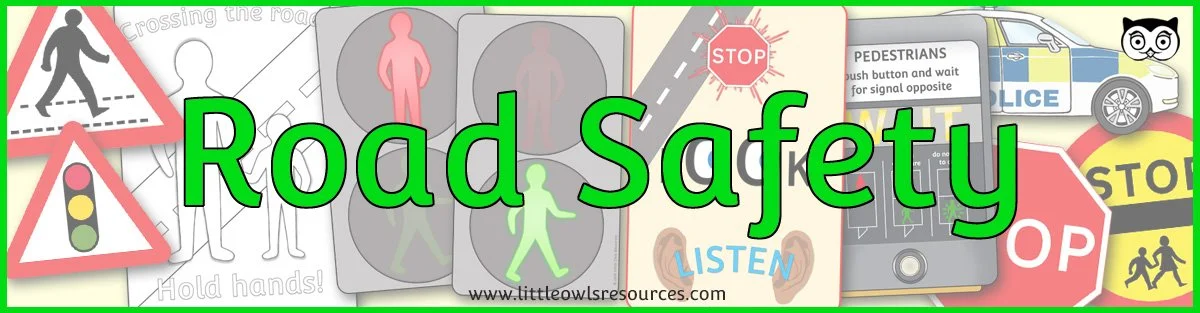
Start with a free word mat, signs, posters, colouring and bus-stop role play. These samples offer a practical way to try the resources before choosing more.
A road-safety vocabulary mat with vehicles, crossing equipment, pedestrian signals and cones. Keep it beside journey drawing or street role play so children can point, name and refer to words.
Road-safety colouring pictures include vehicles, pedestrian crossing buttons, walk/don’t-walk lights and cones. Use a chosen picture to talk about a familiar journey or supervised crossing routine.
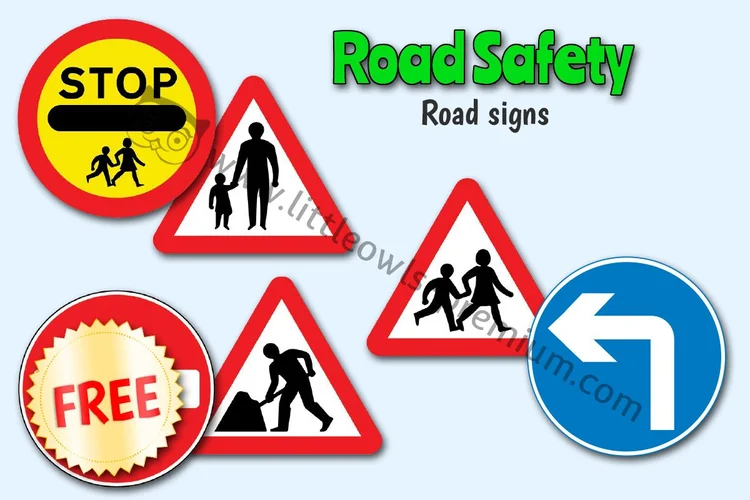
A free selection of road signs for pretend streets, bus routes or outdoor wheeled play. Children can choose signs that fit their imagined journeys and explain their meaning with an adult.
Horizontal road-safety border sheets with blank and two lined layouts, in colour and black-and-white. Children can draw journeys, dictate safety messages or write about a shared road-safety walk.
A Stop Look Listen road-safety poster for shared discussion. Use its message alongside adult modelling in a real crossing routine; displaying the poster does not replace adult supervision.
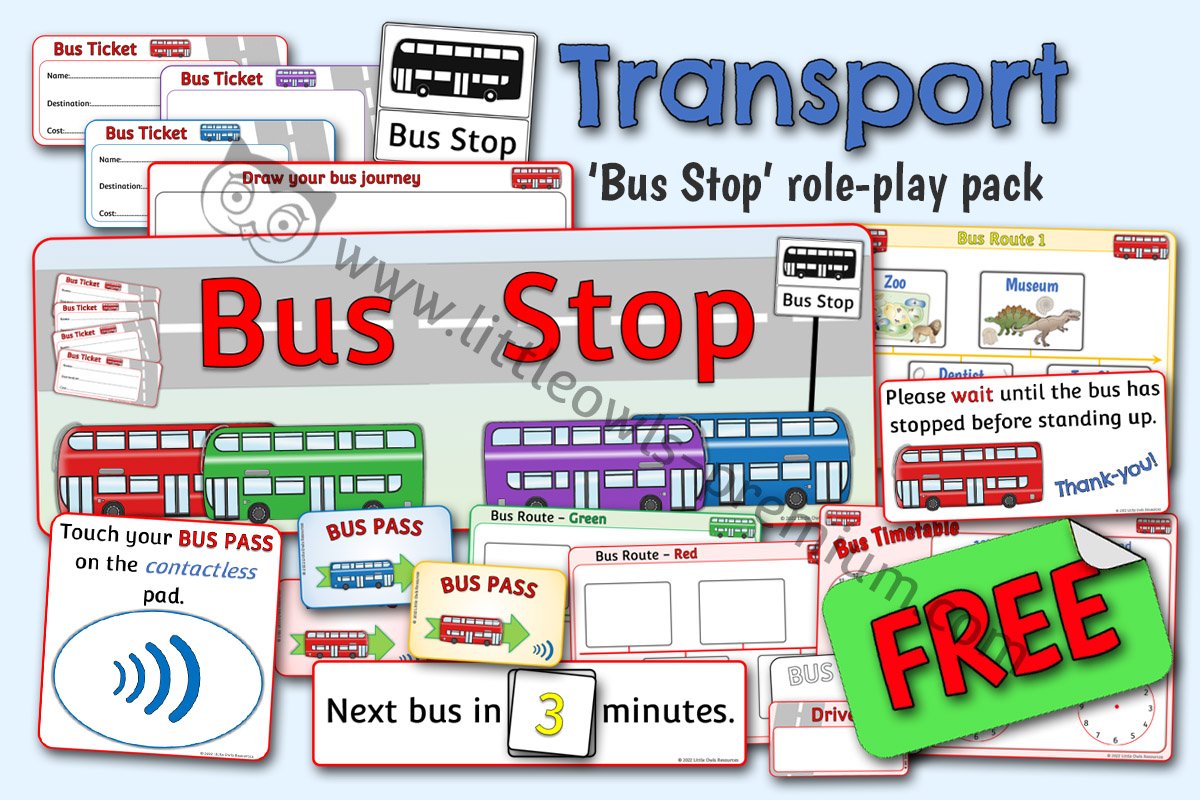
A free sample from the bus-stop role-play collection introduces pretend journeys. Use the included printables with familiar props and invite passenger and driver conversations; sample contents may be limited.
Build familiar routines through conversation, small-world roads and adult-supported role play. Select a few useful props for the play already happening in your setting.
A certificate recognising learning about crossing the road safely. Adults can use it alongside practical, supervised road-safety conversations; it does not indicate that a child can cross independently.
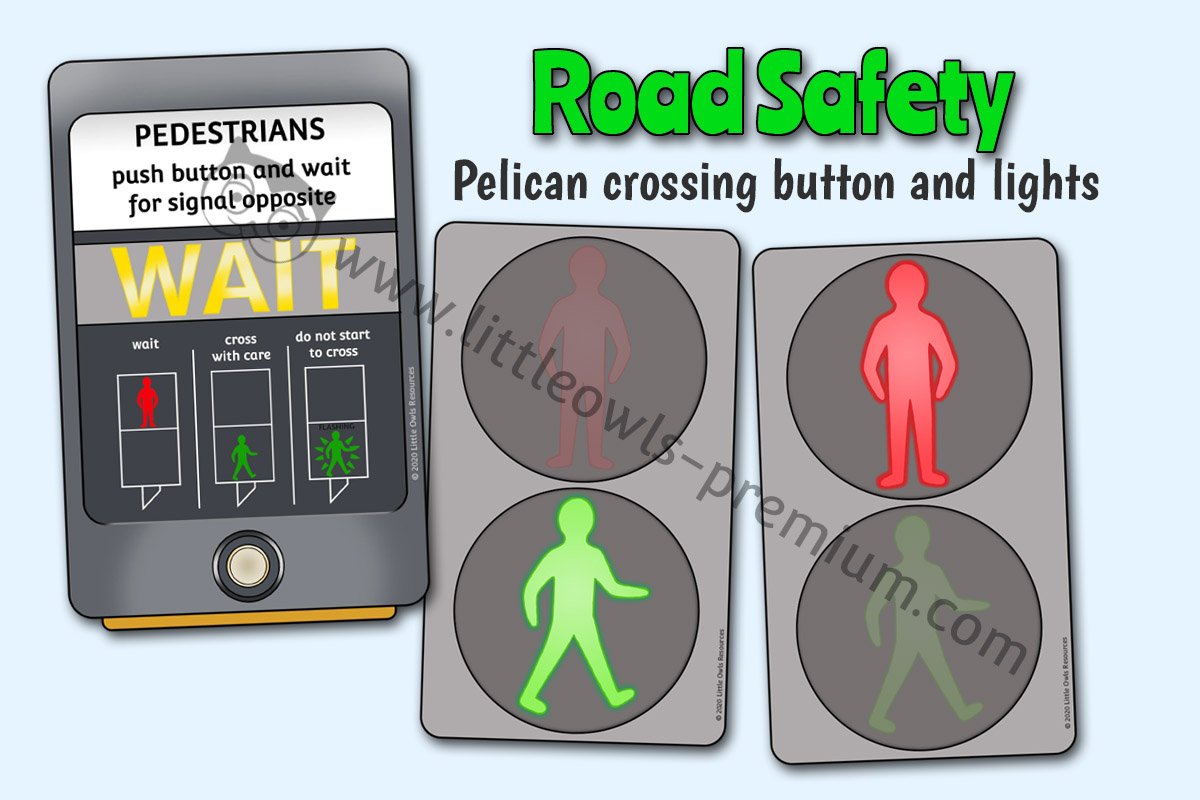
Printable crossing-button and light props help children create a pretend street. Add them to transport play, talk through familiar journeys and let children take roles or act out a crossing together.
Road-safety word cards name vehicles, crossing buttons, pedestrian signals and cones. Add selected cards to a pretend street or use the pictures and labels when discussing a real journey.
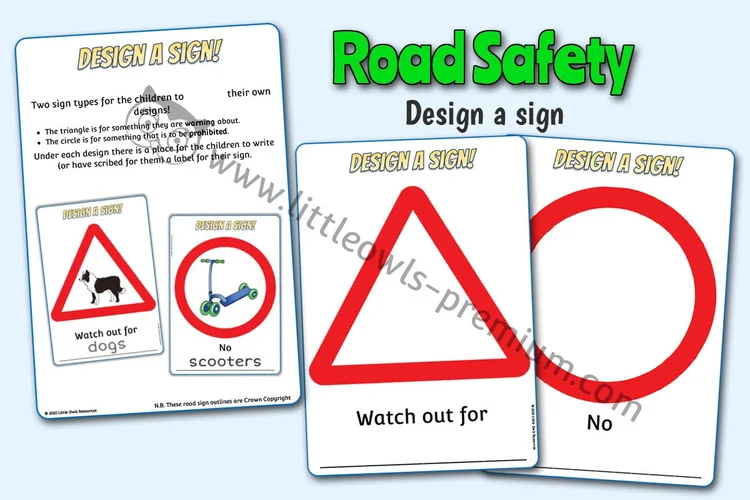
Triangle and circle templates invite children to design a sign, with space for a label or adult-scribed message. Decide who needs the sign and what it should communicate.
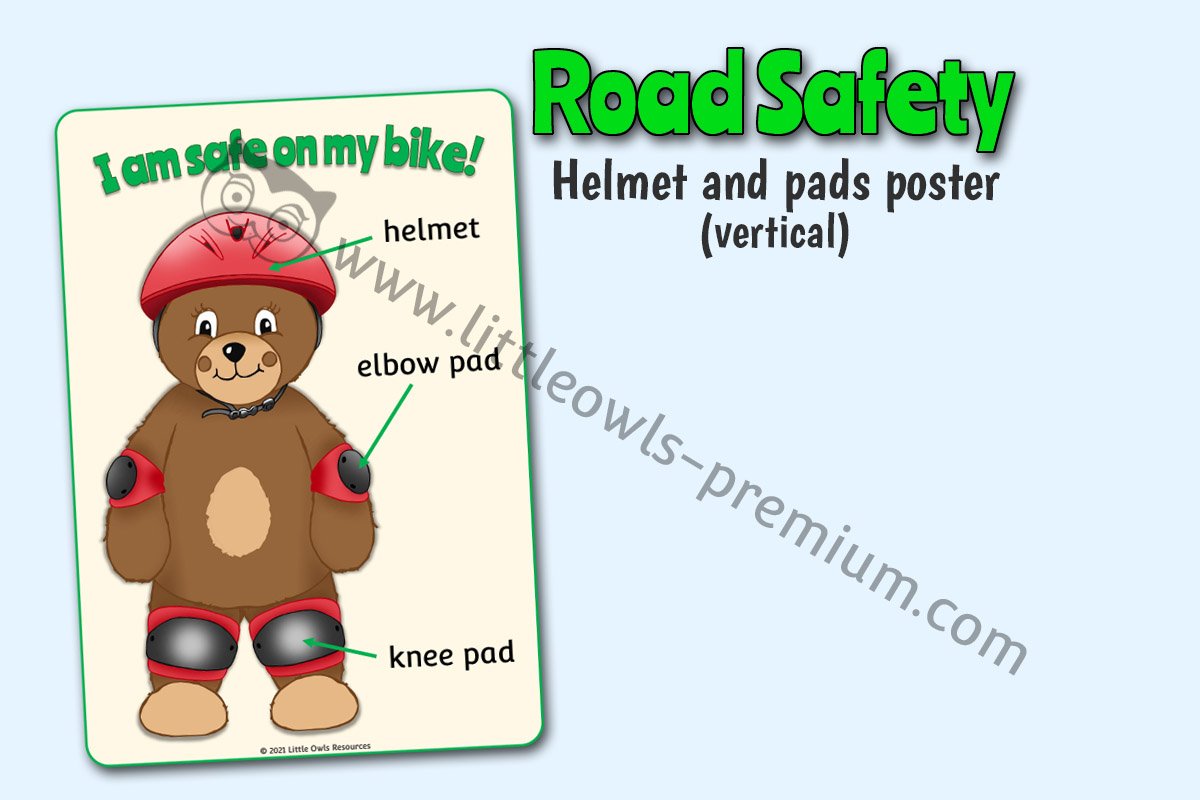
A A4 full-colour teddy bike-safety poster focusing on a helmet and pads. Use it with an adult’s demonstration of preparing for wheeled play and discussing the pictured protective equipment.
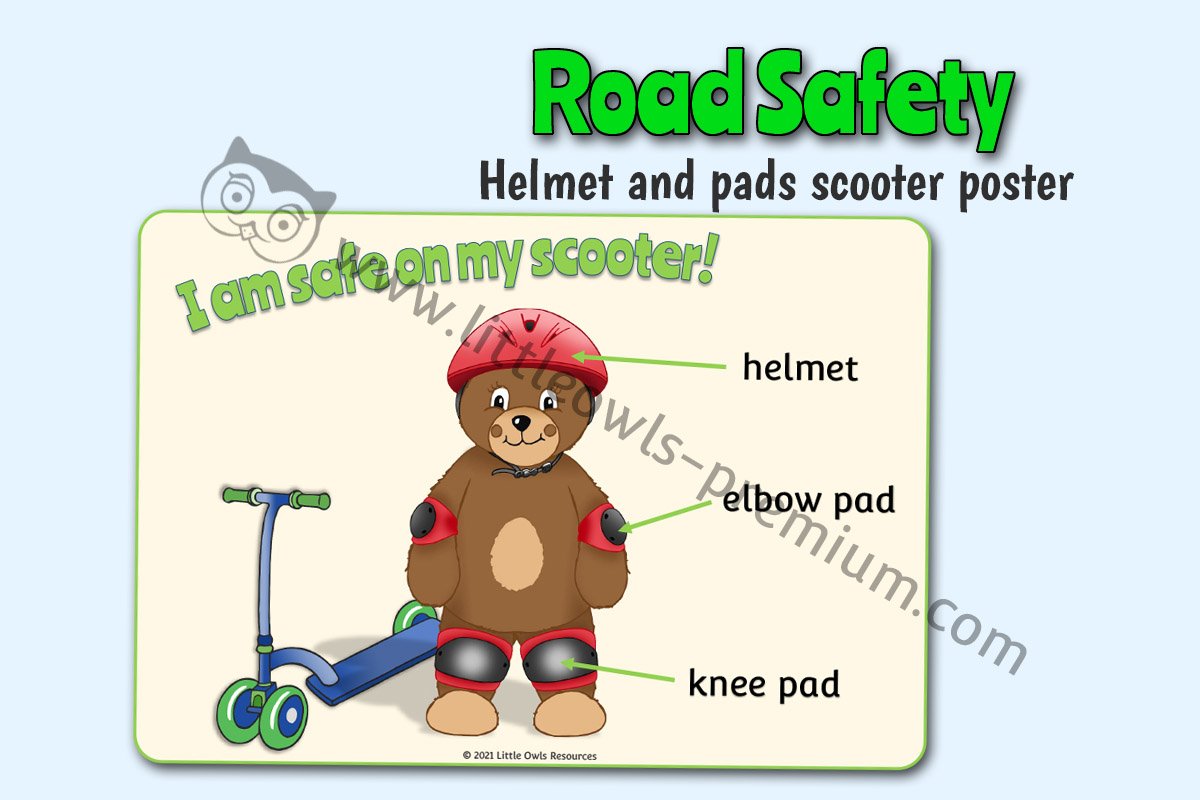
A horizontal A4 full-colour teddy scooter-safety poster focusing on a helmet and pads. Use it with an adult’s demonstration of preparing for wheeled play and discussing the pictured protective equipment.
A road-safety checklist for recalling vehicles, crossing equipment and signs seen on a supervised walk. Children can tick remembered items and explain what they noticed with an adult.
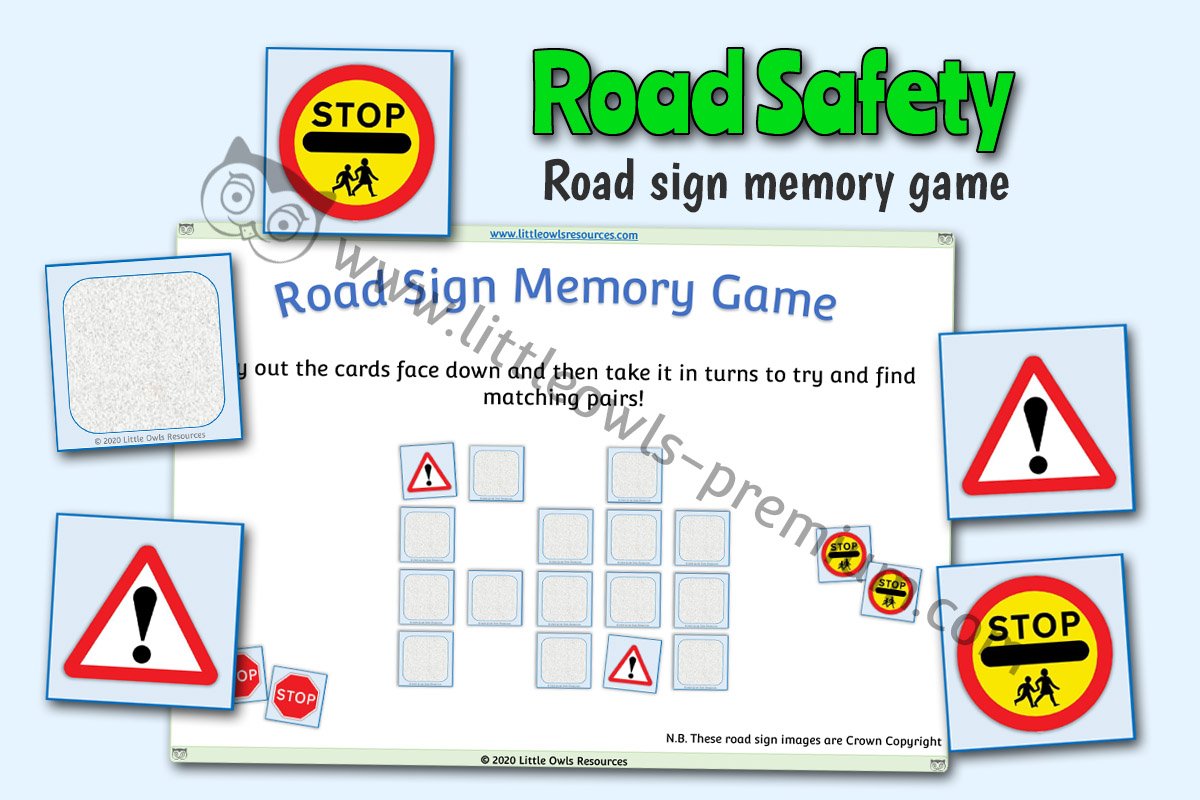
Road-sign picture cards for matching pairs or a face-down memory game. Fold-back tabs help hide the pictures; begin with a small selection of signs children have discussed.
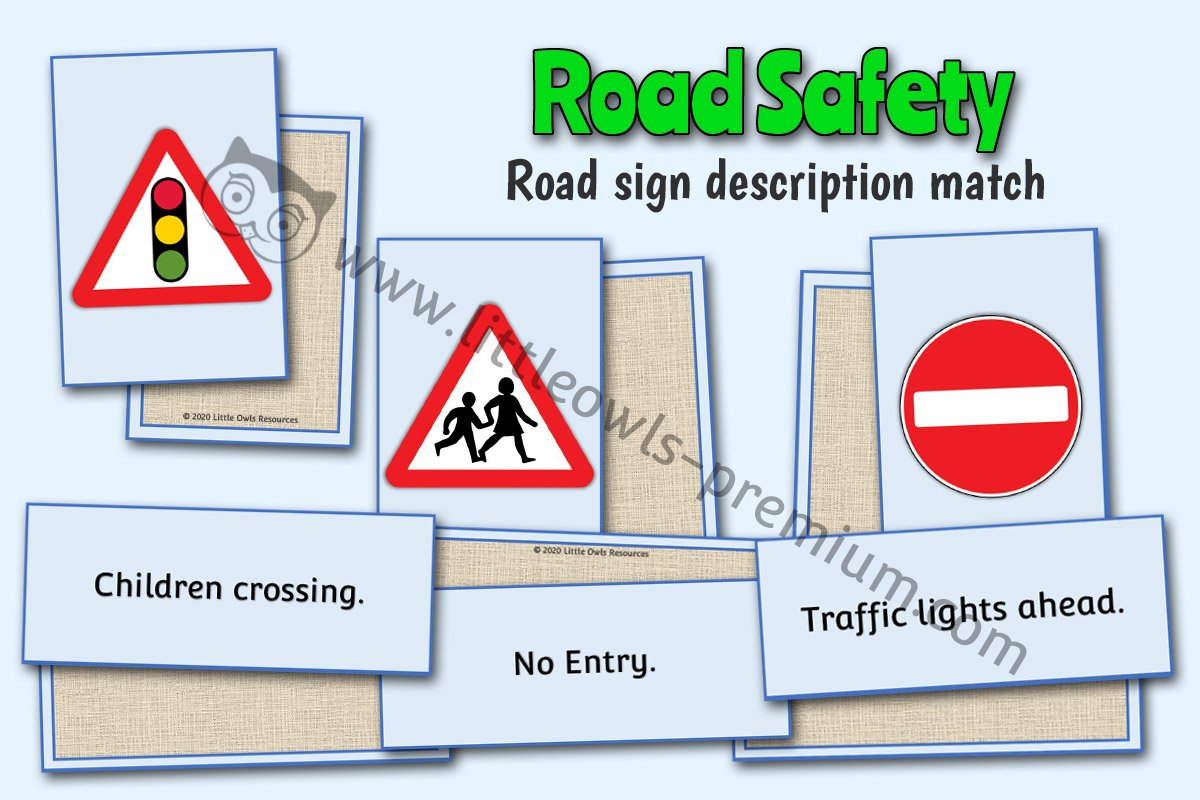
Common road-sign pictures with matching description cards. An adult reads a description and children choose a sign, explaining the visual details that helped them decide.
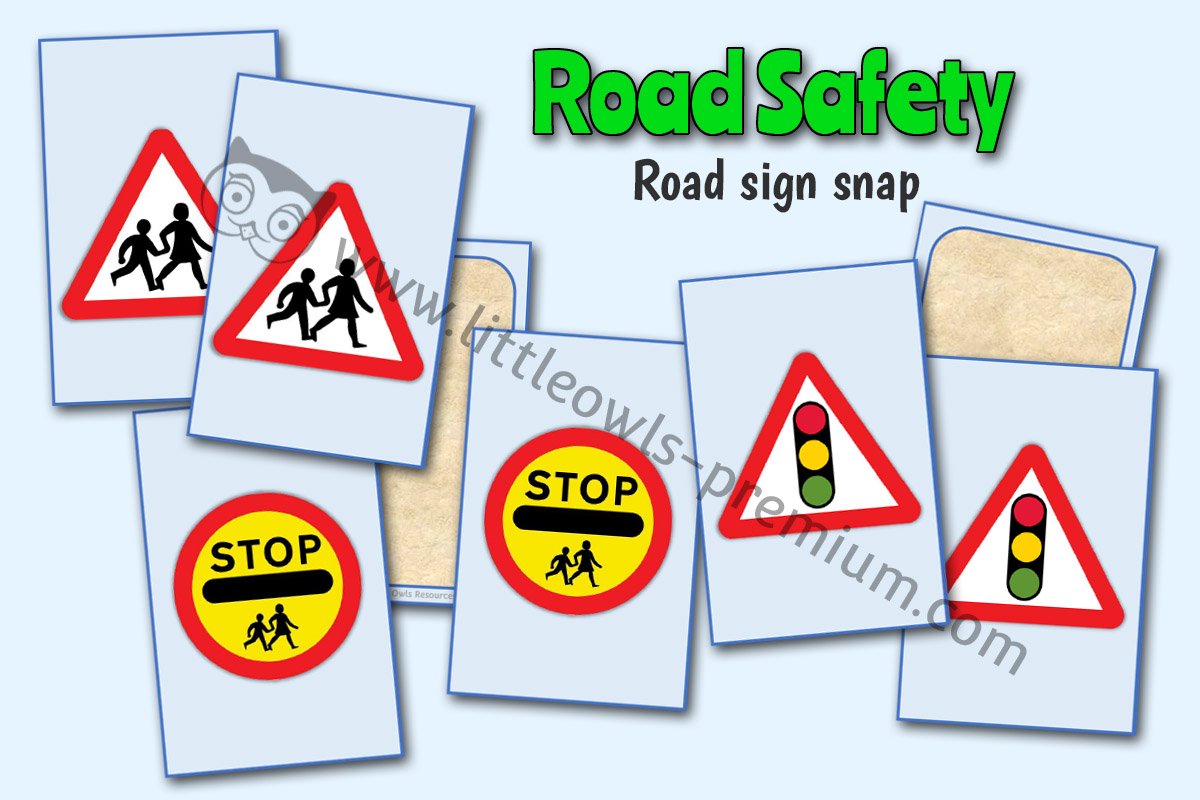
Large road-sign cards for snap or matching-pairs games. Use repeated pictures to practise noticing identical signs, then discuss where a familiar sign might appear on a journey.
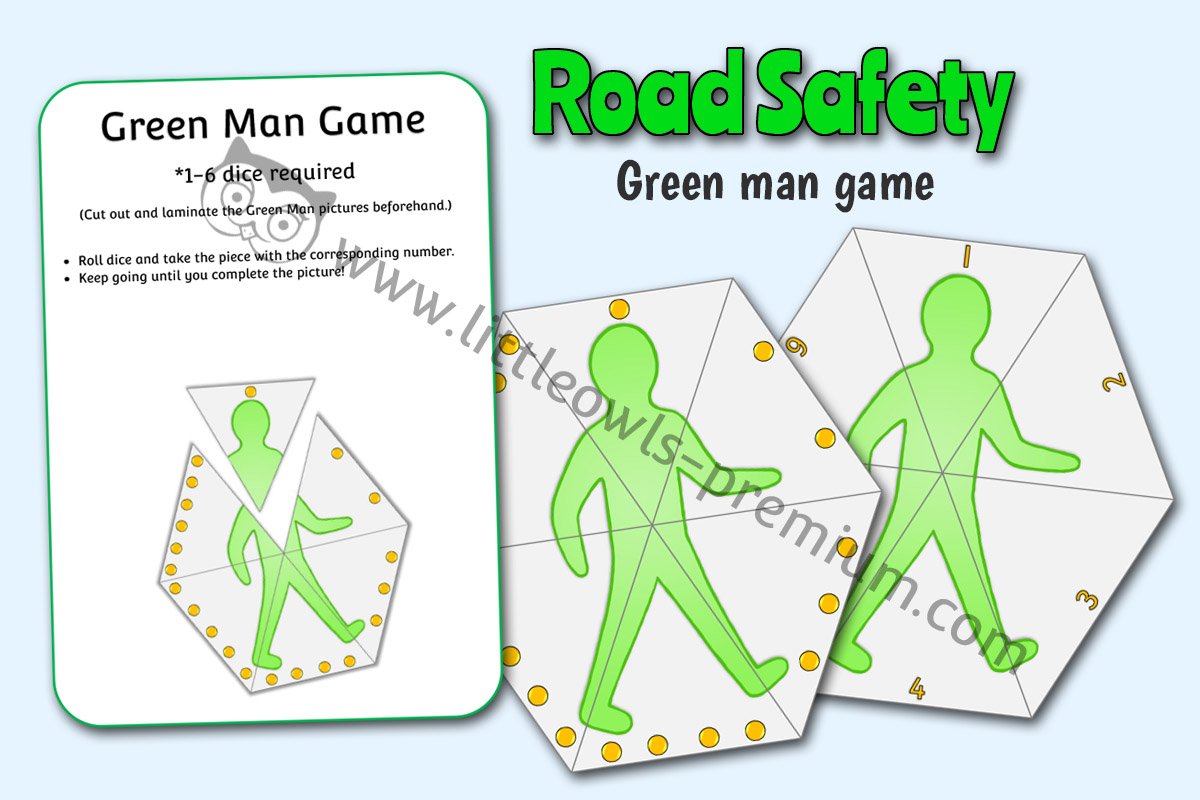
A green-man picture-building dice game. Match a dice quantity to a numbered piece and assemble the picture; adults can separately explain the pedestrian-crossing symbol.
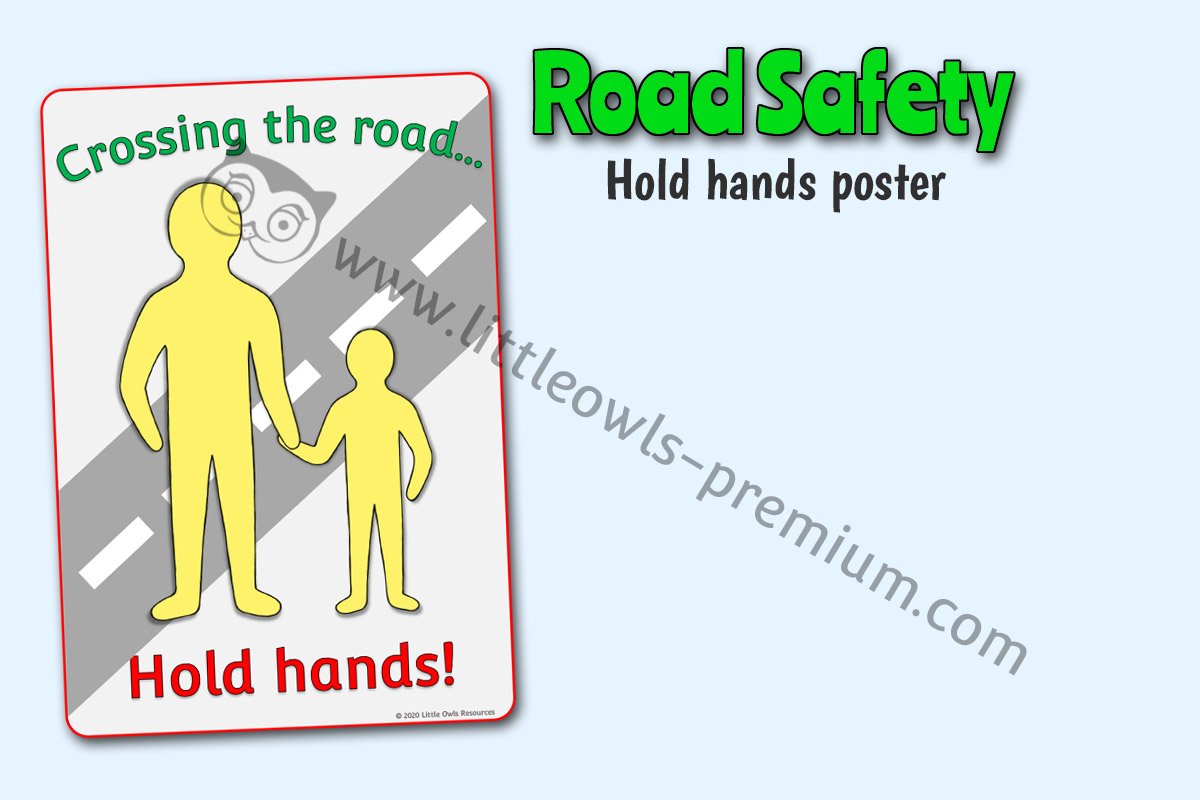
A Hold Hands poster supports an adult-led conversation about crossing roads. Use it as a reminder alongside practising the routine with an adult, rather than an independent safety instruction.
Road-safety picture mats for playdough, loose parts, drawing or collage. Lamination allows repeated use with dough or whiteboard pens; adults choose suitable materials for the children using them.
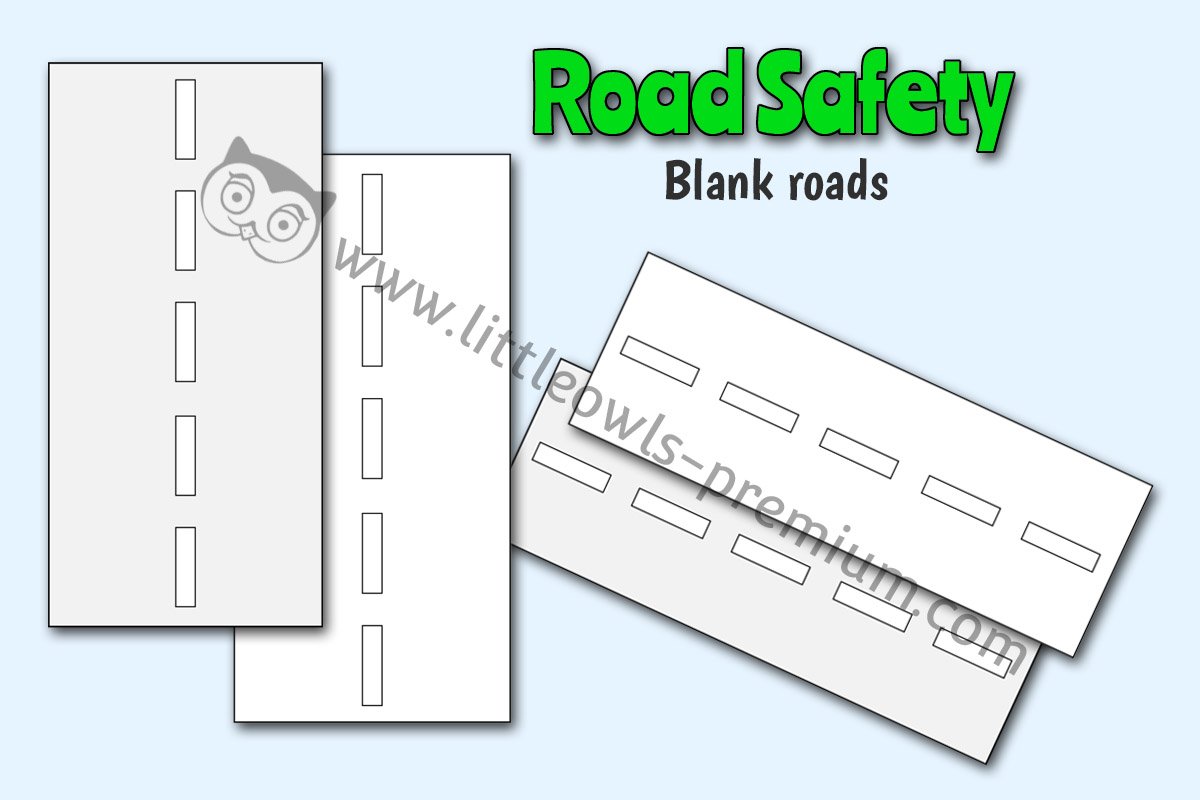
Printable blank road pieces for creating routes in small-world play. Arrange them with toy vehicles, blocks or buildings, then change the layout as children’s journeys and stories develop.
Extend an interest in roads through listening, counting, puzzles, design and purposeful mark making. These transport resources support wider play and learning alongside road-safety conversations.
Transport number posters or mats for 1–6, showing each quantity through planes, wheels, cones and dice dots alongside its numeral and number word. Compare different arrangements of the same quantity.
A vehicle description-match game with twelve transport pictures. An adult reads a description without showing the card, and children select the vehicle that matches the clues.
A twelve-vehicle checklist for spotting real transport or finding toy vehicles hidden around a setting or sand tray. Children can mark sightings and talk about the vehicles they find.
Transport puzzles matching numerals 1–10 with pictured quantities. Count the fixed objects and select a manageable range; uncut copies can also support number ordering.
Wheel-counting puzzles matching numerals 1–10 with pictured quantities. Adults can model counting each wheel once before children join the corresponding pieces.
Four-piece transport puzzles for reconstructing vehicle pictures. Begin with one puzzle and model comparing picture details and turning possible matches.
A bus picture-building dice game with dot and numeral templates for 1–6. Roll, match and collect pieces until the picture is complete; triangular pieces also combine into a hexagon.
Twelve pairs of transport picture cards for snap or a pairs memory game. Name and describe vehicles such as a motorbike, ambulance, tractor and aeroplane during play.
A transport-design booklet with spaces for air, water, road, rail and space travel. Children can draw imagined vehicles and explain how their designs would work.
A transport word mat covering twelve vehicles, including car, train, fire engine, bicycle, ship and tractor. Use it during shared naming, vehicle play or supported writing.
Transport word cards for a display or adult-supported vocabulary activity. Adults can select a few relevant cards to accompany vehicle play and children's recording.
Multimats featuring twelve vehicles, including a train, bicycle, ship and ambulance. Use them with dough, loose parts, reusable pens, drawing or collage materials.
Transport picture posters for exploring vehicle voices and sounds. Use the pictures as prompts for shared imitation, invented noises and turn-taking sound play.
Three drawing, writing and mark-making templates for recording ideas about transport. Select the layout that fits the child's preferred communication method and the purpose of the activity.
Large Wheels on the Bus picture-sequence cards for shared singing, an interactive display or ordering song events. Adults can pair the pictures with actions, clapping or percussion.
These adult-facing planners are written for the ages shown on their covers. Use children’s interests and familiar journeys to choose a manageable focus.
A flexible toddler mini-project explores transporting, lifting, dumping, pushing and building. It helps adults respond to interests in machines and construction through an environment that allows movement, repetition and experimentation.
A toddler transport planner uses wheels, routes and journeys to explore movement, speed and spatial relationships. It guides adults in supporting schemas, action vocabulary and sound play through responsive provision.
Preview of a planned six-week theme for ages 3–4, labelled Spring 1. The source currently says the pack is delayed; no download is available on its destination page.
Follow children’s experiences and interests, choosing materials with suitable adult support. Choose a link below to return to the search with that age selected. You can then add a word to narrow the results.
Babies
Baby adaptations focus on responsive songs and shared vehicle pictures. Adults manage all journey safety; these are not activities for learning to cross roads.
Welcome gestures, home languages, pictures, AAC, movement, drawing and adult-scribed ideas. Choose accessible routes and props, and avoid sudden traffic sounds if they cause distress.
Vehicle pictures, a description-listening game, subitising materials and road-safety or bus-stop role play. Connects familiar journeys with talk, pretend play and selected number activities.
A rhyme collection with lyric posters, illustrated resources and related activities. Adults can share familiar songs, repeat actions and invite children to join words, rhythms or number patterns as they are ready.
Observation, floating-and-sinking, movement, plant and animal resources, alongside practical investigation ideas. Supports adults in helping children notice, compare, wonder and talk about what happens.
Links to road, sun and firework topics alongside safeguarding, welfare and setting-record templates. Adults can choose the relevant professional guidance or child-facing discussion resources.
Medical-role information, picture matching, vocabulary and doctor's-surgery materials. Children can explore familiar helping roles and caring routines through adult-supported conversation and pretend play.
People, landscape, home-building, communication and story-message resources for small-world play. Includes toddler starting points and adult guidance for creating worlds that children can revisit and change.
Open-ended outdoor building, movement, pouring, communication and mark-making resources. Includes age-specific guidance and practical invitations children can return to, change and extend.
Open-ended building ideas with blocks, loose parts and joining materials, alongside mathematical talk and planning prompts. Supports making places, testing connections and changing a construction when ideas develop.
Road Safety Week can be a useful focus, but familiar journeys offer opportunities for conversation throughout the year. Connect your chosen resources to children’s experiences and the routines used by families and your setting.
Making the resources useful
Start from a familiar journey
Talk about the way to the setting, a bus trip or a place children recognise. Build a small-world route, add signs where they have a purpose, and let children suggest what happens next.
Keep provision open-ended
Use a few resources as optional prompts. Children can build, sing, talk, draw or invent a story without needing to complete the same printed activity.
Are these resources suitable for babies and toddlers?
For babies, select responsive singing and shared vehicle pictures with an adult. Toddlers may enjoy familiar vocabulary and pretend stop-and-wait games away from traffic. The age choices show suitable starting points and clearly labelled adaptations.
Can I use these for Reception, Year 1 and Year 2?
Yes. Choose resources and expectations for the children you know. Older children might explain a route, compare signs or write a clear message. The planning packs retain their original age labels, with separate adaptations.
Where do the resource links take me?
A dedicated preview page opens where one is registered; otherwise the exact resource gallery entry opens. Membership access and available file formats are shown at the destination.
Choose your access
All Access includes printable resources and the EYFS Curriculum & Pedagogy Suite. Free Access lets you explore and download a selection of free resources.
Already a paying member? You have sitewide access. No need to change plans.