Early Years/Preschool/EYFS Printable Activities/Planning/Displays/Paperwork and ideas for Childminders, Preschools, Nursery Practitioners, Teachers and Parents
Your Custom Text Here
Nursery Rhymes Early Years/EYFS/Preschool printable learning resources/activities/games/displays
Find nursery rhyme resources for singing, shared play and everyday provision: words posters, puppets, sequence cards, colouring activities, displays and printable activity packs. Choose a familiar rhyme below to see its resources together, followed by related collections to explore when children’s interests lead you further.
These ideas support flexible planning and plans for nurseries, childminders, preschool, Reception, KS1 and parents at home. Start with a song children enjoy, return to it often, and select only the printables that add something useful to your time together.
Choose a nursery rhyme
Select an image to jump to that rhyme’s resources on this page. You can also search for a rhyme, resource or related theme.
Browse these Free Access samples, then explore the full selection under each rhyme. The resource page explains the available downloads and how to access them.
BINGO is supported by a colouring song-word sheet. An adult sings or recites with the children, who can join through repeated sounds, gestures and actions without reading the words.
Share the rhyme with fingers, pictures or a favourite toy fish. The posters and sequence cards can support singing and retelling; children who are interested can explore the number sequence or draw their own part of the story.
1, 2, 3, 4, 5 Once I Caught a Fish Alive is supported by a words poster. An adult sings or recites with the children, who can join through repeated sounds, gestures and actions without reading the words.
1, 2, 3, 4, 5 Once I Caught a Fish Alive is supported by a colouring words poster. An adult sings or recites with the children, who can join through repeated sounds, gestures and actions without reading the words.
Colouring pictures feature fish from the counting rhyme. Offer a choice of tools and colours, invite children’s own decisions and use the image for shared talk without requiring colouring within every outline.
1, 2, 3, 4, 5 Once I Caught a Fish Alive is supported by small lyric handouts. An adult sings or recites with the children, who can join through repeated sounds, gestures and actions without reading the words.
Picture cards show the sequence of 1, 2, 3, 4, 5 Once I Caught a Fish Alive. Share the rhyme first, then arrange the pictures and retell the events, with an adult preparing pieces where needed.
Picture cards show the sequence of 1, 2, 3, 4, 5 Once I Caught a Fish Alive. Share the rhyme first, then arrange the pictures and retell the events, with an adult preparing pieces where needed.
1, 2, 3, 4, 5 Once I Caught a Fish Alive is supported by illustrations. An adult sings or recites with the children, who can join through repeated sounds, gestures and actions without reading the words.
Colouring versions of familiar nursery-rhyme lyric posters, including Twinkle Twinkle Little Star and Hickory Dickory Dock. An adult can sing or read the words while children choose how to colour the accompanying page.
Sing together with a gentle swaying action, or invite children to suggest how their ship might move. Use the posters and illustrations to revisit the song, share ideas about a journey or inspire a pretend boat.
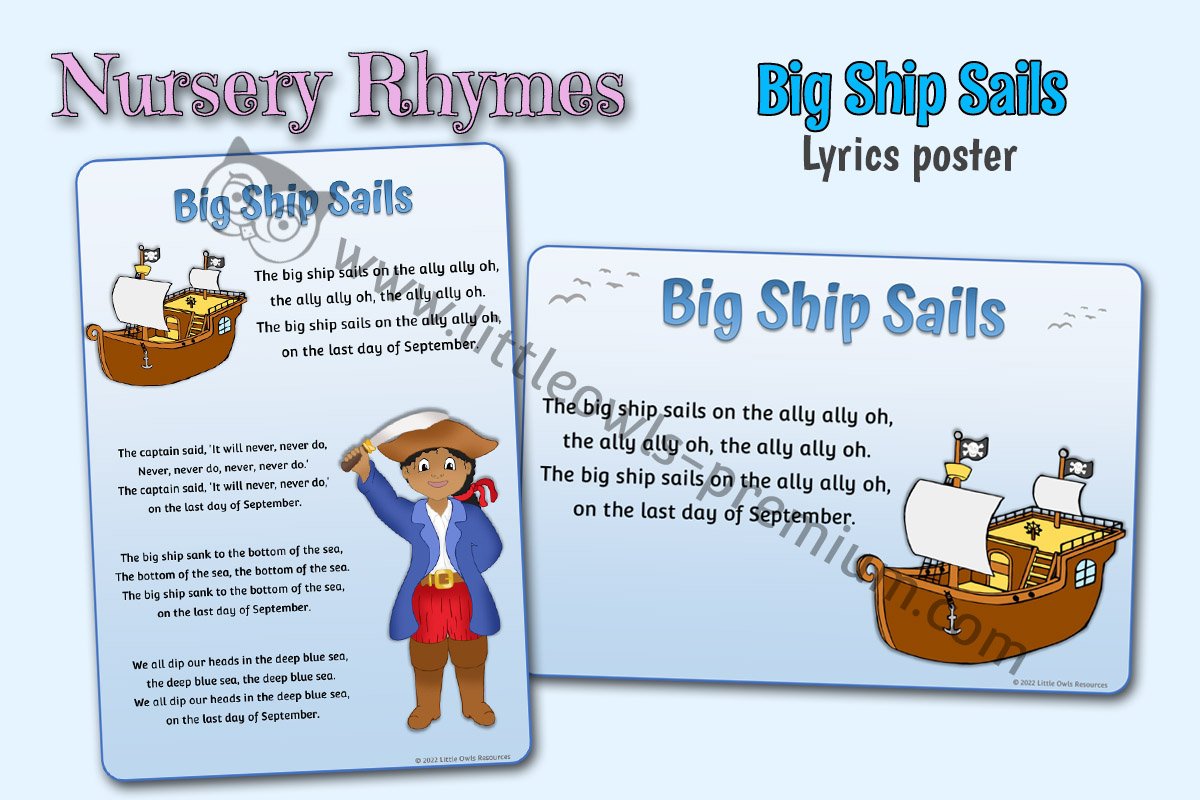
Big Ship Sails is supported by lyric posters. An adult sings or recites with the children, who can join through repeated sounds, gestures and actions without reading the words.
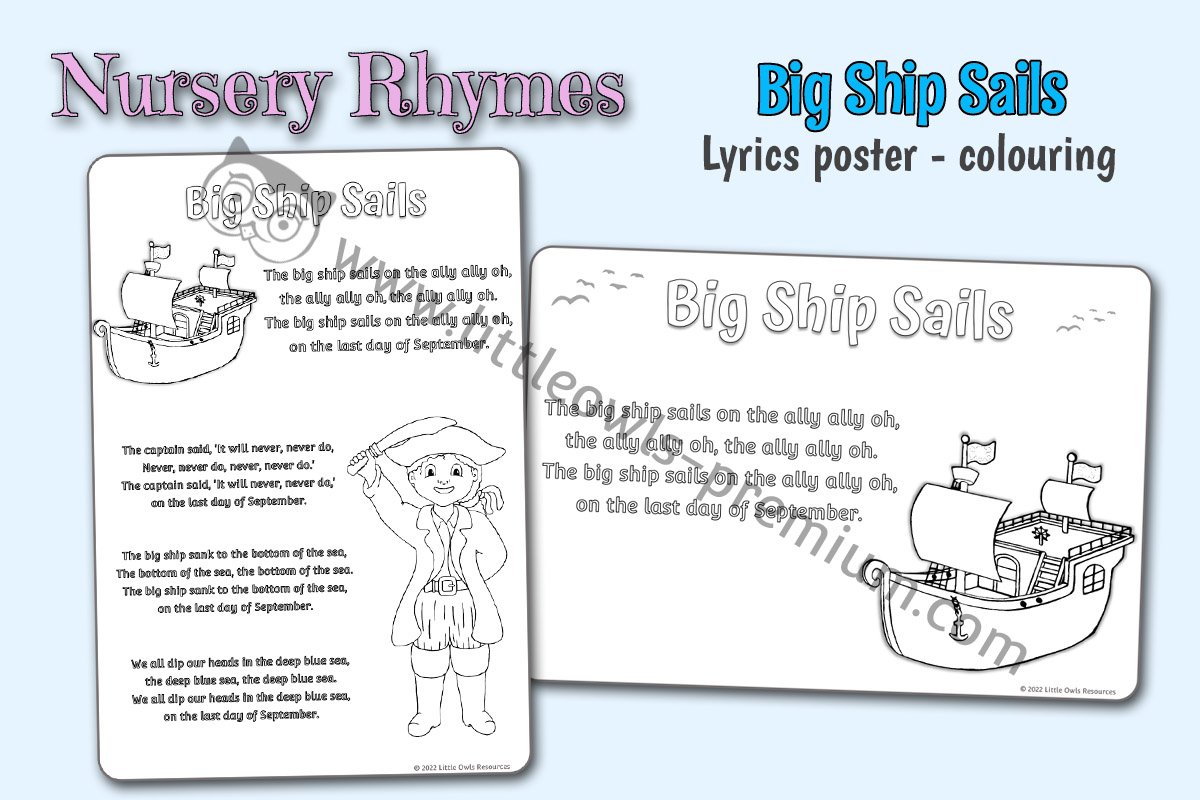
Big Ship Sails is supported by colouring lyric posters. An adult sings or recites with the children, who can join through repeated sounds, gestures and actions without reading the words.
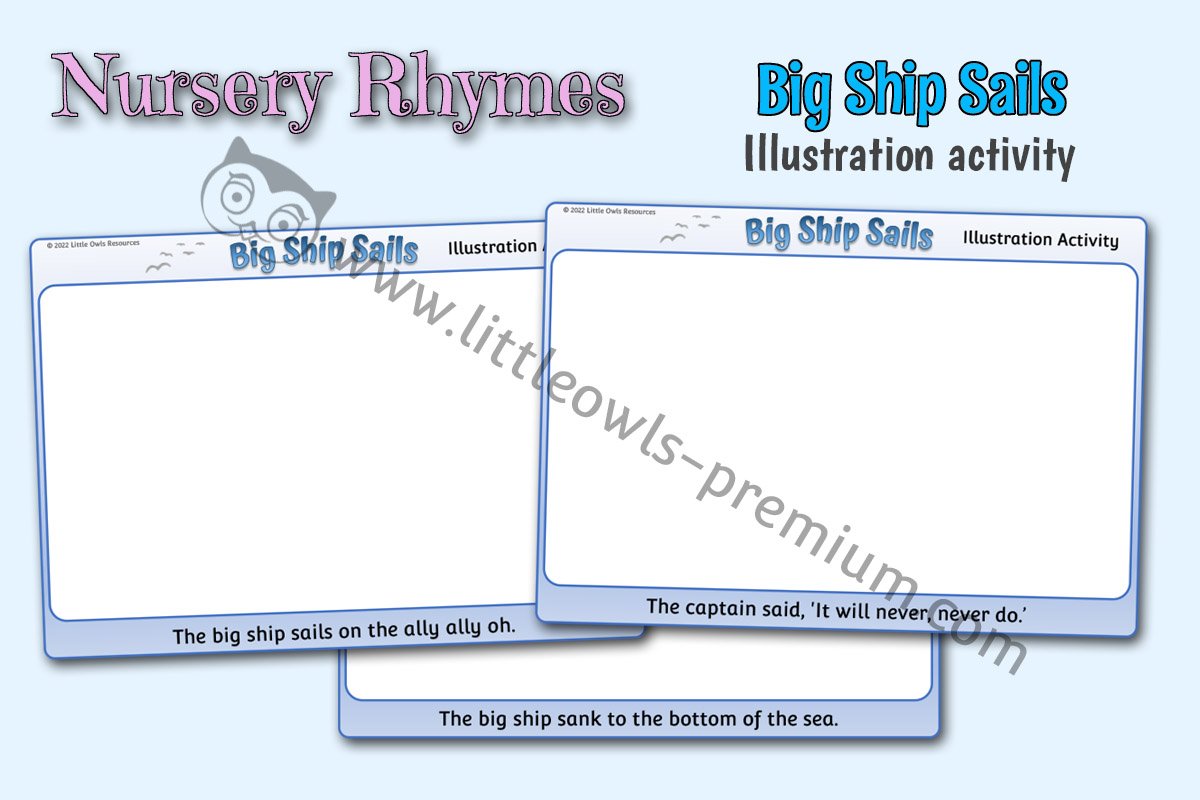
Big Ship Sails is supported by illustrations. An adult sings or recites with the children, who can join through repeated sounds, gestures and actions without reading the words.
Enjoy the repeated rhythm and invite children to join with claps, sounds or gestures. Use the song words as an adult prompt and the illustrations for conversation; spelling the name is not needed to enjoy singing together.
BINGO is supported by song words. An adult sings or recites with the children, who can join through repeated sounds, gestures and actions without reading the words.
BINGO is supported by a colouring song-word sheet. An adult sings or recites with the children, who can join through repeated sounds, gestures and actions without reading the words.
BINGO is supported by illustrations. An adult sings or recites with the children, who can join through repeated sounds, gestures and actions without reading the words.
BINGO is supported by a colouring song-word sheet. An adult sings or recites with the children, who can join through repeated sounds, gestures and actions without reading the words.
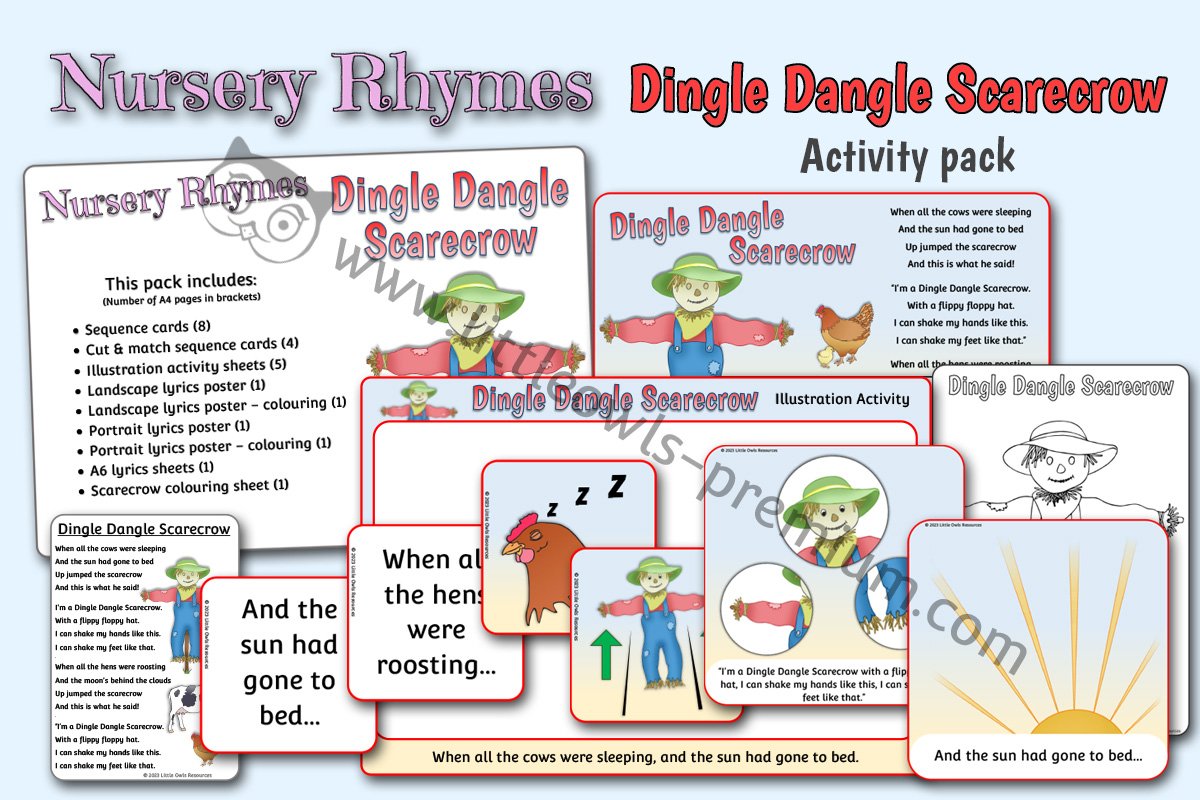
Invite children to choose a comfortable way to move with the song, using hands, arms or their whole body. Select pictures or sequence cards from the activity pack to revisit an action or retell a favourite part.
Song posters, picture sequences and illustration sheets support Dingle Dangle Scarecrow. Sing, choose actions and revisit the familiar sequence through movement or pretend play.
Use the pictures to choose an animal, suggest an action and enjoy the repeated pattern together. Children might change the movement or invent a verse; the posters can remain nearby as a prompt for adults and shared play.
A “Down in the Jungle” lyrics poster for shared singing, rhythm and rhyme. Adults can lead the words while children join with sounds, movements or percussion.
A colouring version of the “Down in the Jungle” lyrics poster. Share the song aloud and let interested children decorate the picture as a separate creative choice.
Illustrations connected with “Down in the Jungle” for sharing the rhyme and discussing its characters. Adults can use the pictures while leading familiar words or actions.
Set up a small pretend bakery or sing with the pictures from the activity pack. Children can choose a bun, join a repeated phrase or notice how the group changes, without needing to record numbers or complete a worksheet.
A “Five Currant Buns” pack with lyrics, sequence pictures, illustration activities and colouring. Adults can choose visual prompts for singing and exploring the changing number of buns.
Sing with a few frog pictures or prepared puppets and let children decide how to join in. Revisit which frog jumps next, use the cards for retelling, or explore how many remain when children show an interest.
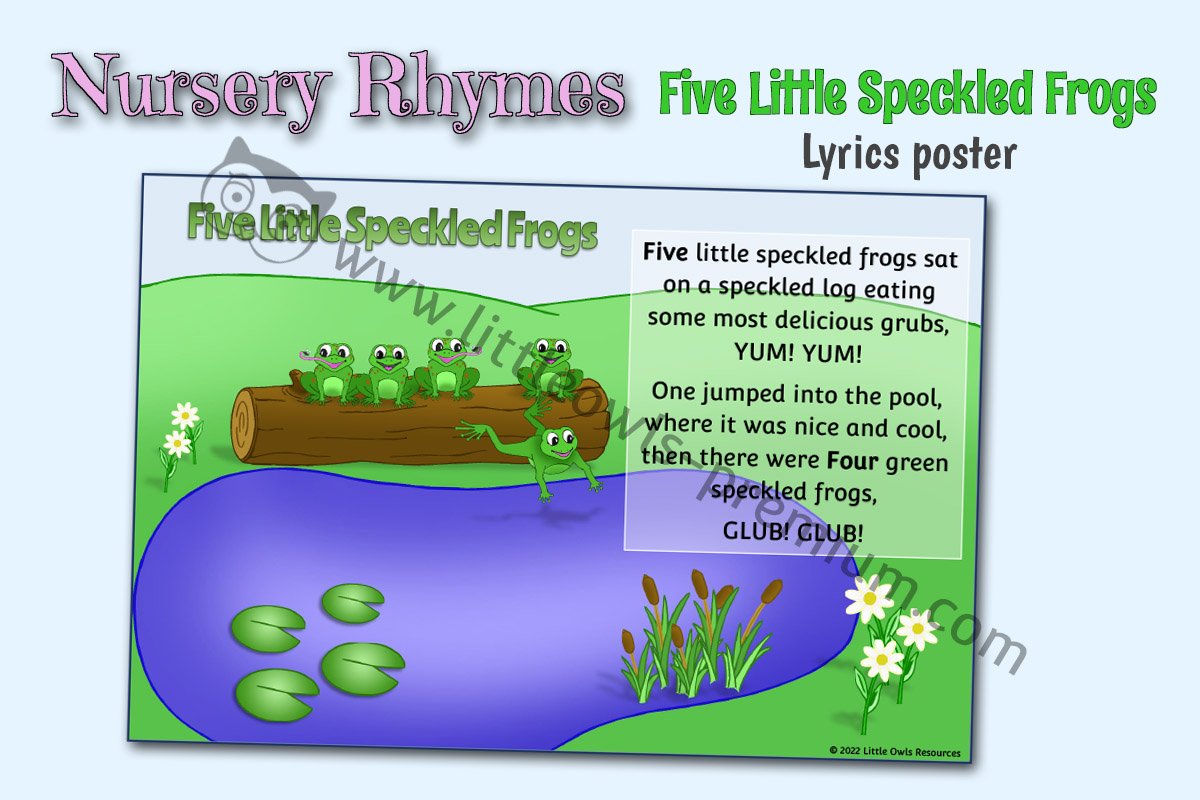
A “Five Little Speckled Frogs” lyrics poster for shared singing and counting. Adults can lead the rhyme while children join with gestures, words or percussion.
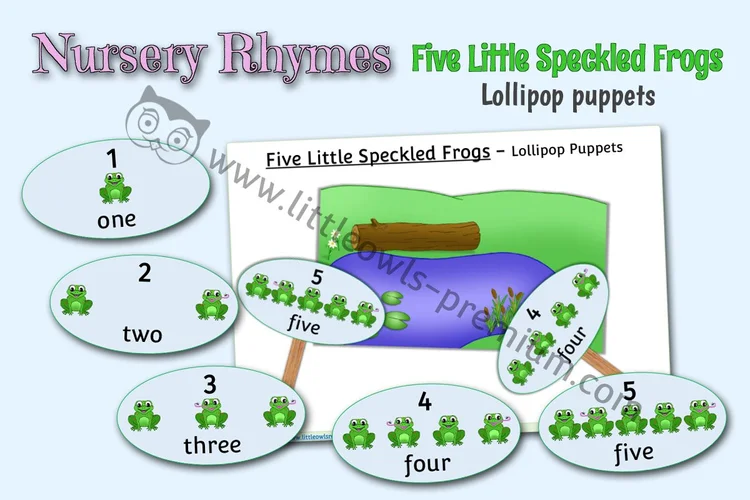
Frog puppets and a pond setting for moving characters during “Five Little Speckled Frogs”. Sing together, notice the changing group and explore the beat.
Small “Five Little Speckled Frogs” lyric sheets for sharing the familiar counting song with families. Children can demonstrate actions or repeated phrases they know.
Large “Five Little Speckled Frogs” sequence cards for acting out the rhyme and discussing numbers to five. Move or reorder the pictures as the song progresses.
Small “Five Little Speckled Frogs” pictures for cutting and matching in sequence. Sing the rhyme first, then connect the ordered pictures with its changing quantities.
Invite children to choose an action they enjoy, including a small gesture, a sound or a movement of their own. The picture prompts can support choices and shared singing; children can watch without performing an action.
Colouring versions of familiar nursery-rhyme lyric posters, including Twinkle Twinkle Little Star and Hickory Dickory Dock. An adult can sing or read the words while children choose how to colour the accompanying page.
Sing at a pace that gives children time to respond, choosing movements that are comfortable for them. Use the poster for shared looking and talk about body words; children can point, gesture, sing or simply listen.
Enjoy the playful nonsense together, using pictures or prepared puppets to revisit the characters. Children might choose who appears next, retell the rhyme in their own way or imagine another surprising thing that could happen.
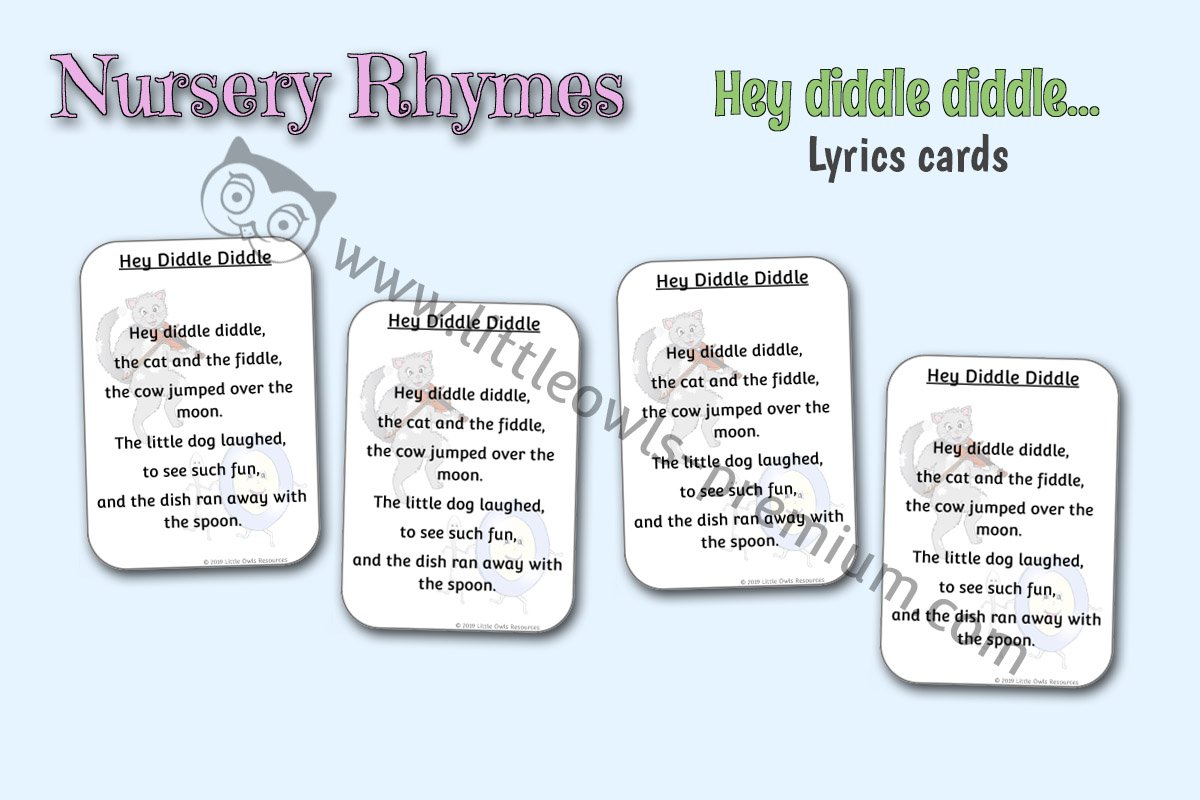
A “Hey Diddle Diddle” lyrics poster for shared rhyme, singing and beat. Adults can model the words while children join through actions, sounds or phrases.
Large “Hey Diddle Diddle” sequence pictures for retelling the rhyme. Adults can lead the words and invite children to arrange or discuss the pictured events.
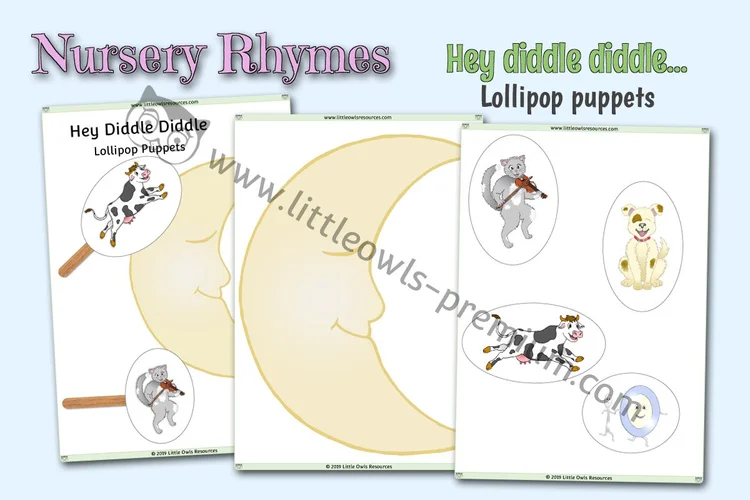
“Hey Diddle Diddle” characters and a moon poster for moving and retelling. Children can revisit the rhyme or invent additional events with adult support.
Colouring versions of familiar nursery-rhyme lyric posters, including Twinkle Twinkle Little Star and Hickory Dickory Dock. An adult can sing or read the words while children choose how to colour the accompanying page.
Use a picture or prepared mouse puppet to travel up and down as you sing. Pause for children to join the familiar sounds or movement, then use the sequence cards if they want to retell what happened.
Small “Hickory Dickory Dock” lyric sheets for sharing with families. Children can revisit familiar words and demonstrate the actions or rhythm they know.
Colouring versions of familiar nursery-rhyme lyric posters, including Twinkle Twinkle Little Star and Hickory Dickory Dock. An adult can sing or read the words while children choose how to colour the accompanying page.
Share either familiar version of the rhyme with fingers, pictures or a prepared puppet. Revisit the spider’s journey through actions and sequence cards, giving children time to choose a movement or tell the story in their own words.
Incy Wincy/Itsy Bitsy Spider lyrics posters for shared singing and rhythm. Adults can lead repeated words and actions while children join in at their own level.
Colouring versions of familiar nursery-rhyme lyric posters, including Twinkle Twinkle Little Star and Hickory Dickory Dock. An adult can sing or read the words while children choose how to colour the accompanying page.
Use the activity-pack pictures to share the rhyme and talk about what happens. Children might retell it, draw a different ending or explore carrying and pouring in their play, choosing the part that interests them.
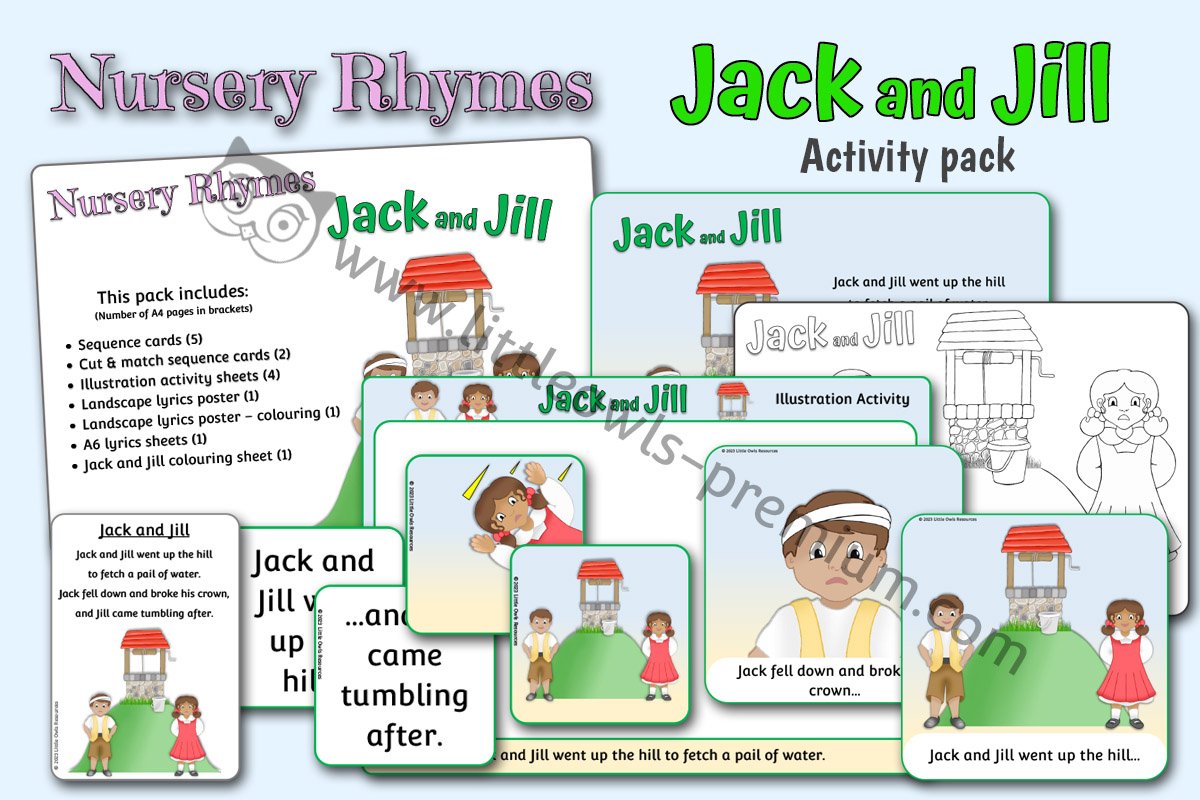
A Jack and Jill rhyme pack combining sequence cards, cut-and-match cards, illustration sheets, lyrics and colouring. Share the rhyme aloud, then choose a picture or drawing activity that fits the children’s interests and understanding.
Let children choose an animal picture or toy and decide which sound comes next. The activity pack can support shared singing, a small-world farm or retelling; repeat familiar favourites and welcome children’s own animal sounds.
Song posters, picture sequences and illustration sheets support a familiar favourite. Share the rhyme aloud, revisit its events and choose a relevant picture, sequencing or drawing activity.
Share the song and invite children to notice the cat’s journey. The posters can prompt conversation or a simple pretend story; children might choose where their own cat would visit and what it would find there.
Portrait and landscape colouring posters included. Offer a choice of colouring tools and encourage children’s own colour choices, with no requirement to copy a finished model.
Enjoy the familiar rhythm with a teddy, a picture or a gesture chosen by the child. Follow their response and preferences about touch; the posters and prepared puppets also offer a way to share the rhyme without tickling.
A “Round and Round the Garden” lyrics poster for an adult to share while singing or saying the rhyme. Invite children to anticipate repeated words and choose whether to join the actions.
Small “Round and Round the Garden” lyric sheets for sharing the rhyme at home or in a setting. Adults can read the words while children listen, gesture or join in.
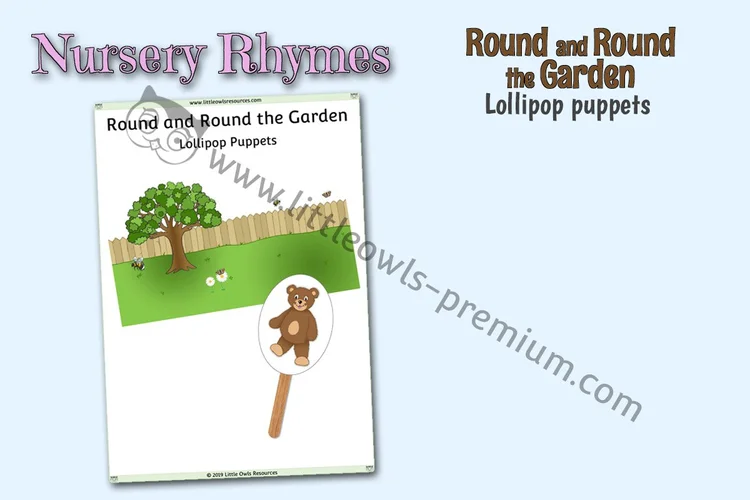
Lollipop teddy-bear puppets and an A4 garden poster for “Round and Round the Garden”. Children can move a bear around the garden, take turns and join in with familiar words and actions.
Colouring versions of familiar nursery-rhyme lyric posters, including Twinkle Twinkle Little Star and Hickory Dickory Dock. An adult can sing or read the words while children choose how to colour the accompanying page.
Sing with a rowing gesture, a toy boat or a movement children choose. Use the activity-pack pictures to revisit a favourite verse, then invite their ideas about where the boat might go or what it could meet.
Lyric posters, sequence cards and illustration sheets for “Row, Row, Row Your Boat”. Share the song, revisit its pictures and invite gentle movements chosen by the child.
Enjoy the change between stillness and movement, inviting each child to choose how their bunny wakes up. A hand, toy or picture can hop too; use the sequence cards to revisit the song without needing everyone to lie down or jump.
Portrait and landscape “Sleeping Bunnies” lyrics posters for shared singing and a rhyme display. Invite children to join the actions or words in a way that feels comfortable.
Portrait and landscape colouring versions of the “Sleeping Bunnies” lyrics poster. Children can decorate a chosen poster and revisit the rhyme through shared singing and movement.
Small “Sleeping Bunnies” lyric sheets for shared singing at home or in a setting. Adults can read the words while children anticipate actions, join repeated phrases or simply listen.
Large “Sleeping Bunnies” picture-sequence cards for retelling the song and ordering its events. Use them on an interactive display or with a group, then check the order by singing together.
Invite children to choose a familiar sound or action, using the pictures when helpful. They might arrange chairs for a pretend bus, share a journey they remember or suggest a new verse to sing together.
A Wheels on the Bus lyrics poster for shared singing and display. Use the printed words as an adult prompt while children join in with voices, actions or percussion.
Small Wheels on the Bus lyric handouts for sharing the song with families. Children can revisit familiar words, rhythm and actions and talk about how they used the song in the setting.
Large Wheels on the Bus picture-sequence cards for shared singing, an interactive display or ordering song events. Adults can pair the pictures with actions, clapping or percussion.
Small Wheels on the Bus sequence cards for arranging familiar parts of the song. Adults can sing alongside the pictures and support children to choose what comes next.
Share a quiet song, a hand movement or a favourite star picture. Use the sequence cards and illustrations for retelling or drawing when children are interested, and let their questions about the sky guide any further exploration.
A colouring lyrics poster for Twinkle Twinkle Little Star. Adults can use the words as a singing prompt while children decorate the picture or join the rhyme.
Small Twinkle Twinkle Little Star lyric sheets for sharing the rhyme with families. Adults and children can revisit familiar words, rhythm and actions together at home.
Large Twinkle Twinkle Little Star sequence cards for shared singing, ordering or an interactive display. Pair the pictures with familiar words, actions, clapping or percussion.
Twinkle Twinkle Little Star cut-and-match sequence cards. Adults can prepare the pieces and use a small selection to revisit and arrange familiar parts of the rhyme.
A Twinkle Twinkle Little Star illustration activity. Share the rhyme first, then invite children to express an image or idea from it through drawing and talk.
This set of Nursery Rhyme Puzzles includes elements from various popular nursery rhymes. Compare picture details and edges to fit the pieces together, beginning with a small manageable choice.
Colouring versions of familiar nursery-rhyme lyric posters, including Twinkle Twinkle Little Star and Hickory Dickory Dock. An adult can sing or read the words while children choose how to colour the accompanying page.
Bring familiar rhymes together with puzzles, character pictures and display resources. Choose a small selection children know, invite them to match or describe a favourite character, and use their choices as a starting point for another song.
This set of Nursery Rhyme Puzzles includes elements from various popular nursery rhymes. Compare picture details and edges to fit the pieces together, beginning with a small manageable choice.
This set of Nursery Rhyme Puzzles includes elements from various popular nursery rhymes. Compare picture details and edges to fit the pieces together, beginning with a small manageable choice.
Nursery-rhyme characters have description cards and matching pictures. An adult speaks in role while children use the clues to identify the character; children can also try a supported hot-seat role.
Nursery-rhyme characters have description cards and matching pictures. An adult speaks in role while children use the clues to identify the character; children can also try a supported hot-seat role. This version uses colouring pictures.
Colouring versions of familiar nursery-rhyme lyric posters, including Twinkle Twinkle Little Star and Hickory Dickory Dock. An adult can sing or read the words while children choose how to colour the accompanying page.
A nursery rhymes self-registration display invites children to find their own name or picture and show they have arrived. Adults introduce the routine and support recognition before expecting independent use.
Nursery rhyme planning, with room to follow the children
Use a planner as a starting point for songs, movement and conversation. Keep familiar rhymes available, notice what children return to, and adapt the possibilities to your group rather than working through every activity.
The featured planner is written for toddlers aged 18–36 months. For another age group, select and adapt only the ideas that suit the children you know.
A toddler rhyme mini-project uses repetition, rhythm, sound play and action rhymes. Adult guidance connects flexible experiences with provision, language and movement while responding to children’s participation and interests.
Age groups are browsing guides. Children can take part through looking, listening, movement, gestures, sounds or words, and may enjoy revisiting the same rhyme in different ways.
Babies & toddlers
Share a short, familiar rhyme face to face and pause for the child’s response. Use a picture as an adult prompt if helpful; reading, colouring and completing a sequence are not needed. Let children watch or choose their own actions.
Preschool & Reception
Offer pictures, puppets or a few sequence cards for shared singing and retelling. Invite children to choose a verse, suggest an action or notice a repeated sound. Keep mark making and colouring optional, and value their own versions.
Year 1 & Year 2
Revisit familiar rhymes through performance, discussion and playful changes to words or verses. Where reading or writing is useful, match it to what children have been taught; an adult can read or scribe so everyone can contribute ideas.
Planning for World Nursery Rhyme Week?
Use the rhyme choices above to find songs, printables and provision ideas for your group. Visit the organiser’s website for the current dates, official rhyme choices and participation details, then select what fits the children you know. These resources are also available for rhyme time throughout the year.