























Planning in preschool marks an important shift in EYFS practice.
Children aged 3–4 are:
more socially aware
increasingly verbal
able to sustain attention for longer
ready to begin developing early skills
But this does not mean moving to formal teaching or rigid plans.
Instead, planning in preschool is about:
👉 balancing child-led play with purposeful adult guidance
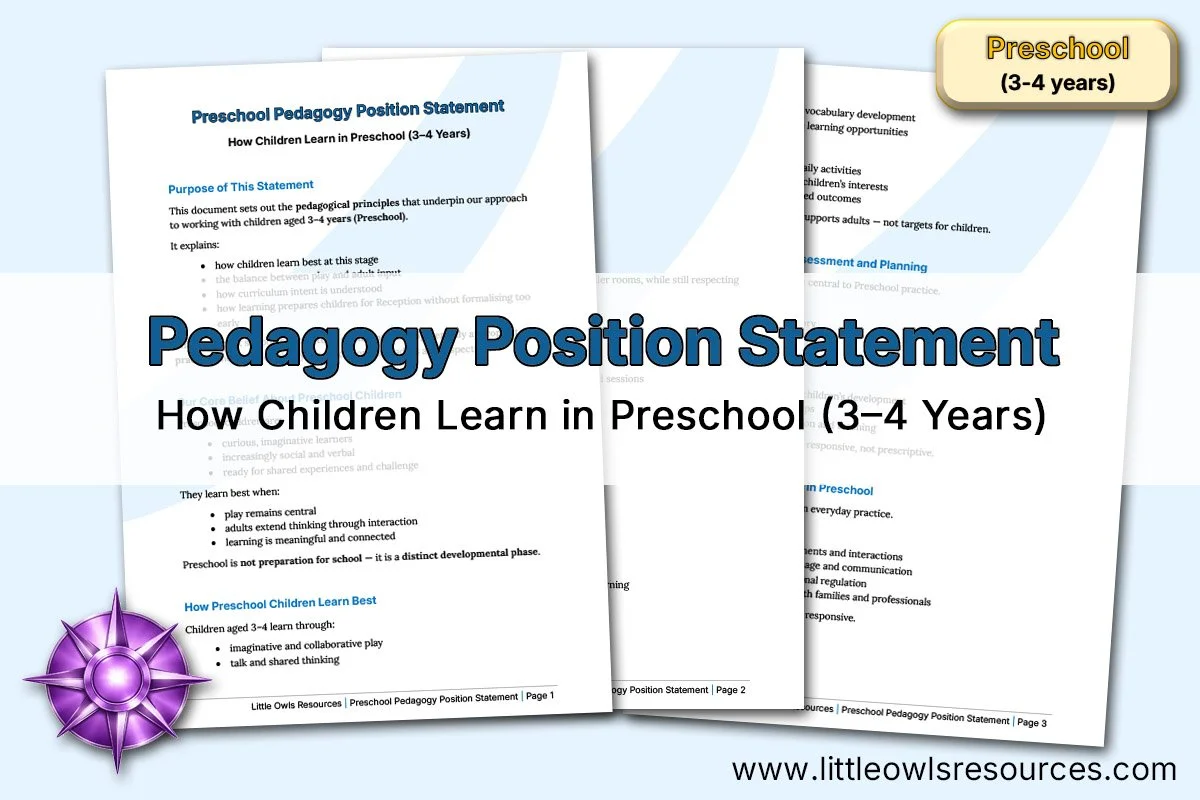
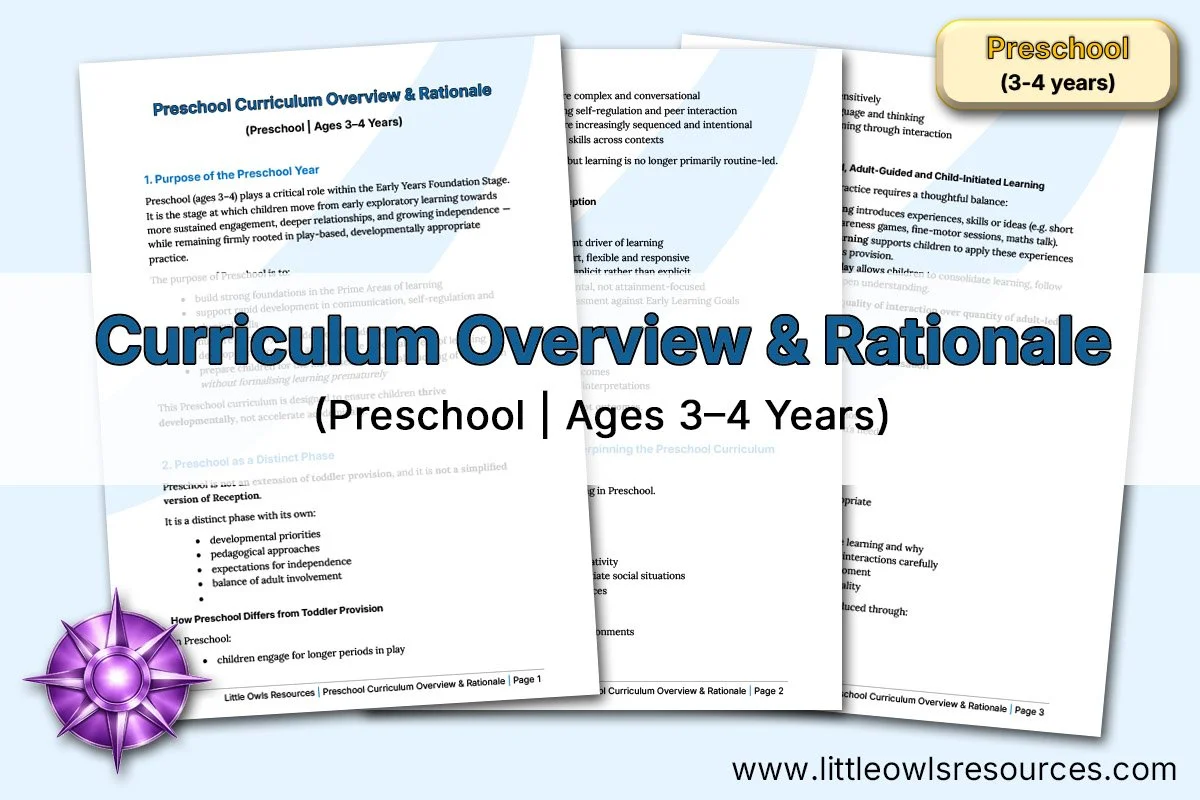
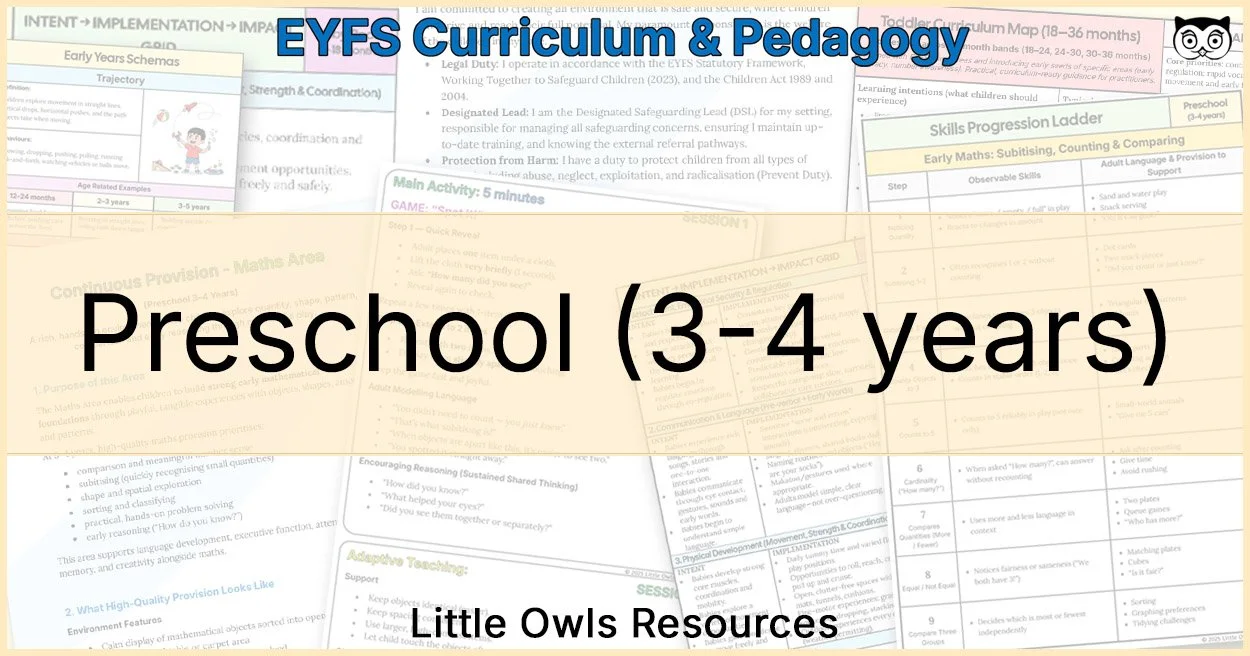
EYFS Preschool (3-4 Years) Curriculum Planning & Guidance Materials
On this page you will find Free Sample Resources, Premium Printable Provision and Professional EYFS Curriculum & Pedagogy Documents specifically designed for preschool. Explore membership options here.
📌 Jump to Section
🆓 Free EYFS Preschool Planning Resources
🎨 Preschool Planning Pedagogy
Your FAQs & Supporting Guidance Documents
🧭 Curriculum & Progression
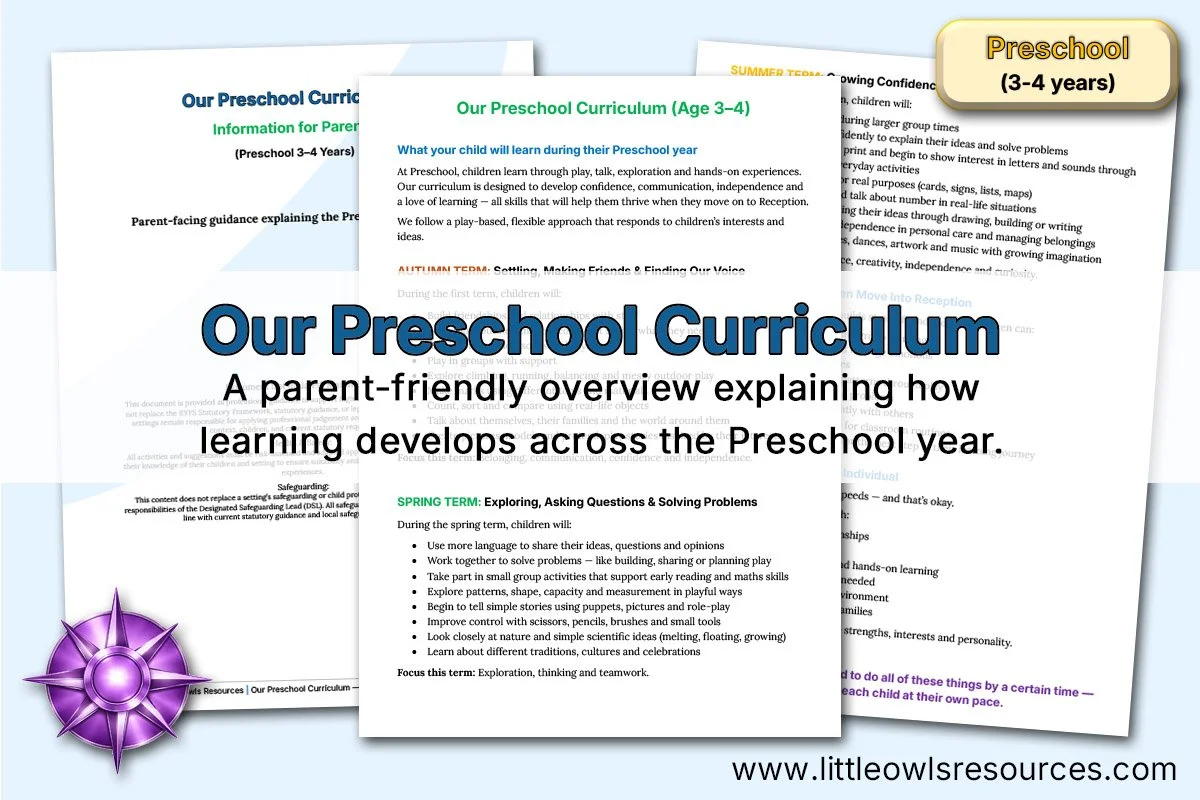
Curriculum Maps, Skills Progression Ladders & Intent–Implementation–Impact Guidance
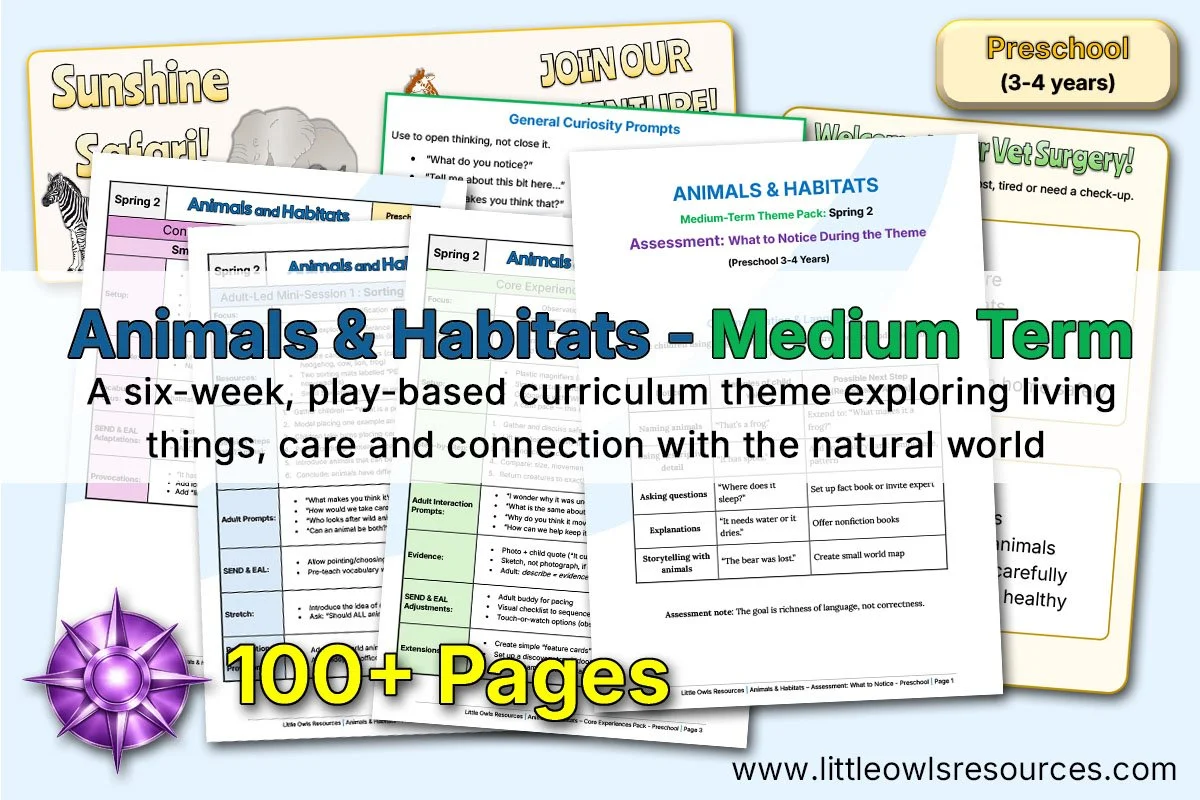
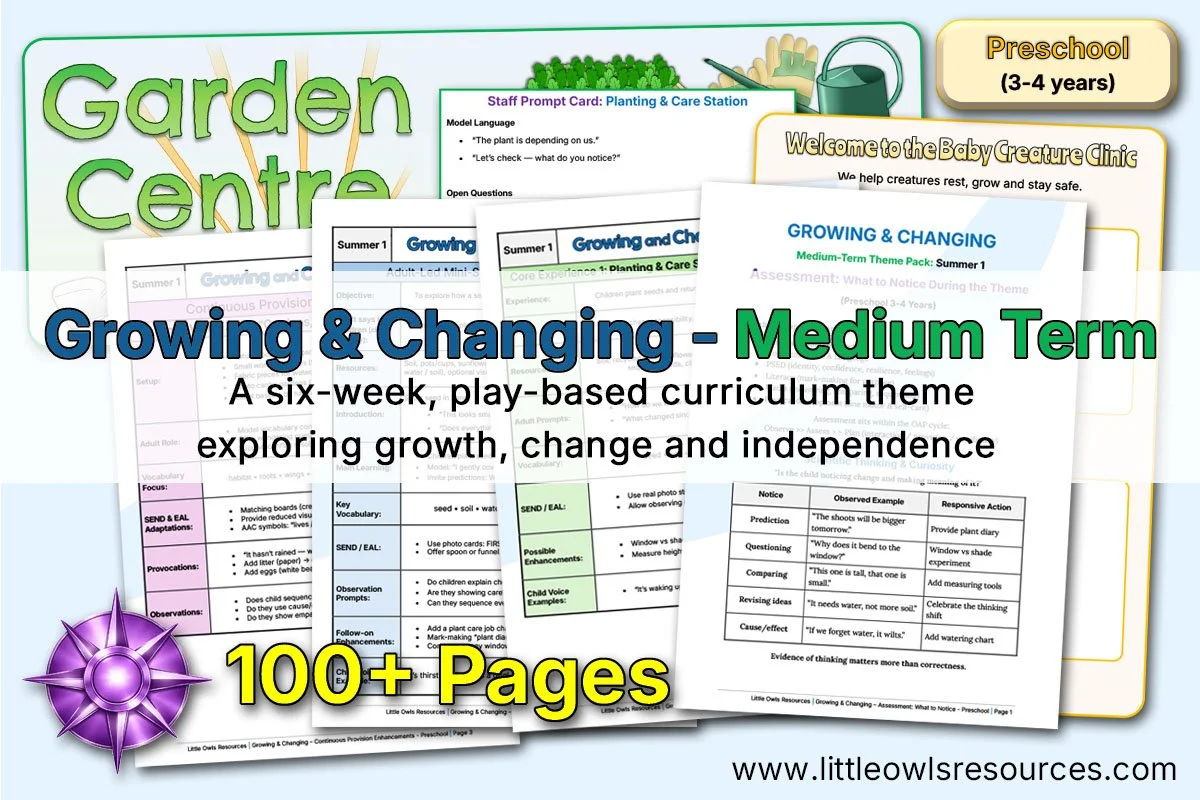
📅 Themes & Medium-Term Planning
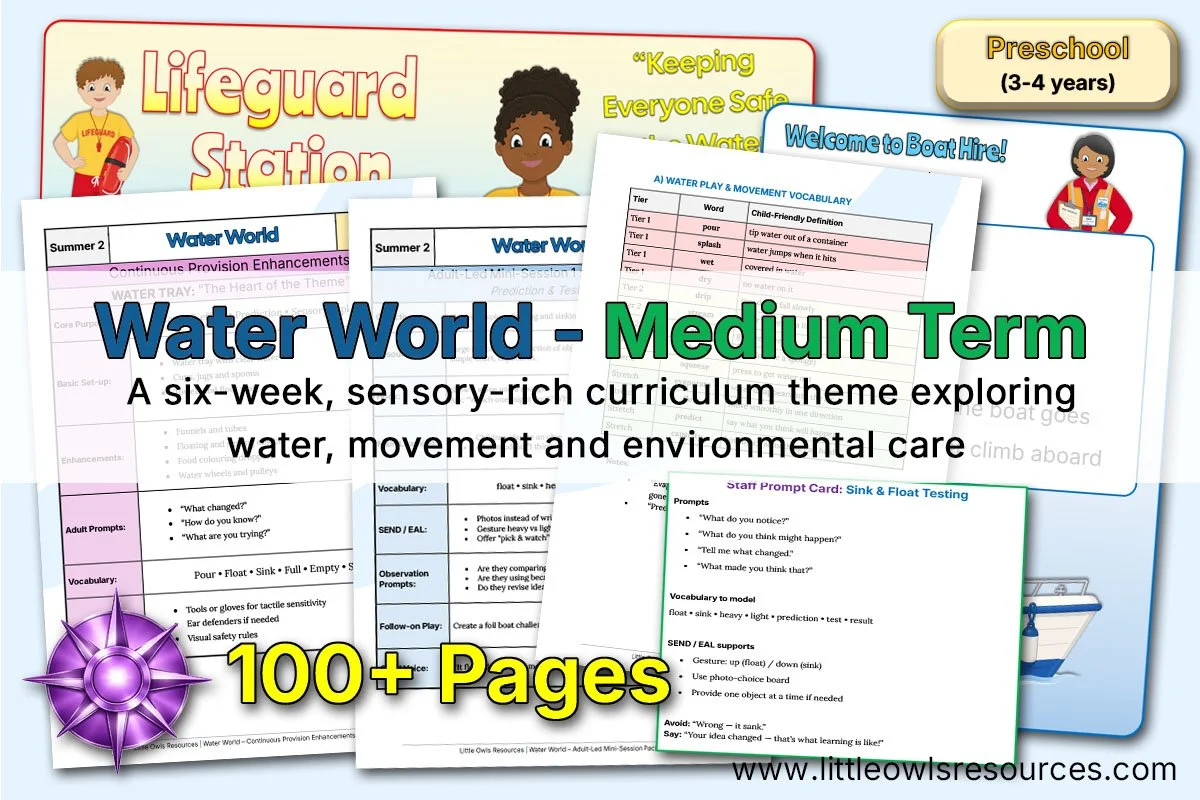
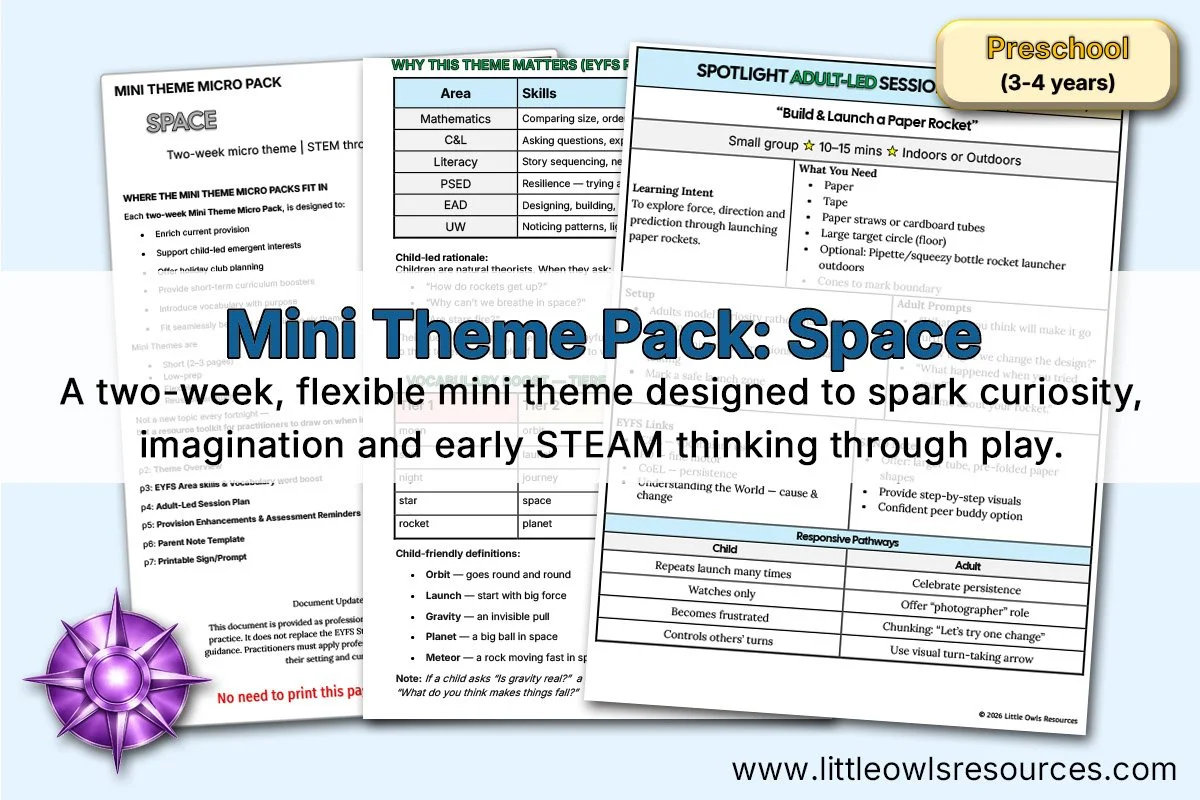
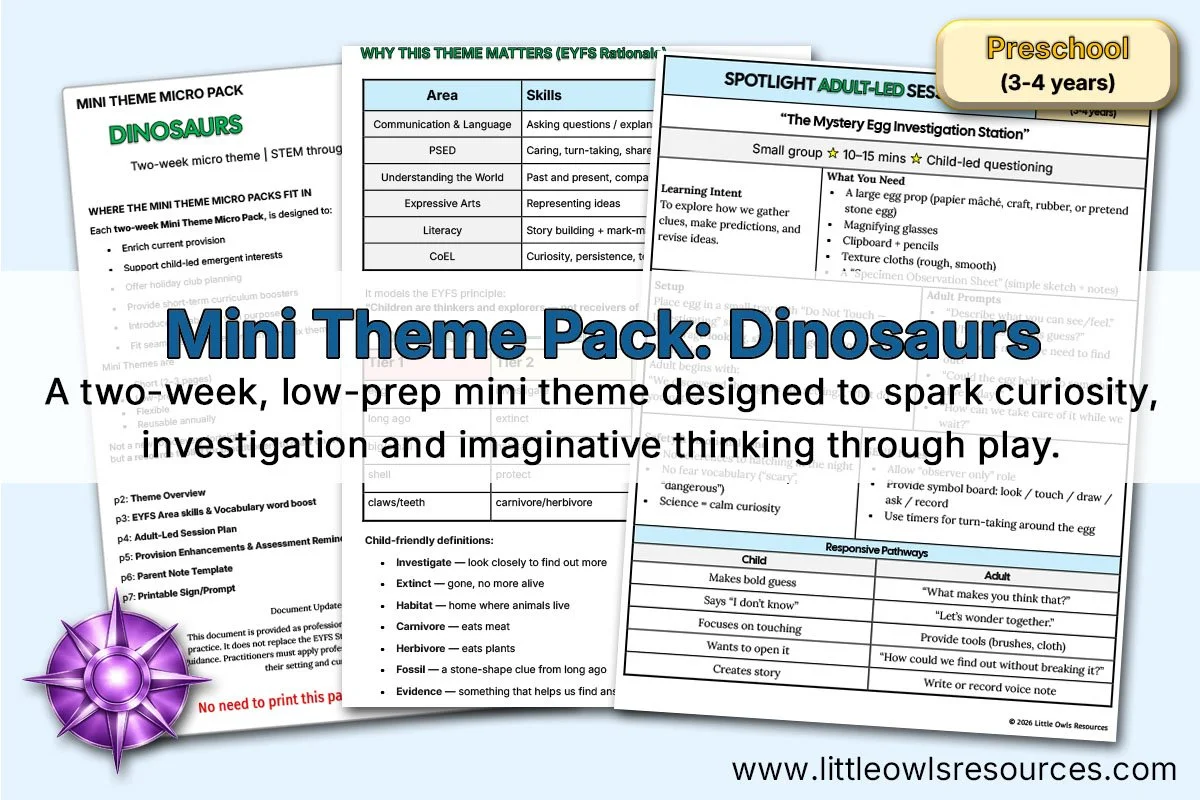
Core 6 Week Themes & Optional Mini-Themes with Corresponding Guidance & FAQs
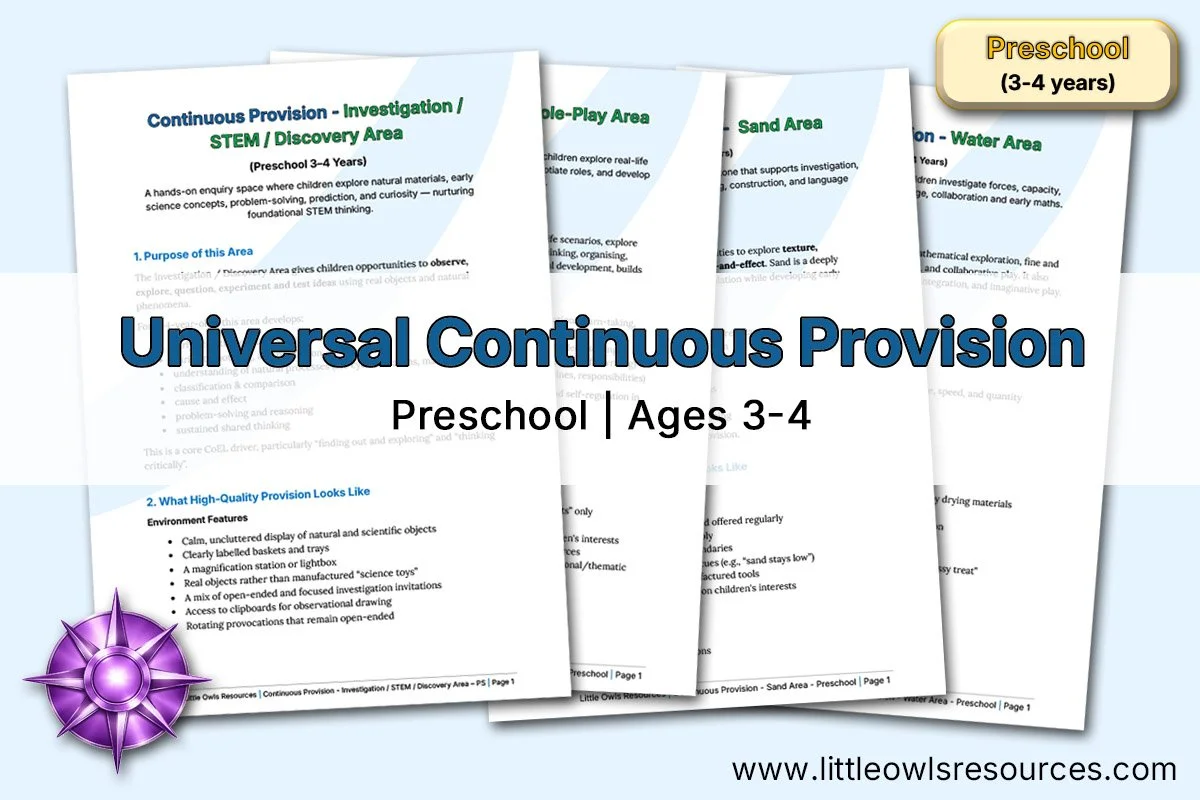
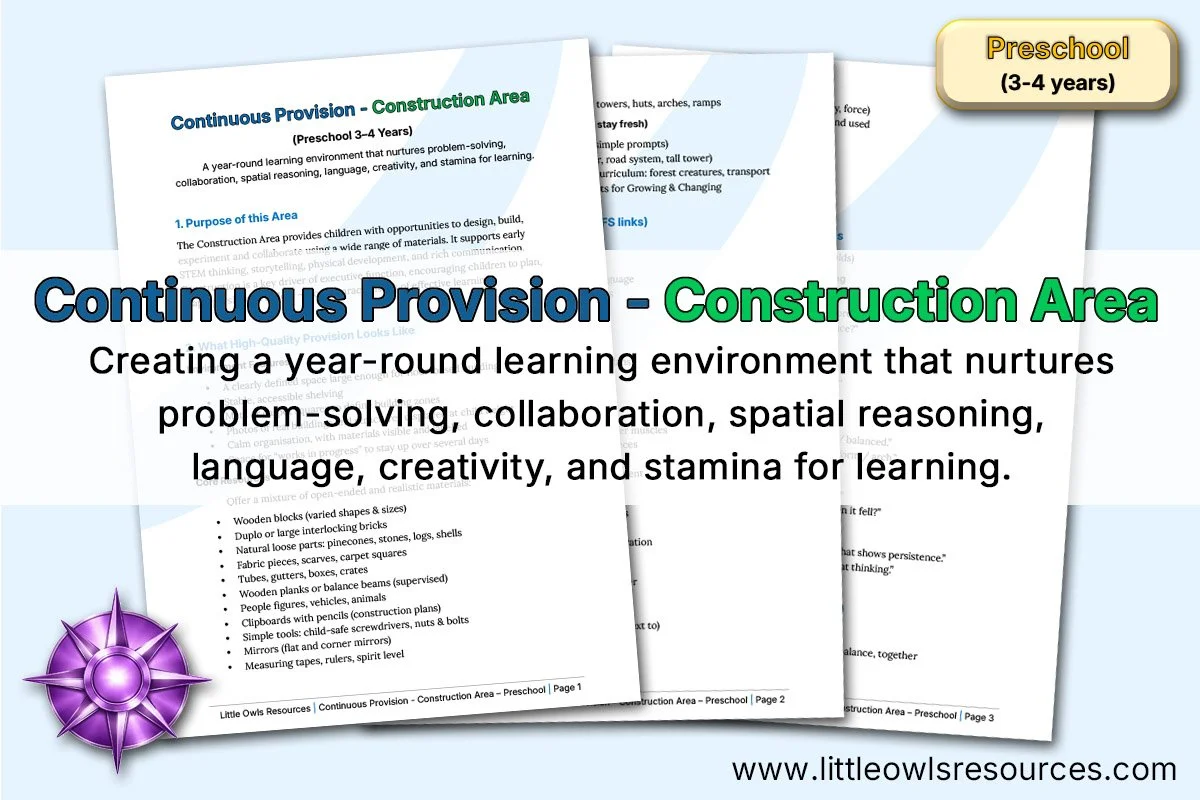
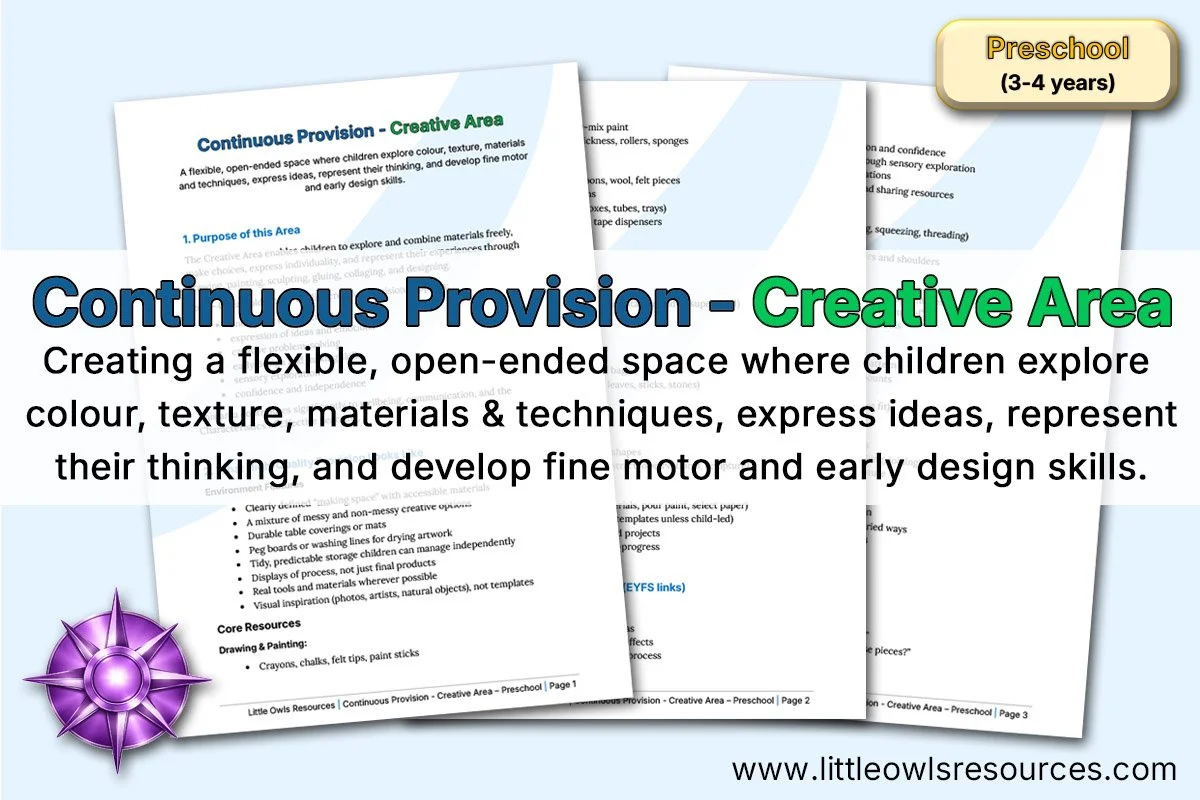
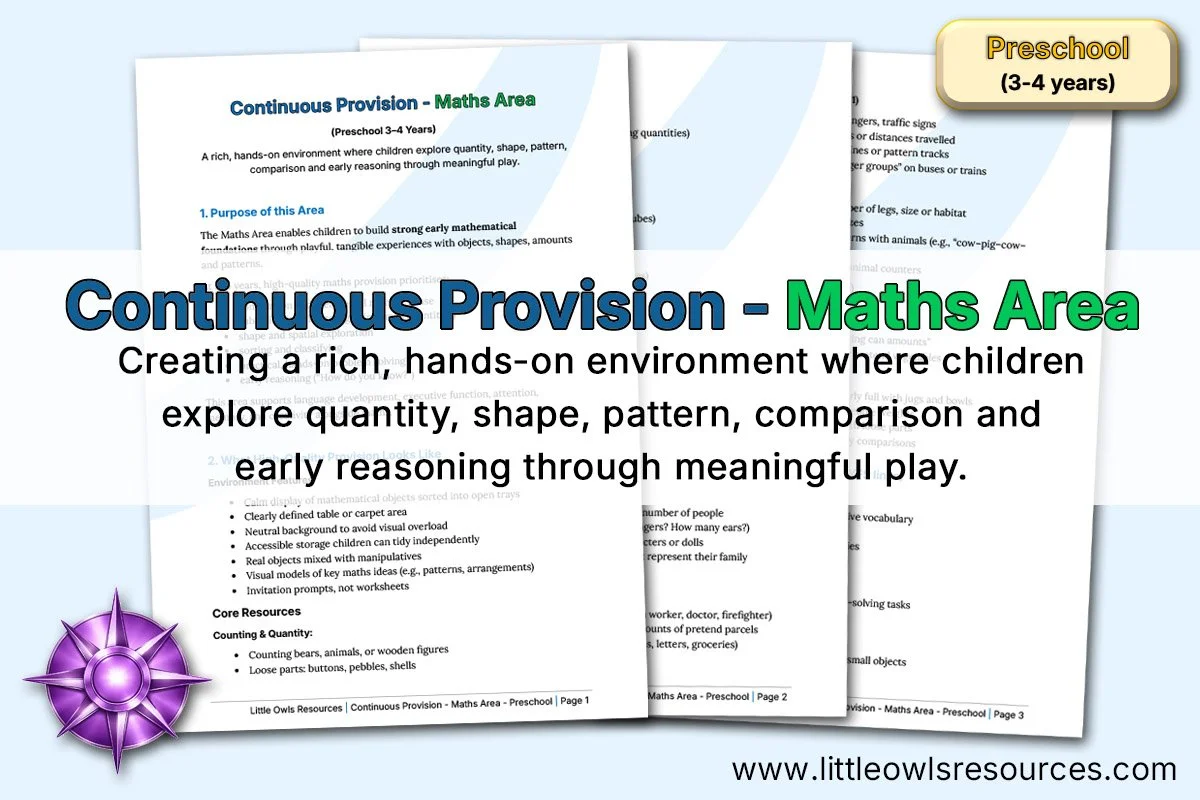
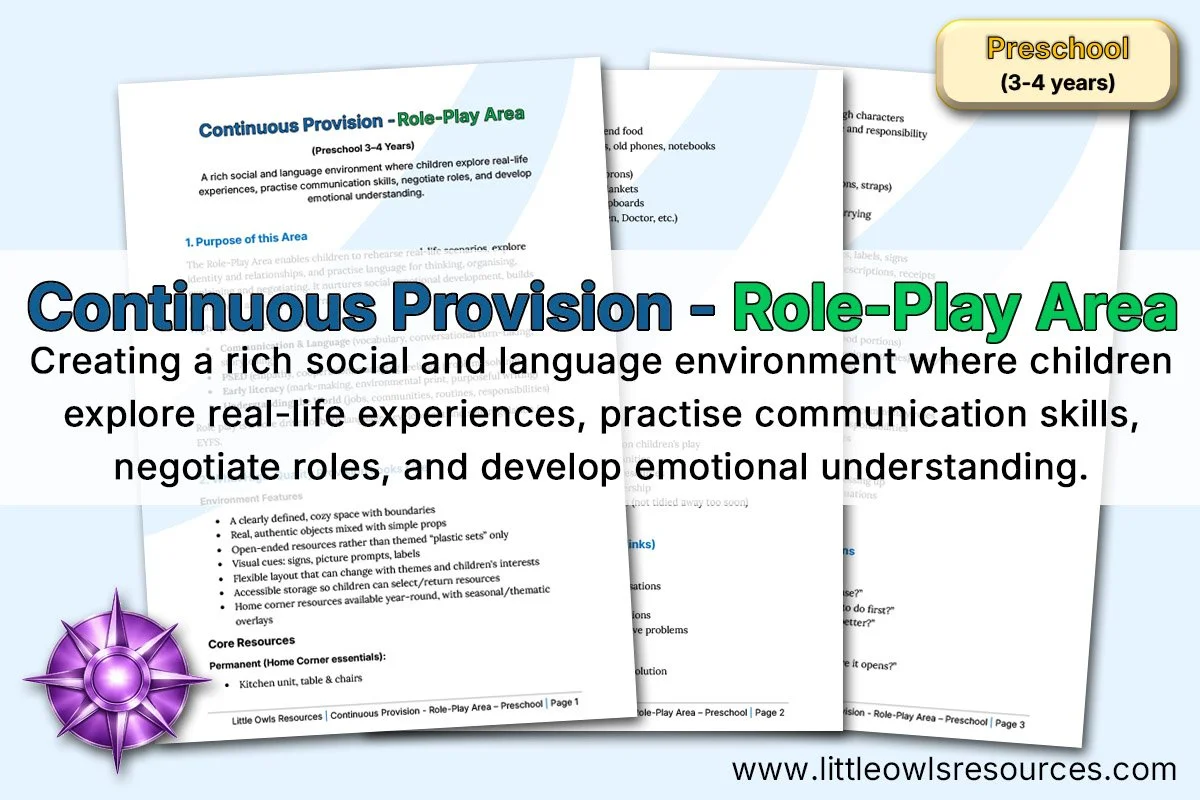
🏡 Continuous Provision
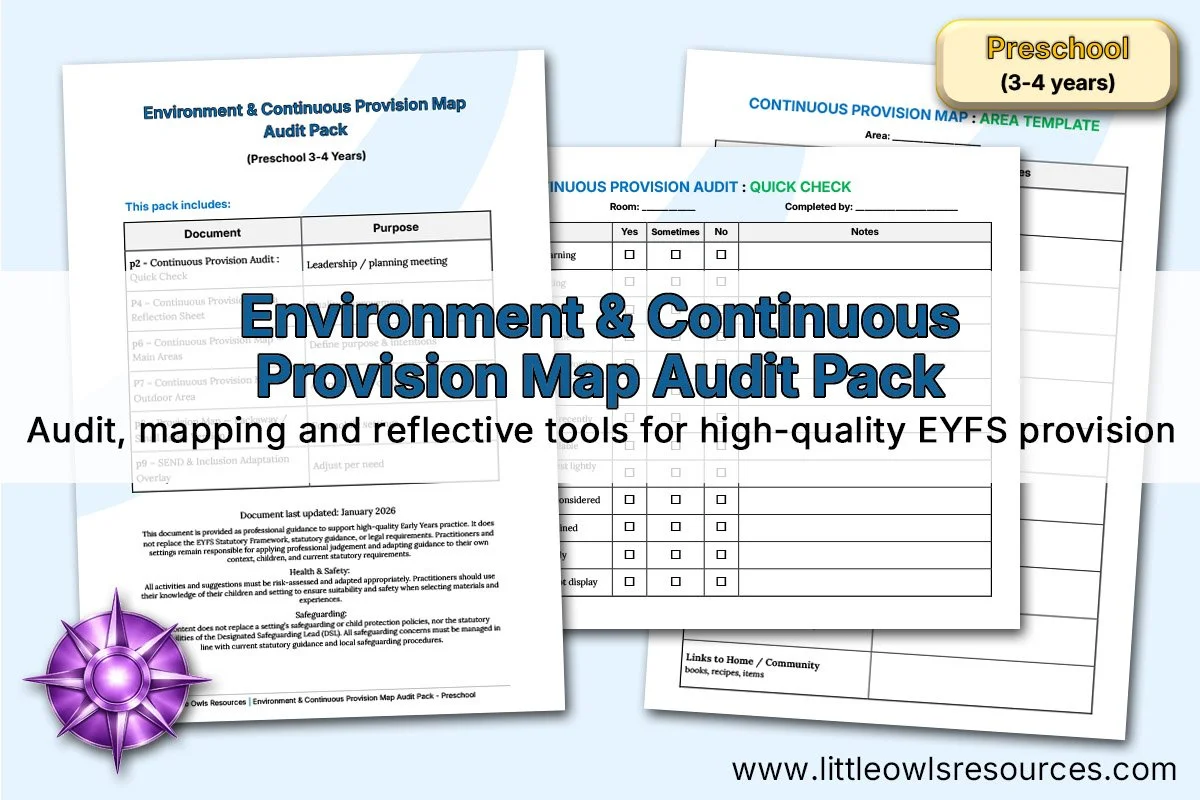
Continuous Provision Packs (for all areas), Provision Maps, Audit Tools & Printable Resources
✨ Provision Enhancements
Themed Resources, Role-Play Packs, Festivals & Special Dates
👩🏫 Adult-Led Teaching
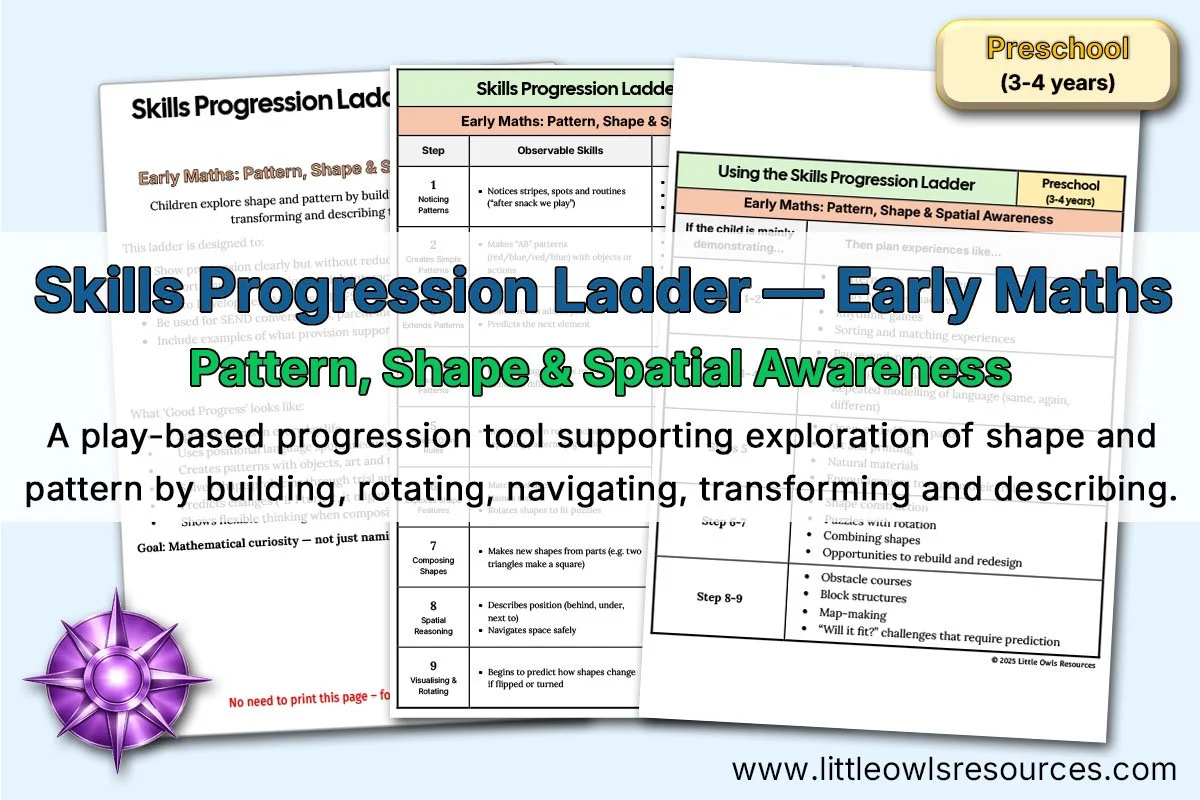
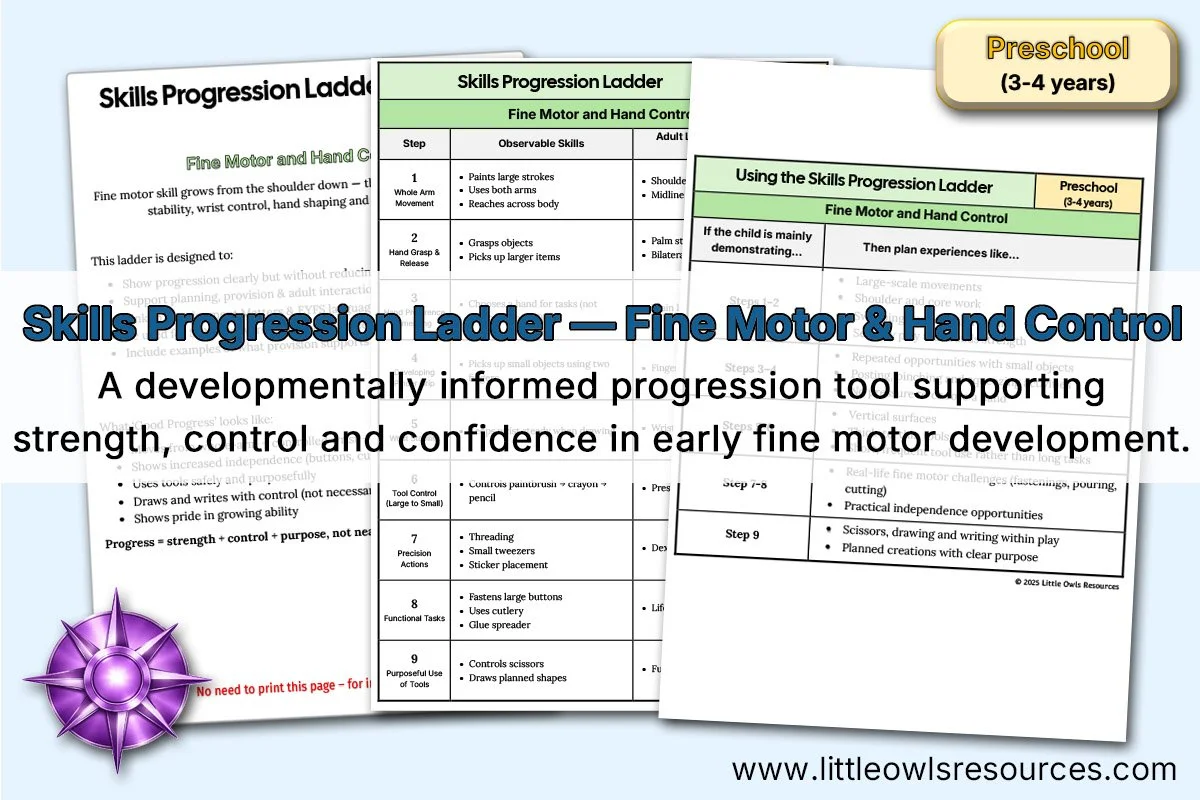
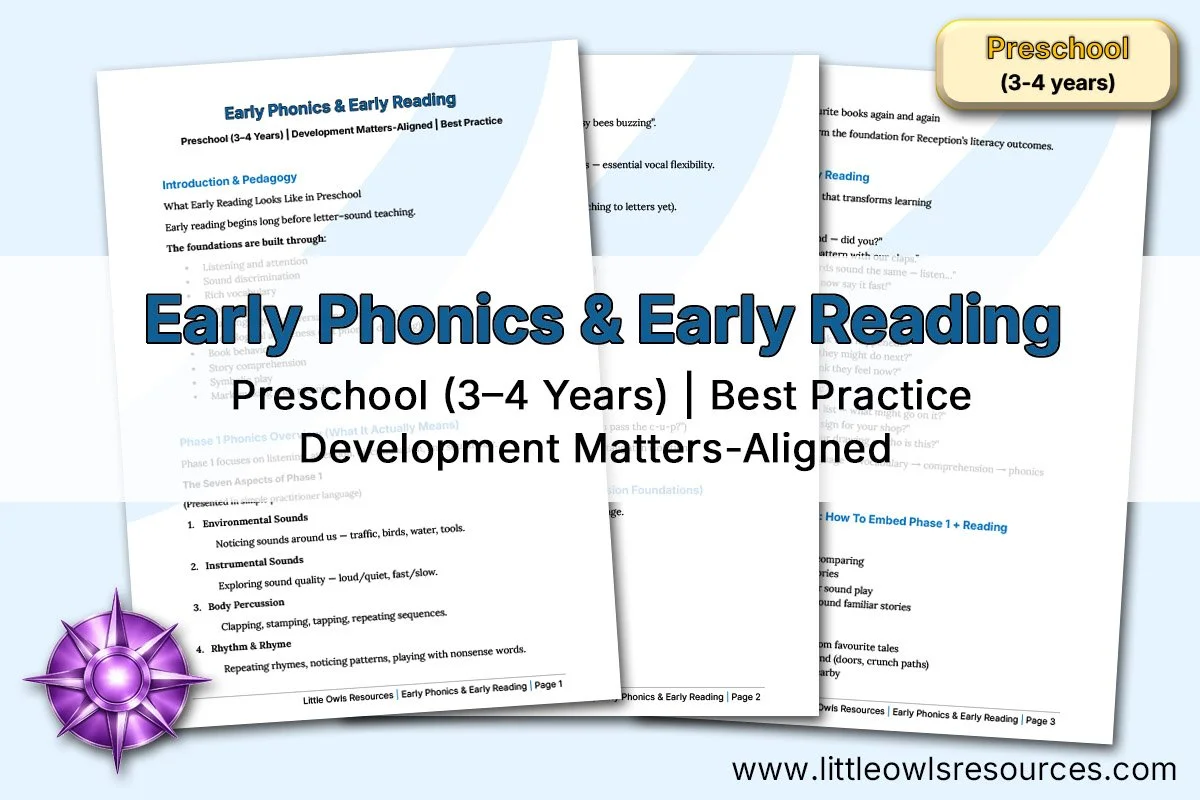
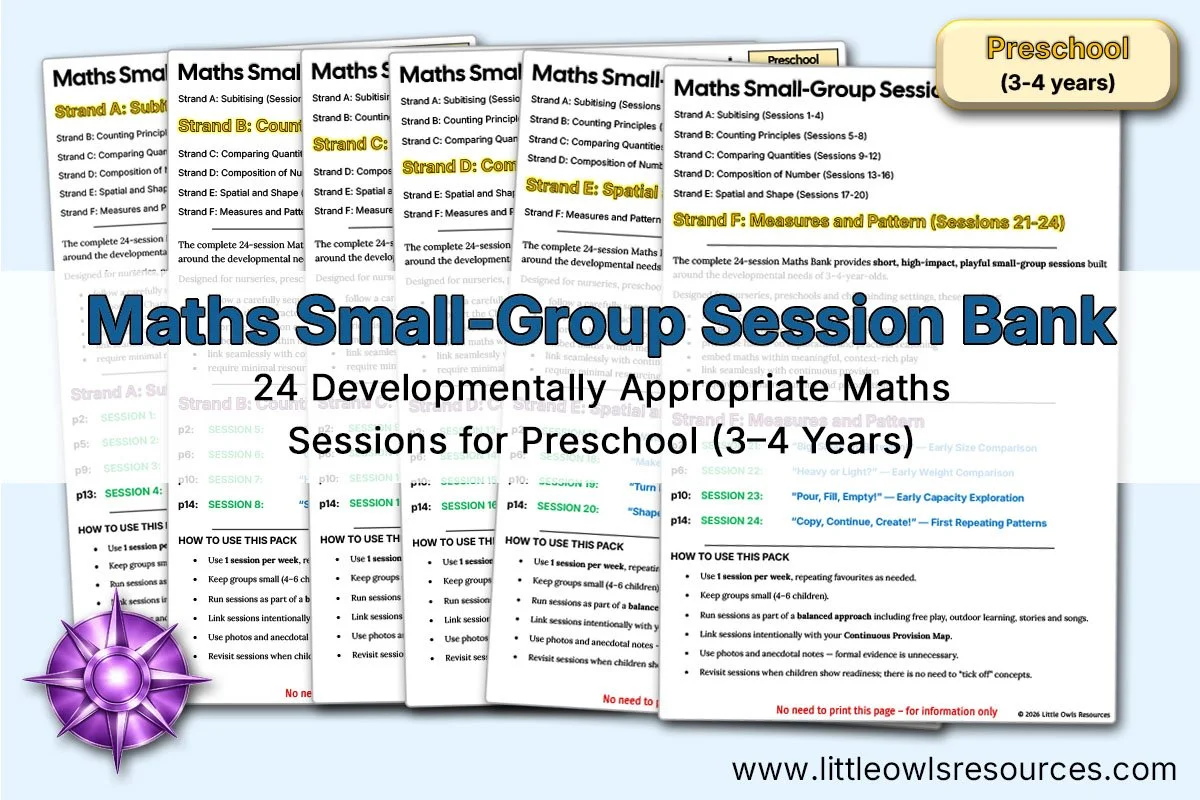
Small-Group Session Banks: Phonics & Early Reading, Maths, Fine motor & Early Writing, Templates & Guidance
📝 Planning & Assessment
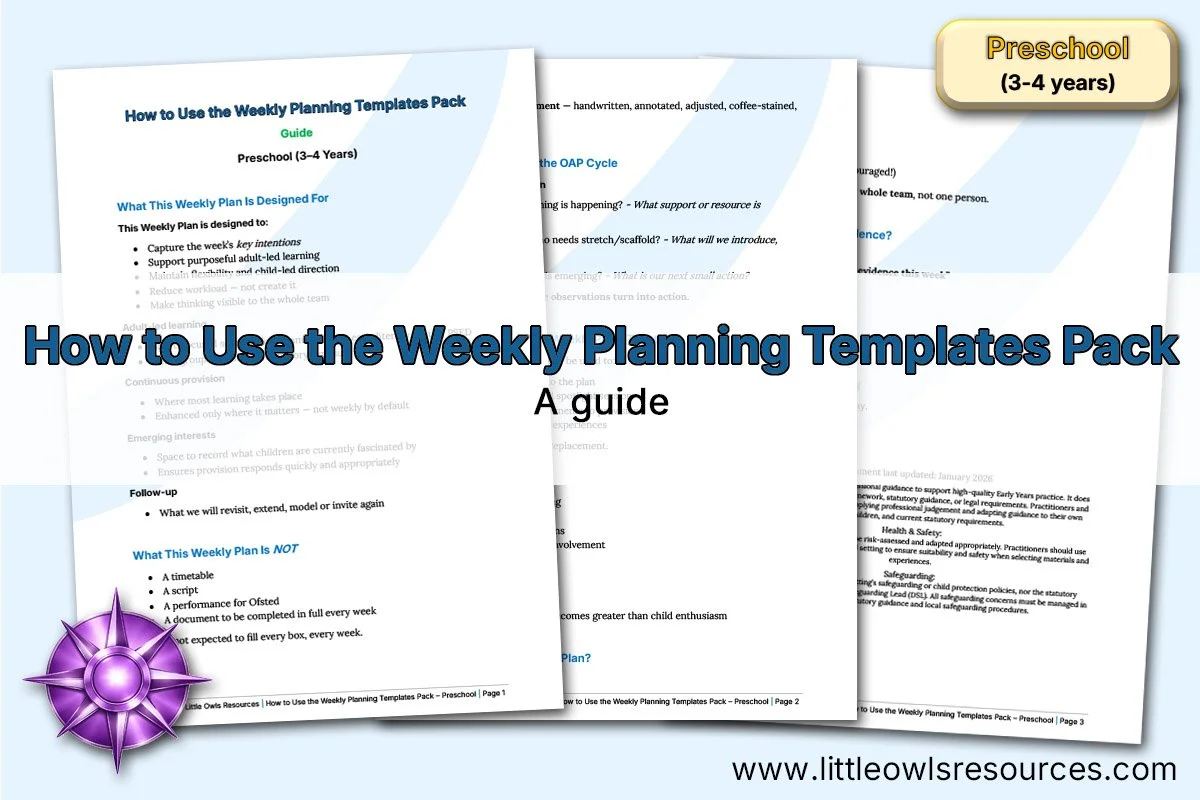
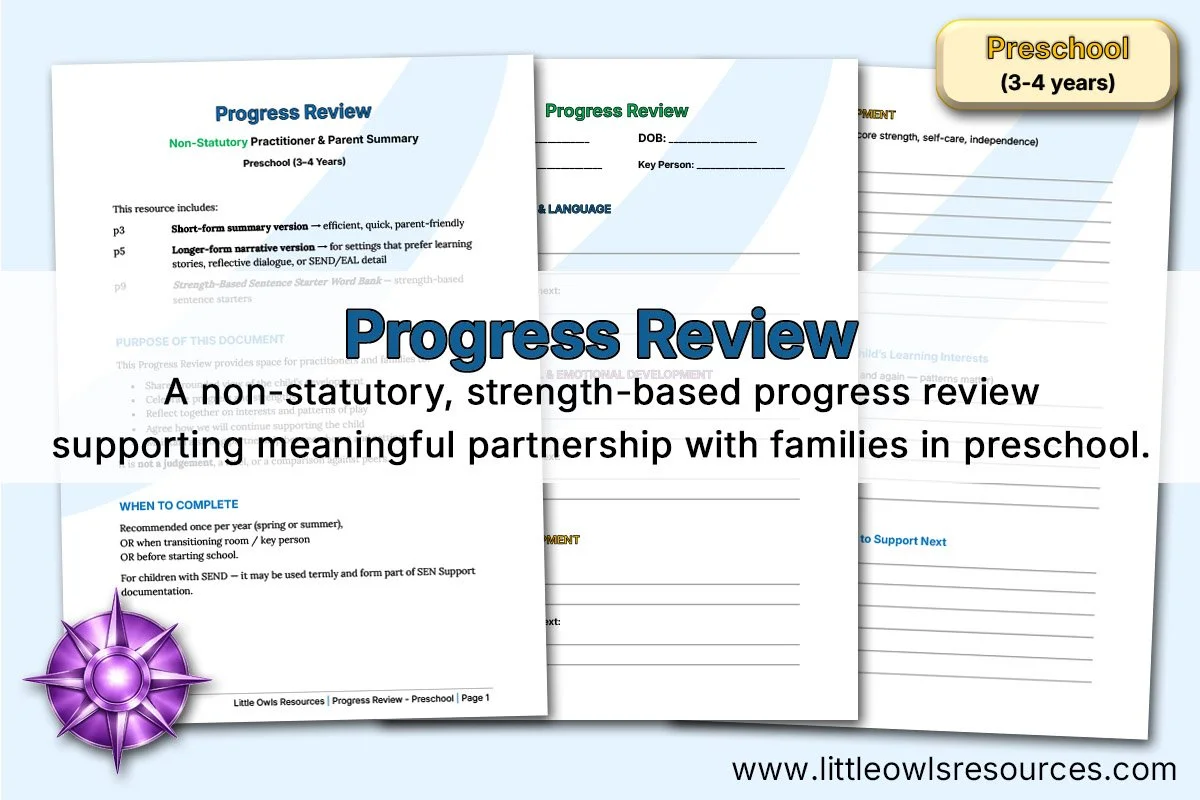
Weekly Planning Templates, Observe–Assess–Plan Toolkit, Progress Review and Reporting Tools
💬 Language & Interaction
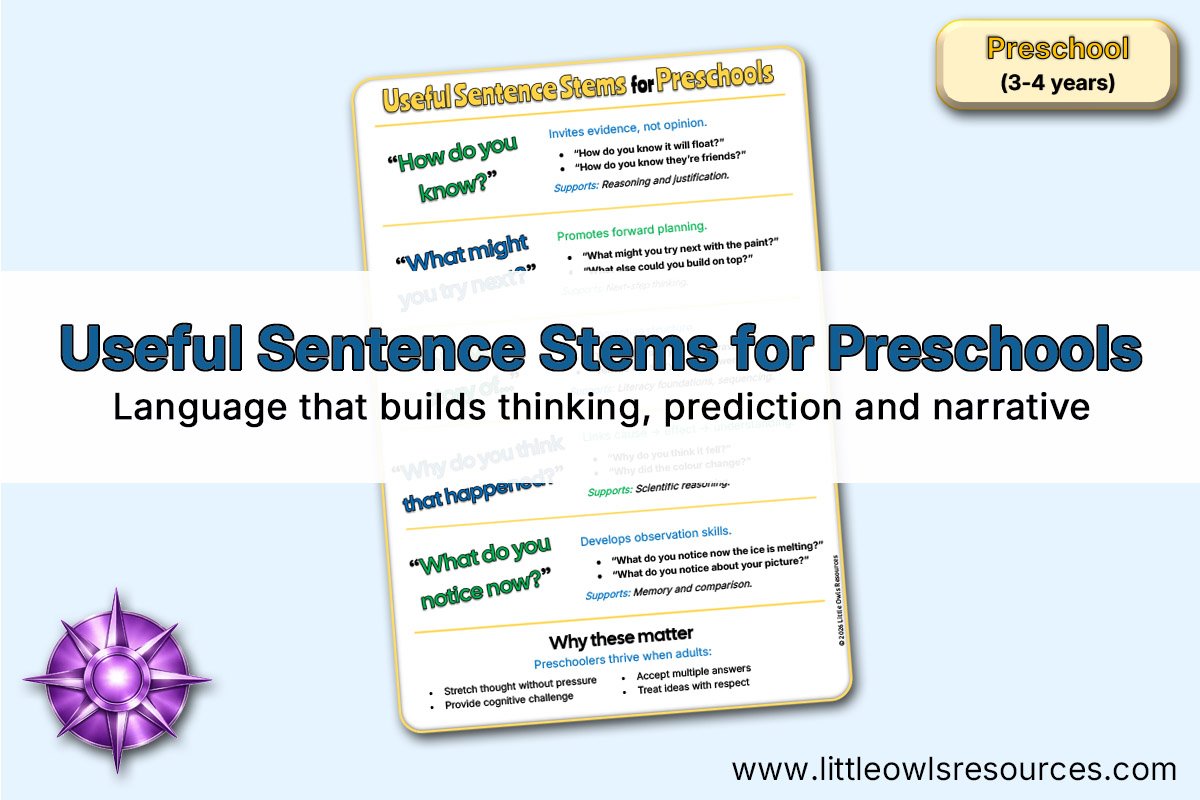
Practitioner Guidance, Sentence Stems and Interaction Strategies
📘 Statutory & Non-Statutory Guidance Resources
EYFS Framework & Development Matters Printable Support Examples & Ethos Displays
➕ Additional Support
🆓 Free EYFS Preschool Planning Resources
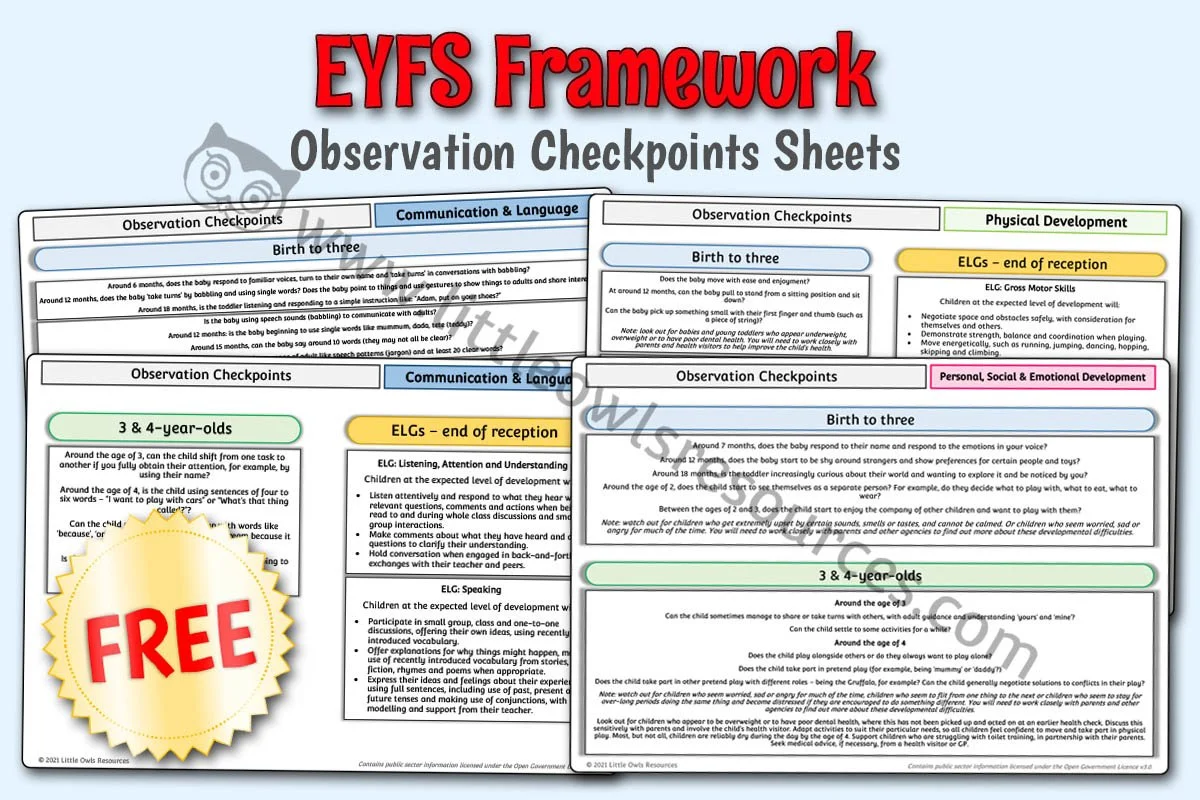
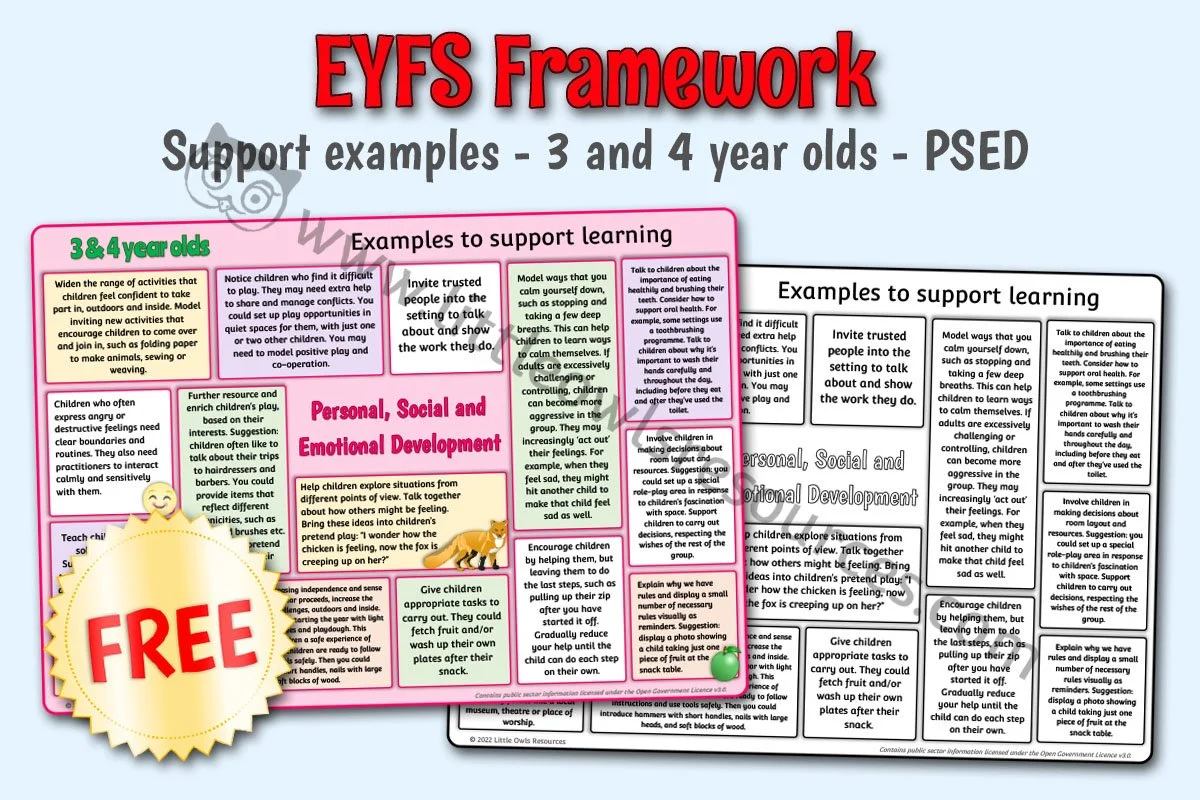


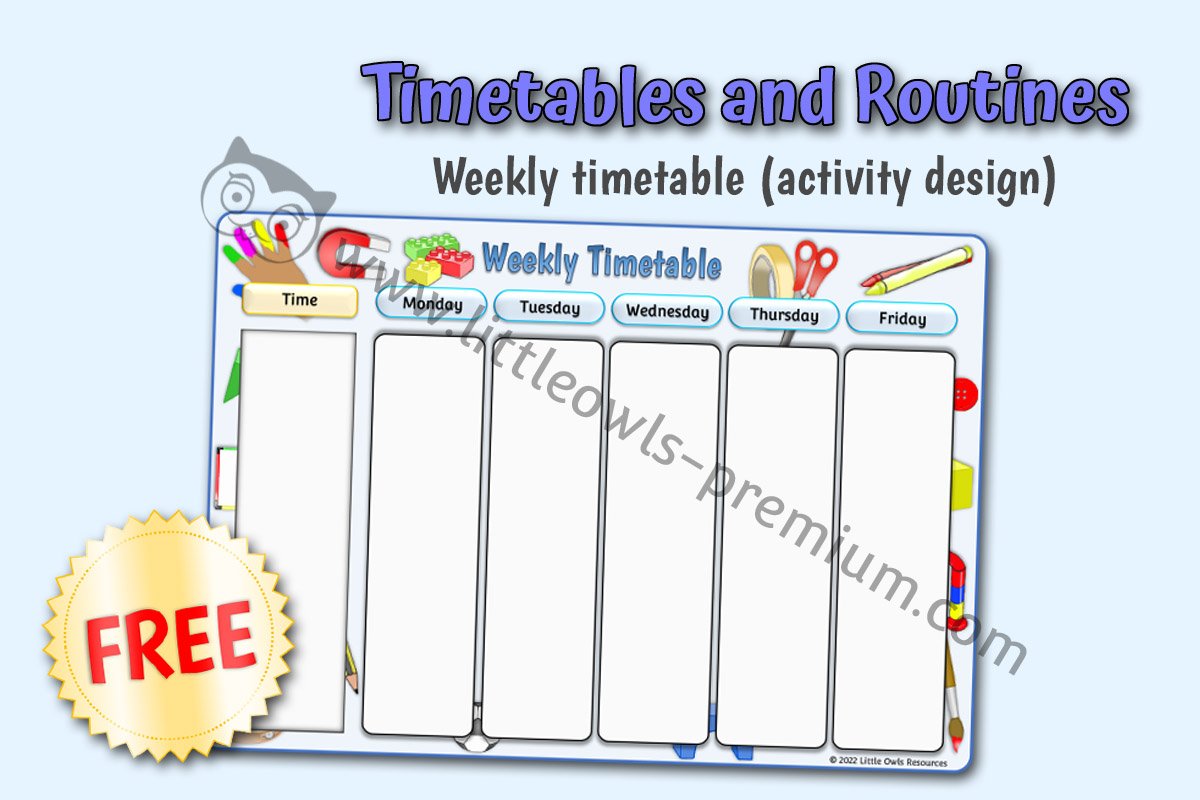
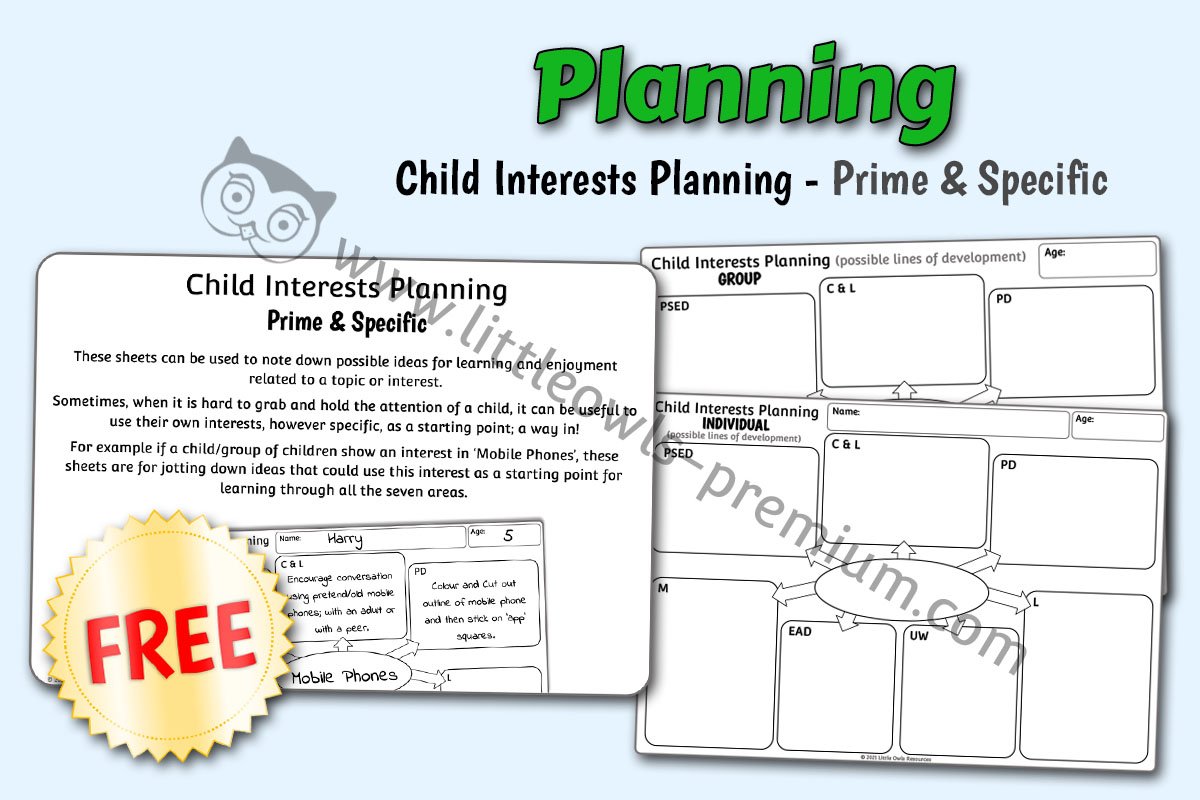

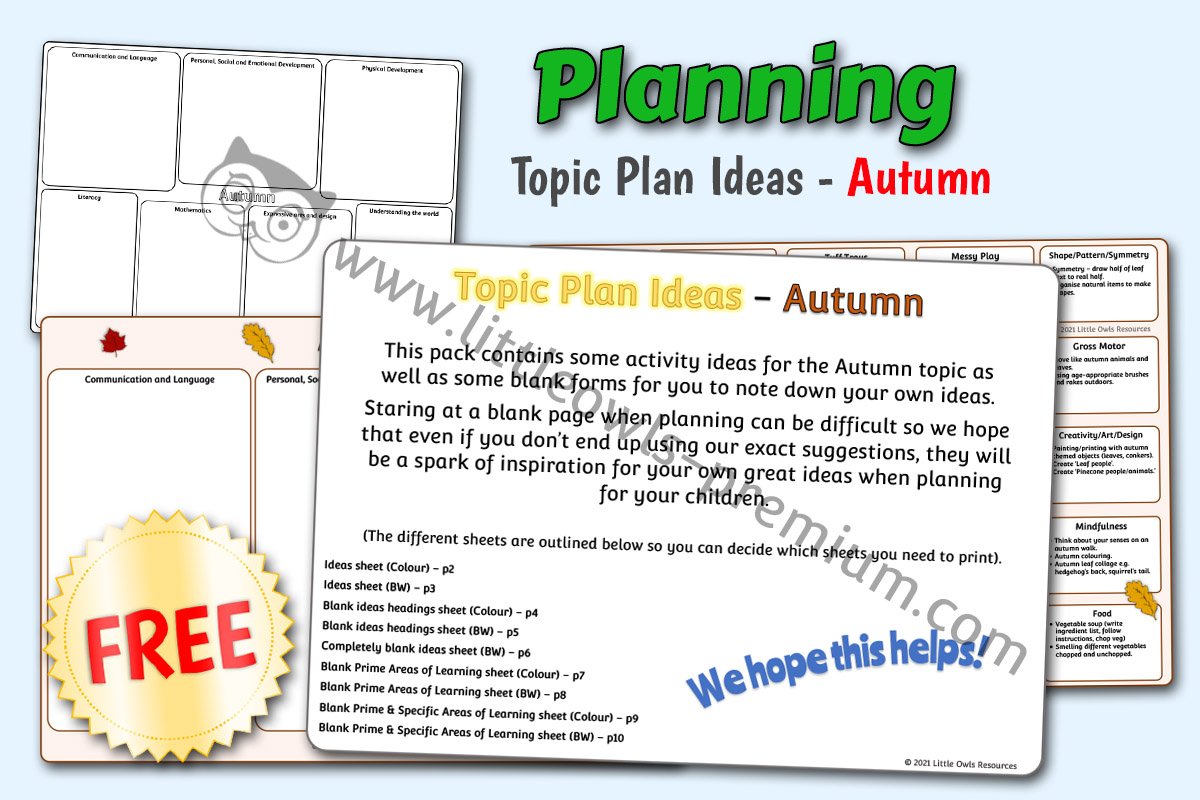
💡 Join as a Free Access member to download the samples above and all other free resources available on Little Owls Resources at no cost. Alternatively, explore all membership options here.
Additional Free Sample Printable Provision can be found at the top of most pages.
🎨 Preschool Planning Pedagogy
Your FAQs
Explore current best practice surrounding preschool planning. Expand the subheadings below using the cross symbols on the right.
-
In high-quality preschool provision, planning:
builds on observation and children’s interests
supports progression in key skills
uses themes as flexible structure (not direction)
includes short, purposeful adult-led moments
remains rooted in play and interaction
Planning supports adults to be:
intentional
responsive
consistent
Children are still not expected to follow plans.
-
Preschool sits between toddler exploration and Reception structure.
Children are beginning to:
use more complex language
engage in imaginative and cooperative play
develop early problem-solving skills
show interest in marks, numbers and patterns
sustain engagement for longer periods
Planning reflects this by:
introducing light structure
supporting skill development
maintaining play as the main learning vehicle
-
A key feature of preschool planning is balance.
Child-led learning remains central:
continuous provision
imaginative play
exploration and choice
peer interaction
Adult-led input is introduced carefully:
short (typically 2–10 minutes)
purposeful and focused
developmentally appropriate
flexible and responsive
Examples include:
small group maths explorations
phonological awareness games
shared storytelling and vocabulary work
fine motor or mark-making sessions
👉 Adult-led teaching supports learning — it does not replace play.
-
✔ Planning is:
structured but flexible
informed by observation
supportive of progression
focused on environment, interaction and teaching
used to guide adult decision-making
✖ Planning is not:
rigid lesson timetables
overly formal or school-like
driven by outcomes or targets
designed to control children’s learning
Even in preschool:
👉 play remains the primary context for learning
-
Themes are often used in preschool — but must be understood correctly.
Themes:
provide coherent context for learning
support vocabulary development
help organise curriculum thinking
create shared experiences
However, they:
do not dictate activities
do not limit children’s interests
do not replace continuous provision
High-quality use of themes:
adapts to children’s responses
links to real experiences
supports language and understanding
remains flexible week to week
👉 Themes organise learning — they do not drive it.
-
In preschool:
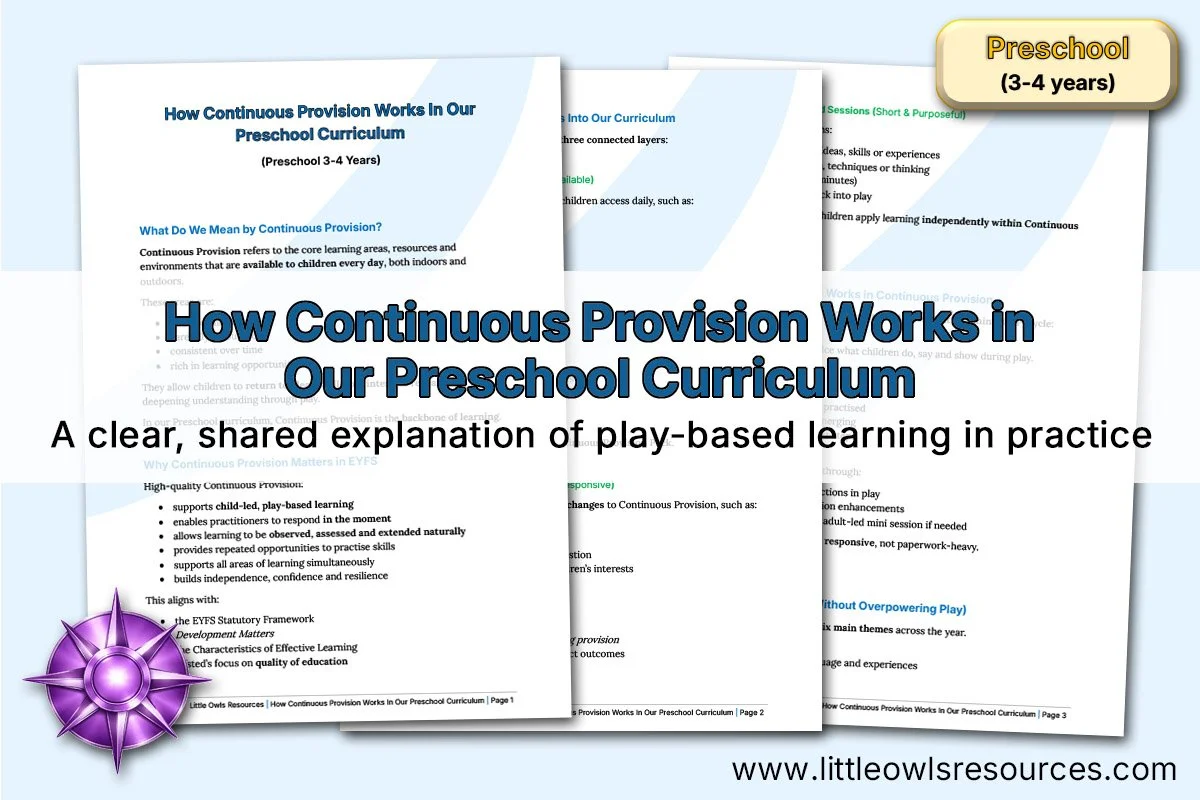
👉 continuous provision remains the engine of learning
Planning ensures provision:
is well-resourced and purposeful
reflects children’s interests
supports progression in skills
encourages independence and choice
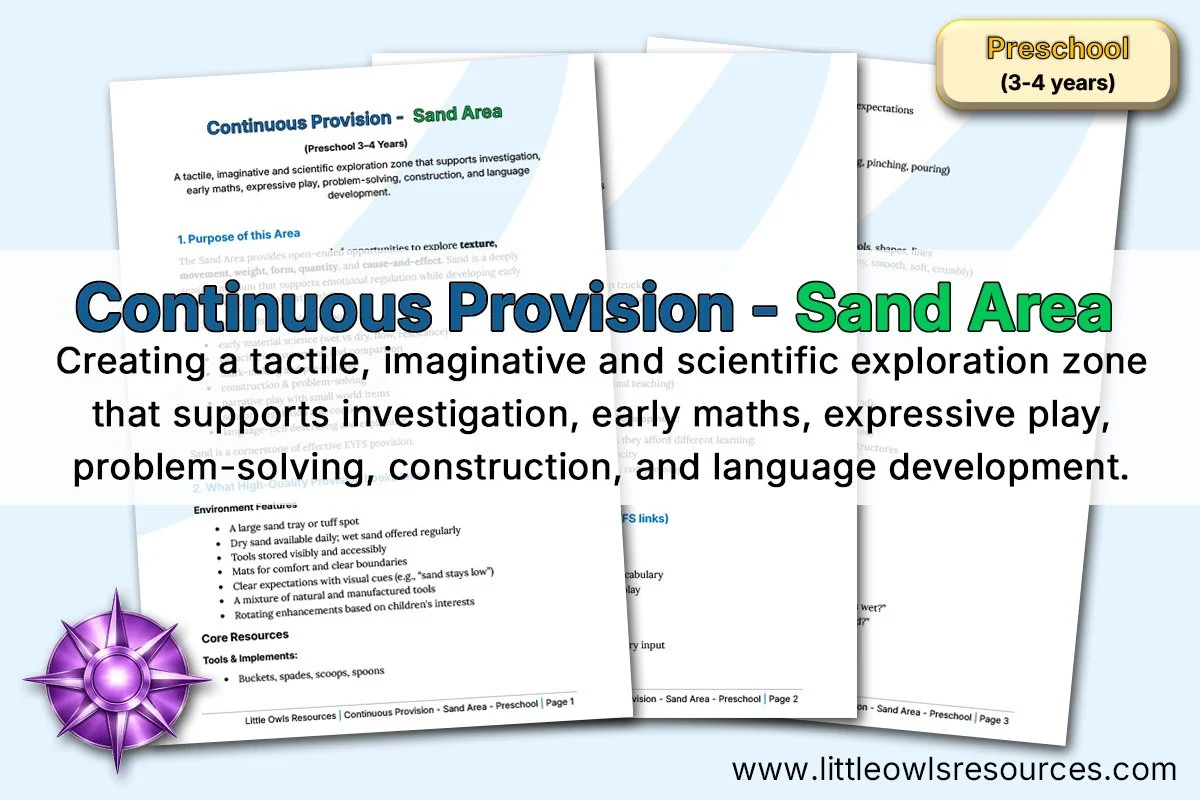
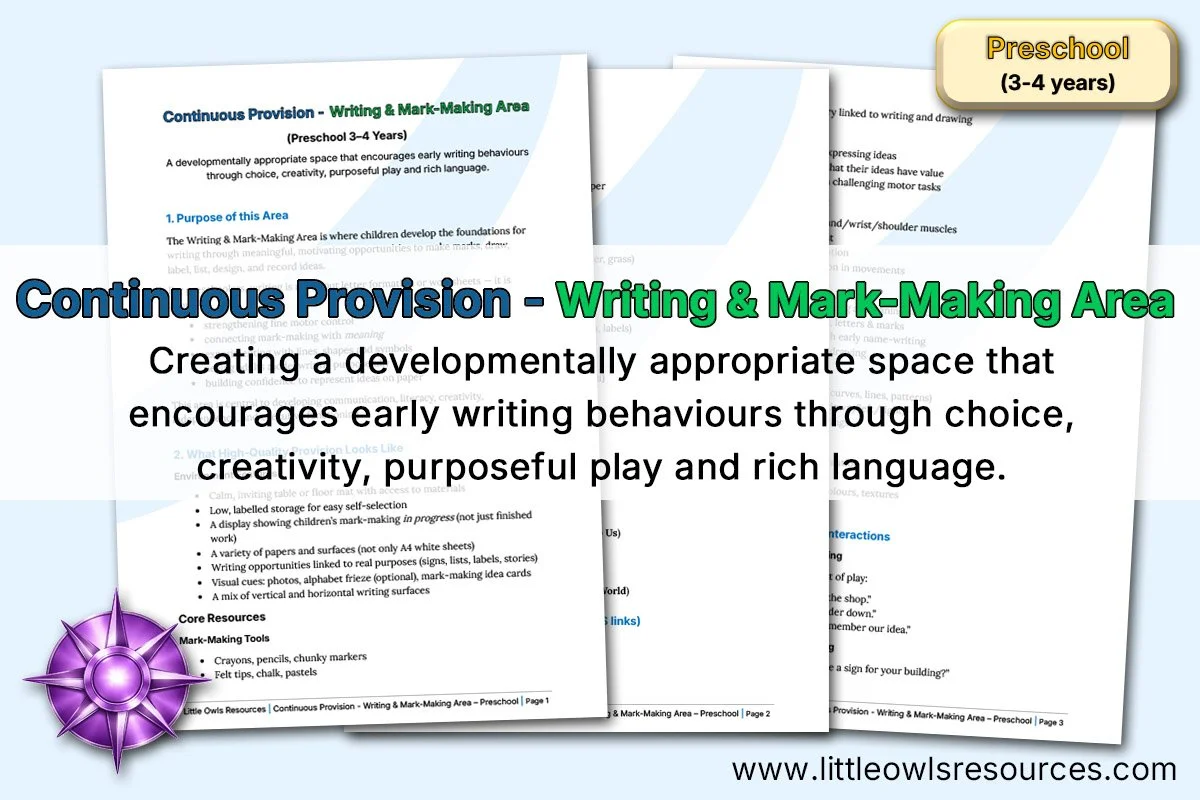
Areas may include:
construction and small world
role play
mark-making and writing
maths and problem-solving
creative and expressive arts
investigation and discovery
outdoor learning environments
Adult role:
observe
interact
extend thinking
introduce language
-
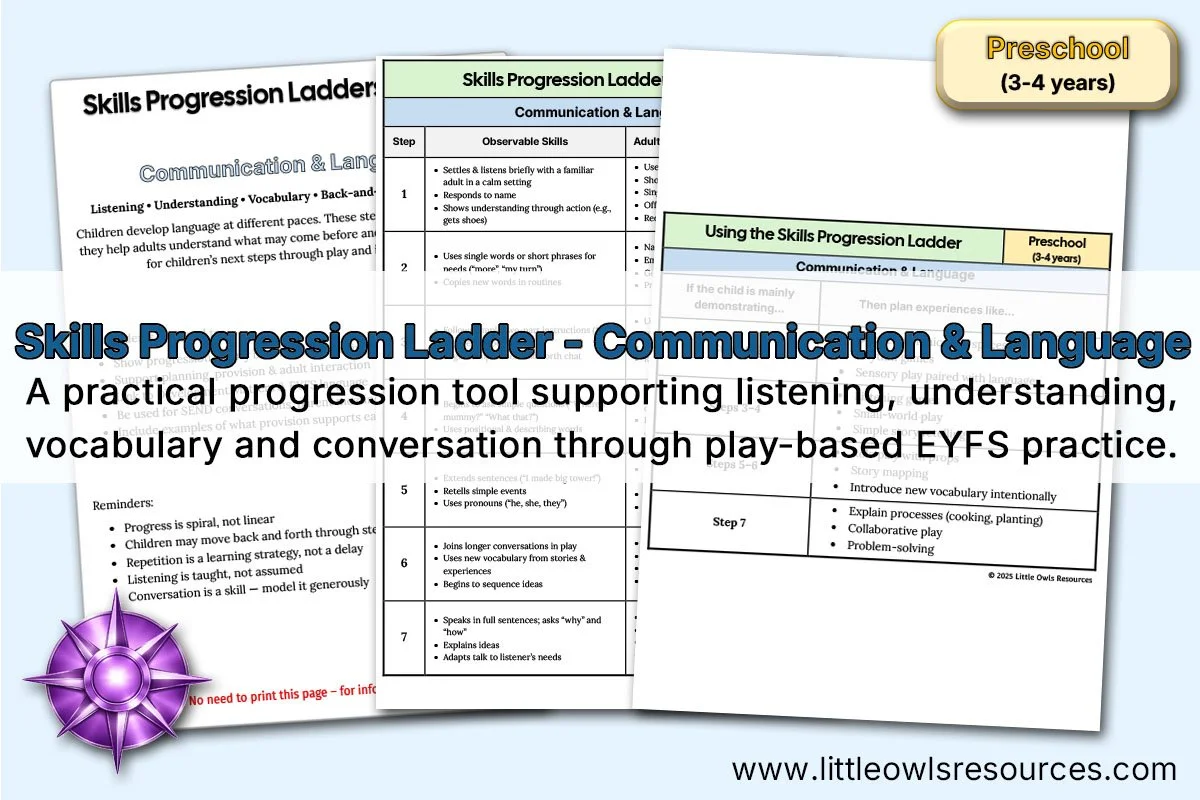
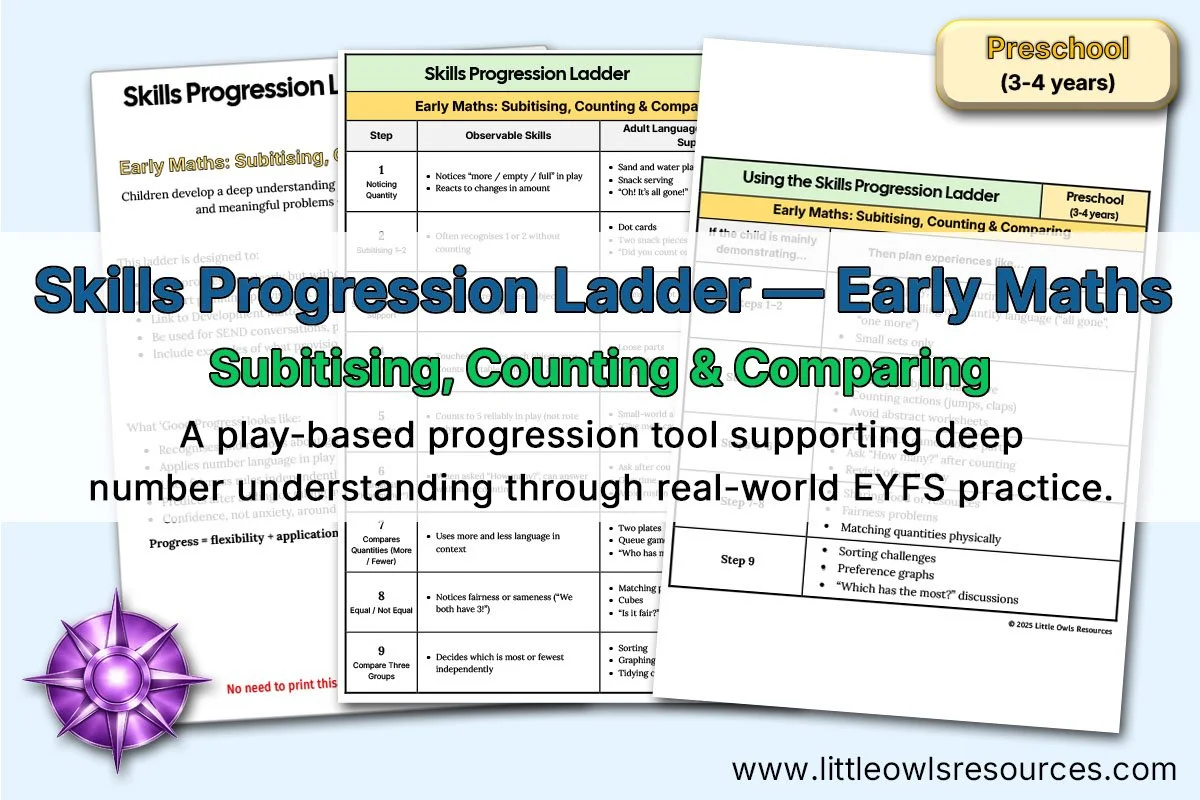
Planning in preschool begins to support clearer progression, particularly in:
communication and language
early reading (Phase 1 foundations)
early writing and mark-making
early maths (number, pattern, shape)
physical development (fine motor control)
personal, social and emotional development
This progression is:
supported, not prescribed
flexible, not linear
observed, not tested
-
Adult-led sessions are introduced as part of planning — but remain:
short
engaging
play-connected
developmentally appropriate
They may focus on:
phonological awareness (listening, rhyme, sound)
early maths concepts
vocabulary and storytelling
fine motor and early writing
These sessions:
sit alongside continuous provision
feed back into play
are adapted based on children’s responses
👉 Teaching is intentional — but never formalised.
-
Planning tools may include:
weekly planning templates
notes on children’s interests and engagement
identified focus areas (language, maths, PSED, etc.)
provision enhancements
adult-led session ideas
reflection and next steps
Documentation is:
proportionate
purposeful
supportive of practice
👉 It should never replace time with children.
-
Every child develops differently.
Planning reflects:
strengths and interests
communication styles
emotional needs
levels of confidence and independence
Practitioners:
adapt provision
adjust expectations
support inclusion
work in partnership with families
Planning supports:
👉 the whole child — not just skills -
Nurseries & Preschools:
planning supports shared curriculum delivery
themes and provision create consistency
Childminders:
planning is more fluid and personalised
routines and relationships remain central
Across all settings:
👉 planning remains responsive and developmentally appropriate -
Practitioners can confidently explain:
how planning supports progression without formalisation
how themes are used flexibly
how adult-led teaching is purposeful and appropriate
how provision supports learning continuously
Inspectors are not looking for:
formal lesson plans
rigid timetables
excessive documentation
They are looking for:
👉 engagement, language, thinking and meaningful interaction
Supporting Preschool Pedagogy Documents

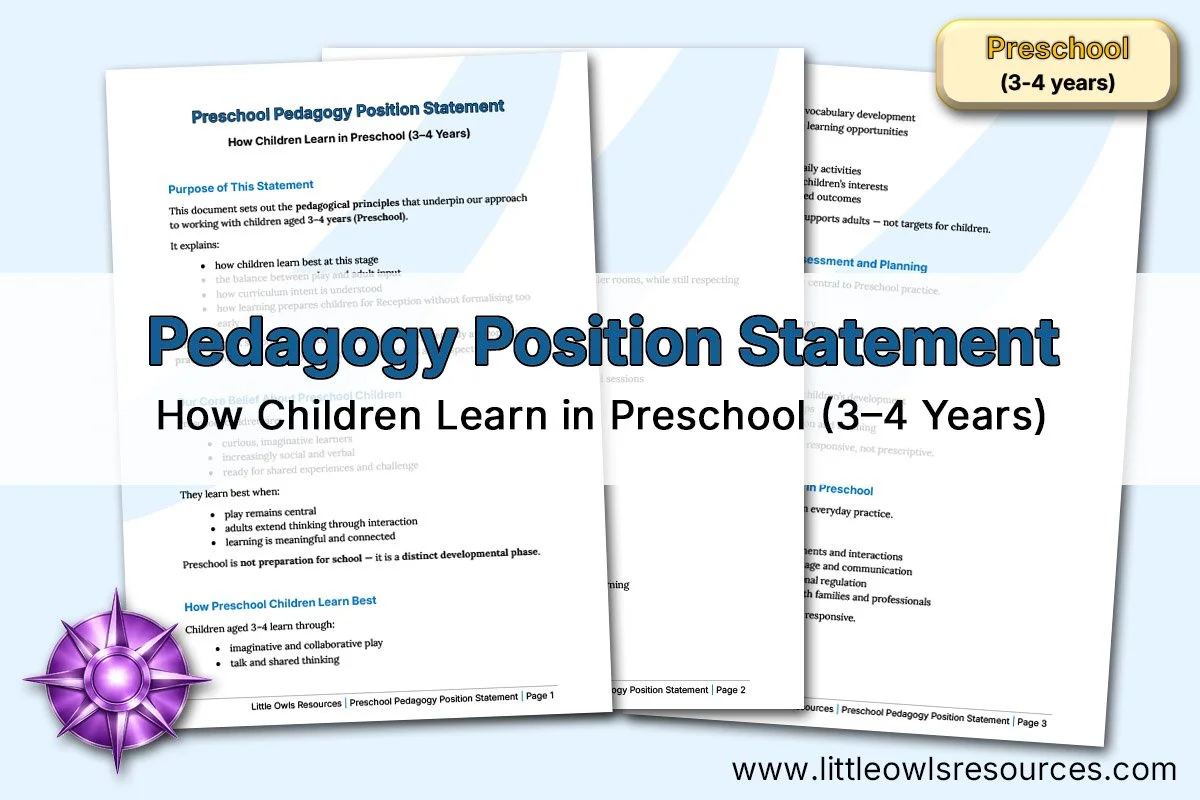
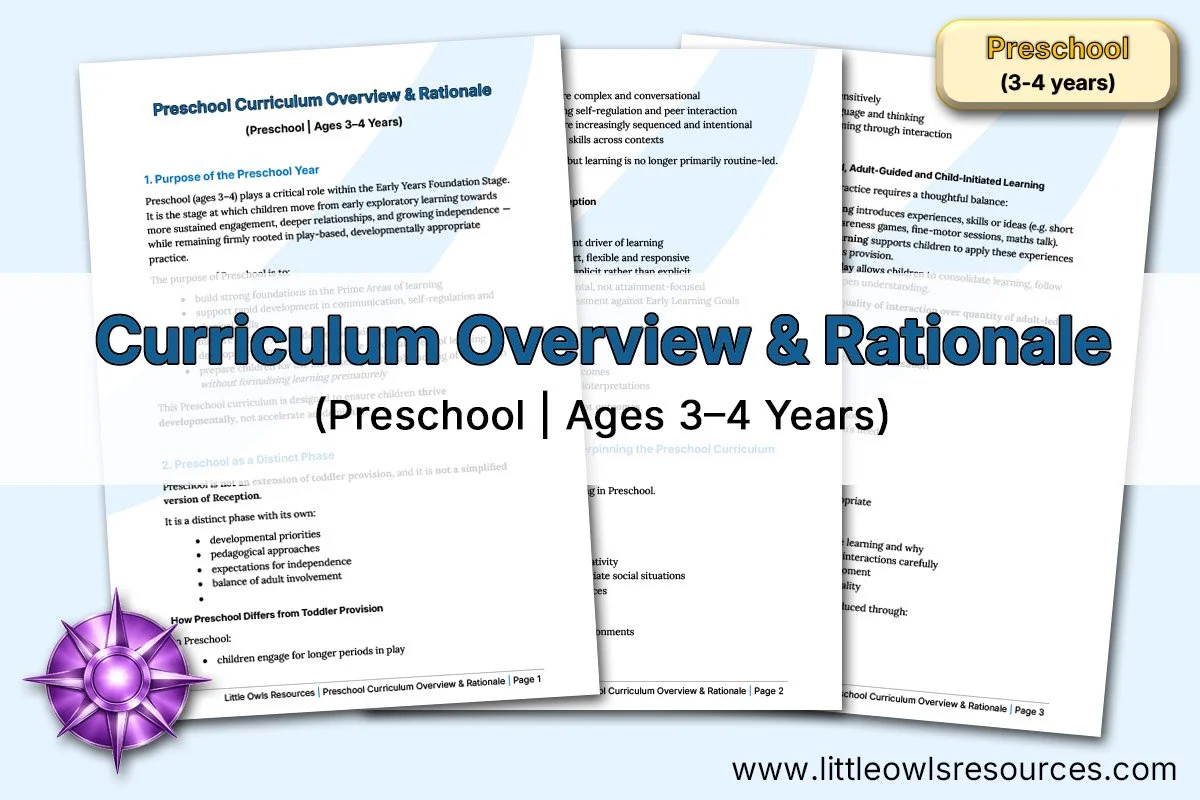
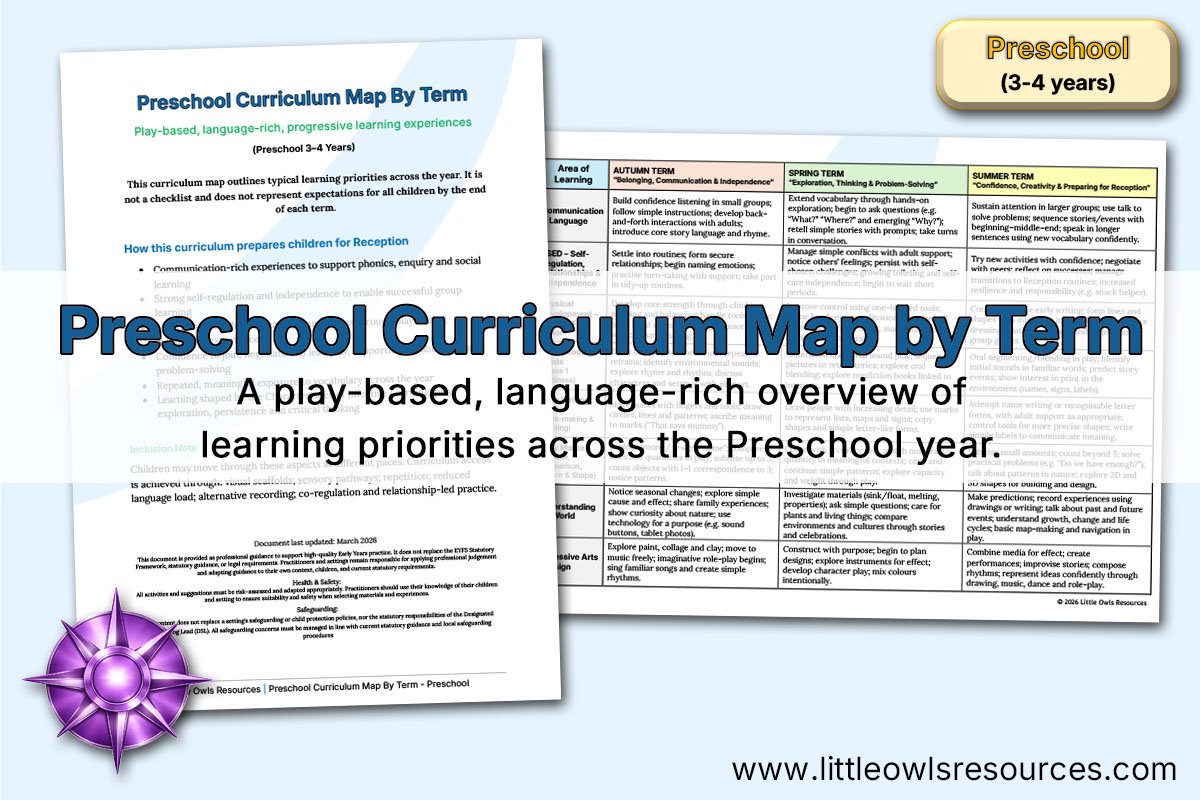
Please find additional resources within our ‘Preschool Curriculum & Pedagogy’ pathway.
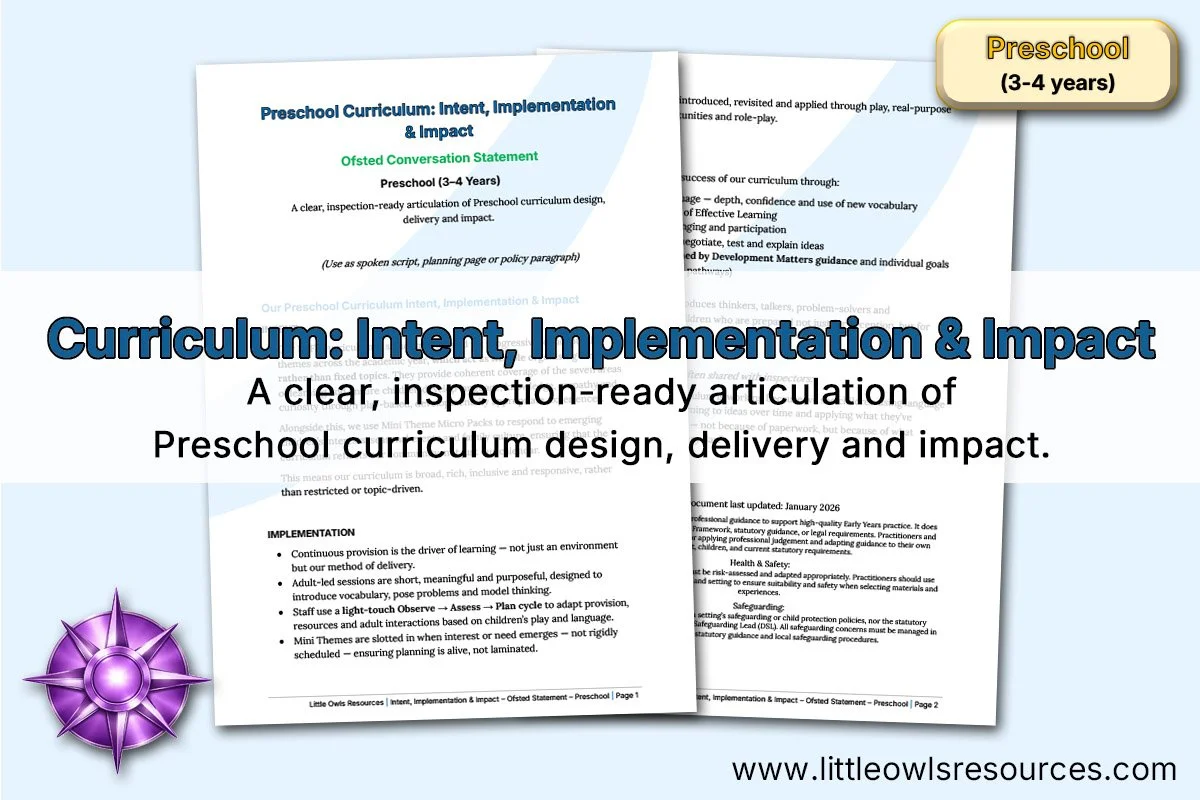
Skills Progression Ladders (all key areas)
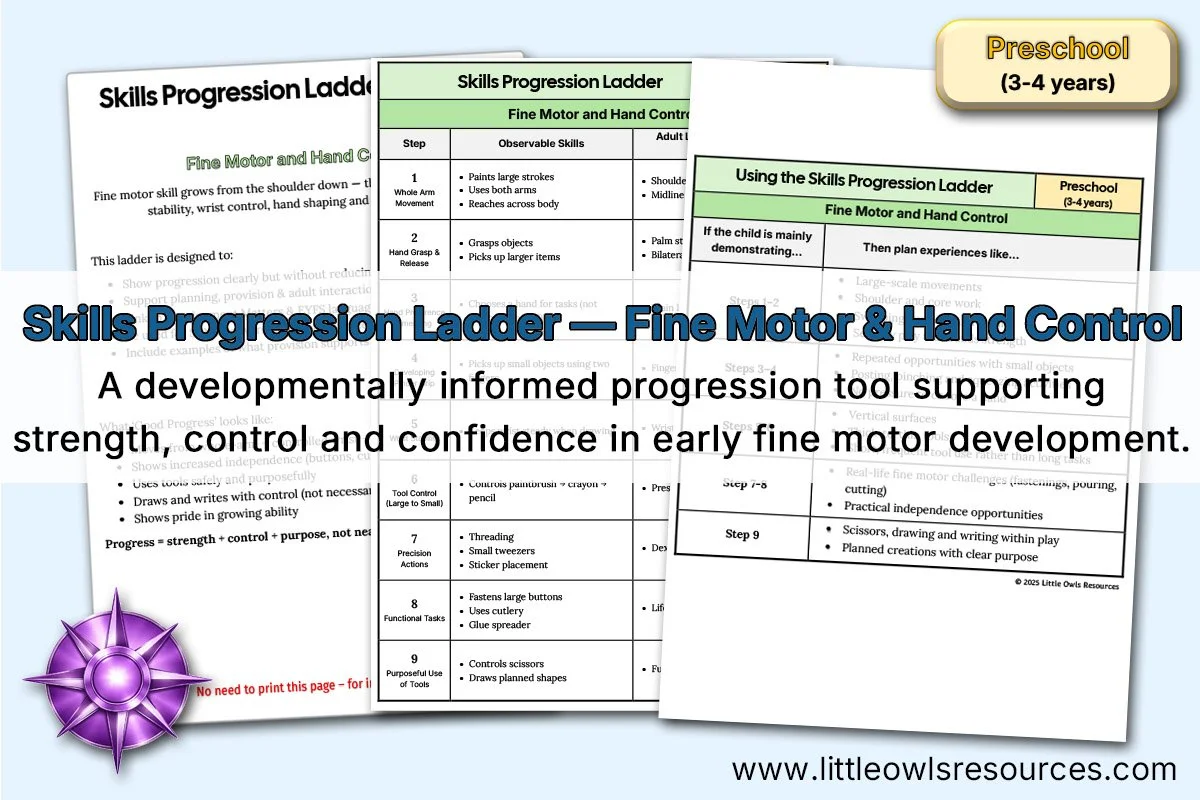
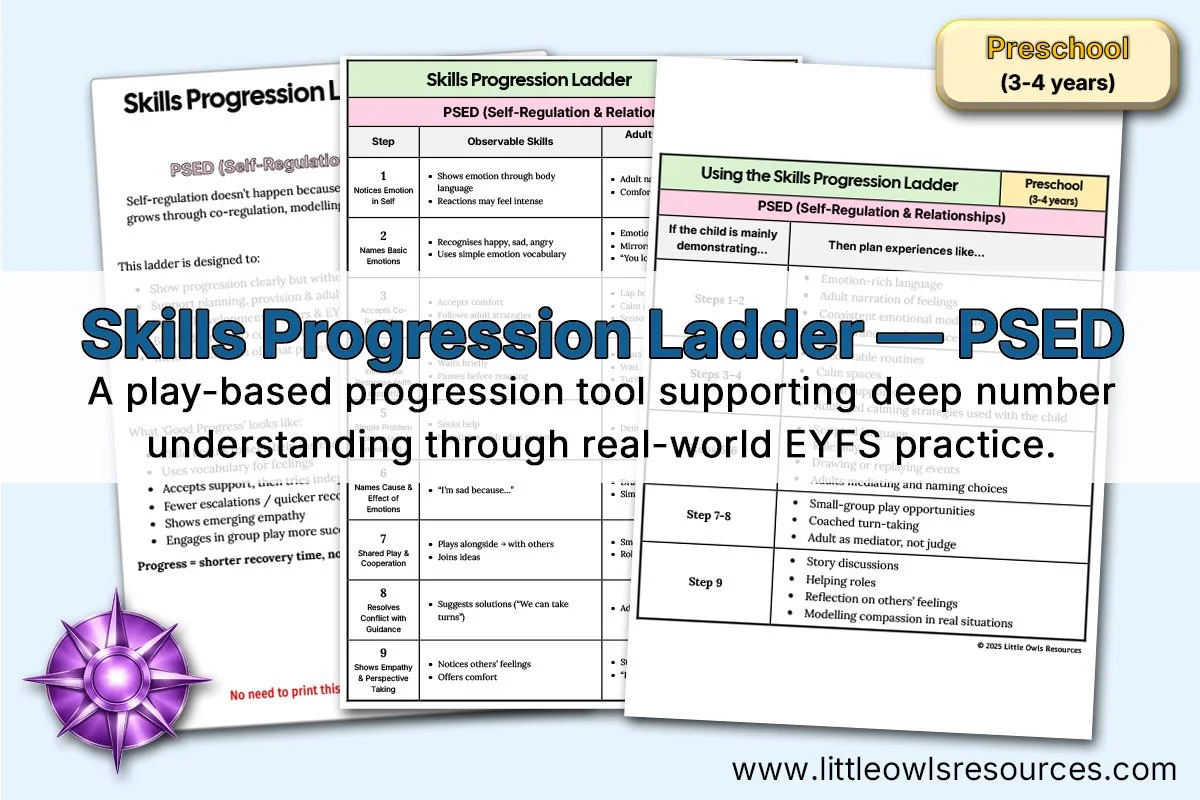


Intent–Implementation–Impact guidance
Please find additional resources on our ‘Areas of Learning’ page.
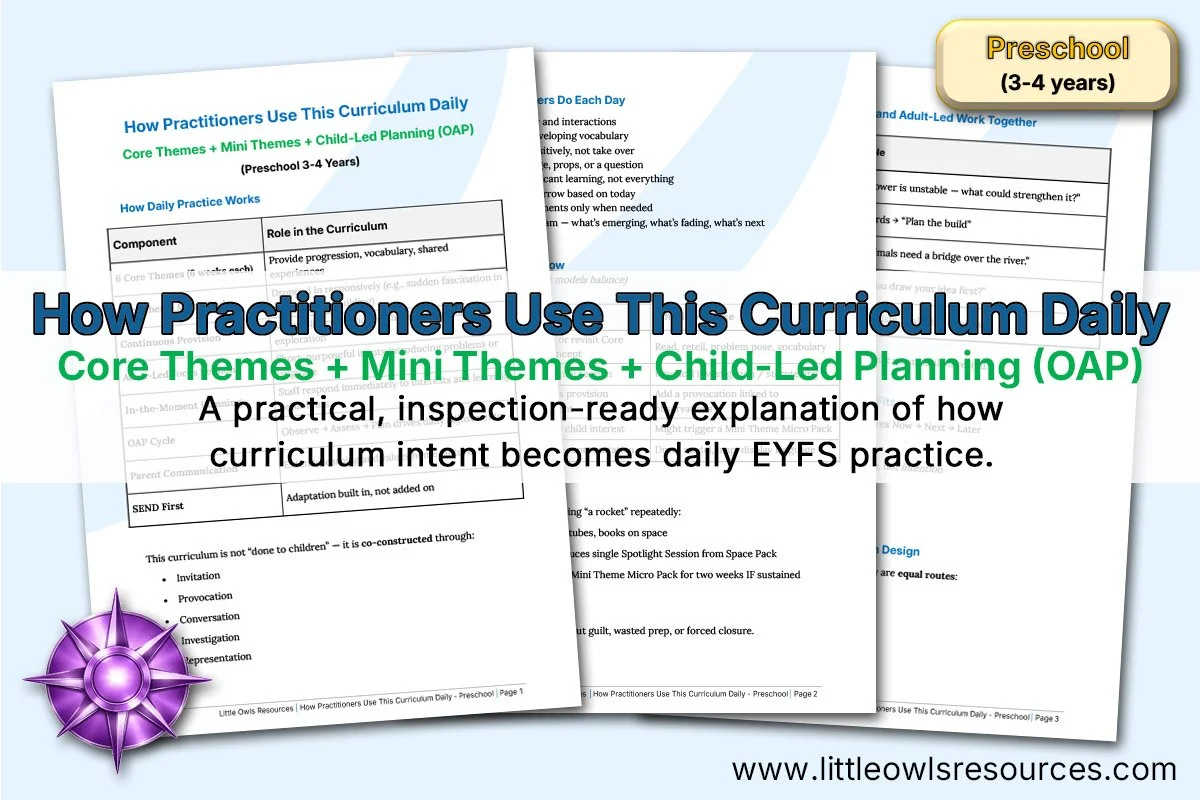

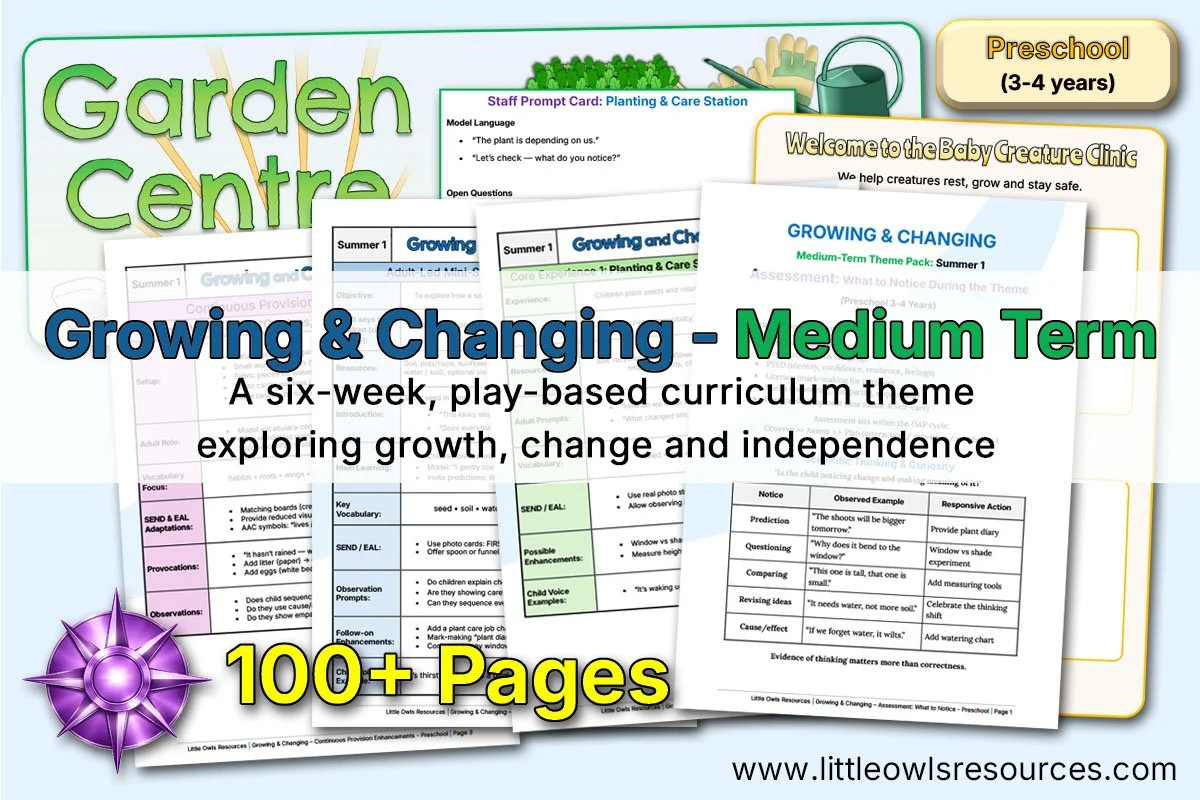
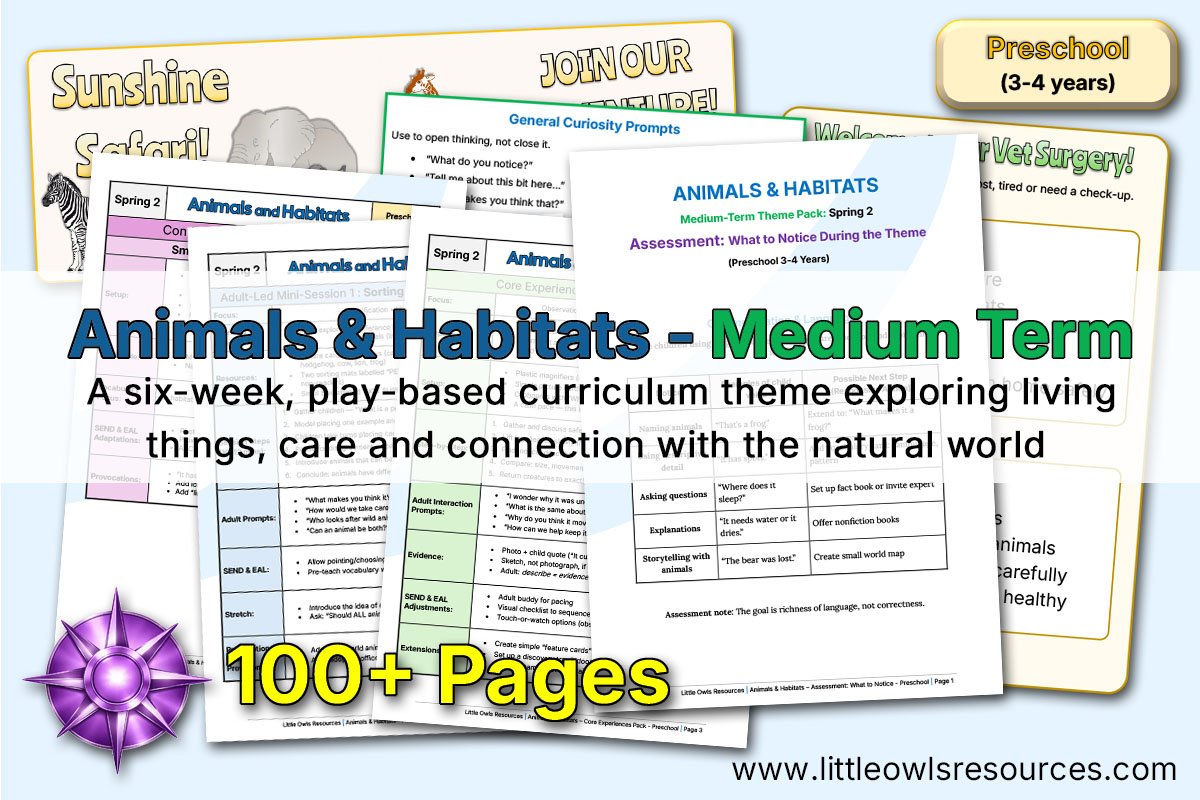
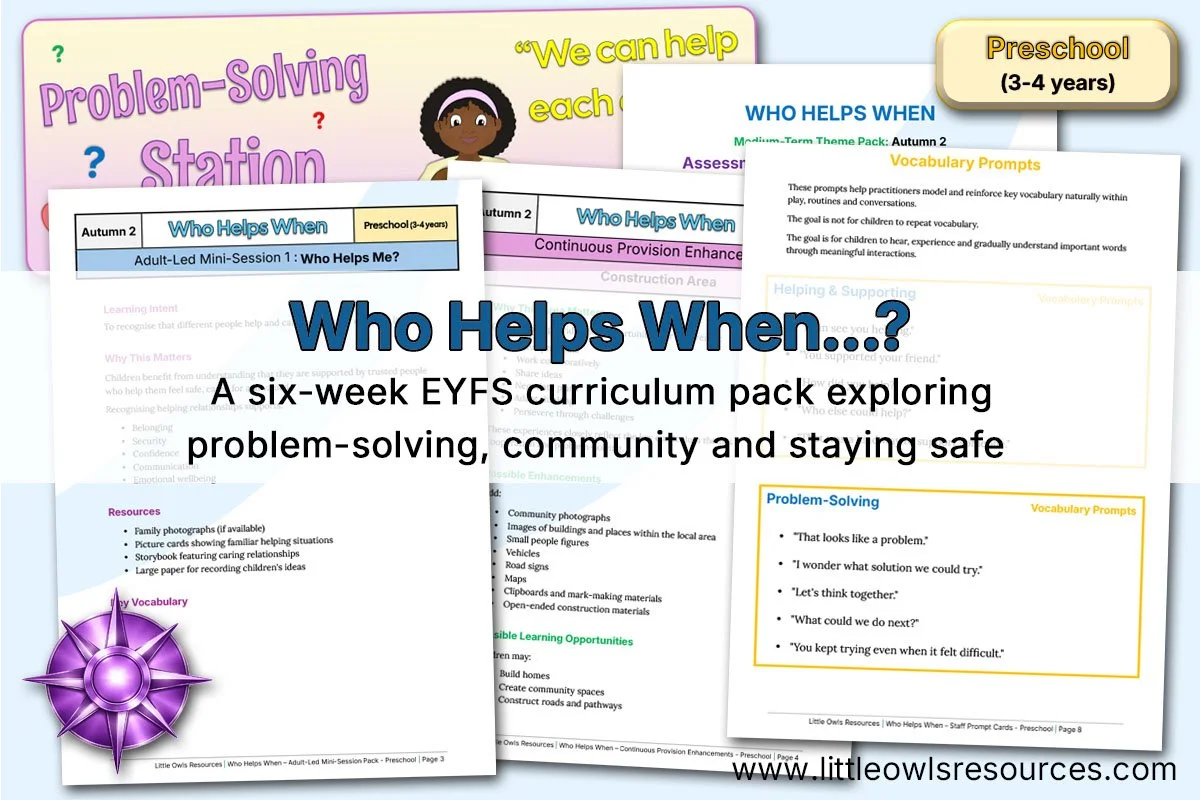
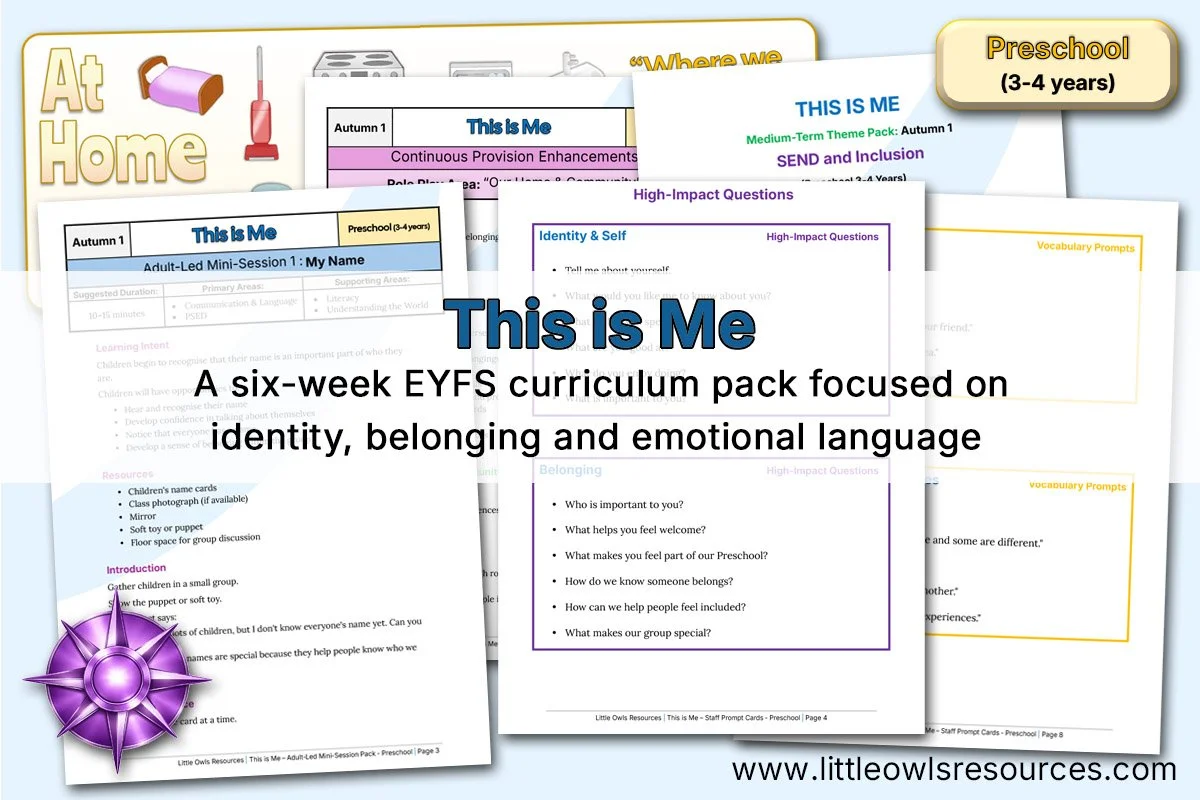
Core 6-week themes
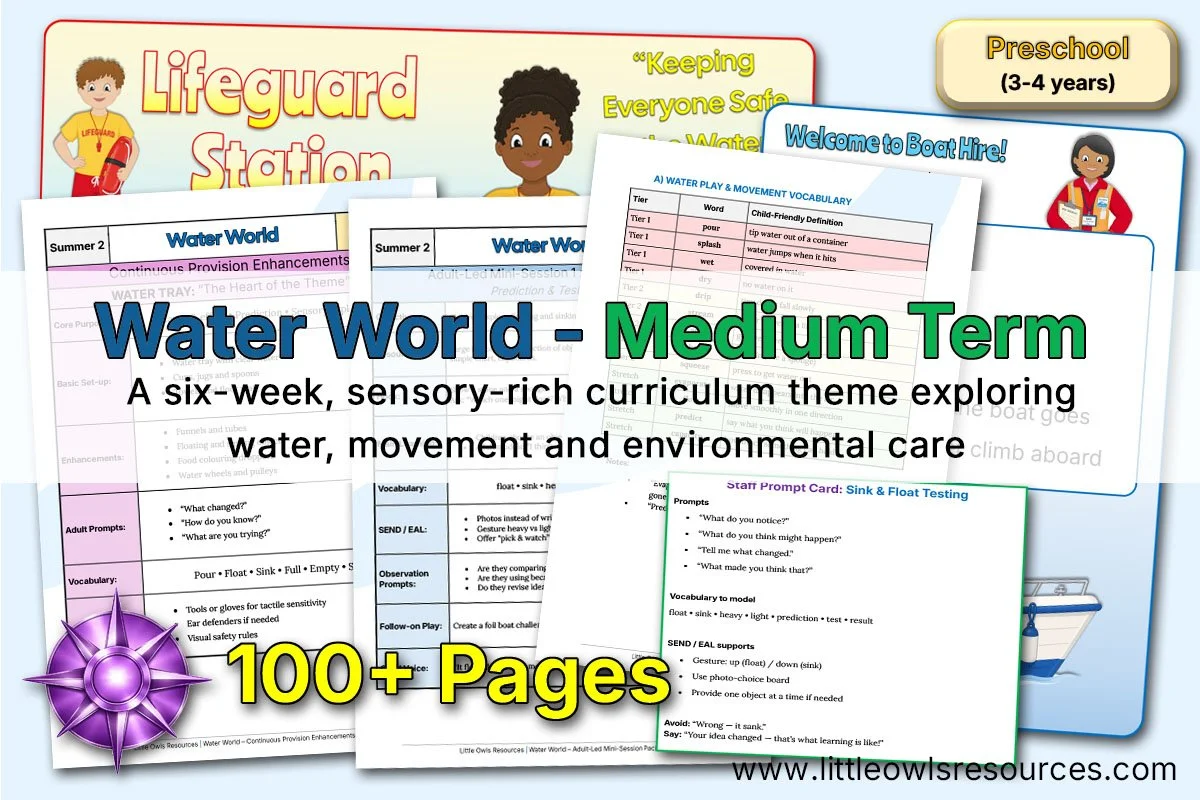
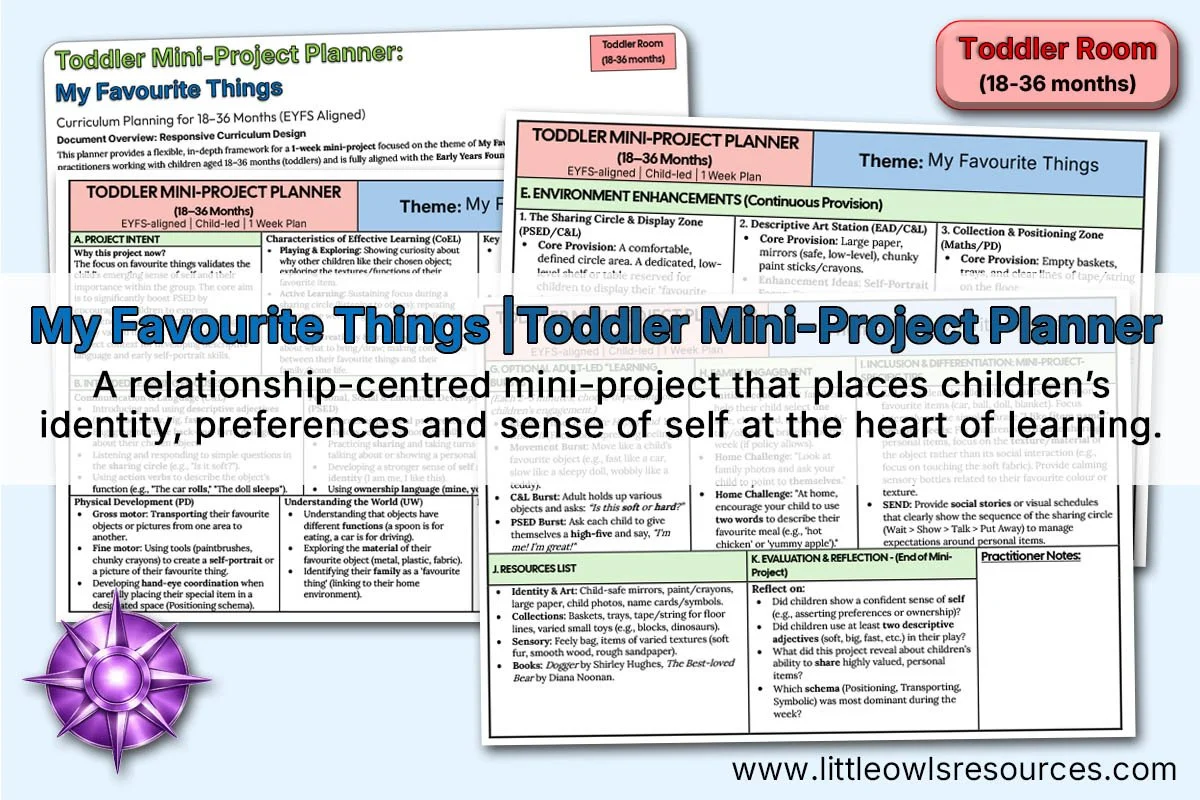
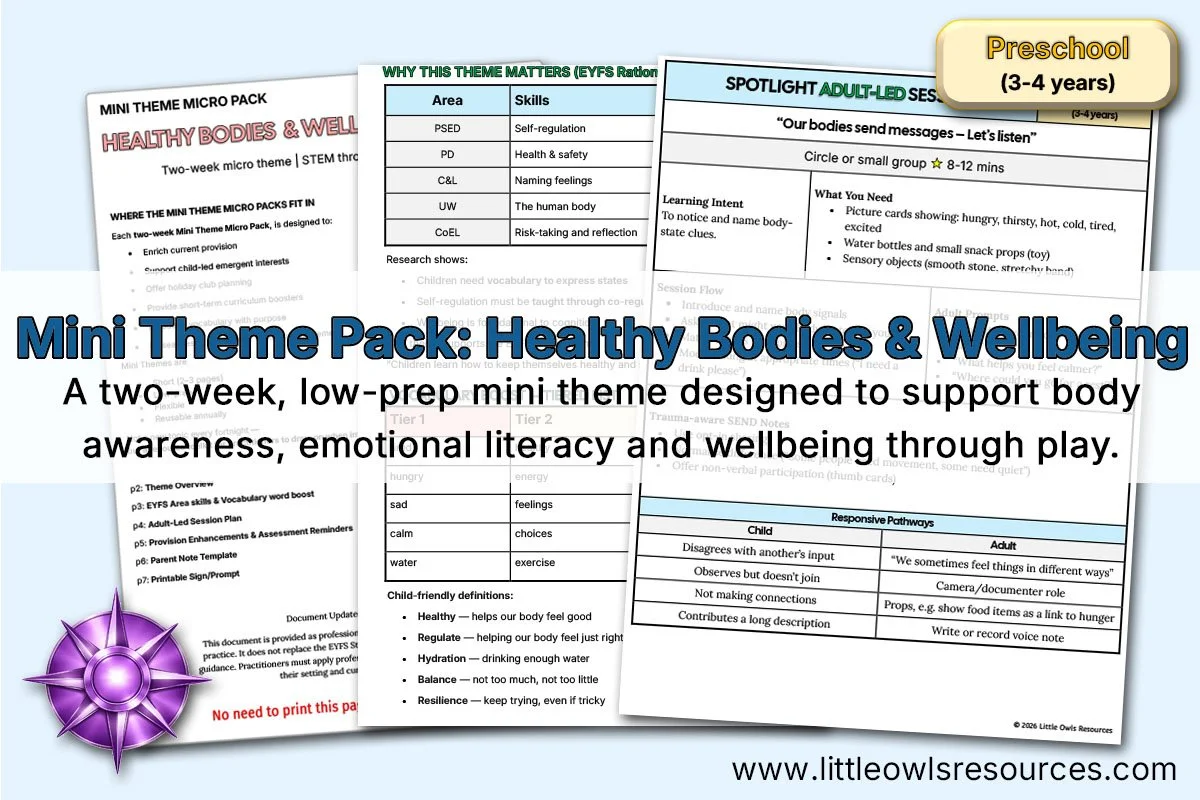
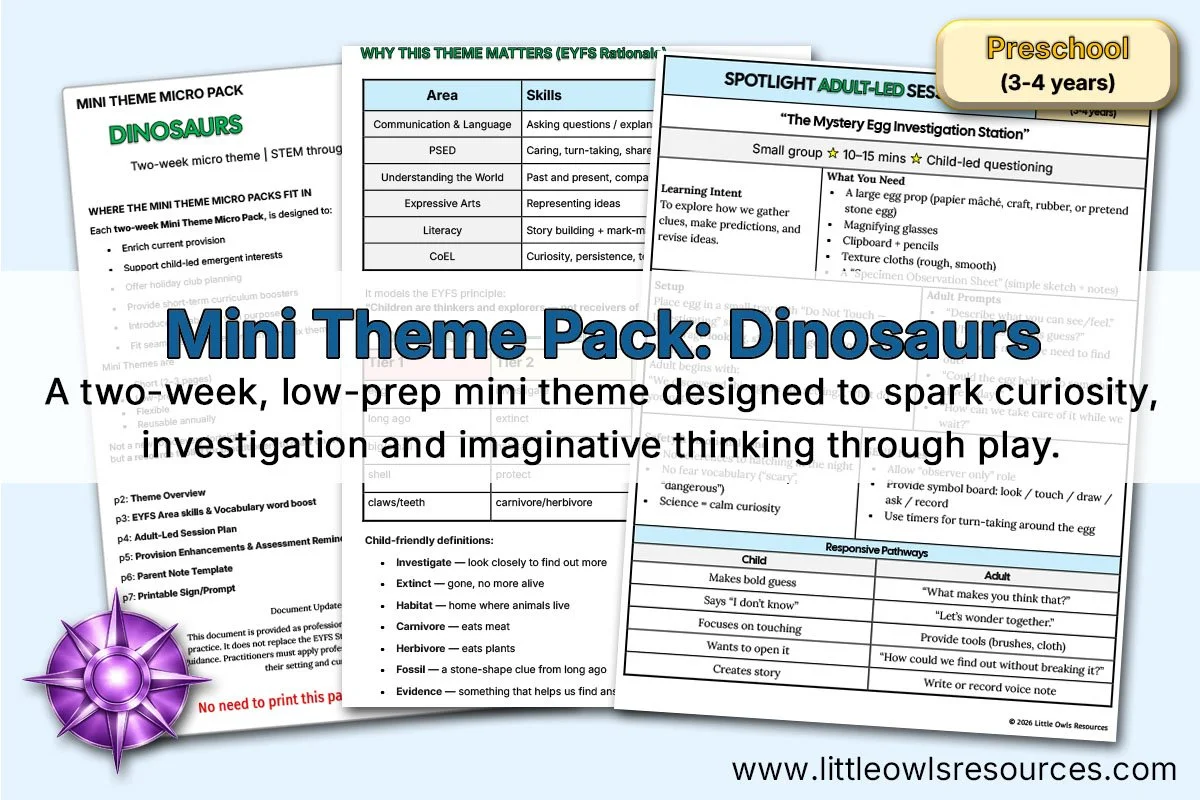
Optional mini-themes

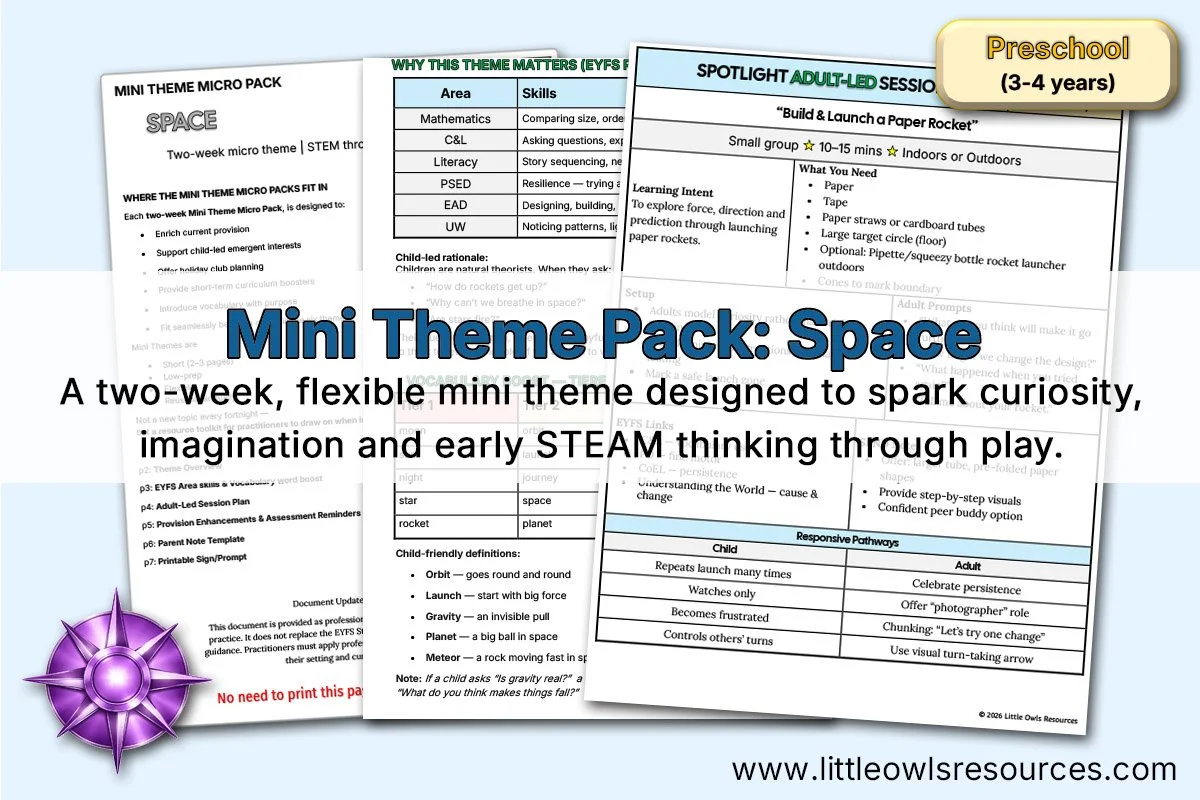
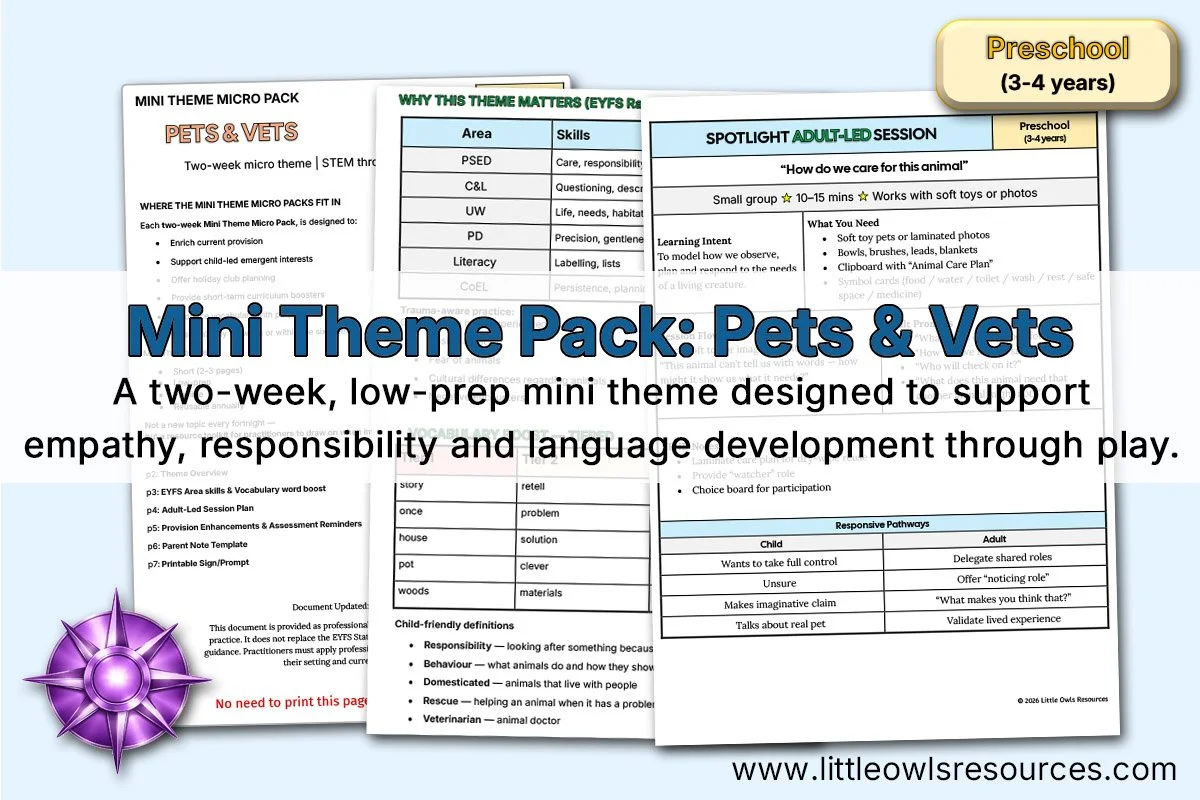

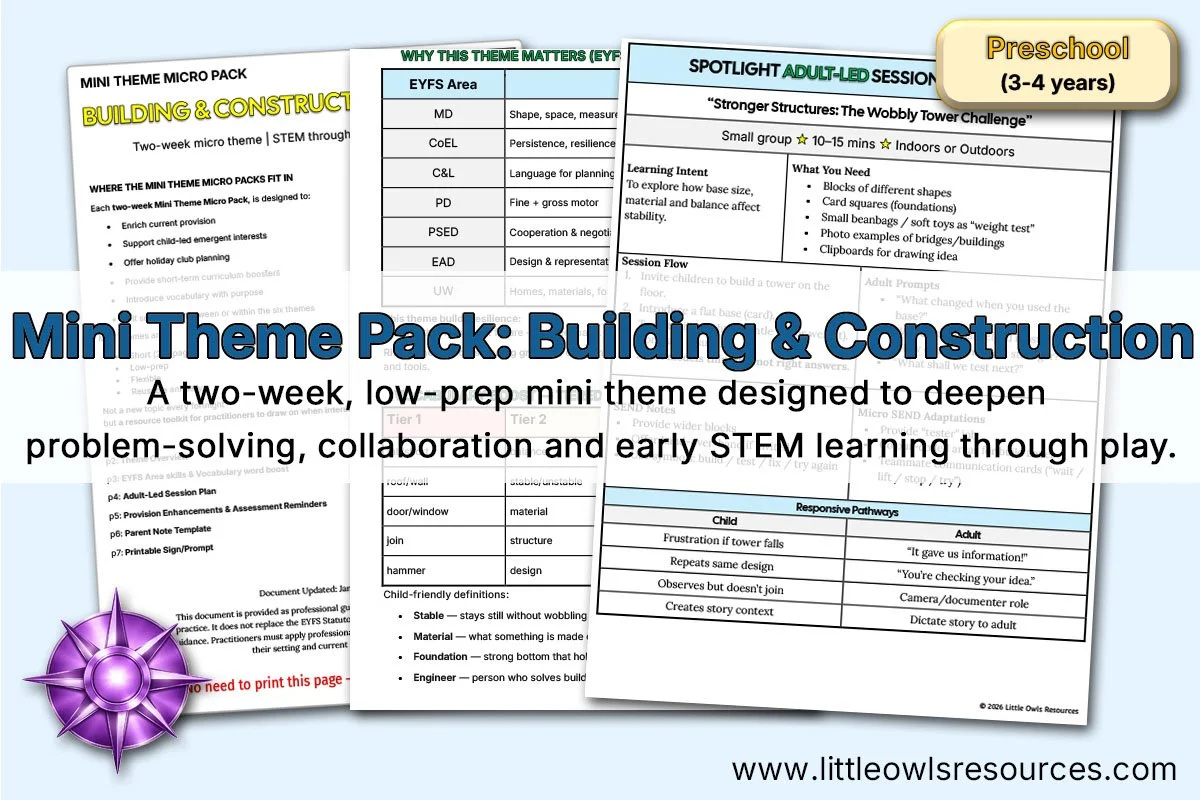

Please find additional themed provision resources on our ‘Themes’ page.
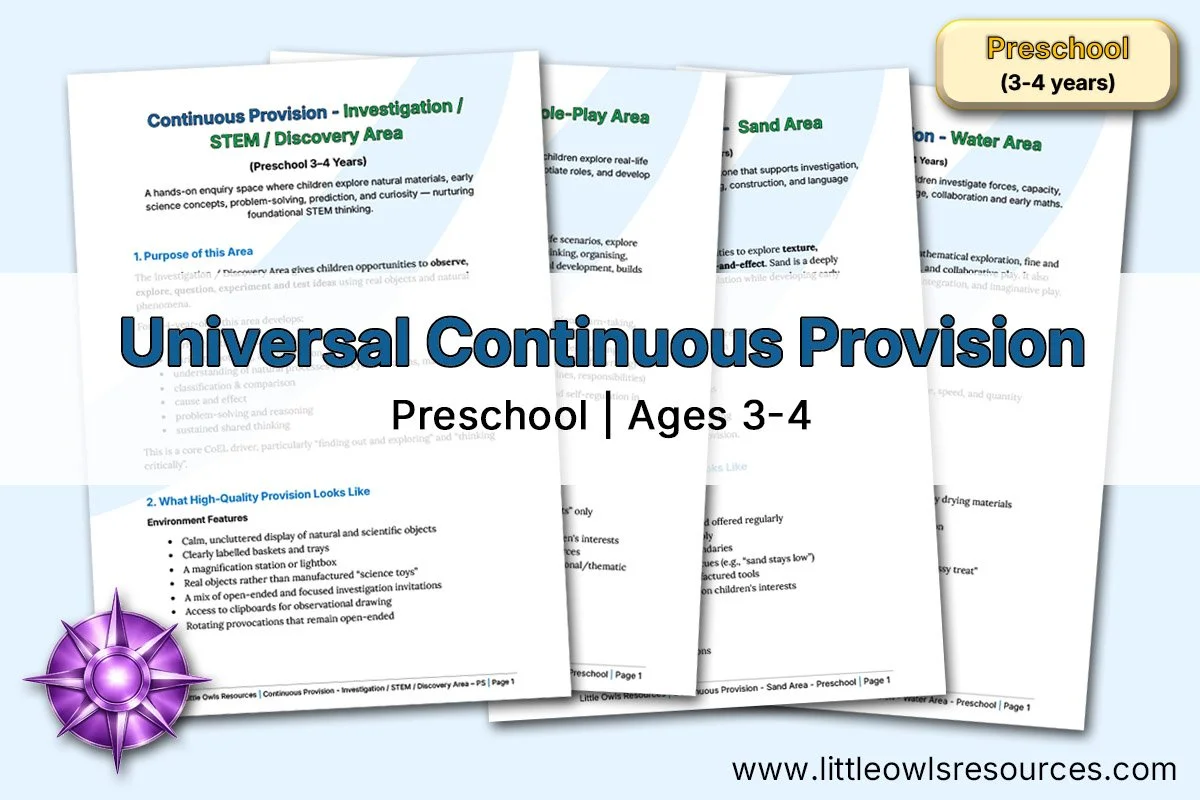
Environment provision maps & audit tools


Guidance Documents and FAQs

Continuous Provision & Play Areas Printable Resource Hub - Coming Soon!
Area of Learning Printable Provision
Please use the arrows to the right of the carousel below and select an area of learning to explore our resources.


✨ Provision Enhancements
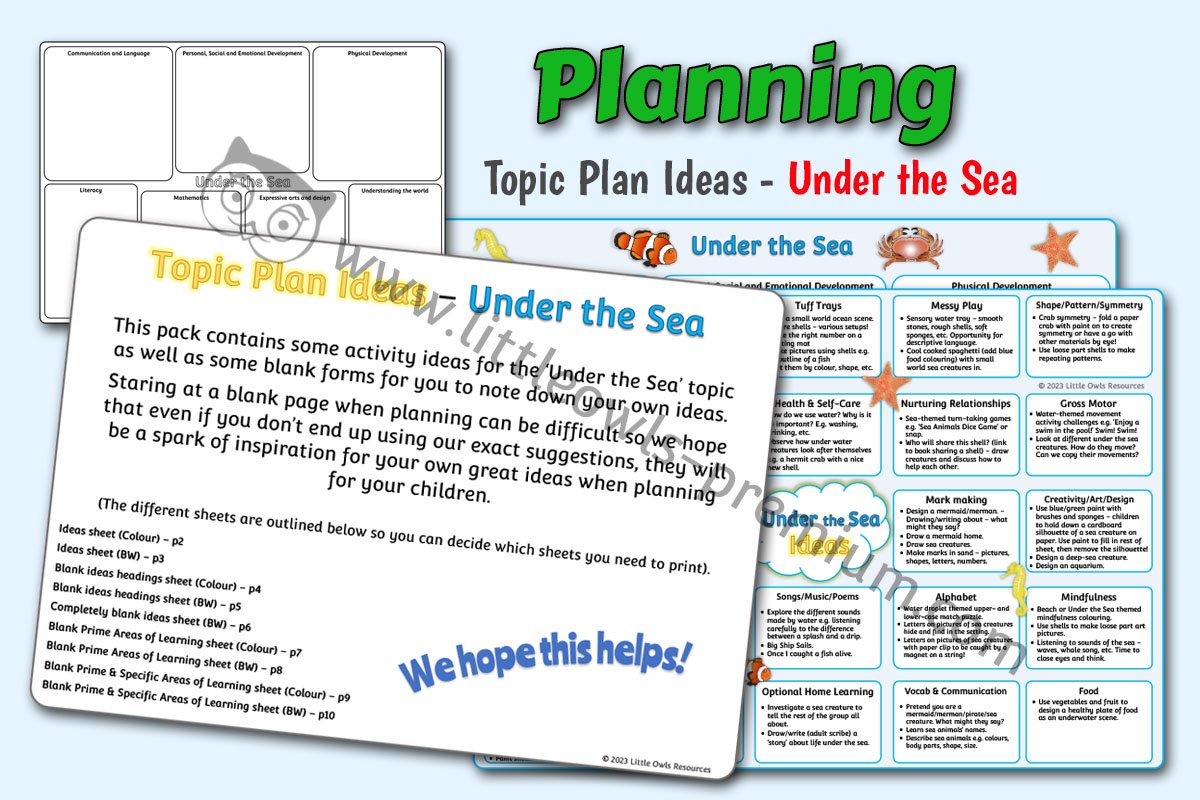
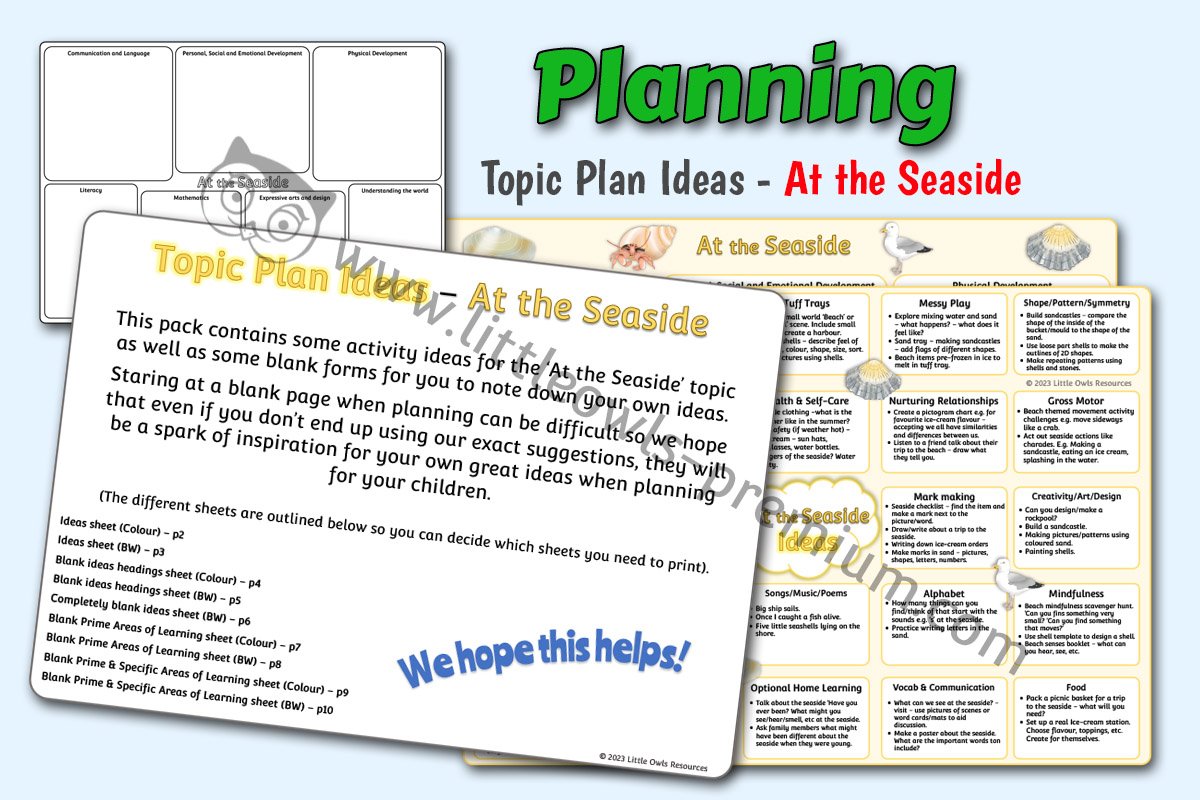
Themed provision
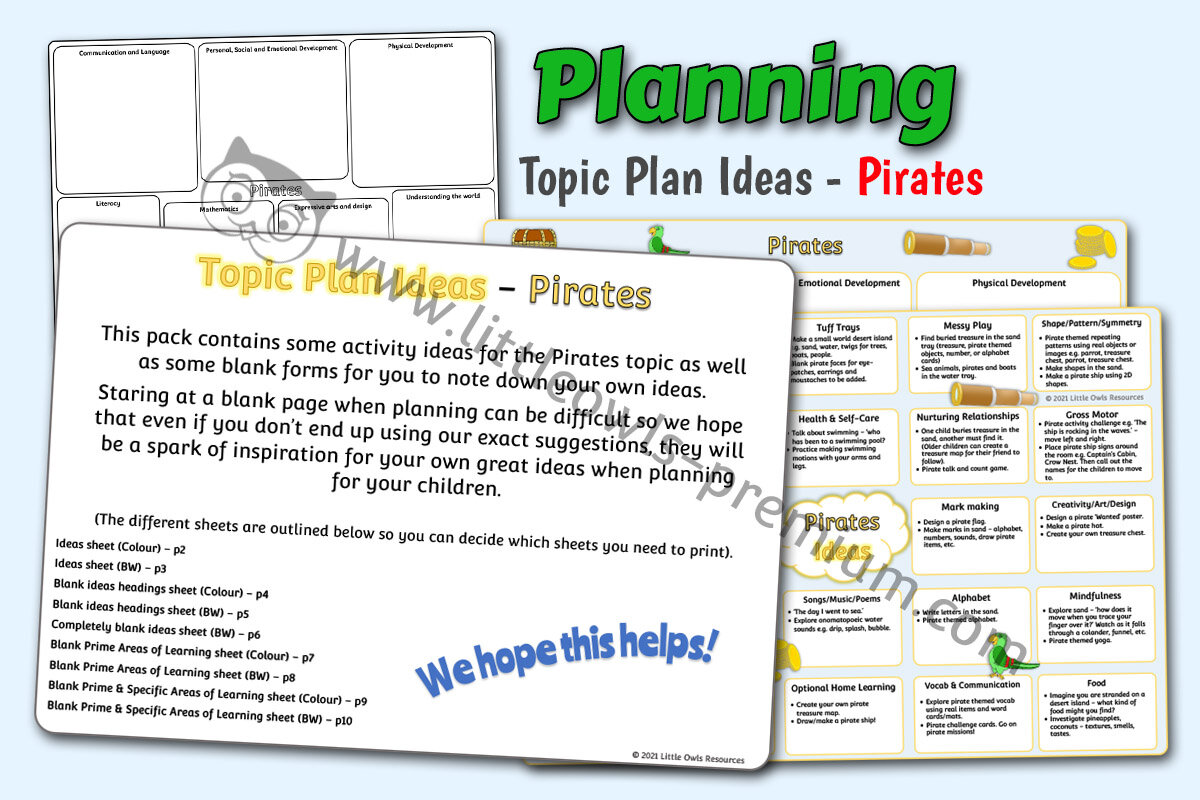
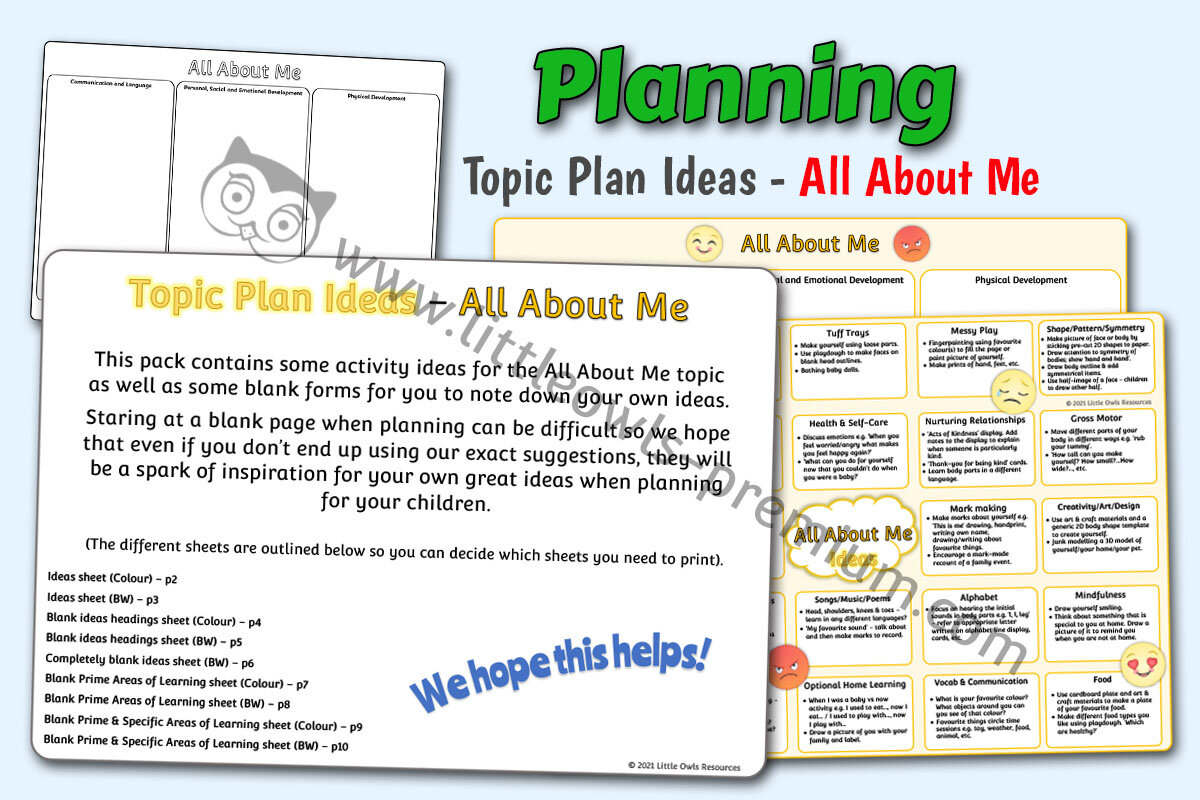
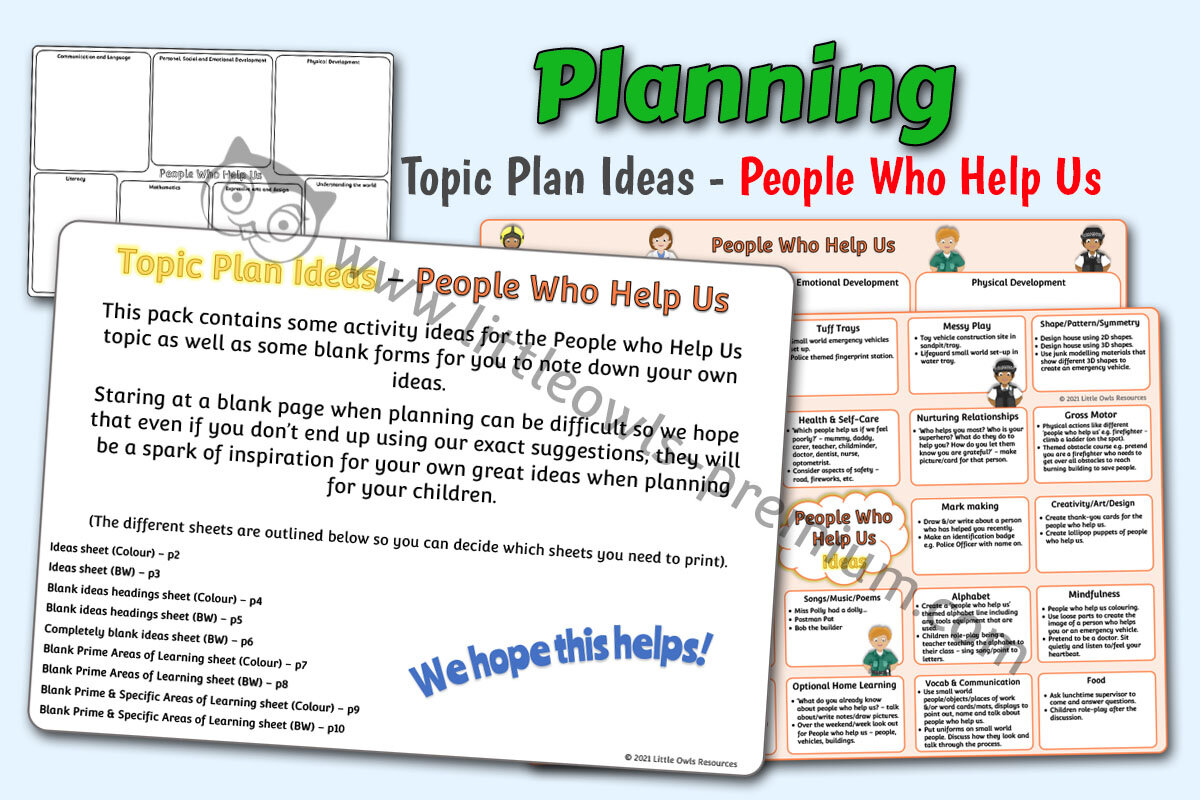
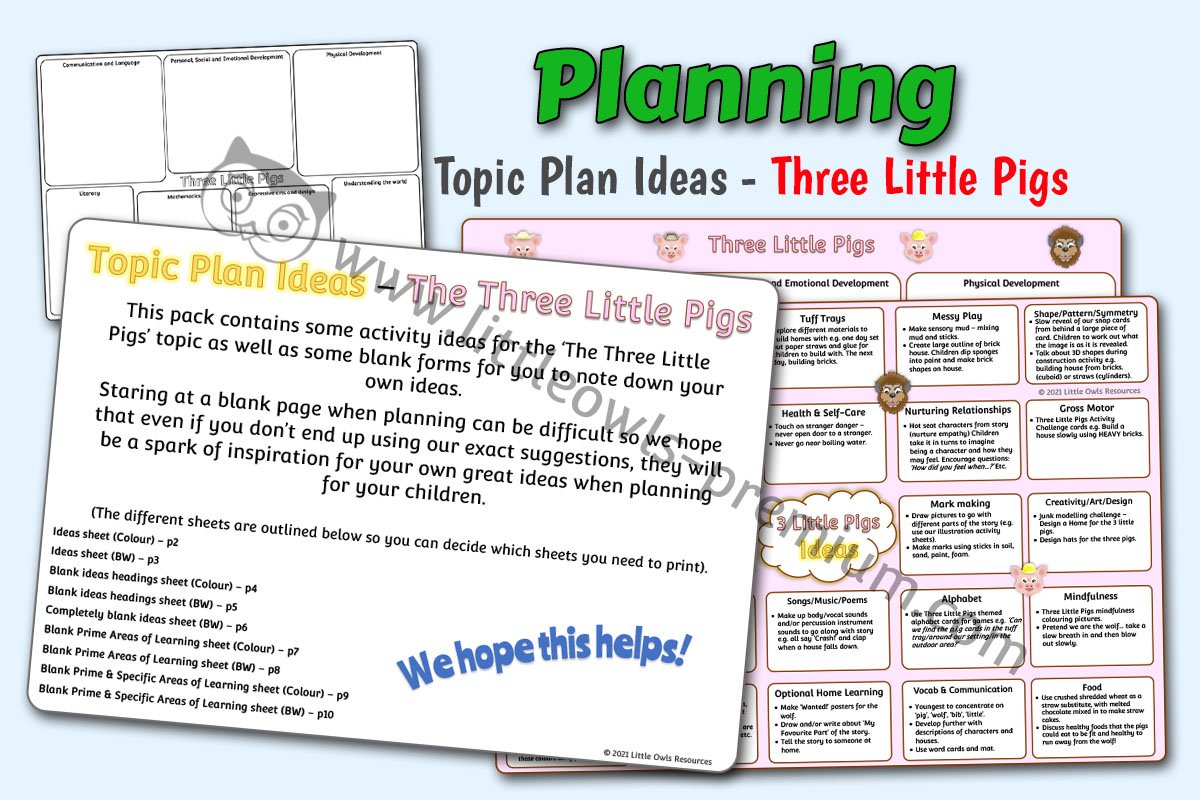
Please use the arrows to the right of the carousel below and select a theme to explore our continuous provision enhancement resources. Alternatively, visit our ‘Themes Menu Page’.















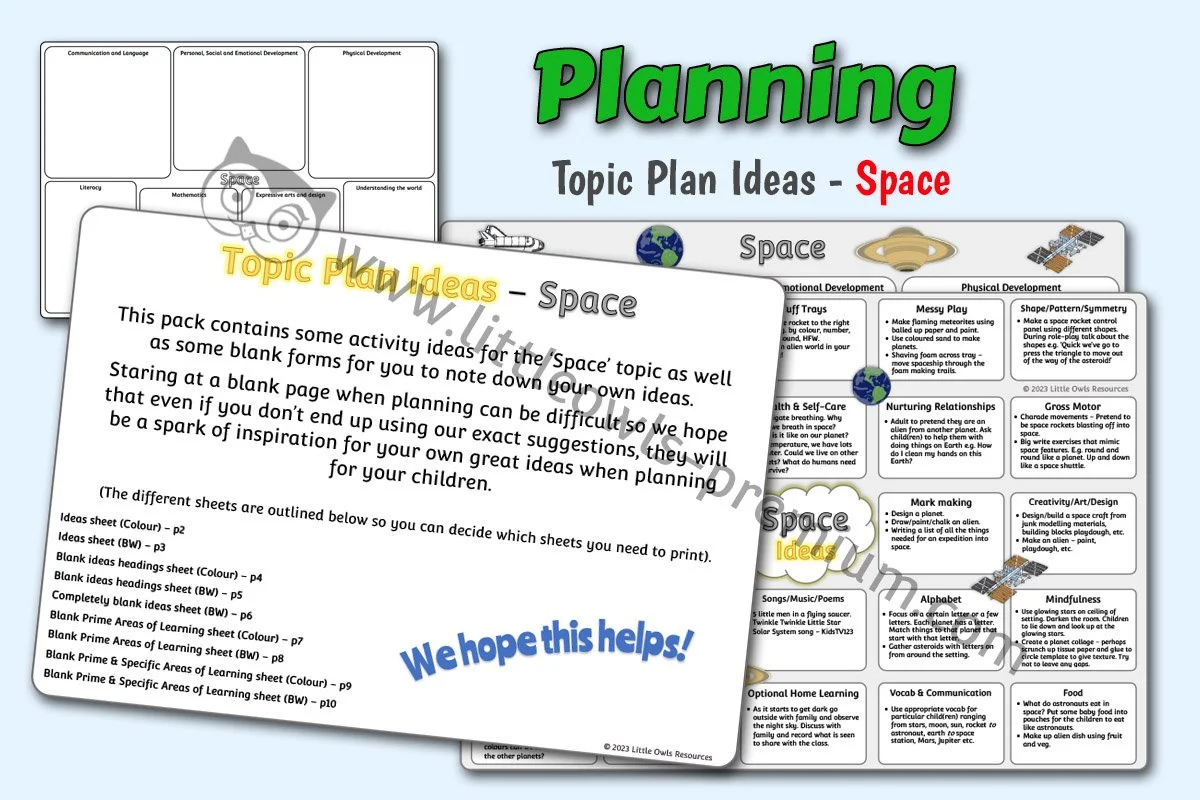


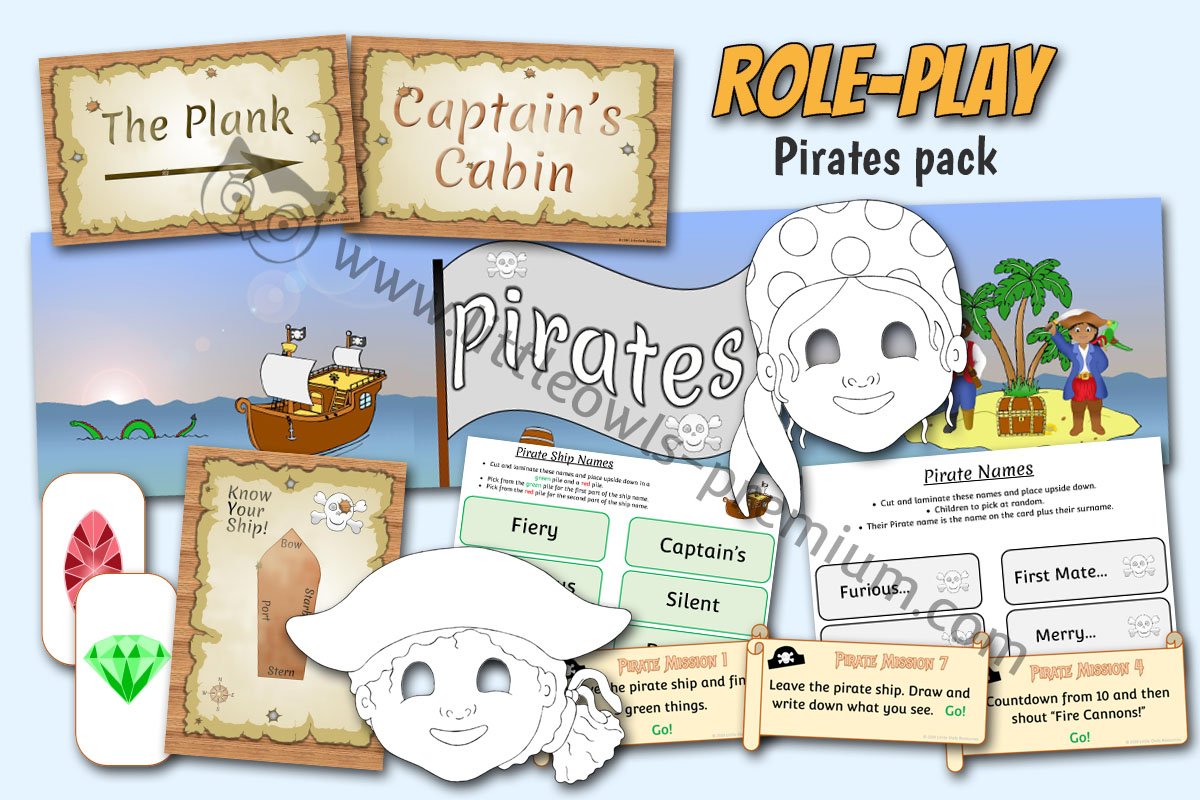
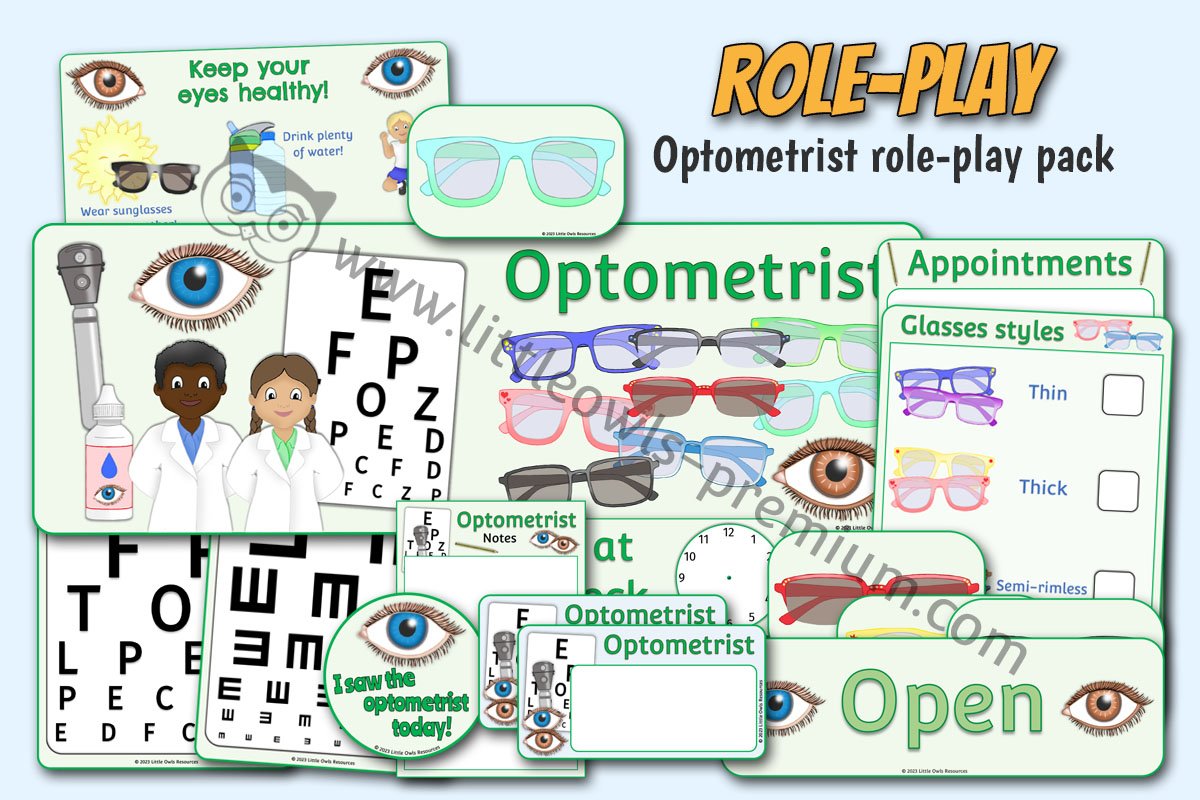
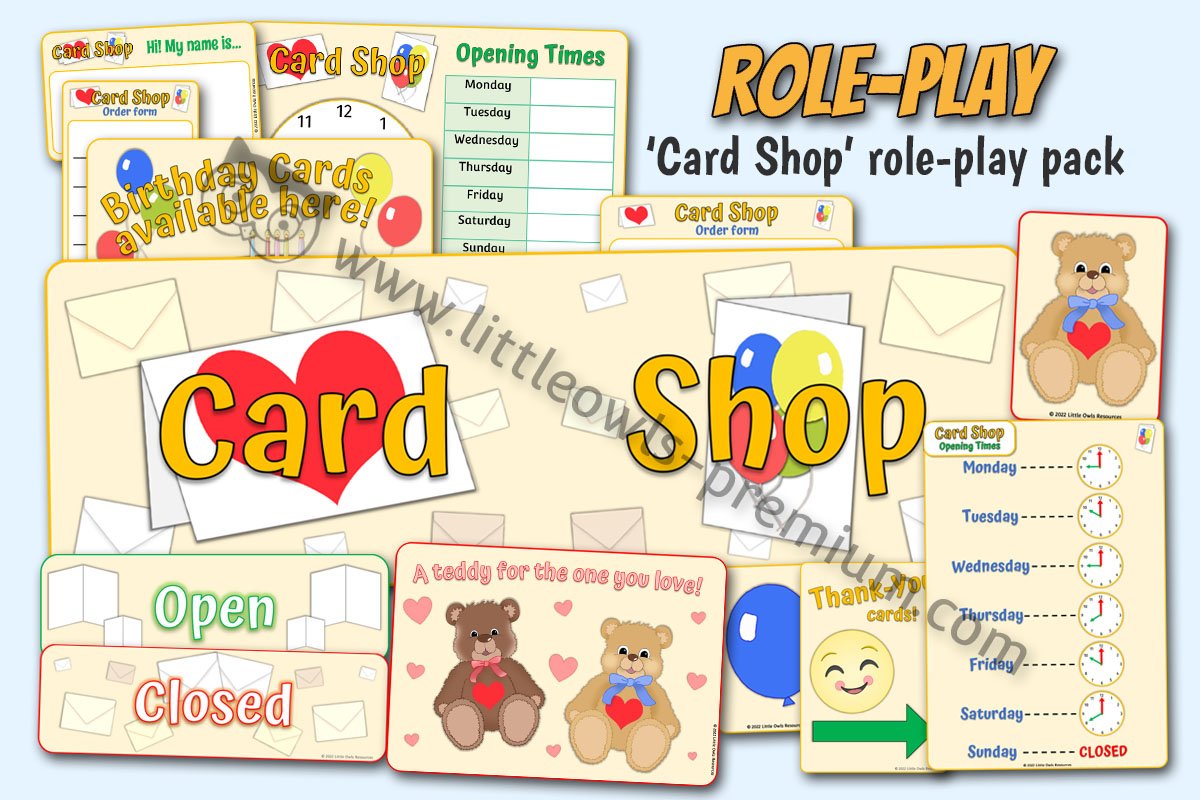
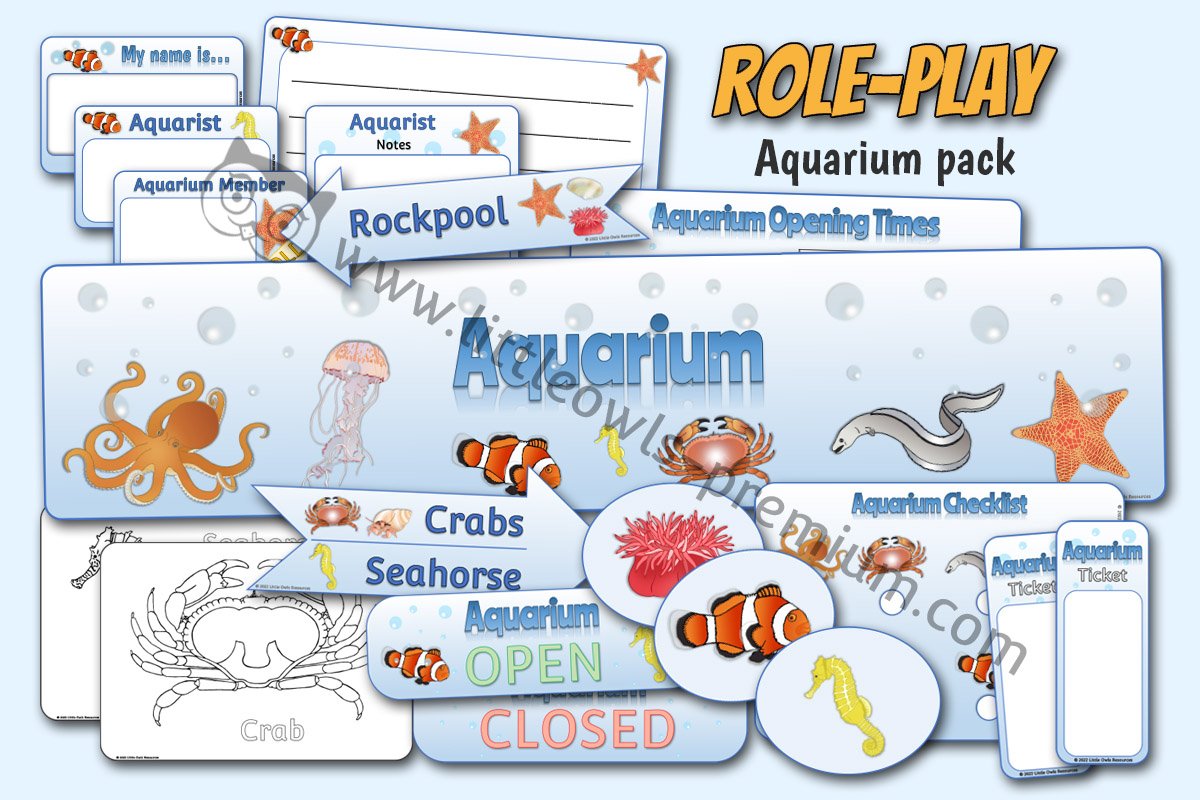
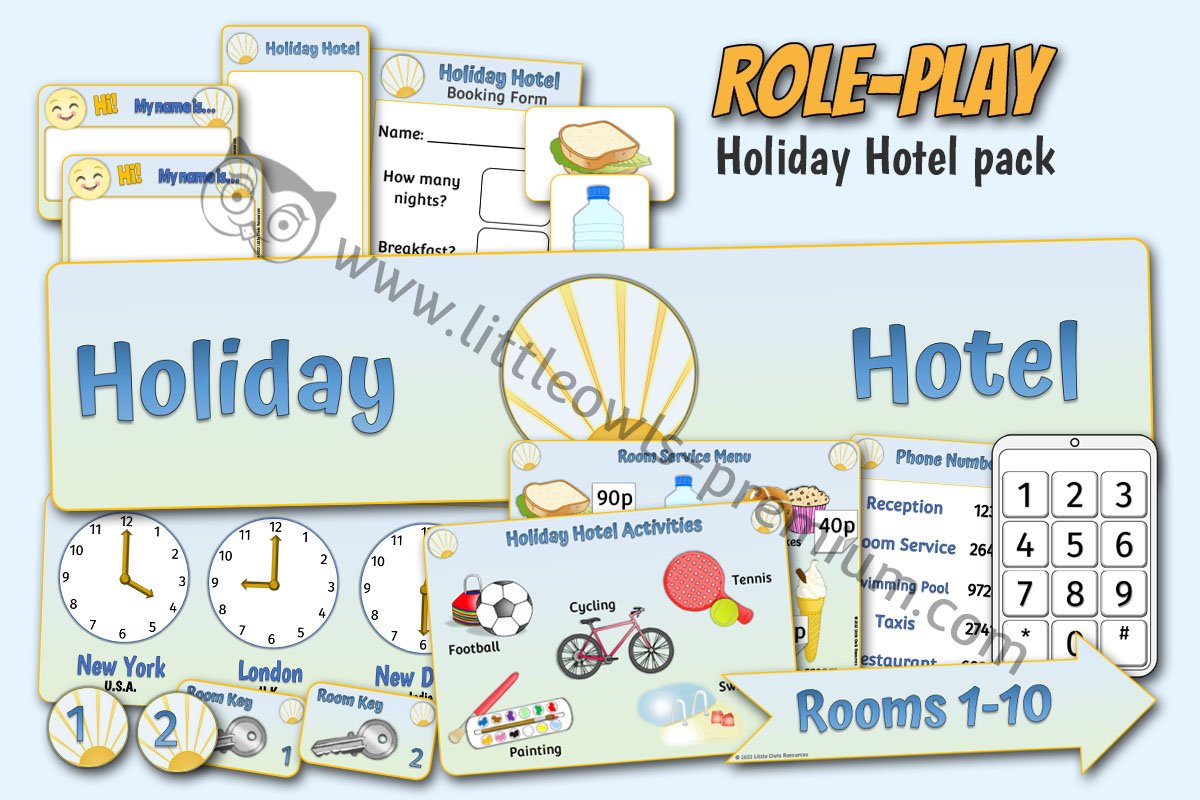
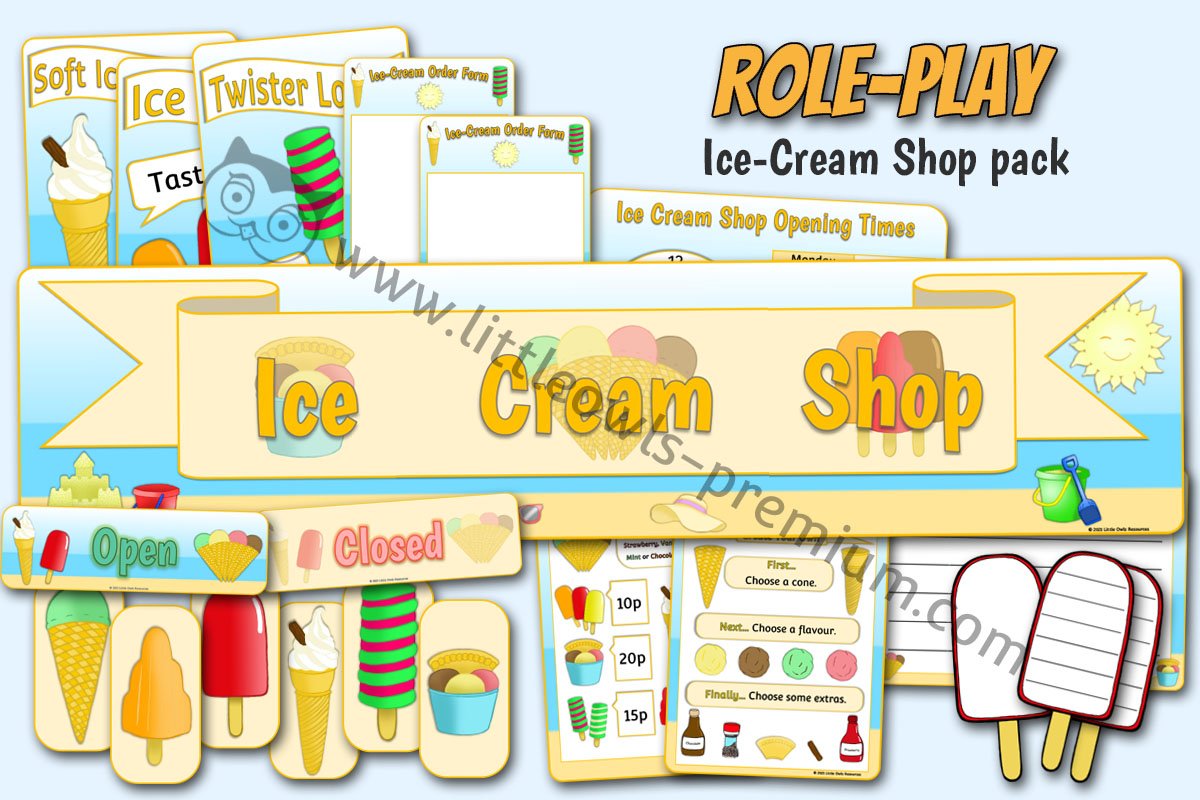
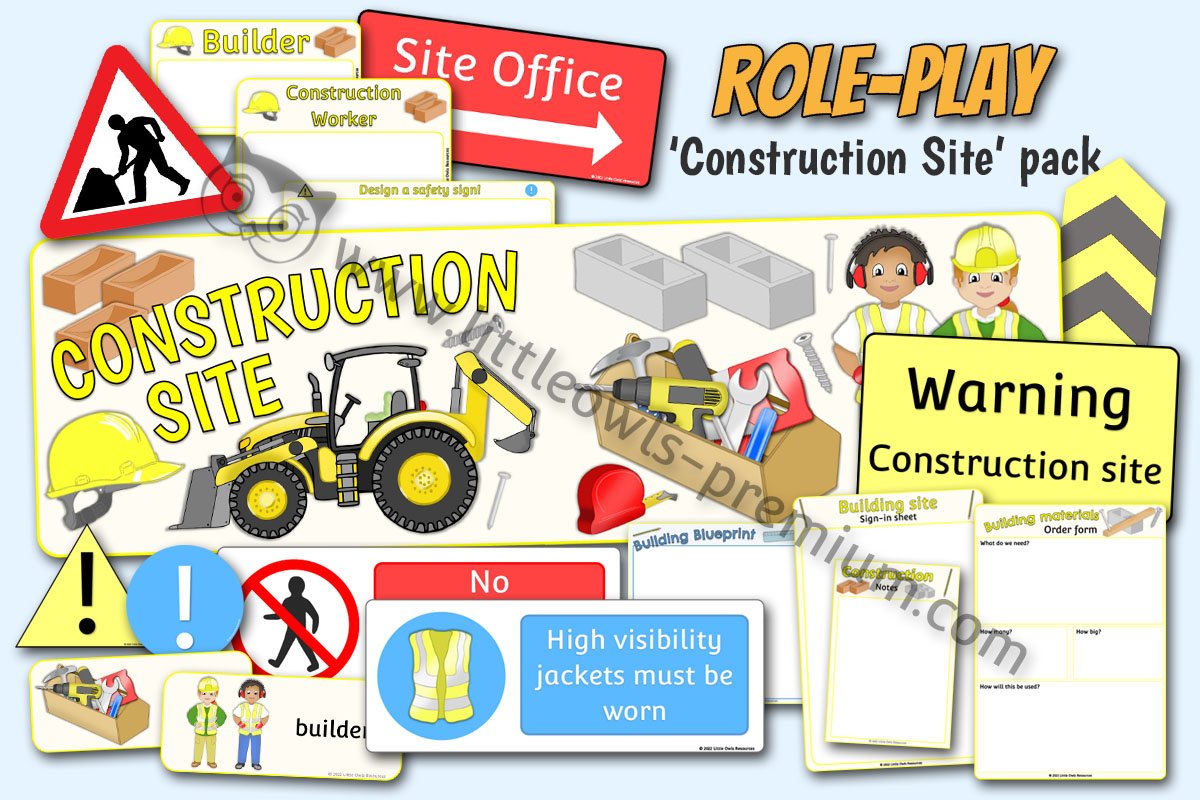
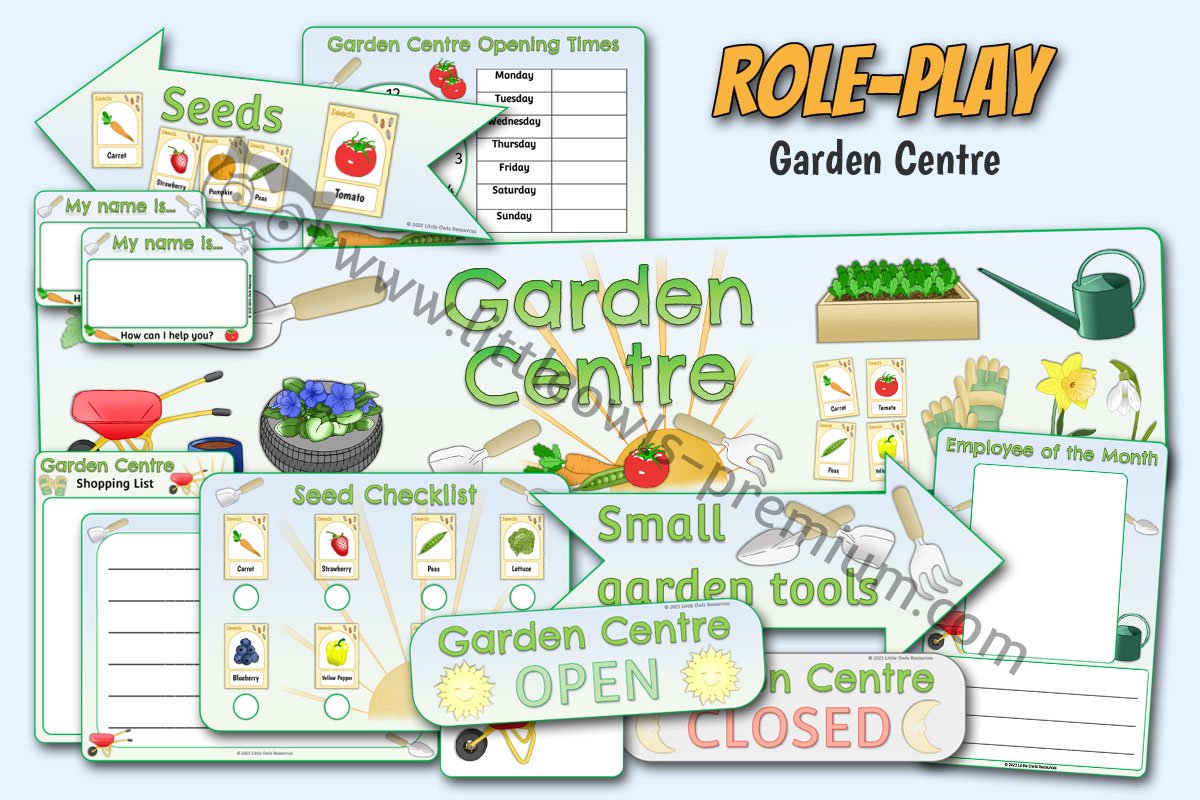
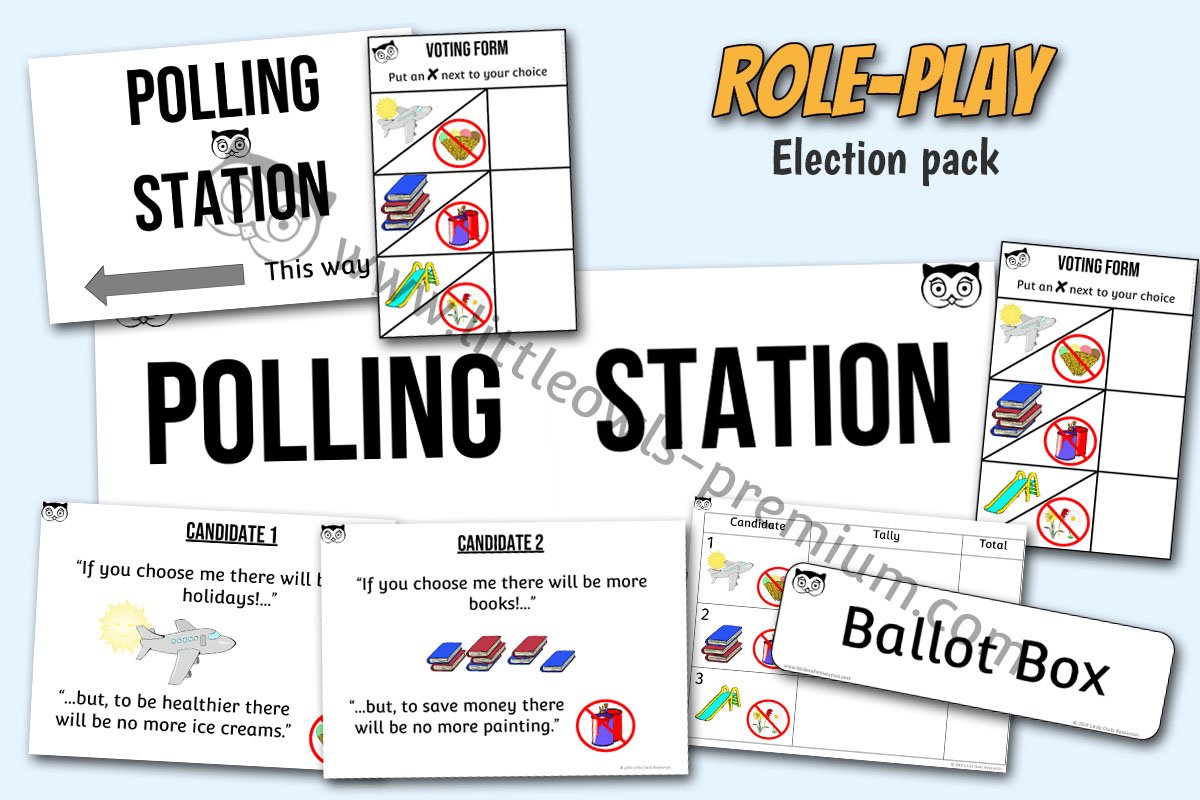
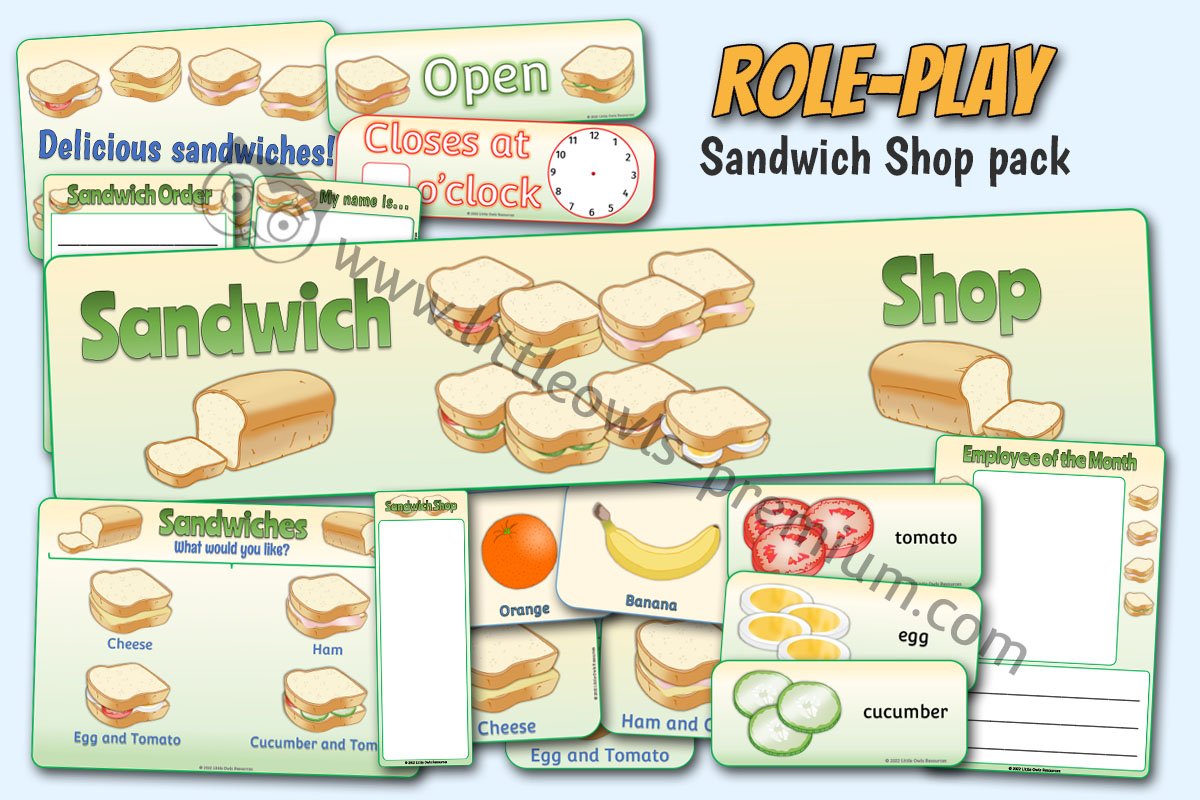
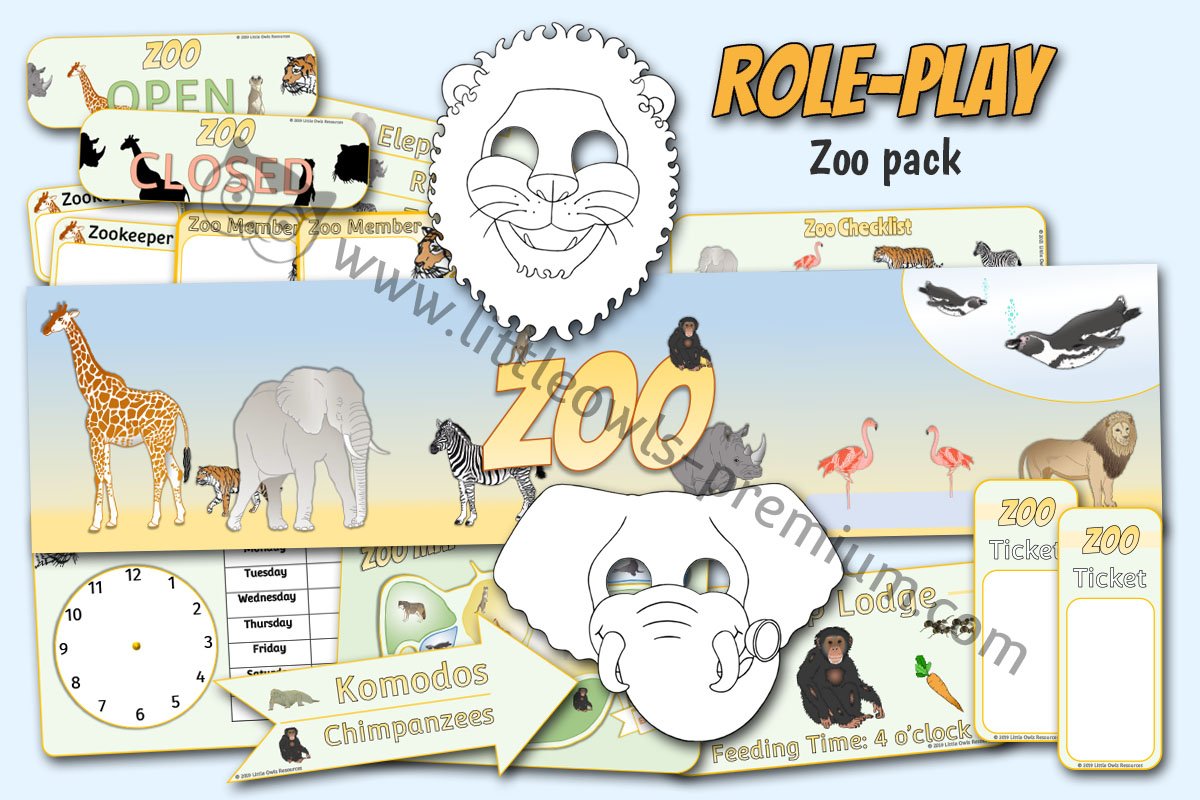
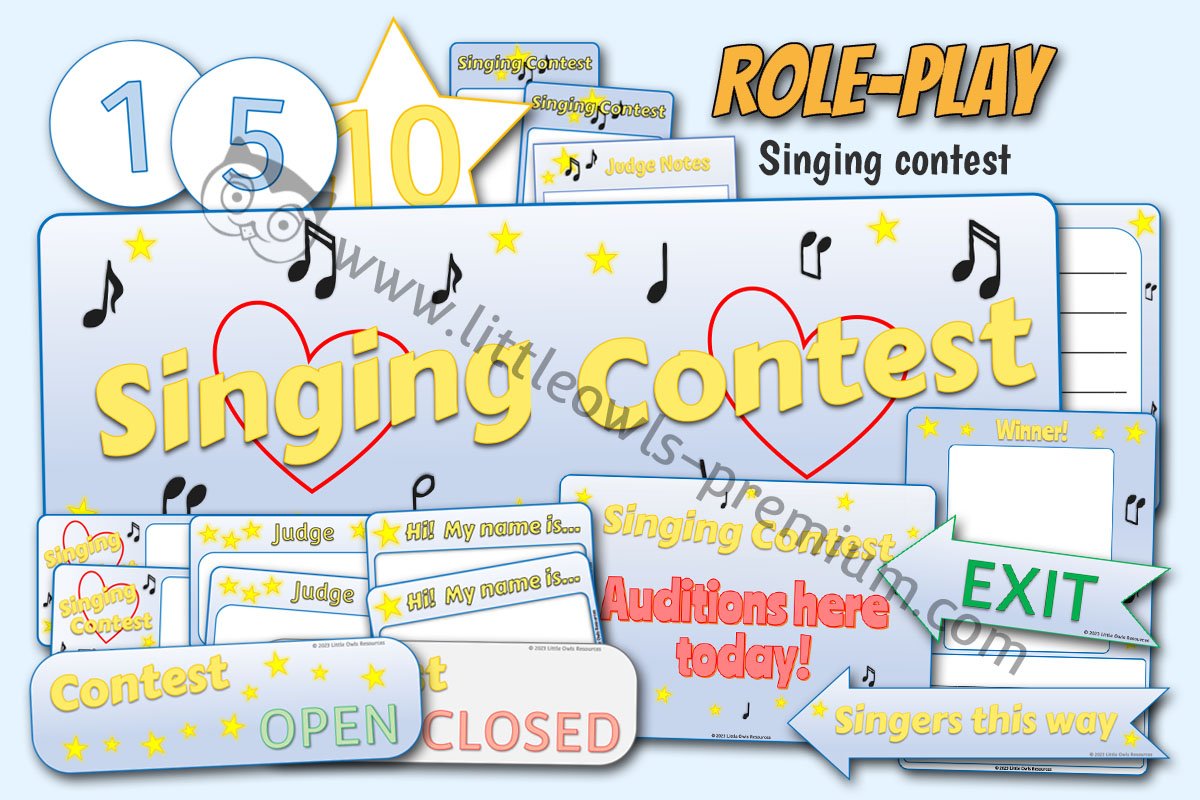
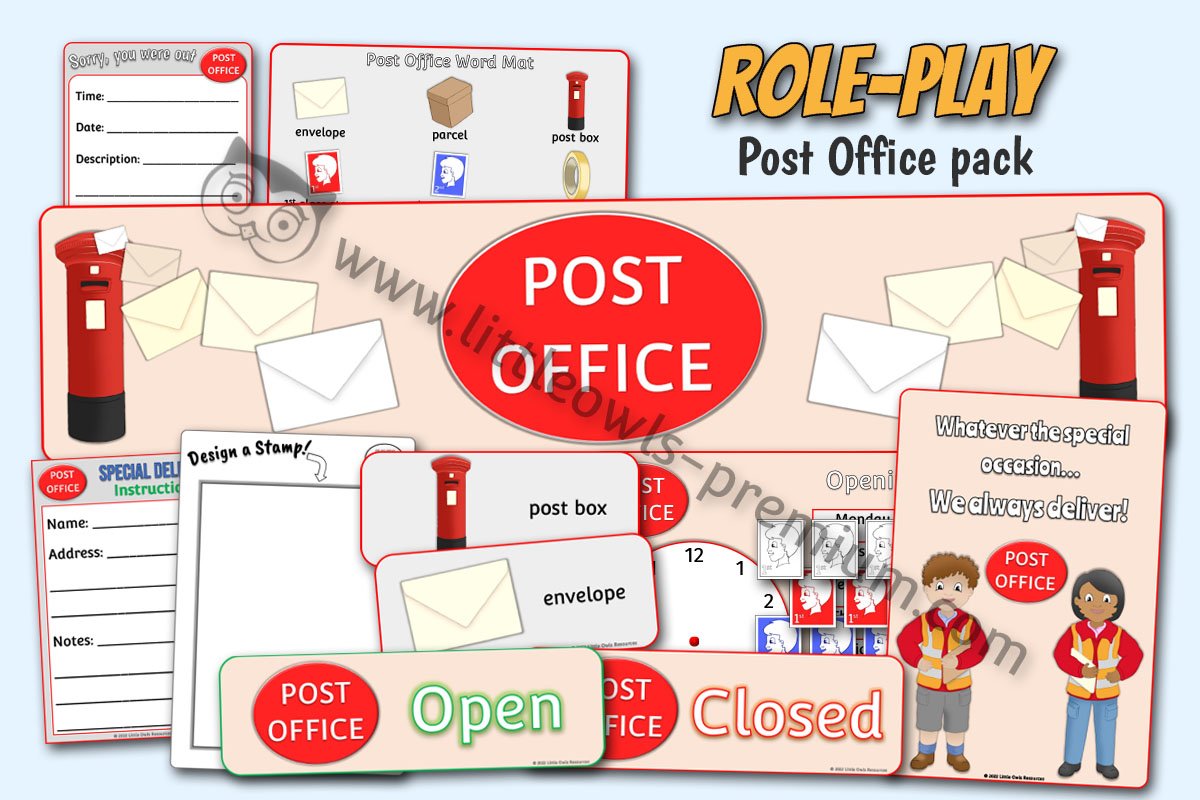
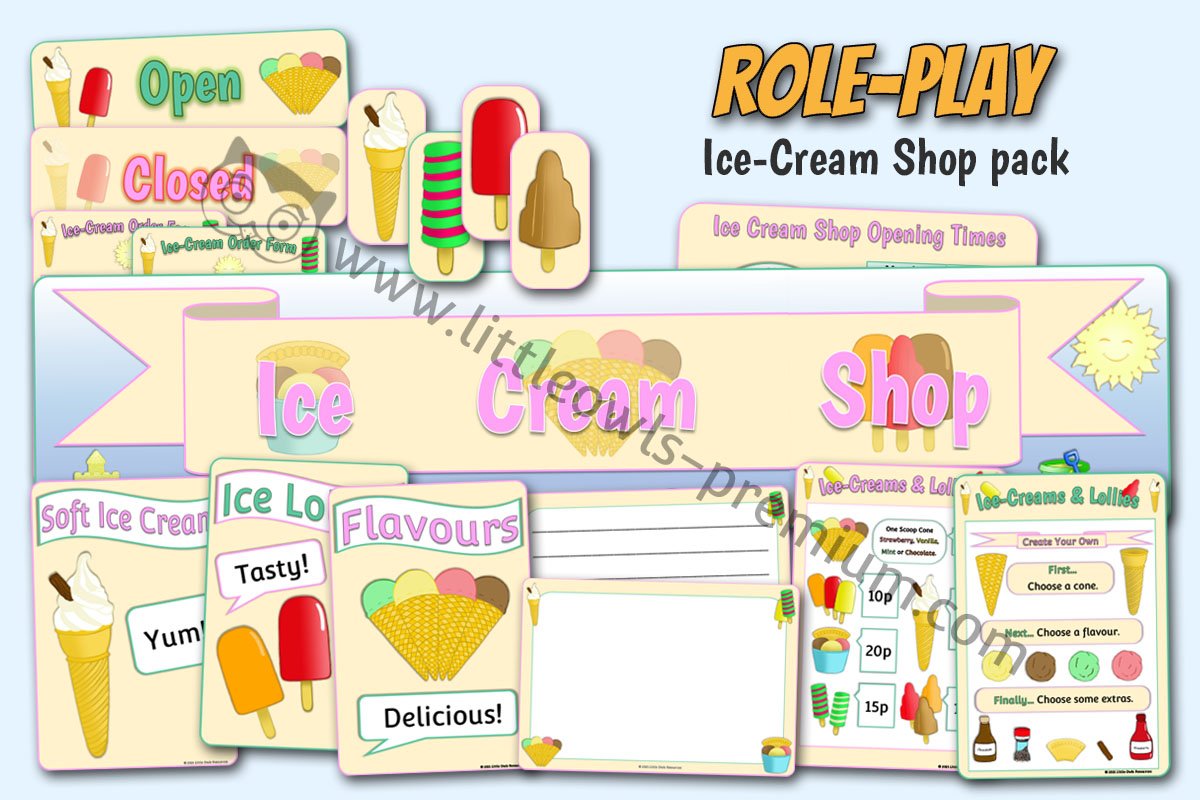
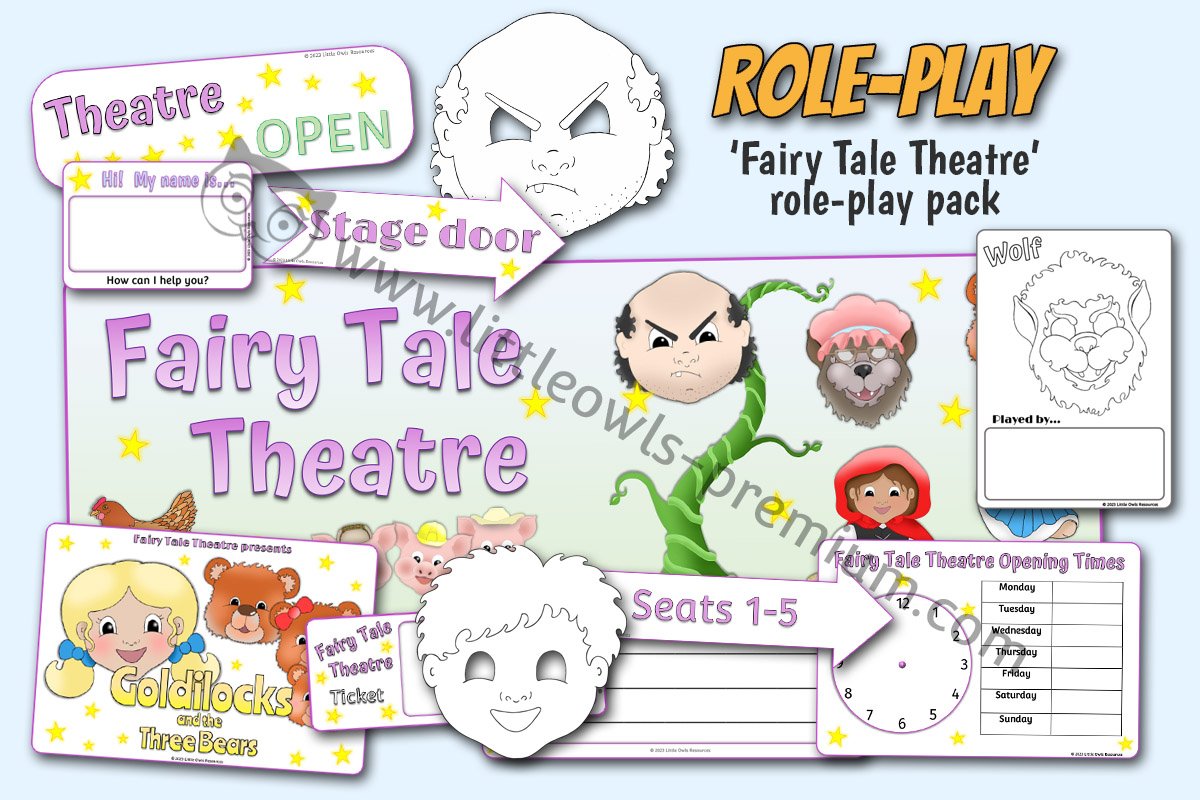
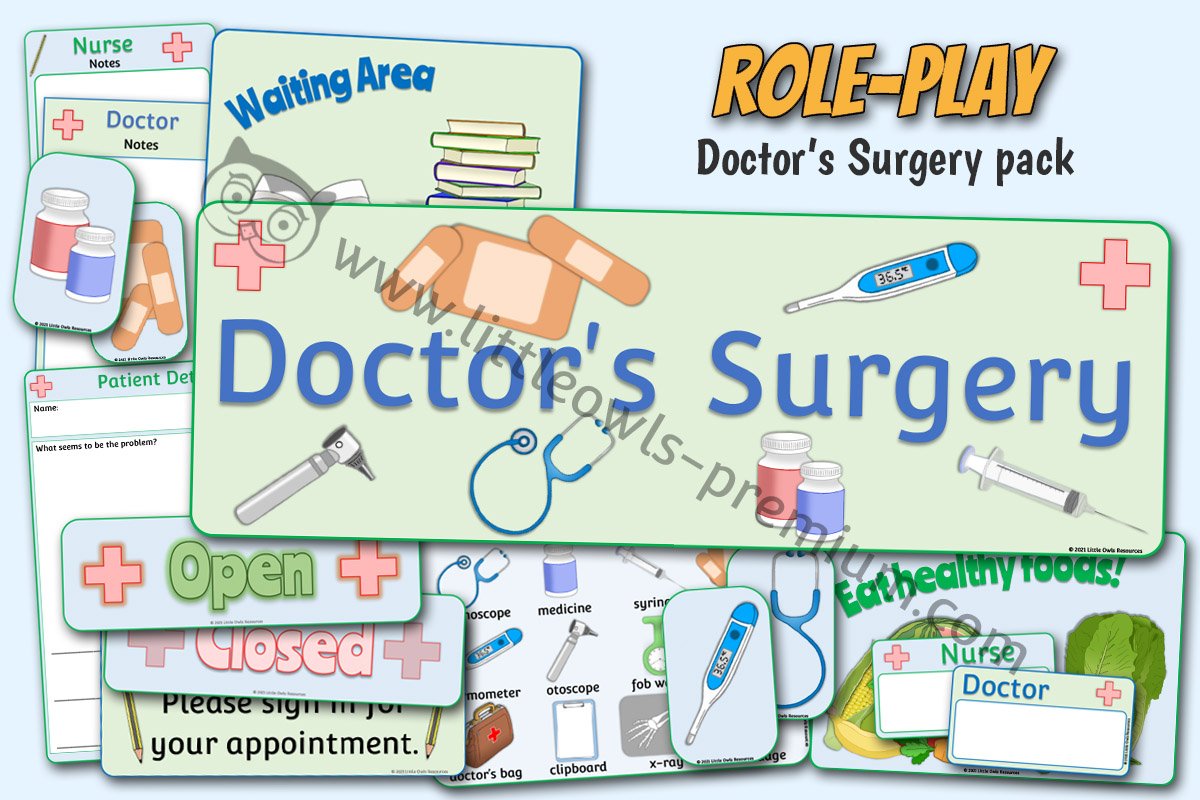
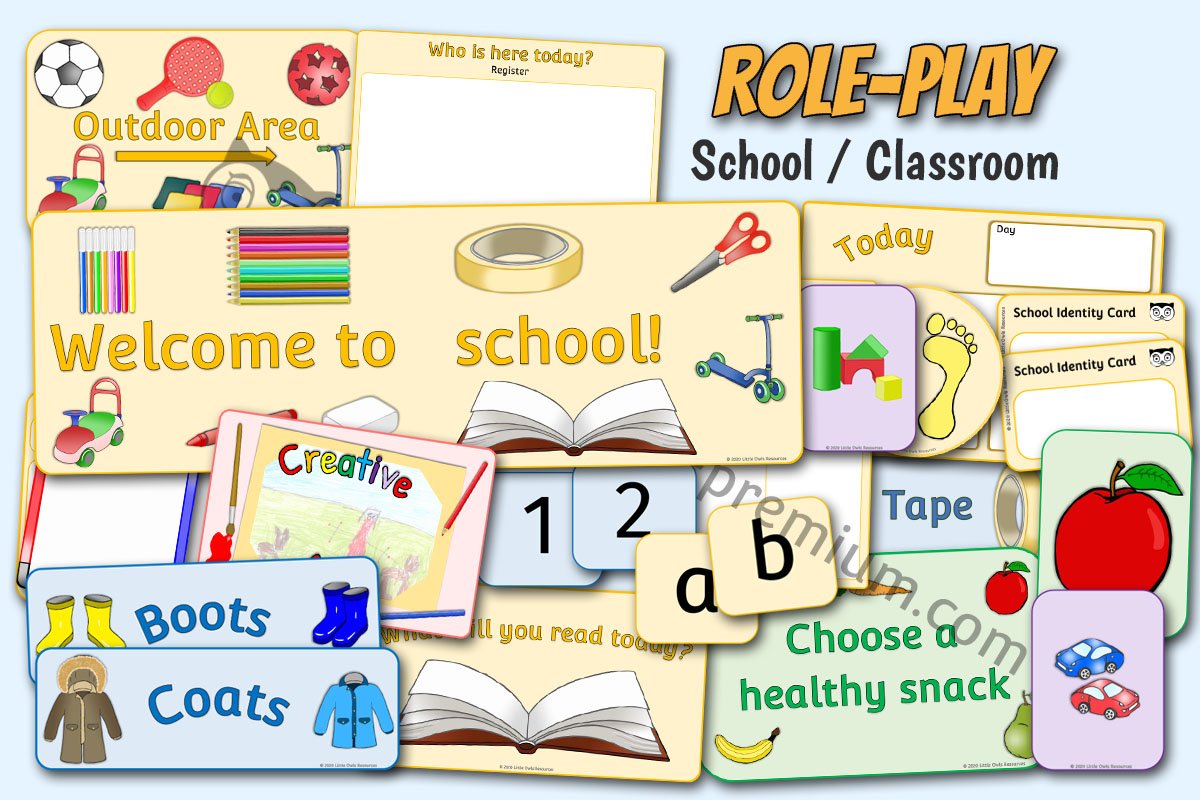
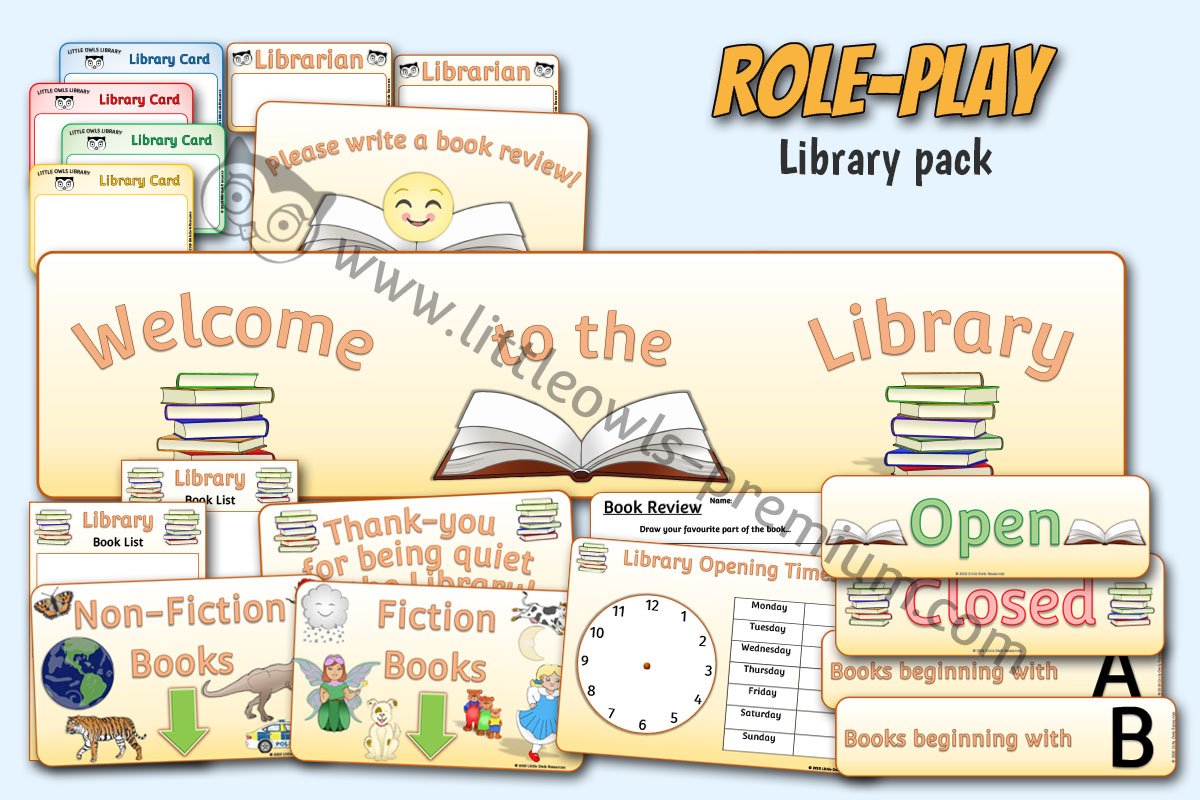
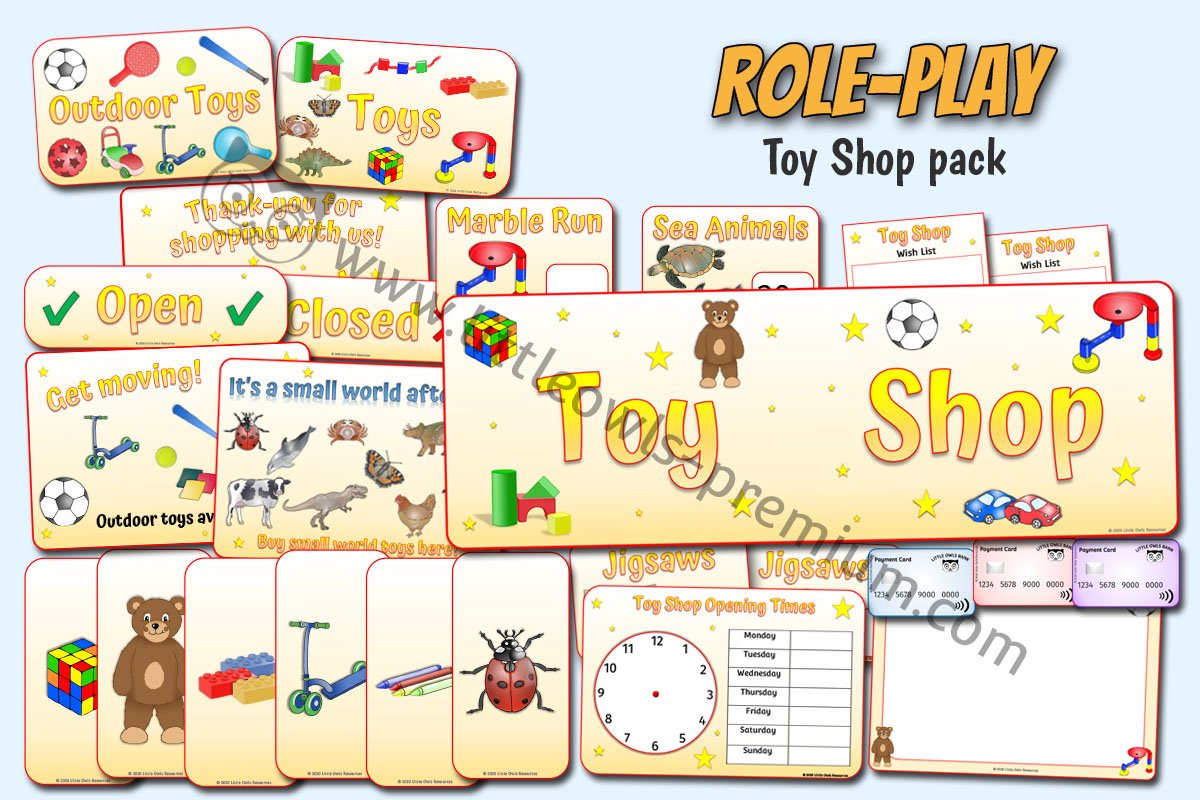
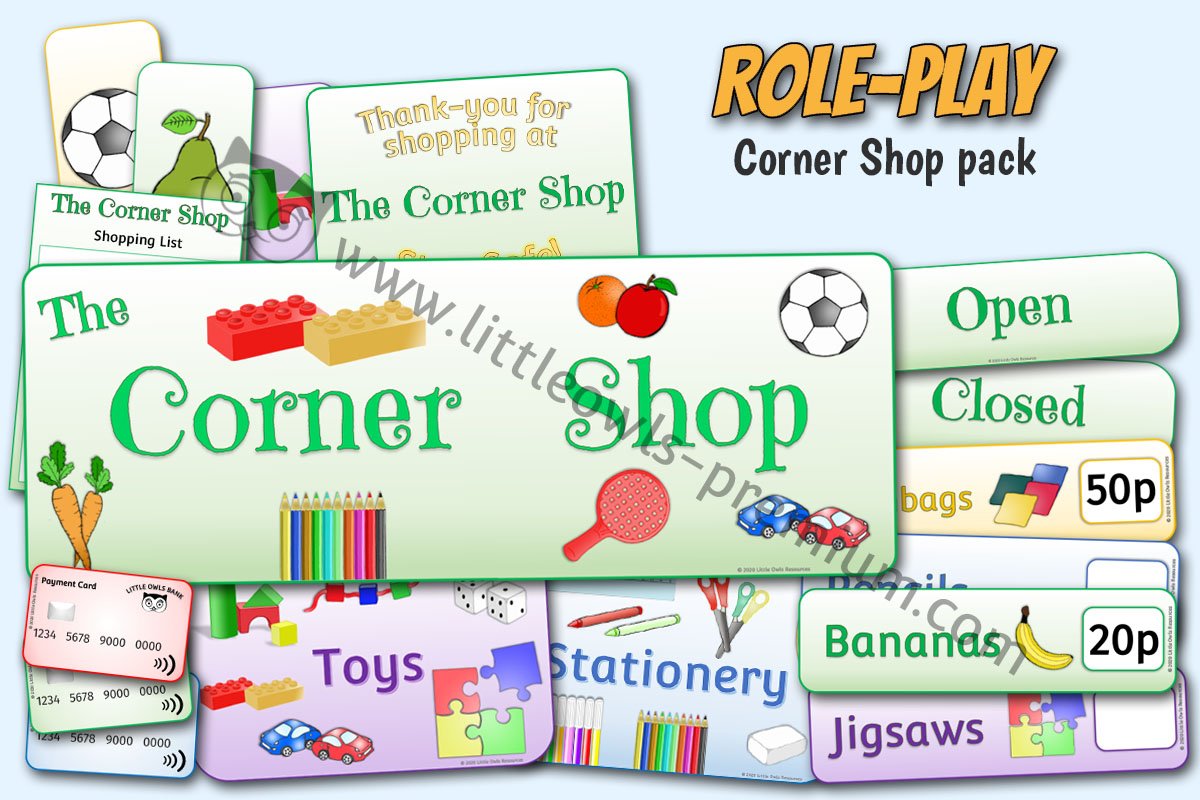
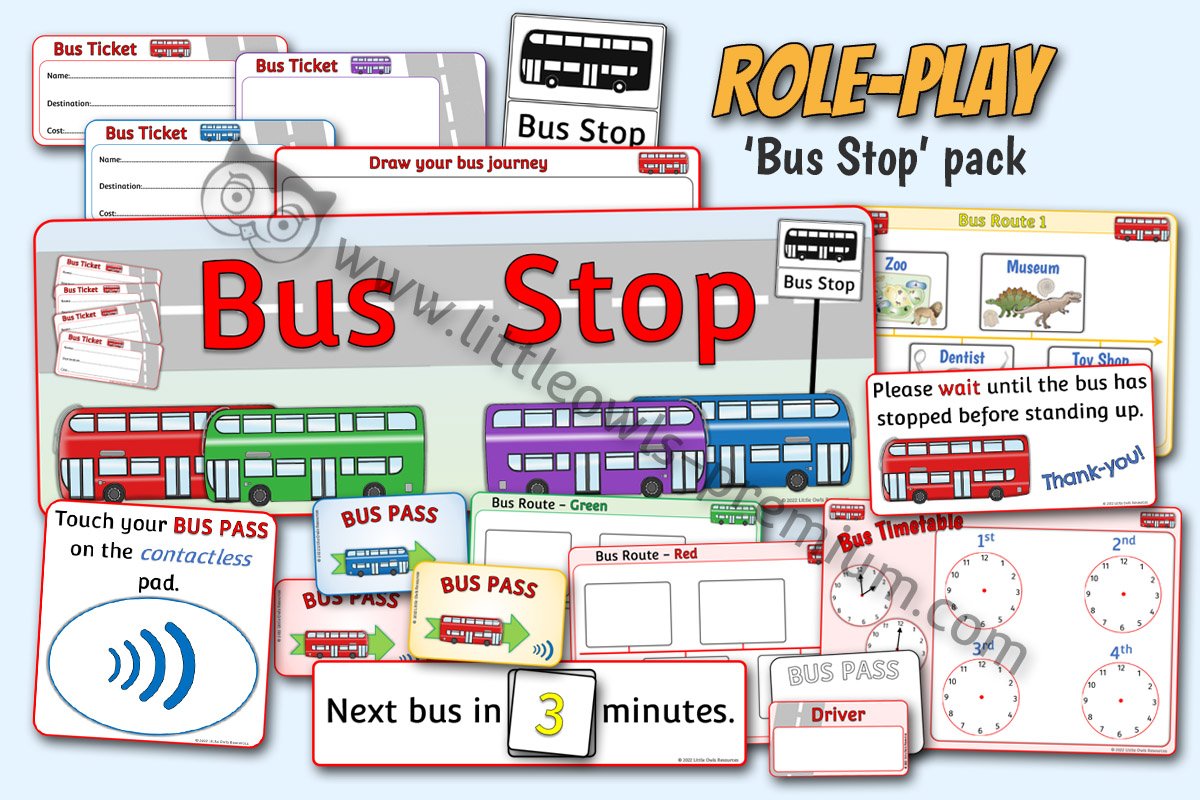
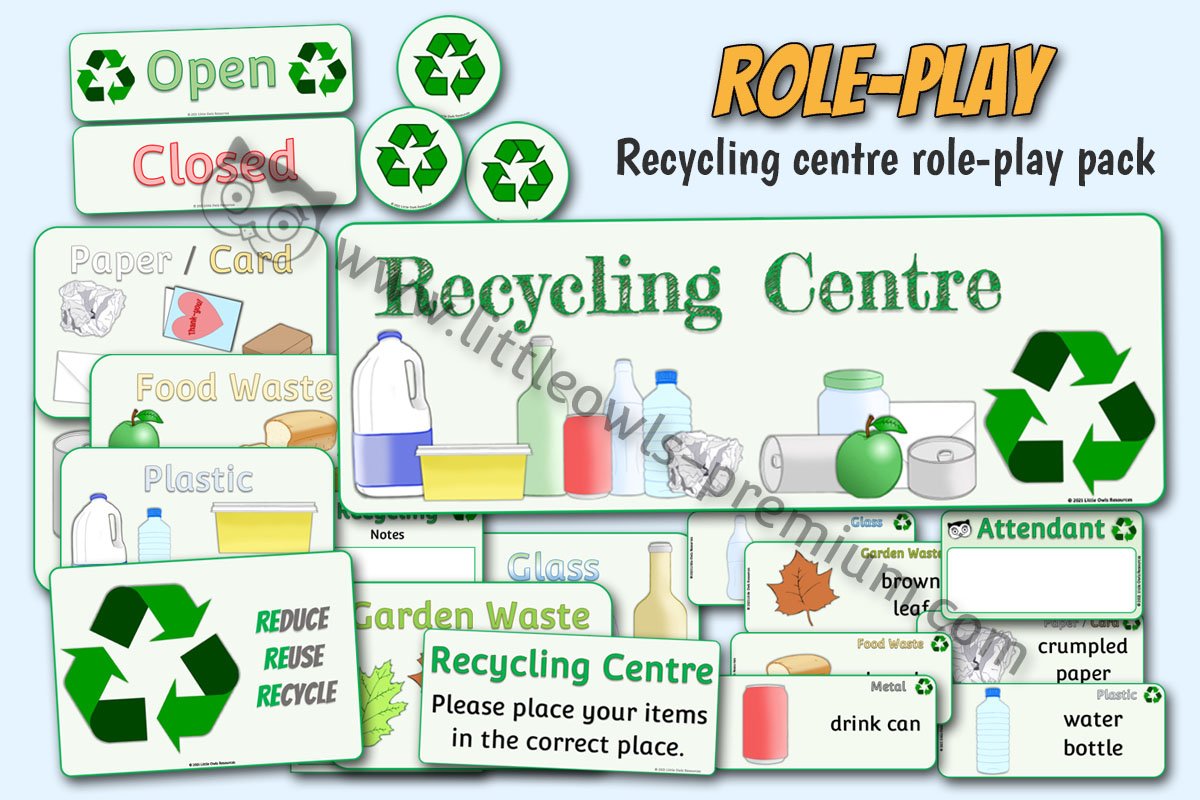
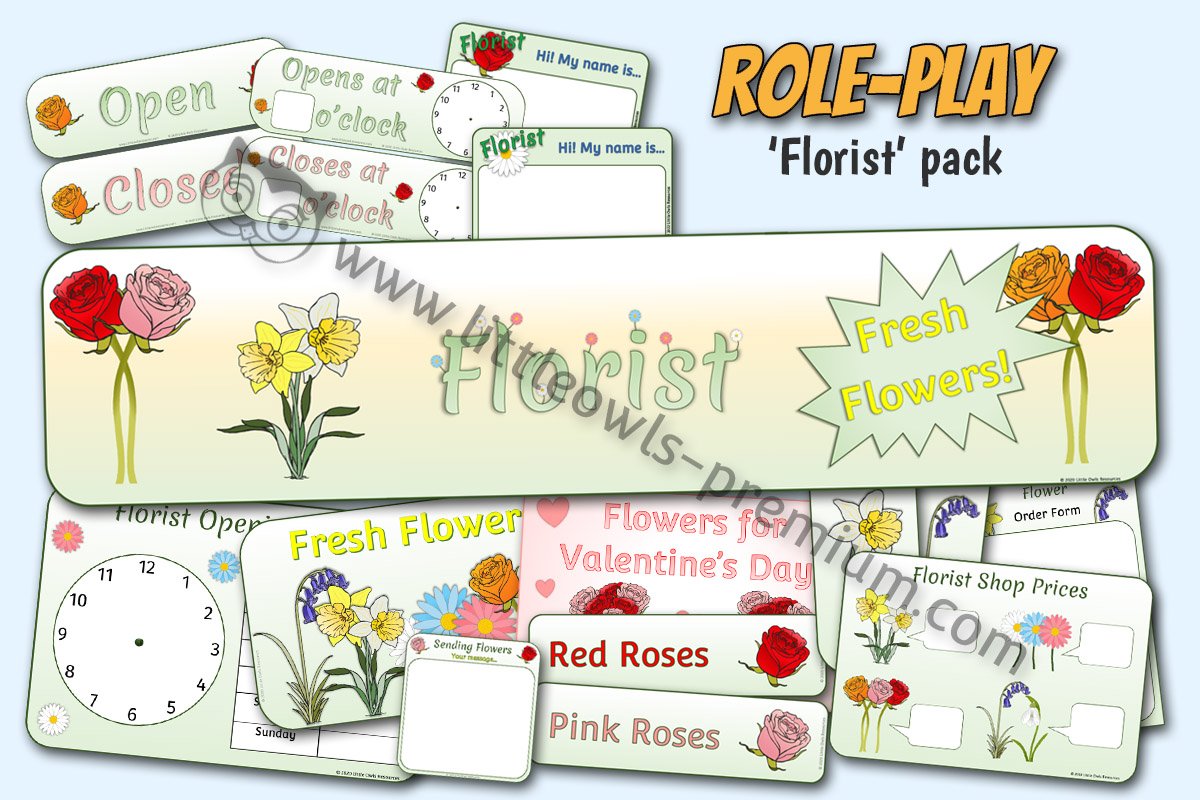
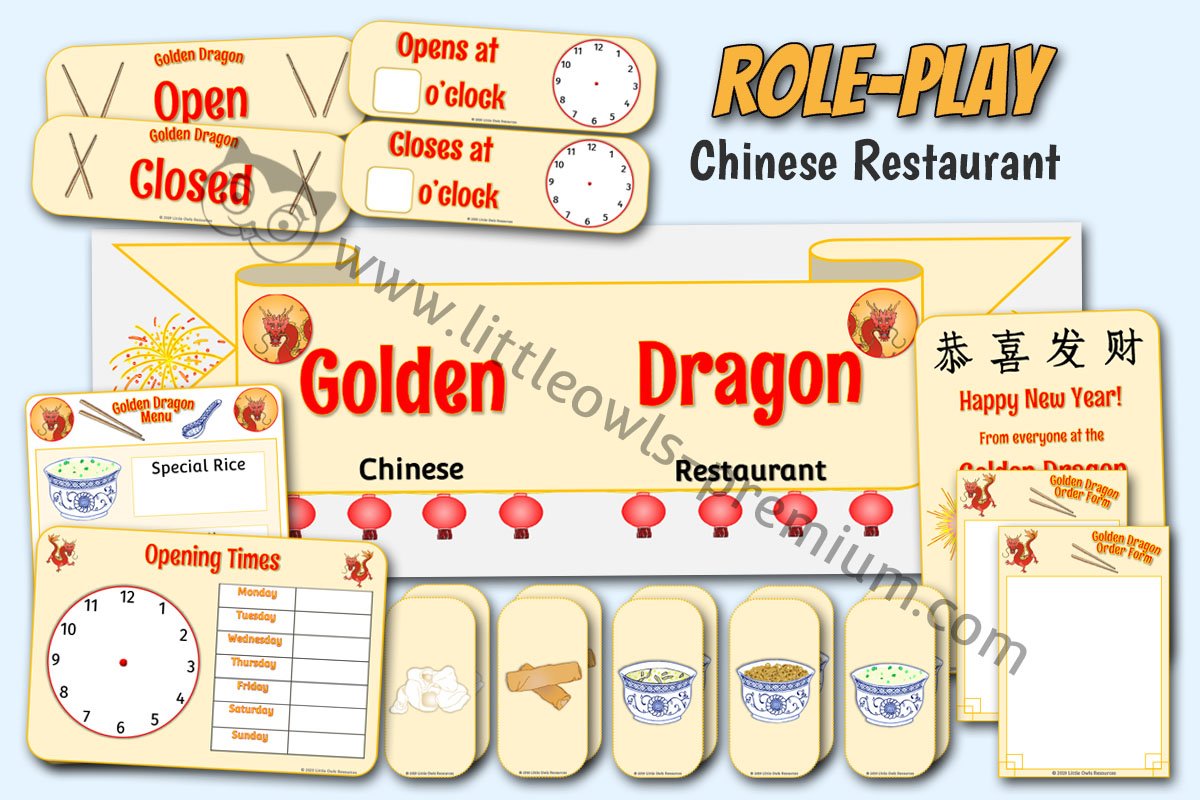
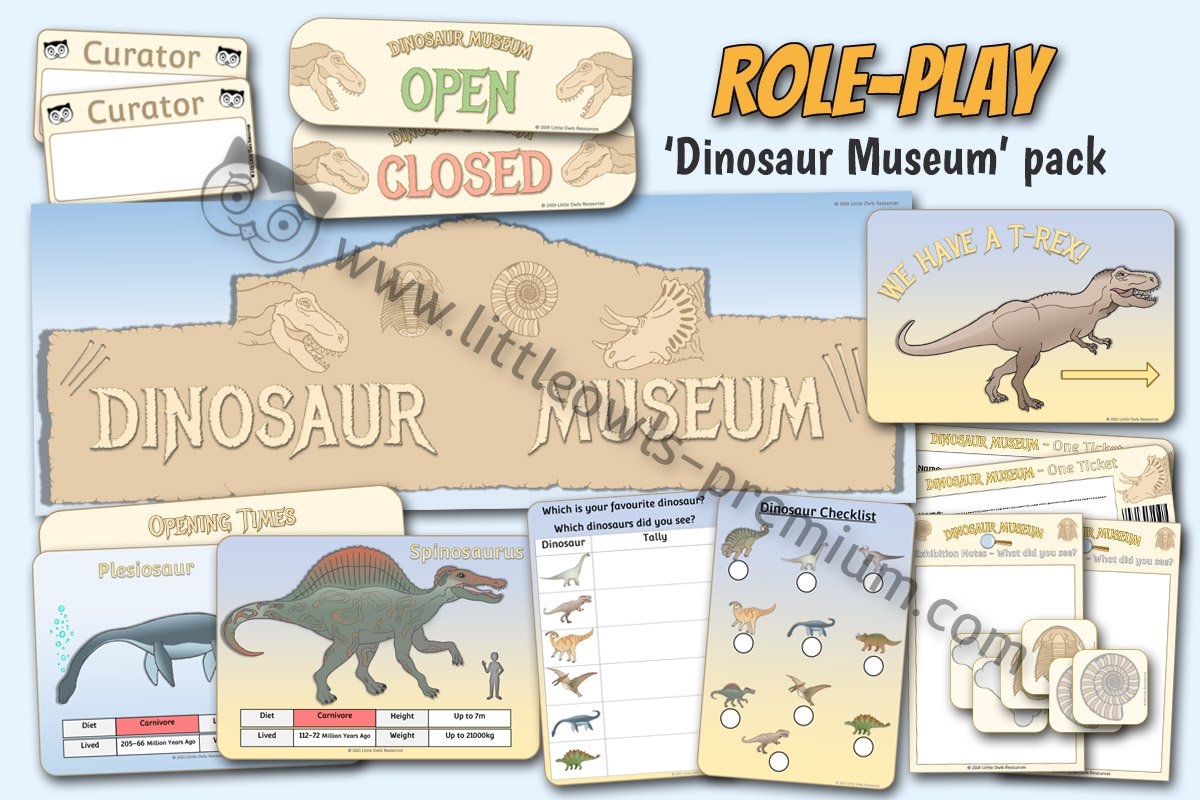
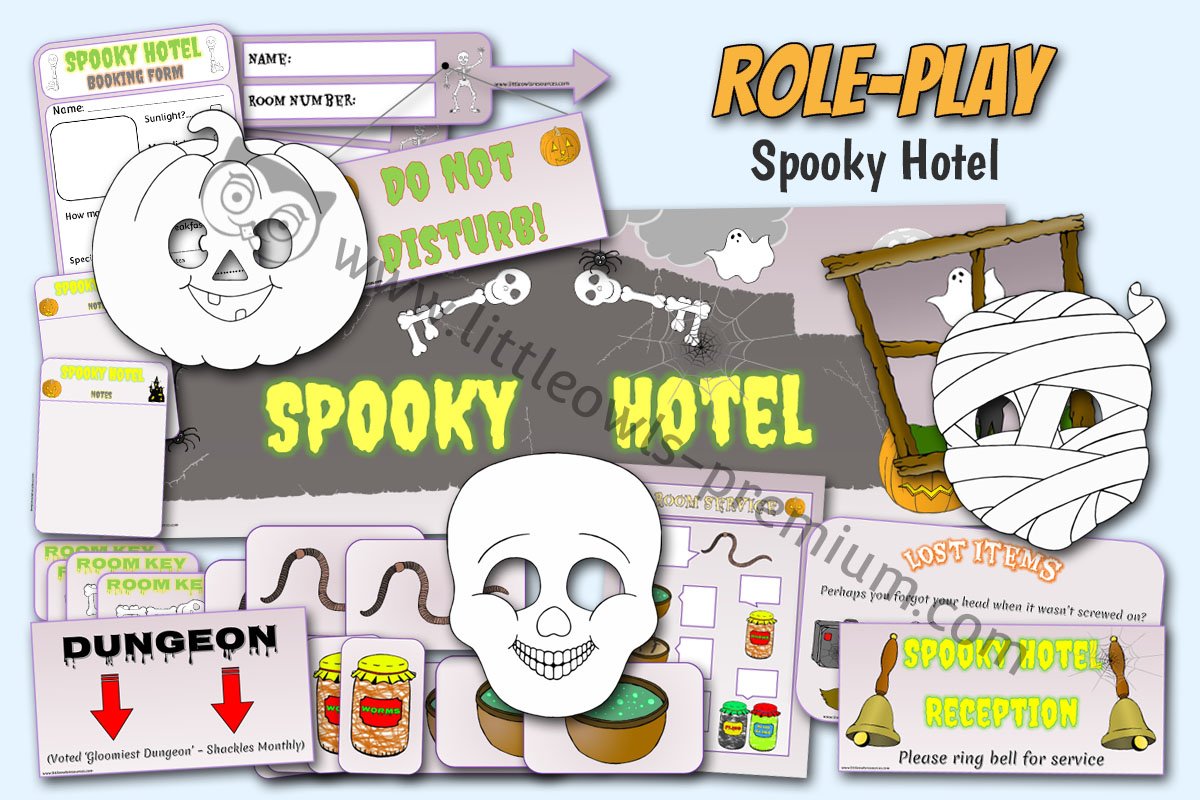
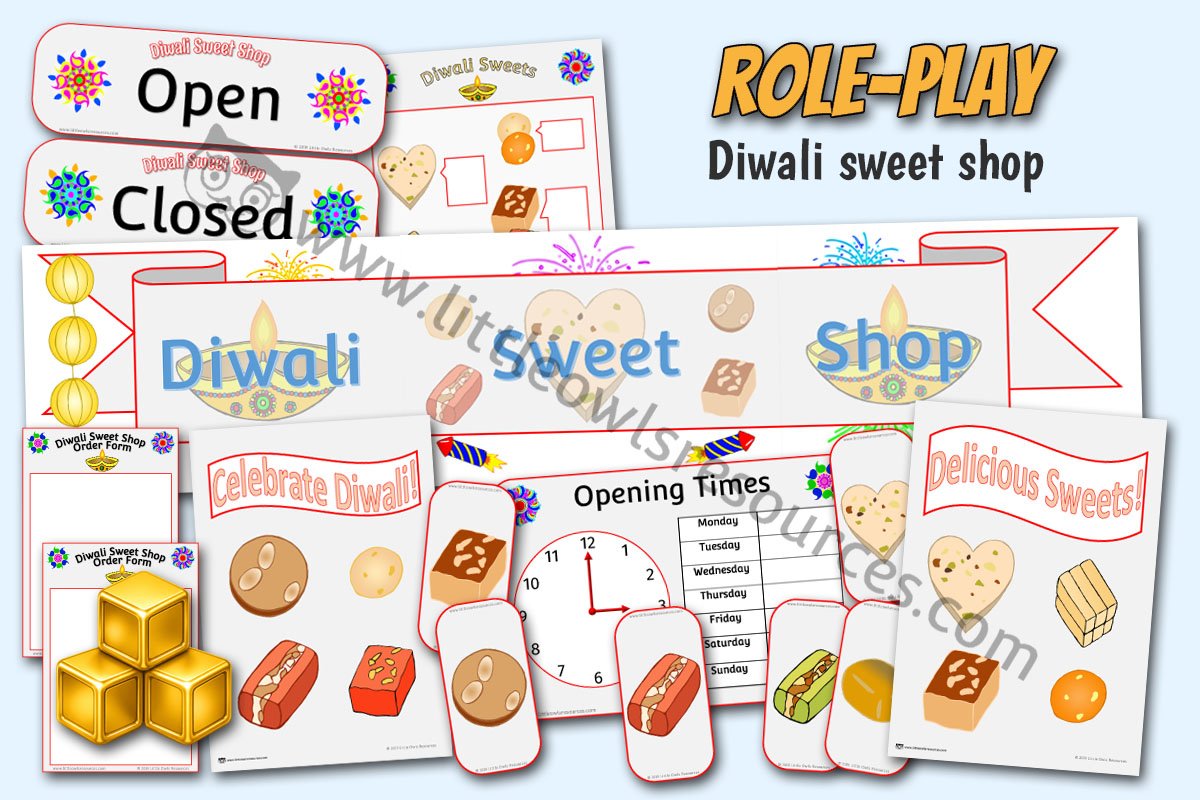
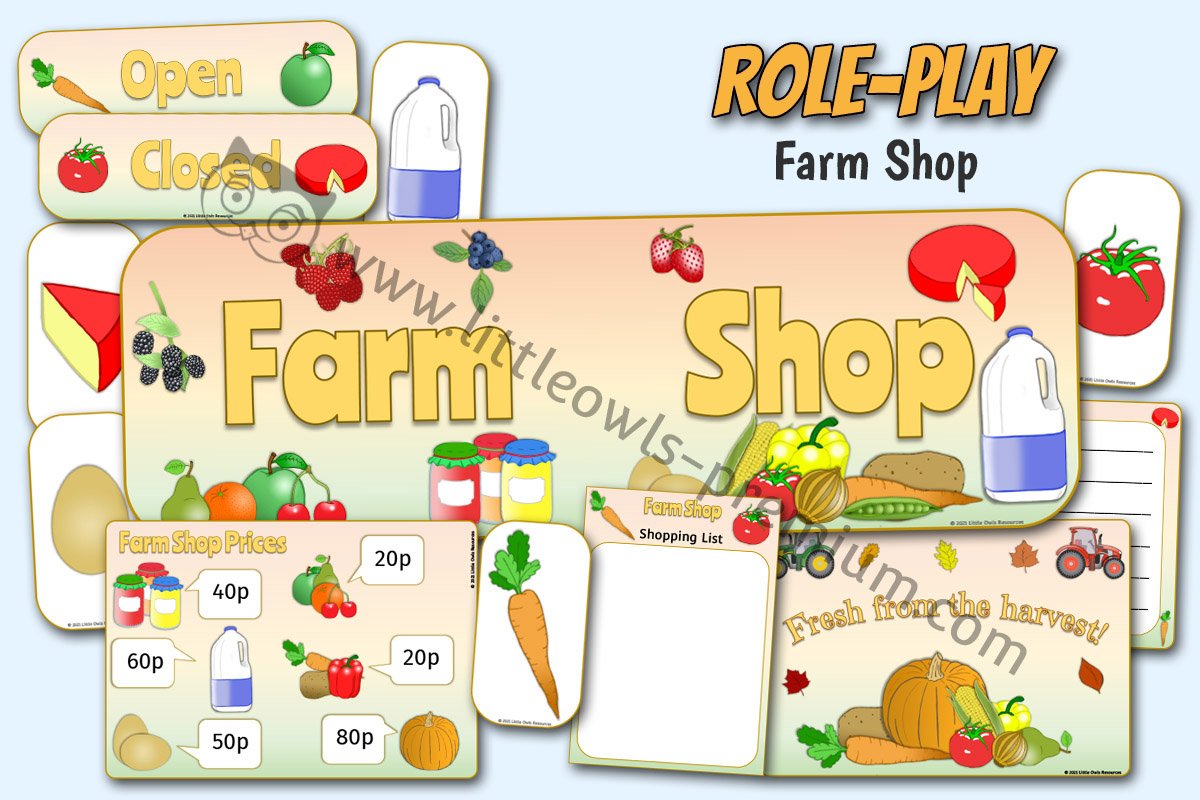
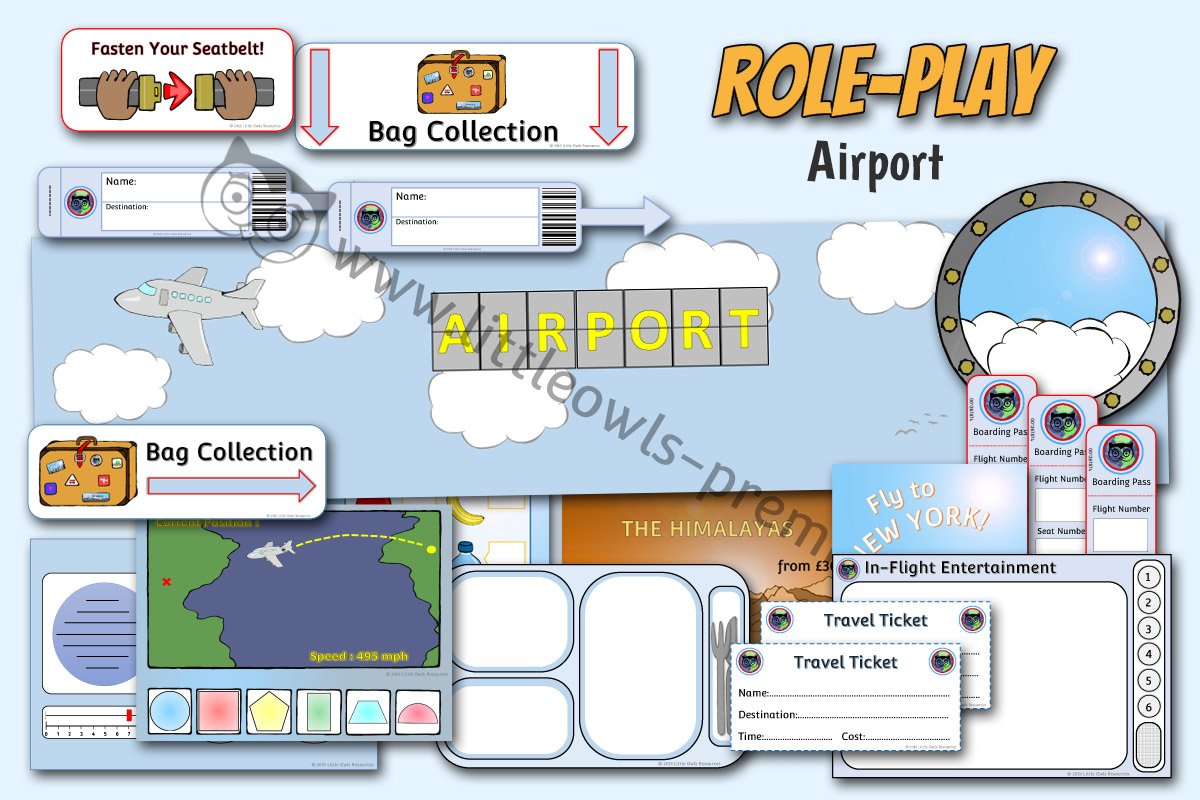
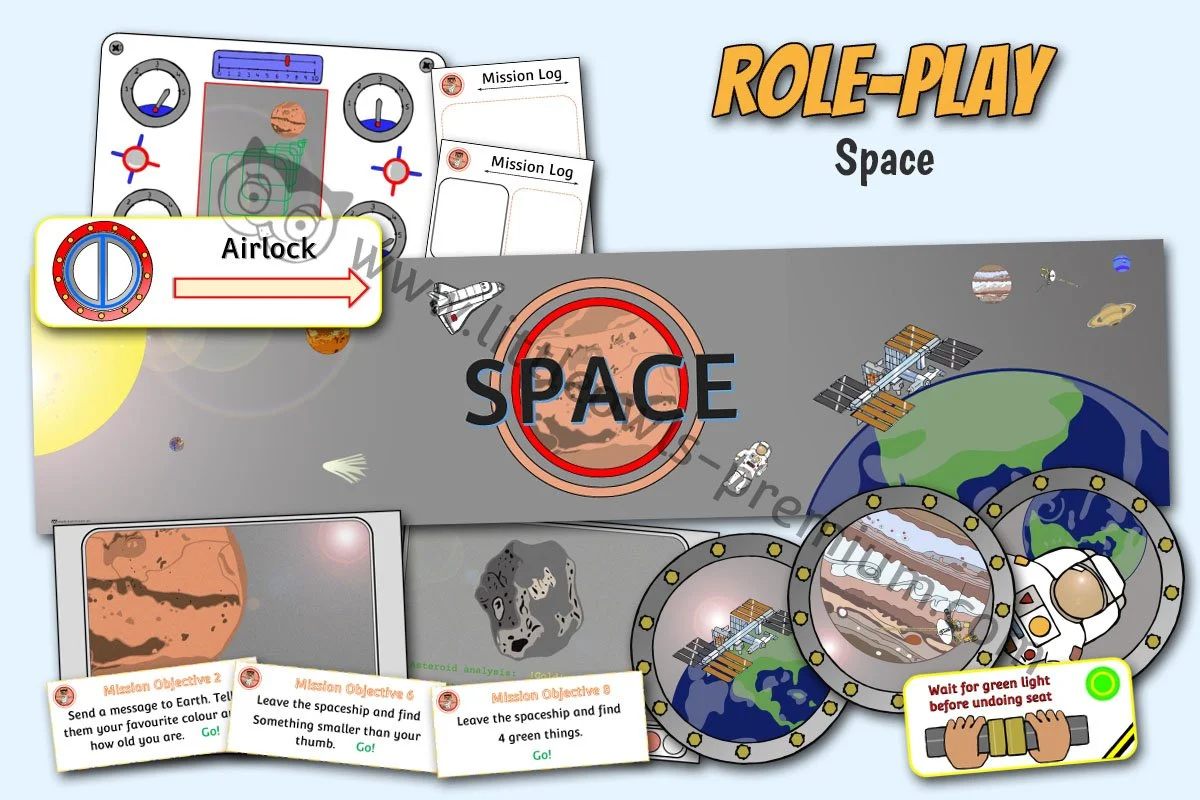
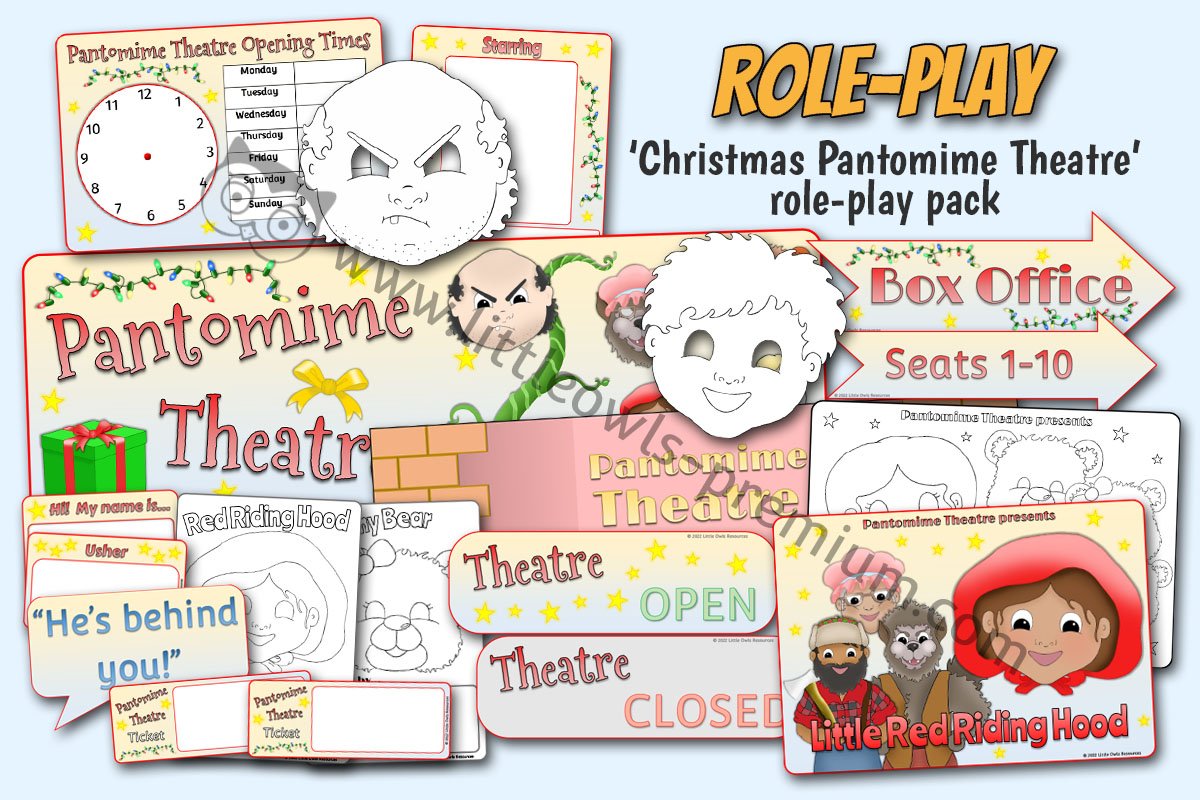
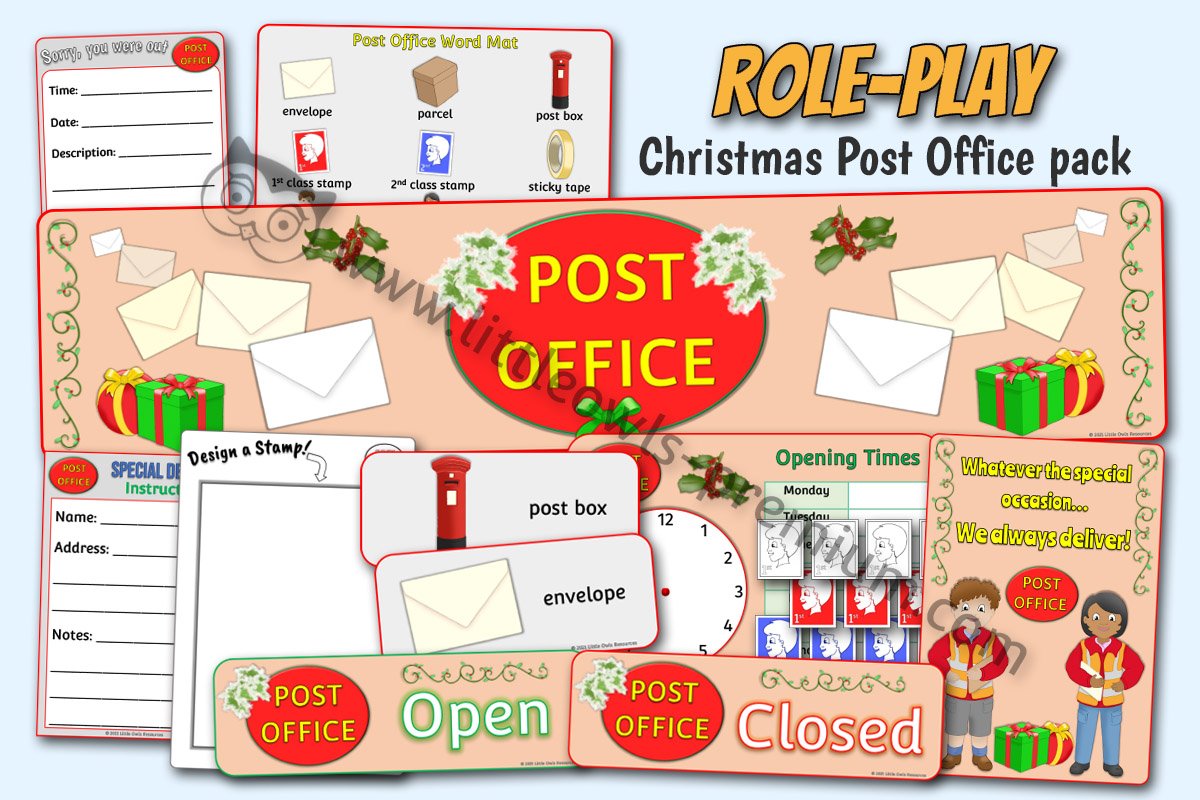
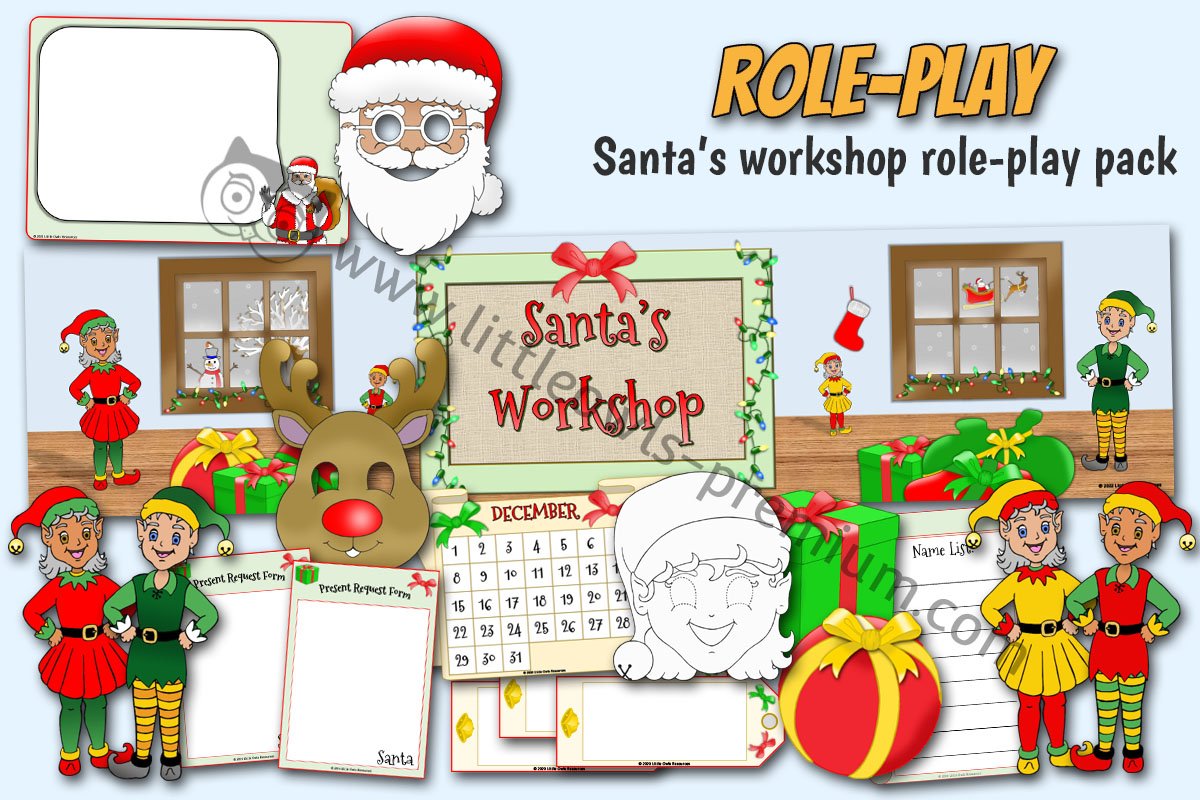
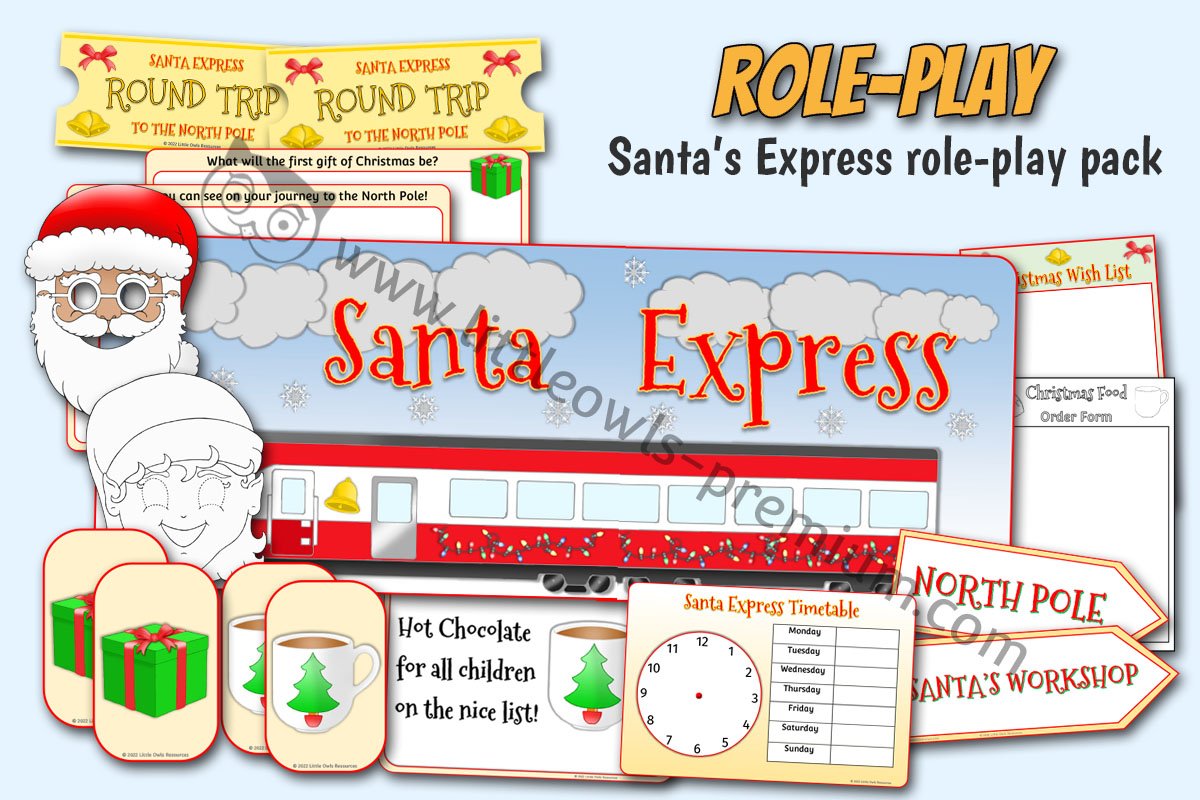
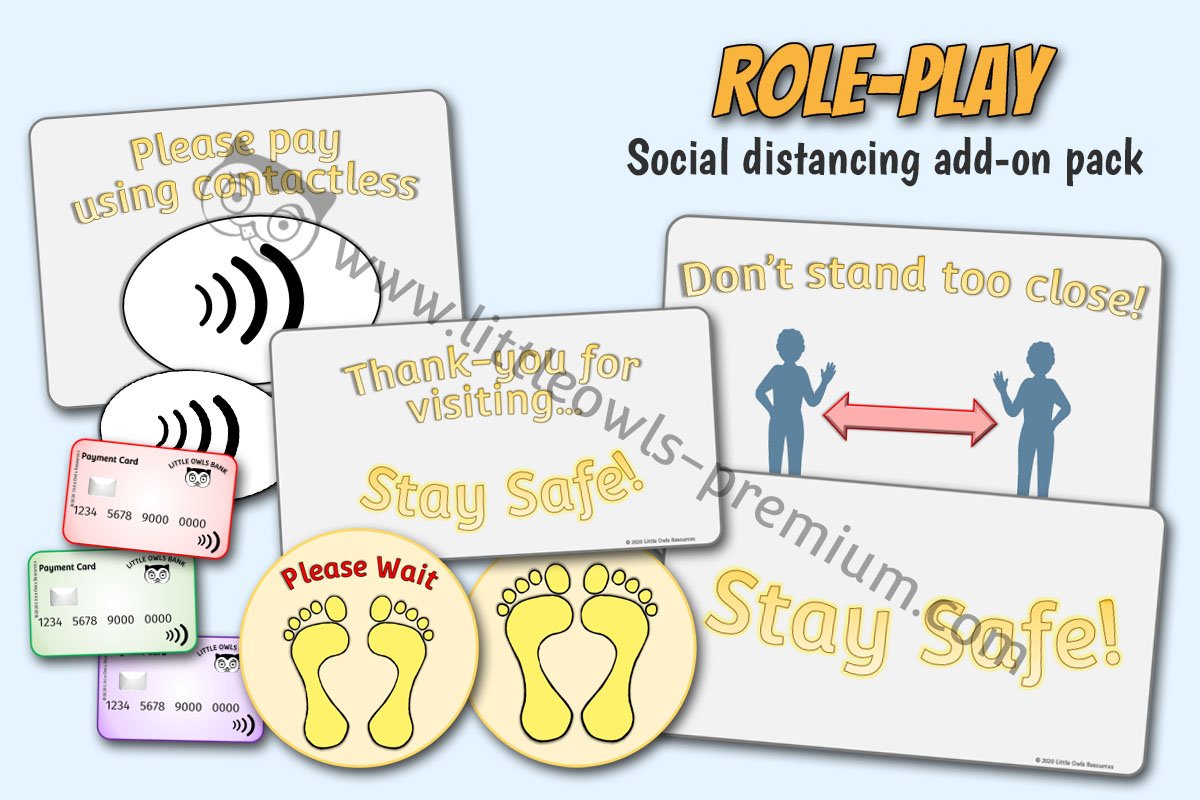
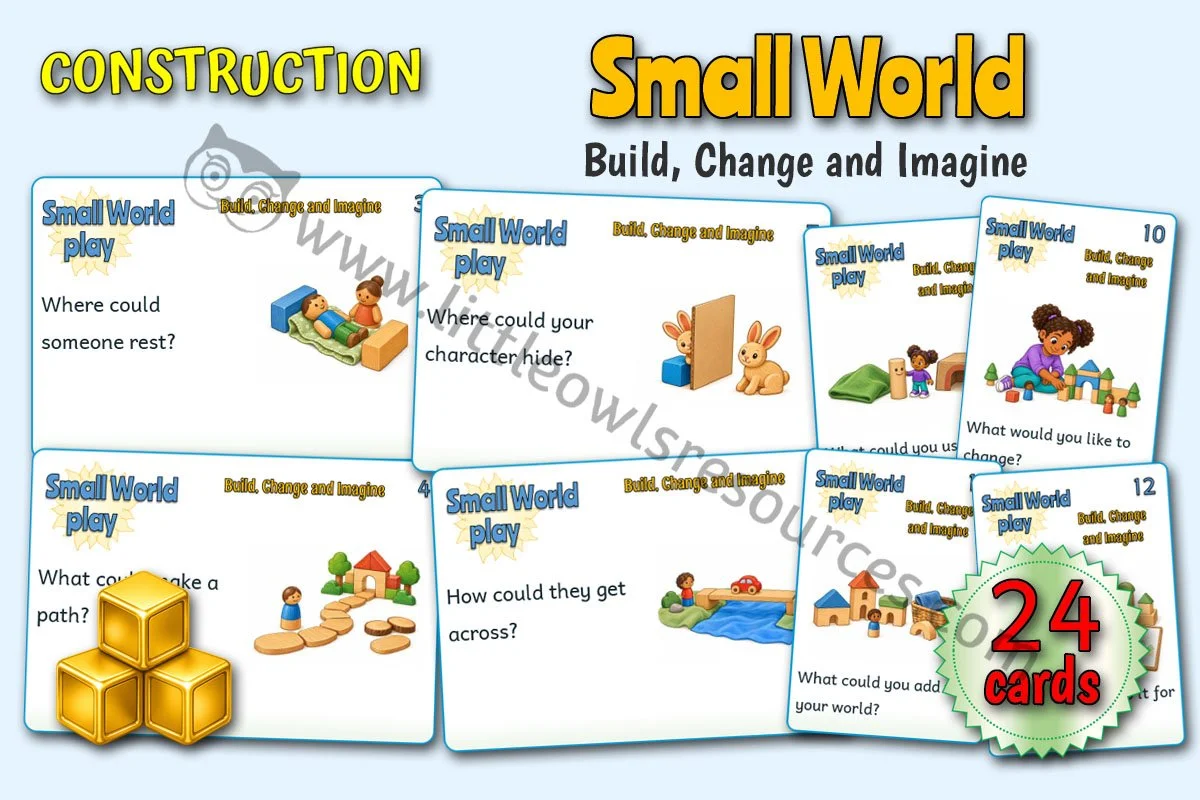
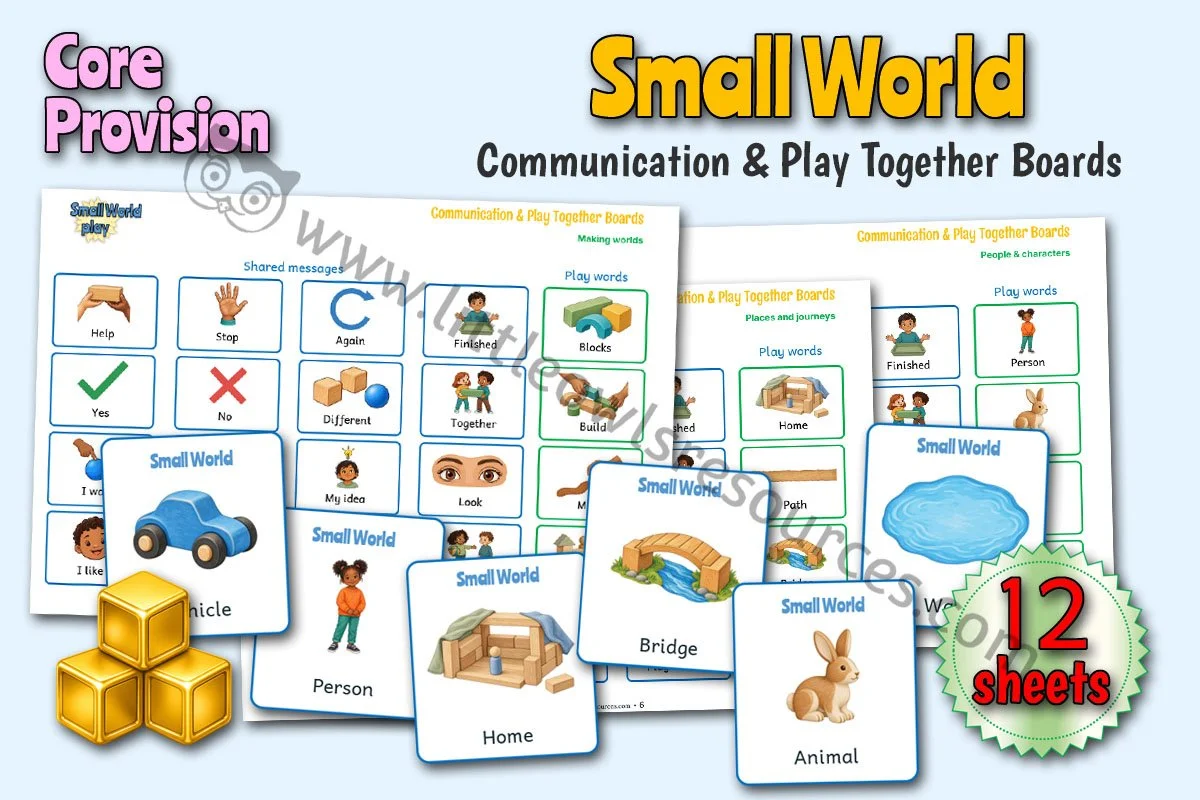
Role-Play Packs
Please use the arrows to the right of the carousel below to browse our role play pack resources. Alternatively, visit our ‘Role-Play Area’ page.
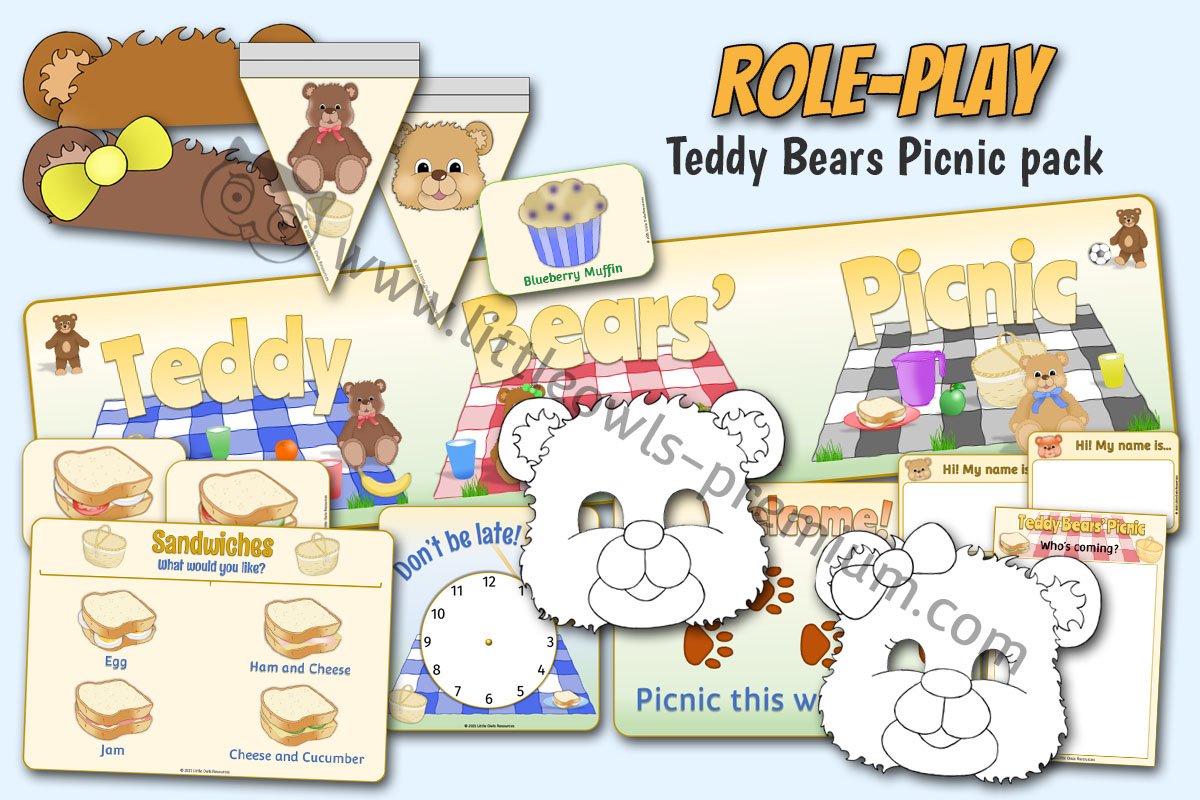
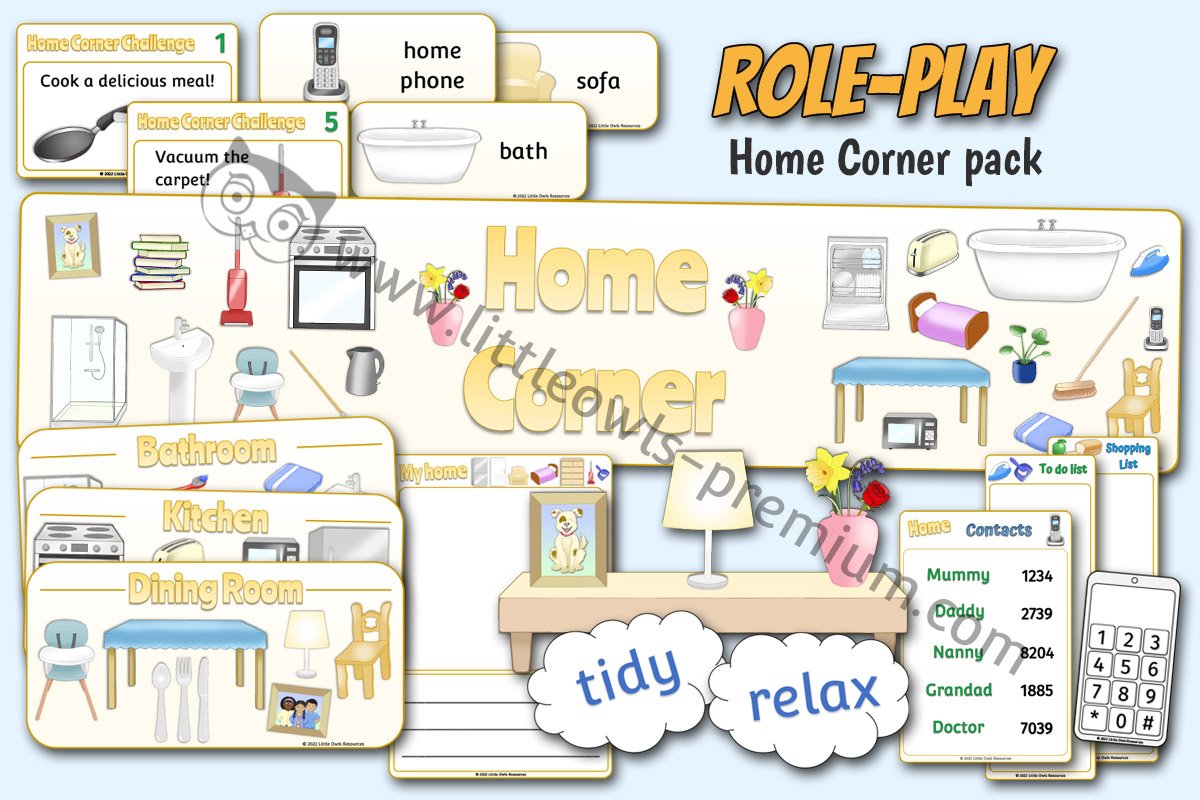
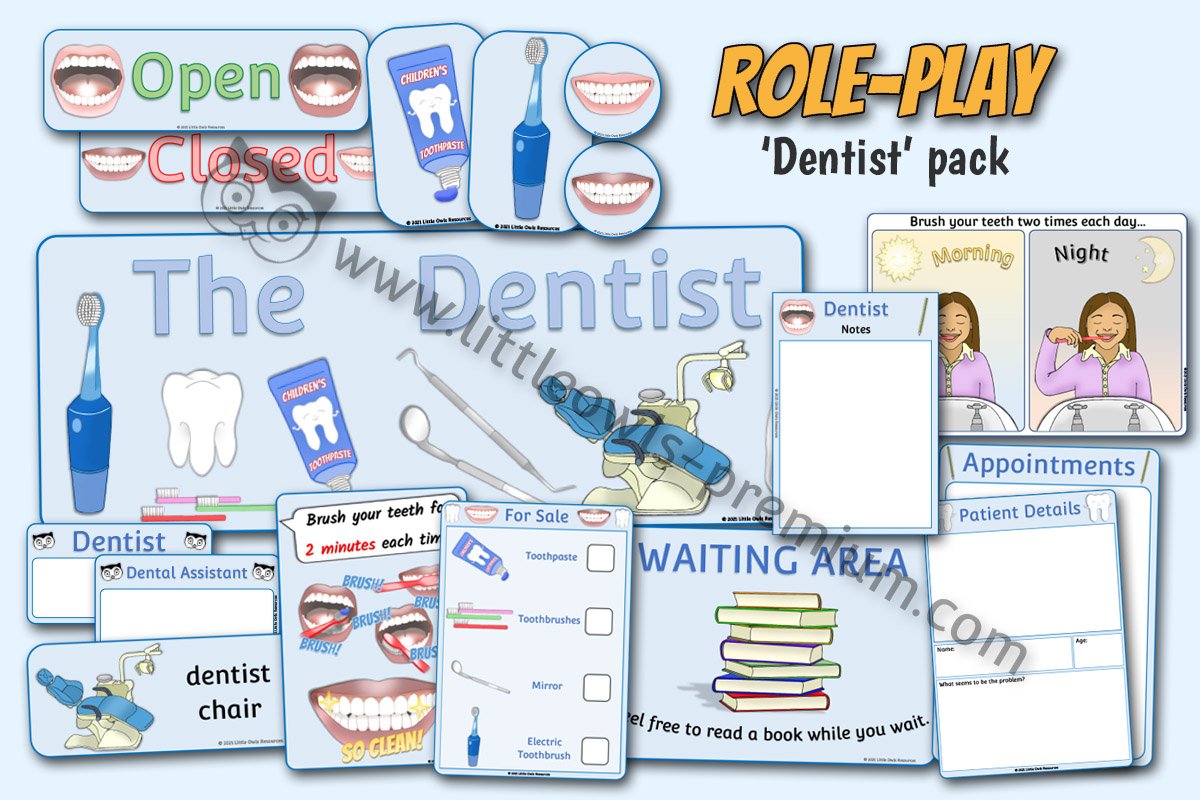

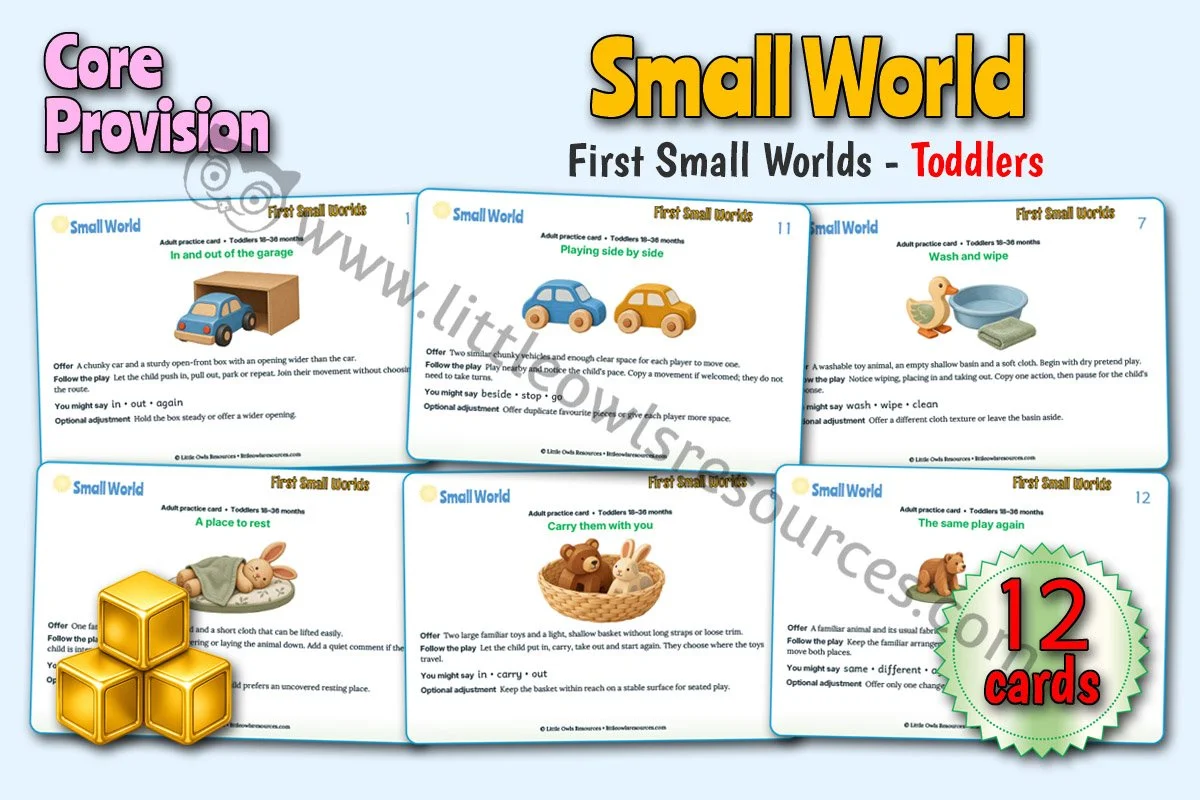
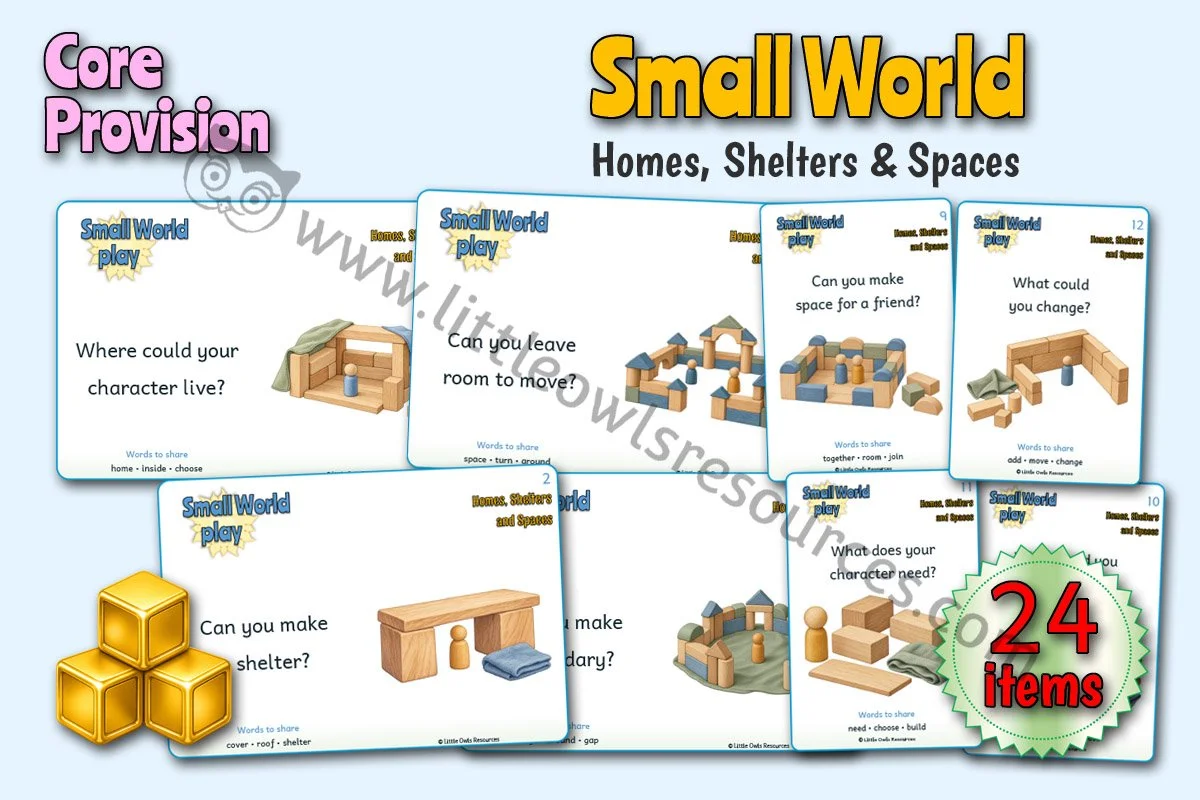
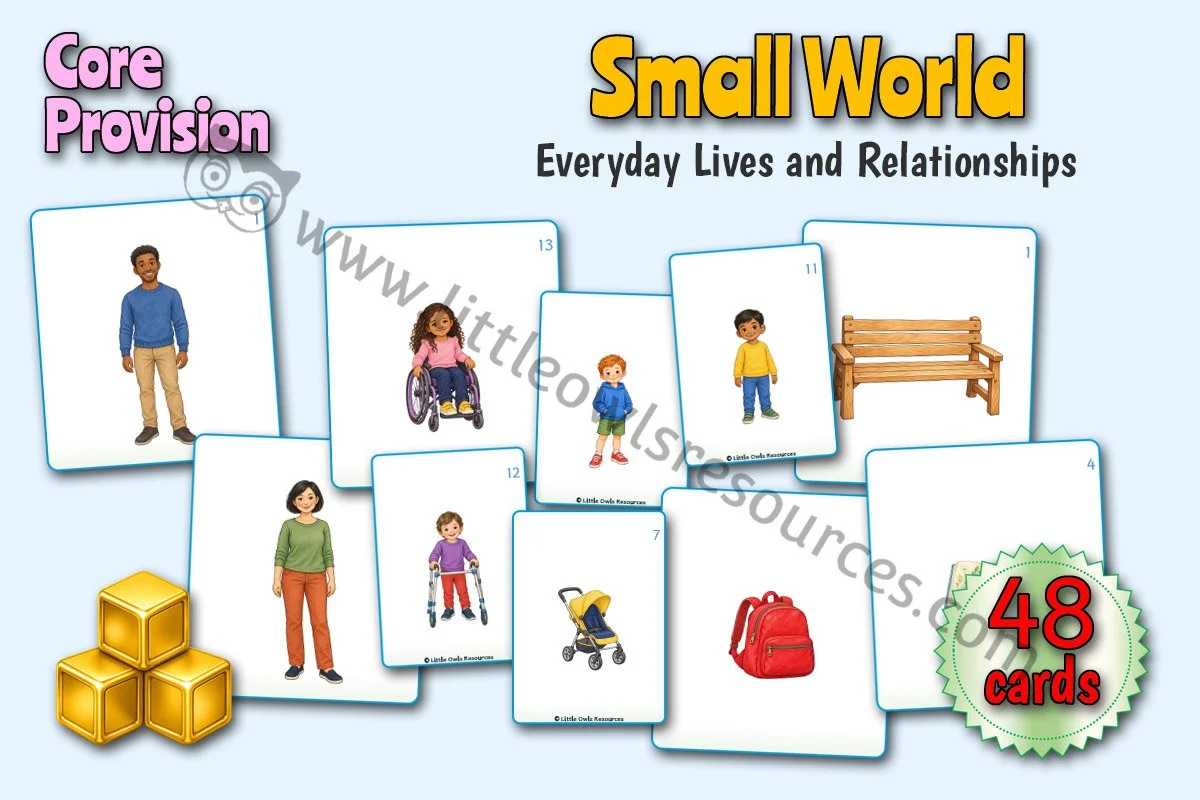
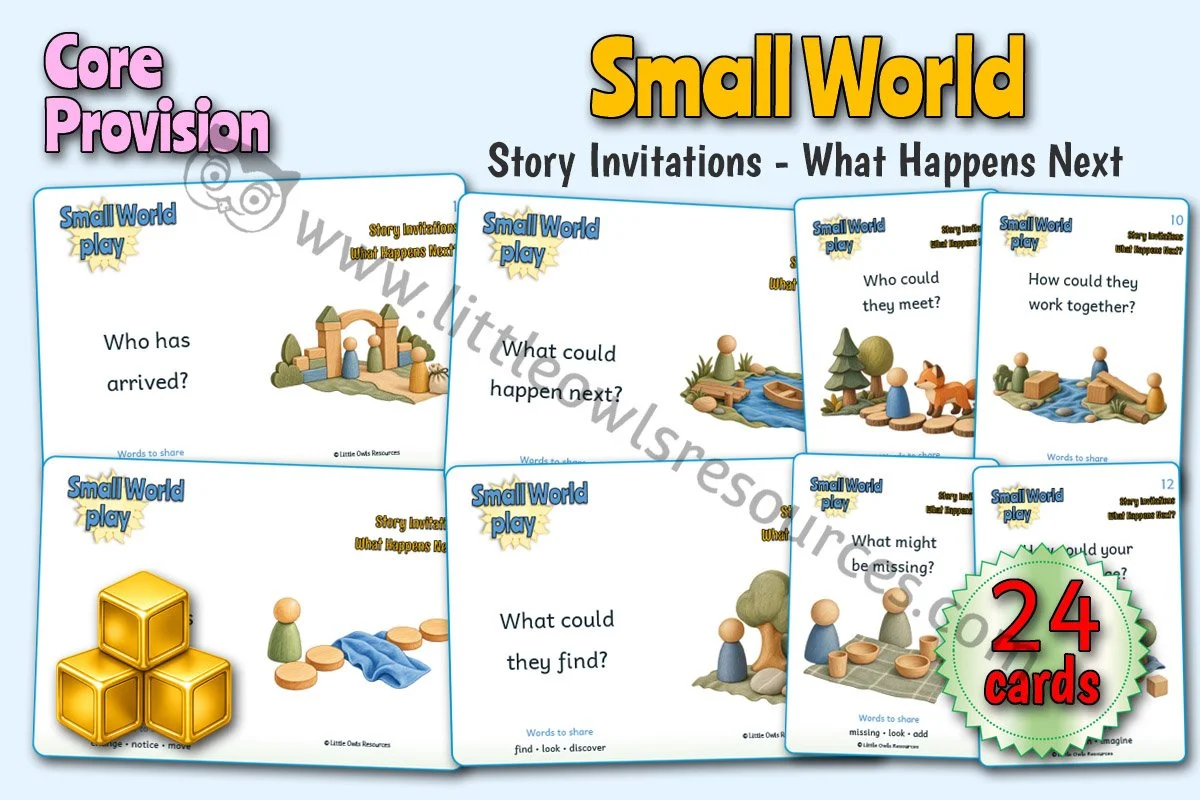
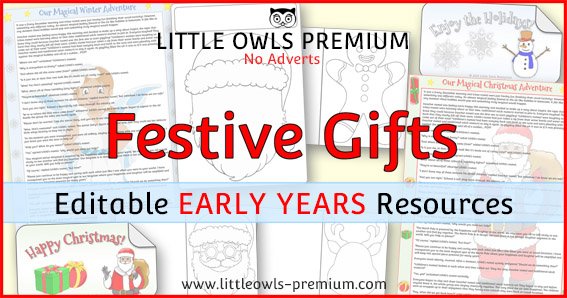
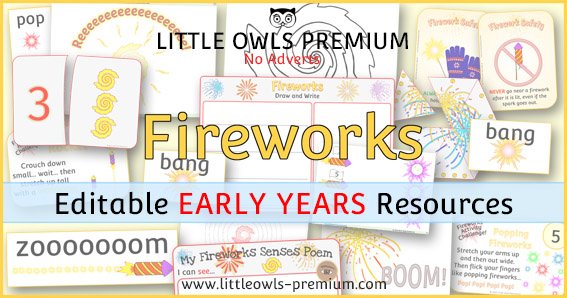
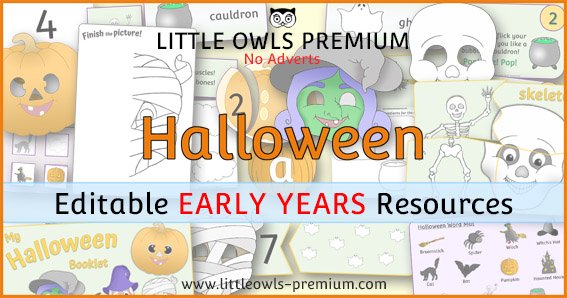
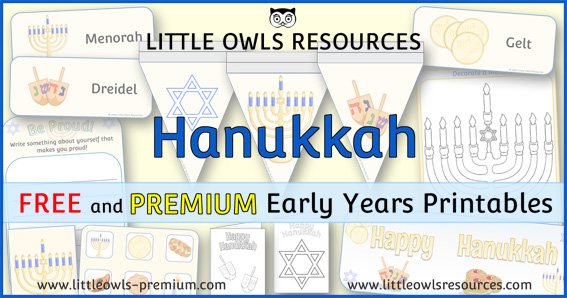
Festivals & Celebrations
Please use the arrows to the right of the carousel below and select a festival to explore our continuous provision enhancement resources. Alternatively, visit our ‘Festivals & Celebrations Menu Page’.


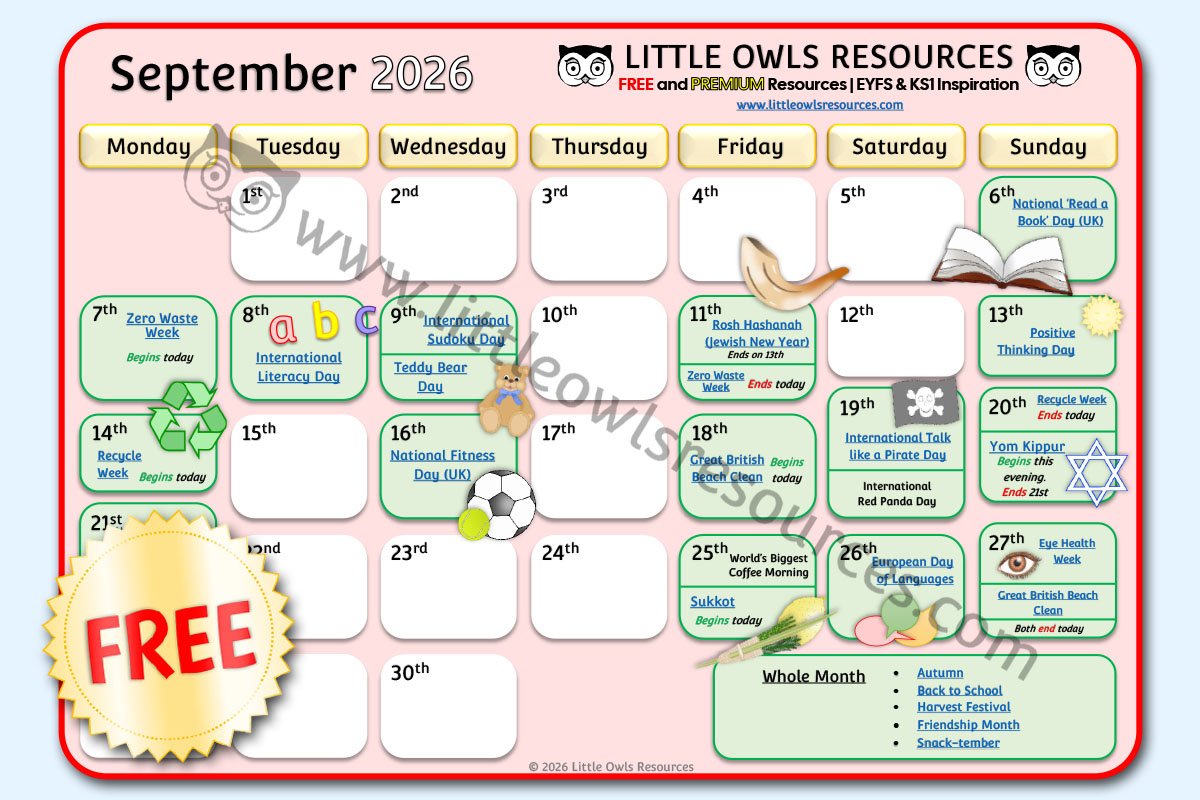
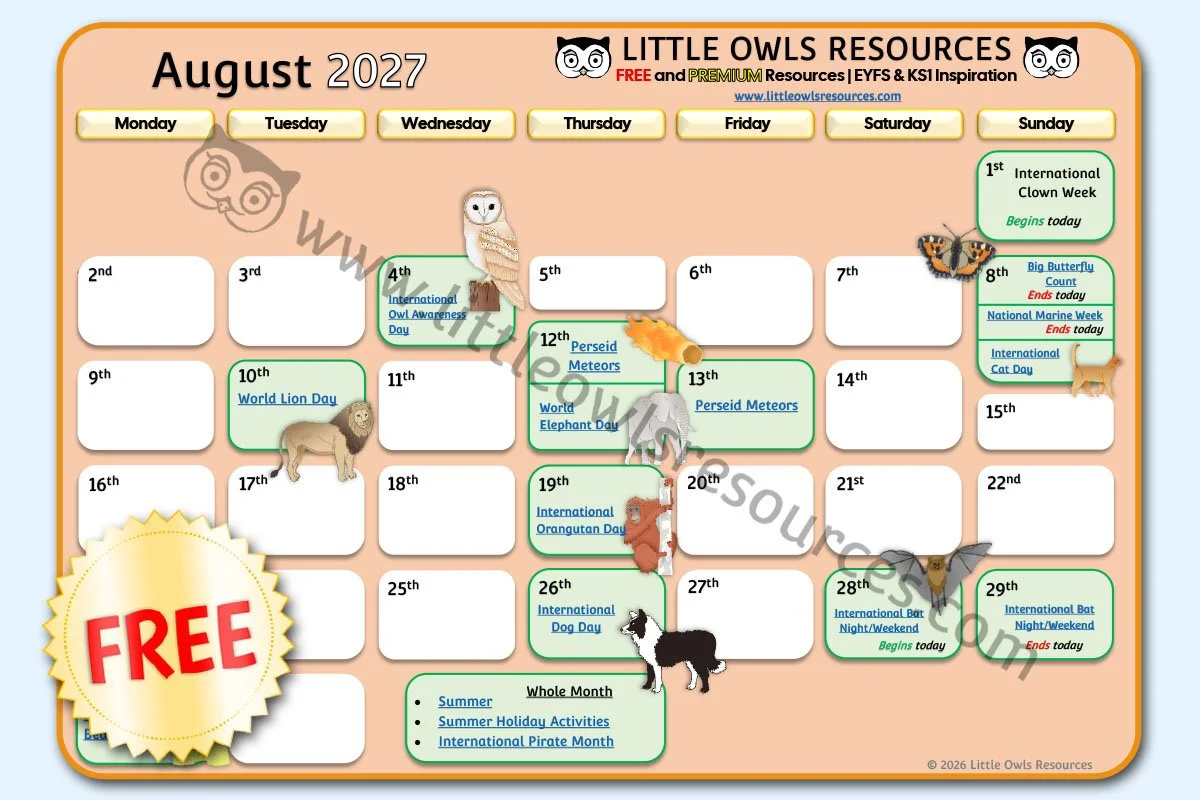
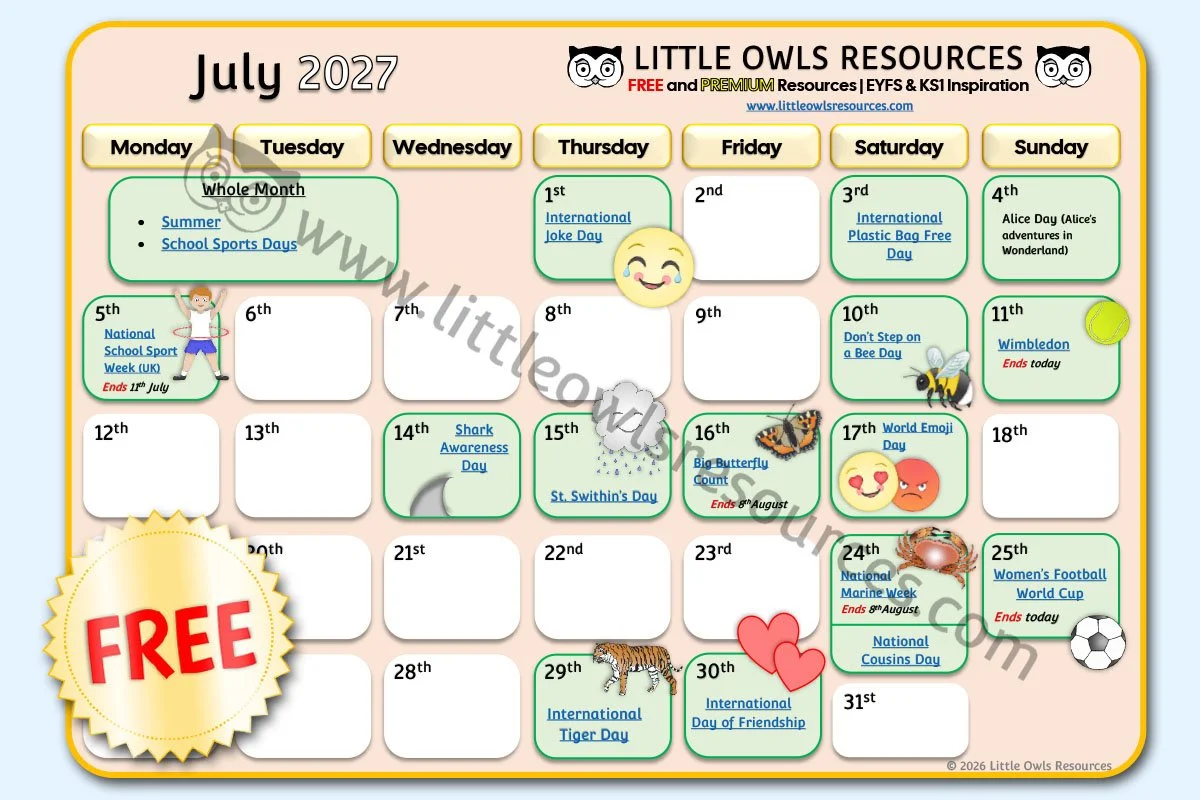
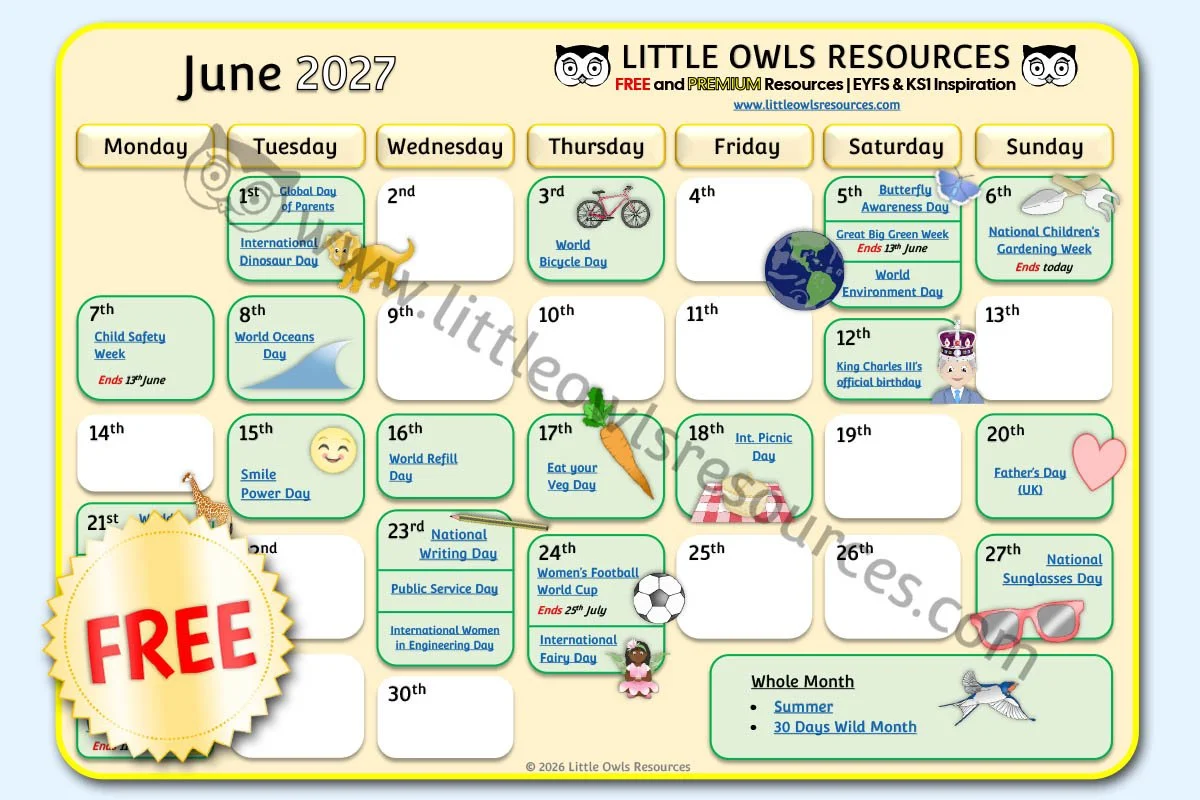
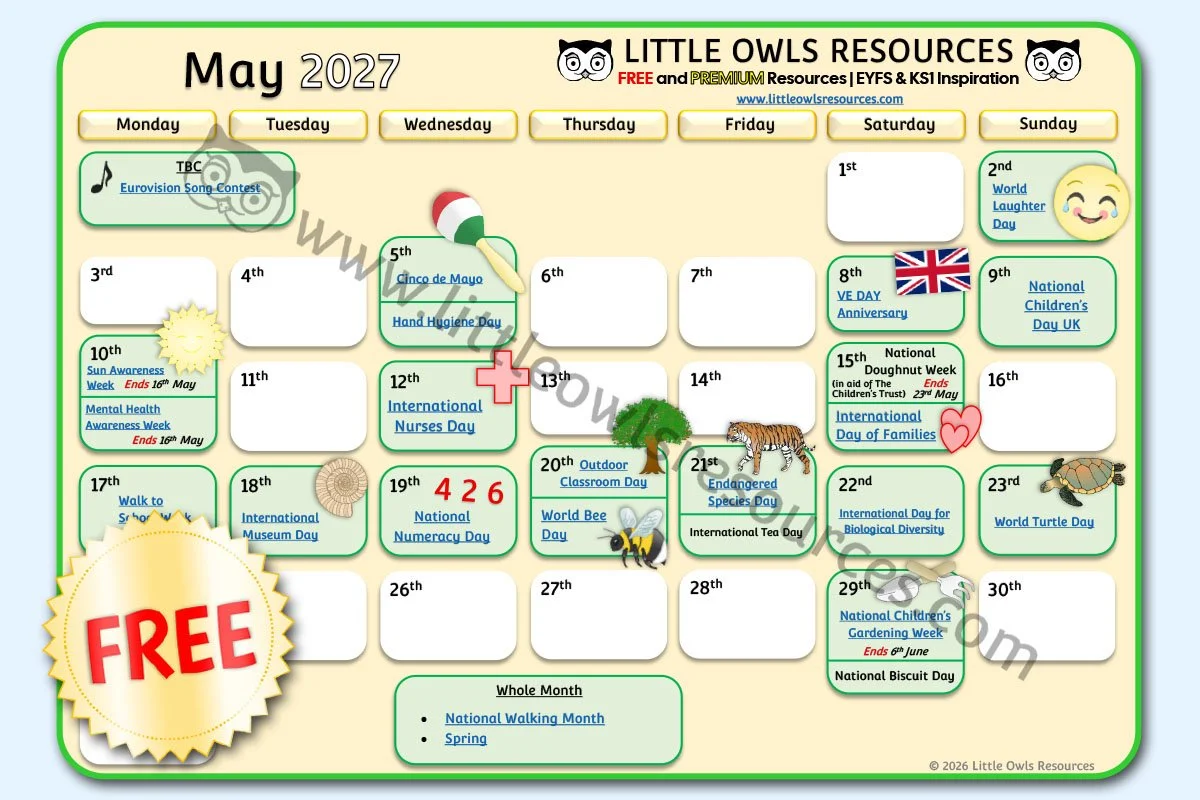
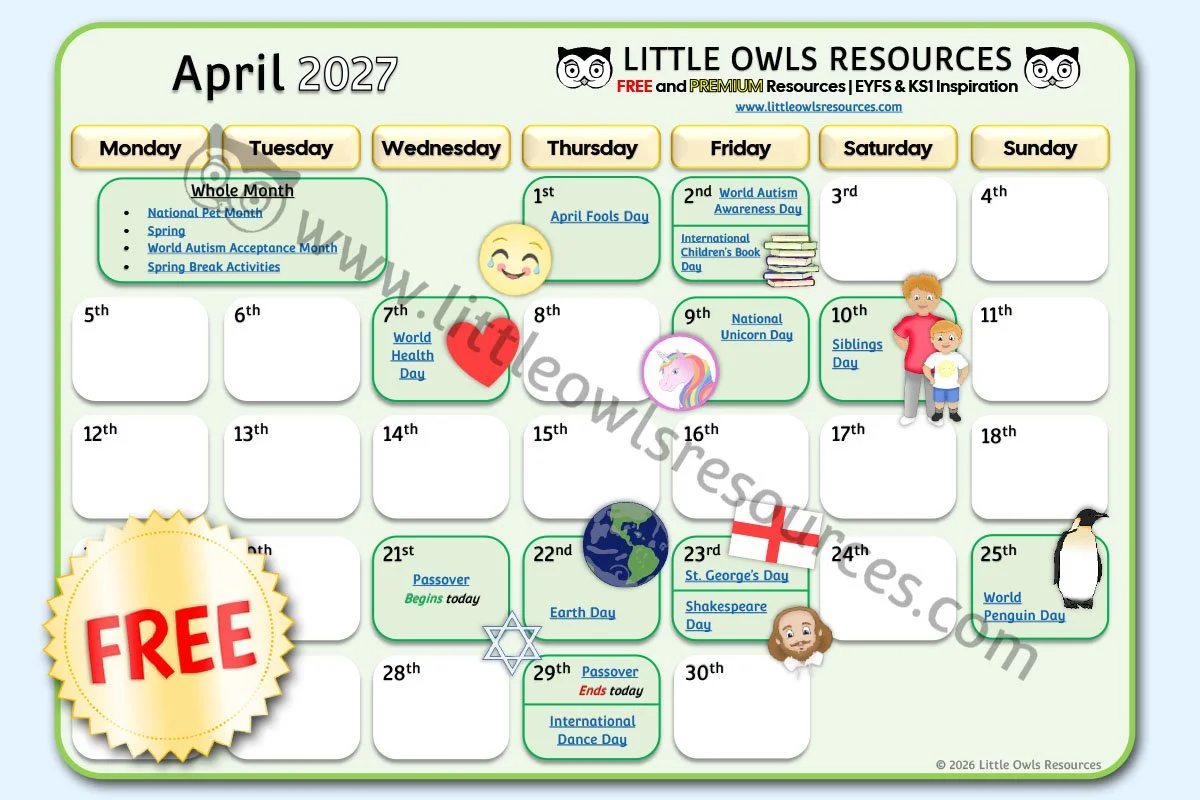
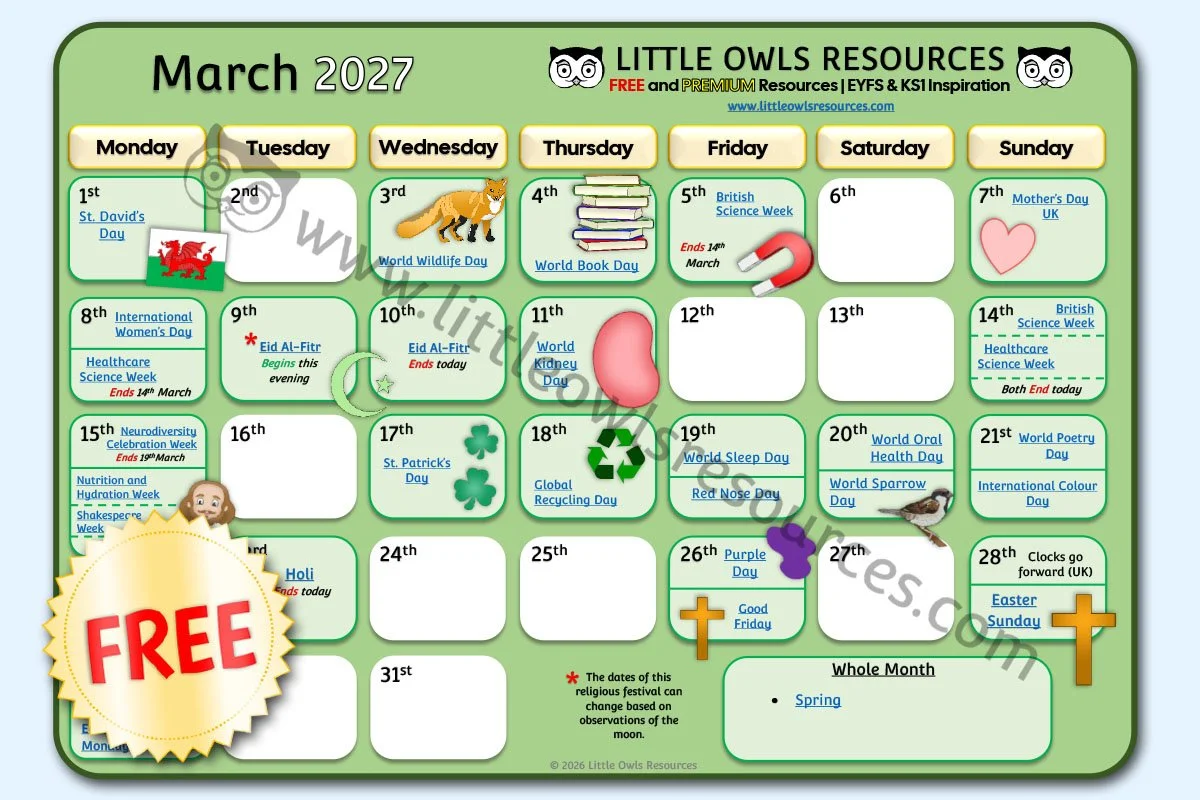
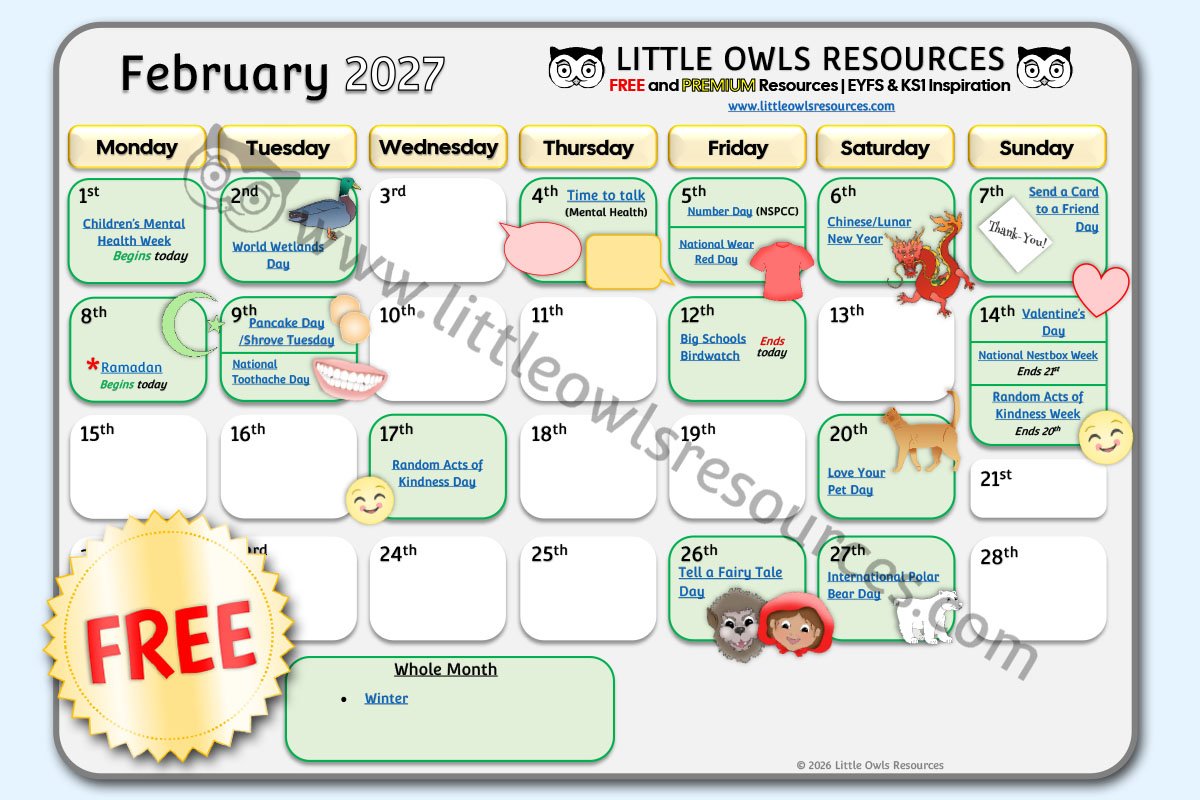
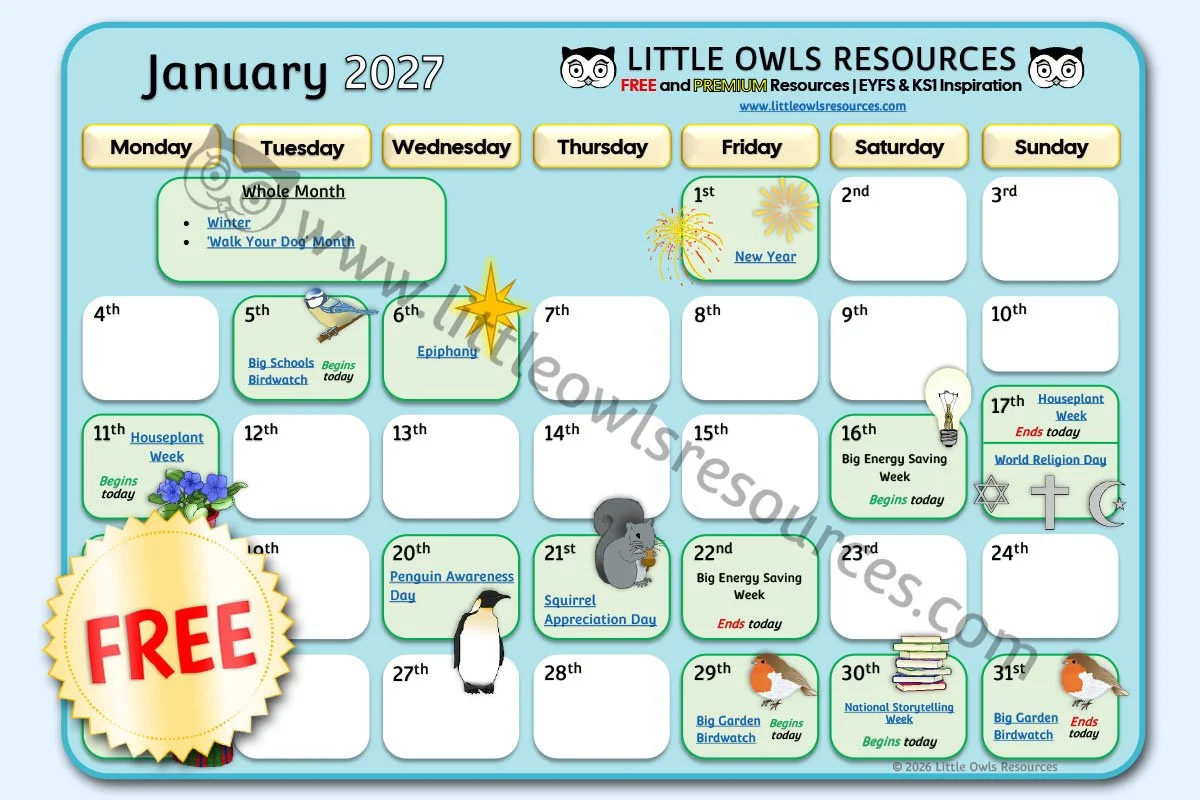
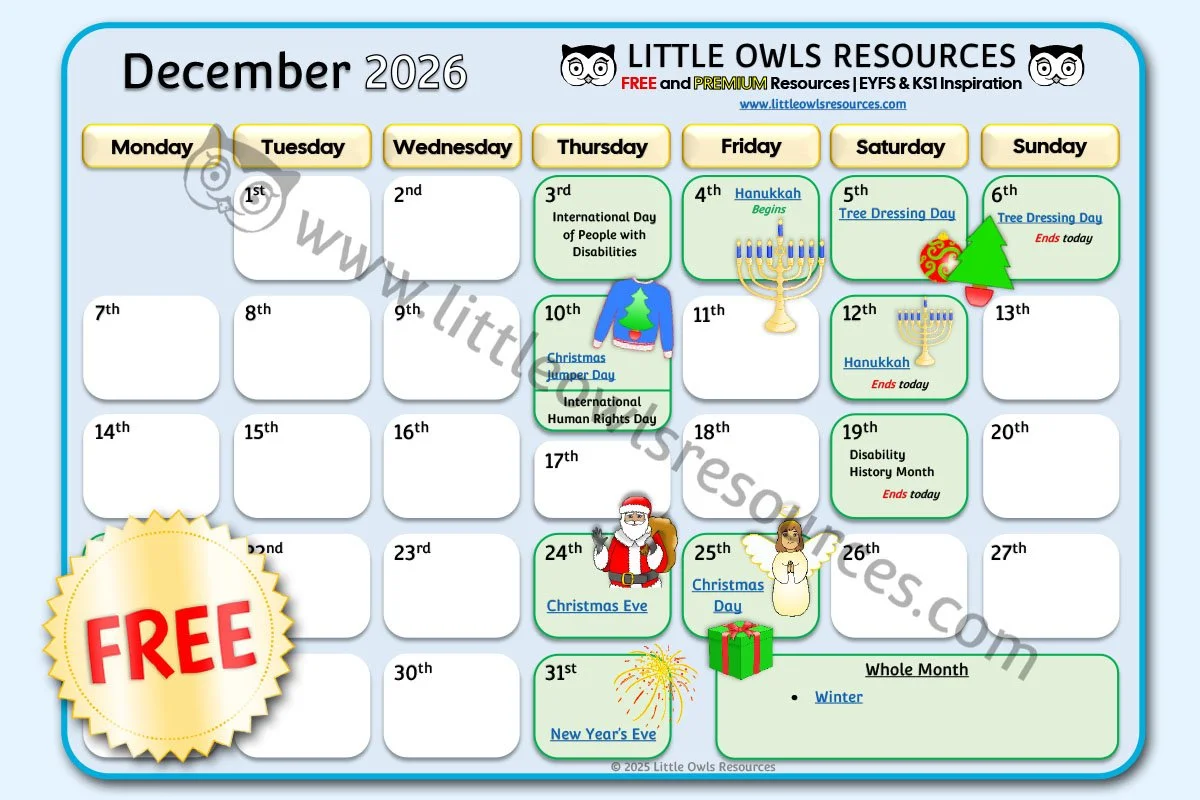
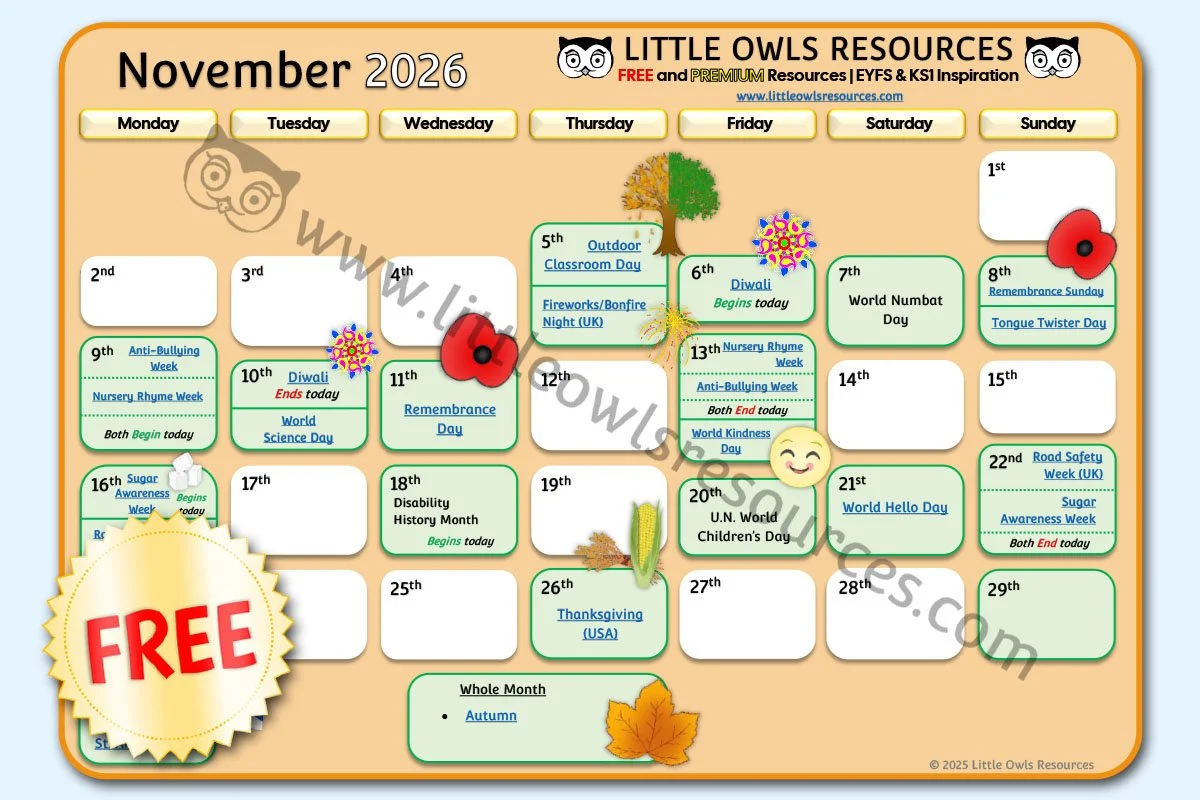
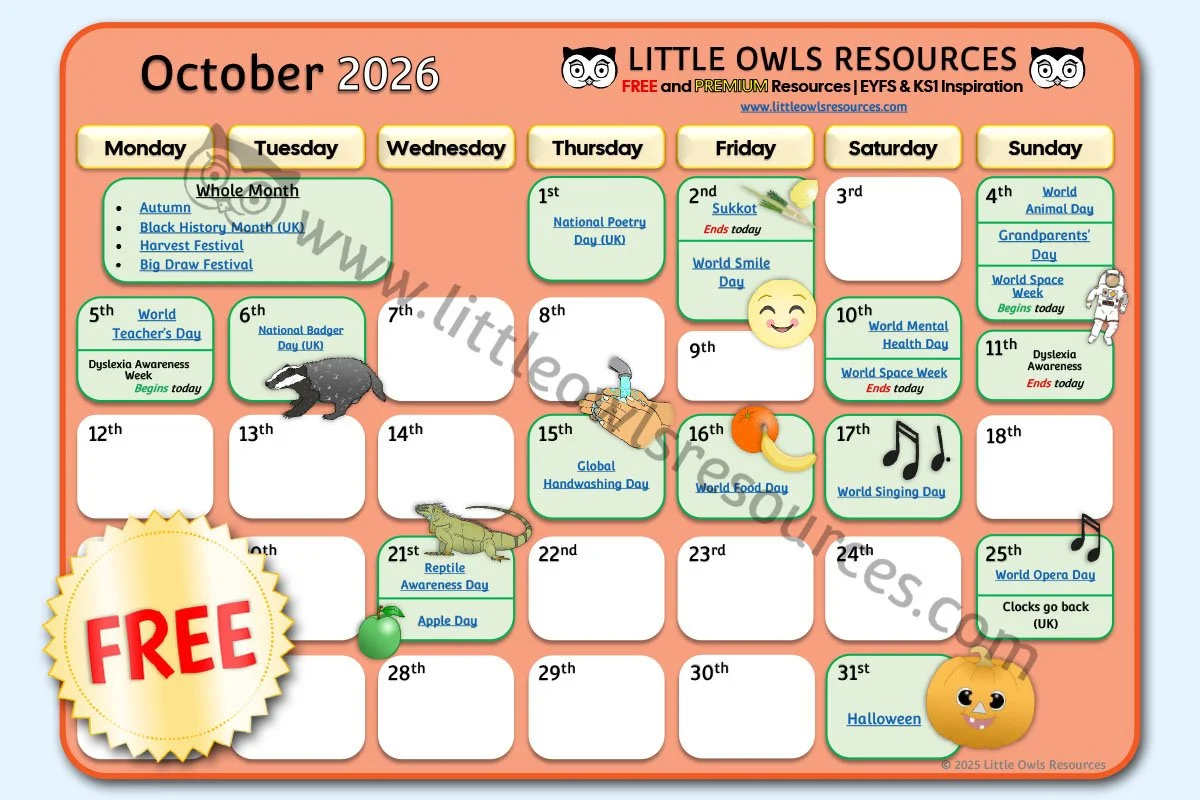
Special Date Calendars
Please use the arrows to the right of the carousel below and select a calendar to explore our continuous provision enhancement ideas & resources. Alternatively, visit our ‘Special Dates Calendar Page’.

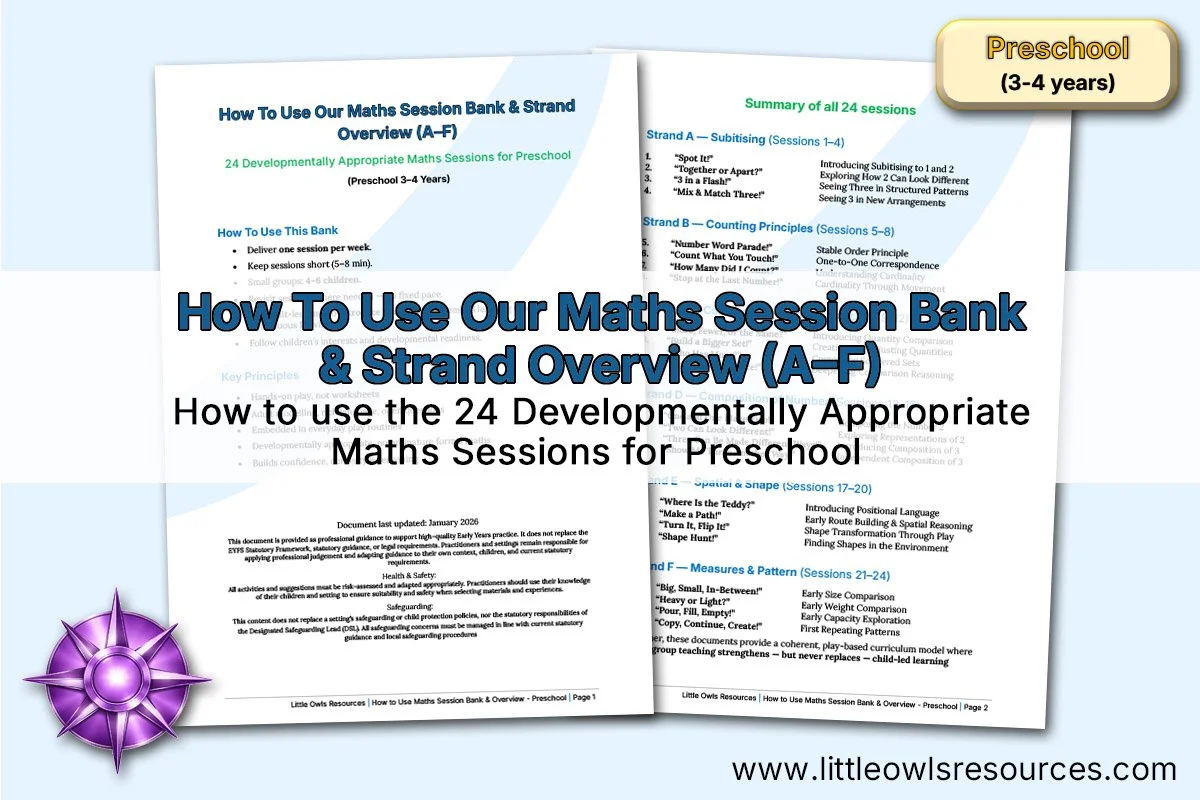
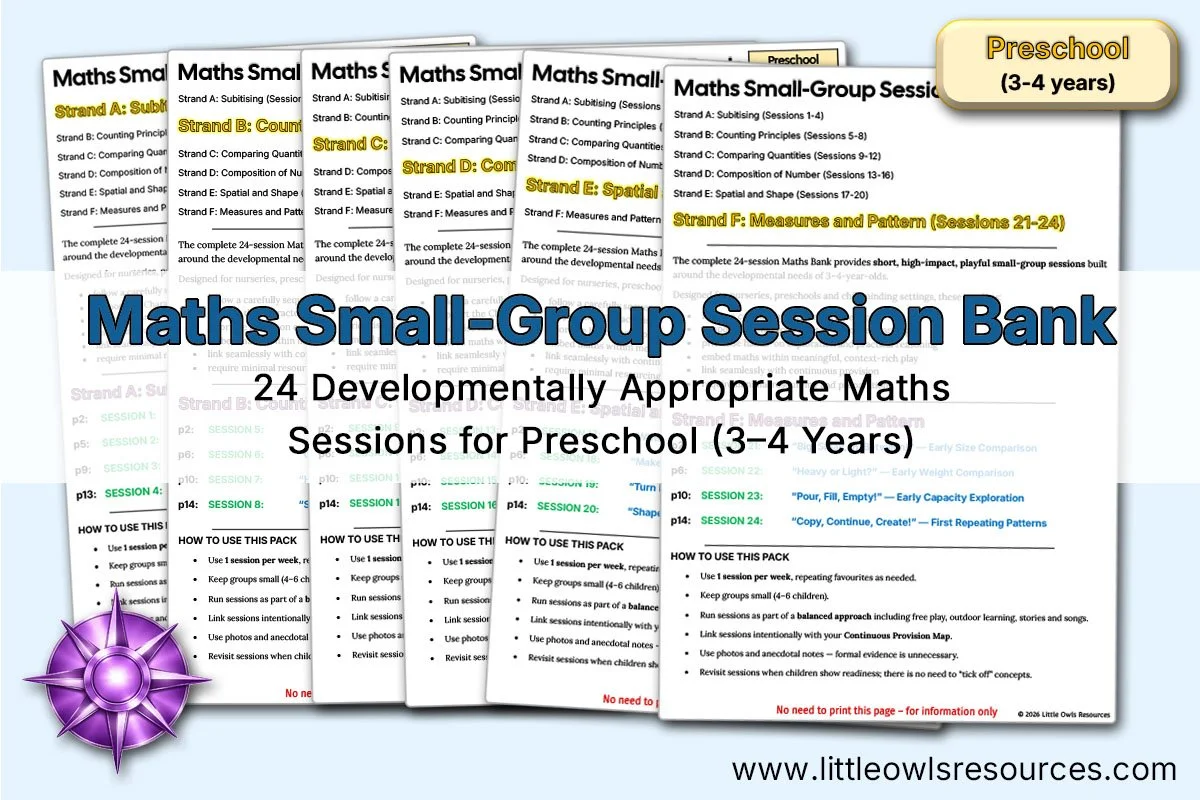
Maths small group sessions
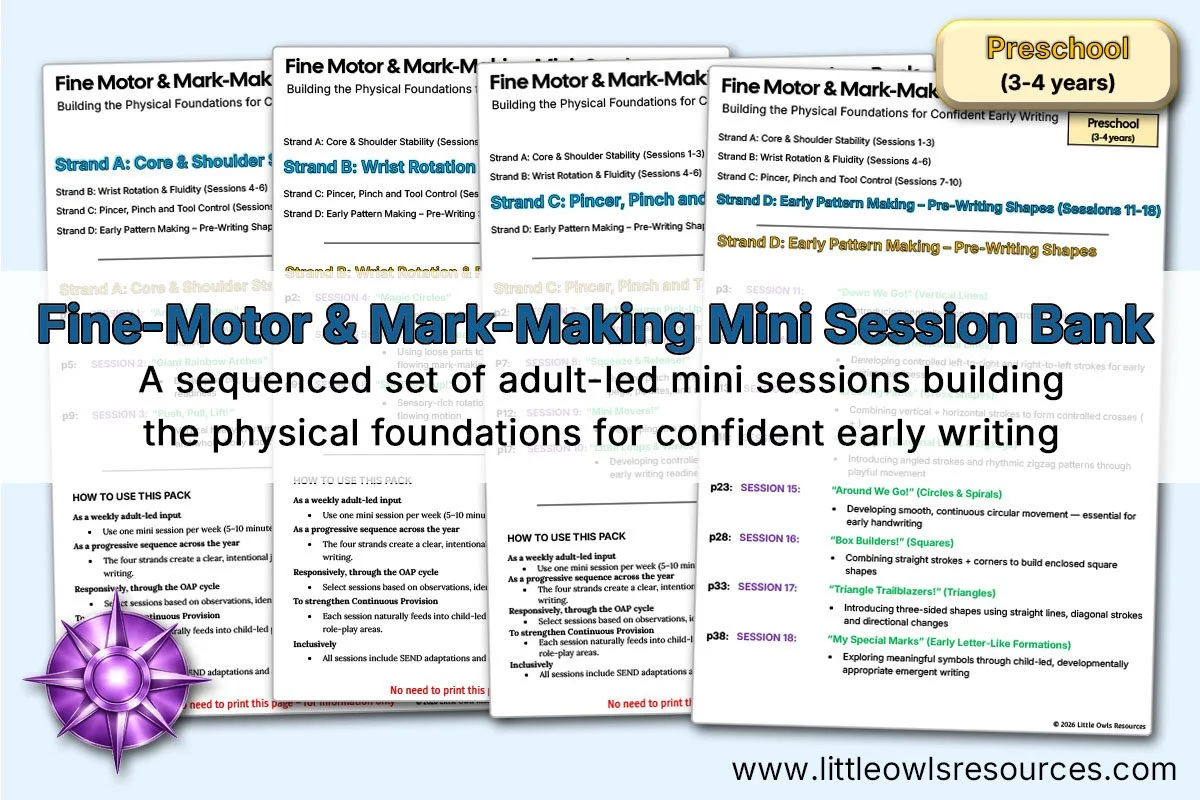
Fine motor & early writing sessions


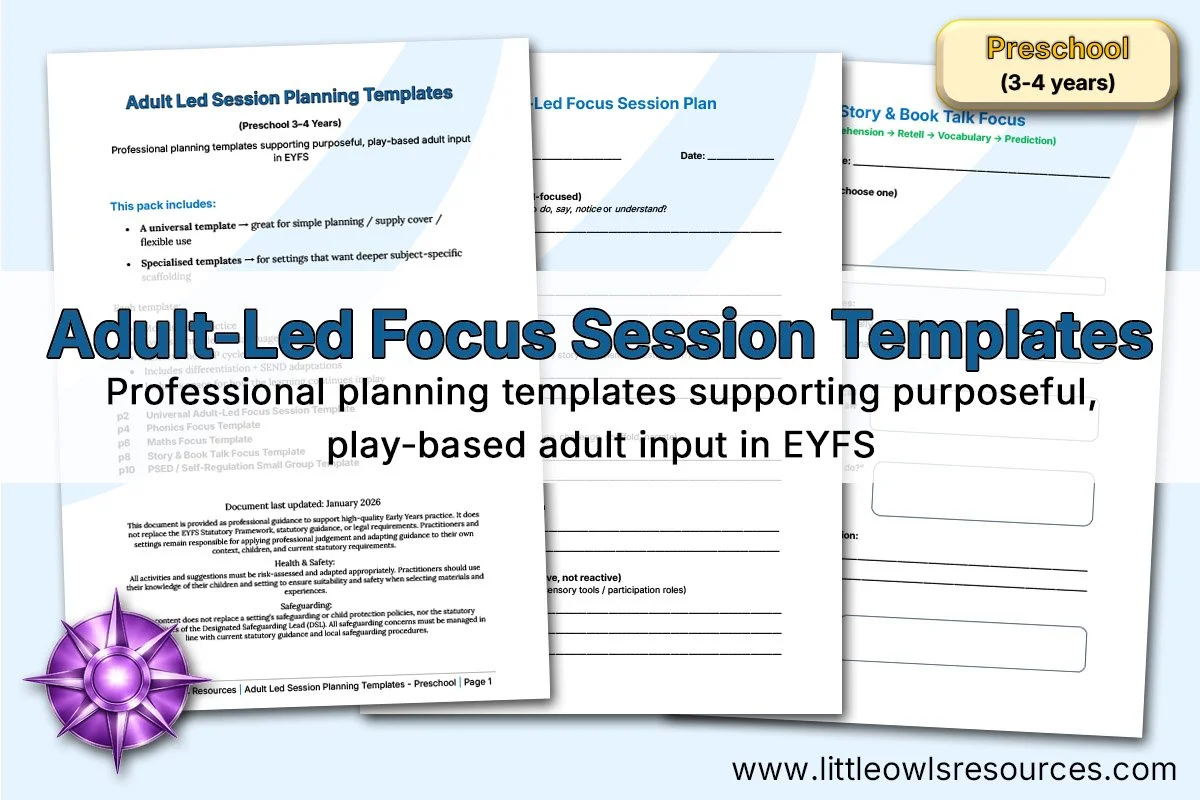
Adult-led session templates & guidance

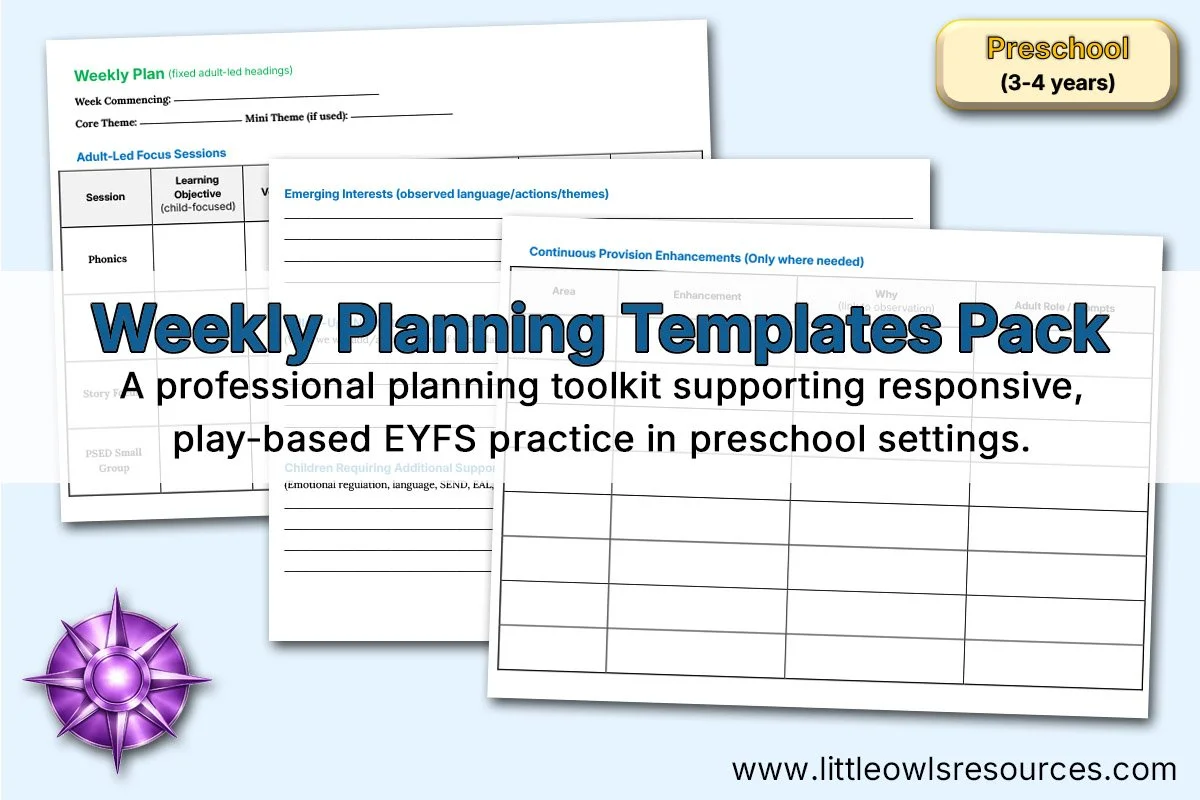
Please find additional resources on our ‘Areas of Learning’ page.

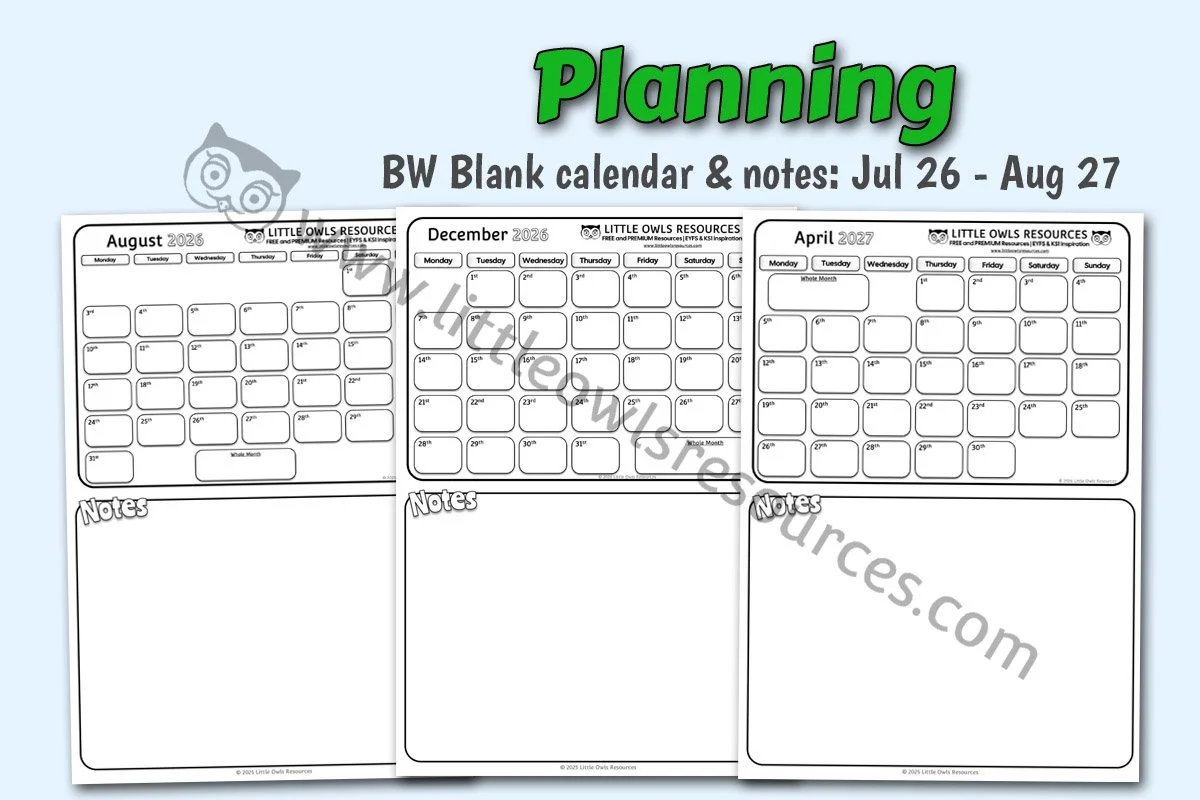
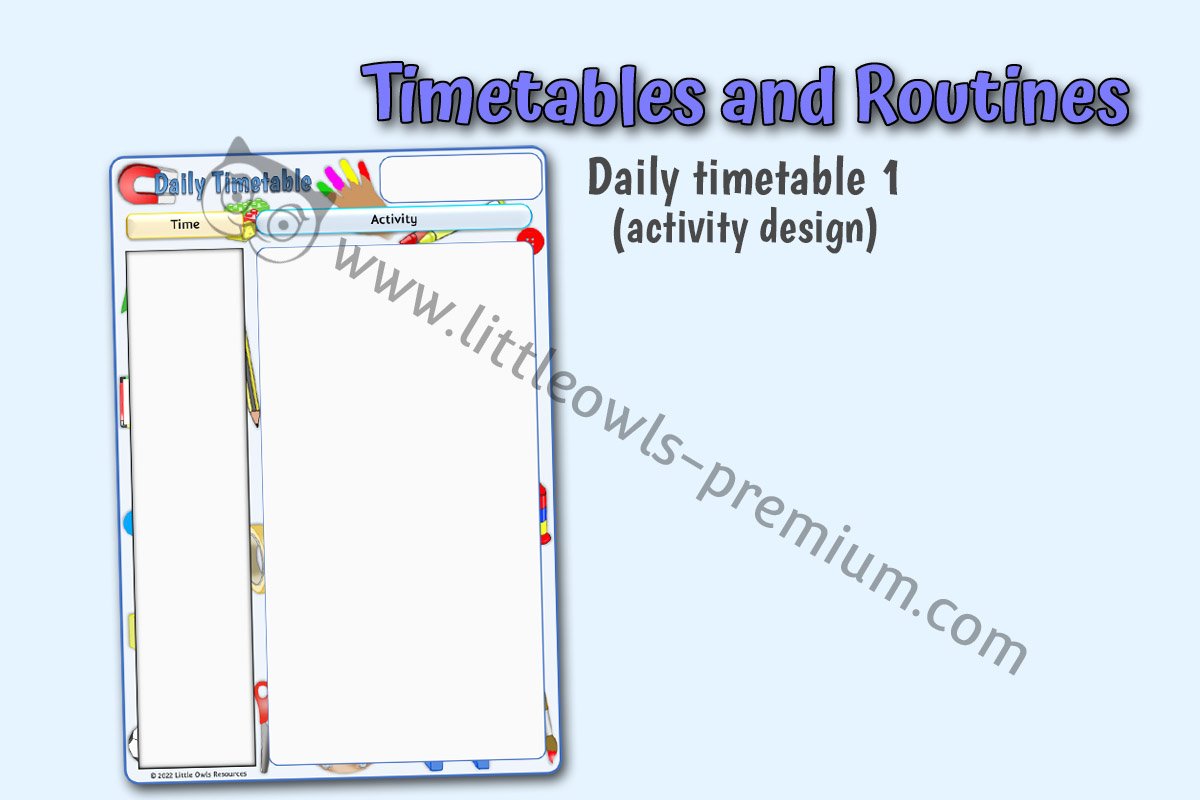
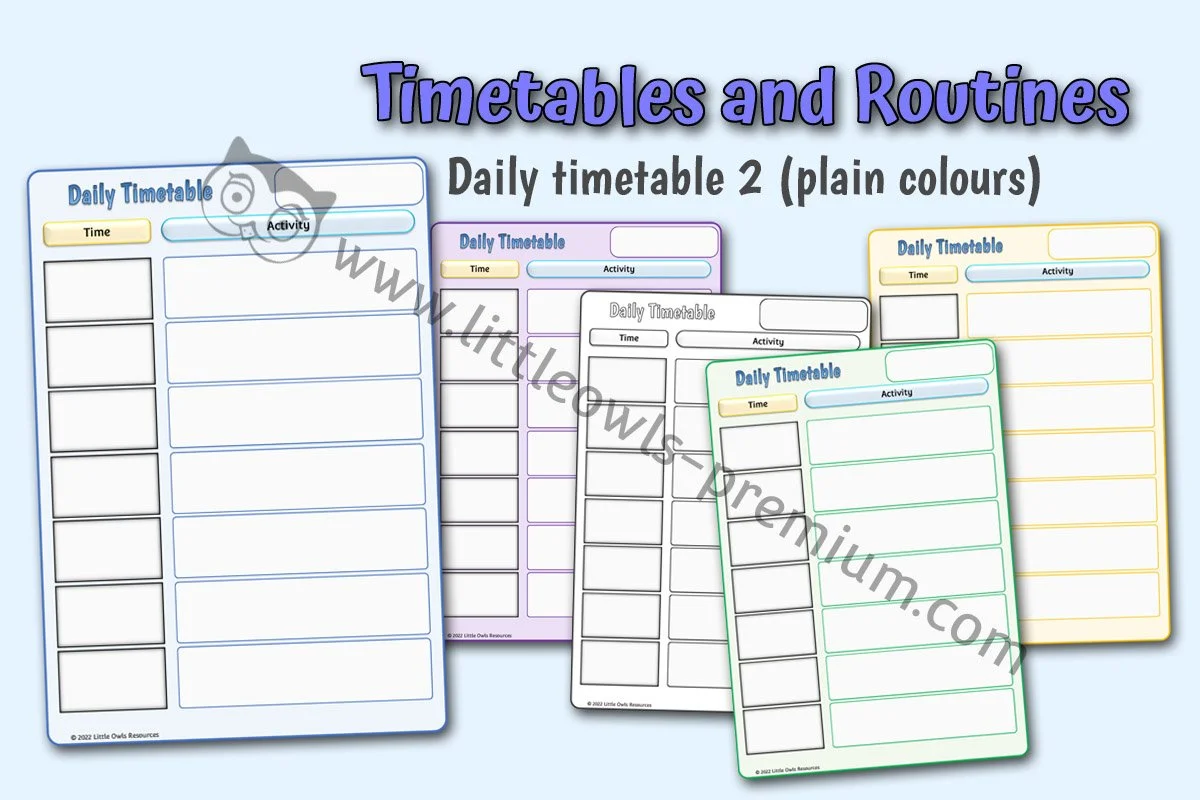
Additional Blank Planning Templates | Generic Birth-5


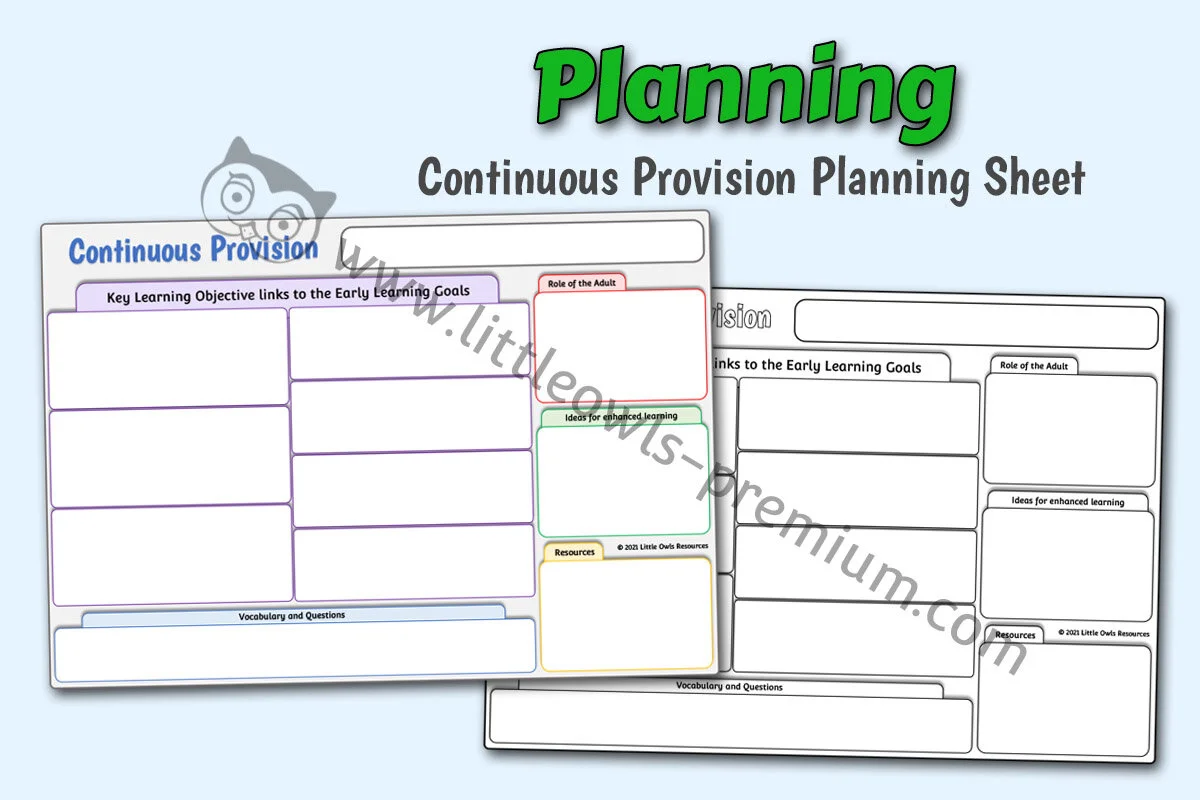
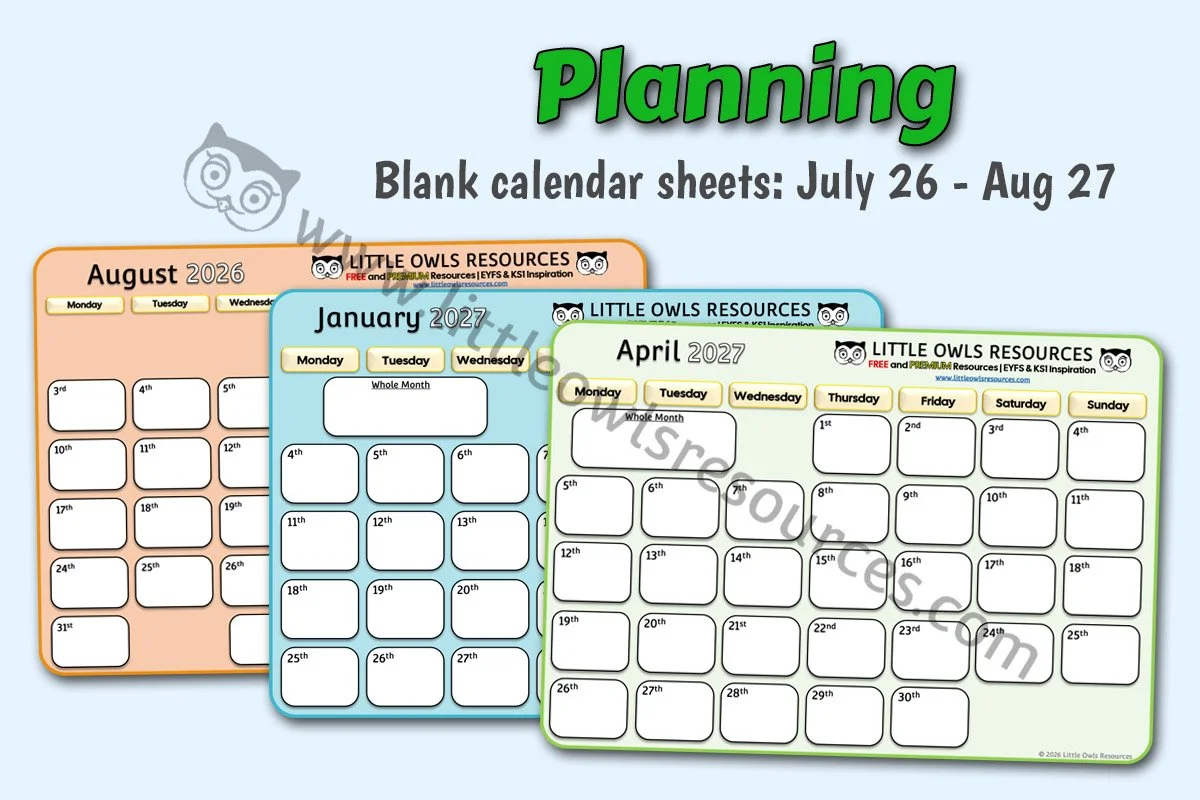
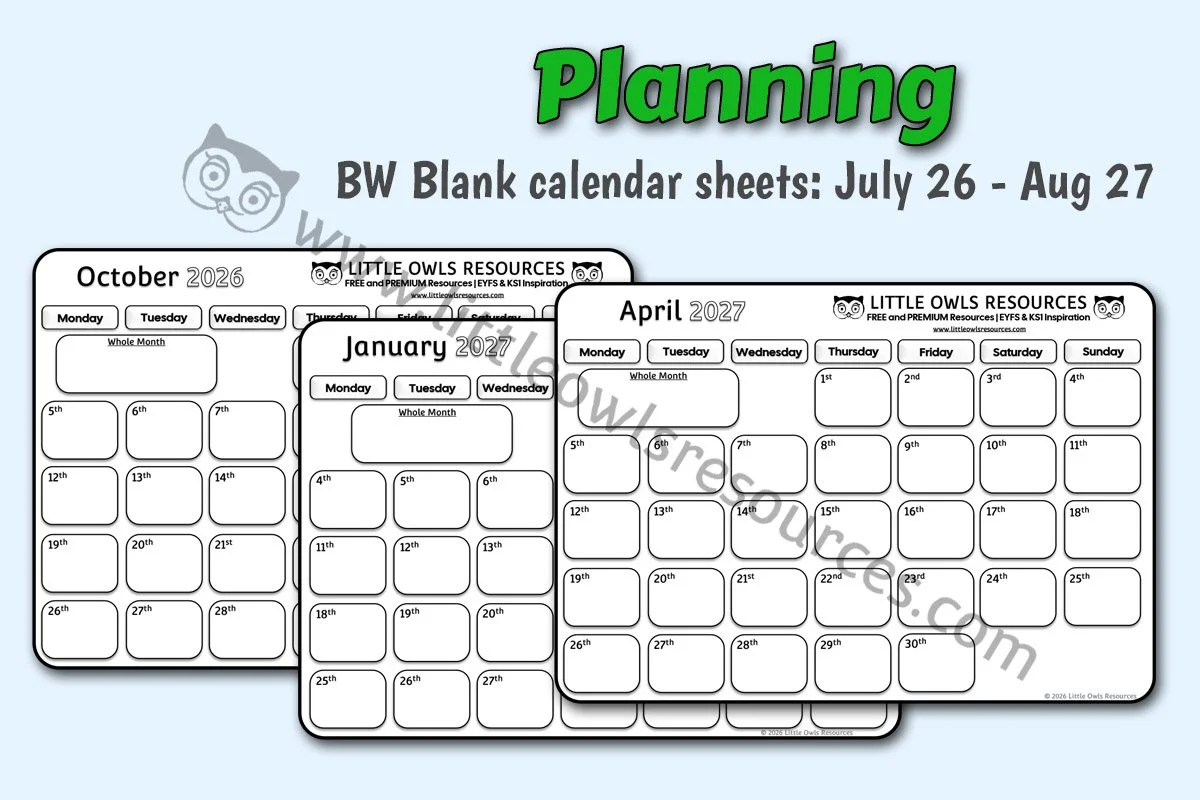
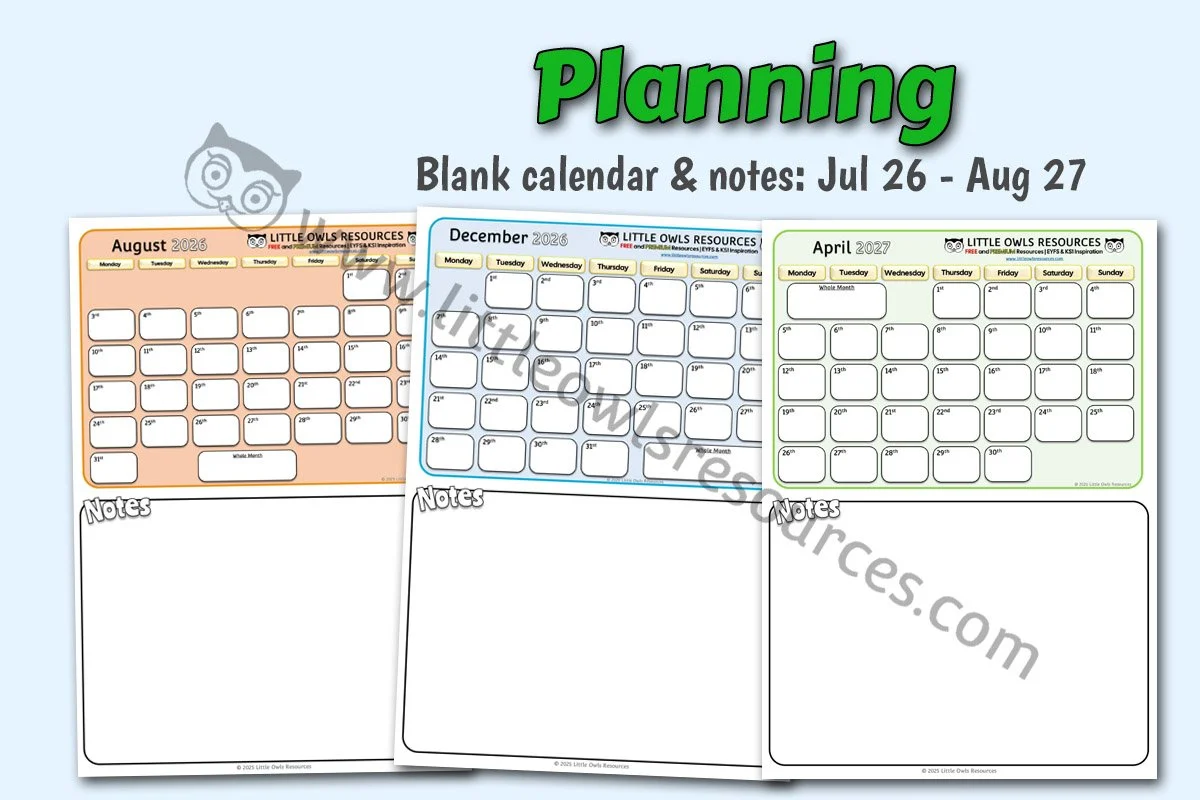



Observe–Assess–Plan toolkit, progress review and reporting tools

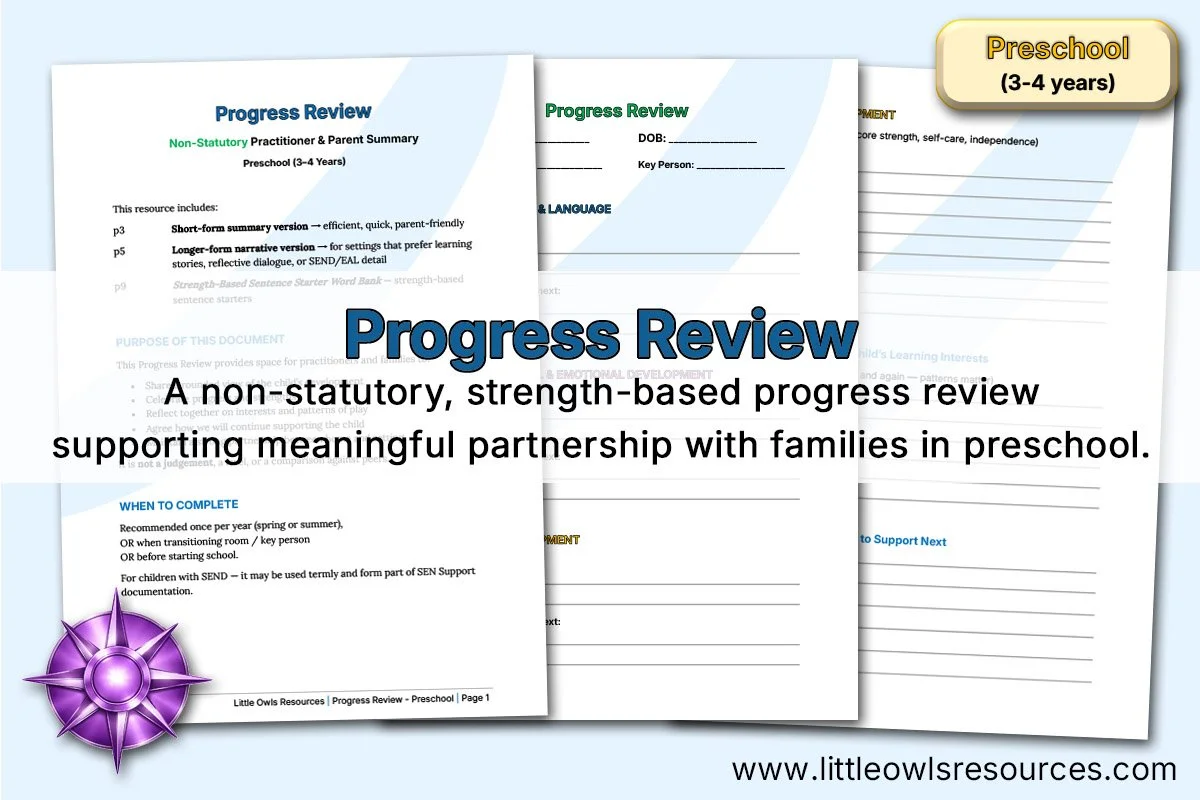

Please find additional resources on our ‘OAP Cycle’ page.
💬 Language & Interaction
Practitioner guidance, sentence stems and interaction strategies


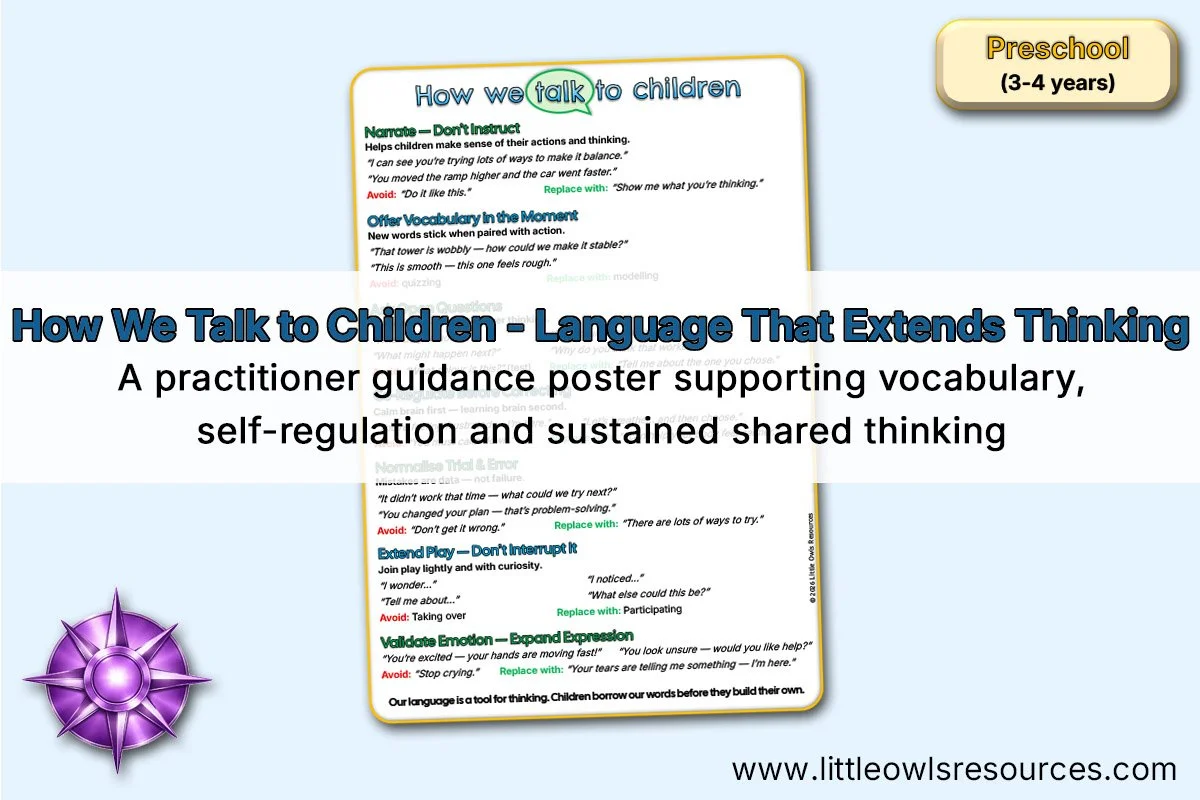
📘 Statutory & Non-Statutory Guidance Resources
Statutory guidance such as the EYFS Framework, establishes clear expectations that all early years providers must meet in order to support children’s safety, wellbeing, and development. Other documents such as ‘Development Matters’, are non-statutory. This means that guidance within these documents provides flexibility and professional support by offering examples and ideas that practitioners can adapt to suit their setting, children, and community.
Together, these forms of guidance help ensure both consistency and flexibility within early years practice. Please find below some of the materials available on Little Owls Resources to support both mentioned documents:
Development Matters
Areas Of Learning
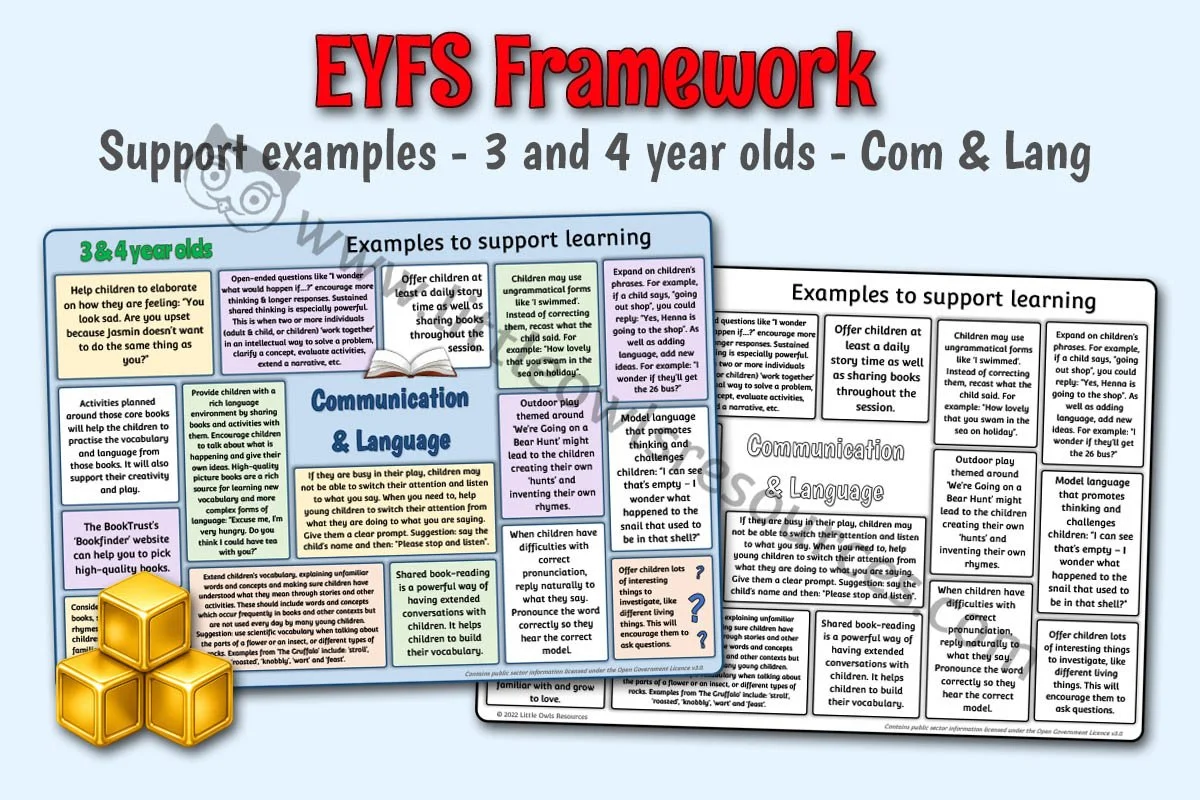
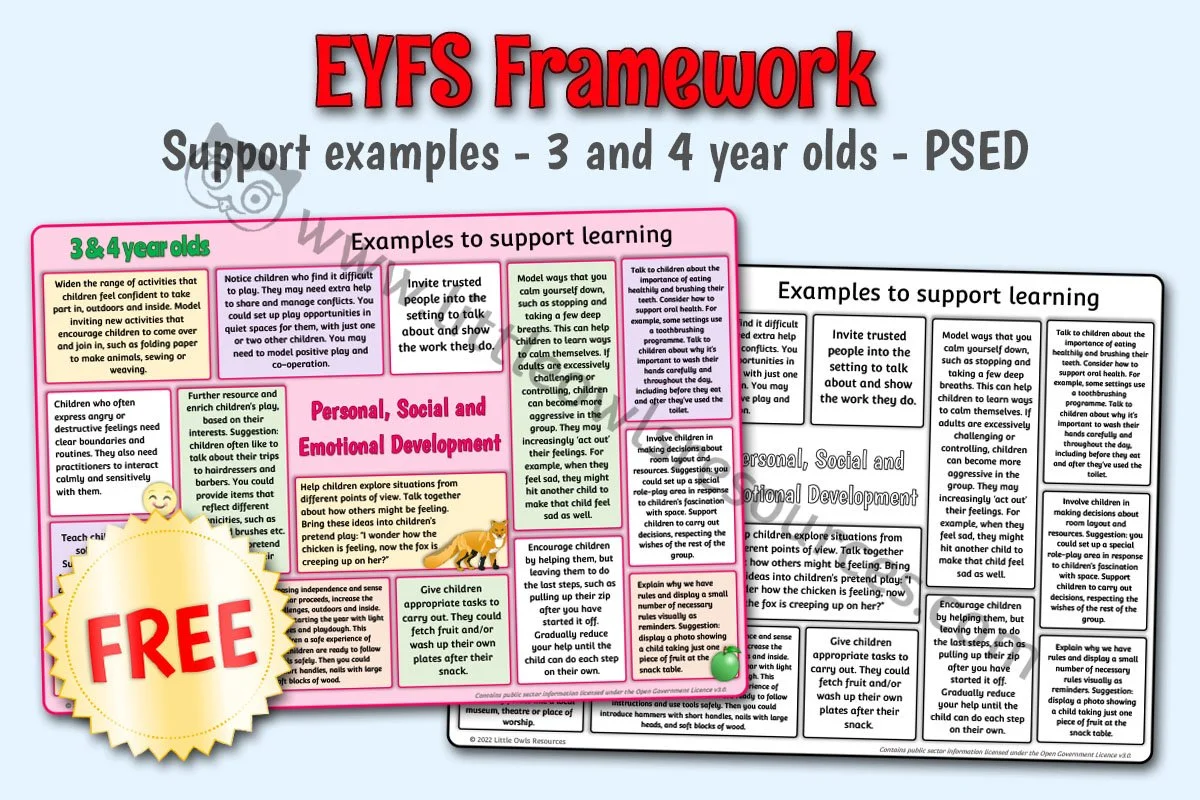
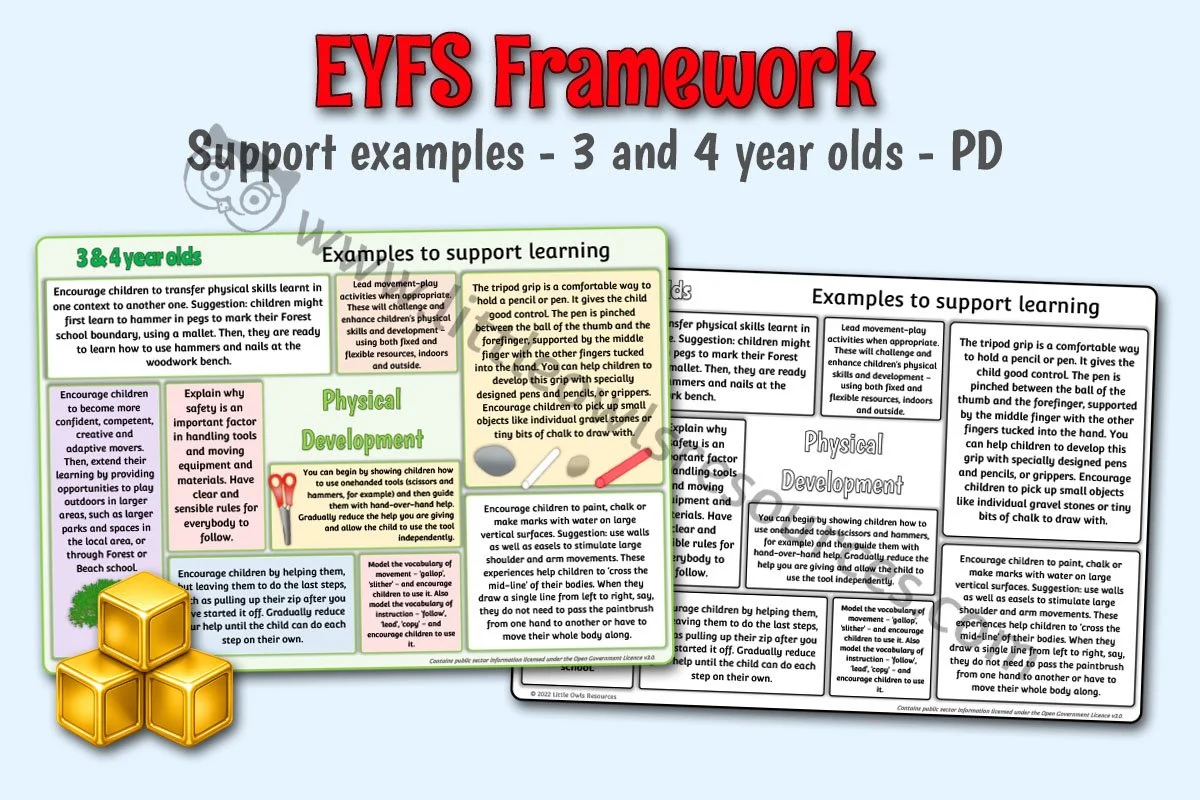
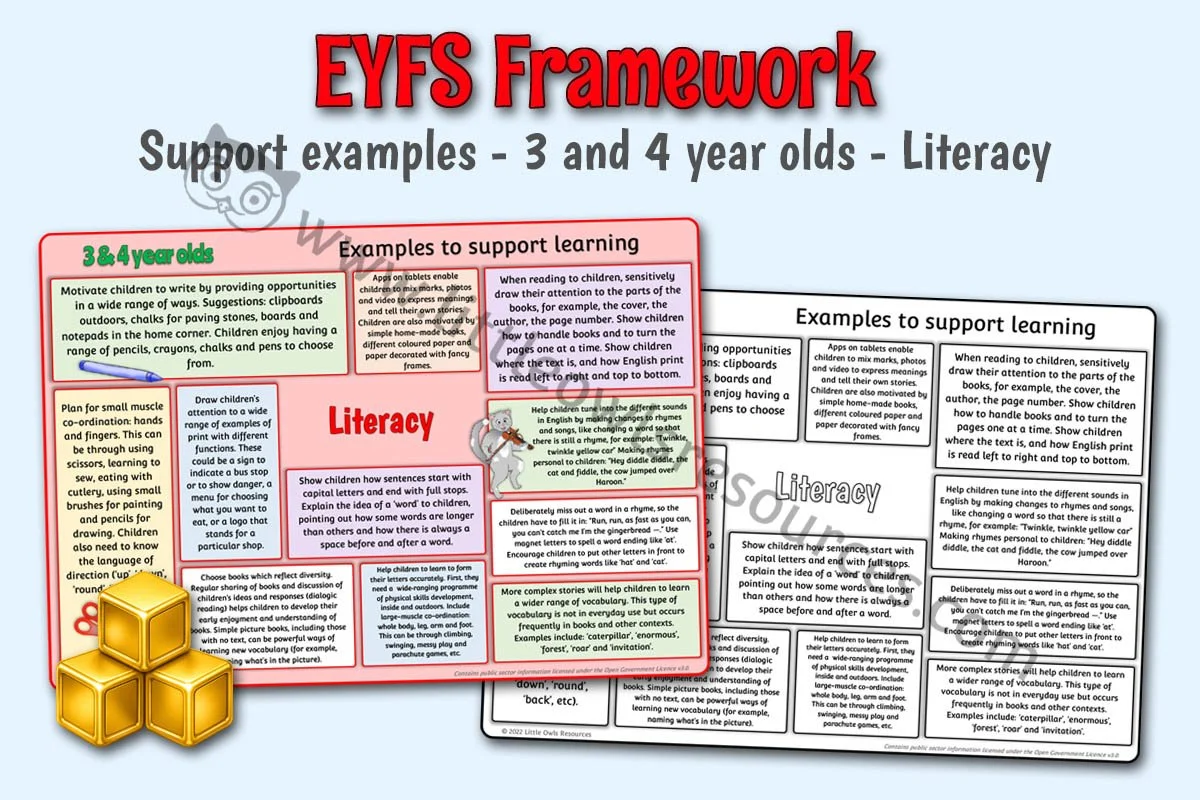
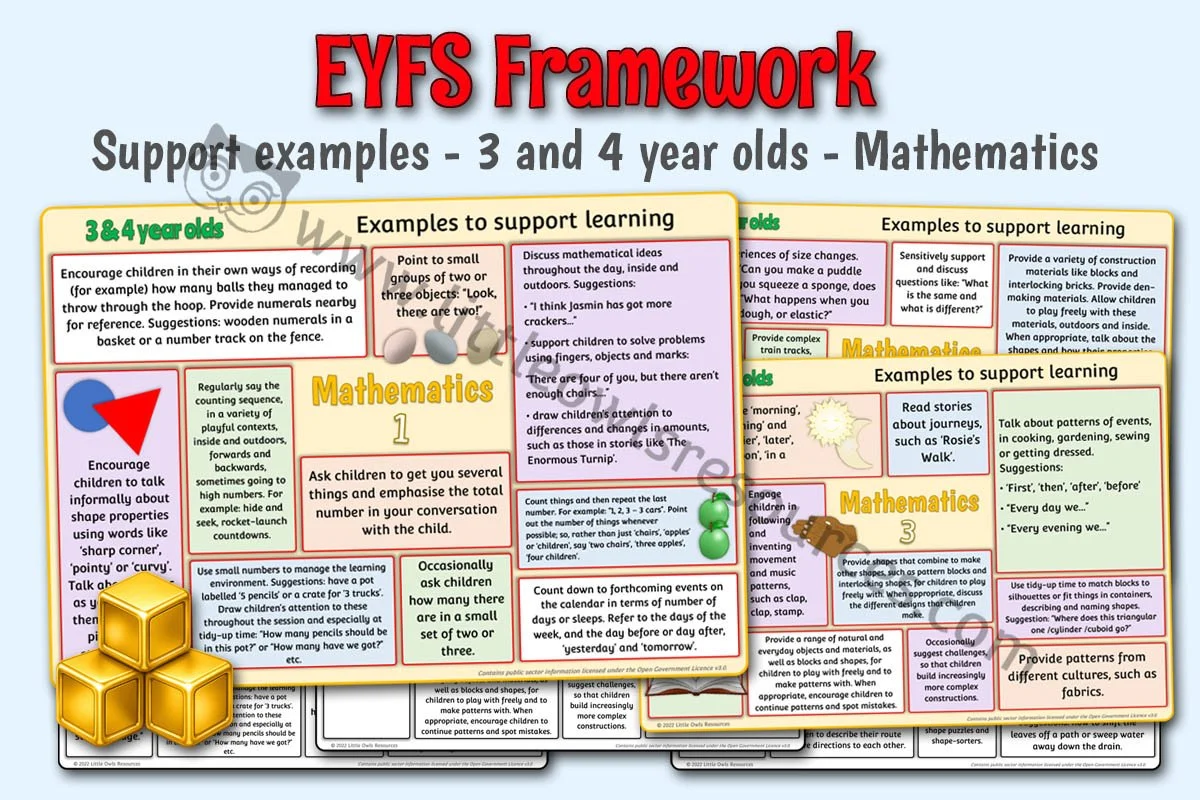
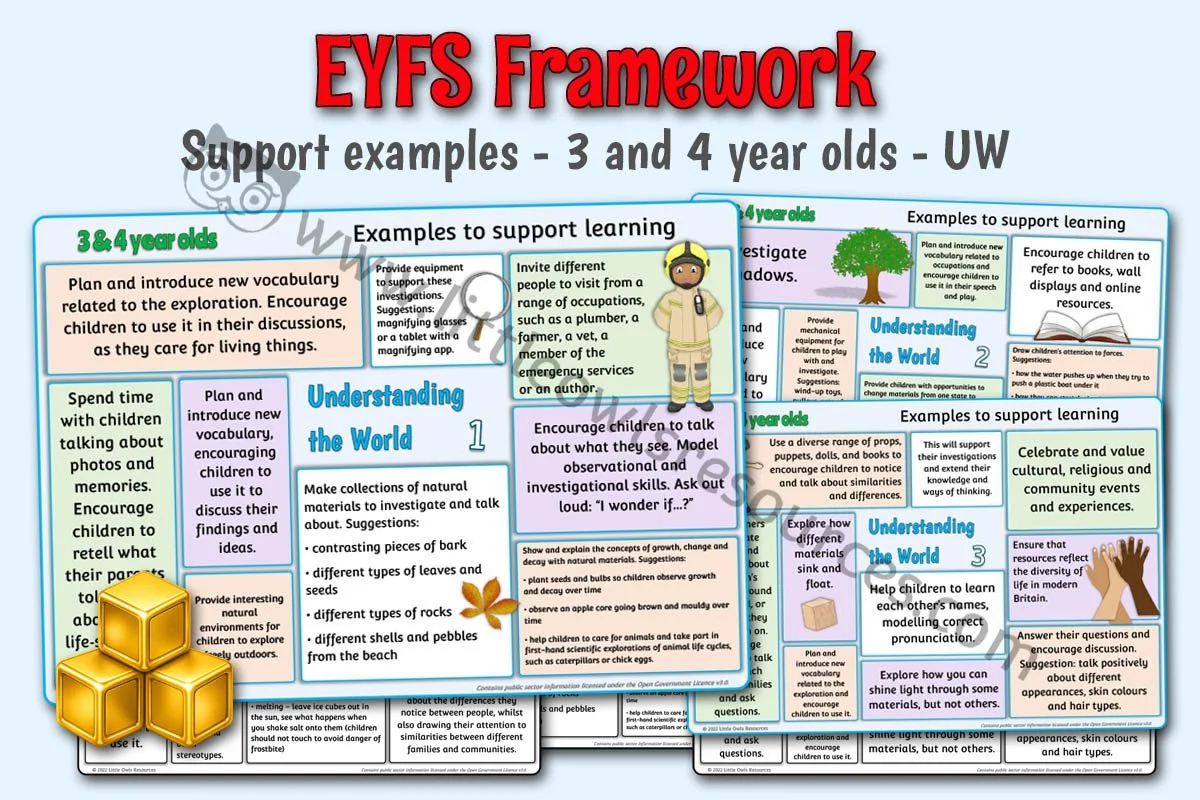
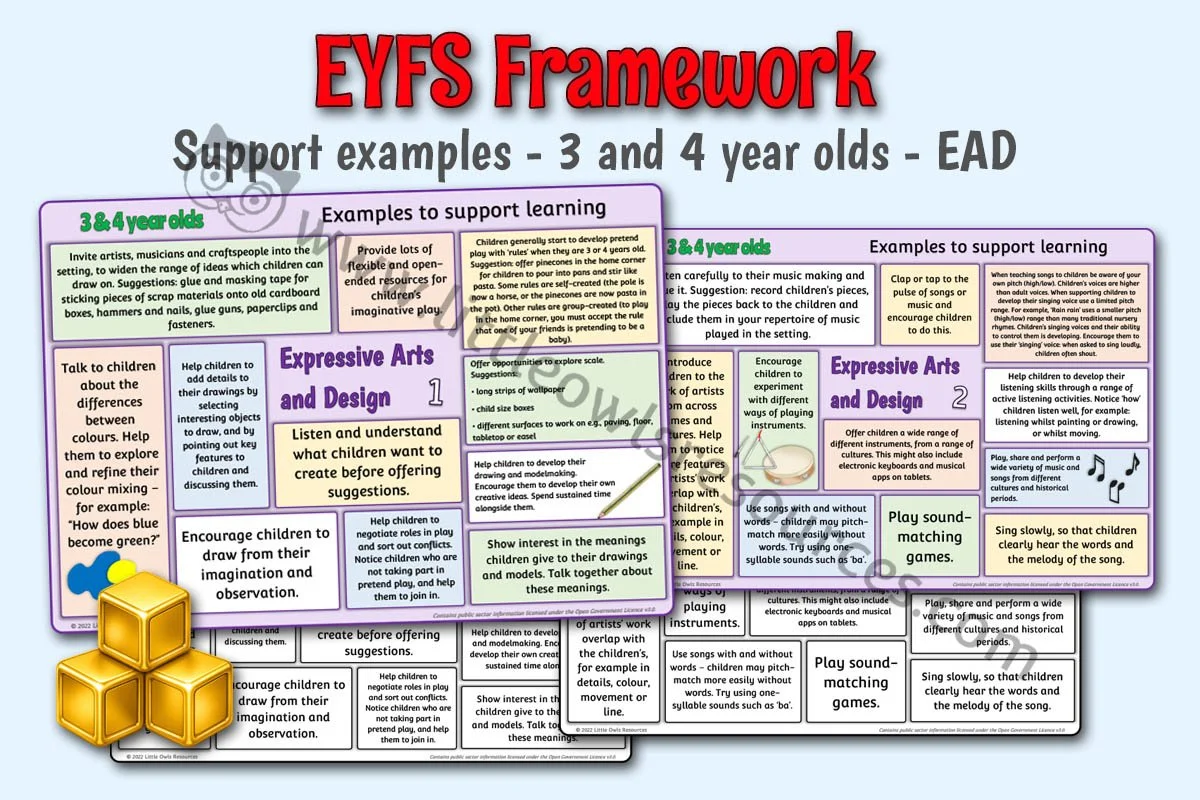
Examples of how to support areas of learning and development for 3 to 4 year olds. Extracted from Development Matters; non-statutory curriculum guidance for the early years foundation stage. Includes colour and black and white versions. Files contain public sector information licensed under the Open Government Licence v3.0.
EYFS Framework
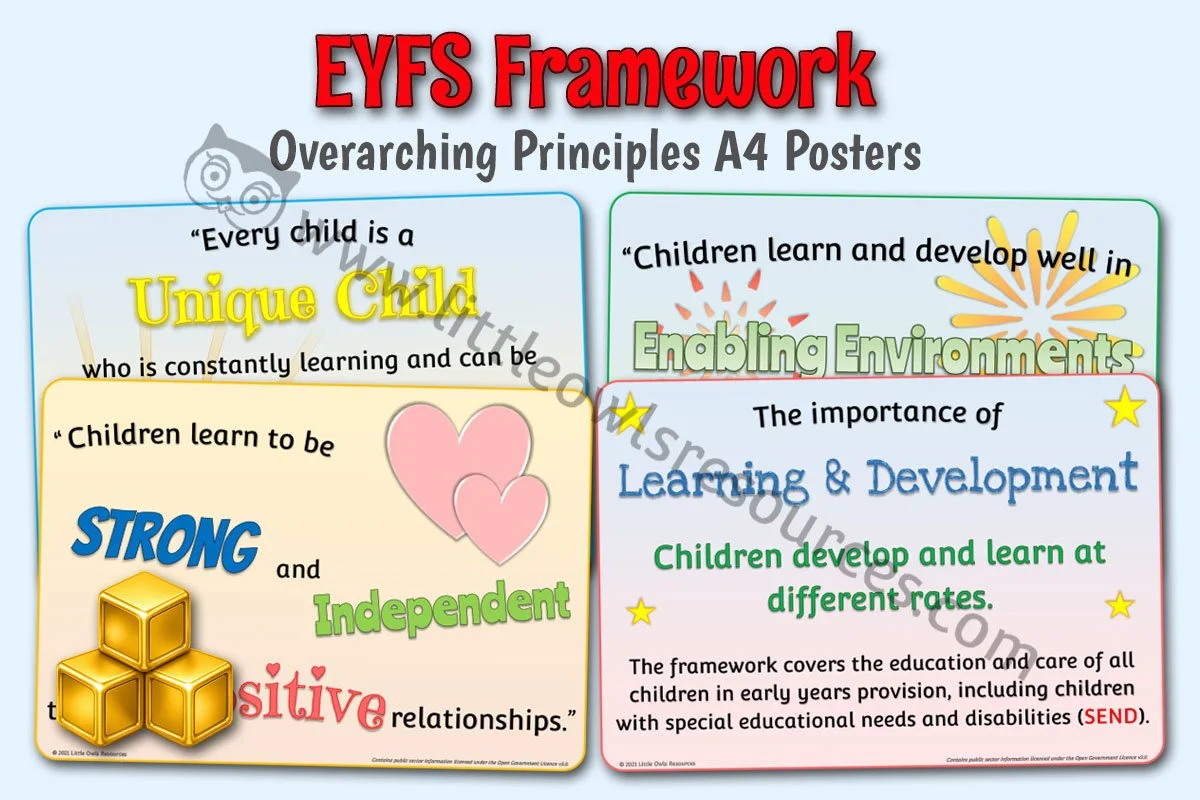
Overarching Principles
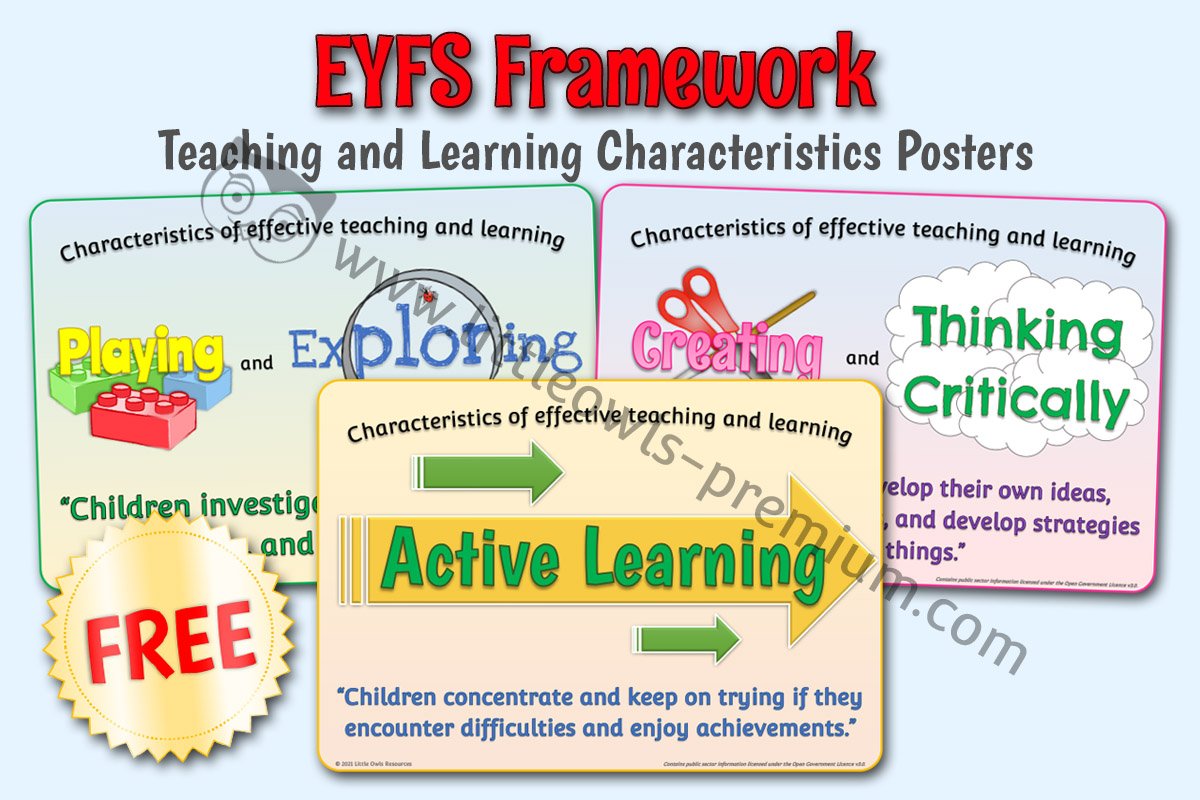
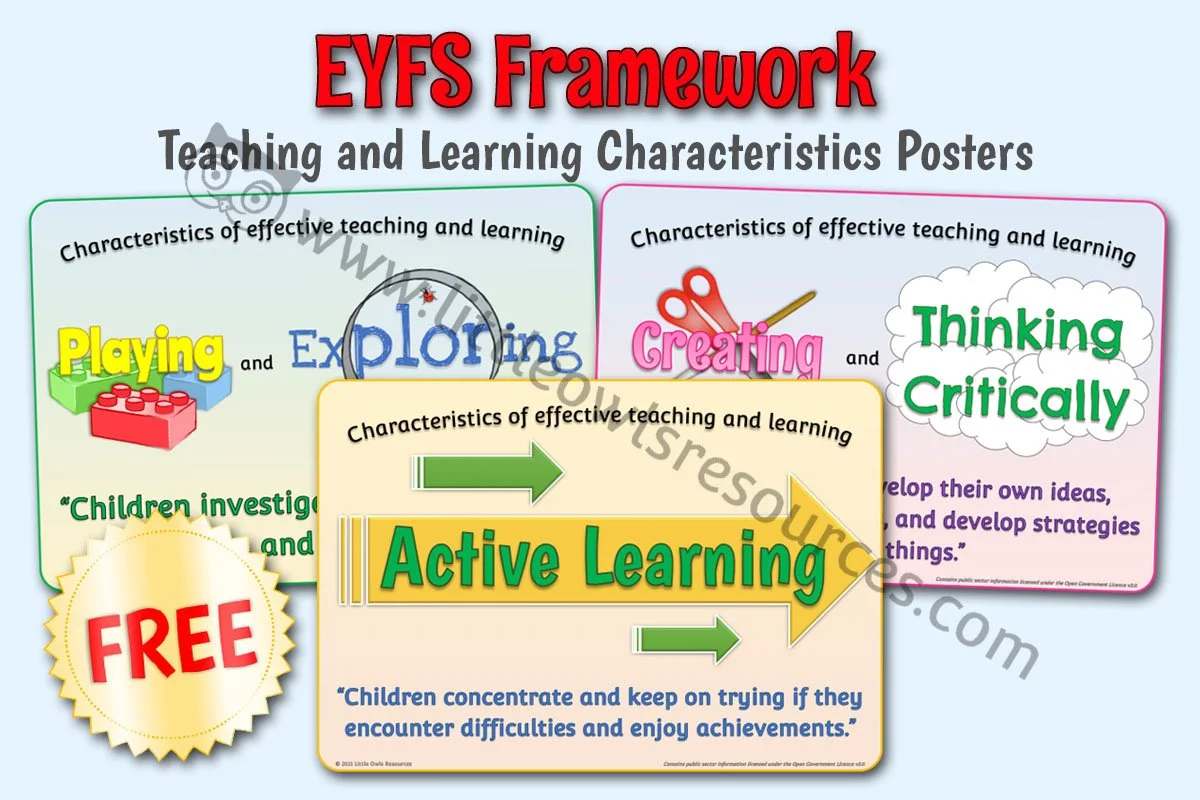
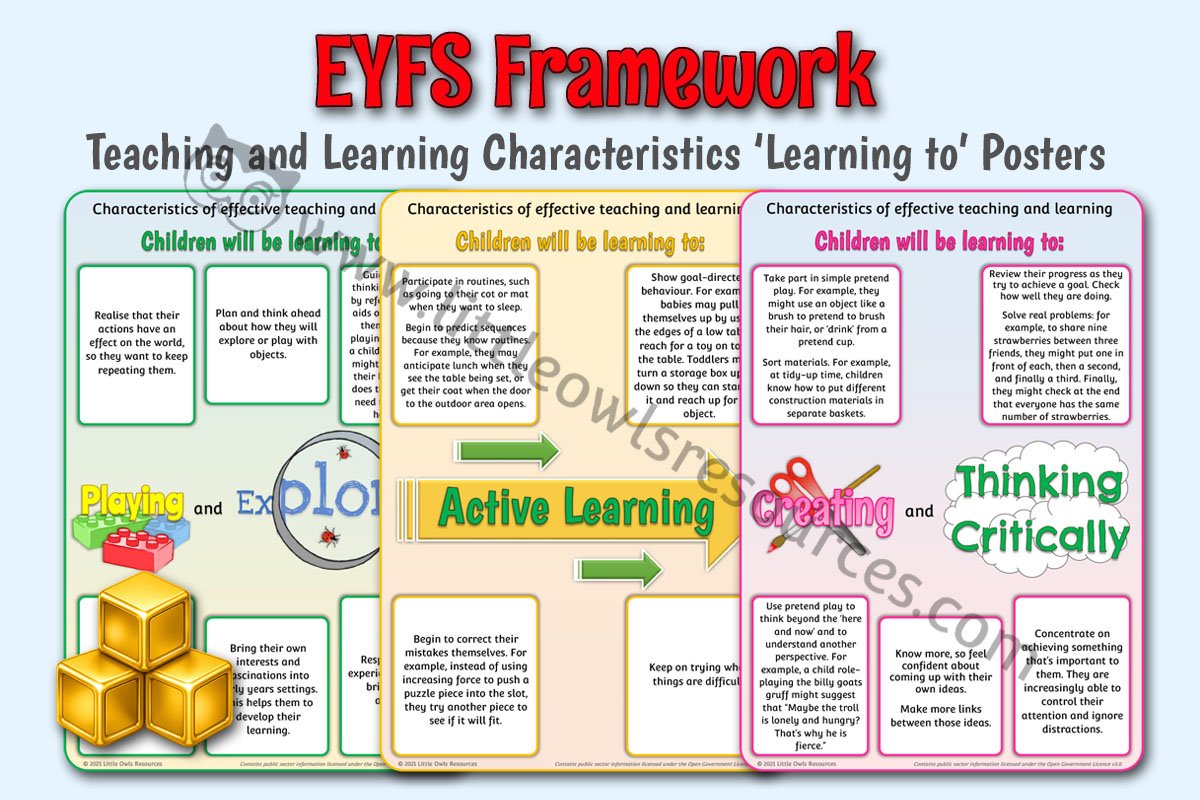
Teaching & Learning Characteristics
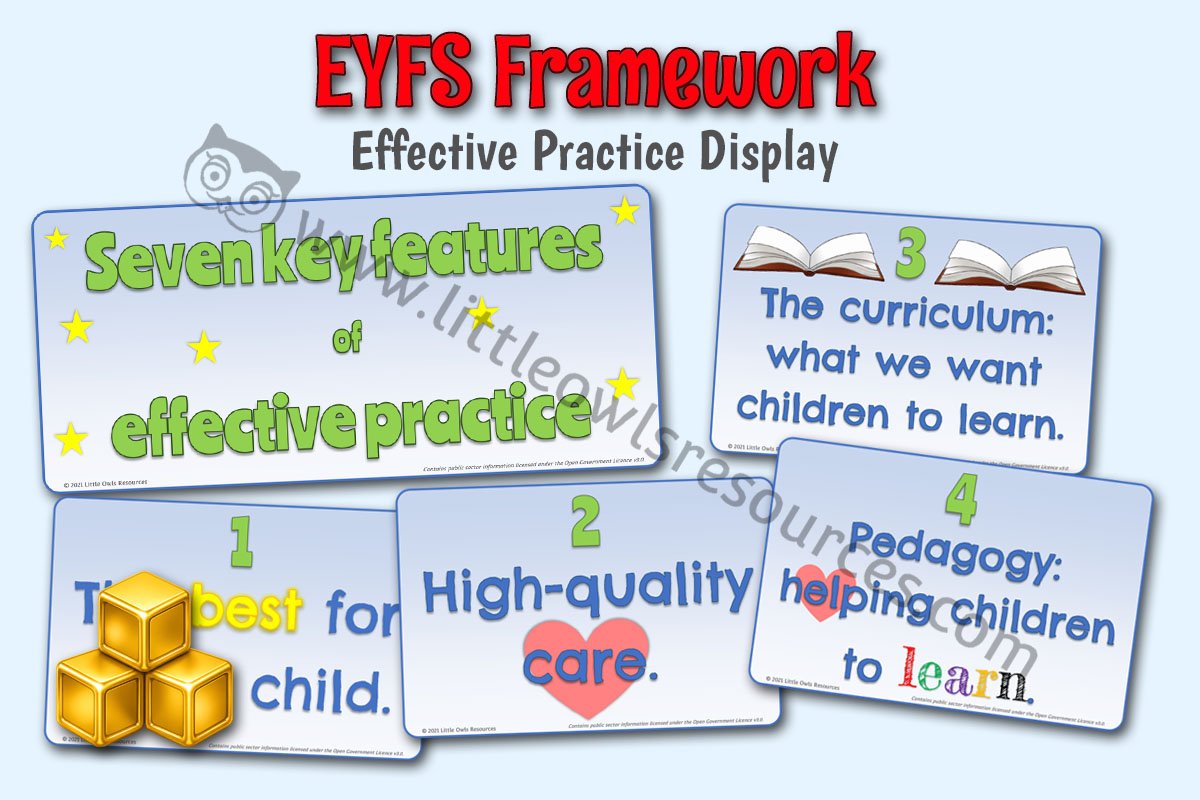
Seven Key Features of Effective Practice
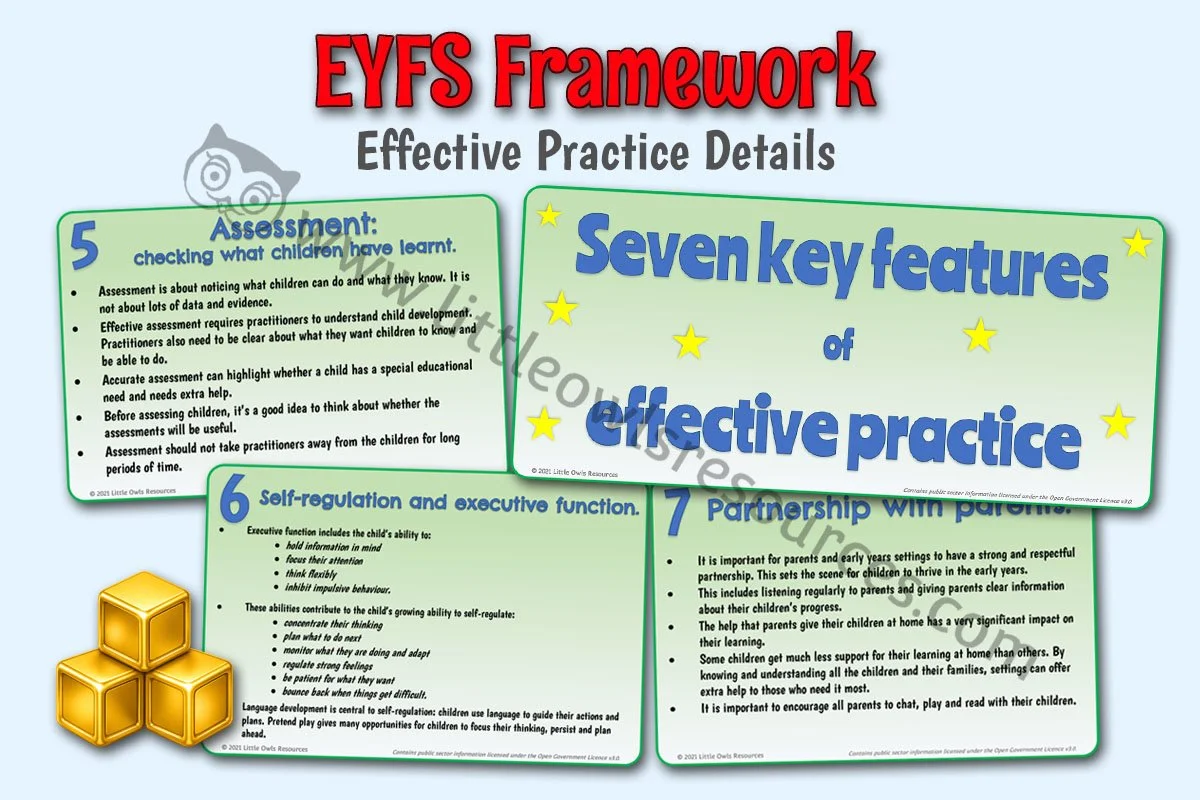
Please find additional resources on our ‘EYFS Framework Support’ page.
➕ Additional Support
Further support materials for Preschool Curriculum & Pedagogy, such as our ‘Preschool Transition to Reception Pack’, may by found in our ‘Preschool (3-4 Years) Pathway’.
Further EYFS Planning Support
For additional planning support please see the following pages:
Age pages:
Setting pages:
Generic:
This webpage and documents within it are provided as professional guidance to support effective EYFS practice. They do not replace the EYFS Statutory Framework or other statutory guidance. Practitioners must apply professional judgement and adapt practice to their setting and current requirements.