





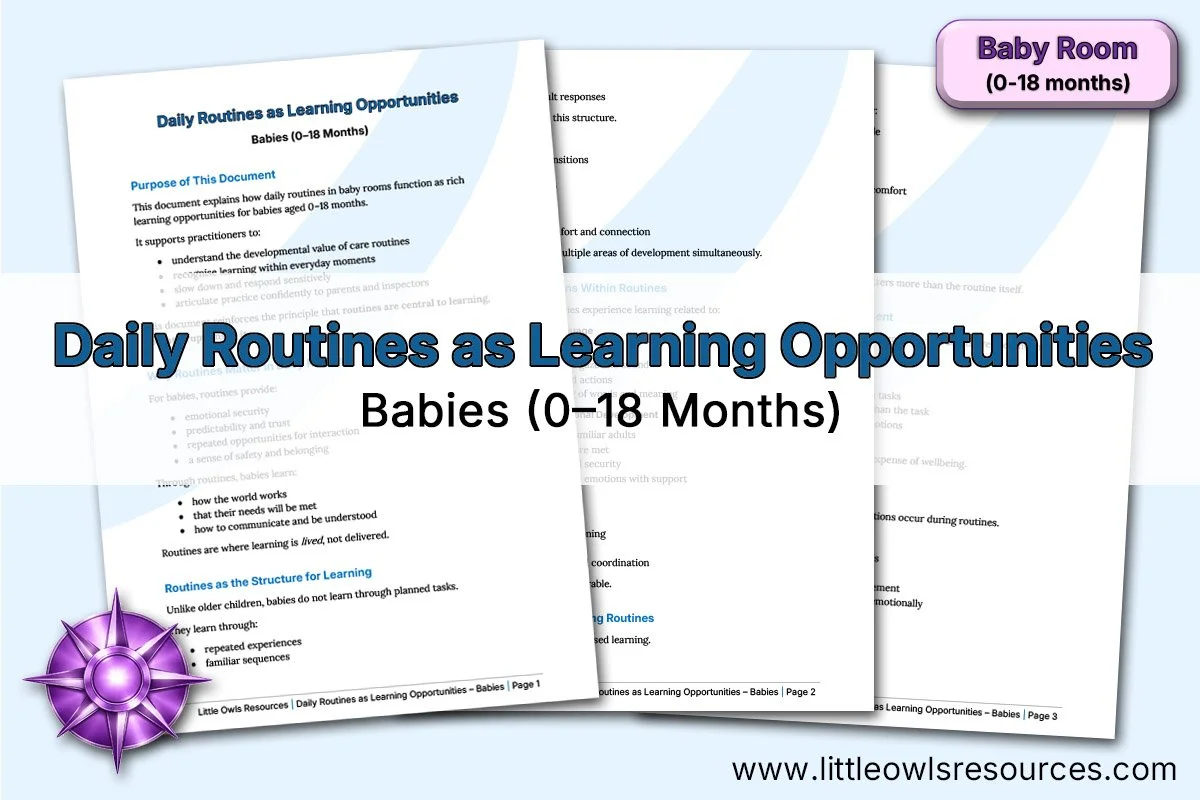

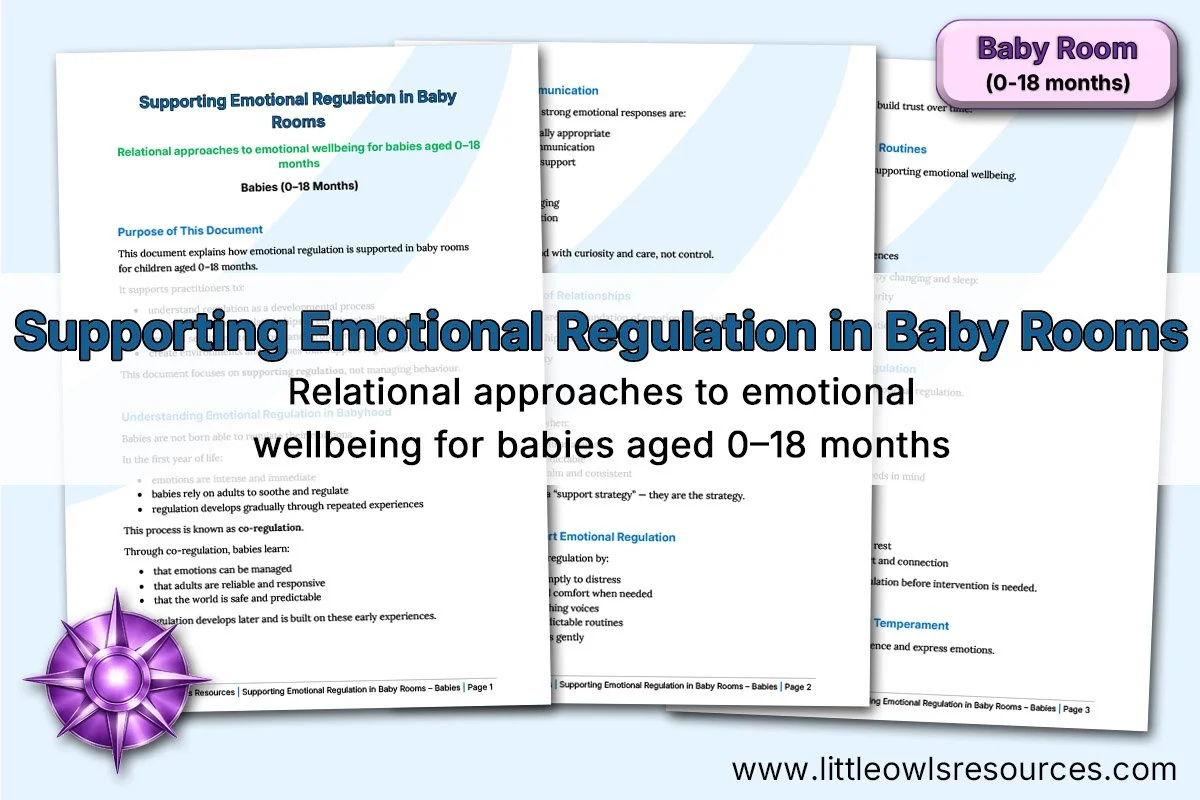


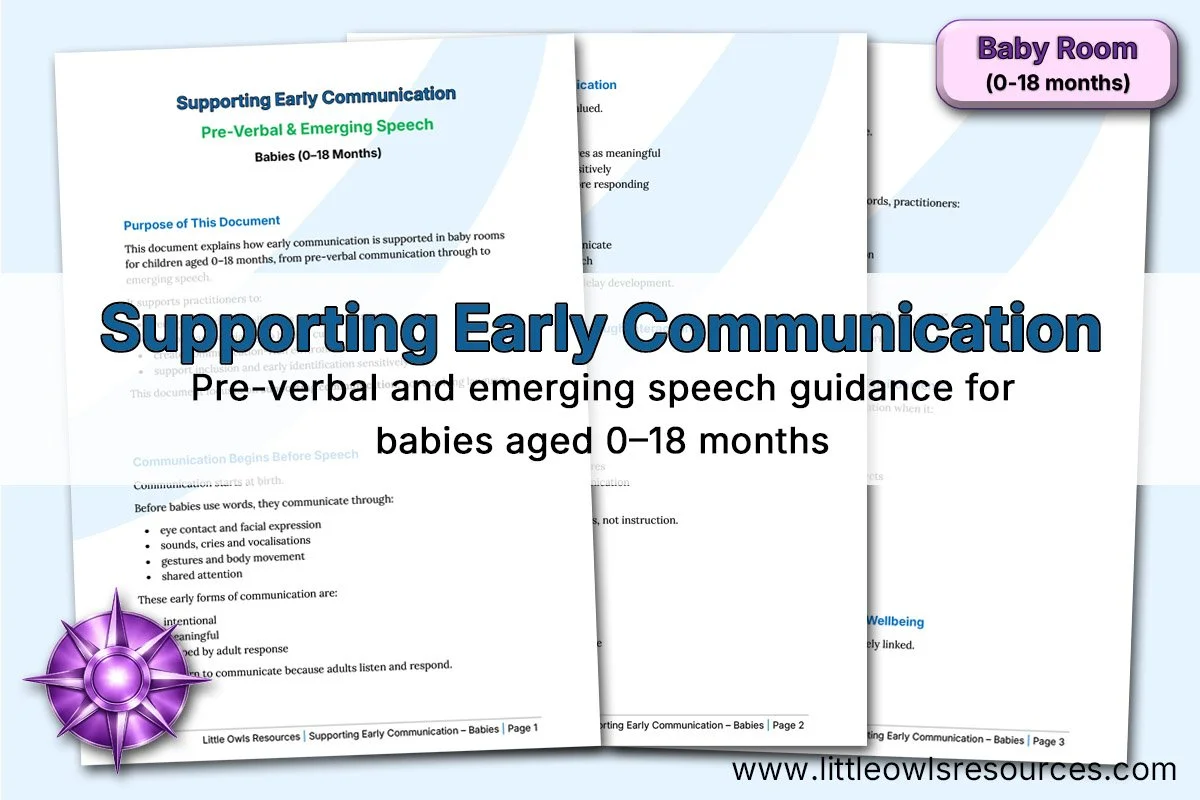
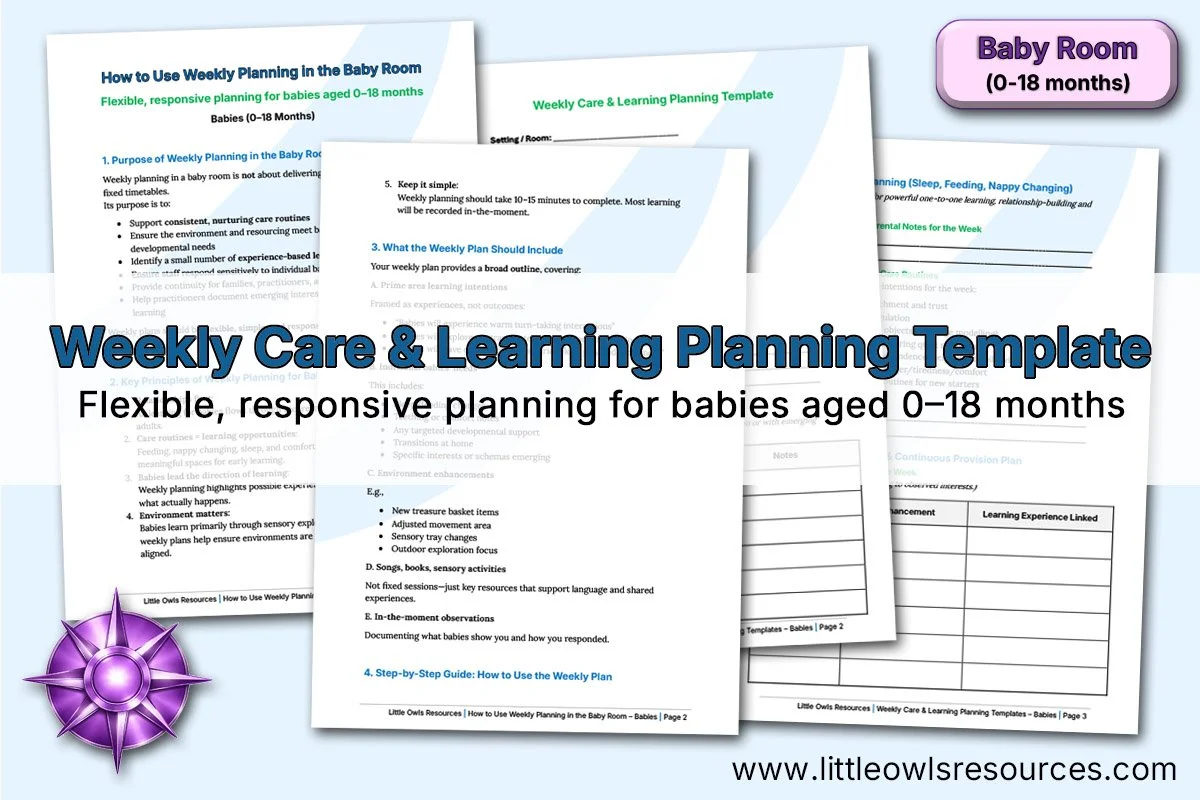



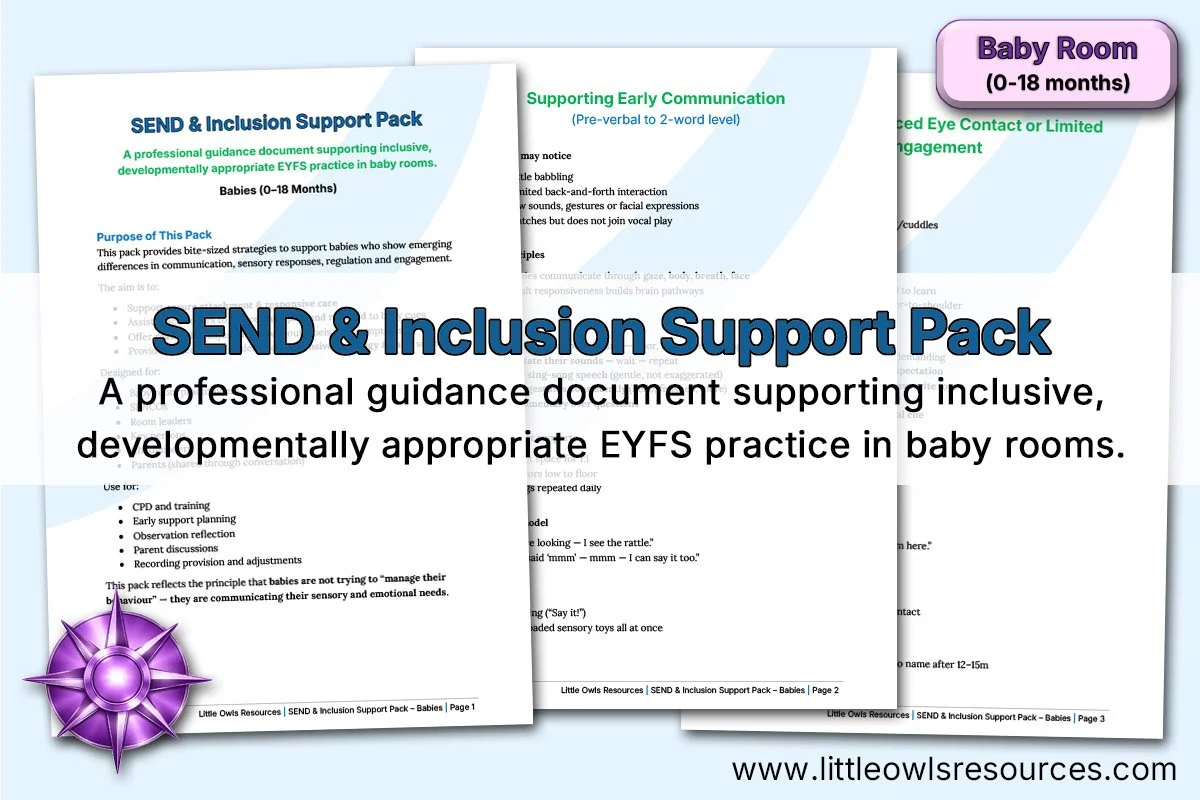
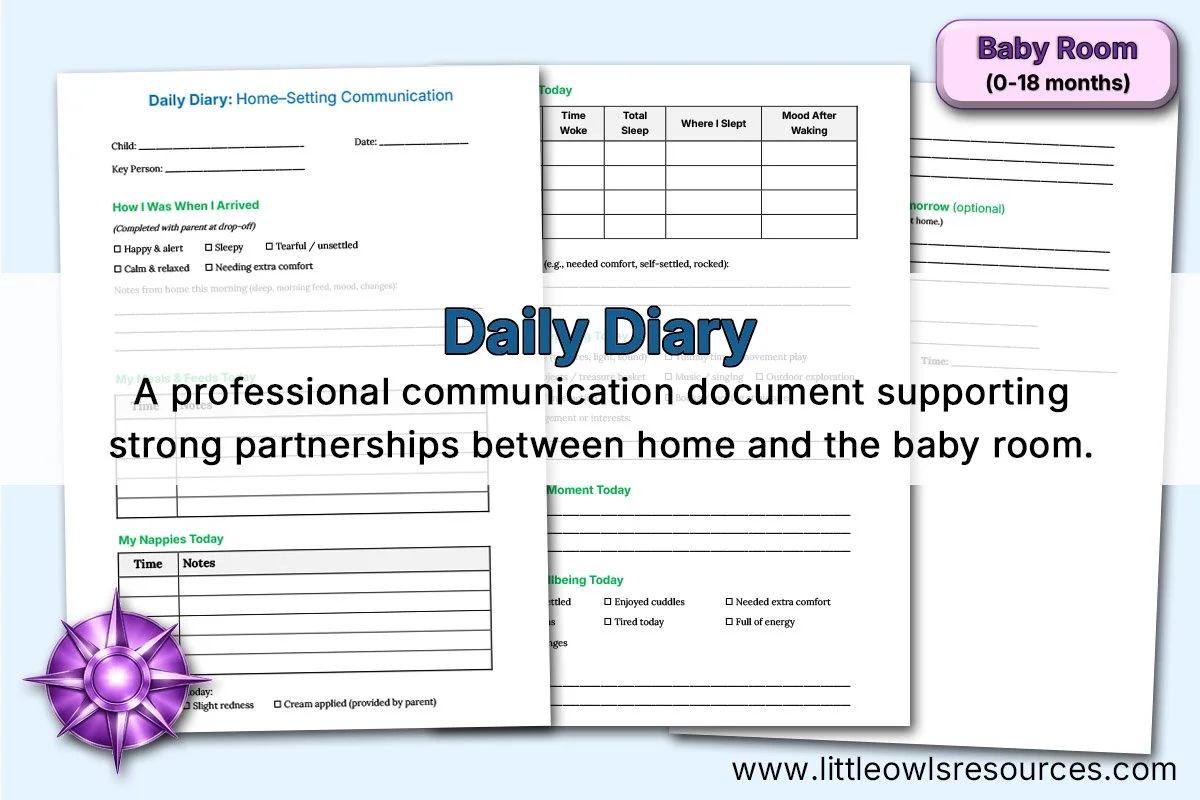


Planning in a baby room looks very different from planning for older children.
For babies aged 0–18 months, learning is not driven by activities, topics or outcomes. Instead, it is rooted in relationships, care routines and responsive interaction.
This page explains what planning means in baby room practice, how it aligns with the EYFS, and how practitioners can plan confidently without over-formalising provision.
EYFS Baby (Birth-18 Months) Curriculum Planning & Guidance Materials
On this page you will find Free Sample Resources, Premium Printable Provision and Professional EYFS Curriculum & Pedagogy Documents specifically designed for babies. Explore membership options here.
📌 Jump to Section
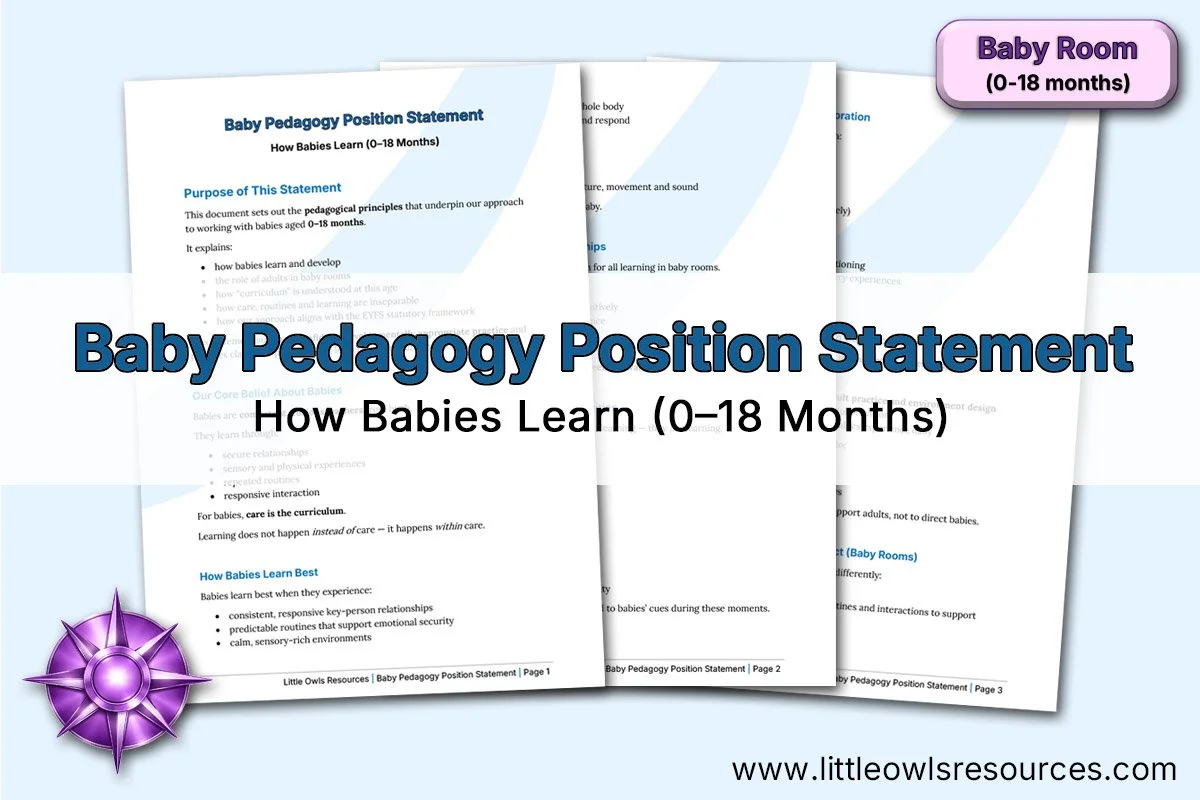
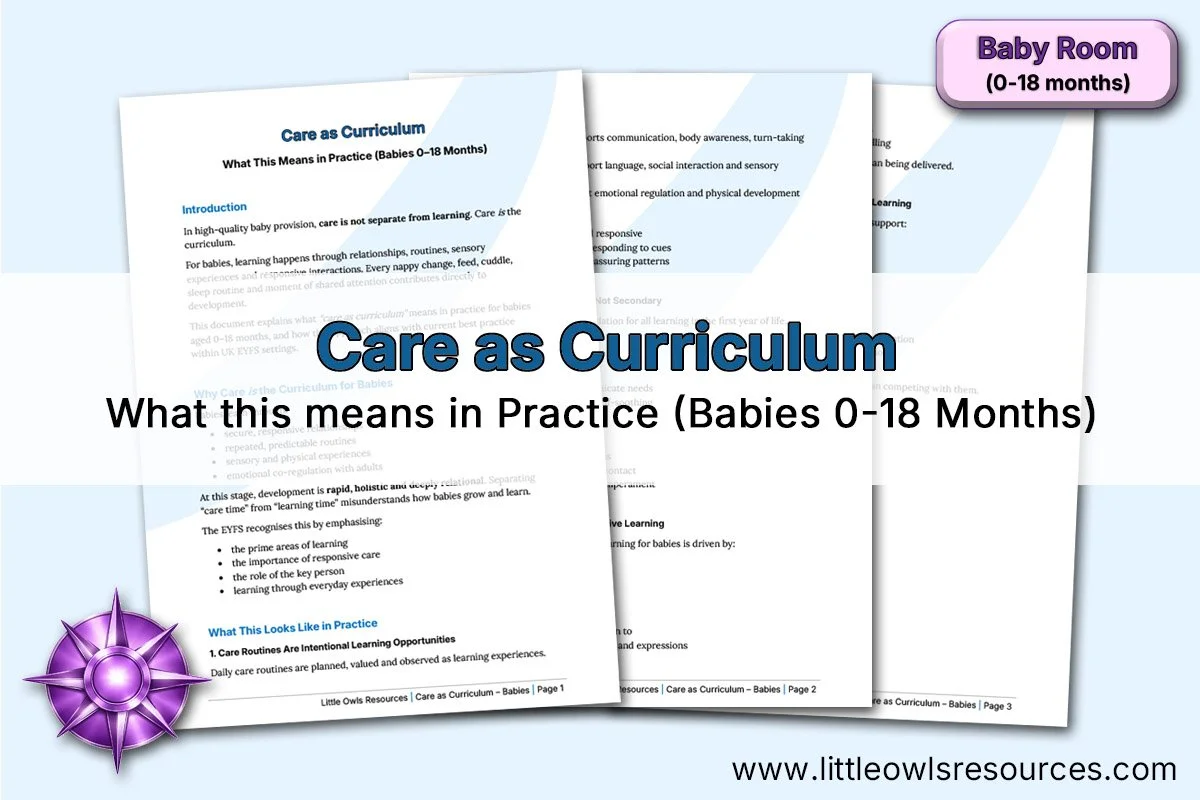
👶 Baby Pedagogy & Care As The Curriculum
Your FAQs
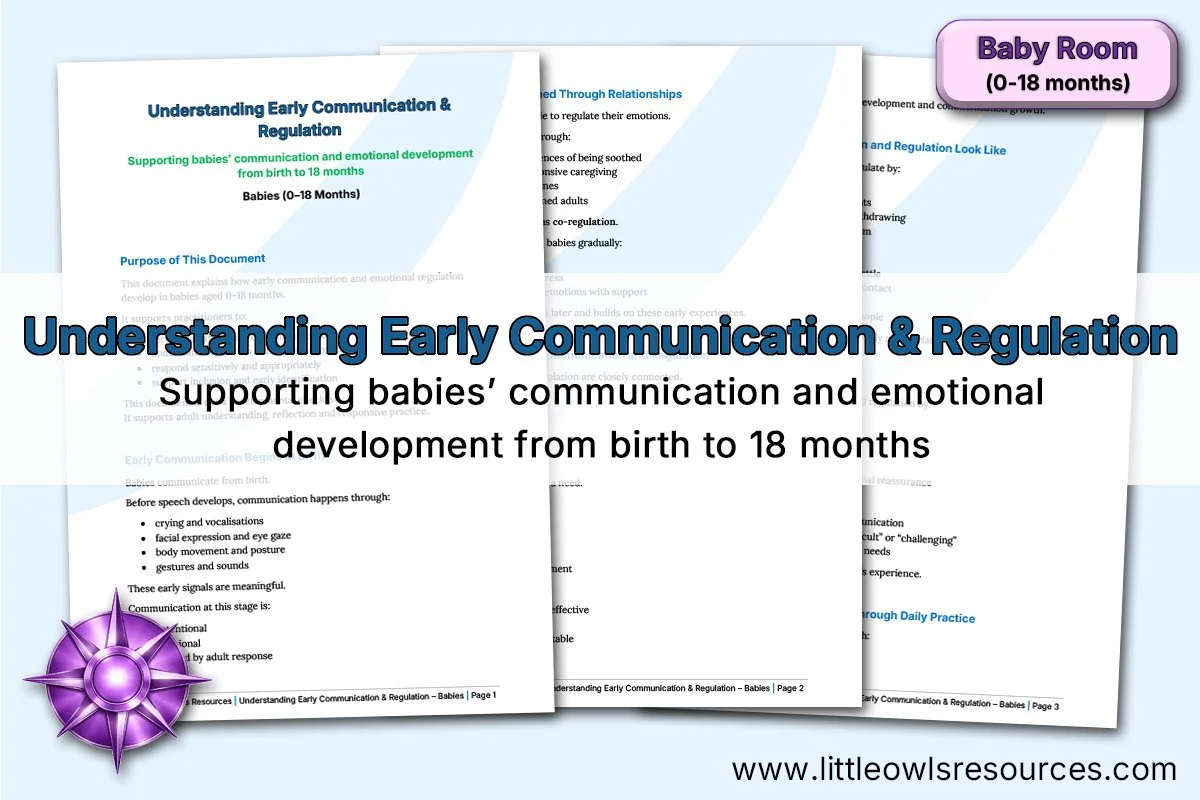
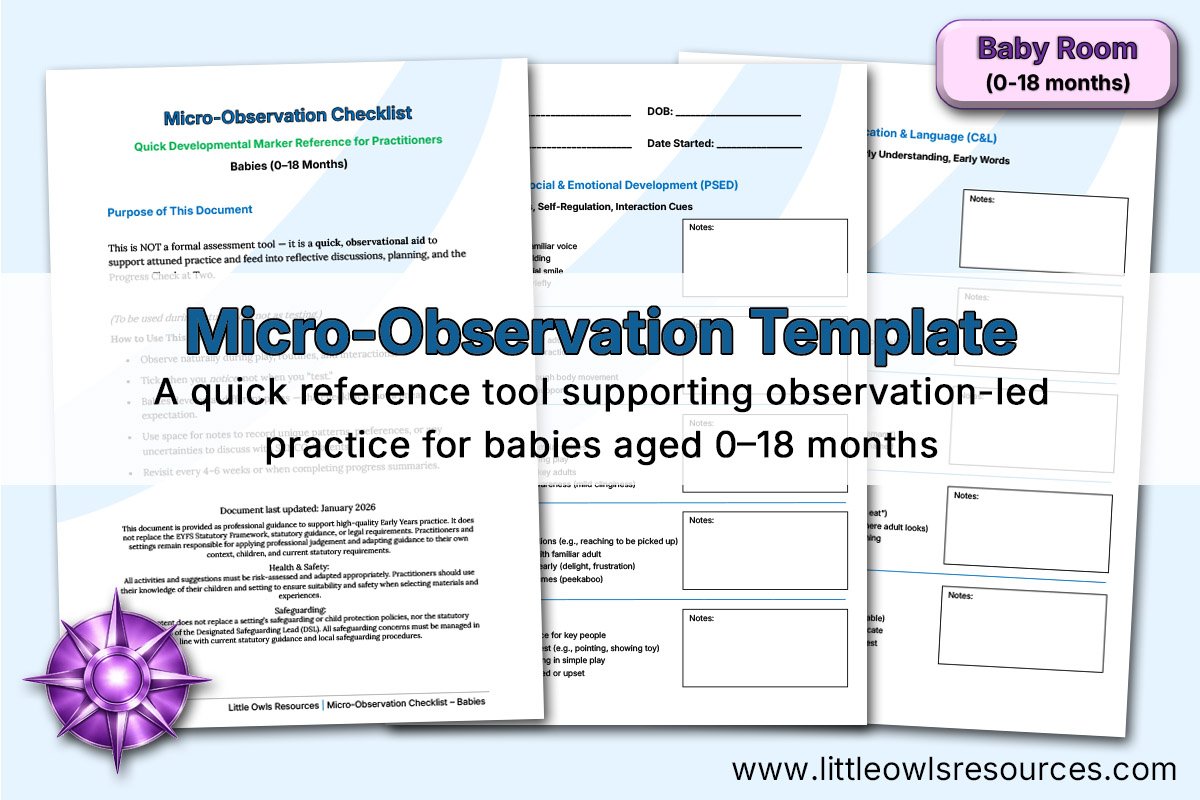
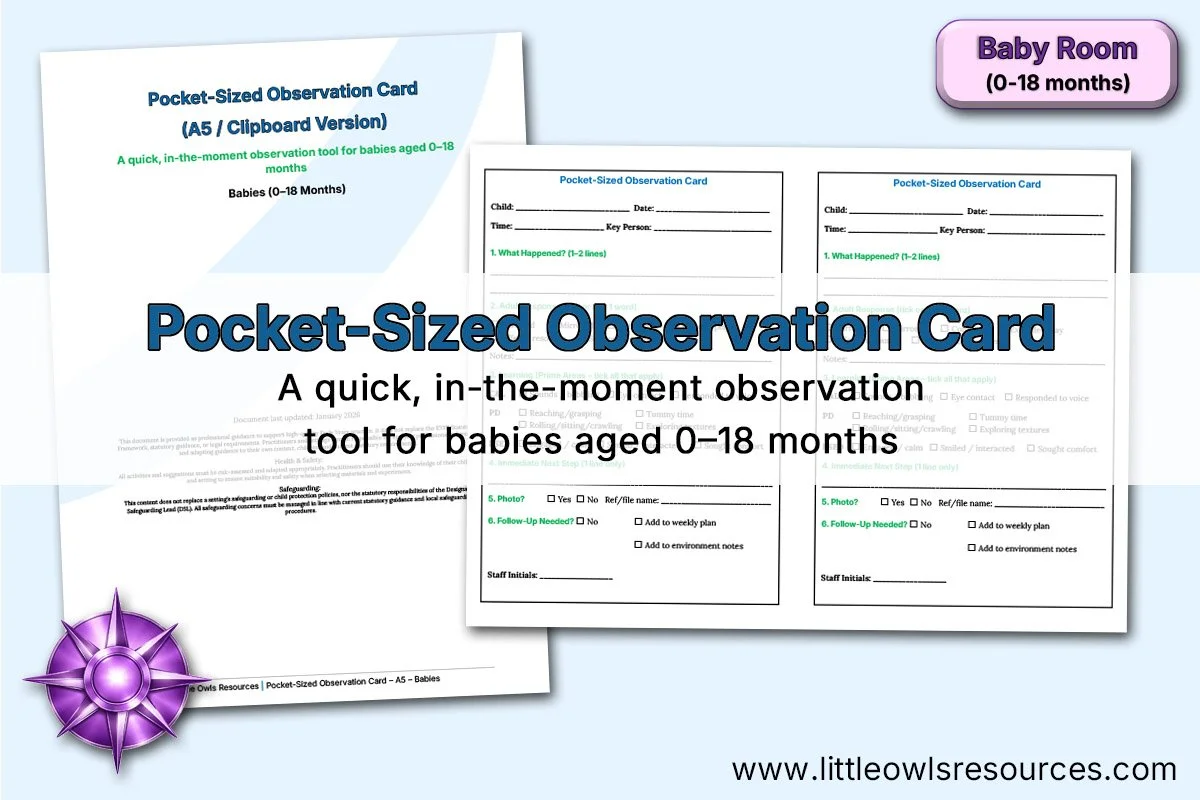
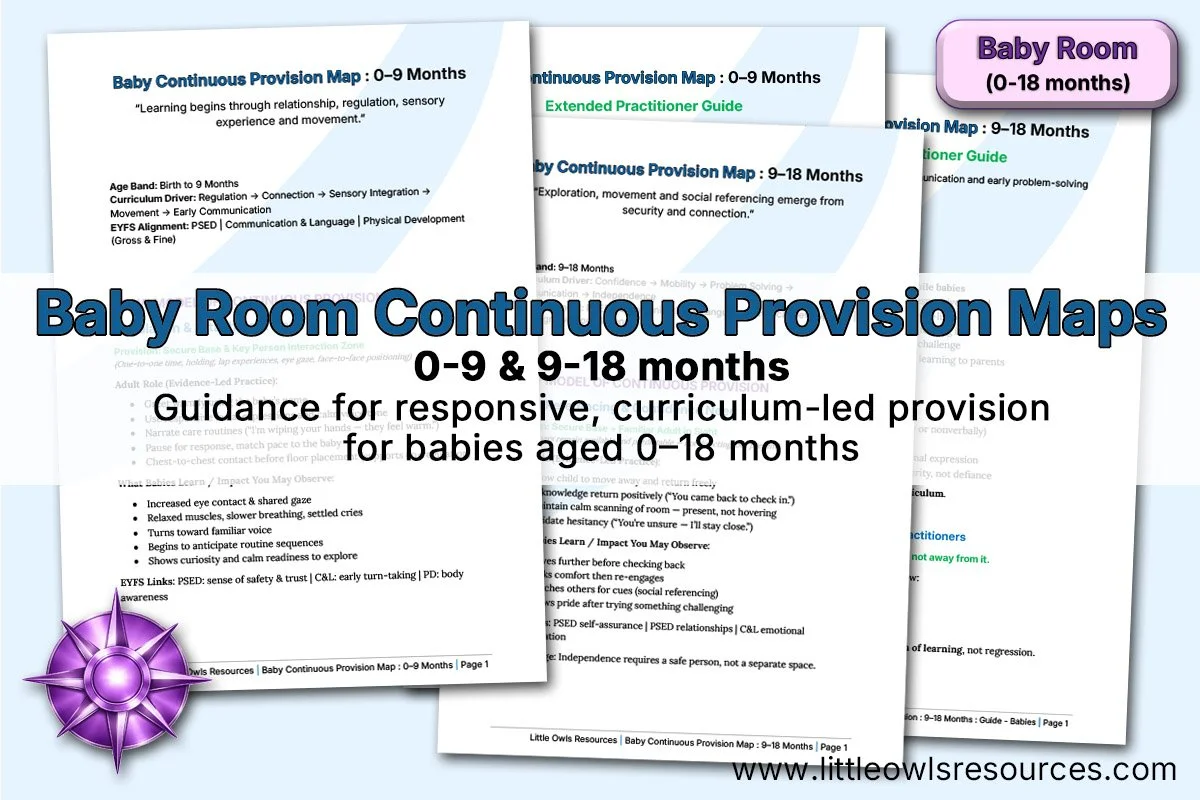
Supporting Documents
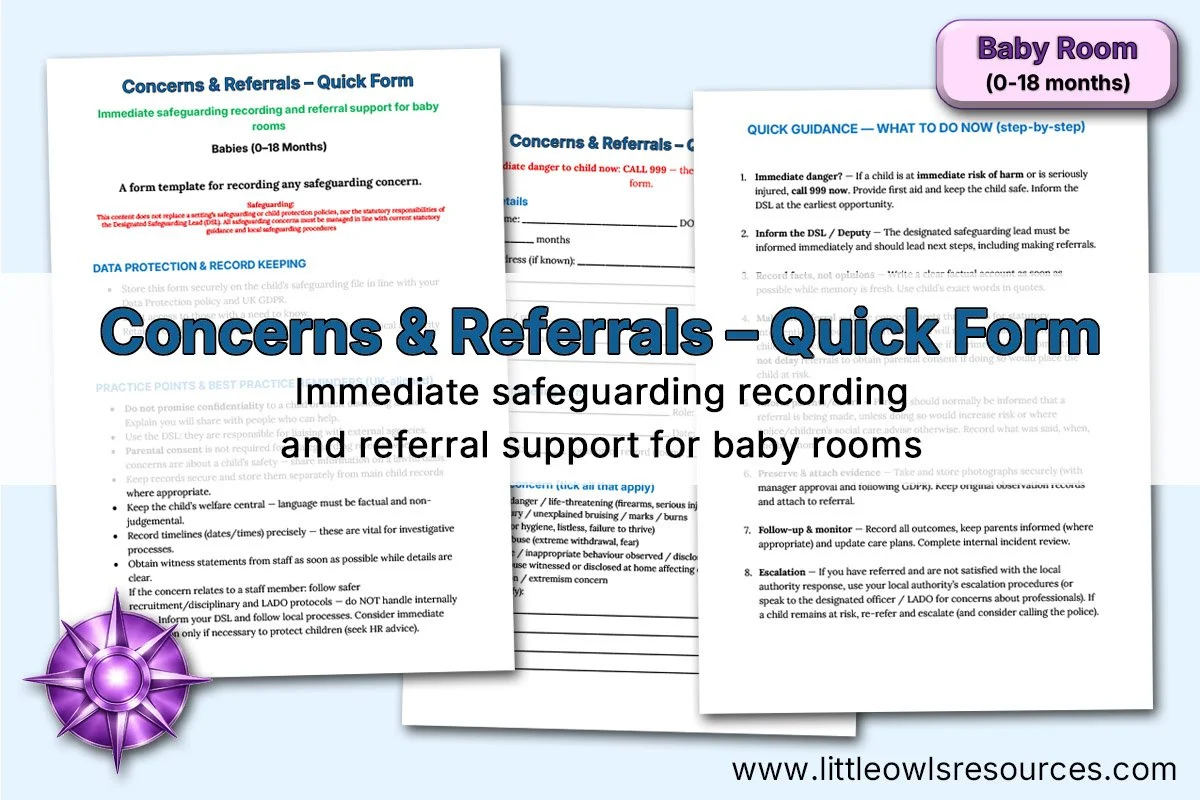
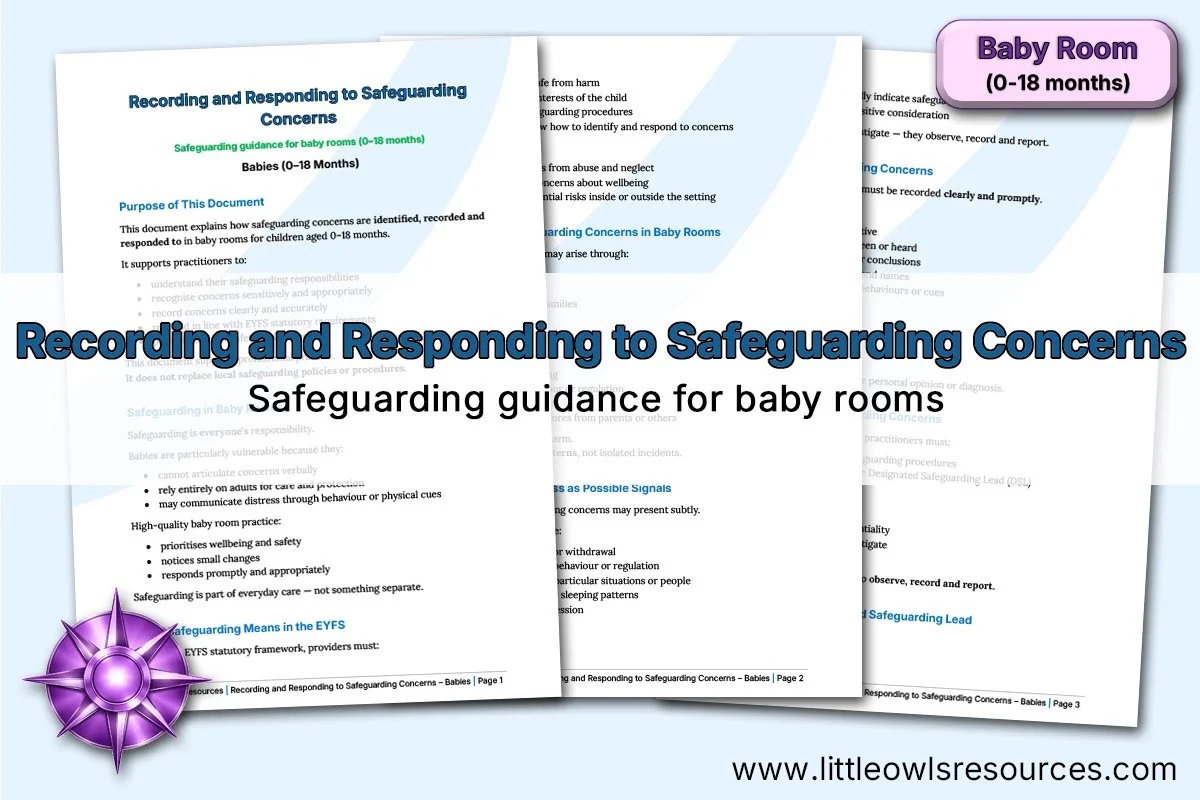
🛡️ Safeguarding
🆓 Free EYFS Baby Room Planning Resources
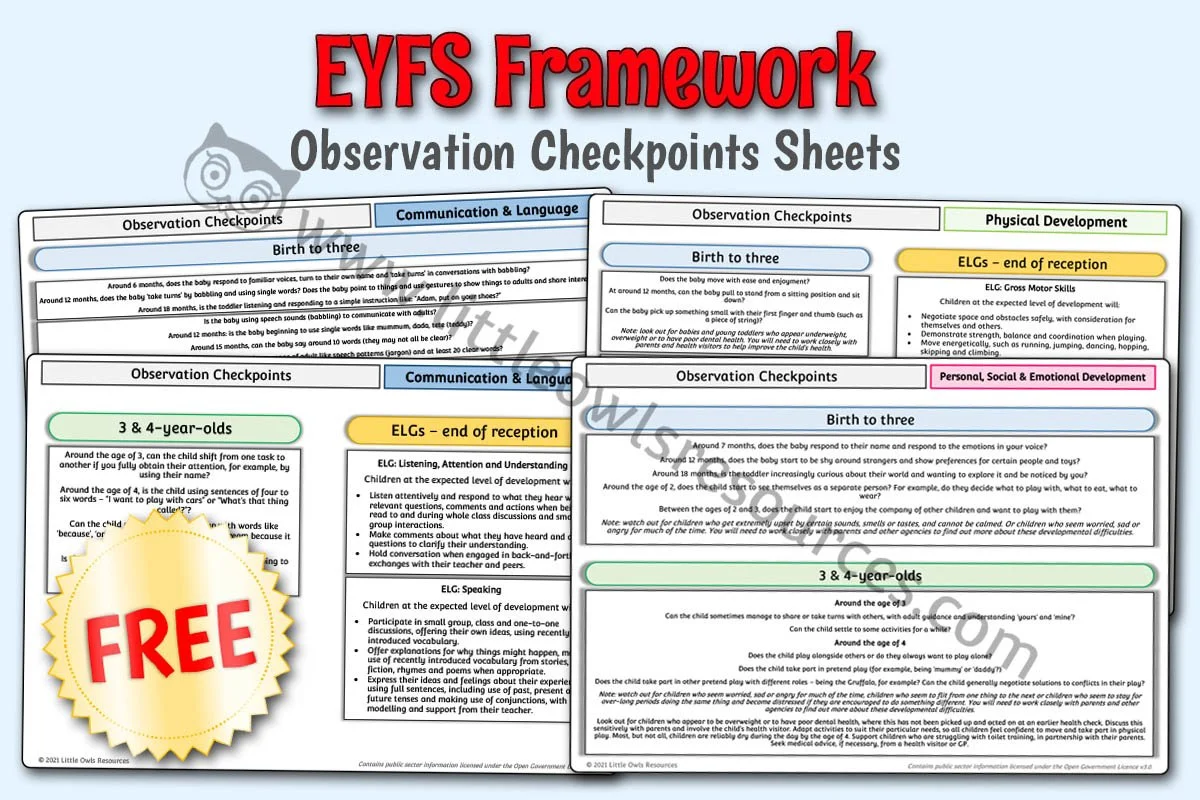
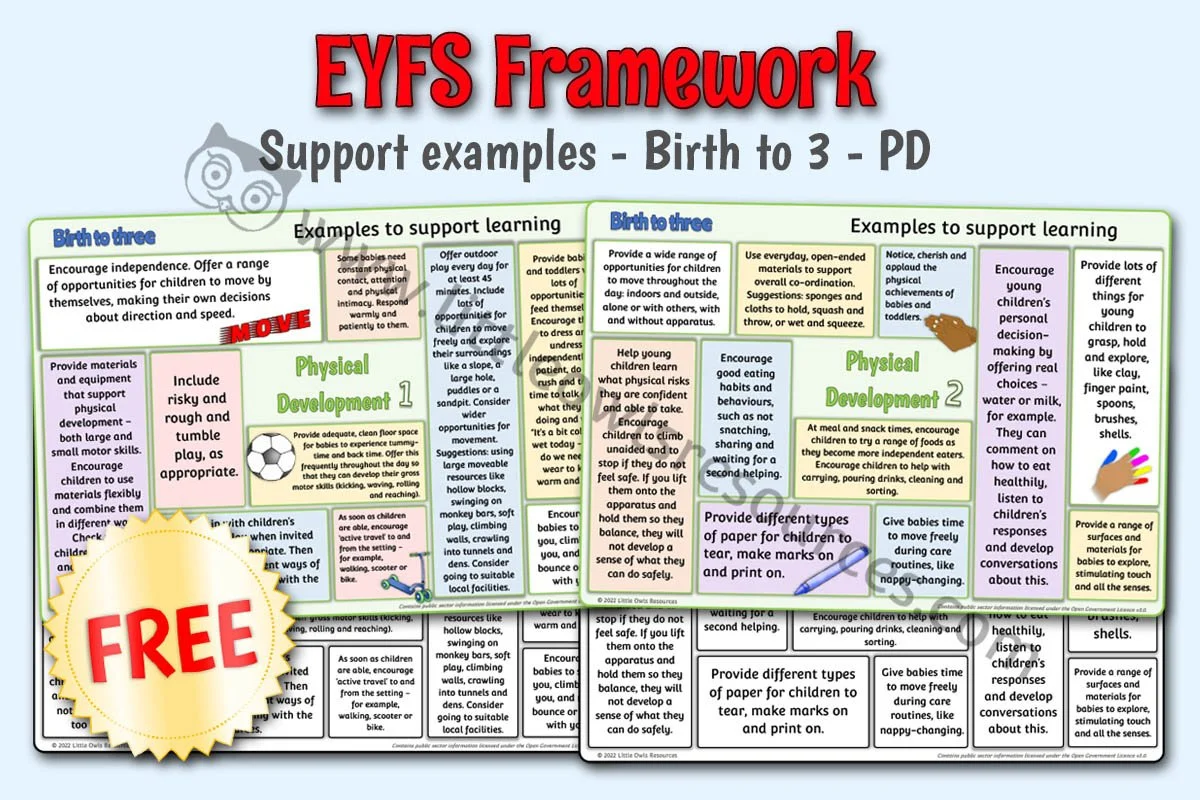
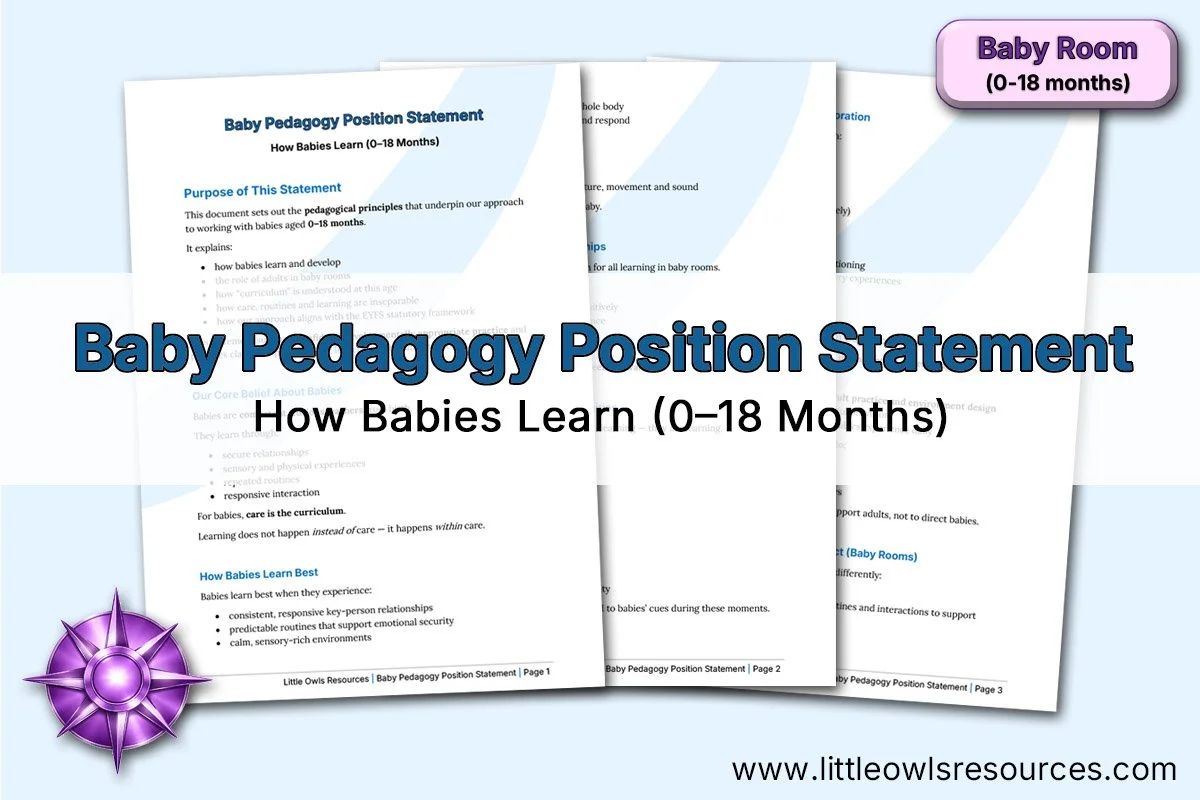
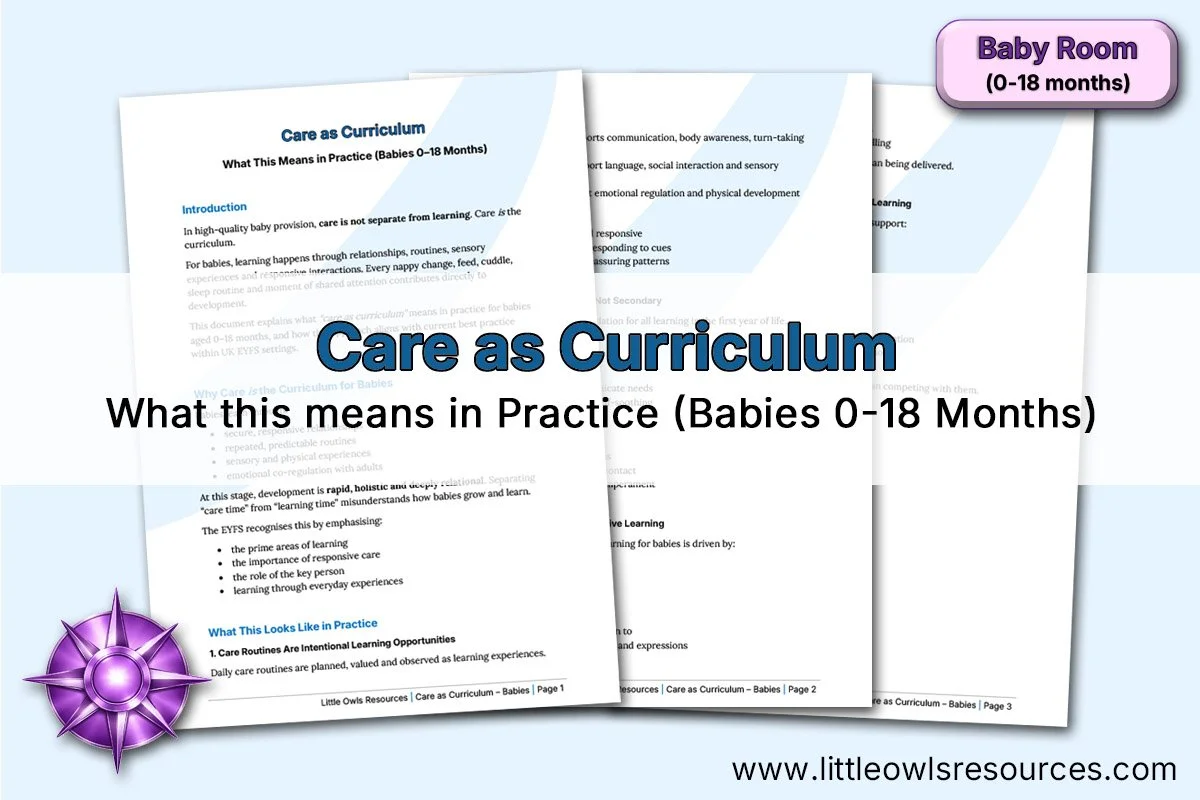


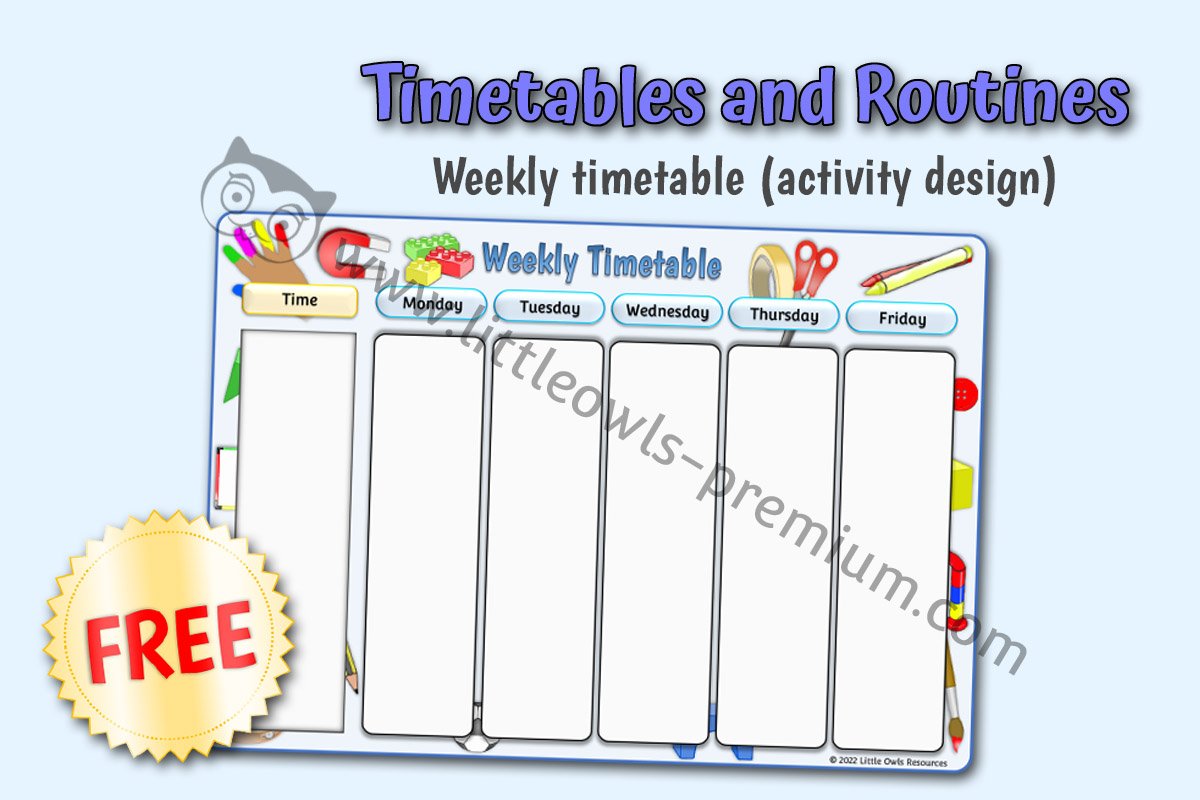
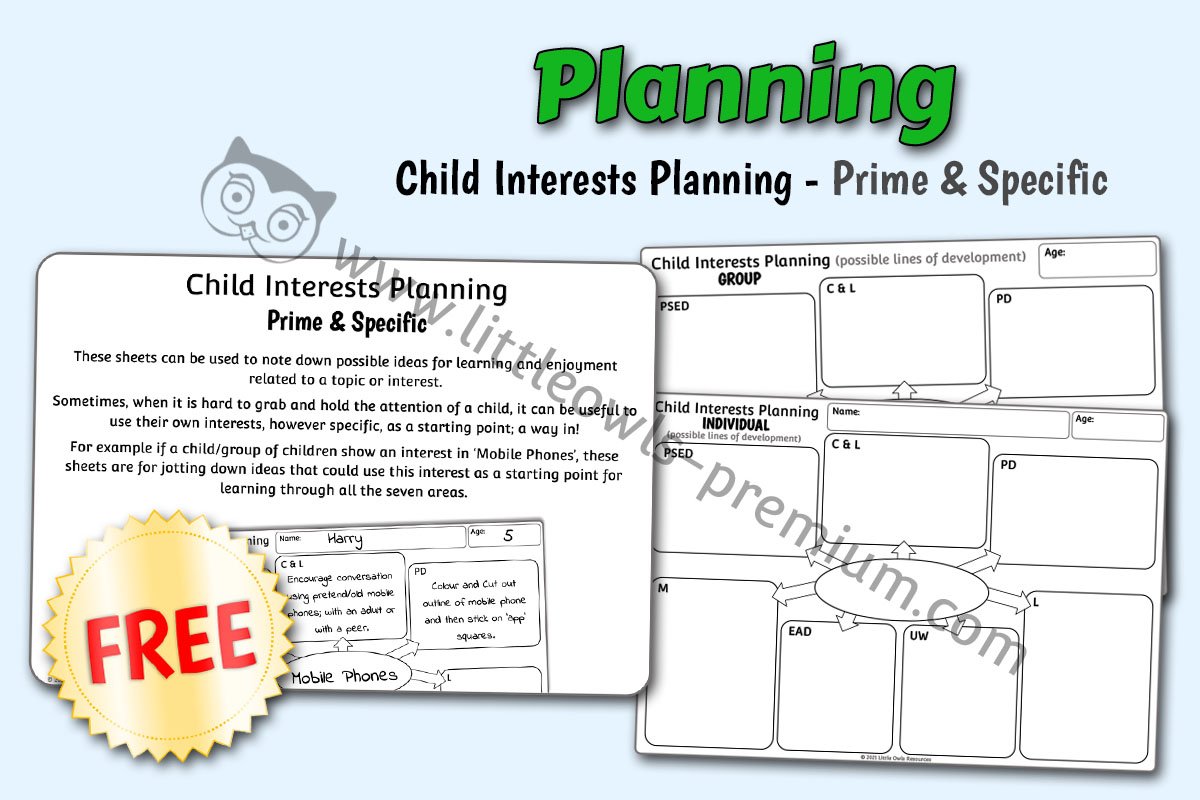
💡 Join as a Free Access member to download the samples above and all other free resources available on Little Owls Resources at no cost. Alternatively, explore all membership options here.
Additional Free Sample Printable Provision can be found at the top of most pages.
👶 Baby Pedagogy & Care As The Curriculum
Your FAQs
Explore current best practice surrounding baby planning. Expand the subheadings below using the cross symbols on the right.
-
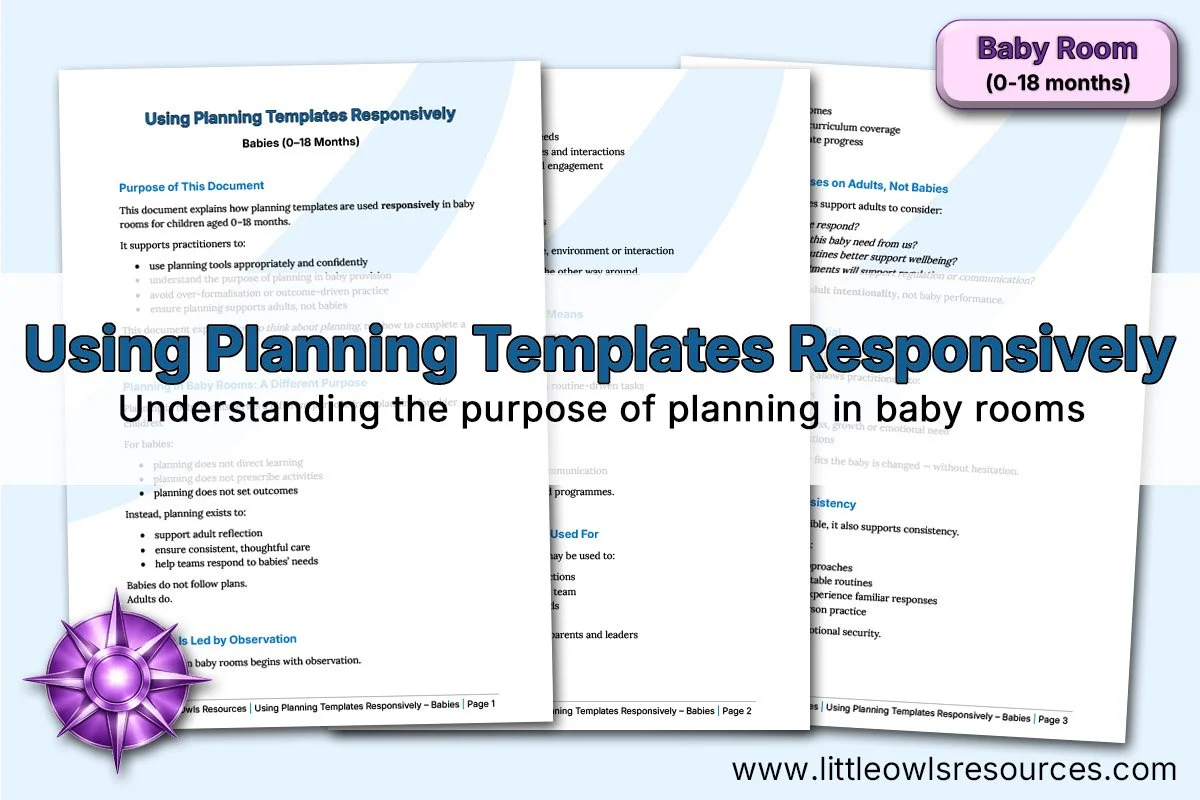
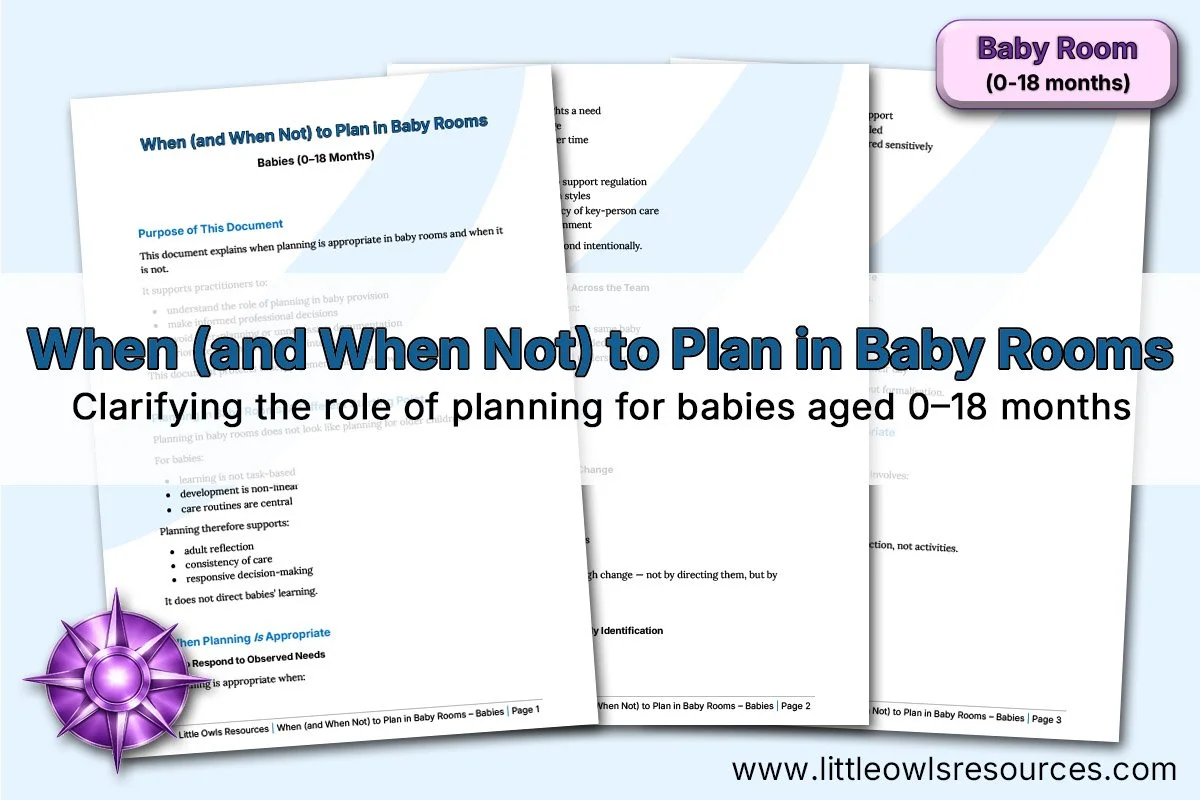
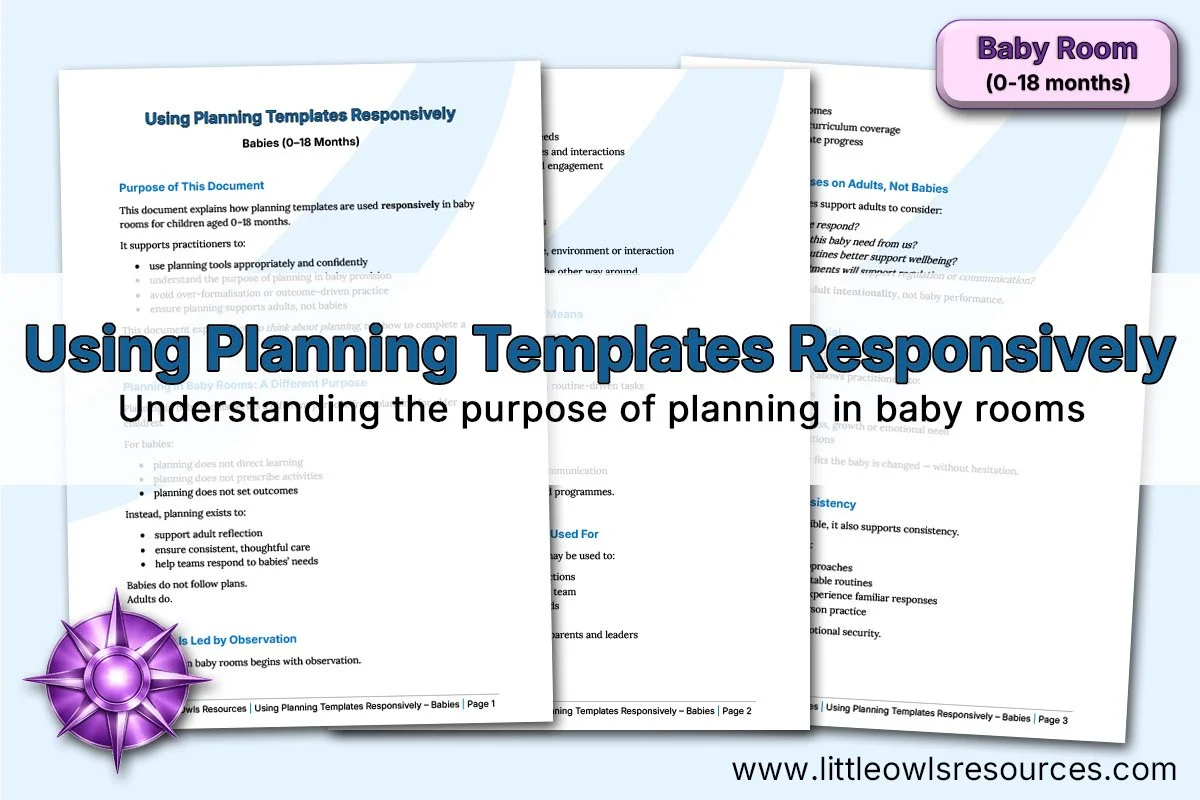
In baby rooms, planning is not about creating activities or setting learning objectives.
Instead, planning focuses on:
how adults respond to babies’ needs
how routines support wellbeing and development
how environments enable safe exploration
how consistency is maintained across the team
Babies do not follow plans. Adults do.
Planning supports practitioners to think carefully about:
what babies are communicating
what they need emotionally and physically
how practice can adapt in response
-
Babies learn through:
secure relationships with familiar adults
repeated everyday experiences
sensory exploration and movement
communication through sounds, gestures and interaction
Learning happens during:
feeding
nappy changing
settling to sleep
moments of connection and comfort
floor play and exploration
These experiences cannot be pre-planned as activities. They are lived, not delivered.
-
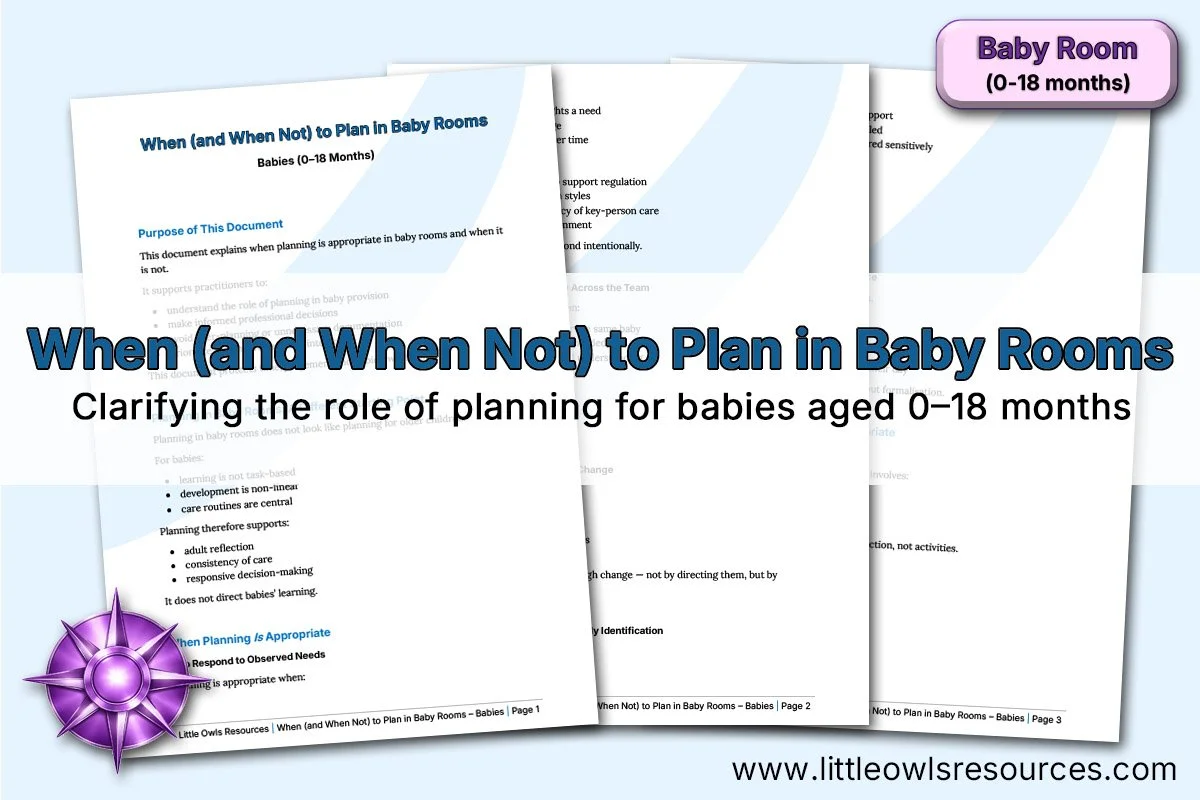
✔ Planning is:
observation-led
flexible and responsive
focused on adult practice
centred on routines and relationships
used to support consistency
✖ Planning is not:
activity planning
topic-based learning
setting targets or outcomes
tracking progress through tasks
directing babies’ play
High-quality baby room practice avoids unnecessary formalisation.
-
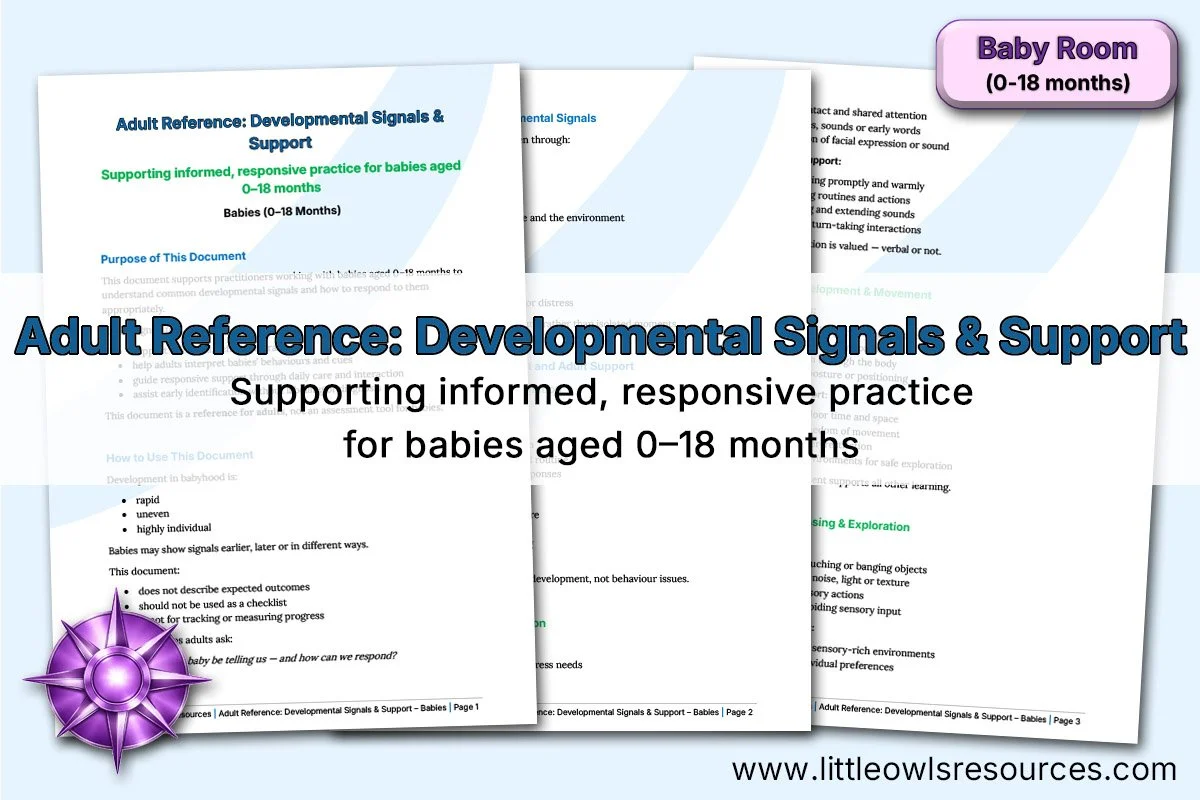
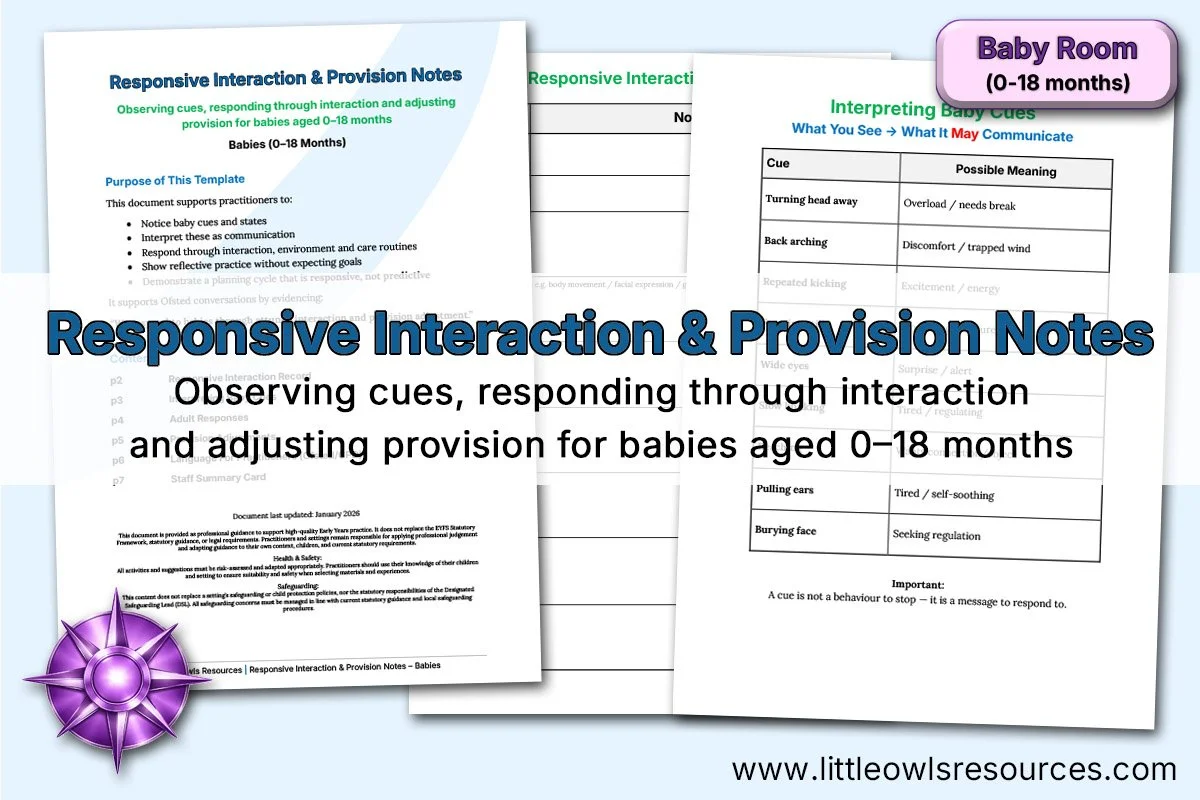
Planning for babies begins with observation.
Practitioners notice:
emotional responses and regulation
communication cues
engagement and curiosity
responses to routines and transitions
These observations help adults to:
adjust routines
adapt interaction styles
modify the environment
provide additional support where needed
Planning is therefore:
👉 a response to the baby — not a prediction of what they will do -
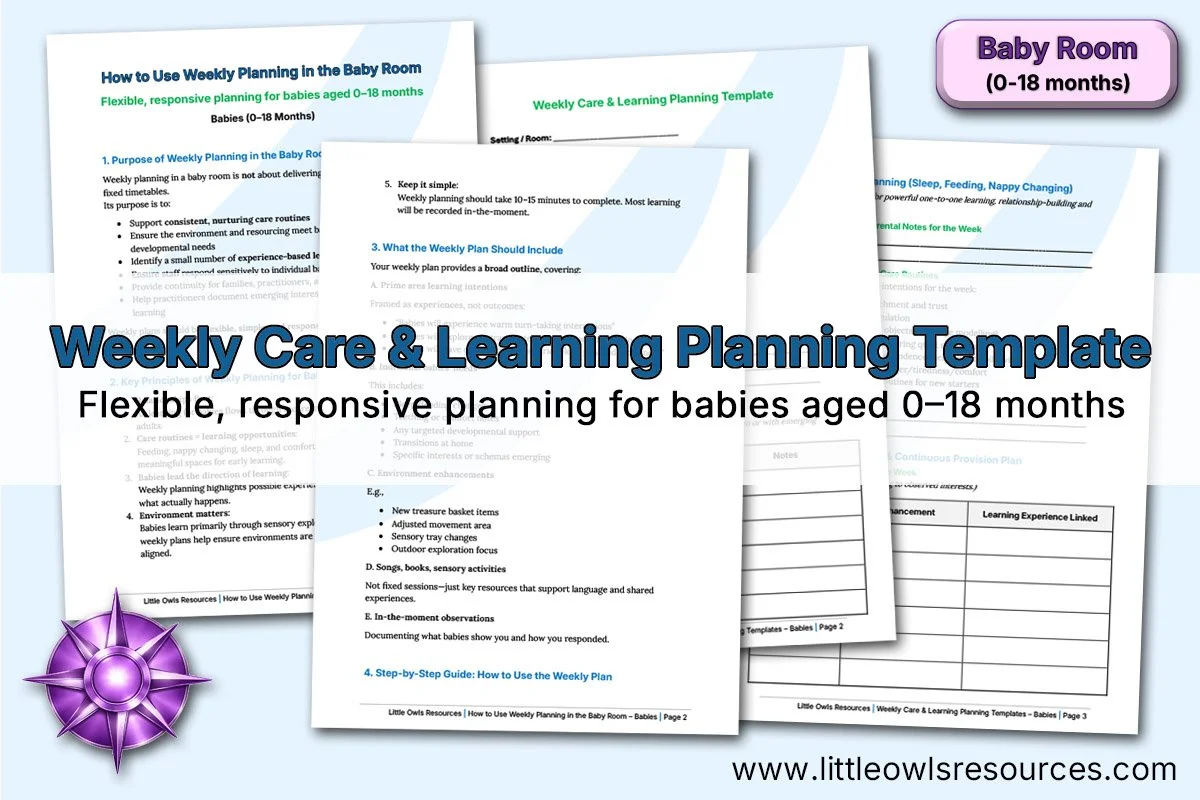
Planning documentation in baby rooms is:
light-touch
purposeful
focused on understanding
It may include:
key information about routines and preferences
notes about communication or regulation
agreed approaches between staff
small environment adjustments
simple next steps (e.g. resources, positioning, interaction)
Recording should never replace interaction.
-
Planning for babies might include:
adjusting sleep routines to support regulation
creating a calmer sensory space for a baby who becomes overwhelmed
ensuring consistent key-person interactions
providing more opportunities for movement and floor play
repeating familiar songs or interactions to support communication
These are intentional decisions by adults, not planned activities for babies.
-
Planning in baby rooms supports all three Prime Areas:
Personal, Social and Emotional Development
secure attachments
emotional regulation
sense of safety and belonging
Communication and Language
responsive talk
shared attention
early interaction
Physical Development
movement and coordination
sensory exploration
body awareness
Learning is holistic and cannot be separated into tasks.
-
Every baby develops differently.
Planning reflects:
individual rhythms and routines
preferences and sensitivities
communication styles
levels of emotional support needed
Practitioners:
avoid comparison
adapt continuously
work closely with families
Planning supports the baby as an individual, not a stage or checklist.
-
Planning may look slightly different depending on the setting, but the principles remain the same.
In nurseries:
planning supports team consistency
routines are shared across practitioners
For childminders:
planning is often more fluid and embedded in daily care
mixed-age considerations may shape provision
In all settings:
👉 planning remains responsive, relational and flexible -
During inspection, practitioners can confidently explain that:
planning supports adult reflection and consistency
learning happens through care and interaction
babies are not expected to follow planned activities
observation informs practice
This approach is fully aligned with the EYFS.
Supporting Pedagogy Documents

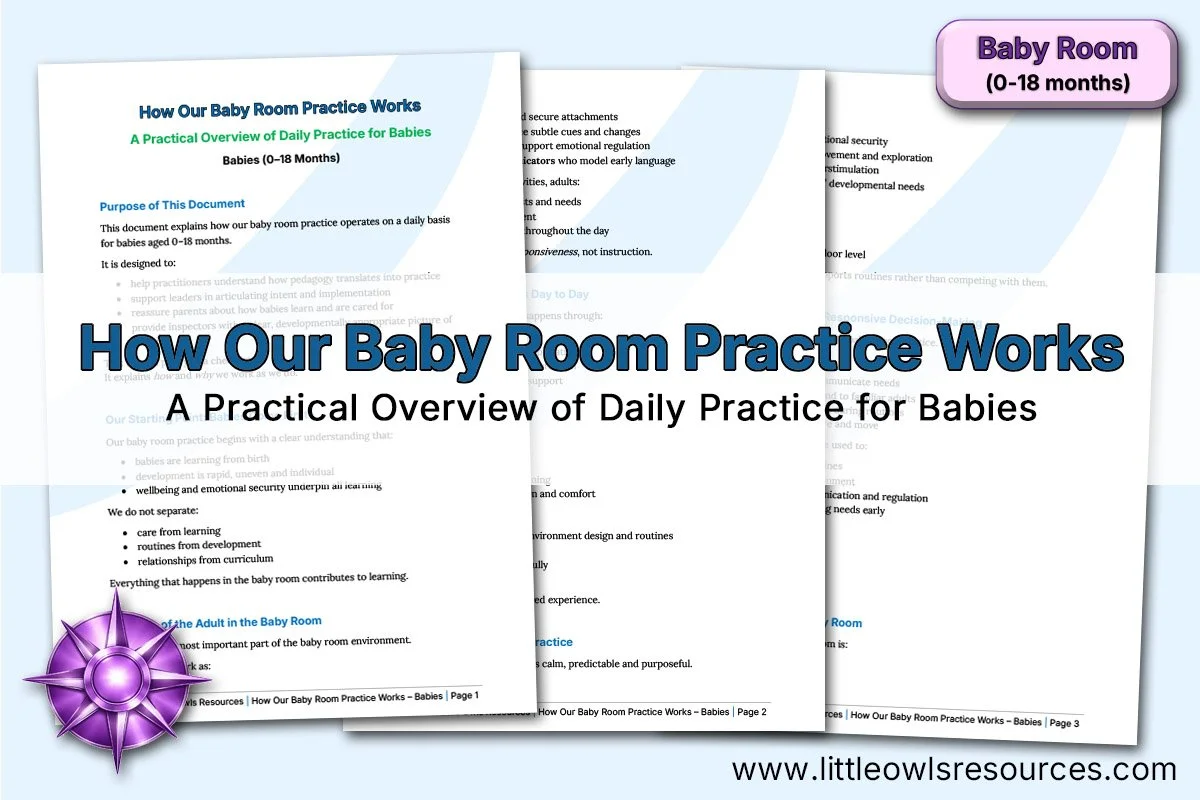
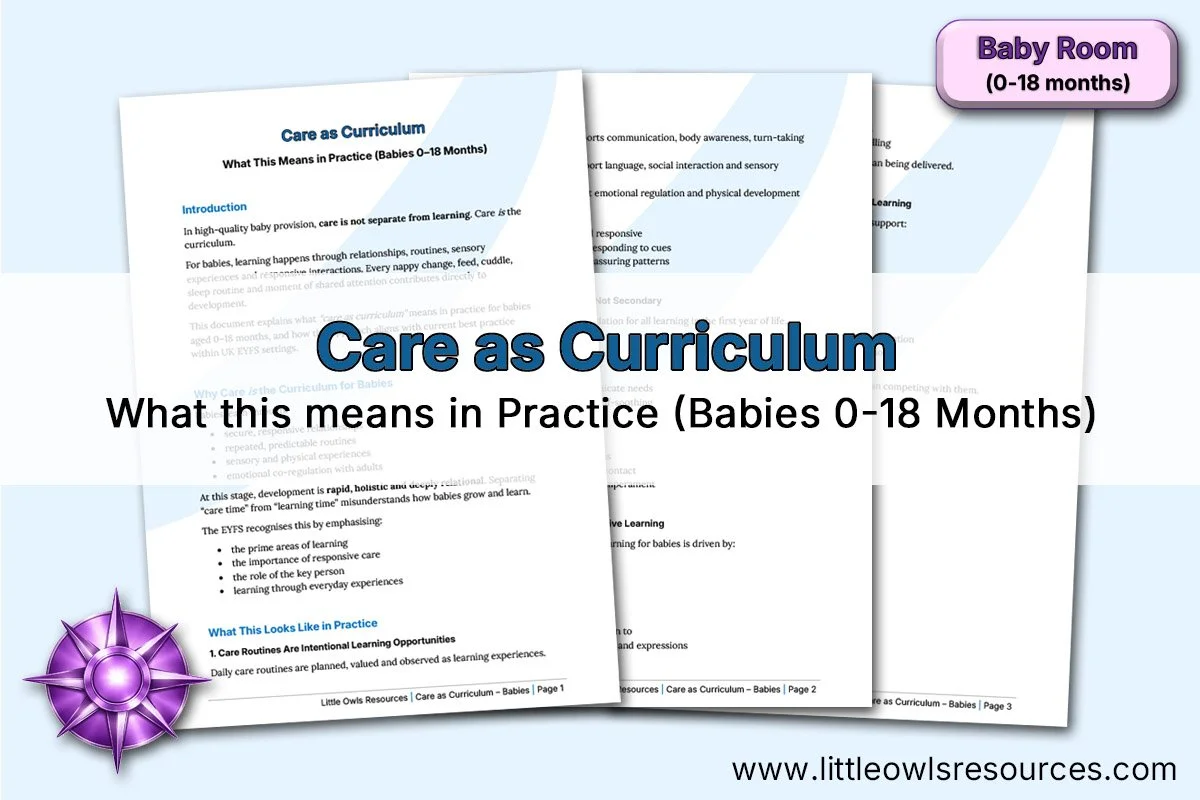
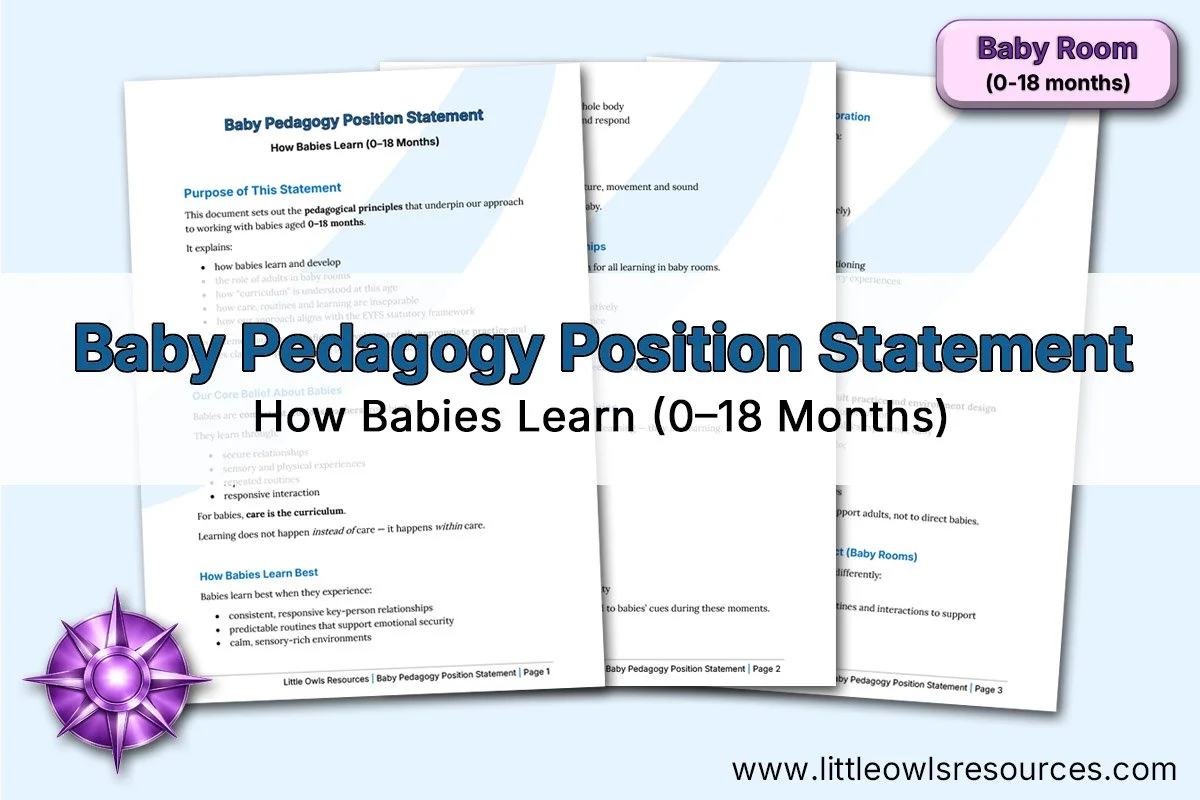
Please find additional resources within our ‘Baby Curriculum & Pedagogy’ pathway.
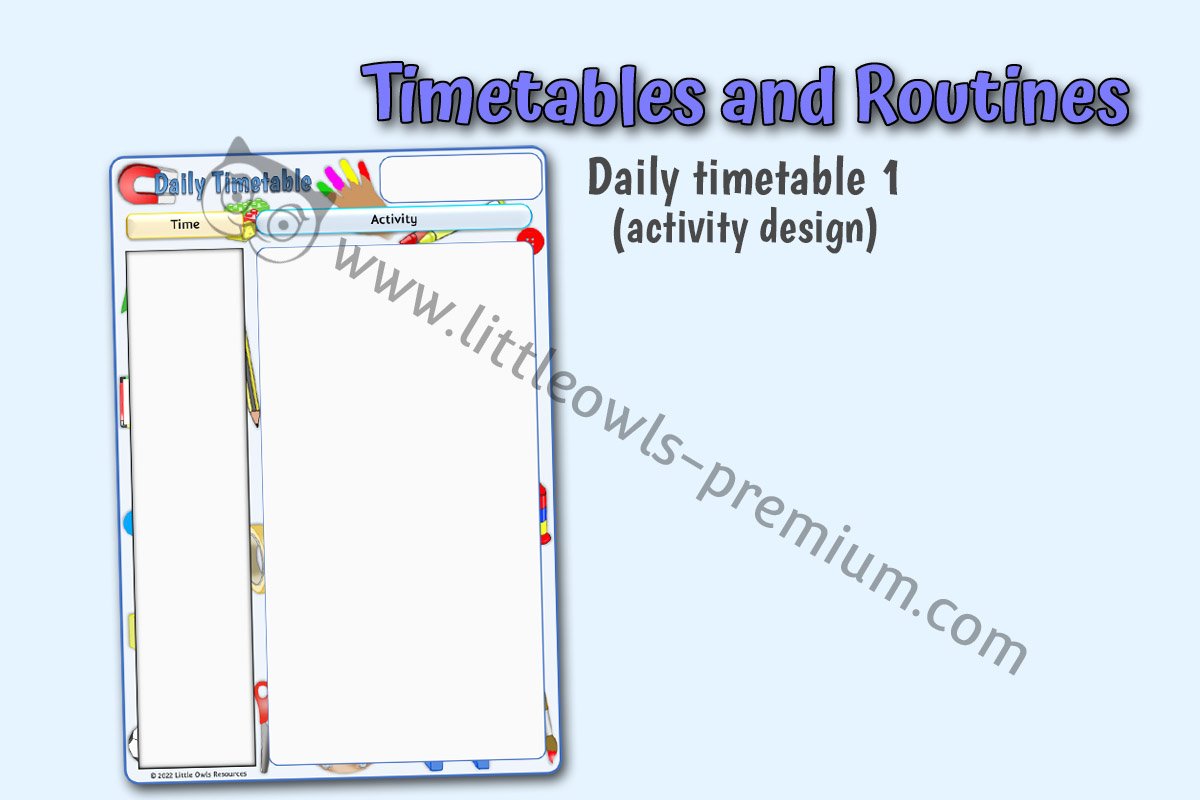
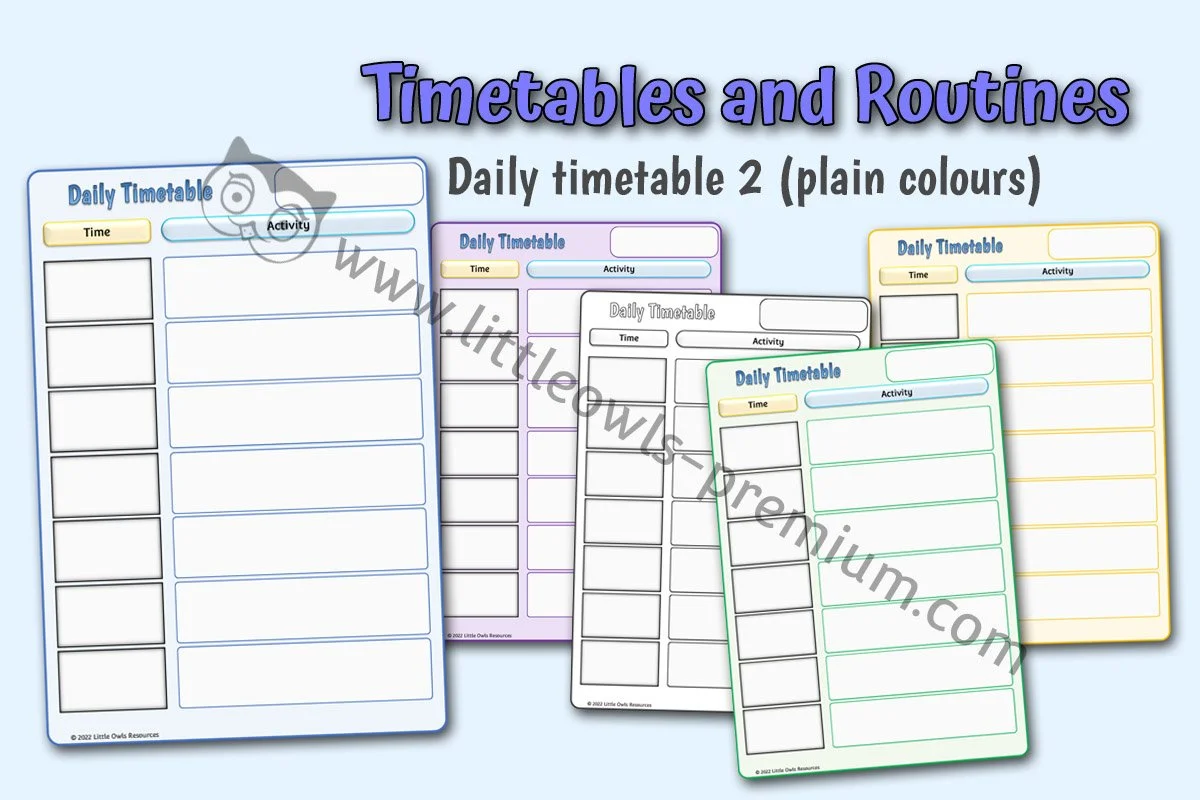
🕒 Daily Routines


Please find additional resources on our ‘Timetables & Routines’ page.
🌱 Baby Development


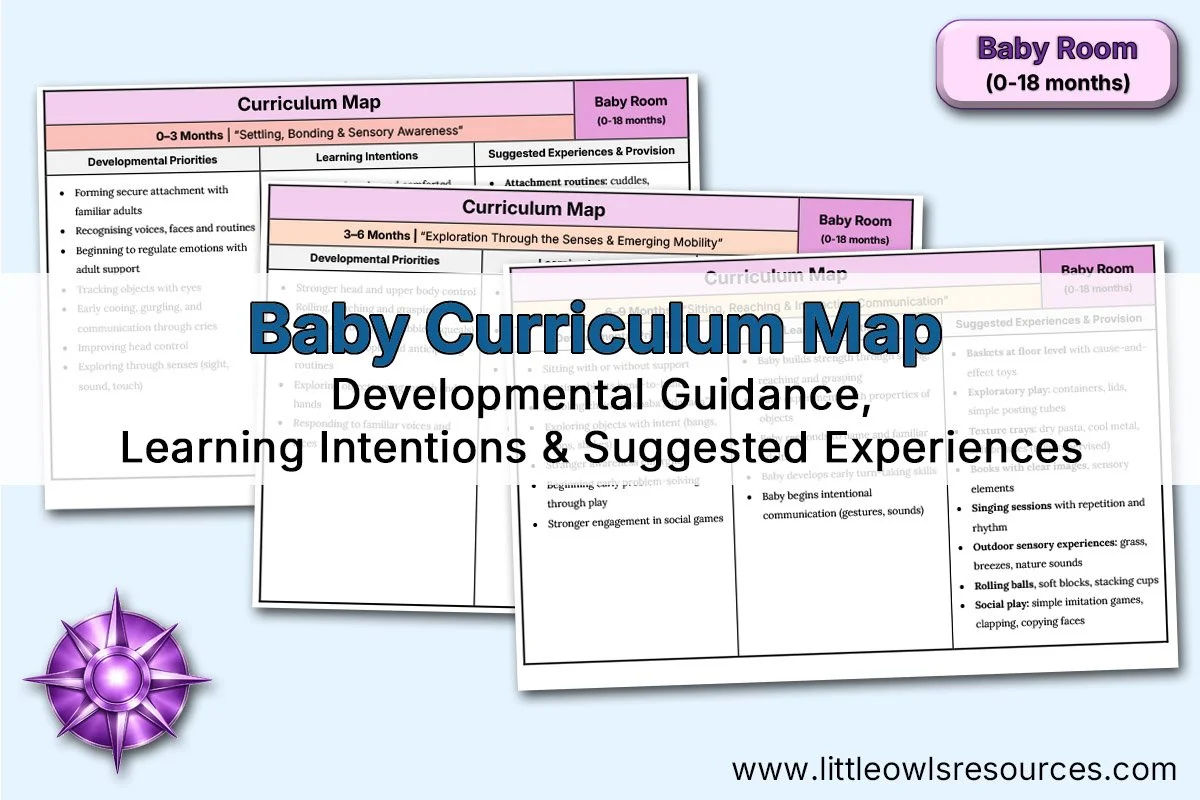
Please find additional resources on our ‘Areas of Learning’ page.
👀 Observation-Led Practice & Responsive Care


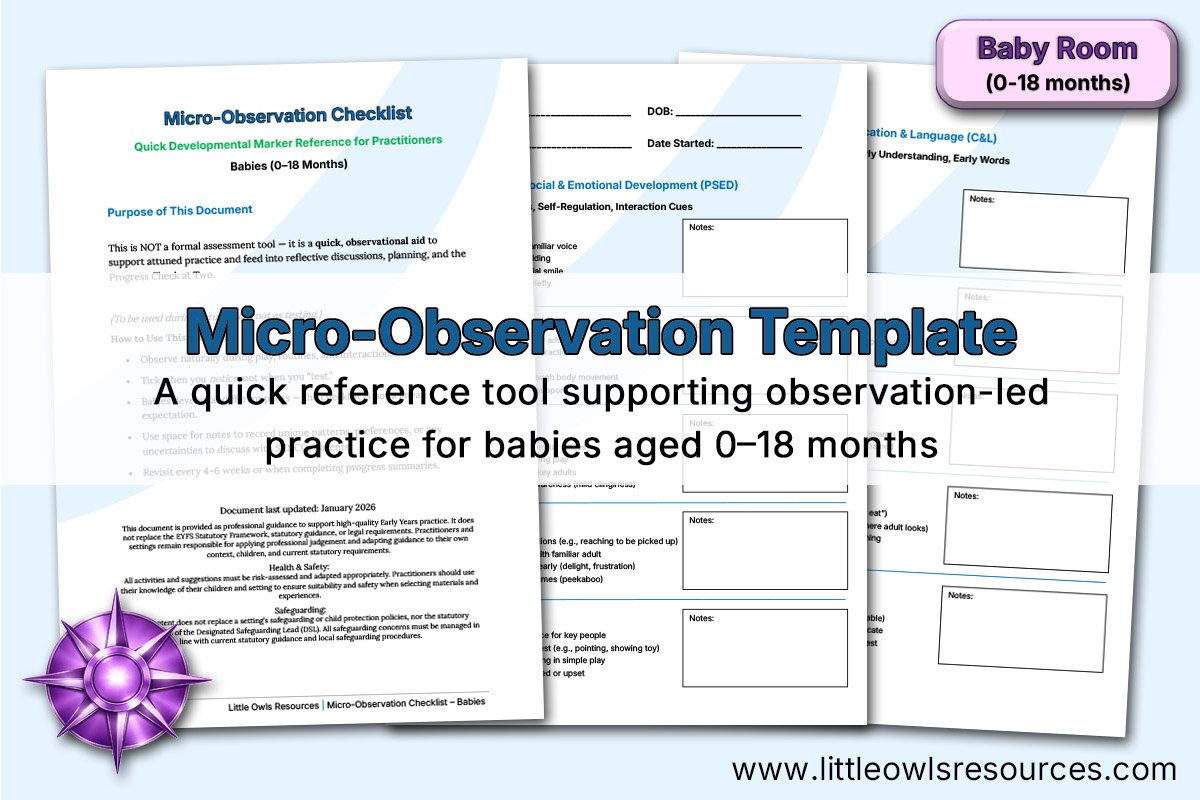

Please find additional resources on our ‘OAP Cycle’ page.
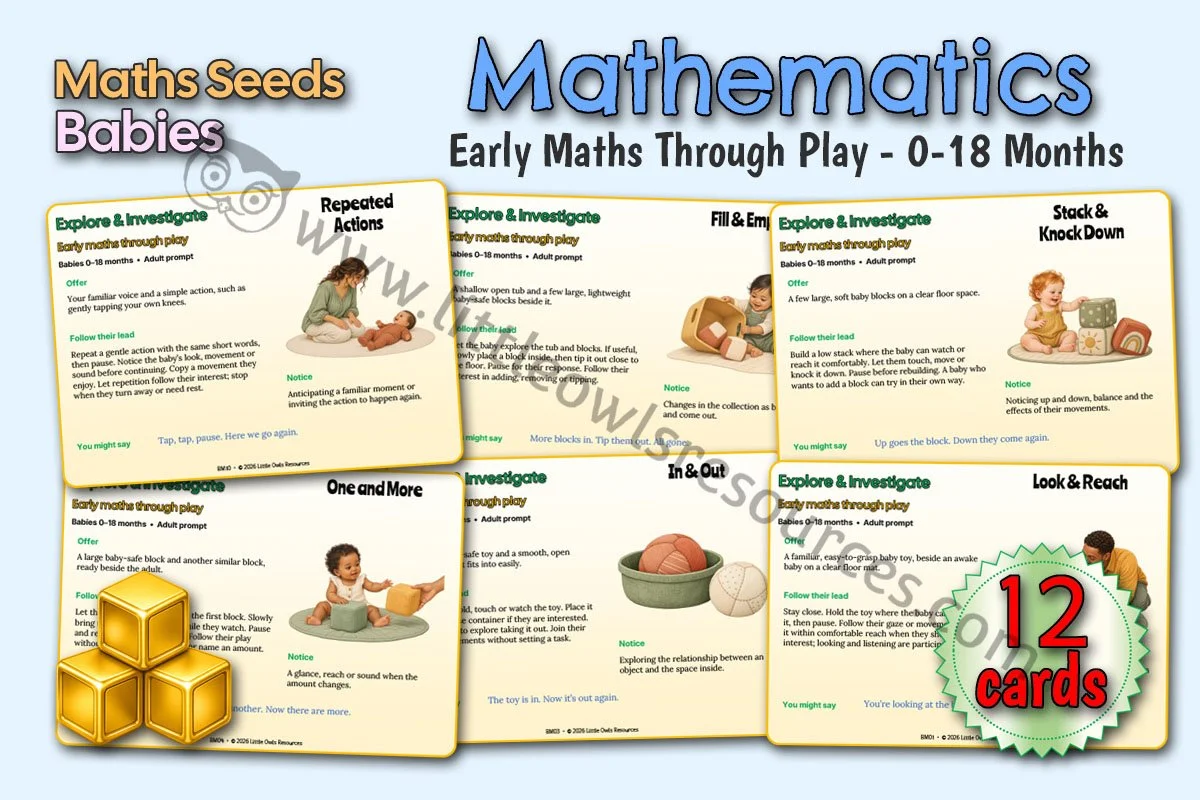



‘Continuous Provision & Play’ Resources Hub - Coming Soon!
Professional Guidance & Set-Up
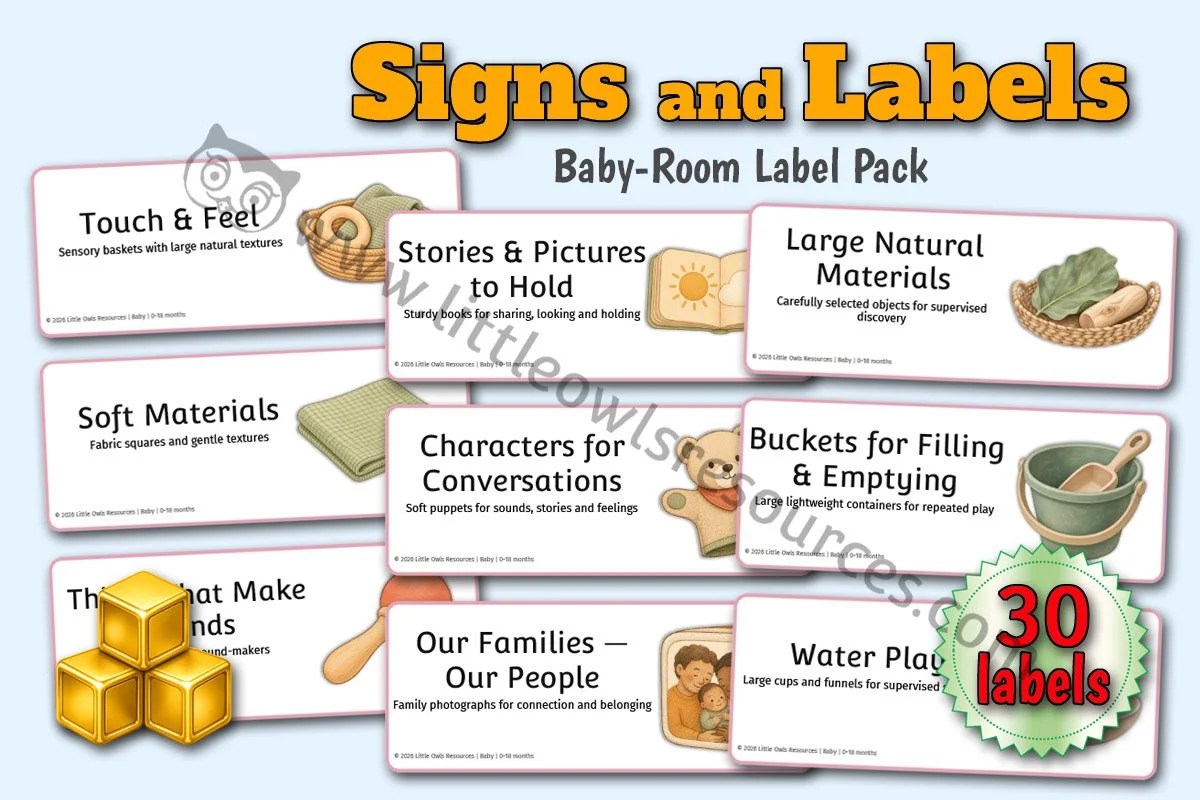


💬 Language & Interaction
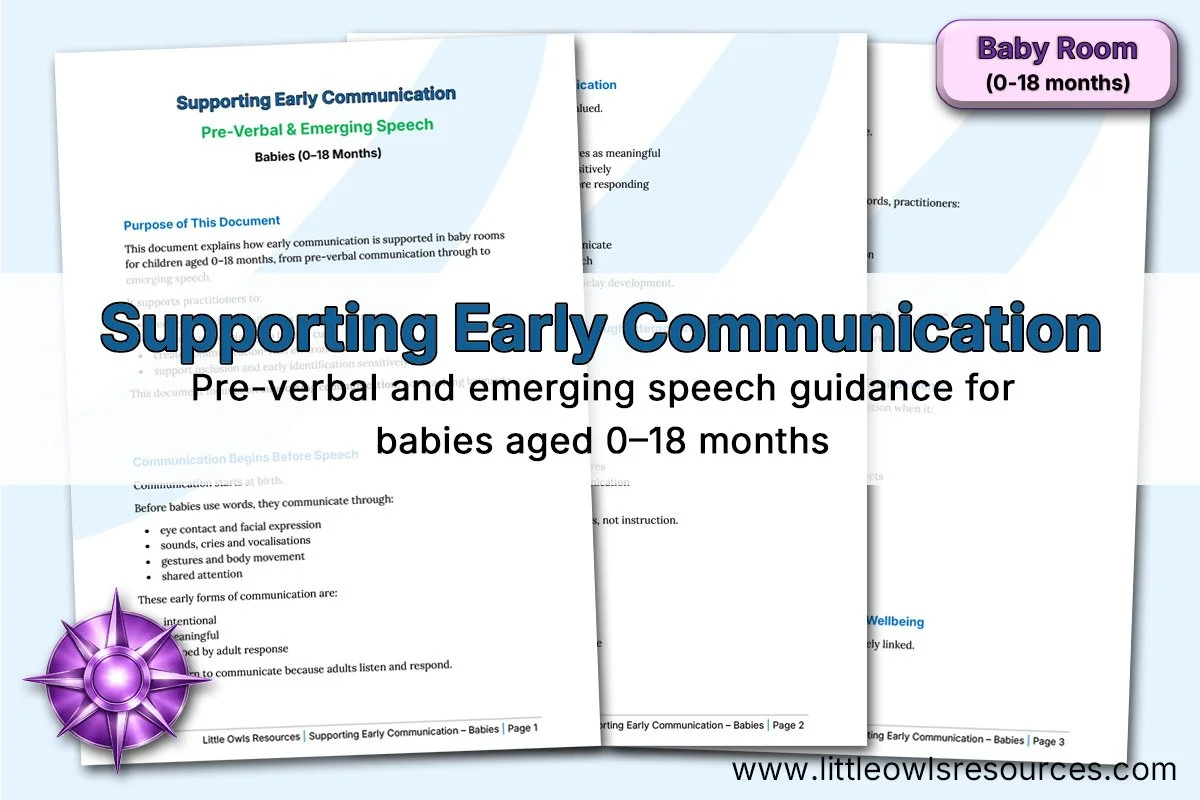


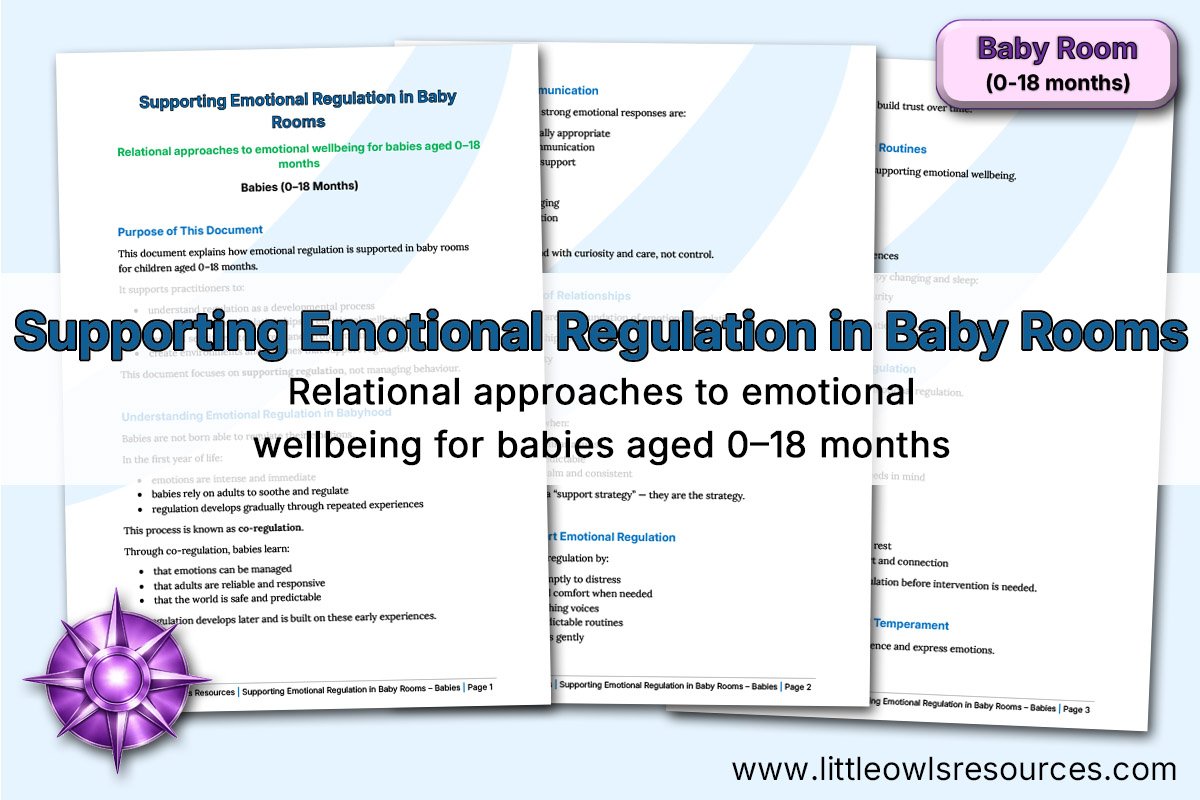
🤝 SEND & Inclusion
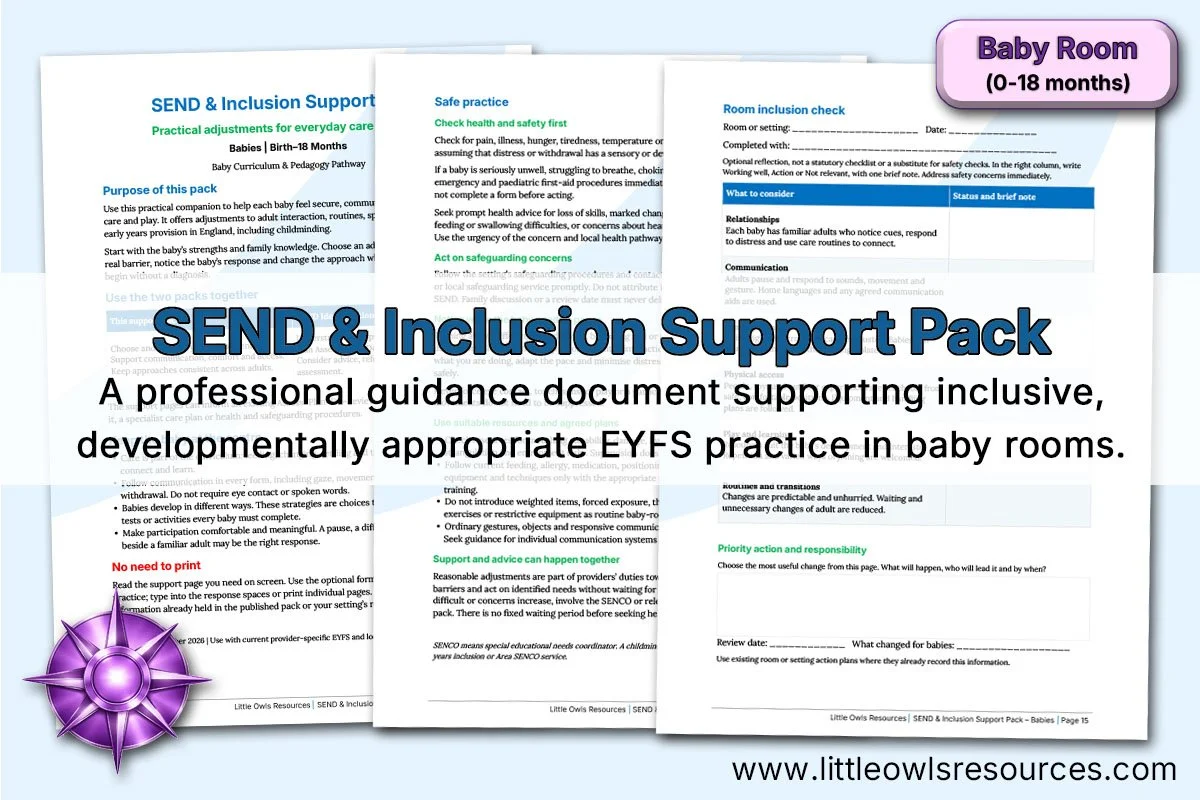

🛡️ Safeguarding


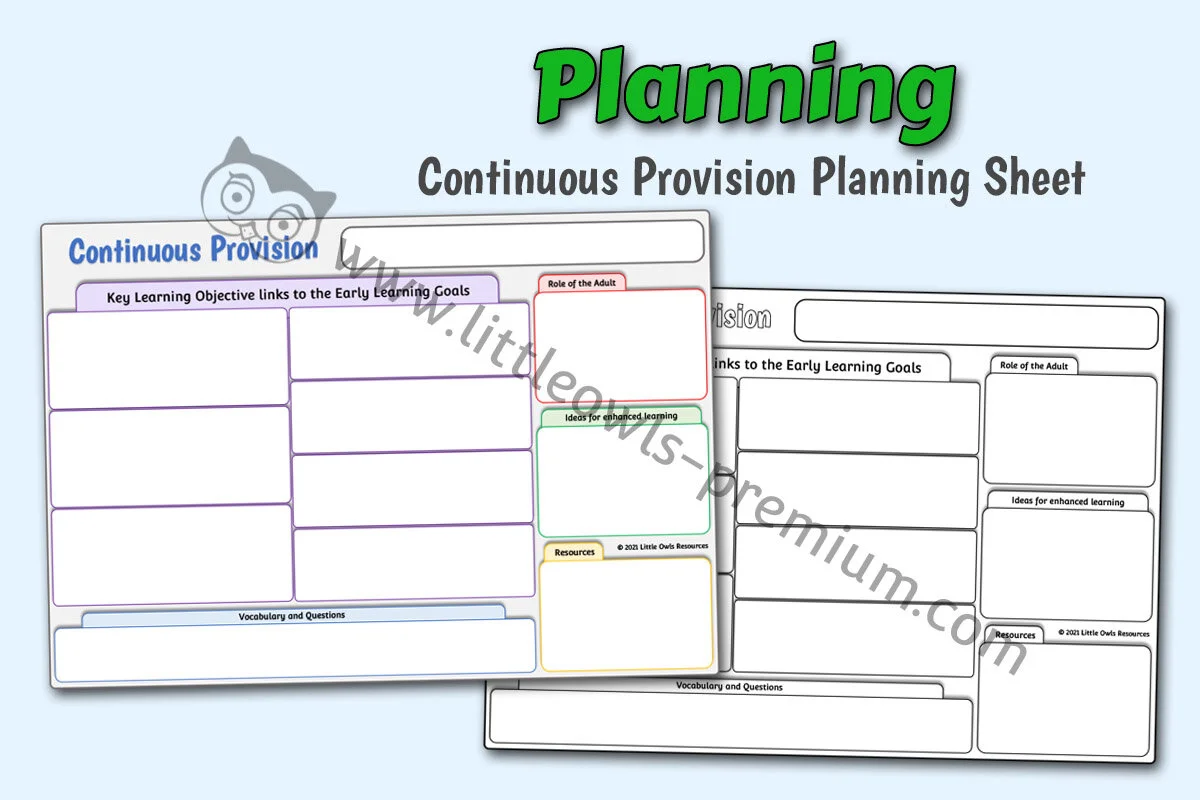
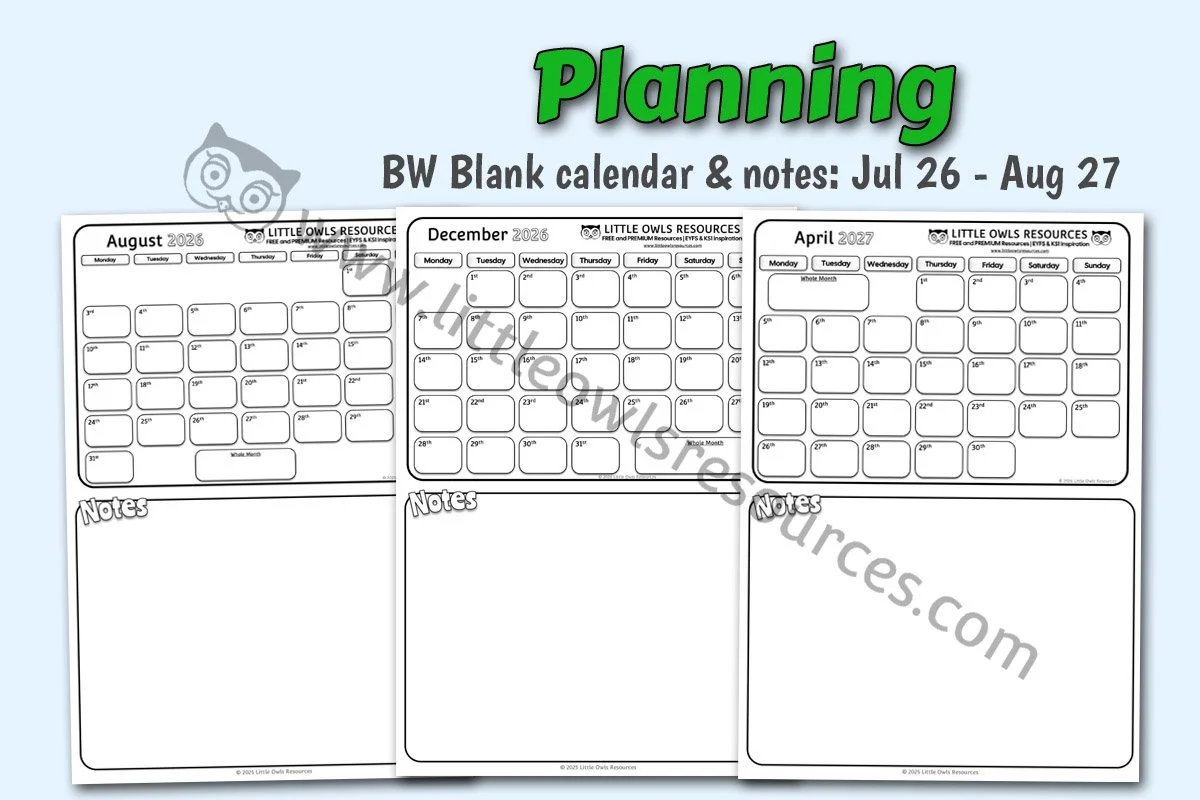
📝 Planning Documentation

Additional Blank Planning Templates | Generic Birth-5





👪 Parent Partnership & Communication

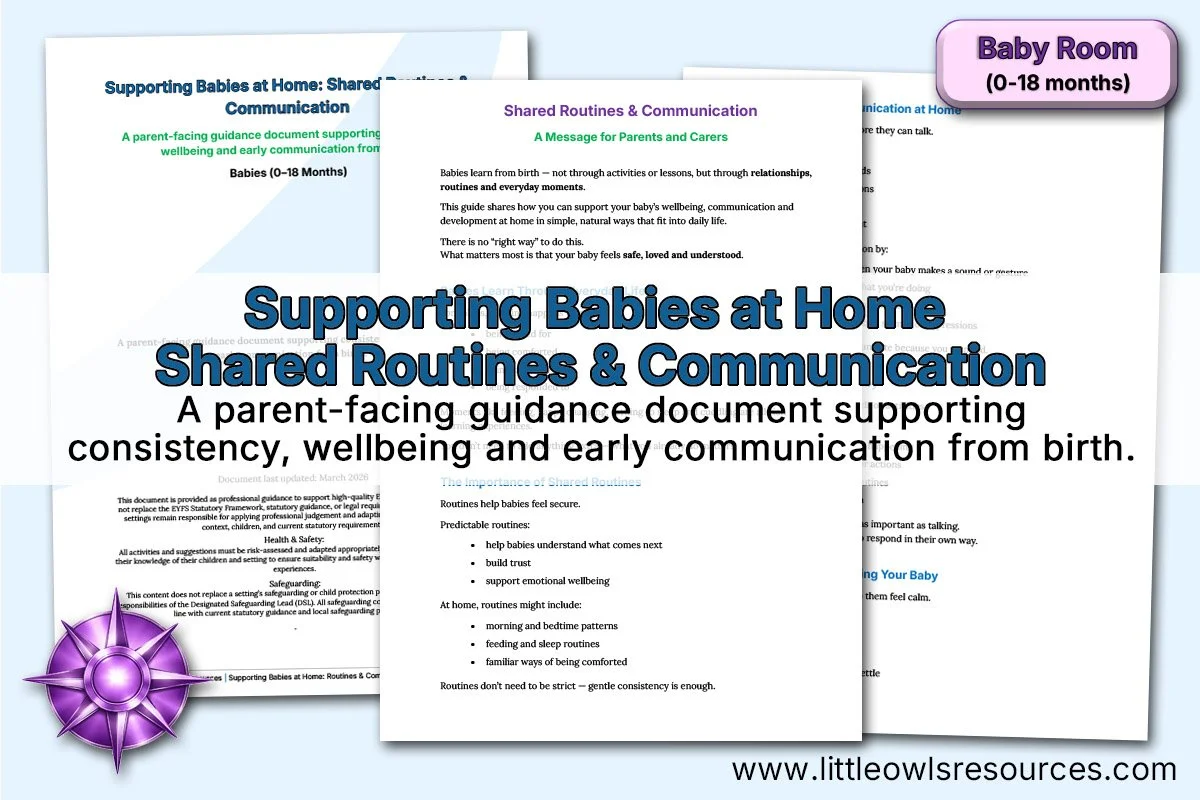

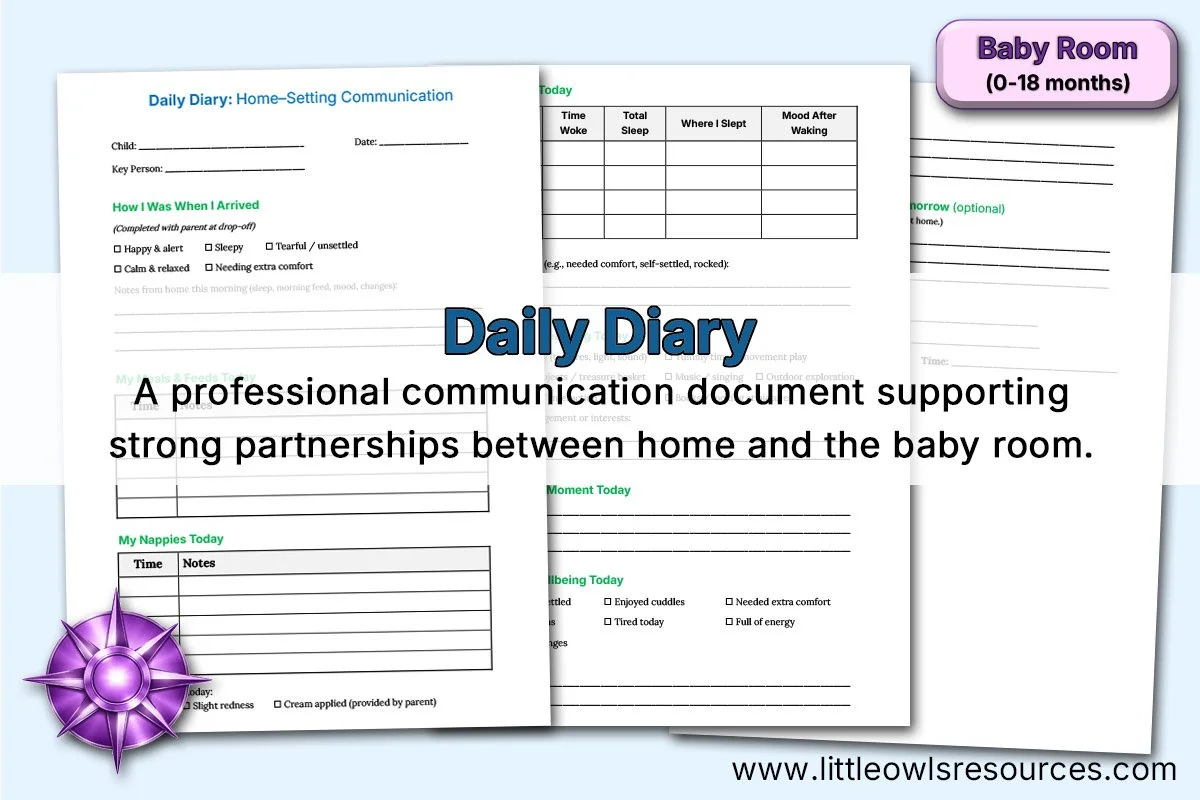
Please find additional resources on our ‘Parent Communication’ page.
🌉 Transitions

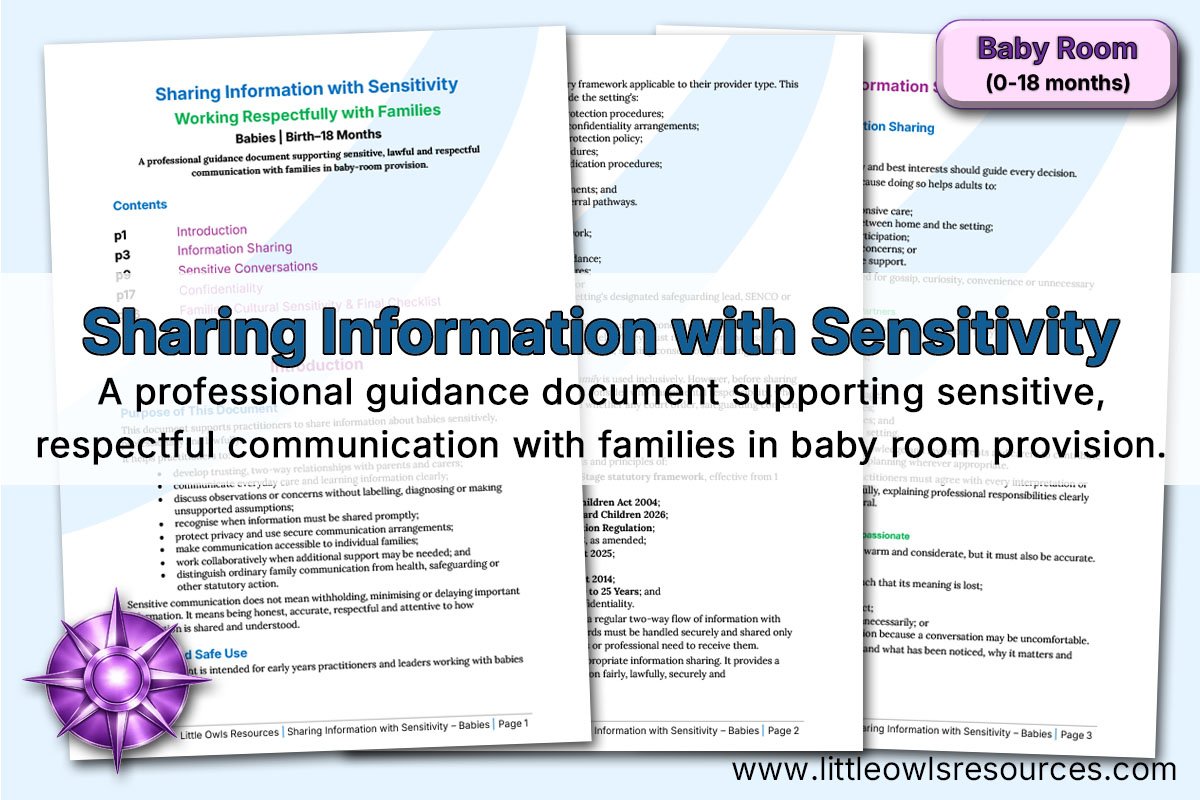
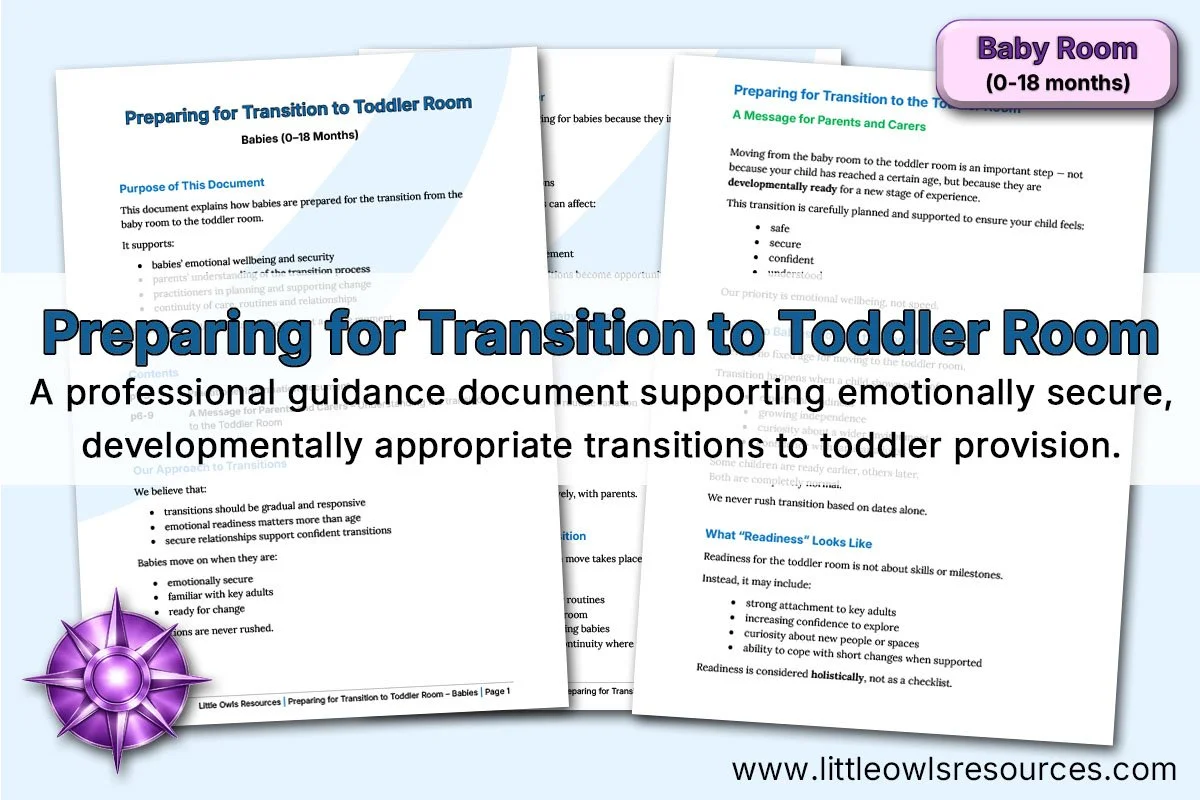
Please find additional resources on our ‘Transitions’ page.
📘 Statutory & Non-Statutory Guidance Resources
Statutory guidance such as the EYFS Framework, establishes clear expectations that all early years providers must meet in order to support children’s safety, wellbeing, and development. Other documents such as ‘Development Matters’, are non-statutory. This means that guidance within these documents provides flexibility and professional support by offering examples and ideas that practitioners can adapt to suit their setting, children, and community.
Together, these forms of guidance help ensure both consistency and flexibility within early years practice. Please find below some of the materials available on Little Owls Resources to support both mentioned documents:
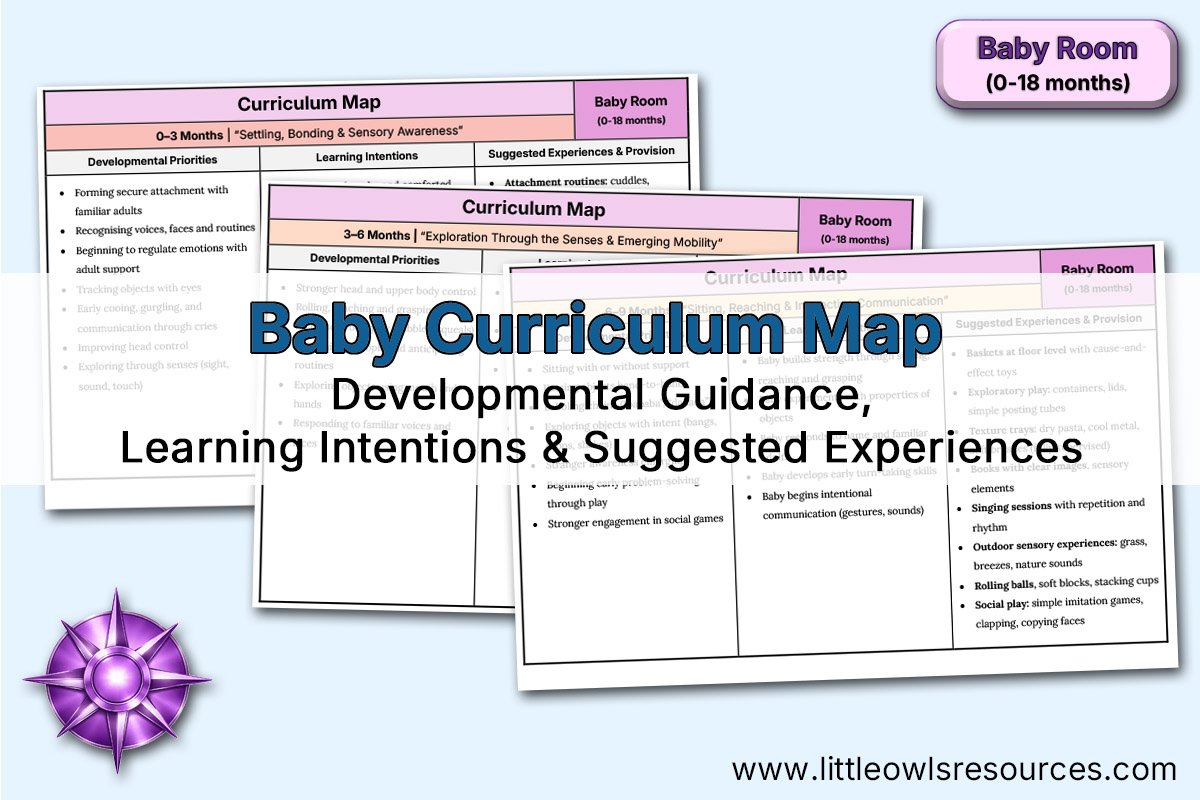
Development Matters
Areas Of Learning
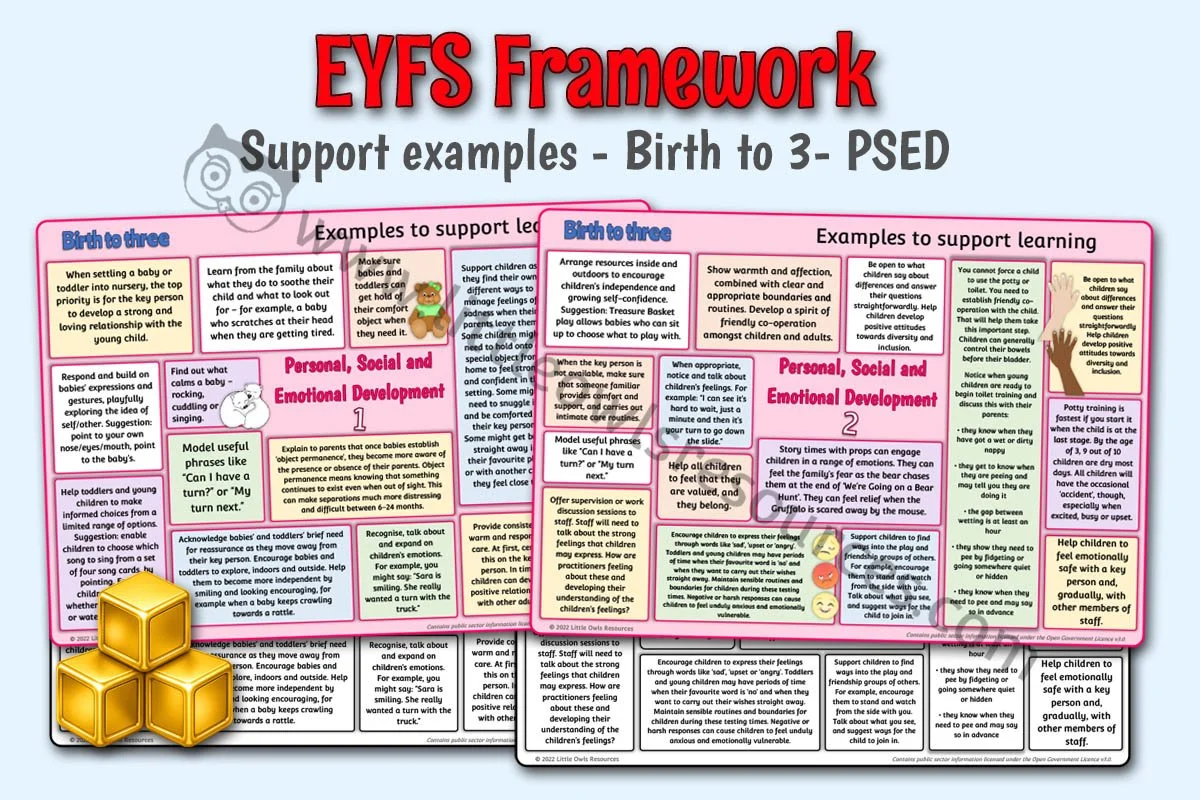
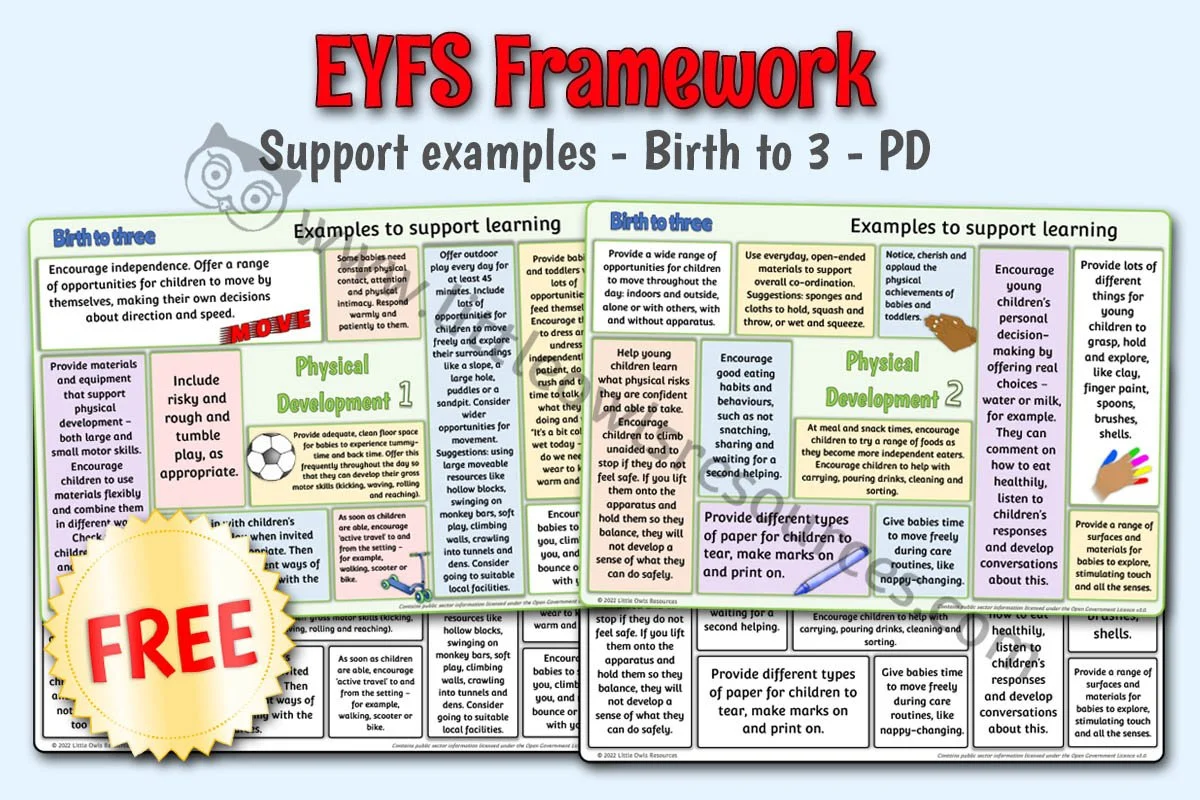
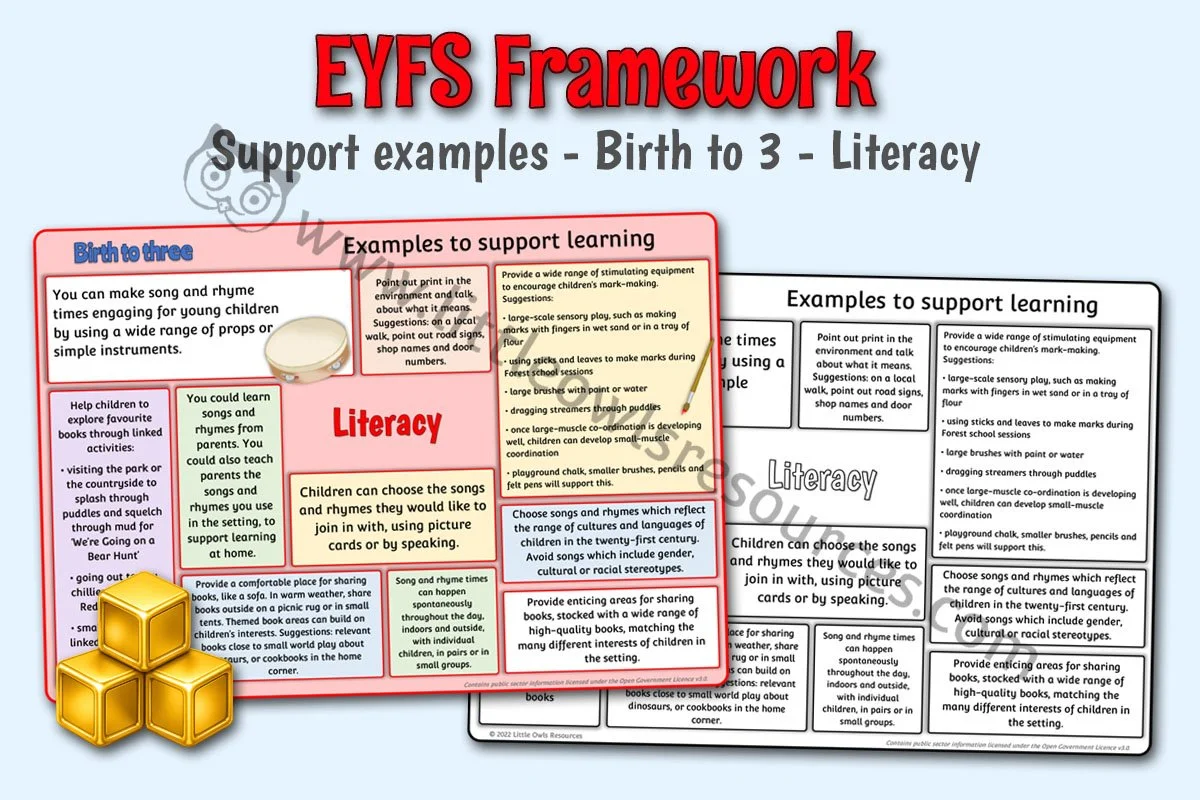
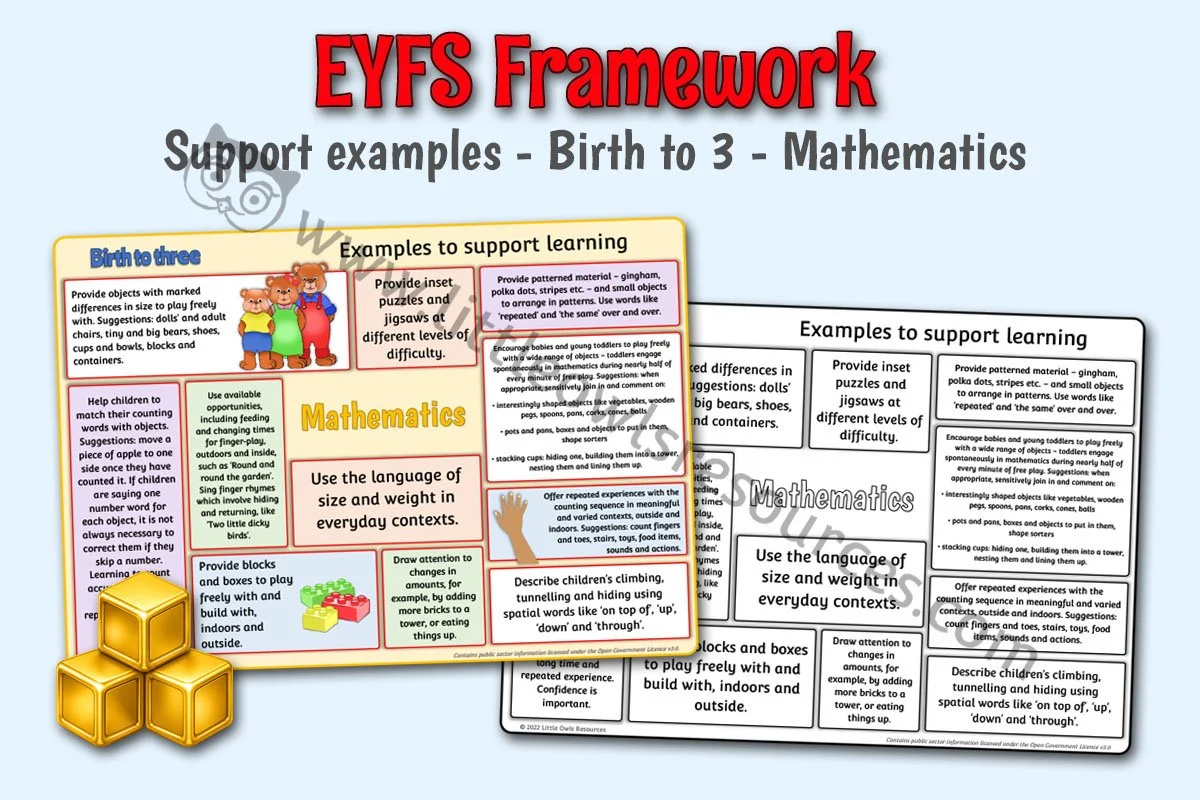
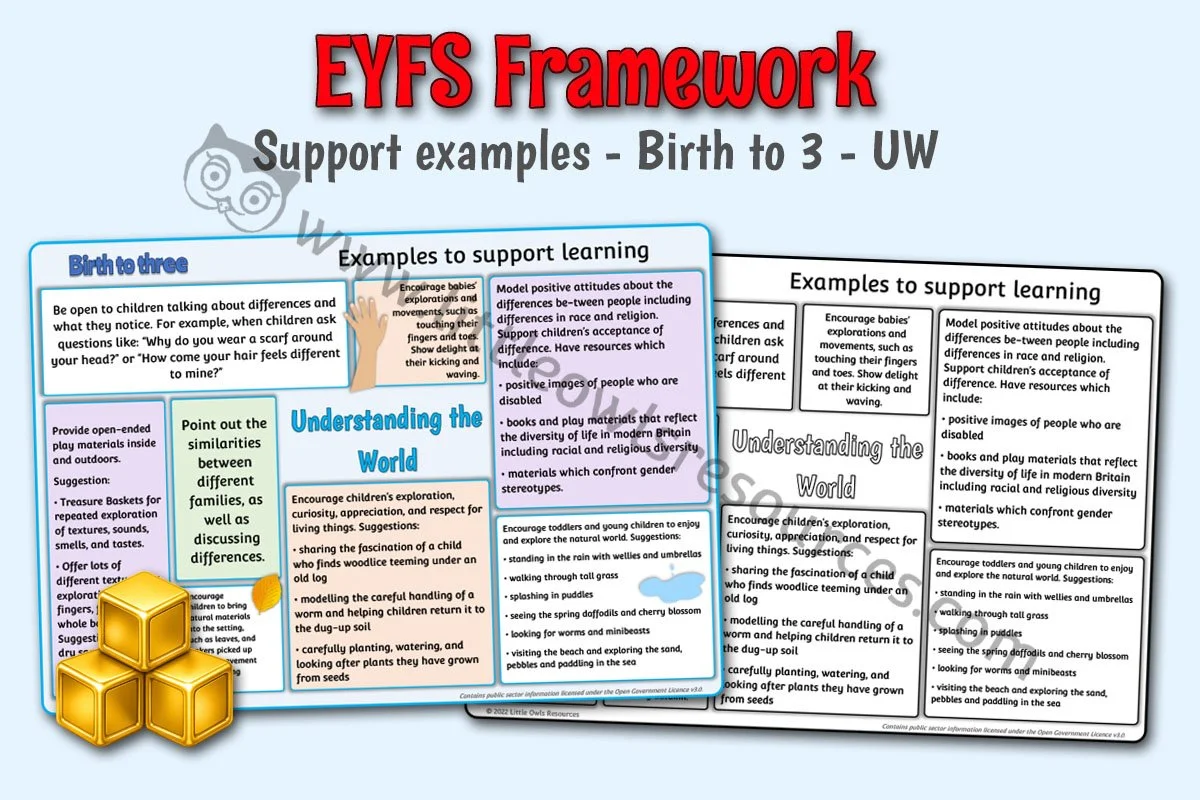
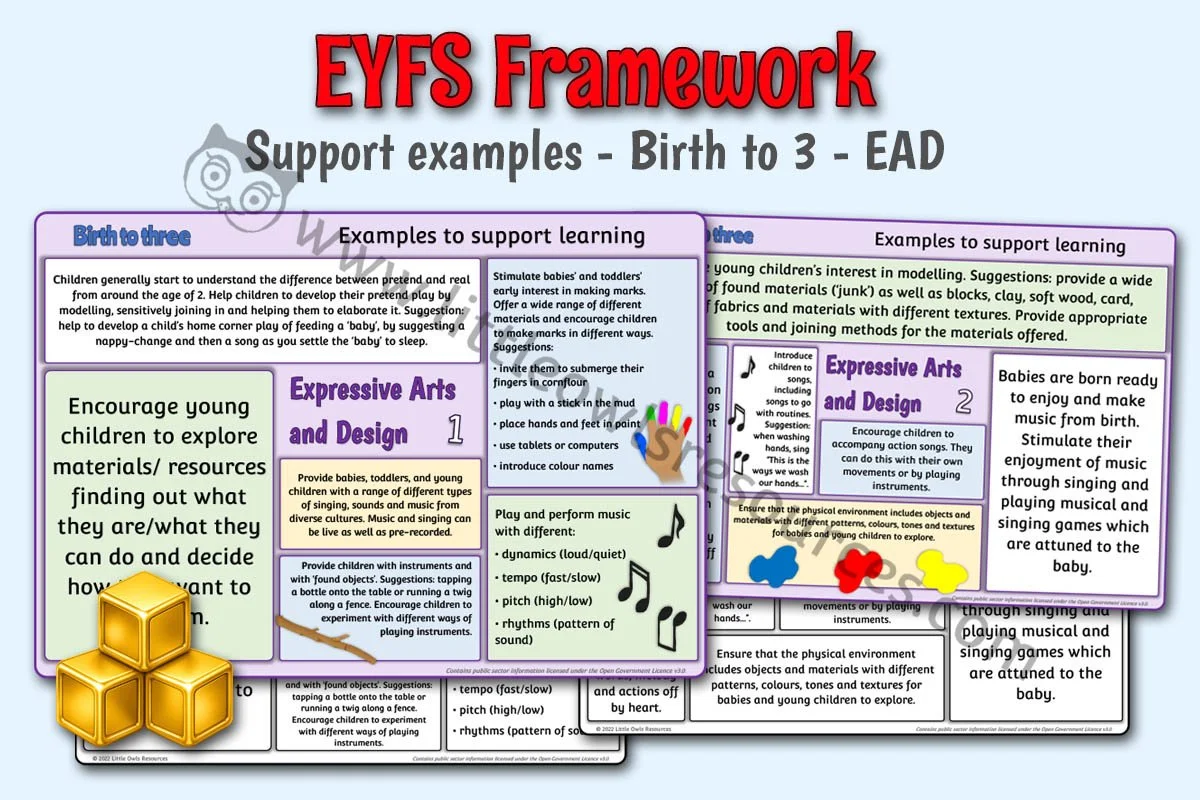
Examples of how to support areas of learning and development for birth to 3 year olds. Extracted from Development Matters; non-statutory curriculum guidance for the early years foundation stage. Includes colour and black and white versions. Files contain public sector information licensed under the Open Government Licence v3.0.
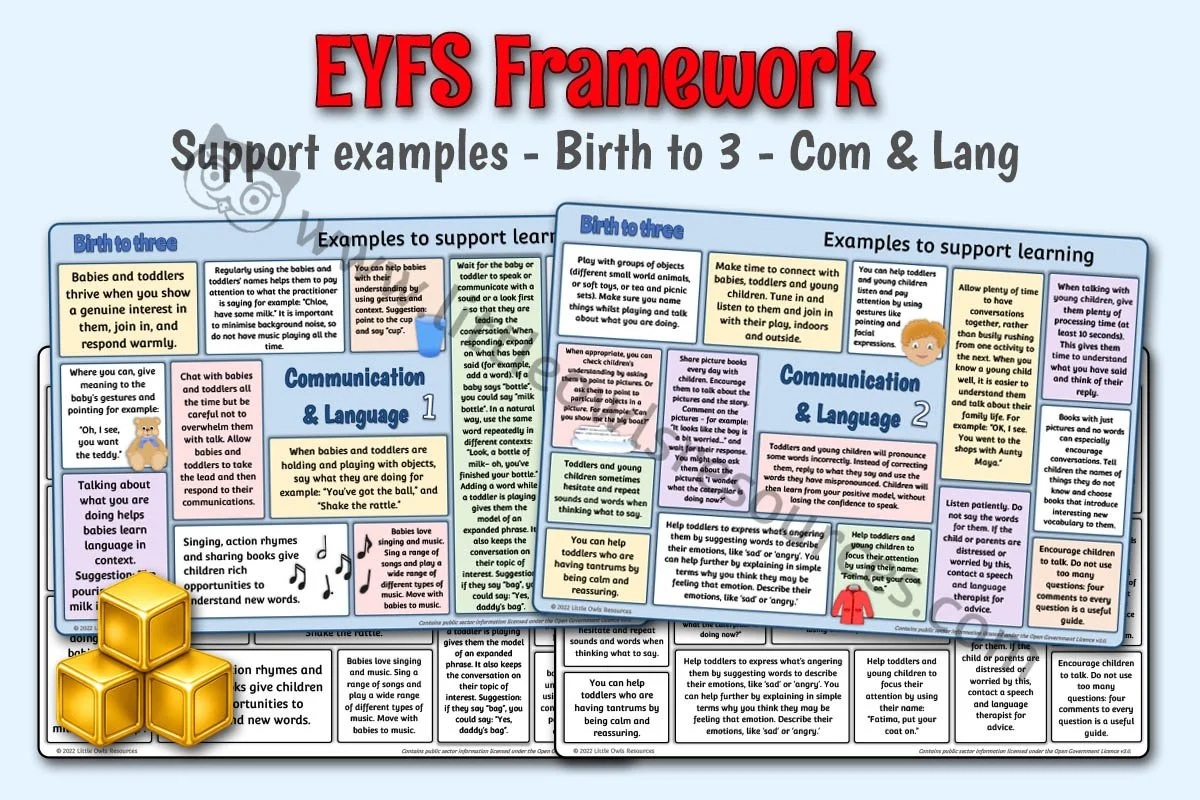
EYFS Framework
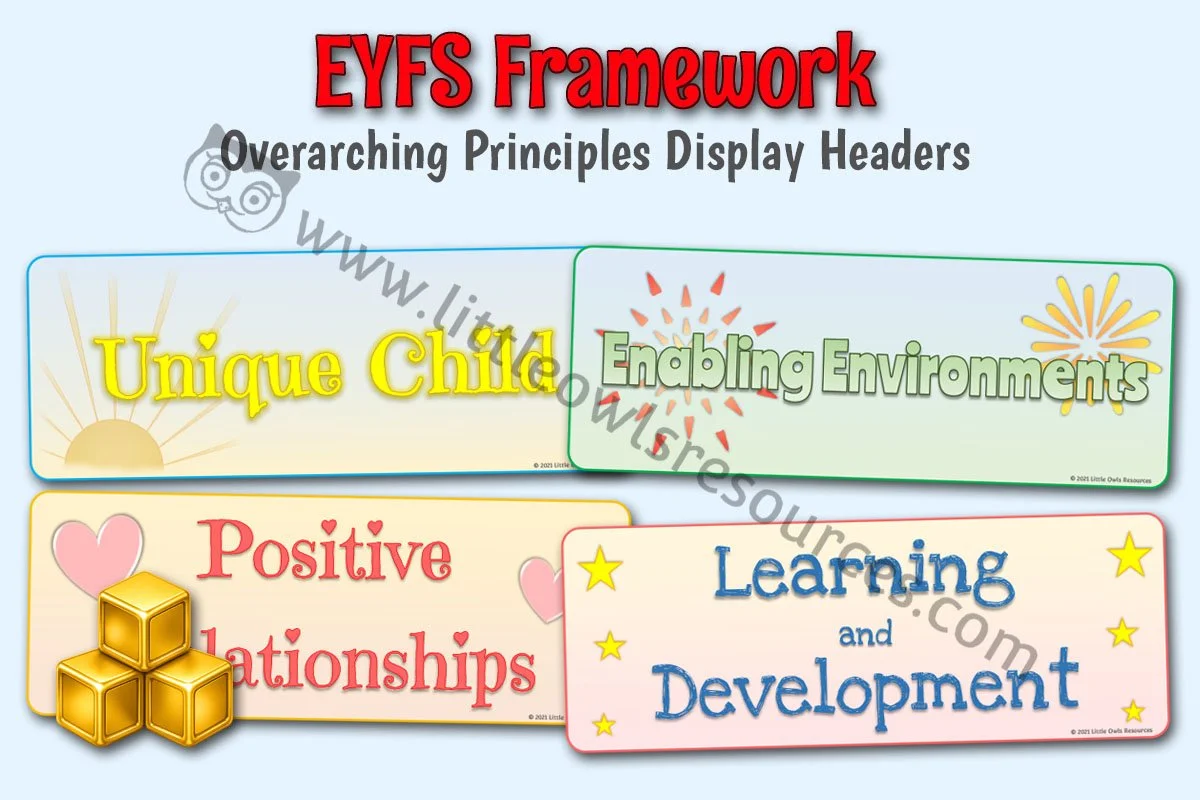
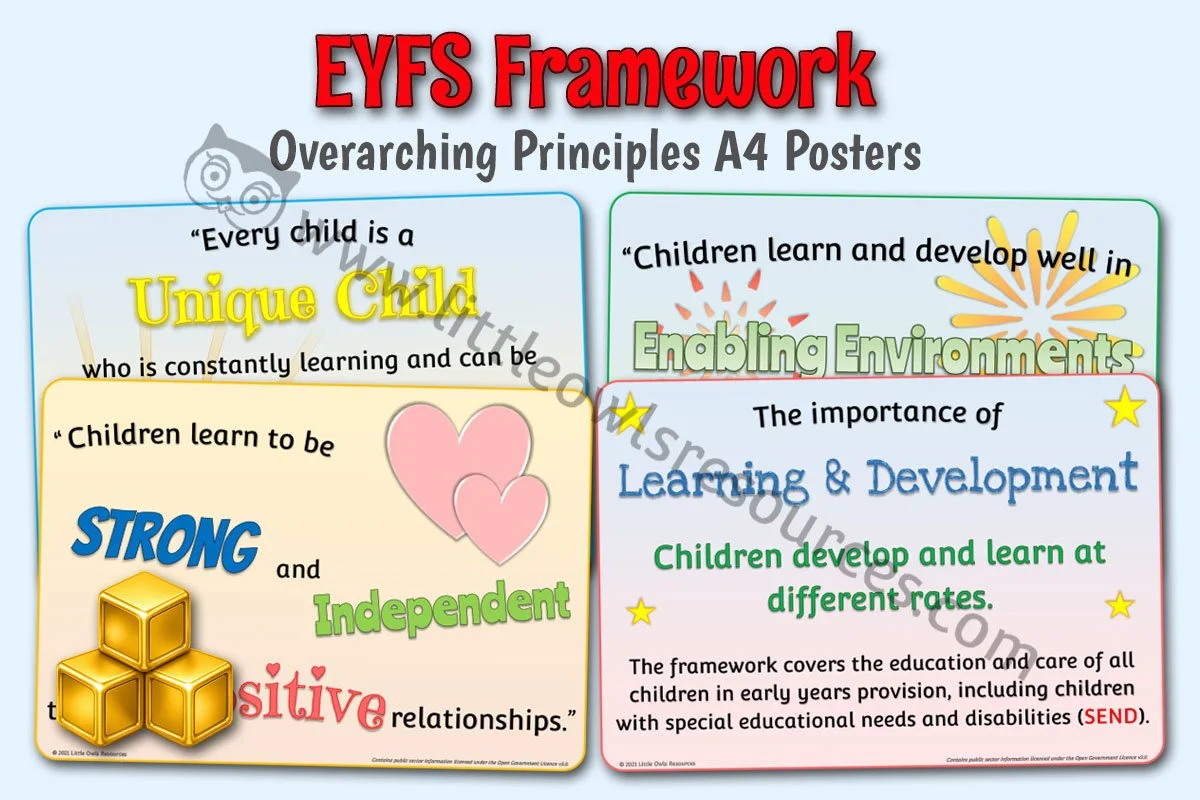
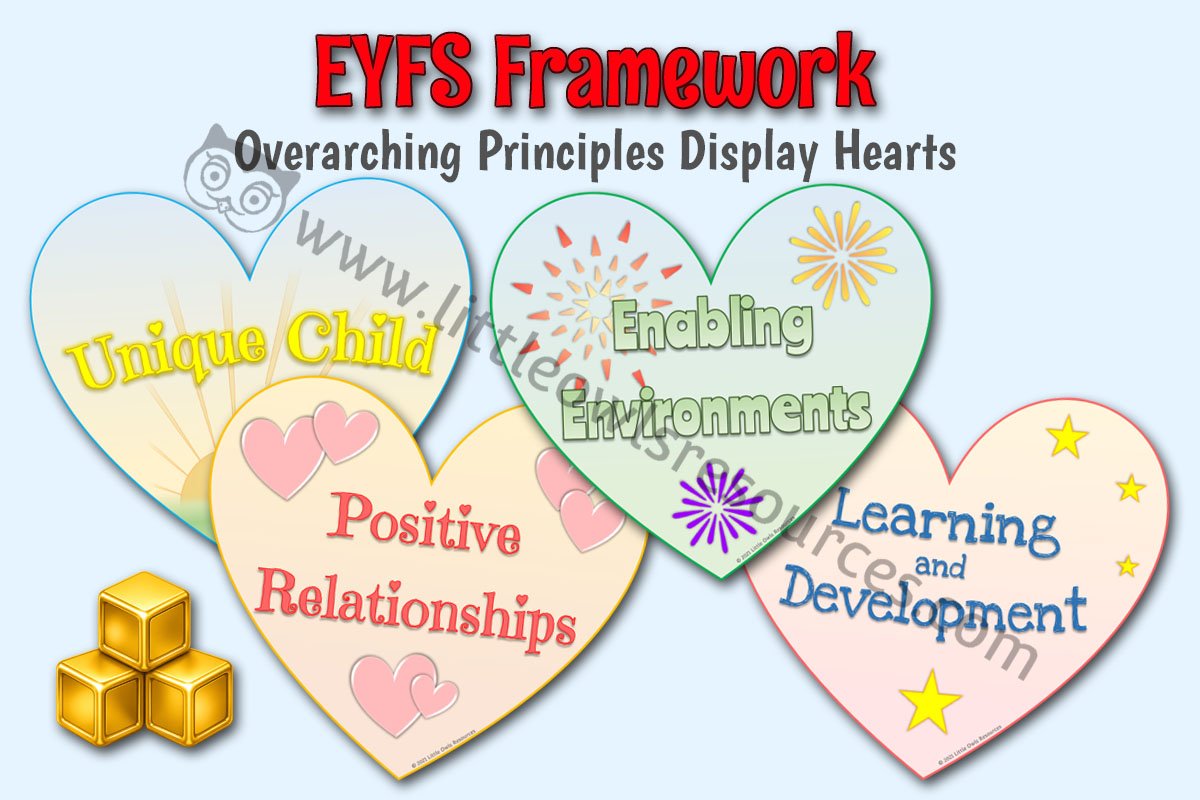
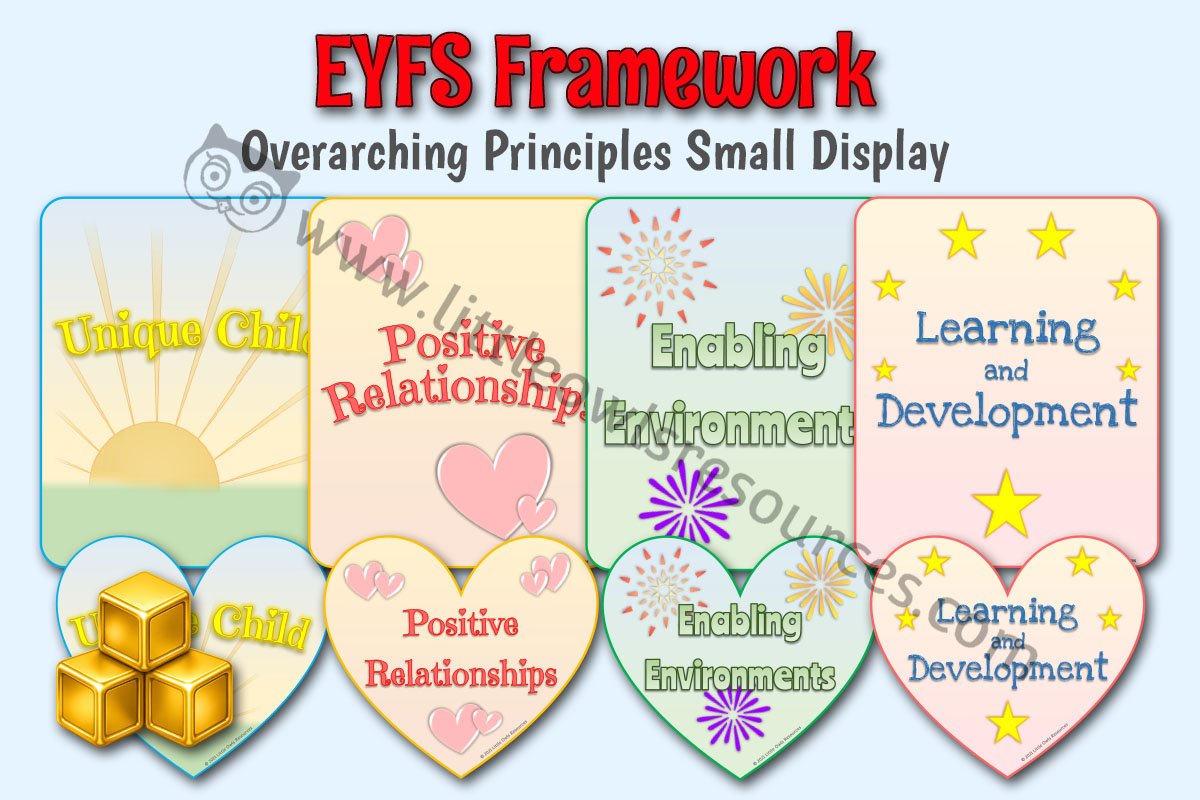
Overarching Principles
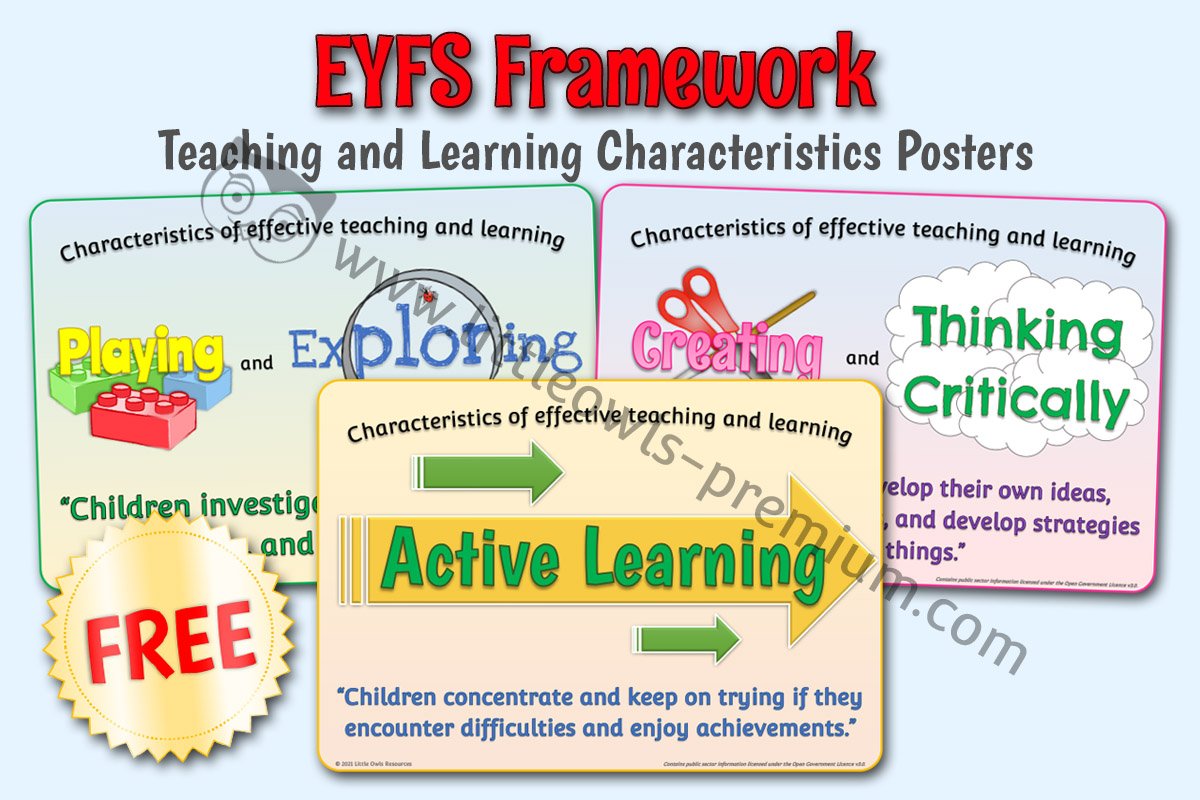
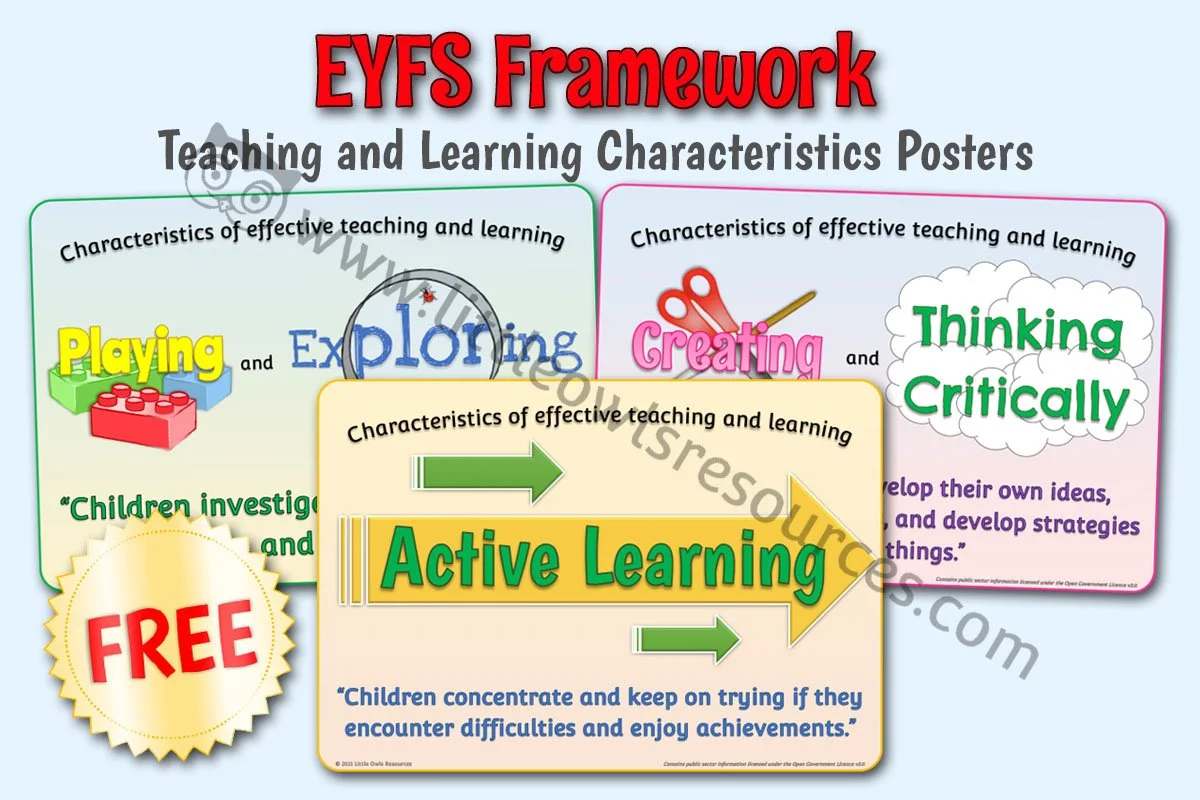
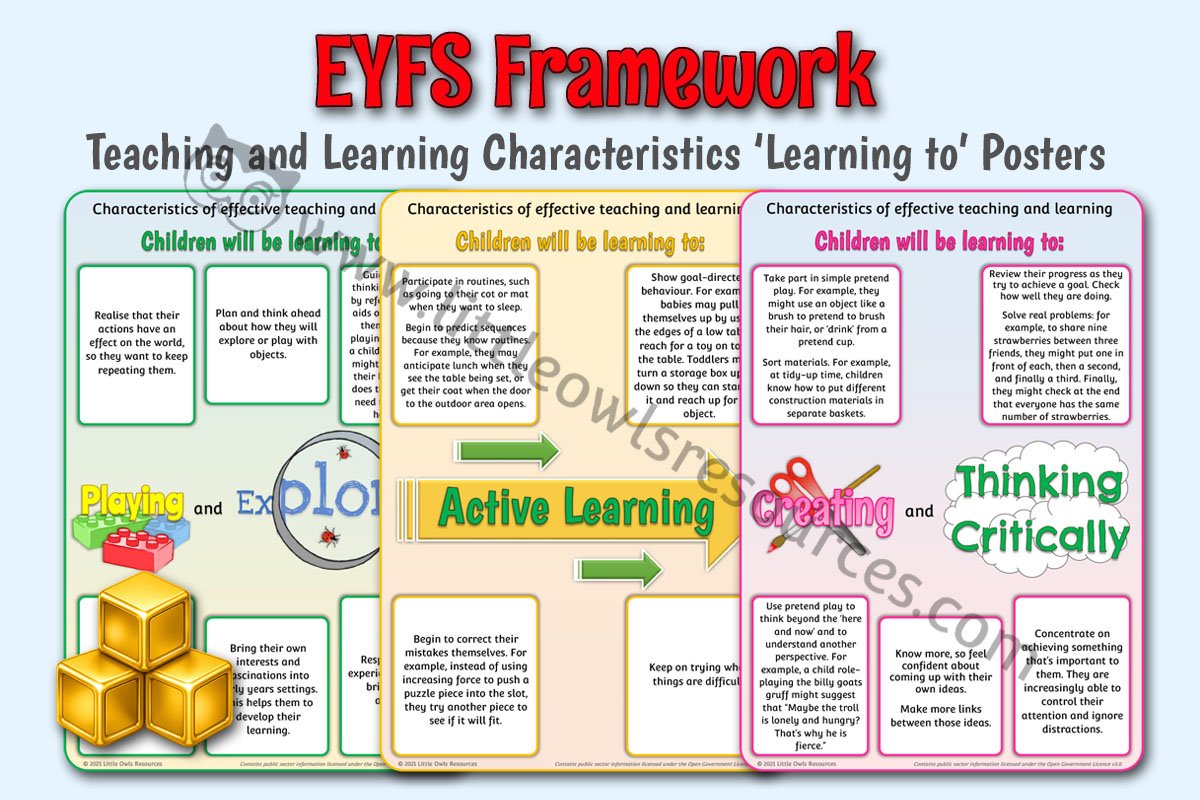
Teaching & Learning Characteristics
Seven Key Features of Effective Practice
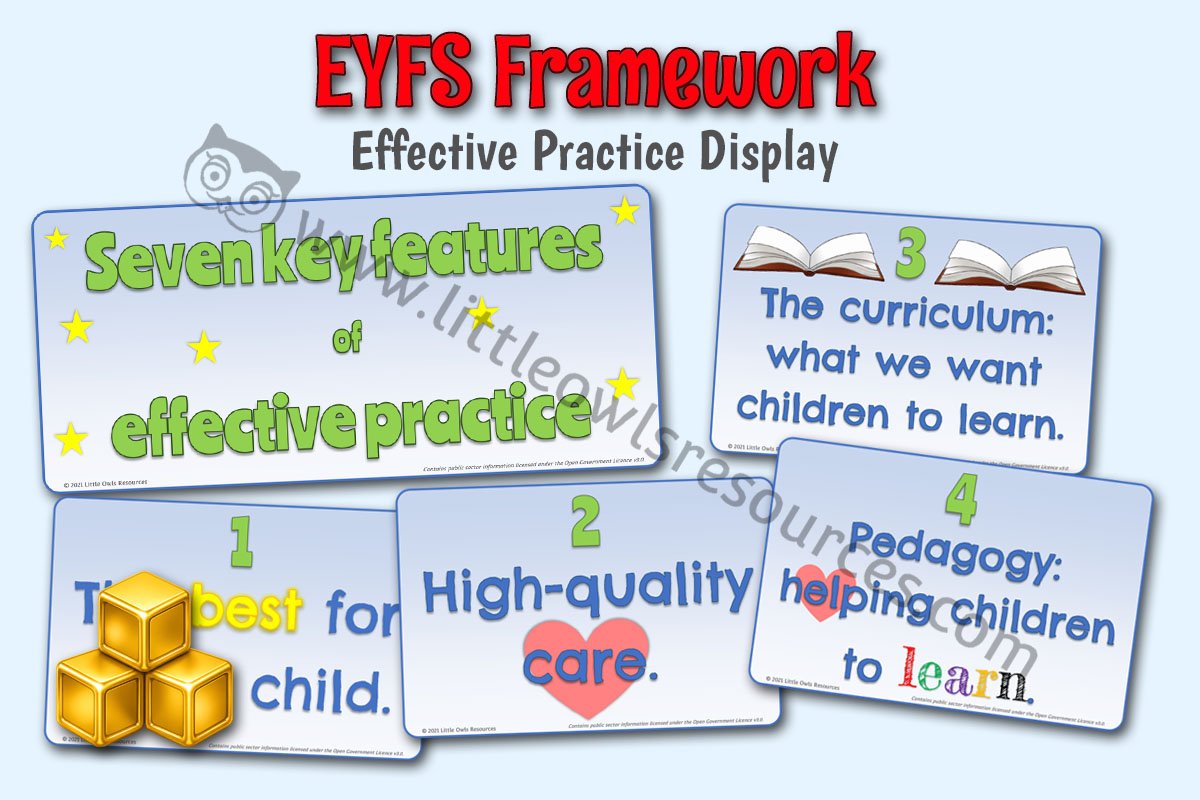
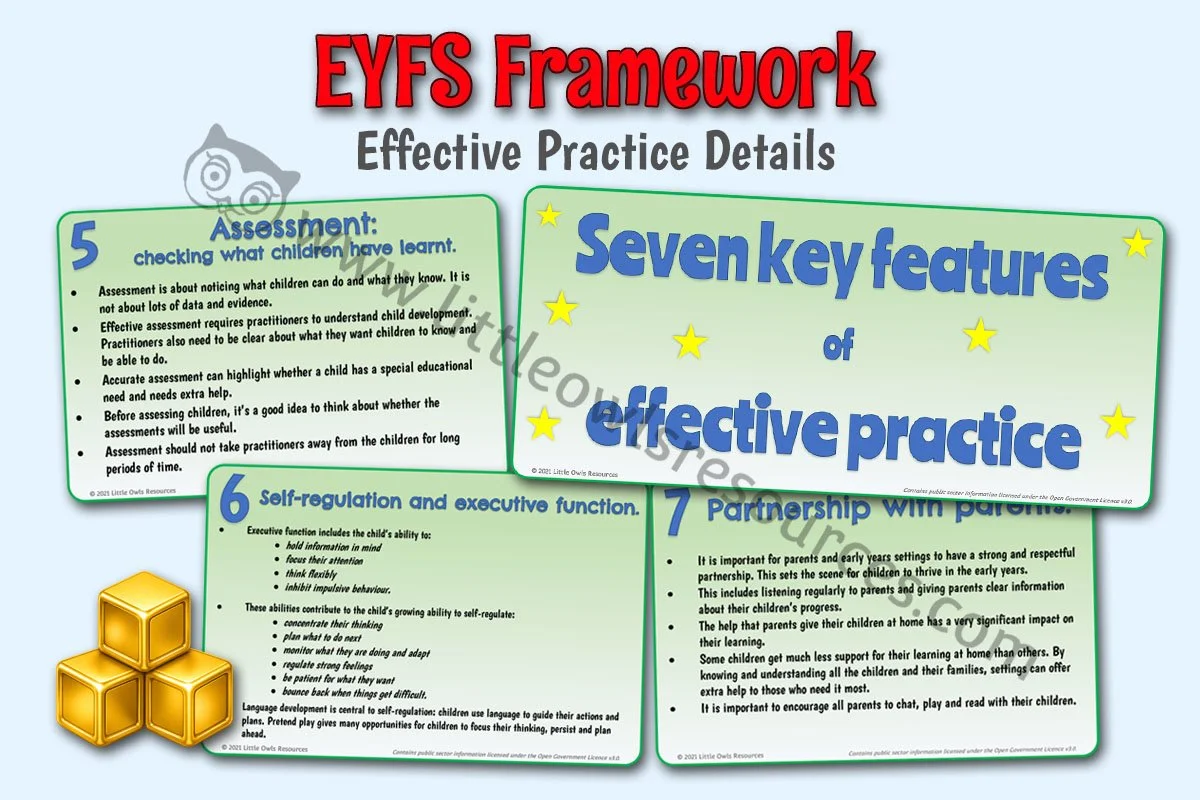
Please find additional resources on our ‘EYFS Framework Support’ page.
➕ Additional Support
Further support materials for baby room Curriculum & Pedagogy, such as our ‘Responsive Talk, Narration & Imitation’ guidance document, may by found in our ‘Babies (birth-18 months) Pathway’.
Further EYFS Planning Support
For additional planning support please see the following pages:
Age pages:
Setting pages:
Generic:
This webpage and documents within it are provided as professional guidance to support effective EYFS practice. They do not replace the EYFS Statutory Framework or other statutory guidance. Practitioners must apply professional judgement and adapt practice to their setting and current requirements.