

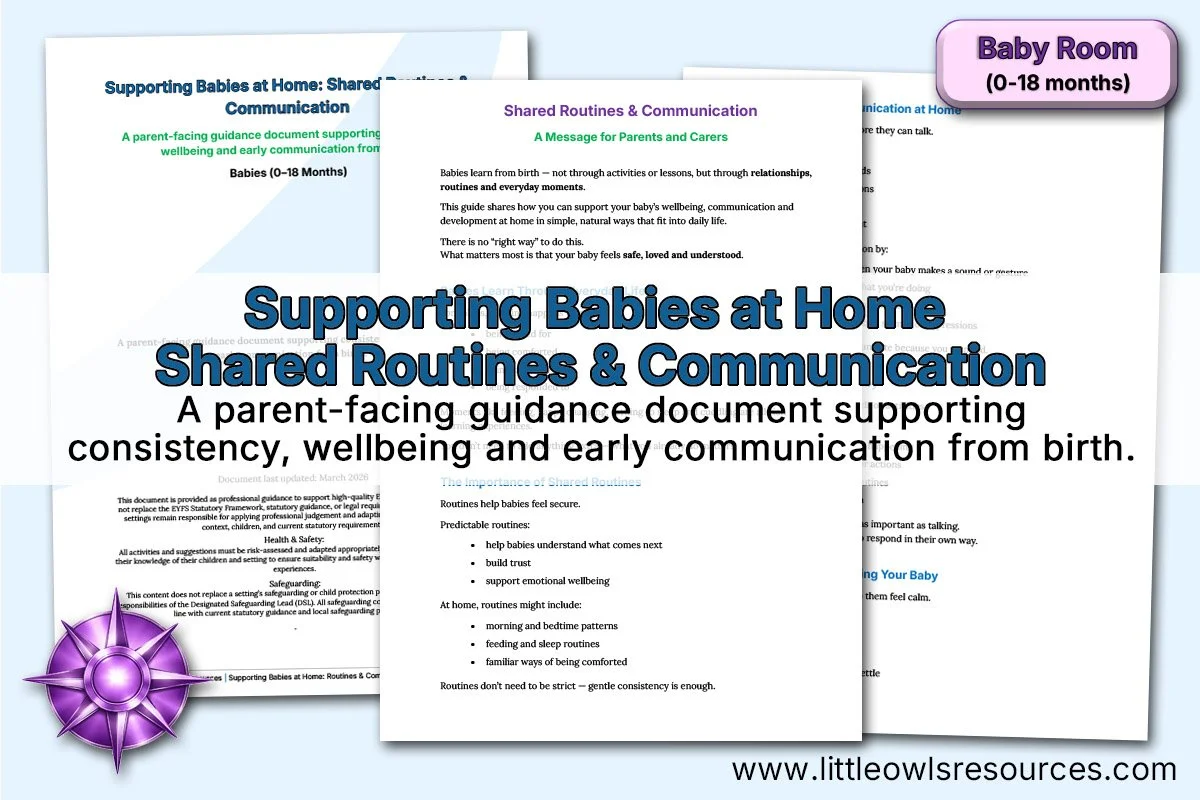
Supporting Babies at Home
Shared Routines & Communication (0–18 Months)
A parent-facing guidance document supporting consistency, wellbeing and early communication from birth.
(Available Now with ALL Access Membership)
What this document is
Supporting Babies at Home is a parent-facing guidance document designed to share how babies learn and develop through everyday routines, relationships and responsive care from birth to 18 months.
Written in clear, reassuring language, it explains how communication, emotional wellbeing and learning are supported naturally through feeding, comforting, talking, routines and shared moments — without pressure, targets or expectations.
The document is intended to be shared with parents and carers as part of a setting’s partnership approach.
It supports understanding and consistency between home and setting, while reinforcing developmentally appropriate EYFS practice.
It does not replace professional advice or statutory guidance, and is designed to complement — not direct — family life.
Who this is for
Parents and carers of babies aged 0–18 months
Baby room practitioners sharing guidance with families
Key persons supporting settling-in and ongoing communication
Childminders working closely with families
Settings strengthening parent partnership and consistency of care
What this document helps you do
This document helps settings to:
Reassure parents about how babies learn through everyday life
Explain the importance of routines, comfort and responsiveness
Support shared understanding of early communication before words
Reduce anxiety around sleep, settling and emotional needs
Promote consistent approaches between home and setting
Strengthen trusting relationships with families
Communicate EYFS-aligned practice in a warm, accessible way
For parents, it reinforces that what they already do matters — and that babies do not need activities, lessons or pressure to learn.
How this fits within our Baby (0–18 Months) framework
This document forms part of our wider Baby Room (0–18 months) Curriculum & Pedagogy framework, which places relationships, routines and emotional security at the heart of learning.
It sits alongside related documents including:
Baby Room Welcome & Settling-In Pack
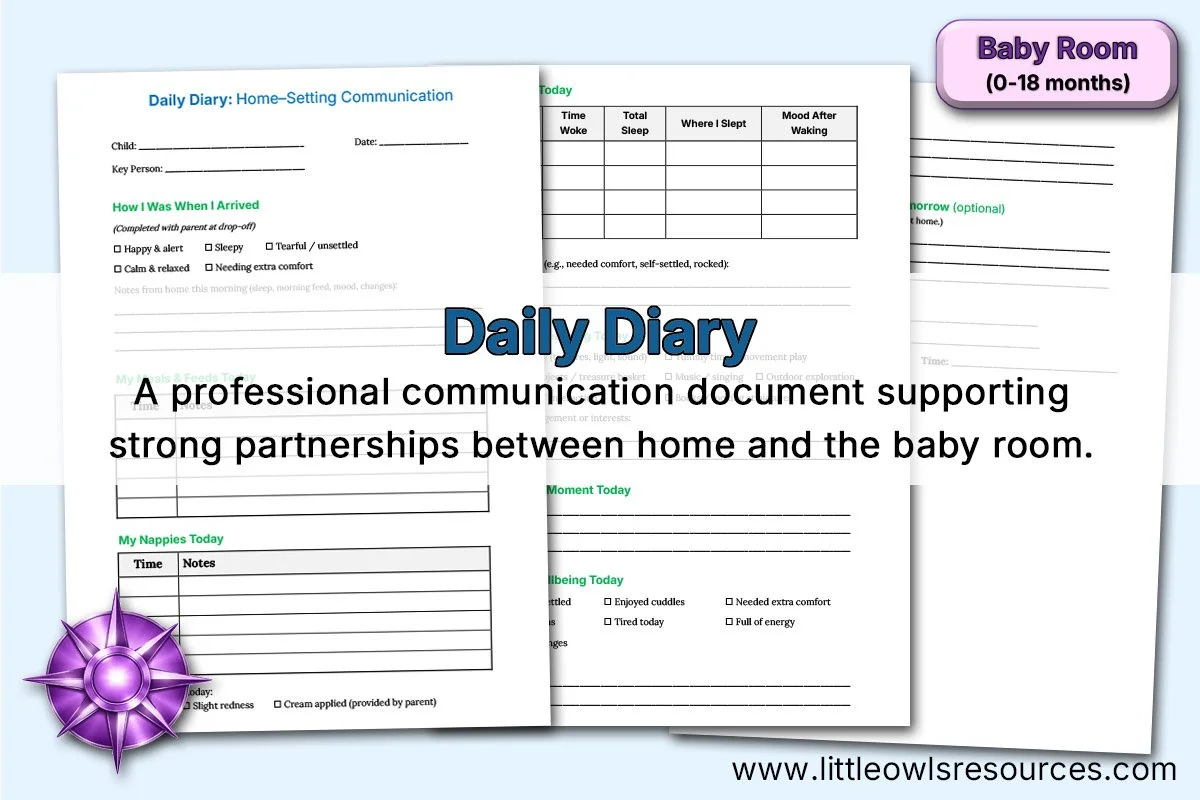
Daily Diary – Baby Room (0–18 Months)
Daily Routines as Learning Opportunities
Supporting Emotional Regulation in Baby Rooms
Supporting Early Communication (Pre-Verbal & Emerging Speech)
Together, these documents support strong, respectful partnerships with families and consistent, developmentally appropriate practice across home and setting.
This document is part of our EYFS Curriculum & Pedagogy Suite - planning support and professional guidance covering babies, toddlers, preschool, Reception and mixed-age care.
(Available Now with ALL Access Membership)
Related documents include:


Or read our ‘Little Owls Resources’ Curriculum Intent Statement’
Additional Documents | Professional Contents (Babies 0-18 months)
Navigate our Curriculum & Pedagogy guidance documents here.
Pedagogical identity:
Relationship-led, care-centred baby practice where routines, interaction and sensory experience are the curriculum.
-
👉 This section protects developmentally appropriate practice.
-
👉 These documents support adult understanding — not expectations for babies.
Baby Curriculum Maps - Developmental progression across age bands (0–3 months | 3–6 months | 6-9 months | 9-12 months | 12-18 months)
-
👉 Observation informs interaction, routines and environment.
-
👉 The environment supports exploration, movement and communication.
-
👉 Care routines are central to learning and wellbeing.
Transition & Sleep Routine Record Pack
Daily Transition Record
Individual Sleep Routine Profile
Review Template
-
👉 Language is built through interaction, not instruction.
-
👉 Planning supports adults — it never directs babies.
‘Intent - Implementation - Impact’ Reference Grids(Emotional, Communication, Physical, Sensory, Social, Problem-Solving, Independence)
-
👉 Proportionate, sensitive and statutory practice.
Progress Check at Age 2 (looking ahead)
Report Template
Practitioner Guidance
-
👉 Early support is relational, preventative and respectful.
SEND Identification & Next Steps Pack | Babies
What to Look For
What Evidence to Collect
Practical Next Steps
A practical Toolkit for Early Years Practitioners
Inclusion Through Environment & Interaction
-
👉 Strong partnerships support consistency and trust.
-
👉 Transitions are emotional, not academic.
Additional Whole-Setting Guidance
Explore our whole-setting guidance below, including overarching curriculum and pedagogy documents, early years schemas and EYFS setting policies.
-
-
Early Years Schemas - Practitioner Toolkit | EYFS Birth-5
↪ Schema Cards (definition, behaviours, age-related examples, enabling resources)
↪ Schema Observation & Responsive Provision Planning Template
-
EYFS Group Setting Policies Pack
↪ x 25 Policy Documents
↪ Policy Sign-Off and Confirmation Document
↪ EYFS Setting Policy Folder Contents List
Childminder Setting Policies Pack
↪ x 25 Policy Documents
↪ Childminder Assistant or Volunteer Policy Sign-Off and Confirmation Document
↪ Childminder Policy Folder Contents List
-
↪ Clear, practitioner-friendly explanations of key curriculum and pedagogy terms used throughout our guidance.
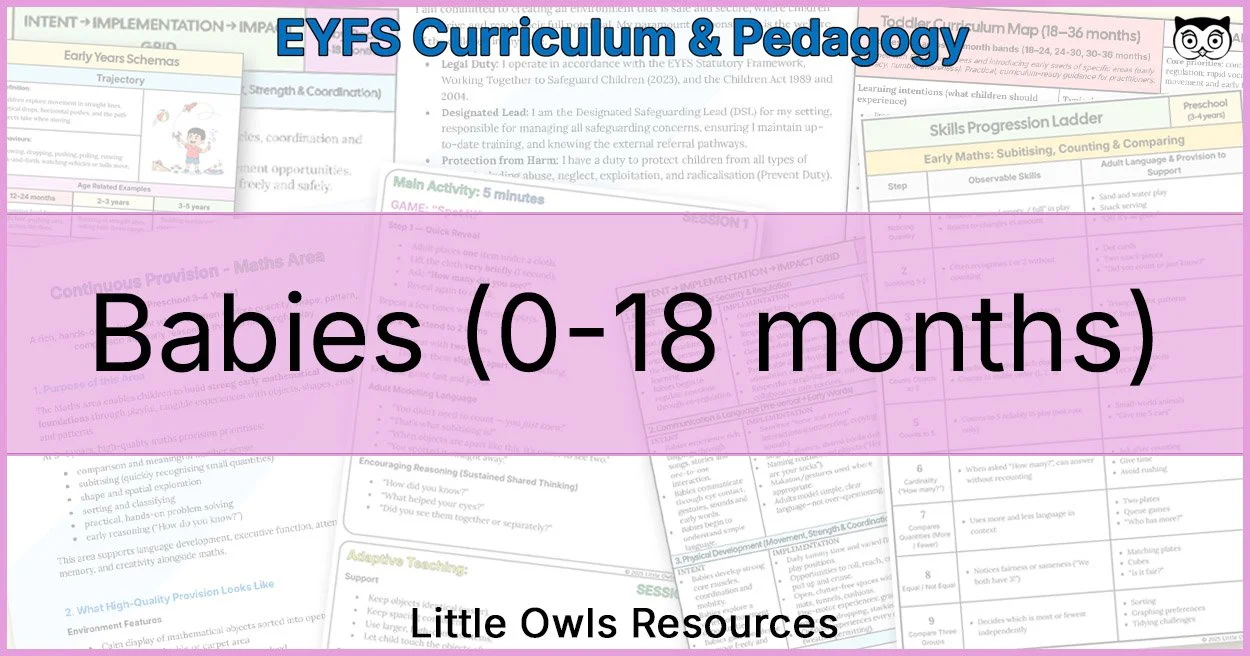
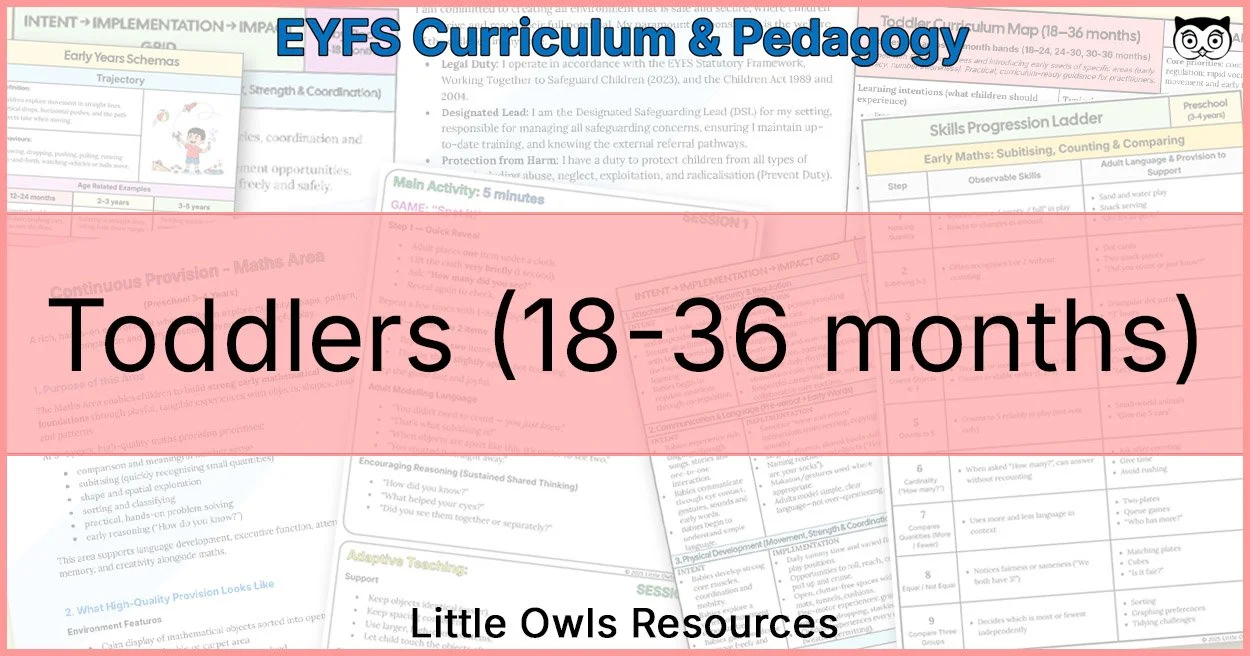
Looking for a different age group pathway?
Select the pathway that best reflects your role or the age group you work with. You do not need to use everything. (Some practitioners may use more than one pathway.)
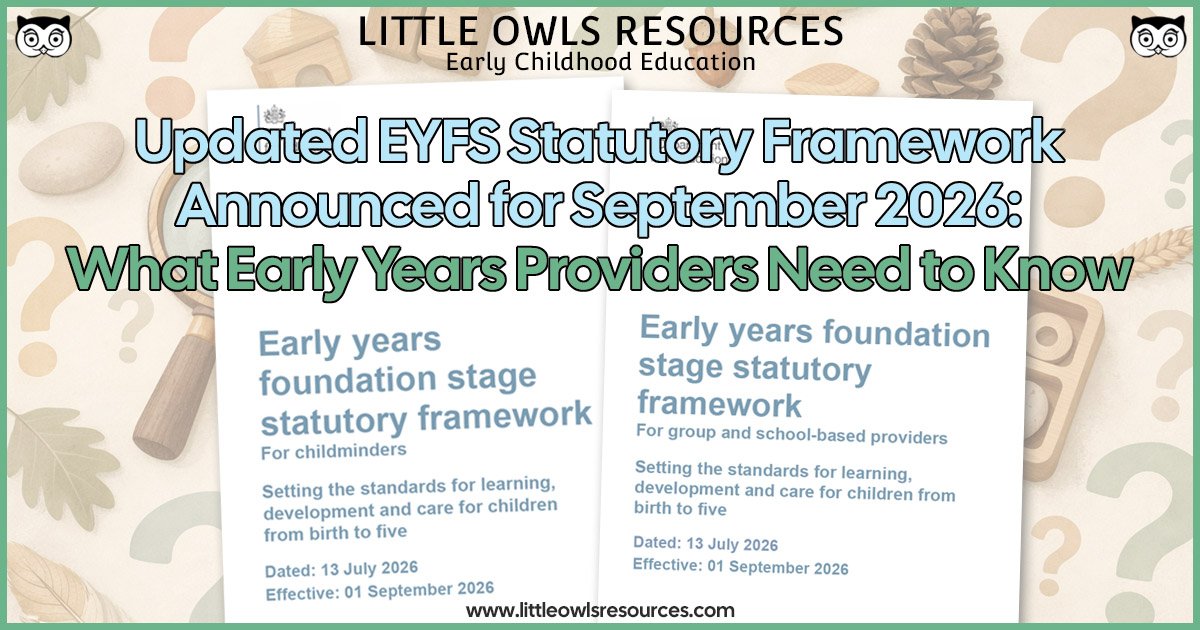
Latest EYFS Articles & Practical Guides | From Our Blog
Stay informed, get expert advice, and find inspiration from our collection of articles and useful external resources, tailored specifically for EYFS practitioners. We regularly publish in-depth articles to support you with current best practices, regulatory changes, and fresh ideas.






Are you looking for a specific resource or document for your provision?
Use our 🔍 Search Bar located at the top of every page.
Content within the EYFS Curriculum & Pedagogy Membership is provided as professional guidance and support. It reflects current understanding of the EYFS statutory framework, Development Matters and inspection expectations at the time of writing. Practitioners are responsible for applying professional judgement and ensuring practice aligns with current statutory requirements and their specific context.
All resources, experiences and environment arrangements must be risk assessed by the setting and used in accordance with individual children’s developmental stages, needs and supervision requirements. Practitioners must apply professional judgement and adapt practice to their setting, cohort and current statutory requirements.
Safeguarding Notice
Safeguarding-related content is provided to support professional understanding and reflective practice. It does not replace a setting’s safeguarding and child protection policy, local authority procedures, statutory guidance, or the role and decision-making responsibilities of the Designated Safeguarding Lead (DSL). All safeguarding concerns must be managed in line with current statutory requirements and local safeguarding partnership guidance.
Updated: January 2026