
Home › EYFS Curriculum & Pedagogy › Baby Room Curriculum & Pedagogy
Read our web document below or download here: DOCX 📝 | PDF 📄
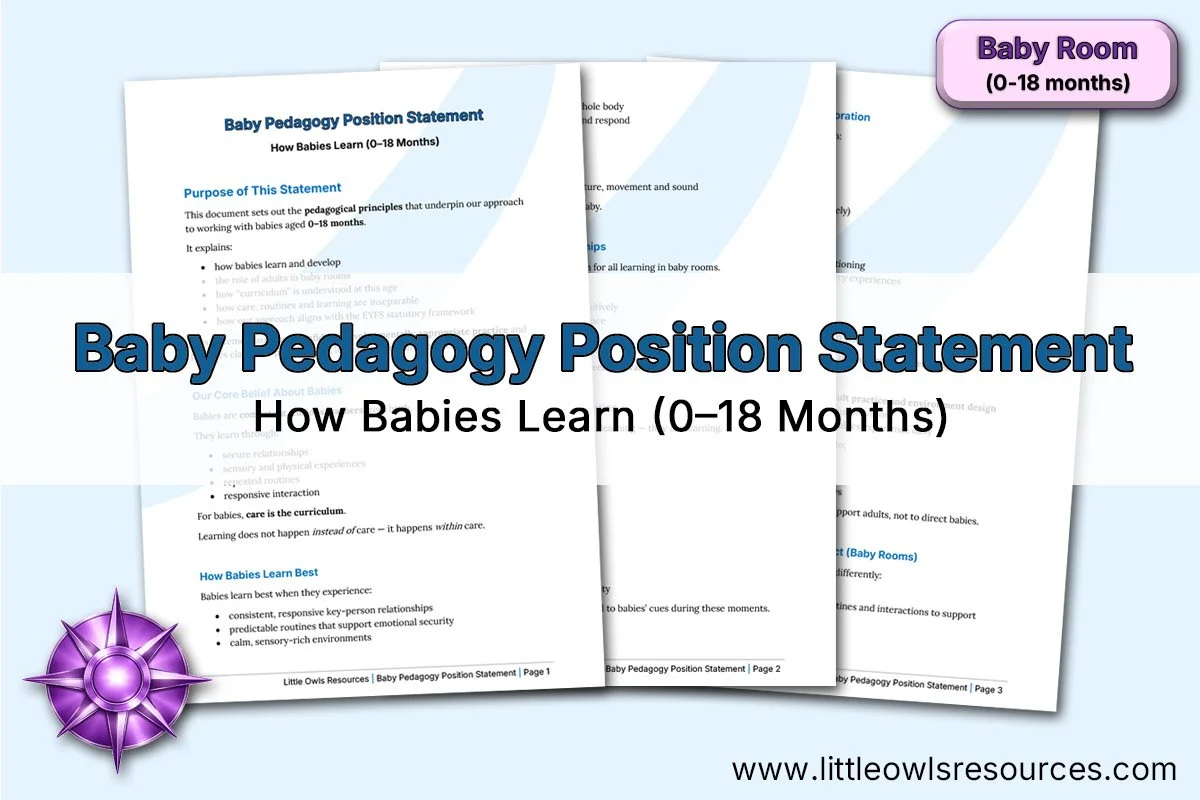
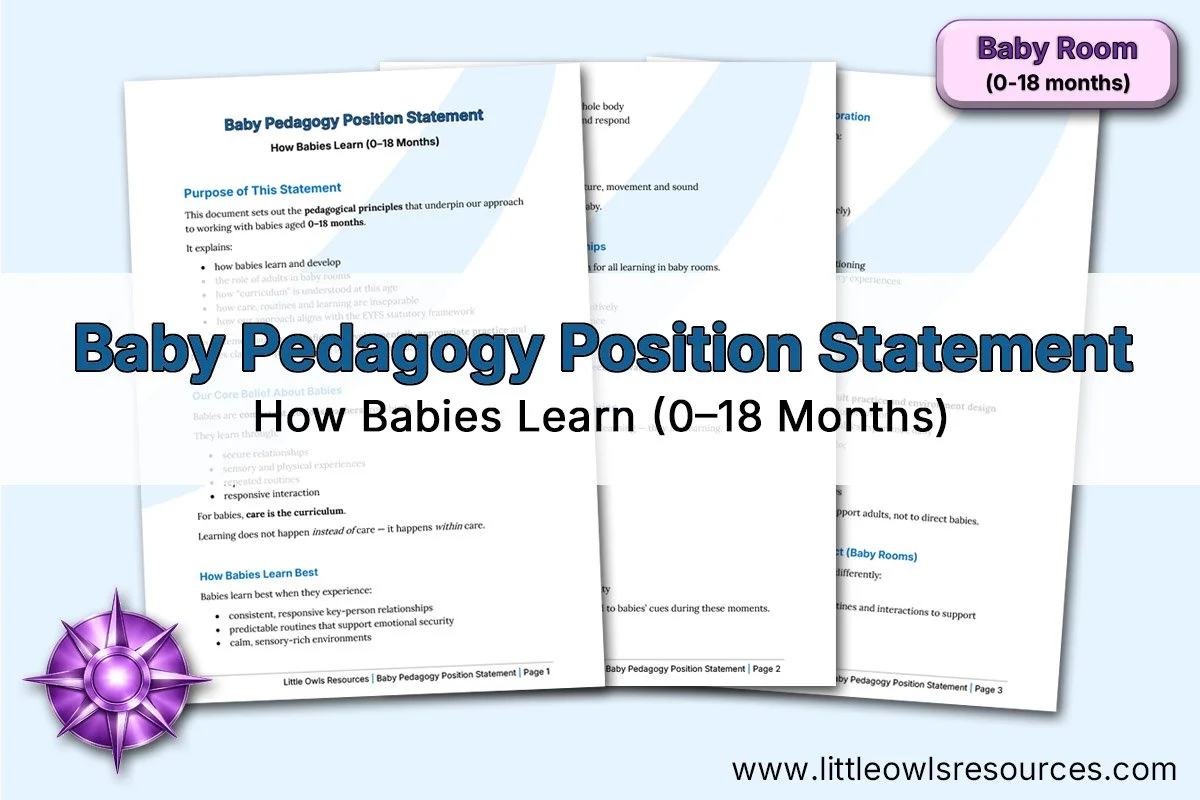
Baby Pedagogy Position Statement
How Babies Learn (0–18 Months)
Purpose of This Statement
This document sets out the pedagogical principles that underpin our approach to working with babies aged 0–18 months.
It explains:
how babies learn and develop
the role of adults in baby rooms
how “curriculum” is understood at this age
how care, routines and learning are inseparable
how our approach aligns with the EYFS statutory framework
This statement supports confident, developmentally appropriate practice and provides clarity for practitioners, leaders, parents and inspectors.
Our Core Belief About Babies
Babies are competent, curious learners from birth.
They learn through:
secure relationships
sensory and physical experiences
repeated routines
responsive interaction
For babies, care is the curriculum.
Learning does not happen instead of care — it happens within care.
How Babies Learn Best
Babies learn best when they experience:
consistent, responsive key-person relationships
predictable routines that support emotional security
calm, sensory-rich environments
time to explore with their whole body
attuned adults who notice and respond
Learning at this stage is:
non-linear
deeply individual
expressed through gaze, gesture, movement and sound
Progress looks different for every baby.
The Central Role of Relationships
Secure attachment is the foundation for all learning in baby rooms.
Adults support learning by:
responding promptly and sensitively
offering comfort and reassurance
co-regulating emotions
building trust through consistency
Babies learn because they feel safe, seen and valued.
Routines as Learning Opportunities
Daily routines are not interruptions to learning — they are learning.
Routines such as:
feeding
nappy changing
sleep and rest
dressing and transitions
are rich opportunities for:
communication
emotional connection
sensory exploration
developing trust and predictability
Adults slow down, narrate, and respond to babies’ cues during these moments.
Sensory and Physical Exploration
Babies explore the world through:
touch
movement
sound
sight
taste (safely and appropriately)
Environments are designed to:
invite exploration
support movement and positioning
offer safe, open-ended sensory experiences
Repetition is welcomed and valued.
Understanding “Curriculum” in Baby Rooms
In baby rooms, curriculum does not mean content or teaching.
Instead:
curriculum intent describes adult practice and environment design
it supports consistent, thoughtful provision
it helps adults reflect on what babies experience daily
There are no expectations for babies to:
meet outcomes
engage in planned activities
demonstrate progress in set ways
Curriculum documentation exists to support adults, not to direct babies.
Intent, Implementation and Impact (Baby Rooms)
For babies, these terms are understood differently:
Intent
How we design environments, routines and interactions to support wellbeing and development.Implementation
The quality of responsive care, interaction and observation provided by adults.Impact
Seen through babies’ wellbeing, engagement, curiosity, communication signals and growing security.
Impact is never measured through attainment.
Observation, Assessment and Planning
Observation in baby rooms is:
narrative
ongoing
focused on wellbeing and engagement
Assessment is used to:
understand individual babies
inform responsive care
identify support needs early
It is not used to:
compare babies
track progress against milestones
evidence curriculum coverage
Planning is flexible and always led by observation.
Inclusion, SEND and Early Identification
Inclusive practice begins in babyhood.
Our approach:
assumes competence in every baby
values all forms of communication
prioritises early support through environment and interaction
works closely with families
Concerns are:
recorded sensitively
acted on promptly
shared appropriately
Early identification is supportive, not diagnostic.
Partnership with Parents and Carers
Parents are babies’ first educators.
Strong partnerships are built through:
daily communication
shared routines and preferences
transparent observation and documentation
respect for family knowledge
Consistency between home and setting supports babies’ wellbeing and development.
How Baby Practice Leads Into Toddlerhood
High-quality baby practice supports a smooth transition into toddler rooms by fostering:
emotional security
curiosity
physical confidence
early communication
Babies move on when they are developmentally ready, not because of age alone.
Summary
In our baby rooms:
relationships come first
care and learning are inseparable
routines are rich learning opportunities
adults observe, respond and support
babies are never rushed
This approach reflects:
the EYFS statutory framework
Development Matters guidance
current best practice in early childhood education
It ensures babies are supported with respect, sensitivity and care, laying the strongest possible foundations for lifelong learning.
Document Updated: January 2026
Recommended next read

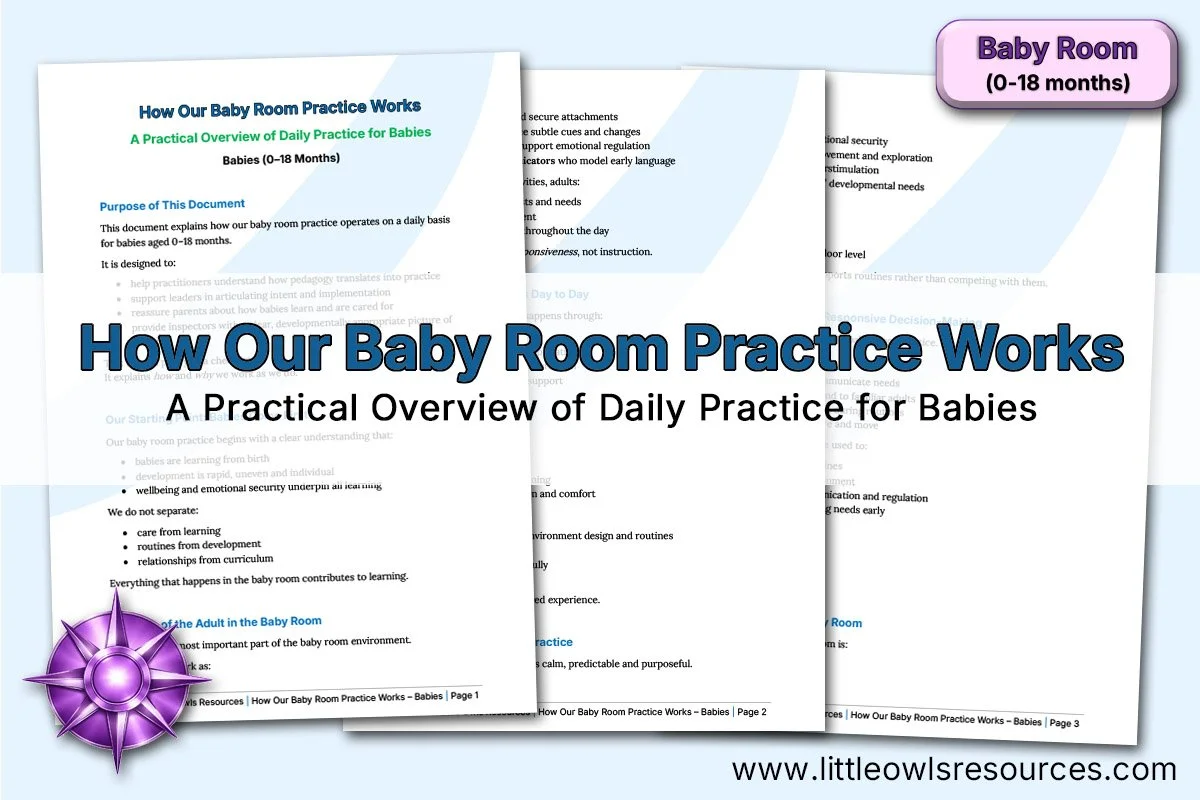
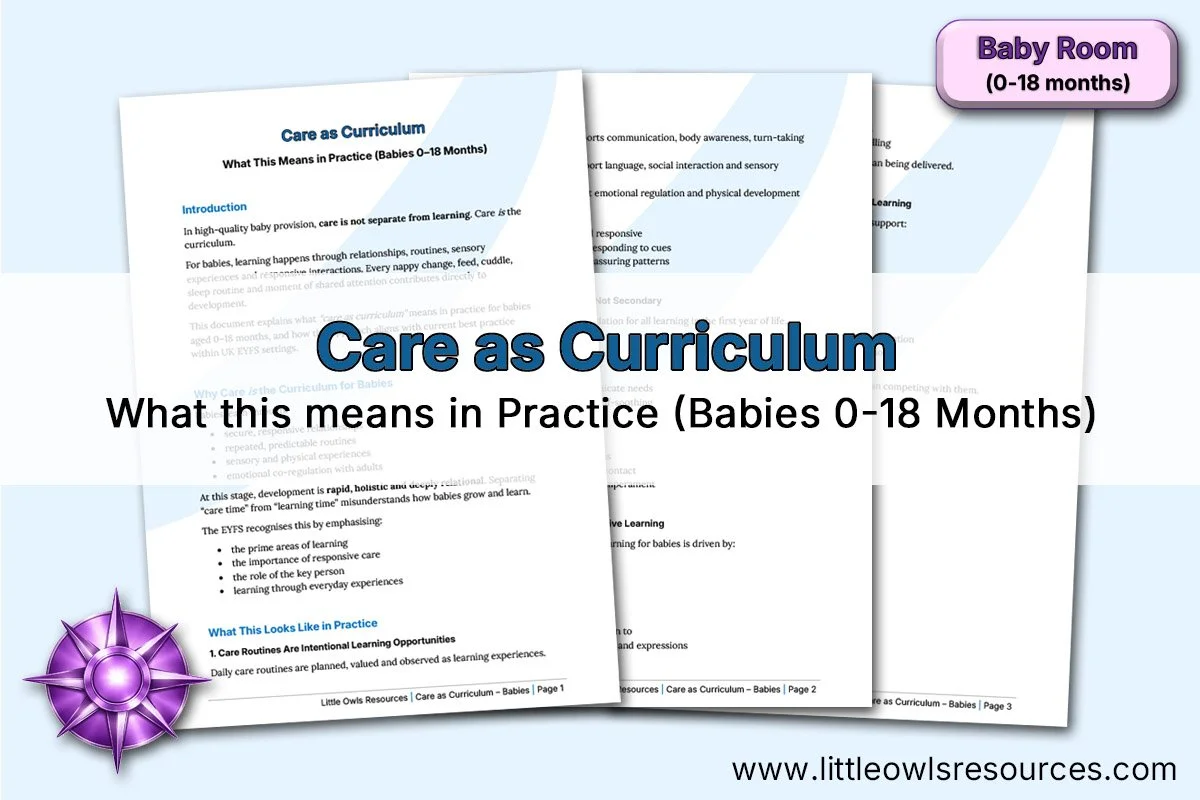
Or read our ‘Little Owls Resources’ Curriculum Intent Statement’
Additional Documents | Professional Membership Contents (Babies 0-18 months)
Navigate our Curriculum & Pedagogy guidance documents here.
Pedagogical identity:
Relationship-led, care-centred baby practice where routines, interaction and sensory experience are the curriculum.
-
👉 This section protects developmentally appropriate practice.
-
👉 These documents support adult understanding — not expectations for babies.
Baby Curriculum Maps - Developmental progression across age bands(0–3 months | 3–6 months | 6-9 months | 9-12 months | 12-18 months)
-
👉 Observation informs interaction, routines and environment.
-
👉 The environment supports exploration, movement and communication.
-
👉 Care routines are central to learning and wellbeing.
Transition & Sleep Routine Record Pack
Daily Transition Record
Individual Sleep Routine Profile
Review Template
-
👉 Language is built through interaction, not instruction.
-
👉 Planning supports adults — it never directs babies.
‘Intent - Implementation - Impact’ Reference Grids(Emotional, Communication, Physical, Sensory, Social, Problem-Solving, Independence)
-
👉 Proportionate, sensitive and statutory practice.
Progress Check at Age 2(looking ahead)
Report Template
Practitioner Guidance
-
👉 Early support is relational, preventative and respectful.
SEND Identification & Next Steps Pack | Babies
What to Look For
What Evidence to Collect
Practical Next Steps
A practical Toolkit for Early Years Practitioners
Inclusion Through Environment & Interaction
-
👉 Strong partnerships support consistency and trust.
-
👉 Transitions are emotional, not academic.
Additional Whole-Setting Guidance | for Professional Members
Explore our whole-setting guidance below, including overarching curriculum and pedagogy documents, early years schemas and EYFS setting policies.
-
-
Early Years Schemas - Practitioner Toolkit | EYFS Birth-5
↪ Schema Cards (definition, behaviours, age-related examples, enabling resources)
↪ Schema Observation & Responsive Provision Planning Template
-
EYFS Group Setting Policies Pack
↪ x 25 Policy Documents
↪ Policy Sign-Off and Confirmation Document
↪ EYFS Setting Policy Folder Contents List
Childminder Setting Policies Pack
↪ x 25 Policy Documents
↪ Childminder Assistant or Volunteer Policy Sign-Off and Confirmation Document
↪ Childminder Policy Folder Contents List
-
↪ Clear, practitioner-friendly explanations of key curriculum and pedagogy terms used throughout our guidance.
Looking for a different age group pathway?
Select the pathway that best reflects your role or the age group you work with. You do not need to use everything. (Some practitioners may use more than one pathway.)
What is Professional Membership?
Find our more about our Professional guidance for confident, reflective EYFS practice (Birth–5)
Alternatively, learn more about and explore our printable provision resources.
Thousands of ready-to-use printables to support provision, organisation, routines and learning across EYFS.
Latest EYFS Articles & Practical Guides | From Our Blog
Stay informed, get expert advice, and find inspiration from our collection of articles and useful external resources, tailored specifically for EYFS practitioners. We regularly publish in-depth articles to support you with current best practices, regulatory changes, and fresh ideas.