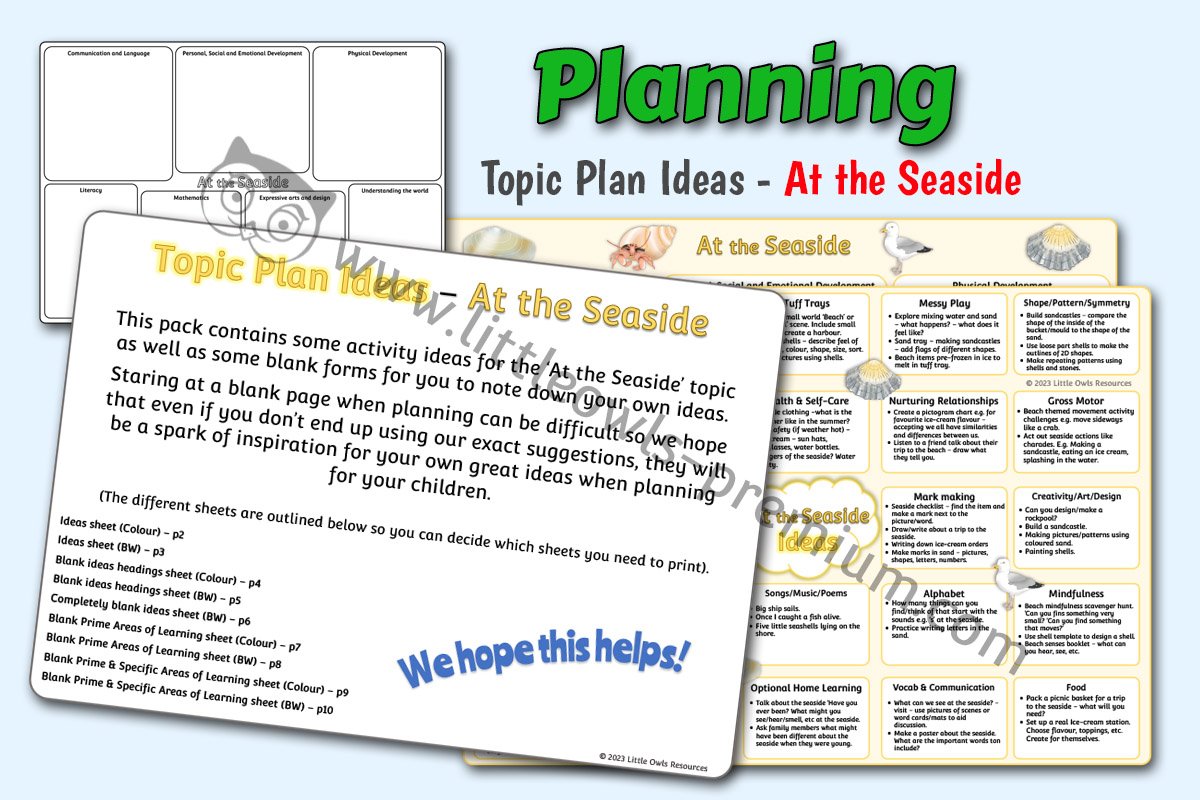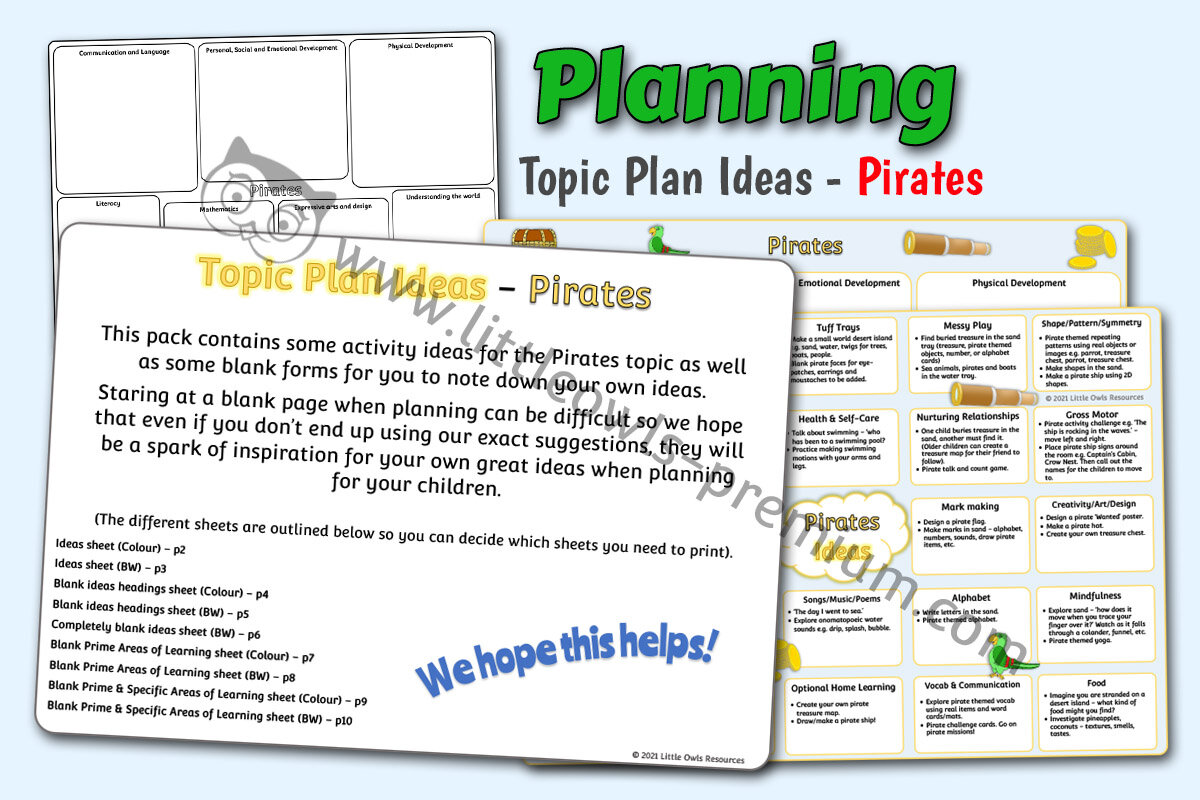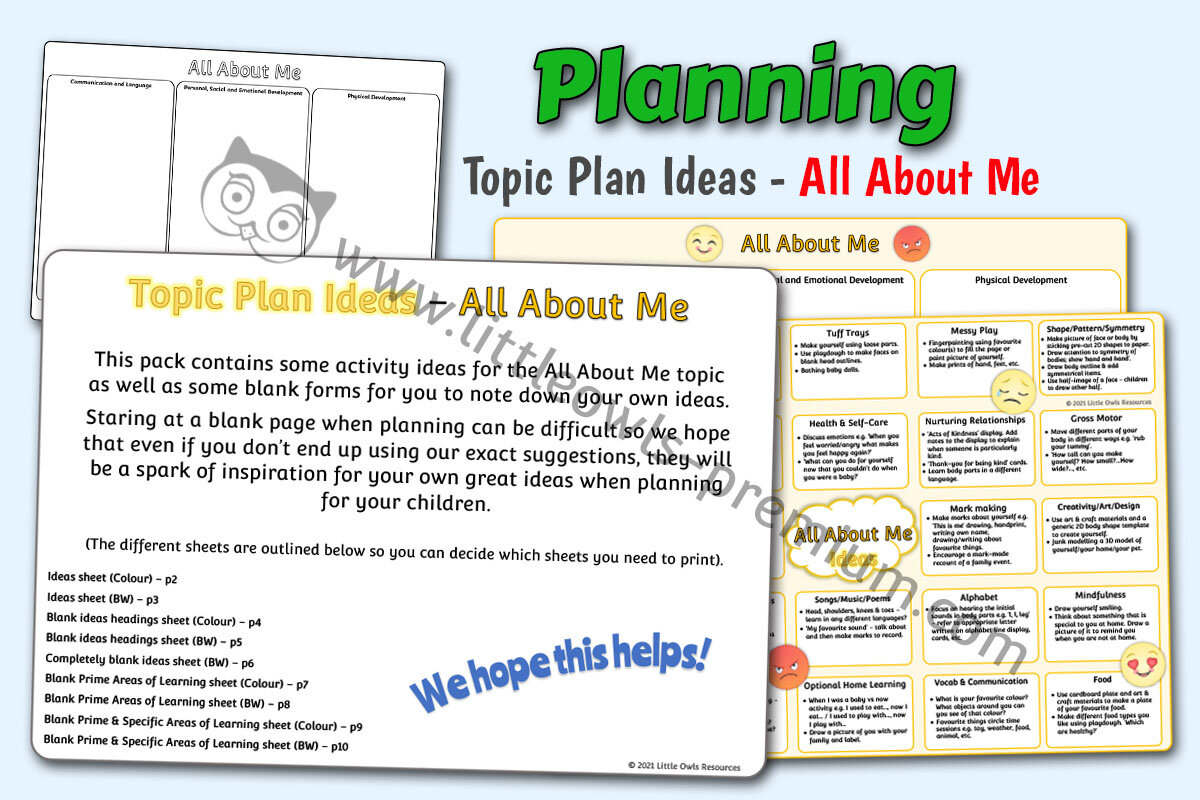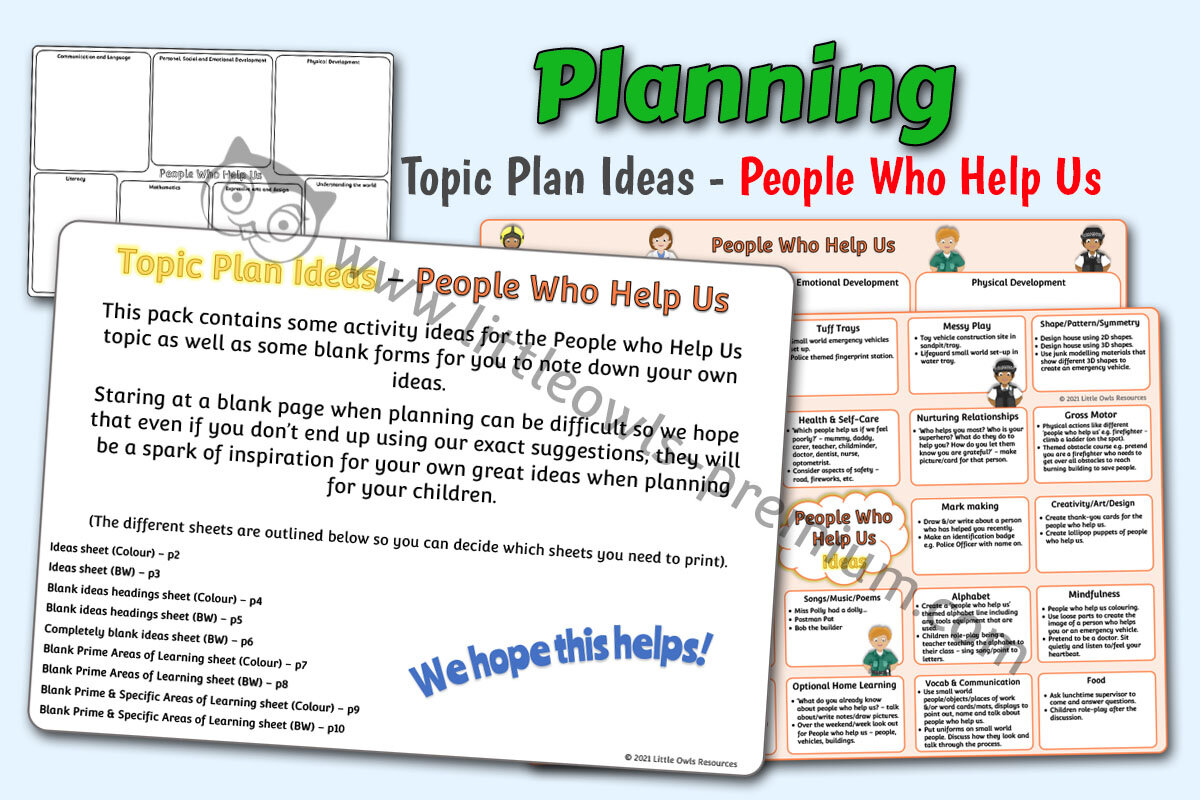
A practical, flexible approach to planning across baby rooms, toddler rooms and preschool provision
Planning in nursery settings needs to balance:
consistency across teams
clear curriculum intent
responsive, child-led practice
Unlike schools or childminding, nursery planning sits in the middle:
👉 structured enough for team coherence
👉 flexible enough to respond to children
High-quality EYFS planning in nurseries is:
observation-led
environment-focused
interaction-driven
developmentally appropriate across age phases
Browse our page or go directly to the Nursery Planning Support you require using the text links below:
Nursery Planning Pedagogy
Explore current best practice surrounding UK nursery planning. Expand the subheadings below using the cross symbols on the right.
-
Planning in nurseries is not one fixed system.
It typically includes a combination of:
long-term curriculum thinking (intent and progression)
medium-term organisation (themes, projects or focus areas where appropriate)
short-term responsiveness (weekly reflection, in-the-moment planning)
Across all rooms, planning supports:
consistent staff understanding
high-quality interactions
purposeful environments
clear communication with parents and inspectors
👉 Planning supports practice — it does not direct children.
-
A key strength of strong nursery practice is recognising that:
👉 planning must change as children develop
Baby Rooms (0–18 months)
Planning focuses on:
care routines as the curriculum
emotional security and attachment
sensory and physical exploration
There are:
no planned activities
no learning objectives
Planning supports:
adult response
routines
environment
Toddler Rooms (18–36 months)
Planning focuses on:
exploration and schemas
movement and repetition
emerging language and independence
Planning may include:
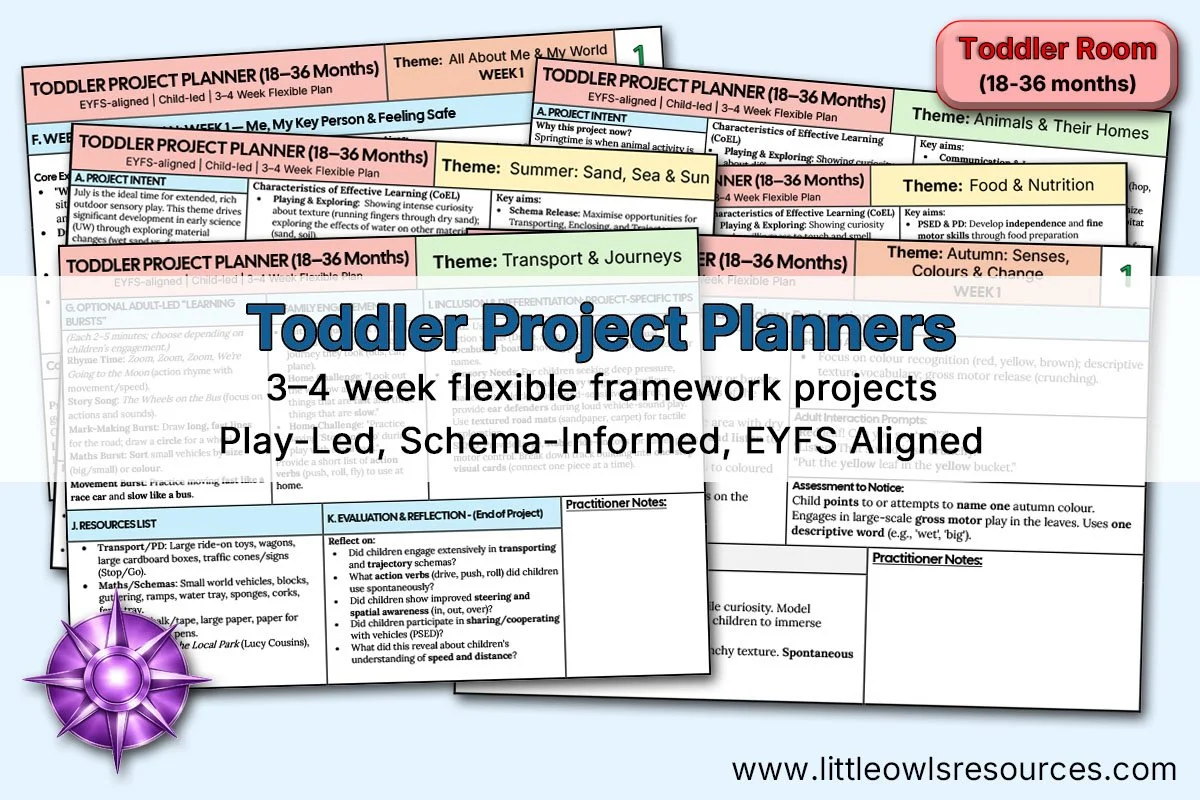
flexible project or theme contexts (not directives)
observation-led enhancements
environment adjustments
Preschool (3–4 years)
Planning begins to include:
clearer curriculum organisation
themes or topics to structure learning
short adult-led teaching moments
Balanced with:
strong continuous provision
child-initiated play
responsive interaction
Reception (4–5 years, where applicable)
Planning becomes more structured:
defined curriculum progression
systematic teaching (phonics, maths, writing)
observation–assessment–planning cycle
While still:
play-based
developmentally appropriate
👉 Strong nurseries understand these differences and plan accordingly.
-
Across all rooms, planning begins with:
Observation
Practitioners notice:
interests
behaviours
communication
emotional responses
Assessment (informal and proportionate)
What does this tell us about:
development
wellbeing
next support needed
Planning (response)
Adults respond by:
adapting provision
adjusting interaction
introducing experiences
supporting specific needs
👉 This cycle happens continuously — not just on paper.
-
In nursery settings:
👉 continuous provision is the core of planning
Planning focuses on:
what is available every day
how areas are set up
how children access resources
how environments are adapted
This includes:
indoor provision areas
outdoor learning spaces
sensory and exploratory resources
Enhancements may be added to:
reflect interests
introduce new concepts
extend play
👉 The environment carries much of the curriculum.
-
Themes and projects can be helpful in nursery settings — when used appropriately.
They may:
provide shared experiences
support staff organisation
introduce new vocabulary and ideas
However, they should:
remain flexible
respond to children’s interests
never replace child-led learning
👉 Themes are a context, not a curriculum.
Your planning might draw on:
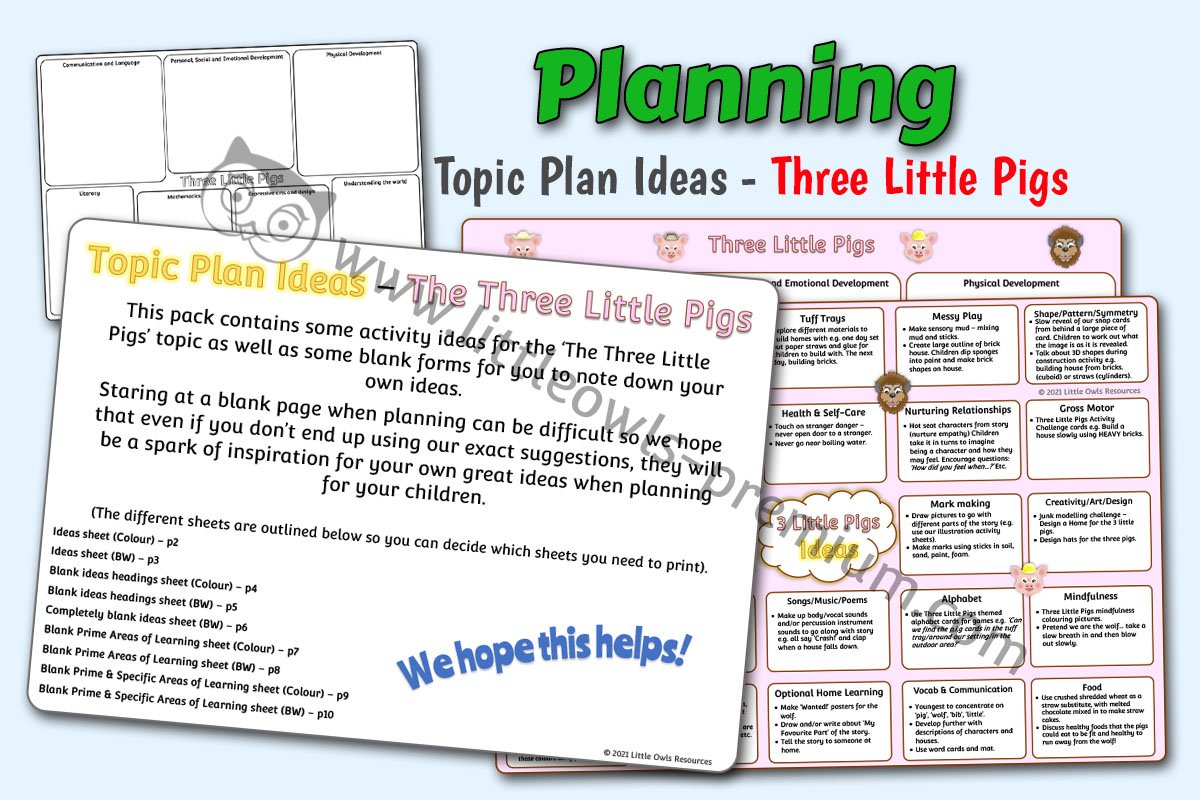
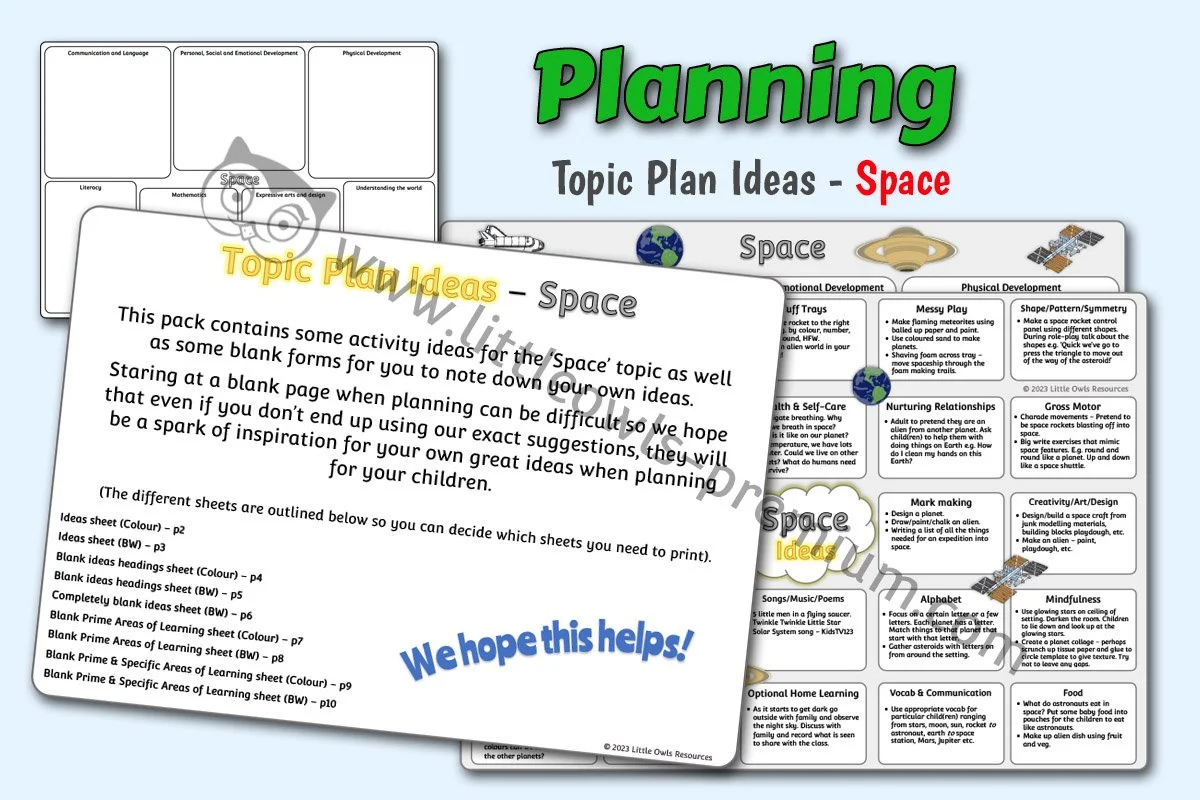
themed provision ideas
seasonal or celebration-based experiences
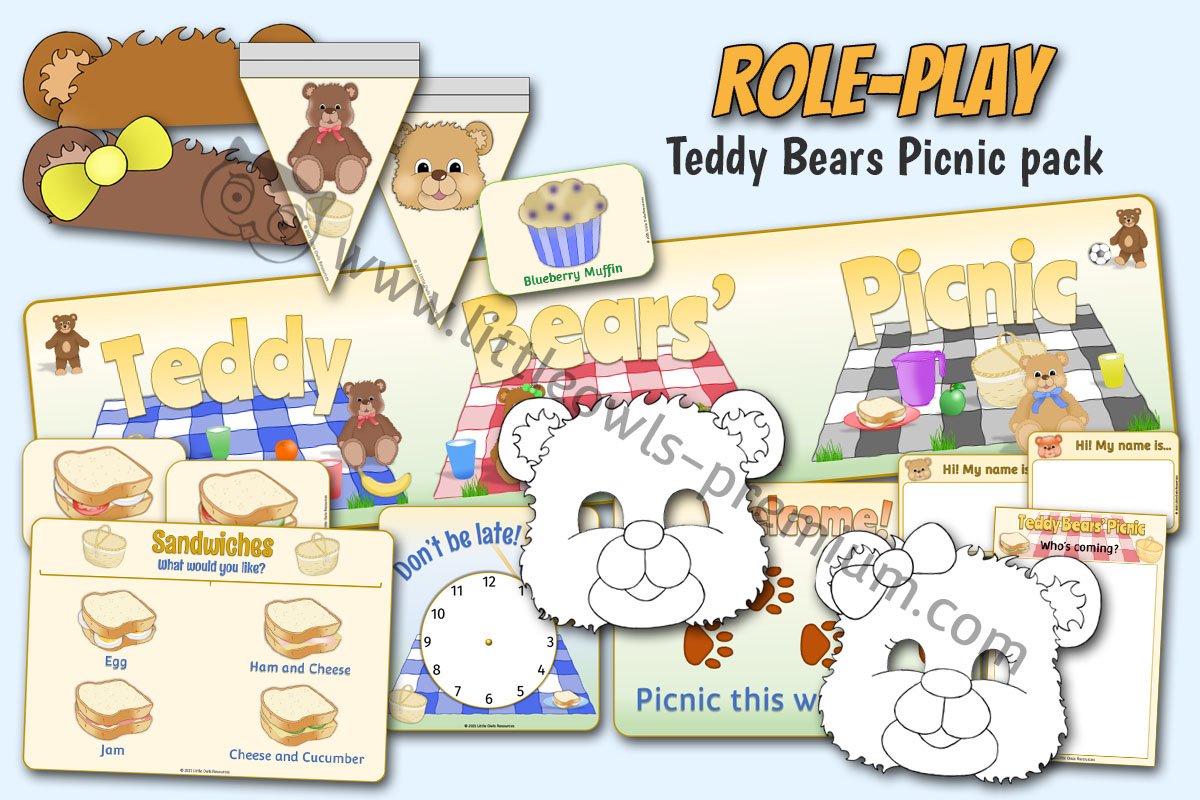
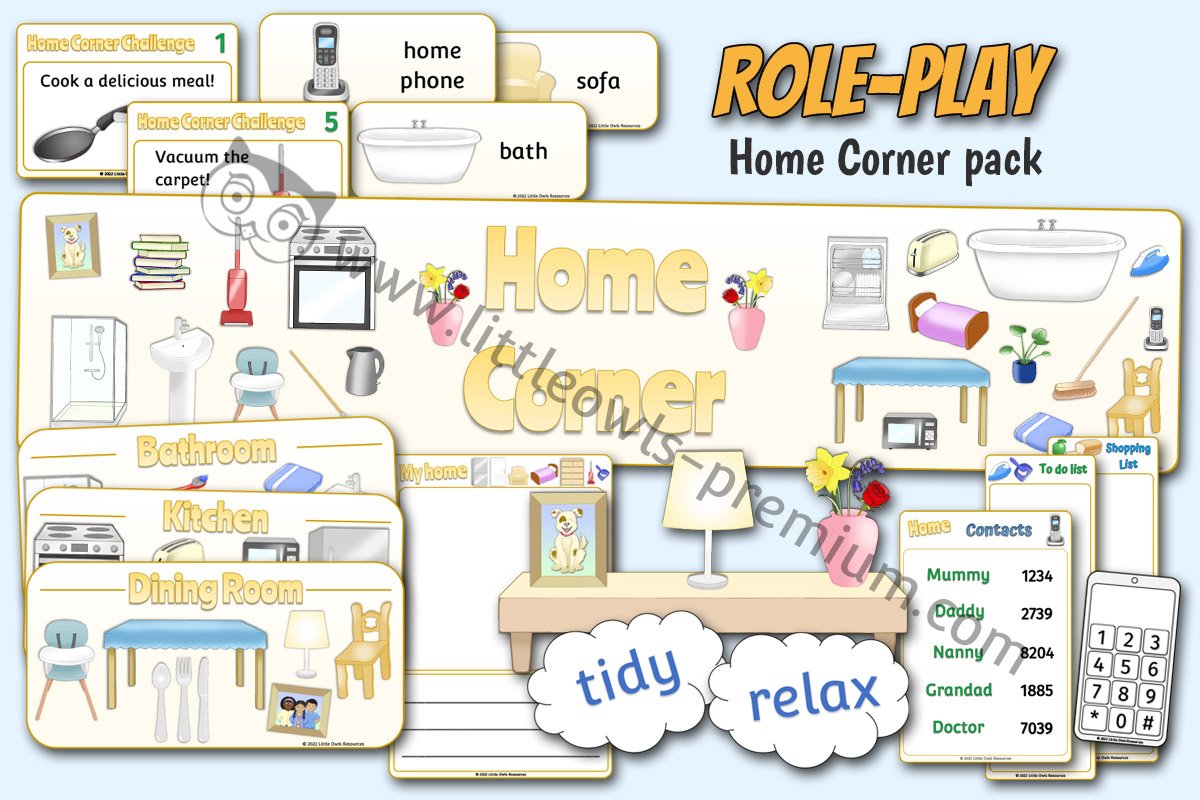
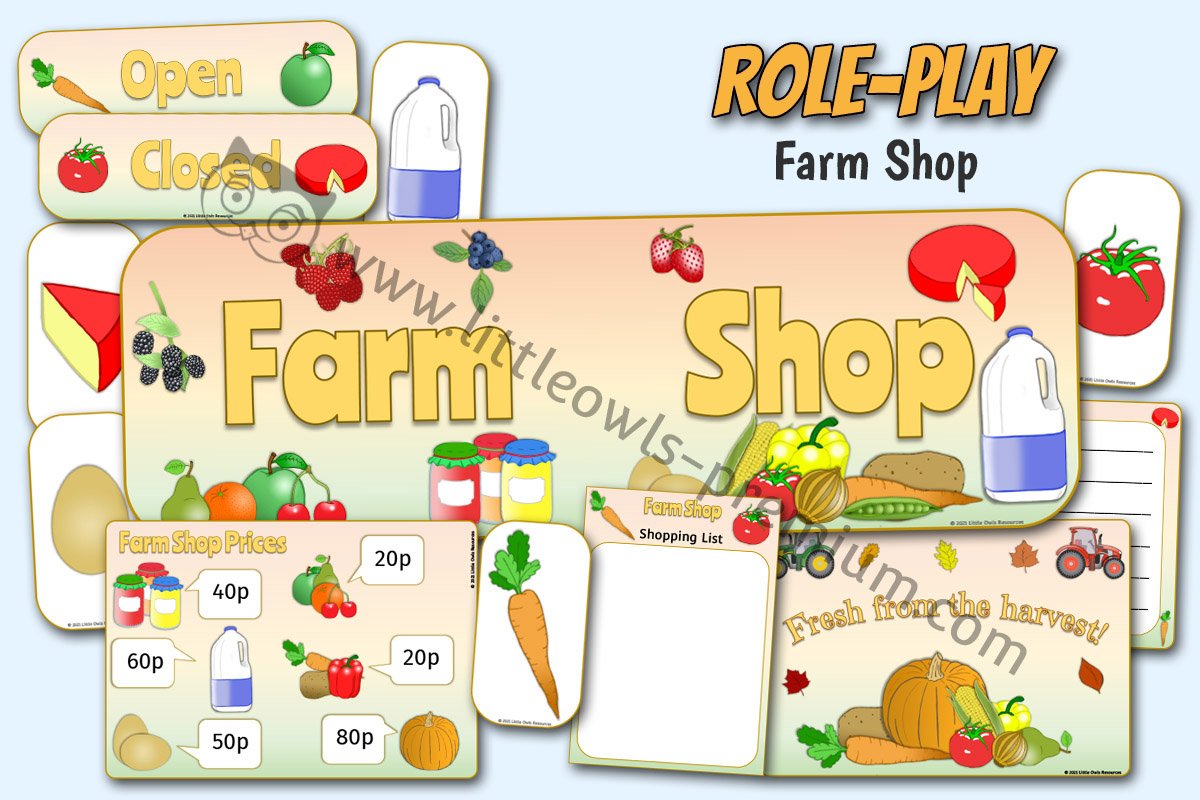
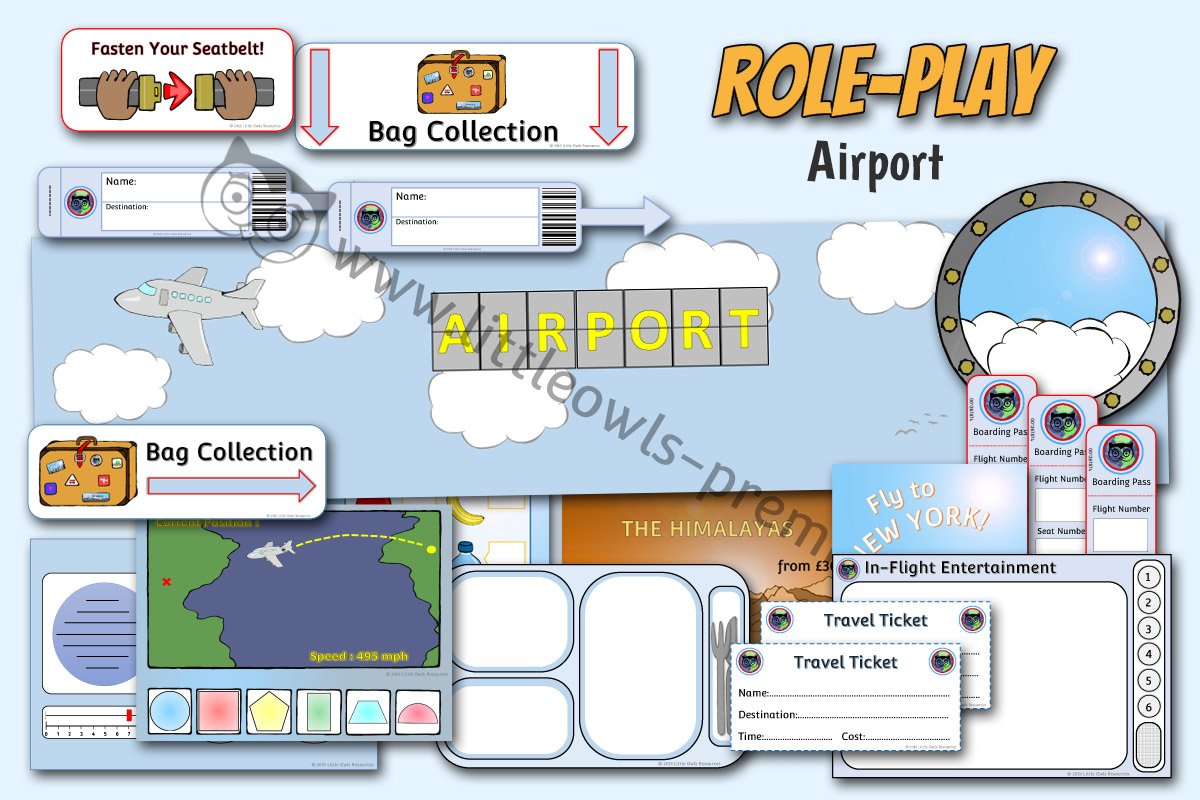
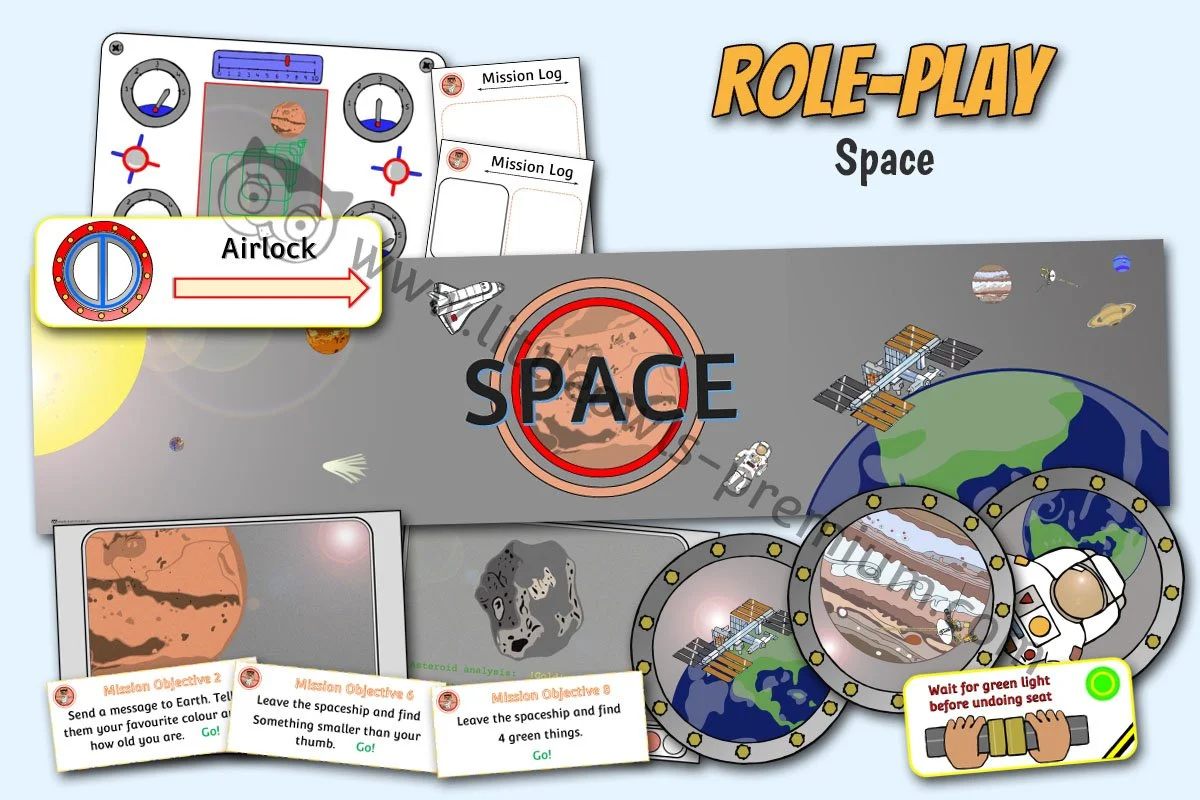
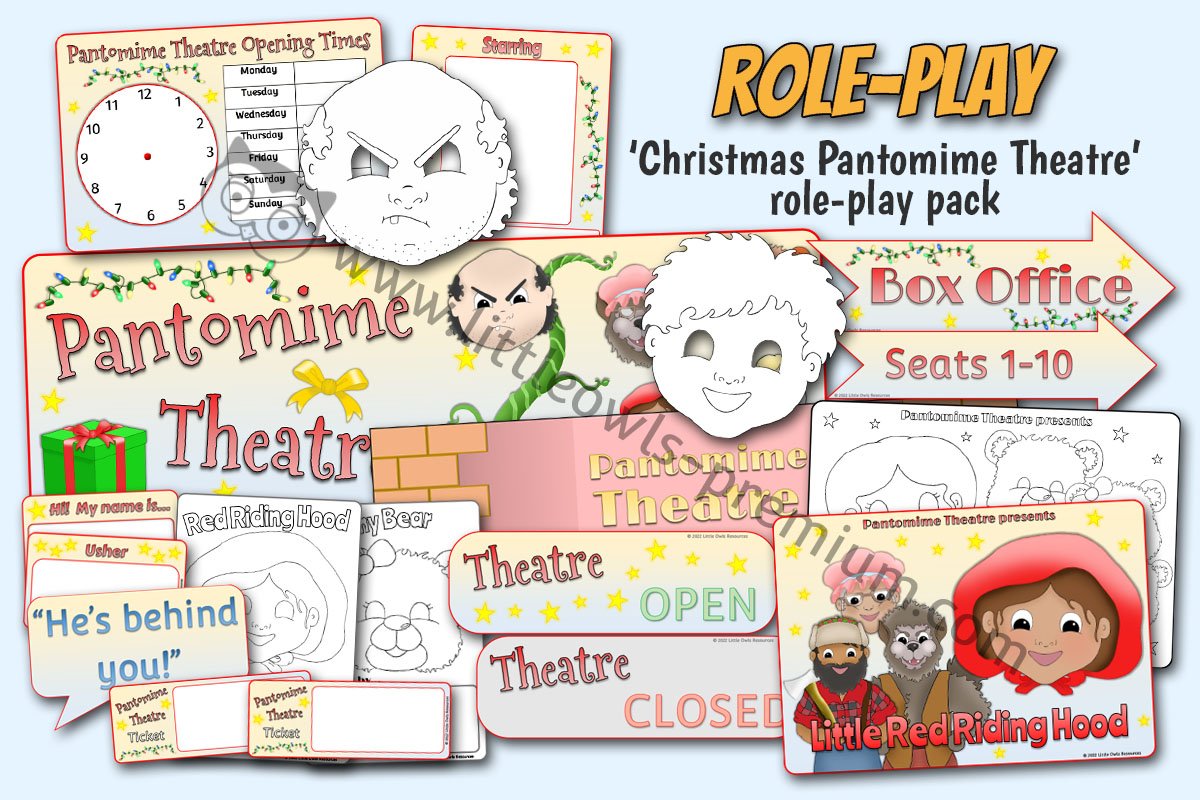
role-play enhancements
area-of-learning resources
👉 But always with adaptation, not prescription
-
Nursery settings require shared approaches.
Planning helps teams to:
agree routines and expectations
maintain consistency between staff
support key-person relationships
ensure all children receive consistent care
This is especially important where:
multiple practitioners work in one room
children attend different sessions
staff work across shifts
👉 Consistency supports emotional security and learning.
-
Even within group provision:
👉 planning must remain individual
This includes:
adapting for different developmental stages
responding to SEND and additional needs
supporting emotional regulation
aligning with home routines
Planning may involve:
targeted support notes
small group opportunities
environment adjustments
👉 The child remains central — not the plan.
-
High-quality nursery planning does not require excessive documentation.
Settings may use:
weekly planning templates
provision maps
observation notes
reflection sheets
But:
paperwork should never replace interaction
planning should not become task-driven
documentation should remain proportionate
👉 More paperwork does not equal better practice.
-
During inspection, nurseries should be able to explain:
their curriculum intent
how planning supports children’s needs
how environments enable learning
how staff respond in the moment
Inspectors are not looking for:
complex planning formats
detailed activity plans
excessive evidence
They are looking for:
👉 clear thinking, consistent practice and strong interactions
Explore our Nursery Planning Resources
On this page you will find Nursery Curriculum & Pedagogy planning guidance and Premium printable provision.
These resources are designed to:
support team consistency
reduce workload
align with EYFS expectations
strengthen inspection confidence
Free EYFS Nursery Planning Resources
Browse our page or go directly to the Nursery Planning Resources you require using the text links below:
Core Curriculum Planning & Guidance Materials
Curriculum & Progression
(baby, toddler, preschool and reception pathways, curriculum maps and progression guidance & intent–implementation–impact support)
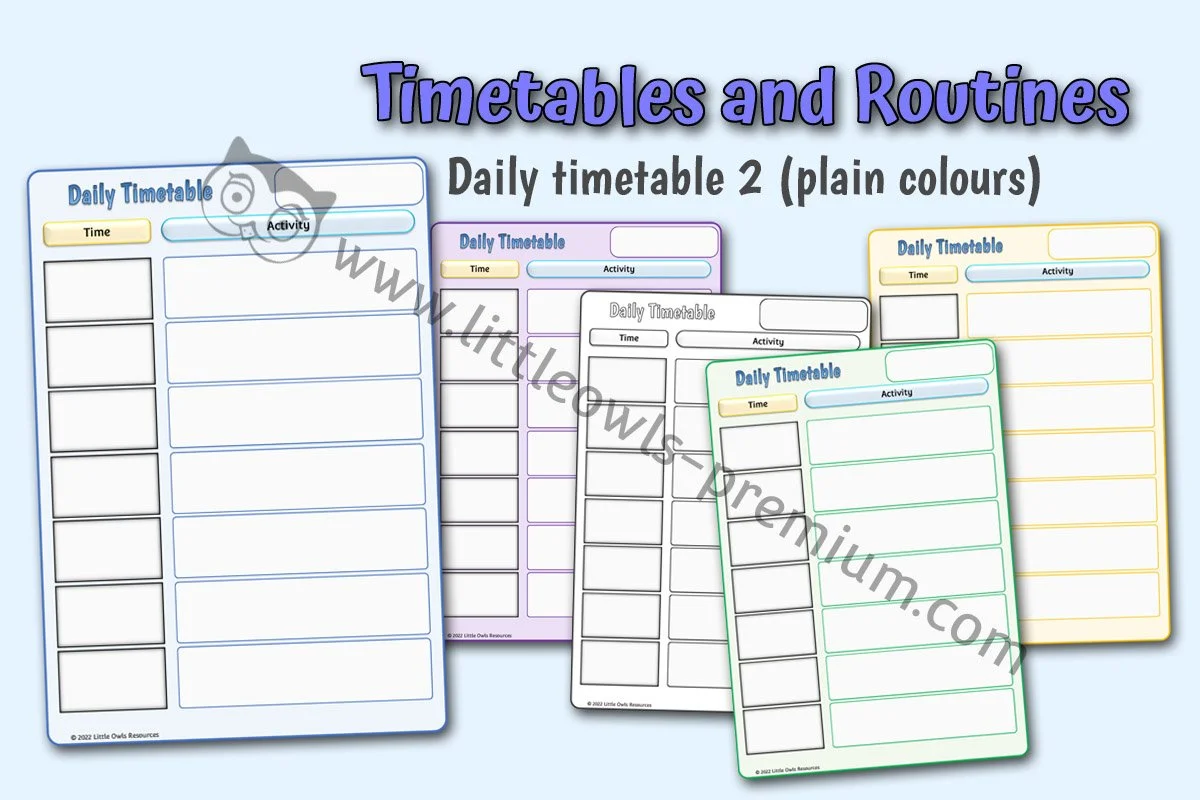
Planning Tools
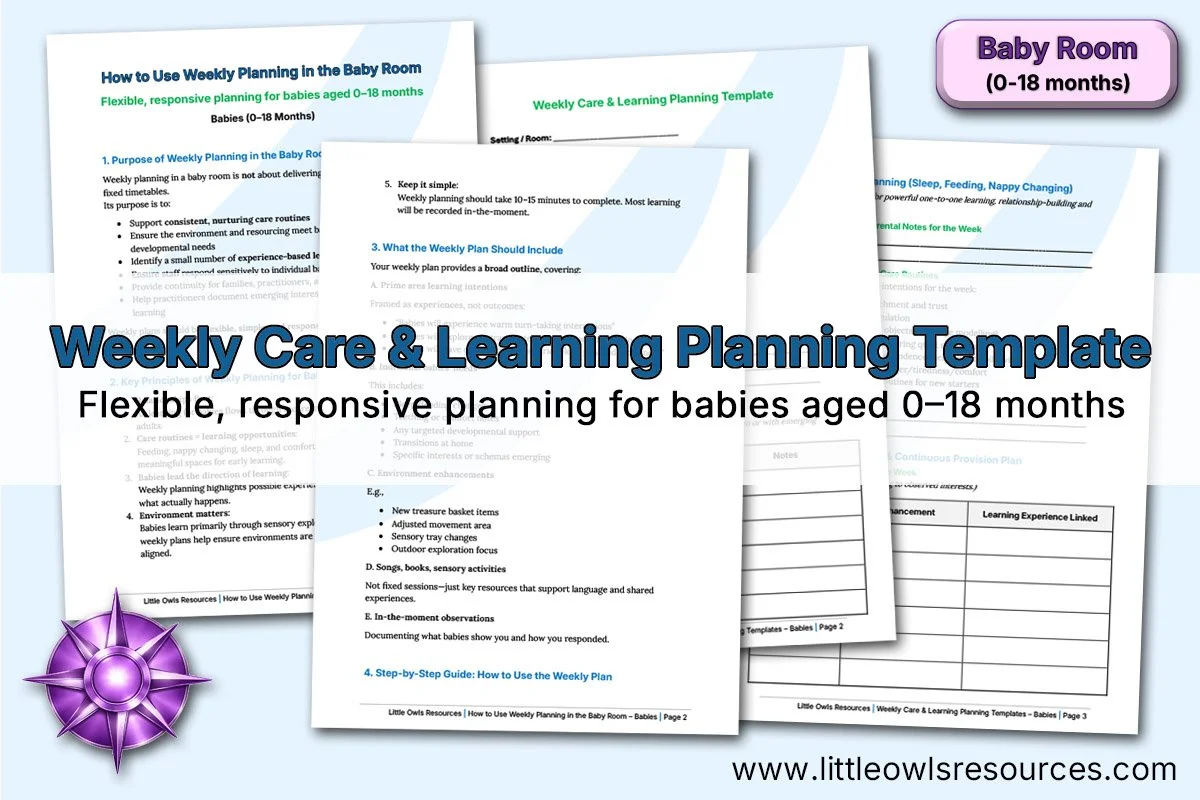
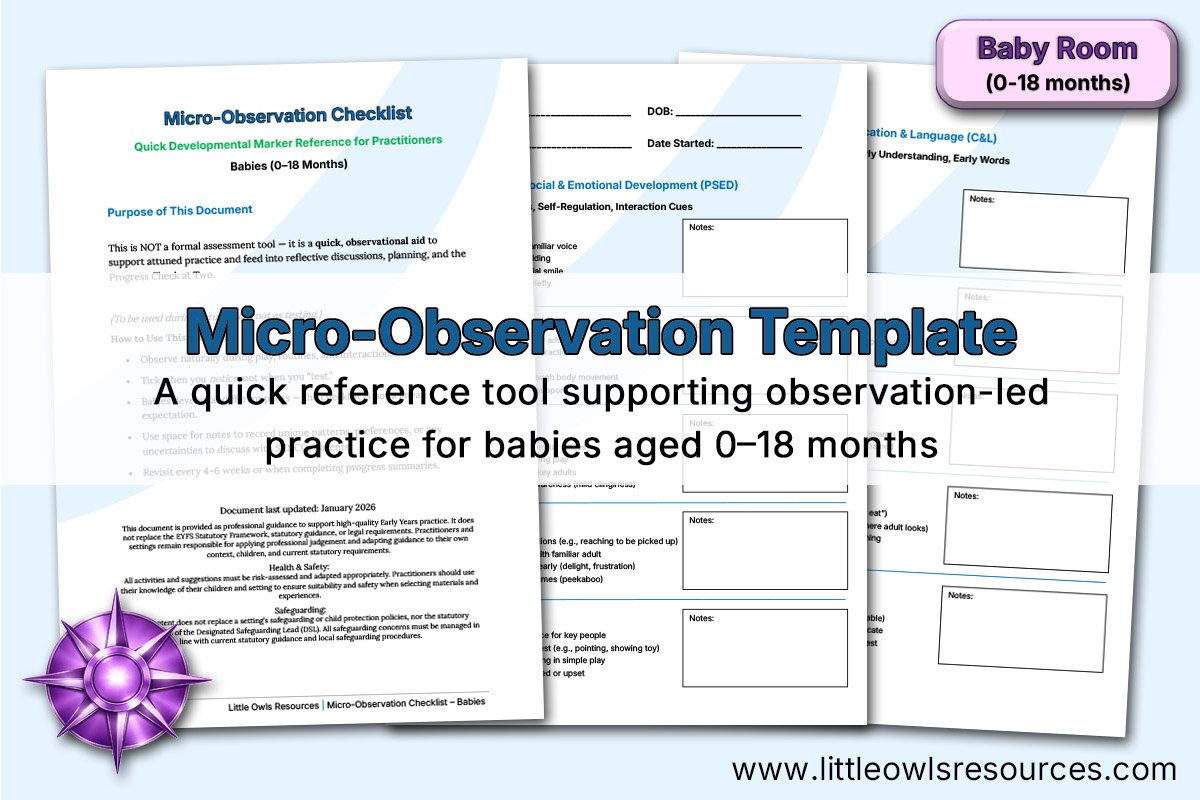
(weekly planning templates, observation and reflection tools & responsive planning guidance)
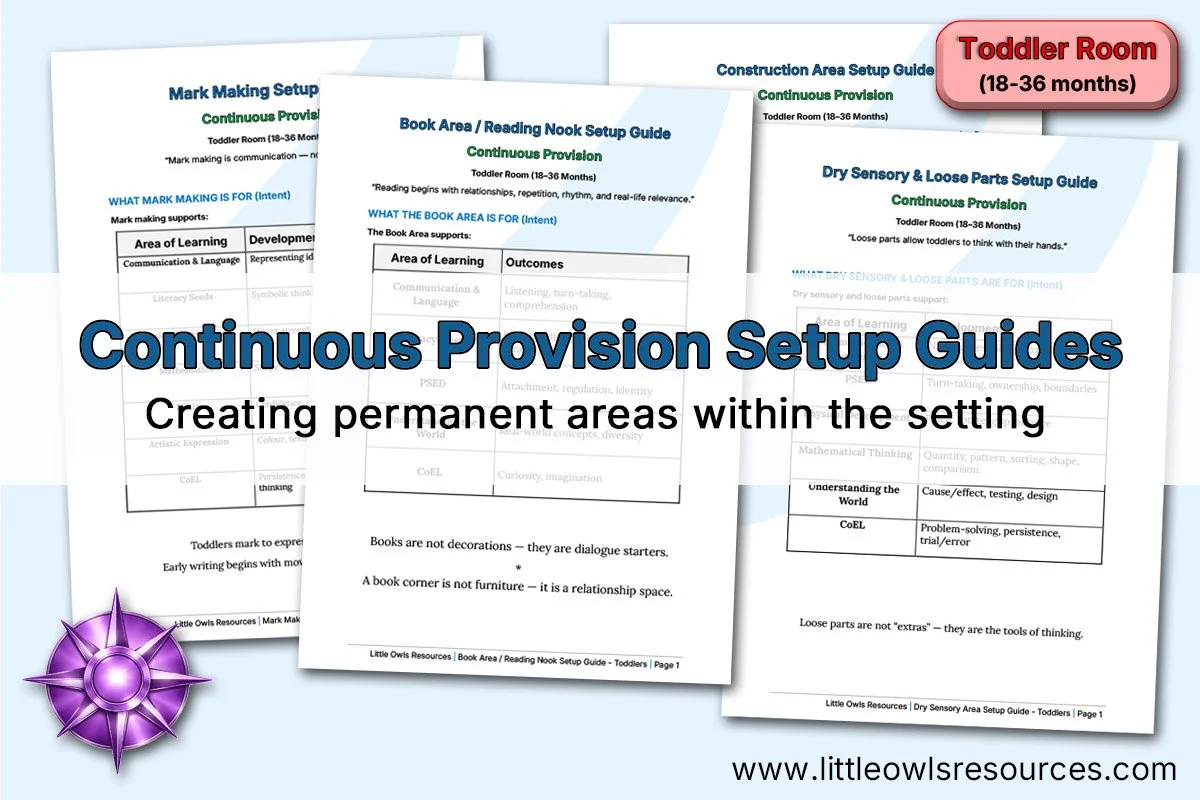
Continuous Provision
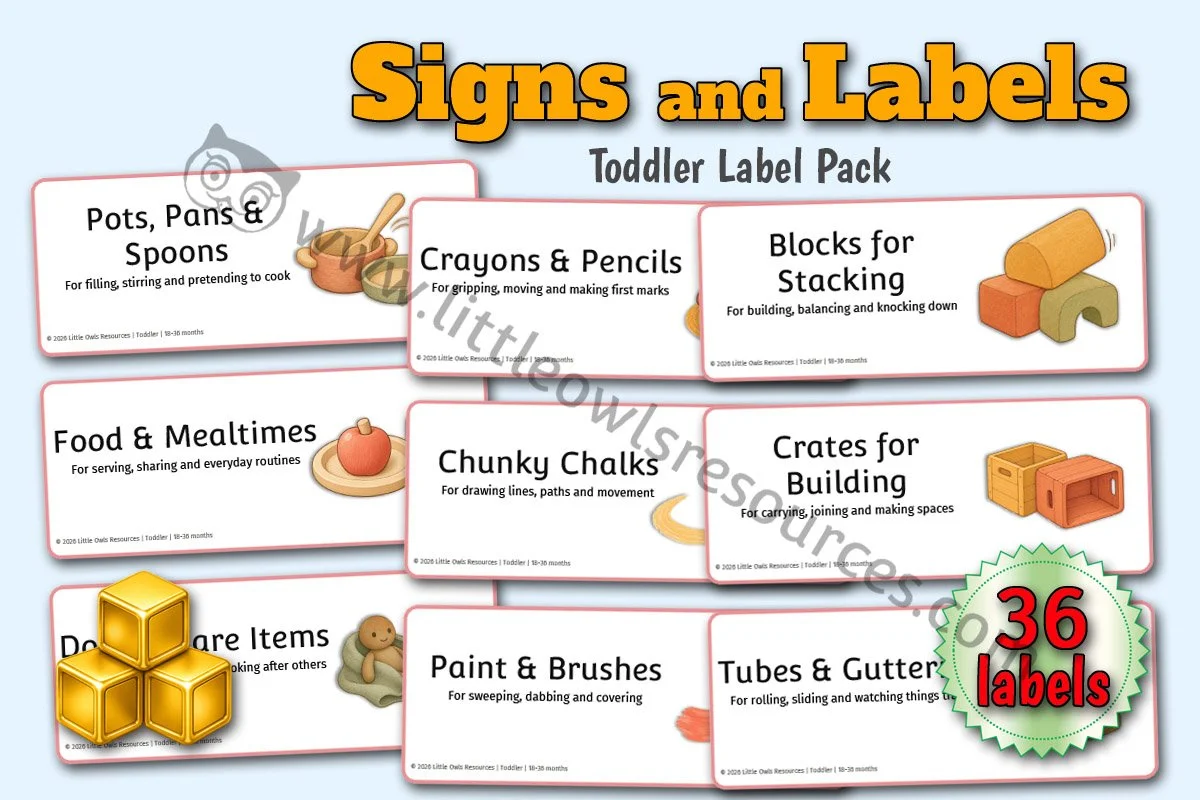
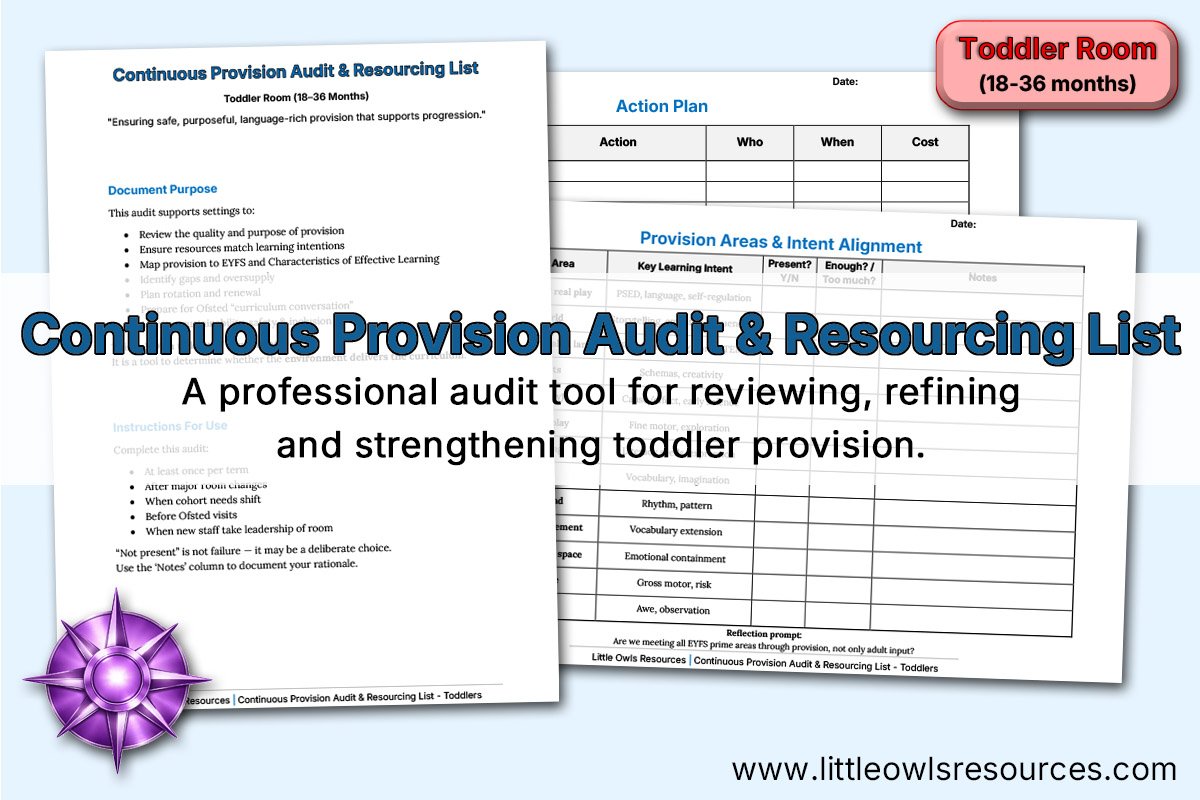
(area-by-area provision packs, environment setup guidance & provision maps and audits)
Themes & Contexts
(flexible project and theme planners & provision, seasonal and celebration ideas & role-play and imaginative play resources)
Adult-Led Teaching (where appropriate)
(phonics guidance, maths and writing session banks (preschool & reception) & small group teaching support)
SEND & Inclusion
(strategy packs, early identification guidance & environment and interaction adaptations)
Parent Partnership
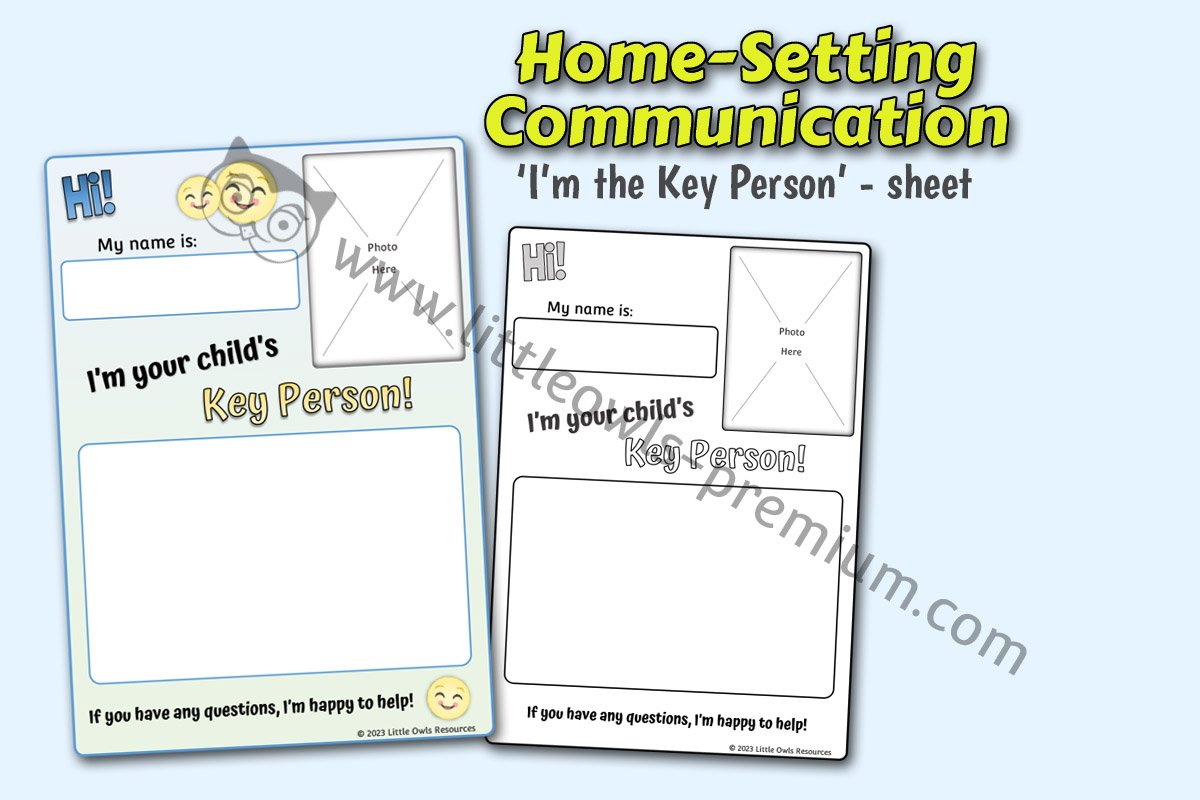
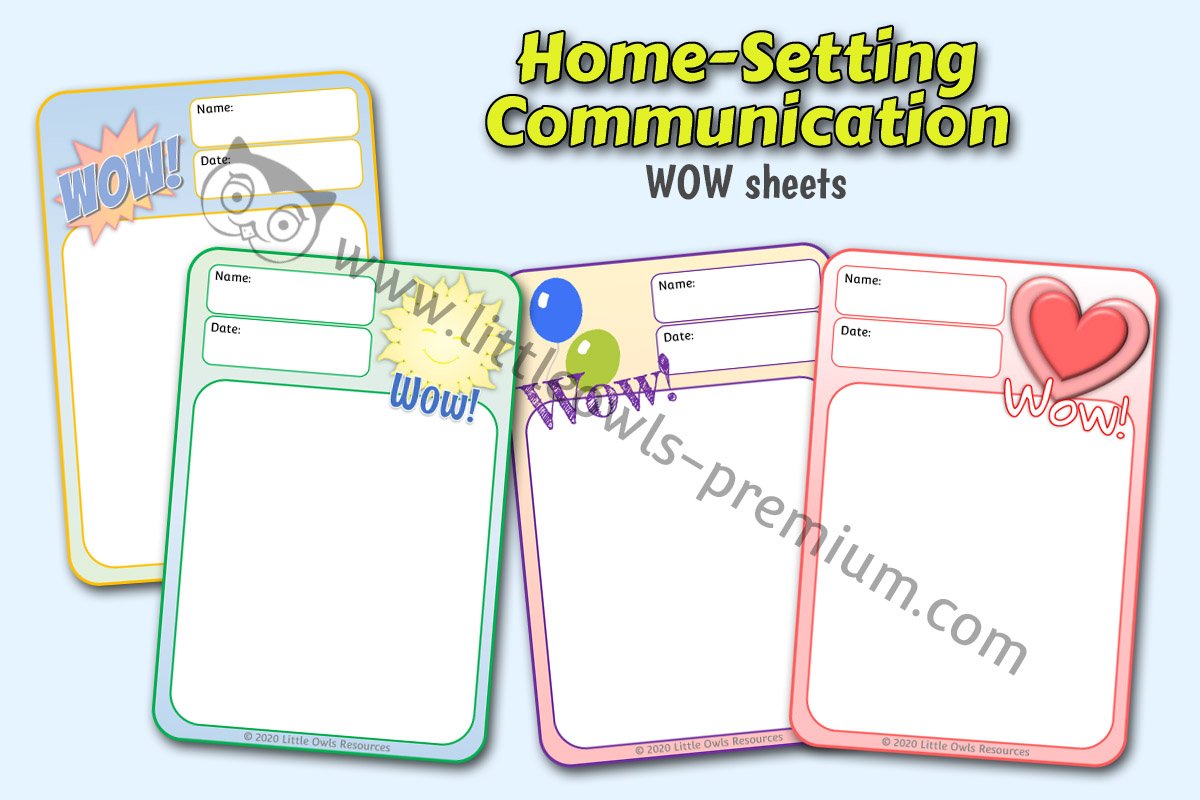
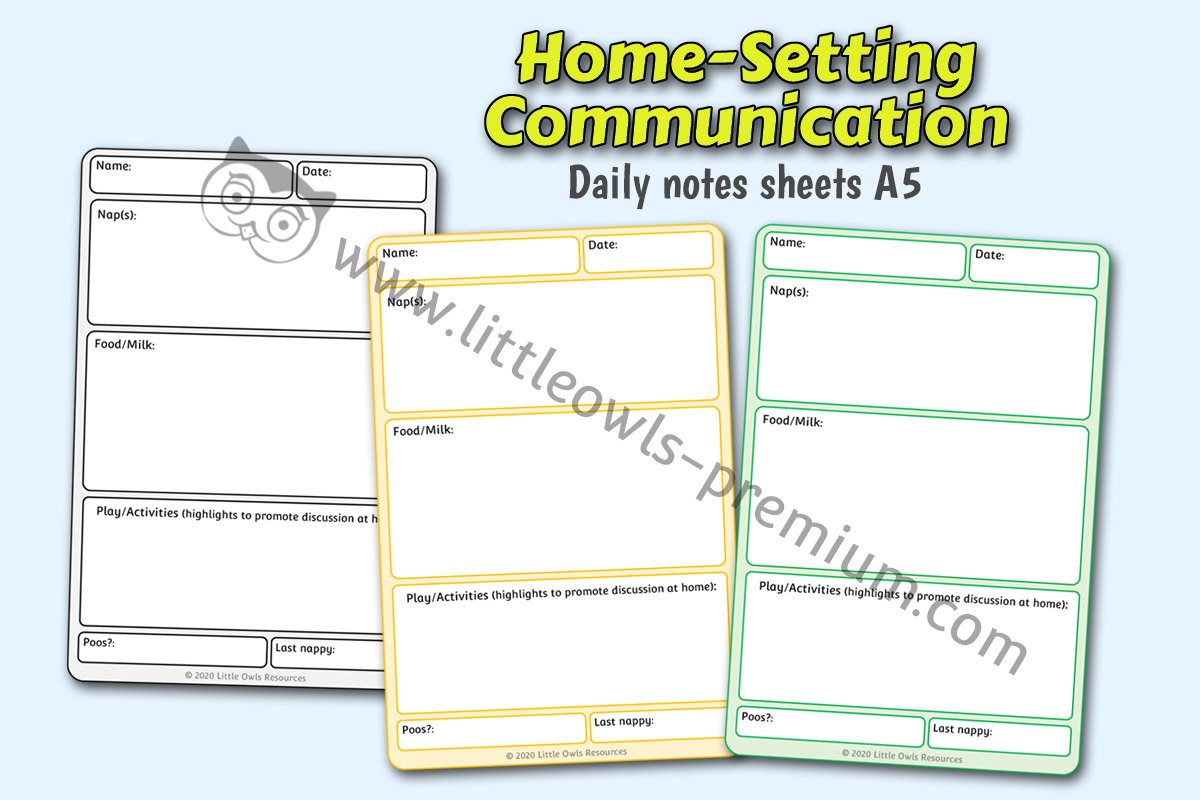
(communication templates & home learning support resources)
Inspection & Leadership
(Inspection Confidence, EYFS Language & Safeguarding)
Statutory & Non-Statutory Guidance Resources
(EYFS Framework & Development Matters)
Curriculum & Progression
Baby, Toddler, Preschool and Reception Planning Hubs
Planning for specific age groups - for more detailed guidance, explore our age-specific planning pages:
Curriculum Maps and Progression Guidance
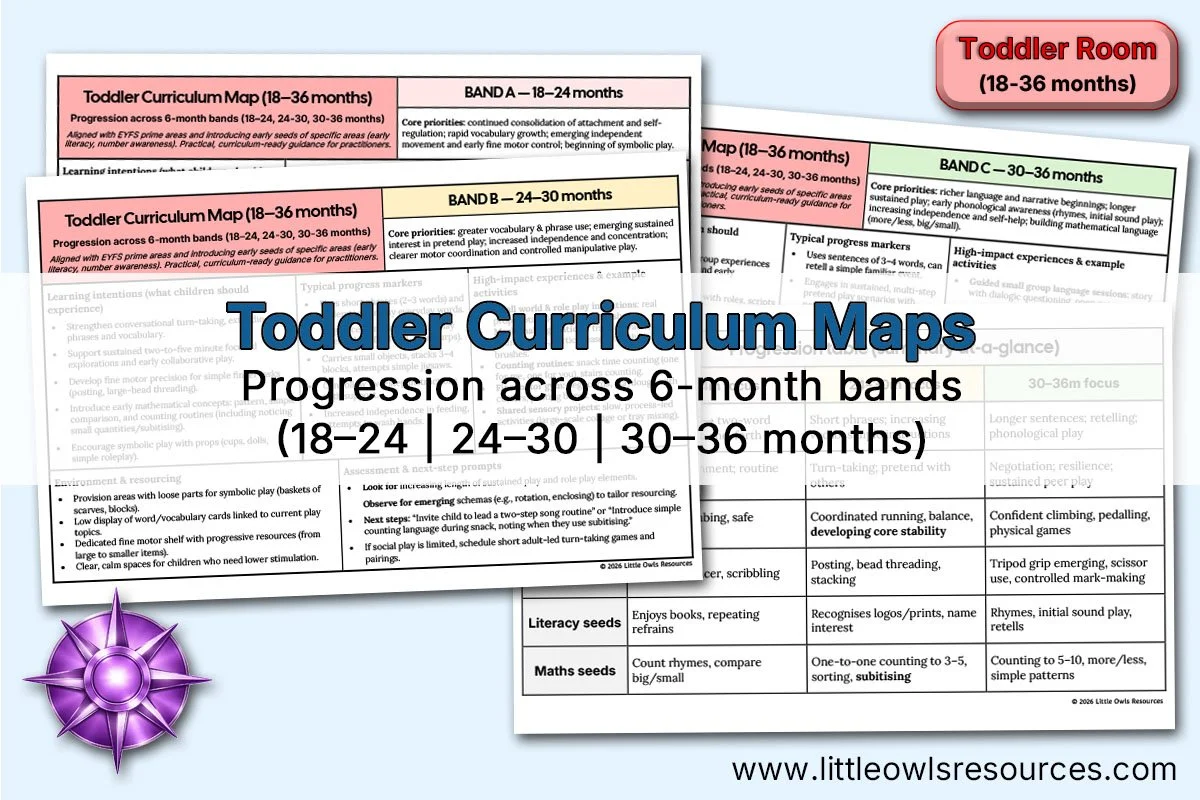
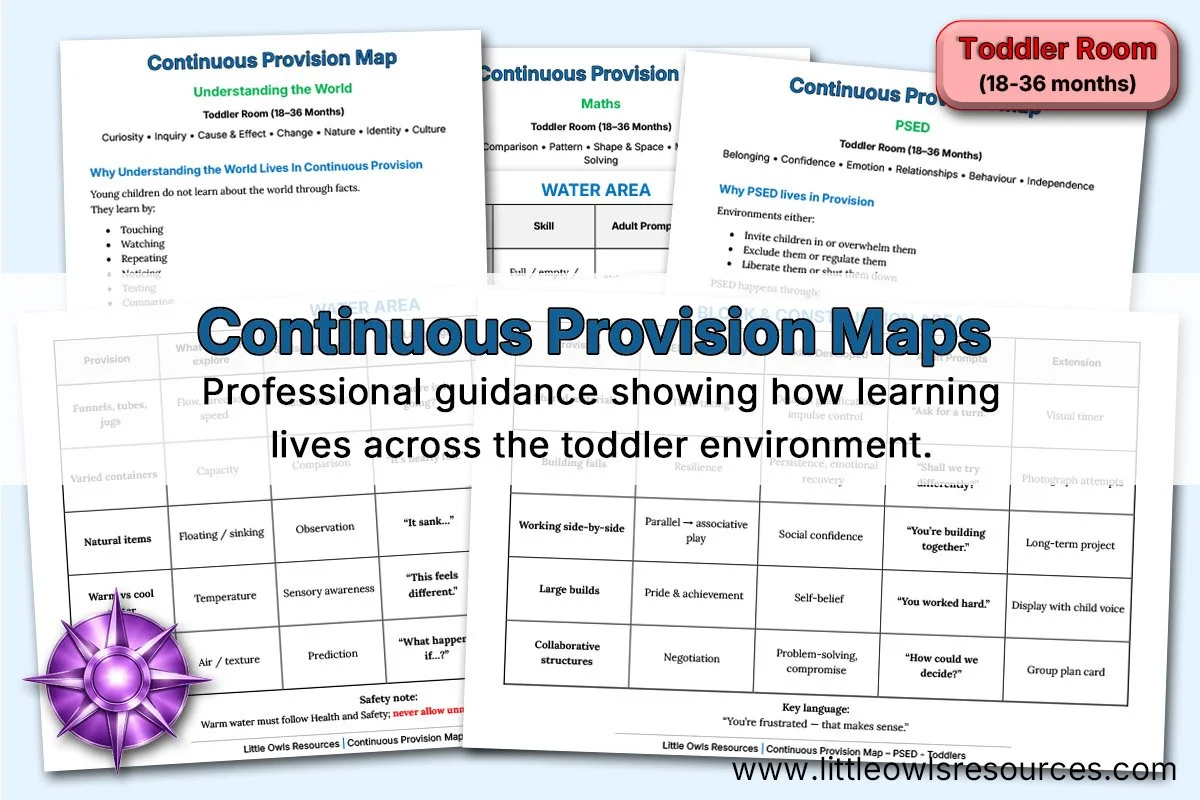
Quick guidance and practical tools for supporting toddlers (18–36 months) in everyday provision.
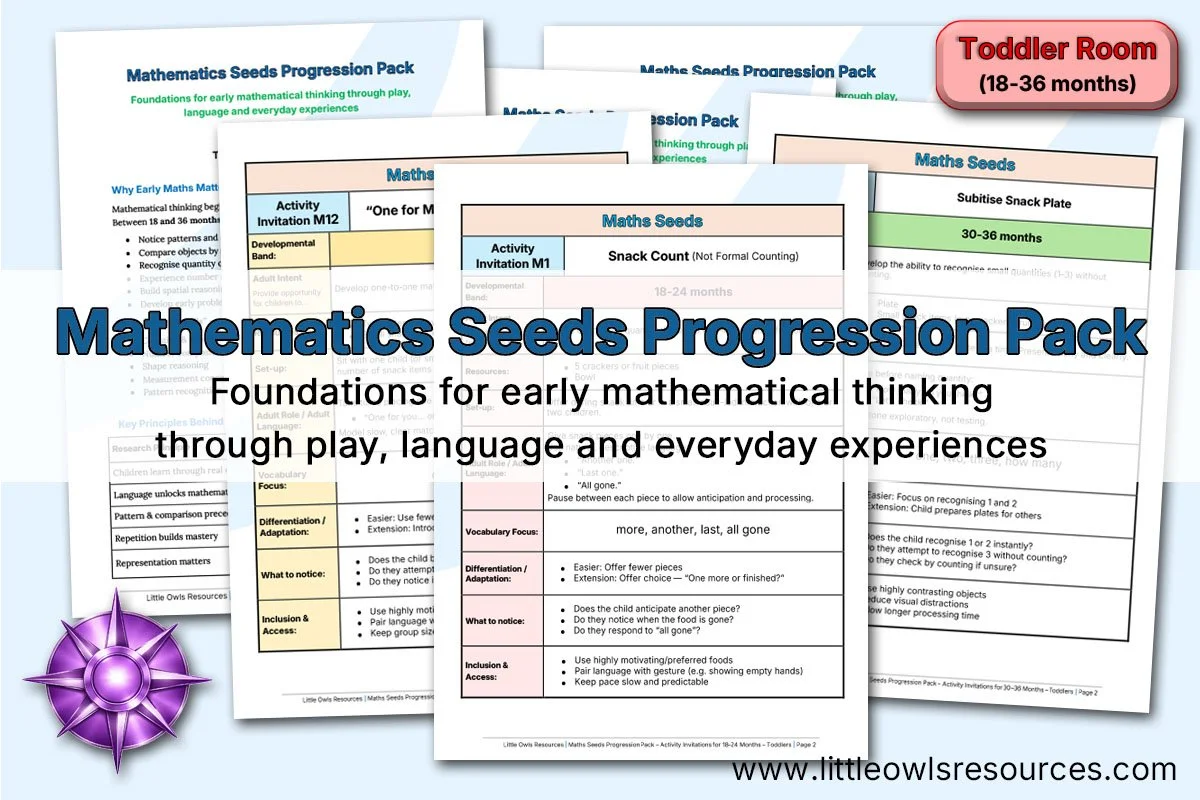
Foundations for early mathematical thinking through play, language and everyday experiences.
Progression map and adult initiated opportunity bank to strengthen toddler language through high-quality interactions.
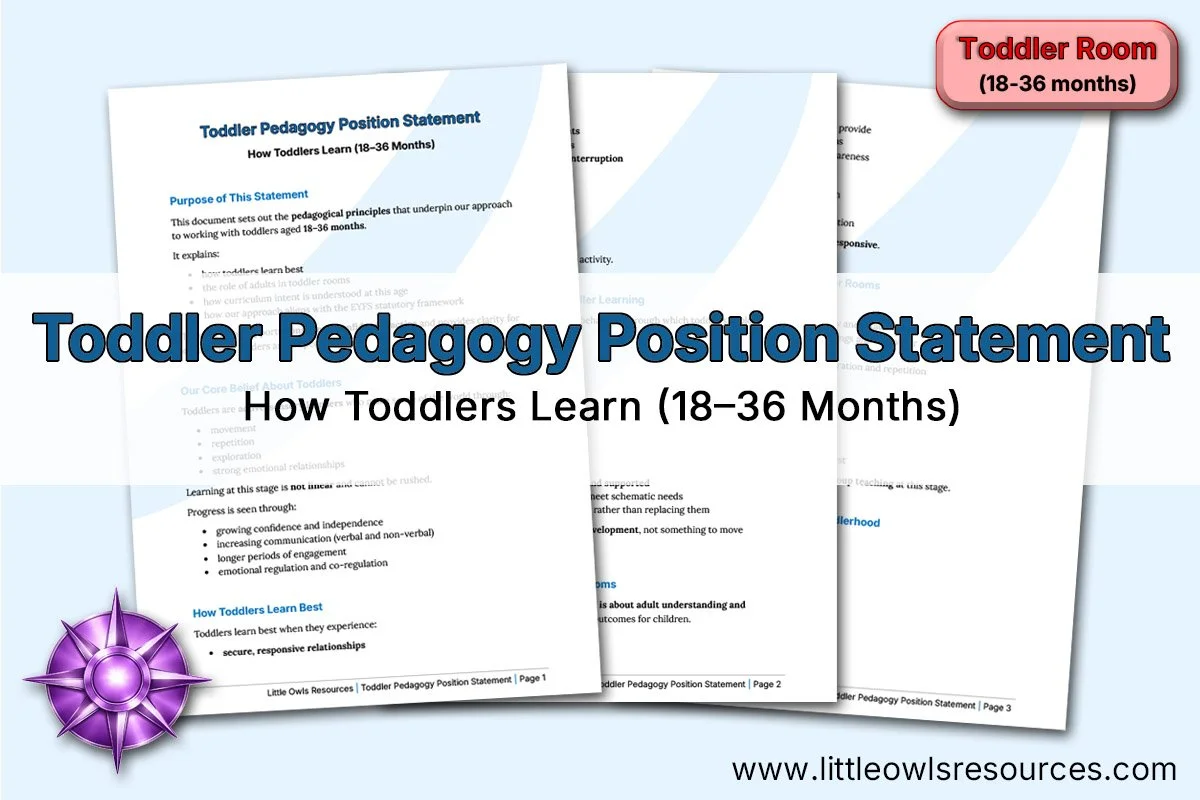
A practitioner-facing reference supporting intentional, developmentally appropriate toddler practice across key strands.
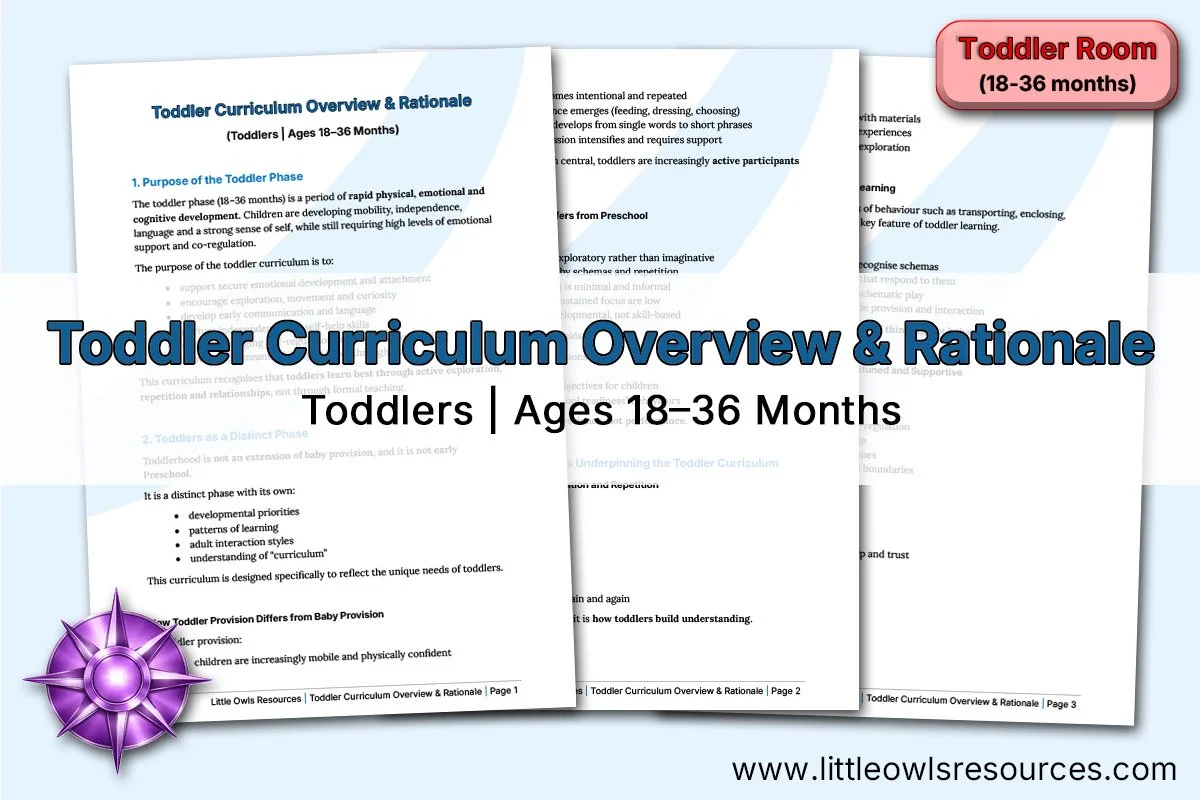
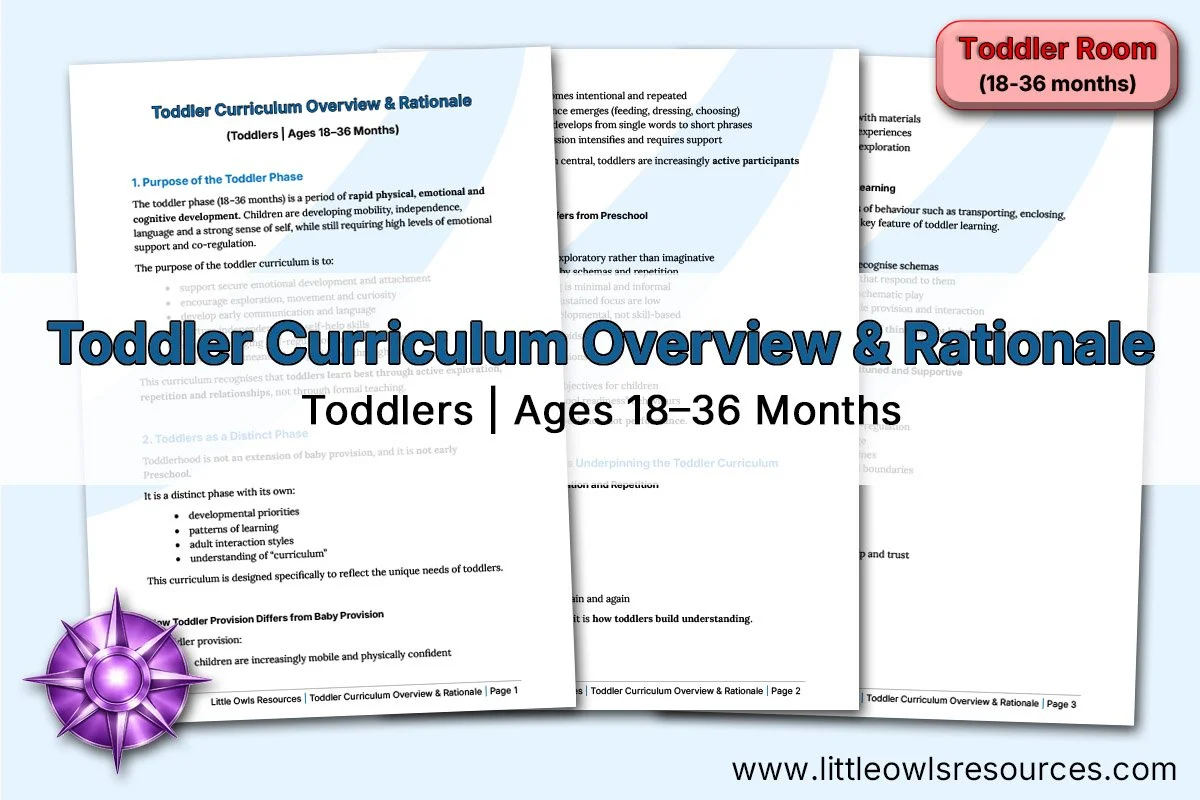
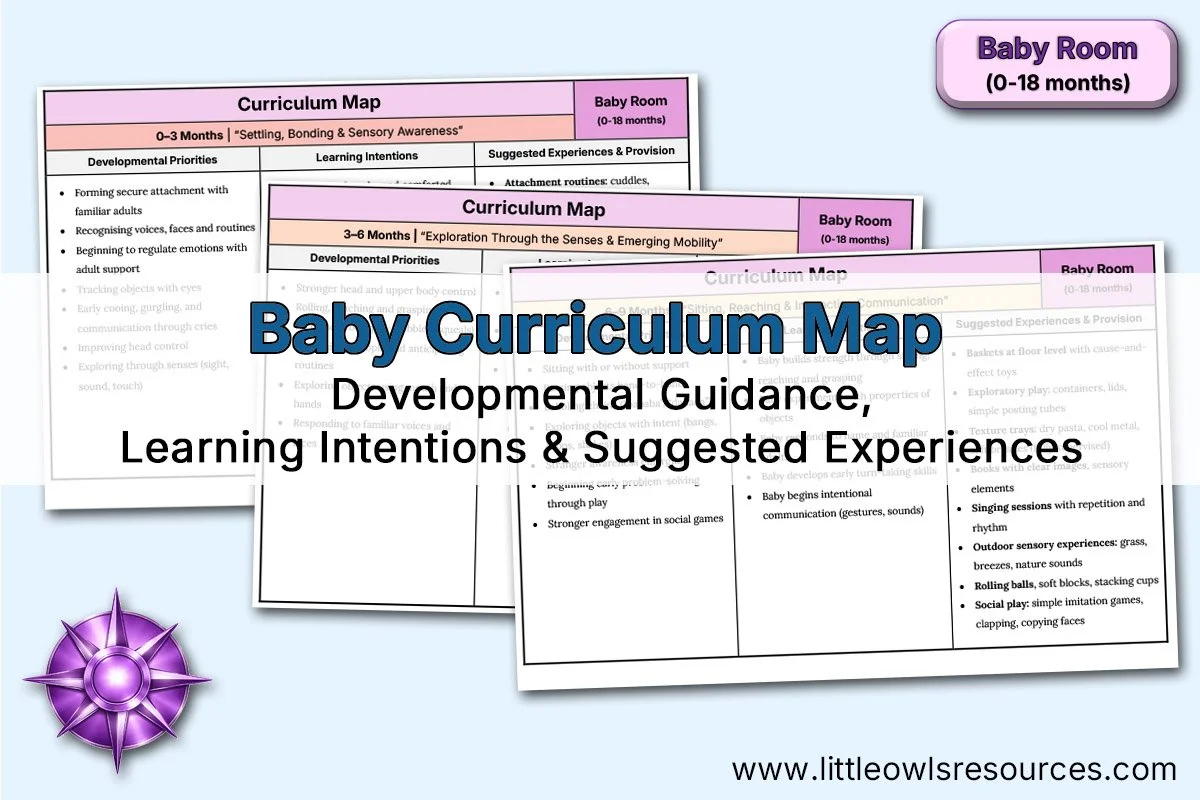
A developmentally informed curriculum overview supporting intentional, child-led toddler practice.
A professional guidance document supporting confident, developmentally appropriate SEND practice in baby rooms.
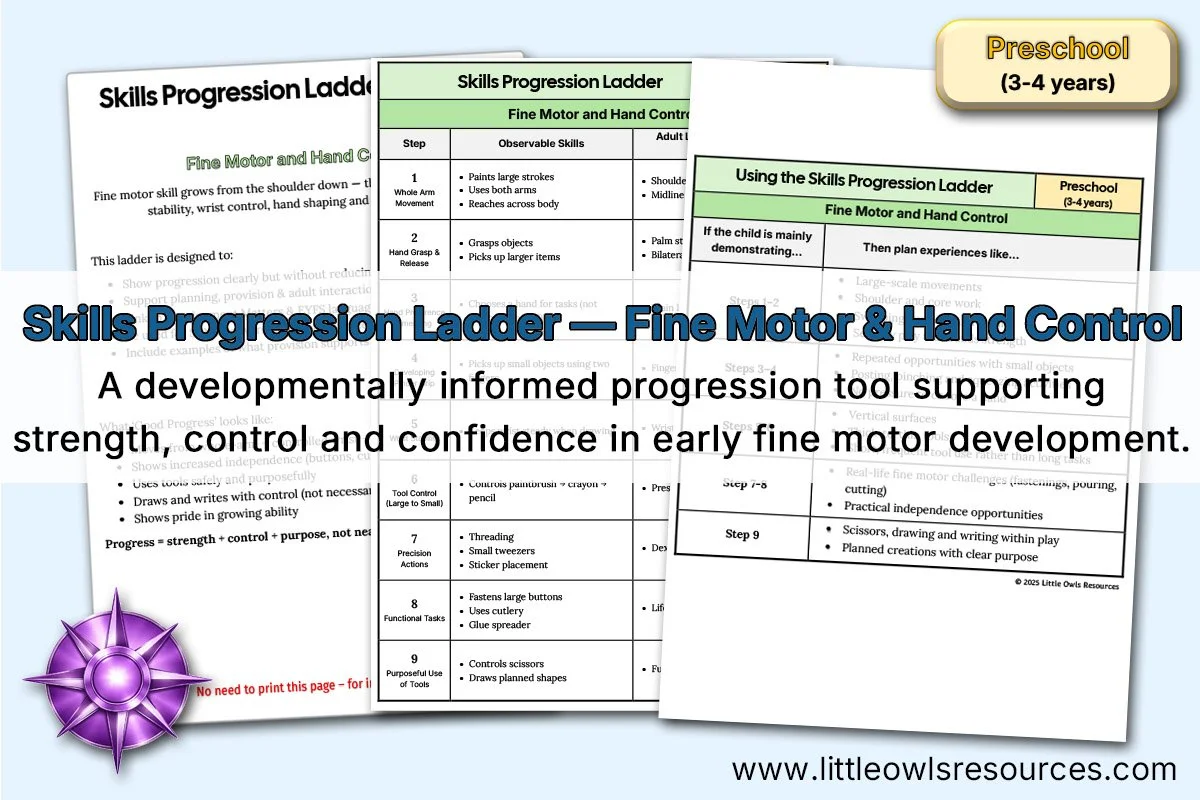
A developmentally informed progression tool supporting strength, control and confidence in early fine motor development.
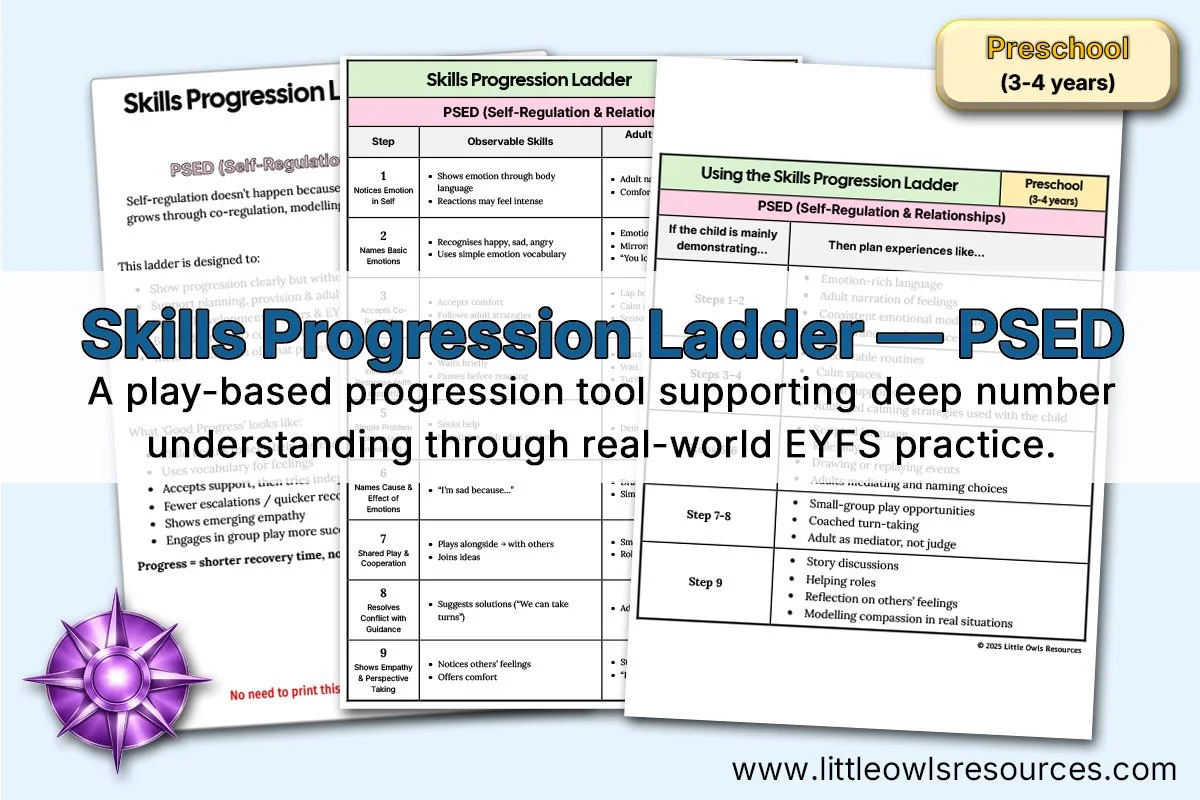
A play-based progression tool supporting deep number understanding through real-world EYFS practice.
A play-based progression tool supporting exploration of shape and pattern by building, rotating, navigating, transforming and describing.
A play-based progression tool supporting deep number understanding through real-world EYFS practice.
A developmentally grounded progression tool supporting early writing from mark-making to name writing.
A play-based progression tool supporting the foundations for early reading before formal phonics.
A practical progression tool supporting listening, understanding, vocabulary and conversation through play-based EYFS practice.
Intent–Implementation–Impact Support
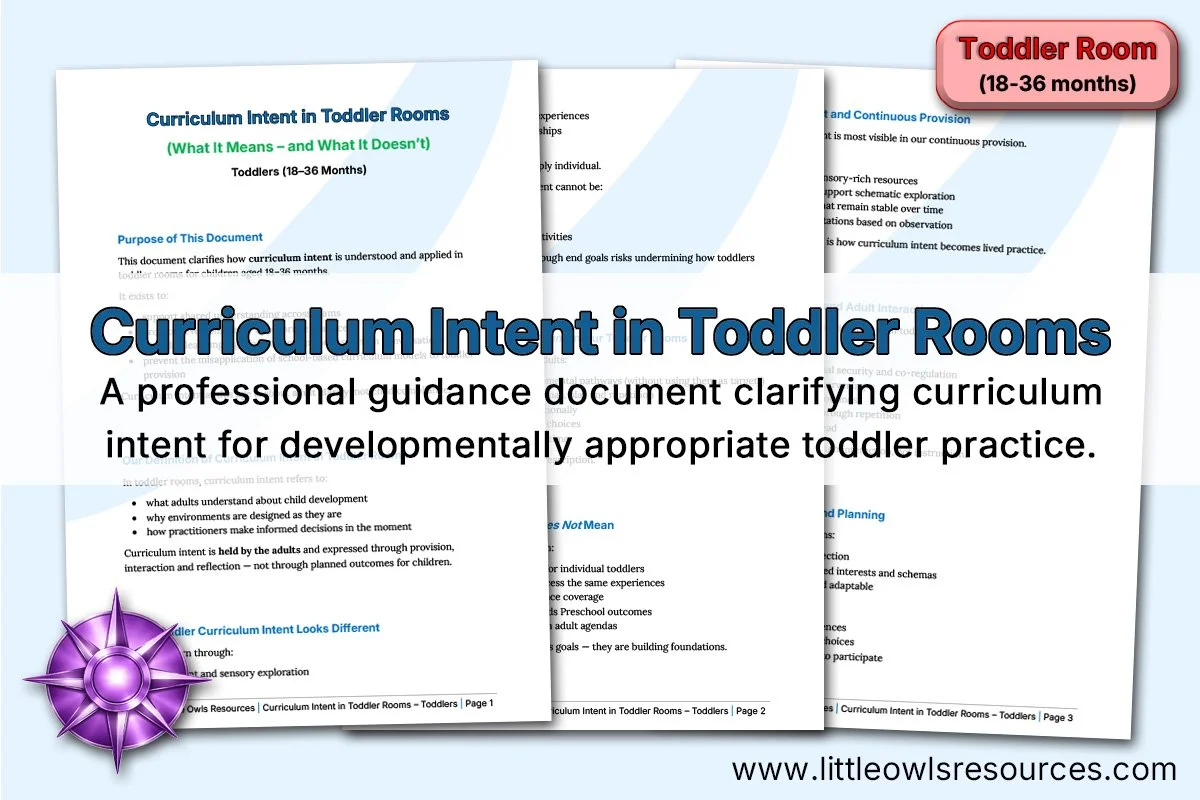
A professional guidance document clarifying curriculum intent for developmentally appropriate toddler practice.
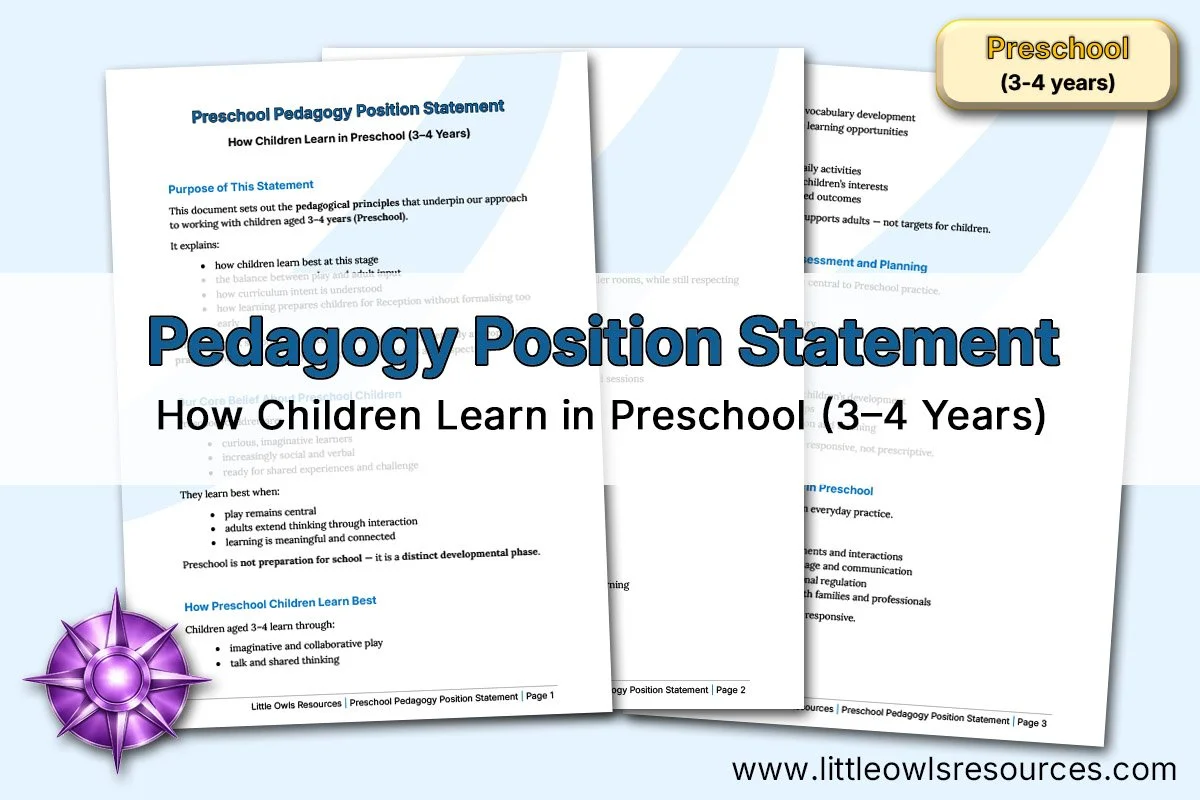
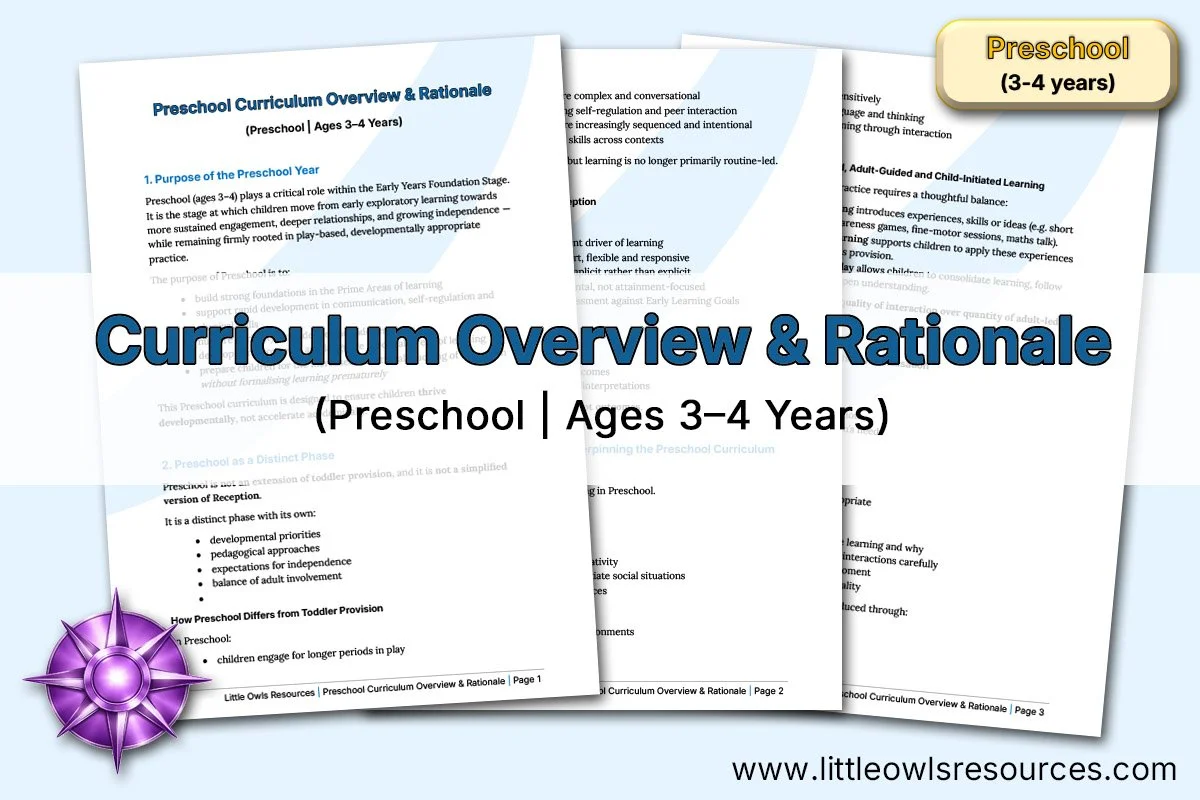
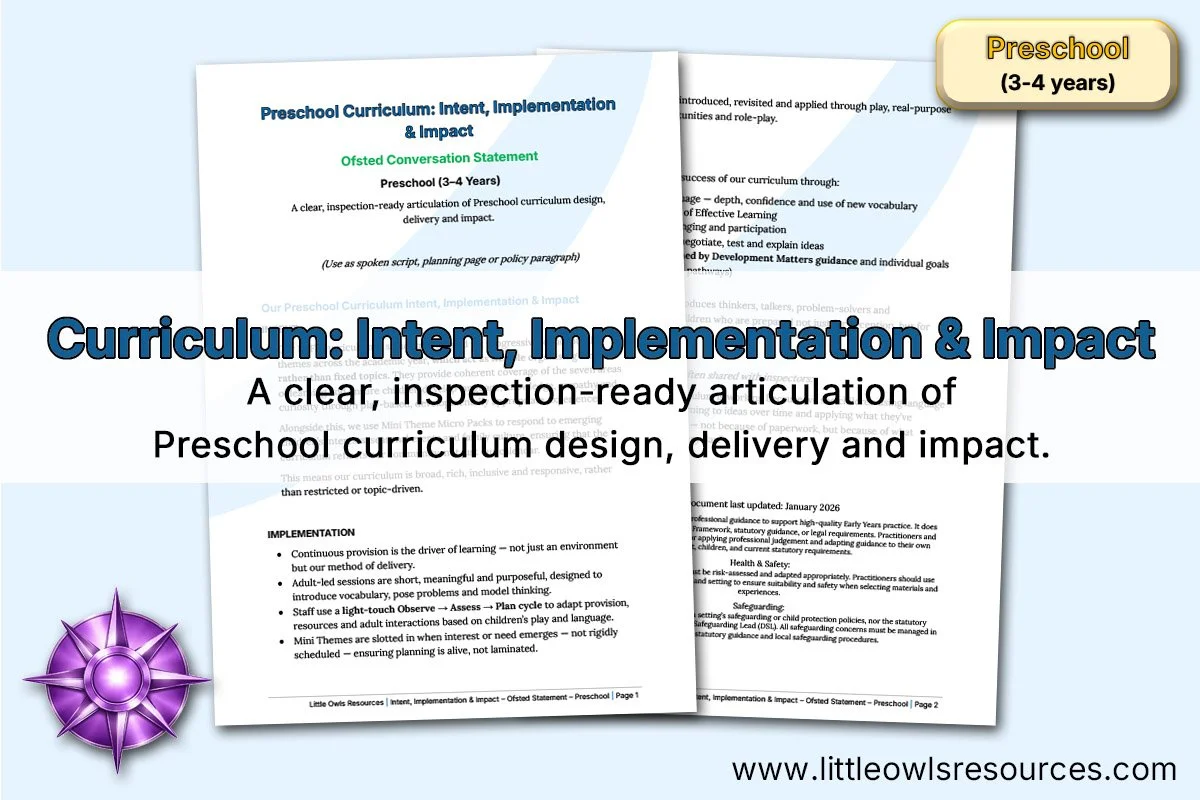
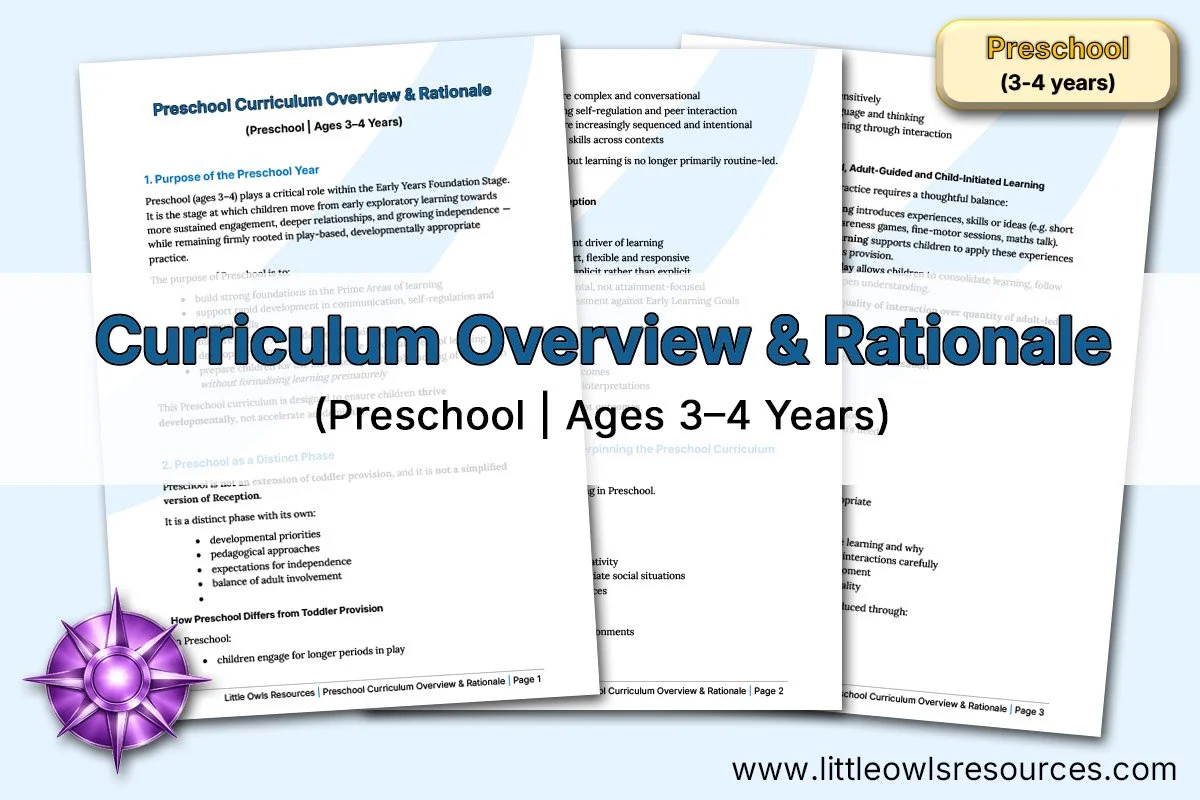
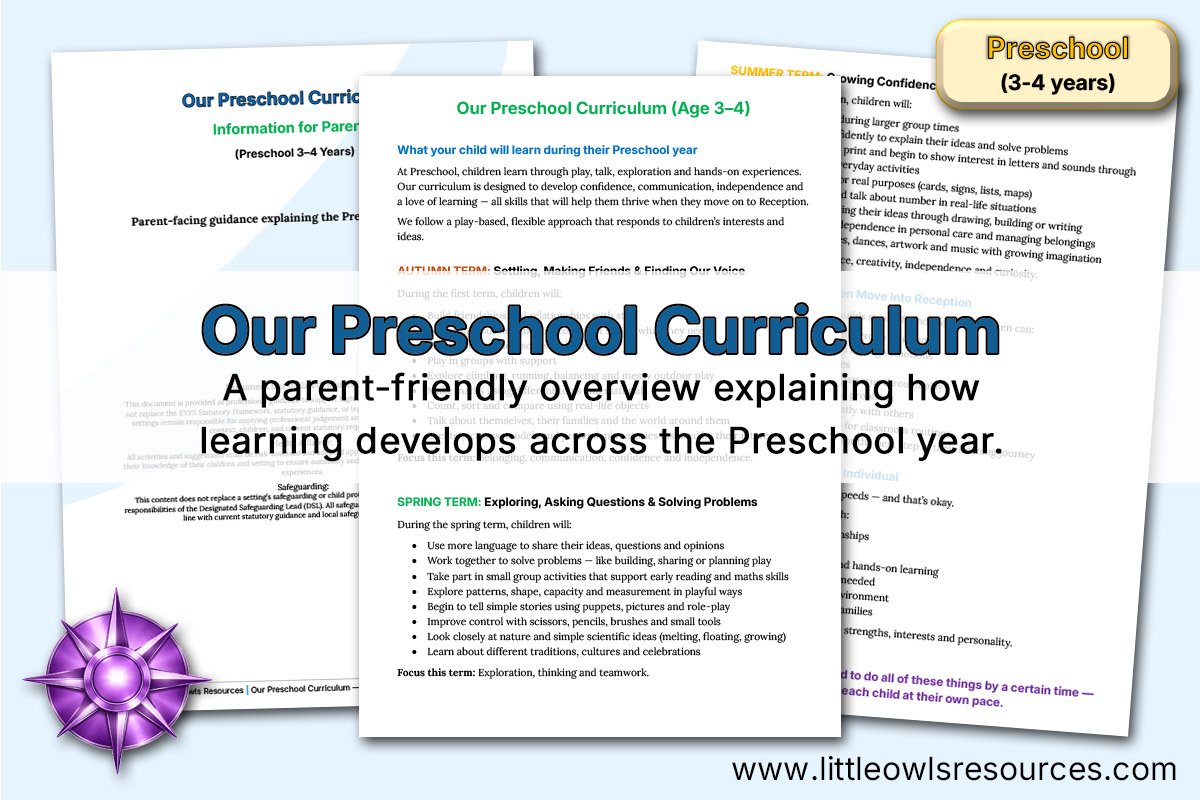
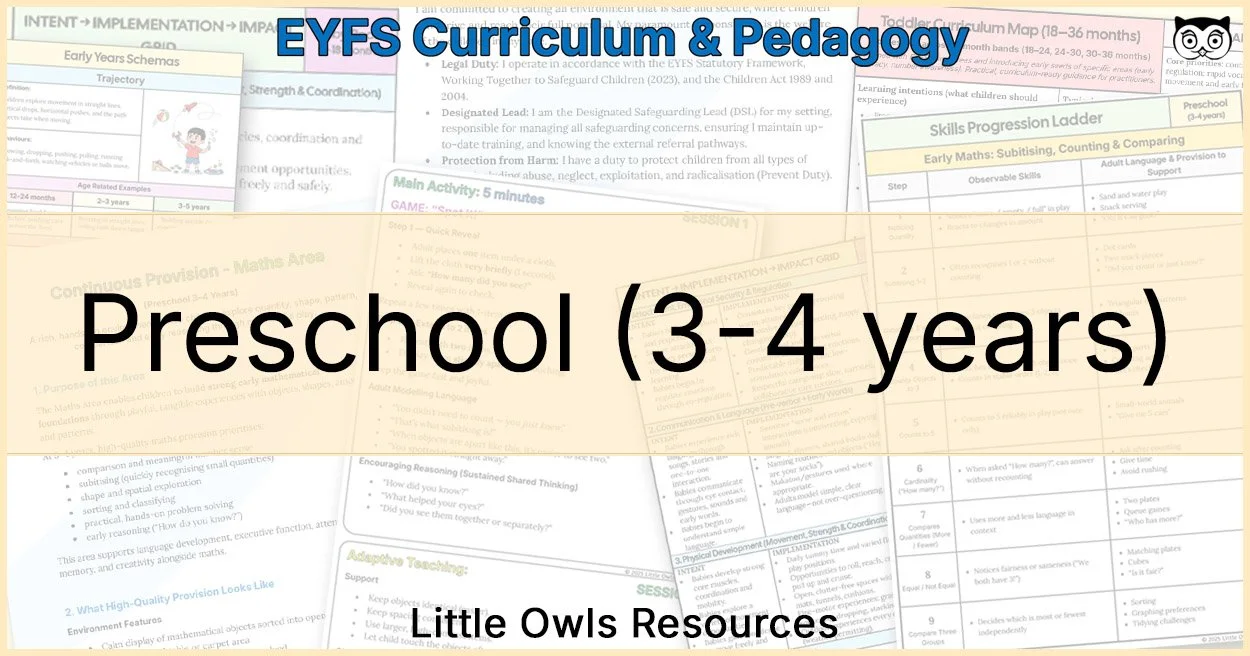
A clear, inspection-ready articulation of Preschool curriculum design, delivery and impact.
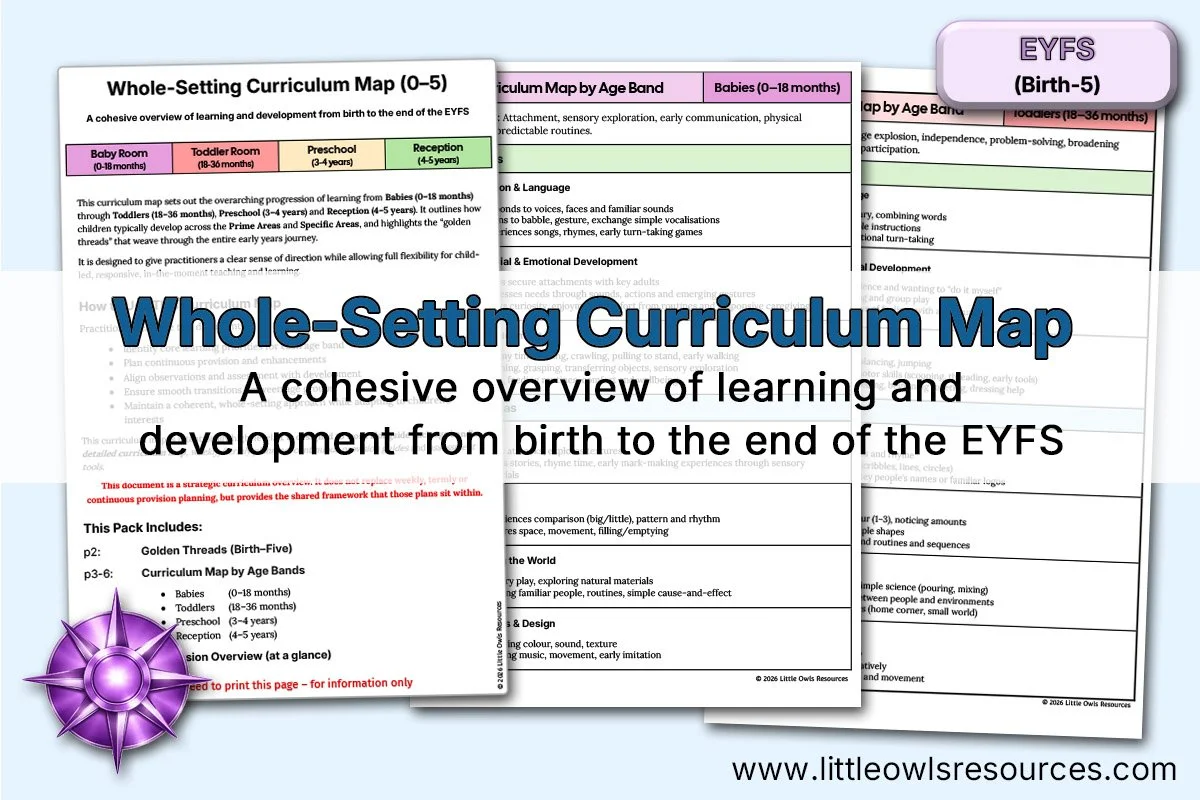
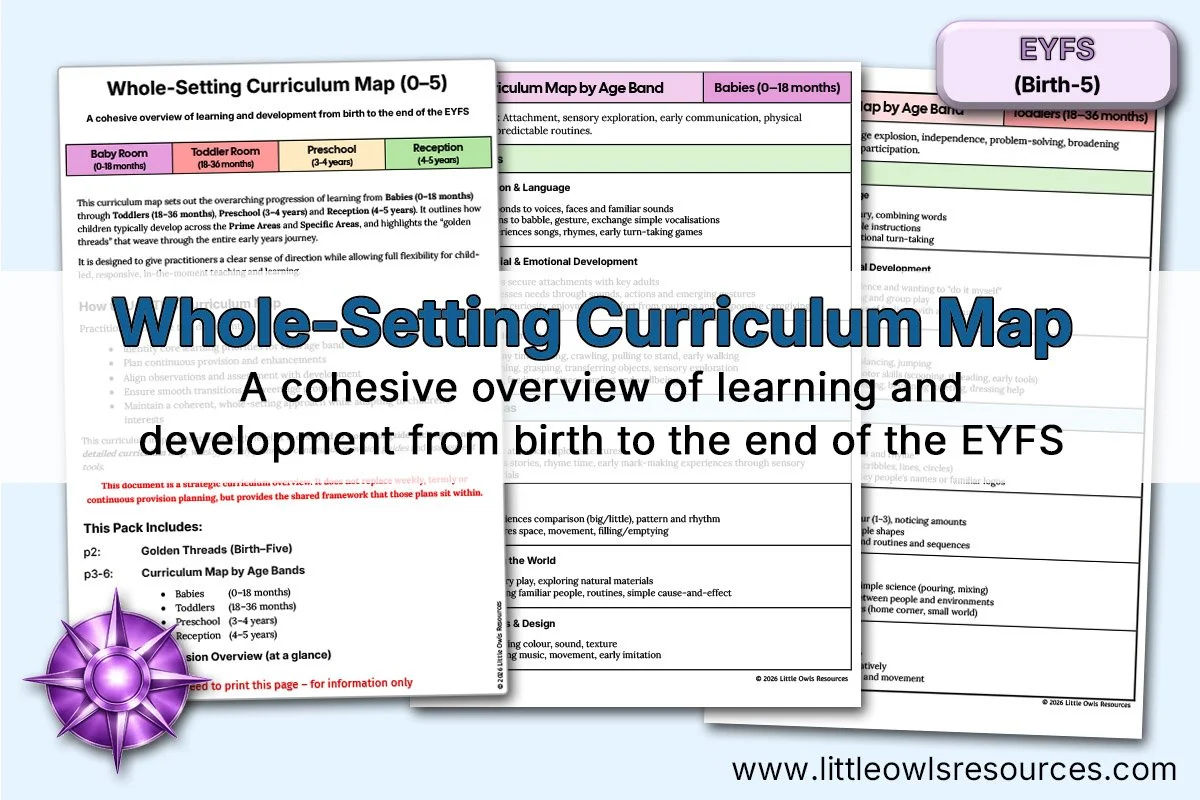
A cohesive, high-level overview of learning and development from birth to the end of the EYFS.
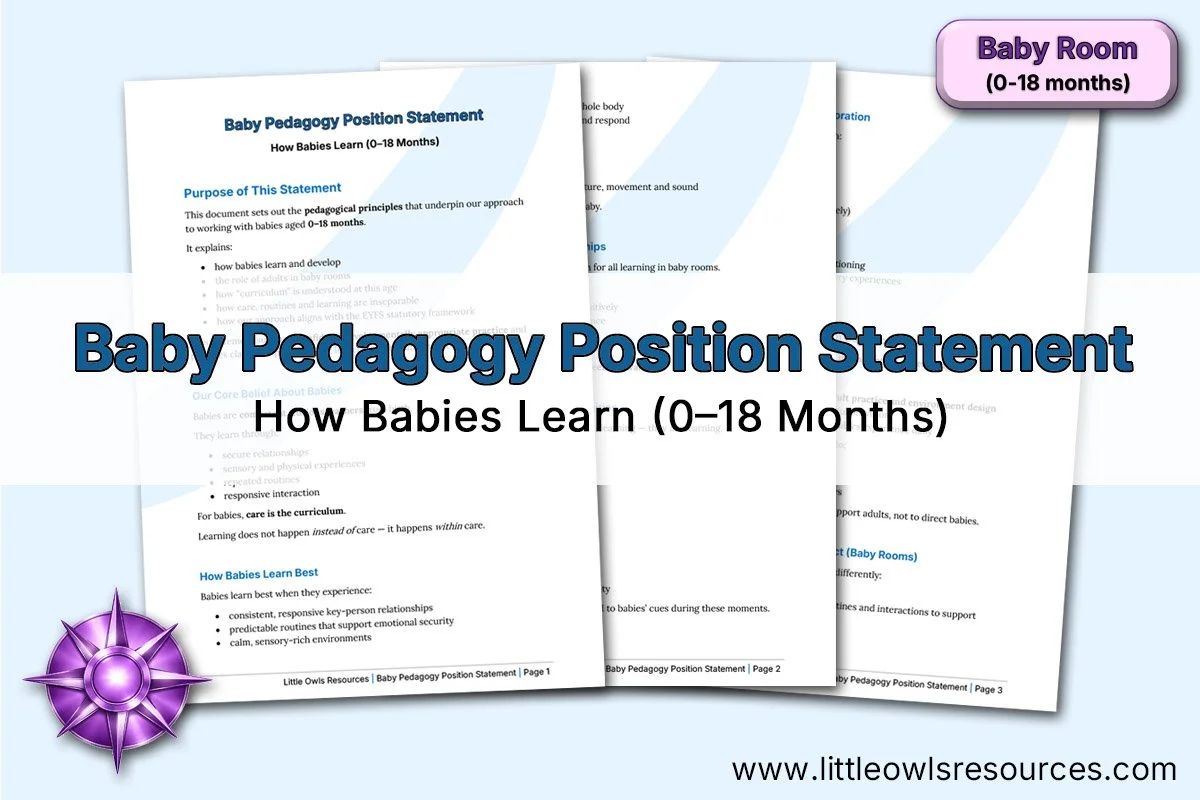
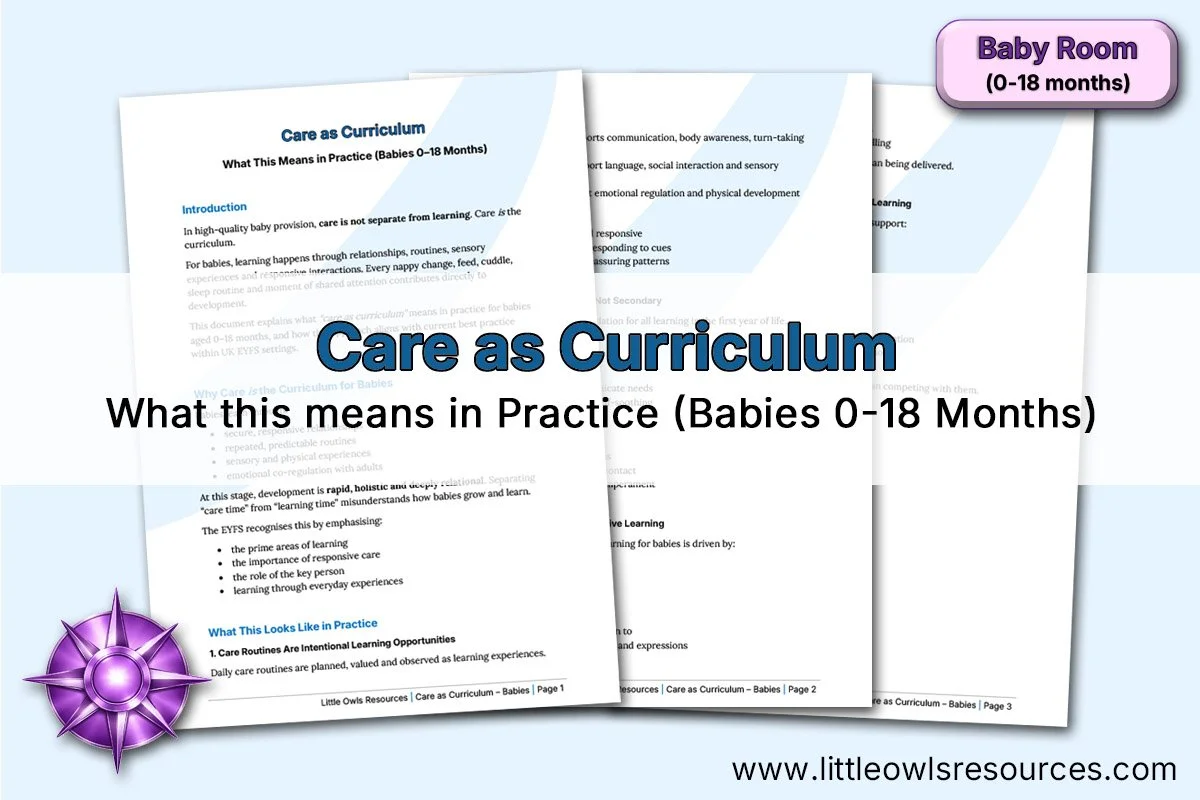
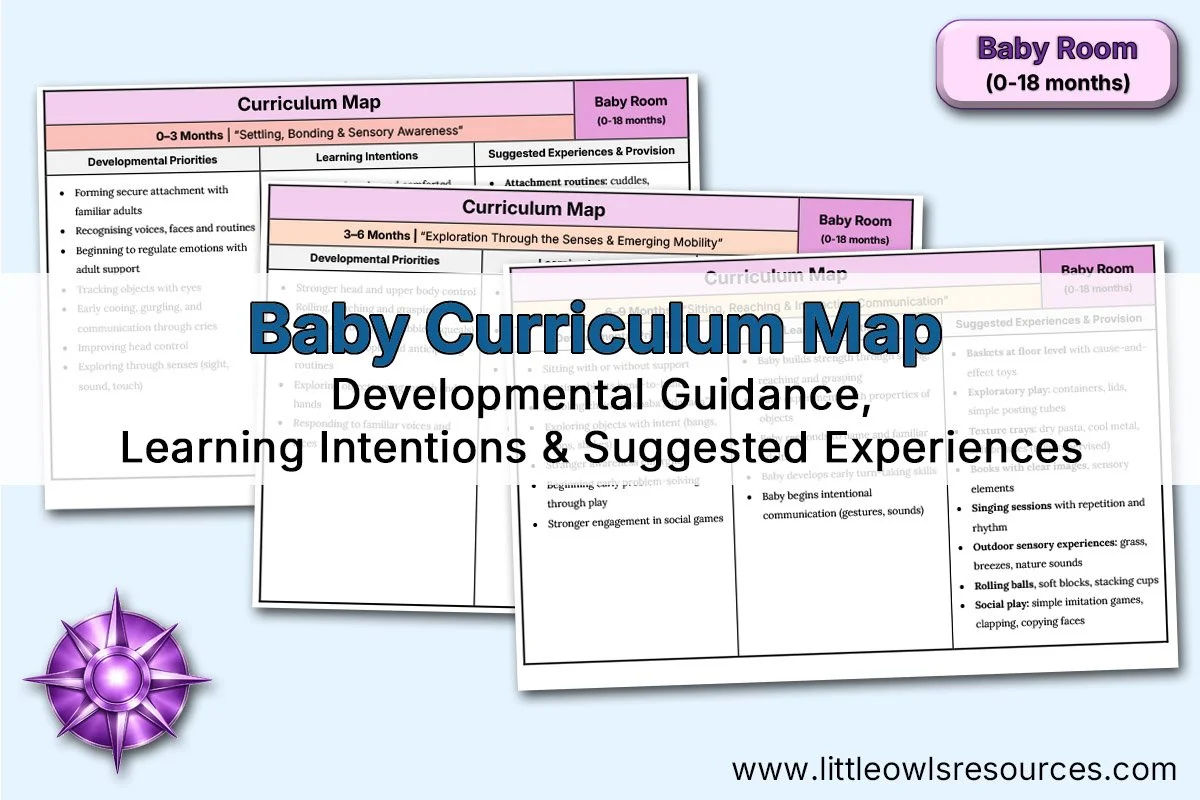
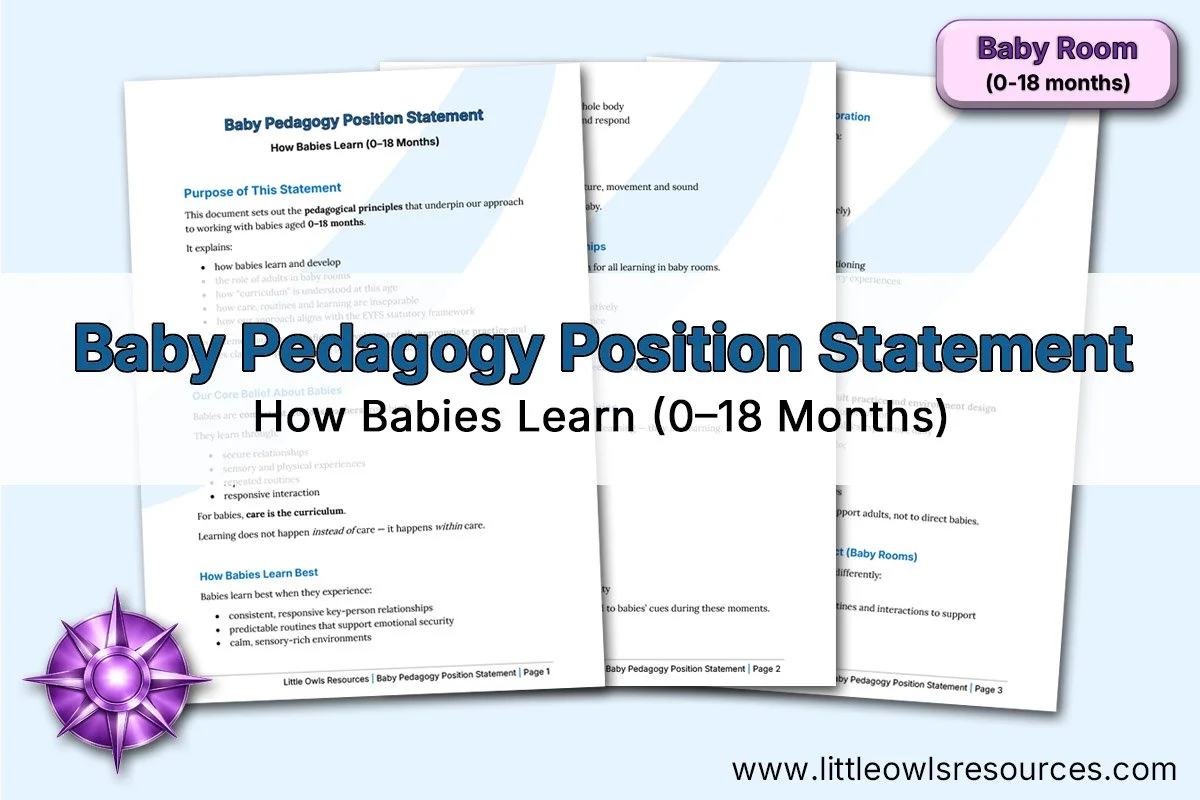
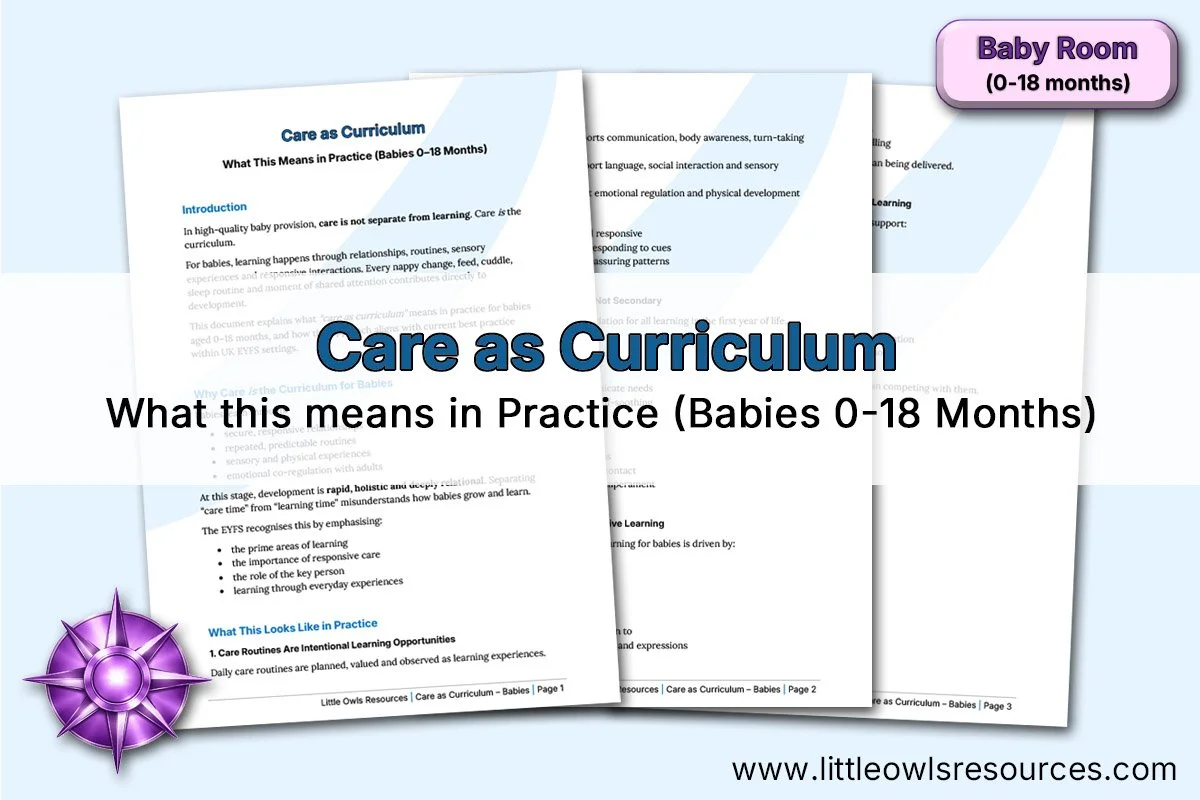
This document sets out the pedagogical principles that underpin our approach to working with babies aged 0–18 months.
Cohesion & Consistency
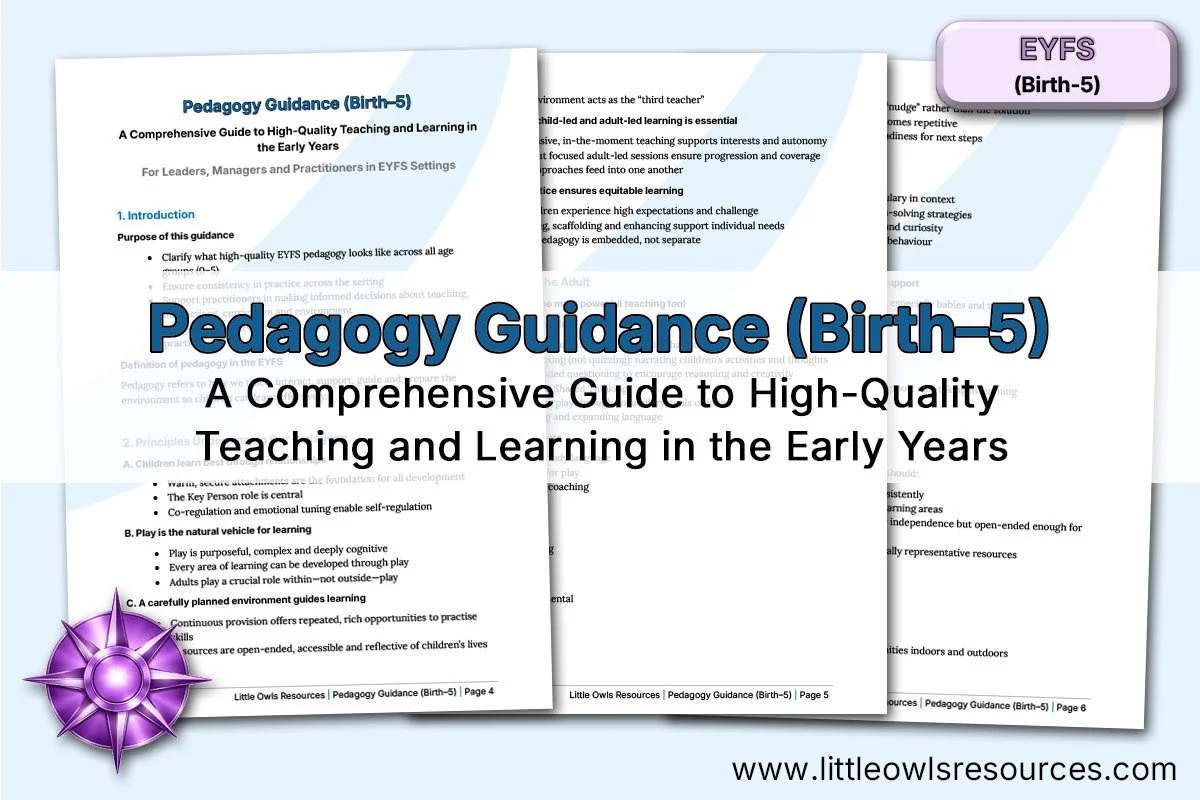
In addition, to achieve a consistent approach to curriculum and pedagogy across the EYFS birth to 5 age range, you may wish to make documents such as ‘EYFS from Birth to 5 - Curriculum Coherence & Pedagogical Throughline’ and ‘Pedagogy Guidance (Birth to 5) - A Comprehensive Guide to High-Quality Teaching and Learning in the Early Years’, available to all setting staff.
Below you will find links to these documents and others which you may find helpful in building consistency across the birth to 5 age range within your setting:
A practical, research-informed toolkit for recognising schemas and responding through meaningful, child-led provision.
A cohesive, high-level overview of learning and development from birth to the end of the EYFS.
Clear, age-phase inspection summaries articulating curriculum intent, implementation and impact across the EYFS.
A professional guidance document supporting confident, consistent EYFS pedagogy from birth to five.
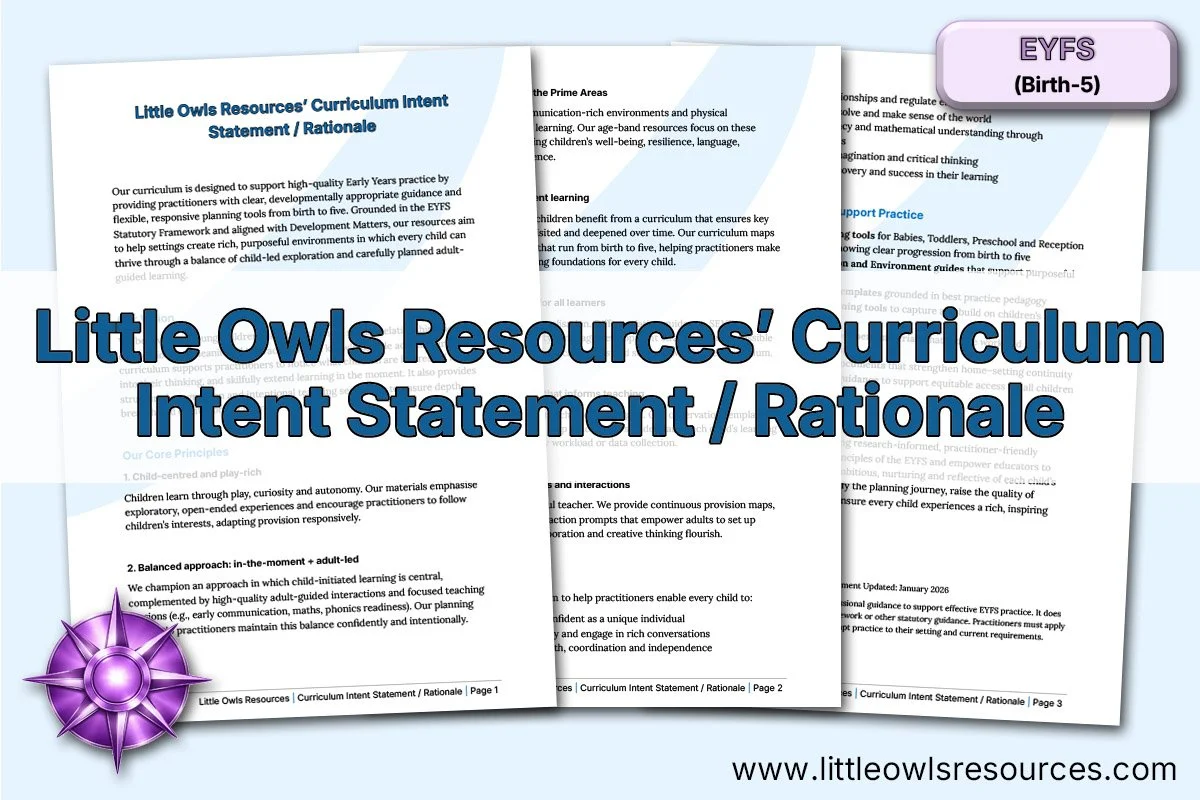
Our curriculum is designed to support high-quality Early Years practice by providing practitioners with clear, developmentally appropriate guidance and flexible, responsive planning tools from birth to five.
Planning Tools
Weekly planning templates, observation and reflection tools & responsive planning guidance
Baby Room | birth - 18 months
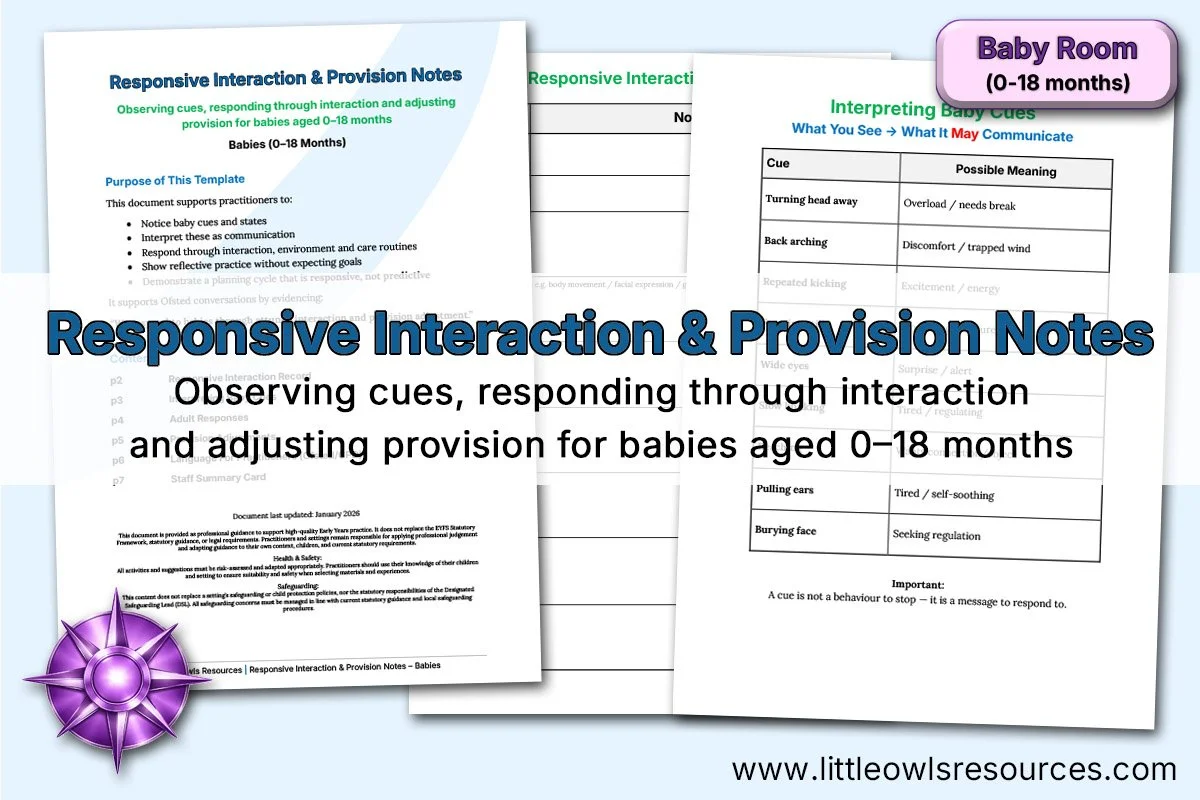
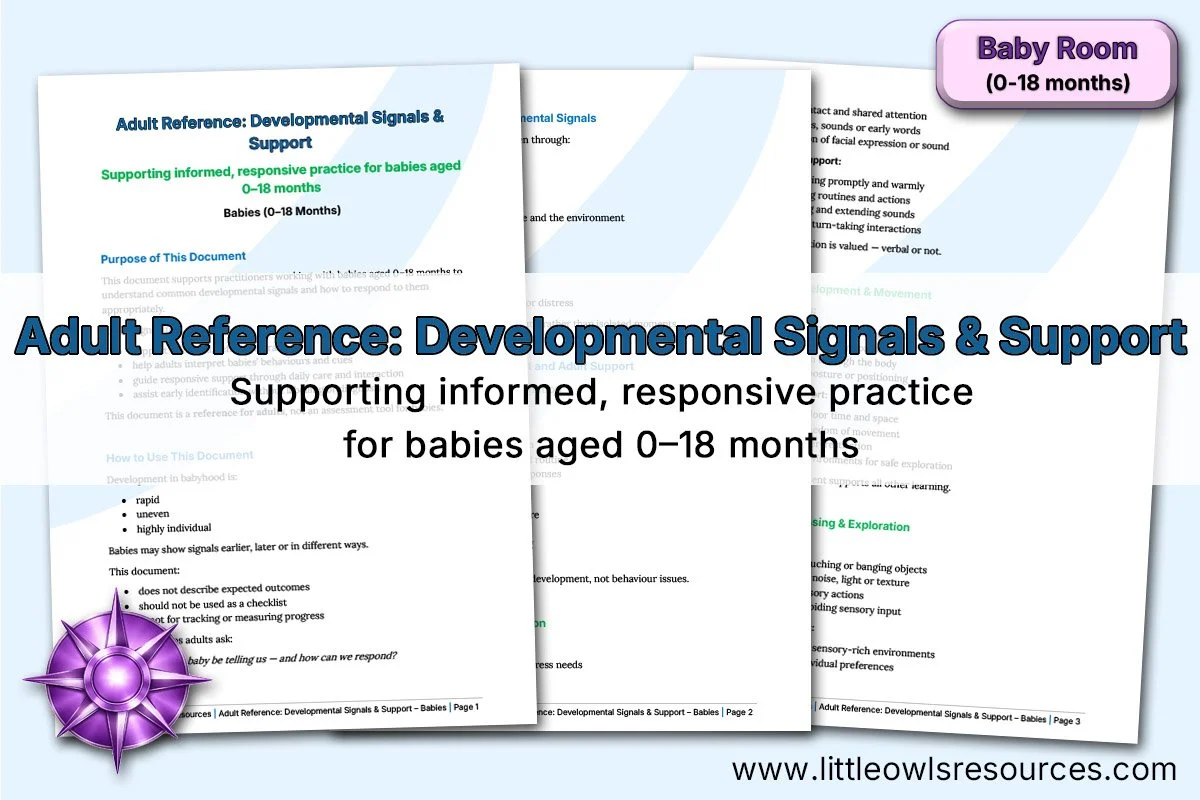
Observing cues, responding through interaction and adjusting provision for babies aged 0–18 months.
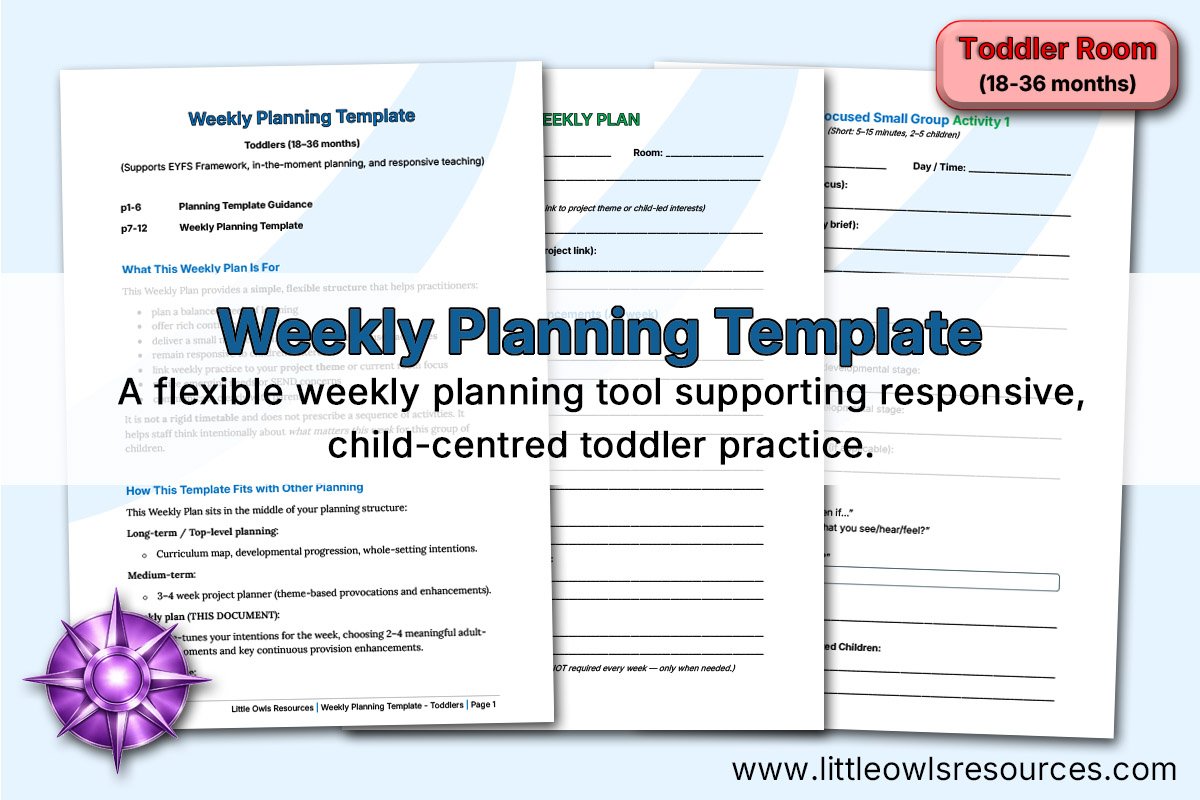
Toddler Room | 18 - 36 months
A practical set of strength-based documents to support secure, consistent transitions from 18–36 month provision into the 3–4 year room.
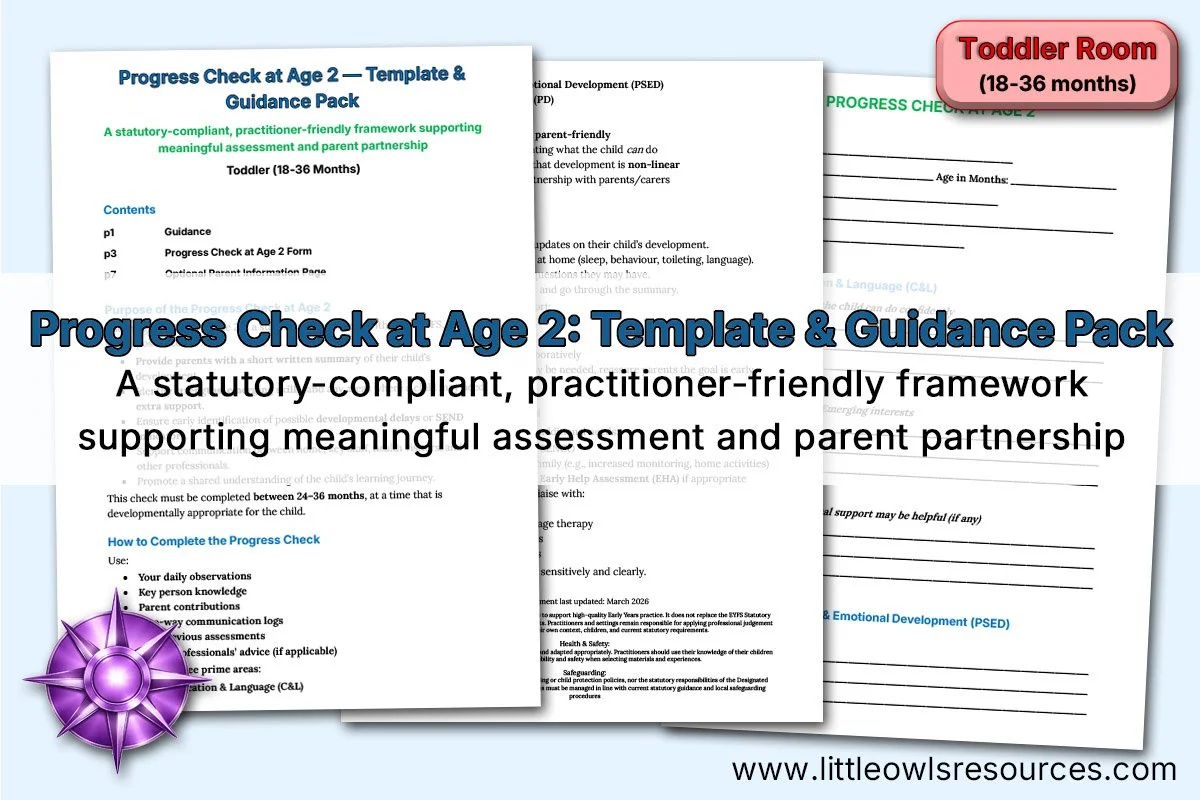
A statutory-compliant, practitioner-friendly toolkit supporting meaningful assessment and parent partnership.
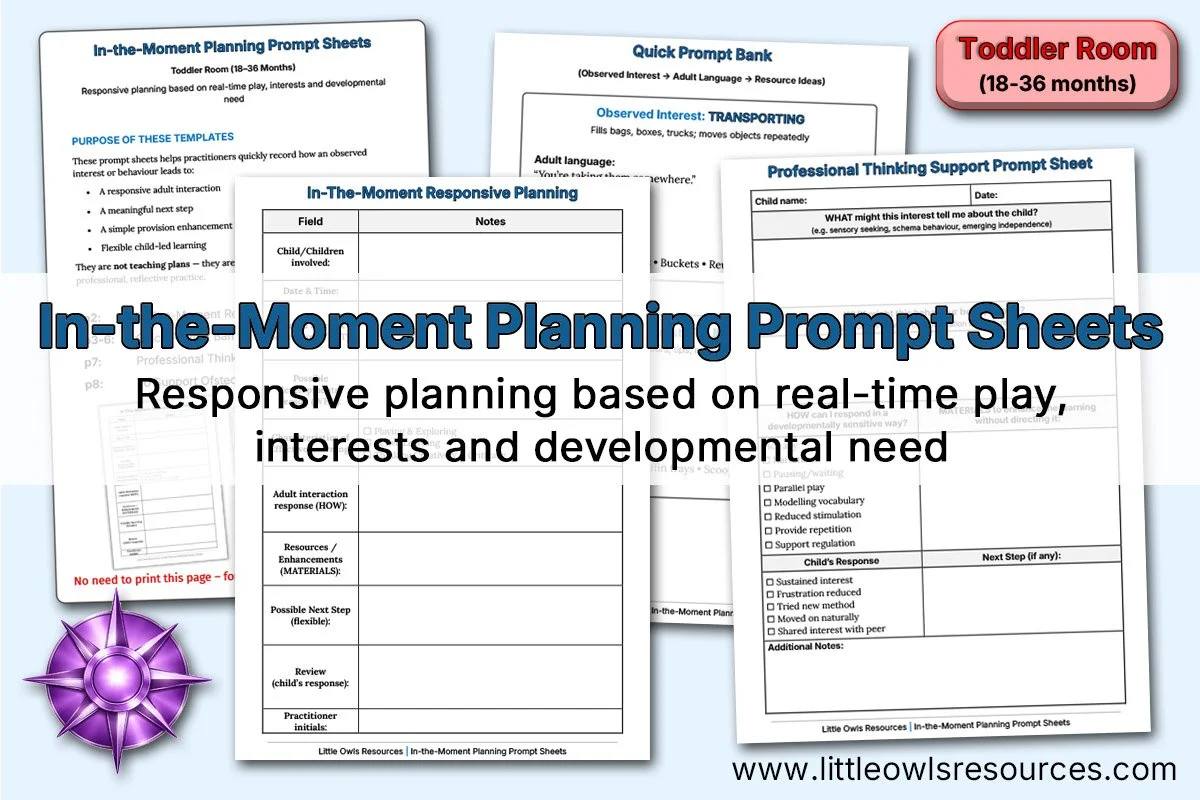
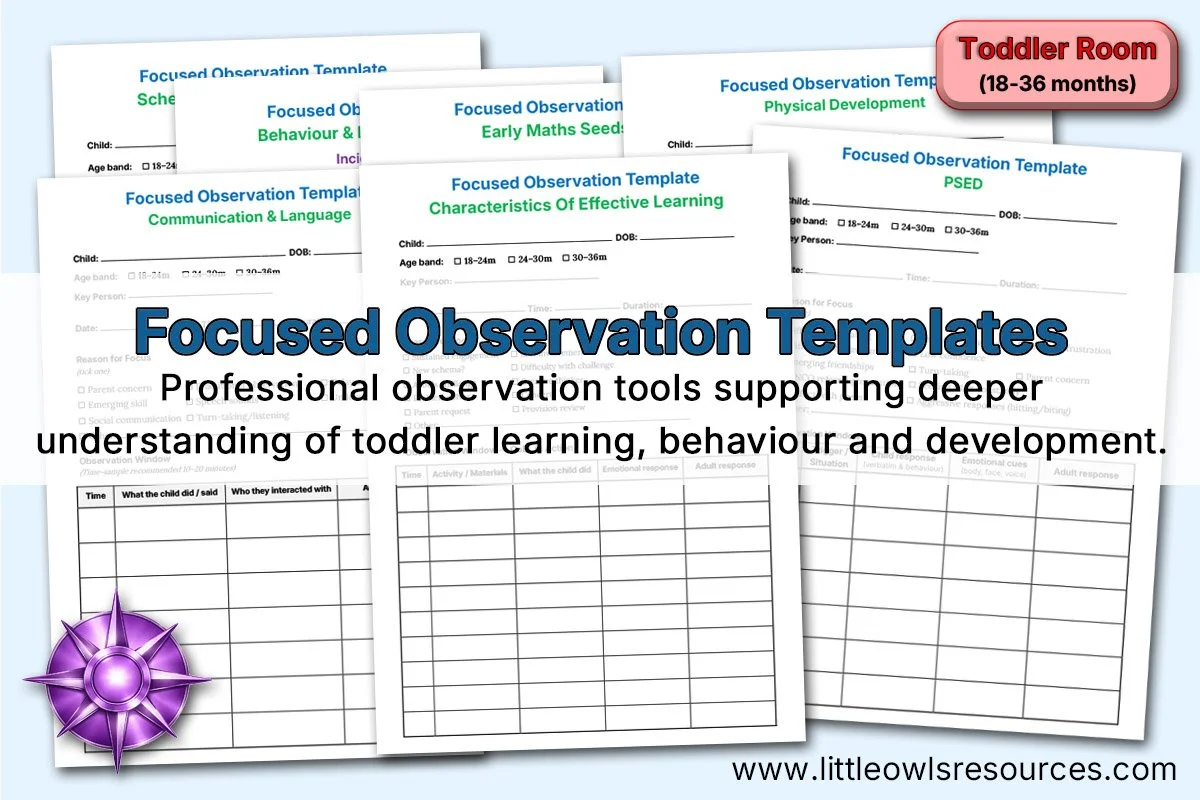
A professional observation tool supporting deep understanding of toddler learning, behaviour and development.
Professional observation tools supporting deeper understanding of toddler learning, behaviour and development.
Preschool Room | 3 - 4 years
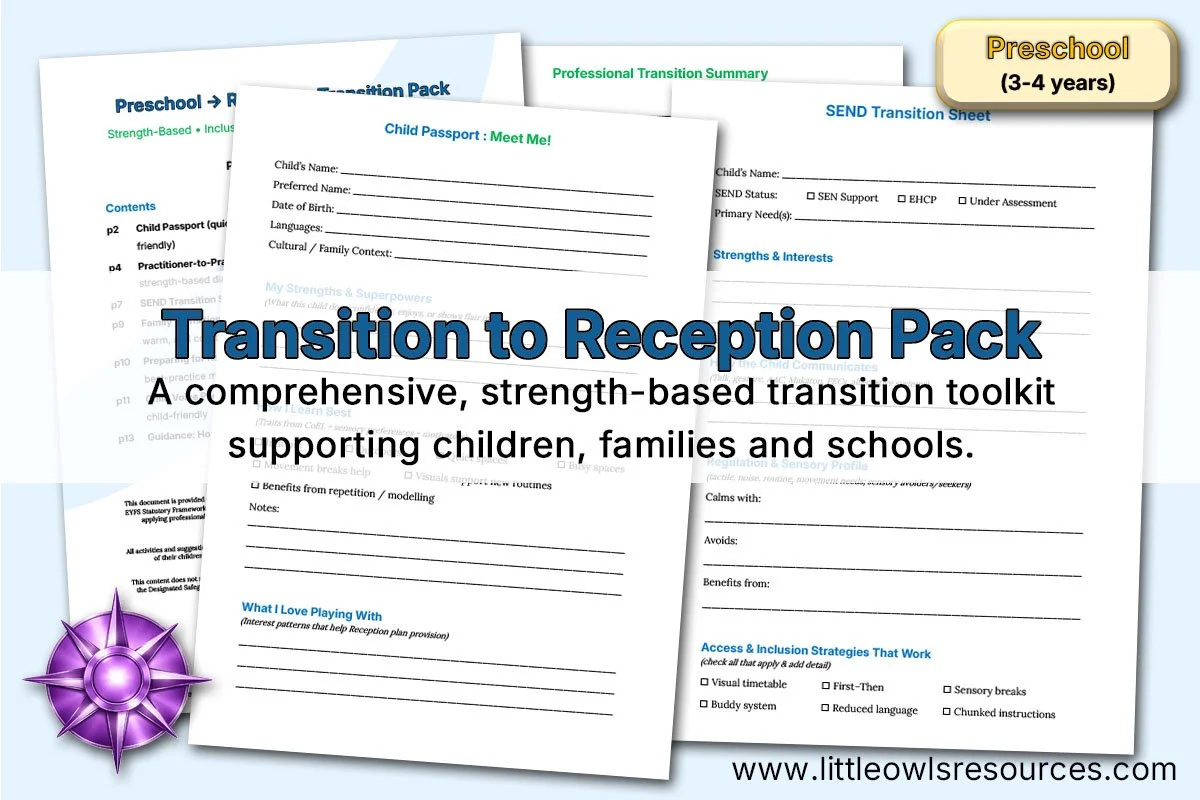
A comprehensive, strength-based transition toolkit supporting children, families and schools.
A professional reporting toolkit supporting meaningful communication with families and smooth transition to school.
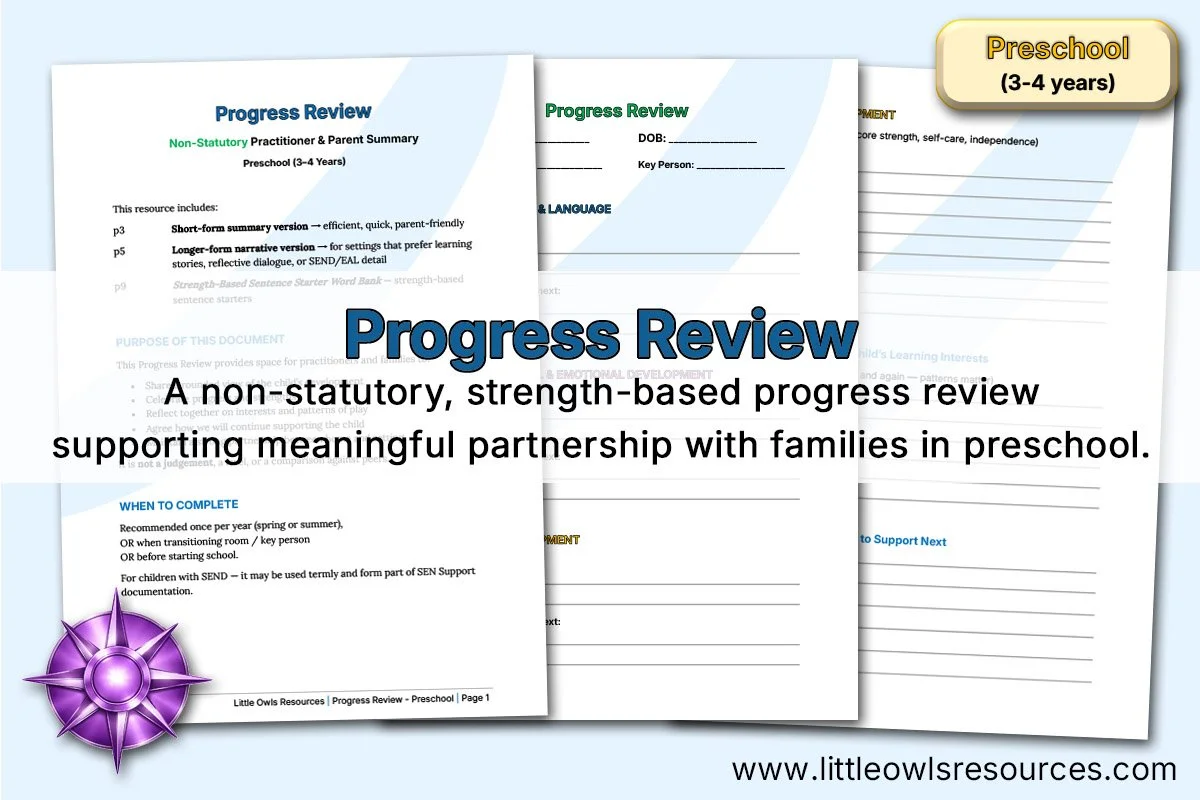
A strength-based progress review supporting meaningful partnership with families in preschool.
A practical professional toolkit supporting responsive EYFS practice without over-planning.
A professional guidance document supporting confident, flexible weekly planning in preschool.
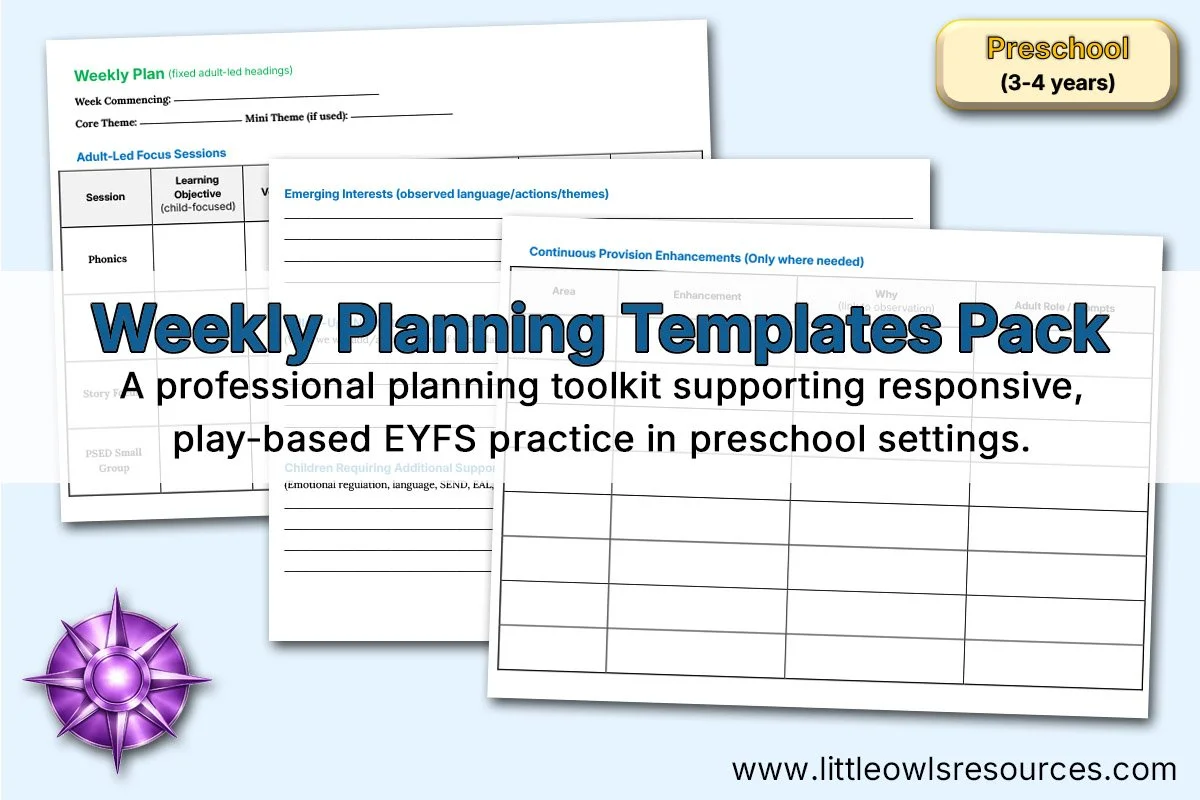
A professional planning toolkit supporting responsive, play-based EYFS practice in preschool settings.
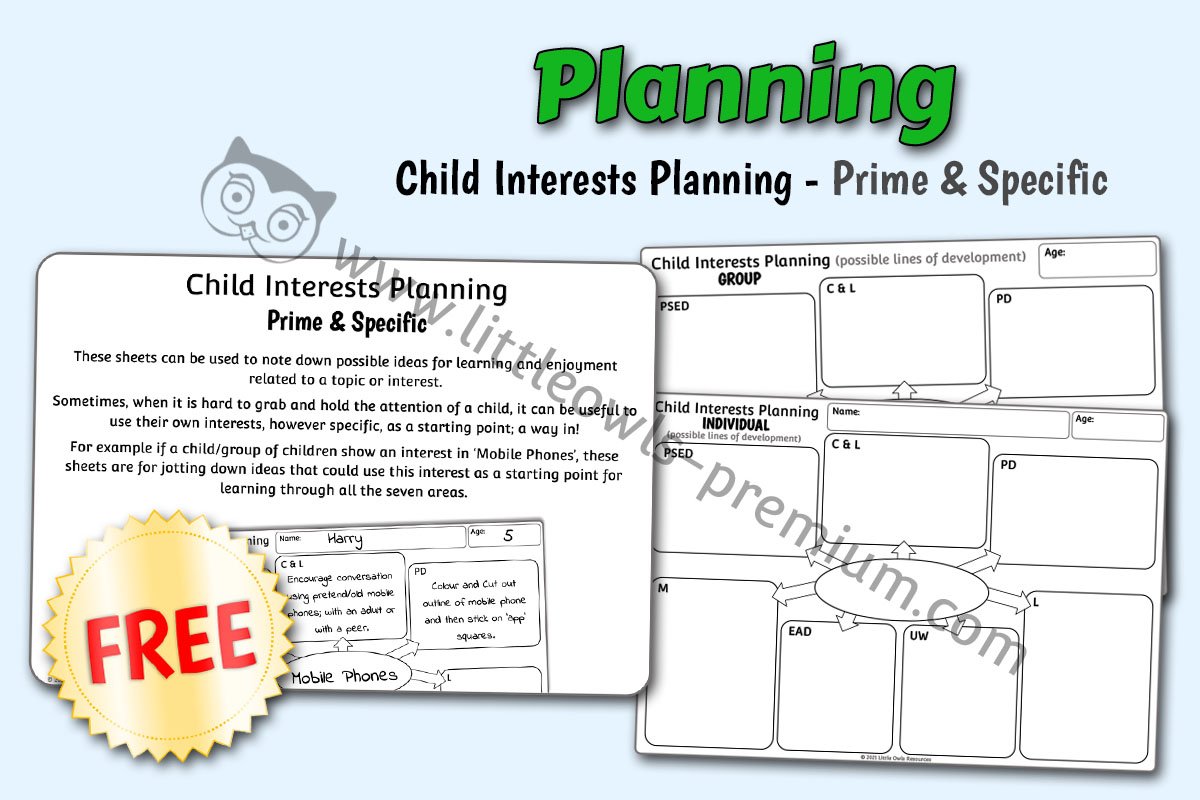
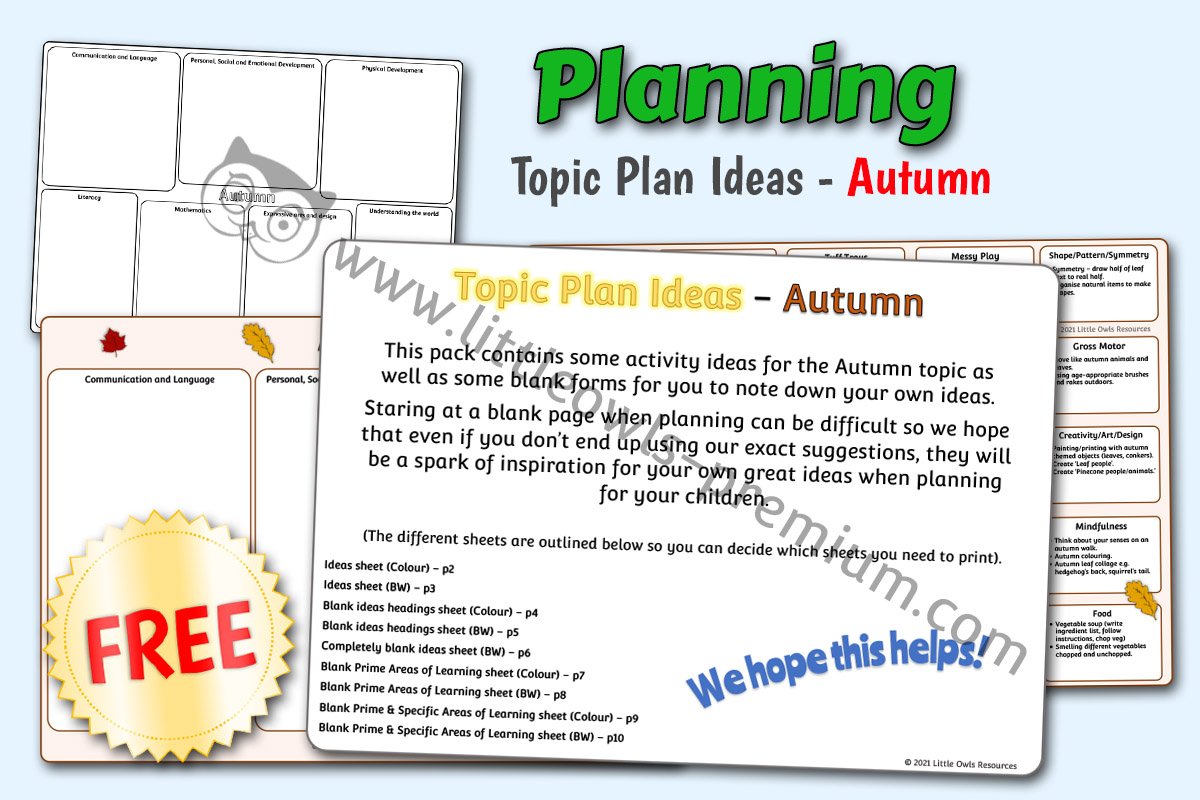
Additional Blank Planning Templates | Generic Birth-5
Continuous Provision
Area-by-area provision packs, environment setup guidance & provision maps and audits
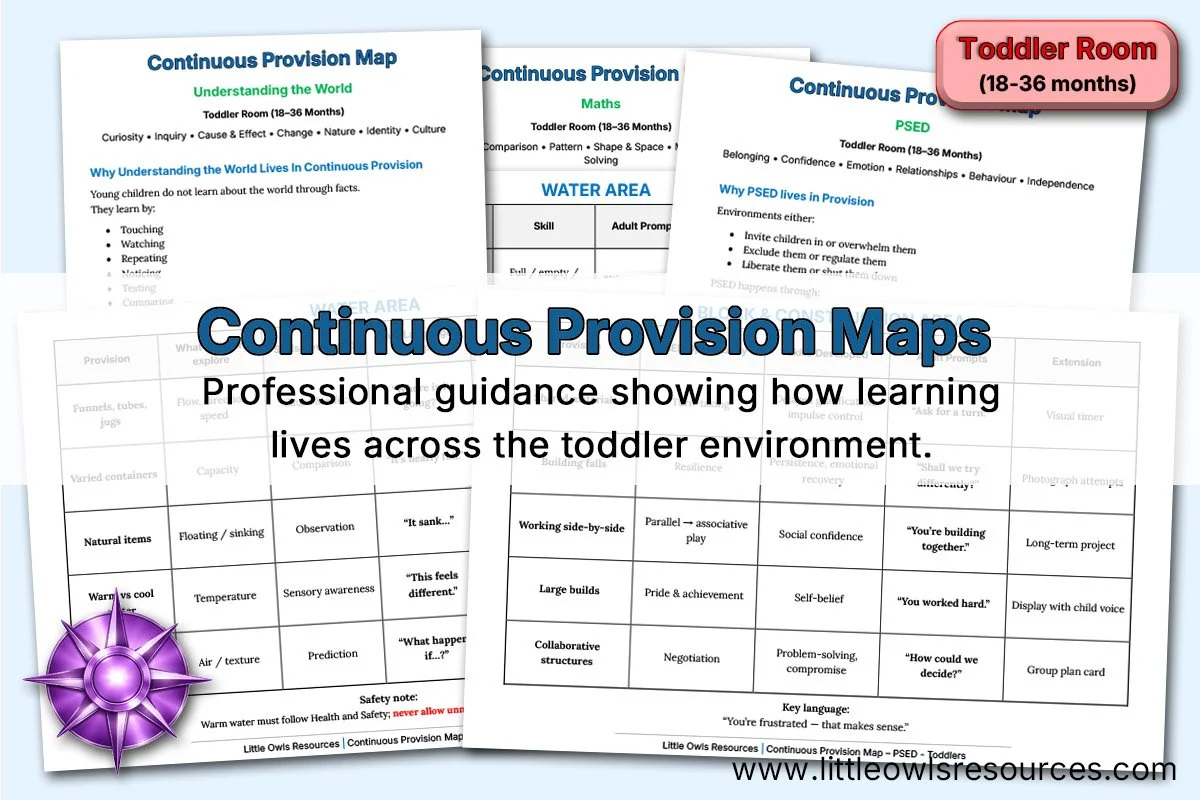
A concise professional reference supporting consistent, developmentally appropriate responses in toddler rooms.
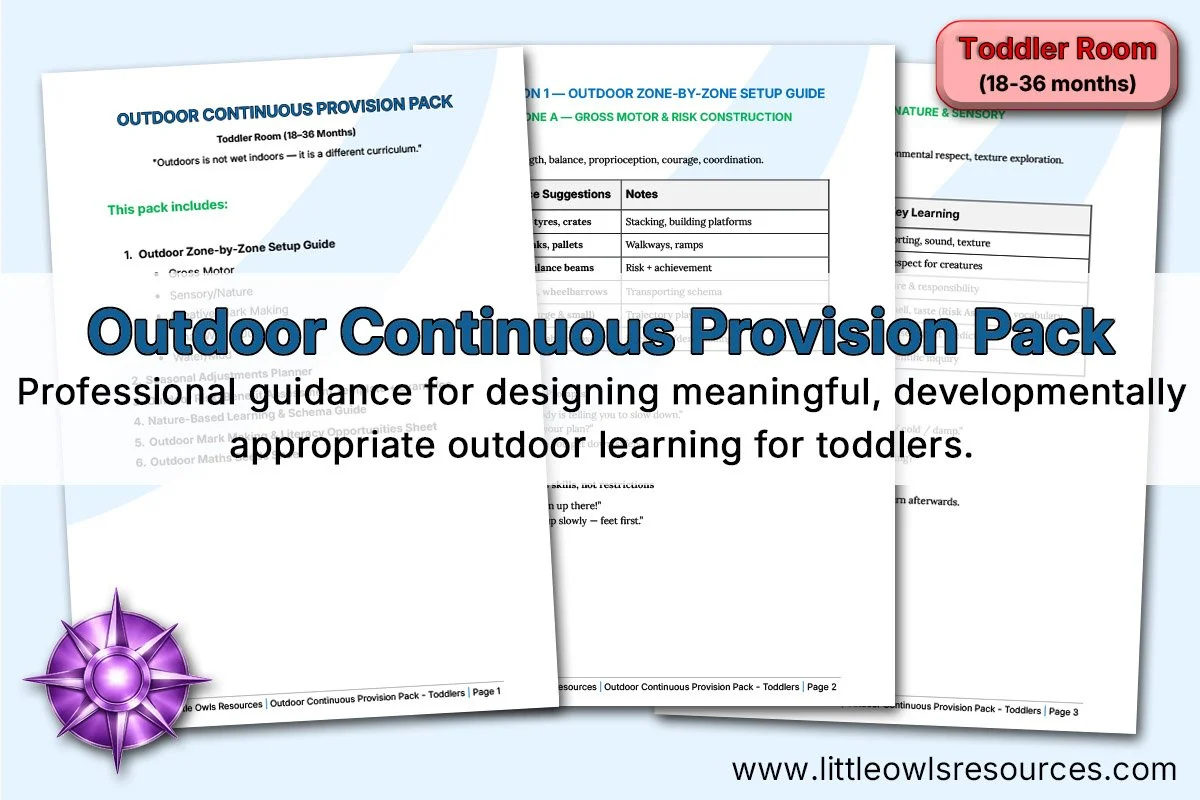
Professional guidance for designing meaningful, developmentally appropriate outdoor learning for toddlers.
Professional planning tools for rotating provision with purpose, depth and responsiveness.
Practical, pedagogy-led guidance for designing environments that support how toddlers learn.
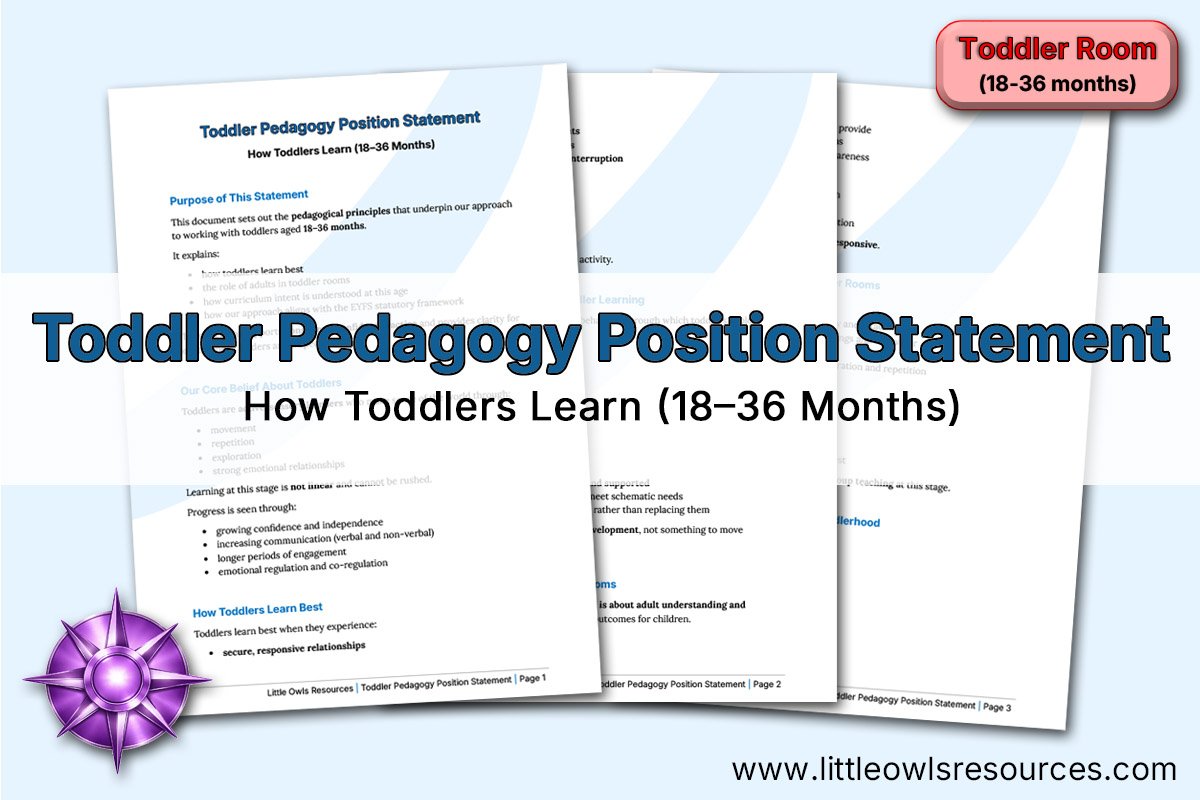
This page answers frequently asked questions about planning and pedagogy in toddler rooms.
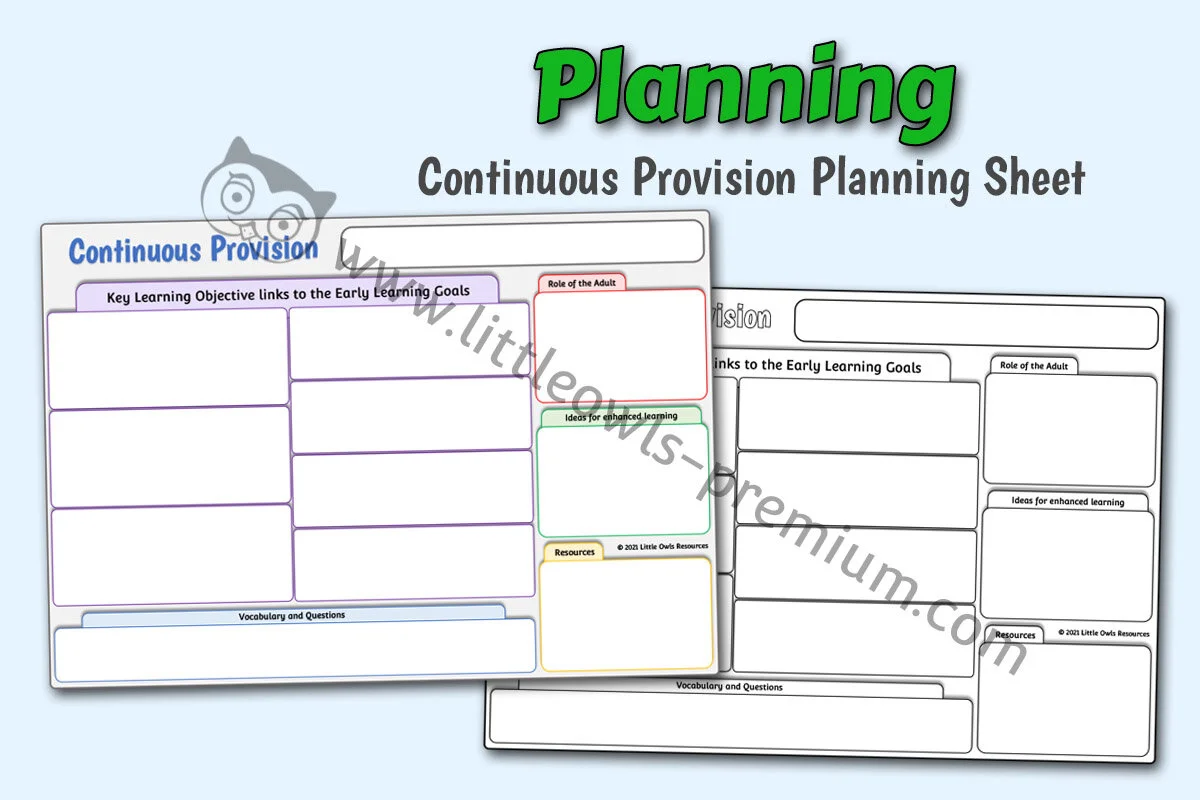
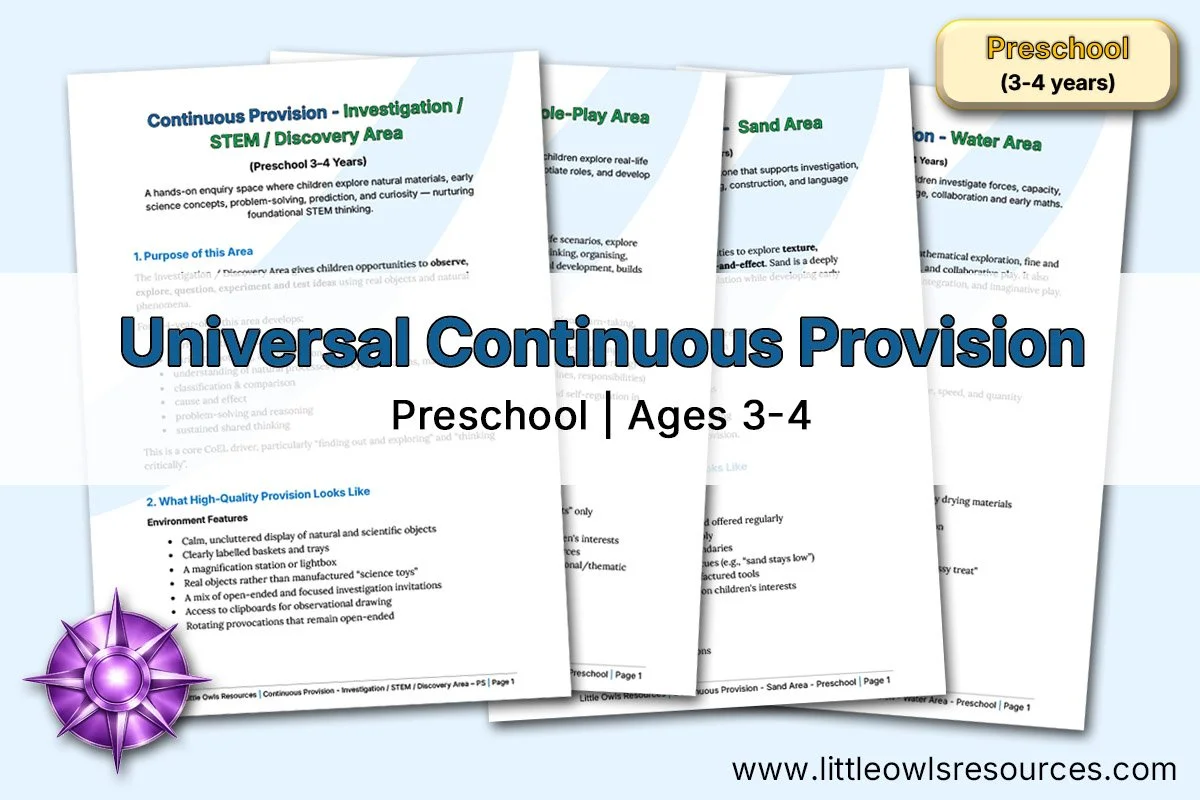
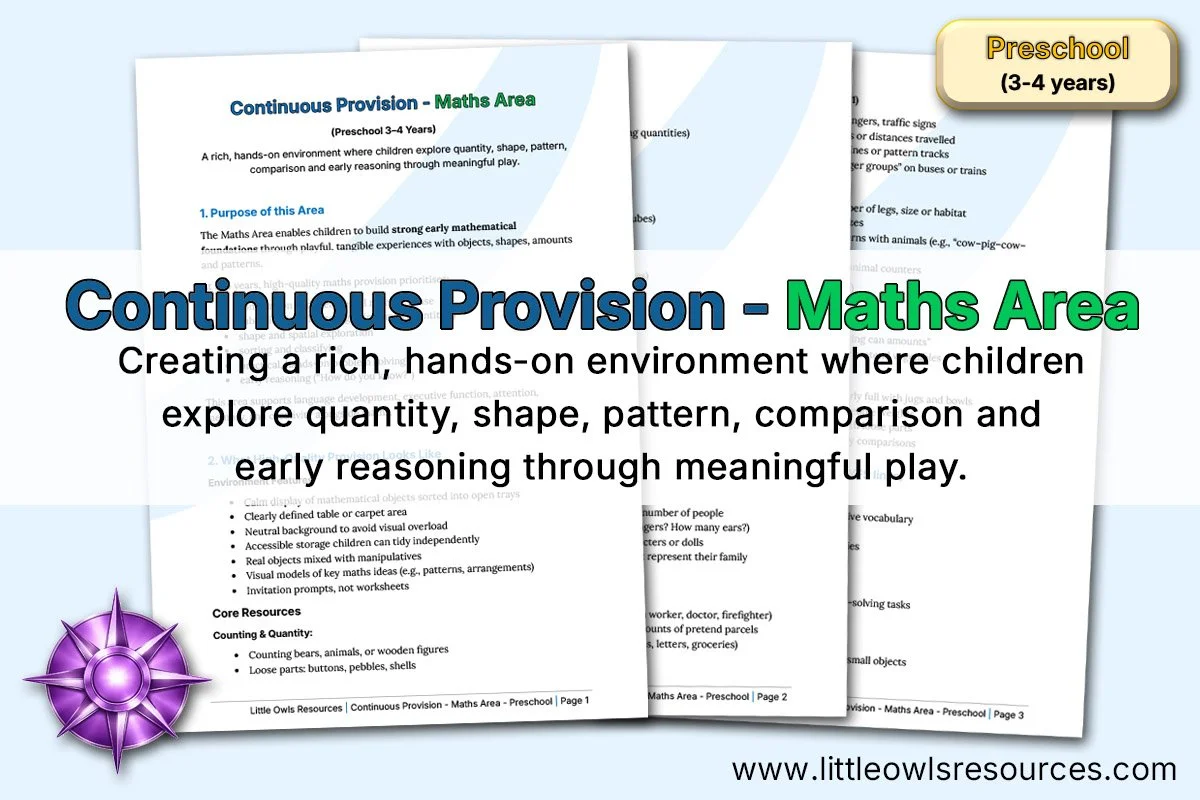
Audit, mapping and reflective tools for high-quality EYFS provision - A practical curriculum and pedagogy document for Preschool (3–4 Years)
The pack provides detailed guidance for every core Preschool learning zone, including:
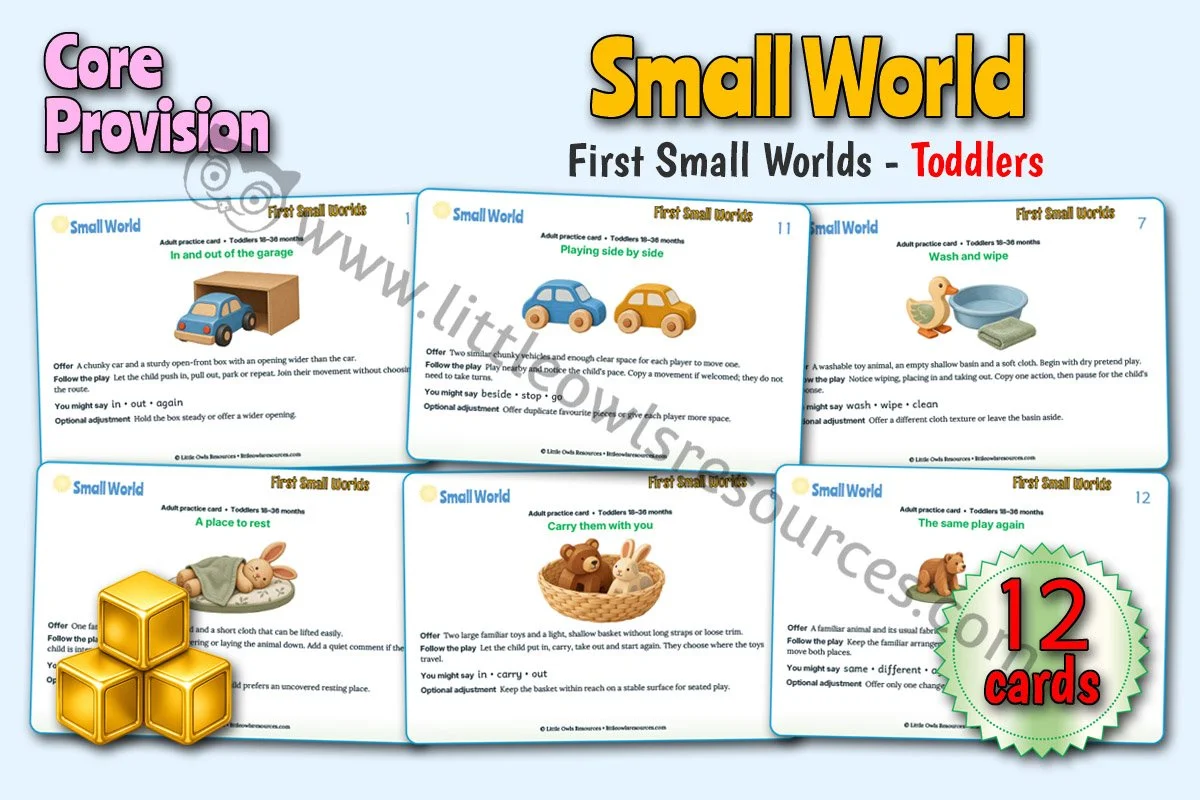
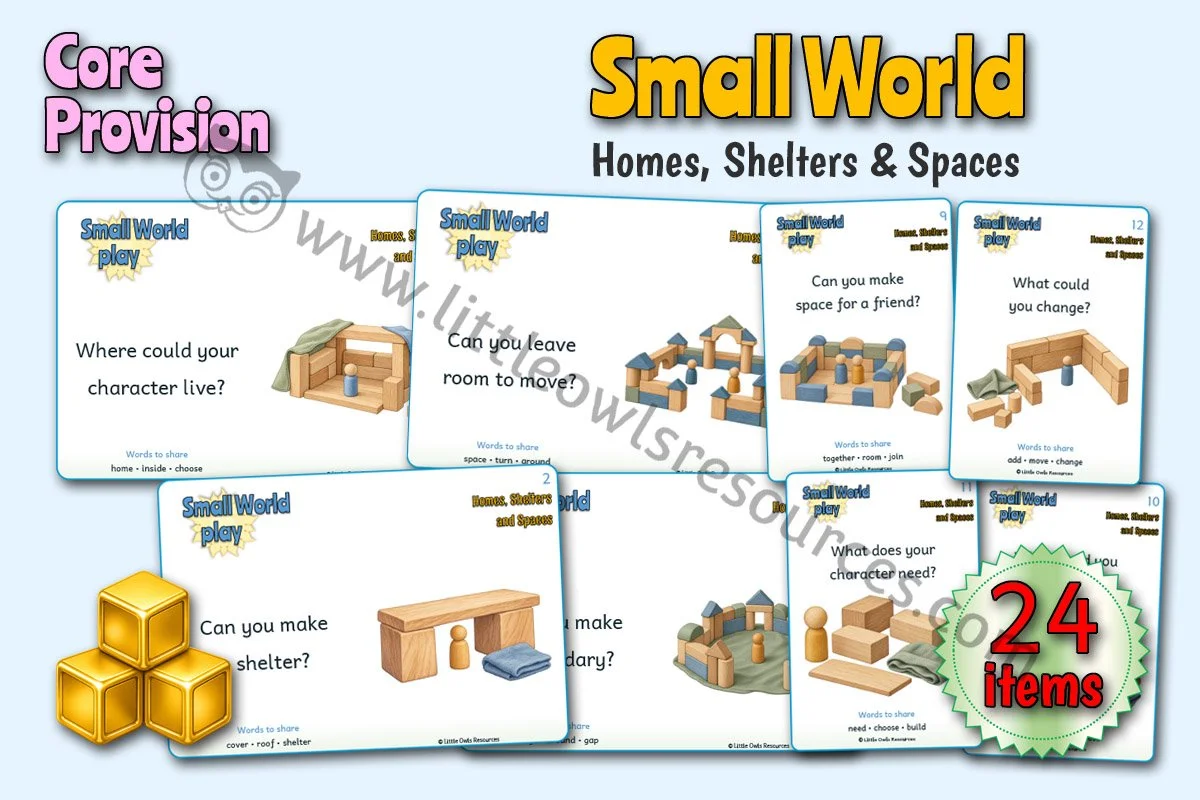
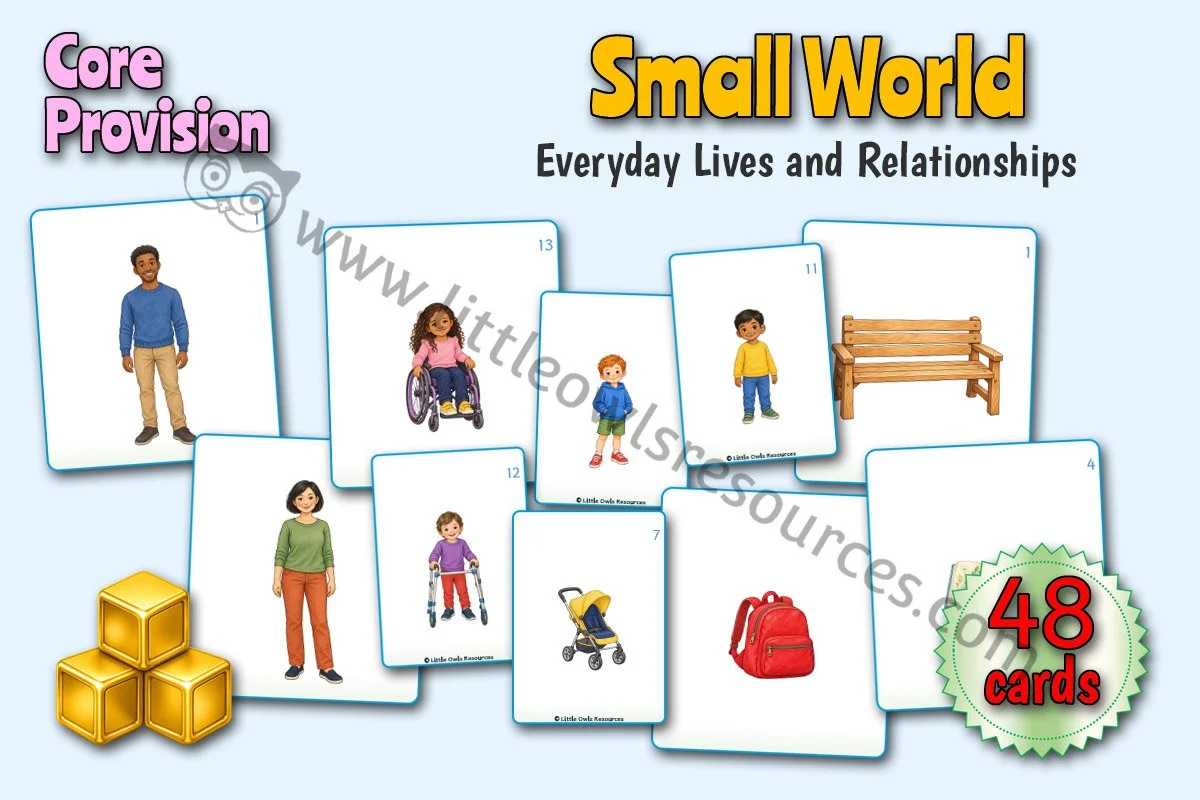
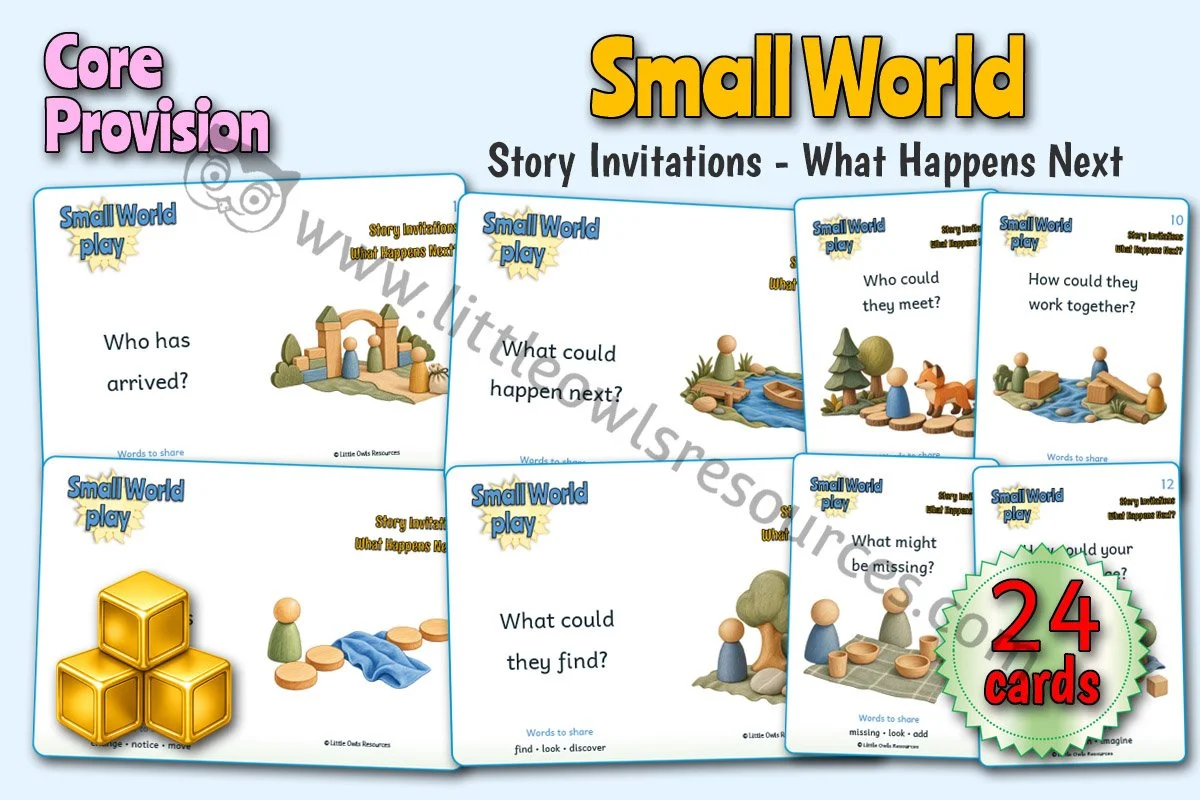
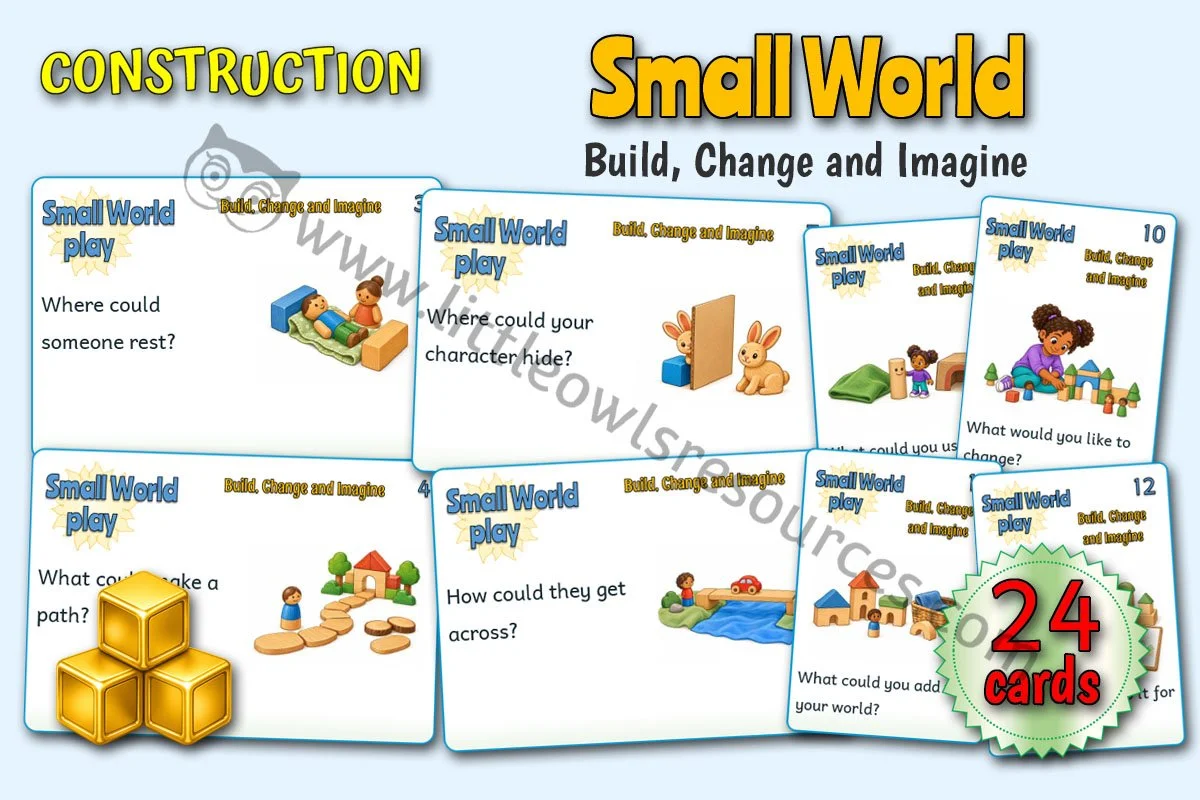
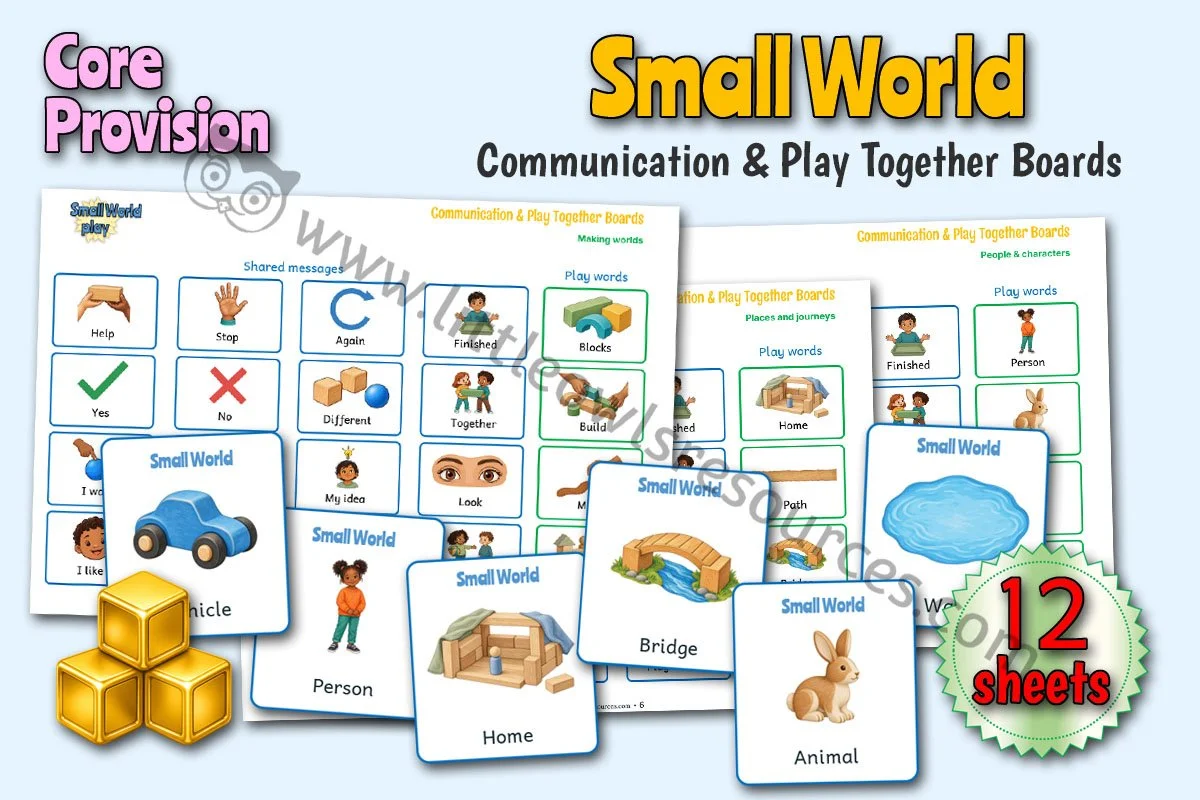
~ Construction ~ Small World ~ Role-Play ~ Writing & Mark-Making ~ Maths ~ Creative / Art ~ Investigation / STEM ~ Book Corner / Reading Den ~ Fine Motor Station ~ Water and Sand ~ Outdoor Core Zones (physical play, nature, maths, mark-making, mud kitchen) ~ Snack Area / Independence Station ~
Our curriculum is designed to support high-quality Early Years practice by providing practitioners with clear, developmentally appropriate guidance and flexible, responsive planning tools from birth to five.
This document sets out the pedagogical principles that underpin our approach to working with babies aged 0–18 months.
A sensory-rich exploration of weather, movement and material change, designed to build early scientific thinking, descriptive language and whole-body learning.
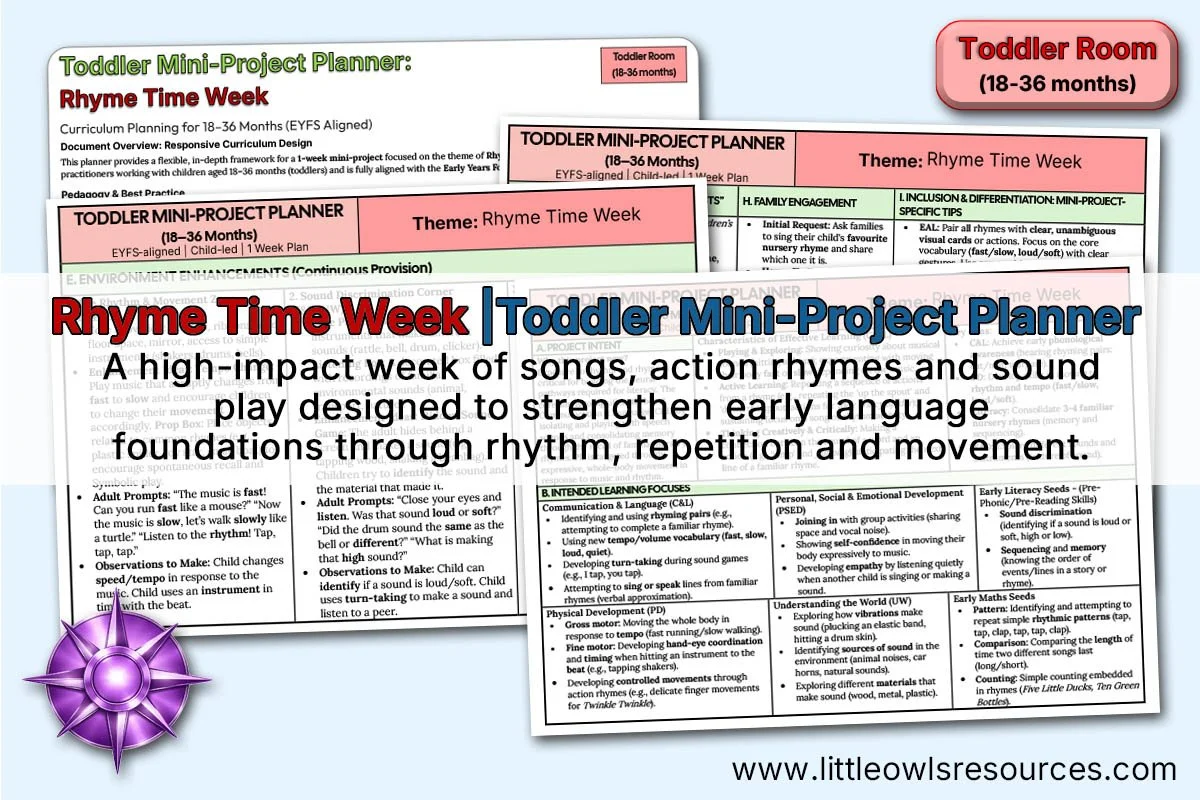
A high-impact week of songs, action rhymes and sound play designed to strengthen early language foundations through rhythm, repetition and movement.
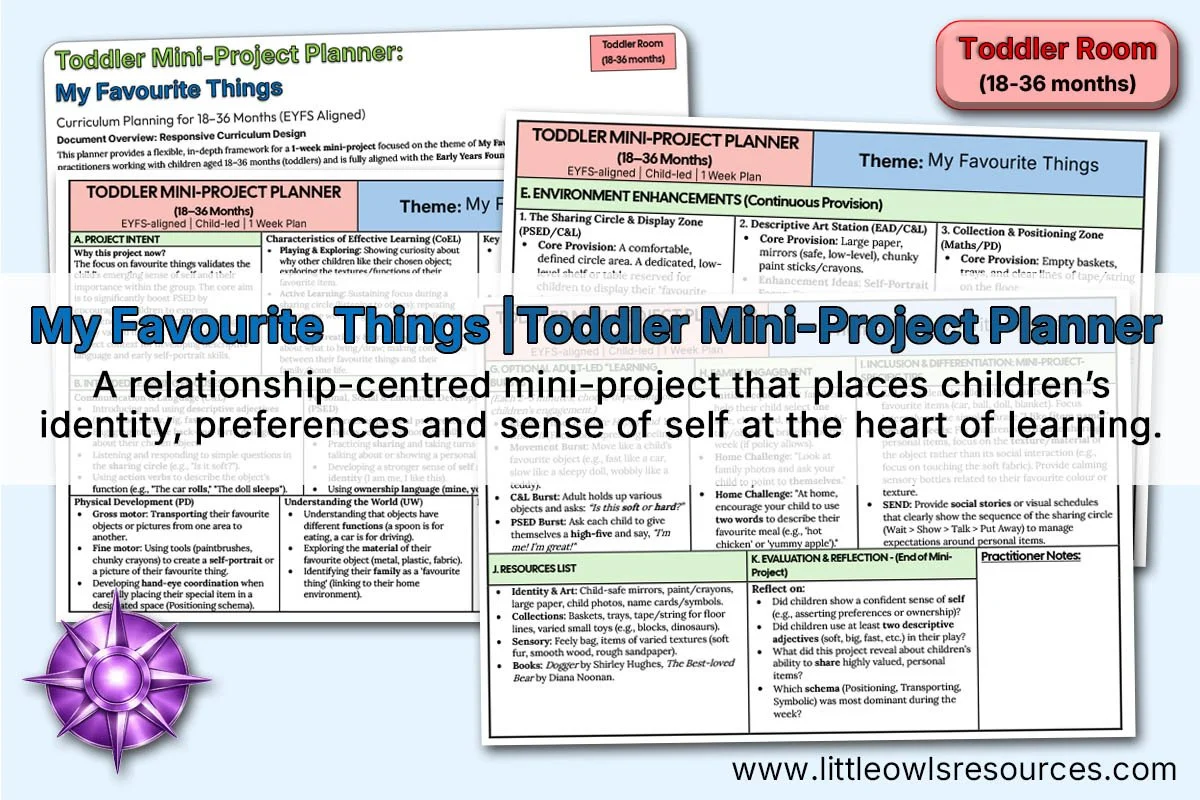
A relationship-centred mini-project that places children’s identity, preferences and sense of self at the heart of learning.
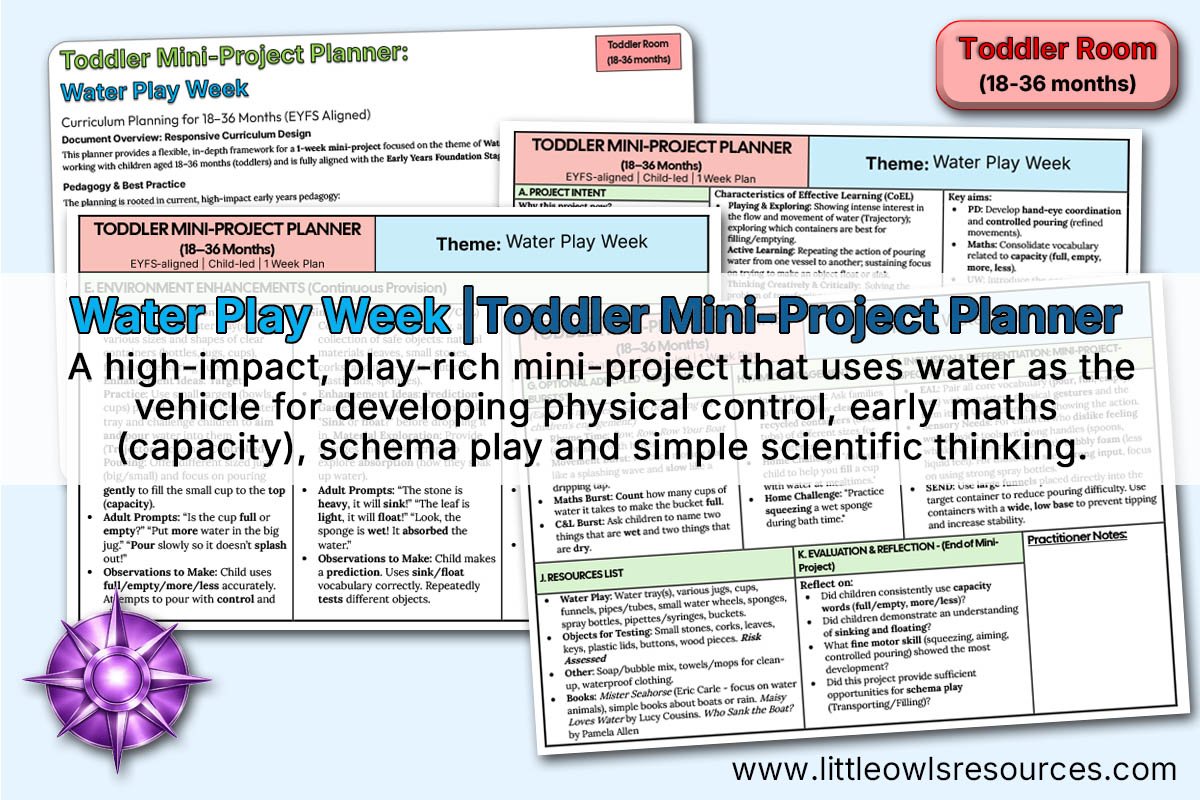
A high-impact, play-rich mini-project that uses water as the vehicle for developing physical control, early maths (capacity), schema play and simple scientific thinking.
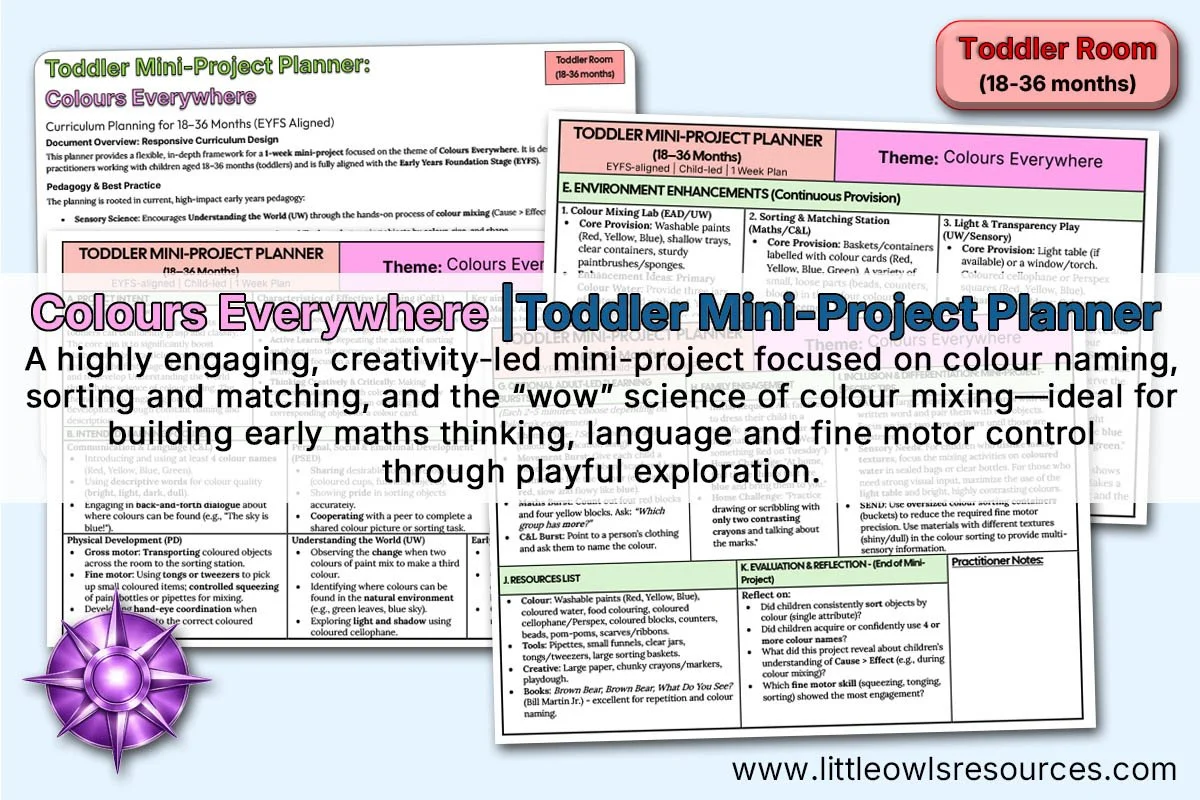
A highly engaging, creativity-led mini-project focused on colour naming, sorting and matching, and the “wow” science of colour mixing—ideal for building early maths thinking, language and fine motor control through playful exploration.
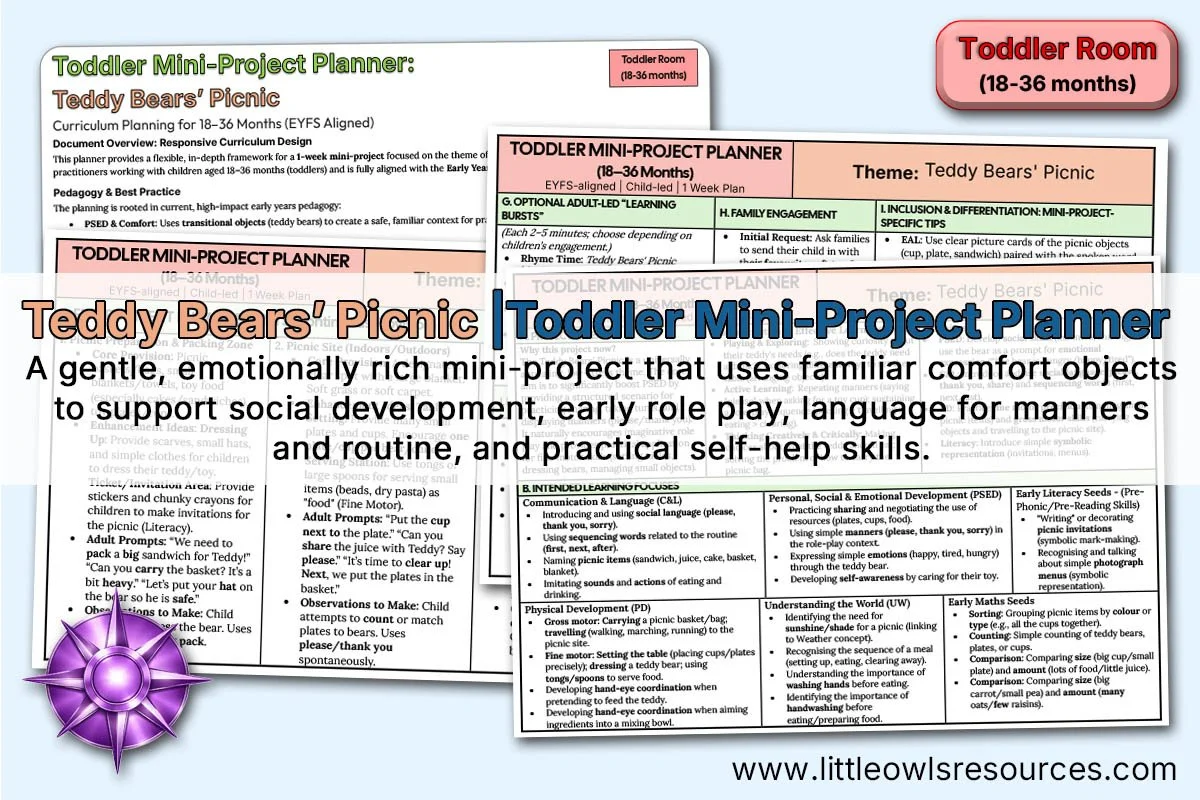
A gentle, emotionally rich mini-project that uses familiar comfort objects to support social development, early role play, language for manners and routine, and practical self-help skills.
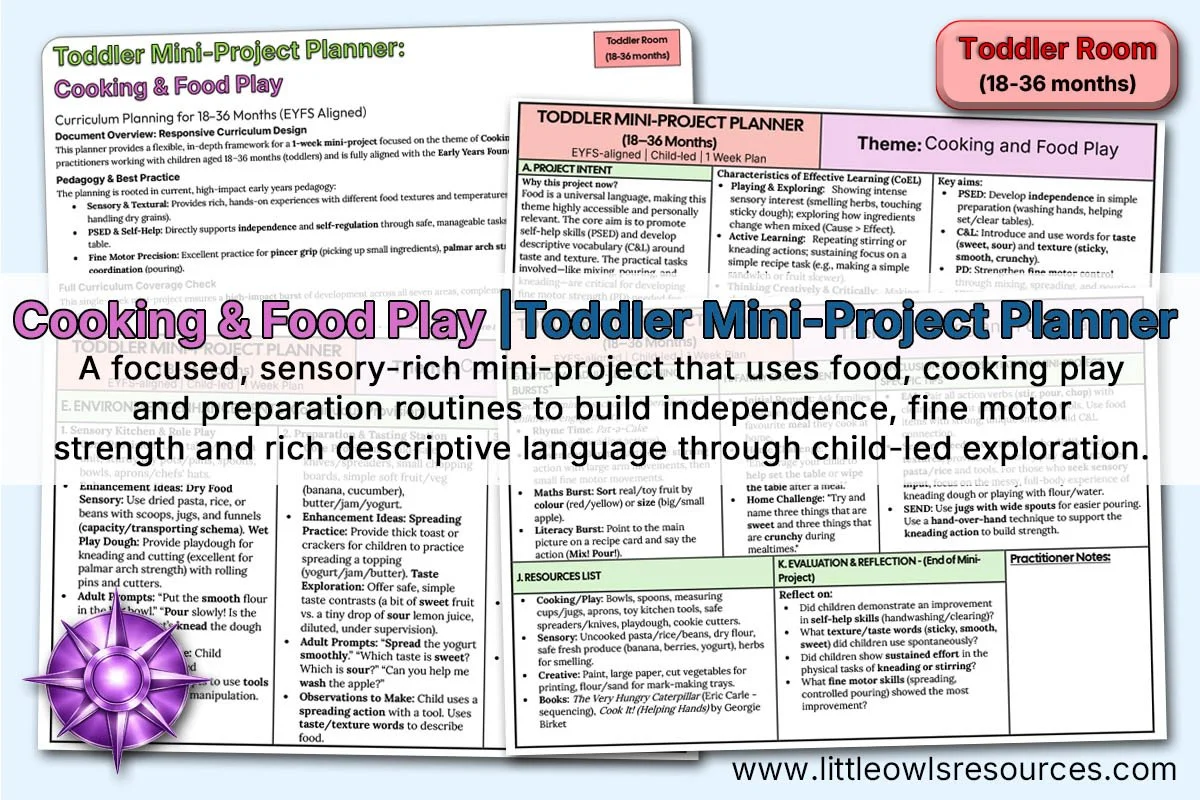
A focused, sensory-rich mini-project that uses food, cooking play and preparation routines to build independence, fine motor strength and rich descriptive language through child-led exploration.
A professional mini-project planner designed to harness toddlers’ fascination with vehicles, power and construction — supporting schema play, physical development and language through high-impact, child-led provision.
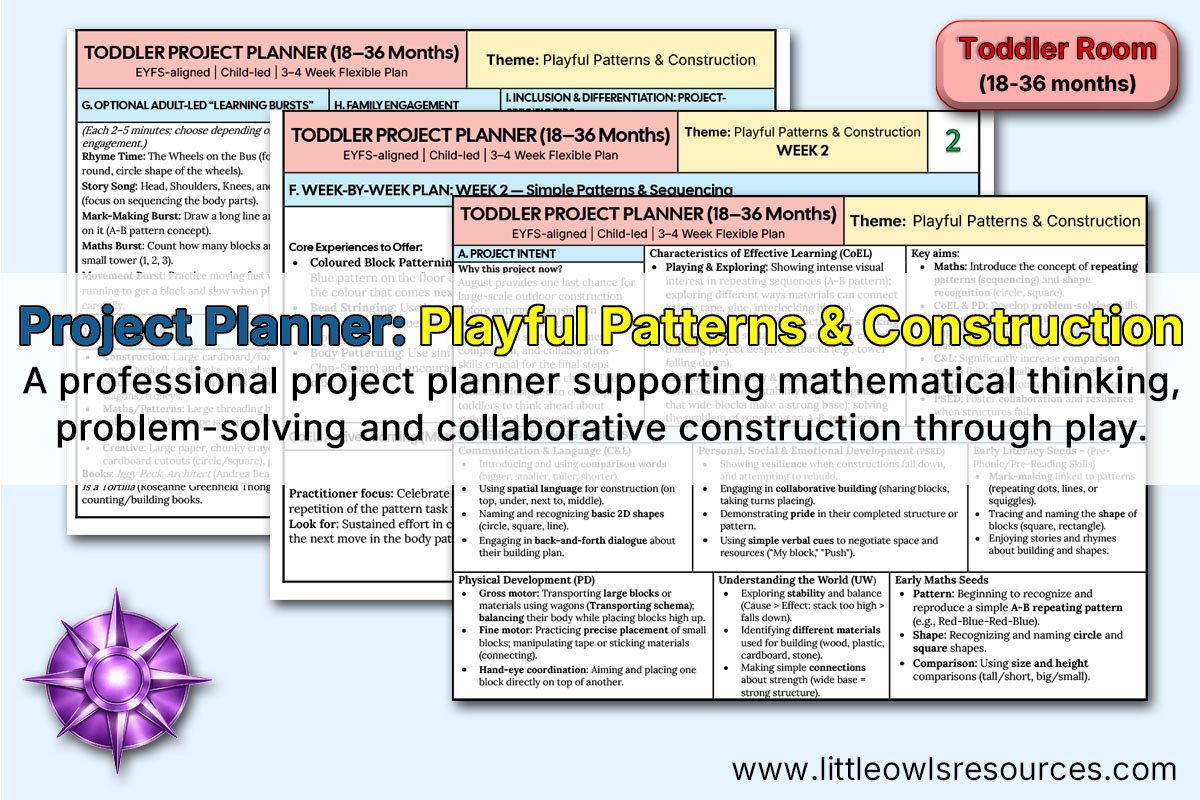
A professional project planner supporting mathematical thinking, problem-solving and collaborative construction through play.
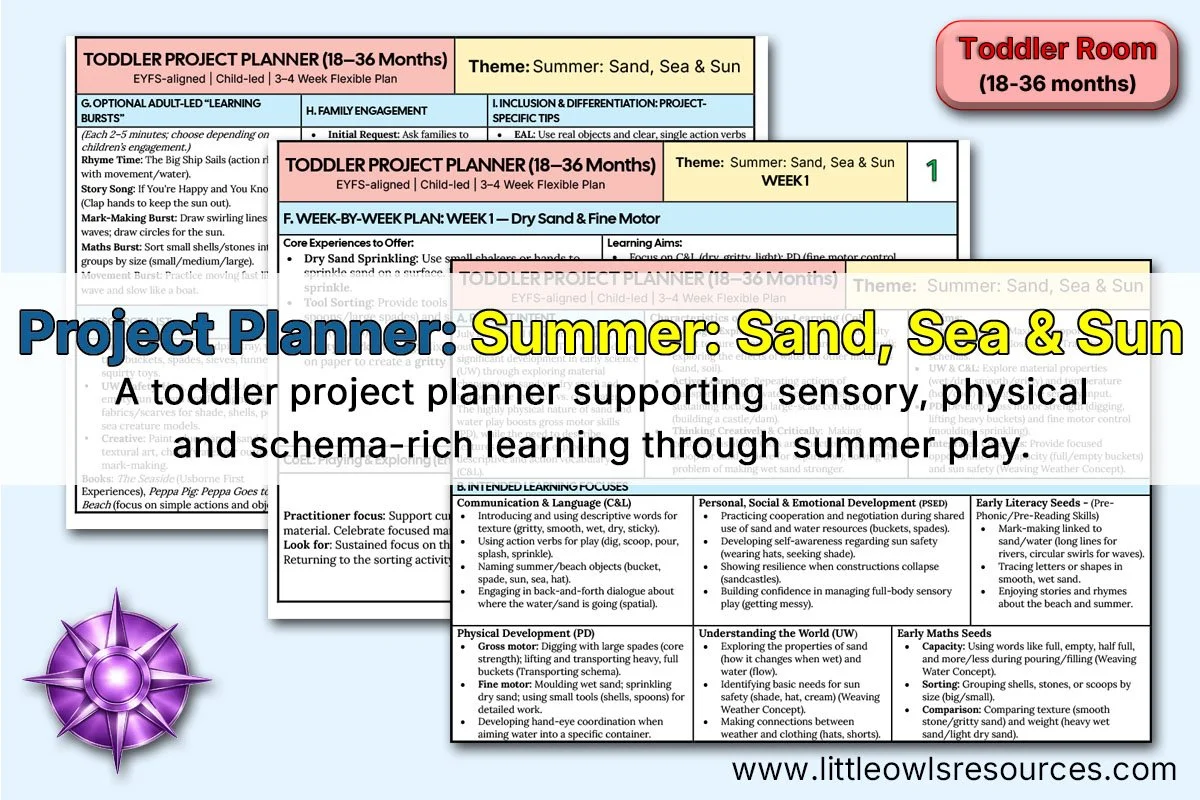
A toddler project planner supporting sensory, physical and schema-rich learning through summer play.
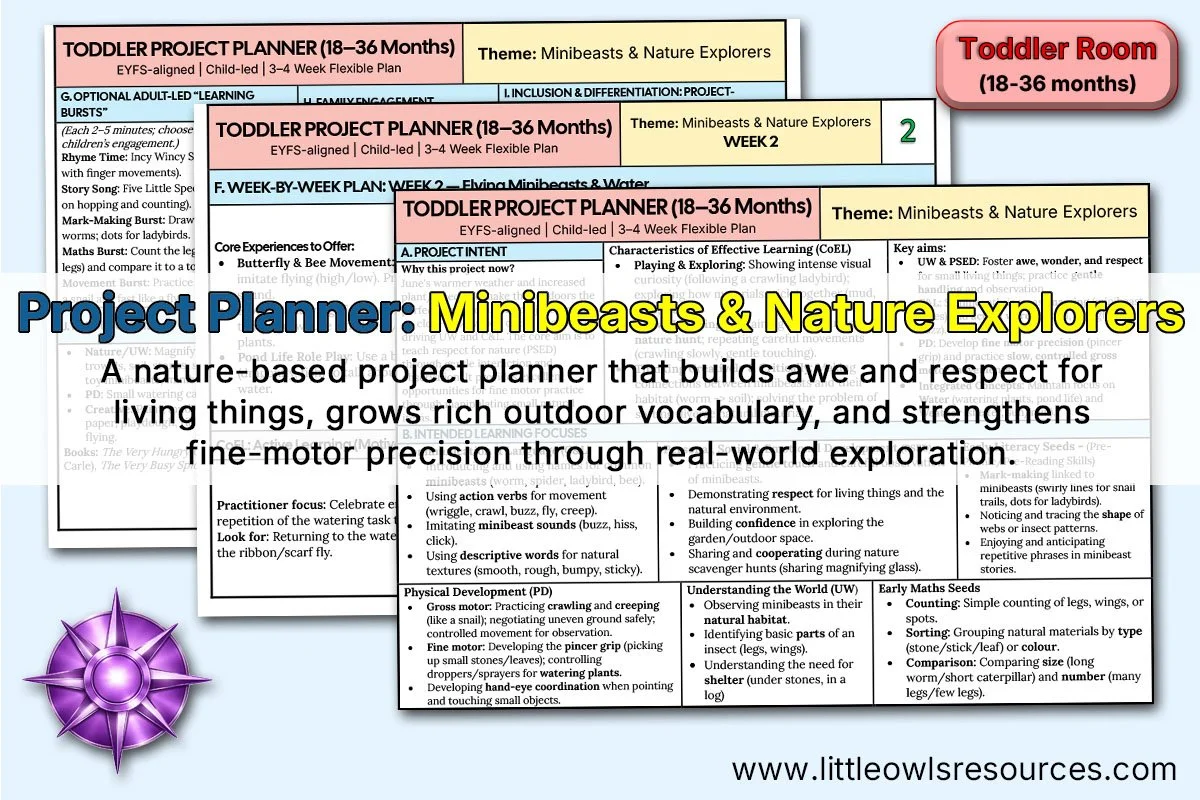
A nature-based project planner that builds awe and respect for living things, grows rich outdoor vocabulary, and strengthens fine-motor precision through real-world exploration.
A sensory-rich project planner that builds language for taste and texture, strengthens self-help skills, and supports confident, inclusive mealtime practice in toddler rooms.
A highly engaging project supporting language through animal sound play, empathy and schema-rich habitat building in toddler rooms.
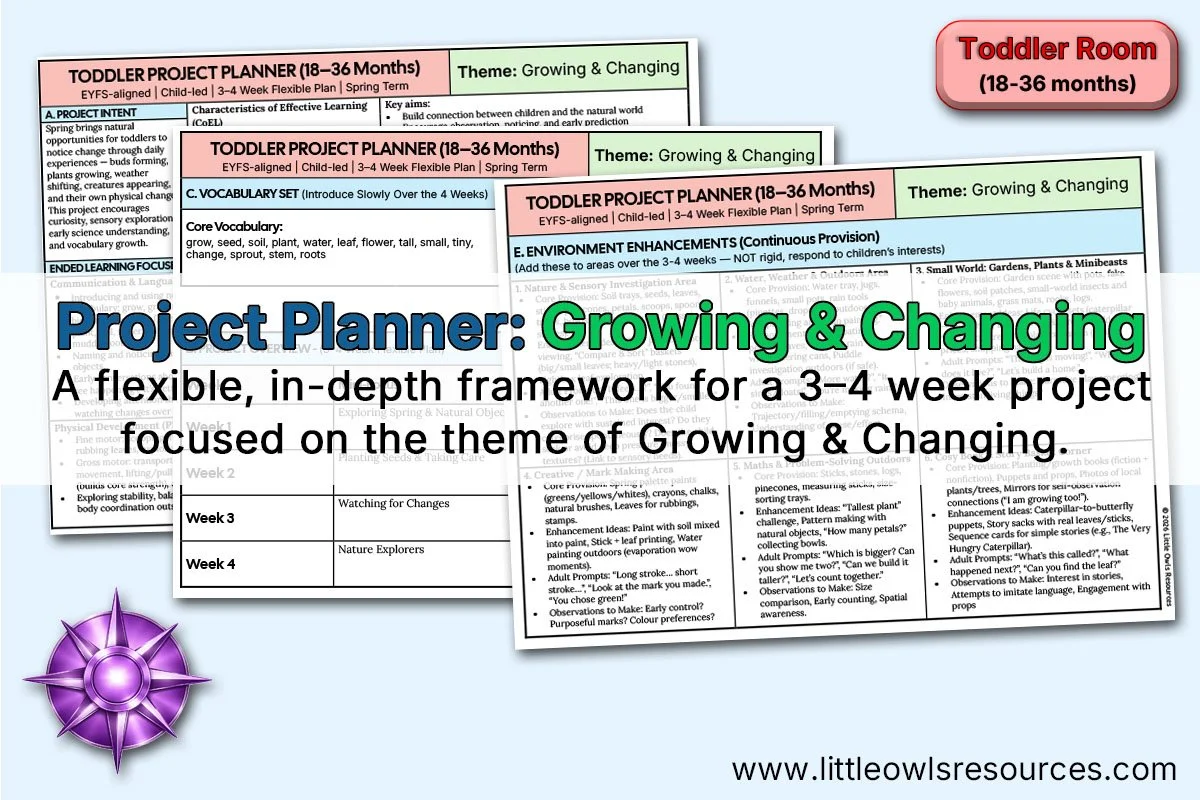
A springtime project supporting curiosity, care for living things, rich vocabulary and early science through real-world change.
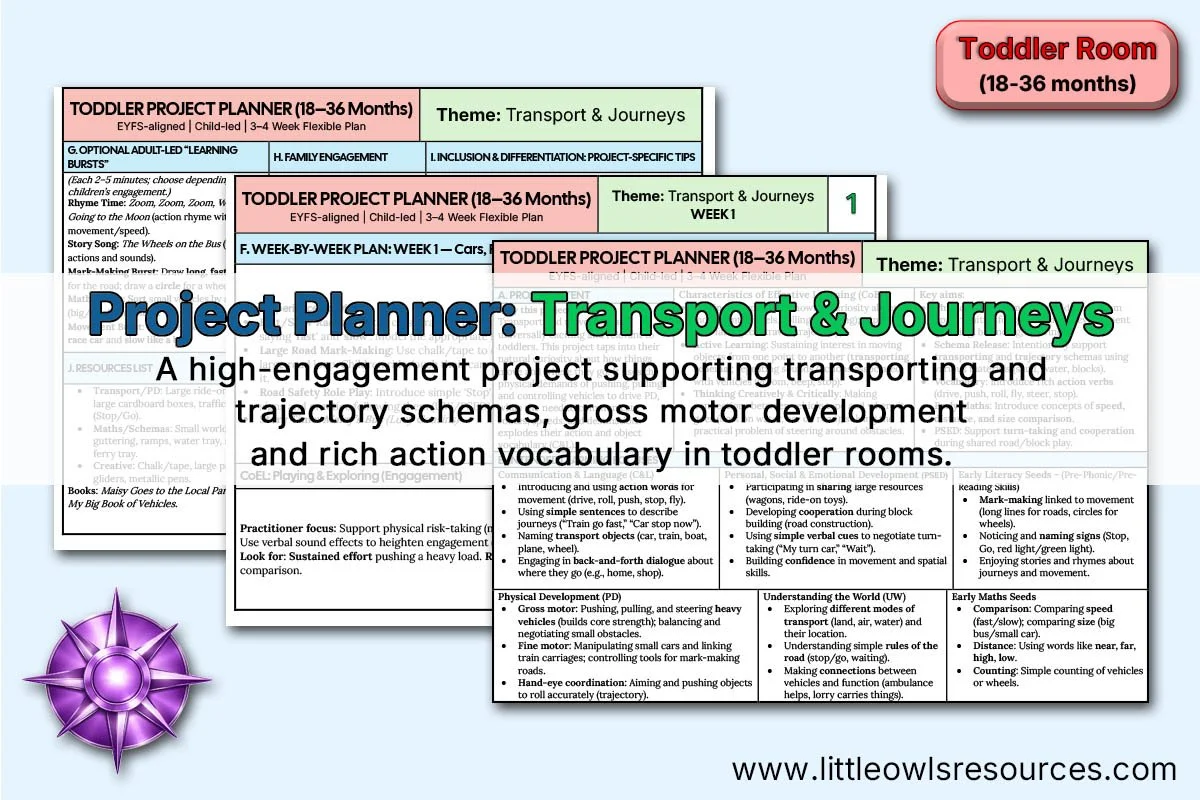
A high-engagement project supporting transporting and trajectory schemas, gross motor development and rich action vocabulary in toddler rooms.
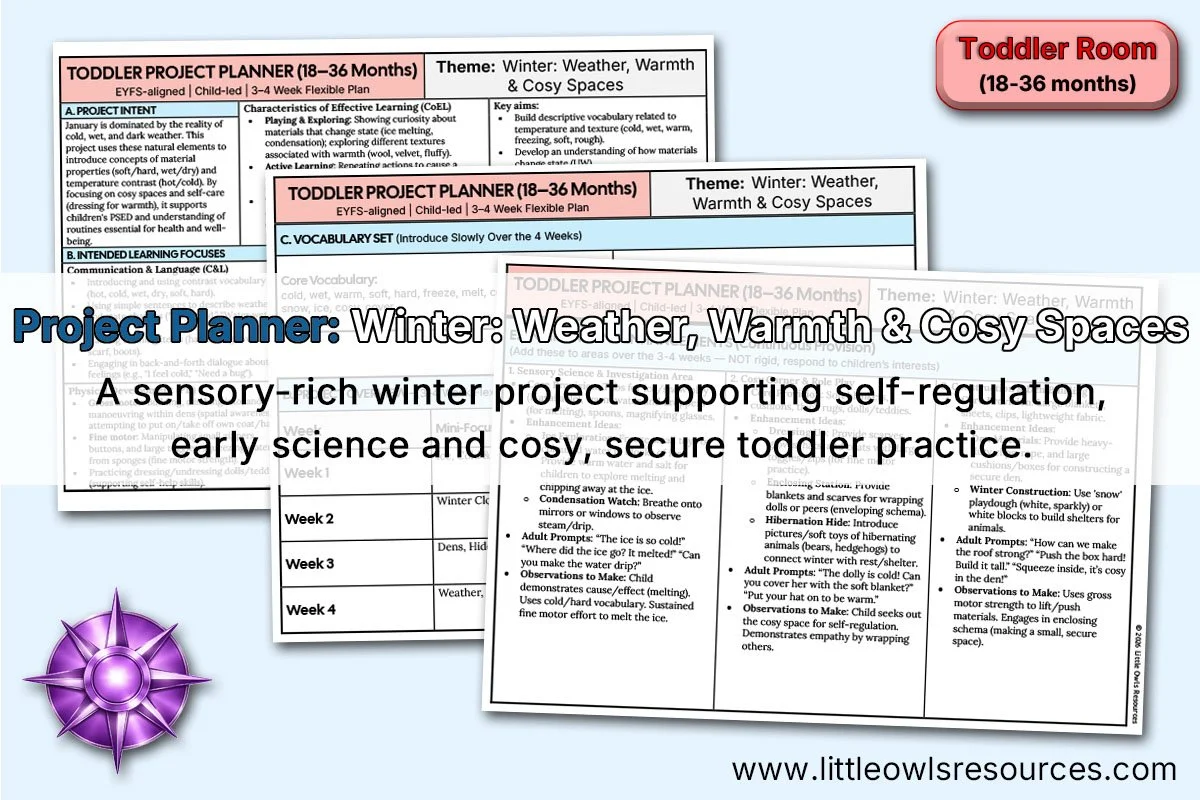
A sensory-rich winter project supporting self-regulation, early science and cosy, secure toddler practice.
A sensory-rich, awe-inspiring project supporting confidence, language and early scientific thinking in toddler rooms.
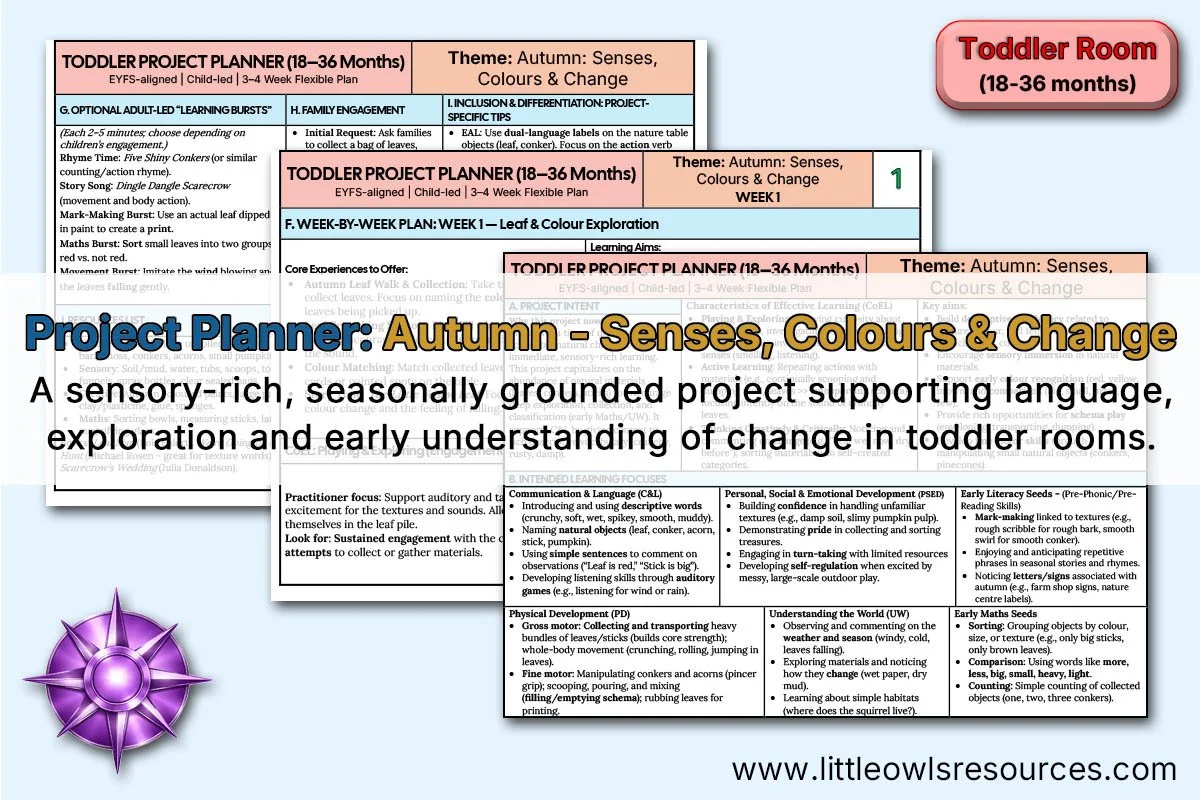
A sensory-rich, seasonally grounded project supporting language, exploration and early understanding of change in toddler rooms.
A play-led, relationship-focused project supporting community awareness, role play and language development in toddler rooms.
A developmentally grounded theme planner supporting belonging, identity and emotional security in toddler rooms.
Professional guidance showing how schematic learning is intentionally embedded across toddler projects.
Professional guidance explaining the role of projects within a play-led toddler curriculum.
A flexible, developmentally informed overview of optional project themes across the toddler year.
Preschool Theme Planning
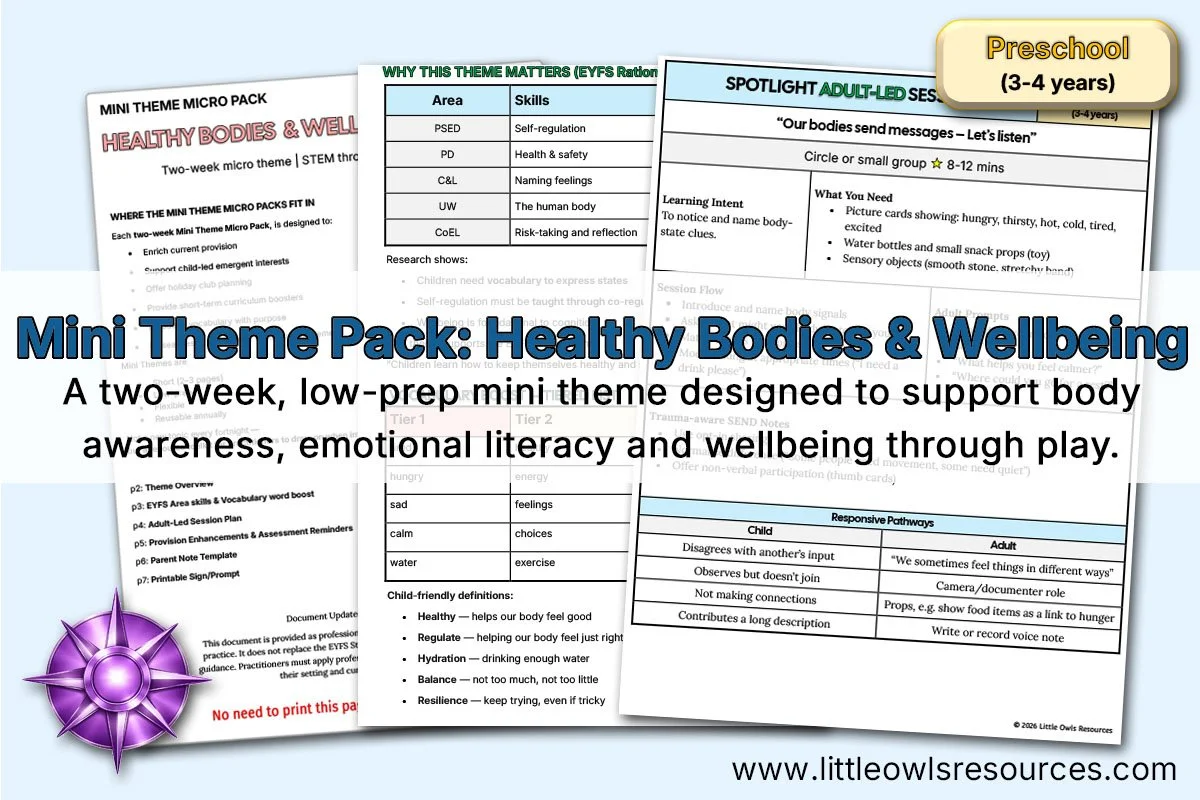
A two-week, low-prep mini theme designed to support body awareness, emotional literacy and wellbeing through play.
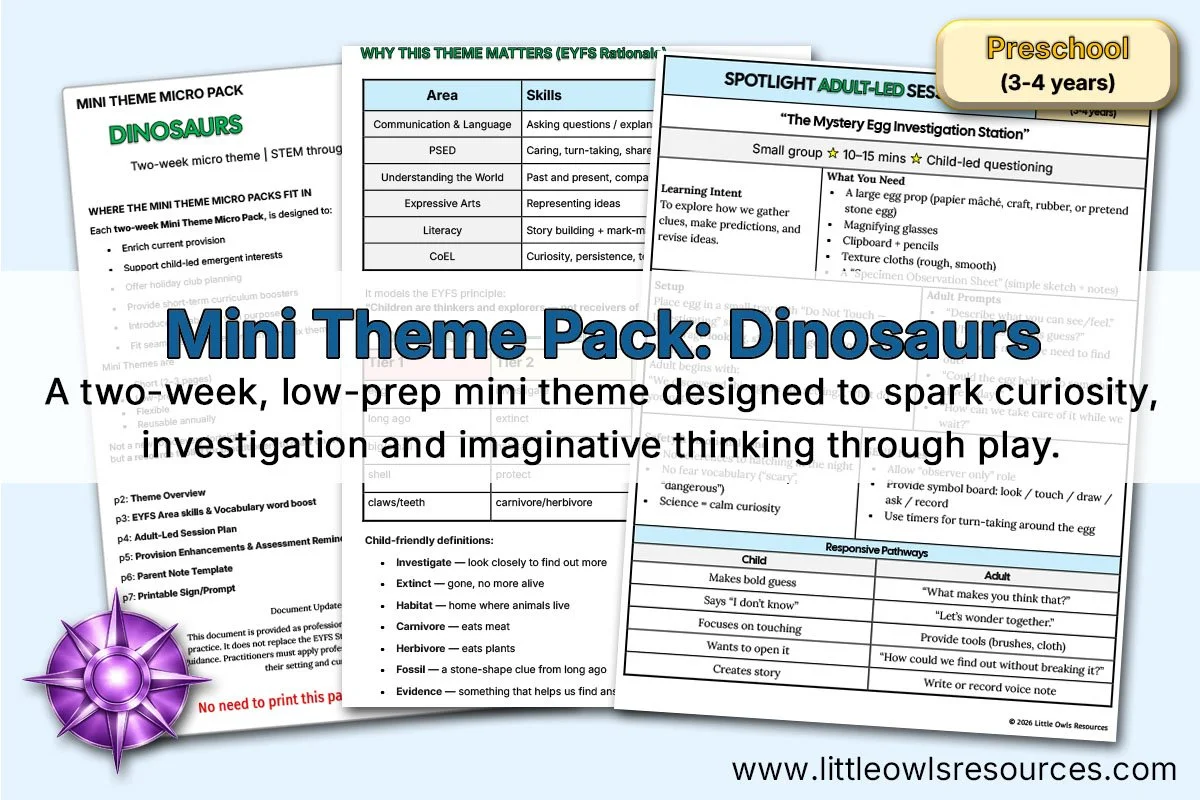
A two-week, low-prep mini theme designed to spark curiosity, investigation and imaginative thinking through play.
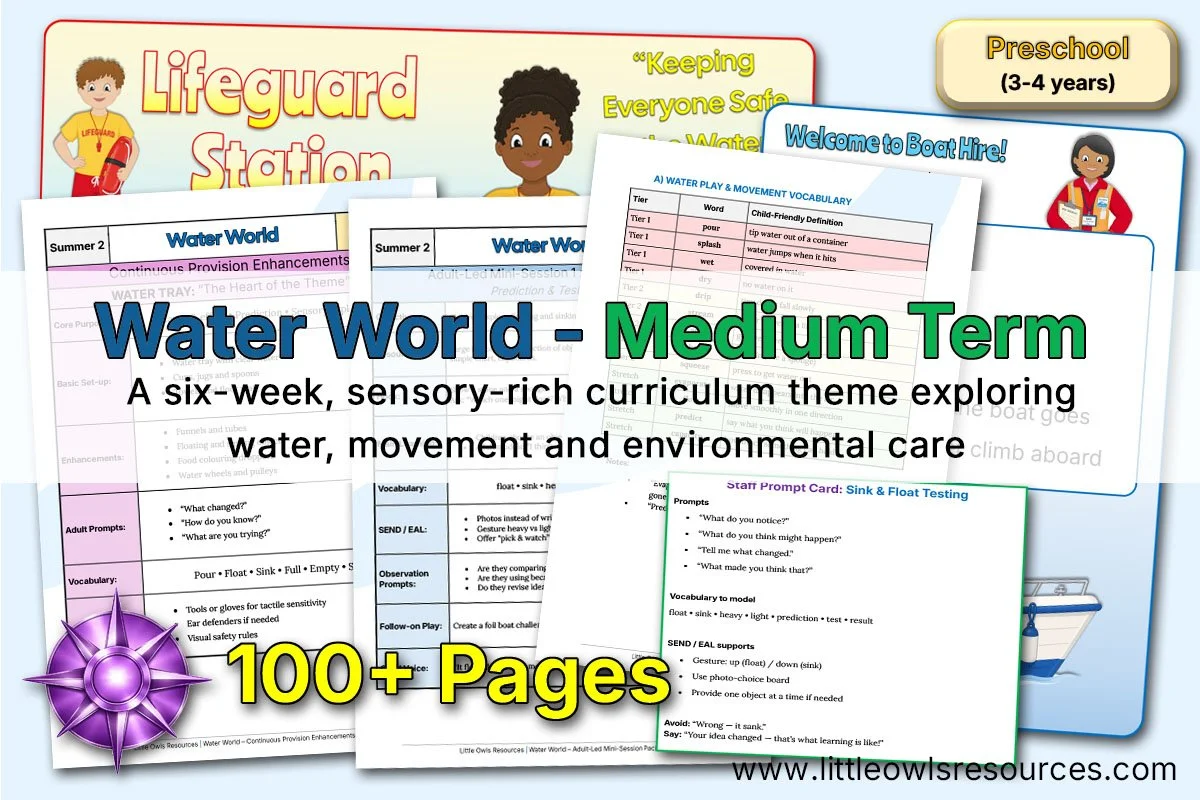
A six-week, sensory-rich curriculum theme exploring water, movement and environmental care (Commonly used in Summer 2)
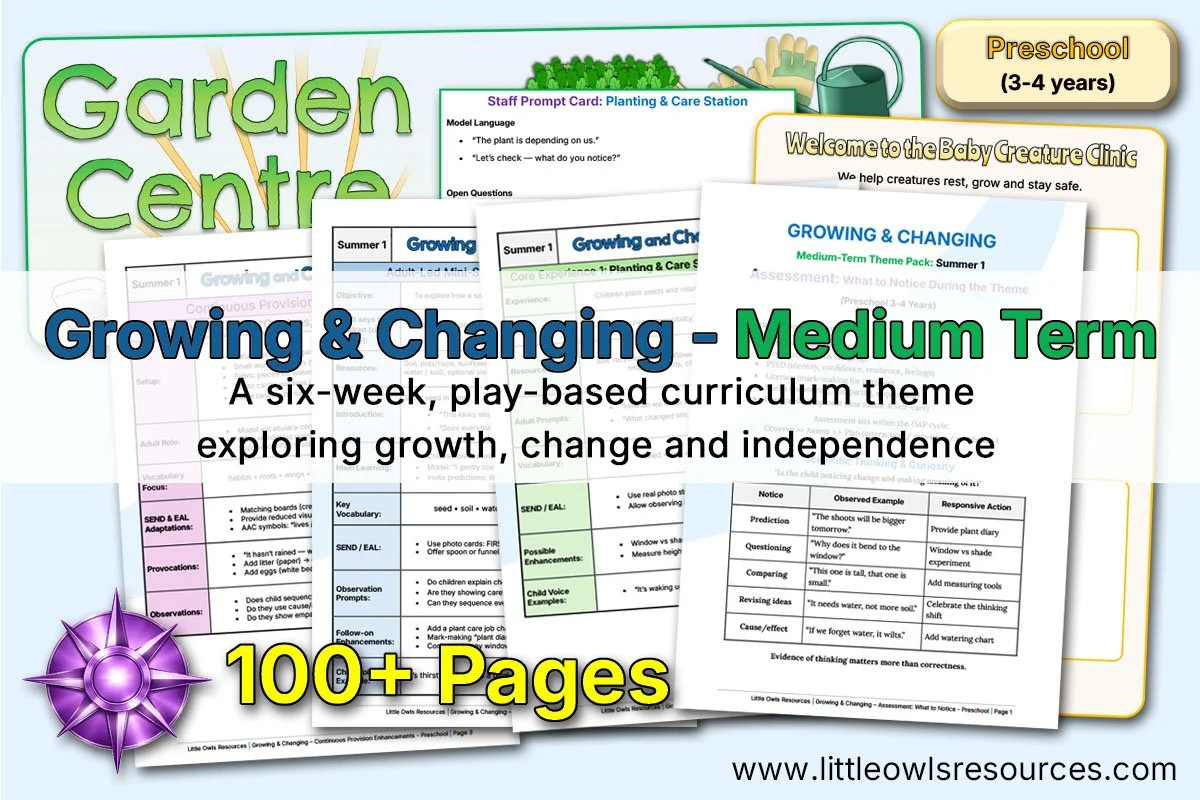
A six-week, play-based curriculum theme exploring growth, change and independence (Commonly used in Summer 1)
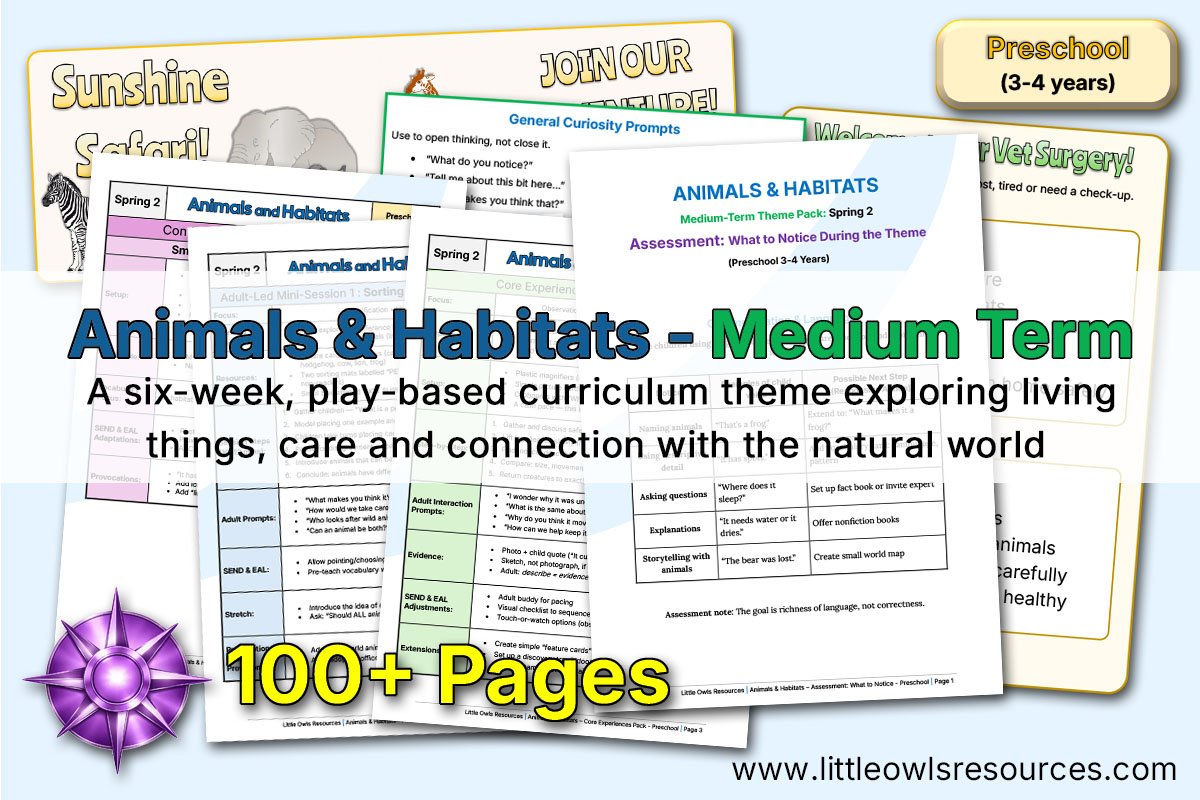
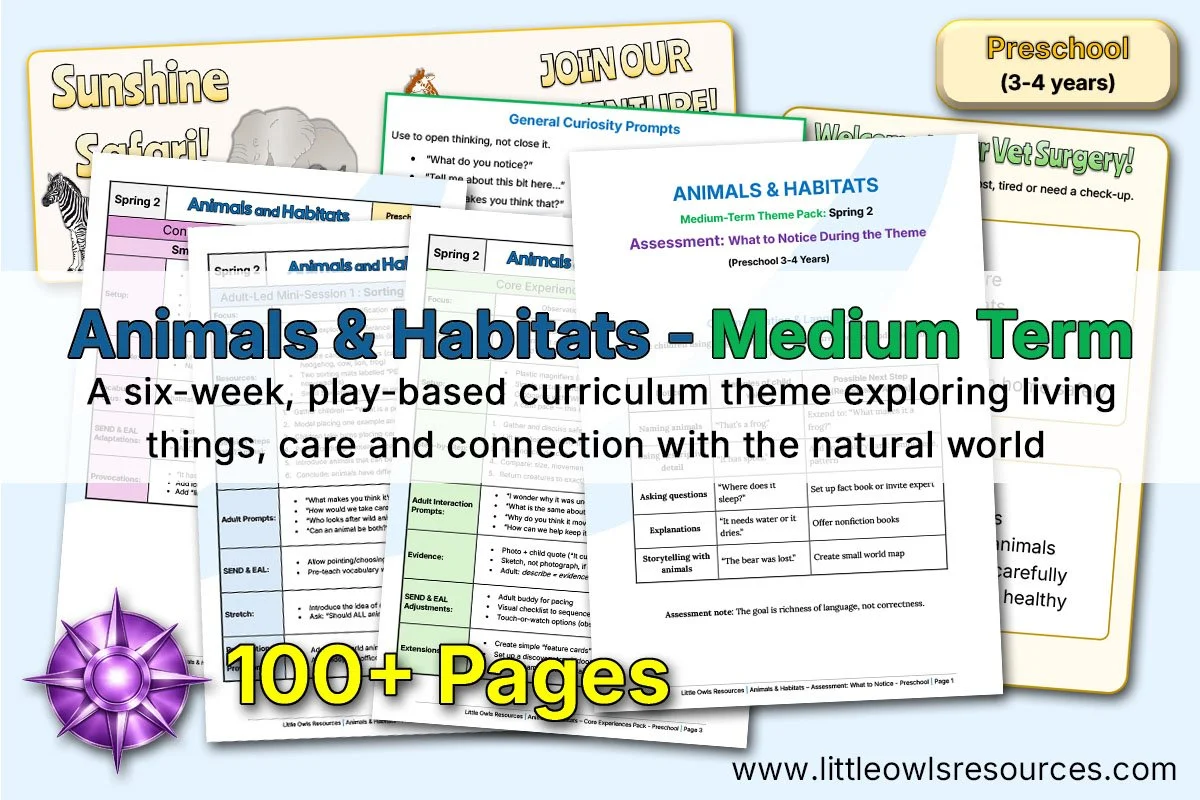
A six-week, play-based curriculum theme exploring living things, care and connection with the natural world. (Commonly used in Spring 2)
A six-week, play-based curriculum theme exploring movement, direction, story and connection (Commonly used in Spring 1)
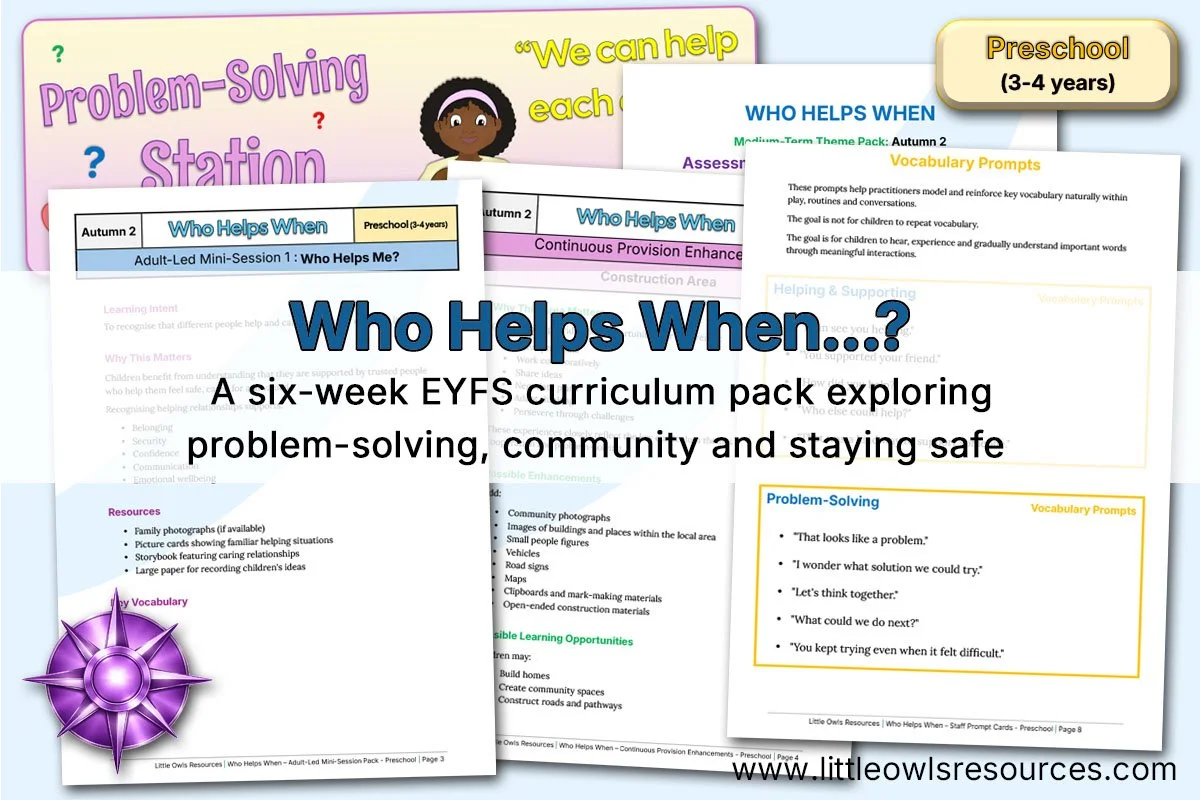
A six-week EYFS curriculum pack exploring problem-solving, community and staying safe (Commonly used in Autumn 2)
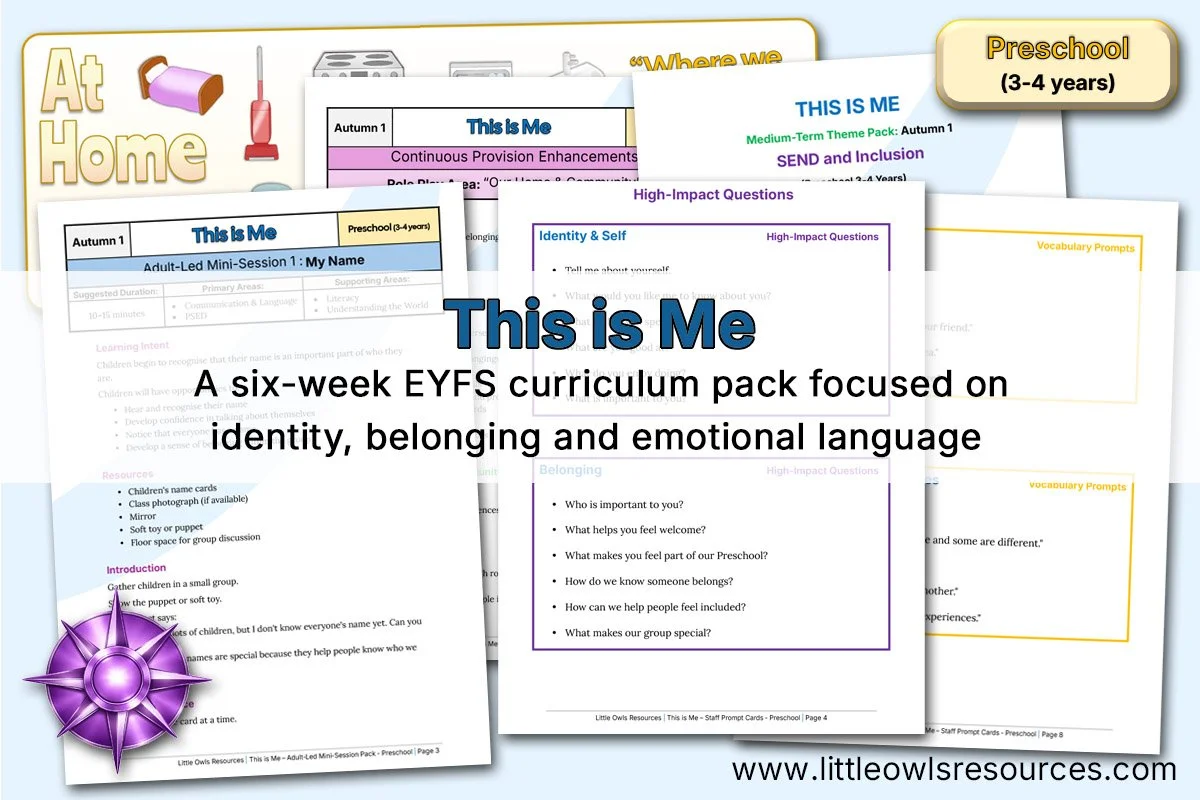
A six-week EYFS curriculum pack focused on identity, belonging and emotional language (Commonly used in Autumn 1)
A two-week, flexible mini theme designed to strengthen oral storytelling, empathy and imagination through play.
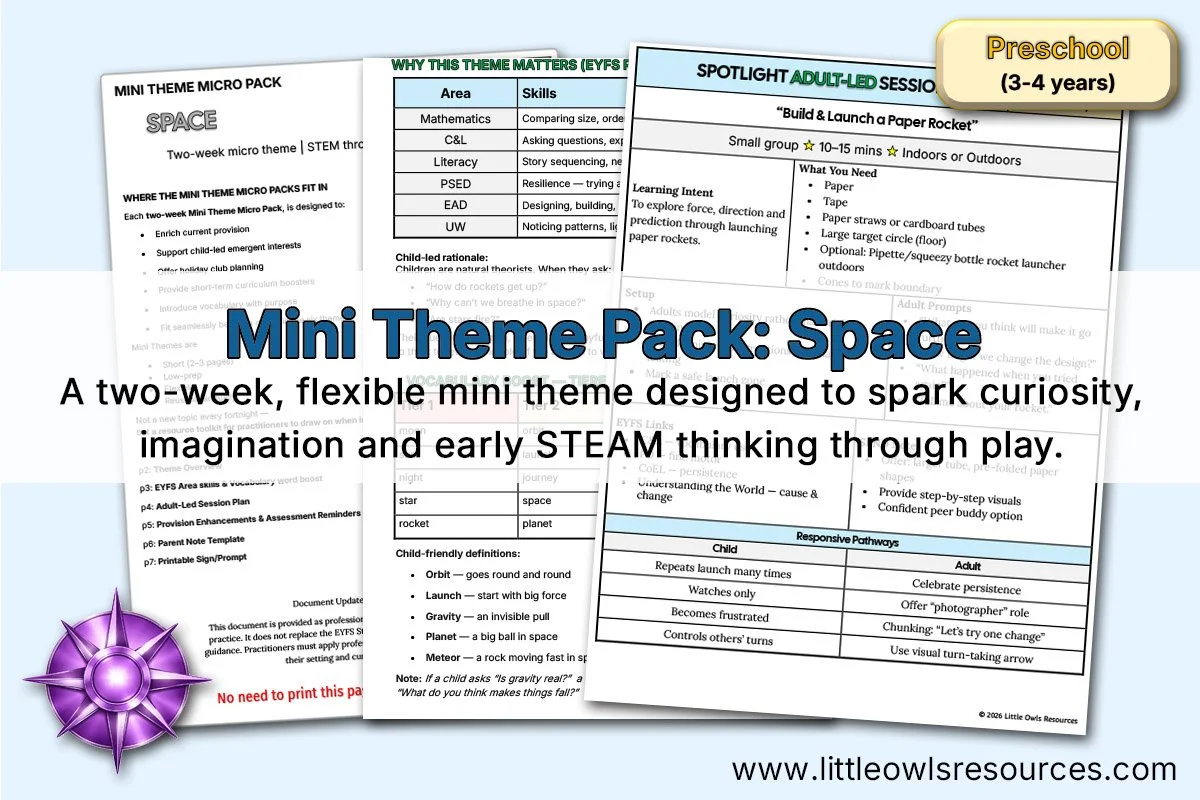
A two-week, flexible mini theme designed to spark curiosity, imagination and early STEAM thinking through play.
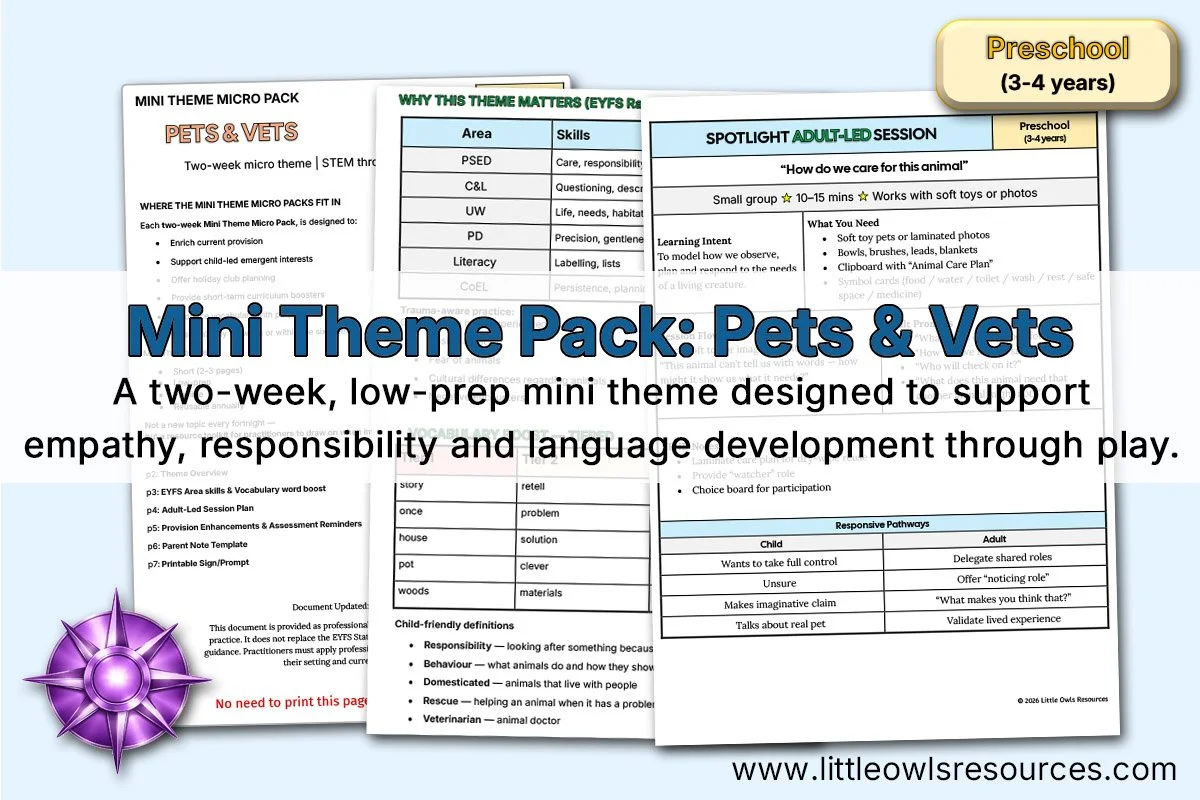
A two-week, low-prep mini theme designed to support empathy, responsibility and language development through play.
A two-week, low-prep mini theme designed to support belonging, inclusion and cultural understanding through meaningful play.
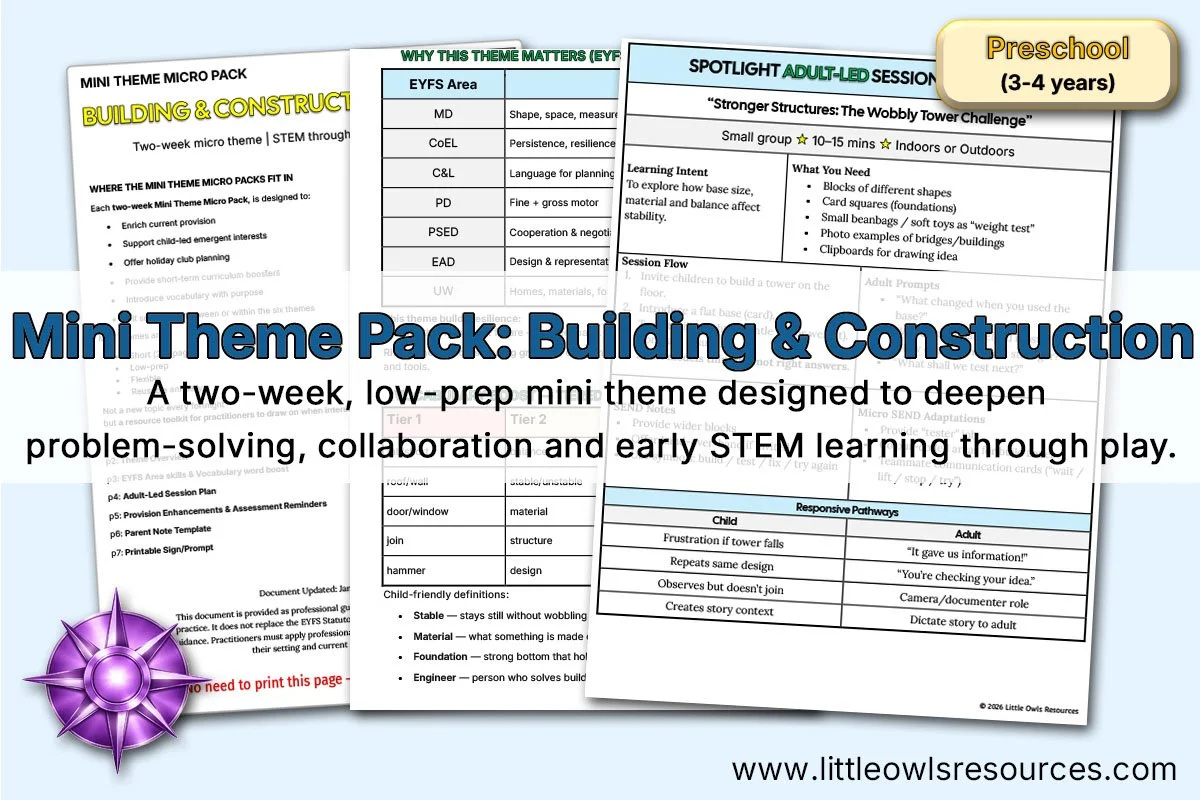
A two-week, low-prep mini theme designed to deepen problem-solving, collaboration and early STEM learning through play.
A two-week, low-prep mini theme designed to enrich provision and respond to children’s emerging interests.
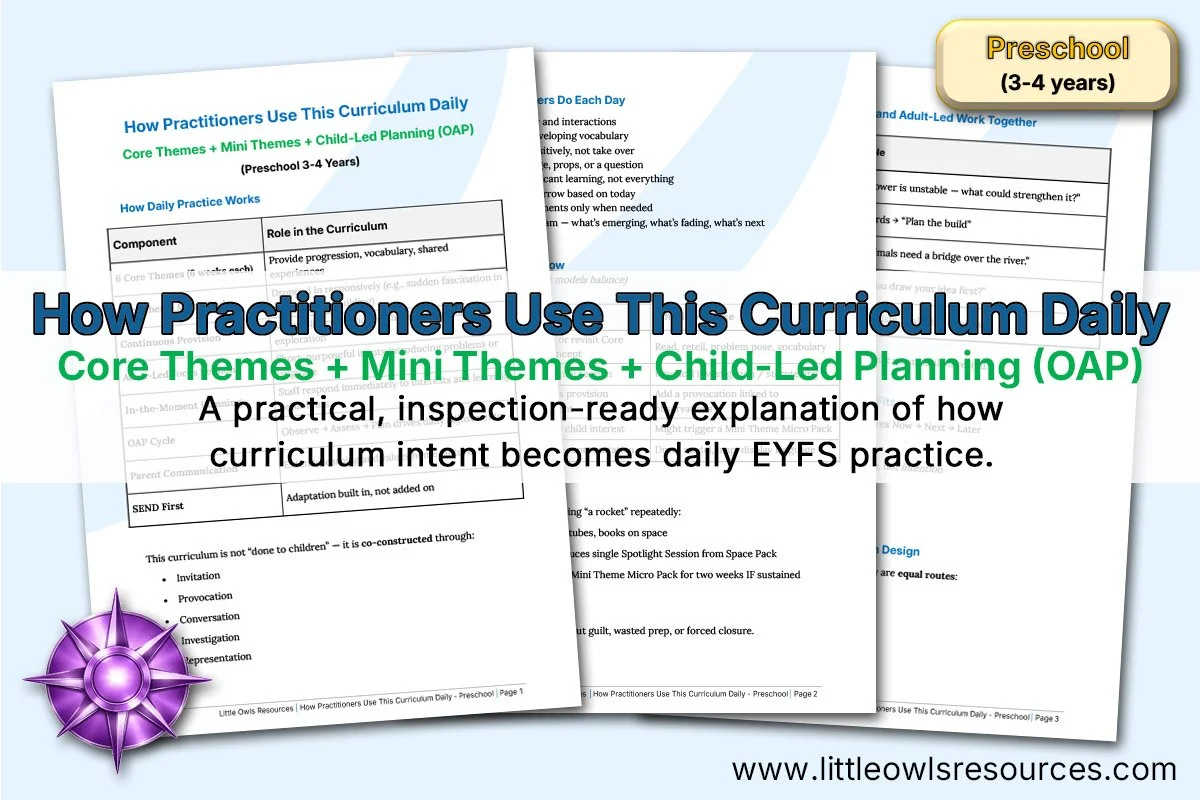
A practical, inspection-ready explanation of how curriculum intent becomes daily EYFS practice.
Provision Enhancement Resources
Themed provision Resources
Please use the arrows to the right of the carousel below and select a theme to explore our continuous provision enhancement resources. Alternatively, visit our ‘Themes Menu Page’.
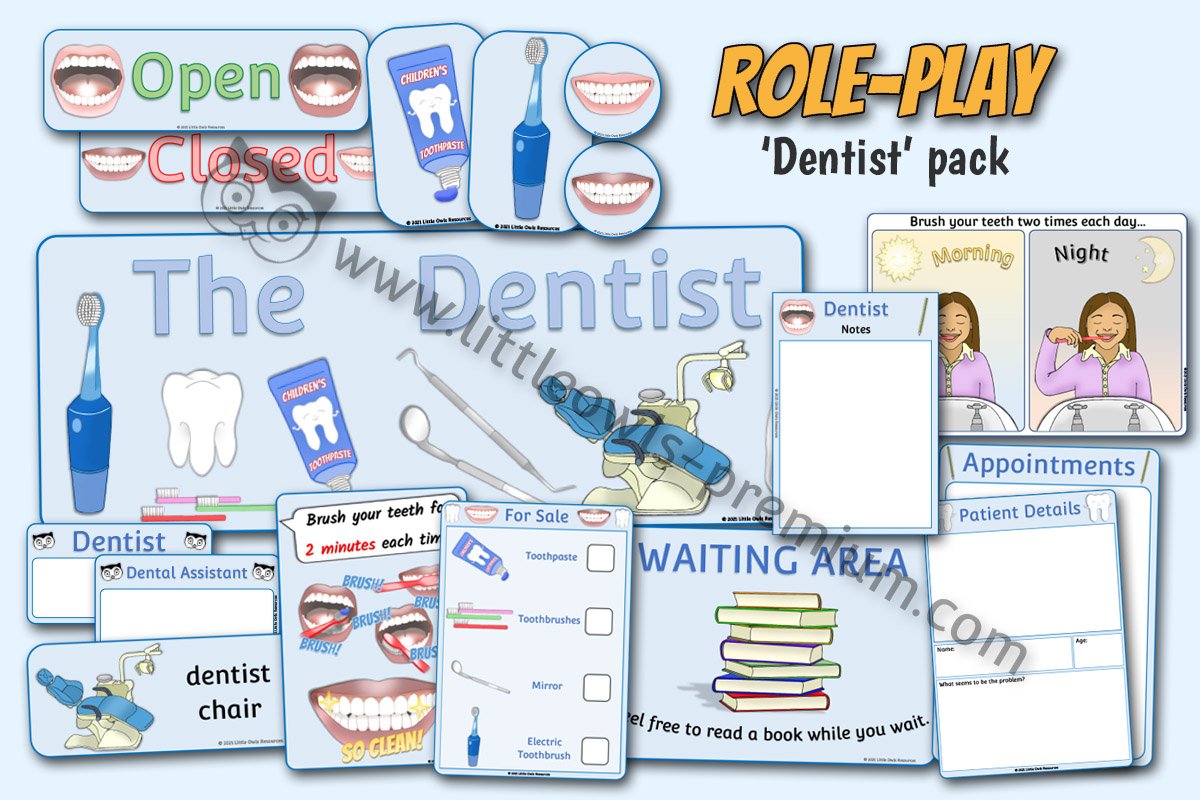
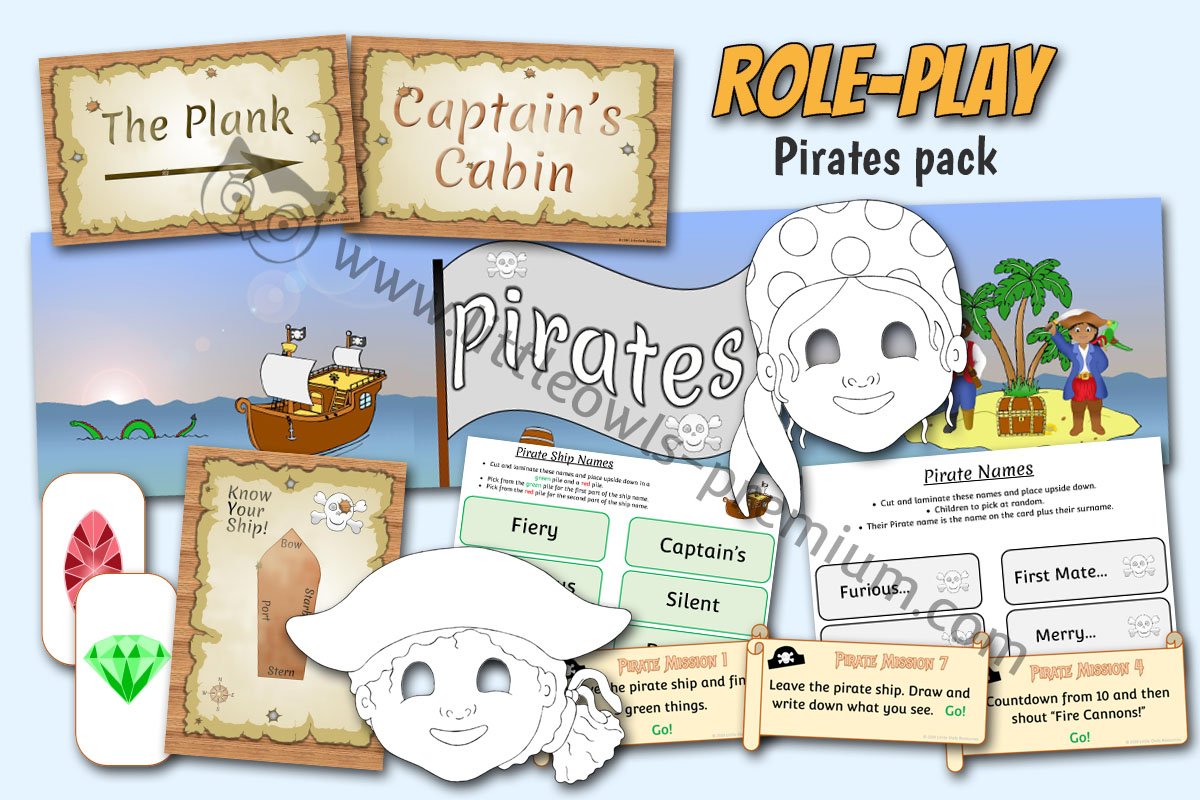
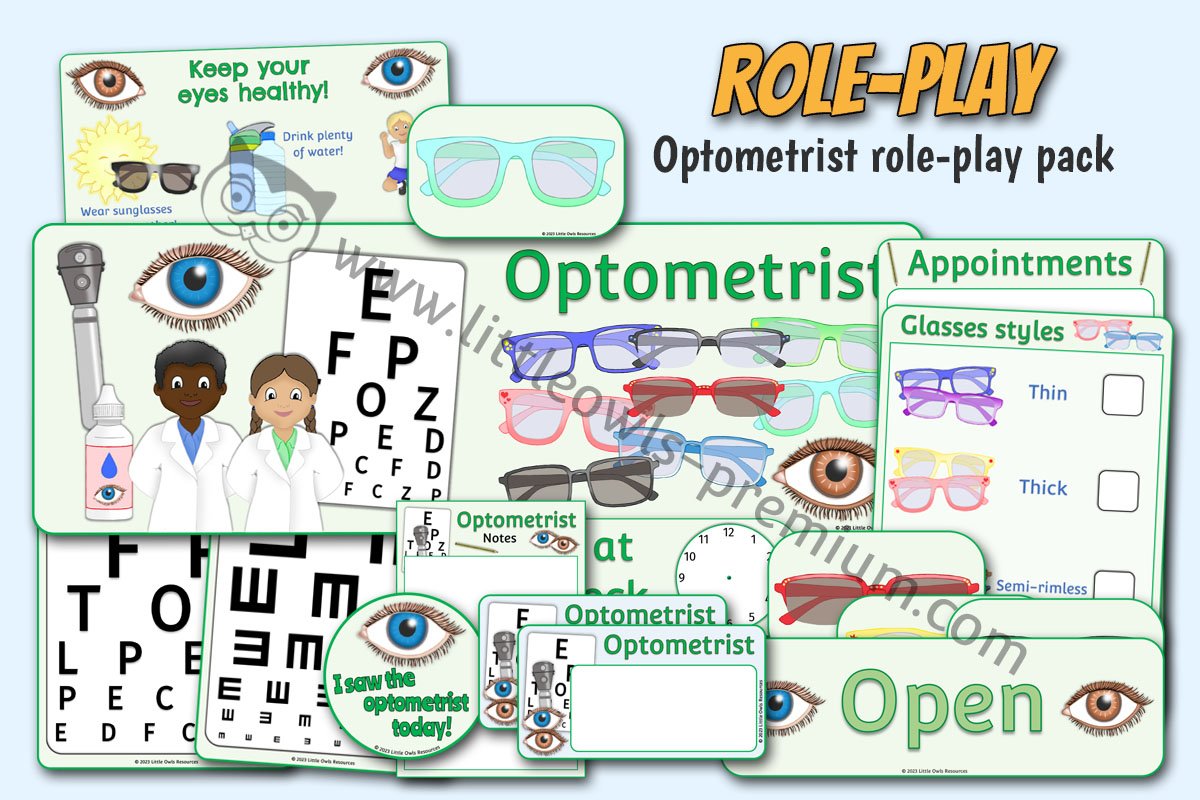
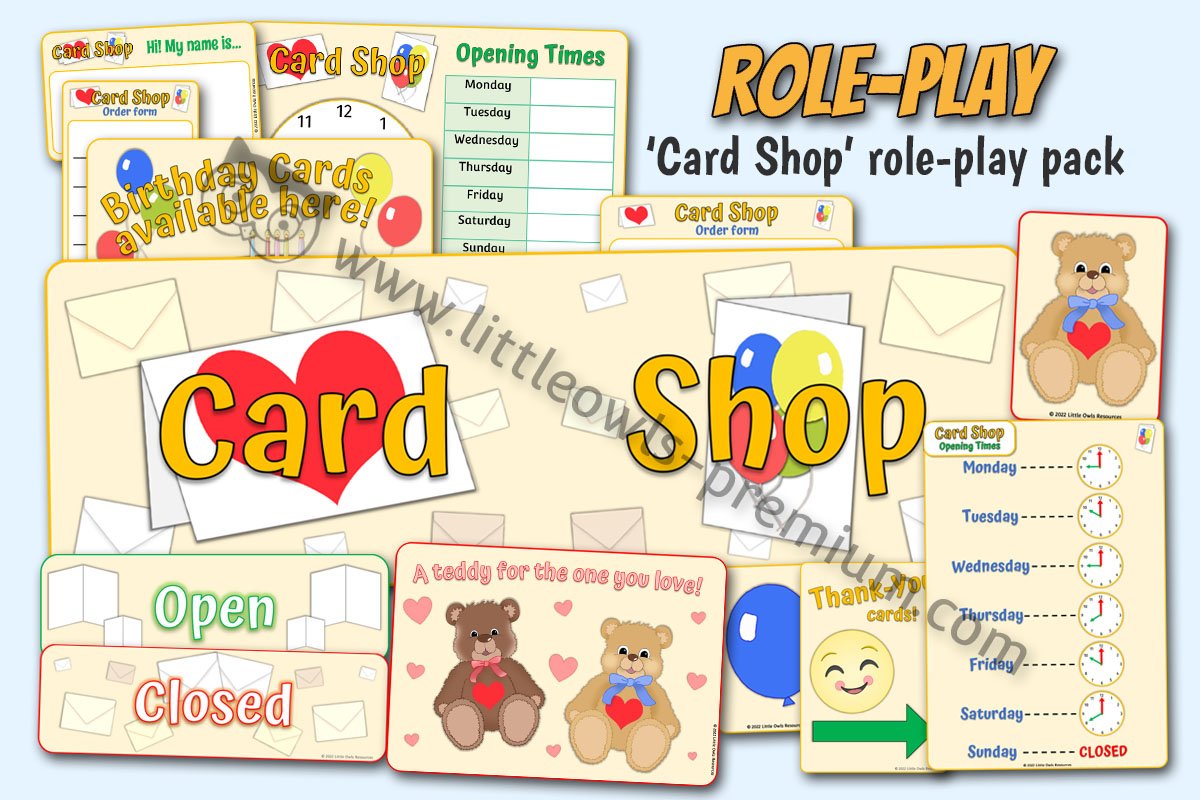
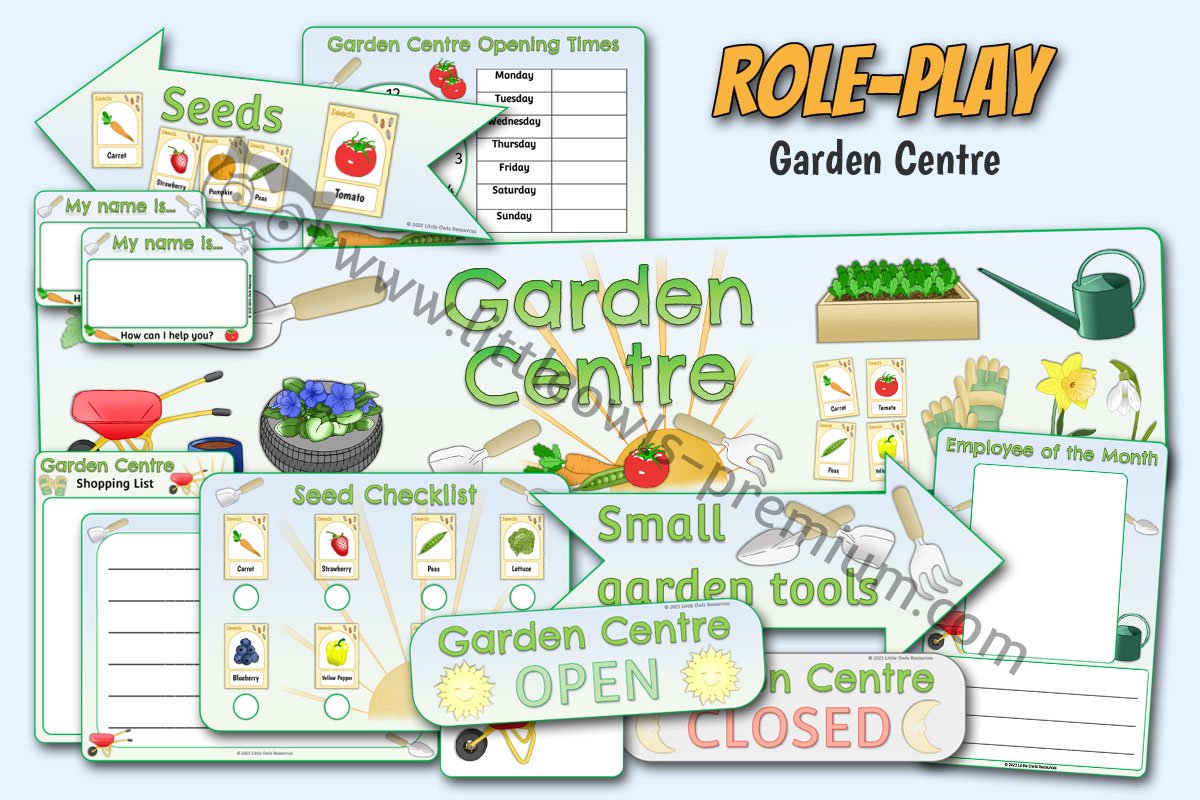
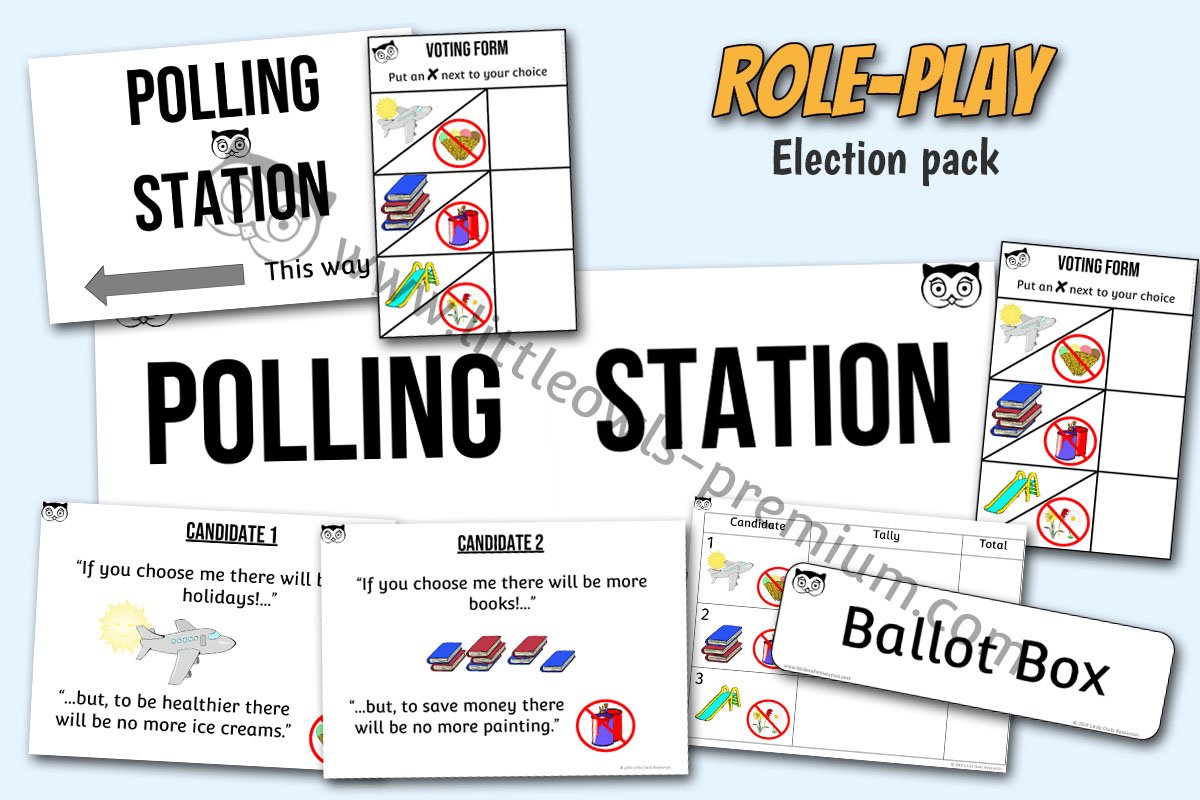
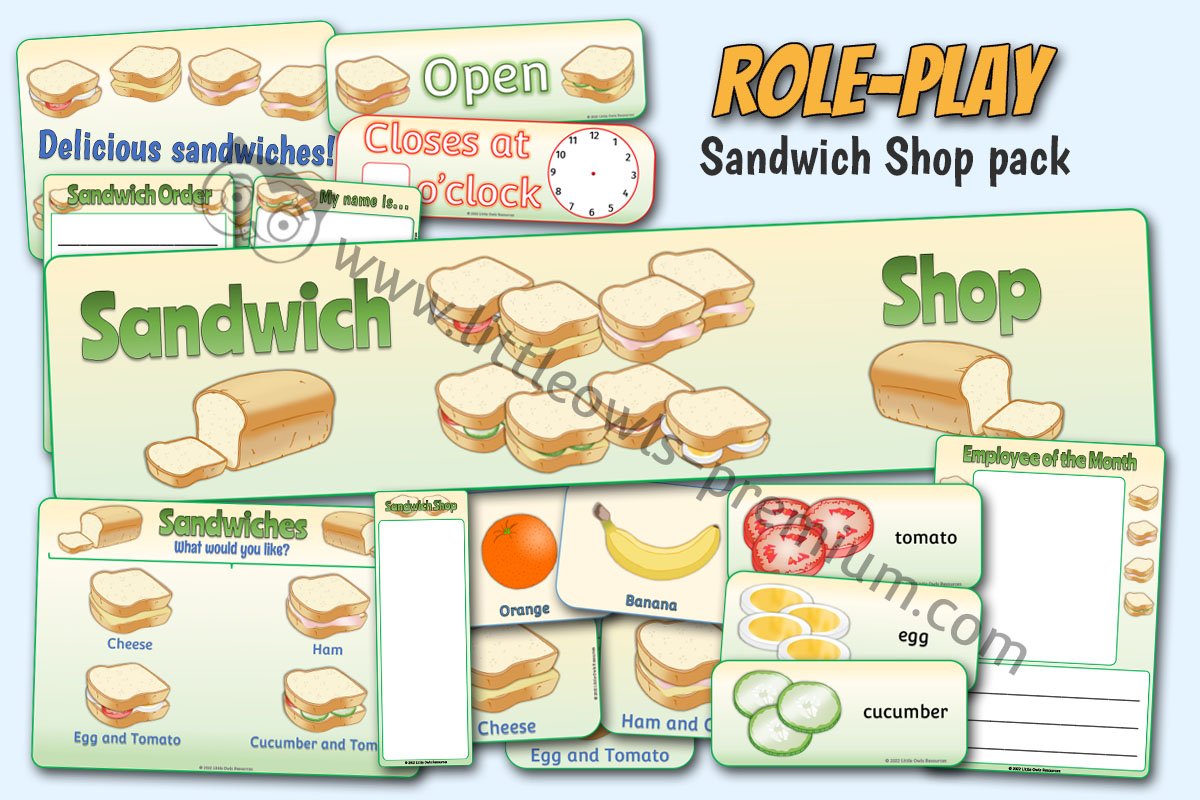
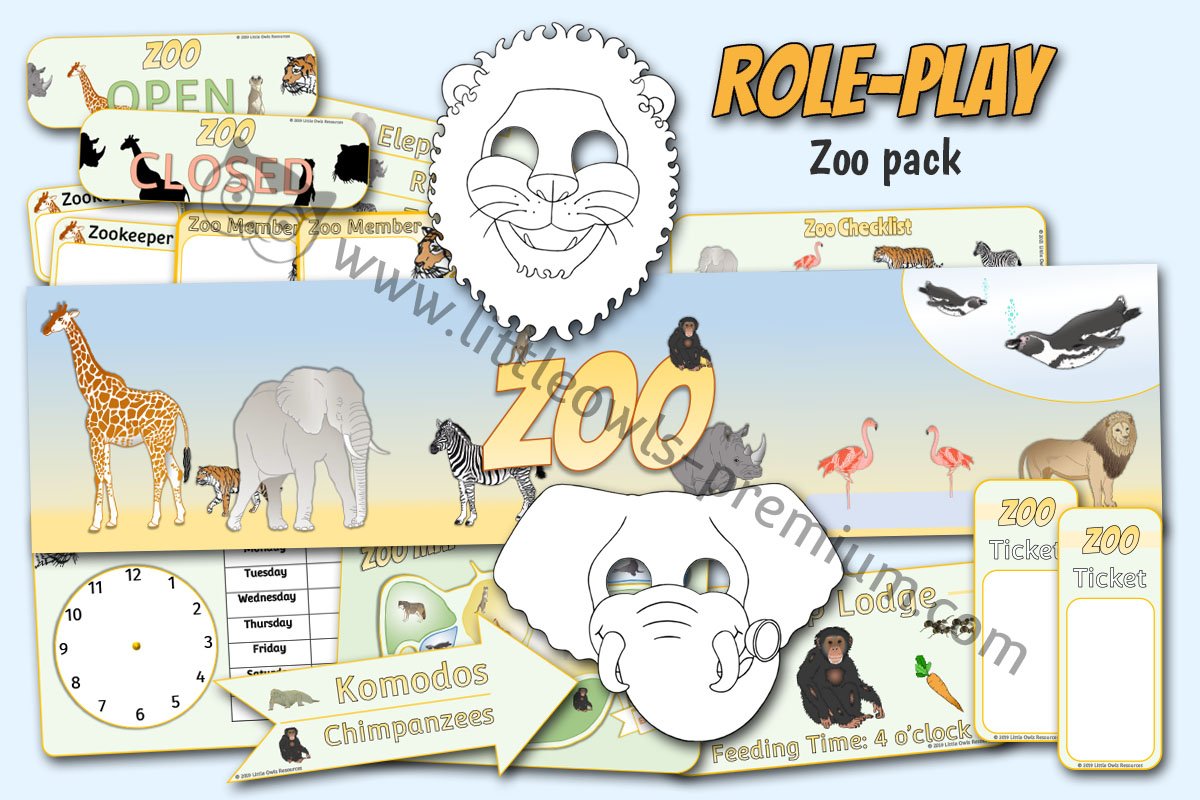
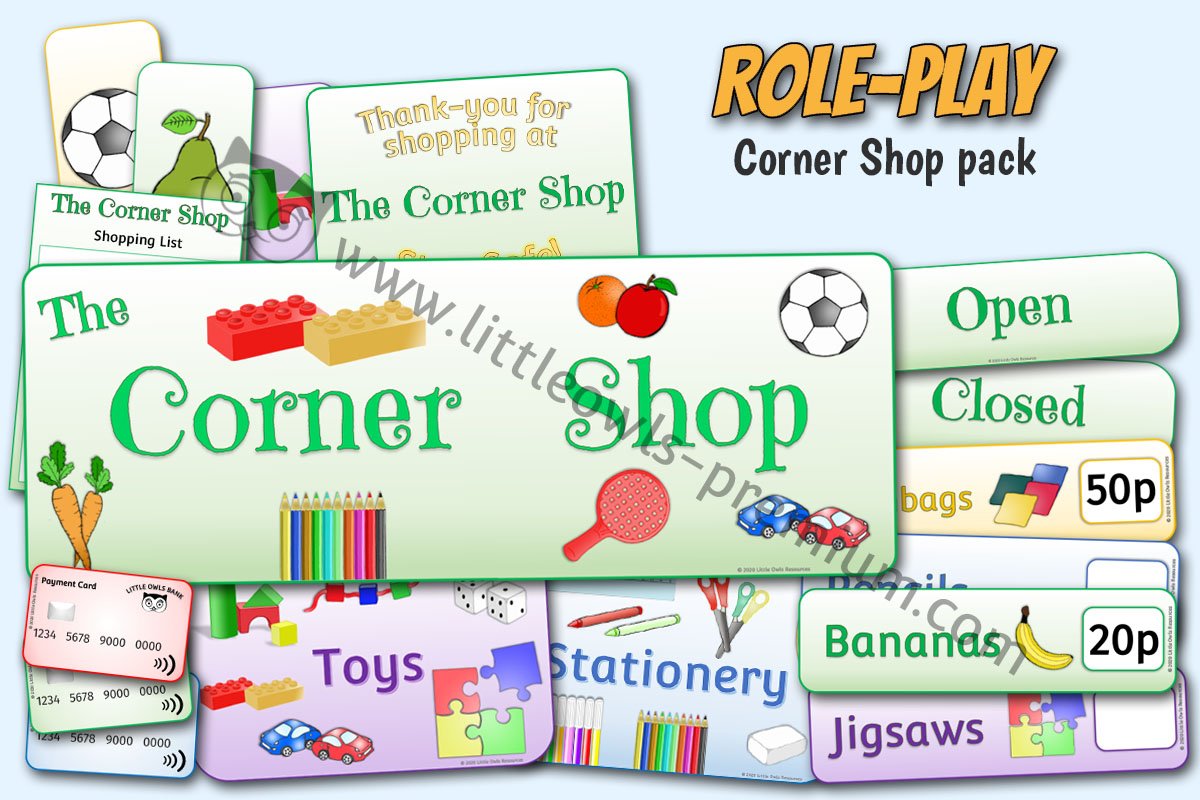
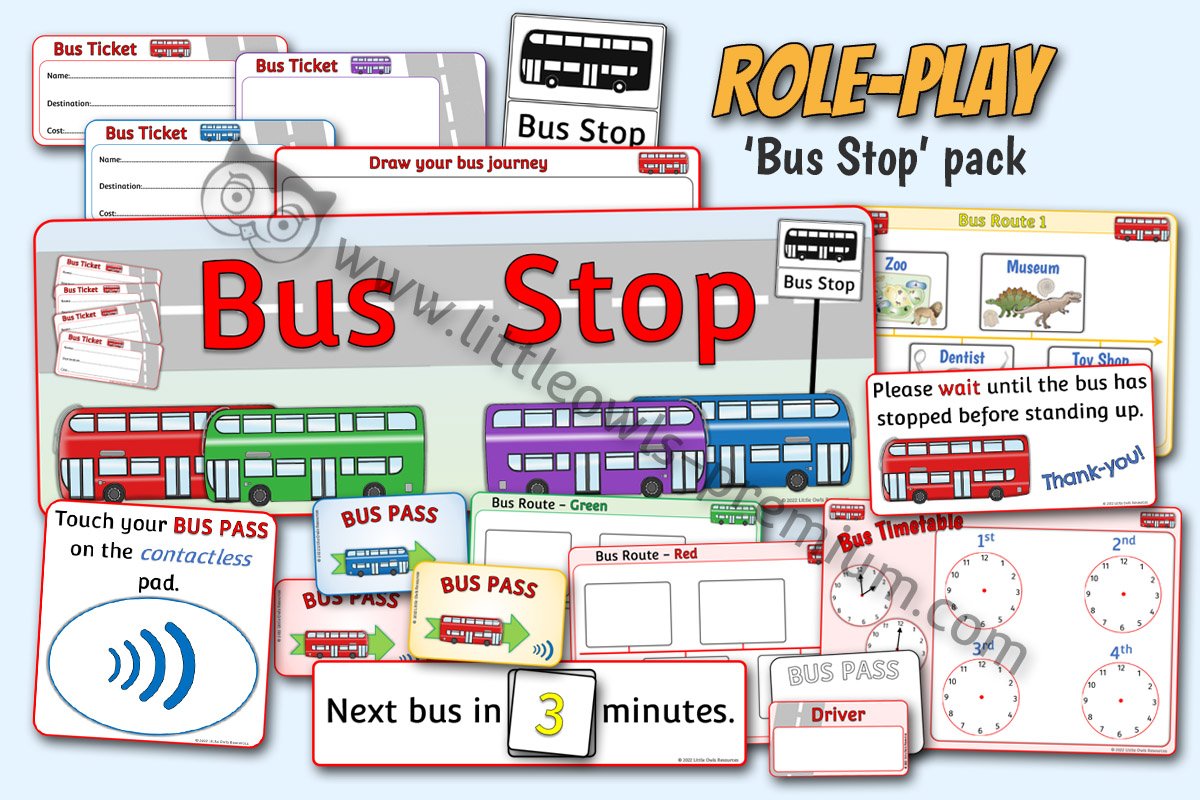
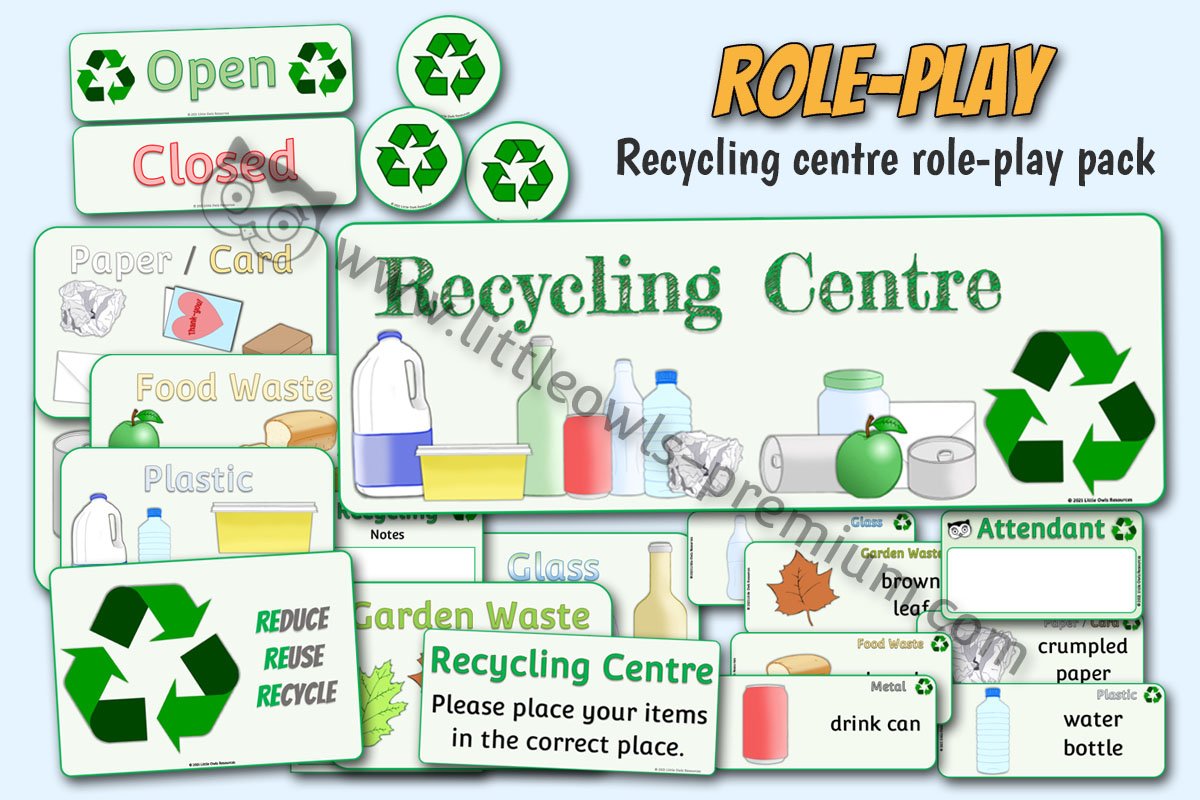
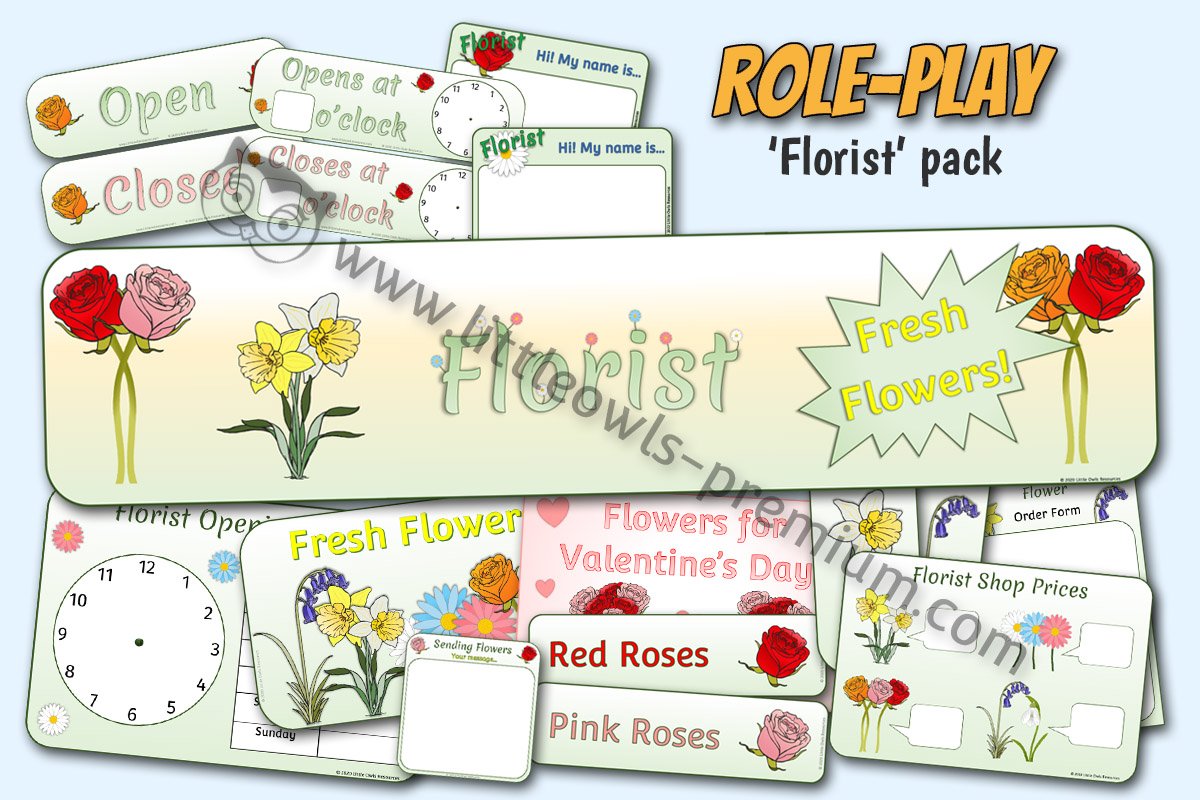
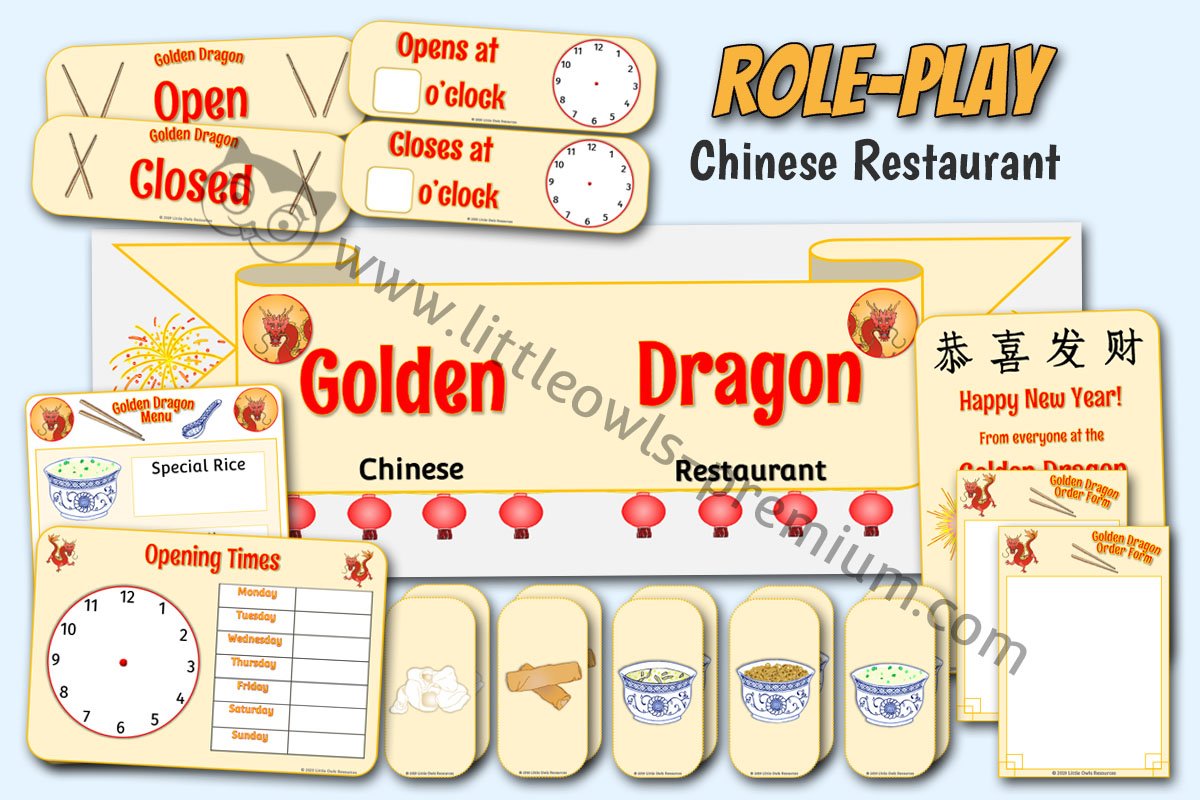
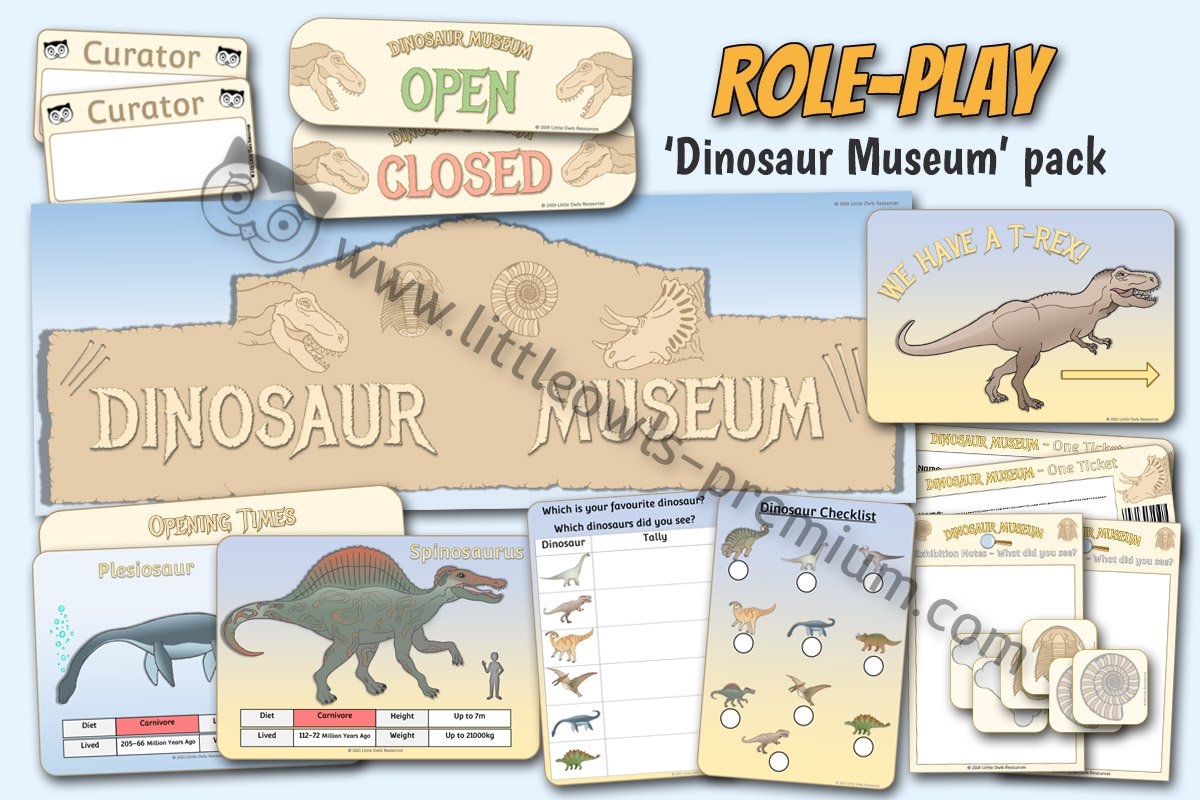
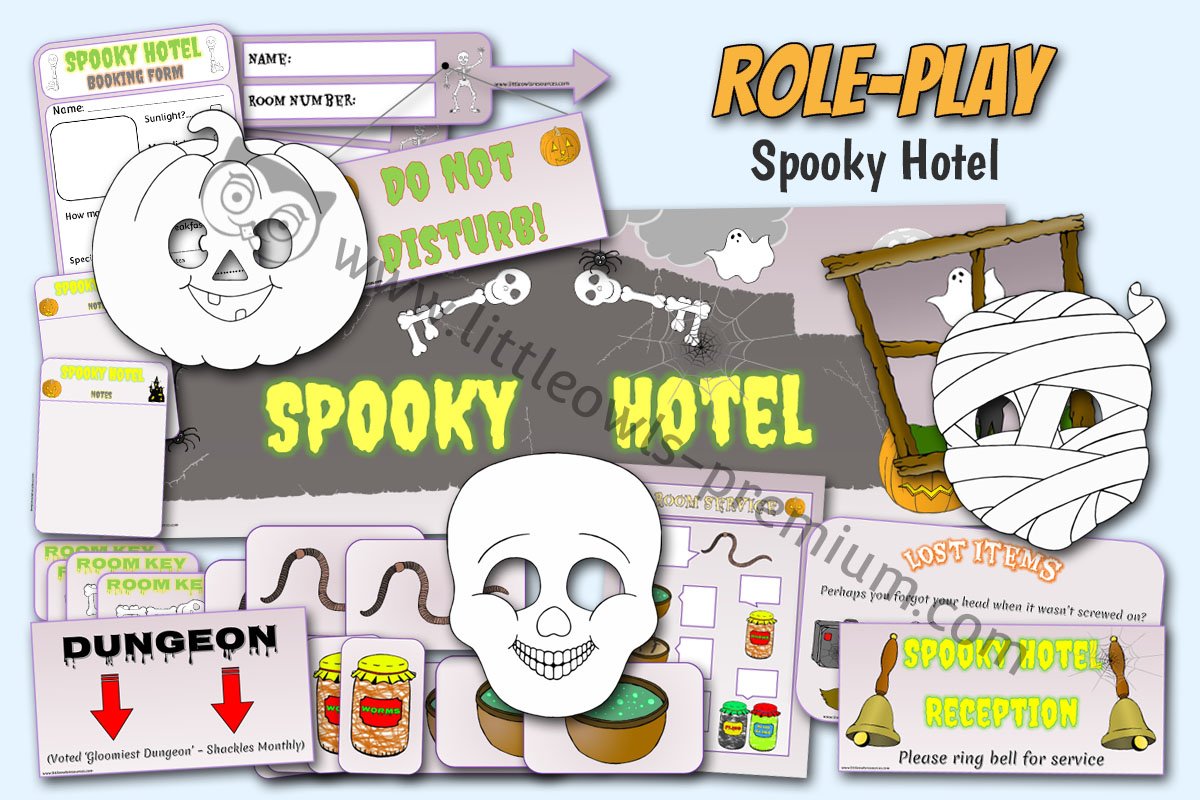
Role-Play Packs
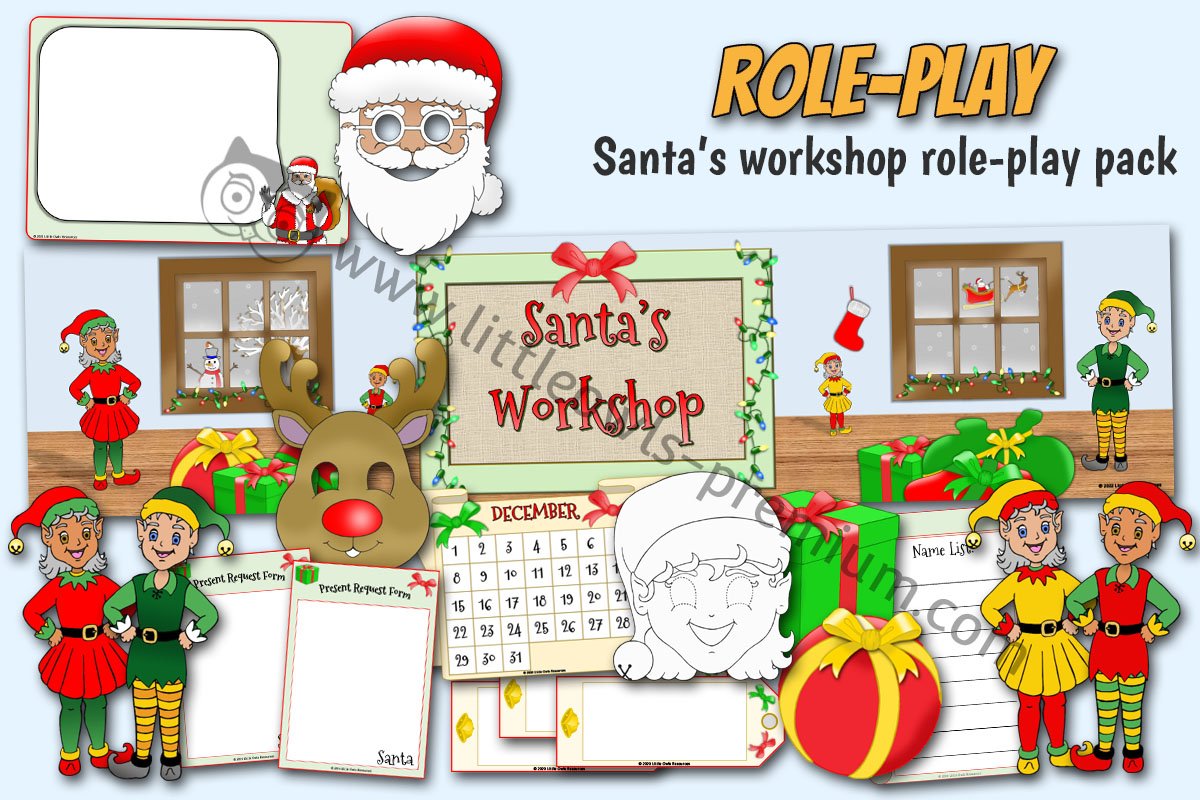
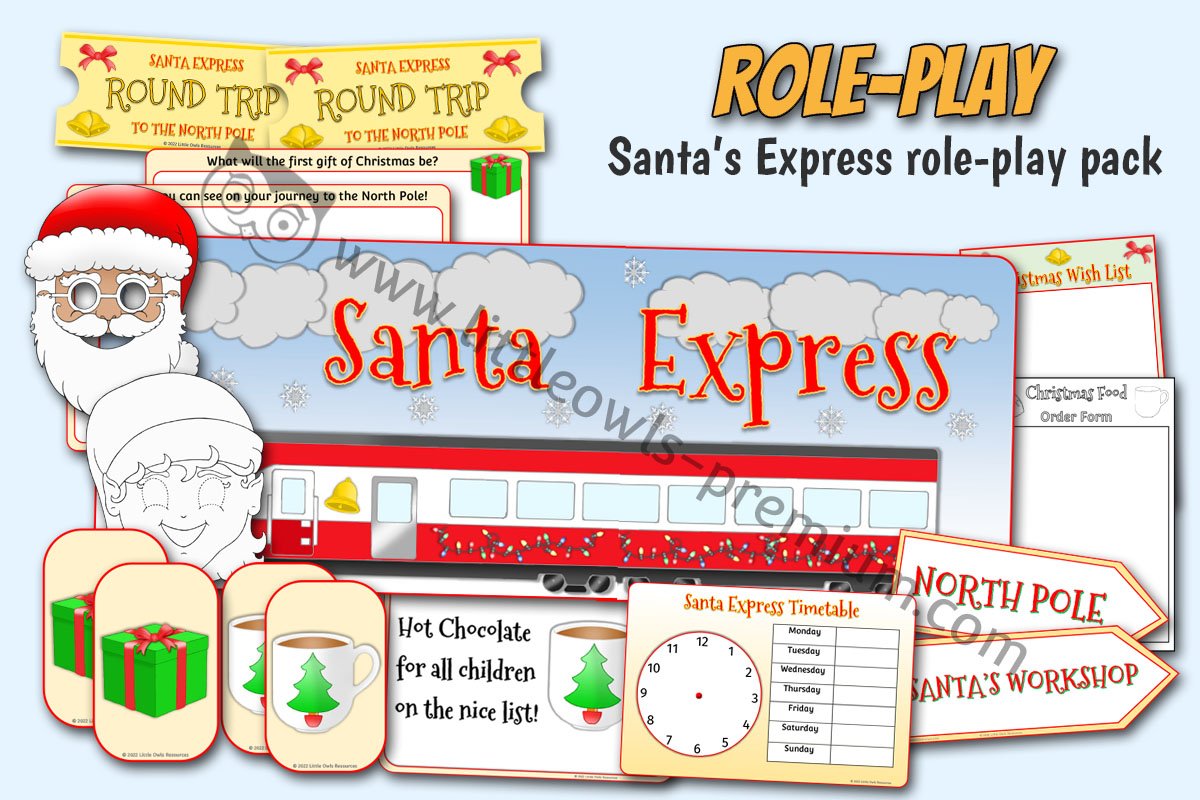
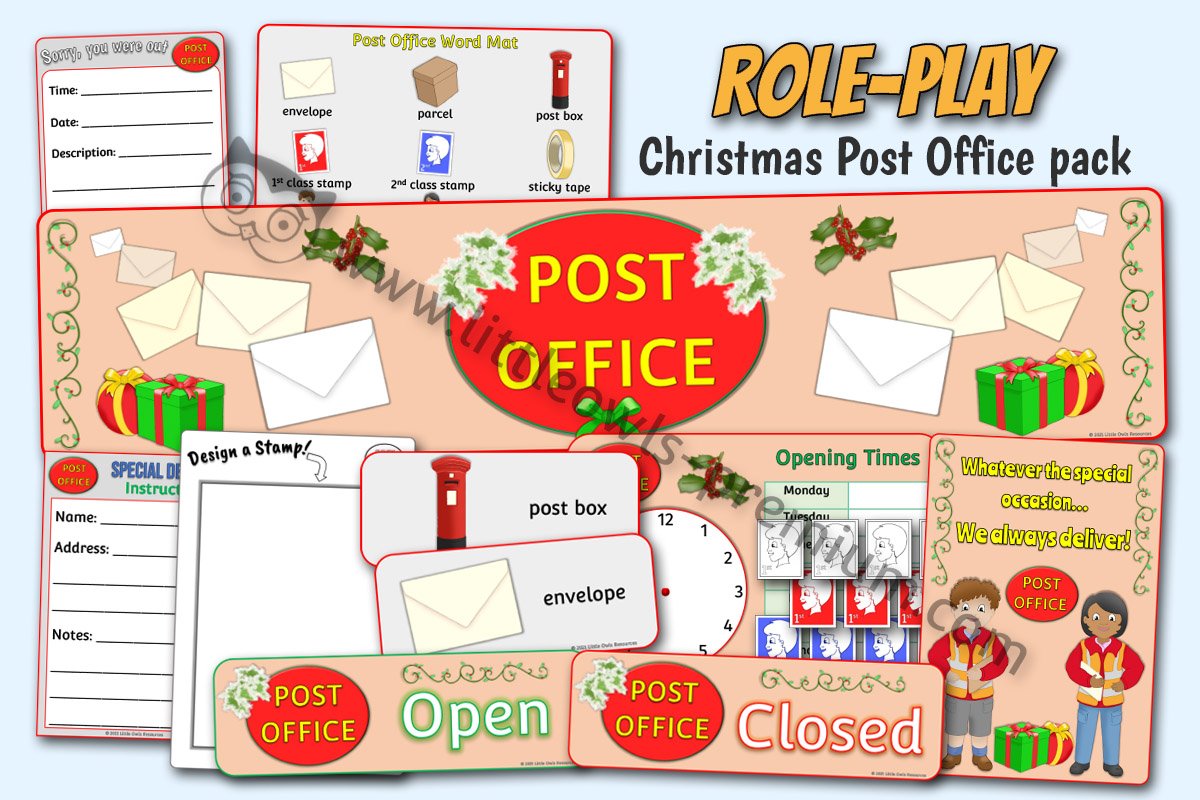
Please use the arrows to the right of the carousel below to browse our role play pack resources. Alternatively, visit our ‘Role-Play Area’ page.
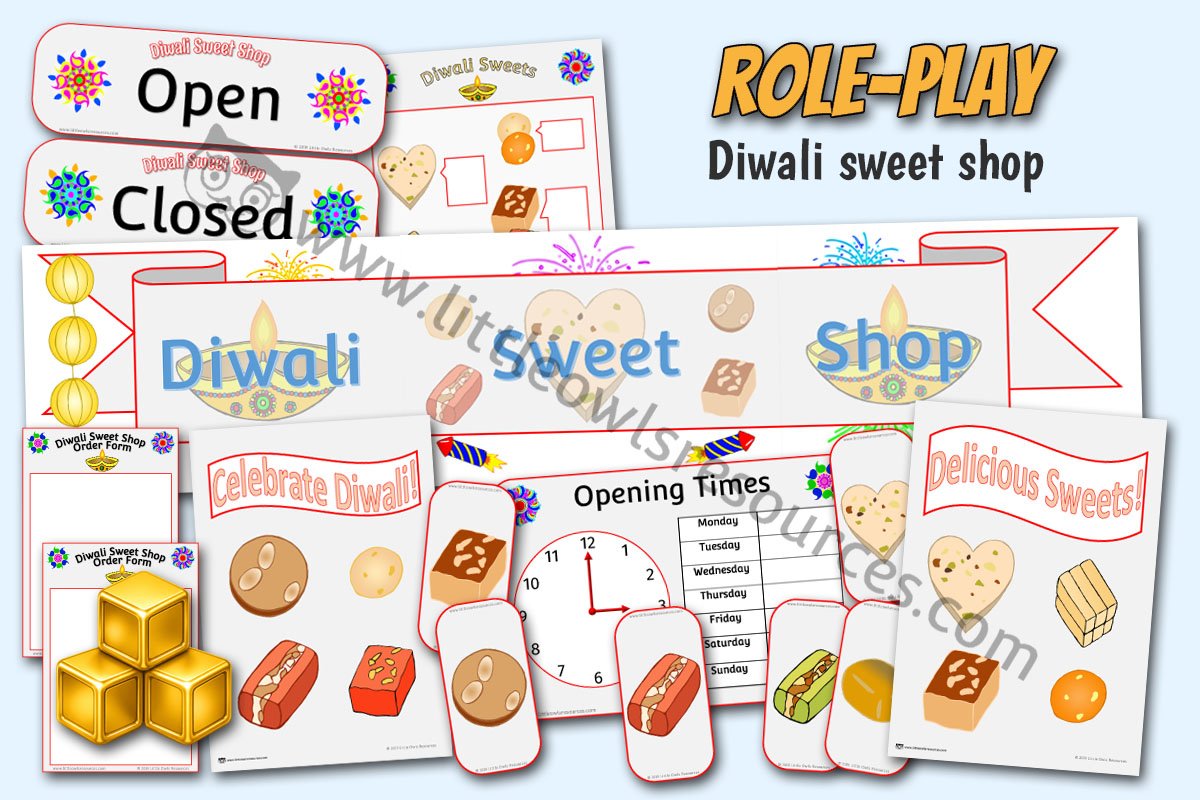
Festivals & Celebrations
Please use the arrows to the right of the carousel below and select a festival to explore our continuous provision enhancement resources. Alternatively, visit our ‘Festivals & Celebrations Menu Page’.
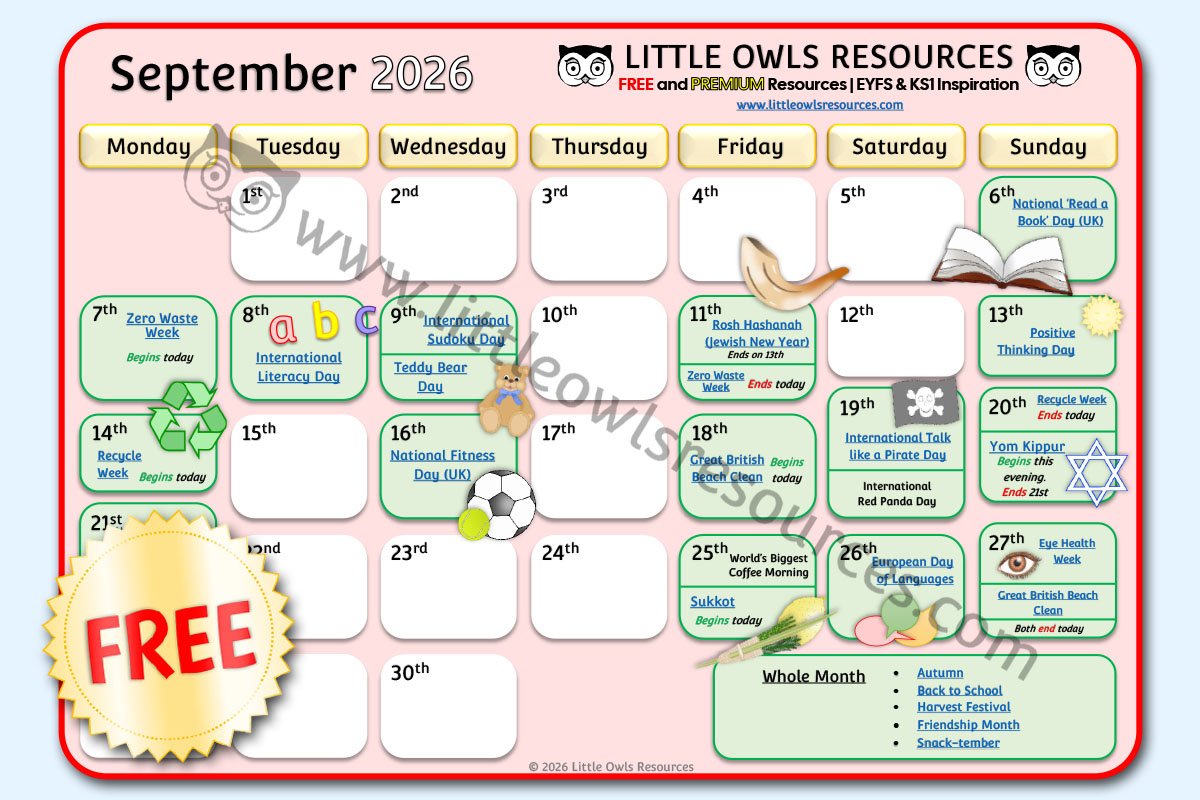
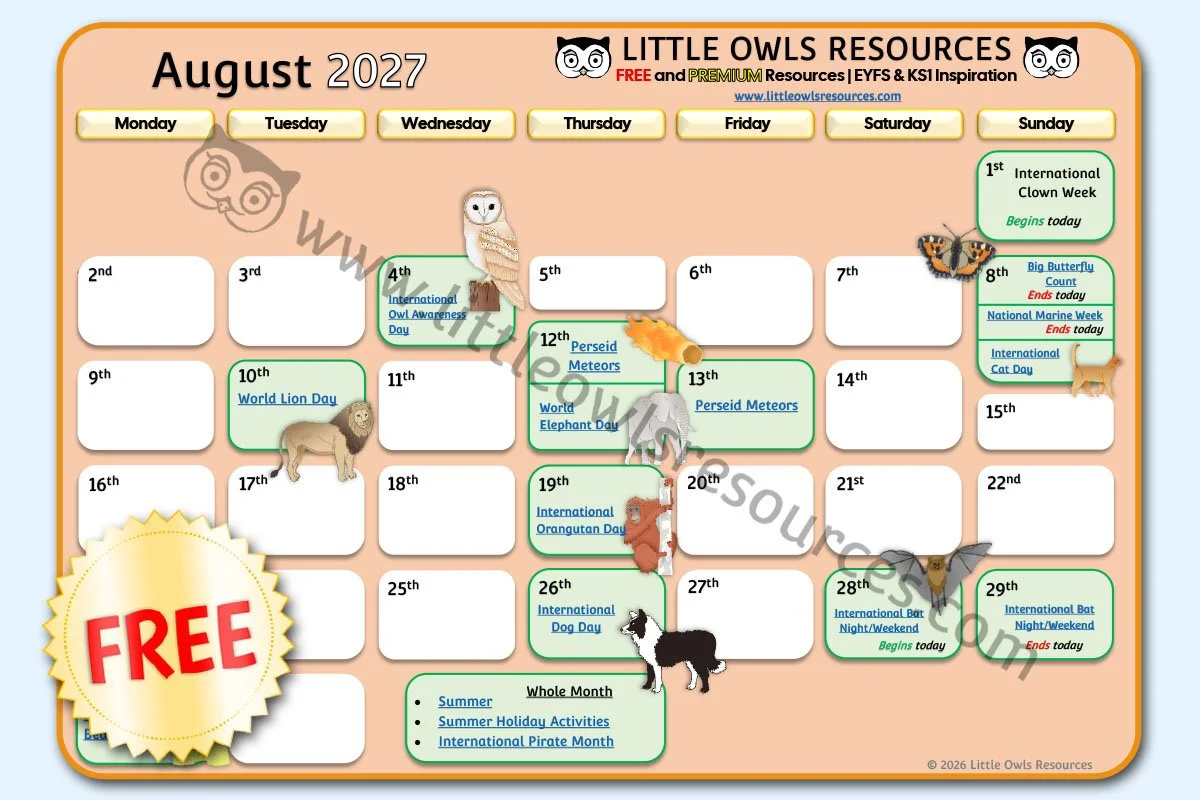
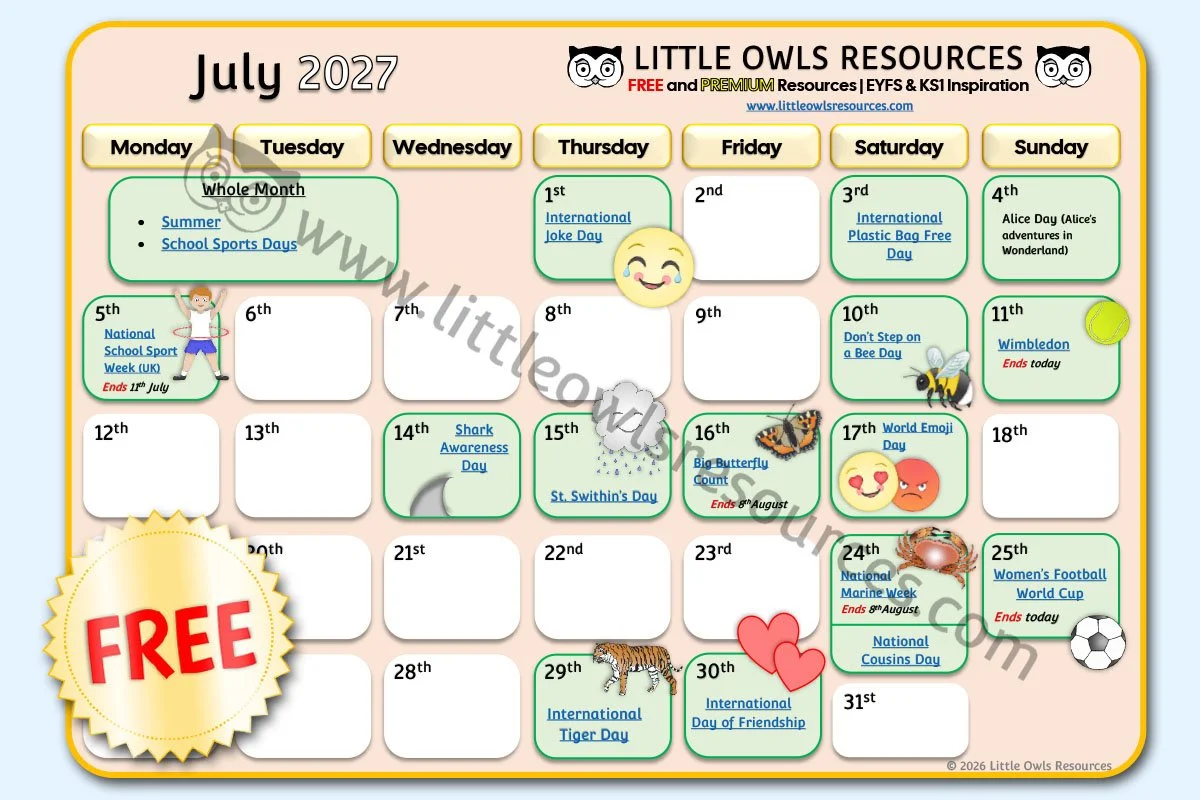
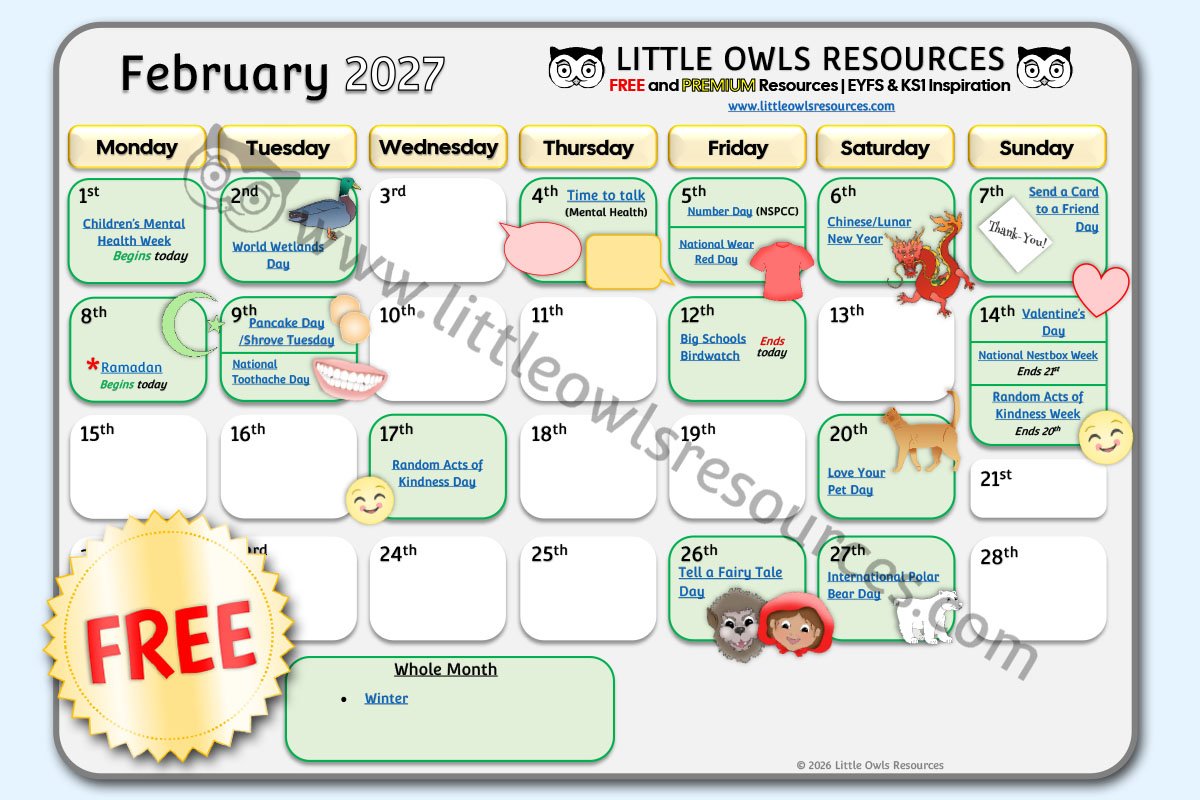
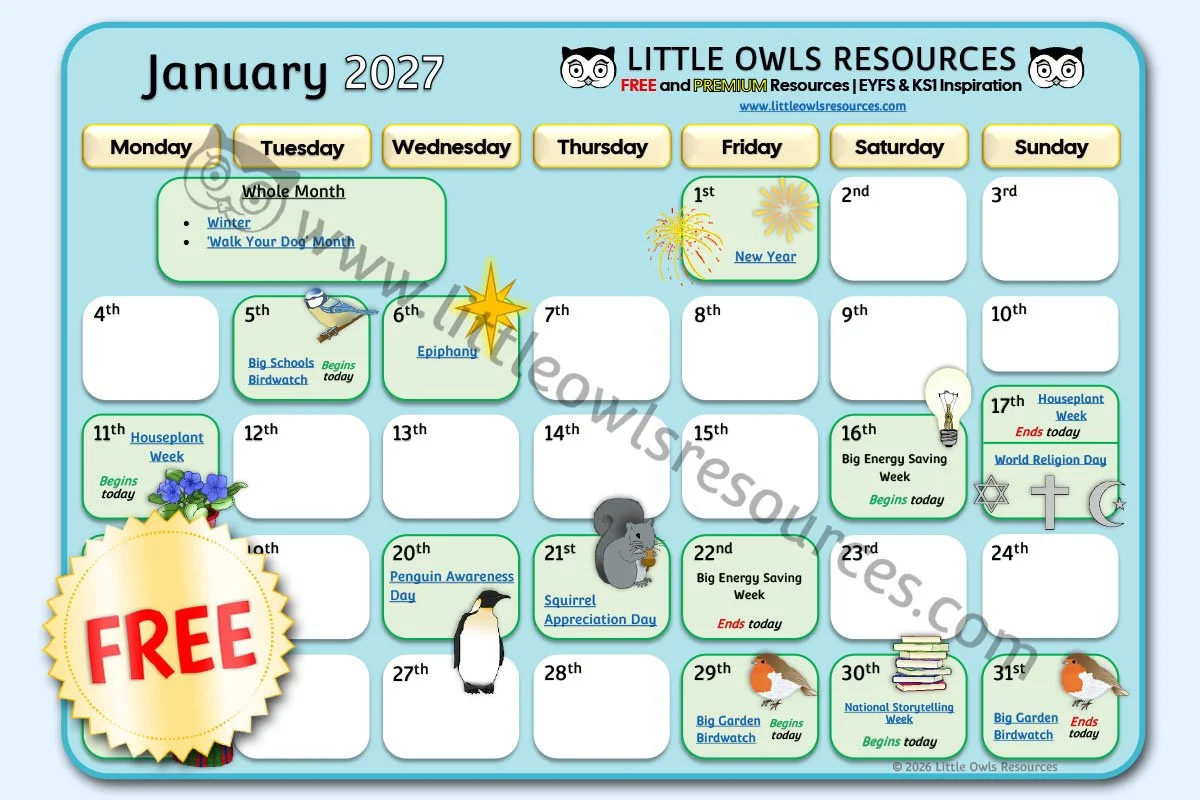
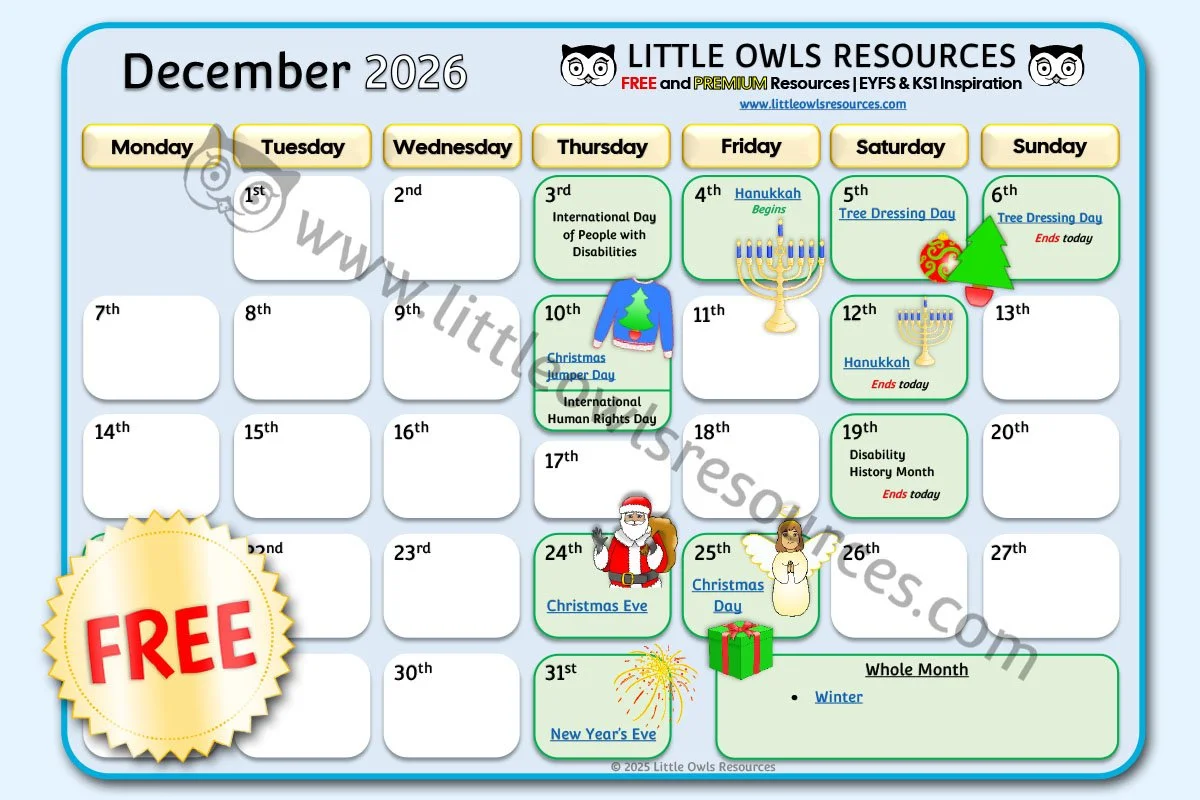
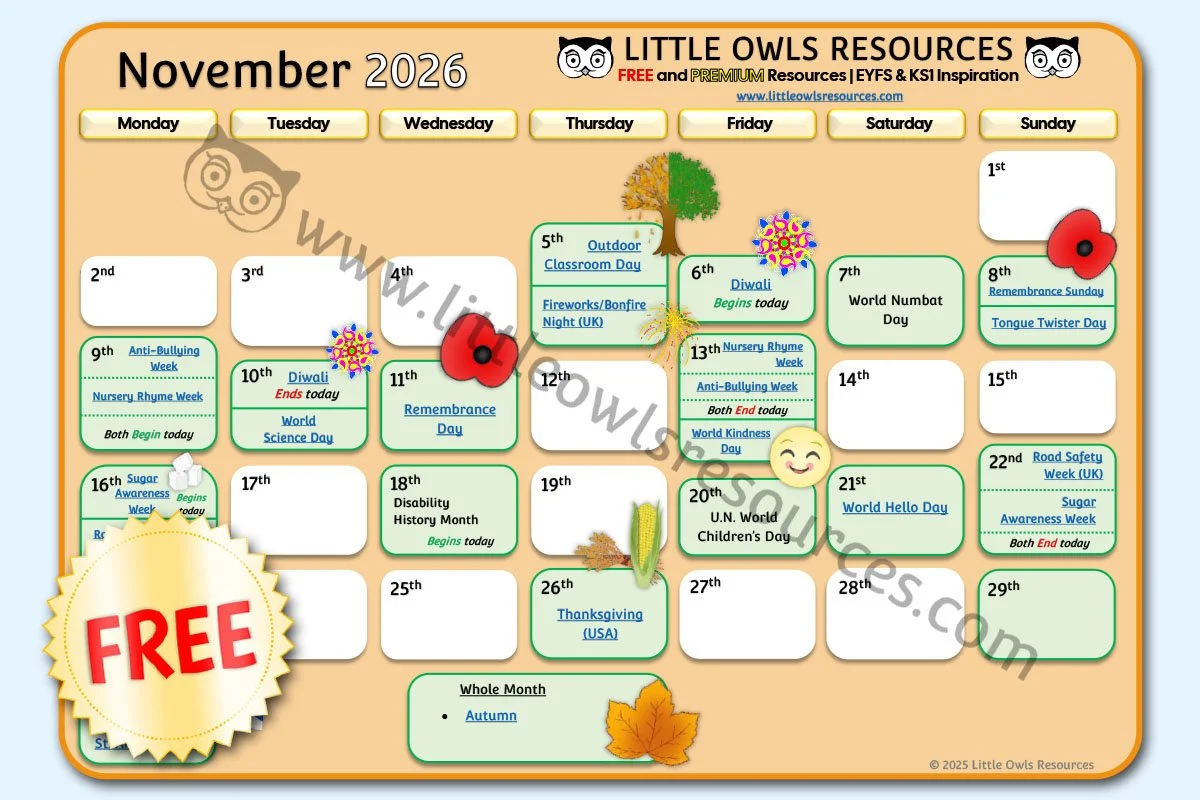
Special Date Calendars
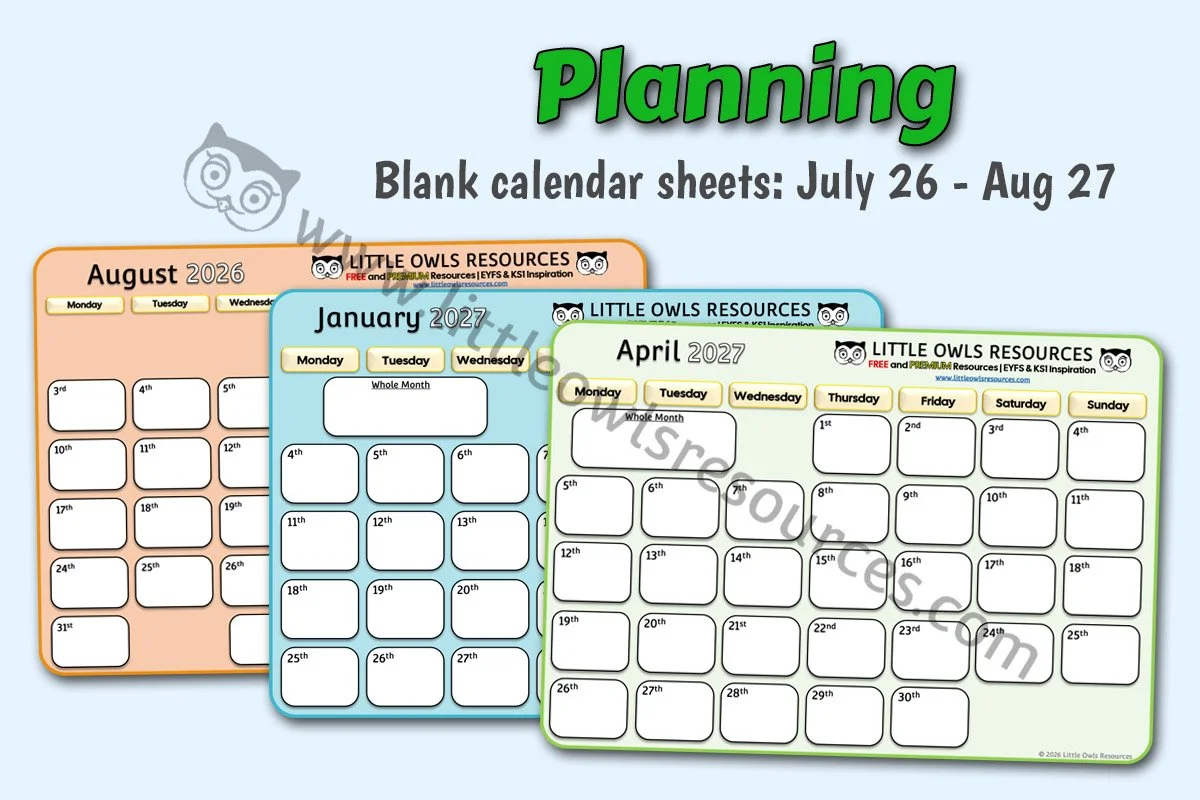
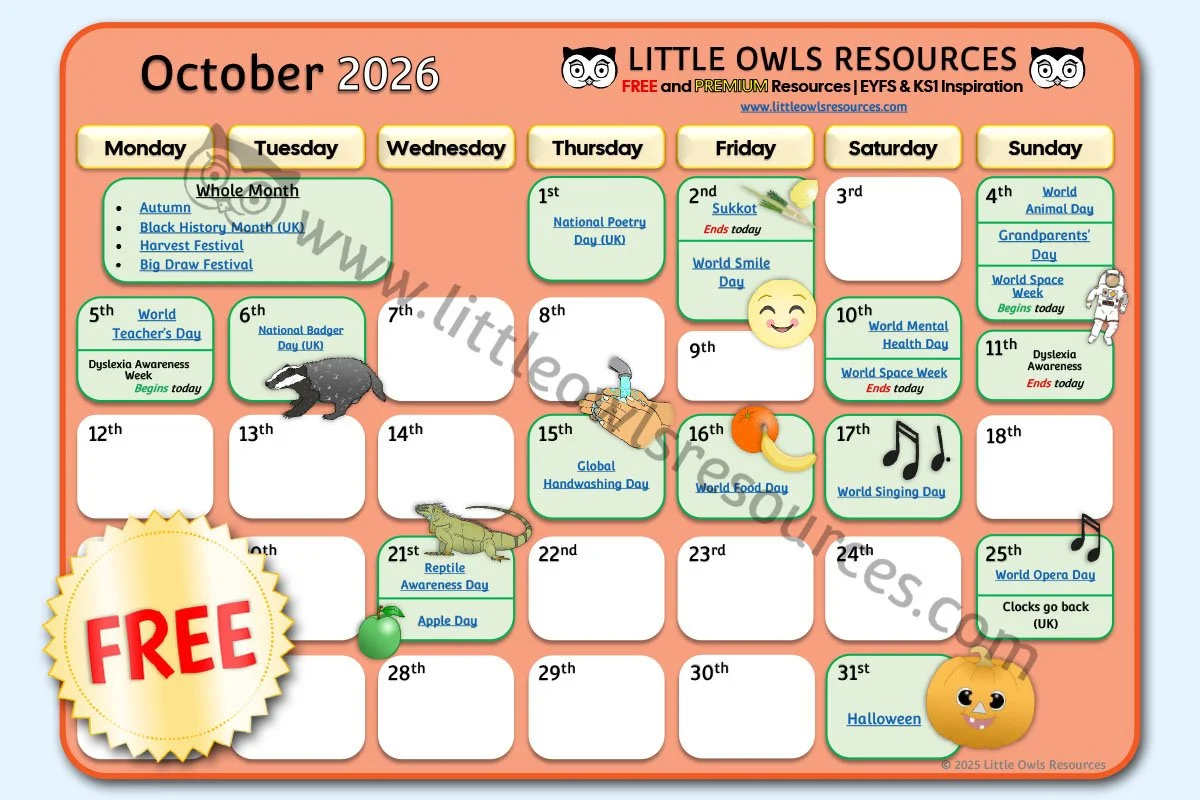
Please use the arrows to the right of the carousel below and select a calendar to explore our continuous provision enhancement ideas & resources. Alternatively, visit our ‘Special Dates Calendar Page’.
Welcome to August! This month offers rich opportunities for imaginative play, outdoor exploration and connection with the natural world, all within a relaxed summer rhythm. Below are possible connections and enhancement ideas.…
Welcome to July! This month is all about summer, movement, nature and relationships, with strong opportunities for outdoor learning, physical development and exploring the natural world…
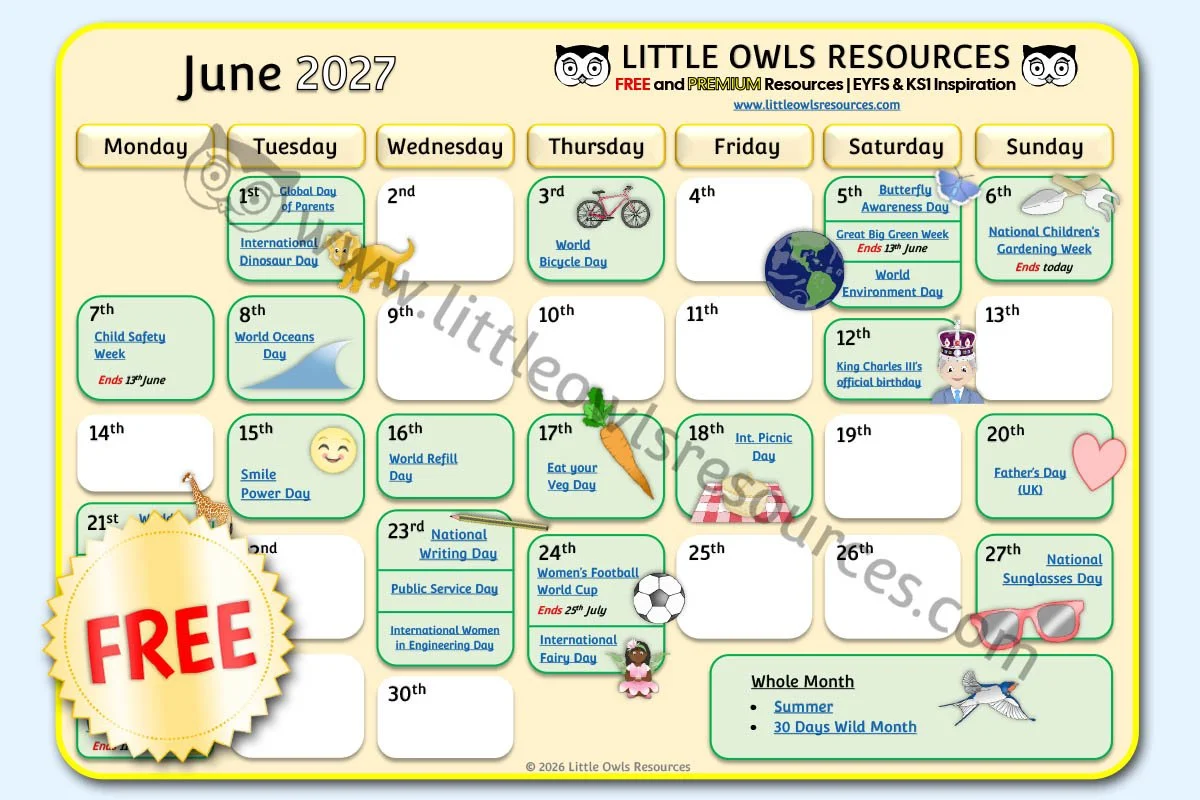
Welcome to June! This month offers rich opportunities to explore the natural world, sustainability, movement and relationships, as well as seasonal changes and outdoor learning…
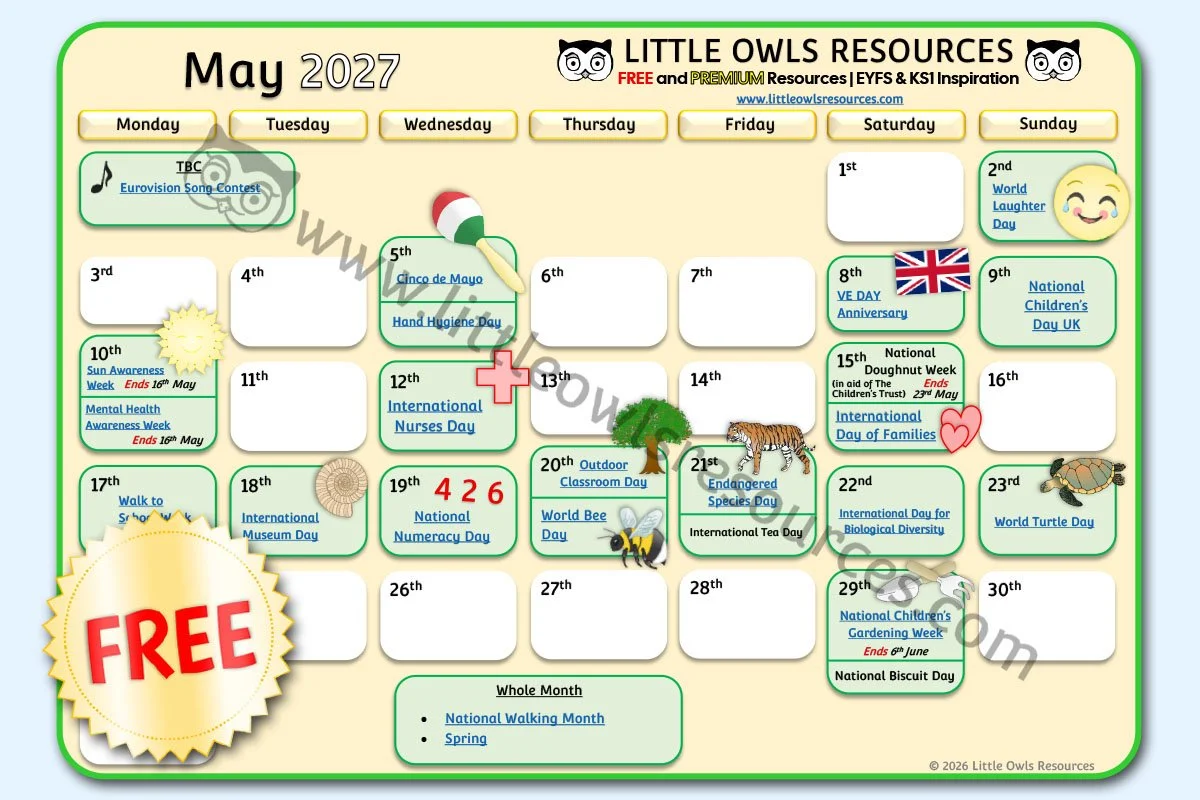
Welcome to May! This month is a breath of fresh air for the classroom, moving fully into the "Great Outdoors." With the arrival of warmer weather, the curriculum shifts toward growth, sustainability, and physical well-being, while also celebrating the diverse identities of our families and global communities…
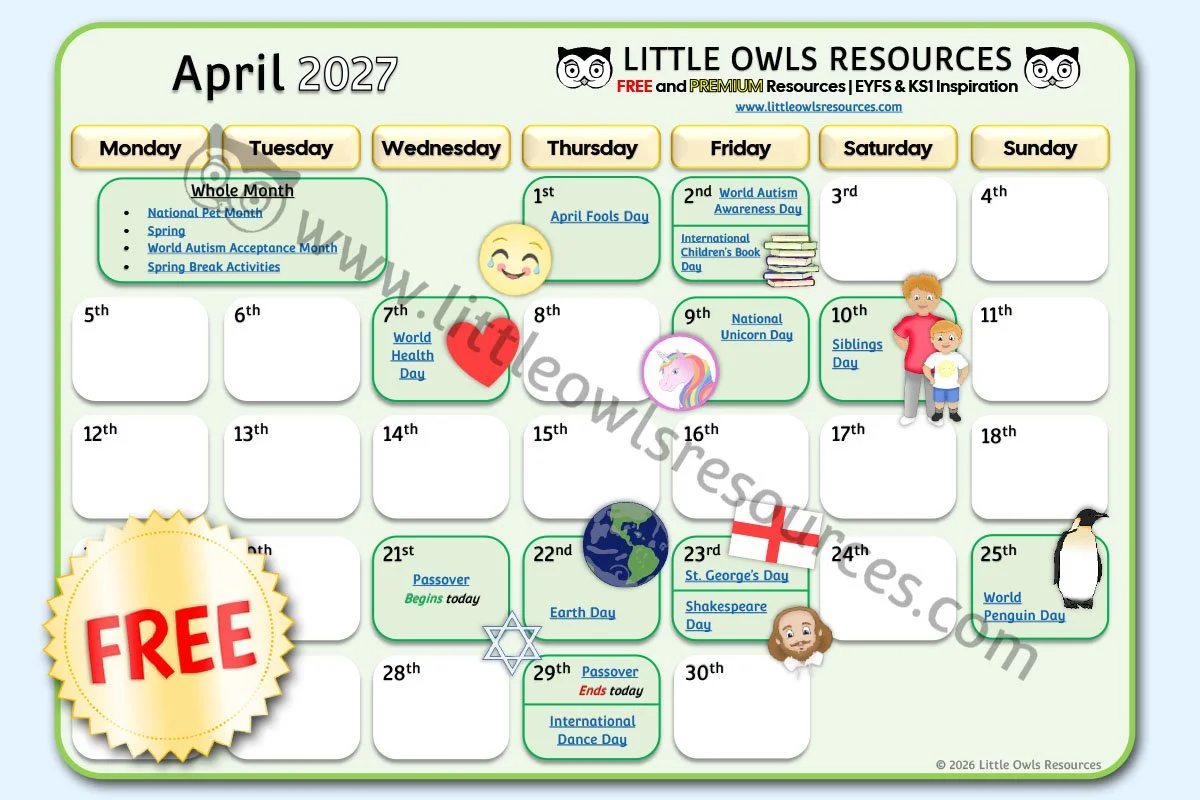
Looking for some age-appropriate & engaging activity ideas or continuous provision enhancements for April? Our free April calendar download includes key events, festivals and celebrations to help inform your nursery school, childminder, preschool or school activities, provision and planning. Have fun! 😊…
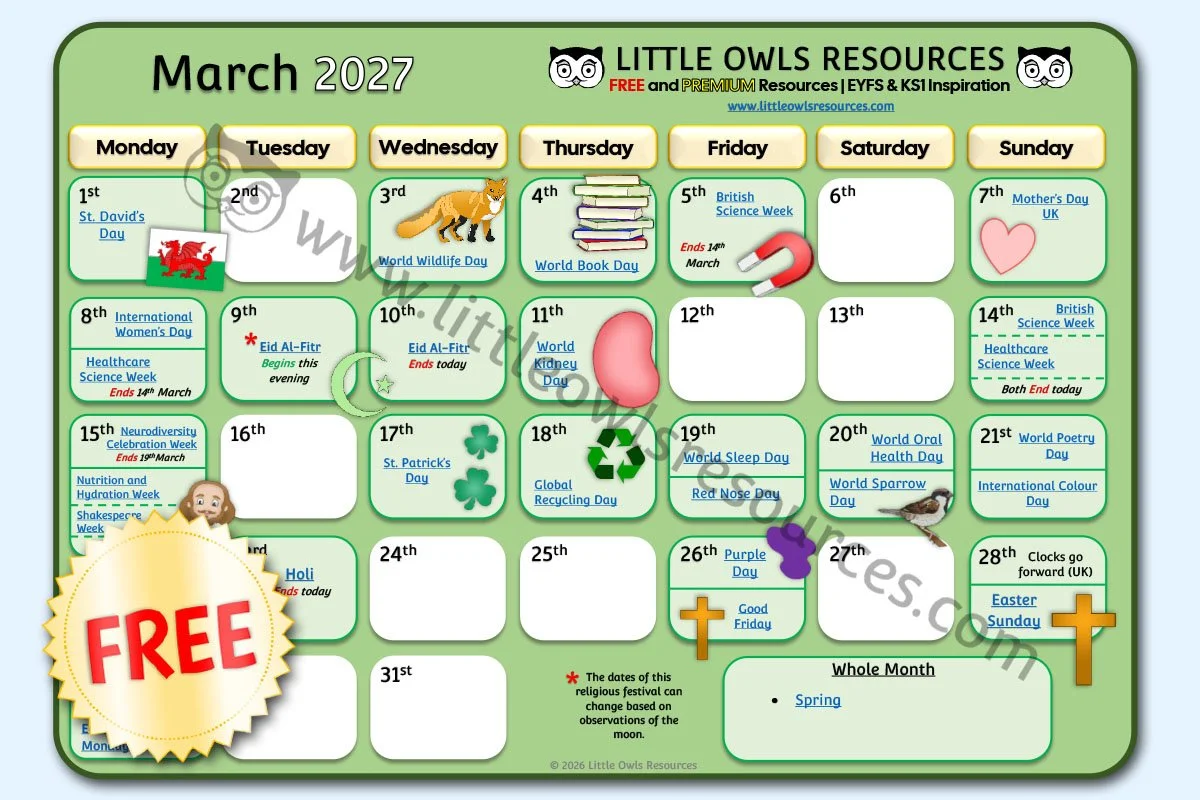
🌿📚 A vibrant shift towards Spring, blending scientific discovery, cultural literacy, and vital well-being topics. This month offers a rich curriculum focusing on renewal, diversity, and healthy living, perfectly timed as the weather improves.…
💖📖 This month is all about celebrating love and kindness, fostering communication, and continuing our exploration of the natural world. It's a wonderful time to build on early literacy…
❄️📖 As the festive glow fades, this month offers a clean slate to delve into themes focusing on the natural world, healthy habits, and the power of language and stories. It’s a great time to introduce new.…
🎄🌟 Welcome to December! This month is all about light, celebration, and reflection, providing a wonderful mix of cultural and social themes. While the focus naturally turns to the festive season.…
✨❤️ November is a bridge month, connecting the end of Autumn with the start of Winter and the festive season. It's rich in opportunities to weave together crucial PSED (Personal, Social and Emotional…
🍂🎃 Welcome to October! This is one of the most exciting months in the early years and primary school calendar, offering a wealth of opportunities for hands-on, cross-curricular learning. With the turn of…
Adult-Led Teaching (where appropriate)
Areas of learning guidance (including phonics, maths & writing) and small group teaching support & session banks (where appropriate)
Toddlers | 18-36 Months
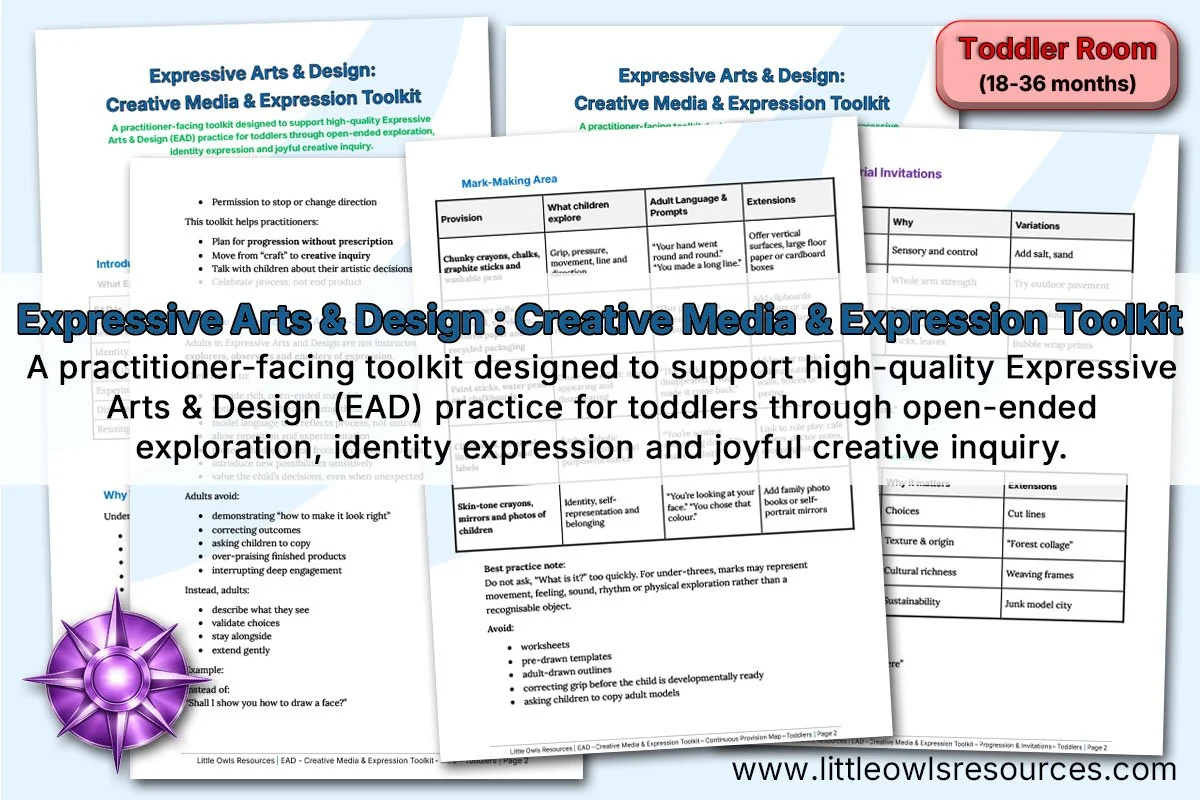
A practitioner-facing toolkit designed to support high-quality Expressive Arts & Design (EAD) practice for toddlers through open-ended exploration, identity expression and joyful creative inquiry.
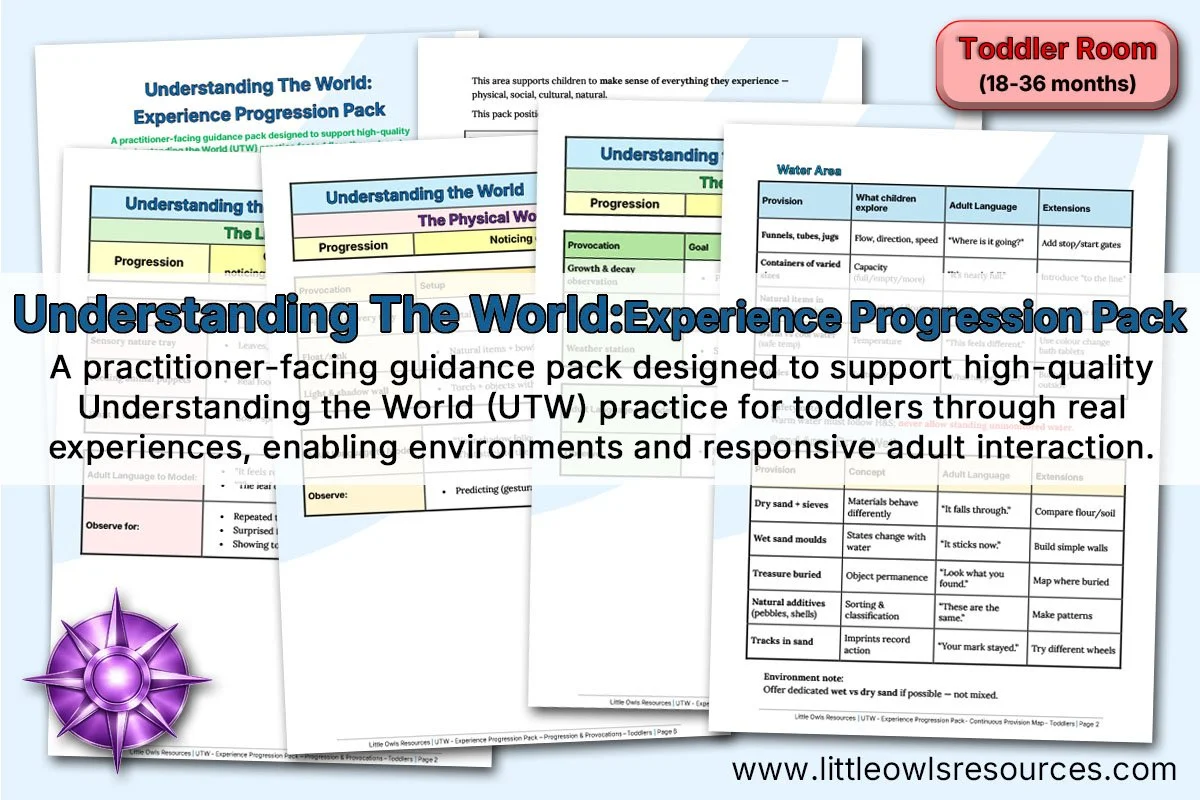
A practitioner-facing guidance pack designed to support high-quality Understanding the World (UTW) practice for toddlers through real experiences, enabling environments and responsive adult interaction.
Foundations for early mathematical thinking through play, language and everyday experiences.
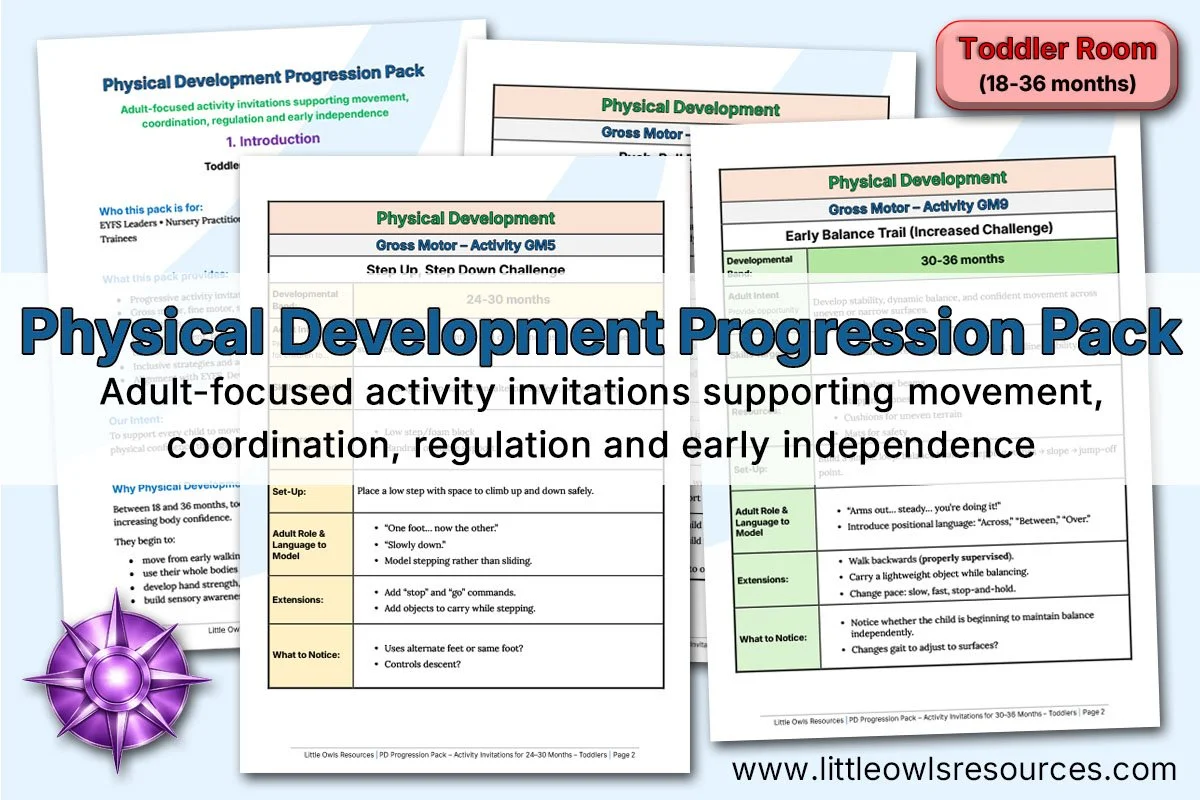
Adult initiated opportunity bank supporting movement, coordination, regulation and early independence.
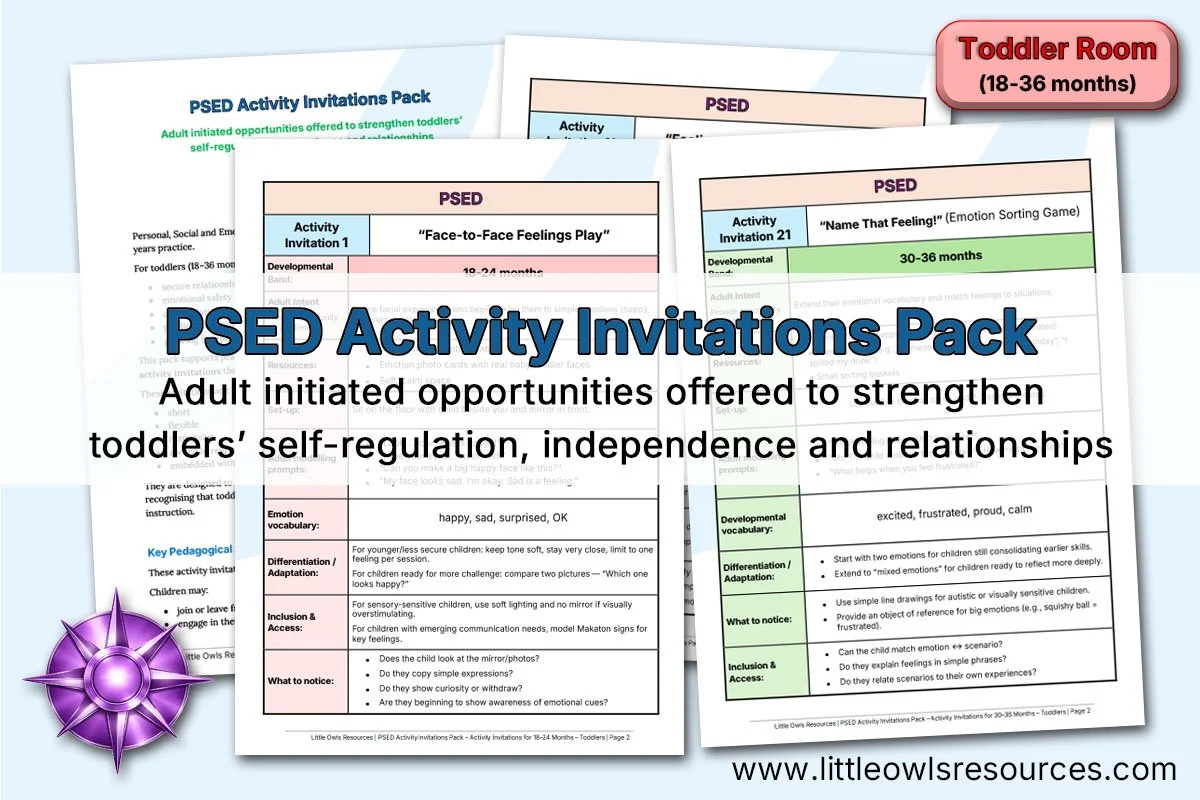
Adult initiated opportunities offered to strengthen toddlers’ self-regulation, independence and relationships.
Progression map and adult initiated opportunity bank to strengthen toddler language through high-quality interactions.
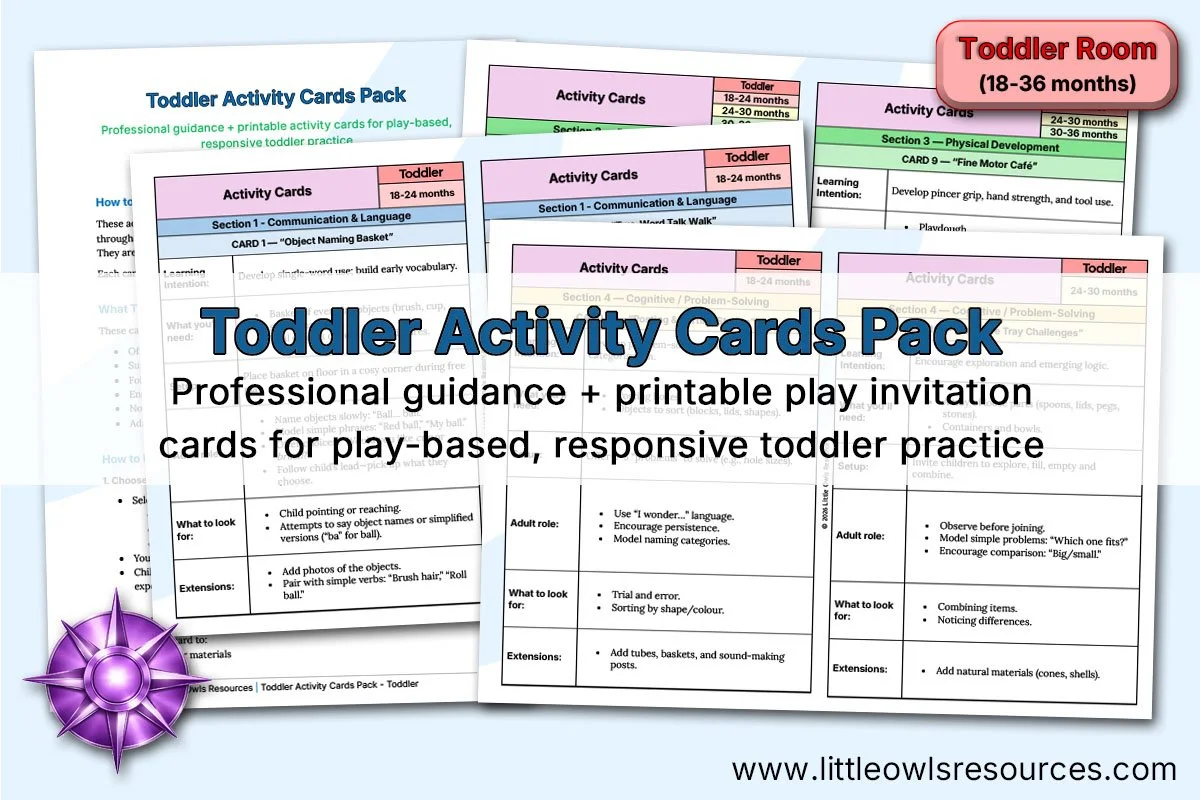
Professional guidance + printable activity cards for play-based, responsive toddler practice. A practical, practitioner-friendly pack of play invitations and interaction prompts to strengthen language, independence, movement and problem-solving in toddler rooms.
A practitioner-facing reference supporting intentional, developmentally appropriate toddler practice across key strands.
Preschool | 3-4 Years
How our Fine-Motor & Marking-Making Mini Session Bank & our Early Writing Purpose Mini Session Bank are Designed To Work Together.
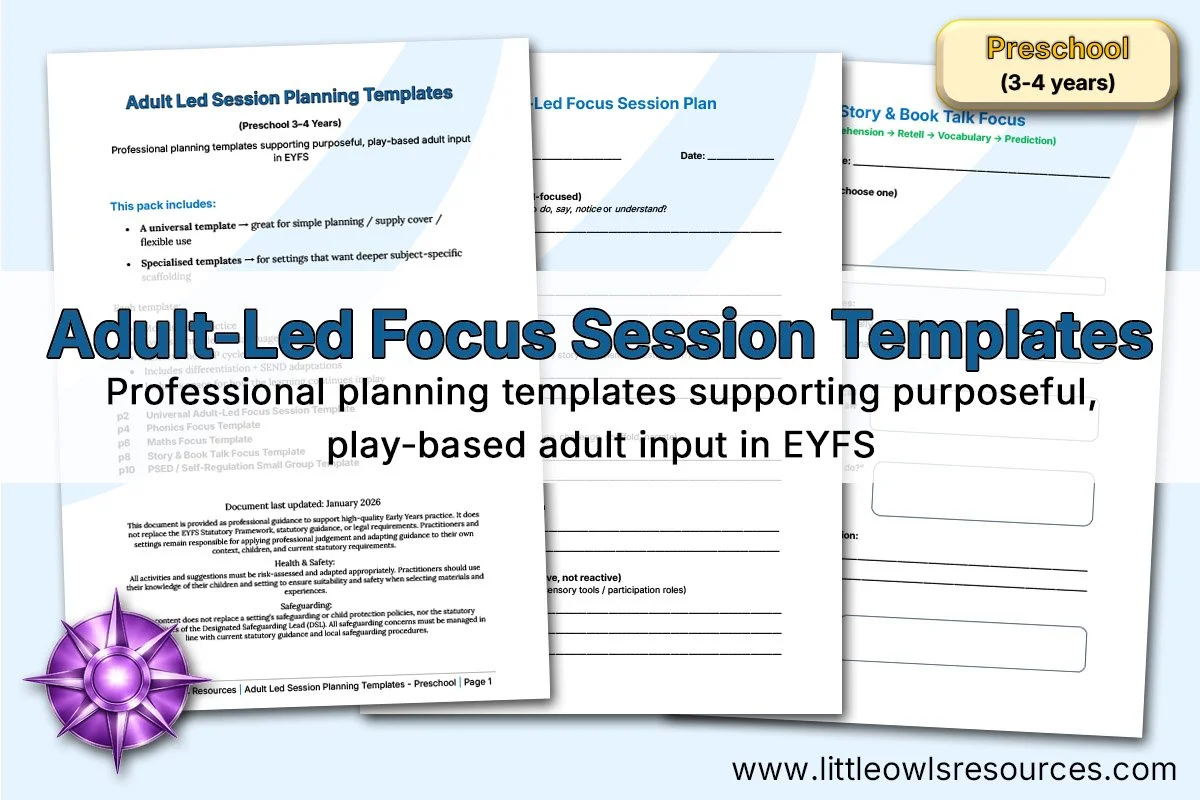
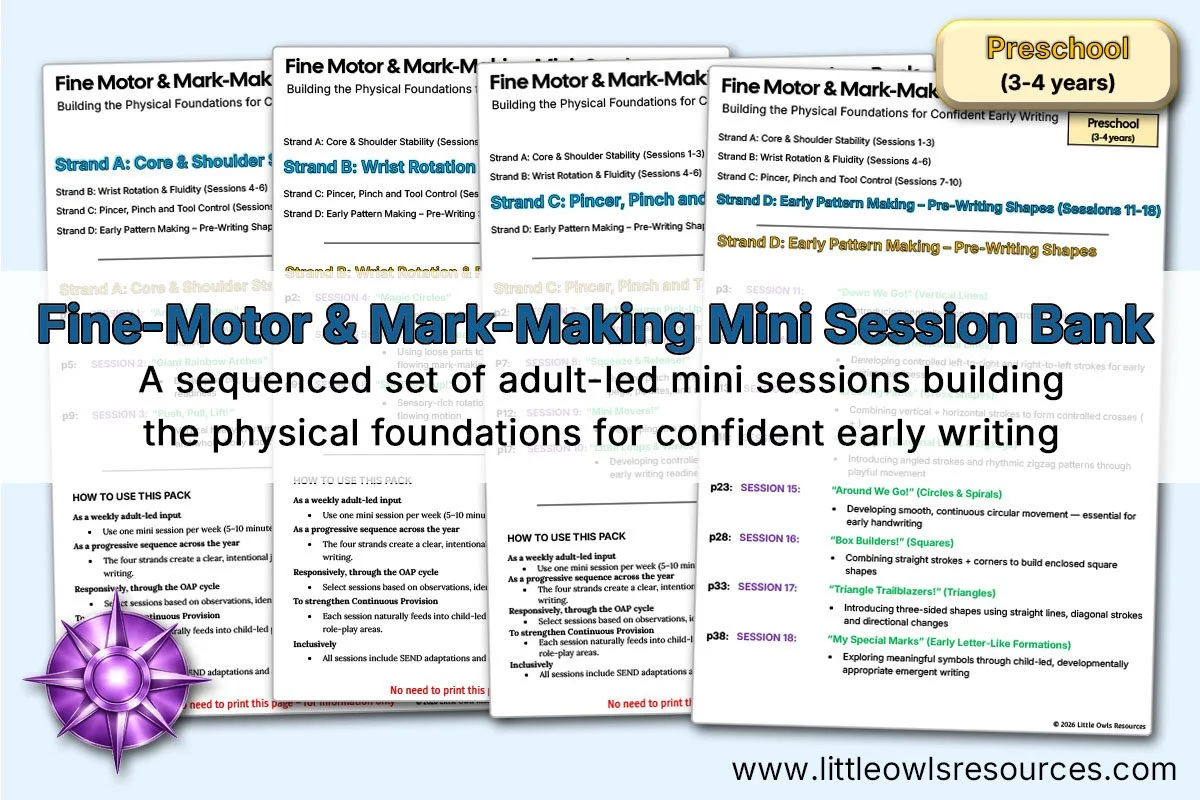
A sequenced set of adult-led mini sessions building the physical foundations for confident early writing.
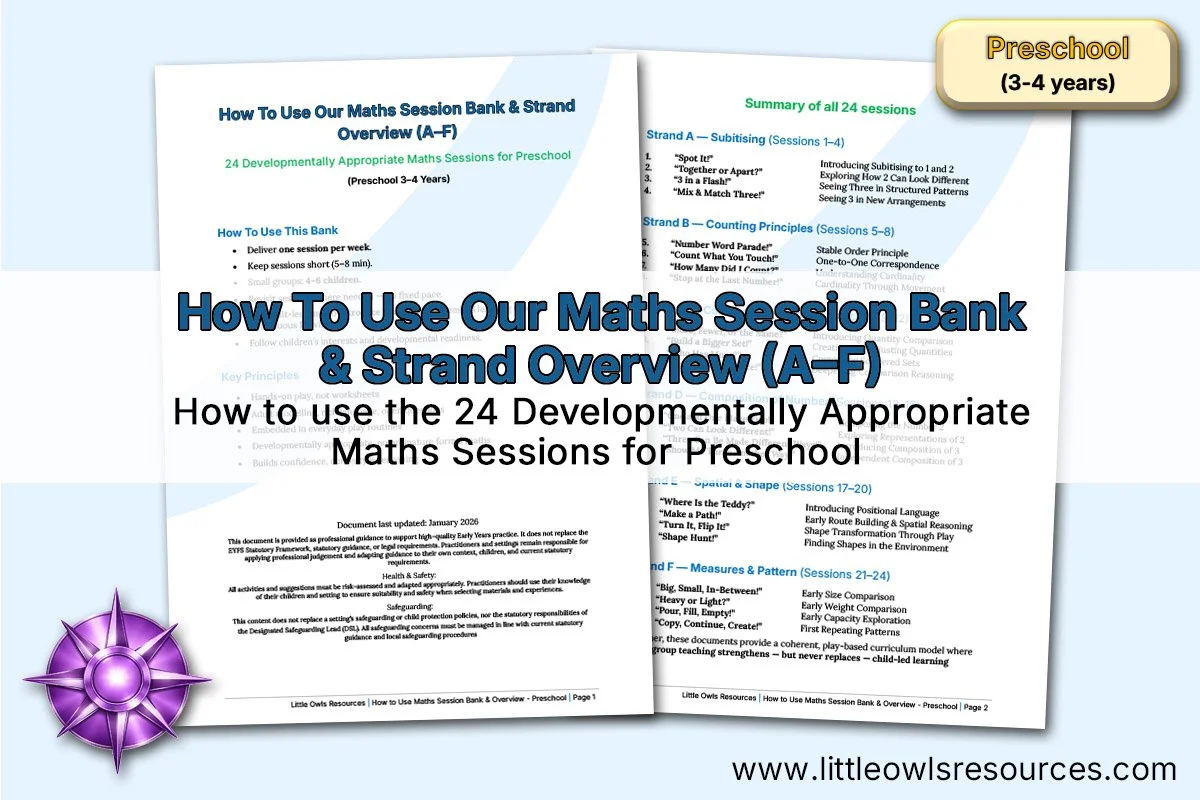
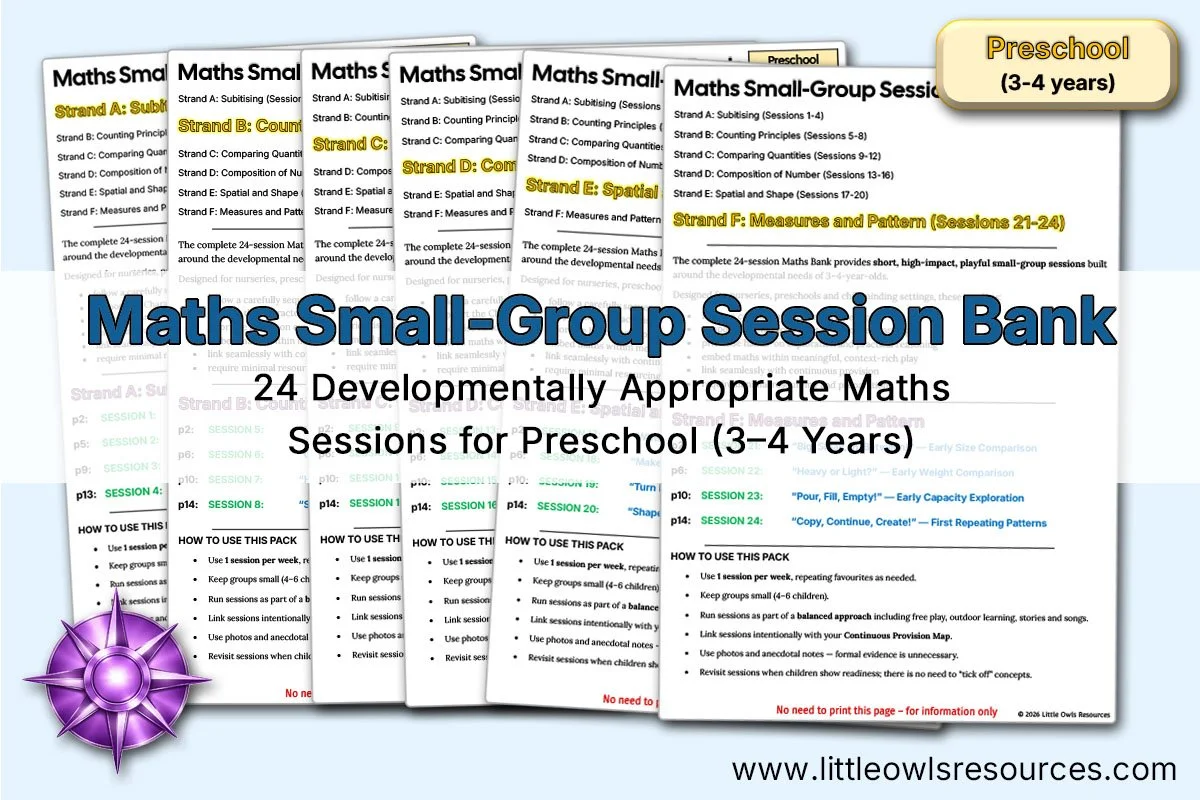
This document is a complete bank of 24 short, high-quality maths small-group sessions designed specifically for Preschool children aged 3–4 years.
The 24 sessions are organised into six developmental strands: Subitising, Counting Principles, Comparing Quantities, Composition of Number, Spatial & Shape and Measures & Pattern.
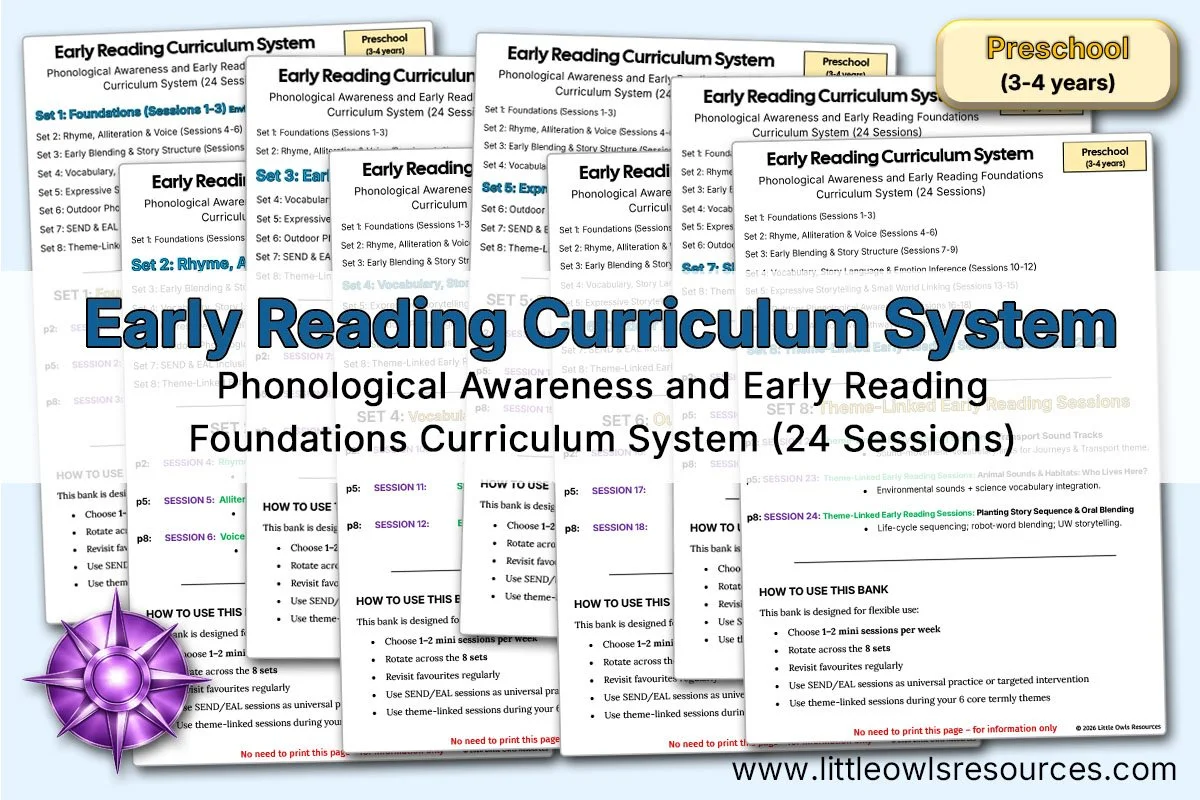
Find answers to our Preschool Phase 1 Phonics & Early Reading Curriculum Frequently Asked Questions.
SEND & Inclusion
Strategy packs, early identification guidance & environment and interaction adaptations
A practical set of strength-based documents to support secure, consistent transitions from 18–36 month provision into the 3–4 year room.
Quick guidance and practical tools for supporting toddlers (18–36 months) in everyday provision.
A statutory-compliant, practitioner-friendly toolkit supporting meaningful assessment and parent partnership.
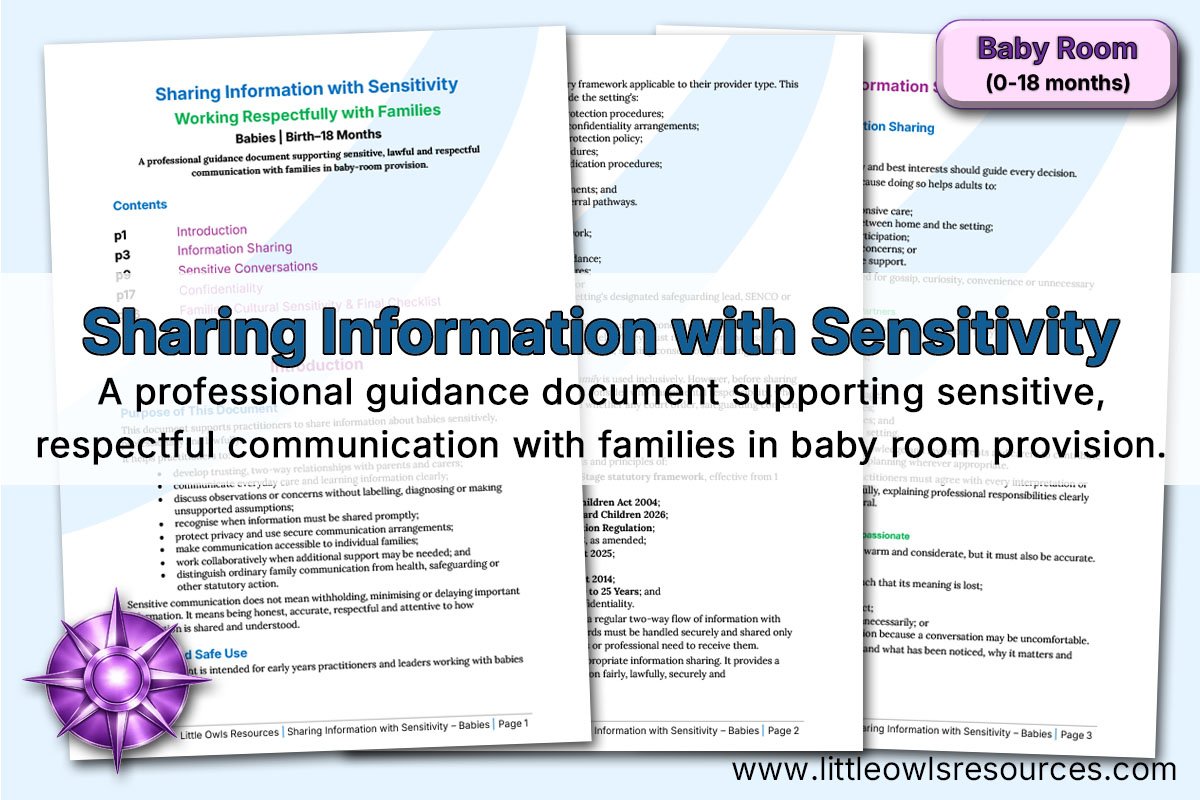
A professional guidance document supporting sensitive, respectful communication with families in baby room provision.
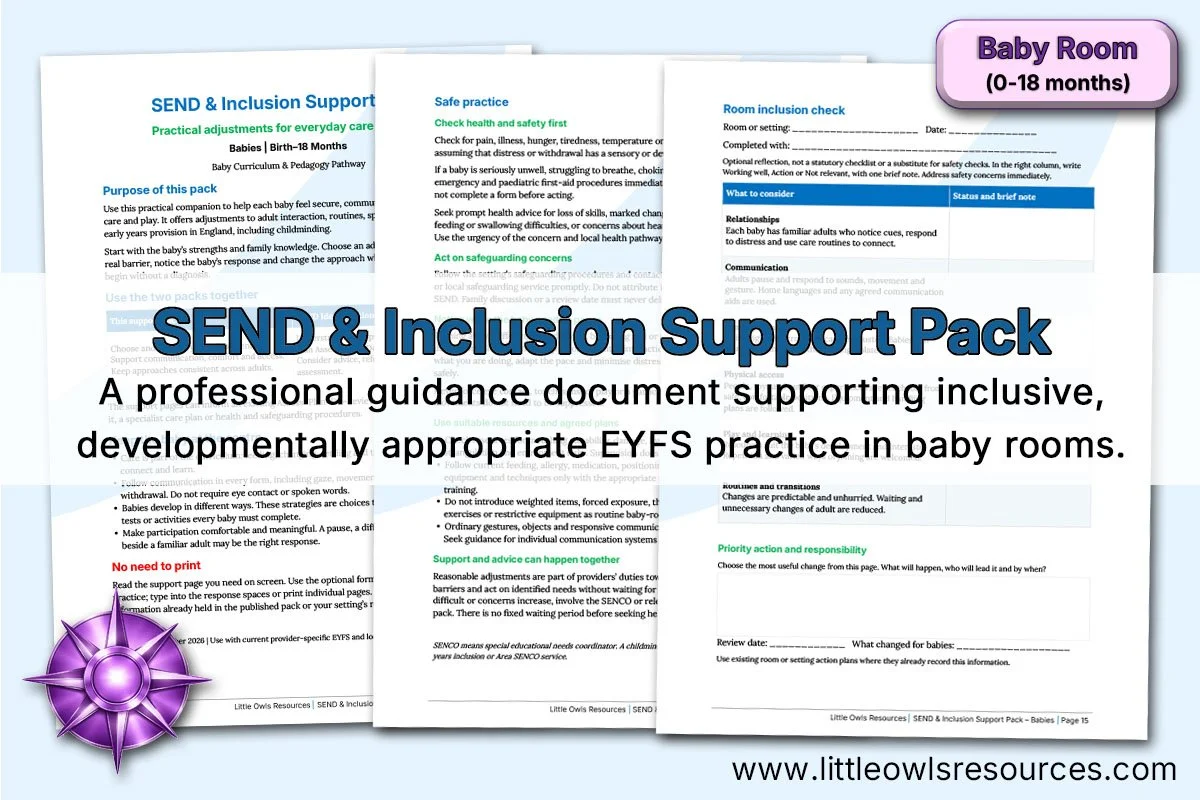
A professional guidance document supporting inclusive, developmentally appropriate EYFS practice in baby rooms.
A professional guidance document supporting confident, developmentally appropriate SEND practice in baby rooms.
A professional guidance document supporting confident, consistent EYFS pedagogy from birth to five.
Our curriculum is designed to support high-quality Early Years practice by providing practitioners with clear, developmentally appropriate guidance and flexible, responsive planning tools from birth to five.
This document sets out the pedagogical principles that underpin our approach to working with babies aged 0–18 months.
Editable letters and updates supporting clear, inclusive communication with families (18–36 months)
A simple, strengths-based communication tool supporting partnership between nursery and home (18–36 months)
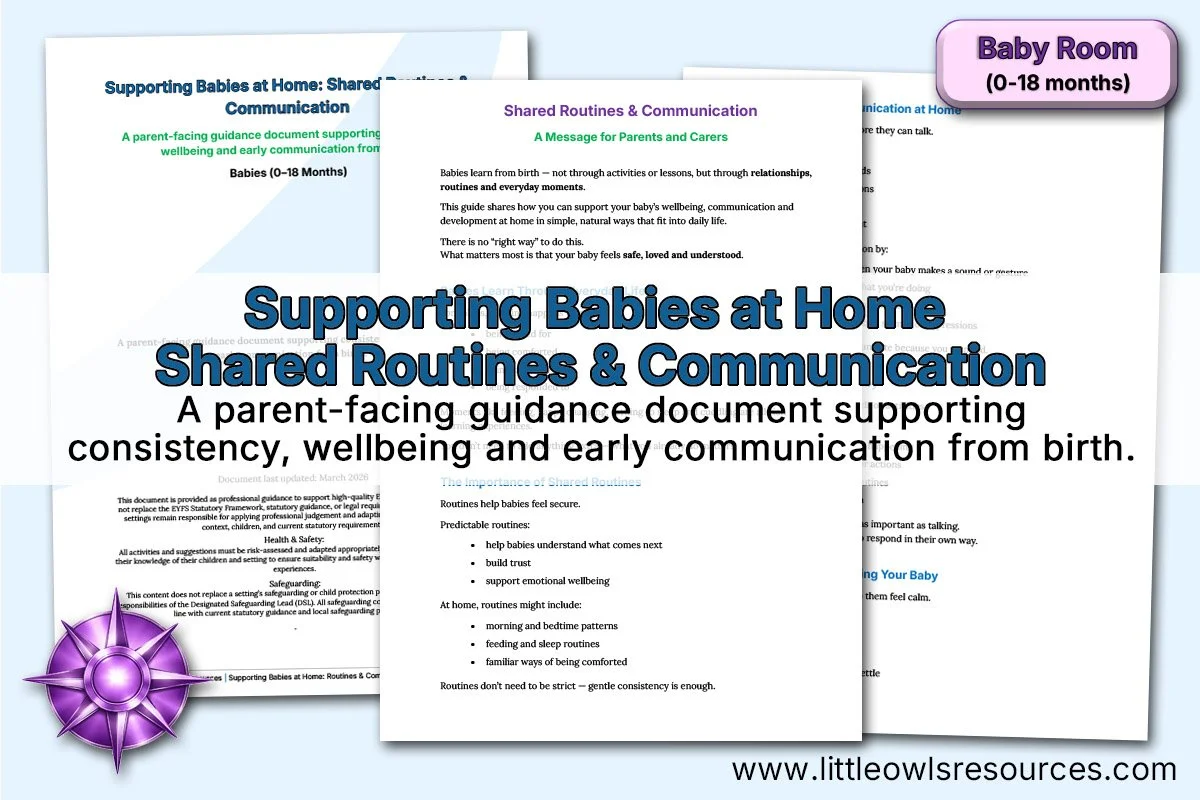
A parent-facing guidance document supporting consistency, wellbeing and early communication from birth.
A professional, parent-facing pack supporting calm transitions, secure attachment and consistent early care in baby rooms.
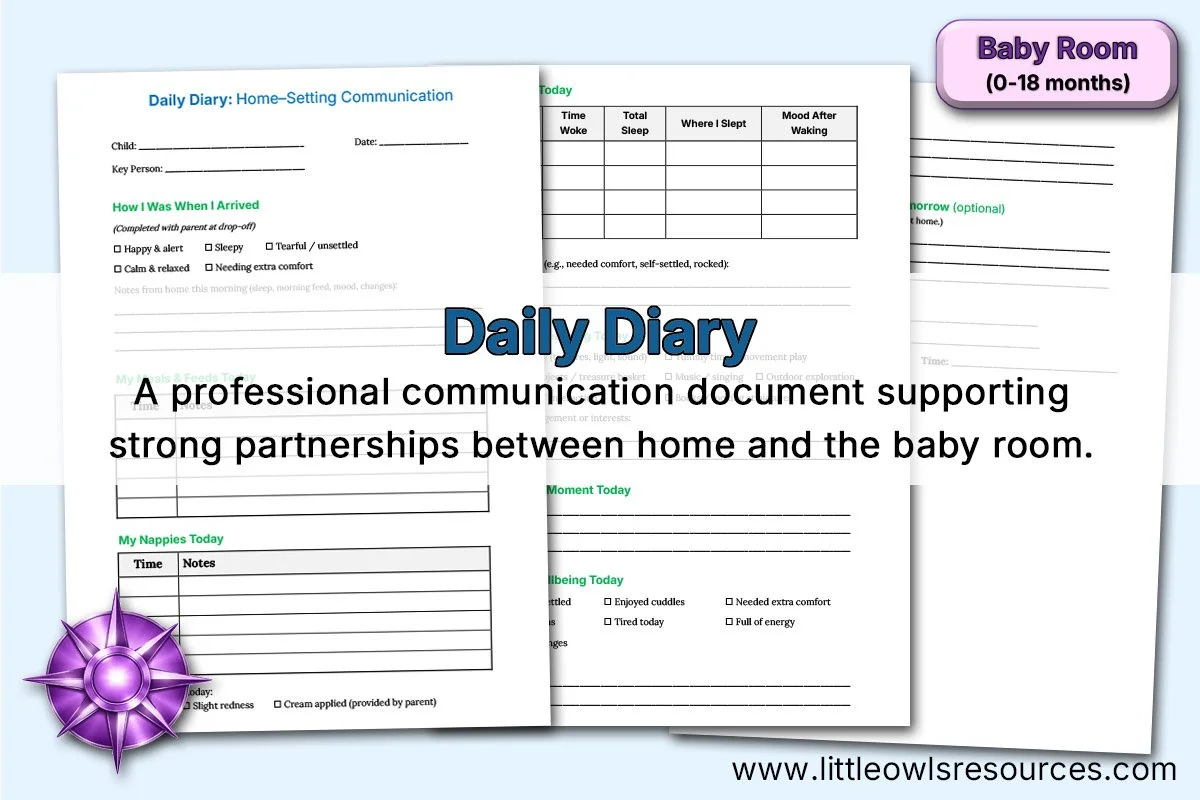
A professional communication document supporting strong partnerships between home and the baby room.
Inspection & Leadership
During inspection, nurseries should be able to explain:
their curriculum intent
how planning supports children’s needs
how environments enable learning
how staff respond in the moment
A practitioner-facing articulation tool for confident, inspection-ready toddler practice.
A statutory-compliant, practitioner-friendly toolkit supporting meaningful assessment and parent partnership.
A professional guidance document clarifying curriculum intent for developmentally appropriate toddler practice.
A clear, inspection-ready articulation of Preschool curriculum design, delivery and impact.
A cohesive, high-level overview of learning and development from birth to the end of the EYFS.
Clear, age-phase inspection summaries articulating curriculum intent, implementation and impact across the EYFS.
A professional guidance document supporting confident, consistent EYFS pedagogy from birth to five.
Our curriculum is designed to support high-quality Early Years practice by providing practitioners with clear, developmentally appropriate guidance and flexible, responsive planning tools from birth to five.
This document sets out the pedagogical principles that underpin our approach to working with babies aged 0–18 months.
Statutory & Non-Statutory Guidance Resources
Statutory guidance such as the EYFS Framework, establishes clear expectations that all early years providers must meet in order to support children’s safety, wellbeing, and development. Other documents such as ‘Development Matters’, are non-statutory. This means that guidance within these documents provides flexibility and professional support by offering examples and ideas that practitioners can adapt to suit their setting, children, and community.
Together, these forms of guidance help ensure both consistency and flexibility within early years practice. Please find below some of the materials available on Little Owls Resources to support both mentioned documents:
Development Matters
Areas Of Learning
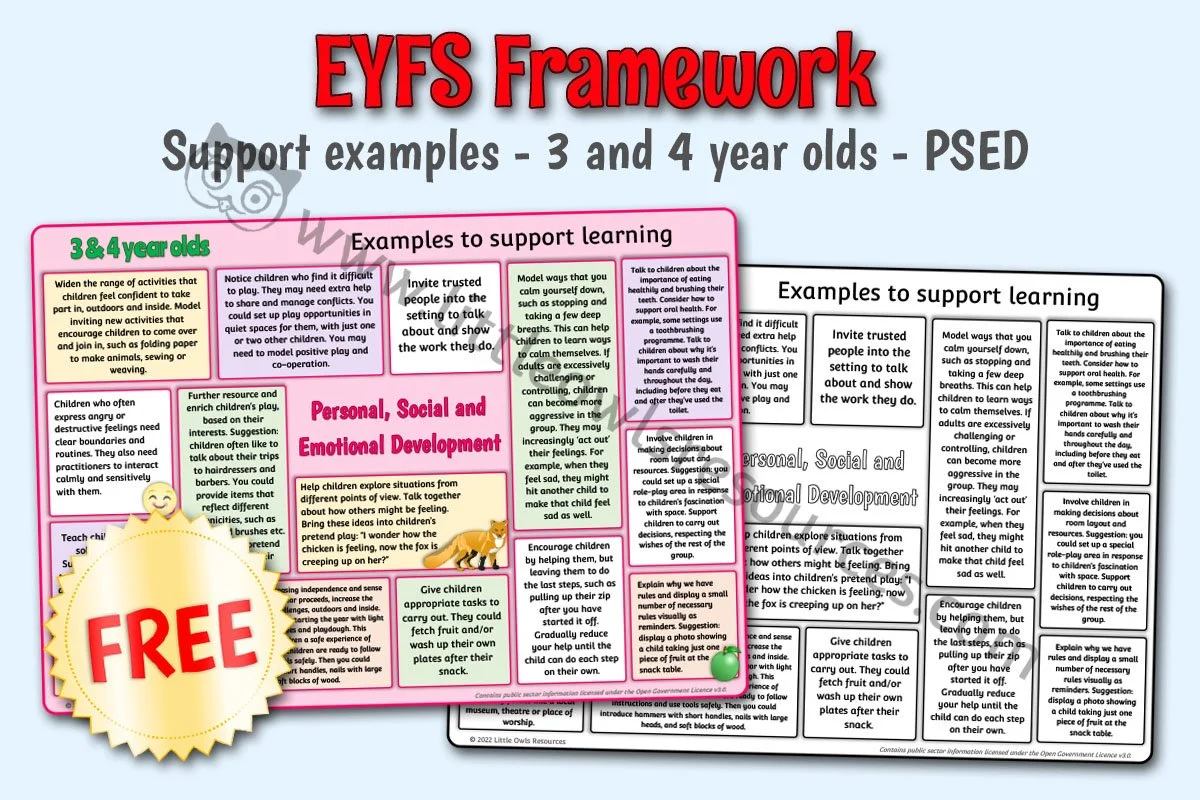
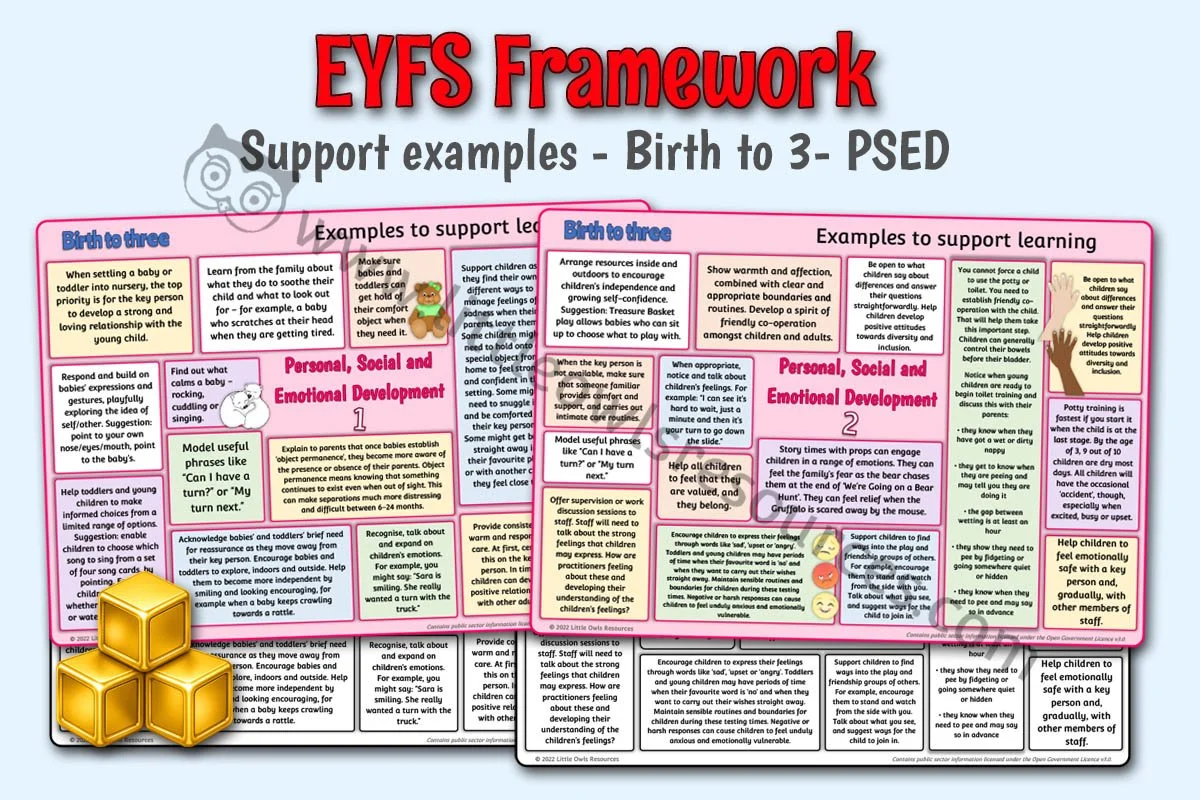
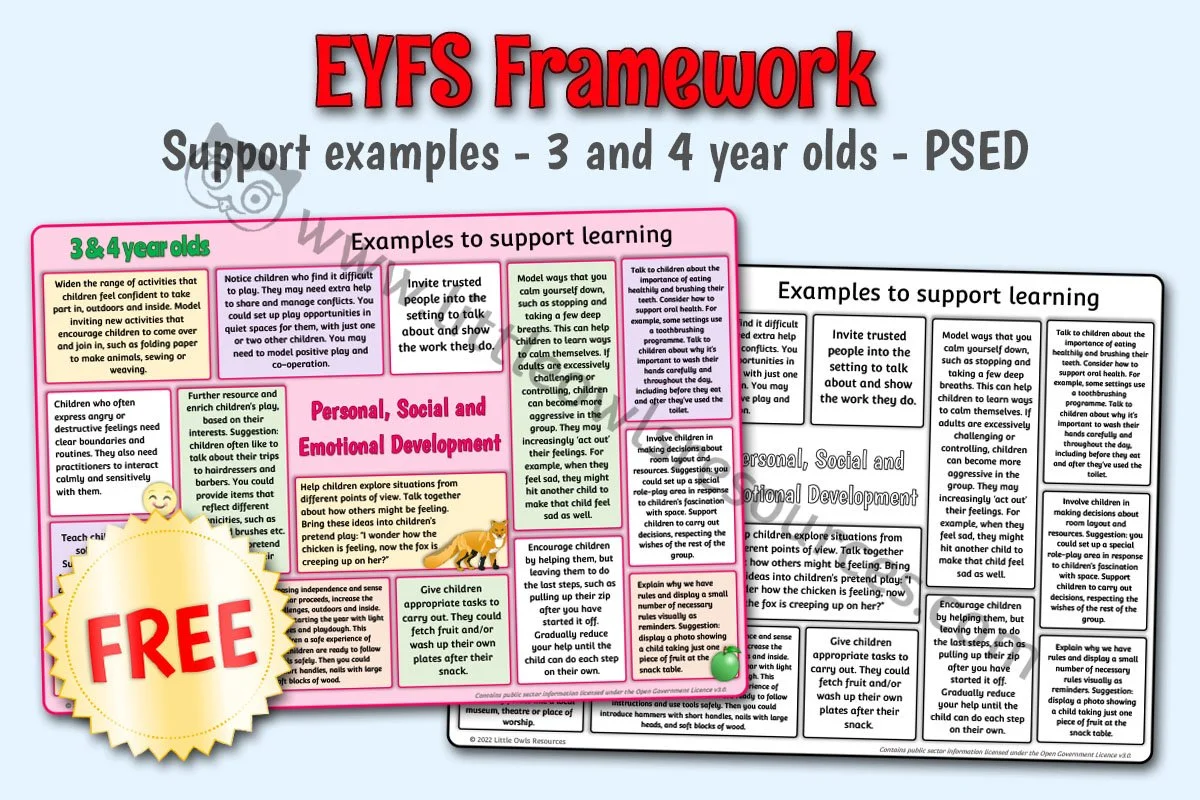
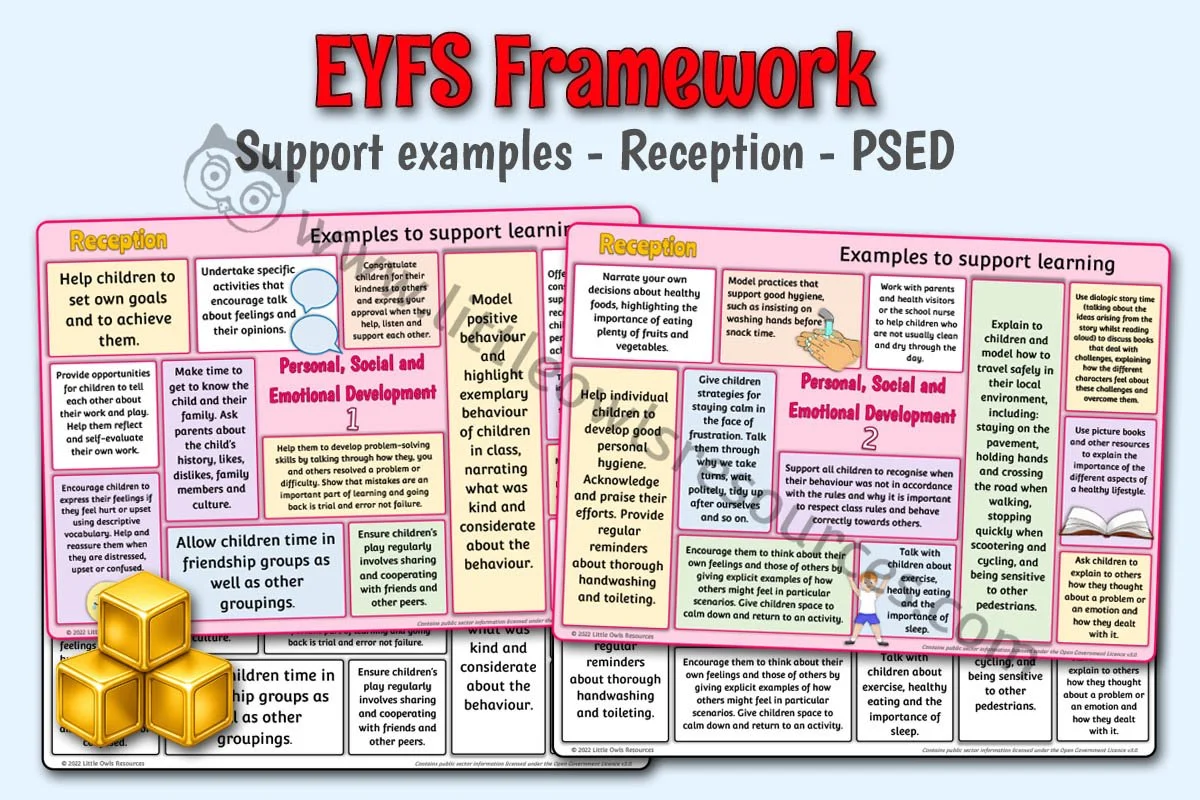
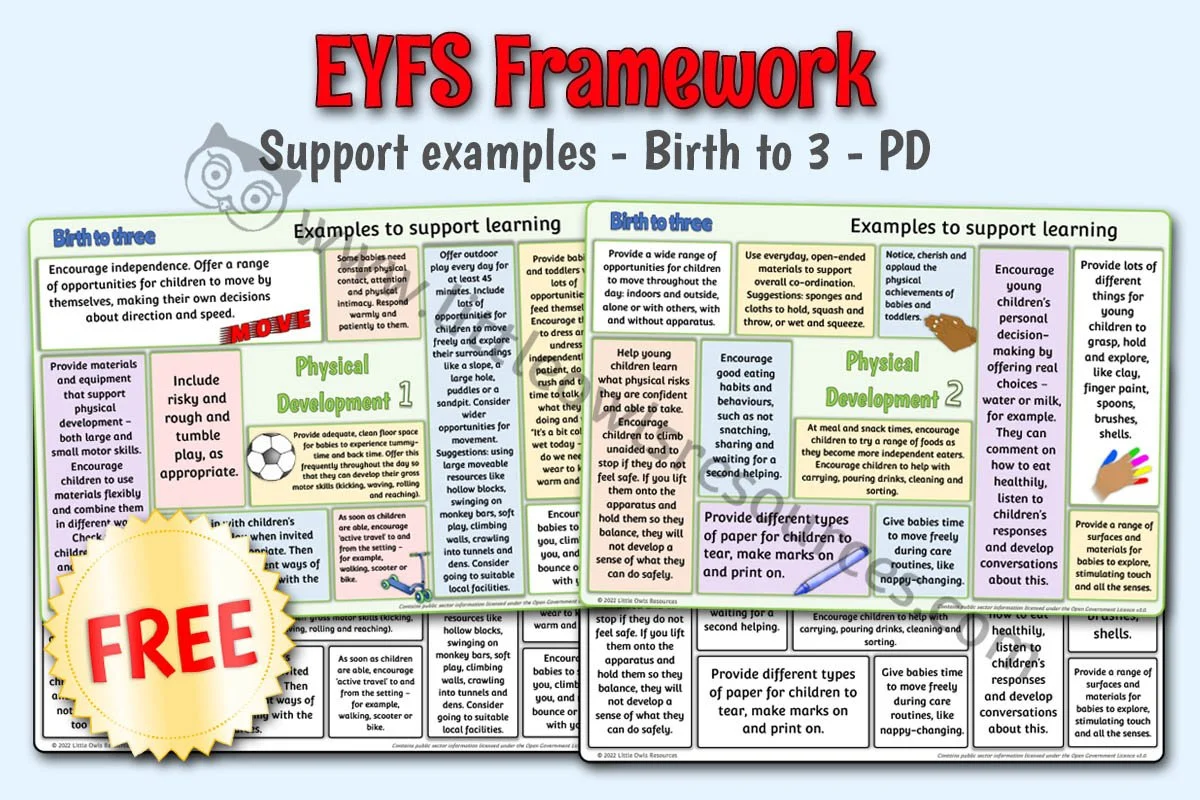
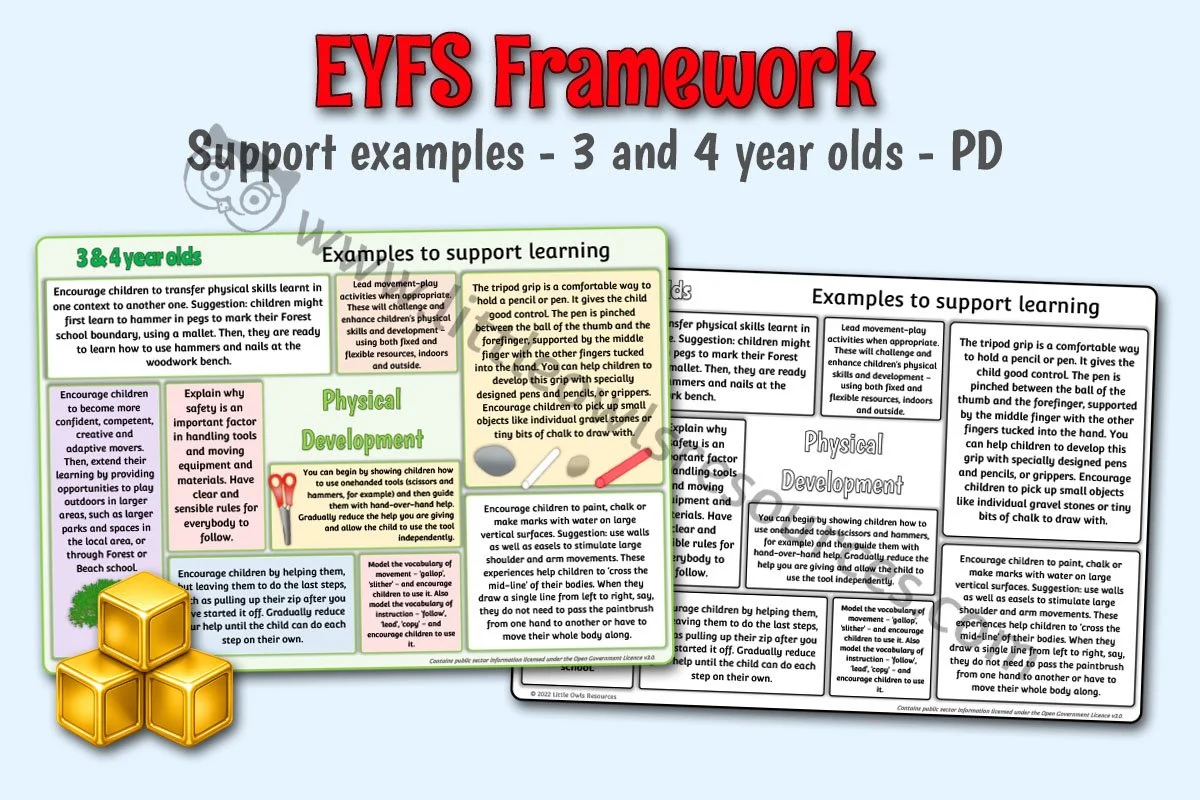
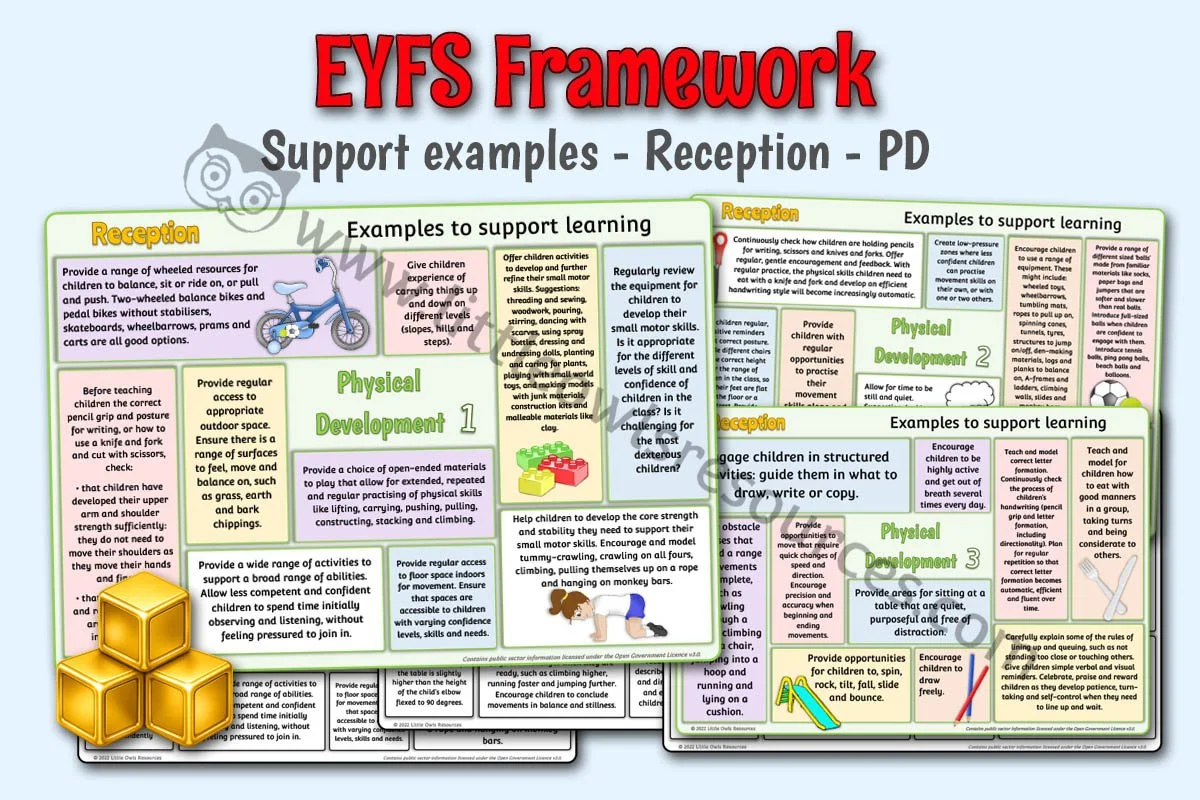
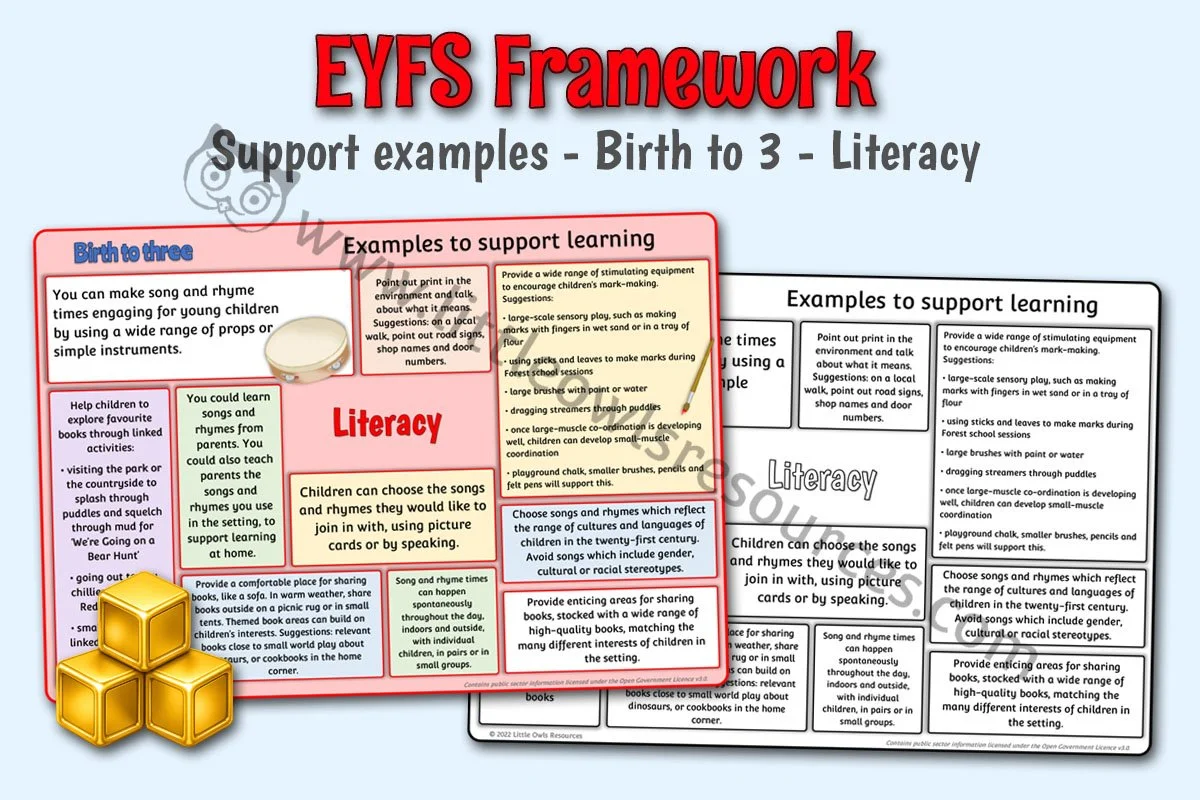
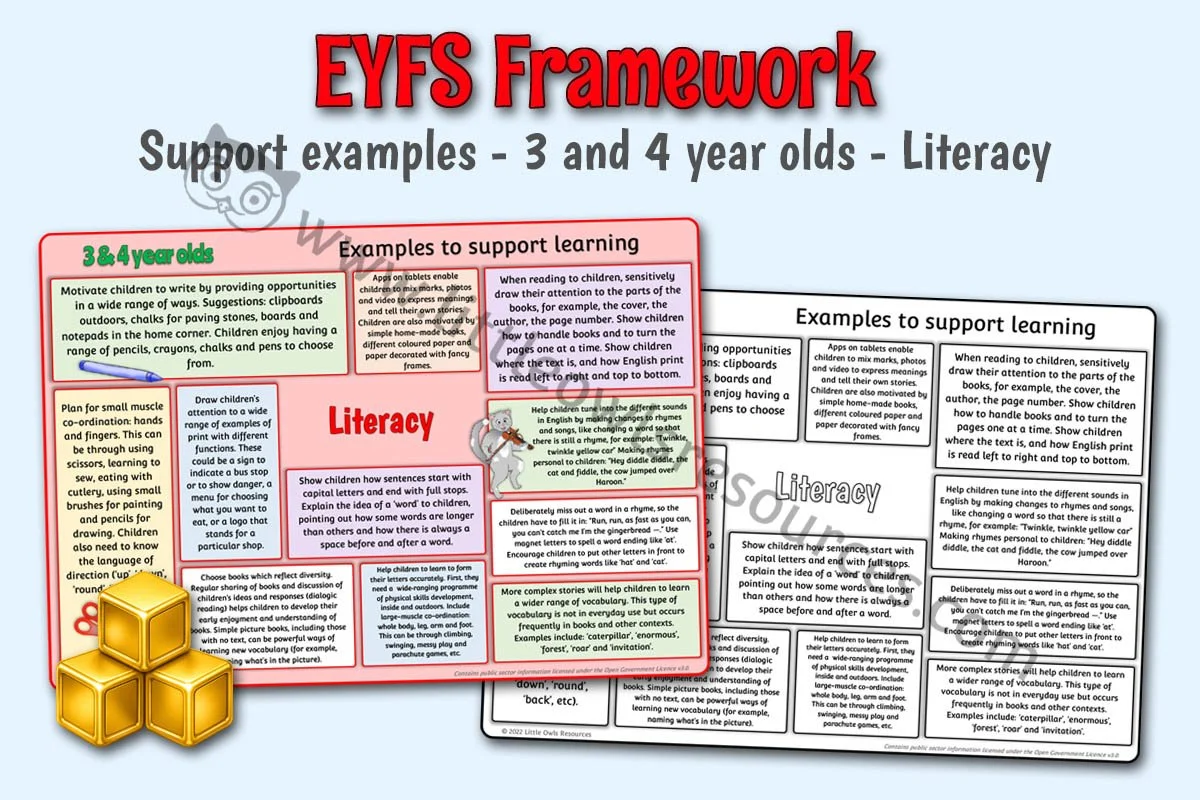
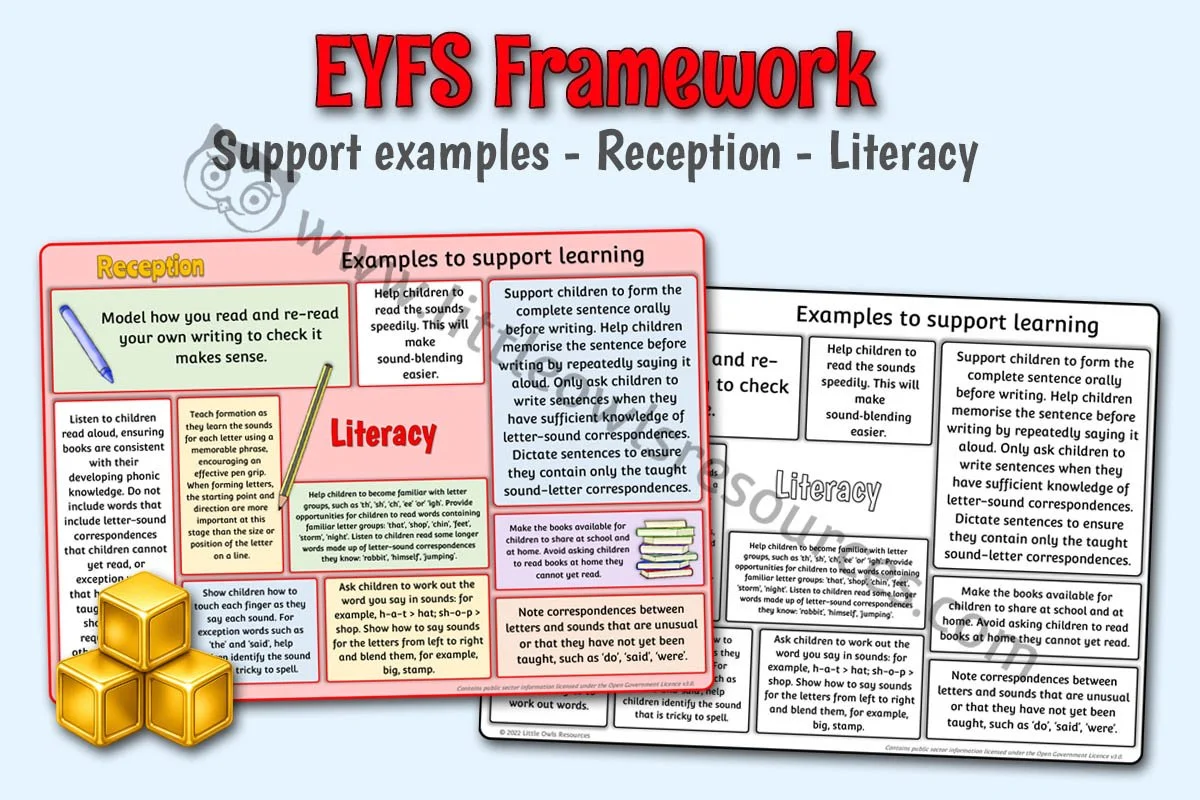
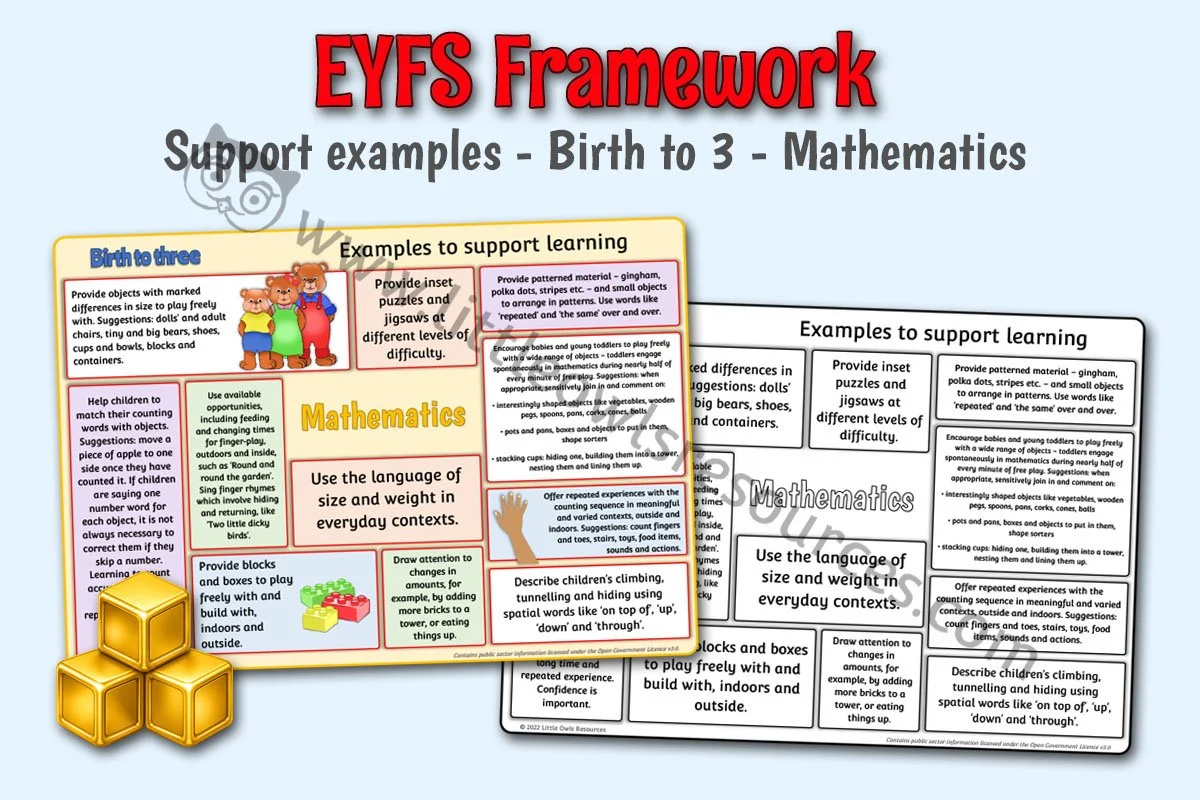
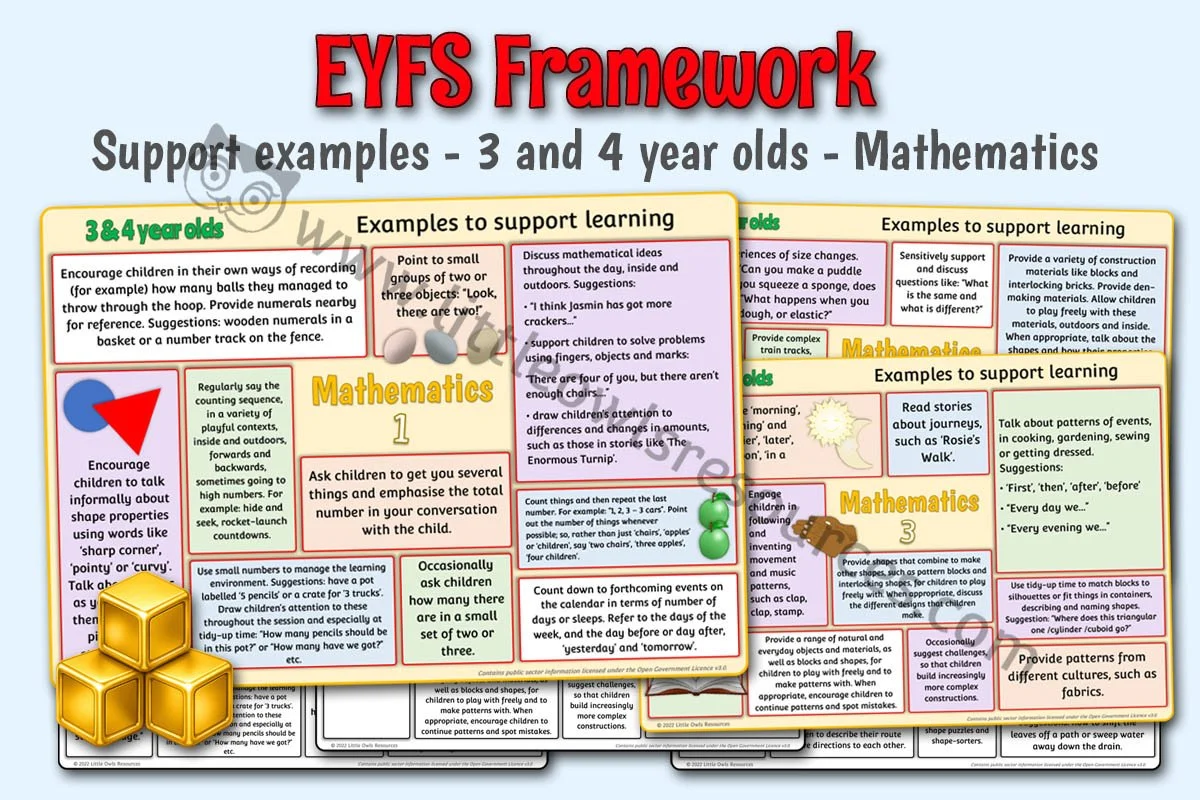
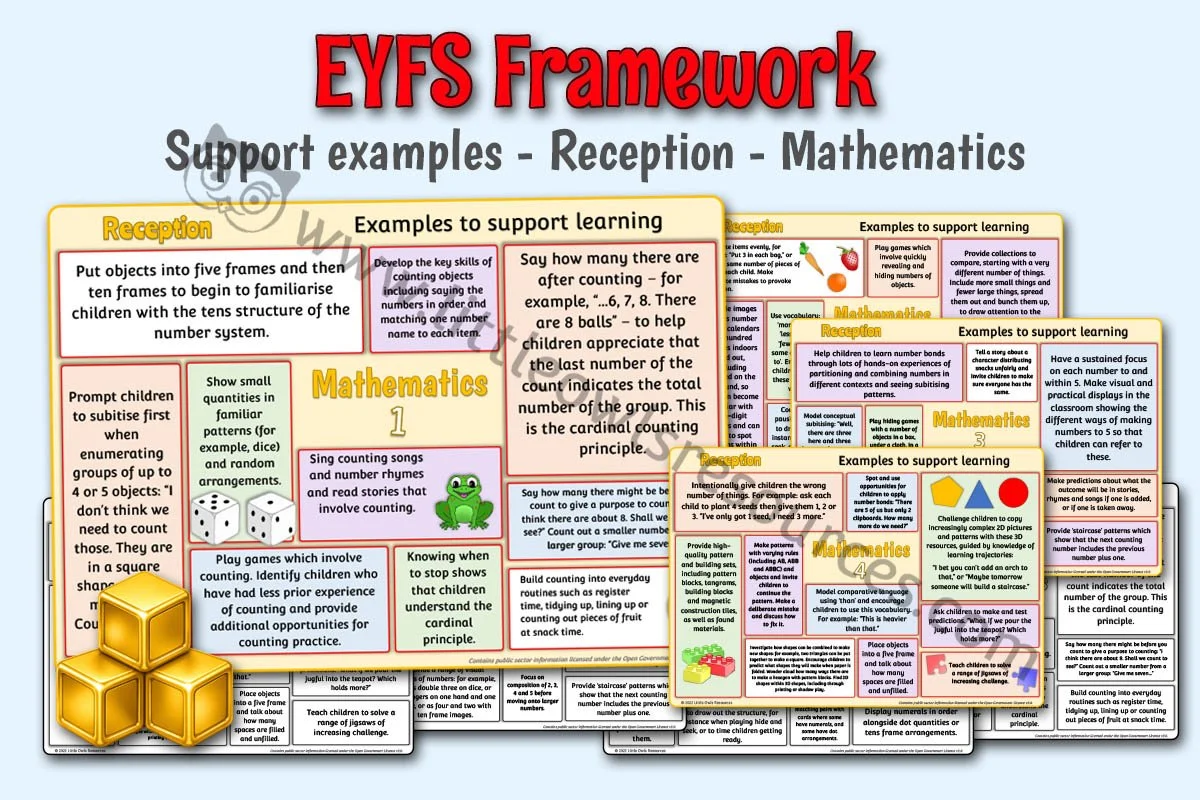
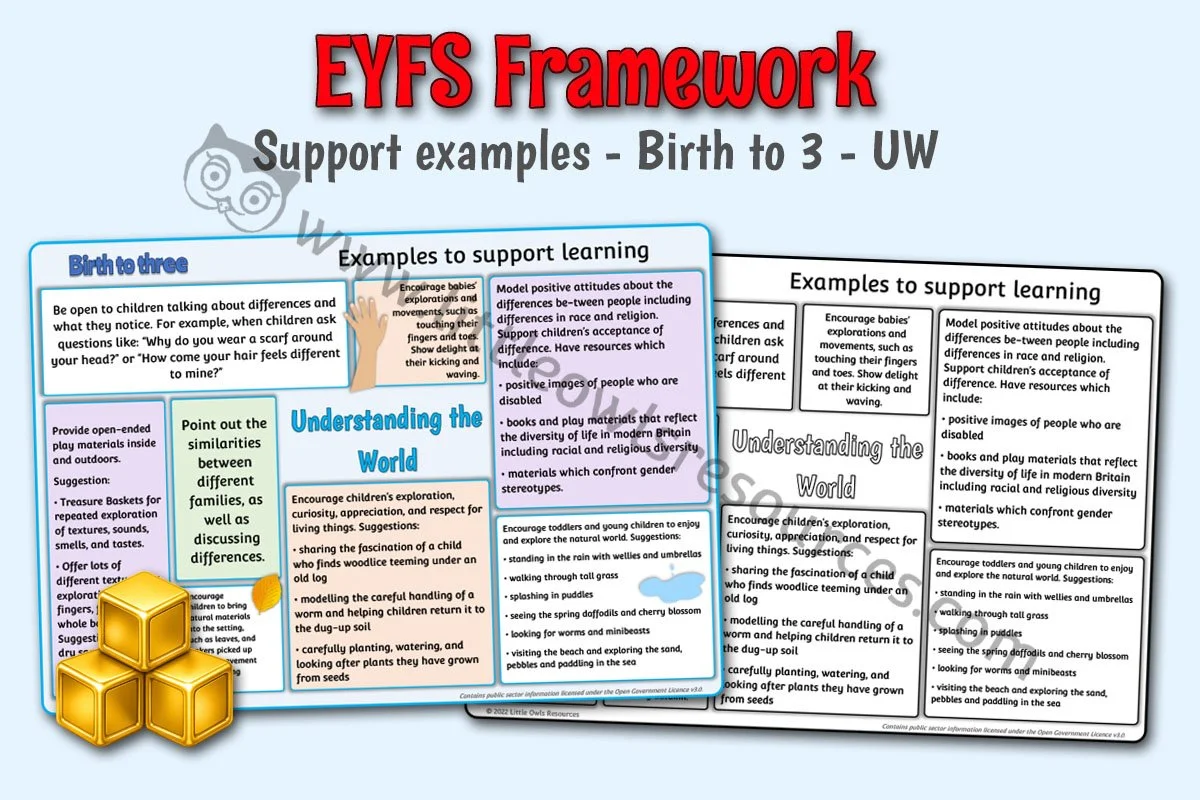
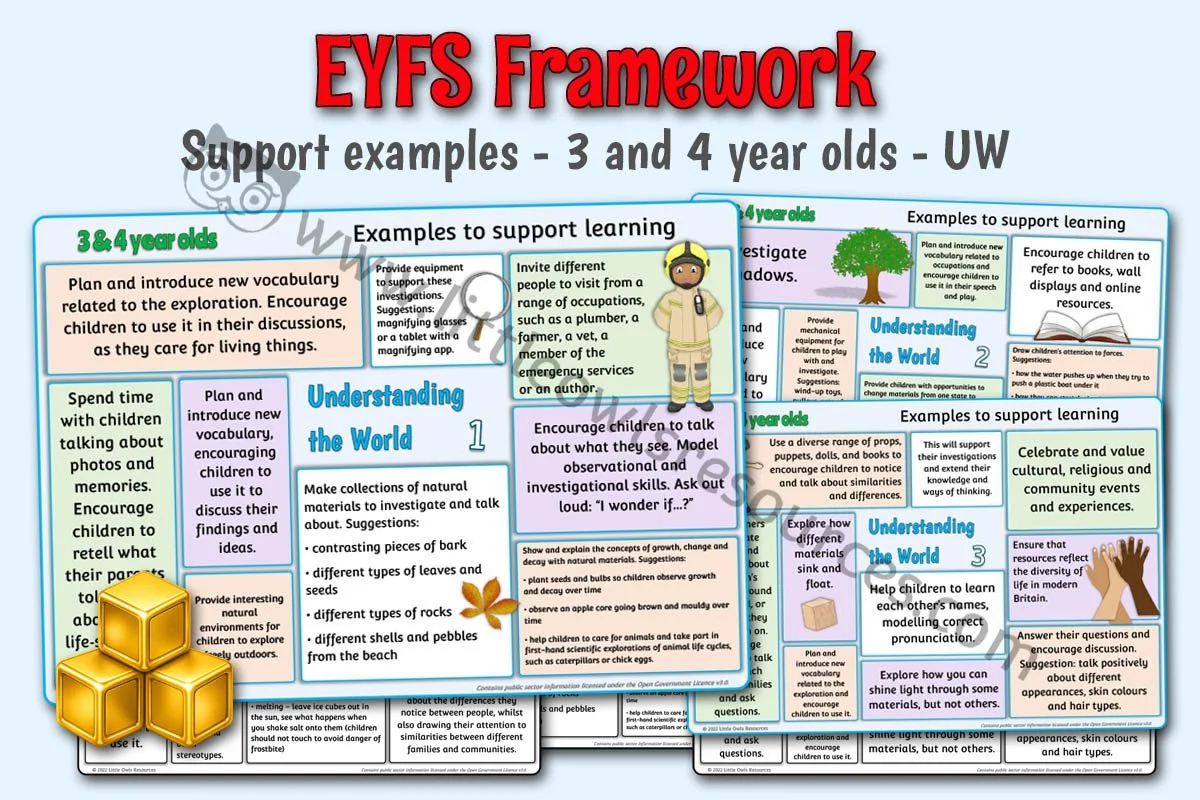
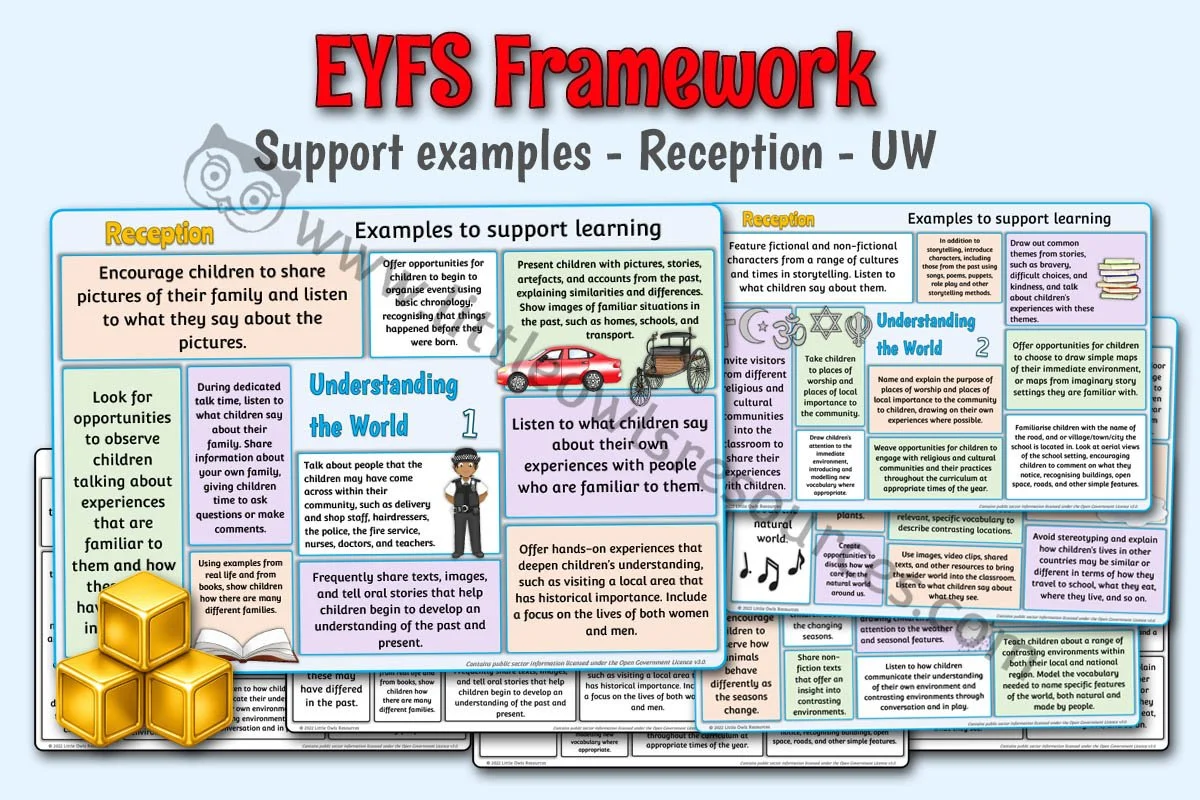
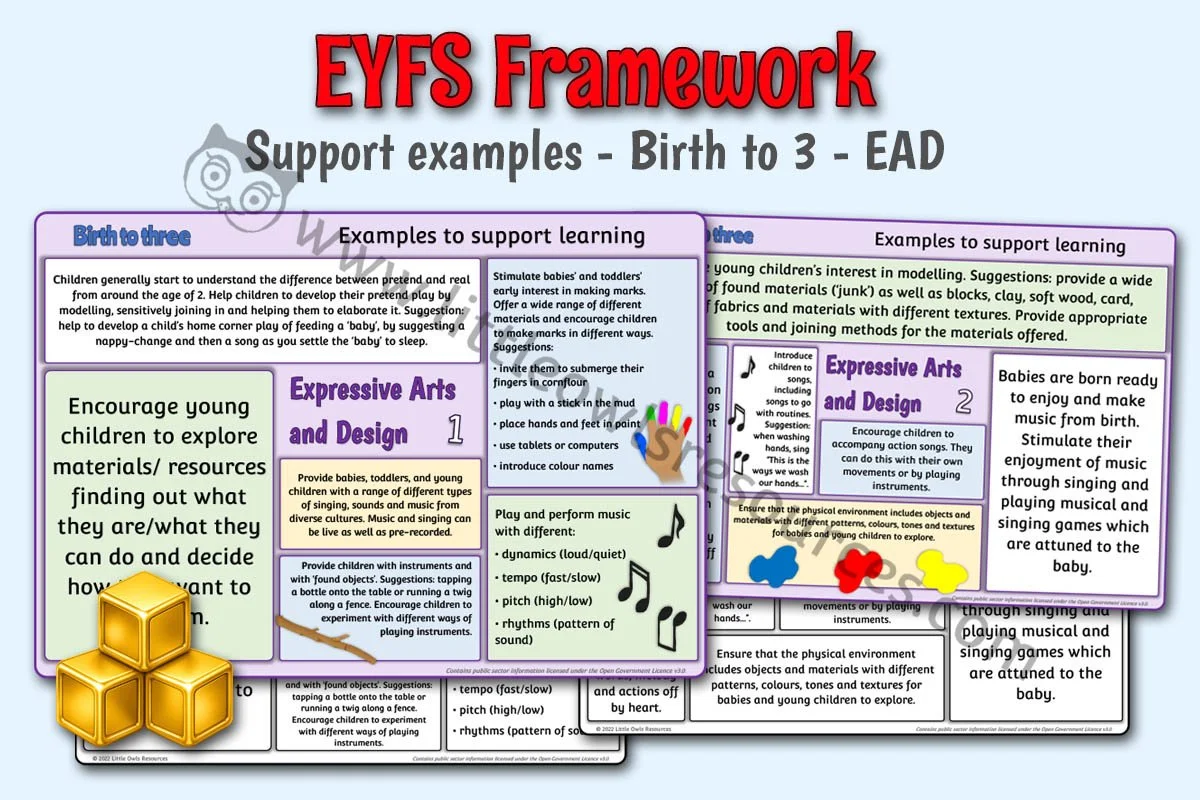
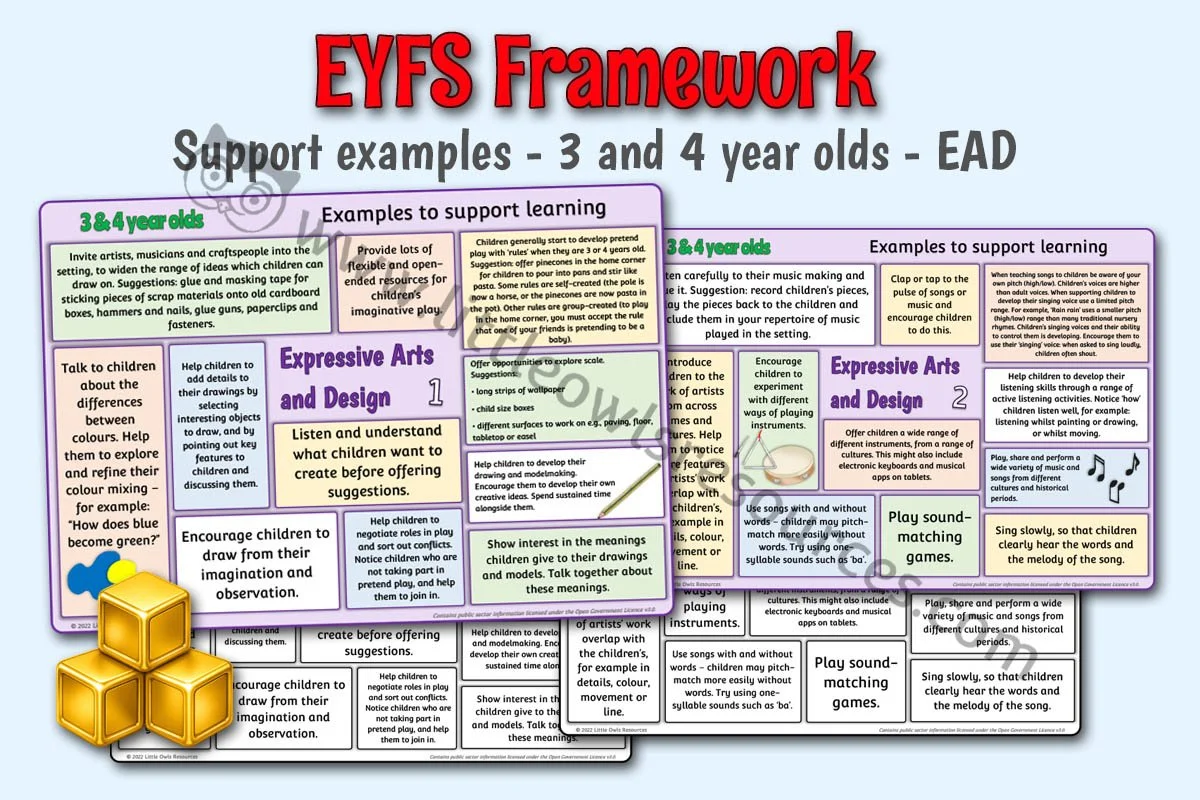
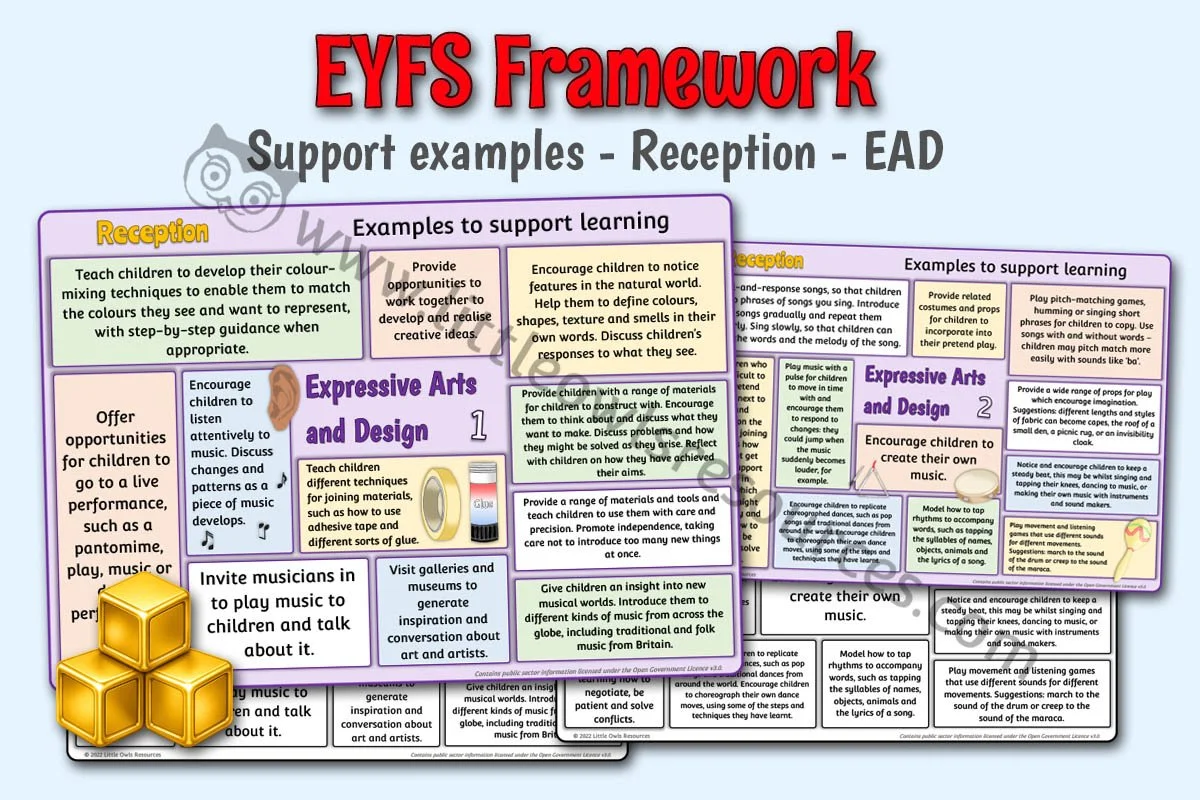
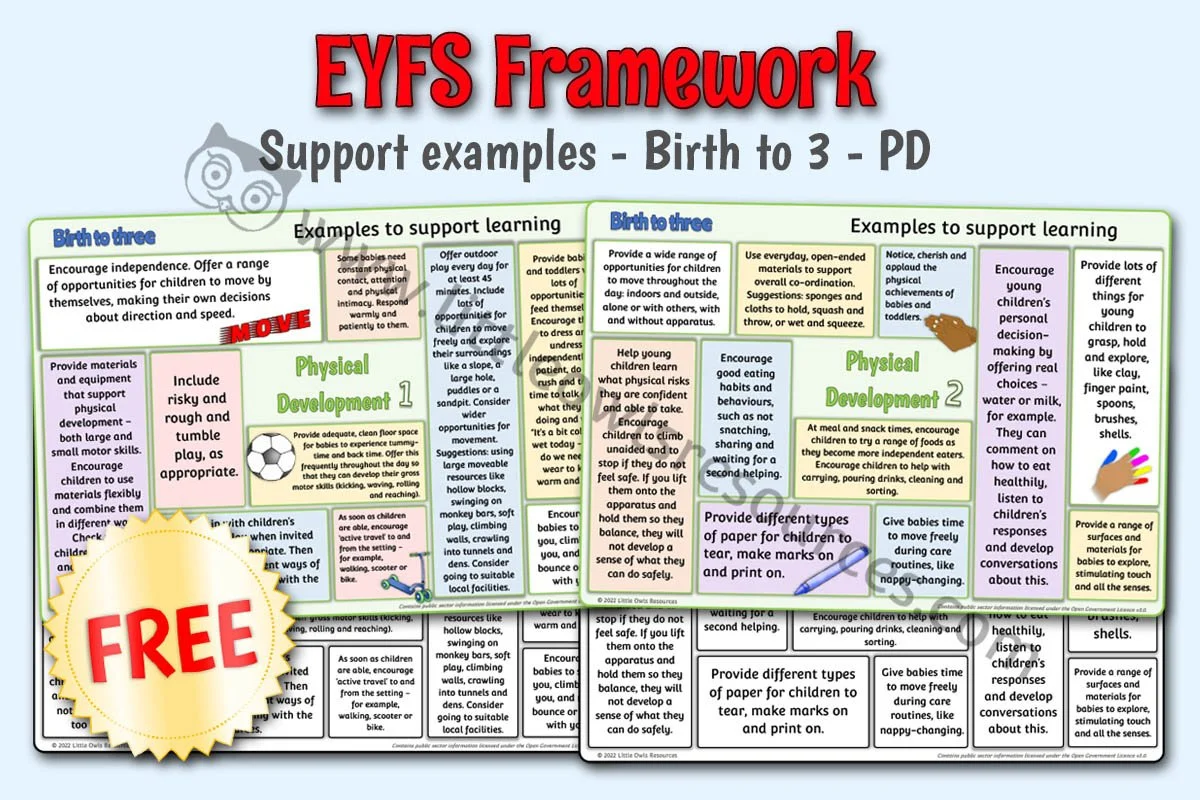
Examples of how to support areas of learning and development for birth to 3, 3 to 4 and 4 to 5 years olds. Extracted from Development Matters; non-statutory curriculum guidance for the early years foundation stage. Includes colour and black and white versions. Files contain public sector information licensed under the Open Government Licence v3.0.
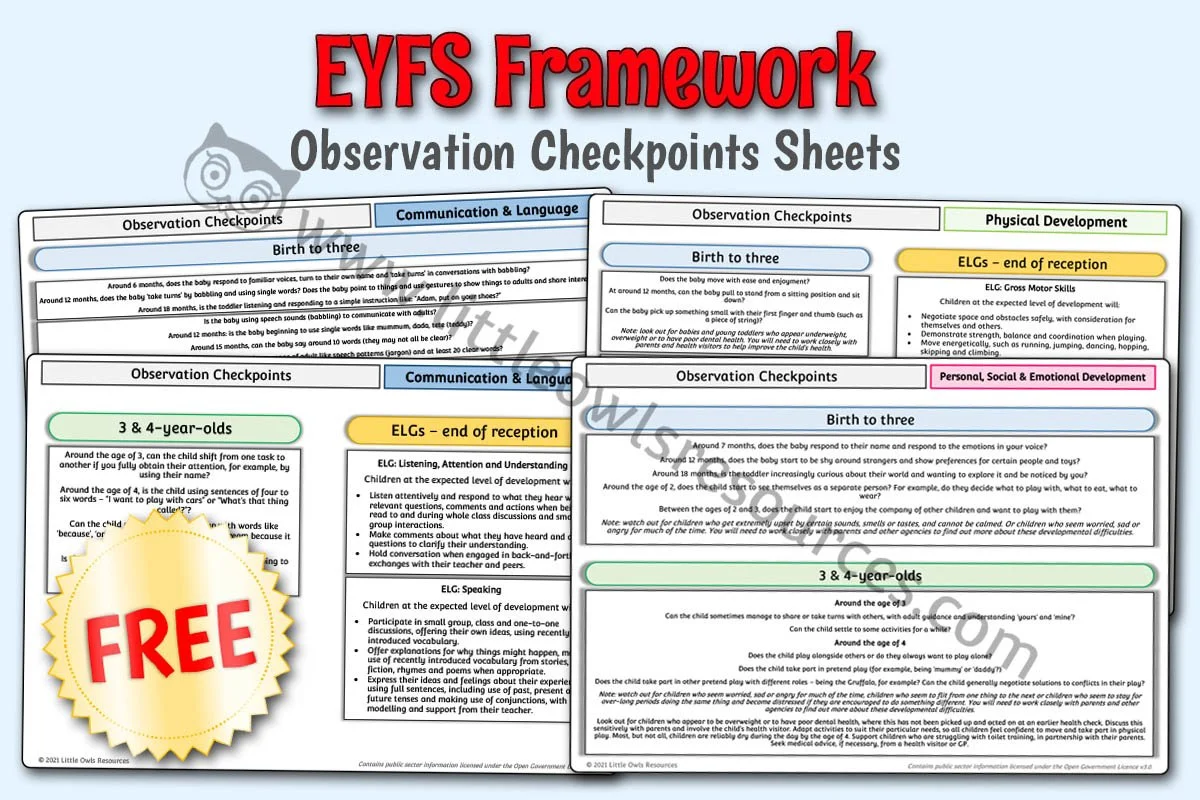
EYFS Framework
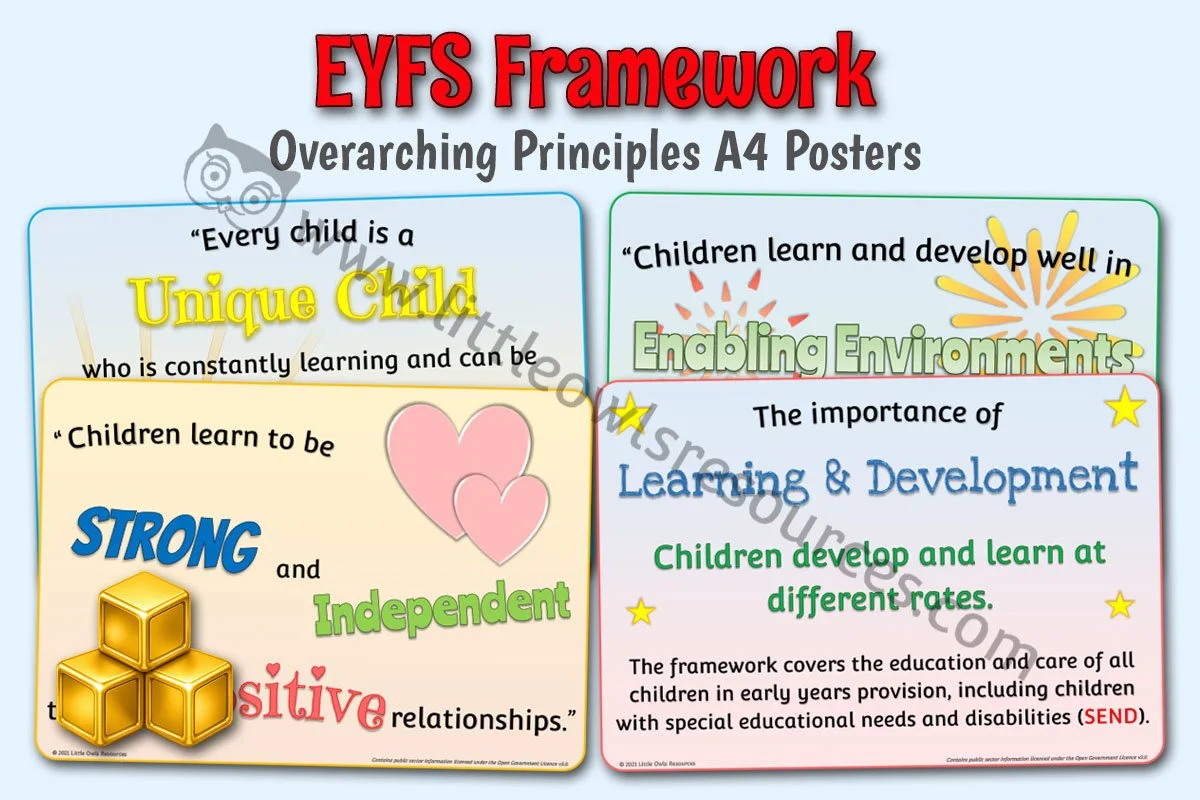
Overarching Principles
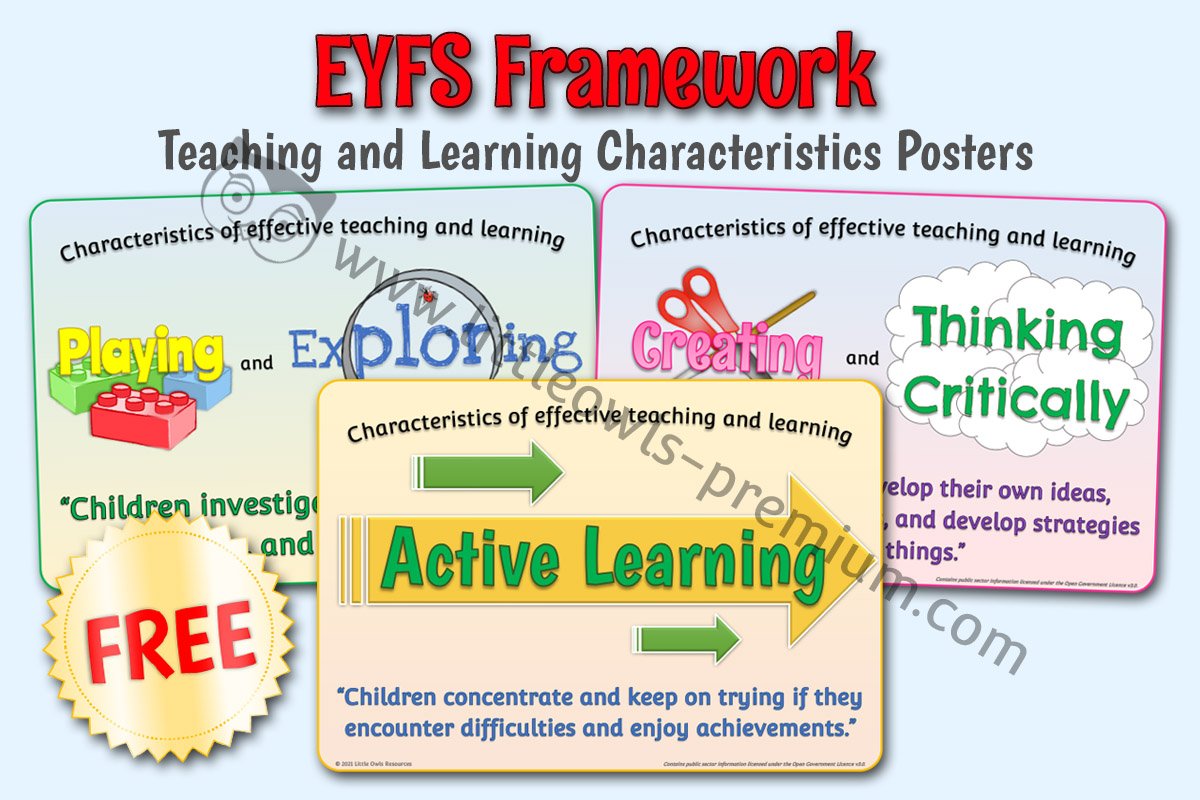
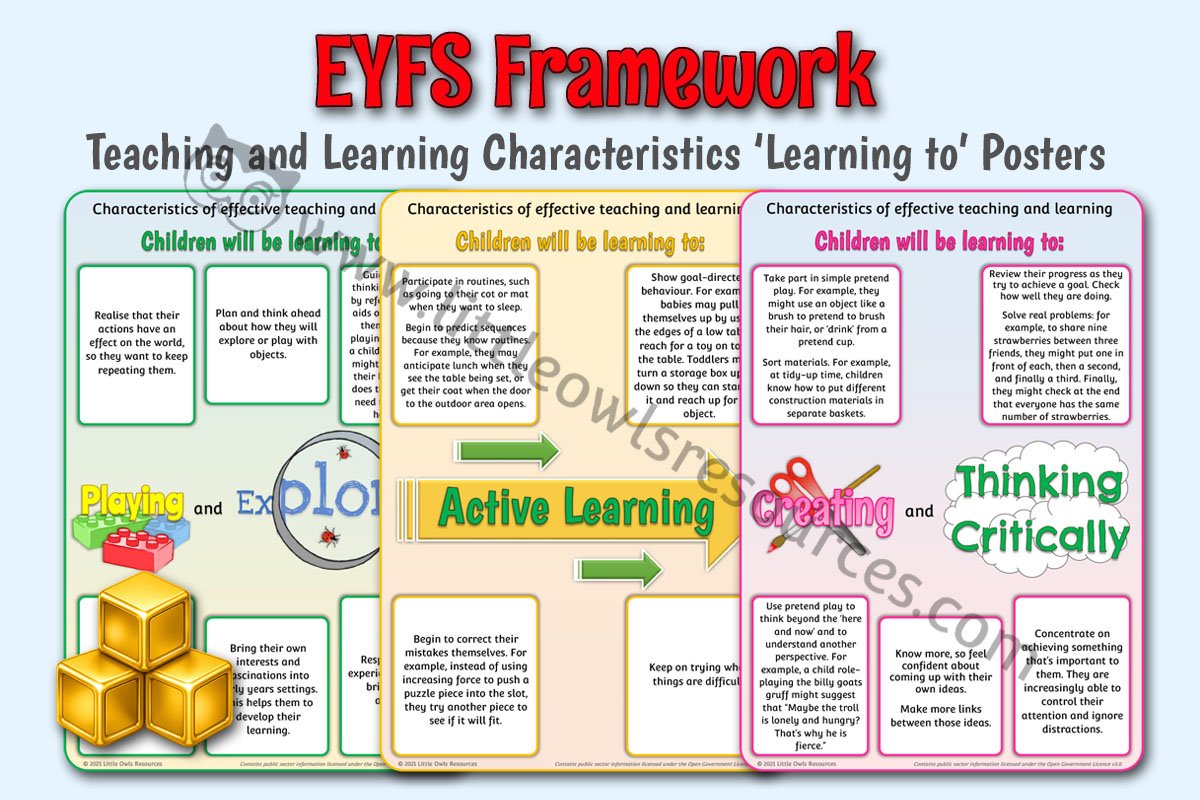
Teaching & Learning Characteristics
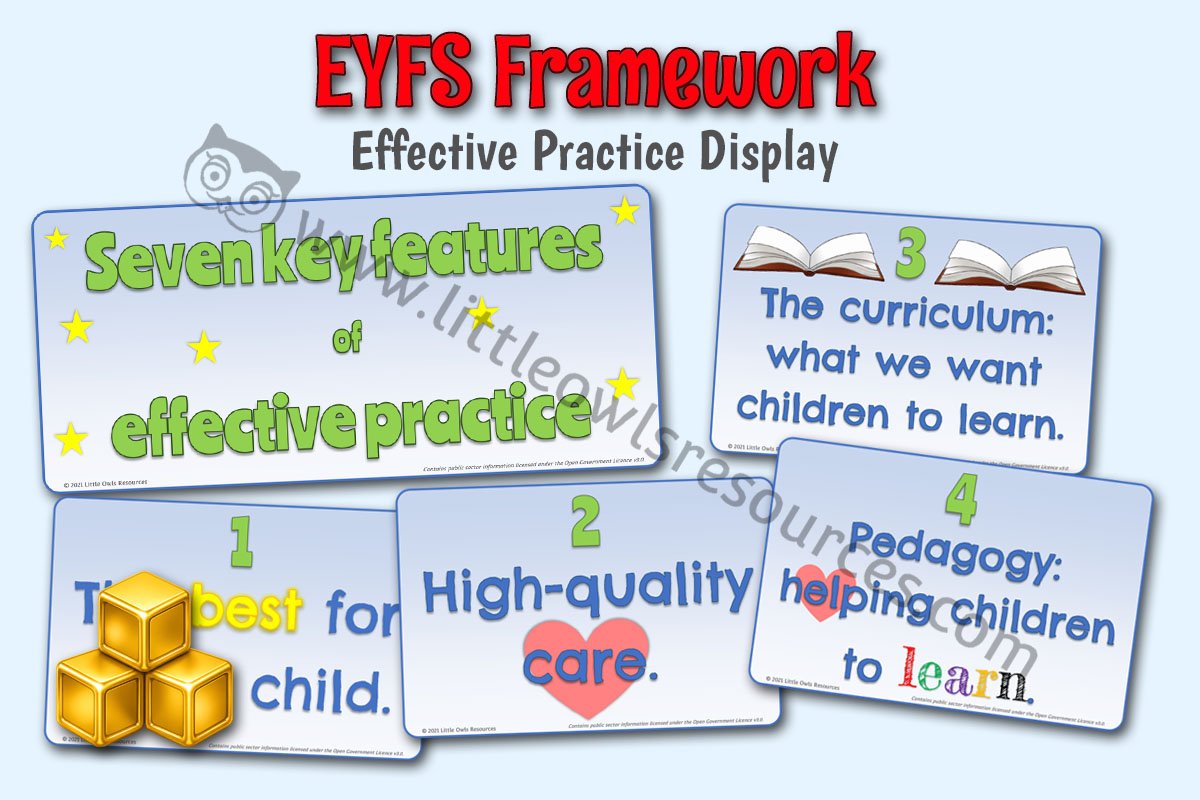
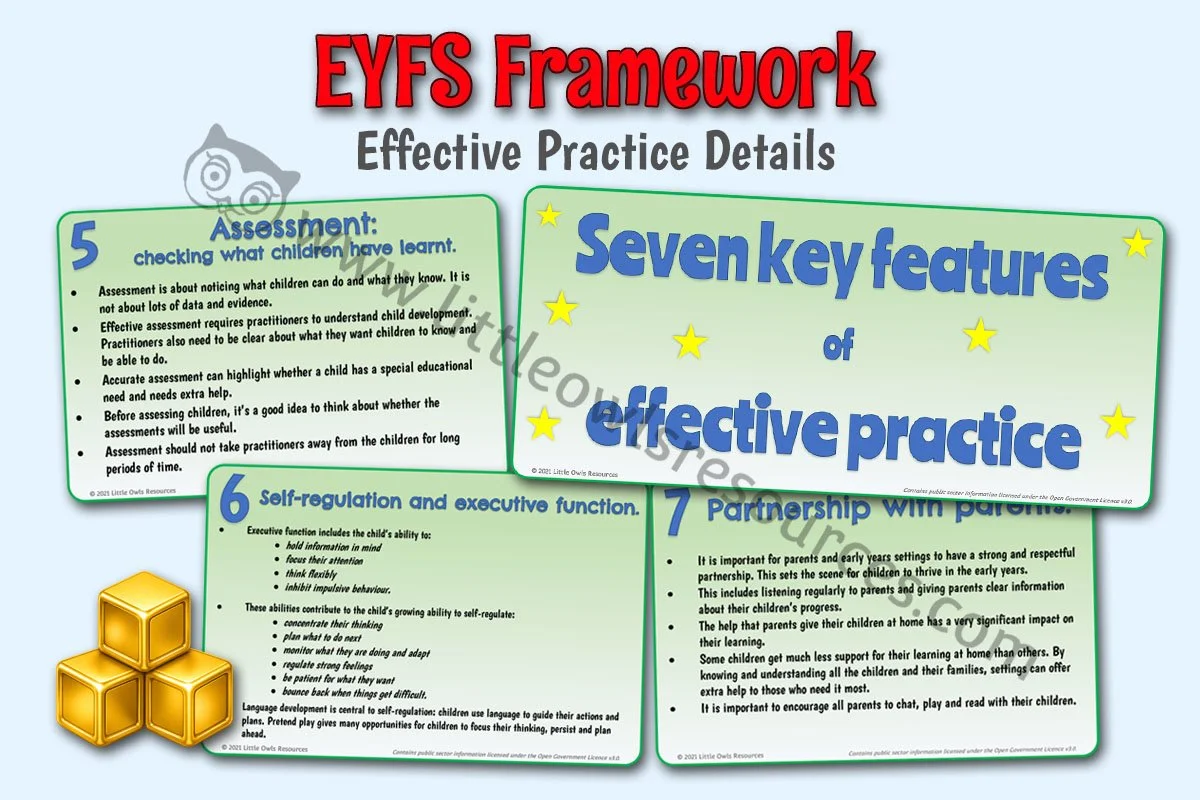
Seven Key Features of Effective Practice
Additional Support
Further support materials for Baby, Toddler & Preschool Curriculum & Pedagogy, may by found in our age-specific pathways below:
Further EYFS Planning Support
For additional planning support please see the following pages:
Age pages:
Setting pages:
Generic:
This webpage and documents within it are provided as professional guidance to support effective EYFS practice. They do not replace the EYFS Statutory Framework or other statutory guidance. Practitioners must apply professional judgement and adapt practice to their setting and current requirements.