

Home › EYFS Curriculum & Pedagogy › Toddler Curriculum & Pedagogy
Read our web document below or download here: DOCX 📝 | PDF 📄
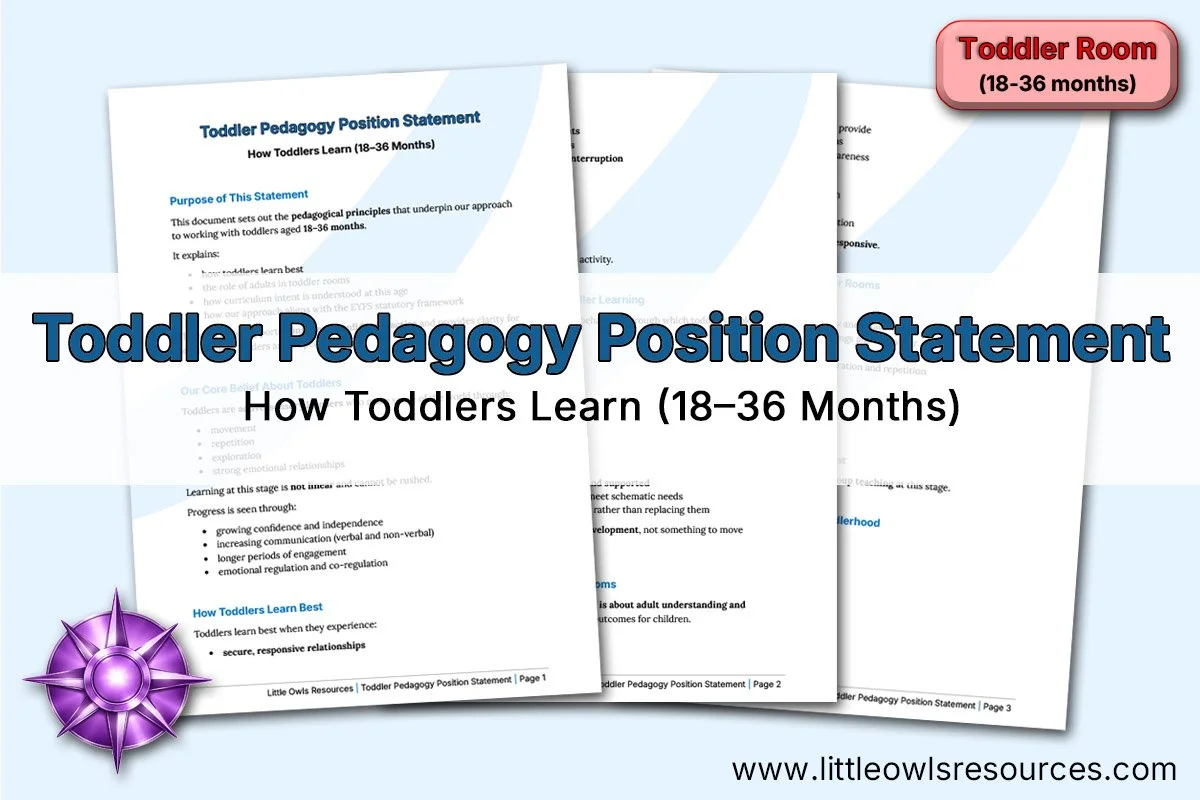
Toddler Pedagogy Position Statement
How Toddlers Learn (18–36 Months)
Purpose of This Statement
This document sets out the pedagogical principles that underpin our approach to working with toddlers aged 18–36 months.
It explains:
how toddlers learn best
the role of adults in toddler rooms
how curriculum intent is understood at this age
how our approach aligns with the EYFS statutory framework
This statement supports consistent, confident practice and provides clarity for practitioners, leaders and inspectors.
Our Core Belief About Toddlers
Toddlers are active, sensory learners who make sense of the world through:
movement
repetition
exploration
strong emotional relationships
Learning at this stage is not linear and cannot be rushed.
Progress is seen through:
growing confidence and independence
increasing communication (verbal and non-verbal)
longer periods of engagement
emotional regulation and co-regulation
How Toddlers Learn Best
Toddlers learn best when they experience:
secure, responsive relationships
predictable routines
rich sensory environments
freedom to repeat actions
time to explore without interruption
Play at this stage is often:
repetitive
physical
schematic
non-verbal
This is deep learning, not aimless activity.
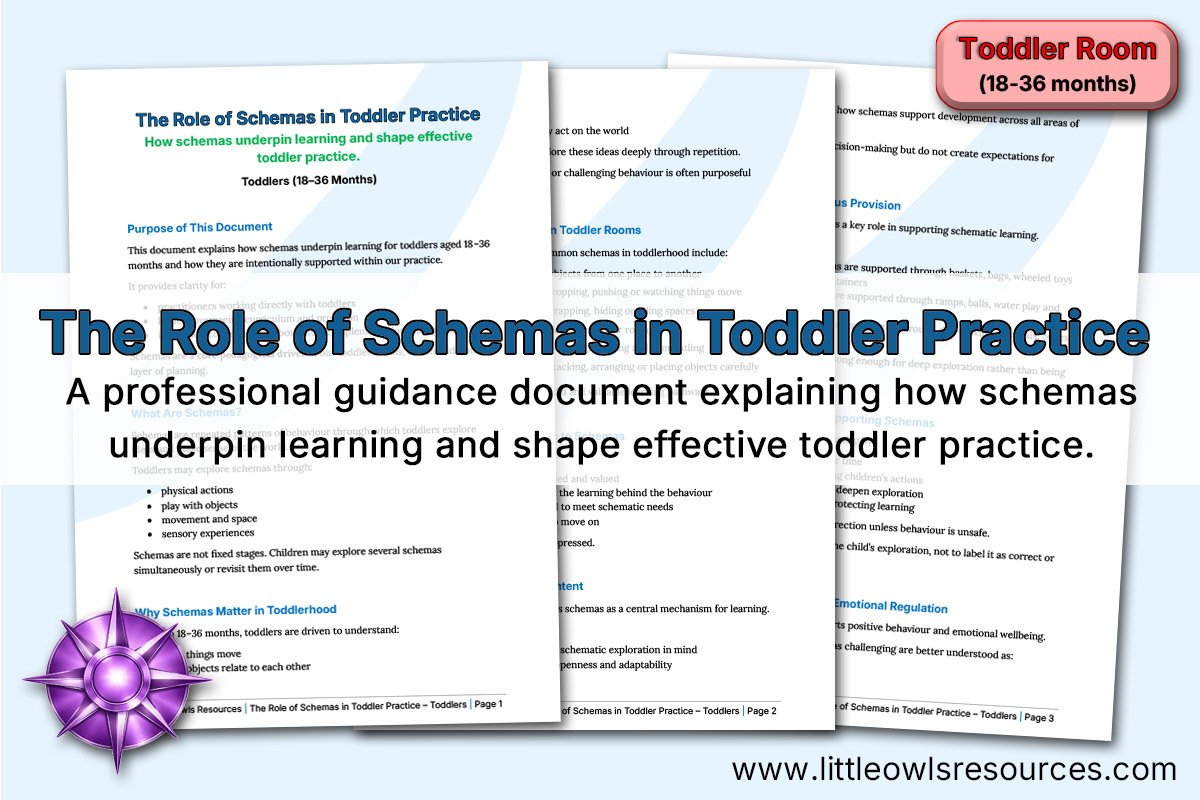
The Role of Schemas in Toddler Learning
Schemas are patterns of repeated behaviour through which toddlers explore ideas.
Common toddler schemas include:
transporting
enveloping
rotation
trajectory
connection
positioning
In our toddler practice:
schemas are noticed, valued and supported
environments are adapted to meet schematic needs
planning responds to schemas rather than replacing them
Schemas are viewed as a driver of development, not something to move children on from.
Curriculum Intent in Toddler Rooms
In toddler settings, curriculum intent is about adult understanding and environmental design, not expected outcomes for children.
Our curriculum intent:
guides the resources we provide
informs adult interactions
supports progression awareness
It does not:
create targets for children
dictate daily activities
override child-led exploration
Planning is always flexible and responsive.
The Role of Adults in Toddler Rooms
Adults working with toddlers:
prioritise emotional security and attachment
act as co-regulators for feelings and behaviour
observe before intervening
model language through narration and repetition
follow children’s lead in play
Adult-led experiences are:
brief
optional
playful
responsive to children’s interest
There is no expectation of formal group teaching at this stage.
Language Development in Toddlerhood
Language is developed through:
shared attention
naming experiences
repetition
songs, rhymes and stories
everyday routines
Adults:
narrate actions
repeat key words
respond to gestures and sounds
accept all forms of communication
Language is modelled, not tested.
Observation, Assessment and Planning
Observation in toddler rooms is:
narrative
ongoing
focused on engagement and wellbeing
Assessment is used to:
understand children’s interests and needs
support next interactions
inform environment adaptations
It is not used to:
judge attainment
compare children
evidence curriculum coverage
Planning flows from observation and reflection.
Inclusion and SEND in Toddler Practice
Our approach:
assumes competence in every child
prioritises communication and regulation
adapts environments before expecting children to adapt
works closely with families
Early support is:
gentle
relational
preventative
Labels are never prioritised over understanding the child.
How Toddler Practice Leads Into Preschool
High-quality toddler practice builds the foundations for Preschool by supporting:
independence
curiosity
sustained engagement
communication
emotional security
Children move into Preschool with:
confidence in exploring
trust in adults
a sense of belonging
This transition is developmental, not academic.
Summary
In our toddler rooms:
relationships come first
play is the curriculum
repetition is learning
adults follow, support and extend
environments do the heavy lifting
This approach reflects:
the EYFS statutory framework
Development Matters guidance
current best practice in early childhood education
It ensures toddlers are respected as capable learners, supported at the right pace, and given the strongest possible foundations for future learning.
Document Updated: January 2026
Recommended next read selection
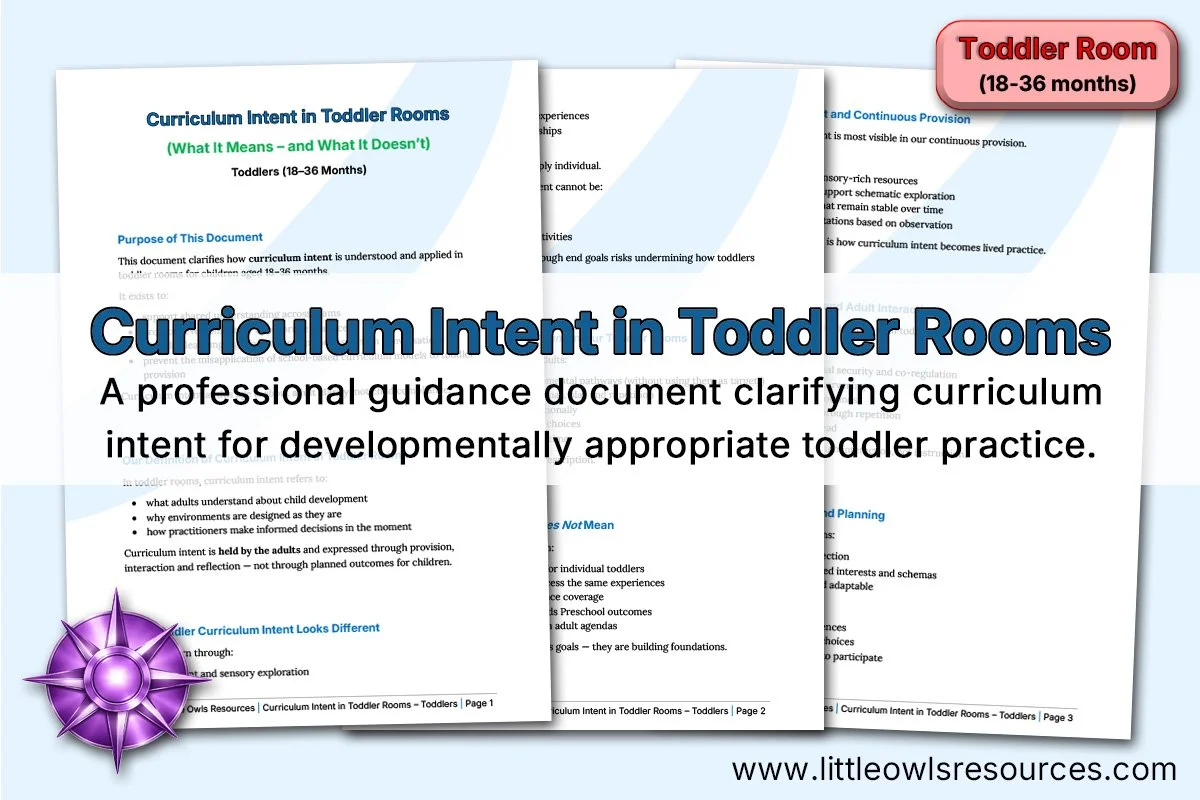


Or read our ‘Little Owls Resources’ Curriculum Intent Statement’
Additional Documents | Professional Membership Contents (Toddlers 18-36 months)
Navigate our Curriculum & Pedagogy guidance documents here.
Pedagogical identity:
Relationship-led, sensory-rich toddler practice grounded in schemas, play, and responsive adult interaction.
-
👉 This section prevents over-planning and aligns practice.
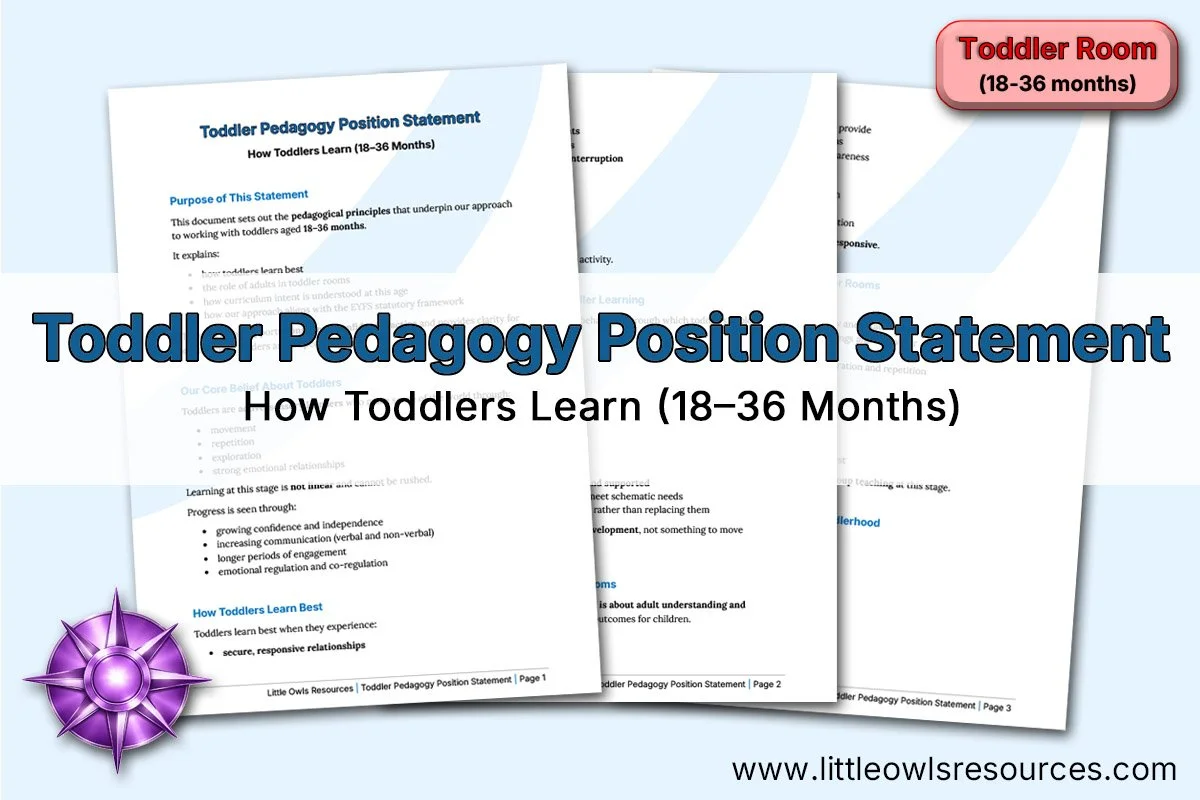
Toddler Pedagogy Position Statement – How Toddlers Learn (18–36 Months) [Free Orienting Sample]
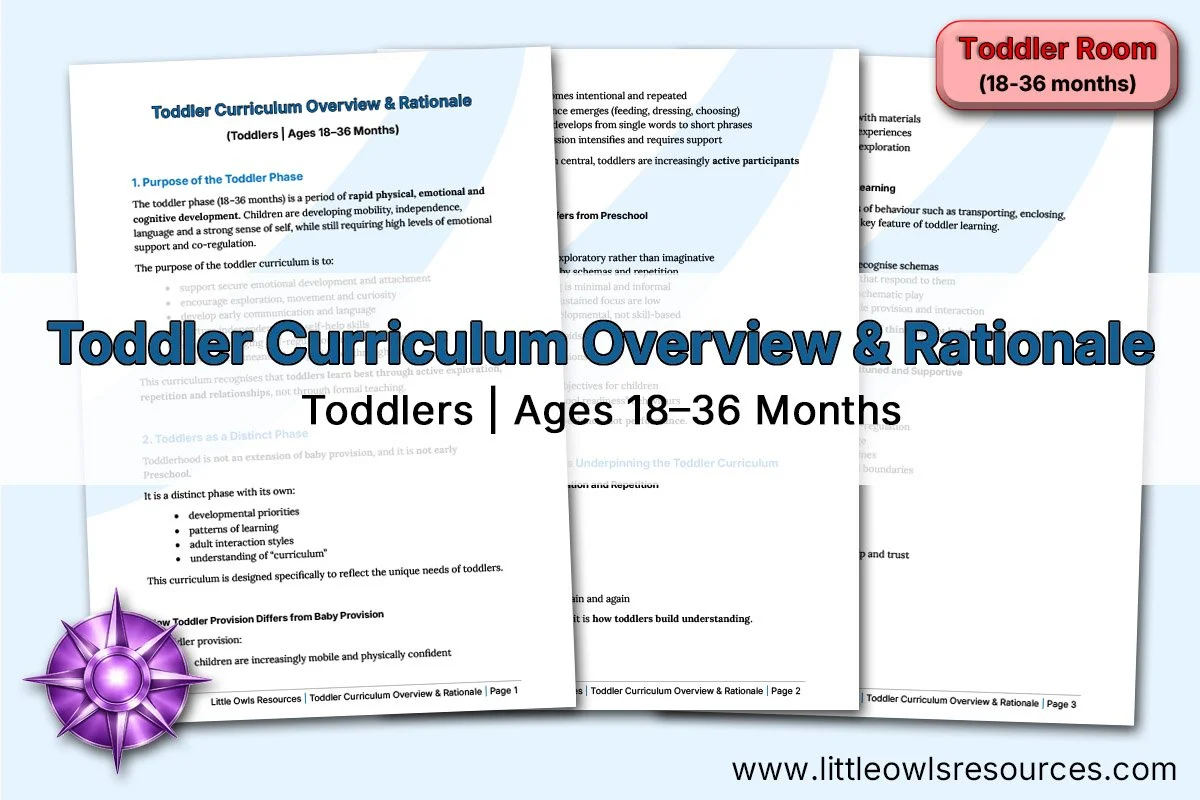
Toddler Curriculum Overview & Rationale[Free Orienting Sample]
Curriculum Intent in Toddler Rooms (What It Means — and What It Doesn’t)
-
👉 Adult understanding, not child targets.
Progression across 6-month bands (18–24 | 24–30 | 30–36 months)
-
👉 Observation is the driver of planning.
Communication & Language
PSED
Physical Development
Maths Seeds
Characteristics of Effective Learning
Behaviour & Emotional Regulation
Schema Observation & Analysis
-
👉 The environment does the teaching.
Universal Continuous Provision
Continuous Provision Setup Guides | Toddler Room
Small World
Messy / Wet Play
Dry Sensory & Loose Parts
Construction
Role Play / Home Corner
Mark Making
Book Area / Reading Nook
Music & Sound
Outdoor
Continuous Provision Maps (18–36 Months)
C&L
PSED
PD
Maths Seeds
Literacy Seeds
UW
EAD
-
👉 Movement, regulation and sensory experience.
Outdoor Continuous Provision Pack
Outdoor Zone-by-Zone Setup Guide (Gross Motor, Sensory/Nature, Creative/Mark Making, Small World Outside, Water/Mud)
Seasonal Adjustments Planner
Outdoor Risk–Benefit Assessment Template + examples
Nature-Based Learning & Schema Guide
Outdoor Mark Making & Literacy Opportunities Sheet
Outdoor Maths Seeds Sheet
-
👉 Projects are optional contexts, not directives.
How Projects Work in Toddler Rooms (Guidance)
Project/Theme Planners:
12 × Main Project Planners (3–4 Weeks)
8 × Mini-Project Planners (1 Week)
-
👉 Invitations, provocations and shared experiences.
Supports Child-led learning and responsive provision
Area of Learning Progression Maps & Adult Focus Sessions
(Organised by Age Band: 18–24 months | 24–30 months | 30–36 months)
Supports intentional teaching, vocabulary development and staff confidence
Understanding the World – Experience Progression Pack
Expressive Arts & Design – Creative Media & Expression Toolkit
-
-
👉 Proportionate, meaningful assessment.
Report Template
Practitioner Guidance
-
👉 Early identification, gentle support.
SEND Inclusion Strategy Pack (18–36 Months)
Practical SEND & inclusion strategies for toddlers aged 18–36 months
Six quick-reference strategy sheets covering communication, sensory needs, anxiety and behaviour
Aligned with the EYFS Framework and the Assess–Plan–Do–Review approach
Inclusive, diagnosis-free guidance ready to use in everyday practice
Ideal for observations, provision planning, team use and Ofsted evidence
-
👉 Strong partnerships, realistic expectations.
Transition
Home–Setting Communication
Parent Information Pages
Additional Whole-Setting Guidance | for Professional Members
Explore our whole-setting guidance below, including overarching curriculum and pedagogy documents, early years schemas and EYFS setting policies.
-
-
Early Years Schemas - Practitioner Toolkit | EYFS Birth-5
↪ Schema Cards (definition, behaviours, age-related examples, enabling resources)
↪ Schema Observation & Responsive Provision Planning Template
-
EYFS Group Setting Policies Pack
↪ x 25 Policy Documents
↪ Policy Sign-Off and Confirmation Document
↪ EYFS Setting Policy Folder Contents List
Childminder Setting Policies Pack
↪ x 25 Policy Documents
↪ Childminder Assistant or Volunteer Policy Sign-Off and Confirmation Document
↪ Childminder Policy Folder Contents List
-
↪ Clear, practitioner-friendly explanations of key curriculum and pedagogy terms used throughout our guidance.
Looking for a different age group pathway?
Select the pathway that best reflects your role or the age group you work with. You do not need to use everything. (Some practitioners may use more than one pathway.)
What is Professional Membership?
Find our more about our Professional guidance for confident, reflective EYFS practice (Birth–5)
Alternatively, learn more about and explore our printable provision resources.
Thousands of ready-to-use printables to support provision, organisation, routines and learning across EYFS.
Latest EYFS Articles & Practical Guides | From Our Blog
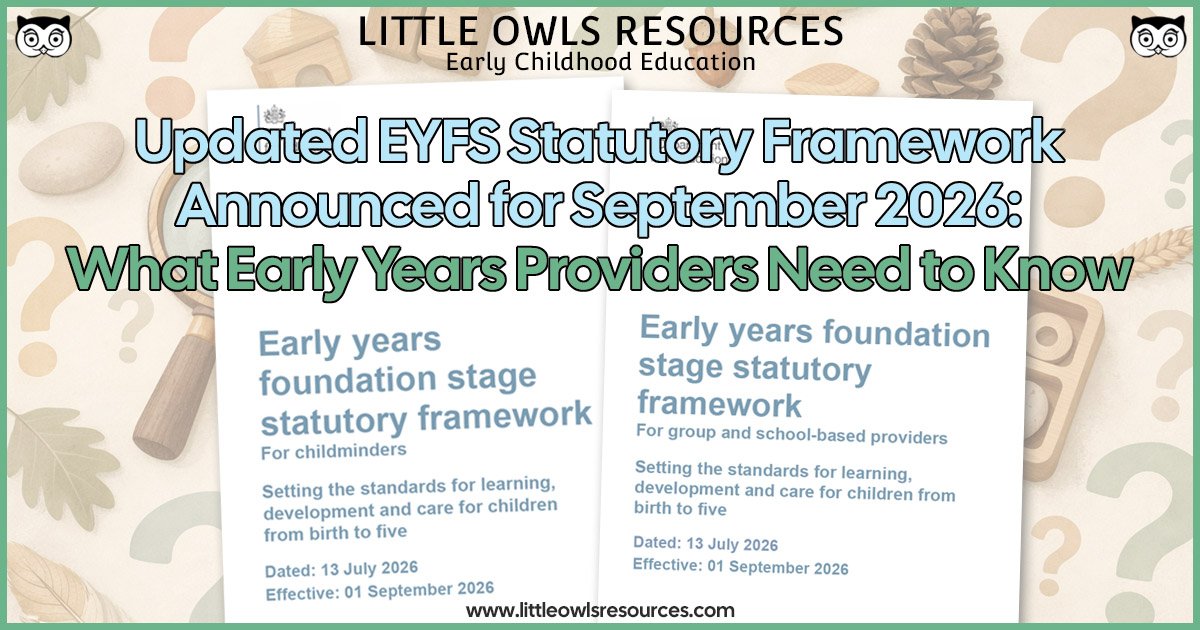
Stay informed, get expert advice, and find inspiration from our collection of articles and useful external resources, tailored specifically for EYFS practitioners. We regularly publish in-depth articles to support you with current best practices, regulatory changes, and fresh ideas.





Are you looking for a specific resource or document for your provision?
Use our 🔍 SEARCH Bar located at the top of every page.
___________________________
Content within the EYFS Curriculum & Pedagogy Membership is provided as professional guidance and support. It reflects current understanding of the EYFS statutory framework, Development Matters and inspection expectations at the time of writing. Practitioners are responsible for applying professional judgement and ensuring practice aligns with current statutory requirements and their specific context. All resources, experiences and environment arrangements must be risk assessed by the setting and used in accordance with individual children’s developmental stages, needs and supervision requirements.
Safeguarding content does not replace a setting’s safeguarding and child protection policy or the statutory role of the Designated Safeguarding Lead (DSL). All concerns must be managed in line with current statutory guidance and local safeguarding procedures.
_____________________________