
Free Access
My Lovely Friend — Free Sample
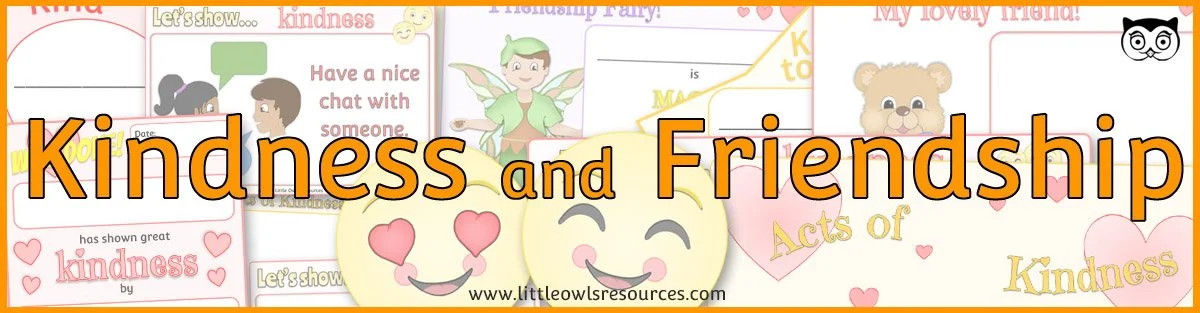
Offer a drawing or writing frame when a child wants to describe someone they value or remember a kind moment. Children can choose what to share.

Your Custom Text Here
Kindness & Friendship · EYFS & KS1
Explore kindness and friendship activities, resources and ideas through everyday relationships, shared play and thoughtful conversation.
Find free printables, feelings cards, purposeful messages and ideas for displays, with planning support for your nursery, preschool, Reception class, KS1 group or home learning.
Start with the children you know. A familiar routine, a welcoming gesture or an adult helping with a difficult moment can be a useful beginning.
A few places to begin


Find your starting point
Search resources selected from across Little Owls for this theme, including feelings, shared play, caring, messages and adult guidance. Choose an age, then add an optional word. Select a result to find its card on this page.
Search becomes available when JavaScript is enabled. You can always browse using the section choices above.
01 / Try the theme
Choose a free sample for drawing, talking about kindness or making a friendship card. Each sample is clearly labelled and links to its free download gallery.
Offer a drawing or writing frame when a child wants to describe someone they value or remember a kind moment. Children can choose what to share.

A banner and note sheets for remembering everyday care and help. Invite contributions without turning kindness into a competition.
Choose a friendship card to personalise with marks, pictures or a message. Let children decide who they would like to send it to.
02 / Notice the small things
Use conversation, pictures and everyday moments to explore what kindness can look like. Invite children to share an idea, draw, watch or join in through play; friendship does not need a finished worksheet.
Choose one of the kindness prompts for a real situation: offering help, including someone or noticing what they enjoy. Adapt ideas to children’s choices and boundaries.
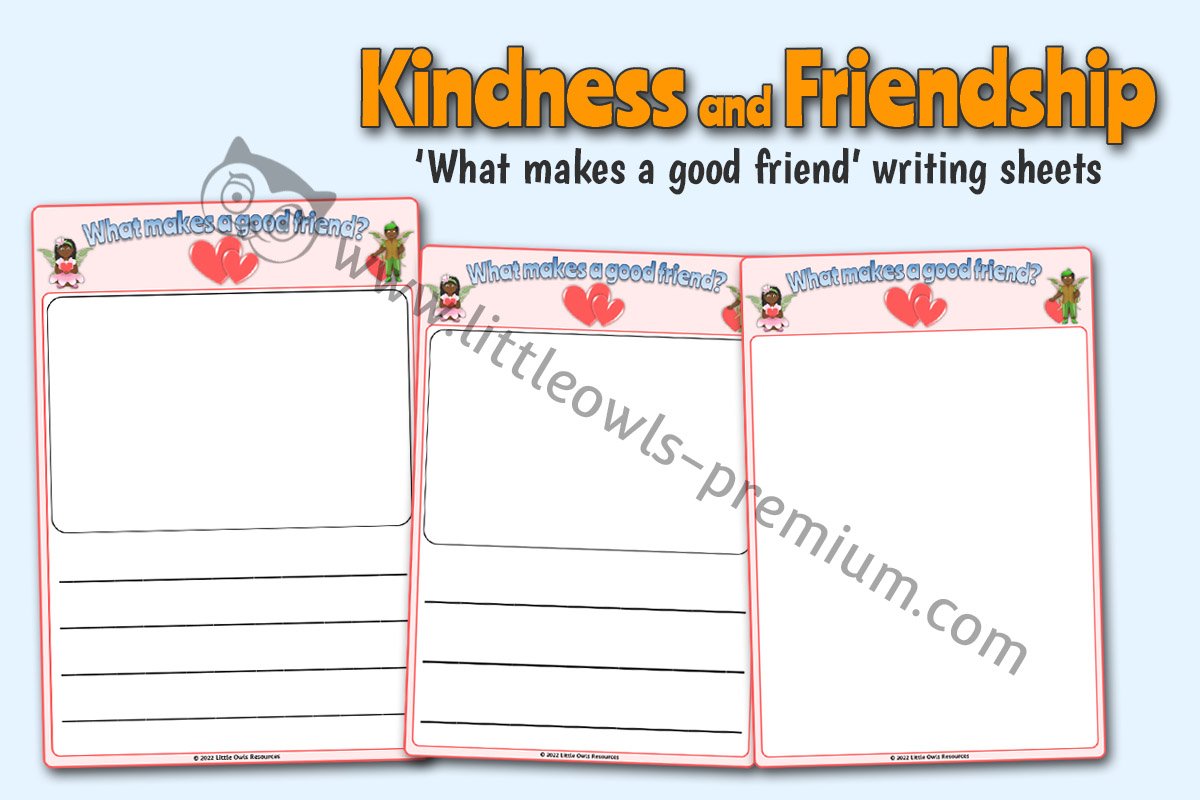
Use the open drawing and writing frames after a story, shared experience or conversation. Accept different ideas about friendship and belonging.
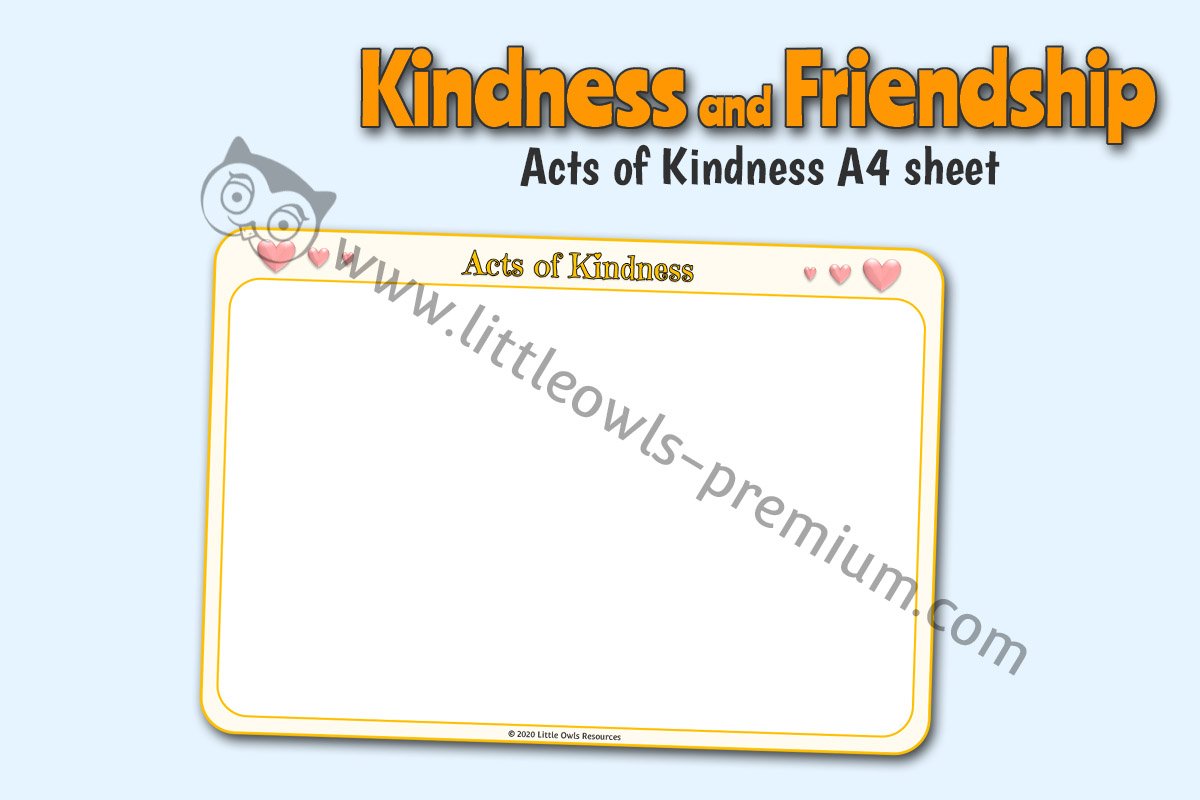
An open sheet for representing a kind deed noticed, imagined or experienced. Drawing, talk and adult scribing are as welcome as independent writing.
03 / Make room for every response
Build a shared language for feelings through pictures, stories and responsive conversation. Offer choices without asking children to explain private experiences or display how they feel.
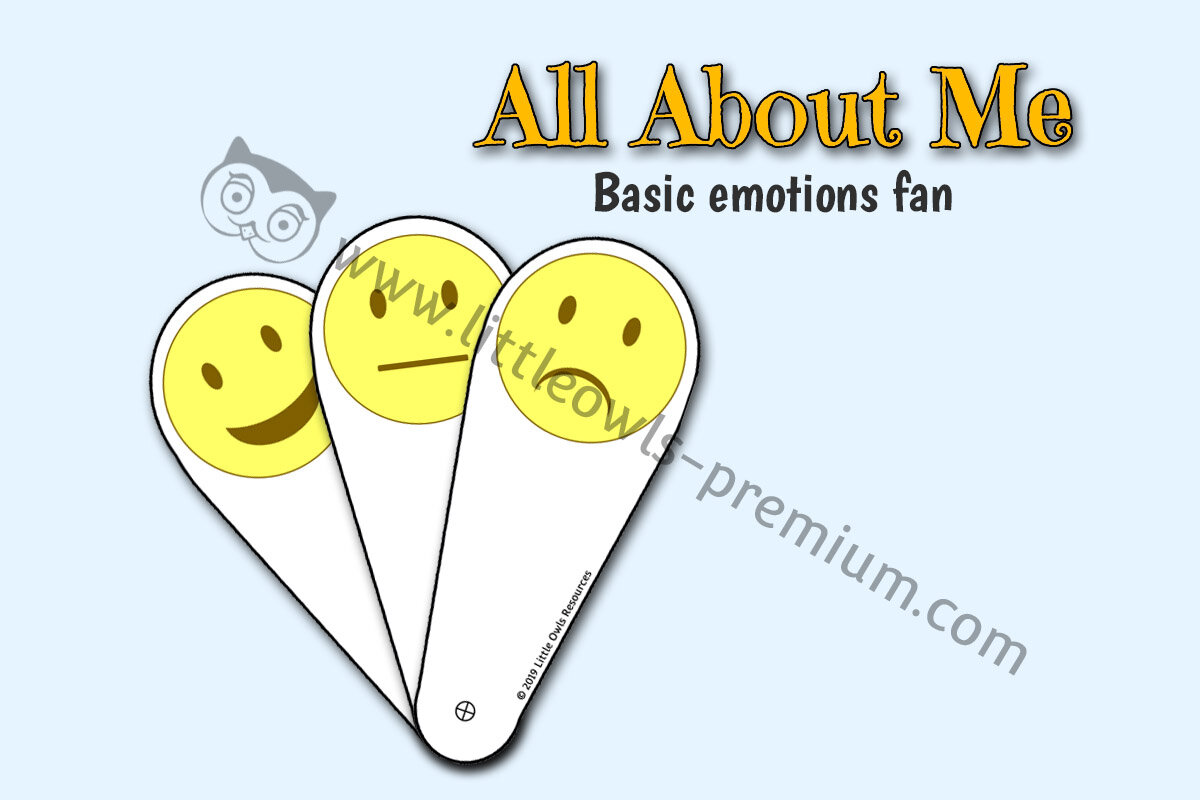
Offer a small choice of feeling pictures during a familiar conversation. Children can point, gesture, speak or choose not to share; noticing another person’s feelings begins with listening, not guessing a correct answer.

Use Teddy as a shared focus for talking about happiness, caring and friendship. Welcome different ideas about what might have happened and what could help Teddy feel included.
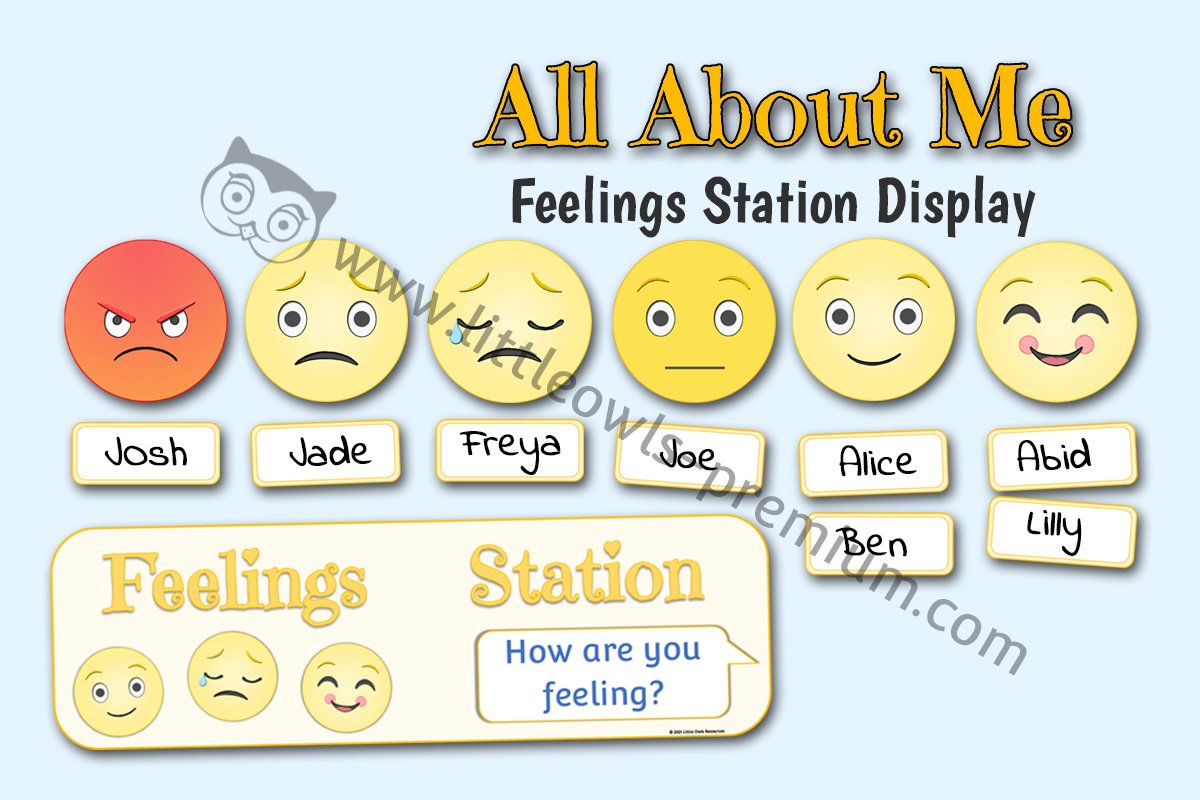
Create an optional feelings check-in with picture cards and name tags. A trusted adult can respond to a child’s choice, offer a private conversation and make room for feelings to change.

Offer drawing as one way to share a feeling or experience. Children choose what they want to show or discuss; an adult can listen without asking them to explain personal events in front of the group.
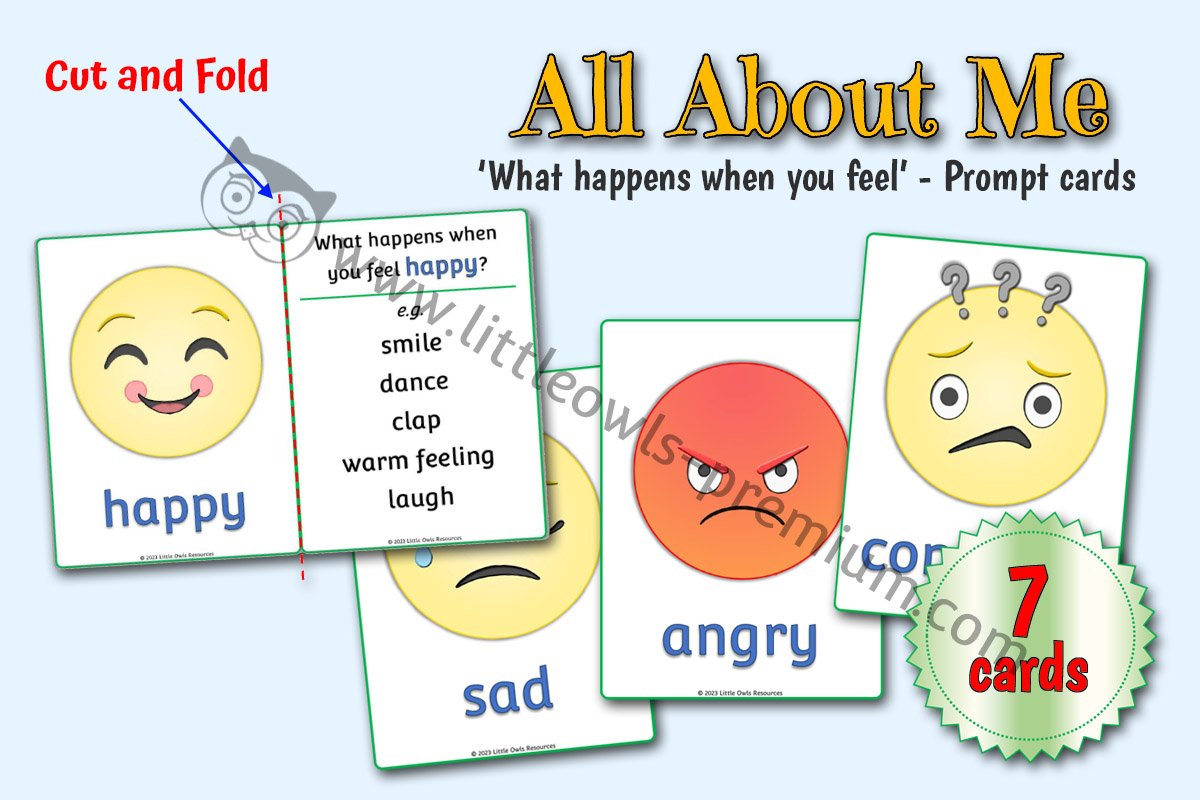
Use the picture side and adult prompts for a gentle conversation about feelings. Listen to the child’s own meaning, allow different experiences and stop or move on when they prefer not to share.
04 / Connections through provision
Bring friendship into role play, small world and familiar routines. Children may play alongside one another before joining in. Adults can model asking, listening, waiting and finding another way.
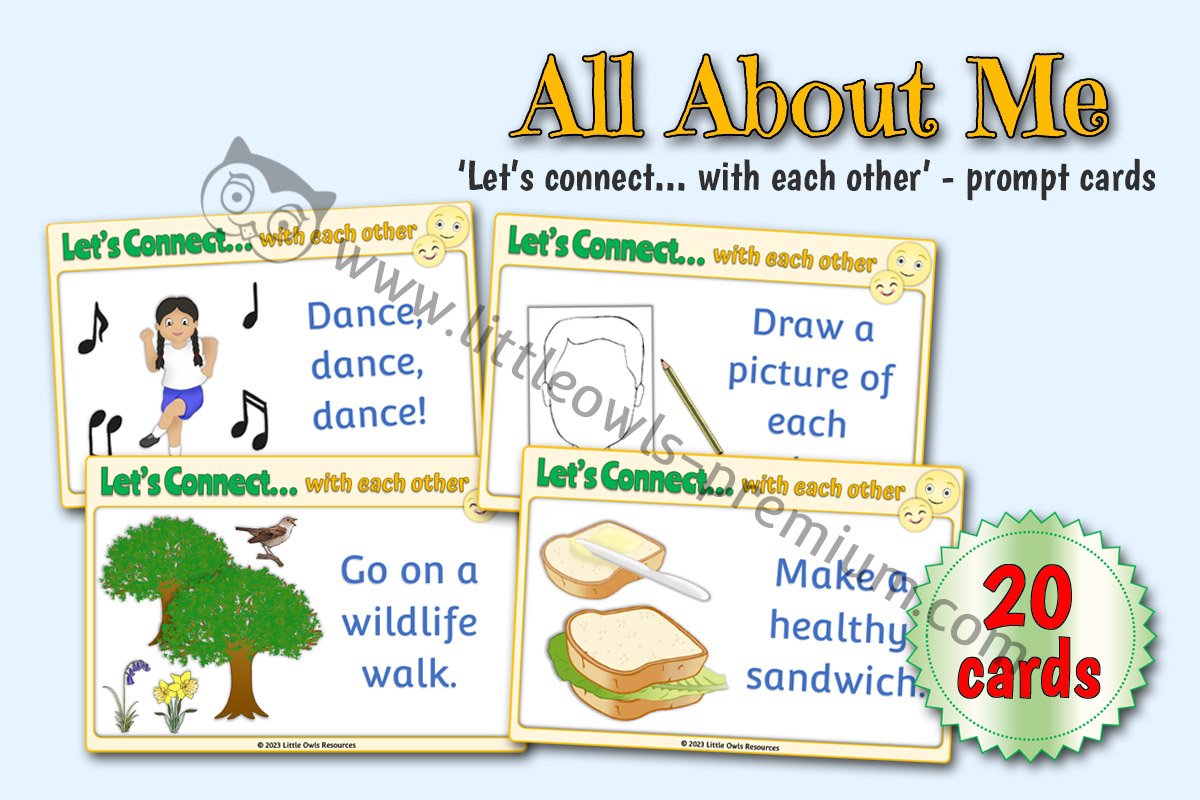
Select a relaxed shared activity that helps an adult and child connect. Follow their interests and allow conversation, gesture or comfortable quiet.

Use the picnic pictures during real or pretend shared meals to model listening, asking and taking turns. Adapt the words to the children and situation.

Create shell creatures through drawing, playdough or small-world play. Wonder together how the characters could make room, help one another or solve a problem.
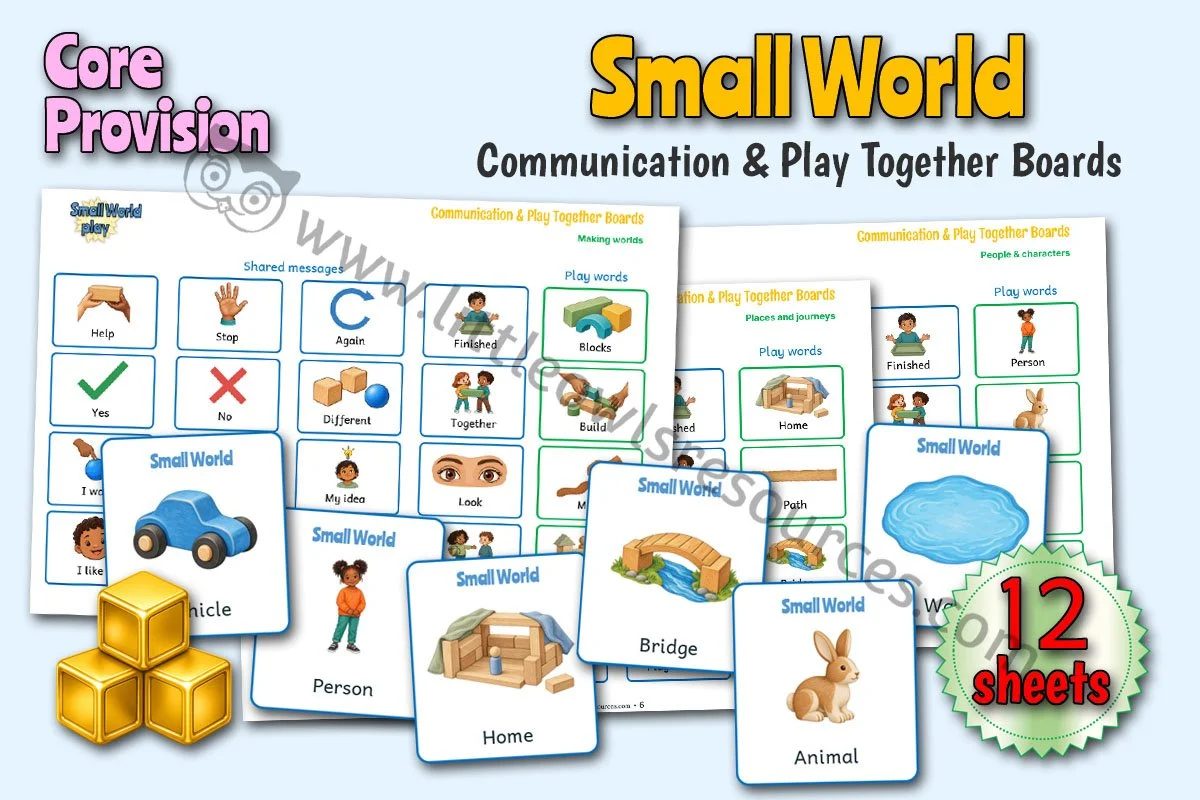
Model picture messages for asking, refusing, commenting and sharing ideas during small-world play. Use them alongside each child’s usual communication so that joining in—and saying no—can be understood.
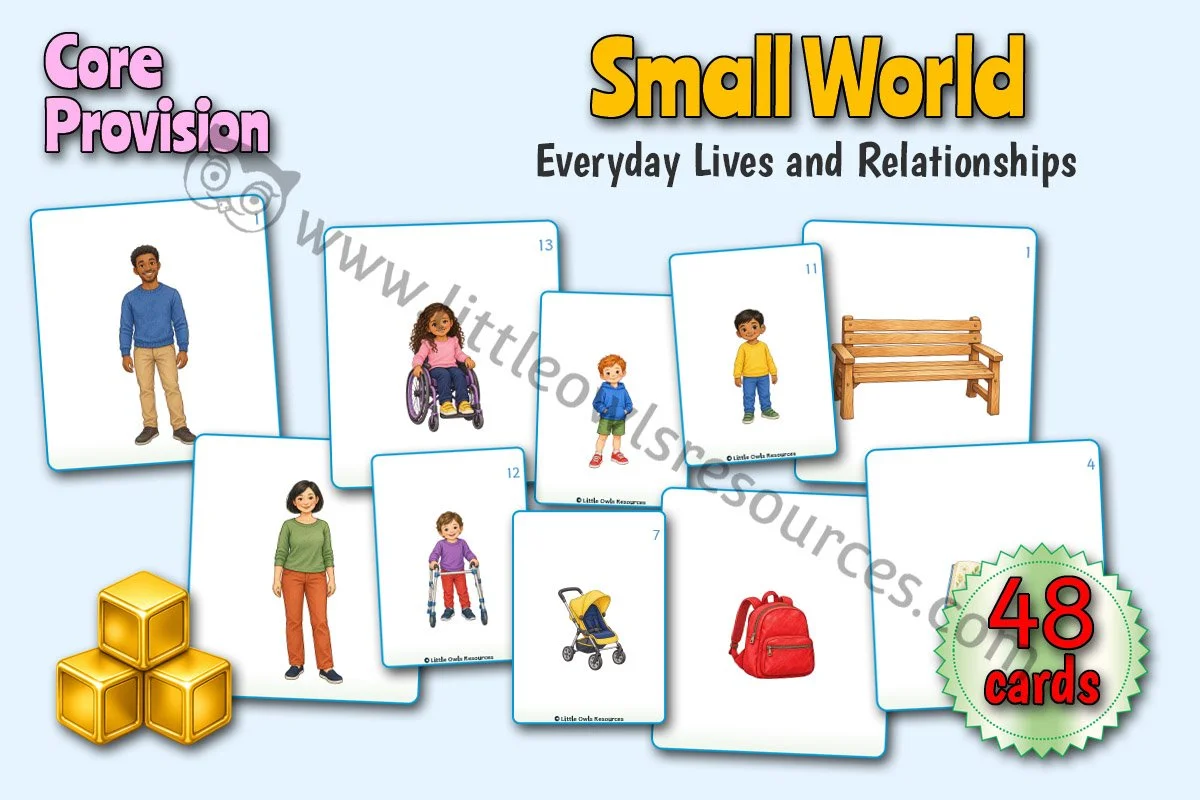
Offer people and everyday props for child-led stories about meeting, helping and spending time together. Children decide who the characters are and what happens; adults can join the conversation without prescribing a friendship story.

Try a short shared sound game with manageable turns and plenty of adult modelling. Accept imitation, gesture or listening as ways of joining; keep the game playful rather than testing who waits or answers correctly.
05 / Something worth saying
Make a card, draw a thank-you or dictate a message for someone who matters. These printables give marks and writing a purpose; children can choose their own words and recipient.
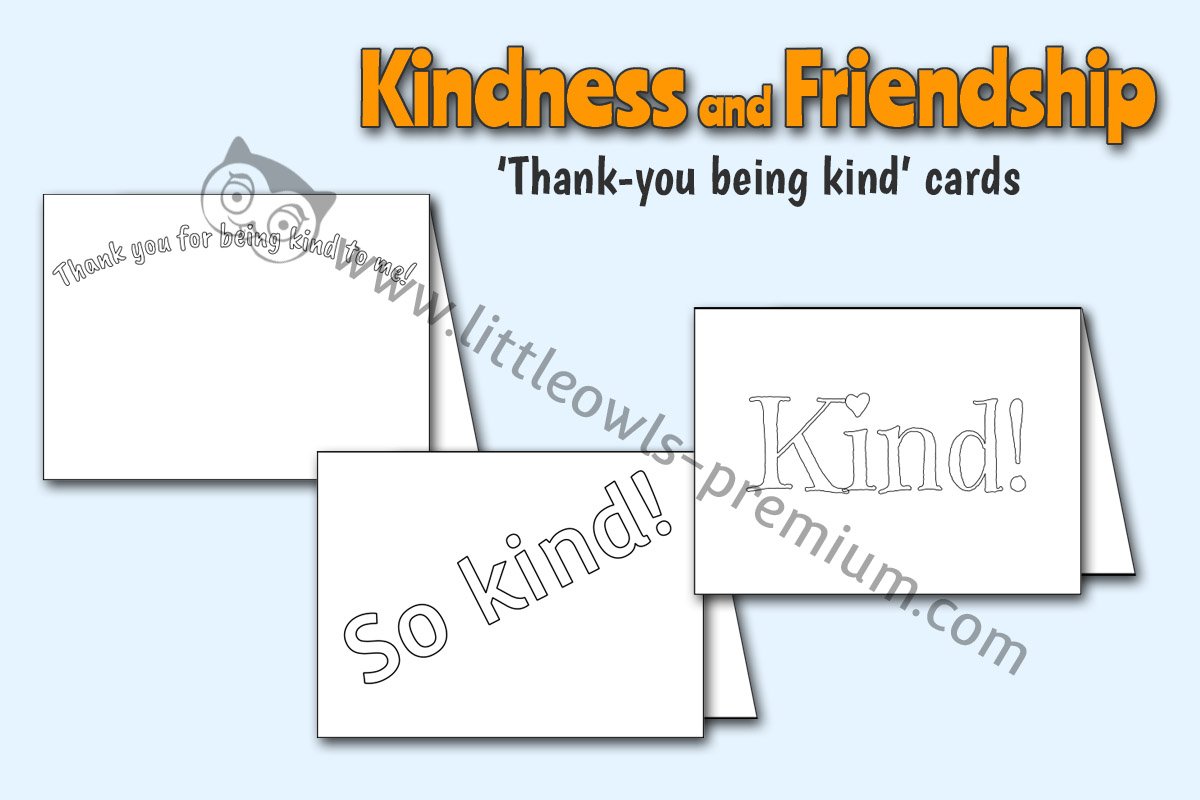
Personalise a thank-you card for someone who helped or showed care. Children can choose a picture, make marks or dictate their own message.

Decorate a themed A4 template or collaborate on a large card for someone. Children can choose colours, add their own pictures and contribute a personal message.
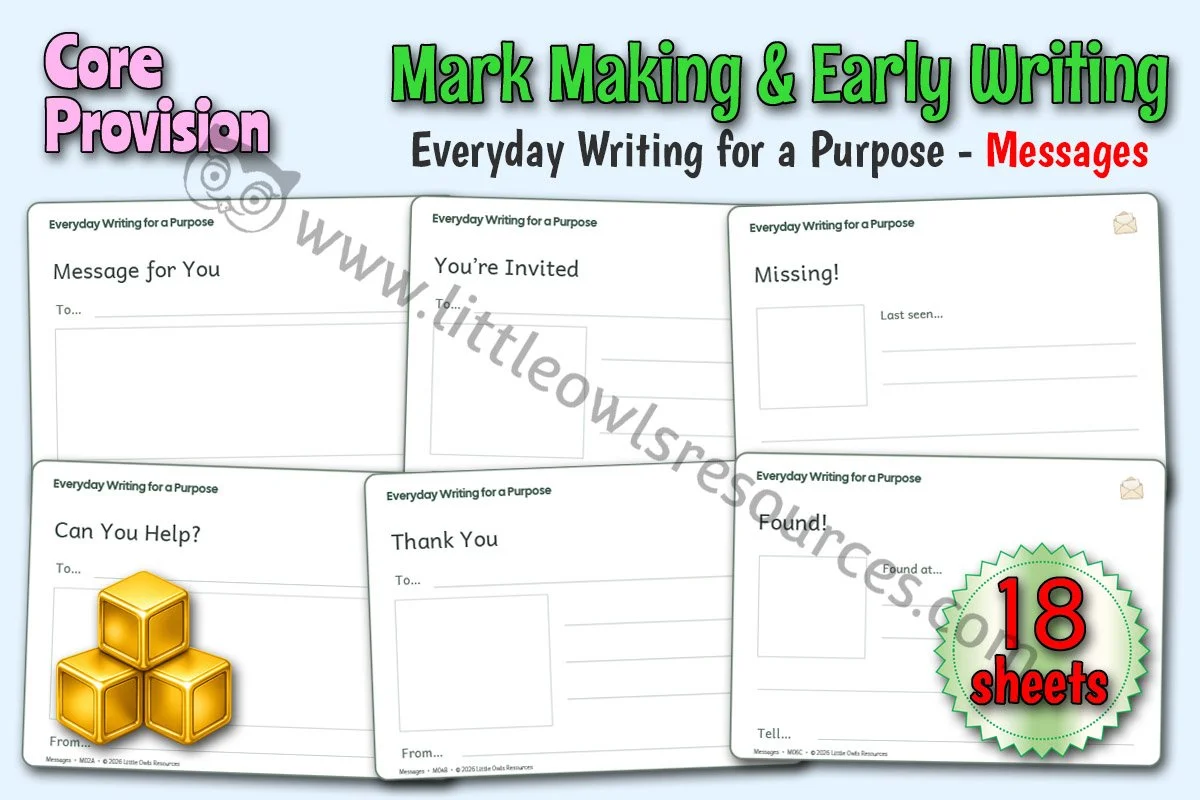
Make paper available when children want to send thanks, invite someone to play or share news. Let them choose a real recipient and communicate through pictures, dictated words or writing at their current level.
06 / Recognition without comparison
Use notes, posters and displays to notice specific helpful actions. Share appreciation without rankings or competitions, and ask children before displaying their work or personal messages.
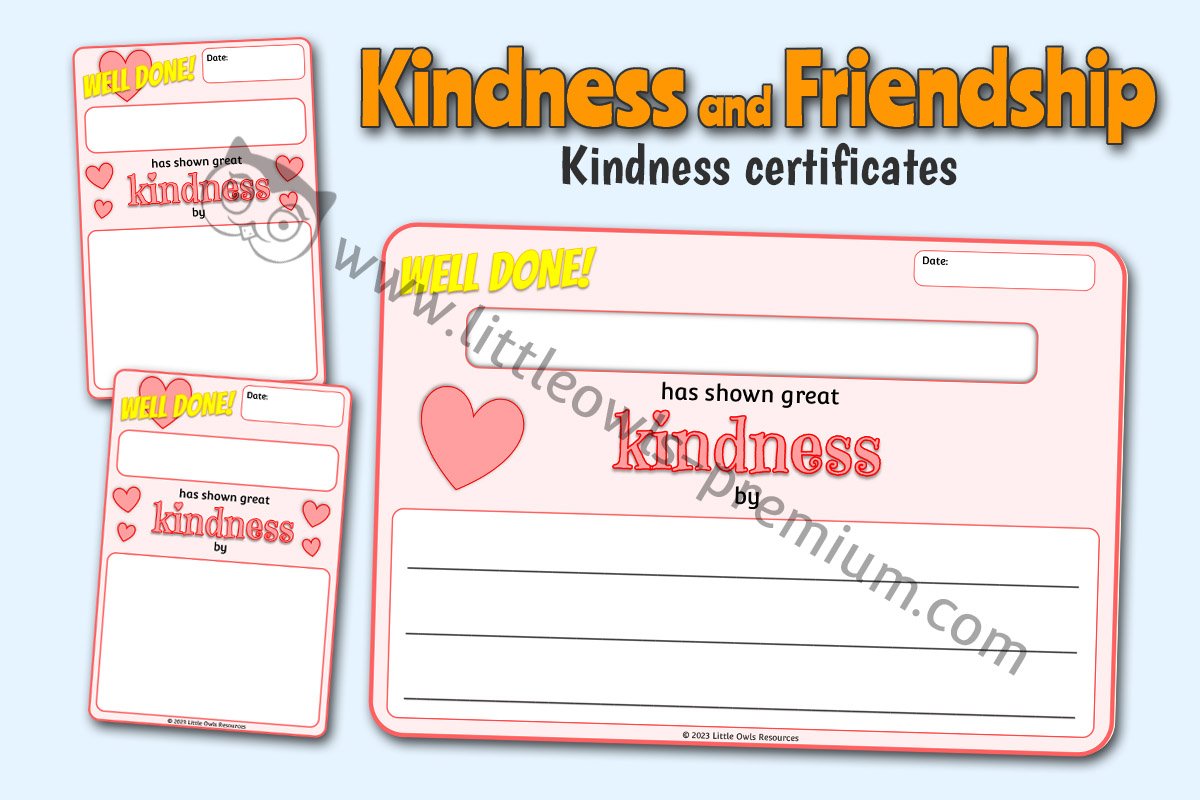
Heart-themed notes and certificates for describing a specific caring action. Children or adults can draw, write or scribe the message.
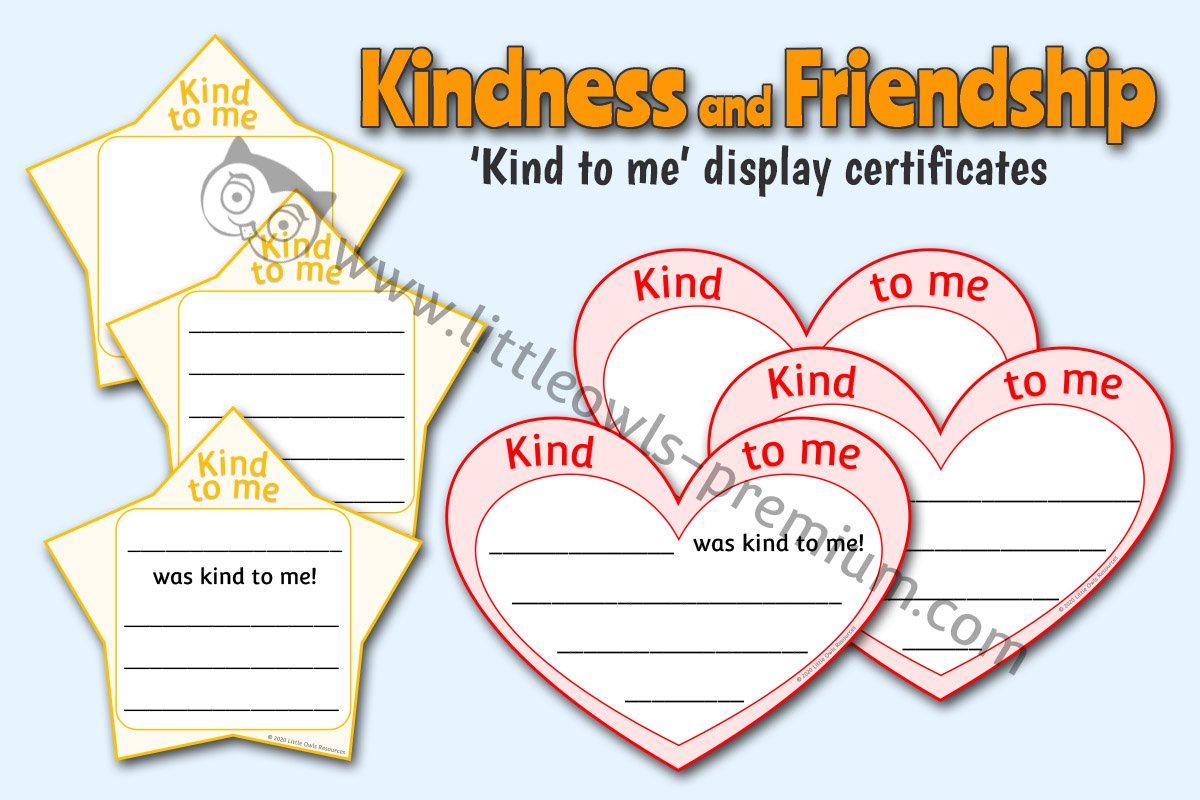
Heart and star notes for remembering help or care from another person. Offer them as an invitation when a child has something they want to say.

A playful note for a caring moment a child wants to recognise. Adults can help put the child’s message into words without requiring a public award.
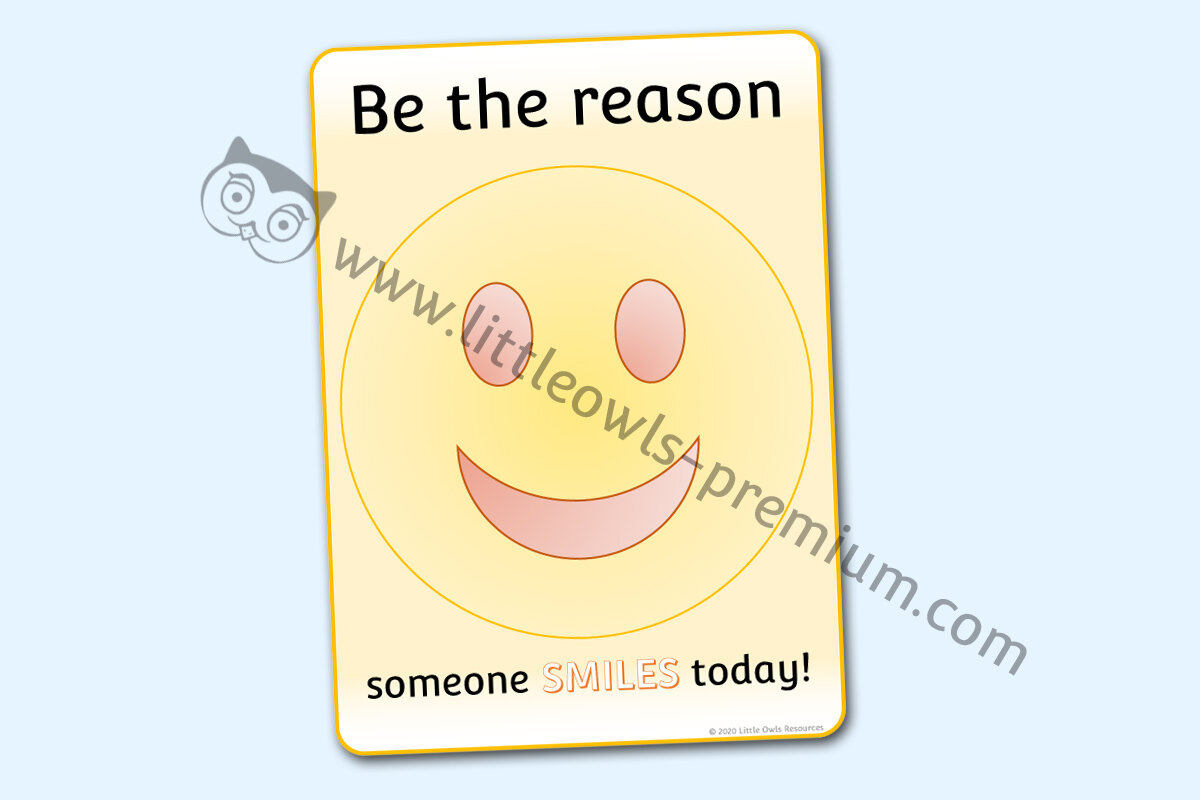
Use the poster as a starting point for talking about small thoughtful gestures. Leave room for every feeling; nobody has to smile to show they are included.
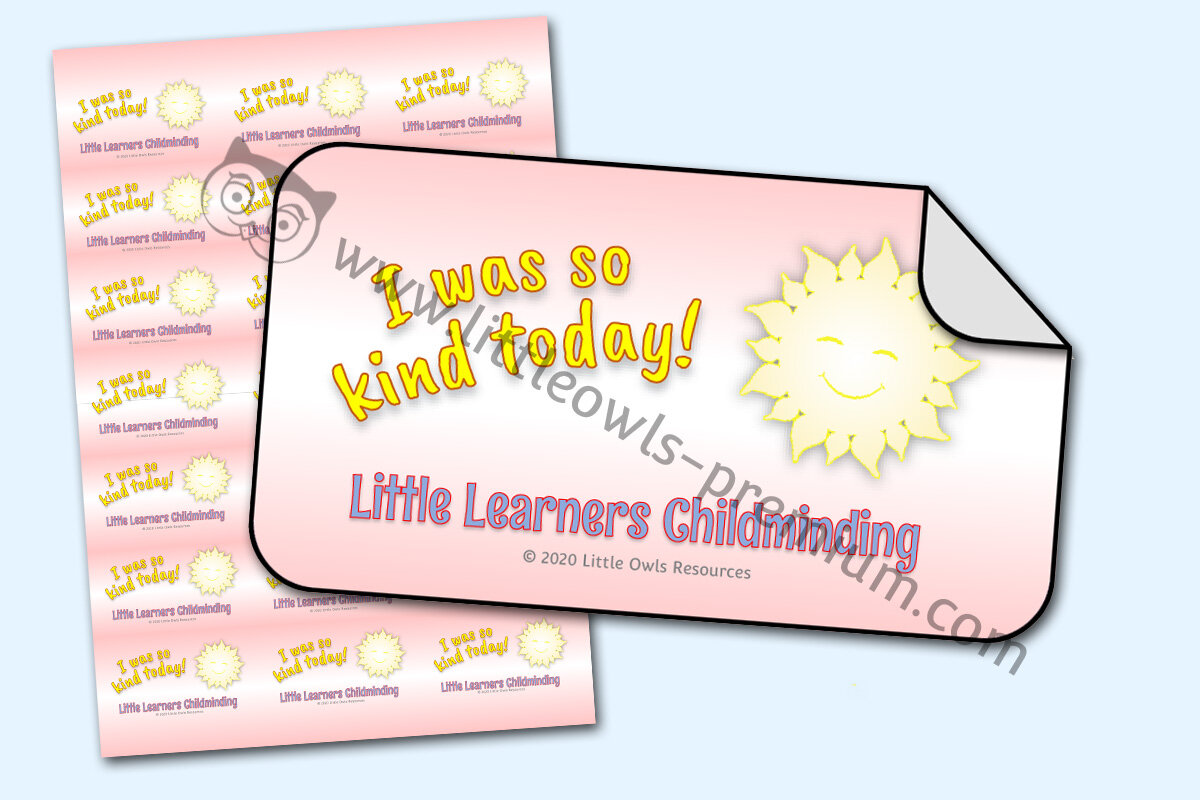
Optional stickers for acknowledging a particular caring action. Pair them with a specific description of what happened, rather than comparing children.
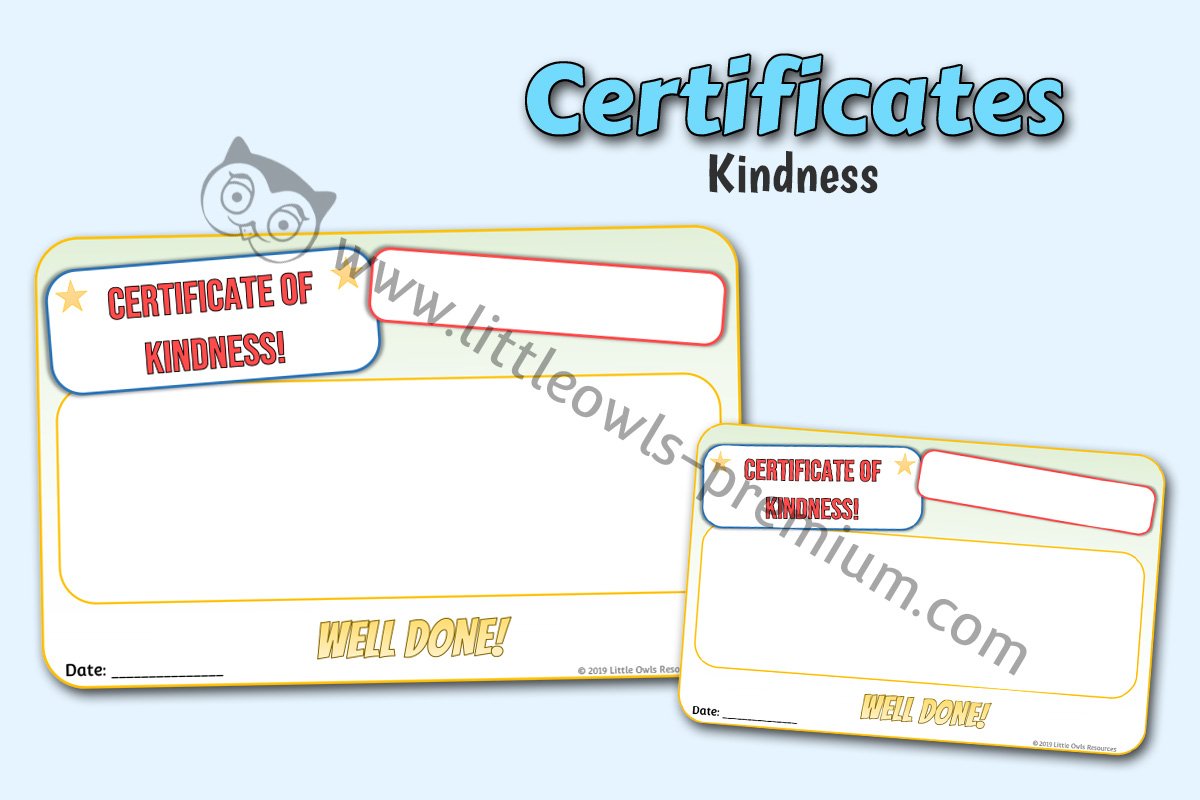
Personalise a certificate to recognise a specific act of care or help. Choose the wording and format that fit the child and your setting.
07 / Follow a useful connection
Explore helping through familiar people, pretend care and looking after living things. Resources linked to particular traditions can support thoughtful conversation when relevant to your children and community.

Look at ways people can care for wildlife in colder weather. Choose an adult-led action suited to your local animals, weather and setting.

Invite children to draw or describe a way of helping wildlife in winter. Connect the prompt to something observed or done locally, with adult guidance.
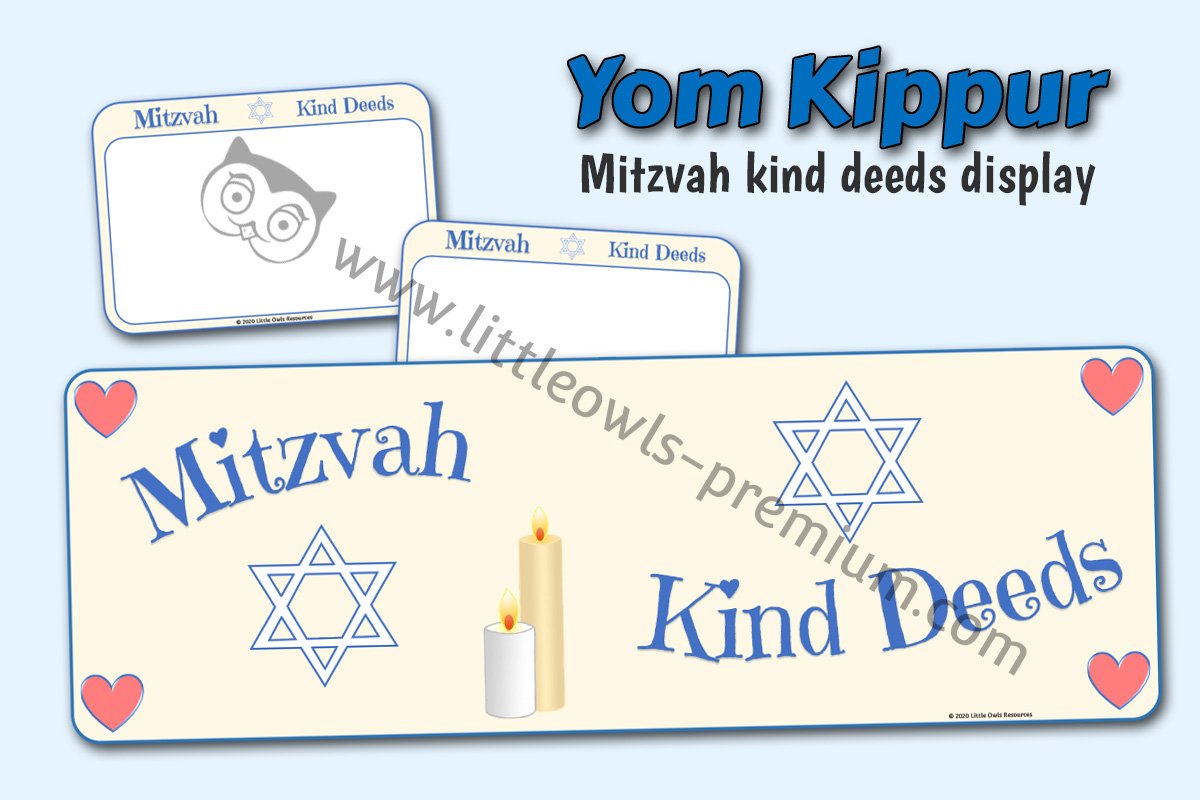
A Jewish-context display for talking about kind deeds when exploring Yom Kippur. Connect it to meaningful stories and community knowledge rather than treating all traditions as interchangeable.

Use the display and response sheets when learning about helping others during Ramadan. Invite children’s ideas while recognising that families observe Ramadan in different ways.
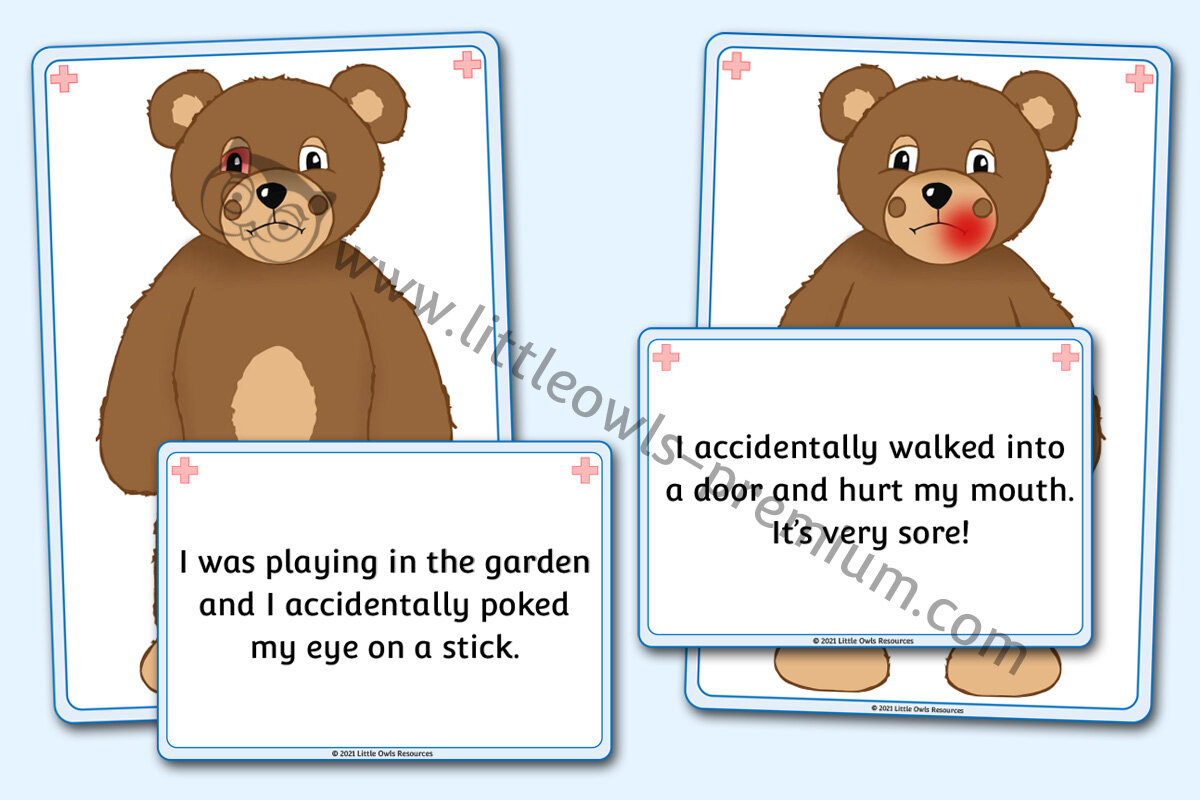
Match a spoken clue to a Teddy picture, then let the pictures support caring pretend play. Children might notice what Teddy needs, offer help or invent their own story; start with a small choice of pictures.
08 / Begin with connection
For babies and toddlers, kindness begins with warm, responsive adults and familiar care. These resources support shared attention, co-regulation, belonging and transitions; printed materials remain adult prompts.
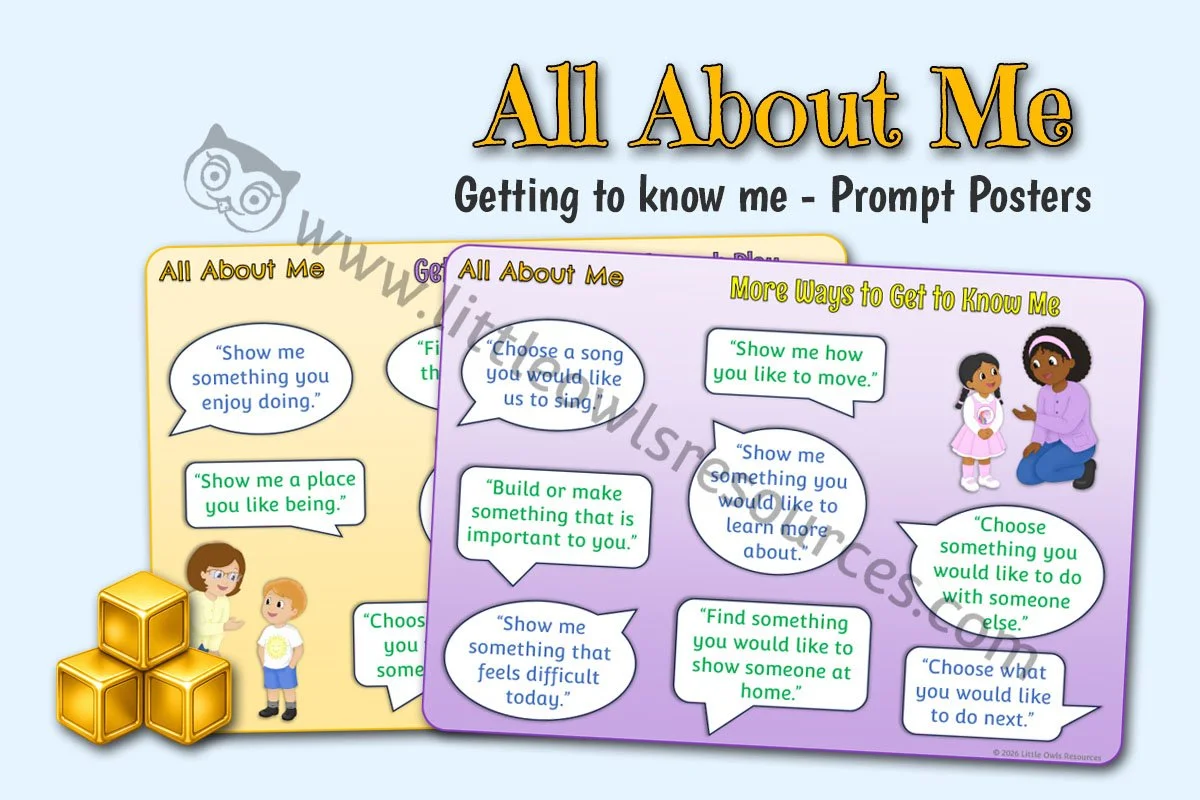
Use open-ended adult prompts to notice a child’s interests, choices, gestures and words. These everyday exchanges help adults build familiar relationships and make room for each child’s way of connecting.

Pair inclusive family pictures with familiar photographs and talk about people important to each child. For babies, this is an adult-prepared display and familiar-person conversation; comparing families is not a baby task.

Adult guidance on responding calmly to distress and building security through familiar relationships and predictable routines. Use it to consider what a baby is communicating and how an adult can offer comfort.

Reflect on caring, predictable responses when family circumstances or routines change. The guidance supports sensitive partnership with families and continuity of familiar relationships for babies.

Choose brief, responsive PSED invitations to support relationships and daily routines. Adults select experiences that fit the children’s current communication and play, with help available for sharing space, joining in or managing feelings.

Consider the words and calm presence adults offer when a toddler is distressed. Use the co-regulation guidance to discuss consistent, compassionate responses and security rather than expecting children to manage alone.

Reflect on relationships, social understanding and co-regulation through everyday provision. Use the adult-language examples to plan responsive help, rather than turning feelings or friendships into a checklist.

Explore how familiar relationships, routines and provision support regulation, attention and persistence. Consider the adult teaching and practical help a child needs, including during shared play and learning.
09 / Flexible plans
Use these planning overviews as starting points for kindness and friendship plans. Select relevant activities, revisit familiar provision and follow the children’s interests. Free-to-read guidance may link to All Access downloads.
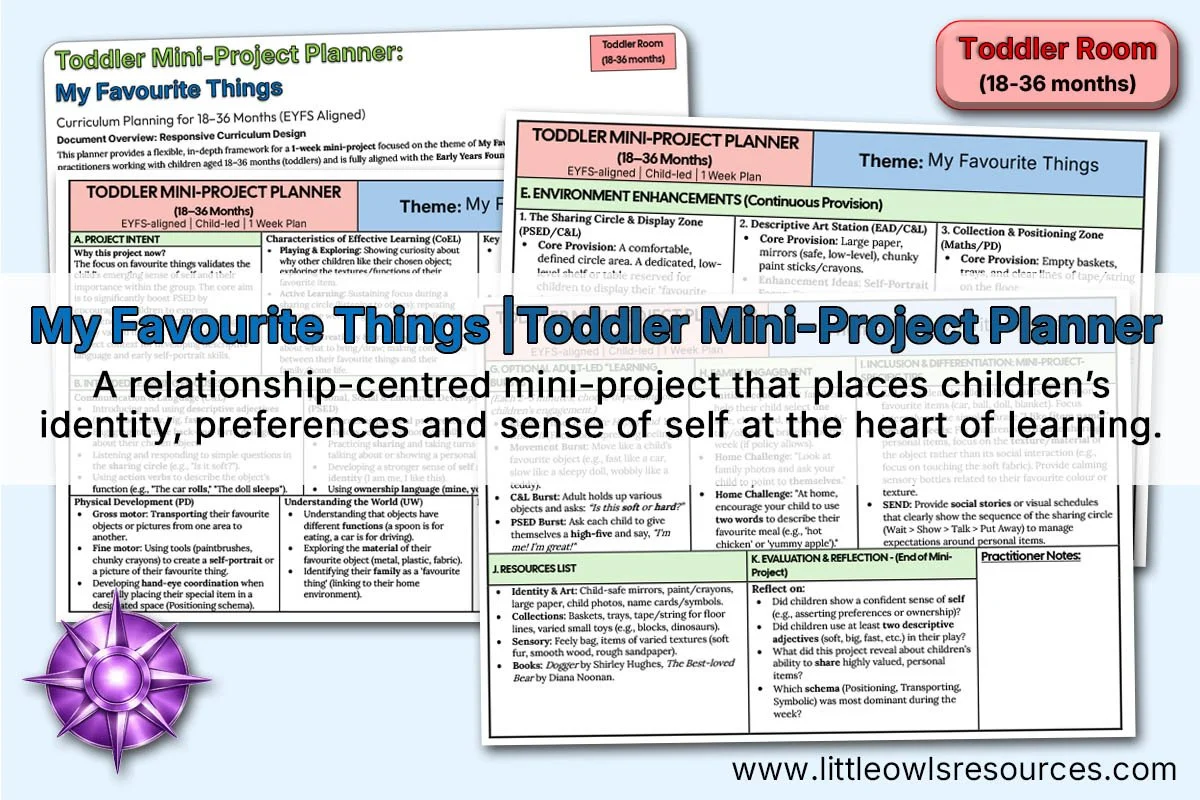
Adult planning guidance for 18–36 months, starting with children’s valued objects and interests. Notice preferences and model ways to listen, ask and respect ownership.
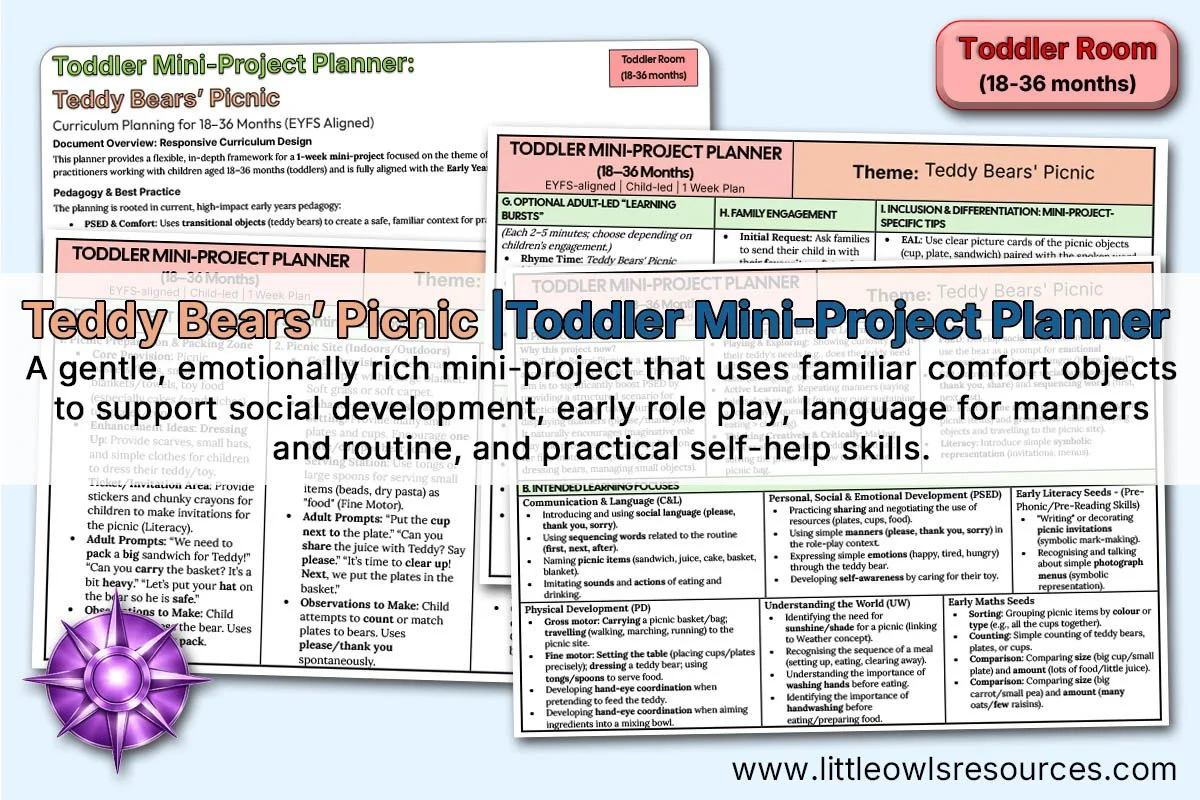
Adult planning guidance for 18–36 months using soft toys and familiar pretend play. Choose shared experiences that support connection and useful social language.

Adult planning guidance for 18–36 months, centred on familiar people, routines and emotional security. Select ideas that help children feel known and included.
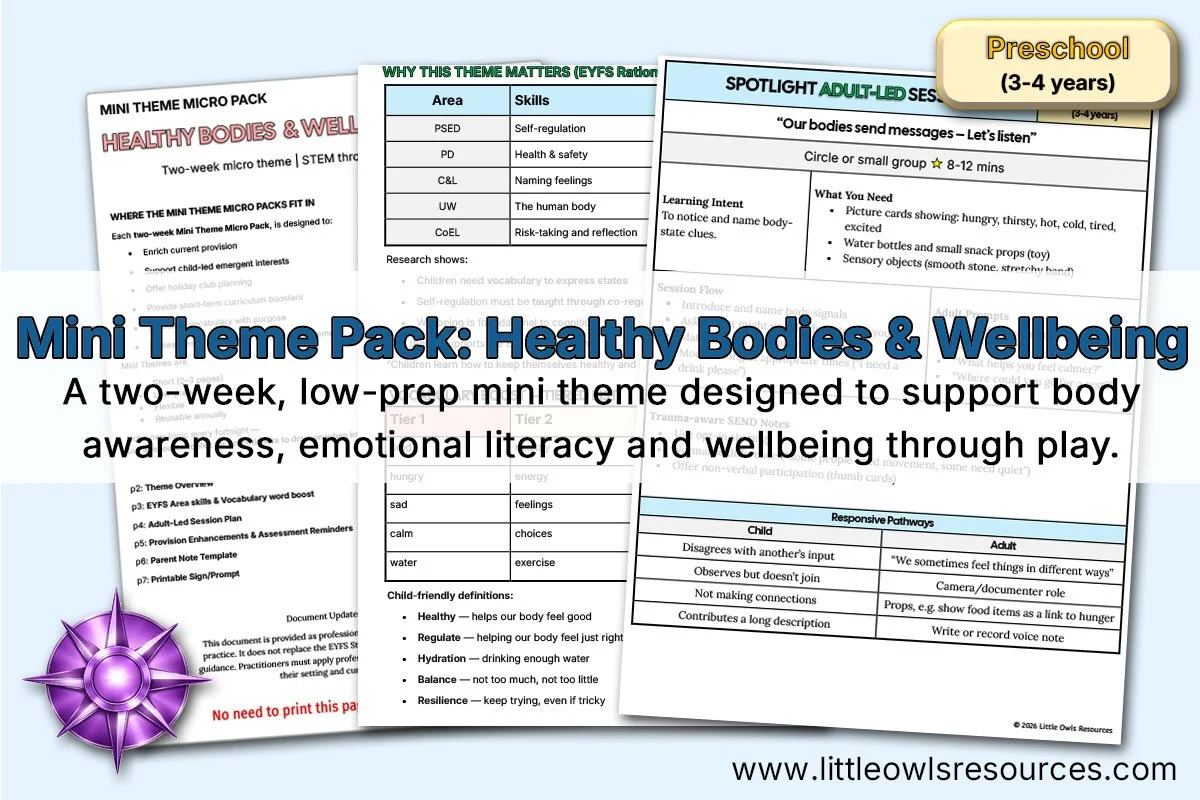
An adult planning overview for ages 3–4. Select play ideas about feelings, body signals and asking for help, with responsive adult support.
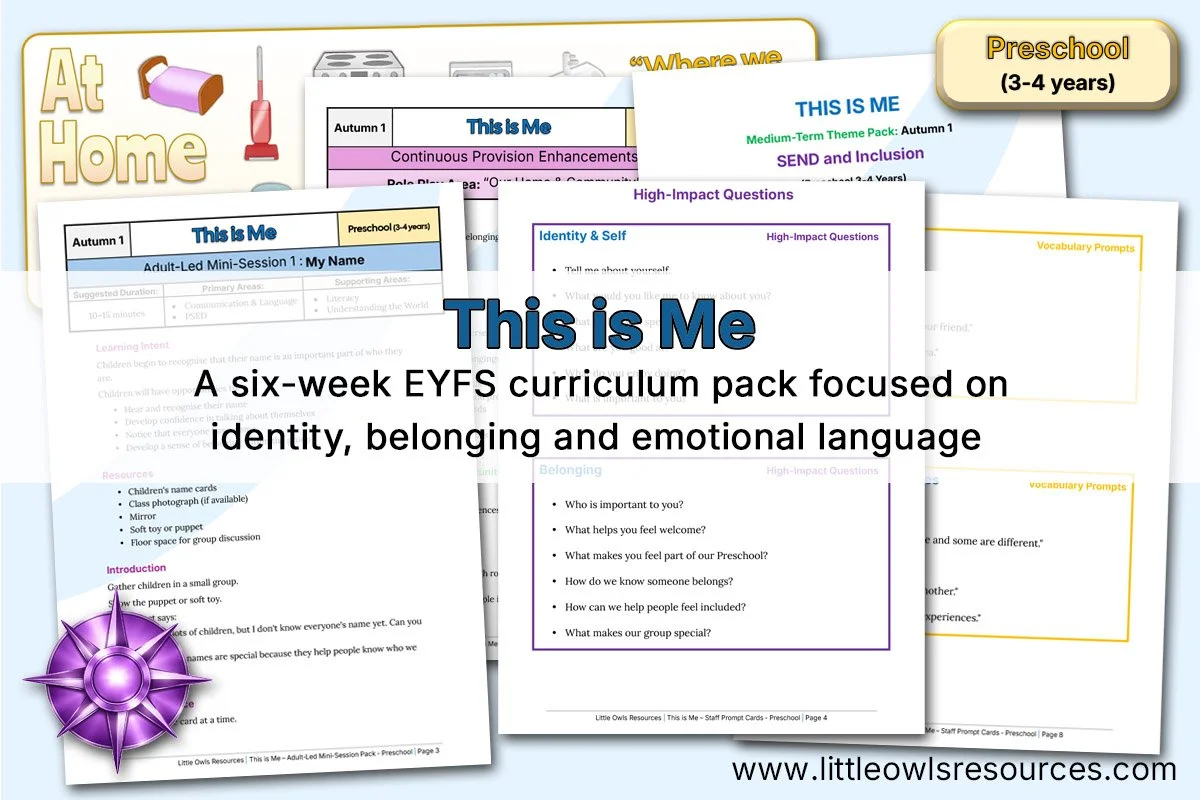
An adult planning overview for ages 3–4 focused on identity, families, belonging and emotional language. Choose ideas relevant to the children rather than following a fixed timetable.
10 / Follow the interest
Broaden an interest in friendship through these related collections. Their resources offer further choices for feelings, belonging, shared stories and familiar play.

Explore story props, sequencing and character responses. Talk about helping, choices and fairness through the characters, with room for different viewpoints.

Explore more feeling pictures, displays, worry prompts and Teddy scenarios. Select a way for children to communicate that suits them, without expecting a single correct response.

Browse shared games, circle-time ideas and role-play resources. Model a turn, keep waiting manageable and help children communicate whether they want to join.

Find pictures, drawing and writing resources for people who matter to children. Welcome different family experiences and let children decide what they want to share.

Find age-specific guidance, welcome materials and family communication for building belonging in a new room or setting. Select the resources for the child’s actual transition; the collection includes separate stages.
Use the theme in your setting
These ideas support relationships and provision, rather than a checklist of social skills. Choose materials and adult support that fit the children you know.
Each age link returns to the search on this page with that age selected. Results include the wider resources chosen for this theme; add a word to narrow the choices. Clearly age-labelled resources carry an adaptation note when they appear for a different eligible age.
Follow a baby’s gaze, pause for a response and offer familiar, comforting care. With toddlers, play alongside, name a feeling gently or model a short phrase such as “my turn next”. Sharing and waiting need support and time.
Use puppets, familiar stories, pretend picnics and shared building to explore inviting someone in, asking for help or solving a small problem together. Make space for children who prefer to watch or play nearby.
Add drawn invitations, kindness messages and feeling pictures where they support ongoing play. Adults can help children describe a problem, listen to another view and try a practical repair.
Explore different viewpoints in stories, write an authentic thank-you or plan a small way to help your class or community. Keep discussion grounded in specific actions, with writing matched to what children have been taught.
Keep participation open. Children can choose whether to share a personal story, give a card or join a group activity. Kindness can include setting a boundary or asking an adult for help; it does not require a hug, a public apology or giving away a treasured object.
Begin with an everyday connection: noticing someone’s idea, inviting them into play or thanking a person who helped. Use a familiar story or picture if a fictional example feels easier than a personal one.
The free section labels each sample and links to its free download gallery. Free Access gives you a selection of downloads; All Access includes every resource on the site. A free sample may contain fewer pages than the full pack.
Yes. Add a message-making basket, a puppet, a shared construction challenge or a pretend-care resource when it supports the play. Keep familiar provision available and let children return to an idea over time.
No. Kindness and friendship are useful throughout the year, including when children join a setting or form new groups. A themed week or special date can be an optional connection, without turning every experience into an event activity.
Visit Help & Support for website help or read our printing resources guide.
All Access membership unlocks every resource on the site. Free Access lets you explore and download a selection of free resources. Explore membership options.
Already a paying member? You have sitewide access. There’s no need to change plans or subscribe again. Read our FAQs.