

Free Access
Rama & Sita Story Sequence — Free Colouring Cards
Colour and discuss large illustrated cards from the Rama and Sita story, then revisit the sequence together.

Your Custom Text Here
Theme collection · Diwali / Deepavali
Explore Diwali through stories, family experiences, rangoli patterns, lamps and imaginative play.
Find creative invitations, maths games, storytelling resources and planning support. Pair them with books, photographs and experiences that families choose to share, helping children make connections with the meaning of the festival.
Diwali 2026: Sunday 8 November.
Celebrations and observances can span several days, with traditions varying between families and communities.
Find your starting point
Try a resource, activity or age. Choose a result to see its cover on this page, then open the resource when you are ready. The search also includes the optional Fireworks resources below.
Search becomes available when JavaScript is enabled. You can always browse using the section choices above.
01 / Explore the theme
Four Diwali resources to explore with Free Access: colouring, story cards, a welcome banner and border paper. Each resource appears once here, with links from the other sections where useful.
Colour and discuss large illustrated cards from the Rama and Sita story, then revisit the sequence together.
Suggested use: Preschool · Reception · Selected KS1 uses
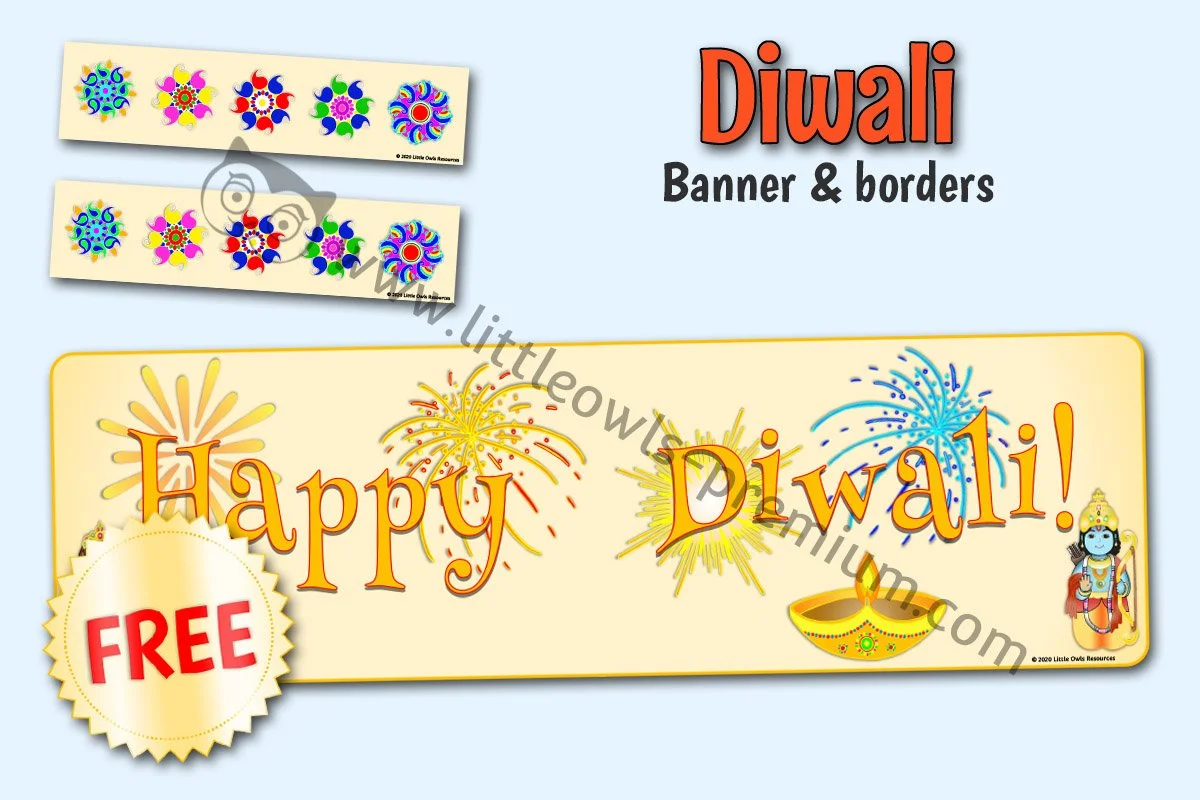
A Happy Diwali banner and matching borders for a welcoming themed display.

Landscape border paper with blank and two lined formats, each in colour and black-and-white versions for drawing and writing.
Suggested use: Preschool · Reception · Selected KS1 uses
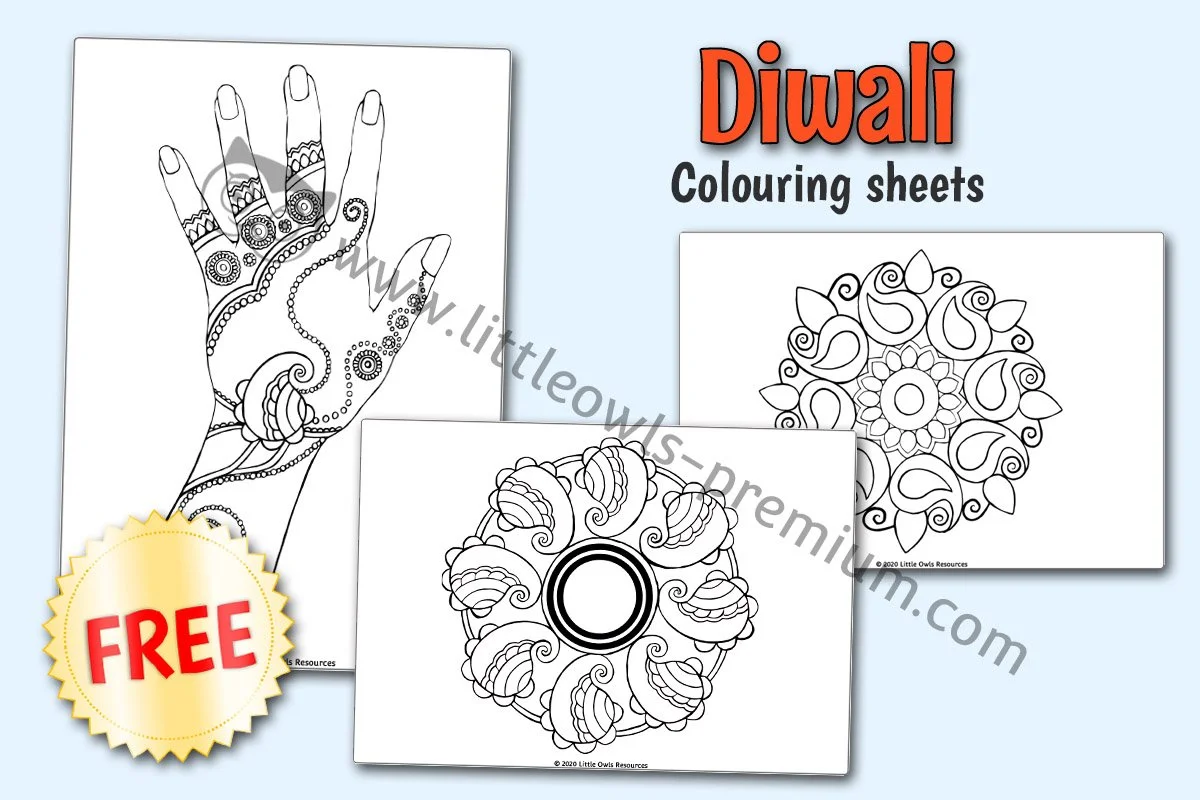
Colouring sheets feature diva lamps, lanterns, rangoli patterns, sweets, fireworks and mehndi designs.
Suggested use: Preschool · Reception · Selected KS1 uses
02 / Explore the theme
Share the story, talk about the pictures and revisit events through puppets and sequencing. Children can listen, point, move a character or tell you what they remember.
These resources explore Rama and Sita, one Hindu story associated with Diwali. Families and communities observe the festival in different ways. You can also use the free story-sequence colouring cards.

Cut and arrange pictures to retell the Rama and Sita story after sharing the large sequence cards together.
Suggested use: Preschool · Reception · Selected KS1 uses
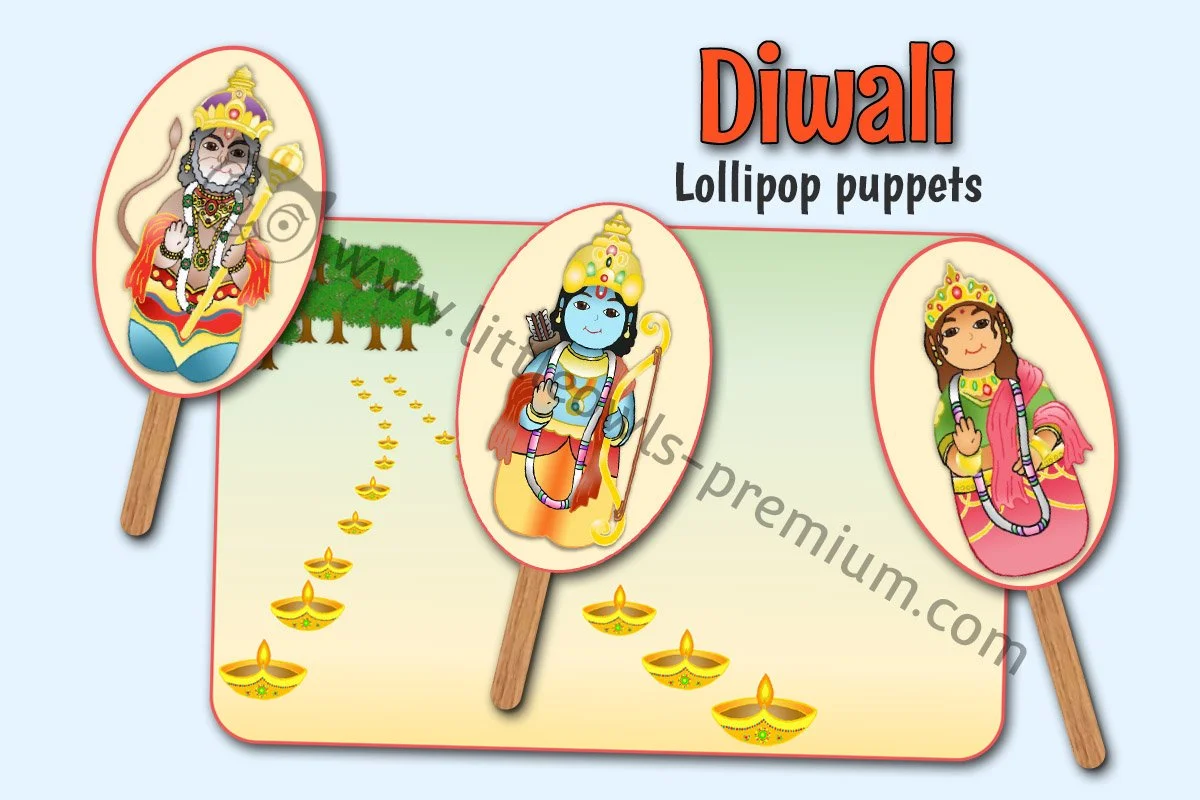
Cut-out puppets for attaching to lolly sticks, with two background pictures to support shared storytelling and imaginative retelling.
Suggested use: Preschool · Reception · Selected KS1 uses
03 / Explore the theme
Explore pattern, colour and design with playdough, collage, drawing and greeting cards. Share the cultural context through pictures and conversation, then leave room for children’s own ideas.
The lamp resources use the published name diva lamp; you may also see diya. The mehndi resource provides paper hand outlines for designing patterns. These are creative invitations using everyday materials.
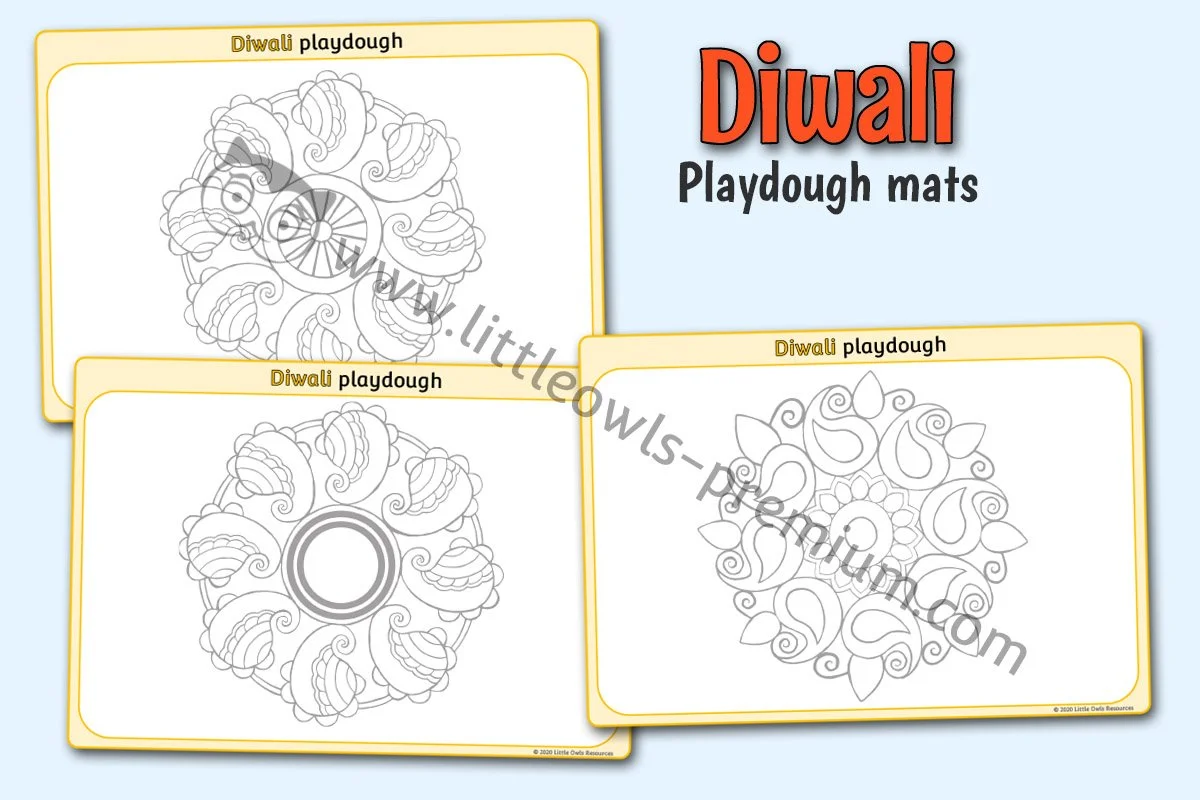
Shape and arrange playdough on rangoli pattern mats, exploring colour, repeated shapes and hand control.
Suggested use: Toddlers with adult support · Preschool · Reception
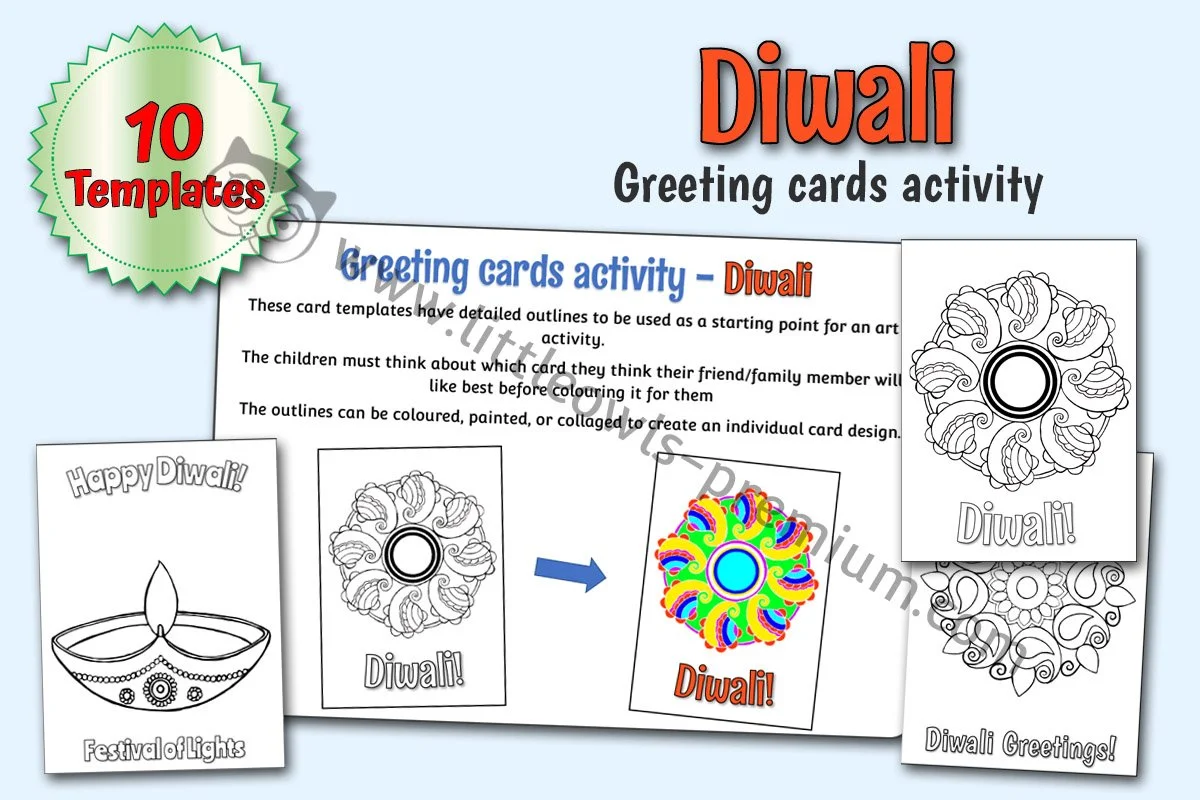
Choose a design for someone special, then colour, paint or collage the outline to create an individual Diwali card.
Suggested use: Preschool · Reception · Selected KS1 uses
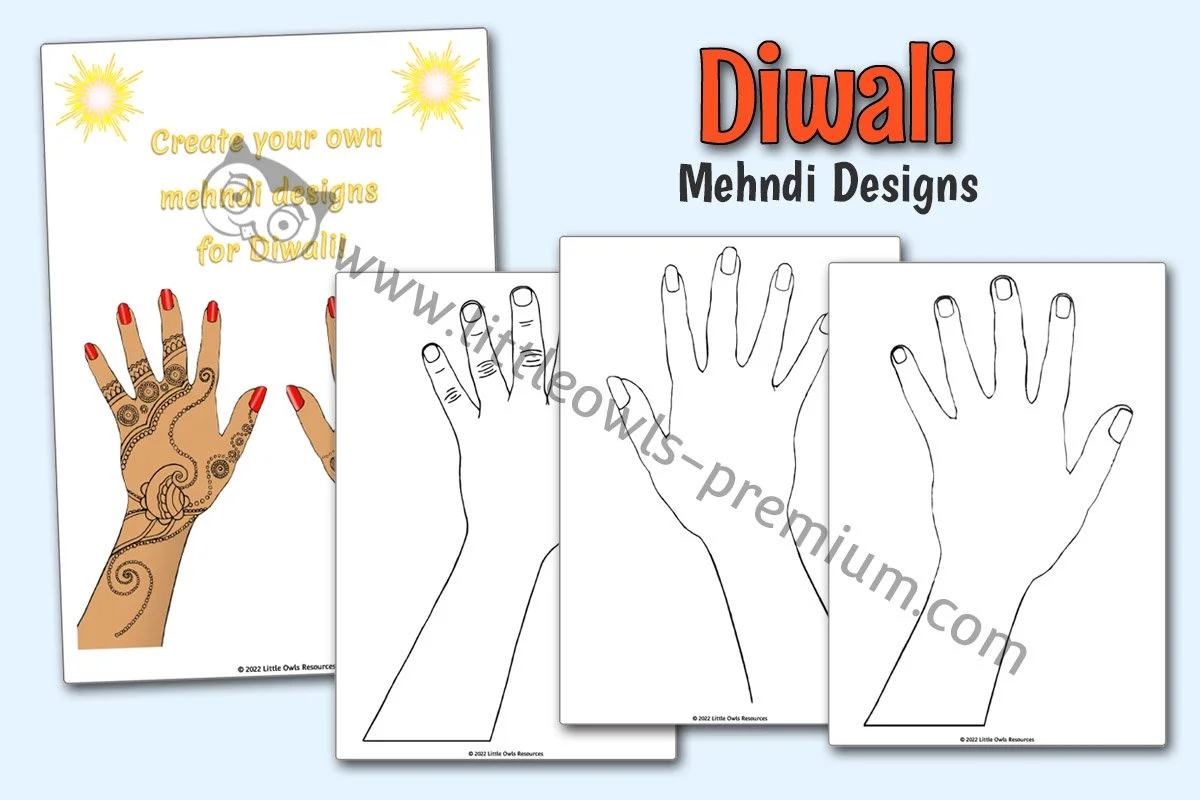
An example poster and left- and right-hand outlines offer space to design patterns on paper using drawing or creative materials.
Suggested use: Preschool · Reception · Selected KS1 uses
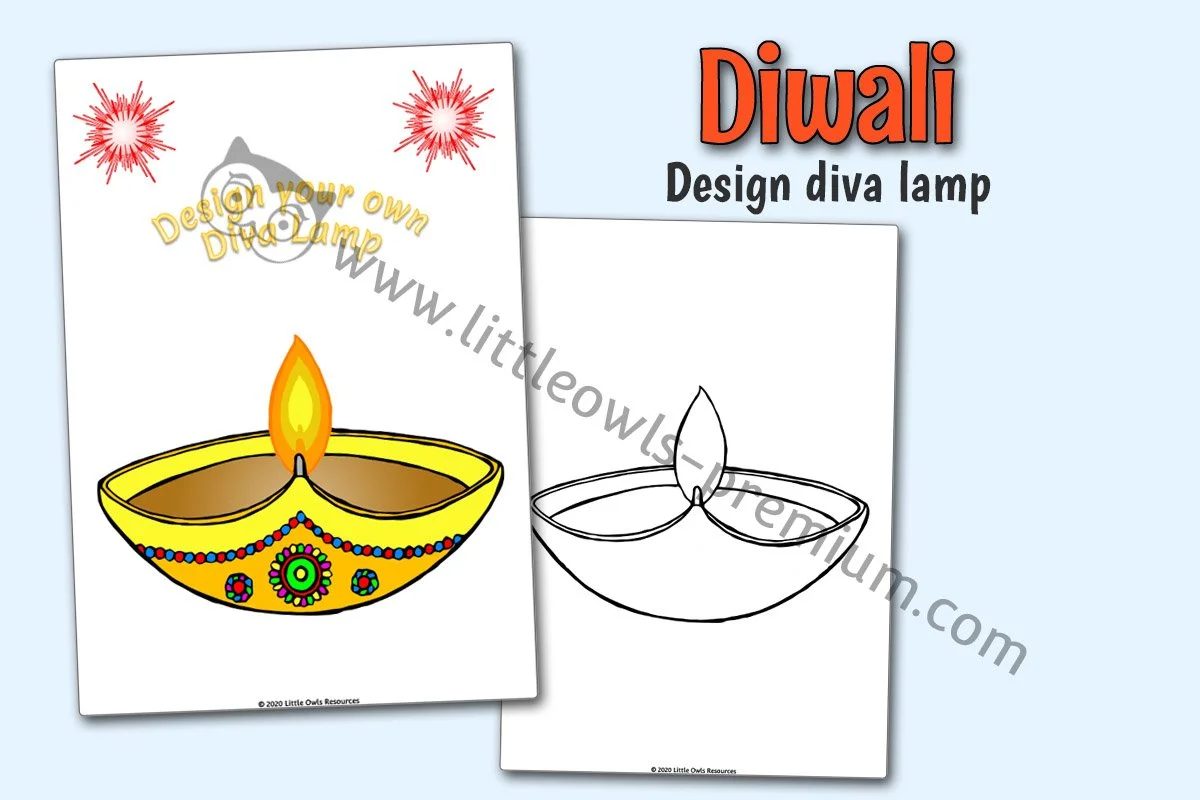
Use an example poster and two blank templates to plan decorative lamp designs with drawing, playdough, loose parts or collage.
Suggested use: Preschool · Reception · Selected KS1 uses
04 / Explore the theme
Match pictures, compare quantities and notice how patterns are alike or different. Select a few pieces or a smaller number range where useful, and allow time to explain and try again.

Match numerals with quantities of diva lamps. Choose suitable numbers from 1–10, then explore ordering or a missing-number game.
Suggested use: Preschool · Reception
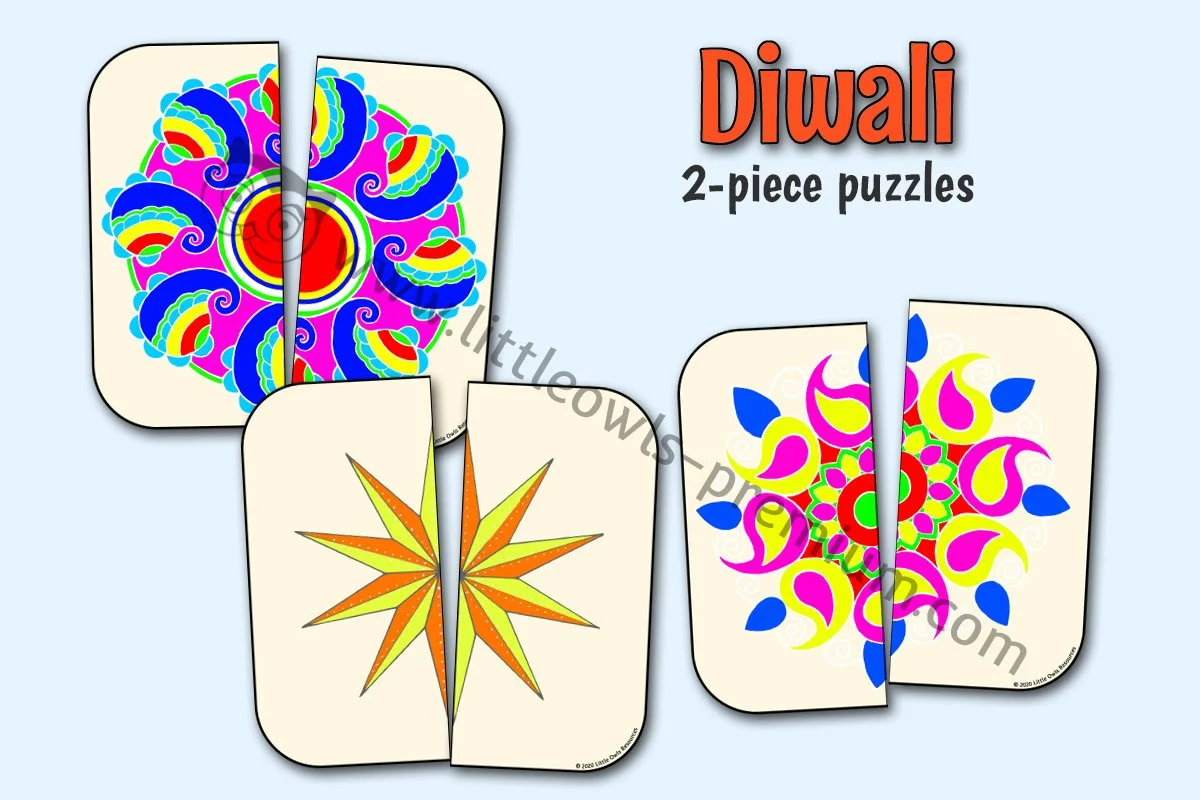
Match two halves of ten Diwali pattern puzzles, looking closely at colours, patterns, similarities and differences.
Suggested use: Toddlers with adult support · Preschool · Reception
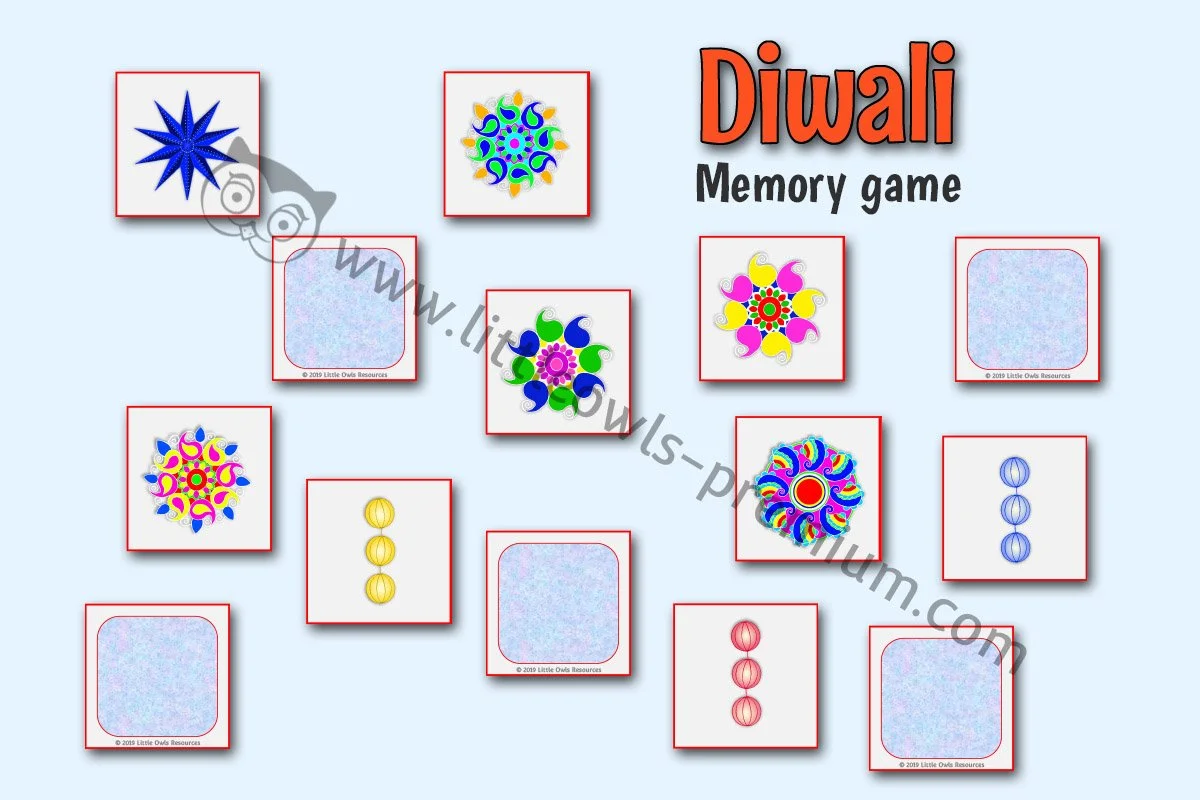
Turn over and match pairs of rangoli patterns and lanterns in a memory game, with optional folded backing tabs for the cards.
Suggested use: Preschool · Reception
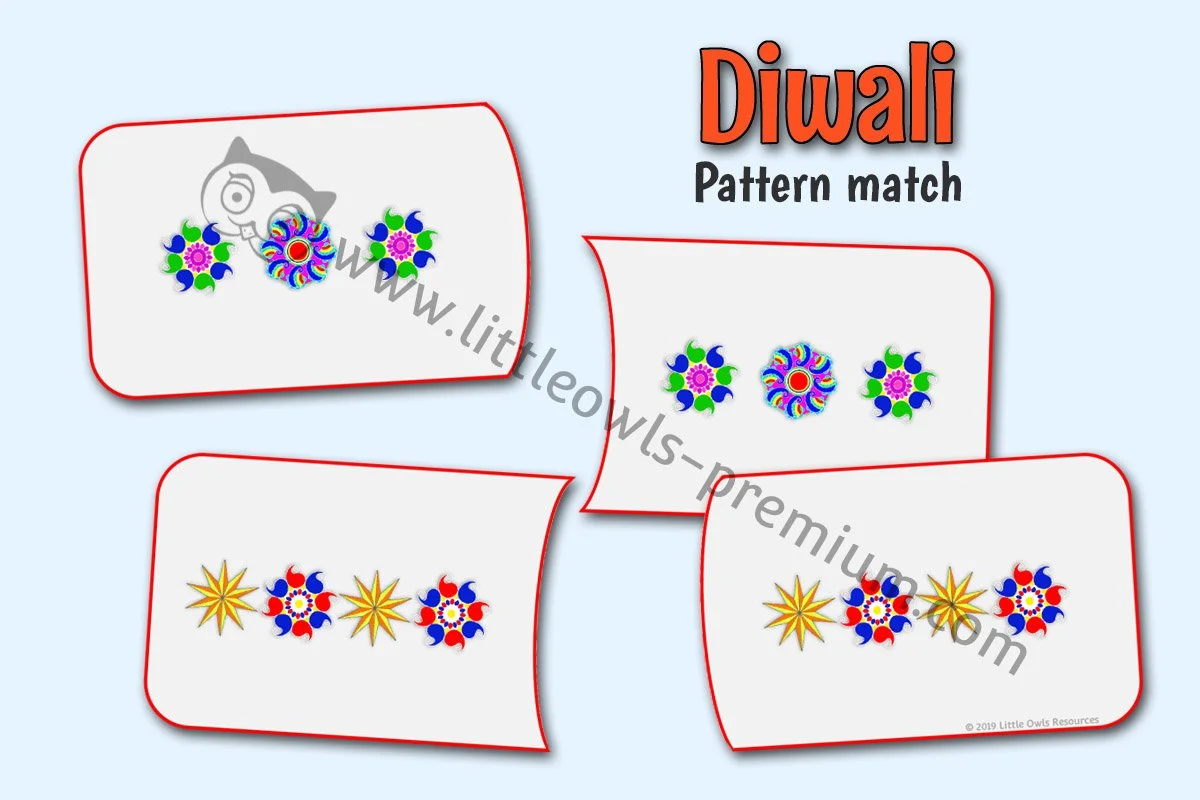
Match patterned cards by looking closely at shapes and colours. Different connecting edges help children check their choices.
Suggested use: Toddlers with adult support · Preschool · Reception
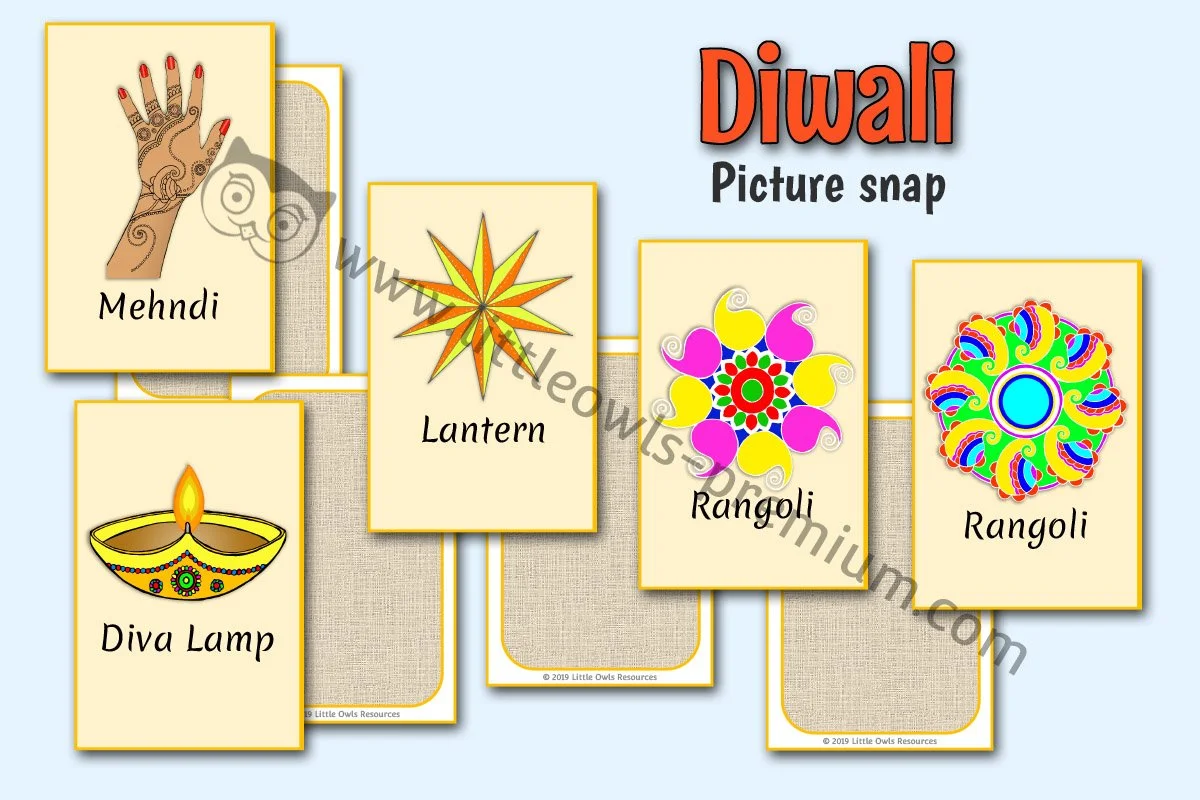
Use illustrated Diwali cards for snap, matching and memory play, or as picture prompts for shared discussion.
Suggested use: Preschool · Reception
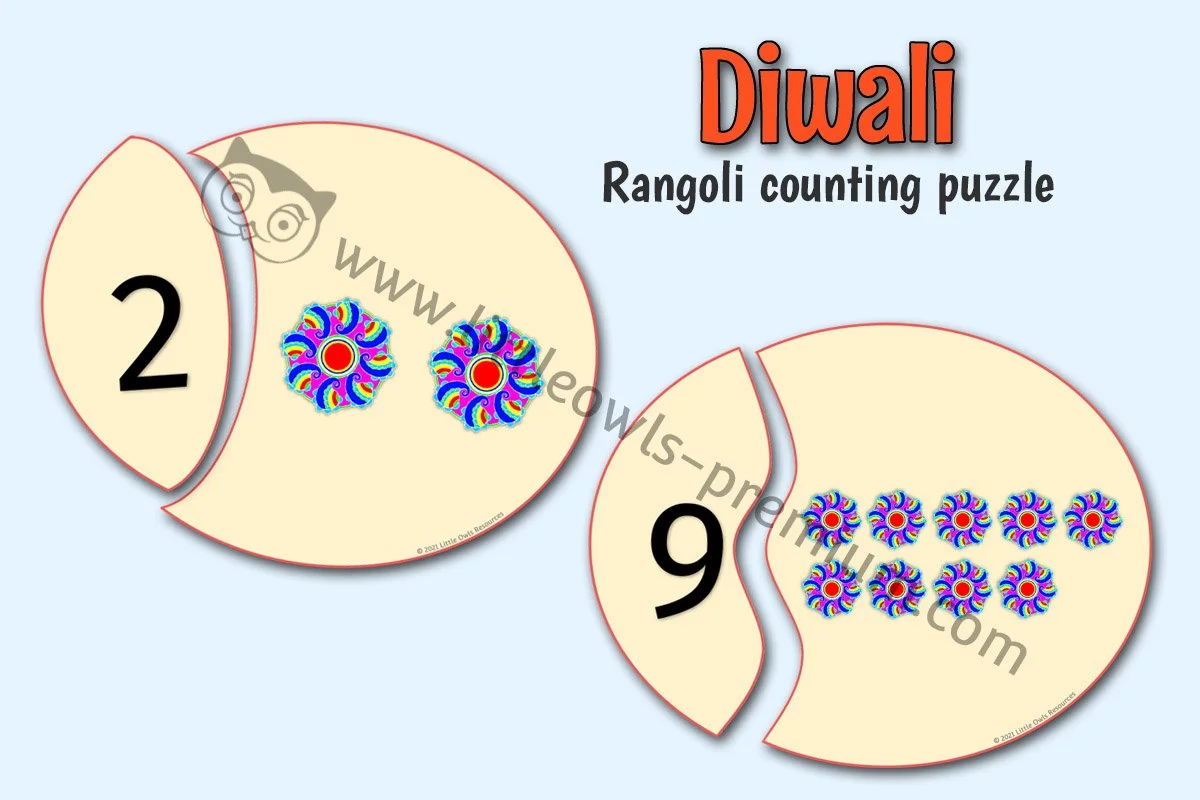
Match numerals with quantities of rangoli patterns. Select appropriate numbers, then try ordering or spotting a missing numeral.
Suggested use: Preschool · Reception
05 / Explore the theme
Use pictures and words to support conversation, a pretend sweet shop, greetings and purposeful marks. Include children’s own experiences without expecting everyone to have celebrated Diwali.
For welcoming displays and children’s messages, see the free Happy Diwali banner and borders and free horizontal border paper. The portrait paper and bunting are below.
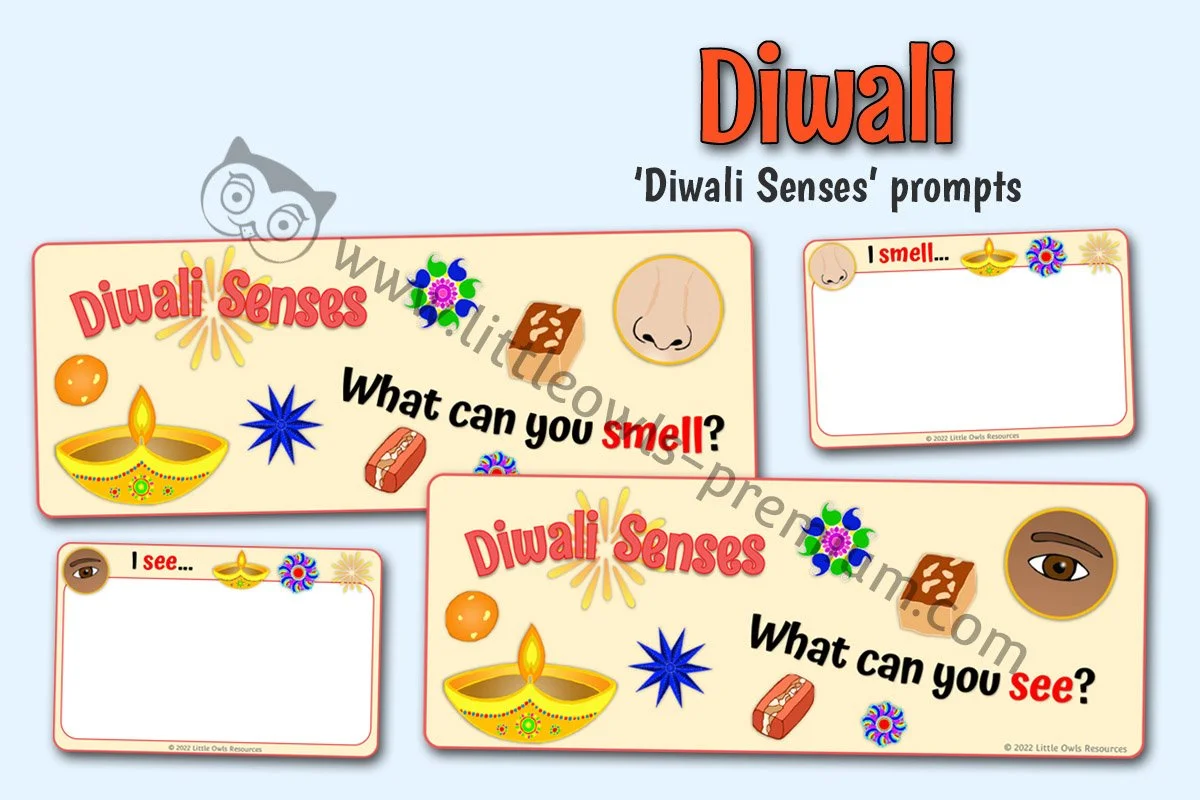
Mini-banners and small note sheets invite children to talk, draw, make marks or write about their own Diwali experiences.
Suggested use: Preschool · Reception · Selected KS1 uses

A booklet cover and five optional senses pages support shared talk, drawing and writing about Diwali experiences.
Suggested use: Preschool · Reception · Selected KS1 uses
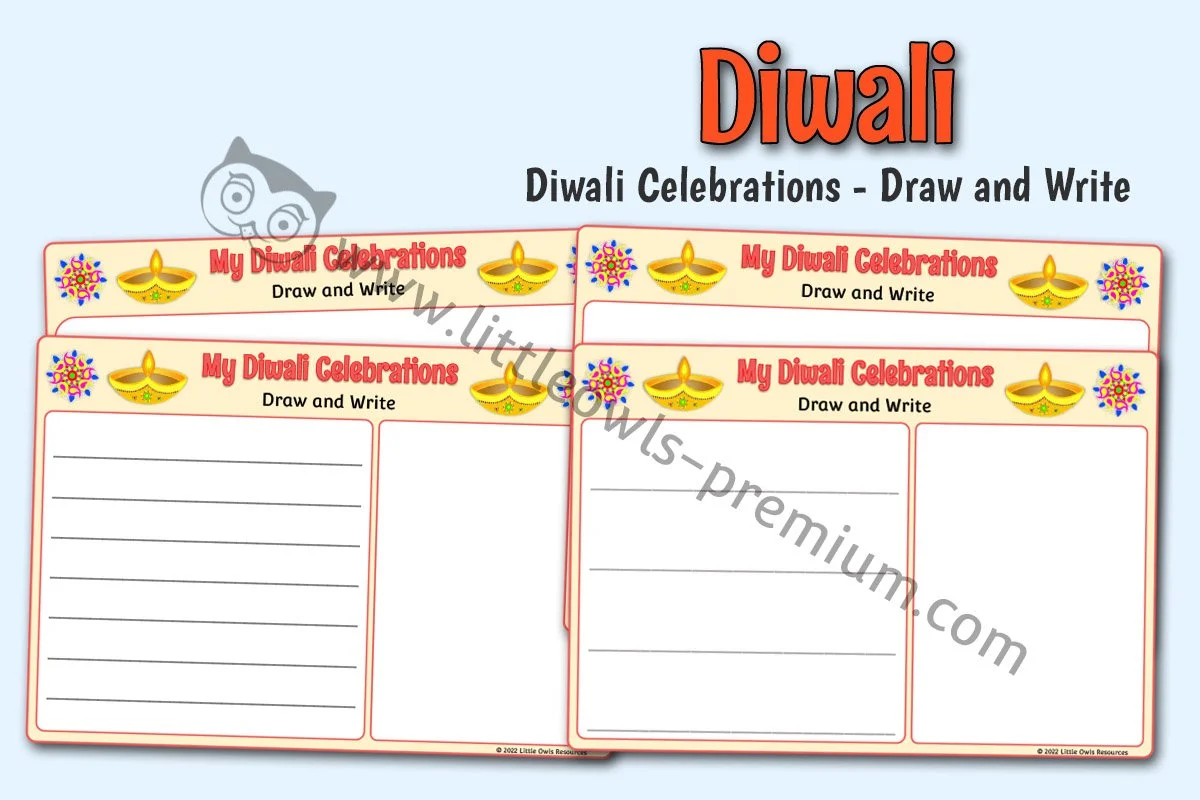
Differentiated sheets provide space for pictures, marks and writing as children record their own experiences of celebrating Diwali.
Suggested use: Preschool · Reception · Selected KS1 uses
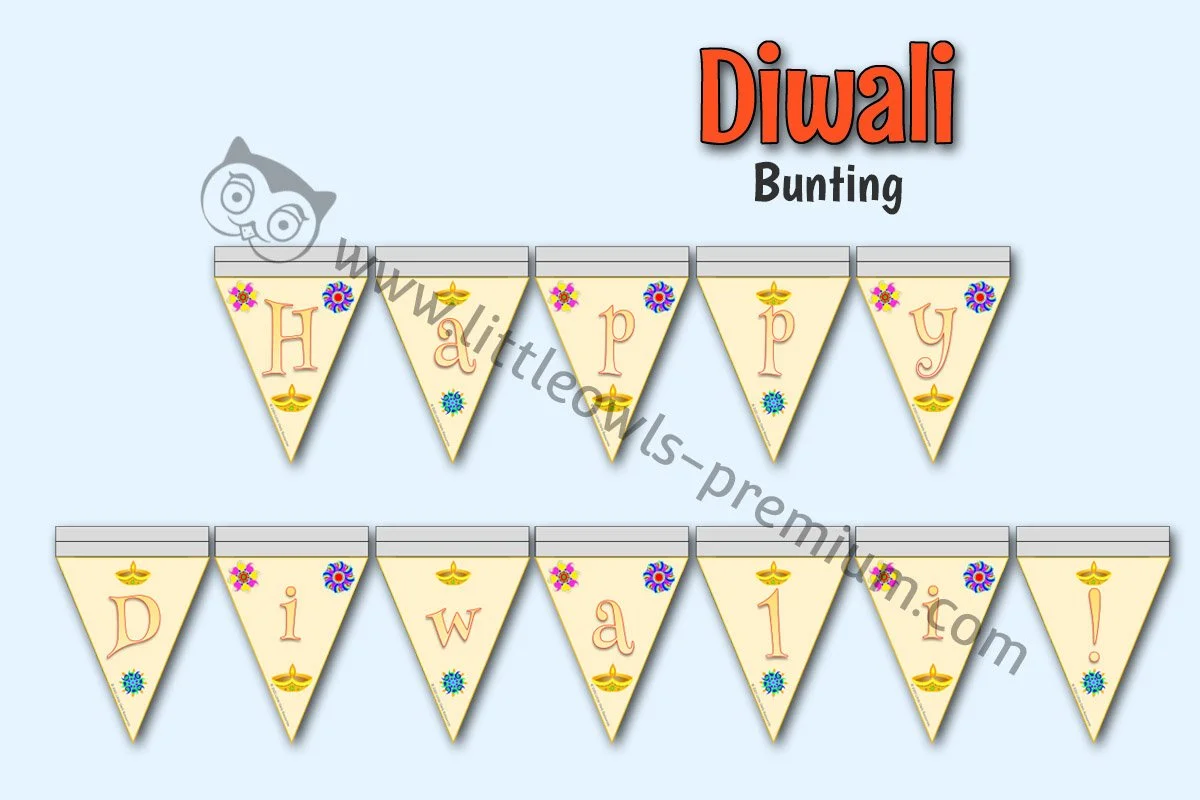
Bunting letters spell Happy Diwali! for a celebration display or shared space.
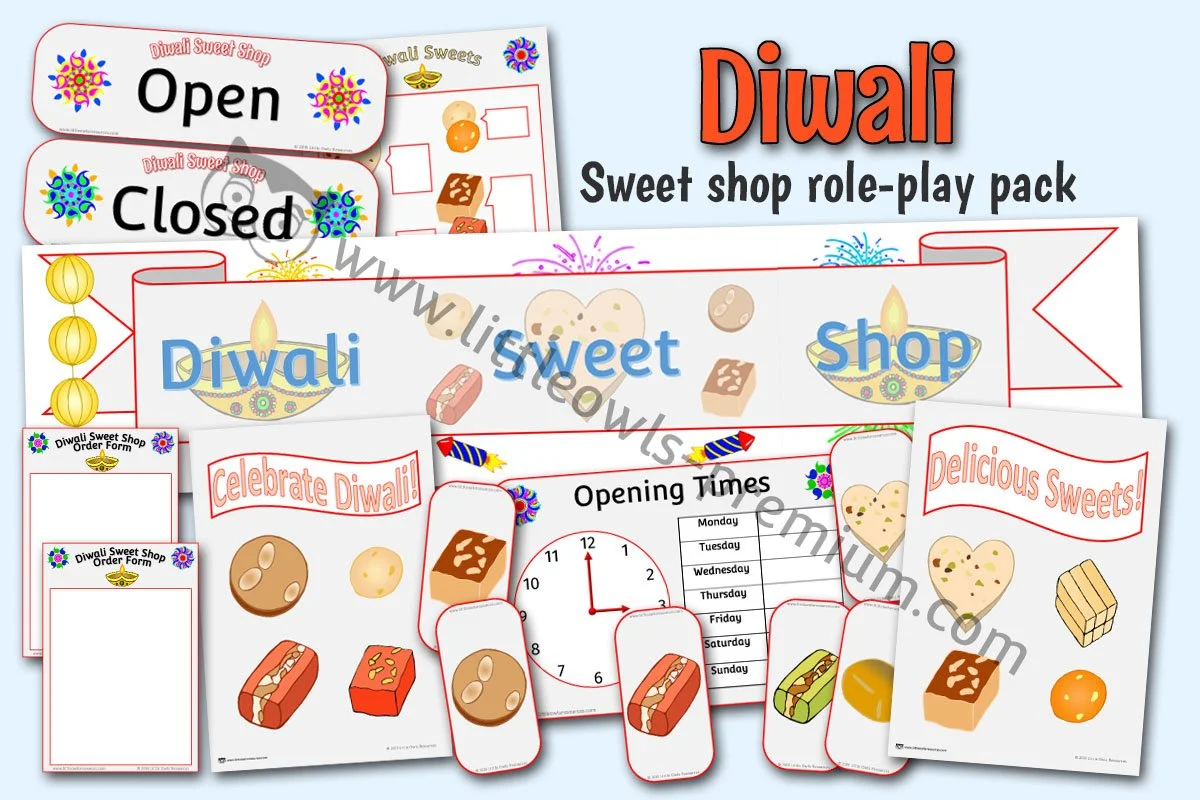
Set up a pretend sweet shop with a banner, menus, sweets pictures, order forms and signs, supporting conversation and purposeful mark making.
Suggested use: Preschool · Reception · Selected KS1 uses
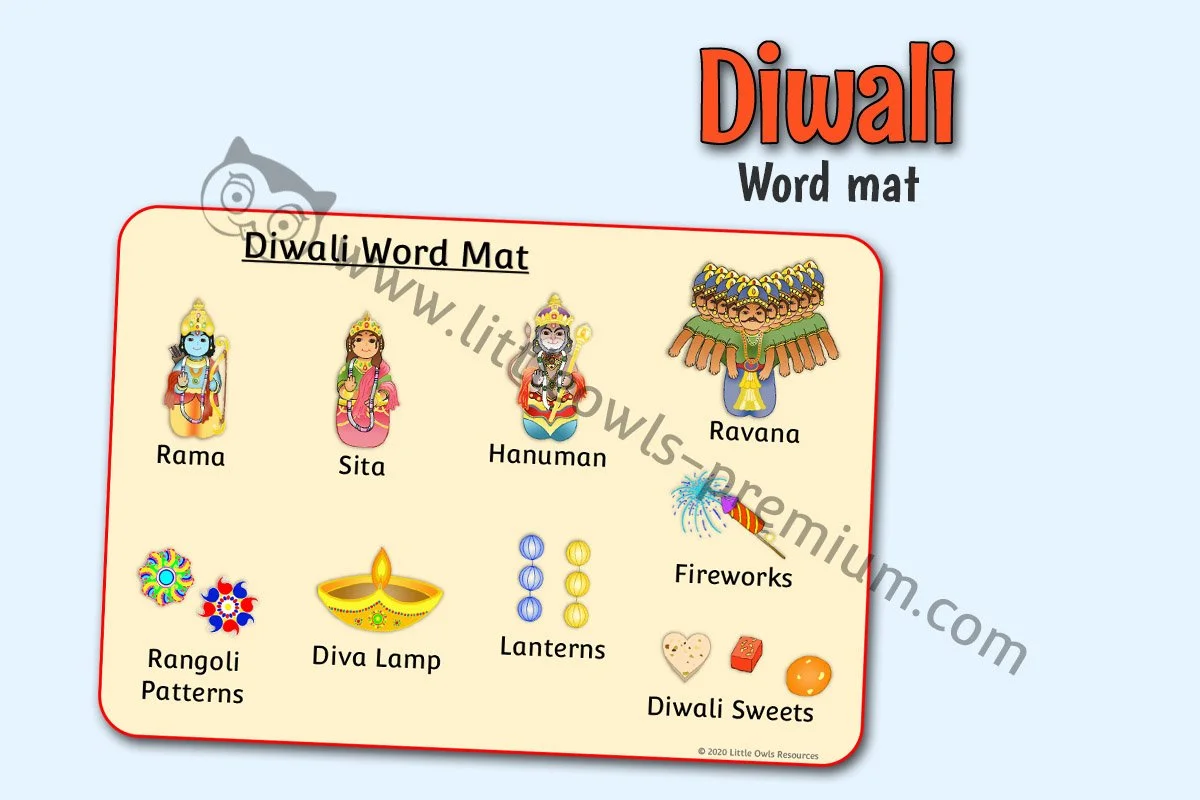
An illustrated vocabulary mat includes Rama, Sita, Hanuman, Ravana, rangoli, diva lamps, lanterns, fireworks and sweets.
Suggested use: Preschool · Reception · Selected KS1 uses
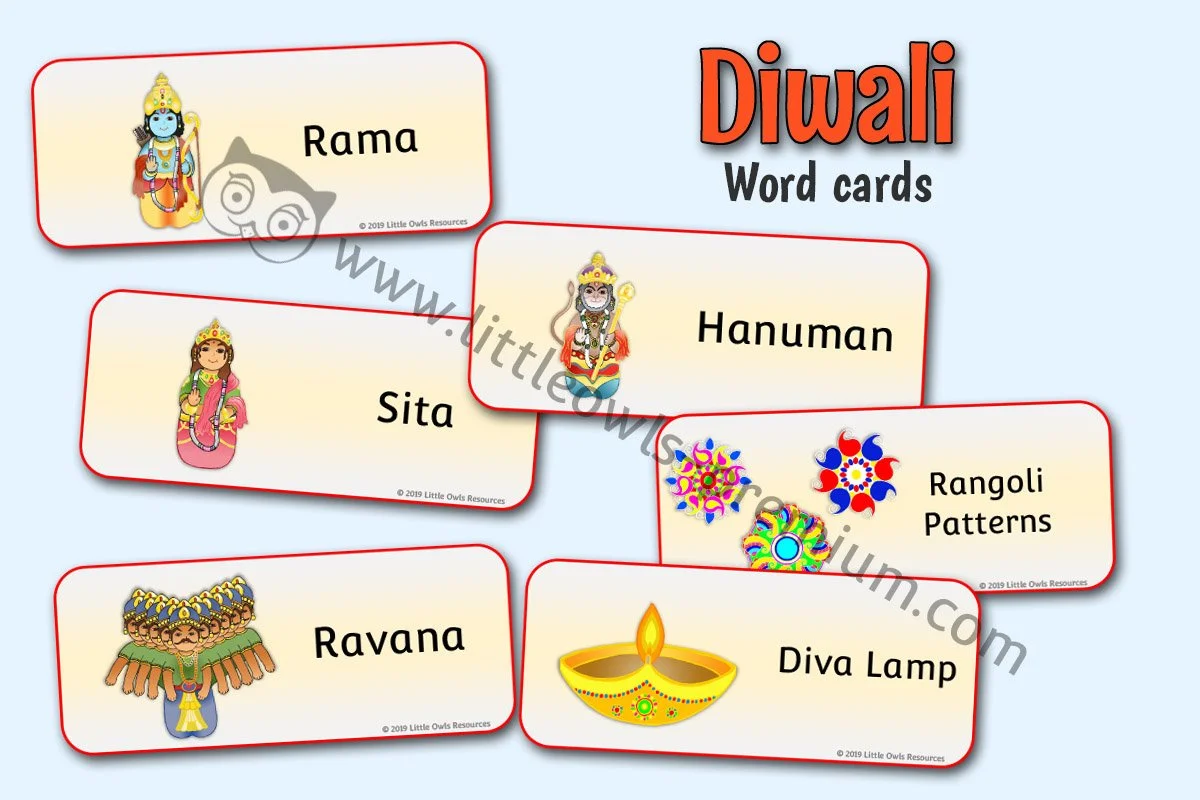
Themed word cards support shared vocabulary and displays, with blank cards for adding words that matter to your children.
Suggested use: Preschool · Reception · Selected KS1 uses
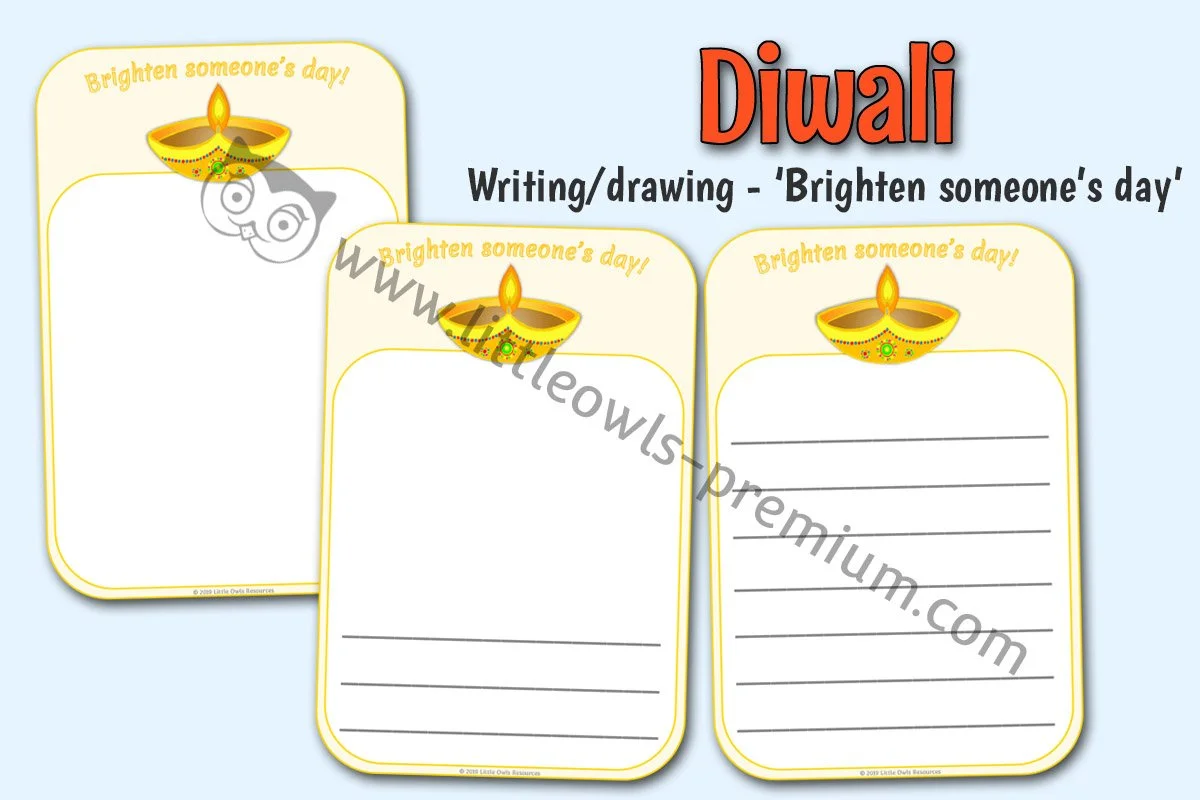
Three drawing and writing formats invite children to consider kind actions that could make someone happy and brighten their day.
Suggested use: Preschool · Reception · Selected KS1 uses
06 / Explore the theme
Broader adult-facing projects about light and celebrations can support thoughtful choices for toddlers and preschool children. These are flexible planning resources, not Diwali-specific schemes.

A sensory project for 18–36 months, supporting language, confidence and early scientific thinking through light, dark and celebrations.
For adults · Toddlers (18–36 months)

A flexible two-week theme for 3–4-year-olds, exploring belonging, traditions and why people celebrate through meaningful play.
For adults · Preschool (3–4 years)
07 / Choose a starting point
These are suggested uses, guided by children’s interests and current experience. Links take you to the resource covers on this page.
Choose simple shared experiences with marks, colour and suitable materials, supported by a familiar adult. Printed tasks and story sequencing are not expectations for this age.
Explore making, matching and pretend play. Adults can model useful words and help children share their ideas.
Revisit a shared story, notice patterns and give drawing or writing a meaningful purpose.
Offer different ways to take part in a shared idea. Older children might explain a pattern, retell an event or write a thoughtful message.
08 / An optional connection
Choose these only when fireworks connect with children’s experiences. Diwali can be explored through stories, lamps, patterns and family celebrations without fireworks activities.
Explore the full Fireworks theme page →
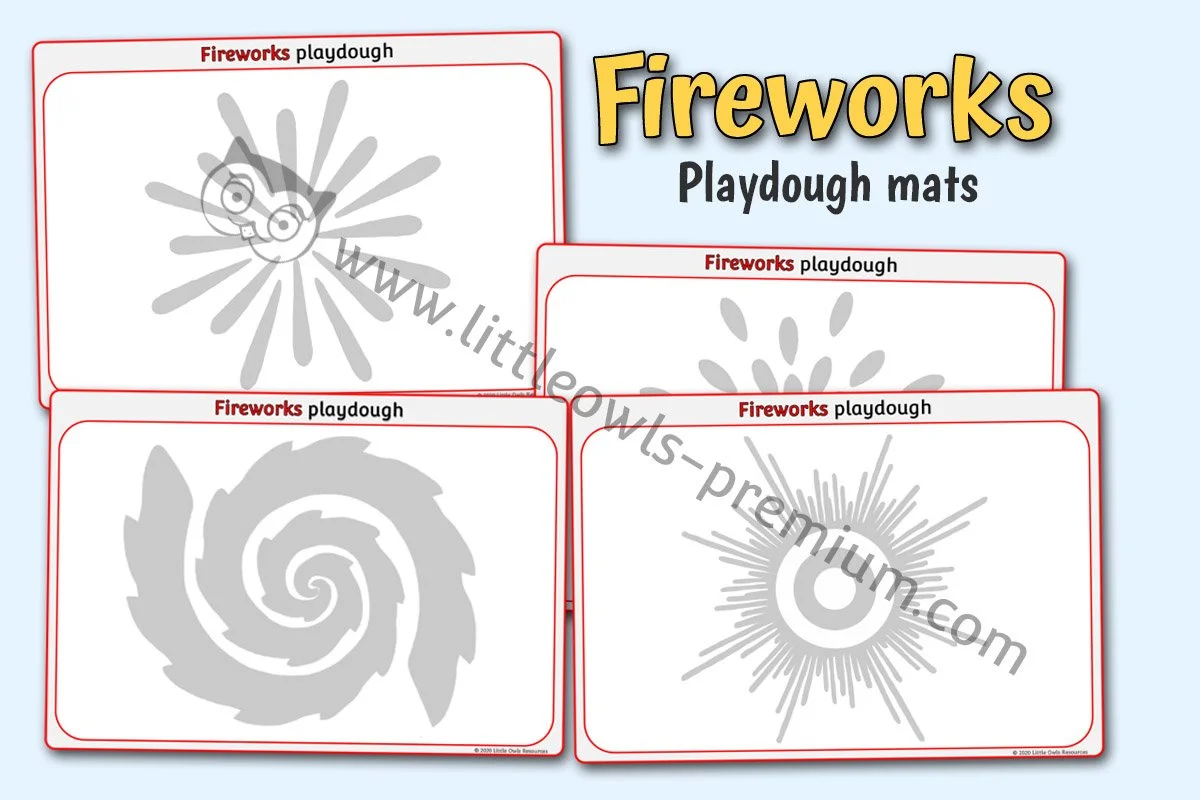
Roll, shape and arrange dough on firework outline mats, using the pictures as starting points for patterns and hand movements.
Suggested use: Toddlers with adult support · Preschool · Reception
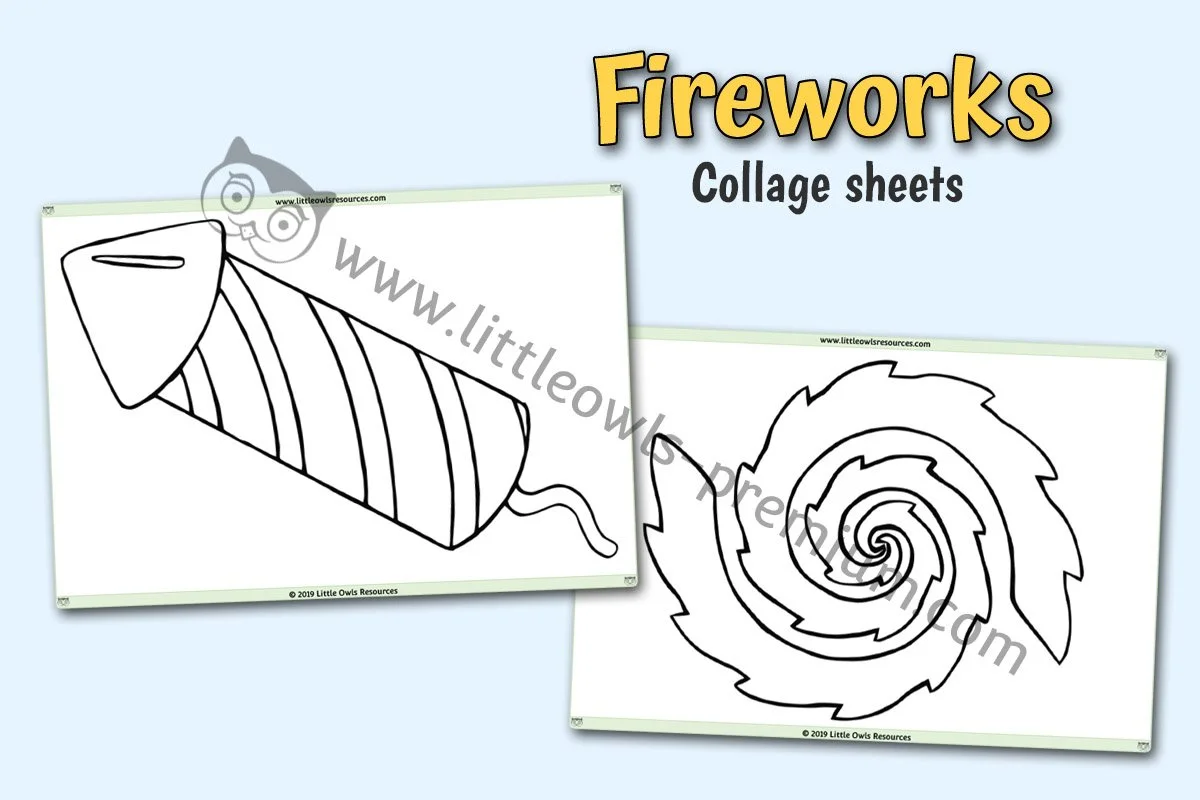
Large blank firework shapes provide a starting point for collage and arranging loose parts, with room for children’s own colour and pattern choices.
Suggested use: Toddlers with adult support · Preschool · Reception
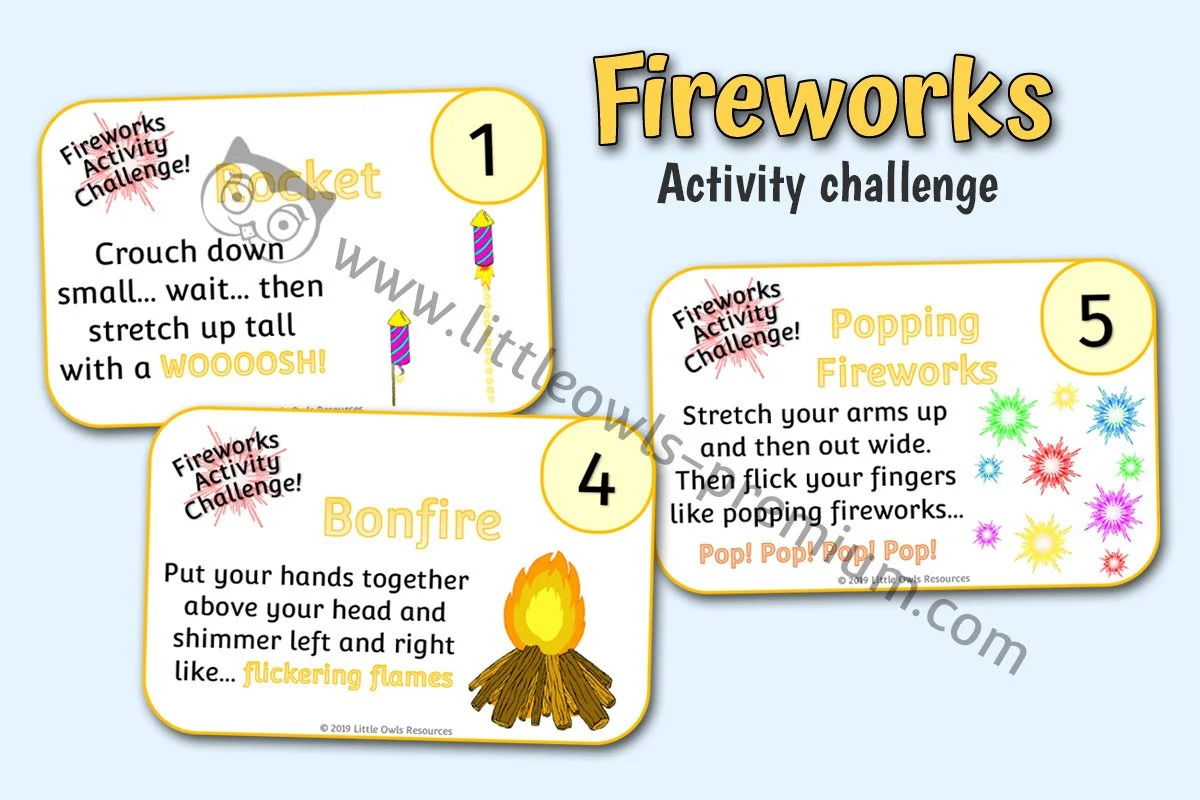
Six movement cards invite children to move like fireworks. Explore actions, descriptive language and taking turns, indoors or outside.
Suggested use: Toddlers with adult support · Preschool · Reception
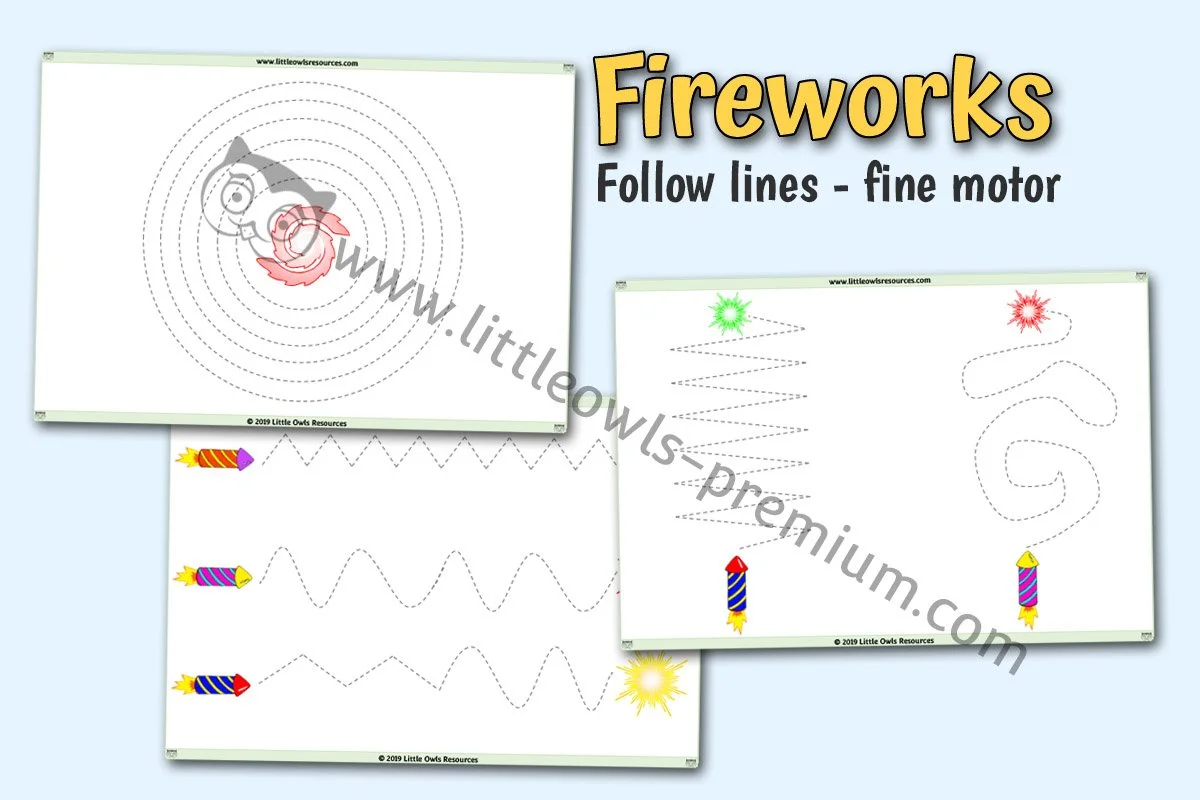
Follow dotted firework lines to practise controlled pencil movements. Offer these alongside broader drawing and mark-making opportunities.
Suggested use: Preschool · Reception
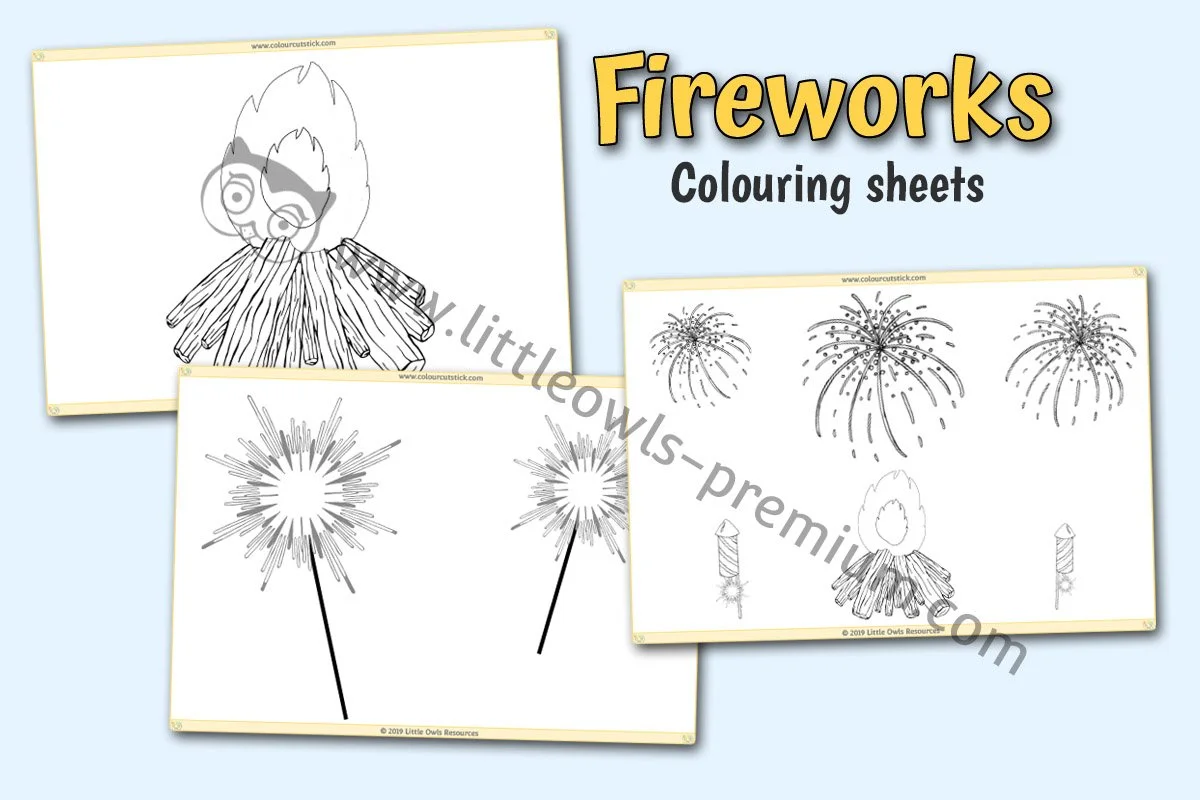
A collection of firework colouring sheets for exploring colour choices and adding individual detail.
Suggested use: Preschool · Reception · Selected KS1 uses
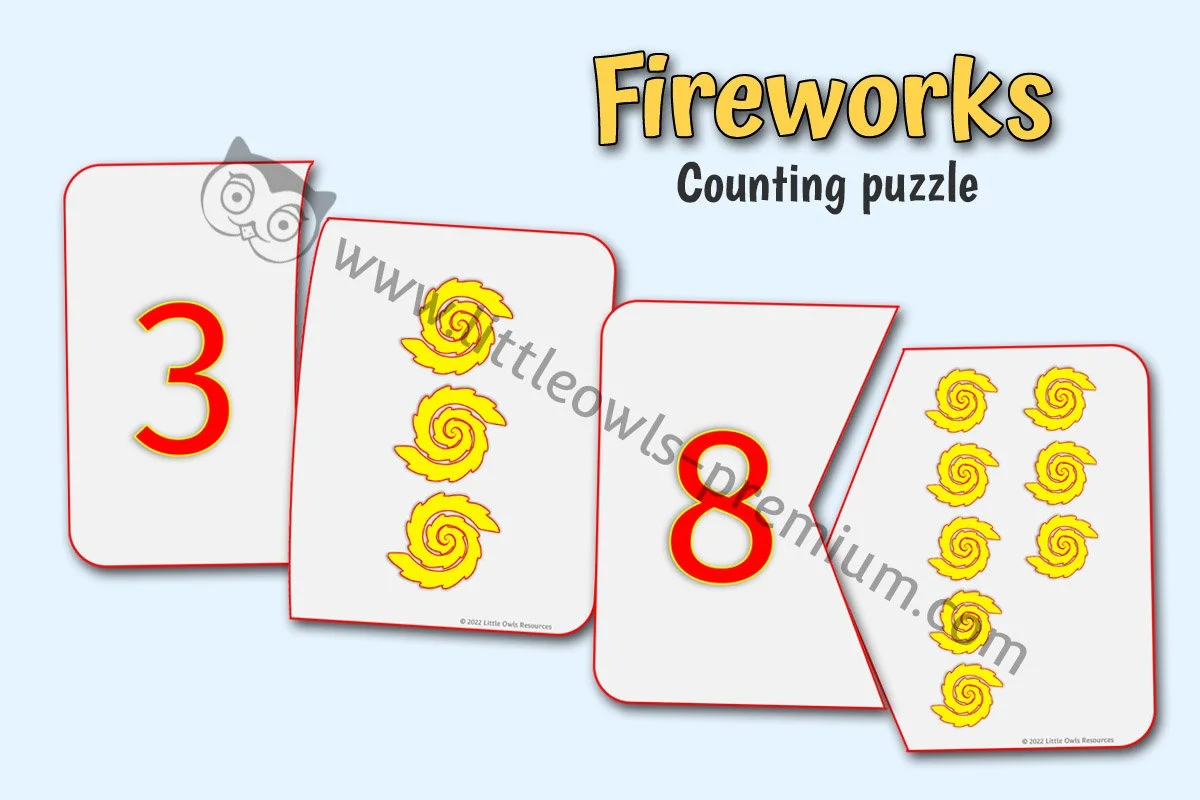
Match each numeral to the correct quantity of fireworks. Use the pieces for counting and subitising, or leave them uncut for number ordering.
Suggested use: Preschool · Reception
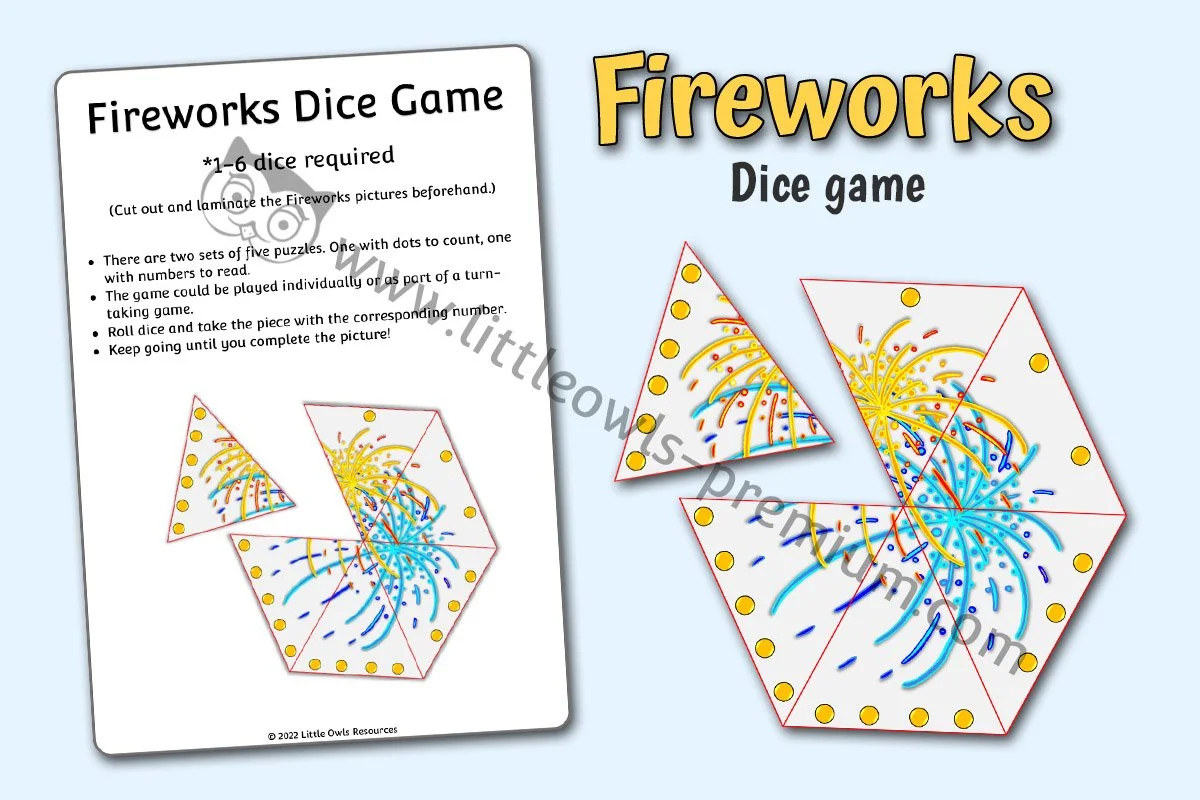
Roll a 1–6 die and find the matching piece to build a firework picture. Choose dots or numerals for individual play or a turn-taking game.
Suggested use: Preschool · Reception
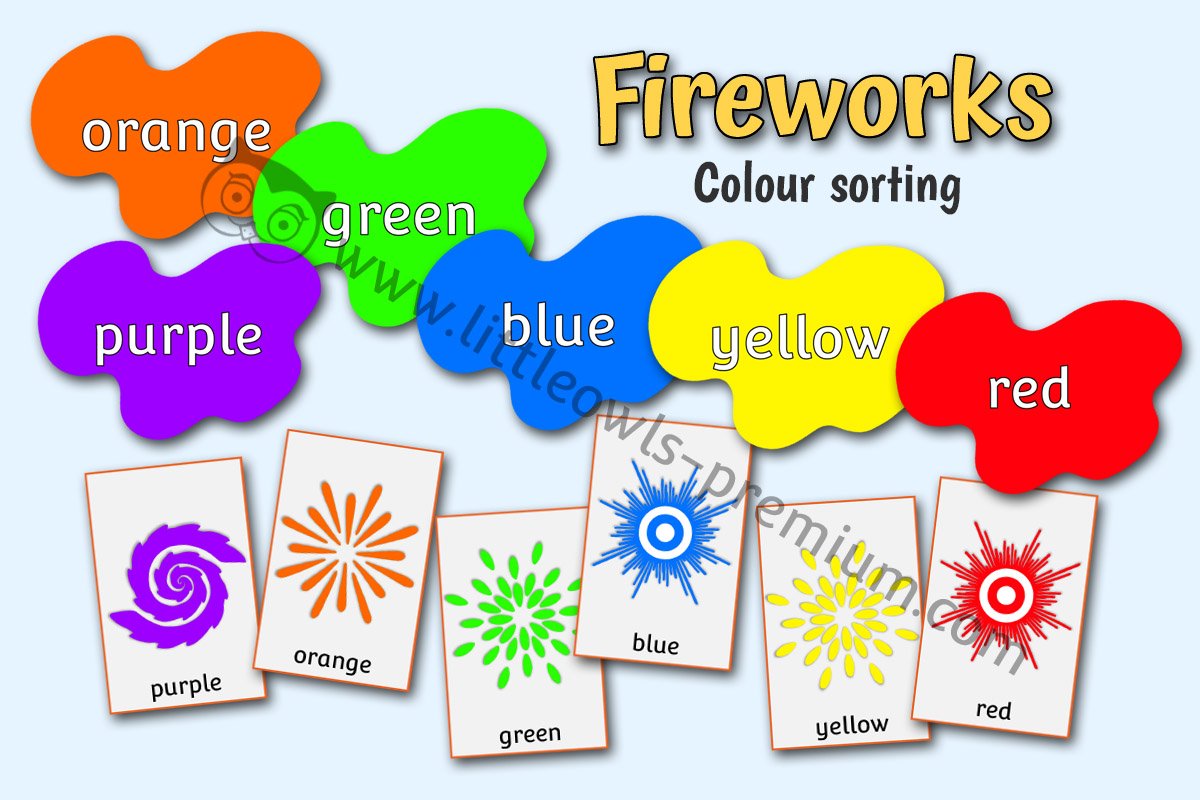
Match firework cards to six coloured splats. Select fewer colours when useful and build colour vocabulary through a simple sorting game.
Suggested use: Toddlers with adult support · Preschool · Reception
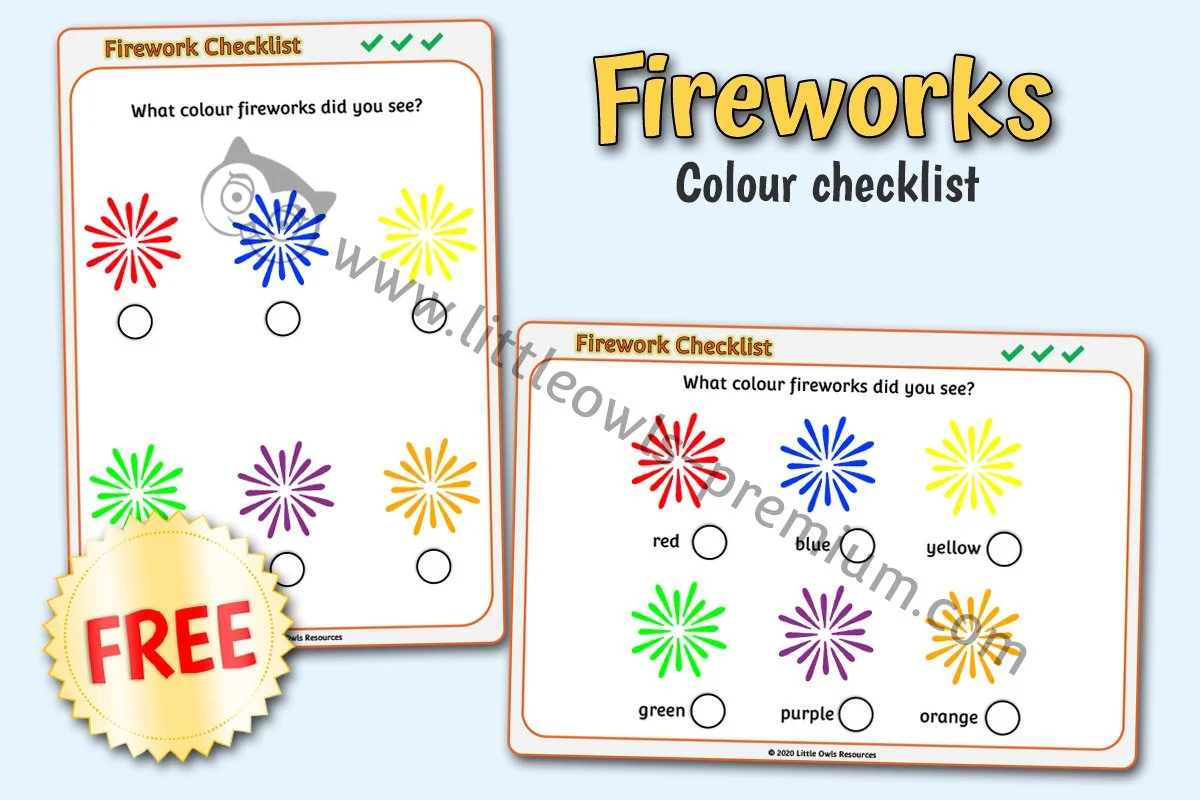
Try a colour-spotting checklist with pictures, a recording or a prepared colour hunt. Tick the colours together and talk about what you notice.
Suggested use: Toddlers with adult support · Preschool · Reception
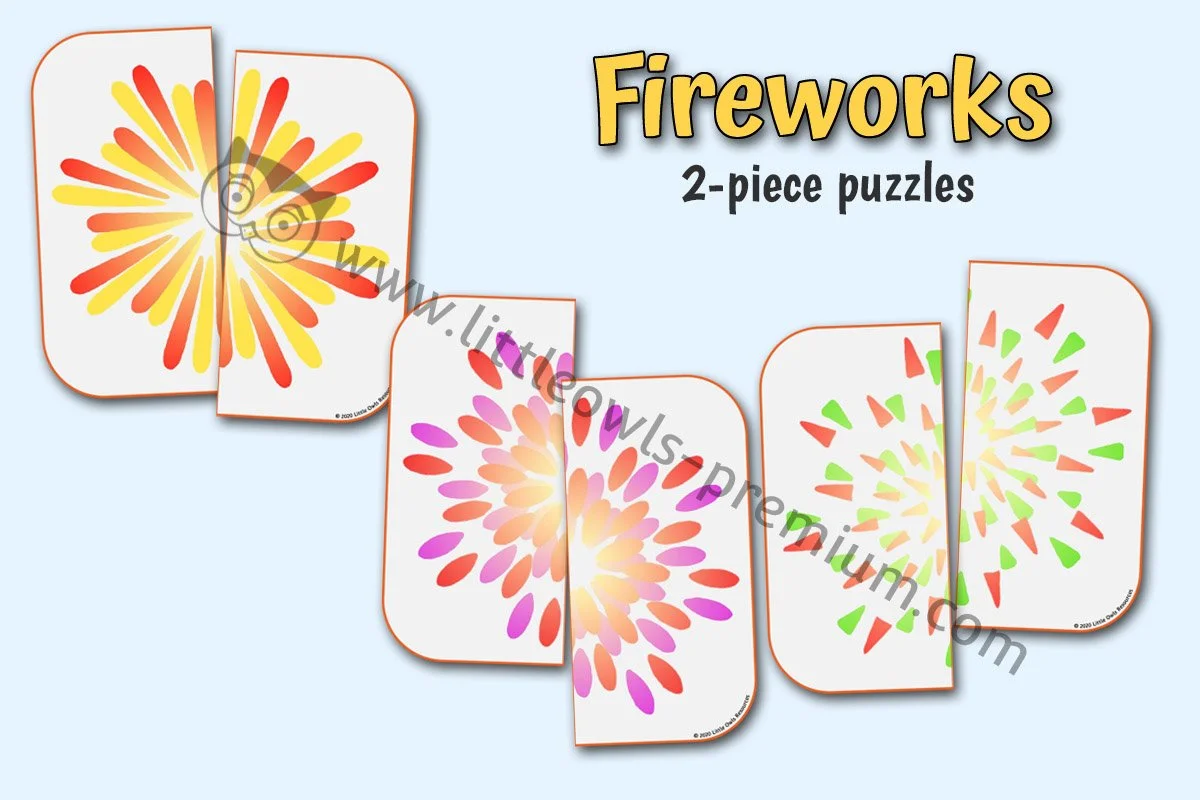
Match two halves of a firework burst. These 11 simple puzzles encourage close looking at colours, patterns, similarities and differences.
Suggested use: Toddlers with adult support · Preschool · Reception
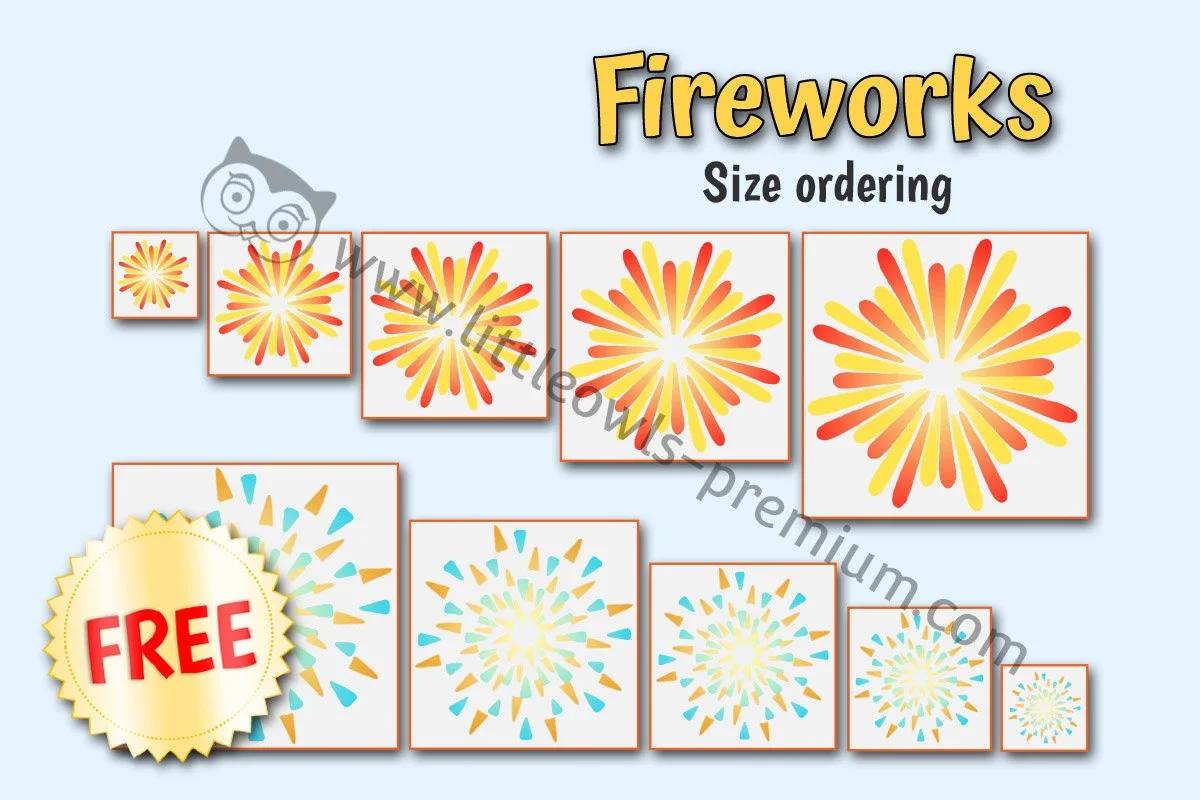
Try arranging firework pictures by size and talk about big, small, bigger and smaller.
Suggested use: Toddlers with adult support · Preschool · Reception
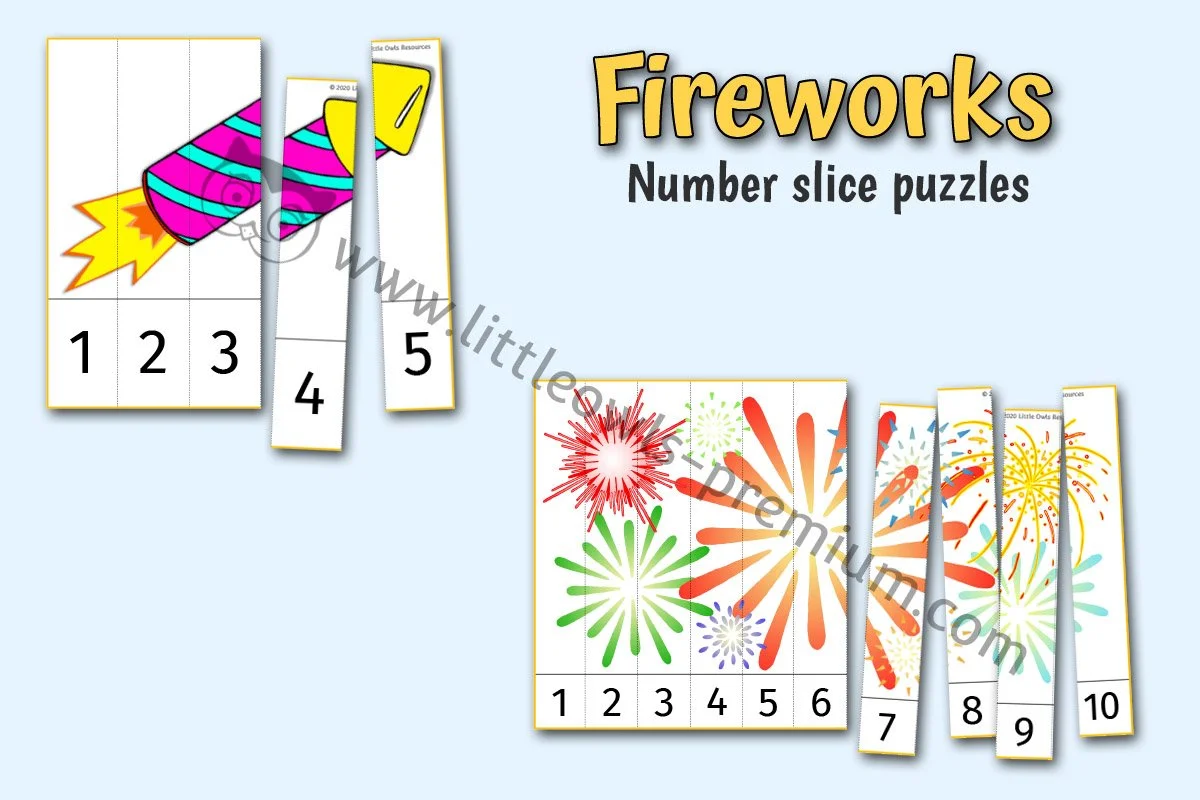
Order the numbered strips to rebuild a firework picture. Choose the 1–5 or 1–10 puzzles to suit the numbers children are exploring.
Suggested use: Preschool · Reception
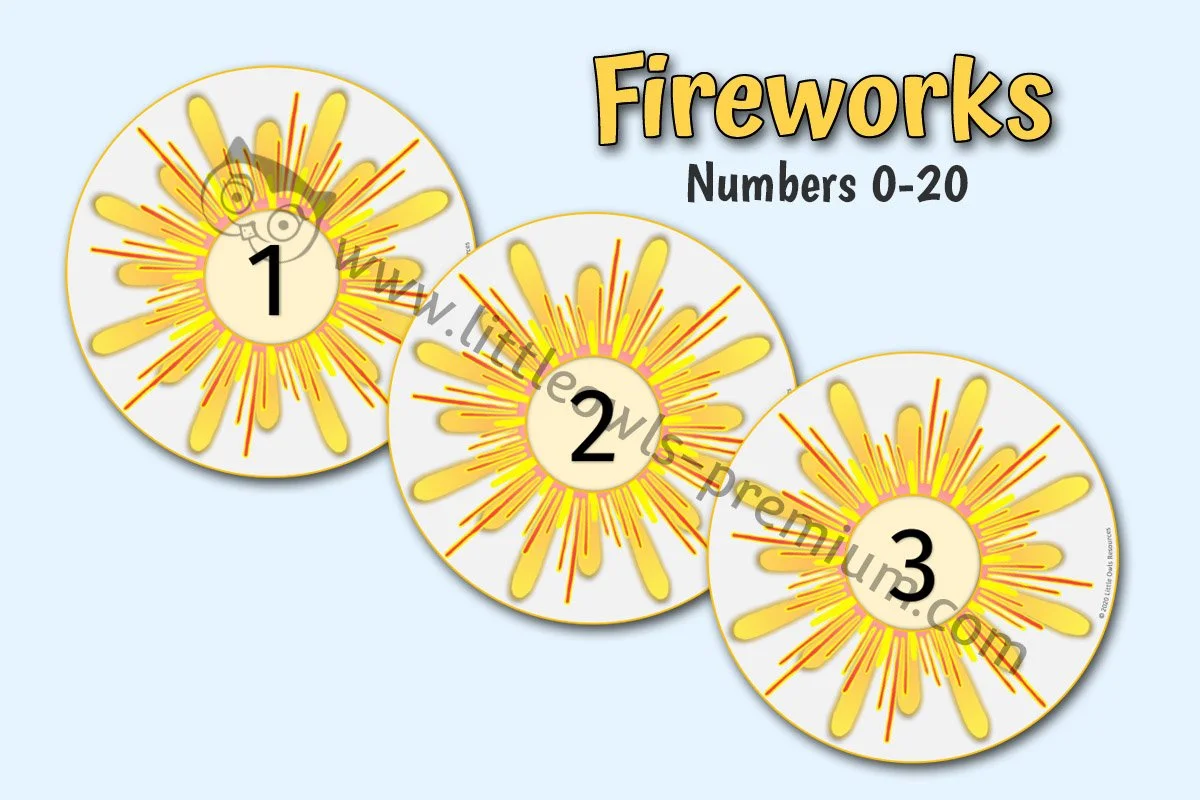
Firework numerals for a number line, ordering and missing-number games, or matching a chosen number to a collection of objects.
Suggested use: Preschool · Reception · Selected KS1 uses
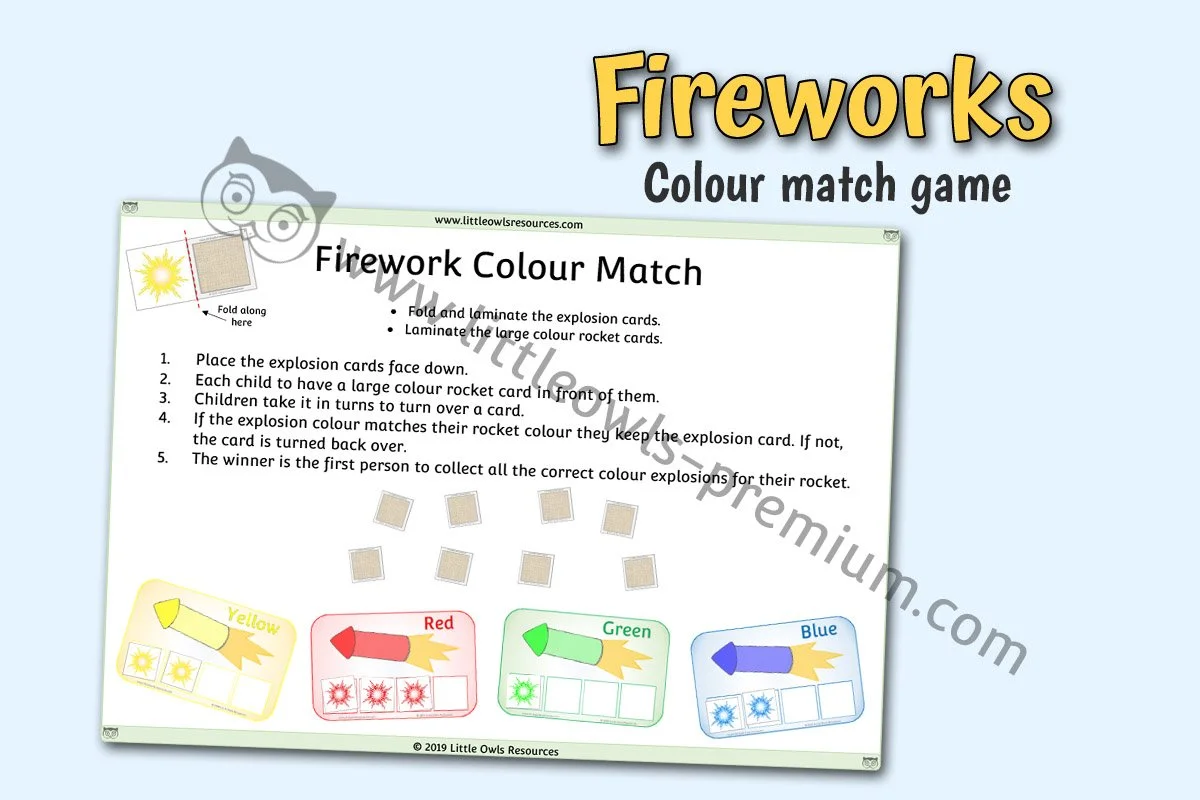
Match each firework burst to the rocket of the same colour. Play together to practise colour recognition and taking turns.
Suggested use: Toddlers with adult support · Preschool · Reception
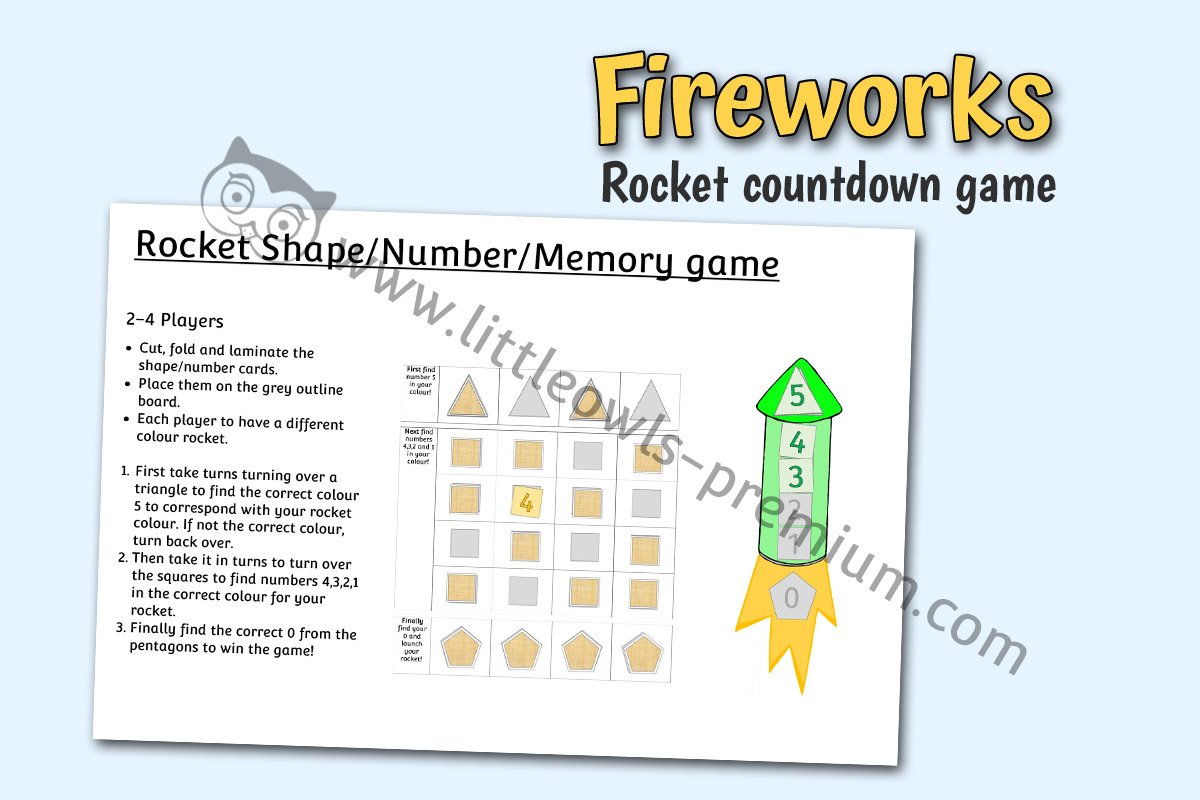
Build rockets in a memory game that brings together turn taking, shape recognition and number ordering. Add a firework sound when a rocket is complete.
Suggested use: Preschool · Reception
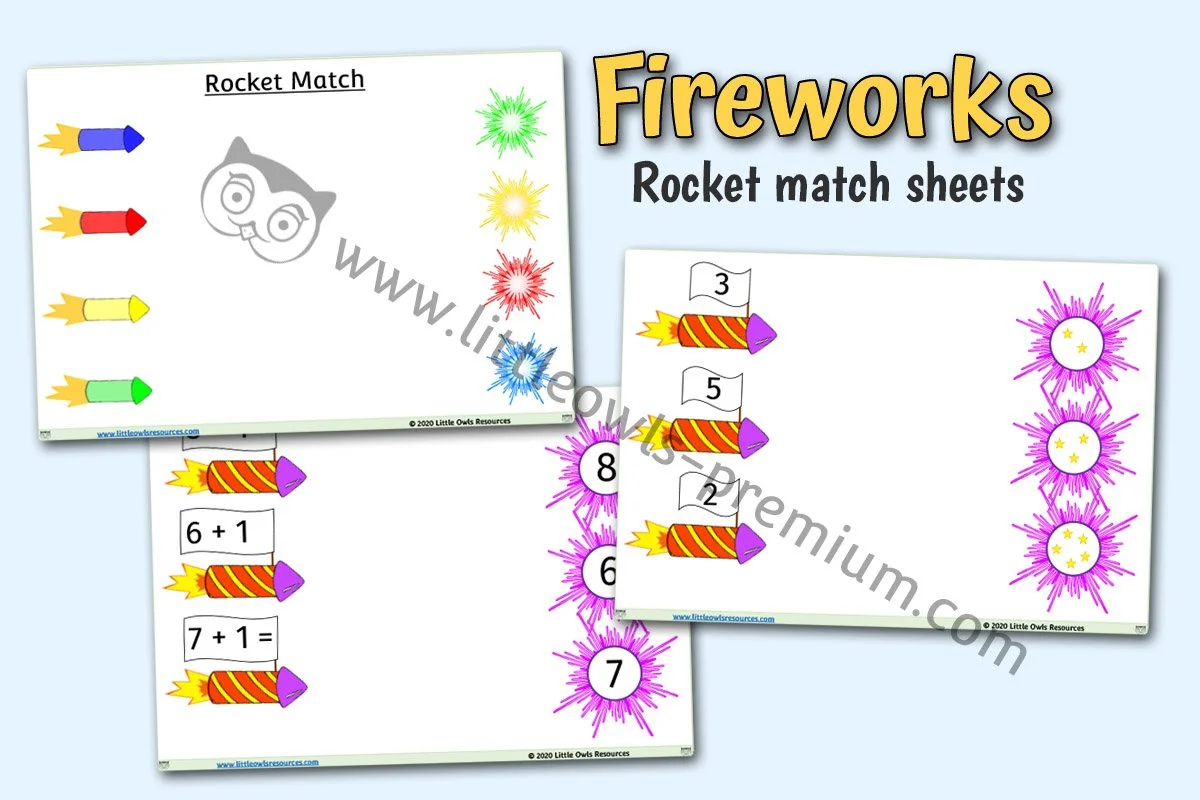
Match rockets and bursts by colour, then explore one-to-one counting and finding one more using the progressively varied sheets.
Suggested use: Preschool · Reception
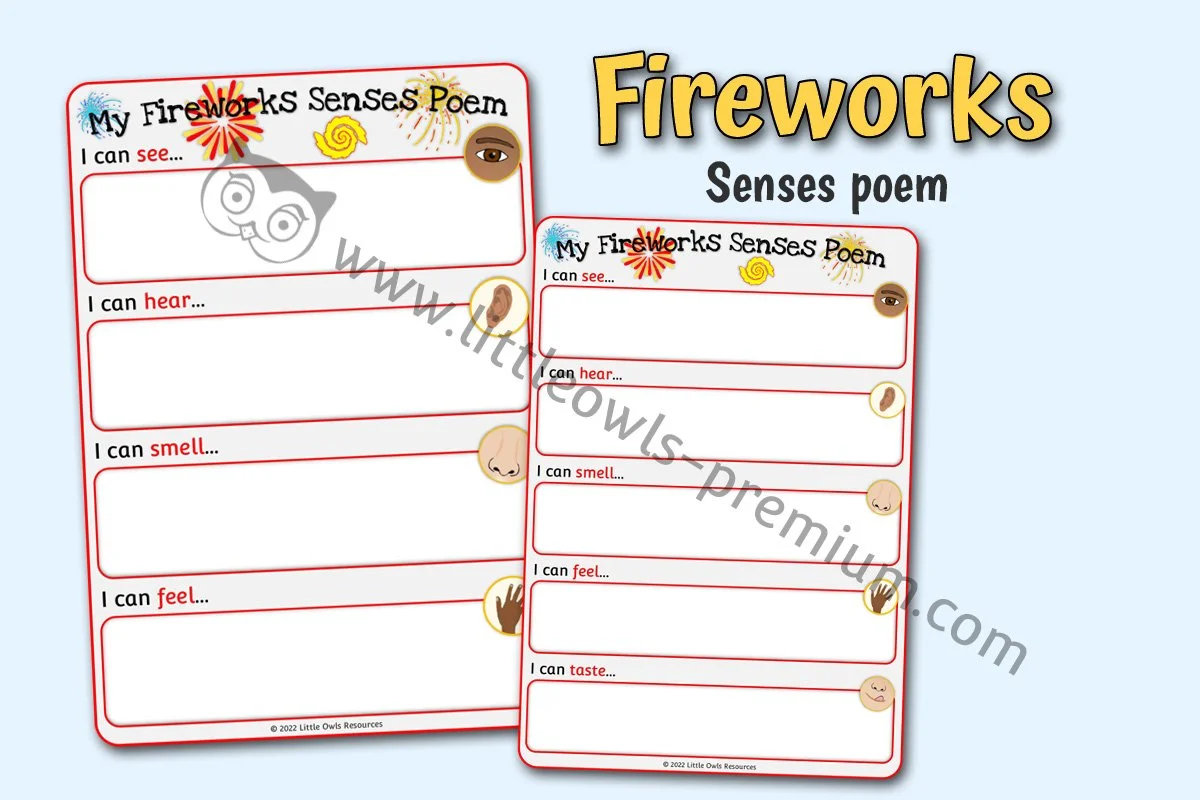
Use the senses prompts to talk, draw, make marks or write descriptive words and sentences about fireworks. Adults can scribe children’s ideas.
Suggested use: Preschool · Reception · Selected KS1 uses
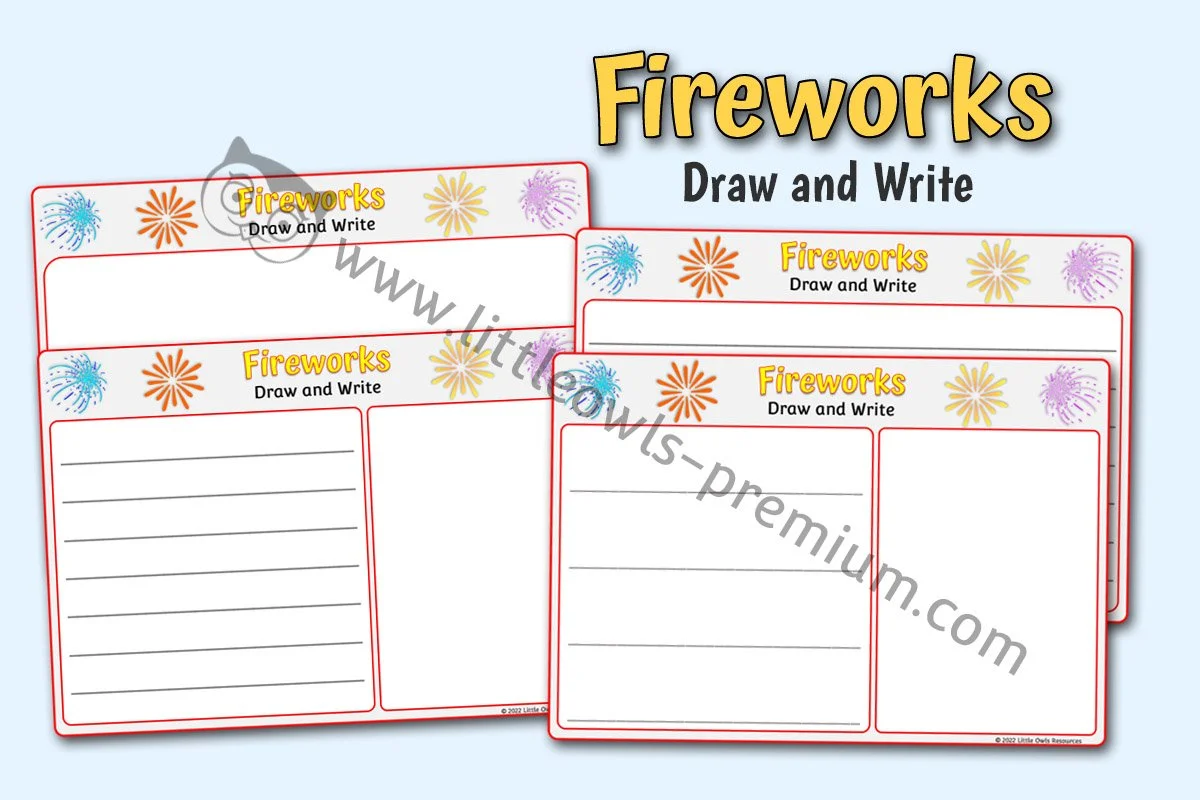
Drawing and writing sheets offer different amounts of space for children to record a firework experience through pictures, marks or words.
Suggested use: Preschool · Reception · Selected KS1 uses
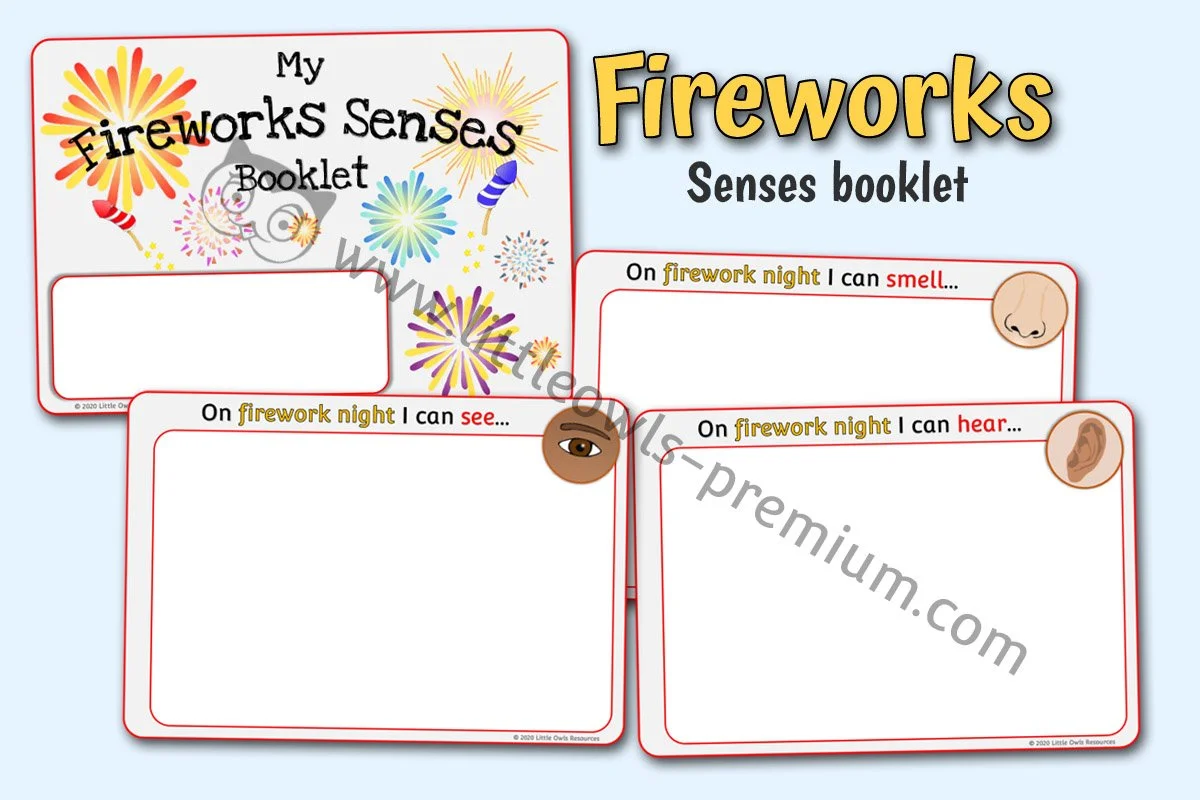
Invite children to draw, make marks or write about their senses. Use the prompt pages separately or combine them into a small booklet.
Suggested use: Preschool · Reception · Selected KS1 uses
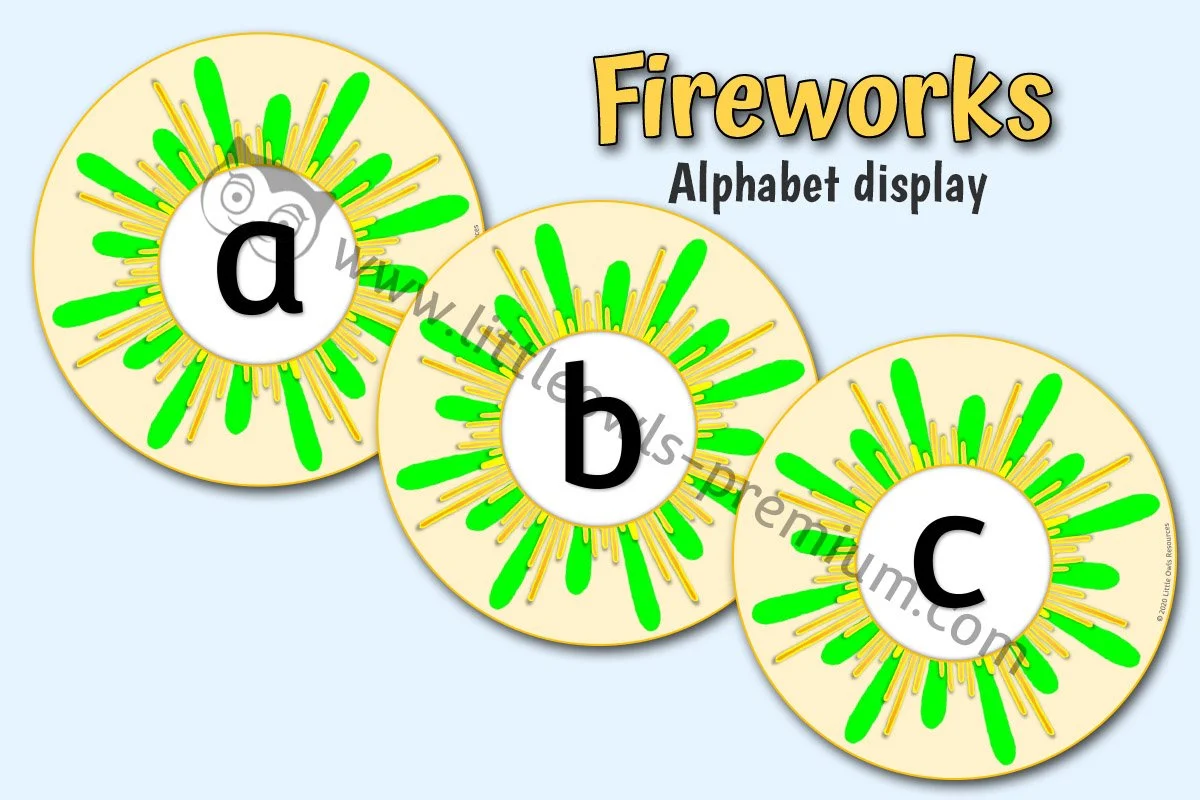
Lower-case letters on firework bursts for displays and letter activities. Choose letters and sounds that children already know for matching games.
Suggested use: Reception · Selected KS1 uses
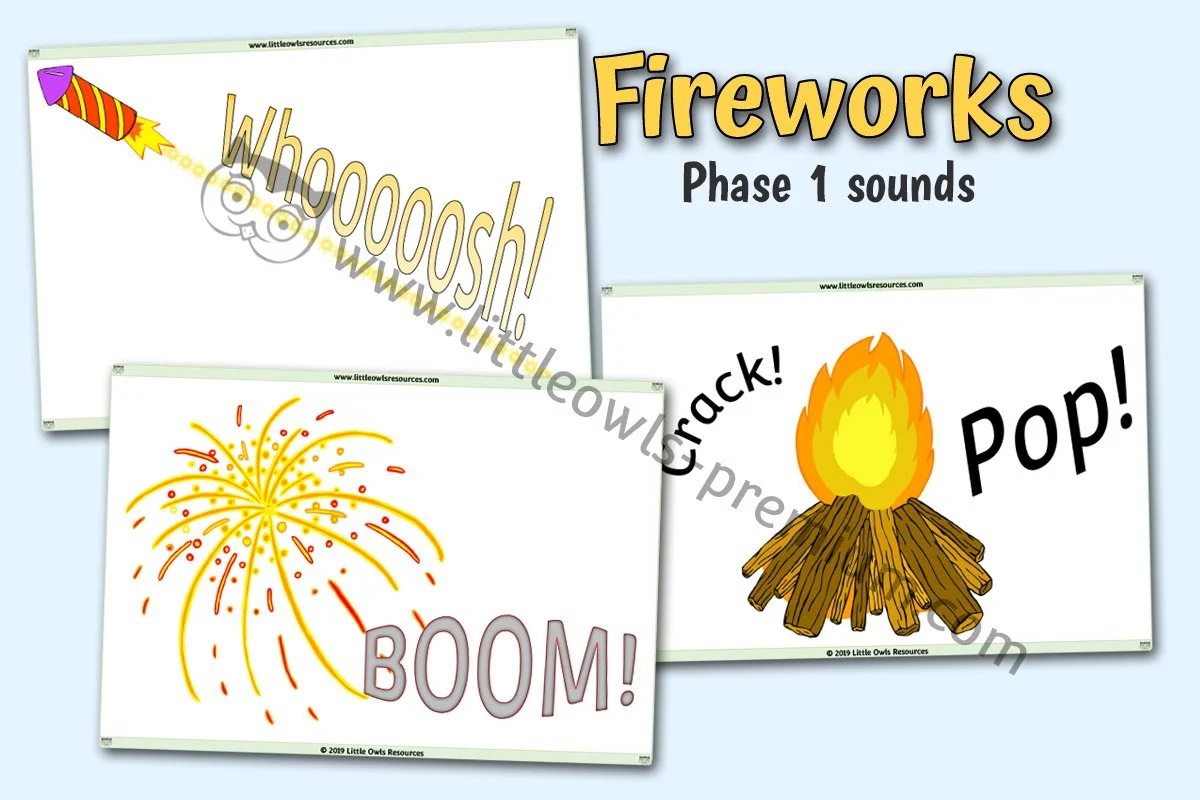
Explore words that sound like fireworks. Use the posters for playful speech sounds and introduce onomatopoeia when children are ready.
Suggested use: Preschool · Reception · Selected KS1 uses
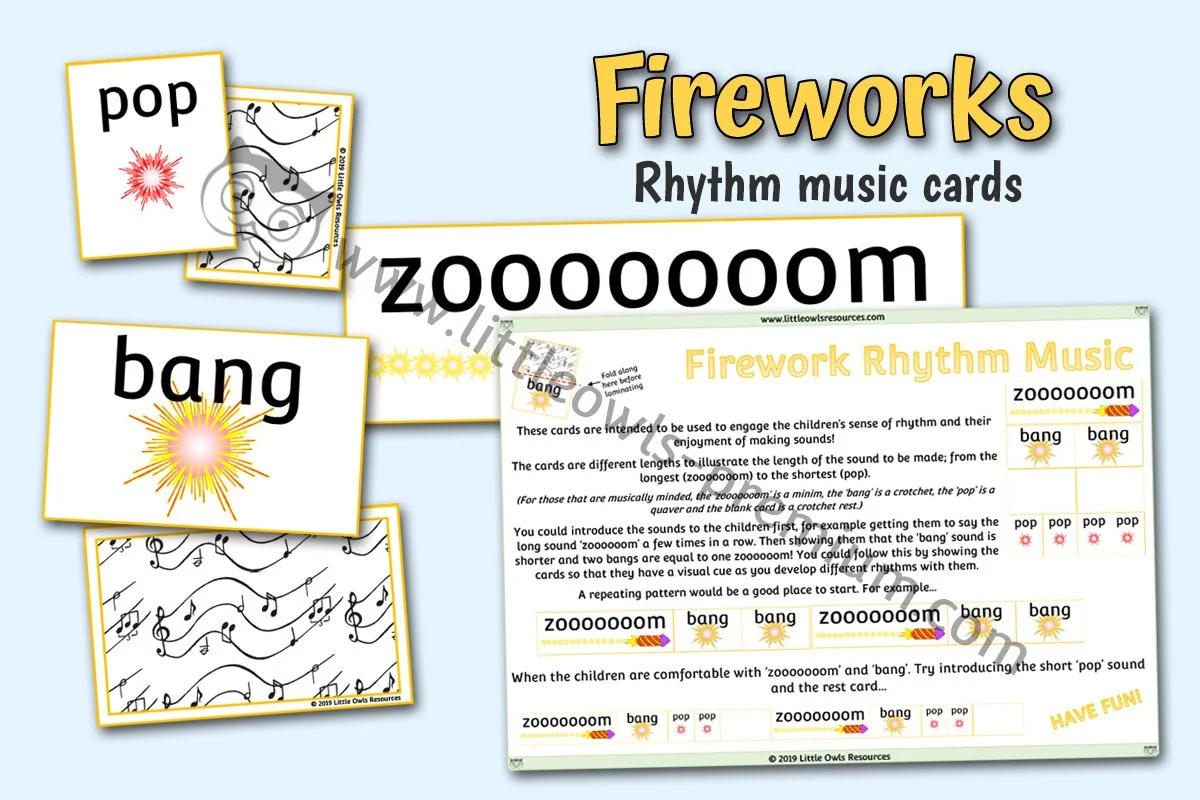
Use sound cards of different lengths as visual cues for short and long sounds. Combine them to make and repeat simple firework rhythms.
Suggested use: Preschool · Reception
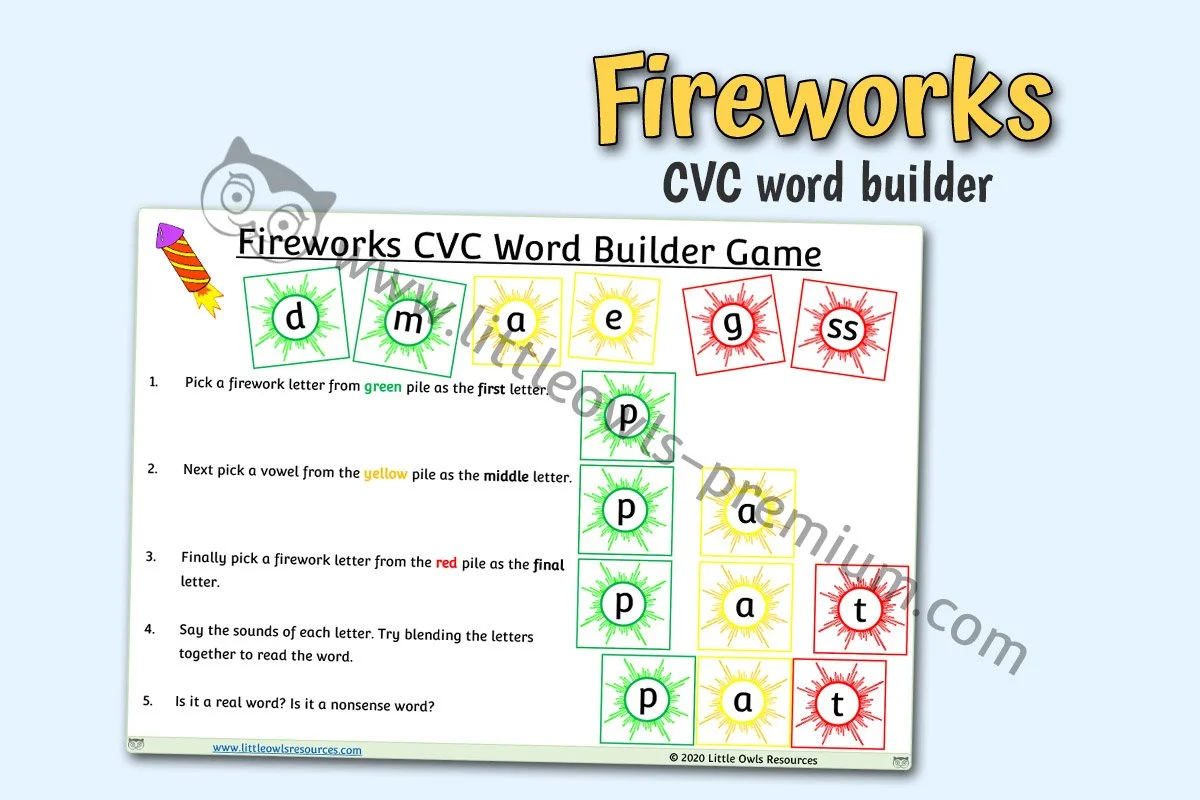
Build and blend simple CVC words in a firework-themed game. Select letter–sound correspondences children have been taught and discuss real and nonsense words.
Suggested use: Reception · Selected KS1 uses
Use safety cards for adult-supported discussion. Check current fire-service guidance when planning a real event; sparklers should not be given to children under five. Read London Fire Brigade’s advice.
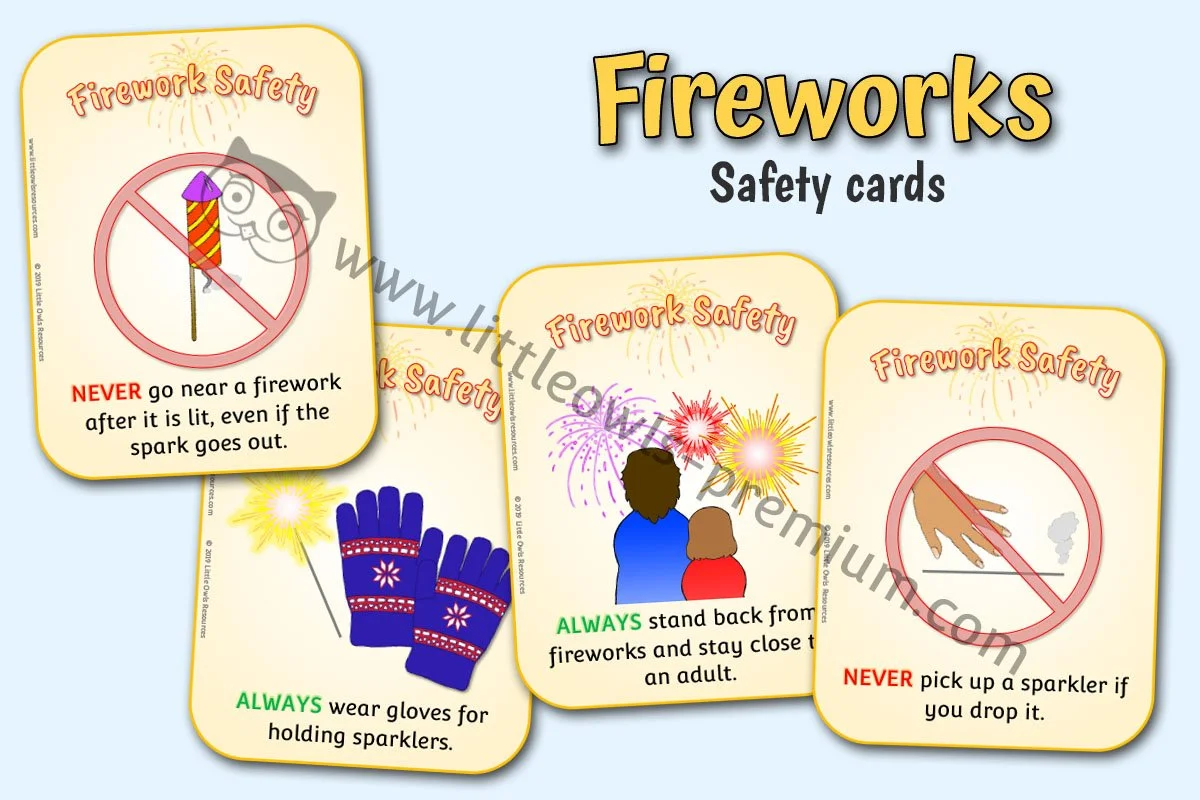
Four illustrated cards for adult-led conversations about firework safety or a display to revisit together.
Suggested use: Preschool · Reception · Selected KS1 uses
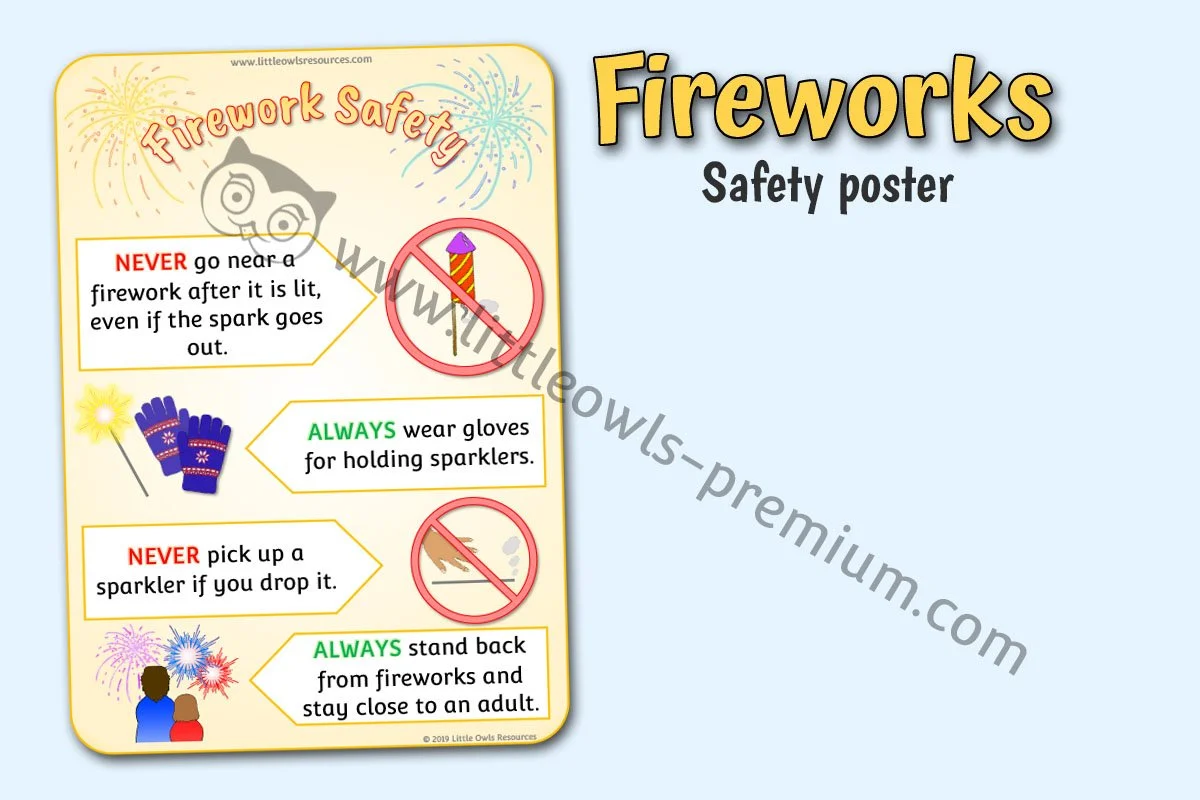
An A4 poster to support adult-led conversations about firework safety and provide a visual reminder in your setting.
Suggested use: Preschool · Reception · Selected KS1 uses
09 / Keep exploring
Follow an interest in light, stories or autumn, or explore another event. These are optional routes to other parts of the site.
You may also like Autumn and Continuous Provision & Play.
Explore the Fireworks collection for colour, sound, movement, creative activities and games.
Explore the hibernation theme overview for EYFS and KS1 planning, provision and resource links.
Explore the Light and Dark theme overview for EYFS and KS1 planning, provision and resource links.
Explore the nocturnal animals theme overview for EYFS and KS1 planning, provision and resource links.
Browse the nursery-rhyme collection for shared singing, rhythm, stories and language activities.
Explore EYFS and KS1 activity ideas for playful language and tongue twisters.
Read EYFS and KS1 ideas for taking play and learning outdoors.
Browse the Remembrance collection for themed resources.
Find EYFS and KS1 activity ideas for talking about road safety.

Explore the St Andrew’s Day theme collection.
Read EYFS and KS1 activity ideas linked to food and sugar awareness.
Browse the Thanksgiving theme collection.
Find EYFS and KS1 activity ideas for kindness and caring for others.
Explore EYFS and KS1 ideas for enjoying nursery rhymes, language and music.
Read EYFS and KS1 activity ideas for exploring, investigating and discovering.
Visit the EYFS Framework page for framework information and support.
Browse the calendar of EYFS and KS1 events, festivals and celebrations.
Find collections for festivals and celebrations across the year.
Browse the wider collection of themes and topics.
Find resources to support imaginative role play in your setting.
Browse organisational resources and practical tools for your setting.
Browse resources through the EYFS areas of learning.
Explore dual-language resources to support communication and inclusion.
10 / Context & ideas
Begin with something meaningful: a short story, a photograph, a book or an experience a family wishes to share. Offer related play alongside simple explanations, and return to children’s questions.
Diwali, also called Deepavali, is a major Hindu festival associated with light and the triumph of good over evil. Stories and customs vary between families and communities. The return of Rama and Sita is one Hindu story connected with the festival.
Jains observe Diwali to remember Mahavira’s final liberation. Sikhs mark Bandi Chhor Divas at this time, remembering Guru Hargobind’s release from imprisonment; it has its own distinct significance.
Background for adults: Hindu American Foundation, Jainpedia and Sikh Coalition.
No. Religious observances, stories and family traditions vary. Use phrases such as “some families”, and welcome contributions without expecting a child or family to speak for a whole community. Children who do not celebrate can learn about others’ experiences without pretending these are their own.
Diwali falls on Sunday 8 November 2026. Celebrations and observances can span several days. Check local community plans if you are arranging a visit or inviting a contribution.
Share a photograph or book showing how lamps and rangoli are used, then offer drawing, collage, dough or suitable loose parts. Children can explore shapes and patterns without reproducing a fixed finished example. The lamp templates and paper activities do not require a flame.
For babies, prioritise familiar relationships, shared looking and responsive interaction. This page does not present printable tasks as baby activities. For toddlers, choose simple shared experiences with colour, marks and suitable materials. The toddler planner provides an age-specific starting point; story sequencing and written tasks are not expectations for this age.
No. Choose a few relevant additions when they connect with children’s experiences or questions. A story, a design invitation or a greeting card can sit alongside familiar provision. Fireworks activities are optional, and children can take part through quiet looking, making or conversation.
The four resources in Start with something free are available with Free Access. The Diwali topic listings offer editable Word and PDF versions; check each resource for its available formats. All Access membership includes every resource on the site.
All Access membership unlocks every resource on the site. Free Access lets you explore and download a selection of free resources. Explore membership options.
Already a paying member? You have sitewide access. There’s no need to change plans or subscribe again. Read our FAQs.
Resources created by Little Owls Resources.