
Free Access
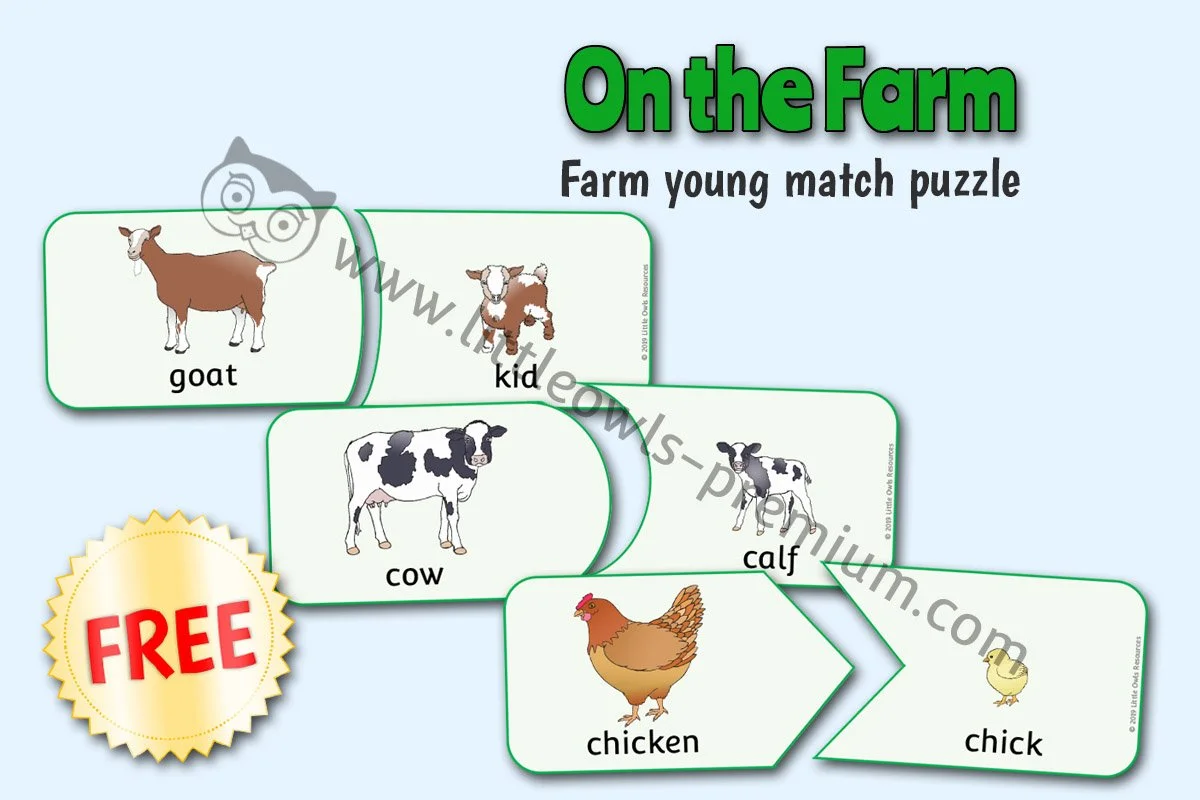
Farm Animals & Their Young Matching Puzzles — Free Sample
Match pictures of farm animals with their young, and talk about similarities, differences and animal names. This is the free sample edition.

Your Custom Text Here
Early Years Seasonal Environment & Invitation Printable Provision
Theme collection · EYFS & KS1
Explore Spring through growing things, wildlife, colour, movement and children's own discoveries. Find seasonal printables, practical activities and planning to support play and conversation.
Begin with what children notice: a new leaf, a visiting bird, a seed beginning to grow or a change in the weather. Choose resources that connect with those experiences and the spaces children already use.
A few relevant additions can extend familiar provision. Every area does not need a Spring theme, and children can take the play in their own direction.
Find your starting point
Try a resource, activity or age. Choose a result to see its cover here, then open the resource when you are ready. Search includes the resources and related collections shown on this page.
Search becomes available when JavaScript is enabled. You can always browse using the section choices above.
01 / Explore the theme
Explore Spring with Free Access resources for observation, growing, animals, making and play. Each card describes the free version you can access; samples remain clearly identified.
Match pictures of farm animals with their young, and talk about similarities, differences and animal names. This is the free sample edition.
Suggested use: Toddlers with adult support · Preschool · Reception
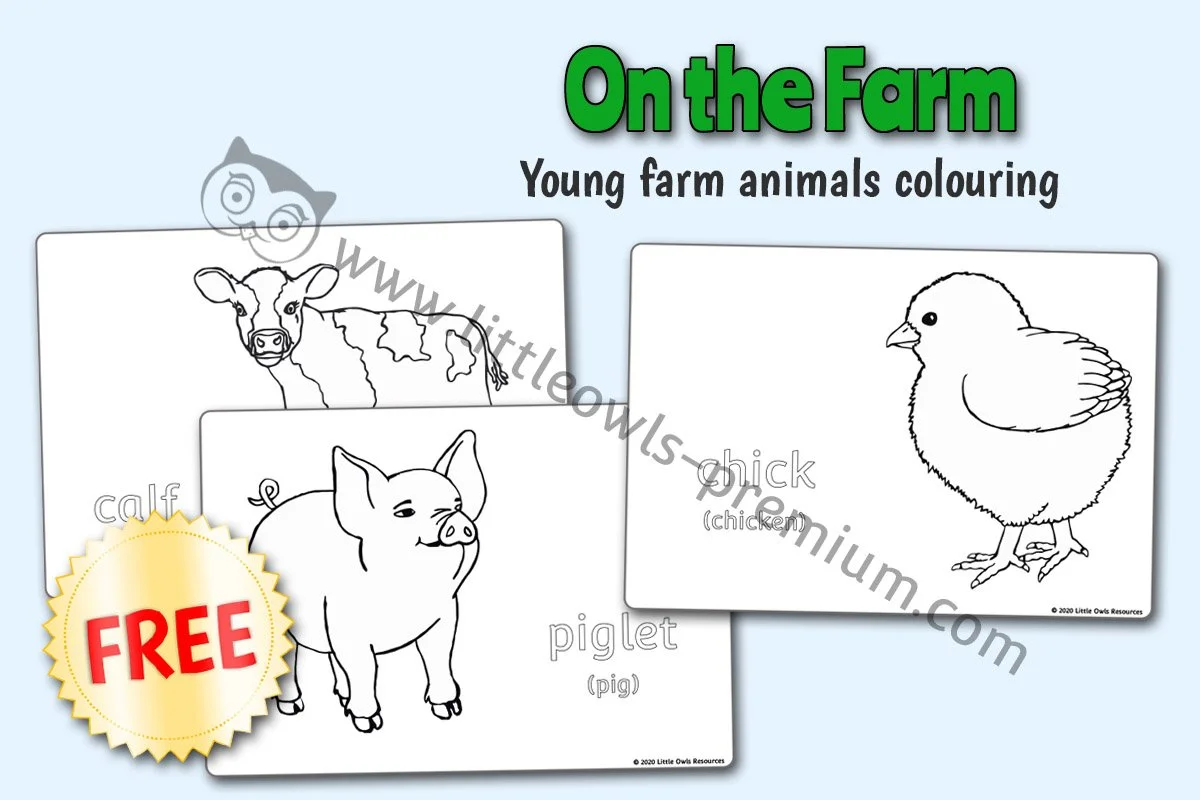
Colour pictures of young farm animals and talk about their names. The free sample includes labelled outlines that can also prompt making and conversation.
Suggested use: Preschool · Reception
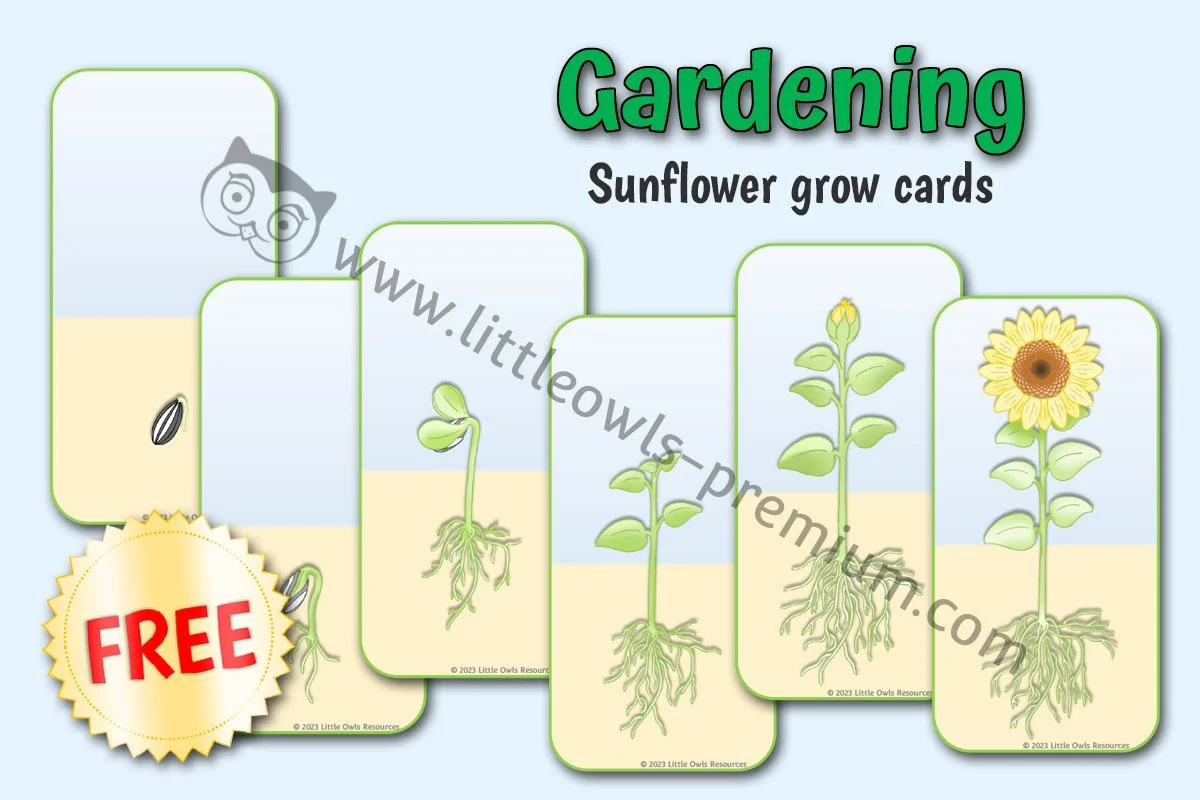
Arrange six illustrated stages of sunflower growth. Use the free sample for shared sequencing, an interactive display or a cut-and-stick activity.
Suggested use: Preschool · Reception · Selected KS1 uses
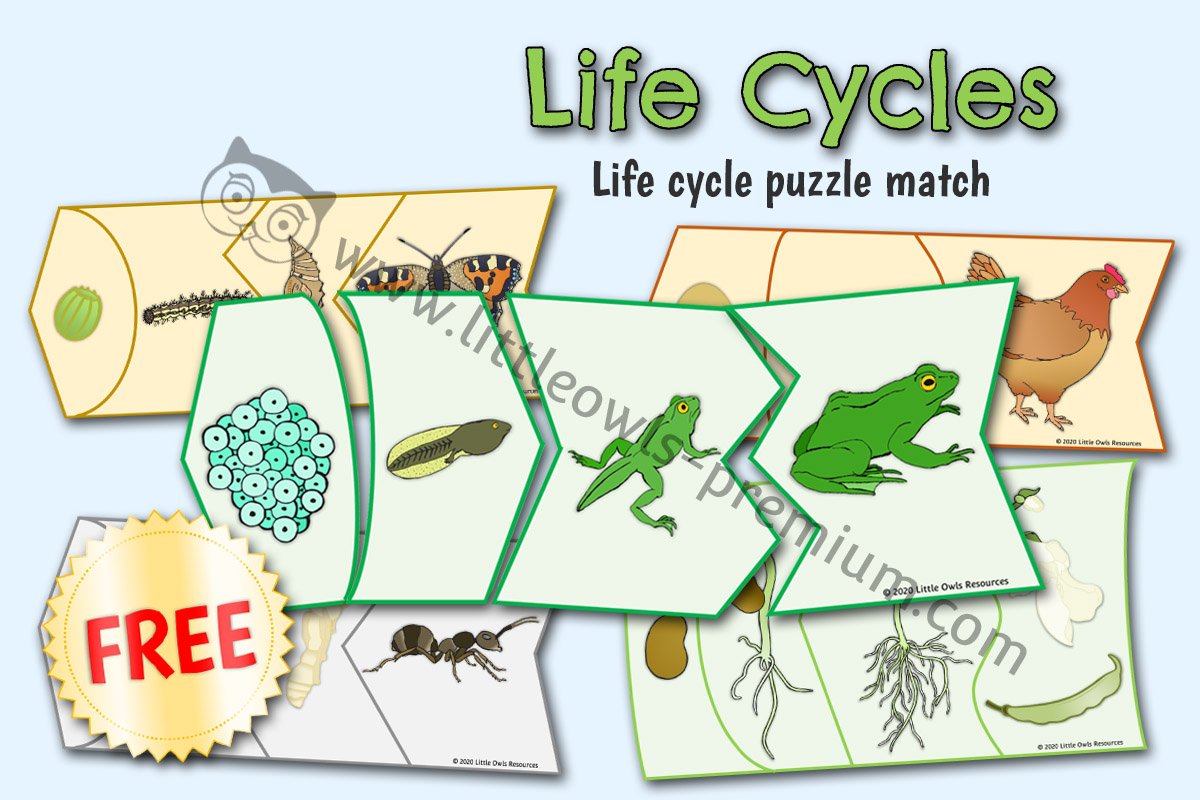
Explore how a life cycle continues by moving the illustrated puzzle pieces around. Use the free sample with adult-supported sequencing and conversation.
Suggested use: Preschool · Reception · Selected KS1 uses
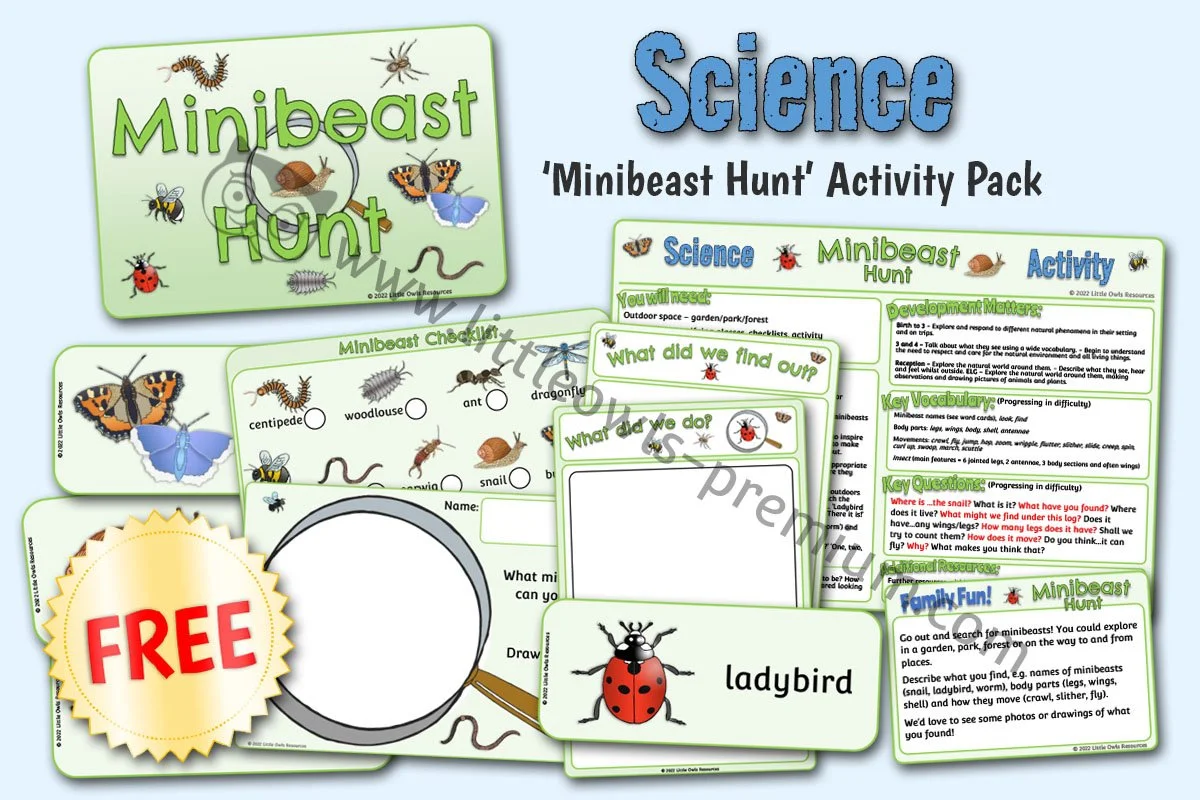
A free sample of activity guidance and supporting printables for a minibeast hunt, including observation, vocabulary and mark-making prompts.
Suggested use: Preschool · Reception
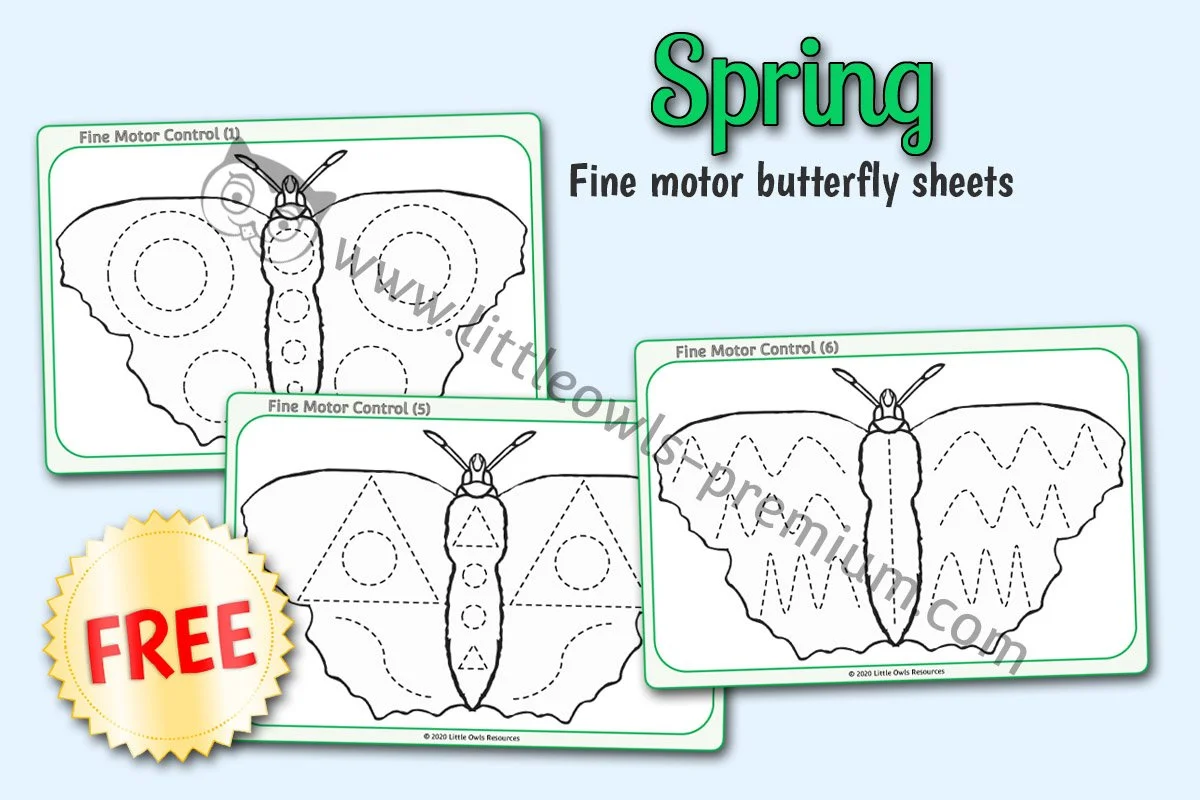
Follow the butterfly patterns with a pencil, or laminate the free sample sheets for repeated mark making with suitable wipe-clean pens.
Suggested use: Preschool · Reception
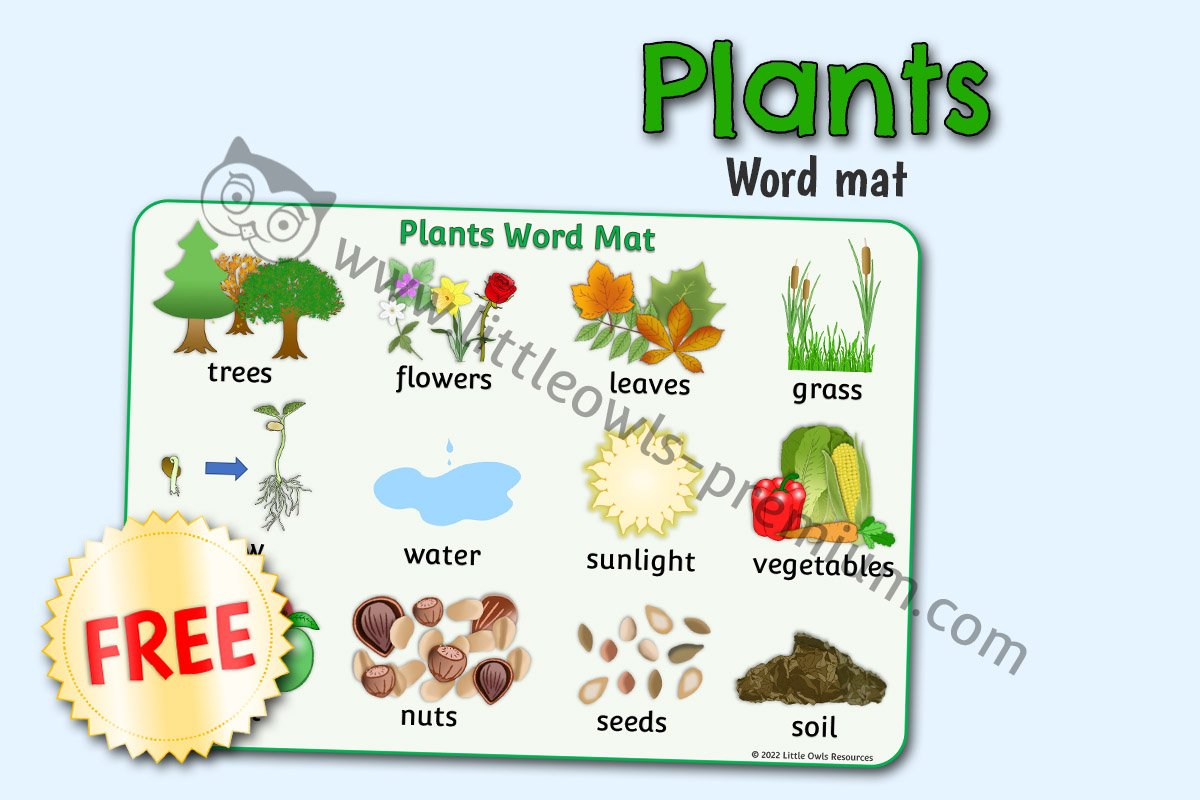
Use the free illustrated plant word mat for shared vocabulary, pointing, drawing and early writing.
Suggested use: Toddlers with adult support · Preschool · Reception · Selected KS1 uses
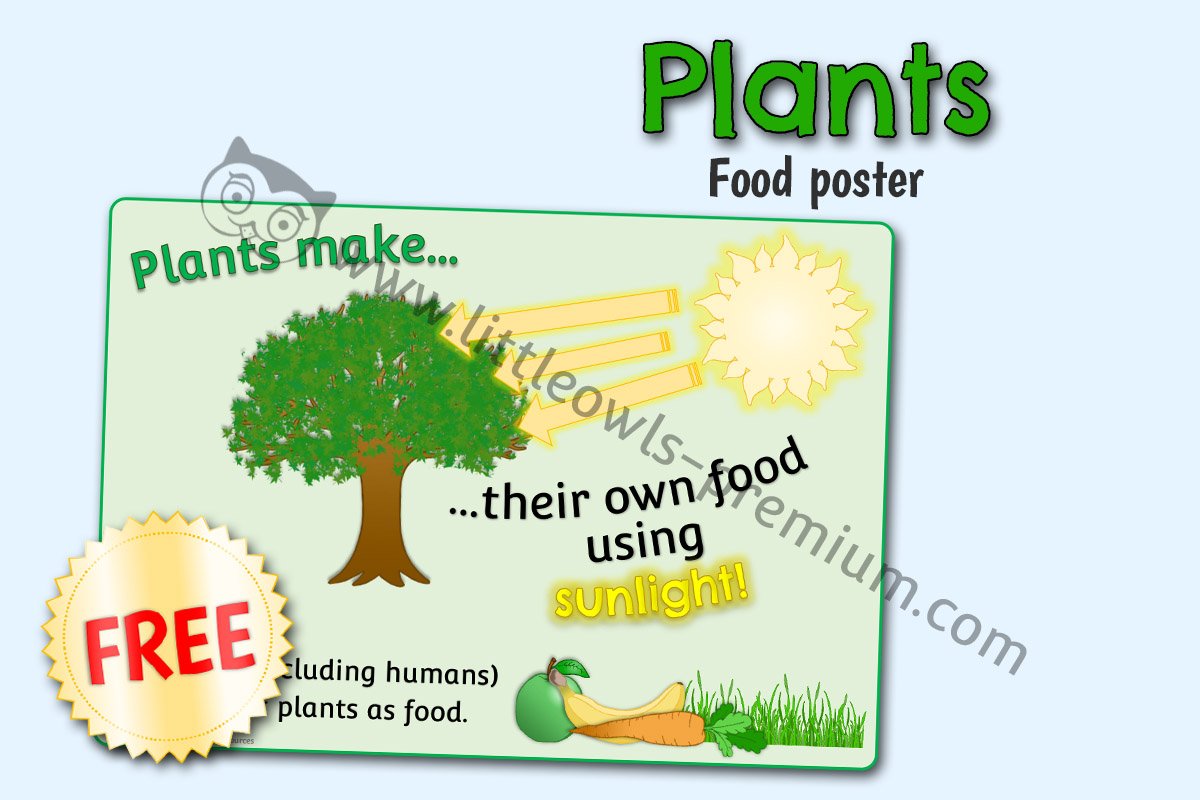
A free introductory poster for adult-supported conversation about plants. Read and discuss its explanation alongside observations of growing plants.
Suggested use: Reception · Selected KS1 uses
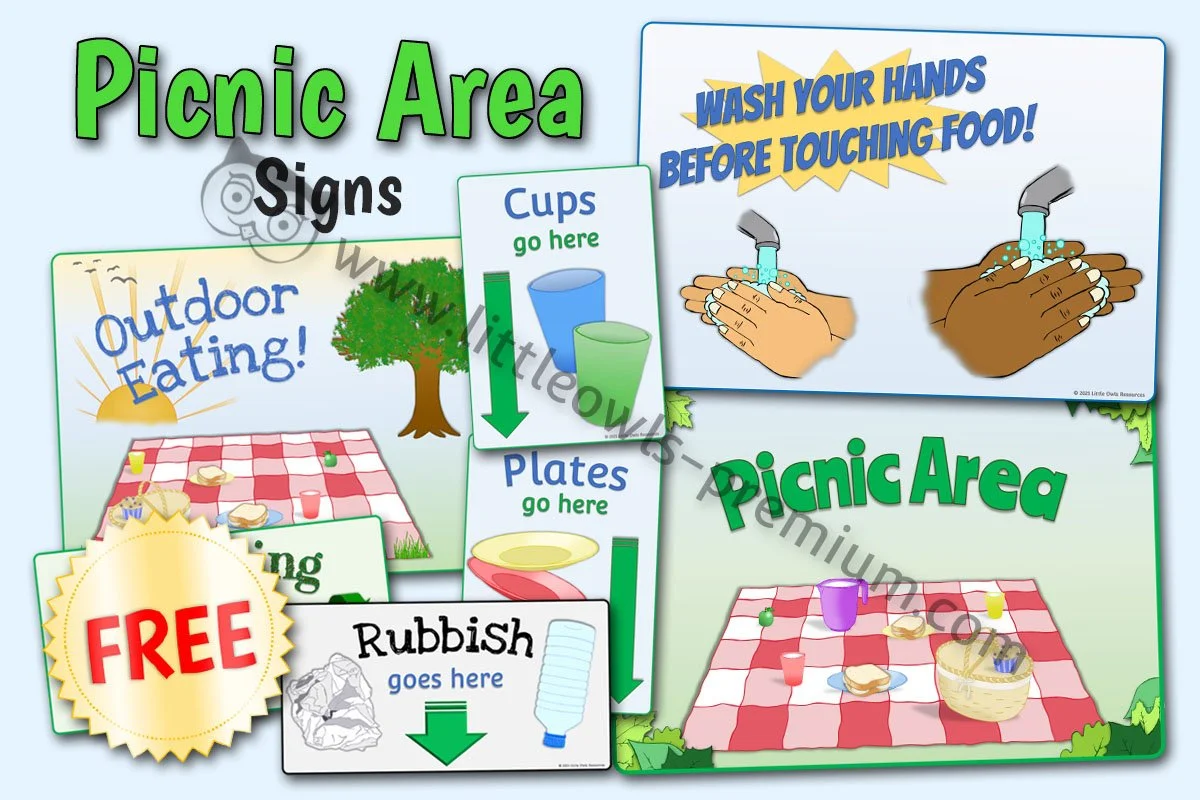
Add a sign to your outdoor picnic space with this free sample. Use it to identify the area and support familiar routines and imaginative play.
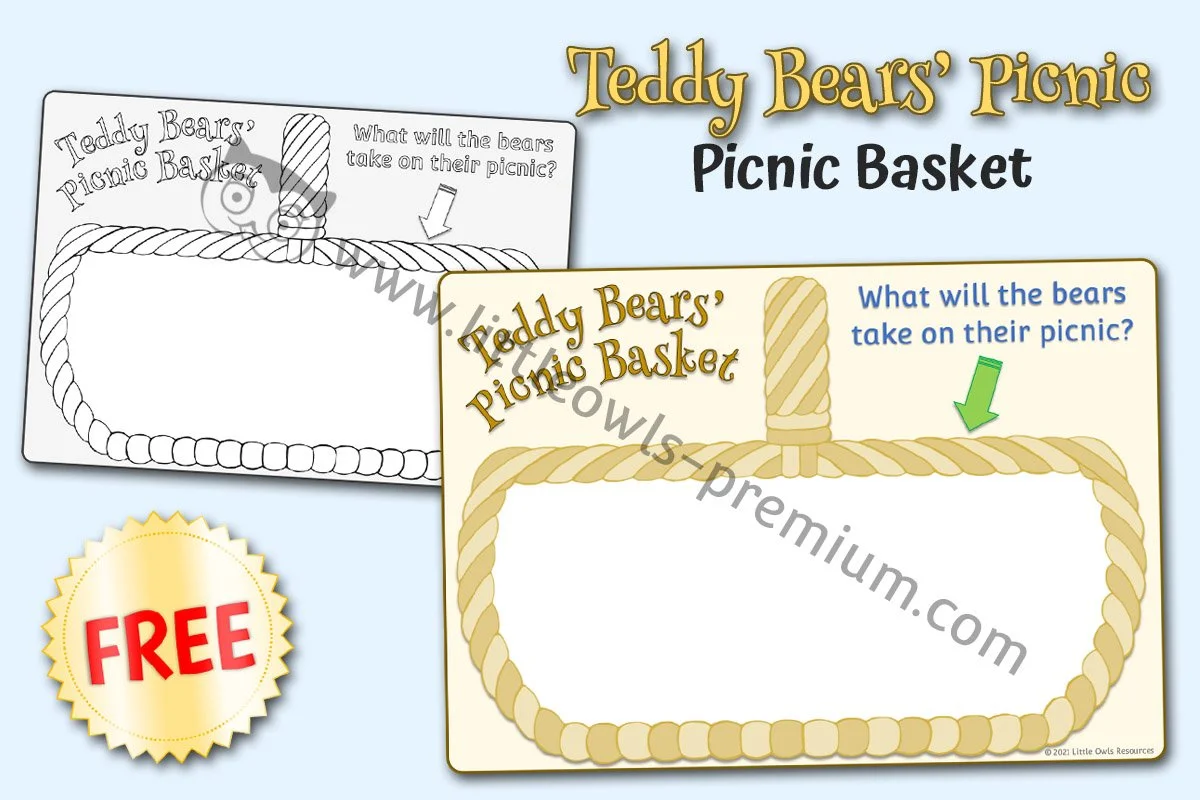
Talk about what the bears might take on a picnic, then draw, make or model items on the free basket mat.
Suggested use: Toddlers with adult support · Preschool · Reception
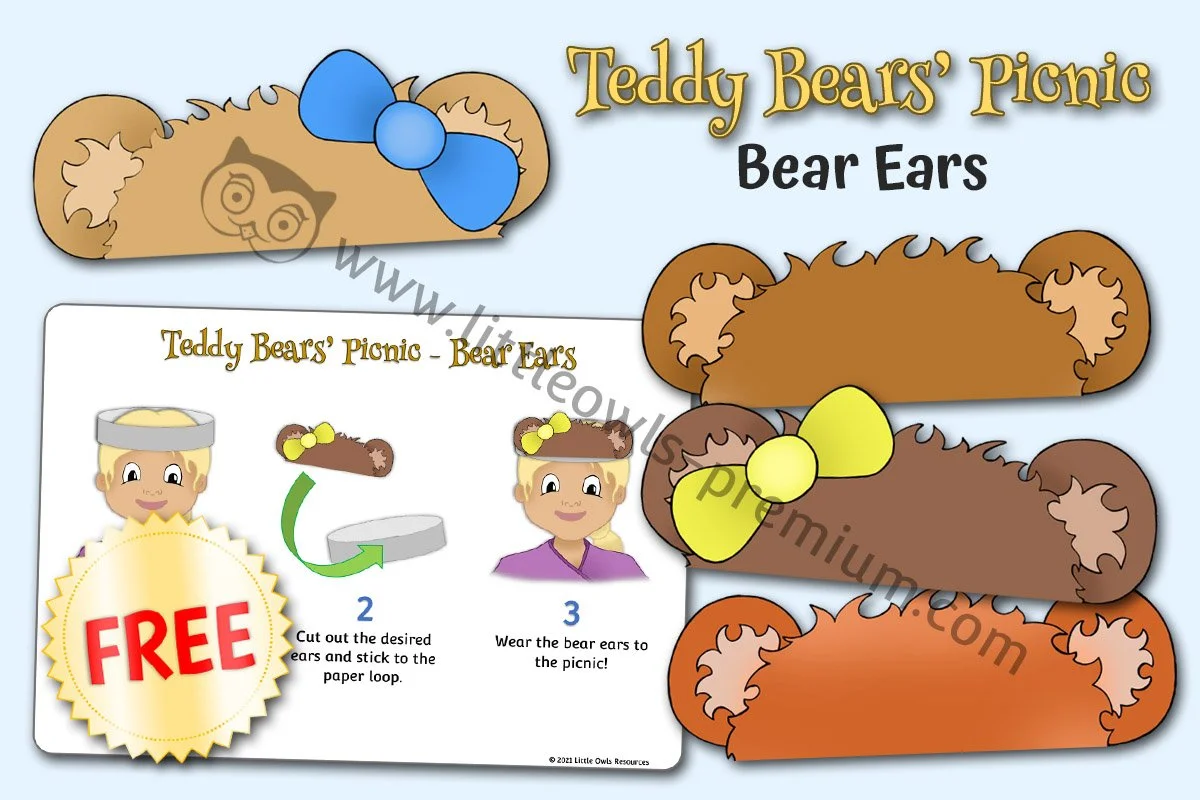
Make bear headbands for a teddy bears’ picnic or role play. An adult can prepare the paper band and help with cutting and assembly.
Suggested use: Toddlers with adult support · Preschool · Reception
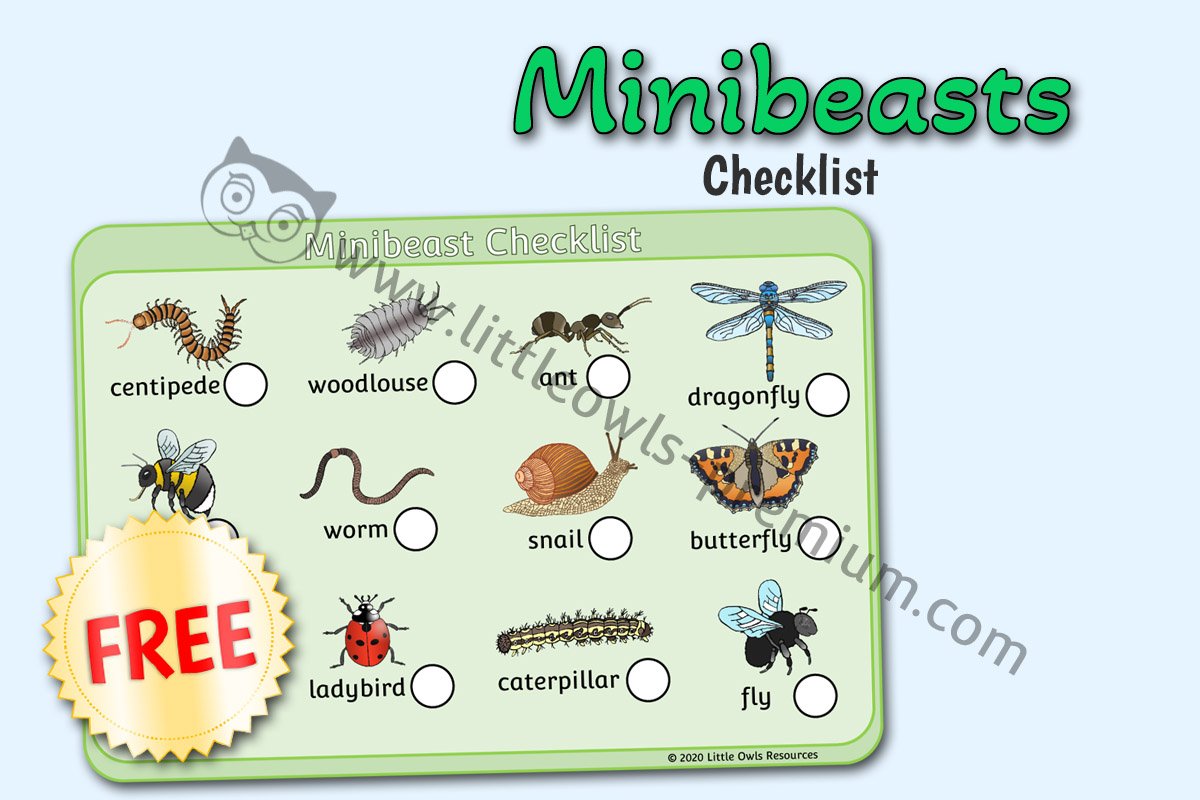
Look for minibeasts outdoors or use the free checklist alongside a minibeast play scene. Share observations and mark what children notice.
Suggested use: Preschool · Reception
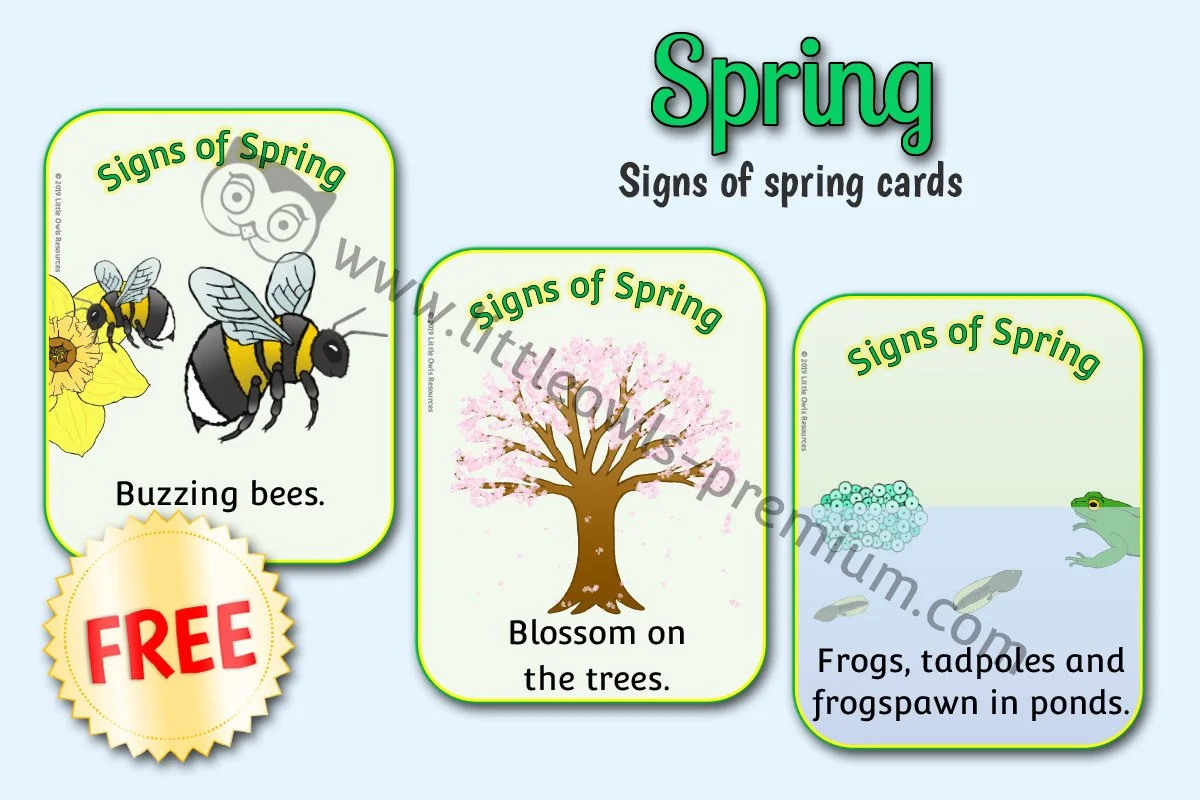
Use the free illustrated cards for seasonal displays, shared picture talk and noticing change. Choose prompts that connect with what children can observe locally.
Suggested use: Toddlers with adult support · Preschool · Reception · Selected KS1 uses
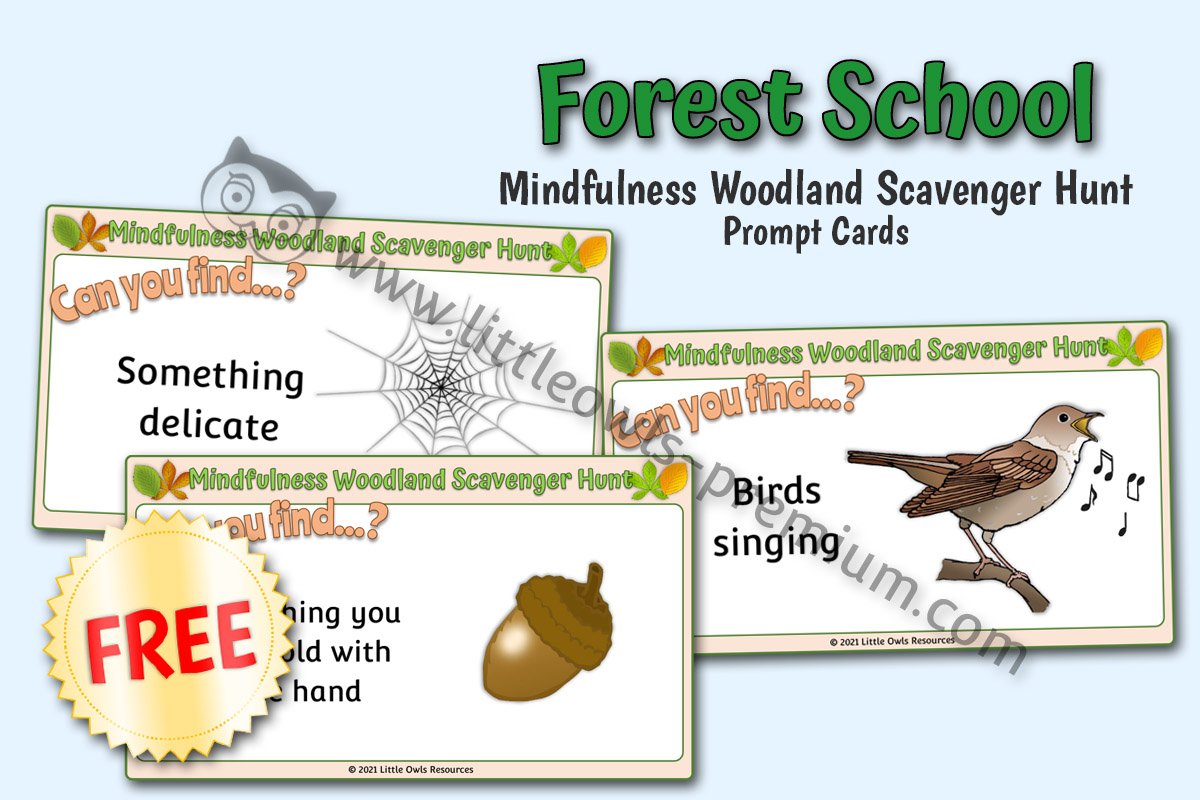
Eighteen prompts for noticing woodland sights, sounds and textures. Choose a few for a slow walk and conversation about what children observe.
Suggested use: Preschool · Reception
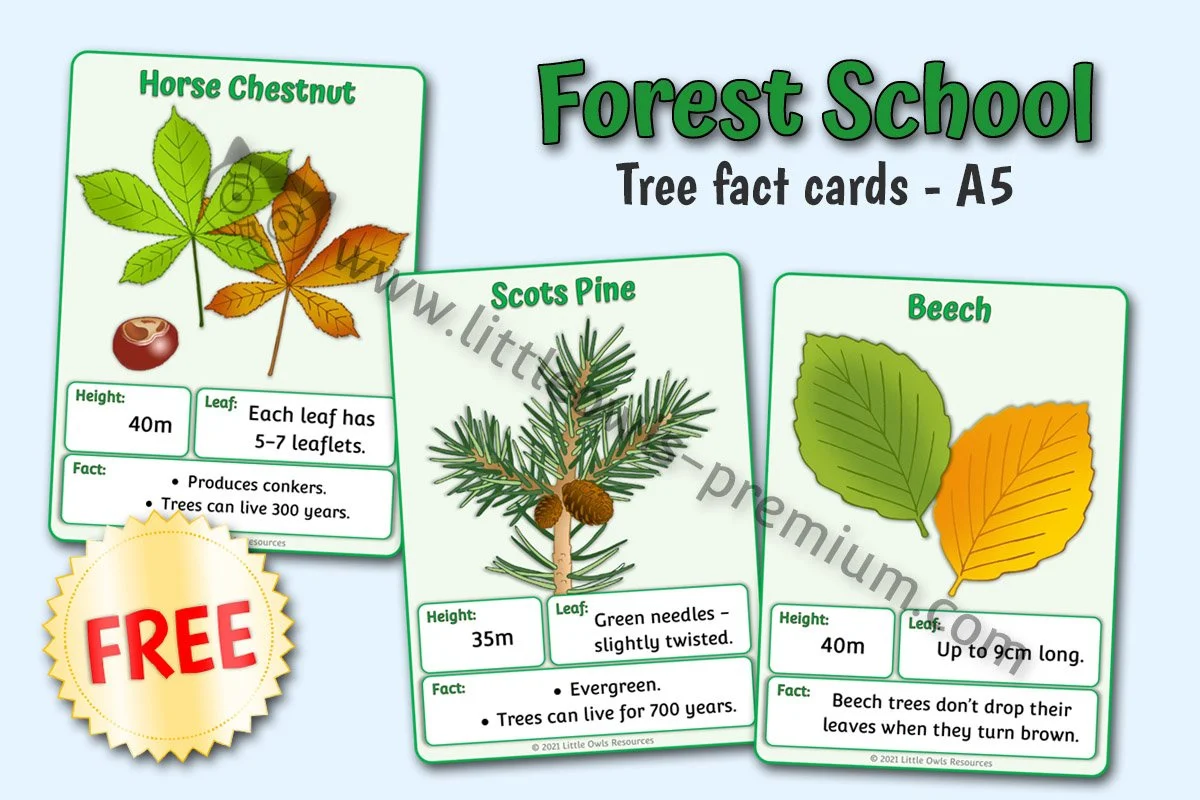
A5 information cards introducing ten woodland trees, with pictures and facts for adult-supported observation and discussion.
Suggested use: Preschool · Reception

A free calendar of special dates and events for March 2027. Check dates and select events relevant to your setting.

A free calendar of special dates and events for April 2027. Check dates and select events relevant to your setting.

A free calendar of special dates and events for May 2027. Check dates and select events relevant to your setting.
02 / Explore the theme
Choose a starting point that connects with your children and setting. Use the resources alongside real experiences, familiar materials, books and conversation, then revisit what captures children's interest.
Look for changes, compare observations and explore sequences of growth. Use pictures and prompts alongside what children can see in your own setting, without expecting every sign of Spring to appear at the same time.
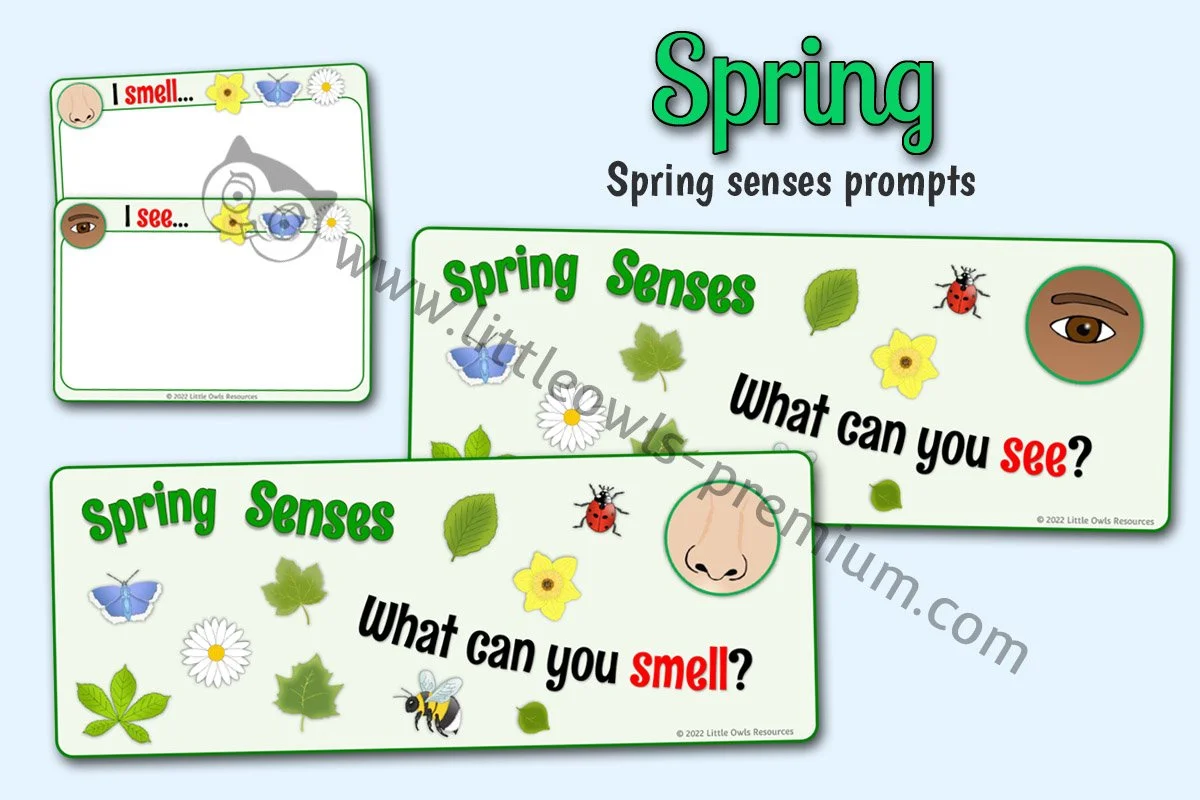
Use mini-banners to start conversations about spring experiences and the senses. Small accompanying note sheets give children space to draw, make marks or write about what they notice.
Suggested use: Preschool · Reception · Selected KS1 uses
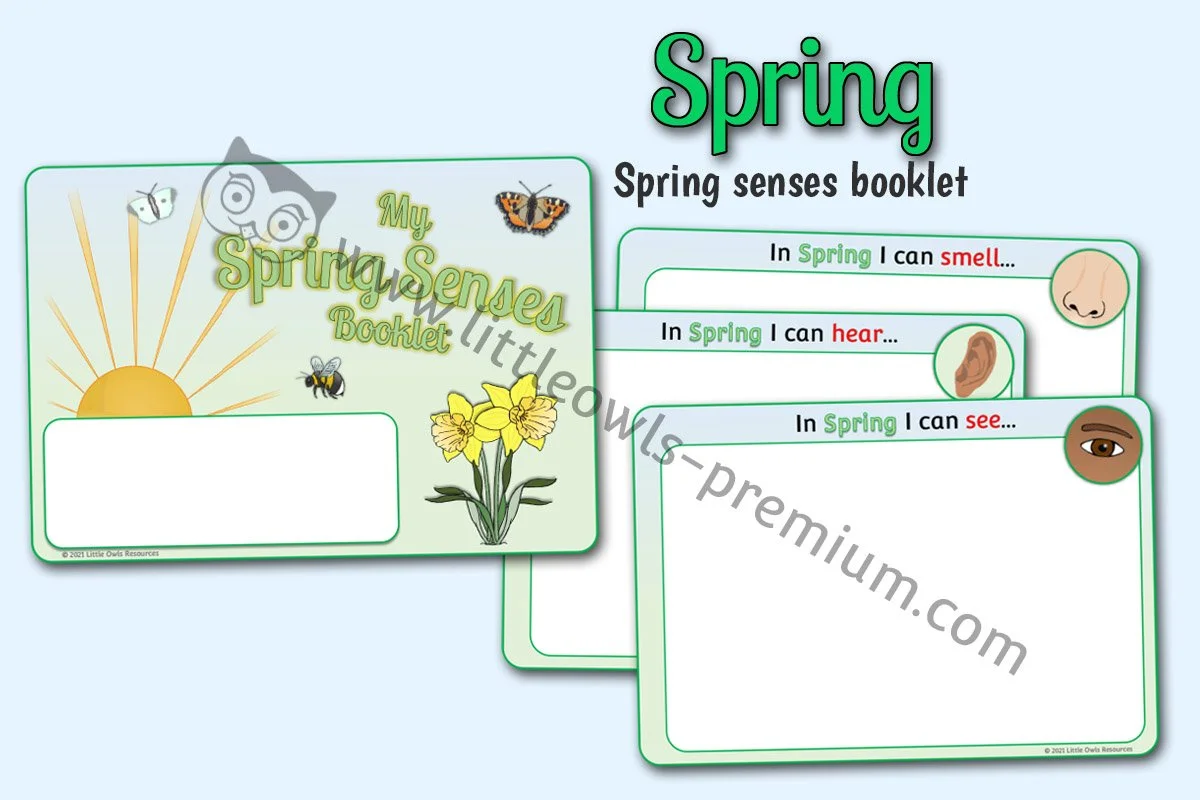
Record spring observations through drawings, marks or writing. Use the prompt sheets separately or join them into a booklet after a walk or other shared sensory experience.
Suggested use: Preschool · Reception · Selected KS1 uses
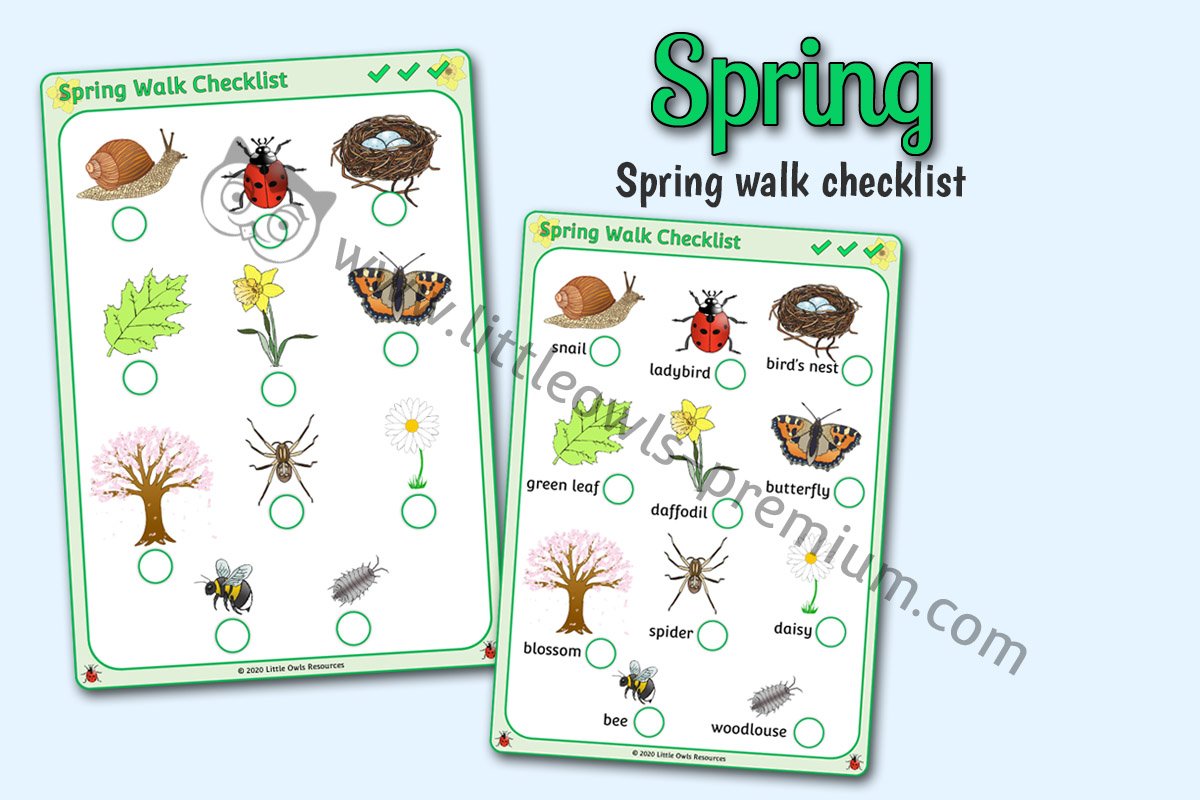
Look for spring sights together using picture checklists, with versions that include words or pictures alone. Mark what you notice during a walk, reuse laminated sheets or take observations home to discuss.
Suggested use: Toddlers with adult support · Preschool · Reception · Selected KS1 uses
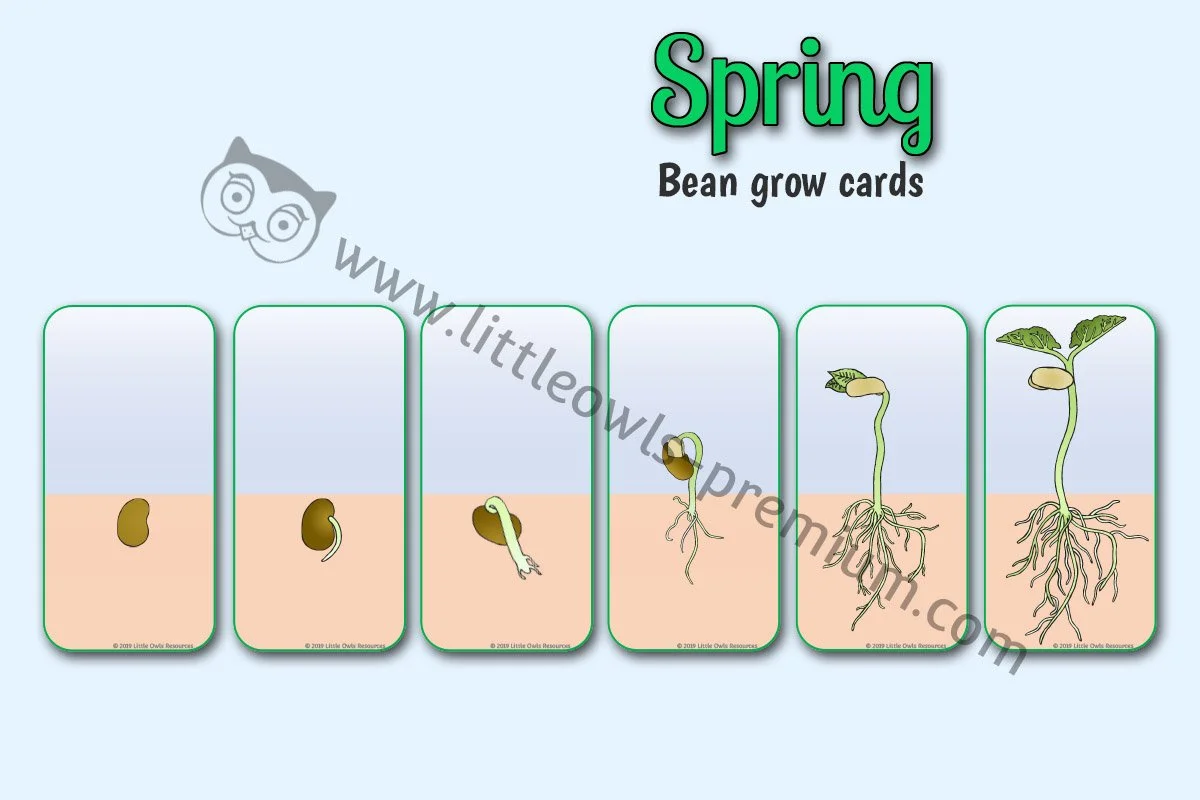
Arrange six pictures to show a bean growing into a plant. Use the cards for shared sequencing and discussion, a display or a smaller cut-and-stick record of the growth sequence.
Suggested use: Preschool · Reception · Selected KS1 uses
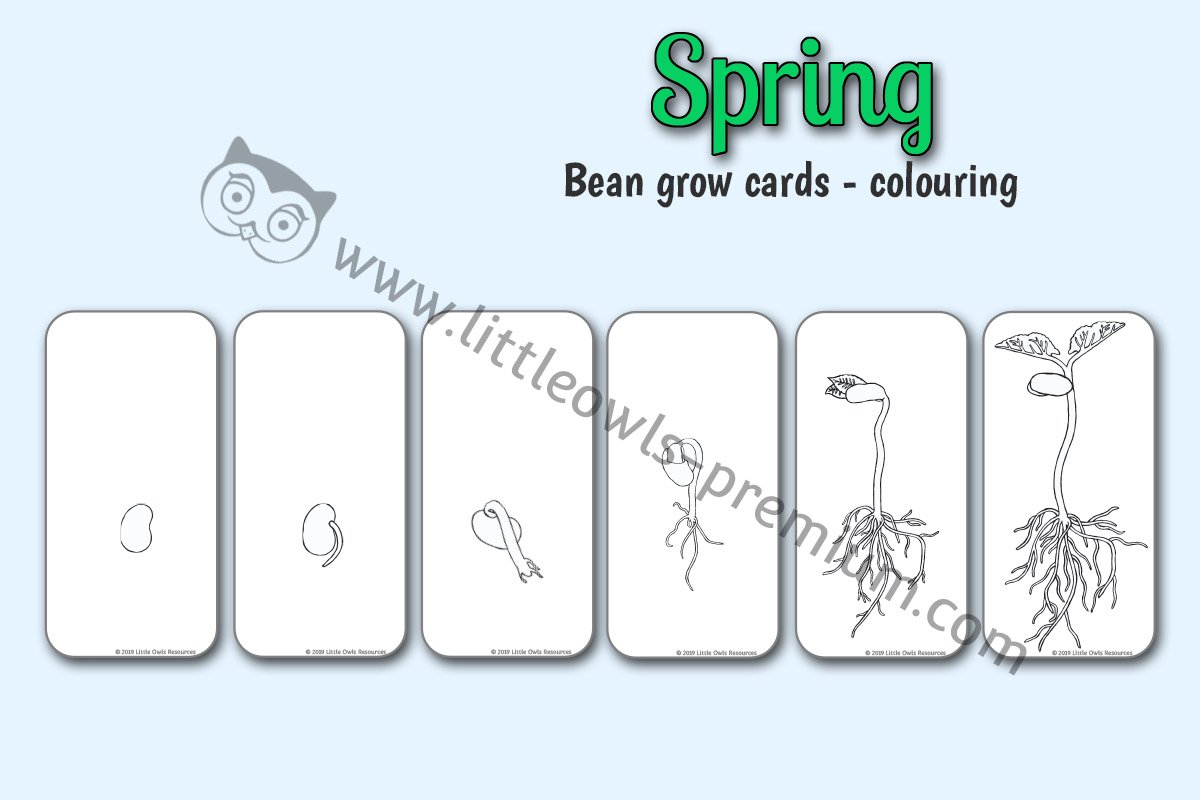
Colour and arrange outline pictures showing a bean’s growth. Use the cards for shared sequencing or stick them onto a separate sheet so children can explain the process to someone else.
Suggested use: Preschool · Reception · Selected KS1 uses
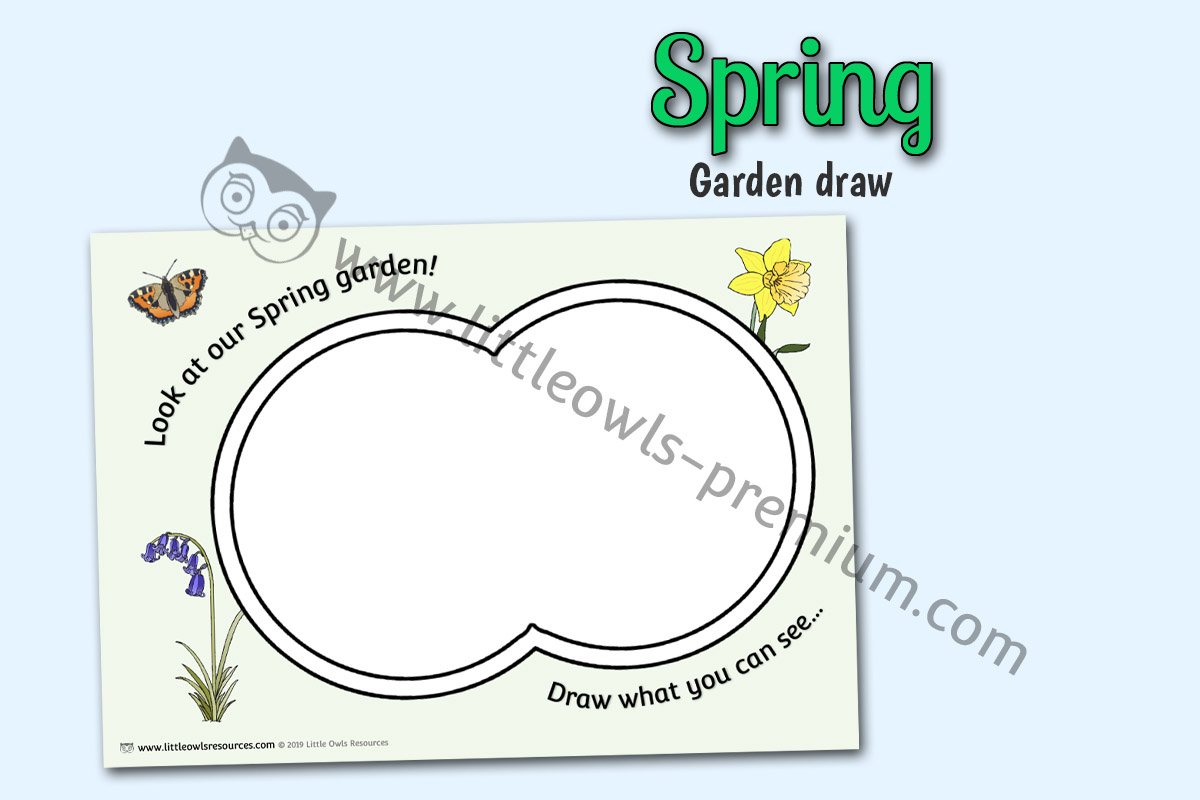
Look closely at a garden or outdoor space and draw what you notice. Use the sheet during a walk or near a window, then talk about the details children chose to record.
Suggested use: Preschool · Reception · Selected KS1 uses
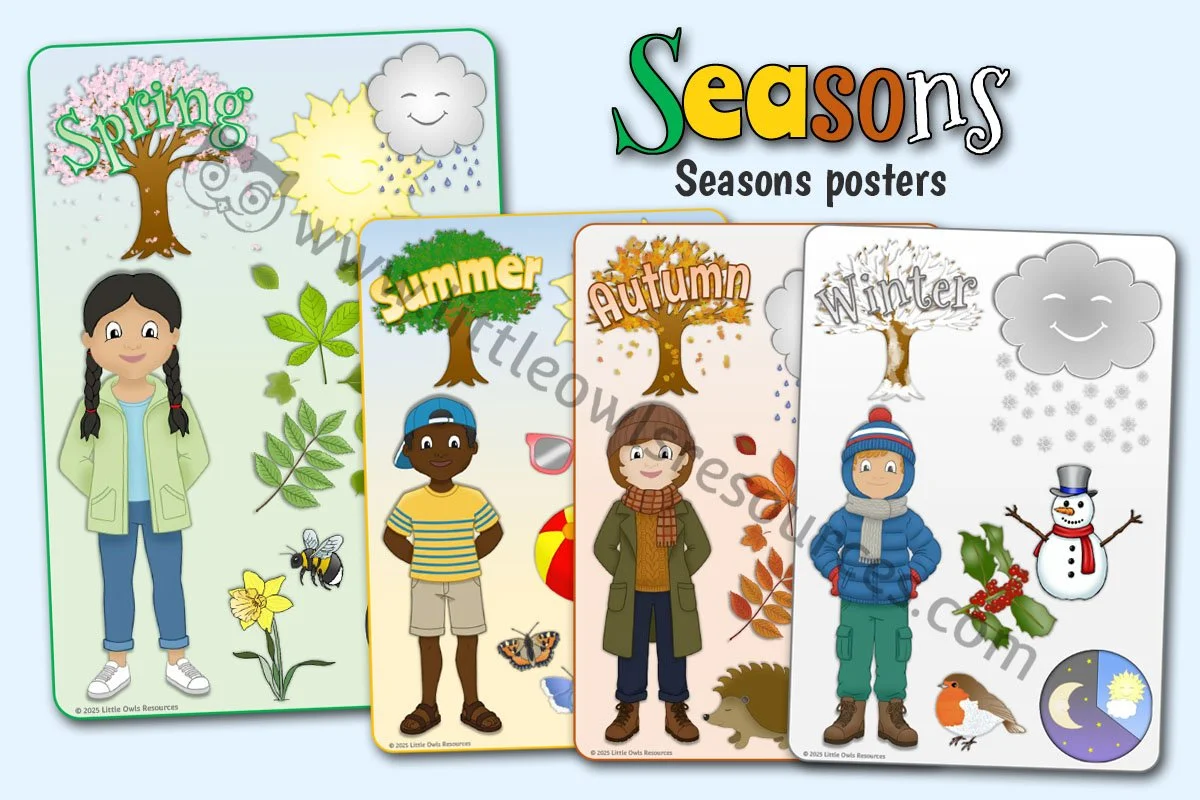
Four A4 posters explore spring, summer, autumn and winter through clothing, weather and seasonal pictures, with simple day-and-night-length diagrams.
Suggested use: Preschool · Reception · Selected KS1 uses

Sort and match seven cards for each season, using pictures of trees, clothing, weather and seasonal details to compare changes across the year.
Suggested use: Preschool · Reception · Selected KS1 uses
Explore number, quantity, pattern and comparison through seasonal pictures and practical materials. Choose manageable amounts and invite children to show or explain their ideas in different ways.
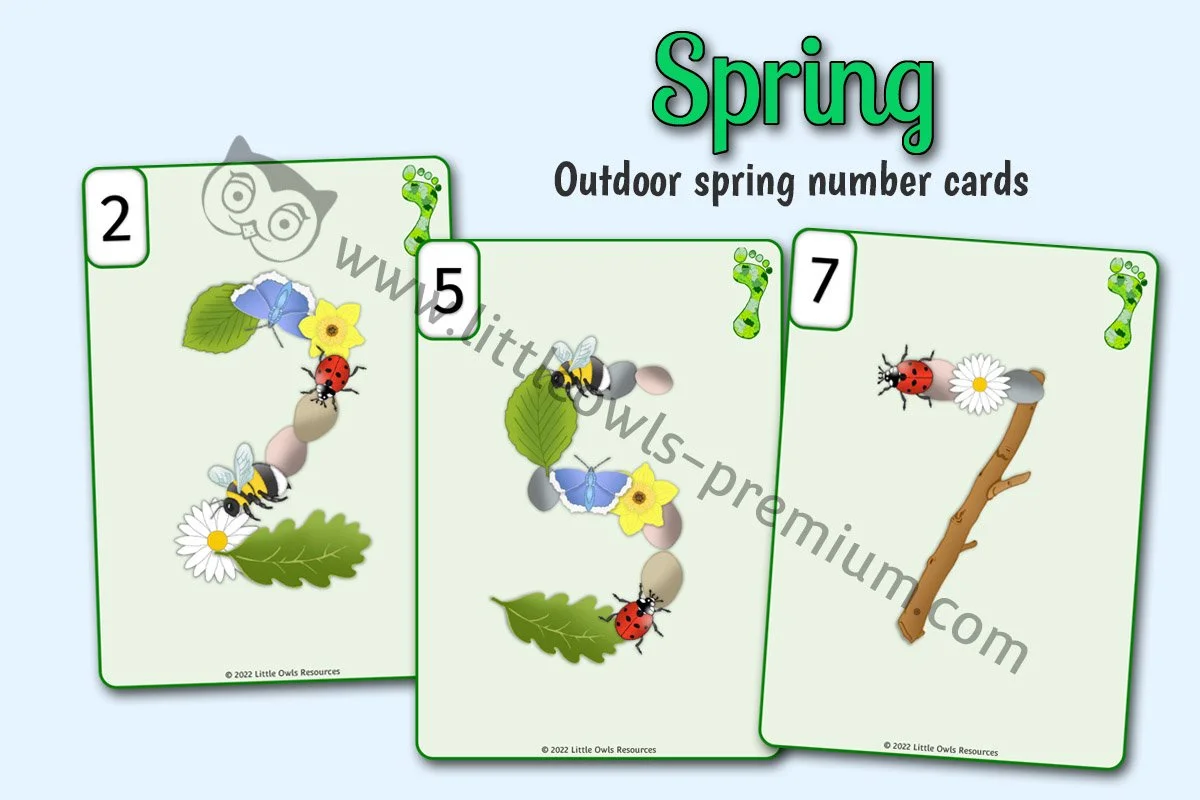
Spring-themed number cards made with natural-item imagery. Use selected cards for a number display, number recognition or counting activities, and laminate them for repeated use.
Suggested use: Preschool · Reception · Selected KS1 uses
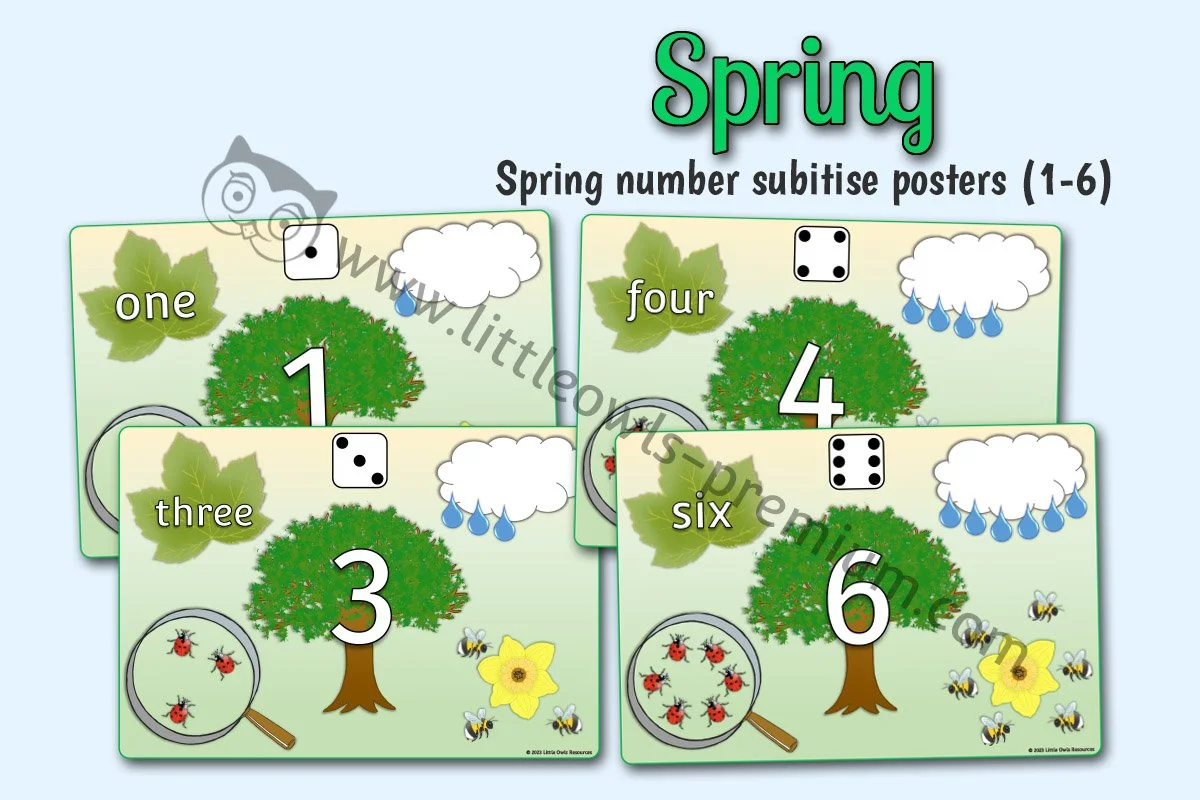
Explore numbers 1 to 6 through different picture arrangements, numerals, number words and dice patterns. Use the posters for shared number talk or as mats for comparing how the same quantity is shown.
Suggested use: Preschool · Reception · Selected KS1 uses
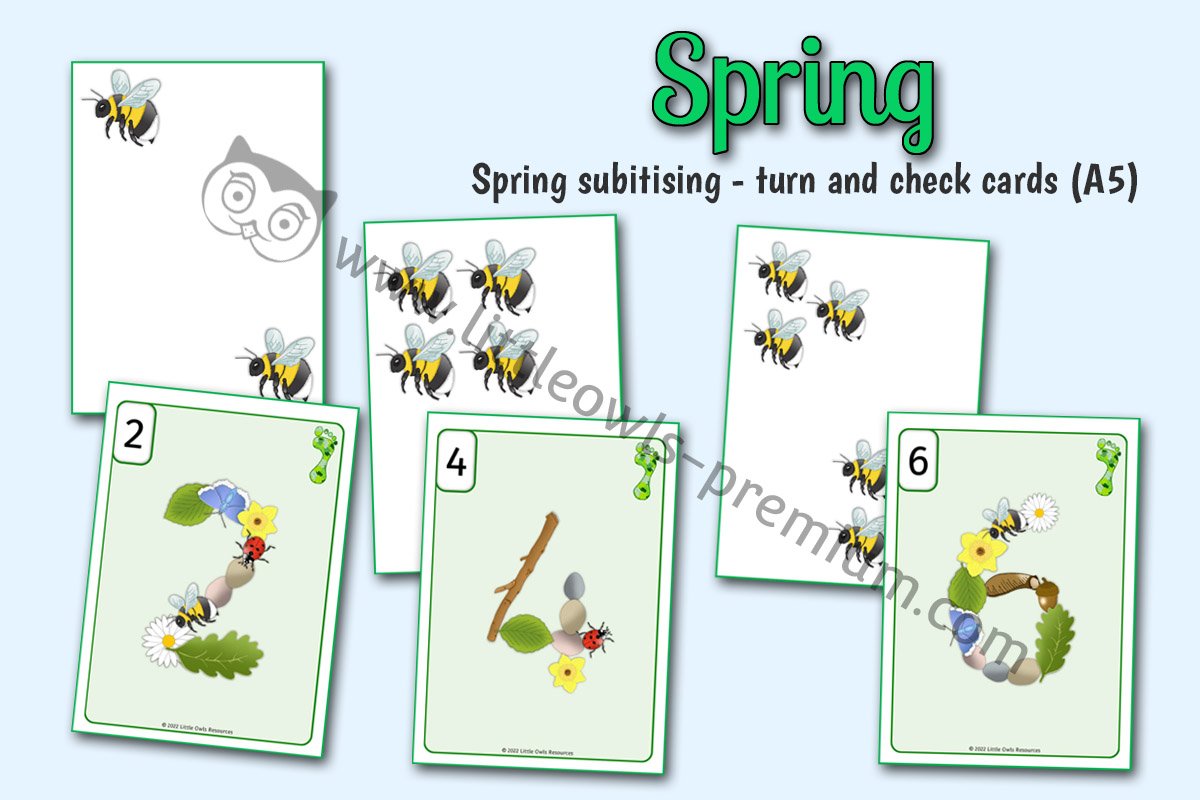
Look at the bees, say how many you notice, then turn the card to check. The pack has 22 cards for quantities 1–6 plus a blank template, designed to fold into reusable self-checking cards.
Suggested use: Preschool · Reception · Selected KS1 uses
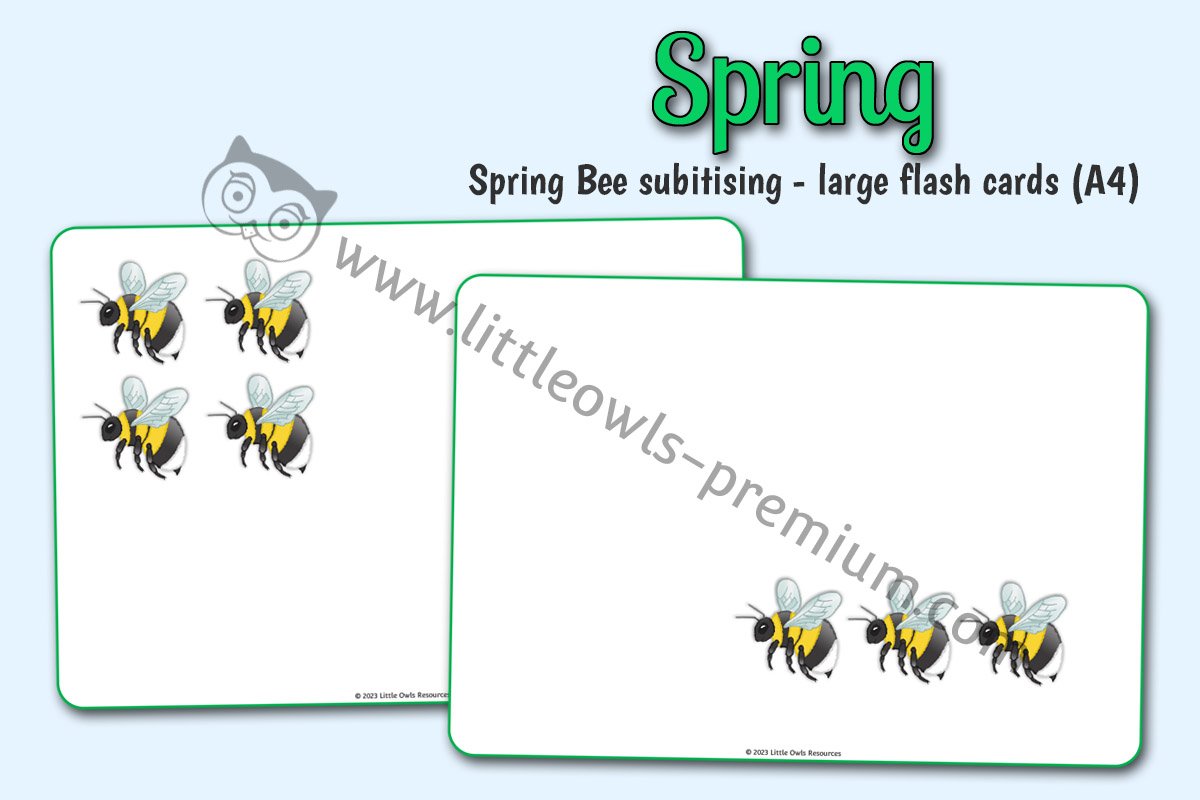
Use large bee-picture cards for shared number noticing and discussion. There are 22 cards covering quantities 1–6, plus a blank template, for adults to select and hold up during group activities.
Suggested use: Preschool · Reception · Selected KS1 uses
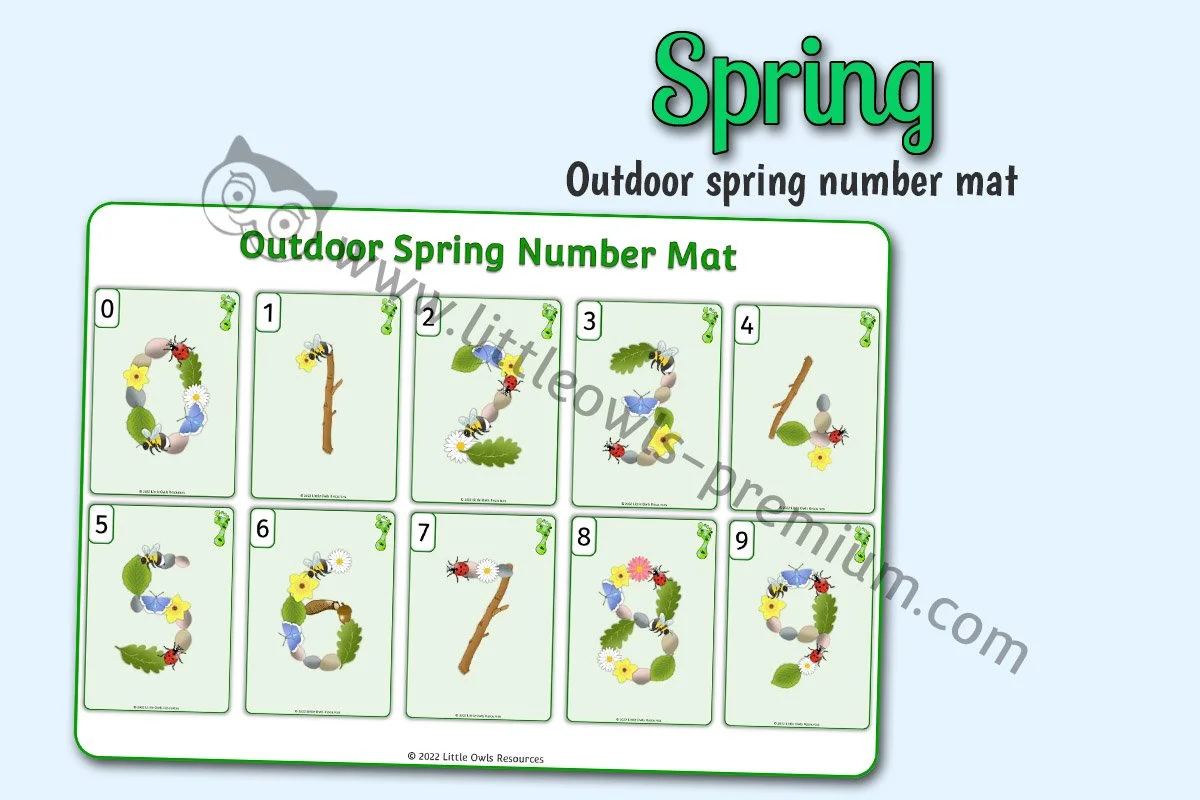
A mat showing numerals 0–9 made from natural-item imagery. Use it as a spring number reference for recognition, shared counting activities or a maths display.
Suggested use: Preschool · Reception · Selected KS1 uses
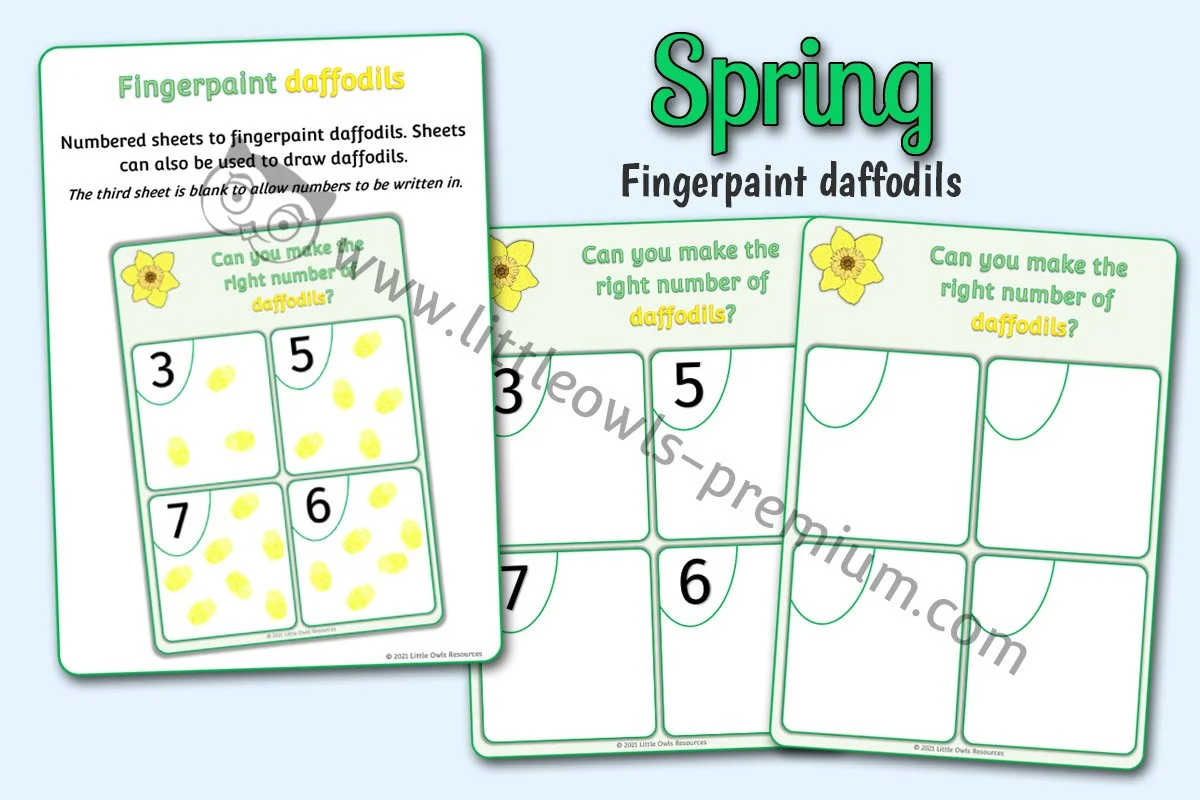
Fingerpaint or draw the requested number of daffodils on each sheet. A blank-number version lets an adult choose a quantity to suit the child’s current counting experience.
Suggested use: Preschool · Reception · Selected KS1 uses
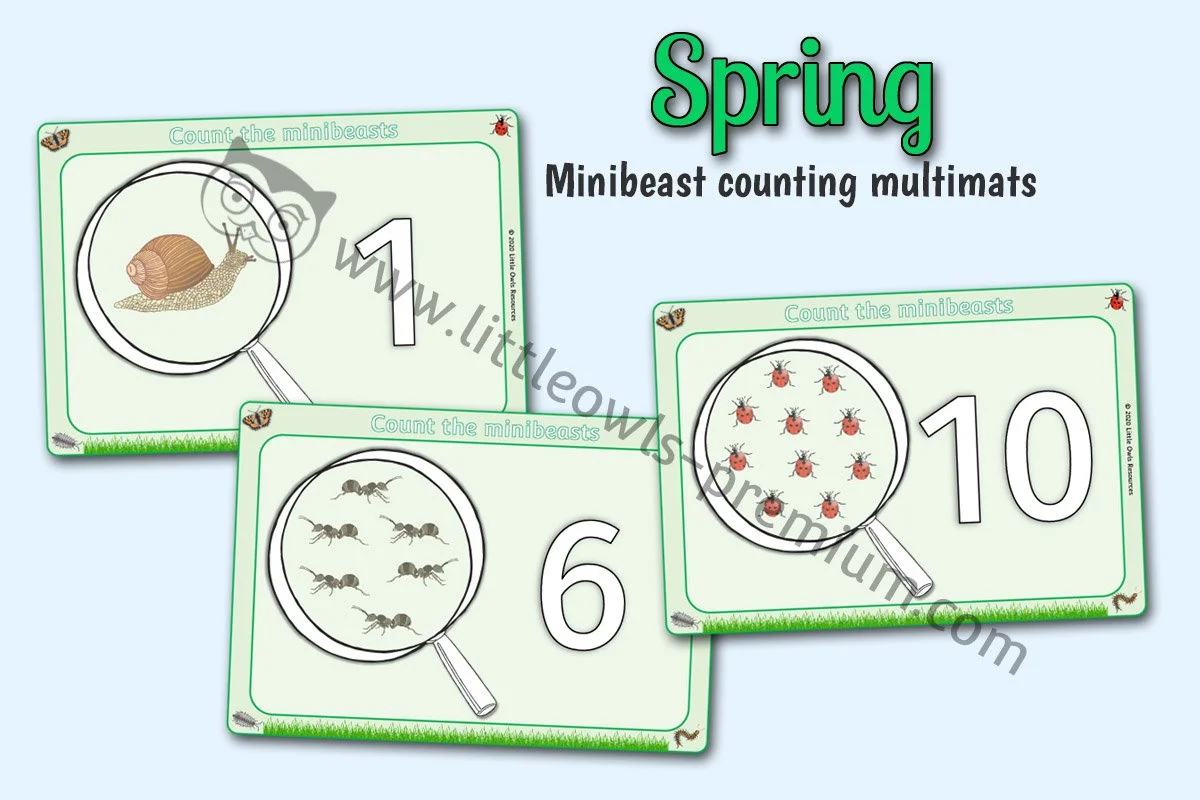
Explore numerals and quantities with minibeast-themed A4 mats. Make numeral shapes with playdough, place suitable objects on the minibeasts to support counting, or add marks with reusable pens.
Suggested use: Preschool · Reception · Selected KS1 uses
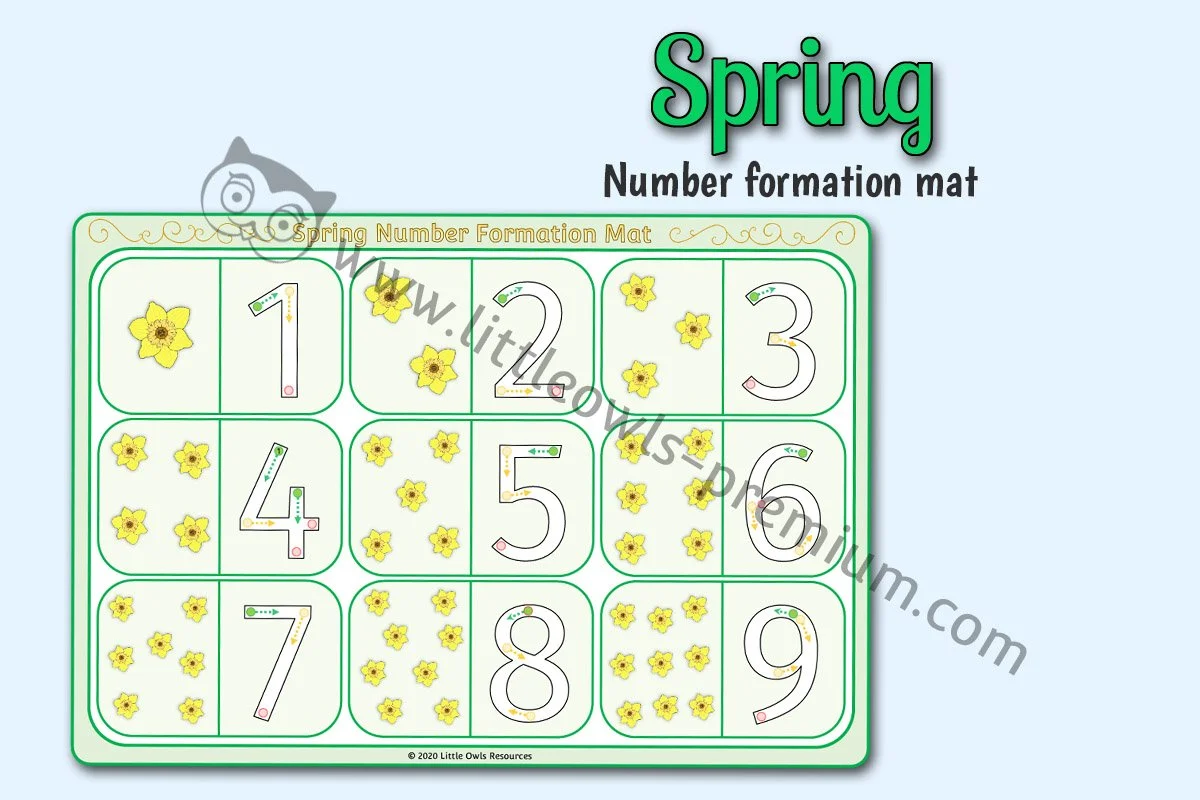
A reusable number-formation reference for writing, display or playdough. Children can trace or model numerals when useful, and the pack includes two alternative formation versions for the number 5.
Suggested use: Preschool · Reception · Selected KS1 uses
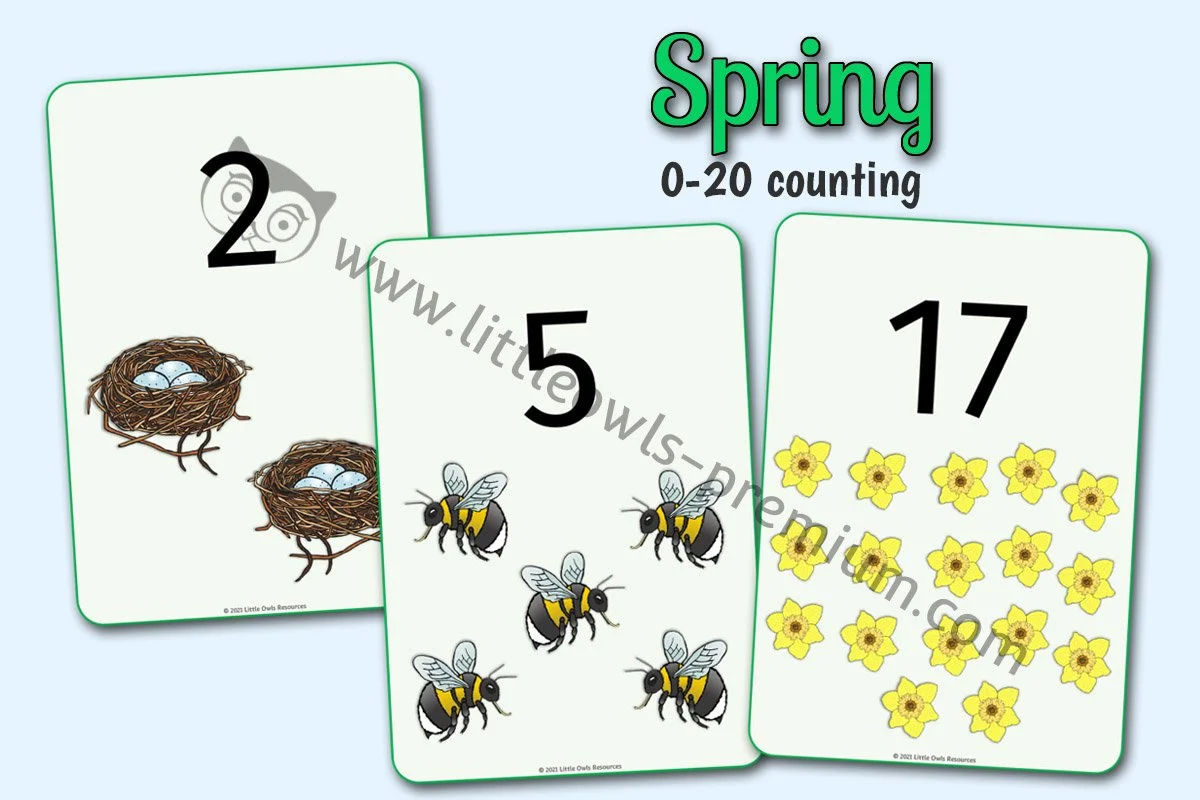
Explore numerals and spring-picture quantities from 0 to 20. Print large for a display or smaller as flashcards, selecting numbers for shared counting, pointing and one-to-one correspondence.
Suggested use: Preschool · Reception · Selected KS1 uses
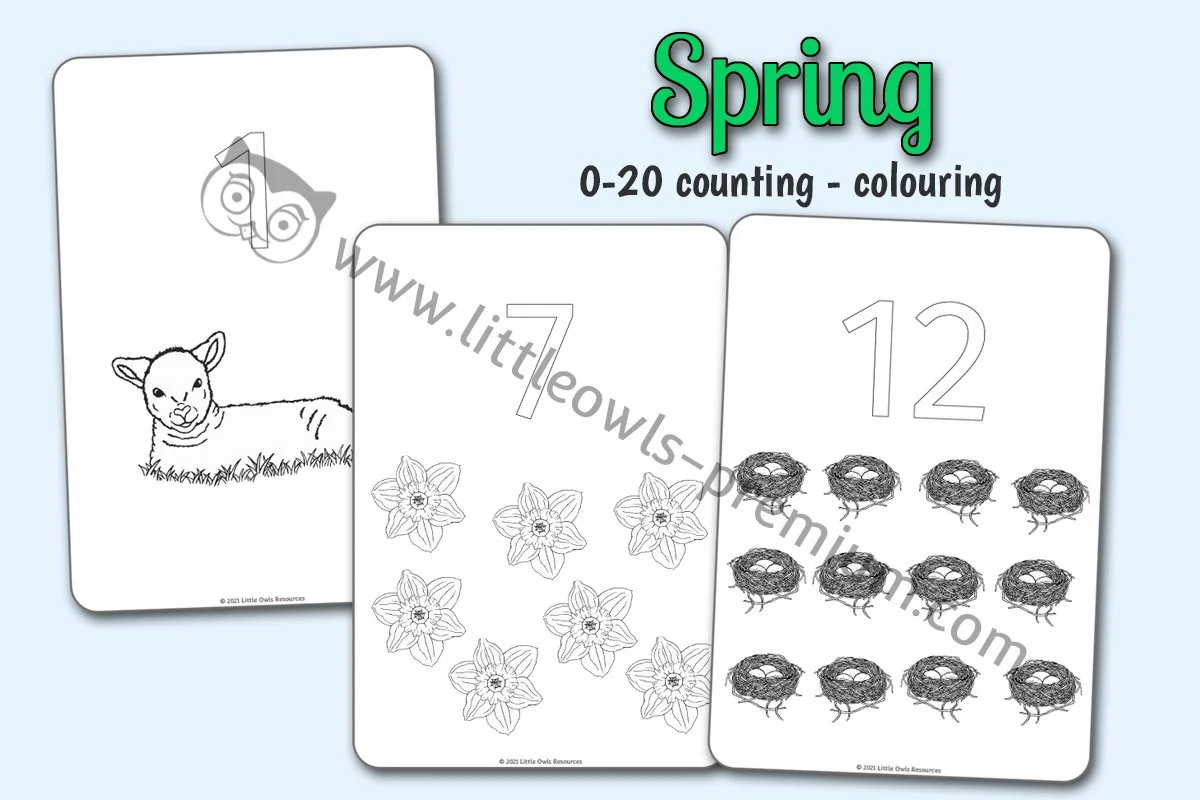
Colour spring objects and count them one by one, selecting quantities up to 20. Use the sheets for number recognition or display completed pages as a spring number line.
Suggested use: Preschool · Reception · Selected KS1 uses
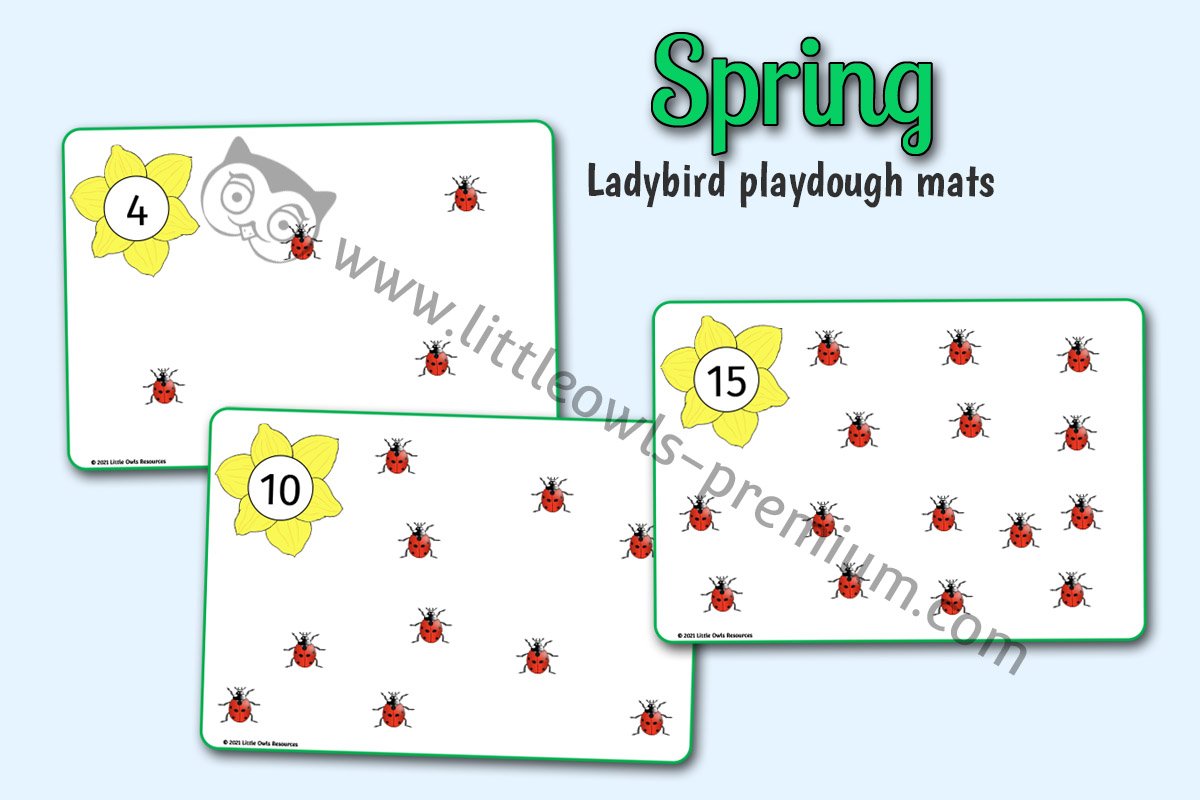
Use twenty mats to explore numerals and quantities from 1 to 20. Make ladybirds with playdough, place suitable objects on the pictured ladybirds or model the numeral and flower.
Suggested use: Preschool · Reception · Selected KS1 uses
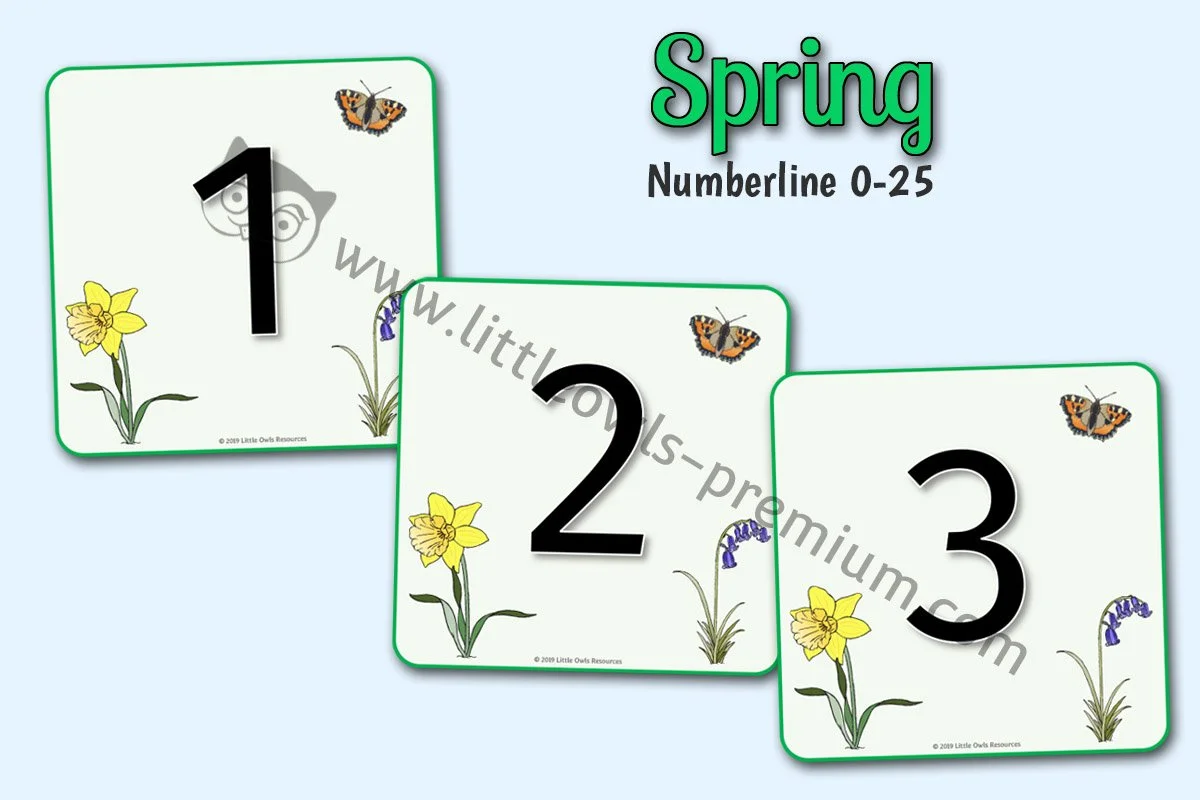
Spring-themed numerals from 0 to 25 for a number line or separate flashcards. Choose a large display size or smaller cards for recognising and arranging selected numbers.
Suggested use: Preschool · Reception · Selected KS1 uses
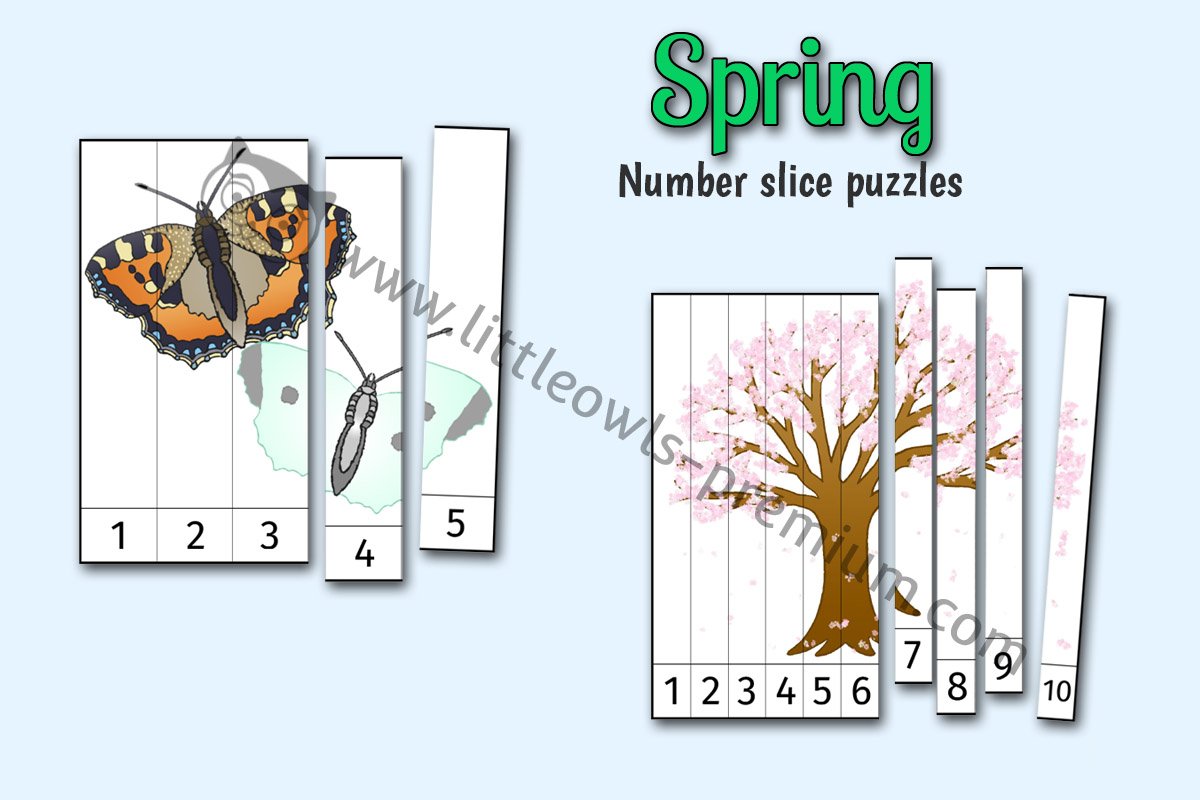
Put numbered picture strips in order to rebuild spring pictures. Choose 1–5 or 1–10 sequences, using reusable pieces or a cut-and-stick version of the activity.
Suggested use: Preschool · Reception · Selected KS1 uses

Colour a spring picture, cut it into strips and rebuild it in number order. The 1–5 and 1–10 versions combine number sequences with picture clues for checking the result.
Suggested use: Preschool · Reception · Selected KS1 uses
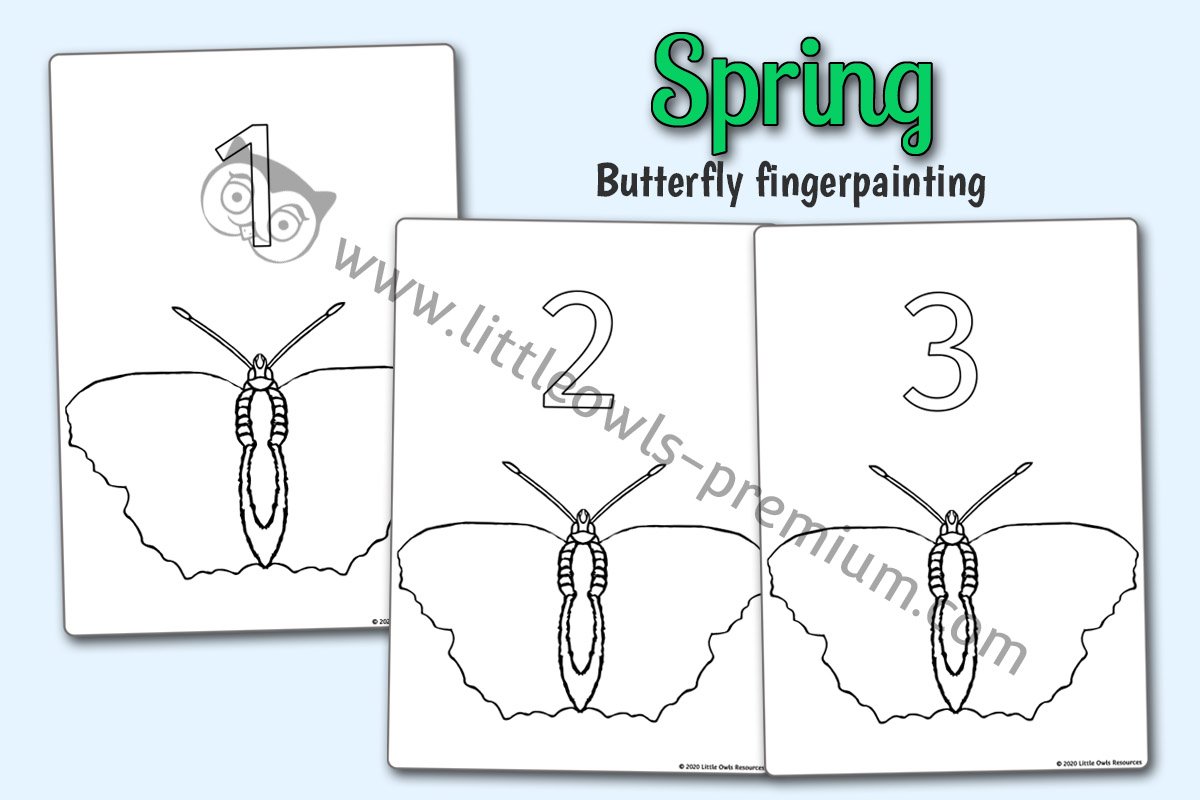
Add the requested quantity of marks, playdough shapes or suitable loose parts to butterfly wings. The numbered sheets can also support collage, shape talk and modelling numerals.
Suggested use: Preschool · Reception · Selected KS1 uses
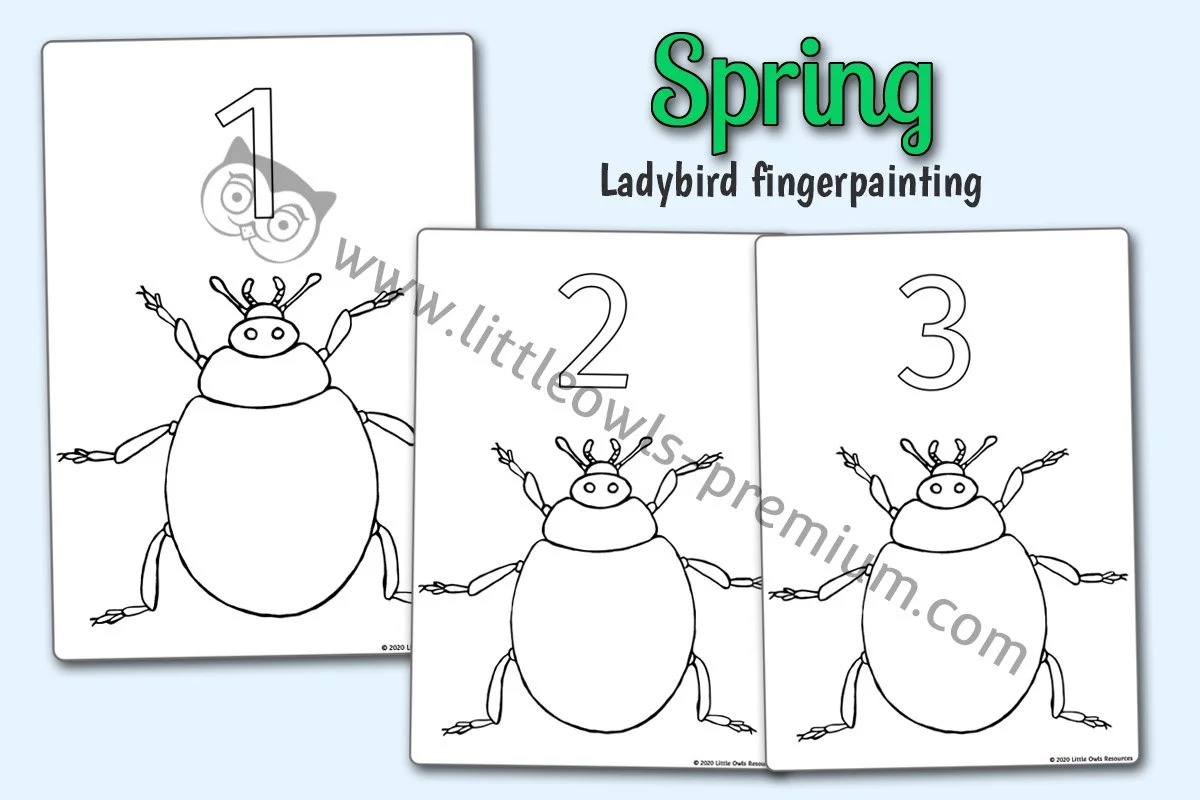
Make the requested number of spots on each ladybird using fingerprints, playdough, suitable loose parts or collage. Children can also model the numeral or explore the pictures with drawing materials.
Suggested use: Preschool · Reception · Selected KS1 uses
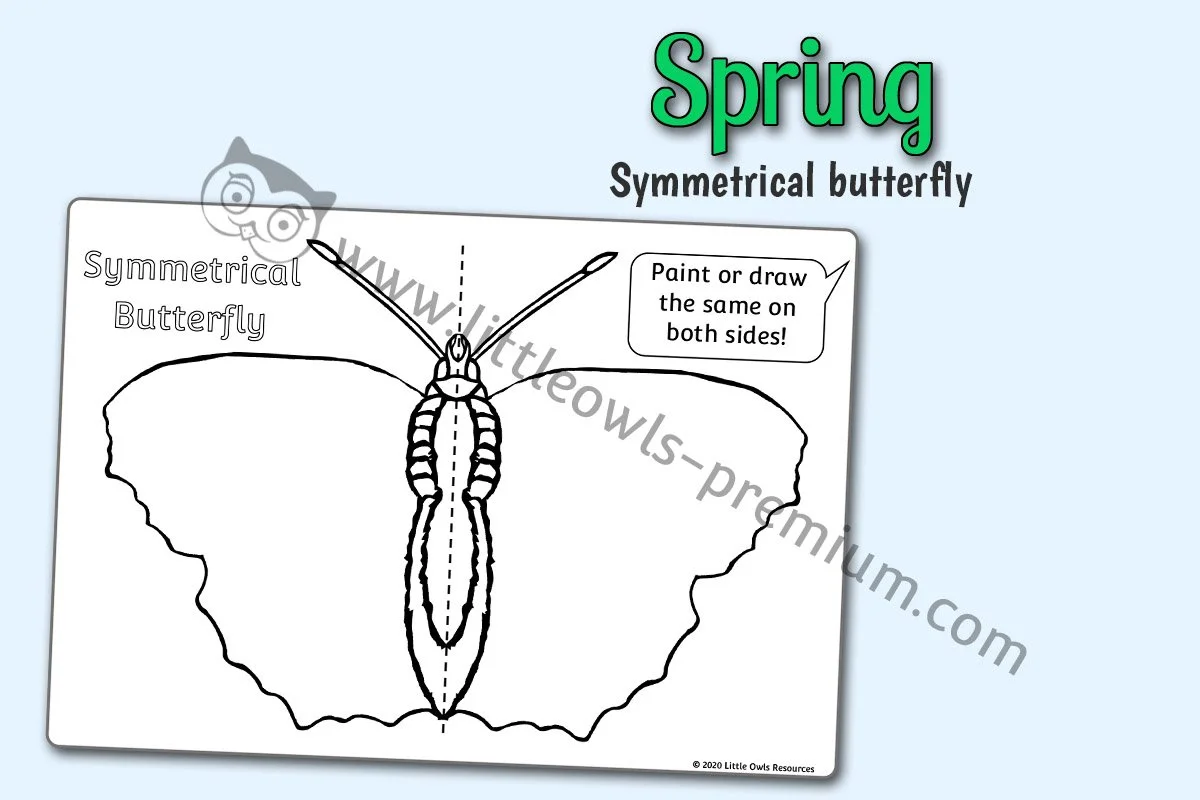
Explore matching patterns on butterfly wings with paint, drawing or other materials. Children can design both wings themselves or paint one side and fold along the dotted line to transfer the pattern.
Suggested use: Preschool · Reception · Selected KS1 uses
Talk, draw, label, record and tell stories about Spring discoveries. Offer vocabulary and meaningful reasons to make marks, with room for children to communicate in their own ways.
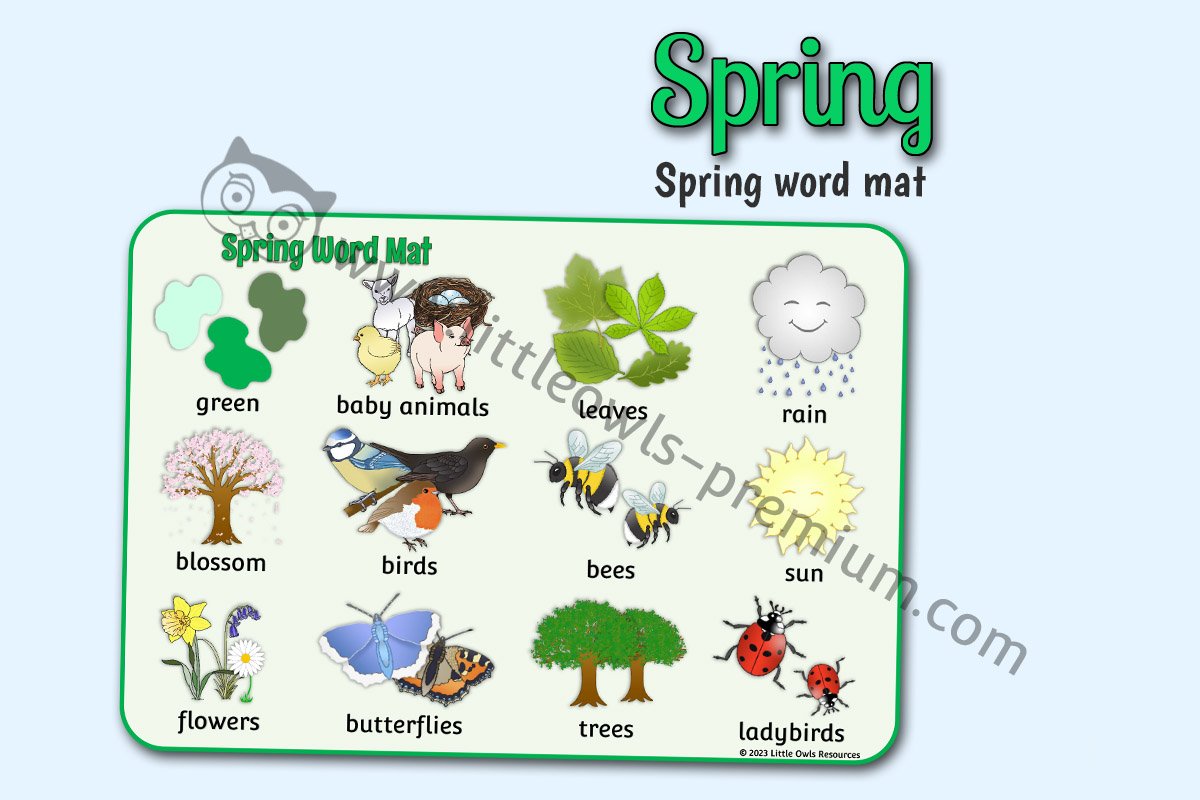
Point to, name and describe spring pictures together, then use the labelled mat as a reference for drawing or writing. It also works alongside the matching Spring Word Cards.
Suggested use: Toddlers with adult support · Preschool · Reception · Selected KS1 uses
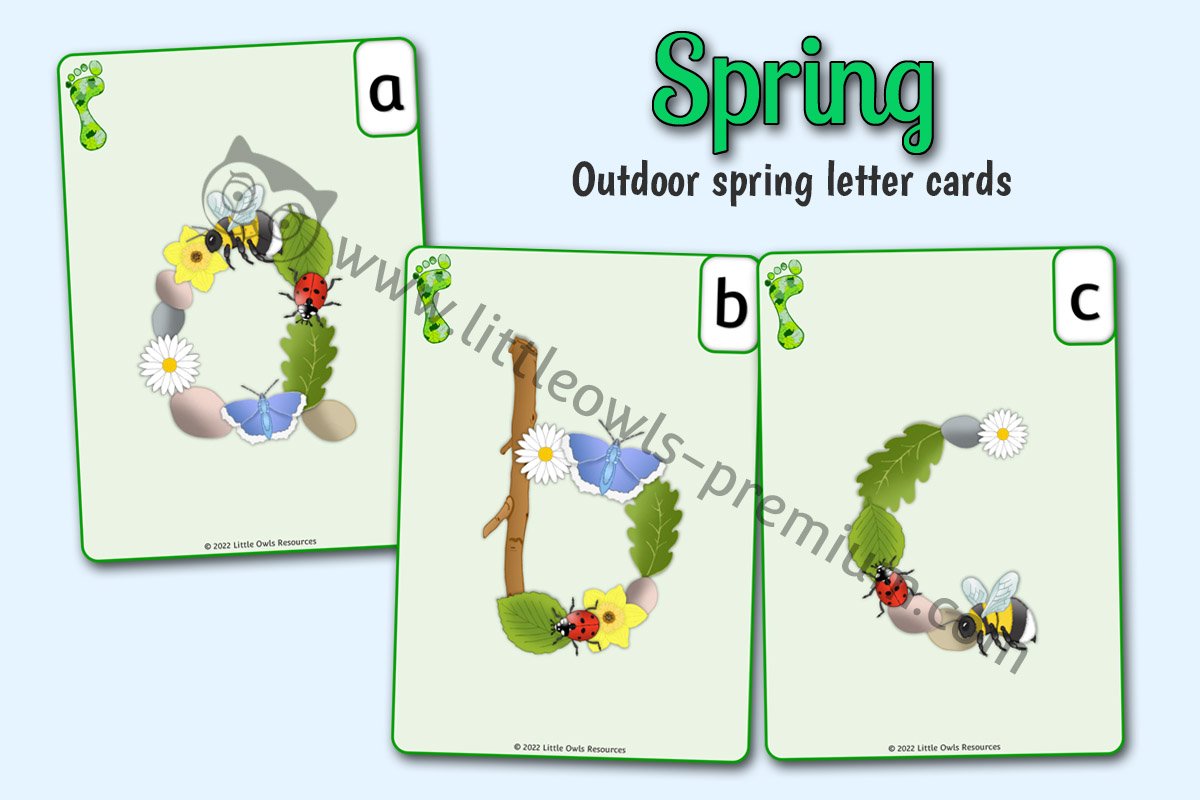
Individual letter cards with natural-item spring imagery for alphabet displays, letter recognition and selected alphabet activities. Laminate the cards if you want to arrange and reuse them.
Suggested use: Preschool · Reception · Selected KS1 uses
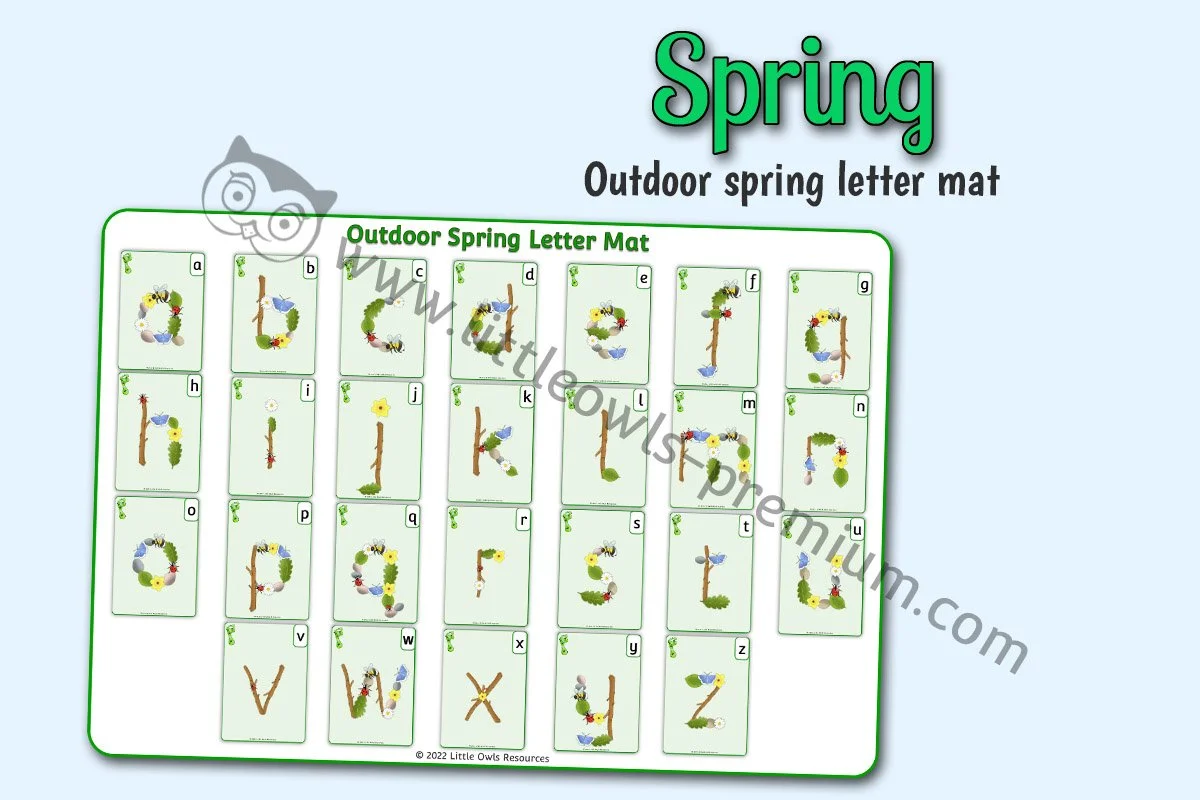
A spring alphabet mat with lower-case letters made from natural-item imagery. Keep it nearby as a visual letter reference or use it during shared alphabet activities and themed displays.
Suggested use: Preschool · Reception · Selected KS1 uses
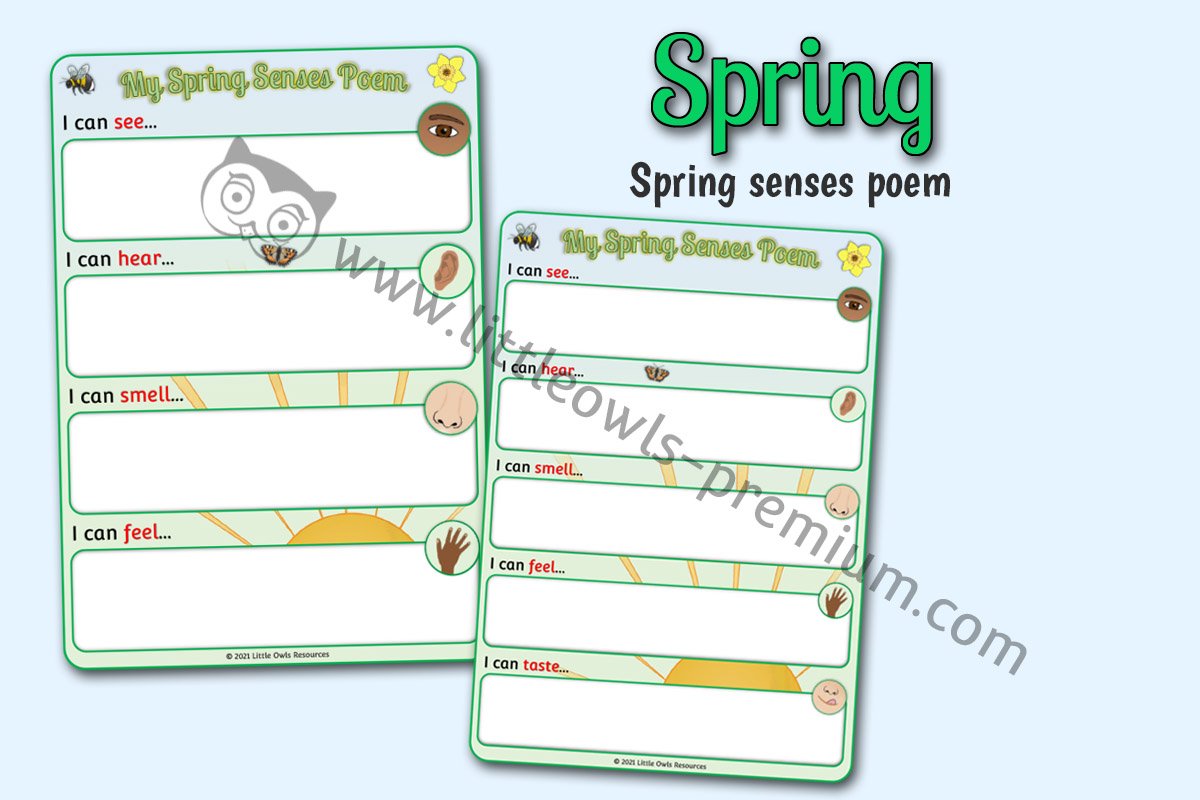
Build a spring senses poem through spoken ideas, drawings, marks or writing. Adults can scribe a child’s words, while children who are ready can extend the prompts with their own descriptions; rhyming is optional.
Suggested use: Toddlers with adult support · Preschool · Reception · Selected KS1 uses
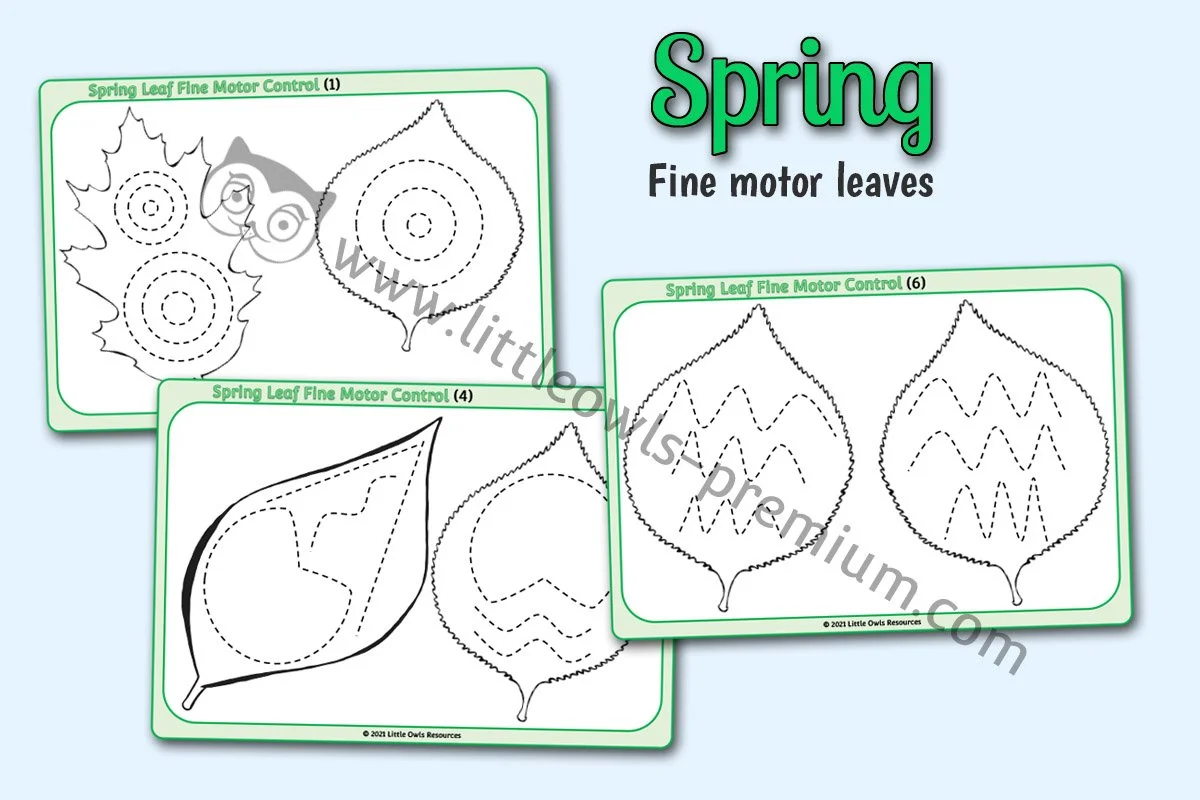
Explore patterns and shapes on spring-leaf pencil-control sheets. Offer them as optional practice with mark-making tools or laminate for repeated use with suitable pens.
Suggested use: Preschool · Reception · Selected KS1 uses
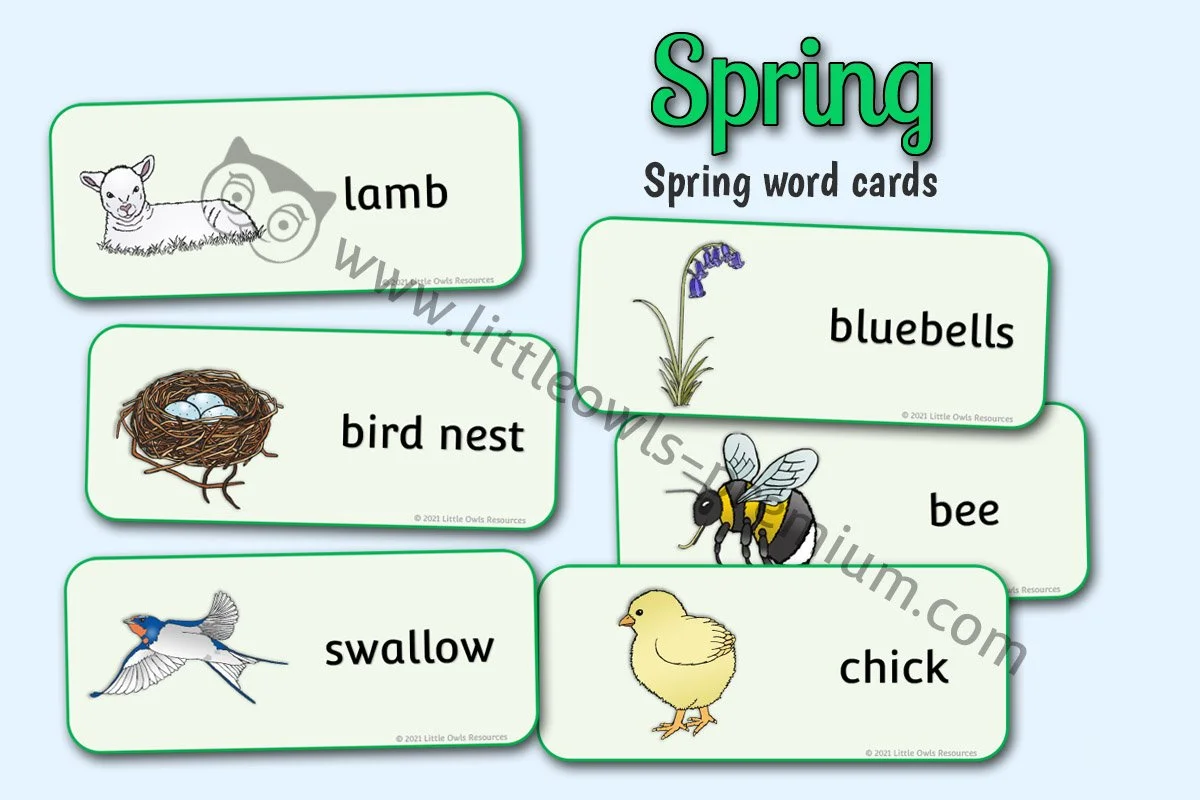
Illustrated spring vocabulary cards for shared picture talk, displays and reading or writing reference. Children can point, name and describe the pictures before using the printed words in their own work.
Suggested use: Toddlers with adult support · Preschool · Reception · Selected KS1 uses
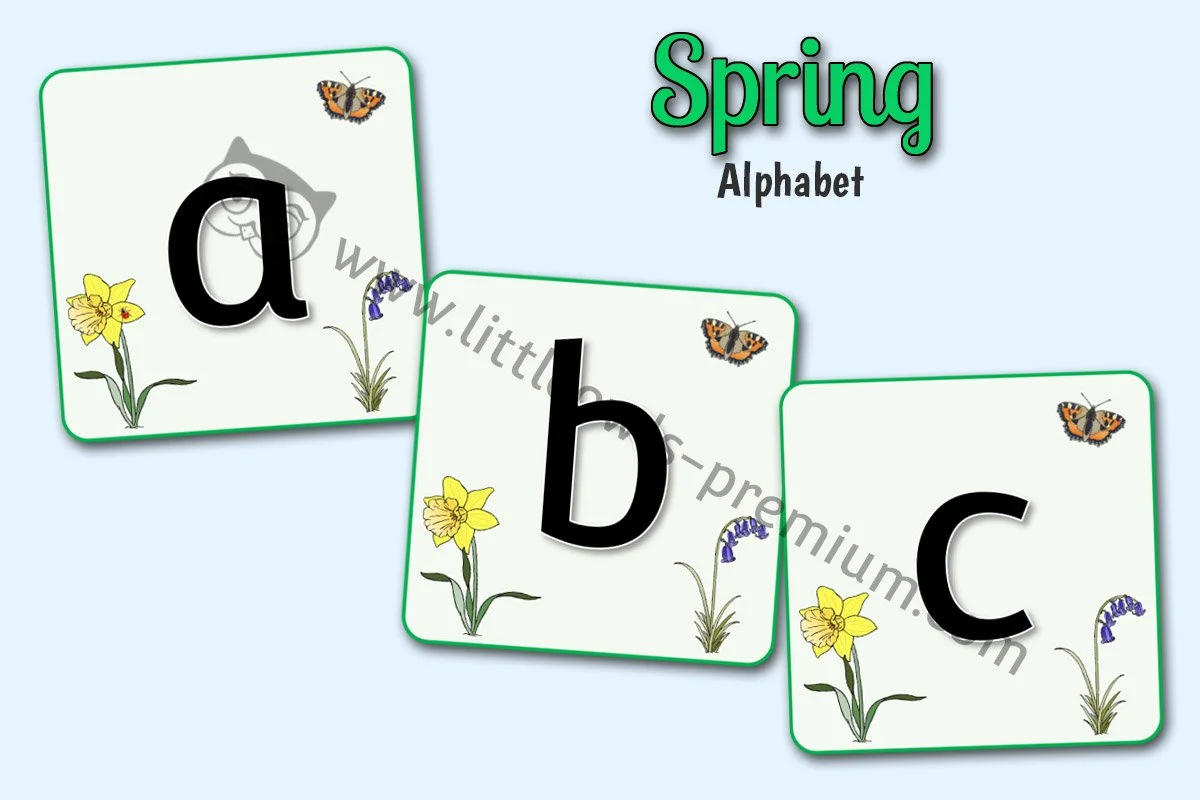
Spring-themed alphabet cards for a classroom display or a smaller set of letter flashcards. Use them for letter recognition, matching and reference during playful literacy activities.
Suggested use: Preschool · Reception · Selected KS1 uses

Record Spring observations and ideas through drawing and writing. Choose from sheets with different amounts of writing space.
Suggested use: Preschool · Reception · Selected KS1 uses
Choose seasonal making, movement invitations, games and puzzles. Offer choices, adapt the challenge and value children's individual ideas alongside any suggested activity.
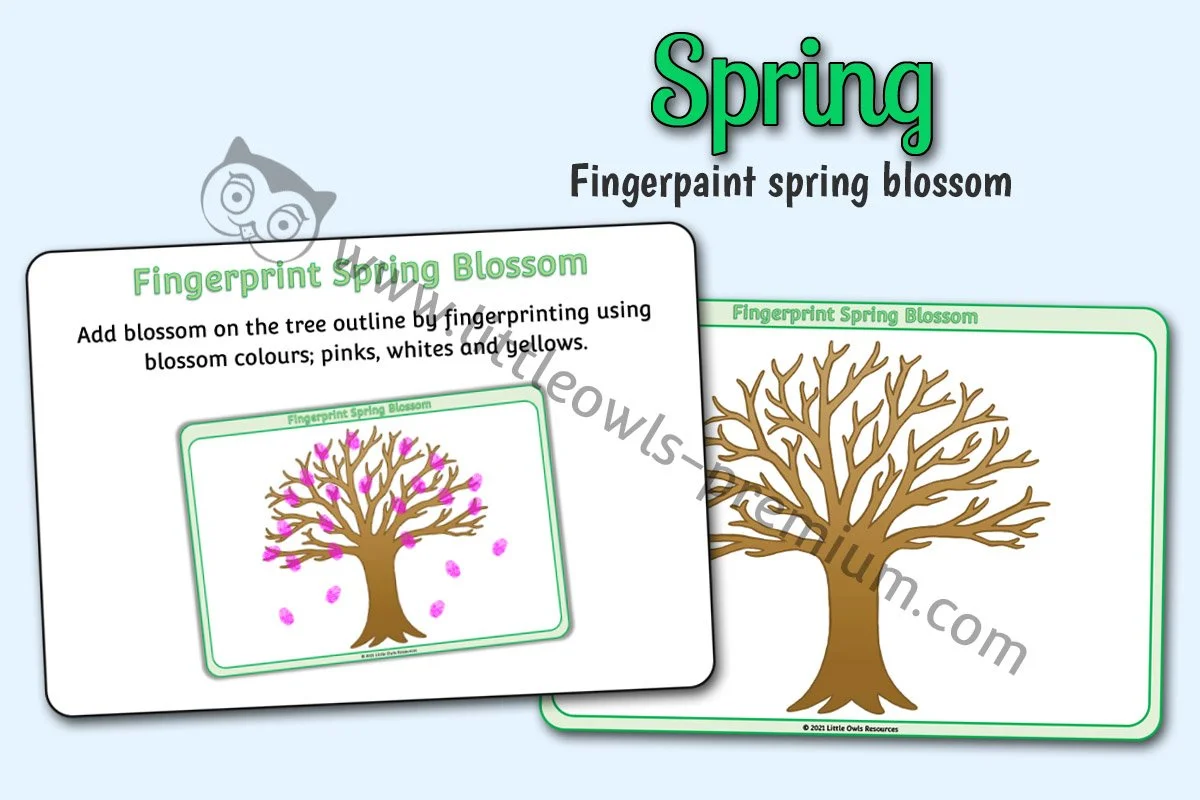
Add blossom to a tree picture with fingerprints and paint. Use the sheet for exploring colour, repeated marks and the appearance of blossom in spring.
Suggested use: Toddlers with adult support · Preschool · Reception
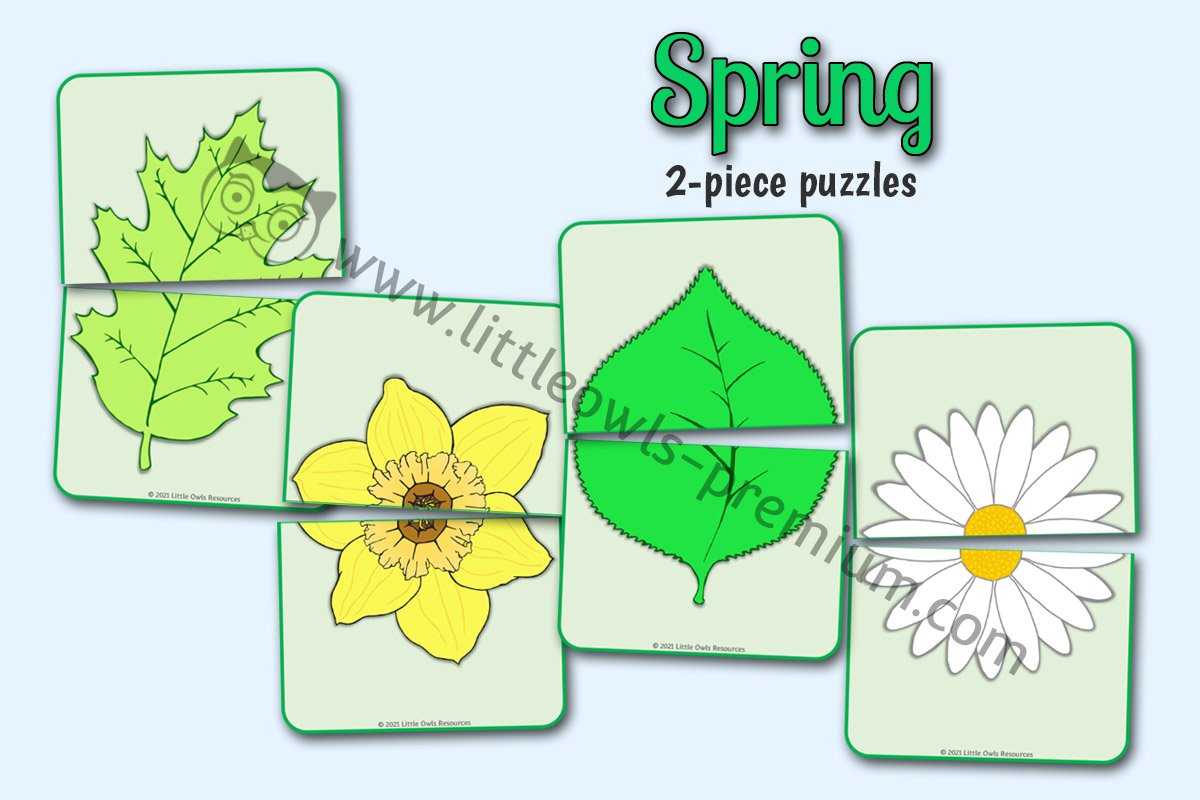
Match the halves of eight spring pictures. Compare colours, patterns and picture details, then name or talk about the completed images together.
Suggested use: Toddlers with adult support · Preschool · Reception
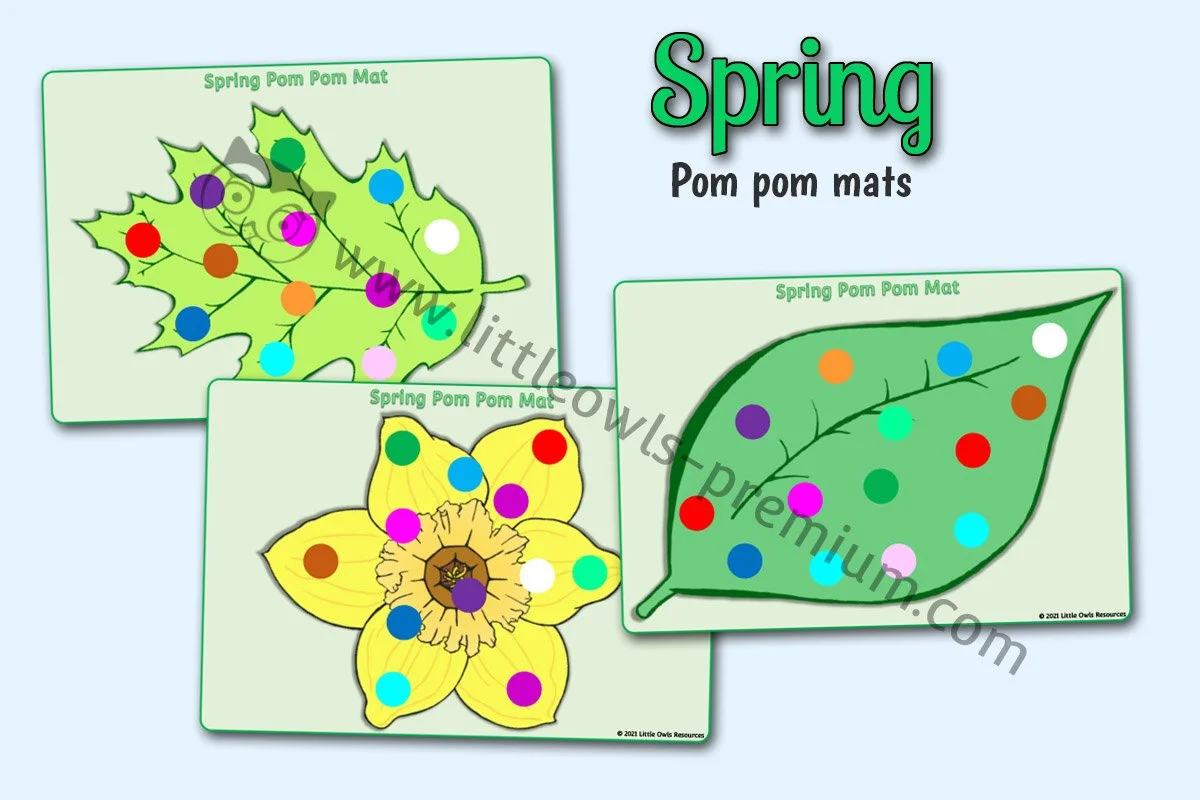
Place pom-poms or suitable loose parts on coloured circles to complete spring pictures. Explore careful placement and colour matching, using fingers or a suitable tool where helpful.
Suggested use: Preschool · Reception · Selected KS1 uses
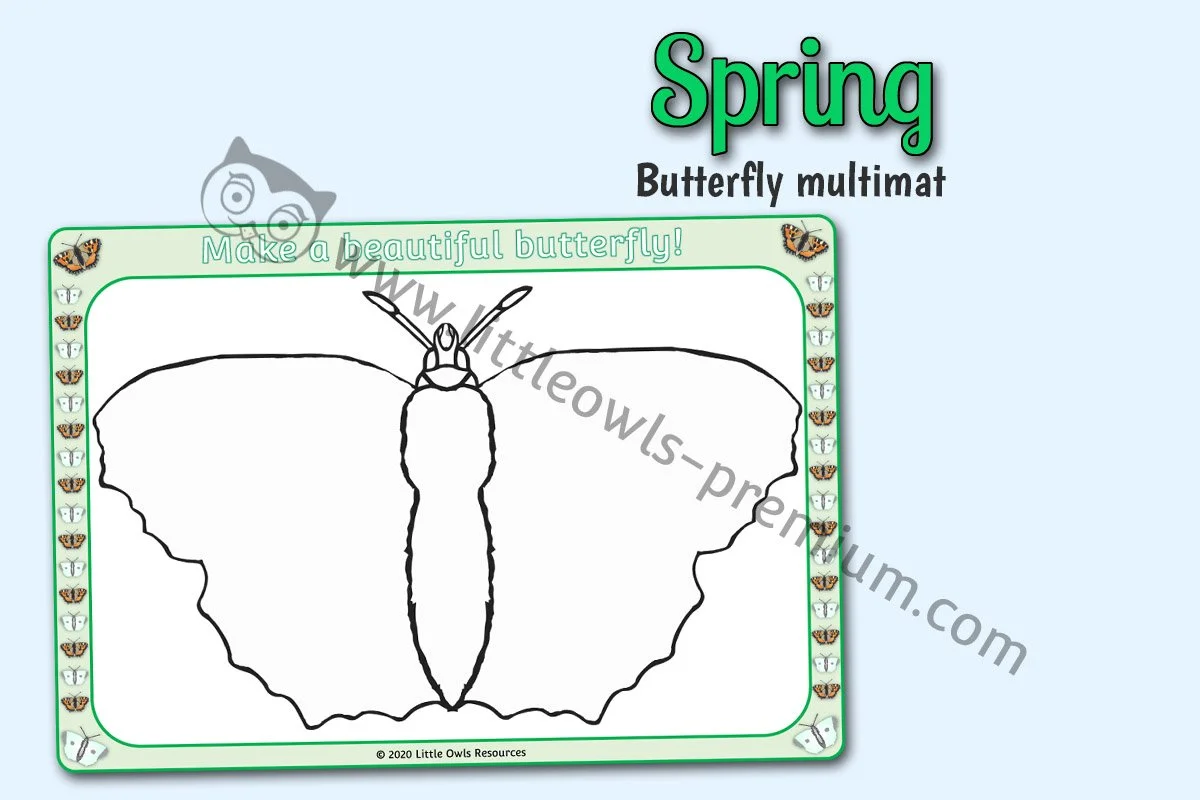
A butterfly mat for drawing, collage, playdough and suitable loose parts. Use the outline as a starting point for exploring materials, colours and children’s own designs.
Suggested use: Toddlers with adult support · Preschool · Reception · Selected KS1 uses
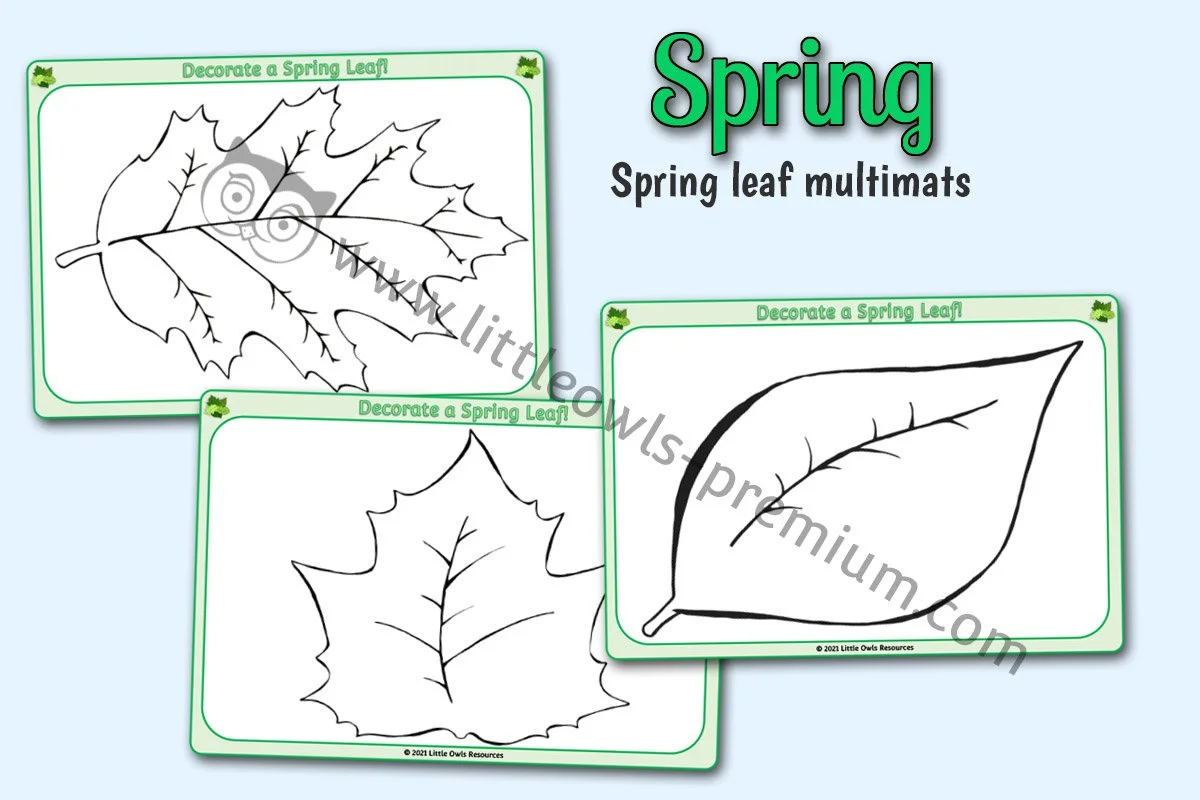
Leaf-shaped mats for playdough, collage, drawing and suitable loose parts. Offer different materials for children to arrange, press, mark and create their own leaf designs.
Suggested use: Toddlers with adult support · Preschool · Reception · Selected KS1 uses
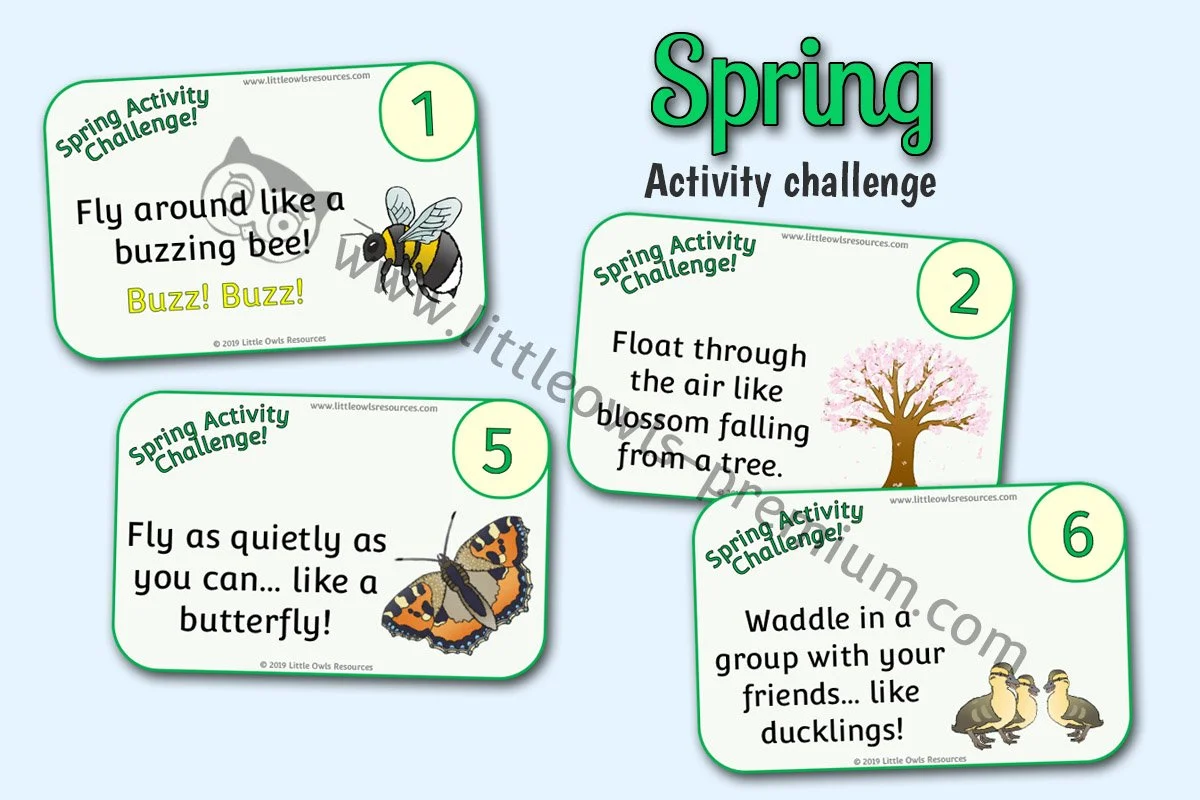
Try eight spring-inspired movement prompts together. Adults can introduce each action, then children can choose cards, recognise familiar pictures and take turns leading the movement.
Suggested use: Toddlers with adult support · Preschool · Reception · Selected KS1 uses
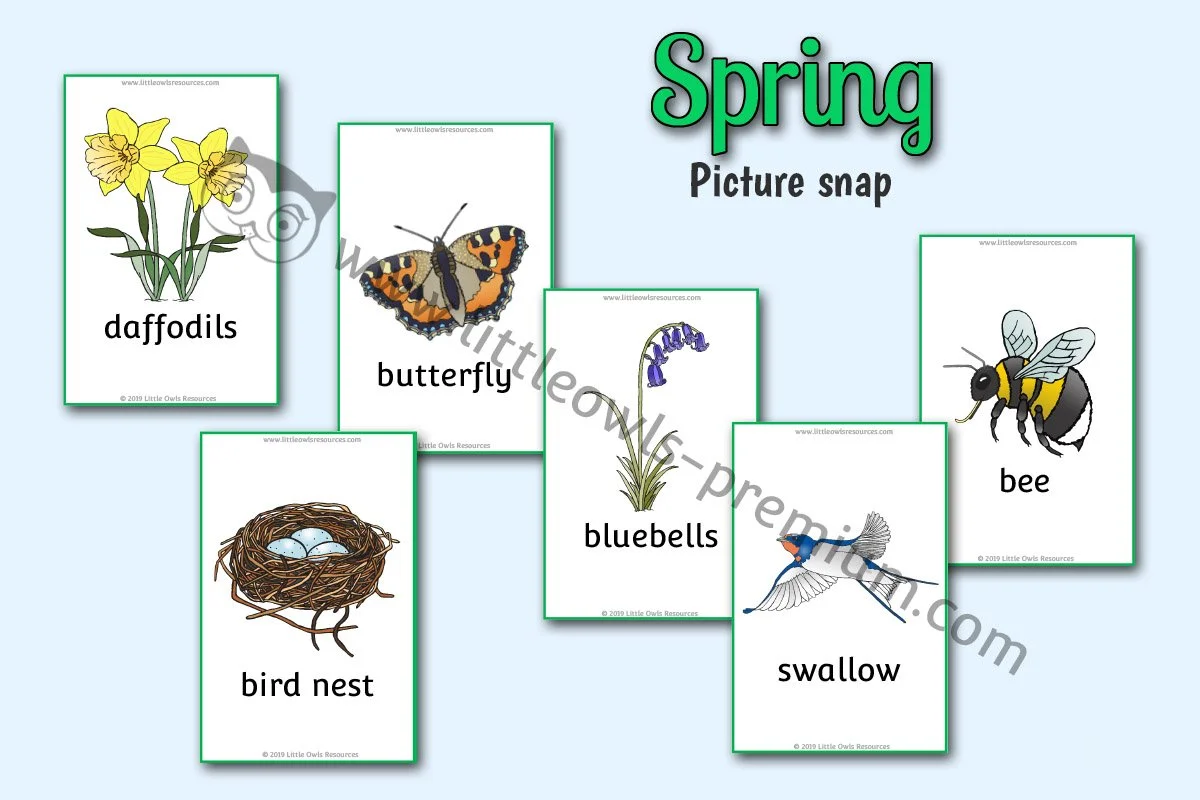
Match spring pictures in a game of snap or print pairs for a memory game. The large cards include fold-over tabs to strengthen them and conceal the pictures when turned face down.
Suggested use: Preschool · Reception · Selected KS1 uses
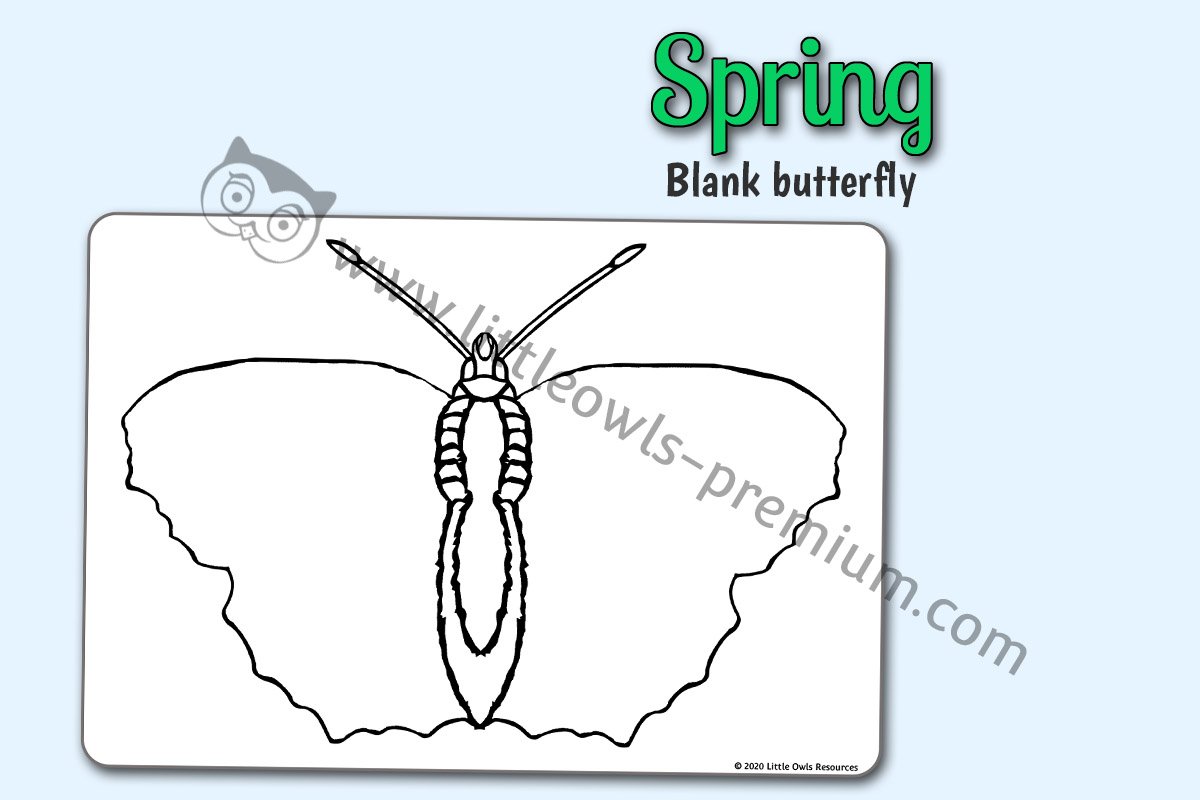
A blank butterfly shape for painting, drawing, collage and children’s own designs. Offer different materials so children can choose how to fill or decorate the wings.
Suggested use: Toddlers with adult support · Preschool · Reception · Selected KS1 uses
Revisit familiar outdoor spaces to notice wildlife, plants and seasonal change. Use checklists, matching activities and drawing prompts flexibly; an unexpected discovery can be as useful as finding something pictured.
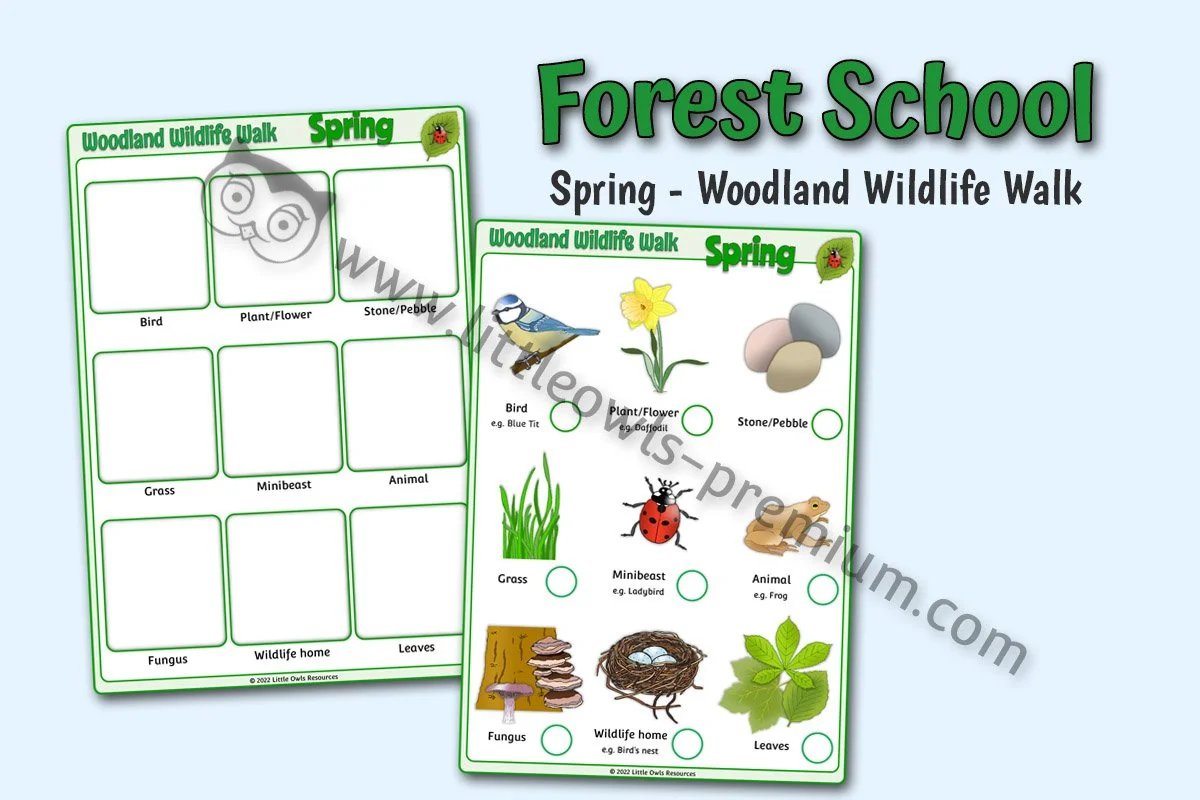
Broad picture checklists for looking at the natural world on a Spring walk. A second sheet provides spaces for drawing or marking what children notice.
Suggested use: Preschool · Reception · Selected KS1 uses
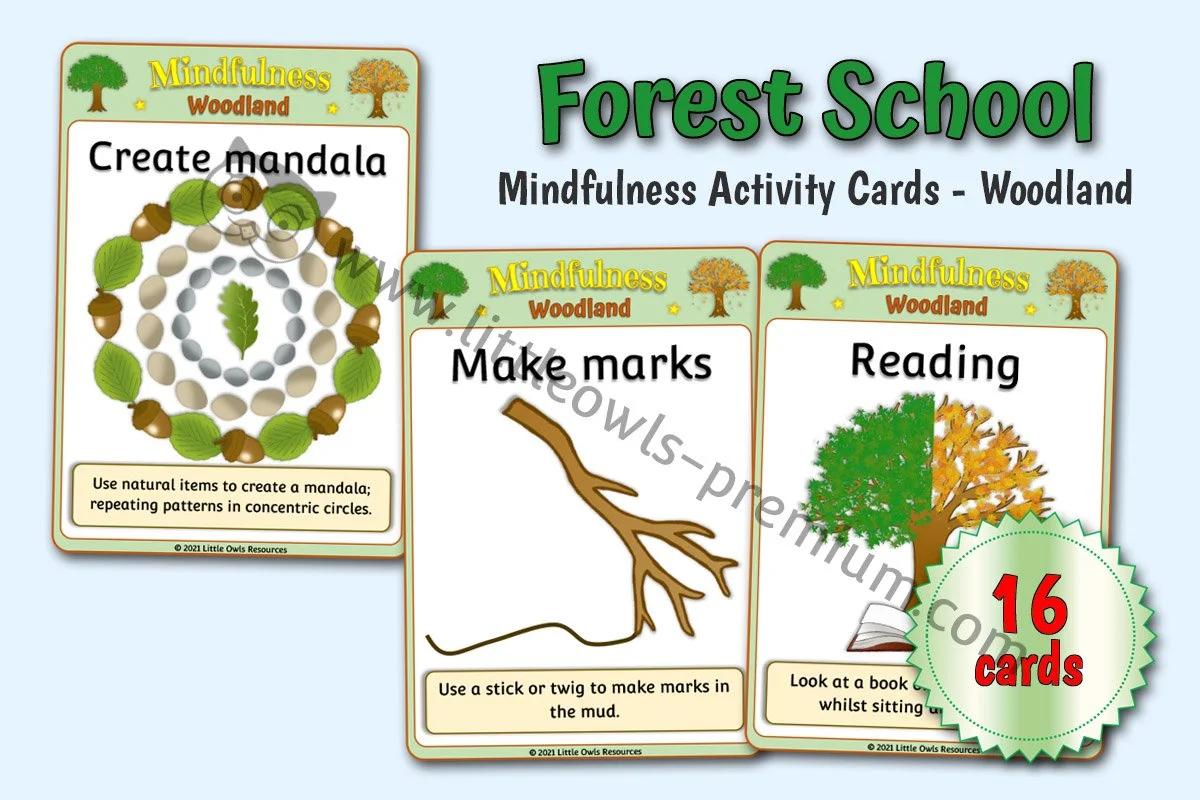
Sixteen outdoor noticing and activity ideas for slowing down, observing the surroundings and sharing children’s responses.
Suggested use: Preschool · Reception
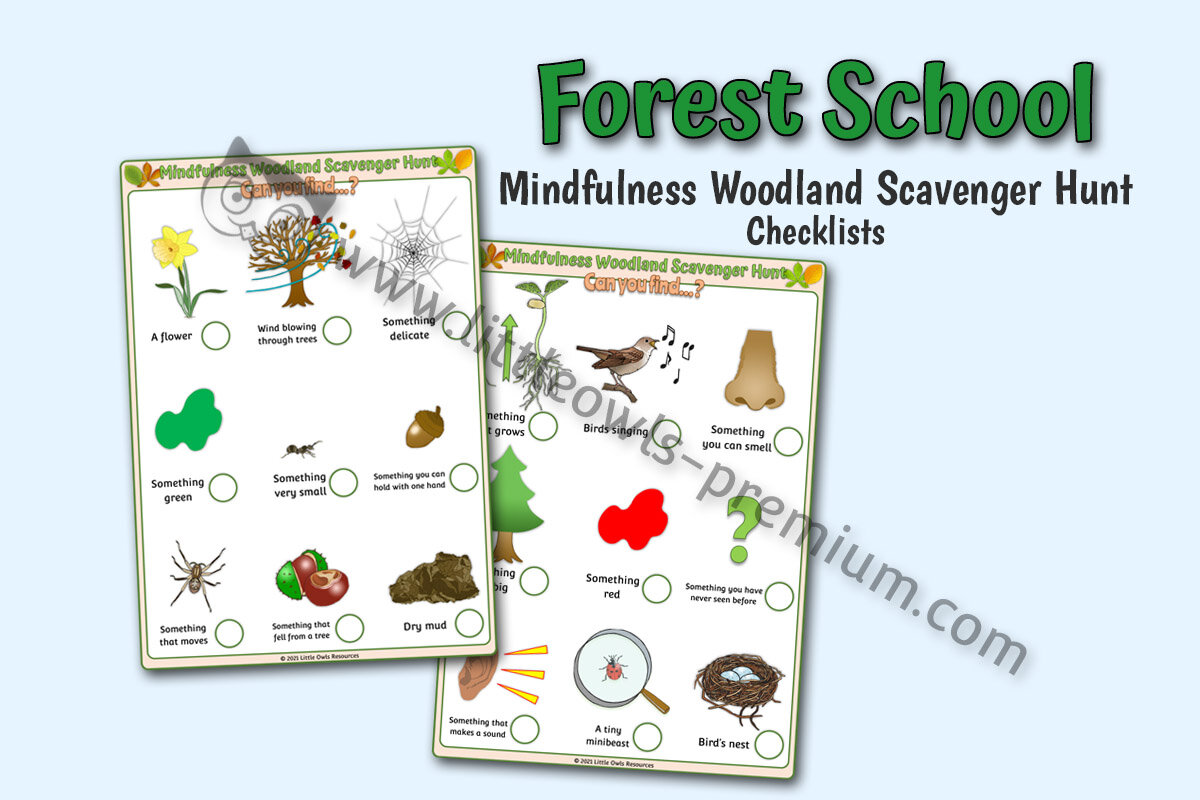
Checklist-style woodland scavenger hunts for noticing and discussing the environment. This sheet format is distinct from the separate prompt cards.
Suggested use: Preschool · Reception

Seven self-correcting puzzles for comparing leaf pictures and talking about seasonal colour changes. Matching shapes can help children check their choices.
Suggested use: Preschool · Reception

Ten self-correcting picture puzzles for noticing how birds’ eggs differ. Compare pictures and match puzzle shapes without needing to memorise species.
Suggested use: Preschool · Reception

A5 information cards introducing ten birds, including robin, pigeon, blackbird, blue tit, magpie, buzzard, barn owl and swallow.
Suggested use: Preschool · Reception

The larger A4 information-card edition introducing ten birds for shared observation, discussion and display.
Suggested use: Preschool · Reception

A5 information cards introducing ten woodland animals, including fox, squirrel, frog, rabbit, bank vole, bat, slow worm and hedgehog.
Suggested use: Preschool · Reception

A4 information cards introducing ten woodland animals. A larger format for shared discussion and display.
Suggested use: Preschool · Reception

A5 picture-and-fact cards for eight plants, including ivy, bluebell, bramble, snowdrop, daffodil, daisy, herb Robert and wood anemone.
Suggested use: Preschool · Reception

The larger A4 information-card edition for eight woodland plants, supporting observation and adult-led discussion.
Suggested use: Preschool · Reception

A5 cards introducing ten woodland minibeasts, including earthworm, snail, ladybird, earwig, ant, bumblebee, woodlouse, centipede, spider and butterfly.
Suggested use: Preschool · Reception

The larger A4 information-card edition introducing ten woodland minibeasts for observation and shared discussion.
Suggested use: Preschool · Reception

Four seasonal drawing templates for recording woodland observations in children’s own pictures.
Suggested use: Preschool · Reception
Let provision grow with children’s ideas. Start with what children notice and revisit familiar materials. Seasonal additions can support play without every area needing a Spring theme.
03 / Explore the theme
Choose adaptable toddler and preschool planning, alongside familiar topic ideas. Select the suggestions that fit your children and existing provision; broader projects are optional connections rather than a complete Spring programme.
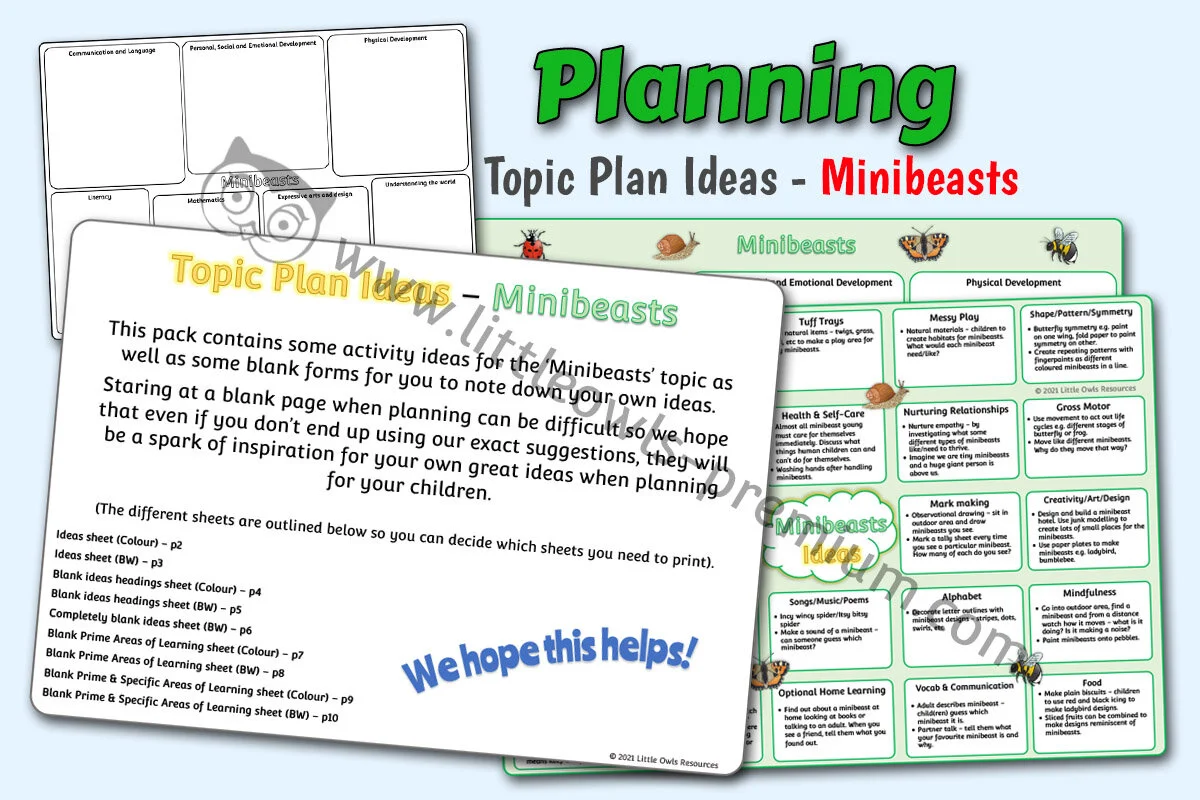
Activity suggestions and blank planning forms to help adults develop a minibeast topic around the children and their setting.
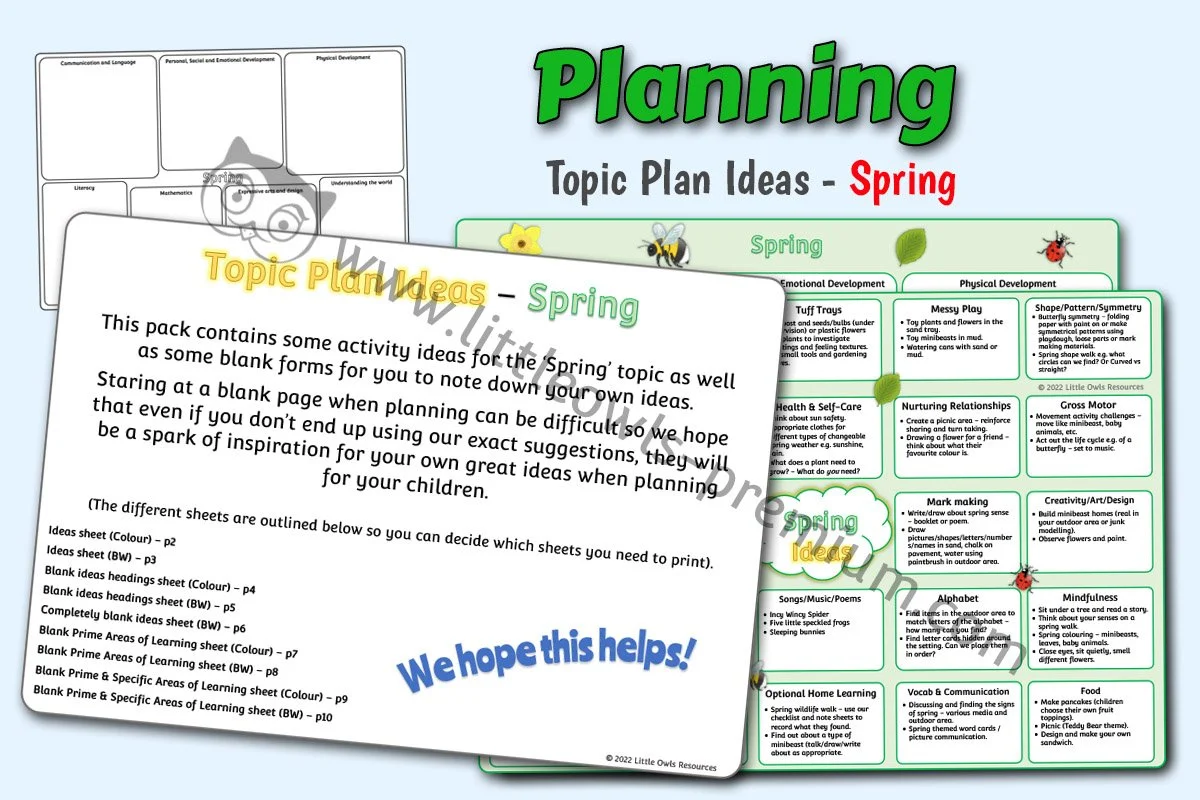
Seasonal activity suggestions and blank forms for recording your own ideas. Adapt the starting points to children’s interests and current provision.
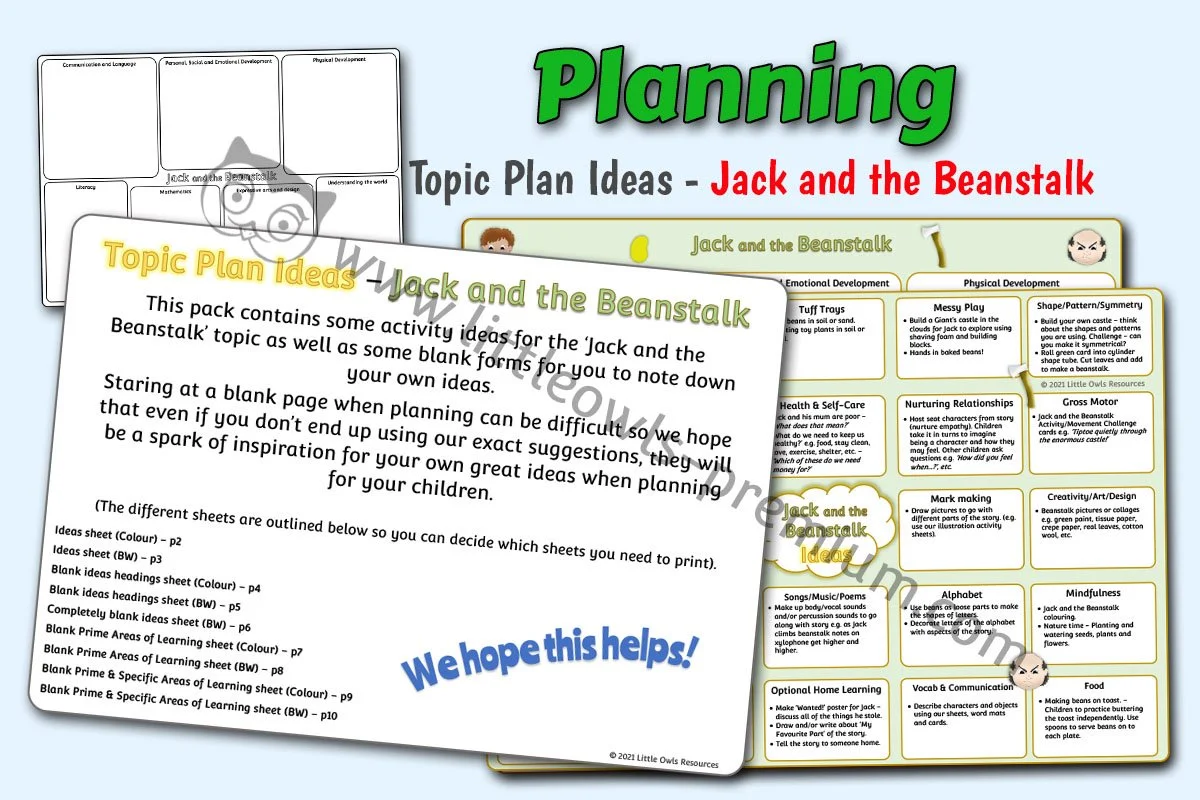
Story-related activity ideas and blank planning forms for adults to adapt around children’s questions, play and interests.

Ideas for colour naming, sorting, matching and mixing, designed for adults supporting toddlers aged 18–36 months.
Suggested use: Toddlers with adult support

A toddler project using familiar teddy bears, picnic play, language and routines. Planning is for adults working with children aged 18–36 months.
Suggested use: Toddlers with adult support

Outdoor discovery, care for living things, vocabulary and practical exploration for toddlers aged 18–36 months.
Suggested use: Toddlers with adult support

Animal sounds, habitat building and early imaginative play for toddlers aged 18–36 months, with adaptable guidance for adults.
Suggested use: Toddlers with adult support

A toddler project about growing things and real-world change, supporting curiosity and language with adult guidance for ages 18–36 months.
Suggested use: Toddlers with adult support

A six-week play-based theme about growth, change and independence for ages 3–4. The source labels it Summer 1; select ideas relevant to your Spring provision.
Suggested use: Preschool

A six-week play-based theme about living things, care and the natural world for ages 3–4. The source labels it Spring 2.
Suggested use: Preschool
Preview of a planned six-week theme for ages 3–4, labelled Spring 1. The source currently says the pack is delayed; no download is available on its destination page.
Suggested use: Preschool
04 / Explore the theme
Find seasonal lettering, displays, calendars and setting tools. Use them where they have a clear purpose, and check the year shown on any calendar before choosing it.
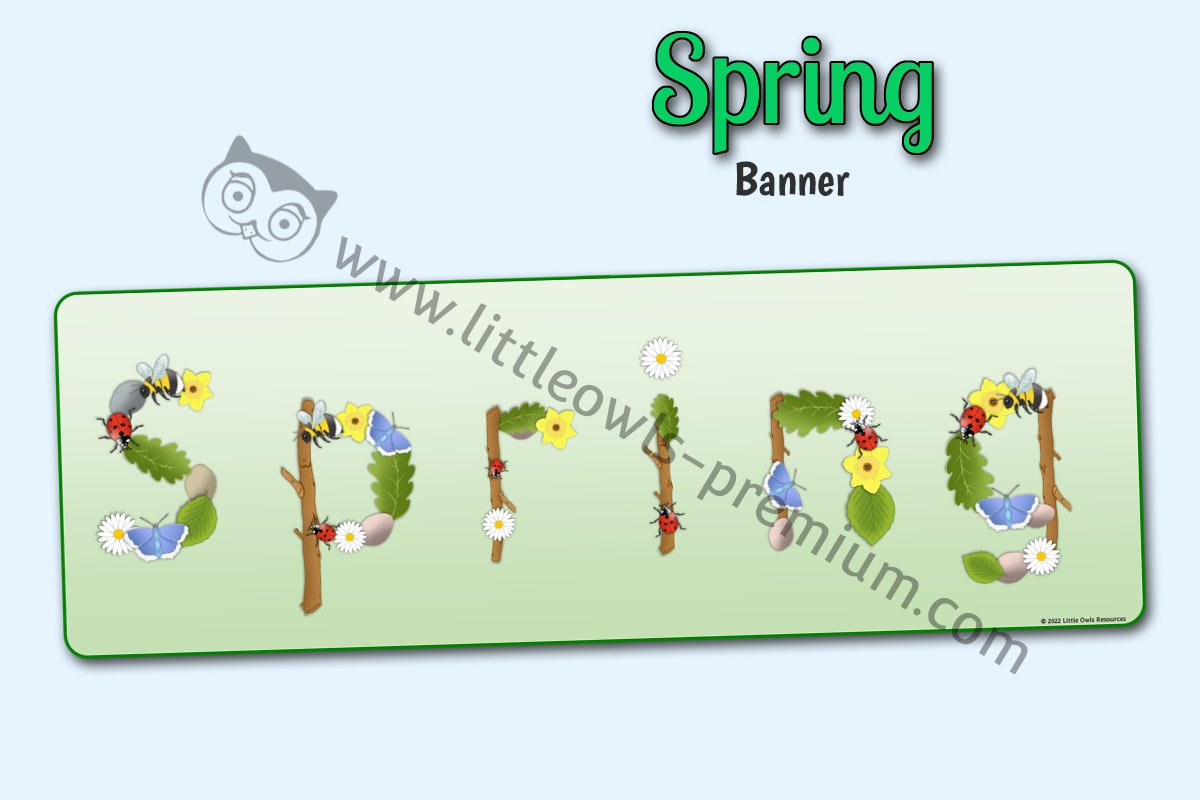
A Spring banner with lettering made from natural-item imagery. Add it to a seasonal display alongside children’s observations, drawings or photographs.
Suggested use: Preschool · Reception · Selected KS1 uses
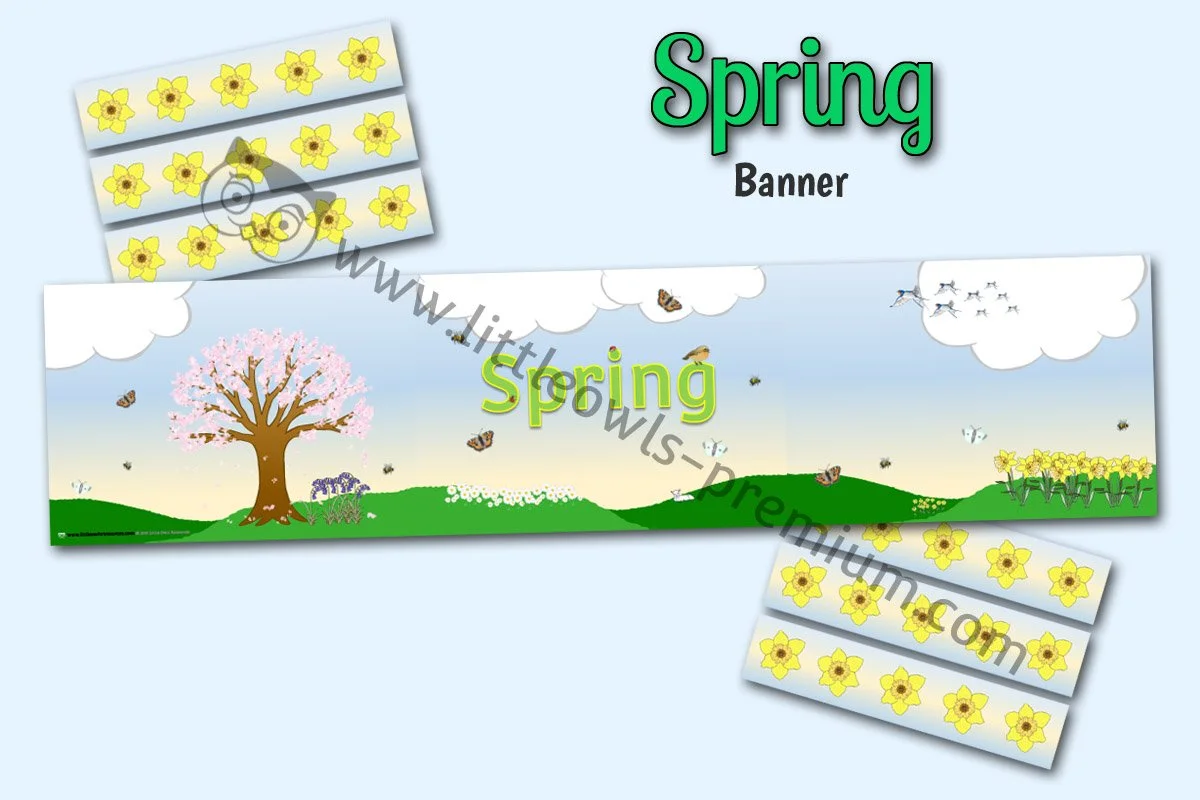
A Spring banner with matching border segments for a seasonal display board. Print the number of border pieces needed for the space and add children’s own work or observations.
Suggested use: Preschool · Reception · Selected KS1 uses
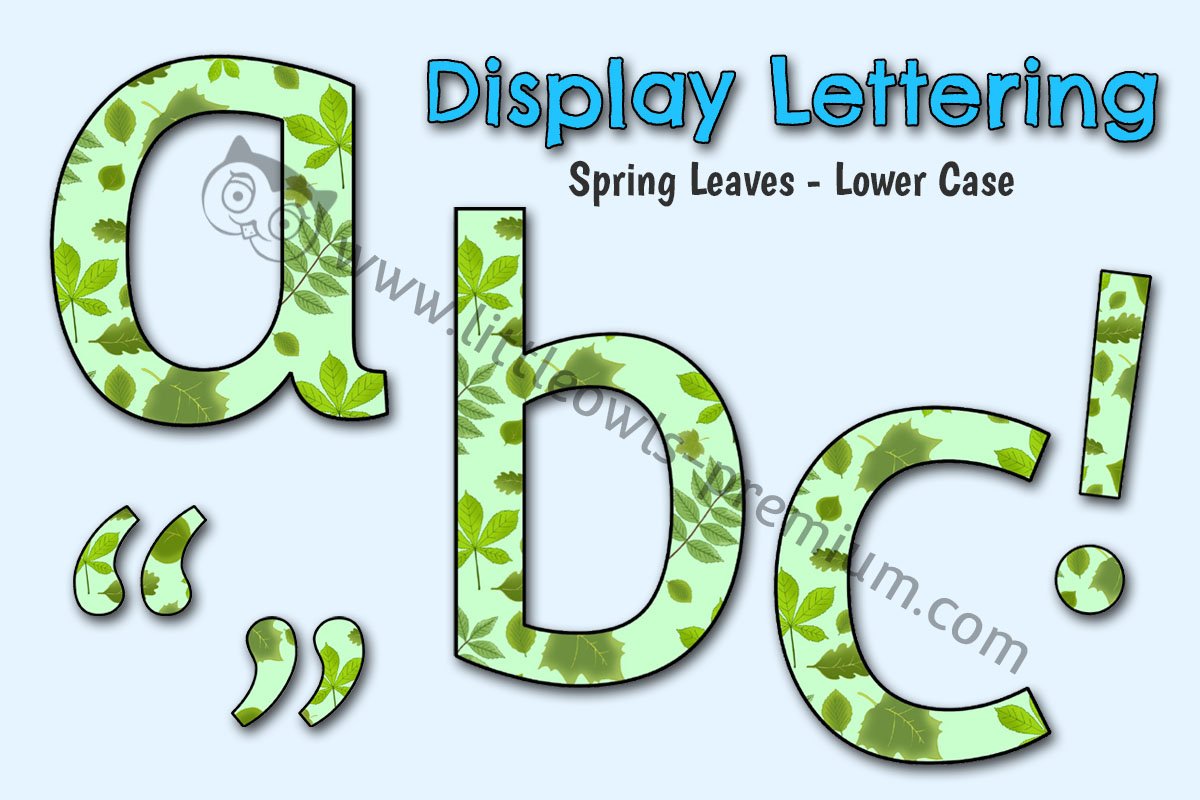
Lower-case alphabet letters and punctuation with Spring leaf decoration. Print only the letters you need and adjust print size for your display.
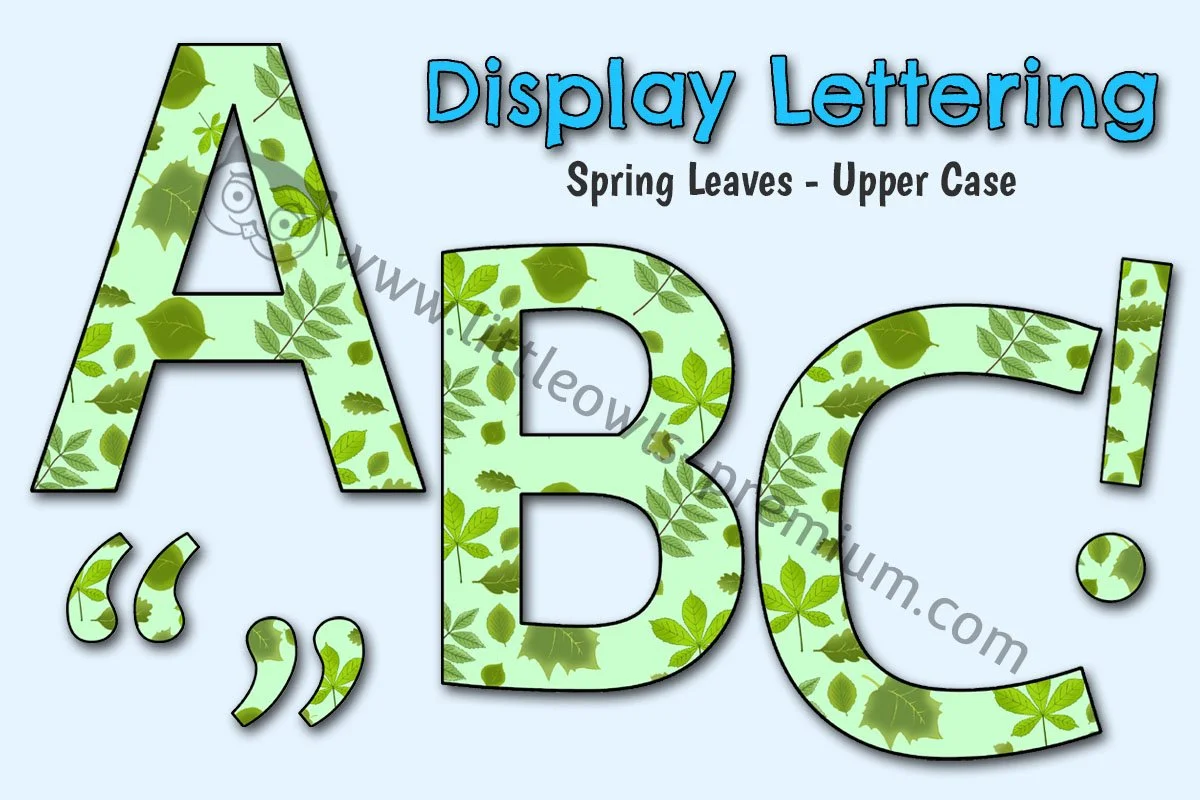
Upper-case alphabet letters and punctuation with Spring leaf decoration. Print selected letters to create your own display headings.
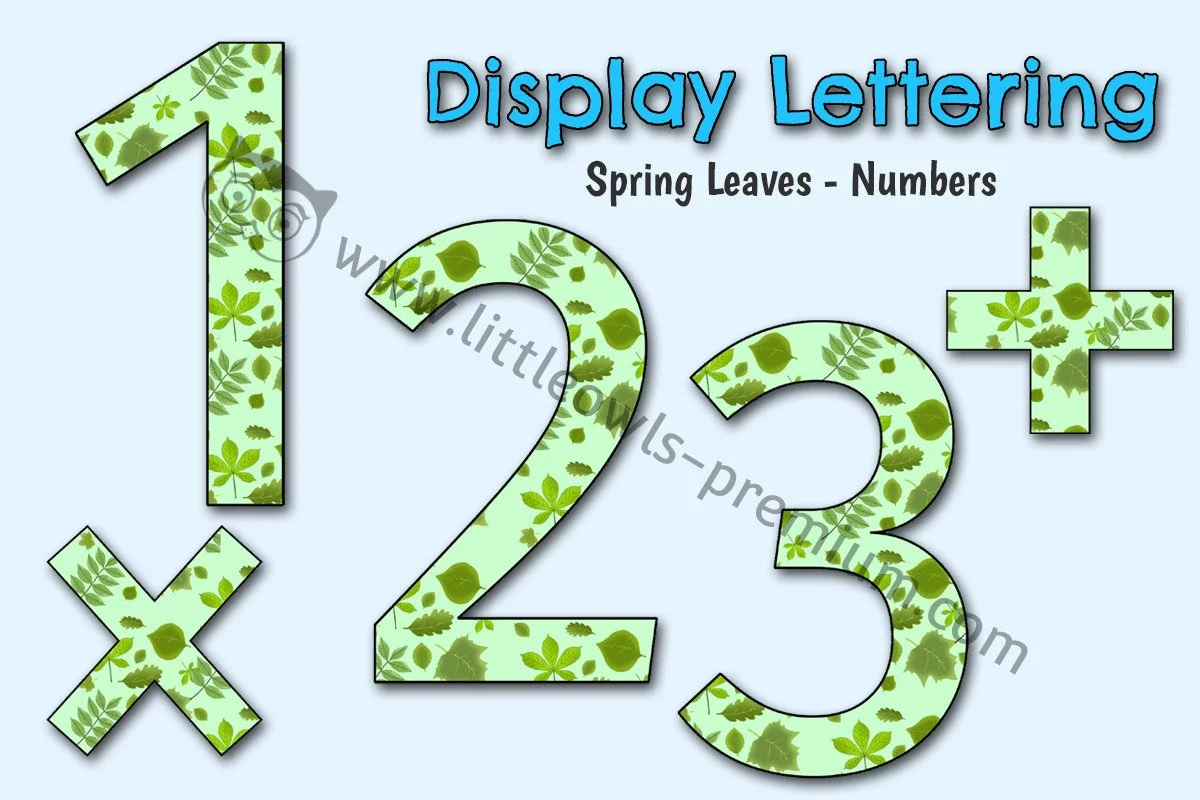
Spring leaf numerals 0–9 and mathematical symbols. Print selected pages to create number displays or labels.
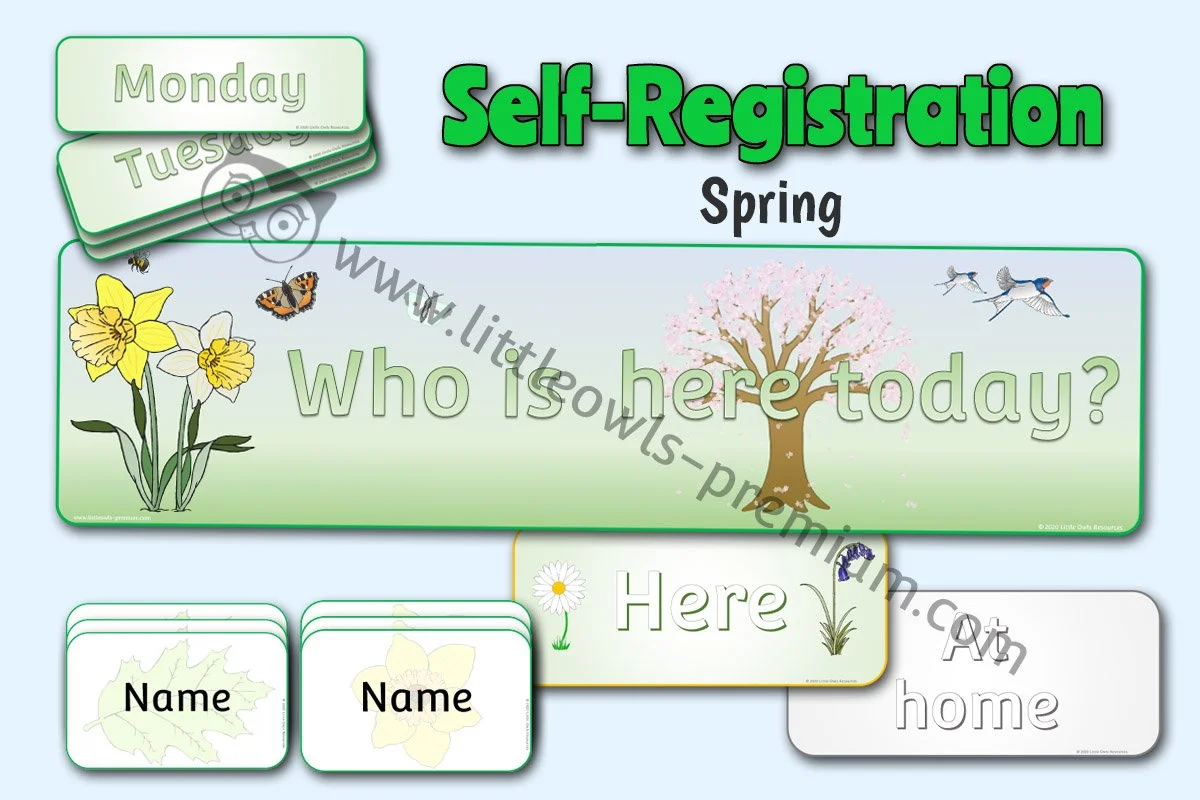
An adaptable display with name cards, days of the week, a banner and “Here” and “At home” signs. Editable and blank-name versions support your setting’s routines.
Suggested use: Toddlers with adult support · Preschool · Reception
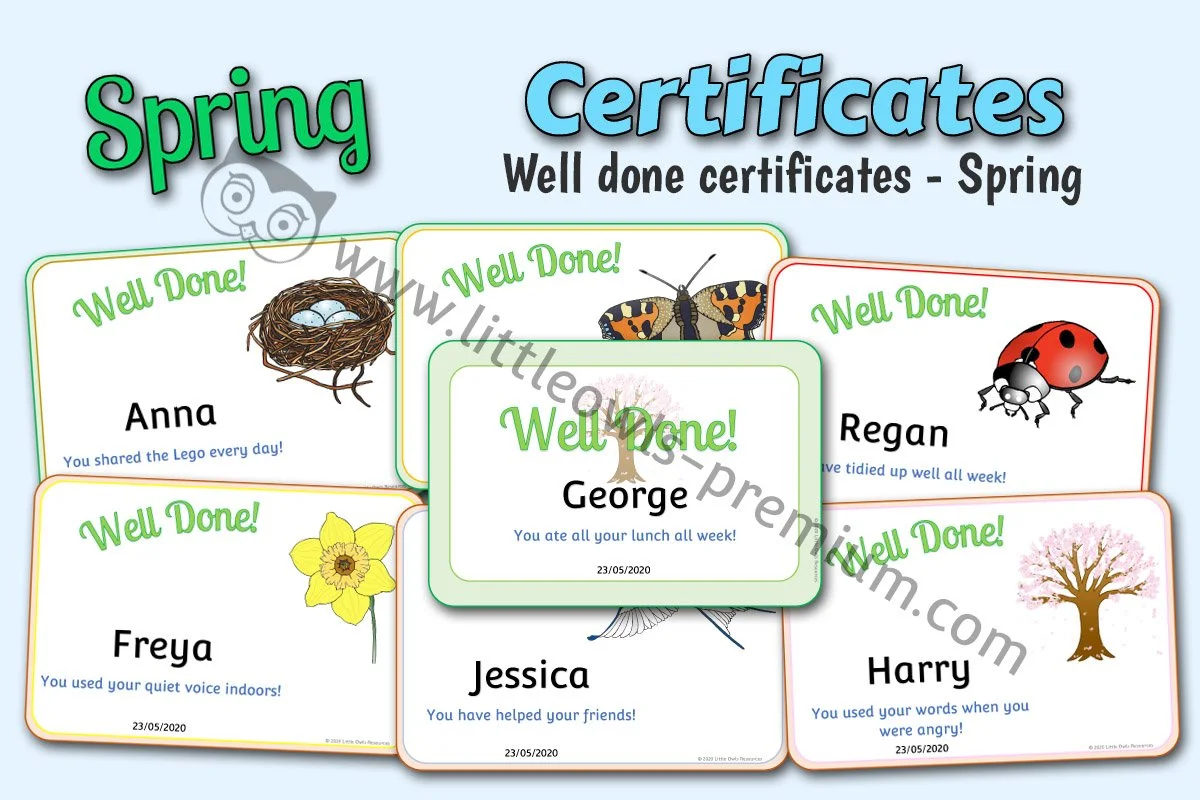
Seven A4 Spring certificate designs with editable text and blank versions for handwriting. Personalise the message, name and occasion.
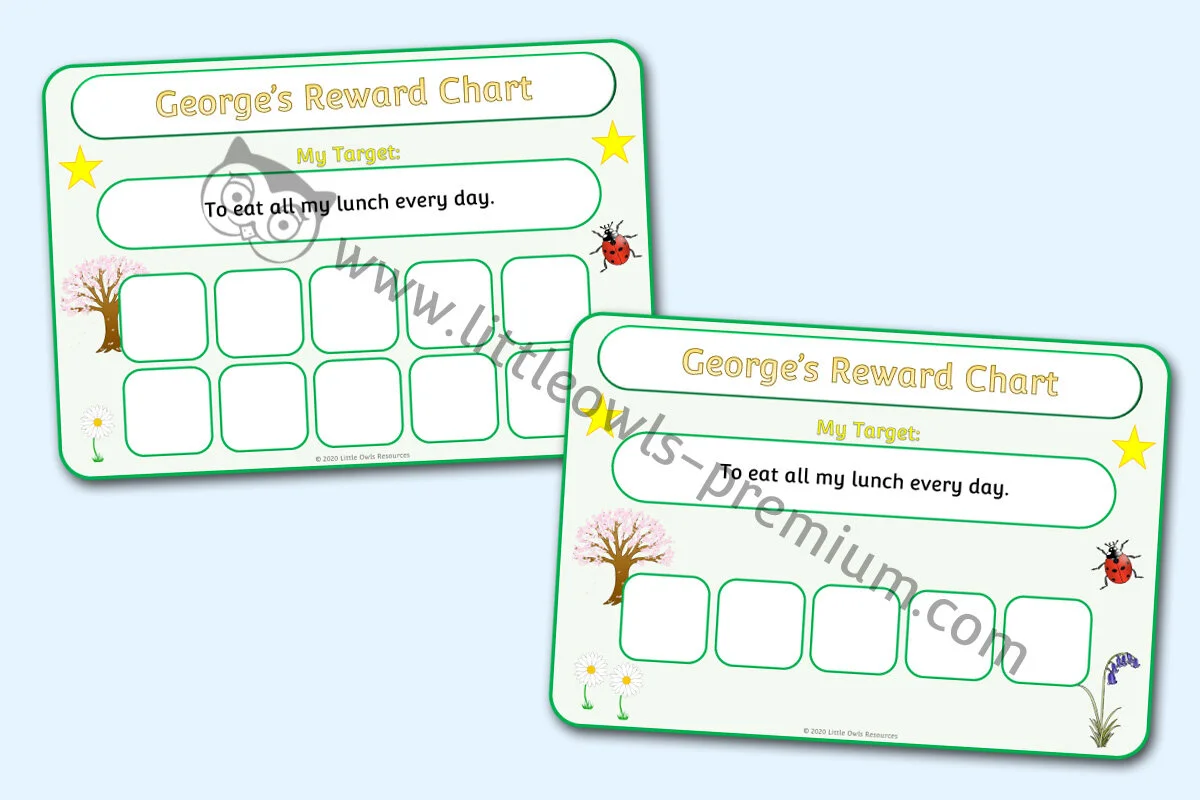
Two A4 charts with spaces for five or ten marks or stickers. Editable text and blank versions let you choose wording appropriate to your setting.
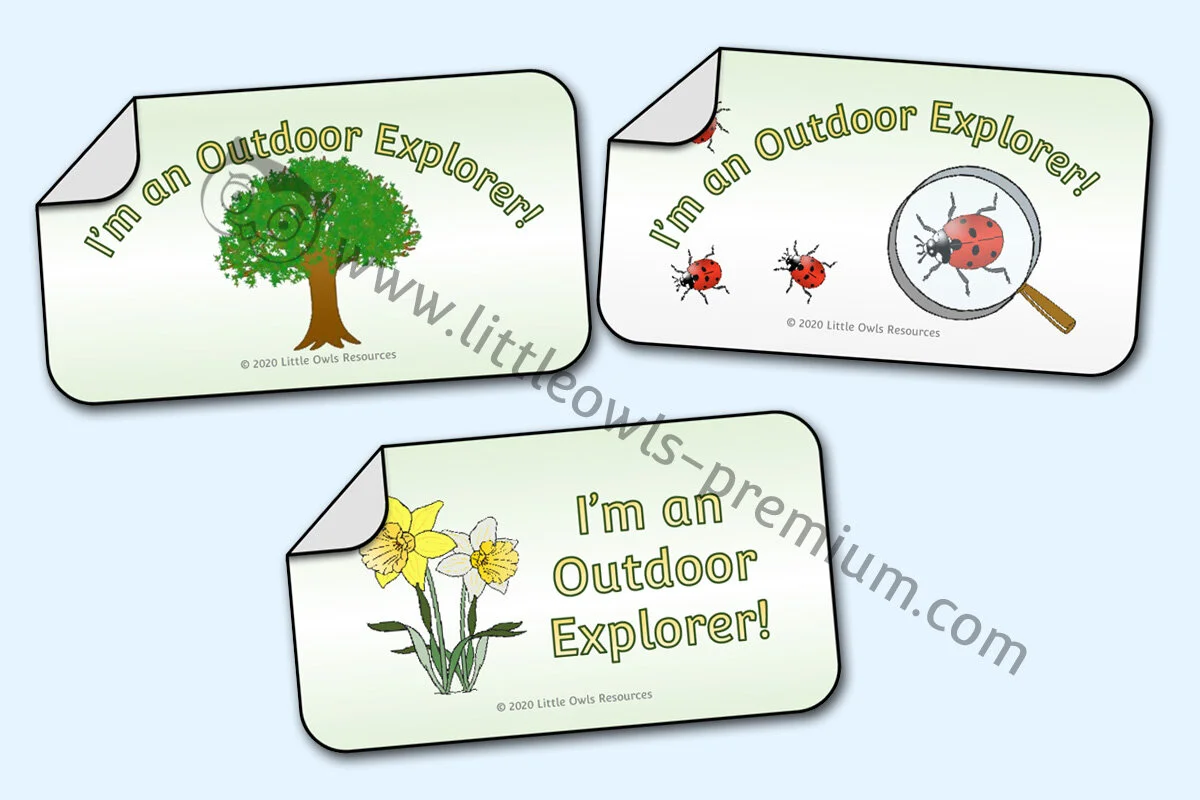
Three outdoor-explorer sticker designs, each on its own printable page. The source specifies Avery J8160 inkjet and L7160 laser label formats.
05 / Explore the theme
These are possible starting points, guided by children's interests and experience. Choose suitable materials, quantities, vocabulary and adult support rather than expecting everyone to complete a whole pack.
Begin with comfortable shared looking, movement and responsive talk with a familiar adult. Follow the baby's interest and comfort. The planning previews in this collection are for toddlers and preschool, rather than a baby worksheet programme.
Offer simple matching, movement and repeated play. Select suitable pictures and materials with close adult support, and use the toddler planners as adaptable guidance for the adult.
Follow curiosity through observation, meaningful marks, imaginative play and early maths. Choose quantities, vocabulary and prompts that fit the children, leaving room for their own ideas.
Select a suitable level of challenge and a clear purpose. Extend comparison, explanations, sequencing and recording, using factual prompts alongside first-hand observations.
06 / Explore the theme
Follow the links that fit your children's questions and experiences, from gardening and animals to outdoor play, stories and rhymes. Each collection has its own resources, context and access information.

Explore animal-themed resources for conversation, play, observation and finding out about the natural world. Check the collection for individual resource access.

Explore Beach School resources for noticing and investigating coastal environments. Check the collection for individual resource access.
Find bird-themed resources for observation, vocabulary, pictures and creative activities. Check the collection for individual resource access.
Explore Forest School resources for outdoor noticing, investigation and woodland experiences. Check the collection for individual resource access.
Extend the familiar story through imaginative play, retelling and related activities. Check the collection for individual resource access.
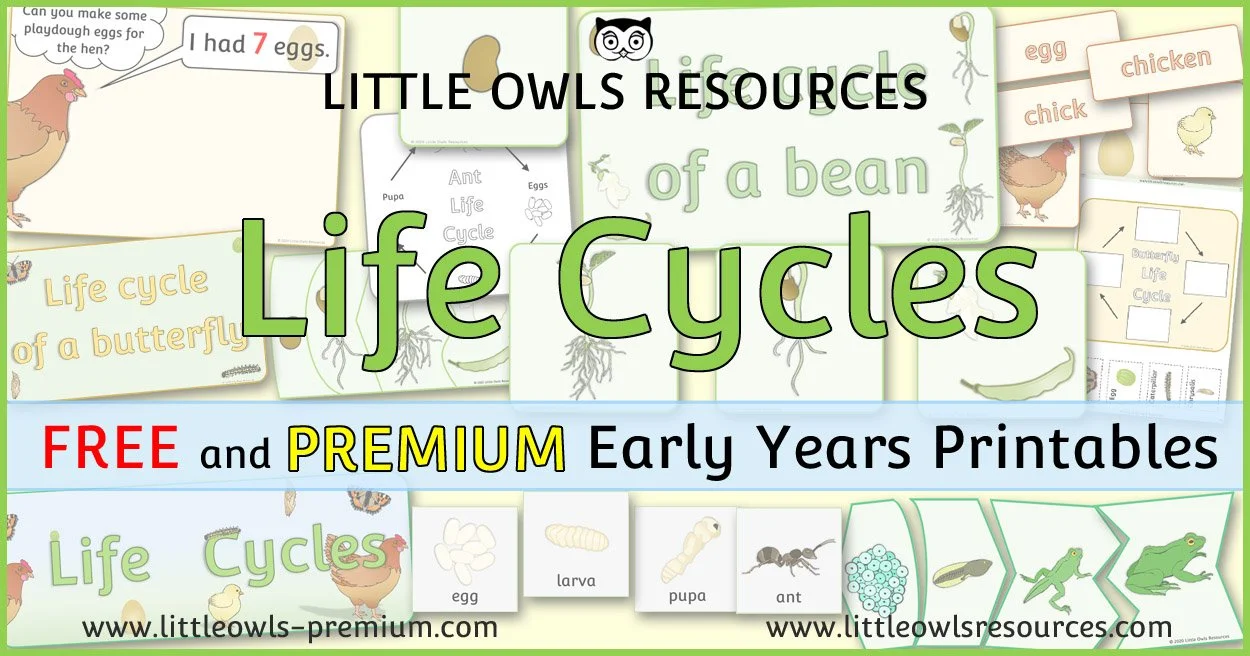
Explore life-cycle resources for sequencing, observation and talking about growth and change. Check the collection for individual resource access.
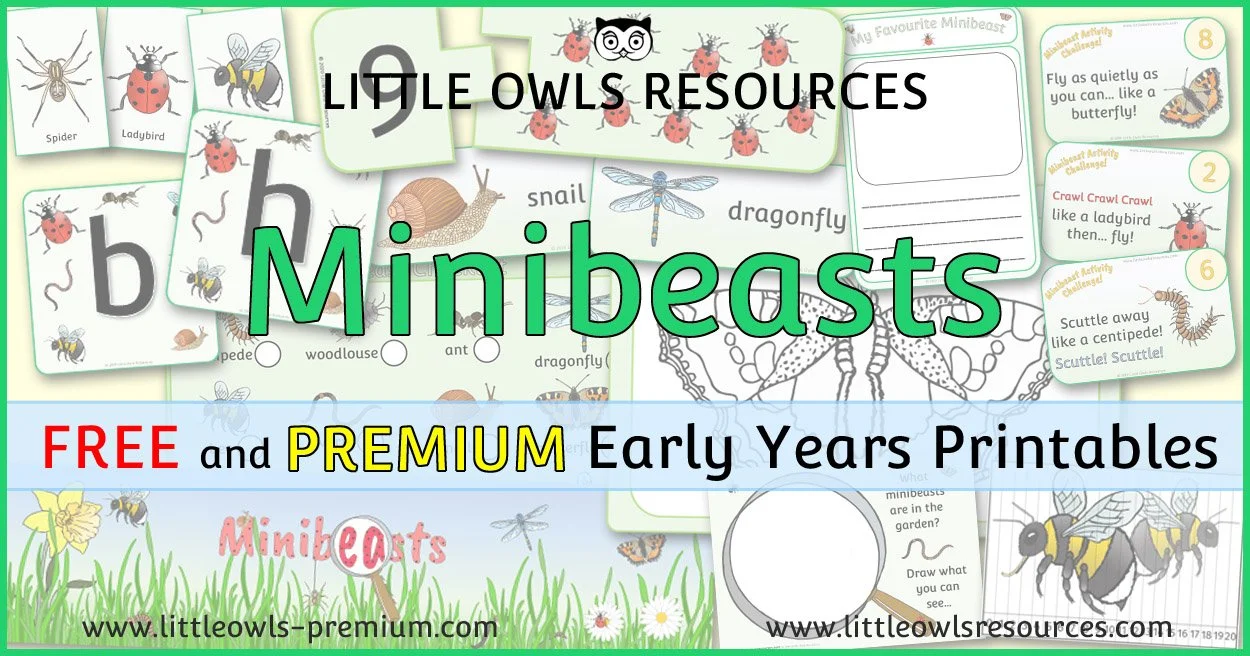
Find minibeast-themed resources for outdoor discovery, vocabulary and practical play. Check the collection for individual resource access.
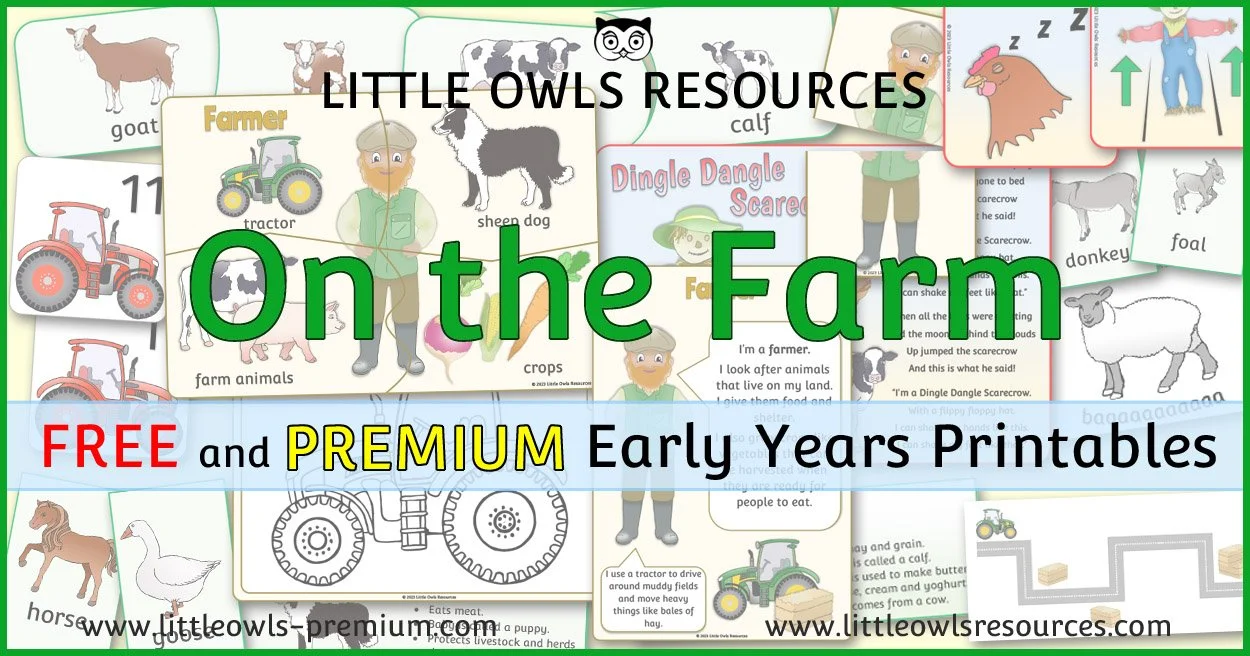
Explore farm-themed resources, including animals and their young, play and conversation. Check the collection for individual resource access.
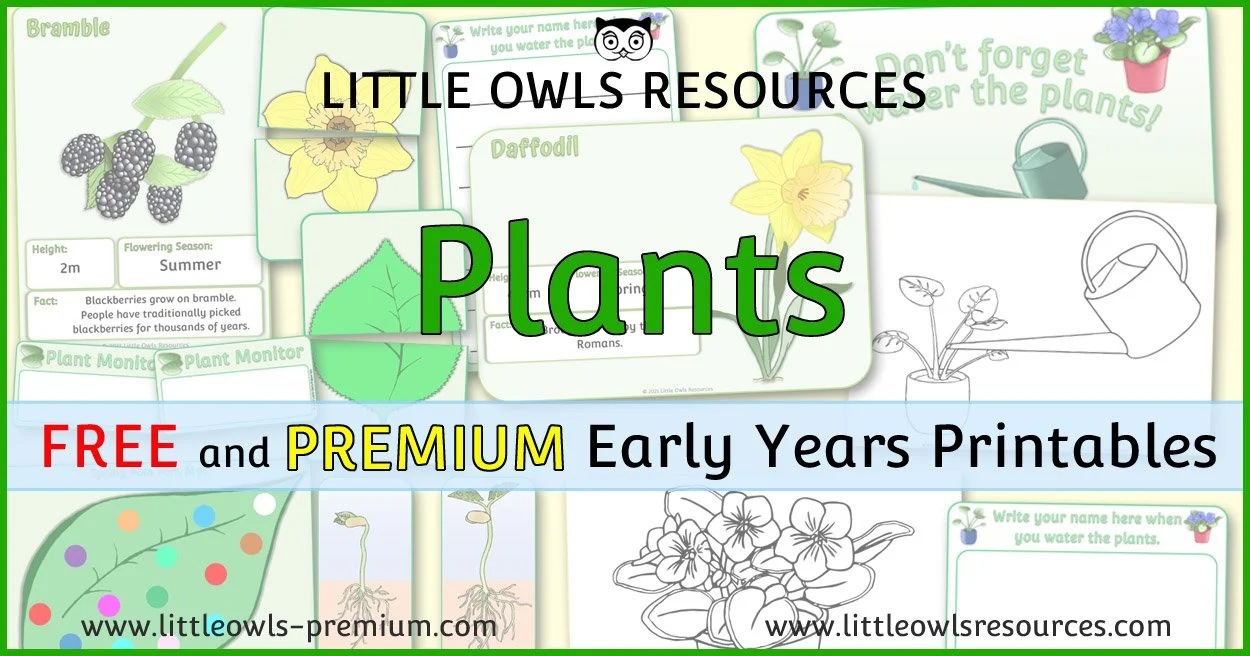
Find plant-themed resources to support growing, observation and shared vocabulary. Check the collection for individual resource access.
Explore teddy bears’ picnic resources for imaginative play, making and shared routines. Check the collection for individual resource access.
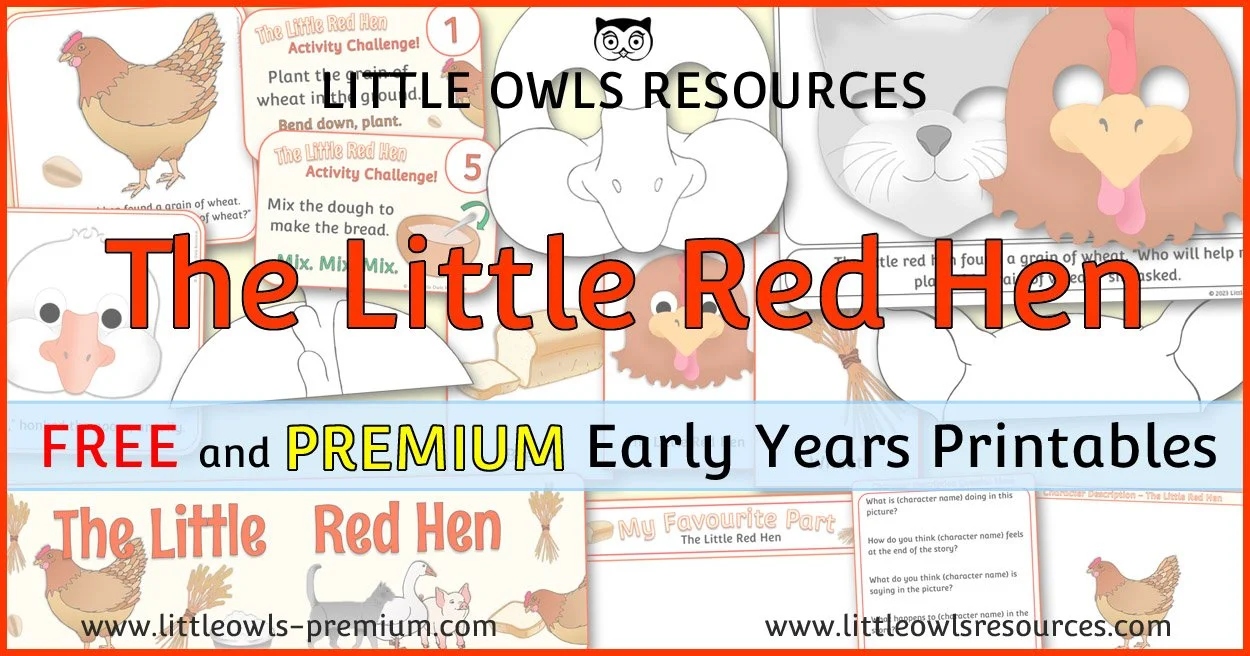
Use the familiar story as a starting point for retelling, conversation and play. Check the collection for individual resource access.
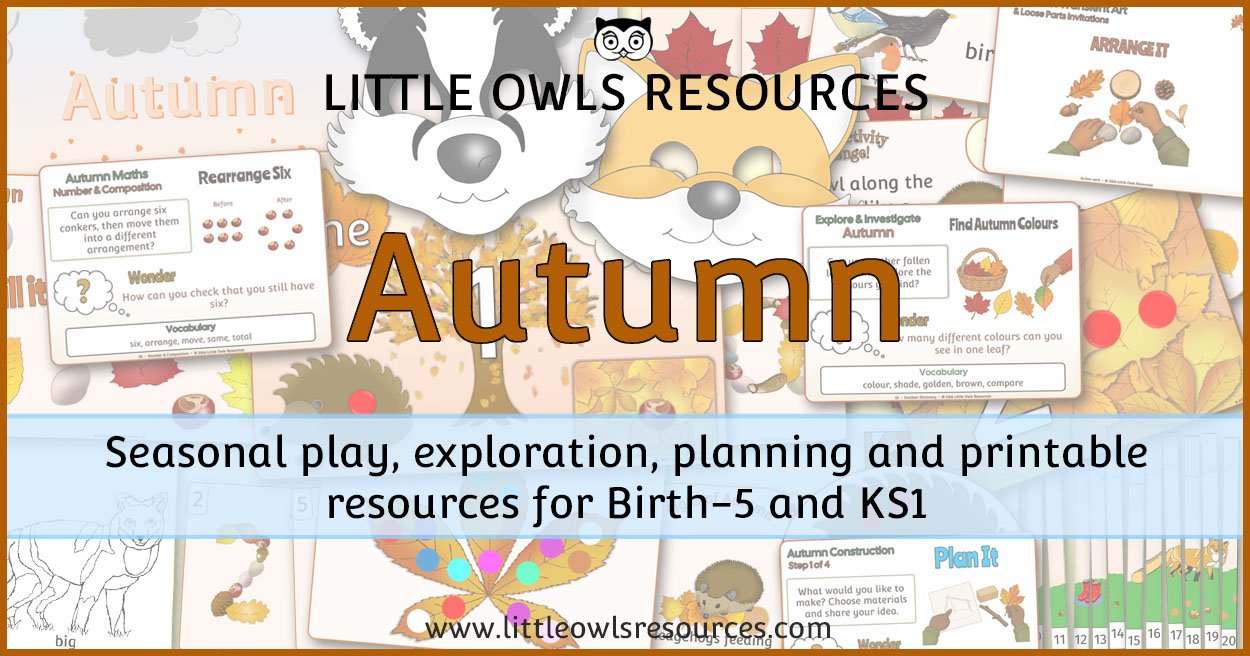
Explore Autumn resources for seasonal play, observation and continuous provision. Check the collection for individual resource access.
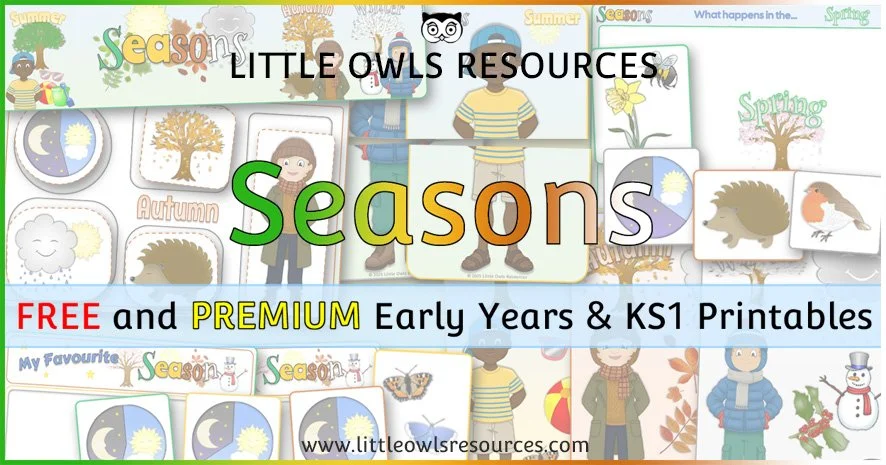
Explore resources and ideas about changes across the seasons. Check the collection for individual resource access.
Find Summer-themed resources and ideas for seasonal play and exploration. Check the collection for individual resource access.
Explore Winter resources for seasonal noticing, play and continuous provision. Check the collection for individual resource access.
Explore resources and ideas for water play in your outdoor provision. Check the collection for individual resource access.
Browse resources for exploring, building and playing with sand outdoors. Check the collection for individual resource access.
Find resources for imaginative mud-kitchen play and outdoor exploration. Check the collection for individual resource access.
Explore ways to support number, shape and mathematical thinking outdoors. Check the collection for individual resource access.
Find resources to support purposeful drawing, marks and early writing outdoors. Check the collection for individual resource access.
Explore resources for noticing wildlife and investigating your outdoor environment. Check the collection for individual resource access.
Browse resources for creating and using an outdoor picnic area. Check the collection for individual resource access.

Find resources for movement, sport and PE games. Check the collection for individual resource access.
Explore gardening resources for planting, growing and caring for your outdoor space. Check the collection for individual resource access.
Find B-I-N-G-O rhyme resources for shared singing, familiar words and play. Check the collection for individual resource access.
Explore Five Little Speckled Frogs resources for singing, counting and retelling. Check the collection for individual resource access.
Find Incy Wincy Spider / Itsy Bitsy Spider resources for rhyme, movement and story play. Check the collection for individual resource access.
Explore Round and Round the Garden rhyme resources for familiar shared play. Check the collection for individual resource access.
Find Sleeping Bunnies resources for shared singing and movement. Check the collection for individual resource access.
Explore the EYFS Framework collection and choose resources relevant to your children and setting. Individual resources have their own access information.
Explore the Special Dates Calendar collection and choose resources relevant to your children and setting. Individual resources have their own access information.
Explore the Festivals and Celebrations collection and choose resources relevant to your children and setting. Individual resources have their own access information.
Explore the Themes collection and choose resources relevant to your children and setting. Individual resources have their own access information.
Explore the Role-Play Packs collection and choose resources relevant to your children and setting. Individual resources have their own access information.
Explore the Get Organised collection and choose resources relevant to your children and setting. Individual resources have their own access information.
Explore the Areas of Learning collection and choose resources relevant to your children and setting. Individual resources have their own access information.
Explore the Dual-Language Resources collection and choose resources relevant to your children and setting. Individual resources have their own access information.
07 / Explore the theme
Start with real encounters and give children time to look again. Use selected resources to help them compare, represent, talk about and revisit what they notice.
Meteorological Spring covers March, April and May. Daylight increases, but local weather varies and cold days are still possible. Begin with the changes children can observe rather than expecting every day to match a seasonal picture.
Spring can offer starting points for noticing change, observing plants and animals, comparing quantities, making marks, moving and creating. Follow children's questions and revisit experiences that interest them; there is no fixed list of activities to complete.
Start small: add a relevant object, picture, book or prompt to provision children already use. Observe how they respond before changing or adding more. Familiar play should remain available, and every area does not need a seasonal theme.
For babies, begin with comfortable shared encounters and responsive interaction with a familiar adult. The dedicated planning previews on this page are for toddlers and preschool children. For toddlers, choose simple matching, movement or open-ended play with appropriate adult support, and check each resource's age guidance.
The 18 cards in Free resources use Free Access. Other available individual downloads use All Access. The coming-soon preview is labelled separately. Search for free to show the free cards. Related collections have their own access information.
All Access membership unlocks every resource on the site. Free Access lets you explore and download a selection of free resources. Explore membership options.
Already a paying member? You have sitewide access. There’s no need to change plans or subscribe again. Read our FAQs.
Resources created by Little Owls Resources.