
Free Access
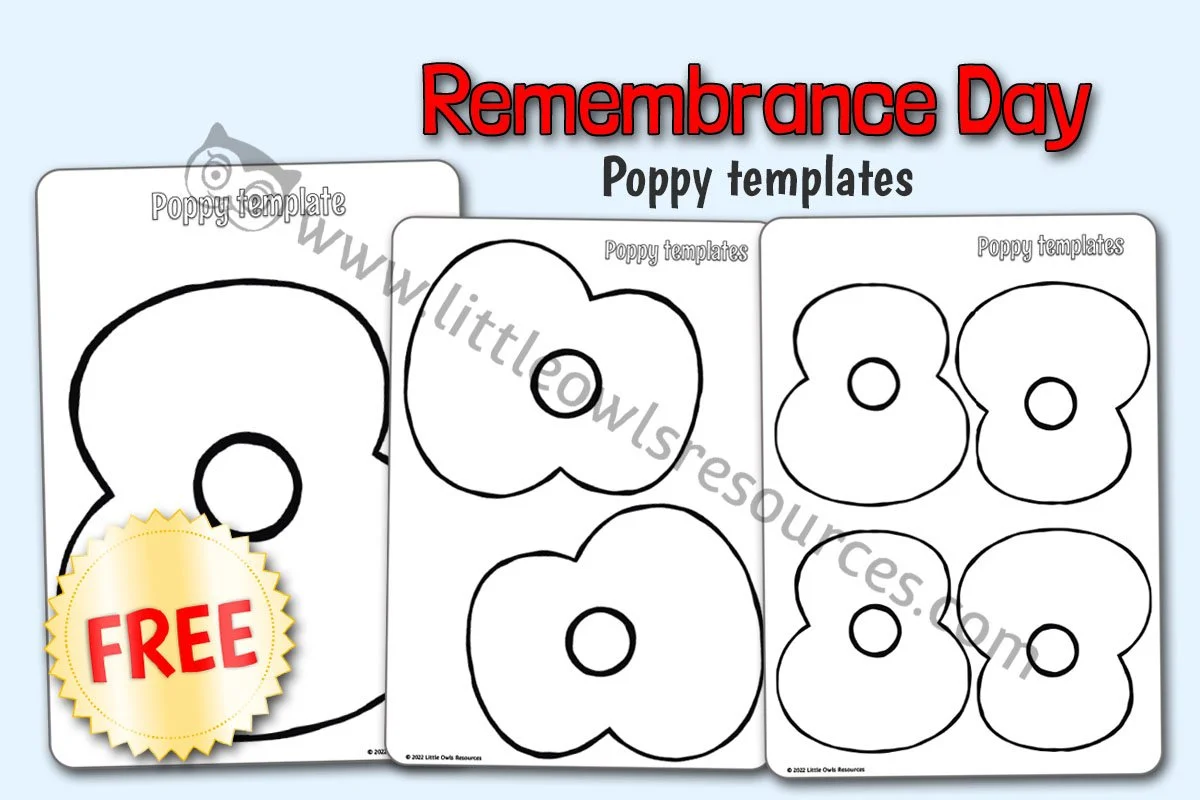
Poppy Templates — Art & Craft
Poppy outlines for painting, collage, drawing, colouring, printing or cut-and-stick artwork.

Your Custom Text Here
Free topic · Remembrance Day
Free poppy printables, poems, drawing and writing resources for thoughtful conversations about remembrance.
Choose a few meaningful starting points for your children: a poppy to look at, a picture or poem to share, or space for their own marks and questions. Keep explanations simple and respond with care to families’ different experiences.
Remembrance Sunday: 8 November 2026
Armistice Day / Remembrance Day: Wednesday 11 November 2026
All 22 core resources are free ↓
A gentle introduction to remembrance ↓
Find your starting point
Try a resource, activity or age. Choose a result to see its cover on this page, then open the resource when you are ready. The search also includes the wider November links below.
Search becomes available when JavaScript is enabled. You can always browse using the section choices above.
01 / Free Remembrance Day resources
Look closely at a poppy, talk about its colours and shape, then offer drawing, paint or collage. Children can make their own choices about how to respond; a simple explanation of the poppy’s meaning gives the activity context.
Poppy outlines for painting, collage, drawing, colouring, printing or cut-and-stick artwork.
Suggested use: Toddlers with adult support · Preschool · Reception · Selected KS1 uses
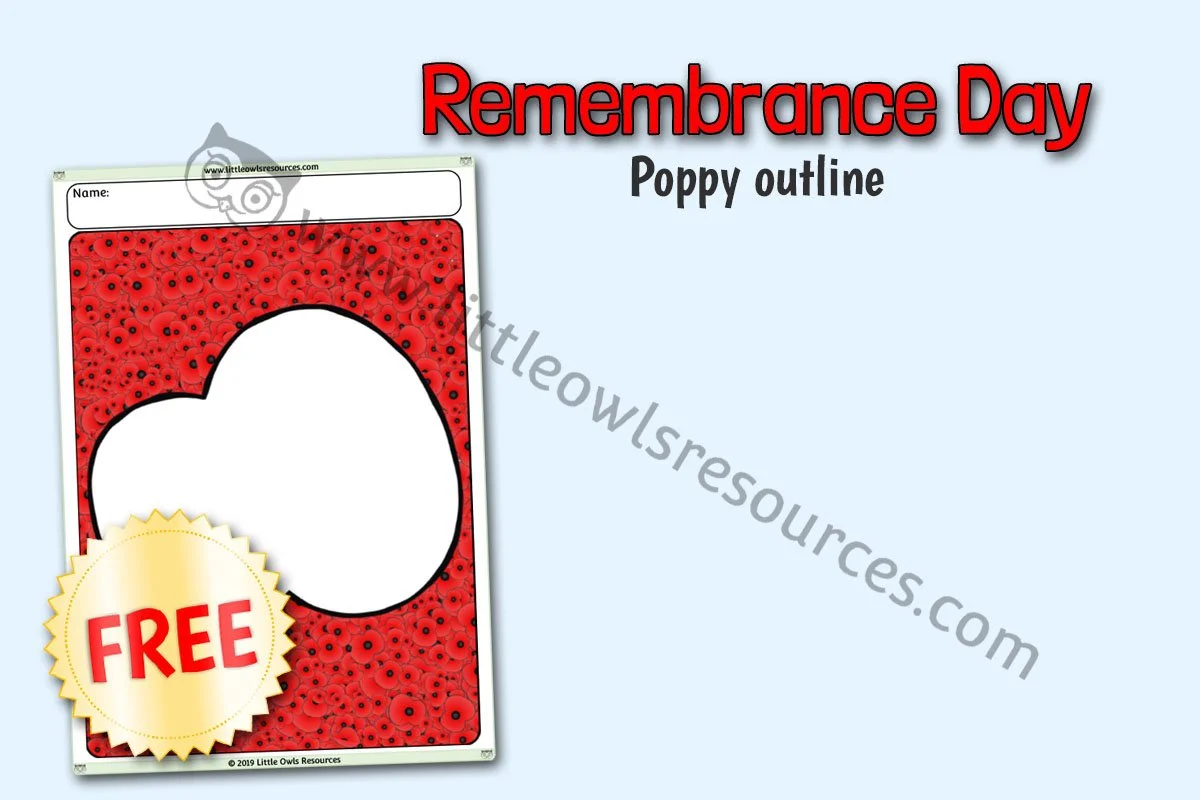
A large poppy outline on a background of poppies offers space for an individual drawing or written response.
Suggested use: Preschool · Reception · Selected KS1 uses
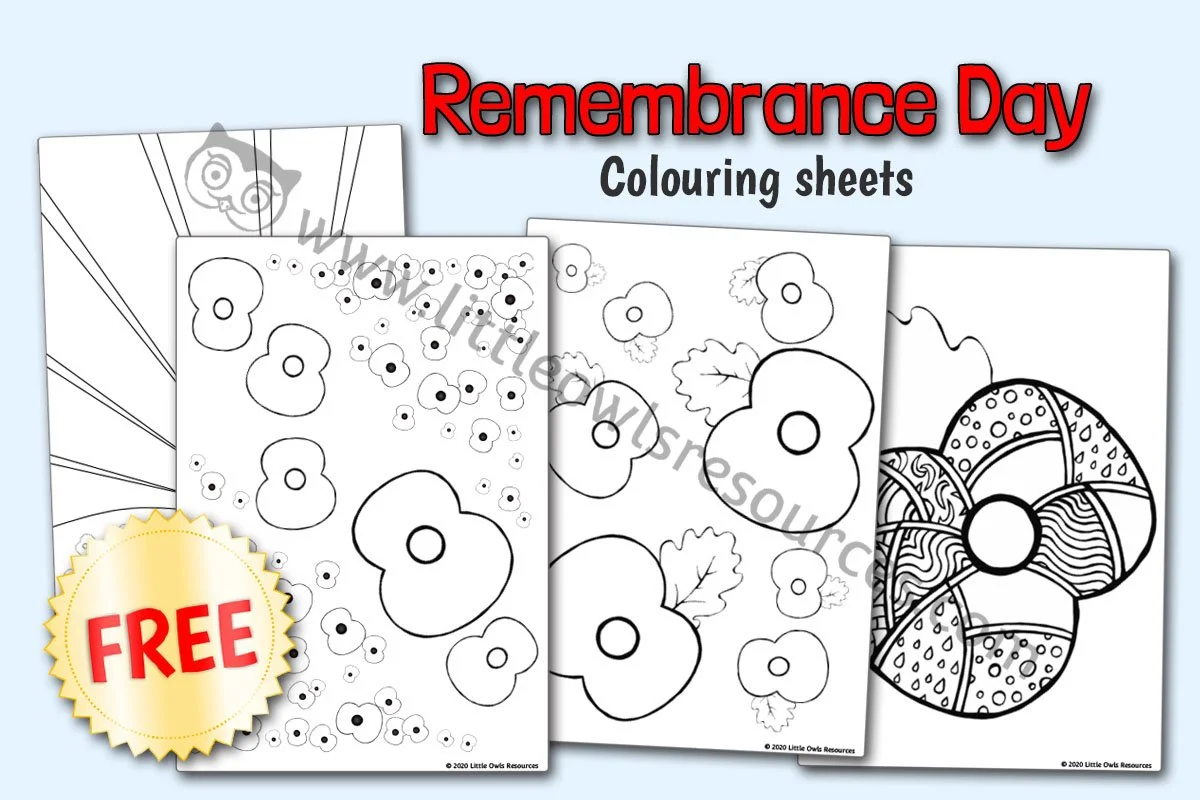
Poppy colouring sheets for children to explore colour and add their own detail.
Suggested use: Toddlers with adult support · Preschool · Reception · Selected KS1 uses
02 / Free Remembrance Day resources
Choose a poem or picture to share with an adult. Listen to children’s ideas and explain unfamiliar words in a way that fits their experience. These resources offer different formats for reading together, illustrating and display.
Read the chosen poem first. Some posters use traditional remembrance poetry and language that needs careful explanation. Select what suits your group, particularly younger children and families affected by conflict or bereavement.
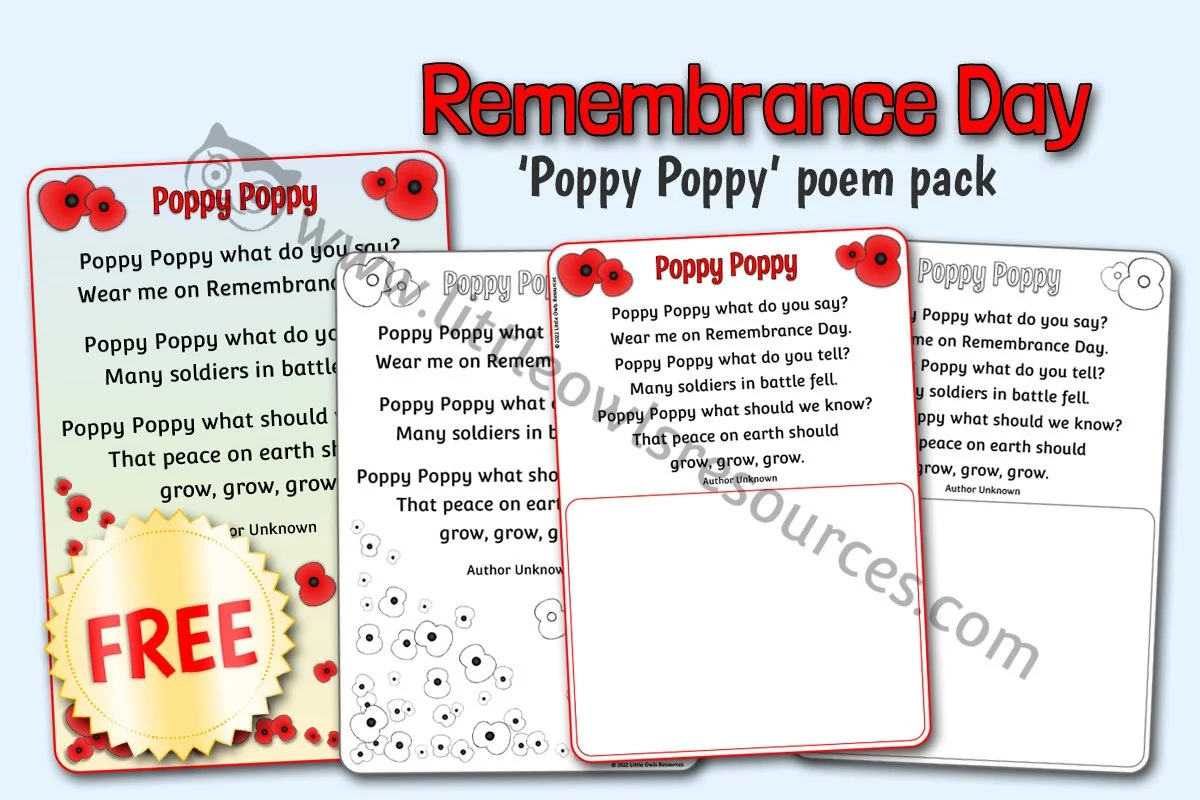
Full-colour and colouring poem posters, plus sheets with space for children’s illustrations, for sharing Poppy Poppy with an adult.
Suggested use: Preschool · Reception · Selected KS1 uses
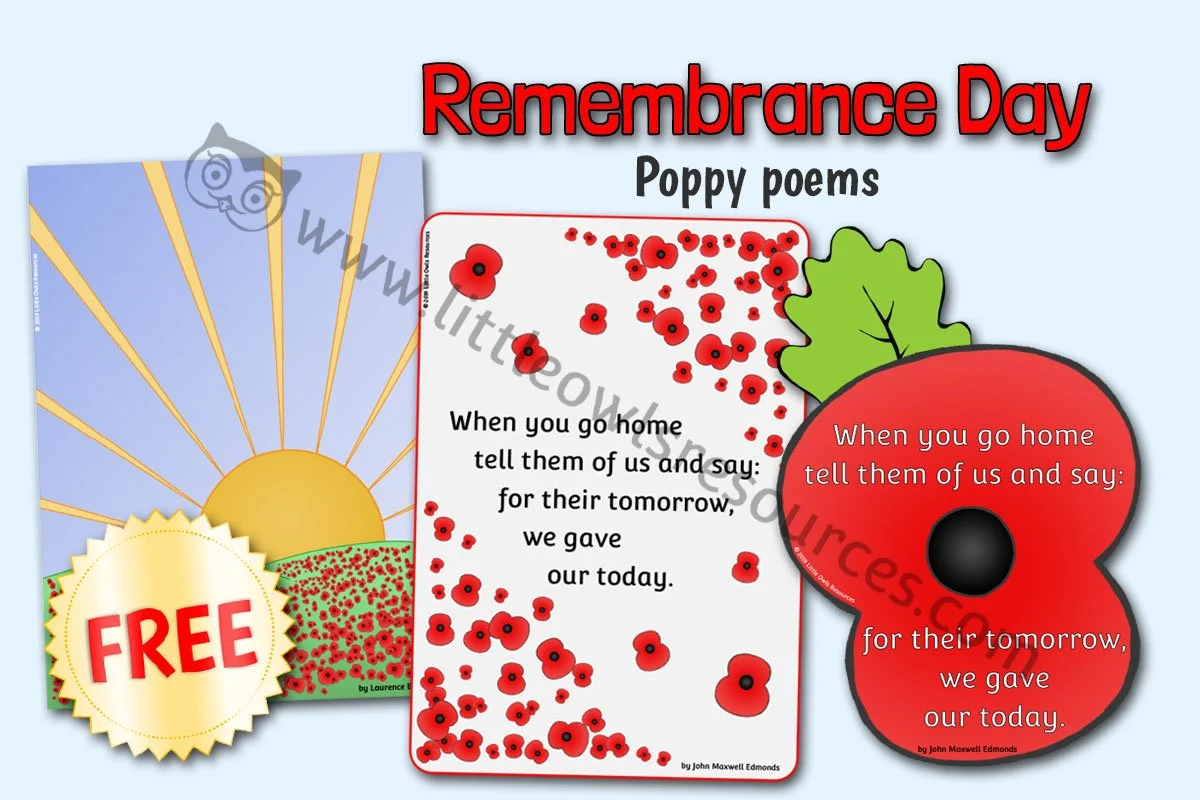
Remembrance poems on poppy and sunrise or sunset backgrounds for carefully chosen, adult-led reading and discussion.
Suggested use: Reception · Selected KS1 uses
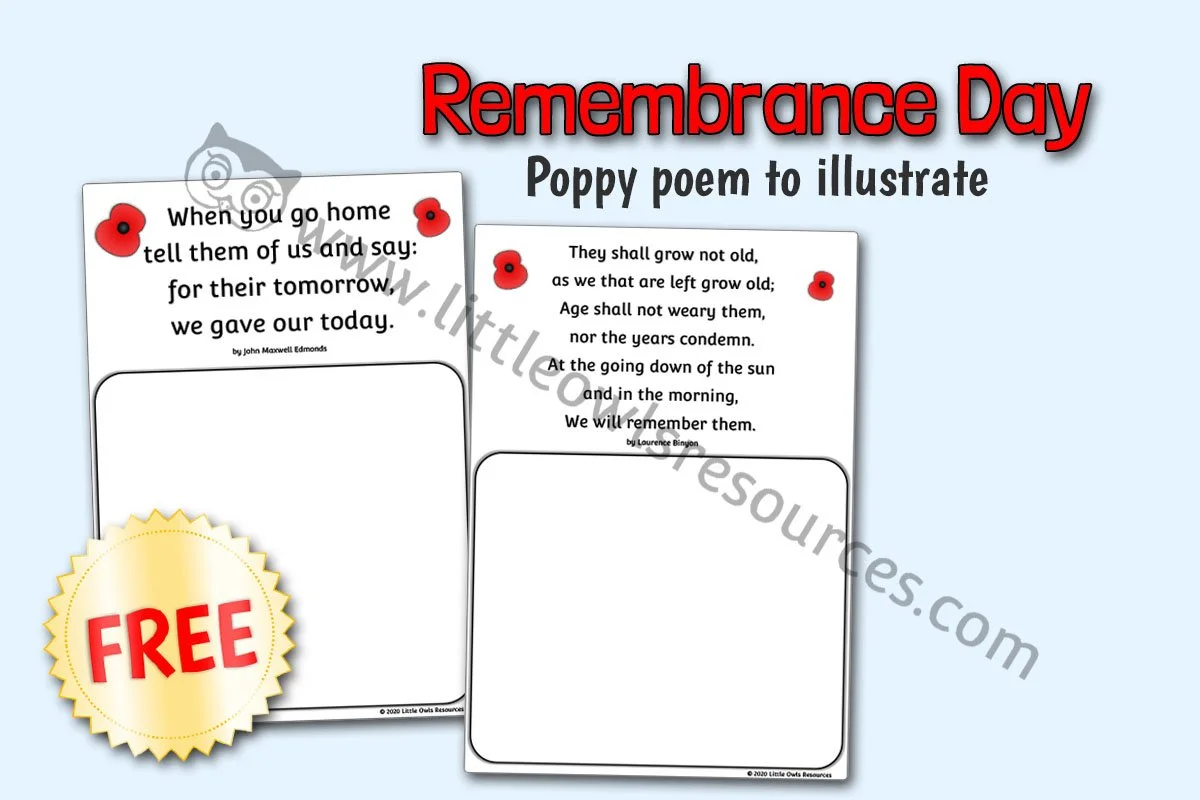
Two Remembrance poems with space for children to add illustrations after sharing and discussing the words with an adult.
Suggested use: Reception · Selected KS1 uses
03 / Free Remembrance Day resources
Give children space to respond through talk, drawings, marks or words. Adults can scribe a child’s message when helpful. There is no expected personal story, feeling or amount of writing.
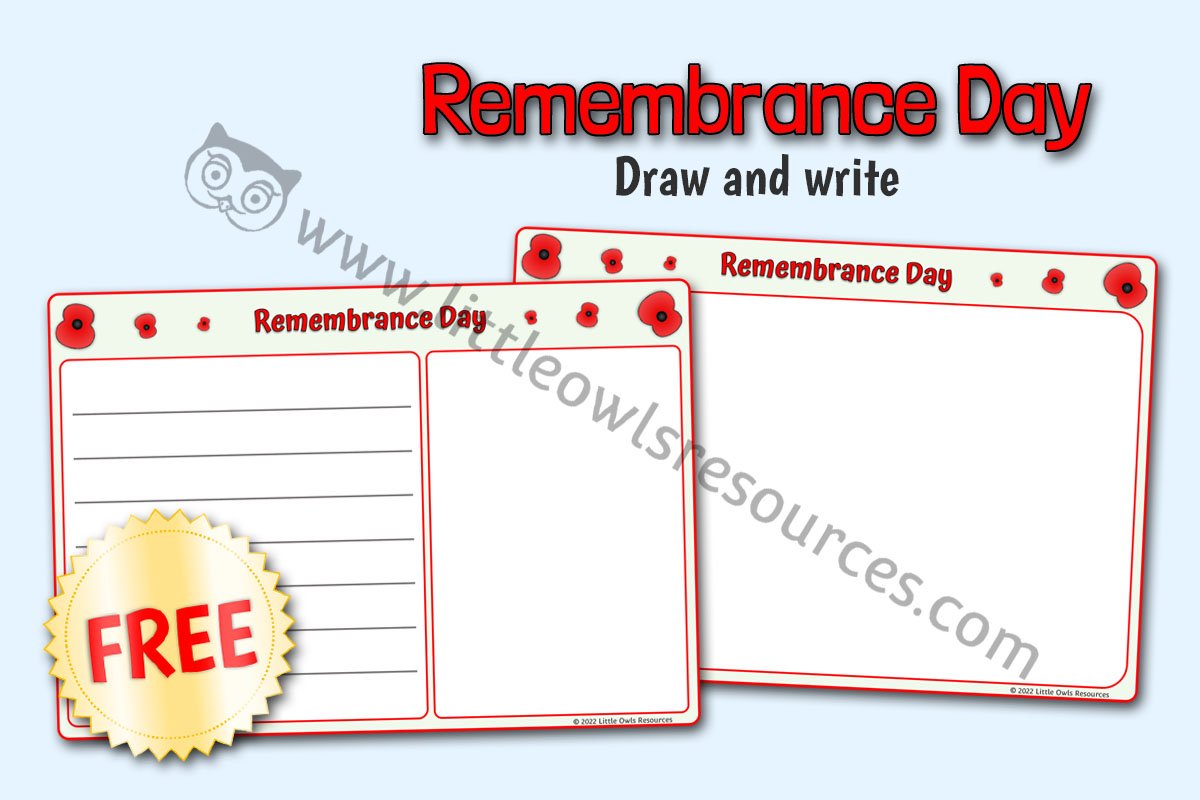
Sheets with different amounts of writing space invite children to draw or record their thoughts and feelings after a sensitive shared discussion.
Suggested use: Preschool · Reception · Selected KS1 uses
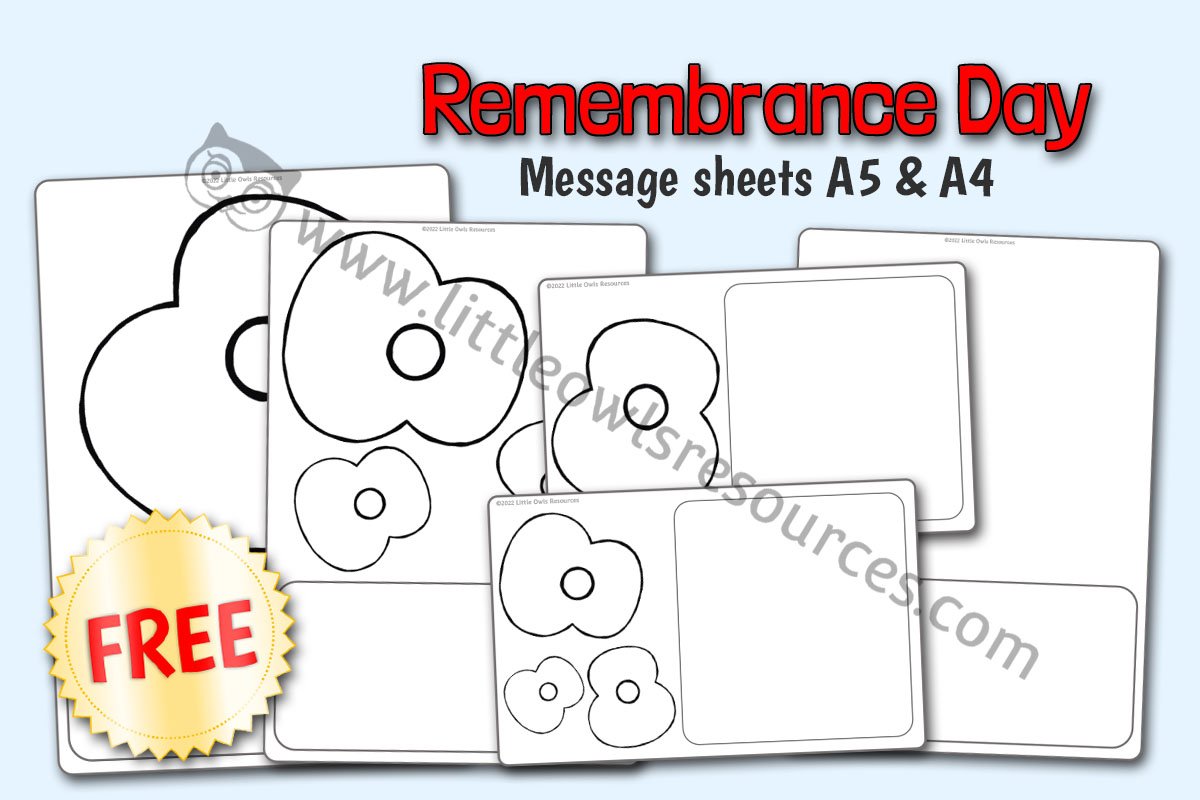
A4 and A5 illustrated templates combine a colouring space with room to draw, write or dictate a message for an adult to scribe.
Suggested use: Preschool · Reception · Selected KS1 uses
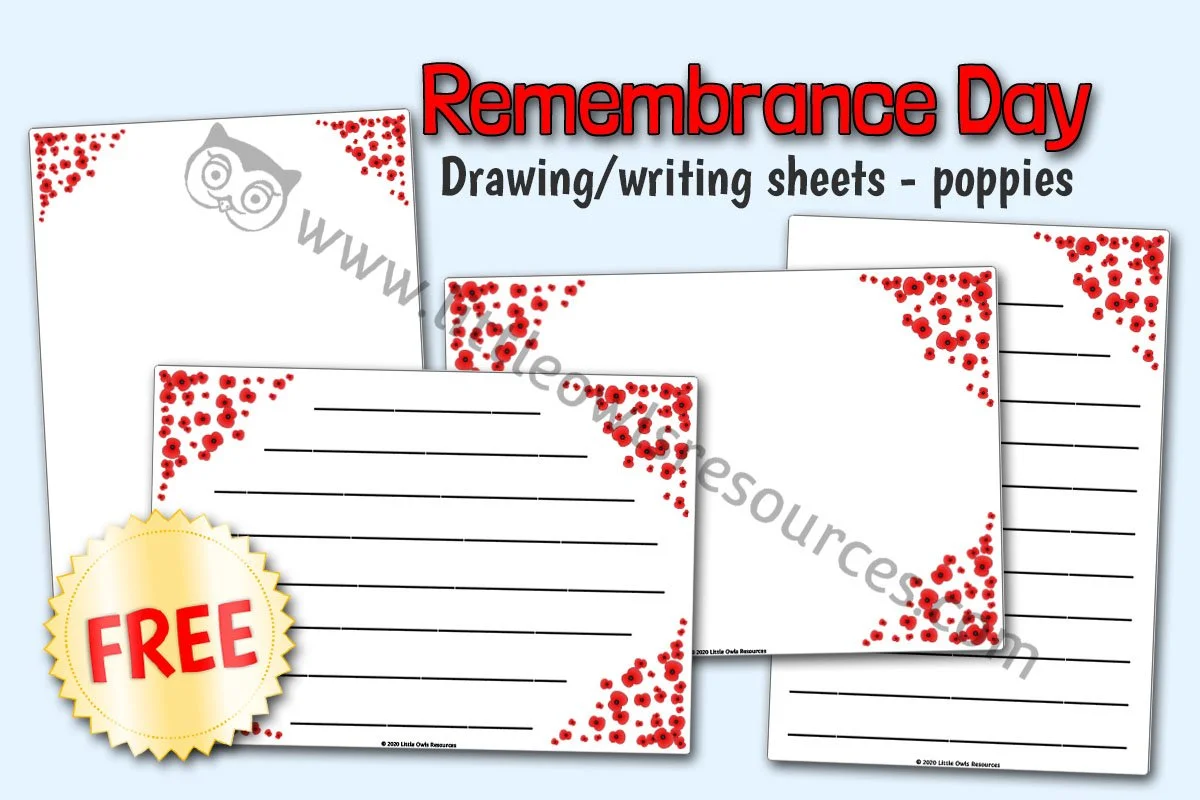
Poppy-themed pages offer space for drawing and writing after sharing a suitable Remembrance poster or poem together.
Suggested use: Preschool · Reception · Selected KS1 uses
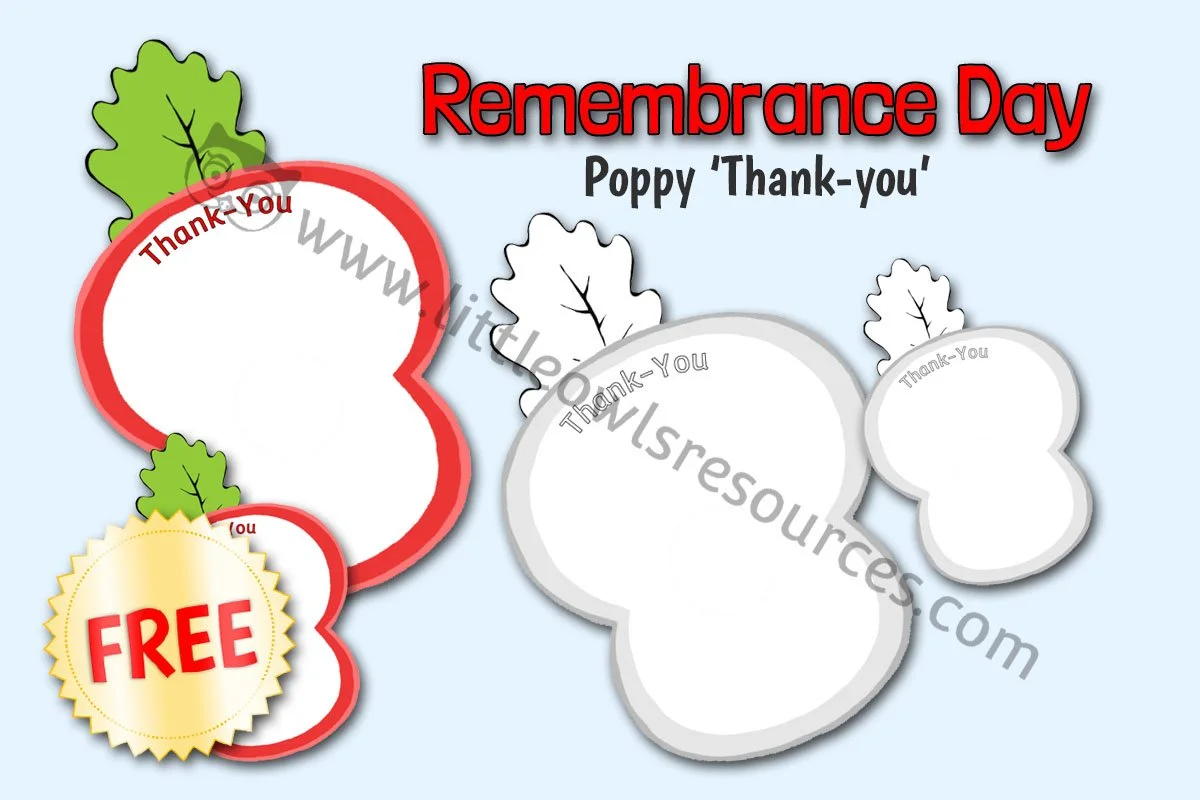
Poppy outlines with a central drawing space invite children to reflect on something they value as part of an adult-led conversation about remembrance and gratitude.
Suggested use: Reception · Selected KS1 uses
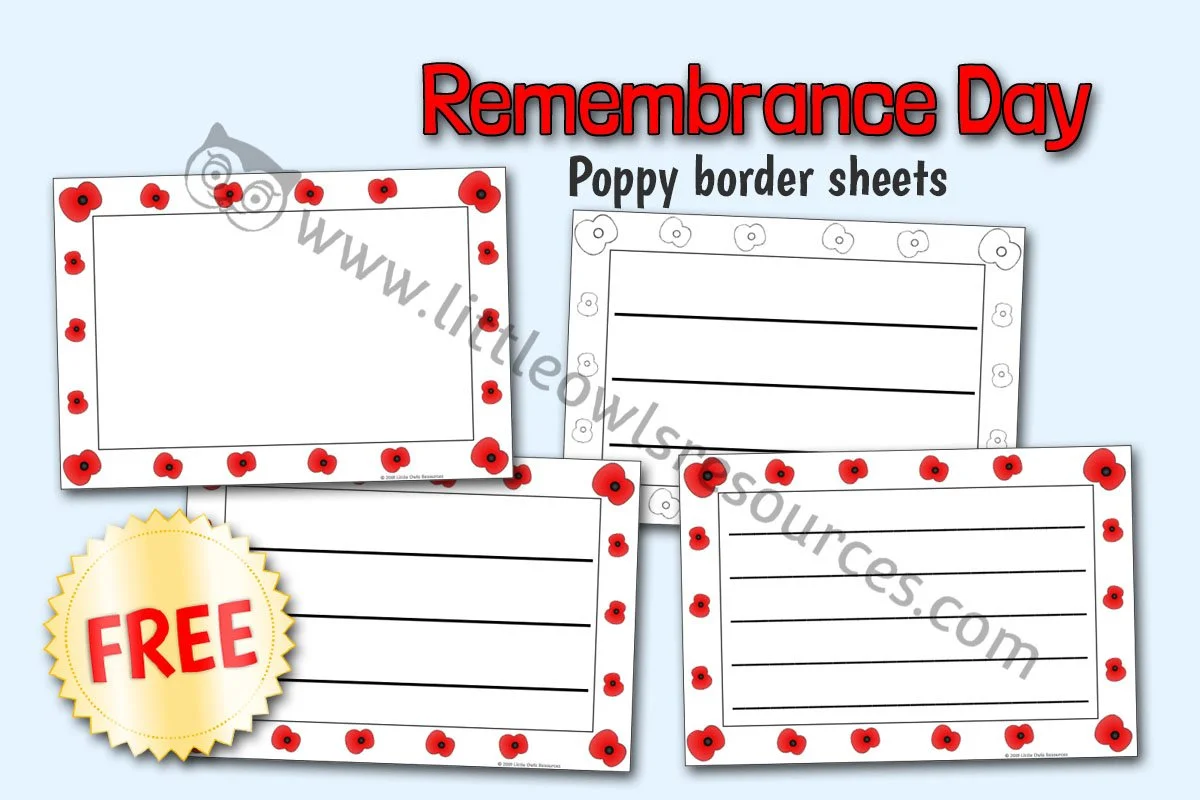
Landscape poppy border paper with blank and two lined formats, available in colour and black-and-white versions.
Suggested use: Preschool · Reception · Selected KS1 uses
04 / Free Remembrance Day resources
Use a small selection of poppy pictures to match quantities, count together or explore dough. Choose the number range and materials for the children taking part, alongside a simple conversation about why poppies are being used.
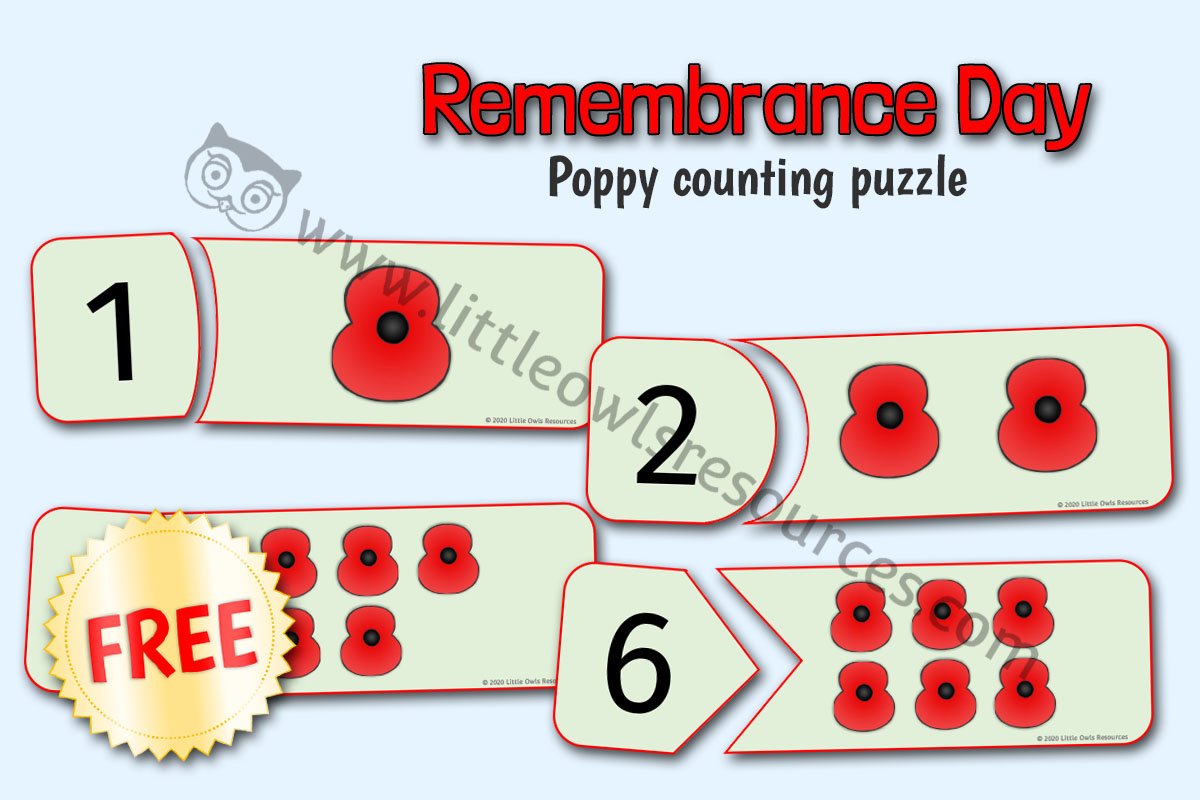
Match numerals with quantities of poppies. Choose suitable numbers from 1–10, then explore number order or spotting a missing number.
Suggested use: Preschool · Reception
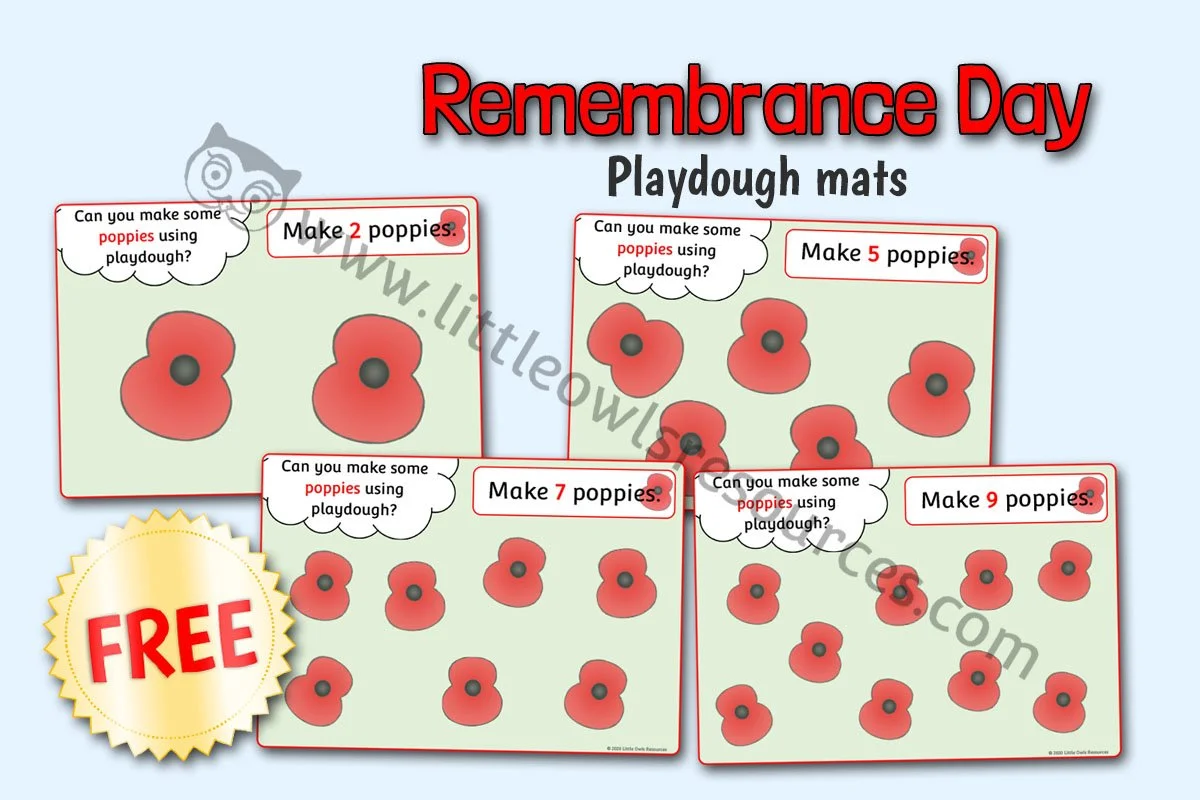
Make playdough poppies to match numbers from 1–10. Select a suitable quantity and count the poppies together.
Suggested use: Preschool · Reception
05 / Free Remembrance Day resources
Create a small, thoughtful display using a banner, words or a poster. Choose the language you want to explain and include children’s contributions if they wish.
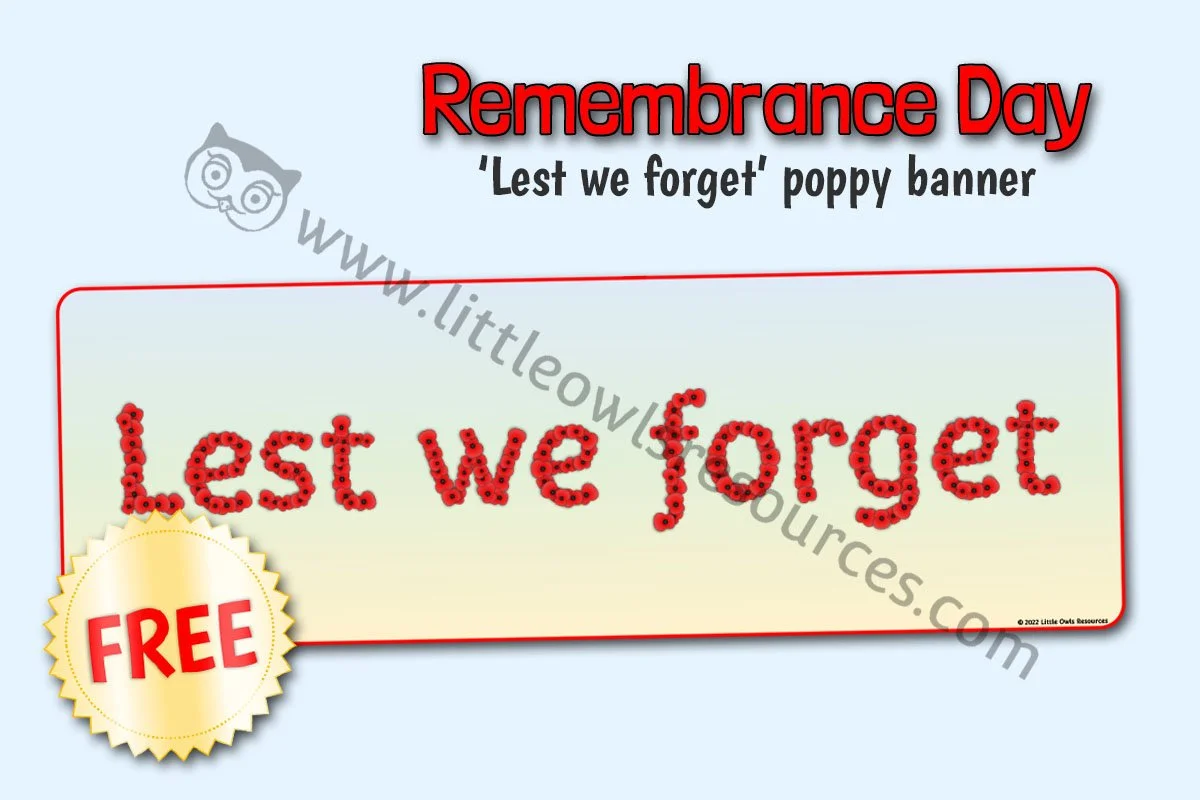
A Lest We Forget banner made from poppy letters for a Remembrance display.
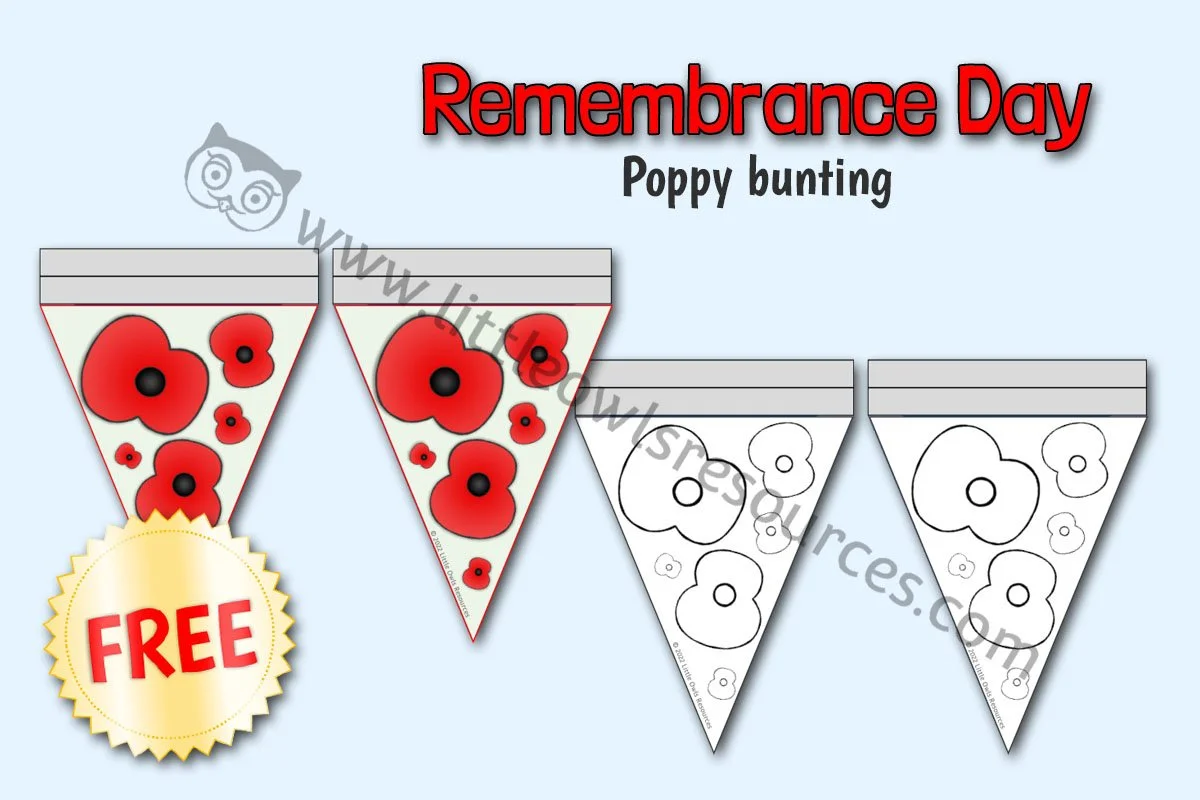
Poppy bunting in full-colour and colouring versions for creating a shared Remembrance display.
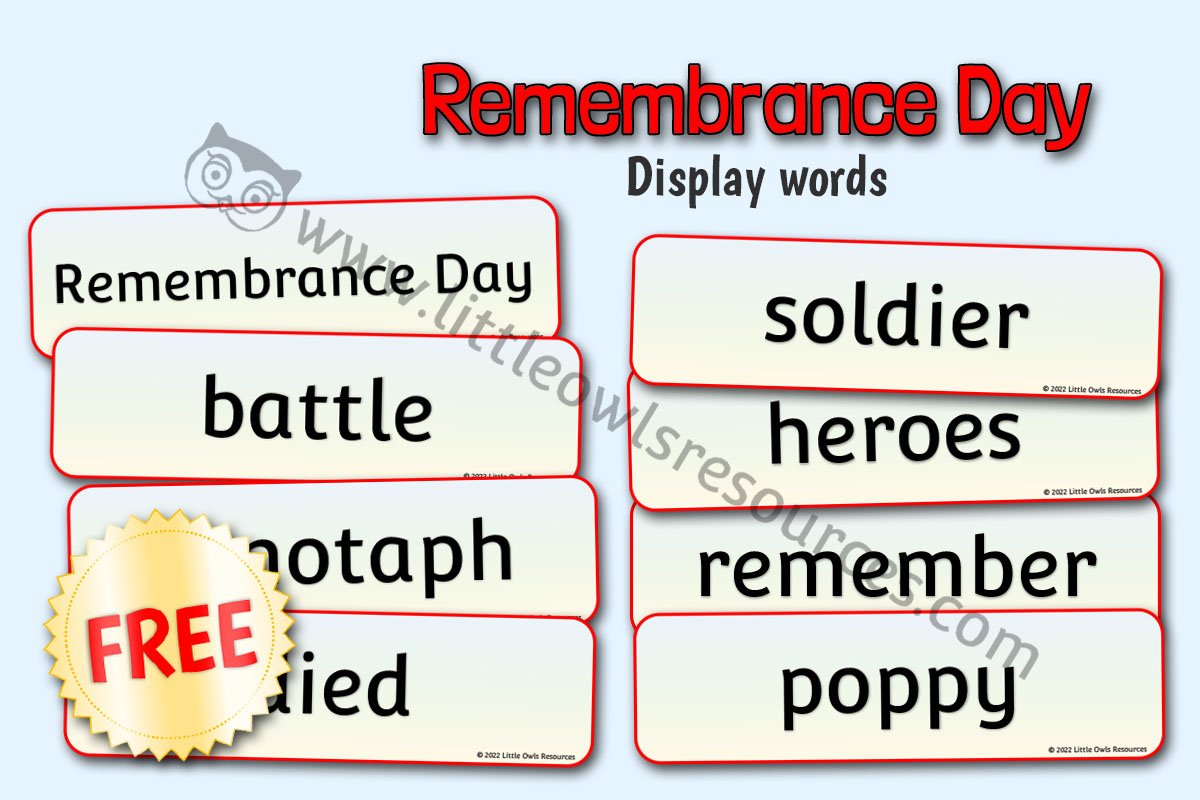
Word cards for a Remembrance display and adult-supported conversations about the words you choose to introduce.
Suggested use: Preschool · Reception · Selected KS1 uses
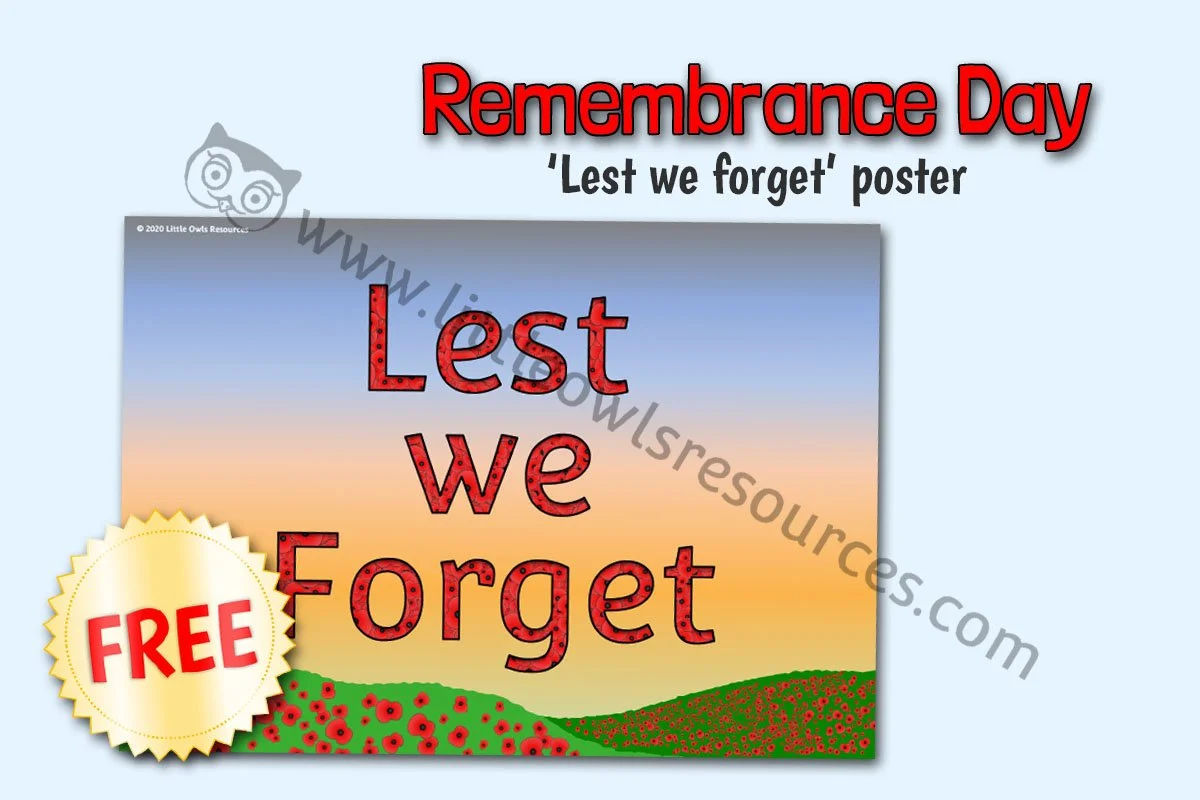
A Remembrance poster for display or as a starting point for a gentle shared conversation and later drawing or writing.
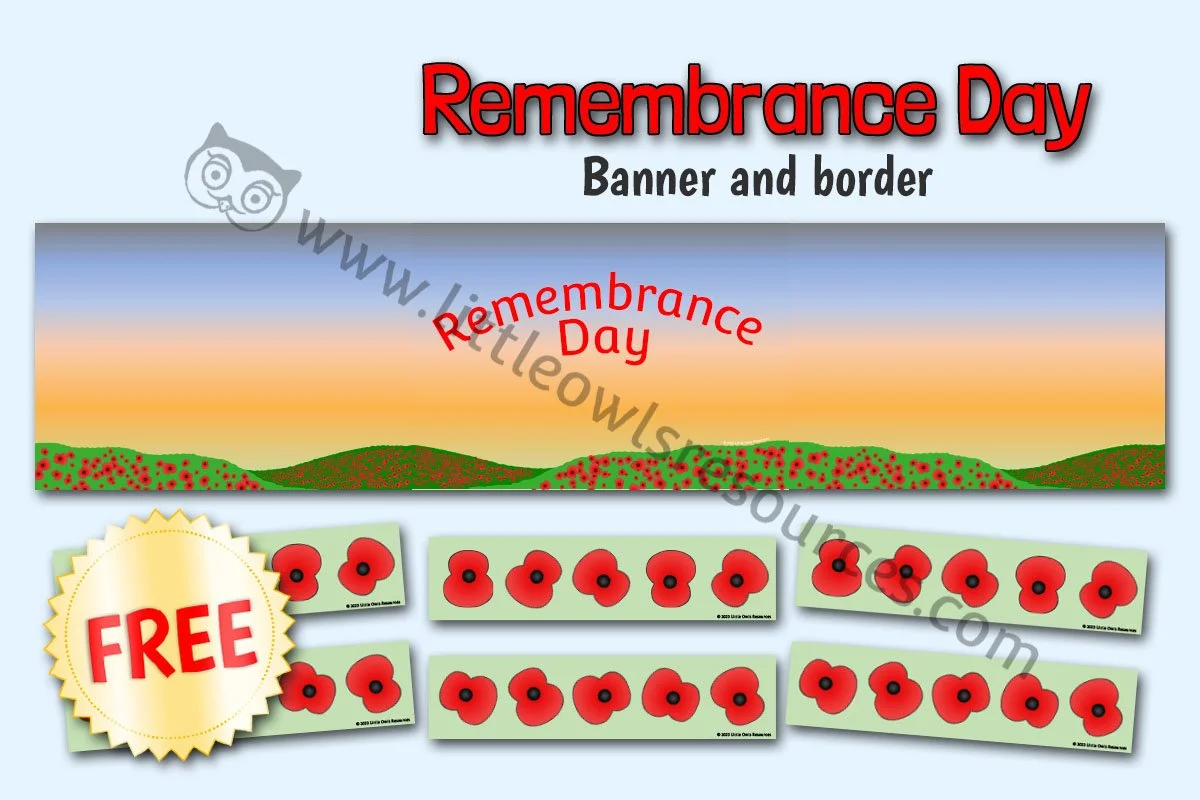
A Remembrance Day display banner with a matching poppy border.
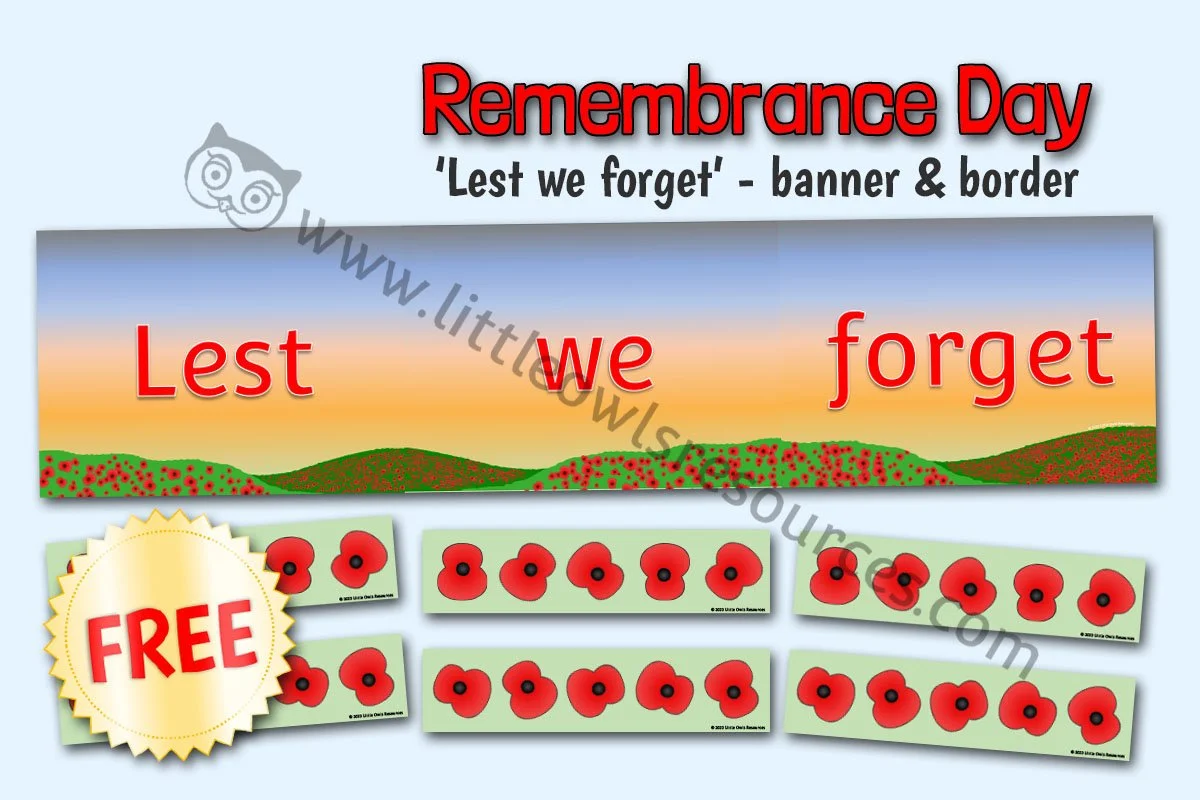
A Lest We Forget display banner with a matching poppy border.
06 / Choose a starting point
These are suggested uses, guided by your knowledge of the children and their families. Links take you to the resource covers on this page.
Start with a poppy, a simple explanation and a shared creative invitation. Children can look, talk, make marks or explore a small number of objects with an adult.
Build on children’s questions and familiar experiences. Share selected words or pictures, count together and invite an individual drawing or message.
Introduce the meaning of remembrance and the two dates clearly. Choose poetry carefully, discuss unfamiliar language and allow different ways to respond.
Keep familiar care and play available. Toddlers may join a simple shared creative experience without being expected to understand war, respond to poetry or take part in a formal silence.
07 / Context & ideas
Remembrance is a time to remember people who died in war and conflict and to think about peace. Begin with a short, honest explanation and follow children’s questions, using your knowledge of the group.
In the UK, Remembrance Day is another name for Armistice Day, 11 November. It marks the armistice that brought fighting on the Western Front to an end in 1918. Remembrance now also includes those who have served and died in later conflicts. Read more about Armistice Day from the Royal British Legion.
A simple starting point might be: “We remember people who died in wars, and we think about how important peace is.” Use clear words, listen to questions and keep the detail appropriate for the children.
Remembrance Sunday is 8 November 2026. It falls on the second Sunday in November, when the UK’s national service takes place at the Cenotaph.
Armistice Day / Remembrance Day is Wednesday 11 November 2026. The traditional Two Minute Silence is at 11am on 11 November. The two dates are connected but are not the same day in 2026.
Further information: GOV.UK: National Service of Remembrance 2026.
The red poppy is a symbol of remembrance and hope for a peaceful future. Poppies grew on the battlefields of the First World War, and the flower became associated with remembering those who died. People choose whether to wear one.
For young children, you could say: “Some people wear a poppy to show they are remembering.” Read the Royal British Legion’s explanation of the poppy.
Offer a short shared conversation, a picture to look at, a creative response or a quiet moment with a familiar adult. Children can listen, ask questions, make marks or continue familiar play. Participation and stillness should suit each child; a full two-minute silence is not an expectation for every young child.
Be sensitive to children whose families have experienced conflict, military service or bereavement. Offer a familiar alternative and avoid asking anyone to share personal experiences.
Read each poem yourself before choosing it for the group. Some traditional language and references to death need careful explanation. A short shared discussion may be more useful than expecting children to memorise a poem or complete a written response.
Children can draw, dictate a message, make marks or write independently. Blank and lined paper give different ways to respond, without a fixed finished example.
No. A few thoughtful additions can sit alongside familiar provision. Choose what has meaning for your children and allow plenty of time for ordinary play, relationships and routines.
Yes. All 22 core Remembrance Day resources on this page are available with Free Access, including the poems, displays, maths activities and drawing and writing sheets. Editable Word and PDF versions are available. Open the free resource gallery.
The wider November links below lead to other topics and pages, where access may vary.
08 / Wider browsing
These optional links lead to other topics, events and setting support. Access varies on those pages; all the core Remembrance Day resources above remain free.
Browse the complete free Remembrance Day collection, including poppy activities, poetry, drawing and writing, counting and displays.
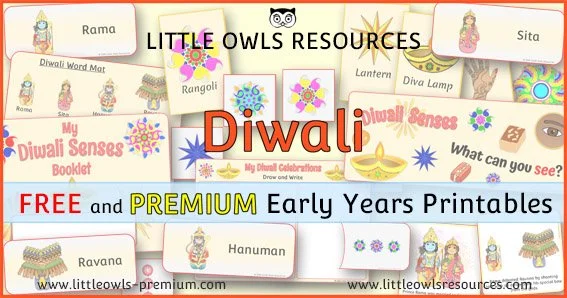
Explore the Diwali theme collection and resources for learning about this festival.
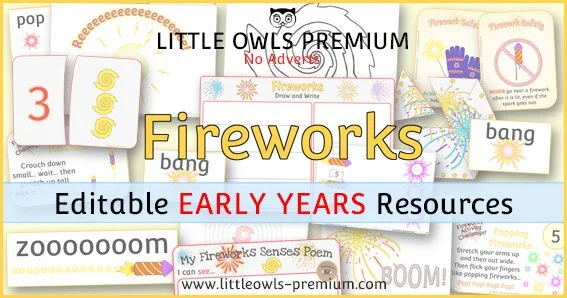
Explore the Fireworks collection for colour, sound, movement, creative activities and games.

Explore the St Andrew’s Day theme collection.
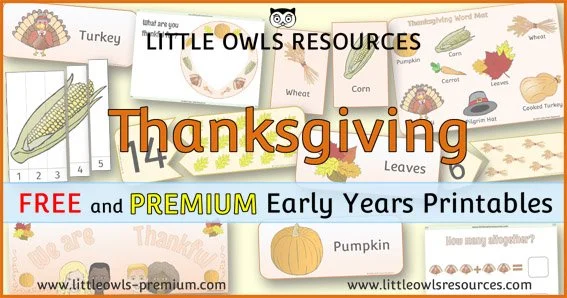
Browse the Thanksgiving theme collection.
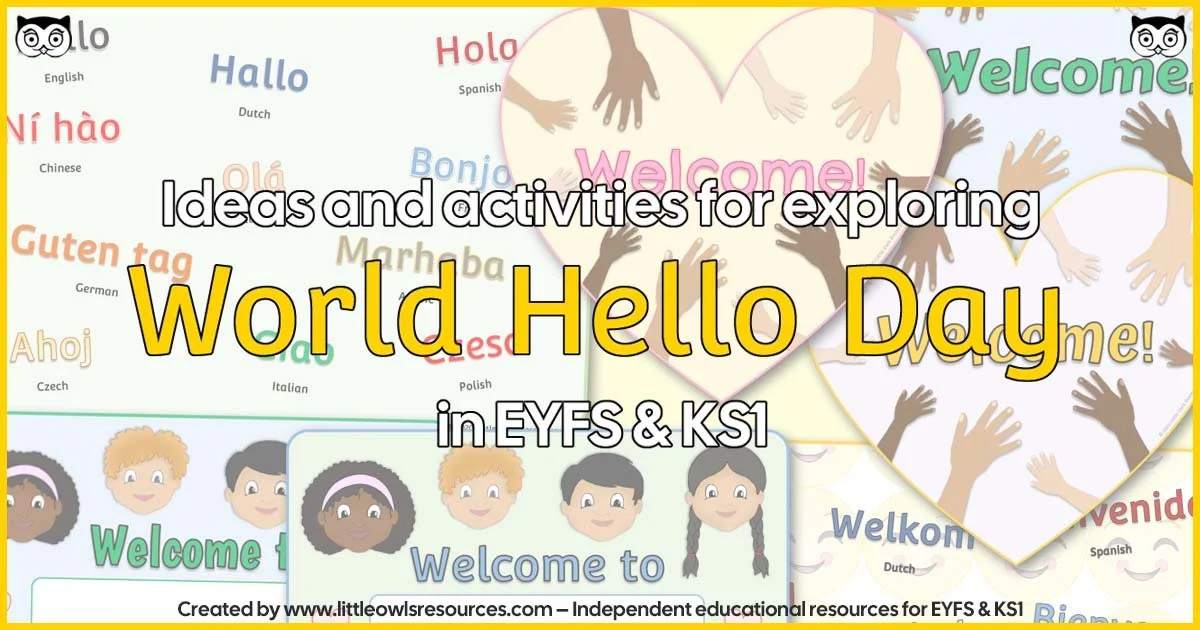
Read EYFS and KS1 activity ideas for greetings, communication and connections.
Read EYFS and KS1 activity ideas linked to food and sugar awareness.
Find EYFS and KS1 activity ideas for kindness and caring for others.

Read EYFS and KS1 activity ideas about kindness, individuality and respectful relationships.

Explore EYFS and KS1 ideas for enjoying nursery rhymes, language and music.
Read EYFS and KS1 activity ideas for exploring, investigating and discovering.
Explore EYFS and KS1 activity ideas for playful language and tongue twisters.
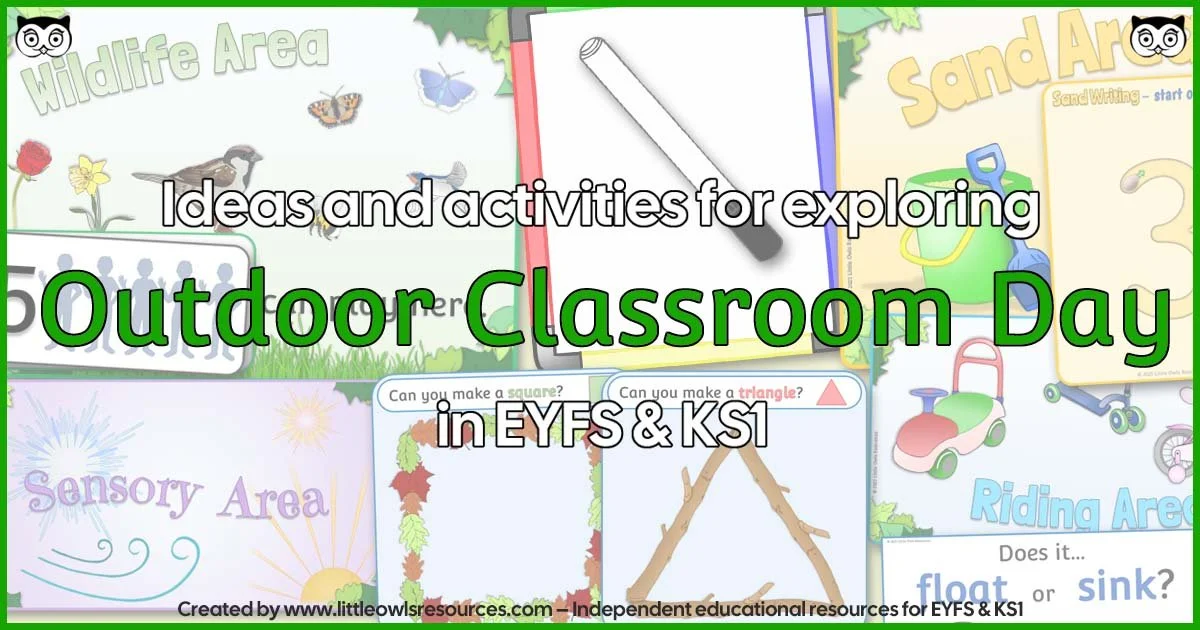
Read EYFS and KS1 ideas for taking play and learning outdoors.
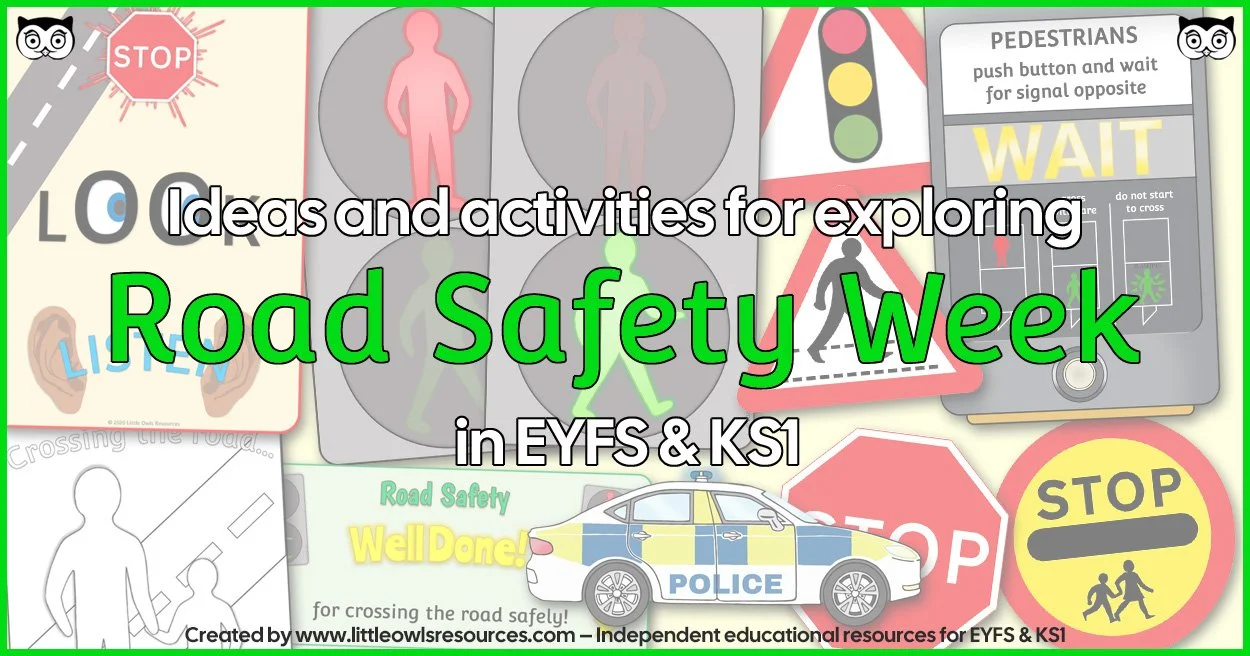
Find EYFS and KS1 activity ideas for talking about road safety.
Explore birthday-themed resources and playful celebration ideas.
Visit the EYFS Framework page for framework information and support.
Browse the calendar of EYFS and KS1 events, festivals and celebrations.
Find collections for festivals and celebrations across the year.
Browse the wider collection of themes and topics.
Find resources to support imaginative role play in your setting.
Browse organisational resources and practical tools for your setting.
Browse resources through the EYFS areas of learning.
Explore dual-language resources to support communication and inclusion.
All core Remembrance Day resources are included with Free Access. Sign in with your usual account or choose Free Access to download them.
For the wider site, All Access membership unlocks every resource on the site. Free Access lets you explore and download a selection of free resources. Explore membership options.
Already a paying member? You have sitewide access. There’s no need to change plans or subscribe again. Read our FAQs.
Resources created by Little Owls Resources.