• Home 🏠
  • About Us
  • Pricing
    • 🌟Printable Resources Hub🌟
    • ↪ Themes
    • ↪ Role Play
    • ↪ Festivals & Celebrations
    • ↪ Special Dates Calendar
    • ↪ Areas of Learning
    • ↪ Organisational Tools
  • EYFS Curriculum & Pedagogy
  • Special Dates Calendar
Menu

Little Owls Resources - Free and Premium Early Years Printables

Street Address
City, State, Zip
Phone Number
Early Years/Preschool/EYFS Printable Activities/Planning/Displays/Paperwork and ideas for Childminders, Preschools, Nursery Practitioners, Teachers and Parents

Your Custom Text Here

Little Owls Resources - Free and Premium Early Years Printables

  • Home 🏠
  • About Us
  • Pricing
  • Printable Resources ⬇
    • 🌟Printable Resources Hub🌟
    • ↪ Themes
    • ↪ Role Play
    • ↪ Festivals & Celebrations
    • ↪ Special Dates Calendar
    • ↪ Areas of Learning
    • ↪ Organisational Tools
  • EYFS Curriculum & Pedagogy
  • Special Dates Calendar

How to Build Language Through Play | Toddlers (18-36 Months)

January 18, 2026 Stuart Murphy

Home › EYFS Curriculum & Pedagogy › Toddler Room Curriculum & Pedagogy › How to Build Language Through Play | Toddlers (18-36 Months)

How to Build Language Through Play | Toddlers (18-36 Months)

A parent-friendly language support guide for toddlers

Download Document Here:

(This pathway component will be available for download by: March 31st 2026)

 
Download DOCX 📝
Download PDF 📄
 

Document Updated: January 2026


Recommended next read Selection

EYFS
How to Build Language Through Play | Toddlers (18-36 Months)

A parent-friendly language support guide for toddlers.

Read More →
Why Mark Making Matters — Before Writing | Toddlers (18-36 Months)

A parent-facing guidance page explaining early writing foundations in toddlerhood (18–36 months)

Read More →
Parent Communication & Partnership Letters Pack — Toddler Room

Editable letters and updates supporting clear, inclusive communication with families (18–36 months)

Read More →
Toddler Room — Parent Update & Home Learning Sheet

A simple, strengths-based communication tool supporting partnership between nursery and home (18–36 months)

Read More →
Toddler → Preschool Transition Pack

A practical set of strength-based documents to support secure, consistent transitions from 18–36 month provision into the 3–4 year room.

Read More →
Toddler Behaviour & Regulation: A Quick Guide | Toddlers (18–36 Months)

A concise professional reference supporting consistent, developmentally appropriate responses in toddler rooms.

Read More →
Language-First Approaches in Toddler Rooms | Toddlers (18–36 Months)

A professional guidance document supporting confident language-first EYFS practice in toddler rooms.

Read More →
Supporting Emotional Regulation Through Language | Toddlers (18–36 Months)

A professional guidance document supporting confident, relational toddler practice.

Read More →
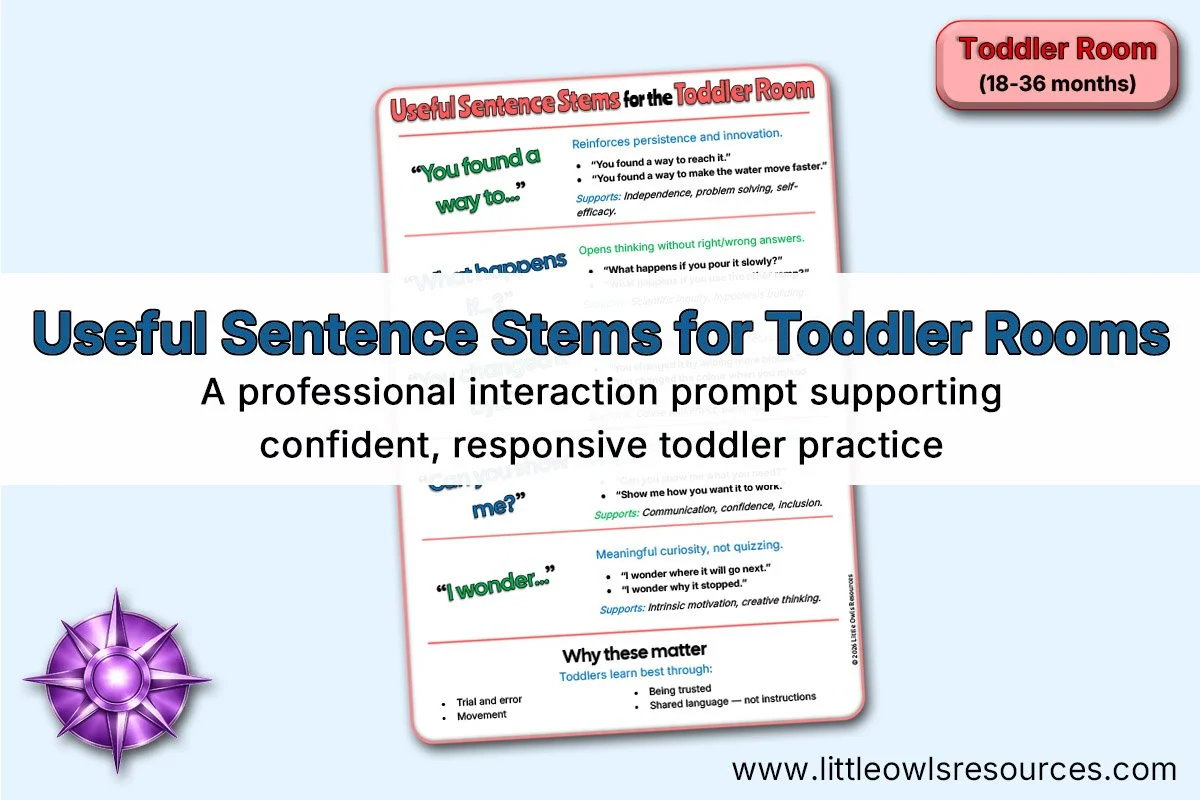
Five Sentence Stems for Toddler Practitioners | Toddlers (18–36 Months)

A professional interaction prompt supporting confident, responsive toddler practice.

Read More →
Five Sentence Stems for Toddler Practitioners | Toddlers (18–36 Months) (Copy)

A professional interaction prompt supporting confident, responsive toddler practice.

Read More →
Why We Learn Outdoors in All Weathers | Toddlers (18–36 Months)

A parent-facing guide explaining the value of outdoor learning in toddlerhood.

Read More →
Supporting Speech & Language at Home | Birth-3 Document

A parent-friendly guidance pack supporting early speech and language through everyday interaction.

Read More →

Additional Documents | Professional Membership Contents (Toddlers 18-36 months)

Navigate our Curriculum & Pedagogy guidance documents here.

Pedagogical identity:
Relationship-led, sensory-rich toddler practice grounded in schemas, play, and responsive adult interaction.

  • 👉 This section prevents over-planning and aligns practice.

    • Toddler Pedagogy Position Statement – How Toddlers Learn (18–36 Months) [Free Orienting Sample]

    • Toddler Curriculum Overview & Rationale[Free Orienting Sample]

    • How Our Toddler Curriculum Works

    • The Role of Schemas in Toddler Practice

    • Curriculum Intent in Toddler Rooms (What It Means — and What It Doesn’t)

    • FAQs: Toddler Planning & Pedagogy

  • 👉 Adult understanding, not child targets.

    • Toddler Curriculum Maps

      • Progression across 6-month bands (18–24 | 24–30 | 30–36 months)

    • Intent → Progression Grids (Practitioner Reference)

    • Area of Learning Progression Maps

  • 👉 Observation is the driver of planning.

    • In-the-Moment Planning Prompt Sheets (Toddlers)

    • Weekly Planning Template

    • Toddler Narrative Observation & Analysis Template

    • Focused Observation Templates

      • Communication & Language

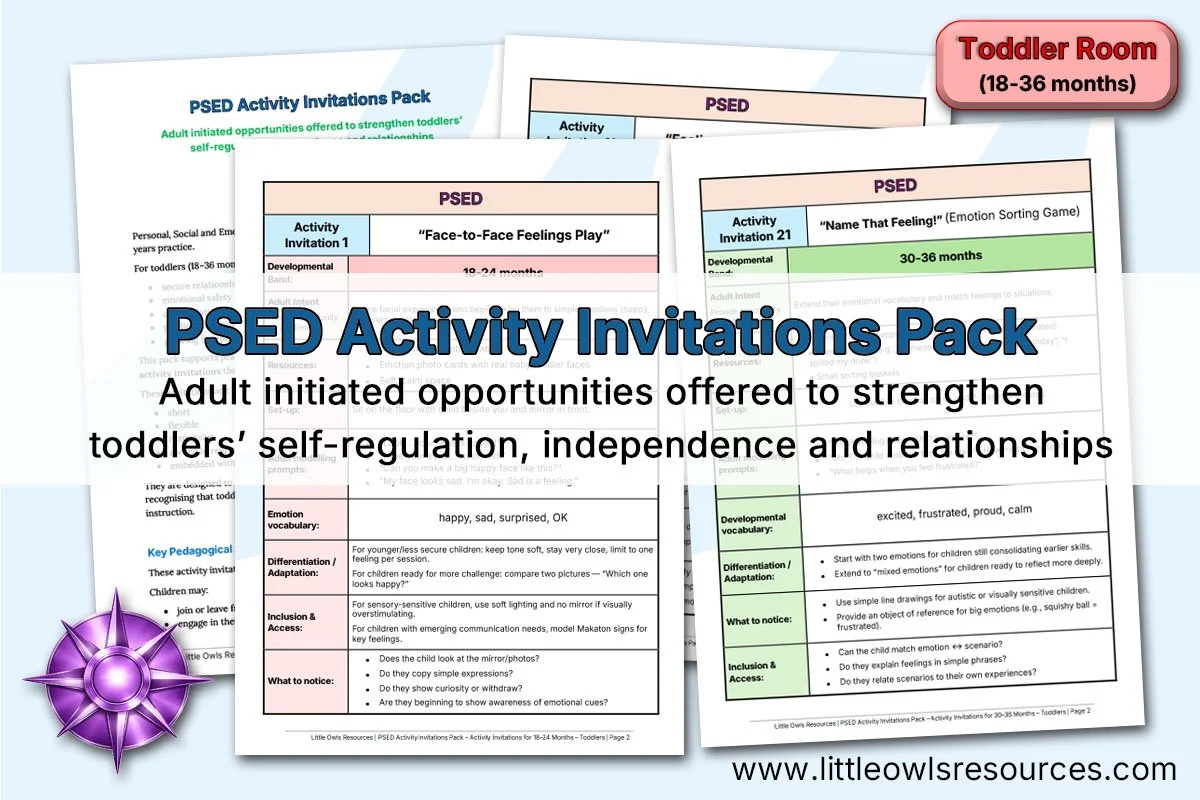
      • PSED

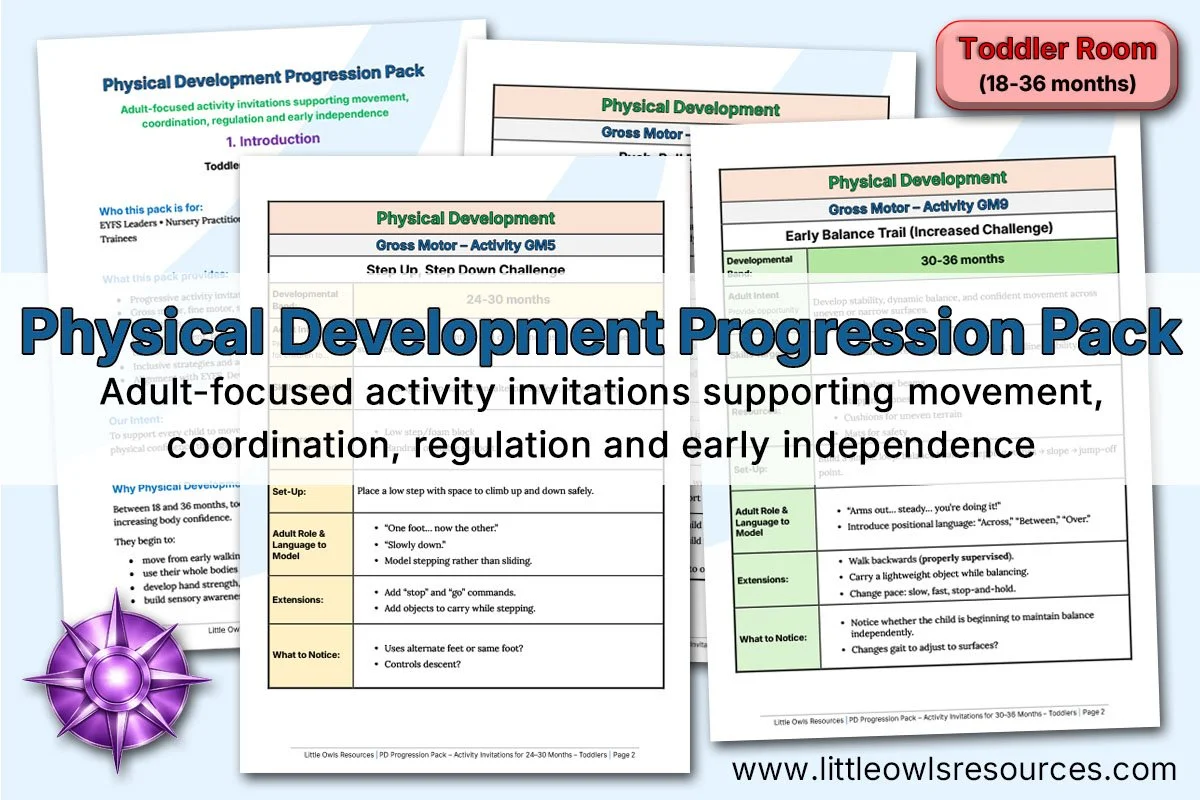
      • Physical Development

      • Maths Seeds

      • Characteristics of Effective Learning

      • Behaviour & Emotional Regulation

      • Schema Observation & Analysis

  • 👉 The environment does the teaching.

    Universal Continuous Provision

    • Continuous Provision Setup Guides | Toddler Room

      • Small World

      • Messy / Wet Play

      • Dry Sensory & Loose Parts

      • Construction

      • Role Play / Home Corner

      • Mark Making

      • Book Area / Reading Nook

      • Music & Sound

      • Outdoor

    • Continuous Provision Maps (18–36 Months)

      • C&L

      • PSED

      • PD

      • Maths Seeds

      • Literacy Seeds

      • UW

      • EAD

    • Continuous Provision Audit & Resourcing List

    • Continuous Provision Rotation Planner Toolkit

    • Toddler Visual Support Labelling Pack | 18–36 Months

  • 👉 Movement, regulation and sensory experience.

    • Outdoor Continuous Provision Pack

      • Outdoor Zone-by-Zone Setup Guide (Gross Motor, Sensory/Nature, Creative/Mark Making, Small World Outside, Water/Mud)

      • Seasonal Adjustments Planner

      • Outdoor Risk–Benefit Assessment Template + examples

      • Nature-Based Learning & Schema Guide

      • Outdoor Mark Making & Literacy Opportunities Sheet

      • Outdoor Maths Seeds Sheet

    • Why We Learn Outdoors in All Weathers (Parent Handout)

  • 👉 Projects are optional contexts, not directives.

    • Year-Long Project / Theme Curriculum Map (52 Weeks)

    • How Projects Work in Toddler Rooms (Guidance)

    • Schema Coverage & Support Map

    Project/Theme Planners:

    • 12 × Main Project Planners (3–4 Weeks)

      • All About Me & My World

      • People Who Help Us

      • Autumn - Senses, Colours & Change

      • Light, Dark & Celebrations

      • Winter-Weather, Warmth & Cosy Spaces

      • Transport & Journeys

      • Growing & Changing

      • Animals & Their Homes

      • Food & Nutrition

      • Minibeasts & Nature Explorers

      • Summer - Sand, Sea & Sun

      • Playful Patterns & Construction

    • 8 × Mini-Project Planners (1 Week)

      • Big Machines & Building

      • Cooking & Food Play

      • Teddy Bears’ Picnic

      • Colours Everywhere

      • Water Play Week

      • My Favourite Things

      • Rhyme Time Week

      • Weather Wonders

  • 👉 Invitations, provocations and shared experiences.

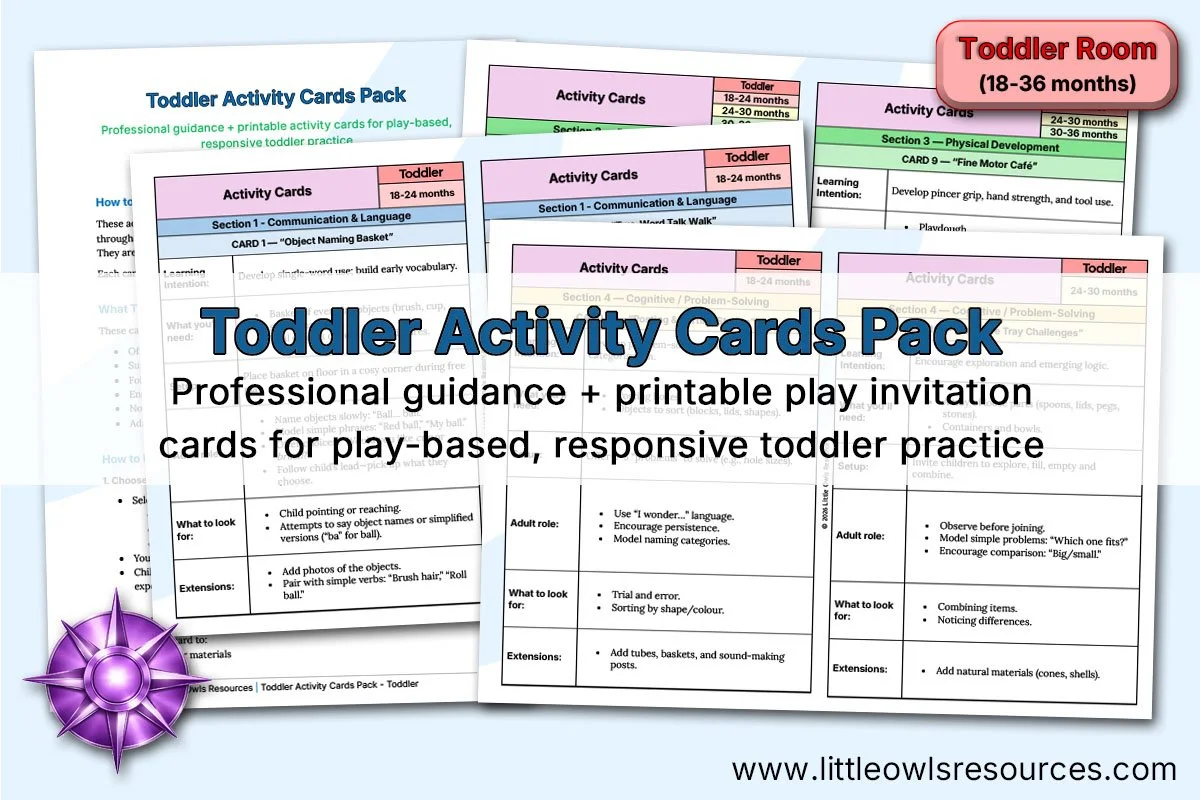
    • Activity Cards Pack

      Supports Child-led learning and responsive provision

    • Area of Learning Progression Maps & Adult Focus Sessions

      (Organised by Age Band: 18–24 months | 24–30 months | 30–36 months)

      Supports intentional teaching, vocabulary development and staff confidence

      • Communication & Language

      • PSED

      • Physical Development

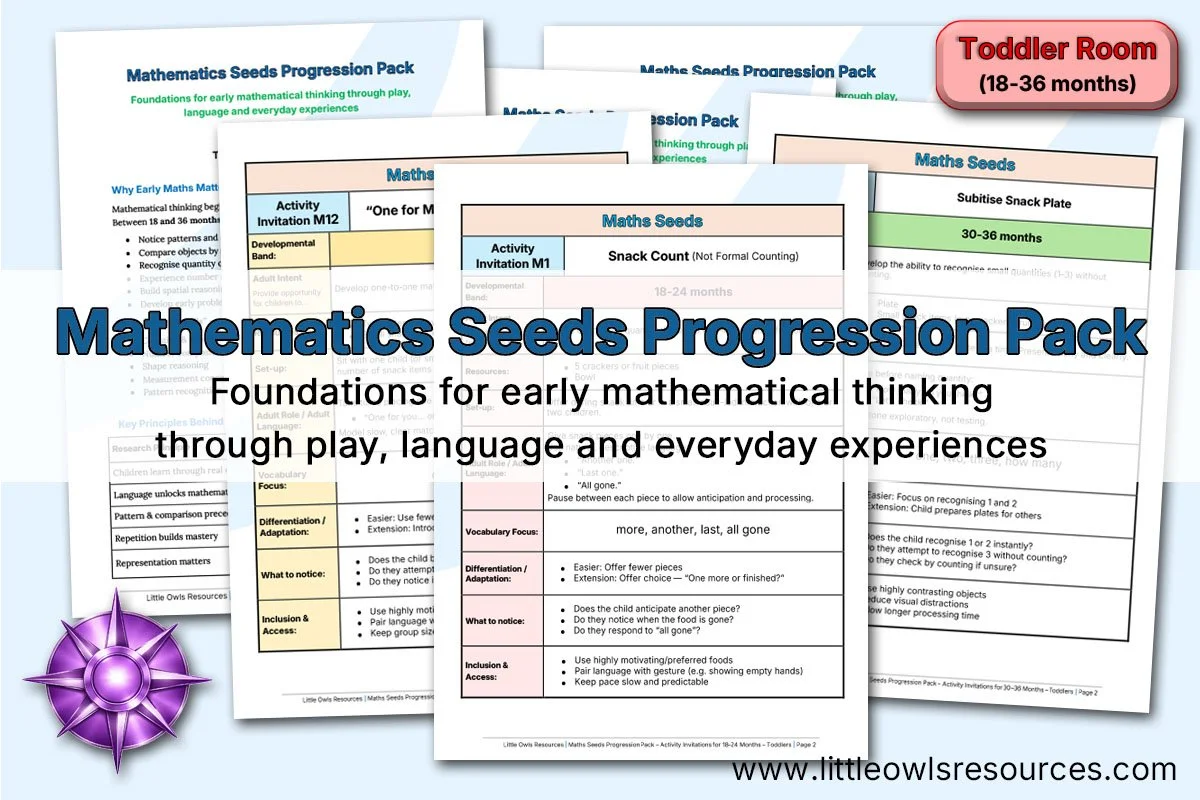
      • Maths Seeds

      • Literacy Seeds

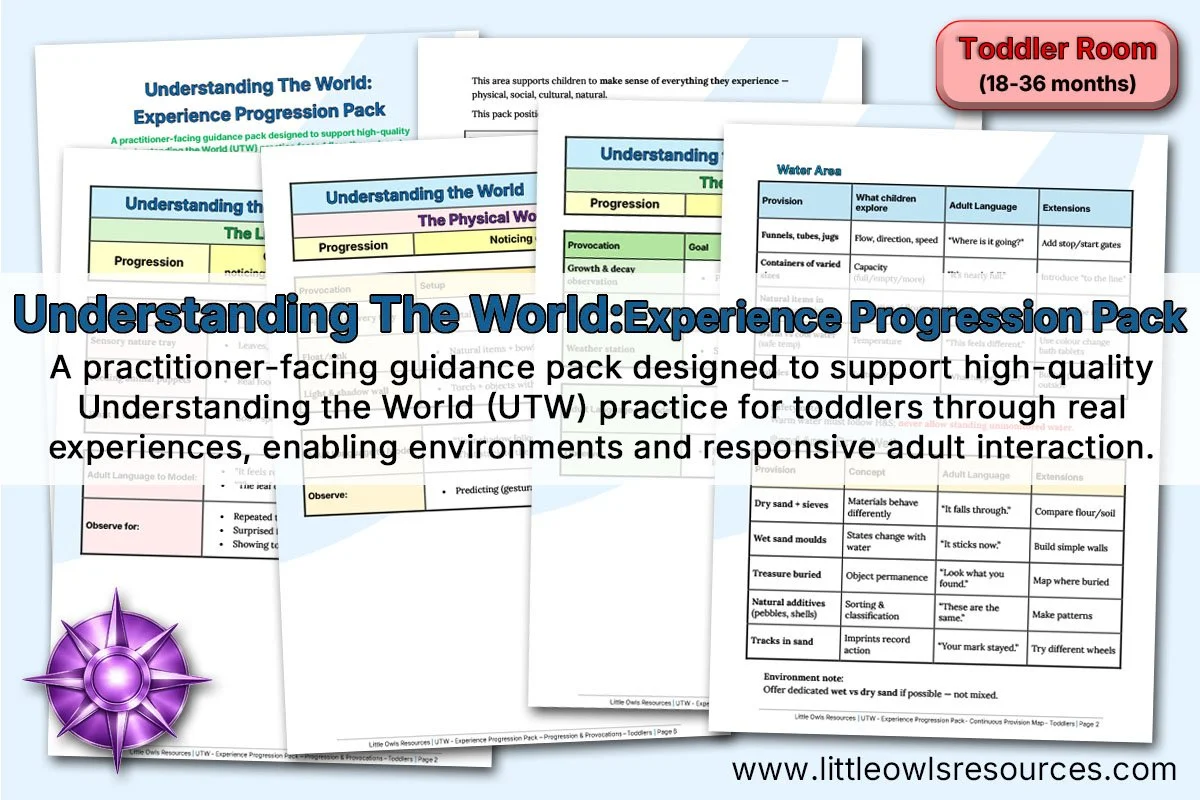
      • Understanding the World – Experience Progression Pack

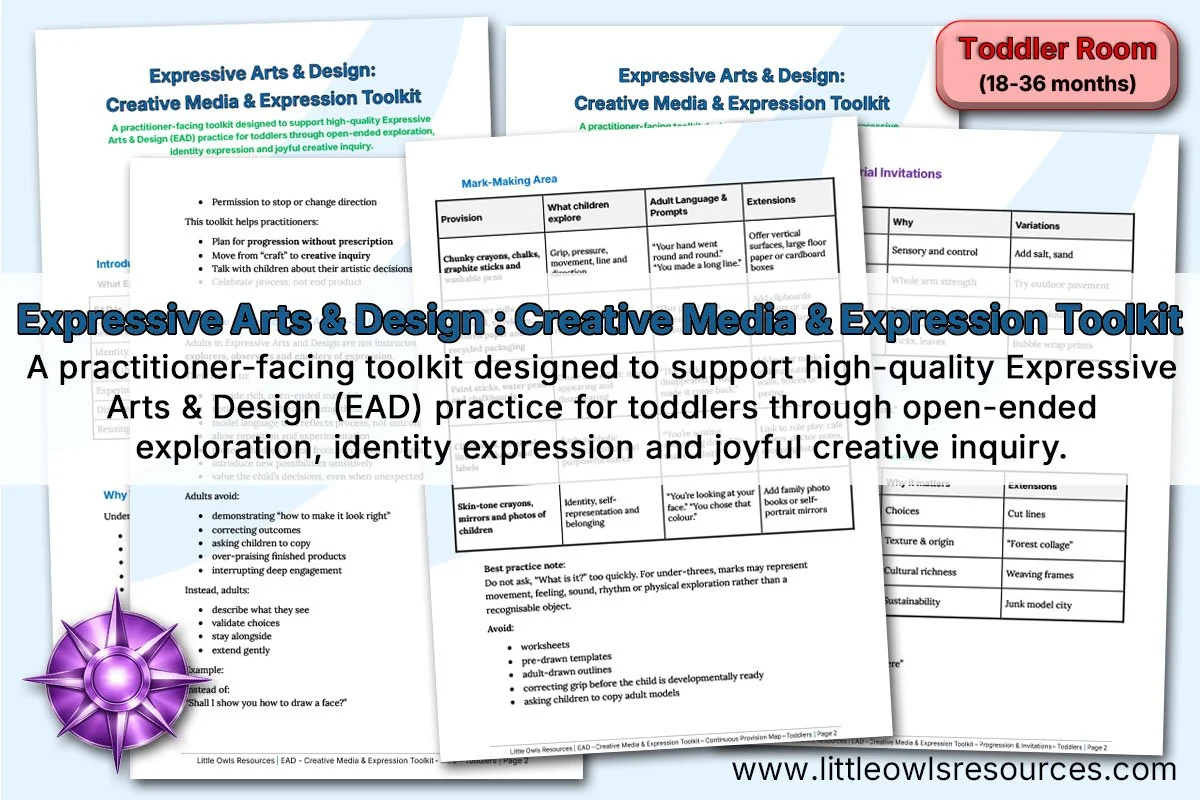
      • Expressive Arts & Design – Creative Media & Expression Toolkit

  • 👉 Interaction is the curriculum.

    • Toddler Room Poster – Five Sentence Stems For Toddler Practitioners

    • Supporting Emotional Regulation Through Language

    • Language-First Approaches in Toddler Rooms

    • Toddler Behaviour & Regulation: A Quick Guide

  • 👉 Proportionate, meaningful assessment.

    • Progress Check at Age 2

      • Report Template

      • Practitioner Guidance

    • OFSTED Questions We’re Ready For

  • 👉 Early identification, gentle support.

    • SEND Inclusion Strategy Pack (18–36 Months)

      • Practical SEND & inclusion strategies for toddlers aged 18–36 months

      • Six quick-reference strategy sheets covering communication, sensory needs, anxiety and behaviour

      • Aligned with the EYFS Framework and the Assess–Plan–Do–Review approach

      • Inclusive, diagnosis-free guidance ready to use in everyday practice

      • Ideal for observations, provision planning, team use and Ofsted evidence

  • 👉 Strong partnerships, realistic expectations.

    Transition

    • Toddler → Preschool Transition Pack

    Home–Setting Communication

    • Toddler Room Parent Update & Home Learning Sheet

    • Letter Templates Pack

    Parent Information Pages

    • Why Mark Making Matters (Before Writing)

    • Supporting Speech & Language at Home (0–3 Years)

    • How To Build Language Through Play

    • Why We Learn Outdoors in All Weathers

Additional Whole-Setting Guidance | for Professional Members

Explore our whole-setting guidance below, including overarching curriculum and pedagogy documents, early years schemas and EYFS setting policies.

    • Little Owls Resources’ Curriculum Intent Statement

    • EYFS from Birth to 5: Curriculum Coherence & Pedagogical Throughline

    • Whole-Setting Curriculum Map (Birth-5): Curriculum Intent & Progression

    • Pedagogy Guidance Document

    • Speech & Language Development - Setting Statement

    • EYFS Inspection-Facing Summaries

  • Early Years Schemas - Practitioner Toolkit | EYFS Birth-5

    ↪ Schema Cards (definition, behaviours, age-related examples, enabling resources)

    ↪ Schema Observation & Responsive Provision Planning Template

    • EYFS Group Setting Policies Pack

      ↪ x 22 Policy Documents

      ↪ Policy Sign-Off and Confirmation Document

      ↪ EYFS Setting Policy Folder Contents List

    • Childminder Setting Policies Pack

      ↪ x 22 Policy Documents

      ↪ Childminder Assistant or Volunteer Policy Sign-Off and Confirmation Document

      ↪ Childminder Policy Folder Contents List

  • EYFS Glossary

    ↪ Clear, practitioner-friendly explanations of key curriculum and pedagogy terms used throughout our guidance.

Looking for a different age-group pathway?

Select the pathway that best reflects your role or the age group you work with. You do not need to use everything. (Some practitioners may use more than one pathway.)
Featured
🍼 Babies (0–18 months)

Responsive care, observation and development in the earliest years

🚼 Toddlers (18–36 months)

Development, play and progression in the toddler years

🎨 Preschool (3–4 years)

Curriculum, continuous provision and purposeful teaching

🎓 Reception (4–5 years)

Play-based pedagogy, progression and EYFSP readiness

🏡 Childminders (Birth–5)

Mixed-age pedagogy, planning without overload and inspection confidence

Latest EYFS Articles & Practical Guides | From Our Blog

Stay informed, get expert advice, and find inspiration from our collection of articles and useful external resources, tailored specifically for EYFS practitioners. We regularly publish in-depth articles to support you with current best practices, regulatory changes, and fresh ideas.

EYFS & KS1 Articles
Major UK Curriculum Shake-Up Announced: What EYFS & KS1 Practitioners Need to Know

A major overhaul of the national curriculum in England has been announced following the publication of the independent Curriculum and Assessment Review. For those working in the Early Years Foundation Stage (EYFS) and Key Stage 1 (KS1), the changes signal a renewed focus on practical life skills, digital literacy, and enriching learning experiences…

Read More →
New Education Inspection Framework | What EYFS Settings Need to Know

The world of early years education is constantly evolving, and with it, the frameworks that guide and assess our invaluable work. Come November 2025, a significant shift will occur as the new Education Inspection Framework (EIF) comes into effect, bringing with it some crucial changes…

Read More →
Revised 2025 EYFS Statutory Framework for Group & School-Based Providers | What You Need to Know

With the new 2025 EYFS Statutory Framework for group and school-based providers coming into effect on 1st September 2025, it's essential to understand the updates to ensure your practice remains compliant, effective…

Read More →
DfE Press Release | Parents urged to read more to boost children’s life chances

The Education Secretary is calling on parents to lead by example and make reading a daily habit to help reverse the decline in reading for pleasure, to help give kids the best start in life as part of the…

Read More →
DfE Update | Drowning Prevention Week: what children learn about water safety at school

As we head into summer, it’s especially important that children are prepared with these skills. This year, the Royal Life Saving Society UK's Drowning Prevention Week runs from 14 June to 21…

Read More →
DfE Update | Hot weather and heatwaves: guidance for schools and other education settings

There are several ways that schools can make changes to keep children safe in hot weather, especially as children are more at risk of becoming ill with heat-related issues than adults…

Read More →

Are you looking for a specific resource or document for your provision?

Use our 🔍 Search Bar located at the top of every page.

___________________________

Content within the EYFS Curriculum & Pedagogy Membership is provided as professional guidance and support. It reflects current understanding of the EYFS statutory framework, Development Matters and inspection expectations at the time of writing. Practitioners are responsible for applying professional judgement and ensuring practice aligns with current statutory requirements and their specific context. All resources, experiences and environment arrangements must be risk assessed by the setting and used in accordance with individual children’s developmental stages, needs and supervision requirements.

Safeguarding content does not replace a setting’s safeguarding and child protection policy or the statutory role of the Designated Safeguarding Lead (DSL). All concerns must be managed in line with current statutory guidance and local safeguarding procedures.

_____________________________

 
In Toddlers | 18-36 Months, -T11, -T8 Tags Toddler, How to Build Language Through Play | Toddlers (18-36 Months)

Why Mark Making Matters — Before Writing | Toddlers (18-36 Months)

January 18, 2026 Stuart Murphy

Home › EYFS Curriculum & Pedagogy › Toddler Room Curriculum & Pedagogy › Why Mark Making Matters — Before Writing | Toddlers (18-36 Months)

Why Mark Making Matters — Before Writing

A parent-facing guidance page explaining early writing foundations in toddlerhood (18–36 months)

Download Document Here:

(This pathway component will be available for download by: March 31st 2026)

 
Download DOCX 📝
Download PDF 📄
 

Document Updated: January 2026


Recommended next read Selection

EYFS
How to Build Language Through Play | Toddlers (18-36 Months)

A parent-friendly language support guide for toddlers.

Read More →
Why Mark Making Matters — Before Writing | Toddlers (18-36 Months)

A parent-facing guidance page explaining early writing foundations in toddlerhood (18–36 months)

Read More →
Parent Communication & Partnership Letters Pack — Toddler Room

Editable letters and updates supporting clear, inclusive communication with families (18–36 months)

Read More →
Toddler Room — Parent Update & Home Learning Sheet

A simple, strengths-based communication tool supporting partnership between nursery and home (18–36 months)

Read More →
Toddler → Preschool Transition Pack

A practical set of strength-based documents to support secure, consistent transitions from 18–36 month provision into the 3–4 year room.

Read More →
Why We Learn Outdoors in All Weathers | Toddlers (18–36 Months)

A parent-facing guide explaining the value of outdoor learning in toddlerhood.

Read More →
Supporting Speech & Language at Home | Birth-3 Document

A parent-friendly guidance pack supporting early speech and language through everyday interaction.

Read More →

Additional Documents | Professional Membership Contents (Toddlers 18-36 months)

Navigate our Curriculum & Pedagogy guidance documents here.

Pedagogical identity:
Relationship-led, sensory-rich toddler practice grounded in schemas, play, and responsive adult interaction.

  • 👉 This section prevents over-planning and aligns practice.

    • Toddler Pedagogy Position Statement – How Toddlers Learn (18–36 Months) [Free Orienting Sample]

    • Toddler Curriculum Overview & Rationale[Free Orienting Sample]

    • How Our Toddler Curriculum Works

    • The Role of Schemas in Toddler Practice

    • Curriculum Intent in Toddler Rooms (What It Means — and What It Doesn’t)

    • FAQs: Toddler Planning & Pedagogy

  • 👉 Adult understanding, not child targets.

    • Toddler Curriculum Maps

      • Progression across 6-month bands (18–24 | 24–30 | 30–36 months)

    • Intent → Progression Grids (Practitioner Reference)

    • Area of Learning Progression Maps

  • 👉 Observation is the driver of planning.

    • In-the-Moment Planning Prompt Sheets (Toddlers)

    • Weekly Planning Template

    • Toddler Narrative Observation & Analysis Template

    • Focused Observation Templates

      • Communication & Language

      • PSED

      • Physical Development

      • Maths Seeds

      • Characteristics of Effective Learning

      • Behaviour & Emotional Regulation

      • Schema Observation & Analysis

  • 👉 The environment does the teaching.

    Universal Continuous Provision

    • Continuous Provision Setup Guides | Toddler Room

      • Small World

      • Messy / Wet Play

      • Dry Sensory & Loose Parts

      • Construction

      • Role Play / Home Corner

      • Mark Making

      • Book Area / Reading Nook

      • Music & Sound

      • Outdoor

    • Continuous Provision Maps (18–36 Months)

      • C&L

      • PSED

      • PD

      • Maths Seeds

      • Literacy Seeds

      • UW

      • EAD

    • Continuous Provision Audit & Resourcing List

    • Continuous Provision Rotation Planner Toolkit

    • Toddler Visual Support Labelling Pack | 18–36 Months

  • 👉 Movement, regulation and sensory experience.

    • Outdoor Continuous Provision Pack

      • Outdoor Zone-by-Zone Setup Guide (Gross Motor, Sensory/Nature, Creative/Mark Making, Small World Outside, Water/Mud)

      • Seasonal Adjustments Planner

      • Outdoor Risk–Benefit Assessment Template + examples

      • Nature-Based Learning & Schema Guide

      • Outdoor Mark Making & Literacy Opportunities Sheet

      • Outdoor Maths Seeds Sheet

    • Why We Learn Outdoors in All Weathers (Parent Handout)

  • 👉 Projects are optional contexts, not directives.

    • Year-Long Project / Theme Curriculum Map (52 Weeks)

    • How Projects Work in Toddler Rooms (Guidance)

    • Schema Coverage & Support Map

    Project/Theme Planners:

    • 12 × Main Project Planners (3–4 Weeks)

      • All About Me & My World

      • People Who Help Us

      • Autumn - Senses, Colours & Change

      • Light, Dark & Celebrations

      • Winter-Weather, Warmth & Cosy Spaces

      • Transport & Journeys

      • Growing & Changing

      • Animals & Their Homes

      • Food & Nutrition

      • Minibeasts & Nature Explorers

      • Summer - Sand, Sea & Sun

      • Playful Patterns & Construction

    • 8 × Mini-Project Planners (1 Week)

      • Big Machines & Building

      • Cooking & Food Play

      • Teddy Bears’ Picnic

      • Colours Everywhere

      • Water Play Week

      • My Favourite Things

      • Rhyme Time Week

      • Weather Wonders

  • 👉 Invitations, provocations and shared experiences.

    • Activity Cards Pack

      Supports Child-led learning and responsive provision

    • Area of Learning Progression Maps & Adult Focus Sessions

      (Organised by Age Band: 18–24 months | 24–30 months | 30–36 months)

      Supports intentional teaching, vocabulary development and staff confidence

      • Communication & Language

      • PSED

      • Physical Development

      • Maths Seeds

      • Literacy Seeds

      • Understanding the World – Experience Progression Pack

      • Expressive Arts & Design – Creative Media & Expression Toolkit

  • 👉 Interaction is the curriculum.

    • Toddler Room Poster – Five Sentence Stems For Toddler Practitioners

    • Supporting Emotional Regulation Through Language

    • Language-First Approaches in Toddler Rooms

    • Toddler Behaviour & Regulation: A Quick Guide

  • 👉 Proportionate, meaningful assessment.

    • Progress Check at Age 2

      • Report Template

      • Practitioner Guidance

    • OFSTED Questions We’re Ready For

  • 👉 Early identification, gentle support.

    • SEND Inclusion Strategy Pack (18–36 Months)

      • Practical SEND & inclusion strategies for toddlers aged 18–36 months

      • Six quick-reference strategy sheets covering communication, sensory needs, anxiety and behaviour

      • Aligned with the EYFS Framework and the Assess–Plan–Do–Review approach

      • Inclusive, diagnosis-free guidance ready to use in everyday practice

      • Ideal for observations, provision planning, team use and Ofsted evidence

  • 👉 Strong partnerships, realistic expectations.

    Transition

    • Toddler → Preschool Transition Pack

    Home–Setting Communication

    • Toddler Room Parent Update & Home Learning Sheet

    • Letter Templates Pack

    Parent Information Pages

    • Why Mark Making Matters (Before Writing)

    • Supporting Speech & Language at Home (0–3 Years)

    • How To Build Language Through Play

    • Why We Learn Outdoors in All Weathers

Additional Whole-Setting Guidance | for Professional Members

Explore our whole-setting guidance below, including overarching curriculum and pedagogy documents, early years schemas and EYFS setting policies.

    • Little Owls Resources’ Curriculum Intent Statement

    • EYFS from Birth to 5: Curriculum Coherence & Pedagogical Throughline

    • Whole-Setting Curriculum Map (Birth-5): Curriculum Intent & Progression

    • Pedagogy Guidance Document

    • Speech & Language Development - Setting Statement

    • EYFS Inspection-Facing Summaries

  • Early Years Schemas - Practitioner Toolkit | EYFS Birth-5

    ↪ Schema Cards (definition, behaviours, age-related examples, enabling resources)

    ↪ Schema Observation & Responsive Provision Planning Template

    • EYFS Group Setting Policies Pack

      ↪ x 22 Policy Documents

      ↪ Policy Sign-Off and Confirmation Document

      ↪ EYFS Setting Policy Folder Contents List

    • Childminder Setting Policies Pack

      ↪ x 22 Policy Documents

      ↪ Childminder Assistant or Volunteer Policy Sign-Off and Confirmation Document

      ↪ Childminder Policy Folder Contents List

  • EYFS Glossary

    ↪ Clear, practitioner-friendly explanations of key curriculum and pedagogy terms used throughout our guidance.

Looking for a different age-group pathway?

Select the pathway that best reflects your role or the age group you work with. You do not need to use everything. (Some practitioners may use more than one pathway.)
Featured
🍼 Babies (0–18 months)

Responsive care, observation and development in the earliest years

🚼 Toddlers (18–36 months)

Development, play and progression in the toddler years

🎨 Preschool (3–4 years)

Curriculum, continuous provision and purposeful teaching

🎓 Reception (4–5 years)

Play-based pedagogy, progression and EYFSP readiness

🏡 Childminders (Birth–5)

Mixed-age pedagogy, planning without overload and inspection confidence

Latest EYFS Articles & Practical Guides | From Our Blog

Stay informed, get expert advice, and find inspiration from our collection of articles and useful external resources, tailored specifically for EYFS practitioners. We regularly publish in-depth articles to support you with current best practices, regulatory changes, and fresh ideas.

EYFS & KS1 Articles
Major UK Curriculum Shake-Up Announced: What EYFS & KS1 Practitioners Need to Know

A major overhaul of the national curriculum in England has been announced following the publication of the independent Curriculum and Assessment Review. For those working in the Early Years Foundation Stage (EYFS) and Key Stage 1 (KS1), the changes signal a renewed focus on practical life skills, digital literacy, and enriching learning experiences…

Read More →
New Education Inspection Framework | What EYFS Settings Need to Know

The world of early years education is constantly evolving, and with it, the frameworks that guide and assess our invaluable work. Come November 2025, a significant shift will occur as the new Education Inspection Framework (EIF) comes into effect, bringing with it some crucial changes…

Read More →
Revised 2025 EYFS Statutory Framework for Group & School-Based Providers | What You Need to Know

With the new 2025 EYFS Statutory Framework for group and school-based providers coming into effect on 1st September 2025, it's essential to understand the updates to ensure your practice remains compliant, effective…

Read More →
DfE Press Release | Parents urged to read more to boost children’s life chances

The Education Secretary is calling on parents to lead by example and make reading a daily habit to help reverse the decline in reading for pleasure, to help give kids the best start in life as part of the…

Read More →
DfE Update | Drowning Prevention Week: what children learn about water safety at school

As we head into summer, it’s especially important that children are prepared with these skills. This year, the Royal Life Saving Society UK's Drowning Prevention Week runs from 14 June to 21…

Read More →
DfE Update | Hot weather and heatwaves: guidance for schools and other education settings

There are several ways that schools can make changes to keep children safe in hot weather, especially as children are more at risk of becoming ill with heat-related issues than adults…

Read More →

Are you looking for a specific resource or document for your provision?

Use our 🔍 Search Bar located at the top of every page.

___________________________

Content within the EYFS Curriculum & Pedagogy Membership is provided as professional guidance and support. It reflects current understanding of the EYFS statutory framework, Development Matters and inspection expectations at the time of writing. Practitioners are responsible for applying professional judgement and ensuring practice aligns with current statutory requirements and their specific context. All resources, experiences and environment arrangements must be risk assessed by the setting and used in accordance with individual children’s developmental stages, needs and supervision requirements.

Safeguarding content does not replace a setting’s safeguarding and child protection policy or the statutory role of the Designated Safeguarding Lead (DSL). All concerns must be managed in line with current statutory guidance and local safeguarding procedures.

_____________________________

 
In Toddlers | 18-36 Months, -T11 Tags Toddler, Why Mark Making Matters — Before Writing | Toddlers (18-36 Months)

Parent Communication & Partnership Letters Pack — Toddler Room

January 18, 2026 Stuart Murphy

Home › EYFS Curriculum & Pedagogy › Toddler Room Curriculum & Pedagogy › Parent Communication & Partnership Letters Pack — Toddler Room

Parent Communication & Partnership Letters Pack — Toddler Room

Editable letters and updates supporting clear, inclusive communication with families (18–36 months)

Download Document Here:

(This pathway component will be available for download by: March 31st 2026)

 
Download DOCX 📝
Download PDF 📄
 

Document Updated: January 2026


Recommended next read Selection

EYFS
How to Build Language Through Play | Toddlers (18-36 Months)

A parent-friendly language support guide for toddlers.

Read More →
Why Mark Making Matters — Before Writing | Toddlers (18-36 Months)

A parent-facing guidance page explaining early writing foundations in toddlerhood (18–36 months)

Read More →
Parent Communication & Partnership Letters Pack — Toddler Room

Editable letters and updates supporting clear, inclusive communication with families (18–36 months)

Read More →
Toddler Room — Parent Update & Home Learning Sheet

A simple, strengths-based communication tool supporting partnership between nursery and home (18–36 months)

Read More →
Toddler → Preschool Transition Pack

A practical set of strength-based documents to support secure, consistent transitions from 18–36 month provision into the 3–4 year room.

Read More →
Why We Learn Outdoors in All Weathers | Toddlers (18–36 Months)

A parent-facing guide explaining the value of outdoor learning in toddlerhood.

Read More →
Supporting Speech & Language at Home | Birth-3 Document

A parent-friendly guidance pack supporting early speech and language through everyday interaction.

Read More →

Additional Documents | Professional Membership Contents (Toddlers 18-36 months)

Navigate our Curriculum & Pedagogy guidance documents here.

Pedagogical identity:
Relationship-led, sensory-rich toddler practice grounded in schemas, play, and responsive adult interaction.

  • 👉 This section prevents over-planning and aligns practice.

    • Toddler Pedagogy Position Statement – How Toddlers Learn (18–36 Months) [Free Orienting Sample]

    • Toddler Curriculum Overview & Rationale[Free Orienting Sample]

    • How Our Toddler Curriculum Works

    • The Role of Schemas in Toddler Practice

    • Curriculum Intent in Toddler Rooms (What It Means — and What It Doesn’t)

    • FAQs: Toddler Planning & Pedagogy

  • 👉 Adult understanding, not child targets.

    • Toddler Curriculum Maps

      • Progression across 6-month bands (18–24 | 24–30 | 30–36 months)

    • Intent → Progression Grids (Practitioner Reference)

    • Area of Learning Progression Maps

  • 👉 Observation is the driver of planning.

    • In-the-Moment Planning Prompt Sheets (Toddlers)

    • Weekly Planning Template

    • Toddler Narrative Observation & Analysis Template

    • Focused Observation Templates

      • Communication & Language

      • PSED

      • Physical Development

      • Maths Seeds

      • Characteristics of Effective Learning

      • Behaviour & Emotional Regulation

      • Schema Observation & Analysis

  • 👉 The environment does the teaching.

    Universal Continuous Provision

    • Continuous Provision Setup Guides | Toddler Room

      • Small World

      • Messy / Wet Play

      • Dry Sensory & Loose Parts

      • Construction

      • Role Play / Home Corner

      • Mark Making

      • Book Area / Reading Nook

      • Music & Sound

      • Outdoor

    • Continuous Provision Maps (18–36 Months)

      • C&L

      • PSED

      • PD

      • Maths Seeds

      • Literacy Seeds

      • UW

      • EAD

    • Continuous Provision Audit & Resourcing List

    • Continuous Provision Rotation Planner Toolkit

    • Toddler Visual Support Labelling Pack | 18–36 Months

  • 👉 Movement, regulation and sensory experience.

    • Outdoor Continuous Provision Pack

      • Outdoor Zone-by-Zone Setup Guide (Gross Motor, Sensory/Nature, Creative/Mark Making, Small World Outside, Water/Mud)

      • Seasonal Adjustments Planner

      • Outdoor Risk–Benefit Assessment Template + examples

      • Nature-Based Learning & Schema Guide

      • Outdoor Mark Making & Literacy Opportunities Sheet

      • Outdoor Maths Seeds Sheet

    • Why We Learn Outdoors in All Weathers (Parent Handout)

  • 👉 Projects are optional contexts, not directives.

    • Year-Long Project / Theme Curriculum Map (52 Weeks)

    • How Projects Work in Toddler Rooms (Guidance)

    • Schema Coverage & Support Map

    Project/Theme Planners:

    • 12 × Main Project Planners (3–4 Weeks)

      • All About Me & My World

      • People Who Help Us

      • Autumn - Senses, Colours & Change

      • Light, Dark & Celebrations

      • Winter-Weather, Warmth & Cosy Spaces

      • Transport & Journeys

      • Growing & Changing

      • Animals & Their Homes

      • Food & Nutrition

      • Minibeasts & Nature Explorers

      • Summer - Sand, Sea & Sun

      • Playful Patterns & Construction

    • 8 × Mini-Project Planners (1 Week)

      • Big Machines & Building

      • Cooking & Food Play

      • Teddy Bears’ Picnic

      • Colours Everywhere

      • Water Play Week

      • My Favourite Things

      • Rhyme Time Week

      • Weather Wonders

  • 👉 Invitations, provocations and shared experiences.

    • Activity Cards Pack

      Supports Child-led learning and responsive provision

    • Area of Learning Progression Maps & Adult Focus Sessions

      (Organised by Age Band: 18–24 months | 24–30 months | 30–36 months)

      Supports intentional teaching, vocabulary development and staff confidence

      • Communication & Language

      • PSED

      • Physical Development

      • Maths Seeds

      • Literacy Seeds

      • Understanding the World – Experience Progression Pack

      • Expressive Arts & Design – Creative Media & Expression Toolkit

  • 👉 Interaction is the curriculum.

    • Toddler Room Poster – Five Sentence Stems For Toddler Practitioners

    • Supporting Emotional Regulation Through Language

    • Language-First Approaches in Toddler Rooms

    • Toddler Behaviour & Regulation: A Quick Guide

  • 👉 Proportionate, meaningful assessment.

    • Progress Check at Age 2

      • Report Template

      • Practitioner Guidance

    • OFSTED Questions We’re Ready For

  • 👉 Early identification, gentle support.

    • SEND Inclusion Strategy Pack (18–36 Months)

      • Practical SEND & inclusion strategies for toddlers aged 18–36 months

      • Six quick-reference strategy sheets covering communication, sensory needs, anxiety and behaviour

      • Aligned with the EYFS Framework and the Assess–Plan–Do–Review approach

      • Inclusive, diagnosis-free guidance ready to use in everyday practice

      • Ideal for observations, provision planning, team use and Ofsted evidence

  • 👉 Strong partnerships, realistic expectations.

    Transition

    • Toddler → Preschool Transition Pack

    Home–Setting Communication

    • Toddler Room Parent Update & Home Learning Sheet

    • Letter Templates Pack

    Parent Information Pages

    • Why Mark Making Matters (Before Writing)

    • Supporting Speech & Language at Home (0–3 Years)

    • How To Build Language Through Play

    • Why We Learn Outdoors in All Weathers

Additional Whole-Setting Guidance | for Professional Members

Explore our whole-setting guidance below, including overarching curriculum and pedagogy documents, early years schemas and EYFS setting policies.

    • Little Owls Resources’ Curriculum Intent Statement

    • EYFS from Birth to 5: Curriculum Coherence & Pedagogical Throughline

    • Whole-Setting Curriculum Map (Birth-5): Curriculum Intent & Progression

    • Pedagogy Guidance Document

    • Speech & Language Development - Setting Statement

    • EYFS Inspection-Facing Summaries

  • Early Years Schemas - Practitioner Toolkit | EYFS Birth-5

    ↪ Schema Cards (definition, behaviours, age-related examples, enabling resources)

    ↪ Schema Observation & Responsive Provision Planning Template

    • EYFS Group Setting Policies Pack

      ↪ x 22 Policy Documents

      ↪ Policy Sign-Off and Confirmation Document

      ↪ EYFS Setting Policy Folder Contents List

    • Childminder Setting Policies Pack

      ↪ x 22 Policy Documents

      ↪ Childminder Assistant or Volunteer Policy Sign-Off and Confirmation Document

      ↪ Childminder Policy Folder Contents List

  • EYFS Glossary

    ↪ Clear, practitioner-friendly explanations of key curriculum and pedagogy terms used throughout our guidance.

Looking for a different age-group pathway?

Select the pathway that best reflects your role or the age group you work with. You do not need to use everything. (Some practitioners may use more than one pathway.)
Featured
🍼 Babies (0–18 months)

Responsive care, observation and development in the earliest years

🚼 Toddlers (18–36 months)

Development, play and progression in the toddler years

🎨 Preschool (3–4 years)

Curriculum, continuous provision and purposeful teaching

🎓 Reception (4–5 years)

Play-based pedagogy, progression and EYFSP readiness

🏡 Childminders (Birth–5)

Mixed-age pedagogy, planning without overload and inspection confidence

Latest EYFS Articles & Practical Guides | From Our Blog

Stay informed, get expert advice, and find inspiration from our collection of articles and useful external resources, tailored specifically for EYFS practitioners. We regularly publish in-depth articles to support you with current best practices, regulatory changes, and fresh ideas.

EYFS & KS1 Articles
Major UK Curriculum Shake-Up Announced: What EYFS & KS1 Practitioners Need to Know

A major overhaul of the national curriculum in England has been announced following the publication of the independent Curriculum and Assessment Review. For those working in the Early Years Foundation Stage (EYFS) and Key Stage 1 (KS1), the changes signal a renewed focus on practical life skills, digital literacy, and enriching learning experiences…

Read More →
New Education Inspection Framework | What EYFS Settings Need to Know

The world of early years education is constantly evolving, and with it, the frameworks that guide and assess our invaluable work. Come November 2025, a significant shift will occur as the new Education Inspection Framework (EIF) comes into effect, bringing with it some crucial changes…

Read More →
Revised 2025 EYFS Statutory Framework for Group & School-Based Providers | What You Need to Know

With the new 2025 EYFS Statutory Framework for group and school-based providers coming into effect on 1st September 2025, it's essential to understand the updates to ensure your practice remains compliant, effective…

Read More →
DfE Press Release | Parents urged to read more to boost children’s life chances

The Education Secretary is calling on parents to lead by example and make reading a daily habit to help reverse the decline in reading for pleasure, to help give kids the best start in life as part of the…

Read More →
DfE Update | Drowning Prevention Week: what children learn about water safety at school

As we head into summer, it’s especially important that children are prepared with these skills. This year, the Royal Life Saving Society UK's Drowning Prevention Week runs from 14 June to 21…

Read More →
DfE Update | Hot weather and heatwaves: guidance for schools and other education settings

There are several ways that schools can make changes to keep children safe in hot weather, especially as children are more at risk of becoming ill with heat-related issues than adults…

Read More →

Are you looking for a specific resource or document for your provision?

Use our 🔍 Search Bar located at the top of every page.

___________________________

Content within the EYFS Curriculum & Pedagogy Membership is provided as professional guidance and support. It reflects current understanding of the EYFS statutory framework, Development Matters and inspection expectations at the time of writing. Practitioners are responsible for applying professional judgement and ensuring practice aligns with current statutory requirements and their specific context. All resources, experiences and environment arrangements must be risk assessed by the setting and used in accordance with individual children’s developmental stages, needs and supervision requirements.

Safeguarding content does not replace a setting’s safeguarding and child protection policy or the statutory role of the Designated Safeguarding Lead (DSL). All concerns must be managed in line with current statutory guidance and local safeguarding procedures.

_____________________________

 
In Toddlers | 18-36 Months, -T11 Tags Toddler, Parent Communication & Partnership Letters Pack — Toddler Room

Toddler Room — Parent Update & Home Learning Sheet

January 18, 2026 Stuart Murphy

Home › EYFS Curriculum & Pedagogy › Toddler Room Curriculum & Pedagogy › Toddler Room — Parent Update & Home Learning Sheet

Toddler Room — Parent Update & Home Learning Sheet

A simple, strengths-based communication tool supporting partnership between nursery and home (18–36 months)

Download Document Here:

(This pathway component will be available for download by: March 31st 2026)

 
Download DOCX 📝
Download PDF 📄
 

Document Updated: January 2026


Recommended next read Selection

EYFS
How to Build Language Through Play | Toddlers (18-36 Months)

A parent-friendly language support guide for toddlers.

Read More →
Why Mark Making Matters — Before Writing | Toddlers (18-36 Months)

A parent-facing guidance page explaining early writing foundations in toddlerhood (18–36 months)

Read More →
Parent Communication & Partnership Letters Pack — Toddler Room

Editable letters and updates supporting clear, inclusive communication with families (18–36 months)

Read More →
Toddler Room — Parent Update & Home Learning Sheet

A simple, strengths-based communication tool supporting partnership between nursery and home (18–36 months)

Read More →
Toddler → Preschool Transition Pack

A practical set of strength-based documents to support secure, consistent transitions from 18–36 month provision into the 3–4 year room.

Read More →
Why We Learn Outdoors in All Weathers | Toddlers (18–36 Months)

A parent-facing guide explaining the value of outdoor learning in toddlerhood.

Read More →
Supporting Speech & Language at Home | Birth-3 Document

A parent-friendly guidance pack supporting early speech and language through everyday interaction.

Read More →

Additional Documents | Professional Membership Contents (Toddlers 18-36 months)

Navigate our Curriculum & Pedagogy guidance documents here.

Pedagogical identity:
Relationship-led, sensory-rich toddler practice grounded in schemas, play, and responsive adult interaction.

  • 👉 This section prevents over-planning and aligns practice.

    • Toddler Pedagogy Position Statement – How Toddlers Learn (18–36 Months) [Free Orienting Sample]

    • Toddler Curriculum Overview & Rationale[Free Orienting Sample]

    • How Our Toddler Curriculum Works

    • The Role of Schemas in Toddler Practice

    • Curriculum Intent in Toddler Rooms (What It Means — and What It Doesn’t)

    • FAQs: Toddler Planning & Pedagogy

  • 👉 Adult understanding, not child targets.

    • Toddler Curriculum Maps

      • Progression across 6-month bands (18–24 | 24–30 | 30–36 months)

    • Intent → Progression Grids (Practitioner Reference)

    • Area of Learning Progression Maps

  • 👉 Observation is the driver of planning.

    • In-the-Moment Planning Prompt Sheets (Toddlers)

    • Weekly Planning Template

    • Toddler Narrative Observation & Analysis Template

    • Focused Observation Templates

      • Communication & Language

      • PSED

      • Physical Development

      • Maths Seeds

      • Characteristics of Effective Learning

      • Behaviour & Emotional Regulation

      • Schema Observation & Analysis

  • 👉 The environment does the teaching.

    Universal Continuous Provision

    • Continuous Provision Setup Guides | Toddler Room

      • Small World

      • Messy / Wet Play

      • Dry Sensory & Loose Parts

      • Construction

      • Role Play / Home Corner

      • Mark Making

      • Book Area / Reading Nook

      • Music & Sound

      • Outdoor

    • Continuous Provision Maps (18–36 Months)

      • C&L

      • PSED

      • PD

      • Maths Seeds

      • Literacy Seeds

      • UW

      • EAD

    • Continuous Provision Audit & Resourcing List

    • Continuous Provision Rotation Planner Toolkit

    • Toddler Visual Support Labelling Pack | 18–36 Months

  • 👉 Movement, regulation and sensory experience.

    • Outdoor Continuous Provision Pack

      • Outdoor Zone-by-Zone Setup Guide (Gross Motor, Sensory/Nature, Creative/Mark Making, Small World Outside, Water/Mud)

      • Seasonal Adjustments Planner

      • Outdoor Risk–Benefit Assessment Template + examples

      • Nature-Based Learning & Schema Guide

      • Outdoor Mark Making & Literacy Opportunities Sheet

      • Outdoor Maths Seeds Sheet

    • Why We Learn Outdoors in All Weathers (Parent Handout)

  • 👉 Projects are optional contexts, not directives.

    • Year-Long Project / Theme Curriculum Map (52 Weeks)

    • How Projects Work in Toddler Rooms (Guidance)

    • Schema Coverage & Support Map

    Project/Theme Planners:

    • 12 × Main Project Planners (3–4 Weeks)

      • All About Me & My World

      • People Who Help Us

      • Autumn - Senses, Colours & Change

      • Light, Dark & Celebrations

      • Winter-Weather, Warmth & Cosy Spaces

      • Transport & Journeys

      • Growing & Changing

      • Animals & Their Homes

      • Food & Nutrition

      • Minibeasts & Nature Explorers

      • Summer - Sand, Sea & Sun

      • Playful Patterns & Construction

    • 8 × Mini-Project Planners (1 Week)

      • Big Machines & Building

      • Cooking & Food Play

      • Teddy Bears’ Picnic

      • Colours Everywhere

      • Water Play Week

      • My Favourite Things

      • Rhyme Time Week

      • Weather Wonders

  • 👉 Invitations, provocations and shared experiences.

    • Activity Cards Pack

      Supports Child-led learning and responsive provision

    • Area of Learning Progression Maps & Adult Focus Sessions

      (Organised by Age Band: 18–24 months | 24–30 months | 30–36 months)

      Supports intentional teaching, vocabulary development and staff confidence

      • Communication & Language

      • PSED

      • Physical Development

      • Maths Seeds

      • Literacy Seeds

      • Understanding the World – Experience Progression Pack

      • Expressive Arts & Design – Creative Media & Expression Toolkit

  • 👉 Interaction is the curriculum.

    • Toddler Room Poster – Five Sentence Stems For Toddler Practitioners

    • Supporting Emotional Regulation Through Language

    • Language-First Approaches in Toddler Rooms

    • Toddler Behaviour & Regulation: A Quick Guide

  • 👉 Proportionate, meaningful assessment.

    • Progress Check at Age 2

      • Report Template

      • Practitioner Guidance

    • OFSTED Questions We’re Ready For

  • 👉 Early identification, gentle support.

    • SEND Inclusion Strategy Pack (18–36 Months)

      • Practical SEND & inclusion strategies for toddlers aged 18–36 months

      • Six quick-reference strategy sheets covering communication, sensory needs, anxiety and behaviour

      • Aligned with the EYFS Framework and the Assess–Plan–Do–Review approach

      • Inclusive, diagnosis-free guidance ready to use in everyday practice

      • Ideal for observations, provision planning, team use and Ofsted evidence

  • 👉 Strong partnerships, realistic expectations.

    Transition

    • Toddler → Preschool Transition Pack

    Home–Setting Communication

    • Toddler Room Parent Update & Home Learning Sheet

    • Letter Templates Pack

    Parent Information Pages

    • Why Mark Making Matters (Before Writing)

    • Supporting Speech & Language at Home (0–3 Years)

    • How To Build Language Through Play

    • Why We Learn Outdoors in All Weathers

Additional Whole-Setting Guidance | for Professional Members

Explore our whole-setting guidance below, including overarching curriculum and pedagogy documents, early years schemas and EYFS setting policies.

    • Little Owls Resources’ Curriculum Intent Statement

    • EYFS from Birth to 5: Curriculum Coherence & Pedagogical Throughline

    • Whole-Setting Curriculum Map (Birth-5): Curriculum Intent & Progression

    • Pedagogy Guidance Document

    • Speech & Language Development - Setting Statement

    • EYFS Inspection-Facing Summaries

  • Early Years Schemas - Practitioner Toolkit | EYFS Birth-5

    ↪ Schema Cards (definition, behaviours, age-related examples, enabling resources)

    ↪ Schema Observation & Responsive Provision Planning Template

    • EYFS Group Setting Policies Pack

      ↪ x 22 Policy Documents

      ↪ Policy Sign-Off and Confirmation Document

      ↪ EYFS Setting Policy Folder Contents List

    • Childminder Setting Policies Pack

      ↪ x 22 Policy Documents

      ↪ Childminder Assistant or Volunteer Policy Sign-Off and Confirmation Document

      ↪ Childminder Policy Folder Contents List

  • EYFS Glossary

    ↪ Clear, practitioner-friendly explanations of key curriculum and pedagogy terms used throughout our guidance.

Looking for a different age-group pathway?

Select the pathway that best reflects your role or the age group you work with. You do not need to use everything. (Some practitioners may use more than one pathway.)
Featured
🍼 Babies (0–18 months)

Responsive care, observation and development in the earliest years

🚼 Toddlers (18–36 months)

Development, play and progression in the toddler years

🎨 Preschool (3–4 years)

Curriculum, continuous provision and purposeful teaching

🎓 Reception (4–5 years)

Play-based pedagogy, progression and EYFSP readiness

🏡 Childminders (Birth–5)

Mixed-age pedagogy, planning without overload and inspection confidence

Latest EYFS Articles & Practical Guides | From Our Blog

Stay informed, get expert advice, and find inspiration from our collection of articles and useful external resources, tailored specifically for EYFS practitioners. We regularly publish in-depth articles to support you with current best practices, regulatory changes, and fresh ideas.
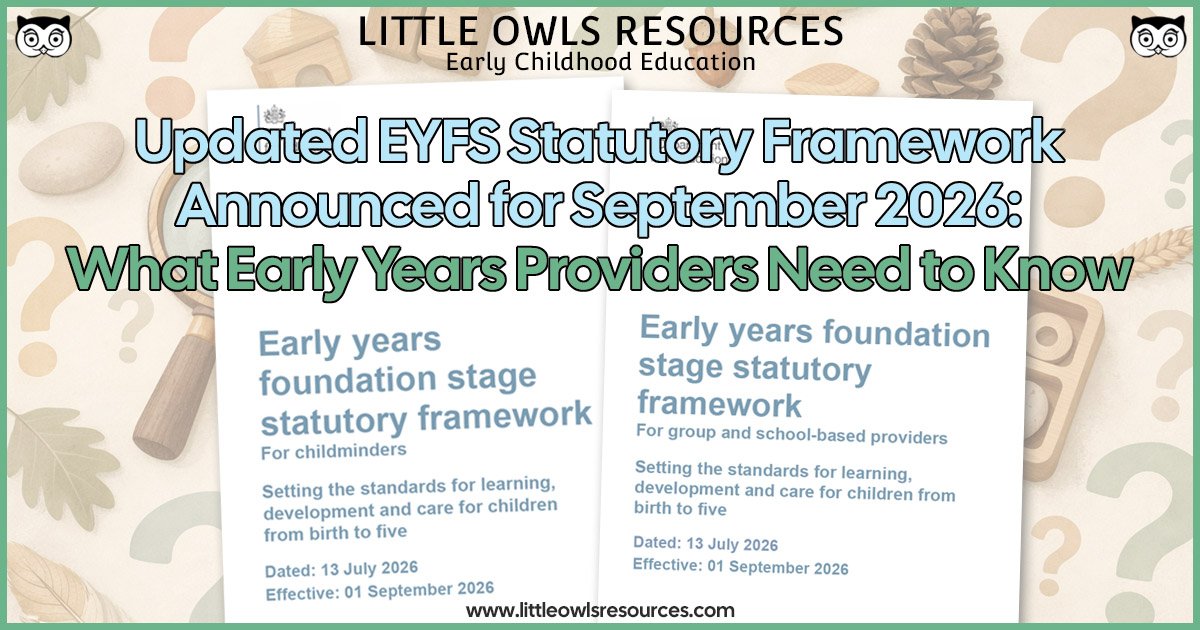
EYFS & KS1 Articles
Major UK Curriculum Shake-Up Announced: What EYFS & KS1 Practitioners Need to Know

A major overhaul of the national curriculum in England has been announced following the publication of the independent Curriculum and Assessment Review. For those working in the Early Years Foundation Stage (EYFS) and Key Stage 1 (KS1), the changes signal a renewed focus on practical life skills, digital literacy, and enriching learning experiences…

Read More →
New Education Inspection Framework | What EYFS Settings Need to Know

The world of early years education is constantly evolving, and with it, the frameworks that guide and assess our invaluable work. Come November 2025, a significant shift will occur as the new Education Inspection Framework (EIF) comes into effect, bringing with it some crucial changes…

Read More →
Revised 2025 EYFS Statutory Framework for Group & School-Based Providers | What You Need to Know

With the new 2025 EYFS Statutory Framework for group and school-based providers coming into effect on 1st September 2025, it's essential to understand the updates to ensure your practice remains compliant, effective…

Read More →
DfE Press Release | Parents urged to read more to boost children’s life chances

The Education Secretary is calling on parents to lead by example and make reading a daily habit to help reverse the decline in reading for pleasure, to help give kids the best start in life as part of the…

Read More →
DfE Update | Drowning Prevention Week: what children learn about water safety at school

As we head into summer, it’s especially important that children are prepared with these skills. This year, the Royal Life Saving Society UK's Drowning Prevention Week runs from 14 June to 21…

Read More →
DfE Update | Hot weather and heatwaves: guidance for schools and other education settings

There are several ways that schools can make changes to keep children safe in hot weather, especially as children are more at risk of becoming ill with heat-related issues than adults…

Read More →

Are you looking for a specific resource or document for your provision?

Use our 🔍 Search Bar located at the top of every page.

___________________________

Content within the EYFS Curriculum & Pedagogy Membership is provided as professional guidance and support. It reflects current understanding of the EYFS statutory framework, Development Matters and inspection expectations at the time of writing. Practitioners are responsible for applying professional judgement and ensuring practice aligns with current statutory requirements and their specific context. All resources, experiences and environment arrangements must be risk assessed by the setting and used in accordance with individual children’s developmental stages, needs and supervision requirements.

Safeguarding content does not replace a setting’s safeguarding and child protection policy or the statutory role of the Designated Safeguarding Lead (DSL). All concerns must be managed in line with current statutory guidance and local safeguarding procedures.

_____________________________

 
In Toddlers | 18-36 Months, -T11 Tags Toddler, Toddler Room — Parent Update & Home Learning Sheet

Toddler → Preschool Transition Pack

January 18, 2026 Stuart Murphy

Home › EYFS Curriculum & Pedagogy › Toddler Room Curriculum & Pedagogy › Toddler → Preschool Transition Pack

Toddler → Preschool Transition Pack

Toddlers (18–36 Months)

A practical set of strength-based documents to support secure, consistent transitions from 18–36 month provision into the 3–4 year room

Download Document Here:

(This pathway component will be available for download by: March 31st 2026)

 
Download DOCX 📝
Download PDF 📄
 

Document Updated: January 2026


Recommended next read Selection

EYFS
How to Build Language Through Play | Toddlers (18-36 Months)

A parent-friendly language support guide for toddlers.

Read More →
Why Mark Making Matters — Before Writing | Toddlers (18-36 Months)

A parent-facing guidance page explaining early writing foundations in toddlerhood (18–36 months)

Read More →
Parent Communication & Partnership Letters Pack — Toddler Room

Editable letters and updates supporting clear, inclusive communication with families (18–36 months)

Read More →
Toddler Room — Parent Update & Home Learning Sheet

A simple, strengths-based communication tool supporting partnership between nursery and home (18–36 months)

Read More →
Toddler → Preschool Transition Pack

A practical set of strength-based documents to support secure, consistent transitions from 18–36 month provision into the 3–4 year room.

Read More →
Why We Learn Outdoors in All Weathers | Toddlers (18–36 Months)

A parent-facing guide explaining the value of outdoor learning in toddlerhood.

Read More →
Supporting Speech & Language at Home | Birth-3 Document

A parent-friendly guidance pack supporting early speech and language through everyday interaction.

Read More →

Additional Documents | Professional Membership Contents (Toddlers 18-36 months)

Navigate our Curriculum & Pedagogy guidance documents here.

Pedagogical identity:
Relationship-led, sensory-rich toddler practice grounded in schemas, play, and responsive adult interaction.

  • 👉 This section prevents over-planning and aligns practice.

    • Toddler Pedagogy Position Statement – How Toddlers Learn (18–36 Months) [Free Orienting Sample]

    • Toddler Curriculum Overview & Rationale[Free Orienting Sample]

    • How Our Toddler Curriculum Works

    • The Role of Schemas in Toddler Practice

    • Curriculum Intent in Toddler Rooms (What It Means — and What It Doesn’t)

    • FAQs: Toddler Planning & Pedagogy

  • 👉 Adult understanding, not child targets.

    • Toddler Curriculum Maps

      • Progression across 6-month bands (18–24 | 24–30 | 30–36 months)

    • Intent → Progression Grids (Practitioner Reference)

    • Area of Learning Progression Maps

  • 👉 Observation is the driver of planning.

    • In-the-Moment Planning Prompt Sheets (Toddlers)

    • Weekly Planning Template

    • Toddler Narrative Observation & Analysis Template

    • Focused Observation Templates

      • Communication & Language

      • PSED

      • Physical Development

      • Maths Seeds

      • Characteristics of Effective Learning

      • Behaviour & Emotional Regulation

      • Schema Observation & Analysis

  • 👉 The environment does the teaching.

    Universal Continuous Provision

    • Continuous Provision Setup Guides | Toddler Room

      • Small World

      • Messy / Wet Play

      • Dry Sensory & Loose Parts

      • Construction

      • Role Play / Home Corner

      • Mark Making

      • Book Area / Reading Nook

      • Music & Sound

      • Outdoor

    • Continuous Provision Maps (18–36 Months)

      • C&L

      • PSED

      • PD

      • Maths Seeds

      • Literacy Seeds

      • UW

      • EAD

    • Continuous Provision Audit & Resourcing List

    • Continuous Provision Rotation Planner Toolkit

    • Toddler Visual Support Labelling Pack | 18–36 Months

  • 👉 Movement, regulation and sensory experience.

    • Outdoor Continuous Provision Pack

      • Outdoor Zone-by-Zone Setup Guide (Gross Motor, Sensory/Nature, Creative/Mark Making, Small World Outside, Water/Mud)

      • Seasonal Adjustments Planner

      • Outdoor Risk–Benefit Assessment Template + examples

      • Nature-Based Learning & Schema Guide

      • Outdoor Mark Making & Literacy Opportunities Sheet

      • Outdoor Maths Seeds Sheet

    • Why We Learn Outdoors in All Weathers (Parent Handout)

  • 👉 Projects are optional contexts, not directives.

    • Year-Long Project / Theme Curriculum Map (52 Weeks)

    • How Projects Work in Toddler Rooms (Guidance)

    • Schema Coverage & Support Map

    Project/Theme Planners:

    • 12 × Main Project Planners (3–4 Weeks)

      • All About Me & My World

      • People Who Help Us

      • Autumn - Senses, Colours & Change

      • Light, Dark & Celebrations

      • Winter-Weather, Warmth & Cosy Spaces

      • Transport & Journeys

      • Growing & Changing

      • Animals & Their Homes

      • Food & Nutrition

      • Minibeasts & Nature Explorers

      • Summer - Sand, Sea & Sun

      • Playful Patterns & Construction

    • 8 × Mini-Project Planners (1 Week)

      • Big Machines & Building

      • Cooking & Food Play

      • Teddy Bears’ Picnic

      • Colours Everywhere

      • Water Play Week

      • My Favourite Things

      • Rhyme Time Week

      • Weather Wonders

  • 👉 Invitations, provocations and shared experiences.

    • Activity Cards Pack

      Supports Child-led learning and responsive provision

    • Area of Learning Progression Maps & Adult Focus Sessions

      (Organised by Age Band: 18–24 months | 24–30 months | 30–36 months)

      Supports intentional teaching, vocabulary development and staff confidence

      • Communication & Language

      • PSED

      • Physical Development

      • Maths Seeds

      • Literacy Seeds

      • Understanding the World – Experience Progression Pack

      • Expressive Arts & Design – Creative Media & Expression Toolkit

  • 👉 Interaction is the curriculum.

    • Toddler Room Poster – Five Sentence Stems For Toddler Practitioners

    • Supporting Emotional Regulation Through Language

    • Language-First Approaches in Toddler Rooms

    • Toddler Behaviour & Regulation: A Quick Guide

  • 👉 Proportionate, meaningful assessment.

    • Progress Check at Age 2

      • Report Template

      • Practitioner Guidance

    • OFSTED Questions We’re Ready For

  • 👉 Early identification, gentle support.

    • SEND Inclusion Strategy Pack (18–36 Months)

      • Practical SEND & inclusion strategies for toddlers aged 18–36 months

      • Six quick-reference strategy sheets covering communication, sensory needs, anxiety and behaviour

      • Aligned with the EYFS Framework and the Assess–Plan–Do–Review approach

      • Inclusive, diagnosis-free guidance ready to use in everyday practice

      • Ideal for observations, provision planning, team use and Ofsted evidence

  • 👉 Strong partnerships, realistic expectations.

    Transition

    • Toddler → Preschool Transition Pack

    Home–Setting Communication

    • Toddler Room Parent Update & Home Learning Sheet

    • Letter Templates Pack

    Parent Information Pages

    • Why Mark Making Matters (Before Writing)

    • Supporting Speech & Language at Home (0–3 Years)

    • How To Build Language Through Play

    • Why We Learn Outdoors in All Weathers

Additional Whole-Setting Guidance | for Professional Members

Explore our whole-setting guidance below, including overarching curriculum and pedagogy documents, early years schemas and EYFS setting policies.

    • Little Owls Resources’ Curriculum Intent Statement

    • EYFS from Birth to 5: Curriculum Coherence & Pedagogical Throughline

    • Whole-Setting Curriculum Map (Birth-5): Curriculum Intent & Progression

    • Pedagogy Guidance Document

    • Speech & Language Development - Setting Statement

    • EYFS Inspection-Facing Summaries

  • Early Years Schemas - Practitioner Toolkit | EYFS Birth-5

    ↪ Schema Cards (definition, behaviours, age-related examples, enabling resources)

    ↪ Schema Observation & Responsive Provision Planning Template

    • EYFS Group Setting Policies Pack

      ↪ x 22 Policy Documents

      ↪ Policy Sign-Off and Confirmation Document

      ↪ EYFS Setting Policy Folder Contents List

    • Childminder Setting Policies Pack

      ↪ x 22 Policy Documents

      ↪ Childminder Assistant or Volunteer Policy Sign-Off and Confirmation Document

      ↪ Childminder Policy Folder Contents List

  • EYFS Glossary

    ↪ Clear, practitioner-friendly explanations of key curriculum and pedagogy terms used throughout our guidance.

Looking for a different age-group pathway?

Select the pathway that best reflects your role or the age group you work with. You do not need to use everything. (Some practitioners may use more than one pathway.)

Featured
🍼 Babies (0–18 months)

Responsive care, observation and development in the earliest years

🚼 Toddlers (18–36 months)

Development, play and progression in the toddler years

🎨 Preschool (3–4 years)

Curriculum, continuous provision and purposeful teaching

🎓 Reception (4–5 years)

Play-based pedagogy, progression and EYFSP readiness

🏡 Childminders (Birth–5)

Mixed-age pedagogy, planning without overload and inspection confidence

Latest EYFS Articles & Practical Guides | From Our Blog

Stay informed, get expert advice, and find inspiration from our collection of articles and useful external resources, tailored specifically for EYFS practitioners. We regularly publish in-depth articles to support you with current best practices, regulatory changes, and fresh ideas.
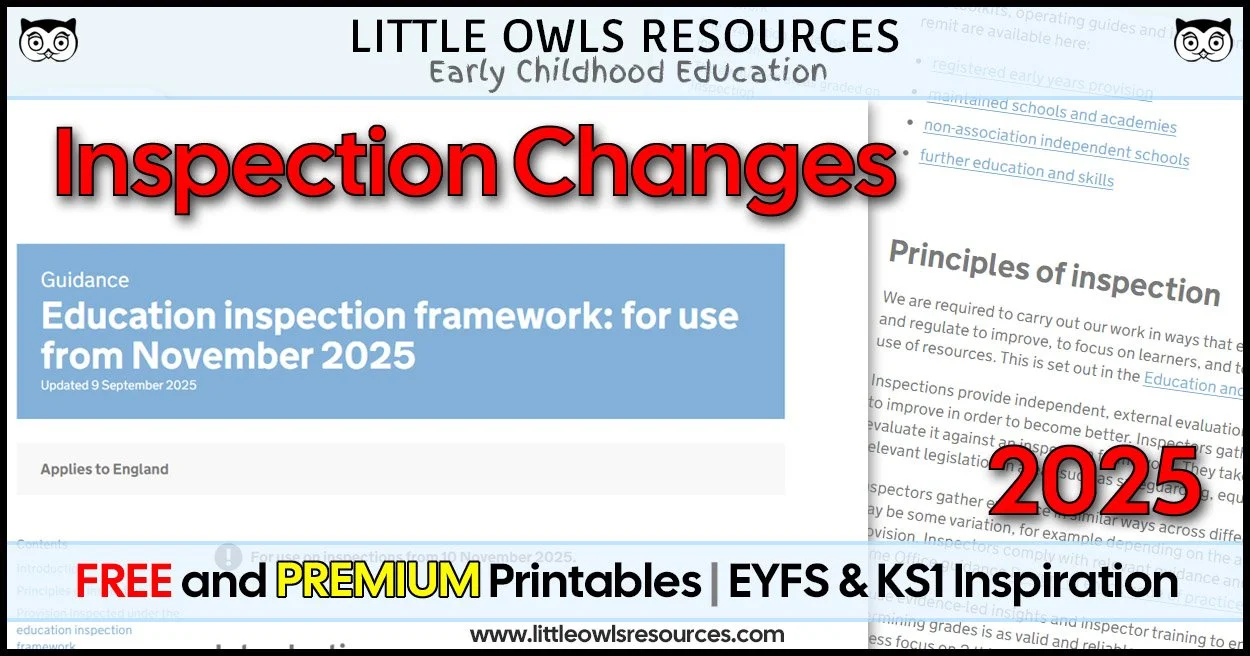
EYFS & KS1 Articles
Major UK Curriculum Shake-Up Announced: What EYFS & KS1 Practitioners Need to Know

A major overhaul of the national curriculum in England has been announced following the publication of the independent Curriculum and Assessment Review. For those working in the Early Years Foundation Stage (EYFS) and Key Stage 1 (KS1), the changes signal a renewed focus on practical life skills, digital literacy, and enriching learning experiences…

Read More →
New Education Inspection Framework | What EYFS Settings Need to Know

The world of early years education is constantly evolving, and with it, the frameworks that guide and assess our invaluable work. Come November 2025, a significant shift will occur as the new Education Inspection Framework (EIF) comes into effect, bringing with it some crucial changes…

Read More →
Revised 2025 EYFS Statutory Framework for Group & School-Based Providers | What You Need to Know

With the new 2025 EYFS Statutory Framework for group and school-based providers coming into effect on 1st September 2025, it's essential to understand the updates to ensure your practice remains compliant, effective…

Read More →
DfE Press Release | Parents urged to read more to boost children’s life chances

The Education Secretary is calling on parents to lead by example and make reading a daily habit to help reverse the decline in reading for pleasure, to help give kids the best start in life as part of the…

Read More →
DfE Update | Drowning Prevention Week: what children learn about water safety at school

As we head into summer, it’s especially important that children are prepared with these skills. This year, the Royal Life Saving Society UK's Drowning Prevention Week runs from 14 June to 21…

Read More →
DfE Update | Hot weather and heatwaves: guidance for schools and other education settings

There are several ways that schools can make changes to keep children safe in hot weather, especially as children are more at risk of becoming ill with heat-related issues than adults…

Read More →

Are you looking for a specific resource or document for your provision?

Use our 🔍 Search Bar located at the top of every page.

___________________________

Content within the EYFS Curriculum & Pedagogy Membership is provided as professional guidance and support. It reflects current understanding of the EYFS statutory framework, Development Matters and inspection expectations at the time of writing. Practitioners are responsible for applying professional judgement and ensuring practice aligns with current statutory requirements and their specific context. All resources, experiences and environment arrangements must be risk assessed by the setting and used in accordance with individual children’s developmental stages, needs and supervision requirements.

Safeguarding content does not replace a setting’s safeguarding and child protection policy or the statutory role of the Designated Safeguarding Lead (DSL). All concerns must be managed in line with current statutory guidance and local safeguarding procedures.

_____________________________

 
In Toddlers | 18-36 Months, -T11 Tags Toddler, Toddler → Preschool Transition Pack

SEND & Inclusion Strategy Pack | Toddlers (18–36 Months)

January 18, 2026 Stuart Murphy

Home › EYFS Curriculum & Pedagogy › Toddler Room Curriculum & Pedagogy › SEND & Inclusion Strategy Pack | Toddlers (18-36 Months)

SEND & Inclusion Strategy Pack

Toddlers (18–36 Months)

Quick guidance and practical tools for supporting toddlers (18–36 months) in everyday provision

Download Document Here:

(This pathway component will be available for download by: March 31st 2026)

 
Download DOCX 📝
Download PDF 📄
 

Document Updated: January 2026


Recommended next read Selection

EYFS
SEND & Inclusion Strategy Pack | Toddlers (18-36 Months)

Quick guidance and practical tools for supporting toddlers (18–36 months) in everyday provision.

Read More →
Toddler Behaviour & Regulation: A Quick Guide | Toddlers (18–36 Months)

A concise professional reference supporting consistent, developmentally appropriate responses in toddler rooms.

Read More →
Language-First Approaches in Toddler Rooms | Toddlers (18–36 Months)

A professional guidance document supporting confident language-first EYFS practice in toddler rooms.

Read More →
Supporting Emotional Regulation Through Language | Toddlers (18–36 Months)

A professional guidance document supporting confident, relational toddler practice.

Read More →
Five Sentence Stems for Toddler Practitioners | Toddlers (18–36 Months)

A professional interaction prompt supporting confident, responsive toddler practice.

Read More →
Five Sentence Stems for Toddler Practitioners | Toddlers (18–36 Months) (Copy)

A professional interaction prompt supporting confident, responsive toddler practice.

Read More →

Additional Documents | Professional Membership Contents (Toddlers 18-36 months)

Navigate our Curriculum & Pedagogy guidance documents here.

Pedagogical identity:
Relationship-led, sensory-rich toddler practice grounded in schemas, play, and responsive adult interaction.

  • 👉 This section prevents over-planning and aligns practice.

    • Toddler Pedagogy Position Statement – How Toddlers Learn (18–36 Months) [Free Orienting Sample]

    • Toddler Curriculum Overview & Rationale[Free Orienting Sample]

    • How Our Toddler Curriculum Works

    • The Role of Schemas in Toddler Practice

    • Curriculum Intent in Toddler Rooms (What It Means — and What It Doesn’t)

    • FAQs: Toddler Planning & Pedagogy

  • 👉 Adult understanding, not child targets.

    • Toddler Curriculum Maps

      • Progression across 6-month bands (18–24 | 24–30 | 30–36 months)

    • Intent → Progression Grids (Practitioner Reference)

    • Area of Learning Progression Maps

  • 👉 Observation is the driver of planning.

    • In-the-Moment Planning Prompt Sheets (Toddlers)

    • Weekly Planning Template

    • Toddler Narrative Observation & Analysis Template

    • Focused Observation Templates

      • Communication & Language

      • PSED

      • Physical Development

      • Maths Seeds

      • Characteristics of Effective Learning

      • Behaviour & Emotional Regulation

      • Schema Observation & Analysis

  • 👉 The environment does the teaching.

    Universal Continuous Provision

    • Continuous Provision Setup Guides | Toddler Room

      • Small World

      • Messy / Wet Play

      • Dry Sensory & Loose Parts

      • Construction

      • Role Play / Home Corner

      • Mark Making

      • Book Area / Reading Nook

      • Music & Sound

      • Outdoor

    • Continuous Provision Maps (18–36 Months)

      • C&L

      • PSED

      • PD

      • Maths Seeds

      • Literacy Seeds

      • UW

      • EAD

    • Continuous Provision Audit & Resourcing List

    • Continuous Provision Rotation Planner Toolkit

    • Toddler Visual Support Labelling Pack | 18–36 Months

  • 👉 Movement, regulation and sensory experience.

    • Outdoor Continuous Provision Pack

      • Outdoor Zone-by-Zone Setup Guide (Gross Motor, Sensory/Nature, Creative/Mark Making, Small World Outside, Water/Mud)

      • Seasonal Adjustments Planner

      • Outdoor Risk–Benefit Assessment Template + examples

      • Nature-Based Learning & Schema Guide

      • Outdoor Mark Making & Literacy Opportunities Sheet

      • Outdoor Maths Seeds Sheet

    • Why We Learn Outdoors in All Weathers (Parent Handout)

  • 👉 Projects are optional contexts, not directives.

    • Year-Long Project / Theme Curriculum Map (52 Weeks)

    • How Projects Work in Toddler Rooms (Guidance)

    • Schema Coverage & Support Map

    Project/Theme Planners:

    • 12 × Main Project Planners (3–4 Weeks)

      • All About Me & My World

      • People Who Help Us

      • Autumn - Senses, Colours & Change

      • Light, Dark & Celebrations

      • Winter-Weather, Warmth & Cosy Spaces

      • Transport & Journeys

      • Growing & Changing

      • Animals & Their Homes

      • Food & Nutrition

      • Minibeasts & Nature Explorers

      • Summer - Sand, Sea & Sun

      • Playful Patterns & Construction

    • 8 × Mini-Project Planners (1 Week)

      • Big Machines & Building

      • Cooking & Food Play

      • Teddy Bears’ Picnic

      • Colours Everywhere

      • Water Play Week

      • My Favourite Things

      • Rhyme Time Week

      • Weather Wonders

  • 👉 Invitations, provocations and shared experiences.

    • Activity Cards Pack

      Supports Child-led learning and responsive provision

    • Area of Learning Progression Maps & Adult Focus Sessions

      (Organised by Age Band: 18–24 months | 24–30 months | 30–36 months)

      Supports intentional teaching, vocabulary development and staff confidence

      • Communication & Language

      • PSED

      • Physical Development

      • Maths Seeds

      • Literacy Seeds

      • Understanding the World – Experience Progression Pack

      • Expressive Arts & Design – Creative Media & Expression Toolkit

  • 👉 Interaction is the curriculum.

    • Toddler Room Poster – Five Sentence Stems For Toddler Practitioners

    • Supporting Emotional Regulation Through Language

    • Language-First Approaches in Toddler Rooms

    • Toddler Behaviour & Regulation: A Quick Guide

  • 👉 Proportionate, meaningful assessment.

    • Progress Check at Age 2

      • Report Template

      • Practitioner Guidance

    • OFSTED Questions We’re Ready For

  • 👉 Early identification, gentle support.

    • SEND Inclusion Strategy Pack (18–36 Months)

      • Practical SEND & inclusion strategies for toddlers aged 18–36 months

      • Six quick-reference strategy sheets covering communication, sensory needs, anxiety and behaviour

      • Aligned with the EYFS Framework and the Assess–Plan–Do–Review approach

      • Inclusive, diagnosis-free guidance ready to use in everyday practice

      • Ideal for observations, provision planning, team use and Ofsted evidence

  • 👉 Strong partnerships, realistic expectations.

    Transition

    • Toddler → Preschool Transition Pack

    Home–Setting Communication

    • Toddler Room Parent Update & Home Learning Sheet

    • Letter Templates Pack

    Parent Information Pages

    • Why Mark Making Matters (Before Writing)

    • Supporting Speech & Language at Home (0–3 Years)

    • How To Build Language Through Play

    • Why We Learn Outdoors in All Weathers

Additional Whole-Setting Guidance | for Professional Members

Explore our whole-setting guidance below, including overarching curriculum and pedagogy documents, early years schemas and EYFS setting policies.

    • Little Owls Resources’ Curriculum Intent Statement

    • EYFS from Birth to 5: Curriculum Coherence & Pedagogical Throughline

    • Whole-Setting Curriculum Map (Birth-5): Curriculum Intent & Progression

    • Pedagogy Guidance Document

    • Speech & Language Development - Setting Statement

    • EYFS Inspection-Facing Summaries

  • Early Years Schemas - Practitioner Toolkit | EYFS Birth-5

    ↪ Schema Cards (definition, behaviours, age-related examples, enabling resources)

    ↪ Schema Observation & Responsive Provision Planning Template

    • EYFS Group Setting Policies Pack

      ↪ x 22 Policy Documents

      ↪ Policy Sign-Off and Confirmation Document

      ↪ EYFS Setting Policy Folder Contents List

    • Childminder Setting Policies Pack

      ↪ x 22 Policy Documents

      ↪ Childminder Assistant or Volunteer Policy Sign-Off and Confirmation Document

      ↪ Childminder Policy Folder Contents List

  • EYFS Glossary

    ↪ Clear, practitioner-friendly explanations of key curriculum and pedagogy terms used throughout our guidance.

Looking for a different age-group pathway?

Select the pathway that best reflects your role or the age group you work with. You do not need to use everything. (Some practitioners may use more than one pathway.)

Featured
🍼 Babies (0–18 months)

Responsive care, observation and development in the earliest years

🚼 Toddlers (18–36 months)

Development, play and progression in the toddler years

🎨 Preschool (3–4 years)

Curriculum, continuous provision and purposeful teaching

🎓 Reception (4–5 years)

Play-based pedagogy, progression and EYFSP readiness

🏡 Childminders (Birth–5)

Mixed-age pedagogy, planning without overload and inspection confidence

Latest EYFS Articles & Practical Guides | From Our Blog

Stay informed, get expert advice, and find inspiration from our collection of articles and useful external resources, tailored specifically for EYFS practitioners. We regularly publish in-depth articles to support you with current best practices, regulatory changes, and fresh ideas.

EYFS & KS1 Articles
Major UK Curriculum Shake-Up Announced: What EYFS & KS1 Practitioners Need to Know

A major overhaul of the national curriculum in England has been announced following the publication of the independent Curriculum and Assessment Review. For those working in the Early Years Foundation Stage (EYFS) and Key Stage 1 (KS1), the changes signal a renewed focus on practical life skills, digital literacy, and enriching learning experiences…

Read More →
New Education Inspection Framework | What EYFS Settings Need to Know

The world of early years education is constantly evolving, and with it, the frameworks that guide and assess our invaluable work. Come November 2025, a significant shift will occur as the new Education Inspection Framework (EIF) comes into effect, bringing with it some crucial changes…

Read More →
Revised 2025 EYFS Statutory Framework for Group & School-Based Providers | What You Need to Know

With the new 2025 EYFS Statutory Framework for group and school-based providers coming into effect on 1st September 2025, it's essential to understand the updates to ensure your practice remains compliant, effective…

Read More →
DfE Press Release | Parents urged to read more to boost children’s life chances

The Education Secretary is calling on parents to lead by example and make reading a daily habit to help reverse the decline in reading for pleasure, to help give kids the best start in life as part of the…

Read More →
DfE Update | Drowning Prevention Week: what children learn about water safety at school

As we head into summer, it’s especially important that children are prepared with these skills. This year, the Royal Life Saving Society UK's Drowning Prevention Week runs from 14 June to 21…

Read More →
DfE Update | Hot weather and heatwaves: guidance for schools and other education settings

There are several ways that schools can make changes to keep children safe in hot weather, especially as children are more at risk of becoming ill with heat-related issues than adults…

Read More →

Are you looking for a specific resource or document for your provision?

Use our 🔍 Search Bar located at the top of every page.

___________________________

Content within the EYFS Curriculum & Pedagogy Membership is provided as professional guidance and support. It reflects current understanding of the EYFS statutory framework, Development Matters and inspection expectations at the time of writing. Practitioners are responsible for applying professional judgement and ensuring practice aligns with current statutory requirements and their specific context. All resources, experiences and environment arrangements must be risk assessed by the setting and used in accordance with individual children’s developmental stages, needs and supervision requirements.

Safeguarding content does not replace a setting’s safeguarding and child protection policy or the statutory role of the Designated Safeguarding Lead (DSL). All concerns must be managed in line with current statutory guidance and local safeguarding procedures.

_____________________________

 
In Toddlers | 18-36 Months, -T10 Tags Toddler, SEND & Inclusion Strategy Pack | Toddlers (18–36 Months)

Ofsted Questions We’re Ready For | Toddlers (18–36 Months)

January 18, 2026 Stuart Murphy

Home › EYFS Curriculum & Pedagogy › Toddler Room Curriculum & Pedagogy › Ofsted Questions We’re Ready For | Toddlers (18–36 Months)

Scroll down to read this document or download files here: DOCX 📝 | PDF 📄

(This pathway component is currently available to read on the page below and will be available for download by: March 31st 2026)

Ofsted Questions We’re Ready For

Toddlers (18–36 Months)

A practitioner-facing articulation tool for confident, inspection-ready toddler practice.

Purpose of This Document

This page supports leaders and practitioners in confidently articulating toddler practice during inspection.

It provides clear, consistent responses to common Ofsted-style questions, grounded in:

  • the EYFS statutory framework

  • Development Matters

  • current best practice in early childhood education

  • our Toddler Pedagogy Position Statement

The answers reflect how our curriculum actually works in practice.

“What is your curriculum intent for toddlers?”

Our intent for toddlers aged 18–36 months is to provide a secure, relationship-led environment where children can explore, communicate and regulate their emotions through play.

Our intent is held by adults and is demonstrated through:

  • carefully designed continuous provision

  • responsive adult interaction

  • strong focus on language and emotional security

We do not set outcomes for toddlers. Instead, we support developmental foundations that prepare children for Preschool in a developmentally appropriate way.

“How does your curriculum support progress?”

Progress for toddlers is understood through changes in:

  • engagement

  • confidence and independence

  • communication (verbal and non-verbal)

  • emotional regulation

  • complexity of play

Adults understand developmental progression, but children are not expected to demonstrate it in fixed timeframes. Progress is seen over time through observation and reflection.

“How do you plan learning for toddlers?”

Planning is observation-led and responsive.

We use:

  • continuous provision as the core of learning

  • in-the-moment responses to children’s play

  • flexible project contexts to support shared language and experiences

Planning supports adult decision-making; it does not prescribe what children must do.

“Why don’t you have structured group teaching?”

Toddlers learn best through play, movement, repetition and secure relationships.

Adult-led experiences such as songs or stories are:

  • brief

  • optional

  • responsive to children’s interest

There is no expectation of formal group teaching at this developmental stage.

“How do you ensure coverage of the EYFS?”

EYFS coverage is ensured through:

  • rich continuous provision across all areas of learning

  • adult understanding of developmental pathways

  • thoughtful environment design

Coverage is not demonstrated through activities but through what the environment and adults make possible every day.

“How do you support children with SEND?”

We assume competence in every child.

Our approach:

  • adapts environments before expecting children to adapt

  • prioritises communication and regulation

  • embeds support into everyday practice

  • works closely with families

Early support is relational and preventative, not diagnosis-led.

“How do you manage behaviour in the toddler room?”

We view behaviour as communication.

Adults:

  • support emotional regulation through co-regulation

  • use calm, consistent language

  • provide predictable routines

  • adapt provision to meet sensory and schematic needs

We do not use punitive or reward-based behaviour systems with toddlers.

“How do you develop language?”

Language is developed through:

  • shared attention

  • narration of play and routines

  • repetition of key vocabulary

  • songs, rhymes and stories

  • secure relationships

We value all forms of communication and do not pressure toddlers to speak.

“How do projects and themes fit into your curriculum?”

Projects provide a shared context for learning, not a set of activities.

They:

  • support language and connection

  • enrich continuous provision

  • remain flexible and responsive

Children are never expected to ‘do the project’.

“How do you assess toddlers?”

Assessment is:

  • narrative

  • observational

  • focused on wellbeing and involvement

It is used to understand children and inform next interactions, not to judge attainment or compare children.

“How do you prepare children for Preschool?”

We prepare children by supporting:

  • confidence and independence

  • sustained engagement

  • communication

  • emotional security

This transition is developmental, not academic.

Summary

We are confident in our toddler practice because:

  • it reflects how toddlers learn

  • it aligns with the EYFS statutory framework

  • it prioritises relationships, play and wellbeing

  • it is intentional without being outcome-driven

This approach ensures toddlers are supported at the right pace, with the strongest possible foundations for future learning.


Document Updated: January 2026

Download Document Here:

(This pathway component is currently available to read on the page above and will be available for download by: March 31st 2026)

 
Download DOCX 📝
Download PDF 📄


Recommended next read Selection

EYFS
Ofsted Questions We’re Ready For | Toddlers (18–36 Months)

A practitioner-facing articulation tool for confident, inspection-ready toddler practice.

Read More →
Progress Check at Age 2 — Template & Guidance Pack

A statutory-compliant, practitioner-friendly toolkit supporting meaningful assessment and parent partnership.

Read More →
FAQs: Toddler Planning & Pedagogy (18–36 Months)

This page answers frequently asked questions about planning and pedagogy in toddler rooms.

Read More →
Curriculum Intent in Toddler Rooms | Toddlers (18–36 Months)

A professional guidance document clarifying curriculum intent for developmentally appropriate toddler practice.

Read More →
How Our Toddler Curriculum Works (18–36 Months)

A professional guidance document explaining how curriculum intent, implementation and impact operate in toddler rooms.

Read More →
The Role of Schemas in Toddler Practice (18-36 Months)

A professional guidance document explaining how schemas underpin learning and shape effective toddler practice.

Read More →
How To Use The Toddler (18-36 Months) Pathway

This overview explains how to navigate, understand and use the Toddler (18–36 months) Pathway effectively.

Read More →
Toddler Curriculum Overview & Rationale | 18-36 Months

(Toddlers | Ages 18–36 Months)

Read More →
Toddler Pedagogy Position Statement | 18-36 Months

How Toddlers Learn (18–36 Months)

Read More →

Additional Documents | Professional Membership Contents (Toddlers 18-36 months)

Navigate our Curriculum & Pedagogy guidance documents here.

Pedagogical identity:
Relationship-led, sensory-rich toddler practice grounded in schemas, play, and responsive adult interaction.

  • 👉 This section prevents over-planning and aligns practice.

    • Toddler Pedagogy Position Statement – How Toddlers Learn (18–36 Months) [Free Orienting Sample]

    • Toddler Curriculum Overview & Rationale[Free Orienting Sample]

    • How Our Toddler Curriculum Works

    • The Role of Schemas in Toddler Practice

    • Curriculum Intent in Toddler Rooms (What It Means — and What It Doesn’t)

    • FAQs: Toddler Planning & Pedagogy

  • 👉 Adult understanding, not child targets.

    • Toddler Curriculum Maps

      • Progression across 6-month bands (18–24 | 24–30 | 30–36 months)

    • Intent → Progression Grids (Practitioner Reference)

    • Area of Learning Progression Maps

  • 👉 Observation is the driver of planning.

    • In-the-Moment Planning Prompt Sheets (Toddlers)

    • Weekly Planning Template

    • Toddler Narrative Observation & Analysis Template

    • Focused Observation Templates

      • Communication & Language

      • PSED

      • Physical Development

      • Maths Seeds

      • Characteristics of Effective Learning

      • Behaviour & Emotional Regulation

      • Schema Observation & Analysis

  • 👉 The environment does the teaching.

    Universal Continuous Provision

    • Continuous Provision Setup Guides | Toddler Room

      • Small World

      • Messy / Wet Play

      • Dry Sensory & Loose Parts

      • Construction

      • Role Play / Home Corner

      • Mark Making

      • Book Area / Reading Nook

      • Music & Sound

      • Outdoor

    • Continuous Provision Maps (18–36 Months)

      • C&L

      • PSED

      • PD

      • Maths Seeds

      • Literacy Seeds

      • UW

      • EAD

    • Continuous Provision Audit & Resourcing List

    • Continuous Provision Rotation Planner Toolkit

    • Toddler Visual Support Labelling Pack | 18–36 Months

  • 👉 Movement, regulation and sensory experience.

    • Outdoor Continuous Provision Pack

      • Outdoor Zone-by-Zone Setup Guide (Gross Motor, Sensory/Nature, Creative/Mark Making, Small World Outside, Water/Mud)

      • Seasonal Adjustments Planner

      • Outdoor Risk–Benefit Assessment Template + examples

      • Nature-Based Learning & Schema Guide

      • Outdoor Mark Making & Literacy Opportunities Sheet

      • Outdoor Maths Seeds Sheet

    • Why We Learn Outdoors in All Weathers (Parent Handout)

  • 👉 Projects are optional contexts, not directives.

    • Year-Long Project / Theme Curriculum Map (52 Weeks)

    • How Projects Work in Toddler Rooms (Guidance)

    • Schema Coverage & Support Map

    Project/Theme Planners:

    • 12 × Main Project Planners (3–4 Weeks)

      • All About Me & My World

      • People Who Help Us

      • Autumn - Senses, Colours & Change

      • Light, Dark & Celebrations

      • Winter-Weather, Warmth & Cosy Spaces

      • Transport & Journeys

      • Growing & Changing

      • Animals & Their Homes

      • Food & Nutrition

      • Minibeasts & Nature Explorers

      • Summer - Sand, Sea & Sun

      • Playful Patterns & Construction

    • 8 × Mini-Project Planners (1 Week)

      • Big Machines & Building

      • Cooking & Food Play

      • Teddy Bears’ Picnic

      • Colours Everywhere

      • Water Play Week

      • My Favourite Things

      • Rhyme Time Week

      • Weather Wonders

  • 👉 Invitations, provocations and shared experiences.

    • Activity Cards Pack

      Supports Child-led learning and responsive provision

    • Area of Learning Progression Maps & Adult Focus Sessions

      (Organised by Age Band: 18–24 months | 24–30 months | 30–36 months)

      Supports intentional teaching, vocabulary development and staff confidence

      • Communication & Language

      • PSED

      • Physical Development

      • Maths Seeds

      • Literacy Seeds

      • Understanding the World – Experience Progression Pack

      • Expressive Arts & Design – Creative Media & Expression Toolkit

  • 👉 Interaction is the curriculum.

    • Toddler Room Poster – Five Sentence Stems For Toddler Practitioners

    • Supporting Emotional Regulation Through Language

    • Language-First Approaches in Toddler Rooms

    • Toddler Behaviour & Regulation: A Quick Guide

  • 👉 Proportionate, meaningful assessment.

    • Progress Check at Age 2

      • Report Template

      • Practitioner Guidance

    • OFSTED Questions We’re Ready For

  • 👉 Early identification, gentle support.

    • SEND Inclusion Strategy Pack (18–36 Months)

      • Practical SEND & inclusion strategies for toddlers aged 18–36 months

      • Six quick-reference strategy sheets covering communication, sensory needs, anxiety and behaviour

      • Aligned with the EYFS Framework and the Assess–Plan–Do–Review approach

      • Inclusive, diagnosis-free guidance ready to use in everyday practice

      • Ideal for observations, provision planning, team use and Ofsted evidence

  • 👉 Strong partnerships, realistic expectations.

    Transition

    • Toddler → Preschool Transition Pack

    Home–Setting Communication

    • Toddler Room Parent Update & Home Learning Sheet

    • Letter Templates Pack

    Parent Information Pages

    • Why Mark Making Matters (Before Writing)

    • Supporting Speech & Language at Home (0–3 Years)

    • How To Build Language Through Play

    • Why We Learn Outdoors in All Weathers

Additional Whole-Setting Guidance | for Professional Members

Explore our whole-setting guidance below, including overarching curriculum and pedagogy documents, early years schemas and EYFS setting policies.

    • Little Owls Resources’ Curriculum Intent Statement

    • EYFS from Birth to 5: Curriculum Coherence & Pedagogical Throughline

    • Whole-Setting Curriculum Map (Birth-5): Curriculum Intent & Progression

    • Pedagogy Guidance Document

    • Speech & Language Development - Setting Statement

    • EYFS Inspection-Facing Summaries

  • Early Years Schemas - Practitioner Toolkit | EYFS Birth-5

    ↪ Schema Cards (definition, behaviours, age-related examples, enabling resources)

    ↪ Schema Observation & Responsive Provision Planning Template

    • EYFS Group Setting Policies Pack

      ↪ x 22 Policy Documents

      ↪ Policy Sign-Off and Confirmation Document

      ↪ EYFS Setting Policy Folder Contents List

    • Childminder Setting Policies Pack

      ↪ x 22 Policy Documents

      ↪ Childminder Assistant or Volunteer Policy Sign-Off and Confirmation Document

      ↪ Childminder Policy Folder Contents List

  • EYFS Glossary

    ↪ Clear, practitioner-friendly explanations of key curriculum and pedagogy terms used throughout our guidance.

Looking for a different age-group pathway?

Select the pathway that best reflects your role or the age group you work with. You do not need to use everything. (Some practitioners may use more than one pathway.)

Featured
🍼 Babies (0–18 months)

Responsive care, observation and development in the earliest years

🚼 Toddlers (18–36 months)

Development, play and progression in the toddler years

🎨 Preschool (3–4 years)

Curriculum, continuous provision and purposeful teaching

🎓 Reception (4–5 years)

Play-based pedagogy, progression and EYFSP readiness

🏡 Childminders (Birth–5)

Mixed-age pedagogy, planning without overload and inspection confidence

Latest EYFS Articles & Practical Guides | From Our Blog

Stay informed, get expert advice, and find inspiration from our collection of articles and useful external resources, tailored specifically for EYFS practitioners. We regularly publish in-depth articles to support you with current best practices, regulatory changes, and fresh ideas.

EYFS & KS1 Articles
Major UK Curriculum Shake-Up Announced: What EYFS & KS1 Practitioners Need to Know

A major overhaul of the national curriculum in England has been announced following the publication of the independent Curriculum and Assessment Review. For those working in the Early Years Foundation Stage (EYFS) and Key Stage 1 (KS1), the changes signal a renewed focus on practical life skills, digital literacy, and enriching learning experiences…

Read More →
New Education Inspection Framework | What EYFS Settings Need to Know

The world of early years education is constantly evolving, and with it, the frameworks that guide and assess our invaluable work. Come November 2025, a significant shift will occur as the new Education Inspection Framework (EIF) comes into effect, bringing with it some crucial changes…

Read More →
Revised 2025 EYFS Statutory Framework for Group & School-Based Providers | What You Need to Know

With the new 2025 EYFS Statutory Framework for group and school-based providers coming into effect on 1st September 2025, it's essential to understand the updates to ensure your practice remains compliant, effective…

Read More →
DfE Press Release | Parents urged to read more to boost children’s life chances

The Education Secretary is calling on parents to lead by example and make reading a daily habit to help reverse the decline in reading for pleasure, to help give kids the best start in life as part of the…

Read More →
DfE Update | Drowning Prevention Week: what children learn about water safety at school

As we head into summer, it’s especially important that children are prepared with these skills. This year, the Royal Life Saving Society UK's Drowning Prevention Week runs from 14 June to 21…

Read More →
DfE Update | Hot weather and heatwaves: guidance for schools and other education settings

There are several ways that schools can make changes to keep children safe in hot weather, especially as children are more at risk of becoming ill with heat-related issues than adults…

Read More →

Are you looking for a specific resource or document for your provision?

Use our 🔍 Search Bar located at the top of every page.

___________________________

Content within the EYFS Curriculum & Pedagogy Membership is provided as professional guidance and support. It reflects current understanding of the EYFS statutory framework, Development Matters and inspection expectations at the time of writing. Practitioners are responsible for applying professional judgement and ensuring practice aligns with current statutory requirements and their specific context. All resources, experiences and environment arrangements must be risk assessed by the setting and used in accordance with individual children’s developmental stages, needs and supervision requirements.

Safeguarding content does not replace a setting’s safeguarding and child protection policy or the statutory role of the Designated Safeguarding Lead (DSL). All concerns must be managed in line with current statutory guidance and local safeguarding procedures.

_____________________________

 
In Toddlers | 18-36 Months, -T9 Tags Toddler, Ofsted Questions We’re Ready For | Toddlers (18–36 Months)

Progress Check at Age 2 — Template & Guidance Pack

January 18, 2026 Stuart Murphy

Home › EYFS Curriculum & Pedagogy › Toddler Room Curriculum & Pedagogy › Progress Check at Age 2 — Template & Guidance Pack

Progress Check at Age 2 — Template & Guidance Pack

Toddlers (18–36 Months)

A statutory-compliant, practitioner-friendly framework supporting meaningful assessment and parent partnership

Download Document Here:

(This pathway component will be available for download by: March 31st 2026)

 
Download DOCX 📝
Download PDF 📄
 

Document Updated: January 2026


Recommended next read Selection

EYFS
Ofsted Questions We’re Ready For | Toddlers (18–36 Months)

A practitioner-facing articulation tool for confident, inspection-ready toddler practice.

Read More →
Progress Check at Age 2 — Template & Guidance Pack

A statutory-compliant, practitioner-friendly toolkit supporting meaningful assessment and parent partnership.

Read More →

Additional Documents | Professional Membership Contents (Toddlers 18-36 months)

Navigate our Curriculum & Pedagogy guidance documents here.

Pedagogical identity:
Relationship-led, sensory-rich toddler practice grounded in schemas, play, and responsive adult interaction.

  • 👉 This section prevents over-planning and aligns practice.

    • Toddler Pedagogy Position Statement – How Toddlers Learn (18–36 Months) [Free Orienting Sample]

    • Toddler Curriculum Overview & Rationale[Free Orienting Sample]

    • How Our Toddler Curriculum Works

    • The Role of Schemas in Toddler Practice

    • Curriculum Intent in Toddler Rooms (What It Means — and What It Doesn’t)

    • FAQs: Toddler Planning & Pedagogy

  • 👉 Adult understanding, not child targets.

    • Toddler Curriculum Maps

      • Progression across 6-month bands (18–24 | 24–30 | 30–36 months)

    • Intent → Progression Grids (Practitioner Reference)

    • Area of Learning Progression Maps

  • 👉 Observation is the driver of planning.

    • In-the-Moment Planning Prompt Sheets (Toddlers)

    • Weekly Planning Template

    • Toddler Narrative Observation & Analysis Template

    • Focused Observation Templates

      • Communication & Language

      • PSED

      • Physical Development

      • Maths Seeds

      • Characteristics of Effective Learning

      • Behaviour & Emotional Regulation

      • Schema Observation & Analysis

  • 👉 The environment does the teaching.

    Universal Continuous Provision

    • Continuous Provision Setup Guides | Toddler Room

      • Small World

      • Messy / Wet Play

      • Dry Sensory & Loose Parts

      • Construction

      • Role Play / Home Corner

      • Mark Making

      • Book Area / Reading Nook

      • Music & Sound

      • Outdoor

    • Continuous Provision Maps (18–36 Months)

      • C&L

      • PSED

      • PD

      • Maths Seeds

      • Literacy Seeds

      • UW

      • EAD

    • Continuous Provision Audit & Resourcing List

    • Continuous Provision Rotation Planner Toolkit

    • Toddler Visual Support Labelling Pack | 18–36 Months

  • 👉 Movement, regulation and sensory experience.

    • Outdoor Continuous Provision Pack

      • Outdoor Zone-by-Zone Setup Guide (Gross Motor, Sensory/Nature, Creative/Mark Making, Small World Outside, Water/Mud)

      • Seasonal Adjustments Planner

      • Outdoor Risk–Benefit Assessment Template + examples

      • Nature-Based Learning & Schema Guide

      • Outdoor Mark Making & Literacy Opportunities Sheet

      • Outdoor Maths Seeds Sheet

    • Why We Learn Outdoors in All Weathers (Parent Handout)

  • 👉 Projects are optional contexts, not directives.

    • Year-Long Project / Theme Curriculum Map (52 Weeks)

    • How Projects Work in Toddler Rooms (Guidance)

    • Schema Coverage & Support Map

    Project/Theme Planners:

    • 12 × Main Project Planners (3–4 Weeks)

      • All About Me & My World

      • People Who Help Us

      • Autumn - Senses, Colours & Change

      • Light, Dark & Celebrations

      • Winter-Weather, Warmth & Cosy Spaces

      • Transport & Journeys

      • Growing & Changing

      • Animals & Their Homes

      • Food & Nutrition

      • Minibeasts & Nature Explorers

      • Summer - Sand, Sea & Sun

      • Playful Patterns & Construction

    • 8 × Mini-Project Planners (1 Week)

      • Big Machines & Building

      • Cooking & Food Play

      • Teddy Bears’ Picnic

      • Colours Everywhere

      • Water Play Week

      • My Favourite Things

      • Rhyme Time Week

      • Weather Wonders

  • 👉 Invitations, provocations and shared experiences.

    • Activity Cards Pack

      Supports Child-led learning and responsive provision

    • Area of Learning Progression Maps & Adult Focus Sessions

      (Organised by Age Band: 18–24 months | 24–30 months | 30–36 months)

      Supports intentional teaching, vocabulary development and staff confidence

      • Communication & Language

      • PSED

      • Physical Development

      • Maths Seeds

      • Literacy Seeds

      • Understanding the World – Experience Progression Pack

      • Expressive Arts & Design – Creative Media & Expression Toolkit

  • 👉 Interaction is the curriculum.

    • Toddler Room Poster – Five Sentence Stems For Toddler Practitioners

    • Supporting Emotional Regulation Through Language

    • Language-First Approaches in Toddler Rooms

    • Toddler Behaviour & Regulation: A Quick Guide

  • 👉 Proportionate, meaningful assessment.

    • Progress Check at Age 2

      • Report Template

      • Practitioner Guidance

    • OFSTED Questions We’re Ready For

  • 👉 Early identification, gentle support.

    • SEND Inclusion Strategy Pack (18–36 Months)

      • Practical SEND & inclusion strategies for toddlers aged 18–36 months

      • Six quick-reference strategy sheets covering communication, sensory needs, anxiety and behaviour

      • Aligned with the EYFS Framework and the Assess–Plan–Do–Review approach

      • Inclusive, diagnosis-free guidance ready to use in everyday practice

      • Ideal for observations, provision planning, team use and Ofsted evidence

  • 👉 Strong partnerships, realistic expectations.

    Transition

    • Toddler → Preschool Transition Pack

    Home–Setting Communication

    • Toddler Room Parent Update & Home Learning Sheet

    • Letter Templates Pack

    Parent Information Pages

    • Why Mark Making Matters (Before Writing)

    • Supporting Speech & Language at Home (0–3 Years)

    • How To Build Language Through Play

    • Why We Learn Outdoors in All Weathers

Additional Whole-Setting Guidance | for Professional Members

Explore our whole-setting guidance below, including overarching curriculum and pedagogy documents, early years schemas and EYFS setting policies.

    • Little Owls Resources’ Curriculum Intent Statement

    • EYFS from Birth to 5: Curriculum Coherence & Pedagogical Throughline

    • Whole-Setting Curriculum Map (Birth-5): Curriculum Intent & Progression

    • Pedagogy Guidance Document

    • Speech & Language Development - Setting Statement

    • EYFS Inspection-Facing Summaries

  • Early Years Schemas - Practitioner Toolkit | EYFS Birth-5

    ↪ Schema Cards (definition, behaviours, age-related examples, enabling resources)

    ↪ Schema Observation & Responsive Provision Planning Template

    • EYFS Group Setting Policies Pack

      ↪ x 22 Policy Documents

      ↪ Policy Sign-Off and Confirmation Document

      ↪ EYFS Setting Policy Folder Contents List

    • Childminder Setting Policies Pack

      ↪ x 22 Policy Documents

      ↪ Childminder Assistant or Volunteer Policy Sign-Off and Confirmation Document

      ↪ Childminder Policy Folder Contents List

  • EYFS Glossary

    ↪ Clear, practitioner-friendly explanations of key curriculum and pedagogy terms used throughout our guidance.

Looking for a different age-group pathway?

Select the pathway that best reflects your role or the age group you work with. You do not need to use everything. (Some practitioners may use more than one pathway.)

Featured
🍼 Babies (0–18 months)

Responsive care, observation and development in the earliest years

🚼 Toddlers (18–36 months)

Development, play and progression in the toddler years

🎨 Preschool (3–4 years)

Curriculum, continuous provision and purposeful teaching

🎓 Reception (4–5 years)

Play-based pedagogy, progression and EYFSP readiness

🏡 Childminders (Birth–5)

Mixed-age pedagogy, planning without overload and inspection confidence

Latest EYFS Articles & Practical Guides | From Our Blog

Stay informed, get expert advice, and find inspiration from our collection of articles and useful external resources, tailored specifically for EYFS practitioners. We regularly publish in-depth articles to support you with current best practices, regulatory changes, and fresh ideas.
EYFS & KS1 Articles
Major UK Curriculum Shake-Up Announced: What EYFS & KS1 Practitioners Need to Know

A major overhaul of the national curriculum in England has been announced following the publication of the independent Curriculum and Assessment Review. For those working in the Early Years Foundation Stage (EYFS) and Key Stage 1 (KS1), the changes signal a renewed focus on practical life skills, digital literacy, and enriching learning experiences…

Read More →
New Education Inspection Framework | What EYFS Settings Need to Know

The world of early years education is constantly evolving, and with it, the frameworks that guide and assess our invaluable work. Come November 2025, a significant shift will occur as the new Education Inspection Framework (EIF) comes into effect, bringing with it some crucial changes…

Read More →
Revised 2025 EYFS Statutory Framework for Group & School-Based Providers | What You Need to Know

With the new 2025 EYFS Statutory Framework for group and school-based providers coming into effect on 1st September 2025, it's essential to understand the updates to ensure your practice remains compliant, effective…

Read More →
DfE Press Release | Parents urged to read more to boost children’s life chances

The Education Secretary is calling on parents to lead by example and make reading a daily habit to help reverse the decline in reading for pleasure, to help give kids the best start in life as part of the…

Read More →
DfE Update | Drowning Prevention Week: what children learn about water safety at school

As we head into summer, it’s especially important that children are prepared with these skills. This year, the Royal Life Saving Society UK's Drowning Prevention Week runs from 14 June to 21…

Read More →
DfE Update | Hot weather and heatwaves: guidance for schools and other education settings

There are several ways that schools can make changes to keep children safe in hot weather, especially as children are more at risk of becoming ill with heat-related issues than adults…

Read More →

Are you looking for a specific resource or document for your provision?

Use our 🔍 Search Bar located at the top of every page.

___________________________

Content within the EYFS Curriculum & Pedagogy Membership is provided as professional guidance and support. It reflects current understanding of the EYFS statutory framework, Development Matters and inspection expectations at the time of writing. Practitioners are responsible for applying professional judgement and ensuring practice aligns with current statutory requirements and their specific context. All resources, experiences and environment arrangements must be risk assessed by the setting and used in accordance with individual children’s developmental stages, needs and supervision requirements.

Safeguarding content does not replace a setting’s safeguarding and child protection policy or the statutory role of the Designated Safeguarding Lead (DSL). All concerns must be managed in line with current statutory guidance and local safeguarding procedures.

_____________________________

 
In Toddlers | 18-36 Months, -T9 Tags Toddler, Progress Check at Age 2 — Template & Guidance Pack

Toddler Behaviour & Regulation: A Quick Guide | Toddlers (18–36 Months)

January 18, 2026 Stuart Murphy

Home › EYFS Curriculum & Pedagogy › Toddler Room Curriculum & Pedagogy › Toddler Behaviour & Regulation: A Quick Guide | Toddlers (18–36 Months)

Scroll down to read this document or download files here: DOCX 📝 | PDF 📄

(This pathway component is currently available to read on the page below and will be available for download by: March 31st 2026)

Toddler Behaviour & Regulation: A Quick Guide

Toddlers (18–36 Months)

A concise professional reference supporting consistent, developmentally appropriate responses in toddler rooms

Purpose of This Guide

This one-page guide brings together our approach to behaviour, emotional regulation, schemas and inclusion in toddler rooms.

It is designed to:

  • support quick reference for practitioners

  • promote consistent, developmentally appropriate responses

  • reduce behaviour-led or punitive approaches

  • support confident explanations to leaders, families and inspectors

This guide summarises our practice — it does not replace deeper guidance documents.

Our Core Understanding

Toddler behaviour is:

  • communication

  • developmentally appropriate

  • often linked to unmet needs, emotions or exploration

Toddlers aged 18–36 months are not yet able to self-regulate. Regulation is learned through repeated experiences of co-regulation with trusted adults.

What Behaviour Often Tells Us

When a toddler is struggling, it may indicate:

  • emotional overwhelm

  • communication frustration

  • sensory needs

  • schematic exploration

  • tiredness, hunger or transition difficulty

Our first response is always to understand why, not to correct the behaviour.

The Adult’s Role: Co-Regulation

Adults support regulation by:

  • staying calm and emotionally available

  • offering physical and emotional reassurance

  • using predictable routines

  • modelling regulated responses

  • naming feelings without judgement

Calm adults help toddlers become calm.

Language That Supports Regulation

Adults use language to:

  • name feelings (“You look upset.”)

  • explain situations (“It’s hard to wait.”)

  • reassure (“I’m here. You are safe.”)

  • support problem-solving (“I will help you.”)

Language is used to support understanding, not to demand compliance.

Schemas and Behaviour

Some behaviours are linked to schematic learning, such as:

  • throwing (trajectory)

  • carrying and hoarding (transporting)

  • filling and emptying (enveloping)

Where possible:

  • environments are adapted to support schemas safely

  • behaviour is redirected only when unsafe

Schemas are supported, not suppressed.

Environment Before Behaviour

We prioritise adapting the environment before expecting children to adapt.

This includes:

  • reducing noise and clutter

  • providing calm spaces

  • ensuring access to movement

  • offering open-ended, sensory resources

Many behavioural challenges reduce when environments are well designed.

Inclusion and SEND

Our approach:

  • assumes competence in every child

  • values non-verbal communication

  • supports regulation before expectation

  • embeds strategies into everyday practice

Early support is relational, preventative and responsive.

What We Avoid

To protect toddler development, we avoid:

  • punitive responses

  • reward charts or sanctions

  • forced apologies

  • removing comfort items as consequences

  • expecting toddlers to explain behaviour

What Progress Looks Like

Progress in regulation may be seen when toddlers:

  • seek comfort from familiar adults

  • recover from distress more quickly

  • begin to anticipate routines

  • use gestures, sounds or words to express needs

Progress is gradual and individual.

Key Message

In our toddler rooms:

  • behaviour is communication

  • regulation is co-regulated

  • schemas guide understanding

  • environments support success

When adults respond with calm, curiosity and consistency, toddlers feel safe — and learning can flourish.


Document Updated: January 2026

Download Document Here:

(This pathway component is currently available to read on the page above and will be available for download by: March 31st 2026)

 
Download DOCX 📝
Download PDF 📄


Recommended next read Selection

EYFS
Toddler Behaviour & Regulation: A Quick Guide | Toddlers (18–36 Months)

A concise professional reference supporting consistent, developmentally appropriate responses in toddler rooms.

Read More →
Language-First Approaches in Toddler Rooms | Toddlers (18–36 Months)

A professional guidance document supporting confident language-first EYFS practice in toddler rooms.

Read More →
Supporting Emotional Regulation Through Language | Toddlers (18–36 Months)

A professional guidance document supporting confident, relational toddler practice.

Read More →
Five Sentence Stems for Toddler Practitioners | Toddlers (18–36 Months)

A professional interaction prompt supporting confident, responsive toddler practice.

Read More →
Five Sentence Stems for Toddler Practitioners | Toddlers (18–36 Months) (Copy)

A professional interaction prompt supporting confident, responsive toddler practice.

Read More →

Additional Documents | Professional Membership Contents (Toddlers 18-36 months)

Navigate our Curriculum & Pedagogy guidance documents here.

Pedagogical identity:
Relationship-led, sensory-rich toddler practice grounded in schemas, play, and responsive adult interaction.

  • 👉 This section prevents over-planning and aligns practice.

    • Toddler Pedagogy Position Statement – How Toddlers Learn (18–36 Months) [Free Orienting Sample]

    • Toddler Curriculum Overview & Rationale[Free Orienting Sample]

    • How Our Toddler Curriculum Works

    • The Role of Schemas in Toddler Practice

    • Curriculum Intent in Toddler Rooms (What It Means — and What It Doesn’t)

    • FAQs: Toddler Planning & Pedagogy

  • 👉 Adult understanding, not child targets.

    • Toddler Curriculum Maps

      • Progression across 6-month bands (18–24 | 24–30 | 30–36 months)

    • Intent → Progression Grids (Practitioner Reference)

    • Area of Learning Progression Maps

  • 👉 Observation is the driver of planning.

    • In-the-Moment Planning Prompt Sheets (Toddlers)

    • Weekly Planning Template

    • Toddler Narrative Observation & Analysis Template

    • Focused Observation Templates

      • Communication & Language

      • PSED

      • Physical Development

      • Maths Seeds

      • Characteristics of Effective Learning

      • Behaviour & Emotional Regulation

      • Schema Observation & Analysis

  • 👉 The environment does the teaching.

    Universal Continuous Provision

    • Continuous Provision Setup Guides | Toddler Room

      • Small World

      • Messy / Wet Play

      • Dry Sensory & Loose Parts

      • Construction

      • Role Play / Home Corner

      • Mark Making

      • Book Area / Reading Nook

      • Music & Sound

      • Outdoor

    • Continuous Provision Maps (18–36 Months)

      • C&L

      • PSED

      • PD

      • Maths Seeds

      • Literacy Seeds

      • UW

      • EAD

    • Continuous Provision Audit & Resourcing List

    • Continuous Provision Rotation Planner Toolkit

    • Toddler Visual Support Labelling Pack | 18–36 Months

  • 👉 Movement, regulation and sensory experience.

    • Outdoor Continuous Provision Pack

      • Outdoor Zone-by-Zone Setup Guide (Gross Motor, Sensory/Nature, Creative/Mark Making, Small World Outside, Water/Mud)

      • Seasonal Adjustments Planner

      • Outdoor Risk–Benefit Assessment Template + examples

      • Nature-Based Learning & Schema Guide

      • Outdoor Mark Making & Literacy Opportunities Sheet

      • Outdoor Maths Seeds Sheet

    • Why We Learn Outdoors in All Weathers (Parent Handout)

  • 👉 Projects are optional contexts, not directives.

    • Year-Long Project / Theme Curriculum Map (52 Weeks)

    • How Projects Work in Toddler Rooms (Guidance)

    • Schema Coverage & Support Map

    Project/Theme Planners:

    • 12 × Main Project Planners (3–4 Weeks)

      • All About Me & My World

      • People Who Help Us

      • Autumn - Senses, Colours & Change

      • Light, Dark & Celebrations

      • Winter-Weather, Warmth & Cosy Spaces

      • Transport & Journeys

      • Growing & Changing

      • Animals & Their Homes

      • Food & Nutrition

      • Minibeasts & Nature Explorers

      • Summer - Sand, Sea & Sun

      • Playful Patterns & Construction

    • 8 × Mini-Project Planners (1 Week)

      • Big Machines & Building

      • Cooking & Food Play

      • Teddy Bears’ Picnic

      • Colours Everywhere

      • Water Play Week

      • My Favourite Things

      • Rhyme Time Week

      • Weather Wonders

  • 👉 Invitations, provocations and shared experiences.

    • Activity Cards Pack

      Supports Child-led learning and responsive provision

    • Area of Learning Progression Maps & Adult Focus Sessions

      (Organised by Age Band: 18–24 months | 24–30 months | 30–36 months)

      Supports intentional teaching, vocabulary development and staff confidence

      • Communication & Language

      • PSED

      • Physical Development

      • Maths Seeds

      • Literacy Seeds

      • Understanding the World – Experience Progression Pack

      • Expressive Arts & Design – Creative Media & Expression Toolkit

  • 👉 Interaction is the curriculum.

    • Toddler Room Poster – Five Sentence Stems For Toddler Practitioners

    • Supporting Emotional Regulation Through Language

    • Language-First Approaches in Toddler Rooms

    • Toddler Behaviour & Regulation: A Quick Guide

  • 👉 Proportionate, meaningful assessment.

    • Progress Check at Age 2

      • Report Template

      • Practitioner Guidance

    • OFSTED Questions We’re Ready For

  • 👉 Early identification, gentle support.

    • SEND Inclusion Strategy Pack (18–36 Months)

      • Practical SEND & inclusion strategies for toddlers aged 18–36 months

      • Six quick-reference strategy sheets covering communication, sensory needs, anxiety and behaviour

      • Aligned with the EYFS Framework and the Assess–Plan–Do–Review approach

      • Inclusive, diagnosis-free guidance ready to use in everyday practice

      • Ideal for observations, provision planning, team use and Ofsted evidence

  • 👉 Strong partnerships, realistic expectations.

    Transition

    • Toddler → Preschool Transition Pack

    Home–Setting Communication

    • Toddler Room Parent Update & Home Learning Sheet

    • Letter Templates Pack

    Parent Information Pages

    • Why Mark Making Matters (Before Writing)

    • Supporting Speech & Language at Home (0–3 Years)

    • How To Build Language Through Play

    • Why We Learn Outdoors in All Weathers

Additional Whole-Setting Guidance | for Professional Members

Explore our whole-setting guidance below, including overarching curriculum and pedagogy documents, early years schemas and EYFS setting policies.

    • Little Owls Resources’ Curriculum Intent Statement

    • EYFS from Birth to 5: Curriculum Coherence & Pedagogical Throughline

    • Whole-Setting Curriculum Map (Birth-5): Curriculum Intent & Progression

    • Pedagogy Guidance Document

    • Speech & Language Development - Setting Statement

    • EYFS Inspection-Facing Summaries

  • Early Years Schemas - Practitioner Toolkit | EYFS Birth-5

    ↪ Schema Cards (definition, behaviours, age-related examples, enabling resources)

    ↪ Schema Observation & Responsive Provision Planning Template

    • EYFS Group Setting Policies Pack

      ↪ x 22 Policy Documents

      ↪ Policy Sign-Off and Confirmation Document

      ↪ EYFS Setting Policy Folder Contents List

    • Childminder Setting Policies Pack

      ↪ x 22 Policy Documents

      ↪ Childminder Assistant or Volunteer Policy Sign-Off and Confirmation Document

      ↪ Childminder Policy Folder Contents List

  • EYFS Glossary

    ↪ Clear, practitioner-friendly explanations of key curriculum and pedagogy terms used throughout our guidance.

Looking for a different age-group pathway?

Select the pathway that best reflects your role or the age group you work with. You do not need to use everything. (Some practitioners may use more than one pathway.)

Featured
🍼 Babies (0–18 months)

Responsive care, observation and development in the earliest years

🚼 Toddlers (18–36 months)

Development, play and progression in the toddler years

🎨 Preschool (3–4 years)

Curriculum, continuous provision and purposeful teaching

🎓 Reception (4–5 years)

Play-based pedagogy, progression and EYFSP readiness

🏡 Childminders (Birth–5)

Mixed-age pedagogy, planning without overload and inspection confidence

Latest EYFS Articles & Practical Guides | From Our Blog

Stay informed, get expert advice, and find inspiration from our collection of articles and useful external resources, tailored specifically for EYFS practitioners. We regularly publish in-depth articles to support you with current best practices, regulatory changes, and fresh ideas.

EYFS & KS1 Articles
Major UK Curriculum Shake-Up Announced: What EYFS & KS1 Practitioners Need to Know

A major overhaul of the national curriculum in England has been announced following the publication of the independent Curriculum and Assessment Review. For those working in the Early Years Foundation Stage (EYFS) and Key Stage 1 (KS1), the changes signal a renewed focus on practical life skills, digital literacy, and enriching learning experiences…

Read More →
New Education Inspection Framework | What EYFS Settings Need to Know

The world of early years education is constantly evolving, and with it, the frameworks that guide and assess our invaluable work. Come November 2025, a significant shift will occur as the new Education Inspection Framework (EIF) comes into effect, bringing with it some crucial changes…

Read More →
Revised 2025 EYFS Statutory Framework for Group & School-Based Providers | What You Need to Know

With the new 2025 EYFS Statutory Framework for group and school-based providers coming into effect on 1st September 2025, it's essential to understand the updates to ensure your practice remains compliant, effective…

Read More →
DfE Press Release | Parents urged to read more to boost children’s life chances

The Education Secretary is calling on parents to lead by example and make reading a daily habit to help reverse the decline in reading for pleasure, to help give kids the best start in life as part of the…

Read More →
DfE Update | Drowning Prevention Week: what children learn about water safety at school

As we head into summer, it’s especially important that children are prepared with these skills. This year, the Royal Life Saving Society UK's Drowning Prevention Week runs from 14 June to 21…

Read More →
DfE Update | Hot weather and heatwaves: guidance for schools and other education settings

There are several ways that schools can make changes to keep children safe in hot weather, especially as children are more at risk of becoming ill with heat-related issues than adults…

Read More →

Are you looking for a specific resource or document for your provision?

Use our 🔍 Search Bar located at the top of every page.

___________________________

Content within the EYFS Curriculum & Pedagogy Membership is provided as professional guidance and support. It reflects current understanding of the EYFS statutory framework, Development Matters and inspection expectations at the time of writing. Practitioners are responsible for applying professional judgement and ensuring practice aligns with current statutory requirements and their specific context. All resources, experiences and environment arrangements must be risk assessed by the setting and used in accordance with individual children’s developmental stages, needs and supervision requirements.

Safeguarding content does not replace a setting’s safeguarding and child protection policy or the statutory role of the Designated Safeguarding Lead (DSL). All concerns must be managed in line with current statutory guidance and local safeguarding procedures.

_____________________________
 
In Toddlers | 18-36 Months, -T8 Tags Toddler, Toddler Behaviour & Regulation: A Quick Guide | Toddlers (18–36 Months)

Language-First Approaches in Toddler Rooms | Toddlers (18–36 Months)

January 18, 2026 Stuart Murphy

Home › EYFS Curriculum & Pedagogy › Toddler Room Curriculum & Pedagogy › Language-First Approaches in Toddler Rooms | Toddlers (18–36 Months)

Scroll down to read this document or download files here: DOCX 📝 | PDF 📄

(This pathway component is currently available to read on the page below and will be available for download by: March 31st 2026)

Language-First Approaches in Toddler Rooms

Toddlers (18–36 Months)

A professional guidance document supporting confident EYFS practice in toddler rooms

Purpose of This Document

This document explains what we mean by a language-first approach in toddler rooms for children aged 18–36 months.

It is designed to:

  • support practitioners to prioritise communication in everyday practice

  • clarify how language is developed through play, routines and relationships

  • ensure consistency across teams

  • provide clear language for leadership and inspection conversations

A language-first approach does not mean formal teaching. It means recognising that communication underpins all learning in toddlerhood.

Our Core Belief About Language in Toddlerhood

Toddlers develop language through:

  • secure relationships

  • shared attention

  • repetition and routine

  • meaningful, real-life experiences

Language development is closely linked to:

  • emotional security

  • physical exploration

  • social interaction

  • self-regulation

Toddlers learn language best when it is lived, not taught.

What We Mean by “Language-First”

A language-first approach means that adults:

  • are intentional about how and when they use language

  • prioritise interaction over instruction

  • value all forms of communication

  • embed language across the day

Language is not confined to planned activities or group times.

Valuing All Forms of Communication

Toddlers communicate through:

  • gestures and pointing

  • facial expression

  • body movement

  • sounds and early words

  • behaviour

In our toddler rooms:

  • all communication is acknowledged

  • responses are immediate and meaningful

  • words are paired with actions

Speech is not the only valid form of communication at this stage.

Shared Attention as the Foundation

Language grows when adults and toddlers attend to the same thing.

Adults:

  • follow the child’s focus

  • comment on what the child is doing

  • wait and allow space for response

Shared attention is prioritised over questioning.

How Adults Use Language in Practice

1. Narrating Play and Routines

Adults describe what is happening:

  • “You are pushing the car.”

  • “The water is pouring.”

  • “Shoes on, then outside.”

Narration provides rich language without pressure.

2. Modelling and Repeating Vocabulary

Adults:

  • repeat key words often

  • use clear, simple phrases

  • emphasise important vocabulary

Repetition supports understanding long before spoken use.

3. Expanding, Not Correcting

When toddlers use early language, adults:

  • model slightly extended phrases

  • avoid correction or testing

For example:

  • Child: “Car.”

  • Adult: “Yes, big car driving.”

4. Using Songs, Rhymes and Stories

Songs and rhymes:

  • support rhythm and memory

  • encourage participation

  • reinforce vocabulary

Group experiences are brief, flexible and optional.

Language Through the Environment

The environment supports language by:

  • offering real, meaningful resources

  • providing visual supports where helpful

  • reducing background noise

  • allowing space for interaction

The environment invites conversation without overwhelming children.

Language, Play and Schemas

Schema-led play offers rich opportunities for language.

Adults:

  • name actions (“rolling”, “filling”, “carrying”)

  • describe patterns and changes

  • link words to repeated experiences

Language follows play, not the other way around.

Supporting Children with Emerging or Delayed Speech

A language-first approach supports inclusion by:

  • reducing pressure to speak

  • valuing non-verbal communication

  • using consistent, meaningful language

  • working closely with families

Early support is relational, preventative and embedded.

Language and Emotional Development

Language supports emotional development by:

  • helping children make sense of feelings

  • supporting co-regulation

  • reducing frustration and anxiety

Language is used to comfort, explain and connect — not to manage behaviour.

What We Avoid in Language-First Practice

To protect language development, adults avoid:

  • excessive questioning

  • testing or quizzing

  • correcting pronunciation

  • expecting immediate verbal responses

Silence and waiting are valued parts of communication.

What Progress Looks Like Over Time

Progress in language may be seen through:

  • increased eye contact and shared attention

  • use of gestures or sounds

  • growing vocabulary (spoken or understood)

  • longer periods of interaction

Progress is individual and non-linear.

Summary

In our toddler rooms:

  • language underpins all learning

  • adults model, narrate and repeat

  • play and routines are language-rich

  • all communication is valued

A language-first approach ensures toddlers are supported to communicate confidently, at their own pace, within warm, responsive relationships.


Document Updated: January 2026

Download Document Here:

(This pathway component is currently available to read on the page above and will be available for download by: March 31st 2026)

 
Download DOCX 📝
Download PDF 📄


Recommended next read Selection

EYFS
Toddler Behaviour & Regulation: A Quick Guide | Toddlers (18–36 Months)

A concise professional reference supporting consistent, developmentally appropriate responses in toddler rooms.

Read More →
Language-First Approaches in Toddler Rooms | Toddlers (18–36 Months)

A professional guidance document supporting confident language-first EYFS practice in toddler rooms.

Read More →
Supporting Emotional Regulation Through Language | Toddlers (18–36 Months)

A professional guidance document supporting confident, relational toddler practice.

Read More →
Five Sentence Stems for Toddler Practitioners | Toddlers (18–36 Months)

A professional interaction prompt supporting confident, responsive toddler practice.

Read More →
Five Sentence Stems for Toddler Practitioners | Toddlers (18–36 Months) (Copy)

A professional interaction prompt supporting confident, responsive toddler practice.

Read More →

Additional Documents | Professional Membership Contents (Toddlers 18-36 months)

Navigate our Curriculum & Pedagogy guidance documents here.

Pedagogical identity:
Relationship-led, sensory-rich toddler practice grounded in schemas, play, and responsive adult interaction.

  • 👉 This section prevents over-planning and aligns practice.

    • Toddler Pedagogy Position Statement – How Toddlers Learn (18–36 Months) [Free Orienting Sample]

    • Toddler Curriculum Overview & Rationale[Free Orienting Sample]

    • How Our Toddler Curriculum Works

    • The Role of Schemas in Toddler Practice

    • Curriculum Intent in Toddler Rooms (What It Means — and What It Doesn’t)

    • FAQs: Toddler Planning & Pedagogy

  • 👉 Adult understanding, not child targets.

    • Toddler Curriculum Maps

      • Progression across 6-month bands (18–24 | 24–30 | 30–36 months)

    • Intent → Progression Grids (Practitioner Reference)

    • Area of Learning Progression Maps

  • 👉 Observation is the driver of planning.

    • In-the-Moment Planning Prompt Sheets (Toddlers)

    • Weekly Planning Template

    • Toddler Narrative Observation & Analysis Template

    • Focused Observation Templates

      • Communication & Language

      • PSED

      • Physical Development

      • Maths Seeds

      • Characteristics of Effective Learning

      • Behaviour & Emotional Regulation

      • Schema Observation & Analysis

  • 👉 The environment does the teaching.

    Universal Continuous Provision

    • Continuous Provision Setup Guides | Toddler Room

      • Small World

      • Messy / Wet Play

      • Dry Sensory & Loose Parts

      • Construction

      • Role Play / Home Corner

      • Mark Making

      • Book Area / Reading Nook

      • Music & Sound

      • Outdoor

    • Continuous Provision Maps (18–36 Months)

      • C&L

      • PSED

      • PD

      • Maths Seeds

      • Literacy Seeds

      • UW

      • EAD

    • Continuous Provision Audit & Resourcing List

    • Continuous Provision Rotation Planner Toolkit

    • Toddler Visual Support Labelling Pack | 18–36 Months

  • 👉 Movement, regulation and sensory experience.

    • Outdoor Continuous Provision Pack

      • Outdoor Zone-by-Zone Setup Guide (Gross Motor, Sensory/Nature, Creative/Mark Making, Small World Outside, Water/Mud)

      • Seasonal Adjustments Planner

      • Outdoor Risk–Benefit Assessment Template + examples

      • Nature-Based Learning & Schema Guide

      • Outdoor Mark Making & Literacy Opportunities Sheet

      • Outdoor Maths Seeds Sheet

    • Why We Learn Outdoors in All Weathers (Parent Handout)

  • 👉 Projects are optional contexts, not directives.

    • Year-Long Project / Theme Curriculum Map (52 Weeks)

    • How Projects Work in Toddler Rooms (Guidance)

    • Schema Coverage & Support Map

    Project/Theme Planners:

    • 12 × Main Project Planners (3–4 Weeks)

      • All About Me & My World

      • People Who Help Us

      • Autumn - Senses, Colours & Change

      • Light, Dark & Celebrations

      • Winter-Weather, Warmth & Cosy Spaces

      • Transport & Journeys

      • Growing & Changing

      • Animals & Their Homes

      • Food & Nutrition

      • Minibeasts & Nature Explorers

      • Summer - Sand, Sea & Sun

      • Playful Patterns & Construction

    • 8 × Mini-Project Planners (1 Week)

      • Big Machines & Building

      • Cooking & Food Play

      • Teddy Bears’ Picnic

      • Colours Everywhere

      • Water Play Week

      • My Favourite Things

      • Rhyme Time Week

      • Weather Wonders

  • 👉 Invitations, provocations and shared experiences.

    • Activity Cards Pack

      Supports Child-led learning and responsive provision

    • Area of Learning Progression Maps & Adult Focus Sessions

      (Organised by Age Band: 18–24 months | 24–30 months | 30–36 months)

      Supports intentional teaching, vocabulary development and staff confidence

      • Communication & Language

      • PSED

      • Physical Development

      • Maths Seeds

      • Literacy Seeds

      • Understanding the World – Experience Progression Pack

      • Expressive Arts & Design – Creative Media & Expression Toolkit

  • 👉 Interaction is the curriculum.

    • Toddler Room Poster – Five Sentence Stems For Toddler Practitioners

    • Supporting Emotional Regulation Through Language

    • Language-First Approaches in Toddler Rooms

    • Toddler Behaviour & Regulation: A Quick Guide

  • 👉 Proportionate, meaningful assessment.

    • Progress Check at Age 2

      • Report Template

      • Practitioner Guidance

    • OFSTED Questions We’re Ready For

  • 👉 Early identification, gentle support.

    • SEND Inclusion Strategy Pack (18–36 Months)

      • Practical SEND & inclusion strategies for toddlers aged 18–36 months

      • Six quick-reference strategy sheets covering communication, sensory needs, anxiety and behaviour

      • Aligned with the EYFS Framework and the Assess–Plan–Do–Review approach

      • Inclusive, diagnosis-free guidance ready to use in everyday practice

      • Ideal for observations, provision planning, team use and Ofsted evidence

  • 👉 Strong partnerships, realistic expectations.

    Transition

    • Toddler → Preschool Transition Pack

    Home–Setting Communication

    • Toddler Room Parent Update & Home Learning Sheet

    • Letter Templates Pack

    Parent Information Pages

    • Why Mark Making Matters (Before Writing)

    • Supporting Speech & Language at Home (0–3 Years)

    • How To Build Language Through Play

    • Why We Learn Outdoors in All Weathers

Additional Whole-Setting Guidance | for Professional Members

Explore our whole-setting guidance below, including overarching curriculum and pedagogy documents, early years schemas and EYFS setting policies.

    • Little Owls Resources’ Curriculum Intent Statement

    • EYFS from Birth to 5: Curriculum Coherence & Pedagogical Throughline

    • Whole-Setting Curriculum Map (Birth-5): Curriculum Intent & Progression

    • Pedagogy Guidance Document

    • Speech & Language Development - Setting Statement

    • EYFS Inspection-Facing Summaries

  • Early Years Schemas - Practitioner Toolkit | EYFS Birth-5

    ↪ Schema Cards (definition, behaviours, age-related examples, enabling resources)

    ↪ Schema Observation & Responsive Provision Planning Template

    • EYFS Group Setting Policies Pack

      ↪ x 22 Policy Documents

      ↪ Policy Sign-Off and Confirmation Document

      ↪ EYFS Setting Policy Folder Contents List

    • Childminder Setting Policies Pack

      ↪ x 22 Policy Documents

      ↪ Childminder Assistant or Volunteer Policy Sign-Off and Confirmation Document

      ↪ Childminder Policy Folder Contents List

  • EYFS Glossary

    ↪ Clear, practitioner-friendly explanations of key curriculum and pedagogy terms used throughout our guidance.

Looking for a different age-group pathway?

Select the pathway that best reflects your role or the age group you work with. You do not need to use everything. (Some practitioners may use more than one pathway.)

Featured
🍼 Babies (0–18 months)

Responsive care, observation and development in the earliest years

🚼 Toddlers (18–36 months)

Development, play and progression in the toddler years

🎨 Preschool (3–4 years)

Curriculum, continuous provision and purposeful teaching

🎓 Reception (4–5 years)

Play-based pedagogy, progression and EYFSP readiness

🏡 Childminders (Birth–5)

Mixed-age pedagogy, planning without overload and inspection confidence

Latest EYFS Articles & Practical Guides | From Our Blog

Stay informed, get expert advice, and find inspiration from our collection of articles and useful external resources, tailored specifically for EYFS practitioners. We regularly publish in-depth articles to support you with current best practices, regulatory changes, and fresh ideas.

EYFS & KS1 Articles
Major UK Curriculum Shake-Up Announced: What EYFS & KS1 Practitioners Need to Know

A major overhaul of the national curriculum in England has been announced following the publication of the independent Curriculum and Assessment Review. For those working in the Early Years Foundation Stage (EYFS) and Key Stage 1 (KS1), the changes signal a renewed focus on practical life skills, digital literacy, and enriching learning experiences…

Read More →
New Education Inspection Framework | What EYFS Settings Need to Know

The world of early years education is constantly evolving, and with it, the frameworks that guide and assess our invaluable work. Come November 2025, a significant shift will occur as the new Education Inspection Framework (EIF) comes into effect, bringing with it some crucial changes…

Read More →
Revised 2025 EYFS Statutory Framework for Group & School-Based Providers | What You Need to Know

With the new 2025 EYFS Statutory Framework for group and school-based providers coming into effect on 1st September 2025, it's essential to understand the updates to ensure your practice remains compliant, effective…

Read More →
DfE Press Release | Parents urged to read more to boost children’s life chances

The Education Secretary is calling on parents to lead by example and make reading a daily habit to help reverse the decline in reading for pleasure, to help give kids the best start in life as part of the…

Read More →
DfE Update | Drowning Prevention Week: what children learn about water safety at school

As we head into summer, it’s especially important that children are prepared with these skills. This year, the Royal Life Saving Society UK's Drowning Prevention Week runs from 14 June to 21…

Read More →
DfE Update | Hot weather and heatwaves: guidance for schools and other education settings

There are several ways that schools can make changes to keep children safe in hot weather, especially as children are more at risk of becoming ill with heat-related issues than adults…

Read More →

Are you looking for a specific resource or document for your provision?

Use our 🔍 Search Bar located at the top of every page.

___________________________

Content within the EYFS Curriculum & Pedagogy Membership is provided as professional guidance and support. It reflects current understanding of the EYFS statutory framework, Development Matters and inspection expectations at the time of writing. Practitioners are responsible for applying professional judgement and ensuring practice aligns with current statutory requirements and their specific context. All resources, experiences and environment arrangements must be risk assessed by the setting and used in accordance with individual children’s developmental stages, needs and supervision requirements.

Safeguarding content does not replace a setting’s safeguarding and child protection policy or the statutory role of the Designated Safeguarding Lead (DSL). All concerns must be managed in line with current statutory guidance and local safeguarding procedures.

_____________________________

 
In Toddlers | 18-36 Months, -T8 Tags Toddler, Language-First Approaches in Toddler Rooms | Toddlers (18–36 Months)

Supporting Emotional Regulation Through Language | Toddlers (18–36 Months)

January 18, 2026 Stuart Murphy

Home › EYFS Curriculum & Pedagogy › Toddler Room Curriculum & Pedagogy › Supporting Emotional Regulation Through Language | Toddlers (18–36 Months)

Scroll down to read this document or download files here: DOCX 📝 | PDF 📄

(This pathway component is currently available to read on the page below and will be available for download by: March 31st 2026)

Supporting Emotional Regulation Through Language

Toddlers (18–36 Months)

A professional guidance document supporting confident, relational toddler practice


Purpose of This Document

This document explains how emotional regulation is supported through language in toddler rooms for children aged 18–36 months.

It is designed to:

  • support practitioners in responding confidently to toddlers’ emotions and behaviour

  • clarify the role of language in co-regulation

  • ensure consistent, developmentally appropriate practice

  • provide clear articulation for leadership and inspection conversations

At this stage, emotional regulation is co-regulated, not self-managed.

Our Understanding of Emotional Regulation in Toddlerhood

Toddlers are still developing the neurological and emotional capacity to manage their feelings independently.

They may:

  • experience intense emotions

  • struggle to express feelings verbally

  • move quickly between emotional states

  • rely on trusted adults to help them feel safe and understood

Emotional regulation develops through repeated experiences of being supported, not through expectation or correction.

Co-Regulation: The Adult’s Role

Co-regulation is the process by which adults support toddlers to manage emotions before they are able to do so independently.

In practice, adults:

  • stay calm and emotionally available

  • offer physical and emotional reassurance

  • name feelings without judgement

  • provide predictable responses

  • model regulated behaviour

Language is a central tool in this process.

Why Language Matters for Regulation

Language supports emotional regulation by:

  • helping toddlers make sense of how they feel

  • reducing uncertainty and anxiety

  • strengthening attachment and trust

  • giving children words they will later use independently

For toddlers, language is heard, felt and absorbed long before it is used fluently.

How We Use Language to Support Regulation

1. Naming Feelings

Adults name emotions as they arise:

  • “You look sad.”

  • “That was frustrating.”

  • “You’re feeling cross.”

Feelings are acknowledged without trying to fix or dismiss them.

2. Narrating What Is Happening

Adults describe situations calmly and clearly:

  • “The block fell down.”

  • “It’s hard to wait.”

  • “Your tower broke.”

This helps toddlers understand cause and effect without blame.

3. Offering Reassuring Language

Adults use consistent, comforting phrases:

  • “I’m here.”

  • “You are safe.”

  • “I will help you.”

Predictable language supports emotional security.

4. Modelling Regulation Language

Adults model language that reflects calm problem-solving:

  • “Let’s take a breath.”

  • “We can try again.”

  • “I will help you.”

This language is not expected to be repeated by the child immediately.

What We Avoid in Toddler Rooms

To protect emotional development, adults avoid:

  • asking toddlers to explain or justify their feelings

  • using language that shames, threatens or distracts

  • insisting on apologies before regulation

  • over-verbalising during moments of high distress

Silence, presence and touch are sometimes more supportive than words.

Regulation Through Routines and Repetition

Language used consistently during routines supports regulation.

For example:

  • “Shoes on, then outside.”

  • “Snack first, then story.”

  • “Mummy comes back after sleep.”

Predictable language reduces anxiety and supports understanding over time.

Supporting Non-Verbal Communication

Toddlers communicate through:

  • gestures

  • facial expressions

  • movement

  • behaviour

Adults respond to all forms of communication by:

  • acknowledging the message

  • responding calmly

  • pairing actions with simple language

Language follows the child’s communication, not the other way around.

Emotional Regulation, Behaviour and Schemas

Some behaviours linked to distress are also connected to:

  • sensory needs

  • schematic exploration

  • communication frustration

Adults interpret behaviour through a developmental lens rather than a disciplinary one.

Inclusion and Emotional Regulation

This approach supports inclusion by:

  • valuing all communication

  • reducing behaviour-based responses

  • supporting children with language delays or SEND

  • prioritising understanding over compliance

Support is relational, preventative and embedded in everyday practice.

What Progress Looks Like Over Time

Progress in emotional regulation may be seen when toddlers:

  • seek comfort from familiar adults

  • recover from distress more quickly

  • begin to anticipate routines

  • use gestures, sounds or words to express feelings

Progress is gradual and deeply individual.

Summary

In our toddler rooms:

  • emotional regulation is co-regulated

  • language supports safety, understanding and trust

  • adults model calm and empathy

  • behaviour is viewed as communication

By using language intentionally and compassionately, we support toddlers to develop the emotional foundations they need for lifelong wellbeing.


Document Updated: January 2026

Download Document Here:

(This pathway component is currently available to read on the page above and will be available for download by: March 31st 2026)

 
Download DOCX 📝
Download PDF 📄


Recommended next read Selection

EYFS
Toddler Behaviour & Regulation: A Quick Guide | Toddlers (18–36 Months)

A concise professional reference supporting consistent, developmentally appropriate responses in toddler rooms.

Read More →
Language-First Approaches in Toddler Rooms | Toddlers (18–36 Months)

A professional guidance document supporting confident language-first EYFS practice in toddler rooms.

Read More →
Supporting Emotional Regulation Through Language | Toddlers (18–36 Months)

A professional guidance document supporting confident, relational toddler practice.

Read More →
Five Sentence Stems for Toddler Practitioners | Toddlers (18–36 Months)

A professional interaction prompt supporting confident, responsive toddler practice.

Read More →
Five Sentence Stems for Toddler Practitioners | Toddlers (18–36 Months) (Copy)

A professional interaction prompt supporting confident, responsive toddler practice.

Read More →

Additional Documents | Professional Membership Contents (Toddlers 18-36 months)

Navigate our Curriculum & Pedagogy guidance documents here.

Pedagogical identity:
Relationship-led, sensory-rich toddler practice grounded in schemas, play, and responsive adult interaction.

  • 👉 This section prevents over-planning and aligns practice.

    • Toddler Pedagogy Position Statement – How Toddlers Learn (18–36 Months) [Free Orienting Sample]

    • Toddler Curriculum Overview & Rationale[Free Orienting Sample]

    • How Our Toddler Curriculum Works

    • The Role of Schemas in Toddler Practice

    • Curriculum Intent in Toddler Rooms (What It Means — and What It Doesn’t)

    • FAQs: Toddler Planning & Pedagogy

  • 👉 Adult understanding, not child targets.

    • Toddler Curriculum Maps

      • Progression across 6-month bands (18–24 | 24–30 | 30–36 months)

    • Intent → Progression Grids (Practitioner Reference)

    • Area of Learning Progression Maps

  • 👉 Observation is the driver of planning.

    • In-the-Moment Planning Prompt Sheets (Toddlers)

    • Weekly Planning Template

    • Toddler Narrative Observation & Analysis Template

    • Focused Observation Templates

      • Communication & Language

      • PSED

      • Physical Development

      • Maths Seeds

      • Characteristics of Effective Learning

      • Behaviour & Emotional Regulation

      • Schema Observation & Analysis

  • 👉 The environment does the teaching.

    Universal Continuous Provision

    • Continuous Provision Setup Guides | Toddler Room

      • Small World

      • Messy / Wet Play

      • Dry Sensory & Loose Parts

      • Construction

      • Role Play / Home Corner

      • Mark Making

      • Book Area / Reading Nook

      • Music & Sound

      • Outdoor

    • Continuous Provision Maps (18–36 Months)

      • C&L

      • PSED

      • PD

      • Maths Seeds

      • Literacy Seeds

      • UW

      • EAD

    • Continuous Provision Audit & Resourcing List

    • Continuous Provision Rotation Planner Toolkit

    • Toddler Visual Support Labelling Pack | 18–36 Months

  • 👉 Movement, regulation and sensory experience.

    • Outdoor Continuous Provision Pack

      • Outdoor Zone-by-Zone Setup Guide (Gross Motor, Sensory/Nature, Creative/Mark Making, Small World Outside, Water/Mud)

      • Seasonal Adjustments Planner

      • Outdoor Risk–Benefit Assessment Template + examples

      • Nature-Based Learning & Schema Guide

      • Outdoor Mark Making & Literacy Opportunities Sheet

      • Outdoor Maths Seeds Sheet

    • Why We Learn Outdoors in All Weathers (Parent Handout)

  • 👉 Projects are optional contexts, not directives.

    • Year-Long Project / Theme Curriculum Map (52 Weeks)

    • How Projects Work in Toddler Rooms (Guidance)

    • Schema Coverage & Support Map

    Project/Theme Planners:

    • 12 × Main Project Planners (3–4 Weeks)

      • All About Me & My World

      • People Who Help Us

      • Autumn - Senses, Colours & Change

      • Light, Dark & Celebrations

      • Winter-Weather, Warmth & Cosy Spaces

      • Transport & Journeys

      • Growing & Changing

      • Animals & Their Homes

      • Food & Nutrition

      • Minibeasts & Nature Explorers

      • Summer - Sand, Sea & Sun

      • Playful Patterns & Construction

    • 8 × Mini-Project Planners (1 Week)

      • Big Machines & Building

      • Cooking & Food Play

      • Teddy Bears’ Picnic

      • Colours Everywhere

      • Water Play Week

      • My Favourite Things

      • Rhyme Time Week

      • Weather Wonders

  • 👉 Invitations, provocations and shared experiences.

    • Activity Cards Pack

      Supports Child-led learning and responsive provision

    • Area of Learning Progression Maps & Adult Focus Sessions

      (Organised by Age Band: 18–24 months | 24–30 months | 30–36 months)

      Supports intentional teaching, vocabulary development and staff confidence

      • Communication & Language

      • PSED

      • Physical Development

      • Maths Seeds

      • Literacy Seeds

      • Understanding the World – Experience Progression Pack

      • Expressive Arts & Design – Creative Media & Expression Toolkit

  • 👉 Interaction is the curriculum.

    • Toddler Room Poster – Five Sentence Stems For Toddler Practitioners

    • Supporting Emotional Regulation Through Language

    • Language-First Approaches in Toddler Rooms

    • Toddler Behaviour & Regulation: A Quick Guide

  • 👉 Proportionate, meaningful assessment.

    • Progress Check at Age 2

      • Report Template

      • Practitioner Guidance

    • OFSTED Questions We’re Ready For

  • 👉 Early identification, gentle support.

    • SEND Inclusion Strategy Pack (18–36 Months)

      • Practical SEND & inclusion strategies for toddlers aged 18–36 months

      • Six quick-reference strategy sheets covering communication, sensory needs, anxiety and behaviour

      • Aligned with the EYFS Framework and the Assess–Plan–Do–Review approach

      • Inclusive, diagnosis-free guidance ready to use in everyday practice

      • Ideal for observations, provision planning, team use and Ofsted evidence

  • 👉 Strong partnerships, realistic expectations.

    Transition

    • Toddler → Preschool Transition Pack

    Home–Setting Communication

    • Toddler Room Parent Update & Home Learning Sheet

    • Letter Templates Pack

    Parent Information Pages

    • Why Mark Making Matters (Before Writing)

    • Supporting Speech & Language at Home (0–3 Years)

    • How To Build Language Through Play

    • Why We Learn Outdoors in All Weathers

Additional Whole-Setting Guidance | for Professional Members

Explore our whole-setting guidance below, including overarching curriculum and pedagogy documents, early years schemas and EYFS setting policies.

    • Little Owls Resources’ Curriculum Intent Statement

    • EYFS from Birth to 5: Curriculum Coherence & Pedagogical Throughline

    • Whole-Setting Curriculum Map (Birth-5): Curriculum Intent & Progression

    • Pedagogy Guidance Document

    • Speech & Language Development - Setting Statement

    • EYFS Inspection-Facing Summaries

  • Early Years Schemas - Practitioner Toolkit | EYFS Birth-5

    ↪ Schema Cards (definition, behaviours, age-related examples, enabling resources)

    ↪ Schema Observation & Responsive Provision Planning Template

    • EYFS Group Setting Policies Pack

      ↪ x 22 Policy Documents

      ↪ Policy Sign-Off and Confirmation Document

      ↪ EYFS Setting Policy Folder Contents List

    • Childminder Setting Policies Pack

      ↪ x 22 Policy Documents

      ↪ Childminder Assistant or Volunteer Policy Sign-Off and Confirmation Document

      ↪ Childminder Policy Folder Contents List

  • EYFS Glossary

    ↪ Clear, practitioner-friendly explanations of key curriculum and pedagogy terms used throughout our guidance.

Looking for a different age-group pathway?

Select the pathway that best reflects your role or the age group you work with. You do not need to use everything. (Some practitioners may use more than one pathway.)

Featured
🍼 Babies (0–18 months)

Responsive care, observation and development in the earliest years

🚼 Toddlers (18–36 months)

Development, play and progression in the toddler years

🎨 Preschool (3–4 years)

Curriculum, continuous provision and purposeful teaching

🎓 Reception (4–5 years)

Play-based pedagogy, progression and EYFSP readiness

🏡 Childminders (Birth–5)

Mixed-age pedagogy, planning without overload and inspection confidence

Latest EYFS Articles & Practical Guides | From Our Blog

Stay informed, get expert advice, and find inspiration from our collection of articles and useful external resources, tailored specifically for EYFS practitioners. We regularly publish in-depth articles to support you with current best practices, regulatory changes, and fresh ideas.

EYFS & KS1 Articles
Major UK Curriculum Shake-Up Announced: What EYFS & KS1 Practitioners Need to Know

A major overhaul of the national curriculum in England has been announced following the publication of the independent Curriculum and Assessment Review. For those working in the Early Years Foundation Stage (EYFS) and Key Stage 1 (KS1), the changes signal a renewed focus on practical life skills, digital literacy, and enriching learning experiences…

Read More →
New Education Inspection Framework | What EYFS Settings Need to Know

The world of early years education is constantly evolving, and with it, the frameworks that guide and assess our invaluable work. Come November 2025, a significant shift will occur as the new Education Inspection Framework (EIF) comes into effect, bringing with it some crucial changes…

Read More →
Revised 2025 EYFS Statutory Framework for Group & School-Based Providers | What You Need to Know

With the new 2025 EYFS Statutory Framework for group and school-based providers coming into effect on 1st September 2025, it's essential to understand the updates to ensure your practice remains compliant, effective…

Read More →
DfE Press Release | Parents urged to read more to boost children’s life chances

The Education Secretary is calling on parents to lead by example and make reading a daily habit to help reverse the decline in reading for pleasure, to help give kids the best start in life as part of the…

Read More →
DfE Update | Drowning Prevention Week: what children learn about water safety at school

As we head into summer, it’s especially important that children are prepared with these skills. This year, the Royal Life Saving Society UK's Drowning Prevention Week runs from 14 June to 21…

Read More →
DfE Update | Hot weather and heatwaves: guidance for schools and other education settings

There are several ways that schools can make changes to keep children safe in hot weather, especially as children are more at risk of becoming ill with heat-related issues than adults…

Read More →

Are you looking for a specific resource or document for your provision?

Use our 🔍 Search Bar located at the top of every page.

___________________________

Content within the EYFS Curriculum & Pedagogy Membership is provided as professional guidance and support. It reflects current understanding of the EYFS statutory framework, Development Matters and inspection expectations at the time of writing. Practitioners are responsible for applying professional judgement and ensuring practice aligns with current statutory requirements and their specific context. All resources, experiences and environment arrangements must be risk assessed by the setting and used in accordance with individual children’s developmental stages, needs and supervision requirements.

Safeguarding content does not replace a setting’s safeguarding and child protection policy or the statutory role of the Designated Safeguarding Lead (DSL). All concerns must be managed in line with current statutory guidance and local safeguarding procedures.

_____________________________

 
In Toddlers | 18-36 Months, -T8 Tags Toddler, Supporting Emotional Regulation Through Language | Toddlers (18–36 Months)

Five Sentence Stems for Toddler Practitioners | Toddlers (18–36 Months)

January 18, 2026 Stuart Murphy

Home › EYFS Curriculum & Pedagogy › Toddler Room Curriculum & Pedagogy › Five Sentence Stems for Toddler Practitioners | Toddlers (18–36 Months)

Five Sentence Stems for Toddler Practitioners: Poster

Toddlers (18–36 Months)

A professional interaction prompt supporting confident, responsive toddler practice

Download Document Here:

(This pathway component will be available for download by: March 31st 2026)

 
Download DOCX 📝
Download PDF 📄
 

Document Updated: January 2026


Recommended next read Selection

EYFS
Toddler Behaviour & Regulation: A Quick Guide | Toddlers (18–36 Months)

A concise professional reference supporting consistent, developmentally appropriate responses in toddler rooms.

Read More →
Language-First Approaches in Toddler Rooms | Toddlers (18–36 Months)

A professional guidance document supporting confident language-first EYFS practice in toddler rooms.

Read More →
Supporting Emotional Regulation Through Language | Toddlers (18–36 Months)

A professional guidance document supporting confident, relational toddler practice.

Read More →
Five Sentence Stems for Toddler Practitioners | Toddlers (18–36 Months)

A professional interaction prompt supporting confident, responsive toddler practice.

Read More →
Five Sentence Stems for Toddler Practitioners | Toddlers (18–36 Months) (Copy)

A professional interaction prompt supporting confident, responsive toddler practice.

Read More →

Additional Documents | Professional Membership Contents (Toddlers 18-36 months)

Navigate our Curriculum & Pedagogy guidance documents here.

Pedagogical identity:
Relationship-led, sensory-rich toddler practice grounded in schemas, play, and responsive adult interaction.

  • 👉 This section prevents over-planning and aligns practice.

    • Toddler Pedagogy Position Statement – How Toddlers Learn (18–36 Months) [Free Orienting Sample]

    • Toddler Curriculum Overview & Rationale[Free Orienting Sample]

    • How Our Toddler Curriculum Works

    • The Role of Schemas in Toddler Practice

    • Curriculum Intent in Toddler Rooms (What It Means — and What It Doesn’t)

    • FAQs: Toddler Planning & Pedagogy

  • 👉 Adult understanding, not child targets.

    • Toddler Curriculum Maps

      • Progression across 6-month bands (18–24 | 24–30 | 30–36 months)

    • Intent → Progression Grids (Practitioner Reference)

    • Area of Learning Progression Maps

  • 👉 Observation is the driver of planning.

    • In-the-Moment Planning Prompt Sheets (Toddlers)

    • Weekly Planning Template

    • Toddler Narrative Observation & Analysis Template

    • Focused Observation Templates

      • Communication & Language

      • PSED

      • Physical Development

      • Maths Seeds

      • Characteristics of Effective Learning

      • Behaviour & Emotional Regulation

      • Schema Observation & Analysis

  • 👉 The environment does the teaching.

    Universal Continuous Provision

    • Continuous Provision Setup Guides | Toddler Room

      • Small World

      • Messy / Wet Play

      • Dry Sensory & Loose Parts

      • Construction

      • Role Play / Home Corner

      • Mark Making

      • Book Area / Reading Nook

      • Music & Sound

      • Outdoor

    • Continuous Provision Maps (18–36 Months)

      • C&L

      • PSED

      • PD

      • Maths Seeds

      • Literacy Seeds

      • UW

      • EAD

    • Continuous Provision Audit & Resourcing List

    • Continuous Provision Rotation Planner Toolkit

    • Toddler Visual Support Labelling Pack | 18–36 Months

  • 👉 Movement, regulation and sensory experience.

    • Outdoor Continuous Provision Pack

      • Outdoor Zone-by-Zone Setup Guide (Gross Motor, Sensory/Nature, Creative/Mark Making, Small World Outside, Water/Mud)

      • Seasonal Adjustments Planner

      • Outdoor Risk–Benefit Assessment Template + examples

      • Nature-Based Learning & Schema Guide

      • Outdoor Mark Making & Literacy Opportunities Sheet

      • Outdoor Maths Seeds Sheet

    • Why We Learn Outdoors in All Weathers (Parent Handout)

  • 👉 Projects are optional contexts, not directives.

    • Year-Long Project / Theme Curriculum Map (52 Weeks)

    • How Projects Work in Toddler Rooms (Guidance)

    • Schema Coverage & Support Map

    Project/Theme Planners:

    • 12 × Main Project Planners (3–4 Weeks)

      • All About Me & My World

      • People Who Help Us

      • Autumn - Senses, Colours & Change

      • Light, Dark & Celebrations

      • Winter-Weather, Warmth & Cosy Spaces

      • Transport & Journeys

      • Growing & Changing

      • Animals & Their Homes

      • Food & Nutrition

      • Minibeasts & Nature Explorers

      • Summer - Sand, Sea & Sun

      • Playful Patterns & Construction

    • 8 × Mini-Project Planners (1 Week)

      • Big Machines & Building

      • Cooking & Food Play

      • Teddy Bears’ Picnic

      • Colours Everywhere

      • Water Play Week

      • My Favourite Things

      • Rhyme Time Week

      • Weather Wonders

  • 👉 Invitations, provocations and shared experiences.

    • Activity Cards Pack

      Supports Child-led learning and responsive provision

    • Area of Learning Progression Maps & Adult Focus Sessions

      (Organised by Age Band: 18–24 months | 24–30 months | 30–36 months)

      Supports intentional teaching, vocabulary development and staff confidence

      • Communication & Language

      • PSED

      • Physical Development

      • Maths Seeds

      • Literacy Seeds

      • Understanding the World – Experience Progression Pack

      • Expressive Arts & Design – Creative Media & Expression Toolkit

  • 👉 Interaction is the curriculum.

    • Toddler Room Poster – Five Sentence Stems For Toddler Practitioners

    • Supporting Emotional Regulation Through Language

    • Language-First Approaches in Toddler Rooms

    • Toddler Behaviour & Regulation: A Quick Guide

  • 👉 Proportionate, meaningful assessment.

    • Progress Check at Age 2

      • Report Template

      • Practitioner Guidance

    • OFSTED Questions We’re Ready For

  • 👉 Early identification, gentle support.

    • SEND Inclusion Strategy Pack (18–36 Months)

      • Practical SEND & inclusion strategies for toddlers aged 18–36 months

      • Six quick-reference strategy sheets covering communication, sensory needs, anxiety and behaviour

      • Aligned with the EYFS Framework and the Assess–Plan–Do–Review approach

      • Inclusive, diagnosis-free guidance ready to use in everyday practice

      • Ideal for observations, provision planning, team use and Ofsted evidence

  • 👉 Strong partnerships, realistic expectations.

    Transition

    • Toddler → Preschool Transition Pack

    Home–Setting Communication

    • Toddler Room Parent Update & Home Learning Sheet

    • Letter Templates Pack

    Parent Information Pages

    • Why Mark Making Matters (Before Writing)

    • Supporting Speech & Language at Home (0–3 Years)

    • How To Build Language Through Play

    • Why We Learn Outdoors in All Weathers

Additional Whole-Setting Guidance | for Professional Members

Explore our whole-setting guidance below, including overarching curriculum and pedagogy documents, early years schemas and EYFS setting policies.

    • Little Owls Resources’ Curriculum Intent Statement

    • EYFS from Birth to 5: Curriculum Coherence & Pedagogical Throughline

    • Whole-Setting Curriculum Map (Birth-5): Curriculum Intent & Progression

    • Pedagogy Guidance Document

    • Speech & Language Development - Setting Statement

    • EYFS Inspection-Facing Summaries

  • Early Years Schemas - Practitioner Toolkit | EYFS Birth-5

    ↪ Schema Cards (definition, behaviours, age-related examples, enabling resources)

    ↪ Schema Observation & Responsive Provision Planning Template

    • EYFS Group Setting Policies Pack

      ↪ x 22 Policy Documents

      ↪ Policy Sign-Off and Confirmation Document

      ↪ EYFS Setting Policy Folder Contents List

    • Childminder Setting Policies Pack

      ↪ x 22 Policy Documents

      ↪ Childminder Assistant or Volunteer Policy Sign-Off and Confirmation Document

      ↪ Childminder Policy Folder Contents List

  • EYFS Glossary

    ↪ Clear, practitioner-friendly explanations of key curriculum and pedagogy terms used throughout our guidance.

Looking for a different age-group pathway?

Select the pathway that best reflects your role or the age group you work with. You do not need to use everything. (Some practitioners may use more than one pathway.)

Featured
🍼 Babies (0–18 months)

Responsive care, observation and development in the earliest years

🚼 Toddlers (18–36 months)

Development, play and progression in the toddler years

🎨 Preschool (3–4 years)

Curriculum, continuous provision and purposeful teaching

🎓 Reception (4–5 years)

Play-based pedagogy, progression and EYFSP readiness

🏡 Childminders (Birth–5)

Mixed-age pedagogy, planning without overload and inspection confidence

Latest EYFS Articles & Practical Guides | From Our Blog

Stay informed, get expert advice, and find inspiration from our collection of articles and useful external resources, tailored specifically for EYFS practitioners. We regularly publish in-depth articles to support you with current best practices, regulatory changes, and fresh ideas.

EYFS & KS1 Articles
Major UK Curriculum Shake-Up Announced: What EYFS & KS1 Practitioners Need to Know

A major overhaul of the national curriculum in England has been announced following the publication of the independent Curriculum and Assessment Review. For those working in the Early Years Foundation Stage (EYFS) and Key Stage 1 (KS1), the changes signal a renewed focus on practical life skills, digital literacy, and enriching learning experiences…

Read More →
New Education Inspection Framework | What EYFS Settings Need to Know

The world of early years education is constantly evolving, and with it, the frameworks that guide and assess our invaluable work. Come November 2025, a significant shift will occur as the new Education Inspection Framework (EIF) comes into effect, bringing with it some crucial changes…

Read More →
Revised 2025 EYFS Statutory Framework for Group & School-Based Providers | What You Need to Know

With the new 2025 EYFS Statutory Framework for group and school-based providers coming into effect on 1st September 2025, it's essential to understand the updates to ensure your practice remains compliant, effective…

Read More →
DfE Press Release | Parents urged to read more to boost children’s life chances

The Education Secretary is calling on parents to lead by example and make reading a daily habit to help reverse the decline in reading for pleasure, to help give kids the best start in life as part of the…

Read More →
DfE Update | Drowning Prevention Week: what children learn about water safety at school

As we head into summer, it’s especially important that children are prepared with these skills. This year, the Royal Life Saving Society UK's Drowning Prevention Week runs from 14 June to 21…

Read More →
DfE Update | Hot weather and heatwaves: guidance for schools and other education settings

There are several ways that schools can make changes to keep children safe in hot weather, especially as children are more at risk of becoming ill with heat-related issues than adults…

Read More →

Are you looking for a specific resource or document for your provision?

Use our 🔍 Search Bar located at the top of every page.

___________________________

Content within the EYFS Curriculum & Pedagogy Membership is provided as professional guidance and support. It reflects current understanding of the EYFS statutory framework, Development Matters and inspection expectations at the time of writing. Practitioners are responsible for applying professional judgement and ensuring practice aligns with current statutory requirements and their specific context. All resources, experiences and environment arrangements must be risk assessed by the setting and used in accordance with individual children’s developmental stages, needs and supervision requirements.

Safeguarding content does not replace a setting’s safeguarding and child protection policy or the statutory role of the Designated Safeguarding Lead (DSL). All concerns must be managed in line with current statutory guidance and local safeguarding procedures.

_____________________________
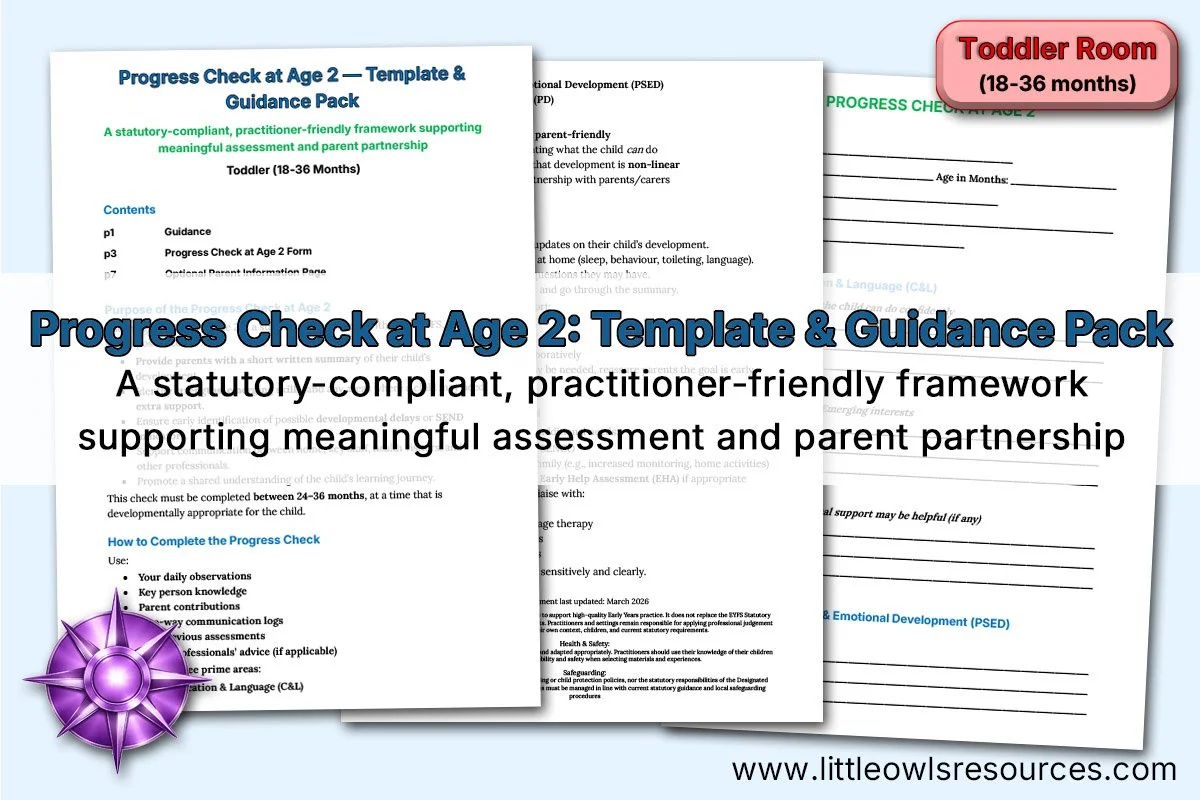
 
In Toddlers | 18-36 Months, -T8 Tags Toddler, Five Sentence Stems for Toddler Practitioners | Toddlers (18–36 Months)

Expressive Arts & Design: Creative Media & Expression Toolkit | Toddlers (18–36 Months)

January 18, 2026 Stuart Murphy

Home › EYFS Curriculum & Pedagogy › Toddler Room Curriculum & Pedagogy › Expressive Arts & Design: Creative Media & Expression Toolkit | Toddlers (18–36 Months)

Expressive Arts & Design — Creative Media & Expression Toolkit

Toddlers (18–36 Months)

Explore • Imagine • Combine • Express • Transform

A practitioner-facing toolkit designed to support high-quality Expressive Arts & Design (EAD) practice for toddlers through open-ended exploration, identity expression and joyful creative inquiry.

Download Document Here:

(This pathway component will be available for download by: March 31st 2026)

 
Download DOCX 📝
Download PDF 📄
 

Document Updated: January 2026


Recommended next read Selection

EYFS
Expressive Arts & Design: Creative Media & Expression Toolkit | Toddlers (18–36 Months)

A practitioner-facing toolkit designed to support high-quality Expressive Arts & Design (EAD) practice for toddlers through open-ended exploration, identity expression and joyful creative inquiry.

Read More →
Understanding the World: Curriculum Experience Pack | Toddlers (18–36 Months)

A practitioner-facing guidance pack designed to support high-quality Understanding the World (UTW) practice for toddlers through real experiences, enabling environments and responsive adult interaction.

Read More →
Literacy Seed Skills Progression Pack | Toddlers (18–36 Months)

Foundations for early reading, writing, sound and meaning through play.

Read More →
Mathematics Seeds Progression Pack | Toddlers (18–36 Months)

Foundations for early mathematical thinking through play, language and everyday experiences.

Read More →
Physical Development Progression Pack | Toddlers (18–36 Months)

Adult-led activity bank supporting movement, coordination, regulation and early independence.

Read More →
PSED Activity Pack | Toddlers (18–36 Months)

Adult-focused activities to strengthen toddlers’ self-regulation, independence and relationships.

Read More →
Communication & Language Activity Pack | Toddlers (18–36 Months)

Progression map + adult-focused activity bank to strengthen toddler language through high-quality interactions.

Read More →
Toddler Activity Cards Pack | Toddlers (18–36 Months)

Professional guidance + printable activity cards for play-based, responsive toddler practice. A practical, practitioner-friendly pack of play invitations and interaction prompts to strengthen language, independence, movement and problem-solving in toddler rooms.

Read More →
Area of Learning Progression Maps & Adult-Led Session Banks | Toddlers (18–36 Months)

A practitioner-facing reference supporting intentional, developmentally appropriate toddler practice across key strands.

Read More →

Additional Documents | Professional Membership Contents (Toddlers 18-36 months)

Navigate our Curriculum & Pedagogy guidance documents here.

Pedagogical identity:
Relationship-led, sensory-rich toddler practice grounded in schemas, play, and responsive adult interaction.

  • 👉 This section prevents over-planning and aligns practice.

    • Toddler Pedagogy Position Statement – How Toddlers Learn (18–36 Months) [Free Orienting Sample]

    • Toddler Curriculum Overview & Rationale[Free Orienting Sample]

    • How Our Toddler Curriculum Works

    • The Role of Schemas in Toddler Practice

    • Curriculum Intent in Toddler Rooms (What It Means — and What It Doesn’t)

    • FAQs: Toddler Planning & Pedagogy

  • 👉 Adult understanding, not child targets.

    • Toddler Curriculum Maps

      • Progression across 6-month bands (18–24 | 24–30 | 30–36 months)

    • Intent → Progression Grids (Practitioner Reference)

    • Area of Learning Progression Maps

  • 👉 Observation is the driver of planning.

    • In-the-Moment Planning Prompt Sheets (Toddlers)

    • Weekly Planning Template

    • Toddler Narrative Observation & Analysis Template

    • Focused Observation Templates

      • Communication & Language

      • PSED

      • Physical Development

      • Maths Seeds

      • Characteristics of Effective Learning

      • Behaviour & Emotional Regulation

      • Schema Observation & Analysis

  • 👉 The environment does the teaching.

    Universal Continuous Provision

    • Continuous Provision Setup Guides | Toddler Room

      • Small World

      • Messy / Wet Play

      • Dry Sensory & Loose Parts

      • Construction

      • Role Play / Home Corner

      • Mark Making

      • Book Area / Reading Nook

      • Music & Sound

      • Outdoor

    • Continuous Provision Maps (18–36 Months)

      • C&L

      • PSED

      • PD

      • Maths Seeds

      • Literacy Seeds

      • UW

      • EAD

    • Continuous Provision Audit & Resourcing List

    • Continuous Provision Rotation Planner Toolkit

    • Toddler Visual Support Labelling Pack | 18–36 Months

  • 👉 Movement, regulation and sensory experience.

    • Outdoor Continuous Provision Pack

      • Outdoor Zone-by-Zone Setup Guide (Gross Motor, Sensory/Nature, Creative/Mark Making, Small World Outside, Water/Mud)

      • Seasonal Adjustments Planner

      • Outdoor Risk–Benefit Assessment Template + examples

      • Nature-Based Learning & Schema Guide

      • Outdoor Mark Making & Literacy Opportunities Sheet

      • Outdoor Maths Seeds Sheet

    • Why We Learn Outdoors in All Weathers (Parent Handout)

  • 👉 Projects are optional contexts, not directives.

    • Year-Long Project / Theme Curriculum Map (52 Weeks)

    • How Projects Work in Toddler Rooms (Guidance)

    • Schema Coverage & Support Map

    Project/Theme Planners:

    • 12 × Main Project Planners (3–4 Weeks)

      • All About Me & My World

      • People Who Help Us

      • Autumn - Senses, Colours & Change

      • Light, Dark & Celebrations

      • Winter-Weather, Warmth & Cosy Spaces

      • Transport & Journeys

      • Growing & Changing

      • Animals & Their Homes

      • Food & Nutrition

      • Minibeasts & Nature Explorers

      • Summer - Sand, Sea & Sun

      • Playful Patterns & Construction

    • 8 × Mini-Project Planners (1 Week)

      • Big Machines & Building

      • Cooking & Food Play

      • Teddy Bears’ Picnic

      • Colours Everywhere

      • Water Play Week

      • My Favourite Things

      • Rhyme Time Week

      • Weather Wonders

  • 👉 Invitations, provocations and shared experiences.

    • Activity Cards Pack

      Supports Child-led learning and responsive provision

    • Area of Learning Progression Maps & Adult Focus Sessions

      (Organised by Age Band: 18–24 months | 24–30 months | 30–36 months)

      Supports intentional teaching, vocabulary development and staff confidence

      • Communication & Language

      • PSED

      • Physical Development

      • Maths Seeds

      • Literacy Seeds

      • Understanding the World – Experience Progression Pack

      • Expressive Arts & Design – Creative Media & Expression Toolkit

  • 👉 Interaction is the curriculum.

    • Toddler Room Poster – Five Sentence Stems For Toddler Practitioners

    • Supporting Emotional Regulation Through Language

    • Language-First Approaches in Toddler Rooms

    • Toddler Behaviour & Regulation: A Quick Guide

  • 👉 Proportionate, meaningful assessment.

    • Progress Check at Age 2

      • Report Template

      • Practitioner Guidance

    • OFSTED Questions We’re Ready For

  • 👉 Early identification, gentle support.

    • SEND Inclusion Strategy Pack (18–36 Months)

      • Practical SEND & inclusion strategies for toddlers aged 18–36 months

      • Six quick-reference strategy sheets covering communication, sensory needs, anxiety and behaviour

      • Aligned with the EYFS Framework and the Assess–Plan–Do–Review approach

      • Inclusive, diagnosis-free guidance ready to use in everyday practice

      • Ideal for observations, provision planning, team use and Ofsted evidence

  • 👉 Strong partnerships, realistic expectations.

    Transition

    • Toddler → Preschool Transition Pack

    Home–Setting Communication

    • Toddler Room Parent Update & Home Learning Sheet

    • Letter Templates Pack

    Parent Information Pages

    • Why Mark Making Matters (Before Writing)

    • Supporting Speech & Language at Home (0–3 Years)

    • How To Build Language Through Play

    • Why We Learn Outdoors in All Weathers

Additional Whole-Setting Guidance | for Professional Members

Explore our whole-setting guidance below, including overarching curriculum and pedagogy documents, early years schemas and EYFS setting policies.

    • Little Owls Resources’ Curriculum Intent Statement

    • EYFS from Birth to 5: Curriculum Coherence & Pedagogical Throughline

    • Whole-Setting Curriculum Map (Birth-5): Curriculum Intent & Progression

    • Pedagogy Guidance Document

    • Speech & Language Development - Setting Statement

    • EYFS Inspection-Facing Summaries

  • Early Years Schemas - Practitioner Toolkit | EYFS Birth-5

    ↪ Schema Cards (definition, behaviours, age-related examples, enabling resources)

    ↪ Schema Observation & Responsive Provision Planning Template

    • EYFS Group Setting Policies Pack

      ↪ x 22 Policy Documents

      ↪ Policy Sign-Off and Confirmation Document

      ↪ EYFS Setting Policy Folder Contents List

    • Childminder Setting Policies Pack

      ↪ x 22 Policy Documents

      ↪ Childminder Assistant or Volunteer Policy Sign-Off and Confirmation Document

      ↪ Childminder Policy Folder Contents List

  • EYFS Glossary

    ↪ Clear, practitioner-friendly explanations of key curriculum and pedagogy terms used throughout our guidance.

Looking for a different age-group pathway?

Select the pathway that best reflects your role or the age group you work with. You do not need to use everything. (Some practitioners may use more than one pathway.)

Featured
🍼 Babies (0–18 months)

Responsive care, observation and development in the earliest years

🚼 Toddlers (18–36 months)

Development, play and progression in the toddler years

🎨 Preschool (3–4 years)

Curriculum, continuous provision and purposeful teaching

🎓 Reception (4–5 years)

Play-based pedagogy, progression and EYFSP readiness

🏡 Childminders (Birth–5)

Mixed-age pedagogy, planning without overload and inspection confidence

Latest EYFS Articles & Practical Guides | From Our Blog

Stay informed, get expert advice, and find inspiration from our collection of articles and useful external resources, tailored specifically for EYFS practitioners. We regularly publish in-depth articles to support you with current best practices, regulatory changes, and fresh ideas.

EYFS & KS1 Articles
Major UK Curriculum Shake-Up Announced: What EYFS & KS1 Practitioners Need to Know

A major overhaul of the national curriculum in England has been announced following the publication of the independent Curriculum and Assessment Review. For those working in the Early Years Foundation Stage (EYFS) and Key Stage 1 (KS1), the changes signal a renewed focus on practical life skills, digital literacy, and enriching learning experiences…

Read More →
New Education Inspection Framework | What EYFS Settings Need to Know

The world of early years education is constantly evolving, and with it, the frameworks that guide and assess our invaluable work. Come November 2025, a significant shift will occur as the new Education Inspection Framework (EIF) comes into effect, bringing with it some crucial changes…

Read More →
Revised 2025 EYFS Statutory Framework for Group & School-Based Providers | What You Need to Know

With the new 2025 EYFS Statutory Framework for group and school-based providers coming into effect on 1st September 2025, it's essential to understand the updates to ensure your practice remains compliant, effective…

Read More →
DfE Press Release | Parents urged to read more to boost children’s life chances

The Education Secretary is calling on parents to lead by example and make reading a daily habit to help reverse the decline in reading for pleasure, to help give kids the best start in life as part of the…

Read More →
DfE Update | Drowning Prevention Week: what children learn about water safety at school

As we head into summer, it’s especially important that children are prepared with these skills. This year, the Royal Life Saving Society UK's Drowning Prevention Week runs from 14 June to 21…

Read More →
DfE Update | Hot weather and heatwaves: guidance for schools and other education settings

There are several ways that schools can make changes to keep children safe in hot weather, especially as children are more at risk of becoming ill with heat-related issues than adults…

Read More →

Are you looking for a specific resource or document for your provision?

Use our 🔍 Search Bar located at the top of every page.

___________________________

Content within the EYFS Curriculum & Pedagogy Membership is provided as professional guidance and support. It reflects current understanding of the EYFS statutory framework, Development Matters and inspection expectations at the time of writing. Practitioners are responsible for applying professional judgement and ensuring practice aligns with current statutory requirements and their specific context. All resources, experiences and environment arrangements must be risk assessed by the setting and used in accordance with individual children’s developmental stages, needs and supervision requirements.

Safeguarding content does not replace a setting’s safeguarding and child protection policy or the statutory role of the Designated Safeguarding Lead (DSL). All concerns must be managed in line with current statutory guidance and local safeguarding procedures.

_____________________________
 
In Toddlers | 18-36 Months, -T7 Tags Toddler, Expressive Arts & Design: Creative Media & Expression Toolkit | Toddlers (18–36 Months)

Understanding the World: Curriculum Experience Pack | Toddlers (18–36 Months)

January 18, 2026 Stuart Murphy

Home › EYFS Curriculum & Pedagogy › Toddler Room Curriculum & Pedagogy › Understanding the World: Curriculum Experience Pack | Toddlers (18–36 Months)

Understanding the World: Curriculum Experience Progression

Toddlers (18–36 Months)

Curiosity • Connection • Noticing Change • Cause & Effect • Living Things • Materials & Properties • Identity & Culture

A practitioner-facing guidance pack designed to support high-quality Understanding the World (UTW) practice for toddlers through real experiences, enabling environments and responsive adult interaction.

Download Document Here:

(This pathway component will be available for download by: March 31st 2026)

 
Download DOCX 📝
Download PDF 📄
 

Document Updated: January 2026


Recommended next read Selection

EYFS
Expressive Arts & Design: Creative Media & Expression Toolkit | Toddlers (18–36 Months)

A practitioner-facing toolkit designed to support high-quality Expressive Arts & Design (EAD) practice for toddlers through open-ended exploration, identity expression and joyful creative inquiry.

Read More →
Understanding the World: Curriculum Experience Pack | Toddlers (18–36 Months)

A practitioner-facing guidance pack designed to support high-quality Understanding the World (UTW) practice for toddlers through real experiences, enabling environments and responsive adult interaction.

Read More →
Literacy Seed Skills Progression Pack | Toddlers (18–36 Months)

Foundations for early reading, writing, sound and meaning through play.

Read More →
Mathematics Seeds Progression Pack | Toddlers (18–36 Months)

Foundations for early mathematical thinking through play, language and everyday experiences.

Read More →
Physical Development Progression Pack | Toddlers (18–36 Months)

Adult-led activity bank supporting movement, coordination, regulation and early independence.

Read More →
PSED Activity Pack | Toddlers (18–36 Months)

Adult-focused activities to strengthen toddlers’ self-regulation, independence and relationships.

Read More →
Communication & Language Activity Pack | Toddlers (18–36 Months)

Progression map + adult-focused activity bank to strengthen toddler language through high-quality interactions.

Read More →
Toddler Activity Cards Pack | Toddlers (18–36 Months)

Professional guidance + printable activity cards for play-based, responsive toddler practice. A practical, practitioner-friendly pack of play invitations and interaction prompts to strengthen language, independence, movement and problem-solving in toddler rooms.

Read More →
Area of Learning Progression Maps & Adult-Led Session Banks | Toddlers (18–36 Months)

A practitioner-facing reference supporting intentional, developmentally appropriate toddler practice across key strands.

Read More →

Additional Documents | Professional Membership Contents (Toddlers 18-36 months)

Navigate our Curriculum & Pedagogy guidance documents here.

Pedagogical identity:
Relationship-led, sensory-rich toddler practice grounded in schemas, play, and responsive adult interaction.

  • 👉 This section prevents over-planning and aligns practice.

    • Toddler Pedagogy Position Statement – How Toddlers Learn (18–36 Months) [Free Orienting Sample]

    • Toddler Curriculum Overview & Rationale[Free Orienting Sample]

    • How Our Toddler Curriculum Works

    • The Role of Schemas in Toddler Practice

    • Curriculum Intent in Toddler Rooms (What It Means — and What It Doesn’t)

    • FAQs: Toddler Planning & Pedagogy

  • 👉 Adult understanding, not child targets.

    • Toddler Curriculum Maps

      • Progression across 6-month bands (18–24 | 24–30 | 30–36 months)

    • Intent → Progression Grids (Practitioner Reference)

    • Area of Learning Progression Maps

  • 👉 Observation is the driver of planning.

    • In-the-Moment Planning Prompt Sheets (Toddlers)

    • Weekly Planning Template

    • Toddler Narrative Observation & Analysis Template

    • Focused Observation Templates

      • Communication & Language

      • PSED

      • Physical Development

      • Maths Seeds

      • Characteristics of Effective Learning

      • Behaviour & Emotional Regulation

      • Schema Observation & Analysis

  • 👉 The environment does the teaching.

    Universal Continuous Provision

    • Continuous Provision Setup Guides | Toddler Room

      • Small World

      • Messy / Wet Play

      • Dry Sensory & Loose Parts

      • Construction

      • Role Play / Home Corner

      • Mark Making

      • Book Area / Reading Nook

      • Music & Sound

      • Outdoor

    • Continuous Provision Maps (18–36 Months)

      • C&L

      • PSED

      • PD

      • Maths Seeds

      • Literacy Seeds

      • UW

      • EAD

    • Continuous Provision Audit & Resourcing List

    • Continuous Provision Rotation Planner Toolkit

    • Toddler Visual Support Labelling Pack | 18–36 Months

  • 👉 Movement, regulation and sensory experience.

    • Outdoor Continuous Provision Pack

      • Outdoor Zone-by-Zone Setup Guide (Gross Motor, Sensory/Nature, Creative/Mark Making, Small World Outside, Water/Mud)

      • Seasonal Adjustments Planner

      • Outdoor Risk–Benefit Assessment Template + examples

      • Nature-Based Learning & Schema Guide

      • Outdoor Mark Making & Literacy Opportunities Sheet

      • Outdoor Maths Seeds Sheet

    • Why We Learn Outdoors in All Weathers (Parent Handout)

  • 👉 Projects are optional contexts, not directives.

    • Year-Long Project / Theme Curriculum Map (52 Weeks)

    • How Projects Work in Toddler Rooms (Guidance)

    • Schema Coverage & Support Map

    Project/Theme Planners:

    • 12 × Main Project Planners (3–4 Weeks)

      • All About Me & My World

      • People Who Help Us

      • Autumn - Senses, Colours & Change

      • Light, Dark & Celebrations

      • Winter-Weather, Warmth & Cosy Spaces

      • Transport & Journeys

      • Growing & Changing

      • Animals & Their Homes

      • Food & Nutrition

      • Minibeasts & Nature Explorers

      • Summer - Sand, Sea & Sun

      • Playful Patterns & Construction

    • 8 × Mini-Project Planners (1 Week)

      • Big Machines & Building

      • Cooking & Food Play

      • Teddy Bears’ Picnic

      • Colours Everywhere

      • Water Play Week

      • My Favourite Things

      • Rhyme Time Week

      • Weather Wonders

  • 👉 Invitations, provocations and shared experiences.

    • Activity Cards Pack

      Supports Child-led learning and responsive provision

    • Area of Learning Progression Maps & Adult Focus Sessions

      (Organised by Age Band: 18–24 months | 24–30 months | 30–36 months)

      Supports intentional teaching, vocabulary development and staff confidence

      • Communication & Language

      • PSED

      • Physical Development

      • Maths Seeds

      • Literacy Seeds

      • Understanding the World – Experience Progression Pack

      • Expressive Arts & Design – Creative Media & Expression Toolkit

  • 👉 Interaction is the curriculum.

    • Toddler Room Poster – Five Sentence Stems For Toddler Practitioners

    • Supporting Emotional Regulation Through Language

    • Language-First Approaches in Toddler Rooms

    • Toddler Behaviour & Regulation: A Quick Guide

  • 👉 Proportionate, meaningful assessment.

    • Progress Check at Age 2

      • Report Template

      • Practitioner Guidance

    • OFSTED Questions We’re Ready For

  • 👉 Early identification, gentle support.

    • SEND Inclusion Strategy Pack (18–36 Months)

      • Practical SEND & inclusion strategies for toddlers aged 18–36 months

      • Six quick-reference strategy sheets covering communication, sensory needs, anxiety and behaviour

      • Aligned with the EYFS Framework and the Assess–Plan–Do–Review approach

      • Inclusive, diagnosis-free guidance ready to use in everyday practice

      • Ideal for observations, provision planning, team use and Ofsted evidence

  • 👉 Strong partnerships, realistic expectations.

    Transition

    • Toddler → Preschool Transition Pack

    Home–Setting Communication

    • Toddler Room Parent Update & Home Learning Sheet

    • Letter Templates Pack

    Parent Information Pages

    • Why Mark Making Matters (Before Writing)

    • Supporting Speech & Language at Home (0–3 Years)

    • How To Build Language Through Play

    • Why We Learn Outdoors in All Weathers

Additional Whole-Setting Guidance | for Professional Members

Explore our whole-setting guidance below, including overarching curriculum and pedagogy documents, early years schemas and EYFS setting policies.

    • Little Owls Resources’ Curriculum Intent Statement

    • EYFS from Birth to 5: Curriculum Coherence & Pedagogical Throughline

    • Whole-Setting Curriculum Map (Birth-5): Curriculum Intent & Progression

    • Pedagogy Guidance Document

    • Speech & Language Development - Setting Statement

    • EYFS Inspection-Facing Summaries

  • Early Years Schemas - Practitioner Toolkit | EYFS Birth-5

    ↪ Schema Cards (definition, behaviours, age-related examples, enabling resources)

    ↪ Schema Observation & Responsive Provision Planning Template

    • EYFS Group Setting Policies Pack

      ↪ x 22 Policy Documents

      ↪ Policy Sign-Off and Confirmation Document

      ↪ EYFS Setting Policy Folder Contents List

    • Childminder Setting Policies Pack

      ↪ x 22 Policy Documents

      ↪ Childminder Assistant or Volunteer Policy Sign-Off and Confirmation Document

      ↪ Childminder Policy Folder Contents List

  • EYFS Glossary

    ↪ Clear, practitioner-friendly explanations of key curriculum and pedagogy terms used throughout our guidance.

Looking for a different age-group pathway?

Select the pathway that best reflects your role or the age group you work with. You do not need to use everything. (Some practitioners may use more than one pathway.)

Featured
🍼 Babies (0–18 months)

Responsive care, observation and development in the earliest years

🚼 Toddlers (18–36 months)

Development, play and progression in the toddler years

🎨 Preschool (3–4 years)

Curriculum, continuous provision and purposeful teaching

🎓 Reception (4–5 years)

Play-based pedagogy, progression and EYFSP readiness

🏡 Childminders (Birth–5)

Mixed-age pedagogy, planning without overload and inspection confidence

Latest EYFS Articles & Practical Guides | From Our Blog

Stay informed, get expert advice, and find inspiration from our collection of articles and useful external resources, tailored specifically for EYFS practitioners. We regularly publish in-depth articles to support you with current best practices, regulatory changes, and fresh ideas.

EYFS & KS1 Articles
Major UK Curriculum Shake-Up Announced: What EYFS & KS1 Practitioners Need to Know

A major overhaul of the national curriculum in England has been announced following the publication of the independent Curriculum and Assessment Review. For those working in the Early Years Foundation Stage (EYFS) and Key Stage 1 (KS1), the changes signal a renewed focus on practical life skills, digital literacy, and enriching learning experiences…

Read More →
New Education Inspection Framework | What EYFS Settings Need to Know

The world of early years education is constantly evolving, and with it, the frameworks that guide and assess our invaluable work. Come November 2025, a significant shift will occur as the new Education Inspection Framework (EIF) comes into effect, bringing with it some crucial changes…

Read More →
Revised 2025 EYFS Statutory Framework for Group & School-Based Providers | What You Need to Know

With the new 2025 EYFS Statutory Framework for group and school-based providers coming into effect on 1st September 2025, it's essential to understand the updates to ensure your practice remains compliant, effective…

Read More →
DfE Press Release | Parents urged to read more to boost children’s life chances

The Education Secretary is calling on parents to lead by example and make reading a daily habit to help reverse the decline in reading for pleasure, to help give kids the best start in life as part of the…

Read More →
DfE Update | Drowning Prevention Week: what children learn about water safety at school

As we head into summer, it’s especially important that children are prepared with these skills. This year, the Royal Life Saving Society UK's Drowning Prevention Week runs from 14 June to 21…

Read More →
DfE Update | Hot weather and heatwaves: guidance for schools and other education settings

There are several ways that schools can make changes to keep children safe in hot weather, especially as children are more at risk of becoming ill with heat-related issues than adults…

Read More →

Are you looking for a specific resource or document for your provision?

Use our 🔍 Search Bar located at the top of every page.

___________________________

Content within the EYFS Curriculum & Pedagogy Membership is provided as professional guidance and support. It reflects current understanding of the EYFS statutory framework, Development Matters and inspection expectations at the time of writing. Practitioners are responsible for applying professional judgement and ensuring practice aligns with current statutory requirements and their specific context. All resources, experiences and environment arrangements must be risk assessed by the setting and used in accordance with individual children’s developmental stages, needs and supervision requirements.

Safeguarding content does not replace a setting’s safeguarding and child protection policy or the statutory role of the Designated Safeguarding Lead (DSL). All concerns must be managed in line with current statutory guidance and local safeguarding procedures.

_____________________________
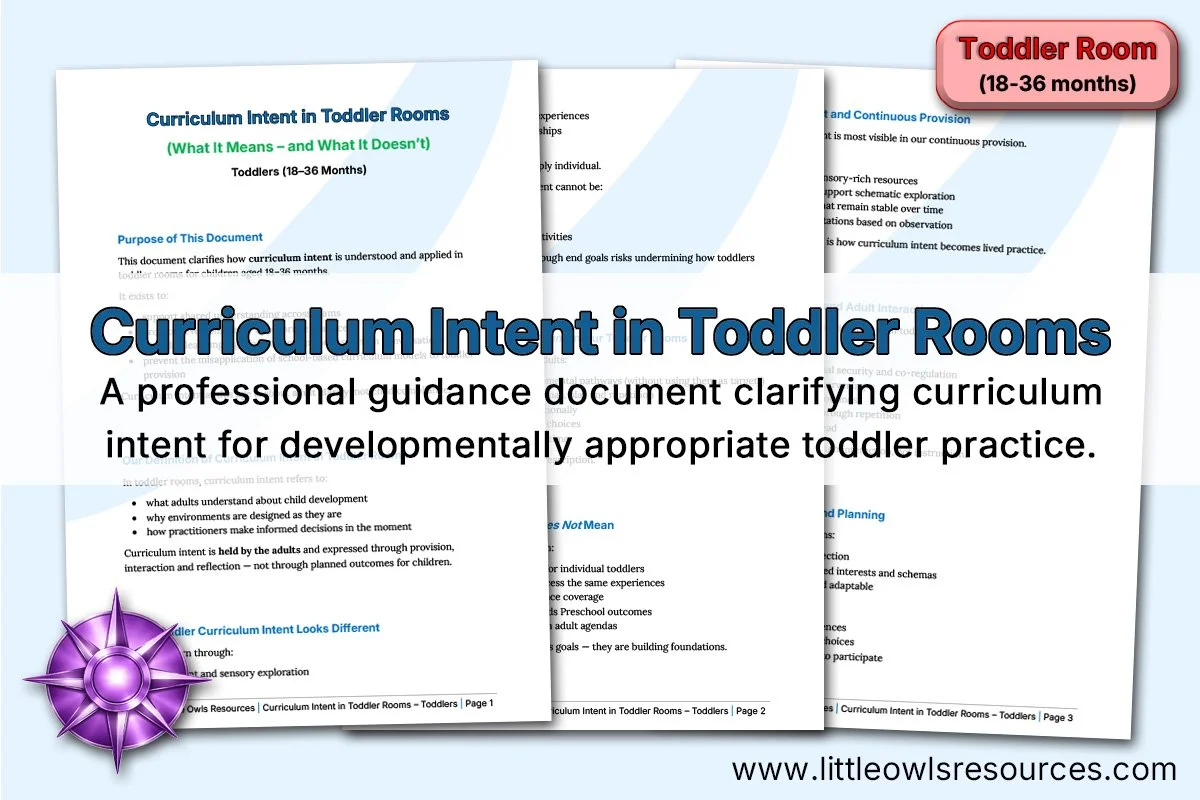
 
In Toddlers | 18-36 Months, -T7 Tags Toddler, Understanding the World: Curriculum Experience Pack | Toddlers (18–36 Months)

Literacy Seed Skills Progression Pack | Toddlers (18–36 Months)

January 18, 2026 Stuart Murphy

Home › EYFS Curriculum & Pedagogy › Toddler Room Curriculum & Pedagogy › Literacy Seed Skills Progression Pack | Toddlers (18–36 Months)

Literacy Seed Skills Progression Pack

Toddlers (18–36 Months)

Foundations for early reading, writing, sound and meaning through play

A practitioner-facing literacy resource designed to support the earliest foundations of reading, writing and communication — before formal phonics, letter instruction or written outcomes.

Download Document Here:

(This pathway component will be available for download by: March 31st 2026)

 
Download DOCX 📝
Download PDF 📄
 

Document Updated: January 2026


Recommended next read Selection

EYFS
Expressive Arts & Design: Creative Media & Expression Toolkit | Toddlers (18–36 Months)

A practitioner-facing toolkit designed to support high-quality Expressive Arts & Design (EAD) practice for toddlers through open-ended exploration, identity expression and joyful creative inquiry.

Read More →
Understanding the World: Curriculum Experience Pack | Toddlers (18–36 Months)

A practitioner-facing guidance pack designed to support high-quality Understanding the World (UTW) practice for toddlers through real experiences, enabling environments and responsive adult interaction.

Read More →
Literacy Seed Skills Progression Pack | Toddlers (18–36 Months)

Foundations for early reading, writing, sound and meaning through play.

Read More →
Mathematics Seeds Progression Pack | Toddlers (18–36 Months)

Foundations for early mathematical thinking through play, language and everyday experiences.

Read More →
Physical Development Progression Pack | Toddlers (18–36 Months)

Adult-led activity bank supporting movement, coordination, regulation and early independence.

Read More →
PSED Activity Pack | Toddlers (18–36 Months)

Adult-focused activities to strengthen toddlers’ self-regulation, independence and relationships.

Read More →
Communication & Language Activity Pack | Toddlers (18–36 Months)

Progression map + adult-focused activity bank to strengthen toddler language through high-quality interactions.

Read More →
Toddler Activity Cards Pack | Toddlers (18–36 Months)

Professional guidance + printable activity cards for play-based, responsive toddler practice. A practical, practitioner-friendly pack of play invitations and interaction prompts to strengthen language, independence, movement and problem-solving in toddler rooms.

Read More →
Area of Learning Progression Maps & Adult-Led Session Banks | Toddlers (18–36 Months)

A practitioner-facing reference supporting intentional, developmentally appropriate toddler practice across key strands.

Read More →

Additional Documents | Professional Membership Contents (Toddlers 18-36 months)

Navigate our Curriculum & Pedagogy guidance documents here.

Pedagogical identity:
Relationship-led, sensory-rich toddler practice grounded in schemas, play, and responsive adult interaction.

  • 👉 This section prevents over-planning and aligns practice.

    • Toddler Pedagogy Position Statement – How Toddlers Learn (18–36 Months) [Free Orienting Sample]

    • Toddler Curriculum Overview & Rationale[Free Orienting Sample]

    • How Our Toddler Curriculum Works

    • The Role of Schemas in Toddler Practice

    • Curriculum Intent in Toddler Rooms (What It Means — and What It Doesn’t)

    • FAQs: Toddler Planning & Pedagogy

  • 👉 Adult understanding, not child targets.

    • Toddler Curriculum Maps

      • Progression across 6-month bands (18–24 | 24–30 | 30–36 months)

    • Intent → Progression Grids (Practitioner Reference)

    • Area of Learning Progression Maps

  • 👉 Observation is the driver of planning.

    • In-the-Moment Planning Prompt Sheets (Toddlers)

    • Weekly Planning Template

    • Toddler Narrative Observation & Analysis Template

    • Focused Observation Templates

      • Communication & Language

      • PSED

      • Physical Development

      • Maths Seeds

      • Characteristics of Effective Learning

      • Behaviour & Emotional Regulation

      • Schema Observation & Analysis

  • 👉 The environment does the teaching.

    Universal Continuous Provision

    • Continuous Provision Setup Guides | Toddler Room

      • Small World

      • Messy / Wet Play

      • Dry Sensory & Loose Parts

      • Construction

      • Role Play / Home Corner

      • Mark Making

      • Book Area / Reading Nook

      • Music & Sound

      • Outdoor

    • Continuous Provision Maps (18–36 Months)

      • C&L

      • PSED

      • PD

      • Maths Seeds

      • Literacy Seeds

      • UW

      • EAD

    • Continuous Provision Audit & Resourcing List

    • Continuous Provision Rotation Planner Toolkit

    • Toddler Visual Support Labelling Pack | 18–36 Months

  • 👉 Movement, regulation and sensory experience.

    • Outdoor Continuous Provision Pack

      • Outdoor Zone-by-Zone Setup Guide (Gross Motor, Sensory/Nature, Creative/Mark Making, Small World Outside, Water/Mud)

      • Seasonal Adjustments Planner

      • Outdoor Risk–Benefit Assessment Template + examples

      • Nature-Based Learning & Schema Guide

      • Outdoor Mark Making & Literacy Opportunities Sheet

      • Outdoor Maths Seeds Sheet

    • Why We Learn Outdoors in All Weathers (Parent Handout)

  • 👉 Projects are optional contexts, not directives.

    • Year-Long Project / Theme Curriculum Map (52 Weeks)

    • How Projects Work in Toddler Rooms (Guidance)

    • Schema Coverage & Support Map

    Project/Theme Planners:

    • 12 × Main Project Planners (3–4 Weeks)

      • All About Me & My World

      • People Who Help Us

      • Autumn - Senses, Colours & Change

      • Light, Dark & Celebrations

      • Winter-Weather, Warmth & Cosy Spaces

      • Transport & Journeys

      • Growing & Changing

      • Animals & Their Homes

      • Food & Nutrition

      • Minibeasts & Nature Explorers

      • Summer - Sand, Sea & Sun

      • Playful Patterns & Construction

    • 8 × Mini-Project Planners (1 Week)

      • Big Machines & Building

      • Cooking & Food Play

      • Teddy Bears’ Picnic

      • Colours Everywhere

      • Water Play Week

      • My Favourite Things

      • Rhyme Time Week

      • Weather Wonders

  • 👉 Invitations, provocations and shared experiences.

    • Activity Cards Pack

      Supports Child-led learning and responsive provision

    • Area of Learning Progression Maps & Adult Focus Sessions

      (Organised by Age Band: 18–24 months | 24–30 months | 30–36 months)

      Supports intentional teaching, vocabulary development and staff confidence

      • Communication & Language

      • PSED

      • Physical Development

      • Maths Seeds

      • Literacy Seeds

      • Understanding the World – Experience Progression Pack

      • Expressive Arts & Design – Creative Media & Expression Toolkit

  • 👉 Interaction is the curriculum.

    • Toddler Room Poster – Five Sentence Stems For Toddler Practitioners

    • Supporting Emotional Regulation Through Language

    • Language-First Approaches in Toddler Rooms

    • Toddler Behaviour & Regulation: A Quick Guide

  • 👉 Proportionate, meaningful assessment.

    • Progress Check at Age 2

      • Report Template

      • Practitioner Guidance

    • OFSTED Questions We’re Ready For

  • 👉 Early identification, gentle support.

    • SEND Inclusion Strategy Pack (18–36 Months)

      • Practical SEND & inclusion strategies for toddlers aged 18–36 months

      • Six quick-reference strategy sheets covering communication, sensory needs, anxiety and behaviour

      • Aligned with the EYFS Framework and the Assess–Plan–Do–Review approach

      • Inclusive, diagnosis-free guidance ready to use in everyday practice

      • Ideal for observations, provision planning, team use and Ofsted evidence

  • 👉 Strong partnerships, realistic expectations.

    Transition

    • Toddler → Preschool Transition Pack

    Home–Setting Communication

    • Toddler Room Parent Update & Home Learning Sheet

    • Letter Templates Pack

    Parent Information Pages

    • Why Mark Making Matters (Before Writing)

    • Supporting Speech & Language at Home (0–3 Years)

    • How To Build Language Through Play

    • Why We Learn Outdoors in All Weathers

Additional Whole-Setting Guidance | for Professional Members

Explore our whole-setting guidance below, including overarching curriculum and pedagogy documents, early years schemas and EYFS setting policies.

    • Little Owls Resources’ Curriculum Intent Statement

    • EYFS from Birth to 5: Curriculum Coherence & Pedagogical Throughline

    • Whole-Setting Curriculum Map (Birth-5): Curriculum Intent & Progression

    • Pedagogy Guidance Document

    • Speech & Language Development - Setting Statement

    • EYFS Inspection-Facing Summaries

  • Early Years Schemas - Practitioner Toolkit | EYFS Birth-5

    ↪ Schema Cards (definition, behaviours, age-related examples, enabling resources)

    ↪ Schema Observation & Responsive Provision Planning Template

    • EYFS Group Setting Policies Pack

      ↪ x 22 Policy Documents

      ↪ Policy Sign-Off and Confirmation Document

      ↪ EYFS Setting Policy Folder Contents List

    • Childminder Setting Policies Pack

      ↪ x 22 Policy Documents

      ↪ Childminder Assistant or Volunteer Policy Sign-Off and Confirmation Document

      ↪ Childminder Policy Folder Contents List

  • EYFS Glossary

    ↪ Clear, practitioner-friendly explanations of key curriculum and pedagogy terms used throughout our guidance.

Looking for a different age-group pathway?

Select the pathway that best reflects your role or the age group you work with. You do not need to use everything. (Some practitioners may use more than one pathway.)

Featured
🍼 Babies (0–18 months)

Responsive care, observation and development in the earliest years

🚼 Toddlers (18–36 months)

Development, play and progression in the toddler years

🎨 Preschool (3–4 years)

Curriculum, continuous provision and purposeful teaching

🎓 Reception (4–5 years)

Play-based pedagogy, progression and EYFSP readiness

🏡 Childminders (Birth–5)

Mixed-age pedagogy, planning without overload and inspection confidence

Latest EYFS Articles & Practical Guides | From Our Blog

Stay informed, get expert advice, and find inspiration from our collection of articles and useful external resources, tailored specifically for EYFS practitioners. We regularly publish in-depth articles to support you with current best practices, regulatory changes, and fresh ideas.

EYFS & KS1 Articles
Major UK Curriculum Shake-Up Announced: What EYFS & KS1 Practitioners Need to Know

A major overhaul of the national curriculum in England has been announced following the publication of the independent Curriculum and Assessment Review. For those working in the Early Years Foundation Stage (EYFS) and Key Stage 1 (KS1), the changes signal a renewed focus on practical life skills, digital literacy, and enriching learning experiences…

Read More →
New Education Inspection Framework | What EYFS Settings Need to Know

The world of early years education is constantly evolving, and with it, the frameworks that guide and assess our invaluable work. Come November 2025, a significant shift will occur as the new Education Inspection Framework (EIF) comes into effect, bringing with it some crucial changes…

Read More →
Revised 2025 EYFS Statutory Framework for Group & School-Based Providers | What You Need to Know

With the new 2025 EYFS Statutory Framework for group and school-based providers coming into effect on 1st September 2025, it's essential to understand the updates to ensure your practice remains compliant, effective…

Read More →
DfE Press Release | Parents urged to read more to boost children’s life chances

The Education Secretary is calling on parents to lead by example and make reading a daily habit to help reverse the decline in reading for pleasure, to help give kids the best start in life as part of the…

Read More →
DfE Update | Drowning Prevention Week: what children learn about water safety at school

As we head into summer, it’s especially important that children are prepared with these skills. This year, the Royal Life Saving Society UK's Drowning Prevention Week runs from 14 June to 21…

Read More →
DfE Update | Hot weather and heatwaves: guidance for schools and other education settings

There are several ways that schools can make changes to keep children safe in hot weather, especially as children are more at risk of becoming ill with heat-related issues than adults…

Read More →

Are you looking for a specific resource or document for your provision?

Use our 🔍 Search Bar located at the top of every page.

___________________________

Content within the EYFS Curriculum & Pedagogy Membership is provided as professional guidance and support. It reflects current understanding of the EYFS statutory framework, Development Matters and inspection expectations at the time of writing. Practitioners are responsible for applying professional judgement and ensuring practice aligns with current statutory requirements and their specific context. All resources, experiences and environment arrangements must be risk assessed by the setting and used in accordance with individual children’s developmental stages, needs and supervision requirements.

Safeguarding content does not replace a setting’s safeguarding and child protection policy or the statutory role of the Designated Safeguarding Lead (DSL). All concerns must be managed in line with current statutory guidance and local safeguarding procedures.

_____________________________

 
In Toddlers | 18-36 Months, -T7 Tags Toddler, Literacy Seed Skills Progression Pack | Toddlers (18–36 Months)

Mathematics Seeds Progression Pack | Toddlers (18–36 Months)

January 18, 2026 Stuart Murphy

Home › EYFS Curriculum & Pedagogy › Toddler Room Curriculum & Pedagogy › Mathematics Seeds Progression Pack | Toddlers (18–36 Months)

Mathematics Seeds Progression Pack

Toddlers (18–36 Months)

Foundations for early mathematical thinking through play, language and everyday experiences

A practitioner-facing mathematics resource designed to support the development of early number sense, pattern, comparison, spatial thinking and measure through hands-on exploration and responsive adult interaction.

Download Document Here:

(This pathway component will be available for download by: March 31st 2026)

 
Download DOCX 📝
Download PDF 📄
 

Document Updated: January 2026


Recommended next read Selection

EYFS
Expressive Arts & Design: Creative Media & Expression Toolkit | Toddlers (18–36 Months)

A practitioner-facing toolkit designed to support high-quality Expressive Arts & Design (EAD) practice for toddlers through open-ended exploration, identity expression and joyful creative inquiry.

Read More →
Understanding the World: Curriculum Experience Pack | Toddlers (18–36 Months)

A practitioner-facing guidance pack designed to support high-quality Understanding the World (UTW) practice for toddlers through real experiences, enabling environments and responsive adult interaction.

Read More →
Literacy Seed Skills Progression Pack | Toddlers (18–36 Months)

Foundations for early reading, writing, sound and meaning through play.

Read More →
Mathematics Seeds Progression Pack | Toddlers (18–36 Months)

Foundations for early mathematical thinking through play, language and everyday experiences.

Read More →
Physical Development Progression Pack | Toddlers (18–36 Months)

Adult-led activity bank supporting movement, coordination, regulation and early independence.

Read More →
PSED Activity Pack | Toddlers (18–36 Months)

Adult-focused activities to strengthen toddlers’ self-regulation, independence and relationships.

Read More →
Communication & Language Activity Pack | Toddlers (18–36 Months)

Progression map + adult-focused activity bank to strengthen toddler language through high-quality interactions.

Read More →
Toddler Activity Cards Pack | Toddlers (18–36 Months)

Professional guidance + printable activity cards for play-based, responsive toddler practice. A practical, practitioner-friendly pack of play invitations and interaction prompts to strengthen language, independence, movement and problem-solving in toddler rooms.

Read More →
Area of Learning Progression Maps & Adult-Led Session Banks | Toddlers (18–36 Months)

A practitioner-facing reference supporting intentional, developmentally appropriate toddler practice across key strands.

Read More →

Additional Documents | Professional Membership Contents (Toddlers 18-36 months)

Navigate our Curriculum & Pedagogy guidance documents here.

Pedagogical identity:
Relationship-led, sensory-rich toddler practice grounded in schemas, play, and responsive adult interaction.

  • 👉 This section prevents over-planning and aligns practice.

    • Toddler Pedagogy Position Statement – How Toddlers Learn (18–36 Months) [Free Orienting Sample]

    • Toddler Curriculum Overview & Rationale[Free Orienting Sample]

    • How Our Toddler Curriculum Works

    • The Role of Schemas in Toddler Practice

    • Curriculum Intent in Toddler Rooms (What It Means — and What It Doesn’t)

    • FAQs: Toddler Planning & Pedagogy

  • 👉 Adult understanding, not child targets.

    • Toddler Curriculum Maps

      • Progression across 6-month bands (18–24 | 24–30 | 30–36 months)

    • Intent → Progression Grids (Practitioner Reference)

    • Area of Learning Progression Maps

  • 👉 Observation is the driver of planning.

    • In-the-Moment Planning Prompt Sheets (Toddlers)

    • Weekly Planning Template

    • Toddler Narrative Observation & Analysis Template

    • Focused Observation Templates

      • Communication & Language

      • PSED

      • Physical Development

      • Maths Seeds

      • Characteristics of Effective Learning

      • Behaviour & Emotional Regulation

      • Schema Observation & Analysis

  • 👉 The environment does the teaching.

    Universal Continuous Provision

    • Continuous Provision Setup Guides | Toddler Room

      • Small World

      • Messy / Wet Play

      • Dry Sensory & Loose Parts

      • Construction

      • Role Play / Home Corner

      • Mark Making

      • Book Area / Reading Nook

      • Music & Sound

      • Outdoor

    • Continuous Provision Maps (18–36 Months)

      • C&L

      • PSED

      • PD

      • Maths Seeds

      • Literacy Seeds

      • UW

      • EAD

    • Continuous Provision Audit & Resourcing List

    • Continuous Provision Rotation Planner Toolkit

    • Toddler Visual Support Labelling Pack | 18–36 Months

  • 👉 Movement, regulation and sensory experience.

    • Outdoor Continuous Provision Pack

      • Outdoor Zone-by-Zone Setup Guide (Gross Motor, Sensory/Nature, Creative/Mark Making, Small World Outside, Water/Mud)

      • Seasonal Adjustments Planner

      • Outdoor Risk–Benefit Assessment Template + examples

      • Nature-Based Learning & Schema Guide

      • Outdoor Mark Making & Literacy Opportunities Sheet

      • Outdoor Maths Seeds Sheet

    • Why We Learn Outdoors in All Weathers (Parent Handout)

  • 👉 Projects are optional contexts, not directives.

    • Year-Long Project / Theme Curriculum Map (52 Weeks)

    • How Projects Work in Toddler Rooms (Guidance)

    • Schema Coverage & Support Map

    Project/Theme Planners:

    • 12 × Main Project Planners (3–4 Weeks)

      • All About Me & My World

      • People Who Help Us

      • Autumn - Senses, Colours & Change

      • Light, Dark & Celebrations

      • Winter-Weather, Warmth & Cosy Spaces

      • Transport & Journeys

      • Growing & Changing

      • Animals & Their Homes

      • Food & Nutrition

      • Minibeasts & Nature Explorers

      • Summer - Sand, Sea & Sun

      • Playful Patterns & Construction

    • 8 × Mini-Project Planners (1 Week)

      • Big Machines & Building

      • Cooking & Food Play

      • Teddy Bears’ Picnic

      • Colours Everywhere

      • Water Play Week

      • My Favourite Things

      • Rhyme Time Week

      • Weather Wonders

  • 👉 Invitations, provocations and shared experiences.

    • Activity Cards Pack

      Supports Child-led learning and responsive provision

    • Area of Learning Progression Maps & Adult Focus Sessions

      (Organised by Age Band: 18–24 months | 24–30 months | 30–36 months)

      Supports intentional teaching, vocabulary development and staff confidence

      • Communication & Language

      • PSED

      • Physical Development

      • Maths Seeds

      • Literacy Seeds

      • Understanding the World – Experience Progression Pack

      • Expressive Arts & Design – Creative Media & Expression Toolkit

  • 👉 Interaction is the curriculum.

    • Toddler Room Poster – Five Sentence Stems For Toddler Practitioners

    • Supporting Emotional Regulation Through Language

    • Language-First Approaches in Toddler Rooms

    • Toddler Behaviour & Regulation: A Quick Guide

  • 👉 Proportionate, meaningful assessment.

    • Progress Check at Age 2

      • Report Template

      • Practitioner Guidance

    • OFSTED Questions We’re Ready For

  • 👉 Early identification, gentle support.

    • SEND Inclusion Strategy Pack (18–36 Months)

      • Practical SEND & inclusion strategies for toddlers aged 18–36 months

      • Six quick-reference strategy sheets covering communication, sensory needs, anxiety and behaviour

      • Aligned with the EYFS Framework and the Assess–Plan–Do–Review approach

      • Inclusive, diagnosis-free guidance ready to use in everyday practice

      • Ideal for observations, provision planning, team use and Ofsted evidence

  • 👉 Strong partnerships, realistic expectations.

    Transition

    • Toddler → Preschool Transition Pack

    Home–Setting Communication

    • Toddler Room Parent Update & Home Learning Sheet

    • Letter Templates Pack

    Parent Information Pages

    • Why Mark Making Matters (Before Writing)

    • Supporting Speech & Language at Home (0–3 Years)

    • How To Build Language Through Play

    • Why We Learn Outdoors in All Weathers

Additional Whole-Setting Guidance | for Professional Members

Explore our whole-setting guidance below, including overarching curriculum and pedagogy documents, early years schemas and EYFS setting policies.

    • Little Owls Resources’ Curriculum Intent Statement

    • EYFS from Birth to 5: Curriculum Coherence & Pedagogical Throughline

    • Whole-Setting Curriculum Map (Birth-5): Curriculum Intent & Progression

    • Pedagogy Guidance Document

    • Speech & Language Development - Setting Statement

    • EYFS Inspection-Facing Summaries

  • Early Years Schemas - Practitioner Toolkit | EYFS Birth-5

    ↪ Schema Cards (definition, behaviours, age-related examples, enabling resources)

    ↪ Schema Observation & Responsive Provision Planning Template

    • EYFS Group Setting Policies Pack

      ↪ x 22 Policy Documents

      ↪ Policy Sign-Off and Confirmation Document

      ↪ EYFS Setting Policy Folder Contents List

    • Childminder Setting Policies Pack

      ↪ x 22 Policy Documents

      ↪ Childminder Assistant or Volunteer Policy Sign-Off and Confirmation Document

      ↪ Childminder Policy Folder Contents List

  • EYFS Glossary

    ↪ Clear, practitioner-friendly explanations of key curriculum and pedagogy terms used throughout our guidance.

Looking for a different age-group pathway?

Select the pathway that best reflects your role or the age group you work with. You do not need to use everything. (Some practitioners may use more than one pathway.)

Featured
🍼 Babies (0–18 months)

Responsive care, observation and development in the earliest years

🚼 Toddlers (18–36 months)

Development, play and progression in the toddler years

🎨 Preschool (3–4 years)

Curriculum, continuous provision and purposeful teaching

🎓 Reception (4–5 years)

Play-based pedagogy, progression and EYFSP readiness

🏡 Childminders (Birth–5)

Mixed-age pedagogy, planning without overload and inspection confidence

Latest EYFS Articles & Practical Guides | From Our Blog

Stay informed, get expert advice, and find inspiration from our collection of articles and useful external resources, tailored specifically for EYFS practitioners. We regularly publish in-depth articles to support you with current best practices, regulatory changes, and fresh ideas.

EYFS & KS1 Articles
Major UK Curriculum Shake-Up Announced: What EYFS & KS1 Practitioners Need to Know

A major overhaul of the national curriculum in England has been announced following the publication of the independent Curriculum and Assessment Review. For those working in the Early Years Foundation Stage (EYFS) and Key Stage 1 (KS1), the changes signal a renewed focus on practical life skills, digital literacy, and enriching learning experiences…

Read More →
New Education Inspection Framework | What EYFS Settings Need to Know

The world of early years education is constantly evolving, and with it, the frameworks that guide and assess our invaluable work. Come November 2025, a significant shift will occur as the new Education Inspection Framework (EIF) comes into effect, bringing with it some crucial changes…

Read More →
Revised 2025 EYFS Statutory Framework for Group & School-Based Providers | What You Need to Know

With the new 2025 EYFS Statutory Framework for group and school-based providers coming into effect on 1st September 2025, it's essential to understand the updates to ensure your practice remains compliant, effective…

Read More →
DfE Press Release | Parents urged to read more to boost children’s life chances

The Education Secretary is calling on parents to lead by example and make reading a daily habit to help reverse the decline in reading for pleasure, to help give kids the best start in life as part of the…

Read More →
DfE Update | Drowning Prevention Week: what children learn about water safety at school

As we head into summer, it’s especially important that children are prepared with these skills. This year, the Royal Life Saving Society UK's Drowning Prevention Week runs from 14 June to 21…

Read More →
DfE Update | Hot weather and heatwaves: guidance for schools and other education settings

There are several ways that schools can make changes to keep children safe in hot weather, especially as children are more at risk of becoming ill with heat-related issues than adults…

Read More →

Are you looking for a specific resource or document for your provision?

Use our 🔍 Search Bar located at the top of every page.

___________________________

Content within the EYFS Curriculum & Pedagogy Membership is provided as professional guidance and support. It reflects current understanding of the EYFS statutory framework, Development Matters and inspection expectations at the time of writing. Practitioners are responsible for applying professional judgement and ensuring practice aligns with current statutory requirements and their specific context. All resources, experiences and environment arrangements must be risk assessed by the setting and used in accordance with individual children’s developmental stages, needs and supervision requirements.

Safeguarding content does not replace a setting’s safeguarding and child protection policy or the statutory role of the Designated Safeguarding Lead (DSL). All concerns must be managed in line with current statutory guidance and local safeguarding procedures.

_____________________________
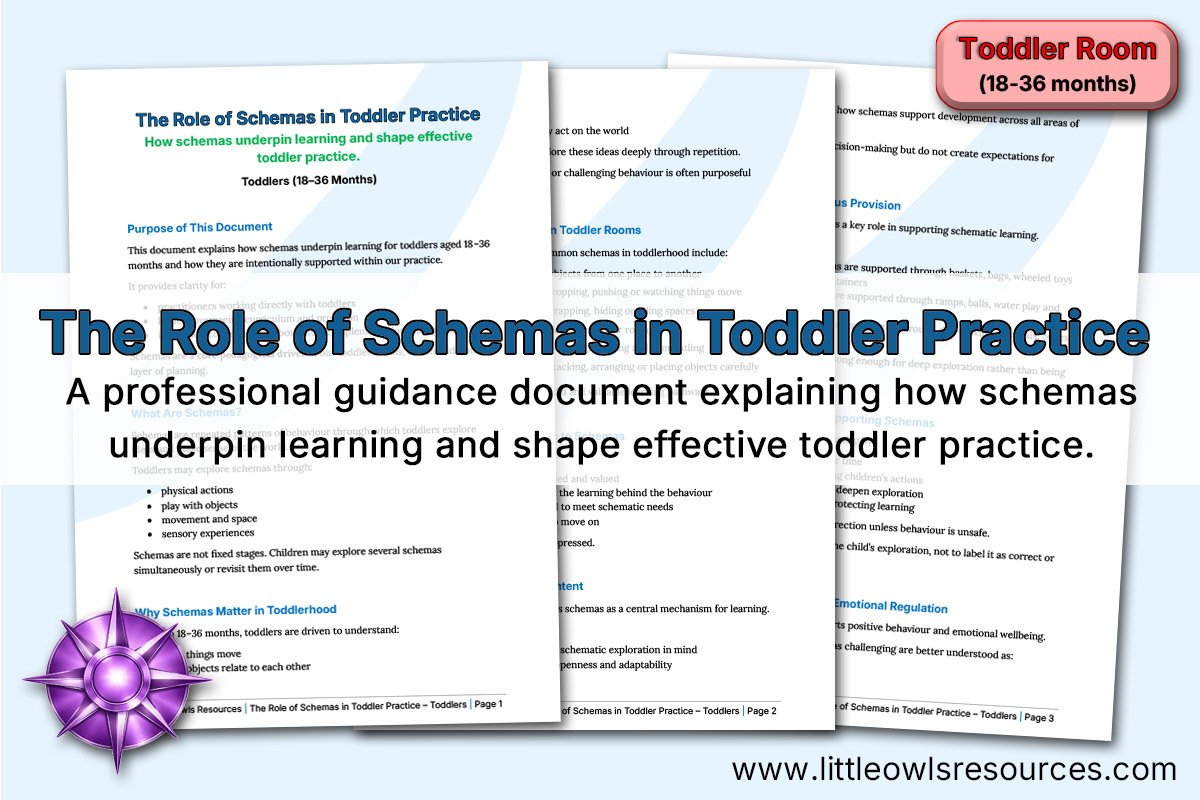
 
In Toddlers | 18-36 Months, -T7 Tags Toddler, Mathematics Seeds Progression Pack | Toddlers (18–36 Months)

Physical Development Progression Pack | Toddlers (18–36 Months)

January 18, 2026 Stuart Murphy

Home › EYFS Curriculum & Pedagogy › Toddler Room Curriculum & Pedagogy › Physical Development Progression Pack | Toddlers (18–36 Months)

Physical Development Progression Pack

Toddlers (18–36 Months)

Adult-led activity bank supporting movement, coordination, regulation and early independence

A comprehensive, practitioner-facing Physical Development resource designed to support toddlers’ gross motor, fine motor, sensory integration and early self-care development through joyful, play-based movement and responsive adult interaction.

Download Document Here:

(This pathway component will be available for download by: March 31st 2026)

 
Download DOCX 📝
Download PDF 📄
 

Document Updated: January 2026


Recommended next read Selection

EYFS
Expressive Arts & Design: Creative Media & Expression Toolkit | Toddlers (18–36 Months)

A practitioner-facing toolkit designed to support high-quality Expressive Arts & Design (EAD) practice for toddlers through open-ended exploration, identity expression and joyful creative inquiry.

Read More →
Understanding the World: Curriculum Experience Pack | Toddlers (18–36 Months)

A practitioner-facing guidance pack designed to support high-quality Understanding the World (UTW) practice for toddlers through real experiences, enabling environments and responsive adult interaction.

Read More →
Literacy Seed Skills Progression Pack | Toddlers (18–36 Months)

Foundations for early reading, writing, sound and meaning through play.

Read More →
Mathematics Seeds Progression Pack | Toddlers (18–36 Months)

Foundations for early mathematical thinking through play, language and everyday experiences.

Read More →
Physical Development Progression Pack | Toddlers (18–36 Months)

Adult-led activity bank supporting movement, coordination, regulation and early independence.

Read More →
PSED Activity Pack | Toddlers (18–36 Months)

Adult-focused activities to strengthen toddlers’ self-regulation, independence and relationships.

Read More →
Communication & Language Activity Pack | Toddlers (18–36 Months)

Progression map + adult-focused activity bank to strengthen toddler language through high-quality interactions.

Read More →
Toddler Activity Cards Pack | Toddlers (18–36 Months)

Professional guidance + printable activity cards for play-based, responsive toddler practice. A practical, practitioner-friendly pack of play invitations and interaction prompts to strengthen language, independence, movement and problem-solving in toddler rooms.

Read More →
Area of Learning Progression Maps & Adult-Led Session Banks | Toddlers (18–36 Months)

A practitioner-facing reference supporting intentional, developmentally appropriate toddler practice across key strands.

Read More →

Additional Documents | Professional Membership Contents (Toddlers 18-36 months)

Navigate our Curriculum & Pedagogy guidance documents here.

Pedagogical identity:
Relationship-led, sensory-rich toddler practice grounded in schemas, play, and responsive adult interaction.

  • 👉 This section prevents over-planning and aligns practice.

    • Toddler Pedagogy Position Statement – How Toddlers Learn (18–36 Months) [Free Orienting Sample]

    • Toddler Curriculum Overview & Rationale[Free Orienting Sample]

    • How Our Toddler Curriculum Works

    • The Role of Schemas in Toddler Practice

    • Curriculum Intent in Toddler Rooms (What It Means — and What It Doesn’t)

    • FAQs: Toddler Planning & Pedagogy

  • 👉 Adult understanding, not child targets.

    • Toddler Curriculum Maps

      • Progression across 6-month bands (18–24 | 24–30 | 30–36 months)

    • Intent → Progression Grids (Practitioner Reference)

    • Area of Learning Progression Maps

  • 👉 Observation is the driver of planning.

    • In-the-Moment Planning Prompt Sheets (Toddlers)

    • Weekly Planning Template

    • Toddler Narrative Observation & Analysis Template

    • Focused Observation Templates

      • Communication & Language

      • PSED

      • Physical Development

      • Maths Seeds

      • Characteristics of Effective Learning

      • Behaviour & Emotional Regulation

      • Schema Observation & Analysis

  • 👉 The environment does the teaching.

    Universal Continuous Provision

    • Continuous Provision Setup Guides | Toddler Room

      • Small World

      • Messy / Wet Play

      • Dry Sensory & Loose Parts

      • Construction

      • Role Play / Home Corner

      • Mark Making

      • Book Area / Reading Nook

      • Music & Sound

      • Outdoor

    • Continuous Provision Maps (18–36 Months)

      • C&L

      • PSED

      • PD

      • Maths Seeds

      • Literacy Seeds

      • UW

      • EAD

    • Continuous Provision Audit & Resourcing List

    • Continuous Provision Rotation Planner Toolkit

    • Toddler Visual Support Labelling Pack | 18–36 Months

  • 👉 Movement, regulation and sensory experience.

    • Outdoor Continuous Provision Pack

      • Outdoor Zone-by-Zone Setup Guide (Gross Motor, Sensory/Nature, Creative/Mark Making, Small World Outside, Water/Mud)

      • Seasonal Adjustments Planner

      • Outdoor Risk–Benefit Assessment Template + examples

      • Nature-Based Learning & Schema Guide

      • Outdoor Mark Making & Literacy Opportunities Sheet

      • Outdoor Maths Seeds Sheet

    • Why We Learn Outdoors in All Weathers (Parent Handout)

  • 👉 Projects are optional contexts, not directives.

    • Year-Long Project / Theme Curriculum Map (52 Weeks)

    • How Projects Work in Toddler Rooms (Guidance)

    • Schema Coverage & Support Map

    Project/Theme Planners:

    • 12 × Main Project Planners (3–4 Weeks)

      • All About Me & My World

      • People Who Help Us

      • Autumn - Senses, Colours & Change

      • Light, Dark & Celebrations

      • Winter-Weather, Warmth & Cosy Spaces

      • Transport & Journeys

      • Growing & Changing

      • Animals & Their Homes

      • Food & Nutrition

      • Minibeasts & Nature Explorers

      • Summer - Sand, Sea & Sun

      • Playful Patterns & Construction

    • 8 × Mini-Project Planners (1 Week)

      • Big Machines & Building

      • Cooking & Food Play

      • Teddy Bears’ Picnic

      • Colours Everywhere

      • Water Play Week

      • My Favourite Things

      • Rhyme Time Week

      • Weather Wonders

  • 👉 Invitations, provocations and shared experiences.

    • Activity Cards Pack

      Supports Child-led learning and responsive provision

    • Area of Learning Progression Maps & Adult Focus Sessions

      (Organised by Age Band: 18–24 months | 24–30 months | 30–36 months)

      Supports intentional teaching, vocabulary development and staff confidence

      • Communication & Language

      • PSED

      • Physical Development

      • Maths Seeds

      • Literacy Seeds

      • Understanding the World – Experience Progression Pack

      • Expressive Arts & Design – Creative Media & Expression Toolkit

  • 👉 Interaction is the curriculum.

    • Toddler Room Poster – Five Sentence Stems For Toddler Practitioners

    • Supporting Emotional Regulation Through Language

    • Language-First Approaches in Toddler Rooms

    • Toddler Behaviour & Regulation: A Quick Guide

  • 👉 Proportionate, meaningful assessment.

    • Progress Check at Age 2

      • Report Template

      • Practitioner Guidance

    • OFSTED Questions We’re Ready For

  • 👉 Early identification, gentle support.

    • SEND Inclusion Strategy Pack (18–36 Months)

      • Practical SEND & inclusion strategies for toddlers aged 18–36 months

      • Six quick-reference strategy sheets covering communication, sensory needs, anxiety and behaviour

      • Aligned with the EYFS Framework and the Assess–Plan–Do–Review approach

      • Inclusive, diagnosis-free guidance ready to use in everyday practice

      • Ideal for observations, provision planning, team use and Ofsted evidence

  • 👉 Strong partnerships, realistic expectations.

    Transition

    • Toddler → Preschool Transition Pack

    Home–Setting Communication

    • Toddler Room Parent Update & Home Learning Sheet

    • Letter Templates Pack

    Parent Information Pages

    • Why Mark Making Matters (Before Writing)

    • Supporting Speech & Language at Home (0–3 Years)

    • How To Build Language Through Play

    • Why We Learn Outdoors in All Weathers

Additional Whole-Setting Guidance | for Professional Members

Explore our whole-setting guidance below, including overarching curriculum and pedagogy documents, early years schemas and EYFS setting policies.

    • Little Owls Resources’ Curriculum Intent Statement

    • EYFS from Birth to 5: Curriculum Coherence & Pedagogical Throughline

    • Whole-Setting Curriculum Map (Birth-5): Curriculum Intent & Progression

    • Pedagogy Guidance Document

    • Speech & Language Development - Setting Statement

    • EYFS Inspection-Facing Summaries

  • Early Years Schemas - Practitioner Toolkit | EYFS Birth-5

    ↪ Schema Cards (definition, behaviours, age-related examples, enabling resources)

    ↪ Schema Observation & Responsive Provision Planning Template

    • EYFS Group Setting Policies Pack

      ↪ x 22 Policy Documents

      ↪ Policy Sign-Off and Confirmation Document

      ↪ EYFS Setting Policy Folder Contents List

    • Childminder Setting Policies Pack

      ↪ x 22 Policy Documents

      ↪ Childminder Assistant or Volunteer Policy Sign-Off and Confirmation Document

      ↪ Childminder Policy Folder Contents List

  • EYFS Glossary

    ↪ Clear, practitioner-friendly explanations of key curriculum and pedagogy terms used throughout our guidance.

Looking for a different age-group pathway?

Select the pathway that best reflects your role or the age group you work with. You do not need to use everything. (Some practitioners may use more than one pathway.)

Featured
🍼 Babies (0–18 months)

Responsive care, observation and development in the earliest years

🚼 Toddlers (18–36 months)

Development, play and progression in the toddler years

🎨 Preschool (3–4 years)

Curriculum, continuous provision and purposeful teaching

🎓 Reception (4–5 years)

Play-based pedagogy, progression and EYFSP readiness

🏡 Childminders (Birth–5)

Mixed-age pedagogy, planning without overload and inspection confidence

Latest EYFS Articles & Practical Guides | From Our Blog

Stay informed, get expert advice, and find inspiration from our collection of articles and useful external resources, tailored specifically for EYFS practitioners. We regularly publish in-depth articles to support you with current best practices, regulatory changes, and fresh ideas.

EYFS & KS1 Articles
Major UK Curriculum Shake-Up Announced: What EYFS & KS1 Practitioners Need to Know

A major overhaul of the national curriculum in England has been announced following the publication of the independent Curriculum and Assessment Review. For those working in the Early Years Foundation Stage (EYFS) and Key Stage 1 (KS1), the changes signal a renewed focus on practical life skills, digital literacy, and enriching learning experiences…

Read More →
New Education Inspection Framework | What EYFS Settings Need to Know

The world of early years education is constantly evolving, and with it, the frameworks that guide and assess our invaluable work. Come November 2025, a significant shift will occur as the new Education Inspection Framework (EIF) comes into effect, bringing with it some crucial changes…

Read More →
Revised 2025 EYFS Statutory Framework for Group & School-Based Providers | What You Need to Know

With the new 2025 EYFS Statutory Framework for group and school-based providers coming into effect on 1st September 2025, it's essential to understand the updates to ensure your practice remains compliant, effective…

Read More →
DfE Press Release | Parents urged to read more to boost children’s life chances

The Education Secretary is calling on parents to lead by example and make reading a daily habit to help reverse the decline in reading for pleasure, to help give kids the best start in life as part of the…

Read More →
DfE Update | Drowning Prevention Week: what children learn about water safety at school

As we head into summer, it’s especially important that children are prepared with these skills. This year, the Royal Life Saving Society UK's Drowning Prevention Week runs from 14 June to 21…

Read More →
DfE Update | Hot weather and heatwaves: guidance for schools and other education settings

There are several ways that schools can make changes to keep children safe in hot weather, especially as children are more at risk of becoming ill with heat-related issues than adults…

Read More →

Are you looking for a specific resource or document for your provision?

Use our 🔍 Search Bar located at the top of every page.

___________________________

Content within the EYFS Curriculum & Pedagogy Membership is provided as professional guidance and support. It reflects current understanding of the EYFS statutory framework, Development Matters and inspection expectations at the time of writing. Practitioners are responsible for applying professional judgement and ensuring practice aligns with current statutory requirements and their specific context. All resources, experiences and environment arrangements must be risk assessed by the setting and used in accordance with individual children’s developmental stages, needs and supervision requirements.

Safeguarding content does not replace a setting’s safeguarding and child protection policy or the statutory role of the Designated Safeguarding Lead (DSL). All concerns must be managed in line with current statutory guidance and local safeguarding procedures.

_____________________________

 
In Toddlers | 18-36 Months, -T7 Tags Toddler, Physical Development Progression Pack | Toddlers (18–36 Months)

PSED Activity Pack | Toddlers (18–36 Months)

January 18, 2026 Stuart Murphy

Home › EYFS Curriculum & Pedagogy › Toddler Room Curriculum & Pedagogy › PSED Activity Pack | Toddlers (18–36 Months)

PSED Activity Pack

Toddlers (18–36 Months)

Adult-focused activities to strengthen toddlers’ self-regulation, independence and relationships

A practical, print-ready toolkit of play-based, adult-led Personal, Social & Emotional Development activities for toddlers aged 18–36 months, designed to support secure relationships, emotional coaching and consistent PSED practice across your setting.

Download Document Here:

(This pathway component will be available for download by: March 31st 2026)

 
Download DOCX 📝
Download PDF 📄
 

Document Updated: January 2026


Recommended next read Selection

EYFS
Expressive Arts & Design: Creative Media & Expression Toolkit | Toddlers (18–36 Months)

A practitioner-facing toolkit designed to support high-quality Expressive Arts & Design (EAD) practice for toddlers through open-ended exploration, identity expression and joyful creative inquiry.

Read More →
Understanding the World: Curriculum Experience Pack | Toddlers (18–36 Months)

A practitioner-facing guidance pack designed to support high-quality Understanding the World (UTW) practice for toddlers through real experiences, enabling environments and responsive adult interaction.

Read More →
Literacy Seed Skills Progression Pack | Toddlers (18–36 Months)

Foundations for early reading, writing, sound and meaning through play.

Read More →
Mathematics Seeds Progression Pack | Toddlers (18–36 Months)

Foundations for early mathematical thinking through play, language and everyday experiences.

Read More →
Physical Development Progression Pack | Toddlers (18–36 Months)

Adult-led activity bank supporting movement, coordination, regulation and early independence.

Read More →
PSED Activity Pack | Toddlers (18–36 Months)

Adult-focused activities to strengthen toddlers’ self-regulation, independence and relationships.

Read More →
Communication & Language Activity Pack | Toddlers (18–36 Months)

Progression map + adult-focused activity bank to strengthen toddler language through high-quality interactions.

Read More →
Toddler Activity Cards Pack | Toddlers (18–36 Months)

Professional guidance + printable activity cards for play-based, responsive toddler practice. A practical, practitioner-friendly pack of play invitations and interaction prompts to strengthen language, independence, movement and problem-solving in toddler rooms.

Read More →
Area of Learning Progression Maps & Adult-Led Session Banks | Toddlers (18–36 Months)

A practitioner-facing reference supporting intentional, developmentally appropriate toddler practice across key strands.

Read More →

Additional Documents | Professional Membership Contents (Toddlers 18-36 months)

Navigate our Curriculum & Pedagogy guidance documents here.

Pedagogical identity:
Relationship-led, sensory-rich toddler practice grounded in schemas, play, and responsive adult interaction.

  • 👉 This section prevents over-planning and aligns practice.

    • Toddler Pedagogy Position Statement – How Toddlers Learn (18–36 Months) [Free Orienting Sample]

    • Toddler Curriculum Overview & Rationale[Free Orienting Sample]

    • How Our Toddler Curriculum Works

    • The Role of Schemas in Toddler Practice

    • Curriculum Intent in Toddler Rooms (What It Means — and What It Doesn’t)

    • FAQs: Toddler Planning & Pedagogy

  • 👉 Adult understanding, not child targets.

    • Toddler Curriculum Maps

      • Progression across 6-month bands (18–24 | 24–30 | 30–36 months)

    • Intent → Progression Grids (Practitioner Reference)

    • Area of Learning Progression Maps

  • 👉 Observation is the driver of planning.

    • In-the-Moment Planning Prompt Sheets (Toddlers)

    • Weekly Planning Template

    • Toddler Narrative Observation & Analysis Template

    • Focused Observation Templates

      • Communication & Language

      • PSED

      • Physical Development

      • Maths Seeds

      • Characteristics of Effective Learning

      • Behaviour & Emotional Regulation

      • Schema Observation & Analysis

  • 👉 The environment does the teaching.

    Universal Continuous Provision

    • Continuous Provision Setup Guides | Toddler Room

      • Small World

      • Messy / Wet Play

      • Dry Sensory & Loose Parts

      • Construction

      • Role Play / Home Corner

      • Mark Making

      • Book Area / Reading Nook

      • Music & Sound

      • Outdoor

    • Continuous Provision Maps (18–36 Months)

      • C&L

      • PSED

      • PD

      • Maths Seeds

      • Literacy Seeds

      • UW

      • EAD

    • Continuous Provision Audit & Resourcing List

    • Continuous Provision Rotation Planner Toolkit

    • Toddler Visual Support Labelling Pack | 18–36 Months

  • 👉 Movement, regulation and sensory experience.

    • Outdoor Continuous Provision Pack

      • Outdoor Zone-by-Zone Setup Guide (Gross Motor, Sensory/Nature, Creative/Mark Making, Small World Outside, Water/Mud)

      • Seasonal Adjustments Planner

      • Outdoor Risk–Benefit Assessment Template + examples

      • Nature-Based Learning & Schema Guide

      • Outdoor Mark Making & Literacy Opportunities Sheet

      • Outdoor Maths Seeds Sheet

    • Why We Learn Outdoors in All Weathers (Parent Handout)

  • 👉 Projects are optional contexts, not directives.

    • Year-Long Project / Theme Curriculum Map (52 Weeks)

    • How Projects Work in Toddler Rooms (Guidance)

    • Schema Coverage & Support Map

    Project/Theme Planners:

    • 12 × Main Project Planners (3–4 Weeks)

      • All About Me & My World

      • People Who Help Us

      • Autumn - Senses, Colours & Change

      • Light, Dark & Celebrations

      • Winter-Weather, Warmth & Cosy Spaces

      • Transport & Journeys

      • Growing & Changing

      • Animals & Their Homes

      • Food & Nutrition

      • Minibeasts & Nature Explorers

      • Summer - Sand, Sea & Sun

      • Playful Patterns & Construction

    • 8 × Mini-Project Planners (1 Week)

      • Big Machines & Building

      • Cooking & Food Play

      • Teddy Bears’ Picnic

      • Colours Everywhere

      • Water Play Week

      • My Favourite Things

      • Rhyme Time Week

      • Weather Wonders

  • 👉 Invitations, provocations and shared experiences.

    • Activity Cards Pack

      Supports Child-led learning and responsive provision

    • Area of Learning Progression Maps & Adult Focus Sessions

      (Organised by Age Band: 18–24 months | 24–30 months | 30–36 months)

      Supports intentional teaching, vocabulary development and staff confidence

      • Communication & Language

      • PSED

      • Physical Development

      • Maths Seeds

      • Literacy Seeds

      • Understanding the World – Experience Progression Pack

      • Expressive Arts & Design – Creative Media & Expression Toolkit

  • 👉 Interaction is the curriculum.

    • Toddler Room Poster – Five Sentence Stems For Toddler Practitioners

    • Supporting Emotional Regulation Through Language

    • Language-First Approaches in Toddler Rooms

    • Toddler Behaviour & Regulation: A Quick Guide

  • 👉 Proportionate, meaningful assessment.

    • Progress Check at Age 2

      • Report Template

      • Practitioner Guidance

    • OFSTED Questions We’re Ready For

  • 👉 Early identification, gentle support.

    • SEND Inclusion Strategy Pack (18–36 Months)

      • Practical SEND & inclusion strategies for toddlers aged 18–36 months

      • Six quick-reference strategy sheets covering communication, sensory needs, anxiety and behaviour

      • Aligned with the EYFS Framework and the Assess–Plan–Do–Review approach

      • Inclusive, diagnosis-free guidance ready to use in everyday practice

      • Ideal for observations, provision planning, team use and Ofsted evidence

  • 👉 Strong partnerships, realistic expectations.

    Transition

    • Toddler → Preschool Transition Pack

    Home–Setting Communication

    • Toddler Room Parent Update & Home Learning Sheet

    • Letter Templates Pack

    Parent Information Pages

    • Why Mark Making Matters (Before Writing)

    • Supporting Speech & Language at Home (0–3 Years)

    • How To Build Language Through Play

    • Why We Learn Outdoors in All Weathers

Additional Whole-Setting Guidance | for Professional Members

Explore our whole-setting guidance below, including overarching curriculum and pedagogy documents, early years schemas and EYFS setting policies.

    • Little Owls Resources’ Curriculum Intent Statement

    • EYFS from Birth to 5: Curriculum Coherence & Pedagogical Throughline

    • Whole-Setting Curriculum Map (Birth-5): Curriculum Intent & Progression

    • Pedagogy Guidance Document

    • Speech & Language Development - Setting Statement

    • EYFS Inspection-Facing Summaries

  • Early Years Schemas - Practitioner Toolkit | EYFS Birth-5

    ↪ Schema Cards (definition, behaviours, age-related examples, enabling resources)

    ↪ Schema Observation & Responsive Provision Planning Template

    • EYFS Group Setting Policies Pack

      ↪ x 22 Policy Documents

      ↪ Policy Sign-Off and Confirmation Document

      ↪ EYFS Setting Policy Folder Contents List

    • Childminder Setting Policies Pack

      ↪ x 22 Policy Documents

      ↪ Childminder Assistant or Volunteer Policy Sign-Off and Confirmation Document

      ↪ Childminder Policy Folder Contents List

  • EYFS Glossary

    ↪ Clear, practitioner-friendly explanations of key curriculum and pedagogy terms used throughout our guidance.

Looking for a different age-group pathway?

Select the pathway that best reflects your role or the age group you work with. You do not need to use everything. (Some practitioners may use more than one pathway.)

Featured
🍼 Babies (0–18 months)

Responsive care, observation and development in the earliest years

🚼 Toddlers (18–36 months)

Development, play and progression in the toddler years

🎨 Preschool (3–4 years)

Curriculum, continuous provision and purposeful teaching

🎓 Reception (4–5 years)

Play-based pedagogy, progression and EYFSP readiness

🏡 Childminders (Birth–5)

Mixed-age pedagogy, planning without overload and inspection confidence

Latest EYFS Articles & Practical Guides | From Our Blog

Stay informed, get expert advice, and find inspiration from our collection of articles and useful external resources, tailored specifically for EYFS practitioners. We regularly publish in-depth articles to support you with current best practices, regulatory changes, and fresh ideas.

EYFS & KS1 Articles
Major UK Curriculum Shake-Up Announced: What EYFS & KS1 Practitioners Need to Know

A major overhaul of the national curriculum in England has been announced following the publication of the independent Curriculum and Assessment Review. For those working in the Early Years Foundation Stage (EYFS) and Key Stage 1 (KS1), the changes signal a renewed focus on practical life skills, digital literacy, and enriching learning experiences…

Read More →
New Education Inspection Framework | What EYFS Settings Need to Know

The world of early years education is constantly evolving, and with it, the frameworks that guide and assess our invaluable work. Come November 2025, a significant shift will occur as the new Education Inspection Framework (EIF) comes into effect, bringing with it some crucial changes…

Read More →
Revised 2025 EYFS Statutory Framework for Group & School-Based Providers | What You Need to Know

With the new 2025 EYFS Statutory Framework for group and school-based providers coming into effect on 1st September 2025, it's essential to understand the updates to ensure your practice remains compliant, effective…

Read More →
DfE Press Release | Parents urged to read more to boost children’s life chances

The Education Secretary is calling on parents to lead by example and make reading a daily habit to help reverse the decline in reading for pleasure, to help give kids the best start in life as part of the…

Read More →
DfE Update | Drowning Prevention Week: what children learn about water safety at school

As we head into summer, it’s especially important that children are prepared with these skills. This year, the Royal Life Saving Society UK's Drowning Prevention Week runs from 14 June to 21…

Read More →
DfE Update | Hot weather and heatwaves: guidance for schools and other education settings

There are several ways that schools can make changes to keep children safe in hot weather, especially as children are more at risk of becoming ill with heat-related issues than adults…

Read More →

Are you looking for a specific resource or document for your provision?

Use our 🔍 Search Bar located at the top of every page.

___________________________

Content within the EYFS Curriculum & Pedagogy Membership is provided as professional guidance and support. It reflects current understanding of the EYFS statutory framework, Development Matters and inspection expectations at the time of writing. Practitioners are responsible for applying professional judgement and ensuring practice aligns with current statutory requirements and their specific context. All resources, experiences and environment arrangements must be risk assessed by the setting and used in accordance with individual children’s developmental stages, needs and supervision requirements.

Safeguarding content does not replace a setting’s safeguarding and child protection policy or the statutory role of the Designated Safeguarding Lead (DSL). All concerns must be managed in line with current statutory guidance and local safeguarding procedures.

_____________________________
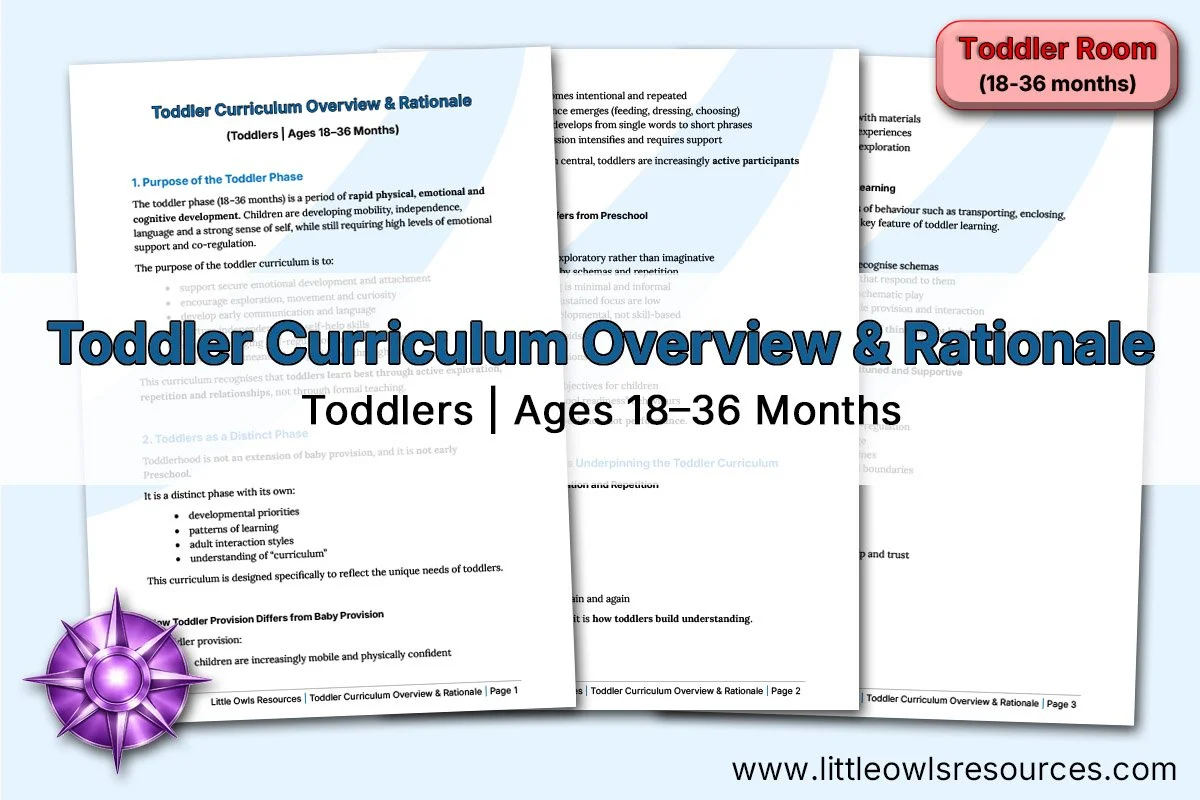
 
In Toddlers | 18-36 Months, -T7 Tags Toddler, PSED Activity Pack | Toddlers (18–36 Months)

Communication & Language Activity Pack | Toddlers (18–36 Months)

January 18, 2026 Stuart Murphy

Home › EYFS Curriculum & Pedagogy › Toddler Room Curriculum & Pedagogy › Communication & Language Activity Pack | Toddlers (18–36 Months)

Communication & Language Activity Pack

Toddlers (18–36 Months)

Progression map + adult-focused activity bank to strengthen toddler language through high-quality interactions

A professional, print-ready pack of developmentally sequenced Communication & Language activities for toddlers aged 18–36 months, designed to build consistent, communication-rich practice across your setting.

Download Document Here:

(This pathway component will be available for download by: March 31st 2026)

 
Download DOCX 📝
Download PDF 📄
 

Document Updated: January 2026


Recommended next read Selection

EYFS
Expressive Arts & Design: Creative Media & Expression Toolkit | Toddlers (18–36 Months)

A practitioner-facing toolkit designed to support high-quality Expressive Arts & Design (EAD) practice for toddlers through open-ended exploration, identity expression and joyful creative inquiry.

Read More →
Understanding the World: Curriculum Experience Pack | Toddlers (18–36 Months)

A practitioner-facing guidance pack designed to support high-quality Understanding the World (UTW) practice for toddlers through real experiences, enabling environments and responsive adult interaction.

Read More →
Literacy Seed Skills Progression Pack | Toddlers (18–36 Months)

Foundations for early reading, writing, sound and meaning through play.

Read More →
Mathematics Seeds Progression Pack | Toddlers (18–36 Months)

Foundations for early mathematical thinking through play, language and everyday experiences.

Read More →
Physical Development Progression Pack | Toddlers (18–36 Months)

Adult-led activity bank supporting movement, coordination, regulation and early independence.

Read More →
PSED Activity Pack | Toddlers (18–36 Months)

Adult-focused activities to strengthen toddlers’ self-regulation, independence and relationships.

Read More →
Communication & Language Activity Pack | Toddlers (18–36 Months)

Progression map + adult-focused activity bank to strengthen toddler language through high-quality interactions.

Read More →
Toddler Activity Cards Pack | Toddlers (18–36 Months)

Professional guidance + printable activity cards for play-based, responsive toddler practice. A practical, practitioner-friendly pack of play invitations and interaction prompts to strengthen language, independence, movement and problem-solving in toddler rooms.

Read More →
Area of Learning Progression Maps & Adult-Led Session Banks | Toddlers (18–36 Months)

A practitioner-facing reference supporting intentional, developmentally appropriate toddler practice across key strands.

Read More →

Additional Documents | Professional Membership Contents (Toddlers 18-36 months)

Navigate our Curriculum & Pedagogy guidance documents here.

Pedagogical identity:
Relationship-led, sensory-rich toddler practice grounded in schemas, play, and responsive adult interaction.

  • 👉 This section prevents over-planning and aligns practice.

    • Toddler Pedagogy Position Statement – How Toddlers Learn (18–36 Months) [Free Orienting Sample]

    • Toddler Curriculum Overview & Rationale[Free Orienting Sample]

    • How Our Toddler Curriculum Works

    • The Role of Schemas in Toddler Practice

    • Curriculum Intent in Toddler Rooms (What It Means — and What It Doesn’t)

    • FAQs: Toddler Planning & Pedagogy

  • 👉 Adult understanding, not child targets.

    • Toddler Curriculum Maps

      • Progression across 6-month bands (18–24 | 24–30 | 30–36 months)

    • Intent → Progression Grids (Practitioner Reference)

    • Area of Learning Progression Maps

  • 👉 Observation is the driver of planning.

    • In-the-Moment Planning Prompt Sheets (Toddlers)

    • Weekly Planning Template

    • Toddler Narrative Observation & Analysis Template

    • Focused Observation Templates

      • Communication & Language

      • PSED

      • Physical Development

      • Maths Seeds

      • Characteristics of Effective Learning

      • Behaviour & Emotional Regulation

      • Schema Observation & Analysis

  • 👉 The environment does the teaching.

    Universal Continuous Provision

    • Continuous Provision Setup Guides | Toddler Room

      • Small World

      • Messy / Wet Play

      • Dry Sensory & Loose Parts

      • Construction

      • Role Play / Home Corner

      • Mark Making

      • Book Area / Reading Nook

      • Music & Sound

      • Outdoor

    • Continuous Provision Maps (18–36 Months)

      • C&L

      • PSED

      • PD

      • Maths Seeds

      • Literacy Seeds

      • UW

      • EAD

    • Continuous Provision Audit & Resourcing List

    • Continuous Provision Rotation Planner Toolkit

    • Toddler Visual Support Labelling Pack | 18–36 Months

  • 👉 Movement, regulation and sensory experience.

    • Outdoor Continuous Provision Pack

      • Outdoor Zone-by-Zone Setup Guide (Gross Motor, Sensory/Nature, Creative/Mark Making, Small World Outside, Water/Mud)

      • Seasonal Adjustments Planner

      • Outdoor Risk–Benefit Assessment Template + examples

      • Nature-Based Learning & Schema Guide

      • Outdoor Mark Making & Literacy Opportunities Sheet

      • Outdoor Maths Seeds Sheet

    • Why We Learn Outdoors in All Weathers (Parent Handout)

  • 👉 Projects are optional contexts, not directives.

    • Year-Long Project / Theme Curriculum Map (52 Weeks)

    • How Projects Work in Toddler Rooms (Guidance)

    • Schema Coverage & Support Map

    Project/Theme Planners:

    • 12 × Main Project Planners (3–4 Weeks)

      • All About Me & My World

      • People Who Help Us

      • Autumn - Senses, Colours & Change

      • Light, Dark & Celebrations

      • Winter-Weather, Warmth & Cosy Spaces

      • Transport & Journeys

      • Growing & Changing

      • Animals & Their Homes

      • Food & Nutrition

      • Minibeasts & Nature Explorers

      • Summer - Sand, Sea & Sun

      • Playful Patterns & Construction

    • 8 × Mini-Project Planners (1 Week)

      • Big Machines & Building

      • Cooking & Food Play

      • Teddy Bears’ Picnic

      • Colours Everywhere

      • Water Play Week

      • My Favourite Things

      • Rhyme Time Week

      • Weather Wonders

  • 👉 Invitations, provocations and shared experiences.

    • Activity Cards Pack

      Supports Child-led learning and responsive provision

    • Area of Learning Progression Maps & Adult Focus Sessions

      (Organised by Age Band: 18–24 months | 24–30 months | 30–36 months)

      Supports intentional teaching, vocabulary development and staff confidence

      • Communication & Language

      • PSED

      • Physical Development

      • Maths Seeds

      • Literacy Seeds

      • Understanding the World – Experience Progression Pack

      • Expressive Arts & Design – Creative Media & Expression Toolkit

  • 👉 Interaction is the curriculum.

    • Toddler Room Poster – Five Sentence Stems For Toddler Practitioners

    • Supporting Emotional Regulation Through Language

    • Language-First Approaches in Toddler Rooms

    • Toddler Behaviour & Regulation: A Quick Guide

  • 👉 Proportionate, meaningful assessment.

    • Progress Check at Age 2

      • Report Template

      • Practitioner Guidance

    • OFSTED Questions We’re Ready For

  • 👉 Early identification, gentle support.

    • SEND Inclusion Strategy Pack (18–36 Months)

      • Practical SEND & inclusion strategies for toddlers aged 18–36 months

      • Six quick-reference strategy sheets covering communication, sensory needs, anxiety and behaviour

      • Aligned with the EYFS Framework and the Assess–Plan–Do–Review approach

      • Inclusive, diagnosis-free guidance ready to use in everyday practice

      • Ideal for observations, provision planning, team use and Ofsted evidence

  • 👉 Strong partnerships, realistic expectations.

    Transition

    • Toddler → Preschool Transition Pack

    Home–Setting Communication

    • Toddler Room Parent Update & Home Learning Sheet

    • Letter Templates Pack

    Parent Information Pages

    • Why Mark Making Matters (Before Writing)

    • Supporting Speech & Language at Home (0–3 Years)

    • How To Build Language Through Play

    • Why We Learn Outdoors in All Weathers

Additional Whole-Setting Guidance | for Professional Members

Explore our whole-setting guidance below, including overarching curriculum and pedagogy documents, early years schemas and EYFS setting policies.

    • Little Owls Resources’ Curriculum Intent Statement

    • EYFS from Birth to 5: Curriculum Coherence & Pedagogical Throughline

    • Whole-Setting Curriculum Map (Birth-5): Curriculum Intent & Progression

    • Pedagogy Guidance Document

    • Speech & Language Development - Setting Statement

    • EYFS Inspection-Facing Summaries

  • Early Years Schemas - Practitioner Toolkit | EYFS Birth-5

    ↪ Schema Cards (definition, behaviours, age-related examples, enabling resources)

    ↪ Schema Observation & Responsive Provision Planning Template

    • EYFS Group Setting Policies Pack

      ↪ x 22 Policy Documents

      ↪ Policy Sign-Off and Confirmation Document

      ↪ EYFS Setting Policy Folder Contents List

    • Childminder Setting Policies Pack

      ↪ x 22 Policy Documents

      ↪ Childminder Assistant or Volunteer Policy Sign-Off and Confirmation Document

      ↪ Childminder Policy Folder Contents List

  • EYFS Glossary

    ↪ Clear, practitioner-friendly explanations of key curriculum and pedagogy terms used throughout our guidance.

Looking for a different age-group pathway?

Select the pathway that best reflects your role or the age group you work with. You do not need to use everything. (Some practitioners may use more than one pathway.)

Featured
🍼 Babies (0–18 months)

Responsive care, observation and development in the earliest years

🚼 Toddlers (18–36 months)

Development, play and progression in the toddler years

🎨 Preschool (3–4 years)

Curriculum, continuous provision and purposeful teaching

🎓 Reception (4–5 years)

Play-based pedagogy, progression and EYFSP readiness

🏡 Childminders (Birth–5)

Mixed-age pedagogy, planning without overload and inspection confidence

Latest EYFS Articles & Practical Guides | From Our Blog

Stay informed, get expert advice, and find inspiration from our collection of articles and useful external resources, tailored specifically for EYFS practitioners. We regularly publish in-depth articles to support you with current best practices, regulatory changes, and fresh ideas.

EYFS & KS1 Articles
Major UK Curriculum Shake-Up Announced: What EYFS & KS1 Practitioners Need to Know

A major overhaul of the national curriculum in England has been announced following the publication of the independent Curriculum and Assessment Review. For those working in the Early Years Foundation Stage (EYFS) and Key Stage 1 (KS1), the changes signal a renewed focus on practical life skills, digital literacy, and enriching learning experiences…

Read More →
New Education Inspection Framework | What EYFS Settings Need to Know

The world of early years education is constantly evolving, and with it, the frameworks that guide and assess our invaluable work. Come November 2025, a significant shift will occur as the new Education Inspection Framework (EIF) comes into effect, bringing with it some crucial changes…

Read More →
Revised 2025 EYFS Statutory Framework for Group & School-Based Providers | What You Need to Know

With the new 2025 EYFS Statutory Framework for group and school-based providers coming into effect on 1st September 2025, it's essential to understand the updates to ensure your practice remains compliant, effective…

Read More →
DfE Press Release | Parents urged to read more to boost children’s life chances

The Education Secretary is calling on parents to lead by example and make reading a daily habit to help reverse the decline in reading for pleasure, to help give kids the best start in life as part of the…

Read More →
DfE Update | Drowning Prevention Week: what children learn about water safety at school

As we head into summer, it’s especially important that children are prepared with these skills. This year, the Royal Life Saving Society UK's Drowning Prevention Week runs from 14 June to 21…

Read More →
DfE Update | Hot weather and heatwaves: guidance for schools and other education settings

There are several ways that schools can make changes to keep children safe in hot weather, especially as children are more at risk of becoming ill with heat-related issues than adults…

Read More →

Are you looking for a specific resource or document for your provision?

Use our 🔍 Search Bar located at the top of every page.

___________________________

Content within the EYFS Curriculum & Pedagogy Membership is provided as professional guidance and support. It reflects current understanding of the EYFS statutory framework, Development Matters and inspection expectations at the time of writing. Practitioners are responsible for applying professional judgement and ensuring practice aligns with current statutory requirements and their specific context. All resources, experiences and environment arrangements must be risk assessed by the setting and used in accordance with individual children’s developmental stages, needs and supervision requirements.

Safeguarding content does not replace a setting’s safeguarding and child protection policy or the statutory role of the Designated Safeguarding Lead (DSL). All concerns must be managed in line with current statutory guidance and local safeguarding procedures.

_____________________________
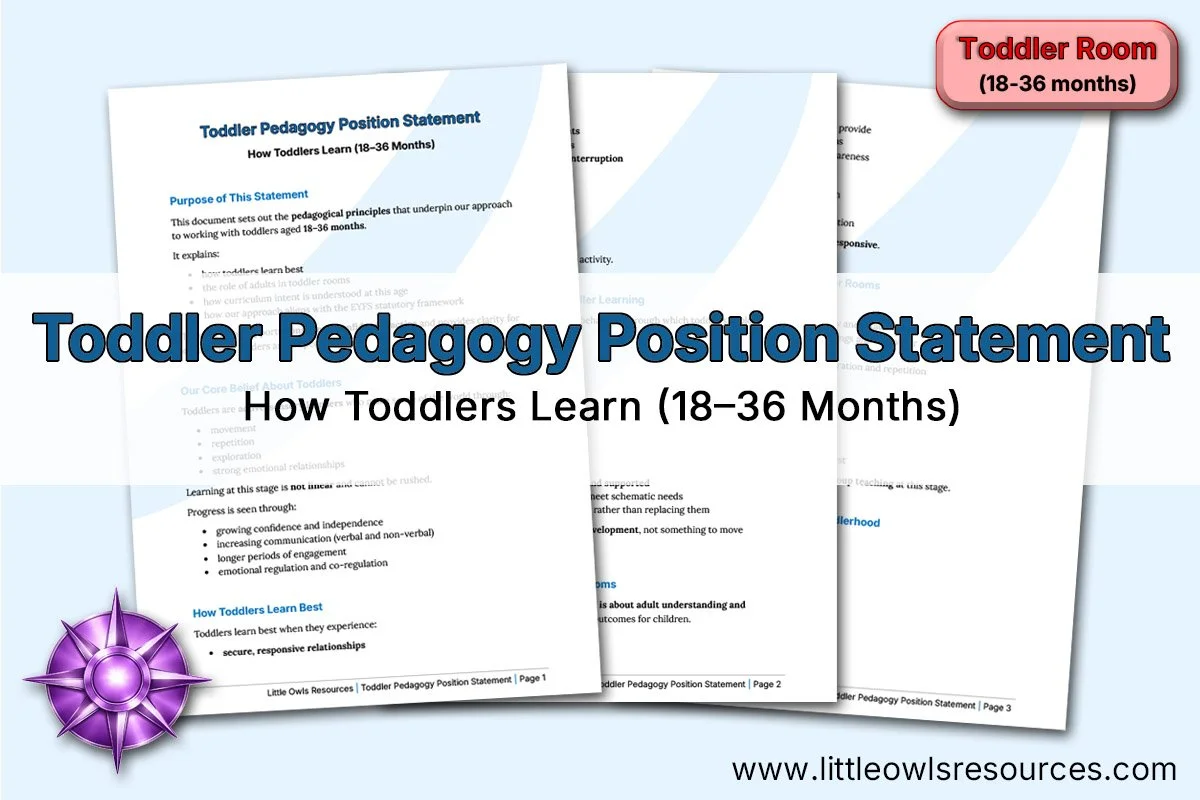
 
In Toddlers | 18-36 Months, -T7 Tags Toddler, Communication & Language Activity Pack | Toddlers (18–36 Months)

Toddler Activity Cards Pack | Toddlers (18–36 Months)

January 18, 2026 Stuart Murphy

Home › EYFS Curriculum & Pedagogy › Toddler Room Curriculum & Pedagogy › Toddler Activity Cards Pack | Toddlers (18–36 Months)

Toddler Activity Cards Pack (18–36 Months)

Professional guidance + printable activity cards for play-based, responsive toddler practice

A practical, practitioner-friendly pack of play invitations and interaction prompts to strengthen language, independence, movement and problem-solving in toddler rooms.

Download Document Here:

(This pathway component will be available for download by: March 31st 2026)

 
Download DOCX 📝
Download PDF 📄
 

Document Updated: January 2026


Recommended next read Selection

EYFS
Expressive Arts & Design: Creative Media & Expression Toolkit | Toddlers (18–36 Months)

A practitioner-facing toolkit designed to support high-quality Expressive Arts & Design (EAD) practice for toddlers through open-ended exploration, identity expression and joyful creative inquiry.

Read More →
Understanding the World: Curriculum Experience Pack | Toddlers (18–36 Months)

A practitioner-facing guidance pack designed to support high-quality Understanding the World (UTW) practice for toddlers through real experiences, enabling environments and responsive adult interaction.

Read More →
Literacy Seed Skills Progression Pack | Toddlers (18–36 Months)

Foundations for early reading, writing, sound and meaning through play.

Read More →
Mathematics Seeds Progression Pack | Toddlers (18–36 Months)

Foundations for early mathematical thinking through play, language and everyday experiences.

Read More →
Physical Development Progression Pack | Toddlers (18–36 Months)

Adult-led activity bank supporting movement, coordination, regulation and early independence.

Read More →
PSED Activity Pack | Toddlers (18–36 Months)

Adult-focused activities to strengthen toddlers’ self-regulation, independence and relationships.

Read More →
Communication & Language Activity Pack | Toddlers (18–36 Months)

Progression map + adult-focused activity bank to strengthen toddler language through high-quality interactions.

Read More →
Toddler Activity Cards Pack | Toddlers (18–36 Months)

Professional guidance + printable activity cards for play-based, responsive toddler practice. A practical, practitioner-friendly pack of play invitations and interaction prompts to strengthen language, independence, movement and problem-solving in toddler rooms.

Read More →
Area of Learning Progression Maps & Adult-Led Session Banks | Toddlers (18–36 Months)

A practitioner-facing reference supporting intentional, developmentally appropriate toddler practice across key strands.

Read More →

Additional Documents | Professional Membership Contents (Toddlers 18-36 months)

Navigate our Curriculum & Pedagogy guidance documents here.

Pedagogical identity:
Relationship-led, sensory-rich toddler practice grounded in schemas, play, and responsive adult interaction.

  • 👉 This section prevents over-planning and aligns practice.

    • Toddler Pedagogy Position Statement – How Toddlers Learn (18–36 Months) [Free Orienting Sample]

    • Toddler Curriculum Overview & Rationale[Free Orienting Sample]

    • How Our Toddler Curriculum Works

    • The Role of Schemas in Toddler Practice

    • Curriculum Intent in Toddler Rooms (What It Means — and What It Doesn’t)

    • FAQs: Toddler Planning & Pedagogy

  • 👉 Adult understanding, not child targets.

    • Toddler Curriculum Maps

      • Progression across 6-month bands (18–24 | 24–30 | 30–36 months)

    • Intent → Progression Grids (Practitioner Reference)

    • Area of Learning Progression Maps

  • 👉 Observation is the driver of planning.

    • In-the-Moment Planning Prompt Sheets (Toddlers)

    • Weekly Planning Template

    • Toddler Narrative Observation & Analysis Template

    • Focused Observation Templates

      • Communication & Language

      • PSED

      • Physical Development

      • Maths Seeds

      • Characteristics of Effective Learning

      • Behaviour & Emotional Regulation

      • Schema Observation & Analysis

  • 👉 The environment does the teaching.

    Universal Continuous Provision

    • Continuous Provision Setup Guides | Toddler Room

      • Small World

      • Messy / Wet Play

      • Dry Sensory & Loose Parts

      • Construction

      • Role Play / Home Corner

      • Mark Making

      • Book Area / Reading Nook

      • Music & Sound

      • Outdoor

    • Continuous Provision Maps (18–36 Months)

      • C&L

      • PSED

      • PD

      • Maths Seeds

      • Literacy Seeds

      • UW

      • EAD

    • Continuous Provision Audit & Resourcing List

    • Continuous Provision Rotation Planner Toolkit

    • Toddler Visual Support Labelling Pack | 18–36 Months

  • 👉 Movement, regulation and sensory experience.

    • Outdoor Continuous Provision Pack

      • Outdoor Zone-by-Zone Setup Guide (Gross Motor, Sensory/Nature, Creative/Mark Making, Small World Outside, Water/Mud)

      • Seasonal Adjustments Planner

      • Outdoor Risk–Benefit Assessment Template + examples

      • Nature-Based Learning & Schema Guide

      • Outdoor Mark Making & Literacy Opportunities Sheet

      • Outdoor Maths Seeds Sheet

    • Why We Learn Outdoors in All Weathers (Parent Handout)

  • 👉 Projects are optional contexts, not directives.

    • Year-Long Project / Theme Curriculum Map (52 Weeks)

    • How Projects Work in Toddler Rooms (Guidance)

    • Schema Coverage & Support Map

    Project/Theme Planners:

    • 12 × Main Project Planners (3–4 Weeks)

      • All About Me & My World

      • People Who Help Us

      • Autumn - Senses, Colours & Change

      • Light, Dark & Celebrations

      • Winter-Weather, Warmth & Cosy Spaces

      • Transport & Journeys

      • Growing & Changing

      • Animals & Their Homes

      • Food & Nutrition

      • Minibeasts & Nature Explorers

      • Summer - Sand, Sea & Sun

      • Playful Patterns & Construction

    • 8 × Mini-Project Planners (1 Week)

      • Big Machines & Building

      • Cooking & Food Play

      • Teddy Bears’ Picnic

      • Colours Everywhere

      • Water Play Week

      • My Favourite Things

      • Rhyme Time Week

      • Weather Wonders

  • 👉 Invitations, provocations and shared experiences.

    • Activity Cards Pack

      Supports Child-led learning and responsive provision

    • Area of Learning Progression Maps & Adult Focus Sessions

      (Organised by Age Band: 18–24 months | 24–30 months | 30–36 months)

      Supports intentional teaching, vocabulary development and staff confidence

      • Communication & Language

      • PSED

      • Physical Development

      • Maths Seeds

      • Literacy Seeds

      • Understanding the World – Experience Progression Pack

      • Expressive Arts & Design – Creative Media & Expression Toolkit

  • 👉 Interaction is the curriculum.

    • Toddler Room Poster – Five Sentence Stems For Toddler Practitioners

    • Supporting Emotional Regulation Through Language

    • Language-First Approaches in Toddler Rooms

    • Toddler Behaviour & Regulation: A Quick Guide

  • 👉 Proportionate, meaningful assessment.

    • Progress Check at Age 2

      • Report Template

      • Practitioner Guidance

    • OFSTED Questions We’re Ready For

  • 👉 Early identification, gentle support.

    • SEND Inclusion Strategy Pack (18–36 Months)

      • Practical SEND & inclusion strategies for toddlers aged 18–36 months

      • Six quick-reference strategy sheets covering communication, sensory needs, anxiety and behaviour

      • Aligned with the EYFS Framework and the Assess–Plan–Do–Review approach

      • Inclusive, diagnosis-free guidance ready to use in everyday practice

      • Ideal for observations, provision planning, team use and Ofsted evidence

  • 👉 Strong partnerships, realistic expectations.

    Transition

    • Toddler → Preschool Transition Pack

    Home–Setting Communication

    • Toddler Room Parent Update & Home Learning Sheet

    • Letter Templates Pack

    Parent Information Pages

    • Why Mark Making Matters (Before Writing)

    • Supporting Speech & Language at Home (0–3 Years)

    • How To Build Language Through Play

    • Why We Learn Outdoors in All Weathers

Additional Whole-Setting Guidance | for Professional Members

Explore our whole-setting guidance below, including overarching curriculum and pedagogy documents, early years schemas and EYFS setting policies.

    • Little Owls Resources’ Curriculum Intent Statement

    • EYFS from Birth to 5: Curriculum Coherence & Pedagogical Throughline

    • Whole-Setting Curriculum Map (Birth-5): Curriculum Intent & Progression

    • Pedagogy Guidance Document

    • Speech & Language Development - Setting Statement

    • EYFS Inspection-Facing Summaries

  • Early Years Schemas - Practitioner Toolkit | EYFS Birth-5

    ↪ Schema Cards (definition, behaviours, age-related examples, enabling resources)

    ↪ Schema Observation & Responsive Provision Planning Template

    • EYFS Group Setting Policies Pack

      ↪ x 22 Policy Documents

      ↪ Policy Sign-Off and Confirmation Document

      ↪ EYFS Setting Policy Folder Contents List

    • Childminder Setting Policies Pack

      ↪ x 22 Policy Documents

      ↪ Childminder Assistant or Volunteer Policy Sign-Off and Confirmation Document

      ↪ Childminder Policy Folder Contents List

  • EYFS Glossary

    ↪ Clear, practitioner-friendly explanations of key curriculum and pedagogy terms used throughout our guidance.

Looking for a different age-group pathway?

Select the pathway that best reflects your role or the age group you work with. You do not need to use everything. (Some practitioners may use more than one pathway.)

Featured
🍼 Babies (0–18 months)

Responsive care, observation and development in the earliest years

🚼 Toddlers (18–36 months)

Development, play and progression in the toddler years

🎨 Preschool (3–4 years)

Curriculum, continuous provision and purposeful teaching

🎓 Reception (4–5 years)

Play-based pedagogy, progression and EYFSP readiness

🏡 Childminders (Birth–5)

Mixed-age pedagogy, planning without overload and inspection confidence

Latest EYFS Articles & Practical Guides | From Our Blog

Stay informed, get expert advice, and find inspiration from our collection of articles and useful external resources, tailored specifically for EYFS practitioners. We regularly publish in-depth articles to support you with current best practices, regulatory changes, and fresh ideas.

EYFS & KS1 Articles
Major UK Curriculum Shake-Up Announced: What EYFS & KS1 Practitioners Need to Know

A major overhaul of the national curriculum in England has been announced following the publication of the independent Curriculum and Assessment Review. For those working in the Early Years Foundation Stage (EYFS) and Key Stage 1 (KS1), the changes signal a renewed focus on practical life skills, digital literacy, and enriching learning experiences…

Read More →
New Education Inspection Framework | What EYFS Settings Need to Know

The world of early years education is constantly evolving, and with it, the frameworks that guide and assess our invaluable work. Come November 2025, a significant shift will occur as the new Education Inspection Framework (EIF) comes into effect, bringing with it some crucial changes…

Read More →
Revised 2025 EYFS Statutory Framework for Group & School-Based Providers | What You Need to Know

With the new 2025 EYFS Statutory Framework for group and school-based providers coming into effect on 1st September 2025, it's essential to understand the updates to ensure your practice remains compliant, effective…

Read More →
DfE Press Release | Parents urged to read more to boost children’s life chances

The Education Secretary is calling on parents to lead by example and make reading a daily habit to help reverse the decline in reading for pleasure, to help give kids the best start in life as part of the…

Read More →
DfE Update | Drowning Prevention Week: what children learn about water safety at school

As we head into summer, it’s especially important that children are prepared with these skills. This year, the Royal Life Saving Society UK's Drowning Prevention Week runs from 14 June to 21…

Read More →
DfE Update | Hot weather and heatwaves: guidance for schools and other education settings

There are several ways that schools can make changes to keep children safe in hot weather, especially as children are more at risk of becoming ill with heat-related issues than adults…

Read More →

Are you looking for a specific resource or document for your provision?

Use our 🔍 Search Bar located at the top of every page.

___________________________

Content within the EYFS Curriculum & Pedagogy Membership is provided as professional guidance and support. It reflects current understanding of the EYFS statutory framework, Development Matters and inspection expectations at the time of writing. Practitioners are responsible for applying professional judgement and ensuring practice aligns with current statutory requirements and their specific context. All resources, experiences and environment arrangements must be risk assessed by the setting and used in accordance with individual children’s developmental stages, needs and supervision requirements.

Safeguarding content does not replace a setting’s safeguarding and child protection policy or the statutory role of the Designated Safeguarding Lead (DSL). All concerns must be managed in line with current statutory guidance and local safeguarding procedures.

_____________________________

 
In Toddlers | 18-36 Months, -T7 Tags Toddler, Toddler Activity Cards Pack | Toddlers (18–36 Months)
Older Posts →

Trusted by over 35,000 members

- early years professionals across nurseries, schools and childminding settings


Contact Little Owls Resources support:

support@littleowlsresources.com

Information

  • About | Testimonials

  • Privacy Policy

  • Cookie Policy

  • Terms & Conditions

  • Help Page

Core Navigation

  • Membership

  • Printable Resources

  • Events Calendar

  • Curriculum & Pedagogy

Thank-you Little Owls Resources members! Our community is growing! 😊


Read our File Format information

Copyright on all of the images, files & resources housed on this website is held by ‘Little Owls Resources’. In downloading any of these resources you are issued a single licence for your own use and the right to grant a limited licence to your students to use the licensed material as part of your teaching and their own use.

Our resources (including the images within them), cannot be shared or sold commercially.

Website powered by Squarespace

Search powered by https://www.sitesearch360.com