

Communication and Language-Rich Approaches in Toddler Rooms
Toddlers (18–36 Months)
A professional guidance document supporting confident EYFS practice in toddler rooms
Download Document Here:
Document Updated: August 2026
[This resource has been updated to align with the new EYFS Framework, effective September 2026. Find out more HERE.]
Recommended next read selection


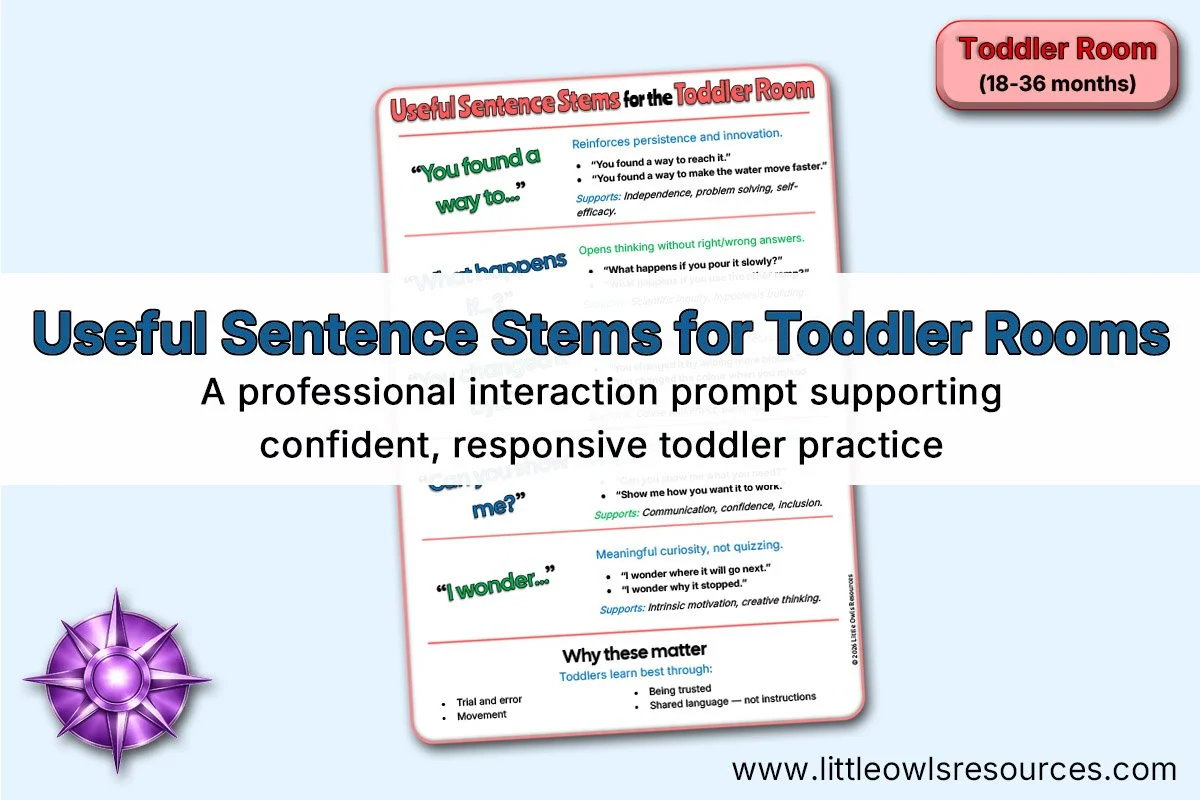
Additional Documents | Professional Membership Contents (Toddlers 18-36 months)
Navigate our Curriculum & Pedagogy guidance documents here.
Pedagogical identity:
Relationship-led, sensory-rich toddler practice grounded in schemas, play, and responsive adult interaction.
-
👉 This section prevents over-planning and aligns practice.
Toddler Pedagogy Position Statement – How Toddlers Learn (18–36 Months) [Free Orienting Sample]
Toddler Curriculum Overview & Rationale[Free Orienting Sample]
Curriculum Intent in Toddler Rooms (What It Means — and What It Doesn’t)
-
👉 Adult understanding, not child targets.
Progression across 6-month bands (18–24 | 24–30 | 30–36 months)
-
👉 Observation is the driver of planning.
Communication & Language
PSED
Physical Development
Maths Seeds
Characteristics of Effective Learning
Behaviour & Emotional Regulation
Schema Observation & Analysis
-
👉 The environment does the teaching.
Universal Continuous Provision
Continuous Provision Setup Guides | Toddler Room
Small World
Messy / Wet Play
Dry Sensory & Loose Parts
Construction
Role Play / Home Corner
Mark Making
Book Area / Reading Nook
Music & Sound
Outdoor
Continuous Provision Maps (18–36 Months)
C&L
PSED
PD
Maths Seeds
Literacy Seeds
UW
EAD
-
👉 Movement, regulation and sensory experience.
Outdoor Continuous Provision Pack
Outdoor Zone-by-Zone Setup Guide (Gross Motor, Sensory/Nature, Creative/Mark Making, Small World Outside, Water/Mud)
Seasonal Adjustments Planner
Outdoor Risk–Benefit Assessment Template + examples
Nature-Based Learning & Schema Guide
Outdoor Mark Making & Literacy Opportunities Sheet
Outdoor Maths Seeds Sheet
-
👉 Projects are optional contexts, not directives.
How Projects Work in Toddler Rooms (Guidance)
Project/Theme Planners:
12 × Main Project Planners (3–4 Weeks)
8 × Mini-Project Planners (1 Week)
-
👉 Invitations, provocations and shared experiences.
Supports Child-led learning and responsive provision
Area of Learning Progression Maps & Adult Focus Sessions
(Organised by Age Band: 18–24 months | 24–30 months | 30–36 months)
Supports intentional teaching, vocabulary development and staff confidence
Understanding the World – Experience Progression Pack
Expressive Arts & Design – Creative Media & Expression Toolkit
-
-
👉 Proportionate, meaningful assessment.
Report Template
Practitioner Guidance
-
👉 Early identification, gentle support.
SEND Inclusion Strategy Pack (18–36 Months)
Practical SEND & inclusion strategies for toddlers aged 18–36 months
Six quick-reference strategy sheets covering communication, sensory needs, anxiety and behaviour
Aligned with the EYFS Framework and the Assess–Plan–Do–Review approach
Inclusive, diagnosis-free guidance ready to use in everyday practice
Ideal for observations, provision planning, team use and Ofsted evidence
-
👉 Strong partnerships, realistic expectations.
Transition
Home–Setting Communication
Parent Information Pages
Additional Whole-Setting Guidance | for Professional Members
Explore our whole-setting guidance below, including overarching curriculum and pedagogy documents, early years schemas and EYFS setting policies.
-
-
Early Years Schemas - Practitioner Toolkit | EYFS Birth-5
↪ Schema Cards (definition, behaviours, age-related examples, enabling resources)
↪ Schema Observation & Responsive Provision Planning Template
-
EYFS Group Setting Policies Pack
↪ x 25 Policy Documents
↪ Policy Sign-Off and Confirmation Document
↪ EYFS Setting Policy Folder Contents List
Childminder Setting Policies Pack
↪ x 25 Policy Documents
↪ Childminder Assistant or Volunteer Policy Sign-Off and Confirmation Document
↪ Childminder Policy Folder Contents List
-
↪ Clear, practitioner-friendly explanations of key curriculum and pedagogy terms used throughout our guidance.
Looking for a different age-group pathway?
Select the pathway that best reflects your role or the age group you work with. You do not need to use everything. (Some practitioners may use more than one pathway.)
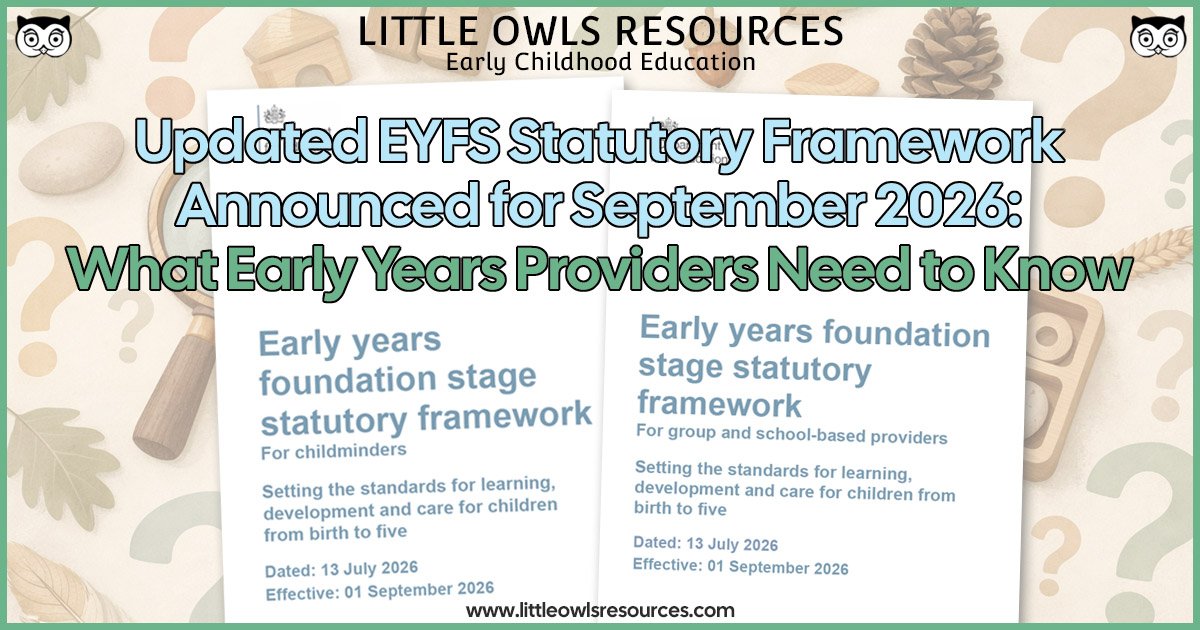
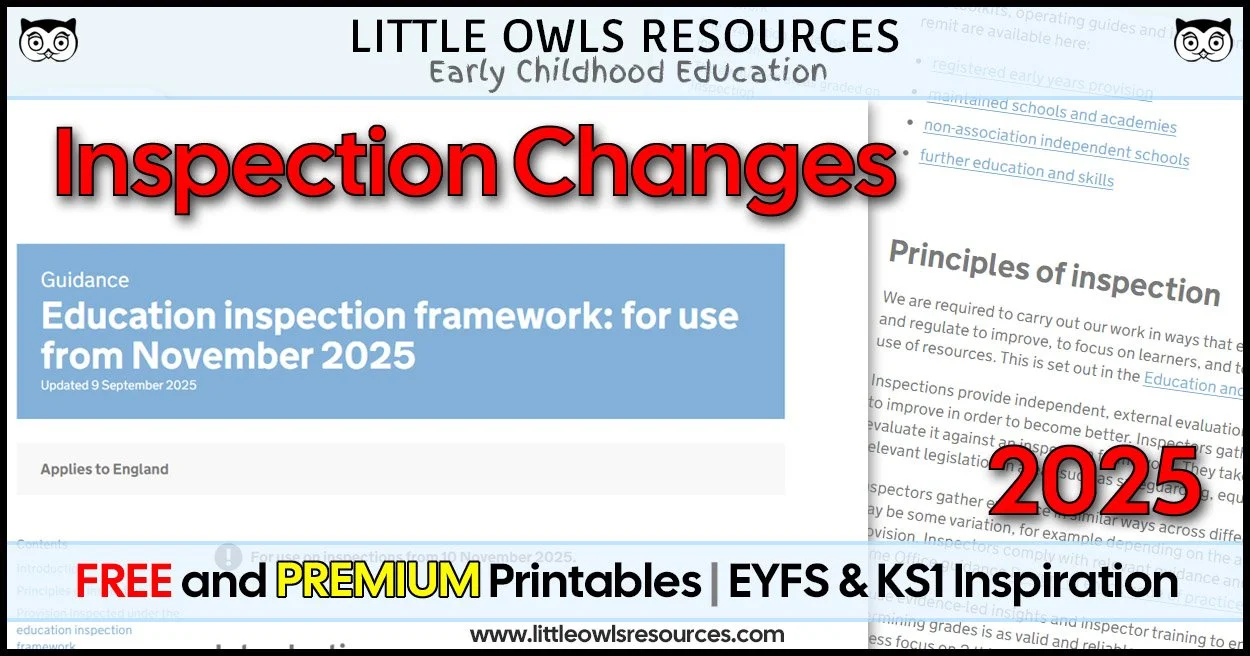
Latest EYFS Articles & Practical Guides | From Our Blog
Stay informed, get expert advice, and find inspiration from our collection of articles and useful external resources, tailored specifically for EYFS practitioners. We regularly publish in-depth articles to support you with current best practices, regulatory changes, and fresh ideas.




Are you looking for a specific resource or document for your provision?
Use our 🔍 Search Bar located at the top of every page.
___________________________
Content within the EYFS Curriculum & Pedagogy Membership is provided as professional guidance and support. It reflects current understanding of the EYFS statutory framework, Development Matters and inspection expectations at the time of writing. Practitioners are responsible for applying professional judgement and ensuring practice aligns with current statutory requirements and their specific context. All resources, experiences and environment arrangements must be risk assessed by the setting and used in accordance with individual children’s developmental stages, needs and supervision requirements.
Safeguarding content does not replace a setting’s safeguarding and child protection policy or the statutory role of the Designated Safeguarding Lead (DSL). All concerns must be managed in line with current statutory guidance and local safeguarding procedures.
_____________________________