Updated EYFS Statutory Framework Announced for September 2026: What Early Years Providers Need to Know
The Department for Education has published updated versions of the Early Years Foundation Stage statutory framework, which will come into effect on 1 September 2026.
The revised frameworks introduce strengthened requirements relating primarily to safeguarding, children’s welfare, safer sleep, suitability checks and screen use. There are also several smaller clarifications intended to make existing expectations easier for providers to understand and apply.
There continue to be two versions of the statutory framework:
the EYFS statutory framework for childminders
the EYFS statutory framework for group and school-based providers
Providers must follow the version that applies to their type of provision. The EYFS statutory framework applies in England, rather than across the whole of the UK.
🧭 Jump to...
📅 When do the changes take effect?
🔄 What is changing in the EYFS Framework?
😴 Safer sleep requirements brought into the framework
🐕 New rules concerning banned dog breeds
🛡️ Reporting allegations of harm
🙋 Enhanced criminal-records checks for volunteers
✅ New employees and relevant volunteers must not start before the required checks are received
📢 Information staff must disclose
🏠 Additional notification requirements for childcare on domestic premises
📱 New statutory regard for children’s screen-use guidance
🎓 Early years qualification requirements
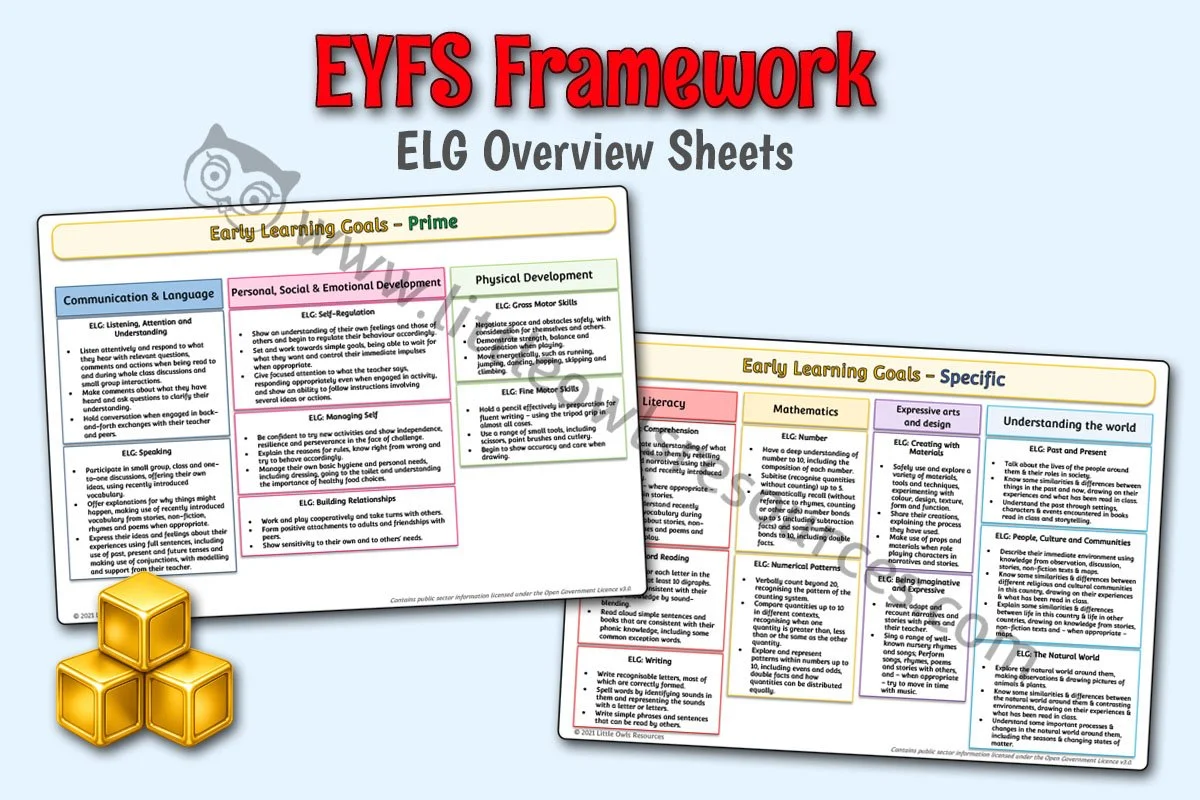
📚 Are the areas of learning or Early Learning Goals changing?
📋 Preparing for September 2026: a practical checklist
⚖️ A proportionate approach to the changes
🔗 Official guidance and further reading
🧰 Useful Resources
📅 When do the changes take effect?
The updated requirements become statutory on 1 September 2026.
Until 31 August 2026, providers should continue to follow the current version of the framework. However, publishing the documents in advance gives settings, schools and childminders time to review their existing policies, procedures and practice before the changes take effect.
🔄 What is changing in the EYFS Framework?
The most significant changes fall within the safeguarding and welfare requirements. They include:
clearer statutory safer-sleep requirements
new restrictions relating to banned dog breeds
changes to the reporting of allegations of harm
strengthened criminal-records-check requirements
clearer expectations concerning information that staff must disclose
a new requirement to have regard to government guidance on children’s screen use
The Department for Education describes the remaining amendments as mainly minor or clarificatory changes intended to make existing requirements clearer.
😴 Safer sleep requirements brought into the framework
Explicit safer-sleep requirements have now been incorporated into the main body of both EYFS frameworks.
Previously, providers were directed towards external safer-sleep guidance. From September 2026, the framework itself sets out the principal requirements that must be followed when babies and young children sleep in early years provision.
For children under two, both frameworks state that:
Children must be placed down on their back in their own separate sleep space on a firm flat surface such as a cot, bed or mattress on the floor. Babies aged 12 months and under must only be placed to sleep in a cot. (Cots refer to: cots, carrycots, moses baskets, travel cots. Providers may find it useful to refer to the British Standards.)
Sleep spaces must only contain a firm, flat, waterproof mattress and lightweight bedding which is firmly tucked in around the child below their shoulders to prevent head covering. Alternatively, a well fitted baby sleep bag may be used. Check the manufacturer recommendations before using a baby sleep bag.
Where blankets are used, the child must be placed feet-to-foot at the bottom of the cot, with blankets tucked in.
Cots must not contain extra items such as toys, pillows, extra blankets, bumpers, wedges or straps.
Children should not get too hot or cold. The recommended room temperature for babies is 16 – 20˚C.
Children’s heads must not be covered.
Babies under six months of age must always have an adult with them in the same room for every sleep. All children must be frequently checked when sleeping.
Children must always be within sight and hearing of staff when sleeping.
Practitioners must continue to read relevant NHS advice about sudden infant death syndrome, with further information available from organisations such as The Lullaby Trust.
What should providers do?
Providers caring for sleeping children should review:
their safer-sleep policy
sleep-room arrangements
the suitability of cots, mattresses and bedding
staff deployment during sleep periods
sleep-checking and recording procedures
the safer-sleep information included in staff induction and training
Bringing the requirements into the statutory framework should help create greater consistency across early years provision and make it clearer which elements are mandatory.
🐕 New rules concerning banned dog breeds
From September 2026, banned dog breeds (as dogs covered by Section 1 of the Dangerous Dogs Act 1991) must not be kept or present at premises from which registered early years childcare is provided at any time. This includes the XL Bully type and applies even where the owner holds a valid certificate of exemption.
This is a prohibition rather than a matter to be managed through an ordinary risk assessment. A banned dog cannot simply be placed in another room or kept away from the children while childcare is taking place.
Related registration requirements are also changing:
nannies will be prohibited from taking a banned dog breed onto premises where they are providing childcare
nannies must take reasonable steps to prevent a banned dog breed from being present
other voluntarily registered early years and later-years providers will be prohibited from providing registered childcare on premises where a banned dog breed is kept or present
Providers working from domestic premises should therefore ensure that everyone living or working at the premises understands the new restriction.
🛡️ Reporting allegations of harm
Registered providers are already required to notify Ofsted, or their childminder agency where applicable, about certain allegations made against adults connected with the provision.
From September 2026, the wording will change from allegations of “serious harm” to allegations of “harm”.
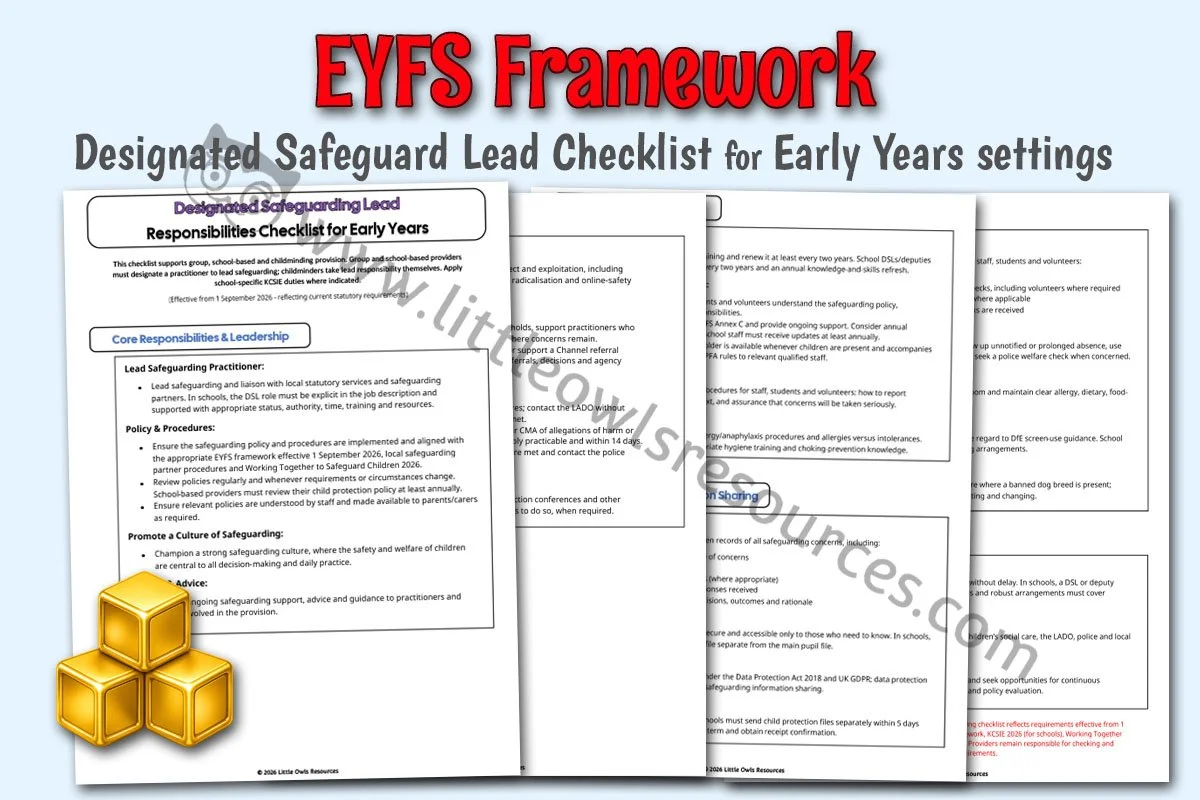
This is an important distinction. Under the revised wording, providers must notify Ofsted or their childminder agency of allegations of harm or abuse made against anyone who:
lives on the premises
works on the premises
looks after children on the premises
The requirement applies whether the alleged incident occurred at the setting or elsewhere, such as during an outing.
Providers must also report the action they have taken in response. Notification must be made as soon as reasonably practicable and, in all cases, within 14 days of the allegation being made.
In the framework, harm includes ill-treatment, including non-physical and sexual abuse, as well as impairment of a child’s physical or mental health or their physical, intellectual, emotional, social or behavioural development. It can also include harm caused by seeing or hearing another person being ill-treated.
What should providers do?
Settings and childminders should check that their safeguarding and allegations-management procedures:
use the revised term harm
clearly identify which incidents must be reported
explain who is responsible for making the notification
include the statutory 14-day deadline
cover allegations arising both inside and outside the setting
Staff should also understand that the provider’s duty to notify Ofsted or a childminder agency is separate from referrals that may need to be made to children’s social care, the police, the local authority designated officer or the Disclosure and Barring Service.
🙋 Enhanced criminal-records checks for volunteers
The revised framework strengthens suitability-check requirements for volunteers.
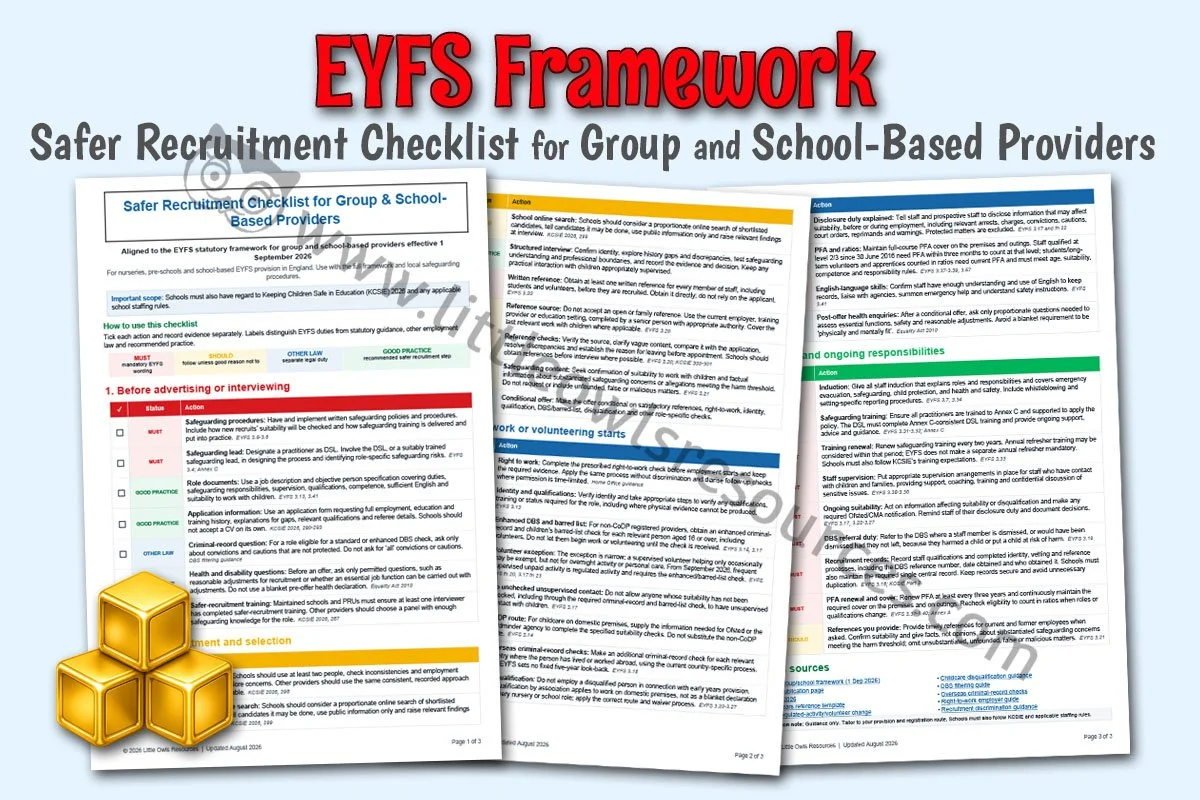
Group and school-based providers must obtain an enhanced criminal-records check and barred-list check for people aged 16 or over who work directly with children, including volunteers.
The framework notes a limited exception for supervised volunteers who only help occasionally, such as a parent accompanying a daytime trip, provided that the person does not stay overnight or provide personal care. Providers will need to consider carefully whether a volunteer genuinely falls within this exception.
The revised requirements reflect changes affecting supervised unpaid activity. Regular teaching, training, instructing, caring for or supervising children may now constitute regulated activity even where the volunteer is supervised.
Providers should not assume that supervision automatically removes the need for an enhanced check.
✅ New employees and relevant volunteers must not start before the required checks are received
The new framework also states that providers must not allow an individual to begin working at the setting until the provider has received the applicant’s enhanced criminal-records and barred-list check.
The same restriction applies to volunteers who require these checks.
Providers must also ensure that no one whose suitability has not been checked has unsupervised contact with children.
This may require some settings to revise recruitment timescales. Providers should avoid agreeing start dates that depend on a check arriving after the person has commenced employment.
Recruitment and induction documentation should make clear:
which checks are required
who is responsible for seeing and recording the result
when employment may formally begin
what arrangements apply to occasional volunteers
how overseas criminal-records checks will be handled where relevant
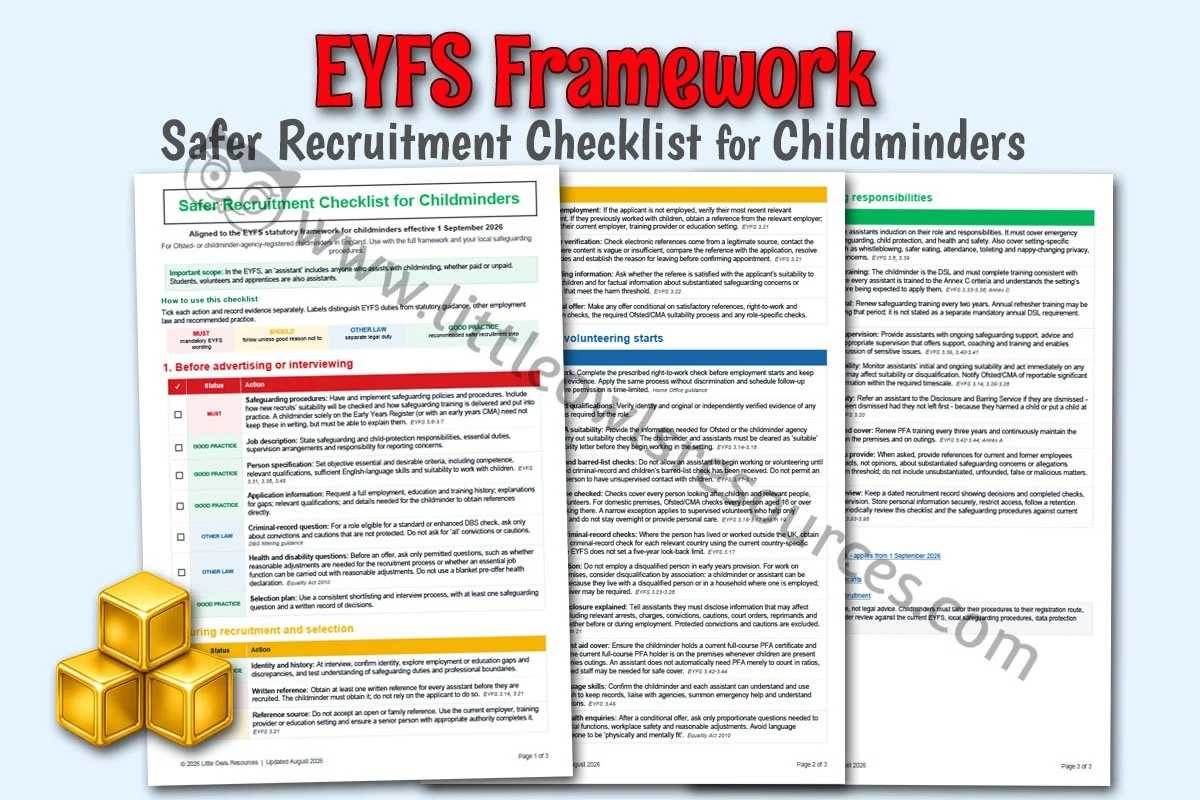
For childminders, assistants must also have been cleared as suitable by Ofsted or the relevant childminder agency before beginning work in the setting.
📢 Information staff must disclose
Providers must tell staff and prospective staff that they are required to disclose information that may affect their suitability to work with children.
The updated wording expressly includes, but is not limited to:
arrests
charges
convictions
cautions
court orders
reprimands
warnings
This applies to information arising before employment and during the person’s time at the setting, subject to the legal rules concerning protected convictions and cautions.
Providers should make sure this expectation is included in:
application forms
recruitment information
contracts or staff agreements
induction procedures
codes of conduct
ongoing suitability declarations
Suitability should be treated as a continuing responsibility rather than a check completed only at the point of recruitment.
🏠 Additional notification requirements for childcare on domestic premises
The group and school-based framework contains an additional change for providers of childcare on domestic premises (CoDP).
These providers will be required to notify Ofsted or their childminder agency of relevant changes involving people aged 16 or over who live or work at the premises.
This brings the requirements for childcare on domestic premises more closely into line with those already applying to childminders.
Providers affected by this change should make sure that everyone connected with the premises understands that changes in household members, employees or other people working there may need to be reported.
📱 New statutory regard for children’s screen-use guidance
For the first time, both EYFS frameworks state that providers must have regard to the government’s guidance on children’s screen use in early years settings.
The words “must have regard to” are important. They mean that providers must consider and take the guidance into account. They should normally follow it unless there is a sound and defensible reason for taking a different approach.
The guidance recommends that:
screen time should be avoided for children under two, other than in exceptional circumstances such as a video call with a parent or carer
children aged two to five should have no more than one hour of screen time across the day, and less where possible; settings should remember that children may already have used screens at home
screens should be used carefully and intentionally
screen use in a setting should have a clear learning or developmental purpose
children should not access screens alone or without adult co-engagement
content should be safe, age-appropriate and suitable for young children
The daily time recommendations do not apply in the same way to assistive technologies used by children with SEND, where technology may provide essential support for communication, wellbeing or participation.
Screen use is not the same as screen time
The guidance makes a useful distinction between the two terms:
Screen time is the amount of time a child spends looking at a screen.
Screen use considers how, why and in what context the screen is being used, including the quality and pace of the content, its purpose and the level of adult and child engagement.
This does not mean that all technology must disappear from early years provision. It does, however, reinforce that screen-based activities should not routinely replace:
active play
outdoor experiences
practical exploration
face-to-face conversation
responsive interactions
shared reading
creative and imaginative play
opportunities to handle real objects and materials
A carefully chosen video clip used briefly to extend children’s investigation is very different from leaving a programme playing in the background or using a screen simply to occupy children.
What should providers do?
Providers may wish to develop or review a screen-use policy that explains:
whether screens are used within the provision
the intended educational purposes
how long children may use them
how adults will supervise and participate
how content will be selected and checked
how screen use will be adapted for children with SEND
how the setting will work with parents and carers
Settings should also consider screen use during meals, transitions and quieter periods, as well as the use of interactive whiteboards, tablets, televisions and practitioners’ own devices.
🎓 Early years qualification requirements
The Department for Education has also announced that the Early Years Qualification Requirements and Standards document will be updated from 1 September 2026.
The change is intended to clarify the Level 2 English requirements.
This document is particularly relevant to group and school-based providers when determining whether staff members’ qualifications and experience allow them to be counted at Level 2, Level 3 or Level 6 within statutory staff-to-child ratios.
Providers should consult the final September 2026 version once it is available rather than relying on assumptions about how the clarification will apply to an individual qualification.
📚 Are the areas of learning or Early Learning Goals changing?
The headline September 2026 amendments focus on safeguarding, welfare, safer sleep, suitability and screen use.
The Department for Education has not described this update as a major reform of the EYFS curriculum, educational programmes or Early Learning Goals. Other amendments are primarily described as minor clarifications intended to make existing requirements easier to understand.
Providers should therefore avoid interpreting the announcement as requiring a complete redesign of their curriculum or planning systems.
Good early years practice should continue to be rooted in:
secure relationships
responsive care
purposeful play
high-quality adult interaction
communication and language
inclusive provision
appropriate teaching
careful observation and professional judgement
The immediate priority is to understand the revised statutory welfare and safeguarding requirements and ensure that policies and daily practice reflect them.
📋 Preparing for September 2026: a practical checklist
Before the new frameworks take effect, providers should consider the following actions.
Read the correct framework
Download and read the September 2026 version for your provider type. Do not rely solely on summaries, as individual requirements may apply differently to childminders and group or school-based providers.
Review safer-sleep practice
Check sleep spaces, equipment, bedding, room arrangements, staff supervision and sleep-check procedures against the explicit new requirements.
Audit recruitment and suitability procedures
Confirm that enhanced checks are obtained for all people who require them and that new employees do not begin work before the relevant check has been received.
Review volunteer arrangements
Identify regular and occasional volunteers and determine whether each person requires an enhanced criminal-records and barred-list check.
Update staff disclosure expectations
Make sure existing and prospective staff understand what information they must disclose and that suitability is monitored throughout employment.
Review safeguarding notification procedures
Replace references to “serious harm” where necessary and make sure procedures accurately reflect the duty to notify Ofsted or a childminder agency about allegations of harm.
Check premises arrangements
Confirm that no banned dog breed is kept or present at any premises from which registered childcare is provided.
Review screen use
Consider how, why and for how long screens are used. Update policies and staff guidance to reflect the new government recommendations and the requirement to have regard to them.
Inform the whole team
Changes should be discussed through staff meetings, supervision, induction and continuing professional development rather than being treated solely as an administrative policy update.
⚖️ A proportionate approach to the changes
Although the updated framework contains several important statutory changes, providers do not need to create unnecessary paperwork.
The most effective preparation will be grounded in practice:
Are sleeping children genuinely safe?
Are everyone’s suitability checks complete?
Do staff know what they must disclose?
Would leaders recognise and report an allegation that meets the harm threshold?
Are screens used sparingly, safely and purposefully?
Are the premises compliant with the new banned-dog requirement?
Policies should accurately describe what happens in practice, but written documents alone are not sufficient. Leaders, managers, practitioners, teachers, assistants and volunteers must understand how the requirements affect their own roles.
Final thoughts
The September 2026 update does not fundamentally change the play-based and developmentally appropriate nature of the EYFS. Instead, it strengthens and clarifies several of the arrangements that help keep young children safe and well.
The inclusion of detailed safer-sleep expectations should make statutory responsibilities easier to identify. Changes to suitability checks and allegations reporting reinforce the importance of vigilant safeguarding cultures, while the new screen-use requirement reflects growing concern about ensuring that technology supports, rather than displaces, the relationships and real-world experiences young children need.
Providers now have an opportunity to read the updated documents carefully, identify any necessary changes and prepare their staff and provision before the requirements become statutory on 1 September 2026.
Please note: This article provides a general overview and should be read alongside the official statutory framework applicable to your provider type. Providers may also wish to seek support from their local authority, childminder agency or relevant professional organisation where they are uncertain about how a requirement applies to their provision.
🔗 Official guidance and further reading
🧰 Useful Resources
[ September 2026 Updates
Over the coming weeks we'll be gradually updating a range of resources across Little Owls Resources to reflect the new EYFS Framework. These updates will include guidance, policy documents and practitioner resources to help you prepare confidently for September.]
Recently Updated Resources - Premium
Recently Updated Resources - Professional




Planning Support Hubs
Free Educational Materials
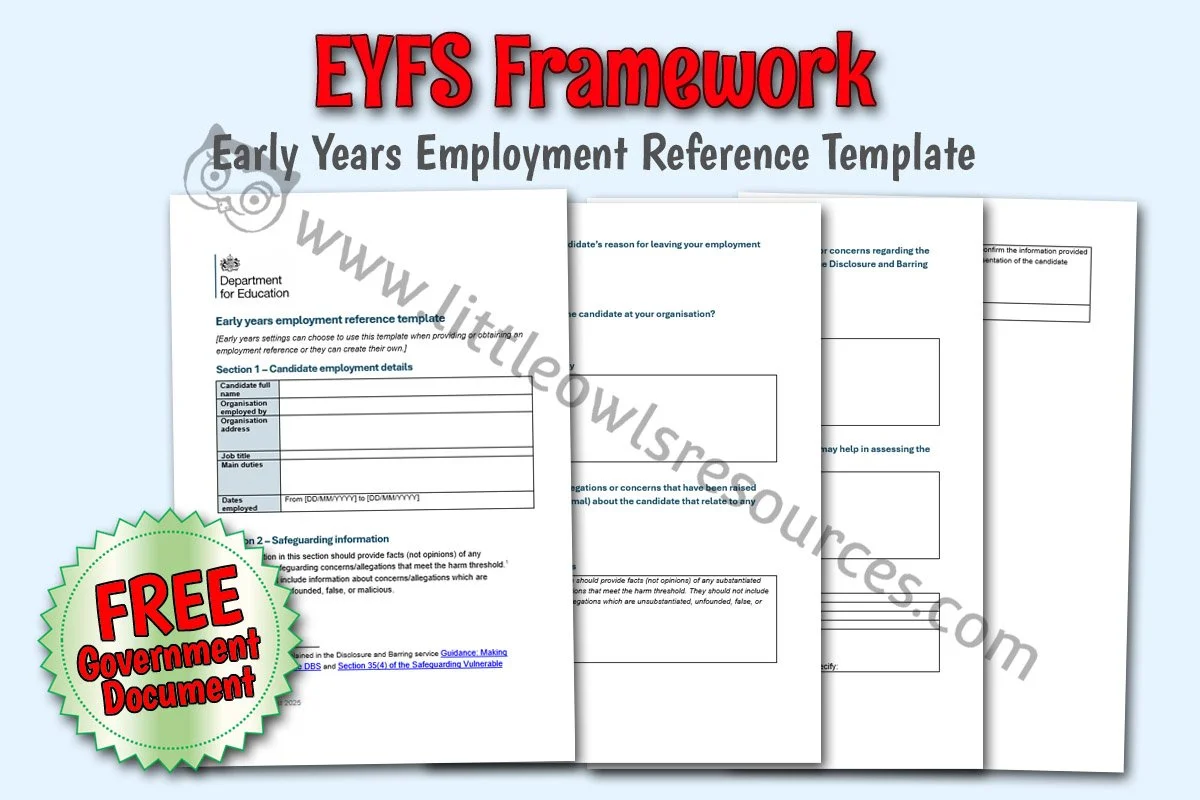
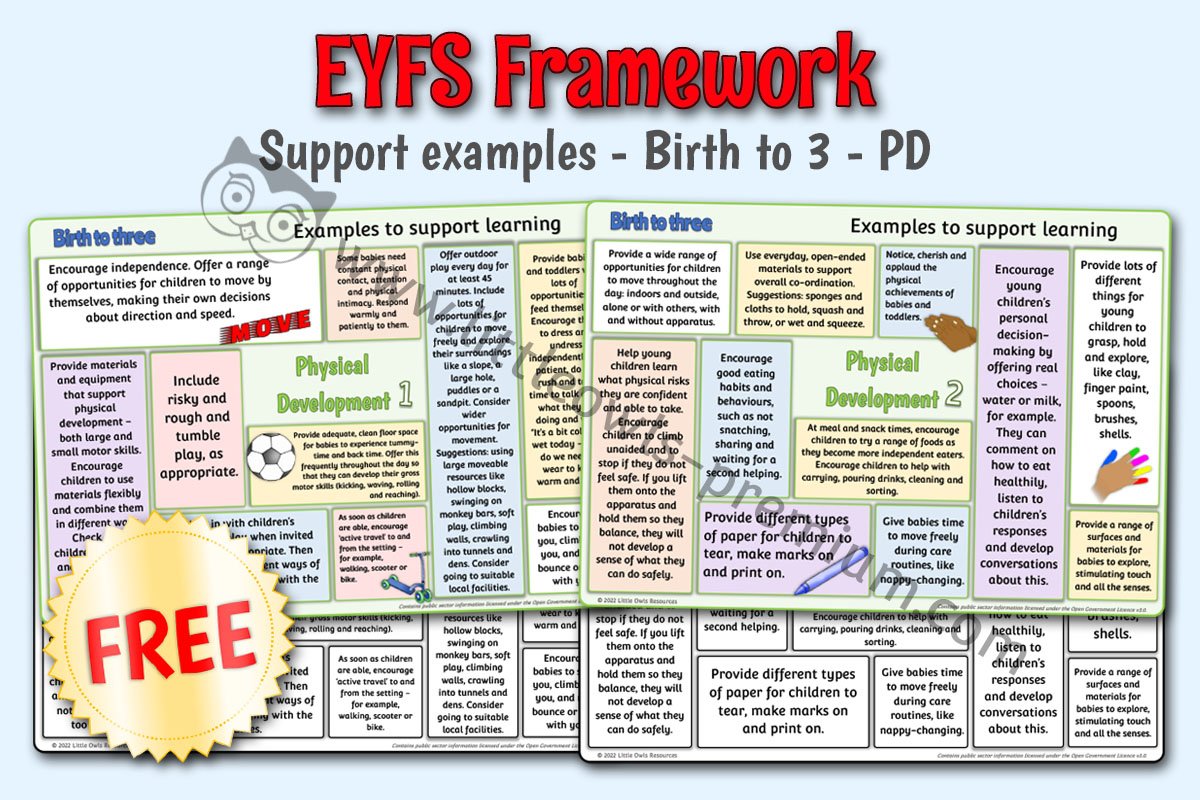
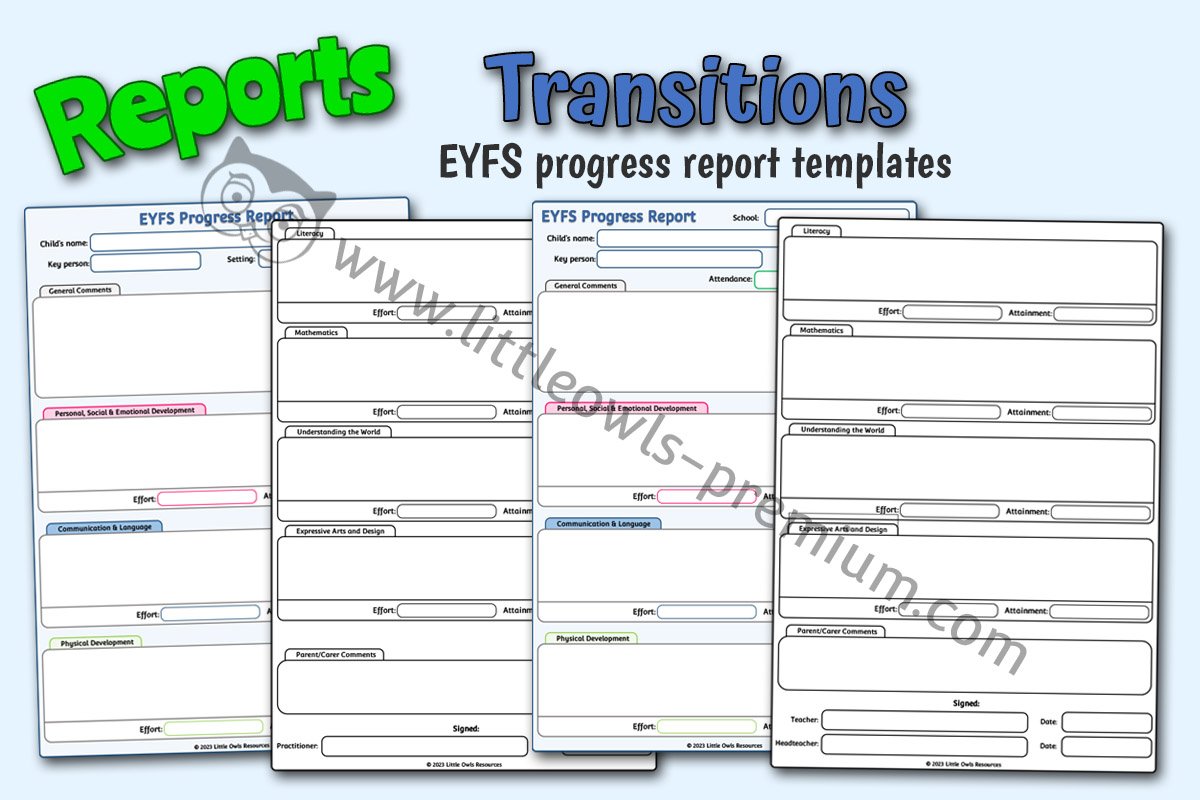
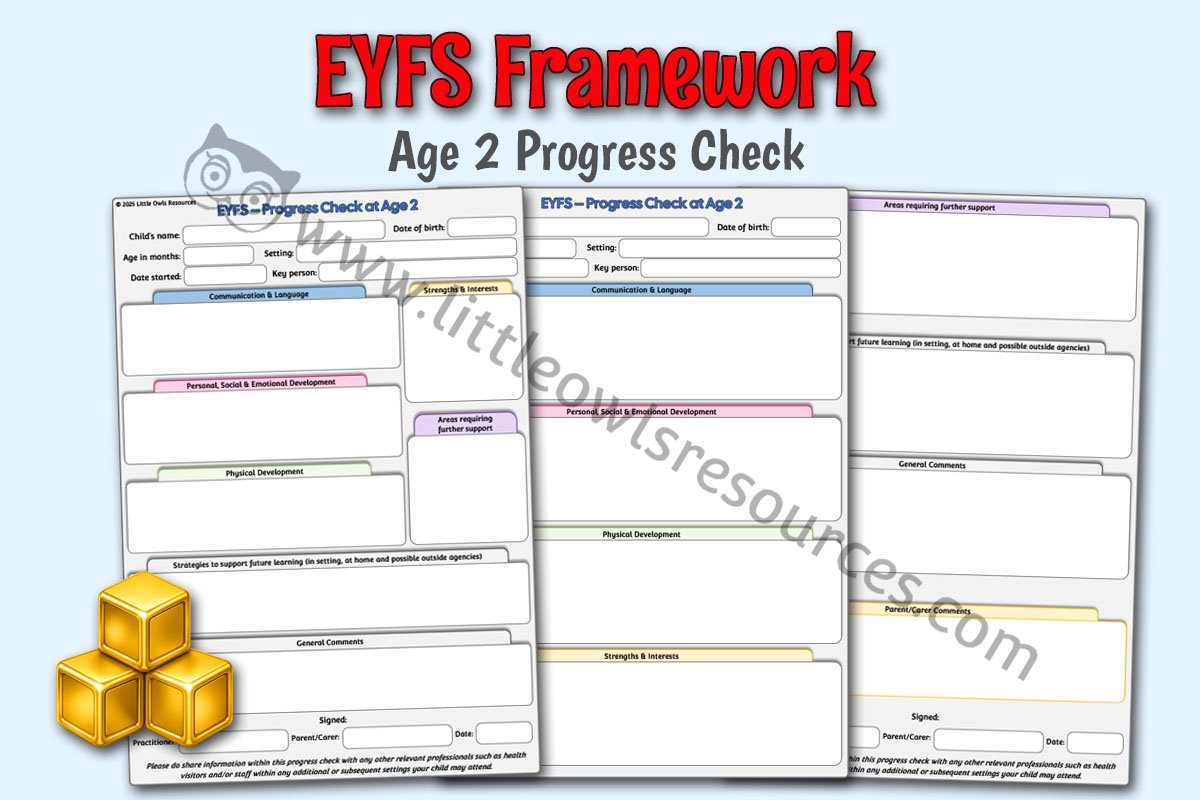
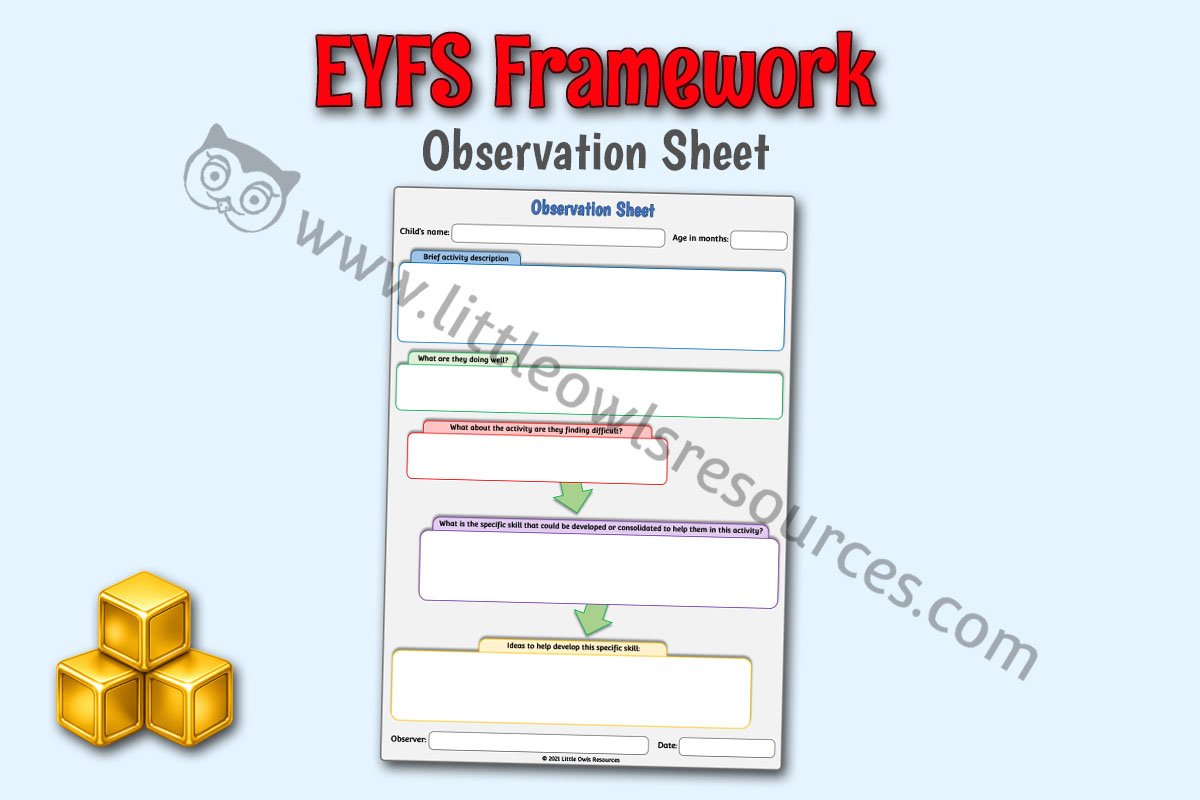
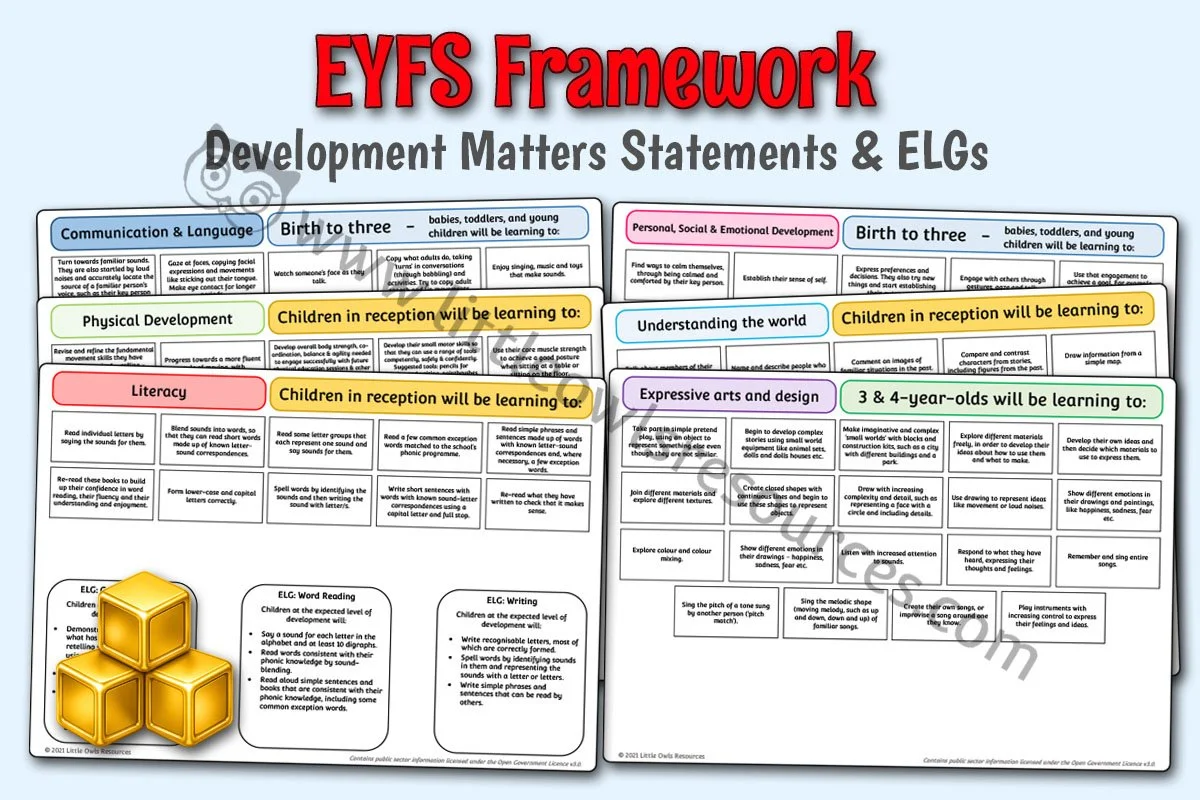
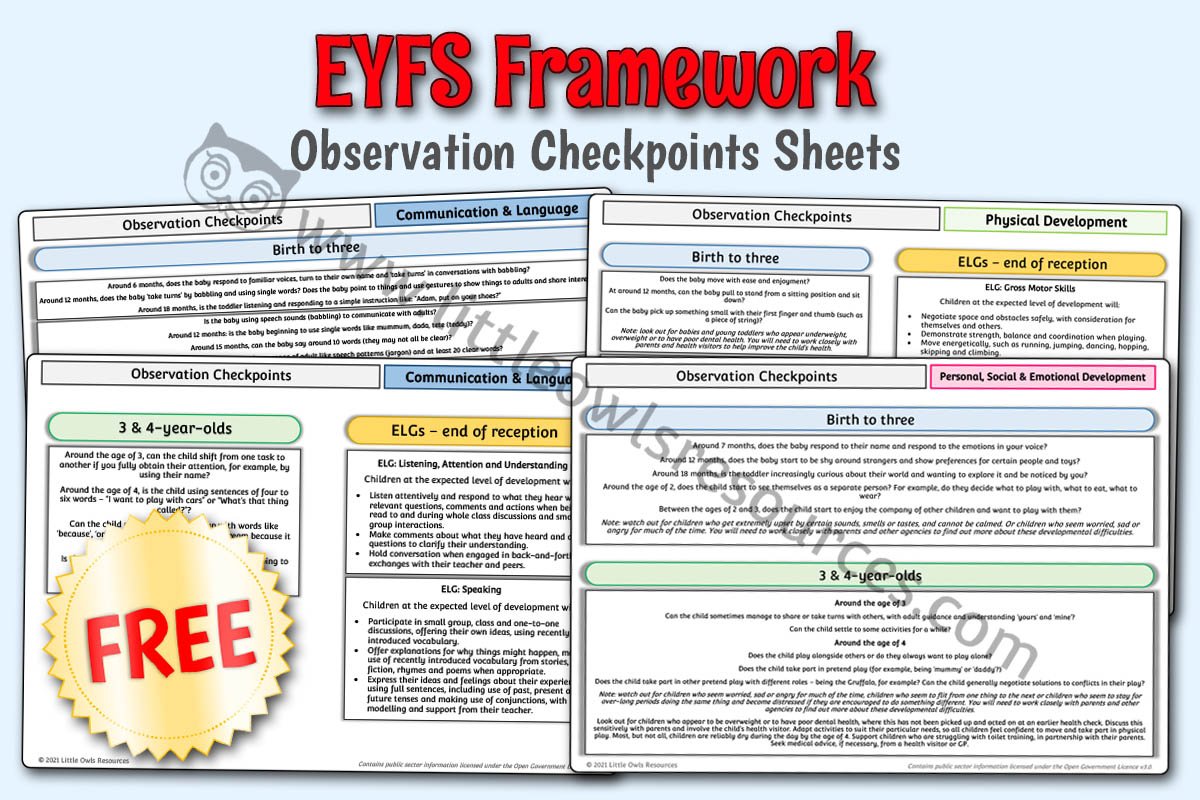
Free support materials to aid providers such as Childminders, Preschool or Nursery Practitioners and Reception Teachers in implementing the EYFS Statutory Framework:



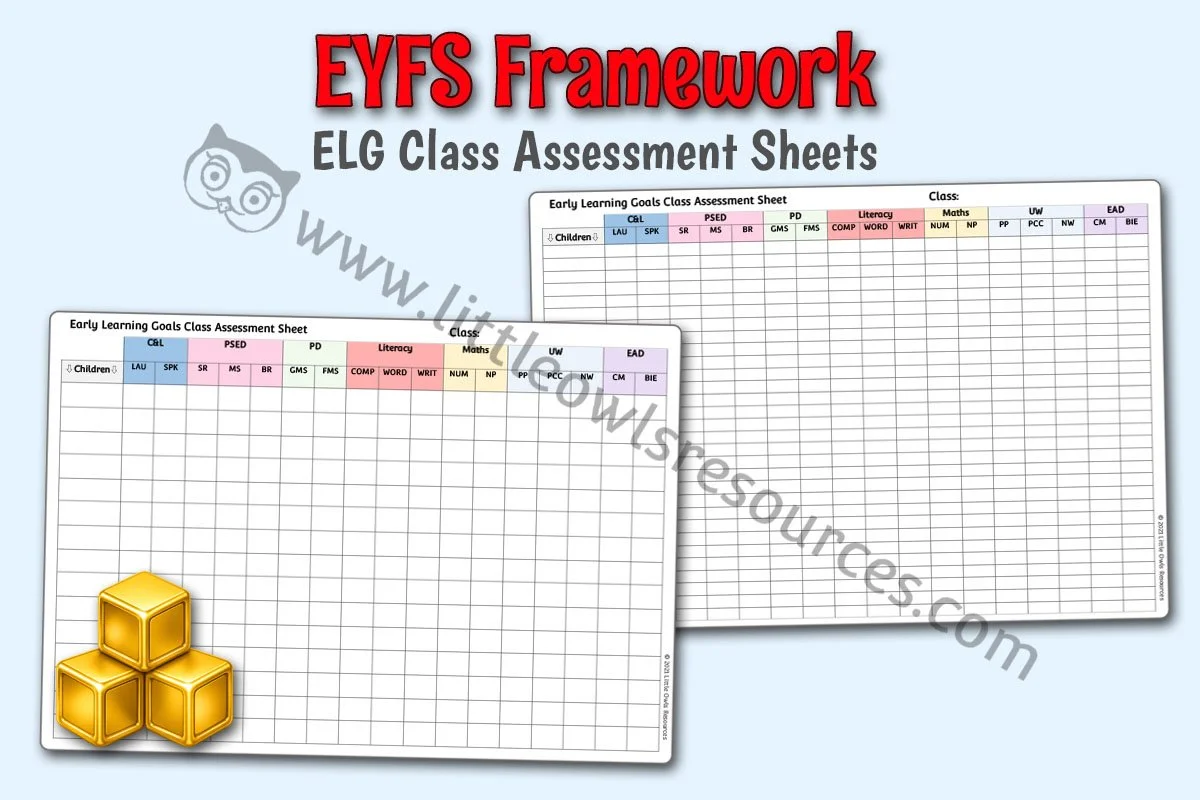
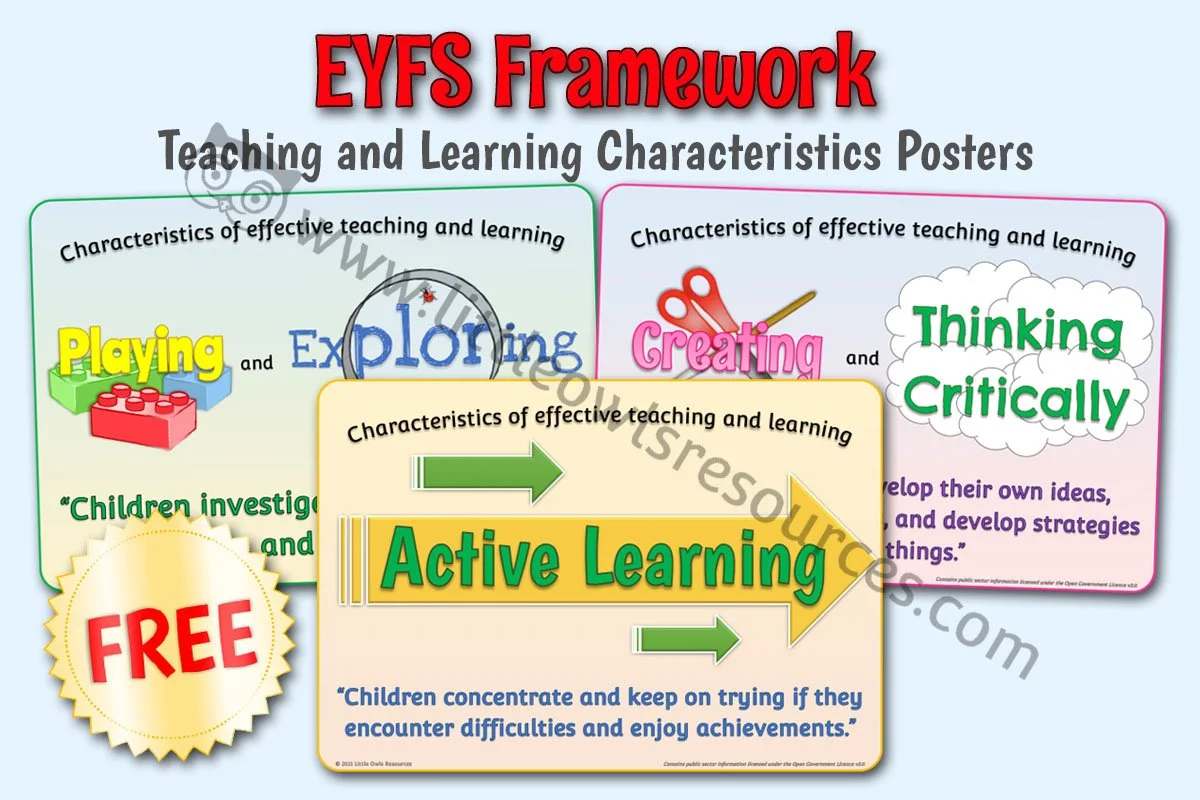
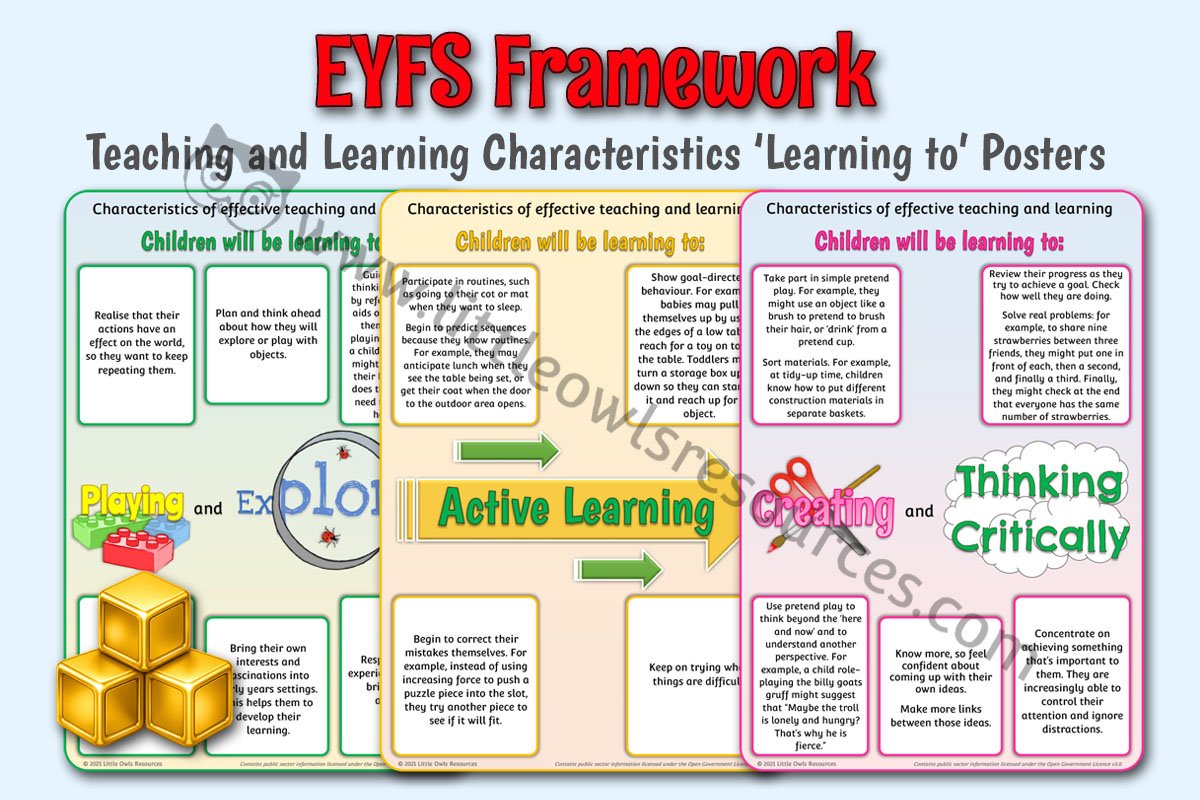
EYFS Framework Support Resources
(Please visit our ‘EYFS Framework’ hub page for our full collection of resources.)
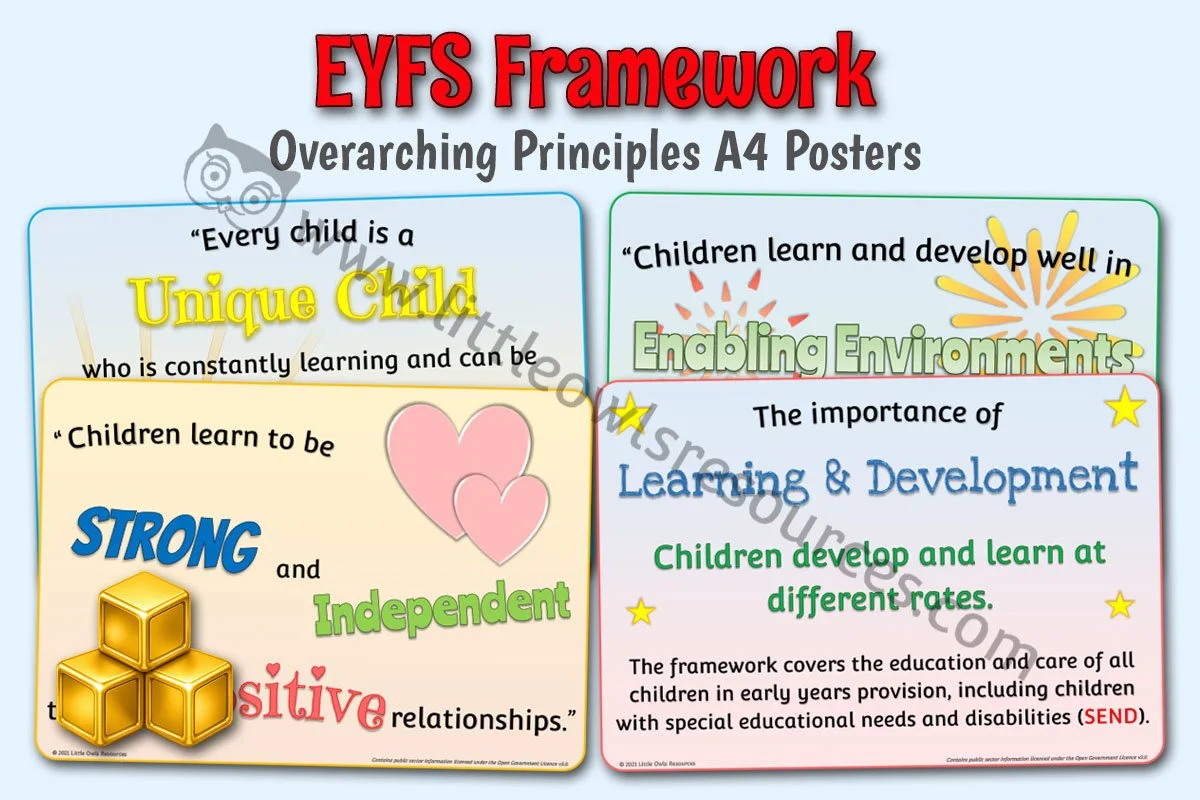
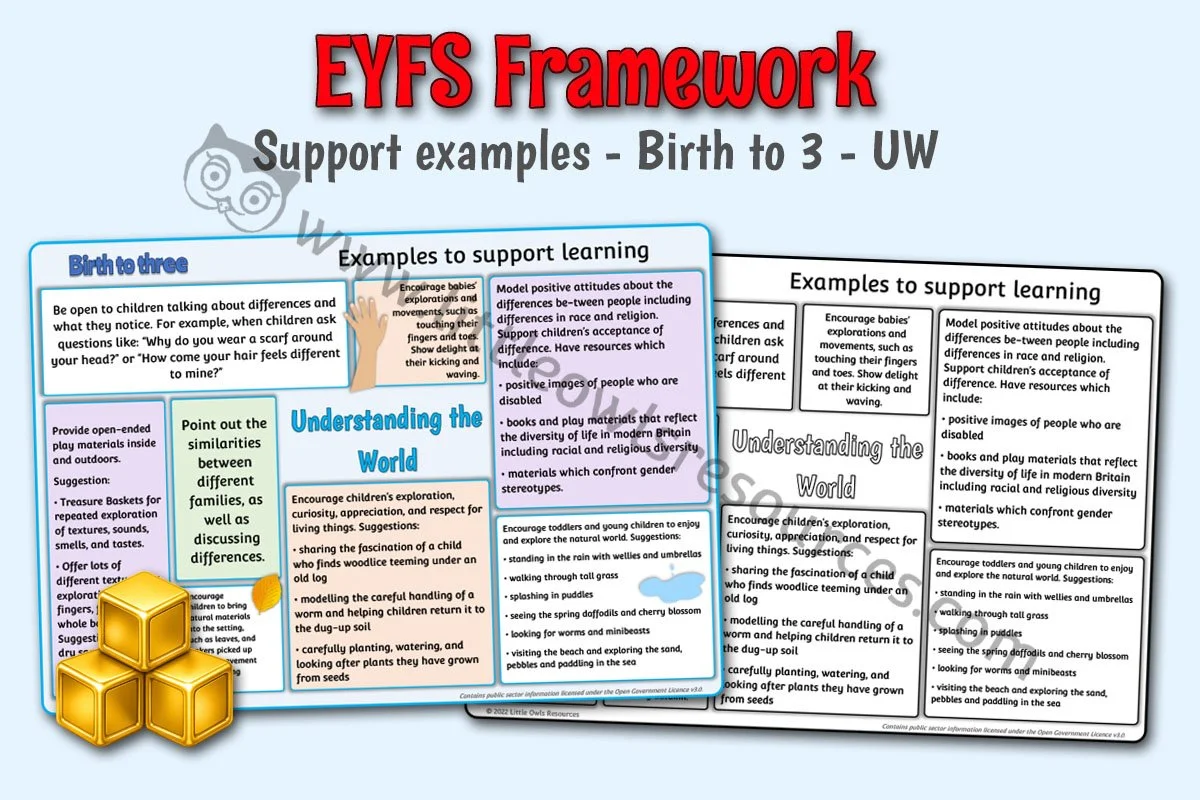
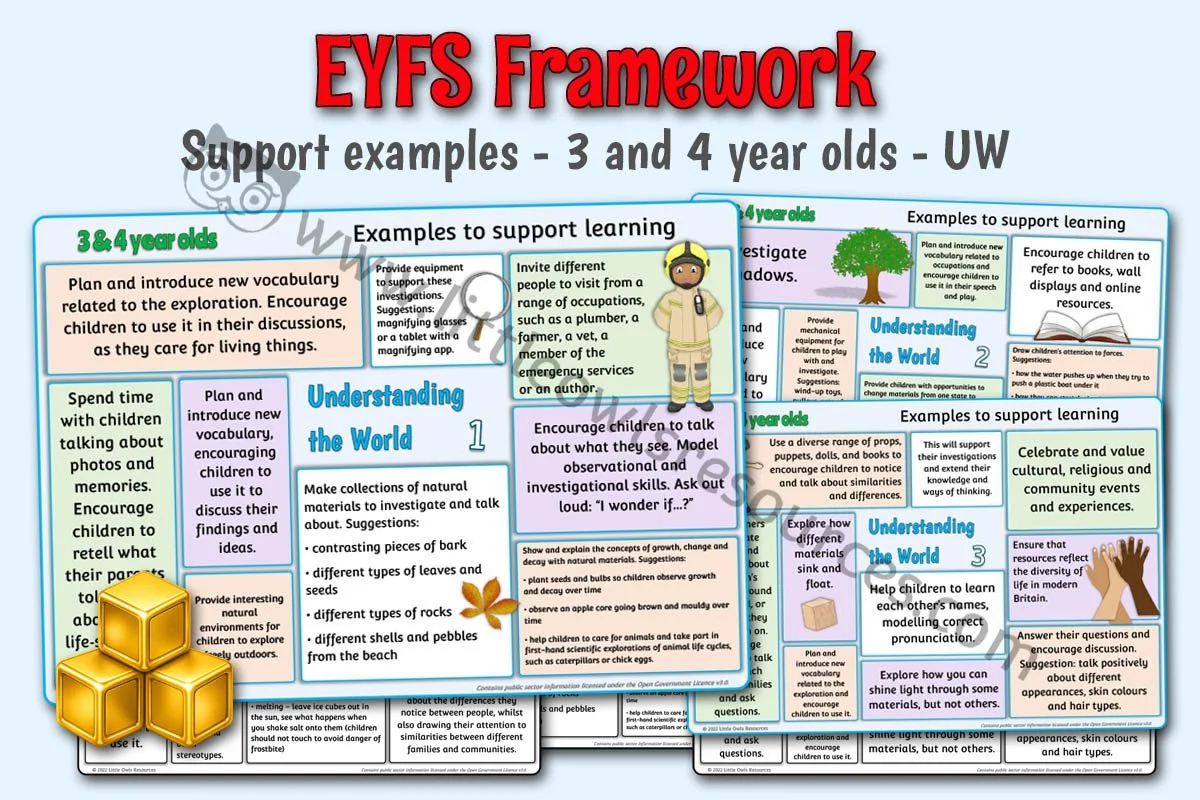
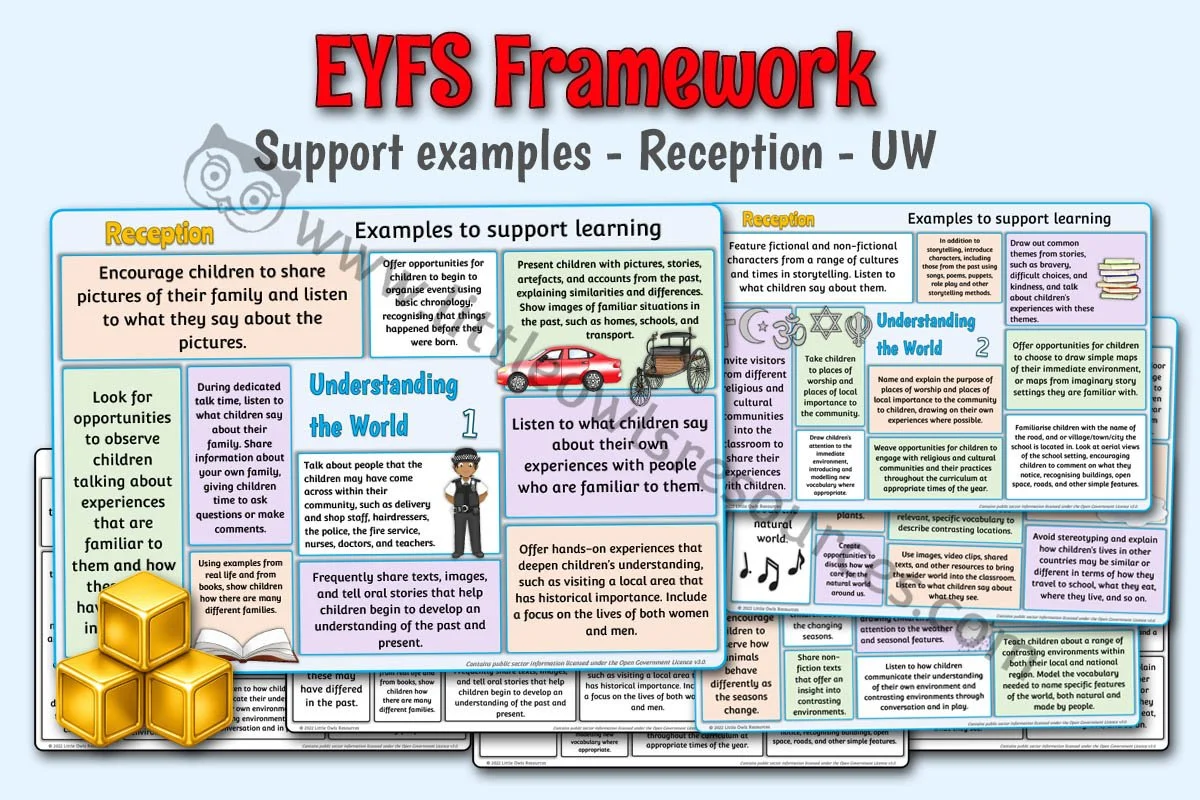
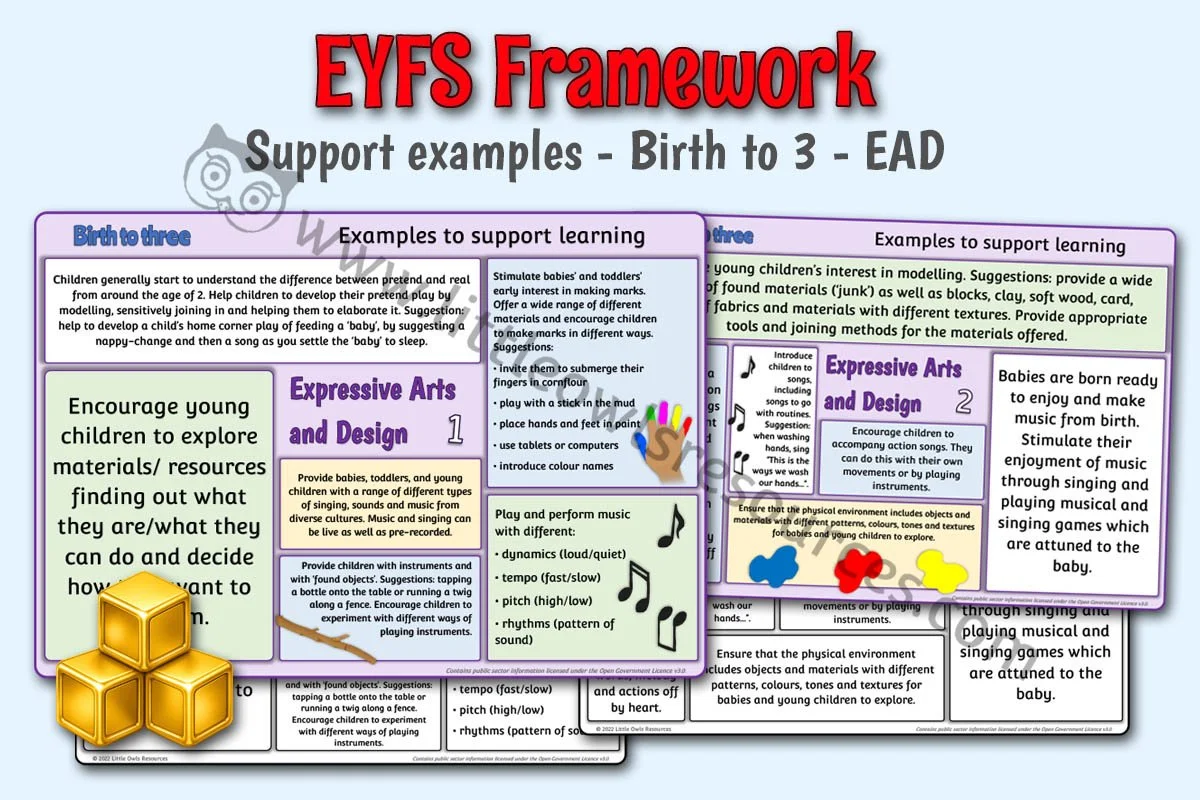
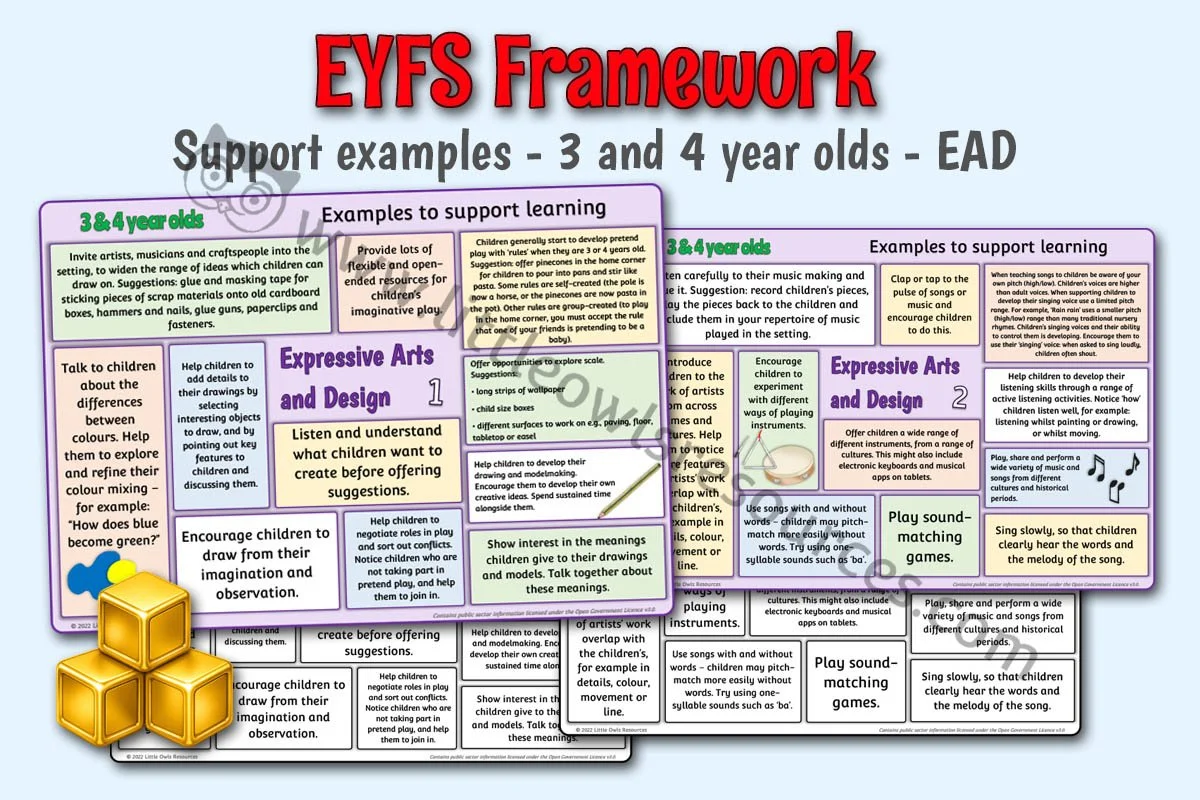
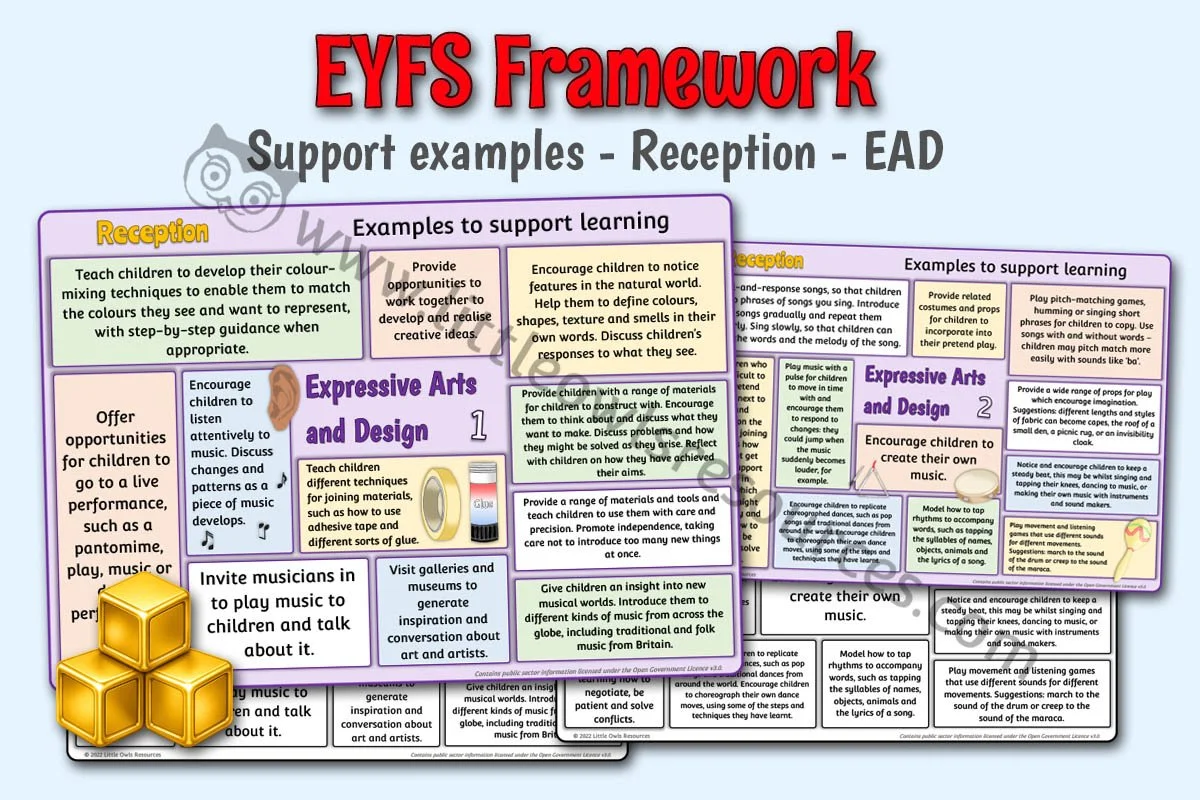
Development Matters Support Examples
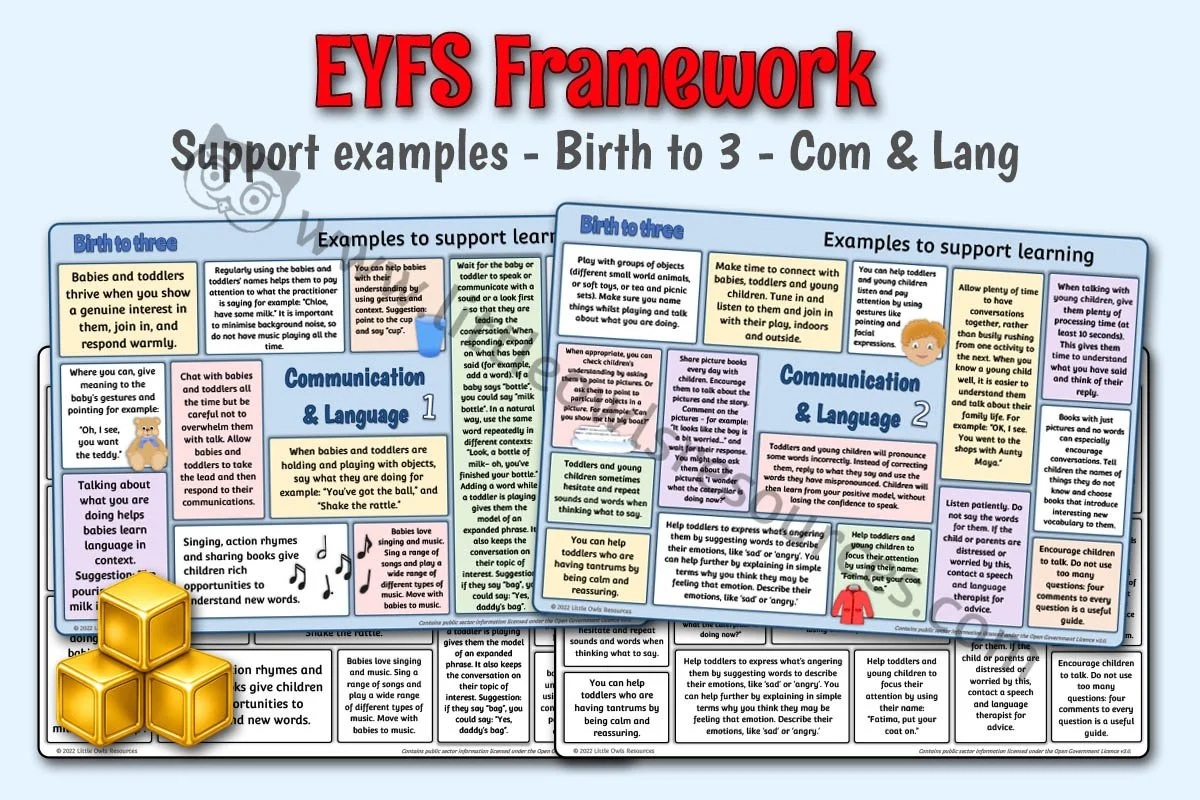
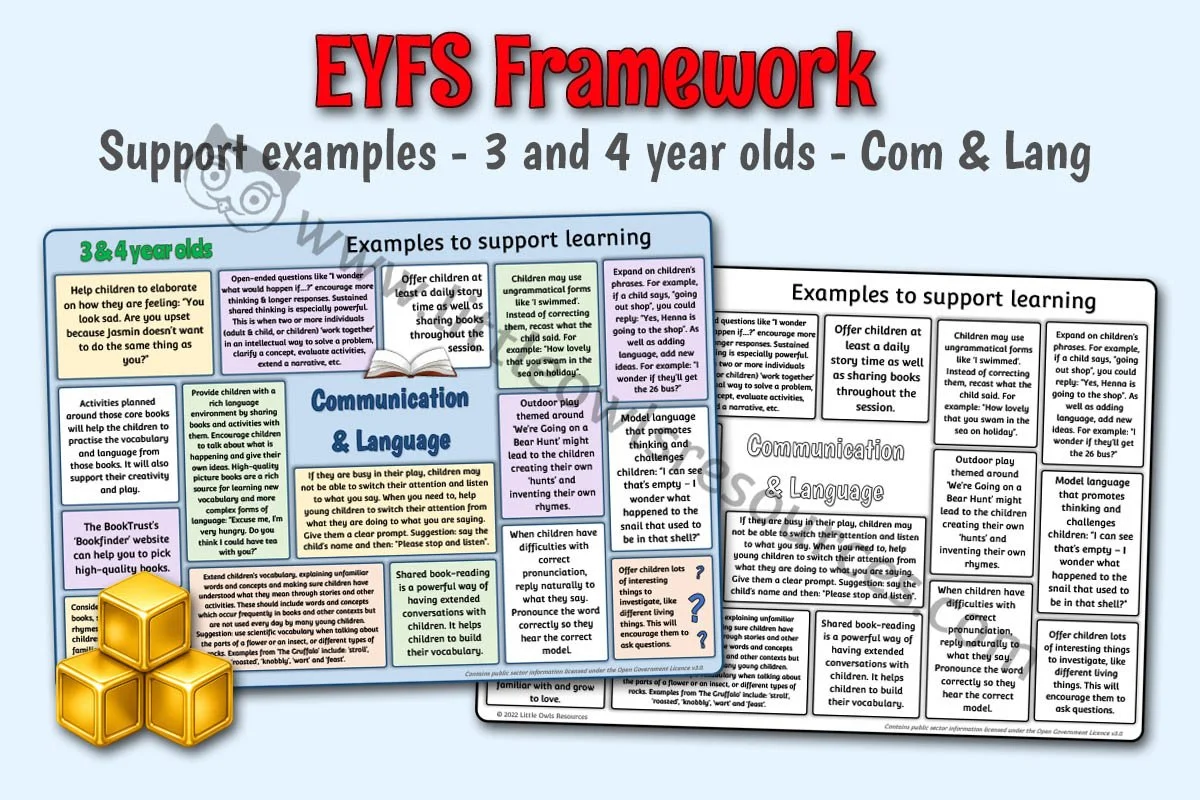
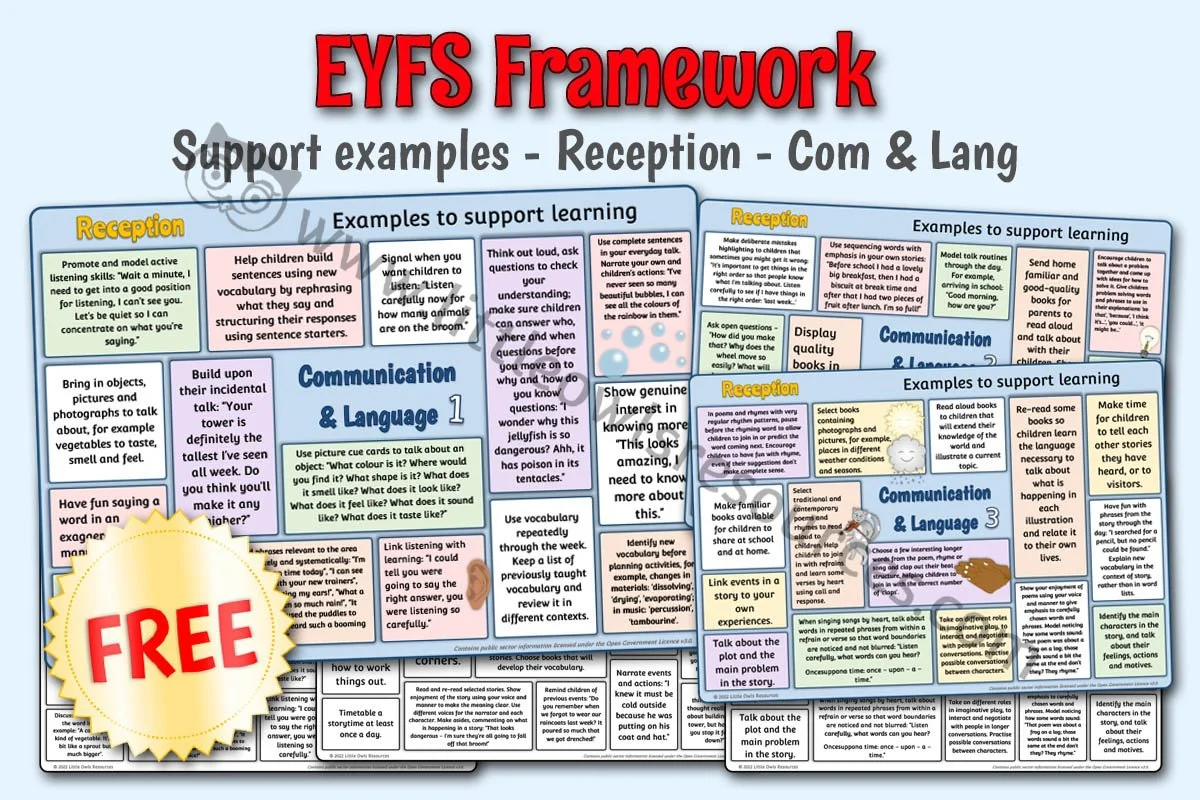
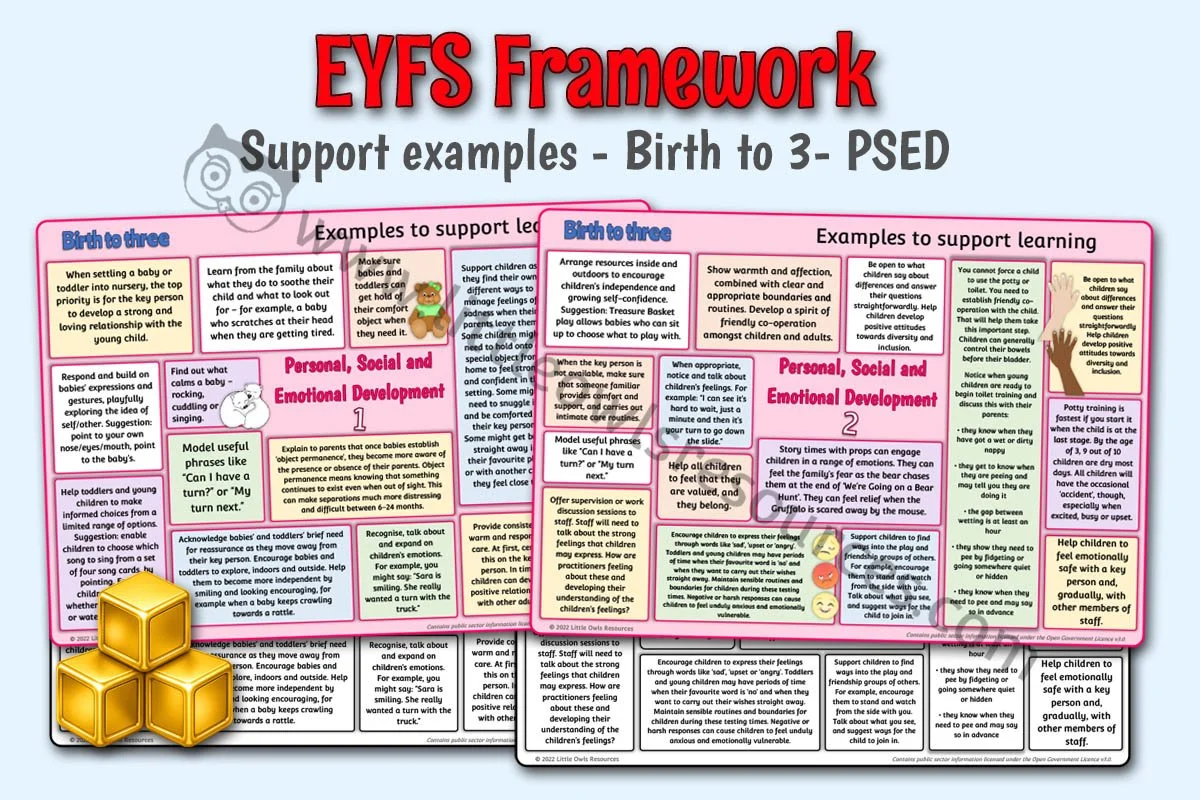
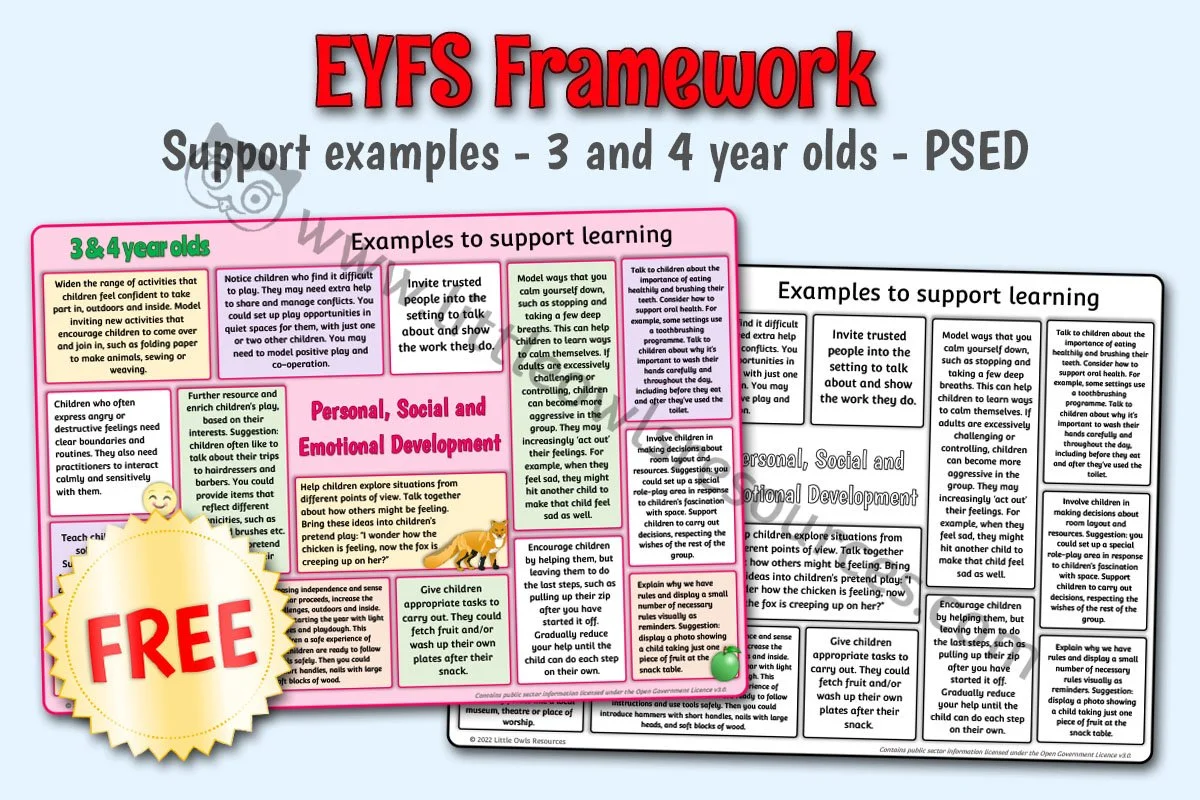
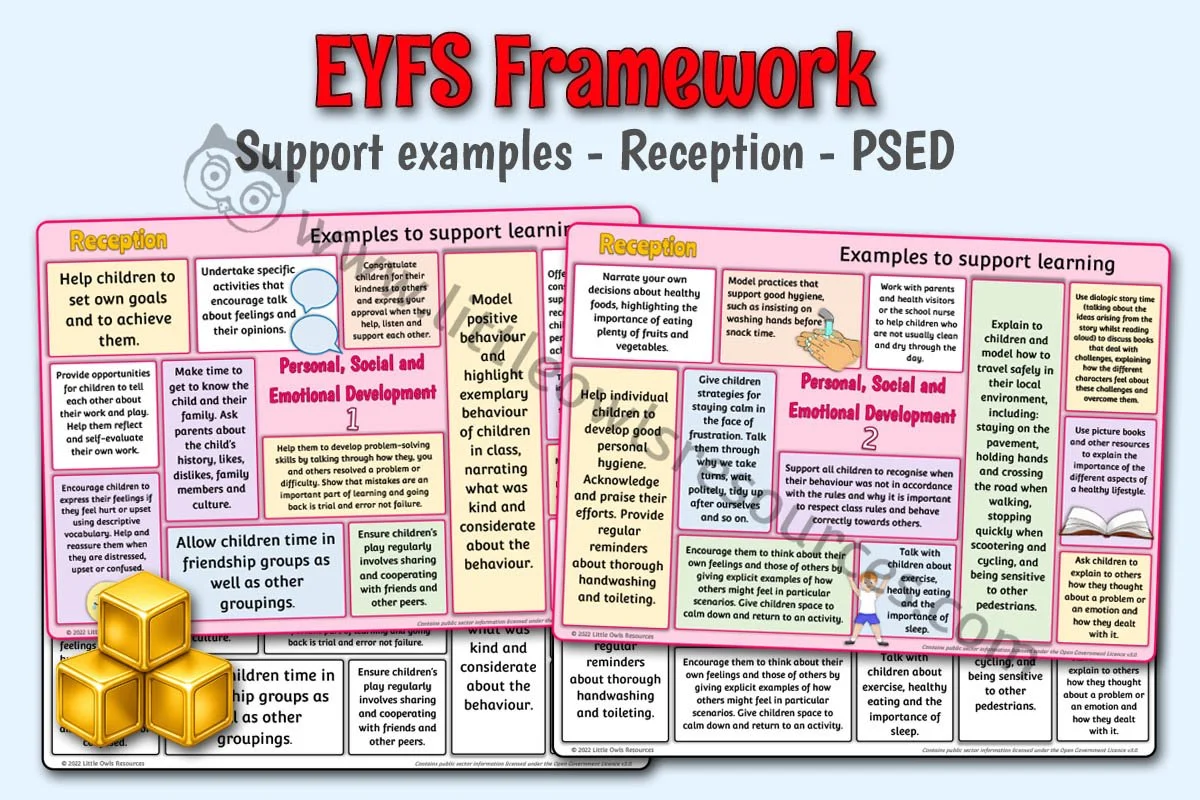
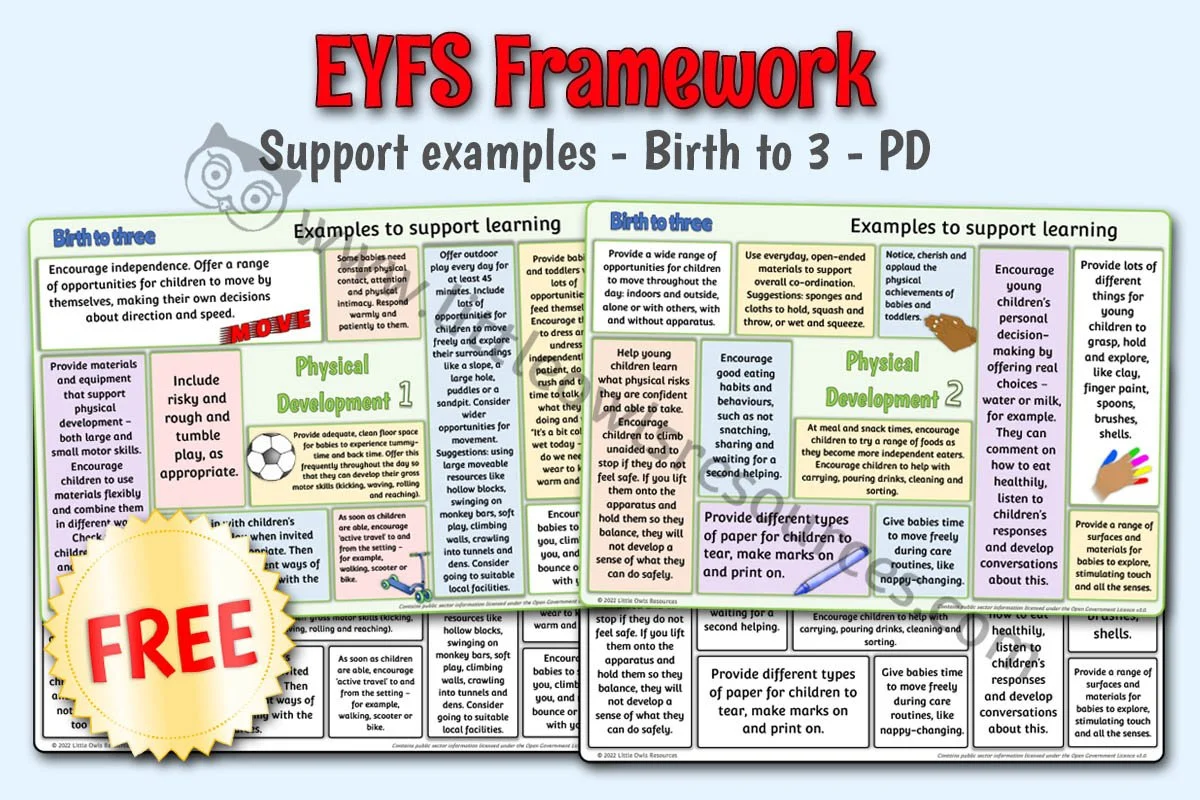
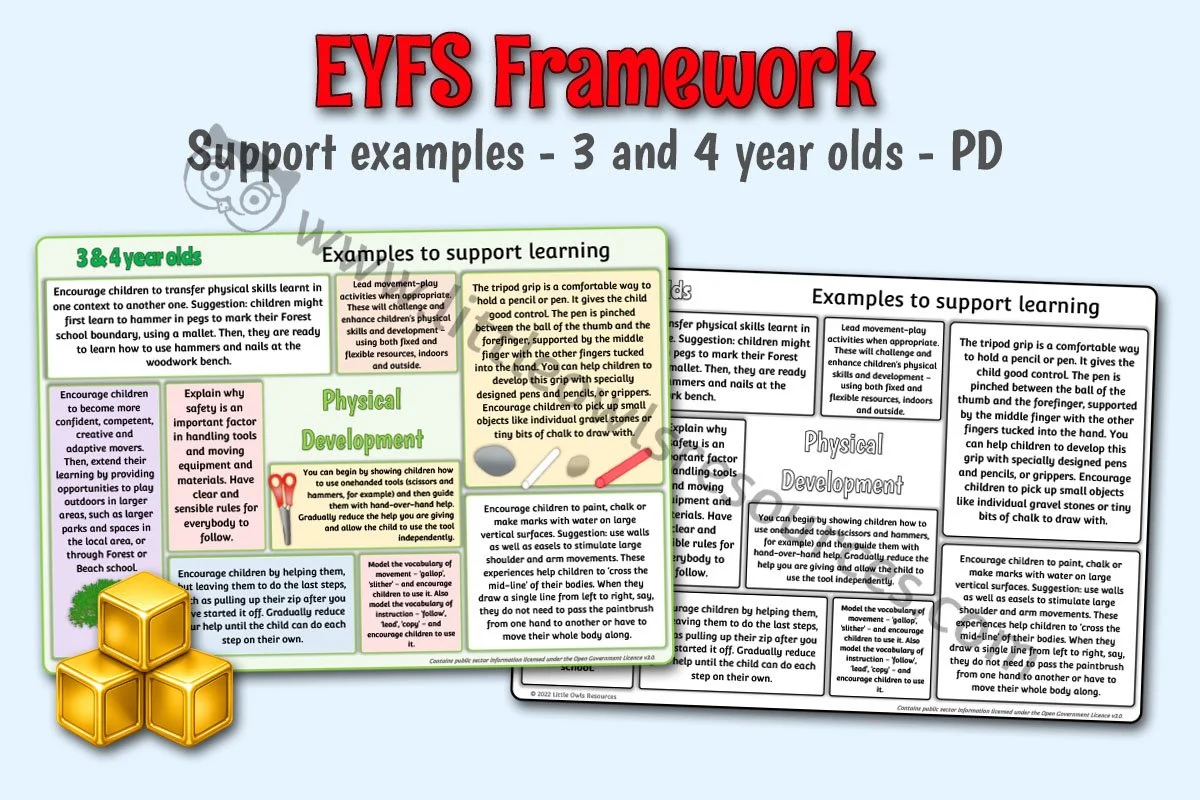
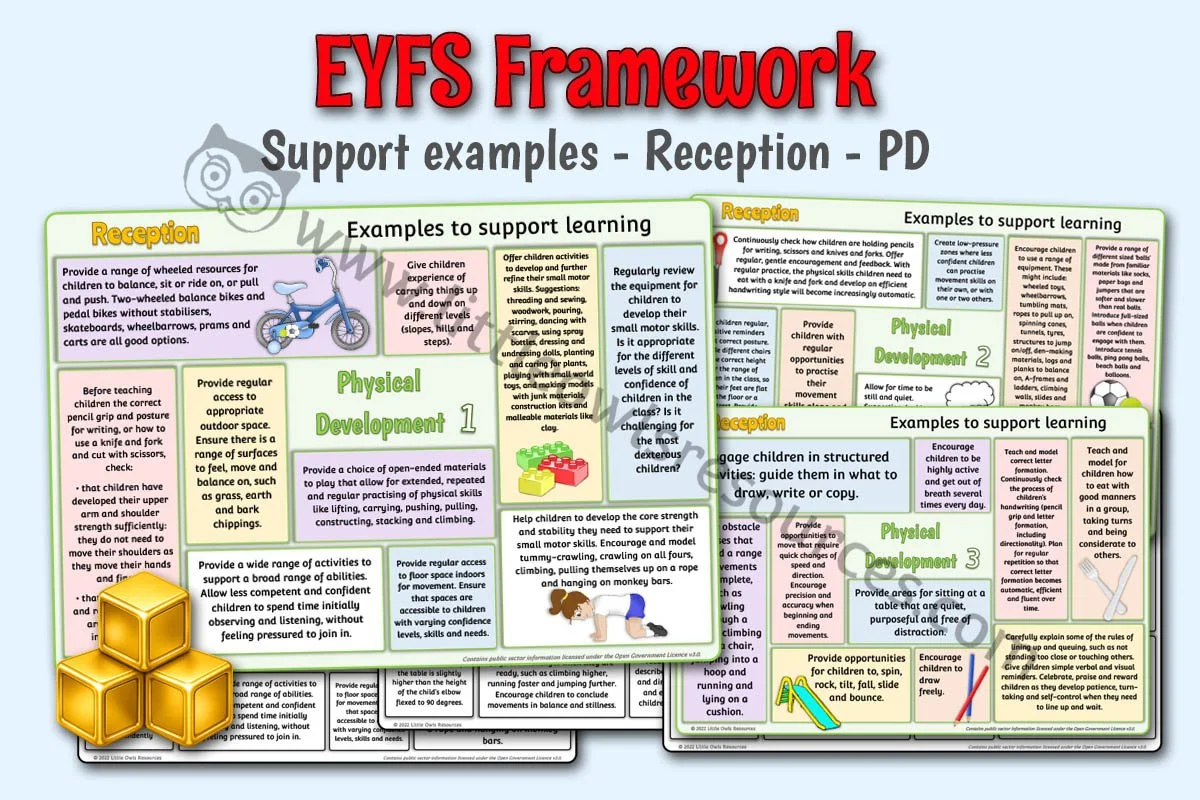
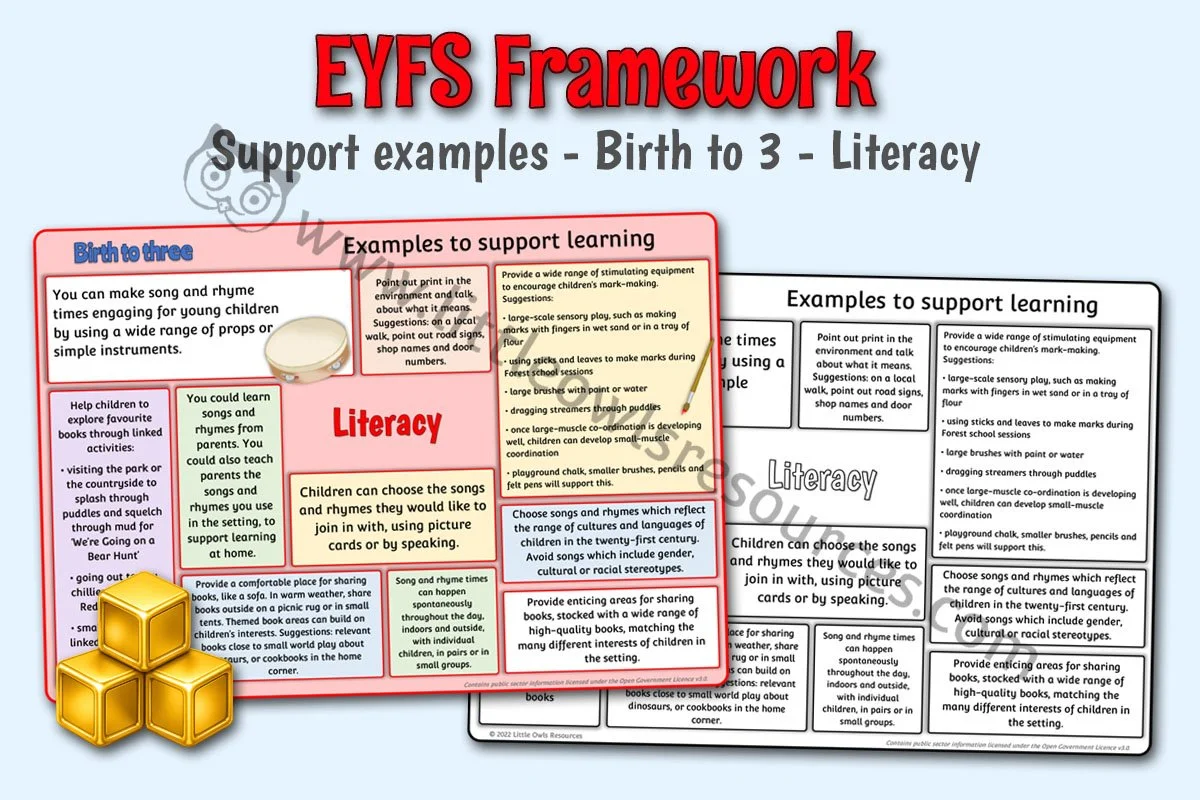
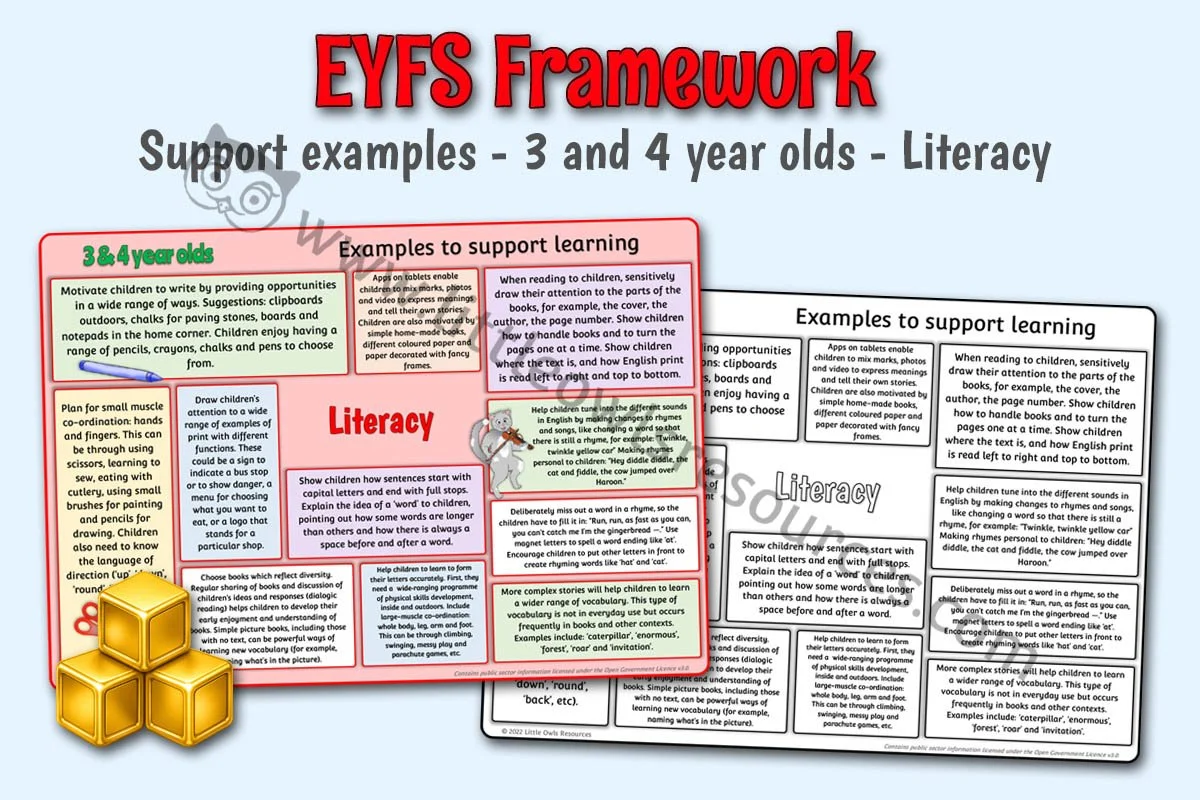
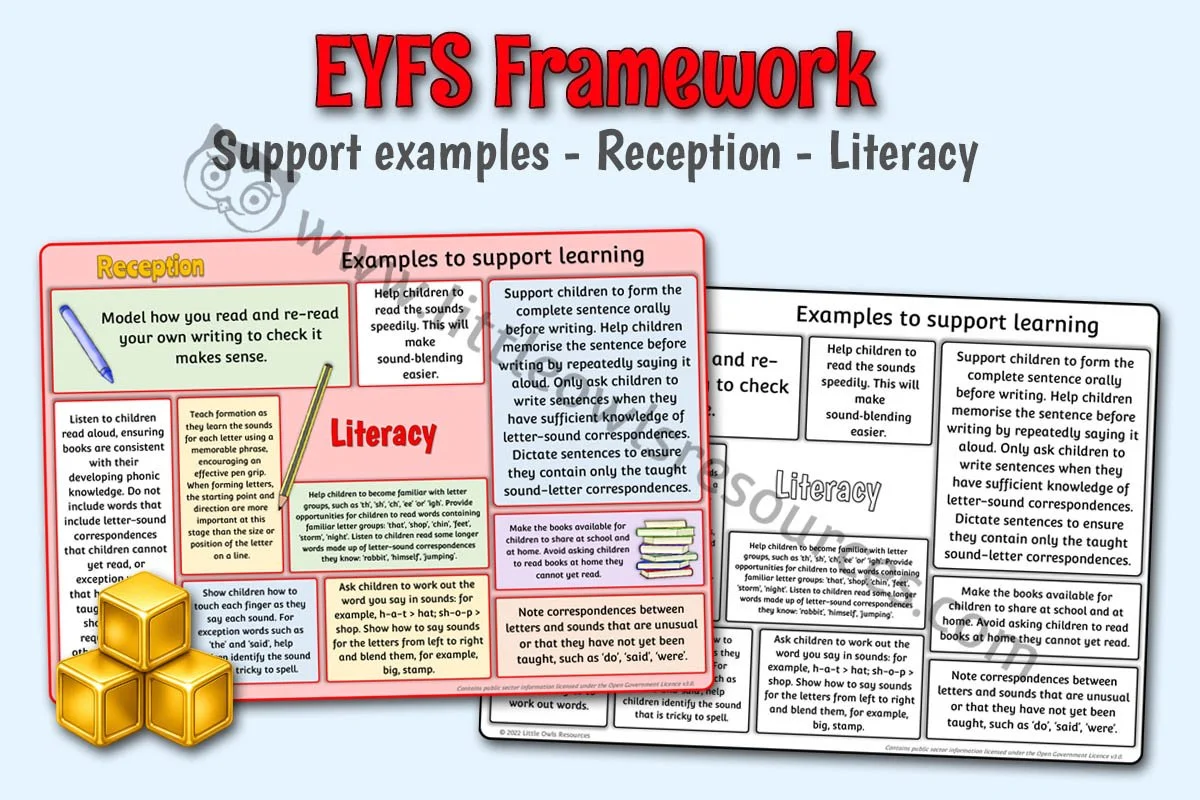
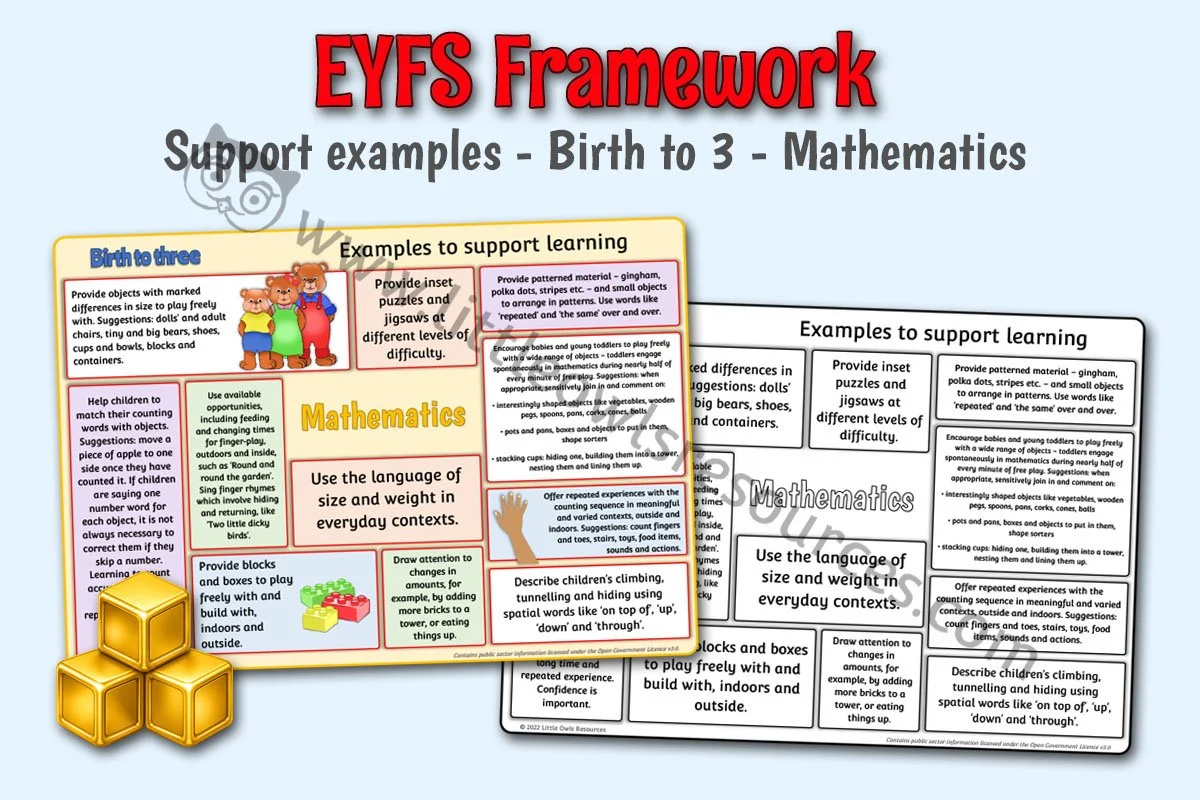
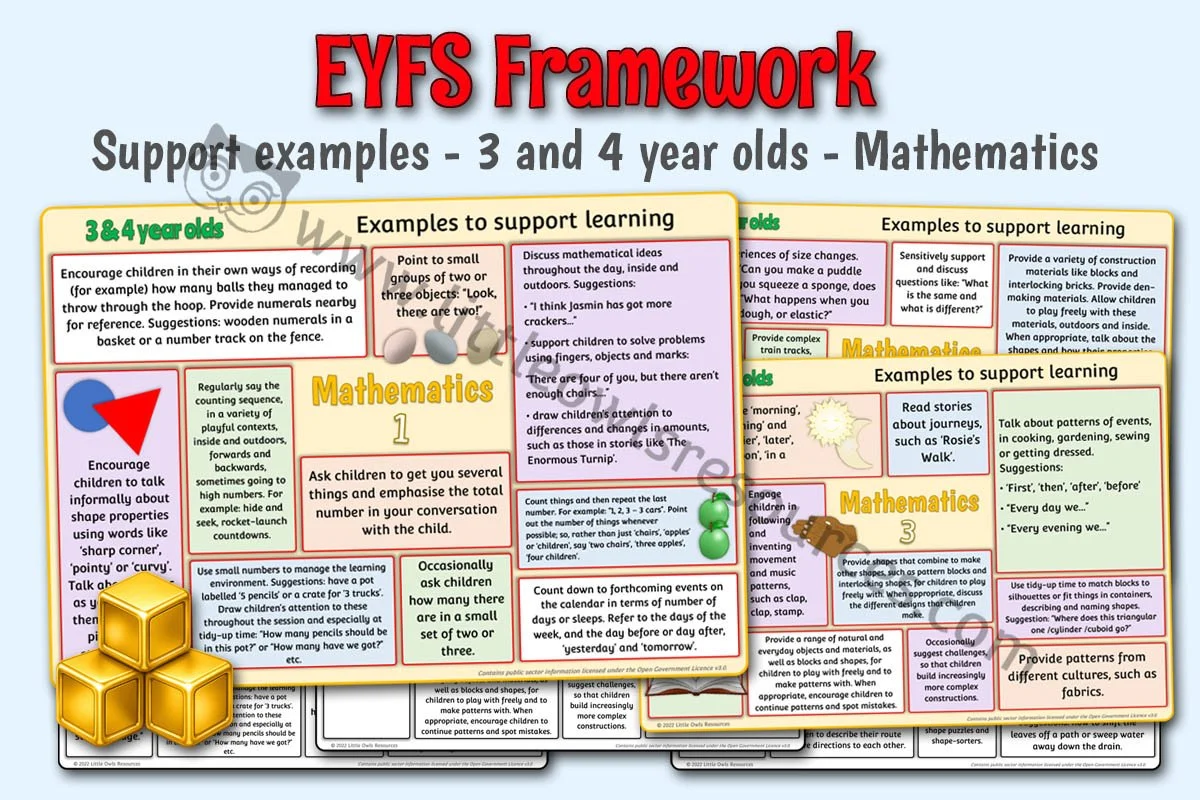
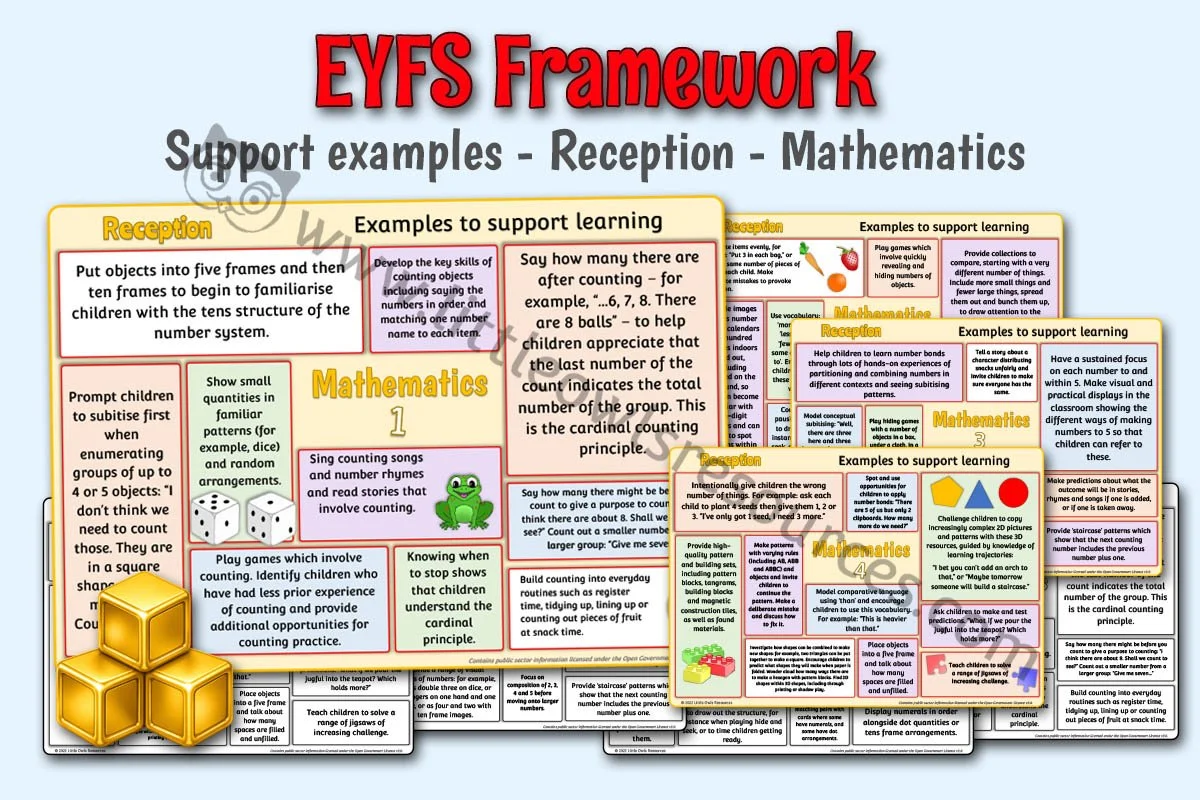
Additional Resources for ‘EYFS Framework’ Support
Select the buttons below to explore our Little Owls Resources educational materials on the topics below: