
October Play, Provision & Learning — EYFS & KS1
Selected ideas and resources for babies, toddlers, preschool, Reception, Year 1, Year 2 and mixed-age settings
Looking for a few useful starting points for October?
Explore our selected play invitations, practical learning ideas and resources below. There are opportunities to notice the world outdoors, revisit familiar songs, investigate quantities, build, create, talk and write—with suggestions for different ages and settings.
You do not need to change every area or make all learning seasonal. Keep the experiences and resources that are working, then add something where it connects with children’s interests, needs and current learning.
Choose your age group or setting
🍼 Babies: 0–18 months
🚼 Toddlers: 18–36 months
🎨 Preschool: 3–4 years
🎓 Reception: 4–5 years
📚 KS1: Year 1 & Year 2
🏡 Childminders & Mixed Ages
Looking for dates, festivals and awareness days?
Explore the October Special Dates Calendar →
Choose a little; leave room to revisit
These are optional possibilities, not a timetable or a checklist. Select one or two starting points, notice how children respond, and allow time to repeat, adapt and develop an idea. The age ranges are browsing guides rather than expectations every child must meet. This flexible approach reflects Development Matters’ emphasis on depth of learning and professional judgement.
The selection includes free and member resources, with optional practitioner guidance identified separately. Follow the links to explore the available resources, and print only the parts you will use.
🍼 October Baby Play & Provision — 0–18 months
This month’s focus: looking together, responding, moving and exploring familiar objects.
For babies, start with the relationship and the moment—not an autumn activity to finish. A shared look, an exchanged sound or an interesting movement can be the whole experience.
Look together
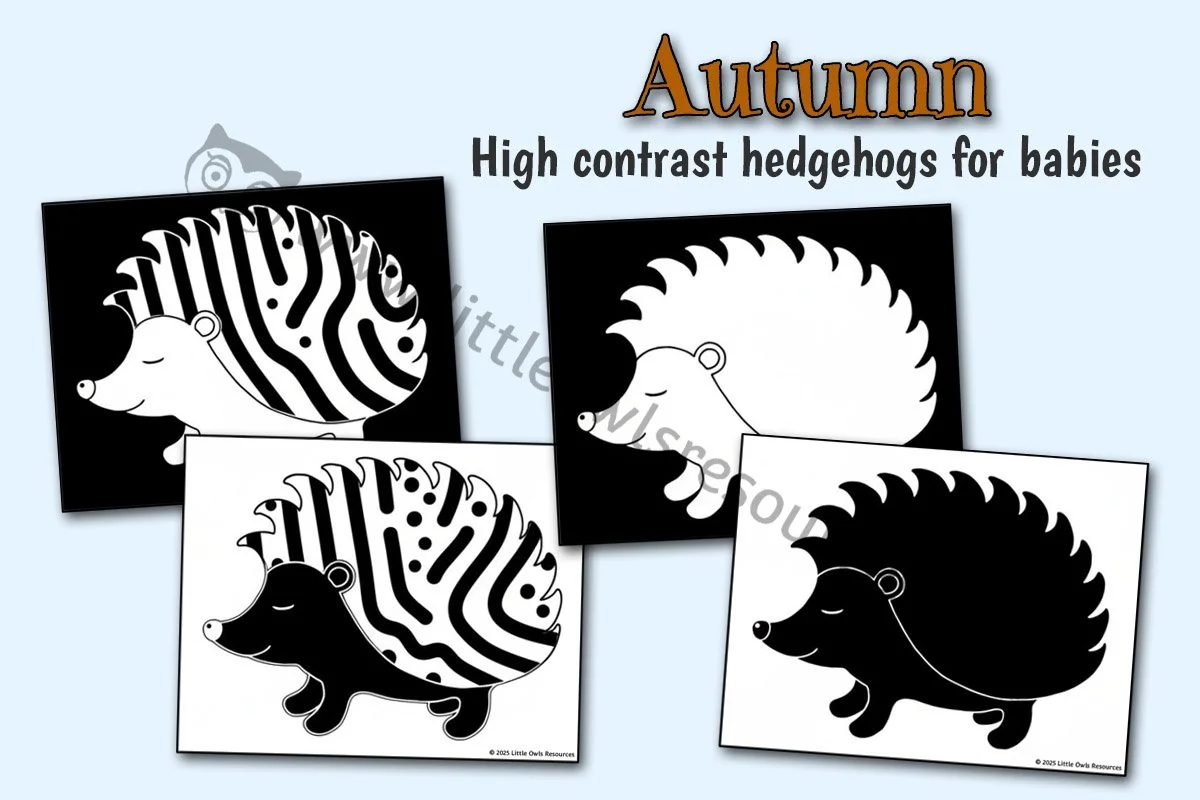
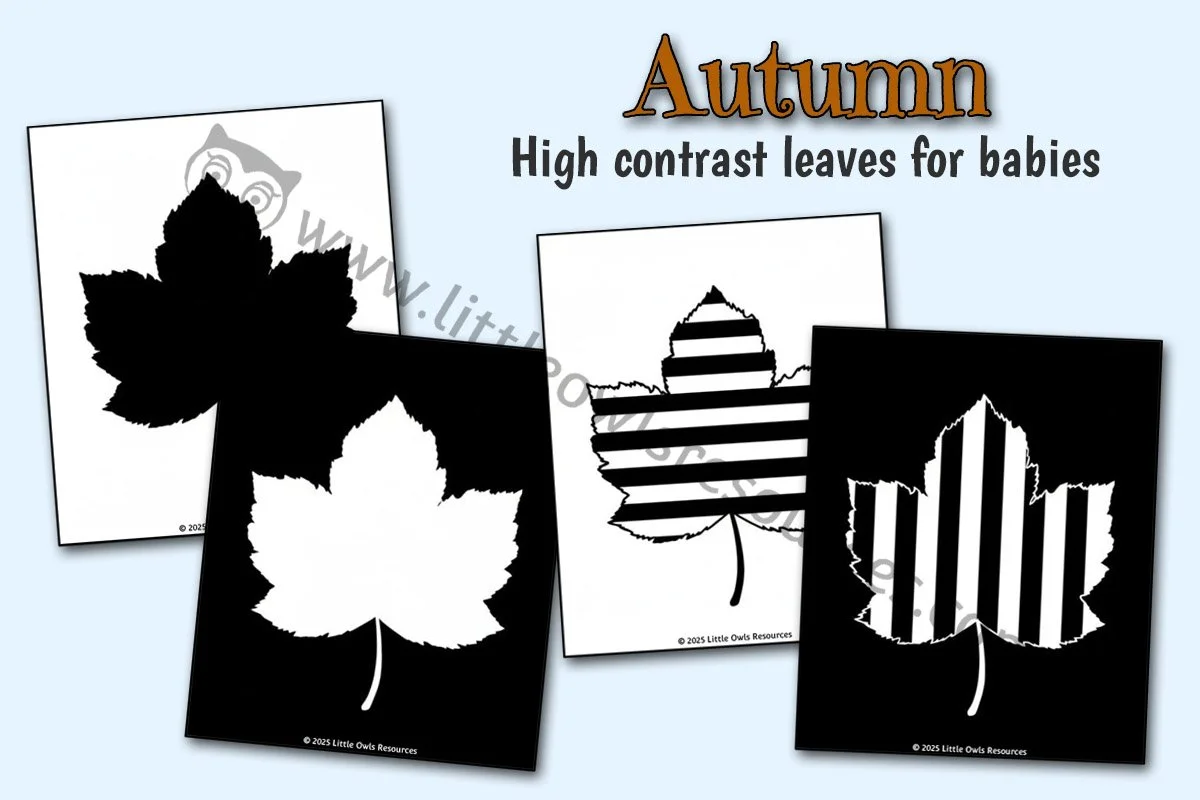
Choose a picture from our High Contrast Autumn Leaf Images for Babies or High Contrast Autumn Hedgehog Images for Babies. Offer one image during a comfortable, awake moment with an adult, rather than displaying the whole set at once.
Pause and notice the baby’s response. They might look, move, make a sound or turn away. Respond to what they do, and finish or change the experience when their cues suggest they have had enough.
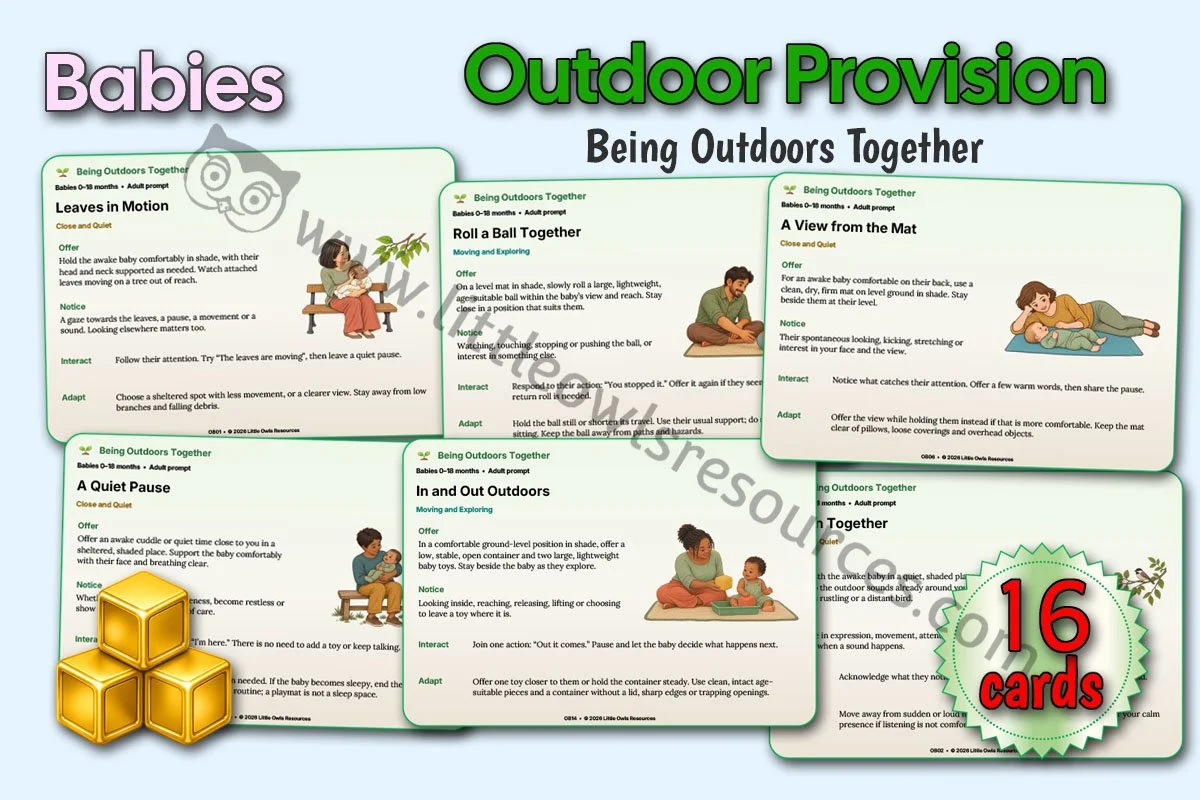
Being Outdoors Together — Babies 0–18 Months
Enjoy small outdoor moments with a familiar adult, from watching leaves and sharing a quiet view to exploring through movement and touch. These adult-facing cards offer quieter, supported experiences alongside possibilities for babies who are reaching, turning, crawling or walking, with the baby’s comfort and responses guiding what happens.
A starting point for October: Pause together where you can see leaves moving. Notice what catches the baby’s attention, share a few words or sounds, and allow time simply to look together. There is no activity to finish or particular response to produce.
Discover “in”, “out” and “again”
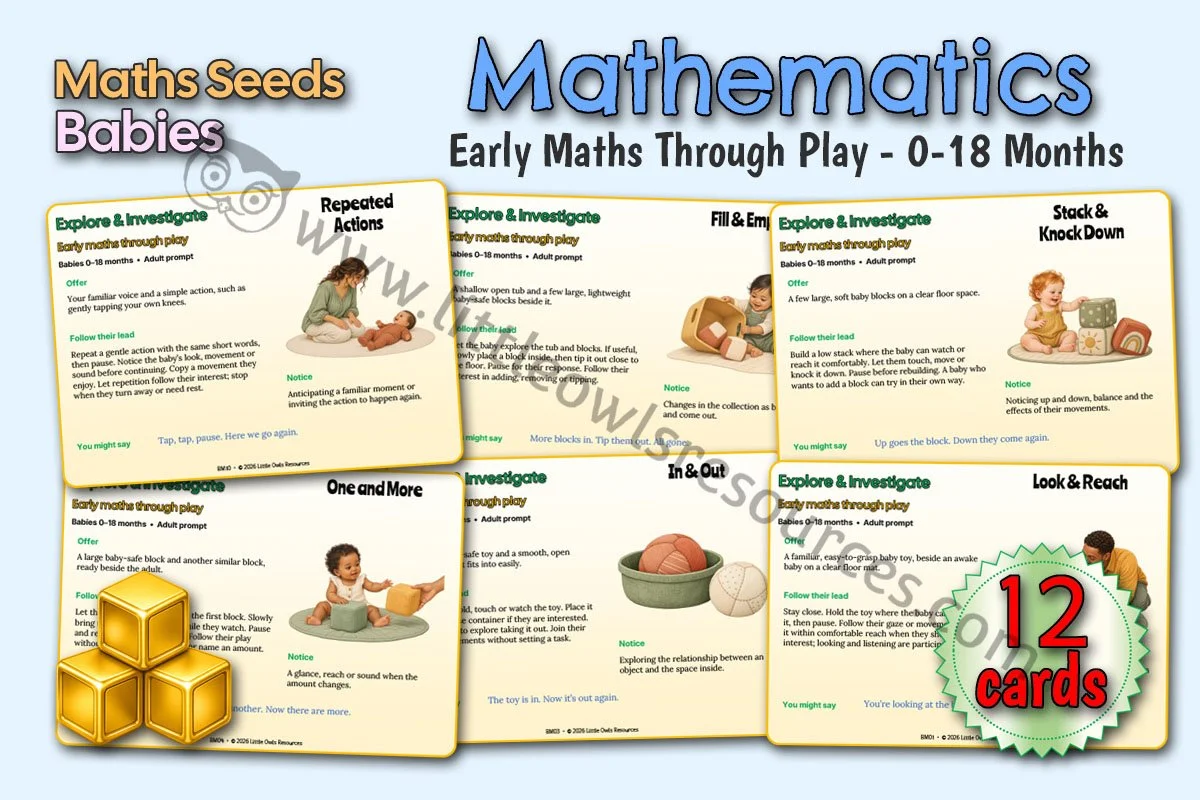
Use Early Maths Through Play — 0–18 Months as adult support for noticing mathematical possibilities in everyday play. The cards focus on experiences such as space, size, movement and repetition—not numeral recognition or answering questions.
For a baby ready to handle objects, offer a low, stable container and a few large, age-appropriate toys. Follow their interest in reaching, putting in, taking out or doing something again. A younger baby may simply enjoy watching an adult move an object and responding together.
Notice the world outdoors
The Autumn Explore and Investigate Prompt Cards include baby adaptations. Use these as prompts for adults, rather than offering the older children’s investigations unchanged.
Pause on a familiar outing to watch leaves moving overhead, listen to a sound or notice changing light. Share a few words, then leave space for the baby’s gaze, movement and sounds.

Share a weather picture book - Free sample to try
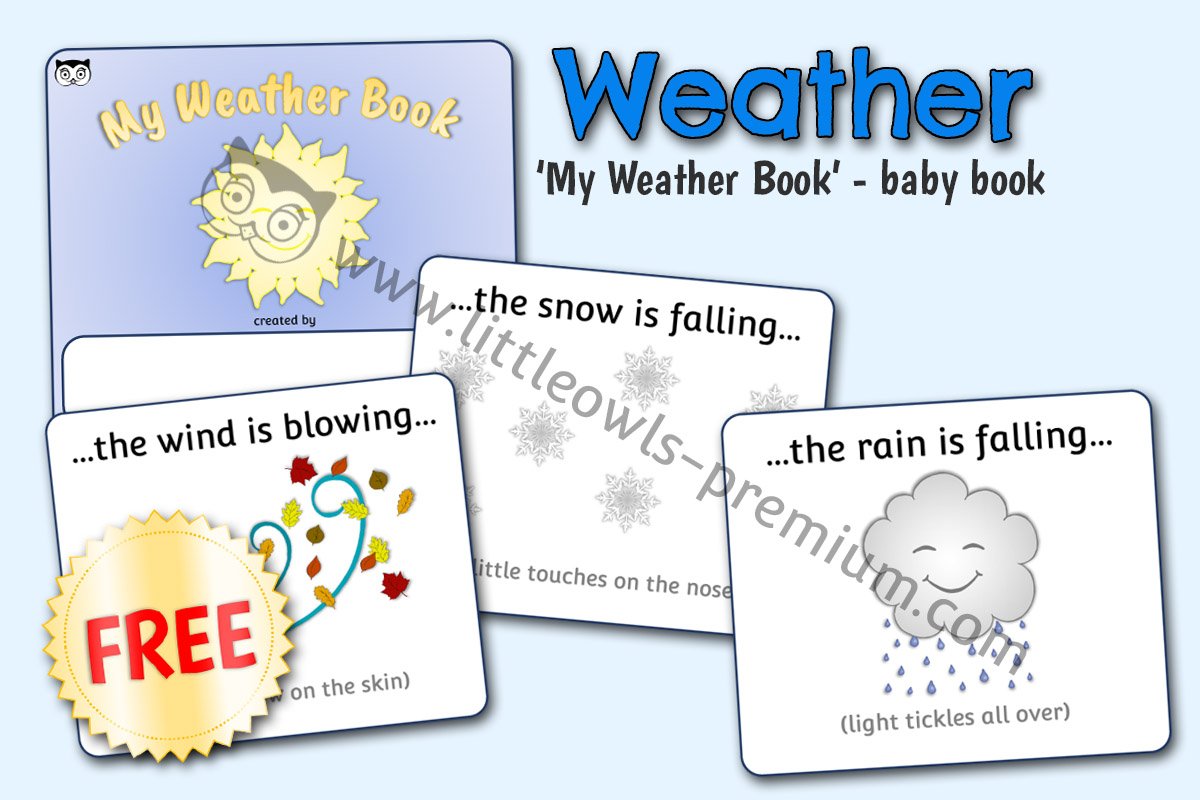
Explore our My Weather Book — Babies, a printable book with weather pictures and suggestions for shared interaction. It is included in our free Books resources and offers a way to enjoy looking and responding together.
Choose a page showing something you have noticed, such as wind or rain. Share the picture, add a few words or gentle sounds, and pause to notice your baby’s response. Follow their gaze, movements and sounds rather than expecting them to recognise or name the weather.
An adult should hold and share the printed pages. There is no need to finish the book or use every suggested interaction—return to a favourite page or stop when the baby has had enough.
For babies and children who mouth objects: keep small natural finds out of reach. Printed or laminated cards are adult-supported visual resources, not for use by babies.
Planning support:
Explore EYFS Planning for Babies →
🚼 October Toddler Play & Provision — 18–36 months
This month’s focus: repeated actions, useful words, movement and growing independence.
Begin with what toddlers are already choosing to do. Carrying, filling, emptying, looking and joining in with a familiar song can provide starting points without introducing a different activity every day.
Autumn Heuristic Play Prompt Cards
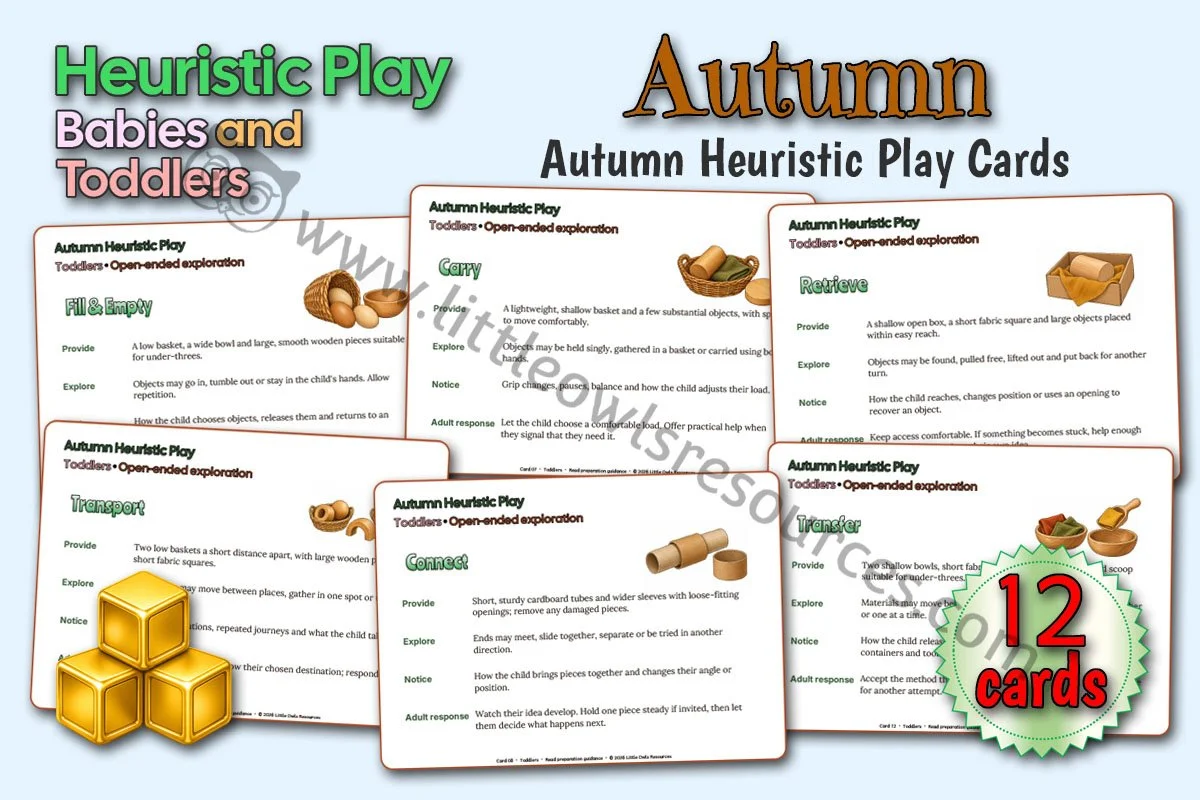
Prepare open-ended collections for children to handle, combine and investigate in their own ways. These practitioner cards offer starting materials, possibilities to notice and responsive adult support, with warm autumn colours rather than a fixed seasonal task or finished product.
A starting point for October: Choose one invitation that connects with an interest in filling, carrying, hiding or retrieving. Offer a manageable selection of suitable objects and containers, then allow the play to change direction. Familiar materials and repeated exploration can remain the focus.
Outdoor Communication & Play Together Boards
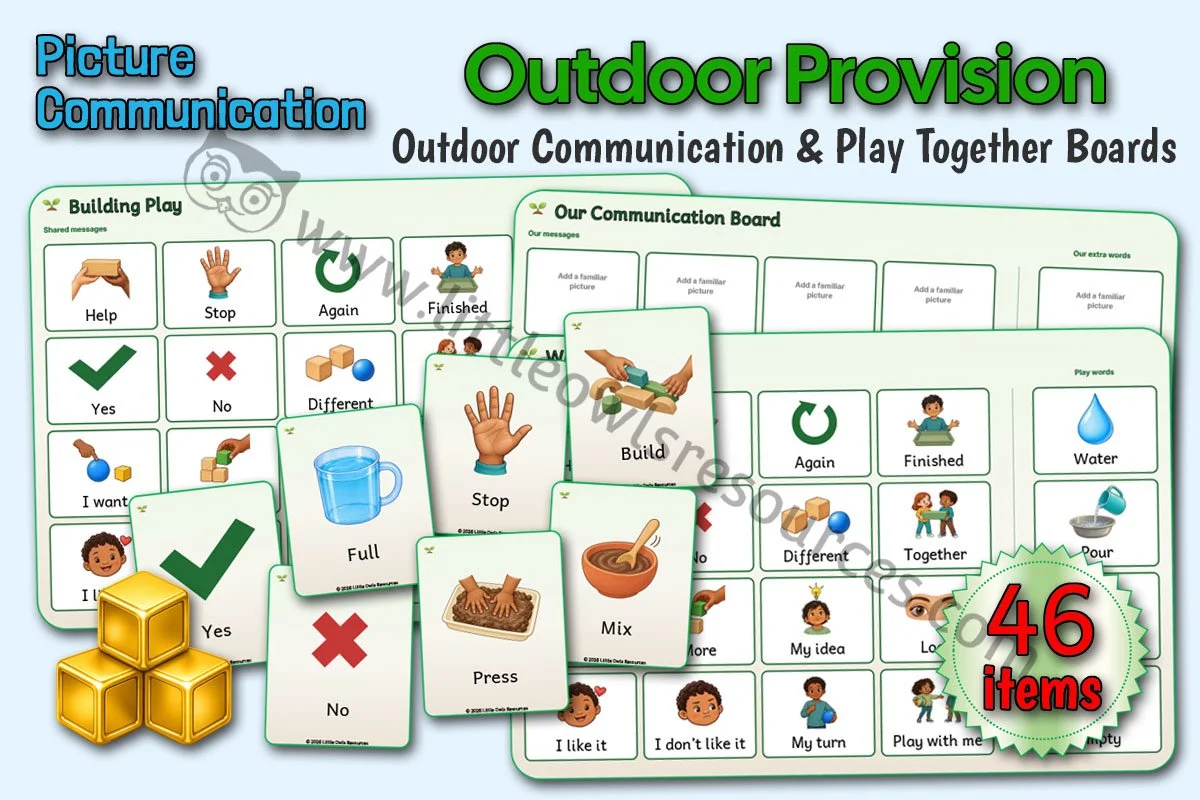
Support children to ask, refuse, comment, suggest and invite during outdoor play. These editable picture boards can be selected according to individual communication needs and used alongside children’s usual speech, sounds, gestures, signs or communication aids—not as a replacement for them.
A starting point for October: Keep a suitable board within comfortable reach during a favourite outdoor experience. Model a relevant message when it fits the moment, and respond to the child’s communication in whichever way they express it. There is no requirement to point to a picture or repeat a word.
Fill, carry and empty
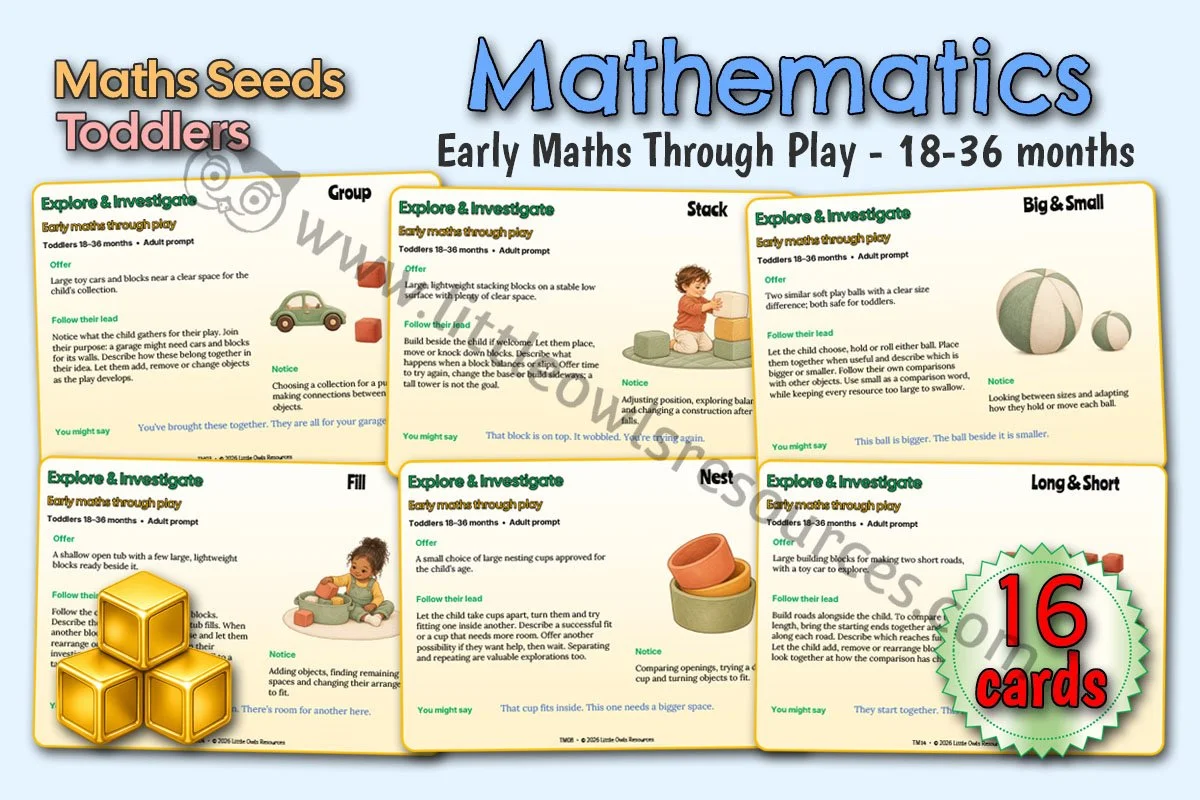
Use Early Maths Through Play — 18–36 Months alongside everyday provision. These cards offer resources, responsive adult actions and language for the moment.
Offer a few sturdy containers and large, age-appropriate objects that children can move between them. Join their play with words such as in, out, full, empty, more and another, when those words match what is happening.
Keep the experience available for repetition. There is no need to interrupt purposeful carrying and filling to introduce counting or a new challenge.
Connect a picture with something you noticed
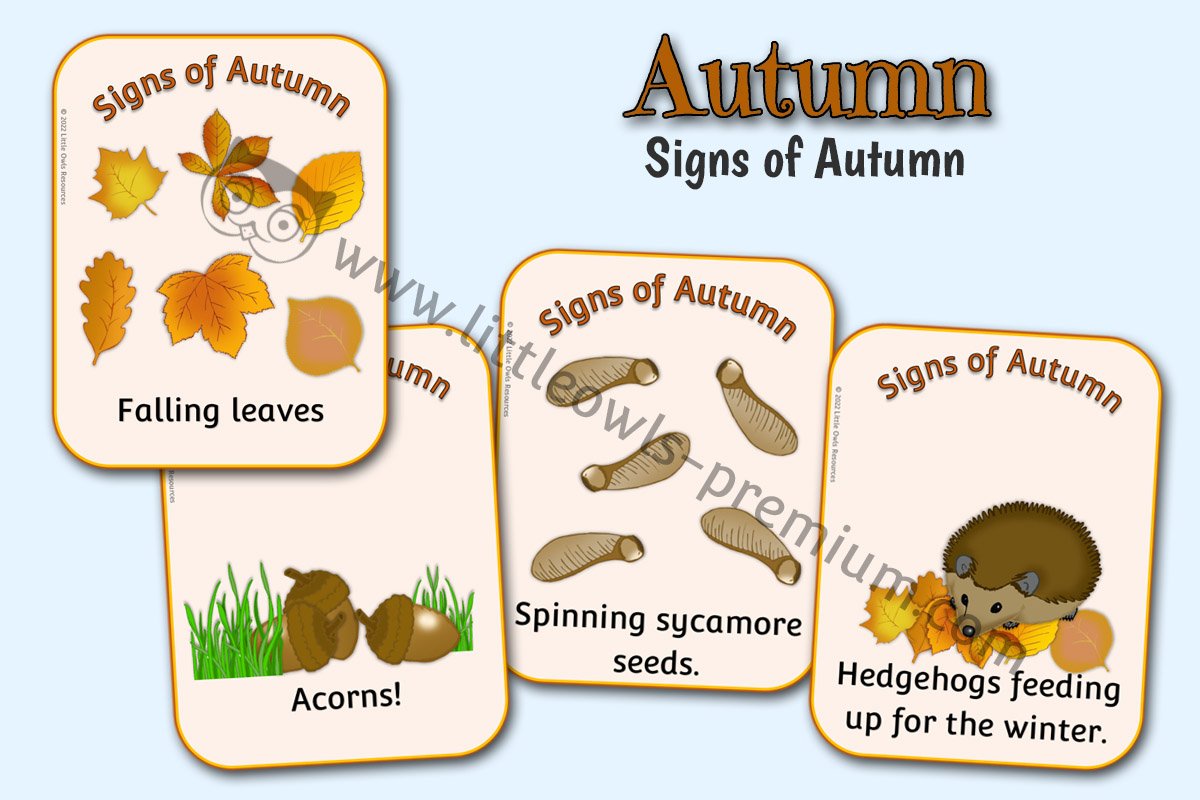
Choose two or three Signs of Autumn Posters that connect with your local surroundings. The pictures can provide a starting point for shared attention and conversation.
After an outing, revisit a picture beside a photograph of something the children noticed. Comment simply: “We saw a leaf on the path.” Welcome pointing, gestures, sounds, home-language words and spoken responses.
Let the pictures support a conversation rather than become a naming test.
Sing, move and join in
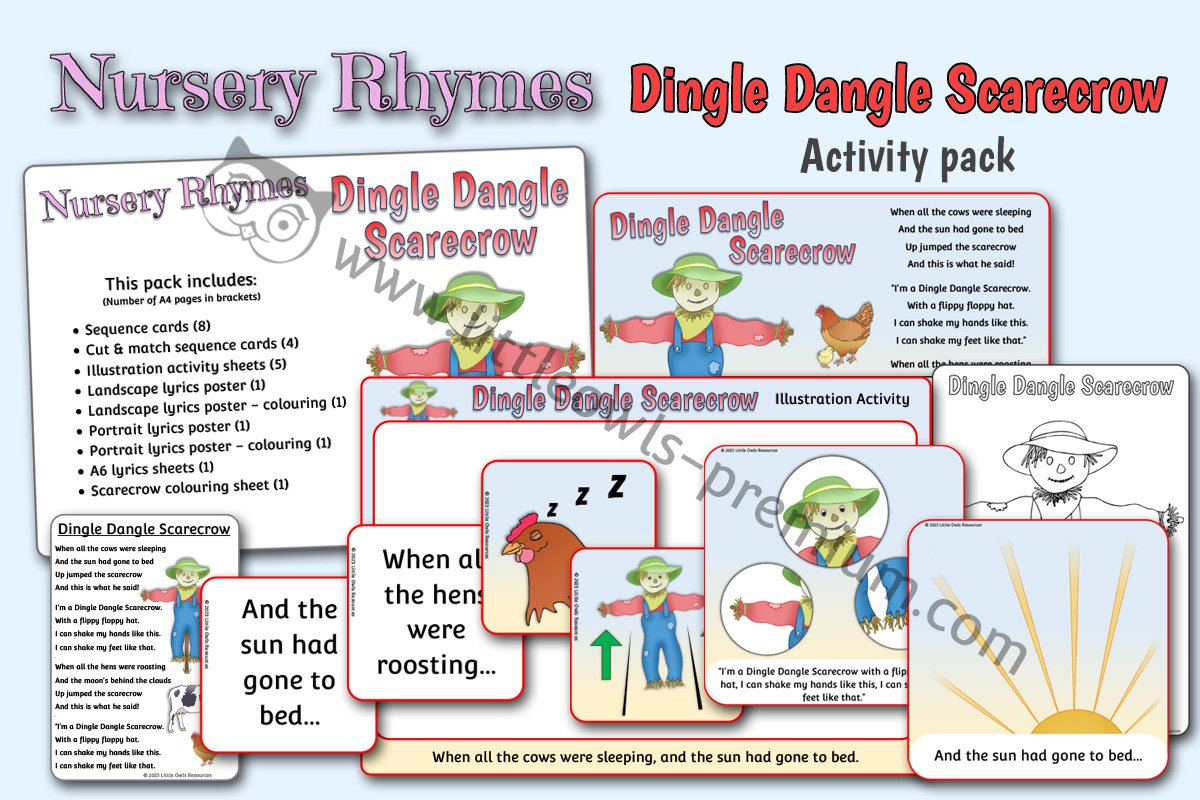
Select the song words or a picture from the Dingle Dangle Scarecrow Activity Pack. The pack contains several formats; toddlers do not need the cutting, matching or worksheet elements to enjoy the song.
Sing together and offer simple movements that can be enjoyed sitting or standing. Pause at a familiar moment and notice whether children anticipate an action, make a sound or invite you to continue.
Explore autumn colour through paint - Free sample to try
Offer our Finger-Paint Autumn Leaves sheet as an optional starting point for exploring paint and making marks. The free resource provides a tree picture to which children can add their own marks.
Use paint suitable for the children’s ages and intended use, with adult support. Children might press, dab, swipe or mix colours using their fingers, or choose a chunky brush when they prefer not to touch the paint.
Talk about what is happening: “You made a long mark,” or “Those colours are mixing.” There is no need to place the marks in particular positions or produce a recognisable autumn tree. Keep plain paper available too, so children can take their exploration in another direction.

Optional planning support — Professional:
Autumn: Senses, Colours & Change — Toddler Project Planner →
Use the planner to reflect on materials, language and adult interaction, rather than as a requirement to complete a fixed sequence of autumn activities.
🎨 October Preschool Play & Provision — 3–4 years
This month’s focus: following an idea, comparing, talking and creating in different ways.
Offer a few resources that children can return to and use in their own ways. Keep familiar books, construction, role play and mark-making materials available alongside any seasonal additions.
Autumn Clay & Malleable Play Invitation Cards
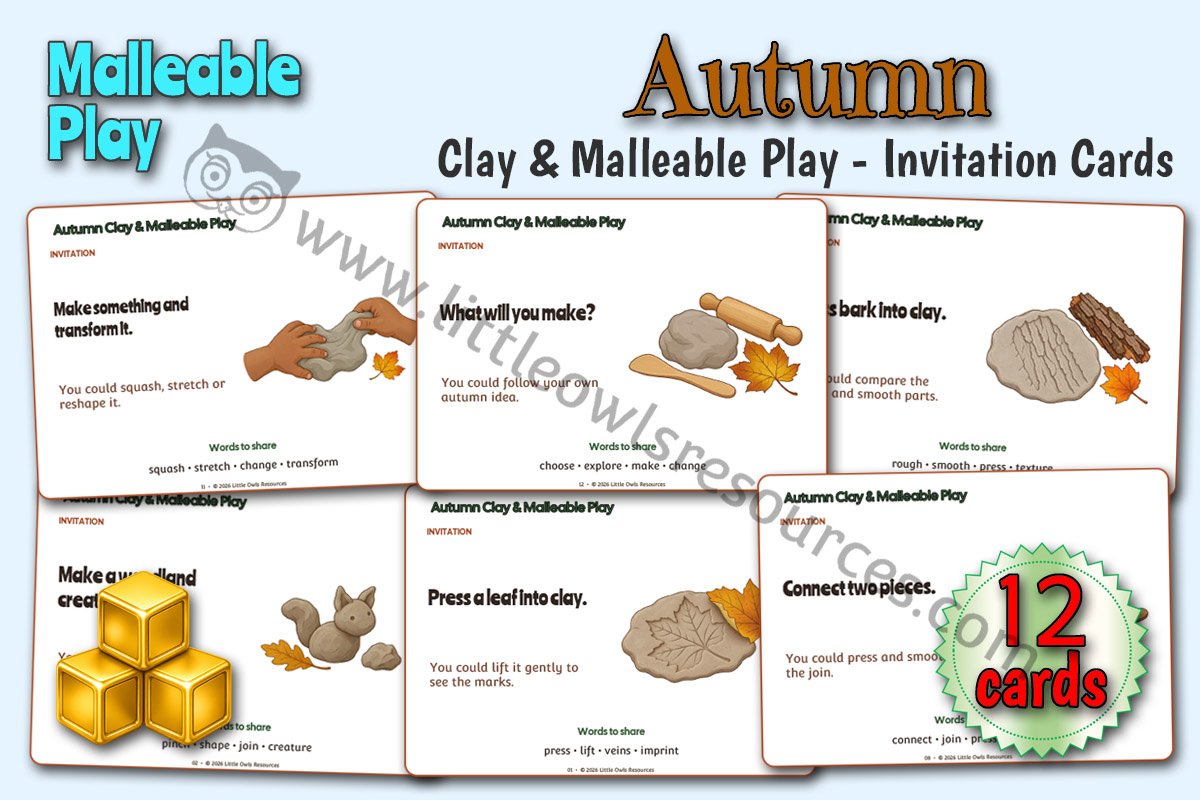
Explore pressing, rolling, pinching, joining and reshaping through autumn-inspired invitations for clay and other suitable malleable materials. Children can investigate what the material does, change their ideas and create something entirely their own; a recognisable model is optional.
A starting point for October: Offer one card beside a workable piece of clay, a clear board and a small choice of suitable tools. Children might investigate a print, roll a pathway or join two pieces. Leave time to change, squash and begin again.
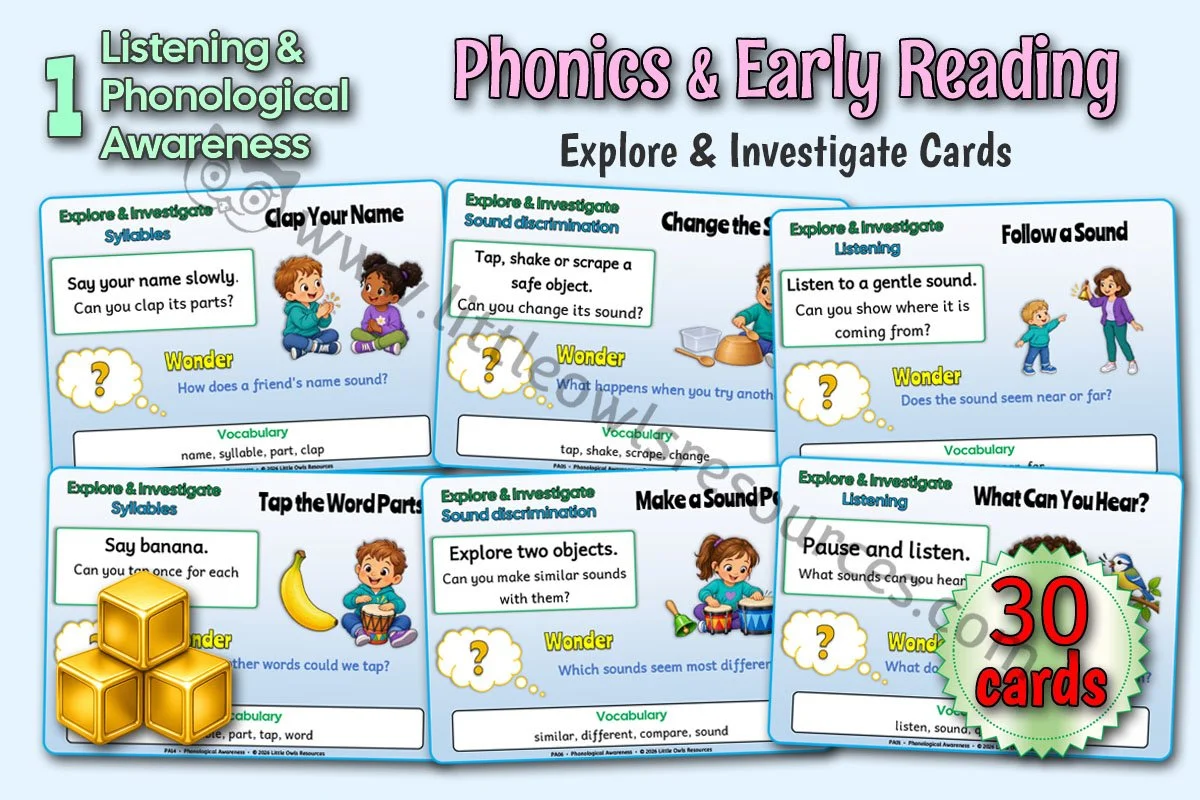
Phonological Awareness Explore & Investigate Cards
Explore listening, rhythm, rhyme and the sounds within spoken language through playful, adult-supported invitations. The illustrated cards offer flexible starting points for Preschool provision, with optional questions and vocabulary rather than a sequence of activities to complete. No reading is required.
A starting point for October: Choose an invitation connected with a familiar song, story or object that has caught children’s interest. Model a playful example, welcome different ways of joining in and return to favourite sound games without turning them into a test.
Investigate something that caught their attention
Place a selected Autumn Explore and Investigate Prompt Card beside suitable materials. The pack offers invitations involving autumn materials, movement and change, with optional questions and vocabulary for adults.
For example, a child’s interest in a fallen leaf could lead to looking closely, comparing two leaves, drawing a detail or wondering how it moves. Follow the particular idea rather than trying to cover every possibility.
Offer a tray, a hand lens or drawing materials when they help the exploration—not because every investigation needs the same equipment.
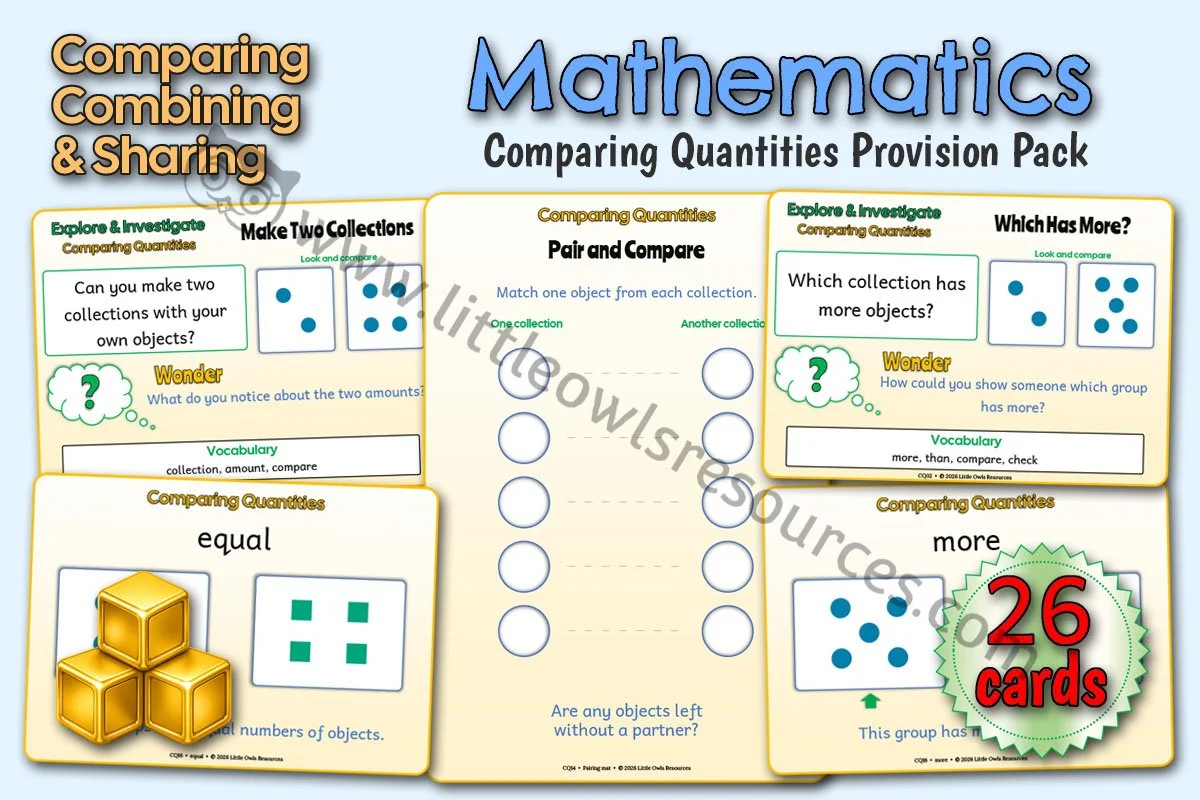
Compare two small collections
Pair the Comparing Quantities Provision Pack with real objects and a couple of trays or containers. The pack includes practical invitations and reusable comparison mats.
Children might give pretend food to two toy animals or gather objects for two small-world homes. Notice whether they compare by looking, matching objects or counting.
A useful question might be: “How could we make sure they have the same?” Allow children to show their thinking through moving objects, gestures and talk.
Arrange, change and make something new
Use Autumn Transient Art and Loose-Parts Invitations beside a clear working space and a small choice of suitable materials. The pack supports temporary arrangements that children can change, combine and take apart.
A child might make a pattern, a picture, an imaginary place or an arrangement that has no name. There is no model they need to reproduce.
Talk about their choices when they welcome the conversation. Ask before moving or dismantling their work, and offer a photograph when they would like to remember it.

Notice small quantities with hedgehogs - Free sample to try
Use our Autumn Hedgehog Subitising — 1–3 game to explore small quantities through playful matching. The free pack includes hedgehogs with dots in different arrangements, inviting children to match them with the corresponding leaf piles.
Begin with a small selection and allow plenty of time to look. Children may recognise a quantity straight away, show it on their fingers or count to check. An adult might comment, “You spotted two. This hedgehog has two as well, but the dots are in different places.”
Keep the game relaxed rather than making it a race. Children can explore the same cards repeatedly, and they do not need to match the whole set in one sitting.

Explore further:
Maths Continuous Provision →
Optional practitioner guidance — Professional:
Universal Continuous Provision Pack — Preschool →
Guidance for thinking about the wider environment, beyond individual seasonal enhancements.
🎓 October Reception Play, Provision & Learning — 4–5 years
This month’s focus: applying familiar knowledge, explaining ideas and using reading, writing and maths for a purpose.
Choose opportunities that connect with what your children have been taught and what they are exploring. October does not mean every class should be working with the same number range, phonics knowledge or level of independence.
Build, test and improve
Choose an invitation from the Autumn Construction Challenge Cards. The pack includes construction prompts and reusable process cards to support planning, building, testing and making changes.
One possible starting point is a shelter for a toy woodland animal. Offer familiar blocks and suitable joining or covering materials. Encourage children to decide what their shelter needs to do.
Does the animal fit inside? Does the structure remain standing? What could they change? Planning might involve talking, pointing, arranging materials or drawing—not necessarily completing a design sheet.

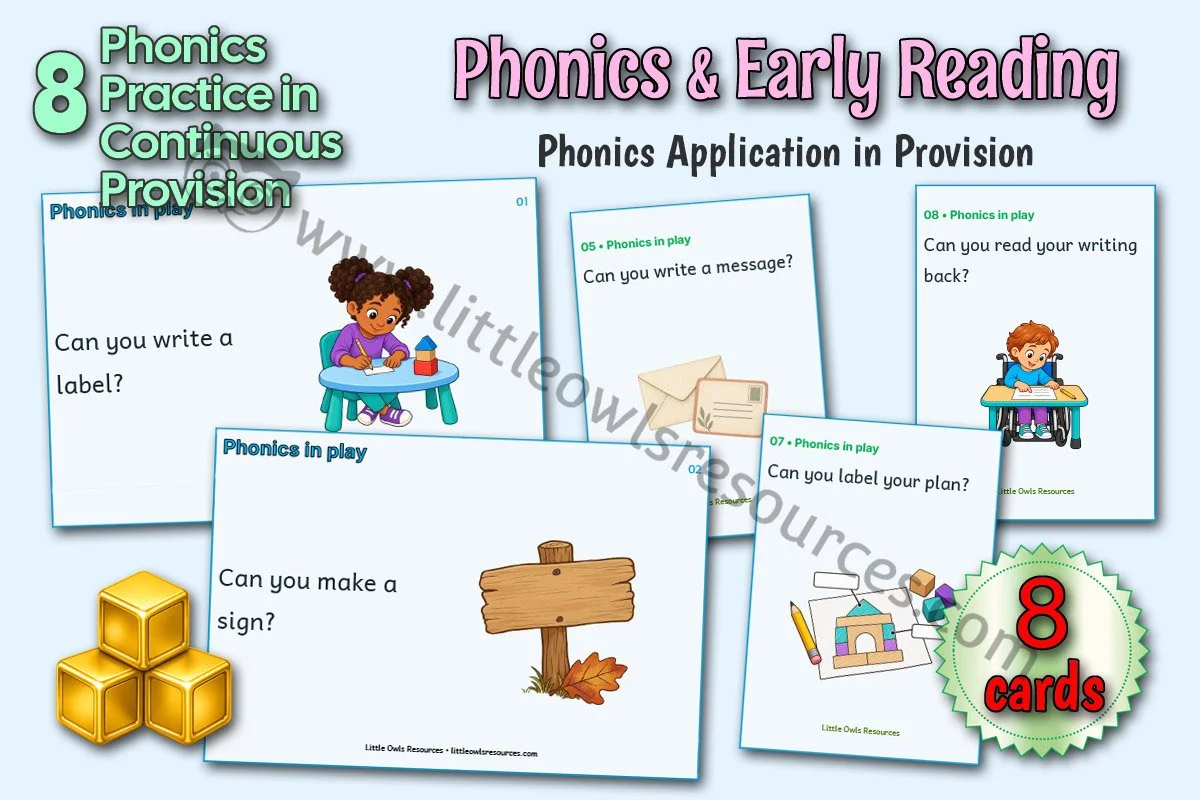
Phonics Application in Provision — Prompt Cards
Give children meaningful reasons to use the phonics they have been taught through invitations involving signs, labels, messages, lists and plans. Adults share the illustrated prompts aloud; children choose the purpose and content of their reading or writing rather than copy a prescribed example.
A starting point for October: Offer a relevant card when a child wants to label an autumn discovery, make a sign for a construction or leave a message in role play. Support the phonics they know, and provide adult help with anything beyond their current teaching.
Explore maths through a real problem
Select a card from the Autumn Maths Provision Challenge Cards that fits current learning. The collection includes number, comparison, pattern, shape, spatial reasoning and measure.
Children could compare collections, arrange a repeating pattern or explore different ways to organise a familiar quantity. Offer objects they can handle, move and revisit.
Keep the focus on the mathematical idea. A child may explain by rearranging objects or showing a partner, without needing to write a number sentence.

Write because the play needs it
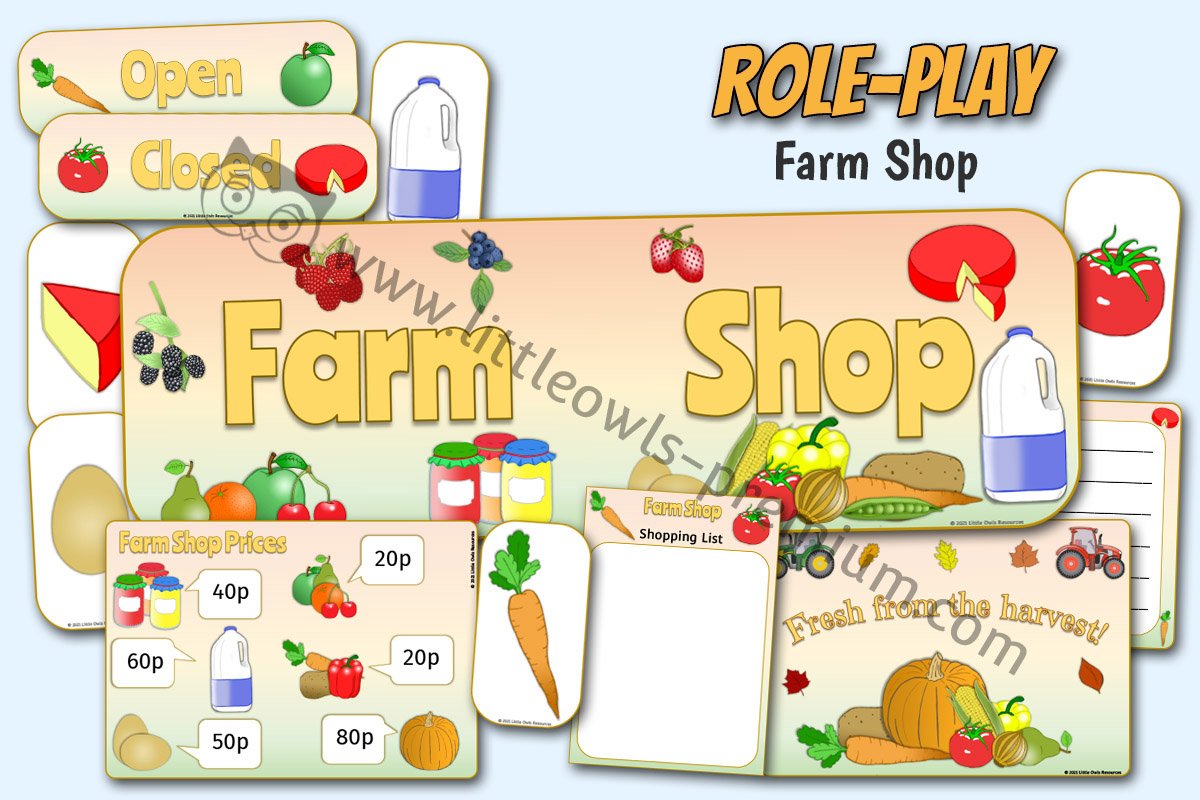
Add a small selection from the Farm Shop Role Play Pack—perhaps shopping-list templates, a blank sign and a few useful pictures. The pack contains both prepared resources and opportunities for children to contribute their own print.
Children might draw what they need, write a list, make a label or leave a message for another shopper. Support them to apply the phonics they have been taught, with adult help where needed.
Adult-written labels can be read together. Their presence in the shop does not make them suitable independent decoding practice.
Build familiar letters outdoors - Free sample to try
Add selected Autumn Letter Cards — Natural Items beside suitable materials in your outdoor provision. These free cards offer starting points for making letters with natural objects; children do not need to copy the pictured materials exactly.
Choose letters that connect with the graphemes children have already been taught. Invite them to arrange suitable materials into a familiar letter shape, noticing its lines and curves. An adult can model the associated sound where appropriate and help children compare their arrangement with a clear letter model.
Keep paper and writing tools nearby for children who would like to draw or write the letter afterwards. Use the invitation alongside—not instead of—your usual phonics and letter-formation teaching.

Another useful option:
Autumn Walk — Writing, Drawing & Mark Making →
Offer a sheet—or plain paper—to someone who wants to remember or share a discovery. Recording can remain a choice.
Explore further:
Phonics & Early Reading →
Optional practitioner guidance — Professional:
Universal Continuous Provision Pack — Reception →
📚 October KS1: Practical Learning & Provision — Year 1 & Year 2
This month’s focus: reading and discussion, observing change, explaining mathematical thinking and making deliberate creative choices.
Use this selection in lessons, small groups, outdoor learning or classroom provision. Choose activities that connect with your curriculum; there is no need to make every subject autumn-themed.
Read, listen and discuss
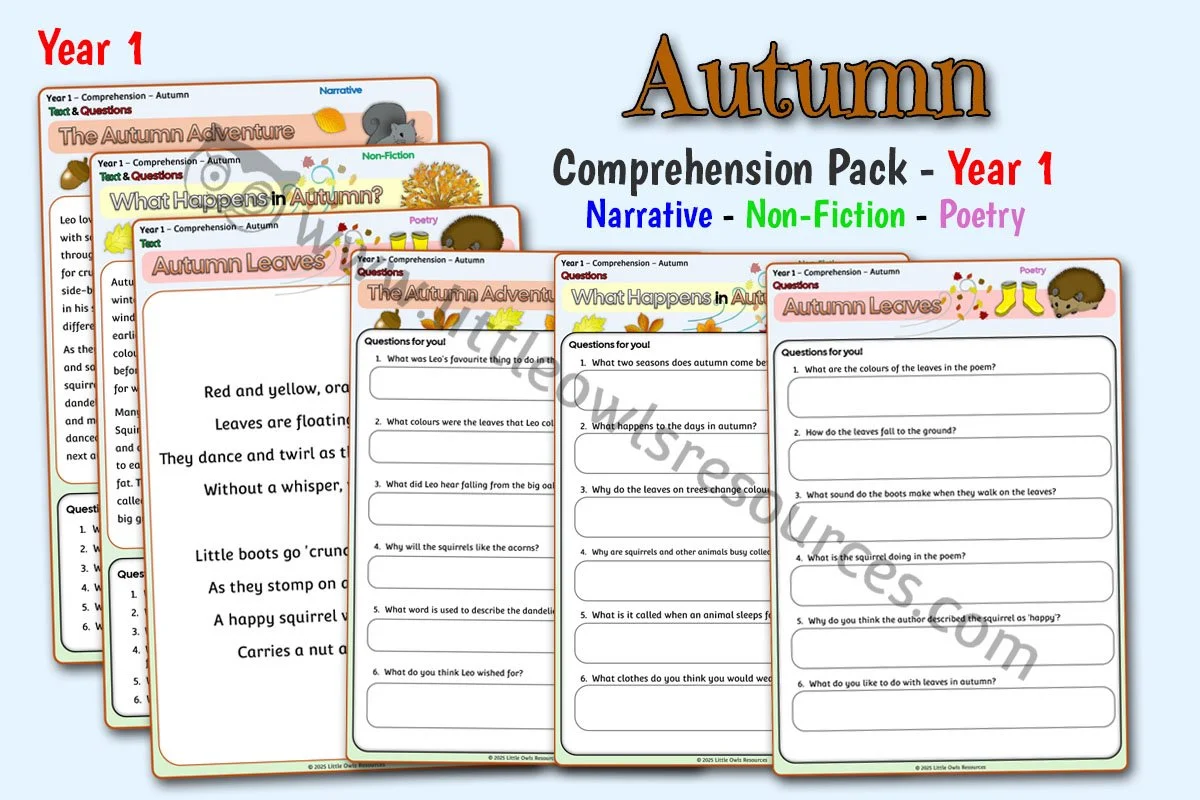
Explore the Year 1 Autumn Comprehensions and Year 2 Autumn Comprehensions, which each offer narrative, non-fiction and poetry texts with questions.
Choose one text to explore. Year 1 discussion might focus on retelling events, making a prediction or explaining a new word. Year 2 children could justify an answer, discuss a character’s actions or compare the language used in a poem and an information text.
Read aloud when a text is beyond children’s independent reading knowledge. Rich listening and comprehension work can sit alongside phonically matched independent reading; the two have different purposes.

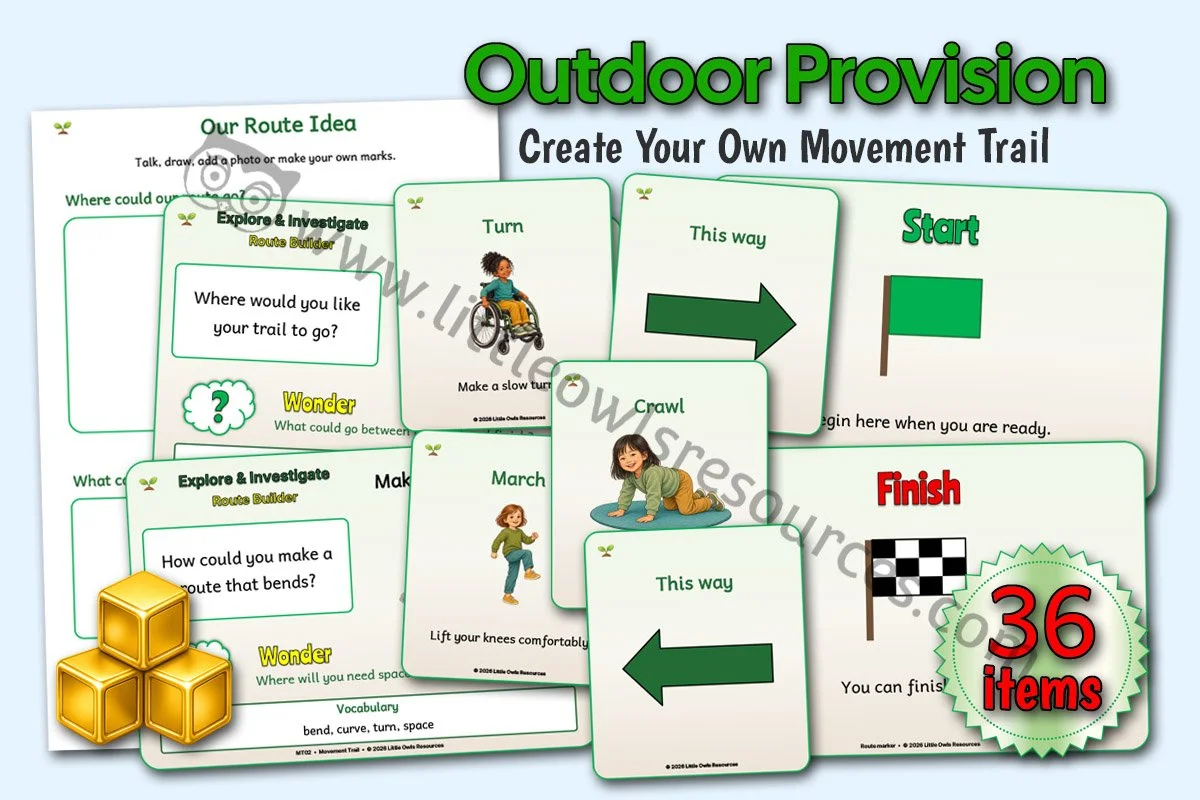
Create Your Own Movement Trail — Route Builder Pack
Plan, try and adapt an outdoor route using illustrated invitations, movement choices, arrows and signs. The pack includes optional KS1 extensions, giving older children opportunities to make decisions and develop a route rather than simply follow a ready-made circuit.
A starting point for October: In a checked outdoor space, invite children to plan a route, explain it to a partner and revise it after trying it. Year 1 children might describe the order of movements; Year 2 children could refine their directions and explain how a change improves the route.
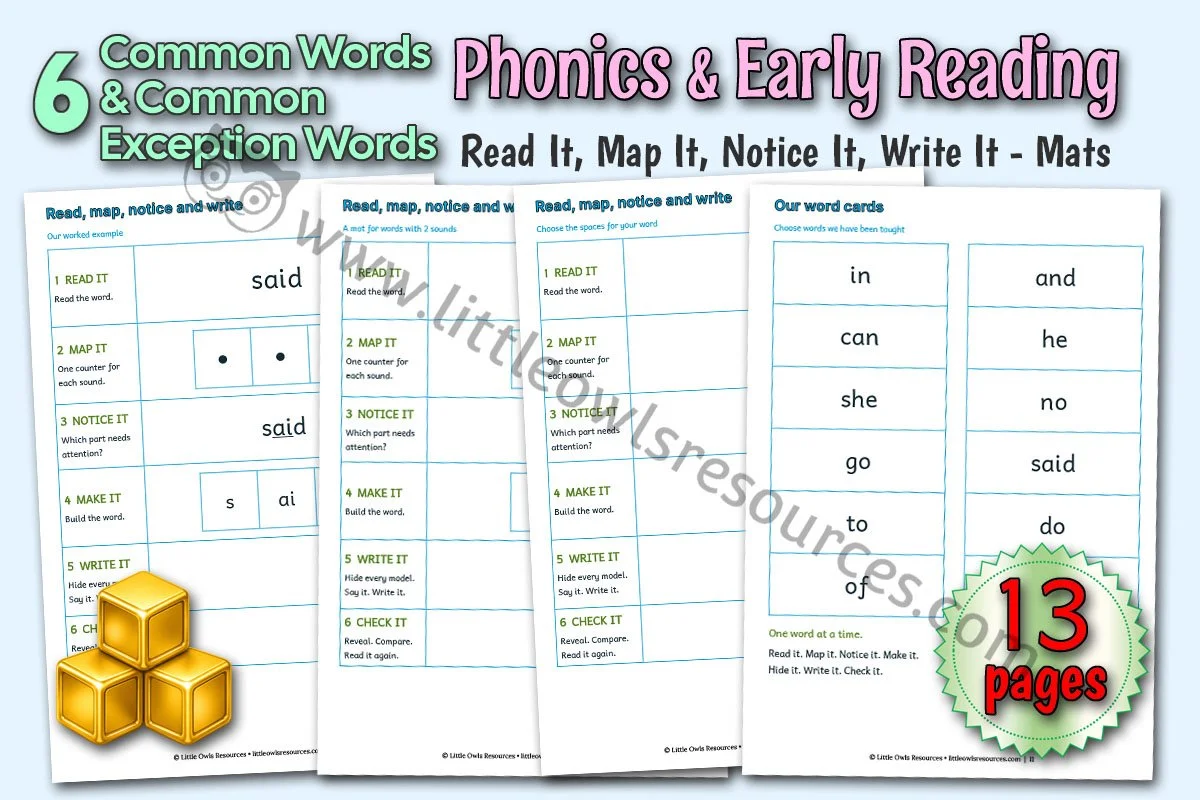
Read It — Map It — Notice It — Write It Mats
Connect spoken words with their spellings through reusable mats for reading, mapping, noticing, making, writing and checking. Select words through your phonics programme, with independent practice following explicit teaching of the relevant letter–sound correspondences and exception spellings. The pack supports continued use in Year 1 and adaptation for other learners.
A starting point for October: Choose a small number of previously taught words that a child is practising in reading and writing. Use the mats for brief, supported rehearsal before applying the words in a meaningful message or sentence. For Year 2, select this as additional practice where it matches the individual learner—not as a whole-class starting level.
Observe what is actually changing
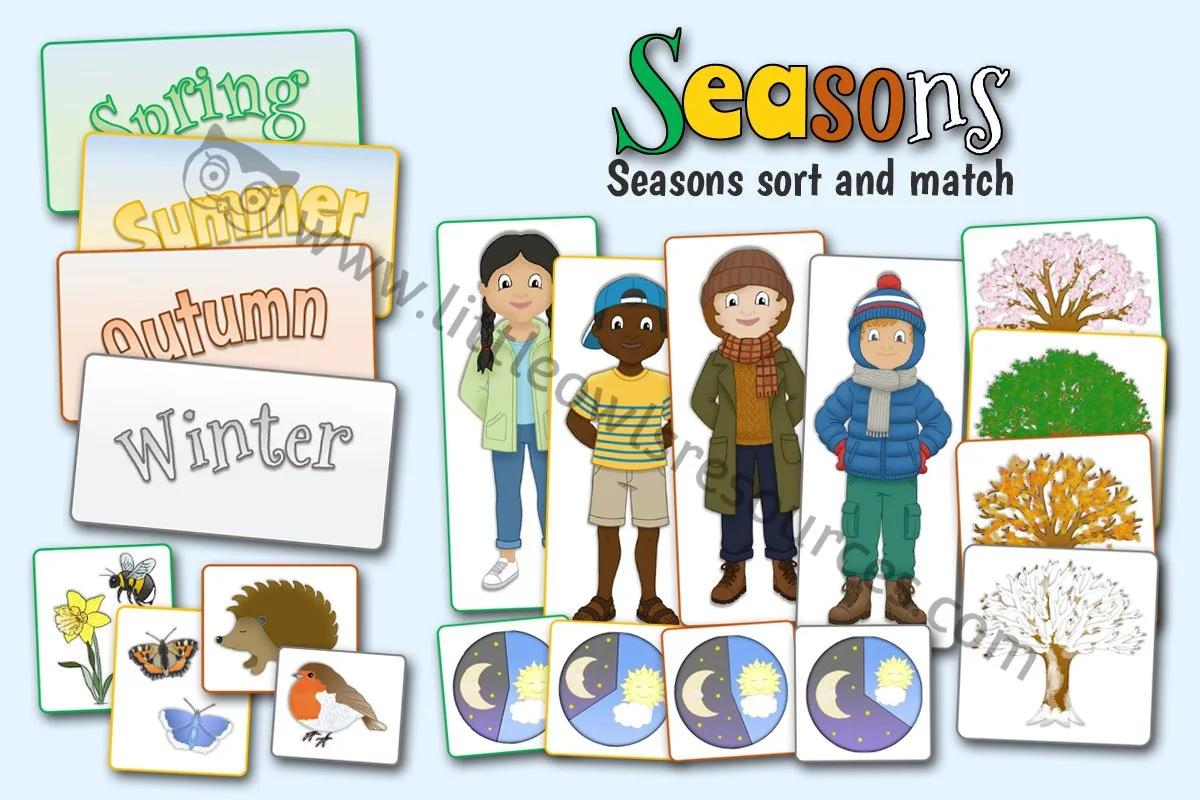
Use Seasons: Sort & Match Activity Cards and selected Woodland Trees Fact Cards alongside outdoor observations. Ask which features children can see locally, rather than assuming every seasonal picture will match the day’s experience.
Year 1 possibility: revisit a familiar tree or outdoor spot and record changes over time.
Year 2 possibility: where it connects with current teaching, look closely at a small habitat and discuss what living things find there.
These connect respectively with Year 1 seasonal-change content and Year 2 habitat work in England’s science curriculum—not a requirement to teach those topics in October.

Give number work a seasonal context - Free sample to try
Use the Free Pumpkin Numbers 0–100 with practical representations and a carefully selected number range.
Year 1 children might order a small selection, find a missing number or match numerals with quantities. Year 2 children could represent selected two-digit numbers with tens and ones, compare them and explain their reasoning.
The seasonal pictures provide a context; the number choices and adult questions determine the learning.

Creative extension:
Autumn Transient Art and Loose-Parts Invitations →
Extend an invitation through deliberate choices about arrangement, texture and colour. Encourage children to revise a design and explain what they changed.
Explore further:
KS1 Mathematics — Year 1 & Year 2 →
🏡 October Childminder & Mixed-Age Provision
This month’s focus: shared experiences, different ways to join in and manageable preparation.
A familiar walk, a song or a small pretend shop can offer possibilities for several ages. Children can share a context without using identical materials or working towards the same outcome.
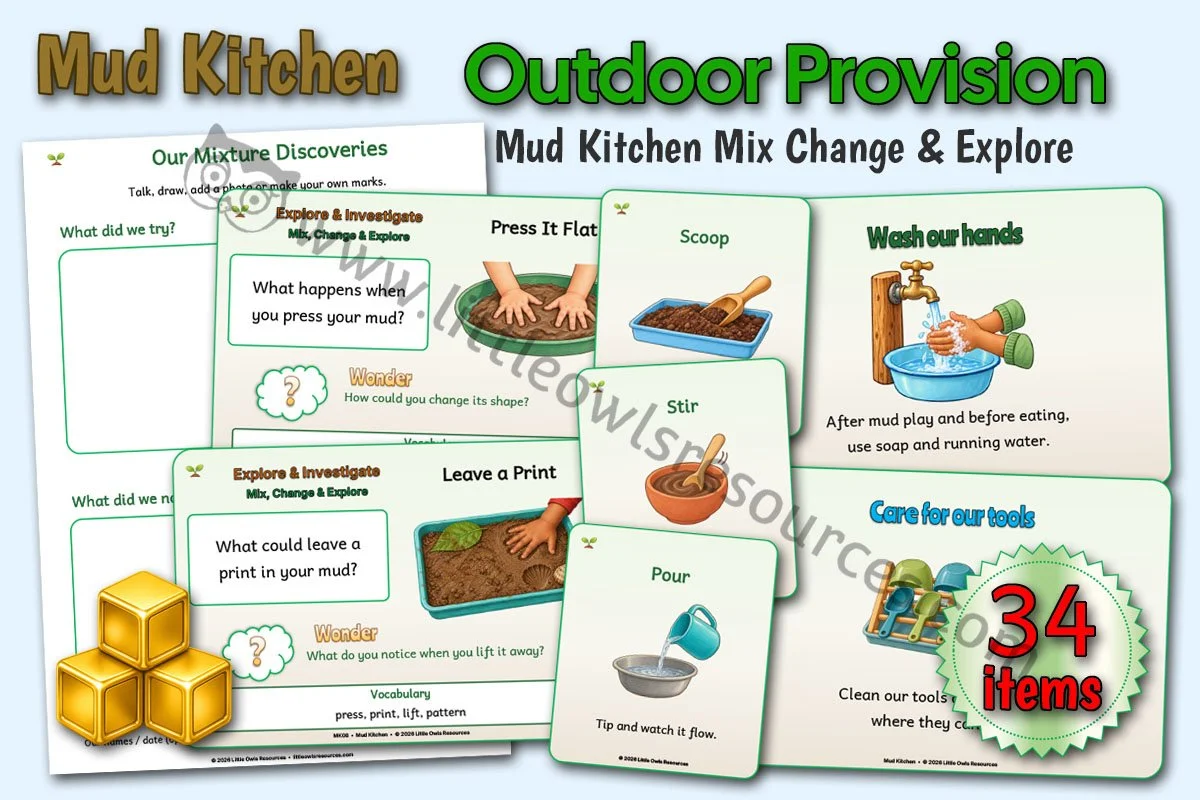
Mud Kitchen — Mix, Change & Explore
Explore materials and change through mixing, pouring, stirring, pressing and comparing. These illustrated invitations are primarily for Preschool and Reception, with selected toddler adaptations and optional KS1 extensions, making them useful for planning different ways to participate within a mixed-age group.
A starting point for October: Offer one invitation alongside familiar, suitable mud-kitchen materials. A toddler might repeat filling and stirring, while an older child compares mixtures or records a discovery. Choose materials, equipment and supervision for each child; the same invitation does not mean everyone must handle the same objects.
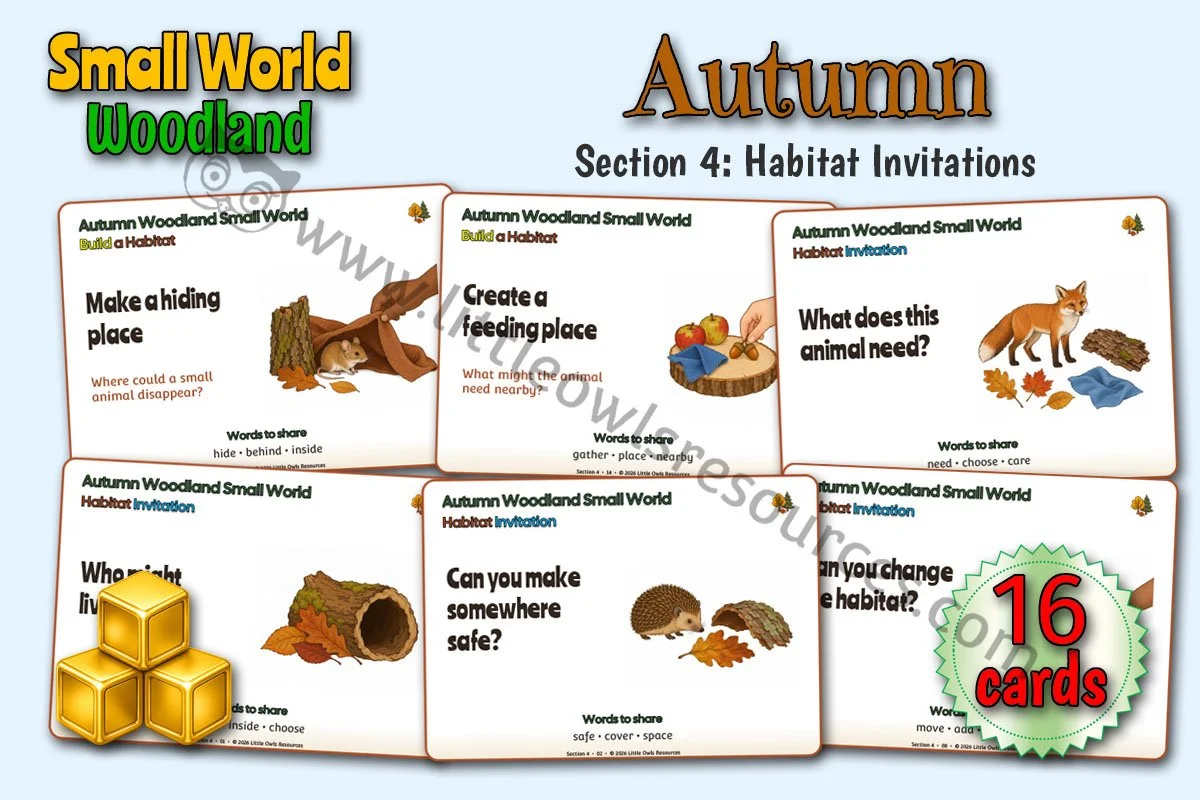
Autumn Woodland — Small World Habitat Invitations
Create flexible places for imaginative play with illustrated habitat invitations and build-a-habitat cards. Use them alongside animal figures, blocks, fabric and suitable materials you already have, allowing children to choose the characters, change the setting and develop their own stories. These are pretend small-world invitations, not instructions for housing real wildlife.
A starting point for October: Share one picture and invite children to make a place for a chosen toy animal. One child may arrange blocks or move a figure, while another develops a story or draws a plan. Keep small pieces inaccessible to babies and children who mouth objects, and provide separate age-appropriate materials where needed.
One familiar route, different discoveries
Take the Woodland Wildlife Walk — Autumn as an optional prompt on a suitable local outing. The resource includes observation checklists and space for drawing or marks; you do not need to find or record everything.
A baby might watch movement and share an adult’s response. A toddler may point to something familiar. A preschool child could describe a discovery or compare two things they notice. An older child might sketch, label or help record a question to explore later.
Keep the route, pace and access appropriate for the children attending, and leave room to stop where their interest takes you.

Bring an interest back into play
After noticing food in a shop, garden or familiar story, offer a small pretend shop using selected resources from the Farm Shop Role Play Pack. You do not need to recreate a full shop environment.
A younger child might carry large, age-appropriate pretend food between baskets. Another may take on a shopkeeper role, draw a shopping list or make a label. Introduce quantities or prices only where they connect with the child’s current understanding.
Arrange materials so that babies and children who mouth objects cannot reach unsuitable small parts. Older children’s play should not make the shared space less safe for younger children.
Explore floating and sinking together - Free sample to try
Use our Autumn Float or Sink — Posters & Prompts beside an adult-supported water investigation. These free posters provide a starting point for exploring what happens when suitable objects are placed in water.
A toddler might choose between two suitable objects and watch what happens with an adult. A preschool child could make a prediction and describe a discovery. An older child might compare results, suggest something else to test or record observations through drawings and words.
Follow what actually happens rather than expecting every object to behave like an example in a picture. Repeat an investigation when children are interested, without requiring everyone to record an answer.
Provide continuous close adult supervision around water, keep small objects away from babies and children who mouth them, and empty the container immediately after use.

Keep planning close to what happened
At the end of an experience, consider what children returned to, what support helped and what might be worth offering again. The next step may be keeping something available rather than preparing a new activity.
Optional practitioner support — Professional:
Outdoor & Community Learning Guidance — Childminders →
Support for making purposeful use of local spaces and shared experiences beyond the home.
Weekly Care & Learning Planning Templates →
Optional formats for childminders who find brief written reflection useful.
Explore further:
EYFS Planning for Childminders →
📅 Other October connections to explore
The ideas above are not a programme of special dates. Choose additional connections where they are meaningful to your children, families and curriculum.
Explore Harvest Festival resources for possible connections with food and community, or National Poetry Day ideas for enjoying words, rhythm and shared reading.
Our Black History Month page offers another starting point. Build connections into ongoing representation and learning, rather than treating them as a single isolated activity. Halloween resources are also available for settings and families who choose to use them.
For this year’s dates and the wider selection:
View the October Special Dates Calendar and Free Printable →
🌿 Keep exploration safe and accessible
Select materials for the individual children using them, including their developmental stage and whether they mouth objects. Small natural finds and small toy parts should not be accessible to babies or children for whom they present a choking risk. Supervision does not make an unsuitable material appropriate.
Check resources before use and apply your setting’s risk assessments, hygiene arrangements and supervision requirements. Offer appropriate alternatives to materials that are unsuitable for a child.
Provide different ways to participate: watching first, choosing between objects, pointing, speaking, signing, using a communication aid or directing an adult. Adjust height, reach, tools and textures so that the experience is accessible.
Start with what will be useful
Choose a small selection, keep familiar provision available and give children time to return to an idea. October can provide a connection—but the children and their learning remain the starting point.
Explore the full Autumn collection →
Explore October dates and celebrations →
Additional areas to explore
🧩 Continuous Provision
🎨 Themes & Special Dates
📚 KS1 Subjects