
Small world provision · Section 4
Make room for woodland ideas
A few blocks, a piece of fabric and a woodland character can be the start of a new place. These illustrated invitations offer questions and building ideas that children can explore, adapt and take into their own small-world stories.
Included with Premium and Professional membership. The download button opens the member resource page; sign in or join if needed.
Take a look inside
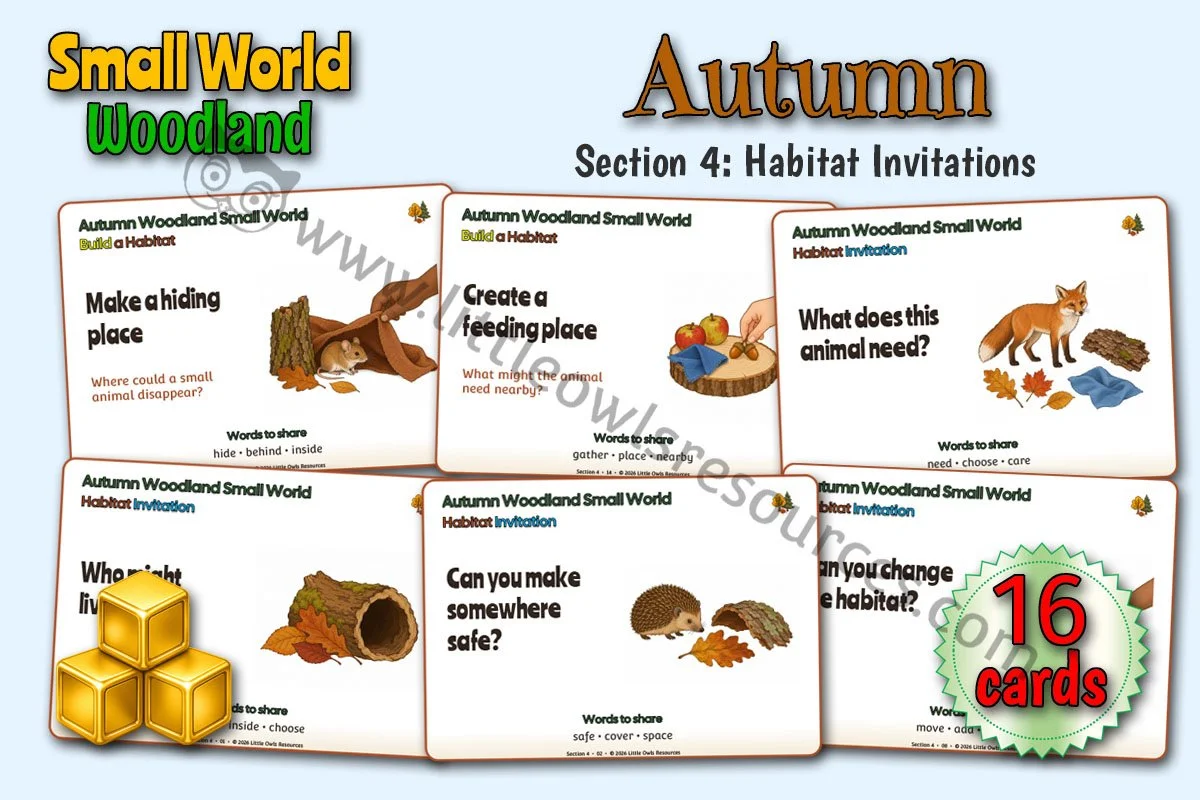
Browse one habitat-invitation sheet, one build-a-habitat sheet and an extract from the practitioner notes. These three watermarked previews show four sample cards and some of the guidance included.


On smaller screens, scroll or swipe sideways to browse the three watermarked previews. Download the file for all 15 illustrated invitations and build cards, the blank invitation and practitioner notes.
What’s included in the pack?
Section 4: Habitat Invitations. This separate nine-page file contains eight habitat invitations, seven build-a-habitat cards and one blank invitation: 16 cards altogether, with practitioner guidance on the first page.
Eight habitat invitations
Open questions invite children to consider possible places for their woodland characters. Each card pairs an illustration with a short prompt and optional “Words to share” that an adult can use in conversation.
Seven build-a-habitat cards
Practical starting points invite children to combine materials, try an idea and change what they have made. Each has an illustration, a short invitation, a supporting question and a few words to share.
A space for their own invitation. The sixteenth card is blank for children’s questions, drawings or dictated ideas. Add to it after printing or personalise it in Word. All text is editable and each picture can be replaced.
Using the invitations in your provision
Choose one card when it connects with the children’s play. Offer materials they can rearrange and allow time for their own solutions to develop.
Offer a starting point
Place a card beside a small choice of blocks, fabric, suitable loose parts and animal figures. Read the short prompt aloud if useful, then leave space for children to notice, choose and begin.
Follow the idea
Children can adapt the invitation, choose a different animal or take the story somewhere new. Notice a decision they make and share a word through talk, gesture or signs when it helps them express their thinking.
Try it and make a change
With a build card, an animal figure can help children test whether a space works for their idea. Ask what they notice, allow time to adjust, and check before changing their work. Agree whether the construction can stay for later play.
Pictures that leave choices open
The illustrations suggest possibilities. Children can make a different setting, use other materials or decide who visits a place. These invitations support pretend small worlds, with no fixed animal-to-habitat match.
Different ways to take part
Children can point, move a piece, choose a picture, direct a partner or watch before joining in. Offer fewer materials, larger lightweight pieces or a reachable working space where helpful. “Words to share” is optional vocabulary, not a reading task.
What should we print?
The file has nine pages. Print your chosen sheets from pages 2–9 on A4 at 100% / actual size for two cards per sheet. Habitat invitations are on pages 2–5; build-a-habitat cards are on pages 6–9, with the blank on page 9. Page 1 contains practitioner notes, with no need to print it. Cut around each outer border and laminate if useful.
Do children need to read the cards or complete them in order?
No. An adult can read a prompt when useful, and children can respond through play, talk, gesture or choices. Use the cards in any order, revisit one or leave it aside. The vocabulary can support a conversation without becoming a checklist.
Do we need the other woodland packs?
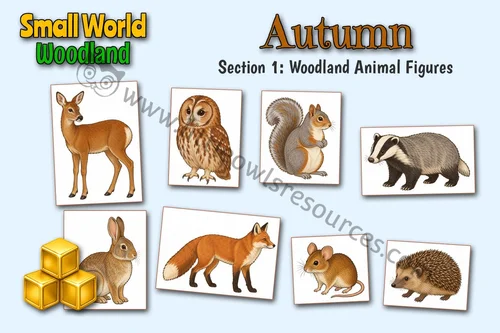
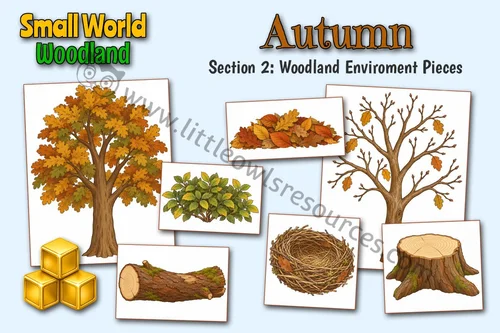
No. Use animal figures and materials you already have. The separate Animal Figures, Environment Pieces and Finds and Signs files can be added when helpful; they are not included in this download. Blocks, fabric and checked natural materials can be combined in many ways.
Are these instructions for making real wildlife habitats?
These cards are for pretend small-world play. Use toy figures and pretend food props, and leave live animals and wild habitats undisturbed. Choose materials suitable for the children using them, avoid small loose parts for children who mouth objects, and keep constructions low and stable.
Download the Woodland Habitat Invitations
Choose an invitation, offer a few materials and see what the children’s woodland world becomes.
Included with Premium and Professional membership. Already a member? Follow the download button and sign in if prompted.
You might also find these useful
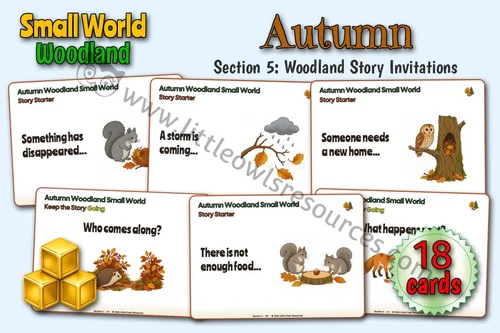
Add characters and scenery, continue a woodland story or explore more ways to build with autumn materials. “View member resource” opens a download gallery where sign-in may be needed; “View resource details” opens a public information page.
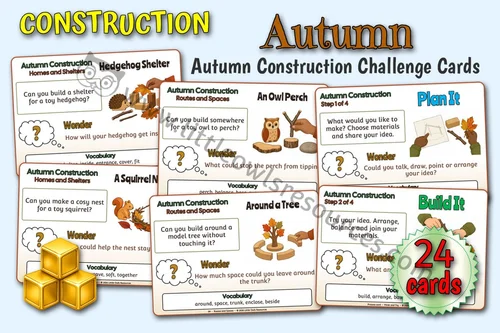
Resource and preview images © Little Owls Resources.