
Small world provision · Section 3
Add finds and signs to the story
Give a woodland character something to gather, a place to visit or a sign to follow. These illustrated finds and optional habitat signs can move with children’s stories, while blank signs leave room for their own marks, drawings and place names.
Included with Premium and Professional membership. The download button opens the member resource page; sign in or join if needed.
Take a look inside
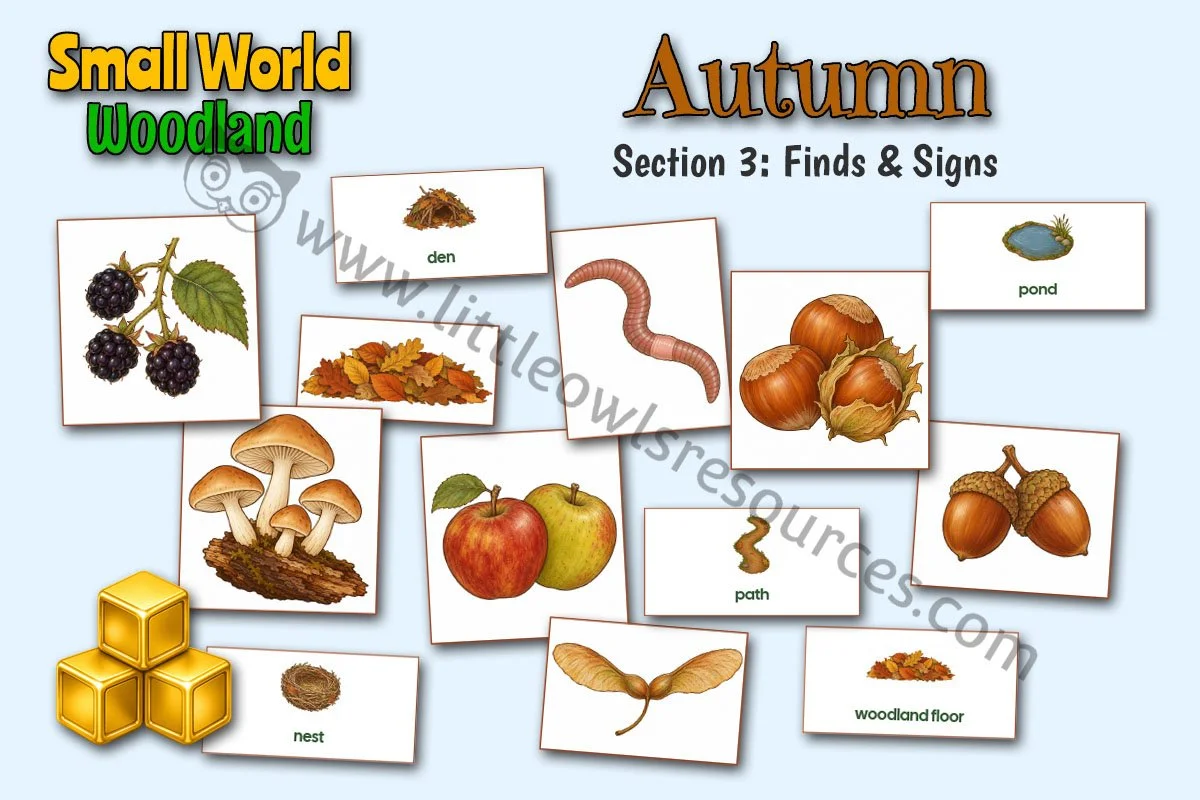
Browse one sample finds sheet and two clearly labelled extracts showing signs and practitioner guidance. These three watermarked previews give a closer look at a small selection from the pack.


On smaller screens, scroll or swipe sideways to browse the three watermarked previews. Download the file for all eight find props, ten illustrated signs, two blanks and practitioner notes.
What’s included in the pack?
Section 3: Woodland Finds and Signs. This separate file has six pages: practitioner notes, two sheets with eight woodland find props, two sheets with ten illustrated habitat signs and two blank signs, and an optional folded-support sheet.
Finds that can change the story
The printed props can be gathered, carried, hidden, exchanged or arranged. Children can decide what a find represents and what their characters do with it, combining the pieces with their own small-world materials.
Signs with a purpose
Optional picture-and-word signs can name a place children have made. The two blank signs offer space for a drawing, a dictated name or children’s own marks. Text and pictures can also be changed in Word to fit the play.
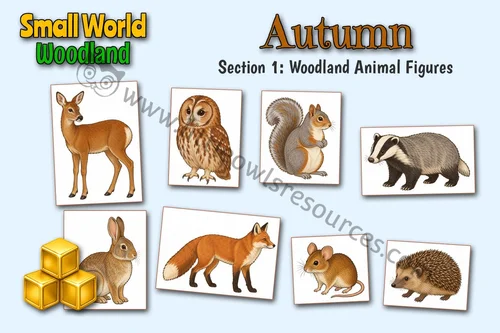
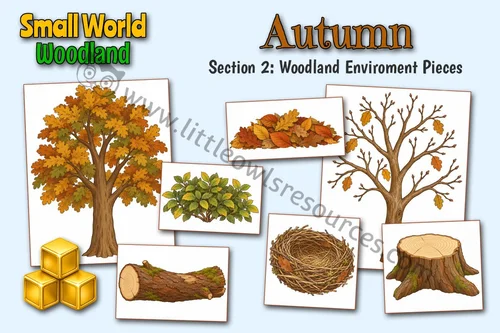
One part of the woodland collection. This download contains the finds and signs. Animal figures and environment pieces are available separately, or you can use the pack with figures, blocks and fabric you already have.
Using the finds and signs in your provision
Introduce a small selection and see what children make of it. Finds can move between places, while signs can be added, changed or taken away as a woodland story develops.
Prepare a few pieces
Choose the sheets you need, then back the pieces with firm card or laminate and trim. Adults cut around each whole find with a generous white margin, or around its rectangle. Keep grouped illustrations together as one piece.
Let children give them meaning
Offer the finds alongside familiar characters and materials. A child might carry something to a new place, hide it or make it part of a conversation between characters. There is no required animal-to-food match.
Add a sign when it helps
Let children choose a sign for a place they have made, or use a blank to create their own. An adult can write a dictated name if wanted. Move the sign when the setting changes, and follow what the child wants it to communicate.
Make room for different ways to join in
Children can point to a sign, move a prop, make marks, draw or tell an adult their idea. The signs can support talk and purposeful mark making without every part of the woodland needing a label.
Let the picture suggest a possibility
A place children build can look different from the illustration on its sign. They can choose another use for a find, rename a place or leave a sign out. Their own setting and story can guide the choices.
What should we print?
The file has six pages. Find props are on pages 2–3; illustrated signs and two blanks are on pages 4–5. Print the sheets you need on A4 at 100% / actual size. Page 1 contains practitioner notes, with no need to print it, and page 6 contains optional folded supports. The check line on page 5 should measure 5 cm.
How large are the props and signs?
At actual-size printing, find props are approximately 6–7 cm along their longest dimension, including a little cutting margin. Signs measure 8 × 4 cm. These are practical play sizes rather than a true-to-life scale comparison.
Do we need to label every place?
No. Use signs where they help the children’s play. They can be laid flat or placed in suitable stable card holders. Children can choose a printed sign, make one of their own or leave a place unnamed.
Are these nature-identification cards?
These are props for pretend small-world play. They are not a guide to collecting, identifying or eating wild plants or fungi, and the feeding-place picture is not advice about feeding real wildlife. Choose pieces and holders suitable for your children, avoid small parts for children who mouth objects, and check cut edges and joins.
Download the Woodland Finds and Signs
Offer a few finds, leave room for a new place name and follow the woodland story as it grows.
Included with Premium and Professional membership. Already a member? Follow the download button and sign in if prompted.
You might also find these useful
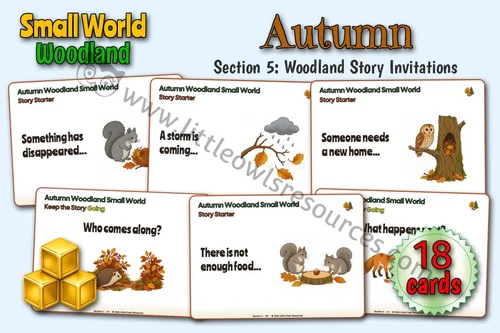
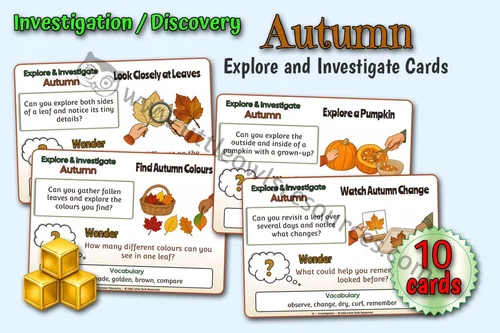
Add characters and scenery, introduce a story idea or explore autumn discoveries through another kind of play. “View member resource” opens a download gallery where sign-in may be needed; “View resource details” opens a public information page.
Resource and preview images © Little Owls Resources.