
Practitioner provision cards · Toddlers
Everyday objects for toddlers to explore
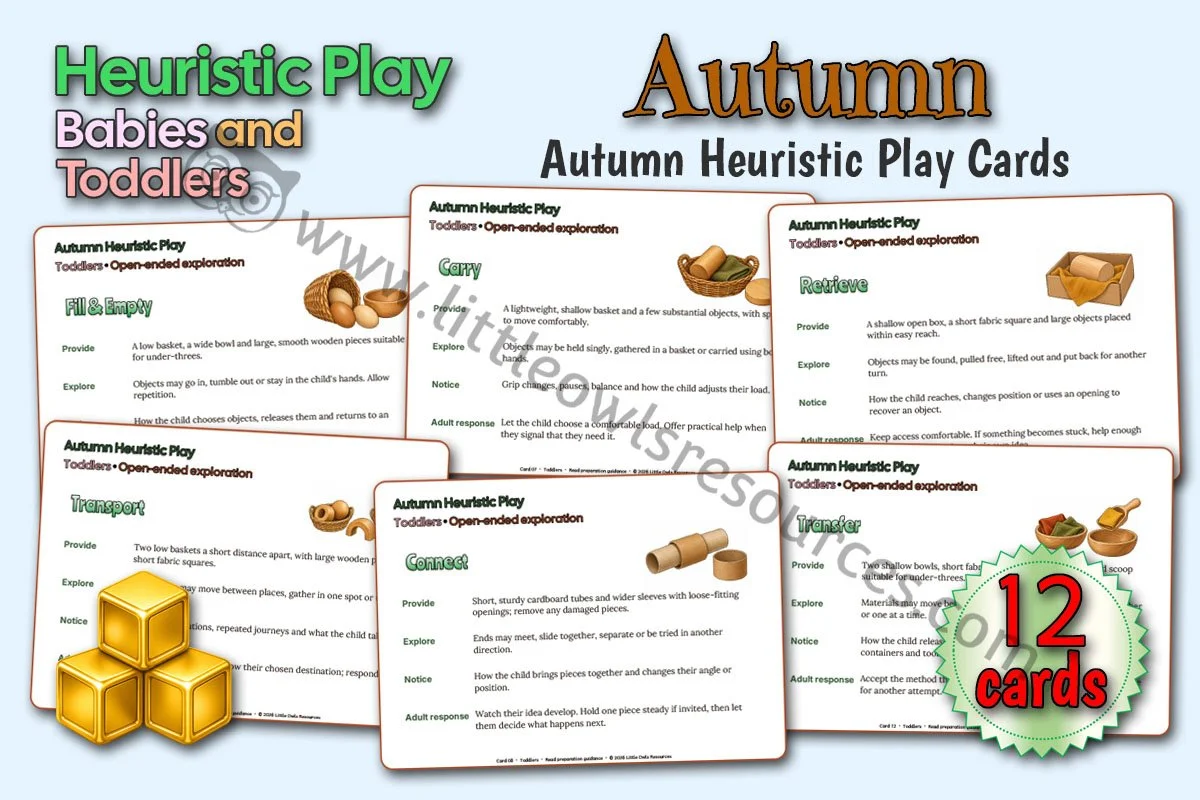
Prepare a small collection of suitable objects and see where toddlers’ interests take them. These 12 illustrated practitioner cards support filling, moving, posting, nesting and other discoveries, with autumn colours and natural textures woven into open-ended play.
Included with Premium and Professional membership. The download button opens the member resource page; sign in or join if needed.
Take a look inside
These three sample pages give a flavour of the illustrations and adult guidance in the pack. Each card includes “Provide”, “Explore”, “Notice” and “Adult response”.


On smaller screens, scroll or swipe sideways to browse the three watermarked previews. Download the pack for the complete set of printable cards and guidance.
What’s included in the pack?
Eight pages altogether: 12 illustrated practitioner cards across six A4 sheets, plus two guidance pages covering preparation, responsive adult support, printing and editing.
Four useful prompts for adults
Provide suggests a starting collection. Explore describes what children might do. Notice offers a focus for observation. Adult response suggests ways to acknowledge an interest or offer help when needed.
Practical preparation guidance
The notes cover selecting suitable resources, arranging an accessible space and allowing time for repetition. There is also guidance on checking materials, caring for the collection and supporting children’s different ways of participating.
The full set offers varied starting points for exploring materials and their relationships, with guidance to help adults follow each child’s interests.
Follow the child’s exploration. The action titles help adults plan and reflect on provision. A child’s interest in filling may become carrying, hiding or something unexpected. Allow that change, revisit familiar resources and leave time for repetition.
Using the cards in toddler provision
Use the cards to prepare an inviting space and think about your role alongside the play. The everyday materials and their changing combinations are the focus; warm wood, rust, ochre and olive give the pack its autumn character.
Prepare a small collection
Choose a few types of suitable objects, accessible containers and enough duplicates for children to explore alongside one another. Keep the resources within reach and leave a clear route for movement.
Allow time to investigate
Stay close and attentive while children choose what to handle and combine. Notice what they repeat, move or change. Watching, moving away and stopping are valid choices too.
Respond to their interest
Follow a glance, gesture or request for help. A short comment, familiar sign or home-language word may support a shared moment. Pause and give the child time to decide what happens next.
Make access comfortable
Adjust the number of objects, their height and position, and the space around them. Choose materials with the child’s movement and sensory preferences in mind. Offer practical support without moving their hands through an action.
Notice repeated interests
Repeated journeys, covering, containing, rotation, positioning or connecting may offer useful ways to reflect on play. Follow what you observe over time; the cards are not developmental checkpoints or a system for assigning children a schema label.
What does heuristic play mean in this pack?
Here, heuristic play means exploring a collection of suitable everyday objects: handling them, combining them and discovering what happens. Adults prepare the collection and remain available while toddlers choose their own actions and repeat ideas that interest them.
Do toddlers need to complete the action on each card?
No. These are practitioner cards for planning and reflection. Children do not need to read them, follow a sequence or produce a particular result. “Notice” gives adults something they might observe; it is not an assessment checklist.
Does the play need an autumn theme?
No. Use autumn colours and natural textures where they fit the suitable resources you already have. There is no need to add counting tasks, colour sorting or a woodland story. The pack’s seasonal appearance can sit alongside children’s everyday exploration.
Which resources should we choose?
Read both preparation pages before selecting materials. Choose robust, clean resources suitable for the actual children, including their age, mouthing and movement. Everyday objects need checking before being offered for play, and an illustration does not establish a safe size or product.
The pack specifies substantial resources suitable for under-threes and excludes conkers, acorns, nuts, seeds, small stones and other small autumn finds. Keep fabric short and wide, away from faces and necks. Follow the full preparation guidance and your setting’s risk assessment.
What should we print, and can we edit the cards?
Print pages 3–8 on portrait A4 at 100% or actual size. There are two cards per sheet; cut around the outer borders. Keep the two guidance pages available with the set. The Word file has editable text and replaceable images, so you can adapt the cards to your provision.
Download the Autumn Heuristic Play Cards
Use the practitioner notes to prepare your collection, then choose cards that connect with the toddlers’ current interests.
Included with Premium and Professional membership. Already a member? Follow the download button and sign in if prompted.
You might also find these useful
Explore other ways to support toddlers’ interests, or find planning guidance for your setting. Links labelled “View member resource” open member pages.

Resource and preview images © Little Owls Resources.