
**Note: This page is for educational inspiration and is not officially affiliated with World Music Day. World Music Day is an international celebration that originated in France as the Fête de la Musique ('Festival of Music'). Launched by the French Ministry of Culture in 1982, it is celebrated annually on June 21st. The day encourages people of all ages to make and play music, celebrating the power of music to unite us and bring joy. It is a day for free, public concerts and for everyone to share their love of music. For official information and details, please visit the Fête de la Musique website: fetedelamusique.culture.gouv.fr.
Monday 21st June 2027
Understanding World Music Day in EYFS & KS1
Let's clap, tap, and sing along to the rhythm for World Music Day! 🎶🥁🎤
For early years settings, nurseries, preschools, childminders, and Year 1 and Year 2 classrooms, this day provides a wonderfully creative and crucial theme for exploring music and sound, expressive movement, emotions, creativity, and cultural awareness. It’s about empowering children to express themselves through sound and movement, fostering a love for rhythm and song, and helping them understand how music can reflect and influence their feelings. This day offers fantastic planning ideas and inspiration for engaging activities & invitations that truly resonate with young minds, making learning about music, self-expression, and listening skills wonderfully fun!
Why Is Learning About Music Valuable for Young Children?
Integrating World Music Day and themes of music, sound, and movement into your practice with young children (aged 0-7) is incredibly important for holistic development and fostering positive self-expression.
Fosters Creativity & Self-Expression: Provides a safe and fun way for children to express their feelings and ideas.
Develops Listening Skills: Encourages children to listen carefully to different sounds and rhythms in their environment.
Supports Emotional Regulation: Helps children understand how music can change their mood and express a range of emotions.
Enhances Coordination & Gross Motor Skills: Encourages children to move their bodies to music, developing balance and rhythm.
Builds Social Connections: Provides a shared experience of singing, dancing, and playing together, which strengthens friendships.
Engaging Music & Sound Activities for World Music Day (EYFS & KS1)
Let's celebrate World Music Day by exploring sounds, rhythms, songs and creative expression. Music is a powerful way for children to communicate, connect with others, express emotions and develop listening skills. Through singing, movement, instrument exploration and imaginative play, children can discover that everyone can enjoy and create music.
Many of these early years and year 1 activities can be supported by our dedicated ‘Music and Sound’, ‘Emotions and Feelings’, ‘Expressive Movement’, and ‘Nursery Rhymes’ resources.
Here's some inspiration for celebrating World Music Day in your setting. The following ideas may be adapted for various EYFS and KS1 settings. In EYFS, these ideas are best viewed as invitations to explore sound, movement and creative expression rather than activities every child is expected to complete. Practitioners may choose to follow children's interests, allowing music to emerge naturally through play, storytelling, outdoor experiences and spontaneous performance. In KS1, some ideas may also be used within more structured music and performing arts activities where appropriate. Printable resources to support the following ideas may be found further down this page.
(Please use your own discretion and knowledge of your children to ensure appropriateness of each activity or enhancement and safety concerning any materials given and activity undertaken. Emphasise enjoyment, participation and self-expression rather than performance or correctness. Every child's musical response may look different.)
🎵 Creating & Exploring Sound
World Music Day provides wonderful opportunities for children to investigate how sounds are made and how they can be changed.
Children might:
Explore a variety of instruments and sound-makers.
Compare loud, quiet, high and low sounds.
Investigate how materials create different noises.
Experiment with rhythm and repetition.
Develop listening and observation skills.
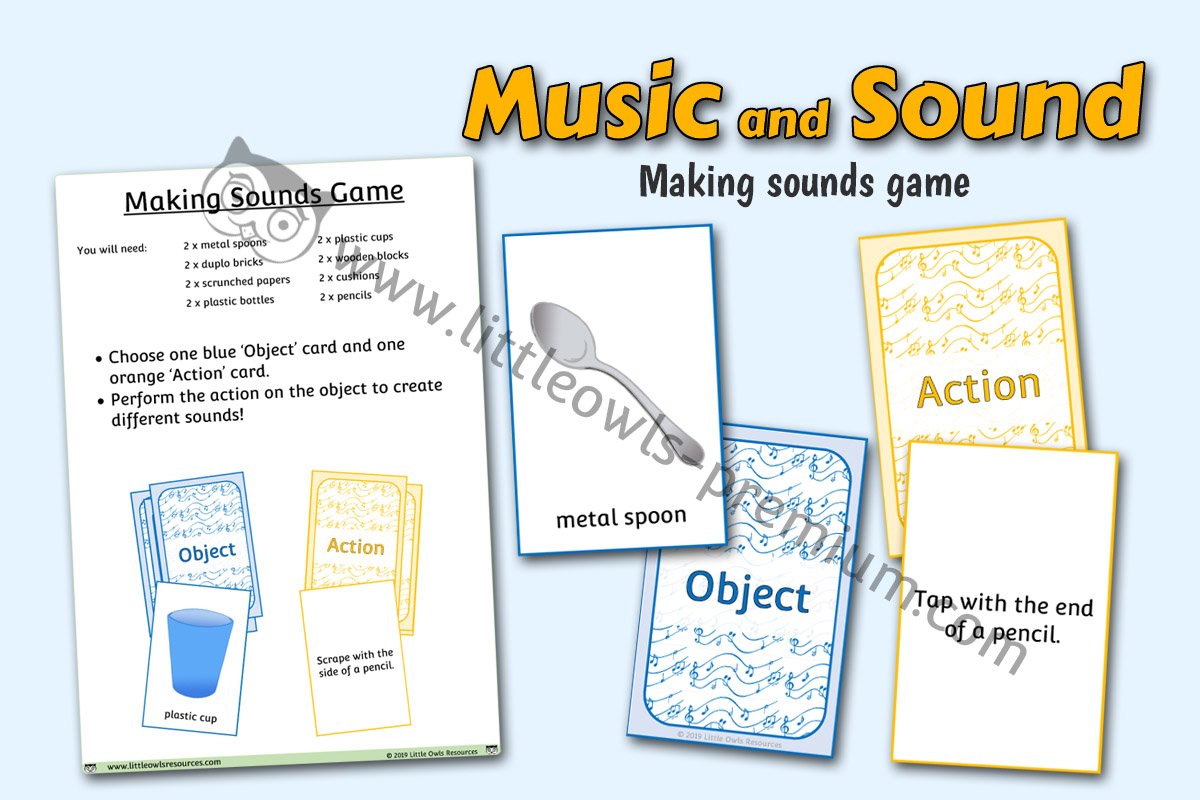
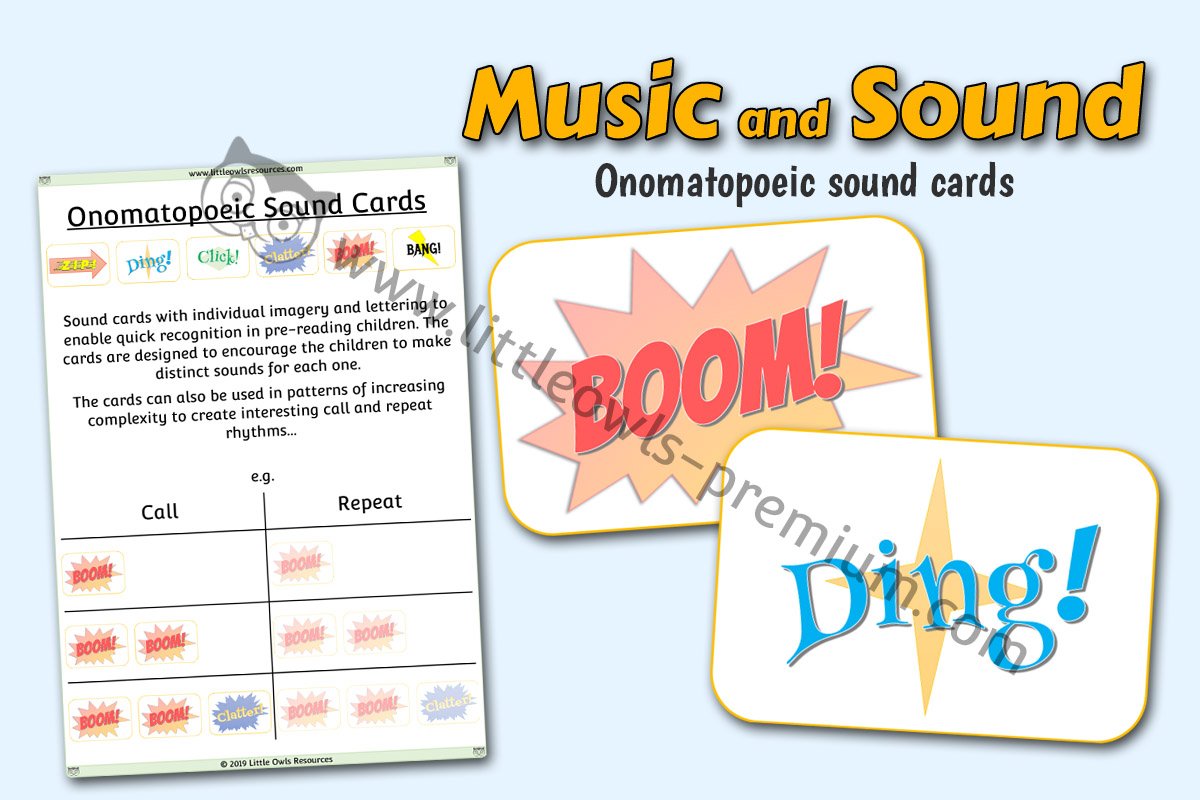
Resources such as Making Sounds Game, Onomatopoeic Sound Cards, Water Play - Water Sound Posters, and the STEM - Musical Instruments Support Pack on our ‘Music and Sound’ page can help support these explorations.
Additional Provision Enhancements
Create a music investigation station.
Offer loose parts for children to build instruments.
Explore sounds made by natural materials.
Investigate sounds in water play.
Compare sounds made by different objects.
Create a listening area with sound prompts.
👂 Listening & Sound Discovery
Careful listening is an important part of musical development.
Children might:
Listen for sounds indoors and outdoors.
Identify familiar environmental sounds.
Notice differences between sounds.
Develop attention and concentration skills.
Talk about sounds they enjoy.
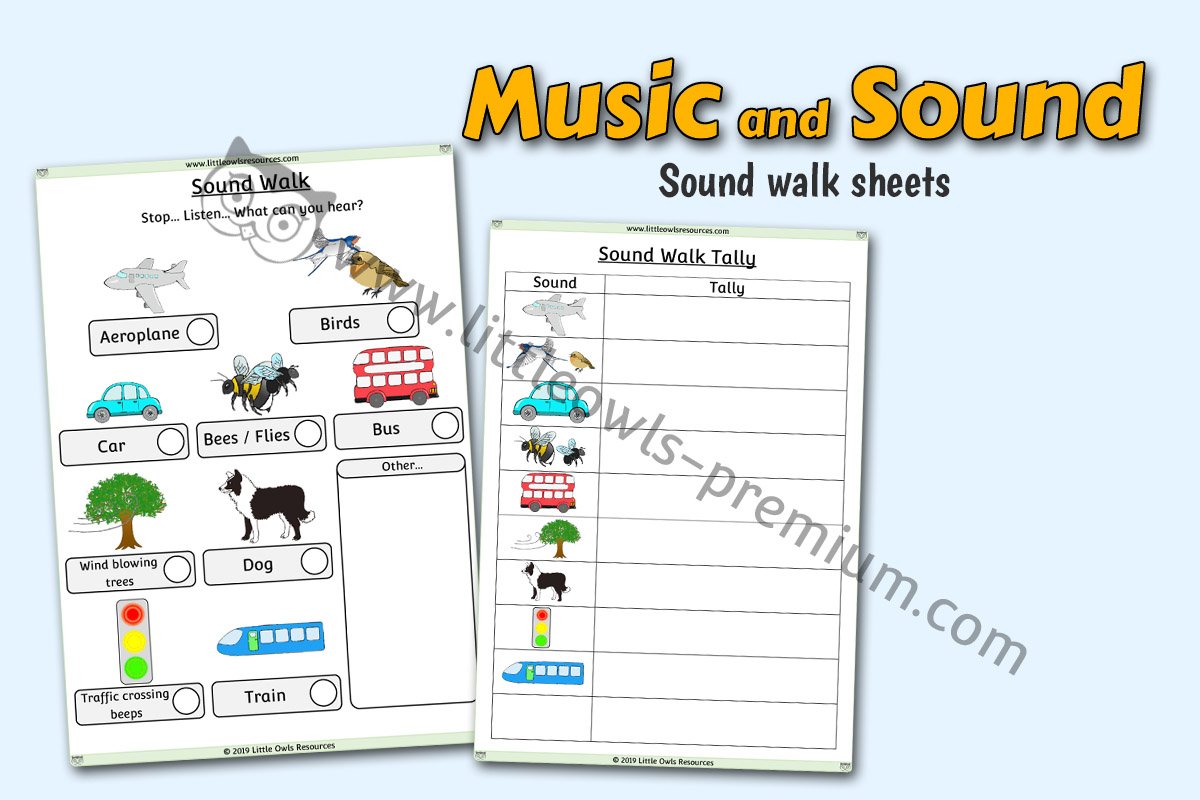
Resources such as Listening 'Sound Walk' Sheets, Listening 'Sound Walk' Tally Sheets, and Outdoor Play - Sound - Can You Make This Sound? Prompt Cards on our ‘Music and Sound’ page can help support these experiences.
Additional Provision Enhancements
Go on a sound walk around the setting.
Listen for birds, vehicles and weather sounds.
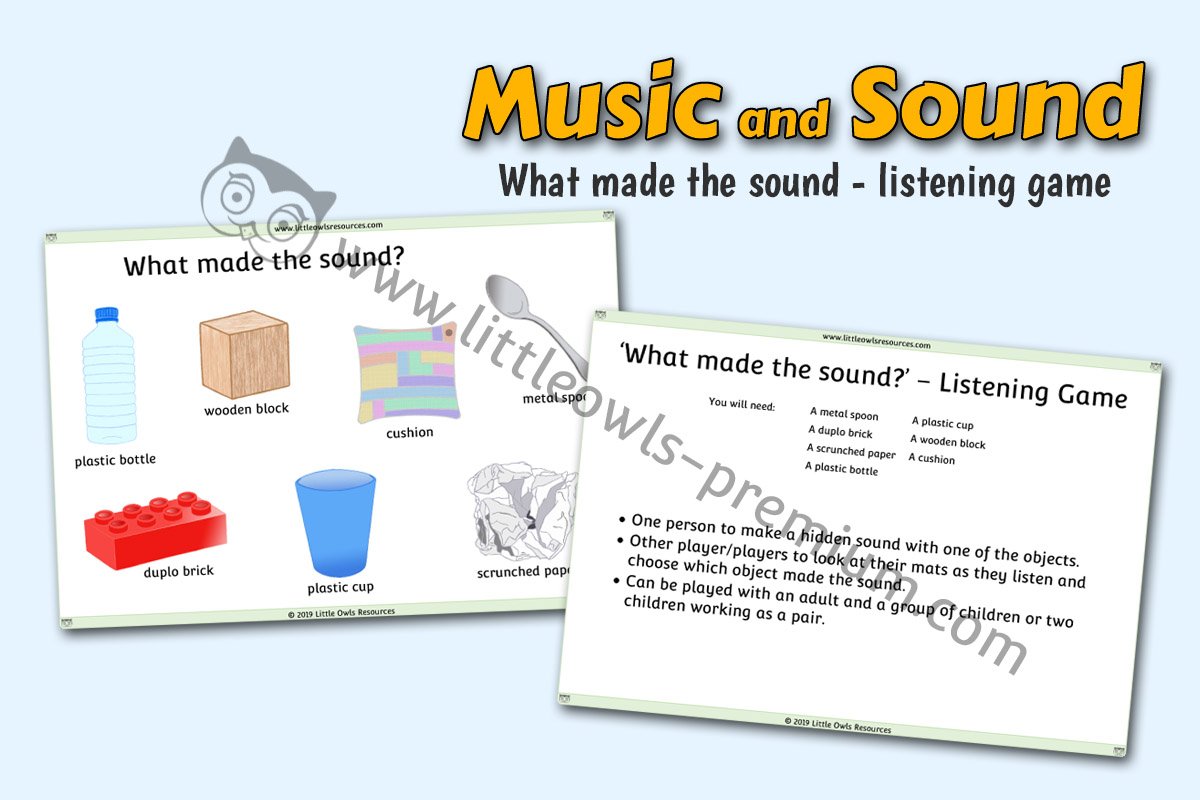
Create a "guess the sound" game.
Record sounds and play them back.
Explore sounds with eyes closed.
Compare indoor and outdoor soundscapes.
💃 Music, Movement & Expression
Music naturally inspires movement, creativity and physical development.
Children might:
Move in response to different styles of music.
Explore fast and slow movements.
Create dances and movement sequences.
Use scarves, ribbons or props alongside music.
Develop coordination and body awareness.
Our resources linked to Expressive Movement and various music-themed activities can help support these opportunities.
Additional Provision Enhancements
Create a music and movement area.
Dance with scarves or ribbons.
Explore freeze-dance games.
Move like different animals to music.
Create movements for favourite songs.
Use large-scale mark making in response to music.
😊 Music & Emotions
Music can help children recognise, express and talk about feelings.
Children might:
Explore how music makes them feel.
Connect sounds with emotions.
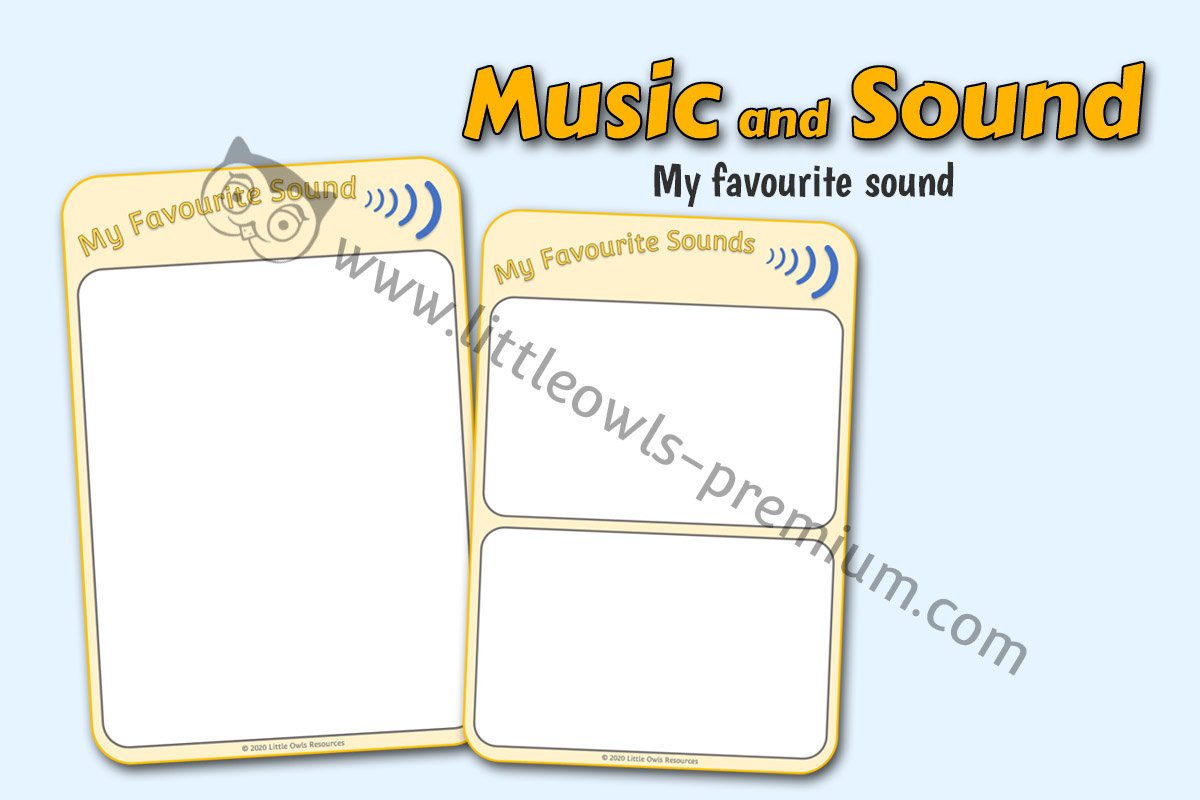
Discuss favourite songs and why they enjoy them.
Express feelings through art, movement and discussion.
Develop emotional vocabulary.
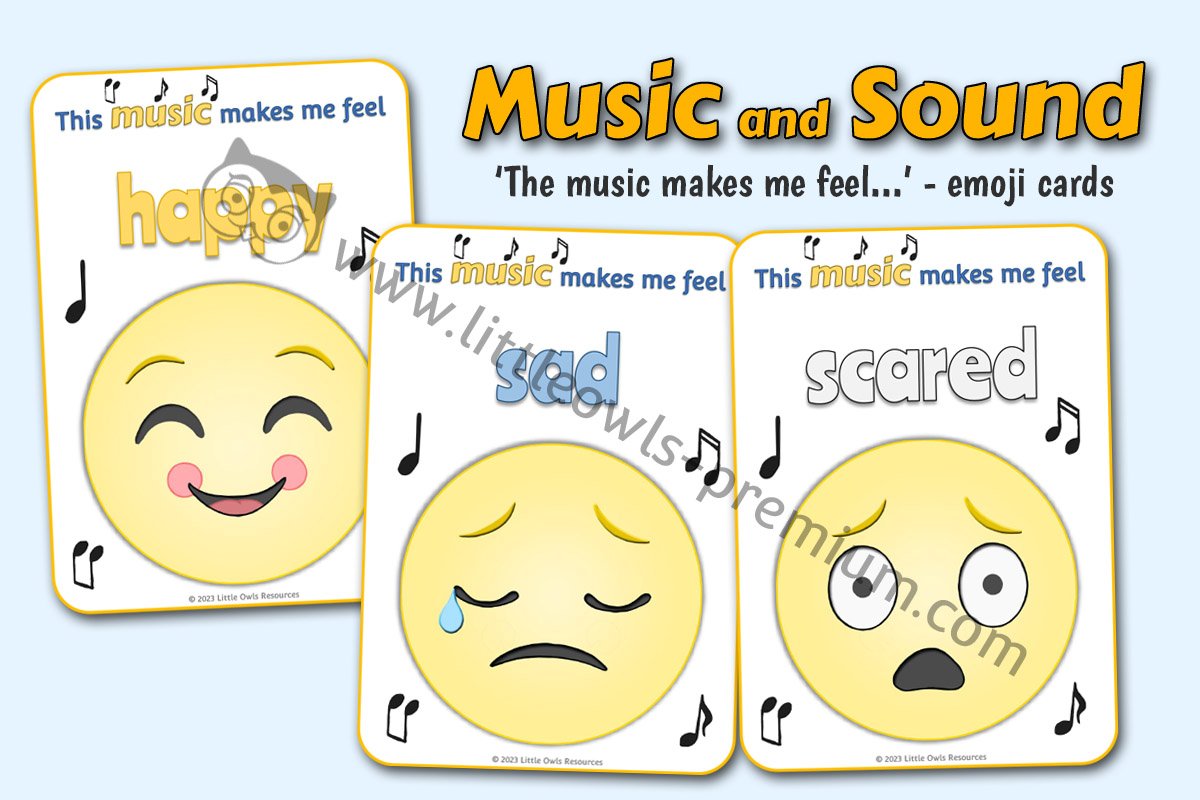
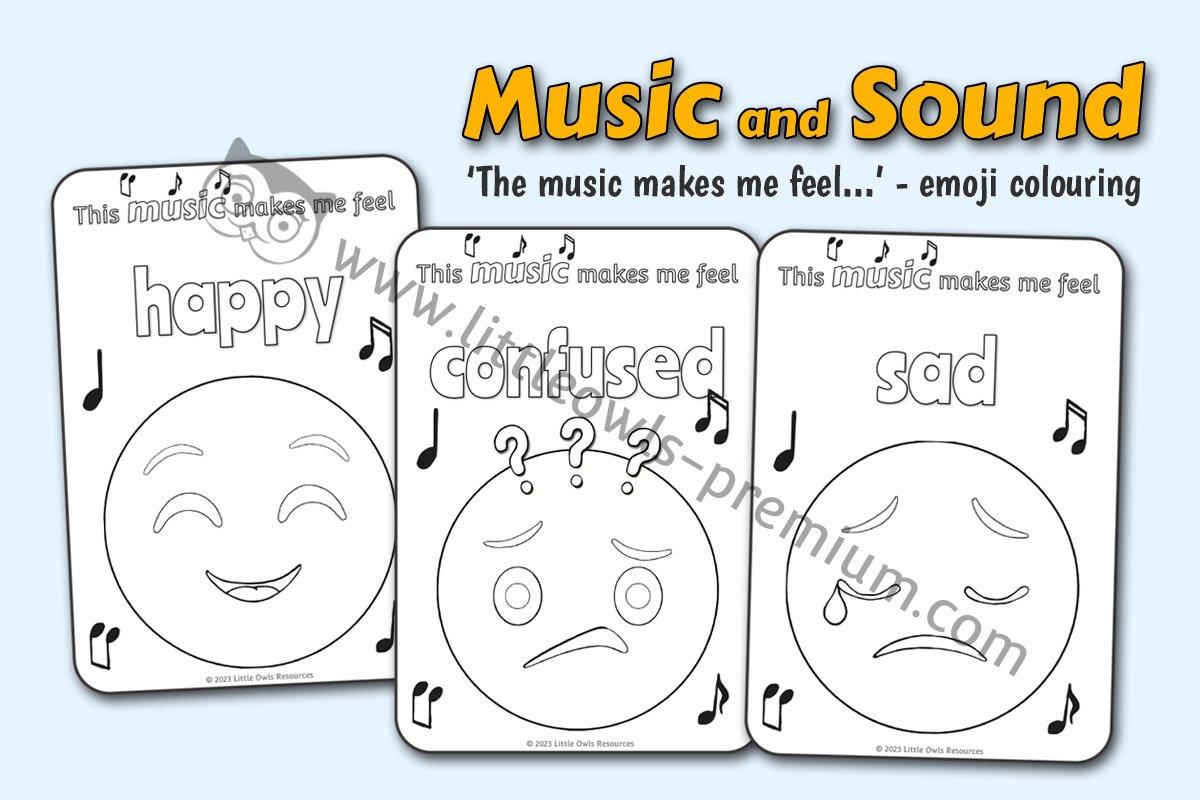
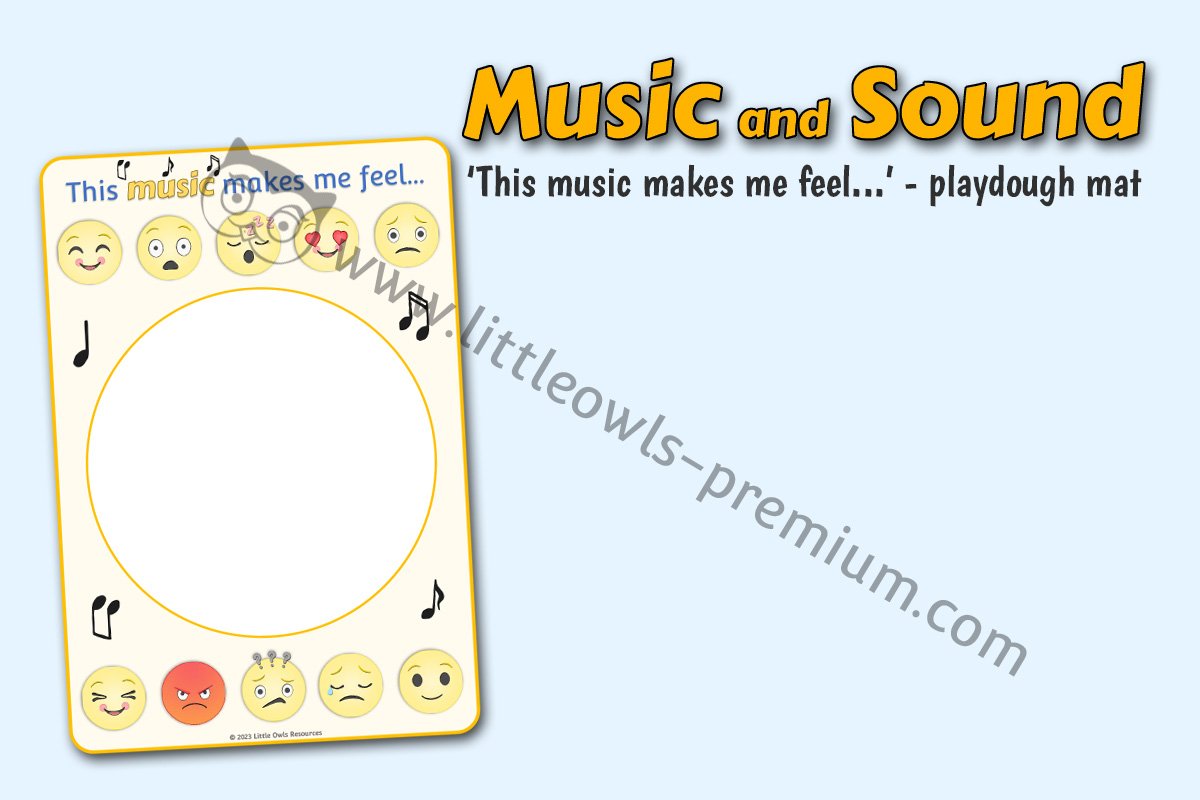
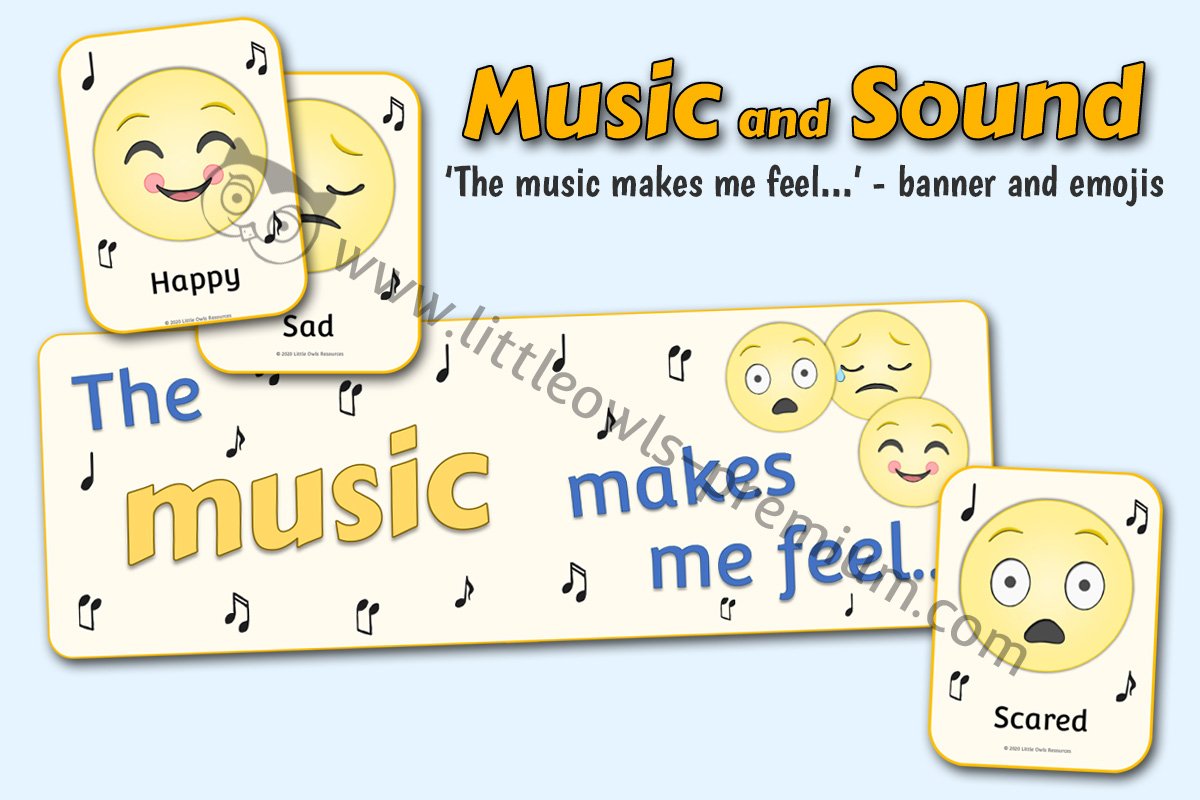
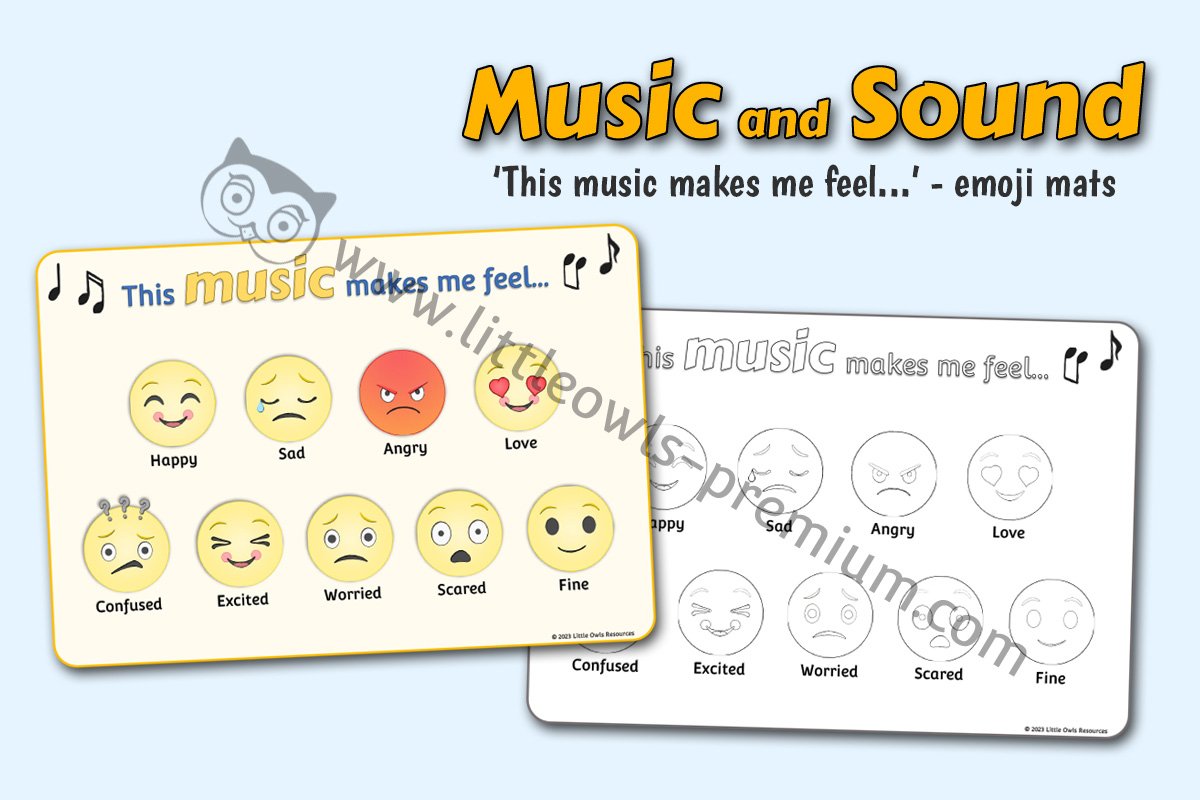
Resources on our ‘Emotions & Feelings’ page such as 'This Music Makes Me Feel...' Emoji Cards, 'This Music Makes Me Feel...' Playdough Mats, 'This Music Makes Me Feel...' Colouring Pages, and Emotions - 'This Music Makes Me Feel...' Mark Making can support these conversations.
Additional Provision Enhancements
Compare happy, calm, exciting and relaxing music.
Create artwork inspired by different songs.
Discuss favourite music from home.
Explore music from different cultures.
Match emotions to musical pieces.
Create mood playlists for role-play areas.
🎤 Singing, Rhymes & Performance
Singing together supports language development, memory, confidence and social connection.
Children might:
Sing favourite nursery rhymes and songs.
Learn new songs from different cultures.
Perform for friends, teddies or family members.
Create their own songs and lyrics.
Explore rhythm through clapping and chanting.
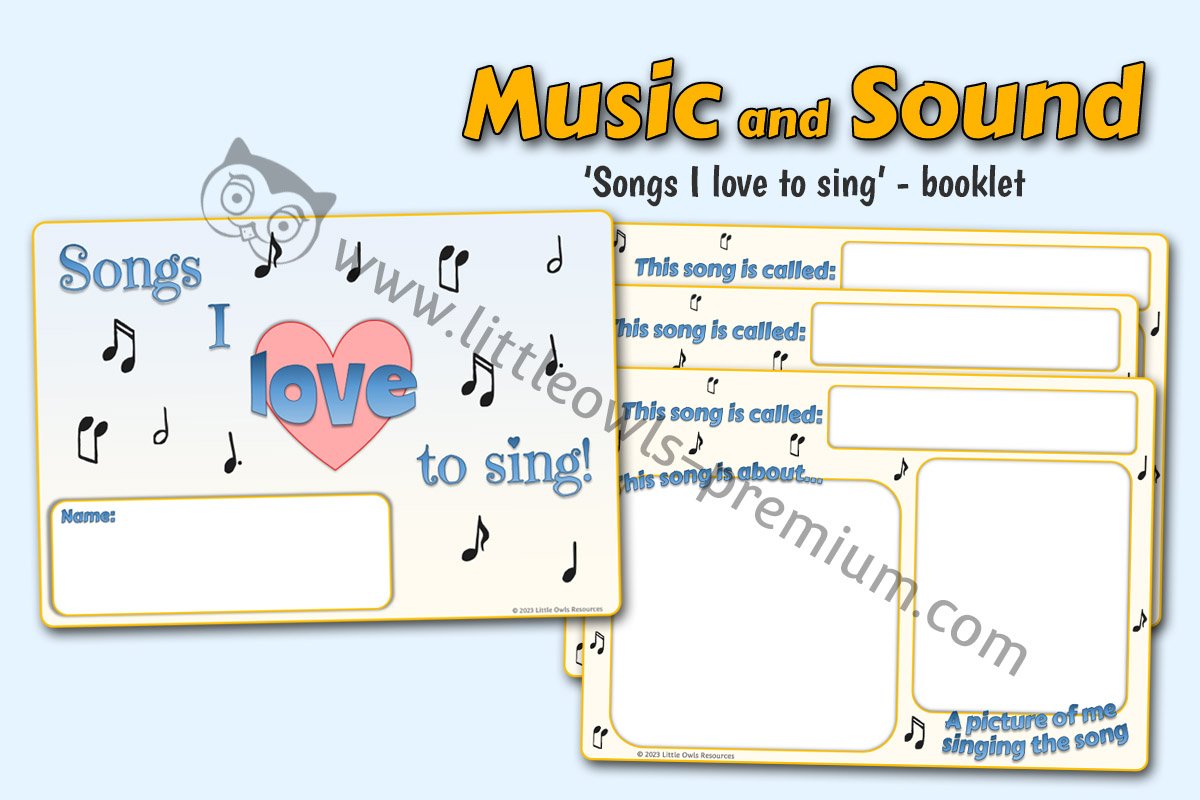
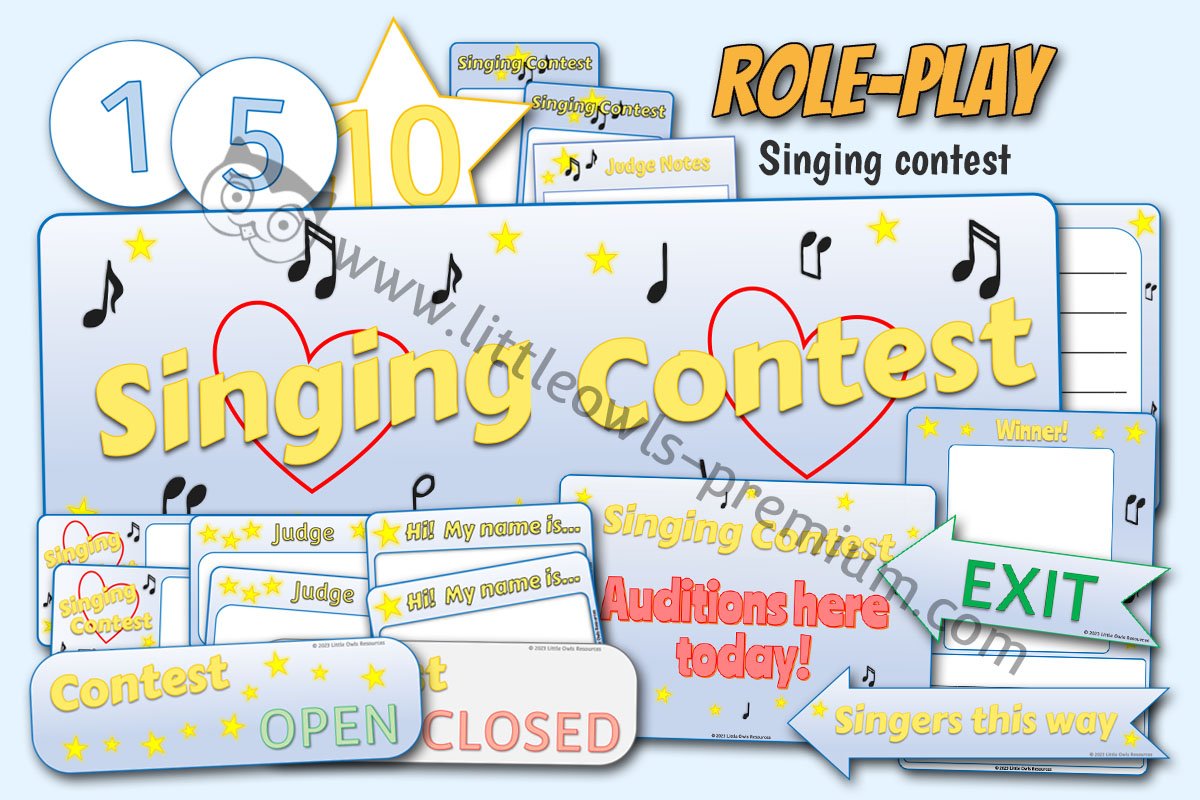
Resources on our ‘Nursery Rhymes’ page such as Five Little Speckled Frogs Lyrics Posters and The Wheels on the Bus Lyrics Posters plus our Singing Contest Role Play Pack and Songs I Love To Sing Booklet on our ‘Music and Sound’ page, can help enrich these experiences.
Additional Provision Enhancements
Create a performance stage area.
Encourage children to lead favourite songs.
Use puppets during singing sessions.
Make up new verses to familiar songs.
Perform songs outdoors.
Invite children to share songs from home.
👏 Rhythm, Pattern & Musical Games
Rhythm helps children develop listening skills, memory and early mathematical thinking.
Children might:
Copy simple clapping patterns.
Create repeating rhythms.
Take turns leading rhythm games.
Explore musical patterns.
Develop timing and coordination.
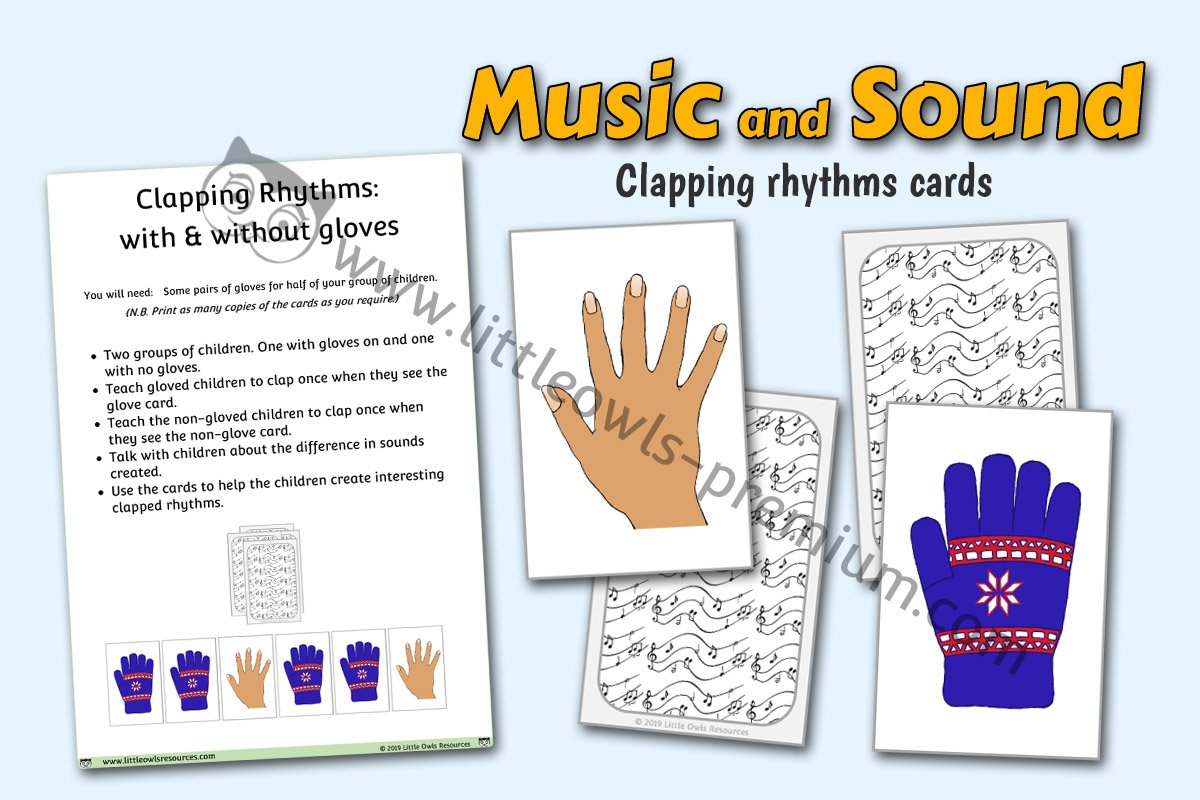
Resources such as Clapping Cards and various rhythm-based activities on our ‘Music and Sound’ page can support these explorations.
Additional Provision Enhancements
Create body percussion routines.
Use drums and percussion instruments.
Tap rhythms using natural materials.
Explore repeating sound patterns.
Create call-and-response games.
Use rhythm alongside storytelling.
🎨 Creative Music-Making
Music can inspire imaginative and creative learning across many areas of provision.
Children might:
Design and build instruments.
Create concert posters and tickets.
Draw or paint while listening to music.
Create stories inspired by songs.
Develop role-play based around musicians and performers.
Resources such as the STEM - Musical Instruments Support Pack, Fairy Tale Theatre Role Play Pack, and various music-themed resources can support creative exploration.
Additional Provision Enhancements
Build instruments from recycled materials.
Create a music studio role-play area.
Design album covers.
Make concert tickets and programmes.
Explore music-themed small world play.
Create musical storytelling baskets.
🔍 Explore More
To support your World Music Day learning and encourage deeper exploration of sound, rhythm and creative expression, you may wish to explore our resources linked to:
Music and Sound • Emotions and Feelings • Expressive Movement • Nursery Rhymes
You may also enjoy exploring related themes such as:
Expressive Movement & Dance • Communication and Language • All About Me • Festivals & Celebrations • Storytelling
These ideas and provision enhancements offer meaningful ways to celebrate World Music Day in EYFS and KS1 settings. Through listening, creating, performing and exploring sounds together, children can develop confidence, creativity, emotional expression and a lifelong enjoyment of music. 🎵🎶🥁🎤
Printable resources to support teaching & learning surrounding: ‘World Music Day’
Free ‘Music and Sound’ activities and printable resources for EYFS & KS1:


‘Music and Sound’ activities and printable resources for EYFS & KS1:
Please visit our ‘Music and Sound’ page for additional resources.

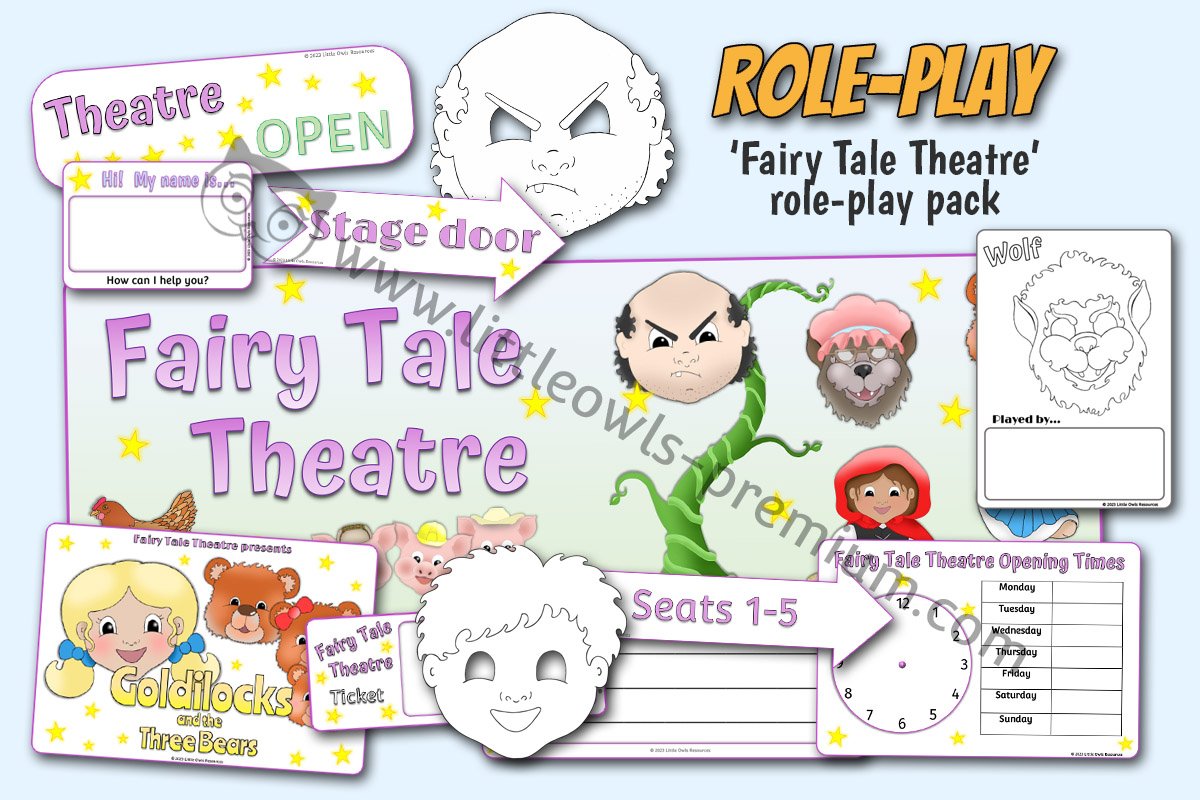
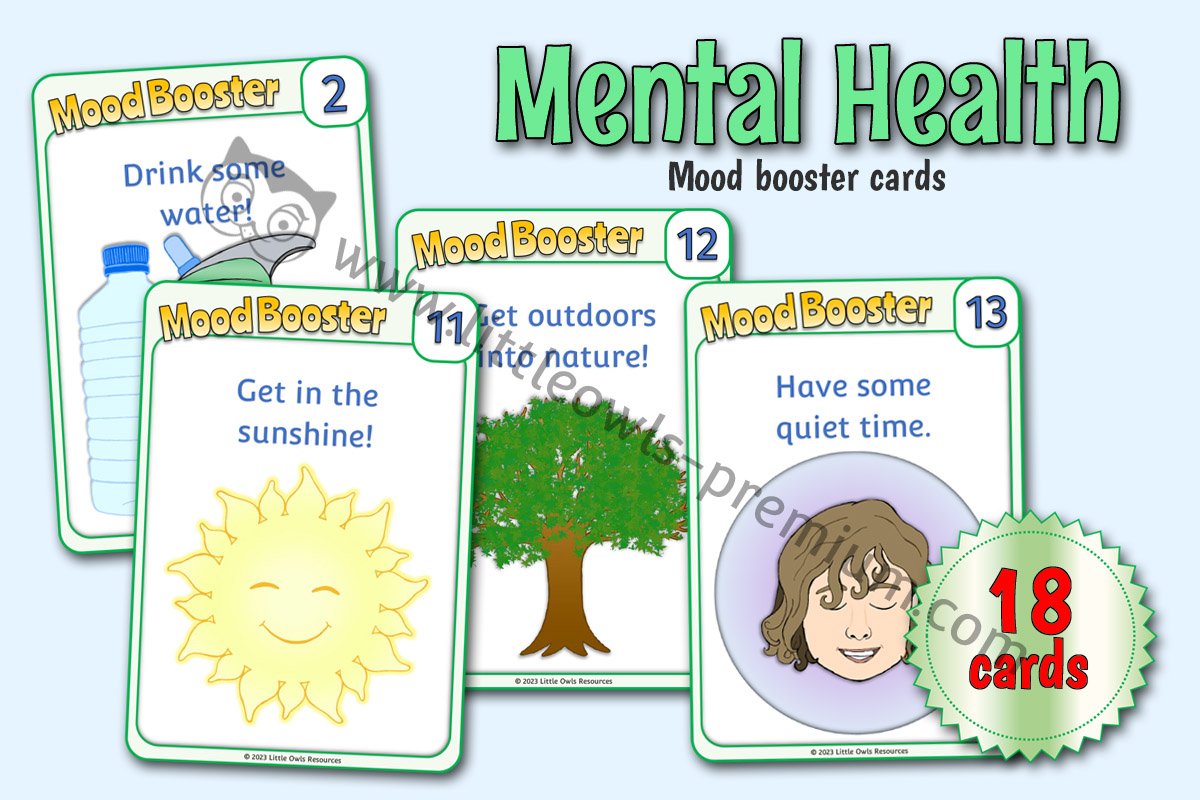
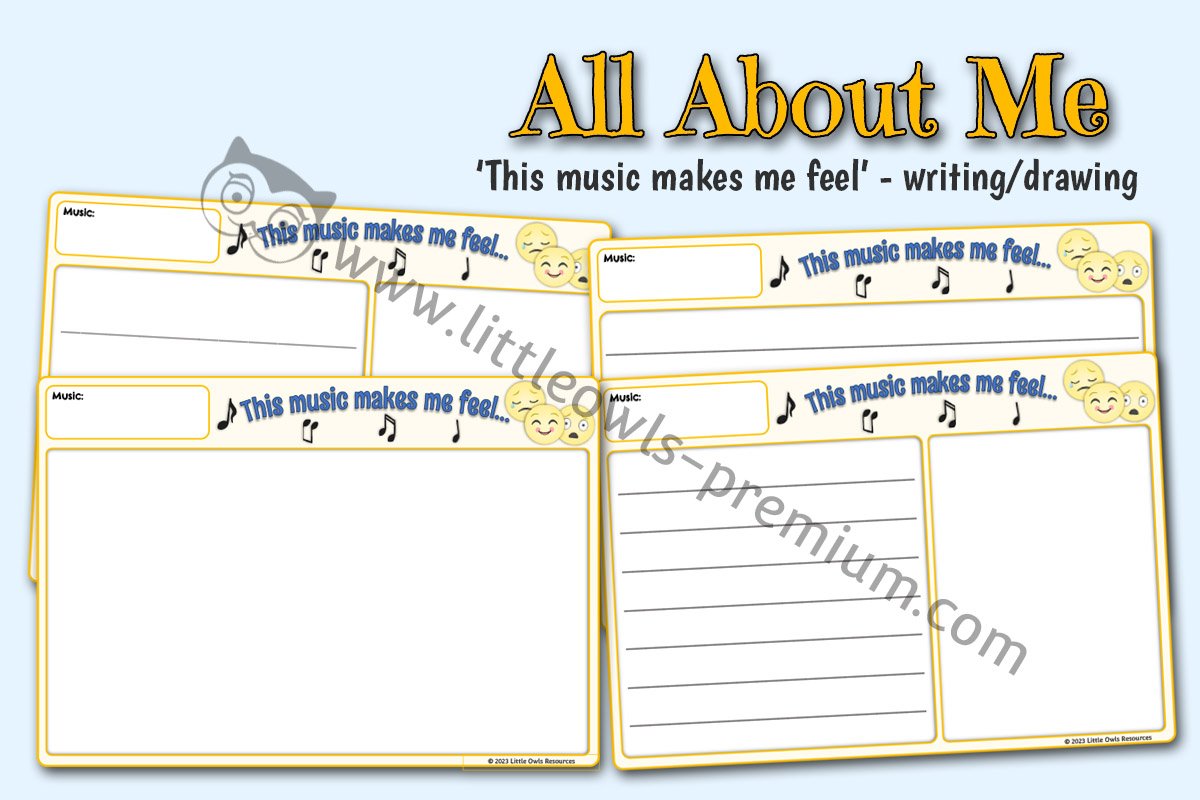


Please visit our ‘Music & Sound’ page for additional resources.

Additional Pages you may like to explore which cover relevant &/or Connected themes


More Early Years Event Pages for June




Explore special dates (including awareness dates, festivals, celebrations & events) relevant to your EYFS & KS1 children
Browse our ‘Special Dates Calendar’ page using the link below. You’ll find calendars for every month of the year to aid your planning!
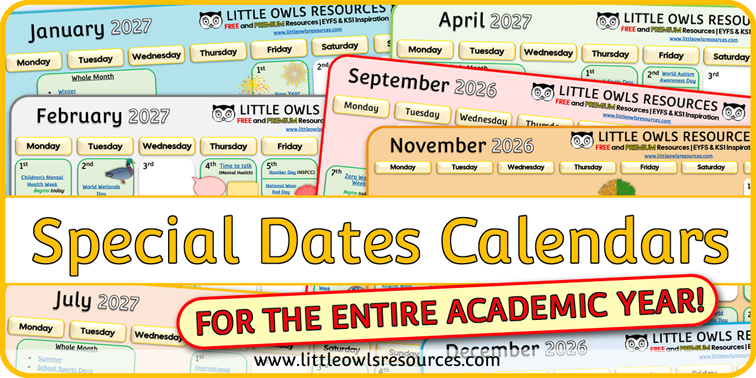
Search ‘Little Owls Resources’ Using the following Menu Buttons…


Disclaimer:
This page is for educational purposes only and is intended to support early years and primary practitioners with ideas and resources related to 'World Music Day'. We are not officially affiliated with or endorsed by the French Ministry of Culture, which founded the Fête de la Musique. We do not claim any rights to specific trademarks or official materials associated with this event. For official information and details, please visit the Fête de la Musique website: fetedelamusique.culture.gouv.fr.
Sunday 27th June 2027: Time to put on our shades and protect our eyes for National Sunglasses Day! 😎☀️🕶️ This day provides a fun and crucial theme for exploring sun safety, eye health, weather, and personal health…