
Monday 21st December 2026
When is the winter solstice in the UK?
The winter solstice brings the shortest period of daylight and the longest night of the year in the UK. It falls around 21 December and marks the start of astronomical winter. Afterwards, the hours of daylight gradually increase.
Explore what children notice about winter light in a nursery, preschool or primary school. Try a shadow investigation, compare daylight in winter and summer, or take a walk to see signs of seasonal change. You can use the ideas on either side of the solstice.
Winter Solstice activities for EYFS and KS1
Start with familiar experiences of light, shade and darkness. When you explore outdoors, look at the ground, shadows or nearby objects. Never look directly at the Sun.
Babies and toddlers · Find a bright patch
Find a patch of daylight on a wall or the floor. Move a familiar toy through the light and into the shade. Pause for babies to respond and invite toddlers to show you where the toy looks brighter.
Preschool · Make a shadow theatre
Shine a torch towards a wall or piece of card. Put a toy between the torch and the wall, then invite children to tell a short story with its shadow. Move the toy closer to the torch and then further away. Ask what happens to the size of the shadow. Keep the beam away from faces.
Reception · Follow a shadow during the day
On a bright day, choose an outdoor post or another object that stays still. Mark where its shadow ends in the morning and again after lunch. Compare where the marks are and how far they are from the object. If clouds hide the shadow, try again later or use a torch indoors.
Year 1 · Compare winter and summer daylight
Use two prepared strips to show how much daylight your area gets on a day in December and a day in June. Give each strip the same scale, with one block for an hour. Ask which has more daylight and what children notice about when they play outside in each season.
Year 2 · Make a daylight timeline
Find local sunrise and sunset times for three dates, one before the solstice, one on the solstice and one a few weeks afterwards. Shade the daylight part on three timelines with the same scale. Compare the lengths and ask how the timelines show that we gradually get more daylight after the solstice. Look up local sunrise and sunset times →
Mixed ages · Make two pictures of the same place
Choose a familiar place, such as a park or your setting’s entrance. Draw or build it in daylight and again after dark. Younger children can choose where to place a window or streetlamp in the picture. Older children can label what helps people see when daylight has faded.
What happens at the winter solstice?
Start with what children can see around them, such as lights coming on earlier or a long shadow in the playground. With older children, use a globe or diagram to explain why daylight changes through the year.
Why does daylight change?
Earth spins on a tilted axis as it travels around the Sun. At the December solstice, the Northern Hemisphere is tilted furthest away from the Sun. In the UK, the Sun follows a lower, shorter path across the sky, so there are fewer hours between sunrise and sunset.
What can shadows show?
A shadow forms when something blocks light. When the light comes from low down, the same upright object casts a longer shadow on level ground. Try moving a torch lower or higher while pointing it at a toy, and watch how the shadow changes.
What happens on the other side of Earth?
December is summer in places such as Australia and New Zealand. Their part of Earth tilts towards the Sun at the December solstice. It is their summer solstice, with the most daylight of the year.
Explore the Met Office’s guide to equinoxes and solstices →
↑ Back to choicesFree printables for winter and the shortest day
Explore day and night, talk about winter weather and plan seasonal investigations with these Free Access resources.

Winter: Continuous Provision Enhancements Pack | EYFS Download
Free AccessWinter provision ideas are grouped into separate baby, toddler, preschool and Reception banks. Choose relevant suggestions to enrich familiar spaces and respond to seasonal interests without requiring a fixed sequence of activities.
View free resource →
Winter: High-Impact Question & Vocabulary Banks | EYFS Download
Free AccessWinter vocabulary and interaction banks offer a dedicated page for each early-years phase. Use selected language to support shared noticing, description or explanation during real seasonal experiences and play.
View free resource →
FREE Day and Night: Oracy Provocation Tool | EYFS & KS1 Download
Free AccessA printable day-and-night picture cube offers prompts such as a sun, picnic, bed and torch. Roll a picture to invite conversation, imaginative action or discussion of familiar daily experiences.
View free resource →
FREE Nocturnal Animals: Sound (Phase 1 Phonics) Cards | EYFS Printables
Free AccessNocturnal-animal picture and sound cards support matching, listening and playful vocal imitation. Share owl hoots, mouse squeaks and other represented sounds, then take turns choosing or recognising a picture.
View free resource →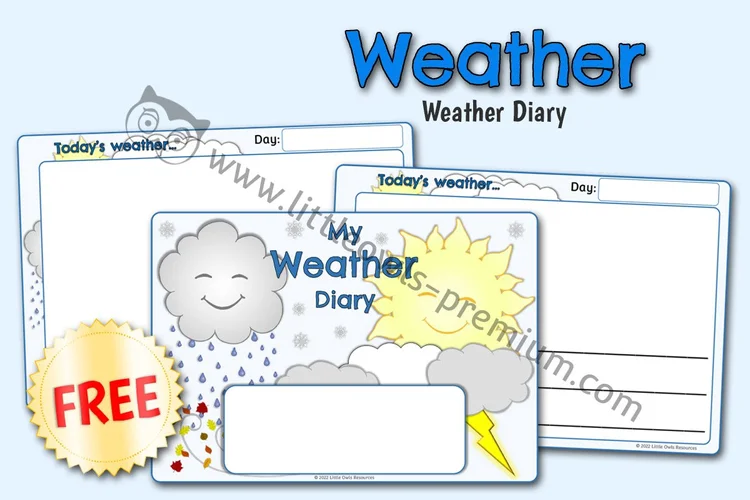
WEATHER - My Weather Diary - Booklet (Free Sample)
Free AccessA free sample of the weather-diary booklet offers a way to try recording observations together. Adults can help children express what they notice and revisit their record on another day.
View free resource →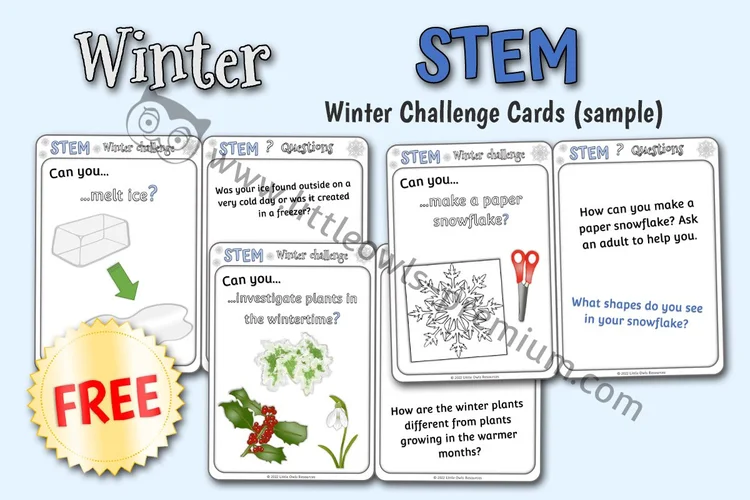
STEM - WINTER Challenge Cards (Free Sample)
Free AccessA free selection of winter STEM challenge cards. Use a chosen prompt to invite predictions, practical testing and discussion, selecting materials and support appropriate to the children and setting.
View free resource →Find resources for the winter solstice
Browse resources for learning about the shortest day, shadows, day and night, and winter outdoors. Choose an age for ideas suited to your group.
Showing the first 12 of 22 resources
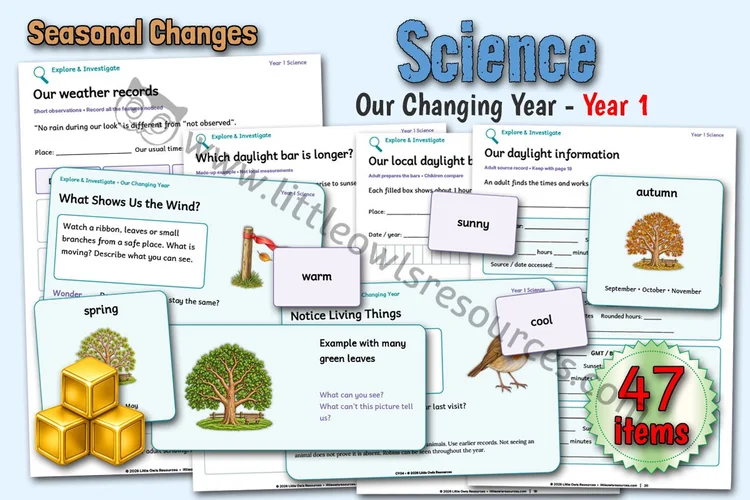
Our Changing Year — Seasonal Observations & Day Length
All Access NewRevisit a familiar outdoor place to observe weather, living things and seasonal change. Begin with real examples and shared observations, then use the selected pictures or recording prompts to explain findings.
View and download resource →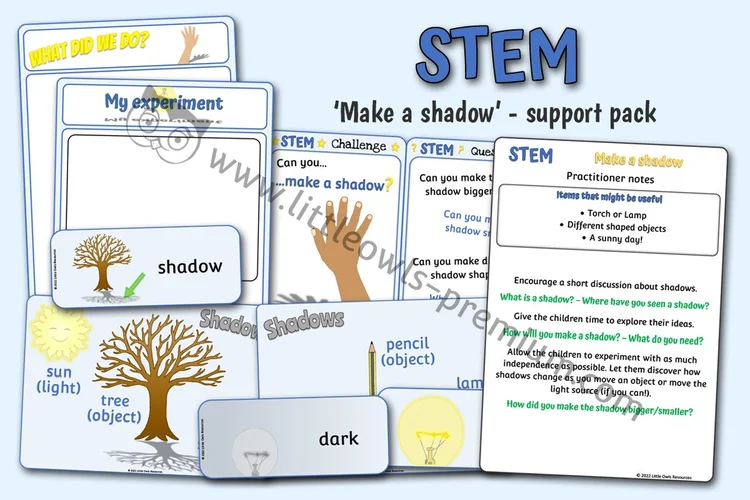
STEM - Make a Shadow - Support Pack
All AccessA support pack centres on the open-ended challenge “Can you make a shadow?” Adults provide an appropriate light setup while children test positions, compare shadows and explain changes they notice.
View and download resource →
FREE Day and Night: Oracy Provocation Tool | EYFS & KS1 Download
Free AccessA printable day-and-night picture cube offers prompts such as a sun, picnic, bed and torch. Roll a picture to invite conversation, imaginative action or discussion of familiar daily experiences.
View free resource →
Seasons: Seasonal Changes Display Posters | EYFS & KS1 Printables
All AccessFour season posters combine clothing, weather and familiar seasonal images, with diagrams representing day and night. Use selected details to discuss changes children have observed and compare different times of year.
View resource →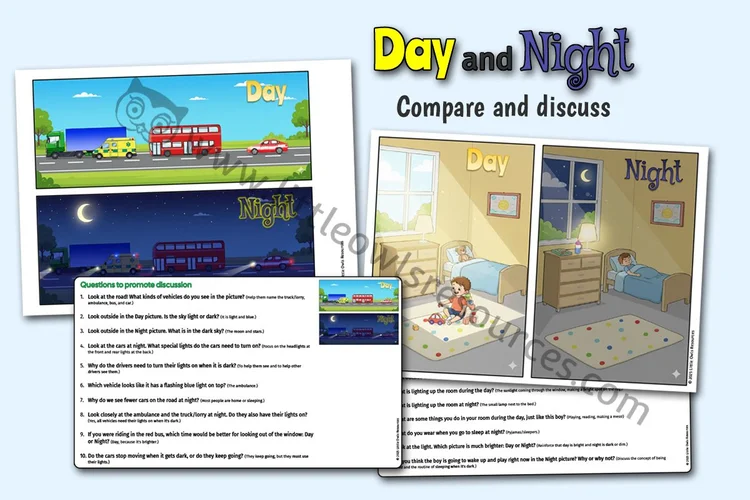
DAY AND NIGHT - Compare and Discuss Prompts
All AccessThree scenes are shown in daytime and night-time versions with discussion prompts. Compare light, activities and details, and invite children to explain what has changed.
View and download resource →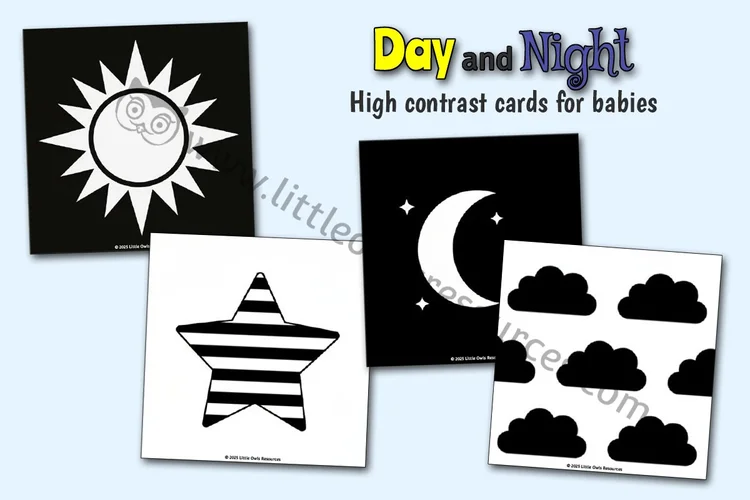
DAY AND NIGHT - High Contrast Cards for Babies
All AccessBlack-and-white sun, moon, star and cloud images provide simple pictures to share with a baby. An adult can hold a card, notice the baby’s gaze and respond without expecting naming or sorting.
View and download resource →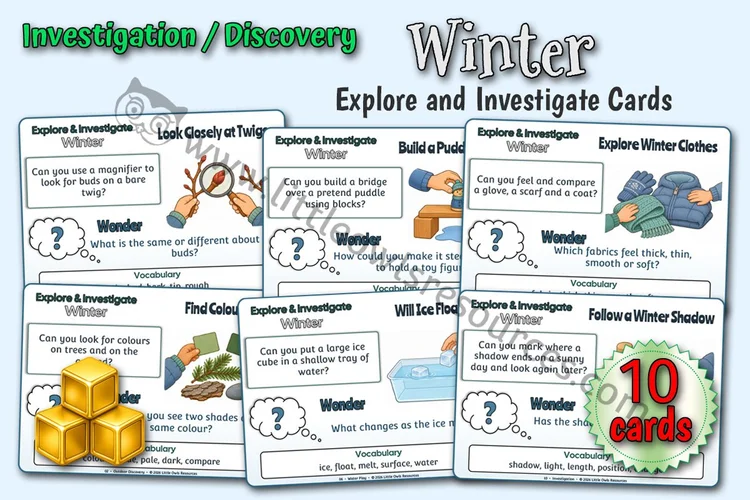
Winter Explore and Investigate Cards
All Access NewTen winter investigation cards invite children to explore real objects, try a change and notice what happens. Return to a patch of ice or follow a shadow, using talk, photographs or marks to revisit discoveries.
View resource →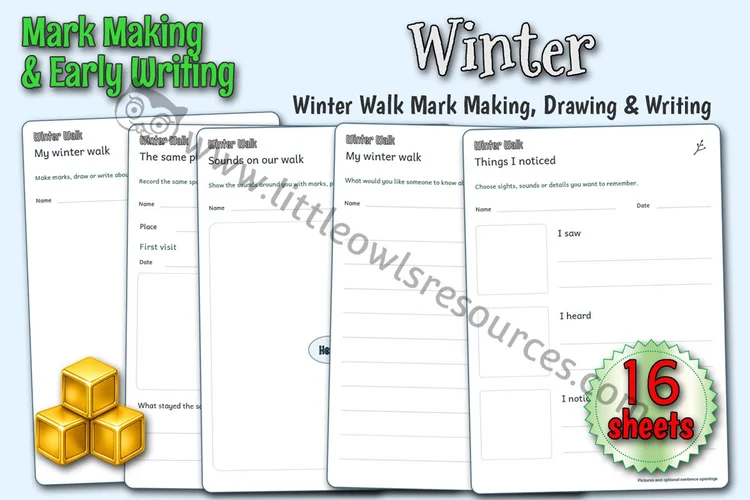
Winter Walk Mark Making, Drawing and Writing
All Access UpdatedSixteen flexible sheets for recording during or after a winter walk. Children can use marks, drawings, labels, sentences or dictated words to remember what they noticed and share a discovery with someone else.
View and download resource →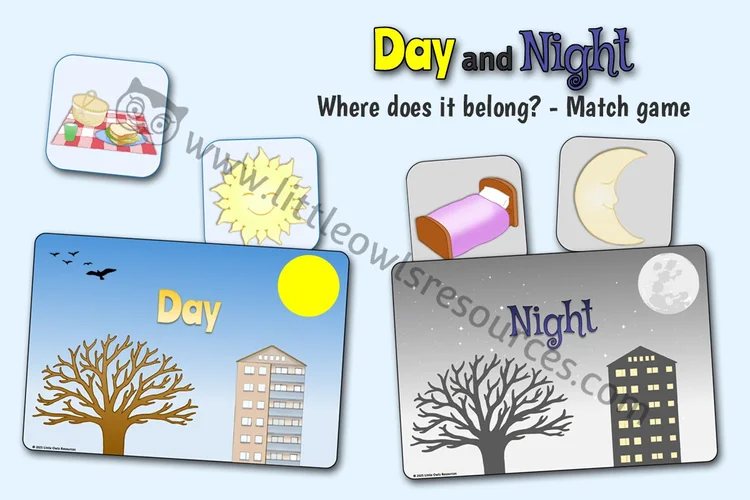
DAY AND NIGHT - Where does it belong? Match Game
All AccessPicture cards are sorted onto day and night mats, with colour-coded support available. Talk about familiar routines and allow children to explain items that could fit either time.
View and download resource →
Winter: Continuous Provision Enhancements Pack | EYFS Download
Free AccessWinter provision ideas are grouped into separate baby, toddler, preschool and Reception banks. Choose relevant suggestions to enrich familiar spaces and respond to seasonal interests without requiring a fixed sequence of activities.
View free resource →
Winter: High-Impact Question & Vocabulary Banks | EYFS Download
Free AccessWinter vocabulary and interaction banks offer a dedicated page for each early-years phase. Use selected language to support shared noticing, description or explanation during real seasonal experiences and play.
View free resource →
FREE Nocturnal Animals: Sound (Phase 1 Phonics) Cards | EYFS Printables
Free AccessNocturnal-animal picture and sound cards support matching, listening and playful vocal imitation. Share owl hoots, mouse squeaks and other represented sounds, then take turns choosing or recognising a picture.
View free resource →Explore the Winter collection or jump to related themes and dates.
↑ Back to choicesWinter Solstice questions
What does “the shortest day” mean?
It means the day with the least time between sunrise and sunset. A clock still counts 24 hours. The hours of daylight take up a smaller part of that time.
Is the Winter Solstice always on the same date?
In the UK, it usually falls on 21 or 22 December. The exact time varies from year to year. Use the date at the top of this page to plan an activity.
What changes after the Winter Solstice?
We gradually get more daylight between sunrise and sunset. It can still be cold for weeks afterwards. Compare daylight on days a few weeks apart to make the change easier for children to notice.
Can we explore the solstice on a cloudy day?
Yes. Daylight reaches us through clouds, even when the Sun is hidden and shadows are hard to spot. Compare local sunrise and sunset times, or use a torch and a toy to explore shadows indoors.
Explore more on Little Owls Resources
Find resources for a specific age, follow an interest or explore support for your setting.
Plan for special dates
Find resources by age
- Babies0–18 months
- Toddlers18–36 months
- Preschool3–4 years
- Reception4–5 years
- Year 15–6 years
- Year 26–7 years
Browse collections & planning
- Continuous Provision
- Themes
- Practitioner Toolkit
- EYFS Framework
- Festivals & Celebrations
- Role-play Packs
- Areas of Learning
- Dual Language