Early Years/Preschool/EYFS Printable Activities/Planning/Displays/Paperwork and ideas for Childminders, Preschools, Nursery Practitioners, Teachers and Parents
Your Custom Text Here
Reception Teacher - FREE and PREMIUM inspirational printable activities/displays/planning/paperwork
Play, purposeful teaching and learning that connects
Find printable resources, practical ideas and professional guidance for Reception teachers, teaching assistants and EYFS leaders. Explore continuous provision, phonics, early reading, writing and maths, alongside curriculum planning, assessment, inclusion and transition support.
Connect what you teach with opportunities for children to practise, explore and apply their learning. Choose the resources and guidance that help your children and your classroom.
Looking for something specific?Search all Little Owls resources → Try a resource, teaching focus or everyday need, such as “subitising”, “known phonics” or “visual timetable”.
Find resources for your Reception children
Start with the Reception resource gateway for ages 4–5. For starting points from preschool or continuity into Year 1, explore the neighbouring age collections and choose what fits the children you teach.
Find resources to use alongside materials children can return to, combine and develop over time. Choose additions that support their interests and create opportunities to revisit and apply learning.
Consider the materials, the space and the adult interaction—not just what can be printed. Keep useful provision available, and introduce prompts where they add something to children’s play.
Maths Through Play
Explore counting, comparing, shape, pattern and position with real objects. Add a prompt or representation where it supports children’s investigations.
Design a bridge, create a setting for a story or build a home for toy animals. Support planning, problem solving, collaboration and children’s explanations.
Offer reasons to draw plans, make lists, create labels and leave messages. Support children to communicate their ideas and use what they have been taught.
Explore colour, texture, joining, modelling and shaping. Encourage children to choose materials, explain decisions and change their ideas as they work.
Choose materials for the children taking part. Consider mouthing, allergies, hygiene, access and supervision, alongside your setting’s risk assessments.
Looking beyond individual printables? Explore professional guidance on organising Reception provision and supporting learning through adult interaction.
Connect systematic teaching with opportunities to practise and apply learning. Keep conversation, stories, vocabulary and enjoyment of books visible alongside word reading and writing.
Taught Phonics & Word Reading
Choose resources that match the letter–sound correspondences, words and routines taught through your school’s systematic synthetic phonics programme. Select reading practice that children can decode using their taught phonics.
Phonics in Reception: Teaching, Application & Inclusion (Scheme-Compatible)
Adult guidance
Reception phonics guidance supports teaching, application in provision, responsive interaction and inclusion. Use it alongside your chosen systematic phonics programme, maintaining that programme’s sequence, routines and taught correspondences.
Public overview; downloads included with All Access.
Apply Phonics in Provision
Create reasons to read and write messages, labels, lists and signs. Model the use of known phonics while keeping the content connected to what children want to communicate.
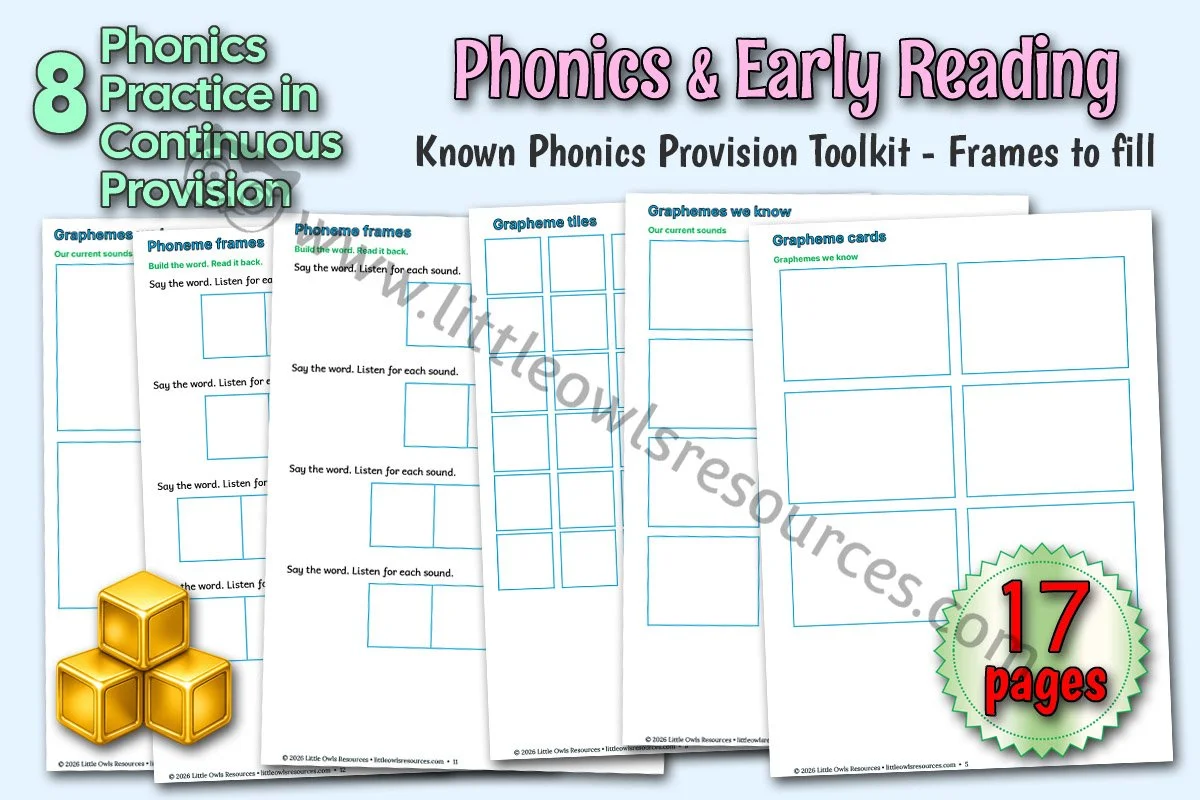
Blank, editable phonics tools include GPC cards and mats, grapheme tiles, phoneme frames and word-reference spaces. Fill them with taught content and use the selected tools when purposeful reading or writing arises in provision.
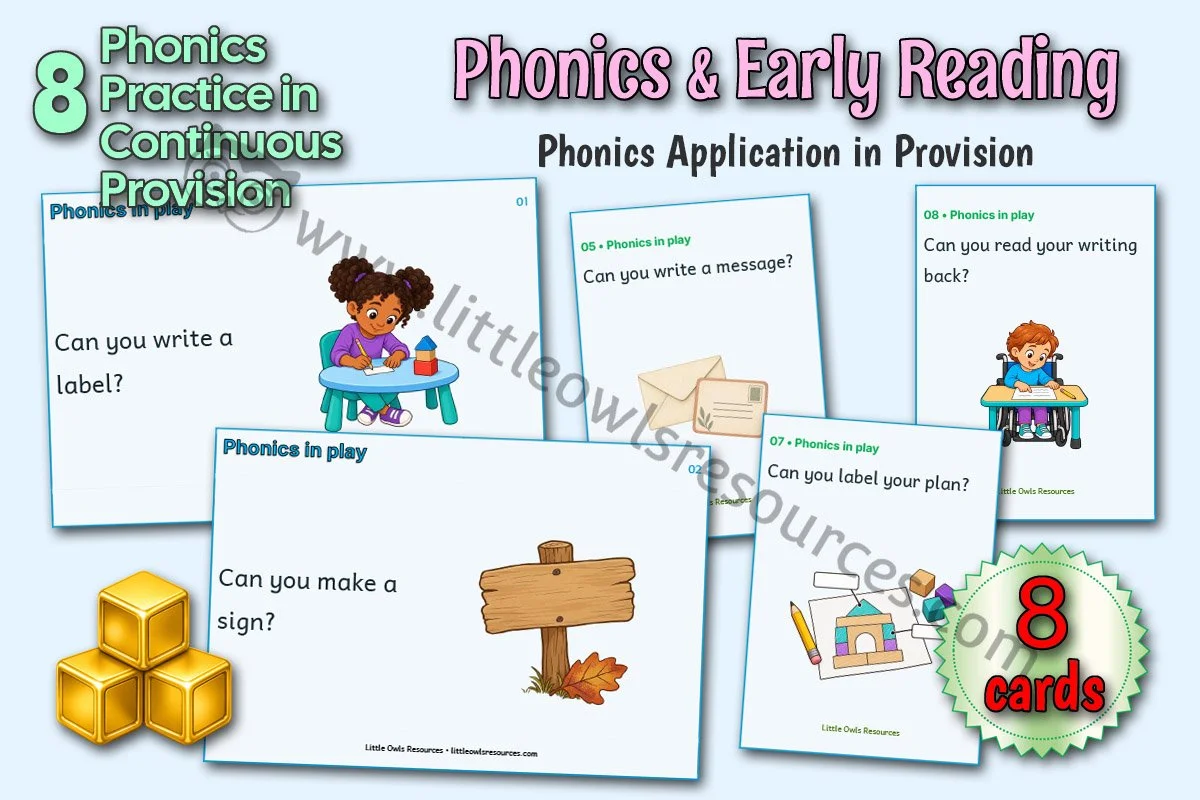
Eight illustrated invitations connect taught phonics with useful labels, signs, messages, lists and plans in play. Adults read the prompt; children choose the content and may accept, adapt or decline the invitation.
All Access sign-in may be requested on the next page.
Read adult prompts together where needed; not every printed instruction is intended for a child to decode independently.
Share Books, Talk & Develop Ideas
Read aloud, revisit favourite texts and introduce stories, poems and information books. Follow children’s questions and make room for retelling, discussion and different ways to respond.
Model how an idea becomes a message, invitation, label or short account. Support oral composition, taught phonics and letter formation, then offer meaningful opportunities to use these in play.
A Reception writing-purpose pack offers guidance and examples for short adult-led sessions. Model real reasons to write, support application of taught phonics and carry useful writing opportunities into play.
Bring together purposeful teaching, practical exploration and opportunities to revisit ideas across the day. Encourage children to show, explain and check their thinking—not simply produce an answer quickly.
Explore amounts, counting, subitising, comparison and how numbers can be made in different ways. Use real objects alongside representations, and help children connect what they see, say and do.
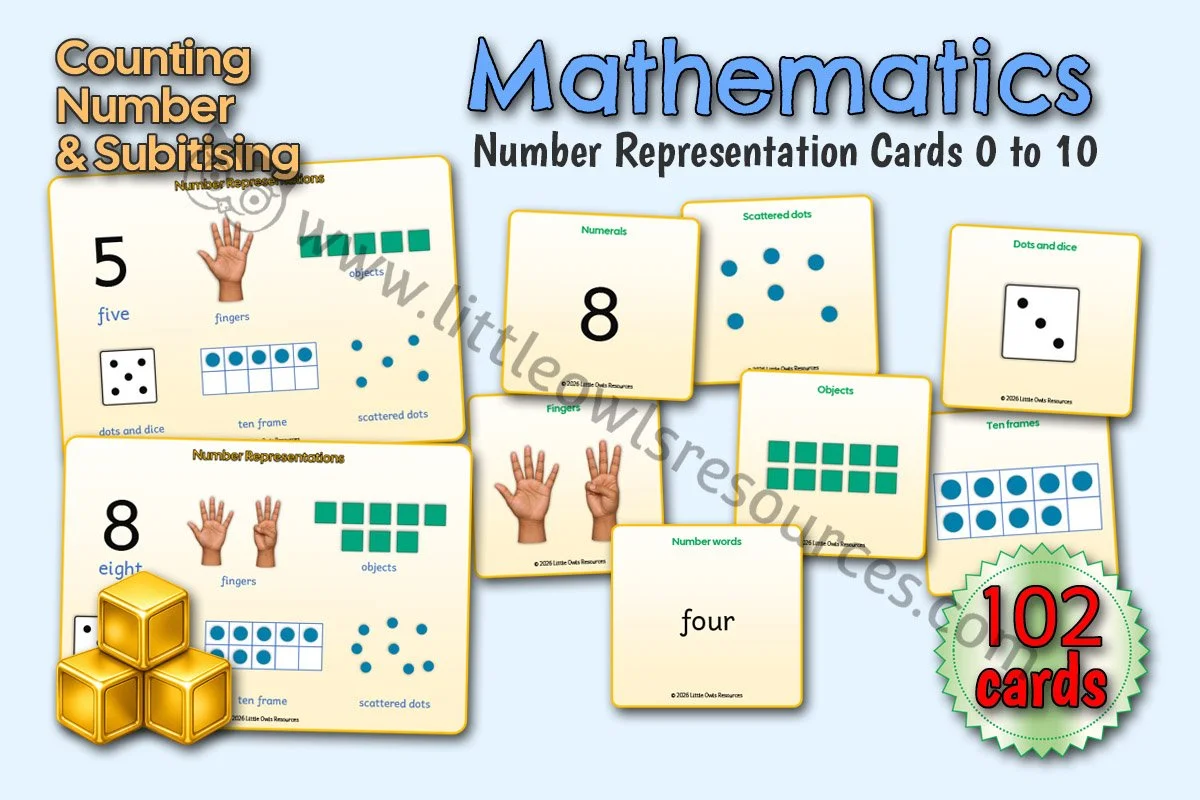
Cards show numbers from zero to ten in different representations. Select a few alongside real objects in play, compare how the same quantity can look and invite children to show a number in another way.
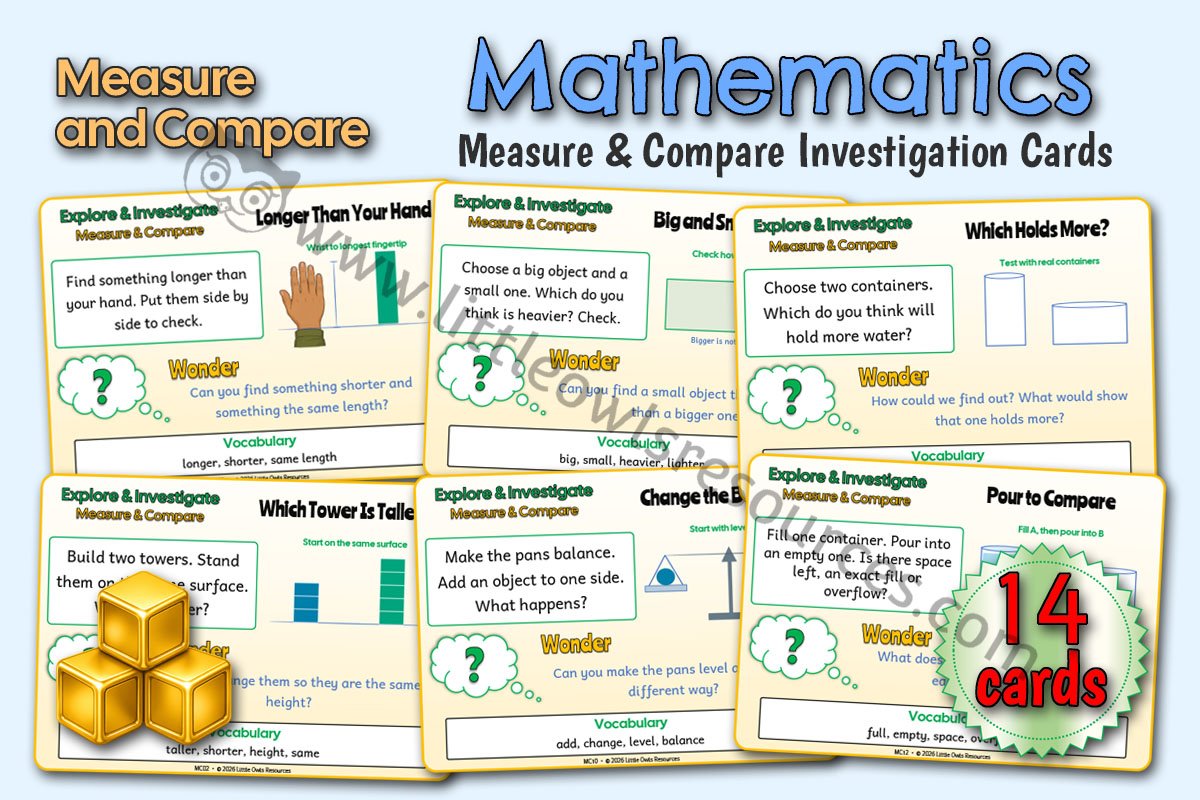
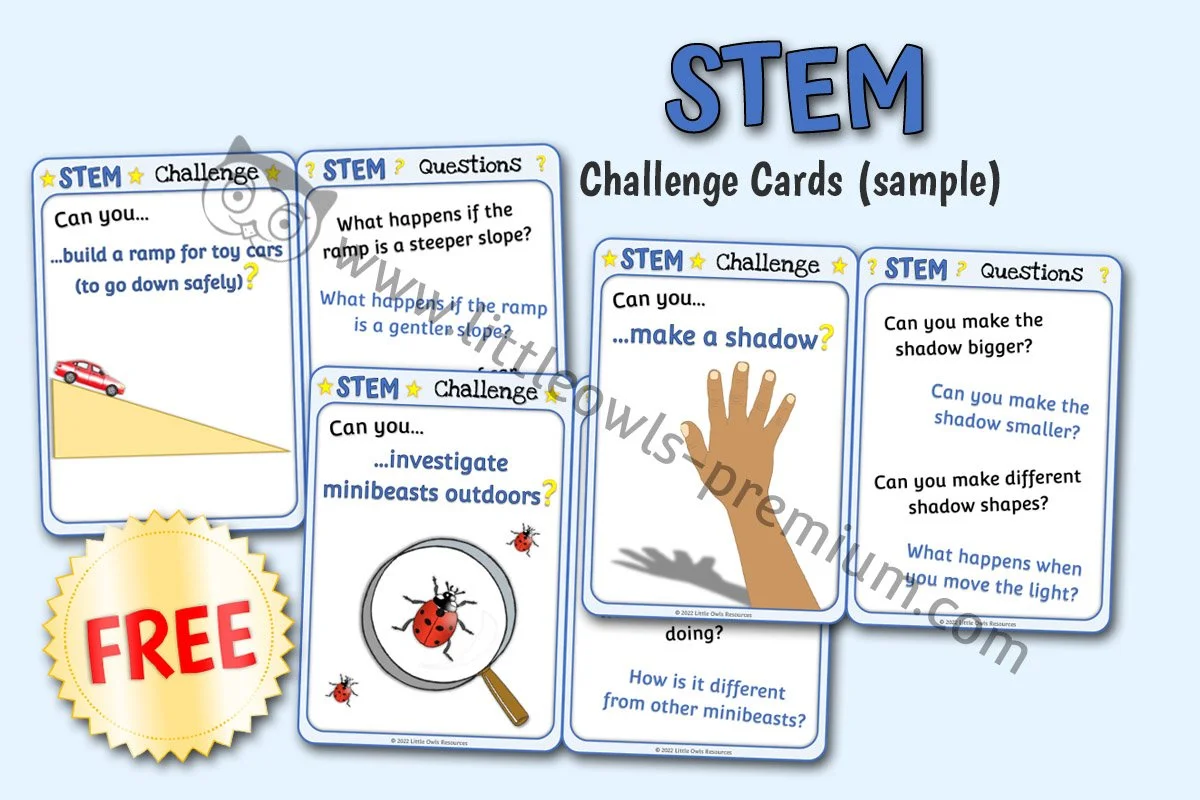
Investigation cards invite children to compare length, height, mass and capacity using real materials. Select a relevant question while children build, choose a useful piece or test how much a container can hold.
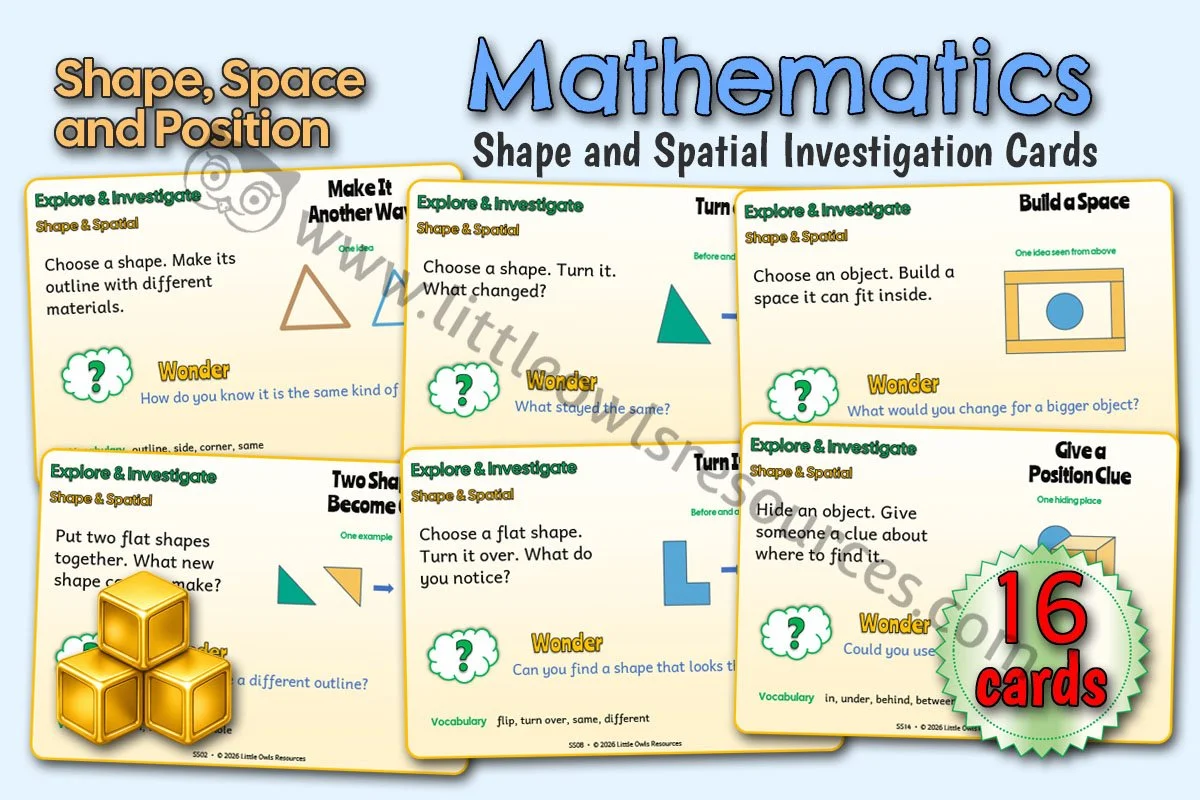
Shape and spatial investigation cards invite children to fit, turn, combine and represent shapes using blocks, tiles, loose parts and everyday objects. Compare what fits and how a changed arrangement affects the result.
All Access sign-in may be requested on the next page.
Mathematical Talk & Reasoning
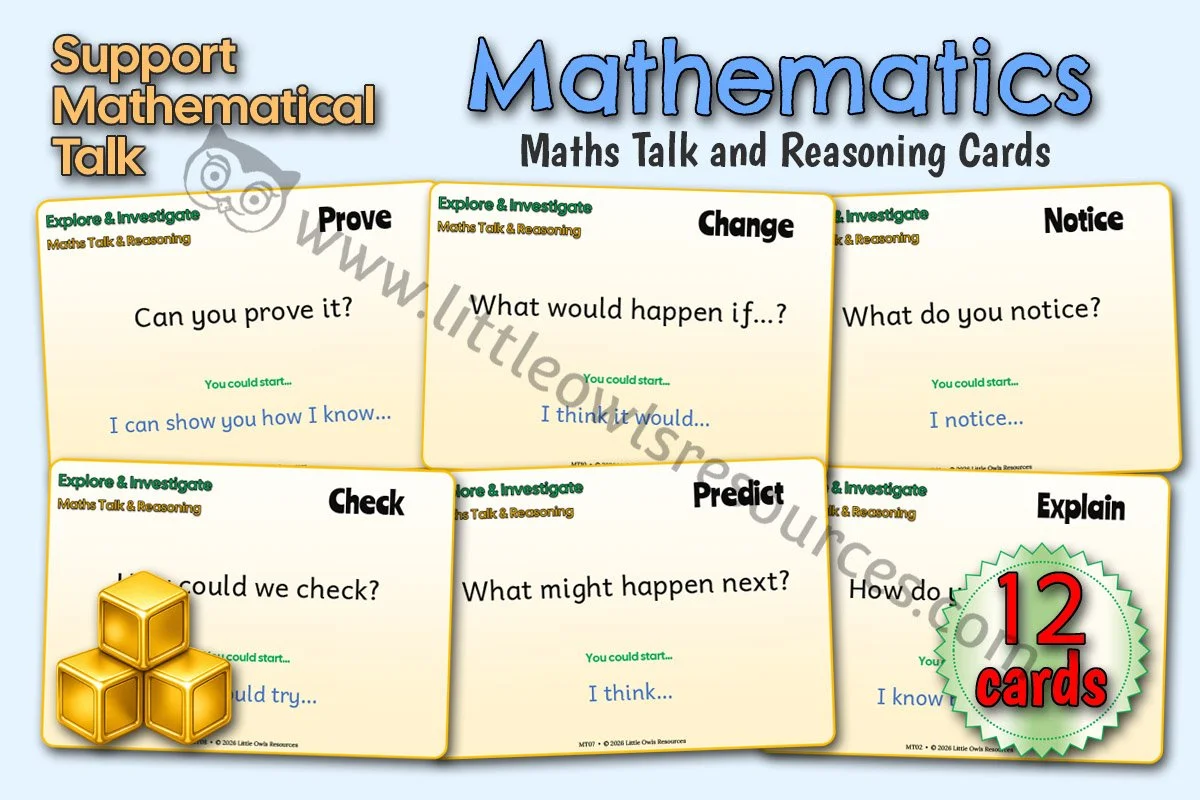
Ask a useful question, offer time to think and welcome explanations through objects, actions, drawings or words. Explore more than one possible approach.
All Access sign-in may be requested on the next page.
Plan Purposeful Maths Teaching
Explore a teaching framework and supporting mini-session banks for choosing a focus, modelling an idea and revisiting it through provision. This is professional guidance, not a fixed week-by-week scheme.
A Reception maths framework connects number sense, reasoning and understanding with adult-led teaching and application in play. Use it to consider progression and provision without following a prescribed weekly scheme.
Bring together your curriculum, what you know about the children and the teaching and provision that will help them learn.
Explore practical planning support and deeper professional guidance. Choose the documents that help your decisions and team discussions, without feeling you need to use everything at once.
Reception Planning
Find practical starting points for organising provision, purposeful teaching, learning opportunities and review.
Explore how learning connects and develops across the seven areas. Use the Reception Curriculum Phase Framework to consider changing emphasis across the year while responding to your class.
These are flexible curriculum phases, not phonics phases or fixed deadlines for individual children.
Find guidance for different assessment purposes. Keep day-to-day decisions about teaching distinct from the Reception Baseline Assessment and the end-of-EYFS Profile.
Observe, Assess & Plan
Use interactions, teaching and play to notice what children understand, what they are practising and where support is needed. Record what helps you decide and communicate—not every moment.
Reception Observe–Assess–Plan guidance explains purposeful observation, professional assessment and responsive planning. Use it to connect knowledge of children over time with teaching decisions and proportionate records.
Public overview; downloads included with All Access.
Reception Baseline Assessment
The RBA contributes to school-level progress measures; it does not replace your ongoing knowledge of each child. Read our pedagogical guidance alongside the current official administration information.
Reception Baseline Assessment (RBA): Pedagogical Positioning and Practice
Adult guidance
Guidance considers the place of the Reception Baseline Assessment alongside observation, teaching and play. Use it to discuss assessment responsibilities while protecting curriculum breadth and professional knowledge of children.
Public overview; downloads included with All Access.
EYFS Profile & Professional Judgements
Explore guidance for making and discussing end-of-EYFS judgements. The EYFS Profile is not an entry assessment, an ongoing tracking system or a curriculum. Written and photographic evidence are not required to support Profile judgements.
Leadership guidance brings together Reception curriculum, assessment, inclusion and inspection explanations. Use it to discuss how teaching and play work together and describe impact through practice as well as data.
The EYFSP toolkit discusses Early Learning Goals, best-fit judgements, evidence, moderation and inclusion. It helps Reception teams reflect on assessment consistency and professional interpretation without building excessive records.
Plan for different ways to participate from the outset. Work with families, your SENCO and other professionals to understand children’s strengths, communication and support needs.
Participation & Communication
Adapt materials, space, pace and adult support so children can take part. Use pictures alongside—not instead of—a child’s established communication system and any individual advice.
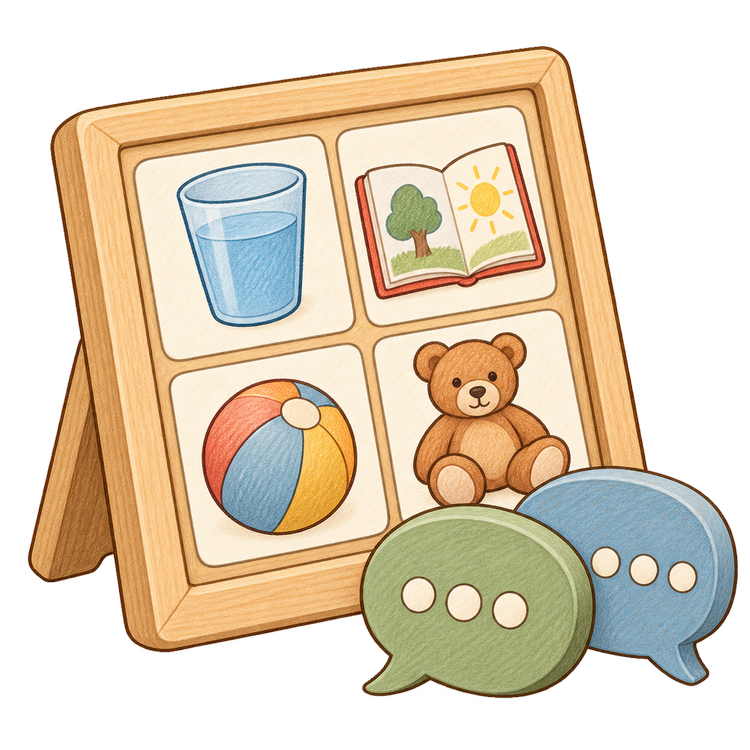
Picture boards for asking, refusing, commenting and inviting during outdoor play. Model relevant pictures alongside speech, gesture or the child’s usual communication, without requiring a particular way of responding.
All Access sign-in may be requested on the next page.
Relationships, Routines & Self-Regulation
Build familiar routines and supportive relationships. Help children communicate feelings, manage changes and participate in everyday experiences with the support they need.
Share what children are learning, listen to families’ perspectives and explain the connection between teaching and play. Offer manageable home ideas linked to what children know and enjoy.
Support both ends of the Reception year. Share interests, routines, communication and successful strategies, with time for children, families and colleagues to get to know one another.
Teaching a mixed Reception/Year 1 class or planning continuity?Explore KS1 Maths alongside the Reception guidance, selecting learning and resources for the children you teach.
Use themes as optional contexts for your curriculum and children’s interests. Keep familiar provision available, and add something where it creates a meaningful connection.
🌦
Seasonal play & provision
Explore ideas from nature, everyday experiences and the children’s interests.
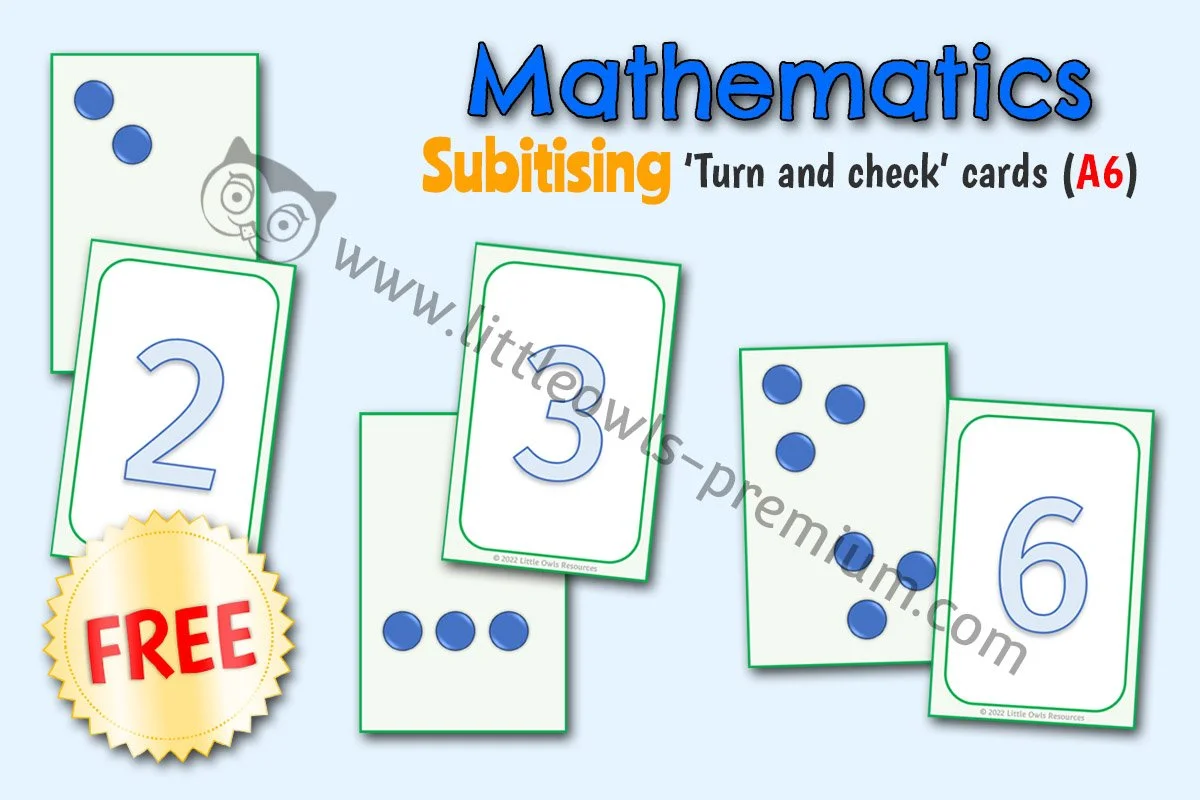
Notice a small quantity, explain how it is arranged and turn the card to check. Choose amounts that suit the children and avoid making it a speed test.
Use editable frames for purposeful signs, labels, lists and messages. Add content that matches children’s taught phonics and the purpose of their play.
Support asking, refusing, commenting and inviting during outdoor play. Choose pictures that suit the child and keep their usual communication system available.
Explore and download a selection of free resources, including our Special Dates Calendars. A Free Access account may be needed for some downloads.
All Access
Unlock every resource on the site, including our EYFS and KS1 printable provision and the EYFS Curriculum & Pedagogy Suite, with its Reception pathway.
Already a paying member? You have sitewide access. Your existing subscription price and billing schedule stay the same; there is no need to change plans.