Early Years/Preschool/EYFS Printable Activities/Planning/Displays/Paperwork and ideas for Childminders, Preschools, Nursery Practitioners, Teachers and Parents
Find selected printable resources, practical ideas and professional guidance for supporting children aged 3–4 in preschool, nursery and other early years settings. Explore communication, stories, early maths, creative play and outdoor discovery, alongside curriculum planning, inclusion, assessment and transition support.
Choose what responds to your children’s interests and learning. Keep useful provision available, introduce something where it adds value, and adapt the resources and adult support for the children taking part.
Looking for something specific?Search all Little Owls resources → Try a resource, play area or everyday need, such as “listening games”, “visual timetable” or “outdoor maths”.
Find resources for your preschool children
Start with the Preschool resource gateway for ages 3–4. For younger children in your setting or the move to Reception, explore the neighbouring age collections and choose what fits each child.
Build on familiar resources and experiences children can return to, combine and develop over time. Add a printable or prompt where it helps their play—not simply to fill a space.
Continuous provision is more than a collection of activities. Think about what children can access, how they use the space and how adults join, model and extend learning.
Maths Through Play
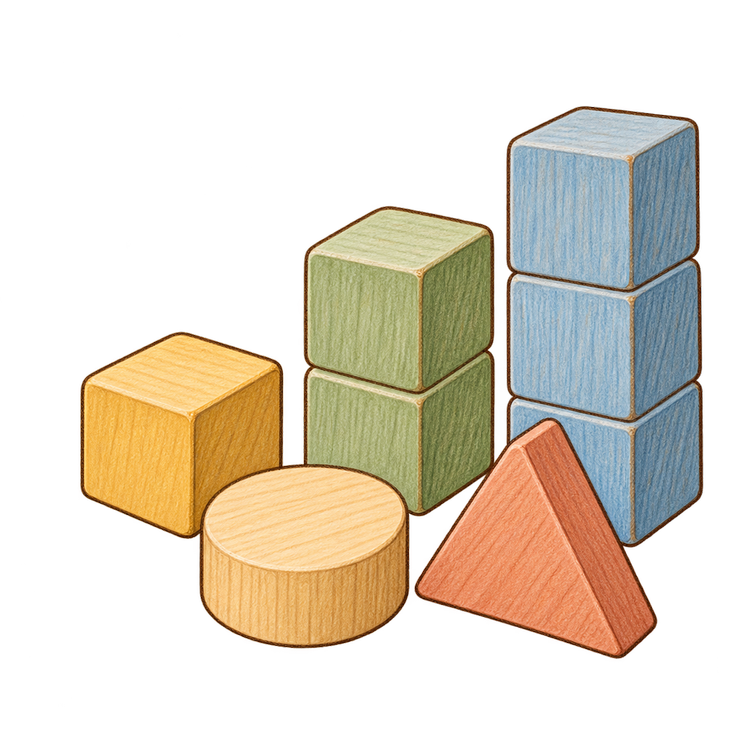
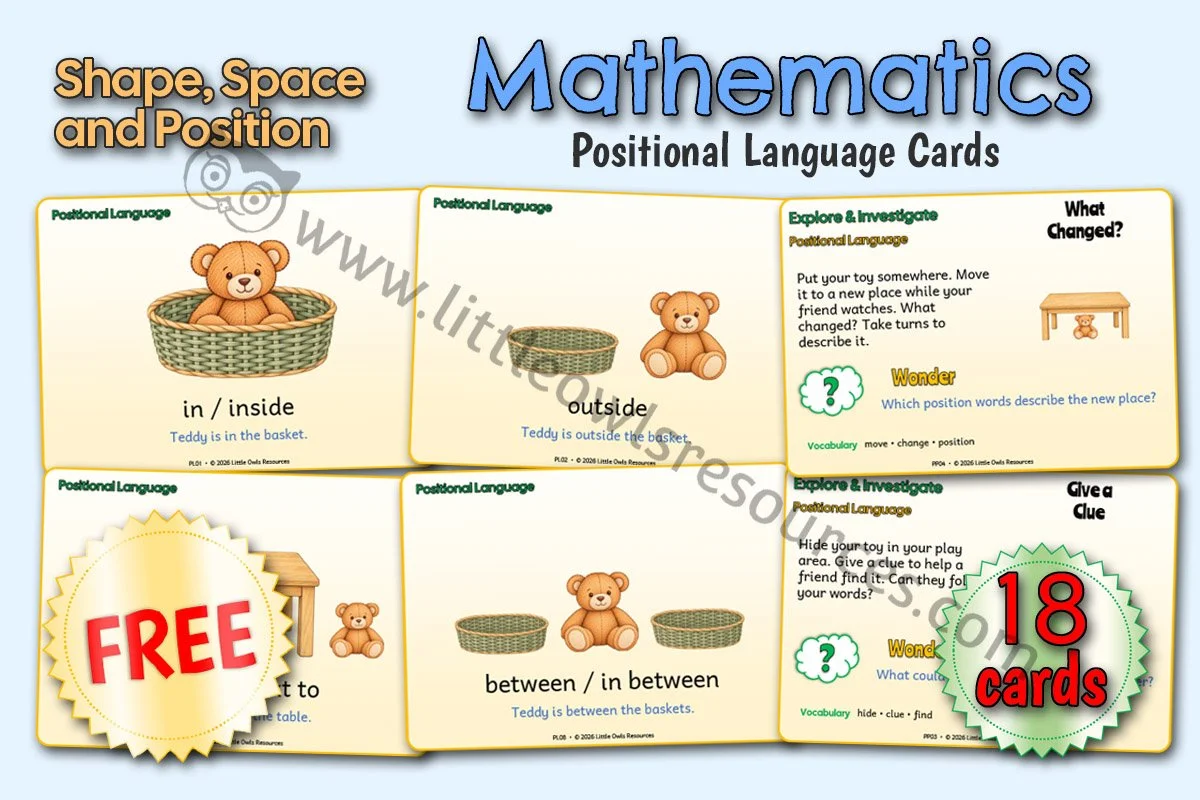
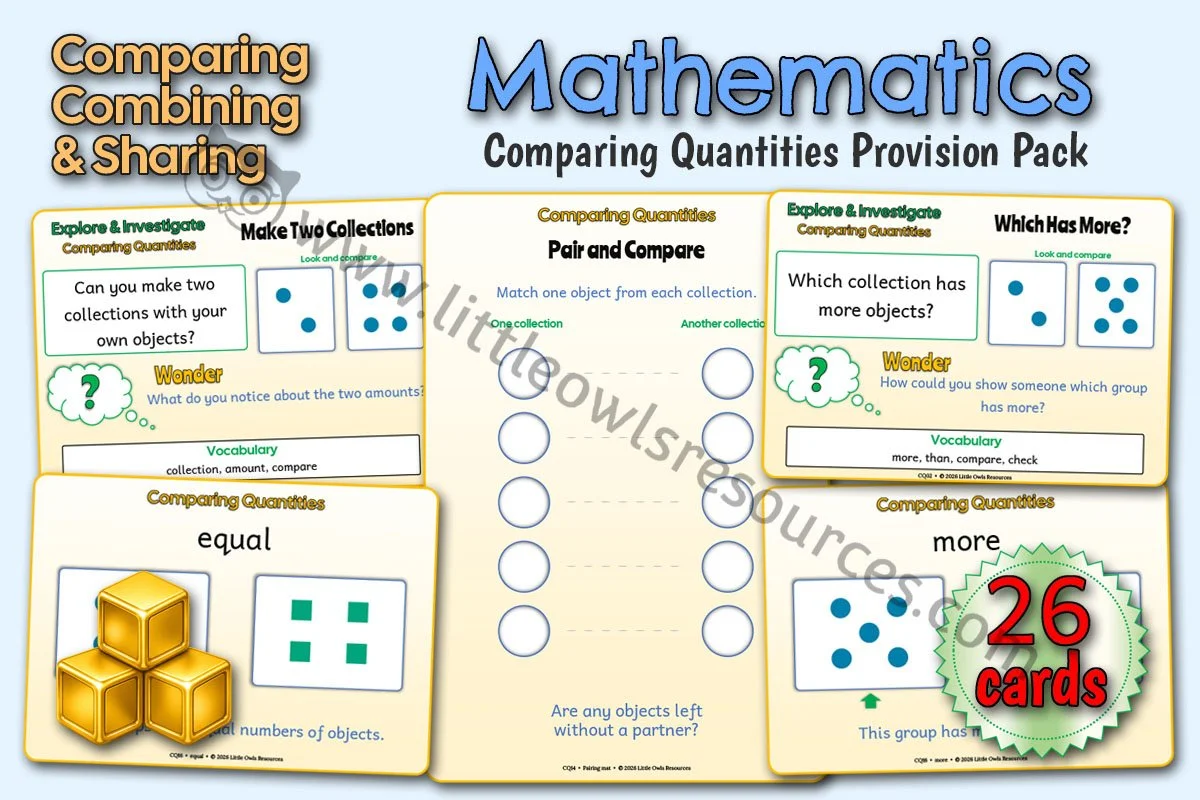
Explore quantity, counting, comparison, shape, pattern and position through materials children can handle, move and investigate. Choose prompts that extend their thinking without turning every encounter into a task to complete.
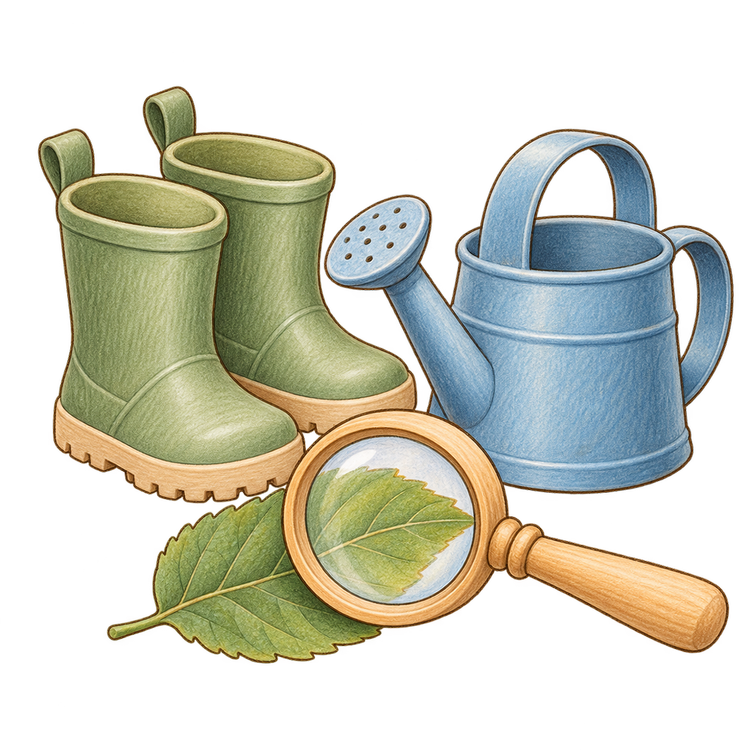
Make space for moving, balancing, building and noticing the world outdoors. Explore resources for shared discoveries and physical play, alongside opportunities for children to develop their own ideas.
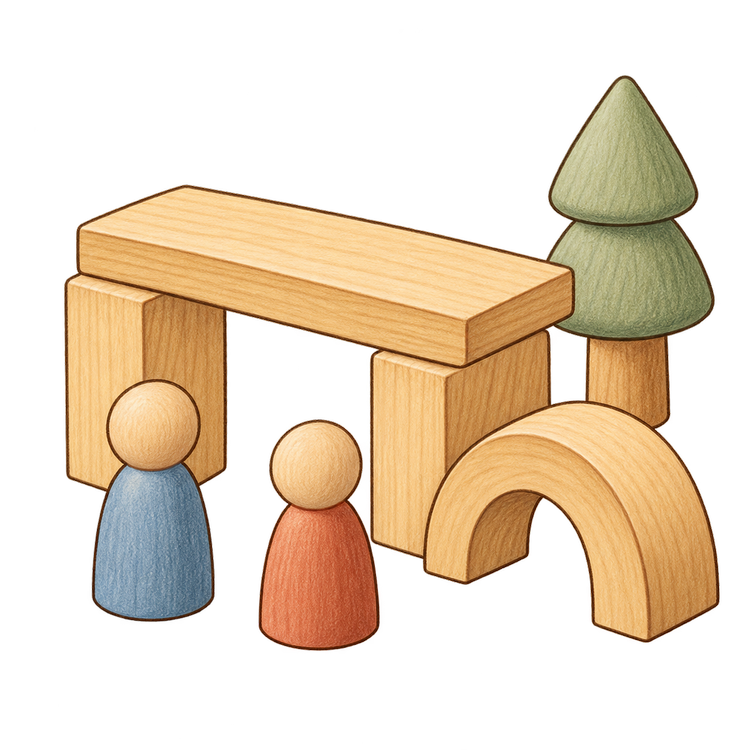
Build a bridge, create a home for toy animals or invent a place for a story. Add resources that support designing, arranging, problem solving and imaginative play.
Bring familiar experiences and children’s interests into pretend play. Choose signs, lists and props that add a purpose for talking, collaborating and making marks.
Offer reasons to draw, make maps, create messages and record ideas. Welcome children’s own marks and explanations, with adult modelling and support where helpful.
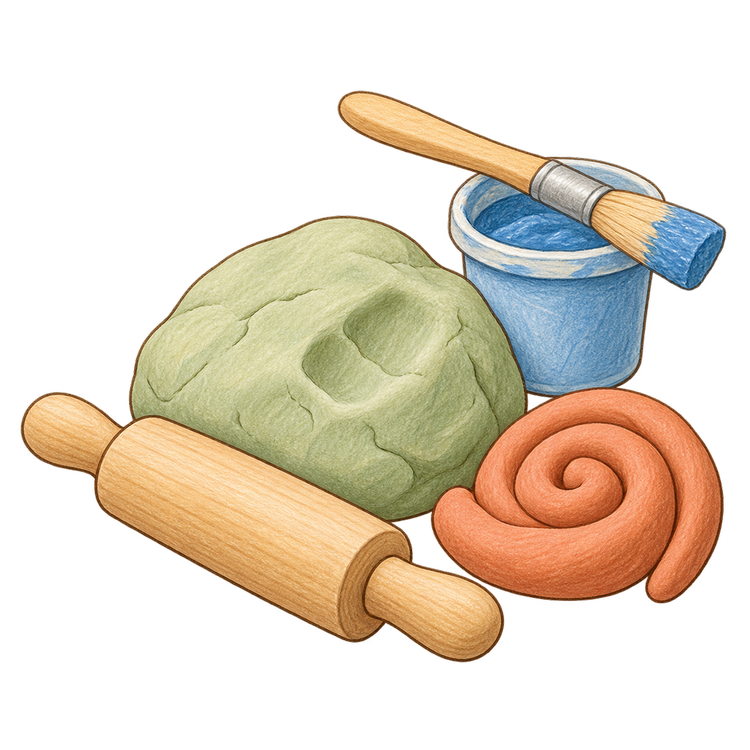
Explore drawing, painting, modelling, joining and shaping. Offer materials children can combine and change, without expecting everyone to make the same finished product.
Investigate filling, pouring, arranging and combining. Choose suitable materials and simple prompts that leave room for children to test ideas and notice what happens.
Choose materials for the children taking part. Consider mouthing, allergies, hygiene, access and supervision, and adapt experiences in line with your setting’s risk assessments.
Make time for conversations, shared books and playful encounters with sounds and marks. Choose starting points that fit the children, with different ways to listen, respond and take part.
Talk, Listen & Share Stories
Follow children’s ideas, introduce useful vocabulary and revisit stories and rhymes. Allow time for children to respond through words, gestures, signs or their usual communication system.
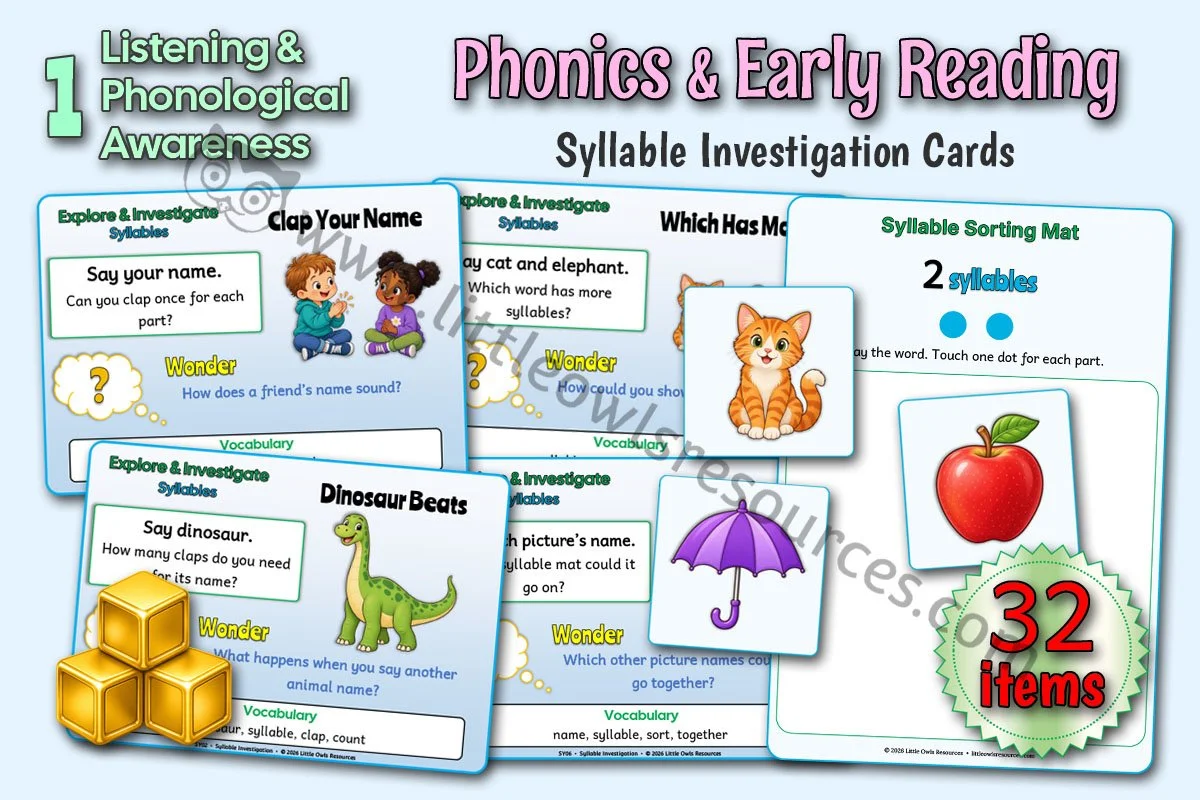
Play with rhyme, the beats in names and words, and sounds children can hear and say. Use spoken games and illustrated prompts; children do not need to read the words to join in.
Choosing from the wider phonics collection? It also includes resources for practising explicitly taught letter–sound correspondences. Select those only where they match the phonics children have already been taught and your setting’s approach; they are not a preschool checklist.
Make Marks & Write for a Purpose
Create a sign for a building, draw a story or leave a message in the home corner. Value what children want to communicate, and model drawing or writing alongside them when it supports their idea.
Bring together what you know about your children, the learning you intend to support and what you notice during play.
Explore practical planning tools and deeper professional guidance, choosing the documents that help your setting rather than trying to use everything at once.
Preschool Planning
Find practical starting points for planning, provision, purposeful adult-led learning and reviewing what is working.
Choose a clear learning focus, keep the experience practical and adapt your support in response to the children. Revisit useful ideas in provision rather than treating the session as an isolated task.
Early Writing Purpose Mini Session Bank | Preschool (3–4 Years)
Adult guidance
Six short preschool mini sessions introduce writing as a way to remember, organise and communicate. Adults model meaningful purposes for marks and words without making formal letter formation the starting point.
Preschool Maths Small-Group Session Bank (3–4 Years)
Adult guidance
Twenty-four short preschool maths sessions introduce concepts and mathematical language through practical small-group experiences. Adults can revisit ideas and carry them into continuous provision, adjusting pace to children’s understanding.
Public overview; downloads included with All Access.
Observe, Reflect & Plan
Use what you notice during everyday interactions to decide what may help next. Choose recording formats that support decisions and conversations, rather than collecting evidence for every moment.
Observe → Assess → Plan Toolkit | Preschool (3–4 Years)
Adult guidance
The preschool Observe–Assess–Plan toolkit combines visual prompts, guidance and worked examples. It helps adults turn everyday observations into small purposeful responses in interaction, weekly planning or the environment.
An editable preschool audit pack combines environment review, provision mapping and inclusion planning. Use it to explain the purpose of each area and identify small changes that improve access and learning opportunities.
Universal Continuous Provision Pack | Preschool 3–4 Years
Adult guidance
Year-round preschool provision guidance explains the purpose of core indoor and outdoor areas and the adult role within them. Use it as an everyday reference for purposeful, inclusive play opportunities.
Plan for different ways of participating from the outset. Work with families and other professionals to understand what helps each child feel secure, communicate and take part.
Participation & Communication
Explore pictures, familiar words and practical communication supports. Adapt materials, pace and adult support to the child, alongside any individual advice or agreed support plan.
Support familiar routines, relationships and everyday tasks with the help children need. Use pictures or stories to talk about feelings without expecting a particular answer.
Share children’s interests and experiences, listen to what families notice and explain the learning within play. Choose communication tools that suit your relationships and setting.
Bring together children’s strengths, interests, communication and support needs, including what children and families want to share. Prepare for new relationships and routines—not a uniform readiness checklist.
Use themes as optional starting points, alongside children’s interests and your curriculum. Explore a seasonal change, revisit a favourite story or build on something children have noticed.
Keep what is working. A new week or month does not mean every resource or experience needs to change.
🌦
Seasonal play & provision
Explore ideas from nature, everyday experiences and the children’s interests.
Find resources linked to animals, transport, familiar experiences, stories and imaginative adventures. Select what adds something to the learning you are supporting.
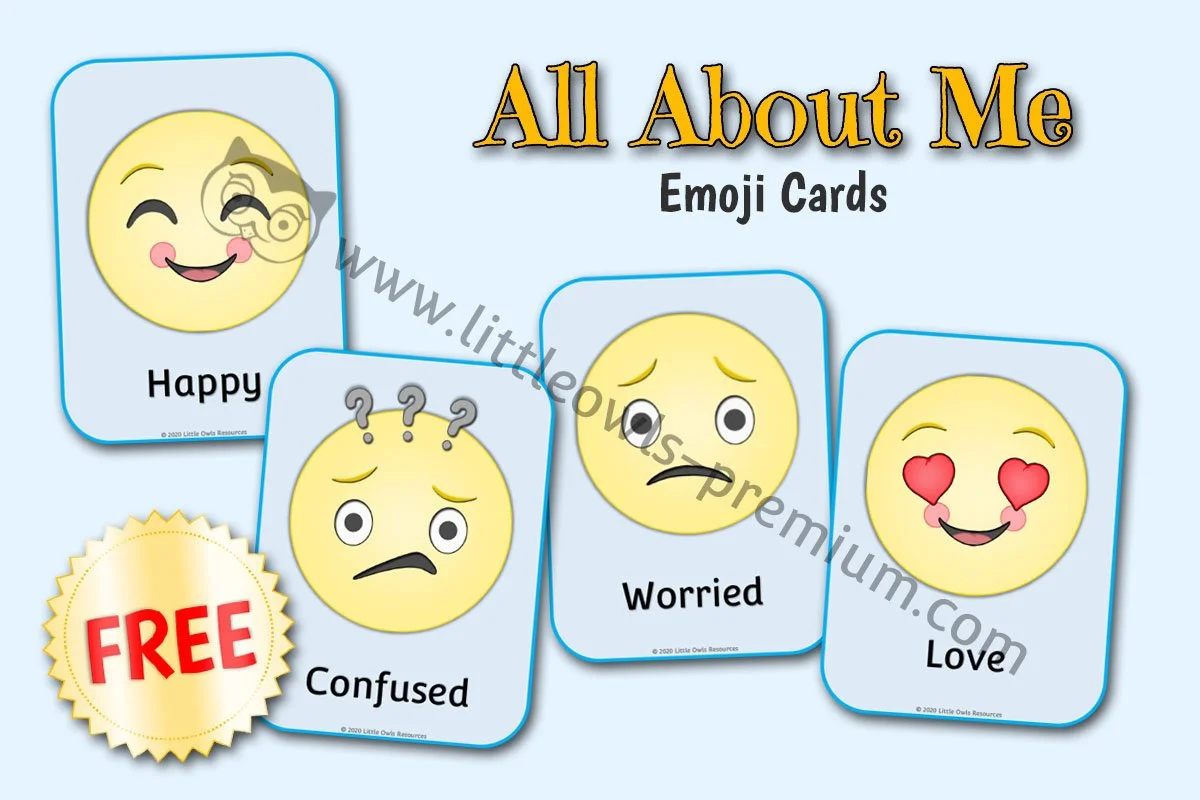
Use a few picture prompts alongside stories or everyday conversations. Invite children’s ideas without requiring them to identify or display a feeling.
Support asking, refusing, commenting and inviting during outdoor play. Choose pictures that suit the child and keep their usual communication system available alongside them.
Explore and download a selection of free resources, including our Special Dates Calendars. A Free Access account may be needed for some downloads.
All Access
Unlock every resource on the site, including our EYFS and KS1 printable provision and the EYFS Curriculum & Pedagogy Suite, with its Preschool pathway.
Already a paying member? You have sitewide access. Your existing subscription price and billing schedule stay the same; there is no need to change plans.
Department for Education (DfE): Access official government guidance, policies, and frameworks related to early years and childcare, including the Early Years Foundation Stage (EYFS), which all preschools must follow.
Early Years Alliance: The largest and most representative early years membership organisation in England. They are a significant voice for preschools and offer extensive resources, training, and support specifically tailored to their needs. Many preschools are members of the Early Years Alliance.
National Day Nurseries Association (NDNA): While "Nursery" is in their name, NDNA also provides valuable support, training, and resources that can benefit many types of early years settings, including larger preschools, particularly those looking for business management and quality improvement support.
NSPCC Learning: Essential resources and training on safeguarding and child protection, with specific guidance and tools applicable to all early years settings, including preschools.
British Association for Early Childhood Education (Early Education): A national charity promoting high-quality early childhood education. Their focus on pedagogy, child development, and professional learning is highly relevant for preschool practitioners.
PACEY (Professional Association for Childcare and Early Years): Although a key body for childminders, PACEY also provides resources, training, and advice that can be valuable for practitioners in preschools, particularly smaller ones or those with less extensive in-house support.