








England EYFS · Prime area of learning
Physical Development through movement, play & everyday routines
Find printable resources, activity ideas and practitioner guidance for babies, toddlers, preschool and Reception. Explore movement and balance, hands and tools, mark making, outdoor play and growing independence.
Choose an age to find a practical way to use each resource for Physical Development. Discover ideas from across Little Owls for nurseries, preschools, childminders, Reception classes and play at home.
Find your starting point
Find Physical Development resources
Choose an age, then add an optional search word or learning focus. Results include resources from across Little Owls, with a practical suggestion for the age you select. Open a result to view its resource or collection.
Loading the resource finder…
A few useful places to begin
Browse a small selection of resources and collections.
Baby Room Continuous Provision Maps | 0-9 & 9-18 months
Provision maps for 0–9 and 9–18 months connect environment and adult interaction with babies’ movement, communication, exploration and regulation. Use them to review accessible provision without prescribing activities or layouts.

Physical Development Progression Pack | Toddlers (18–36 Months)
A toddler physical-development pack offers progression-linked opportunities across overlapping age bands. Guidance connects movement, provision, observation and inclusion with children’s confidence and independence throughout the day.

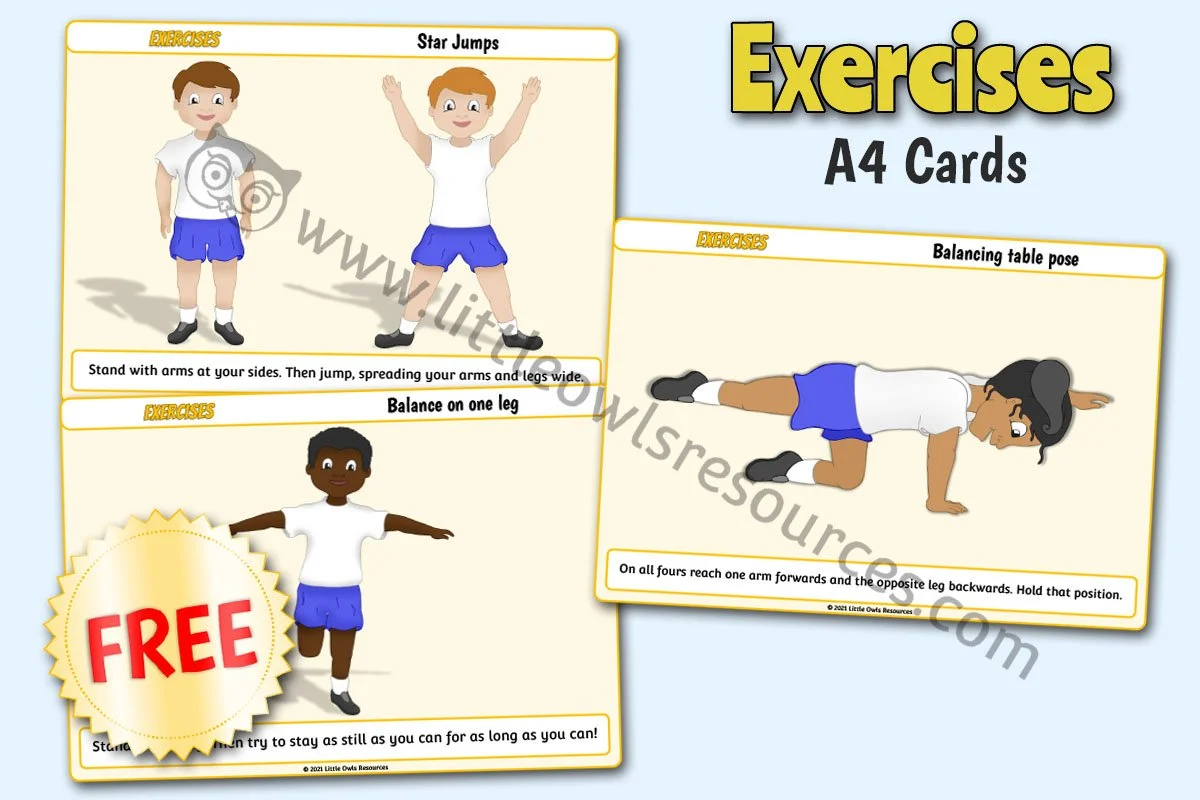
EXERCISES - A4 Cards (Free Sample)
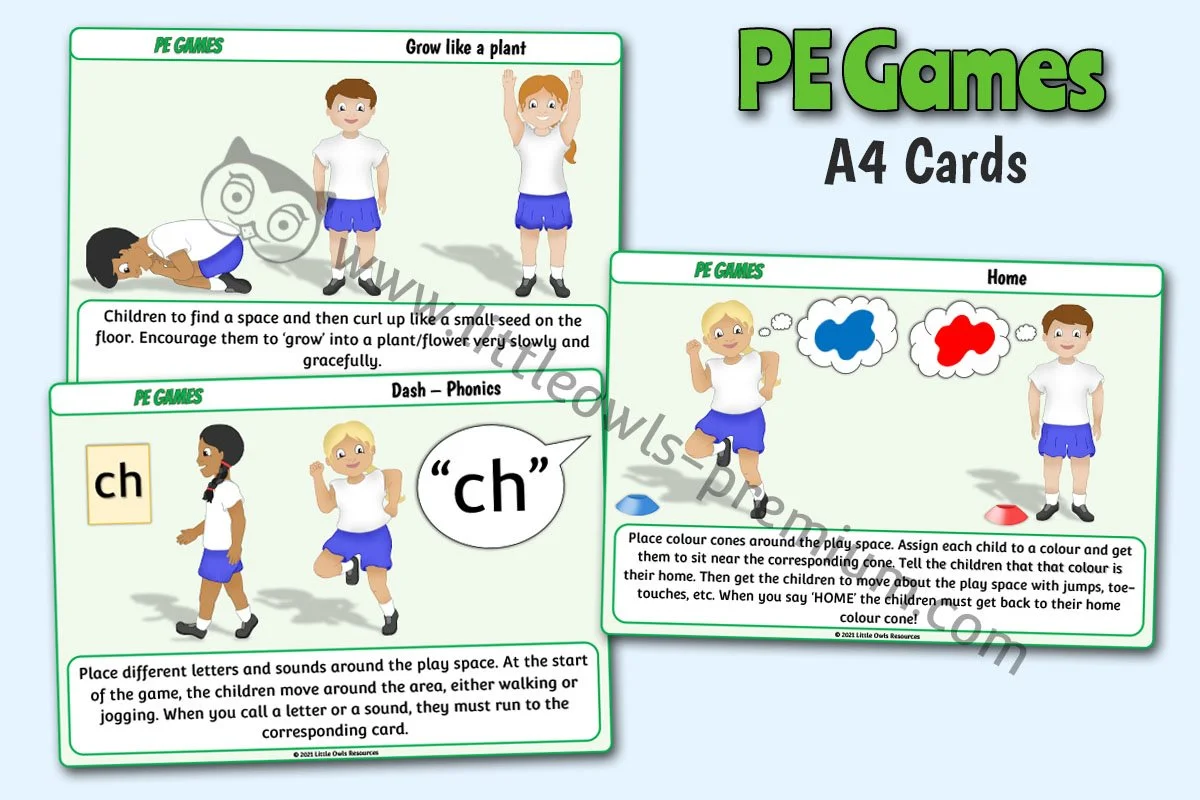
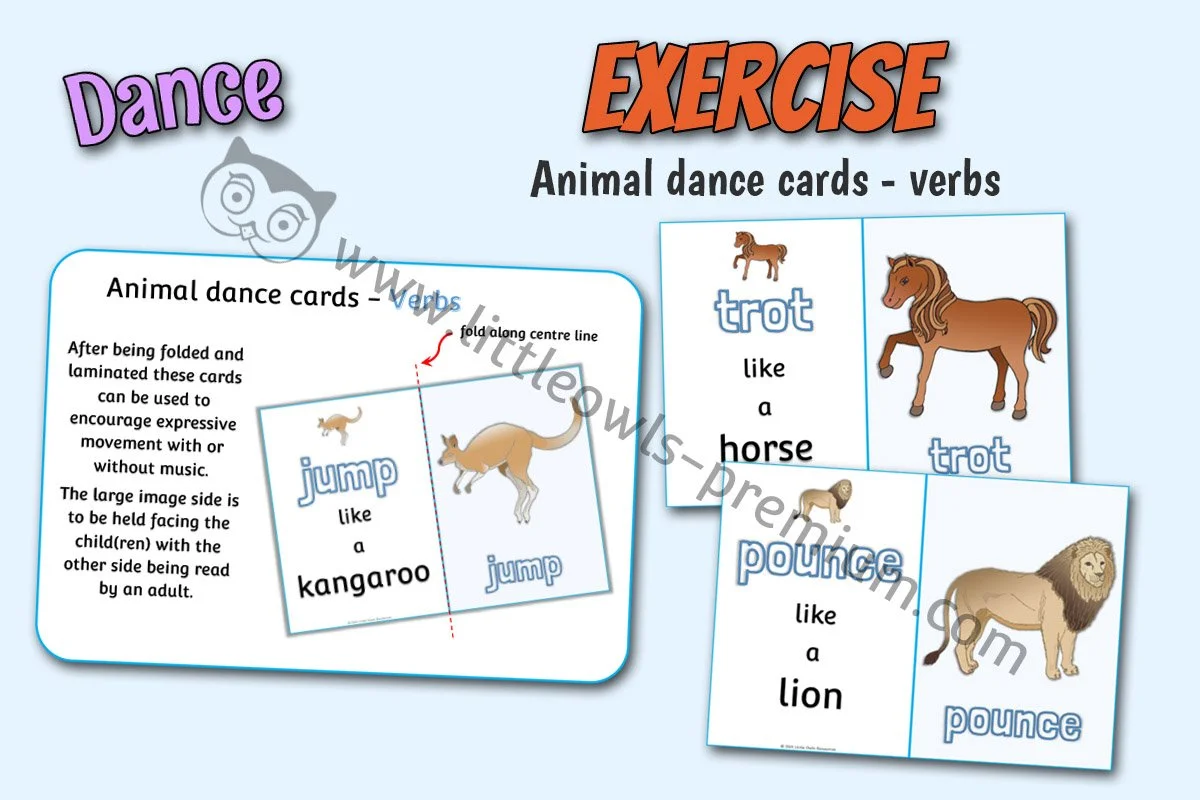
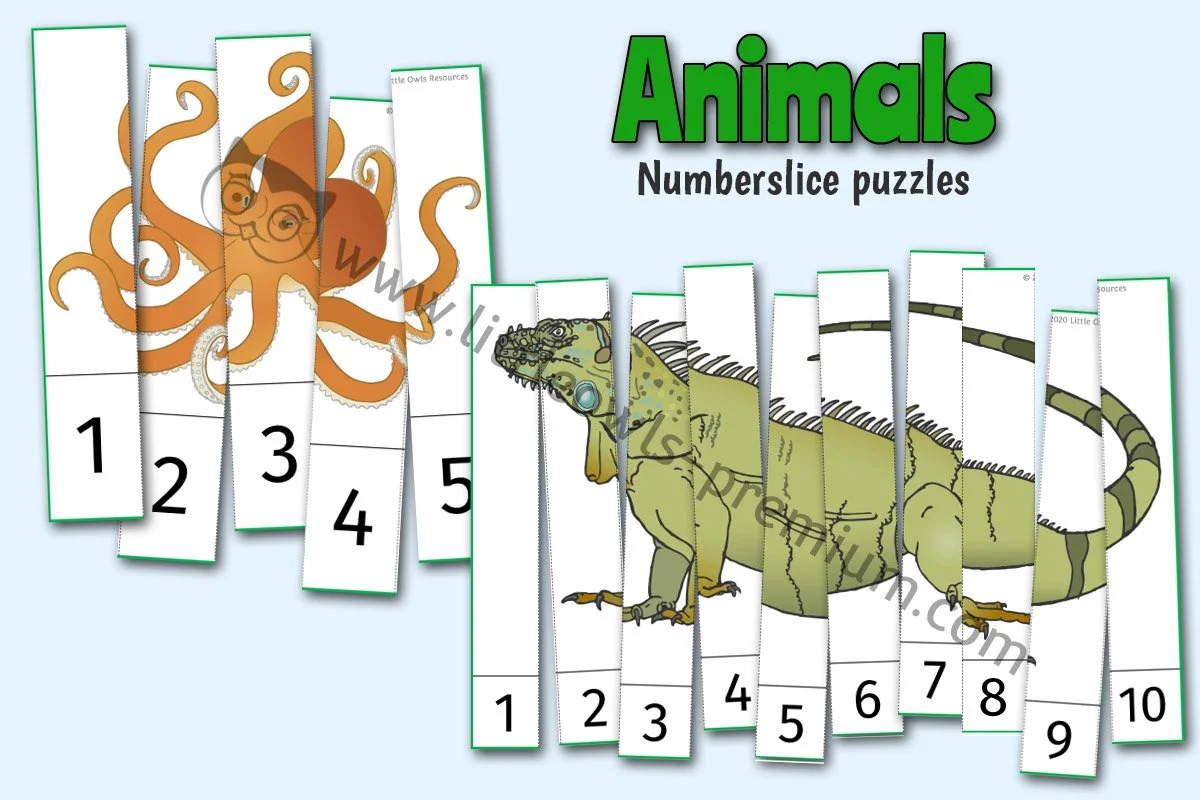
Seven A4 exercise cards using pictures and words. Adults can model selected movements and adapt the challenge to children's coordination, comfort and available space.

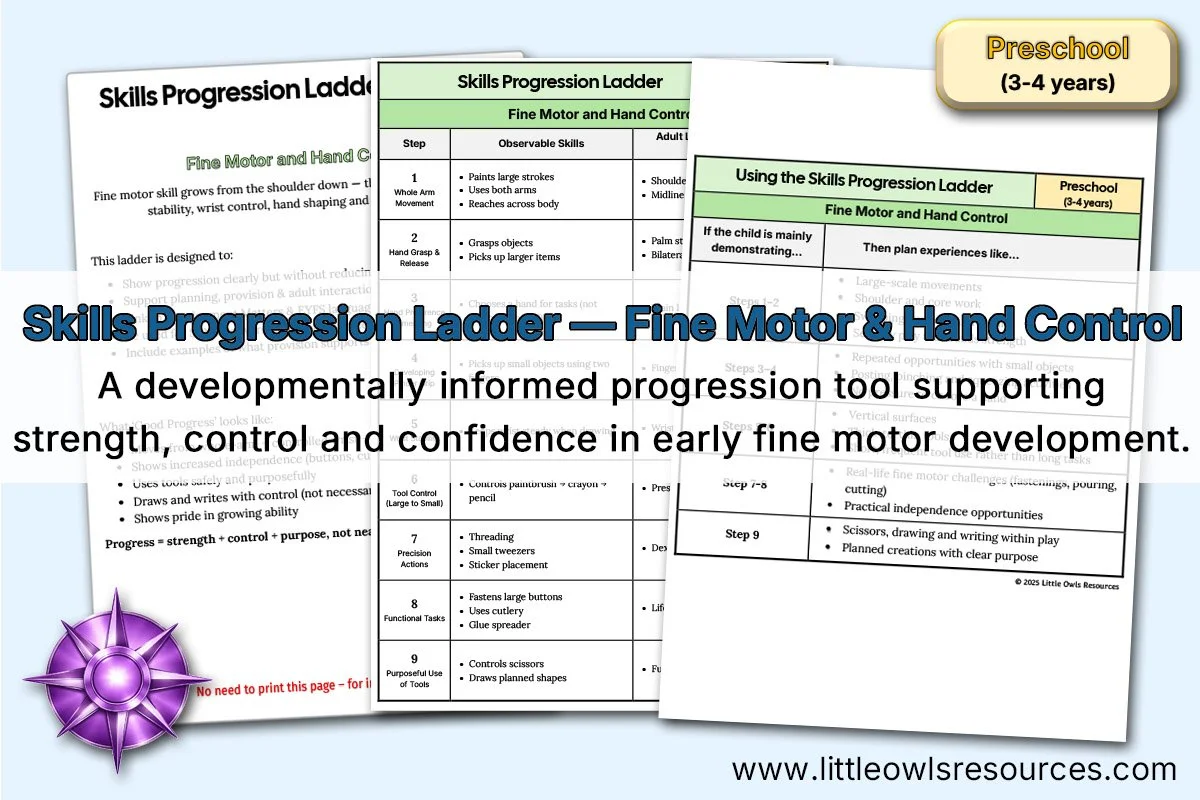
Fine-Motor & Mark-Making Mini Session Bank | Preschool (3–4 Years)
Eighteen short adult-led sessions explore physical foundations for preschool mark-making, including stability, hand strength, movement and tool control. Use them alongside play to develop confidence before formal handwriting expectations.

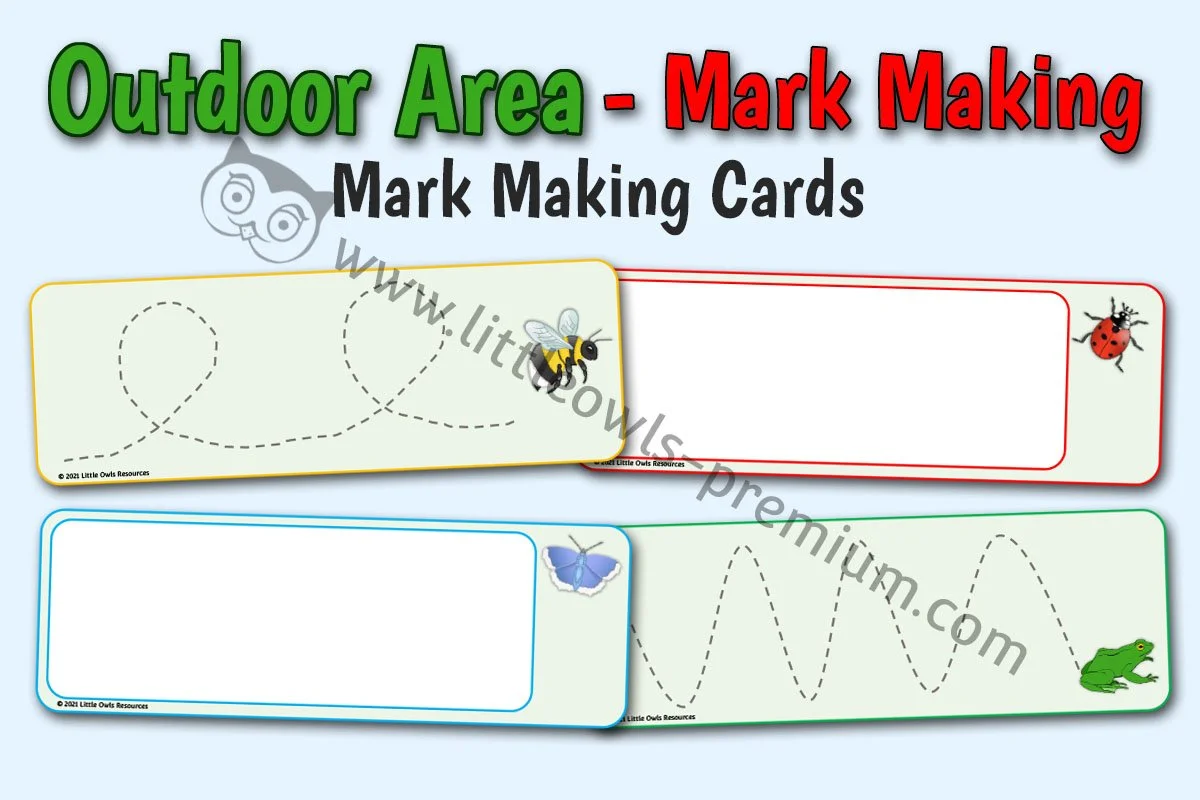
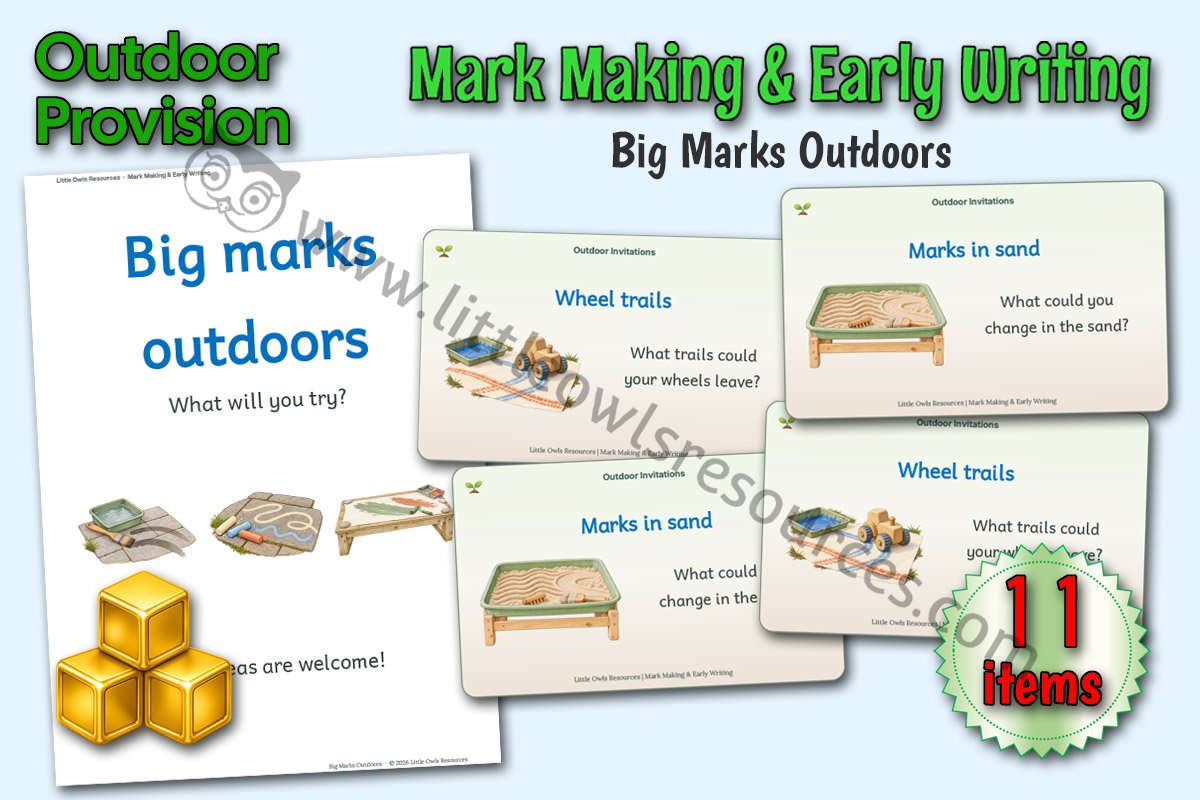
Big Marks Outdoors
Eight outdoor mark-making invitations explore movement, tools and the traces they leave. Offer space for children to experiment and add their own ideas rather than copy a finished design.
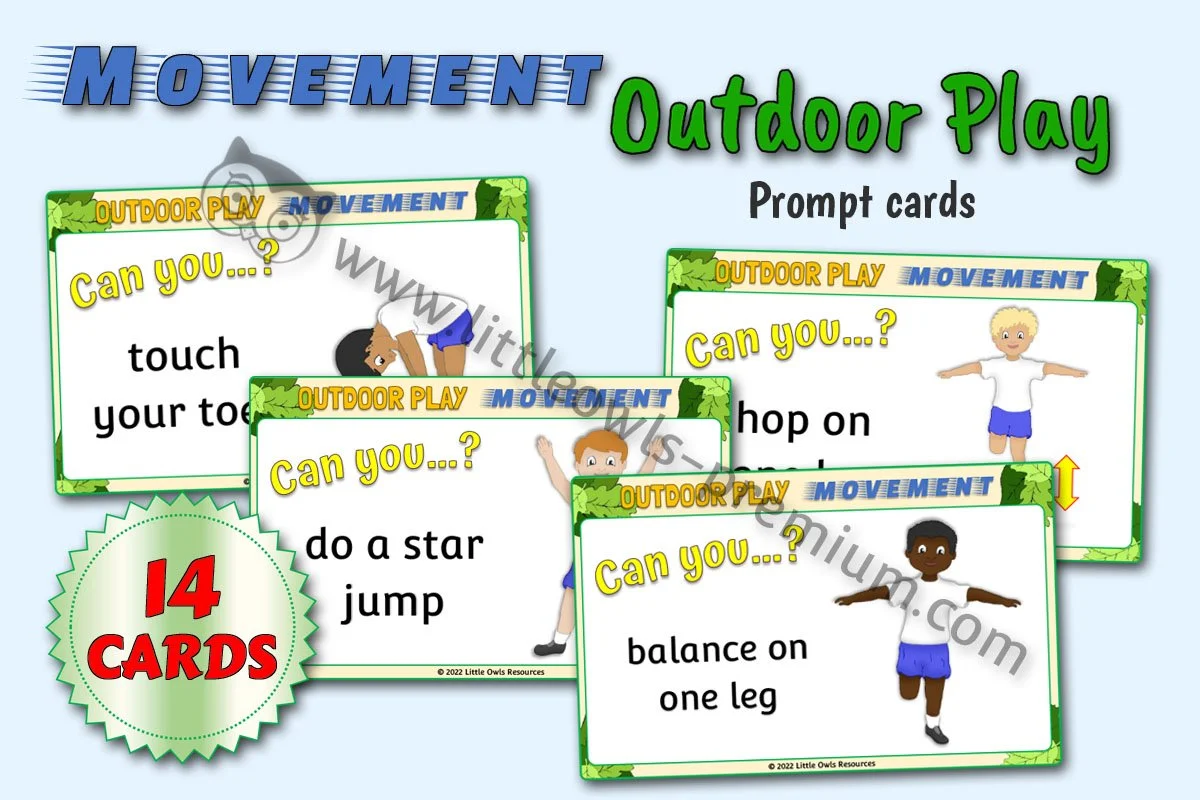
Outdoor Play — Variety Prompt Cards
A free starting selection for exploring movement, construction, sound and the senses outdoors. Choose a movement invitation, demonstrate if helpful and let children adapt or invent actions.

Choose a useful route
Useful starting points
Start with something free
Try a movement prompt, a making activity or a guidance sample. Choose a resource that adds to the play already happening.
Support the adult’s role
Plan spaces, tools and everyday routines around the children you know. Find guidance for noticing progress and offering useful support.
Find adult guidance & planning ↑
See also the EYFS Curriculum & Pedagogy Suite.
Follow an interest
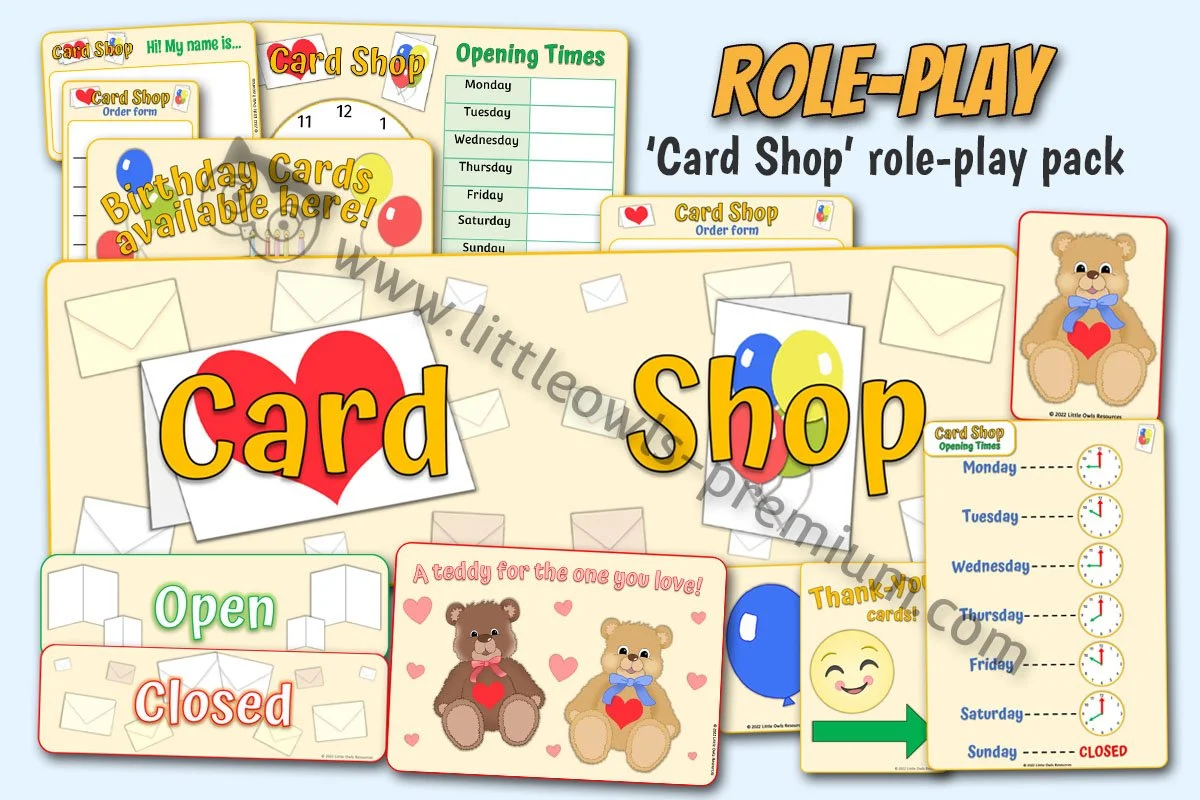
A pretend delivery, a dough bakery or an outdoor building project can give movement and hand control a purpose.
Begin with outdoor provision or construction and building.
Use the resources with your children
Ideas for different ages
These are starting points for play, not a fixed programme or a checklist of skills. Begin with each child’s interests, experience and access needs.
Each link returns to the finder with that age selected. The resource cards then suggest a particular way to support Physical Development; you may only need one part of a pack.
Babies · 0–18 months
Make room for comfortable, supervised movement and exploration with an attentive adult. Offer suitable objects to reach for and handle, and follow the baby’s responses. Resources in this age search may guide the adult rather than give the baby an activity to complete.
Toddlers · 18–36 months
Join a carrying game, roll dough, make broad marks or practise an everyday task together. Allow time for repeated attempts and offer a manageable choice of tools. Keep small printable pieces with the adult when they are unsuitable for the child.
Preschool · 3–4 years
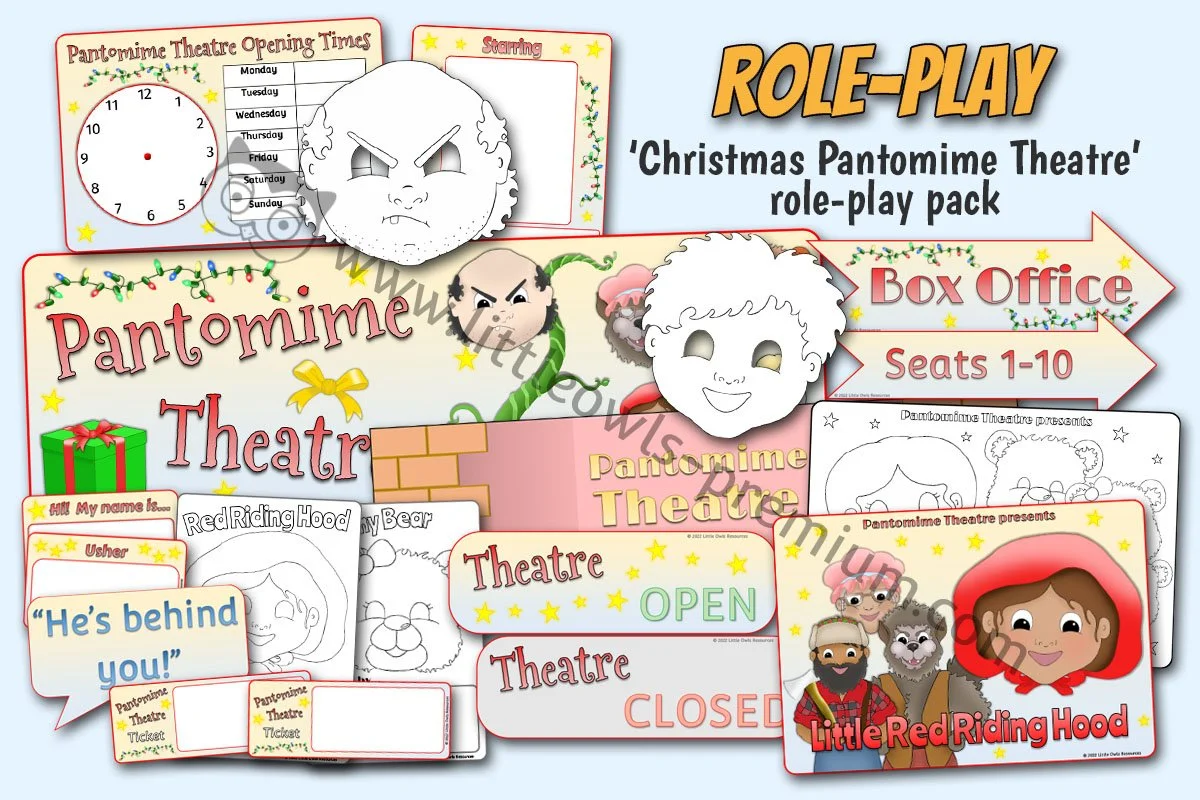
Build a route for a pretend journey, squeeze and shape a dough creation, or use scissors to make something for play. Model a tool or movement, then let children try, adjust and return to it. Offer different ways to take part in the same idea.
Reception · 4–5 years
Invite children to plan a movement game, refine a model or choose tools for a useful drawing or sign. Revisit actions in different situations and discuss what helps. Make space for physical play throughout the day, alongside more detailed making and writing.
Make participation possible. Children can explore an idea through seated or standing movement, different tools, a smaller space or a shared action. Follow agreed support for individual children and offer a way to pause, watch or stop. Choose materials and spaces with the children’s safety and access needs in mind.
Plan for active exploration
Physical Development in the EYFS
Physical Development is one of the three prime areas in England’s Early Years Foundation Stage. Its educational programme brings together large movements, coordination and balance with the smaller movements used to handle materials, make marks and use tools.
A printable can introduce a game, suggest something to make or help an adult plan. Use it alongside real movement, objects and practical experiences, with time to revisit and enjoy them.
Give movement a purpose
A delivery route needs places to start and stop; a pretend animal might move in several ways. Offer one idea, notice how children use it and let their play change the challenge.
Make hands busy in meaningful play
A dough café, a card for a friend or a shelter for a toy can invite squeezing, joining, cutting and drawing. Choose tools that fit the child and show how to use them, with support where needed.
Leave time for everyday independence
Let a child take a useful part in putting on outdoor clothing, carrying equipment or tidying a shared space. Break a task into manageable parts and allow time before offering help.
Notice, adjust and revisit
Look at what enables participation: the size of a handle, the height of a surface, the space around a route or time to try again. Keep useful challenges available and change an unhelpful barrier.
Build physical play into continuous provision
Move a resource into the area where it has a purpose: an outdoor prompt beside building materials, a picture menu near dough tools or a mark-making invitation beside an ongoing model. Keep room for children’s own uses of the materials and offer different levels of challenge.
An idea to try next
Top Picks Inspiration
Explore a changing mix of seasonal and year-round ideas, with practical resources, planning guidance and something free to try. Choose an age, then follow a resource’s suggestion or find more ideas like it.
Top picks for Preschool (3–4 years).
Movement, balance & coordination
FIREWORKS ACTIVITY CHALLENGE
Six firework movement challenges for imaginative actions. Adults can model a card, adapt the space and let children combine movements into their own sequence.
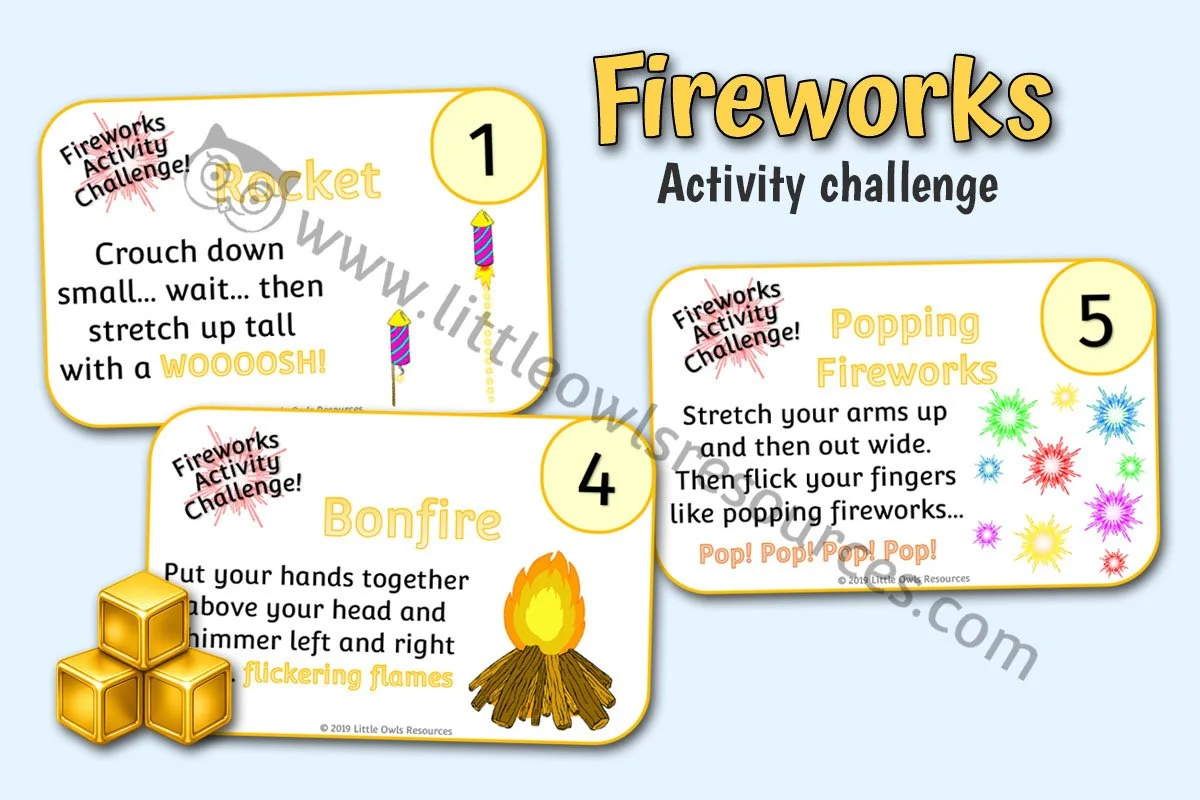
Physical Development: The firework action cards invite children to represent fireworks through movement without sudden noises, choosing and controlling movements in a shared space.
Using this with preschool children: Let children choose from a few firework action cards and represent fireworks through movement without sudden noises. Offer enough space to begin, stop and change direction comfortably; children may invent an alternative action.
View and download resource →Find more Preschool movement, balance & coordination resources ↑Hands, fingers & tools
Shape & Spatial Investigation Cards
Shape and spatial investigation cards invite children to fit, turn, combine and represent shapes using blocks, tiles, loose parts and everyday objects. Compare what fits and how a changed arrangement affects the result.
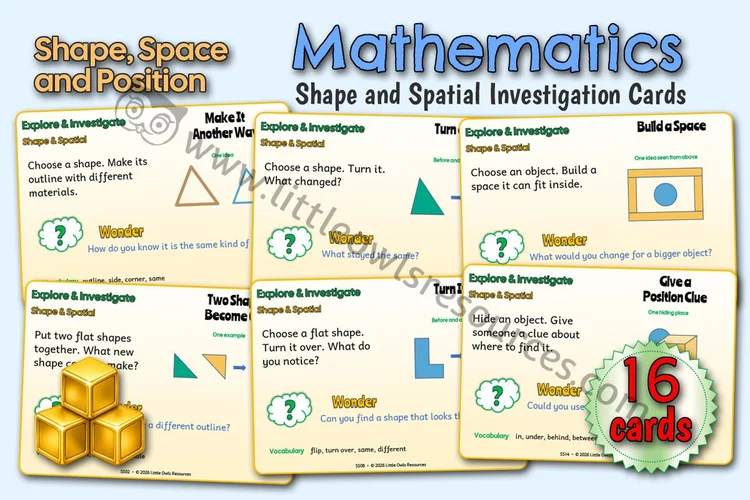
Physical Development: Fitting, turning and combining real shapes gives hand coordination a clear construction and spatial purpose.
Using this with preschool children: Use one card alongside blocks or tiles. Turn and slide pieces to make a chosen arrangement, holding a base steady when another piece needs adjustment.
View and download resource →Find more Preschool hands, fingers & tools resources ↑Mark making & drawing
My Leaf Rubbings
A recording sheet for autumn leaf rubbings. Place a chosen leaf beneath paper and explore how rubbing with a drawing tool reveals its shape and surface details.

Physical Development: Leaf rubbing uses one hand to stabilise paper while the other controls a rubbing tool and its pressure.
Using this with preschool children: Place one broad leaf under the sheet and help keep it still. Offer a chunky crayon on its side so the child can explore the marks revealed by rubbing.
View and download resource →Find more Preschool mark making & drawing resources ↑Self-care & independence
Wash Hands - Sing 'Incy Wincy/Itsy Bitsy Spider'
Handwashing posters using Incy Wincy or Itsy Bitsy Spider as a singing prompt. Adults can select the familiar version and model the routine alongside the song.
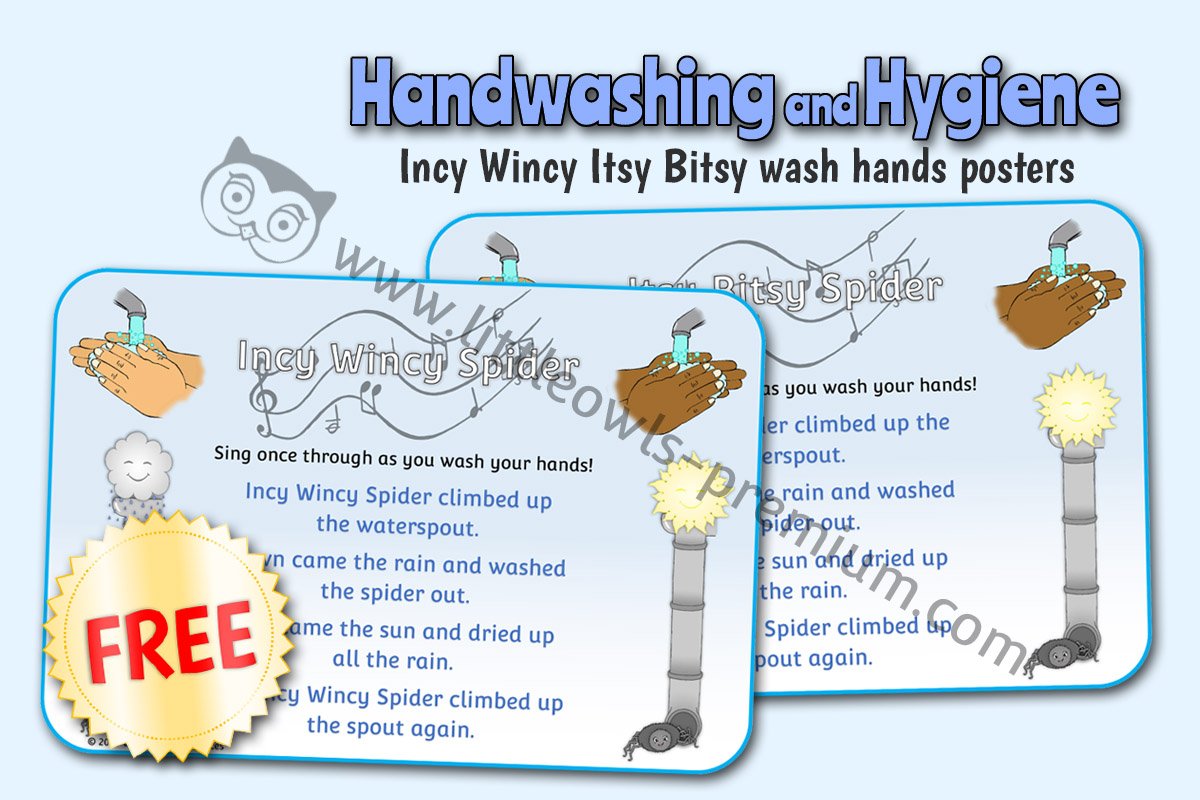
Physical Development: The Incy Wincy or Itsy Bitsy Spider poster provides a familiar musical cue alongside supported handwashing.
Using this with preschool children: Use Incy Wincy or Itsy Bitsy Spider as a familiar prompt during handwashing. Children can try the washing movements alongside the adult, with the colouring version decorated separately if wanted.
View and download resource →Find more Preschool self-care & independence resources ↑Outdoor & active play
Autumn Movement Challenge Cards
Eight autumn action prompts invite children to move like seasonal sights. Choose a card, model or invent an action and take turns deciding what everyone tries next.
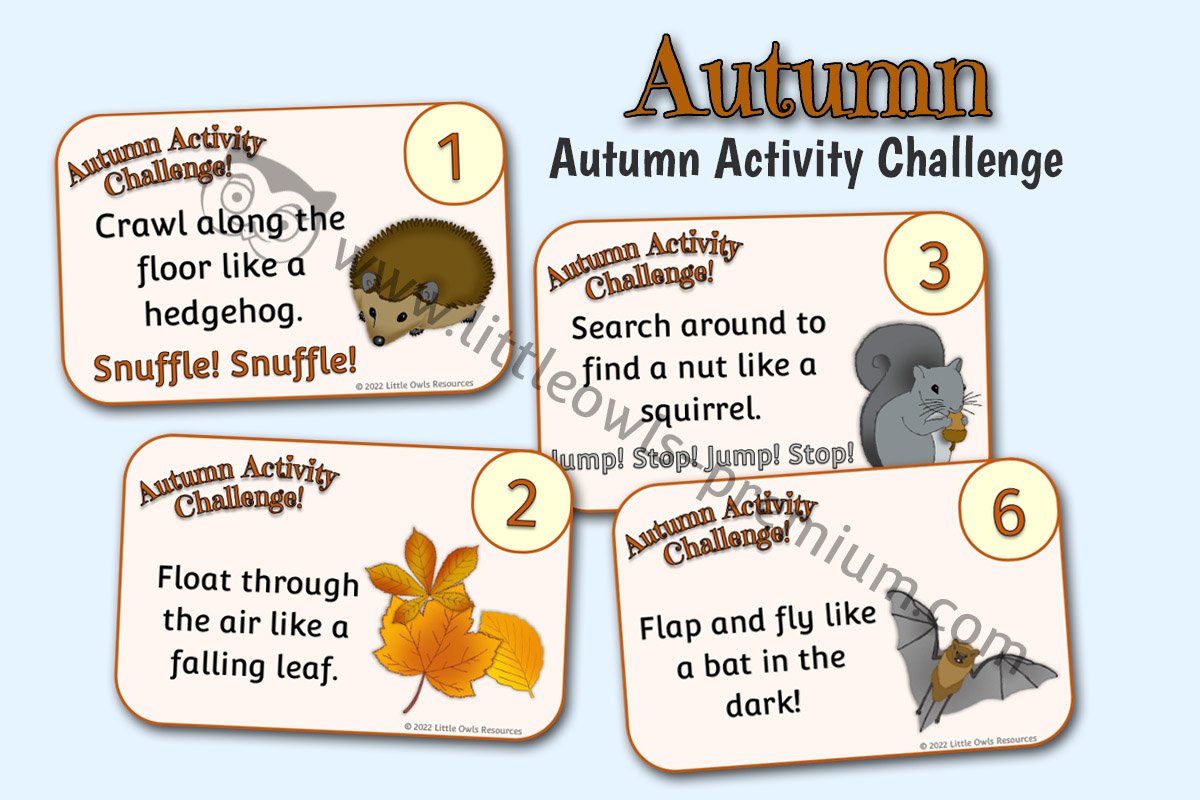
Physical Development: The autumn action cards invite children to move like seasonal sights, choosing and controlling movements in a shared space.
Using this with preschool children: Let children choose from a few autumn action cards and move like seasonal sights. Offer enough space to begin, stop and change direction comfortably; children may invent an alternative action.
View and download resource →Find more Preschool outdoor & active play resources ↑Inclusive physical play
CHRISTMAS TARGET GAME
Christmas floor targets invite children to aim a suitable soft object and identify the number it lands on. More confident counters can combine scores from several turns.
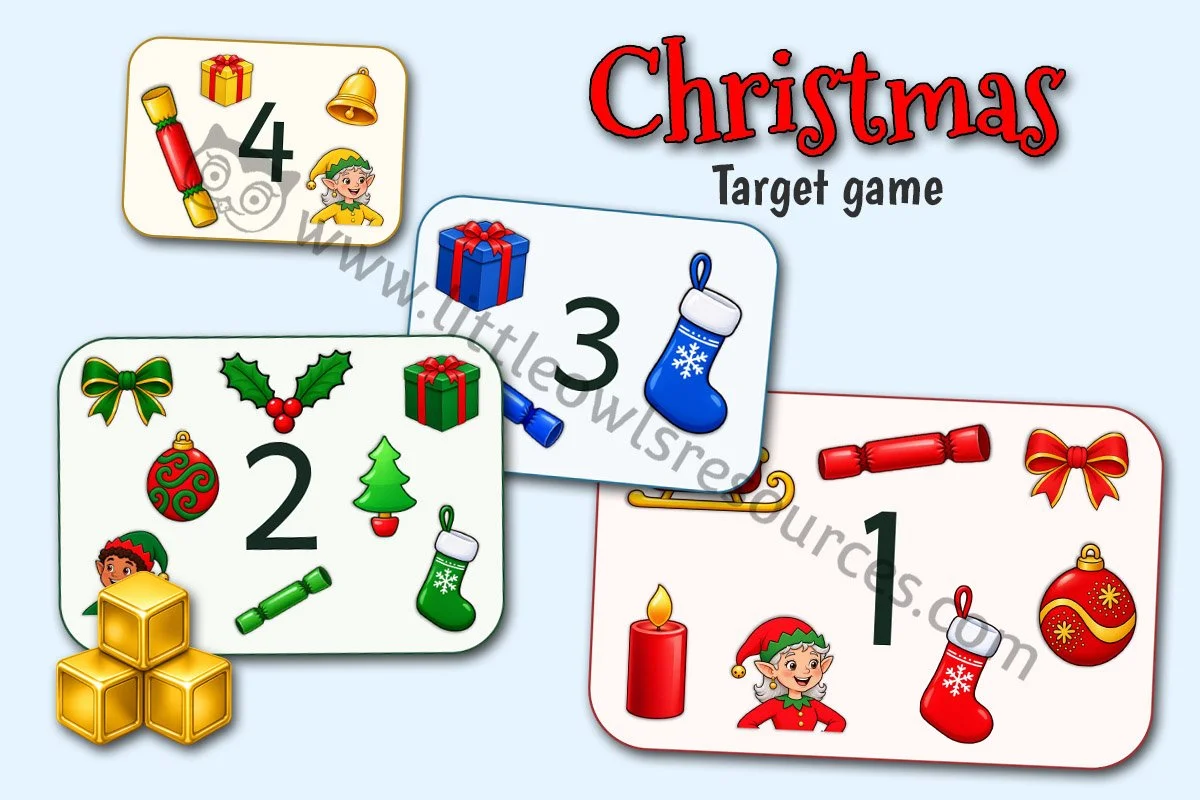
Physical Development: The Christmas floor targets directly support aiming, controlled release and adjustment of a movement towards a visible goal.
Using this with preschool children: Place a large Christmas target close by and offer a suitable soft object to roll or gently throw. Model one turn, adjust the distance and let children choose a seated or standing position; number scores are optional.
View and download resource →Find more Preschool inclusive physical play resources ↑Curriculum & pedagogy
EYFS FRAMEWORK - Support Examples - 3 and 4 year olds - Physical Development
Development Matters physical-development support examples for adults working with 3–4-year-olds. Use to consider opportunities and responsive support in everyday provision.
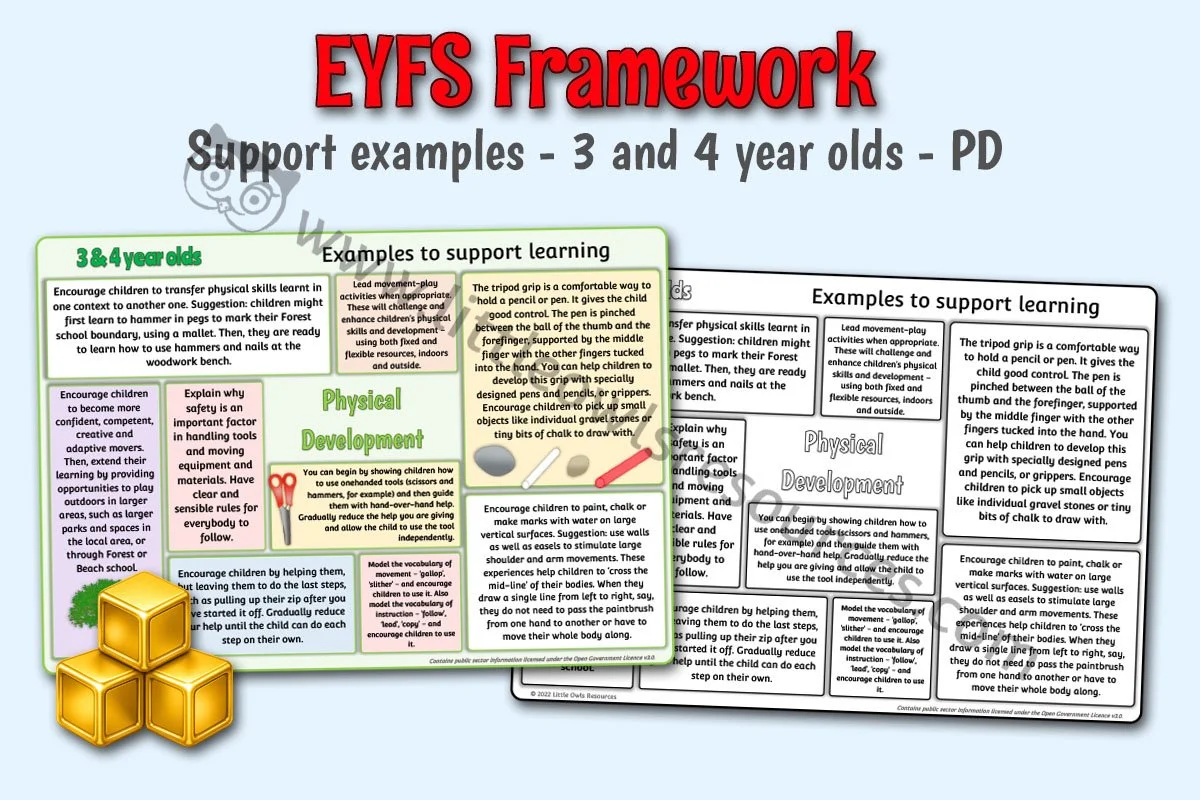
Physical Development: These support examples are specifically about physical development for three- and four-year-olds.
For adults supporting preschool children: Use the physical-development examples to choose one provision or adult-support change linked to a child’s current movement or handling. Revisit through play rather than treating the examples as a checklist.
View and download resource →Find more Preschool planning & guidance ↑A free resource or activity
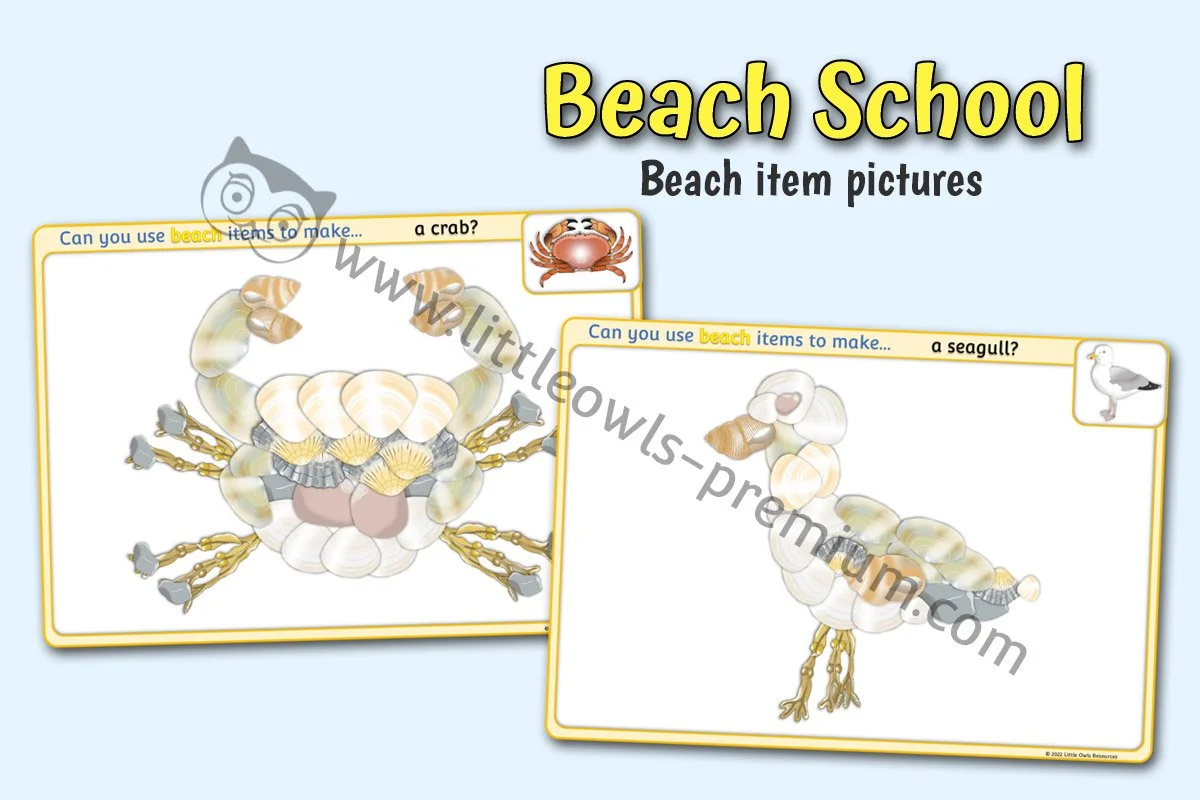
BEACH - Mark Making Cards (Free Sample)
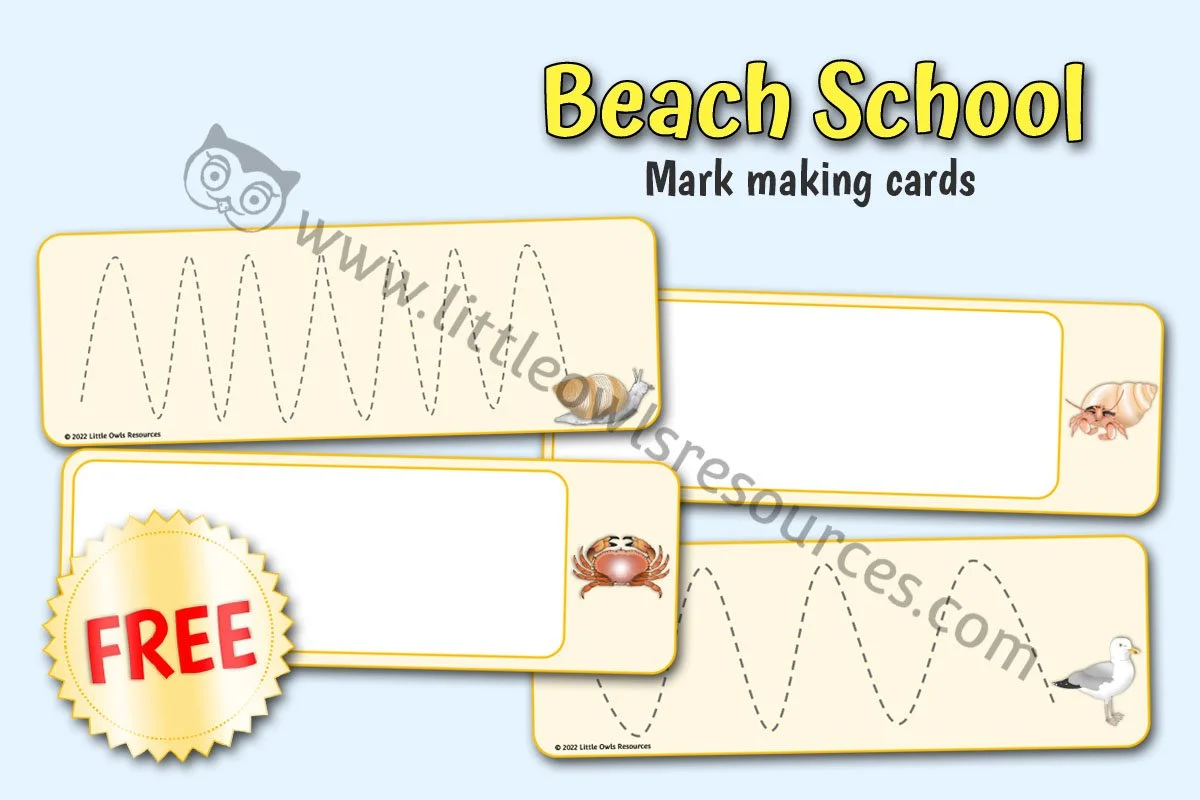
Six beach-creature designs pair a dotted mark-making pattern with a blank space. Follow or vary the pattern with a pen, finger or stick, including in sand.

Physical Development: The beach-creature patterns and blank spaces offer an optional context for controlling the direction and size of a mark.
Using this with preschool children: Choose one of the beach-creature patterns and blank spaces and explore its movement with a finger or comfortable drawing tool. Enlarge the movement or use the open space when following a narrow line is unhelpful.
View free resource →Find more free Preschool resources & activities ↑Participation and belonging
Support different ways of moving and making
Adapt the invitation
Keep the purpose of the play while changing how a child can take part. A tabletop delivery route, a larger grip, a stable work surface or a quieter place to practise may help. Show an action alongside a picture or a short explanation, and keep the child’s usual communication support available.
Work with the child and family
Ask what is comfortable and useful, notice signs of fatigue or discomfort and respect a child’s wish to pause. Use familiar approaches and follow individual advice already agreed with families and relevant professionals. These resources support educational play and planning; they are not a prescribed exercise or therapy programme.
Self-care links also connect with Personal, Social & Emotional Development. For current statutory requirements, use the England EYFS framework for your provider type. Development Matters and the Department for Education’s Physical Development guidance offer further support for planning.
Common questions about EYFS Physical Development
What is the difference between gross motor and fine motor skills?
Gross motor skills involve larger body movements, such as moving through a space or balancing. Fine motor skills involve smaller, controlled movements, particularly of the hands and fingers, such as using tools or fitting pieces together. Play often brings both together.
How can a printable support Physical Development?
It can suggest a movement game, offer an image to make with dough, give a purpose to cutting or drawing, or help adults plan and observe. Choose it for the action or experience it supports, alongside suitable objects, tools and space.
Which resources should I choose first?
Choose an age and the purpose of the experience, then use a search word or learning focus to narrow the results. For a child who wants to build, for example, explore construction, tools or outdoor play. Read the specific age-use suggestion and choose a manageable part of the resource.
Does an age suggestion mean every part of a pack is suitable?
No. It may describe one image, activity or adult approach. Check the materials, physical demands and support needed for the children taking part. An adaptation label identifies a suggested use of material originally intended for a different age or phase.
Do children need to trace lines before making their own marks?
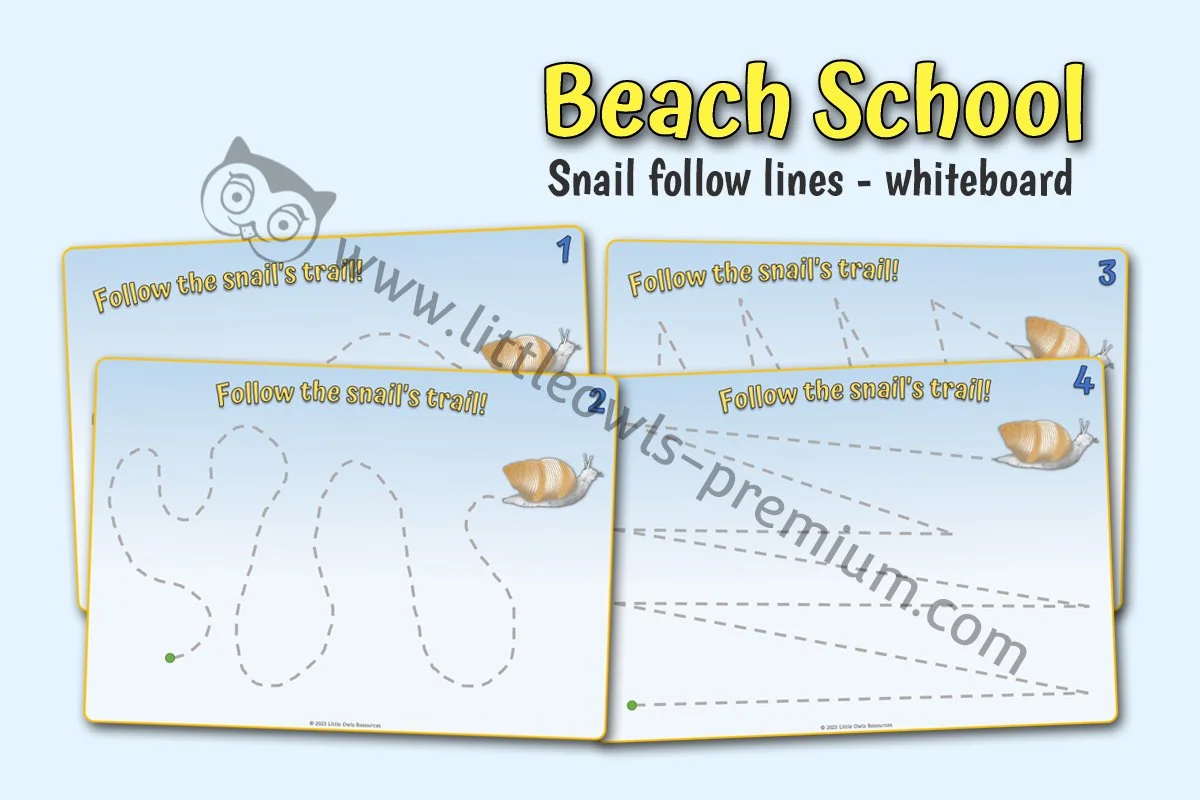
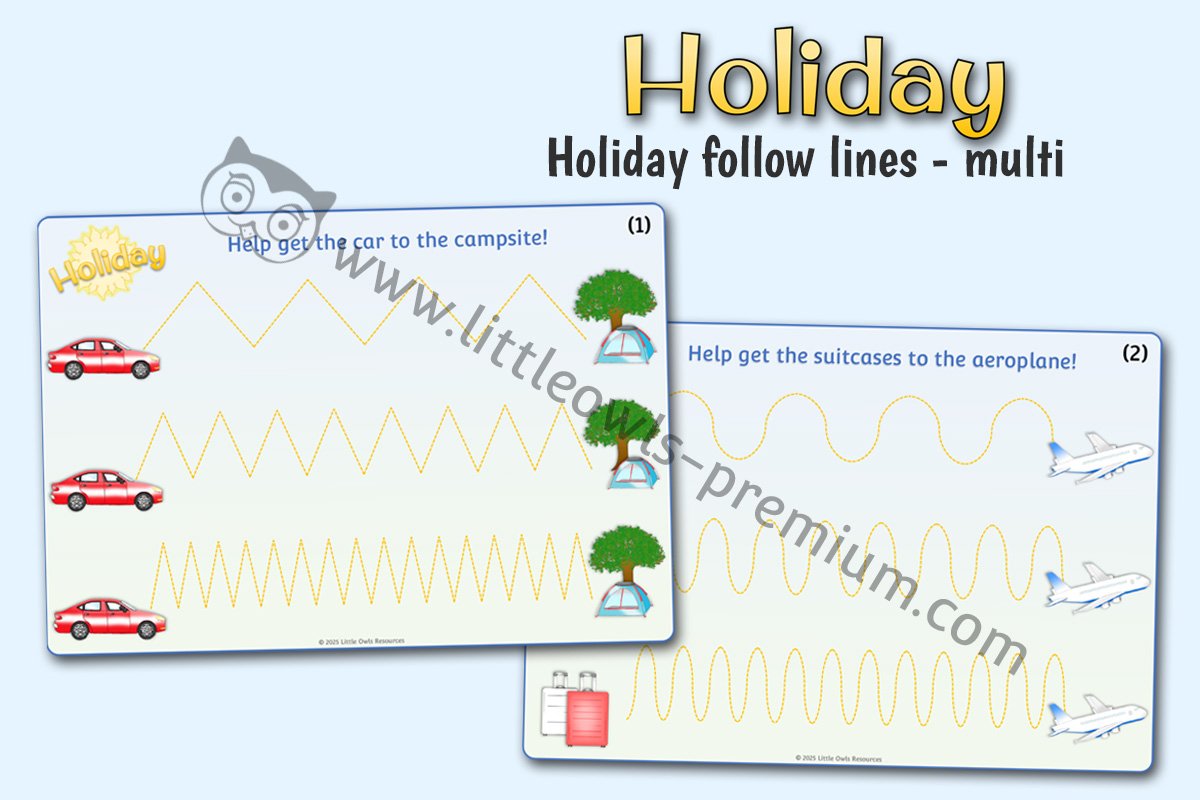
There is no need to make a worksheet a gatekeeper for drawing or writing. Offer purposeful marks in play, alongside different movements, materials and tools. A line-following resource can be one optional invitation when it interests the child and the scale and task are useful.
Can these ideas be adapted for children with different physical needs?
Yes. Adjust the space, equipment, pace and way of joining in, while retaining a meaningful purpose. Work with the child and family and follow individual professional advice where it has been given. The age filters are browsing routes, not assessments of what every child should be able to do.
What can I access for free?
Free Access includes the resources identified as free, alongside public guidance, glossary entries and collection pages. A collection may link to both free and All Access downloads. Use the Free Access filter and check the individual card’s label.
Already a paying member? You have sitewide access. No need to change plans. Find out about Free Access and All Access →
Keep exploring
Explore more on Little Owls Resources
Find resources for a specific age, follow an interest or explore support for your setting.