

🛠️ Page in development 🛠️
💛 Parent Hub
Play, learning and little discoveries at home
Welcome, parents and carers. Find ideas, printable resources and guidance for sharing everyday learning with your child—from babyhood and toddler play to preschool, Reception, Year 1 and Year 2. Explore stories, games, creative play, outdoor discoveries and support for reading, routines and starting school.
You do not need to turn your home into a classroom. Start with something your child enjoys, choose what is useful and make it work for your family.
🧺 Everyday Play & Family Time
A few familiar toys, somewhere to draw or a shared game can be a lovely place to start. Use printables where they add something to the experience—not as a list of tasks to complete.
Build & Pretend
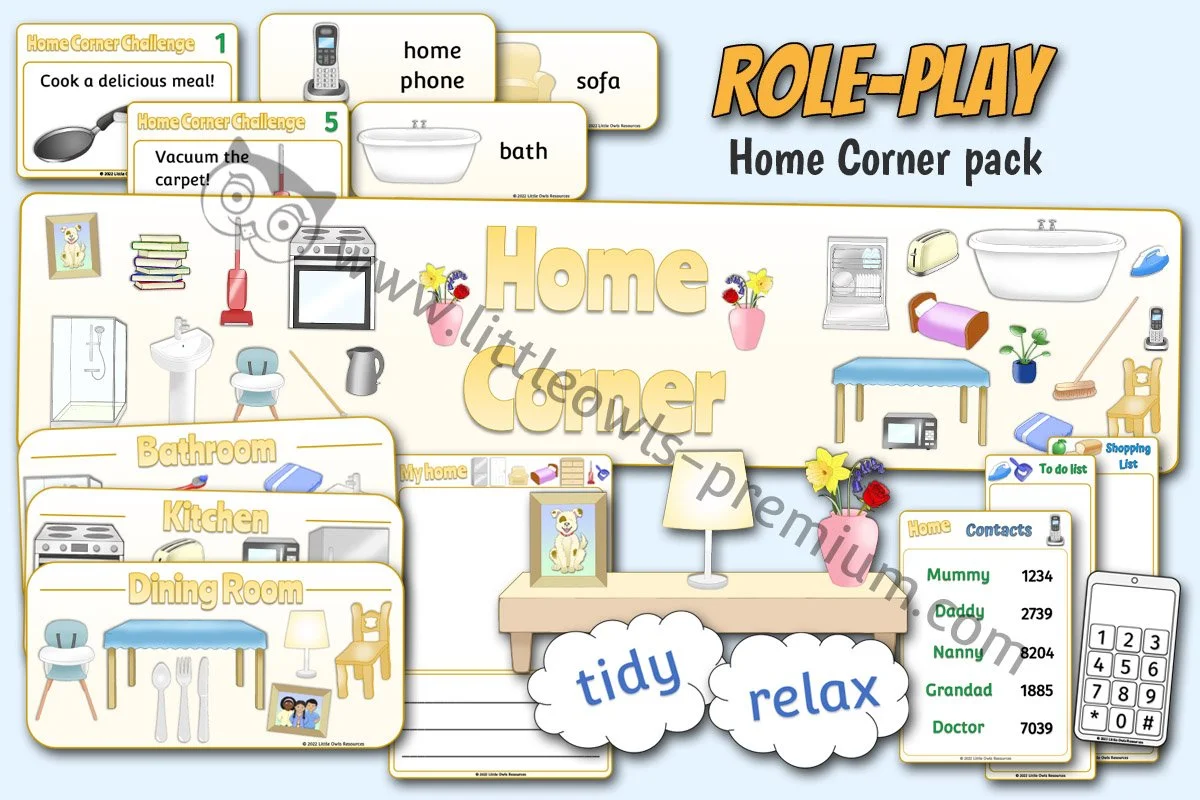
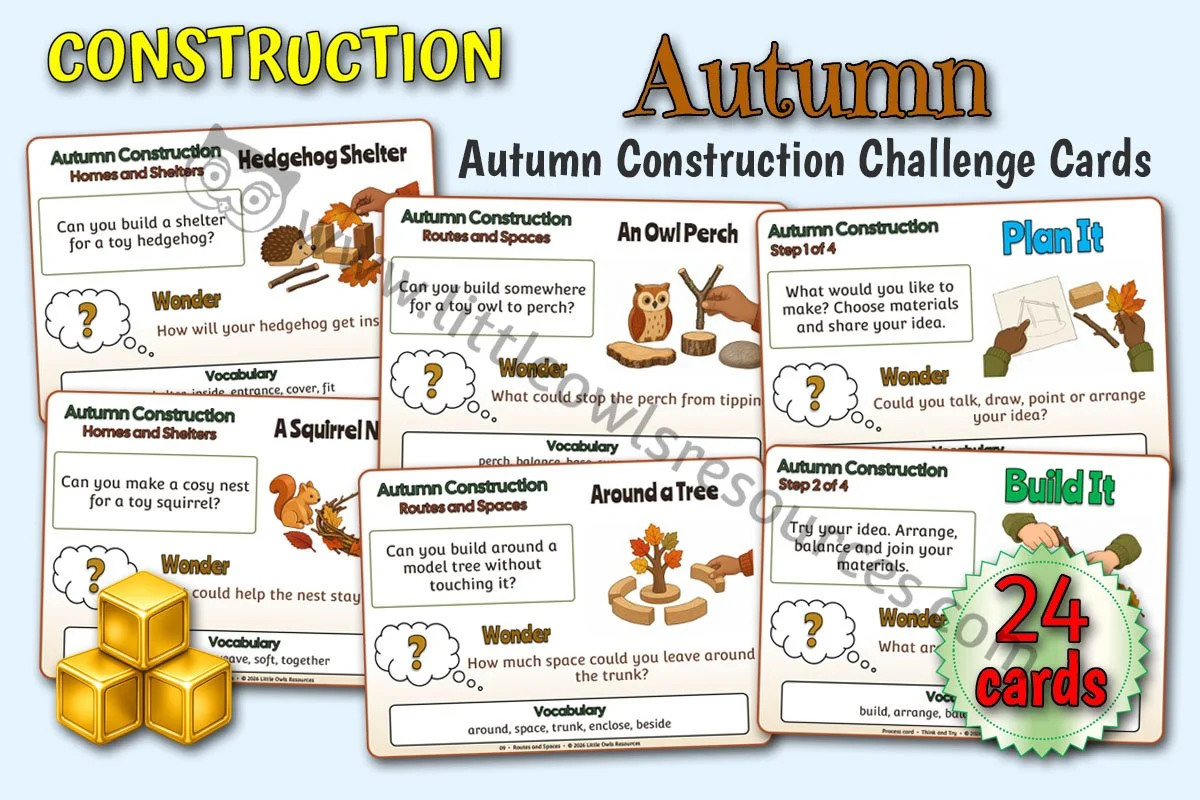
Make a home for toy animals, build a bridge or turn a few everyday objects into a pretend café. Choose a sign, ticket or picture that adds to your child’s ideas; you do not need to print a whole role-play pack.
Draw, Make & Create
Explore drawing, colouring, making and modelling. Let your child choose colours, materials and what happens next—there does not need to be a matching finished result.
Get Outside & Explore
Notice what is growing, look for interesting shapes or make up a movement game. Adapt an idea for a garden, park, local walk or another outdoor space available to you.
Share a Game or Puzzle
Try a matching game, puzzle or building challenge. Begin with a small selection, play together and change the rules or amount of help to keep it enjoyable.
Again and Again?
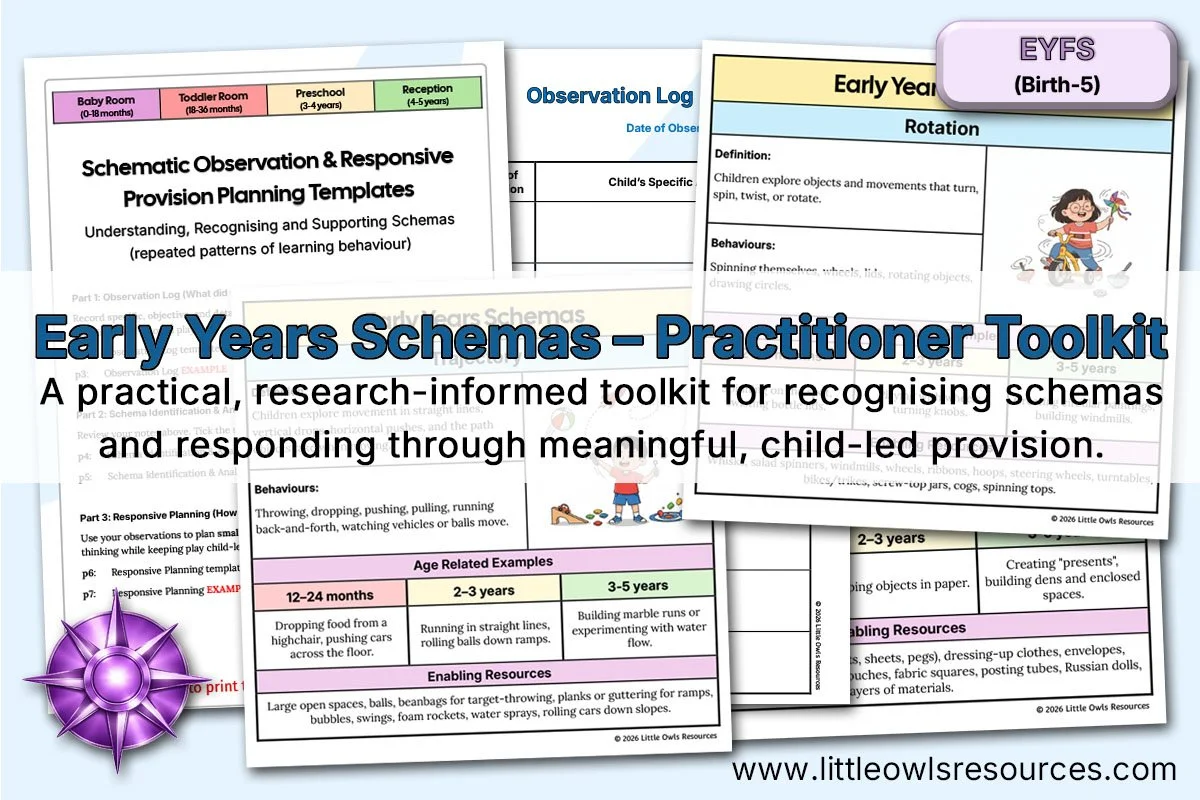
Does your child keep filling containers, carrying objects or joining things together? Notice what interests them and offer safe opportunities to explore it again. You do not have to introduce something new every time—or give their play a label. Visit our Schema Resources page to find out more about schematic play.
🍼 Babies & Toddlers: Little Moments Together
Talk about what you are doing, share a familiar song or explore a suitable object together. Pause to notice your child’s movements, sounds and other responses, and follow their interest.
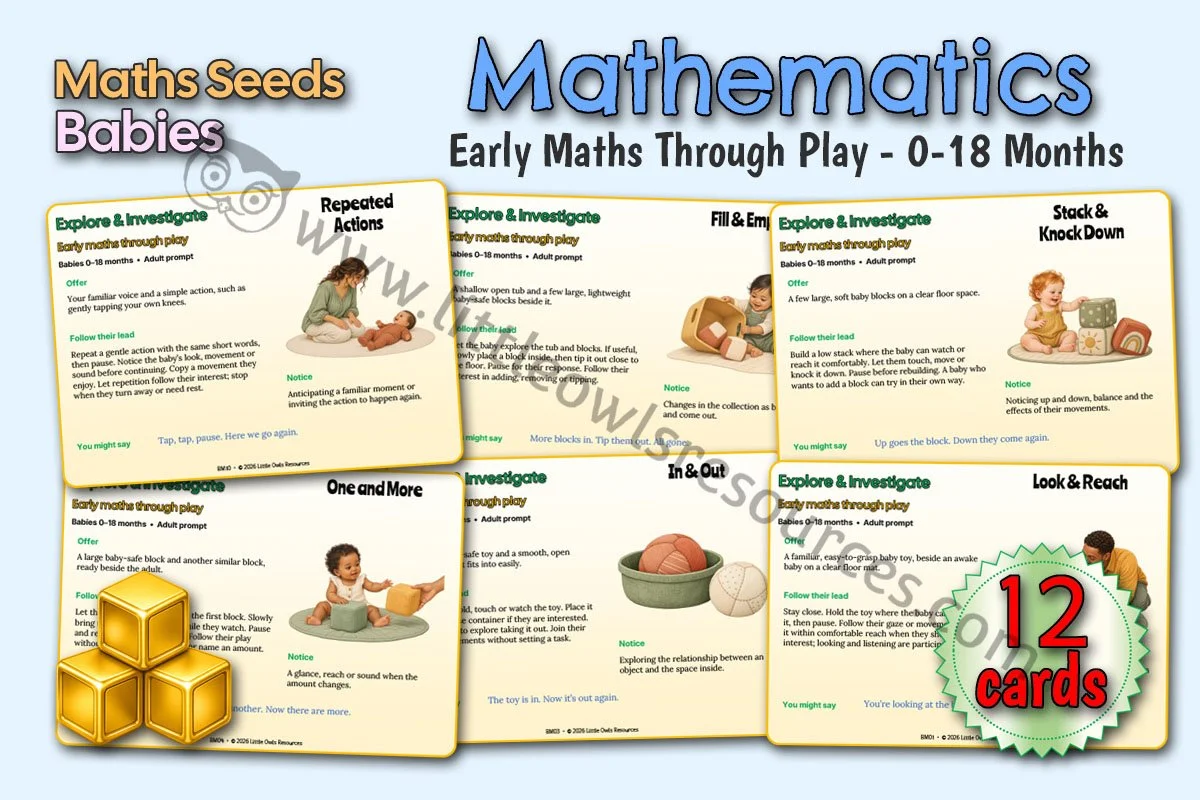
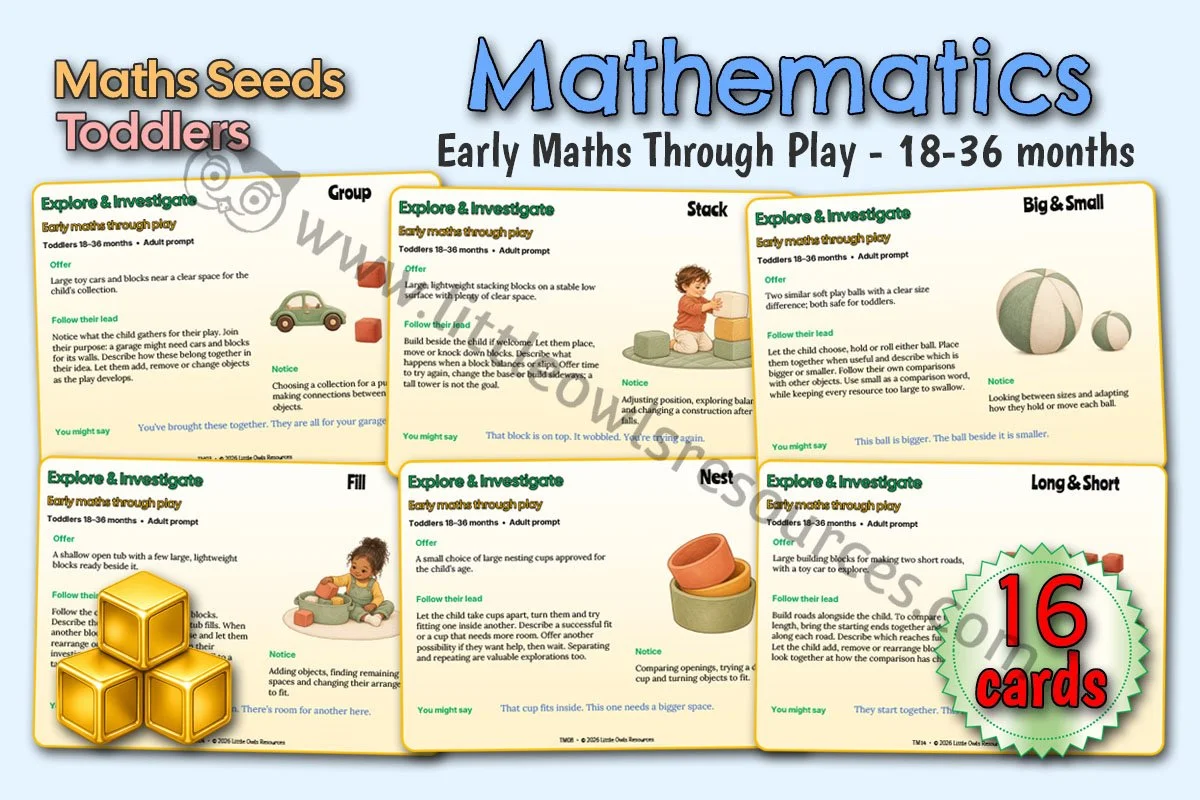
The packs below offer ideas for adults to use during everyday play. Babies do not need to recognise numbers, answer questions or complete printed activities.
Early Maths Through Play: Babies, 0–18 months
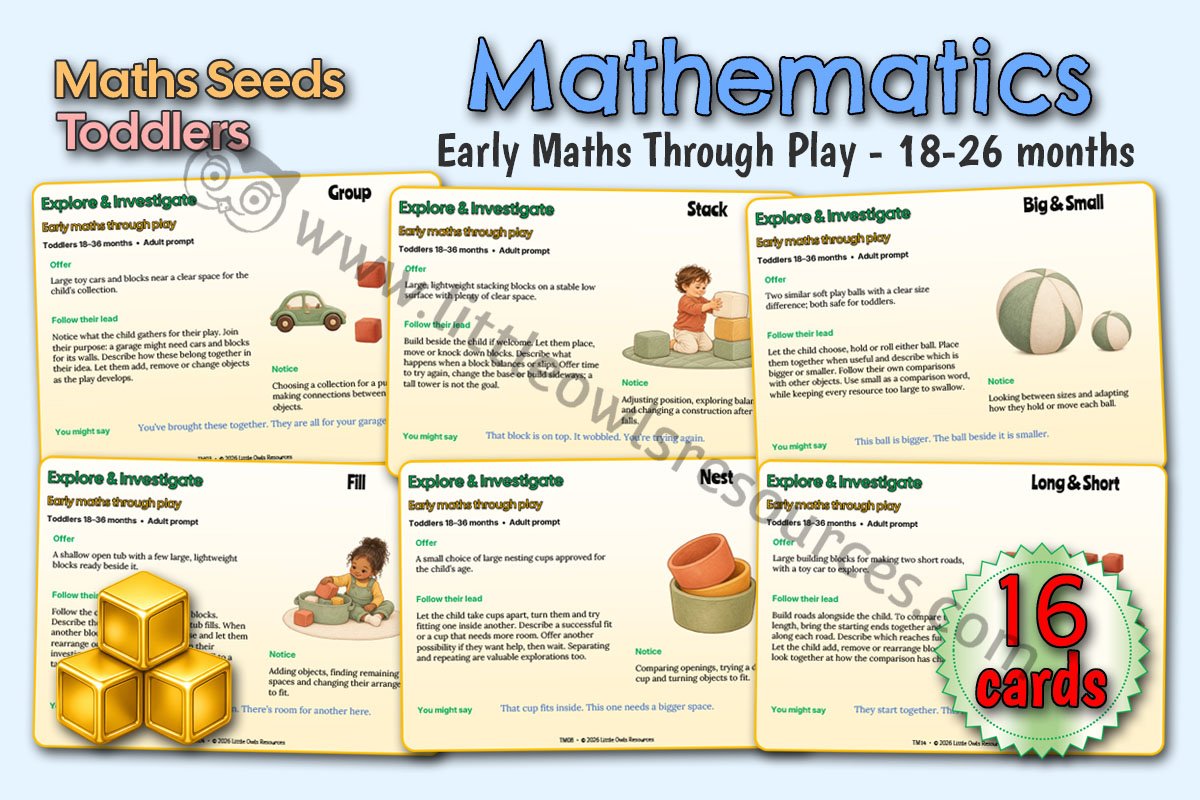
Early Maths Through Play: Toddlers, 18–36 months
Choose materials for your individual child. Check age suitability and condition, supervise closely and keep small parts out of reach of babies and children who mouth objects—including when older siblings are playing nearby.
For additional support including ideas, resources and guidance visit our 🍼 Baby page or our 🚼 Toddler page.
Further guidance for adults: Supporting Speech & Language at Home, 0–3 years. This parent-facing guide is part of Professional membership.
📚 Talking, Books, Reading & Writing
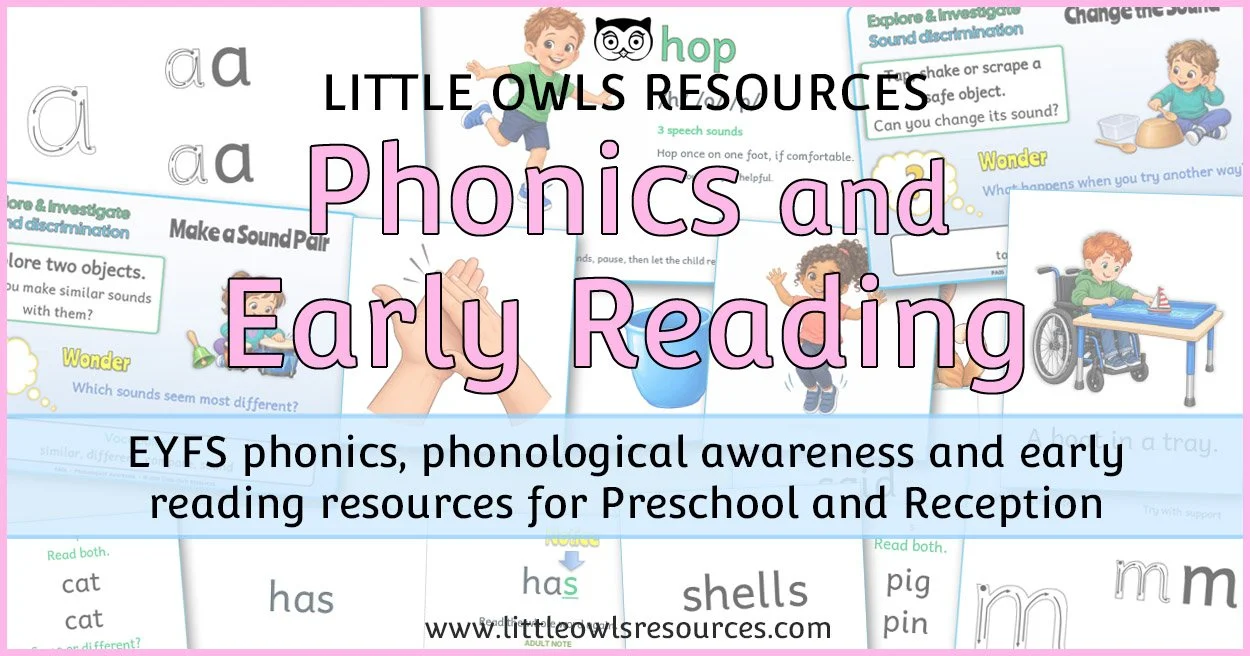
Share conversations and books, enjoy sounds and rhymes, and make room for drawing and writing. For school phonics practice, begin with what your child has been taught rather than choosing a resource by age alone.
Listen, Talk & Play with Sounds
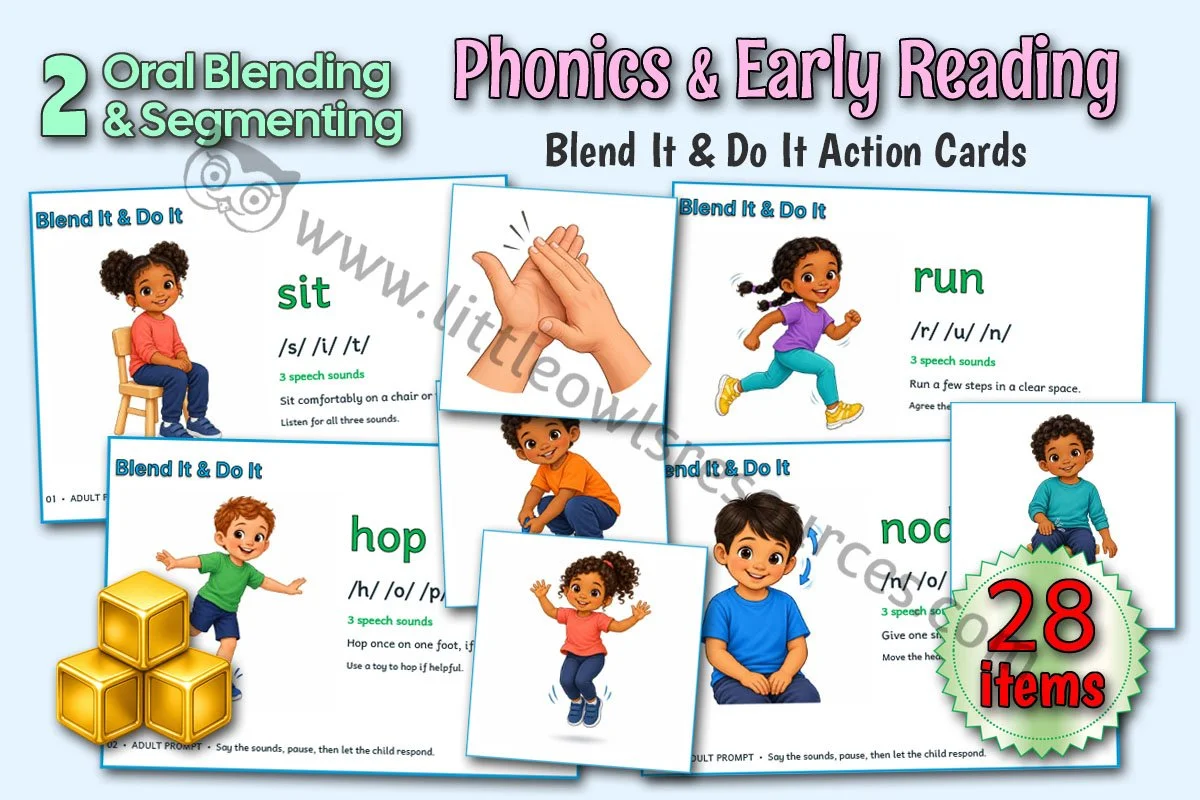
Sing familiar rhymes, copy a playful sound or clap the beats in a name. Give your child time to join in through words, movements, pointing or simply enjoying the experience with you.
Understand Phonics
Phonics connects spoken sounds with letters or groups of letters. Blending means putting sounds together to read a word; segmenting means identifying the sounds in a spoken word to help spell it.
Ask your child’s school which sounds and words to practise and how they say the sounds. Follow its approach rather than starting a different sequence at home.
Help Your Child Read
For reading practice, use the book or text your child’s school has matched to their taught phonics. Help them use the sounds throughout an unfamiliar word, rather than guessing from its picture or first letter.
Revisit familiar reading books as well as new ones. Rereading gives your child opportunities to read more smoothly and think about the meaning.
When Reading Feels Difficult
Pause and offer help rather than asking your child to keep struggling. Model the sounds and blend together using the school’s approach; give the word when needed and keep the experience supportive.
If books regularly feel too difficult, or reading is upsetting, talk with your child’s teacher about the right text and support. More worksheets are not automatically the answer.
Enjoy Books & Stories Together
Keep sharing stories, poems and information books that interest your child—even when they cannot read those books themselves. Books you read aloud do not need to be limited to the phonics your child knows.
Talk about an interesting picture, enjoy a favourite phrase or act out part of a story. There is no need to turn every book into a question-and-answer session.
Make Marks, Draw & Write
Draw a plan, make a card or leave a message. Welcome your child’s marks and ideas, and offer to write down what they tell you.
When practising letter formation, use the letters and movements their school is teaching. A whole alphabet pack is a collection to choose from, not a requirement to work through every letter.
Drawing & early writing resources · Lower-case letter formation cards
🔢 Maths & Discoveries in Everyday Life
Explore ideas through things your child can handle, notice and talk about. Try one question, see what happens and follow their thinking.
Maths Through Play
Count toys into a box, compare two towers, make a repeating pattern or work out whether a toy will fit inside a container. Explore amounts, size, shape and position—not just recognising written numbers.
Our Maths Through Play collection includes practical prompts and printables to use alongside familiar materials. On the resource page, you will see this described as Maths Continuous Provision.
Wonder About the World
Watch a shadow change, notice how a plant grows or compare materials while making something. You do not need to know every answer: try “I wonder…” and explore together.
💛 Feelings, Routines & Starting School
Find resources to support familiar routines, share what matters to your child and prepare for new experiences. Choose what helps your family rather than trying to use everything.
Talk About Feelings
Use a picture or story to open up a conversation about how someone might feel. Listen to your child’s own explanation; they do not have to choose a card or name a feeling on demand.
Make Routines Easier to Follow
Try a few familiar pictures to show what is happening now and what comes next. Choose images your child understands and use them together, rather than introducing a complicated timetable all at once.
Support Different Ways to Communicate
Explore pictures alongside your child’s words, gestures, signs or communication system. Follow any individual advice you have been given, and share useful approaches with their nursery, childminder or school.
Keep talking, singing and sharing stories in the languages your family feels comfortable using.
Starting Nursery or School
Explore what the day might look like, talk about familiar routines and share your child’s interests, comforts and communication needs with the adults who will care for them.
Help them try everyday tasks with the support they need. Preparing for school is not about completing a reading or writing checklist, and children do not all need the same kind of support.
Transition resources · School Readiness Support Information Sheet
🎒 Supporting Learning in Reception, Year 1 & Year 2
Use a game, practical activity or carefully chosen printable to revisit something your child is learning. Ask their teacher what would be useful, especially for phonics and methods used in maths.
Keep time for play, rest and interests beyond schoolwork, too.
Reception: Everyday Learning & Early Reading
Explore stories, playful maths, drawing and writing, alongside short opportunities to practise phonics already taught at school.
Year 1 & Year 2 Maths
Browse our KS1 Mathematics collection for resources organised around Year 1 and Year 2 learning. Choose a manageable starting point rather than working through every objective at home.
Year 1 & Year 2 Science
Browse our KS1 Science collection for resources linked to Year 1 and Year 2 learning. Use your child’s questions and school topics to help choose a starting point.
Explore KS1 Science → (In development)
Looking for reading and writing support in Year 1 or Year 2? Visit our talking, reading and writing section, choosing resources that match what your child knows and is learning.
🍂 Seasonal Ideas & Your Child’s Interests
Follow an interest in animals, vehicles, stories or something your child has noticed outdoors. Add seasonal ideas or celebrations where they are meaningful to your family—there is no need to follow every special date.
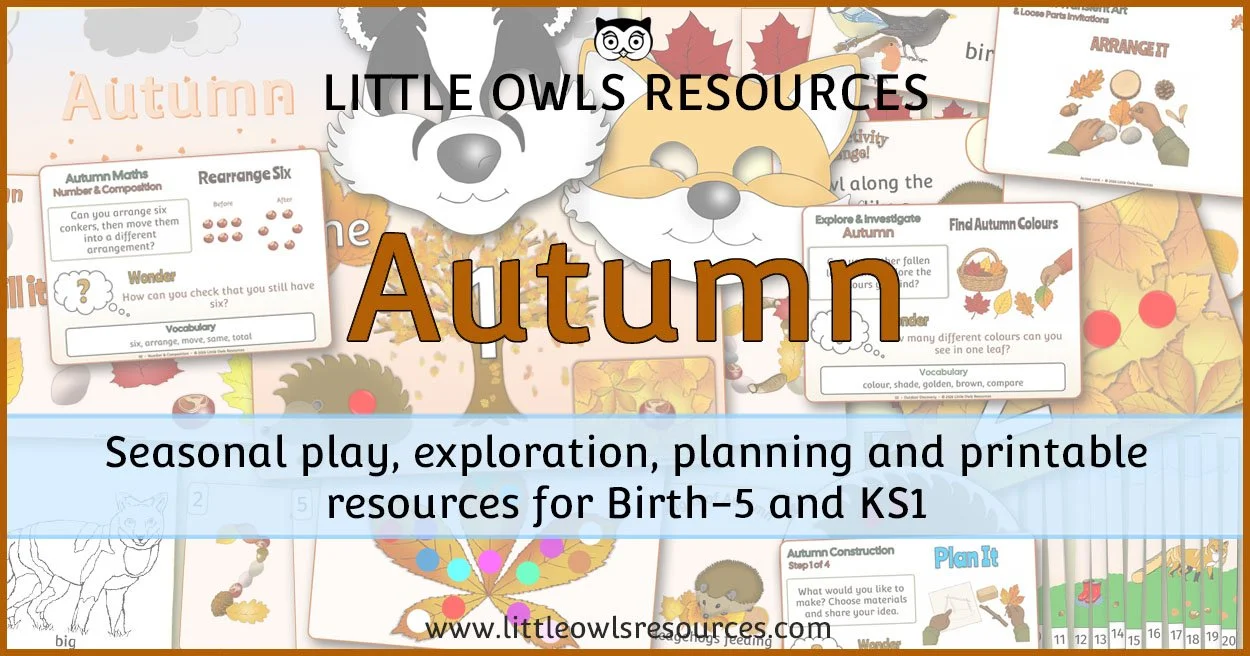
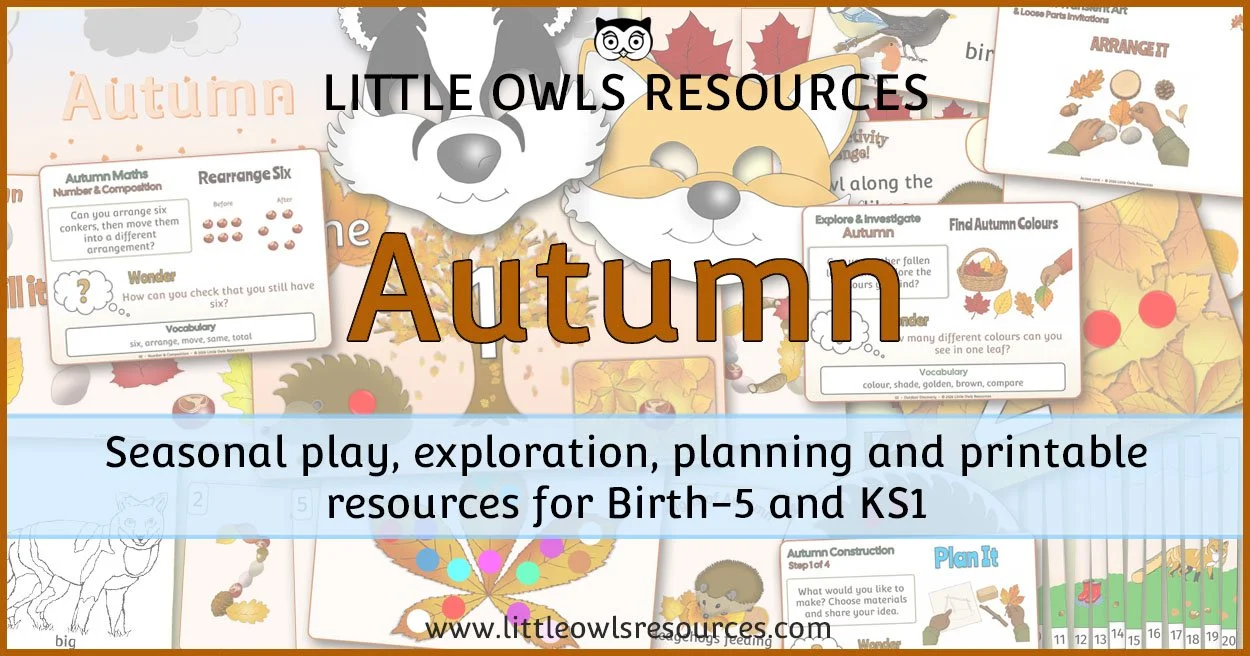
Autumn Together
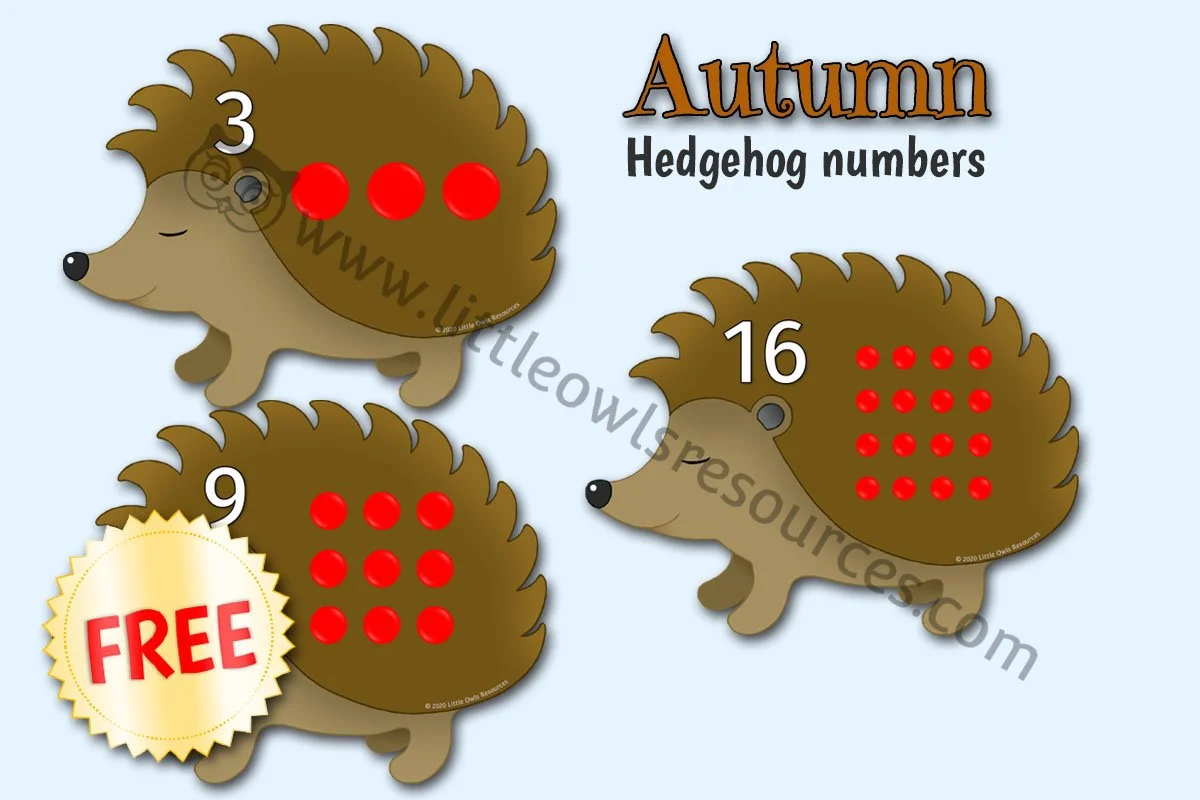
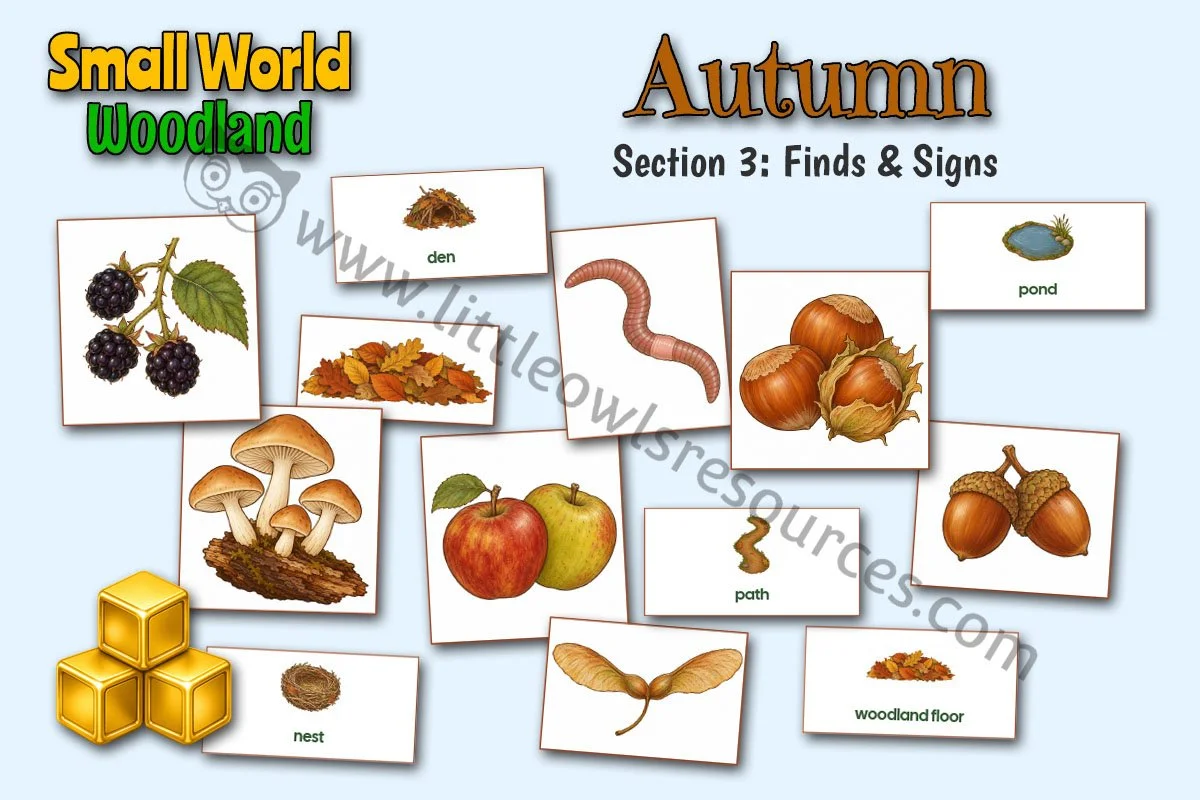
Explore autumn discoveries, creative ideas and printables to use alongside familiar play.
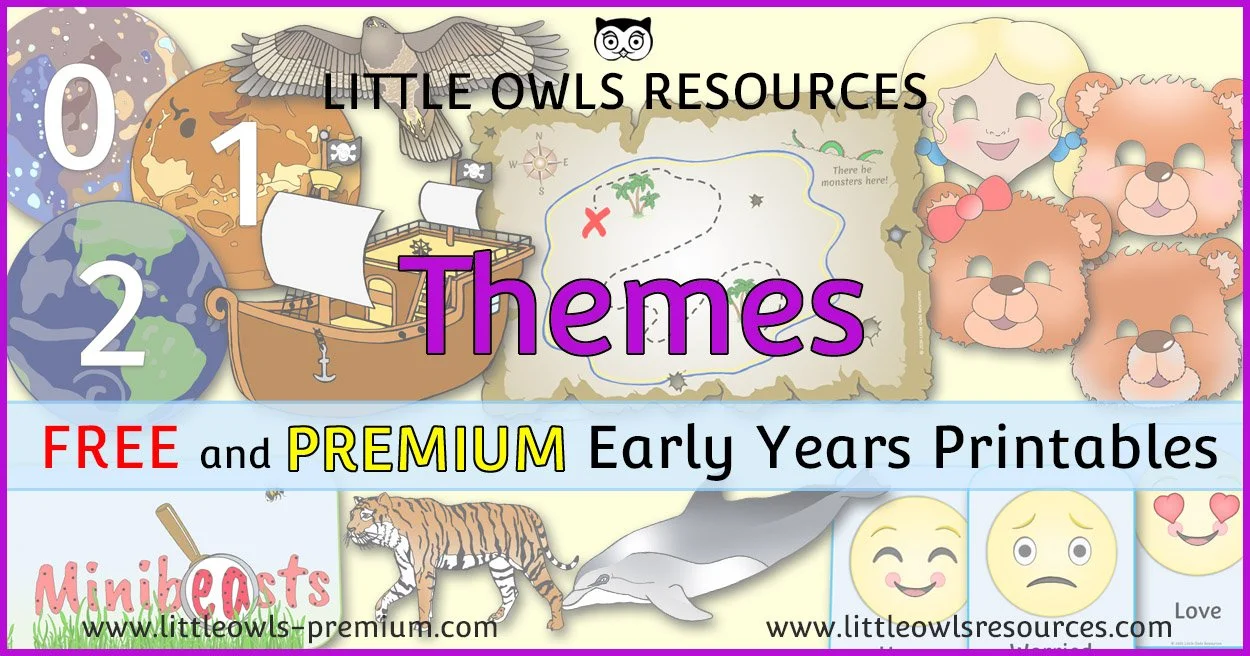
Follow an Interest
Find starting points linked to favourite stories, animals, places and imaginative adventures.
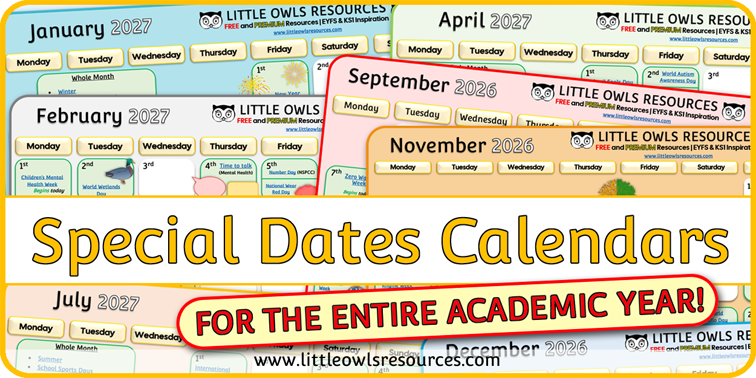
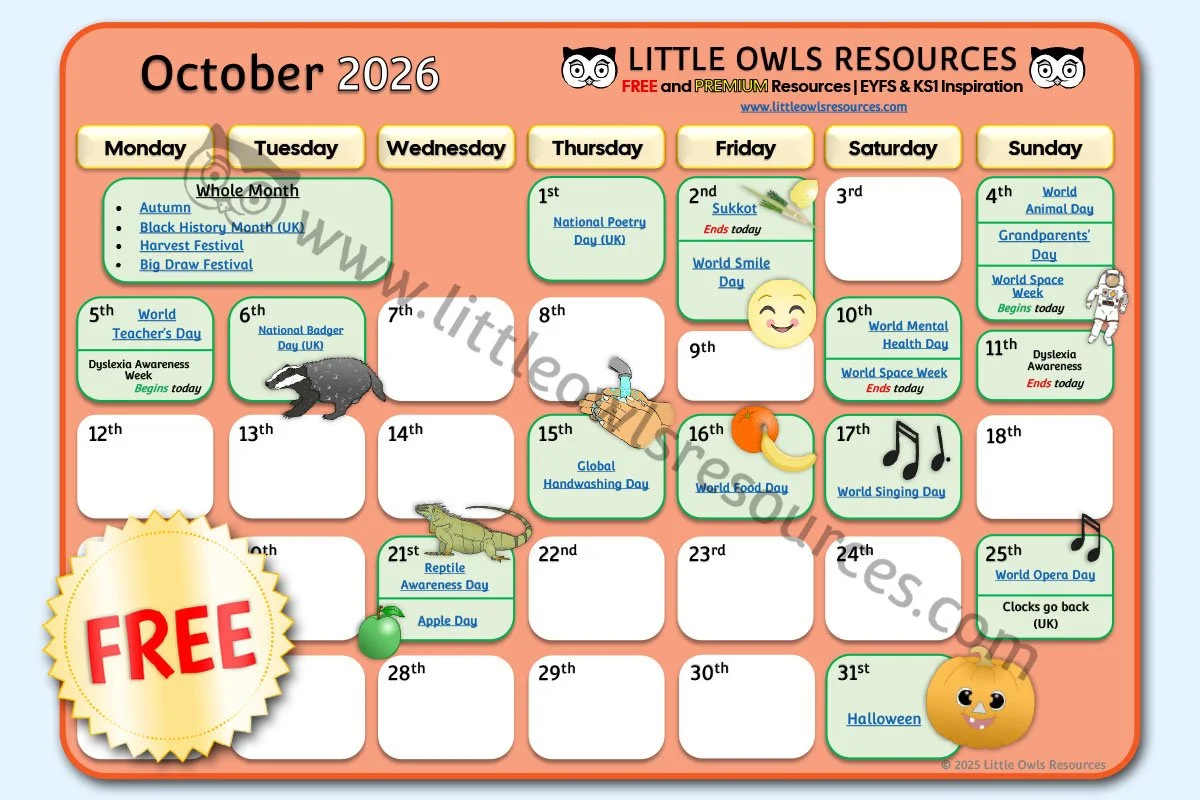
Look Ahead to Special Dates
Explore festivals, celebrations and awareness dates, and choose those you would enjoy finding out about together.
🎁 Free Resources to Try Together
Choose one free sample that connects with your child’s interests. Open the resource page for details and download options; sign in or create a Free Access account when prompted.
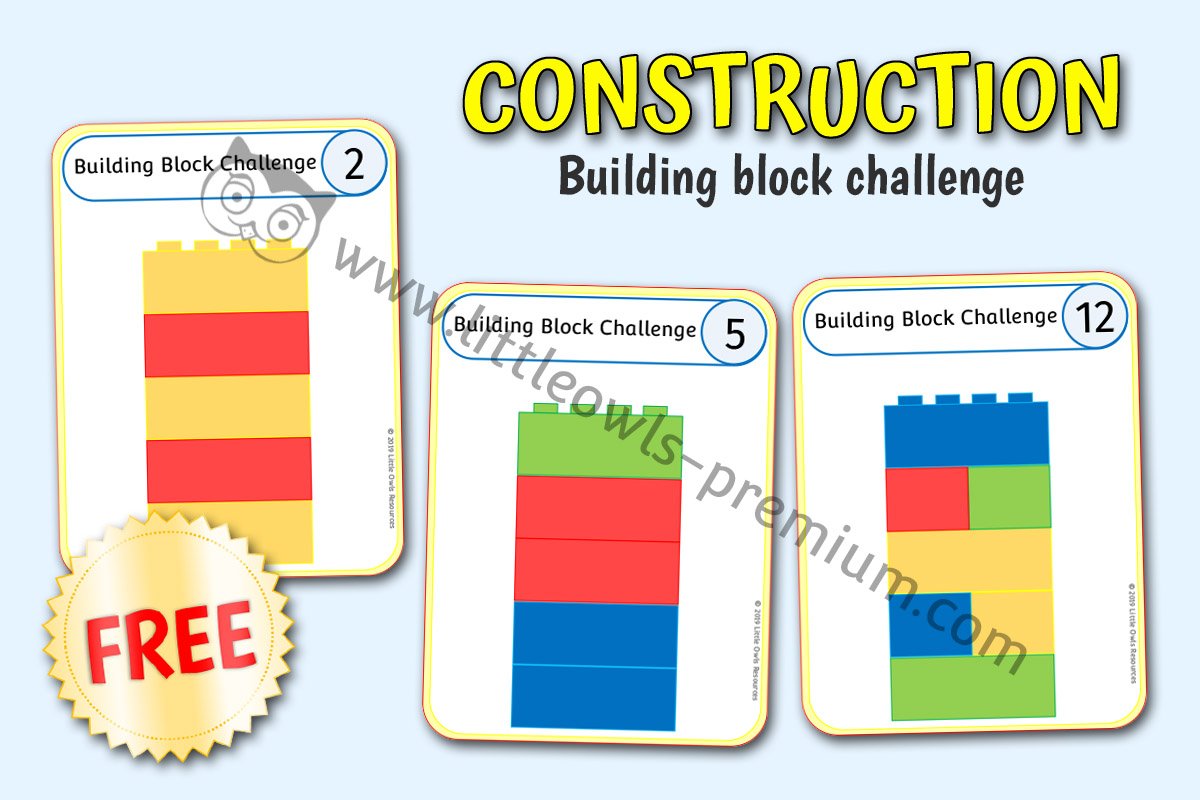
Building Block Pattern & Colour Challenge Cards
Use a few blocks to explore the patterns on the cards, then try making a pattern of your own.

Goldilocks & the Three Bears: Colouring Masks
Colour a character and use it to retell a familiar story or make up a new one together.

Outdoor Maths: Shape Challenge Cards
Try a shape-making idea outdoors, choosing suitable materials and talking about what you notice.

Minibeast Search Checklist
Look together for small creatures outdoors and record what you spot. There is no need to find every creature or handle them.
❓ A Few Helpful Questions
-
No. Choose the pages you need and revisit them when useful. Some resources are prompts for you to read before playing, rather than sheets your child needs in front of them.
-
Choose the PDF for a ready-to-print version. Choose the editable Word file, where available, to change text or adapt a resource; you will need suitable software. Check the resource page for the formats included.
-
The Early Years Foundation Stage (EYFS) is the framework used in England for children from birth to five, including Reception. Key Stage 1 (KS1) covers Year 1 and Year 2. Use age and year-group labels as starting points when browsing, not as a checklist for your child.
-
Yes. Select resources that fit your child and your approach. The collections offer individual activities and guidance; they are not presented as a complete home-education curriculum.
Find the Right Access for Your Family
Free Access includes selected free resources and our Special Dates Calendars.
Premium gives you access to our EYFS and KS1 Printable Provision library—the main collection for printable activities, games and play resources.
Professional includes everything in Premium, plus our EYFS Curriculum & Pedagogy Suite. This is mainly designed for educators and also contains some parent-facing guidance, clearly labelled where linked here.
Looking mainly for printable activities to use at home? Premium is the relevant paid option; you do not need Professional to access the Premium printable library.
Need help finding a resource or accessing your account? Contact Little Owls support.