
Little Owls Resources · Year 1 & Year 2
KS1 Comprehensions
Stories, facts and poems to read, share and explore.
Find printable reading comprehension resources for Year 1 and Year 2, with themed texts and questions for shared reading, guided groups and supported practice at home. Browse autumn, dinosaurs, holidays and the seaside, and choose a starting point that suits your children.
Read · Talk · Understand
Year 1 comprehensions
Explore two themed collections and three individual holiday texts. Use the questions to start a conversation, revisit the text and help children explain their thinking.

Year 1 Narrative · Non-fiction · Poetry
Autumn Comprehensions
Explore autumn walks, seasonal changes and falling leaves through a story, an information text and a poem.
- NarrativeThe Autumn Adventure
- Non-fictionWhat Happens in Autumn?
- PoetryAutumn Leaves

Year 1 Narrative · Non-fiction · Poetry
Dinosaur Comprehensions
Step into a prehistoric world with a little dinosaur’s story, facts about dinosaurs and a dinosaur poem.
- NarrativeThe Little Dino Who Lost His Roar
- Non-fictionThe Dinosaurs of Long Ago
- PoetryMy Dinosaur
Holiday & seaside texts
Three separate Year 1 resources: choose a story, a factual text or a poem.
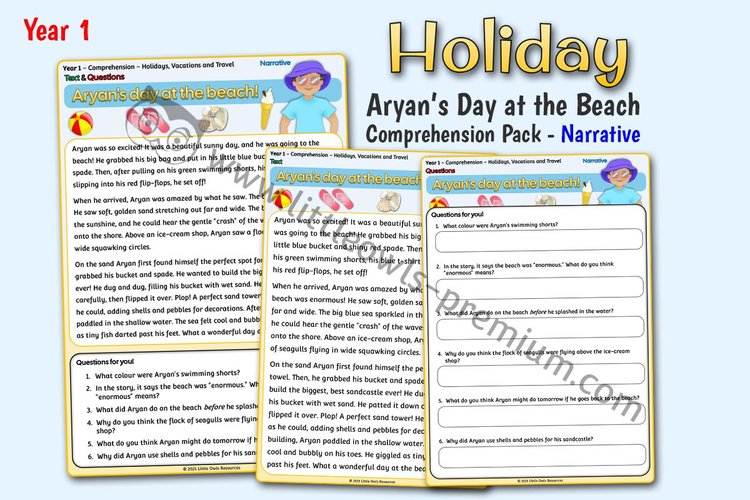
Year 1 Narrative
Aryan’s Day at the Beach
Share Aryan’s seaside story, then use the questions to talk about and check understanding of what happens.
View resource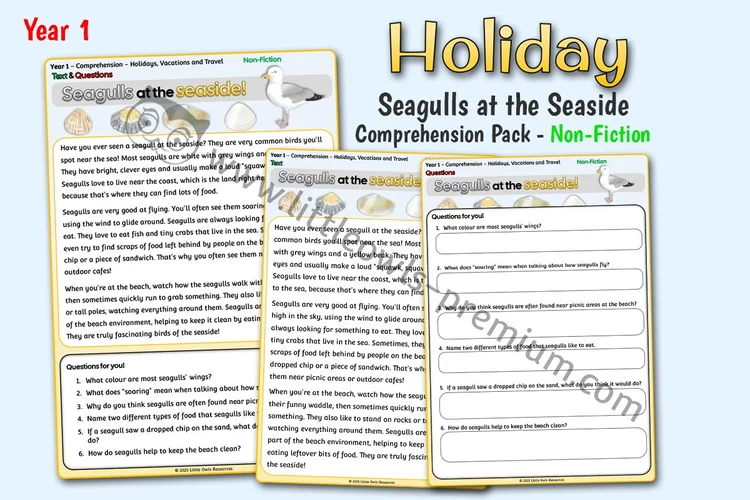
Year 1 Non-fiction
Seagulls at the Seaside
Explore a factual text about seagulls, then use the questions to revisit information and discuss what children have learned.
View resource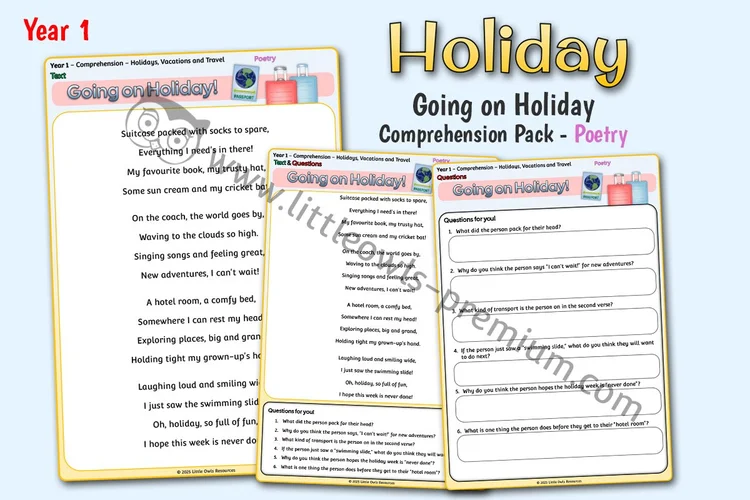
Year 1 Poetry
Going on Holiday
Enjoy a holiday poem together, talk about its meaning and use the accompanying comprehension questions.
View resourceThese resources include combined text-and-question pages, larger text-only pages and separate question sheets.
Discuss · Revisit · Explain
Year 2 comprehensions
Each collection brings together a narrative, a non-fiction text and a poem, with questions written for Year 2. Encourage children to revisit the words on the page as they discuss their ideas.

Year 2 Narrative · Non-fiction · Poetry
Autumn Comprehensions
Explore an acorn-searching adventure, the science of seasonal change and the language of autumn poetry.
- NarrativeThe Missing Acorns
- Non-fictionThe Science of Autumn
- PoetryAutumn Change

Year 2 Narrative · Non-fiction · Poetry
Dinosaurs Comprehensions
Bring together a discovery story, information about prehistoric giants and a dinosaur poem for Year 2 reading and discussion.
- NarrativeThe Discovery
- Non-fictionThe Giants of the Mesozoic Era
- PoetryPrehistoric Giants
Both collections include combined text-and-question pages, larger text-only pages and separate question sheets.
Make room for conversation
Choosing and using a comprehension
A thoughtful discussion can be just as useful as a written answer. Choose the text, reading approach and response format that let children show what they understand.
Make a connection
Look at the title, introduce unfamiliar vocabulary and talk about relevant experiences. Invite a prediction where it suits the text.
Read and notice
Read aloud, share the reading or invite independent reading where appropriate. Pause to clarify meaning and check that the text makes sense.
Talk it through
Return to the text to find information, discuss clues and explain ideas. Children can respond through talk, pointing, drawing or writing, with support as needed.
Try asking: “Which words helped you?” “What makes you think that?” “Is there anything you would like to read again?” Adapt these prompts to the text and your children.
Are these texts phonically decodable?
These themed comprehensions are organised by year group and text type, rather than by a specific phonics progression. Check the words before asking a child to read independently. Children can still explore a text’s meaning when an adult reads it aloud. For phonics-focused practice, visit our Phonics & Early Reading resources.
Do children need to write every answer?
No. You can use the questions orally, invite paired discussion, let children point to a detail in the text or scribe their responses. Adjust how children take part so that handwriting or recording demands do not obscure their understanding.
Can I use these at home or in a mixed Year 1/Year 2 class?
Yes. Choose the text and amount of support for the individual child. Autumn and dinosaurs each have separate Year 1 and Year 2 collections, so children can explore a shared theme using different texts. At home, read together and keep the discussion manageable and enjoyable.