Letter models
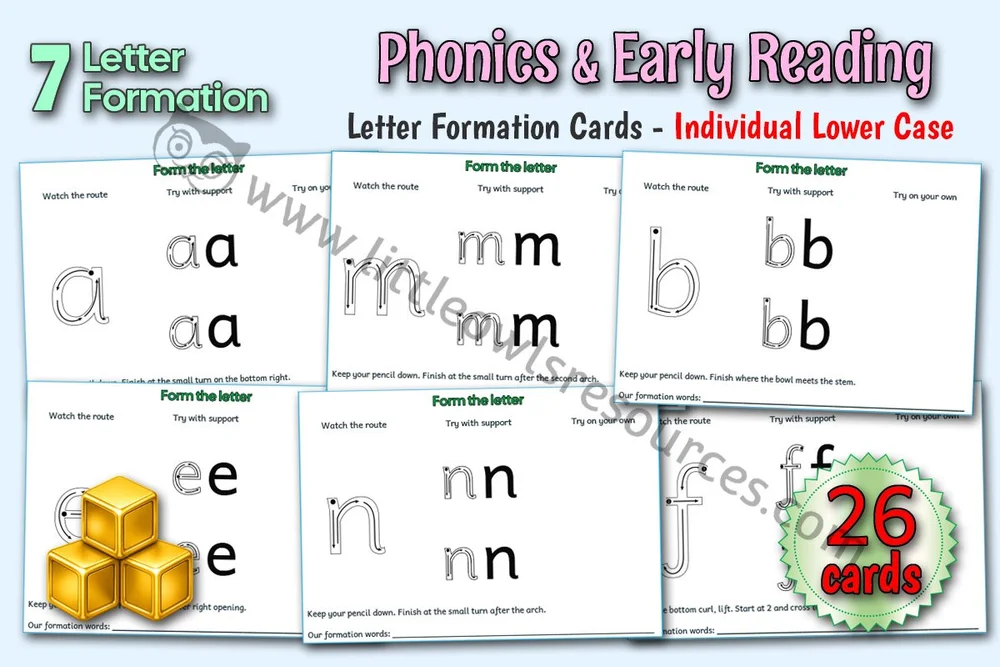
Lower-Case Letter Formation Cards
Twenty-six reusable cards with a clear starting-point and direction model, guided attempts and space for children to form the letter themselves.
View pack →
Your Custom Text Here
EYFS & EARLY PRIMARY
Create a personalised name-writing model and explore letters with a purpose.
Find lower-case and capital-letter formation cards, practical letter activities and ideas for using names in everyday play. For practitioners, teachers, childminders and families.
FREE WRITE MY NAME TOOL
Create a free personalised name-writing model using our Little Owls letterforms. This online tool is available to everyone, with no membership or font installation needed. Choose a plain name model or one with starting points and arrows, then print a name-writing card or download the model as a PNG.
Enter the child’s name, choose the available options and check the preview before printing or downloading. Keep the spelling, accents and capitalisation used by the child and their family.
Loading Write My Name…
Choose letters that connect with a child’s current learning, interests or name. Show where the letter starts and how it moves, then offer a short opportunity to practise together.
Letter models
Twenty-six reusable cards with a clear starting-point and direction model, guided attempts and space for children to form the letter themselves.
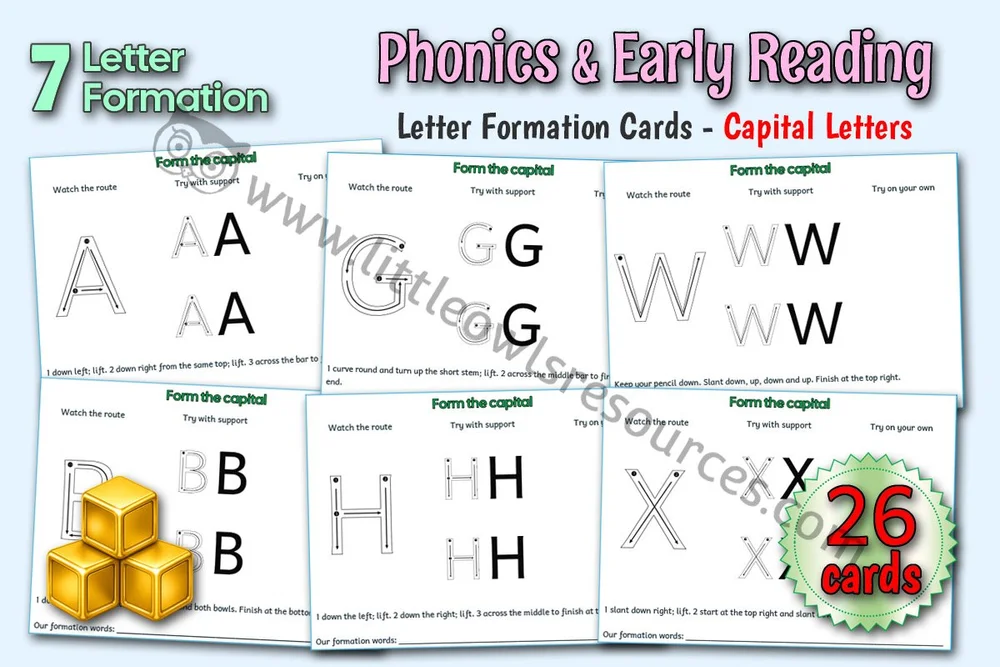
View pack →Letter models
Twenty-six reusable cards for practising capital-letter movements, with a model, guided attempts and independent space. Choose relevant capitals for names and other meaningful writing.
View pack →Use these cards alongside your setting’s handwriting approach and, where relevant, the letters being taught through its phonics programme.
Names give children a familiar connection to print. Find a name card, notice its letters or explore the first letter through art and play.
Initial-letter outlines
Explore the first letter of a name using large capital-letter outlines. Fill the shape with collage, colour or suitable loose parts while talking about the letter.
View pack →All About Me
Create a personal record combining a handprint, a name attempt and a self-picture. Revisit it together to talk about what the child notices and remembers.
View pack →Resource collection
Make recognising names part of a familiar routine. Choose a themed display with individual name cards for children to find and move when they arrive.
Shown: Young Farm Animals free sample.Explore displays →Children may recognise their name before they can form its letters. Offer opportunities to point, match, talk, build and make marks, with an adult writing alongside them when helpful.
Take letter exploration into practical play. Choose a familiar letter, look closely at its shape and try making it with different materials.
Practical letter activities
Explore letter shapes with playdough and loose parts, or use a whiteboard pen on a laminated mat for supported letter practice.
View pack →When the focus is formation, demonstrate the starting point and movement before inviting children to practise. Choose materials and tools suited to the children taking part.
Give name writing a purpose: sign into a building site, borrow a library book, make a bus pass or sign a card for someone special.
Name writing in role play
Add names to worker identity cards and site sign-in sheets as children plan, build and play.
View pack →Name writing in role play
Make a librarian identity card or add a name to the borrowing list when choosing a book.
View pack →Name writing in role play
Create a bus pass or driver name tag before setting off on an imaginary journey.
View pack →Resource collection
Choose a card to decorate, decide who it is for and add a name or personal mark to show who sent it.
Shown: Birthday Cards free sample.Explore cards →Welcome the child’s marks and attempts, and offer to write with them or for them.
Support each child with meaningful reasons to write, clear demonstrations and opportunities that fit their interests and needs.
A familiar name, a picture to sign or a message for someone special gives children a reason to explore writing. Follow their interests and choose a manageable amount of practice.
Let the child see you form the letter. Use the same starting point, direction and formation language as your setting or school, then practise together.
Offer more space, a different surface or a tool that is comfortable to use. Children can also point, match, build letter shapes, make their own marks or ask an adult to scribe.
Names can contain spellings children have not yet been taught. Support name recognition and writing with an accurate model while continuing to follow the setting’s phonics sequence for reading and spelling.
Explore further support for planning experiences and responding to children’s developing skills.
Professional guidance
Explore possible developments in early mark making and writing, including interest in familiar letters and early name attempts, to inform responsive provision.
Explore guidance →Professional guidance
Explore the physical and fine-motor foundations that support writing, with guidance for practical provision and responding to different needs.
Explore guidance →A few practical starting points for using the models with children.
Yes. The Write My Name tool is free to use on this page, including creating a model, printing a name-writing card and downloading the model PNG. The other printable packs and Professional guidance linked on this page have their own access arrangements.
Build from what the child can do and is interested in. Finding a name card, recognising a familiar letter, making a personal mark or attempting part of a name can all be meaningful ways to take part. An adult can model the complete name and support a small part at a time.
Ask the setting or school which models and formation language it uses. Check the resource before use so that practice supports a consistent approach.
Check every letter and accent in the preview. Some characters may be unavailable in the formation view; follow any message shown by the tool. Keep the name’s correct spelling and use a suitable alternative model from your setting or school if needed.
Continue exploring the collections that fit your children and setting.
Find broader opportunities for drawing, making marks and writing for a purpose.
Explore collection →Find resources to support the sounds, letters, reading and spelling children are being taught.
Explore collection →Explore alphabet displays, letter recognition and upper- and lower-case matching.
Explore collection →