









England EYFS · Specific area of learning
Expressive Arts and Design through sound, stories and making
Find EYFS Expressive Arts and Design printables, activities and planning for babies, toddlers, preschool and Reception. Start with a sound a baby wants to repeat, a character looking for a voice or a model that needs a better join.
Choose an age to see a practical way to use each resource. Or follow a creative interest, from colour mixing and building to dance, singing and imaginative play.
Find your starting point
Find Expressive Arts and Design resources
Choose an age, then add an optional search word or learning focus. Results include resources from across Little Owls, with a practical suggestion for the age you select. Open a result to view its resource or collection.
Loading the resource finder…
A few useful places to begin
Browse a small selection of resources and collections.
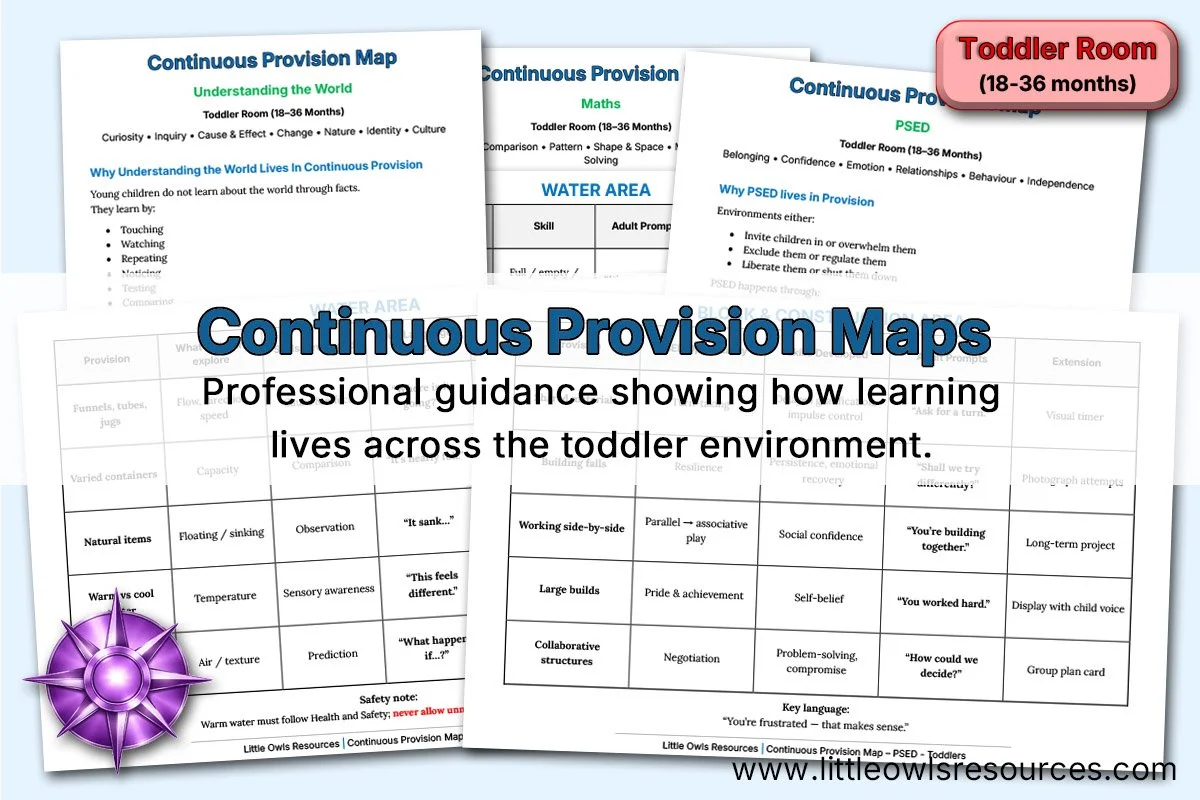
Expressive Arts & Design: Creative Media & Expression Toolkit | Toddlers (18–36 Months)
A toddler creative-media toolkit focuses on sensory exploration, repetition, choice and transforming materials. It helps adults support children’s expression and identity while moving away from predetermined craft products.

Expressive Arts and Design: The toddler toolkit helps adults choose a medium a child can explore, repeat and change.
View guidance →Onomatopoeic Sound Cards — Free Sample
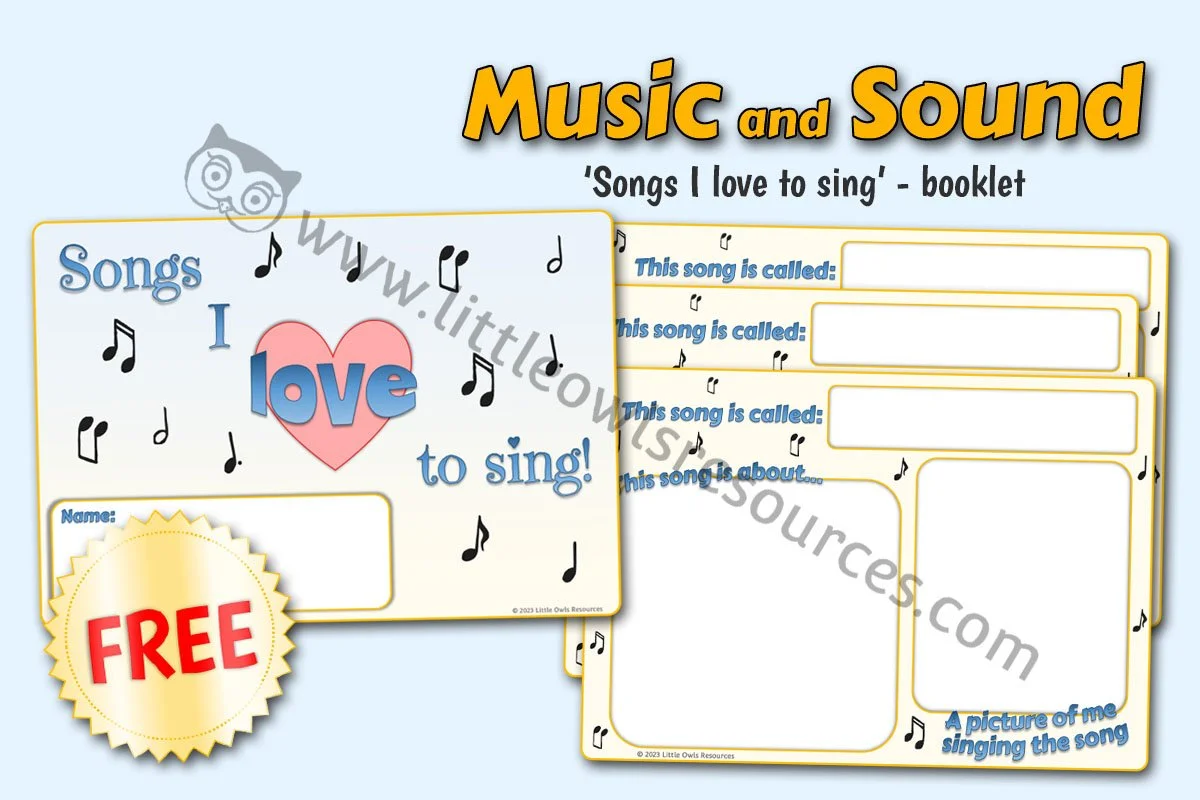
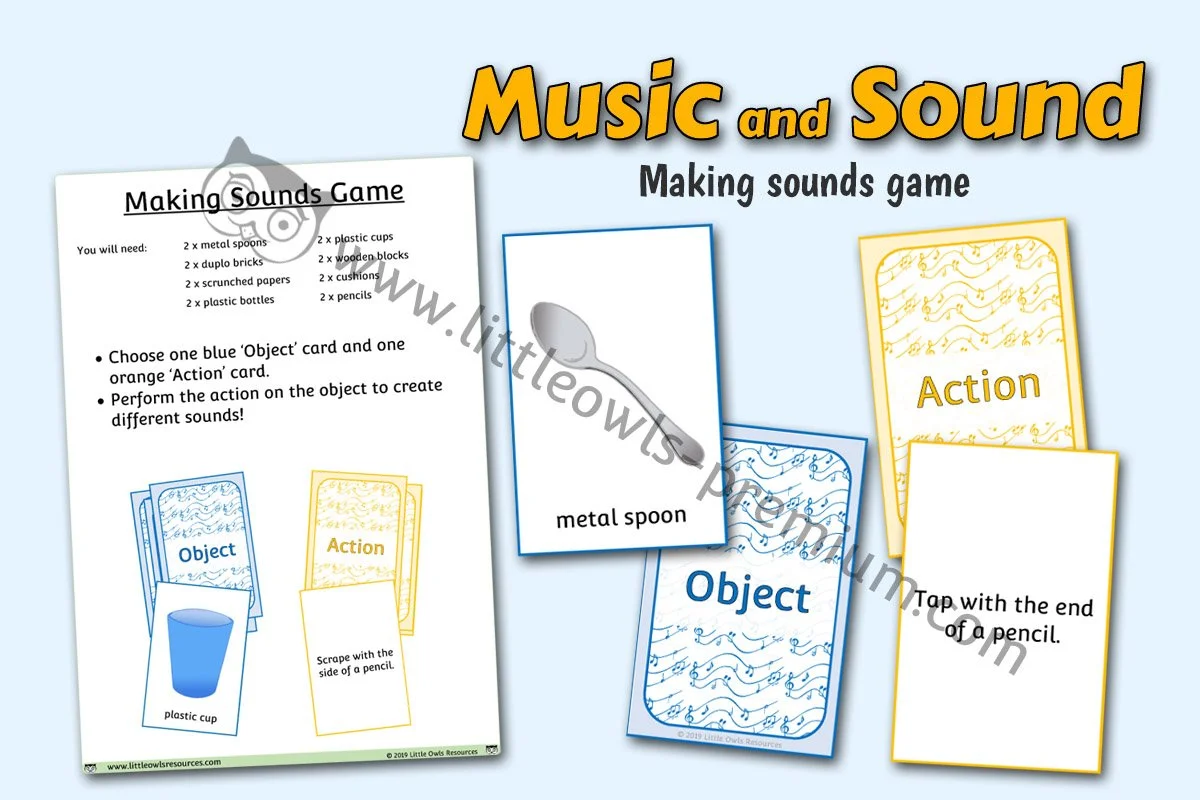
Explore playful voice sounds and try a short call-and-response pattern using picture cues. Listen, make a sound and respond together, exploring changes without expecting reading or a formal musical performance.

Expressive Arts and Design: The free picture cues give children a part to invent in a vocal exchange.
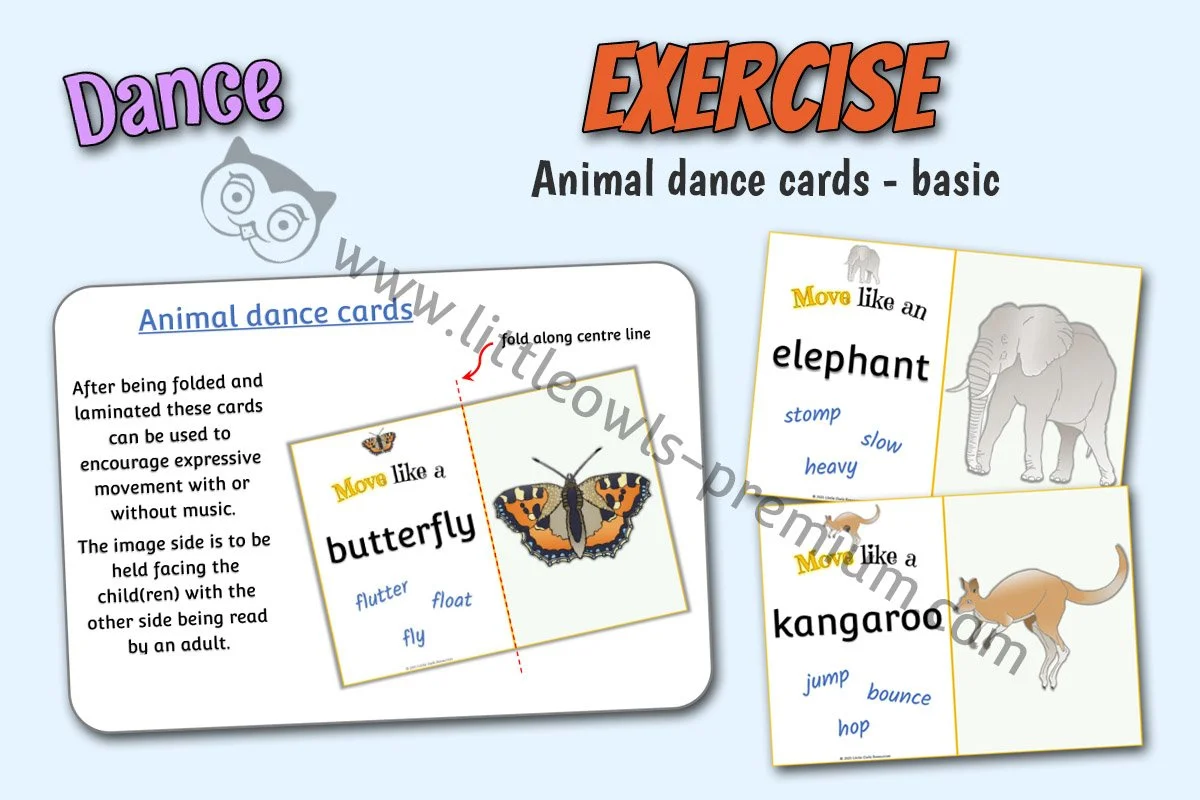
View free resource →Animal Dance Cards
Animal pictures with adult cues inspire expressive movement, with or without music. Children choose an animal and invent their own way of moving rather than copy one fixed action.

Expressive Arts and Design: An animal image can be interpreted through movement in more than one way.
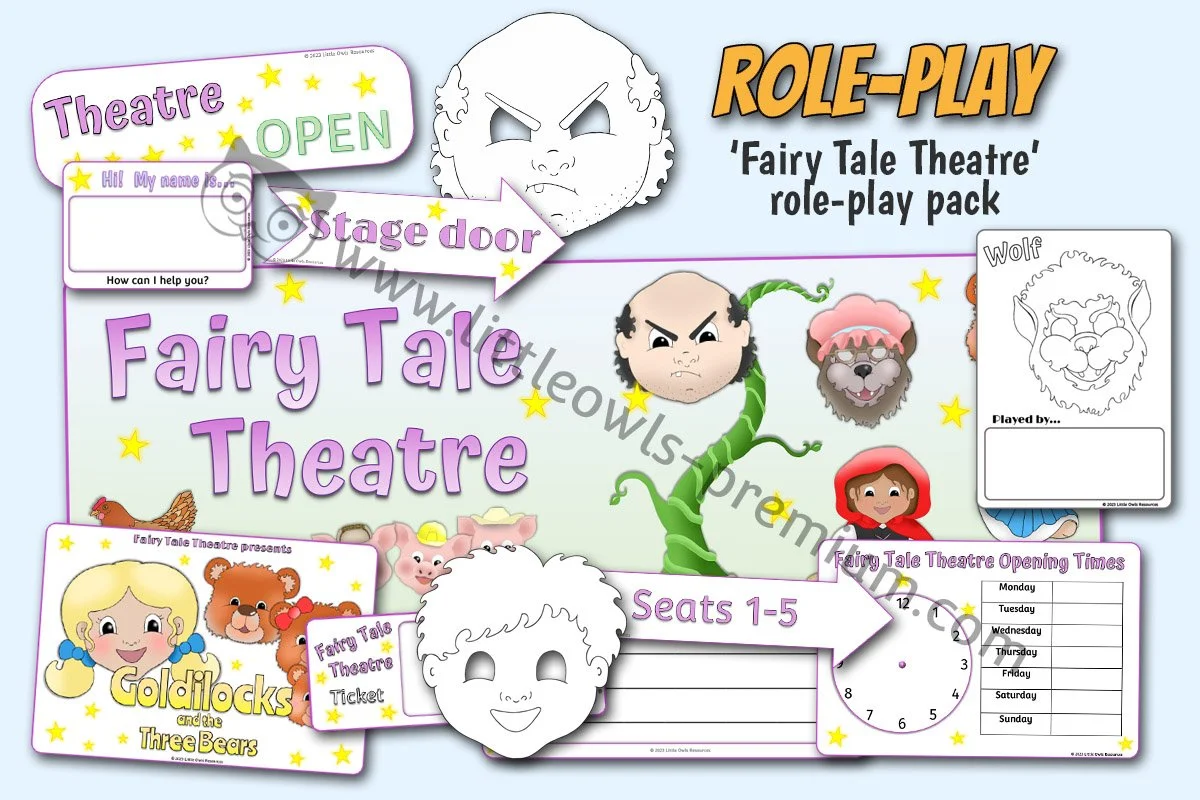
View resource →Fairy Tale Theatre Role-Play Pack
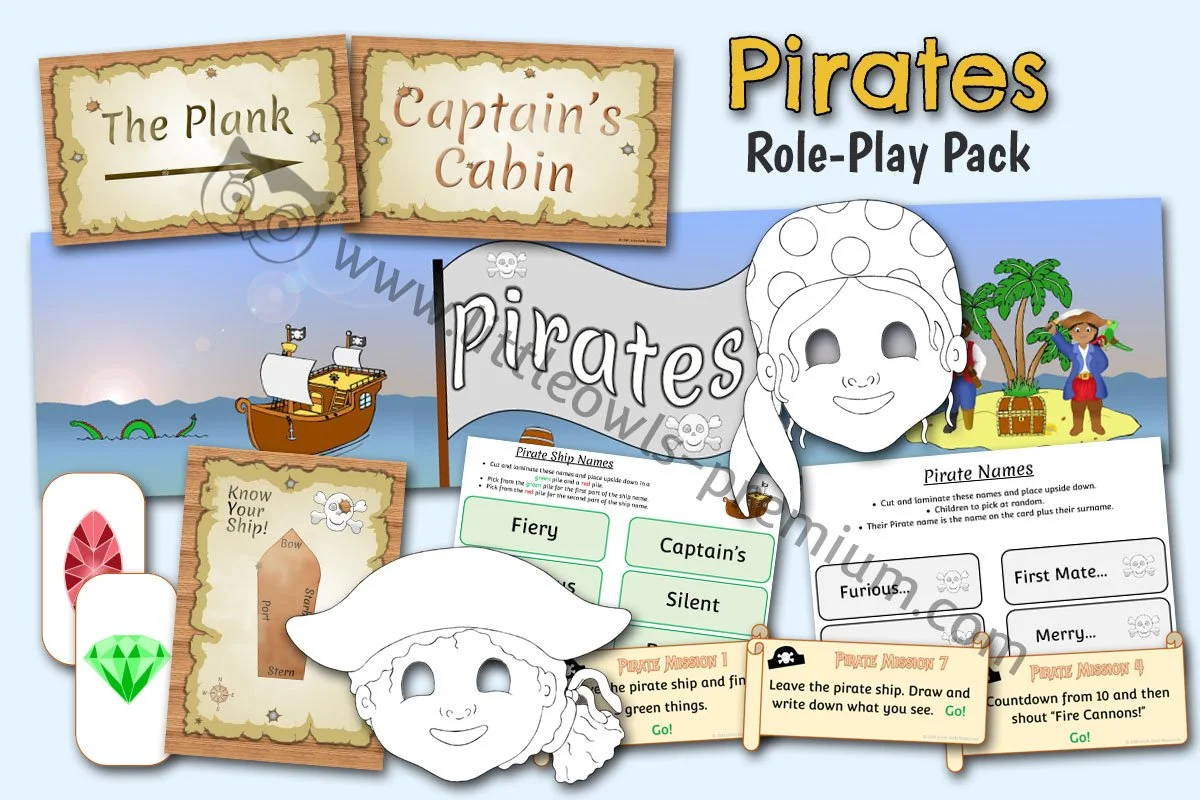
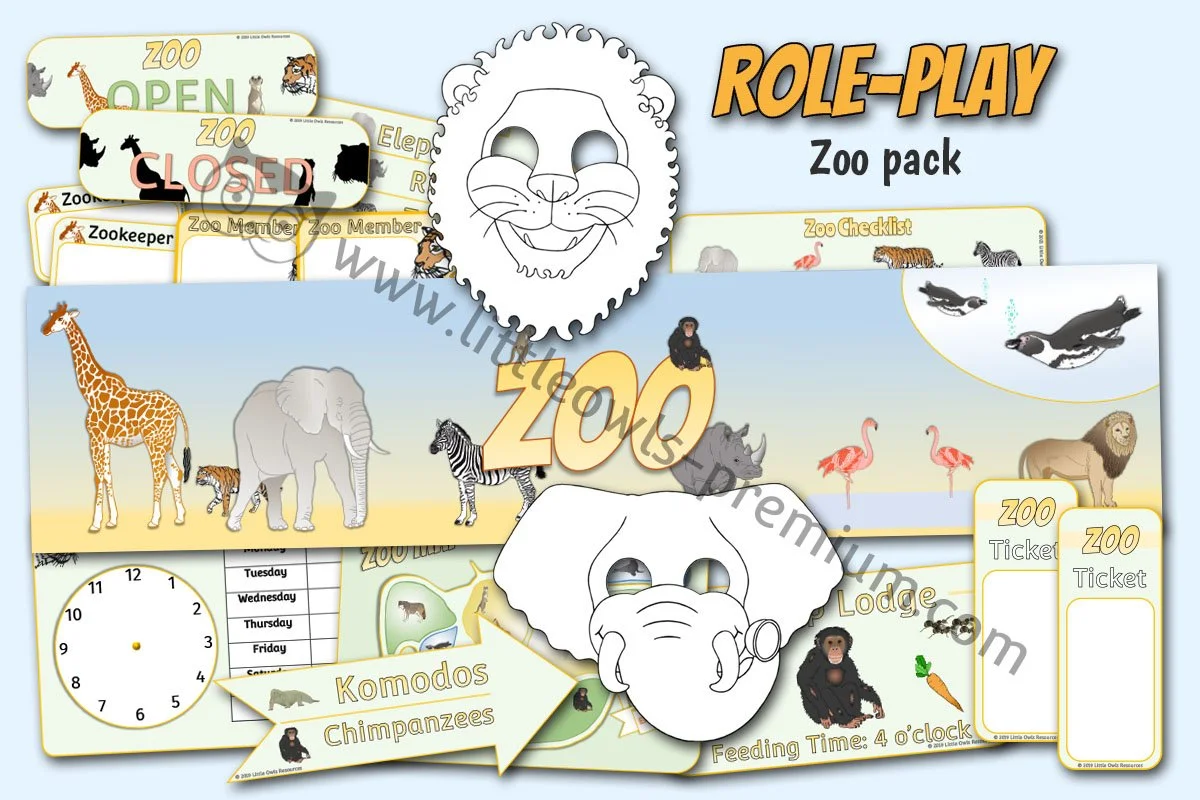
A pretend-theatre pack with tickets, stage and box-office signs, story masks and posters. Children can organise a performance, take roles and create purposeful messages.
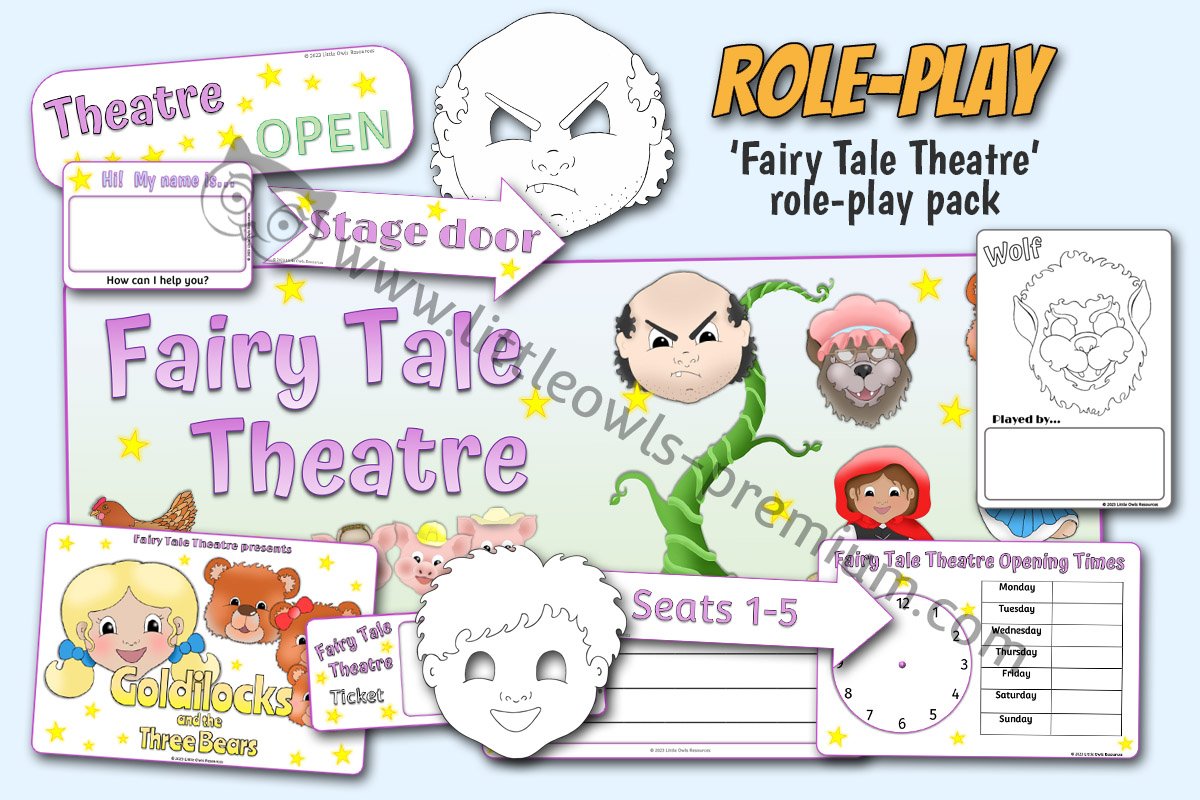
Expressive Arts and Design: The theatre pack gives stories a stage and gives children decisions about setting and performance.
View resource →FINGER-PAINT AUTUMN LEAVES (Free Sample)
A tree outline invites finger-painted autumn leaves in seasonal colours. Children can explore the marks their fingers make while an adult talks about leaf colours and changes seen outdoors.

Expressive Arts and Design: A leaf outline in the free sample gives a small space in which to try layering colour.
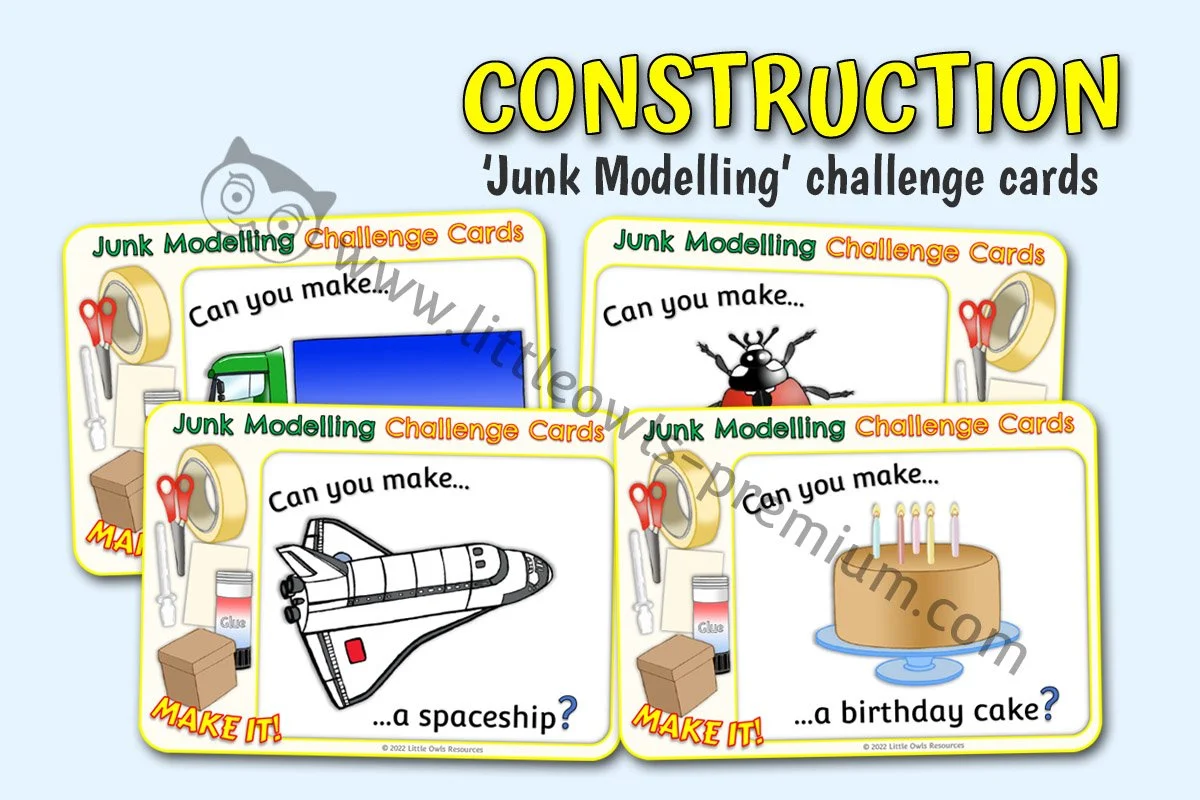
View free resource →All About Me: 'Can you make...' Junk Modelling | EYFS & KS1 Challenge Cards
Fourteen junk-modelling prompts invite children to represent familiar personal objects, such as a teddy or favourite food. Offer boxes, tubes and joining materials so children can choose, build and explain their ideas.

Expressive Arts and Design: A personal object gives a junk model a purpose chosen by its maker.
View resource →Choose a useful route
Useful starting points
Start with something free
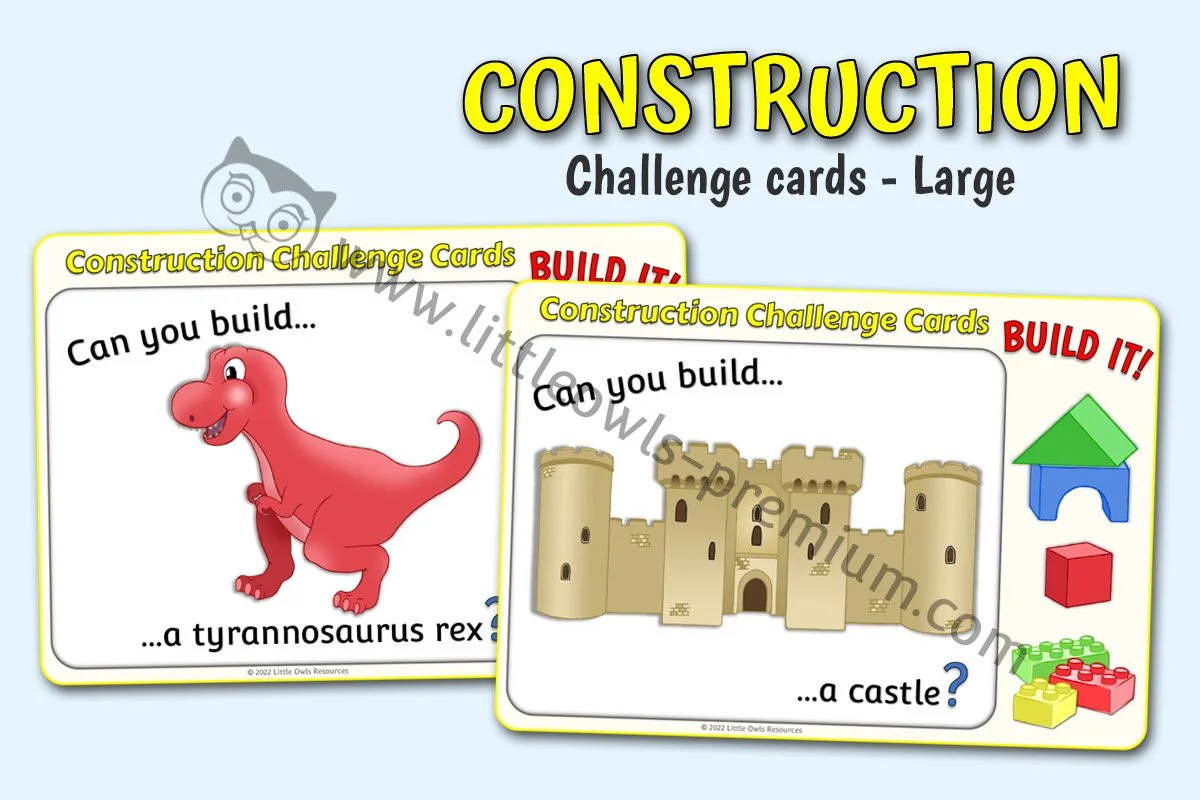
Try the free sound cards for a call-and-response game, an autumn leaf sheet for experimenting with paint, or a construction challenge that leaves the design to the maker.
Support the adult’s role
Find ways to join a baby’s musical exchange, organise materials toddlers can choose or give a group time to rehearse an idea they want to share.
Find adult guidance & planning ↑
See also the EYFS Curriculum & Pedagogy Suite.
Follow an interest
One idea can travel between media. A cardboard stage might lead to a puppet’s voice, a song to announce its entrance and a painted backdrop made by the children.
Browse Music & Sound, Role Play or Construction & Building.
Use the resources with your children
Ideas for different ages
Creative expression starts early. Development Matters includes birth-to-three experiences with sound, movement, pretend play and marks. These four age groups help you find an invitation that fits the children you know.
Each link selects an age in the finder. The resource card explains the activity, adaptation or way an adult can use the guidance.
Babies · 0–18 months
Answer a babbled phrase with the same rhythm, then wait for a reply. An adult can sing from a printed prompt while the baby listens, moves or turns away.
Toddlers · 18–36 months
Put a doll and a pretend cup beside a familiar tune, or offer one chunky tool that makes a visible trail. Watch what the toddler repeats before adding anything else.
Preschool · 3–4 years
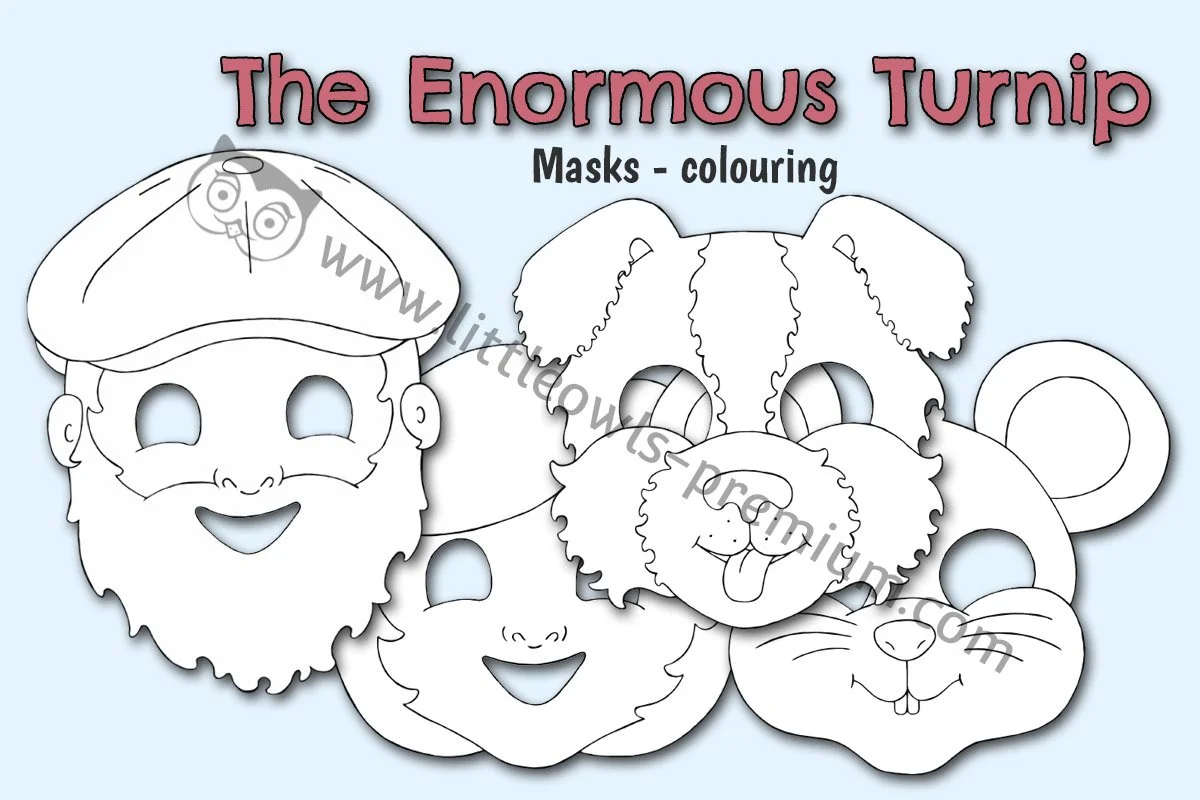
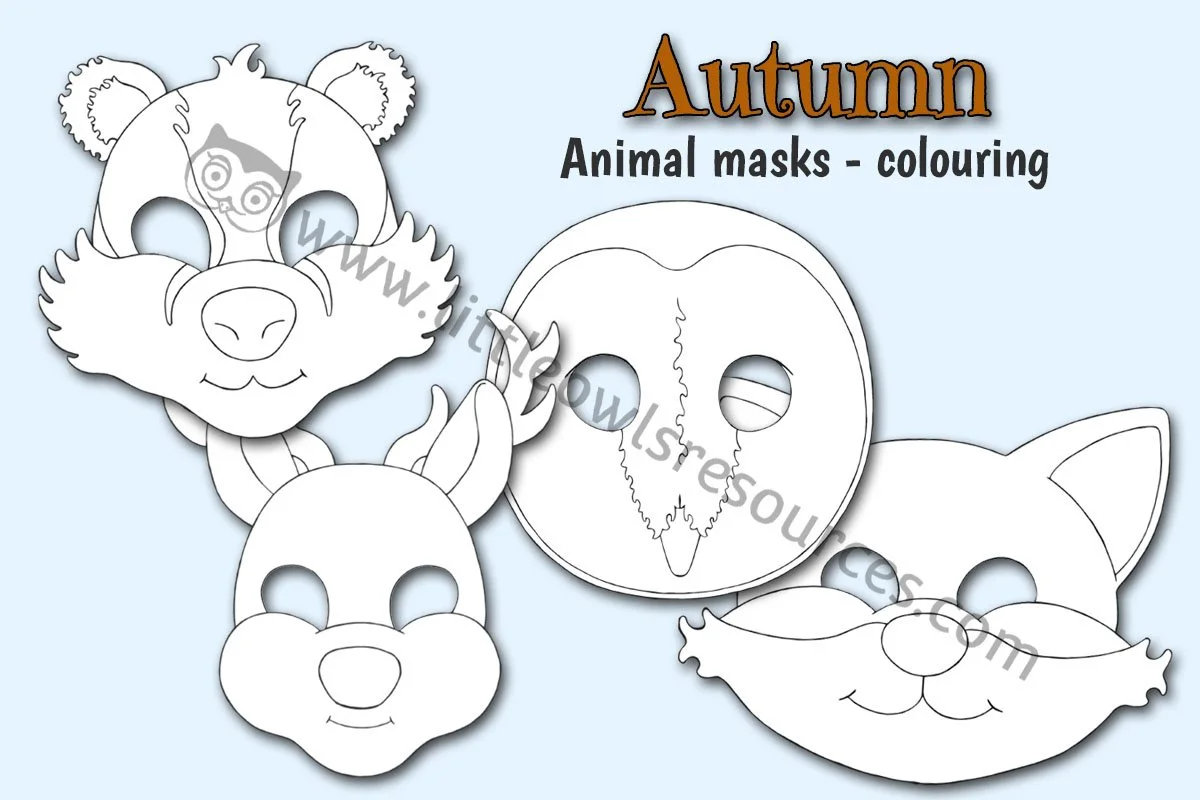
Give two players the same bear mask and listen to the different voices they invent. A group making scenery can try arranging materials loosely before deciding how to join them.
Reception · 4–5 years
Try playing a graphic score drawn by another group, revising a model after a puppet uses it, or performing a familiar story from another character’s point of view.
Make room for different ways to join in. Children can direct a scene, conduct with a glance, choose a texture or listen from a quiet place. A small movement or an invitation to watch can be a creative contribution.
Plan from children’s ideas
Expressive Arts and Design in the EYFS
The EYFS educational programme gives children regular opportunities to engage with the arts, explore a range of materials and express their ideas. The six finder routes help you choose experiences across that programme. At the end of Reception, the two early learning goals are Creating with Materials and Being Imaginative and Expressive.
Join a sound the child has started
A child taps the tabletop twice. Echo the rhythm and wait. They might speed up, stop or offer another sound. Older children can use pictures or marks to show a partner when to play and when to pause.
Give a story more than one voice
Begin with a familiar character and an unfinished event. A performer might speak, move a puppet, make the sound behind a door or suggest a different ending. Rehearse if the children want to share the scene.
Choose materials for the effect
Let children compare what happens when they dab, drag, fold, layer or join. Introduce a technique when it helps with their intention. Keep time and materials available for a second attempt.
Meet artists and revisit their work
Share music, dance, illustration and craft from named makers and a range of traditions. Invite children to attend to one decision, such as a repeating beat or a bold outline, then try their own interpretation.
Keep creative work available in continuous provision
Keep an unfinished model on a shelf, a small stage ready for tomorrow’s story or a recognisable set of instruments within reach. A photograph, sketch or dictated note can help the group pick up an idea where they left it.
An idea to try next
Top Picks Inspiration
Explore a changing mix of seasonal and year-round ideas, with practical resources, planning guidance and something free to try. Choose an age, then follow a resource’s suggestion or find more ideas like it.
Top picks for Preschool (3–4 years).
Sound, rhythm & music
Autumn Sound Cards
Autumn picture and sound prompts support listening walks, vocal play and musical exploration. Notice a rustle, patter or crunch, then try recreating the sound in different ways.
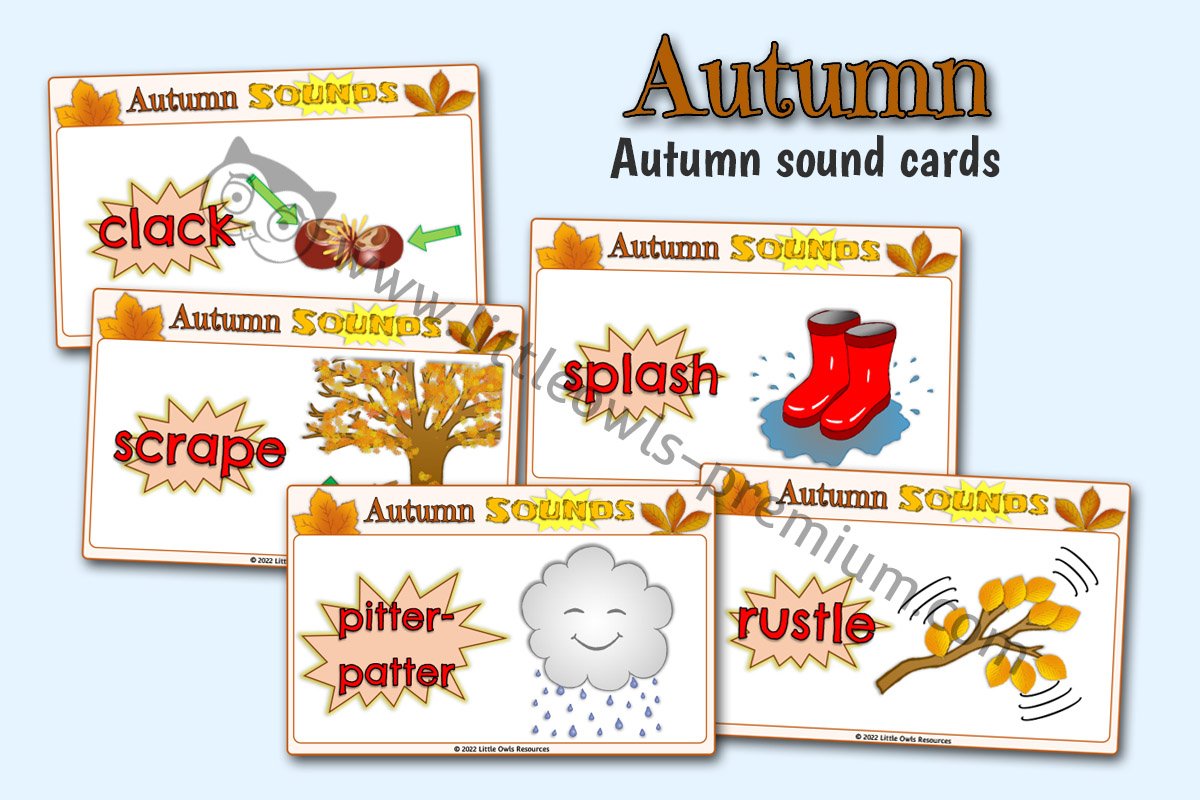
Expressive Arts and Design: An autumn sound can become a motif for a group composition.
Using this with preschool children: Pick an autumn sound and invent a way to perform it with a voice or instrument. Let a partner add a quieter echo.
View and download resource →Find more Preschool sound, rhythm & music resources ↑Songs, rhymes & voices
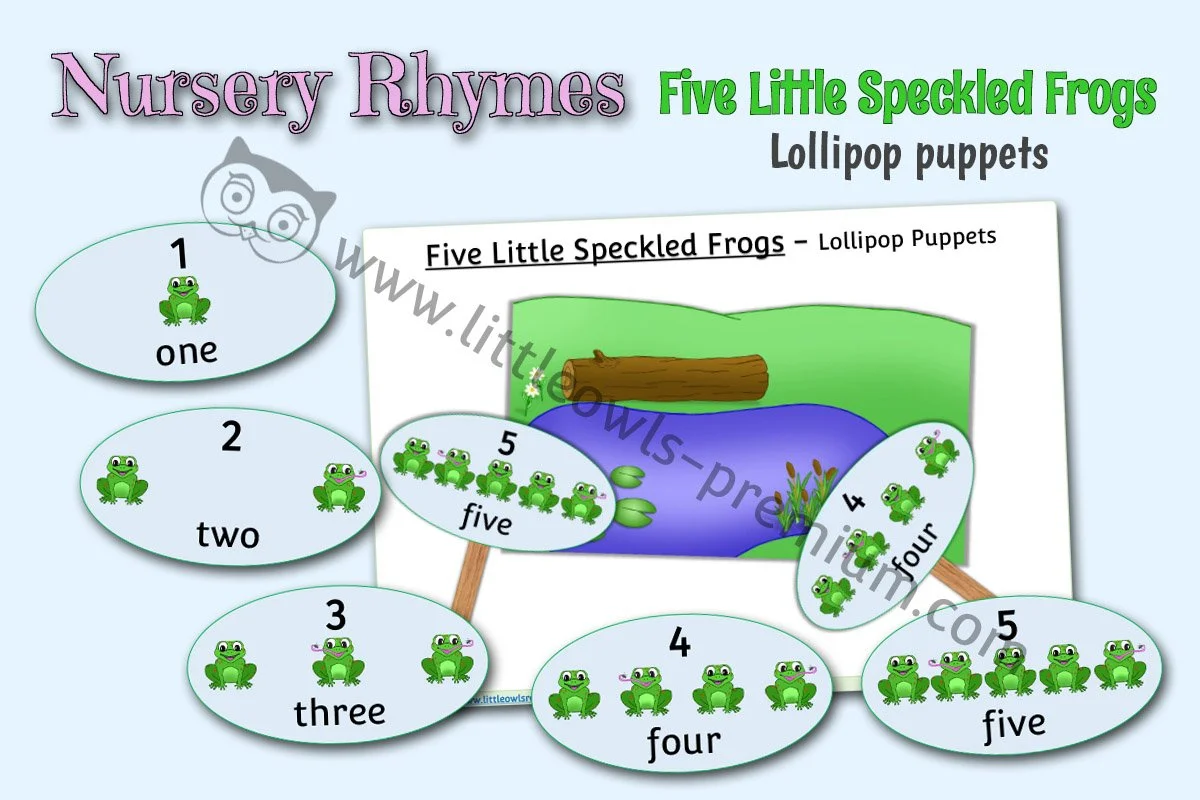
Five Little Speckled Frogs — Free Sample
A free colouring words poster for sharing “Five Little Speckled Frogs”. Use the picture as an optional visual prompt during adult-led singing.

Expressive Arts and Design: The free poster is a practical prompt for a small-group frog song.
Using this with preschool children: Use the free poster as a singing prompt and show the frogs on fingers.
View free resource →Find more Preschool songs, rhymes & voices resources ↑Dance & expressive movement
Animal Dance Cards — Adverbs
Animal dance cards add words describing how to move. Explore contrasting movements in response to music or spoken cues, helping children connect an adverb with a physical action.

Expressive Arts and Design: Changing how a movement is performed can change what a dance communicates.
Using this with preschool children: Try one travelling action gently and then boldly. Let a child choose the version that suits the character they imagined.
View and download resource →Find more Preschool dance & expressive movement resources ↑Pretend play, puppets & stories
Santa’s Workshop Role-Play Pack
Santa’s Workshop signs, masks and props help set up festive role play. Gift tags, request forms and a name-list scroll give children reasons to make marks and communicate as the play develops.
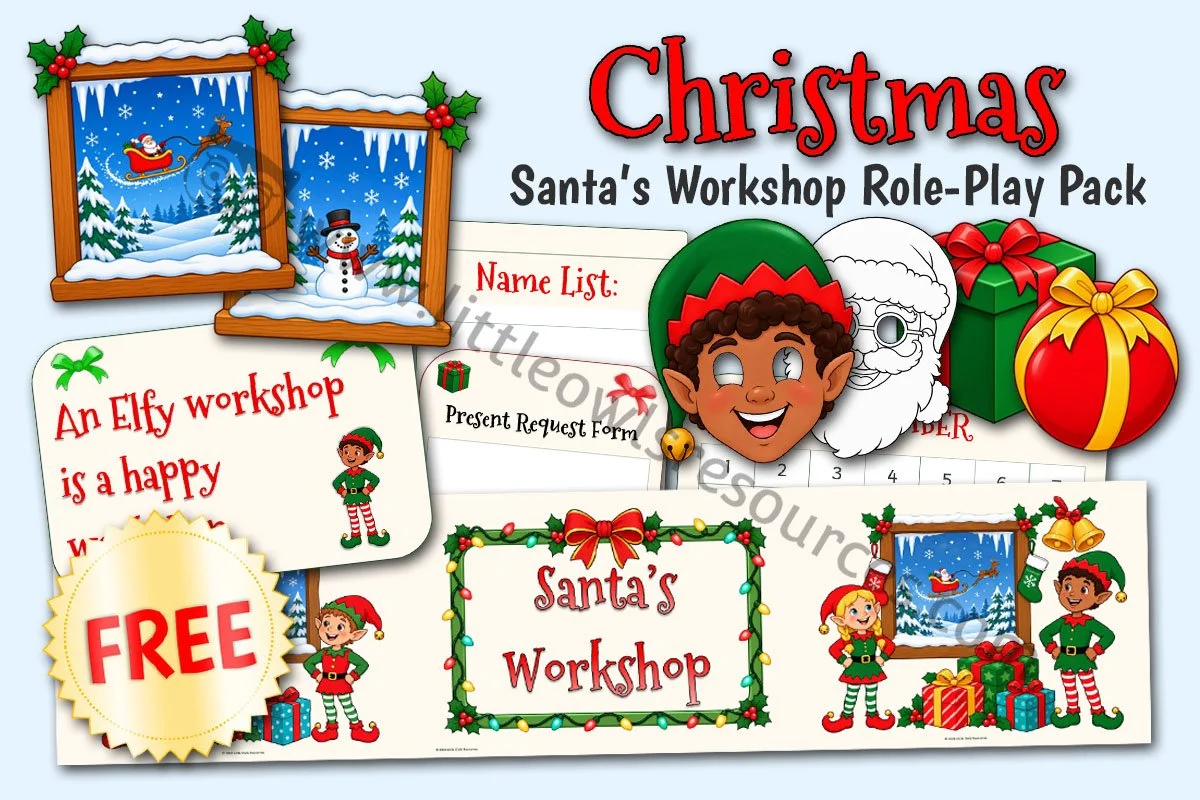
Expressive Arts and Design: An imaginary workshop provides a reason to design an object for someone else in the story.
Using this with preschool children: Invent a toy order and choose unusual materials to represent its parts. Let a second workshop character collect or change the order.
View free resource →Find more Preschool pretend play, puppets & stories resources ↑Drawing, colour & texture
Autumn Writing for Purpose - Investigation
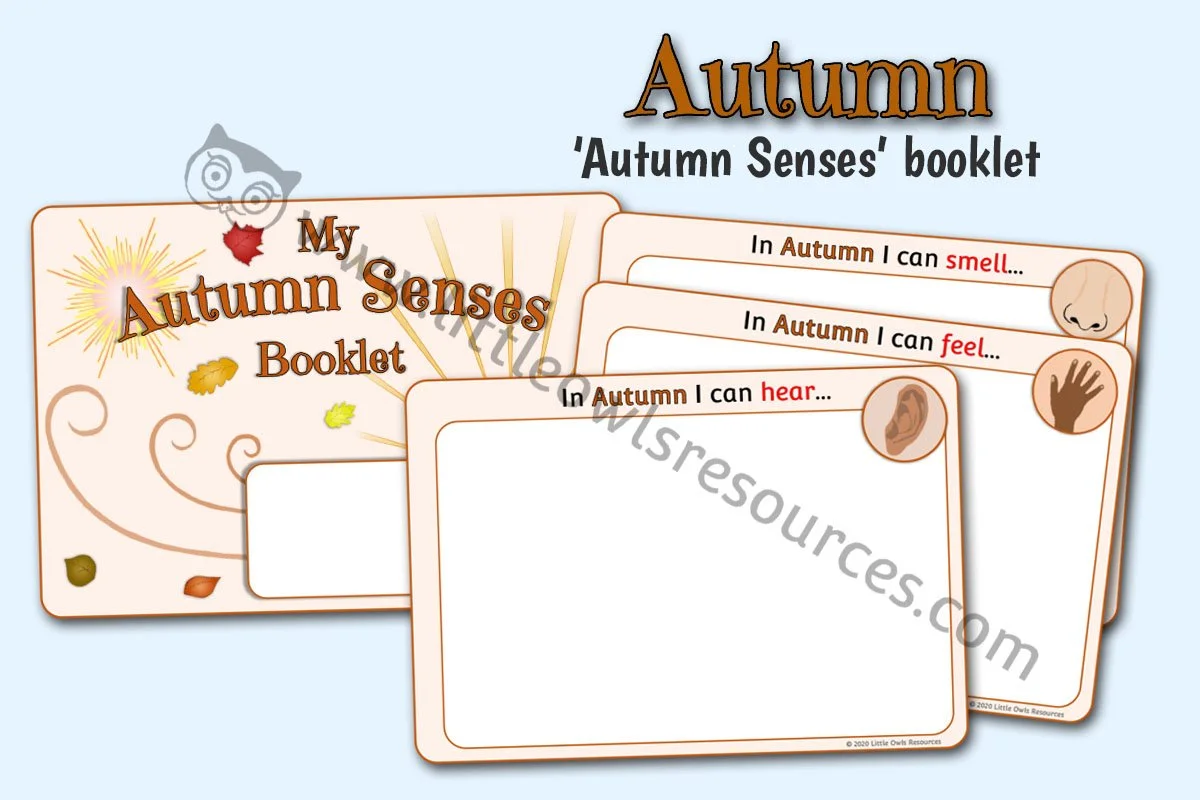
Autumn investigation sheets offer space for observations, questions and collection labels. Children can draw, make marks, dictate or write to record a discovery and share it with someone else.
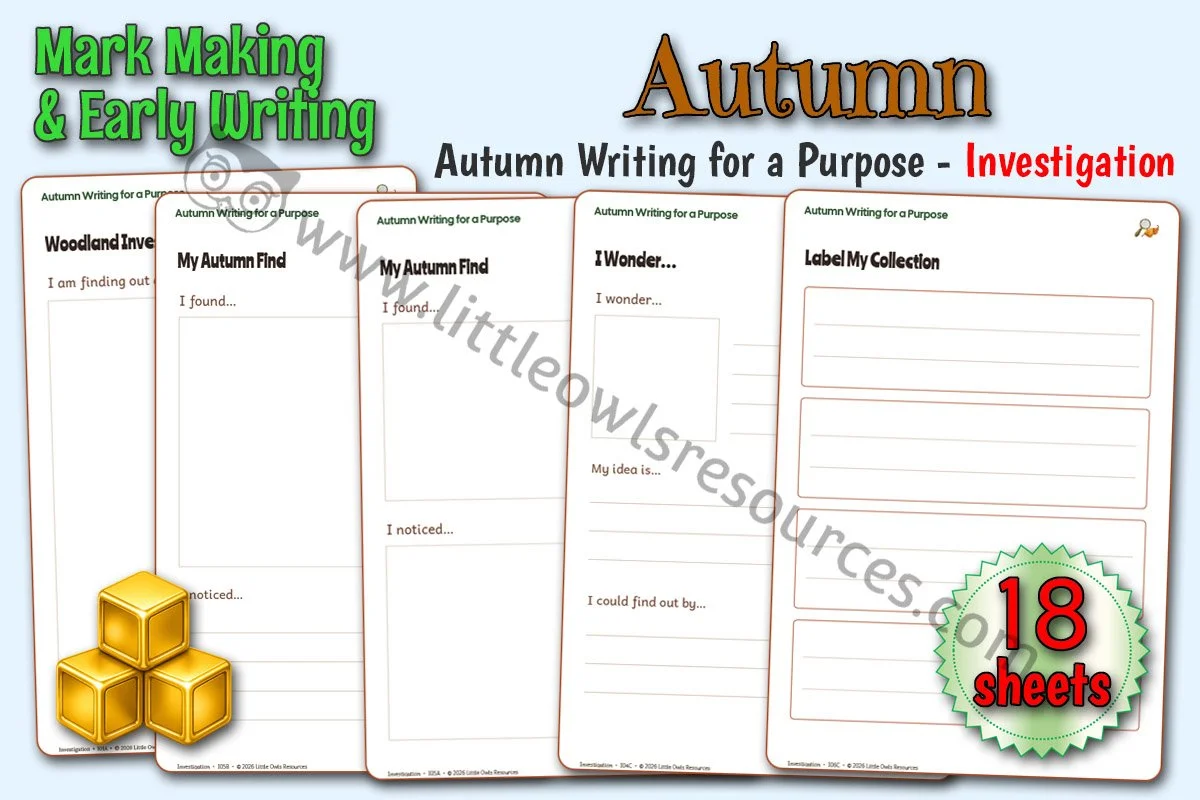
Expressive Arts and Design: The close-up drawing changes which details of an autumn find become most noticeable.
Using this with preschool children: Draw a close-up detail from an autumn find and dictate one thing noticed.
View and download resource →Find more Preschool drawing, colour & texture resources ↑Designing, building & making
Nativity Playdough Mat
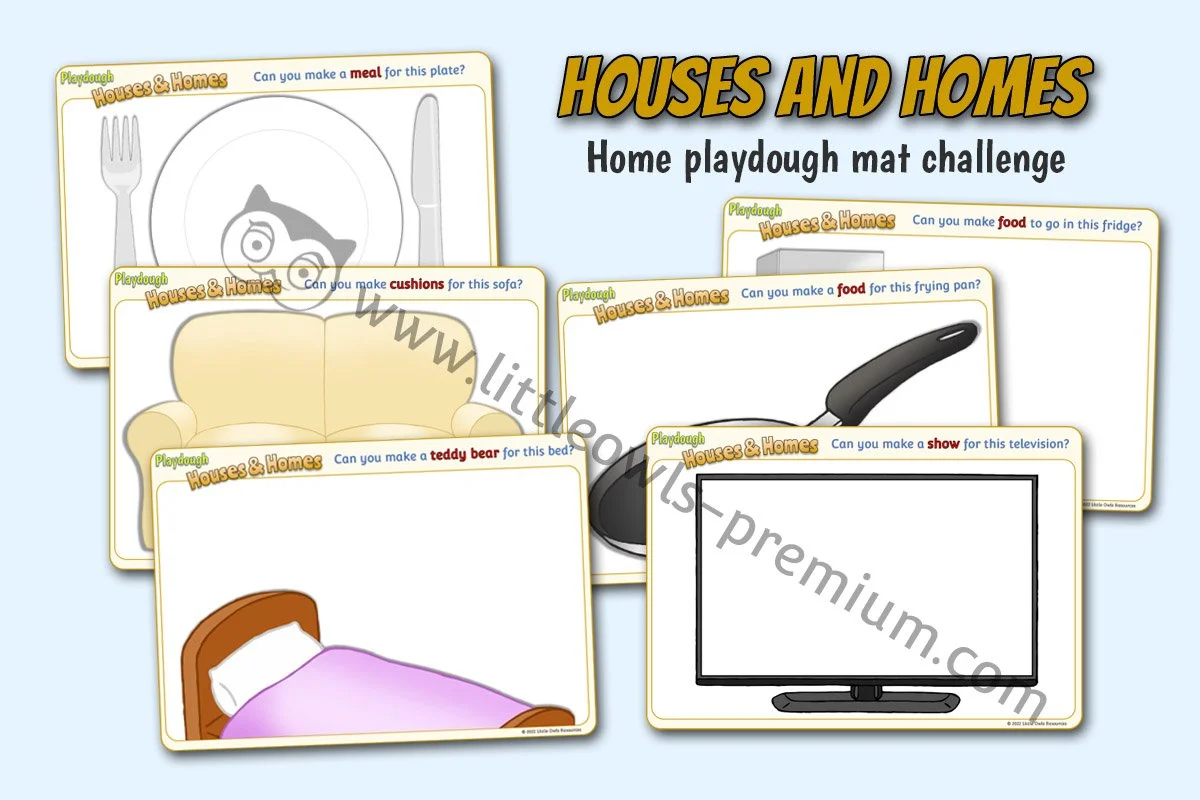
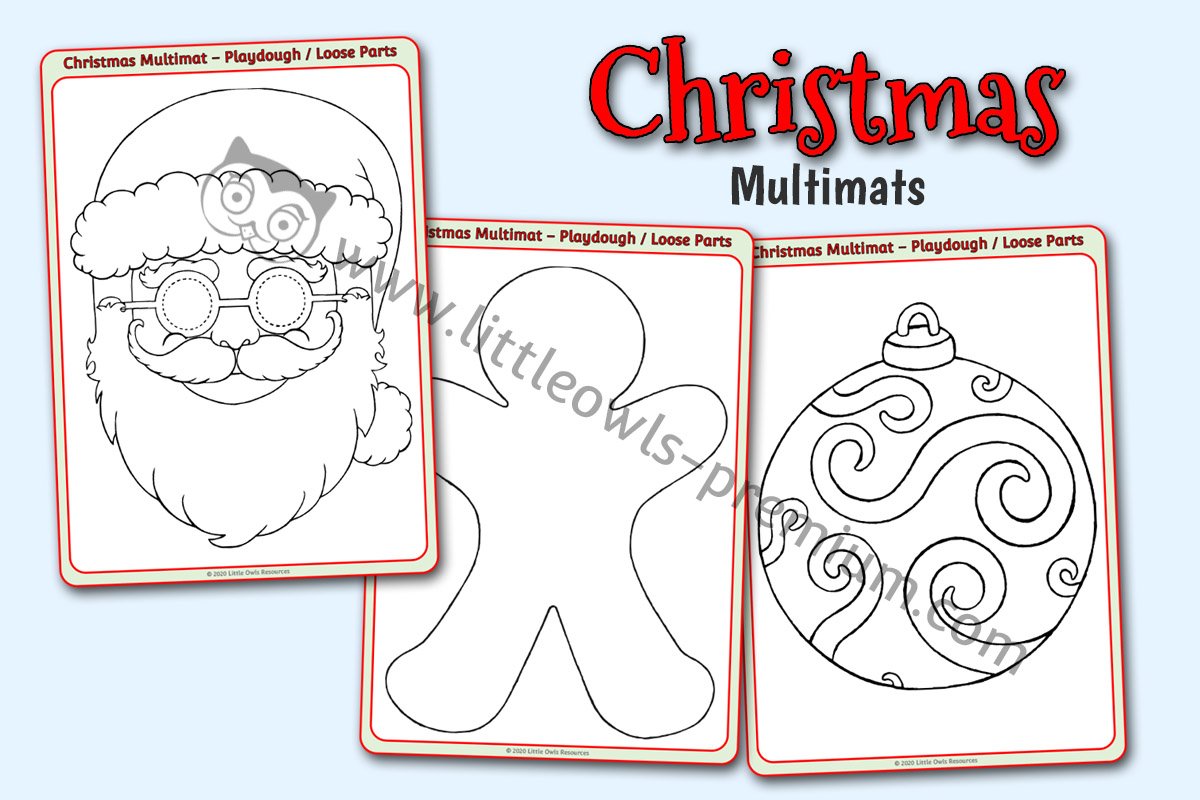
A Nativity scene mat offers a starting point for making or arranging elements in playdough. Share the story with an adult, then let children choose what to represent and how to shape or change their materials.
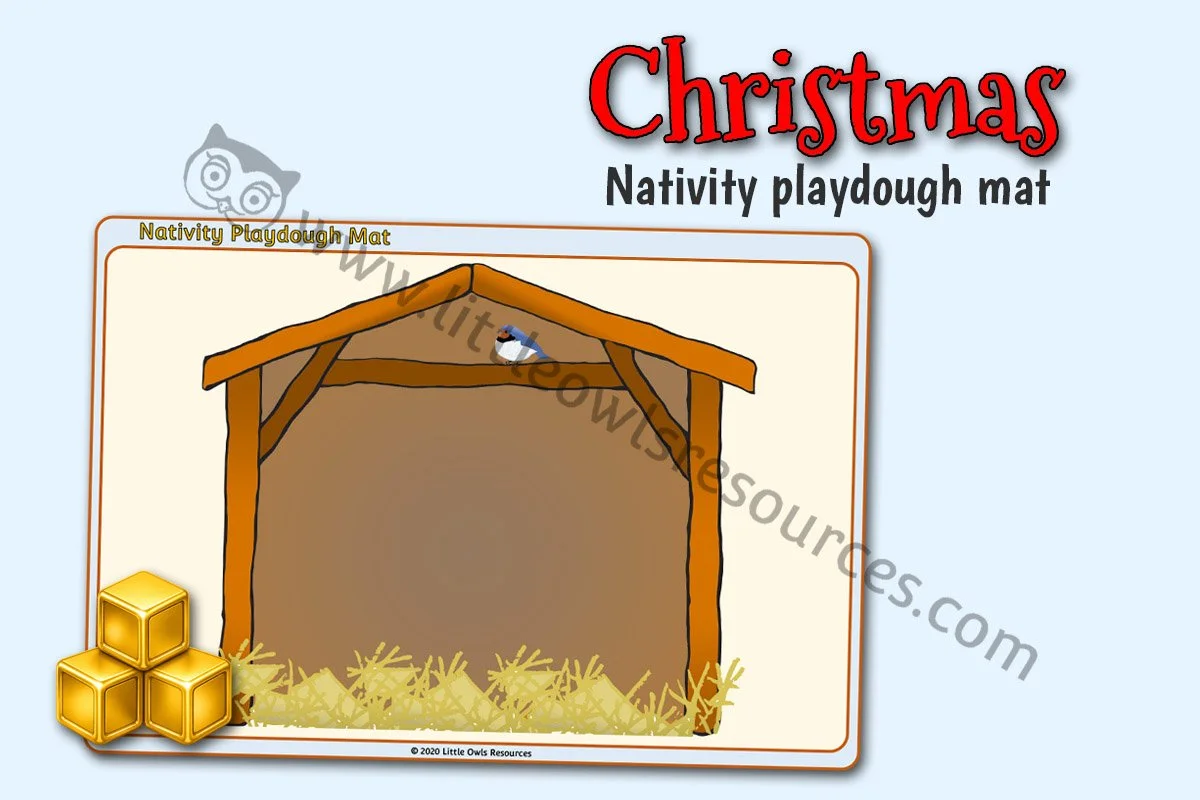
Expressive Arts and Design: Children can shape a feature of the Nativity story after an adult has introduced its context.
Using this with preschool children: Choose one element from the shared Nativity scene to model. Try the piece in two positions and decide where it belongs.
View and download resource →Find more Preschool designing, building & making resources ↑Curriculum & pedagogy
If Interest Sparks — What Happens Next? Poster | Preschool 3-4 Years
A preschool staff poster sets out what to notice, consider and do when children show sustained interest. Use it to discuss responsive planning and purposeful use of themes without over-recording.

Expressive Arts and Design: A planning prompt can help an adult sustain a creative interest that began with the child.
For adults supporting preschool children: Start with a mark or a pretend character the child has returned to. Use the poster to choose one extra prop or material and observe whether it extends their idea.
View and download resource →Find more Preschool planning & guidance ↑A free resource or activity
Santa Express Role-Play Pack
A free Santa Express role-play pack for an imagined festive train journey, including tickets, wish lists, signs, luggage tags and props for pretend play and purposeful mark making.
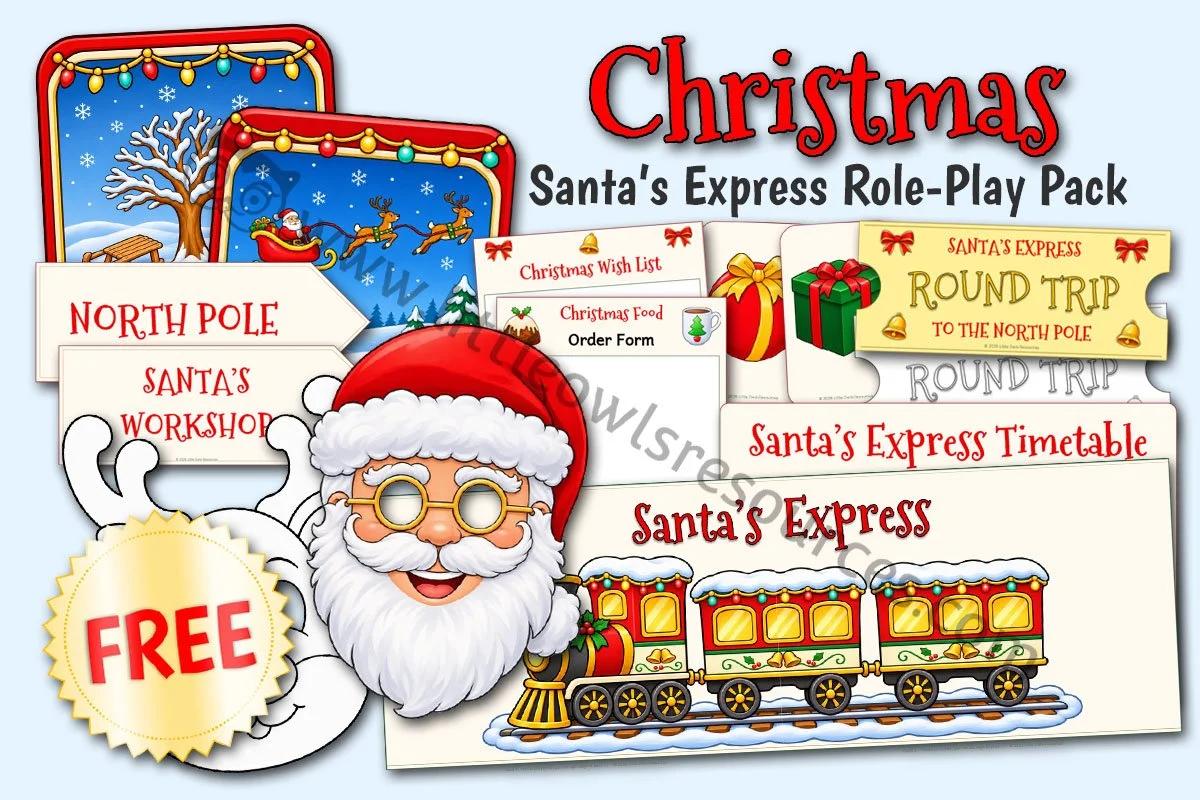
Expressive Arts and Design: Tickets and luggage tags can give a festive train journey a cast and a plot.
Using this with preschool children: Make a ticket for a passenger who has almost missed the Santa Express. Improvise their meeting with the guard.
View free resource →Find more free Preschool resources & activities ↑Give every child a way into the idea
Give every child a creative role
Offer different ways to perform
A child can lead a dance with fingers, a facial expression or an eye-gaze cue. Let musicians control volume, offer a quiet listening place and invite children to return when ready.
Keep the maker’s decisions visible
Offer larger handles, stable surfaces or a partner who moves pieces at the child’s direction. Ask where the maker wants a colour, piece or sound to go, and wait for their usual way of answering.
Read the EYFS statutory framework for England, the Expressive Arts and Design section of Development Matters and the Department for Education’s practical teaching guidance.
Common questions
Why include babies and toddlers?
Babies explore rhythm, sound and movement with familiar people. Toddlers can repeat and vary marks, sing fragments of a song or give a familiar object a pretend use. Choose an age to find an activity or an adult prompt grounded in that kind of experience.
How can we use printables for open-ended art?
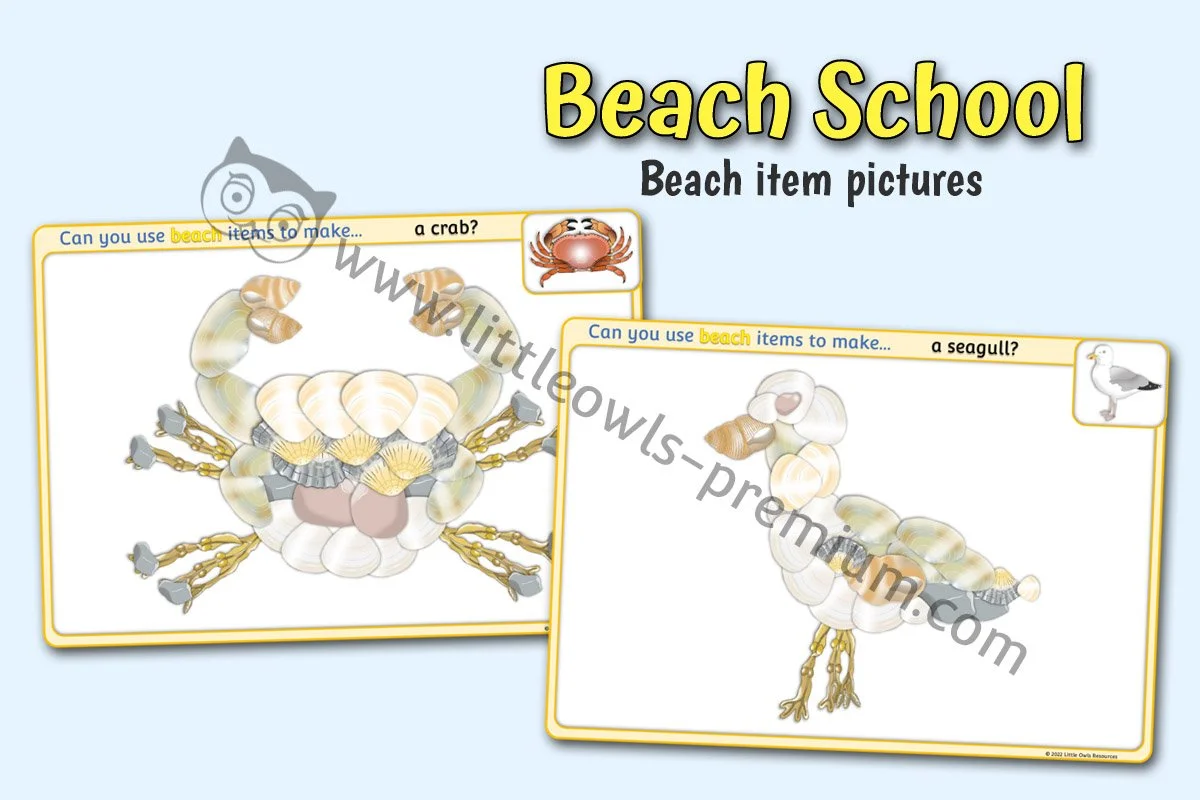
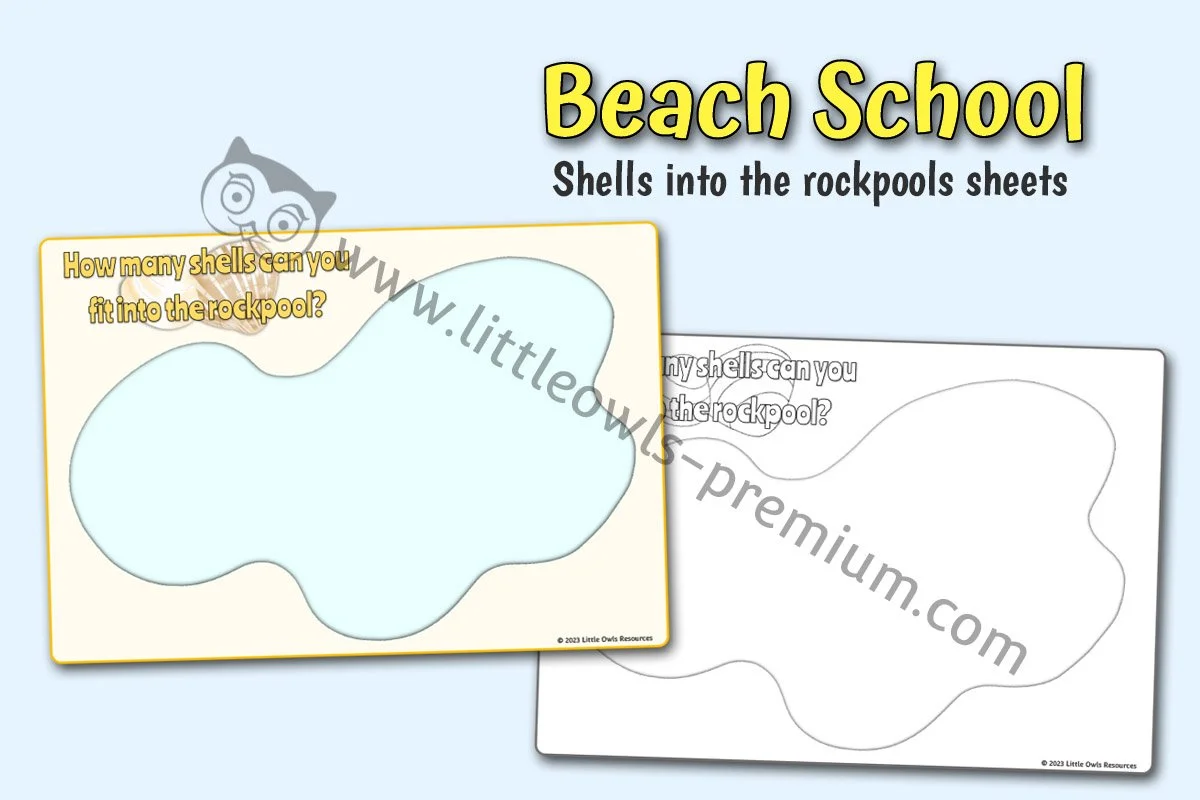
Use a card to introduce a question, an outline as an optional surface, or a poster as an adult prompt. For instance, offer the shell mat alongside blank paper and let children decide whether to explore texture, pattern or a shell they invent.
How do I find drama or music resources?
Choose Pretend play, puppets & stories for role play and theatre. Choose Sound, rhythm & music for instruments, composing and listening, or Songs, rhymes & voices for singing. You can also enter a title or a word such as “puppets”.
Can children contribute without performing in front of a group?
Yes. A child might design the set, direct a friend, choose when a sound enters or share a small scene with one familiar adult. Take their preference seriously and keep different roles available.
Does a selected age apply to the entire pack?
Read the suggestion beside the resource. It may choose one part of a pack, an activity to adapt or an idea for the adult. For example, adults can use a printed rhyme cue with a baby while the baby takes part through sound or movement.
How do the learning focuses relate to the early learning goals?
The six focuses organise this finder. Creating with Materials and Being Imaginative and Expressive are the two statutory goals used in assessment at the end of Reception. Across the early years, plan a broad mix of experiences and give children opportunities to return to the ones that matter to them.
What can I access for free?
Free Access includes resources identified as free, alongside public articles, glossary entries and collection pages. A collection may link to both free and All Access downloads. Use the Free Access filter and check the individual card’s label.
Already a paying member? You have sitewide access. No need to change plans. Find out about Free Access and All Access →
Keep exploring
Explore more on Little Owls Resources
Find resources for a specific age, follow an interest or explore support for your setting.