

(Available Now with Professional Membership)
Characteristics of Effective Learning in Reception
Reception (4-5 Years)
A practical professional guide to recognising, planning for and assessing how Reception children learn through play, teaching and application.
What this document is
This document explains how the Characteristics of Effective Learning (CoEL) are interpreted and implemented within high-quality Reception practice.
It clarifies how CoEL:
are embedded across adult-led teaching, continuous provision and play
support depth, transfer and independence in learning
strengthen observation and assessment without increasing workload
sit alongside systematic teaching of phonics, maths, writing and language
The guidance makes explicit that CoEL are not an add-on or a separate subject, but describe how well children engage with, apply and secure their learning in Reception.
It supports professional judgement and does not replace statutory guidance.
Who this is for
Reception teachers and practitioners
EYFS leaders and managers
Childminders and mixed-age settings supporting Reception-aged children
SENCOs and inclusion leads
Leaders responsible for assessment, pedagogy and inspection readiness
What this document helps you do
Understand what each CoEL looks like specifically in Reception
Recognise CoEL in both adult-led teaching and child-initiated play
Plan provision and teaching to deliberately promote CoEL
Focus observation on meaningful evidence of learning behaviours
Avoid treating CoEL as a checklist or personality trait
Support inclusive practice so all children can demonstrate CoEL
Strengthen best-fit EYFSP judgements through deeper understanding of learning
How this fits within our Reception framework
This document forms part of our wider Reception (4–5 Years) Curriculum & Pedagogy Framework.
It sits alongside:
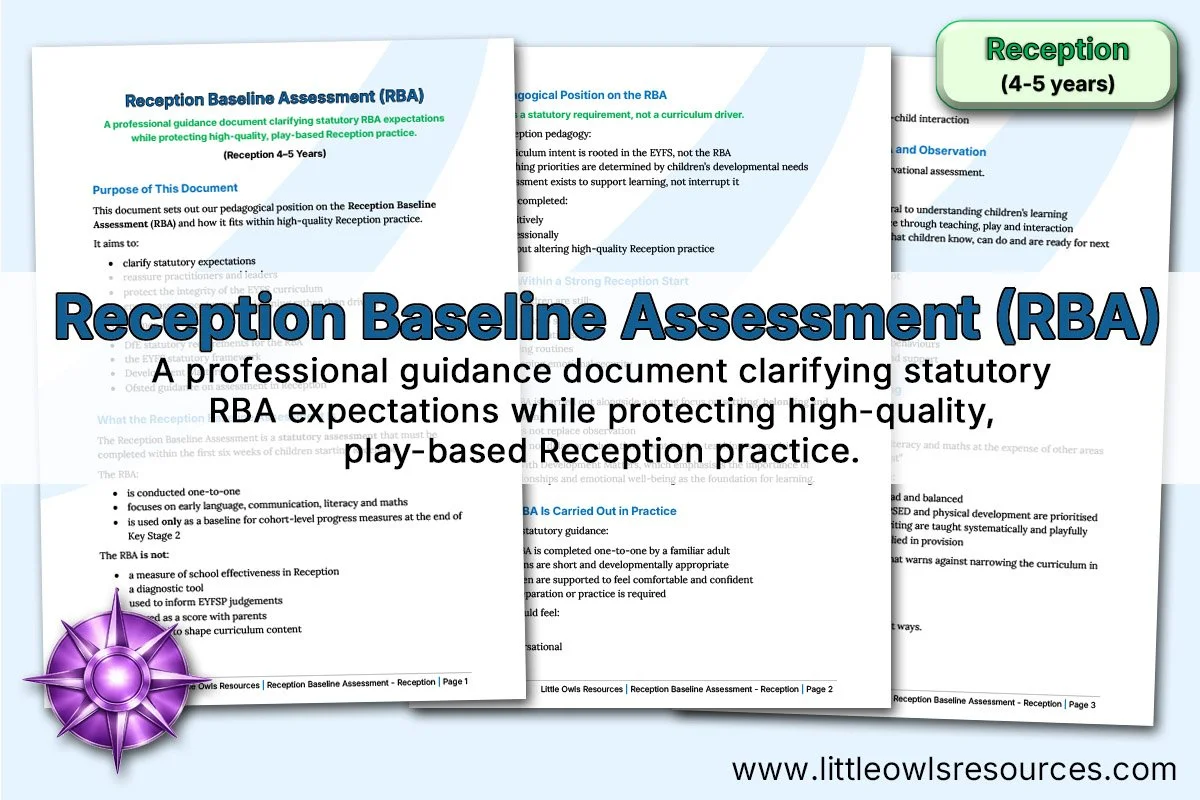
Reception Pedagogy Position Statement
Self-Regulation & Learning Behaviours in Reception
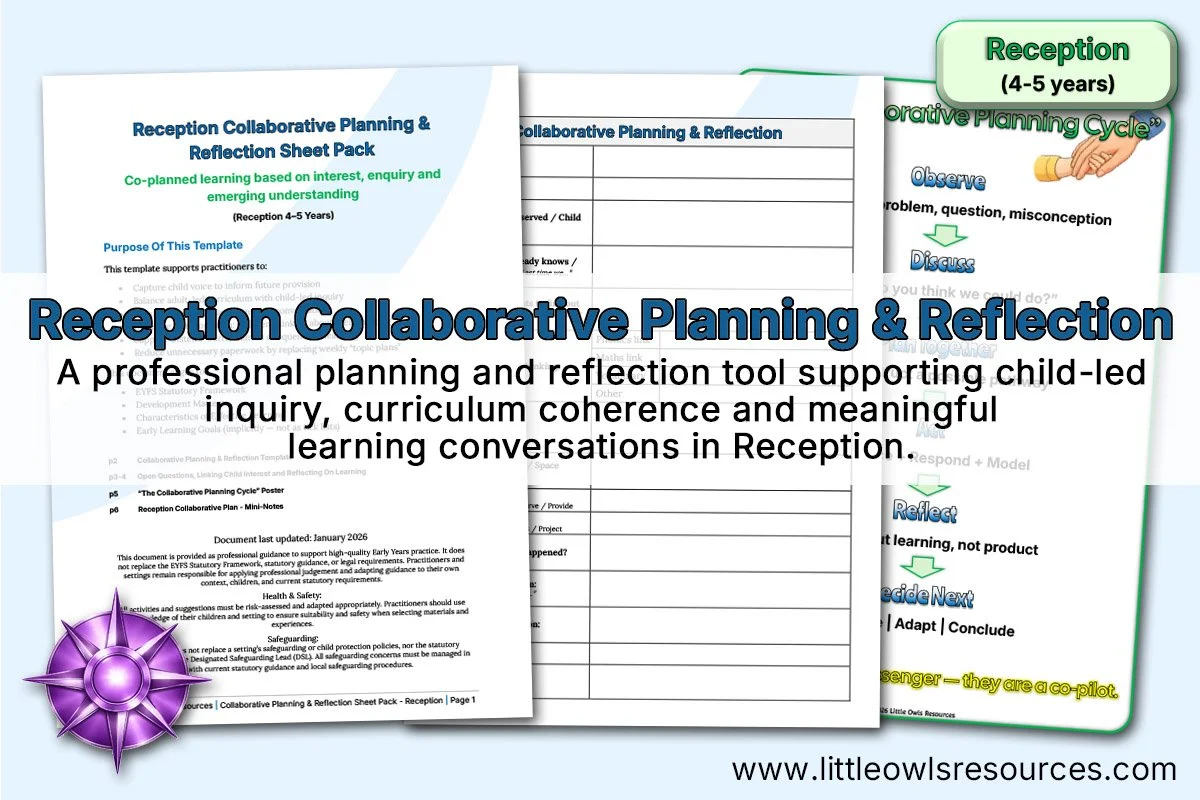
Reception Observation–Assessment–Planning (OAP) Cycle Guidance
Reception Curriculum Phase Framework
Adult-Guided Learning in Provision
Reception Curriculum Progression Maps Toolkit
Together, these documents support a coherent, inspection-ready approach to learning and assessment in Reception, where systematic teaching, purposeful provision and the Characteristics of Effective Learning work together to secure deep, transferable learning.
This document is part of our EYFS Curriculum & Pedagogy Membership (Professional), which provides full access to age-specific curriculum frameworks, planning guidance, assessment tools and leadership support.
(Available Now with Professional Membership)
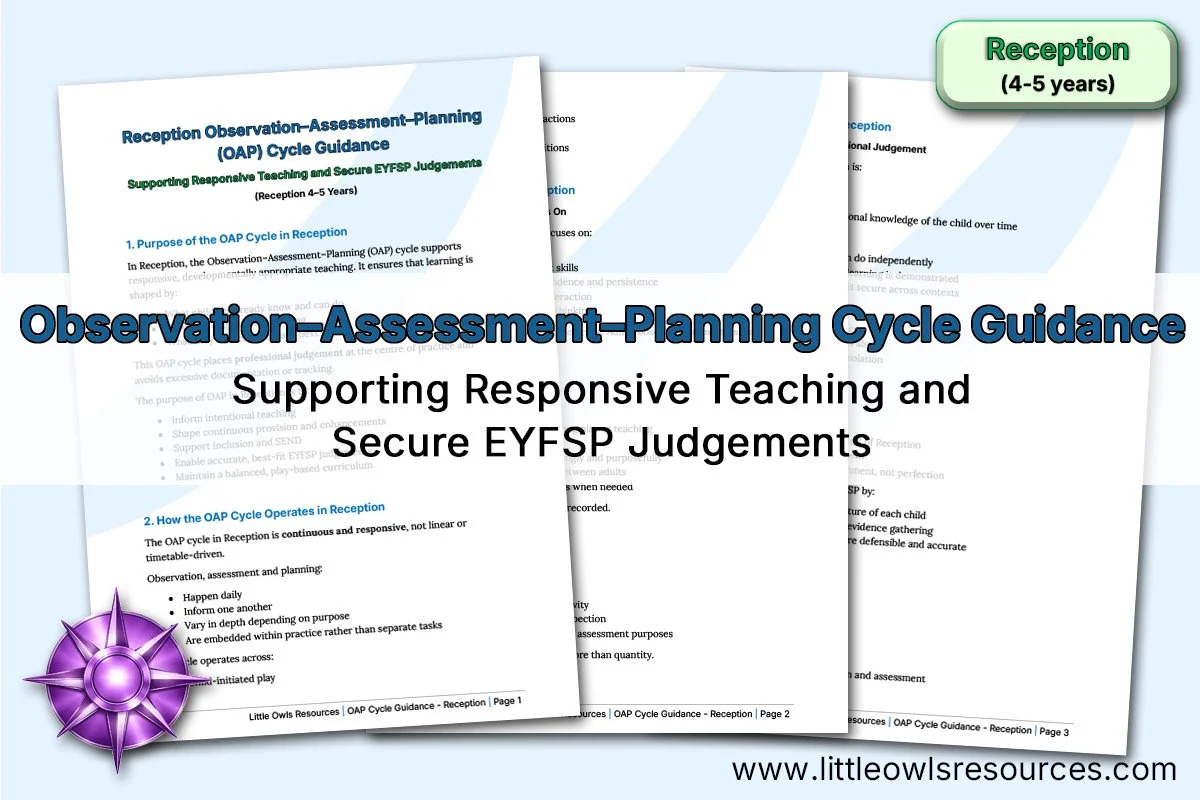
Recommended next read selection


Or read our ‘Little Owls Resources’ Curriculum Intent Statement’
Additional Documents | Professional Membership Contents (Reception 4-5 Years)
Navigate our Curriculum & Pedagogy guidance documents here.
Pedagogical identity:
Curriculum-led, play-based Reception year with systematic teaching, stable provision and strong application through play.
-
👉 This section is essential for alignment.
Reception Curriculum Overview & Rationale [Free Orienting Sample]
Reception Pedagogy Position Statement [Free Orienting Sample]
-
👉 Curriculum clarity and sequencing.
Reception Curriculum Progression Maps (all areas of learning)
Guide to Learning Progression: How to Use the Reception Curriculum Progression Maps
Progression Maps for:
Communication and Language
Personal, Social and Emotional Development
Physical Development
Literacy
Mathematics
Understanding the World
Expressive Arts and Design
Reception Curriculum Phase Framework
How To Use The Reception Curriculum Phase Pack
Phase 1: Settling & Foundations
Phase 2: Exploration & Early Application
Phase 3: Independence & Depth
Phase 4: Consolidation & Transition
-
-
👉 Stable, purposeful provision.
Universal Continuous Provision Pack (Areas listed below)
Construction
Creative
Investigation / Discovery
Maths
Reading
Role Play / Small World
Malleable / Sensory
Writing
Outdoor Continuous Provision (Reception)
-
👉 Light-touch, application-focused.
-
👉 Systematic teaching without Year 1 drift.
Phonics (Scheme-Compatible)
Phonics in Reception: Teaching, Application & Inclusion
Pedagogy
Adult-Led Session Guidance
Phonics in Provision
Supporting Children Not Keeping Up
Phonics & EYFSP
Scheme Compatibility Statement
Maths
Reception Maths Teaching Framework
Term by Tem Maths Concept Emphasis Map
Maths Adult-Led Mini Session Banks (9 Banks)
Maths Across the Curriculum & Provision
Maths & EYFSP Guidance
Writing
Reception Early Writing Purpose Pack
Writing Adult-Led Mini Session Bank (12 Sessions)
Fine Motor & Physical Development
Guidance Surrounding Foundations for Writing in Reception (4–5 Years)
-
👉 Precision language for application.
Theme-Based High-Impact Question & Vocabulary Banks
Leadership Rationale: Why Questions Differ by Age
-
👉 Statutory confidence with inclusive practice.
EYFSP Interpretation & Assessment Toolkit
ELG Unpacking
Best-Fit Exemplification
Moderation Guidance
Reception SEND & Inclusion Toolkit
The graduated response (Universal → Targeted → Specialist)
Adaptations across phonics, maths & writing
Visual Communication Pack
Language-first strategies for inclusion
Observation, assessment and SEND
Collaborative working with families and specialists
Referral Preparation — for EHCP pathway
Reception APDR Template
Leadership and inspection readiness
-
👉 Leadership assurance.
Reception Leadership & Inspection Readiness Pack
Curriculum Intent & Implementation Guidance
Ofsted Conversation Prompts
-
👉 Clear communication beyond the classroom.
Additional Whole-Setting Guidance | for Professional Members
Explore our whole-setting guidance below, including overarching curriculum and pedagogy documents, early years schemas and EYFS setting policies.
-
-
Early Years Schemas - Practitioner Toolkit | EYFS Birth-5
↪ Schema Cards (definition, behaviours, age-related examples, enabling resources)
↪ Schema Observation & Responsive Provision Planning Template
-
EYFS Group Setting Policies Pack
↪ x 22 Policy Documents
↪ Policy Sign-Off and Confirmation Document
↪ EYFS Setting Policy Folder Contents List
Childminder Setting Policies Pack
↪ x 22 Policy Documents
↪ Childminder Assistant or Volunteer Policy Sign-Off and Confirmation Document
↪ Childminder Policy Folder Contents List
-
↪ Clear, practitioner-friendly explanations of key curriculum and pedagogy terms used throughout our guidance.
Looking for a different age group pathway?
Select the pathway that best reflects your role or the age group you work with. You do not need to use everything. (Some practitioners may use more than one pathway.)
What is Professional Membership?
Find our more about our Professional guidance for confident, reflective EYFS practice (Birth–5)
Alternatively, learn more about and explore our printable provision resources.
Thousands of ready-to-use printables to support provision, organisation, routines and learning across EYFS.
Latest EYFS Articles & Practical Guides | From Our Blog
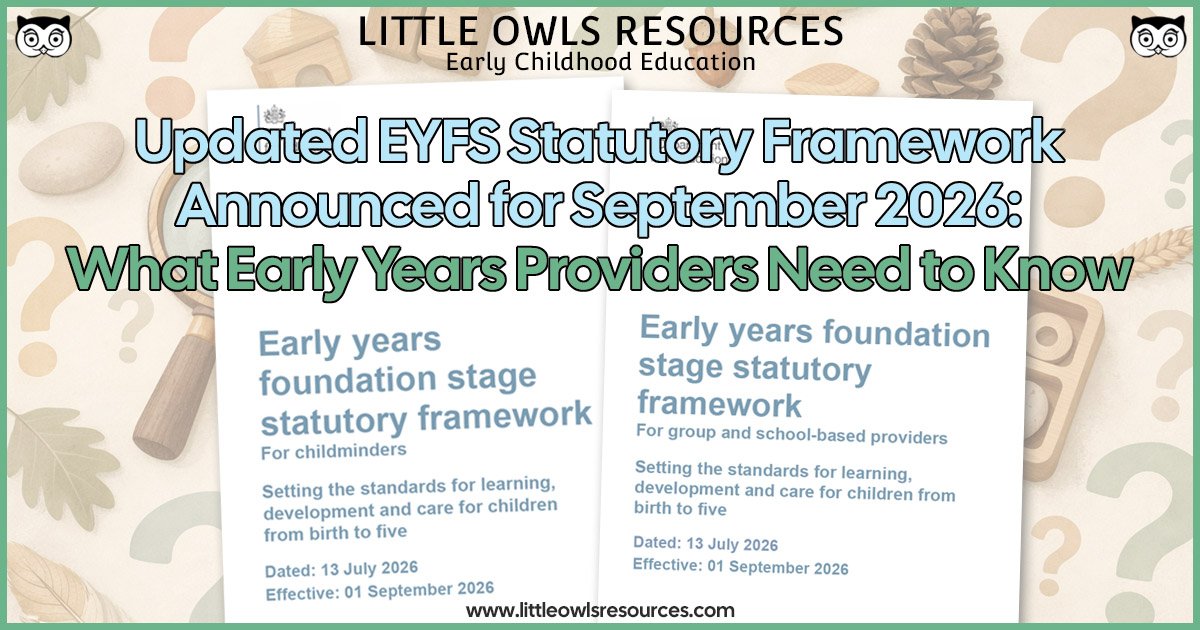
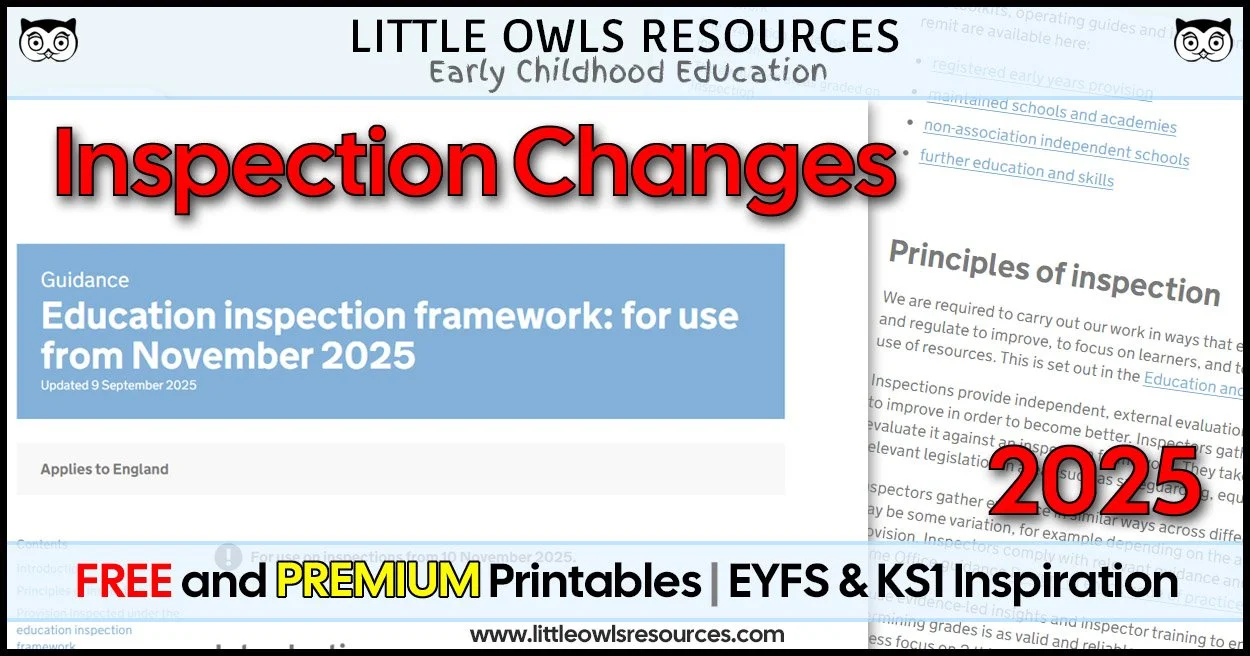
Stay informed, get expert advice, and find inspiration from our collection of articles and useful external resources, tailored specifically for EYFS practitioners. We regularly publish in-depth articles to support you with current best practices, regulatory changes, and fresh ideas.





Are you looking for a specific resource or document for your provision?
Use our 🔍 SEARCH Bar located at the top of every page.
___________________________
Content within the EYFS Curriculum & Pedagogy Membership is provided as professional guidance and support. It reflects current understanding of the EYFS statutory framework, Development Matters and inspection expectations at the time of writing. Practitioners are responsible for applying professional judgement and ensuring practice aligns with current statutory requirements and their specific context. All resources, experiences and environment arrangements must be risk assessed by the setting and used in accordance with individual children’s developmental stages, needs and supervision requirements.
Safeguarding content does not replace a setting’s safeguarding and child protection policy or the statutory role of the Designated Safeguarding Lead (DSL). All concerns must be managed in line with current statutory guidance and local safeguarding procedures.
_____________________________