
EYFS definition
Playing and exploring describes children’s curiosity, investigation and readiness to try things. In England’s EYFS, it is one of the three Characteristics of Effective Learning, drawing attention to how children engage with experiences, follow interests and discover what they can do.
What does playing and exploring include?
The term concerns how children approach learning, rather than a particular timetable slot or one type of activity. It can be evident in an experience children choose or one an adult introduces.
Exploration may involve touching, watching, listening, moving, asking questions or trying out an idea. Children can also draw on familiar experiences as they develop pretend play.
What might this look like in practice?
A baby explores the feel and sound of suitable play objects with a familiar adult nearby. A toddler presses different tools into clay and looks at the marks they leave.
Preschool children turn a collection of boxes into a veterinary clinic, drawing on visits and stories. In Reception, children investigate which objects a magnet attracts, noticing differences and choosing what to try next.
Making exploration accessible
Adults may introduce a resource, share useful language or join an investigation while leaving space for children’s responses. Familiar routines, accessible materials and time to return to an interest can support participation.
Trying something new can begin with watching, reaching or choosing between objects. Some children need reassurance, physical assistance or a different way to communicate. Readiness to explore is not measured by how quickly a child joins an unfamiliar activity.
Further Guidance | Related Documents
Explore resources connected with this term. Each card identifies the resource’s intended age group and access type.
Highlighted resource
-
 View resource
Free Access
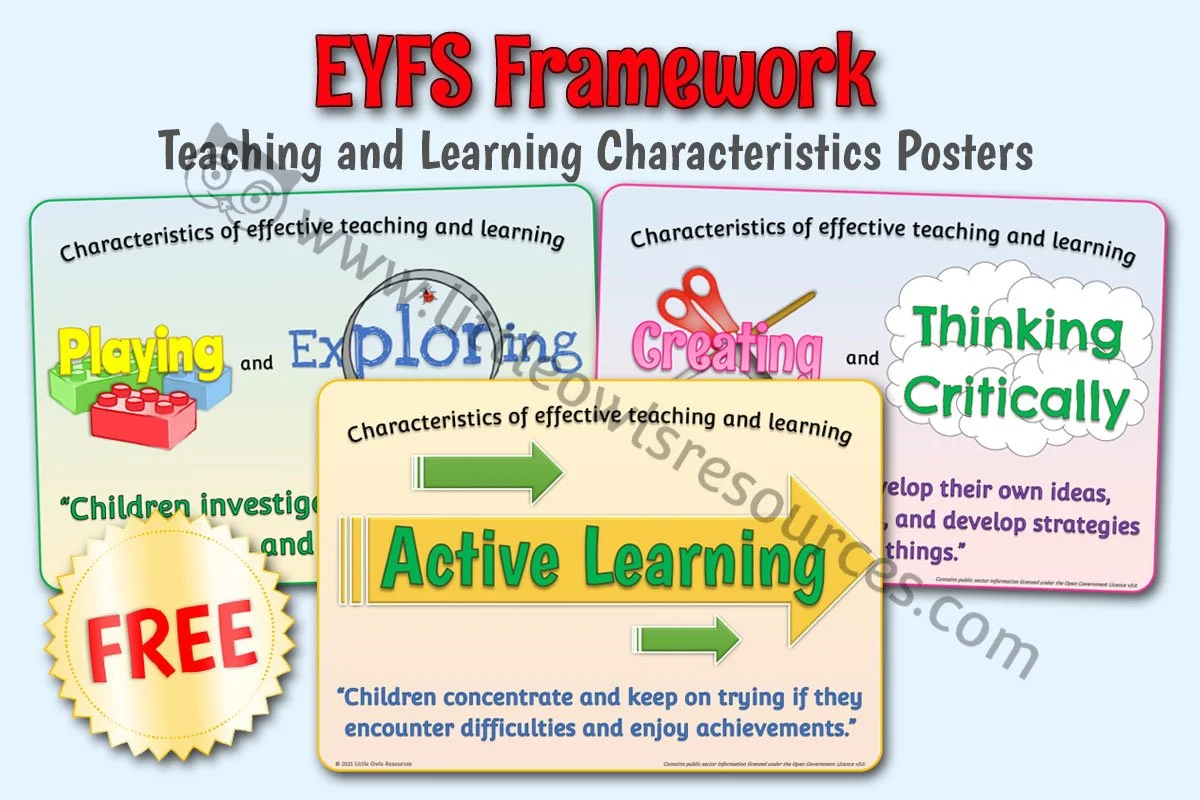
EYFS FRAMEWORK - Teaching and Learning Characteristics Posters
Use the learning-characteristic posters to support discussion of children’s different approaches to learning.
Birth–5 · Adult reference
View and Download Resource →
This selection is being reviewed. Please use the resource gateways below.
Related resources
Scroll sideways, focus the list and use your arrow keys, or use the buttons.
-
 View resource
All Access
Autumn Heuristic Play Cards for Toddlers
Explore autumn heuristic-play suggestions that leave room for toddlers’ repeated discoveries.
Toddlers (18–36 months) · Adapt objects and support
View resource details → -
 View resource
All Access
Autumn Explore and Investigate Prompt Cards
Browse optional autumn prompts for noticing, comparing and trying ideas.
Preschool & Reception · Adapt to children’s interests
View resource details → -
 View resource
All Access
Baby Room Continuous Provision Maps | 0-9 & 9-18 months
Consider how baby-room environments and interactions can support exploration.
Babies (0–18 months) · Practitioner guidance
View resource details → -
 View resource
All Access
Characteristics of Effective Learning in Reception | 4-5 Years
Explore how playing and exploring connects with Reception provision and teaching.
Reception (4–5) · Practitioner guidance
View resource details →
This selection is being reviewed. Please use the resource gateways below.
Find practical resources for your setting
Start with an age gateway
Useful routes into practice
- Science & Investigation
Find resources for exploring materials, movement and the world around us.
- Outdoor Play & Provision
Browse outdoor resources that can support discovery and imaginative play.