
EYFS definition
A positioning schema is a repeated interest in placing and arranging objects or oneself in particular ways. In the EYFS, children may explore this by lining up toys, grouping materials, balancing objects or carefully choosing where each item belongs.
What is the child exploring?
The interest centres on arrangement and relationships between things: beside, on top, in a row or within a chosen space. A child may rearrange a collection several times or recreate a familiar arrangement with different objects.
Positioning can connect with sorting, pattern and spatial awareness. It does not require a neat result or a correct mathematical sequence; the child may be exploring an arrangement that has personal meaning.
What might it look like in practice?
- A toddler places toy animals along the edge of a low shelf, then moves them into groups.
- A child arranges blocks at carefully chosen distances before adding a bridge.
- During collage, a child moves pieces around the paper before deciding where to place them.
These arrangements might become part of a story, a construction or an exploration of materials. The same resources can support many different kinds of play.
Responding to arrangements
An adult may make suitable loose materials and clear spaces available, notice the child’s choices or offer words such as “beside” and “between”. A photograph can help a child revisit an arrangement if they want to.
Lining up objects on one occasion does not establish a schema or tell us why a child is doing it. Looking across play, and listening to the child and family, gives a fuller picture.
Further Guidance | Related Documents
Explore resources connected with this term. Each card identifies the resource’s intended age group and access type.
Highlighted resource
-
 View resource
All Access
Schema Labels — Positioning
Labels and prompts for resources used in arranging, balancing and composing.
Practitioner labels · Choose materials appropriate to the children and setting.
View and Download Resource →
This selection is being reviewed. Please use the resource gateways below.
Related resources
Scroll sideways, focus the list and use your arrow keys, or use the buttons.
-
 View resource
All Access
Early Years Schemas - Practitioner Toolkit | EYFS Birth-5 (Overview)
Supports reflection on repeated arrangements within a wider view of children’s schemas.
Birth–5 · Practitioner guidance.
View resource details → -
 View resource
All Access
Theme: Playful Patterns & Construction | Toddler Project Planner (18–36 Months)
Explores toddler construction, repeated actions and early pattern-making through play.
Toddlers (18–36 months) · Practitioner planning guidance.
View resource details → -
 View resource
All Access
Preschool Skills Progression Ladder: Early Maths - Pattern, Shape & Spatial Awareness (Overview)
Connects practical arrangements with pattern, shape and spatial awareness in preschool provision.
Preschool (3–4 years) · Practitioner reference.
View resource details → -
 View resource
All Access
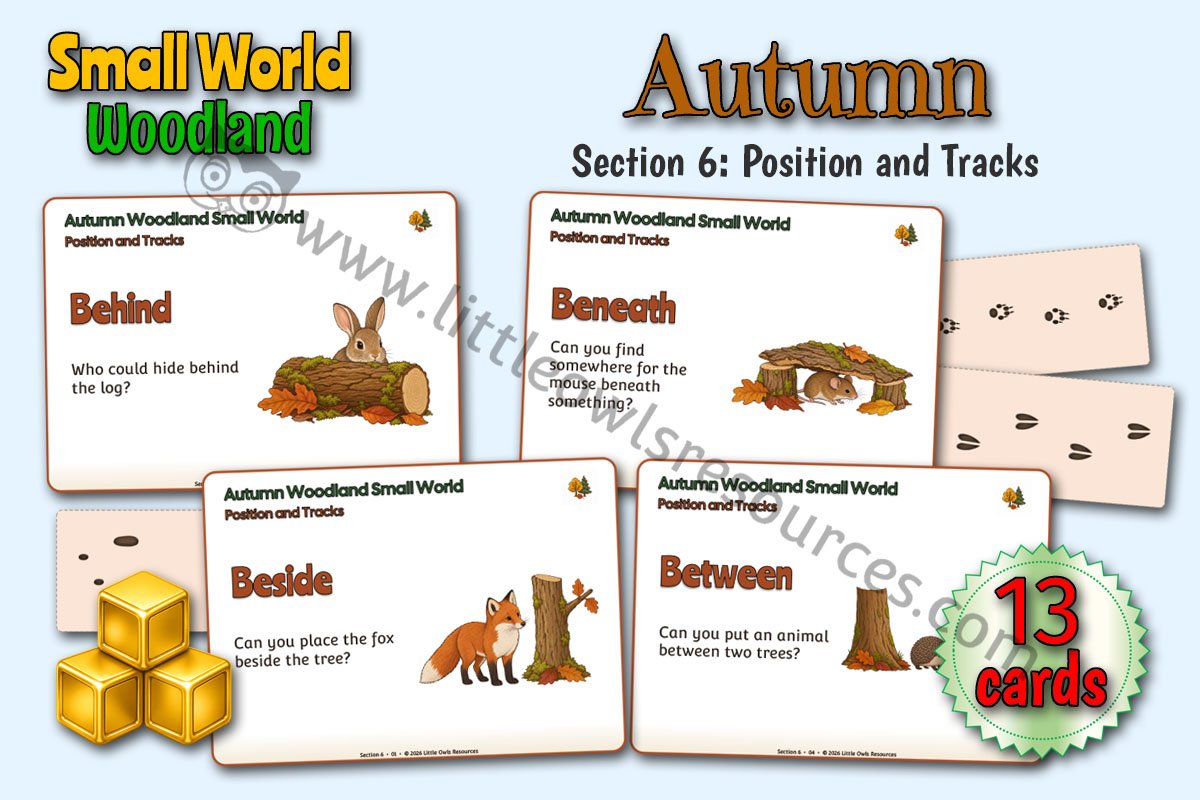
Autumn Woodland | Small World Position and Tracks
Invites children to position figures, arrange tracks and develop their own woodland worlds.
Preschool–KS1 · Adapt the number of pieces and adult prompts.
View resource details →
This selection is being reviewed. Please use the resource gateways below.
Find practical resources for your setting
Start with an age gateway
Useful routes into practice
- Schemas & schematic play
Find further schema guidance and resources for responding to repeated play interests.
- Construction & building
Explore resources for arranging materials, building and revisiting children’s designs.