
EYFS definition
An orientation schema is a repeated interest in seeing or experiencing things from different positions and viewpoints. In the EYFS, a child might look beneath an object, turn a familiar toy upside down or change their own position to explore how something appears.
Exploring a different viewpoint
The focus is on position and perspective: what changes when something is viewed from underneath, behind, above or at another angle? Children may move themselves, move an object or use a mirror to explore.
This is related to spatial awareness. It differs in emphasis from a rotation schema, where the repeated interest centres on turning or spinning. The same episode of play can include both.
What might it look like in practice?
- A baby watches a familiar object as an adult slowly changes its position in response to their attention.
- A toddler turns a toy over and looks closely at its underside.
- A child lies on the floor to look through an opening in their construction, then views it from above.
A child might show what they notice through looking, gestures, movement or words. Talking about the experience is one possible part of the play, not a requirement.
Making viewpoints accessible
Adults may provide suitable mirrors, objects that can be handled and spaces where children can safely change position. An object can be moved to offer a different view for a child who cannot easily move themselves.
Repeated observation helps adults consider the child’s interest. One upside-down look does not establish a schema, and orientation is not a developmental checklist or a label for the child.
Further Guidance | Related Documents
Explore resources connected with this term. Each card identifies the resource’s intended age group and access type.
Highlighted resource
-
 View resource
All Access
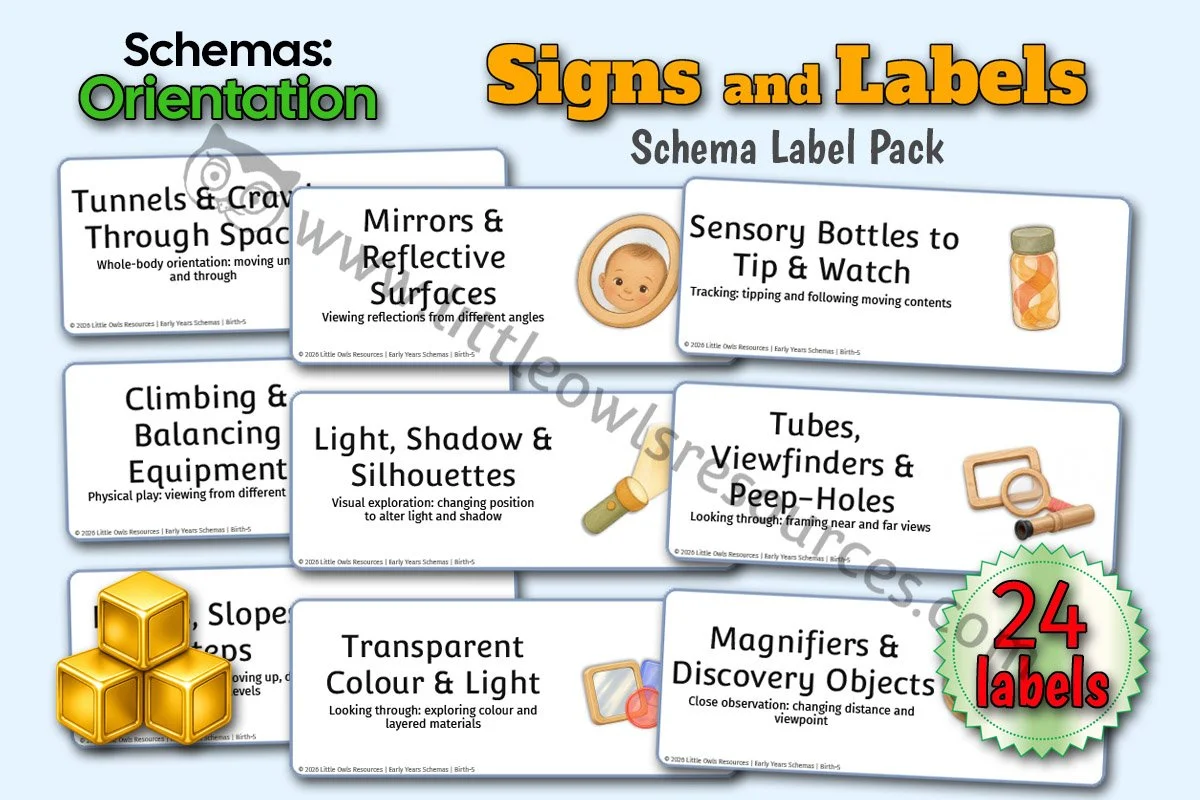
Schema Label Pack | Orientation
Labels and prompts for resources that invite children to explore different positions and viewpoints.
Practitioner labels · Adapt the resources to children’s movement and access needs.
View and Download Resource →
This selection is being reviewed. Please use the resource gateways below.
Related resources
Scroll sideways, focus the list and use your arrow keys, or use the buttons.
-
 View resource
All Access
Early Years Schemas - Practitioner Toolkit | EYFS Birth-5 (Overview)
Provides a wider schema reference for interpreting patterns across children’s play.
Birth–5 · Practitioner guidance.
View resource details → -
 View resource
All Access
Physical Development Progression Pack | Toddlers (18–36 Months)
Connects movement opportunities, inclusion and adult support across toddler provision.
Toddlers (18–36 months) · Practitioner guidance.
View resource details → -
 View resource
All Access
Preschool Skills Progression Ladder: Early Maths - Pattern, Shape & Spatial Awareness (Overview)
Offers a preschool perspective on shape and spatial awareness alongside play and exploration.
Preschool (3–4 years) · Practitioner reference.
View resource details → -
 View resource
All Access
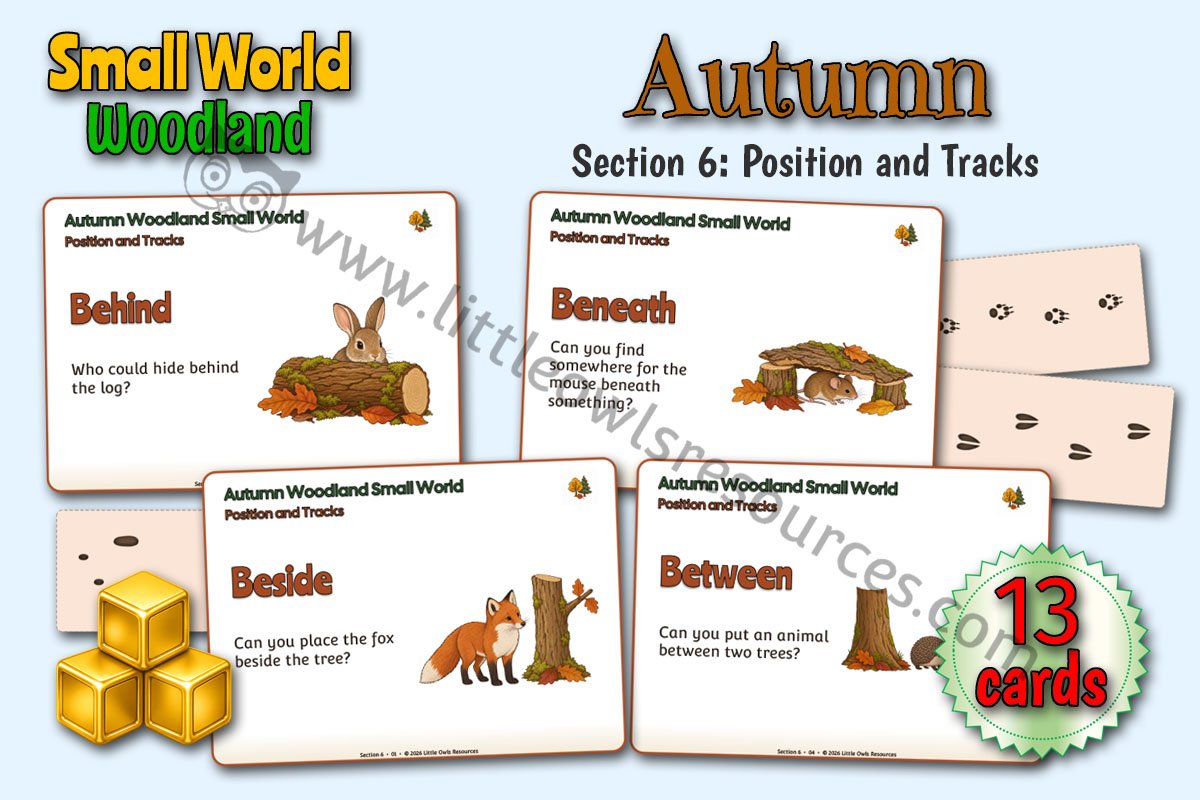
Autumn Woodland | Small World Position and Tracks
Position invitations and movable track pieces can support exploring a small world from different viewpoints.
Preschool–KS1 · Simplify invitations for younger children.
View resource details →
This selection is being reviewed. Please use the resource gateways below.
Find practical resources for your setting
Start with an age gateway
Useful routes into practice
- Schemas & schematic play
Find further schema guidance and resources for responding to repeated play interests.
- Physical development
Find resources connected with movement, coordination and participation.