
EYFS definition
An enveloping schema is a repeated interest in covering, wrapping or hiding things. In the EYFS, the term can describe a child returning to actions such as wrapping a doll, covering a surface or hiding an object beneath another material.
Recognising the pattern
The common thread is covering something, sometimes making it disappear from view. A child may explore this idea with different materials or return to the same action many times.
Enveloping is often distinguished from enclosing, which involves making a boundary around something. A fabric-covered model and a model surrounded by a fence can involve different interests, although play may combine both.
What might it look like in practice?
- A toddler repeatedly covers and uncovers a familiar toy with a piece of fabric.
- A child wraps a doll in a small blanket, then chooses another material and tries again.
- During painting, a child covers earlier marks with another layer of colour.
The interest may be in hiding, revealing, texture, the action itself or an imagined story. Watching the play helps adults consider what matters to that child.
Responding to the interest
An adult might offer different papers, fabrics or objects to cover, while keeping materials suitable for the children using them. Wrapping toys can provide this exploration without wrapping children or covering faces.
Enveloping is one possible interpretation of repeated play, not a fixed label or a stage every child must demonstrate. Children can explore several schemas, and their interests may change.
Further Guidance | Related Documents
Explore resources connected with this term. Each card identifies the resource’s intended age group and access type.
Highlighted resource
-
 View resource
All Access
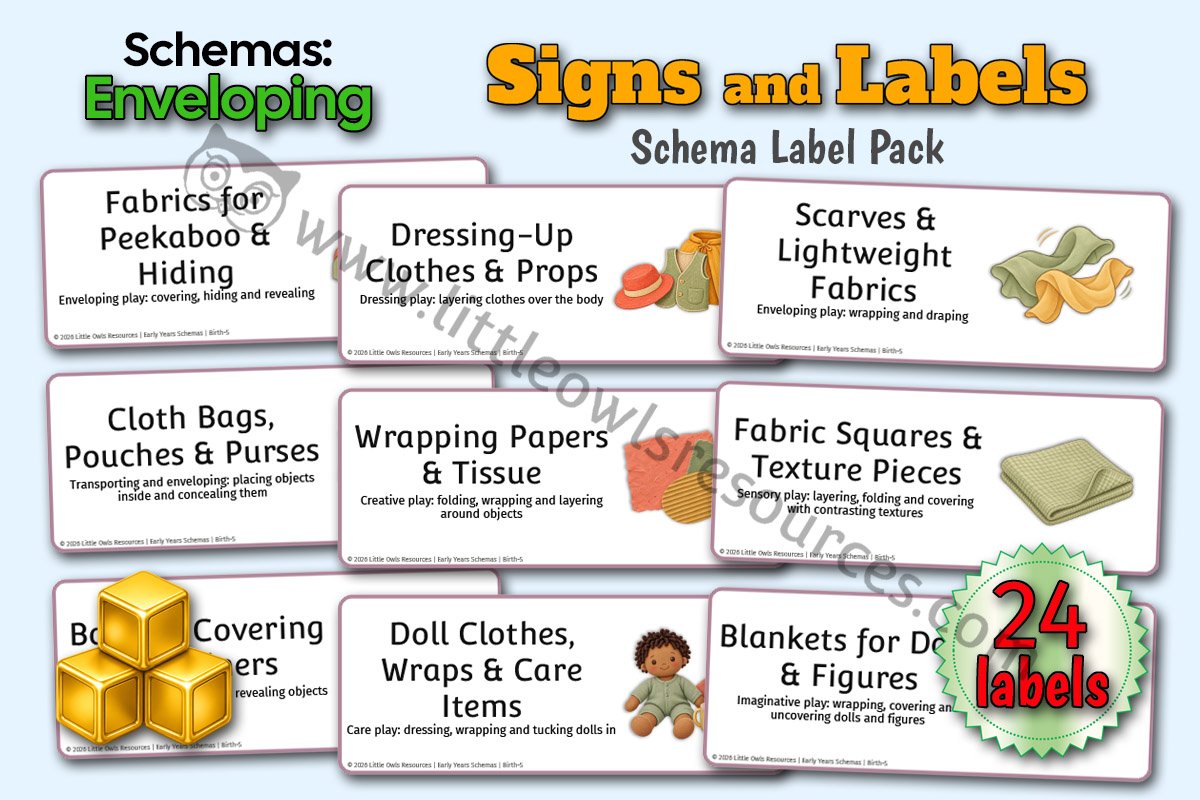
Schema Label Pack | Enveloping
Labels and short prompts for organising materials connected with covering, wrapping and hiding.
Practitioner labels · Select suitable materials for the children using them.
View and Download Resource →
This selection is being reviewed. Please use the resource gateways below.
Related resources
Scroll sideways, focus the list and use your arrow keys, or use the buttons.
-
 View resource
All Access
Early Years Schemas - Practitioner Toolkit | EYFS Birth-5 (Overview)
A wider reference for noticing repeated play and considering a responsive environment.
Birth–5 · Practitioner guidance.
View resource details → -
 View resource
All Access
The Role of Schemas in Toddler Practice (18-36 Months)
Explores how toddler play interests can inform provision without becoming assessment labels.
Toddlers (18–36 months) · Practitioner guidance.
View resource details → -
 View resource
All Access
Expressive Arts & Design: Creative Media & Expression Toolkit | Toddlers (18–36 Months)
Supports exploration of creative materials, including repeated actions and children’s own choices.
Toddlers (18–36 months) · Practitioner guidance.
View resource details → -
 View resource
All Access
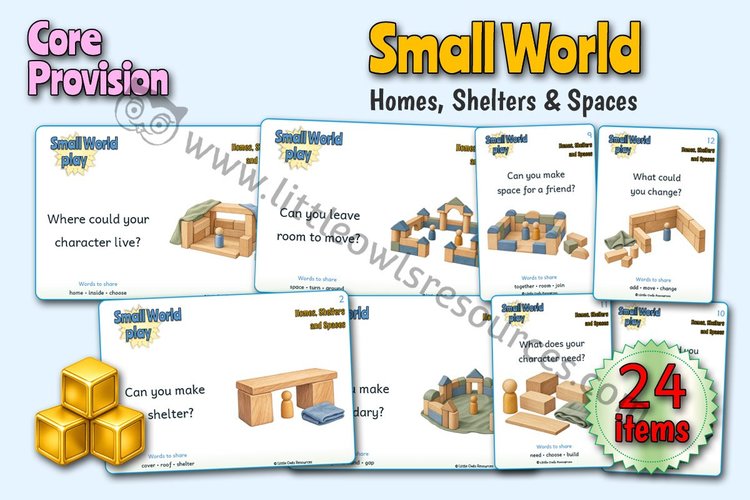
Homes, Shelters & Spaces
Offers small-world invitations using fabric, homes and shelters that children can cover and change.
Preschool–KS1 · Adapt materials and support for younger children.
View and Download Resource →
This selection is being reviewed. Please use the resource gateways below.
Find practical resources for your setting
Start with an age gateway
Useful routes into practice
- Schemas & schematic play
Find further schema guidance and resources for responding to repeated play interests.
- Small-world provision
Explore materials and invitations for children to cover, hide and reveal within their own play.