
EYFS definition
Open-ended resources are materials or equipment that can be used in more than one way, without a single predetermined result. In EYFS practice, they give children possibilities for exploring, representing ideas and developing their own play.
What does “open-ended” mean here?
A collection of blocks can become a bridge, a pattern, a house or something else entirely. Clay can be shaped and reshaped; fabric can suggest a costume, a roof or a place to rest a toy.
Loose parts are one example. Open-ended describes the possibilities for using a resource, while loose parts usually describes materials that can be moved and combined.
What might it look like in practice?
- Exploring how suitable containers fit together or hold different amounts.
- Using drawing materials to make a map, a sign or an invented design.
- Combining figures and building materials to create a changing story setting.
The same resource can support different interests and levels of experience. Familiarity may help children discover further possibilities over time.
How can adults support exploration?
Adults can make suitable materials accessible, introduce an unfamiliar tool or respond to what a child is trying to do. An invitation or demonstration can offer a starting point while leaving other uses open.
Open-ended resources can sit alongside puzzles, games and other materials with more defined purposes. The useful balance depends on the children, the learning intentions and the setting.
Further Guidance | Related Documents
Explore resources connected with this term. Each card identifies the resource’s intended age group and access type.
Highlighted resource
-
 View resource
All Access
Autumn Heuristic Play Cards for Toddlers
Explore invitations for toddlers to discover different ways of handling and combining suitable objects.
Toddlers · autumn-themed practitioner prompts
View resource details →
This selection is being reviewed. Please use the resource gateways below.
Related resources
Scroll sideways, focus the list and use your arrow keys, or use the buttons.
-
 View resource
All Access
Autumn Clay & Malleable Play Invitation Cards
Use optional clay invitations while leaving children free to shape and change their own creations.
Preschool & Reception · adapt materials and adult support
View resource details → -
 View resource
All Access
Autumn Woodland Small World: Habitat Invitations
Combine blocks, fabric and other resources to create and change woodland story settings.
Preschool & Reception · autumn-themed small-world play
View resource details → -
 View resource
All Access
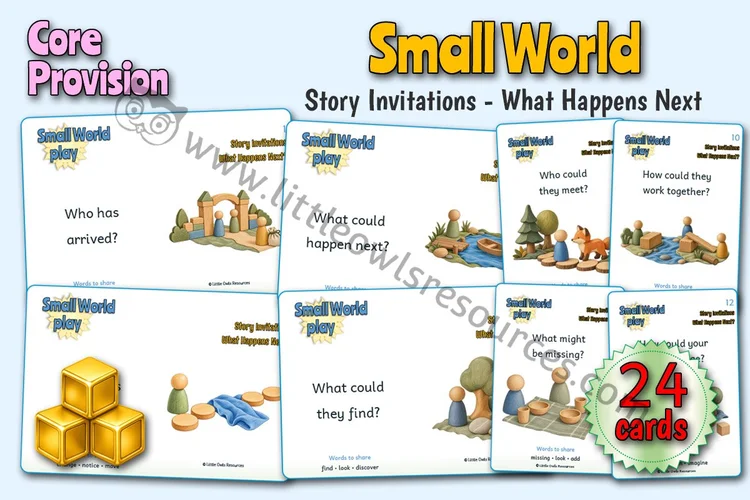
Story Invitations — What Happens Next
Offer a possible story moment for children to develop in their own way.
Preschool & Reception · optional small-world prompts
View and Download Resource → -
 View resource
All Access
Universal Continuous Provision Pack | Preschool 3–4 Years
Consider flexible resources and adult support within everyday preschool provision.
Preschool · continuous provision guidance
View resource details →
This selection is being reviewed. Please use the resource gateways below.
Find practical resources for your setting
Start with an age gateway
Useful routes into practice
- Construction & building
Explore building resources that can support varied designs and ideas.
- Art & craft
Browse resources for experimenting with materials and making choices.