
EYFS definition
Types of play are descriptions of the different ways children explore, imagine, move and interact while playing. In the EYFS, these terms can help practitioners discuss experiences and provision, although there is no single classification used by every educational approach.
Common descriptions of play
- Exploratory or sensory play: investigating properties, actions and effects.
- Constructive play: making or arranging something, such as a shelter or model.
- Pretend or imaginative play: using objects, actions and roles to represent ideas.
- Physical play: exploring movement and bodily skills.
- Games with rules: playing within agreed patterns, turns or shared rules.
These descriptions overlap. Children making a pretend café might build a counter, explore materials, take roles and invent a turn-taking game within one experience.
Playing alone, alongside or together
Other labels describe the social arrangement. Solitary play means playing independently; parallel play means playing alongside others without organising a shared activity; cooperative play involves working on a shared play idea.
Children can move between these arrangements according to their interests, confidence and circumstances. The labels need not be treated as a fixed ladder that makes one form of play more valuable than another.
How might the terms help practitioners?
They can support reflection on the experiences children can access and the support that may help them participate. A child’s play does not need to fit neatly into one box.
Child-led, guided and adult-led describe a different dimension: how the experience is directed. They can occur within several forms of play.
Further Guidance | Related Documents
Explore resources connected with this term. Each card identifies the resource’s intended age group and access type.
Highlighted resource
-
 View resource
All Access
Pedagogy Guidance (Birth–5) | Whole-Setting Document (Overview)
Explore how play, interactions and environments connect within a whole-setting approach.
Birth–5 · practitioner guidance
View resource details →
This selection is being reviewed. Please use the resource gateways below.
Related resources
Scroll sideways, focus the list and use your arrow keys, or use the buttons.
-
 View resource
Free to read
Preschool Pedagogy Position Statement | 3-4 Years
Read one approach to balancing play and purposeful adult support in preschool.
Preschool · free guidance
Read guidance → -
 View resource
All Access
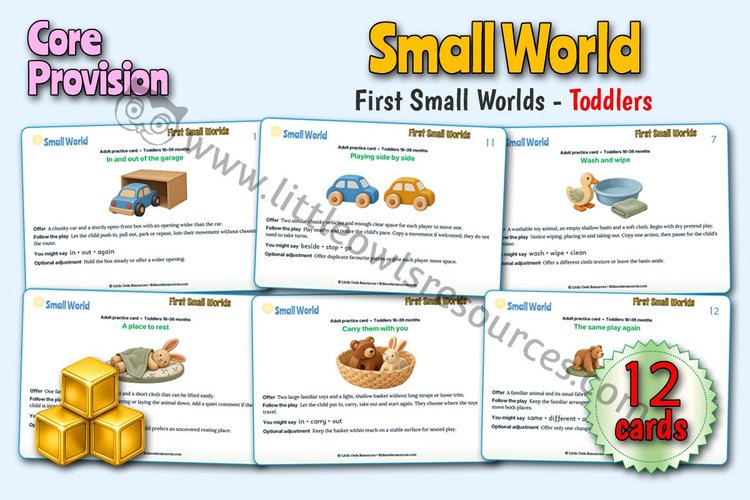
First Small Worlds — Toddlers
Find starting points for early small-world exploration and emerging pretend meanings.
Toddlers · adult-facing provision cards
View and Download Resource → -
 View resource
All Access
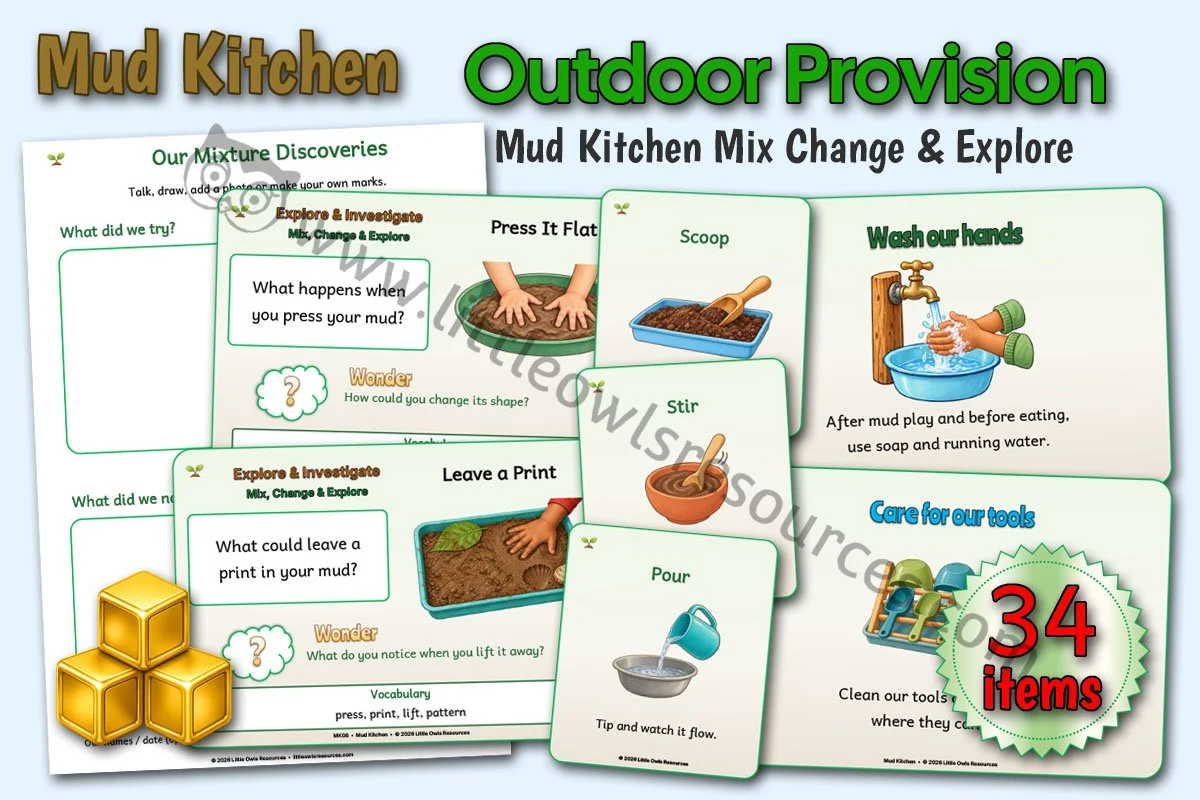
Mud Kitchen — Mix, Change & Explore
Offer practical starting points where sensory exploration and pretend play can overlap.
Toddlers–Reception · adapt materials and support
View and Download Resource → -
 View resource
All Access
Autumn Woodland Small World: Habitat Invitations
Combine constructing habitats with children’s small-world ideas and stories.
Preschool & Reception · adapt for younger children
View resource details →
This selection is being reviewed. Please use the resource gateways below.
Find practical resources for your setting
Start with an age gateway
Useful routes into practice
- Role play & home corner
Find materials for pretend roles and shared scenarios.
- Outdoor provision & play
Explore resources for movement, investigation and imaginative play.