
EYFS definition
Provision mapping is a way of setting out the learning opportunities or support a setting offers and how they connect with children’s needs or curriculum aims. In EYFS practice, the term may describe a continuous provision map or an overview of support for children with SEND.
Which meaning is being used?
A continuous provision map can connect areas, materials, adult interactions and learning possibilities. A SEND provision map may summarise needs, support, staffing and arrangements for reviewing that support.
The two can inform each other, but they answer different questions. A map of what is available across a room does not, by itself, show the individual support a child receives.
What might a map include?
- A construction-area map connects building materials with spatial language, collaboration and adult prompts.
- A baby-room map links accessible spaces and familiar routines with movement, communication and responsive care.
- A support map identifies an agreed communication approach, who will use it and when it will be reviewed.
How can mapping help in practice?
A map can help colleagues explain provision, notice gaps and coordinate support. Its format depends on its purpose: a short table, annotated plan or discussion record may each be useful.
Mapping describes planned opportunities and arrangements. Adults still need to notice how children experience them. It does not establish that every child has learned something simply because a resource or activity is listed.
Further Guidance | Related Documents
Explore resources connected with this term. Each card identifies the resource’s intended age group and access type.
Highlighted resource
-
 View resource
All Access
Preschool Environment & Continuous Provision Map Audit Pack
Connect preschool environment review with provision mapping and inclusion planning.
Preschool · optional mapping and audit pack
View resource details →
This selection is being reviewed. Please use the resource gateways below.
Related resources
Scroll sideways, focus the list and use your arrow keys, or use the buttons.
-
 View resource
All Access
Continuous Provision Maps | Toddlers (18–36 Months)
Explore links between toddler provision, curriculum intentions, language and adult interaction.
Toddlers · practitioner guidance
View resource details → -
 View resource
All Access
Baby Room Continuous Provision Maps | 0-9 & 9-18 months
Consider how baby-room environments, routines and responsive care support different developmental phases.
Babies · 0–9 and 9–18 months
View resource details → -
 View resource
All Access
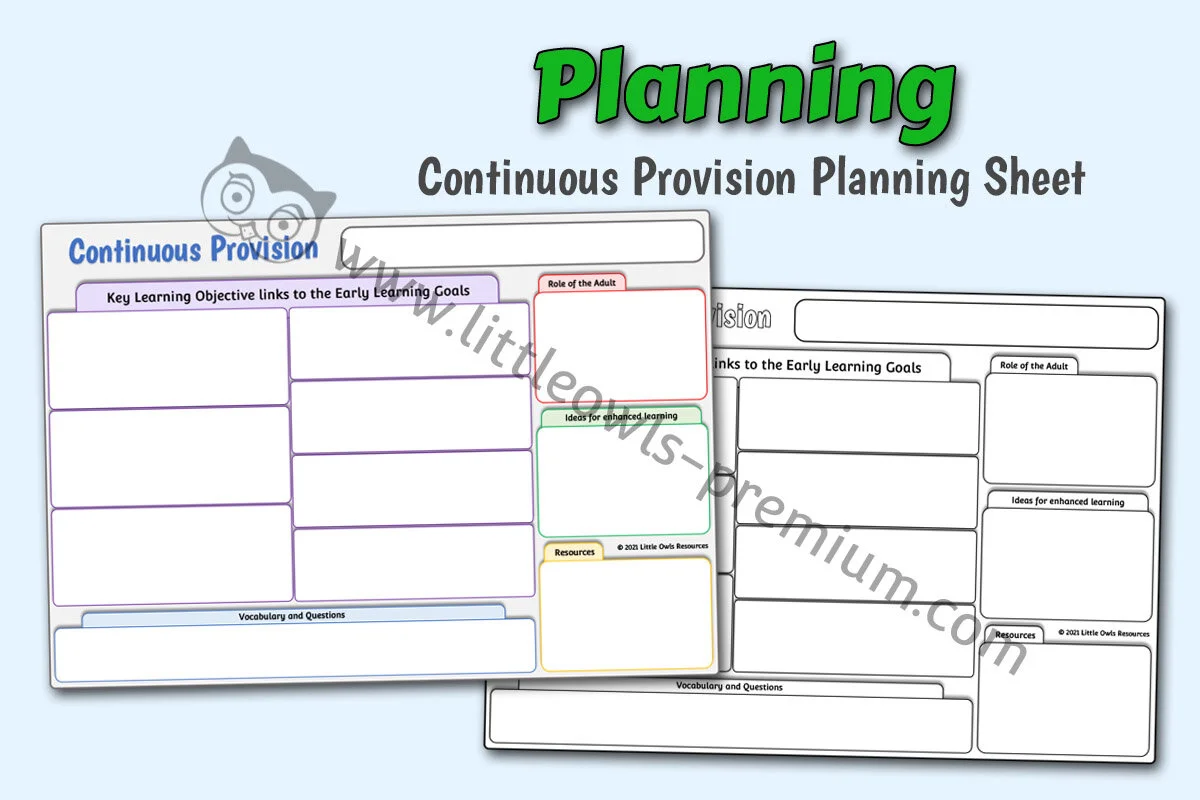
PLANNING - Continuous Provision Planning Sheet
Record the purpose, resources and adult role for an area of provision.
EYFS · editable planning sheet
View and Download Resource → -
 View resource
All Access
Reception Universal Continuous Provision: Structure & Rationale
Explore the structure and rationale of Reception continuous provision before choosing a mapping format.
Reception · practitioner guidance
View resource details →
This selection is being reviewed. Please use the resource gateways below.
Find practical resources for your setting
Start with an age gateway
Useful routes into practice
- EYFS planning
Explore planning guidance and tools for different ages and setting types.