
Part of the EYFS Glossary
This article forms part of our EYFS Glossary of Early Years Education Terms, which explains key curriculum, pedagogy, and assessment language used in early years practice.
Curriculum Intent refers to the overall aims and purpose of a curriculum. It describes what educators want children to learn and experience, and the knowledge, skills, and understanding that the curriculum is designed to support over time.
What is Curriculum Intent?
Curriculum intent describes the goals and priorities that guide the design of a curriculum. It explains what practitioners want children to learn and why particular experiences and opportunities are provided.
In the context of the Early Years Foundation Stage (EYFS), curriculum intent reflects the ways in which early years settings plan learning experiences that support children’s development across the Areas of Learning and Development.
A clearly considered curriculum intent helps practitioners ensure that learning opportunities are purposeful and aligned with the developmental needs of young children.
Curriculum Intent in the EYFS Context
In early years settings, curriculum intent is often shaped by an understanding of how young children learn and develop. Because children in the EYFS learn through play, exploration, and relationships, curriculum intentions typically focus on providing rich experiences that support holistic development.
This may include supporting children to:
develop communication and language skills
build confidence and independence
explore and understand the world around them
develop early mathematical thinking
engage in creative expression
develop physical coordination and wellbeing
These intentions help guide decisions about the learning environment, experiences, and interactions that practitioners provide.
What Shapes Curriculum Intent in Early Years
Several factors can influence how curriculum intent is developed within an early years setting.
These may include:
the developmental needs of the children in the setting
the expectations of the EYFS framework
practitioners’ professional knowledge and experience
the local community and cultural context
the values and priorities of the setting
Curriculum intent is often shaped through reflection and discussion within the setting to ensure that it supports children’s learning in meaningful ways.
Curriculum Intent and Children’s Development
Curriculum intent in the EYFS typically focuses on supporting children’s broad development rather than narrowly defined academic outcomes. This reflects the understanding that early childhood learning is interconnected and develops through a range of experiences.
By providing opportunities that support communication, social interaction, exploration, and problem-solving, practitioners aim to help children develop the foundations that support learning throughout their early years and beyond.
Statutory Context
The EYFS Statutory Framework sets out requirements for supporting children’s learning and development across the seven Areas of Learning and Development. While the framework provides expectations for what children should experience, it allows settings flexibility in how they design and deliver their curriculum.
Guidance such as Development Matters can support practitioners in considering how learning experiences may contribute to children’s development over time.
Curriculum intent therefore reflects how a setting interprets and organises these expectations to support children’s learning.
Common Questions About Curriculum Intent
-
Curriculum intent describes what a setting aims for children to learn and experience. Curriculum implementation refers to how those intentions are delivered through everyday practice, including environments, activities, and interactions.
-
Curriculum impact refers to the outcomes of the curriculum and the difference it makes to children’s learning and development. Curriculum intent focuses on the aims of the curriculum, while impact considers the results of those intentions in practice.
-
Many settings document their curriculum intent to help communicate their educational aims and priorities. However, the most important aspect is that practitioners share a clear understanding of the purpose and goals of their curriculum.
Summary
Curriculum Intent refers to the aims and purpose that guide the design of a curriculum. In the Early Years Foundation Stage, it reflects what practitioners want children to learn and experience through the opportunities and environments provided.
By establishing clear intentions for children’s development and learning, practitioners can plan experiences that support meaningful and coherent learning across the early years.
Related Glossary Terms
The following glossary entries are closely related to Curriculum Intent and provide additional context:
Continuous Provision
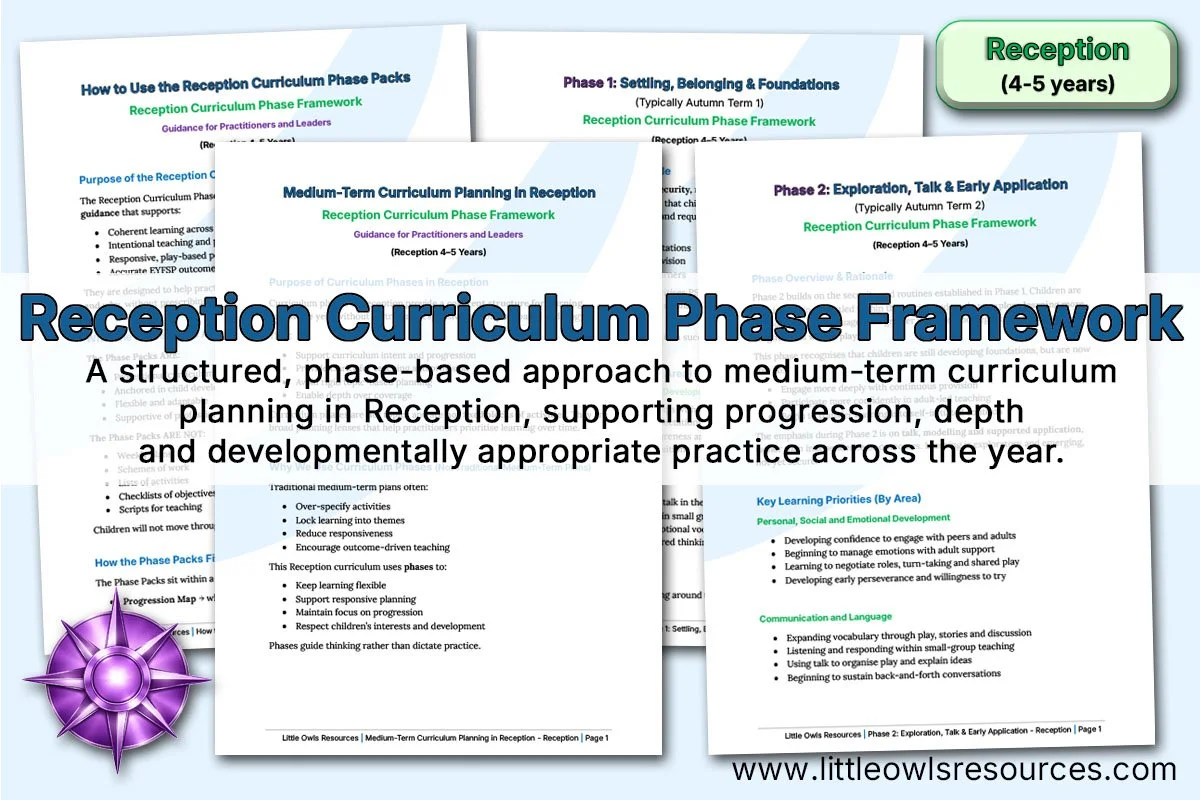
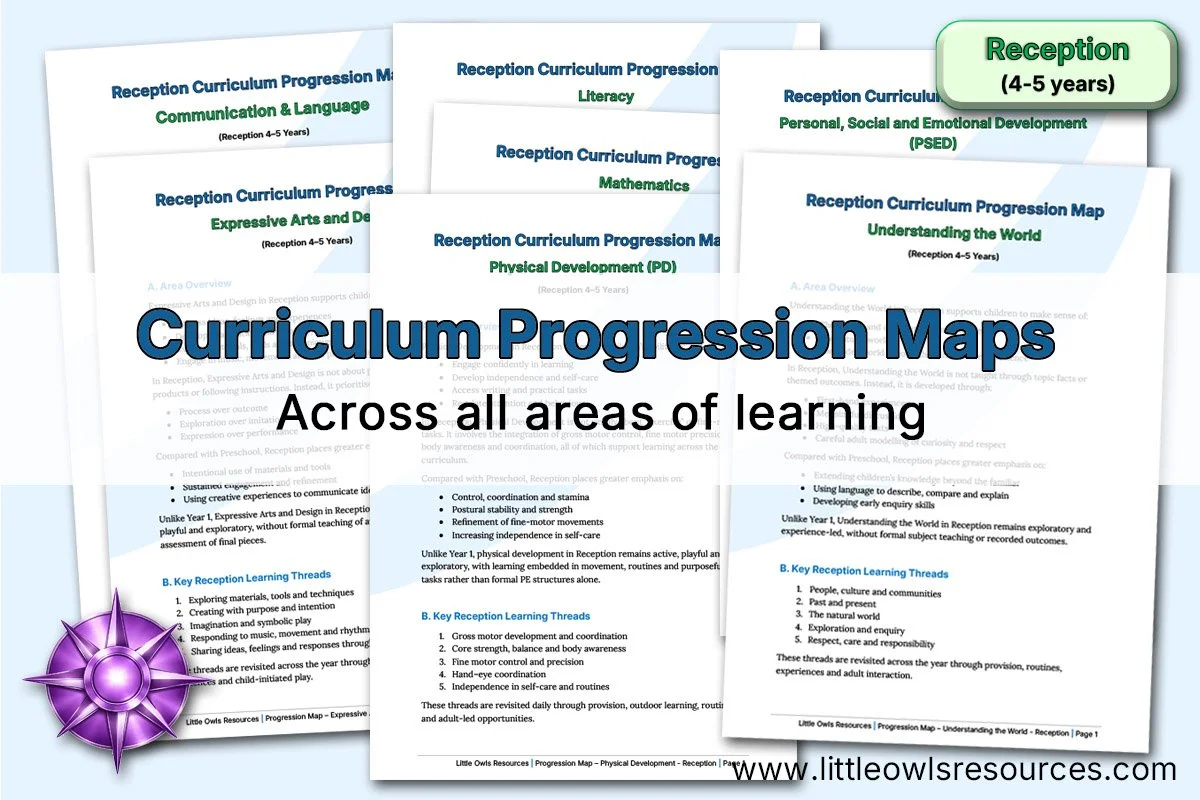
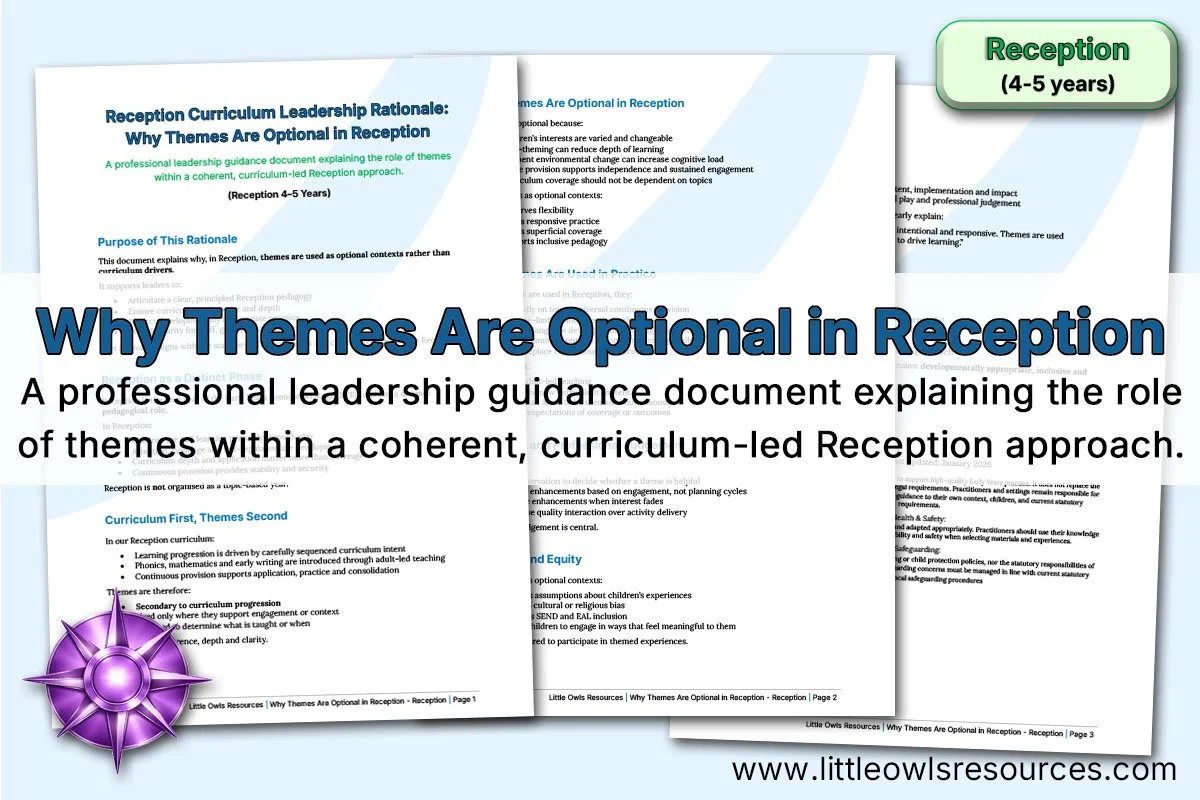
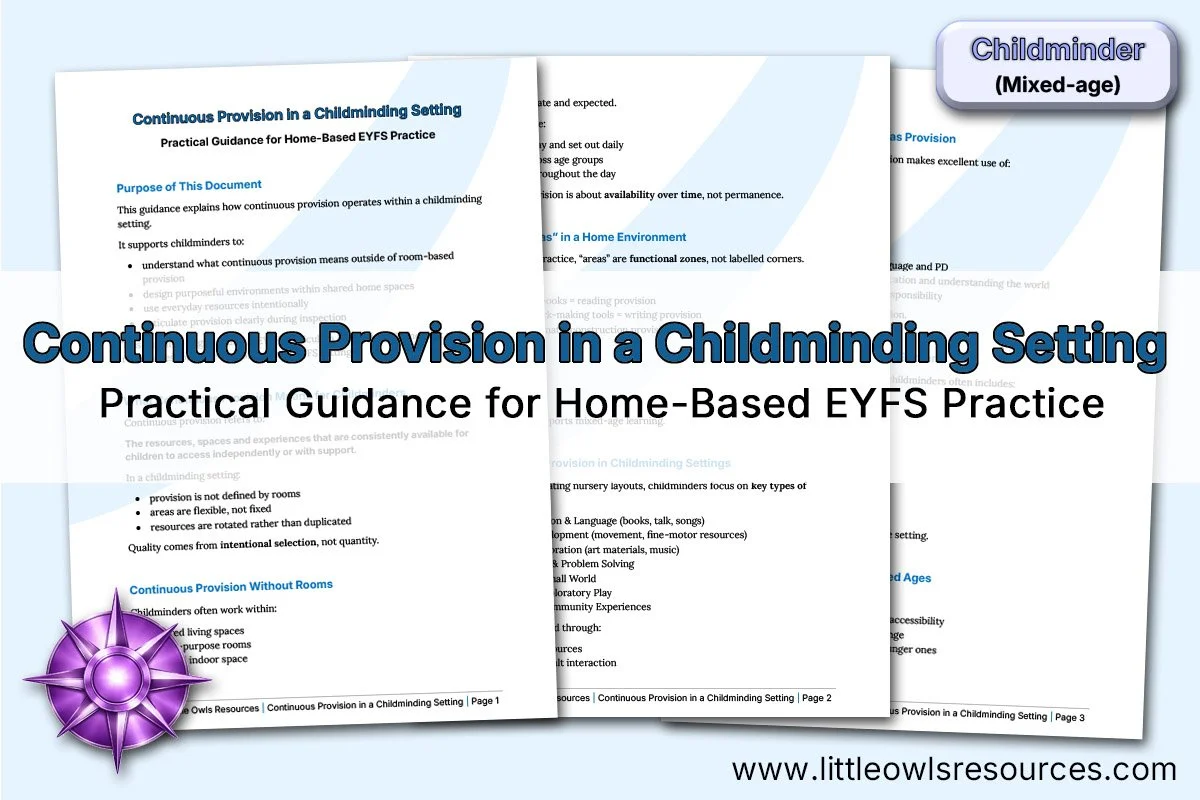
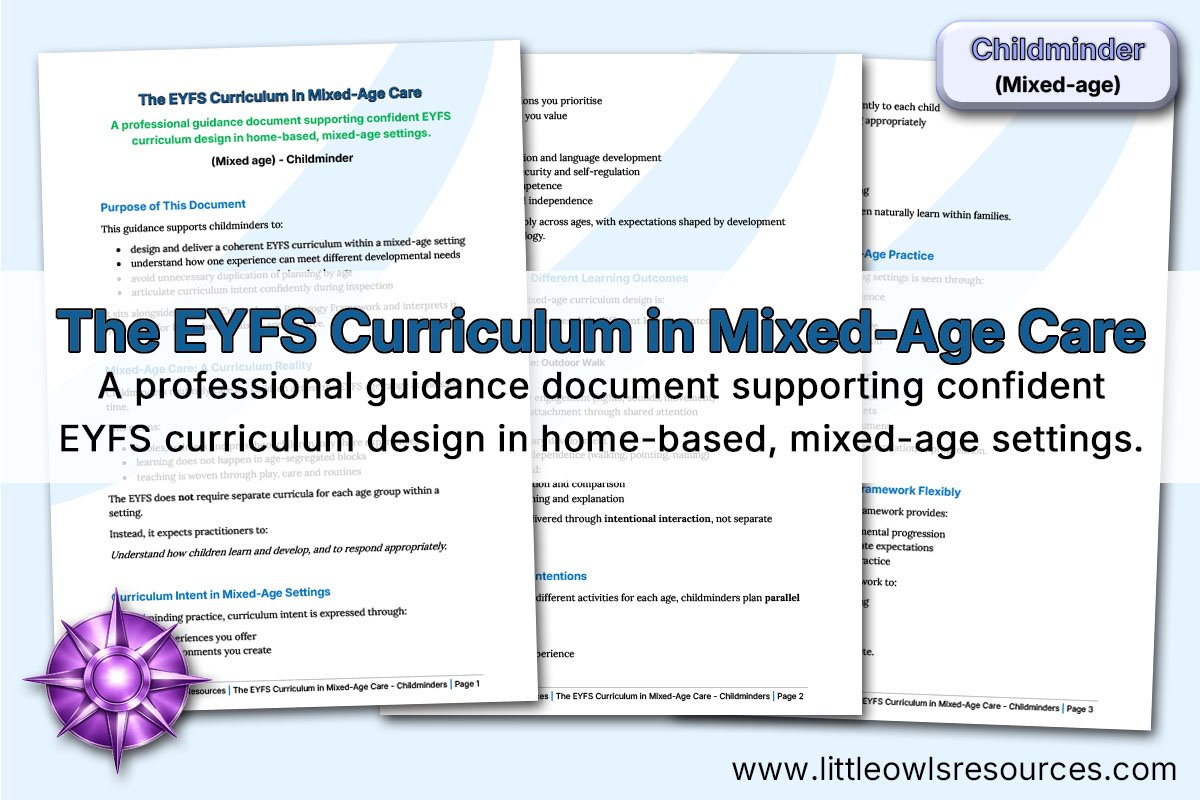
Further Guidance | Related Documents within our ‘EYFS Curriculum & Pedagogy’ suite:
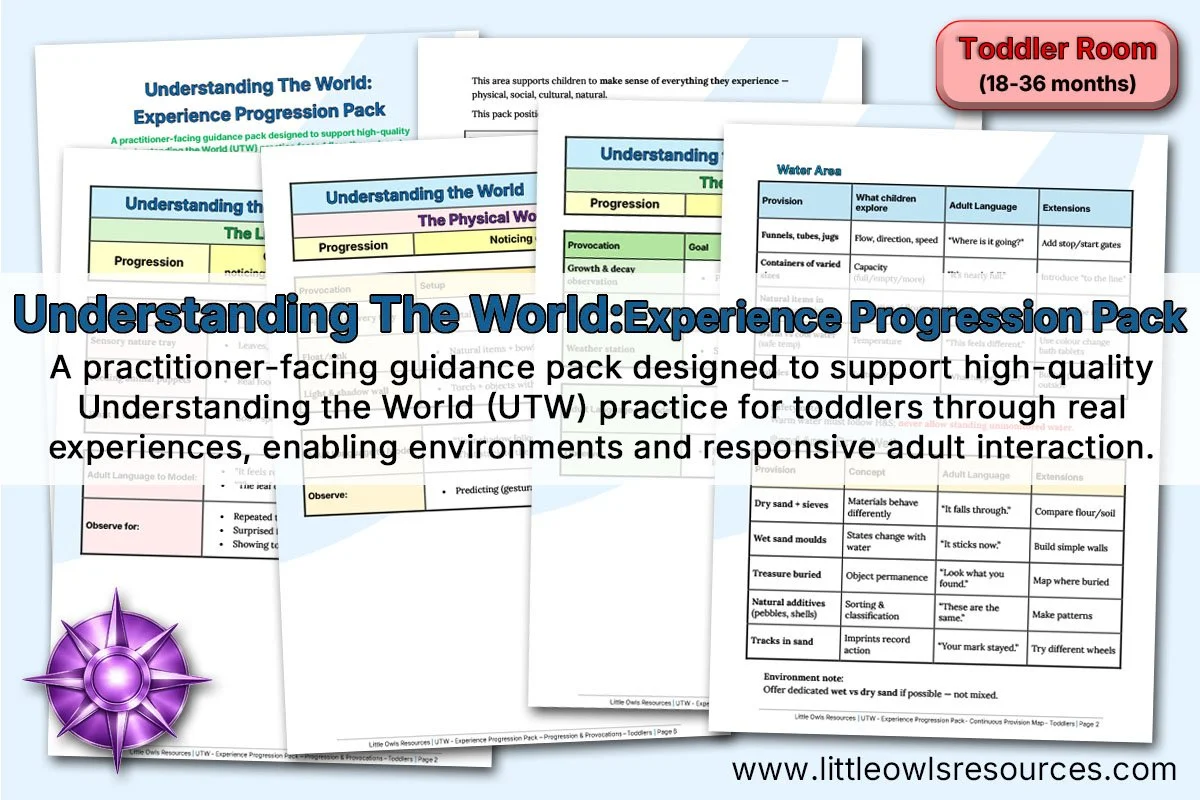
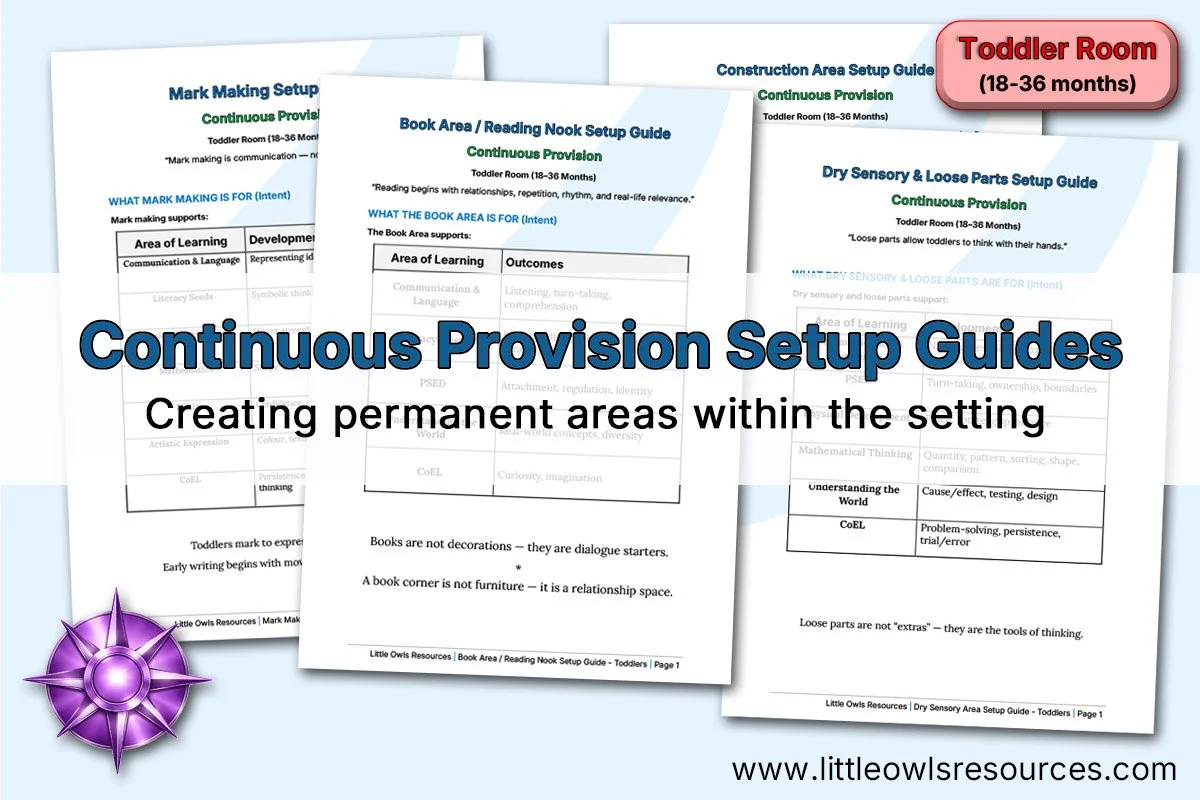
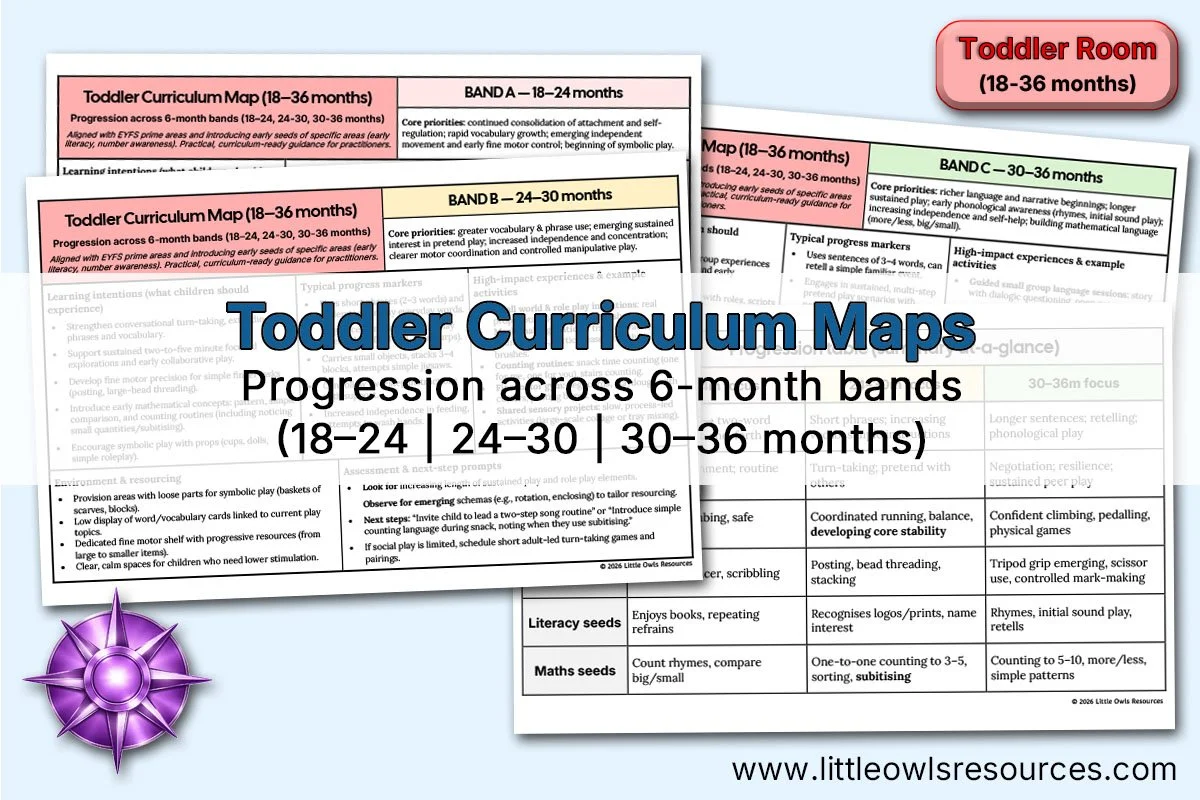
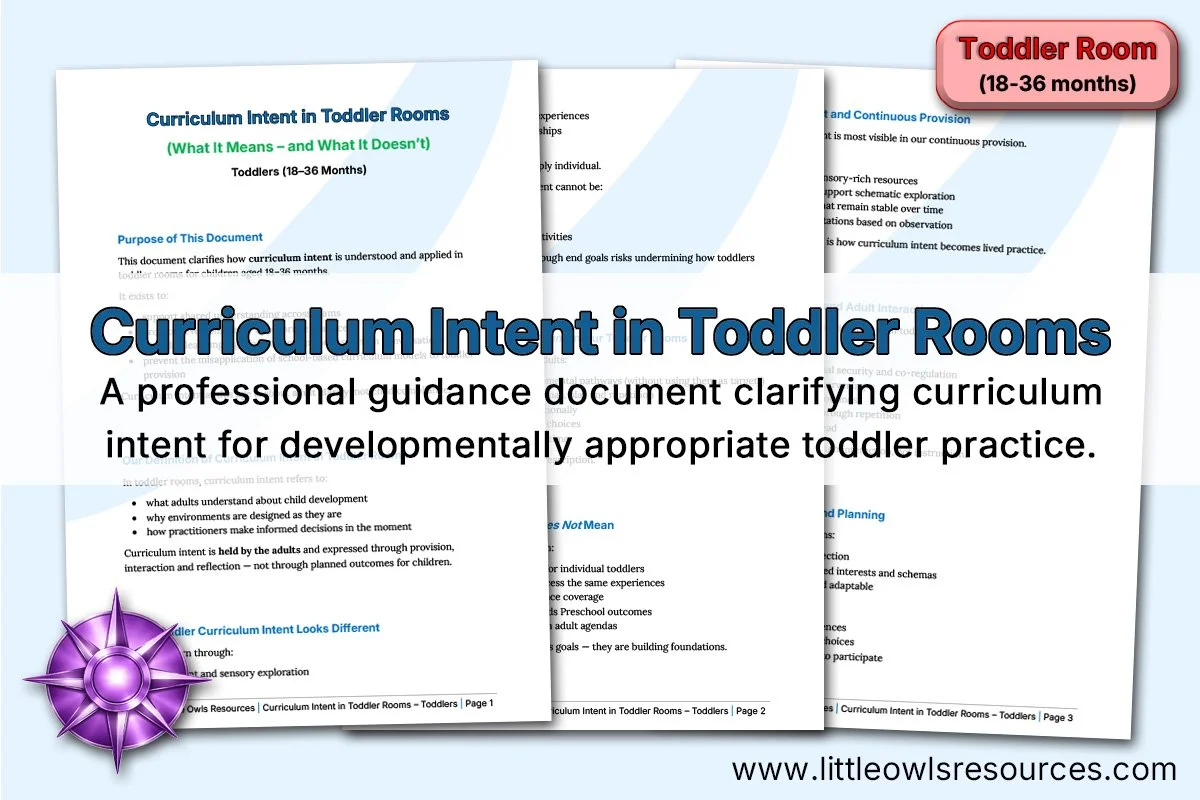
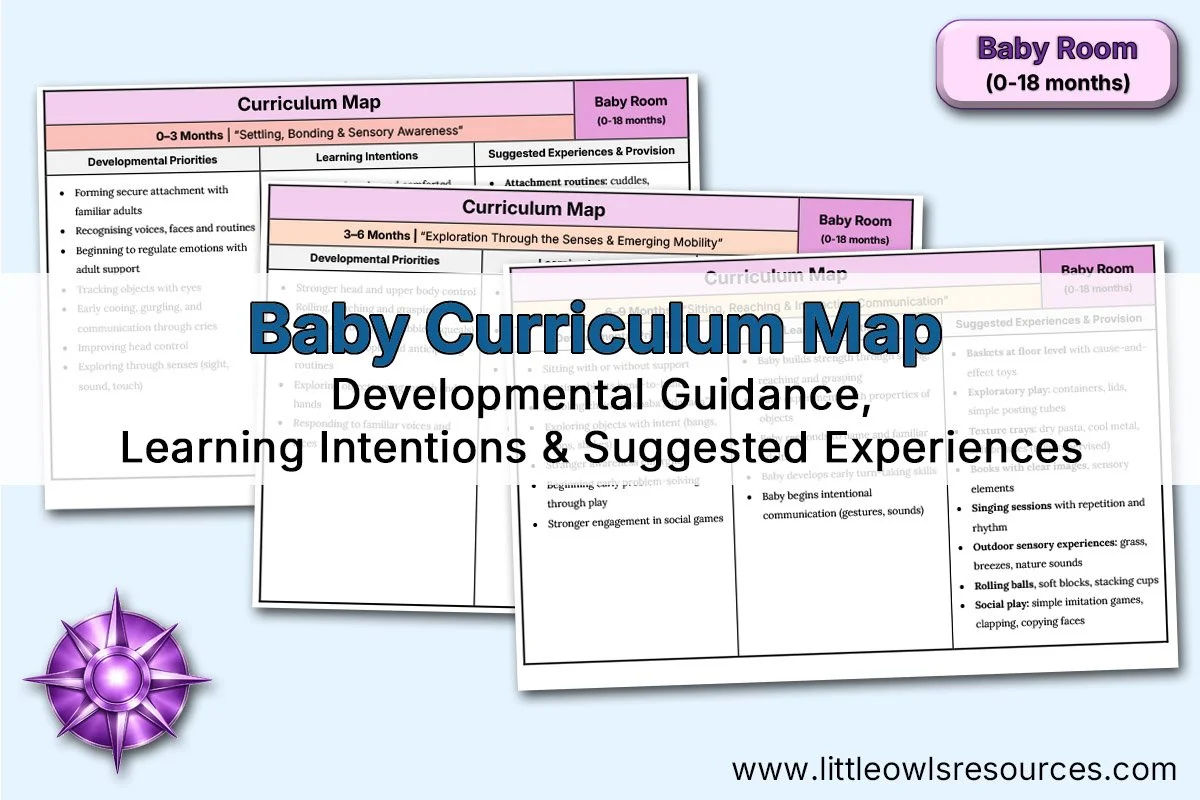
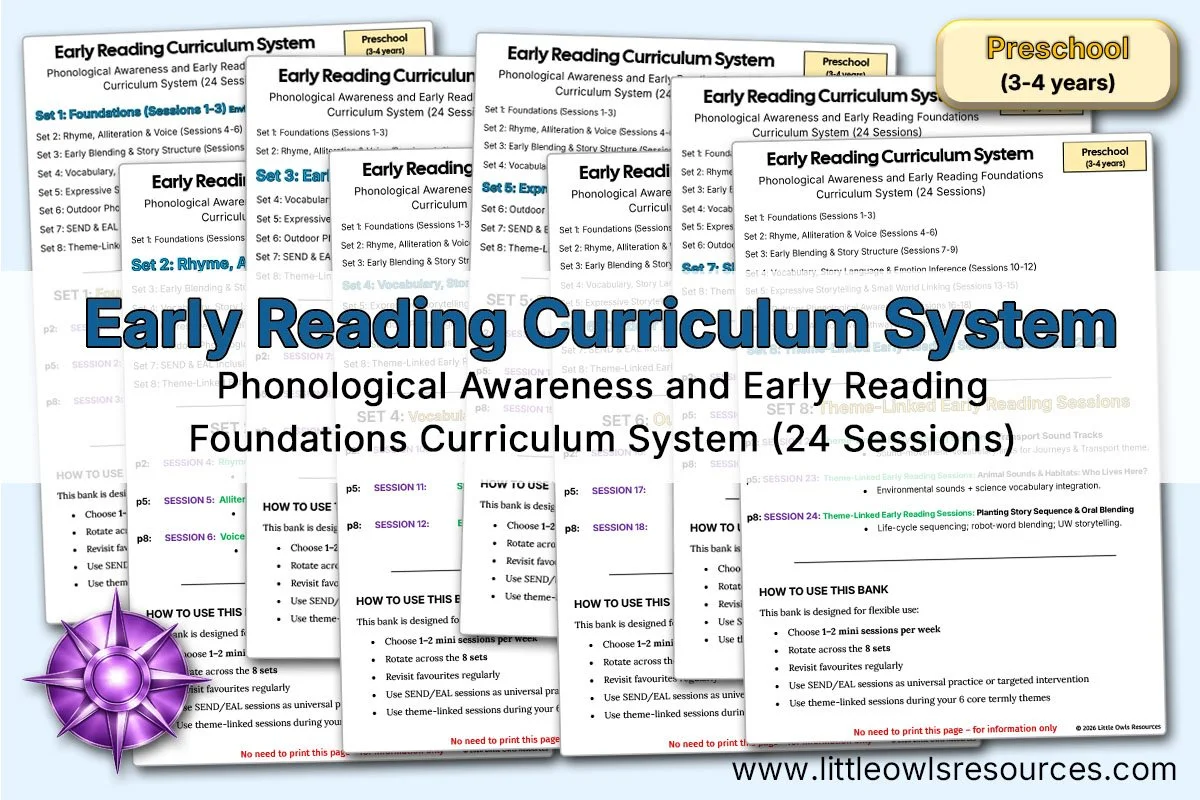
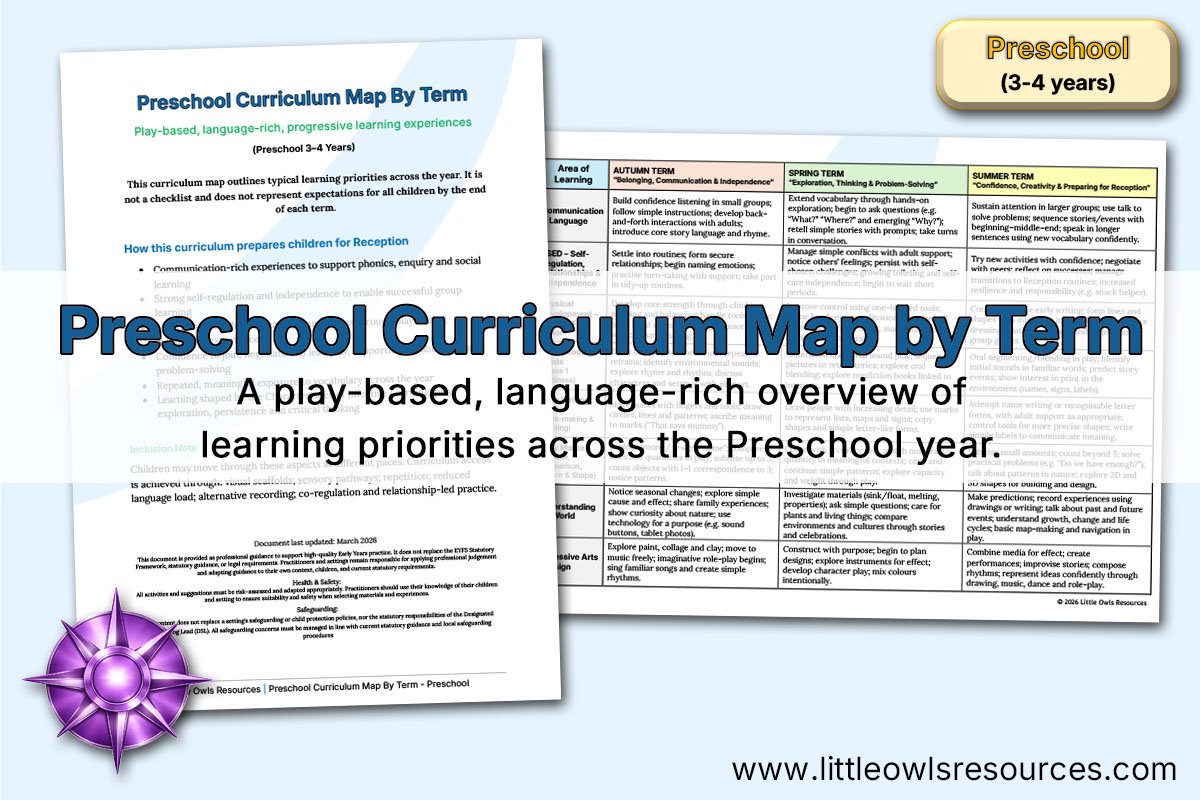
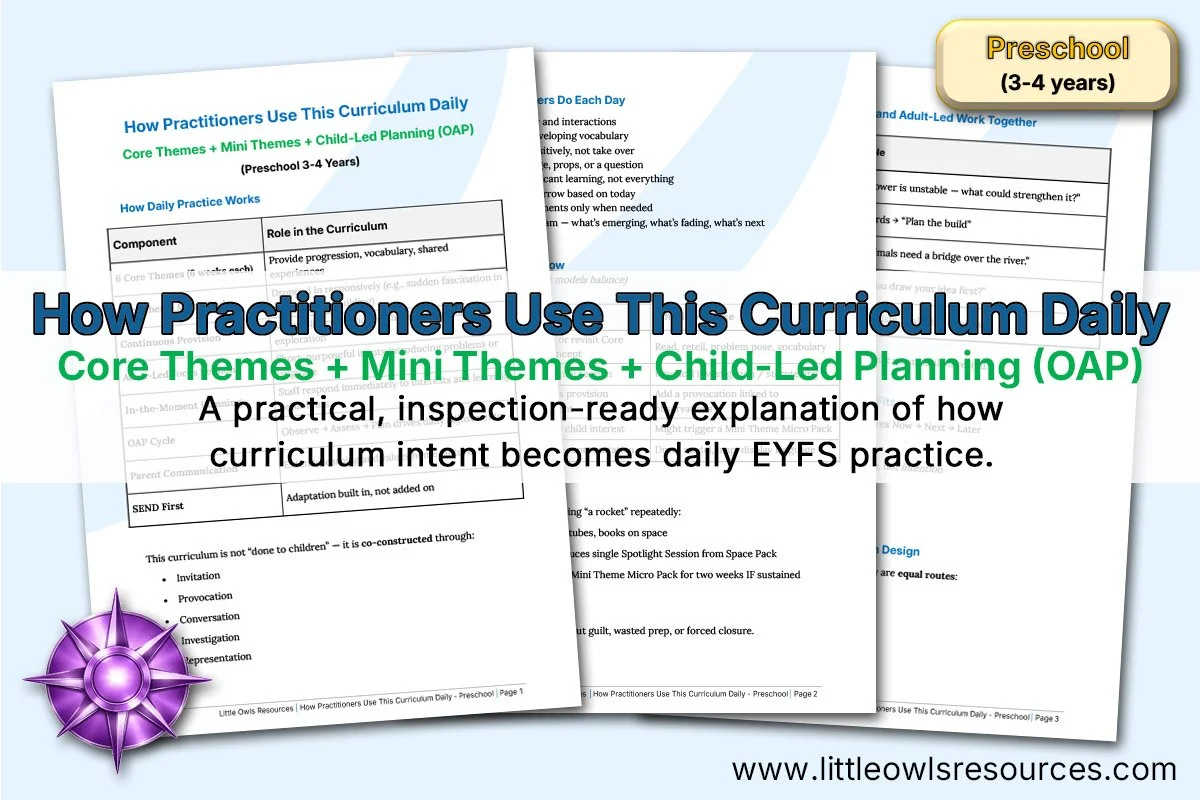
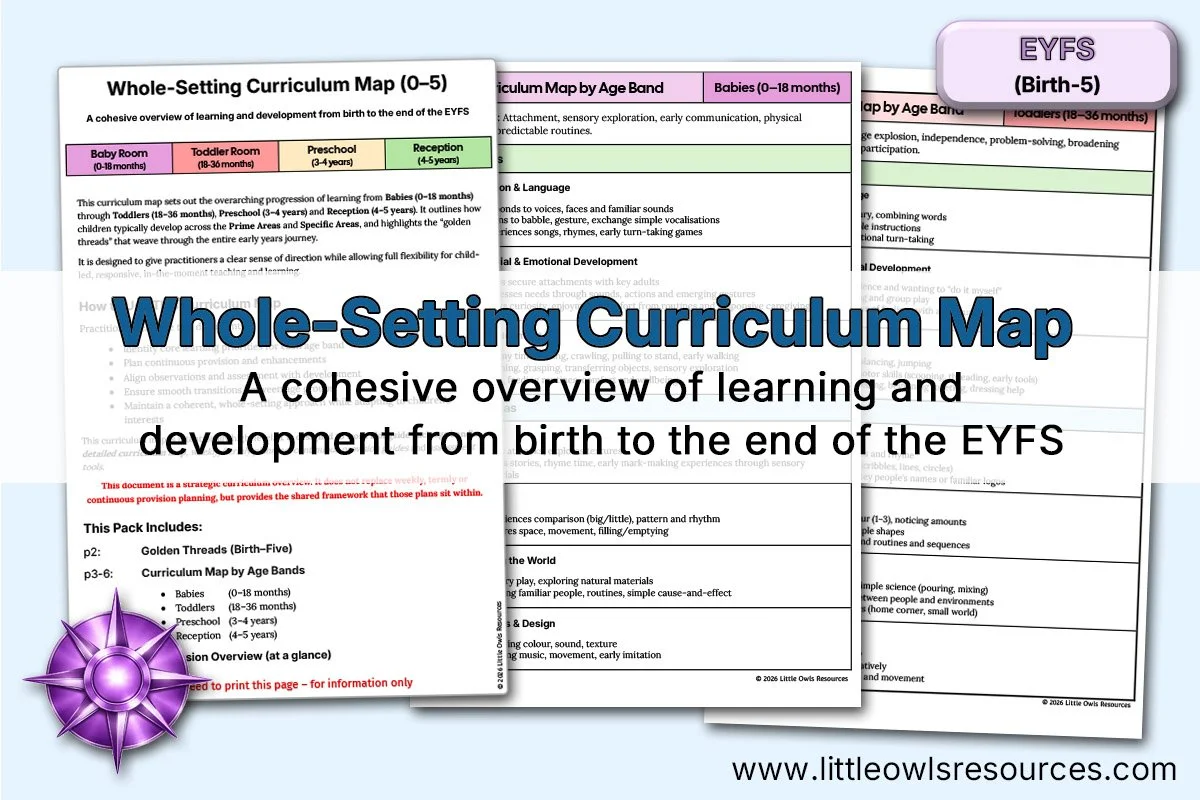
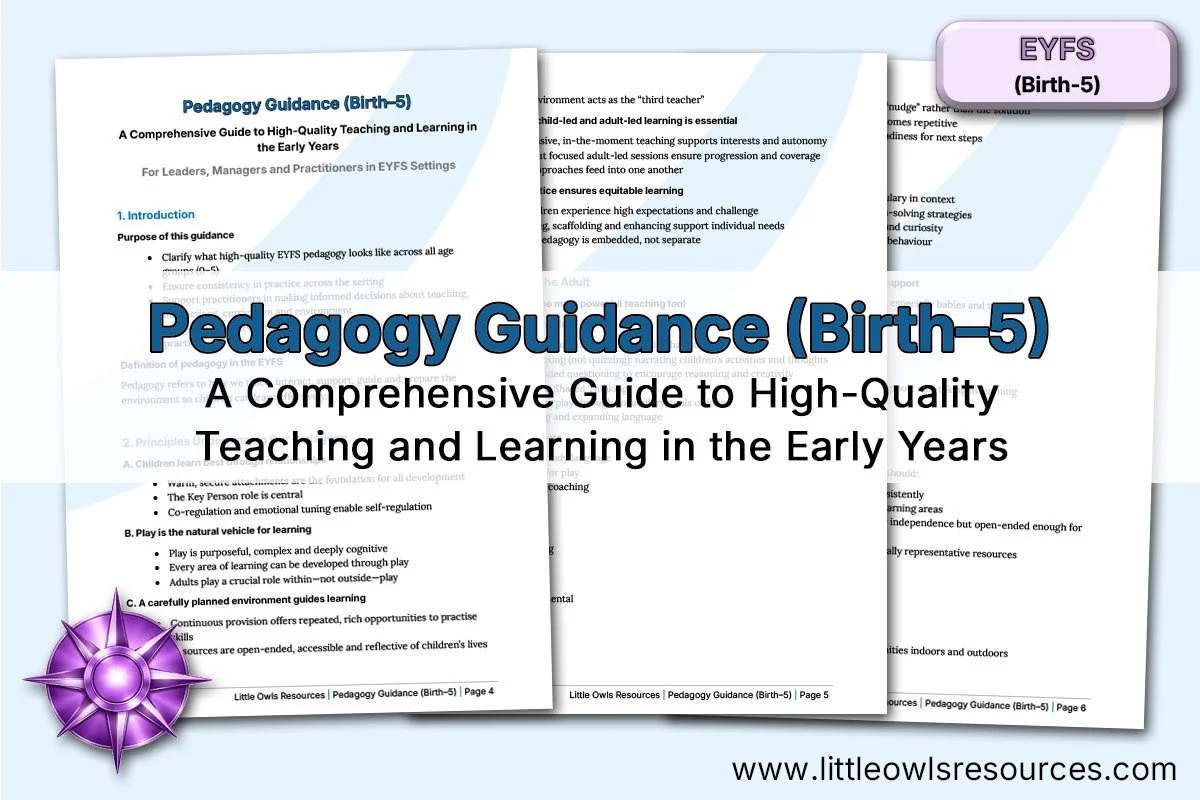
Below you will find a selection of guidance documents from within our Little Owls Resources ‘Curriculum & Pedagogy’ area which explore this concept (& its age-specific application within EYFS settings) in greater depth.
[For additional documents please visit our support pathways: Baby | Toddler | Preschool | Reception | Mixed-Age]










Disclaimer
The information provided in this glossary is intended to support understanding of terminology commonly used within the Early Years Foundation Stage (EYFS). It does not constitute official guidance and should not be considered a substitute for the EYFS Statutory Framework or other Department for Education publications.
Terminology and interpretations may vary between settings and professional contexts.