
Part of the EYFS Glossary
This article forms part of our EYFS Glossary of Early Years Education Terms, which explains key curriculum, pedagogy, and assessment language used in early years practice.
The Observation–Assessment–Planning (OAP) Cycle describes the ongoing process through which practitioners observe children’s learning, assess their development, and plan experiences that support their continued progress.
What is the Observation–Assessment–Planning Cycle?
The Observation–Assessment–Planning (OAP) Cycle describes a continuous process used by early years practitioners to support children’s learning and development. It involves observing children during everyday experiences, interpreting those observations to understand children’s development, and planning opportunities that build on children’s interests and needs.
Rather than being a one-time process, the cycle is ongoing. Practitioners regularly observe children, reflect on what they notice, and adapt learning experiences accordingly. This approach helps ensure that provision remains responsive to children’s development.
Observation in the EYFS
Observation is the first stage of the OAP Cycle. Practitioners watch and listen to children during play and everyday activities to gain insight into their interests, abilities, and learning behaviours.
Observations may focus on:
children’s interactions with others
how children explore materials and resources
language and communication
problem-solving and thinking processes
engagement and persistence in activities
These observations help practitioners develop an understanding of each child’s learning and development.
Assessment in the OAP Cycle
Assessment involves interpreting observations to understand what children know, understand, and can do. In the EYFS, assessment is usually carried out informally through professional judgement rather than formal testing.
Practitioners consider a range of information when assessing children’s development, including:
observations of children’s play and learning
conversations with children
knowledge of children’s interests and experiences
examples of children’s work or activities
This process helps practitioners build a holistic picture of children’s development over time.
Planning for Children’s Learning
Planning is the stage in which practitioners use their understanding of children’s development to create learning opportunities that support progress.
Planning may involve:
adapting environments and resources
providing new experiences or challenges
responding to children’s interests
supporting learning through adult interactions
In many early years settings, planning is flexible and responsive, allowing practitioners to respond to children’s emerging interests and developmental needs.
How the OAP Cycle Supports Development
The Observation–Assessment–Planning Cycle helps ensure that learning experiences are meaningful and responsive to children’s development. By regularly observing and reflecting on children’s learning, practitioners can provide experiences that extend children’s understanding and support their progress.
This cyclical approach allows practitioners to continually adjust learning opportunities so that they remain appropriate for children’s interests and developmental stages.
Statutory Context
The EYFS emphasises the importance of observation and assessment in supporting children’s development. The EYFS Statutory Framework highlights the role of ongoing assessment through observation and professional knowledge of the child.
While the framework does not prescribe a specific planning model, the Observation–Assessment–Planning Cycle is commonly used in early years practice to support responsive teaching and learning.
Common Questions About the OAP Cycle
-
Observation allows practitioners to understand how children learn, what interests them, and what they are capable of doing. This understanding helps practitioners provide experiences that support children’s development.
-
Assessment within the OAP Cycle is usually informal and based on professional judgement rather than formal testing. Practitioners use their observations and knowledge of the child to understand development.
-
Planning in the early years is often flexible and responsive. Practitioners may adapt plans based on children’s interests, engagement, and developmental needs.
Summary
The Observation–Assessment–Planning (OAP) Cycle describes the ongoing process through which practitioners observe children’s learning, interpret those observations to understand development, and plan experiences that support continued progress.
By regularly observing and reflecting on children’s learning, practitioners can provide responsive environments and interactions that support development across the Early Years Foundation Stage.
Related Glossary Terms
The following glossary entries are closely related to the Observation-Assessment-Planning (OAP) Cycle and provide additional context:
Observation (EYFS)
Assessment for Learning (EYFS)
Continuous Provision
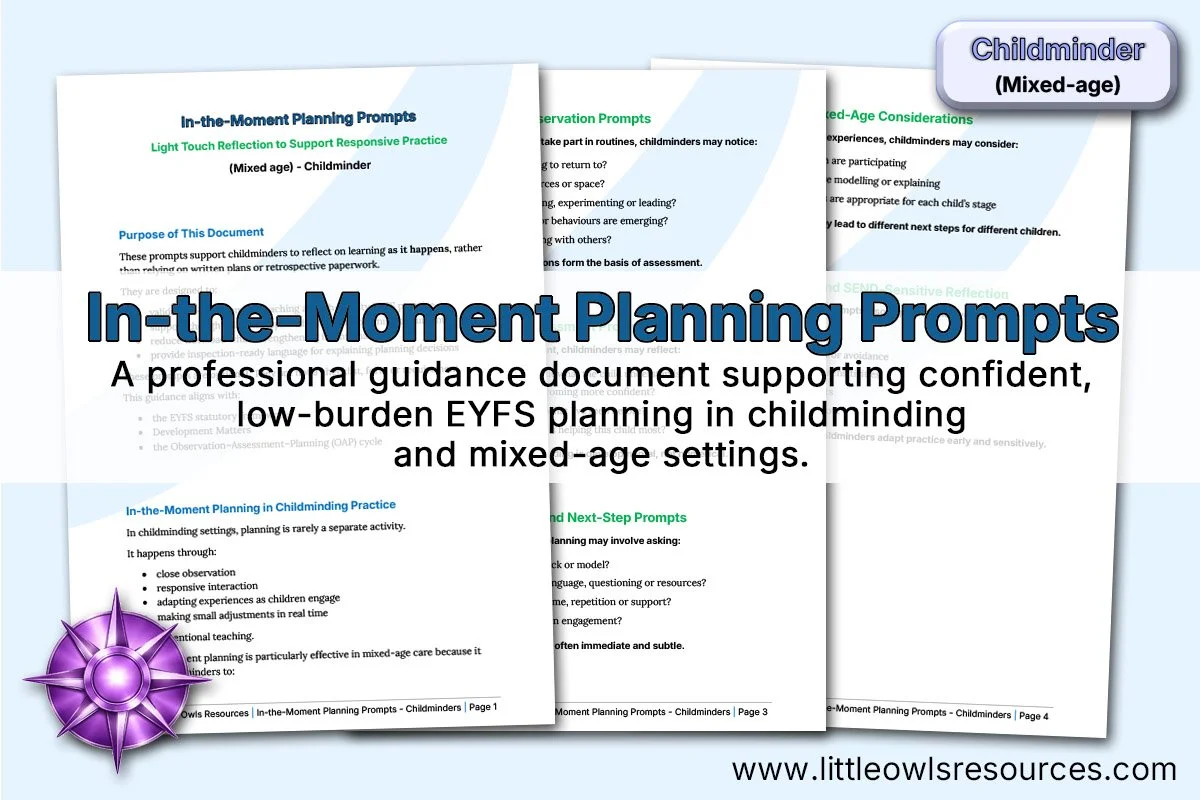
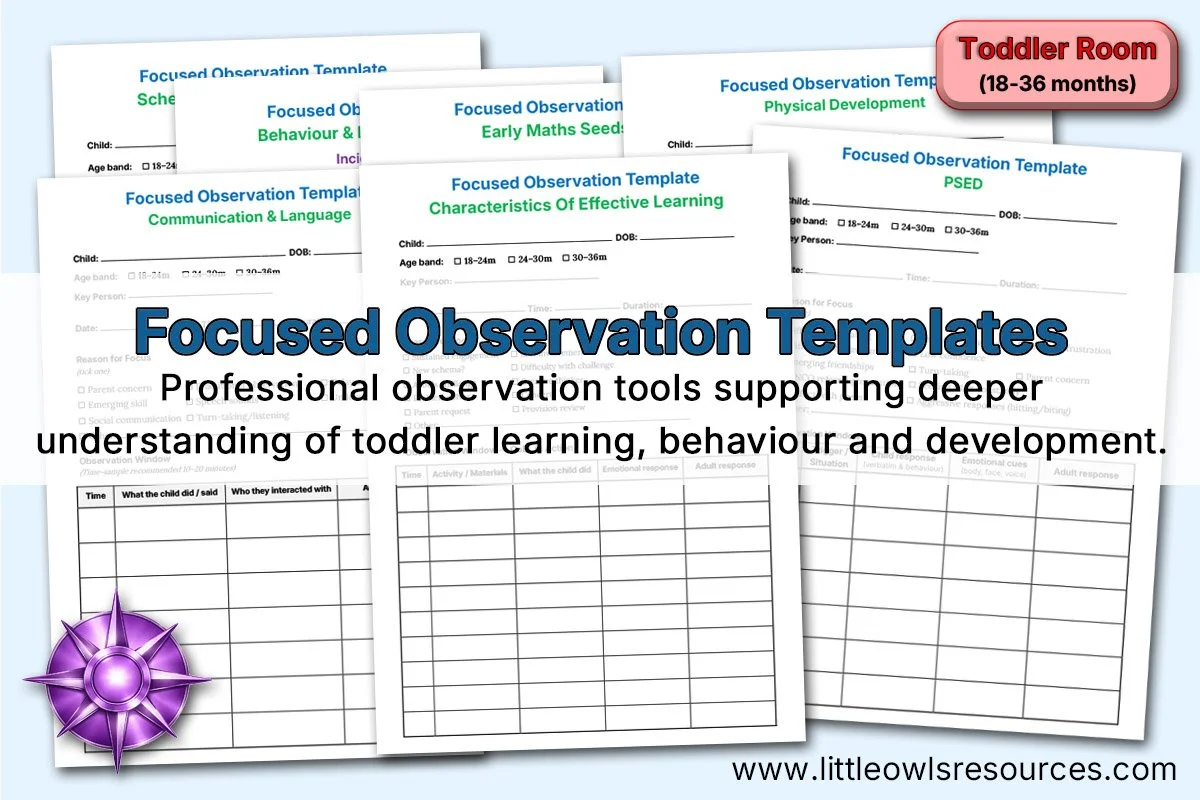
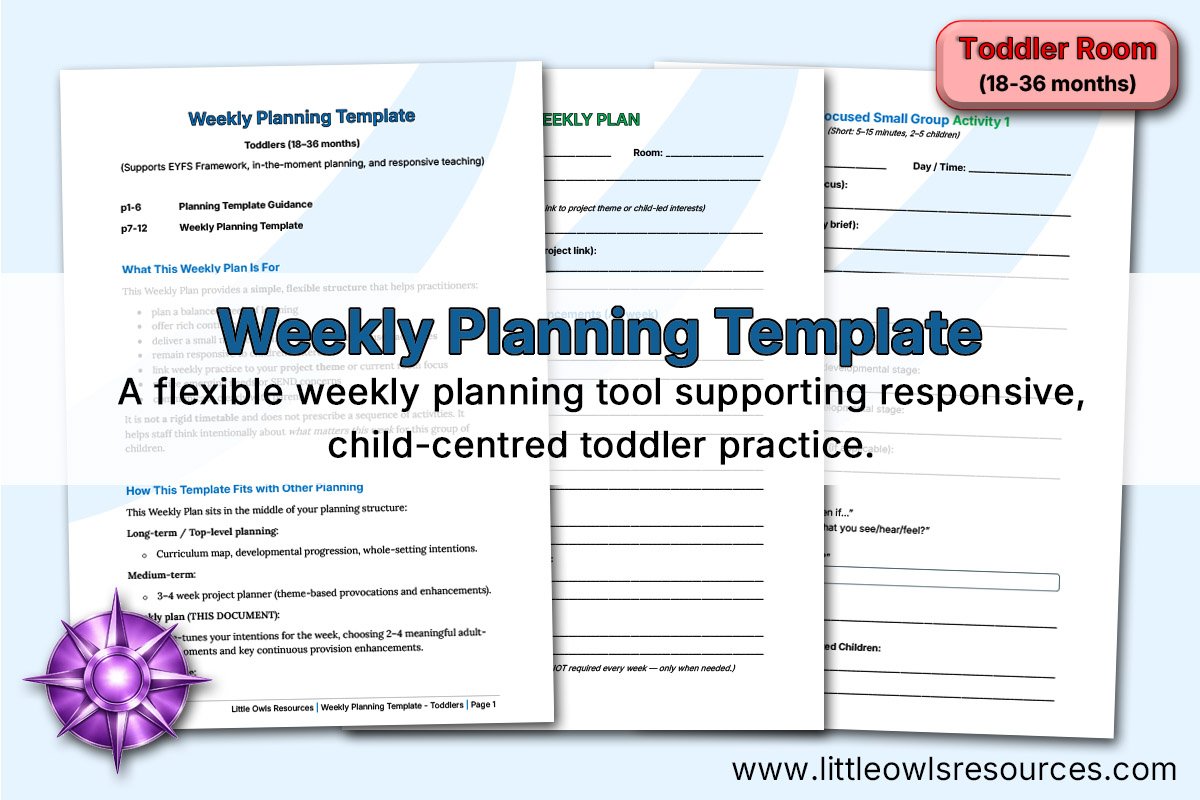
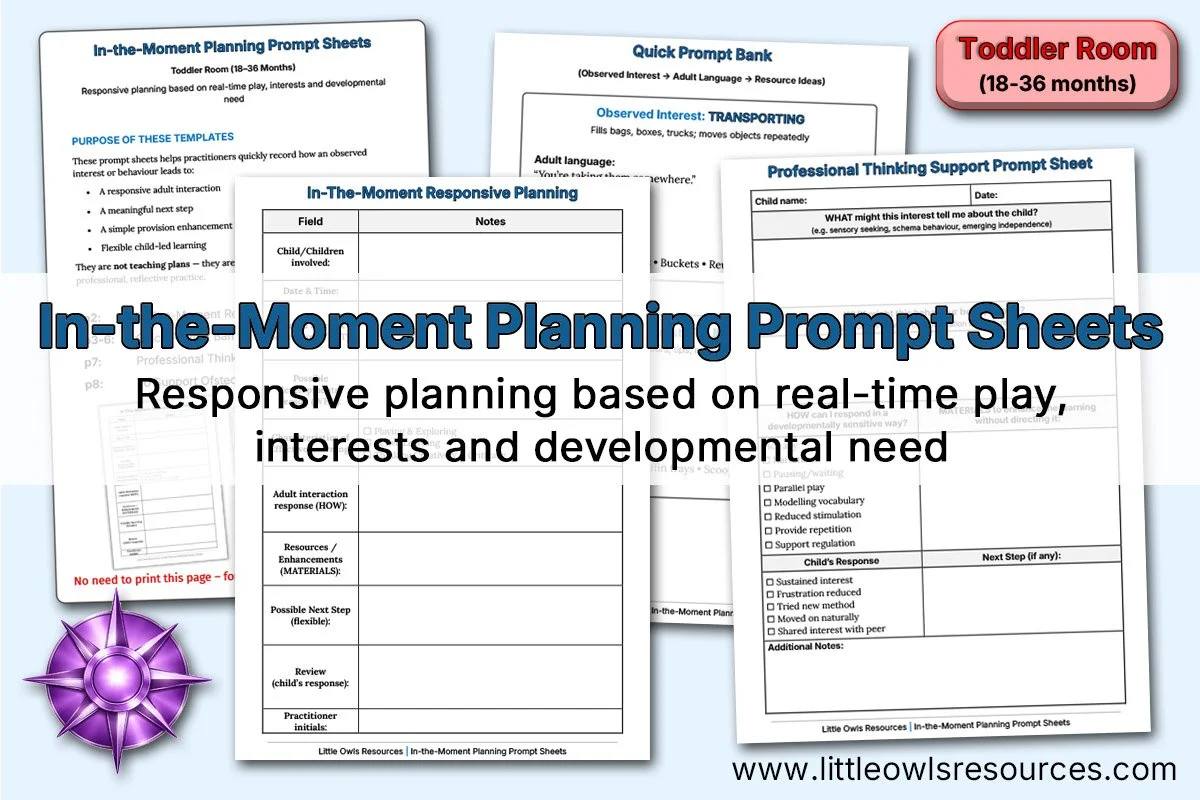
Further Guidance | Related Documents within our ‘EYFS Curriculum & Pedagogy’ suite:
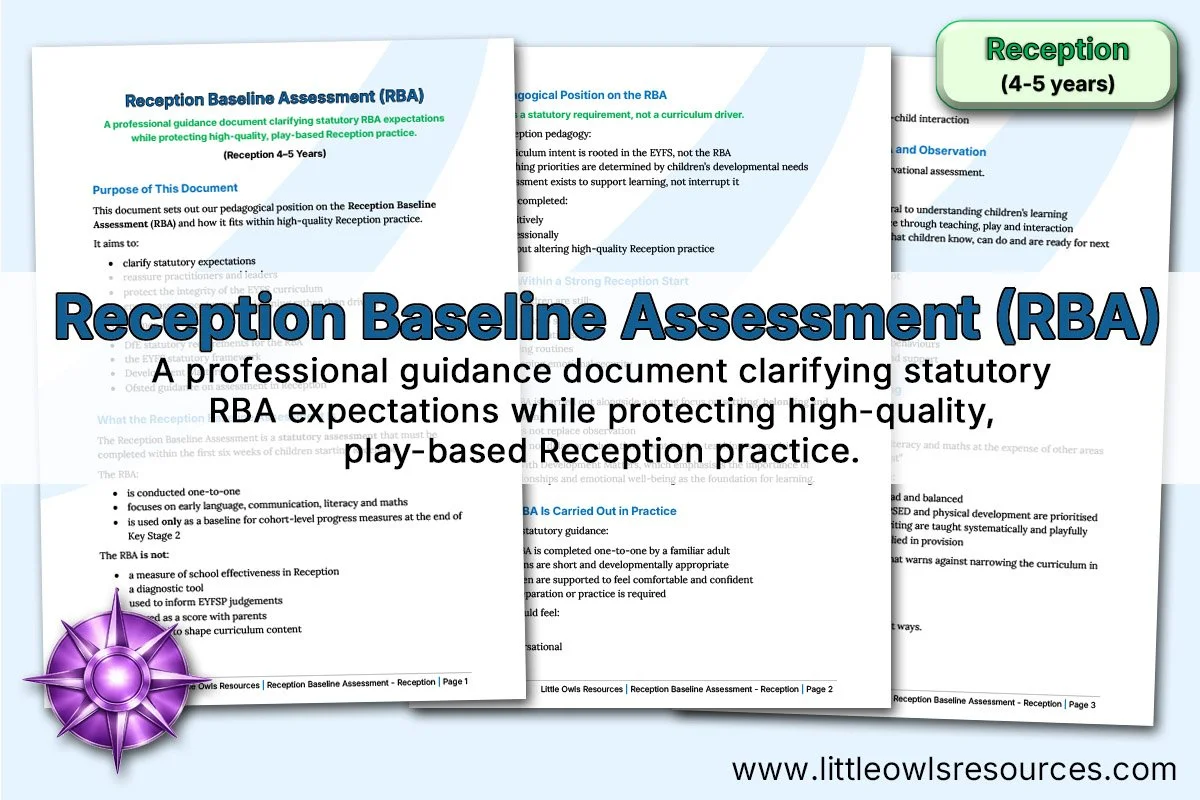
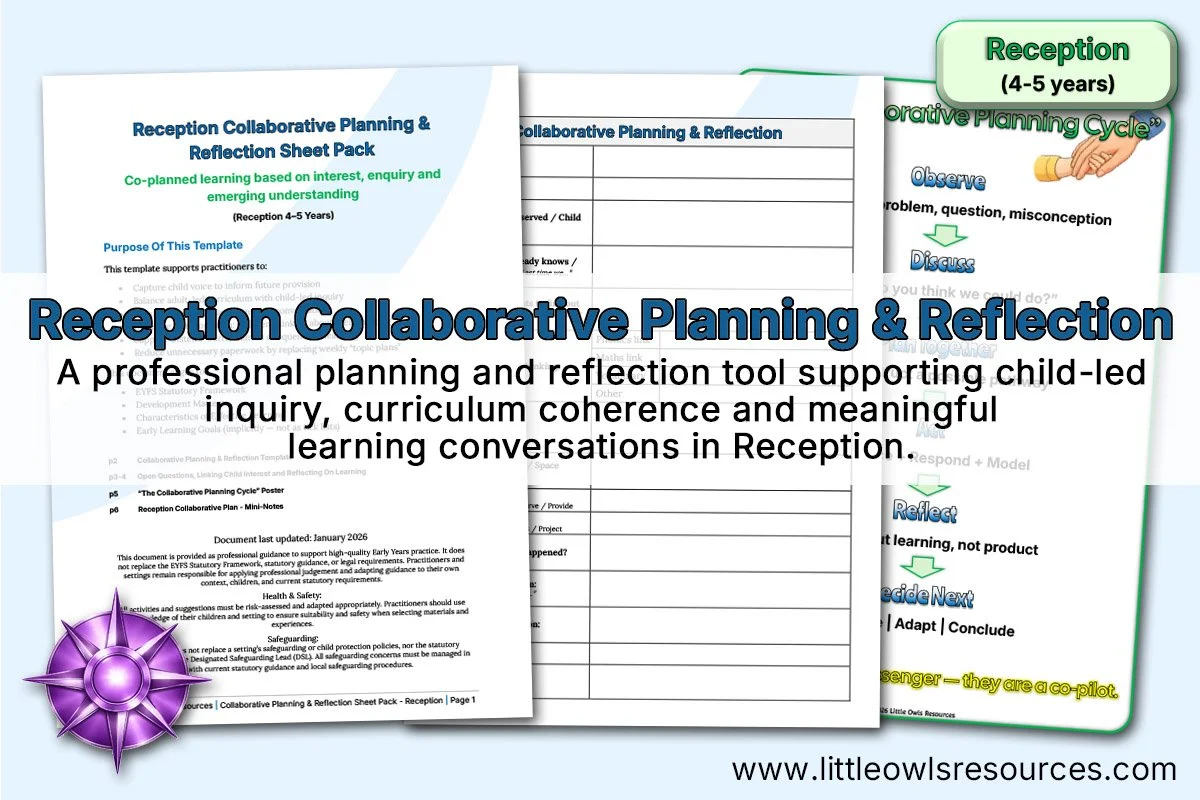
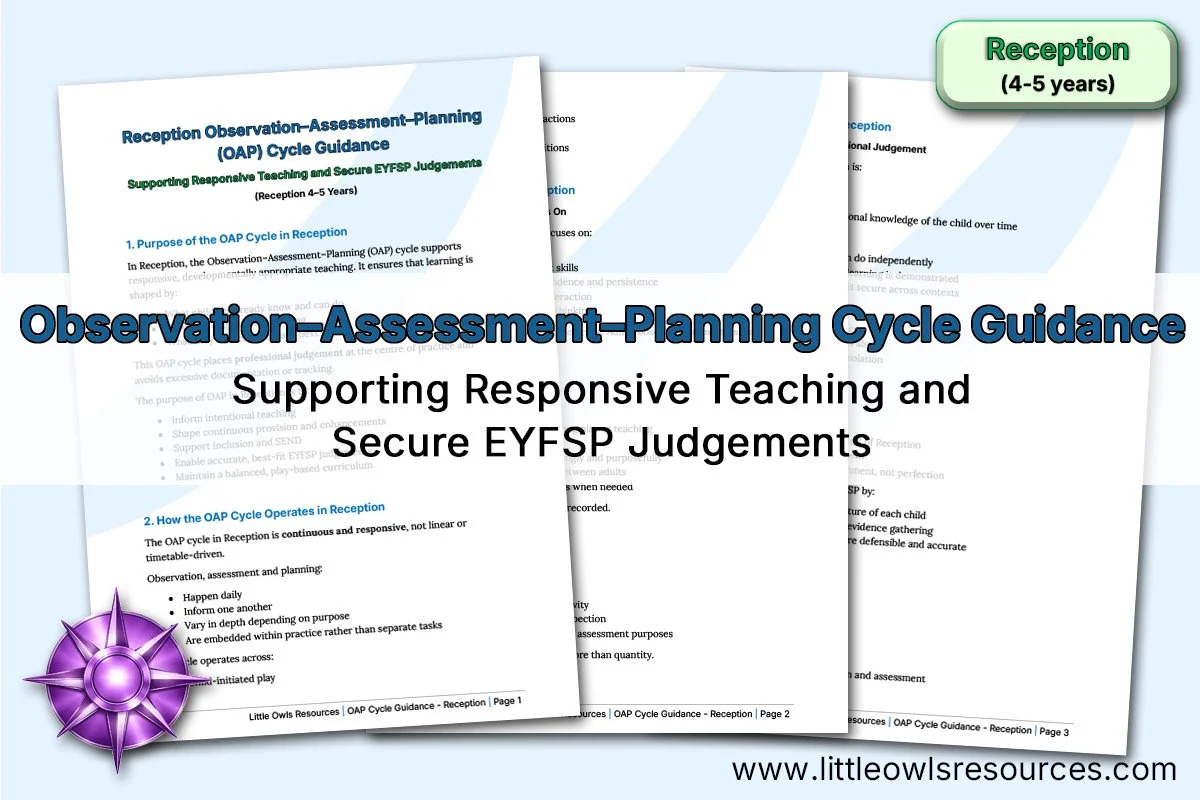
Below you will find a selection of guidance documents from within our Little Owls Resources ‘Curriculum & Pedagogy’ area which explore this concept (& its age-specific application within EYFS settings) in greater depth.
[For additional documents please visit our support pathways: Baby | Toddler | Preschool | Reception | Mixed-Age or our ‘EYFS Planning’ & ‘Observation & Assessment’ hub pages.]









Disclaimer
The information provided in this glossary is intended to support understanding of terminology commonly used within the Early Years Foundation Stage (EYFS). It does not constitute official guidance and should not be considered a substitute for the EYFS Statutory Framework or other Department for Education publications.
Terminology and interpretations may vary between settings and professional contexts.