
Part of the EYFS Glossary
This article forms part of our EYFS Glossary of Early Years Education Terms, which explains key curriculum, pedagogy, and assessment language used in early years practice.

The Early Years Foundation Stage Profile (EYFSP) is the statutory assessment that summarises children’s development at the end of the Reception year in England. It provides a picture of each child’s attainment across the Early Learning Goals (ELGs) at the end of the Early Years Foundation Stage.
What is the EYFSP?
The Early Years Foundation Stage Profile (EYFSP) is the assessment completed by practitioners at the end of the Reception year. It summarises each child’s development across the Early Learning Goals (ELGs) that form part of the Early Years Foundation Stage.
The profile provides information about children’s attainment and development at the end of the EYFS and supports communication between early years settings and Year 1 teachers.
Rather than being based on a single test or activity, the EYFSP is informed by practitioners’ observations and professional knowledge of the child over time.
The Purpose of the EYFSP
The EYFSP serves several purposes within early years education.
It helps to:
summarise children’s development at the end of the EYFS
support transition from Reception to Year 1
provide information for parents and carers about children’s development
contribute to national data on early years outcomes
The profile therefore provides both an individual summary of children’s development and information that can inform wider understanding of early years education.
How the EYFSP Assessment Works
The EYFSP is completed during the final term of the Reception year. Practitioners use their professional judgement, informed by ongoing observation and knowledge of the child, to determine whether children have reached the expected level of development described in each Early Learning Goal.
Judgements are based on a range of evidence gathered through everyday experiences, including:
children’s play and activities
interactions and conversations
observations recorded over time
practitioners’ professional knowledge of the child
This approach reflects the understanding that young children demonstrate their learning in different ways and across a variety of contexts.
EYFSP Outcomes
For each Early Learning Goal, practitioners determine whether a child is:
Meeting the expected level of development
Not yet reaching the expected level of development
These outcomes summarise children’s attainment at the end of the EYFS and provide an overview of their development across the seven Areas of Learning and Development.
Statutory Context
The EYFSP is defined within the EYFS Statutory Framework, which requires practitioners to complete the profile for each child during the final term of the Reception year.
The profile forms part of the statutory assessment arrangements within the Early Years Foundation Stage and helps support children’s transition to Key Stage 1.
Common Questions About the EYFSP
-
The EYFSP is completed in the final term of the Reception year, usually during the summer term.
-
No. The EYFSP is based on practitioners’ observations and professional judgement gathered through children’s everyday experiences and interactions.
-
Information from the EYFSP is shared with parents and carers and with the child’s Year 1 teacher to support the transition into Key Stage 1.
Summary
The Early Years Foundation Stage Profile (EYFSP) is the statutory assessment that summarises children’s development at the end of the Reception year. It is based on practitioners’ observations and professional knowledge of the child and reflects whether children have reached the expected level of development described in the Early Learning Goals.
The EYFSP provides an overview of children’s development at the end of the Early Years Foundation Stage and supports transition to the next stage of learning.
Related Glossary Terms
The following glossary entries are closely related to the Early Years Foundation Stage Profile (EYFSP) and provide additional context:

Observation (EYFS)
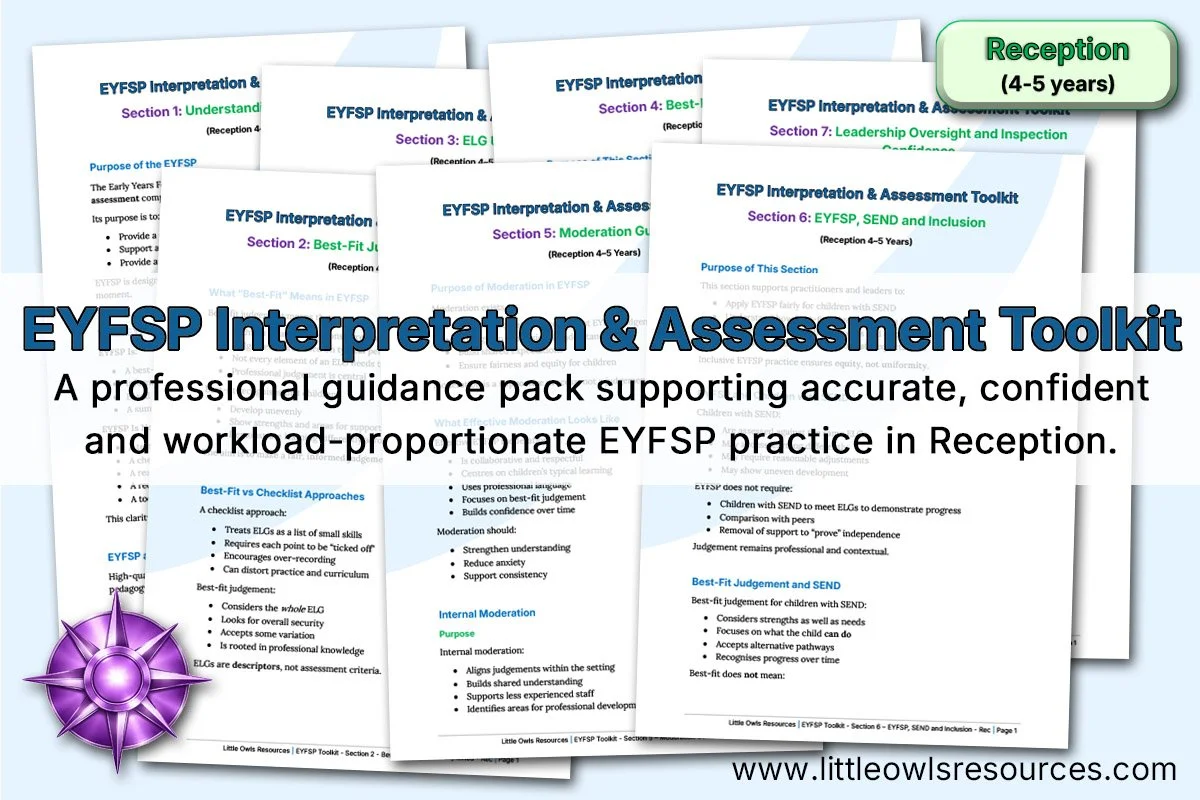
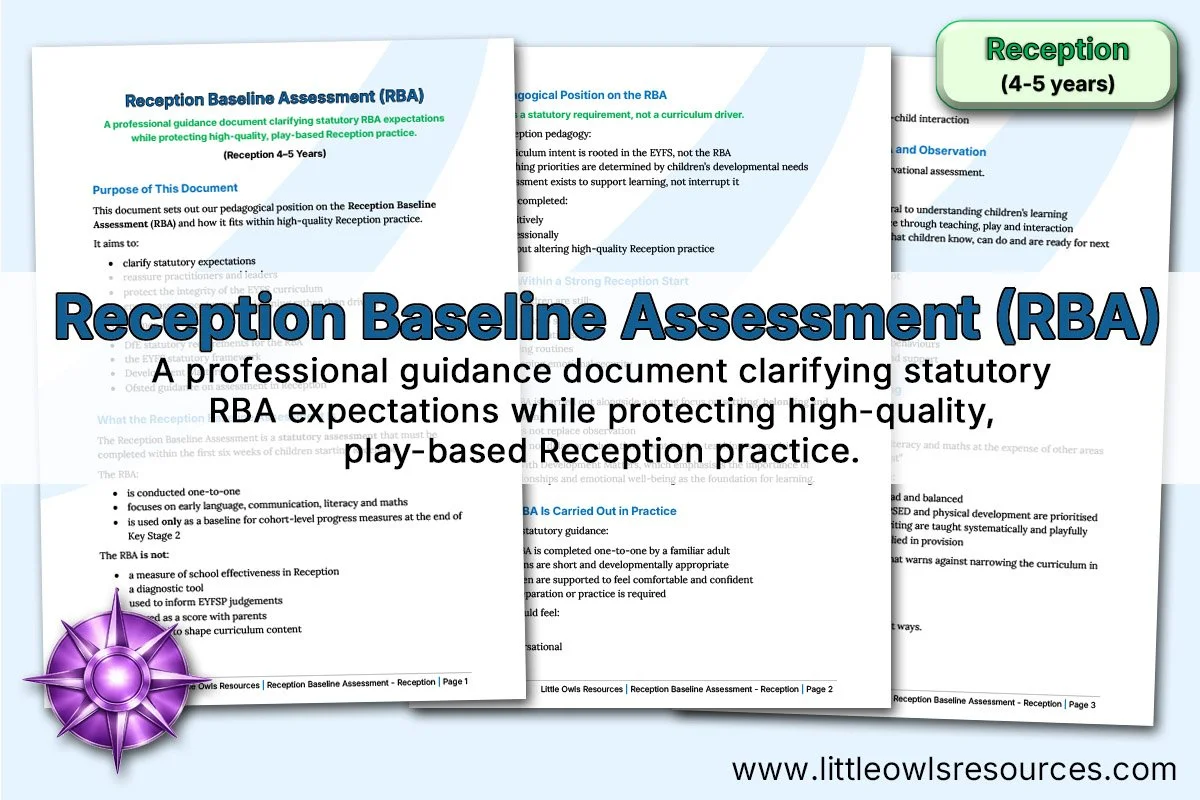
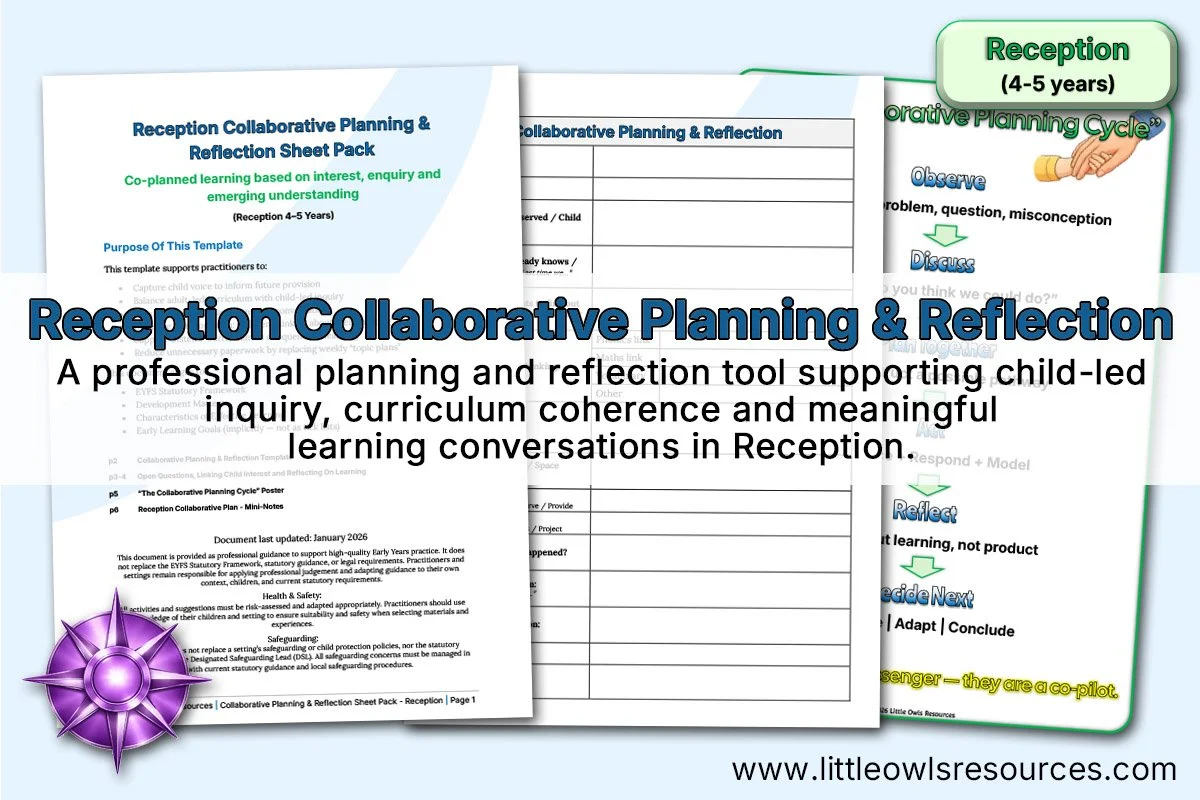
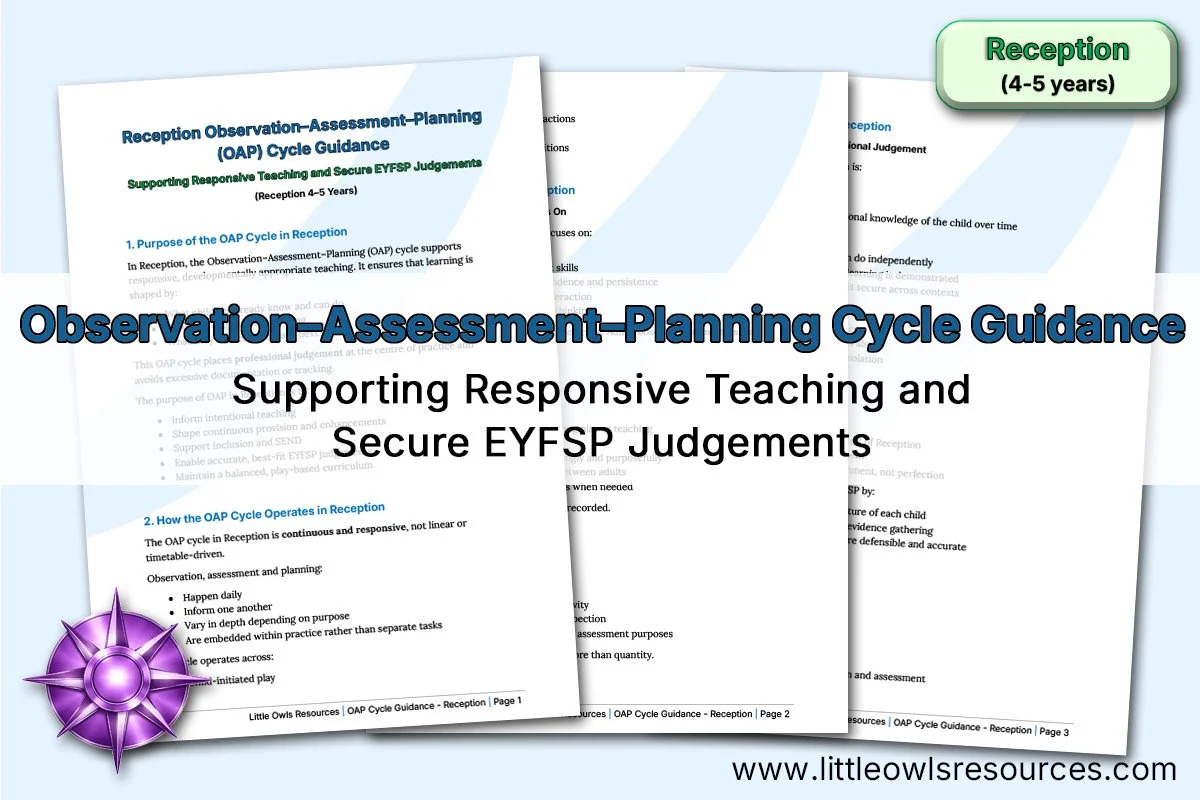
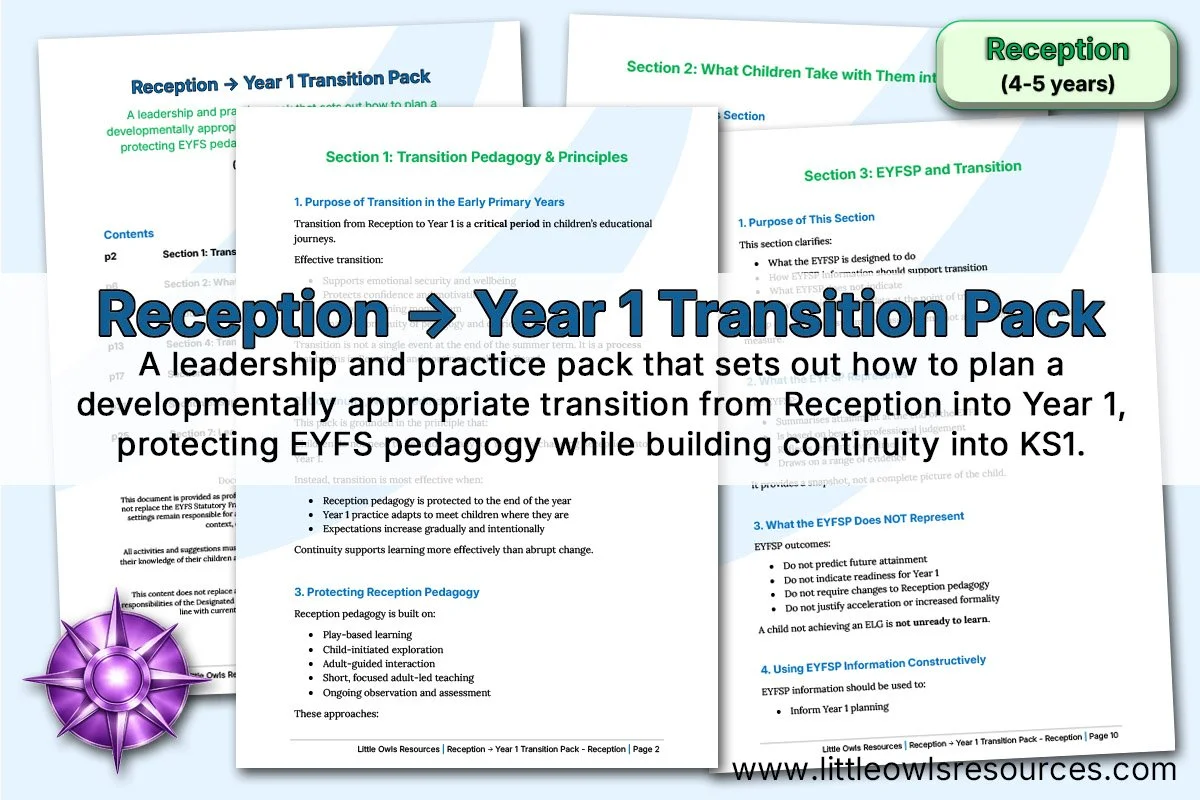
Further Guidance | Related Documents within our ‘EYFS Curriculum & Pedagogy’ suite:
Below you will find a selection of guidance documents from within our Little Owls Resources ‘Curriculum & Pedagogy’ area which explore this concept (& its age-specific application within EYFS settings) in greater depth.
[For additional documents please visit our support pathways: Baby | Toddler | Preschool | Reception | Mixed-Age]

Further Guidance | Related Resources within our ‘Printable Provision’ area:
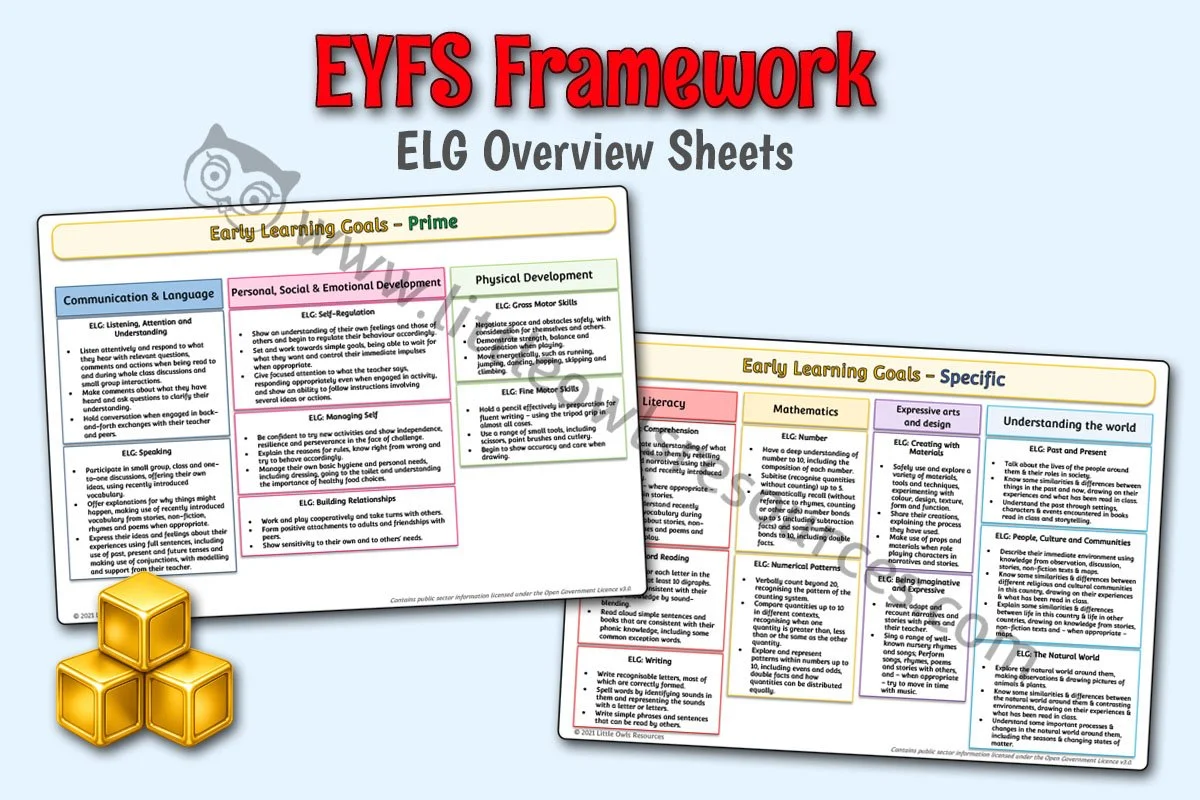
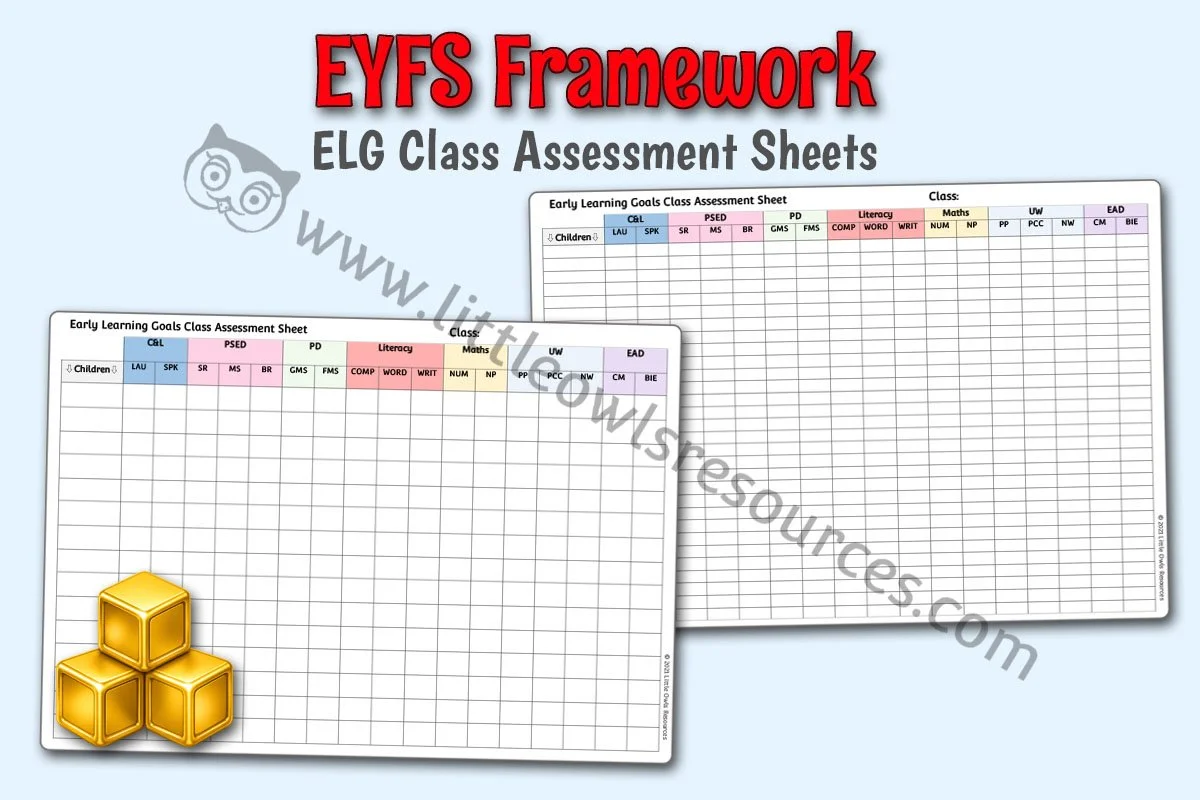
The following resources are within our ‘EYFS Framework’ collection.
Disclaimer
The information provided in this glossary is intended to support understanding of terminology commonly used within the Early Years Foundation Stage (EYFS). It does not constitute official guidance and should not be considered a substitute for the EYFS Statutory Framework or other Department for Education publications.
Terminology and interpretations may vary between settings and professional contexts.