
Part of the EYFS Glossary
This article forms part of our EYFS Glossary of Early Years Education Terms, which explains key curriculum, pedagogy, and assessment language used in early years practice.
Statutory guidance refers to requirements that early years providers must follow because they are set out in law or regulations. Non-statutory guidance provides advice or recommendations that support practice but is not legally required.
What Does Statutory Mean in EYFS?
In the context of the Early Years Foundation Stage (EYFS), statutory guidance refers to requirements that early years providers must follow because they are defined within legislation or statutory regulations.
These requirements outline expectations for how early years settings support children’s learning, development, safeguarding, and welfare.
Early years providers registered in England are legally required to follow the expectations set out in statutory guidance.
What Does Non-Statutory Guidance Mean?
Non-statutory guidance provides advice, examples, or suggestions to support practitioners in implementing the EYFS. While this guidance can help practitioners understand child development and support effective practice, it is not legally required.
Settings may choose to use non-statutory guidance alongside their professional knowledge and experience when planning learning experiences or interpreting children’s development.
Non-statutory guidance is often designed to support practitioners in applying the statutory framework in practical ways.
Examples of Statutory and Non-Statutory Documents
Within the EYFS, several documents illustrate the difference between statutory and non-statutory guidance.
Statutory Guidance
Statutory guidance includes documents that early years providers must follow.
Examples include:
EYFS Statutory Framework
This document sets out the legal requirements for learning and development, safeguarding, and welfare within early years provision.
Non-Statutory Guidance
Non-statutory guidance provides advice that supports the implementation of the statutory framework.
Examples include:
Development Matters
This guidance offers examples of how children’s learning and development may progress and suggests ways practitioners can support learning.
Why Both Types of Guidance Are Used
Statutory guidance establishes clear expectations that all early years providers must meet in order to support children’s safety, wellbeing, and development.
Non-statutory guidance provides flexibility and professional support by offering examples and ideas that practitioners can adapt to suit their setting, children, and community.
Together, these forms of guidance help ensure both consistency and flexibility within early years practice.
Common Questions About Statutory and Non-Statutory Guidance
-
No. Non-statutory guidance is not legally required. Practitioners may use it to support their practice, but they are not obligated to follow it.
-
Non-statutory guidance helps practitioners interpret and apply the statutory framework in practical ways. It provides examples of practice that can support children’s development.
-
Yes. Settings may use a range of guidance and resources to support their understanding of child development, provided they continue to meet the statutory requirements of the EYFS.
Summary
Statutory guidance sets out legal requirements that early years providers must follow, while non-statutory guidance offers advice and examples that support practice but are not mandatory.
Within the EYFS, documents such as the EYFS Statutory Framework represent statutory guidance, while resources such as Development Matters provide non-statutory support for understanding children’s development and learning.
Related Glossary Terms
The following glossary entries are closely related to Statutory vs Non-Statutory Guidance and provide additional context:
Professional Judgement describes the process by which early years practitioners interpret what they observe and make informed decisions about children’s development and learning…

The EYFS Statutory Framework is the official document published by the Department for Education that sets out the legal requirements for early years providers in England. It defines how providers…

Early Learning Goals outline the knowledge, skills, and understanding that children are expected to demonstrate by the end of the Reception year. They are used as part of the Early Years Foundation…
Development Matters is guidance designed to help practitioners understand how children typically develop and learn during the early years. It outlines examples of development across the Areas of…
The Early Years Foundation Stage (EYFS) describes the stage of learning and development that takes place from birth until the end of the Reception year in England. During this stage, children experience…
Further Guidance | Related Documents within our ‘EYFS Curriculum & Pedagogy’ suite:
Below you will find a selection of guidance documents from within our Little Owls Resources ‘Curriculum & Pedagogy’ area which explore this concept (& its age-specific application within EYFS settings) in greater depth.
[For additional documents please visit our support pathways: Baby | Toddler | Preschool | Reception | Mixed-Age]

Strategic guidance for leading high-quality, inspection-secure Reception practice with confidence and integrity.

Clarifying Expectations and Responsibilities in Childminding Practice - A professional guidance document supporting confident safeguarding and welfare practice in home-based EYFS settings. Updated to align with the new EYFS Framework, effective September 2026.

Guidance for Childminders | Key Phrases and Explanations Rooted in Practice - A professional guidance document supporting confident, authentic inspection conversations in childminding settings.
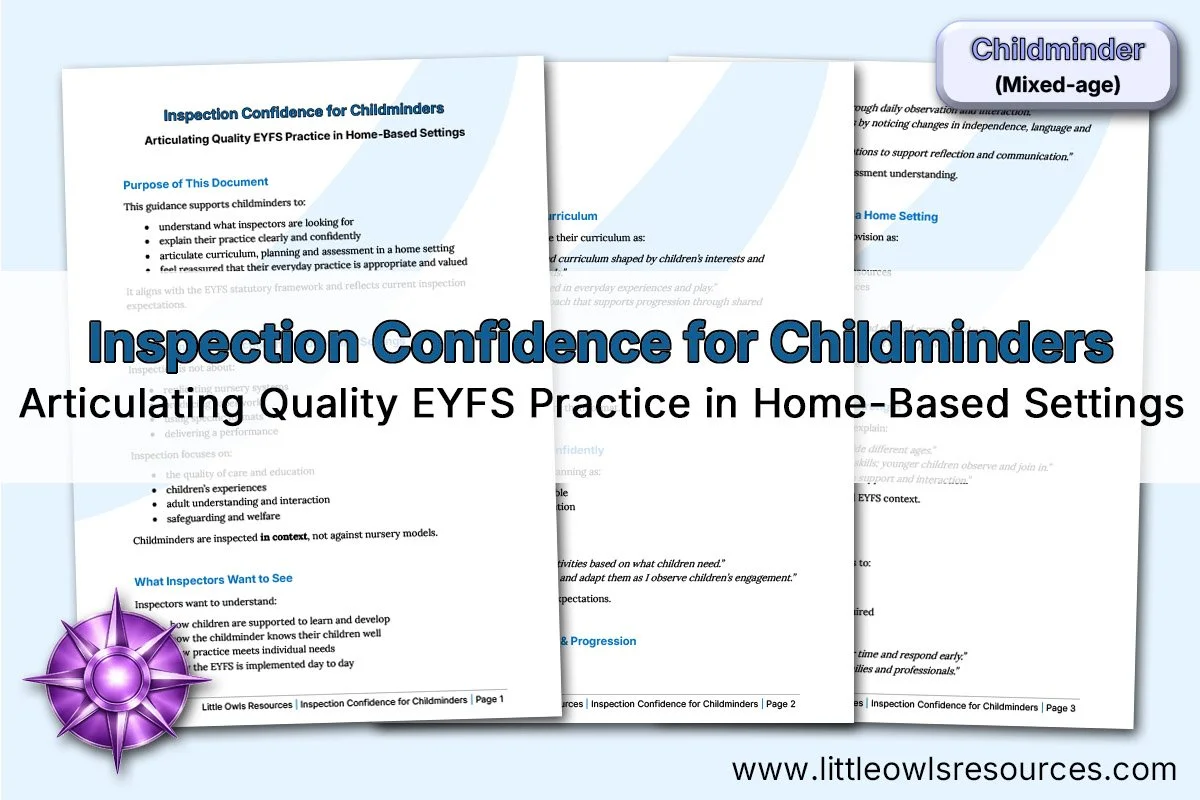
Articulating Quality EYFS Practice in Home-Based Settings - A professional guidance document supporting calm, confident inspection conversations in childminding settings.

A practitioner-facing articulation tool for confident, inspection-ready toddler practice.
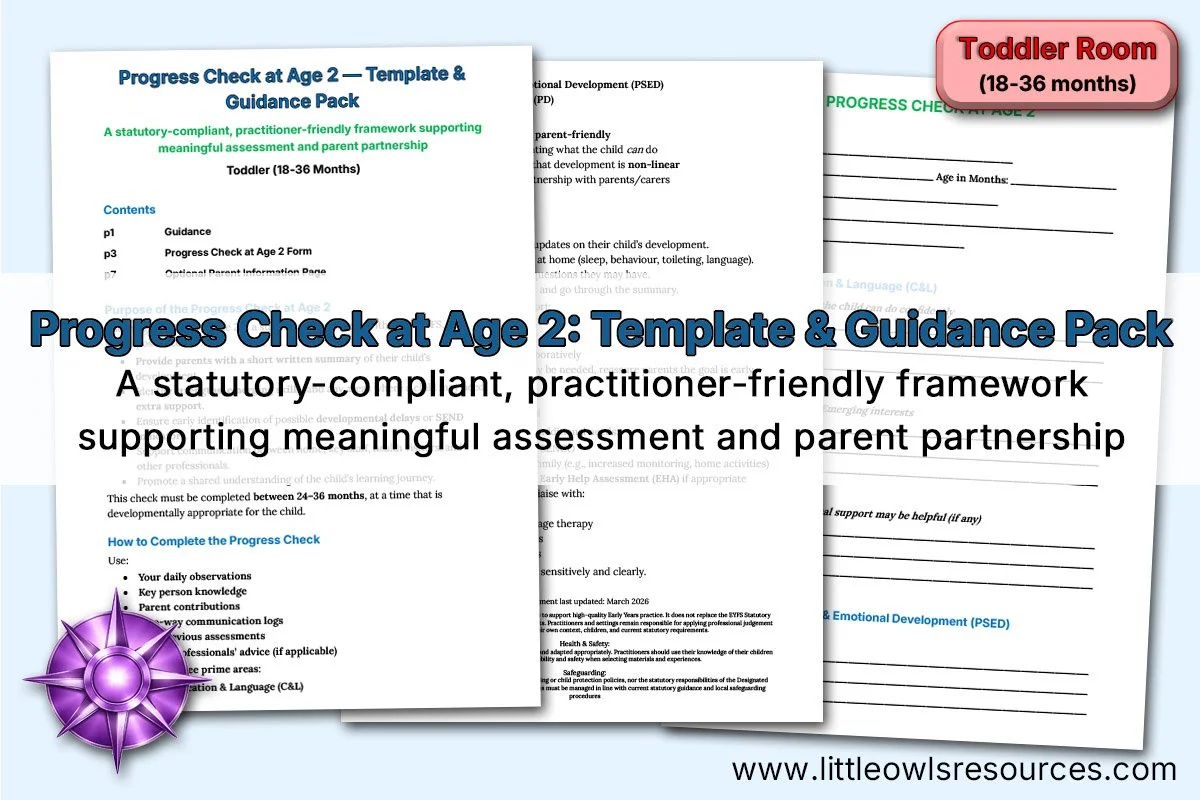
A statutory-compliant, practitioner-friendly toolkit supporting meaningful assessment and parent partnership.

Safeguarding guidance for baby rooms (0–18 months). Updated to align with the new EYFS Framework, effective September 2026.

Immediate safeguarding recording and referral support for baby rooms. Updated to align with the new EYFS Framework, effective September 2026.
Further Guidance | Related Resources within our ‘Printable Provision’ area:
The following resources are within our ‘EYFS Framework’ collection. They refer to information contained within the ‘EYFS Statutory Framework’ and also supporting material within ‘Development Matters’.
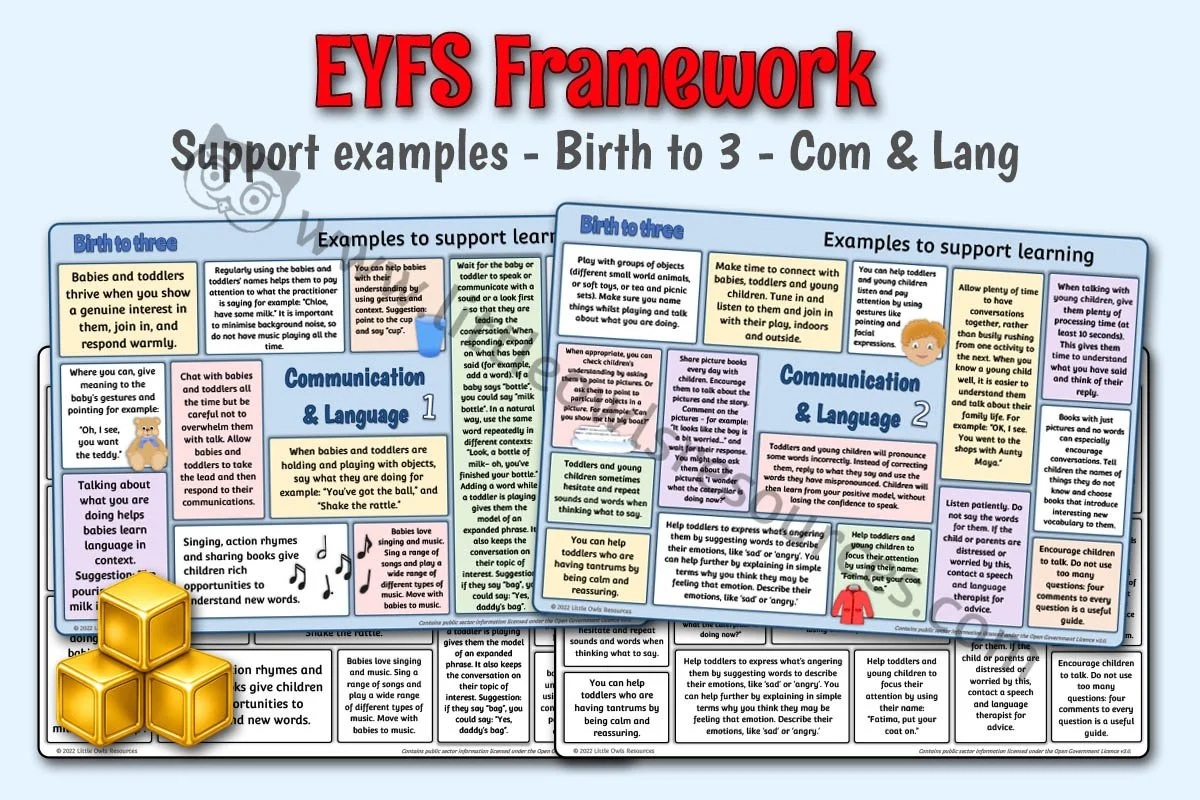
Examples of how to support ‘Communication & Language’ learning and development for birth to 3 year olds.
Extracted from Development Matters; non-statutory curriculum guidance for the early years foundation stage.
Includes colour and black and white versions.
Files contain public sector information licensed under the Open Government Licence v3.0.
Original artwork drawn by Sara Murphy and final digital resources created by Stuart Murphy. COPYRIGHT ON ALL OF THE RESOURCES HOUSED ON THIS WEBSITE IS HELD BY ‘LITTLE OWLS RESOURCES’. OUR RESOURCES (INCLUDING THE IMAGES WITHIN THEM), CANNOT BE SHARED OR SOLD COMMERCIALLY.
DOWNLOAD EDITABLE (DOCX)
DOWNLOAD NON-EDITABLE (PDF)
DOWNLOAD NON-EDITABLE (Zipped JPEGs)
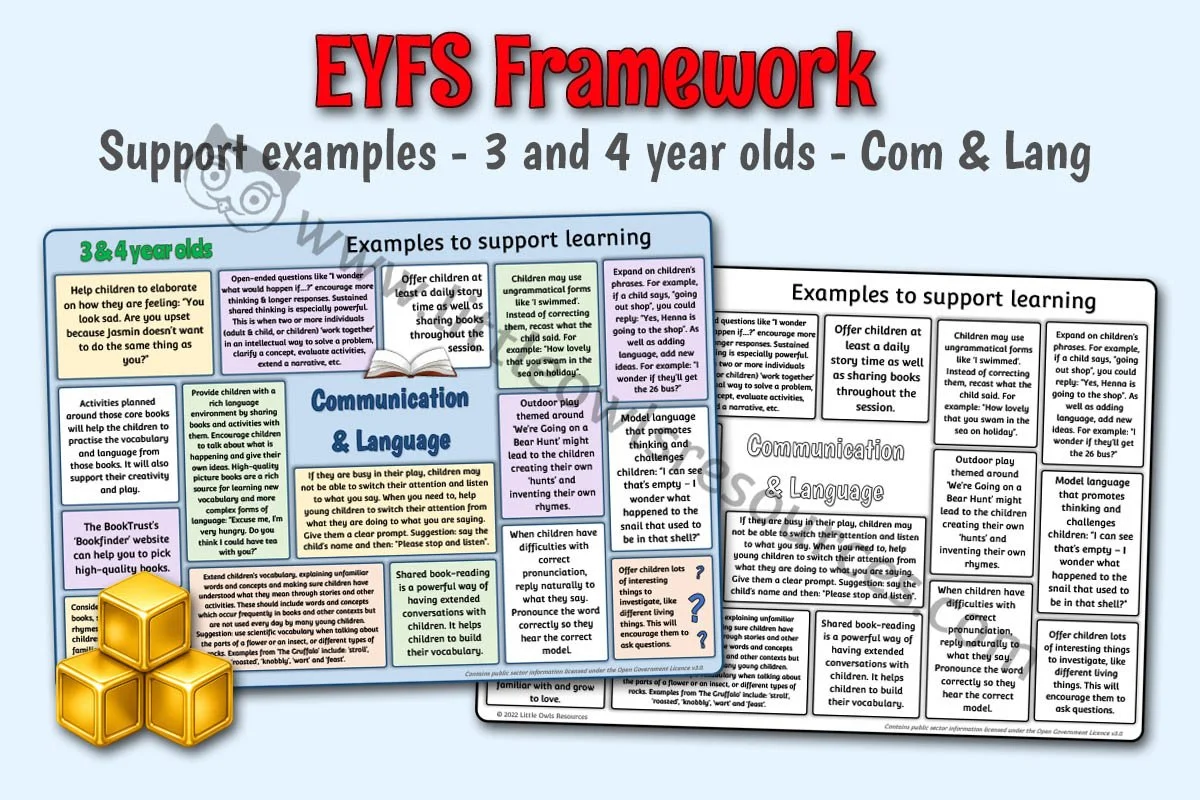
Examples of how to support ‘Communication & Language’ learning and development for 3 and 4 year olds.
Extracted from Development Matters; non-statutory curriculum guidance for the early years foundation stage.
Includes colour and black and white versions.
Files contain public sector information licensed under the Open Government Licence v3.0.
Original artwork drawn by Sara Murphy and final digital resources created by Stuart Murphy. COPYRIGHT ON ALL OF THE RESOURCES HOUSED ON THIS WEBSITE IS HELD BY ‘LITTLE OWLS RESOURCES’. OUR RESOURCES (INCLUDING THE IMAGES WITHIN THEM), CANNOT BE SHARED OR SOLD COMMERCIALLY.
DOWNLOAD EDITABLE (DOCX)
DOWNLOAD NON-EDITABLE (PDF)
DOWNLOAD NON-EDITABLE (Zipped JPEGs)
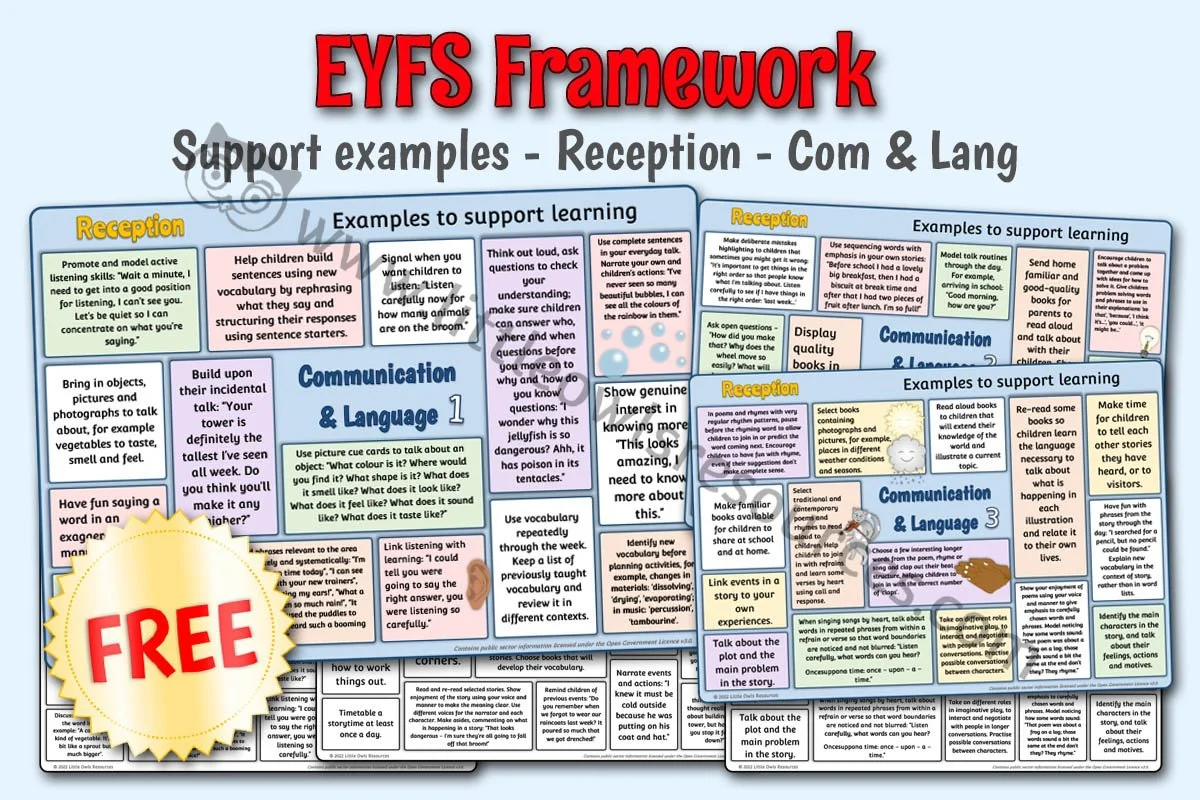
Examples of how to support ‘Communication & Language’ learning and development for Reception children.
Extracted from Development Matters; non-statutory curriculum guidance for the early years foundation stage.
Includes colour and black and white versions.
Files contain public sector information licensed under the Open Government Licence v3.0.
Original artwork drawn by Sara Murphy and final digital resources created by Stuart Murphy. COPYRIGHT ON ALL OF THE RESOURCES HOUSED ON THIS WEBSITE IS HELD BY ‘LITTLE OWLS RESOURCES’. OUR RESOURCES (INCLUDING THE IMAGES WITHIN THEM), CANNOT BE SHARED OR SOLD COMMERCIALLY.
DOWNLOAD EDITABLE (DOCX)
DOWNLOAD NON-EDITABLE (PDF)
DOWNLOAD NON-EDITABLE (Zipped JPEGs)
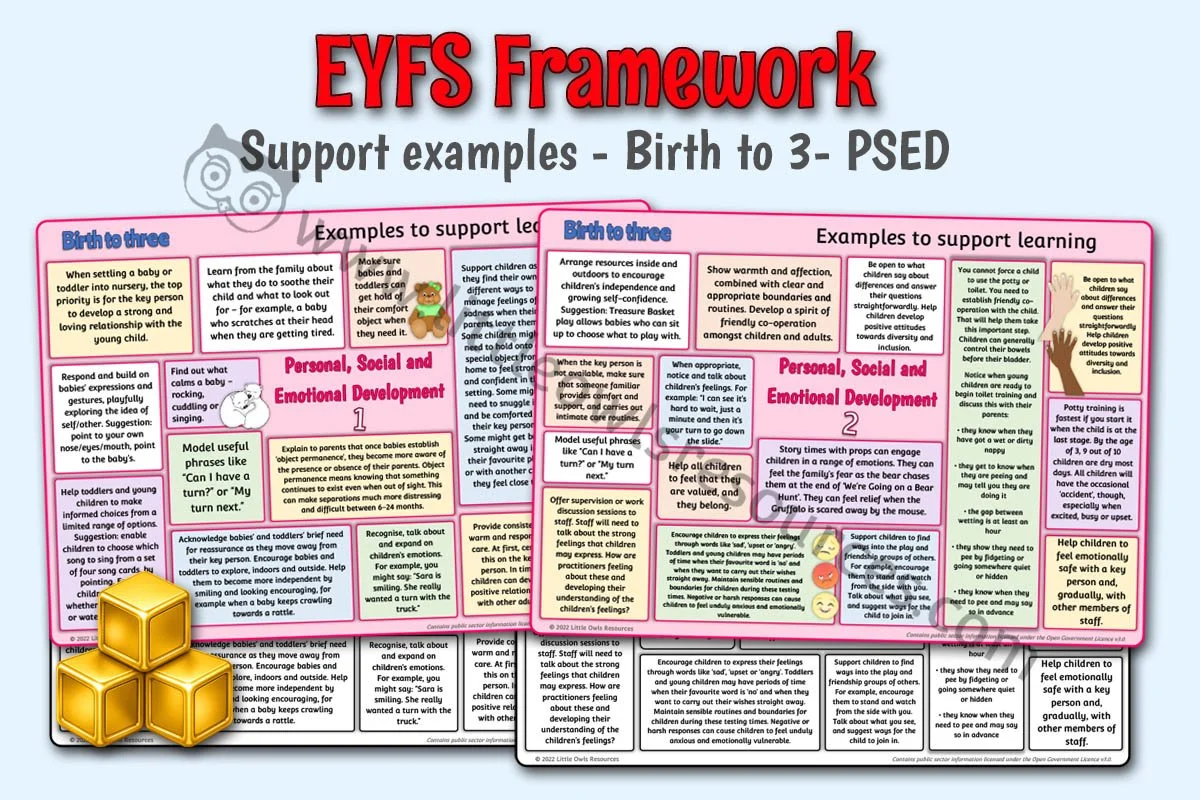
Examples of how to support Personal, Social & Emotional learning and development for birth to 3 year olds.
Extracted from Development Matters; non-statutory curriculum guidance for the early years foundation stage.
Includes colour and black and white versions.
Files contain public sector information licensed under the Open Government Licence v3.0.
Original artwork drawn by Sara Murphy and final digital resources created by Stuart Murphy. COPYRIGHT ON ALL OF THE RESOURCES HOUSED ON THIS WEBSITE IS HELD BY ‘LITTLE OWLS RESOURCES’. OUR RESOURCES (INCLUDING THE IMAGES WITHIN THEM), CANNOT BE SHARED OR SOLD COMMERCIALLY.
DOWNLOAD EDITABLE (DOCX)
DOWNLOAD NON-EDITABLE (PDF)
DOWNLOAD NON-EDITABLE (Zipped JPEGs)
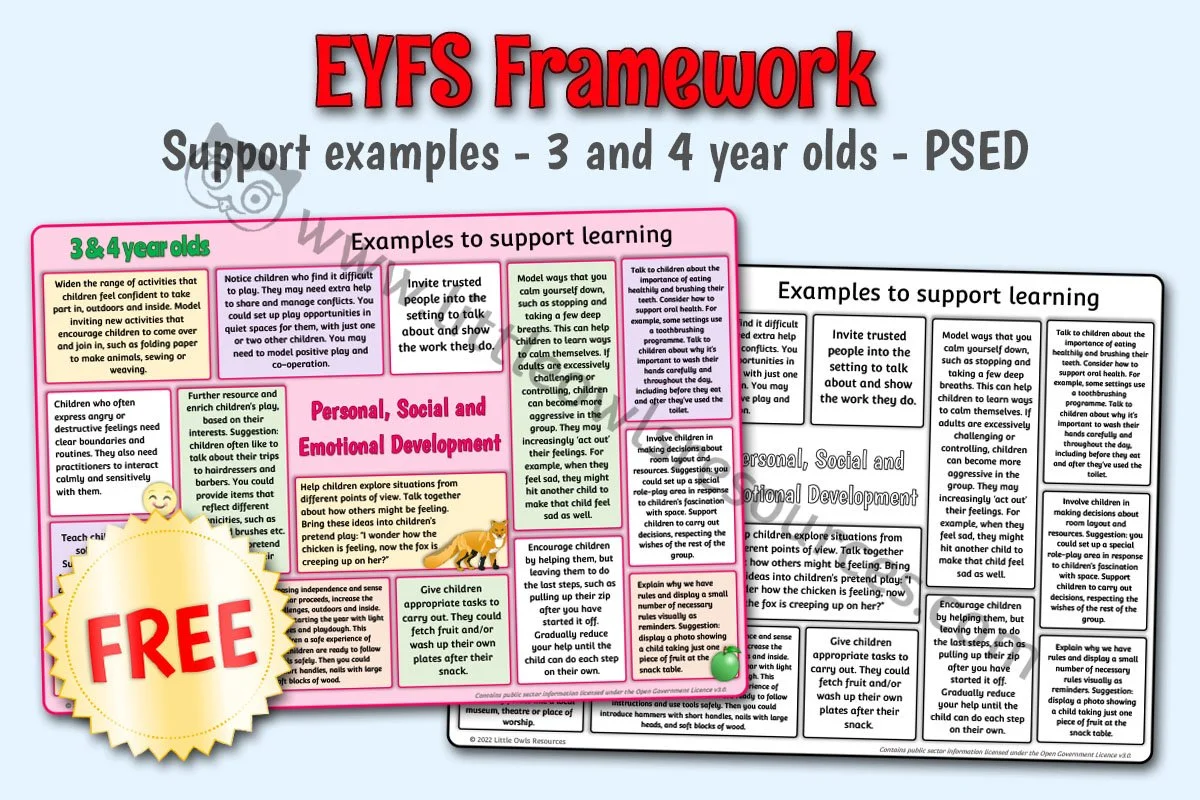
Examples of how to support Personal, Social & Emotional learning and development for 3 and 4 year olds.
Extracted from Development Matters; non-statutory curriculum guidance for the early years foundation stage.
Includes colour and black and white versions.
Files contain public sector information licensed under the Open Government Licence v3.0.
Original artwork drawn by Sara Murphy and final digital resources created by Stuart Murphy. COPYRIGHT ON ALL OF THE RESOURCES HOUSED ON THIS WEBSITE IS HELD BY ‘LITTLE OWLS RESOURCES’. OUR RESOURCES (INCLUDING THE IMAGES WITHIN THEM), CANNOT BE SHARED OR SOLD COMMERCIALLY.
DOWNLOAD EDITABLE (DOCX)
DOWNLOAD NON-EDITABLE (PDF)
DOWNLOAD NON-EDITABLE (Zipped JPEGs)
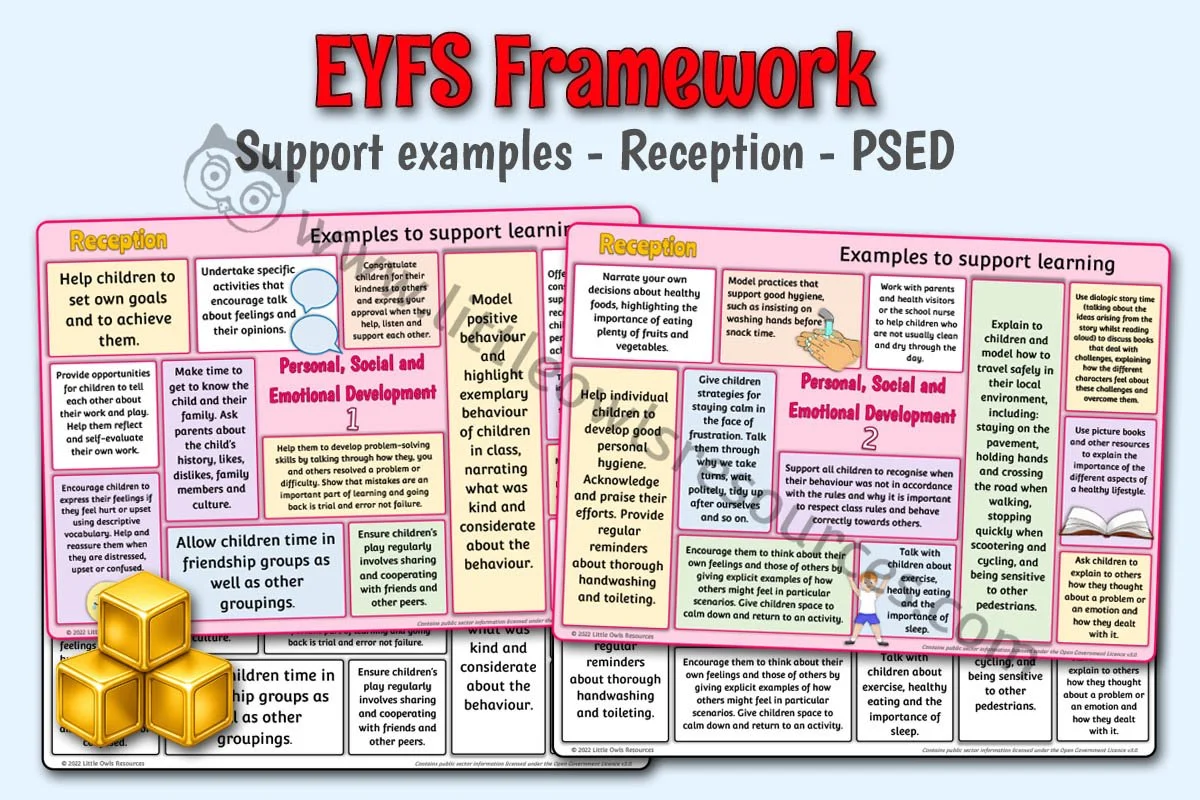
Examples of how to support Personal, Social and Emotional learning and development for Reception children.
Extracted from Development Matters; non-statutory curriculum guidance for the early years foundation stage.
Includes colour and black and white versions.
Files contain public sector information licensed under the Open Government Licence v3.0.
Original artwork drawn by Sara Murphy and final digital resources created by Stuart Murphy. COPYRIGHT ON ALL OF THE RESOURCES HOUSED ON THIS WEBSITE IS HELD BY ‘LITTLE OWLS RESOURCES’. OUR RESOURCES (INCLUDING THE IMAGES WITHIN THEM), CANNOT BE SHARED OR SOLD COMMERCIALLY.
DOWNLOAD EDITABLE (DOCX)
DOWNLOAD NON-EDITABLE (PDF)
DOWNLOAD NON-EDITABLE (Zipped JPEGs)
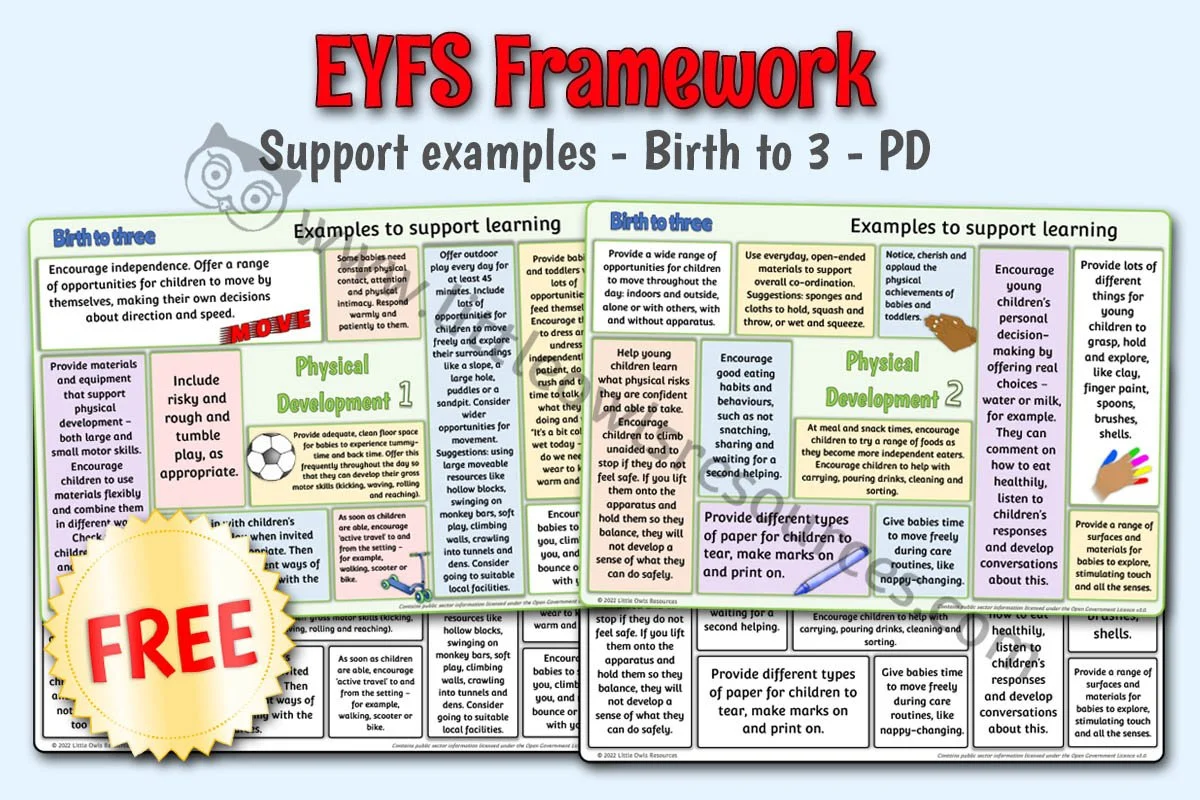
Examples of how to support ‘Physical Development’ for birth to 3 year olds.
Extracted from Development Matters; non-statutory curriculum guidance for the early years foundation stage.
Includes colour and black and white versions.
Files contain public sector information licensed under the Open Government Licence v3.0.
Original artwork drawn by Sara Murphy and final digital resources created by Stuart Murphy. COPYRIGHT ON ALL OF THE RESOURCES HOUSED ON THIS WEBSITE IS HELD BY ‘LITTLE OWLS RESOURCES’. OUR RESOURCES (INCLUDING THE IMAGES WITHIN THEM), CANNOT BE SHARED OR SOLD COMMERCIALLY.
DOWNLOAD EDITABLE (DOCX)
DOWNLOAD NON-EDITABLE (PDF)
DOWNLOAD NON-EDITABLE (Zipped JPEGs)
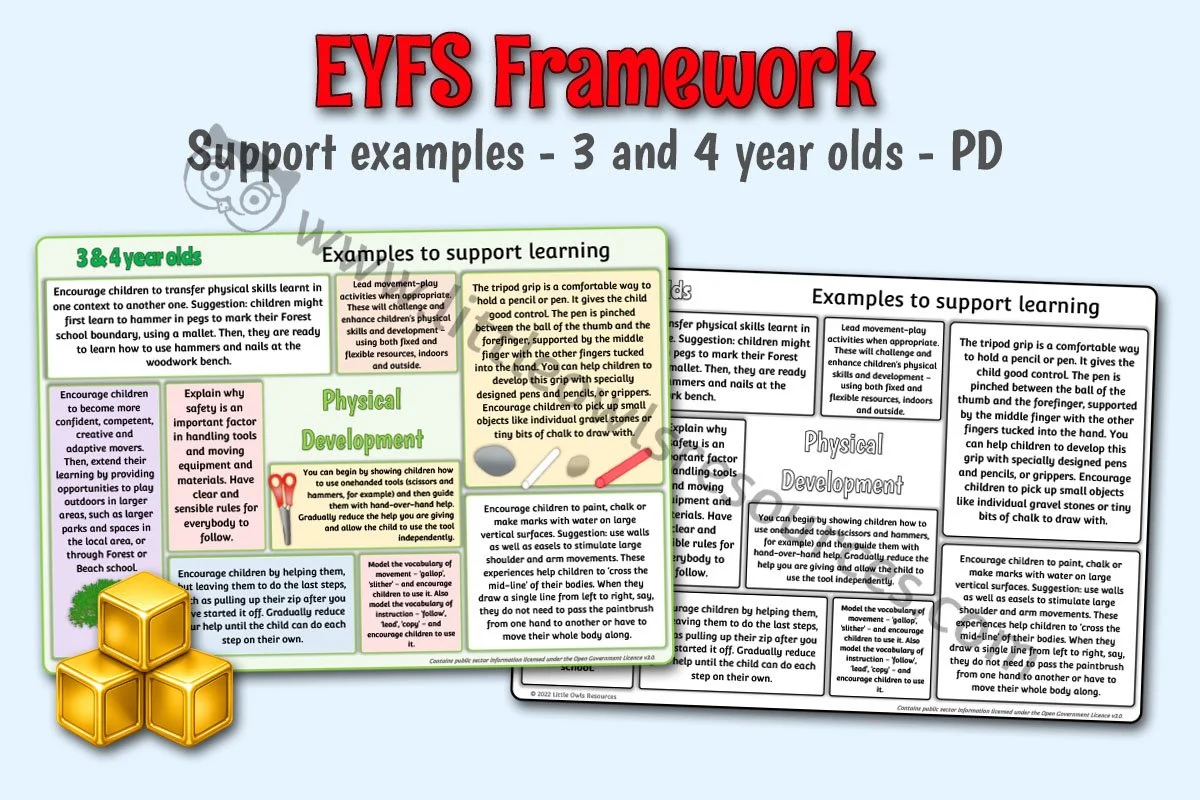
Examples of how to support Physical Development for 3 and 4 year olds.
Extracted from Development Matters; non-statutory curriculum guidance for the early years foundation stage.
Includes colour and black and white versions.
Files contain public sector information licensed under the Open Government Licence v3.0.
Original artwork drawn by Sara Murphy and final digital resources created by Stuart Murphy. COPYRIGHT ON ALL OF THE RESOURCES HOUSED ON THIS WEBSITE IS HELD BY ‘LITTLE OWLS RESOURCES’. OUR RESOURCES (INCLUDING THE IMAGES WITHIN THEM), CANNOT BE SHARED OR SOLD COMMERCIALLY.
DOWNLOAD EDITABLE (DOCX)
DOWNLOAD NON-EDITABLE (PDF)
DOWNLOAD NON-EDITABLE (Zipped JPEGs)
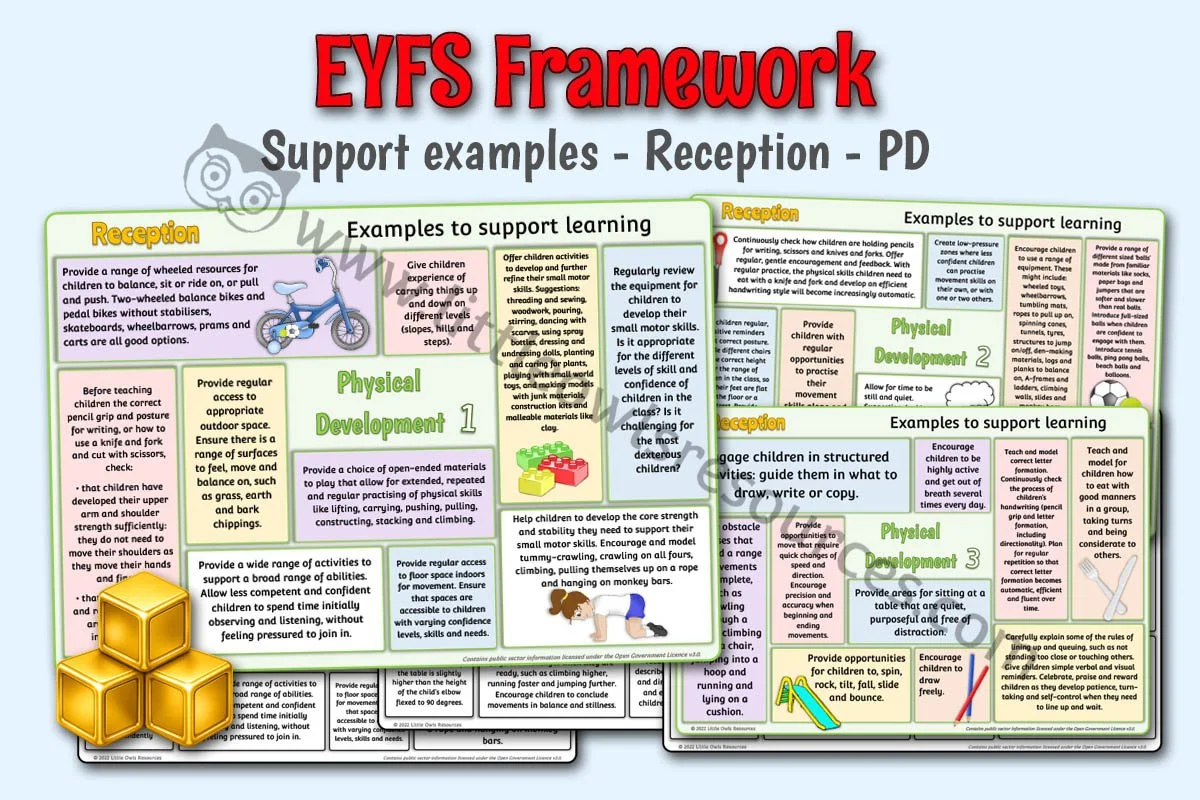
Examples of how to support ‘Physical Development’ for Reception children.
Extracted from Development Matters; non-statutory curriculum guidance for the early years foundation stage.
Includes colour and black and white versions.
Files contain public sector information licensed under the Open Government Licence v3.0.
Original artwork drawn by Sara Murphy and final digital resources created by Stuart Murphy. COPYRIGHT ON ALL OF THE RESOURCES HOUSED ON THIS WEBSITE IS HELD BY ‘LITTLE OWLS RESOURCES’. OUR RESOURCES (INCLUDING THE IMAGES WITHIN THEM), CANNOT BE SHARED OR SOLD COMMERCIALLY.
DOWNLOAD EDITABLE (DOCX)
DOWNLOAD NON-EDITABLE (PDF)
DOWNLOAD NON-EDITABLE (Zipped JPEGs)
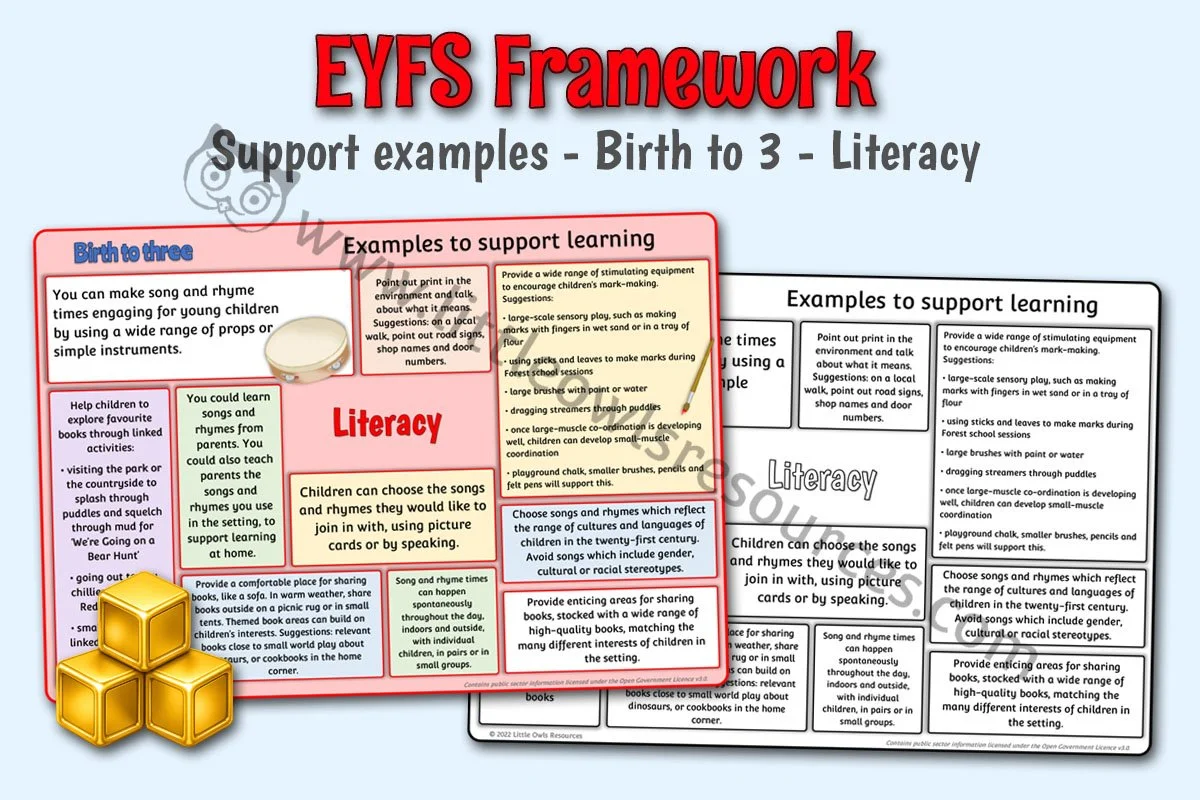
Examples of how to support ‘Literacy’ learning and development for birth to 3 year olds.
Extracted from Development Matters; non-statutory curriculum guidance for the early years foundation stage.
Includes colour and black and white versions.
Files contain public sector information licensed under the Open Government Licence v3.0.
Original artwork drawn by Sara Murphy and final digital resources created by Stuart Murphy. COPYRIGHT ON ALL OF THE RESOURCES HOUSED ON THIS WEBSITE IS HELD BY ‘LITTLE OWLS RESOURCES’. OUR RESOURCES (INCLUDING THE IMAGES WITHIN THEM), CANNOT BE SHARED OR SOLD COMMERCIALLY.
DOWNLOAD EDITABLE (DOCX)
DOWNLOAD NON-EDITABLE (PDF)
DOWNLOAD NON-EDITABLE (Zipped JPEGs)
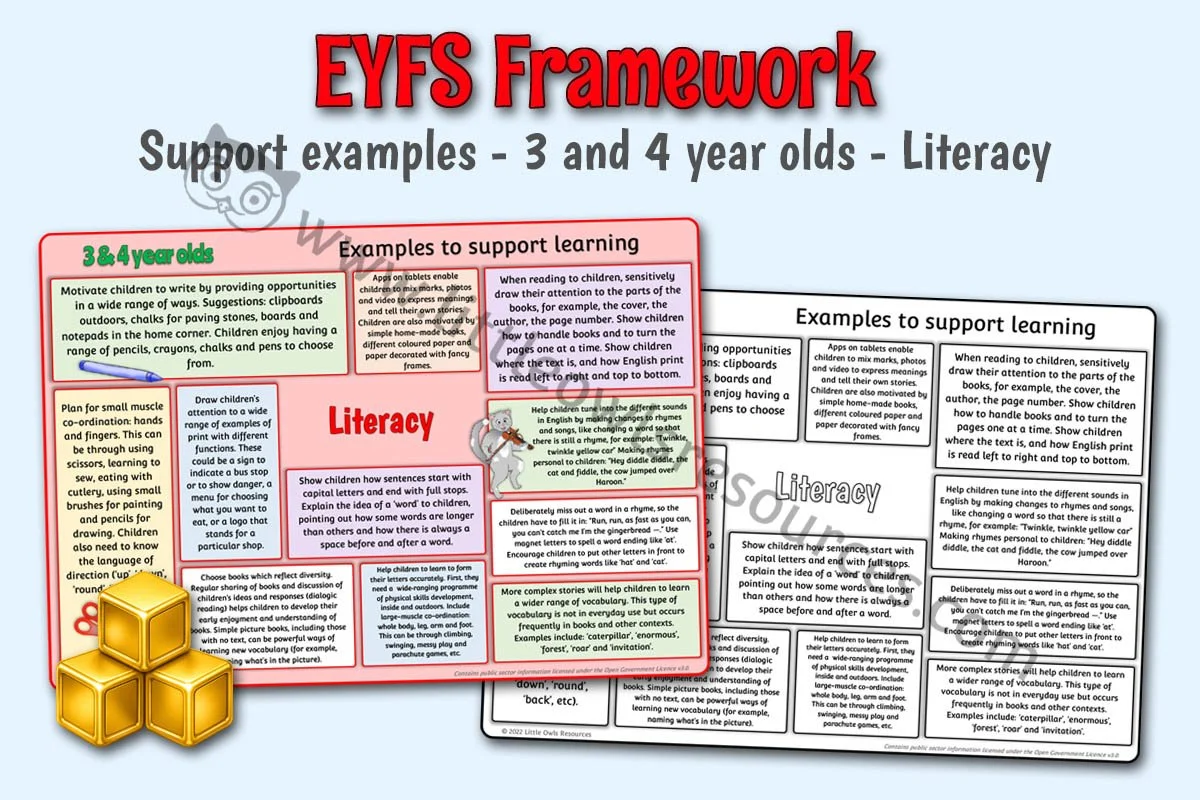
Examples of how to support ‘Literacy’ learning and development for 3 and 4 year olds.
Extracted from Development Matters; non-statutory curriculum guidance for the early years foundation stage.
Includes colour and black and white versions.
Files contain public sector information licensed under the Open Government Licence v3.0.
Original artwork drawn by Sara Murphy and final digital resources created by Stuart Murphy. COPYRIGHT ON ALL OF THE RESOURCES HOUSED ON THIS WEBSITE IS HELD BY ‘LITTLE OWLS RESOURCES’. OUR RESOURCES (INCLUDING THE IMAGES WITHIN THEM), CANNOT BE SHARED OR SOLD COMMERCIALLY.
DOWNLOAD EDITABLE (DOCX)
DOWNLOAD NON-EDITABLE (PDF)
DOWNLOAD NON-EDITABLE (Zipped JPEGs)
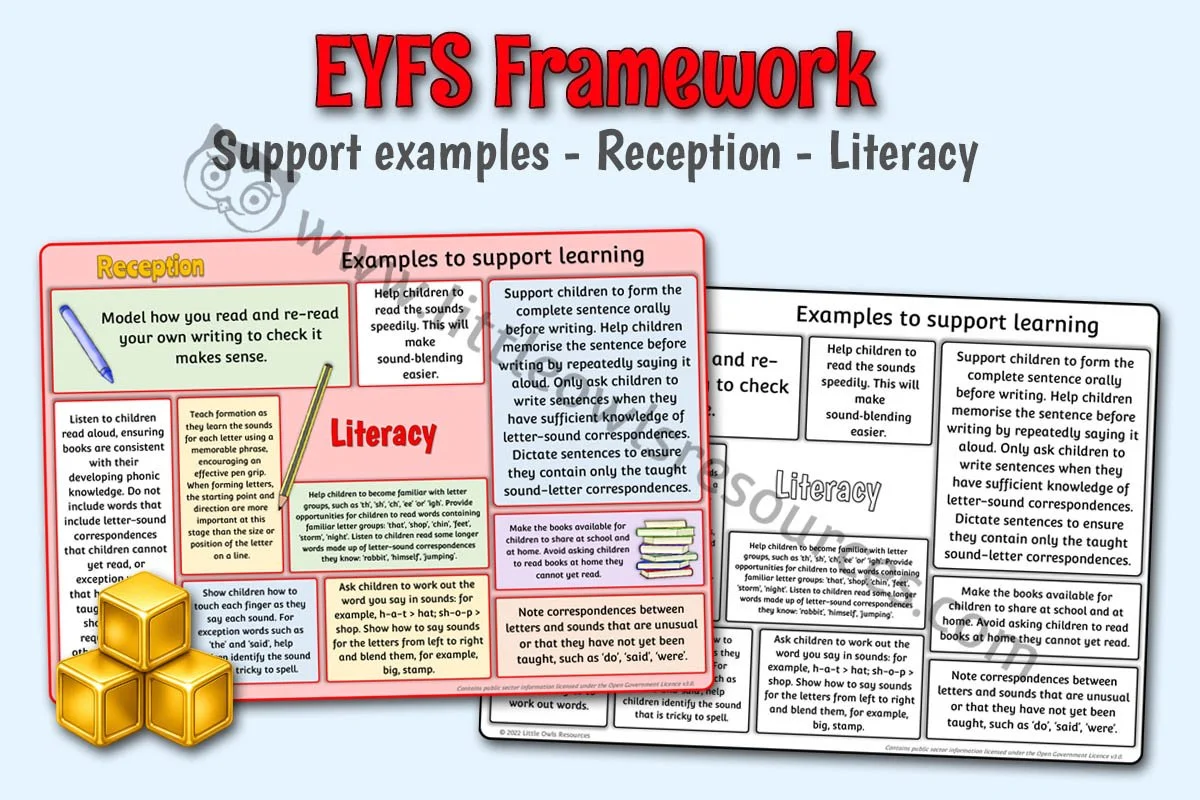
Examples of how to support ‘Literacy’ learning and development for Reception children.
Extracted from Development Matters; non-statutory curriculum guidance for the early years foundation stage.
Includes colour and black and white versions.
Files contain public sector information licensed under the Open Government Licence v3.0.
Original artwork drawn by Sara Murphy and final digital resources created by Stuart Murphy. COPYRIGHT ON ALL OF THE RESOURCES HOUSED ON THIS WEBSITE IS HELD BY ‘LITTLE OWLS RESOURCES’. OUR RESOURCES (INCLUDING THE IMAGES WITHIN THEM), CANNOT BE SHARED OR SOLD COMMERCIALLY.
DOWNLOAD EDITABLE (DOCX)
DOWNLOAD NON-EDITABLE (PDF)
DOWNLOAD NON-EDITABLE (Zipped JPEGs)
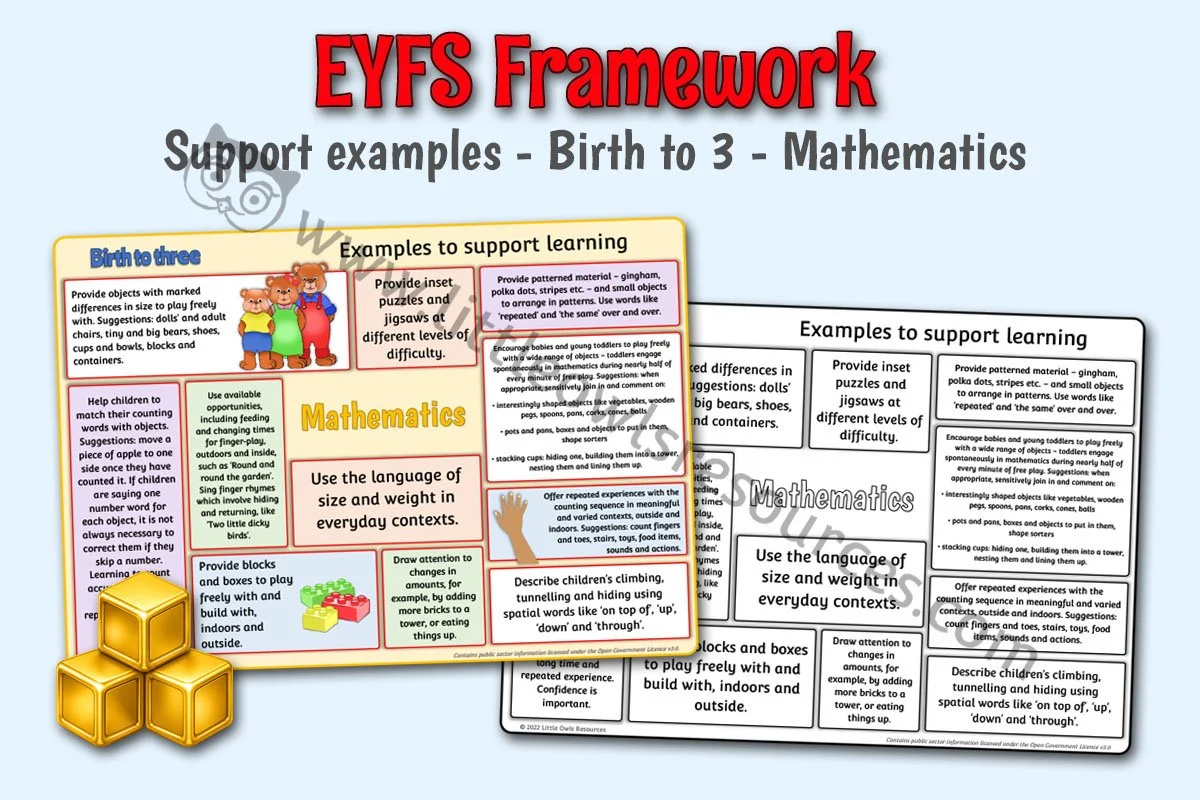
Examples of how to support ‘Mathematics’ learning and development for birth to 3 year olds.
Extracted from Development Matters; non-statutory curriculum guidance for the early years foundation stage.
Includes colour and black and white versions.
Files contain public sector information licensed under the Open Government Licence v3.0.
Original artwork drawn by Sara Murphy and final digital resources created by Stuart Murphy. COPYRIGHT ON ALL OF THE RESOURCES HOUSED ON THIS WEBSITE IS HELD BY ‘LITTLE OWLS RESOURCES’. OUR RESOURCES (INCLUDING THE IMAGES WITHIN THEM), CANNOT BE SHARED OR SOLD COMMERCIALLY.
DOWNLOAD EDITABLE (DOCX)
DOWNLOAD NON-EDITABLE (PDF)
DOWNLOAD NON-EDITABLE (Zipped JPEGs)
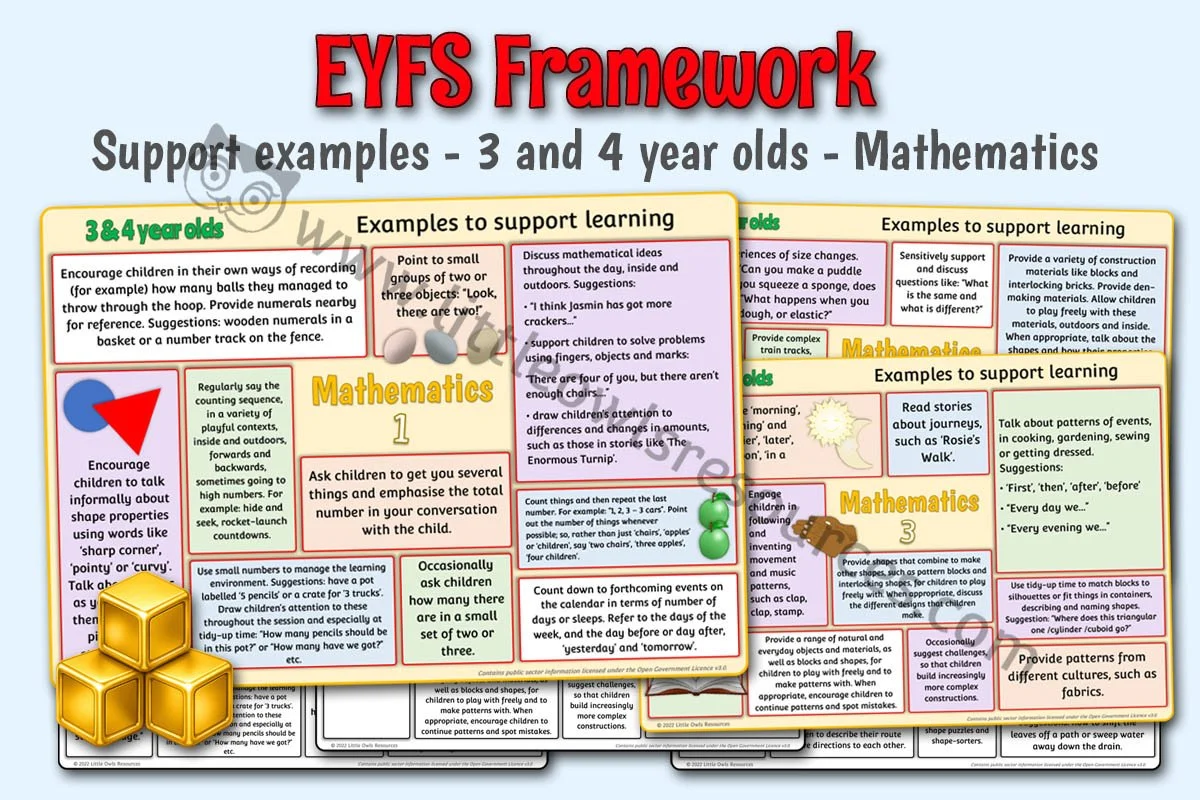
Examples of how to support ‘Mathematics’ learning and development for 3 and 4 year olds.
Extracted from Development Matters; non-statutory curriculum guidance for the early years foundation stage.
Includes colour and black and white versions.
Files contain public sector information licensed under the Open Government Licence v3.0.
Original artwork drawn by Sara Murphy and final digital resources created by Stuart Murphy. COPYRIGHT ON ALL OF THE RESOURCES HOUSED ON THIS WEBSITE IS HELD BY ‘LITTLE OWLS RESOURCES’. OUR RESOURCES (INCLUDING THE IMAGES WITHIN THEM), CANNOT BE SHARED OR SOLD COMMERCIALLY.
DOWNLOAD EDITABLE (DOCX)
DOWNLOAD NON-EDITABLE (PDF)
DOWNLOAD NON-EDITABLE (Zipped JPEGs)
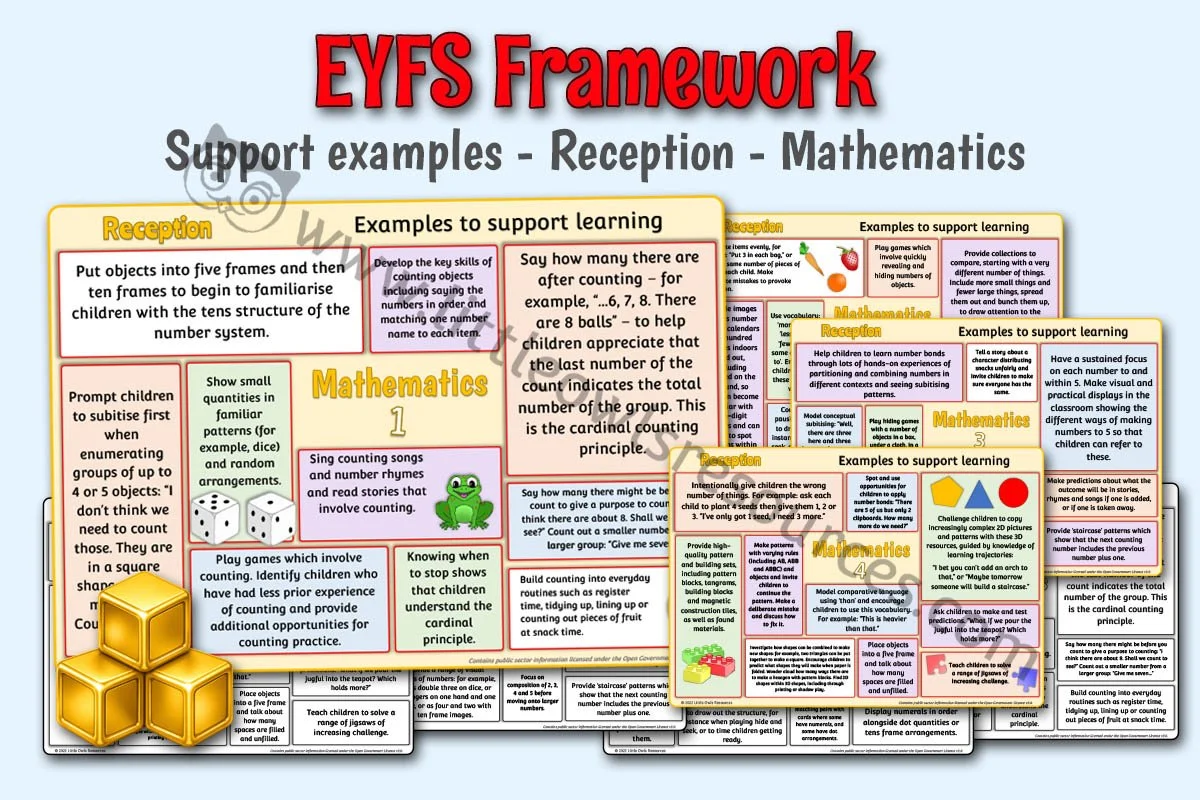
Examples of how to support ‘Mathematics’ learning and development for Reception children.
Extracted from Development Matters; non-statutory curriculum guidance for the early years foundation stage.
Includes colour and black and white versions.
Files contain public sector information licensed under the Open Government Licence v3.0.
Original artwork drawn by Sara Murphy and final digital resources created by Stuart Murphy. COPYRIGHT ON ALL OF THE RESOURCES HOUSED ON THIS WEBSITE IS HELD BY ‘LITTLE OWLS RESOURCES’. OUR RESOURCES (INCLUDING THE IMAGES WITHIN THEM), CANNOT BE SHARED OR SOLD COMMERCIALLY.
DOWNLOAD EDITABLE (DOCX)
DOWNLOAD NON-EDITABLE (PDF)
DOWNLOAD NON-EDITABLE (Zipped JPEGs)
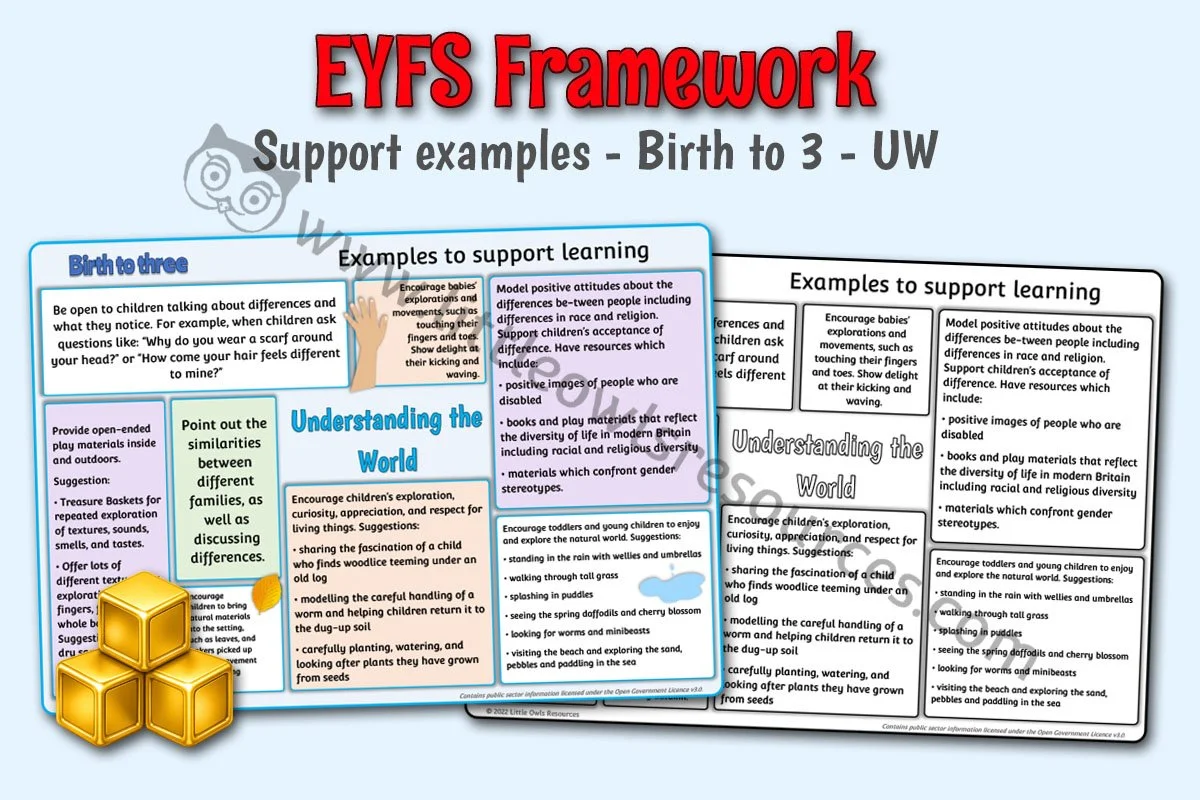
Examples of how to support ‘Understanding the World’ learning and development for birth to 3 year olds.
Extracted from Development Matters; non-statutory curriculum guidance for the early years foundation stage.
Includes colour and black and white versions.
Files contain public sector information licensed under the Open Government Licence v3.0.
Original artwork drawn by Sara Murphy and final digital resources created by Stuart Murphy. COPYRIGHT ON ALL OF THE RESOURCES HOUSED ON THIS WEBSITE IS HELD BY ‘LITTLE OWLS RESOURCES’. OUR RESOURCES (INCLUDING THE IMAGES WITHIN THEM), CANNOT BE SHARED OR SOLD COMMERCIALLY.
DOWNLOAD EDITABLE (DOCX)
DOWNLOAD NON-EDITABLE (PDF)
DOWNLOAD NON-EDITABLE (Zipped JPEGs)
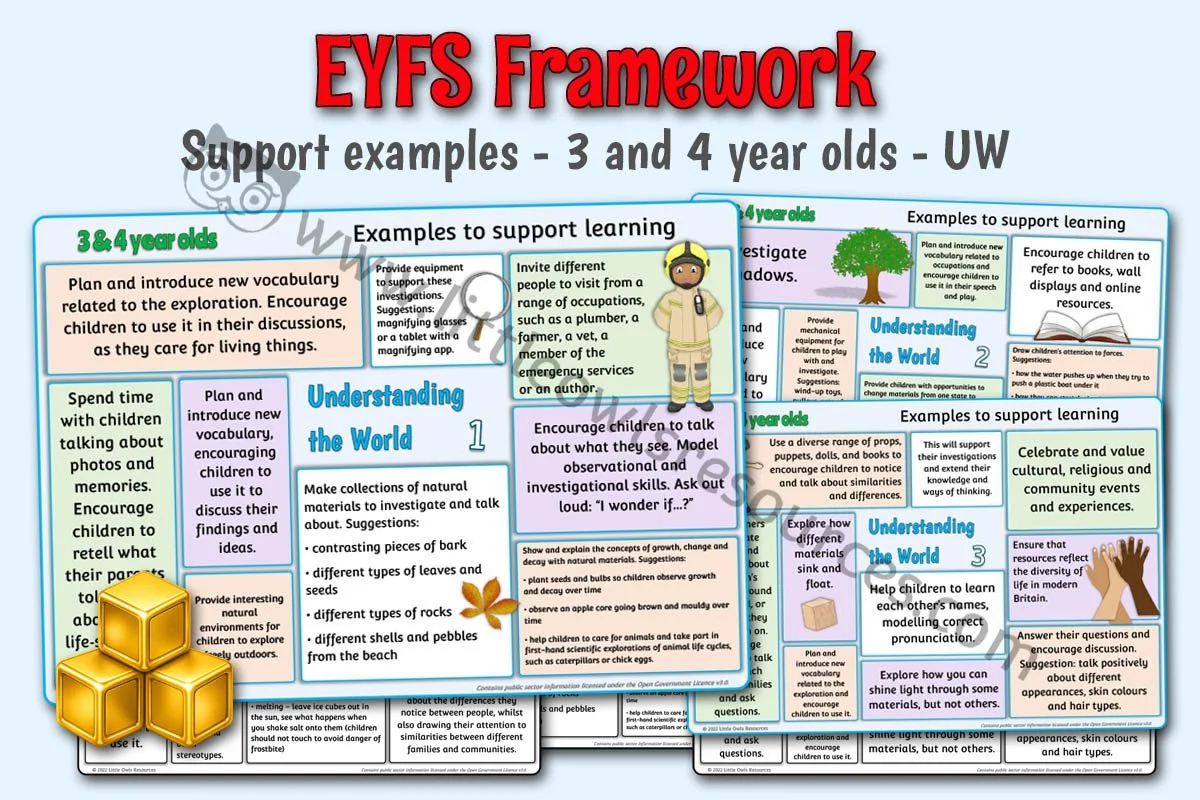
Examples of how to support ‘Understanding the World’ learning and development for 3 and 4 year olds.
Extracted from Development Matters; non-statutory curriculum guidance for the early years foundation stage.
Includes colour and black and white versions.
Files contain public sector information licensed under the Open Government Licence v3.0.
Original artwork drawn by Sara Murphy and final digital resources created by Stuart Murphy. COPYRIGHT ON ALL OF THE RESOURCES HOUSED ON THIS WEBSITE IS HELD BY ‘LITTLE OWLS RESOURCES’. OUR RESOURCES (INCLUDING THE IMAGES WITHIN THEM), CANNOT BE SHARED OR SOLD COMMERCIALLY.
DOWNLOAD EDITABLE (DOCX)
DOWNLOAD NON-EDITABLE (PDF)
DOWNLOAD NON-EDITABLE (Zipped JPEGs)
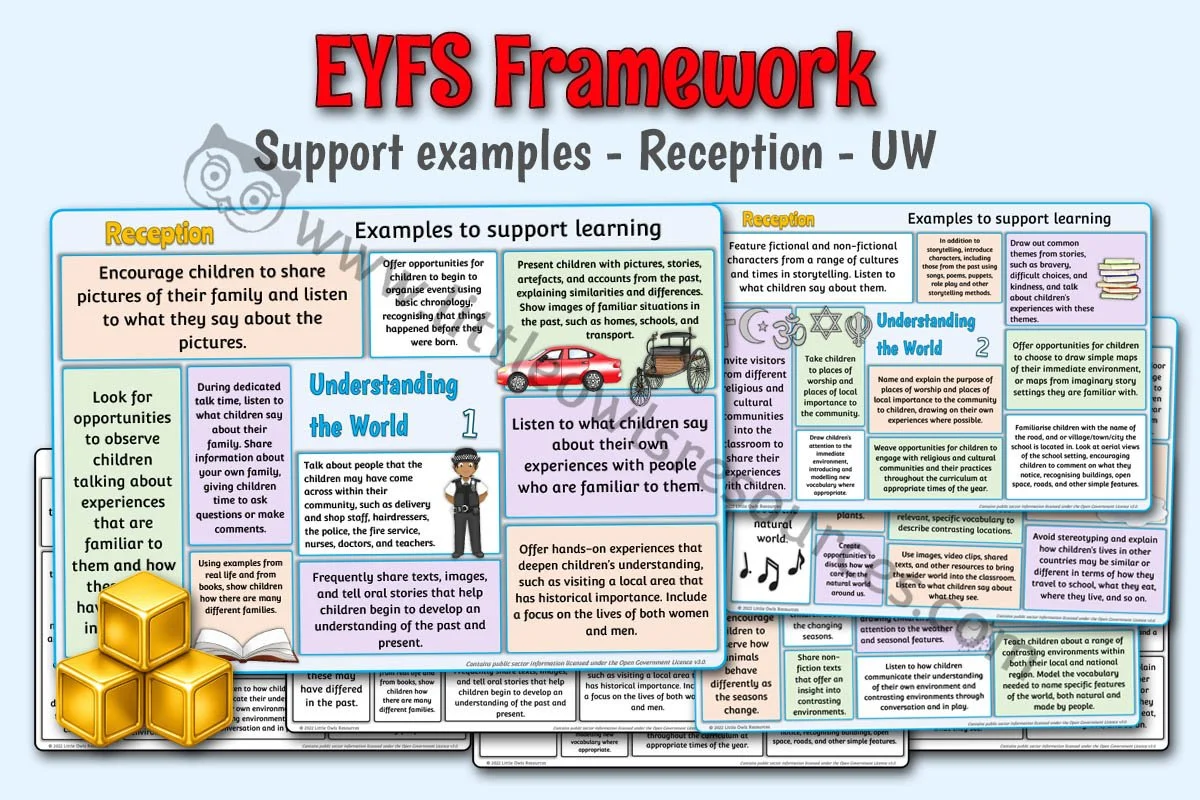
Examples of how to support ‘Understanding the World’ learning and development for Reception children.
Extracted from Development Matters; non-statutory curriculum guidance for the early years foundation stage.
Includes colour and black and white versions.
Files contain public sector information licensed under the Open Government Licence v3.0.
Original artwork drawn by Sara Murphy and final digital resources created by Stuart Murphy. COPYRIGHT ON ALL OF THE RESOURCES HOUSED ON THIS WEBSITE IS HELD BY ‘LITTLE OWLS RESOURCES’. OUR RESOURCES (INCLUDING THE IMAGES WITHIN THEM), CANNOT BE SHARED OR SOLD COMMERCIALLY.
DOWNLOAD EDITABLE (DOCX)
DOWNLOAD NON-EDITABLE (PDF)
DOWNLOAD NON-EDITABLE (Zipped JPEGs)
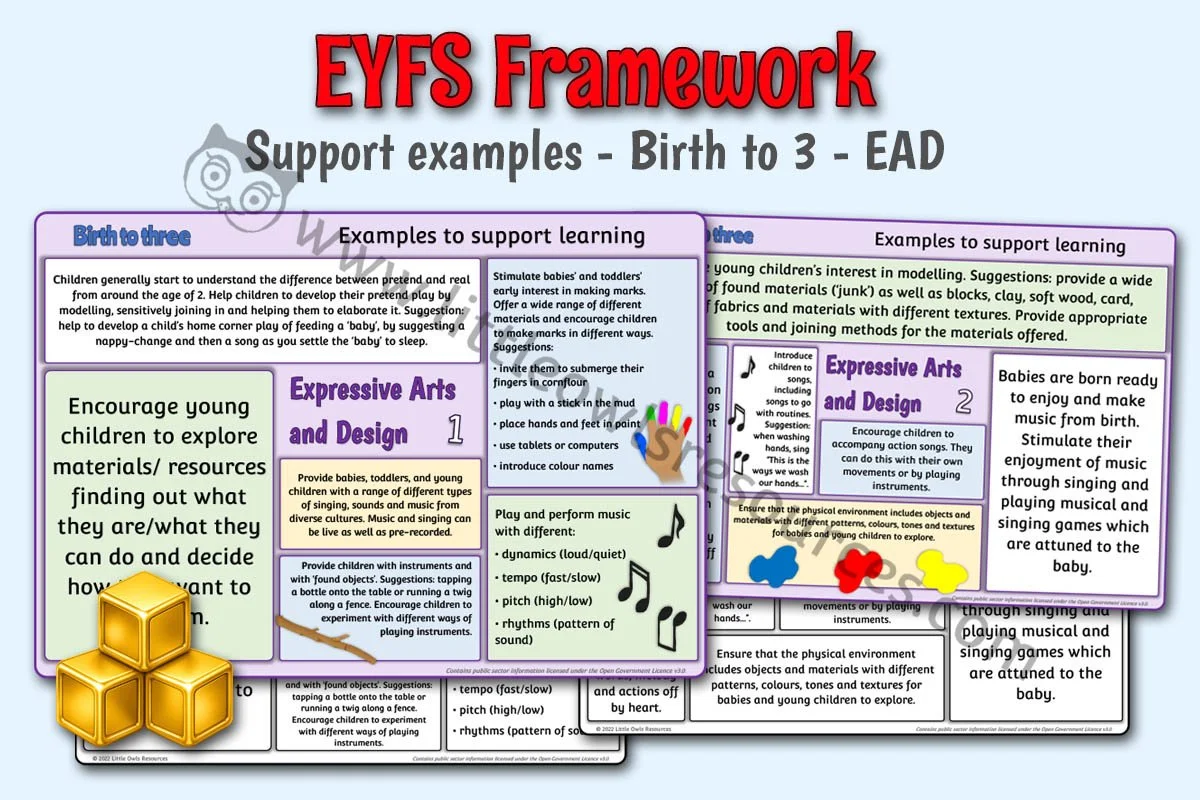
Examples of how to support ‘Expressive Arts and Design’ learning and development for birth to 3 year olds.
Extracted from Development Matters; non-statutory curriculum guidance for the early years foundation stage.
Includes colour and black and white versions.
Files contain public sector information licensed under the Open Government Licence v3.0.
Original artwork drawn by Sara Murphy and final digital resources created by Stuart Murphy. COPYRIGHT ON ALL OF THE RESOURCES HOUSED ON THIS WEBSITE IS HELD BY ‘LITTLE OWLS RESOURCES’. OUR RESOURCES (INCLUDING THE IMAGES WITHIN THEM), CANNOT BE SHARED OR SOLD COMMERCIALLY.
DOWNLOAD EDITABLE (DOCX)
DOWNLOAD NON-EDITABLE (PDF)
DOWNLOAD NON-EDITABLE (Zipped JPEGs)
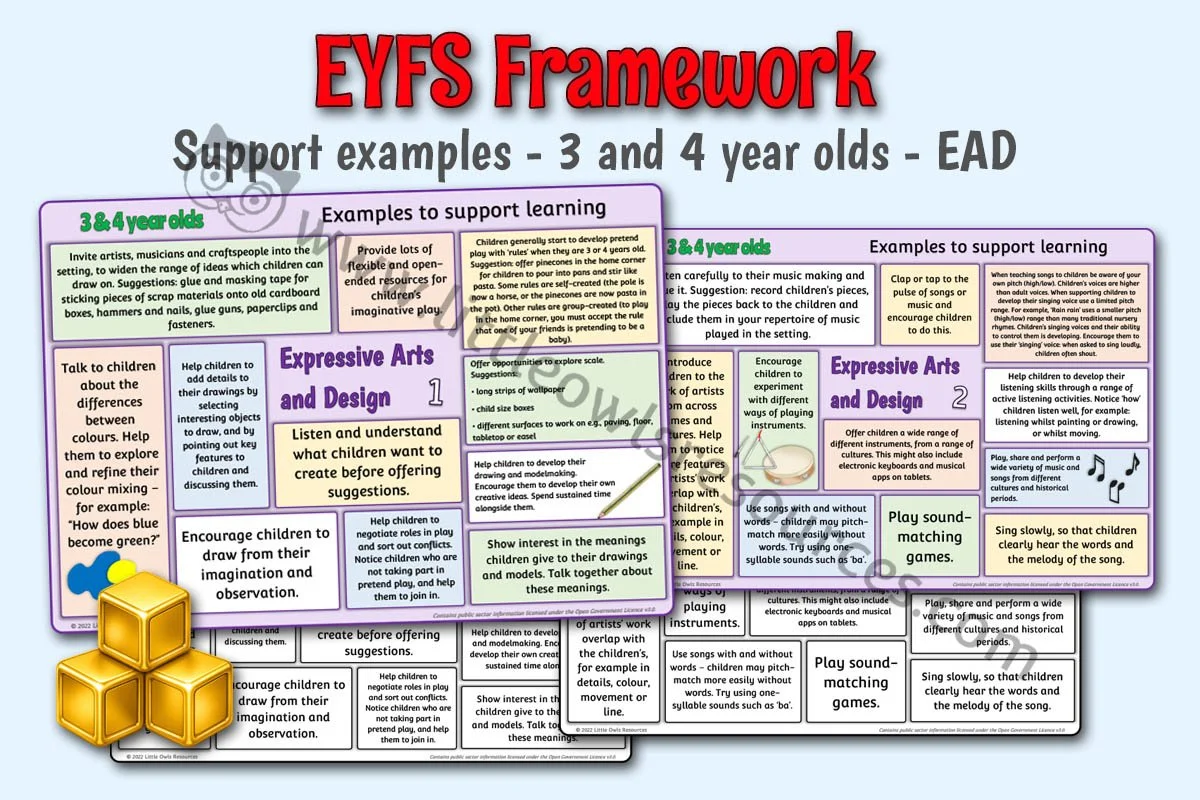
Examples of how to support ‘Expressive Arts and Design’ learning and development for 3 and 4 year olds.
Extracted from Development Matters; non-statutory curriculum guidance for the early years foundation stage.
Includes colour and black and white versions.
Files contain public sector information licensed under the Open Government Licence v3.0.
Original artwork drawn by Sara Murphy and final digital resources created by Stuart Murphy. COPYRIGHT ON ALL OF THE RESOURCES HOUSED ON THIS WEBSITE IS HELD BY ‘LITTLE OWLS RESOURCES’. OUR RESOURCES (INCLUDING THE IMAGES WITHIN THEM), CANNOT BE SHARED OR SOLD COMMERCIALLY.
DOWNLOAD EDITABLE (DOCX)
DOWNLOAD NON-EDITABLE (PDF)
DOWNLOAD NON-EDITABLE (Zipped JPEGs)
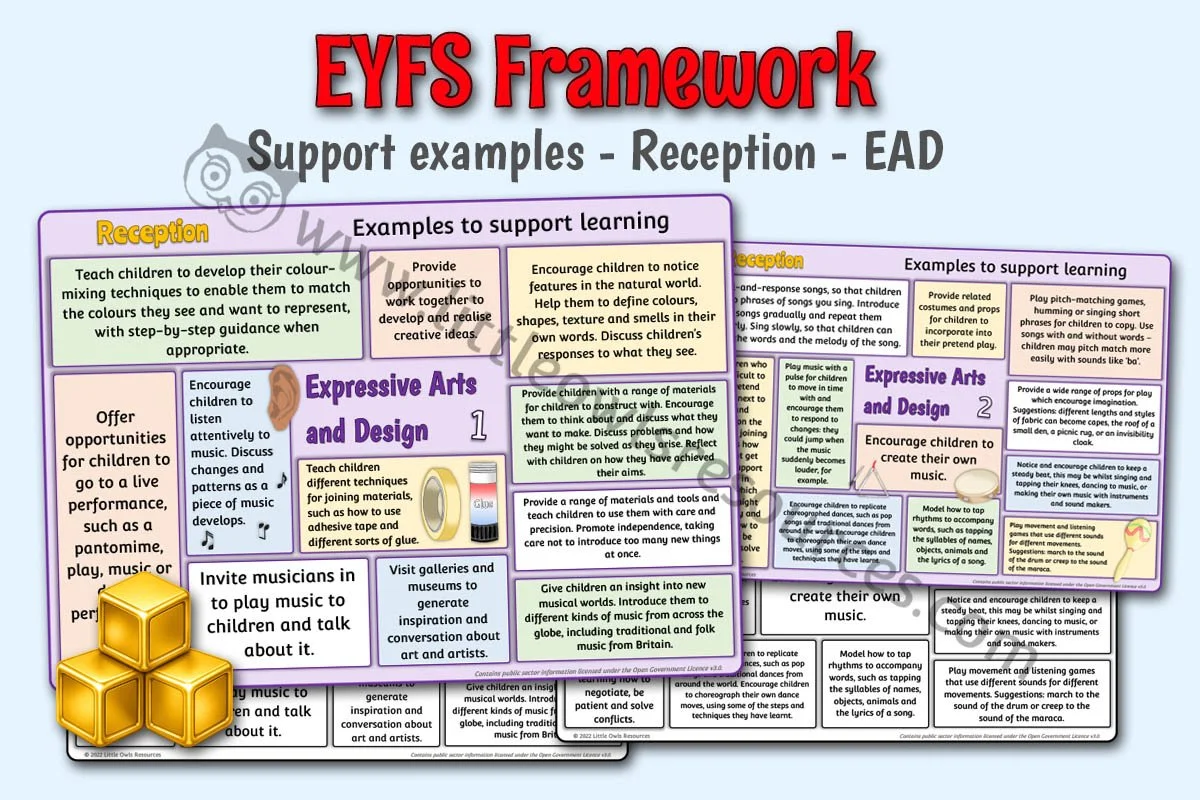
Examples of how to support ‘Expressive Arts and Design’ learning and development for Reception children.
Extracted from Development Matters; non-statutory curriculum guidance for the early years foundation stage.
Includes colour and black and white versions.
Files contain public sector information licensed under the Open Government Licence v3.0.
Original artwork drawn by Sara Murphy and final digital resources created by Stuart Murphy. COPYRIGHT ON ALL OF THE RESOURCES HOUSED ON THIS WEBSITE IS HELD BY ‘LITTLE OWLS RESOURCES’. OUR RESOURCES (INCLUDING THE IMAGES WITHIN THEM), CANNOT BE SHARED OR SOLD COMMERCIALLY.
DOWNLOAD EDITABLE (DOCX)
DOWNLOAD NON-EDITABLE (PDF)
DOWNLOAD NON-EDITABLE (Zipped JPEGs)
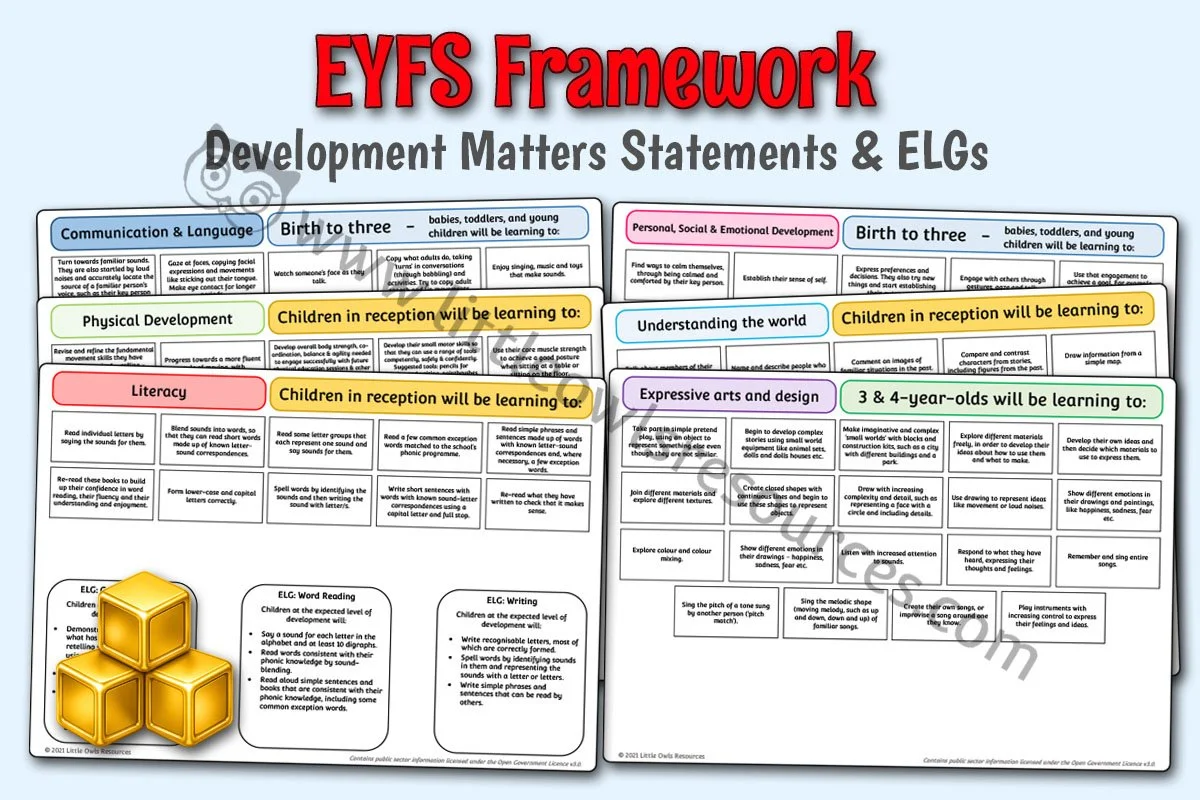
Handy planning and assessment tool. We have placed all of the Development Matters learning statements and ELGs into one document.
Includes 21 pages. The 7 areas of learning are each spread across 3 pages (birth to 3 / 3 & 4 year olds / children in reception).
Files contain public sector information licensed under the Open Government Licence v3.0.
Original artwork drawn by Sara Murphy and final digital resources created by Stuart Murphy. COPYRIGHT ON ALL OF THE RESOURCES HOUSED ON THIS WEBSITE IS HELD BY ‘LITTLE OWLS RESOURCES’. OUR RESOURCES (INCLUDING THE IMAGES WITHIN THEM), CANNOT BE SHARED OR SOLD COMMERCIALLY.
DOWNLOAD EDITABLE (DOCX)
DOWNLOAD NON-EDITABLE (PDF)
DOWNLOAD NON-EDITABLE (Zipped JPEGs)
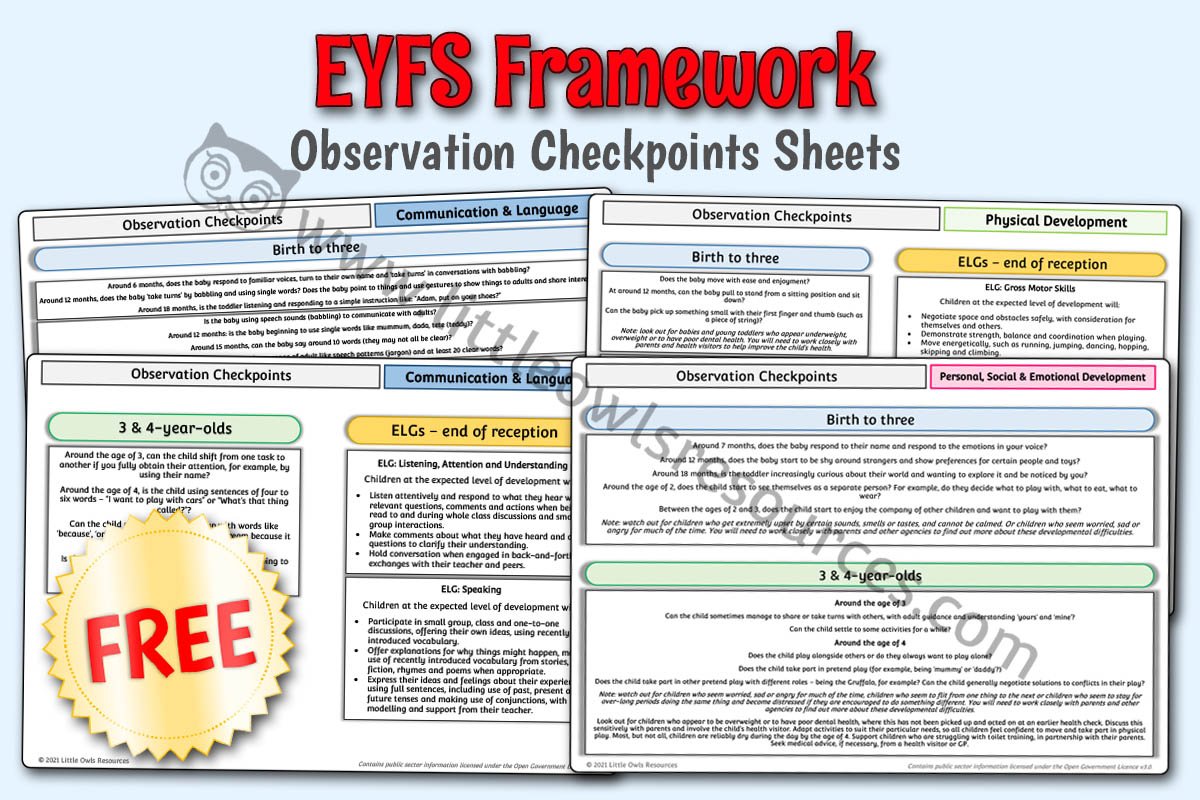
Development Matters incorporates ‘Observation Checkpoints’ for the Prime areas (Communication and Language, Physical Development & Personal, Social and Emotional Development). We have condensed these checkpoints into handy overview sheets. Plus we have included the ELGs from the EYFS Framework for each of these Prime areas.
We hope you find this helpful!
Files contain public sector information licensed under the Open Government Licence v3.0.
Original artwork drawn by Sara Murphy and final digital resources created by Stuart Murphy. COPYRIGHT ON ALL OF THE RESOURCES HOUSED ON THIS WEBSITE IS HELD BY ‘LITTLE OWLS RESOURCES’. OUR RESOURCES (INCLUDING THE IMAGES WITHIN THEM), CANNOT BE SHARED OR SOLD COMMERCIALLY.
DOWNLOAD EDITABLE (DOCX)
DOWNLOAD NON-EDITABLE (PDF)
DOWNLOAD NON-EDITABLE (Zipped JPEGs)
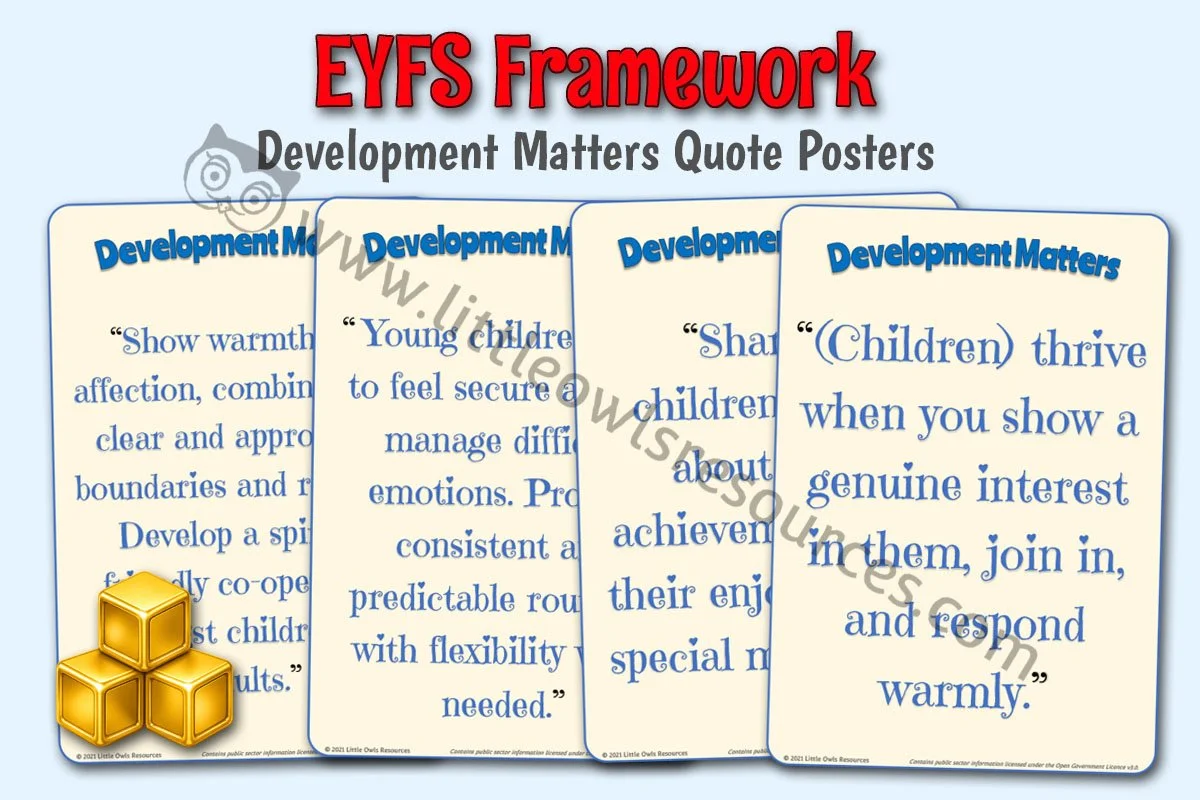
In reading Development Matters, four ethos building quotes stood out for us. We have created a poster for each of them. You may find it useful to display one or all of them within your setting.
We hope you find this helpful!
The above description and files below contain public sector information licensed under the Open Government Licence v3.0.
Original artwork drawn by Sara Murphy and final digital resources created by Stuart Murphy. COPYRIGHT ON ALL OF THE RESOURCES HOUSED ON THIS WEBSITE IS HELD BY ‘LITTLE OWLS RESOURCES’. OUR RESOURCES (INCLUDING THE IMAGES WITHIN THEM), CANNOT BE SHARED OR SOLD COMMERCIALLY.
DOWNLOAD EDITABLE (DOCX)
DOWNLOAD NON-EDITABLE (PDF)
DOWNLOAD NON-EDITABLE (Zipped JPEGs)
<<-BACK TO ‘EYFS FRAMEWORK’ MENU
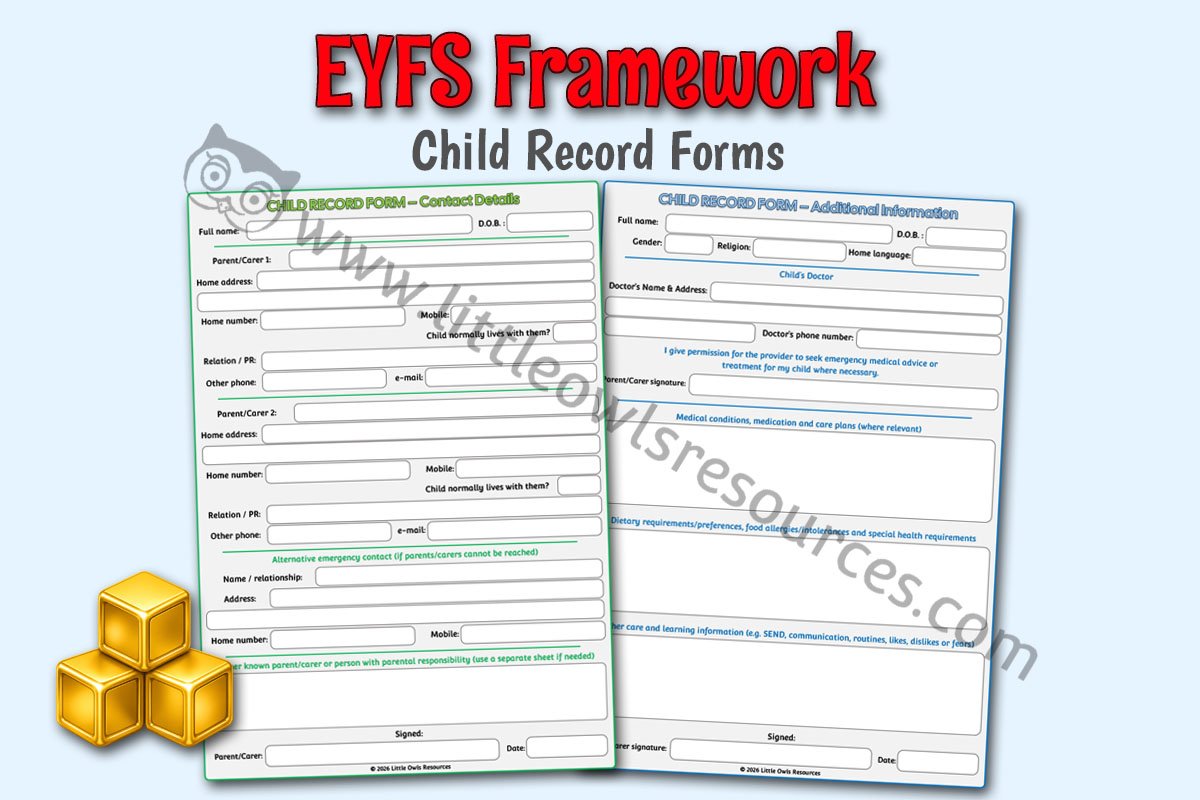
Child record form which comprises 2 A4 pages. The first page covers ‘Contact Details’ and the second ‘Additional Information’. If you would like to adapt the forms, simply choose the editable docx file.
Updated to align with the Early Years Foundation Stage Statutory Framework, effective 1st September 2026.
We hope you find this helpful!
Files contain public sector information licensed under the Open Government Licence v3.0.
Original artwork drawn by Sara Murphy and final digital resources created by Stuart Murphy. COPYRIGHT ON ALL OF THE RESOURCES HOUSED ON THIS WEBSITE IS HELD BY ‘LITTLE OWLS RESOURCES’. OUR RESOURCES (INCLUDING THE IMAGES WITHIN THEM), CANNOT BE SHARED OR SOLD COMMERCIALLY.
DOWNLOAD EDITABLE (DOCX)
DOWNLOAD NON-EDITABLE (PDF)
DOWNLOAD NON-EDITABLE (Zipped JPEGs)
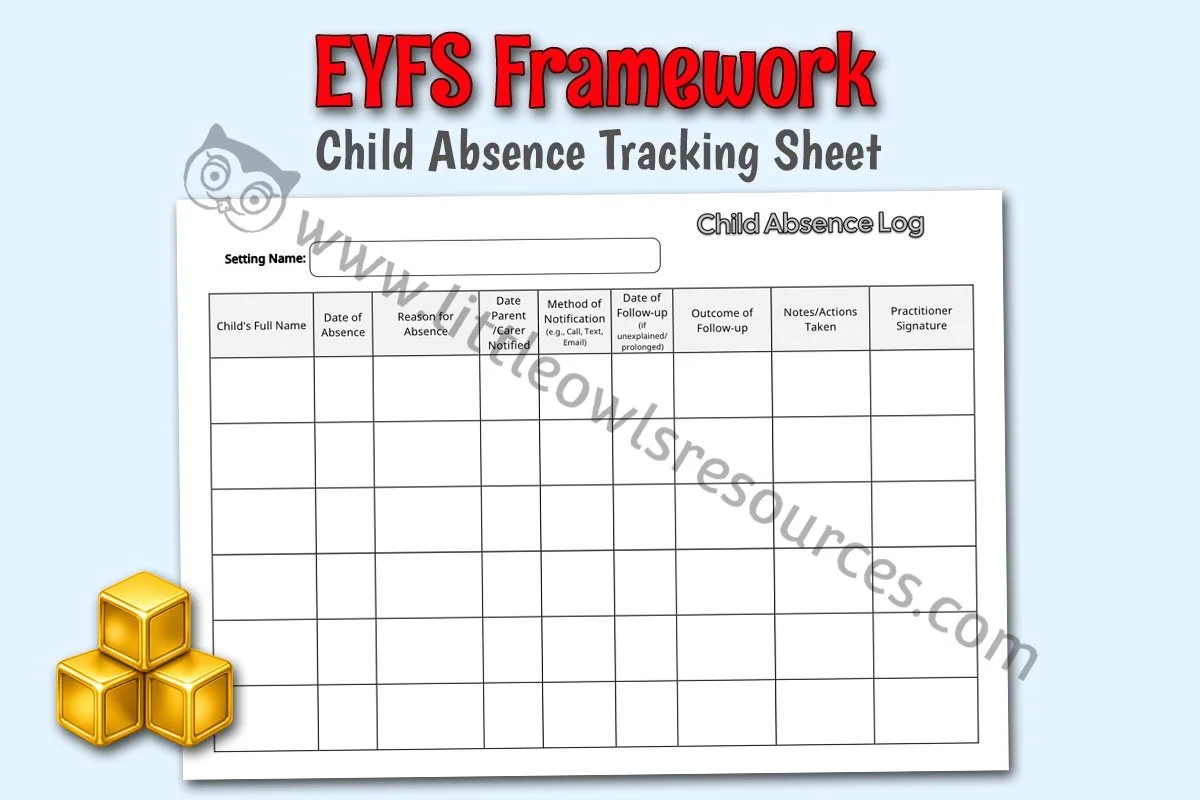
This 'Child Absence Tracking Sheet' is designed to help settings effectively record and monitor children's attendance, particularly focusing on the new EYFS Statutory Framework requirements (effective from September 2025) regarding the follow-up of prolonged or unexplained absences.
Maintaining accurate records is crucial for safeguarding and demonstrating compliance.
Files contain public sector information licensed under the Open Government Licence v3.0.
Original artwork drawn by Sara Murphy and final digital resources created by Stuart Murphy. COPYRIGHT ON ALL OF THE RESOURCES HOUSED ON THIS WEBSITE IS HELD BY ‘LITTLE OWLS RESOURCES’. OUR RESOURCES (INCLUDING THE IMAGES WITHIN THEM), CANNOT BE SHARED OR SOLD COMMERCIALLY.
DOWNLOAD EDITABLE (DOCX)
DOWNLOAD NON-EDITABLE (PDF)
DOWNLOAD NON-EDITABLE (Zipped JPEGs)
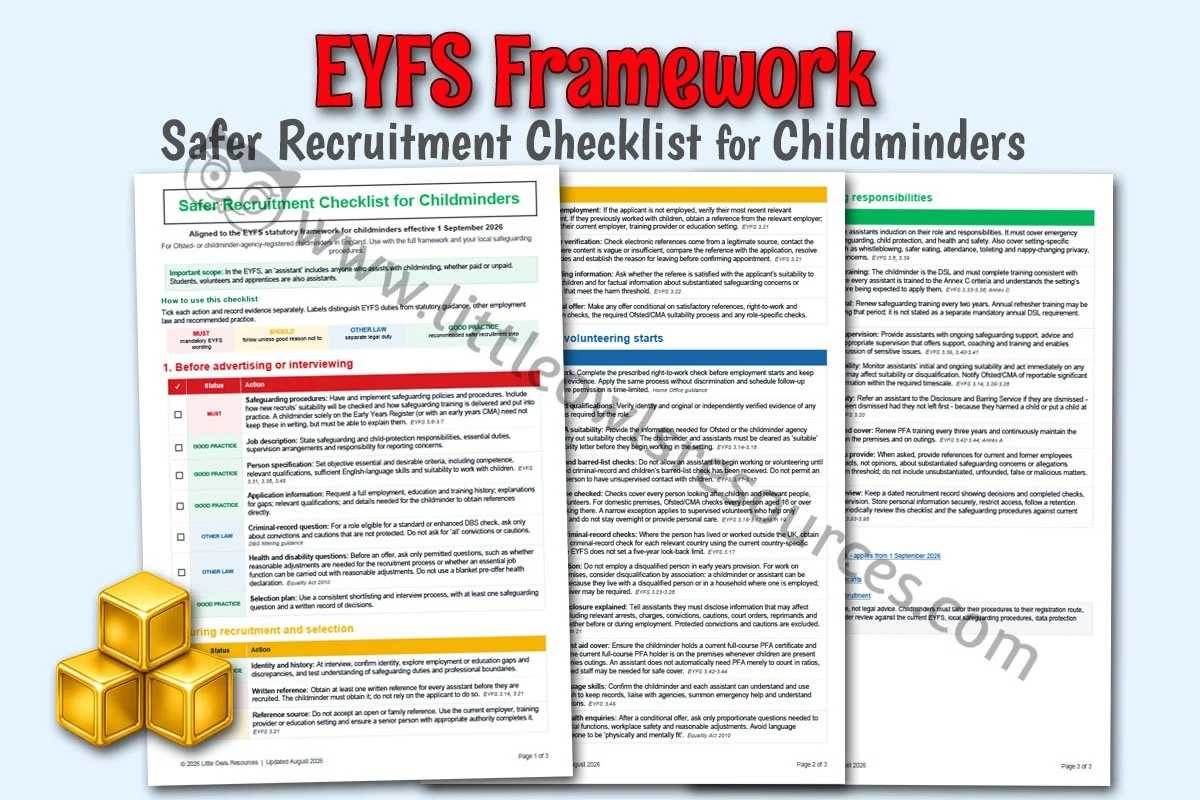
This checklist is designed to assist childminders in aligning their recruitment practices with the updated EYFS Statutory Framework. It should be used in conjunction with the full EYFS Statutory Framework for Childminders (effective from 1st September 2026).
Please note: This checklist is a template for guidance only. Users must tailor it to their specific setting's policies and ensure full compliance with the EYFS Statutory Framework, Data Protection Act 2018, UK GDPR, and all current employment legislation before implementation.
Original artwork drawn by Sara Murphy and final digital resources created by Stuart Murphy. COPYRIGHT ON ALL OF THE RESOURCES HOUSED ON THIS WEBSITE IS HELD BY ‘LITTLE OWLS RESOURCES’. OUR RESOURCES (INCLUDING THE IMAGES WITHIN THEM), CANNOT BE SHARED OR SOLD COMMERCIALLY.
DOWNLOAD EDITABLE (DOCX)
DOWNLOAD NON-EDITABLE (PDF)
DOWNLOAD NON-EDITABLE (Zipped JPEGs)
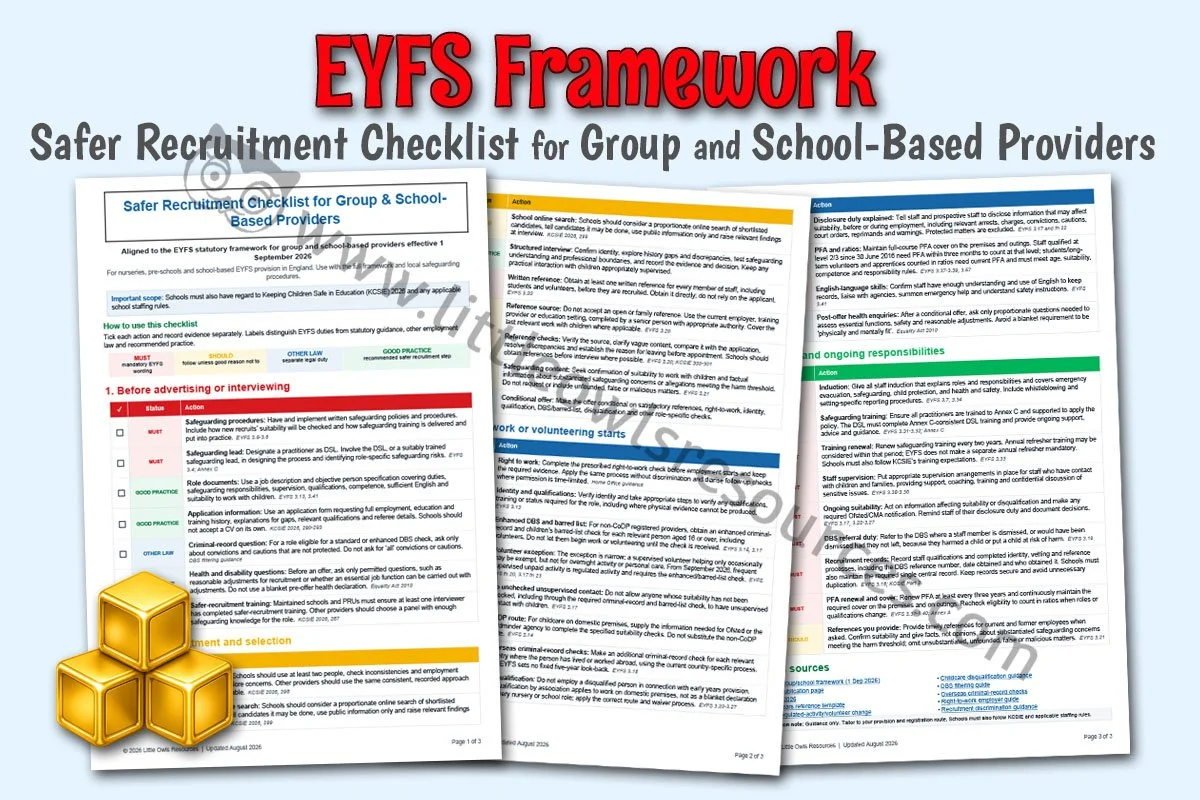
This checklist is designed to assist group and school-based providers in aligning their recruitment practices with the updated EYFS Statutory Framework. It should be used in conjunction with the full EYFS Statutory Framework for Group and School-Based Providers (effective from 1st September 2026).
Please note: This checklist is a template for guidance only. Users must tailor it to their specific setting's policies and ensure full compliance with the EYFS Statutory Framework, Data Protection Act 2018, UK GDPR, and all current employment legislation before implementation.
Original artwork drawn by Sara Murphy and final digital resources created by Stuart Murphy. COPYRIGHT ON ALL OF THE RESOURCES HOUSED ON THIS WEBSITE IS HELD BY ‘LITTLE OWLS RESOURCES’. OUR RESOURCES (INCLUDING THE IMAGES WITHIN THEM), CANNOT BE SHARED OR SOLD COMMERCIALLY.
DOWNLOAD EDITABLE (DOCX)
DOWNLOAD NON-EDITABLE (PDF)
DOWNLOAD NON-EDITABLE (Zipped JPEGs)
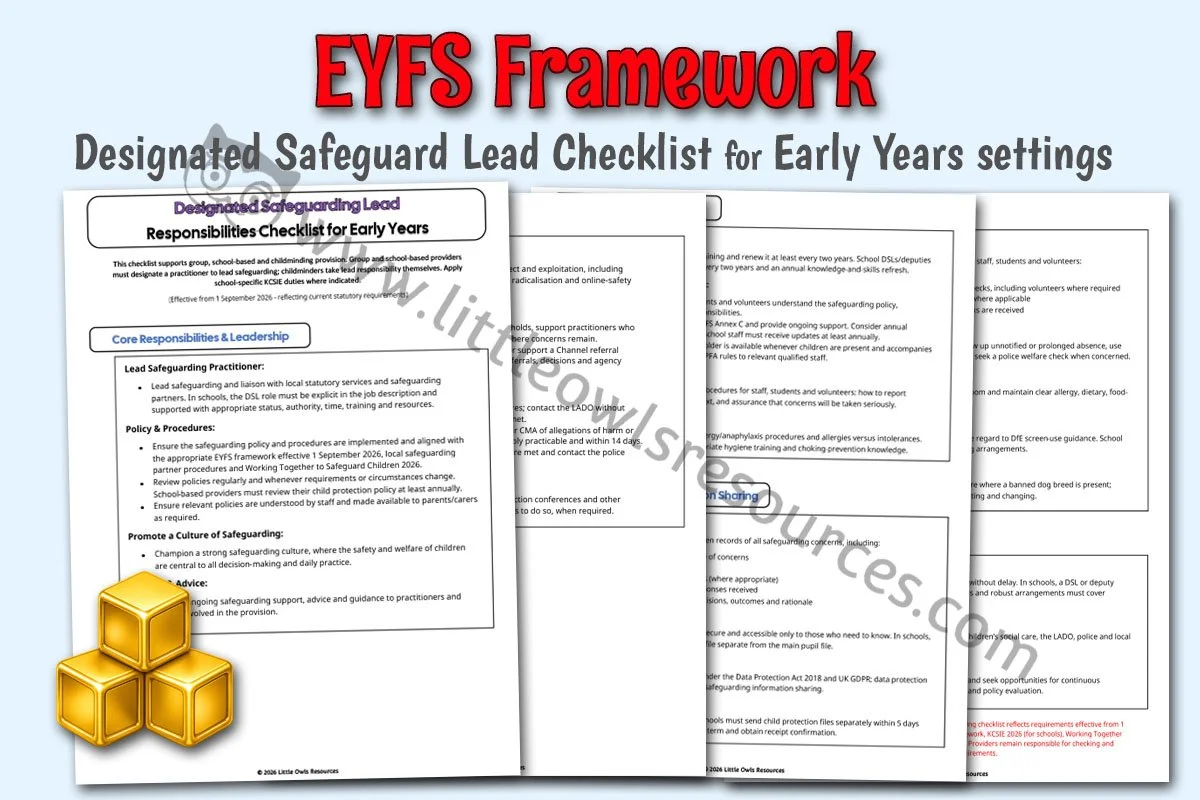
This checklist outlines the core responsibilities of the Designated Safeguarding Lead (DSL) in early years settings, including childminders, nurseries, and school-based providers. It is designed to help you ensure that robust and effective safeguarding practices are consistently embedded in your provision. (Effective from 1st September 2026 – Reflecting New EYFS Requirements)
Please note: This checklist is a template for guidance only. Users must adapt it to their specific setting's safeguarding policy and ensure full compliance with the EYFS Statutory Framework, 'Keeping Children Safe in Education' (where applicable), Data Protection Act 2018, UK GDPR, and all current employment legislation before implementation.
Original artwork drawn by Sara Murphy and final digital resources created by Stuart Murphy. COPYRIGHT ON ALL OF THE RESOURCES HOUSED ON THIS WEBSITE IS HELD BY ‘LITTLE OWLS RESOURCES’. OUR RESOURCES (INCLUDING THE IMAGES WITHIN THEM), CANNOT BE SHARED OR SOLD COMMERCIALLY.
DOWNLOAD EDITABLE (DOCX)
DOWNLOAD NON-EDITABLE (PDF)
DOWNLOAD NON-EDITABLE (Zipped JPEGs)
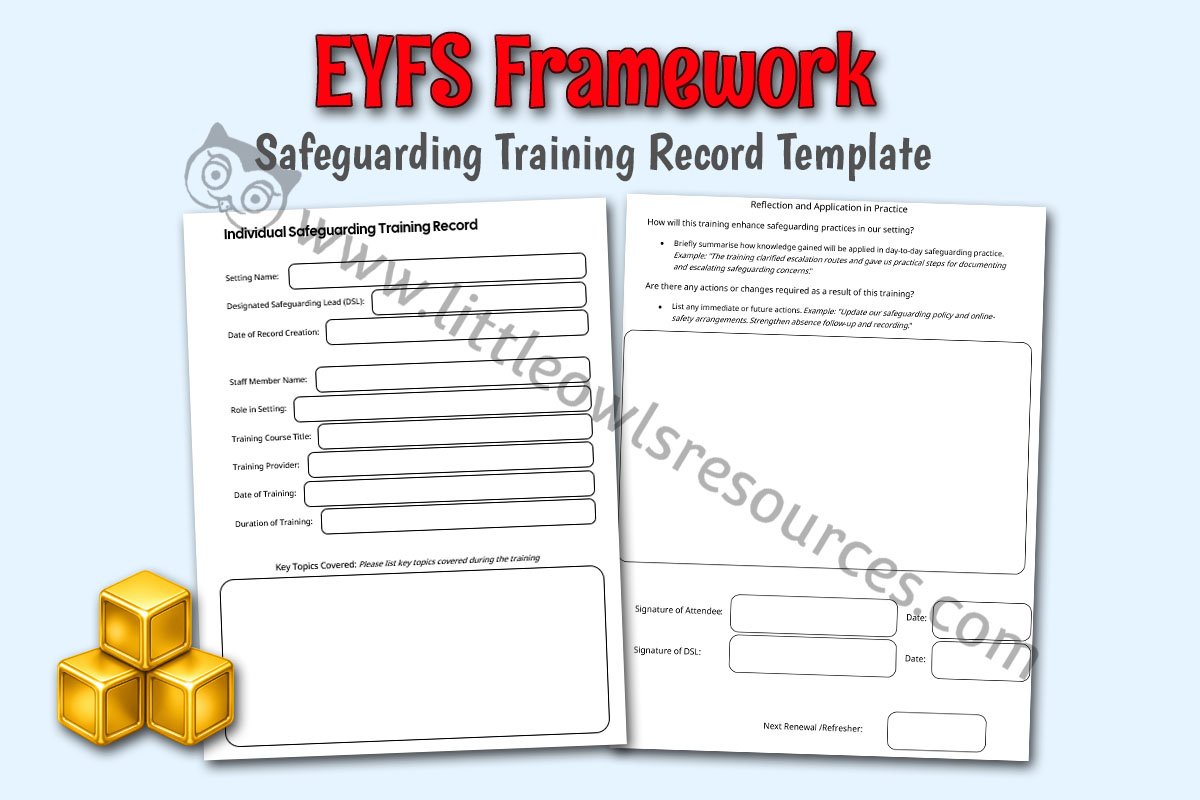
This template is designed to support all early years and educational providers in maintaining clear and up-to-date records of safeguarding training for staff, assistants, volunteers, and students, in line with statutory requirements such as the EYFS framework (effective from September 2026), Keeping Children Safe in Education, and local safeguarding partnership guidance.
Note: This template is intended as a guide and should be used alongside the most current version of the EYFS Statutory Framework, Keeping Children Safe in Education (where applicable), and guidance from your local safeguarding partnership.
Original artwork drawn by Sara Murphy and final digital resources created by Stuart Murphy. COPYRIGHT ON ALL OF THE RESOURCES HOUSED ON THIS WEBSITE IS HELD BY ‘LITTLE OWLS RESOURCES’. OUR RESOURCES (INCLUDING THE IMAGES WITHIN THEM), CANNOT BE SHARED OR SOLD COMMERCIALLY.
DOWNLOAD EDITABLE (DOCX)
DOWNLOAD NON-EDITABLE (PDF)
DOWNLOAD NON-EDITABLE (Zipped JPEGs)
Disclaimer
The information provided in this glossary is intended to support understanding of terminology commonly used within the Early Years Foundation Stage (EYFS). It does not constitute official guidance and should not be considered a substitute for the EYFS Statutory Framework or other Department for Education publications.
Terminology and interpretations may vary between settings and professional contexts.