
Autumn Writing for a Purpose · Signs
Make a sign that helps the play
Show where a woodland path leads, name an animal home or explain how to care for a place in the play. These open sign templates give children room to use pictures, marks, symbols and words for someone else to notice and act on.
Included with Premium and Professional membership. The download button opens the member resource page; sign in or join if needed.
Take a look inside
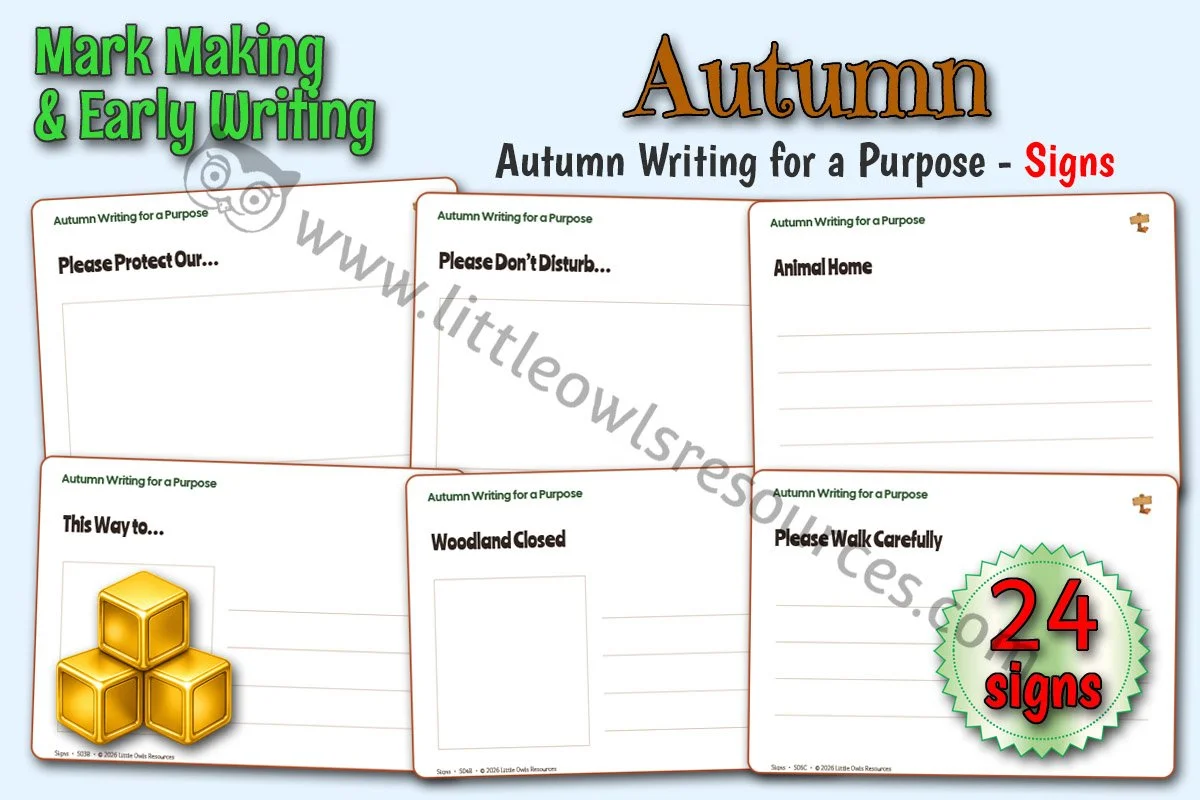
Browse a two-sign sheet, one sign extract and a short extract from the practitioner notes. These three watermarked previews show a small selection of the layouts and guidance included.


On smaller screens, scroll or swipe sideways to browse the three watermarked previews. Download the pack for all 24 signs and the practitioner notes.
What’s included in the pack?
Autumn Writing for a Purpose: Signs. This thirteen-page file contains 24 printable signs across twelve sheets, plus one page of practitioner guidance. There are seven named purposes and an open sign in each of three layout choices.
Signs for places and routes
Help someone find a place, understand what it is or feel welcome there. Children can decide what their sign needs to communicate and add their own pictures, symbols, arrows or words.
Signs for care and shared play
A sign can explain how to look after a woodland place or let others know how a space is being used in the play. An open sign in every layout leaves room for purposes the children choose themselves.
A sign needs somewhere to go. Put it where someone can use it, invite them to look and listen to what they understand. Children can explain their meaning or change something that needs to be clearer.
The practitioner notes include guidance for choosing layouts, making signs useful and finding the pages to print. This is the Signs file from the Autumn Writing for a Purpose series; the other writing-purpose packs are separate downloads.
Put the sign to work in the play
Start with a place or situation that needs a sign. Talk about who will see it and what the child wants them to understand.
Choose what the sign needs to do
A woodland small world, an animal home or a construction can give the sign a purpose. Children can choose a prompt or use an open sign for an idea of their own.
Make the meaning visible
Children can draw, make marks, add a symbol or write words. Invite them to explain what the sign means. Offer language or scribe their words if invited, asking before adding anything and keeping their own marks visible.
Place it and try it out
Agree where the sign belongs and ask someone to use it in the play. Does the route make sense? Is the place clear? Children can point, explain or adapt their sign in response.
Choose a layout together
The three choices offer drawing and marks, drawing with emergent writing, or more space for independent writing. They are choices of paper, not ability groups or a sequence. Children can choose any version and switch when it helps.
Support different ways to communicate
Children can point, use familiar signs or home-language words, or dictate to an adult. A larger surface or adapted tool may help. Pictures, symbols and spoken explanations can communicate the meaning alongside, or without, written words.
What should we print?
The file has thirteen pages: practitioner notes on page 1 and twelve printable sheets on pages 2–13. Each sheet contains two signs. Print the pages you need on A4 at 100% / actual size and cut around the outer borders. There is no need to print the practitioner notes.
What do the A, B and C codes mean?
They help adults find a layout. A offers drawing and mark-making space; B combines a picture box with writing lines; C gives more room for independent writing. Children do not need to work through them in order. Their sign can be useful in any version.
Do the direction signs include an arrow?
Children add their own directional arrow. They can choose where it points to suit the place or route in their play, then try the sign with someone else to see whether it helps.
How can we use signs to change the play space?
Agree any changes to shared spaces with an adult. The woodland closure prompt is a play sign. Children can explain what their sign means and where it belongs, then adapt it as the play changes.
Can we adapt the signs?
Yes. All text and line shapes are editable in Word. Adapt the wording or writing space for your play context, or use an open sign for a purpose the children choose.
Download the Autumn Signs writing pack
Choose a purpose, create a sign and put it where someone can use it.
Included with Premium and Professional membership. Already a member? Follow the download button and sign in if prompted.
You might also find these useful
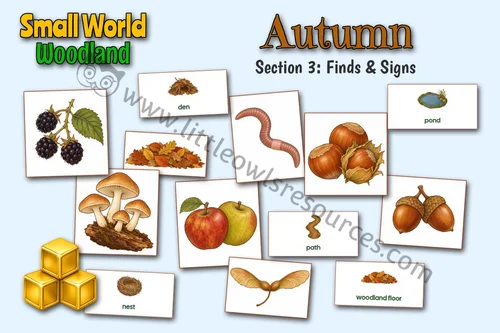
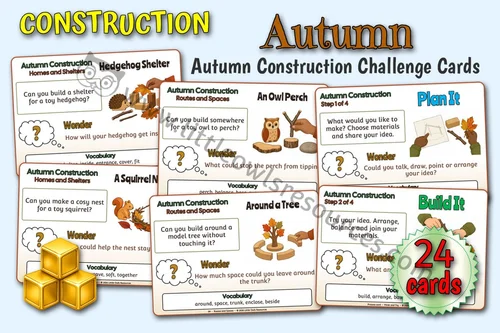
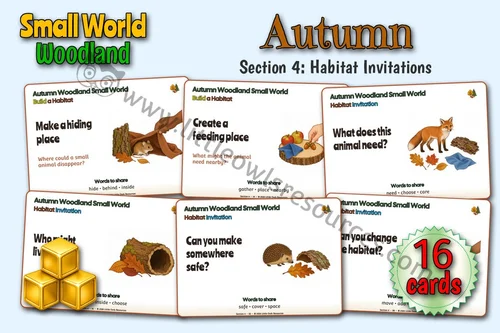
Give the signs a place to belong with woodland props, buildings, habitats and routes. These links open public resource pages where you can explore each pack before visiting its downloads.
Resource and preview images © Little Owls Resources.