
EYFS definition
Reception and Key Stage 1 pedagogy refers to the teaching approaches used to support children’s learning across these phases. Reception is the final year of the EYFS; Key Stage 1 usually covers Years 1 and 2. Comparing them involves both changing curriculum expectations and continuity in how children learn.
What changes between the phases?
Reception uses the EYFS educational programmes across seven areas of learning. In maintained schools, Key Stage 1 follows the subject-based National Curriculum; other school types can have different curriculum requirements.
These frameworks describe learning expectations. They do not create a simple division between play in Reception and formal lessons in Year 1.
What might teaching look like?
- In either phase, adults may model, explain, discuss, read aloud and organise practical exploration.
- A Reception investigation might connect language, counting and understanding the world.
- A Year 1 investigation may focus more explicitly on particular science knowledge while still using objects, talk and exploration.
How can the phases connect?
Teachers can share information about children’s knowledge, interests, communication and support needs. Familiar routines or materials may help children use existing learning while encountering new content and expectations.
The balance of teaching approaches can vary between schools and groups. Transition involves responding to the children, alongside planning for the next curriculum, rather than assuming every child needs the same change at the same pace.
Further Guidance | Related Documents
Explore resources connected with this term. Each card identifies the resource’s intended age group and access type.
Highlighted resource
-
 View resource
All Access
Reception → Year 1 Transition Pack
Explore curriculum continuity, communication between staff and support for the move into Year 1.
Reception → Year 1 · transition guidance
View resource details →
This selection is being reviewed. Please use the resource gateways below.
Related resources
Scroll sideways, focus the list and use your arrow keys, or use the buttons.
-
 View resource
Free to read
Reception Curriculum Overview & Rationale | 4-5 Years
Read the Reception curriculum rationale as one example of how EYFS teaching and provision connect.
Reception (4–5 years) · public curriculum overview
Read guidance → -
 View resource
All Access
Adult-Guided Learning in Provision | Reception (4-5 Years)
Explore intentional adult interaction within Reception provision and child-initiated play.
Reception (4–5 years) · practitioner guidance
View resource details → -
 View resource
All Access
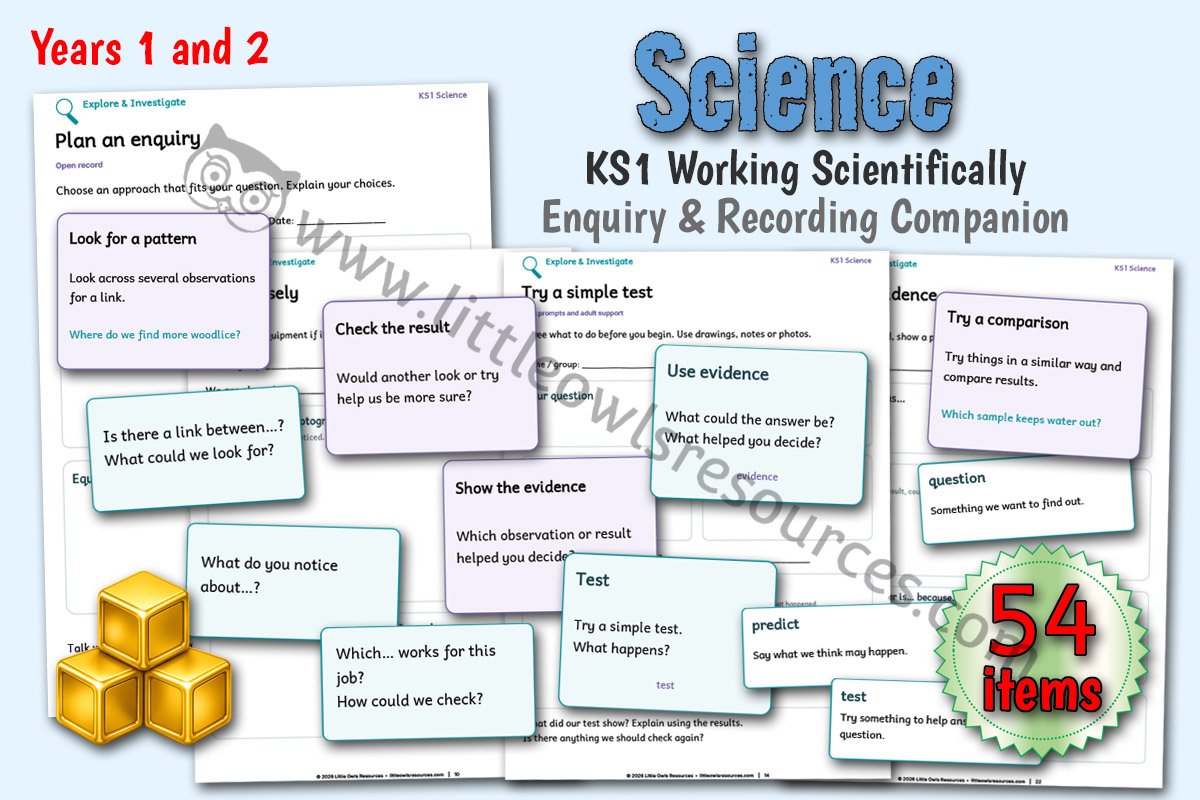
KS1 Working Scientifically — Enquiry & Recording Companion
Find enquiry prompts and recording tools to use alongside practical KS1 science investigations.
Key Stage 1 (5–7 years) · practical science resources
View and Download Resource → -
 View resource
Public collection
KS1 Maths
Browse practical maths activities and teaching resources organised for Year 1 and Year 2.
Key Stage 1 (5–7 years) · public collection; individual access varies
Explore collection →
This selection is being reviewed. Please use the resource gateways below.
Find practical resources for your setting
Start with an age gateway
Useful routes into practice
- Transitions & settling in
Explore resources supporting changes in routines, settings and phases.
- Key Stage 1 hub
Browse subject resources, practical learning and everyday classroom support.