
Part of the EYFS Glossary
This article forms part of our EYFS Glossary of Early Years Education Terms, which explains key curriculum, pedagogy, and assessment language used in early years practice.
Pedagogy refers to the methods, approaches, and practices used by practitioners to support children’s learning and development.
What is Pedagogy?
Pedagogy describes how practitioners support learning. It includes the decisions, interactions, and approaches used to create learning experiences for children.
In early years settings, pedagogy is not limited to formal teaching. It includes everyday interactions, the organisation of the environment, and the ways in which practitioners respond to children’s interests and development.
Pedagogy reflects how practitioners translate knowledge of child development into practice.
Pedagogy in the EYFS Context
In the Early Years Foundation Stage (EYFS), pedagogy is shaped by an understanding that young children learn through play, exploration, relationships, and interaction.
Early years pedagogy often involves:
play-based learning
responsive interactions
observation and reflection
flexible approaches to planning
creating enabling environments
These approaches support children’s development across all areas of learning.
Key Elements of Early Years Pedagogy
Several elements contribute to pedagogy in early years settings.
Interactions
The ways in which practitioners communicate and engage with children, including conversation, questioning, and shared thinking.
Environment
The organisation of space, resources, and experiences that support exploration and learning.
Play
Play provides opportunities for children to explore ideas, develop skills, and engage in meaningful learning.
Adult Role
Practitioners may take different roles, including observing, guiding, modelling, or leading learning experiences.
These elements work together to shape how children experience learning.
Pedagogy in Practice
In practice, pedagogy is reflected in everyday decisions made by practitioners.
For example, practitioners may:
respond to children’s interests during play
provide resources that encourage exploration
engage in conversation to extend thinking
adapt experiences to support development
These decisions influence how children experience learning in early years settings.
Pedagogy and Children’s Development
Pedagogy plays a key role in supporting children’s development. Through thoughtful approaches to teaching and learning, practitioners help children develop:
communication and language skills
social and emotional understanding
physical coordination
thinking and problem-solving skills
The quality of pedagogy can influence children’s engagement, confidence, and learning experiences.
Common Questions About Pedagogy
-
Curriculum refers to what children are expected to learn, while pedagogy refers to how learning is supported in practice.
-
Pedagogy includes teaching but also involves broader aspects such as interaction, environment, and relationships.
-
Pedagogy shapes children’s learning experiences and supports their development across all areas of learning.
Summary
Pedagogy refers to the approaches and practices used by practitioners to support children’s learning and development. In the EYFS, pedagogy includes play-based learning, interaction, and responsive teaching that supports children’s development through meaningful experiences.
Related Glossary Terms
The following glossary entries are closely related to Pedagogy and provide additional context:
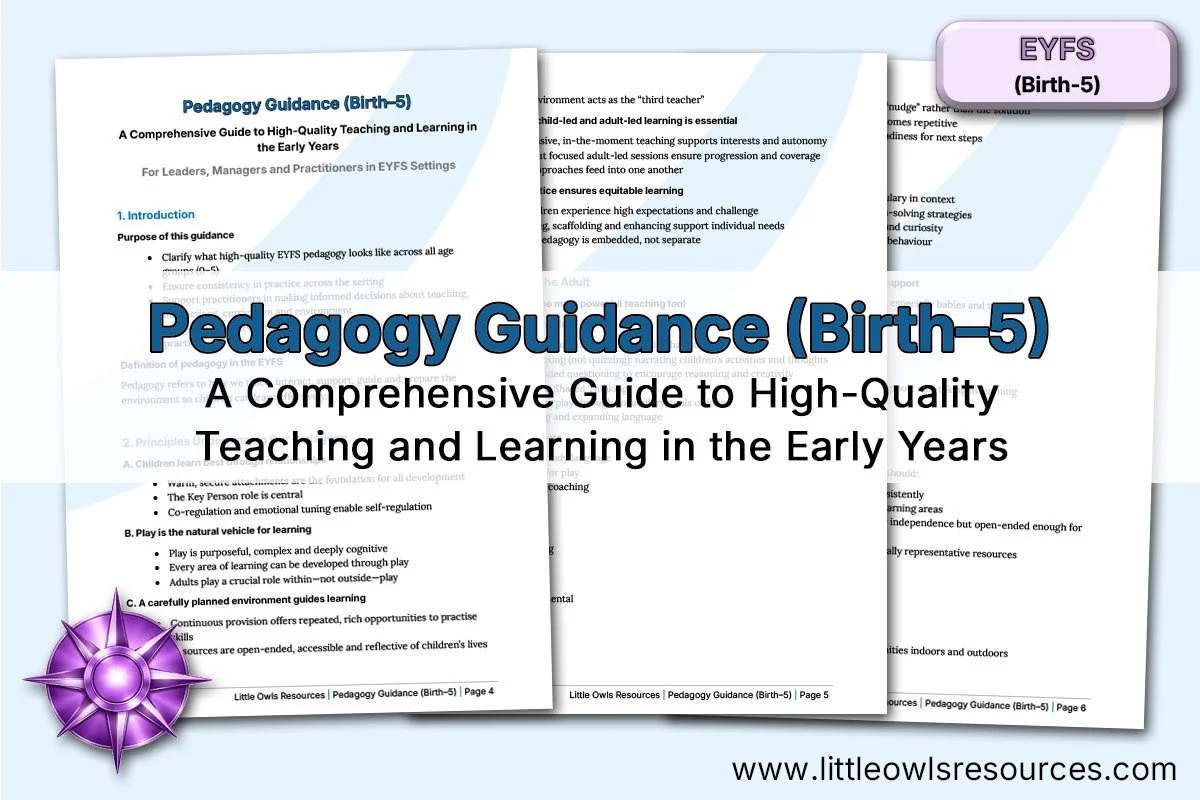
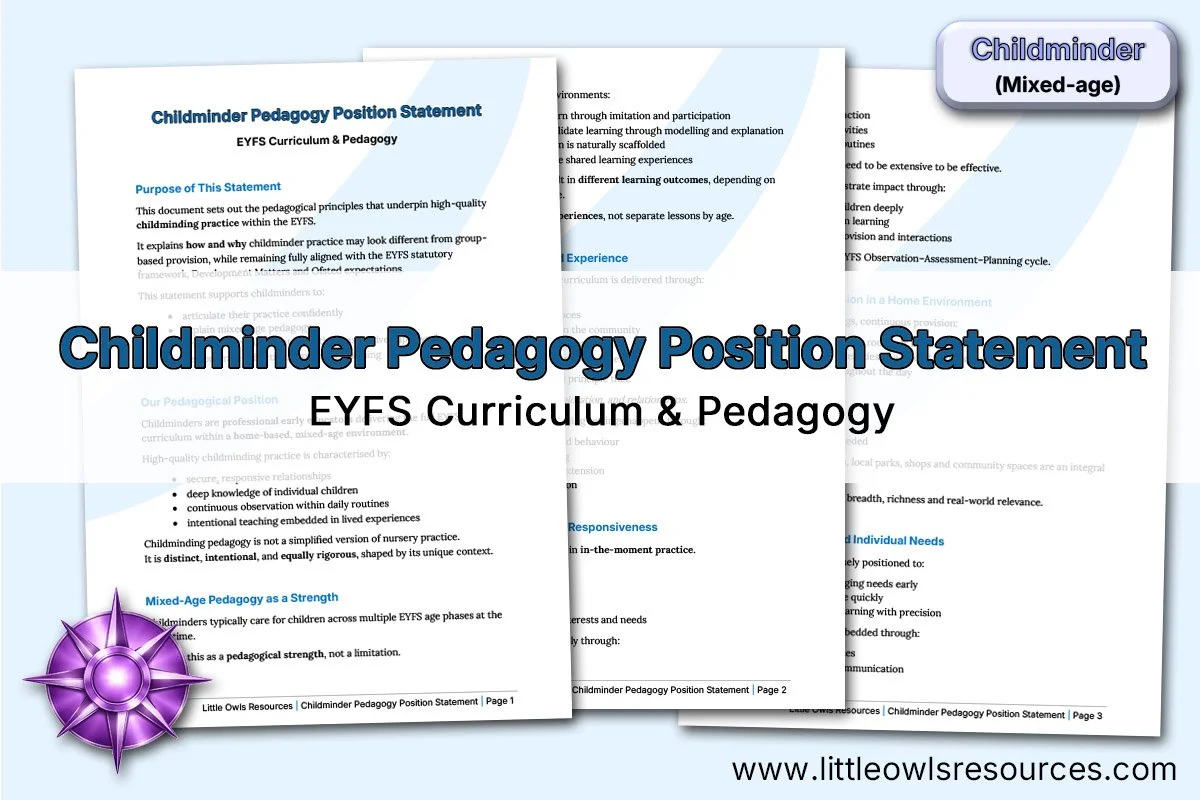
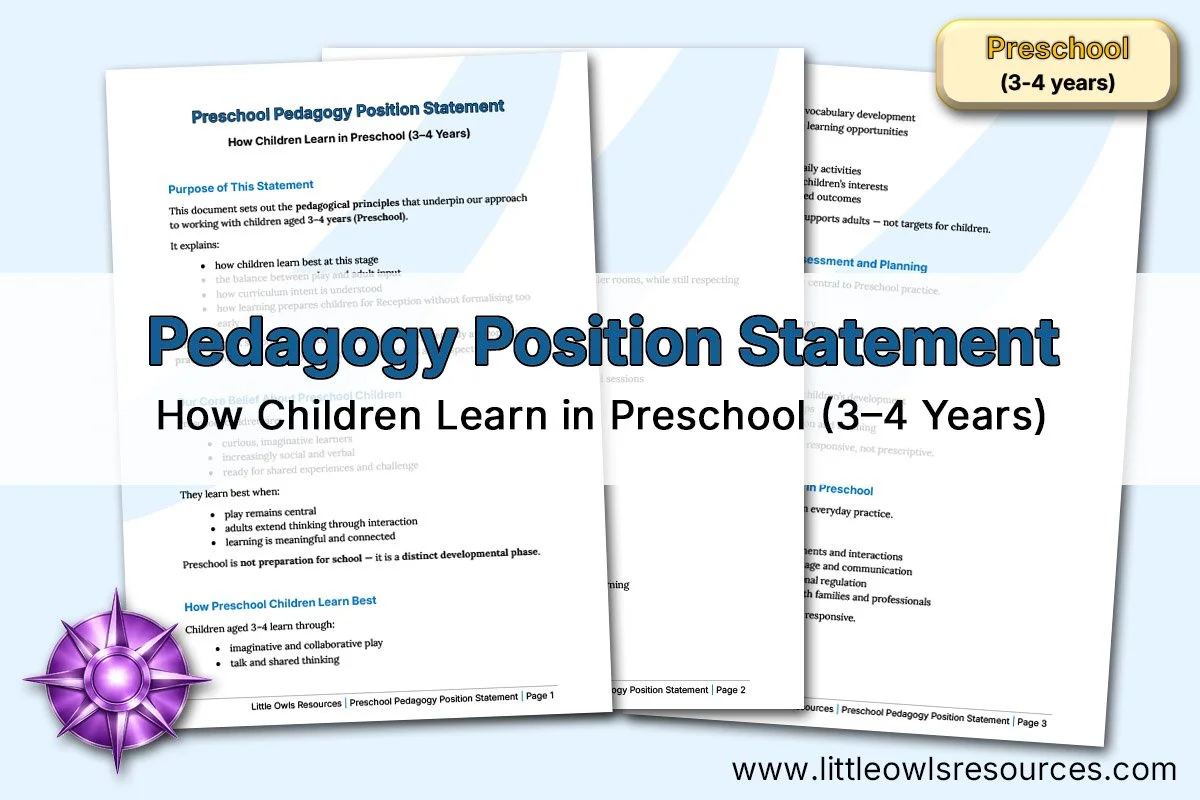
Further Guidance | Related Documents within our ‘EYFS Curriculum & Pedagogy’ suite:
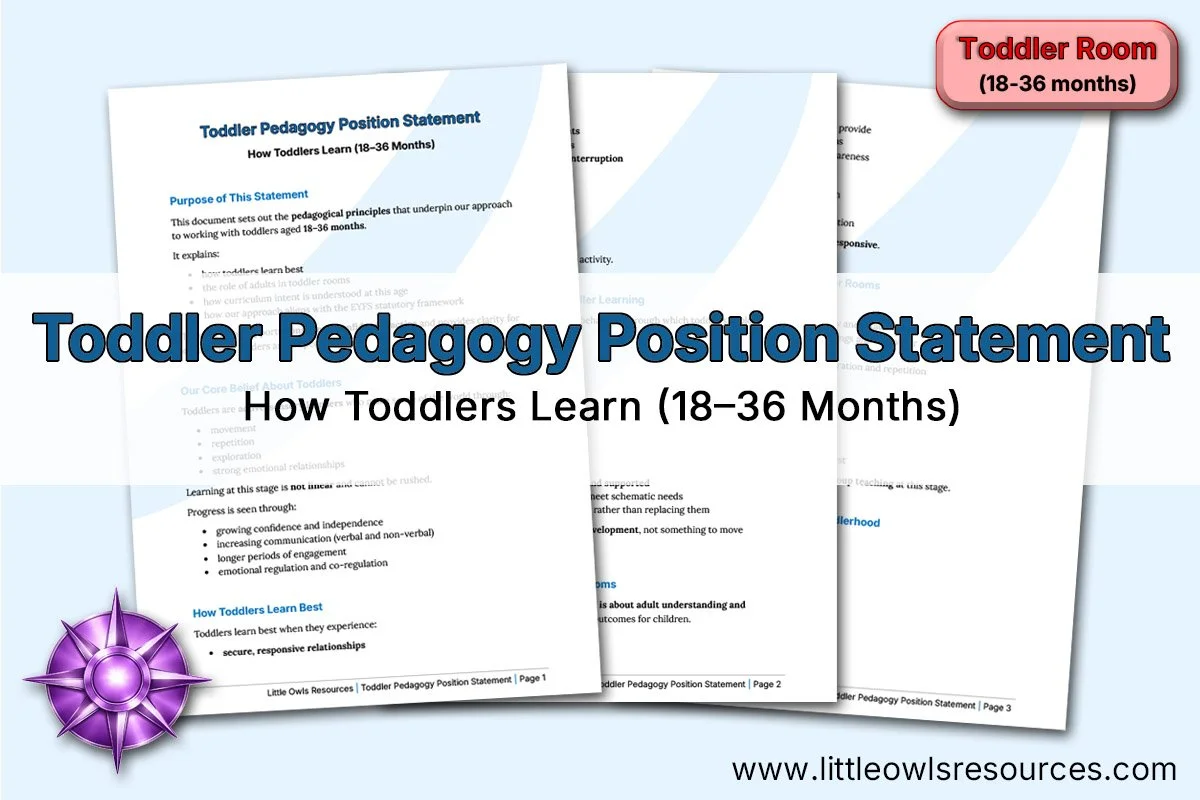
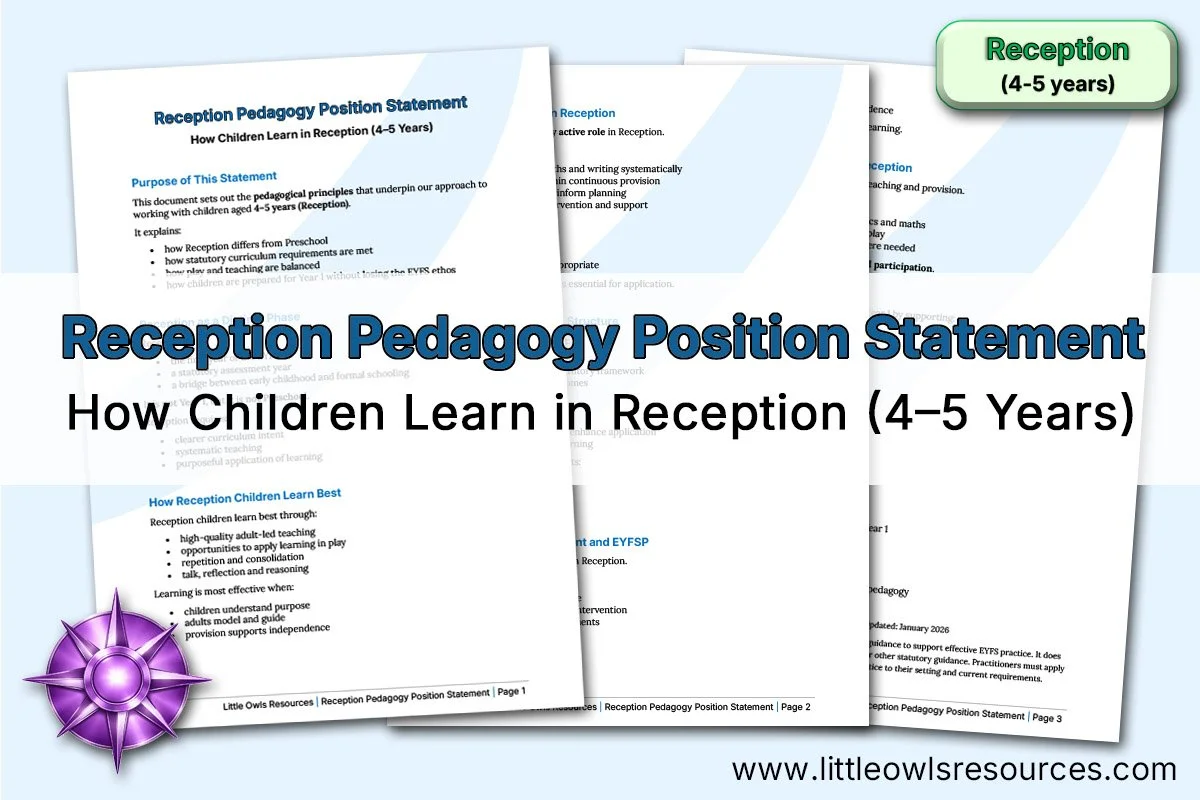
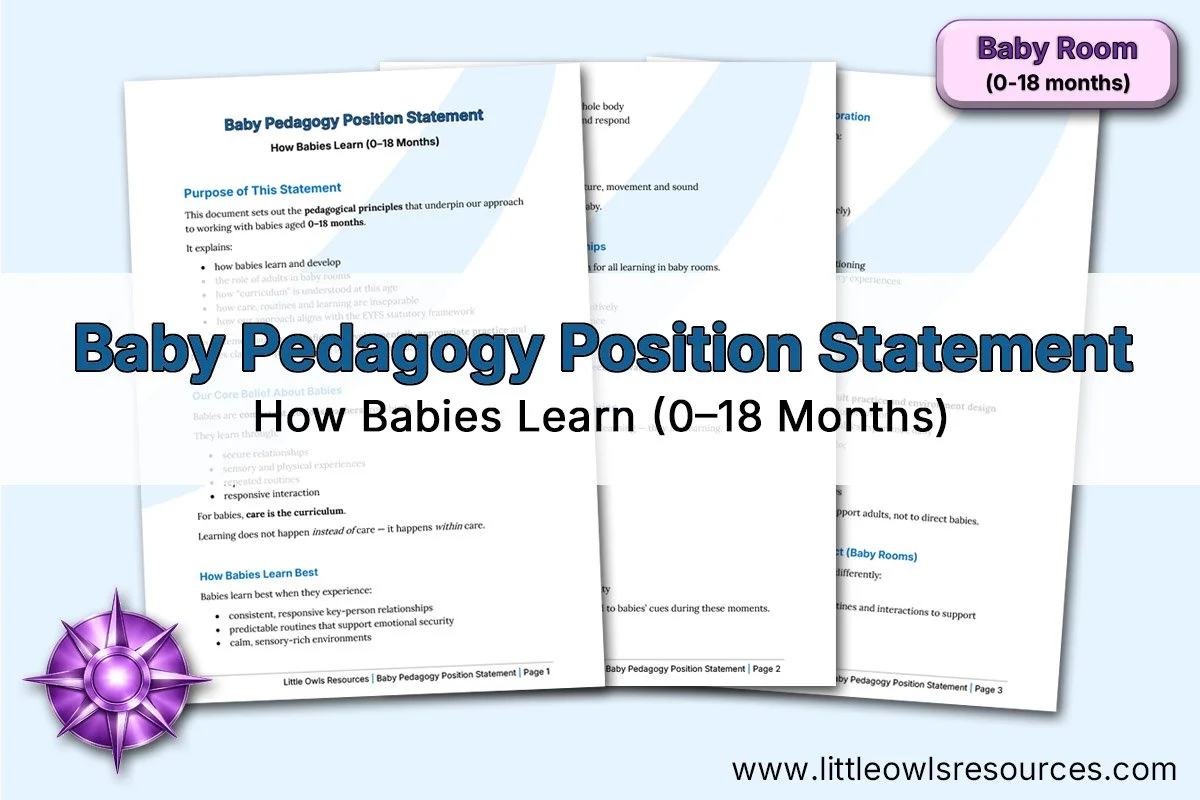
Below you will find a selection of guidance documents from within our Little Owls Resources ‘Curriculum & Pedagogy’ area which explore this concept (& its age-specific application within EYFS settings) in greater depth.
[For additional documents please visit our support pathways: Baby | Toddler | Preschool | Reception | Mixed-Age]
Further Guidance | Related Resources within our ‘Printable Provision’ area:
Disclaimer
The information provided in this glossary is intended to support understanding of terminology commonly used within the Early Years Foundation Stage (EYFS). It does not constitute official guidance and should not be considered a substitute for the EYFS Statutory Framework or other Department for Education publications.
Terminology and interpretations may vary between settings and professional contexts.