
EYFS definition
Makaton is a communication programme that combines signs, symbols and speech to support understanding and expression. In EYFS settings, it may help a child communicate during play, routines and shared experiences. Its use is adapted to the individual; children may communicate through signs or symbols without speaking.
How is Makaton used?
Adults use agreed Makaton signs alongside speech in spoken word order, often highlighting key words. Symbols offer another way to represent meaning.
For example, an adult might use a familiar sign during a song or routine, then notice and respond to the child’s chosen way of joining in.
Is Makaton the same as BSL?
No. British Sign Language (BSL) is a complete natural language with its own grammar. UK Makaton draws on some BSL signs but uses them within a different communication programme.
Makaton is one approach within the wider range of augmentative and alternative communication (AAC). It is not a general name for all signing or picture communication.
What matters in an early years setting?
Families and relevant professionals can help adults understand the child’s established communication and preferences. Adults can model familiar signs in meaningful interactions while accepting the child’s own way of responding.
The Makaton Charity provides official signs, symbols and training. Makaton is an optional approach, rather than a required EYFS programme.
Further Guidance | Related Documents
Explore general communication guidance and visual supports. These cards are not a guide to Makaton’s signs or symbols.
Highlighted resource
-
 View resource
All Access
Communication and Language-Rich Approaches in Toddler Rooms | Toddlers (18–36 Months)
Explore inclusive toddler communication through gestures, signs, symbols, speech and other meaningful forms.
Toddlers (18–36 months) · inclusive communication guidance
View resource details →
This selection is being reviewed. Please use the resource gateways below.
Related resources
Scroll sideways, focus the list and use your arrow keys, or use the buttons.
-
 View resource
All Access
Supporting Early Communication | Babies (Birth-18 Months)
Consider responsive adult interaction with babies’ varied communication cues.
Babies (0–18 months) · practitioner communication guidance
View resource details → -
 View resource
All Access
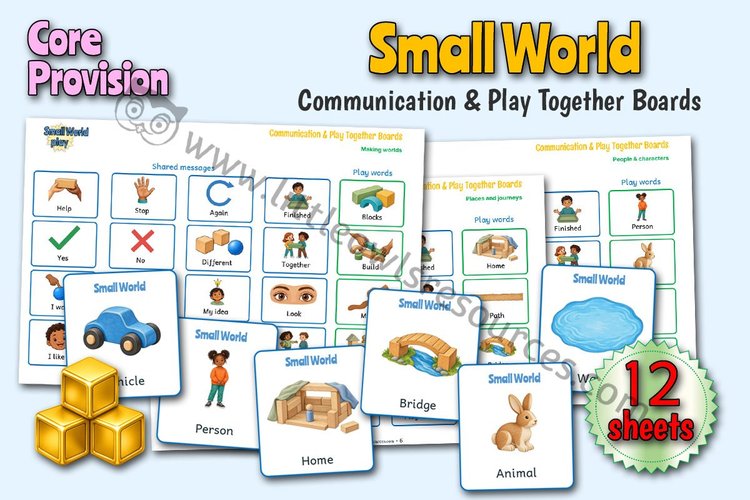
Communication & Play Together Boards
Explore general picture boards for participation in shared play alongside a child’s usual communication.
Small-world play · choose by communication needs, not age alone
View and Download Resource → -
 View resource
All Access
Key Phrases — Picture Communication Mat
Consider a general picture mat for everyday messages; this is not a Makaton vocabulary resource.
Visual communication · choose by individual meaning and access needs
View and Download Resource → -
 View resource
All Access
How to Build Language Through Play | Toddlers (18-36 Months)
Share family guidance on responding to toddlers’ communication within enjoyable play.
Toddlers (18–36 months) · family guidance for everyday play
View resource details →
This selection is being reviewed. Please use the resource gateways below.
Find practical resources for your setting
Start with an age gateway
Useful routes into practice
- Picture communication & visual supports
Explore visual resources to support understanding and expression alongside a child’s usual communication.
- Communication & Language
Find communication guidance and practical resources across the EYFS.