
EYFS definition
In England’s EYFS, active learning describes children’s involvement, concentration and willingness to persevere as they work towards something that matters to them. It is one of the three Characteristics of Effective Learning and includes taking satisfaction in what they achieve.
What does active learning mean?
Elsewhere in education, active learning often means participating directly in learning. The EYFS term has a more particular emphasis on motivation and persistence.
A child can be deeply involved while sitting quietly or moving around. Physical activity alone does not establish active learning, and keeping busy is different from working purposefully towards an idea or goal.
What might this look like in practice?
A toddler makes several attempts to put on a wellington boot, accepts help to hold it steady and completes the movement. A child returns to a railway track, changes a section that stops the train and enjoys seeing it travel further.
Another child remains absorbed in matching pieces of a picture, trying alternatives when the first choice does not fit. Each example involves a purpose that holds the child’s attention.
Supporting involvement and persistence
Adults may offer time, encouragement, a useful demonstration or a manageable next step. Asking for help, changing an approach or taking a break can be part of learning.
Persistence does not mean continuing when distressed or coping without support. These characteristics help adults reflect on learning; they are not a demand for every child to concentrate for the same length of time.
Further Guidance | Related Documents
Explore resources connected with this term. Each card identifies the resource’s intended age group and access type.
Highlighted resource
-
 View resource
All Access
Characteristics of Effective Learning in Reception | 4-5 Years
Explore how the learning characteristics connect with Reception teaching, provision and play.
Reception (4–5) · Practitioner guidance
View resource details →
This selection is being reviewed. Please use the resource gateways below.
Related resources
Scroll sideways, focus the list and use your arrow keys, or use the buttons.
-
 View resource
All Access
Self-Regulation & Learning Behaviours in Reception | 4-5 Years
Consider the support children may need for attention, persistence and independence.
Reception (4–5) · Practitioner guidance
View resource details → -
 View resource
Free Access
Construction Challenge Cards — Free Sample
Offer an optional building challenge that children can revisit, adjust and work towards.
Preschool–KS1 · Adapt challenge and support
View and Download Resource → -
 View resource
Free Access
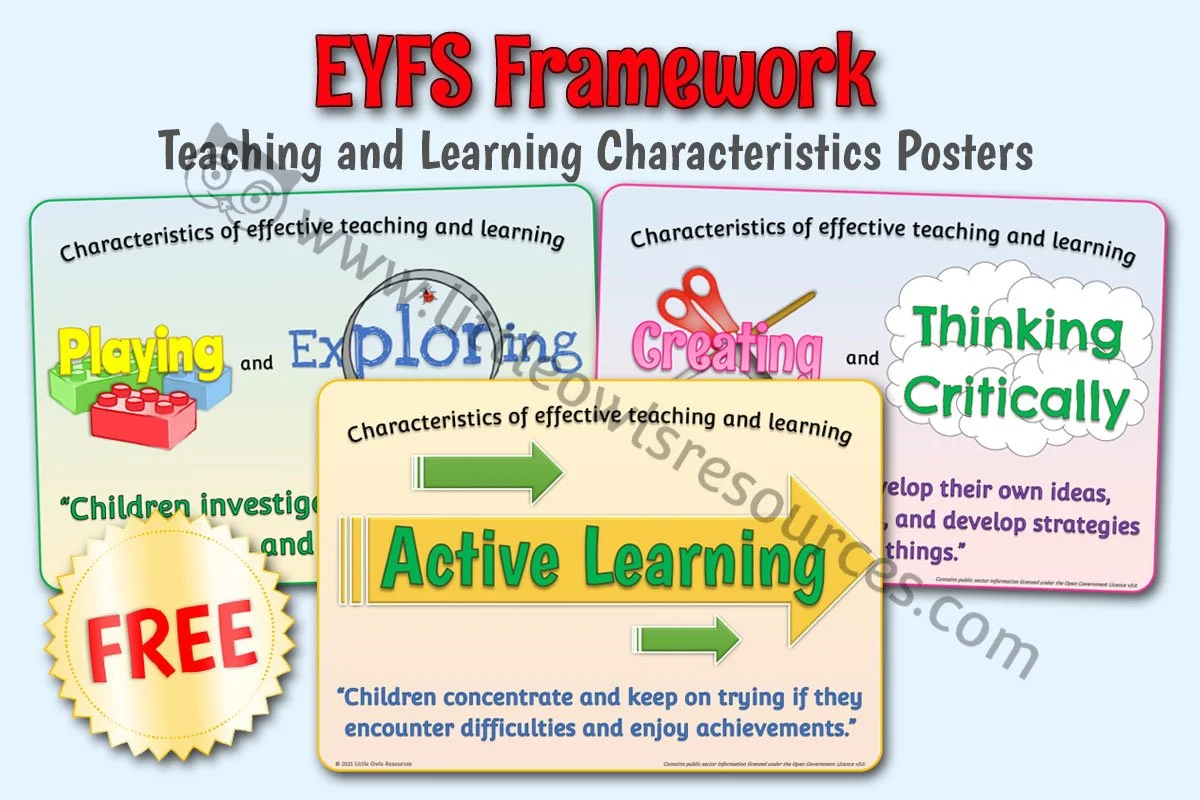
EYFS FRAMEWORK - Teaching and Learning Characteristics Posters
Use the learning-characteristic posters as a reference when discussing how children approach experiences.
Birth–5 · Adult reference
View and Download Resource → -
 View resource
All Access
Baby Room Continuous Provision Maps | 0-9 & 9-18 months
Review how accessible baby provision can support sustained interest, movement and exploration.
Babies (0–18 months) · Practitioner guidance
View resource details →
This selection is being reviewed. Please use the resource gateways below.
Find practical resources for your setting
Start with an age gateway
Useful routes into practice
- Construction & Building
Find open-ended building resources for developing and revisiting an idea.
- Outdoor Play & Provision
Explore opportunities for purposeful play, movement and investigation outdoors.