
Winter malleable play · Ages 3–5
What marks can winter leave in clay?
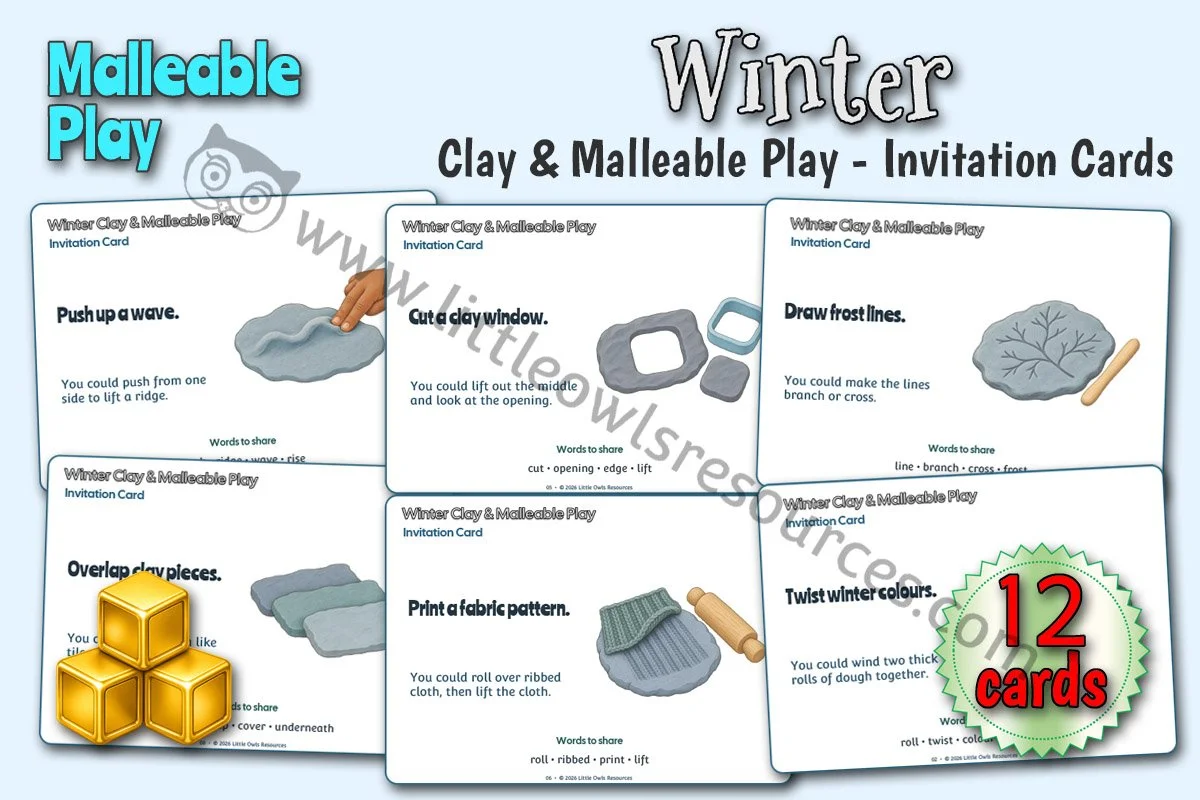
Draw a branching frost line, roll ribbed cloth into clay or twist two colours of dough together. These illustrated cards give children a starting point for exploring how soft materials move and change. Leave time to smooth away a mark, try it again or follow a new idea.
The download opens this pack in the Winter member gallery. Sign in or join if prompted.
Take a look inside
See two invitations on a printable sheet, a single fabric-printing card and an extract from the practitioner notes. Each illustrated card includes a short invitation, an optional “You could…” idea and words to share during play.


On smaller screens, swipe or scroll sideways to browse. With the previews focused, use the left and right arrow keys.
What’s included in the pack?
The eight-page pack includes 12 illustrated invitation cards, a page of practitioner notes and a Find an Invitation index. The index suggests schema connections to notice when children repeat actions such as rolling, turning or joining.
Winter marks and shapes
Start with frost lines, puddle shapes or a fabric print. Children can change the width of a shape, make a new line or see what happens when they press more firmly.
Changing and combining clay
Invite children to push up a ridge, overlap pieces or rearrange shapes. They can revisit an action, photograph what they made or reshape the clay straight away.
Which ages are the cards suitable for?
The cards are a good starting point for children aged 3–5 years. Choose materials and tools for each child, with time to explore, watch or direct a partner.
- 3–4 years
- Offer one picture and a small choice of tools. Give children time to repeat a simple action such as making a mark, pressing a texture or smoothing the surface.
- 4–5 years
- Invite children to combine actions, try a different way of working and share what they notice. They might use the same texture with a new tool or change a shape as an idea develops.
For children under 3, an adult can adapt a single idea using materials chosen for the child and close supervision. Take particular care when choosing provision for children who still mouth materials.
Use the cards in your provision
Set out one card beside a workable piece of soft clay or suitable playdough and a clear surface children can reach. Let the illustration start a conversation about what the material might do.
Offer an invitation
Choose a small number of materials and tools that fit the idea. Children might use their hands, work with a chunky roller or point to a tool they want to try.
Notice what changes
Describe what happens as children work. A line might branch, a slab might bend or a texture might show up when the cloth is lifted. Pause to let them respond.
Leave room to try again
Give children time to repeat an action or take it further. Ask before changing a model they want to keep. Photograph it together if they want a record.
Which pages should I print?
Print pages 3–8 on A4 at actual size (100%). There are two invitation cards on each sheet. Pages 1–2 contain the practitioner notes and index.
Can I use playdough instead of clay?
Suitable playdough can offer a softer alternative. For the two-colour twisting invitation, offer two pieces of the same type of dough. Check ingredients and product guidance for the group.
Can I adapt the cards in Word?
Yes. Edit the text and borders or replace the illustrations. You could add a photo of the tools children use in your setting.
Download the Winter Clay and Malleable Play Invitations
Choose the editable Word file, a PDF for printing or the zipped JPEGs. The pack includes all 12 invitation cards, the practitioner notes and the index.
Already a paying member? Follow the download button and sign in if prompted.
You might also find these useful

Autumn Clay & Malleable Play Invitation Cards
Suitable for ages 3–5
Illustrated autumn invitations suggest pressing leaves, rolling pathways and shaping nests in soft clay. Optional prompts and shared vocabulary help adults support children as they pinch, join, squash and change their own creations.
View resource details →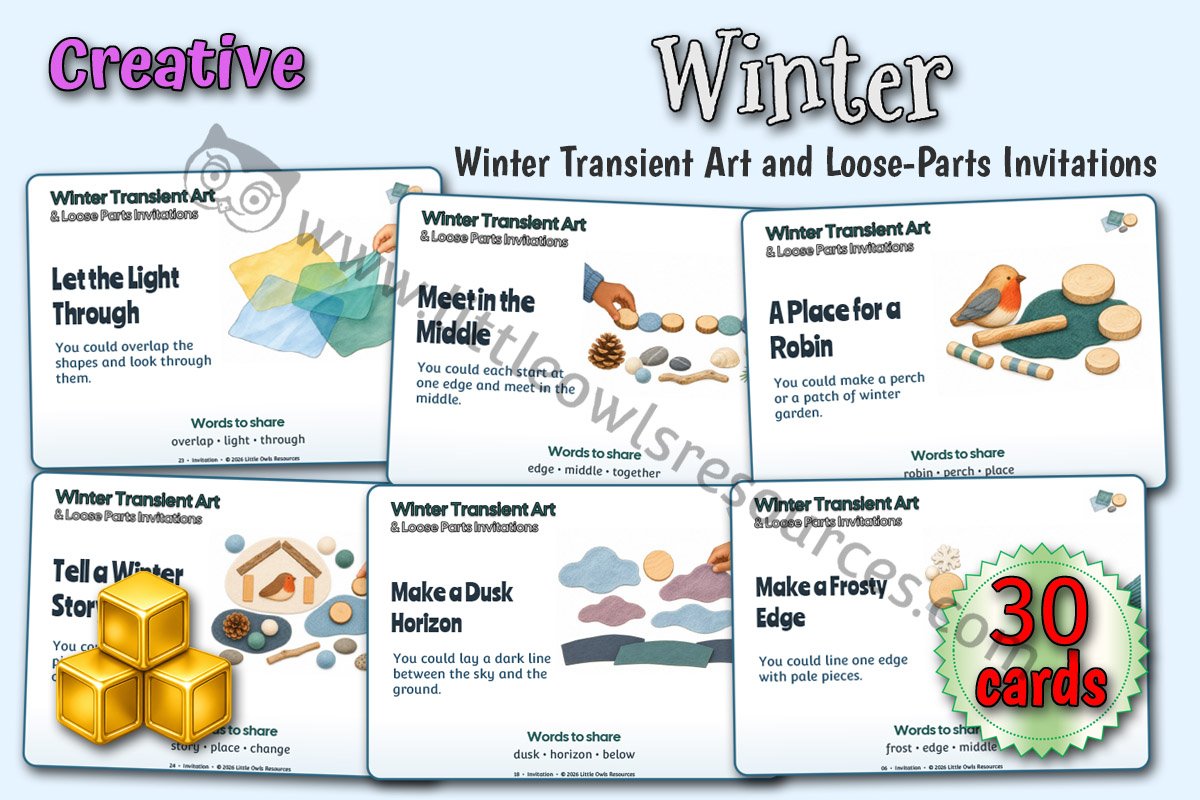
Winter Transient Art and Loose Parts Invitations
Suitable for ages 3–5
Twenty-four winter invitations and six reusable action cards encourage temporary art with loose parts. Children can place, combine and move materials to explore colour, texture, light and space, then take the arrangement apart and begin again.
View and Download Resource →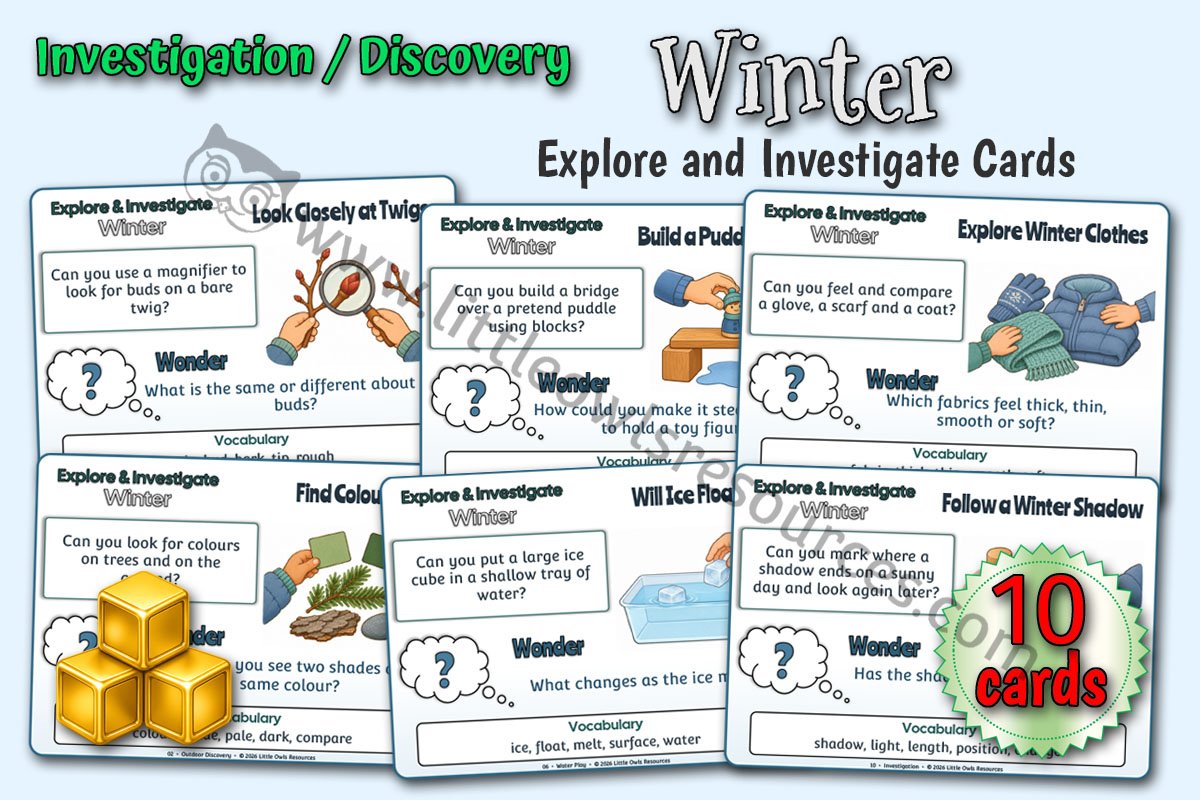
Winter Explore and Investigate Cards
Suitable for ages 3–5
Ten winter investigation cards invite children to explore real objects, try a change and notice what happens. Return to a patch of ice or follow a shadow, using talk, photographs or marks to revisit discoveries.
View and Download Resource →
HOUSES AND HOMES - Playdough Mat Challenge (Free Sample)
Suitable for ages 3–5
A sample home-themed playdough challenge mat. Offer suitable dough and let children explore shaping a response to the pictured prompt.
View and Download Resource →
Winter Decorate Multimats - Playdough, Loose Parts, Art & Crafts
Suitable for ages 3–5
Hat, glove, wellington-boot and scarf mats can be decorated with playdough, loose parts or art materials. Laminated copies support repeated use with whiteboard pens; paper copies can be coloured or collaged.
View and Download Resource →
Polar Bear Multimats - Playdough, Loose Parts, Art & Craft
Suitable for ages 3–5
Polar-bear mats provide outlines for arranging loose parts, shaping playdough or making marks. Children can choose materials and explore their own patterns or representations; adults can prepare reusable surfaces when useful.
View and Download Resource →Resource and preview images © Little Owls Resources.